9 minute read
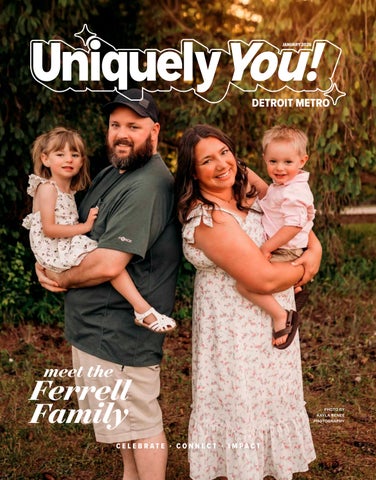
Meet the Ferrell Family

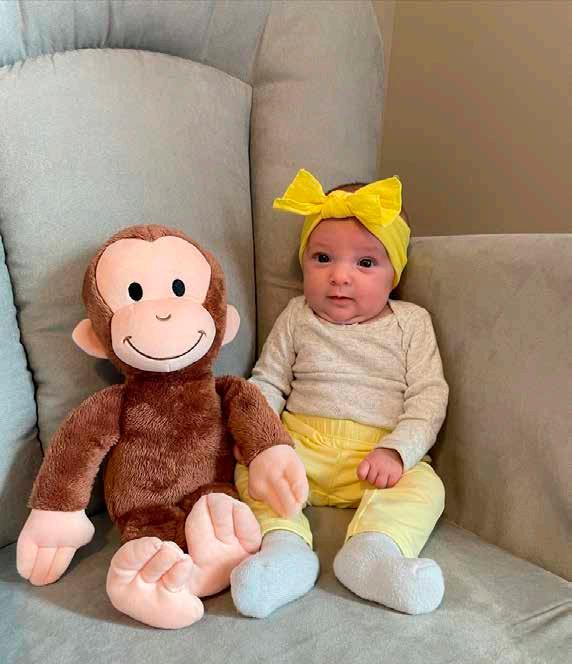
The Girl With the Yellow Bow: Addy’s 1% Miracle
BY KRISTIN DILLON
A Mother’s Instinct
On May 10, 2021, Ashley Ferrell followed her gut. Her two-monthold daughter, Adalyn “Addy” woke up looking unwell. Their pediatrician recommended monitoring her at home, but as the day wore on, Ashley couldn’t shake the feeling that something was deeply wrong. By evening, she and her husband, Denny, rushed Addy to their local hospital in West Michigan.
They first went to their local hospital, where initial tests were run before Addy was transferred to Helen DeVos Children’s Hospital in Grand Rapids.
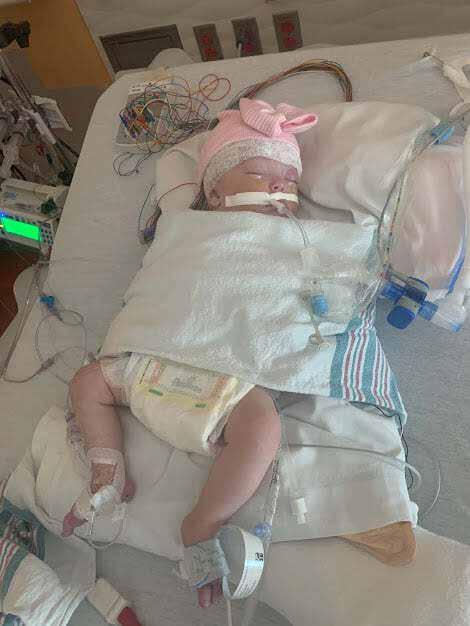
Upon arrival, Addy went unresponsive. She was intubated, and Ashley and Denny were ushered into a waiting room. A doctor soon arrived with the kind of news no parent expects to hear: their baby girl had a 1% chance of survival.
Ashley remembers walking back into the PICU and seeing her tiny daughter “hooked up to way too many tubes and wires a baby should ever be hooked up to.” The image is forever seared into her memory.
Addy was in total organ failure. Sepsis had taken hold. Her tiny body was also fighting meningitis of an unknown origin.

A Name for the Unthinkable
The next day brought an answer: Late Onset Group B Strep (GBS).
Most parents only hear about GBS in passing swabbed at 36 weeks, given penicillin if positive. But Addy came too fast at 37 weeks, weighing just under five
pounds. No one told Ashley what happens when GBS slips through undetected.
Addy’s brain was swelling. She had seizures, strokes, and brain bleeds. Doctors diagnosed her with a Severe Traumatic Brain Injury and told Ashley and Denny that if she survived, she would likely require a tracheostomy, would never walk, talk, eat, or live independently.
She also developed a blood clot and was placed on Lovenox injections, blood thinners Ashley had to administer twice a day for two months.
A Mother’s Instinct
On May 10, 2021, Ashley Ferrell followed her gut. Her two-monthold daughter, Adalyn “Addy” woke up looking unwell. Their pediatrician recommended monitoring her at home, but as the day wore on, Ashley couldn’t shake the feeling that something was deeply wrong. By evening, she and her husband, Denny, rushed Addy to their local hospital in West Michigan.
They first went to their local hospital, where initial tests were run before Addy was transferred to Helen DeVos Children’s Hospital in Grand Rapids.
Upon arrival, Addy went unresponsive. She was intubated, and Ashley and Denny were ushered into a waiting room. A doctor soon arrived with the kind of news no parent expects to hear: their baby girl had a 1% chance of survival.
Ashley remembers walking back into the PICU and seeing her tiny daughter “hooked up to way too many tubes and wires a baby should ever be hooked up to.” The image is forever seared into her memory.
Addy was in total organ failure. Sepsis had taken hold. Her tiny body was also fighting meningitis of an unknown origin.
A Name for the Unthinkable
The next day brought an answer: Late Onset Group B Strep (GBS).
Most parents only hear about GBS in passing swabbed at 36 weeks, given penicillin if positive. But Addy came too fast at 37 weeks, weighing just under five
“Giving your three-month-old baby a shot in the leg every twelve hours was heartbreaking,” she recalls.
Ashley remembers those days as a blur of terror and stubborn faith: “They told us to prepare for the worst. But something in me said, this isn’t her story.”
Curious George in the PICU
In the midst of machines and monitors, one unlikely companion became Addy’s anchor: Curious George The cartoon was played during long, quiet hours when Addy needed to stay still for tube feeds. For Ashley, it was more than background noise, it was a thread of memory.
Before Addy was born, Ashley’s sister had passed away, and she loved Curious George. After her death, Ashley kept her artwork, handprints, gifts like sacred relics. And suddenly, here was her daughter, clinging to the same character in the fight of her life.
The child life team at the hospital even printed Curious George artwork for Addy’s PICU door. Nurses began to call her “The Girl with the Yellow Bow” a gentle twist on Curious George and the Man with the Yellow Hat. For Ashley, it felt like her sister was there with them, woven into Addy’s fight.
A Fighter Emerges
Against every prediction, Addy began to fight back. She opened her eyes, one of them swollen shut, and slowly weaned off the ventilator until she was breathing on her own. Though she couldn’t eat by mouth, she came home with a feeding tube after 18 days in the PICU.
“If pulling those out was an Olympic sport, she’d be a gold medalist,” Ashley jokes.
By December 2021, Addy had a surgically placed G-tube, which she used for five months before retiring it completely.

Today, Addy is four years old. She walks. She runs. She eats. She swims. She laughs. She is nonverbal, but expressive and radiant. She recently had eye surgery to help with third nerve palsy caused by her illness, where doctors tightened and loosened muscles to improve movement in her right eye.
“She does everything they told us she wouldn’t do,” Ashley says.
And through it all, Curious George remains her comfort and joy.
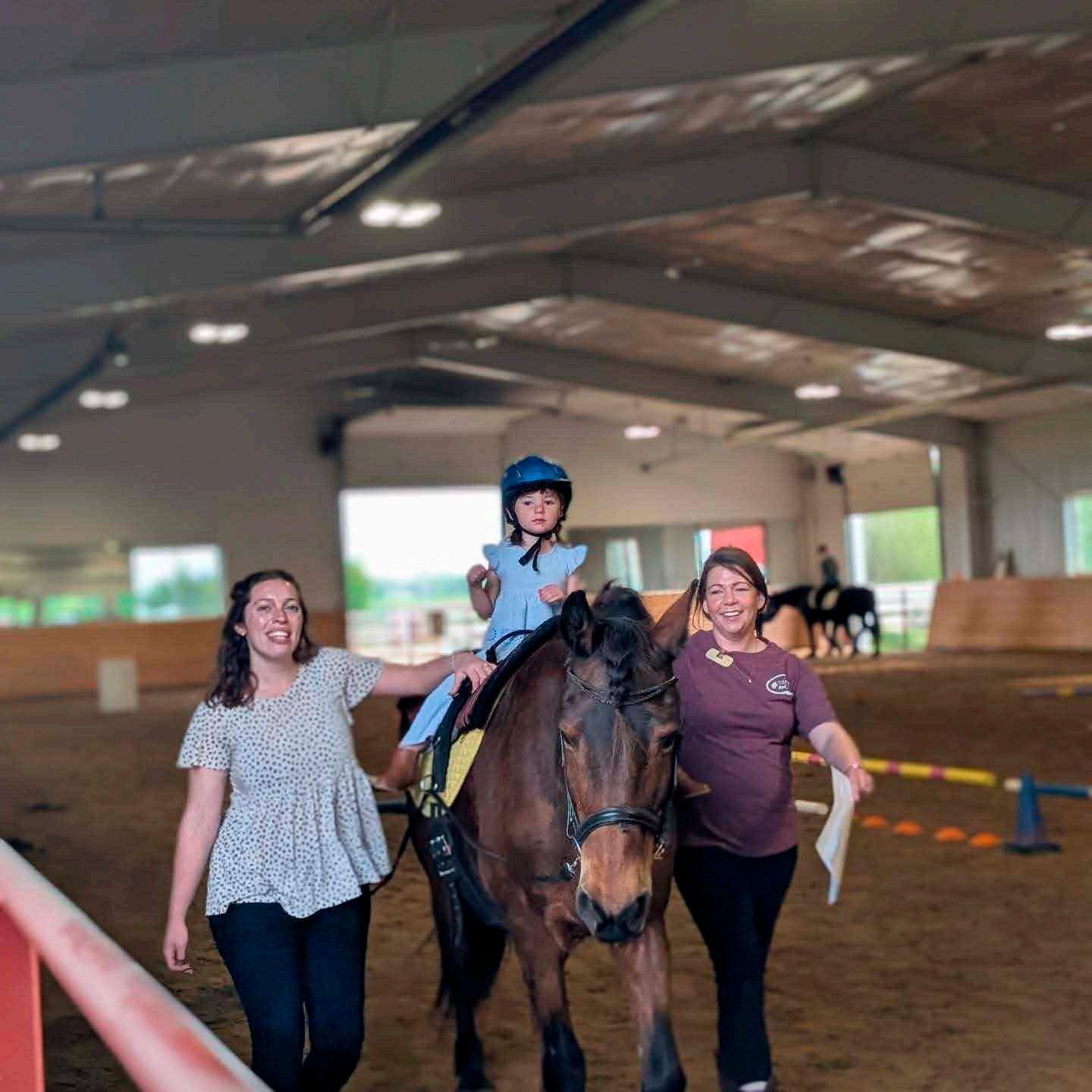
For the Ferrells, life changed overnight. In the four years since Addy’s diagnosis, therapy has become their full-time rhythm: physical, occupational, and speech, with an ever-expanding team of specialists. Addy also goes to school, and participates in equine therapy at Renew Therapeutic Riding Center, and will soon begin Applied Behavior Analysis (ABA).
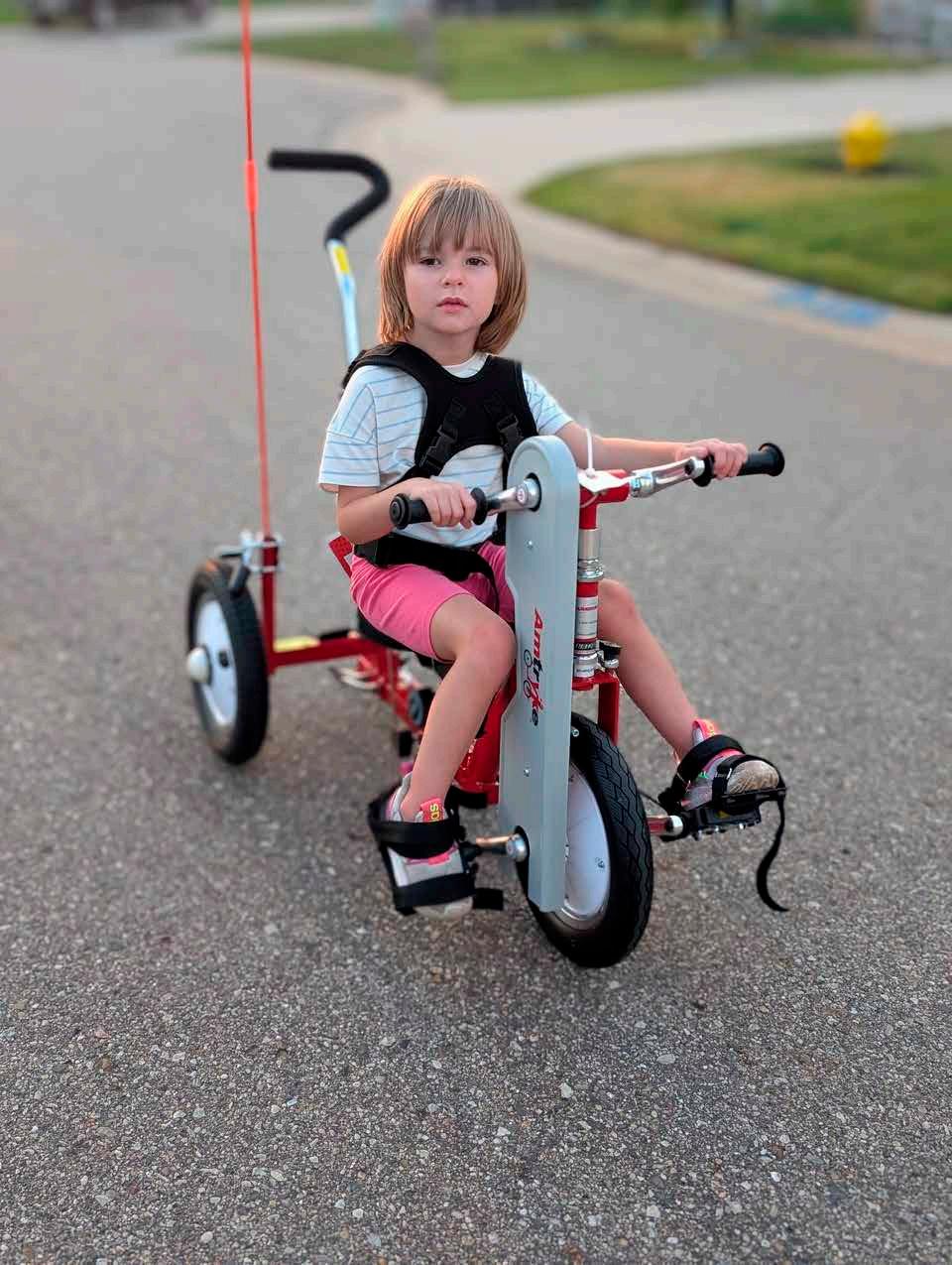
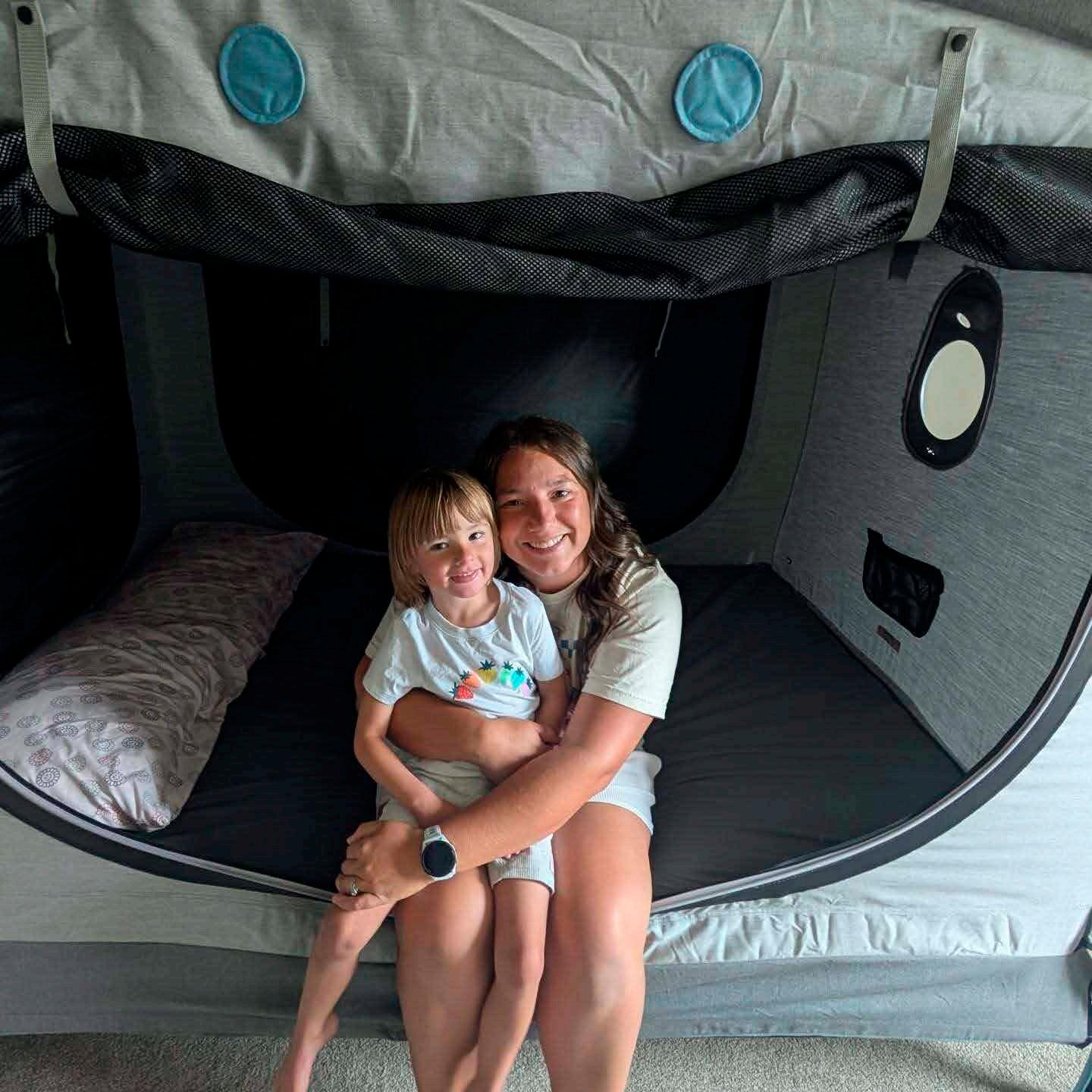
Ashley recalls many of the early challenges: watching Addy learn to walk with “the smallest and cutest walker you have ever seen,” getting fitted for a Cubby Bed to keep her safe at night, and learning to manage braces, and adaptive bikes that became everyday fixtures in their home.
There were also sensory challenges, Pica, and the ache of having no formal way to communicate with her.
“She’s nonverbal and doesn’t have an AAC device yet,” Ashley explains. “Right now, if she wants something, she might bring us to it, but there’s no clear way to know what she’s thinking or feeling.” This fall, Addy will begin trialing AAC technology at her clinic. “We’re hopeful,” Ashley says. “She’s so smart and so stubborn, when she decides to show us what she knows, it’s incredible.”
Ashley also remembers the difficulty of leaving their PICU family after 18 days. “Our nurses were amazing. I still talk with one daily. By the end of our stay, she could look at me during rounds and know exactly what I was thinking, she’d start with, ‘Mom wants to know…’ and then ask the question for me. She just threw me under the bus like that!” Ashley laughs. “It was such a struggle to leave their 24/7 care.”

Personality in Full Color
For all the medical milestones, Ashley is quick to emphasize Addy’s spirit.
“She’s the sweetest and happiest girl. She loves to laugh.”
What makes her light up? Running outside, swinging, and bouncing on the trampoline. And, always, Curious George
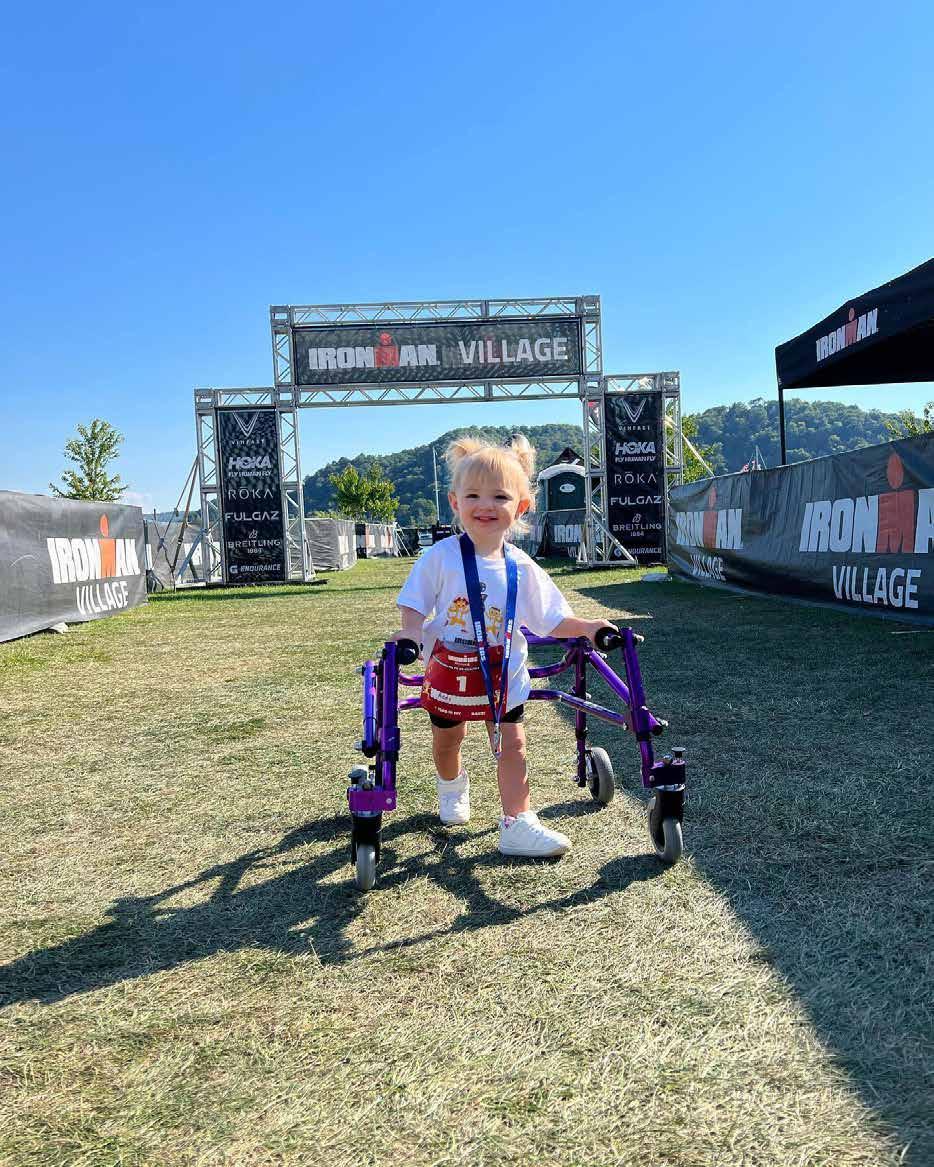
Addy’s determination has become her signature. In 2022, she crossed the finishline with her walker at an Ironman kids race, bringing “tears to many eyes.” Even now, her favorite part of horseback riding is when the horse trots and she can feel the motion ripple through her body.
And recently, there was one moment that stopped Ashley and Denny in their tracks: Addy carried her water cup over to her dad and clearly said, “Wawa.” It hasn’t happened again, but the memory still fuels them. “The words are definitely in there.”
“It was like the universe reminding us, don’t count her out,” Ashley says.
Building a Life and a Community
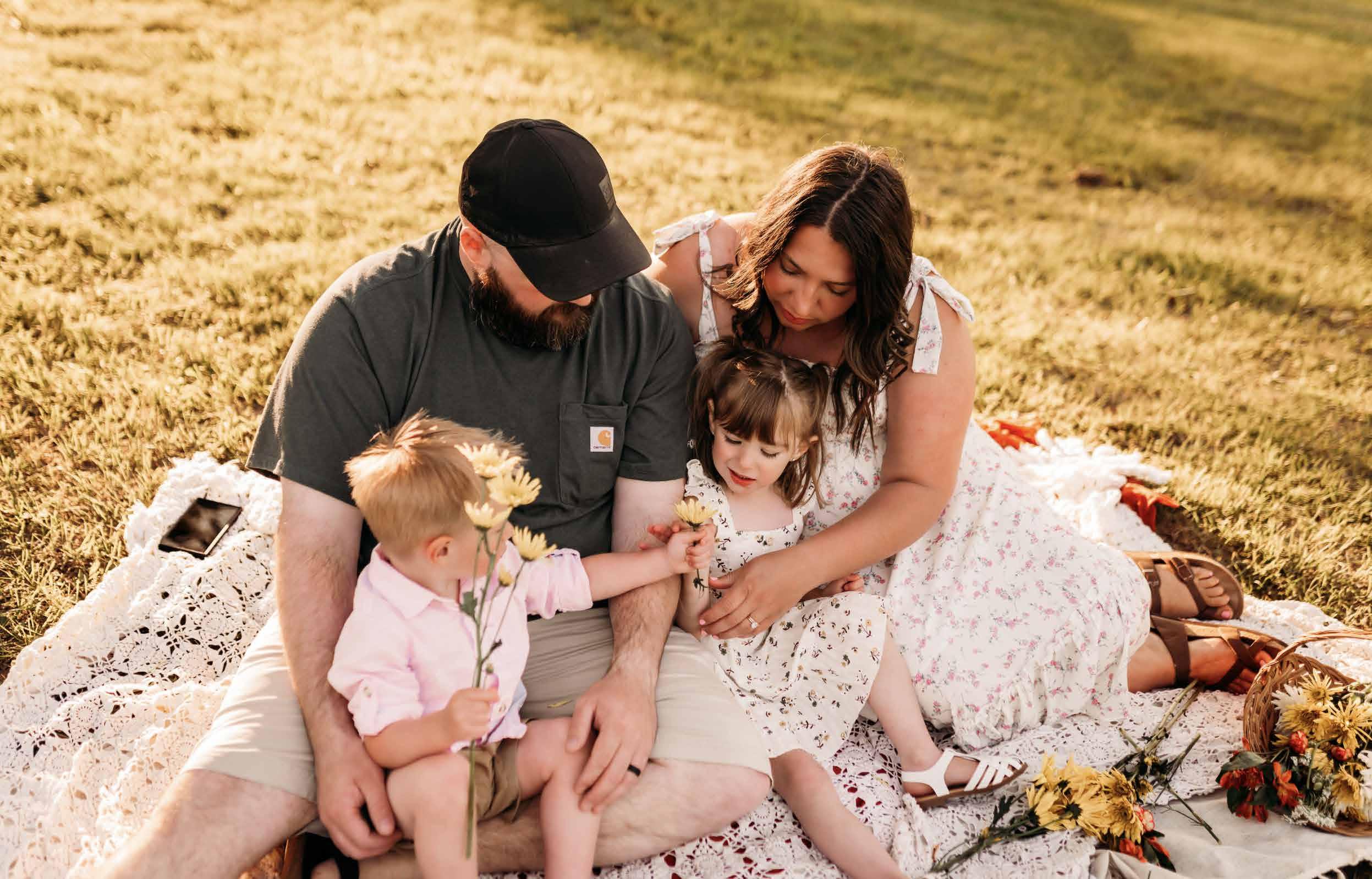
The Ferrells are a family that loves adventure, boating, camping, and dreaming of one day living full-time in their RV. Addy has a younger brother, Caden, who is two.
Though originally from the east side of Michigan, the family has built strong roots in West Michigan. Still, some of their greatest support has come from programs designed for children with medical complexities.
Early On, Michigan’s early intervention program, was a lifeline. “They were our ride-or-die,” Ashley says. “For three years, therapists came to our home and even met us at parks to help Addy engage with other kids.”
Another program, A Kid Again, has provided opportunities for joy and connection with families who understand this journey firsthand.
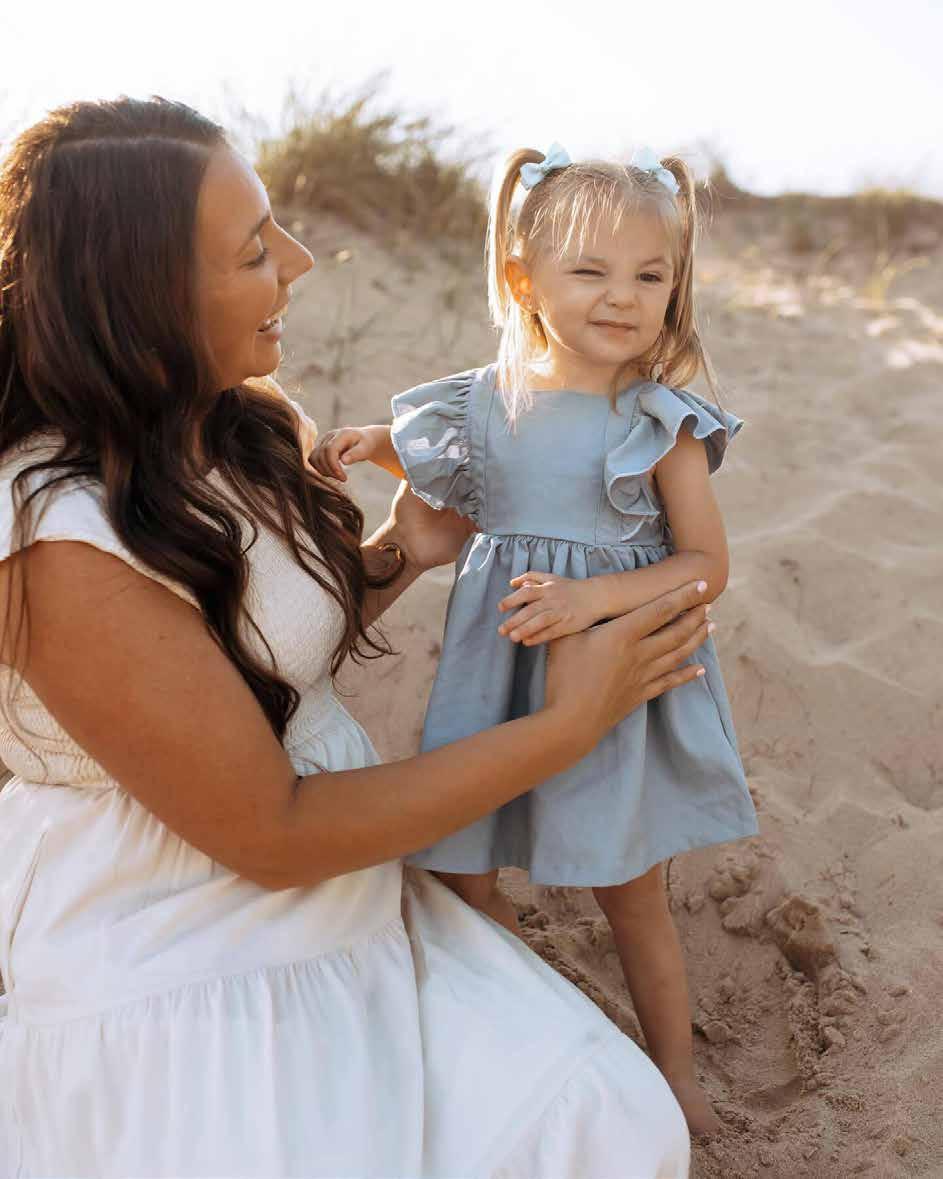
And then there’s Ashley’s own vision: she’s a photographer and hopes to use her skills to build visibility for families like hers. “It means so much to have someone capture your life without needing an explanation,” she says.
Shifting Perspectives
Ashley’s experience has also shifted how she sees disability.
Her brother became a quadriplegic after a neck injury, and she’s long resisted the catch-all “special needs” label. Addy’s brain injury has only deepened her perspective.
“Anyone with a brain injury can be given that label,” Ashley says. “But really, it’s about abilities, different abilities. Addy
has taught us there’s a whole spectrum of what life can look like.”
That perspective is something she hopes to bring to West Michigan through her involvement with Uniquely You! Magazine.
Words to New Parents
When asked what advice she would offer families who find themselves suddenly thrust into this world, Ashley pauses. Then she offers a list that is both fierce and tender:
• Stay in therapy.
• Have patience.
• Lean on your people.
• Love your baby!
For newcomers to the area, she adds: “If your child is under three, look into Early On. Go to playgroups. Talk to the other parents in the waiting room. You might be surprised how many of them are also craving connection.”
Her dream for Addy? The Special Olympics.
“She loves to run,” Ashley says, smiling. “And she loves watching other kids run. I think she’d thrive.”
100% Heart
Four years ago, doctors gave Addy a 1% chance of survival. Today, she’s proof of what relentless willpower, fierce parenting, and community support can build.
“She does everything they said she wouldn’t,” Ashley reflects. “And she does it with joy.”
And often, she does it with Curious George nearby,a reminder that memory, love, and resilience weave together in the most unexpected ways.
“She’s 100% heart,” Ashley says. “And that’s what carries us forward.”