

Meet Mia
A Young Woman Who Shines
PHOTO BY DANIELLE RENEE PHOTOGRAPHY

Publication Staff

Jamie Olson PUBLISHER AND AREA DIRECTOR

Woodford CONTENT MANAGER,

Christina McGairk EDITOR-INCHIEF

Dr. Darolyn “Lyn” Jones CONTENT COORDINATOR AND WRITER
Zachary Curtis COMMUNITY ENGAGEMENT
Staff Writers and Contributors











Photographers



ENGAGEMENT
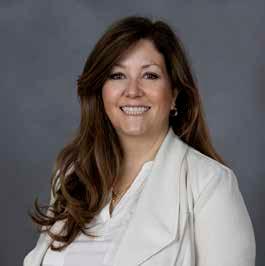
Lisa Jegen UNIQUELY YOU MAGAZINE IN NORTHWEST INDIANA








Katie Mende PHOTOGRAPHY
Christia
Kelsey Green
Debra Bader Jessica Willits Andy Fitzenrider
Kelsey Amos Marissa Pangle
Francisco ‘Jay’ Javier Luna, Jr.
Coleson Henry
Tanya Sood
Lindsey Watson
Charles Spray MS, LMHC
Susan Graham Dorie Zipperle
Paul Hathcoat
Paul Mycraft COMMUNITY







IMPORTANT PHONE NUMBERS
UNIQUELY YOU!
MAGAZINE AREA DIRECTOR Jamie Olson 248-882-8448 jamie.olson@n2co.com


Scan to view the past issues of Special Needs Living Indy and Uniquely You!

Scan to view past digital copies, find resources, share a story or learn more about being involved.
Celebrate. Connect. Impact. © 2026 The N2 Company, Inc.

317-426-7733
317-977-2375
317-676-4222
800-609-8448
877-241-8144
800-545-7763
800-545-7763
317-542-3325
800-622-4968
888-673-0002
800-403-0864
317-232-7800
317-925-7617
877-511-1144
317-466-1000
911
800-545-7763
317-232-0570
844-323-4636
317-233-4454
317-232-7770
812-855-6508
317-233-1325
844-446-7452
855-641-8382
800-332-4433
800-457-4584
317-232-7770 988 800-772-1213
800-772-1213
877-851-4106
317-871-4032
800-545-7763
Ability Allies of Indiana https://abilityallies.org/ Arc of Indiana www.arcind.org
Autism Community Connection www.autismcc-in.org
Autism Society of Indiana
Blind and Visually Impaired Services (BVIS) Bureau of Developmental Disabilities Services (BDDS) Bureau of Rehabilitation Services (BRS) Deaf and Hard of Hearing Services (DHHS) https://www.in.gov/fssa/ddars/brs/ deaf-and-hard-of-hearing/
Disability Determination Bureau Division of Aging (IDA)
Division of Family Resources (DFR)
Division of Mental Health and Addiction Down Syndrome Indiana
Early Childhood and Out of School Learning (OECOSL) Easterseals Crossroads www.easterseals.com/ Emergency
First Steps
Indiana Department of Education: Office of Special Education www.doe.in.gov/specialed Indiana Family to Family www.inf2f.org
Indiana Family and Social Services Administration (FSSA) www.in.gov/fssa/index.htm
Indiana Governor’s Council for People with Disabilities (GPCPD)
Indiana Resource Center for Autism
Indiana State Department of Health
Indiana Statewide Independent Living Council (INSILC)
Indiana Works INSOURCE http://insource.org/
Medicaid Disability
Medicaid Waivers
National Alliance on Mental Illness
Social Security Administration (SSA)
Social Security Disability Insurance (SSDI)
Special Education Questions
United Cerebral Palsy Association of Greater Indiana
Vocational Rehabilitation Services (VR)
DISCLAIMER: The articles and opinions expressed in this publication are those of the respective authors and do not necessarily reflect the views of The N2 Company d/b/a Uniquely You (“N2”). Advertisements appearing in this publication are paid placements and are not endorsed or recommended by N2. N2 is not responsible for the statements, opinions, or business practices of any authors, contributors, or advertisers featured herein. Portions of this publication may include content created with the assistance of artificial intelligence (AI) tools by authors or contributors and may not be independently verified by N2. We are proud to feature businesses that share our commitment to showcasing local connections. Please note that businesses profiled may have provided free products and/or services for the review. Uniquely You is for general informational and entertainment purposes only and is not intended to provide medical, therapeutic, educational, or legal advice. Always consult qualified professionals regarding the care and support of individuals with disabilities. NOTE: When community events take place, photographers may be present to take photos for the event, and they may be used in this publication.We are proud to feature businesses that share our commitment to showcasing local connections. Please note that businesses profiled may have provided free products and/ or services for the review. Uniquely You is for general informational and entertainment purposes only and is not intended to provide medical, therapeutic, educational, or legal advice. Always consult qualified professionals regarding the care and support of individuals with disabilities. NOTE: When community events take place, photographers may be present to take photos for the event, and they may be used in this publication.
Spelling to Communicate is an innovative method of communication that starts with presuming in the cognitive competence of non, minimal and unreliably speaking individuals. It is believed that all individuals can and want to learn and communicate despite their perceived limitations. S2C empowers said individuals to overcome communication barriers through the motor movement of pointing to letters on a letter board and thus promoting synchrony between cognitive and motor systems. It is through the repeated practice (pointing to letters) that new neural pathways become formed and myelinated. The end result being a viable means of communication and the ability to show the world their cognitive prowess.
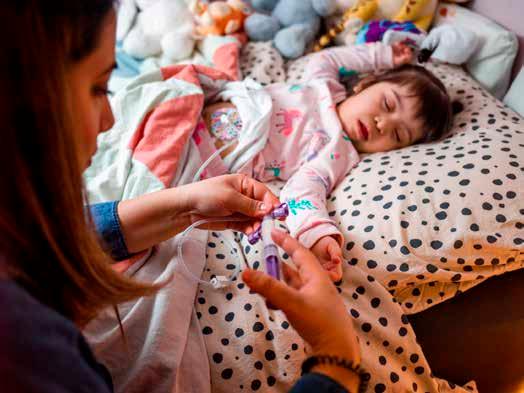
We understand the unique needs of families with medically complex children. We offer a network of support, ensuring their caregiving journey is a bit lighter.


Call or text with questions 317-575-3983
comforcare.com/indiana/north-metro-indianapolis @comforcareindy @comforcare_northmetroindy


SCAN TO LEARN MORE
A Young Woman WHO SHINES

BY

FRANCISCO J. LUNA JR.
Photo by Four Smiles Photography


CELEBRATING HER 21ST

BIRTHDAY in October, Mia Accinelli’s family describes her as unique, strong, and full of potential. “We’ve never really thought anything would be impossible for Mia. We KNOW she can do anything she sets her mind to,” says her mom, Jen.
Mia’s doctor first noticed physical markers suggestive of Down Syndrome when Mia was born. This prompted immediate genetic testing, which led to a diagnosis of translocation Down syndrome. As she grew, follow-up genetic testing revealed that Mia had a specific variation, and her doctors provided a diagnosis of mosaic Down syndrome. This means that some of Mia’s cells carry the extra chromosome due to a translocation, while others do not.
Mia is the youngest of four siblings, and Jen explains how Mia’s diagnosis changed their family for the better. “It has taught us to slow down, enjoy life’s moments, and celebrate every victory, no matter how small it may seem,” she reflects. Mia’s three older siblings, also in their twenties, played an important part in the way this understanding unfolded in their family. Jen confides, “One thing I would share is to follow your other children’s lead when it comes to your child with special needs. Children have such a natural innocence about them, and they often see the world in a way adults sometimes forget.”
Jen tells how she and her husband, through their older children’s example, learned to embrace Mia’s abilities and celebrate her uniqueness. “Our kids have shown us time
and time again just how amazing Mia is, without hesitation, judgment, or limits,” she remembers.
Indeed, Jen and her husband, Daniel, did not lower their expectations for Mia compared to their other children. Instead, they focused on giving Mia more time and support to reach her milestones. Her mom emphasizes how important it is to never underestimate someone, especially Mia. “She may reach milestones on a different timeline, but she deserves the same respect, opportunities, and love as any other child,” says Jen.
Challenges
While Down syndrome has affected Mia’s life, Jen is clear that it does not define her daughter’s identity. Yet one of the biggest challenges Mia and her family face is helping people understand that Mia has feelings, emotions, and wishes just like everyone else. “Because she is small, people sometimes forget that she thinks and acts like the young adult she is, almost 21 years old,” Jen points out. Like any young adult, Mia does not like being talked down to and always notices when someone is treating her that way.
This is one reason why Jen says it’s important to recognize that Down syndrome is only one part of who her daughter is. “Our goal, and hers as well, is for her to be treated just like everyone else,” she notes. To that end, Mia and her family work to educate others about Mia’s abilities, so that they can see her as the capable, thoughtful person that she is. With encouragement from her family, Mia has learned to advocate for herself on this issue, speaking up when she feels disrespected or underestimated.
Photo by Danielle Renee Photography
Photo by Tara Marie Photography
Photo by Tara Marie Photography
Jen’s advice for other families is “to never stop educating the people around you.”

Photo by Danielle Renee Photography
how often people would tell her and Daniel in front of their other children, “You’re so blessed because you have Mia.” In saying this, they wouldn’t realize how it made Mia’s brother and sisters feel overlooked. Jen emphasizes that all their children are amazing and that each of them brings unique blessings to the family,
Beyond these challenges, the family also experienced a few that were related to Mia’s education over the years. Still, Jen notes that Mia was blessed with some incredible general and special education teachers who supported her growth.
Looking back, Jen says that they were able to overcome these struggles by focusing on education and advocacy.
“Through patience, persistence, and self-advocacy, we’ve been able to navigate these challenges while helping others better understand and respect Mia for who she truly is,” she says.
Community & Milestones
An early memory that shines brightly was when Mia was invited to her very first sleepover in the second grade. It was an important moment that made Mia feel both included and celebrated. Another was when Mia was asked to model for the Matilda Jane clothing company, which gave her so much joy and confidence.
Mia’s mother celebrates the way that Mia, following a challenging time in middle school, “not only embraced high school but absolutely conquered it.” At Whiteland Community High School, Mia found her place and her passion as a cheerleader on the Unified Cheer squad. She
special milestone for Mia was going to prom with her boyfriend, Spencer, and experiencing such a memorable high school tradition with him.
Yet for Mia’s mom, one of the best memories of all was watching Mia walk across the stage at graduation to receive her Alternate Diploma. “The look of pride on her face in that moment is something we will never forget,” Jen remembers. She says that the moment wasn’t just about the diploma, but rather Mia’s journey, determination, and joy in achieving something she worked so hard for. “That memory will stay with us forever,” she beams.
Today Mia attends the Transition Program provided by her high school. While in the program, Mia can continue with Unified Cheerleading and Unified Track. This allows her to continue to be part of the school community and participate in the activities that she loves. She also volunteers through her Transition class at various places, with one of her favorites being a local food pantry.
Mia is also involved in Best Buddies, an organization in Indiana that offers her opportunities to build friendships, engage in social activities, and stay connected with her peers.
Helpful Resources and Remaining Gaps
A few resources stand out as having been particularly valuable to the Accinelli family as Mia was growing up. When she was little, Mia participated in First Steps, which provided early intervention services until she turned three. This gave her a strong foundation, which she was able to build upon with
continued speech and occupational therapy through the school system. The school system itself has been a steady source of support, Jen notes, and even now Mia is able to access speech therapy at school.
Down Syndrome Indiana has been another important resource for Mia and her family. “They have always been a huge help by offering information, support, and opportunities to connect with other families who share similar experiences,” Jen says. The encouragement and resources that the organization provided played an important role in the family’s journey, Jen notes.
Yet, the family is always looking for more opportunities for Mia to connect socially outside of school. Additional programs, clubs, or community activities where Mia could build friendships and independence would be welcome by Mia and her family.
Mia’s mom would also welcome more awareness and training for the community. She explains that it would be a “huge help,” not just for Mia, but for many families if people had a better understanding of how to respectfully interact with adults like her daughter.
Advice and Encouragement
Jen’s advice for other families is “to never stop educating the people around you.” She recalls how many of the challenges Mia and her family have faced came from misunderstandings or assumptions. “By calmly teaching others, you can help them see your child for who they truly are.”
No less important, she says, is to help your child learn to advocate for themselves. “Giving them the confidence and tools to speak up when they feel disrespected or underestimated makes a world of difference,” she says.
Jen also encourages families to celebrate each child in their household equally. While it’s easy for others to focus on the child with a disability, each sibling deserves to feel seen and valued equally. “Remind others, and yourself, that all children are blessings with unique gifts and potential,” she emphasizes.
Most importantly, she says, “Never underestimate your child.” Jen advises parents to always assume their child can do something before saying that they can’t. “With the right support, encouragement, and patience, they will often surprise you in the most beautiful ways. And along the way, don’t lose sight of the victories, big or small. Every milestone and every moment of growth is worth celebrating,” she smiles.
For families of children with disabilities who are new to the community, Jen would just say, “You are not alone.” She encourages them to connect with their school system, Unified programs, and local resources like Down Syndrome Indiana. From her family’s longtime home in Greenwood, Indiana, she emphasizes that the community is a place full of support, kindness, and opportunities. A place where families really do look out for each other and where there are programs and activities that can help children feel connected and included. Sharing a final thought with parents, Jen says, “I’d remind them to celebrate their child’s journey and not be afraid to advocate for what they need, because this is a community where their child can belong, grow, and shine.”


Photo by Four Smiles Photography
Photo by Four Smiles Photography


















HOWDY Homemade Ice Cream
Serving Sweet Treats with a Mission of Inclusion
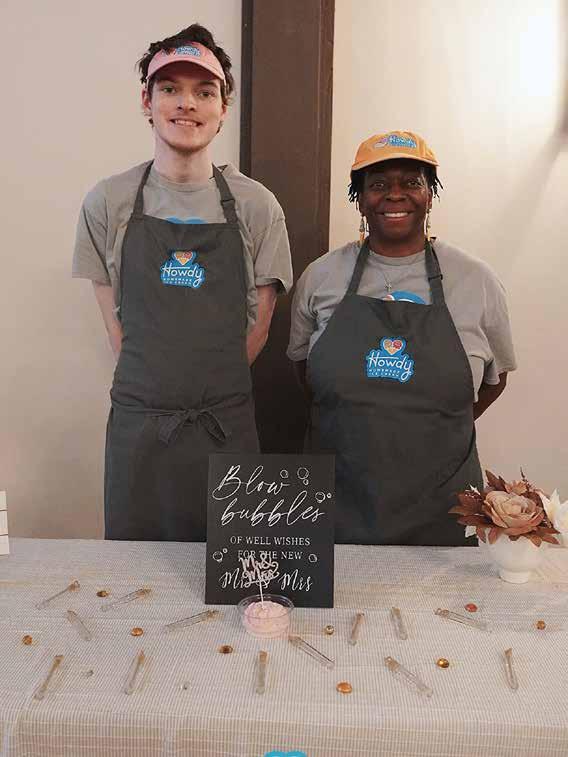
In a city known for its vibrant food culture and strong community values, Howdy Homemade Ice Cream (Howdy) in downtown Indianapolis stands out for something that goes far beyond dessert. It is a place where inclusion is not an initiative on the side. It is literally the foundation of the business originally founded in Dallas, Texas. Howdy blends super-premium ice cream with a purposeful mission: Howdy Homemade is on a relentless pursuit to provide employment for individuals with intellectual and developmental disabilities
Howdy was founded on a simple but transformative belief: that business can and should create opportunity for everyone. The original concept began in Katy, Texas, which envisioned a company that prioritized people first and food second. The goal was to build a workplace where individuals with intellectual and developmental disabilities could be trained, employed, and celebrated as essential contributors. From this foundation, Howdy grew into a franchise model designed to expand inclusive employment across the United States. The mission remains consistent in every location and each provides meaningful jobs in an industry that depends on teamwork, customer interaction, and consistency, while recognizing the strengths and abilities of all employees.
Bringing Howdy to Indianapolis
The Indianapolis location opened in 2023 through the leadership of Carmela Toler and Cindy Carter, two advocates deeply committed to expanding opportunities for individuals

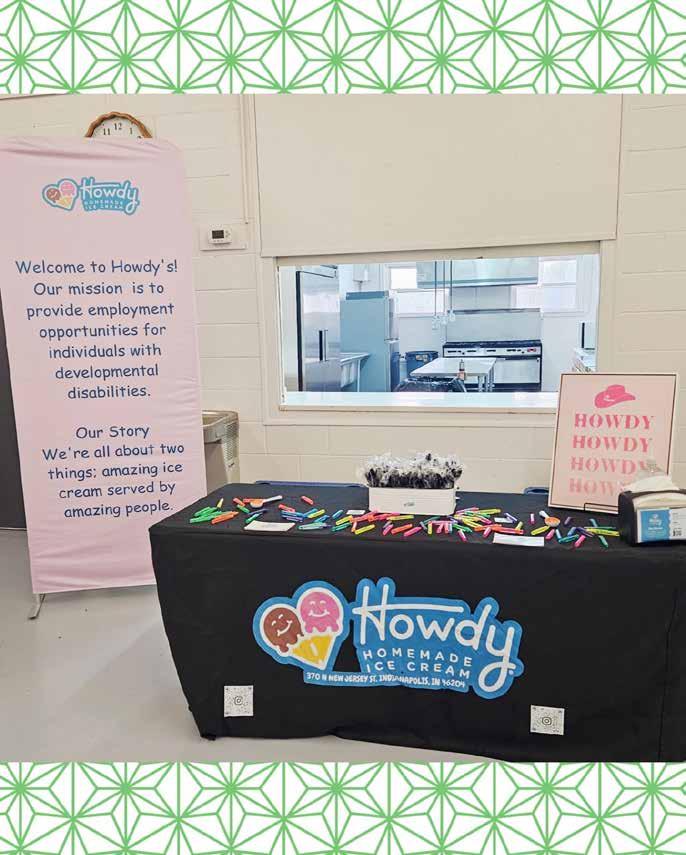
with disabilities. As part of their broader work with LEL Enterprises, they recognized a critical need in the local community: sustainable, meaningful employment for individuals with intellectual and developmental disabilities in an environment that fosters dignity, independence, and growth. The brick-and-mortar storefront stands at 370 N. New Jersey Street.
Their decision to bring Howdy to Indianapolis was rooted in both data and lived experience. In Indiana, approximately one million residents live with a disability, and employment rates remain significantly lower for this population compared to individuals without disabilities. In Marion County alone, only about one-third of individuals with disabilities are employed. Howdy was introduced as a direct response to this gap by offering not just jobs, but structured career pathways and workplace belonging. Howdy’s business case was so compelling that is was awarded an Innovation Pilot Project grant from the State of Indiana to support its launch.
Training, Confidence, and Workplace Growth
Howdy employees individuals with intellectual and developmental disabilities, many of whom are seeking their first job or transitioning into more independent employment. Employees are over the age of 18 and come from across the Indianapolis area with a shared goal of gaining skills, income, and meaningful participation in the workforce. A defining feature of Howdy is its intentional and structured training model. Recognizing the high turnover rate common in the food service industry, the organization built a training system that is

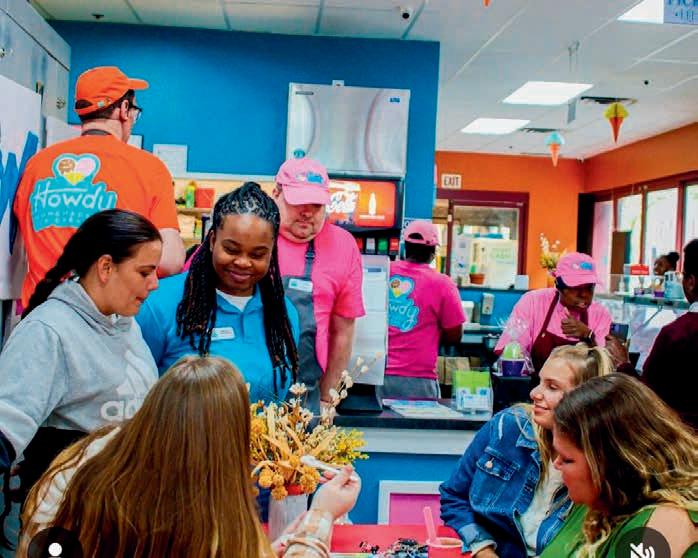
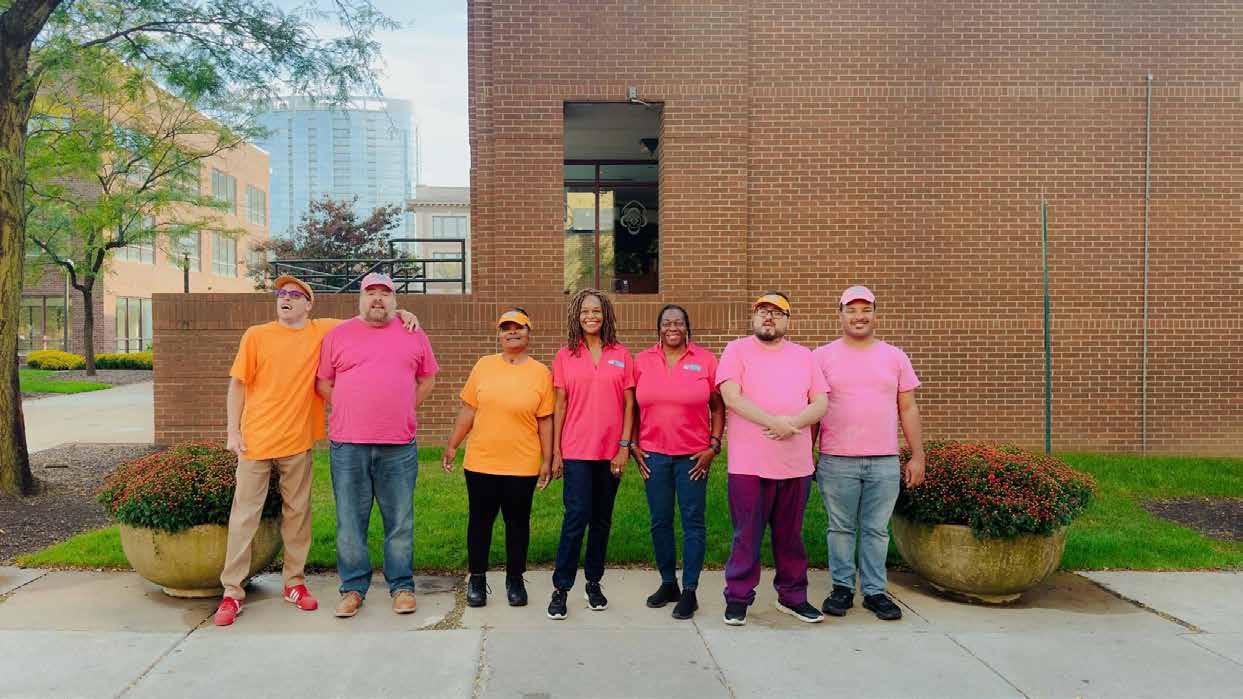
Customers all engage with a team that reflects the diversity and talent of the disability community.
accessible, supportive, and skill-based. Employees participate in hands-on learning using auditory, visual, and kinesthetic methods to build confidence in essential tasks.
Training includes station-based practice, repetition, and guided learning in areas such as food preparation, customer service, and hygiene standards. Employees are taught not only how to complete tasks, but how to engage with customers and represent the brand. Simple but meaningful routines, such as greeting customers and sharing featured flavors, are practiced until they become natural and empowering. This approach ensures that employees are not only prepared for their roles, but are set up for long-term success. The emphasis is on growth, independence, and pride in work, which are qualities that extend well beyond the ice cream counter.
Seriously Good Ice Cream, Period
While the mission is central, the product itself is equally important. Howdy is known for its rich, small-batch ice cream made with high-quality ingredients and bold, memorable flavors. The menu includes classic favorites alongside seasonal and creative offerings, ensuring there is something for every customer.
Guests can enjoy unique ice cream flavors, cones, shakes, and sundaes in-store or take-home pints for later. The shop also offers catering and special event services, bringing its signature experience into schools, organizations, and community gatherings throughout Indianapolis. Every scoop reflects the same commitment: quality, care, and consistency. The result is an experience that blends indulgence with purpose.
Rooted in Indianapolis, Focused on Impact
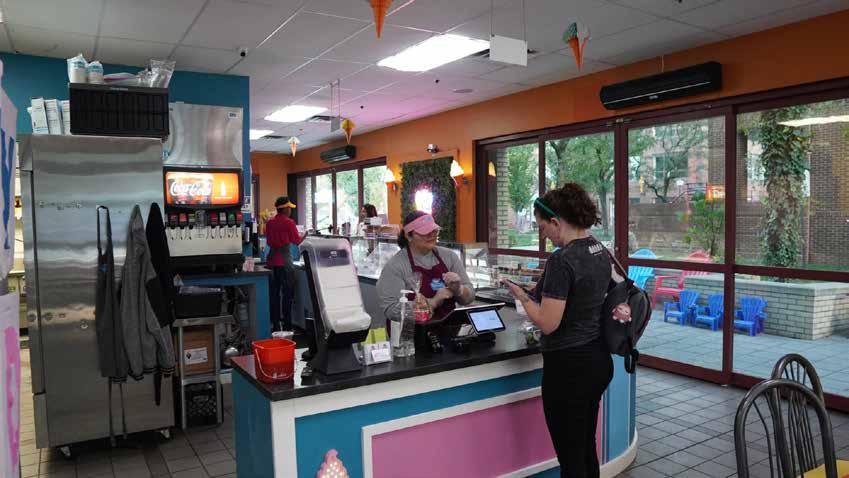
Howdy is deeply connected to the Indianapolis community. It serves families, schools, organizations, and neighbors who value both quality products and meaningful impact. From the moment customers walk through the doors, Howdy feels different. The atmosphere is warm, welcoming, and energized by a team that takes genuine pride in their work. Employees
are not hidden behind the scenes. They are the face of the business, interacting directly with customers and shaping the experience in real time.
Customers all engage with a team that reflects the diversity and talent of the disability community. This visibility matters. It challenges assumptions about disability and employment while highlighting the value of inclusion in everyday life. For employees, the workplace becomes more than a job. It becomes a space for confidence-building, social connection, and personal achievement. For customers, it becomes an opportunity to experience inclusion in action. In this way, Howdy functions as both an employer and a bridge, connecting people through shared experience, hospitality, and joy.
More Than Ice Cream
At its heart, Howdy is not just about dessert. It is about dignity, opportunity, and belonging. It is about creating a workplace where individuals with disabilities are not only included, but are essential. It is about showing that when people are given the right training, support, and opportunity, they thrive and so does the community around them. As part of LEL Enterprises, the Indianapolis Howdy location contributes to a broader mission of expanding inclusive employment opportunities and demonstrating what is possible when businesses are designed with purpose at their core.
Every visit is a reminder that inclusion can be both practical and powerful. And sometimes, it can come with scoops and smiles as every scoop connects us.

Stop in to Visit Us
Howdy Homemade Ice Cream
370 N. New Jersey Street Indianapolis, IN 46204
Caring for Yourself and Your Child With Special Needs
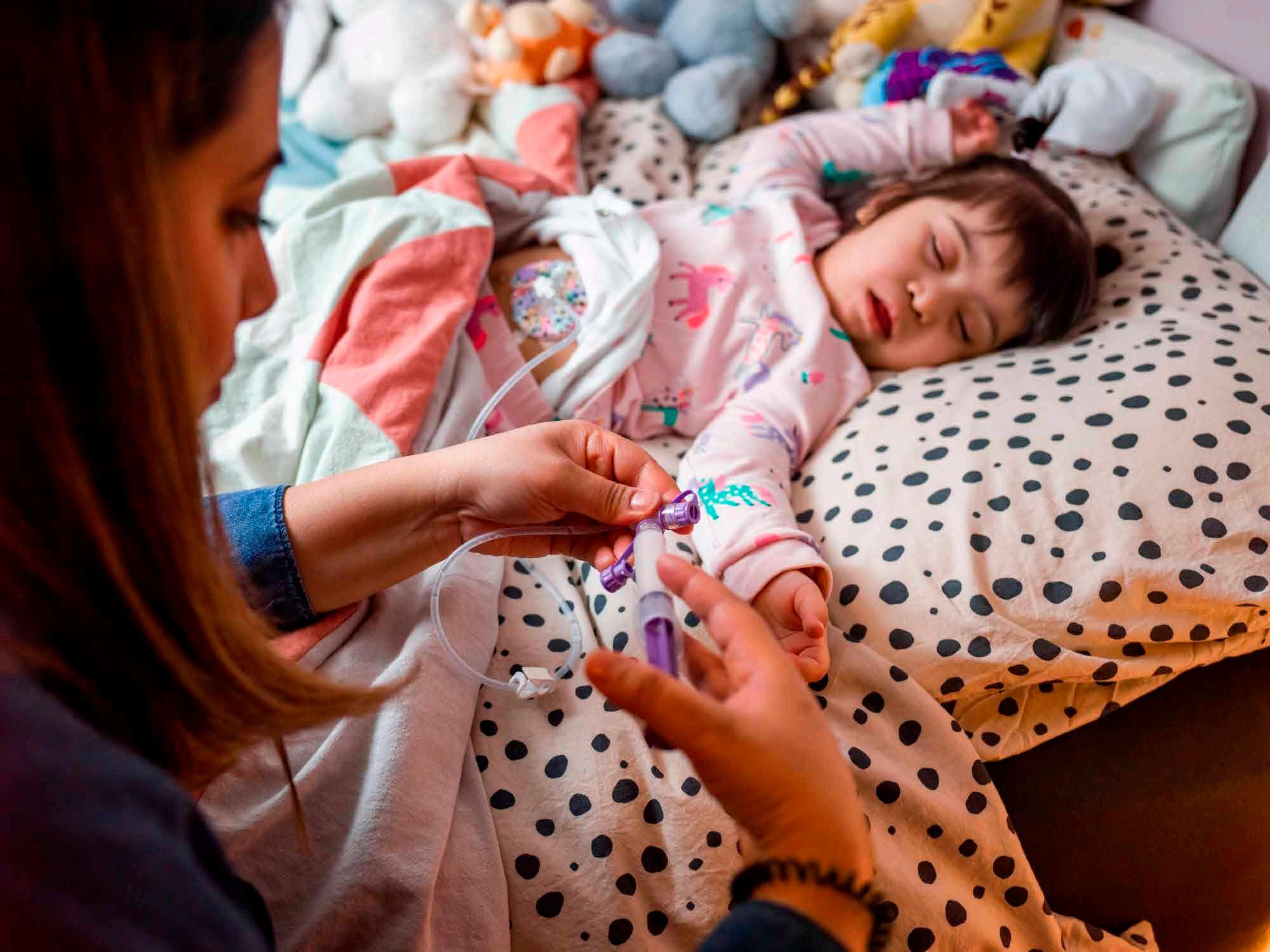
Caregiving for a child with special needs can be a lifelong responsibility that can lead to emotional, social, physical, financial, and identity-related costs for parents.
Reclaiming personal identity and prioritizing self-care through micromoments, maintaining friendships, seeking respite, setting boundaries, rediscovering passions, joining support networks, and caring for physical health are all crucial for sustainable caregiving and overall well-being.
For many parents of children with special needs, caregiving is not a temporary role but a lifelong responsibility. This role can be deeply meaningful and filled with love, yet it often comes at a steep personal cost. Caregiver parents may find themselves emotionally drained, socially isolated, and physically exhausted, with little time left to nurture their own needs. Over time, the weight of being “always on” can erode their sense of identity and their well-being.
Recognizing the costs of caring for a child with a disability is the first step in finding healthier ways to sustain both yourself and the care you provide.
The Costs of Caregiving
Caregiving affects all aspects of caregiver parents’ lives.
Emotional and Mental Strain
Parents of children with disabilities often live in a state of hypervigilance, always anticipating the next crisis. Whether they’re coordinating therapies, advocating with schools, or preparing for medical emergencies, the constant alertness can take a toll on mental health. Stress, anxiety, and even depression are common among caregivers.
Social Isolation
Caring for a child with special needs often means declining invitations, skipping outings, and missing social gatherings. Over time, friendships may fade and parents may feel cut off from
the friends and support systems they once relied on.
Physical and Financial Challenges
Many caregiver parents sacrifice their own health by neglecting sleep, exercise, or medical appointments. In addition, the financial strain of paying for therapies or adaptive equipment or having to reduce work hours adds yet another layer of stress
Loss of Identity
Perhaps one of the most invisible costs is the gradual loss of one’s sense of self. Hobbies, passions, and professional goals can slip away as caregiving responsibilities dominate daily life. Parents may feel that their identity is reduced to a single role: caregiver.
Reclaiming Identity While Caregiving
Parents must remember that they are more than their child’s caregiver. They are individuals with dreams, talents, and lives of their own. Reclaiming that
identity is not selfish, it is essential to sustaining the long journey of caregiving. Here are some ways to begin:
• Prioritize micro-moments of selfcare: Even 10 minutes of intentional downtime can make a difference. A short walk, deep breathing, reading a book, or listening to music can restore energy. Small practices build resilience when done consistently.
• Maintain friendships: Friendships often fade not from lack of love, but from lack of attention. Caregivers can reconnect by scheduling short check-ins, including a phone call, a coffee date, or texting updates. A trusted friend can be an anchor during stressful times.
• Seek respite care: Respite programs, whether a few hours through a local agency or overnight care through state-funded services, give parents a chance to rest and recharge. Respite is not neglect — it’s beneficial for both parent and child.
• Set boundaries: Parents may feel pressure to always be available, but setting boundaries is healthy. Saying no when necessary and delegating tasks to other family members can help prevent burnout.
• Rediscover passions: Picking up an old hobby, even in small doses, can restore joy and a sense of identity. Painting, gardening, writing, or joining a class (in person or online) can remind parents of who they are beyond their role as a caregiver.
• Join support networks: Connecting with other parents of children with disabilities, whether in local groups, online forums, or national organizations, offers both emotional validation and practical advice. These networks also remind parents that they are not alone in their struggles.
• Care for physical health: Many caregiver parents may sacrifice regular check-ups, adequate sleep, healthy eating, and exercise, but these are all vital for longterm well-being. A healthier caregiver is a stronger caregiver.
Daily Recharge Ideas for Caregiver Parents
Even the busiest caregiving schedule has small gaps that can be used for
restoration. Here are practical examples that parents can try:
• Mindful breathing: Taking five slow breaths while waiting for an appointment or during a quiet moment at home can be an effective way to lower stress hormones.
• Mini journaling: Jot down one gratitude or small win from the day, even if it’s as simple as “I got five minutes of peace with my coffee.”
• Stretch breaks: Set a timer for every few hours to stand, roll your shoulders, or stretch for two minutes. This can help relieve physical tension.
• Creative outlets: Keep a sketchpad, knitting project, or puzzle nearby for a quick mental reset.
• Nature boost: Step outside for five minutes to feel the sun, listen to birds, or take in fresh air.
• Connection rituals: Send a quick text to a friend, share a funny photo, or make a short call. Staying connected doesn’t always require long conversations.
• Music reset: Create a playlist of songs that energize or calm you. Listening while cooking, driving, or cleaning can shift your mood.
• Evening wind-down: After your child is asleep, replace screen scrolling with a calming ritual, such as reading a chapter in a book, sipping tea, or stretching.
These little practices may not solve the bigger stresses of caregiving, but they build resilience, reminding parents that their needs also matter.
A Gentle Reminder
Parents who are lifelong caregivers for their children with disabilities carry extraordinary responsibilities. But they must remember that they are more than the role they play. They are also partners, friends, workers, creators, and dreamers.
Reclaiming identity doesn’t mean stepping away from caregiving — it means ensuring that caregiving is sustainable. By nurturing their own well-being, parents not only protect themselves but also provide their children with the best care possible.
GORDON F HOMES, JR., CFP, CLU, CHFC, CASL
WestPoint Financial Group Financial Advisor Special Care Planner
8888 Keystone Crossing Suite 1600 Indianapolis, IN 46240
9900 Corporate Campus Dr. #3000 Louisville, KY 40223
T: (317) 567-2005|C: (317) 506-4734 ‘Calls only’|F: (317) 469-2500 ghomes@financialguide.com www.gordonfhomes.com
Securities, investment advisory and financial planning services offered through qualified registered representatives of MML Investior Services. Member SIPC. WestPoint Financial is not a subsidiary or affiliate of MML Investor Services, Inc., or its affiliated companies. OSJ: 900 E. 96th Street Suite 300 Indianapolis, IN 46240
This e-mail transmission may contain information that is proprietary, privileged and/ or confidential and is intended exclusively for the person(s) to whom it is addressed. Any use, copying, retention or disclosure by any person other than the intended recipient or the intended recipient’s designees is strictly prohibited. If you are not the intended recipient or their designee, please notify the sender immediately by return e-mail and delete all copies.
Registered Representative of and securities offered through MML Investors Services, LLC, Member SIPC and a MassMutual subsidiary. Transactions may not be accepted by e-mail, fax, or voicemail
Step outside for five minutes to feel the sun,..

Tips for Transitioning Your Child with a Disability into Adulthood
~DR. DAROLYN “LYN” JONES, UNIQUELY YOU! & SALLY, MORRIS, DIRECTOR OF COMMUNICATIONS, THE ARC OF INDIANA
The Challenges
Our adult children deserve to be engaged, thriving, and active members of the community just like they were in their K-12 school communities. However, the services in the adult world are not the same, not required by law, and not as widely available.
Schools and Indiana waiver case managers should be a good resource for informing families about guardianship, supported decision making, selective service, social security, vocational, employment, educational opportunities, medical transition, and community programs, and more.
But too often K-12 school transition specialists or Indiana waiver case managers have large caseloads and creating transition plans that are specifically tailored to every client with an Individualized Education Plan (IEP) or with a waiver plan of care can be a time consuming and complicated task.
The Individuals with Disabilities Act (IDEA) requires that all schools provide transition planning for students with IEPs. The recommendation is to begin planning between the ages of 14-16, but IDEA does not require how well that planning is executed or how well staffed those positions are. And because the waiver follows a child into adulthood, case managers are focused on their waiver services, not necessarily post K-12 services.
Below find tips and ideas for how to begin the transition process with your child with a disability.
First Tip!
Start discussions early with your child, your school’s transition specialist, and your waiver case manager. Start networking early with other families who are transitioning
or who have already transitioned. Start researching, visiting educational, vocational, employment, and day program services as early as age 14. As you work through the information in this article, you will understand why it’s so important to begin early.
Medicaid Waivers
If you have not applied for a Medicaid Waiver through Indiana’s Medicaid Waiver program, you must do this as soon as possible. Medicaid Waivers pay for home and communitybased services. Parental income and resources are not counted to determine financial eligibility for a child under or over the age of 18. Only the individual’s income and resources are counted.
Indiana Medicaid Waiver Resources
The Arc of Indiana: https://www.arcind.org/supports-services/ medicaid-waivers/ Indiana Medicaid: https://www.in.gov/medicaid/members/ home-and-community-based-services/ Indiana Medicaid Waivers: What You Need to Know! Uniquely You! https://issuu.com/specialneedslivingindy/docs/nov_2024_ uniquely_you_indy_web_1_.pdf/s/59853762
Note! Information on how and where to apply can be found when you click on the link for each waiver from the Indiana Medicaid link above.
Guardianship & Alternatives to Guardianship
Begin thinking about guardianship and alternatives to guardianship prior to your child turning 18.
There are different types of guardianship in Indiana. Individuals with disabilities have rights and there are alternatives and options for individuals with disabilities. Understand those options and again, speak with your child with a disability about those options.
In considering which option, the least restrictive alternative (LRA) should be used. Those options include:
• Informal supports
• Supported decision-making agreements
• Authorizations to share information
• Team-based or shared decision making
• Power of Attorney (POA)
• Healthcare Representative
A state law passed in 2019 recognizes Supported Decision Making Agreements as an alternative to guardianship and requires Less Restrictive Alternatives (LRA’s), including Supported Decision Making to be considered before the court will appoint a guardian.
If legal guardianship is the process you want to pursue, begin the legal process 6 months prior to your child turning 18.
There are different types of guardianship in Indiana, including guardianship of the person, guardianship of the estate, and full guardianship of the person and the estate.
While an individual or co-guardians can file for guardianship for a minor child turning 18 with a disability, some local court rules don’t allow it or make it inadvisable. The initial guardianship application can be complicated for families to navigate, and a lawyer is required to file the guardianship petition with the court. Legal fees can be expensive. Contact several probate, estate, and/or elder law attorneys to learn about what their fees are and if they offer a reduction in fees based on a family’s situation.
Once guardianship status is established, you must submit biennial reports with the county court system. If available in your county, you can refile the reports yourself online. However, in some local courts, as noted above, they encourage an attorney to refile, so check your local court’s requirements.
Understand that once your child with a disability turns 18, they are considered a legal adult. You will need your child’s permission to speak with their educational team, medical team, financial team, employers, or case managers unless you have established a supported decision-making agreement (that does not have to be court-approved), authorizations to share information, power of attorney, or, for medical issues, serving as a health care representative. Save electronic copies and have physical copies available to take with you in case you need to have proof that you have guardianship or alternatives to guardianship.
Guardianship & Alternatives to Guardianship Resources
• The Arc of Indiana – An Introduction to Guardianship & Alternatives to Guardianship
• https://www.arcind.org/future-planning/guardianship/
• Indiana Disability Rights - Adult Guardianship in Indiana Fact Sheet https://www.in.gov/idr/sdm/files/ IDR-Guardianship-Fact-Sheet-21OCT19-LP.pdf
• The Arc of Indiana - Guardianship & Alternatives Fact Sheet https://www.in.gov/gcpd/files/ Guardianship-and-Alternatives.pdf
Selective Service
If you have a male child with a disability about to turn 18, they do need to be registered for the Selective Service or the Draft. As of April 2026, eligible adult males are not yet automatically registered for the Selective Service, but they will be by December 18, 2026. Congress passed a law shifting the responsibility from individual registration to automatic registration using federal data, designed to streamline compliance.
Selective Service Resources
• Who must register for Selective Service https:// www.usa.gov/register-selective-service
• Who needs to register? https://www.sss. gov/register/who-needs-to-register/
• Disabled Men Who Live at Home Exemption https:// www.sss.gov/register/who-needs-to-register/#p4
Note! Exemptions will be made if the disability qualifies for an exemption, but you must still register and note the exemption on the registration.
Social Security
Neither schools nor your waiver case managers typically can assist with this. They don’t always know or fully understand how these programs work. Indiana Medicaid waivers are managed through the state. Social Security is a federal program. Typically, you or your child cannot receive Supplemental Security Income (SSI) or Social Security Disability Insurance (SSDI) until they are 18. It is recommended to wait a month before turning 18 to apply, as regulations state that if an application is received within 3 months of the person’s 18th birthday, it will be counted as an adult application, even though they are not yet a legal adult. This can lead to confusion and delays.
Children can possibly receive SSI benefits, but family income and assets are considered.
Supplemental Security Income (SSI ) versus Social Security Disability Insurance (SSDI) Resources
• The Arc of Indiana - State and Federal Programs https://www.arcind.org/supports-services/ state-federal-programs
• The Arc of Indiana: Navigating the SSI Process https:// www.youtube.com/watch?v=TC53nnh8N0o
• SSDI and SSI Benefits for People with Disabilities https://www.usa.gov/social-security-disability
• Social Security Overview Redbook https://www.ssa.gov/redbook/eng/overview-disability.htm?tl=0
• The Arc of the United States - Social Security and SSI for IDD and Families https://www.thearc.org/wp-content/ uploads/forchapters/NPM-SocialSecurity_SSI_4.pdf
Know that Indiana is a 1634 state. A 1634 state is a state that automatically grants Medicaid to
those receiving SSI. Indiana follows the Social Security Administration’s determination of disability for other Medicaid programs.
Your local Social Security offices once again do offer in-office appointments, after a period of not offering them. You can also speak with Social Security by phone. Be aware, depending on who you speak with at Social Security, you may receive incorrect information, misinformation, or different information from what someone at the same office has told you. Don’t hesitate to get clarifications. Lengthy paperwork and documentation are required for both SSI and SSDI.
You will have to provide proof of guardianship after age 18 or present documentation of alternatives to guardianship to apply and assist your child with SSI or SSDI. You will also need to provide a breakdown of average monthly costs of tangibles, including housing, food, and utilities.
Once approved, if the individual needs a representative payee, you will need a representative payee bank account where SSI or SSDI can be routed each month.
SSI and Medicaid have a $2,000 resource limit. SSDI does not. Priority must be given to first using funds for basic living expenses, such as housing, food, and utilities. Any money left after that can be used as the individual wishes.
If you find that there is more than $2000 in resources as the end of the month approaches, a self-funded special needs trust or ABLE or 529 ABLE account can allow a person with a disability to maintain benefits.
Learn about ABLE at https://savewithable.com/in/home/ INvestABLE101.html
Learn about special needs trusts, including self-funded trusts, through a program such as The Arc Master Trust at https://www.thearctrust.org
Transition from Pediatric to Adult Medical Care
If you do not have legal guardianship or an alternative to guardianship, such as being a health care representative, be prepared to lose all access to medical portals (doctors,
Unfortunately, the medical community has not done a sufficient job of ensuring that there are physicians who can attend to our adult children with special needs.
Talk with your physician(s) first —and early—about a transition plan. Ask your physician(s):
How long can your child stay under their care?
Who does the physician recommend taking over your child’s care when they transition to adult care?
Talk with other families who have adult children with similar diagnoses to find out who they see for different specialties.
Often, if you can find a good general practitioner, they can take over some of the specialist care if that specialty care is
Be open to traveling outside of your area or network to find a good physician. Many physicians will consider virtual appointments, which can reduce your travel.
Indiana Medicaid may cover some hospitals and physicians outside of the state, especially along border communities like Chicago, Cincinnati, and Louisville. If your child has a disability that has specialty clinics, check to see if Indiana Medicaid covers those clinics, even if they are out of state.
Physicians who are known to be open to serving adults with disabilities, and who have been recommended, may have wait lists. The earlier you start and place your name on an adult provider patient list, the better.
Note! Adult children with disabilities over age 26 can continue to stay on their parents’ private health insurance if they are not capable of self-sustaining employment due to a disability and are chiefly dependent on the parent for support. Talk with your employer’s human resources department and tell them you have a Disabled Adult Child who needs to stay on your insurance.
Vocational and Employment Options
Talk with your K-12 transition specialist early about options for your child. By law, discussions about what you and your child see as future goals and work options should be happening as early as age 14. Use the time between ages 14-18 and up to age 22, while your child is still in school, to explore vocational and employment options.
Most K-12 schools’ transition teams have built partnerships, along with community options.
The Workforce Innovation and Opportunity Act requires Vocational Rehabilitation (VR) agencies to set aside federal funds to provide Pre-Employment Transition Services (pre-ETS) to “students with disabilities who are eligible or potentially eligible for VR services.” This is a wonderful opportunity to

ensure students have access to meaningful career planning in order to help with the seamless movement from high school to employment or post-secondary training. Talk to your school to learn if they have a pre-ETS program.
Post School Programs
K-12 schools operate under the IDEA law or the Individuals with Disabilities Education Act (IDEA). IDEA ensures a free and appropriate public education (FAPE), and related services, to eligible children with disabilities.
After your student ages out of school at age 21 or, in some cases 22, there are no mandatory programs or services. Posthigh school programs may include pre-vocational training, vocational training, and home and community-based services funded through Indiana’s Medicaid waiver program.
Most local programs serving people with developmental disabilities accept the Family Supports Waiver (FSW) and Community Integration and Habilitation (CIH) waiver. Many programs have waiting lists. Some do not transport or only transport within a certain mileage range.
For individuals on the Health and Wellness Waiver (H&W), formerly the A&D waiver, community programs may be more medically based. This can be problematic. Many day programs serve people who are elderly, rather than young adults. And even those day programs that accept the H & W waiver are not equipped or not allowed to administer medications, feed someone orally, deliver G-tube feeds, suction trachs, or provide any assistance with incontinent changes.
For the H&W waivers, home-based supports may be available to help care for your loved one at home. Hopefully, institutionalization is not presented as the only viable option.
As of this writing, Indiana Medicaid waiver changes are forthcoming, and there may be more options for individuals who need more appropriate and inclusive supports that fit their medical, social, and community needs.
TIPS!
• Ask your transition specialist at your K-12 schools AND, if you have one, your waiver case manager, about community program options and recommendations. If they don’t know of any, ask them to help you find some options.
• Research community programs that might work for your child.
• Talk with families who utilize community programs for their adult child.
• If possible, visit programs to see if they would be a good fit for your child if they think it could be a good fit.
Let me repeat the first tip. DO THIS EARLY.
• Apply to all of the programs you think MIGHT be a good fit, so you have options and can be placed on waiting lists.
• When you call or visit community programs:
• Ask what Medicaid waivers the agency accepts.
• If your waiver is not covered, or you are waiting on Waiver services, ask about private pay options—often the hourly rate is only what the center is reimbursed for a DSP, which can range from 15-17$ an hour.
• Ask about the client-to-staff ratio.
• Ask about transportation options.
• Ask about therapy options, community outings, and socialization options.
• Ask what they will and won’t do in terms of care, behavior management, and engagement.
• Ask if you can speak with other parents and clients who attend and find out what is and is not working for them.
• Ask when you can visit your child.
• If you have the option, allow your child to attend community programs while they are still in their K-12 transitional program so they still have the benefit of support from the schools.
Know that new community programs and services are opening all the time. Keep an eye out for better options for your child.
Finding and Building Community
Being a parent of a child with a disability can be lonely, isolating, and marginalizing. Being a parent of an adult child can be even more so because when children with disabilities age out of school, parents no longer have the support of a school community. Parents sometimes struggle with their own families, friends, and communities understanding their child. As the saying goes, If you don’t live it, you don’t get it.
Many parents find their support systems in online Facebook groups such as Our Journey: Indiana Families of Adults with Developmental Disabilities https://www.facebook. com/groups/391628224541967
The administrators of the Our Journey FB page have a collection of archived and in-depth resources on a variety of topics related to transitioning to being an adult and everything in between. Your child must be at least 14 years old, and you must answer the required questions to be admitted.
There are individual Facebook groups like CP Warriors, Down Syndrome Support, Rare Disease groups, Preserve Family Caregivers in IN, among many others, that may offer support.
If you prefer, seek an in-person support group— the magazine Uniquely You! offers periodic retreats for moms to gather and share challenges and strategies. Family to Family, In Source, The Arc of Indiana, Down Syndrome Indiana, and Autism Society of Indiana can all help direct you to family advocacy and support.
There are also groups for adults with disabilities to socialize and engage, including Self-Advocates of Indiana chapters (www.saindiana.org), Special Olympics, Aktion Clubs run through local Kiwanis, Gigi’s Playhouse, Thrive Clubs in Hamilton County, Easterseals over 18 Gaming Club, Clinton County Autism Support Group, and many, many more. Can’t find what you are looking for? Start your own!
Stay Informed!
Parents of a child with a disability are overwhelmed on a good day. As much as you can, keep informed by signing up for The Arc of Indiana’s weekly newsletter and attending their virtual “Ask The Arc” webinars. Watch Family Social Services Administration (FSSA) information sessions, or Division of Disability and Aging Rehabilitative Services (DDARS) meetings. Many of these sessions are recorded and uploaded to YouTube so you can watch them at your convenience. The agencies will share information about resources and Indiana Medicaid waiver changes.
Stay connected with other families who have children and adults with disabilities. In author Lyn Jones’ lived experience, some of the best information and resources she has gained throughout her son Will’s 22 years have come from other parents who have walked a similar path.
The Positives
Leaving the safety net of school is not easy. But…You got this! You have done hard things. You can do hard things. Apply the same strategies you have been using to advocate for your child’s services in the school, medical, and local communities during this next transition into adulthood.
It’s okay not to know what you don’t know. And don’t beat yourself up for not having all the answers because no parent does. It takes all of us working together to create a more inclusive and supportive community for our children as they transition from childhood to adulthood.
Final Tips!
Take notes. Every time you speak with someone, write down the date, time, name of the individual, and what was discussed. Keep a digital copy of all communications during and after the transition process. If you handwrite notes, take a photo so you have a backup copy for your records.
Also, recognize that programs and resources are changing all the time. If you hear something new, it may be because rules have changed or there is a misunderstanding. It is important to get information from reliable sources.
Additional Transitional Resources
Many counties and state regions host Disability Resource Fairs. Ask your transition specialist about any upcoming fairs in your community or surrounding area. These events often feature a wide range of vendors who can provide information on topics such as Indiana Medicaid Waivers, Special Needs Trusts, college programs, job coaching, and day programming.
• Indiana State Transition Center Comprehensive List of Links: https://instrc.indiana.edu/transitionresources/state-national_links/index.html
• Easterseals Transition Services: https:// www.eastersealscrossroads.org/services/ adult-services/transition-services/
• Life After High School: https://abilitypath.org/ resources/reports/life-after-high-school/
• Transition from School to Adulthood: https://www. arcind.org/supports-services/transition-from-school/
• Center on Community Living and Careers Work and Social Security, other Benefits, and ABLE: https://www. iidc.indiana.edu/cclc/employment/benefits-information/ benefit-and-work-incentive-fact-sheets.html?fbclid=IwY2xjawFGQdxleHRuA2FlbQIxMQABHRrcCO0a3bPrlQ_ YW2ZZa5XzA-DJTk2-jNYLlOYiJOtSWcFTsPgSiwHOQg_ aem_7N0c1ksNsXe-ZFAXhwF0zA
Do you have a successful transition story to tell? Share it with us. We’d love to publish those success stories in our magazine https://form.jotform.com/261525966357165

Neurofeedback is a non-drug, non-invasive solution to symptoms related to brainwave dysregulation. It's natural and offers a fix to the problem, not just a bandage that masks the symptoms.
"We followed the same path most of the other autism parents do with GFCF, DAN Dr., supplements, HBOT. What really made a difference in our son’s attention span, executive processing skills, and anger management was neurofeedback through INDY Neurofeedback and Leanne O’Neil."
~Maria S.
(parent)

a consultation today!


8801 N. Meridian, Suite 306, Indianapolis, IN 46260 (317) 888-8500 • www.indyneurofeedback.com












Authentically You
MARISSA PANGLE, MA, CSE FOUNDER, INDEPENDENT PATHWAYS AASECT CERTIFIED SEXUAL EDUCATOR AASECT APPROVED CONTINUING EDUCATION PROVIDER

MY BROTHER AND MY SON are both autistic with high support needs, yet their lives are profoundly different because of knowledge and access.
Authentically You exists because access to information and resources should be available to all.
Some people live their lives looking only inward. I spent mine learning the language of unmet needs.
My understanding of that language began with my triplet brothers.
Shane taught me the pain of invisibility. When your needs are quieter, they are often missed. He became the one who was “fine,” not because he needed less support, but because he understood there was no room for it.
Dylan taught me perseverance. Diagnosed with legal blindness and autism in the early 1990s, he was routinely underestimated. Refusing to be defined by societal norms, he defined himself by his abilities, not his challenges.

Diagnosed with autism, blindness, and profound intellectual disabilities, Brett taught me the extraordinary trust and unavoidable vulnerability that come with having no choice but to depend on others to survive and navigate the world.
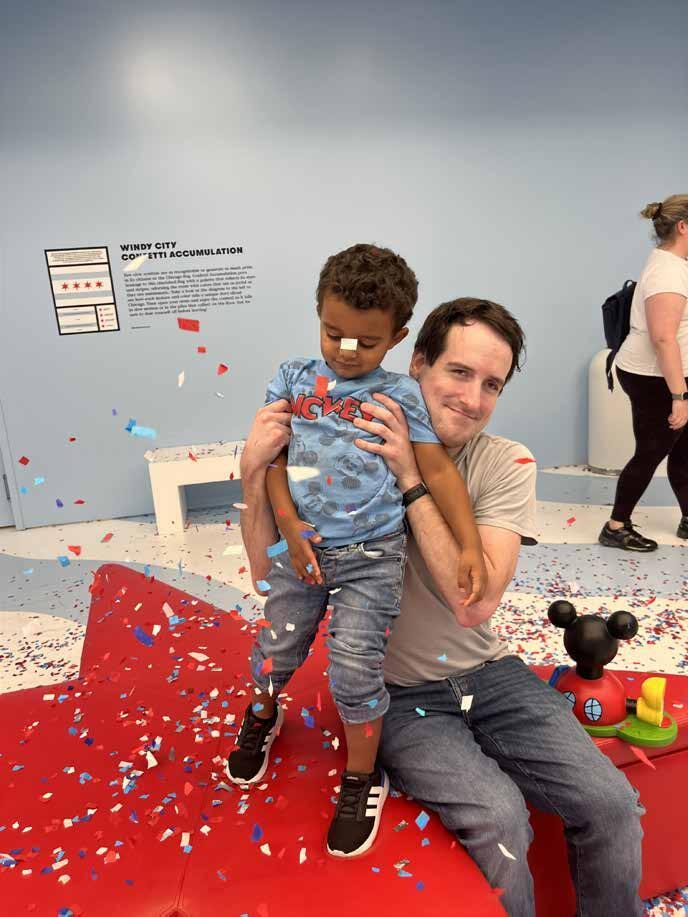
Brett taught me the language of silence. He taught me how to see beyond aggression and listen to the language communicated through the body when it becomes the only reliable voice.
I learned from systems that helped, and from systems that caused harm. The weight of failing to protect a loved one from harm, is heavy. The guilt of hindsight lives in the questions that were not asked, the choices that were made, the people who were trusted, and the painful difference between what was



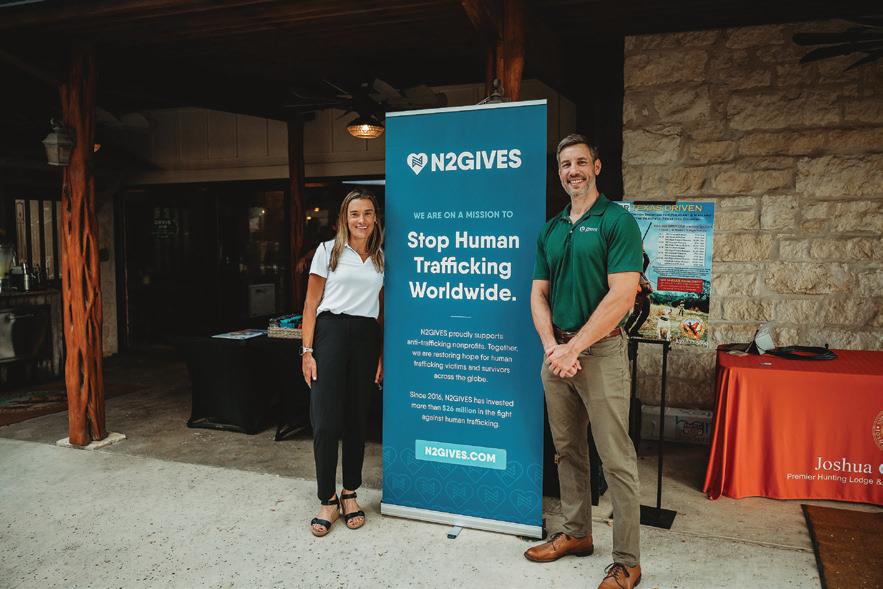


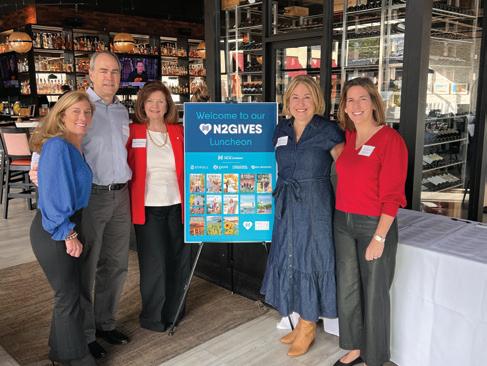



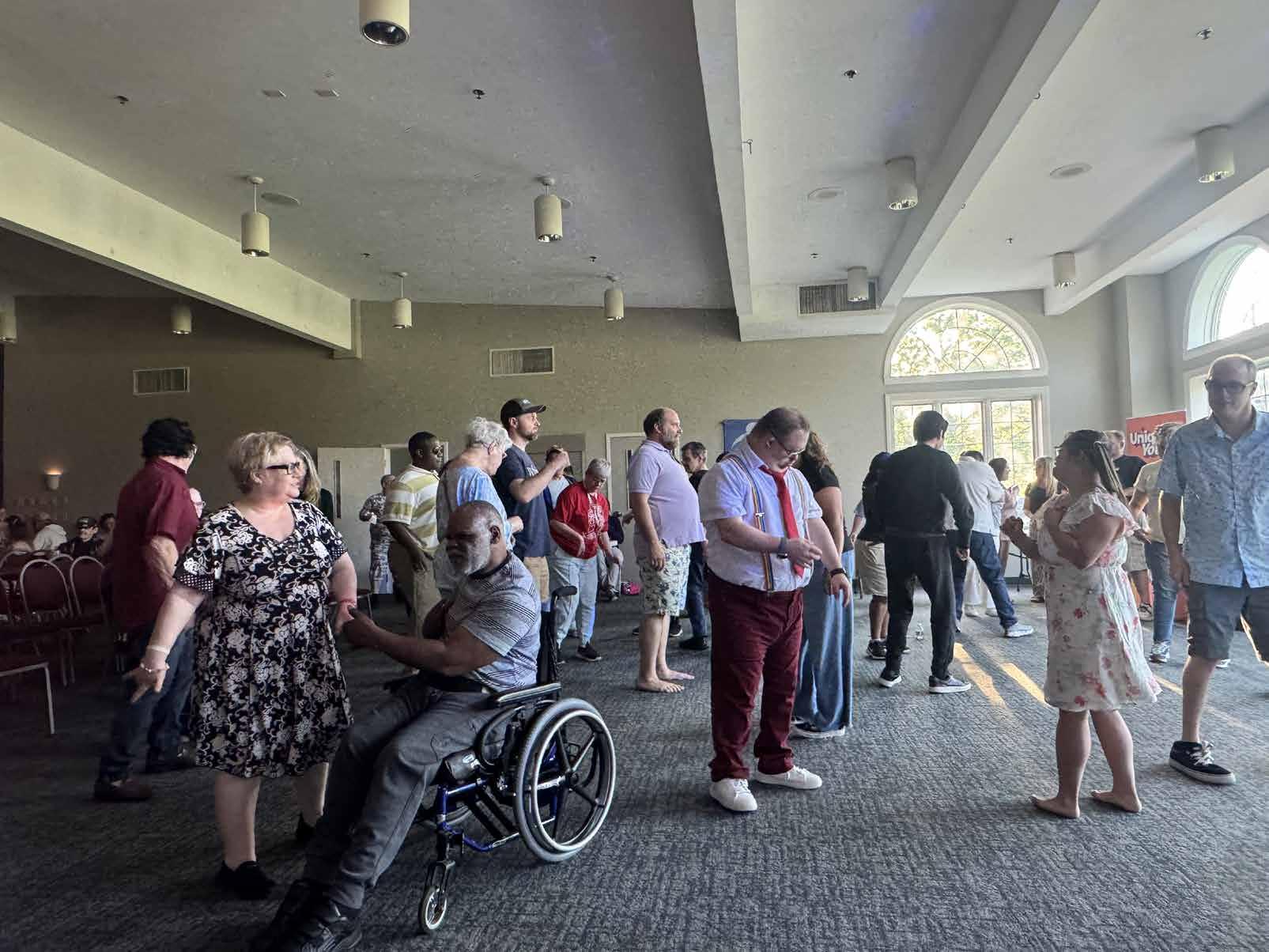
Uniquely You! Community Dance
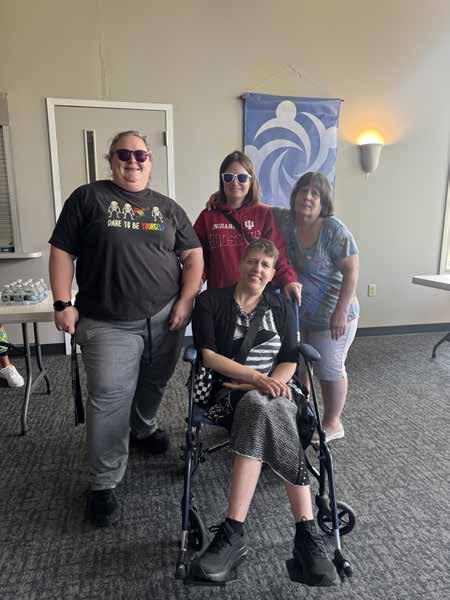
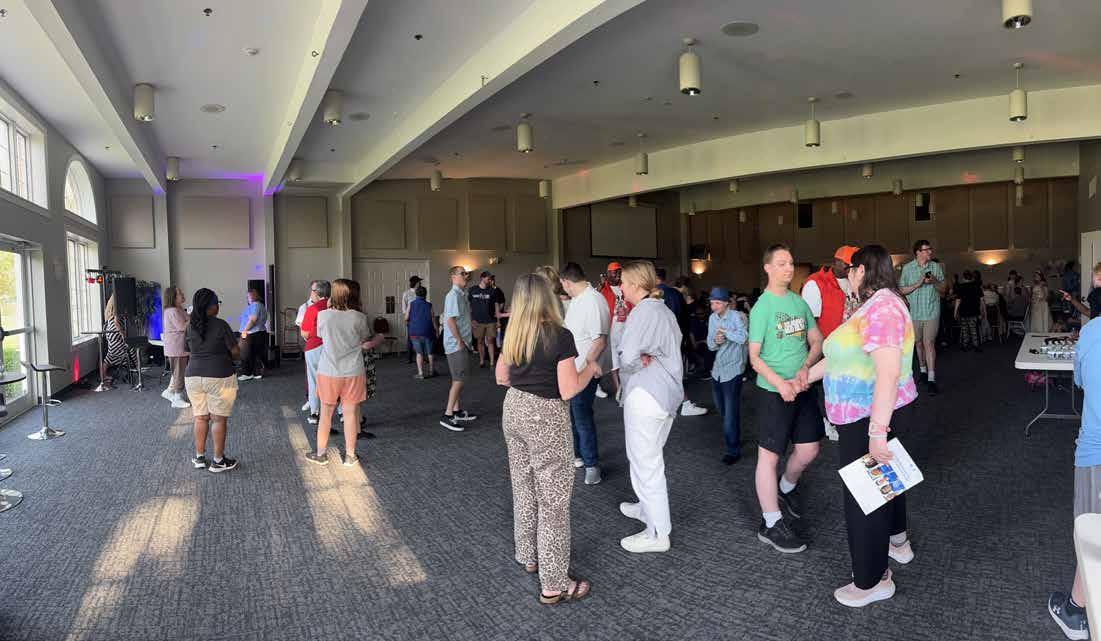
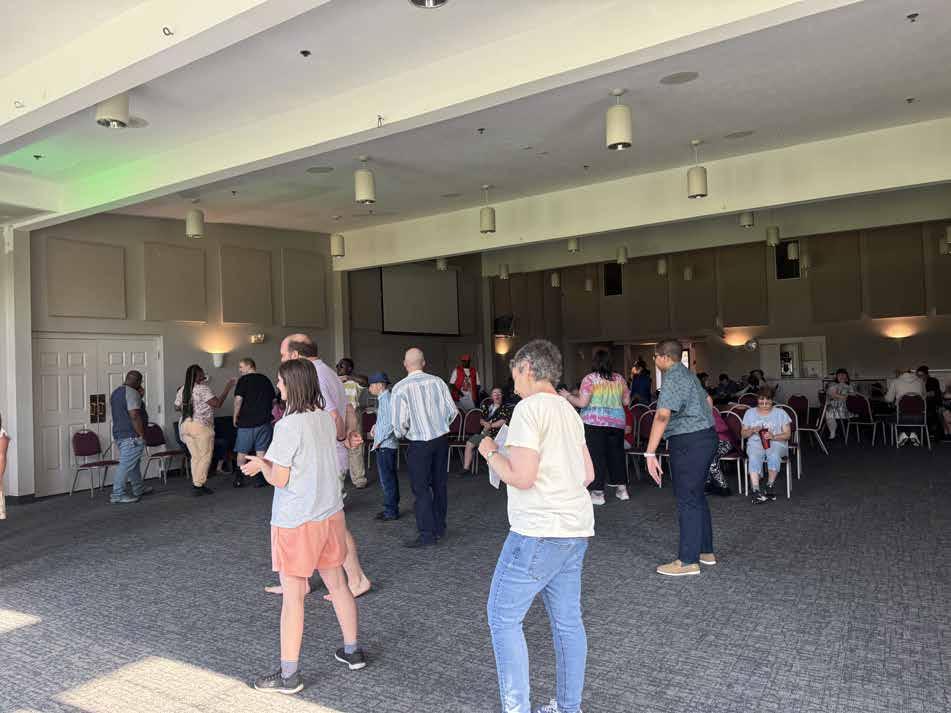
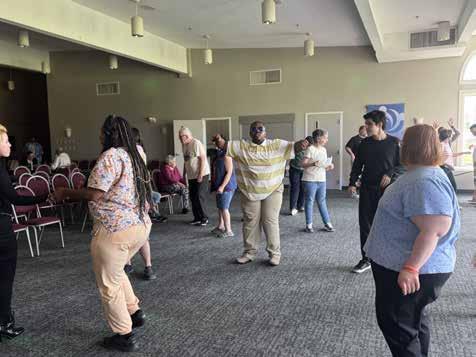
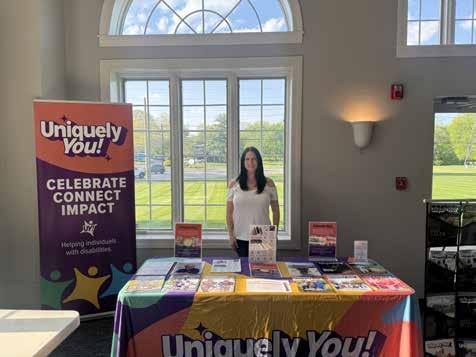
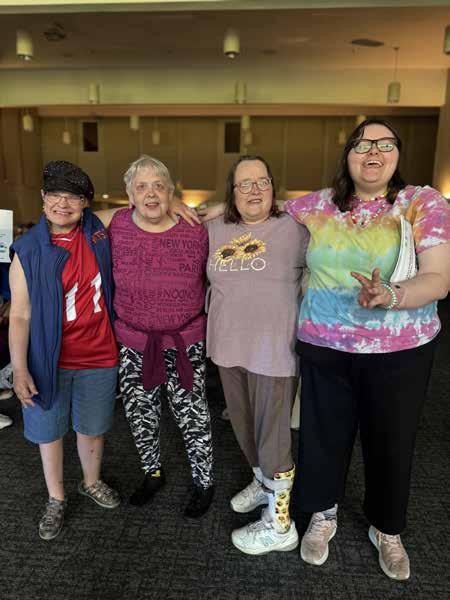
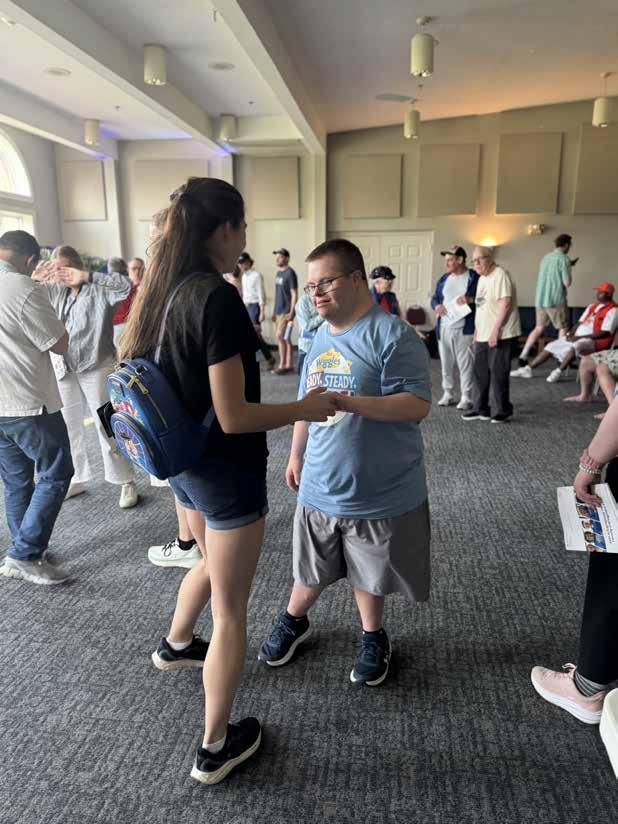
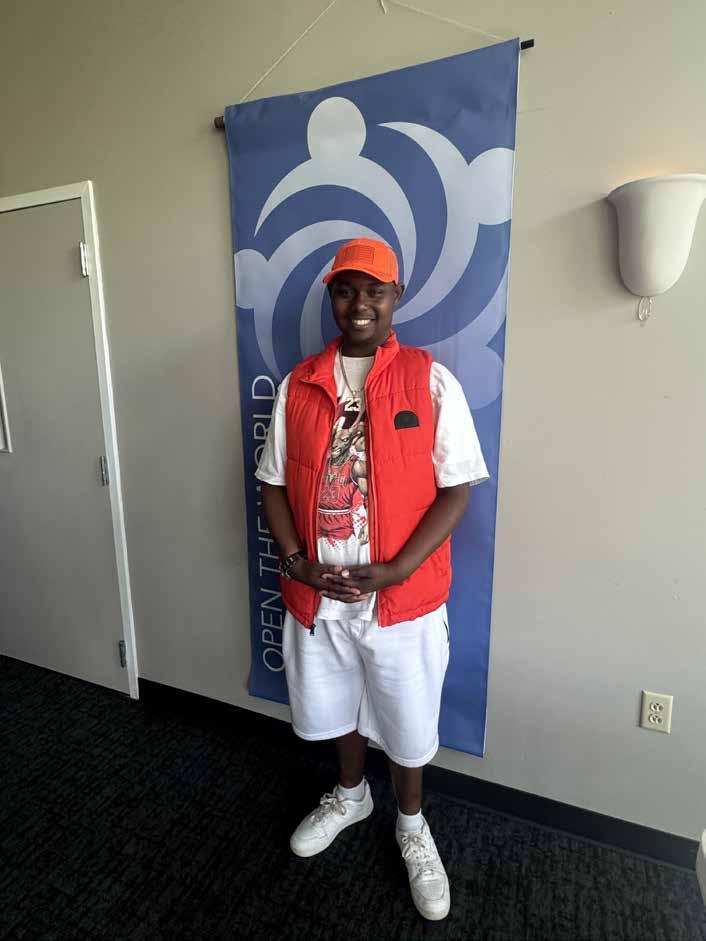
What a beautiful night of joy, connection, and community.
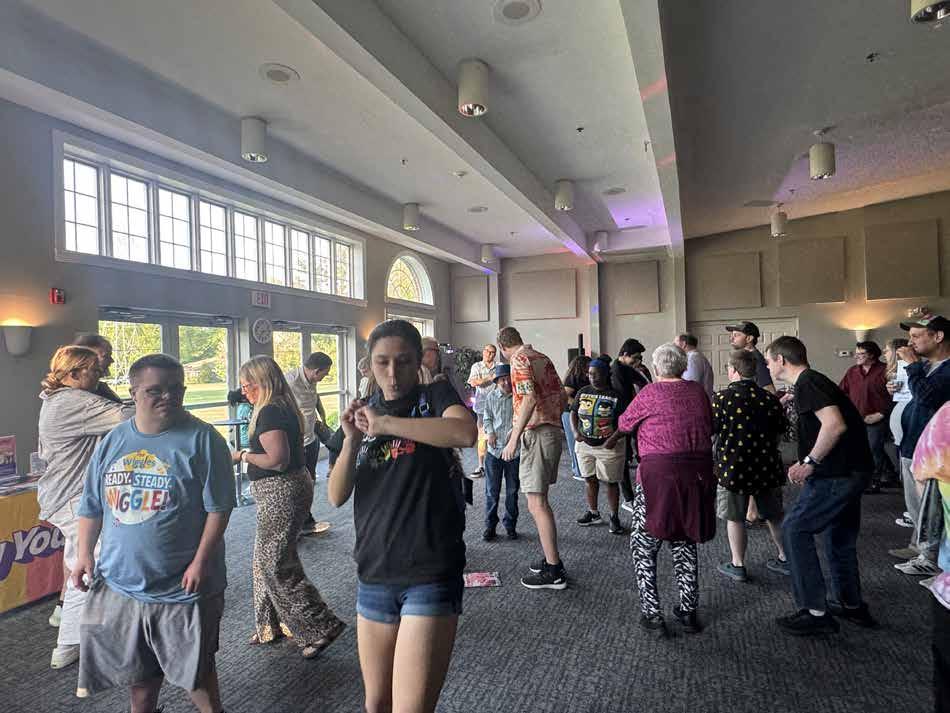
Our Uniquely You Magazine Community Dance was everything we hoped for and more. From the smiles on the dance floor to the meaningful connections made throughout the evening, it was truly a celebration of acceptance, belonging, and being exactly who you are.
In honor of Autism Awareness Month, it meant so much to gather together in a space where individuals of all abilities — along with their families and caregivers — could simply have fun, feel supported, and create lasting memories together.
A heartfelt thank you to:
• North Central Church of Christ for hosting and providing such a warm and welcoming space.
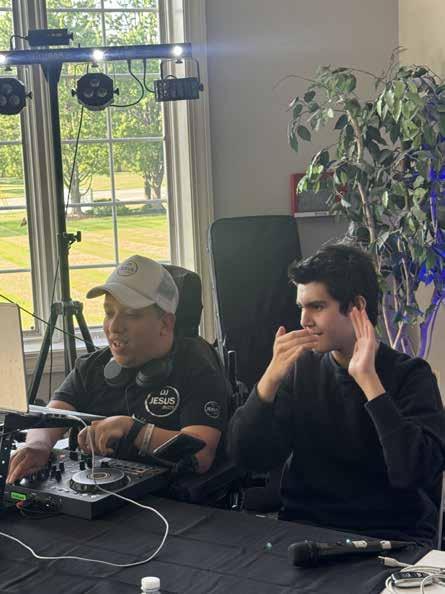
• DJ Jesus Indy Jesus Sanchez for bringing the energy and keeping the dance floor alive all night long.
• JD Angels Family Care & Transportation for sponsoring the music and helping make the evening so special.
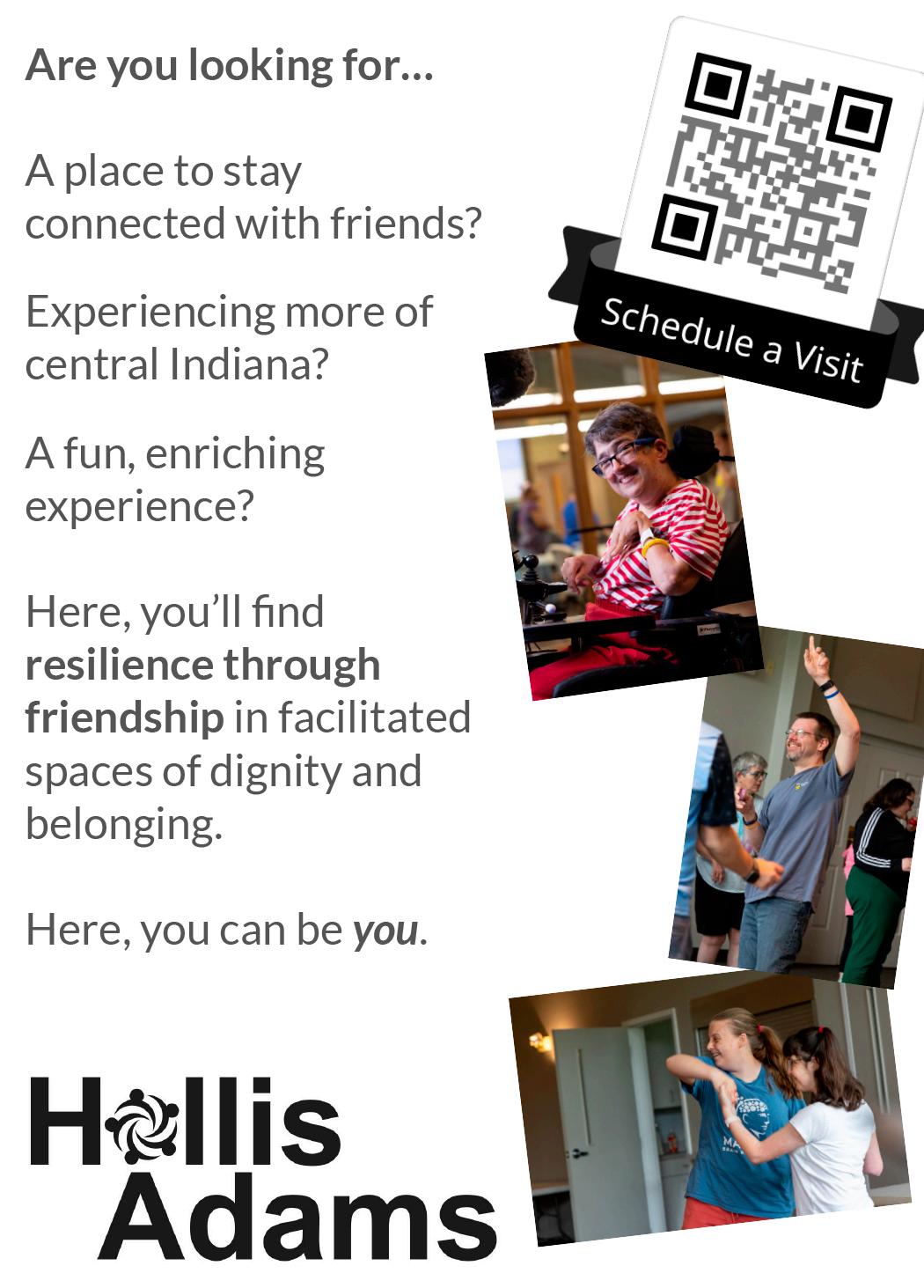
• Hollis Adams for your support and partnership.
• BeeFree Gluten Free for sponsoring the snacks.
• And thank you to our entire Uniquely You community for showing up, dancing, connecting, and making the night unforgettable.
This is what community looks like. This is what inclusion feels like.
We are so grateful for each of you and cannot wait to continue creating spaces like this together.
Hollis Adams hosts Dance Night almost every Thursday evening at this location! Send us a note at info@hollisadams.org if you’d like to receive reminders.



This section is here to give our readers easier access when searching for a trusted neighborhood partner to use. Get to know the businesses that make this magazine possible. Please support them in return and thank them if you get the chance!
ABA & Comprehensive Services
BehaviorWorks ABA (317) 731-7777 behaviorworksaba.com
Hopebridge Autism Therapy Centers (844) 786-0672 www.hopebridge.com
K1ds Count Therapy (317) 520-4748
ABA / Residential & Community Support Sycamore Services (317) 745-4715 sycamoreservices.com
ABA/Comprehensive Services
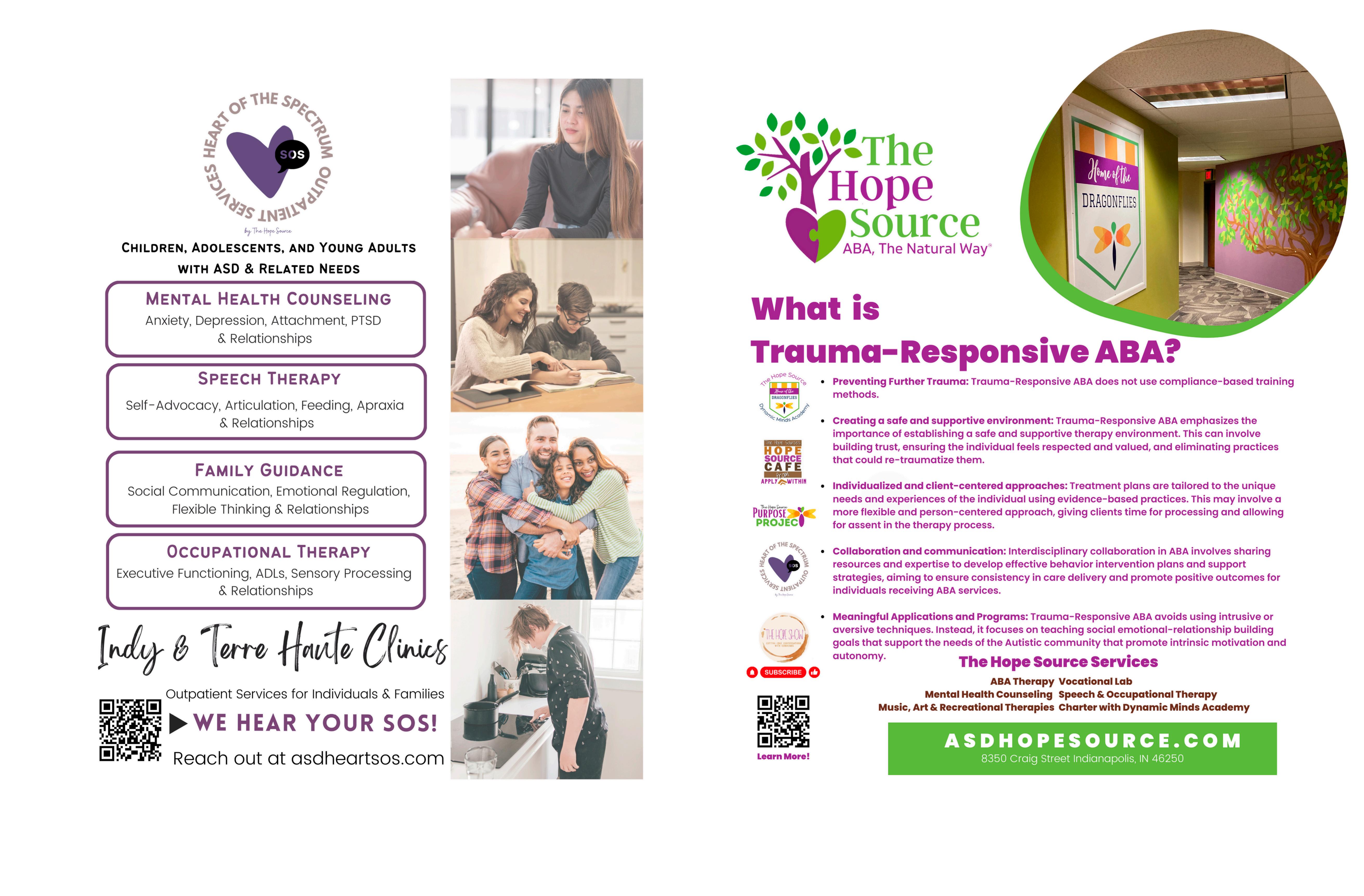
The Hope Source (317) 578-0410
Advocacy & Disability Support AccessABILITY (317) 926-1660 www.accessabilityin.org
Attorney-Wills/Trusts/Estate Planning Law Office of Elizabeth A. Homes LLC (317) 660-5004
Behavioral Support/Pac New Beginnings BIS (317) 366-3432 www.newbeginningsbis.com
Catering & Meal Prep
Indys Kitchen (317) 476-7507 mealprep.indyskitchen.com
Community Inclusion & Adult Services
Hollis Adams (463) 206-1032 www.hollisadams.org
Community Support AID of Indiana (765) 273-3999 aidofindiana.com/
Carters Play Place (317) 836-5510 cartersplayplace.com
Connie’s Clubhouse (435) 621-4153 www.conniesclubhouse.work
LEL Home Services (317) 387-1443
lelhomeservices.com
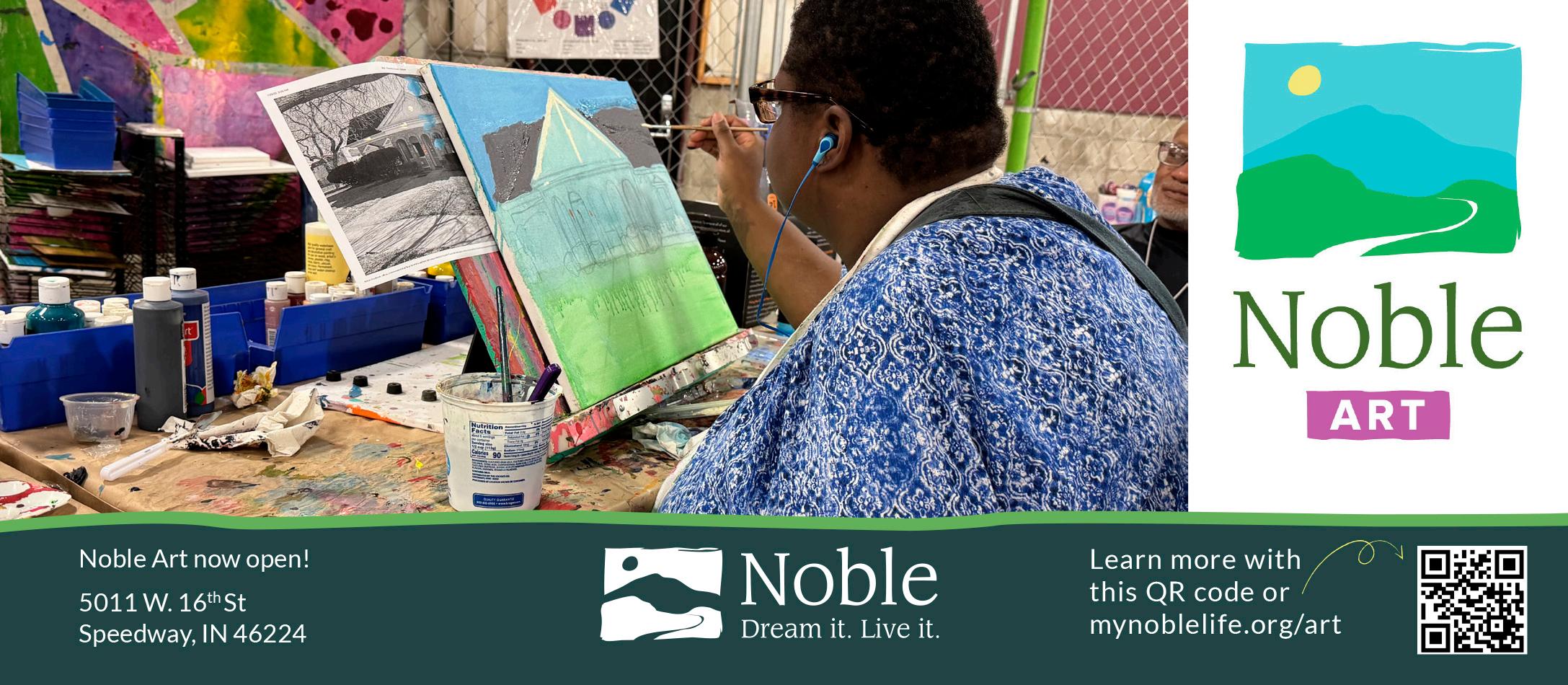
Noble (317) 375-2700
Phoenix Community Services LLC (765) 622-7808 www.Phoenixcommser.com
DJ/Entertainment Services
DJ Jesús Indy (317) 766-5742 www.instagram.com/ dj_jesus_indy
Dyslexia Support Program
Retrain the Dyslexic Brain by Dr. Rebecca Troy (218) 393-2423
www.DrRebeccaTroy.com
Employment/Community Support Hopewell Center (765) 642-0201 www.hopewellcenter.org
Financial
WestPoint Financial Group
Gordon Homes (317) 567-2005
Home Care & Pediatric Services
Guardian Care www.myguardian.care
Home Care & Transportation
ABC Community Services LLC (317) 516-1178
www.abccommunity services.com
Home Health Services
ComForCare Home Care (317) 575-3983
www.comforcare.com/indiana/ north-metro-indianapolis
Home Modifications / Specialty Equipment
Specialized Home Care Services (888) 506-4182
www.specialized4u.com/
Housing/Transportation/PAC/Respite
JD Angels Family Care (317) 654-2609
Ice Cream
Howdy Homemade Ice Cream (317) 397-0008 www.howdyindy.com
Insurance
State Farm
John Cole (317) 430-1958
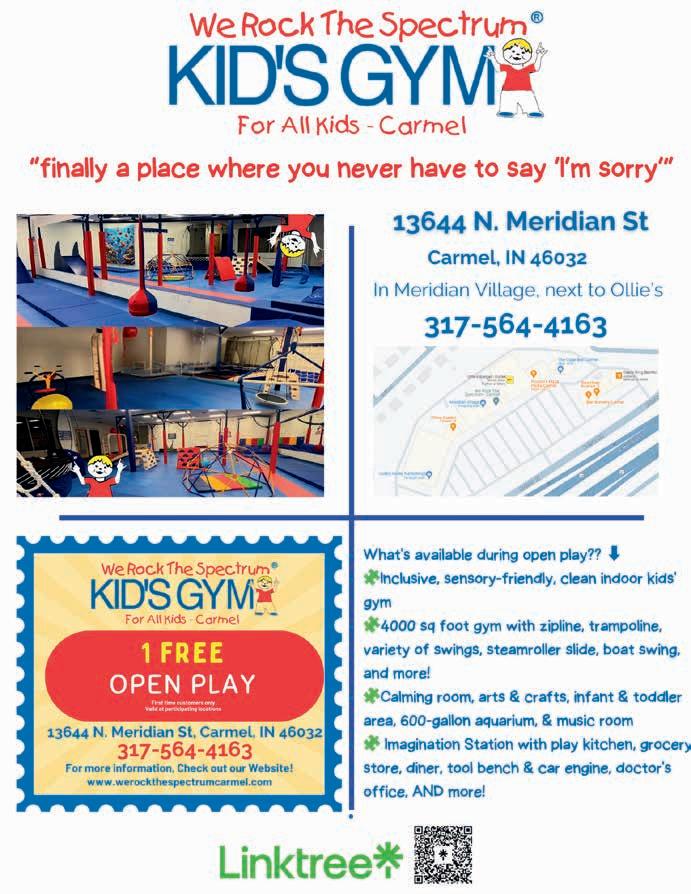
Kid’s Sensory Gym
Rock the Spectrum (317) 764-6607 werockthespectrumcarmel.com/
Mobile Service & Detailing
Tom Wood Ford Mobile Service (317) 846-4241
www.tomwoodford.com/ service/center.htm
Neurodiversity support tools
Pop Sugar Cafe (260) 237-2377
www.popsugarcafe.com
Neurofeedback Therapy
Indy Neurofeedback (317) 888-8500
Occupational Therapy Support
NIKS Independence Academy (NIA) (463) 328-2637
Organizational Employee Development
Team Sylvester (317) 691-9000 teamsylvester.com
Orthodontics
Godley Family Orthodontics godleyfamilyortho.com
Relationship/Intimacy Education
Independent Pathways (317) 740-7537 www.independent pathways.com
School
Dynamic Minds Academy (317) 578-0410
Sensory Play / Therapy Support Prana Play (317) 653-0444 www.pranaplaycarmel.com
Spelling to Communicate Exceptional Minds LLC (317) 408-3990
Vehicle Transportation & Rentals
Superior Van & Mobility (877) 892-6382 superiorvan.com/
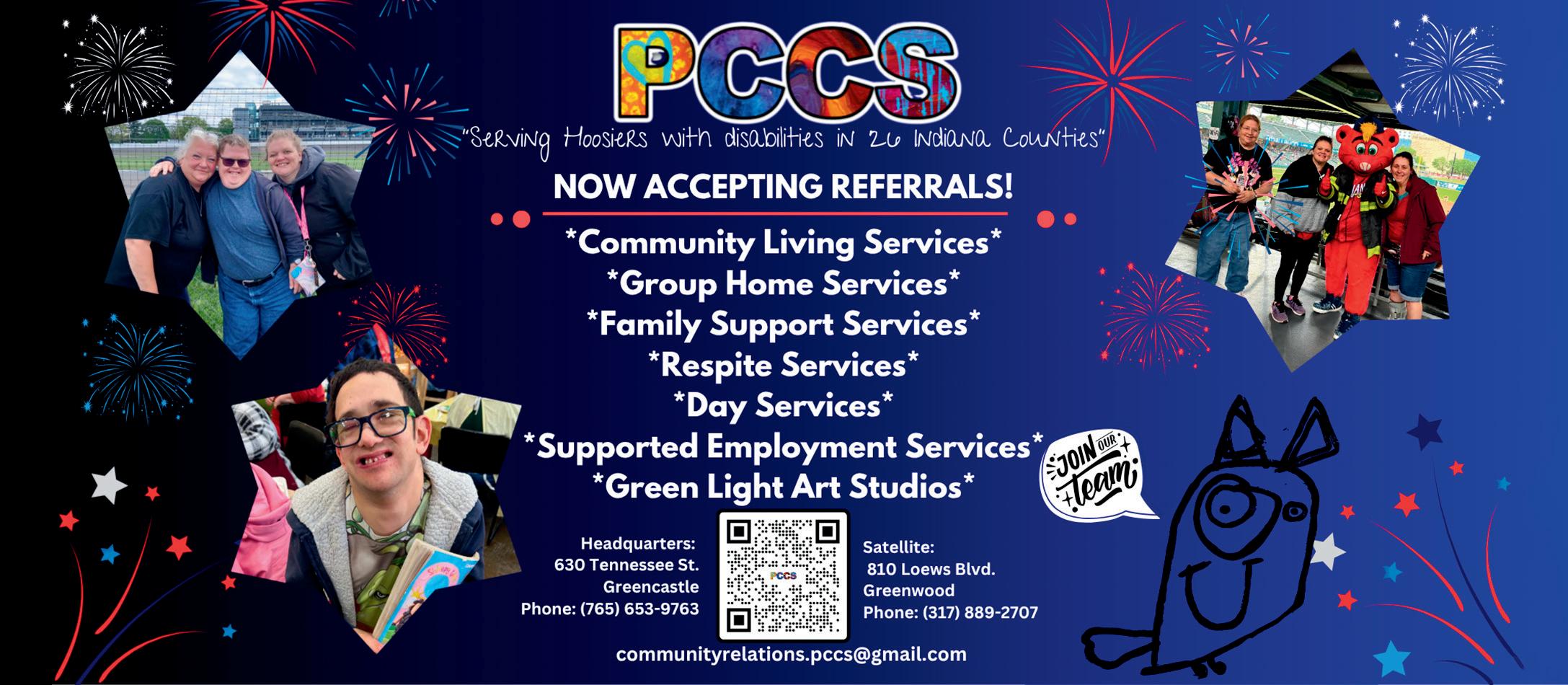
Waiver Provider & Employment Putnam County Comprehensive Services (765) 653-9763 www.pccsinc.org



MAKING A DIFFERENCE:
INSIDE JD ANGELS FAMILY CARE
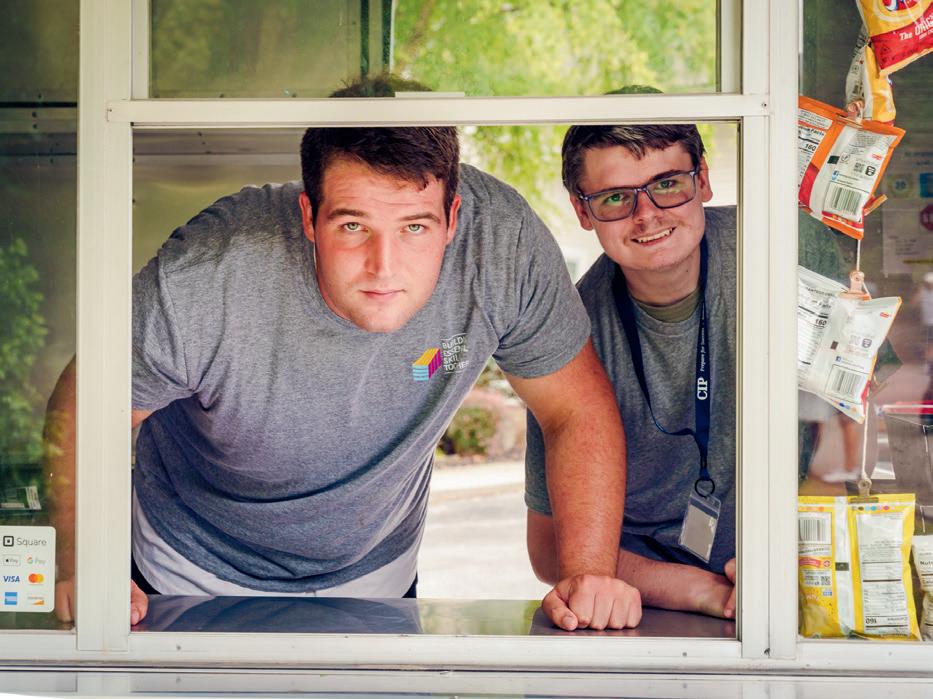
JD Angels Family Care actively encourages clients to participate in community-based activities that promote engagement, independence, and a sense of belonging. It is both fulfilling and rewarding to be part of a team that consistently dedicates its time, energy, and resources to supporting individuals with intellectual disabilities. The organization’s culture reflects compassion, inclusivity, and a strong sense of purpose.
Our team and clients regularly participate in activities such as planting flowers, maintaining outdoor spaces, bird watching, and interacting within the neighborhood. These shared experiences not only provide therapeutic and recreational benefits for the clients but also foster positive visibility and connections within the surrounding community. Residents often observe and engage with our activities, which help promote understanding, acceptance, and inclusion.

“Being part of JD Angels Family Care is truly a meaningful experience. It reinforces the idea that making a difference does not always require large efforts—consistent, thoughtful actions can have a powerful impact. By creating opportunities for connection, growth, and community involvement, we can contribute in a meaningful way and enhance the lives of those we serve.”
-Leonard Tunstall, Executive Business Administrator
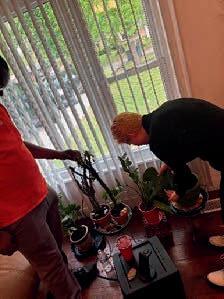
“I had the opportunity to accompany clients to the Disney on Ice show. This outing provided a meaningful break from our daily routines and allowed us to engage in a fun, supportive, and enriching community environment. Being able to share this new and exciting experience together made the outing especially memorable and fostered a positive, uplifting atmosphere for everyone involved. Additionally, these shared moments help strengthen relationships between staff and clients by building trust, connection, and positive engagement.”
-Heaven Weathers, Direct Support Professional and House Manager
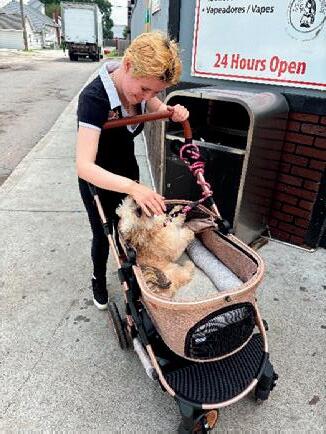
“I have found my experience working with the clients to be both rewarding and impactful. Through consistent support and guidance, I strive to empower clients to become more self-sufficient and actively engaged in their surroundings. Overall, my experience with JD Angels Family Care has allowed me to make a positive difference in the lives of the clients while also strengthening my own professional skills in caregiving, communication, and community engagement.”
-Darrion Elliott, Direct Support Professional

“I had the privilege of providing oversight and leadership for the JD Angels Family Care Christmas Community Giveaway. From my perspective, this experience not only benefited the community but also supported the client’s personal growth. Participating in an initiative focused on serving others can significantly foster leadership skills, strengthen character, and encourage a greater sense of purpose and connection.”
-Kathy King, Operations Manager.
For more information or to get started, please contact us by phone or email.
contactus@jdangelsfamilycare.com linkedin.com/in/k-king--1818a22b6 www.jdangelsfamilycare.com