6 minute read
Honoring International Day of Acceptance: Overcoming a Culture of Unacceptance

BY FRANCISCO LUNA
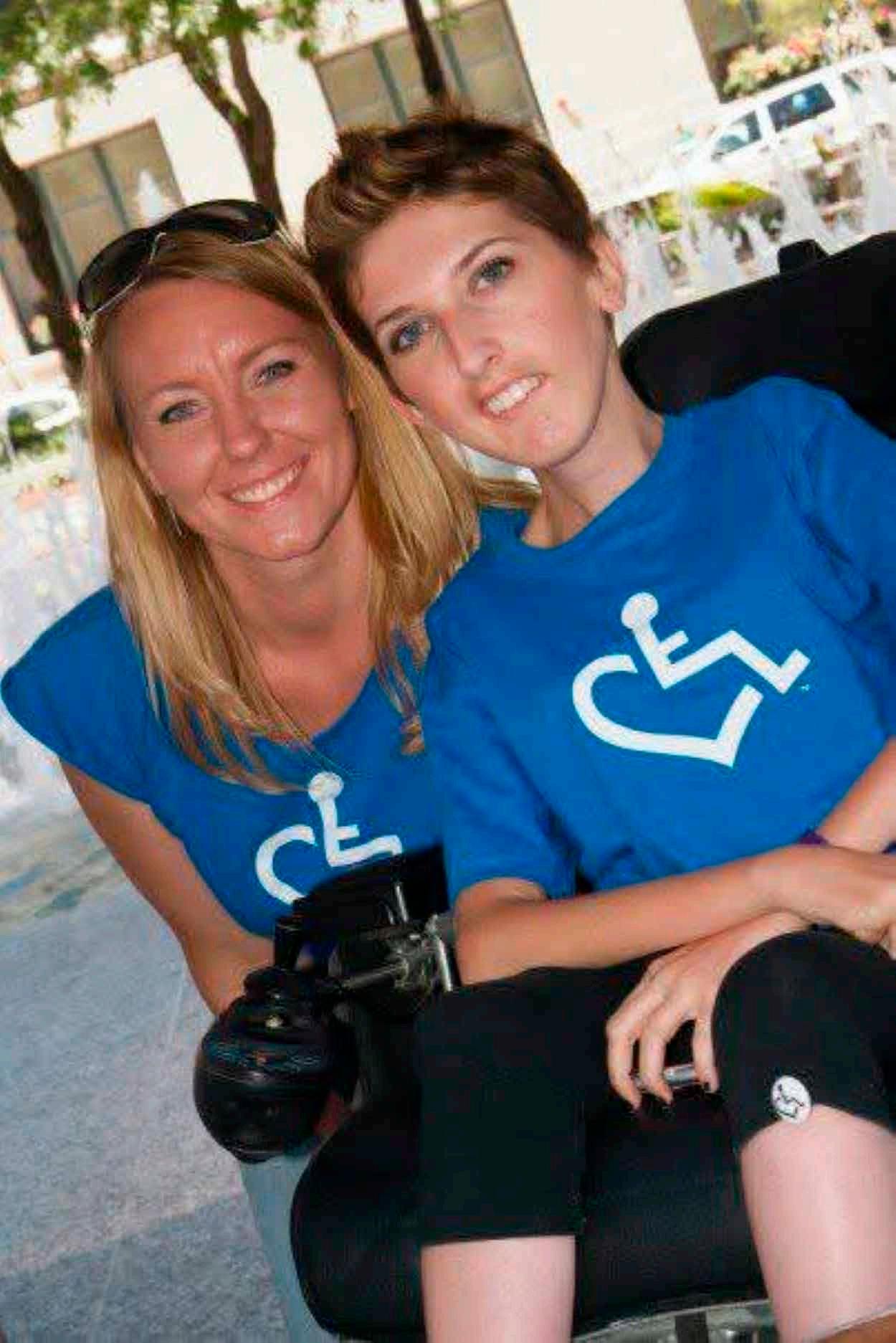
One of the things I love most about Uniquely You is that it has connected me with a community that faces challenges with remarkable grace and resiliency. It was through my work at the magazine that I learned about Annie Hopkins, who in 2004 created the Symbol of Acceptance, an image of a wheelchair in the shape of a heart. It started as a dorm t-shirt and the symbol quickly caught on in a big way. On January 20, we celebrate International Day of Acceptance as a tribute to her memory and her message of accepting people with disabilities as equals and with kindness.
Reading about Annie and International Day of Acceptance caused me to reflect on my own journey of disability and acceptance. How stigmas and a lack of acceptance toward people with serious mental illness led me to reject an accurate diagnosis, refuse treatment, and lose much of what I valued in life for a decade.
I was twenty-six years old when I started to experience delusions. Not long after, my mom convinced me to undergo a medical evaluation. I remember a nurse practitioner asking me questions before telling me matter-of-factly, “You seem to be having a psychotic break.” This is, in fact, what was happening, but I just could not accept a word like ‘psychotic’ as applying to myself.
As I think of that moment now in the context of International Day of Acceptance, I can’t help but wonder how my life would be different if I had gone into that psychological evaluation with a more accurate and accepting attitude toward mental illness and psychosis.
As it happened, the word ‘psychotic’ immediately brought images of Alfred Hitchcock’s Psycho to mind. It also didn’t help that the word ‘psychotic’ was (and is) thrown around casually to suggest anyone who is violent, dangerous, or out of control. I also conflated “psychotic,” with “psychopathic”, mistakenly believing that the mental health worker’s suggestion that I was in a psychotic state meant that she saw me as antisocial, lacking empathy, and with criminal tendencies. In fact, these latter characteristics belong to psychopathy, a separate disorder that just has a similar sounding name. Scientific literature, like that at the National Institute of Health, clearly distinguishes between these very different disorders but popular culture does not.
What popular culture seems to say is that anyone who has a serious mental illness is socially deviant and very likely dangerous. Yet, research shows that the vast majority of people with serious mental illness do not commit acts of violence. For example, the National Confidential Inquiry into Suicide and Safety in Mental Health states that 90% of people with psychosis are not violent to others. Of the small group that is violent, almost all the increased risk of violence comes from substance abuse. To cite the authors of the landmark MacArthur study, “Patients (discharged from acute psychiatric inpatient facilities) who were not substance abusers were no more likely to be violent than were their neighbors.”
To me, this suggests we should take more care to help at-risk individuals avoid slipping into alcohol and drug misuse, rather than stereotype the 90% of people who have suffered from psychosis and will never hurt anyone. Doing this to people with mental health disabilities is completely at odds with the kindness and acceptance that Annie Hopkins promoted for those with physical disabilities.
Even after I accepted psychiatric treatment and began to improve, an internalized lack of acceptance for mental illness and disability hampered my recovery. As the medication took effect, my family was thrilled to “have me back.” I was not nearly as happy. It was clear that the medication was working but the psychiatrist had not told me what I was diagnosed with. So, I looked up my medication and, seeing that it was an anti-psychotic used to treat schizophrenia and related disorders, I felt the despair of someone who’s just been told his life is over.
Even if not everyone will have a serious mental health problem, I do think it’s true that everyone will have some sort of health issue eventually. Something that resonated with me as I re-acquainted myself with my inherited Catholic faith was Pope Francis’ emphasis on the frailty of being human.
On the other hand, at the Uniquely You five-year anniversary celebration in November, I was deeply inspired by a young woman with multiple conditions, any one of which might be considered disabling. She is a regular at karaoke night, travels to Europe, has a great boyfriend and even her own business. In many ways, her lifestyle is not unlike mine was in my mid-twenties, before the onset of my disability.
Hearing about her life made me wish that, like her, I had done what I could to live my best life when I first became stable on medication. Instead, I was so ashamed of myself because of my diagnosis and disability that I didn’t venture to engage with anyone outside of my family. The thought of being rejected or further humiliated made me shun the idea of trying to make new friends or even to work part-time. I knew my family accepted me, but I didn’t see how anyone else could.
It took a long time, but now I am much more socially engaged. Learning to accept myself was a painful process, perhaps most painful when old friends declined to reply to my attempts to get back in contact. But as I came to accept myself, I found that the kind of people I now hit it off with tend to be kind and accepting whenever I declose my history of mental illness and disability.
Talking about mental health with a fellow entrepreneur whom I met this year, I explained that I usually don’t lead with my mental health history in professional contexts because I remember too well the “only the strong survive” attitude that sometimes accompanies high-pressure business. He responded by sharing his own struggle with mental health while leading his tech business and made an analogy from his industry. He said in tech, there is a joke that there are two kinds of people: those who back up their data and those who haven’t lost everything yet. He suggested that we comfort ourselves with the thought that something similar is true of entrepreneurs: there are those who prioritize mental health and those who haven’t had a mental health problem…yet.
Even if not everyone will have a serious mental health problem, I do think it’s true that everyone will have some sort of health issue eventually. Something that resonated with me as I re-acquainted myself with my inherited Catholic faith was Pope Francis’ emphasis on the frailty of being human. If we live long enough, all of us will find that our bodies fail or hinder us in some way. The most graceful thing we can do is to be kind to ourselves and to others in accepting it.