
TOURISM EXPERIENCES
São Paulo City
Bandeirantes Itinerary
Mantiqueira Mountains
Atlantic Forest Caves North Coast
SU MMA RY
PRESENTATION
Góes Wine Bar
Wine of the dead experience
Walking city tour in Itu
train
Sunrise at Pedra do Baú
Hike of the three summits at Pedra do Baú natural monument
Tasting of the Raízes do Borba cheese board tasting
Art in Quilombo Community
Retiro Respiro de Final de Semana na Serra da Mantiqueira
Weekend wellness retreat
Campos do Jordão state park
Cellar pairing tasting
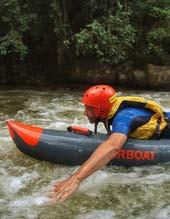
Aquaride
Wildlife expedition in the São Paulo Mantiqueira
Horse, bow, and presence
Beer park
Wine picnic at the viewpoint
Quilombola circuit - Ivaporunduva Quilombo community 46. 48. 50. 52. 54. 56. 58.
Observation of luminous organisms
Devil’s throat
Palmito therapy
Primitive skills & forest bioluminescence in Petar
Journey into the fantastic world of caves
62. 64. 66. 68. 70. 72. 74.
NORTH coast
Between river, sea, and land: Tabatinga experience
Visit to the Cocanha Marine Farm
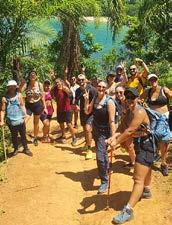
Seven beaches trail
Beginner surf experience
Quilombo da fazenda - communitybased tourism
Toca waterfall and sugarcane mill
Caiçara route
São Paulo is a state of multiple landscapes, cultures, and experiences.
Within a single territory, one of the largest metropolises in the world are found alongside mild-climate mountain ranges, a preserved coastline, areas of the Atlantic Forest, and a cultural diversity expressed through gastronomy, traditions, and the way of life of each region.
This variety translates into a complete destination, with infrastructure, connectivity, and a tourism offering designed to serve different traveler profiles throughout the year.
This portfolio presents a selection of this diversity, bringing together structured experiences that are ready for commercialization across different regions of the state. These are products that connect visitors to culture, nature, and people, with operational quality and ease of access.
This material organizes experiences and reveals possibilities. An invitation to discover São Paulo in its many forms and to build journeys that broaden one’s perspective on the destination.

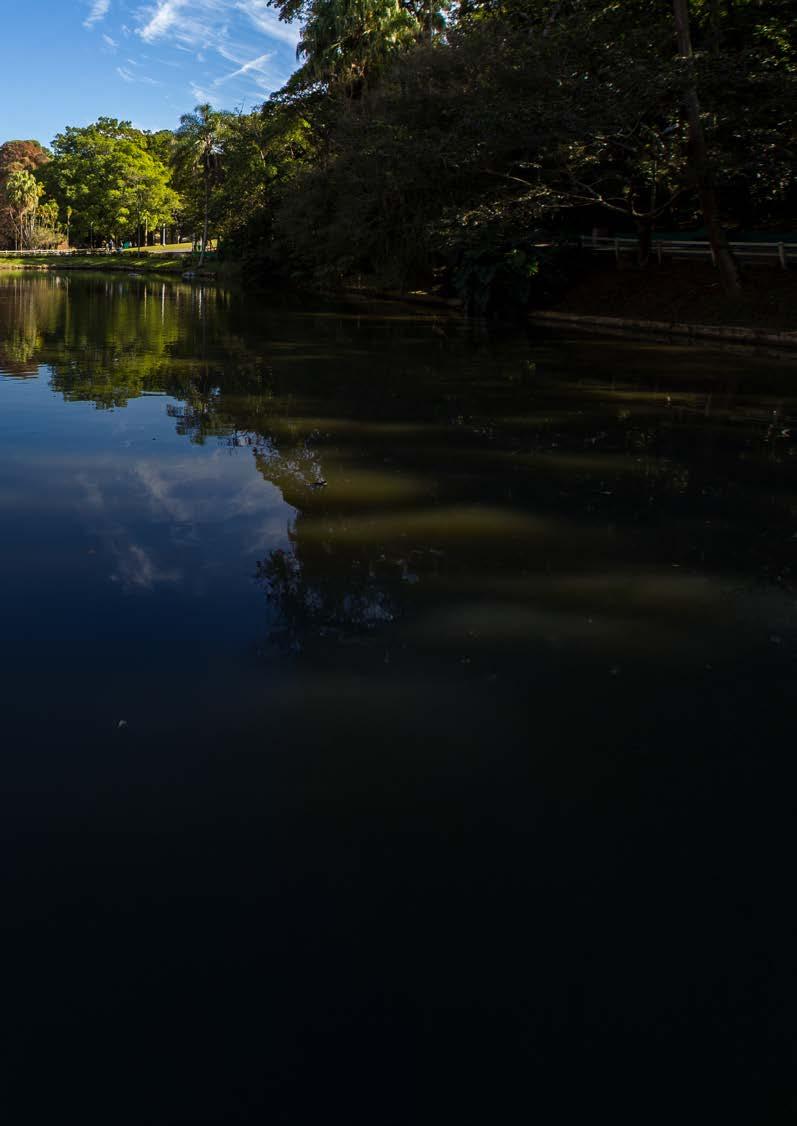
SÃO PAULO
City
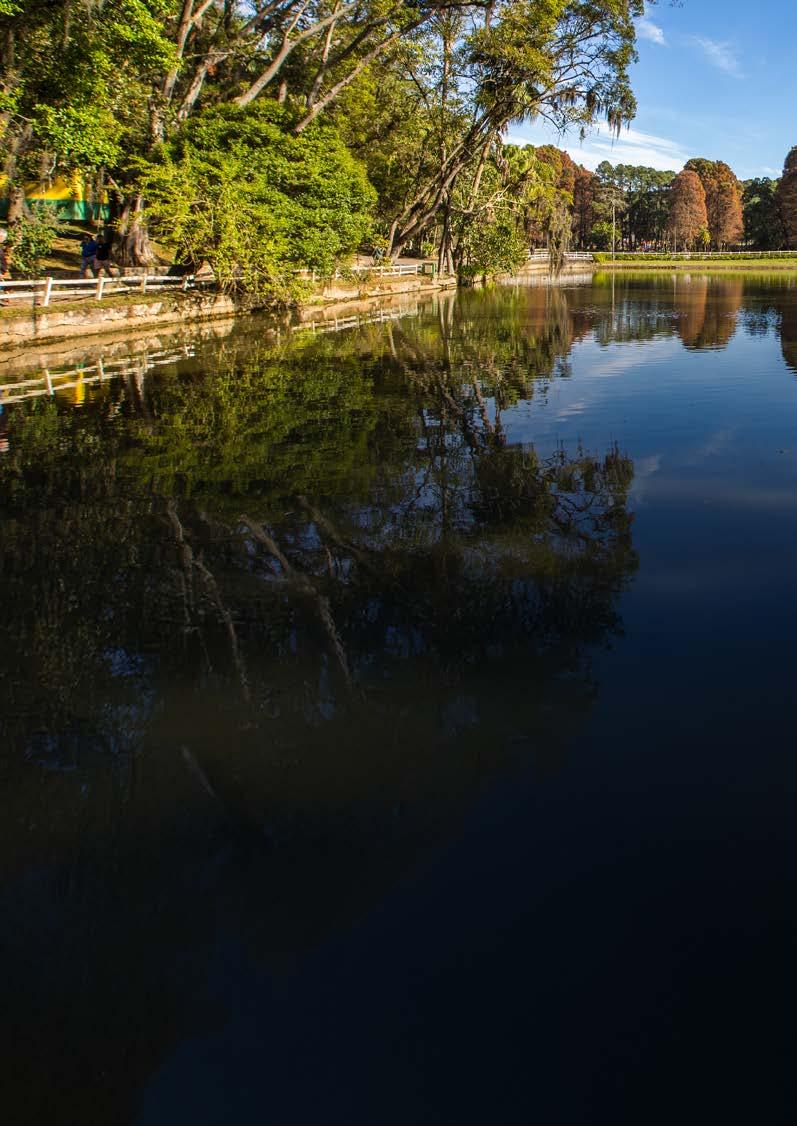
São Paulo is a global, cosmopolitan, and vibrant city that offers one of the largest cultural and gastronomic scenes in Latin America. Here, different cultures come together and express themselves through museums, cultural centers, restaurants, historic neighborhoods, and unique urban experiences.
With more than 100 museums, hundreds of cinemas and theaters, and a busy calendar of events throughout the year, the city offers a continuous program for all visitor profiles. Gastronomy is one of its highlights, with thousands of restaurants and bars representing flavors from Brazil and around the world.
The city also stands out for its nightlife, internationally recognized for its diversity and intensity, with options ranging from bars and rooftops to music venues and cultural experiences that extend throughout the night.
At the same time, São Paulo serves as a gateway to other experiences in the state. Within just a few hours, it is possible to leave the urban environment and reach mountain ranges, the coastline, or preserved natural areas, easily expanding the journey with a variety of exploration possibilities.
BAN DEI RAN TES
itinerary
Scan and learn more:

Bandeirantes Itinerary follows historic paths that helped shape the interior of Brazil. It was along these routes that the bandeirantes advanced inland, opening routes, establishing settlements, and directly influencing the economic and cultural formation of the state of São Paulo.
Over approximately 180 kilometers, the route connects municipalities that preserve churches, historic houses, and landscapes that reveal this history. The journey begins in Santana de Parnaíba, home to one of the most significant colonial architectural complexes in the state, and continues through cities that combine historical heritage and cultural traditions, such as the Sanctuary of Bom Jesus de Pirapora.
The region also played an important role in the development of São Paulo’s railway system. The memory of the tracks, old stations, and the connections that drove economic growth remains present along the route, integrating history and landscape.
The experience invites visitors to engage with local culture, gastronomy, and the rhythm of these towns. It is a journey that connects past and present in an accessible way, close to the capital.
GÓES WINE BIKE
SÃO ROQUE (SP)
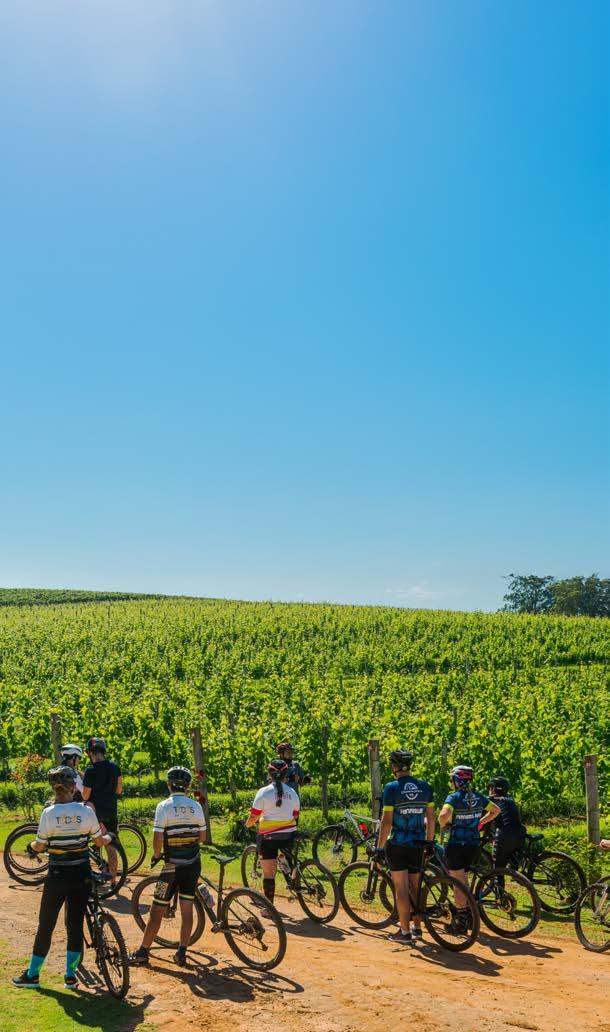
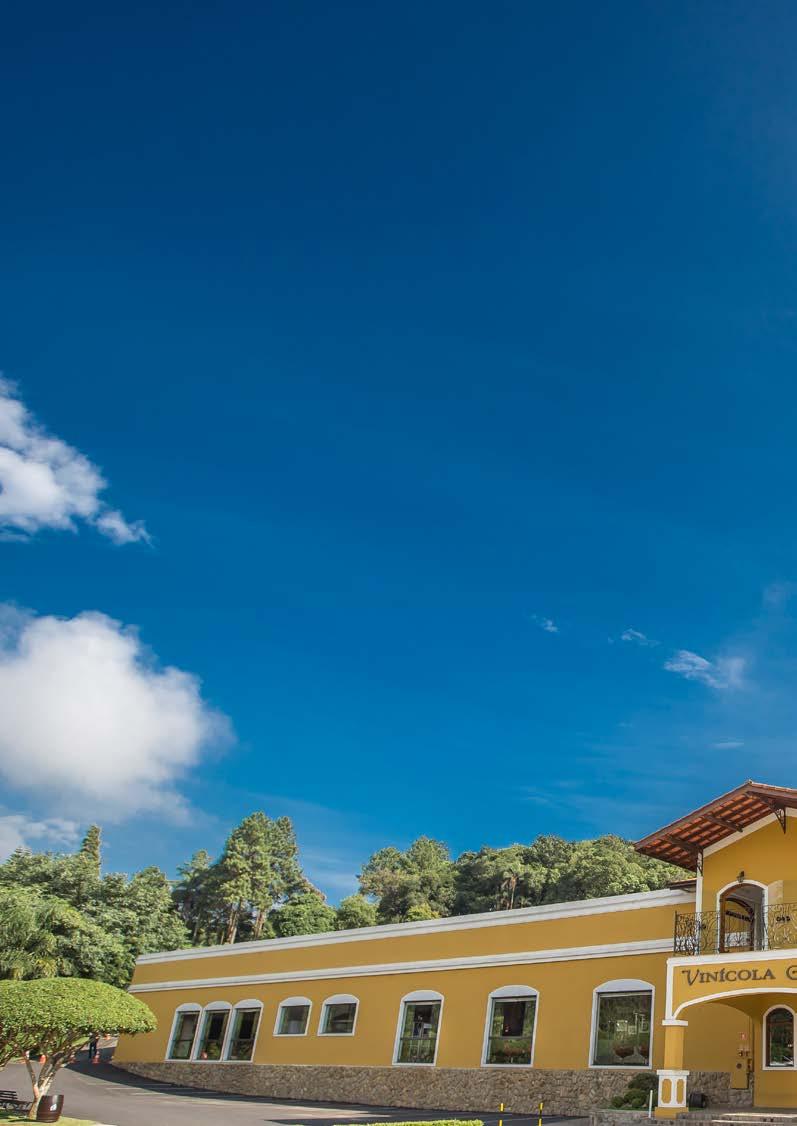
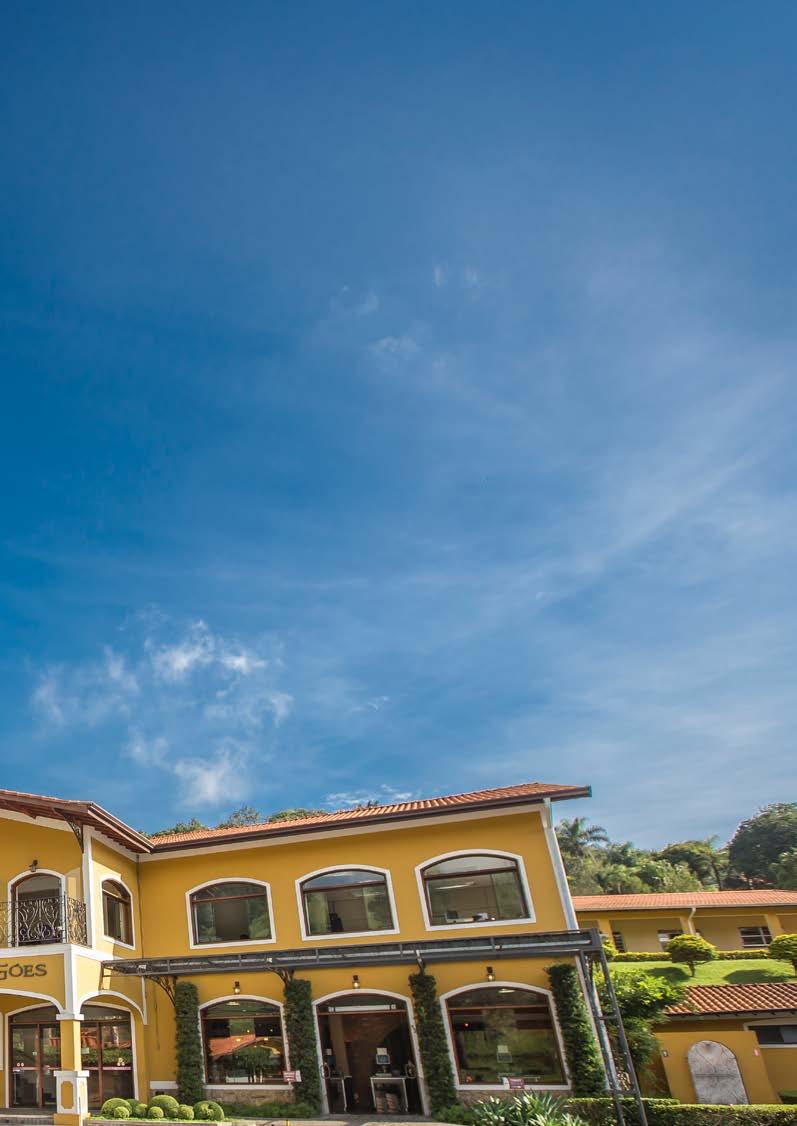
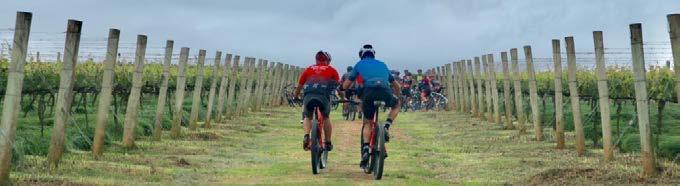
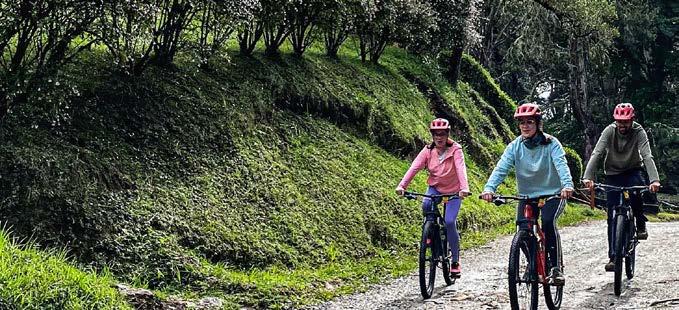
An exclusive bike tour through nature, vineyards, and wine in the heart of the São Roque Wine Route at Góes Winery.
The experience
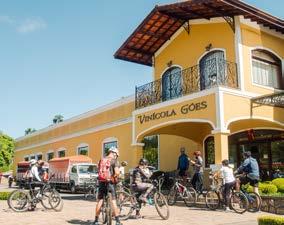
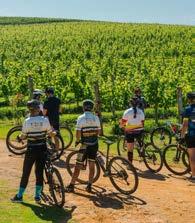
The experience begins at the winery’s headquarters, founded in 1938 and today one of the most traditional wine producers in the state of São Paulo. From there, the group sets off on a route of approximately 11 kilometers (6.8 miles), crossing vineyards and preserved Atlantic Forest landscapes, revealing different angles of the property and its local terroir.
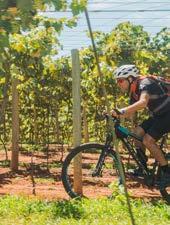
The route features gentle climbs and scenic stretches, ideal for those who enjoy cycling surrounded by nature. Along the way, there are hydration points and strategic stops for scenery contemplation and connecting with the natural environment. During the tour, it is possible to observe cultivation areas and learn more about the world of São Paulo’s viticulture. The winery invests in planting vinifera and hybrid varieties adapted to the region’s climate, such as Cabernet Sauvignon, Cabernet Franc, and Lorena, used in labels that highlight the identity of São Paulo wine.
The route ends in a relaxed atmosphere, with an outdoor table set up. A tasting of house wine, paired with regional products, celebrates the meeting of sport, nature, and wine tourism. More than just a sporting activity, the Wine Bike is an experience that combines well-being, landscape, and wine culture. At the end, visitors take with them not only the satisfaction of completing the route but also a sense of belonging, a connection to the land, and a new perspective on the region’s wine production.

Practical information
Duration: approximately 2h30.
When: usually on the last Sunday of the month. Meeting at 8:00 a.m. and start time at 8:30 a.m. Advance booking required, subject to availability.
Includes: guided tour with wine tasting (for guests 18 years and older) accompanied by sandwiches, juices, and seasonal fruits.
Equipment: each participant must bring their own bicycle and helmet, or rent them at the winery.
Who can participate: people who know how to ride a bike and have basic-level physical activity fitness, with an approximate elevation gain of 205 meters.
Languages: Portuguese, Spanish, and English.
WINE OF THE DEAD EXPERIENCE
SÃO ROQUE (SP)
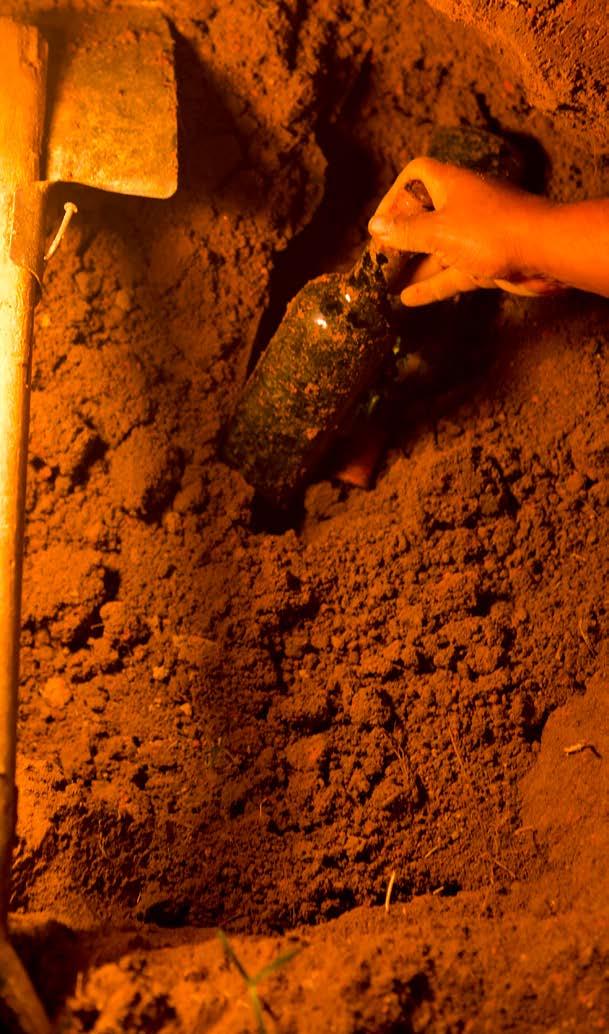
An immersion in Portuguese culture, encompassing wine, gastronomy, and a centuries-old ritual that transcends time.
The experience
Every third Saturday of the month, Quinta do Olivardo, on the traditional São Roque Wine Route, hosts the Dinner of the Wine of the Dead, an experience that combines history, Portuguese flavors, live music, and a ritual that transforms the night into a memory.
The experience is inspired by a tradition that emerged in Portugal in 1807, during the Napoleonic invasions. To protect their belongings from looting, many families buried valuable objects, including bottles of wine. Some time later, when they recovered the wine, they discovered that the time underground had transformed it, revealing new layers of aroma, balance, and body.
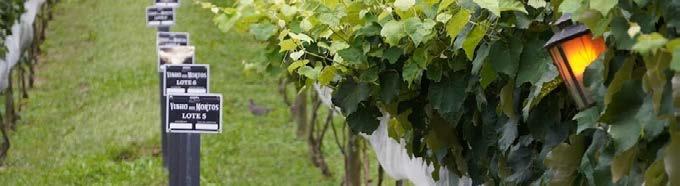
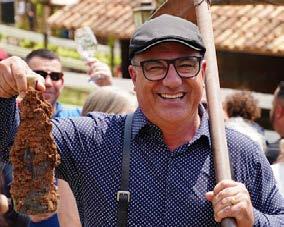
At Quinta do Olivardo, this story comes to life in an experience that invites visitors to participate in the ritual. During the event, it is possible to bury a bottle of wine, recording information such as batch and date. After six months, participants can return to the house to unearth it and taste the result of this unique process.
The dinner takes place in an intimate atmosphere inspired by traditional Portuguese houses, with candlelight and torchlighting. The menu highlights classic Portuguese cuisine, with references to the Island of Madeira, while live fado music enhances the ambiance and deepens the cultural immersion. More than a themed dinner, this is an experience that connects visitors to memory, the senses, and Portuguese heritage through a symbolic gesture that is rare in Brazilian wine tourism.

Practical information
Duration: from 7pm to 10pm.
When: the experience takes place every third Saturday of the month. Advance booking is recommended to secure the table for dinner.
Includes: participation in the ritual of burying and unearthing the bottles is open to visitors present at the location. The customer only pays for their consumption at the restaurant, which has an à la carte menu. If they wish to bury their own bottle, they pay the price for the selected bottle.
Who can participate: the experience is open to the general public. Wine tasting is permitted only for guests aged 18 years and over. Comfortable footwear is recommended to facilitate walking through the vineyards during the nighttime ritual.
Languages: Portuguese and English.

WALKING CITY TOUR IN ITU
A LOOK THAT REVEALS THE ROOTS OF THE REPUBLICAN MOVEMENT IN BRAZIL
ITU (SP)
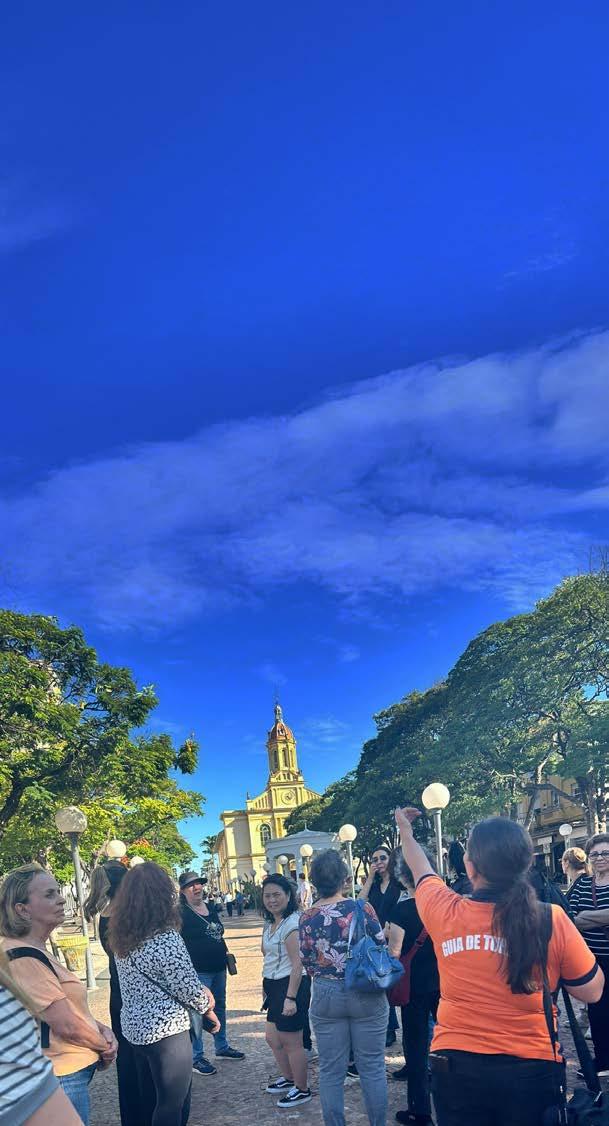
A walking tour through the historic center of Itu, where architecture, memory, and curiosities come together to tell the soul of the city.
The experience
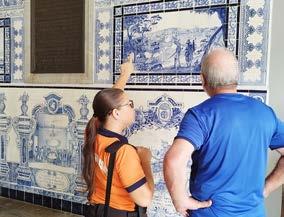
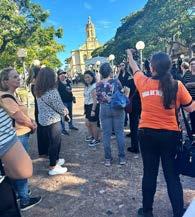
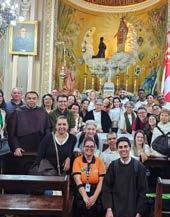
The City Tour through Itu’s Historic Axis invites visitors to explore, at a relaxed pace and with attentive eyes, the layers of time that shape one of the most emblematic cities in the countryside of São Paulo. Led by a certified tour guide, the tour transforms the historic center into a discovery experience, where streets, facades, and monuments gain new life through stories, symbols, and details often unnoticed at first glance.

Founded in 1610, Itu played a significant role in Brazil’s political history and was the site of the 1873 Republican Convention, a decisive milestone for the organization of the republican movement in the country. During the tour, visitors walk through the vast historical heritage, observing architectural elements, cultural references, and curiosities that help to understand the city’s formation.
The itinerary includes some of Itu’s most representative landmarks, such as the Republican Museum, housed in a historic townhouse linked to the Itu Convention; the Church of Our Lady of Candelaria, dating back to the 18th-century; the traditional bandstand at Padre Miguel Square; and a collection of historic mansions that preserve features of both colonial and eclectic architecture.
The tour also passes by icons of Itu’s famous gigantism, such as the oversized public telephone and traffic light, playful symbols that reinforce the city’s cultural identity.
Throughout the walk, stories of notable figures, significant events, and local curiosities are shared in a light and engaging way, encouraging a deeper appreciation of the urban landscape and the memory it holds. More than simply visiting tourist attractions, this experience invites visitors to connect with the essence of Itu. By the end, there is a sense of having discovered a city that reveals itself through its details - where heritage, tradition, and daily life intertwine.
Practical information
Duration: between 3h30 and 4 hours.
When: available by prior booking, with dates and times arranged according to the availability of the guide and the group.
Includes: light clothing and comfortable walking shoes are recommended. It is also suggested to bring water, sunscreen, a hat or cap, and a camera. On rainy days, bring an umbrella or a raincoat.
Who can participate: an experience suitable for the general public, with no age restrictions. The activity is light, conducted at a walking pace through the historic center.
Brief stops are included along the way for refreshments, hydration, and to discover gems of the city’s traditional gastronomy (food not included in the tour price).
Languages: Portuguese, Spanish, and English.
REPUBLIC TRAIN
ITU E SALTO (SP)
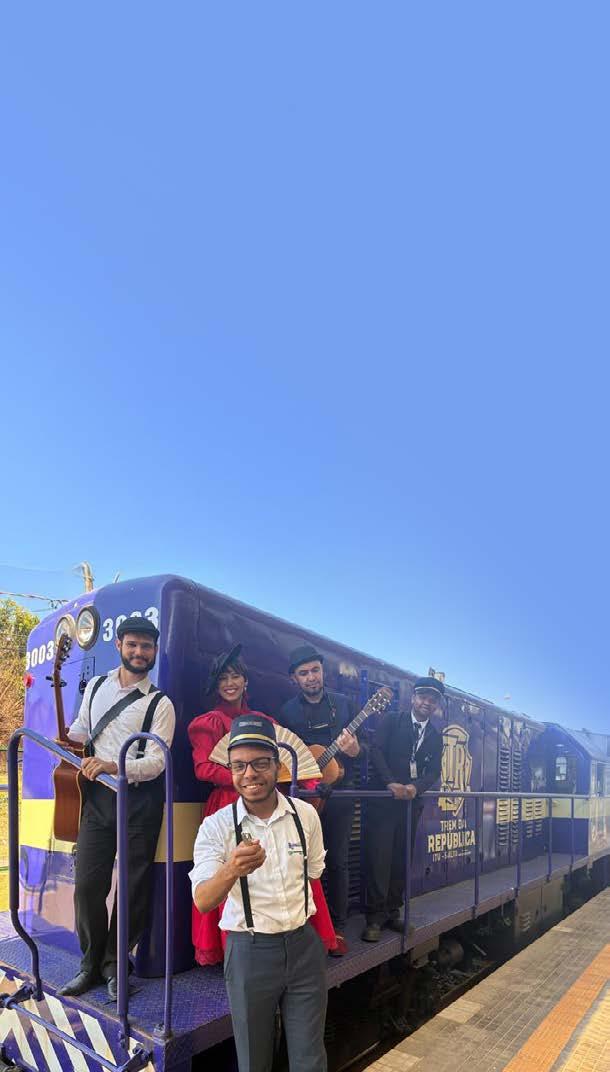
Board the tracks where the Brazilian Republic began to be written.
The experience
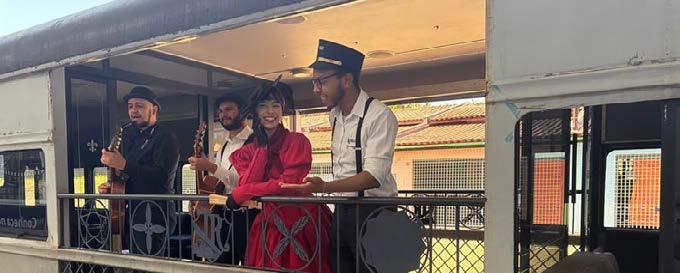
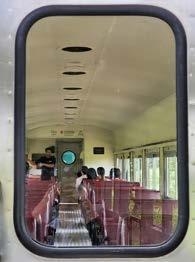
The journey covers seven kilometers between the Itu and Salto stations aboard restored railcars that preserve the charm of historic train travel. But the Republic Train is much more than a nostalgic ride: it is an experience that combines history, scenery, and entertainment along every stretch of the tracks.
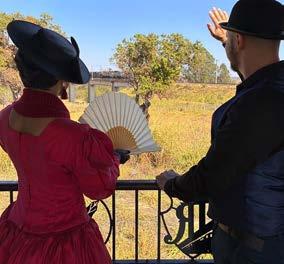
From the moment passengers board, costumed characters and guides lead the journey with a light and interactive approach, sharing interesting facts about the Itu Convention of 1873 and the background of Brazil’s republican movement.
The train crosses the Tietê River in one of the most scenic moments of the trip and passes by the Our Lady of Monte Serrat Monument, a 38-meter statue that attracts pilgrims from across the country. Upon disembarking, visitors take with them not only the journey, but also great memories from the time of the Brazilian Empire.

Practical information
Duration: approximately 60 minutes per leg.
When: Saturdays and Sundays, with departures from Itu at 9:00 am and 2:00 pm and from Salto at 11:00 am and 4:00 pm. Arrive 30 minutes in advance. Advance booking or purchase is recommended.
Includes: accredited guide and tickets to attractions in the Itu’s Historic Center. Transportation, meals, or personal expenses are not included.
Who can participate: all ages. Wear light clothing.
Languages: Portuguese, Spanish, and English, upon request.

FULL MOON HORSEBACK RIDE
ITU (SP)
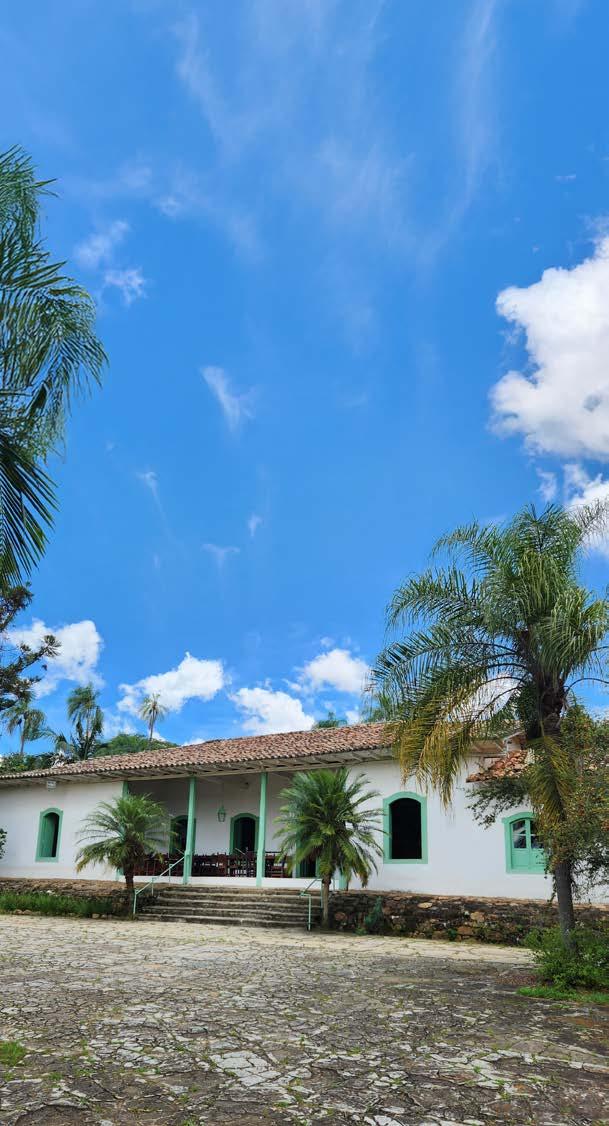
A night on horseback, between living history and the glow of the moon over the countryside of São Paulo.
The experience
Chácara do Rosário dates back to 1756 and has remained in the same family for seven generations. At the center of the property stands the historic manor house, built of rammed earth, with walls up to one meter thick and seven-meter high ceilings. Its rooms have witnessed the cycles of sugar, coffee, weaving, and ceramics. Today, the house remains alive and inhabited, with a collection of original objects that traces a timeline of São Paulo countryside from the colonial period to the present day.
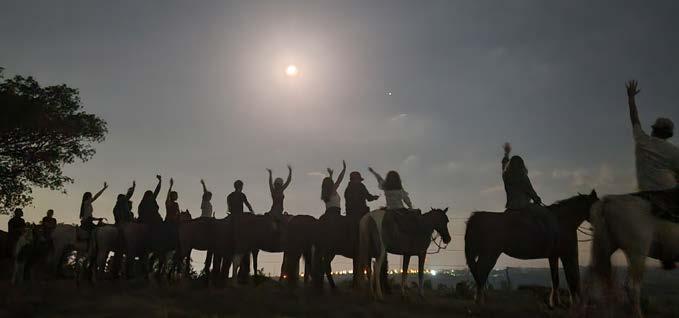
It is on this property that the Full Moon Horseback Ride takes place once a month. Arriving at the property is already a way to escape the daily routine. After visiting the main house, participants set out on horseback for an hour’s ride around the property, with the full moon illuminating the path.
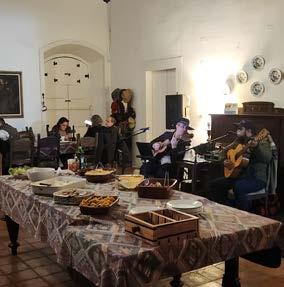
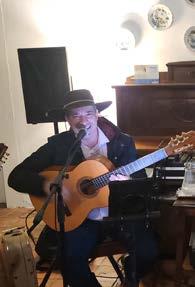
The return is celebrated with dinner and live music, in an atmosphere that blends the hospitality of the rural environment and the exclusivity of an experience designed to create unique memories. Some experiences need no explanation: you simply have to be there.

Practical information
Duration: horseback ride averaging 1 hour. The full experience lasts between 3 and 5 hours.
When: once a month, usually on the Saturday when the moon is brightest. Advance booking required.
Includes: horseback riding, dinner, live music, and a tour of the property.
Who can participate: people aged 7 to 75. Maximum weight for the horseback ride: 110 kg.
Languages: Portuguese and English.
MOUN TAINS
Scan and learn more:

Mantiqueira
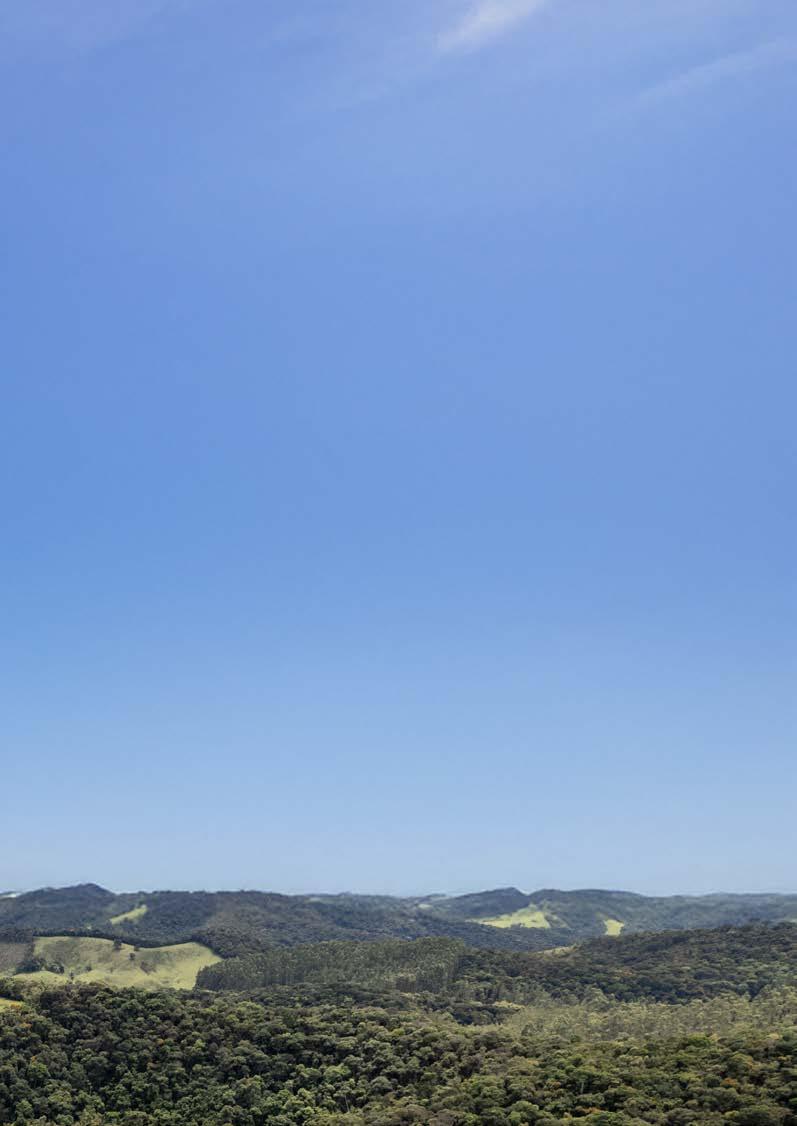
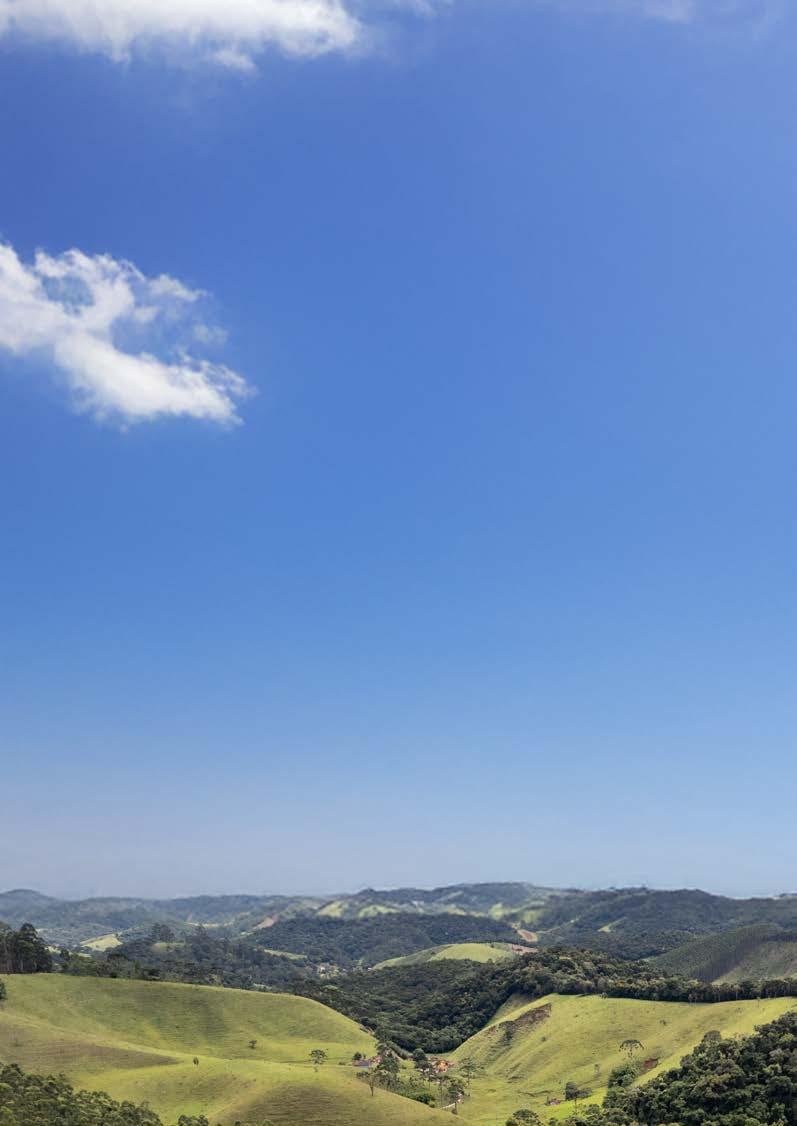
The Mantiqueira region of São Paulo brings together mountain landscapes, a mild climate, and an atmosphere that invites rest and connection with nature. The region combines striking natural scenery with experiences that include gastronomy, wellness, adventure, and local production.
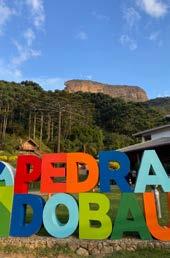
Among its highlights are iconic formations such as Pedra do Baú and renowned destinations like Campos do Jordão, the highest city in Brazil and one of the country’s main winter destinations. Trails, viewpoints, and outdoor activities coexist with more contemplative moments, such as retreats and countryside experiences.
Gastronomy stands out, with wine and coffee routes, as well as the artisanal production of cheeses, olive oils, and other products that express the local terroir. Experiences that connect visitors to the countryside and to producers have been expanding the region’s potential in gastronomic tourism.
With easy access from the capital, the Mantiqueira region has established itself as a versatile destination, ideal for both short trips and longer stays, offering a balanced combination of nature, comfort, and authenticity. www.visitmantiqueira.com
SUNRISE AT PEDRA DO BAÚ
SÃO BENTO DO SAPUCAÍ (SP)
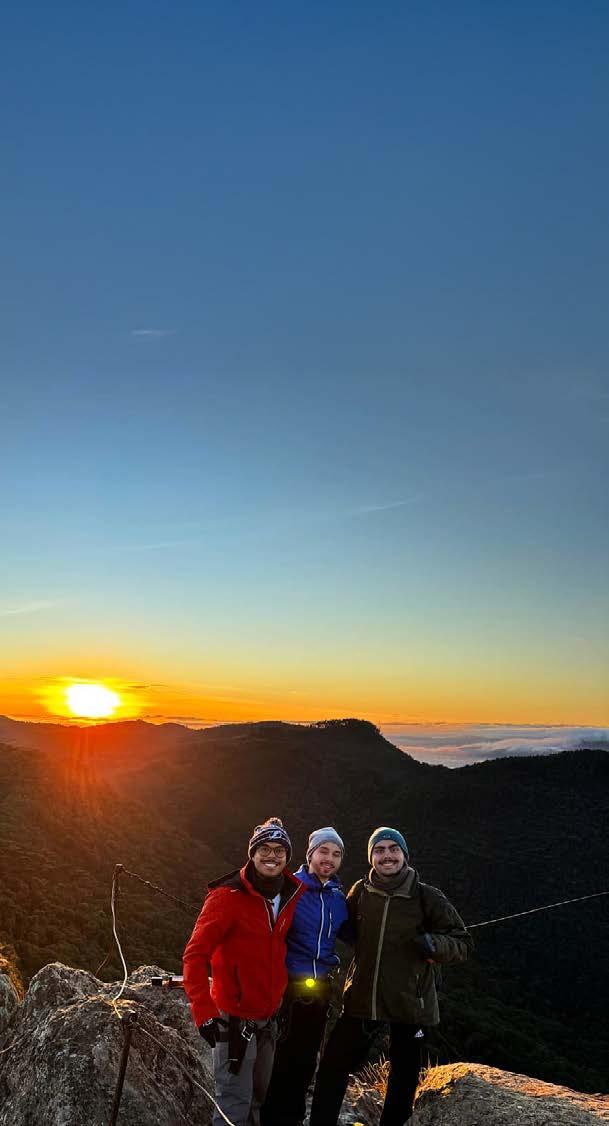
A sunrise with a view and emotion that can’t be captured in a photo.
The experience
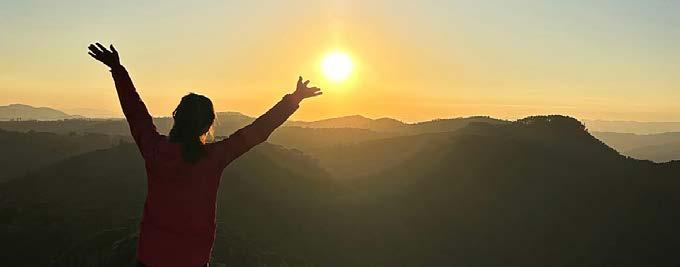
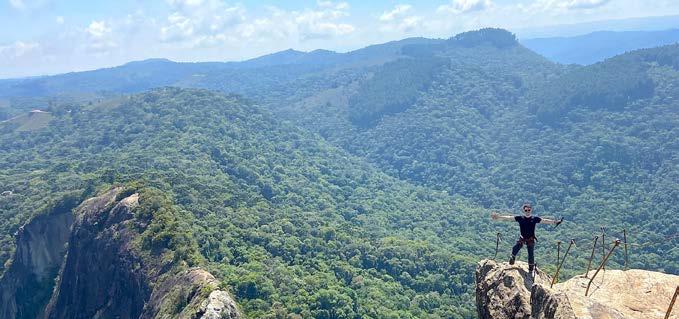
Nearly two thousand meters high, with 320 steps carved into the rock and a horizon that changes color as the day breaks over the Serra da Mantiqueira Mountains, the sunrise at Pedra do Baú is truly a memorable experience.
The activity begins before dawn, while it’s still dark. The group sets off on a trail of approximately 1 hour and 30 minutes through the Atlantic Forest, climbing the valley until reaching the base of the rock formation. The hike takes place amid dense vegetation, silence, and the coolness of the mountain dawn.
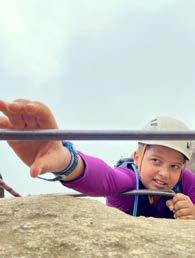
The area is part of the Pedra do Baú Natural Monument (MoNa), a Conservation Unit that protects one of the most imposing rock formations in the state of São Paulo, with cliffs reaching up to 350 meters in height. At the base of the rock, the ascent begins via the Via Ferrata, a system of stairs and staples fixed directly to the rock, first installed in 1942.
There are 320 iron steps that lead to the summit at an altitude of 1,950 meters. Up there, a 360-degree view unfolds over the Mantiqueira mountain range, with the sky turning purple, orange, and gold as the sun moves across the valley.

Practical information
Duration: approximately 6 hours.
When: from April to September, weather permitting. Book at least one day in advance.
Includes: local tour guide, safety equipment, booking at the Pedra do Baú Natural Monument, and activity insurance. Parking fees, food, and personal hydration are not included.
What to bring: layered clothing, hat, gloves, scarf, small backpack with water and snacks.
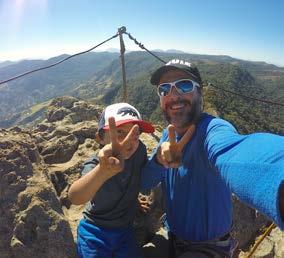
Who can participate: active individuals from 7 years old, without fear of heights. Difficulty level: medium/high. Exposure to heights: high.
Languages: Portuguese, English, and Spanish.

HIKE OF THE THREE SUMMITS AT PEDRA DO BAÚ NATURAL MONUMENT
SÃO BENTO DO SAPUCAÍ (SP)
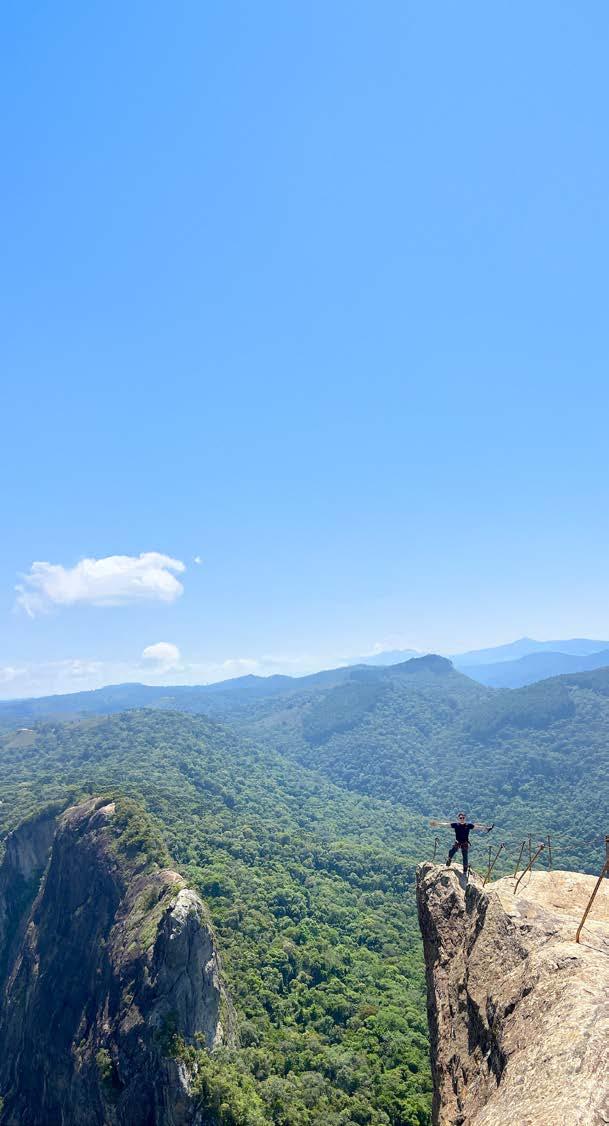
Thirteen kilometers, three peaks, a whole day inside the Mantiqueira mountain range.
The experience
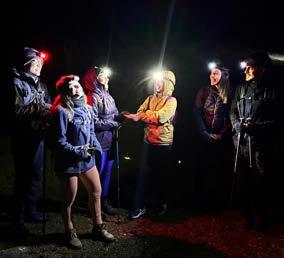
The Three Peaks Hike is an experience for determined adventurers. The goal is to climb, on the same day, Pedra do Baú, Bauzinho, and Ana Chata, the three main rock formations of the Pedra do Baú Natural Monument.
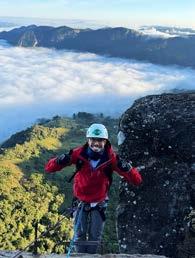
It’s a 13-kilometer trail in total, with 800 meters of accumulated elevation gain and incredible landscapes that change at each peak. Pedra do Baú, at 1,950 meters altitude, requires climbing via Via Ferrata, with steps
and staples fixed to the rock. Ana Chata, at 1,738 meters, has a cave just below the summit. Bauzinho offers views as impressive as its neighbors, with easier access.
The activity lasts between 6 and 8 hours and serves as a good test for those training for crossings, expeditions, or high-altitude mountaineering. It’s a full day in nature, with all that that implies.

Practical information
Duration: 6 to 8 hours.
When: available year-round, with prior booking. Female guides available upon advance request.
Includes: entrance to the park, individual and group equipment, and accident insurance. Transportation, food, and parking are not included.
What to bring: clothing and footwear for hiking, 1.5 liters of water, small backpack, a hat, and sunscreen. Hiking poles and backpacks are available for loan upon prior notice.
Who can participate: adults and teenagers with good physical fitness for a full day of activity.
Languages: Portuguese and English.
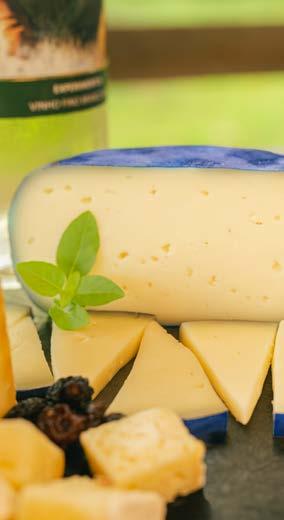
TASTING OF THE RAÍZES DO BORBA CHEESE BOARD TASTING
PINDAMONHANGABA (SP)
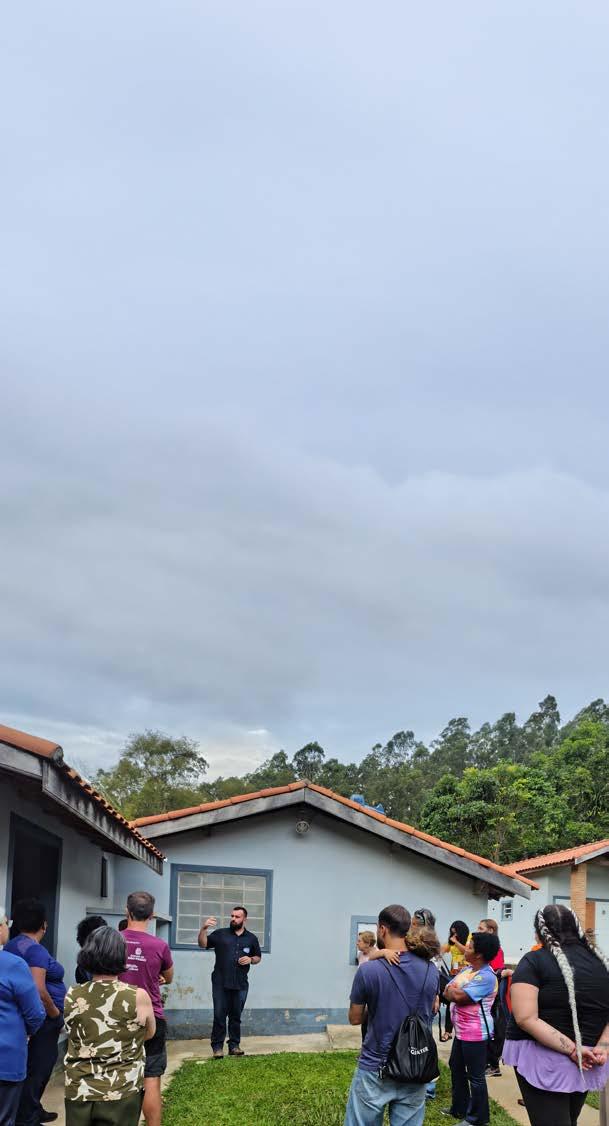
An experience that connects centuries of history, the landscapes of the Mantiqueira Mountains, and unusual flavors.
The experience
For almost a hundred years, the Bolderini family has been producing artisanal cheese at the foothills of the Serra da Mantiqueira Mountains. What began with their great-great-grandfather arriving in the Paraíba Valley at the height of the coffee crisis has never stopped: five generations later, the cheese factory remains active, award-winning, and faithful to its original know-how.
The visit to the farm begins with a presentation about the property’s history and the stages of production, followed by an external observation of the maturation chamber, where time acts on each piece, deepening

aromas, textures, and flavors. It is a slow, silent, and fascinating process to follow.
The central experience is the Raízes do Borba Cheese Board: a selection of signature cheeses served with honey and dried fruits, designed to reveal the differences in maturation and sensory profile of each product. Tasting attentively is a way to understand what artisanal means when taken seriously.
Practical information
Duration: presentation and tour last approximately 15 minutes. Tasting at the visitor’s own pace. No prior booking required.
When: Thursday to Saturday, from 8 am to 4 pm.
Includes: access to the site, presentation of the family’s history, an explanation of the production process, and an external view of the ripening chamber. The Raízes do Borba cheese board and other products are sold separately.
What to bring: it is recommended to wear comfortable shoes for the experience, as it takes place in a rural setting, and to bring insect repellent.
Who can participate: general public of any age. Wines and beers available for those 18 and older. Cheeses contain lactose.
Languages: Portuguese and Italian.

ART IN THE QUILOMBO COMMUNITY
SÃO BENTO DO SAPUCAÍ (SP)
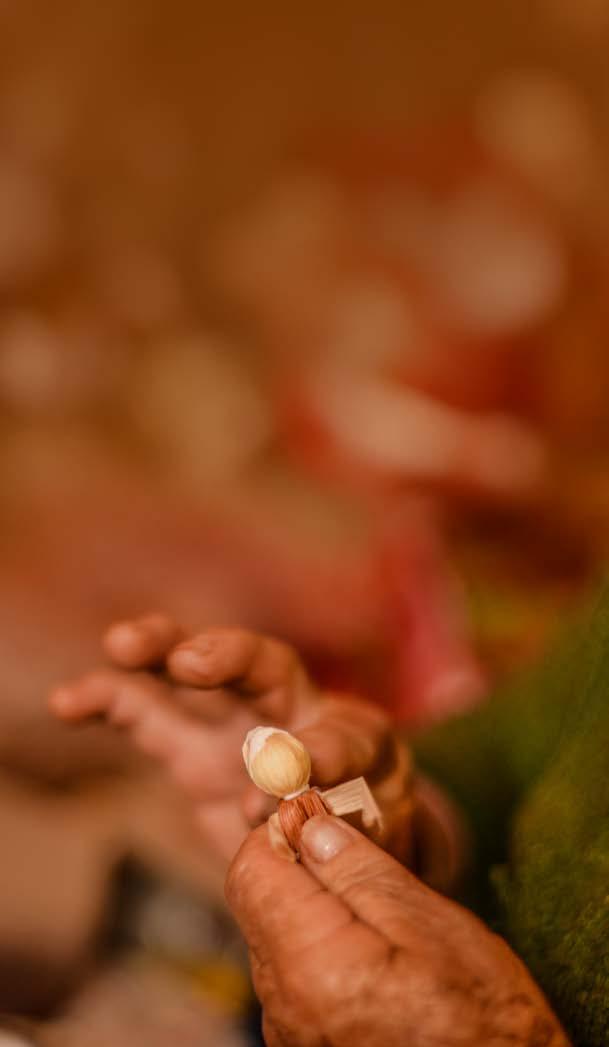
One community, one body of knowledge, a piece made by you.
The
experience
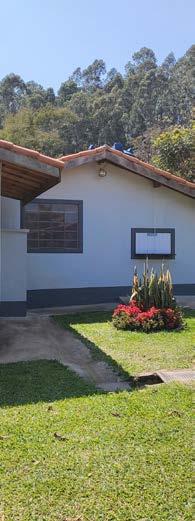
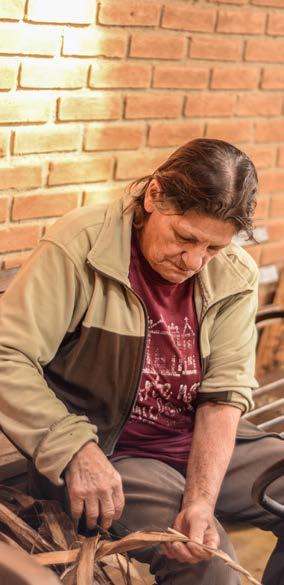
With the Immaculate Conception Church dating back to 1805, a grassy courtyard, and Pedra do Baú mountain shaping the horizon, the quilombola neighborhood enchants even before you reach the association’s headquarters. It is a remnant community founded by families of enslaved people who lived in the Mantiqueira mountains of southern Minas Gerais, and which preserves, in every street and in each piece produced, a story of resilience.
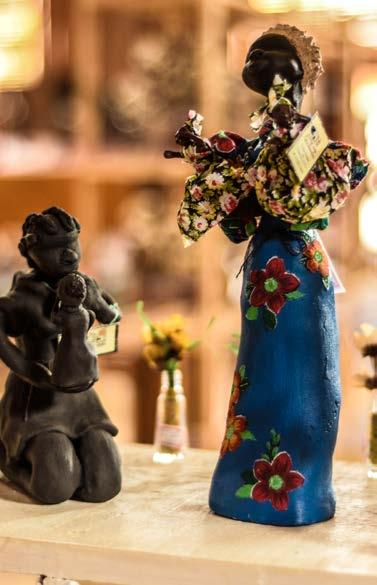
In 2004, ten artisans, encouraged by the local sculptor Ditinho Joana, founded Arte no Quilombo. Today, more than 80 artisans are united by a common thread: keeping alive the knowledge passed down through

generations. Banana straw, corn straw, bamboo, clay, and crochet are transformed into flowers, dolls, mats, nativity scenes, and paintings — objects that carry time, technique, and identity.
The central experience is the practical workshop: the visitor sits next to an artisan, learns the techniques, makes mistakes, tries again, and creates their own piece. What goes home is not just the object, but the awareness of the value of craftsmanship. The itinerary also includes a tour of the neighborhood, its territory, its landscape, and its origins.
Practical information
The core experience is the hands-on workshop: the visitor learns directly from the artisan.
Duration: 40 minutes to 2 hours. Workshops require prior booking 3 days in advance.
Includes: visit to the collective shop, hands-on workshop with an artisan, and meals.
Who can participate: open to everyone, without restriction.
Languages: Portuguese.
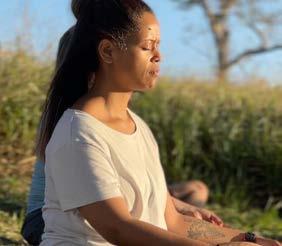
WEEKEND WELLNESS RETREAT
Three days to escape the noise and reconnect with yourself.
The experience
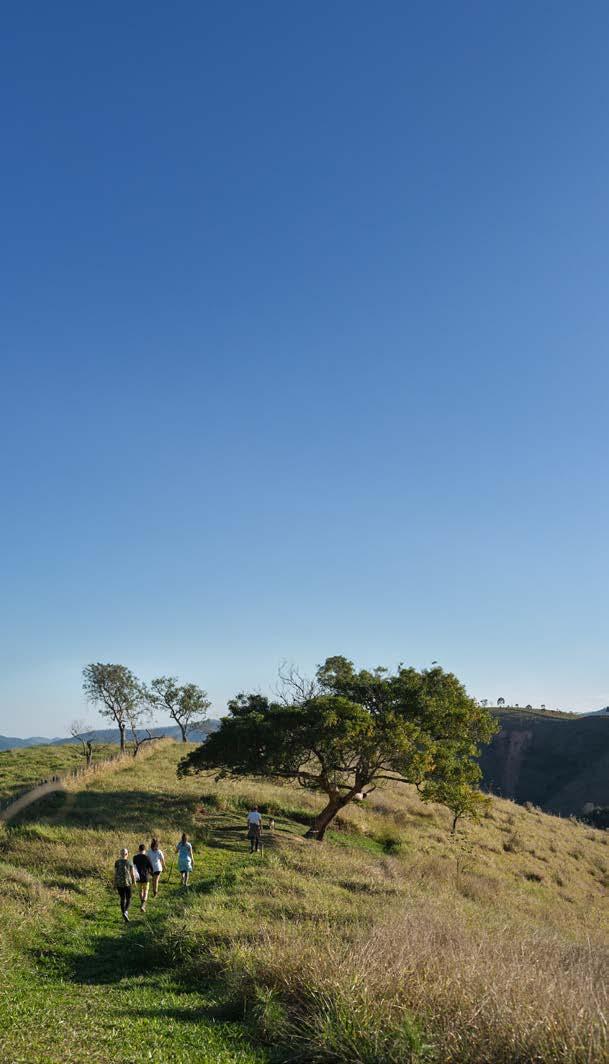
Sometimes, true rest requires leaving where you are. The Respiro Retreat is a weekend immersion in the Serra da Mantiqueira, created for those who need more than just a break: they need a reconnection.
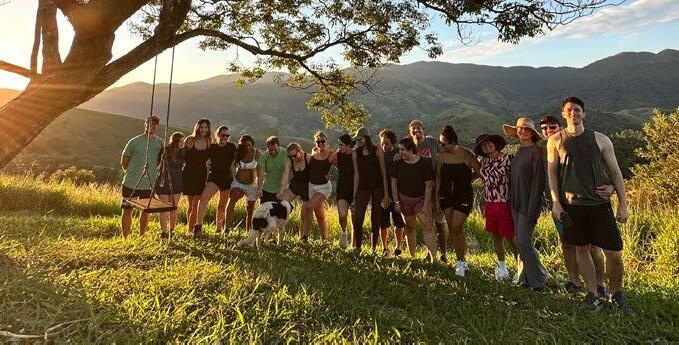
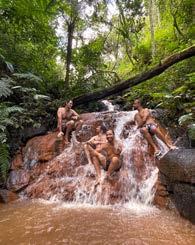
Over three days, the program combines yoga and meditation classes, hiking, waterfalls, bonfires, and starry skies. All activities are led by Alê Lopes, a teacher with over 15 years of experience and training in India, where he frequently returns with groups. The property offers
SÃO BENTO DO SAPUCAÍ (SP)
comfortable accommodations and complete, healthy, and delicious meals, prepared with ingredients from the local garden.
The group is small, and spaces are limited: this is not a detail, it is the essence of the experience. A few days, a few people, plenty of mountains.

Practical information
Duration: 3 days of full program.
When: on specific dates throughout the year. Limited spaces available, advance booking required. Includes: accommodation, all meals, yoga and meditation classes, hiking and tours are included. Transportation to the location is not included.
What to bring: swimwear, warm clothing, waterproof and comfortable clothes for yoga. Hiking shoes, a hat, and sunscreen.
Who can participate: adults aged 18 and over, with mobility for light physical activities and the ability to climb stairs.
Languages: Portuguese, English, and Spanish.

FROM FARM TO TABLE
SÃO BENTO DO SAPUCAÍ (SP)
The extra virgin olive oil that originated in the Mantiqueira Mountains has reached the most discerning tables in the country.
The experience
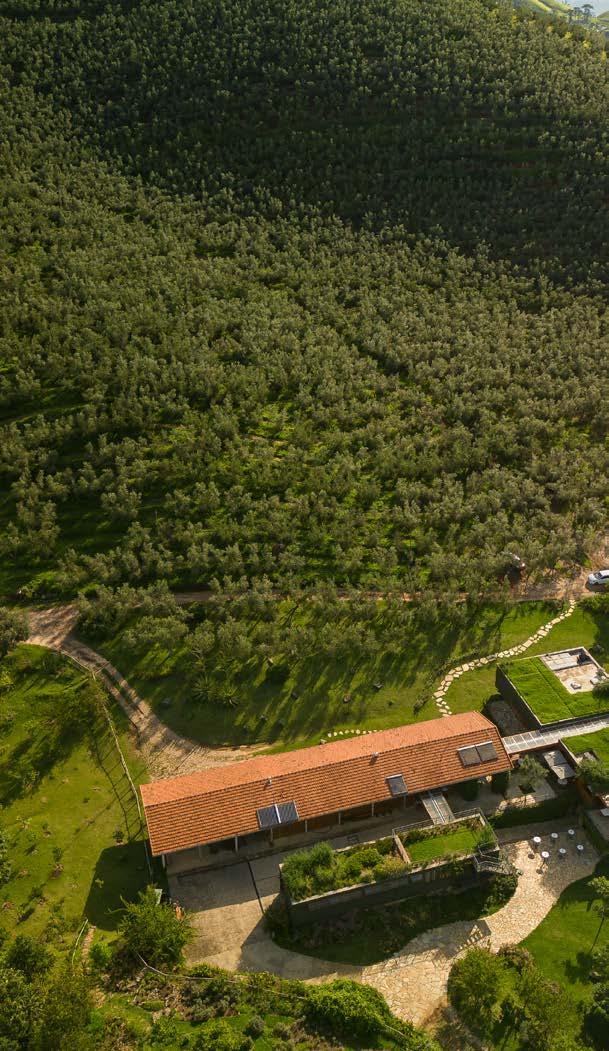
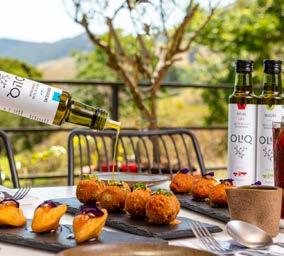
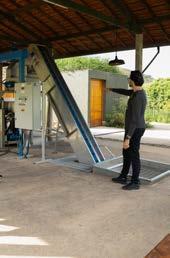
Between 1940 and 1970, São Bento do Sapucaí was known as the “Capital of Olive Trees.” The cultivation was abandoned, but never forgotten. In 2003, the OLIQ Farm revived this tradition by planting the first olive trees in the Serra da Mantiqueira, at altitudes ranging from 1,200 to 1,800 meters. Today, there are approximately 13,000 trees cultivated, with extraction equipment imported from Italy, and olive oils that have already received international awards.
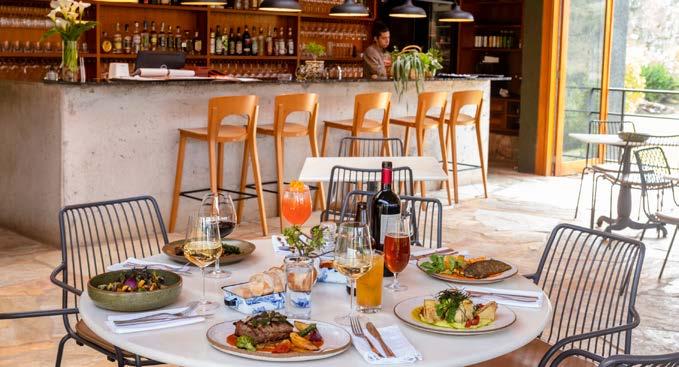
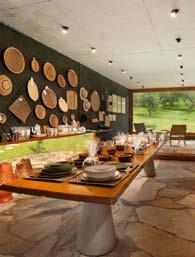
The visit begins in the orchard, where a guide introduces the cultivated varieties, the harvesting process, and the extraction of extra virgin olive oil. The tasting that concludes the tour allows visitors to sample pure and flavored olive oils, paired with different foods, understanding how the altitude, soil, and climate of the Mantiqueira are expressed in each label. The farm’s restaurant, with award-winning architecture and mountain views, serves refined, signature cuisine featuring regional and Mediterranean ingredients. The store offers olive oils, jams, ice cream, and exclusive farm products.

Practical information
When: Thursday to Monday, from 10 am to 5 pm. Holidays and vacation periods: open daily. The guided tour lasts approximately 45 minutes. Reservations are recommended through the website for the guided tour and lunch.
Includes: guided tour with olive oil tasting and pairing. The restaurant and shop are paid separately. Who can participate: open to everyone. Area accessible for people with reduced mobility. Free Wi-Fi available. Comfortable shoes are recommended.
Languages: Portuguese, English, and Spanish.
CAMPOS DO JORDÃO STATE PARK
CAMPOS DO JORDÃO (SP)
A full day immersed in the largest Araucaria forest in southeastern Brazil.
The experience
Created in 1941, the Campos do Jordão State Park, better known as Horto Florestal, was the first state park in São Paulo and the first in Brazil to have a management plan. With 8,341 hectares of high-altitude Atlantic Forest, between 1,030 and 2,007 meters above sea level, the park is home to one of the largest continuous areas of araucaria trees in Southeastern, and more than 180 cataloged bird species.
The experience is led by environmental monitors who present the biodiversity and history of the park. The itinerary offers trails of different profiles: the Waterfall Trail, with 4.6 km among centuries-old Araucaria trees and ending at the Galharada Waterfall; the Sapucaí River Trail, with 2.6 km along the rapids; and the Campos Trail, with 3 km and panoramic views over the Mantiqueira Mountains. For those seeking adventure, there is tree climbing among the treetops, a 450-meter zip line over the Sapucaí canyon, and bicycle rentals. Families can enjoy a playground, picnic area, and spaces designed for children. The pine nut cake with coffee is a must-try.

Practical information
When: open daily from 9 am to 5 pm, with visitors allowed to stay until 6 pm. Prior booking is required for school groups or guided trails with monitors.
Includes: check the items included in each entry voucher. Adventure activities are charged separately.
What to bring: comfortable shoes, light clothing, a hat, sunscreen, and a water bottle.
Who can participate: open to everyone. Trails range from easy to intermediate level.
Languages: Portuguese and English.
CELLAR PAIRING TASTING
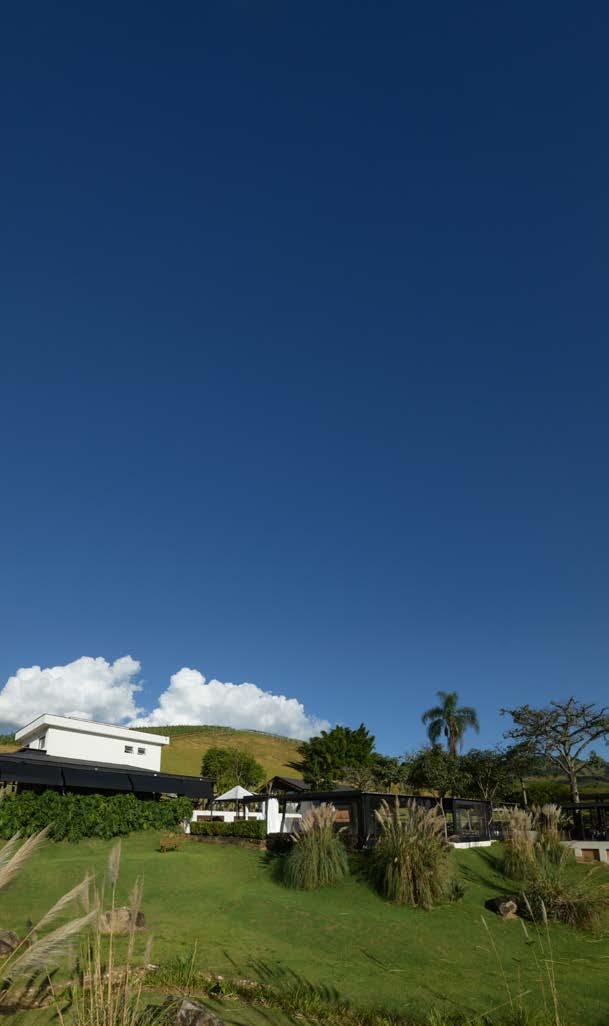
Five award-winning labels, a cellar in Vale do Baú, and the story of the family that created Brazilian Winter Wines.
The experience
The name Brandina is a tribute to the matriarch of the Carbonari family, Italian immigrants who arrived in Vale do Baú in the 2000s and bet on something no one had yet attempted at that altitude: producing quality wine in the Serra da Mantiqueira. The bet paid off.
Today, Brandina labels have accumulated awards at the Concours Mondial de Bruxelles, the Decanter World Wine Awards, and Wines of Brazil, establishing Villa Santa Maria as one of the forty most charming wineries in the country, according to Prazeres da Mesa magazine.
SÃO BENTO DO SAPUCAÍ (SP)
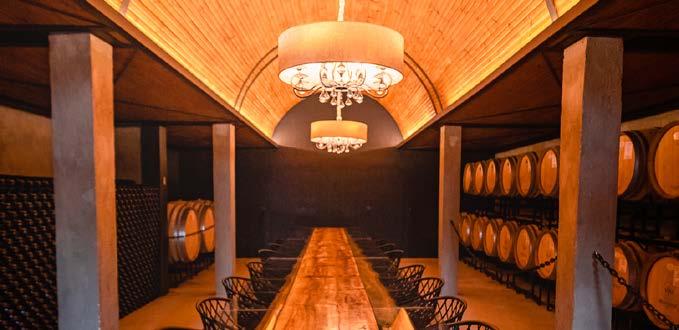
The cellar tasting is the most intimate experience on the property. In a temperature-controlled environment, surrounded by French oak barrels aging the wines, sommelier Christian Pinotti leads the presentation of five Brandina labels, exploring the terroir of Vale do Baú, the double pruning technique that reverses the natural vine cycle to harvest in winter, and the sensory characteristics that make these wines unique in Brazil. Each label is paired with selected regional products in a moment that blends knowledge, landscape, and flavor.

Practical information
Duration: approximately 2 hours. By prior appointment on specific dates and times.
Includes: tasting of 5 Brandina labels led by a sommelier and pairing with regional products. Full meals, other beverages, transportation, or additional consumption are not included.
What to bring: a light jacket, as the cellar has a lower temperature. A camera or a phone for photos. Who can participate: 18 years and older. Please inform dietary restrictions or allergies at the time of booking.
Languages: Portuguese.

ACQUARIDE
SÃO FRANCISCO XAVIER (SP)
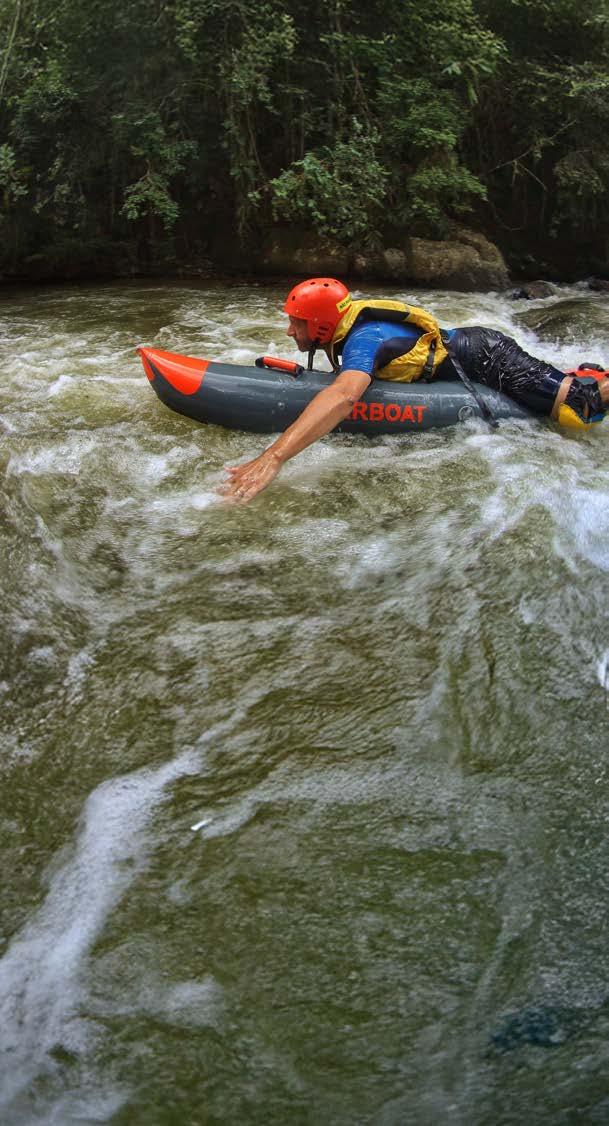
Six rapids, hands in the water, and the Rio do Peixe carrying you downstream.
The experience
Did you know that acquaride originated in Brazil? In the 1970s, boys from the Ribeira Valley would go down rapids lying on inner tubes from trucks. The game became an adventure sport, gained its own equipment, and a national championship, but never lost what it had best: direct contact with nature and the power of the river.
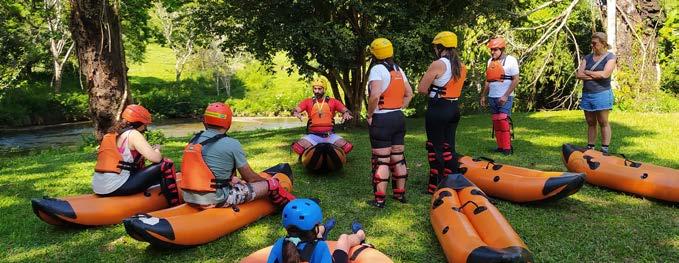
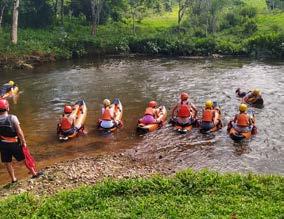
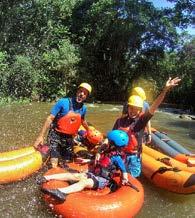
On the Rio do Peixe, Mantiqueira Ecoaventura offers this refreshing experience in one of the most beautiful and preserved stretches of the region. The activity begins with a brief training session in calm waters surrounded by forest, where participants learn the basic techniques of driving the individual raft before tackling the rapids. There is a 1.5 km descent, six rapids, and three specialized guides accompanying each stretch closely, amidst the sounds of the birds of the Atlantic Forest.
At the end, the return takes place along a trail of about one kilometer on the banks of the river, a moment to take a deep breath of the fresh air and let the adrenaline settle.

Practical information
Duration: 2 to 2.5 hours. Groups of a maximum of 6 people. Advance booking is required at least 1 day in advance.
When: from April to November.
Includes: adventure insurance and complete equipment (individual raft, helmet, life jacket, shin guards, knee pads, and booties). Neoprene suit available for an additional fee.
What to bring: lightweight t-shirt, shorts, or tight-fitting pants. Extra clothes and a towel. Avoid alcoholic beverages and heavy meals before the activity.
Who can participate: adults (in good health, without pregnancy or cervical injuries, and weighing a maximum of 110 kg) and children from 10 years of age, accompanied by a guardian.
Languages: Portuguese.
IN THE SÃO PAULO MANTIQUEIRA
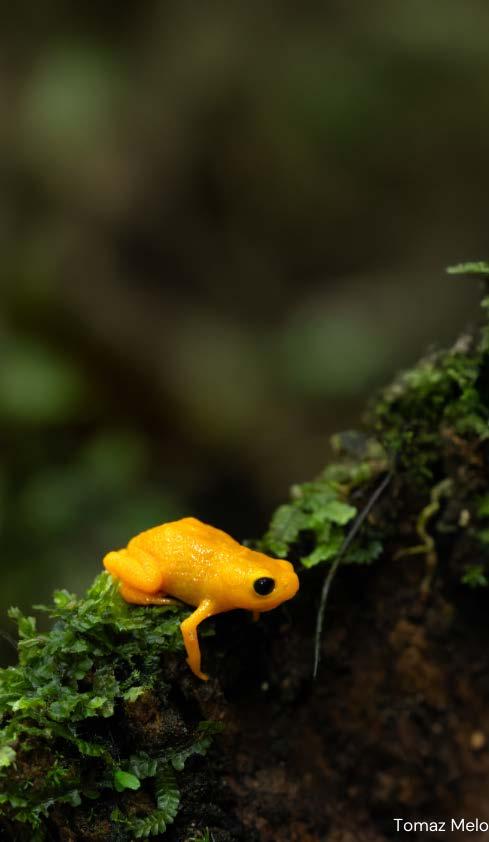
Forest, altitude, and surprising biodiversity. An itinerary for those who want to go beyond the obvious.
The experience
The Atlantic Forest is one of the five richest biodiversity hotspots on the planet. In the São Paulo section of the Mantiqueira Mountain Range, at altitudes exceeding 2,000 meters, this biodiversity is concentrated in a mosaic of habitats that few visitors have the opportunity to explore on conventional itineraries.
SÃO FRANCISCO XAVIER (SP)
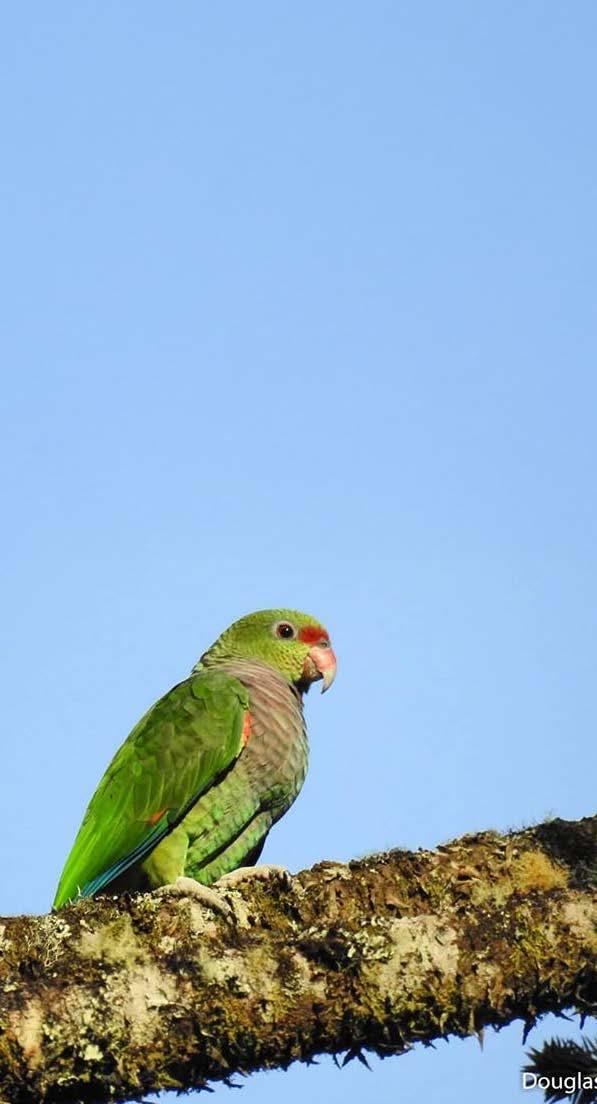
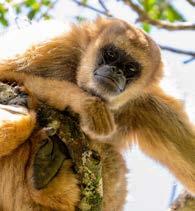
The Wildlife Expedition, led by naturalists from UNA Ecoturismo, is a guided immersion into this ecosystem. During the hikes, participants observe animals, plants, and fungi guided by expert naturalists who understand species and their ecological relationships within the forest. Among the possible encounters are the five primates of Mantiqueira: the southern muriqui, the brown howler monkey, the capuchin monkey, the black-tufted marmoset, and the titi monkey.
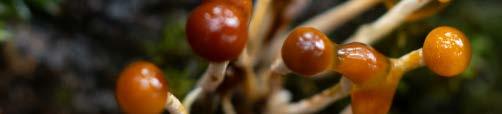
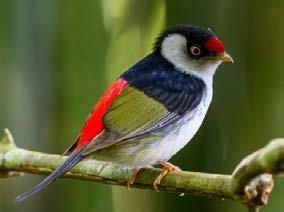
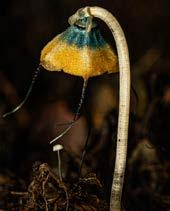
The region is also home to rare bird species such as the black-fronted piping guan and the vinaceousbreasted amazon, more than 25 species of amphibians, and extraordinary fungi such as Cordyceps, the famous “zombie fungus.”
The experience can be organized as expeditions ranging from 1 to 6 days, with daily outings of approximately 4 hours, including the option of night hikes for observing amphibians and reptiles. Each format adapts to the visitor’s profile and availability.

Practical information
Duration: expeditions from 1 to 6 days, with daily outings of approximately 4 hours. Advance booking is required; availability upon request.
Includes: specialized naturalist guides, protective leg coverings (gaiters), walking sticks, flashlights, binoculars, entrance fees to visited areas, adventure insurance, and a safety management plan with a rescue team in remote areas. Optional transfers.
What to bring: closed-toe hiking shoes, weather-appropriate clothing, a rain jacket, a cap, sunscreen, insect repellent, and a water bottle. Up-to-date vaccinations are recommended.
Who can participate: people of all ages, upon completion of an individual health form. Trails range from easy to intermediate difficulty.
Languages: Portuguese, Spanish, and English.
HORSE, BOW, AND PRESENCE
Mounted archery in Mantiqueira: an ancient practice.
The experience
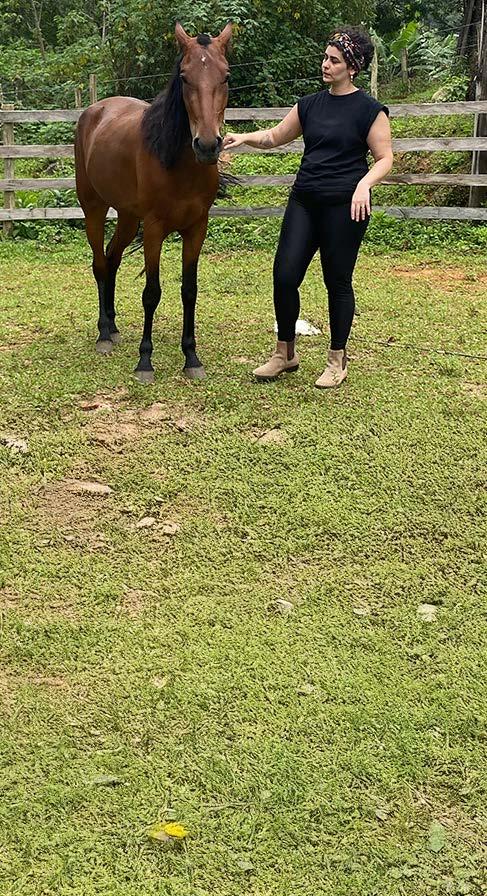
Mounted archery is one of the oldest practices in the world. People of the Asian steppes, medieval warriors, and Indigenous people of the Americas mastered the art of shooting arrows from horseback with precision and fluidity. What was once a technique of war has now become one of the most complete experiences of self-awareness, balance, and presence one can have.
SÃO FRANCISCO XAVIER (SP)
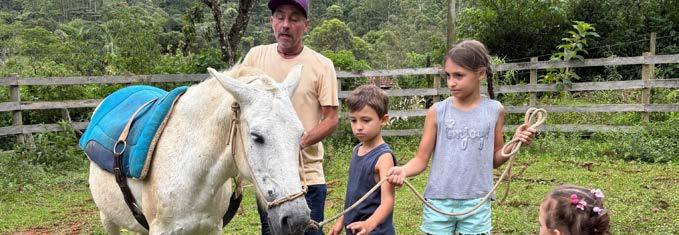
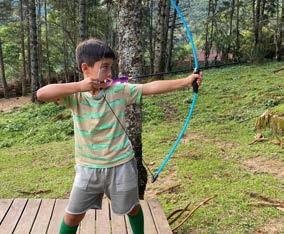
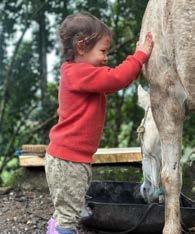
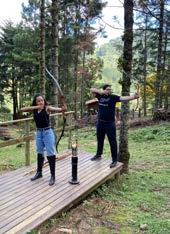
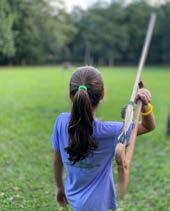
In São Francisco Xavier, at the foothills of the Mantiqueira Mountain Range, Montaria Intuitiva offers this practice in a one-day immersion that begins on the ground and ends in motion. In the morning, breathing exercises and body awareness prepare participants to communicate with the horse without force or haste. By midday, riding takes place in a safe and gradual way, and archery naturally follows: bow, arrow, and horse in harmony.
The route continues along open-field trails, where the wind, the earth, and the animal set the rhythm. No prior experience with horses or archery is required. What participants take away at the end is difficult to name and easy to feel.

Practical information
Duration: 3 to 4 hours.
When: mostly on weekends.
Includes: trained horses, safety equipment for riding and archery, specialized guidance, and a homemade snack with cake, coffee, and tea. Full meals, alcoholic beverages, or transportation are not included.
What to bring: long pants, closed-toe shoes, a cap, sunscreen, and water.
Who can participate: adults and children from 4 years old. No prior experience required. Moderatelevel activity. Please inform any allergies or limitations in advance. Alcohol consumption is not allowed.
Languages: Portuguese, Spanish, and English.
BEER PARK
Brewery tour, a 180-degree viewpoint over the Mantiqueira Mountains, and cold beer outdoors in the highest city in Brazil.
The experience
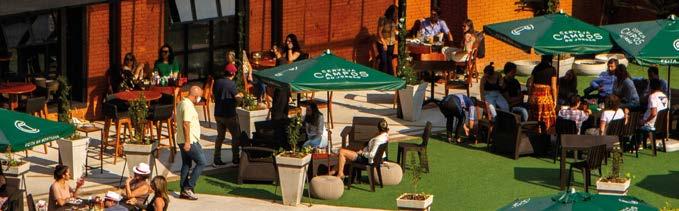
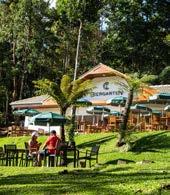
Campos do Jordão Beer was born from the desire to create a label that reflects the personality of the place: altitude, mountain climate, and araucaria trees. The Beer Park is a complex that brings all of this together in a single destination, with craft production on display, outdoor gastronomy, and a viewpoint offering one of the most breathtaking views of the Serra da Mantiqueira.
CAMPOS DO JORDÃO (SP)
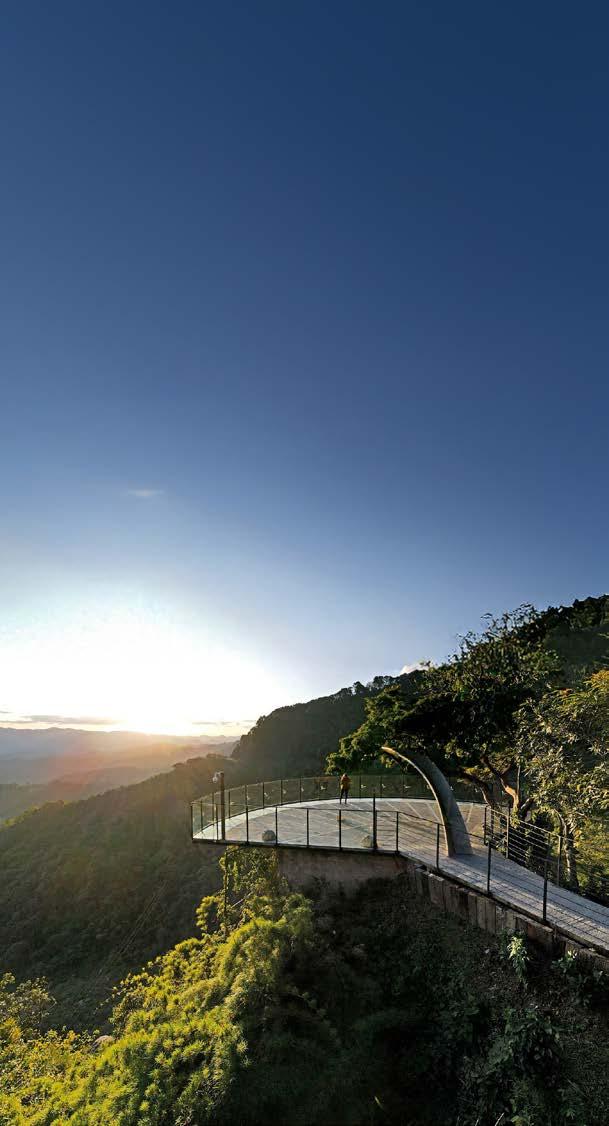
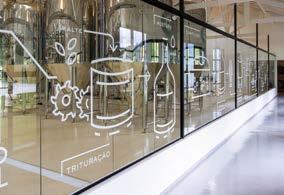
The brewery tour showcases the entire production process, from ingredient selection to bottling, ending with a tasting session. The Biergarten invites visitors to pair German-style snacks with a view of the waterfall. The Beernic is a beer picnic featuring a special menu paired with the house labels, served in the midst of nature. At the Mantiqueira Viewpoint, a platform with a 180-degree view over the mountain peaks, it’s hard not to stay longer than planned. The Japanese Garden and the waterfall complete the contemplative spaces spread throughout the park.
The Alto da Brasa Restaurant, led by chef Michelle Peretti, concludes the experience with signature grilled dishes, local ingredients, and pairings with the house beers. It’s the kind of place you don’t visit in a hurry.

Practical information
Duration: 2 to 3 hours for the full experience.
When: daily, from 10 a.m. to 5 p.m. No prior reservation required. Tickets are available at the ticket office on the day of the visit.
Includes: park admission, trails, gardens, and waterfalls, brewery tour with tasting, access to the Mantiqueira Viewpoint, souvenir shop, dining areas, and parking. Purchases at the shop and restaurants are not included.
What to bring: comfortable clothing and shoes for light walks through the gardens. On cold days, bring a jacket, as the weather can be unpredictable.
Who can participate: everyone. Children are welcome when accompanied by a responsible adult. Beer tasting is restricted to those 18 years and older. The venue does not offer alcohol-free or gluten-free beers.
Languages: Portuguese.

ATLAN TIC
forest caves
Scan and learn more:

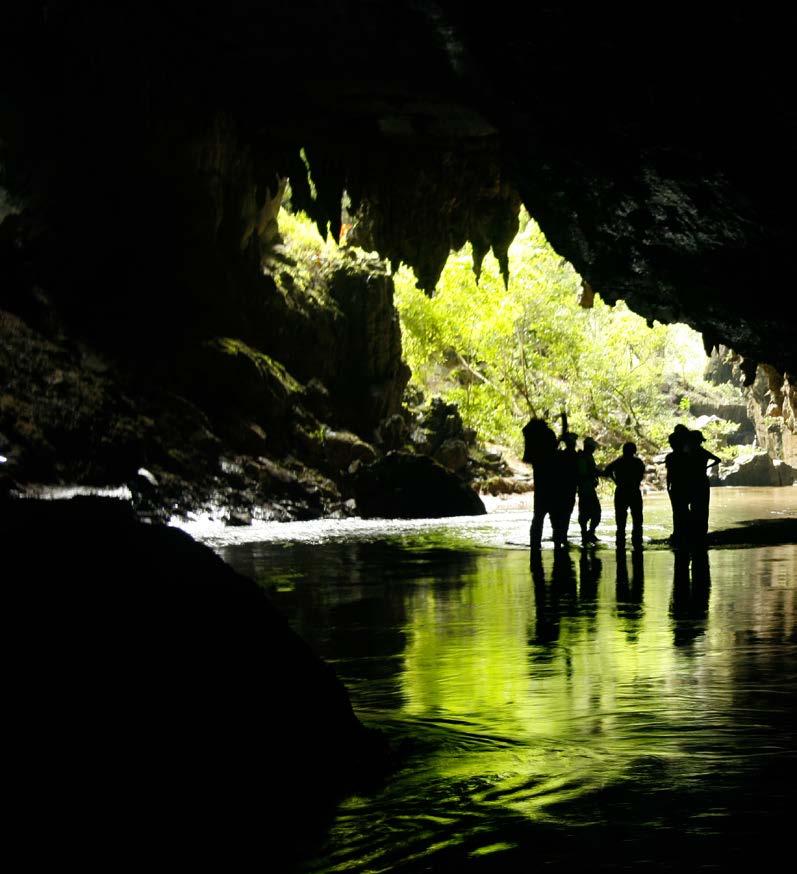
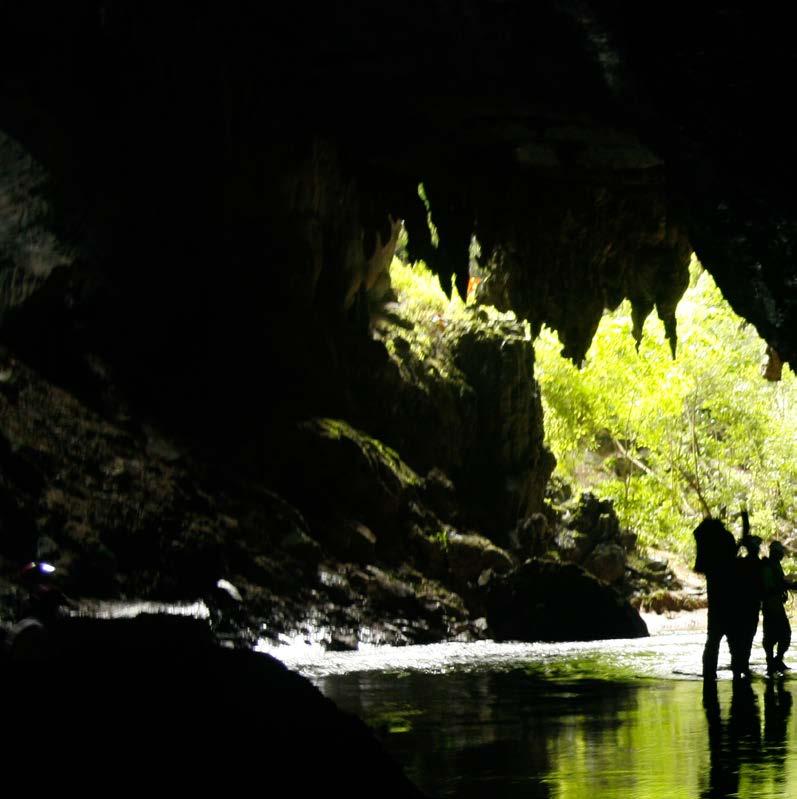
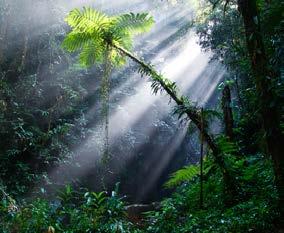
In the southern part of the state of São Paulo, the Vale do Ribeira is home to one of the most well-preserved areas of the Atlantic Forest in Brazil and one of the most important cave systems in the world. Recognized as a UNESCO World Natural Heritage Site, the region brings together pristine nature, rich biodiversity, and impressive geological formations.
Located just about 200 kilometers from the capital, the contrast is striking: within a few hours, visitors can leave one of the largest metropolises in the world and arrive in a territory of dense forest, crystal-clear rivers, and virtually untouched landscapes. This proximity — rare on a global scale — is one of the destination’s greatest assets.
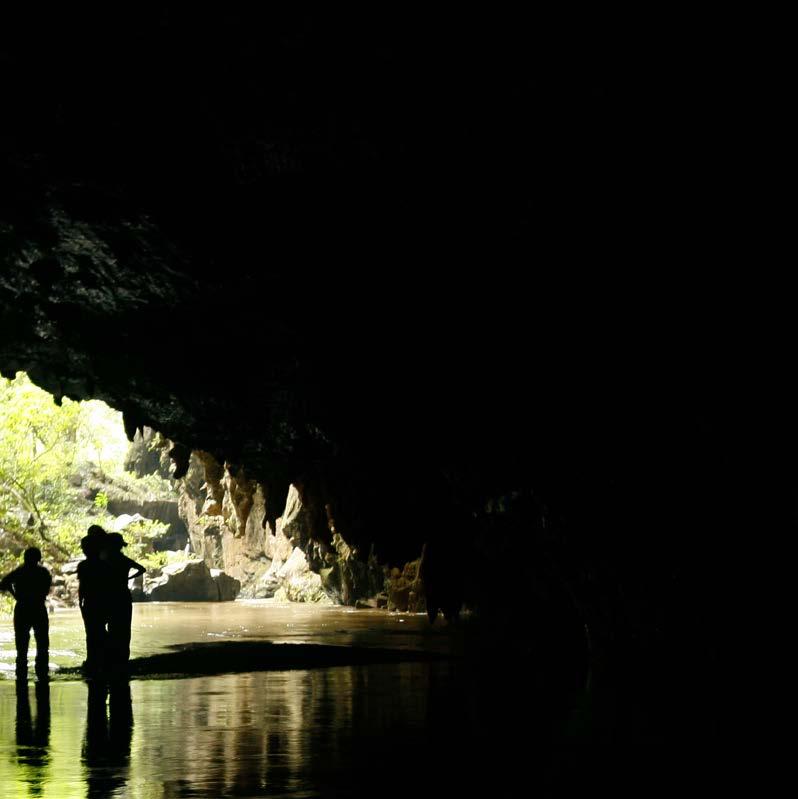
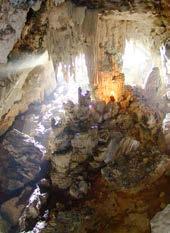
Beneath the forest, hundreds of caves reveal unique underground landscapes, especially in areas such as PETAR (Alto Ribeira Tourist State Park) and Intervales State Park. Trails lead to waterfalls, clear rivers, and wildlife observation areas.
The experience combines adventure, knowledge, and local culture. Traditional and quilombola communities preserve practices and knowledge that enrich the visit, while regional gastronomy enhances the immersion in the territory.
It is a destination that surprises with the intensity of its nature and the sense of discovery at every turn.
www.rotadascavernas.com.br
WINE PICNIC AT THE VIEWPOINT
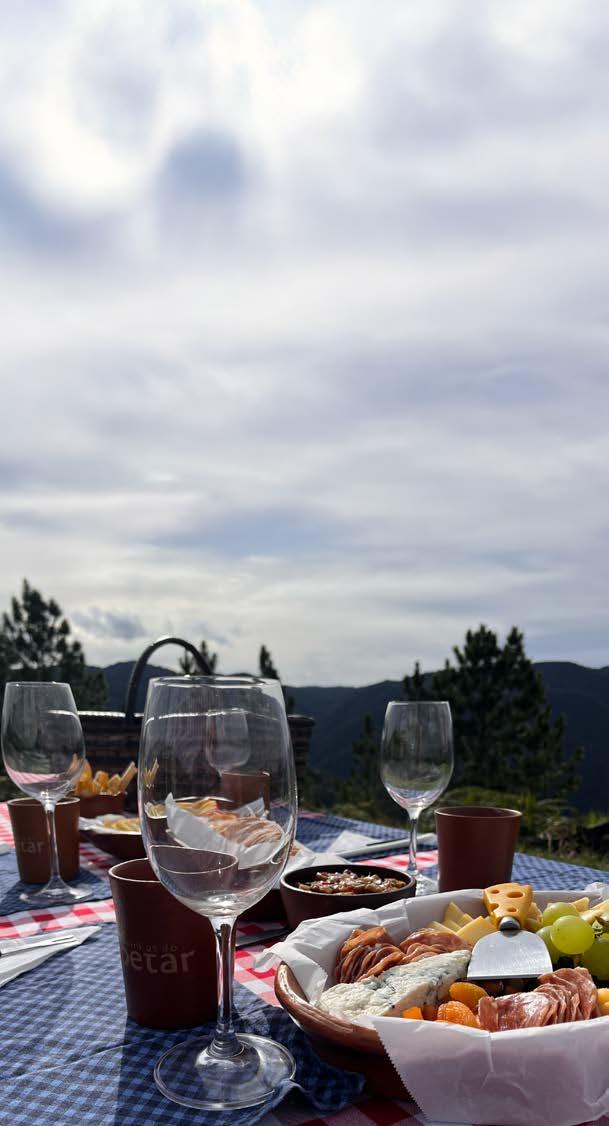
Wine, breeze, and the Betari River Valley opening on the horizon.
The experience
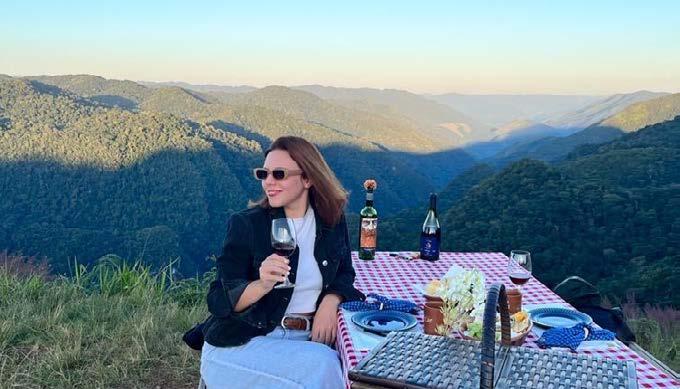
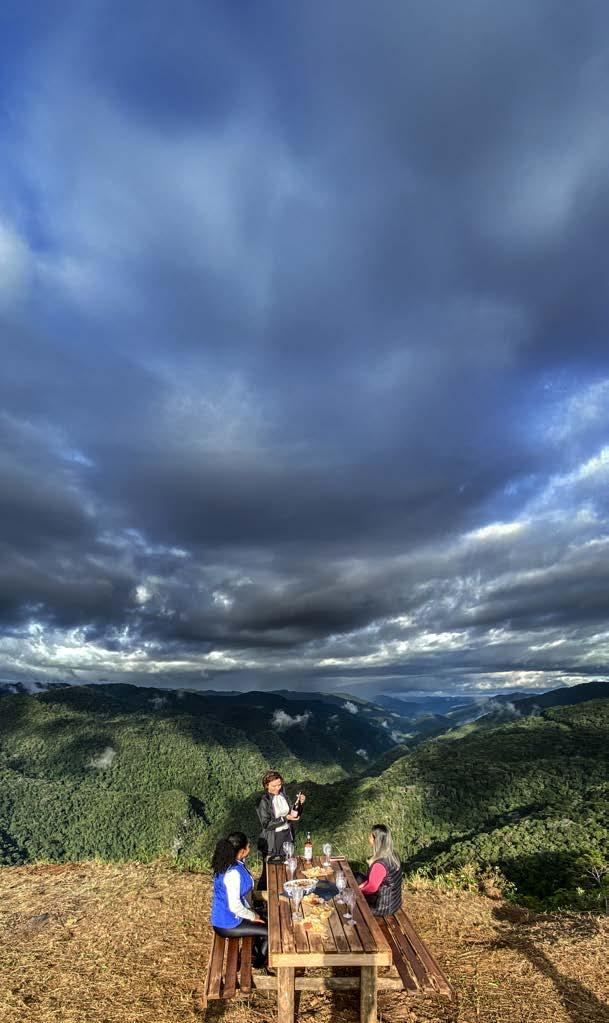
Located on the border between Apiaí and Iporanga, at over 700 meters of altitude, Boa Vista Viewpoint is one of the most privileged observation spots in the Upper Vale do Ribeira. From there, the view stretches across the entire Betari River Valley, with preserved Atlantic Forest covering the limestone cliffs that form the underground system of PETAR. Whether in rain or sunshine, it is a horizon that is hard to forget, marked by grand proportions and shapes that evoke an ancient history.
APIAÍ / IPORANGA (SP)
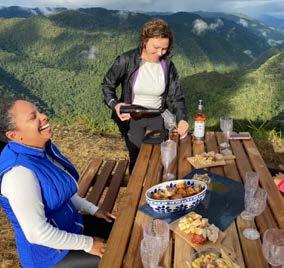
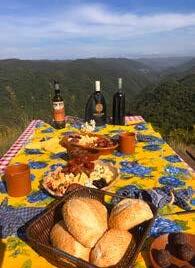
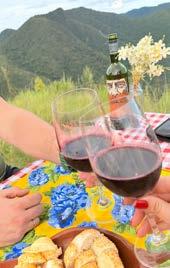
It is in this setting that the picnic is arranged, featuring regional wine and a charcuterie board with cheeses, fruits, breads, and jams served on locally handcrafted ceramics. The intimate atmosphere blends the pleasures of wine and gastronomy with the freshness of the landscape and the warmth of hosts, who treat each visit as a gathering among friends.

Practical information
Duration: approximately 90 minutes. Advance booking is required at least 24 hours in advance.
Includes: 1 bottle of wine and 1 charcuterie board with cold cuts, dried fruits, fresh fruits, breads, and jams. Transportation is not included.
What to bring: comfortable clothing and shoes, a cap, sunglasses, sunscreen, and insect repellent.
Who can participate: guests aged 18 and over for wine consumption. Minors are welcome with an additional fee and grape juice service. Access via a staircase of approximately 50 steps with a handrail.
Languages: Portuguese.
OBSERVATION OF LUMINOUS ORGANISMS
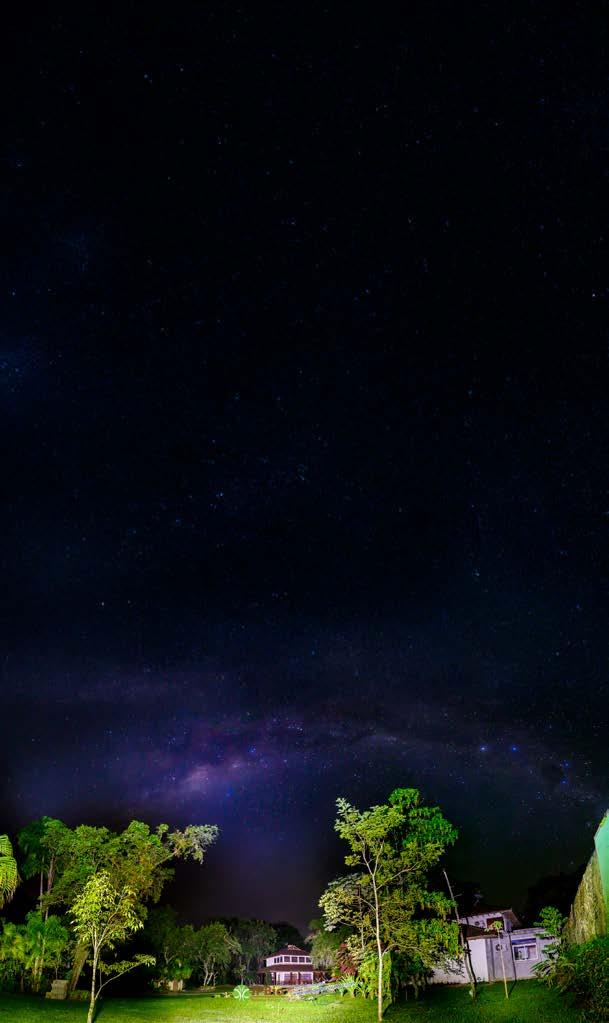
The forest lights up when the sun sets. Come see it.
The experience
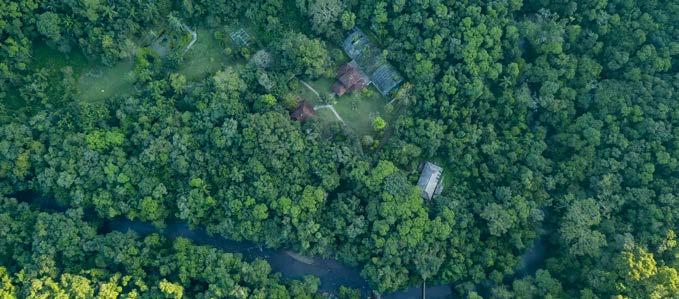
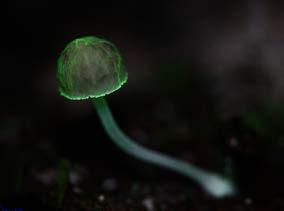
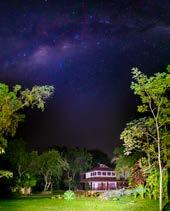
Vale do Ribeira hosts the largest concentration of bioluminescent fungi on the planet. Of the 71 types known worldwide, at least 10 species have already been recorded in this region, which attracts researchers from around the globe to study this rare phenomenon. The Betary Reserve, a preserved 60-hectare area managed by IPBio (Biodiversity Research Institute), is where science and wonder come together for visitors.
IPORANGA (SP)
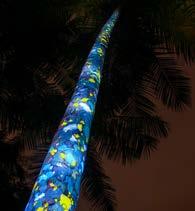
The night visit begins in the auditorium with an introductory presentation and continues through a sequence of spaces: the bioluminescent fungi laboratory, where visitors can see mushrooms glowing in controlled darkness; the amphibian greenhouse and bromeliad collection; the insect laboratory; a dark room displaying 24 fluorescent minerals from different parts of the world; an underwater aquarium with native fish and firefly larvae; and finally, a night trail through the Atlantic Forest, ending in a forest illuminated by fluorescent organisms.
Each step is guided by IPBio researchers, partners of the University of São Paulo in bioluminescence studies. This is not a guided tour — it is an immersive class inside the forest.

Practical information
Duration: 2 hours.
When: preferably from September to March. Minimum of 4 participants required, at least 3 days in advance.
Includes: entrance fees. Transportation is not included.
What to bring: sneakers, long pants, a T-shirt, and insect repellent.
Who can participate: everyone, with no restrictions. Activity with low physical effort.
Languages: Portuguese and English.
DEVIL’S THROAT
ELDORADO (SP)
Rappelling, an underground river, and a hidden waterfall in the heart of the largest cave in São Paulo.
The experience
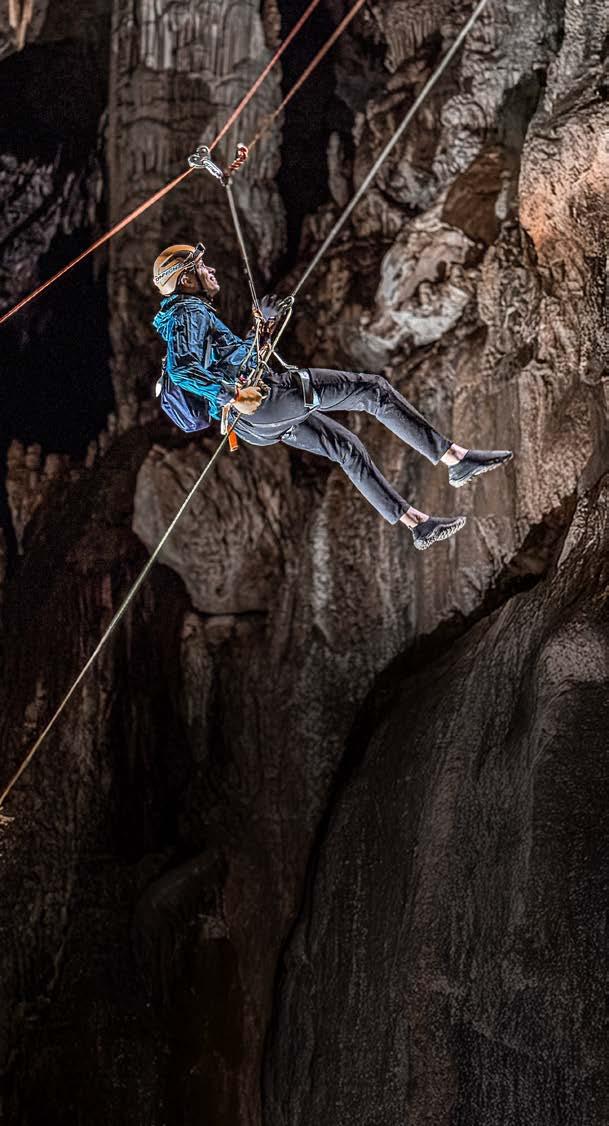
With nearly 9 kilometers of mapped extension, Devil’s Throat is the largest in the state of São Paulo and one of the most visited in Brazil. Publicly known since 1891 — and inhabited by Indigenous people and quilombola communities for centuries before that — it holds, for a few visitors, the most intense experience it offers: the descent through the Devil’s Throat.
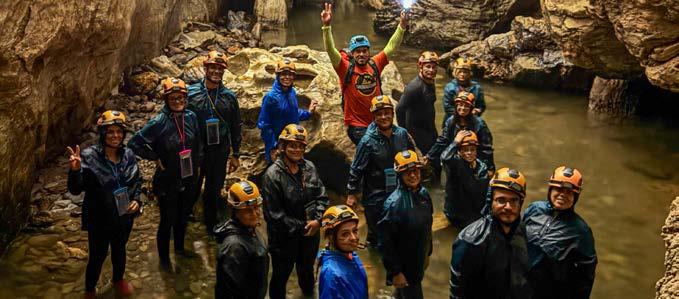
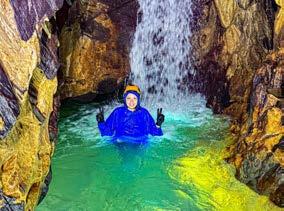
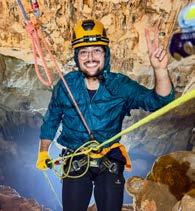
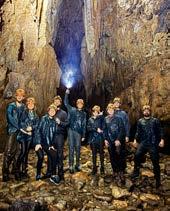
The tour combines three activities in sequence. It begins with the illuminated cave route, featuring walkways and geological formations such as the Guardian, Snow White, and the Devil’s Throat. Next comes a 40-meter rappel inside the cave itself, conducted by a team trained by Spéléo Secours Français, a global reference in cave rescue. Finally, the route continues along the bed of the Tapagem River, with giant rocks, rapids, and small climbs, until reaching the Garganta do Diabo (Devil’s Throat) waterfall, hidden within the rock. The operation holds ISO 21101 certification, an international standard for safety in adventure tourism, and rappel photos are included at no additional cost.

Practical information
Duration: 5 hours.
When: daily at 10 a.m. and 3 p.m. Minimum of 2 participants. Online booking is required.
Includes: specialized guides, helmets, flashlights, anorak jackets, rappel equipment, and adventure insurance. Park entrance fees, transportation, or meals are not included.
What to bring: comfortable closed-toe shoes, long pants, and a long-sleeve shirt, plus extra clothes and a towel. Avoid heavy meals before the activity.
Who can participate: children from 8 years old, accompanied by a guardian, and adults up to 70 years old. Maximum weight: 120 kg. Physical fitness compatible with a moderate-level adventure is required. Swimming skills are not necessary.
Languages: Portuguese and English.
PALMITO THERAPY

From palm to plate in three hours: an experience that reveals the most flavorful and sustainable side of the Atlantic Forest.
The experience
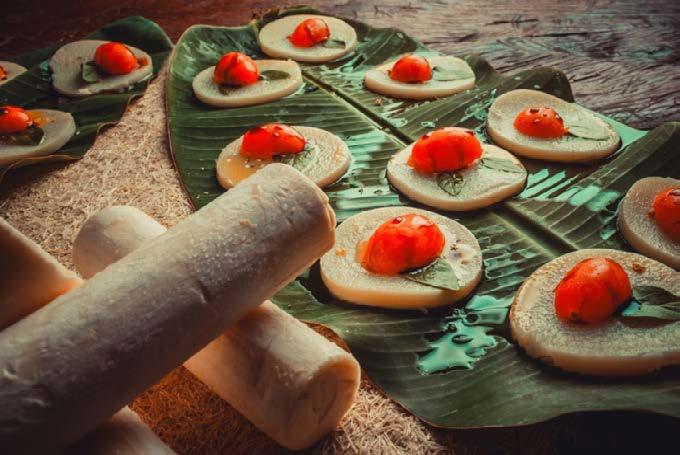
The Juçara palm, native to the Atlantic Forest and threatened with extinction, has found its greatest ally in Palmitolândia. It all began in the 1990s, when José Osmar brought the first pupunha palm seedlings from Pará to Iporanga. The idea was to cultivate a species that could be harvested without killing the plant, thereby reducing pressure on the native Juçara. Today, the farm has more than one hundred thousand pupunha palms — and a daughter, Anna Gabriella, who has transformed production into an award-winning tourist destination recognized with the Sebrae Quality Seal.
IPORANGA (SP)
The palmito therapy session begins in the plantation: visitors choose their palm, learn how to cut it with a machete, and take home a fresh stalk. Then comes the feast, with around fifteen signature dishes that reveal just how versatile this palm can be: palm heart sushi and gnocchi, vegan caprese, ice cream with juçara sauce, brigadeiro, liqueur, and pâté with jabuticaba. At the end, the leaves of the harvested palm are turned into a broom — because in Palmitolândia, 100% of the plant is used.
It is an experience that educates without preaching, preserves without taking away flavor, and proves — dish by dish — that the future of the Atlantic Forest can be delicious.

Practical information
Duration: approximately 3 hours.
When: daily, from 10 a.m. to 5 p.m. Advance booking is required at least 1 hour in advance.
Includes: plantation visit, palm harvesting, one fresh palm heart stalk, and a full meal with approximately 15 palm-based dishes. Beverages are charged separately.
Who can participate: everyone, with no restrictions.
Languages: Portuguese, English, and Spanish.
PRIMITIVE SKILLS & FOREST BIOLUMINESCENCE IN PETAR
From primitive fire to bioluminescent fungi: a sensory journey through PETAR from sunrise to late night.
The experience
The caves of PETAR reveal more than stalactites and underground rivers — they preserve the memory of people who used them as shelter long before any map existed. It is from this past that the Primitive Skills experience begins: an activity that invites visitors to explore human survival techniques around the park, using only what nature provides.
IPORANGA (SP)
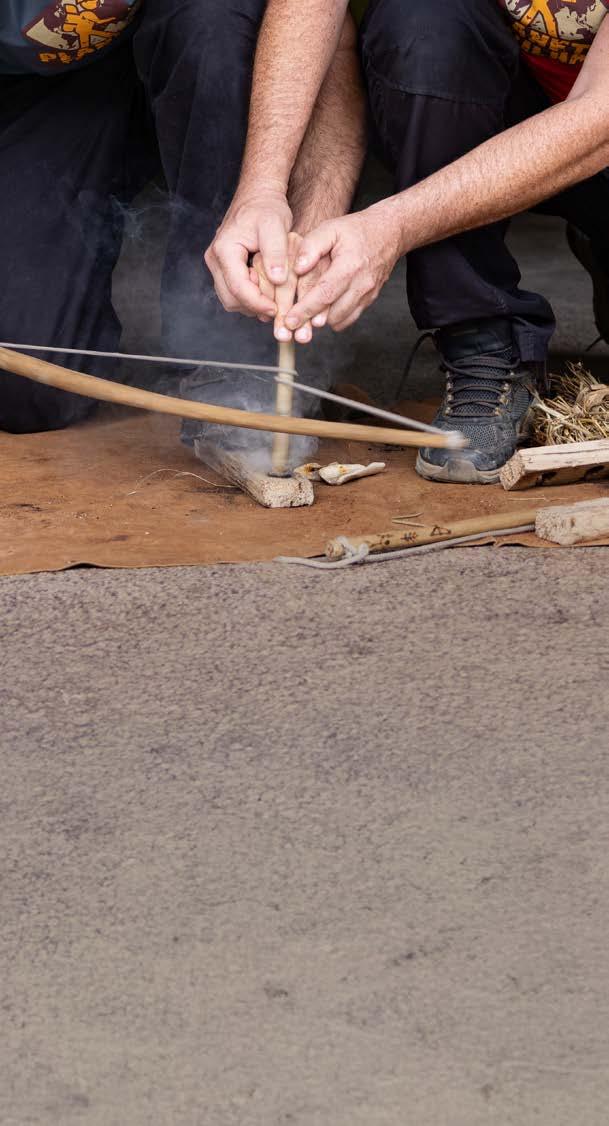
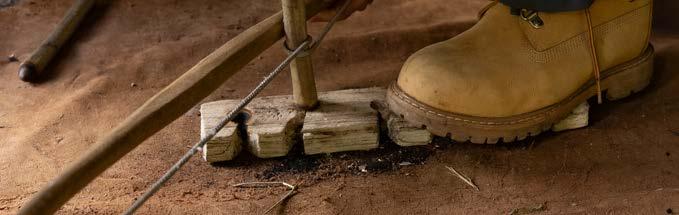
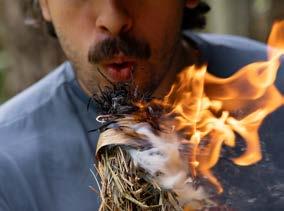
The main activity is fire-making by friction, one of humanity’s oldest skills. The group learns the technique, tries, fails, and, when the flame finally appears, understands in practice what it means to master this element. The experience also includes the use of other natural resources and an immersion into the logic of a primitive way of life, far from any screens or internet signals.
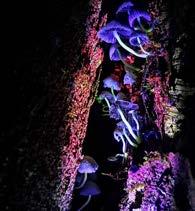
For the more curious, the experience can be extended with a night walk through the Atlantic Forest. The forest at night is not dark: bioluminescent fungi light up the ground with a greenish glow, firefly larvae blink among the leaves, lichens reveal hidden patterns under ultraviolet light, and the harvestman — an arachnid often mistaken for a spider but is not — appears among the roots. An important note: the visible glow of the mushrooms depends on climatic conditions such as humidity and heat, and may not occur on the night of the visit. The mycelium on the forest floor, however, is almost always visible.

Practical information
Duration: up to 2 hours per activity.
When: by prior booking. Minimum of 6 participants.
Includes: entrance fee, safety equipment, natural materials, instructor, and insurance. Transportation from the agency to PETAR (five kilometers) are not included.
What to bring: long pants, a T-shirt (no tank tops), closed-toe shoes, a light jacket, insect repellent, and water.
Who can participate: adults and children from 5 years old. Easy level, no specific physical preparation required.
Languages: Portuguese.
JOURNEY INTO THE FANTASTIC WORLD OF CAVES
Five days, more than three hundred caves, and a valley that most Brazilians have yet to discover.
The experience
PETAR (Alto Ribeira Tourist State Park) is home to more than three hundred cataloged caves within one of the last great preserved stretches of Atlantic Forest in Brazil. Few destinations in the country bring together so many adventure options, geological formations, and preserved trails in one place.
VALE DO RIBEIRA (SP)
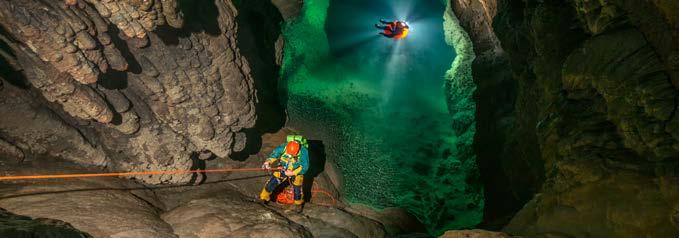
This five-day expedition, led by Parque Aventuras with specialized local guides, explores the most impressive sites in the region. The Santana, Couto, and Morro Preto caves reveal underground halls with millenary geological formations, internal rivers, and a striking silence. The Água Suja Cave and the monumental Devil’s Throat expand the itinerary with landscapes on a scale that is difficult to describe without seeing them. For those seeking more adrenaline, the itinerary includes rappelling with floating in the Lago Suspenso Cave and tubing (boia cross) on the Betari River.
The route also includes the Queda do Meu Deus Waterfall, in the Vale das Ostras, swims in natural pools, having picnics at viewpoints, and enjoy regional gastronomy. Accommodation at Glamping Mangarito provides the comfort needed to recharge between expedition days.

Practical information
Duration: 5 days. Available year-round, with prior booking through Parque Aventuras.
Includes: specialized guides, entrance fees to parks and attractions, safety equipment, individual insurance, and scheduling logistics. Transportation to the region, meals, or personal expenses are not included.
What to bring: light hiking clothes, sneakers or non-slip boots, extra clothes for getting wet, a small backpack, water, snacks, insect repellent, and sunscreen.
Who can participate: children from 8 years old and adults, with moderate physical fitness for hiking trails. No prior experience is required. Some activities involve water; knowing how to swim is recommended.
Languages: Portuguese, English, and Spanish.
QUILOMBOLA CIRCUIT
IVAPORUNDUVA QUILOMBO COMMUNITY
ELDORADO (SP)
The oldest quilombola community in Vale do Ribeira opens its doors to those who want to understand Brazil from within.
The experience
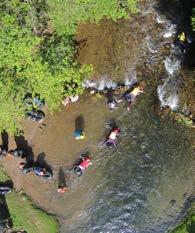
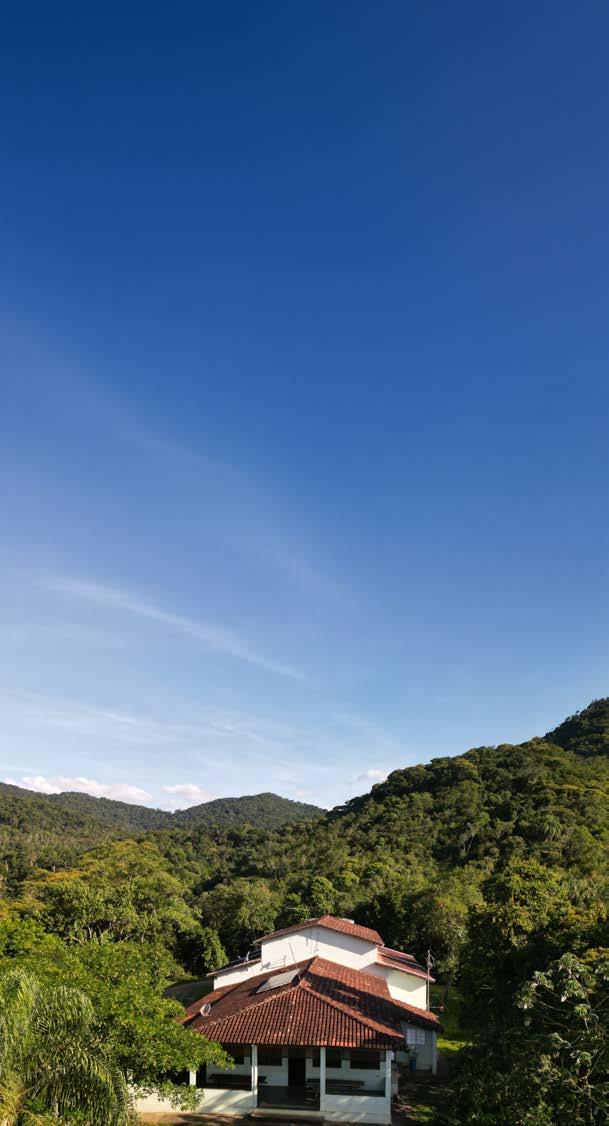
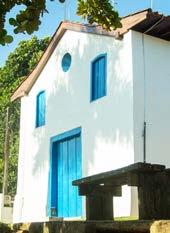
The name comes from Tupi-Guarani and means “rivers of good waters, rich in fruits.” The Ivaporunduva Quilombo dates back to the 17th century, when enslaved people abandoned by their masters organized themselves along the Ribeira de Iguape River and built a community that has never stopped resisting. Today, with more than 120 families and 80% of its territory covered by preserved Atlantic Forest, Ivaporunduva is the oldest quilombola community in Vale do Ribeira and one of the most significant community-based tourism destinations in Brazil.
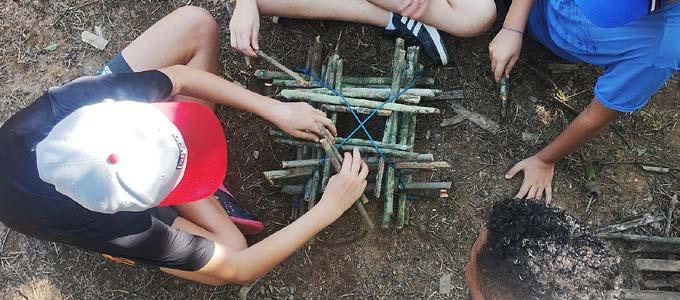
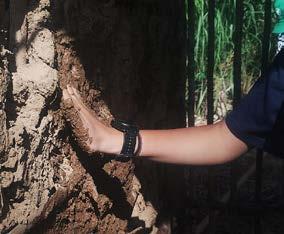
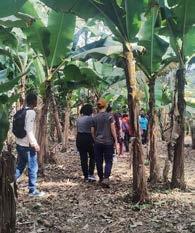
The visit begins with a talk led by a local leader, who shares the history of the Quilombo, the struggles for land, and the pride of a people who never surrendered. Then, the group dives into hands-on workshops: subsistence agriculture in the organic banana plantation, a “living pharmacy” with medicinal plants used since the time of the enslaved, gold panning to understand the region’s colonization history, traditional pounding (tutuca de pilão), building with wattle and daub (pau-a-pique), and cassava flour processing. Local gastronomy, prepared on a wood-fired stove with ingredients grown in the community, is a highlight in itself. Before leaving, the handicraft shop offers pieces made from banana fiber and native seeds.

Practical information
Duration: half-day or full day. Advance booking is required at least 30 days in advance. Available daily.
Includes: entrance to the Quilombo, discussion with a quilombola leader, specialized environmental monitors, general coordination, and workshops. Lunch and dinner are optional and paid separately.
What to bring: cash or Pix, comfortable clothing for trails (pants, shirt, closed-toe shoes), sunscreen, insect repellent, and a water bottle. Those with mosquito allergies should bring antihistamines.
Who can participate: everyone, with no age restrictions. No specific level of physical fitness required. Consumption of alcoholic beverages or illicit drugs is not allowed.
Languages: Portuguese.
North
CO AST

Scan and learn more:


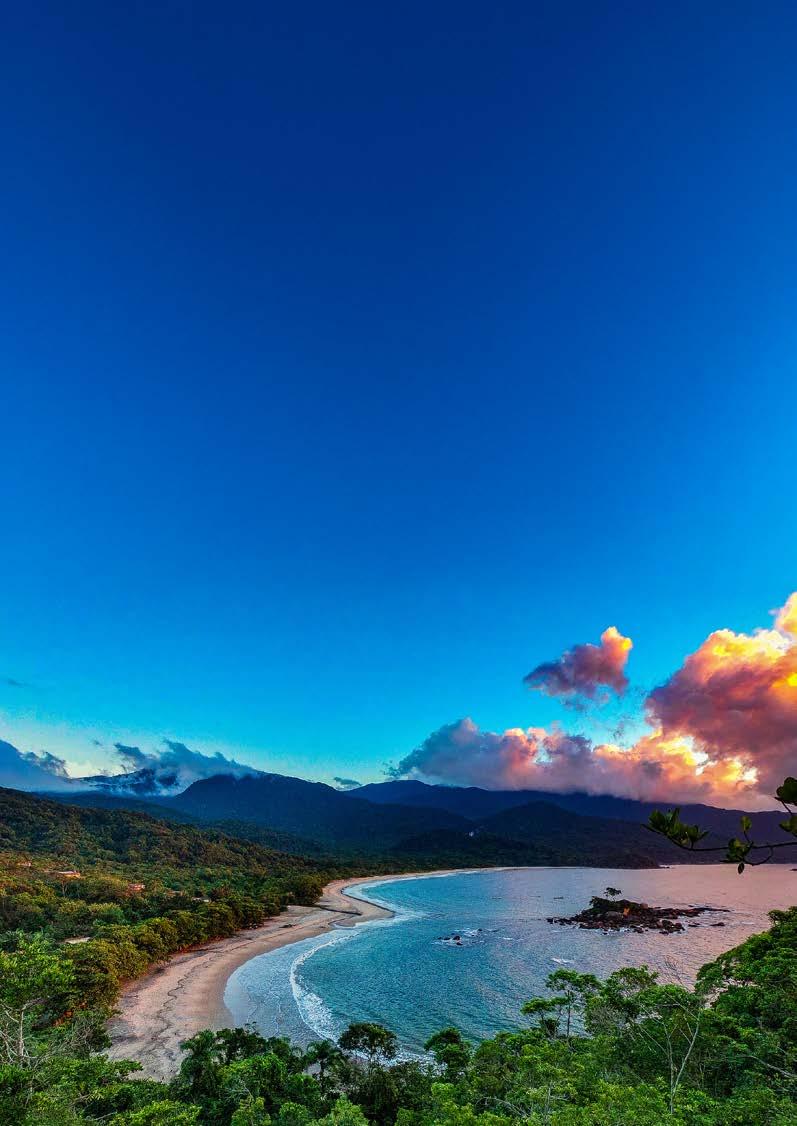
Between the sea and the largest continuous stretch of preserved Atlantic Forest on the planet, the North Coast of São Paulo reveals a rare landscape, where the green of the forest meets the blue of the ocean in visually striking scenery.
The region is home to well-known destinations such as Ilhabela and protected areas like the Alcatrazes Archipelago, a reference for marine biodiversity. Along the coastline, a variety of beaches alternate between sheltered coves and more open stretches, always marked by the strong presence of vegetation that extends to the sand.
This proximity between forest and sea creates a unique experience, where trails, waterfalls, and viewpoints are part of the same territory that offers activities such as diving, water sports, and marine wildlife observation. During part of the year, the presence of whales further enhances opportunities for contact with nature.
The region preserves a strong cultural identity, with caiçara, quilombola, and Indigenous communities offering authentic experiences. With solid infrastructure and easy access from the capital, the North Coast stands out as a complete destination, where landscape, culture, and experiences are harmoniously integrated.
www.circuitolitoralnorte.tur.br
BETWEEN RIVER, SEA, AND LAND: TABATINGA EXPERIENCE
CARAGUATATUBA / UBATUBA (SP)
Where the Tabatinga River meets the sea, time slows down, and the body remembers what true rest feels like.
The experience
At Canto da Tabatinga, between Caraguatatuba and Ubatuba, there is a place where the river meets the sea and the Atlantic Forest reaches the water’s edge. It is here that Vanii — a caiçara host, psychologist, yoga teacher, and sailor — leads one of the most complete experiences on São Paulo’s North Coast.
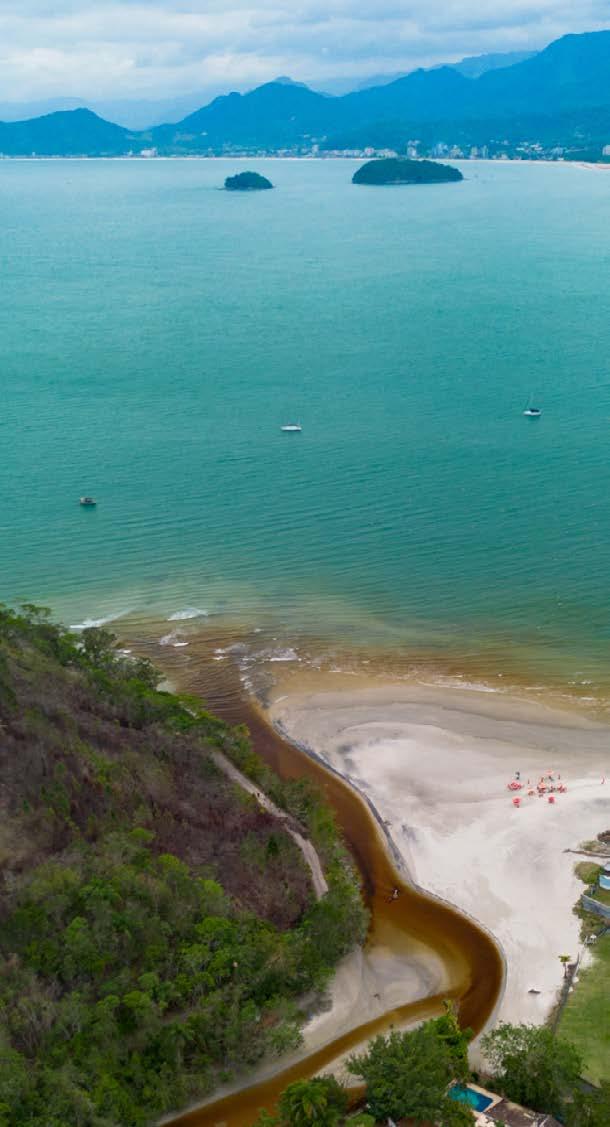

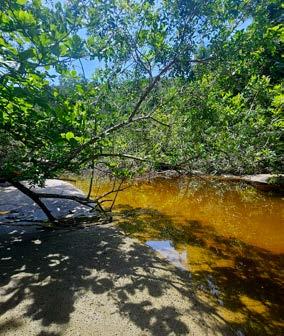
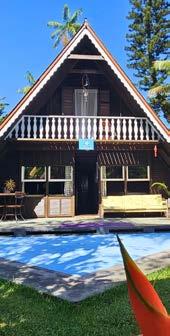
The journey begins in the garden of Hibiscus Experiences, with a welcoming tea, conscious breathing, and grounding practices that prepare body and mind for what follows. A short walk leads to the mangrove, where the group observes the dynamics of this essential ecosystem: the ebb and flow of the tides, the organisms that depend on the transition between fresh and saltwater, and the logic of an environment that exists only within this precise boundary.
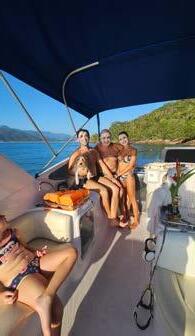
Next, aboard the “Terapia” boat, the group sails through Tabatinga Bay, passing by Tamanduá and Cocanha islands. The navigation is contemplative: the sea, the islands, the horizon, and the relative silence of the ocean create a landscape rarely found in conventional itineraries. The final stop is Argiloterapia Tabatinga, a wellness ritual with the application of white clay, closing the experience with a gesture of reconnection with the earth.
Small groups, personalized guidance, and an itinerary that blends nature, body, and presence result in a sensory experience that is hard to find elsewhere along São Paulo’s coast.
Practical information
Duration: 4 to 6 hours.
When: daily, depending on navigation conditions. Advance booking is recommended.
Includes: welcome tea, guidance by host and sailor, fuel, boat tour, life jackets approved by the Brazilian Navy, clay for the wellness practice, water, ice, and fruits. Alcoholic beverages or transportation to the location are not included.
What to bring: light clothing, swimwear, sunscreen, a hat or cap, a towel, sunglasses, and a waterproof phone case. Avoid bringing valuables.
Who can participate: light-intensity activity, no specific skills or swimming ability required. Please inform any clay allergies or skin sensitivities at the time of booking.
Languages: Portuguese and Spanish.
VISIT TO THE COCANHA MARINE FARM
CARAGUATATUBA (SP)
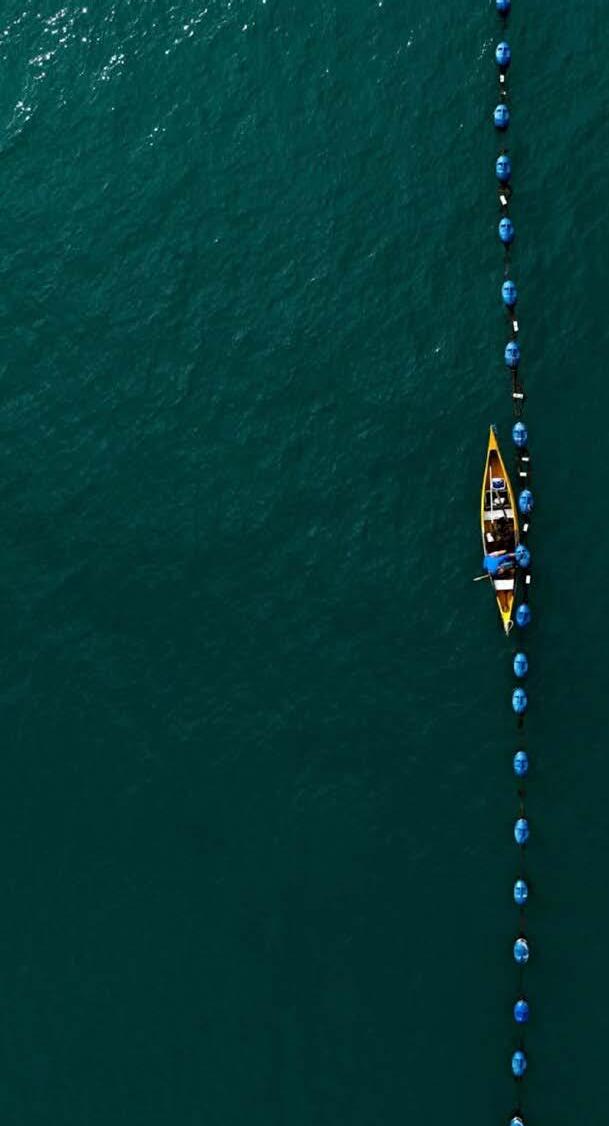
The largest mussel farm in the state of São Paulo is underwater. And now you can visit it.
The experience
Mussel farming at Cocanha Beach began in 1984 through a UN project in partnership with the local fishermen’s community. Four decades later, the Cocanha Marine Farm is the largest in the state of São Paulo, with seventeen cultivation areas organized into two submerged blocks covering forty thousand square meters of marine area and producing up to one hundred and sixty tons per year.
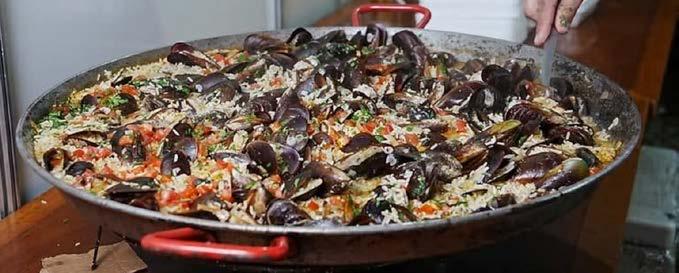
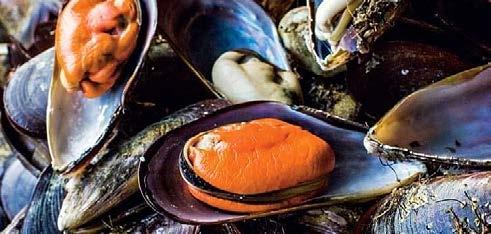
The tour, led by MAPEC, takes visitors by boat to the heart of this marine farm. There, it is possible to closely observe the longlines with their submerged collectors, understand the mussel life cycle — from microscopic larvae to adult shellfish — and discover that the environment created by the cultivation attracts a living chain of other organisms: turtles, rays, octopuses, corals, scallops, and microalgae find shelter and food among the structures. Back at the shore facility, visitors can purchase mussels harvested the same day and enjoy caiçara cuisine recipes such as lambe-lambe, azul-marinho, and mussel risotto.
It is one of the few community-based tourism experiences on São Paulo’s coast that places visitors inside a real productive activity, active for decades.

Practical information
Duration: approximately 1 hour and 20 minutes.
Includes: boat, guide, and MAPEC representative. Lunch is not included. Menu must be chosen in advance: lambe-lambe, azul-marinho, fried fish — always accompanied by mussel fritters, salad, rice, and juice.
What to bring: a cap, sunscreen, insect repellent, protective case for phone, UV shirt, and water.
Who can participate: everyone, except people with seafood allergies. Please inform any limitations or medical conditions in advance. Boat equipped with life jackets.
Languages: Portuguese, English, and Spanish.
SEVEN BEACHES TRAIL
UBATUBA (SP)
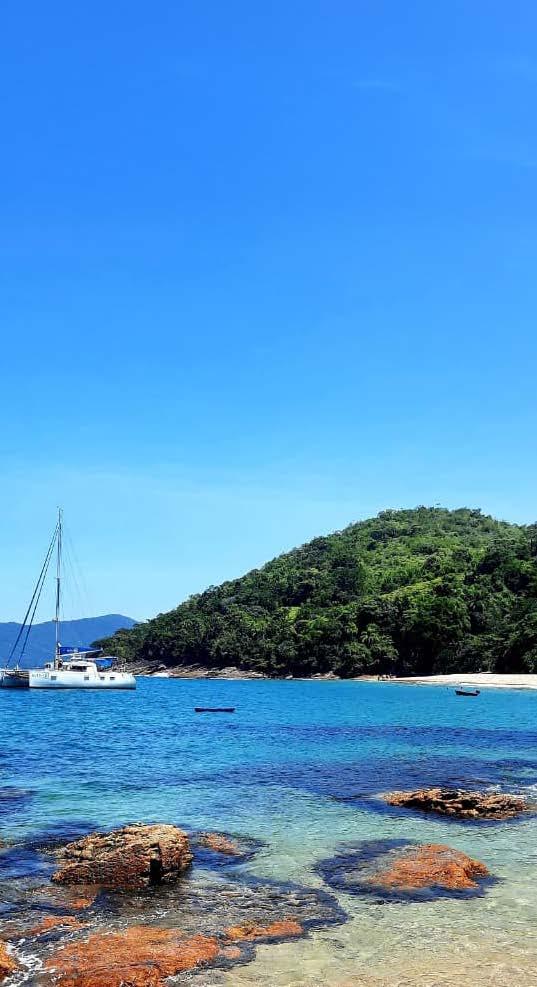
Ten kilometers through the Atlantic Forest, rocky shores, and beaches that few people even know by name.
The experience
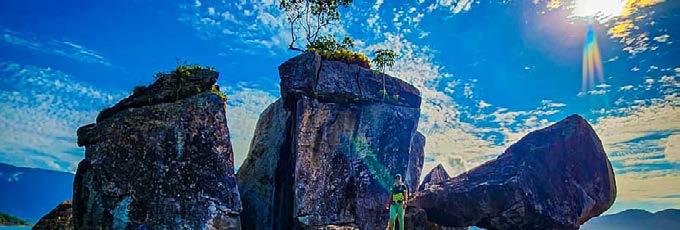
The Seven Beaches Trail is considered one of the most beautiful coastal hikes in Brazil. The approximately ten-kilometer route connects Lagoinha Beach to Fortaleza Beach, passing through seven preserved coves: Oeste, Peres, Bonete, Grande do Bonete, Deserta, Cedro, and Fortaleza. Some of them can only be reached on foot.
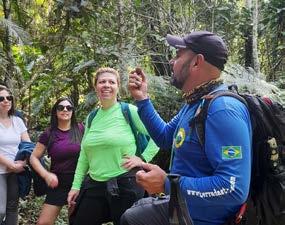
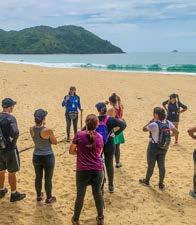
The experience is led by guides from Terra das Tribos, accredited by the Ministry of Tourism and specialized in the natural and cultural history of Ubatuba. Along the way, the group stops for swimming, photos, rest, and storytelling about the Atlantic Forest ecosystem and the caiçara culture that shaped this coastline. The pace is set so everyone can enjoy each stretch without rushing.
The return from Fortaleza Beach to the starting point is made by boat, avoiding the hike back and ending the journey with a different perspective of the coast — this time from the sea. At the end, visitors leave with the satisfaction of having explored one of the most preserved stretches of São Paulo’s coastline along a path most people will never walk.

Practical information
Duration: 5 to 6 hours, including stops for swimming, photos, and rest. Preferably in the morning; available year-round. Advance booking is required.
Includes: guide specialized in natural attractions and first aid, ecotourism insurance, and boat return from Fortaleza Beach to Lagoinha. Transportation, parking, meals, or drinks are not included.
What to bring: broken-in sneakers or hiking boots, shorts or light pants, a cap, insect repellent, and sunscreen. Bring 1.5 liters of water, a light snack, and swimwear. There are kiosks at Fortaleza Beach.
Who can participate: adults and teenagers over 12 years old, accompanied. Moderate physical fitness required. Swimming skills are not necessary. People with mobility restrictions or heart conditions should seek medical advice beforehand.
Languages: Portuguese, English, and Spanish.
BEGINNER SURF EXPERIENCE
SÃO SEBASTIÃO (SP)

You never forget your first wave.
The experience
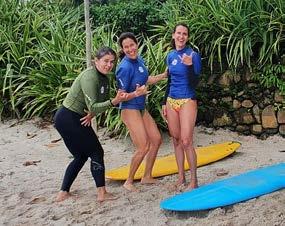
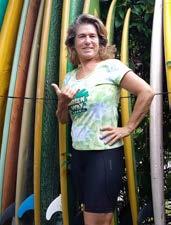
At Juquehy Beach, on the right side of the shore, the blue tent of Green Way Brasil is the starting point for one of the most accessible and memorable experiences on São Paulo’s North Coast. Founded by Maria Luiza Monteleone — better known as Liza, runner-up in the Brazilian professional women’s surfing championship in 1997 and a Physical Education graduate from USP — the school has spent more than twenty years teaching surfing to beginners of all ages and profiles.
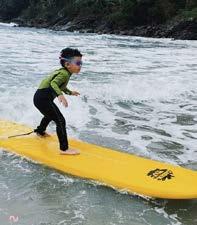
The experience begins on the sand, with a briefing on ocean safety, how the board works, and a demonstration of basic movements. Each participant is assigned a dedicated instructor for the entire lesson, ensuring personalized attention and a pace adapted to each individual. When it’s time to enter the water, the practice takes place in the shallow part of the beach, where participants can stand, using boards and equipment selected according to each person’s size and profile.
The goal is not technique — it’s the feeling of riding a wave for the first time. After leaving the water, participants are often surprised by what they have achieved. That’s what makes Juquehy special: the open sea, the Atlantic Forest in the background, and an instructor who understands exactly what that first wave means.


Practical information
Duration: 60 minutes. Available daily, except in June, December 25, and January 1. Advance booking is required at least 3 days in advance.
Includes: surfboard, rash guard, leash, one-on-one instruction, one-day insurance, freshwater shower after the activity, and beach chairs for companions. Water, drinks, food, or restroom are not included.
What to bring: swimwear, comfortable shorts, and sunscreen. Bring water, a towel, and a change of clothes. Women and girls: wear Lycra shorts over a bikini or swimsuit.
Who can participate: adults and children from 4 years old. No physical preparation or swimming skills required. The activity takes place in shallow water. Participants with mobility limitations can take part without necessarily standing on the board.
Languages: Portuguese, English, and Spanish.
QUILOMBO DA FAZENDA COMMUNITY-BASED
TOURISM
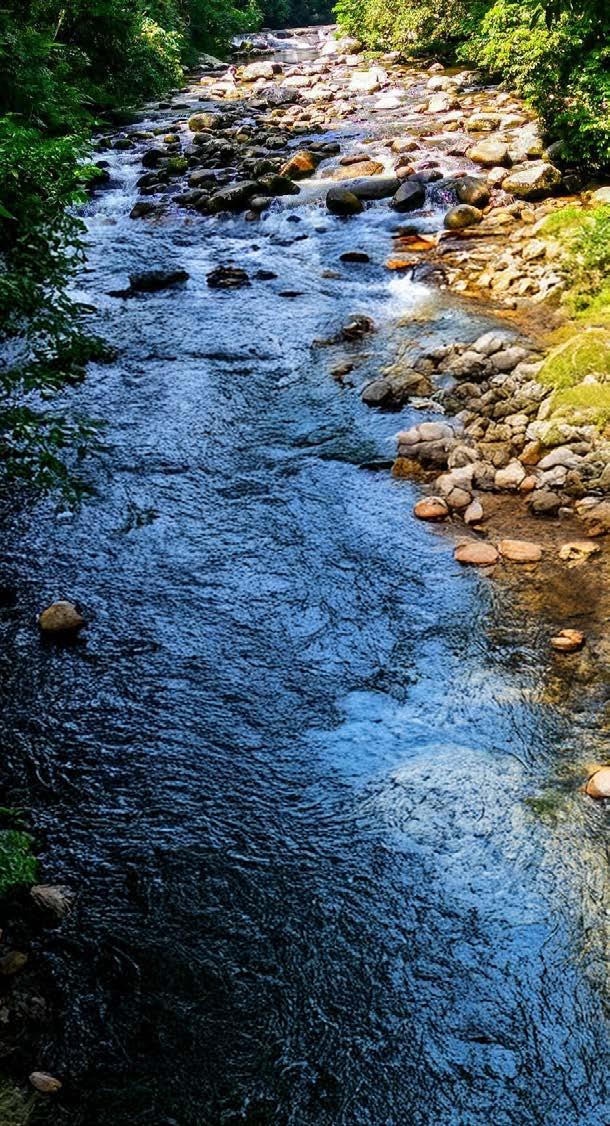
Ancestral knowledge, preserved forest, and encounters that bring visitors closer to the living history of a territory of resistance.
The experience
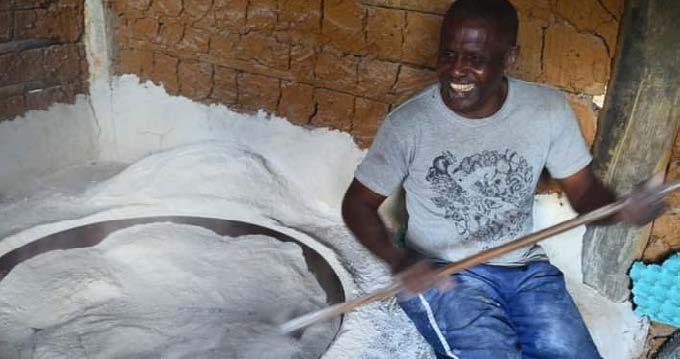
At Quilombo da Fazenda, a community comprising around 100 families, community-based tourism emerges as an experience of exchange, learning, and connection with the territory. The visit invites participants to immerse themselves in quilombola daily life through traditional cuisine, handicrafts, jongo circles, trails, and storytelling led by community masters.
UBATUBA (SP)
Between the sea, rivers, and waterfalls, the territory preserves not only landscapes of great beauty but also knowledge, memories, and ways of life that have been passed down through generations. More than just a visit, it is an opportunity to listen, experience, and understand quilombola culture within its own context.

Practical information
Duration: to be arranged; may include a traditional lunch and/or a full day of activities.
When: open daily, by prior booking.
Includes: according to the chosen experience. Possibility of accommodation in community homes. What to bring: personal items, medication, insect repellent, a mobile phone, an emergency contact, closed shoes, a raincoat, and a backpack.
Who can participate: the general public. Some trails may not be suitable for elderly visitors. Alcoholic beverages are sold only to those over 18.
Languages: Portuguese.
TOCA WATERFALL AND SUGARCANE MILL
ILHABELA (SP)
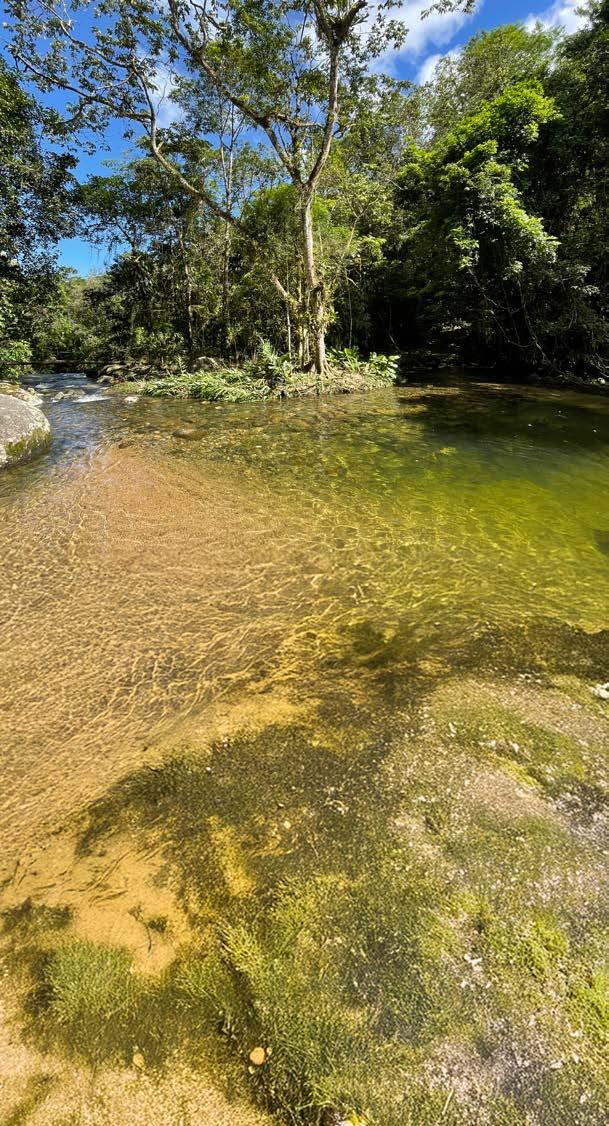
A natural stone waterslide, a cave with a natural pool, and the last operating cachaça mill on the island.
The experience
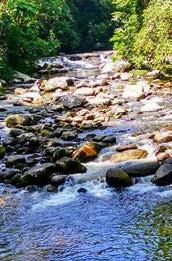
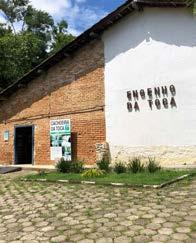
Ilhabela once had 31 sugarcane mills over its two hundred years of history. Today, only one remains. Engenho da Toca, listed as a heritage site by the State of São Paulo in 2022, has existed since 1959 and opened its waterfalls to visitors in 1967. It is one of the most traditional and complete attractions in the archipelago.
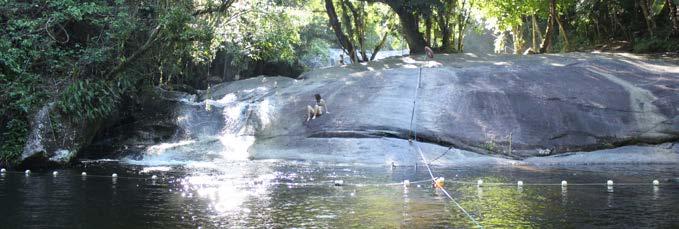
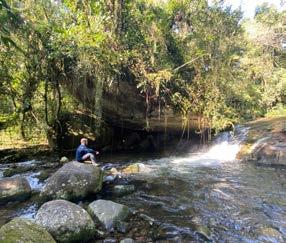
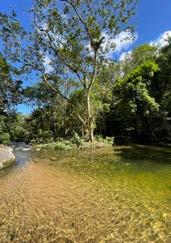
The visit is self-guided along marked trails connecting four swimming spots within the preserved Atlantic Forest: Gruta da Toca, a natural pool inside the cave that gives the place its name; Toquinha, with calm waters and easy access; Ducha, a waterfall of approximately three meters; and Tobogã, a natural stone waterslide of about fifty meters, the largest on the island. Staff members are stationed at each point to provide guidance and ensure safety.
Beyond the waterfalls, visiting the mill reveals the history of artisanal cachaça production in Ilhabela, with its well-preserved original structure and tastings of labels produced on-site, including aged varieties and those flavored with local ingredients.

Practical information
Duration: from 1.5 to 3 hours, depending on the visitor’s pace.
When: daily, from 9:00 a.m. to 5:00 p.m., subject to weather conditions. No prior booking required.
Includes: access to trails and the four waterfalls, full infrastructure (restrooms, parking, lockers, and signage), insect repellent, staff guidance, and life jackets. Transportation, meals, or drinks are not included.
What to bring: swimwear, a towel, sunscreen, insect repellent, and water.
Who can participate: everyone, with no restrictions. Swimming ability is recommended; life jackets are available if needed. Pet-friendly environment. Be cautious of wet and slippery rocks.
Languages: Portuguese, Spanish, French, English, and Italian.
CAIÇARA ROUTE
Between the blue of the coastline and the knowledge of traditional communities, an experience that invites visitors to discover the sea from a new perspective.
The experience
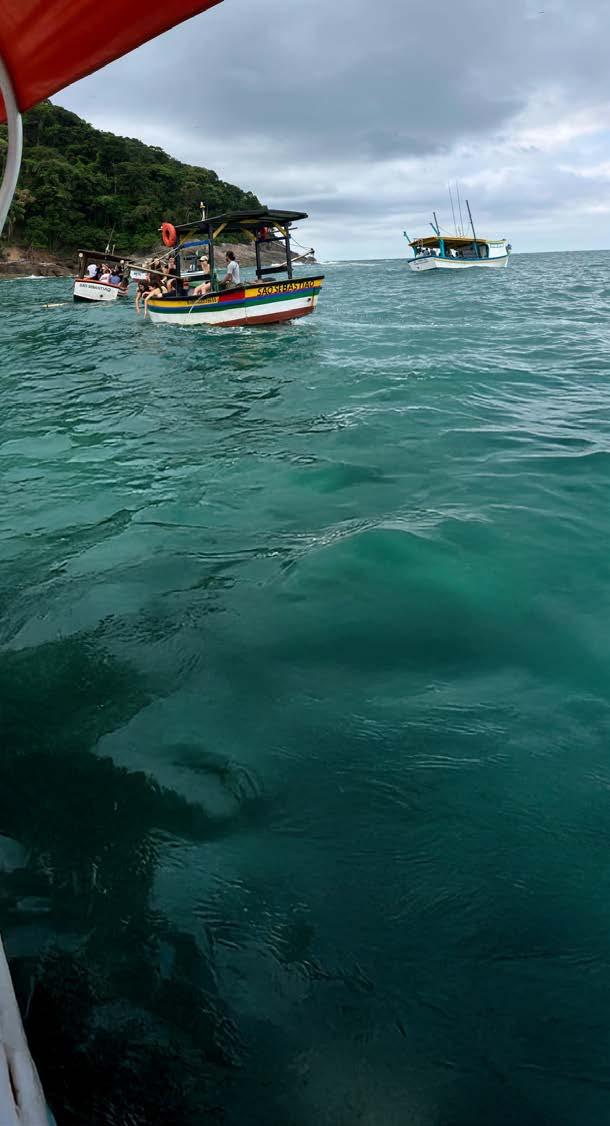
At Boiçucanga Beach, the Caiçara Route invites visitors to closely experience traditional artisanal fishing practices and the historical relationship between local communities and the sea. The itinerary includes a visit to floating fish traps, structures used for the sustainable capture of fish, as well as an educational activity conducted in partnership with the Brazilian Navy.
SÃO SEBASTIÃO (SP)
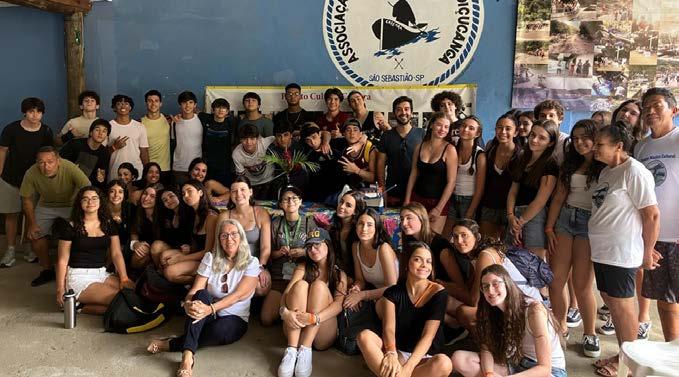
During the experience, knowledge is shared about the marine ecosystem, water quality, and the importance of conservation. It is an encounter between caiçara culture, science, and territory that broadens the perspective on the coastline and its ways of life.

Practical information
Duration: approximately 8 hours.
When: Monday to Friday, by prior booking.
Includes: meals and beverages, upon prior confirmation. For more information, call +55 (12) 997044059.
What to bring: cash, a cap or hat, sunscreen, a mobile phone, and light clothing.
Who can participate: the general public. Alcoholic beverages are not offered.
Languages: Portuguese and German.
Executing partner:

Translation
Implementation:

performed with the support of Artificial Intelligence (ChatGPT and Grammarly).