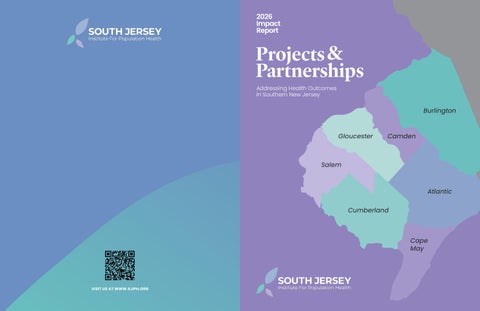
2026 Impact Report
Addressing Health Outcomes in Southern New Jersey
Burlington Gloucester
Camden
Salem
Atlantic Cumberland
Cape May
VISIT US AT WWW.SJIPH.ORG
LETTER FROM THE CEO
The South Jersey Institute for Population Health continues to be a shining example of collaboration between government, educational institutions and community organizations. The collaborative research projects highlighted in this report focus on health outcomes specific to our region and will equip policymakers and community stakeholders with the insight they need to meet these issues head-on. The Rowan University / Rutgers-Camden Board of Governors will continue to support this important work in service of our ultimate goal; improved health and wellbeing for residents across the seven-county region.
Jeffrey L. Nash Chief Executive Officer Rowan University / Rutgers - Camden Board of Governors
1
SJIPH IMPACT REPORT 2026
2
LETTER FROM CO-LEADS DR. NICOLE A. VAUGHN AND DR. STEPHEN DANLEY
As health remains at the forefront of our collective
communication required to stay in partnership. We
small, is critical for our region. The health outcomes
putting our minds together to innovate on new ways to
minds, we know that impact, no matter how big or
for southern NJ remain a concern as our population
continues to rank below national and state statistics
for many health indicators. Deleterious health outcomes for chronic disease, substance abuse, mental health,
maternal and child health combined with the impact of limited transportation, access to health care,
employment and housing are all contributing to
a decline in health and well-being for our residents. The South Jersey Institute for Population Health
(SJIPH) advances innovative research to improve health outcomes across our 7-county region. We connect dedicated community-based
organizations—serving rural, urban, and suburban
Nicole A. Vaughn, PhD
populations—with passionate academic researchers.
Faculty Co-Lead
Our approach centers on community-identified needs,
Rowan University
with research designed to address those specific
priorities. By partnering Rowan University and Rutgers
University-Camden researchers with local organizations, we foster collaborative teams capable of making
a meaningful difference in the health and well-being of our region.
SJIPH continues to hold the values of collaboration, PhD Stephen Danley, DPhil Faculty Co-Lead
Rutgers University-Camden
innovation and impact at its core. With our own teams
at Rowan and Rutgers-Camden, we have demonstrated what it means to work collaboratively. We know that this is no small feat to bring together two institutions under one accord to address improving health, but we have continued to persevere in order to be able to support
the work of the funded research teams. We understand
know that the work is “that” much better when we are
support both our community based organizations and our researchers. This commitment included $360,000 in investment for 10 projects for 18 months. We are
thrilled that this impact report is structured so that you, the reader, can easily understand the research, the
research question and how key findings can potentially lead to next steps in practice and ultimately policy.
Our goal with this impact report is to provide a clear, accessible window into the research conducted
across southern New Jersey, effectively ‘de-mystifying’ the process for the public and policymakers alike.
By highlighting these projects, we demonstrate the
tangible results of our collaborations and explore the
broader implications of these findings on community
and population health. We hope to make these complex insights actionable and understandable, providing a bridge between academic study and real-world application.
To support this transparency, this report includes
common research definitions and QR codes to help
you easily explore each project’s findings and team.
The following sections offer a synthesis of our research and a look toward the future of our initiatives; we invite you to review these findings, share them with your
networks, and join us in advocating for more research
investments for communities as we work to understand, take action and improve health across all populations in our seven counties.
the flexibility needed, the time commitment and the
3
SJIPH IMPACT REPORT 2026
4
RESEARCH TERMS
TABLE OF CONTENTS
Board Message
2
Letter from Co-Leads
4
Research Terms
5
Table of Contents
6
Testimonials from Project Team Members
7
Mission, Vision, Values
9
SJIPH Model and Impact
10
Clear, specific, and concise statement that defines
SJIPH by the Numbers
11
Comprehensive analysis of the practicality and potential
Social Determinants of Health
Looking Forward
46
benefits, risks, and necessary resources..
and play that affect a wide range of health and quality-
Get Involved
46
Synthesis: What We Learned
47
Updating on additional SJIPH Work
49
Acknowledgements
51
Understanding Research Terms for the Impact Report Acceptability
Request for Proposal/
a treatment, program, or study design
Request issued by a funder for support of a specific
Measures how well people receive, tolerate, or view
Efficacy
Ability to produce a desired or intended result through evidence-informed interventions Feasibility
success of a proposed project that assesses costs,
Outcomes
Measurable results, changes, or discoveries produced by a research study Policy
High-level statement of intent or principle adopted by
Request for Funding Announcement
research or training project or program. Research Question
the focus of a research study or project
Conditions in the places where people live, learn, work, of-life risks and outcomes. (CDC) Sustainability
Project’s capacity to continue its operations, maintain
PROJECT SUMMARIES Section 1 Comprehensive Community Well-Being 1.1 Camden Stormwater Heavy-Metal
Analysis and Mapping Project (CASH-MAP)
15
1.2 Developing a Culturally Congruent Survey
to Study Trauma, Gun Violence, and Health among Black Men in Southern New Jersey
19
1.3 Feasibility and efficacy of lymphatic therapy in improving fluid overload in patients with heart failure in Camden
1.4 Filipino American Women’s Health
and Mental Health Needs Assessment
Section 2 Promoting Health for Adolescents and Student Success
21 25
27
2.1 Factors Influencing Asthma Self-Management
its impact, retain key partnerships, and secure ongoing
and Disparities in Asthma Control Among
funding or resources after the initial grant period ends
Adolescents from Low-Income Minority Families
an institution or government to improve a community
29
2.2 Finances and Future Health – Understanding
long-term
Barriers to First-Generation Student Utilization
Practice
Changes in behavioral practices or organizational workflows that become established over time Principal Investigator (PI)
of Federal Work Study
33
Section 3 Exploring Holistic Health
35
3.1 Developing and Testing a Nurse-Led Technology-
Person designated to be primarily responsible for the proposed research or training project
Enhanced Family Engagement Program
Randomised Control Trial (RCT)
Patients in ICU: A Feasibility Trial
(Nurse-TECH-Family) Among Critically Ill
A study design that randomly assigns participants
37
3.2 Evaluation of Co- and Alternative-Responding
into an experimental group or a control group. The
Models for those Experiencing Mental/Emotional
experimental group consists of participants who receive
Health Crises in Millville
the experimental treatment or intervention, while the
39
3.3 Impact of Family Advocates and
control group includes participants who do not receive
Addressing the Social Determinants of Health
the intervention.
for Low-Income Families in South Jersey
3.4 Southern New Jersey Community Health
Worker Coalition: A Demonstration Project
5
13
SJIPH IMPACT REPORT 2026
41 43
6
TESTIMONIALS FROM PROJECT TEAM MEMBERS
Our funding aims to elevate both academic excellence and grassroots impact. On these pages, you will hear from two essential perspectives: a community partner who shares the continued shifts their neighborhood can experience through research collaboration and researchers who share how our SJIPH funding advanced their study.
RESEARCHERS Dr. Mahbubur Meenar
Associate Professor of Department of Geography, Planning, & Sustainability Principal Investigator of Camden Stormwater Heavy-Metal Analysis and Mapping Project (CASH-MAP)
COMMUNITY PARTNER
“With SJIPH’s support, our project team was able to investigate a real Shaneka Boucher, MPA
President and Founder, Social Responsibility Through Me Community Partner of Camden Stormwater Heavy-Metal Analysis and Mapping Project (CASH-MAP)
“From our perspective as a community partner, these projects made a meaningful difference because they did more than collect data.
and pressing concern for Camden families: heavy metal exposure from flooded stormwater. This funding made it possible to turn community health concerns into rigorous, published science that connects contamination patterns to the built and social environment, and that can now inform local policy and infrastructure decisions.”
They created opportunities for residents to engage in the process, ask questions, attend community meetings, and receive the findings once the research was complete. That transparency helped build trust and empowered community members with information they could use to better understand the issues affecting their neighborhoods. Partnering with researchers also demonstrated how complex community challenges can be addressed through credible data, objective analysis, and genuine collaboration.”
Dr. Kristin N. Bertsch
Assistant Professor, NJ AHEC Director, CSLL Course Director, RowanVirtua School of Osteopathic Medicine Principal Investigator of Southern New Jersey Community Health Worker Coalition: A Demonstration Project
“What has been most meaningful to me about this project is seeing how the experiences shared by community members can help us better understand what people actually need and where those needs are greatest. It is one thing to look at national health disparities data broadly, but it is another to hear directly from the local community and then see those experiences reflected in the data. I’ve really valued the opportunity to be part of a project that centers community voices and uses what we learn to think more intentionally about how we can better serve our communities.”
7
SJIPH IMPACT REPORT 2026
8
MISSION, VALUES, AND VISION
Mission We seek to advance collaborative, community-engaged research that improves health and promotes health equity across Southern New Jersey.
Values Collaboration We seek to actively listen, authentically connect and build partnerships that are mutually beneficial to improve health and health equity in the region. Innovation We approach population health and health equity focused data and projects with an open-mind and seek to explore new ideas that will have a sustainable impact.
Community Engaged Research Grants SJIPH provides Community-Engaged Research Grants to support and fund communityuniversity partnerships that engage in research to advance health outcomes for South Jersey residents. These partnerships are between community organizations and faculty researchers from Rutgers–Camden and Rowan Universities (i.e., Rowan UniversityGlassboro, Rowan College of South Jersey, Rowan SOM, CMSRU). The community organization has to be based in at least one of the seven counties – Burlington, Atlantic, Camden, Gloucester, Salem, Cumberland, and Cape May.
Sandbox Model During each funding cycle, project teams submit Letters Of Intent. Once reviewed, a number of project teams are invited to move forward in their application process by attending what is called a “Sandbox Event”. The Sandbox Event serves three purposes: (a) clearly communicate to potential grantees the goals of the research funding; (b) bring researchers and community organizations with related interests and complementary skills together; (c) produce, during the meeting, proposal outlines that can be guided to full research proposals.
LOI Submission & Review
Impact We believe that Southern New Jersey is a unique and valuable place to live and work. Our focuses make an impact that is inclusive and lasting.
Applicant teams submitted a brief letter of intent through a submission portal. LOIs were then reviewed by a mixed group of reviewers from academia, community, and local government..
Vision
Teams whose LOI aligned with the main goals of SJIPH were invited to attend the in-person Sandbox Meeting. Each team strengthened their initial ideas with a trained facilitator and shared their ideas with the other invited teams.
We serve as a hub for research collaboration, community connection and innovation that improves health and health equity in populations and communities throughout Southern New Jersey. We believe that positive change happens when research and data are partnered with action. We believe that by leveraging the work of engaged stakeholders who are focused on research that has direct relevance and benefit for communities of greatest need, we will be able to advance health equity for our region. 9
Sandbox Meeting
Final Proposal Submission One month after the event, teams submitted a full research proposal using the outlines created at the Sandbox Meeting.
Proposal Decision & Project Commencement Selected teams were notified that their proposal was selected, received funding for a period of 12-months, and began research. SJIPH IMPACT REPORT 2026
10
Cycle 2 by the Numbers
10 PROJECTS AWARDED
$362,000 IN FUNDING
Most grants received $25K as small-scale, pilot studies. Two grants received $75K for projects with a larger impact on health outcomes.
11
communitybased organizations
• Camden Coalition of Healthcare Providers Community Advisory Committee • Cooper University Health Care
• Cumberland County Prosecutor’s Office • Cure4Camden
• Adolescents with asthma
• Individuals experiencing mental health challenges
• Filipino American women
• Low-income populations
• Critically ill patients
• Healthcare providers
• Individuals injured by firearms • Patients with heart failure
Number of Research Projects in Each County *Research for some projects was across multiple counties
from non profit, academic, and healthcare sectors collaborated with researchers • Atlantic County Sheriff Department
8
Major Populations Served
• Inspira Health Network
• Millville Police Department
• Philippine Community of Southern New Jersey • Social Responsibility
• Stockton University Through Me • United Advocacy Group
Atlantic: 3 Burlington: 1 Camden: 7 Cape May: 1 Cumberland: 3 Gloucester: 4 Salem: 2
3
4
1
7 2
3 1
Section 1
Comprehensive Community Well-Being: From Specialized Care to Environmental Safety 1.1 Camden Stormwater Heavy-Metal Analysis and Mapping Project (CASH-MAP)
15
1.2 Developing a Culturally Congruent Survey to Study Trauma, Gun Violence, and Health among Black Men in Southern New Jersey
19
1.3 Feasibility and efficacy of lymphatic therapy in improving fluid overload in patients with heart failure in Camden
21
1.4 Filipino American Women’s Health and Mental Health Needs Assessment
25
13
SJIPH IMPACT REPORT 2026
14
SECTION 1– COMPREHENSIVE COMMUNITY WELL-BEING
1.1: CAMDEN STORMWATER HEAVY-METAL ANALYSIS AND MAPPING PROJECT (CASH-MAP)
1.1 Camden Stormwater HeavyMetal Analysis and Mapping Project (CASHMAP) Counties: Camden
Target Population: Camden Residents
Funding Received: $25,000
The Issue Camden’s industrial legacy and frequent flooding from outdated combined sewer systems create a high risk for chronic heavy metal exposure, which poses severe
long-term neurological and cardiovascular threats to residents. To protect public health and environmental quality, non-biodegradable heavy metal ions must be removed from contaminated water using physical or chemical methods such as precipitation, filtration, ion exchange, or adsorption.
The Goal This study pursued two primary objectives: first, to analyze the concentrations of heavy metals—specifically lead, cadmium, and arsenic—within Camden’s
stormwater following significant rainfall; and second, to evaluate how the matrix crystallinity of various chitosan/urea composite compositions influences their effectiveness in removing lead ions.
The Takeaway Heavy metal testing in Camden City revealed that lead frequently exceeded safe EPA limits, highlighting dangerous exposure risks driven by aging infrastructure and socio-economic factors. To combat these levels, optimizing the structural
fabrication and chemical composition of water treatment materials can provide
Sample Collection
an effective solution for targeted lead removal. 15
SJIPH IMPACT REPORT 2026
16
SECTION 1– COMPREHENSIVE COMMUNITY WELL-BEING
1.1: CAMDEN STORMWATER HEAVY-METAL ANALYSIS AND MAPPING PROJECT (CASH-MAP)
1.1 (con’t.) Camden Stormwater Heavy-Metal Analysis and Mapping Project (CASHMAP)
Barriers to healthcare access among shooting survivors (N = 92)
What We Asked / Research Question What is the spatial distribution of heavy metals in Camden’s stormwater and how does the structural and chemical modification of chitosan/urea hydrogel films influence their mechanical efficiency in adsorbing toxic lead ions?
What We Did/Methodology Stormwater samples collected from locations across
Camden were tested for heavy metals, and the results displayed using geographic information system
based mapping. The structural properties of modified chitosan/urea hydrogel films were analyzed to assess
Notes: Respondents indicated all that apply
their suitability for use in water treatment to remove lead ions.
Policy/Practice Implication
What We Found/Results
Policymakers must urgently fund targeted lead-
Heavy Metal Testing:
abatement programs for Camden’s older infrastructure
within safe limits, lead concentrations frequently
zones, while water utility practices should integrate
critical spike of all three metals in a flooded basement—
filtration systems to effectively capture localized heavy
older infrastructure (like lead paint) are driving varied
upgrades in high-contamination zones, especially
While cadmium and arsenic levels generally remained
and mandate household testing in flood-prone
exceeded EPA action levels across Camden City—with a
advanced, high-capacity chitosan/urea composite
suggesting that localized socio-economic factors and
metal spikes. Planners should prioritize infrastructure
and potentially dangerous exposure risks.
those prone to combined sewer overflows.
Removing Lead:
Visit the project page on SJIPH’s website to learn more about the methodology and technical aspects of this research.
PROJECT TEAM
Understanding the interplay between urea
concentration, structural properties, and fabrication
Mahbubur Meenar, PhD
conditions helps optimize the material for practical
(PI) Professor, Geography, Planning, and Sustainability, Rowan University
applications in water treatment to remove lead.
David Salas-de la Cruz, PhD
Associate Professor, Chemistry, Rutgers University-Camden
meenar@rowan.edu
Map showing Lead (Pb) levels
17
Thivanka Ariyarathna, PhD
Assistant Professor, Environmental Science, Rowan University
SJIPH IMPACT REPORT 2026
Shaneka Boucher
President and Founder, Social Responsibility Through Me
18
SECTION 1 – COMPREHENSIVE COMMUNITY WELL-BEING
1.2 Developing a Culturally Congruent Survey to Study Trauma, Gun Violence, and Health among Black Men in Southern New Jersey
1.2 : SURVEY TO STUDY TRAUMA, GUN VIOLENCE, AND HEALTH AMONG BLACK MEN IN SOUTHERN NEW JERSEY
What We Asked / Research Question This research explores the intersection of lifelong trauma, systemic healthcare barriers, and evolving self-identity among Black men who have survived firearm injuries.
What We Did/Methodology
Policy/Practice Implications:
The study used a mixed-methods research design that
violence intervention programs can provide holistic
centered the work and expertise of research partner,
Cure4Camden. Qualitative interviews and quantitative
surveys were designed to learn about the health needs and barriers of violently injured respondents, their life
experiences, their perceptions of their injury, and their
County Served: Camden
Population Served:
Black Men Injured by Firearms in Camden
Funding: $25,000
The Issue
means of moving past their victimization experiences.
What We Found/Results
Practices such as trauma-informed, hospital-based case management and social work advocacy needed to address the chronic instability of firearm survivors. Policies should prioritize funding for community-
centered models like Cure4Camden to address the
multifaceted health and socioeconomic vulnerabilities of this population, ultimately breaking cycles of retaliatory violence.
Survivors of firearm injuries face a cycle of lifelong
trauma and socioeconomic instability, compounded
by systemic barriers to care such as lack of insurance and medical dismissal, which ultimately shapes their
complex self-perceptions of manhood and their status as a victim vs. a survivor.
Visit the project page on SJIPH’s website to learn more about the methodology and technical aspects of the research.
Black men are disproportionately harmed by and exposed to gun violence throughout the country, including in New Jersey, yet their needs and experiences have rarely been studied.
The Goal Examine the health barriers and healthcare needs of people who were shot at any point in their lives, and understand their personal histories including adverse childhood experiences, experiences with drug use and substance abuse, and experiences with other types of violence.
The Takeaway Individuals in Camden who have survived gunshot wounds frequently face
PROJECT TEAM Daniel Semenza, PhD
(PI) Associate Professor, Rutgers University
Jeanna Mastrocinque, PhD Associate Professor, Rowan University
daniel.semenza@rutgers.edu
Devon Ziminski, PhD
Rutgers University; Postdoctoral Fellow, New Jersey Gun Violence Research Center (GVRC)
Nazsa Baker, PhD, MA
Rutgers University; Postdoctoral Fellow, New Jersey Gun Violence Research Center (GVRC)
significant socioeconomic instability and ongoing vulnerabilities. Participants in the study reported significant health struggles and extensive trauma alongside systemic barriers to medical care and insurance coverage. 19
Cure4Camden:
Carlos Erazo, Darnell Whye, Lesly Heredia SJIPH IMPACT REPORT 2026
20
SECTION 1 – COMPREHENSIVE COMMUNITY WELL-BEING
1.3: FEASIBILITY AND EFFICACY OF LYMPHATIC THERAPY IN PATIENTS WITH HEART FAILURE
1.3 Feasibility and Efficacy of Lymphatic Therapy in Patients with Heart Failure County: Camden Population Served:
Adults aged 18-80 years old with heart failure
Funding: $30,000
The Issue Heart failure (HF) is primarily driven by coronary heart disease, which is
disproportionately prevalent among adults in Camden, New Jersey. Fluid
overload is a key driver of HF symptoms and rehospitalization, yet effective interventions require further research.
The Goal To investigate the feasibility and efficacy of The Optimal Lymph Flow (TOLF)
intervention in reducing fluid overload symptoms in adults with HF. TOLF is a lymphatic exercise training and self-care practice to promote lymph flow.
The Takeaway The TOLF lymphatic exercises are a simple, non-drug approach that appears safe and helpful for adults with heart failure. They may reduce fluid buildup, improve symptoms and overall health, lower the chance of returning to the hospital, and improve quality of life for people at high risk.
Caption
21
SJIPH IMPACT REPORT 2026
22
SECTION 1– COMPREHENSIVE COMMUNITY WELL-BEING
1.3: FEASIBILITY AND EFFICACY OF LYMPHATIC THERAPY IN PATIENTS WITH HEART FAILURE
1.3 (con’t.) Feasibility and Efficacy of Lymphatic Therapy in Patients with Heart Failure
Symptom Prevalence By Group and Time 20 17
What We Asked / Research Question What is the feasibility, acceptability, and preliminary effects of lymphatic exercise training on fluid overload symptoms, thoracic fluid content, and body fluid levels in adult patients with heart failure compared to a daily monitoring group? How does this intervention impact hospital readmission rates, frequency of abnormal weight fluctuations, and quality of life in adult patients with heart failure compared to a daily monitoring group?
What We Did/Methodology:
Policy/Practice Implications
The team used a Randomized Controlled Trial (RCT)
heart failure better manage their health and improve
design to assess the feasibility, acceptability, and outcome patterns that suggest the efficacy of
TOLF (“The Optimal Lymph Flow”) in a sample of 40
adult heart failure (HF) patients during a four-week
Lymphatic stimulation therapy may help people with
15
15
Control TOLF
10
0
their overall outcomes.The Optimal Lymph Flow provides
Before
After
patients with a low-cost, accessible method for keeping symptoms under control.
intervention. TOLF is a structured exercise program designed to stimulate lymphatic drainage by
mechanically promoting lymph movement through coordinated muscle contractions of the trunk and upper and lower extremities, combined with deep
diaphragmatic breathing. The program consists of
brief, twice-daily sessions performed in the morning
Visit the project page on SJIPH’s website to learn more
Data collection methods included quantitative surveys,
research.
and evening, each lasting approximately 8–10 minutes. objective measures of fluid overload, and daily logs
What We Found/Results: Lymphatic exercise training was feasible and well
accepted. Compared to daily monitoring control group, participants demonstrated improvements in fluid
overload symptoms, thoracic fluid content, and body
about the methodology and technical aspects of the
PROJECT TEAM Rida Gharzeddine (PI), PhD, RN, APN, Assistant Professor, Rutgers University-Camden rg1041@rutgers.edu
Elizabeth Cerceo, MD
Timothy D. Marks,
Amine Al Soueidy MD
Associate Professor, Rutgers University-Camden
weight fluctuations, lower hospital readmission rates, DNP, MBA, RN, CEN, NEA-BC, CAVRN
Assistant Vice President- Clinical Workforce Development and Academic Partnerships, Cooper University Health Care
23
The Dorothy and Dale Thompson Missouri Endowed Professor in Nursing, Associate Dean for Research, School of Nursing and Health Studies, University of Missouri-Kansas City
Brigitte Cyprus, EdD, RN, CCRN
fluid levels. Findings also showed reduced abnormal and improved quality of life.
Mei Rosemary Fu, PhD, RN, FAAN
SJIPH IMPACT REPORT 2026
Associate Professor, Associate Program Director, Internal Medicine Residency, Director, Climate Health, Director, Medical Humanities, Cooper Medical School of Rowan University
Cardiology Fellow, Cooper University Health Care
24
SECTION 1 – COMPREHENSIVE COMMUNITY WELL-BEING
1.4 Women’s Health and Mental Health Needs Assessment for Filipino American Women in Southern New Jersey Counties:
Atlantic, Burlington, Camden, Cape May, Cumberland, Gloucester, Salem
Population Served:
Filipino American Women
Funding: $25,000
1.4: WOMEN’S HEALTH AND MENTAL HEALTH NEEDS ASSESSMENT FOR FILIPINO AMERICAN WOMEN IN SOUTHERN NJ
What We Asked / Research Question What are the mental and women’s health needs, barriers to accessing care, and protective factors supporting positive health outcomes of Filipino American women living in South Jersey?
What We Did/Methodology
Policy/Practice Implication
This study surveyed participants through local
The data shows a clear need for improved access,
Post-survey participants were interviewed to assess
healthcare. Addressing these gaps can support more
organizations, social media, and communities.
education, and awareness in Filipino American women’s
women’s health and mental health needs.
culturally competent care and inform policies and
What We Found/Results
improvements in health outcomes for Filipino American
The study showed that Filipino American women
programs that reduce barriers, leading to measurable women in South Jersey.
experienced high rates of postpartum depression, anxiety, and postpartum struggles, yet only about half received therapy or counseling. Preventative
care measures such as mammograms and cancer screenings showed higher levels of education
were linked to greater participation in preventative
The Issue The lack of research and targeted care for Filipino American women has created gaps in accessing essential mental health, physical health and
care procedures, while gaps in preventive care are
influenced by discomfort, transportation, insurance barriers, and limited knowledge procedures.
Visit the project page on SJIPH’s website to learn more about the methodology and technical aspects of the research.
The Goal
“ ...unfortunately, like mental health was a taboo topic. There was a point where I did tell my mom I felt like anxious and depressed, and it was kind of met with with a little bit of of anger… In her part, she felt like she was failing as a mom, and I can see that now, but at the time, like it felt very like it felt like my mental health was getting pushed to the side.” — Survey Response
This study collected data on the specific disparities in accessing healthcare
PROJECT TEAM
preventative care. This research addresses these disparities and increases access to care for Filipino American women in South Jersey.
experienced by Filipino American women in South Jersey. The data is intended
to influence future policy and practice to increase care for this population, and to encourage research focused on eliminating these gaps in care.
The Takeaway Factors such as discomfort, transportation, insurance barriers, and limited knowledge of the procedure were barriers to accessing care for Filipino American women.
25
Jamille Nagtalon-Ramos,
EdD, MSN, WHNP-BC, FNPWH, FAANP FAAN Assistant Professor, Rutgers School of Nursing-Camden
Cynthia Ayres, PhD, RN, FNAP, FNYAM Associate Professor, Rutgers School of Nursing-Camden
nagtalonramos@rutgers.edu
The Philippine Community of Southern New Jersey
SJIPH IMPACT REPORT 2026
26
Section 2
Promoting Health for Adolescents and Student Success 2.1 F actors Influencing Asthma Self-Management and Disparities in Asthma Control Among Adolescents from Low-Income Minority Families
29
2.2 F inances and Future Health – Understanding Barriers to First-Generation Student Utilization of Federal Work Study
33
27
SJIPH IMPACT REPORT 2026
28
SECTION 2 - PROMOTING HEALTH FOR ADOLESCENTS AND STUDENT SUCCESS
2.1: FACTORS INFLUENCING ASTHMA SELF-MANAGEMENT AND DISPARITIES IN ASTHMA CONTROL
2.1 Factors Influencing Asthma Self-Management and Disparities in Asthma Control Among Adolescents from Low-Income Minority Families Counties:
Camden, Gloucester, and Burlington
Population Served:
School-aged children with asthma who live in Camden, Gloucester, and Burlington counties, and caregivers of adolescents aged 11-18 with persistent asthma who reside in Camden County
Funding: $35,000
The Issue
The Takeaway
in ethnic minority groups and socioeconomically
outcomes continue among low-income minority
Little is known about the barriers to managing asthma marginalized groups.
The Goal
To examine the positive and negative impact of specific SDOH (i.e., housing, food security,
Persistent racial and ethnic disparities in asthma children. Barriers to asthma management included stress, smoking exposure, financial difficulties, and limited asthma knowledge, while trigger control,
symptom identification and management, and social support contributed to improved asthma control.
transportation, utility, and safety needs) and
sociodemographic factors (i.e., age, sex, and race/ ethnicity) in the use of asthma-related healthcare
among low-income minority children and adolescents in South Jersey. Additionally, the team examined
caregivers’ perspectives on barriers and facilitators of adolescents’ asthma self-management among lowincome racial and ethnic minority families in relation to the influence of SDOH
29
SJIPH IMPACT REPORT 2026
30
SECTION 2 - PROMOTING HEALTH FOR ADOLESCENTS AND STUDENT SUCCESS
2.1 (con’t.) Factors Influencing Asthma Self-Management and Disparities in Asthma Control Among Adolescents from Low-Income Minority Families
2.1: FACTORS INFLUENCING ASTHMA SELF-MANAGEMENT AND DISPARITIES IN ASTHMA CONTROL
884 800
662
751
743
719
681 639
631
699
662
600
What We Asked / Research Question How did sociodemographic factors such as age, sex, and race/ethnicity and pandemic-related impacts influence trends in emergency department visits in school-aged children in South Jersey from 2017-2022? What are parent-perceived barriers for effective asthma management among adolescents with persistent asthma?
535
499
461
437
411
400
285
Policy/Practice Implication
A multi-method design leveraged large and pooled
expanding preventive care strategies can reduce
data from the Camden Coalition Health Information
Exchange and Accountable Health Communities survey from 2017 to 2022. This was augmented with in-depth individual interviews of caregivers with descriptive
design to gain a deeper understanding of the barriers and facilitators of asthma self-management and subsequently asthma control.
What We Found/Results There are persistent racial and ethnic disparities
asthma disparities and reduce emergency department
visits. Expanding funding for Community Health Workers
2018
2019
2021
2022
environmental, financial, and systemic barriers
Note: The bar plots reveal the counts of ED visits in the two distinct periods: a pre-pandemic phase (2017-2019) characterized by
management behaviors that help improve asthma
coinciding with the COVID-19 pandemic onset in 2020, marked by a vertical dotted line) and a recovery phase (2021-2022).
while promoting social support systems and self-
stable and gradually increasing counts; and the pandemic phase. The latter also consisted of an onset phase (a sharp decline
control.
Quarter 1: January-March; Quarter 2: April-June; Quarter 3: July- September; Quarter 4: October-December.
PROJECT TEAM Sangita Pudasainee-Kapri (PI), Ph.D.,
lack of family knowledge about asthma care, smoking
Visit the project page on SJIPH’s website to learn more
control was achieved by trigger control, proper
research.
about the methodology and technical aspects of the
Yupeng Li, Ph.D.
DNP, RN, APN, FNP-BC, CPN
Associate Professor of Economics, Rowan University
Mei Rosemary Fu, Ph.D., RN, FAAN
Dawn Wiest, Ph.D.
Kul Kapri, Ph.D.
Mohammed Hussain, MD
Associate Professor, Rutgers UniversityCamden sangita.pudasaineekapri@rutgers.edu
The Dorothy and Dale Thompson Missouri Endowed Professor in Nursing, Associate Dean for Research, School of Nursing and Health Studies, University of Missouri-Kansas City
Associate Professor of Economics, Rowan University
31
2020
Time (Year and Quarter)
Figure 1. Quarterly Trends of Asthma ED Visits in South Jersey from 2017 to 2022
and self-management. Policies should also reduce
self-management include difficulty accepting activity
positive support system.
2017
programs can strengthen families’ knowledge, skills,
visits than white children. Key barriers for asthma
identification and management of symptoms;; and a
124
0
and school/community-based asthma education
disproportionately higher emergency department
exposure, and financial challenges. Better asthma
111
Investment in reducing structural barriers and
in asthma control. Black children experience
restrictions, environmental triggers, emotional stress,
344
210 191
200
What We Did/Methodology
311
SJIPH IMPACT REPORT 2026
Director- Research & Evaluation, Camden Coalition
General Pediatrics- Cooper Health, Associate Professor of Clinical Pediatrics, Cooper Medical School of Rowan University
32
SECTION 2 - PROMOTING HEALTH FOR ADOLESCENTS AND STUDENT SUCCESS
2.2 Finances and Future Health – Understanding Barriers to FirstGeneration Student Utilization of Federal Work Study
2.2: FACTORS INFLUENCING ASTHMA SELF-MANAGEMENT AND DISPARITIES IN ASTHMA CONTROL
What We Asked / Research Question What are the ways in which first-generation students participating in an EOF program think about the role of financial literacy, and in particular Federal Work-Study, as a component of their current and future health status and overall academic success?
What We Did/Methodology
Policy/Practice Implications
This study used surveys and focus groups to
and access to clear financial aid information for first-
assess students enrolled in summer EOF programs
regarding financial aid, on-campus employment, and
participation in Federal Work-Study (FWS). Participants
Counties:
Atlantic, Gloucester, and Camden
Population Served:
were recruited from southern New Jersey institutions,
including Rutgers University–Camden, Rowan University, and Stockton University.
Students attending Educational Opportunity Fund Summer Programs in Summer 2023
What We Found/Results
Funding:
and financial literacy among first-generation
$22,000
There is a need to improve financial literacy education generation students. Strengthening high school and
EOF program support, increasing awareness of Federal Work-Study, and improving institutional outreach
can reduce barriers and student stress. Policies and program changes that reduce these barriers will
increase first-generation students’ academic success and financial wellbeing.
There is a significant gap in financial aid awareness
students in southern New Jersey EOF programs,
which contributed to increased stress, anxiety, and
The Issue
First-generation students face disproportionate challenges, including low
financial literacy, limited awareness of financial aid, and limited understanding of student loans, which create stress and barriers to academic success. These challenges significantly impact students’ academic success, future careers, and health outcomes.
The Goal
To identify the financial barriers that first-generation students in South Jersey are facing and examine how targeted financial support can improve their
wellbeing and resilience. Addressing these challenges helps first-generation college students to navigate and alleviate the stress of attending higher education.
The Takeaway
Factors such as limited awareness of financial aid opportunities, low financial literacy, insufficient guidance from high schools and Educational Opportunity Fund (EOF) programs, and uncertainty about student loans were barriers to accessing financial and academic support.
33
concerns about the value of pursuing a college degree. Additionally, students felt underprepared by their
Visit the project page on SJIPH’s website to learn more
barriers to academic and financial success.
research.
high schools and EOF programs, highlighting ongoing
about the methodology and technical aspects of the
“ The cost of education has risen so much. So people that used to get out of high school now have to go to graduate school more so that feels scary. I’m going to want to do something that I’m gonna have to pursue higher education and how am I gonna support myself?”
PROJECT TEAM Principal Investigator: Dr. Anthony Dissen
Associate Professor of Health Science, Stockton University
Dr. Daniel Tomé
Director of Community Engagement, Rutgers University-Camden
Anthony.Dissen@stockton.edu
Heidi Kovalick
Director of Financial Aid, Rowan University
SJIPH IMPACT REPORT 2026
34
Section 3
Exploring Holistic Health 3.1 D eveloping and Testing a Nurse-Led Technology-Enhanced Family Engagement Program (Nurse-TECH-Family) Among Critically Ill Patients in ICU: A Feasibility Trial
37
3.2 E valuation of Co- and Alternative-Responding Models for those Experiencing Mental/Emotional Health Crises in Millville
39
3.3 I mpact of Family Advocates and Addressing the Social Determinants of Health for Low-Income Families in South Jersey
41
3.4 Southern New Jersey Community Health Worker Coalition: A Demonstration Project
43
35
SJIPH IMPACT REPORT 2026
36
SECTION 3 -EXPLORING HOLISTIC HEALTH
3.1: DEVELOPING AND TESTING A NURSE-LED TECHNOLOGY
3.1 Developing and Testing a NurseLed Technology-Enhanced Family Engagement Program (NurseTECH-Family) Among Critically Ill Patients in the ICU: A Feasibility Trial County: Camden
Population Served:
Patients, family members, and healthcare providers in the intensive care unit.
Funding: $25,000
The Issue
critically ill patients and their families is feasible, practical and acceptable in a hospital setting. 37
members of critically ill patients admitted to a mixed-
enabled family engagement into ICU interdisciplinary
Care. Family participants were randomized to either the
participation, strengthen communication, and improve
outcomes related to feasibility, family well-being, and
family-centered interdisciplinary rounds through shared
randomized controlled feasibility trial involving 30 family
Findings support integrating nurse-led, telehealth-
acuity Coronary Care Unit at Cooper University Health
rounds as a feasible strategy to promote equitable
Nurse-TECH-Family intervention or standard care, and
family outcomes. Policies that support patient- and
patient outcomes were evaluated.
governance models, adequate nursing workload
What We Found/Results
family-centered technologies may enhance satisfaction,
greater reductions in family depression, anxiety, stress,
support, professional education and training, and inclusion, and quality of critical care delivery.
Visit the project page on SJIPH’s website to learn more about the methodology and technical aspects of the research.
and pain-related outcomes. Notably, improvements
geographic distance. Inadequate resources, inconsistent
to facilitate family participation in PFCC-IR among
Policy/Practice Implications
TECH-Family intervention demonstrated significantly
challenges, work obligations, scheduling conflicts, and
led intervention that uses telehealth technologies
emotional distress and embodied burden.
implementation. Findings informed a pilot two-group
engagement. Compared with standard care, the Nurse-
during rounds is often limited by transportation
Engagement Program (Nurse-TECH-Family), a nurse-
during PFCC-IR and identify barriers and facilitators to
logistical and communication barriers to family
care units in the hospital. However, family participation
effects of the Nurse-Led Technology-Enhanced Family
that structured family engagement may reduce both
providers to explore perceptions of family engagement
novel finding in family critical care research, suggesting
trust, and compassionate care, while identifying
decision-making, and care coordination on critical
To test the feasibility, acceptability, and preliminary
The study included a focus group of healthcare
opportunities for information sharing, transparency,
rounds (PFCC-IR) improve communication, shared
The Goal
in bodily pain and high-impact pain were observed, a
retention. Healthcare providers viewed PFCC-IRs as
status. Patient- and family-centered interdisciplinary
centered care further hinder implementation of PFCC-IR.
What We Did/Methodology
including recruitment, protocol adherence, and
with a patient and/or their families to discuss health
leadership, and limited institutional support for family-
What is the feasibility and acceptability of the Nurse-TECH-Family program? What are the preliminary effects of NURSE-Tech Family on the patient’s family stress, mental and physical health symptoms, quality of life, length of stay, and satisfaction post-program?
The project successfully met all feasibility benchmarks,
Rounds are a time in a hospital when doctors meet
interprofessional practices, insufficient organizational
What We Asked / Research Question
The Takeaway
Healthcare providers perceived patient- and family-
centered interdisciplinary rounds as a vital strategy for
building trust and identified shared governance, nursing workload support, and staff education as key facilitators of implementation. This pilot randomized controlled trial demonstrated the feasibility of a nurse-led, telehealthenabled family engagement intervention and showed promising improvements in family psychological and
pain-related outcomes, thus supporting the need for a larger-scale evaluation.
PROJECT TEAM PI: Brigitte Cypress, EdD, RN, CCRN,
Associate Professor, Rutgers School of Nursing-Camden Email: brigitte.cypress@rutgers.edu
Mei Rosemary Fu, PhD, RN, FAAN
The Dorothy and Dale Thompson Missouri Endowed Professor in Nursing, Associate Dean for Research, School of Nursing and Health Studies, University of Missouri-Kansas City SJIPH IMPACT REPORT 2026
Nowai Brapoh, PhD, RN, NPD-BC
Assistant Vice President, Nursing Quality, Professional Practice, and Innovation, Cooper University Health Care
Paul Lambrecht, MJ, MHA, CPHQ, CPPS, FACHE, VP
Quality and Patient Safety, Cooper University Health Care
38
SECTION 3 -EXPLORING HOLISTIC HEALTH
3.2 An Evaluation of Co- and Alternative-Responding Models for those Experiencing Mental/ Emotional Health Crises in Millville
3.2: EVALUATION OF CO- AND ALTERNATIVE-RESPONDING MODELS
What We Asked / Research Question How does the implementation and department-wide adoption of the EMBHED Project facilitate service enrollment for individuals in crisis, and what impact does this engagement have on reducing future law enforcement contact?
What We Did/Methodology
What We Found/Results
The research team synthesized and merged secondary
Evaluation is ongoing, but shows the EMBHED Project
employs the resource coach involved in the EMBHED
identifying service needs during routine police
data from both MPD and Inspira Health Network, which project. A process and outcome/impact evaluation
County Served: Cumberland
Population Served:
Individuals Suffering From Mental Health Issues in Millville
of the EMBHED Project was conducted using this data, which includes calls for service records, narrative descriptions of dispatched calls, and successful
contacts and enrollments for referred individuals.
achieved department-wide adoption by successfully encounters, yet it faced a significant “engagement gap” where nearly half of the identified individuals failed to connect with a Resource Coach. Policy/Practice Implications
These findings speak to the challenges, expectations, and potential results of similarly-situated innovative
Funding:
programs that broaden the scope of intervention,
$25,000
formalize non-police pathways, and increase
department-wide training standards. Through policy,
there is an opportunity to inform both law enforcement/
The Issue
public safety and mental/behavioral health professions to address significant gaps of engagement and
Law enforcement lacks the specialized training and capacity to safely
increase crisis intervention training.
manage mental health crises, leading to disproportionate levels of force
and incarceration for those experiencing mental health crises. The Millville
Police Department, Cumberland County Prosecutor’s Office (CCPO), and the Inspira Health Network partnered to “embhed” a social worker in the Millville Police Department in a pilot program called the “Effective Mental and Behavioral Health Emergency Diversion” (EMBHED) Project.
Visit the project page on SJIPH’s website to learn more about the methodology and technical aspects of the
The Goal
To evaluate the EMBHED Project, exploring how the project was implemented and delivered, examining whether the EMBHED Project is effective at
connecting individuals to resources, and analyzing whether the EMBHED
Project is reducing contact with and reliance on the Millville Police Department.
The Takeaway
The EMBHED pilot launched successfully despite the complex logistical
coordination required between diverse stakeholders. Evaluation is ongoing, but there are early signs of changes in Millville’s unhoused community behavior,
including individuals referred to the Resource Coach by the police department
research.
PROJECT TEAM PI: John Shjarback, MA, PhD
Associate Professor, Rowan University
Lauren Nash Mitchell
Manager, Inspira Health Network
shjarback@rowan.edu
Tracy Swan
Public Safety Reform Strategist, Cumberland County Prosecutor’s Office
Dwight Lee
Resource Coach, Inspira Health Network
and “walk-in” visits to the Resource Coach independent of police calls. 39
SJIPH IMPACT REPORT 2026
40
SECTION 3 -EXPLORING HOLISTIC HEALTH
3.3: IMPACT OF FAMILY ADVOCATES AND ADDRESSING THE SOCIAL DETERMINANTS OF HEALTH
3.3 The Impact of Family Advocates and Addressing the Social Determinants of Health for Families in South Jersey
What We Asked / Research Question How do families served by Family Advocates understand the impact of this model on social determinants of health, and how might this approach be applied and improved to address the needs of families in South Jersey?
What We Did/Methodology
Policy/Practice Implications
This report used interviews and focus groups with
addressing social determinants of health for vulnerable
families and family advocates from Cumberland,
Gloucester, and Salem Counties to assess the impact of the Family Advocate model on families and social
determinants of health. Participants were recruited in
Counties Served:
collaboration with the Family Strengthening Network
Cumberland, Gloucester, and Salem
(FSN), which provided contact information for eligible
Population Served:
family participants and coordinated three focus groups
Low-Income Families
with Family Advocates
Funding:
What We Found/Results
$75,000
While families faced deep structural barriers related to
There is a need to strengthen support systems
and isolated families in South Jersey and how family
advocates successfully work with families to address
their complex needs. Addressing these gaps can lead to more effective, family-centered approaches and better informed policies and programs. Recommendations
include increasing communication and collaboration by social service organizations, increasing flexible
funding to provide multi-faceted services and holistic support, and increasing advertising or marketing to improve awareness and accessibility of services.
social determinants of health, including transportation, affordable and stable housing, access to healthcare,
The Issue
Families in South Jersey face significant challenges related to social determinants of health, including barriers to transportation, housing, healthcare,
and access to services, which impact their overall wellbeing. This report examines how support from
the Family Strengthening Network (FSN), an informal,
family-based support model of advocates, influences
these outcomes and explores ways to better meet the needs of the families served.
The Goal This study identified the barriers families in South
Jersey face related to social determinants of health and how they can be addressed by informal and
personalized support. Addressing these challenges
helps improve access to resources and strengthens
the effectiveness of the FSN Family Advocate model in supporting family wellbeing.
and education, the study found that the Family
Advocates’ personalized service delivery countered
“ And she [my family advocate] came... into mine and into my daughter’s life, at a time where I couldn’t even write my own name... She helped us in so many ways... it’s just a wonderful program and it’s only been a gift to me and my daughter.”
The Takeaway
impacts and enabling families to achieve their goals.
Visit the project page on SJIPH’s website to learn more about the methodology and technical aspects of the
PROJECT TEAM Kristin Curtis, M.A.
Associate Director of Research, The Senator Walter Rand Institute for Public Affairs (WRI),
research.
Rich Nichols
Executive Director: Family Strengthening Network
krcurtis@camden.rutgers.edu
Findings revealed that barriers such as limited access to transportation, affordable housing, healthcare, and education, along with challenges navigating
services and limited resources, impacted families’
Madeliene Alger, M.A.
Research Project Coordinator I, The Senator Walter Rand Institute for Public Affairs (WRI)
Rachel Bill
Director of Family Advocacy and Training, Family Strengthening Network
ability to meet their needs and access support. This study demonstrates the nuances around social
service delivery from the perspectives of individuals, and assists in data-driven decision-making around
designing and implementing social service delivery for rural communities.
41
resource gaps, ultimately producing tangible, positive
Priyal Shah Student at the Rowan - Virtua School of Osteopathic Medicine; NJ AHEC (Area Health Education Center) Scholar
SJIPH IMPACT REPORT 2026
42
SECTION 3 -EXPLORING HOLISTIC HEALTH
3.4: SOUTHERN NEW JERSEY COMMUNITY HEALTH WORKER COALITION: A DEMONSTRATION PROJECT
3.4 Southern New Jersey Community Health Worker Coalition: A Demonstration Project
What We Asked / Research Question What regions of Atlantic County demonstrated the greatest need for community health worker support based on health outcomes?
What We Did/Methodology
Policy/Practice Implications
This study conducted a quantitative online health
and expand community-based supports in Atlantic
survey and a health screening assessment to collect blood pressure and glucose levels. This data was
analyzed to interpret where the most efficient locations
may be to set up future mobile health clinics, as well as
County:
what services may be offered.
Atlantic
What We Found/Results
Population Served:
Attendees of food distribution events
County, especially in underserved communities.
Funding to increase the role of Community Health
Workers, along with policy efforts that reduce structural and financial barriers and improve culturally and
linguistically responsive services, will help improve access and reduce disparities.
Atlantic County has a quantifiable need for community
health support. Atlantic County community members
Funding:
experienced high rates of high blood pressure, high
$75,000
cholesterol, diabetes, arthritis, mental health issues, obesity, and chronic pain. Over 70% of respondents reported being at risk for two or more chronic
The Issue
conditions.
Ongoing challenges with healthcare access in Atlantic County, including
limited provider availability, high costs, transportation barriers, and gaps in
about the methodology and technical aspects of the
Shore (%)
Central (%)
West (%)
Out of Pocket Expenses
19.7
26.5
15.2
22
23.5
12.9
Lack of Transportation
9.8
6.8
6.1
11.4
6.1
2.3
6.8
7.6
4.5
Barrier
Key
where support is needed most.
YELLOW=MEDIUM
GREEN=LOW
Community Health Workers (CHW) may help address these gaps by evaluating
Visit the project page on SJIPH’s website to learn more research.
culturally and linguistically appropriate care, have led to poor health outcomes.
HIGH=RED
The Goal
Limited or No Insurance Housing Insecurity Language Barriers
To assess community health needs and inform targeted Community Health Worker outreach, particularly in underserved areas of the county.
Figure 2: Access Barriers by Region
The Takeaway
PROJECT TEAM
Factors such as out of pocket-costs, health insurance, lack of transportation, and housing insecurity were barriers to accessing care. The project
demonstrated how data can be used to deploy Community Health Workers in areas of greatest need with the long-term goal of using a mobile Community Health Work Unit representing a new access point for services.
Kristin Bertsch, Ph.D.
Carla Villacis, M.A.
CSLL Course Director, Rowan-Virtua
Walter Rand Institute for Public Affairs;
Associate Professor, NJ AHEC Director,
Research Program Coordinator Senator
School of Osteopathic Medicine
Rutgers, The State University of New
bertsch@rowan.edu Caption: Community health assessments were
Anne Jones, DO, MPH
conducted during a food distribution events in
Associate Professor, Assistant Dean of
to care and inform Community Health Worker
Osteopathic Medicine
Atlantic County identify health needs and barriers
outreach efforts.
43
There is a strong need to improve healthcare access
Student Affairs, Rowan-Virtua School of
SJIPH IMPACT REPORT 2026
44
LOOKING FORWARD
GET INVOLVED LOOKING FORWARD + UPDATES & GETTING OTHER INVOLVED SJIPH WORK
Looking Forward These pilot projects demonstrate that with innovation
and partnership, we can advance research ideas worth studying. Working with researchers and community-
based organizations to improve health in Southern New
Jersey is our charge. SJIPH continues to learn and adapt as an institute. This means supporting research teams and providing technical assistance throughout the project period.
To this end, we have launched the Partnership
Development Awards (PDA) for future cycles. The PDAs
are designed to give unrestricted funding of up to $5000
In addition to the PDAs, SJIPH has launched the Research
Training Awards (RTAs). The RTAs are designed to balance the other side of the equation and give researchers the tools they need to be an effective partner to a
community-based organization. Our RTA program will provide 4 guided sessions using materials developed
by leading Community-Based Participatory scholars to prepare researchers for the potential challenges and
opportunities of this method of research. These awards
serve as a resource for communities and researchers in our service area.
for community-based organizations to find and engage with researchers ahead of a full request for proposal
(RFP) cycle. This additional time and funding allow CBOs the opportunity to find the right match for their work in
the 6-10 months before an RFP is released. Providing this additional time gives CBO paid time to find the right fit and ensure authentic engagement.
Getting Involved
FOR COMMUNITY ORGANIZATIONS LOOKING TO PARTNER
FOR ACADEMICS
FOR COMMUNITY MEMBERS AND STAKEHOLDERS
45
SJIPH IMPACT REPORT 2026
Sign up for our list serve
Apply for a Research Training Award Partner to apply for a catalyst or signature grant Reach out and schedule a “get to know us” meeting
46
WHAT WE LEARNED / RESEARCH RESULTS
gun violence is more than the physical wound. These men
This has implications both for the region and the broader
treatment that extends beyond traditional medical care
provide an opportunity for policymakers, health care
face chronic instability. The study shows the promise of
– it shows the promise of holistic case management and social advocacy.
“ South Jersey has the potential to improve health outcomes by investing in holistic interventions – and in doing so to build these projects and become a leader in the field” Taken separately, each of these studies addresses a
specific intervention to address a specific health disparity in South Jersey. Taken together, they represent something more: an emerging evidence base that shows the
field of population health. For the region, these findings
institutions, and nonprofits. South Jersey has the potential to improve health outcomes by investing in holistic
interventions – and in doing so to build these projects
and becoming a leader in the field. For population health, these studies contribute to an emerging evidence base that shows the value of these interventions. This comes at a critical moment both locally and nationally. These
types of “soft” interventions are often the first programs
cut from schools, municipal budgets, or hospitals in times of austerity. Our evidence shows that these institutions
should do the opposite – in times of austerity, it is more critical to invest in holistic health interventions.
promise of these types of holistic interventions to improve
Synthesis: What We Learned
outcomes.
Too often, medical interventions target a narrow health outcome. Imagine a patient who needs physical therapy after a knee injury – the knee exercises themself are the targeted intervention. They directly build strength in the knee post-injury. But there are a hidden set of assumptions that go into successful physical therapy. The patient needs transportation to get to the physical therapist office. They need to be able to afford physical therapy. They need to have space and time to do the exercises they learn from the physical therapist. For some parents, that may require informal childcare so their kids are taken care of while they do the exercises. A targeted intervention would focus only on the knee exercises. A holistic intervention would ensure the patient had transportation, funding, and child care. The studies in this report provide evidence that holistic
family members were (virtually) present when important
improving health outcomes. These interventions involve
to patients. In Atlantic County, researchers used data
interventions are not just “nice to have” but critical to
social workers, community members, and families to provide a more holistic approach to treatment.
For example, in Salem County, a study of the Millville Police Department partnered with Inspira Health to
divert mental health issues away from police officers
and towards social workers. At Cooper University Health Care, nurses used telehealth technology to ensure 47
health information was provided during morning rounds to deploy a mobile Community Health Worker Unit so
that community health workers could meet residents in their communities. The Family Strengthening Network
used their model of advocates for families to address
social determinants of health. A research team between Rutgers University-Camden, Rowan University, and
CURE4Camden found harm for Black men experiencing
SJIPH IMPACT REPORT 2026
48
LOOKING ON UPDATES FORWARD OTHER SJIPH WORK
GET INVOLVED + UPDATES OTHER SJIPH WORK
What’s going on at SJIPH? We have funded four cycles of Community-Engaged Research Grants:
Inaugural Cycle 1 Grants
Cycle 3 Grants
The inaugural Cycle 1 Grants (2021, 10, $230,000) are
Our Cycle 3 Grants (2023, 10, $350,000) are wrapping
impact report. That report highlighted the contributions
ranging from migrant health, breast cancer, and K-12
complete, and can be found in the first edition of our
of these research projects. The projects both showed disparities in the region including health outcomes
related to food access and family health. They also provided results on interventions to address these health outcomes.
Cycle 2 Grants Our Cycle 2 Grants (2022, 10, $362,000) are complete,
and can be found in this edition of our impact report.
up (9 of 10 completed). They include work on topics
education with community partners such as: Migrant
Health Collaborative of South Jersey, South Jersey Breast Cancer Coalition, and Mighty Writers. For more on these projects, visit our website.
Cycle 4 Grants Our Cycle 4 Grants (2025, 12, $350,000) grants are in
the field. We funded 11 Catalyst ($25,000) and 1 Signature ($75k) awards. We saw an increase in projects in Salem and Cumberland counties.
We anticipate releasing the next call for these grants in Spring 2027.
We’ve just announced our second cohort of Partnership
As the New Jersey Center for Health Equity and Wellbeing
community organizations saw all 10 of the research
have worked closely with them to strengthen ties and
Development Awards (2026). Our first cohort of 10 partnerships apply for our main cycle of funding, and 7 of the 10 received funding. Awardees were over 4x more likely to receive funding than other
applicants – promising results for our partnership development process.
We also launched a Research Training Award for faculty
(CHEW) was launched and started programming, we support for South Jersey.
Lastly, SJIPH has built out its research team and now has
both the capacity and process to receive grants through our co-lead institutions and conduct research internally. We’re “open for business” for the right project!
at Rowan University and Rutgers University-Camden who want rigorous training on community-based participatory research (CBPR).
49
SJIPH IMPACT REPORT 2026
50
ACKNOWLEDGEMENTS
ACKNOWLEDGEMENTS We want to start these acknowledgements highlighting the support we received during Cycle 2. Thank you to previous Oversight Committee members: Carly Melchert (Meals on Wheels), Sheila Roberts (Cooper Lanning Civic Association), Tyshaneka Saffold (Rutgers-Camden School of Nursing), Megan Sheppard (Cumberland County Department of Health), Robert Weaver (Rowan University), Anthony Welch (Cooper University Health Care), Angela Beale-Tawfeeq (Rowan University). Thank you to previous leadership and staff members: Naomi R. Marmorstein (former Co-Lead) and Emily Herrberg (Operations & Research Coordinator).
CURRENT SJIPH SUPPORT & STAFF Leadership SJIPH is led by two distinguished faculty members of Rowan University and Rutgers University-Camden. Together, they bring more than four decades of research excellence and community-based, collaborative investigation into some of our region’s most complex challenges. Both have published in their respective areas of focus, and led other academic-community partnership funding initiatives of varying scales. Nicole A. Vaughn, MS, PhD Founding Co-Lead Associate Professor (Health and Exercise Science) Rowan University Stephen Danley, D. Phil Co-Lead Director of the Center for Urban Research and Education (CURE) Professor Rutgers University - Camden
Academic Institutions
Advisory Committee The oversight committee was renamed the advisory committee in 2026. The advisory committee plays an integral role in establishing and leading the inaugural funding cycle of SJIPH by providing key support to the co-leads in the call for proposals, evaluation process, and dissemination efforts. The committee brings diverse expertise and invaluable local and regional perspectives that are vital to this funding process. Darrin W. Anderson, Sr., PhD, MS - Urban League of Greater Philadelphia Gladys Antelo-Allen, RN, NP - Camden Coalition Akilah Chatman, BS - Academy of Natural Sciences of Drexel University Michael Hayes, PhD - Rutgers University- Camden Faculty Kara Janson, MS, CPM - Atlantic County Public Health Division Meredith Jones, PhD - Rowan University Faculty Dan Master, MPA - Virtua Health Matthew Rudd, MBA - Inspira Health Rebecca Sleeter, MPH, CPH, HO, REHS, LI/RA - Salem County Dept of Health & Human Services
Rowan University Staff
Advisory Committee
Charalampos (Babis) Papachristou, PhD Senior Biostatistician Associate Professor of Statistics Rowan University
The oversight committee plays an integral role in establishing and leading the inaugural funding cycle of SJIPH by providing key support to the co-leads in the call for proposals, evaluation process, and dissemination efforts. The committee brings diverse expertise and invaluable local and regional perspectives that are vital to this initial funding process.
Leslie Canales Franco, MS Public Health Data Analyst Regina Jannetto, BS Public Health Analyst Isabella Capelli Research Assistant
Center for Urban Research & Education Staff
Anthony Lowman, PhD, Professor & Chancellor, Rowan University Antonio Tillis, PhD, Chancellor, Rutgers University-Camden
Skye Horbrook, MS Operations & Research Coordinator Rutgers University- Camden
Managing Committee
Mariah Casias, MS CURE Department Administrator Rutgers University- Camden
Darrin W. Anderson, Sr., PhD, MS Urban League of Greater Philadelphia Gladys Antelo-Allen, RN, NP - Camden Coalition Akilah Chatman, BS - Academy of Natural Sciences of Drexel University Michael Hayes, PhD - Rutgers UniversityCamden Faculty Kara Janson, MS, CPM - Atlantic County Public Health Division Meredith Jones, PhD - Rowan University Faculty Dan Master, MPA - Virtua Health Matthew Rudd, MBA - Inspira Health Rebecca Sleeter, MPH, CPH, HO, REHS, LI/RA Salem County Dept of Health & Human Services
Annette Reboli, MD, Dean, Cooper Medical School of Rowan University Tom Risch, PhD, Vice Chancellor for Research, Rutgers University - Camden Jeffrey L. Nash, ESQ, President & CEO, Rowan University/Rutgers - Camden Board of Governors
51
SJIPH IMPACT REPORT 2026
52
ACKNOWLEDGEMENTS
RURCBOG Leadership & Staff Jeffrey L. Nash, ESQ President & CEO Rowan University/Rutgers Camden Board of Governors Corey Hoffmann, MPA Director- Programs & Partnerships Rowan University/Rutgers Camden Board of Governors Tomorrow Baldwin-Montgomery, MPH Manager - Programs & Partnerships Rowan University/Rutgers Camden Board of Governors
53
SJIPH IMPACT REPORT 2026
54