


Rose Hassman News Editor
On Thursday, March 19, students from both the Radio & TV Production and Newspaper Practicum classes had the opportunity to speak with Fox 32 reporter Dane Placko.
Placko spoke about his early interest in journalism.
“I always knew as a kid that I was interested in the news business and journalism, but I didn’t know yet whether it would be in writing, radio, or television,” Placko said. “There were a lot of career options, and they were all very separate. It wasn’t until college that I really figured out what I had some aptitude for”
Placko also discussed his early on-set journalism career.
“It was at the University of Illinois on the student-run radio station, WPGU, when I started doing news as a sophomore, and I really loved it,” he said. “I loved working in the radio station and as a team, but also the autonomy that radio brings, more so than other forms of journalism.”
Placko has worked in a variety of journalistic settings.
“Over the years, I’ve done almost everything, and that’s the fun thing about journalism,” he said. “You’re in a lot of fields, but you’re a specialist in one thing. If you’re a reporter, you need to know a little bit about a lot of
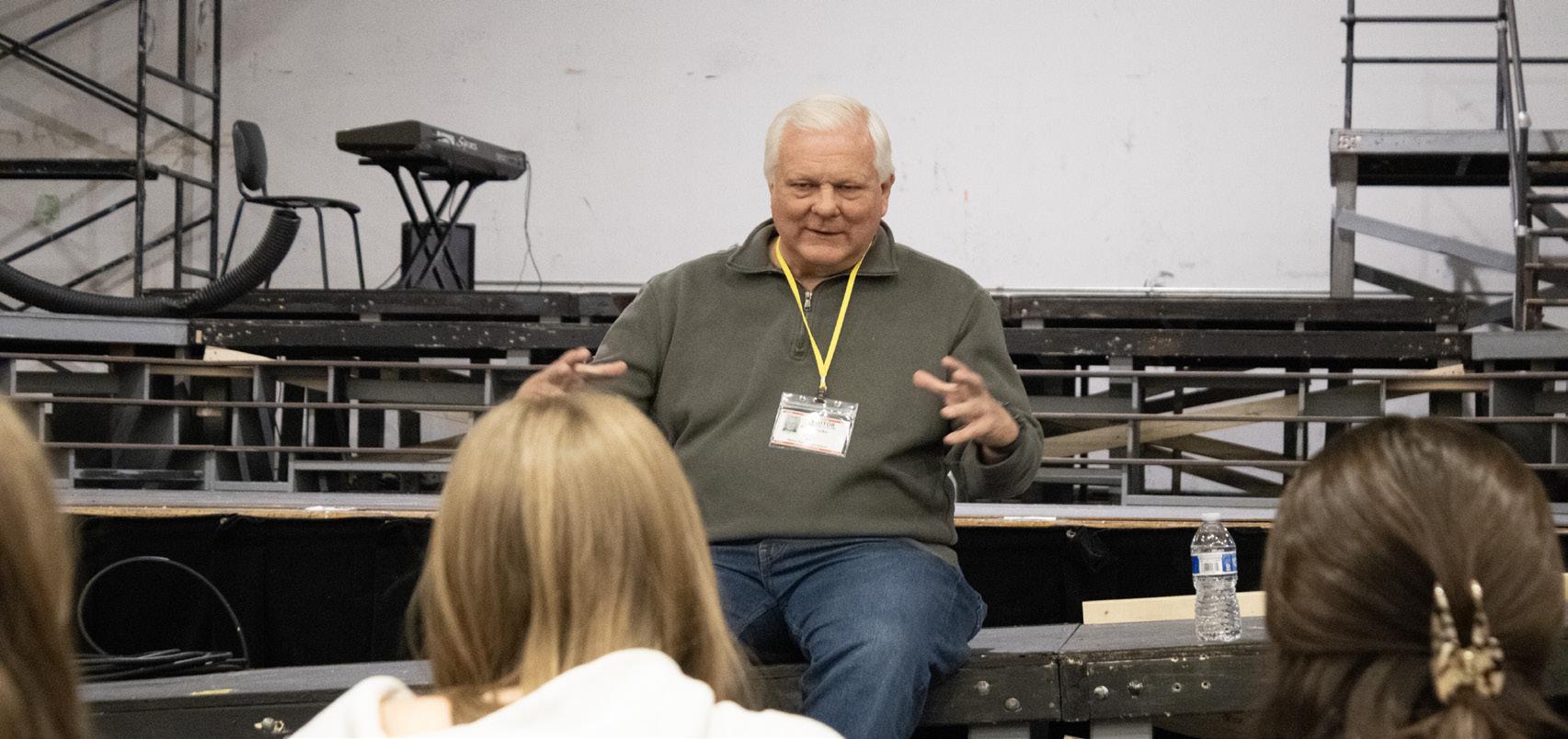
PLACKO REPORTING
things; you have to educate yourself on the fly.”
Placko has reported on almost every type of story during his lenghty career.
“Over the years, I’ve covered crime, politics, and sports,” Placko said. “I also did investigations, one of the most fun parts of my career here in Chicago. I was in the investigative unit for 5-6 years, and my focus was on tax waste and political corruption… We popped a lot of great stories, we sent a few politicians to prison, which got us a lot of attention
and won us a few Emmys.”
Despite his experience in other news settings, much of his career has been spent on writing and reporting daily news stories.
“For the bulk of my career, I’ve been doing daily news where you come in the morning, you pitch a story, and if they like it, you go out on that story,” Placko said. “A lot of news reporting is also focusing on the deadline — you’ve got the noon show, then the 4 o’clock, then the 5 o’clock show. When you’re doing investigative journalism, it’s different
because you don’t have to meet the daily deadline. You have more of a long-form project that you’re working on, and daily news just doesn’t have that.”
After years of working in the news business, Placko places value in unbiased reporting.
“I always believe that when you’re a reporter, it’s your job to tell the story equally and fairly towards all parties involved — the people at home shouldn’t know what you think of the story, regardless of what story it is,” Placko said.
Luci Cegielski News Writer
Freshman and sophomore students now have something new to strive towards at the end of this year. The Underclass Uproar is a new event introduced by administration and the Underclass Council to celebrate good attendance.
“The Underclass Uproar will be on April 24, the second to last Friday before AP testing, outdoors on the courtyard near the HPL, during all lunch blocks at school,” Mr. Michael Edwards, Associate Principal of Student Experiences, said. “The Underclass Uproar is a new event created to make sure Maine South can provide an opportunity for our freshman and sophomore students to have something at the end of the year to celebrate them, and for them to have something to look forward to before we’re off for summer break.”
Vice President of the Underclass Council, Andrew George, has been involved in the planning of the new event.
“The district wanted there to be an incentive for better attendance among freshmen and sophomores, because juniors and seniors have things like junior and senior prom, the Six Flags
trip, and the senior breakfast as incentives for good attendance, while underclassmen don’t have those experiences,” George said. “The administration reached out to us after they created a name and idea for the event to see if the Underclass Council could help plan it.”
Significant planning has gone into the creation of the event so far, with administrative and student participation bringing everything together.
“We scheduled a meeting with Mr. Edwards, and we talked to him and the administration about what their vision for the event was,” George said. “With that information, we talked to the rest of the council and club sponsors, and we came up with different ideas for the event and presented them to Mr. Edwards so he could look into which options were the most feasible under the budget and time constraints for the event.”
Eligible underclassmen will have the chance to participate in a plethora of different activities planned by the Underclass Council and administration.
“We plan to have music, possibly featuring an upperclassman or a staff DJ, food, drinks, lawn games, spike ball, and a mini-golf course,” Mr.
Edwards said. “The event will be completely free, including the food. However, we plan to have food trucks that may sell items for an additional price. For this event, we hope to provide a free meal to all eligible students.”
Mr. Edwards hopes to celebrate the numerous underclassmen who have made school attendance a priority.
“I am looking forward to celebrating our 9th and 10th-grade students who have worked hard and have come to school 90% of the time or more, recognizing how much hard work they’ve put in and that they are ready to have fun and live it up,” Mr. Edwards said.
Because this is the first year of the Underclassmen Uproar, it raises curiosity for underclassmen.
“I think the live music sounds interesting — I would definitely want the barbecue food truck to be there as a food option,” sophomore Tyler Moy said.
Sophomore Ana Skallas feels similarly.
“The mini-golf and spike ball sound fun,” she said. “I think the best part of the whole event would be the food trucks.”
Lucia Fuentes News Writer
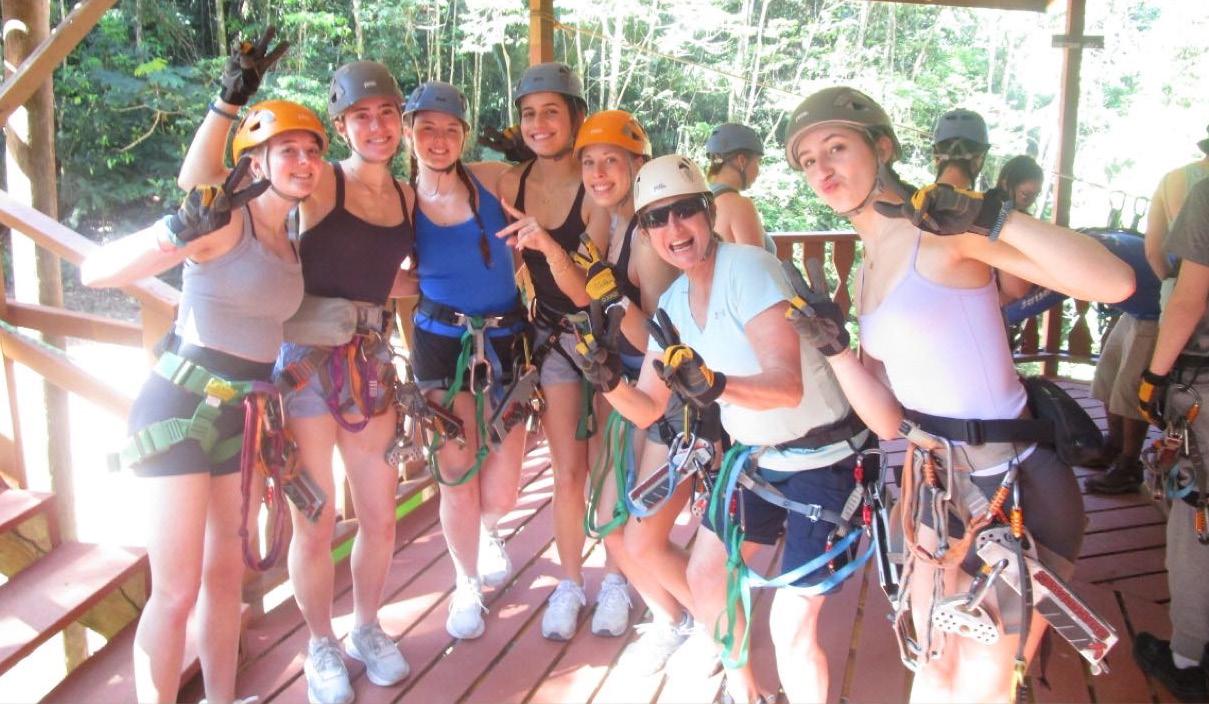
This past spring break, Ms. Wagner and six students travelled to Belize for a trip filled with various cultural and nature activities.
“I knew I wanted to go to Central America,” AP Physics 1 teacher and trip organizer Ms. Kay Wagner said. “We went to many places and did many things that even a seasoned traveler could not have organized for themselves. Belize is a country I have always wanted to visit because I had heard about its lush jungles, birds, and jaguars, vibrant Mayan history and current culture, and beautiful reefs and beaches.”
The trip participants spent the beginning portion of the trip collecting and analyzing data based on daily findings in nature.
“The first half of the trip, we were in the jungle more and went zip lining, stopped at a place called T.R.E.E.S [Toucan Ridge Ecology and Education Society], where we searched for insects to collect data about the water quality in their pond,” junior Olivia Schermerhorn said. “We also tracked turtles to collect data about where they prefer to settle in the pond.”
Participants were able to try some of the many different types of native
foods that Belize has to offer, as well as make their own impact on the environment.
“We tried many new foods like star apples, molley apples, cacau fruit, monkey tail, and many more,” junior Shauna Ronan said. “One of the days, we made tortillas, chocolate, sugar cane, and learned traditional dances. Next, we planted coconut and cacao trees.”
Participants were also able to immerse themselves in the vibrant culture that Belize has to offer.
“We visited Nim Li Punit, old Mayan ruins,” Schermerhorn stated. “Then we visited a farm and a Mayan women’s group. Next, we went snorkeling and saw many different fish and sting rays. After that day, we had a traditional tribal drumming lesson. Some specific cities we visited were Punta Gorda, Belize City, Cayo region, and Toledo. We even dissected a lion fish and cleaned up beaches along the island.”
Ms. Wagner found her first student trip to be a positive experience.
“Since Belize was the 55th country I’ve visited, I was able to provide students and parents with packing and logistics advice before and during the trip,” Ms. Wagner said. “Hosting was
quite easy — the girls were amazingly adaptable and enthusiastic. They approached every activity with an open heart and dealt with a few bugs and with the fact that there was no menu choice since we were in small, remote locations, and all the food was homemade. We didn’t see any other tourists most of the days.”
Some participants believe that the outdoor activities were the most memorable parts of the entire trip.
“Some of our favorite activities were ziplining, snorkeling, and all the traditional activities,” Ronan
said. “We went on the trip because we wanted to see more of the world and learn and experience new and unique things. This trip opened our eyes to the world and all the different cultures around the world.”
The experiences in Belize lived up to the students’ expectations.
“Some of my favorite highlights included going ziplining and going to a Mayan women’s group for the day,” junior Julia Massucci said. “I always wanted to go to Belize after hearing about the amazing beaches and how interesting their culture is.”
News Editors
From March 18-20 the qualifying Maine South Healthcare Occupations Students of America (HOSA) members competed at the state competition in Springfield, Illinois.
At the state competition, five Maine South students qualified for internationals: junior Gabrielle Dylag, who won first place in the research poster category, junior Kendrick Botello, who received second place in medical math, juniors Mia Kalinowski and Brooke Freedman, who received second place in the health career poster category, and sophomore Alexandra Lobo, who received third place in researched persuasive writing and speaking.
Before making it to the state competition, students have to participate in preliminaries tests at the beginning of December. Following the preliminaries, students can compete in 22 events across different areas of healthcare. While this isn’t the first time members from Maine South HOSA have made it to internationals, it is the first time students will be attending the competition. Ms. Heather Sinnott, the sponsor of the HOSA club, is extremely proud of the students’ work.
“It is an honor to be in the top three and to qualify for Internationals,” Ms. Sinnott said. “These events are extremely competitive. It is quite an achievement to even be in the top 10.”
Qualifying and competing at the state level comes with similar challenges.
“I had to write and give a speech about the usage of cell phones on teen mental health, and I would try to go over my essay as much as I could, so I could memorize my material,” sophomore Ally Lobo said.
“I qualified for State in both Dental Terminology and Research Poster Presentation,” junior Gabrielle Dylag said. “I prepared for Dental Terminology using a lot of flashcards, and I got a lot of help from the orthodontist’s office I interned at.”
Following the state competition, international qualifiers reflect on their experiences at the state level.
“I got first at State and qualified for Internationals in the Research Poster Presentation category,” Dylag said. “Making it to Internationals has really helped show me that even when I don’t feel confident, I should not doubt my ability to overcome challenges.”
Lobo also had a positive experience at State.
“Qualifying for Internationals means a lot to me because it shows my hard work paid off,” Lobo said.
“I’m really excited to compete with like-minded people, meet new competitors, and have fun with my friends.”
Participating in the state competition, and now the international competition has taught the qualifiers valuable lessons.
“There were many times throughout the project when I was thinking of giving up and not competing at all because of time constraints and not believing in myself, but by pushing through, I helped show myself that I can accomplish a lot if I put my best effort in and that I am passionate about my projects,” Dylag said.
Making it to internationals is an honor, but it also will require continued work for those who qualified.
“I’m just a little nervous about stumbling over my words or messing up, but its an incredible opportunity, and I am looking forward to it,” Lobo said.
Some qualifiers experienced disbelief upon receiving their award.
“I was absolutely shocked. I saw so many schools and a lot of important research projects among my competitors, and after my presentation, I thought I stumbled over my words a lot and did not expect to place as highly as I did,” Dylag said.
Every year, Maine South students put in hours of studying and late nights all leading up to a test that — fair or not — holds real influence in college admissions. And while our school offers strong student support overall, there is a notable gap in what we provide: accessible, school-based ACT and SAT preparation.
Other schools in Illinois and across the country have already filled that gap with after-school classes, teacher-led review sessions, or district-funded partnerships with test-prep platforms. Maine South has the foundation to do the same if we choose to invest in it.
Students across different grades agree: people with tutors don’t feel more intelligent — they just feel more prepared. They have someone showing them how to study, what actually matters on the test, and how to
pace themselves.
Unfortunately, there are students who want that structure but can’t access it because of cost, limited transportation, or simply not knowing who to go to. Those barriers don’t reflect motivation; they reflect access.
It is true that these extracurricular offerings would come with challenges. Many teachers are already stretched thin running clubs and staying after school for extra help or preparing their own classes. A full ACT/SAT program would require compensation, scheduling flexibility, and administrative support. Those concerns are valid and shouldn’t be dismissed.
However, other schools have figured out workable solutions without huge budgets. Some run short-term “boot-camps” in the weeks leading up to the test dates, which we have started to do, but not at the same levels as schools around us. Others partner with low-cost online programs that teachers can check in on.
None of these programs requires major work; they just require organization and deciding that access to
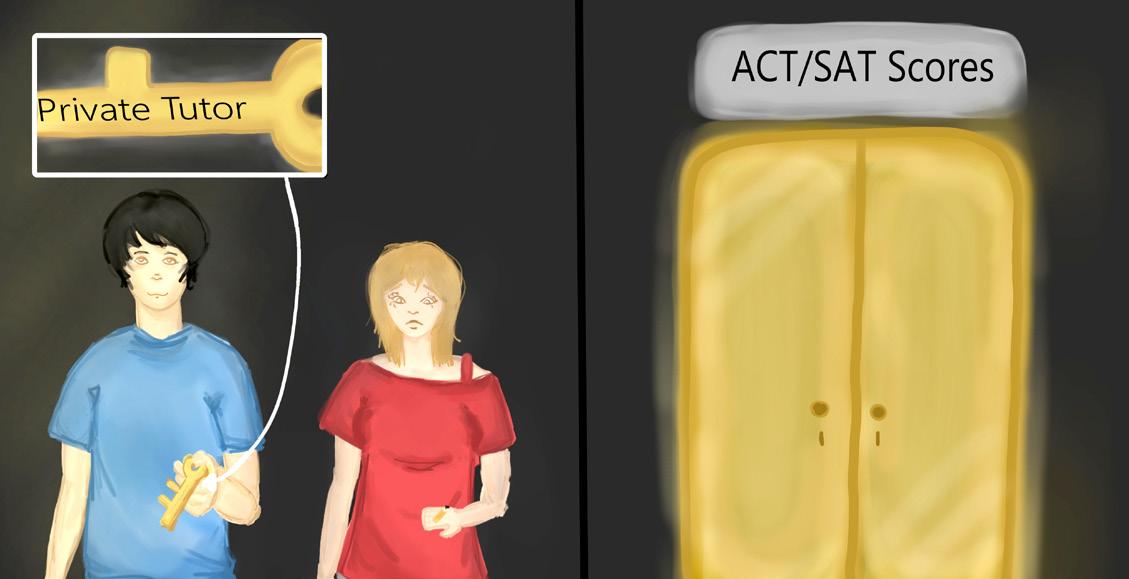
test prep is worth prioritizing. And there is a payoff. Schools that provide consistent test-prep support often see increases in average ACT/ SAT scores. That boost can open doors — more college options, better scholarship opportunities, and a clearer sense of direction for incoming seniors.
Maine South already encourages students to challenge themselves academically; providing accessible test prep would simply extend that commitment.
In fact, in past years, Maine South used to offer evening ACT prep classes for students through an out-
side program. Through students had to pay for these classes, the fact that they were offered at Maine South removed one barrier to access.
This is not about complaining or asking for something unreasonable. It’s about recognizing that schools play a role in helping students to navigate the future ahead of them, and a well-prepared student reflects a well-supported school.
If Maine South wants to keep opening doors for every student — not just the ones who have the resources for extra help — then offering ACT/SAT support isn’t optional; it is the next step.
In today’s world, social media makes strangers feel like friends. People often seek out social media to build relationships and belong to a community. It can be easy to feel close to influencers on apps like TikTok or YouTube because their job is to build relationships. But these relationships can quickly be interpreted as true friendships when in reality, they are parasocial, or one-sided and non-reciprocal.
Content creators build relationships by acting relatable. They show everyday life, share personal struggles, and present themselves as “normal.” This gives viewers the impression that they know them, since they relate to them on a personal level.
What also plays into viewers believing that their one-sided, almost fake connections are real relationships, is the way influencers interact with their fans. Replying to comments, taking advice, and giving shoutouts are all things that influencers do to show that they desire to build connections with their fans. But this connection only goes so far; influencers have to draw a line between fan and friend.
These actions can confuse viewers. Because there’s no one better at pretending than influencers, what they do can feel authentic even though it’s not.
Parasocial relationships are created through these blurred realities that viewers can have. Over time, constant interaction creates a fake sense of closeness and trust.
The way social media platforms are designed only strengthens these one-sided relationships. Algorithms will frequently show you the same types of influencers and some platforms even craft your “for you” page to the types of accounts that you interact with. Influencers will repeatedly post to stay relevant, which makes the “relationship” feel even more active.
Relationships like these can begin to affect people’s real connections. Some may find themselves putting more effort into building a connection with an influencer rather than a real friendship, without realizing it’s one-sided. Behavior like this creates weakened in-person social skills because of the great effort in online interactions that causes a loss of interaction with others offline.
Viewers that find themselves in these parasocial relationships often crave validation from influencers in order to feel better about themselves. Influencers’ lives online are not real, and with people in parasocial relationships already having blurred realities, they can find themselves with low self-esteem because they believe they have to

live up to what they believe is real.
The rise of influencers has changed the way relationships can be created. For the first time ever, humans can bond with someone miles away from them.
And this is good and bad. Some connection builds community, but some builds false realities. Yet at the end of the day, our most valuable relationships aren't built online; they're built with real human connection that make our lives feel rich, fulfilling, and valuable outside of a screen.

Moststudents at Maine South have had the experience of dodging buckets in the back hallway, just trying to get to class.
It is no secret that the school has had a problem with leaky roofs and mysterious puddles in the locker rooms. These issues are not things that students should be dealing with at a school like Maine South.
Over the last couple of years, it has become more and more apparent that student life is hindered by faulty facilities.
From the buildup of gum on the stall doors of the girls’ bathrooms to the stench of sulfur that emits from the locker rooms every morning, students are constantly having to avoid gross and unhygienic situations.
The bathrooms are one of the biggest causes of concern for many students.
Many are constantly out of soap, have broken faucets, and have stall doors that seem to never be truly cleaned.
In fact, nearly one third of bathrooms are seemingly closed throughout the day for one reason or another, and it is not as though there aren’t resources to fix these issues.
In 2023, D207 spent upwards of three million dollars on a plot of empty farmland on Hamlin Avenue with the intent of making a future agriculture class.
However, two years later, the land remains empty, and no such class has been announced.
This is millions of dollars in investment that we have seen little return on.
While students are trying not to get hit by grimy water seeping from the roof, a three-million-dollar lot is sitting empty a block away.
Now, it’s clear that the intentions behind this purchase were good, but there has been no tangible impact on the students of Maine South.
However, there have been recent tangible changes in our building, like updating the HPL, renovating the auditorium, and fixing the cracks in the parking lot.
The problem is that it takes years of students complaining about these problems before any action is taken.
There needs to be a more efficient way for students to give feedback to administration.
One way to get the entire school community working together is to

Maine South High School 1111 South Dee Road Park Ridge, IL 60068 http://www.southwords.org

Southwords is a student-run publication designed as a public forum for student opinion and balanced reporting on topics relevant to the Maine South community.
Unsigned staff editorials represent the consensus opinion of the Southwords Editorial Board. Personal commentaries represent the opinion of the author alone and do not represent the opinions of the publication nor District 207.
Student participation in the newspaper, whether through readership, submitting articles, or voicing comments or concerns, is encouraged.
Signed letters to the editor can be given to a member of the editorial staff or e-mailed to southwords@maine207.org. Southwords reserves the right to edit material for clarity and brevity and to reject obscene/libelous submissions.
Editors-in-Chief
make sure that the administration is aware of what the students are concerned about and want to be changed.
This could be done through a school-wide survey that specifically asks what students would change about the school and how the school could allocate the budget.
Right now, every survey the students take focuses on the classes we take and if we feel generally safe in the school environment.
While those are great, they don’t allow much for student budget input. A survey would allow the administration to pinpoint what problems actually affect the students on a daily basis.
The Principal's Advisory Committee can also act as a way to convey students needs or go further in depth into the results from the survey.
A school is supposed to be a place where people can go to feel safe, and that cannot happen in a place where students don't feel as though their thoughts matter.
In order to create a community in which everyone feels as though their voice has an impact, the school needs to actively solicit student options — after all, the building is here to serve our needs.
Adviser
Claire Magad
Commentary Writer
Understanding different cultures from a young age is crucial. Whether it’s trying new foods, learning a language, or traveling, having an appreciation for cultures other than your own adds meaning to your life.
School-organized travel is an ideal way to achieve this. As we know, there are several travel opportunities through Maine South, but there could be a whole lot more.
Growing up, my parents exposed me to many different cultures. We tried all kinds of foods and went to different countries. Some of my best memories were of meeting the people of Punta Cana who embraced a variety of cultures and lifestyles. With this, I learned things about these native communities that a lecture slide in history class could have never taught me.
While I’m very thankful for these experiences, many kids our age haven’t had these opportunities.
Our school has made a conscious effort to offer trips to Belize, Mexico, New York, China, and some other places, but these opportunities are limited. If our school offered and advertised these trips more, the impact would multiply.
In addition, some students can’t afford to travel on these trips. If Maine South assisted students with financial aid, more students would be able to experience the benefits of travel, which would


have a positive impact on both their lives and their education. There are countless ways to get students more involved with traveling; our school just hasn’t embraced them yet.
If Maine South made traveling to at least one new place during your time in high school a graduation requirement, it would push students to experience new cultures. While some students may not be able to embark abroad, “travel” could be counted as going to any new state or a culturally different location. Engaging with and learning about different cultures is an essential part of education, so our school should be treat it as such.
To entice students to travel, perhaps trips could be counted as volunteer hours, but only if they prove how they were involved and gained a greater cultural understanding.
Taking trips with family is certainly a rewarding opportunity, but going with students and teachers from Maine South to physically see the things you have learned about can be rewarding in entirely different ways.
We sit in classrooms and learn about the cultures of hundreds of countries around the world. We have a class called “World History,” so why not get out there and see the world’s history?
If Maine South made more of a push for student travel, we would be a lot more worldly and better prepared for the future.
Ultimately, traveling is an incredible experience that positively impacts people, especially from a young age. As writer Mary Anne Radmacher once said, “I’m not the same having seen the moon shine on the other side of the world.”
Iwasborn to live the fast life. Between running track and my type A personality encouraging me to make every aspect of my life as efficient as possible, I don’t like to take things at an easy pace.
This mindset is beneficial in many instances: my morning routine is down to a science, I can skip lines in math problems to get to the answer more quickly, and I know how to get to my work across town in the time it takes to listen to the song “American Pie.”
Despite these time-saving benefits, this mindset comes from the constant
pressure I’ve put on myself to be productive and never waste time. I’ve seen it take the sparkle out of everyday life when I’m worrying about making it through my busy schedule rather than being present in the moment. What should be meaningful parts of my day become obstacles that I need to overcome.
At the beginning of my senior year, every older friend I had told me to “appreciate every moment because time will fly by.” This comment was something I acknowledged but don’t think I ever truly understood until I was actually in the fourth and final quarter of my final year of high school. Only when I could see the finish line did I realize I hadn’t truly appreciated most of the race.
Realizing that it really was the home stretch — I had less than two months left of my time here at Maine South — it’s been extremely
important to me to enjoy every moment and take things slow. Instead of saying “I can’t wait” about upcoming senior events to get myself through the school days that seem to drag on, I’m making an effort to enjoy even the more trivial aspects of life at school.
Some of my best memories this year have been times at Constitution Team meetings or Lunch Table Talk recording sessions where I’ve doubled over laughing with my cohosts. Sometimes these meetings in my schedule bring me anxiety because I know it’s just another obligation. However, once I’m present at these meetings, I’m reminded as to why I participate in these things and how much I would’ve missed if I stayed in the rushed mindset.
Dreading these activities does nothing but make my days more filled with angst and annoyance. Yes, having my life scheduled to the minute
has taught me time management, but time management goes to waste when everything is treated as something to finish instead of something to experience.
Using every activity, class, or meeting as a way to fully experience what I have left of high school has changed my mindset tremendously. It may sound stupid to think that taking a math test could be made not stressful, but when I stop treating difficult things as just something to get through, ordinary life can become more meaningful.
For someone who has always tried to move through life at the pace of a sprint, I’m finally learning that the most memorable moments are the ones taken at the pace of a leisurely stroll. I don’t want to just go through the motions of my high school experience — I want to seize all of my opportunities to make memories.

Sarah Frantz Features Editor
Harley Hawk, the school mascot found at football games and many other school events, is one of Maine South’s most recognizable symbols. The hawk has been part of Maine South’s history since its opening — but it almost wasn’t.
According to Maine South alumnus and former English teacher Jim Lonergan (‘74), there were originally other ideas for the mascot.
“There was an original proposal to be known as the rebels,” Lonergan said. “This was obviously a year or two before the school opened, but there was also Ridgewood High School, who were also the rebels. They figured ‘South...Rebels...wait a minute — we don’t like that potential association with everything going on in the South with segregation in the ‘60’s.”
Though Maine South’s mascot has been a hawk since 1964, the hawk logo changed in the 2000s.
“The original logo [in the upper left corner of this page] had its wings and talons extended, almost like a fighting hawk,” Lonergan said. “It was unique. I don’t think I ever saw that particular hawk anywhere else. When the new logo was chosen, there was a very small, select committee. I don’t even think it had students on it.”
The Harley Mascot itself did not come until six years after the school’s opening, as high school mascots were just becoming popular.
Unfortunately, the original mascot was not up to many people’s standards.

gan said. “The hawk head was way too oversized; it had to be held to wear the thing… it had red, black, and white feathers all over it. When the person wearing it raised their arms, the wings would show. You throw a lame costume on a student who’s running around the field flapping their wings and looking kind of silly, so for students, it was like, ‘look at this stupid hawk’.”
However, while the mascot may not have initially appealed to high school students during games, it did to the community.
“Now, you have a bunch of little kids running around having a great time,” Lonergan said. “I think it’s great for the community. I don’t ever remember a lot of little kids when I went to a football game.”
The mascot costume has since been changed, now with professional consultation with the design.
“I was the Pep Club advisor from the late ‘90s until 2005,” retired social science teacher Sandra Deines said. “During that time, I believe we had the second upgraded Hawk mascot costume, created by a professional mascot-maker.”
The mascot was also changed more recently.
“I replaced the entire costume this year,” associate principal of student experiences Mr. Michael Edwards said. “It’s nice, but the head was built in such a way that you really just can’t see out of it. So we use the new body with the previous head. The body is what gets really gross after a lot of use.”

Science teacher and football announcer
From Harley to the Red “M” logo, Maine South’s hawk has been an symbol of school pride and spirit.
Mr. Thomas Egan recalls when one of the new costumes was announced.
“I remember when they got the new costume for Harley, which is way better than the old costume,” Mr. Egan said. “There was a big reveal at one of the pep assemblies, and it was received really well with the students because the new Harley looked so much better than the old one.”
It has been a tradition since the beginning for a student to wear the Harley the Hawk mascot costume, but becoming Harley isn’t as easy as one might think.
“When I got here five years ago, I came up with a process where I hosted a tryout,” Mr. Edwards said. “I asked students to prepare a one-minute performance with music. I like to have at least two Harleys at any given point, and they divvy up every opportunity depending on who’s available,” Mr. Edwards said.
Deines organized all Harley activities when she was the Pep Club advisor.
“Students would meet me in the small parking lot by the kitchen and auto shop to get into the hawk costume and receive explicit instructions: ‘do not reveal your identity and always be friendly.’”
One Harley has even gone on to continue their work as a mascot in college.
“My favorite story of all time was when one of the Harleys was one of my students, and she was so excited,” Mr. Egan said. “She was never supposed to tell anyone that she was Harley, but she told me…I found out later that this student went on to be Dewey
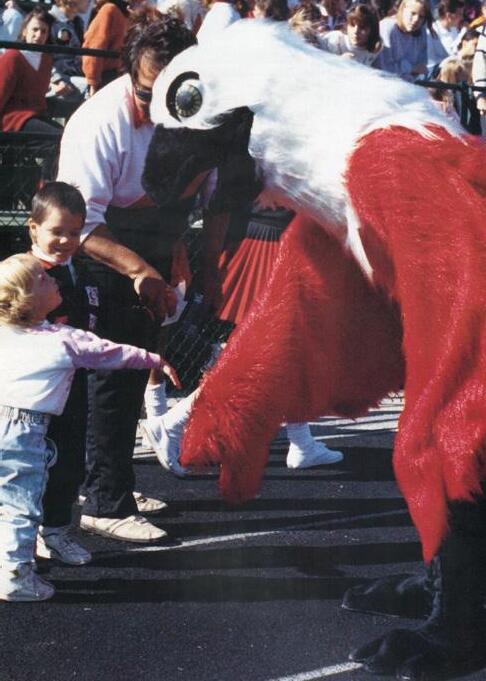

the DuHawk at Loras College.”
Harley also once had professional training by Staley Da Bear, the official mascot of the Chicago Bears football team.
“One home football game, and I am not sure why this happened, but Staley Da Bear was there,” Mr. Egan said. “I am not sure how many people actually noticed, but Staley spent time with Harley, even between games, actually teaching Harley some of Staley’s moves. Then, for the varsity game, they got to do some ‘acts’ together, which was really cool.”
The mascot’s name has also changed over the years. He was briefly known as Hugo the Hawk before that name was formally changed to Harley in the 2000s.
Since then, the mascot has been a staple of the school community, but has also been victim to some pranks by students.
“The great ‘Hawk Heist’ occurred one weekend when I neglected to lock my car in my driveway on a Saturday night,” Deines said. “I was shocked to find the next morning that the Hawk was gone. On Friday morning, the Hawk was discovered hanging from the press box in the football stadium. The perpetrators were never identified. From then on, I kept the hawk at school.”
Deines witnessed the mascot’s evolution and contributions to school pride.
“I think the Hawk has been a great way to get the whole community into school spirit,” Deines said.


Erin Pederson & Olivia Crawford Features Writer & Editor
Hereat Maine South, students aren’t just learning from teachers — they’re becoming them. Preschool Practicum and Exploring Teaching Professions, two classes available for juniors and seniors, provide unique opportunities for students interested in a teaching career.
Ms. Pamela Mulac is the instructor of both classes, allowing students to learn the art of teaching. She emphasizes that the program is designed to build skills step by step.
“Students learn how to plan, prepare, and implement lessons for preschoolers,” Ms. Mulac said.
Ms. Mulac has always had a passion for teaching, and working behind the scenes to help students follow in her footsteps has been the perfect fit for her.
“I love my job,” she said. “Being in the classroom, working with students…I love it.”
Students get real-life and hands-on experiences through these classes, getting a glimpse into a possible future career.
“They’re building on their skills each time they teach a lesson,” Ms. Mulac said. “They’re learning how to plan lessons and engage students.”
The structure of the Preschool Practicum class is personalized for each participant. It’s a structure where both the teacher-in-training and the students are building skills and learning.
“There are only 15 preschoolers and 15 students…a lot of times they’re working one-onone with their preschoolers,” Ms. Mulac said.
The Preschool Practicum is a hands-on experience where students can experiment with how they want to teach, exploring what works and what doesn’t, and they can use that information to refine their teaching skills to be specific to the students they have.
“My favorite thing in Preschool Practicum is that it’s okay to fail,” Ms. Mulac said. “Sometimes, your lesson is going to look great on paper, then you’re going to do it, and it might not go as planned.”
Senior Jocelyn Wiland is one of four secondyear students in the Preschool Practicum class. For her, the class was a natural fit.
“I’ve always loved kids,” she said. “It was the class I wanted to take that would be like my escape or my happy place.”
Each day is structured into rotating sessions, including different activities and subjects such as math, science, movement, art, music, and even story times.
“Each period teaches a different type of lesson every day,” Wiland said. “They do stations, and every ten minutes they switch. While one period might be focused on teaching the preschoolers math, another might be teaching art or music.”
PHOTO BY KATIE JOHNSTON
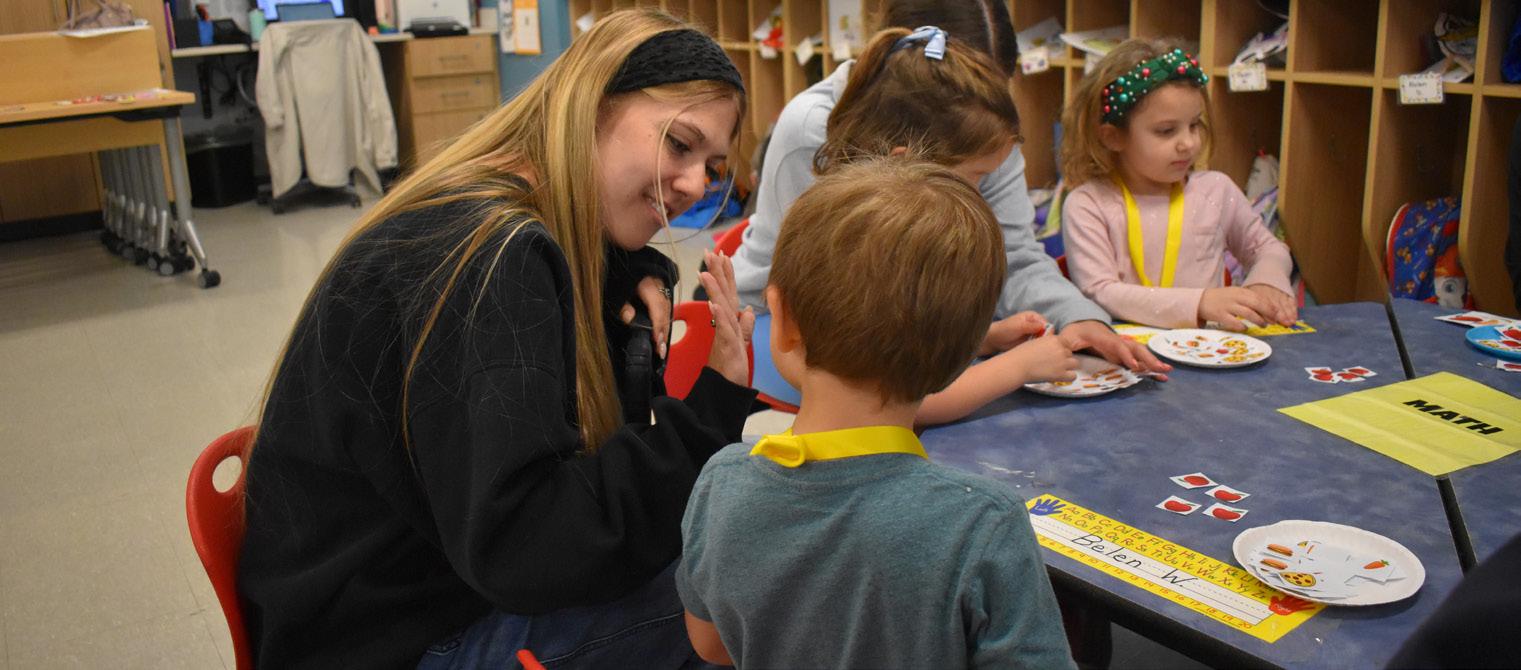
Wiland says one of her favorite parts is teaching small group lessons.
“I’ve always enjoyed doing the learning stations,” Wiland said. “I’d probably pick math [if I could choose what to teach], because it’s just so clear what they need to work on.”
Even for those not specifically looking to enter a teaching career, students gain a plethora of skills and experience from the classes. While Wiland is hoping to pursue a career as a forensic therapist, the experience has still been very useful.
“It’s very important that I understand how to work with every age group and understand how childhood might affect adult behavior,” she said. “Everyone takes different things from it; there are so many skills to be gained.”
As a second-year Preschool Practicum student, Wiland is one of the few in the class not assigned a specific preschooler.
“They’ve been great…they all know me very well,” she said.
The class is structured to be an efficient and fun learning space for both the students and preschoolers, run as a normal preschool with learning and rules.
“Each week has a theme, and every day has a very specific theme,” Wiland said. “I use that as a reference point to create my lesson plans.”
Students use various methods to find inspiration and create everyday lesson plans to present to the preschoolers.
“You can Google it, ChatGPT it — I always use Pinterest,” Wiland said. “There are so many resources you can use.”
Each group of preschoolers brings a different dynamic that students must be able to adjust to, and the experience isn’t always easy. Working with young children requires flexibility and patience.
“This year’s batch of kids has been more challenging,” Wiland said.
The Exploring Teaching Professions class provides a totally different, but equally meaningful
experience from Preschool Practicum. For the first few weeks, students start off learning more about the teaching profession.
“We talk about what teachers do, whether it’s elementary, middle, or high school,” Ms. Mulac said. “We talk about how teachers get evaluated, classroom management skills, instructional strategies, and assessments.”
Once students have learned the multitude of ways they need to think and understand the depth and complexity of teaching, they get the opportunity to go to an off-site campus to apply these skills.
“They go to elementary schools or middle schools and observe teachers,” Ms. Mulac said. “Sometimes the teacher will throw them in to teach a lesson.”
Senior Alyssa Ontiveros is currently interning at Roosevelt Elementary School, and works with a variety of students.
“I want to go into teaching, so I thought it was a really good opportunity for me to get experience in the classroom and learn new things,” she said. The internship has been very valuable in providing her with real-life experience.
“I intern for an interventionist who helps kids with reading,” Ontiveros said. “I definitely learned a lot of classroom management, like how to keep kids on task.”
Overall, the experience has strengthened her passion for teaching and prepared her for her future career.
“I really like it — I like my teacher and building relationships with the kids I see every week,” Ontiveros said.
Both courses emphasize not just technical skills, but responsibility and connection. Students learn that younger children depend on them.
“If you’re not prepared as a teacher, you’re going to have a long day,” Ms. Mulac said. “They learn dependability because someone is counting on them.”
Bart Dabkowski Features Editor
Maine South has many servicebased clubs, including Key Club, NHS, and many other smaller organizations. One of the newer groups is Rotary Interact, which had been inactive at Maine South until it was picked up again by club president, junior Nineveh Adam. The club sponsor is English teacher Ms. Megan Palm.
“I had Nineveh in my English 2 class last year, and we had a nice relationship talking about books,” Ms. Palm said. “When she talked about wanting to start Rotary Interact again, she knew that I had done some service in my personal life and thought I would be a good fit.”
Adam decided to bring back Rotary Interact because her brother had been the president of the club when he went to high school
“After his presidency, nobody wanted to pick up the club,” Adam said. “So, my sophomore year, I kind of just got inspired. I wanted to do some service, and my brother said, ‘Hey, you should try running this club.’”
Rotary Interact is a part of a larger group called Rotary International, originally created to help eradicate polio, which is now involved in building leadership and providing humanitarian services. Park Ridge also has its own chapter of the organization.
“There is a Rotary Club in Park Ridge that does its own community activism, but the purpose is to draw attention and help out people both locally and internationally when it comes to need,” Ms. Palm said.
Adam also believes that a goal of the club is to help in a variety of causes.
“It’s pretty diverse what we do,” Adam said. “For example, we did a can drive. We donated locally, but now we’re donating money for a global cause.
Junior Jenna Elliott serves as the club’s vice president, and she believes that it serves as a good alternative to other service clubs.
“I got involved from Nineveh,” Elliot said. “I thought this was such a good idea, because Key Club is such a big club. It’s very popular here, but they also have a limit on how many
students can do it. So, once it hits that limit, there have to be other clubs for people to join and be able to do service with.”
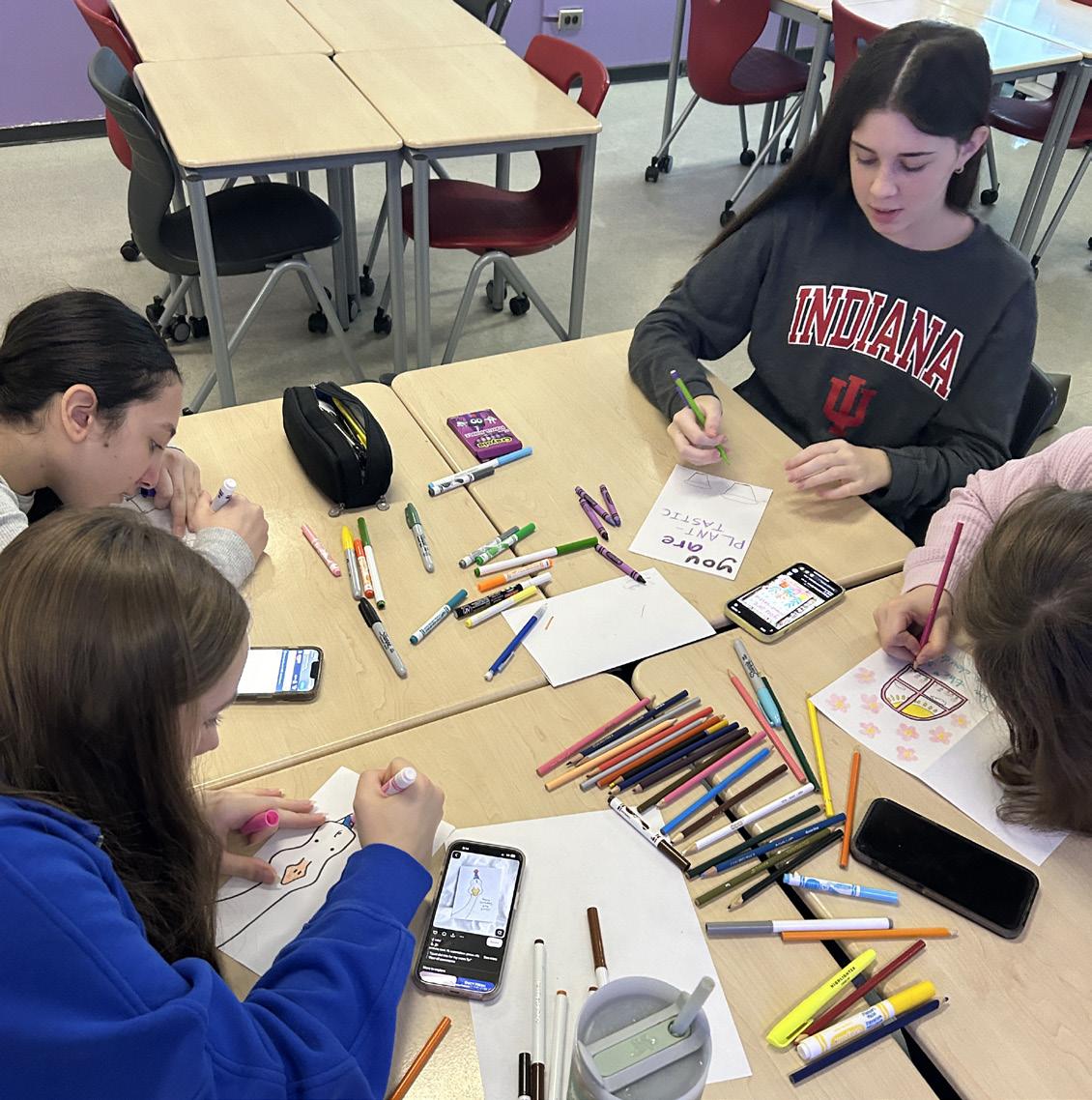
Since starting back up, the club has been involved in multiple service projects, including card-making for a senior center, food drives, fundraising for polio eradication, and other monthly projects.
“This year, we had a donut fundraiser during lunch, and that was to donate money to a polio cause,” Adam said. “One of Rotary’s main focuses is polio eradication globally. It’s eradicated here, but other countries in Africa and the Middle East need help supplying vaccines.”
In March, the club decided to do a fundraiser called Change For Change, where students could donate loose change to help raise money for a charity.
“We are supplying money for this organization called Project Cure, which supplies money for medical supplies, which goes to countries in need,” Adam said. “They fundraise money for small medical campsites, and it’s something that I found through the local Rotary president. She said it was a great cause to help. We’ve just been collecting loose change in seventh and eighth period classrooms.”
The loose change was collected in donation cups, and the club made sure that people were informed about where the money ends up going.
“There is a little background information slip with every cup, so if kids want to know more about it, they can learn about it on the cup, or they can learn about it in the announcements,” Ms. Palm said.
Ideas for fundraisers like Change for Change come from a variety of sources and often follow a monthly schedule.
“A lot of our ideas come from meeting with our club sponsor, Ms. Palm,” Elliot said. “The three of us will get together in the morning and just brainstorm different ideas. We’ll often go off of the old precedent of Rotary, and we kind of have a schedule with what we want to donate to.”
The club is already discussing future events, including collaborations with other organizations.
“I think we also want to try and partner more with our local Rotary Club in Park Ridge,” Ms. Palm said. “I
think that would be a goal to try and reinforce whatever projects they’re doing in the community, and bring those community elements into the school.”
Plans also involve work with other Maine South clubs.
“I think our next project is going to be communal service,” Adam said. “Maybe we’re going to collaborate with the Environmental Club to do a forest preserve cleanup. I’m sure we’ll have more fundraiser ideas for the following year.”
Despite the club having many successful events and fundraisers, there are some challenges. With Maine South already being home to many established service clubs, it is difficult for a small club to gain popularity.
“It’s hard because there are so many clubs here at Maine South, and everyone is trying to get an opportunity to share their voice and get attention for their projects,” Ms. Palm said. “It’s hard to gain momentum as a small club because you don’t know how the system works, and there are many clubs. It’s hard to find your niche.”
Adam also understands that it will take time and effort to become a more recognizable club.
“A lot of people know more about Key Club,” Adam said. “Both our organizations are great, and they’re both very valuable and meaningful. So we’re just trying to be more recognizable to students that might not know what Rotary is.”
Ms. Palm believes that the Change for Change fundraiser could be one way to gain more recognition.
“We’re just happy to get any kind of involvement and participation,” Ms. Palm. “Change for Change seemed to be a good technique to get a lot of promotion.”
Despite that, the club has grown since its founding, allowing many more students to participate in service projects that help make the world a better place.
“My favorite thing about the club is watching young students find their inspiration and their leadership to do good in the world,” Ms. Palm said. “And I love being able to work with kids who want to make a change.”
Elliot also believes that the club can help students feel like they have an impact in the community.
“It’s just an overall, easy, fun, and important club that helps you feel like you’re making a good impact on your community and the global community,” Elliot said.
Andrew George
Entertainment Writer & Editor
This year’s spring musical, “Hadestown: Teen Edition,” is a spin on the Greek myth of Orpheus and Eurydice. “Hadestown” takes this story and puts a modern spin on its tale and interpretation by tackling current themes.
This is the third spring musical director Mr. Joseph Fitzpatrick has worked on.
“This musical is unlike anything we’ve ever done at Maine South, and it’s certainly unlike anything I’ve ever directed,” Mr. Fitzpatrick said
“Hadestown” is not your typical musical. The performance is an operetta, being continuously performed with no breaks between songs.
Audience members can expect a night full of music and choreography as they listen to this ancient retelling. However, because of this unique structure, the cast and crew were given a challenge to go from classical music to the blues.
“This show simply doesn’t stop,” Mr. Fitzpatrick said, “It is entirely sung through, and each song bleeds into the next with no transition time. It has been difficult to make each moment of transition look fluid, effortless, and purposeful.”
The orchestra pit members especially have had to make this adjustment.
“We’re playing music the entire time,” junior Gianna Barcinas, a cello player in the pit orchestra, said. “We’re also on stage as well, so we get costumes with the rest of the cast. [Because of this] Mr. Hutter, our conductor, will not be on stage with us, so we have to conduct ourselves.”
This new style of theatre is also a challenge for actors.
“[Performing an operetta] is a lot harder than I thought it was going to be,” senior Jane Nuich, who plays Eurydice, said. “All of the spoken lines are only in songs.”
The actors themselves put in lots of hard work, training their voices for this continuous performance, learning how to best utilize their voice without injury, and helping create a truly unique and exciting performance.
Along with developing their vocal skills, actors were also challenged through character work.
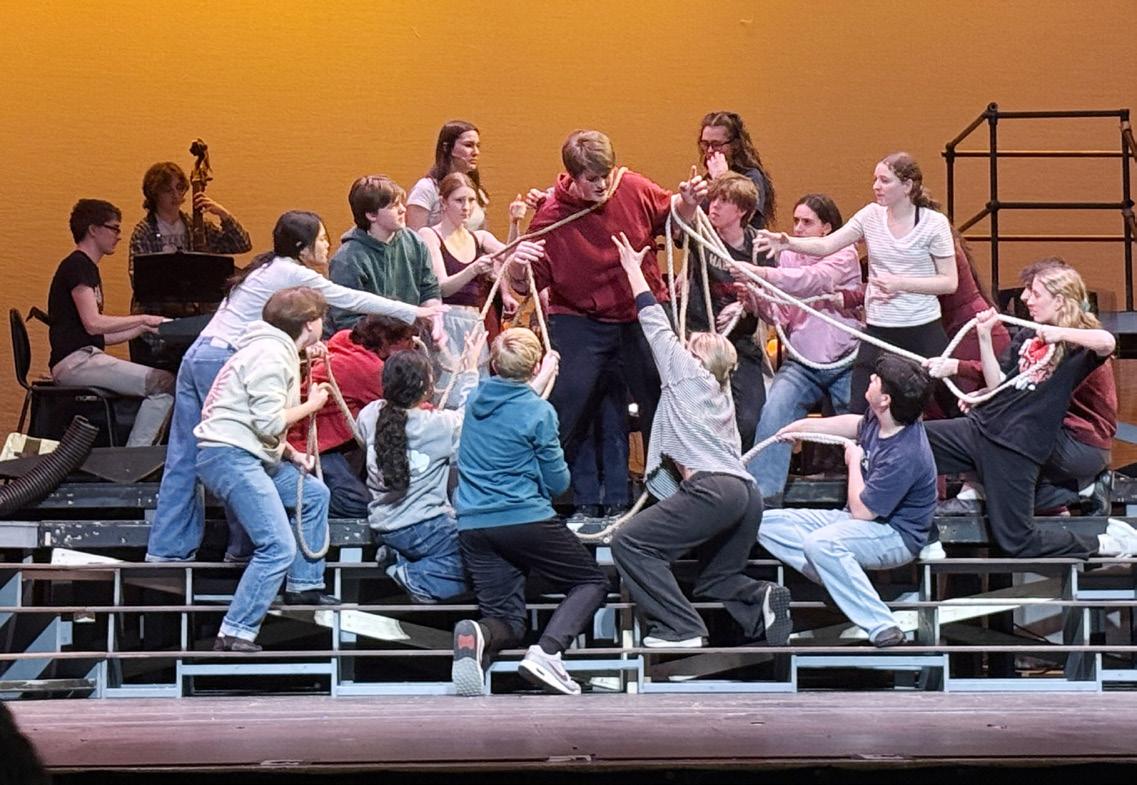
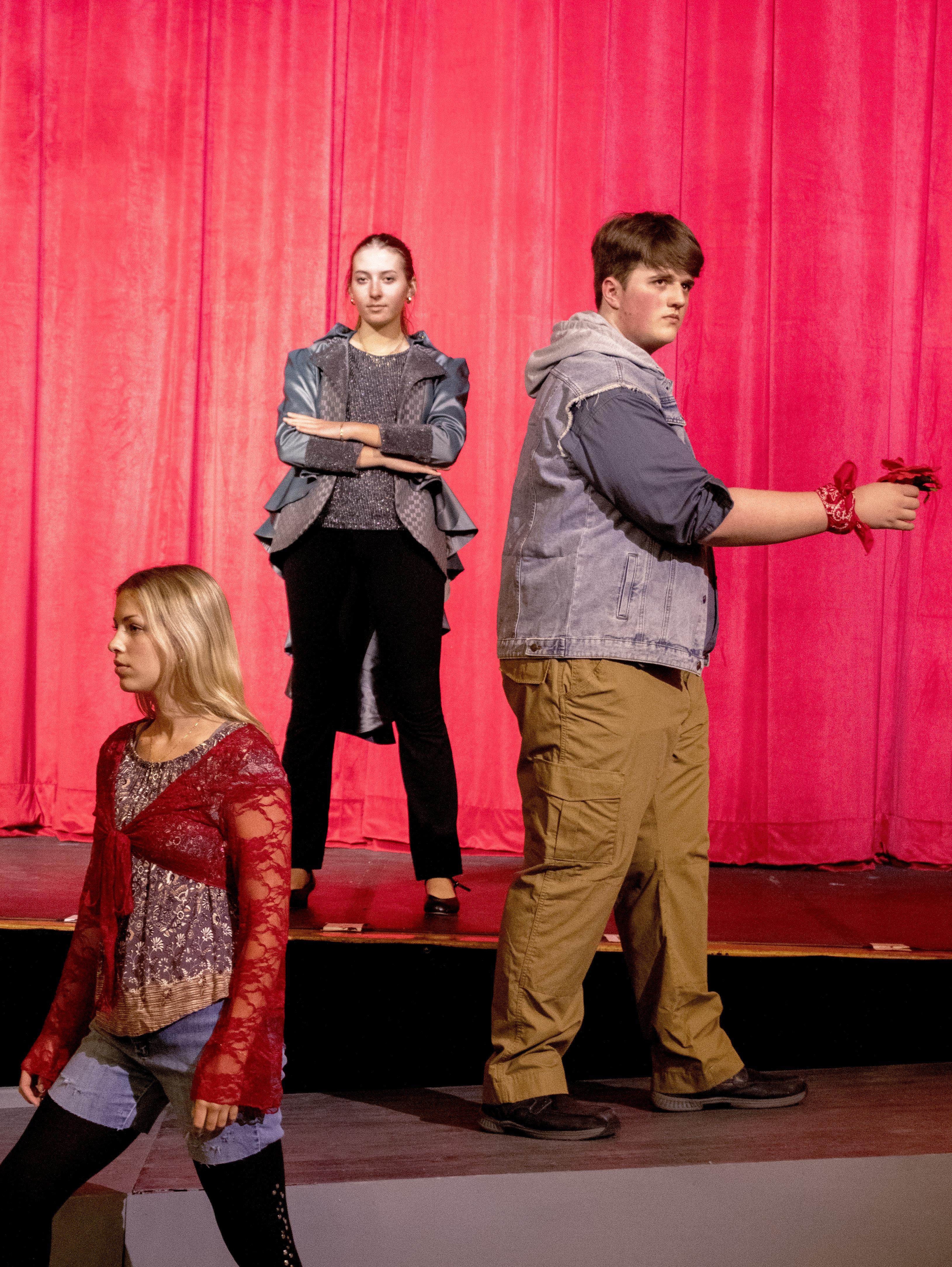
TIED UP Junior Erik Graves rehearses “Wait for Me” alongside the ensemble at the designer run for “Hadestown.” A designer run is for crews and technical staff to see how the technical elements need to be integrated in the blocking of the show.
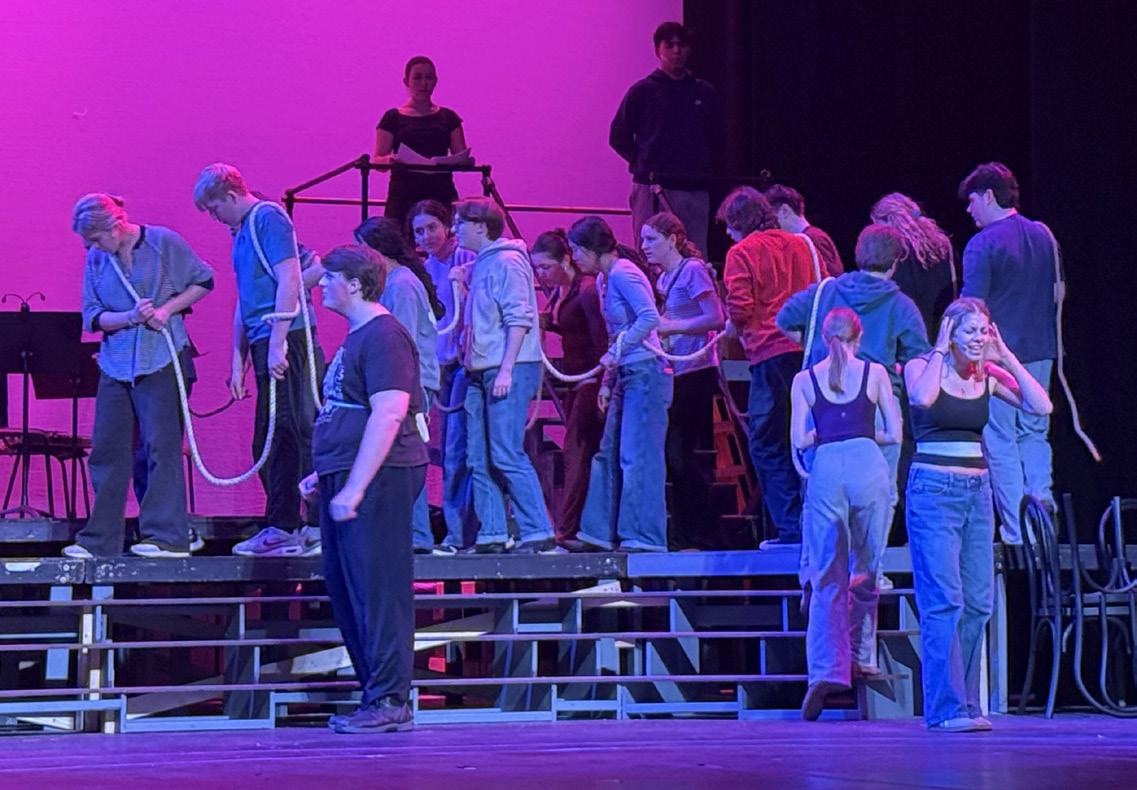
WAIT FOR IT
Senior Jane Nuich rehearses “Wait for Me (Reprise)” with the rest of the cast of “Hadestown.” The cast has been rehearsing since early February.
“As a character, Eurydice is hard to understand sometimes when reading for her,” Nuich said. “She is very different from me and this experience helped me open my mind to other perspectives. [Playing Eurydice] has definitely helped me grow as an actress ”
“Hadestown” critiques the history of the industrial system and the environmental factors, as well as the oppressive social factors that come with it. The show itself is not a bright, whimsical fairy tale, but a Depression-era America setting that differs from the usual retellings of ancient mythology.
The show gave actors and crew a chance to reflect on modern-day issues that the show itself was created to critique.
“This show deals with a lot of po-
ity, and hope from the way we get to tell this story.”
Mr. Fitzpatrick has worked to honor the original show, but to also add a new interpretation to the performance.
“Mr. Fitz has a very original and new take on this show that I have not seen before in any other showing of ‘Hadestown,’” Nuich said. “We have a lot of original qualities added into this show that people may not have seen before in other productions.”
These additions will give audiences a new interpretation of this awardwinning show. Both those who are new and those who have seen performances of “Hadestown” before will be enthralled with the results.
The rehearsal process for this show has also been different in that the cast has been able to make their own artistic choices.
“We start rehearsal with blocking a scene,” senior Erik Graves said. “We work through [the scene] as a team, and we are even able to give input in some movement choices.”
However, the hard work that everyone involved has been putting in is worth it to them.
“Some of what we have to do creatively in this show is absolutely exhausting, and when you finally get it right, watch it back, and see a clear and beautiful story unfolding, it is unlike any other feeling,” Mr. Fitzpatrick said.
The actors had to come together and collaborate to achieve this level of storytelling.
litical and social injustice, and the use of Hades’s power over the town is very relevant to the present,” Nuich said.
It also showcases themes that can connect with anyone.
“To me, the show is about the true meaning of love itself and how you can prove it to somebody, regardless of the consequences,” junior Erik Graves, who plays Orpheus, said. “This [musical] is definitely very different from what was done in the past; I think it is worth going to see.”
One example of this variety is the different type of music performed in this show compared to shows in the past.
“The music is captivating to me and makes me feel such a huge spectrum of emotions,” Mr. Fitzpatrick said. “Audiences will, no doubt, leave the theater feeling joy, sadness, curios-
“During the very first rehearsal, we blocked one of the bigger musical numbers,” Graves said. “During this, we all came together and became pretty much one person with how effectively we blocked it.”
“Hadestown: Teen Edition” runs on April 17, 18, 24, and 25, at 7:30 p.m. and April 19 at 2 p.m. in the Watson auditorium.
“Hadestown” is not about the outcome, but rather the journey and the lessons its audience can take from its tragic tale.
“My hope is that this story encourages us not only to reflect on those patterns, but also to consider what role each of us can play in shaping a world where young people continue to have spaces to create, question, and build inclusive artistic communities,” Mr. Fitzpatrick said.
Olivia Brentanos Entertainment Writer
Nine students from Maine South were selected to attend the American Choral Directors Association (ACDA) Midwest Regional Conference. The ACDA is a professional organization that students are able to attend, and a place where choral directors can enjoy and experience music together.
The Midwest Regional Conference for the ACDA was held in Milwaukee, Wisconsin this year. Conventions rotate from being held nationally to regionally. Regional conferences have a couple thousand students in attendance, and judges choose the students that attend through an audition based process.
“The students submit an audition in the fall that consists of singing scales,” Mr. Matthew Hanes, the director of Maine South Choir said. “They have to learn a part of the songs that they’ll be performing, and then they also have to perform a third bit, which is either a folk song or something from an opera that showcases their voices.”
Mr. Hanes helps to prepare the students auditioning by nominating
them and coaching them through their recordings.
Many of the singing skills are taught to them during their choir block of the school day. In addition to rehearsal time, students prepare by taking private voice lessons with teachers outside of school.
The ACDA is a place where choir directors and teachers, like Mr. Hanes, can attend meetings and reading sessions—where they sing music together—and watch performances of the different choirs and ensembles. It’s a good place for them to be able to learn about up and coming music.
For students, the ACDA conference is an opportunity to be able to meet new people from all over the Midwest region and to share their passion for singing. Students from a variety of ages are able to perform and learn new ideas together.
“It was a really cool experience to be able to sing in such a large group of talented people, and I was honored that I was chosen to attend,” senior Peter Sagmeister said.
The ACDA convention is good exposure for those wanting to expand their singing technique.
“I had to really work on my tech-
Andrew George & Gabi Shaw
Entertainment Editors
2: “Traitors”: Set in a Scottish Castle, the “Faithful” try to banish the “Traitors” who try to eliminate players. The “Faithfuls” must figure out who the “Traitors” are to win a cash prize; however, if they aren’t caught, the “Traitors” will win the money. Stakes get increasingly higher as they compete in challenges to up the prize money. The show’s comical host, Alan Cumming, brings a fun aspect to the show filled with deception. Each episode becomes more suspenseful, hooking the audience.
4: “Dancing With the Stars”: Loved by many since 2005, “Dancing with the Stars” follows celebrities as professionals teach them different dance styles. Each week, the partners dance based on weekly themes and earn scores which decide if the duo is safe for another week or goes home. Though the competition is enticing, it lacks the drama it used to have in previous seasons. Now, fans connect with pros through social media.
nique and learn how to project without straining my voice, especially in my lower range,” Sagmeister said.
Students also learned more from the experience outside of singing.
“[My professor] helped me with my singing and understanding myself better, as she gave a lot of life lessons,” freshman Annika Lee said.
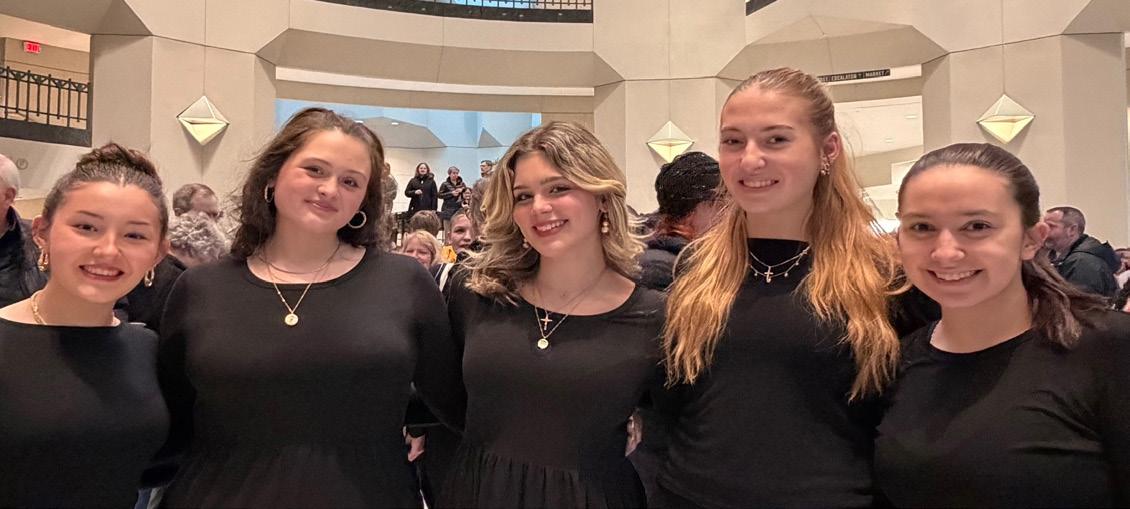
This year, along with Lee and Sagmeister, the Maine South students selected for the ACDA consisted of freshman Audrey Frye, sophomore Dominic Wynne, juniors Emma Erickson and Andriana Margaris, and seniors Audrey Wilson, Sadie Meeks, and Ola Nawrocki. Re-


markably, Emma Erickson has been selected to attend the ACDA for the past three years, and Andriana Margaris was selected to attend the conference last year, too.
In addition to performances and rehearsals, students were able to participate in group outings together. Students spent their time with other students of the same age group and ensemble.
“As it went on, I got to make new friends and realize once again that we’re all pretty similar,” Sagmeister said. “We might be from all over the Midwest, but we all love to sing and we have that in common.”
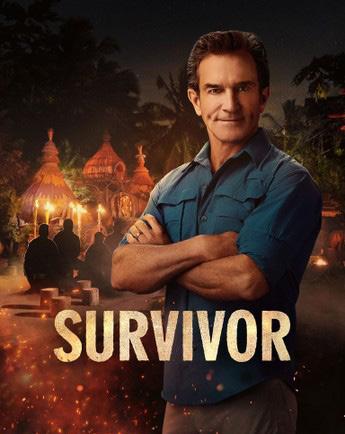
1. “Survivor”: There is a reason “Survivor” celebrates its 50th season this year — it is one of America’s most beloved shows. Each season, contestants are grouped into tribes and placed into a remote area. With just the clothes on their backs, they must learn how to get food, make a shelter, and build relationships, all while competing in challenges to avoid possibly being voted out. With memorable host, Jeff Probst, this show has the perfect amount of drama but also rawness and emotion. Each season contains new twists, making each season feel new and exciting.

3. “Love Island USA”: Every summer, a new season of “Love Island” comes out; catching many Americans’ attention. It consists of single contestants, who have to couple up with one another and compete in challenges. With the threat of couples being eliminated from the island, the show brings drama every summer. However, like all reality shows, it lacks a certain depth and sometimes feels fake. Nonetheless, it’s entertaining to watch the drama play out, even if the love is a little artificial.

5. “The Great British Bake Off”: This series follows contestants as they bake against each other. Each episode has a new theme, with three challenges the bakers must complete. At the end of each episode, one contestant is crowned “Star Baker” and one is eliminated, with a winner revealed at the end of the season. Although there are tense moments, there is little to no drama between contestants.
Ocean Waves ($9.49)
With warmer weather approaching, smoothies are a great way to relax and cool down. Southwords tasted some of the most popular offerings from local smoothie shops and found which are the tastiest.
Entertainment Editors

648 N Northwest Hwy #8C, Park Ridge, IL 60068
Known for its organic ingredients and health-focused menu, Clean Juice offers a variety of smoothies that feel both nutritious and enjoyable. The Ocean Waves smoothie stands out with its vibrant color and refreshing flavor. Made with blue spirulina, chia seeds, pineapple, banana, vanilla, honey, almond milk, and coconut cream swirl, it has a tropical taste. The banana and coconut stand out most, with a subtle nuttiness that adds depth. The texture is creamy and satisfying, though a little thick. While the flavors are great and feel fresh, the smoothie leans a bit too sweet at times. Still, it is filling and energizing. Overall, Ocean Waves is a flavorful option, especially for those who enjoy something sweet and tropical.

Mango-a-Go-Go ($7.99)

Harlem Irving Plaza, Norridge, IL 60706
Formerly known as Jamba Juice, Jamba is best known for its drinks. The Mango-A-Go-Go smoothie is a blend of mango, passion fruit, and pineapple. While it’s one of the chain’s most popular drink, it doesn’t live up to the hype. While the drink has a pleas ant tropical aroma, however there are chunks of fruit that aren’t blended, which, with the icy texture of the drink, leave an unpleasant texture more similar to a slushy than a smoothie. Furthermore, the combination of fruits are actu ally bland and lack flavor, tasting more like wet cardboard than anything else. Despite how tasty the smoothies may look, Jamba’s smoothies are not worth the price for lacking so much in flavor.

Bahama Mama ($8.89)

4440 N Harlem Ave, Norridge, IL 60706
Best known for their fun smoothies, both sweet and healthy, Tropi cal Smoothie Cafe does not disappoint. One of their more popular drinks, the Bahama Mama, consists of strawberries, pineap ple, coconut and white chocolate. While the white chocolate might seem unnecessary and almost out of place, it adds a nice sweetness without being overbearing. The fruit itself tastes fresh and doesn’t feel artificial. The best part is how the drink immediately makes you feel like you are somewhere on a beach. While they are a bit expensive because they only have one size, you do get a lot of smoothie. Overall, Tropical Smoothie Cafe is worth it, especially since there are so many fun flavors, so there’s sure to be something for everyone.

Marianna Maselli
Entertainment Writer


“Project Hail Mary” - Amazon MGM Studios
Even with all of the hype surrounding the movie “Project Hail Mary,” it manages to exceed expectations and proves to be one of the better movies released recently.
Released on March 20, 2026 and directed by Phil Lord and Christopher Miller, it is an adaptation of the novel written by Andy Weir. Unlike many novel adaptations, it was refreshing to see that it’s very similar to the book.
The movie follows a science teacher named Ryland Grace who wakes up alone on a spaceship with no memory of who he is or how he got there. As his memory starts to return, he starts to uncover a mission to stop a mysterious substance from killing the sun. However, an unexpected friendship he makes along the way could be the key to solving it.
One of these strong features in the movie is the acting. The performance that sticks out most is Ryan Gosling, who plays the main character Ryland Grace. His performance in this movie is very compelling. Gosling is a very good full-body actor; there aren’t any scenes we see with him where he isn’t fully engaged in what’s going on.
This works very well because there are a couple of parts in this
movie where he is alone on the spaceship and is only reacting to the other objects there. These easily could have been forgettable and boring scenes, but with him being able to fully immerse himself in the world around him, they really draw you in and are some of the funniest parts of the movie.
He also has a few emotional scenes that are done so beautifully and are incredibly heartwarming because they feel so raw, due to the actor’s exceptional performances.
Another performance that stands out is Sandra Huller as Eva Stratt, a member of the team tasked with saving the sun.
Her performance stands out because, for most of the movie, her character is very stern and harsh, but then she develops other aspects of Eva’s character that change your view of her. The way she shows that other side of the character feels so human and not just like someone is reading from a script.
Another strong aspect of this film is the writing. It is a perfect balance
of comedy, which many sci-fi and action movies often lack, and touching moments that can make you feel emotional.
On top of those two things, they were still able to have high suspense and anxiety-inducing action scenes. The perfect balance of all these things is what makes the script so good.
On the other hand, even though there aren’t many bad parts in this movie, one of the weaker elements is the cinematography.
There are some really visually beautiful scenes throughout the movie, but overall, it was very generic. Also, some of the lighting in certain scenes was too dim or just shining across the actors’ faces awkwardly. For a movie like this, you would expect phenomenal visuals, but they were mediocore, so it isn’t an aspect of the film that really stands out.
Overall, “Project Hail Mary” is a great movie that is perfect for people who are looking for a heartwarming, action-filled movie.
Riley Story Sports Editor
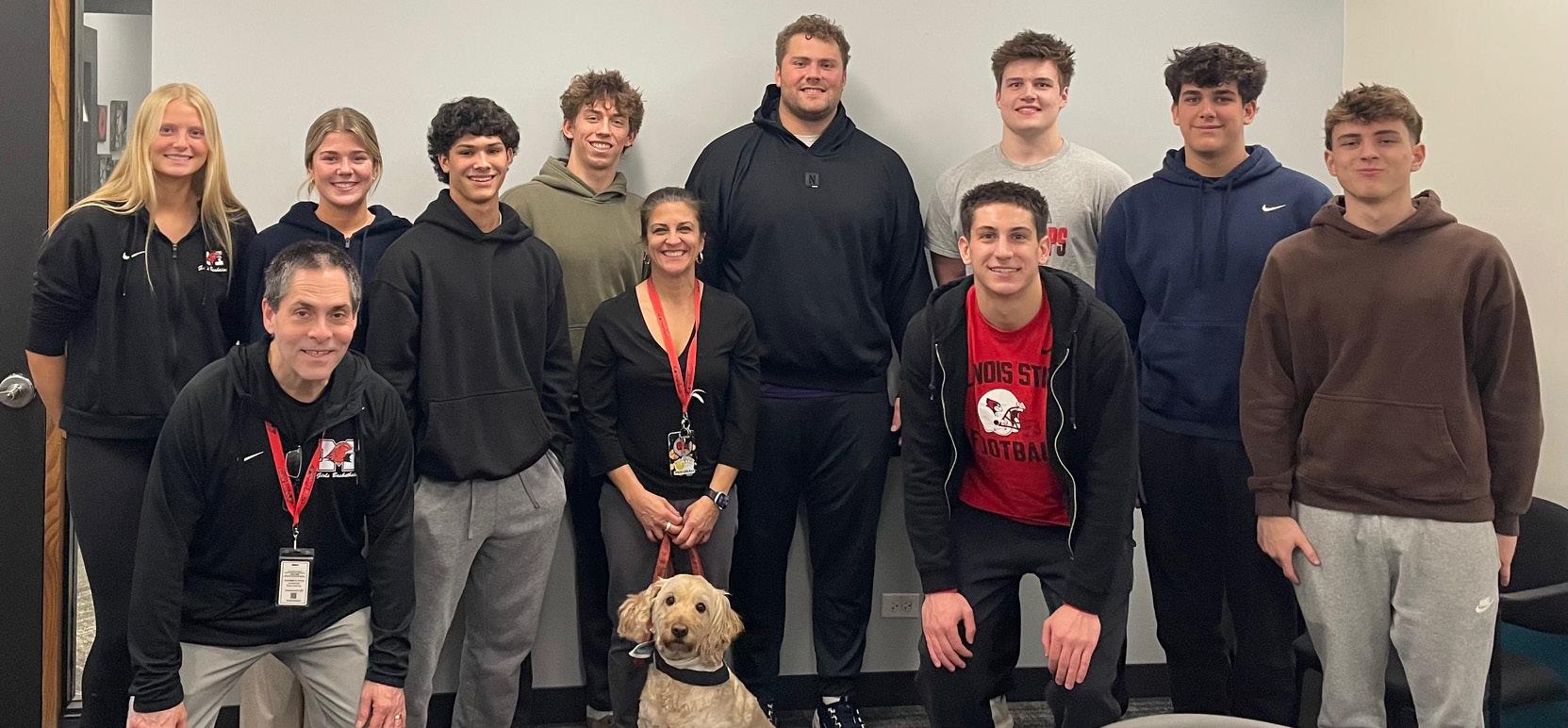
Peter Skoronski (‘20) returned to school to speak with studentathletes and share his journey from a standout career at Northwestern to becoming an NFL starter for the Tennessee Titans
Skoronski has developed into one of the most reliable offensive linemen for the Tennessee Titans. Now in his fourth season, he has gone from a young rookie adjusting to the NFL, to a player the team counts on.
Before his time in the NFL, Skoronski played at Northwestern University, where he started all 33 games of his college career at left tackle. During his final season in 2022, he became the first unanimous first-team All-American in school history.
He also earned the RimingtonPace Big Ten Offensive Lineman of the Year award and was a finalist for the Outland Trophy, showing the level of impact he had at the college level before moving on to the NFL.
At Maine South, Skoronski balanced multiple sports throughout the years.
“I was playing football, basketball, and track, so it was always busy but different,” Skoronski said. “Once I got to Northwestern, the focus shifted almost entirely to football, every-day year round which became the main priority.”
However, that constant activity in high school did not compare to the intensity he faced at the next level and
’
James Biagi Sports Editor
the physical and mental demands that came with it.
“The transition from high school to college was the toughest challenge I’ve faced — college workouts push you to your limits, trying to break you down so they can build you into something stronger,” Skoronski said.
The funnel from college to professional is so small that it requires many more sacrifices and intensity overall.
“You give up a lot socially to be a part of a college sport with time commitments and traveling, with all the time you spend with your teammates,” Skoronski said. “It is a very special culture that gets created. In the long run, those sacrifices and commitments in college paid off in the NFL.”
Alongside these sacrifices, he recognizes the immense pressure and attention on himself.
“Media and fan attention escalates as you progress, and as you grow older, more people care about your
games,” Skoronski said.
What helped him achieve success was his mental approach. Mental toughness is crucial when competing at the highest level in sports, as it allows athletes to stay focused and handle high-pressure situations.
“Being less outcome-focused and focusing on moving on from one play at a time has helped me a lot,” Skoronski said. “Similarly, flushing mistakes, and if you have a bad game, quickly bouncing back and getting better so you can move on.”
Athletes may have many physical and cognitive strengths, but Skoronski emphasized that true consistency and success come from focusing on what you can improve on and embracing the grind.
“It is so much easier to focus on the controllables, rather than becoming overly affected by the highs and lows of results, especially during challenging stretches, like, for example, a losing streak,” Skoronski said.
As the boys’ baseball season starts, the team is hopeful and looking forward to getting far into the postseason and making a run at State. With many returning star players, the team feels confident about its abilities this season.
“We're going to perform great,” junior outfielder Gavin Krischke said. “We have a deep pitching staff with a lot of at-bats, and we're going to make a deep run in the playoffs.”
The boys’ confidence is backed by their talent. Multiple players on this year’s team have earned opportunities to continue their baseball careers in college.
“Some standout players recently have been [senior] Luka Stojakovic,
[junior] Evan Adamczewski, [senior] Jack Gianikos, and [senior] Connor Griffin, all college base ball commits,” Krischke said. “[Adamczewski] just hit a cou ple of bombs recently, with three home runs already.”
In total, seven athletes have committed to play college baseball. Still, they remain focused on this season with the goal of reach ing State.
“We have been practicing every day, rain or shine. As long as we come to practice with a good

mentality and give it our all, we will be successful,” junior first baseman Forrest Greenhill said.
The Hawks are off to a slower start with a record of 3-5 at press time. Although the beginning of the season isn't what they hoped for, the team is still positive and are working towards more wins.
“We haven’t started the way we wanted to, but we know what we are capable of,” Greenhill said. “There’s a long season ahead of us, and we are focused on getting better every day.”
Junior Gavin Krischke looks for his pitch in a home game against Prospect on March 30. The Hawks won 11-7.
Audrey Becker Editor-In-Chief
The girls’ soccer team has begun their season with a 1-1 record. After two cancellations, the team won against Plainfield Central on March 31 and is looking to keep up the momentum.
Like all spring sports, the girls’ soccer team must deal with Chicago's inclement weather. Practices and games are always subject to change, so teams must navigate the uncertainty of their schedule.
“The weather has been our biggest obstacle so far because it’s been raining a lot,” senior captain Anya Chojnowski said. “We’ve been having to practice inside, which is definitely harder when you’re an outside sport.”
Another obstacle that the program faces year after year is the extremely challenging CSL South conference.
“We will face a tough conference schedule,” Coach JJ Crawford said. “Four of the teams in our conference are ranked in the top 20.”
Last year, nine seniors graduated and three players left the program to continue to play with their club soccer teams. Currently, the roster is much younger — with only five seniors but six sophomores — and there are several new additions to the team this year. Now, the girls must learn to build up their team chemistry.
“My favorite part of practice is getting to spend time with my teammates,” junior Isabella Grimaldi said. “We try our hardest and we communicate with each other well [so] that everything works together well.”
The team this year puts an emphasis on teamwork rather than striving for individual goals or achievements.
“We are putting in the work, and playing for team goals, not individual goals,” Coach Crawford said.
The team is hoping to continue their post-season success. Last year, they won the regional championship and aim to have a similar outcome.
“We have a really good chance of winning Regionals because our team is super close and we’ve been pushed hard in practice and conditioning a lot,” Chojnowski said. “We also have a very hard schedule leading up to Regionals to prepare us.”
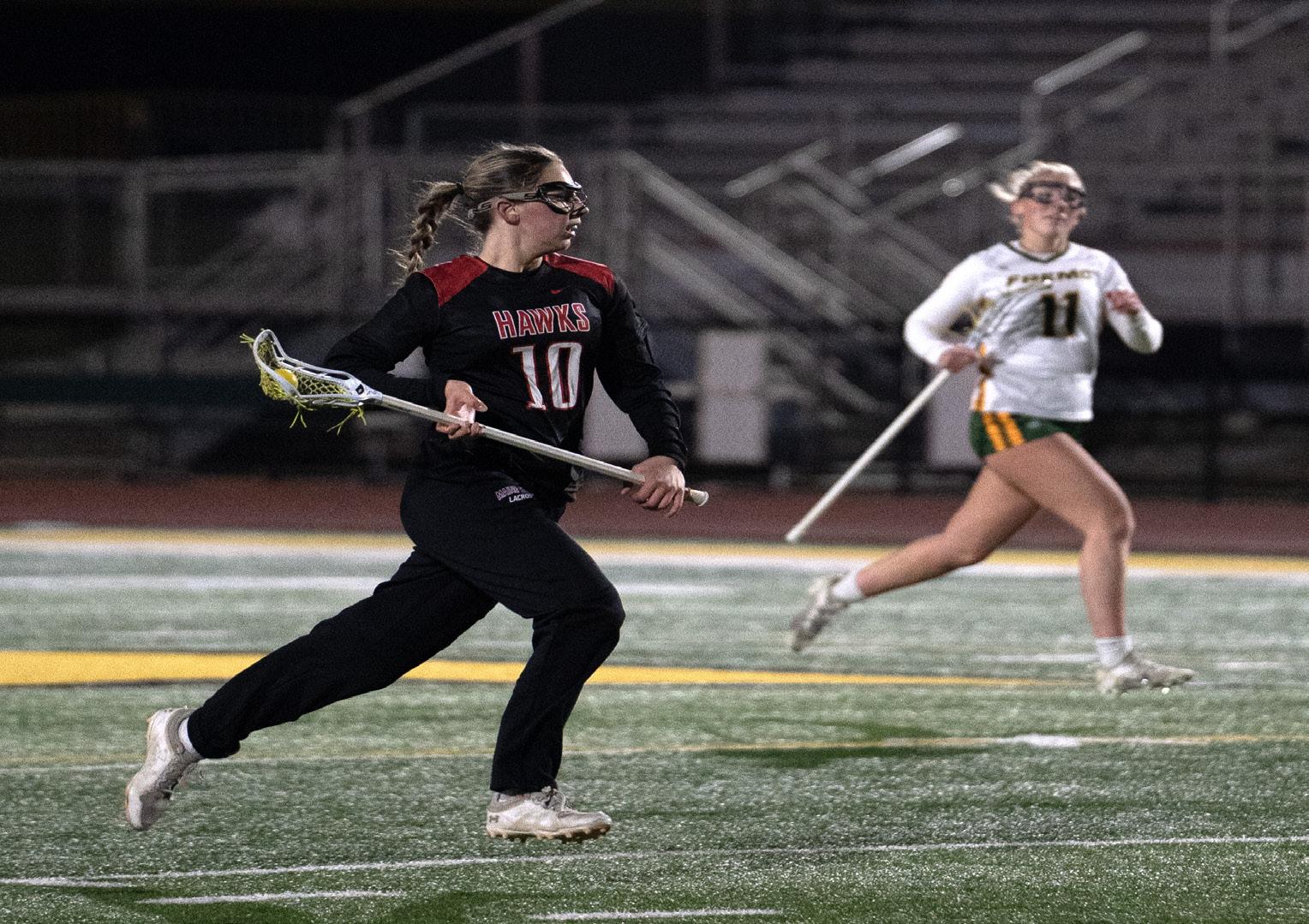
Isla Craig Naples Sports Writer
Thegirls’ lacrosse team is entering the new season with energy, confidence, and a clear focus on growth. With a mix of experienced upperclassmen and developing younger players, the team is already showing strong progress both on and off the field.
One of the biggest changes this season is the team’s new motto: “Habits over Hope.”
“This is the idea that we do not achieve what we ‘hope’ for, but rather success comes from the ‘habits’ that we build on a day-to-day basis,” head coach Will Pankratz said “In the toughest moments on the field, in the closest games, when the pressure is highest, we are going to revert back to our habits, and if we have championship-level habits, then success and victories will follow,” head coach Will Pankratz said. “We do not rise to the level of our hopes — we rise to the level of our habits.”
With this new mindset, the team is focusing on key habits such as relentless effort, positive accountability, and maintaining a “next play mentality,” all of which are already shaping how they approach practices and games.
Another standout feature this season is the team’s high-level talent. Junior Lucy Sacor, a Division 1 commit to Marist University, has brought additional attention and confidence to the program.
“Going against a team with commits can be daunting, and now that we are that team, it feels good,” junior Meghan Kennelly said.
Along with Sacor, the team is led by three experienced senior captains: Anna Kleinschmit, Sarah Toomey, and Katie Foley.
“To select captains, we have the team vote,” Coach Pankratz said. “We really want our captains to be the members of the team that our players look to for leadership.”
So far, the season is meeting their goals. The team competed against Fremd in their opening game and won with a final score of 15-4. This game showcased both the impressive offensive depth and defensive strength that the team competes with.
“Offensively, we had seven different girls score a goal, which shows the dynamic ability of the offense, and how everyone can contribute,” Coach Pankratz said. “Teams have to prepare for everyone, not just one player, when they play the Hawks.”
Players across all grade levels have noticed improvement early on.
“Everyone is really improving so much just in the first few weeks, ” freshman Lauren Kalinowski said
Beyond game results, players are focusing on personal growth, from improving stick skills to building resilience and teamwork.
Despite the strong start, the team has faced challenges that many spring sports have to deal with. Cold weather and a canceled game against Prospect, originally scheduled for March 16, have tested them.
“Our team is learning to be flexible and respond to the hectic nature of a spring sport,” Kennelly said.
Still, the team has maintained a positive attitude, bringing energy to every practice regardless of conditions.
The team has both individual and collective goals. Players aim to improve their skills and support one another, while the team as a whole is striving to build strong chemistry and win games.
“Our ultimate goal is to bring home a sectional championship,” Coach Pankratz said.
The girls’ lacrosse team is setting the foundations for a successful season.
“With a combination of strong leadership, a powerful mindset, and a deep roster of talent, I can’t wait to see success follow,” Coach Pankratz said.
Ellie Wasielewski Sports Writer
Witha strong splash into the season, the girls’ water polo team is starting focused. Their eyes are on their goals ahead: a strong season, making it to the postseason, and winning Sectionals.
“Our main goal is to win as many games as possible, and we would like to win our sectional,” Coach Kristie Przekota said.
The team has a record of 6-4 at press time, with losses to top teams such as New Trier and Naperville North.
“We’ve had some really tough games,” Coach Prezekota said. “We’ve played some of the best teams in the state to start off, and I am proud of the girls for their effort in those games. Every loss helps our team learn more, which will actually help us in the long run.”
Building a relationship within the team is really important for understanding the game. Without teamwork, no goal can be achieved.
“I definitely think it is important to have a good relationship with each other because water polo is a team sport, and we all have to communicate with each other,” junior Sophia Wandel said.
By practicing every day, the girls learn skills that will help them grow and succeed in games against their tough competition.
“It’s really important to be able to catch the ball without dropping it and to be able to get it to the target,” Coach Prezekota said.
Through practices and games, the team finds things that they need to work on and what they are good at.
“We have already shown our potential as a team,” Wandel said. “But we’ve also shown a lot of things we have to work on. I feel like as the season progresses, we’ll be good.”
Because there are so many different aspects to the game, the team takes time to specifically focus on each skill. Every practice looks a little different, with specific routines for certain days of the week.
“Some days we’ll do more yardage than others,” Wandel said. “We do drills and water polo freestyle, then dribbling or ball handling, and before always start with a warm up to make sure we are ready to go and then we focus on specific skills.”
The entire game of water polo is played while treading water, so treading endurance is crucial. Not only does the team have to worry about hitting their targets, but also staying afloat.
“Treading water is really important but, they also need to be up to swim,” Coach Prezekota said. “From there, it’s easy to develop skills after that.”
As the season continues, their growth and resilience could turn early challenges into postseason success.
“The team is working towards building something bigger, and it’s already unfolding,” Coach Prezekota said.
Katie Johnston Production Editor
Though their season has just begun, the boys’ lacrosse team is prepared to play and win matches. At press time the team is 2-1. The team doesn’t have a large underclassmen population, but with multiple strong players graduating last year, it has forced the younger players on the team to fill their shoes.
“What I love about this team is all the younger guys willing to step up into big roles and fill in what we lost,” head Coach Alex Michelini said.
A big part of pre-season training has been preparation for all types of weather. Athletes can play in rain, snow, and scorching heat all in the same season.
“We’ve been outside since February, in the rain and snow, but we do that on purpose because that is what our games are played in,” Coach Michelini said.
This mentality is instilled in the players and allows them to be focused even in harsh weather conditions.
“We like to stay out there no matter the conditions, so we are prepared for anything,” senior captain Michael Tuebo said.
Even though official rosters aren’t yet made in the winter, pre-season practices are crucial for the team.
During these practices, players connect over their love of the sport and become more of a team off the field.
“It’s good for team bonding and to see who is
Sydney Hollingsworth Sports Editor
The varsity Maine Hockey team earned a spot in the State Championship at the Allstate Arena against Buffalo Grove, Hersey, Wheeling Hockey Club (BGHW). The game took place on March 6, and though Maine Hockey lost 5-2, being able to play in an arena that professional hockey teams play in was a memorable opportunity for the team.
“It was crazy,” junior forward Matthew DeLuca said. “We worked all year to play there, and being able to play in a professional sports arena was an amazing experience. It was such a cool opportunity to play in front of all your friends, family, and school to represent Maine in the big game.”
There are a lot of things that go into a winning season that allows a team to make it to the playoffs, let alone the State championship game. The Maine hockey team had a lot of improvements made this season.
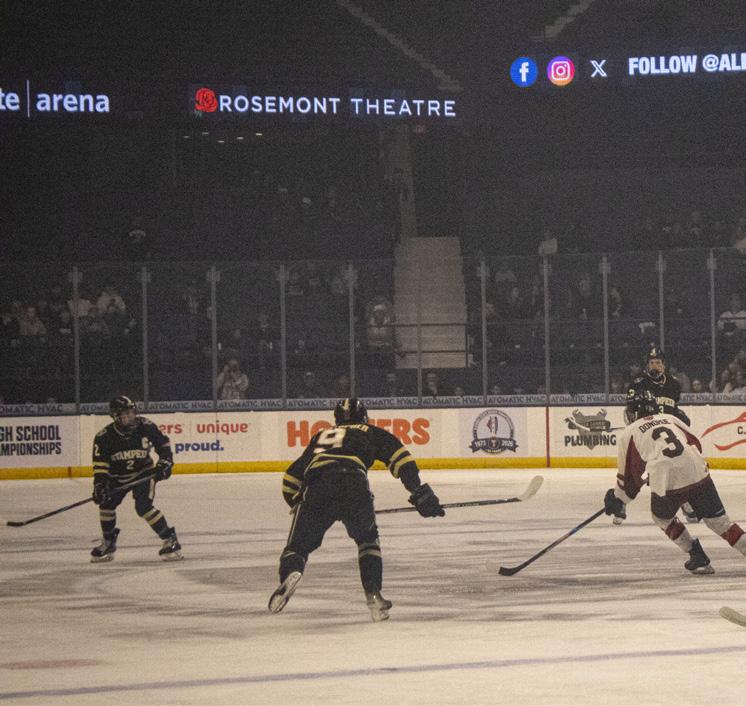
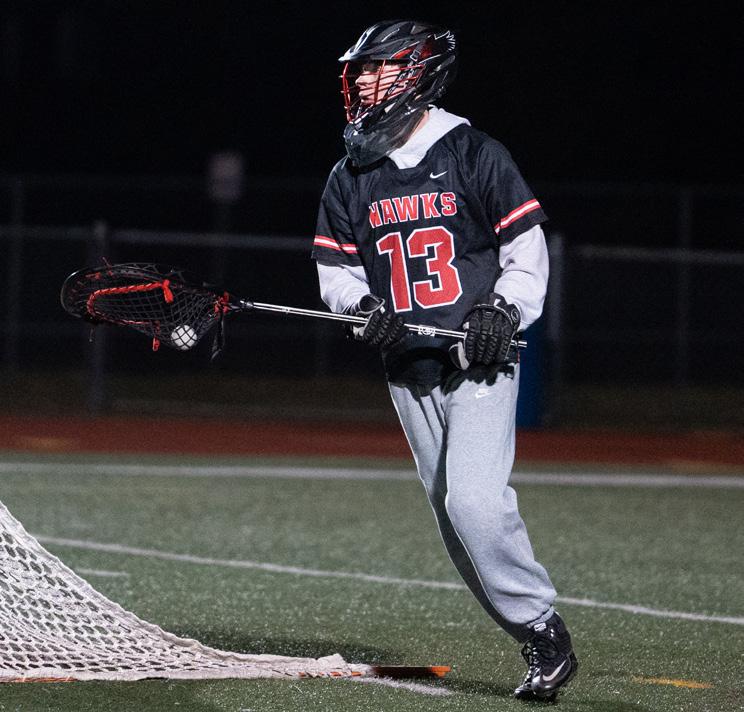
getting ready for the season,” senior captain Quinn Weber said.
During the season, the team focuses on more than just the sport itself. They are determined to get better every single game with the help of their coaches.
“I think the biggest three elements or things to remember to tell the guys is confidence, discipline, and composure,” Coach Michelini said. “They need to have the confidence to play the game well, discipline to do the little things that make us better, and composure to not lose their heads.”
Overall, the boys know that they are up against tough competition. However, they are determined to continue to grow and play their best every time they step on the field.
“We surround ourselves with the best competition, and to be the best, you have to play the best,” Tuebo said.
Sydney Hollingsworth Sports Editor
This year, the Maine South softball team’s entire varsity starting lineup is made up of returning athletes, which will help the team reach the playoffs.
“Last year we ended on a tough note and the girls have come back with a strong hunger and motivation to reclaim their conference title,” Coach Emmy Pasier said.
With five captains this year, the team has a lot of leaders it can turn to. To become a captain, athletes are voted for by teammates and then awarded the position by coaches.
“Being a captain motivates me to help support everyone while pushing us to reach our best potential,” junior infielder Addison Flynn said.
Because there are so many returning players the team developed last year, they can focus on continuing to build the team dynamic with more fun practices and team-bonding events.
“We do a lot of fun non-softball-related activities, like for example scavenger hunts or softball sisters, which fosters a sense of camaraderie among the girls,” Coach Pasier said.
The team’s camaraderie translates to strong performance on the field. They are looking to take that strong performance throughout playoffs this season.
“After losing at Regionals for the last two years, we are working hard to make a deep run in playoffs and we have the motivation behind us to do so,” senior first baseman Ella Piazza said.

“We really improved defensively,” DeLuca said. “In the postseason, before the state championship, we only allowed two goals.”
Although the outcome was not as the team had hoped, they are incredibly proud of the effort put into the season and the improvement they saw. Together, the team was able to make it to the State Championship game for the first time in eleven years.
“Obviously, I wish we won the game, but getting there is also something to remember,” DeLuca said. “I’m proud of the year, and we had a blast as a team. It was a fun year.”
Not only did the varsity team have success, but the junior varsity Maine Hockey team ended their season as state champions. The team won 3-0 against BGHW, sealing the state champion title on March 13.
“I was super proud of the team overall,” junior forward Kade O’Connell said. “It was just a great feeling to win.”
Throughout the season the team had a unique mindset. Instead of dwelling on each mistake the team focused on moving forward.
“We had a ‘we move’ mindset that helped us forget about our mistakes and look toward the future,” O’Connell said. “Earlier in the year, we got dealt a couple of losses, which we should’ve won. People started dialing in and realize that we should be taking the season more seriously and we just kept getting better from there.”
In the future the JV team will continue to move forward, without dwelling too much on the past. After ending the season as winners, the team is looking forward to what is to come next season.
“I am proud of this team and what we accomplished,” O’Connell said. “We are all very excited to continue to keep winning next season.”


Scarlett Shembeda Sports Writer
This year, the boys’ varsity water polo team has a winning record of 5-1, and the JV team has a record of 4-4 at press time.
The team believes success comes through good coaching and learning new skills and techniques. This is important for the program this year, especially since several athletes on the team are new to and unfamiliar with the sport.
“There are lots of new freshmen that don’t know how to play, but I am trying to coach them to be able to learn the game,” said sophomore JV captain Eamonn Mazukelli.
Although many of the players might not be perfect yet, through training, they will be prepared for the future. This happens through lots of conditioning and different drills during practices.
“We start out with conditioning, so we will do sprints up and down the pool, followed by some form of a leg workout,” sophomore Luca Gigliotti said. “After that, we do shooting drills… and a lot of counterattack drills.”
Before games, the boys will watch how the other team plays to understand the team as a whole and some of the individual players that they might have to watch out for during games.
“We try to predict their movement and their strategies with our own counter-strategies,” Mazukelli stated.
During the games, the boys’ main focus is on remembering their plays and being able to implement them quickly and correctly.
“A lot of times, the guys will be in the pool, and we won’t set up all the way, or we won’t be quick enough with the ball, so they have enough time to set up a defense on us,” Gigliotti said.
Sports Writer & Sports Editor
The boys’ tennis team has started their season with practices focused on im provement and a number of specific goals for the season.
“We aim to build on last season’s per formance by improving our overall record and competing at a level that positions us to qualify for the IHSA State Tournament,” Coach Gerald Smith said.
As the Hawks play against difficult competition, they aim to not only get better, but have a good time while playing.
“We are in the toughest conference in all of Illinois, so our goal is to play against tough oppo nents, to get better, and to have fun,” senior captain Emiliano Careaga said.
In practice, the boys have been preparing by practicing match scenarios and focusing on the depth of their strategy. They have done this by working on point construction and by helping players adapt to different opponents and playing styles they may face.
“We are working on building both mental and physical resilience so our athletes can perform consistently and effectively throughout the entirety of each match,” Coach Smith said.
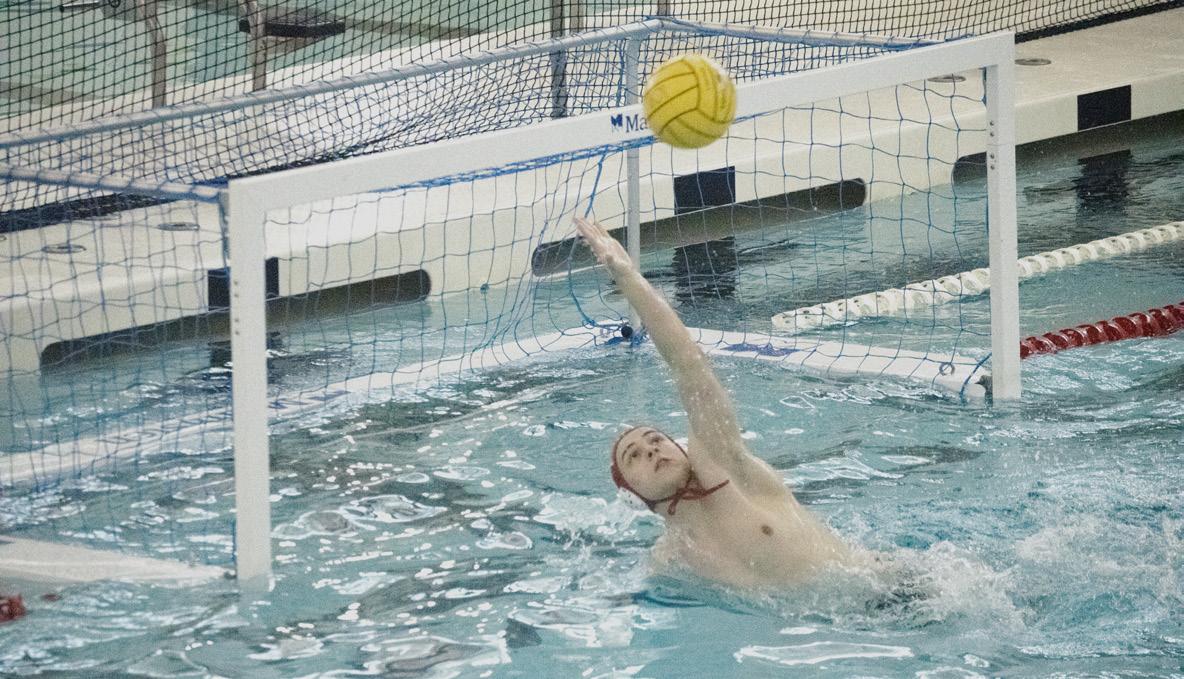
Many people on the team strive to be the best they can be. Hard work is what allows this to happen.
“I want to make an impact because it is my first year on varsity, and the com-
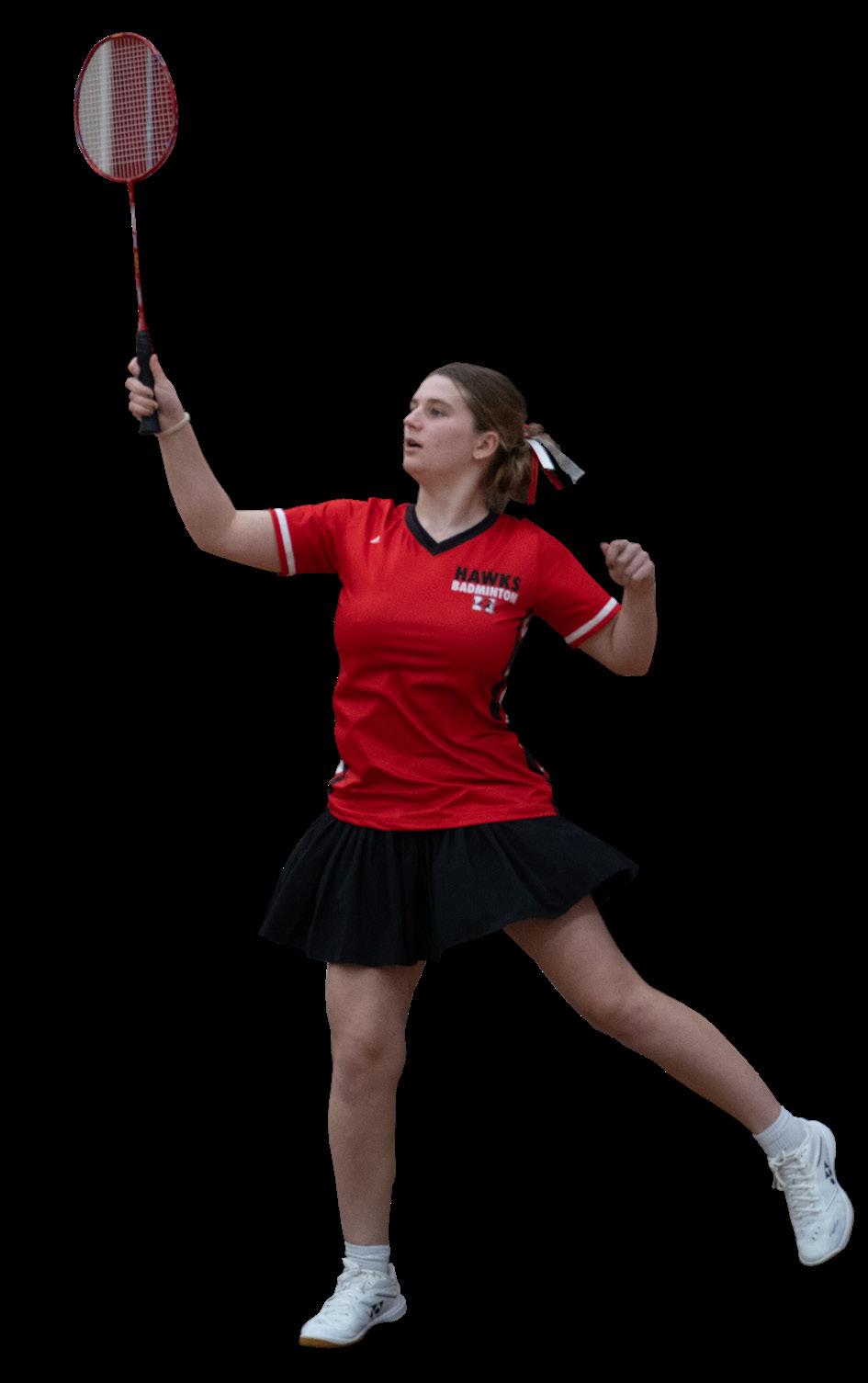
petition is much harder,” Gigliotti said. “To meet that goal, I have to work really hard and practice while also listening to what the assistant coaches recommend to get more playing time.”
Ahrens said.
he Girls’ Varsity badminton team has started their season undefeated. They have won their against New Trier, Willowbrook, Lake Forest, and hope to keep their winning streak well
Due to the short duration of the badminton season, the team continues to train and prepare outside of their season with private clubs and outside coaches.
“I don’t get private lessons, but those who do thrive because they get to work on individual problems with personalized help more often,”
junior Maddie
For many years, the team has played in the same uniforms, but this year, the team purchased new uniforms.
“This season, we welcome the addition of our new team uniforms,” senior Brooke Henning said. “The black uniforms make the varsity team look especially intimidating.”
Due to the unique nature of the sport of badminton, players must focus on demonstrating Hawk PRIDE.
“During my years of badminton, I have learned the importance of honesty,” Henning said. “Since badminton doesn’t have any referees, it is expected that players make the right calls during their matches. Maine South is lucky to have three coaches who promote respect and good sportsmanship. We pride ourselves on making honest calls and playing fairly.” By staying honest and continuing to work hard, the team is looking forward to the rest of the season. With big matches coming up such as Glenbrook South on April 9, the team is practicing harder than ever before.
“We are looking forward to our match against [Glenbrook South] because it is always a very competitive and exciting game,” Ahrens said. “They are the competition we always want to beat, and the atmosphere is always fun.”