


The South Side Weekly is an independent non-profit newspaper by and for the South Side of Chicago. We provide high-quality, critical arts and public interest coverage, and equip and develop journalists, photographers, artists, and mediamakers of all backgrounds.
Volume 8, Issue 3
Editor-in-Chief Jacqueline Serrato
Managing Editor Martha Bayne
Senior Editors Christian Belanger
Christopher Good
Rachel Kim
Emeline Posner
Adam Przybyl
Olivia Stovicek
Sam Stecklow
Politics Editor Jim Daley
Education Editors Ashvini Kartik-Narayan
Michelle Anderson
Literature Editor Davon Clark
Contributing Editors Mira Chauhan
Joshua Falk
Lucia Geng
Matt Moore
Robin Vaughan
Jocelyn Vega
Tammy Xu
Jade Yan
Staff Writers AV Benford
Kiran Misra
Jade Yan
Data Editor Jasmine Mithani
Director of Fact Checking: Tammy Xu
Fact Checkers: Abigail Bazin, Susan Chun, Maria Maynez, Elizabeth Winkler, Lucy Ritzmann, Kate Gallagher, Matt Moore, Malvika Jolly, Charmaine Runes, Ebony Ellis, Katie Bart
Visuals Editor Mell Montezuma
Deputy Visuals Editors Shane Tolentino
HaleyTweedell
Photo Editor Keeley Parenteau
Staff Photographers: milo bosh, Jason Schumer
Staff Illustrators: Mell Montezuma, Shane Tolentino
Layout Editors Haley Tweedell Davon Clark
Webmaster Pat Sier
Managing Director Jason Schumer
The Weekly is produced by a mostly all-volunteer editorial staff and seeks contributions from across the city. We distribute each Wednesday in the fall, winter, and spring. Over the summer we publish every other week.
Send submissions, story ideas, comments, or questions to editor@southsideweekly.com or mail to:
South Side Weekly
6100 S. Blackstone Ave. Chicago, IL 60637
For advertising inquiries, contact: (773) 234-5388 or advertising@southsideweekly.com
Four years of lies, racist fearmongering, and partisan hackery by Donald Trump and his allies culminated, predictably, in a seditious assault on the nation’s Capitol by the former president’s supporters that left five dead, including a Capitol police officer. Several Chicagoans were spotted at the rally that preceded the riot, including employees of Insight Tattoo in Wicker Park, Chicago’s Best Barbershop in Logan Square, Tank Noodle in Edgewater, and real estate agent Libby Andrews; forty-yearold Northsider Kevin Lyons was arrested for his part in the insurrection. The rioters, egged on by Trump and his surrogates, carried “Thin Blue Line” flags as they attacked police and stormed the Senate chamber. Retired and active cops and military members were reportedly among the mob. CPD union president John Catanzara publicly sympathized with the D.C. rioters, but apologized after the National Fraternal Order of Police rejected his statements. The coup ultimately failed and the House swiftly impeached Trump for his part in it. But the cancer of white supremacy was present in America long before Trump instigated the MAGA mob, and it will fester long after he is gone. As a safety precaution, City Hall and the Cook County Building were scheduled to close during President Biden’s inauguration.
Between 700 and 900 COVID-19 cases have been counted in CPS schools that reopened this month for in-person learning. CPS is tracking self-reported “actionable cases” on its website. A separate tracker and interactive map by the Chicago Teachers Union, the Illinois Federation of Teachers, and the American Federation of Teachers can be found online at https://tracker.ctulocal1.org. Search your school.
Cancel your water debt
The City is re-upping efforts to encourage residents behind on their water and sewer bills to apply for the Utility Relief Program, which can provide full forgiveness of the debt if participants successfully work to pay down their bills at a fifty percent discount for one year. The program has been underutilized since its rollout nine months ago, with only 8,359 applicants as of January 13, according to the Tribune. Officials estimate more than 20,000 households may be eligible. As Weekly reporter Neya Thanikachalam noted in a September story on water access, communities of color have been hardest hit by the pandemic and its attendant economic stressors. At the time, Community and Economic Development Association president and CEO Harold Rice told Thanikachalam that the URP was meant to “relieve residents of some of the costs associated with their households, especially with the high unemployment rate.” To qualify for the URP, applicants must be the owners in residence of a single-family home or two-flat, and meet the income requirements of the CEDA-LIHEAP assistance program. For more information or to apply go to https://chicago.docugateway. com/main/guest/billing_relief/faqs/.
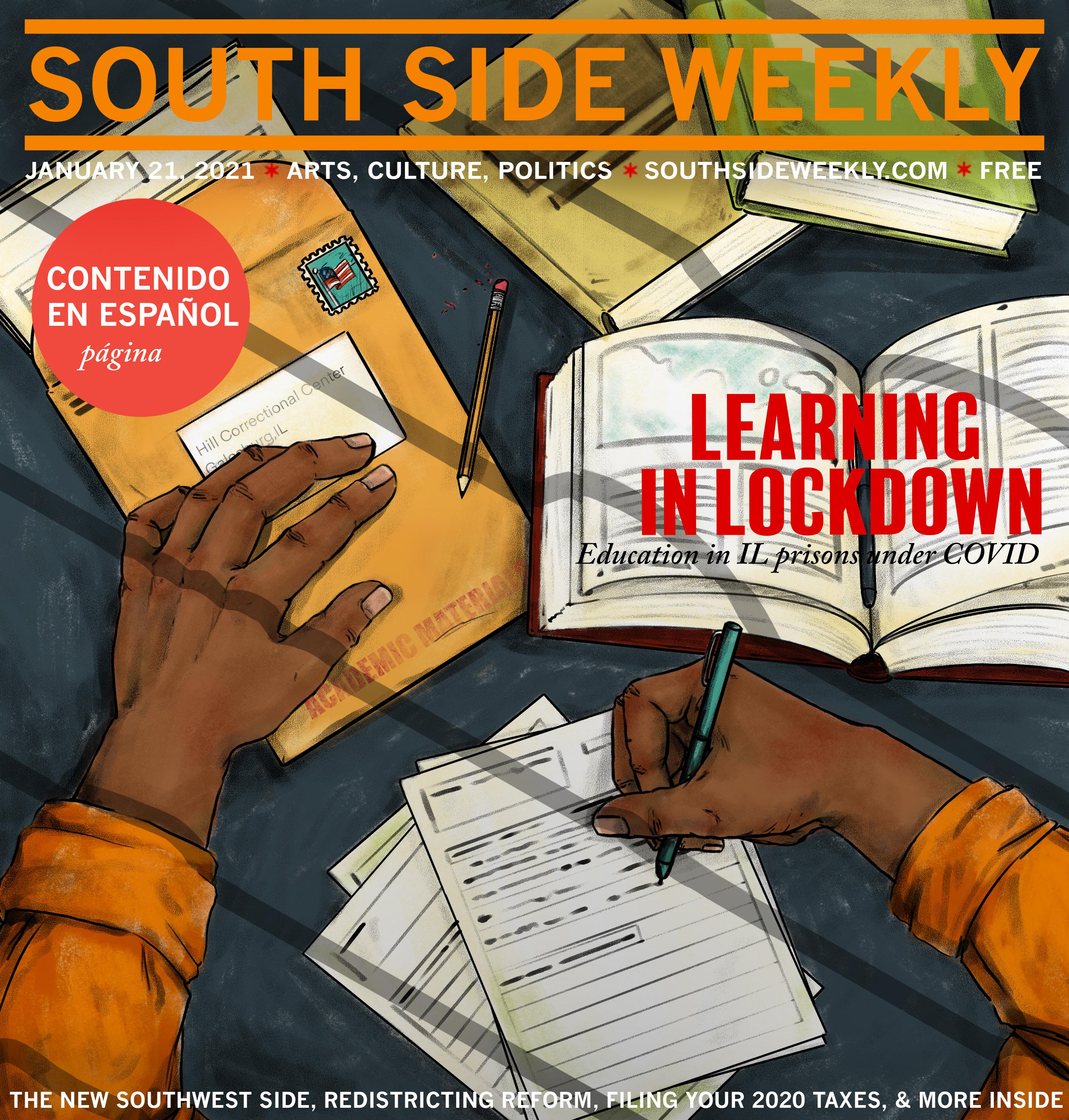
Cover Illustration by Haley Tweedell
mexican modes of empowerment in chicagoland Oppositional Mexican migrants—liberals, traditionalists, and radicals—were responsible for the construction of Chicagoland Mexican identities and their politics in the early twentieth century. matthew carnero macias ............................4
learning in lockdown
“Whereas in the past incarcerated people may have wrestled with writing papers without access to a desk, they now may be struggling through schoolwork while confronting the additional tragedy of witnessing fellow prisoners die of COVID-19.” lucia geng........................................................7
the new southwest side: young, latinx, and ready to take the reins
Though the Southwest Side changed from majoritywhite to majority-Mexican in the last few decades, resources and political representation haven’t followed. These residents are looking to change that lynda lópez, city bureau.............................11
el nuevo suroeste de chicago: joven, latinx, y listo para liderar
Aunque el lado suroeste cambió de mayoría anglosajona a mayoría mexicana en las últimas décadas, los recursos y la representación política no le han seguido. Algunos residentes buscan cambiar eso. por lynda lópez, city bureau & traducido por jacqueline serrato................................14
the neighborhood is an image of the city Part Two: Ethnic Waves kristin ostberg.............................................17
redistricting reform remains elusive in illinois
Despite repeated efforts by activists and lawmakers, reform is unlikely in 2021 corey schmidt and jade yan........................19
a tale of two cities
Founded on the principle that anyone in the hospital community can take as much food as they need for themselves and for others, the pantry serves hospital staff, patients, caregivers, and family. lily levine......................................................20
how to file your 2020 taxes
It is important to know how filing your taxes may change after a pandemic year yi ning wong..................................................23
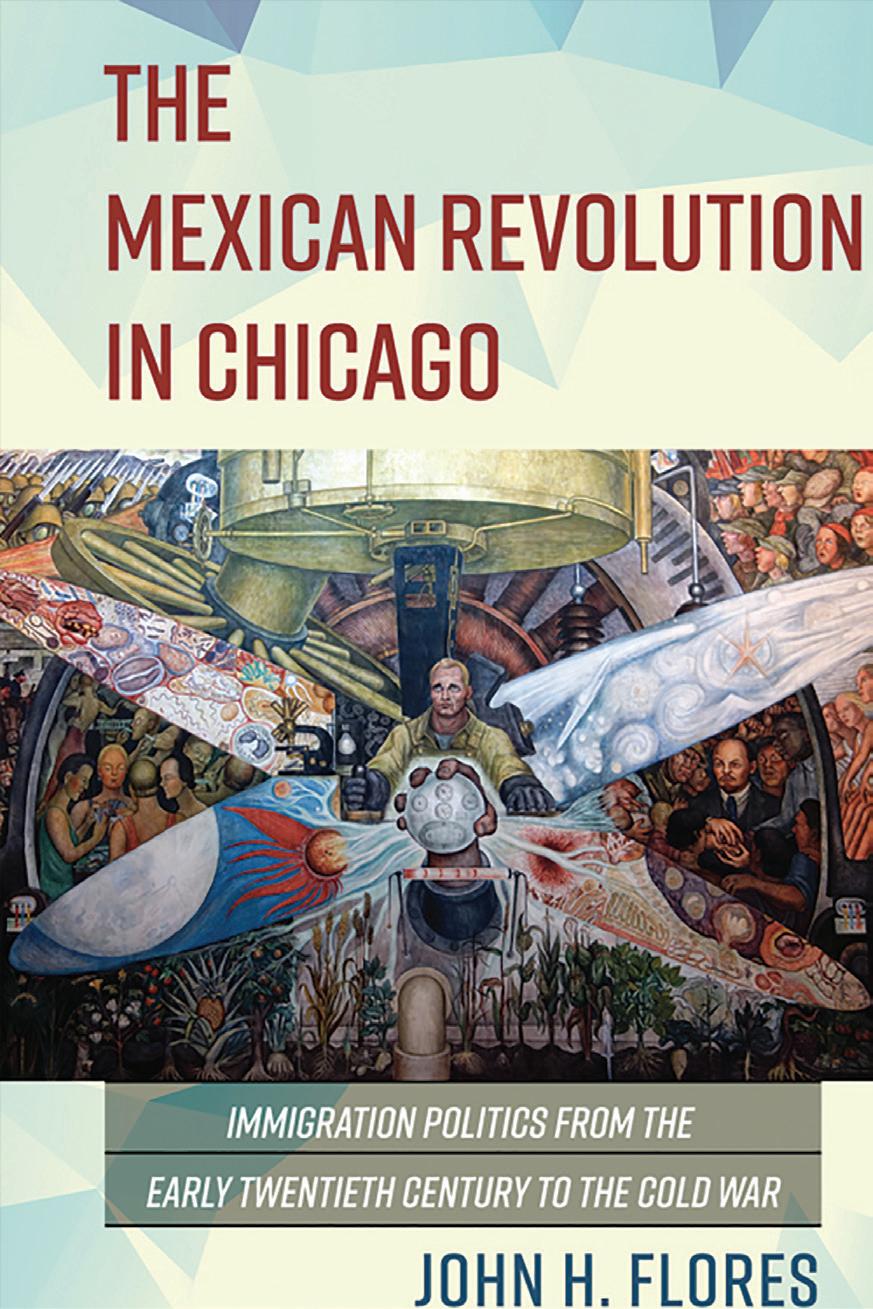
From the roaring twenties to the cold sixties, Mexicans in the Chicago area embodied a diverse, pluralist society where political, cultural, and religious continuums converged, seeding the region’s contemporary Mexican-American civilization. Oppositional Mexican migrants— liberals, traditionalists, and radicals—were responsible for the construction of local Mexican identities and their revolutionary politics. They controlled, developed, and disseminated the narratives of Mexicans in Chicagoland (conceptualized here as the geographical area that includes Chicago, East Chicago, and Gary). Dr. John H. Flores’s The Mexican Revolution in Chicago: Immigration Politics from the Early Twentieth Century to the Cold War, published in 2018 by the University of Illinois Press, deconstructs and decentralizes narratives surrounding the Mexican revolution, so that Americans can come to terms with the Mexican presence in Chicago and the Midwest. Flores, associate professor of history at Case Western Reserve University, profiles key players and stakeholders by uplifting historical anecdotes and introducing quantitative data. He approaches Chicago’s Mexican history
Oppositional Mexican migrants—liberals, traditionalists, and radicals—were responsible for the construction of Chicagoland Mexican identities and their politics in the early twentieth century.
BY MATTHEW CARNERO MACIAS
with technical expertise. He analyzes 3,110 naturalization records from 1900 to 1940—the largest Hispanic U.S. naturalization historical census to date. He exhumes and examines census data, parish registers, city directories, and marriage licenses. He uncovers a total of at least seventy-five Spanish-speaking immigrant societies operating between 1900 and 1940. Flores concludes, “In sum, some Mexicans may have developed a national identity in Chicagoland, but this book suggests that Mexicans did not so much become Mexican in Chicago as they became more liberal, traditionalist, or radical.”
Stories of the suffrage movement, the gay rights movement, and the civil rights movement are plentiful today, yet in Chicago, home to one of the largest Mexican populations in the United States—the largest non-white ethnic group in the United States—the Mexican experience is mostly unknown, immaterial, and misunderstood. Flores concludes his introduction by stating that, “This book demonstrates that the revolution was a truly transnational phenomenon that stretched from Mexico City and the Bajío [Central Mexico] to Los Angeles and Chicago.”
For decades, the Mexican-American narrative has been documented and reported in the form of narrative art and scholarship. For instance, in We Are Americans: Voices of the Immigrant Experience, published in 2003, Dorothy and Thomas Hoobler note that, “By the end of the 1920s, Mexican immigrants were picking beets in Minnesota, assembling cars in Detroit, packing fish in Alaska, laying track in Kansas, and meatpacking in Chicago.” The Hooblers also unearth Los Angeles’ Mexican political history by identifying the mayor of Los Angeles in 1853, Antonio Franco Coronel, a Mexican migrant who emigrated with his father in 1834 and worked in the gold mines of San Francisco.
The Mexican narrative is not a terminal narrative, but rather a profoundly personal one that is either parallel to or diffused in every American's life.
The onset of the Mexican revolution in Chicagoland began immediately after World War I and waned during the 1960s. During these decades, two world wars and the
Great Depression had both the U.S. and the world in turmoil. World War I depleted the reliable ethnic European immigrant workforce that mined, picked, packed, and to a large extent built America; as a result, American companies turned to Mexico for labor. Meanwhile, across the border, a separate Mexican Revolution happened. There, the dictatorship of President Porfirio Diaz had lasted from 1876 to 1911. Diaz “was serving one consecutive presidential term after another, underscoring the facade of democracy in Mexico,” according to Flores, although during his reign, Mexico’s population grew to 13.5 million. More than one million of its residents were living a middle-class life—only eight percent of the total population. By 1930, Chicago’s Mexican population reached 20,000, Flores estimates. This was due in part to “American companies [turning] to Mexicans, and the federal government accommodat[ing] American businessmen by permitting nearly unrestricted Mexican immigration into the United States” during the 1920s. Further, the Bracero Program (1942-64) was a transnational labor contract between the U.S. and Mexico; a World War II labor shortage
called for cheap, imported labor. Overall, the program netted 4.5 million Mexican labor contracts and more than 2 million Braceros legally immigrated seasonally. The program was only for men; women were not contracted as Braceros. Lastly, the majority of Braceros emigrated from the Bajío (Central Mexico) yet they didn’t bear the revolutionary politics of yore.
Despite Mexico’s considerable growth President Diaz’s thirty-fiveyear reign, unreconciled tension between church and state (in this case traditionalists and liberals) also served as a nexus for Mexican immigration. The Mexican Catholic exodus to Chicago occurred after the Cristero Rebellion (1926-29), an uprising in response to government crackdowns on the Catholic Church. In Chicago, resilient liberals who survived the travails of the Great Depression turned radical. Mexicans turned radical because they were still in precarious positions twenty years after they settled in Chicago.
The liberals were unapologetically inactive in American political sport. In essence, they used U.S. frameworks and institutions and combined rhetoric of protest and reform to advance their agendas. They collectively rehabilitated, speculated shared alienation, and proudly identified as Mexican nationals while accepting their mestizaje (mixed-race) identity. Even though they were a marginalized community, they rejected U.S. citizenship. Further, according to Flores, they “adopted the term ‘Hispanic’ because they believed that the Spanish language facilitated unity and coalition building between Latin Americans in a way that no other characteristic could.” Liberals were the most dynamic group in that they were a mix of radical, Catholic, elitist, middle class, and working-class people. Elitist liberals advocated for policies that were incongruous to working-class liberal mobility, relied too much on government, and they self-indulged with lavish soirees and upper-middle-class lifestyles. Conversely, middle-class liberals sustained community-reform agendas, established a Mexican-liberal press, and established sociedades (fraternal societies) and mutualistas (mutual aid groups).
Mexican traditionalists were devout Catholics, commonly conservative, and were grounded in politicoreligious ideology. They maintained a Western chauvinistic interpretation of Mexico’s colonization and eschewed U.S. imperialism discourse. Their interpretation of gender discourse was frank: they were inextricably married to Catholic demagoguery and subscribed to “a patriarchal ideology that elevated men above women and elevated God, Christ, and the Catholic clergy above the laity,” said Flores. Traditionalists underwent naturalization at considerably higher rates than liberals and radicals—their ticket to Catholic sovereignty. Moreover, their involvement in Congress and their ability to shape, author, and control their American story categorizes them as trailblazers of the Mexican-American identity in Chicagoland. For example, Basil Pacheco was a traditionalist from East Chicago who unionized alongside radicals, and subsequent to attaining U.S. citizenship, joined the Democratic Party in 1942 and facilitated FDR’s reelection. Mexican radicals varied as well. They were communists, socialists, Marxists, and neo-liberals. President Lazaro Cardenas’ administration (1934-1940) synthesized a generation of dissenters that transmitted their radical politics across the border into Chicago. Mexican radicals were the most egalitarian of the three oppositional Mexican migrant groups. They were dignified autonomists; women radicals mobilized transnational alliances and independently navigated political operations. Radical teachers, journalists, and artists, such as “Mrs. Garcia,” who taught at the University of Chicago Settlement, and international revolutionaries like Anita Brenner and Concha Michel engendered the movement, while working-class Mexicans led it. Anti-fascism and popular front politics grounded their radical agendas.
Skin color, roles, props, and space were the primary modes of empowerment that Mexican revolutionaries embraced and utilized to achieve transformative justice
in Chicagoland.
Liberal Chicago Mexicans embraced their brownness to authoritatively dispel baneful rationalizations for color classification and discrimination. Jesús Mora, a Chicago liberal intellectual, in 1928 said “because their color is white, they classify us as ‘colored people.’” Flores cites that liberal Mexicans in Chicago referred to President Benito Juarez as “our man of bronze color.”
Flores cites a 1923 Tribune article that deplored ethnic Mexicans and Mexico: “[Mexico’s] products are… wastelands, destroyed resources, illiteracy, poverty, and ignorance… The great masses of primitive peoples are unfit for self-government and educated classes equally so.”
The Chicago Police Department was very much responsible for the Mexican suffering in Chicago. Flores stated, “Mexico [newspaper] and other liberal papers excoriated ‘Polish policeman’ when they clubbed, shot, and killed Mexicans, arrested them en masse, and allowed white ethnics to destroy Mexican-owned property.”
These condemnations exemplify the disruption in Mexican life. Deportations (Operation Wetback), repatriation campaigns, nativist hegemony, and collaborative cajolery devastated Mexican communities, thereby damaging their mobility and invariably reducing their activities. Flores explains that “By the early 1950s, the decline of the New Deal coalition, the onset of the Cold War and McCarthyism, and the start of an economic recession that began with the end of the Korean war prompted the INS [Immigration and Naturalization Services] to carry out yet another mass deportation campaign aimed at Mexican immigrants.”
Radical Mexicans exposed and refuted inauthentic roles and stereotypes in American propaganda by generating counter-narratives that reflected and emboldened the Mexican American audience, particularly Mexican children. For example, Flores identifies that 1930s films (“A Trip through Barbarous Mexico” and “Soldiers of Fortune”) depicted Mexicans as uneducated bandits and buffoons. By positioning working-
class Mexican migrants—the “backbone to society”—in a rank-and-file leadership role, Mexicans attained the wherewithal to become leaders in their own right. “The Frente framed education as a means to transform Mexicans into radicals,” Flores notes.
Traditionalists employed the bible and cross as props to secure religious autonomy. Moreover, the American Christian role afforded numerous advantages, the most important of which is that Christianity is perceived to be a white religion.
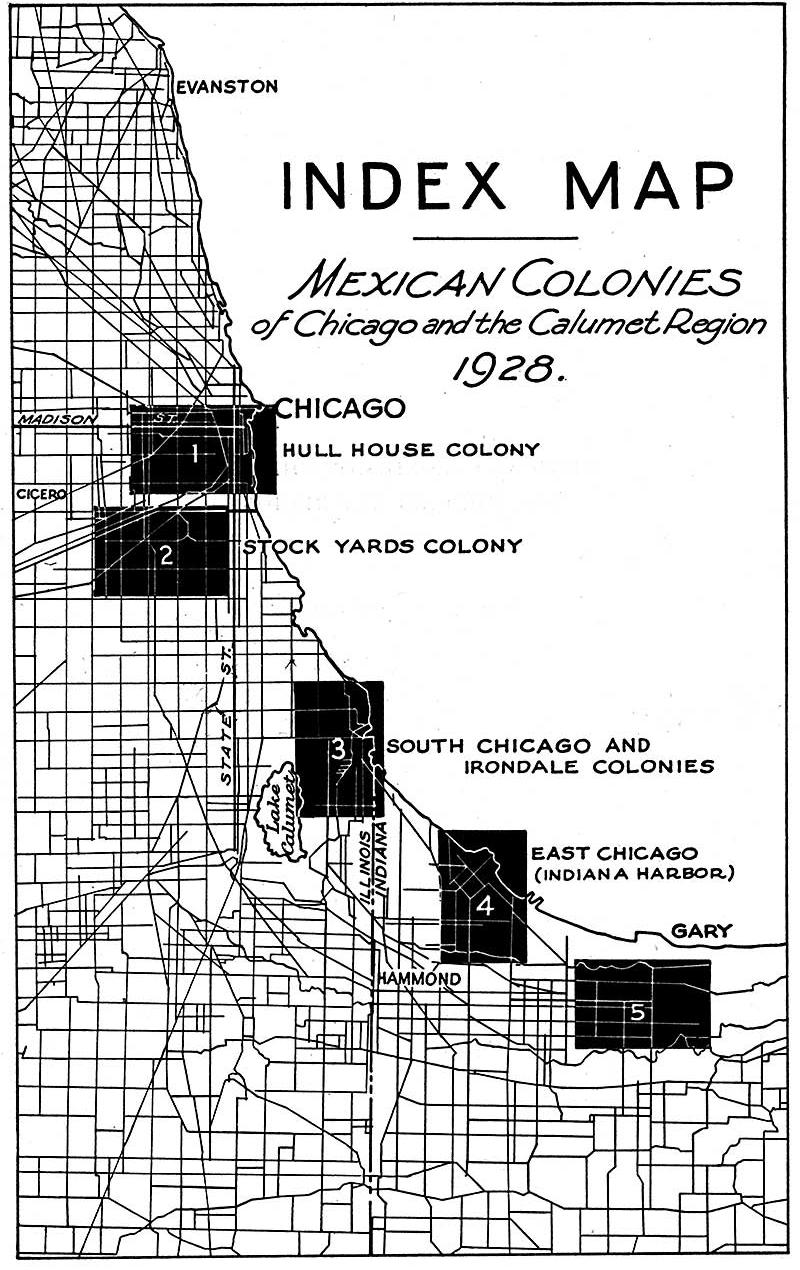
Liberals, traditionalists, and radicals obtained spatial empowerment. Accessible Spanish-language libraries, churches, parks, mutual aid and fraternal societies, and settlement houses functioned to mobilize collective action and meet community needs, and would set the foundation for Mexican “colonies” or enclaves to form.
The most pivotal prop for Mexicans in Chicagoland was the paper: in 1925, Mexico was a newspaper created by liberals in Chicago, and East Chicago’s El Amigo del Hogar was a Catholic press, also established in 1925. Mexican literature and reportage transcended ethnic European news conventions at that time.
The Mexican labor movement annulled any apprehension—or doubt—that Mexicans were unfit for American modernity. Chicagoland Mexicans propelled themselves into civil advocacy positions. Their unionizing and labor inclinations were possible because Chicagoans share an intercultural awareness of human rights and social justice.
Mexicans in Chicagoland joined and helped establish several labor unions: CIO (Congress of Industrialized Organizations), PWOC (Packinghouse Workers Organizing Committee), SWOC (Steel Workers Organizing Committee), UPWA (United Packinghouse Workers of America), USWA (United Steelworkers of America), and IWW (Industrial Workers of the World). According to Flores, “Well
before the New Deal and the formation of the CIO, working-class Mexican societies, exposed to the ideas of the revolution and Magonistas, were already seeking to redefine themselves as bona fide labor unions.”
As the 1960s began, young Mexican activists and reformers who endured root shock, trauma caused by uprooting communities which displaces individuals and groups and tears their homes, neighborhoods and social systems apart, abandoned socialist and Marxist philosophies pertinent in previous decades. These second-generation agitators resisted submission, practiced civil disobedience, and forthrightly explored social justice coalitions, materializing the Chicana/o Movement—an intercultural, interethnic, and interstate organization. Flores explained, “They continued to defend immigrants but abandoned the antiimperialist and Marxian arguments in favor of immigrant rights that radical Mexican immigrants had once expressed.”
Flores successfully employs a multihistorical framework in his analysis of revolutionary Chicagoland, exposing the migration-criminalization industrial complex. Ineffable economic violence has become a predisposition for Mexican-Americans, he states. “This process of cyclically importing and deporting Mexican workers dehumanized the ethnic Mexican people of the United States and normalized the mistreatment of Mexicans as a commodified and disposable people.”
Repatriation is a product of the white supremacy complex of ethnic European men in the U.S. It is the nonlethal device precluding forced removal— deportation—of “undesirable foreigners” and neglected ethnic groups. During the 1930s in Northwest Indiana, city officials, corporate leadership, and local residents coaxed Mexican traditionalists to return to Mexico, and consequently, their population in that region was diminished to half of its size.
Post-Depression America formed a hardline to immigration and national
security. According to Flores, “Various authorities estimated that between nine and fifteen thousand undocumented Mexicans lived in Chicago in the early 1950s, and with the start of the Cold War deportations, the Chicago office of the INS began deporting about three hundred Mexicans per month.”
Thus, discord continues one century after the liberal intelligentsia traveled to Chicago and the Midwest. Deficit and disparity framing persist; MexicanAmericans are marked with criminality; Mexican immigrants are victimized as undesirable foreigners; they are detained and deported without due process; nefarious government suppression is transgressing into more inhumane and malignant oppression.
Chicagoland Mexicans are still otherized, minoritized, and fetishized. However, transformative storytelling and other modes of empowerment help navigate these predicaments. Unquestionably, the representation of Chicago’s Latinx aldermen reflects the city’s Latinx demographics and rich history of political organizing. Nationally, Congress is becoming more heterogeneous, and state mandates are requiring high school students to study and learn about Mexican civil rights leaders and other non-white civil rights advocates.
Contemporary revolutionary Mexicans and their allies in Chicago and beyond perform dialogical community building, callouts, culture jamming, die-ins, peace vigils, group meditation, and host community gardens, free markets, and free spaces. May Days bring hundreds of thousands of citizens together to protest. Concurrently, in Latin America, constitutional reform is transforming democracy and empowering residents, and socialist reprisal is driving anti-authoritarian insurrections.
The book serves a multitude of purposes, the most important being accountability: in the United States, it means holding white-nationalist identity politics and neoliberal global capitalism accountable. Flores’s text elucidates the many manifestations of trauma: root shock, existential fatigue, and the white supremacy complex. It
confronts our ugliness as a country, which is in and of itself confronting the problem. The Mexican revolution in Chicago was absolutely alternative and possibly unorthodox; indeed, it was an early twentieth-century global justice movement. The revolution’s transpolitical critiques and rhetoric liberated change agents in multiple continents and gave future generations pathways to recovery, and equipped them with experiential learning, social capital, and revolutionary internationalism.
Chiefly, the book documents the traditions of revolutionary practice redux, showing how radicals employ color, roles, props, and space in the service of empowerment and the pursuit of transformative justice in the spheres of labor, equitable education, race relations, access to public amenities, and holding corrupt police and government officials accountable.
I began this piece by exploring how Mexican migrants in Chicagoland transformed their social capital, identities, and politics. I want to leave you with how
the injustices of this country are enabled and achieved. The white supremacy complex modes of empowerment of Jan. 6, 2021 serve as a reminder that not all revolutions are to be celebrated. As James Baldwin wrote, in his famous letter to his nephew, on the occasion of the centenary of Emancipation Proclamation, “You know, and I know, that the country is celebrating 100 years of freedom, 100 years too soon.” ¬
Born and raised in California until age eighteen, Matthew Carnero Macias moved to Elgin in 2009 and has resided in the surrounding area ever since. He began his Chicago journalism career in 2014 and is currently pursuing reporting that deals with public welfare: schools, transportation, and housing. This is his first piece for the Weekly.
BY LUCIA GENG
Like many students across Illinois, Phillip Hartsfield is about to complete his undergraduate degree in the midst of a global pandemic. And like many other students, Hartsfield, who has concentrated in the fields of law, psychology, and sociology, learned how to complete his classwork under less than optimal conditions in 2020. He has written analytical essays on challenging texts, delivered a twentyminute capstone presentation despite not having consistent access to a library, and persevered even though he has had an uneasy relationship with institutional policies and administrators.
But unlike most students, who’ve adapted to instruction via Zoom classes and are preparing to graduate through virtual commencement ceremonies, Hartsfield, thirty-six, has not had the luxury of participating in synchronous class discussions. He won’t be able to celebrate his graduation with his family or friends.
That’s because Hartsfield is currently incarcerated at Hill Correctional Center in Galesburg, Illinois. As a student enrolled in the Prison and Neighborhood Arts/Education Project, he’s one of hundreds of people partaking in a higher education program while incarcerated in Illinois state prisons.
Prior to the pandemic, incarcerated Illinoisans already faced a multitude of challenges in pursuing higher education in prison (HEP). But as with so many other aspects of society, the coronavirus has exacerbated those challenges. Whereas in the past incarcerated people may have wrestled with writing papers without access to a desk, they now may
be struggling through schoolwork while confronting the additional tragedy of witnessing fellow prisoners die of COVID-19.
There are currently nine HEP programs at seven Illinois Department of Corrections (IDOC) facilities across the state, according to the Illinois Coalition for Higher Ed in Prison (IL-CHEP). Of those nine programs, four take place at Stateville Correctional Center, a prison roughly an hour’s drive southwest of Chicago. Two programs serve Danville Correctional Center, located two-and-ahalf hours south of Chicago.
Those two prisons are really the outliers when it comes to HEP programs, according to Katrina Burlet, a member of IL-CHEP and advocate for incarcerated people. Other IDOC facilities have one or zero HEP programs. The reason for that? “It is literally one hundred percent a proximity thing,” Burlet said. Stateville is located close enough to Chicago for college instructors to visit. Danville Correctional Center is right next to the town’s community college, and not far from the University of Illinois at UrbanaChampaign (UIUC).
The coronavirus crisis has prompted educators with HEP programs to adapt their programming as well. Many educators have elected to continue their classes in correspondence format. Others have declined to teach by correspondence and instead are pursuing different educational initiatives to support their students. Some educators are creating packets containing re-entry resources and others are utilizing more tech-based solutions in the hopes of crafting a richer educational experience for students.
Burlet said that although Stateville has a robust slate of HEP programming, it still only has classes available for a small fraction of the population. “It’s definitely the best facility with the most opportunities and it’s still an absolute failure, if we’re taking honest consideration of how it’s actually doing,” she said.
Burlet coached a debate team at Stateville until 2018, when the debate program was suspended after participants held a debate on the topic of parole in front of state legislators and media, and Burlet was banned from entering IDOC facilities. (Burlet, with the help of the Uptown People’s Law Center, is suing IDOC in the hopes of getting the program reinstated.)
Besides the established programs at Stateville and Danville, there are two “up-and-coming” programs of note, according to Burlet. Two relatively young HEP programs have sprung up at Sheridan Correctional Center and East Moline Correctional Center, thanks to the efforts of instructors at Benedictine University and Augustana College, respectively. Benedictine intentionally set up its program at Sheridan rather than Stateville, which it is closer to, to take advantage of an “opportunity to bring college programming to a prison that didn’t have it already,” according to Chez Rumpf, an HEP instructor and assistant professor who teaches sociology and criminal justice.
In the early days of the pandemic, members of IL-CHEP “really scrambled to think not about education, but just about life-saving
stuff,” said Sarah Ross, a co-director of the Prison and Neighborhood Arts/Education Project (PNAP) and assistant professor at the School of the Art Institute of Chicago. The situation was dire: social distancing, one of the most important ways of preventing the spread of the coronavirus, is impossible in prisons. Not coincidentally, Stateville was an early epicenter of a COVID-19 outbreak.
In March, IL-CHEP delivered a letter to Governor J.B. Pritzker calling on him to take measures to decarcerate IDOC facilities and protect public health. In April, the coalition started working to get hand sanitizer into IDOC prisons. From June to August, the group participated in a six-week “Summer of Action” initiative where they called for, among other things, the shutting down of Vienna Correctional Center in southern Illinois. Towards the end of May, Ross was able to return to co-teaching a PNAP class on visual art.
Founded in 2012, PNAP is one of the oldest of the HEP programs at Stateville. (In the 1970s, nearby Lewis University ran a degree-granting program for incarcerated people in Stateville.) PNAP usually runs about fifteen classes per year on a semester schedule, with fifteen students enrolled in each class. The classes are not for-credit, but students can use their participation in PNAP classes towards certain degree-granting programs that accept them, such as Northeastern Illinois University’s (NEIU) University Without Walls program.
Because visitations to IDOC facilities have been suspended since March 14 of last year, Ross, her co-instructor Aaron
Hughes, and other PNAP instructors have been teaching their classes via correspondence. Twice a month, PNAP dropped off packets containing course materials and assignments for their students at Stateville.
Although Ross couldn’t hold classes in person, she was intentional about fostering a sense of community with her students. In each packet, she included a sheet intended to facilitate communication between the class instructors and the students. The sheets included dispatches from Ross and her co-instructor—“so that we’re not a machine just sending in assignments”— and inquiries about how the students were doing as human beings outside of class.
Normally, in a PNAP art class, Ross would demonstrate techniques side-byside with her students. Now, she has to carefully detail her thought processes step-by-step on paper. Ross has had to develop other workarounds, too. During in-person class discussions, Ross would be able to project images of murals onto the wall; now, she and her students must make do with murals being printed on 17” x 11” sheets of paper. Before the pandemic, Ross and her fellow instructors would be allowed access to the cell house to check on their students if they weren’t showing up to in-person seminars. Now, if a student stops sending in assignments, there’s less that instructors can do to check on them.
There are also logistical challenges with course packet drop-offs and pickups at the prison. “I usually get half of the [assignments] back on the date that we ask them, and then the next week, things trickle in,” Ross told the Weekly in a Zoom call as she put together course packets.
“There’s a lot of room for glitches,” said Laura Costabile, the Educational Facility Administrator at Stateville. After educators drop off their materials, it’s up to Costabile’s team to pick up the packets, label them with each student’s housing unit, sort the packets, and then pass them on to the prison’s resident law clerks, who take them back to the unit where they’re incarcerated. From there, an office

sergeant delivers the course packets or makes sure the law clerks can do so.
Given that there are only four educators, including Costabile, working as part of the “little but mighty” educational staff at Stateville, and that they’re responsible for distributing course materials to over 150 students, “it’s going as well as can be expected during this unprecedented time,” Costabile said.
Despite the challenges that the pandemic has unleashed, Ross is proud of the work that her students have created during this turbulent time. One such student is Michael Sullivan, who has been incarcerated at Stateville since 1995.
In 2009, Stateville’s chaplain signed up Sullivan, who by that time already had a reputation as a self-taught artist, for a fine arts class through PNAP. That was the first PNAP class Sullivan took—and it was also how he met Ross.
On Sullivan’s very first day of class, Ross, standing next to a box of art supplies, introduced herself to Sullivan and his classmates “with this big warm smile,” Sullivan wrote in a message to the Weekly. During their first session they didn’t make any art, but Sullivan left thinking he might become a better artist.
Ross’s presence also made an impact on Sullivan. “And now eleven years later,
she is the same warm and loving person,” he wrote.
The greatest lesson that Sullivan has learned through PNAP is that art is not necessarily about individual expression. “Collaboration is the seed of cause,” Sullivan wrote. “It can take you out of a state of selfishness to a mindset of selfless[ness].” Going forward, Sullivan would like participants in PNAP to obtain a fine arts degree, “because art is and will always be the past, present and future of our country.”
Johari Jabir, an educator with PNAP whose academic interests range from
Black studies to cultural history and music, taught via correspondence a subject that one might not expect to translate well to the medium: mindfulness. He began developing a mindfulness class after students told him they were interested in learning how to cope with the noise and violence present in prison.
Prior to COVID, Jabir originally intended to both teach mindfulness practices and lead guided meditations. COVID knocked out the possibility of guided meditation, but Jabir was determined to salvage the possibility of the former. These practices were something he held near and dear to his heart: “I know what it does for my own politics of non-violence,” he said.
Jabir created a correspondence curriculum centered around the book The Untethered Soul by Michael Singer. Each week, he assigned his students to read a section of the book and answer some “very contemplative questions” he designed. Someone would pick up the students’ written responses from Stateville, and then Jabir would read them all. He typed out responses to each student that “would ask them to do a more guided sort of silence around the reading.”
He expected five students to enroll. Instead, around twenty students—whom he described as “very grateful but also very committed”—participated in the class, which lasted around seven weeks. Jabir said The Untethered Soul was a hit with his students. “Some of them said ‘I just read the whole thing in one sitting,’” he said. Since the students were on lockdown, what students learned in the class “really met the need of the time.”
PNAP is also how Hartsfield got involved with the HEP community. In 2015, while incarcerated at Stateville, he took a class titled “Freedom Dreams,” taught by Alice Kim, director of community building for PNAP, where he read an “intense book” by Ta-Nehisi Coates, according to a message he wrote to the Weekly. Later on, he applied to be a part of the UWW program, which attracted fierce competition: “2-300 applications, I’m told, went out, but only eight were accepted. I was one of those eight!”
Hartsfield’s favorite experience as a UWW student was participating in an internship through Northwestern University’s Children and Family Justice Center. Despite being housed in a restrictive housing unit at the time, he interviewed fellow incarcerated people and gathered information about the juvenile justice system. “I had to conduct one-on-one interviews with individuals, sometimes through perforated doors, sometimes while they got their hair cut, or through the food slot in the steel door,” Hartsfield said. “Obviously this wasn’t the best part, but knowing that the work I was doing was going to make a difference was!”
Hartsfield has completed all his graduation requirements, including taking independent study courses, generating a writing portfolio, and delivering a twenty-minute presentation on what he learned. All that’s left for him to do to get his bachelor’s degree is to fill out some paperwork with NEIU.
Around the same time as Hartsfield began taking PNAP classes, Carl Williams started doing the same. Williams told the Weekly he took around thirty classes on subjects including on Black women’s studies, theater, theology, poetry, and restorative justice while at Stateville.“PNAP has just been a joy in all areas of life,” Williams said.
He was released from prison in August 2020, and credits PNAP with teaching him the skills he needs to be an effective communicator at his current job, where he sells cleaning supplies. He plans to stay involved with the criminal justice reform community, and aspires to return to prison as an instructor. “I would like to be able to be an educator who can help them continue to develop their goals and realize their dreams,” he said.
PNAP wasn’t the only Stateville program to switch to serving their students via correspondence. North Park University’s School of Restorative Arts switched to correspondence learning in April, according to Vickie Reddy, the program’s assistant director.
This semester, NPU is facilitating a correspondence class called “Black
Faith Matters” for twenty incarcerated students. The participating students are each on track to earn a master’s degree in Christian Ministry and Restorative Arts from the North Park Theological Seminary.
Reddy believes that, as a program centered on ministry, NPU’s program was and continues to be “uniquely positioned” to weather the storm of challenges posed by coronavirus. “We’ve done the work of trauma and healing and non-violent communication,” Reddy said.
Because IDOC facilities have been on lockdown since March, students in the program haven’t seen each other in nine months. “They’ve not only lost the outside community,” Reddy said. “They’ve lost the community with one another.”
Despite that, though, some students are staying strong. “One of our students wrote a letter early on,” Reddy recalled. “And he said, ‘I just feel like all the classes that we’ve just done have been to prepare us for this moment.’”
Certain other parts of NPU’s educational programming, such as the performing arts cohort, have had to be put on hold due to the coronavirus. With the help of a few outside actors, the sixteen students enrolled in the cohort developed a performance piece centered around the idea of “redemptive storytelling.” The students had been scheduled to perform their creation at Victory Gardens Theater in August 2020; now, their performance at the theater is slated for July 2021.
NPU had also hoped to start a HEP program at Logan Correctional Center, a women’s prison thirty miles north of Springfield. That program’s debut has been postponed as well.
One of the “up-and-coming” programs that Burlet mentioned also pivoted to sending course packets to its students. During the spring, Benedictine University’s Inside-Out Program at Sheridan Correctional Center “shifted into triage mode,” said Rumpf, the sociology and criminal justice professor.
The realization that the pandemic would halt in-person classes “was like a one-two punch,” Rumpf recalled. First, IDOC announced the suspension of all visitors until further notice on March
13. Then on March 18, Benedictine University informed the campus community that all classes would be fully online for the remainder of the semester.
The program at Sheridan utilized an inside-out model to teach restorative justice—roughly half of the class consisted of incarcerated students, while the other half were Benedictine students who would make the trip inside each week with Rumpf. The final time the class met was on March 9; they had seven in-person meetings in total that semester. But the shutdown meant that the students in the class never had a chance to say goodbye to each other.
Rumpf and the students closed out the semester via correspondence. One of the first things Rumpf sent to her inside students was a letter reassuring them that the class wouldn’t go away. The students appreciated her effort: “It’s almost like they were surprised that people on the outside were still thinking about them,” Rumpf said.
Altogether, the outcome of the class could’ve been worse: all of the students completed their readings and finished their assignments. “For a really bad situation, I think it worked out pretty well,” she said.
The longest-running HEP program in the state, dating back to 2008, is the University of Illinois’s Education Justice Project (EJP), which serves students at Danville Correctional Center.
EJP’s impact on its students has been palpable. At a recent event hosted by IL-CHEP, Larry Barrett, a former student and current program assistant at Adler University, described EJP as being “like a unicorn.” He credited EJP with helping him come to terms with his masculinity in a space where people are “hypermasculine.”
EJP isn’t currently running any classes via correspondence, though. The group wrapped up its spring semester classes via correspondence in July and has since shifted its efforts to creating upto-date re-entry guides and producing instructional videos, according to Rebecca Ginsburg, EJP’s director.
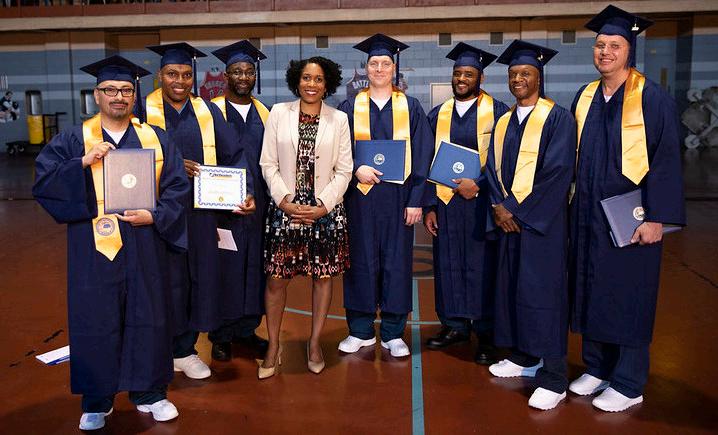
The initiative to create helpful reentry guides is not a new one for EJP. Ginsburg traced the effort back to a meeting of EJP alumni in 2015, where alums brought up the fact they’d received little to no re-entry resources from IDOC when they were released. At first, Ginsburg wasn’t fully convinced. Then, the alums brought her the “multiple generations-old Xeroxes of re-entry flyers” they’d been handed by the state. “They were keeping it because it was a souvenir of how badly the state treated them,” Ginsburg said.
Since 2015, EJP has been producing and updating a comprehensive reentry guide annually. After it became clear that COVID was going to affect the re-entry process, EJP began creating a COVID-specific re-entry guide. By May, that guide was ready to be distributed with the help of IDOC, which sent the guides to its facilities across the state. In total, about 8,000 hard copy COVID reentry guides were distributed, and the guide is also available on EJP’s website. Thanks to an emergency $1 million grant from the Mellon Foundation, EJP is also developing “instructional
videos” to screen on the institutional TV channels that incarcerated people have access to. The videos will consist of recorded lectures by instructors in a wide array of subjects, from history to physics to English.
Ginsburg pointed out that the videos can’t possibly replace in-person instruction. But one small silver lining is that the videos can be broadcast to all 1,800 incarcerated people at Danville, rather than just the seventy students enrolled in EJP. Ginsburg hopes to get the videos to other IDOC facilities as well.
At least one university is using this time during the pandemic to move forward with its plans to start a new HEP program. In the fall of 2019, Adler University started engaging in discussions with IDOC in the hopes of offering classes at IDOC facilities from their soon-to-be launched online bachelor’s program in applied psychology. They’re currently planning a pilot program for that initiative, according to Dr. Michelle Dennis, the interim executive dean of Adler’s online campus.
The program would utilize a model
challenges that IDOC needs to smooth out before more progress can be made on the initiative.
Dennis is currently working to secure grants for the program and hopes to start the pilot in June 2021. She wants to formally launch the program in the fall of 2021, thought she recognizes that that timeline might end up looking a little different.
When Dennis and her colleagues at Adler began planning for their online HEP initiative, there’s no way they could have anticipated that a global pandemic would have shut down in-person HEP programming. Dennis said she recognizes that “online education in prisons right now can serve an immediate benefit of filling the gap” that the pandemic has caused.
that’s “probably unheard of,” Dennis said: the primarily asynchronous classes would enroll both incarcerated and not incarcerated students. The incarcerated students would be provided with tablets so they could access a learning management system, like Canvas, where they’d be expected to read discussion questions from their instructors and post responses to them.
The pilot program will include ten incarcerated students and no students from the outside world, so that program administrators can smooth out technical and other challenges before the program makes its official debut. For the pilot, an Adler faculty member will teach a 300-level applied psychology course using “exactly the same” syllabus as what would be offered in Adler’s online campus, according to Dennis. IDOC has yet to determine in which facility it will run the pilot.
Rich Stempinski,director of IDOC’s Office of Adult Education and Vocational Services, confirmed to the Weekly that IDOC is in “very preliminary discussions with Adler.” He said there are some technological and infrastructural
But she also warned against treating online HEP programs as a panacea. Dennis doesn’t want online HEP programming to replace faceto-face instruction in prisons when the pandemic is over, since “students who are incarcerated benefit from individuals coming into their facilities physically, to have that face-to-face connection…isolation causes many, many negative effects.”
Costabile hopes to add a third cohort of students to the HEP programs at Stateville. Originally, the plan was to introduce a third cohort this past fall, but COVID put those plans on hold. In addition, she’s concerned that there won’t be enough classrooms for three cohorts.
Rumpf is planning to run another iteration of the inside-out restorative justice class next spring. This time around, she’s planning on building in a way for the inside and outside students to communicate with each other, since that was one aspect of the class she had to scrap during last spring’s triage moment. She didn’t ask IDOC for permission to preserve communication between outside and inside students, because she “kind of assumed or knew it wouldn’t be a possibility,” due to the strict guidelines that IDOC has for its incarcerated students.
Jabir, the PNAP educator who taught the mindfulness class, affirmed that his
“comrades in PNAP” are dedicated to their students, saying that “none of us is going to abandon the project.” Jabir plans to teach another class on mindfulness in the spring semester, this time at Cook County Jail in Chicago.
He also expressed a more long-term vision for PNAP, citing his abolitionist worldview. “I don’t know I’ll live to see the day, but I am there with them with the hope and vision that there won’t be a prison to have higher education in, that these will be eliminated,” Jabir said.
As for Hartsfield, he hopes that PNAP will be able to expand its programming to other institutions and acquire more funding. He’s also determined to go to grad school in the near future. If logistics and restrictions in the prison weren’t a concern, he would love to pursue a degree in sociology, psychology, political science, law, or education.
Despite the obstacles he faces in acquiring a graduate degree, Hartsfield recognizes that his education has had a positive impact on people besides himself. His son will be graduating high school early, he told Kim, his former professor, in a phone conversation. What’s more, Hartsfield is thrilled with how his son has taken a liking to creative writing, something made possible in part because he read some of Hartsfield’s writings.
“Man, if that’s the only thing that came out of this, I’m good with that,” Hartsfield said. “I’m completely good with that.” ¬
Lucia Geng is a student on leave from the University of Chicago who can be followed on Twitter @luciageng. She last wrote about rising rates of detention amid the pandemic at Cook County Jail.
Though the Southwest Side changed from majority-white to majority-Mexican in the last few decades, resources and political representation haven’t followed. These residents are looking to change that.
BY LYNDA LÓPEZ, CITY BUREAU
In the spring of 2018, lifelong Gage Park resident Samantha Martínez was finishing up undergrad at Roosevelt University when she started to think about her next steps. “There was the expectation of having to leave Gage Park in order to ‘make it’ in Chicago, and we didn’t want that,” Martínez says. Her twin sister Katia felt the same expectations weighing on her.
Martínez said the idea of leaving your neighborhood to be successful is stressed to Latinx students growing up— they discussed the decision at length. Though they both loved Gage Park for its strong Latinx community and welcoming feel, it lacked the things they wanted in a neighborhood, like community centers, jobs and youth programs.
So instead of packing up and leaving, the sisters decided to mobilize. “We started asking ourselves, how do we create an opportunity where we can work directly within our community?” Martínez said. After finding a small group of likeminded people, they helped form Gage Park Latinx Council (GPLXC), a grassroots, community based organization led by Latinx young people who identify as queer, femme, DACAmented, and artists.
Over the last few decades, the Southwest Side has solidified into a Latinx and immigrant enclave extending beyond the historically-known areas of Little Village and Pilsen in and near the West Side. This year Southwest Side ZIP codes, home to a large portion of essential workers, saw some of the highest COVID-19 positivity rates in the city— not to mention high-profile incidents of environmental pollution—a mixture of circumstances that have politicized more local residents to organize and demand change from the top.
It’s also part of a gradual demographic shift that’s been building for decades. While the Southwest Side is now a Latinx stronghold, it wasn’t always the case. In 1990, Gage Park and Brighton Park were 70% and 63% white, respectively. By 2000, however, they flipped to majority Mexican (79% and 77% respectively). One of the last neighborhoods to become predominantly Latinx in the Southwest Side was West Lawn. In 1990, West Lawn was 88% white. By 2010, it was 80% Latinx.
“A lot of these areas [in the Southwest Side] were more white working-class to white middle-class neighborhoods, and more ethnically tied to the ethnicities in
Europe,” said José Acosta-Córdova who wrote the Latino Neighborhoods Report, an in-depth look at Latinx communities in Chicago.
Acosta-Córdova, an environmental planning and research organizer at the Little Village Environmental Justice Organization, said that these shifts are similar to what areas like Bronzeville on the South Side experienced when they transitioned rapidly from white to Black within a few decades in the mid-20th century.
“Not enough people have recognized the significance of those demographic shifts and responded to what the needs are of these communities,” he said.
The demographic shift to Latinx was one of the reasons the Brighton Park Neighborhood Council (BPNC) was formed in 1997.
“There was not really a clear sense of community. People wanted to build a community,” says Patrick Brosnan, current executive director of BPNC and employee since 1999.
Mexican people were moving to Brighton Park from Pilsen, Back of the Yards, and Little Village because of reasons like gentrification, gang violence,
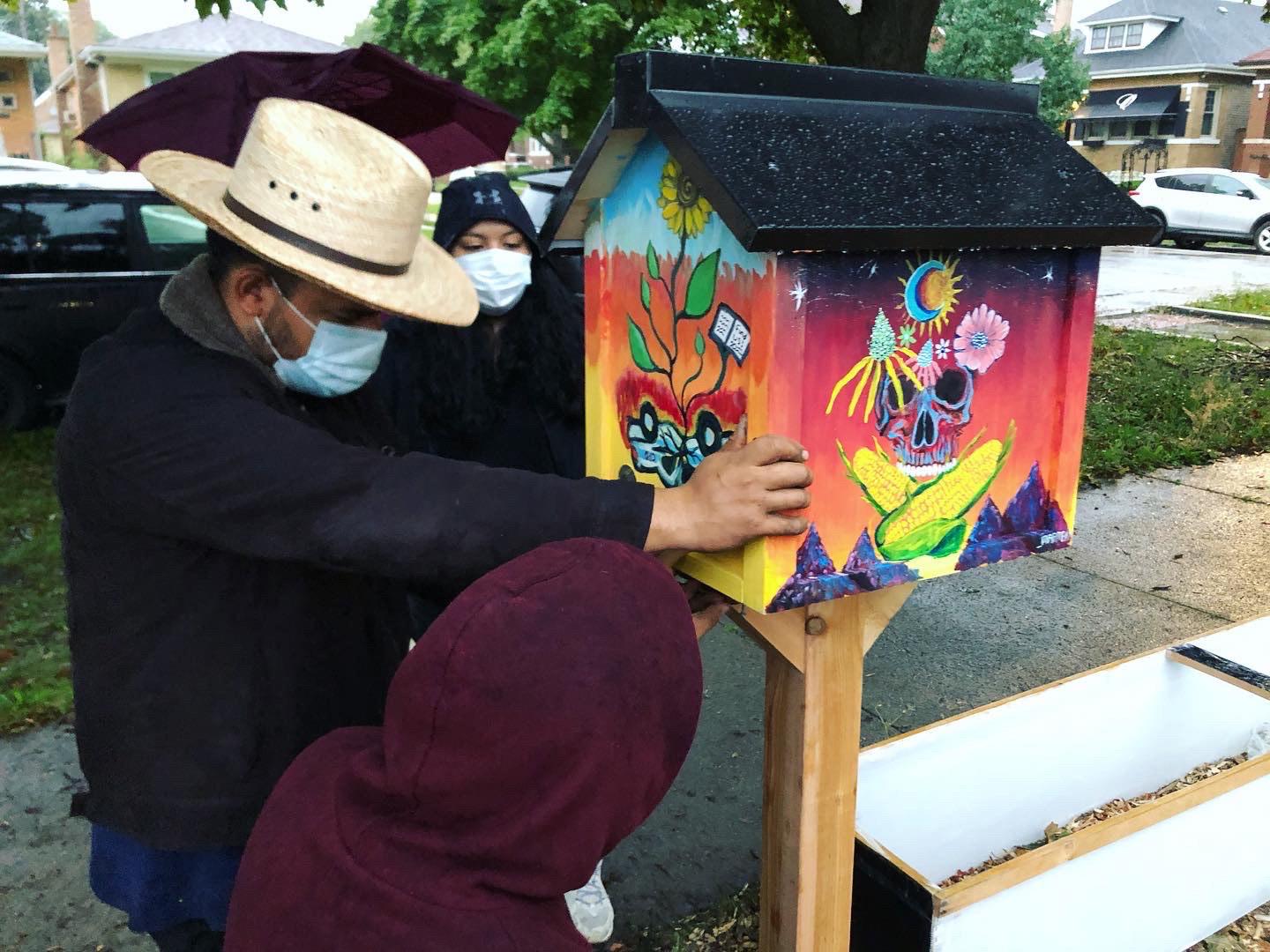
and affordable housing. Brosnan says that there was a recognition among the Latinx community in the late 1990s of ‘We’re new in this community and there’s nobody representing us. We need to do something about that.’
Andrea Ortiz, lead organizer at BPNC, recalls when her parents first moved into Brighton Park in 1995. She said by then the demographic changes of the neighborhood could be seen.
“They lived in the north side by Humboldt Park for a bit and they were pushed out [by high costs] and then they moved to Back of the Yards and were there for a while, but there was a lot of gang violence,” she said. “My mom was like ‘I had heard that it was a great place to raise a family in Brighton Park and we were ready to settle down, so that’s where we chose to go.’”
“When a lot of the Latinx and
undocumented folks started moving in, that’s when we saw white flight,” Ortiz said. “When my parents had bought their house in Brighton Park, we were kind of seeing the last of the white flight of our white neighbors.”
White flight is the term used to describe the sudden and large-scale migration of white people from urban areas as they become more racially diverse. This phenomenon was observed particularly in the mid-20th century as migration to the suburbs was facilitated in the United States.
“Along with the white flight, when they [white residents] left, so did the resources,” Ortiz said. She said she’s seen photos of what Brighton Park used to be like, where there used to be more places for recreation and a movie theater. “And once our folks came in, [the resources] were gone.”
Brosnan emphasizes that Southwest Side communities, including Brighton Park, Archer Heights, Gage Park are “new” because of the huge demographic shift, which changed the needs in these communities and haven’t been adequately addressed by city officials.
Ortiz echoed Brosnan’s sentiments and said it’s hard to be able to help everyone with needs, which became even more pronounced during the pandemic. “I think it’s even more important to continue to support the mutual aid groups that are not part of nonprofits,” she said. She said BPNC referred some people to the Gage Park Latinx Council mutual aid fund because the need for cash assistance has been so high.
While BPNC’s and GPLXC’s origins happened a few decades apart, they share the common thread of coming into existence to fill the social
service gaps in their communities on the Southwest Side.
For GPLXC leaders, identity is at the forefront of their work in creating a welcoming space in Gage Park. Director Antonio Santos said they want to be a place that’s welcoming to everybody, especially those who don’t feel visible within mainstream Latinx or American culture. “For the longest time, I thought I was the only queer person in Gage Park… I remember feeling like I didn’t belong, like I had to escape to be myself. As I became older, I learned that those things aren’t true,” he says. “The thing is, we don’t have much visibility or spaces to be celebrated and embraced.”
Building community among themselves and reflecting on their common experiences was a key factor in getting to work to launch initiatives in Gage Park.
The group began by offering free literacy and arts youth programming at the Gage Park Library early on and also advocating for more Spanish-language books and bilingual books for children, which he says were sorely lacking. Despite operating out of a “tiny storefront library,” as Santos describes it, one of their events had 60 youth in attendance.
When the stay at home order began this spring, GPLXC quickly pivoted to meet their community’s most immediate needs. Santos says they have been feeding people weekly on Tuesdays since March (now up to 300 families a week) and through a GoFundMe and a separate large donation, GPLXC raised close to $90,000 to support undocumented Gage Park families.
The Southwest Collective, serving the neighborhoods near the Midway area, is another group spearheading mutual aid efforts during the pandemic. Founded in 2019, they advocate for local issues (a petition on their site demands renovations to Curie Park) and connect families with resources.
“We’ve been pretty active in terms of the COVID response, which includes food distributions, mask distributions, any sort of resource distribution,” says Enrique Mendoza, vice president of the group and West Lawn native. Food security has been a particularly crucial need for community members, he says, “especially for undocumented folks who don’t qualify for public benefits program.”
By day, Mendoza is a legal advocate with Legal Council for Health Justice, and through Southwest Collective he is helping residents apply for state assistance programs and public benefits like Medicaid and food stamps. But above all else, he says COVID-19 testing is the biggest need. The 60632 and 60629 ZIP codes have the highest positivity rates in the city, though the testing capacity is not reflecting this reality.
The city recently announced a new testing site at Midway Airport, which Mendoza calls a good first step, but he adds that it doesn’t address the overarching lack of health care infrastructure on the Southwest Side. “We have a lot of families here, whether
they’re mixed status or undocumented, they don’t have many places they can go to [for health care],” he says, pointing at the lack of federally qualified health centers that offer low-cost services in underserved areas.
In this region, home to heavy industry for many years, health care is acutely tied to environmental justice. This year residents organized to demand accountability from polluters in Little Village and to oppose the conversion of the old Crawford Coal Plant into a logistics hub, which residents fear is just another avenue for a massive inflow of truck traffic and pollution. Little Village and the rest of the Southwest Side are some of the most polluted parts of the city.
As a student at Social Justice High School five years ago, Karina Solano was part of an AP Chemistry class that tested soil samples throughout Little Village. She was surprised at some of what they found and said they learned of the amount of pollution Black and brown communities face.
Eventually she joined Únete La Villita, a grassroots group that aims to give community residents more voice in neighborhood development. She is also part of a new community group Juntos Por La Villita, which Solano describes as vendor-led and composed of young people, retirees, and monolingual Spanish-speakers. The group has been organizing to prevent the closure of the Discount Mall in Little Village, a hub for small vendors for 30 years, amid a proposed redevelopment.
Solano says that, along with the implosion of a smokestack at the Crawford Coal Plant this spring which infuriated residents and sent clouds of dust into the air, “It’s a combination of everything just bubbling up, you can't sweep it under the rug anymore because it’s affecting everyone.”
The disillusionment of government and the feeling of abandon is a refrain heard from groups on the Southwest Side.
Residents said the lack of resources and support from elected officials like Alderman Ed Burke of the 14th ward,
whose ward spans parts of Brighton Park. Gage Park, and Archer Heights, is a common thread among local community groups.
During the pandemic, he says there were no resources offered to BPNC from the ward office. “We’ve got no outreach from their office, we’ve got no support from their office, we’ve got no PPE,” he says, “Based on our relationship, you wouldn’t know that the pandemic is even happening.”
He says the lack of support and resources from Burke’s office is not new, but part of the systemic inequities that the Southwest Side has experienced. “To not have an alderman, to not have anybody who is functioning as a conduit between city government and the community, it’s tremendously difficult,” Brosnan says. “It just creates a huge hole in the way that the community organizations and community leaders have to respond to because you’re getting no cooperation.”
For Santos, GPLXC is part of a larger vision of building collective power in their community. “Our community has not been organized for the last 50 years, in the time we’ve had Burke as alderman,” he said.
Santos and Martínez both say they feel a responsibility to use their privileged voices as college graduates to advocate for their neighbors.
Santos said he feels that Gage Park residents haven’t had a say in the way their community has developed and what resources they’ve received. He said they still don’t have hearings for zoning changes or businesses coming into the community. Amazon coming to Gage Park was a surprise to him. Freight infrastructure and the movement of goods in Chicago and its disproportionate impacts in areas in the Southwest Side, such as increased truck traffic from warehouse expansion, have become prominent issues in the last few years.
This summer, just over two years after forming, GPLXC opened its own space at a storefront building on 51st Street. While the pandemic has closed the doors on physical gatherings, the center is the gathering place for resource distribution for residents. Over the winter they launched a free community
mercado where local residents can make an appointment and pick up winter clothes, hygiene products and more.
“We hope in the future that the Gage Park Cultural Center, after COVID has gone, will be a space that the entire community feels comfortable utilizing and claiming ownership over,” Santos said.
For groups like GPLXC and the Southwest Collective, placemaking is essential. Both groups have had to meet at local businesses or their own homes to get their work off the ground.
It was the same for BPNC back in 2003. Without the capacity to open a community center, they created community centers embedded within local Brighton Park schools. Brosnan sees a lot of similarities between the new guard of Southwest Side community groups—building community power and representing the voices of residents who are frustrated with the way decisions are made in the neighborhood. He says organizations can work together if they’re able to find their common struggles and recognize and support each other.
Spurred by the energies of younger Latinx residents, new groups and coalitions are emerging in the Southwest Side to fill gaps in resources and serve as voices for accountability in their communities. ¬
This report was produced by City Bureau, a civic journalism lab based in Chicago. Learn more and get involved at citybureau.org.
Lynda López is a reporting fellow with City Bureau. She is also an advocacy manager with the Active Transportation Alliance where she works on transportation equity issues in the region. She last wrote for the Weekly about the broadband access citywide referendum. You can follow her on Twitter at @lyndab08.
Aunque el lado suroeste cambió de mayoría anglosajona a mayoría mexicana en las últimas décadas, los recursos y la representación política no le han seguido. Algunos residentes buscan cambiar eso.
POR LYNDA LÓPEZ, CITY BUREAU TRADUCIDO POR JACQUELINE SERRATO
En el 2018, Samantha Martínez, residente de Gage Park, estaba terminando su carrera en la Universidad Roosevelt cuando empezó a contemplar lo que seguía. “Había la expectativa de tener que dejar Gage Park para ser considerado exitoso en Chicago, y no nos gustaba eso”, dice Martínez. Su hermana gemela Katia sentía la misma presión.
Martínez dijo que la idea de dejar su vecindario se les enfatiza a los estudiantes latinos criados aquí. Aunque a ambas les encantaba Gage Park por su fuerte comunidad latina y su ambiente acogedor, carecía de cosas que ellas querían en un vecindario, como centros comunitarios, oportunidades de trabajo y programas para jóvenes.
Entonces, en lugar de mudarse, las hermanas decidieron organizarse. "Empezamos a preguntarnos entre sí, ¿cómo crear una oportunidad en la que podamos trabajar directamente con nuestra comunidad?" dijo Martínez. Después de juntar un pequeño grupo de personas con las mismas ideas, crearon el Gage Park Latinx Council (GPLXC), una organización comunitaria dirigida por jóvenes latinx que incluyen aquellos que se identifican como queer, femme, DACAmentados y artistas.
En las últimas décadas, el suroeste de la ciudad se ha convertido en una concentración de latinos e inmigrantes que se extiende más allá de las áreas
históricamente conocidas de La Villita y Pilsen dentro y cerca del lado oeste. Este año, los códigos postales del lado suroeste, en donde vive una gran parte de los trabajadores esenciales, tuvieron unas de las tasas de COVID-19 más altas de la ciudad, sin mencionar los incidentes de contaminación ambiental —una combinación de circunstancias que han politizado a residentes locales para organizarse y exigir cambios desde arriba.
También es parte de un cambio demográfico gradual que ha estado en movimiento durante décadas. Aunque el lado suroeste es ahora una área latina, no siempre fue así. En 1990, Gage Park y Brighton Park eran el 70% y 63% anglosajones, respectivamente. Para el 2000, sin embargo, pasaron a ser mayoritariamente mexicanos (79% y 77% respectivamente). Uno de los últimos barrios en convertirse en predominantemente latinos en el suroeste fue West Lawn. En 1990, West Lawn era 88% blanco. Para 2010, era 80% latinx.
“Muchas de estas áreas [en el suroeste] eran más de clase trabajadora blanca y clase media blanca, y estaban vinculadas étnicamente a Europa”, dijo José Acosta-Córdova, quien escribió el Informe de vecindarios latinos, un estudio de las comunidades latinas en Chicago.
Acosta-Córdova, un organizador de investigación y planificación ambiental de la Organización de Justicia Ambiental de La Villita, dijo que estos cambios son
similares a los que experimentaron áreas como Bronzeville en el lado sur cuando pasaron rápidamente de anglosajonas a afroamericanas a mediados del siglo veinte.
“No se ha reconocido suficientemente la importancia de esos cambios demográficos ni respondido a las necesidades de estas comunidades”, dijo.
El cambio demográfico fue una de las razones por las que se formó el Brighton Park Neighborhood Council (BPNC) en 1997. “No había realmente un sentido claro de comunidad. La gente quería construir una comunidad”, dice Patrick Brosnan, actual director ejecutivo de BPNC y empleado desde 1999.
Los mexicanos se estaban mudando a Brighton Park de Pilsen, Las Empacadoras, y La Villita debido a razones como la gentrificación, la violencia de las pandillas y la vivienda asequible. Brosnan dice que hubo un reconocimiento entre la comunidad latinx a fines de la década de los '90 de que 'Somos nuevos en esta comunidad y no hay nadie que nos represente. Tenemos que hacer algo al respecto'.
Andrea Ortiz, organizadora principal de BPNC, recuerda cuando sus padres se mudaron a Brighton Park en 1995. Dijo que en ese entonces se podían ver los cambios del vecindario.
"Vivieron en el lado norte, por Humboldt Park, por un tiempo y fueron desplazados [por los altos costos] y
luego se mudaron a Back of the Yards y estuvieron ahí por un tiempo, pero había mucha violencia de pandillas", dijo. "Mi madre dijo, 'Escuché que Brighton Park era un gran lugar para criar una familia y estábamos listos para sentar cabeza, así que ahí es adonde decidimos ir'".
"Cuando muchos latinos e indocumentados comenzaron a mudarse, fue cuando vimos el 'white flight'", dijo Ortiz. "Cuando mis padres compraron su casa en Brighton Park, estábamos viendo lo último de nuestros vecinos blancos que se estaban yendo".
El "white flight" es el término utilizado para describir la mudanza repentina y a gran escala de personas anglosajonas de las áreas urbanas a medida que estas se vuelven más diversas. Este fenómeno se observó particularmente a mediados del siglo XX en Estados Unidos cuando se les facilitó la migración a los suburbios.
“Junto con la huida de los blancos, también se acabaron los recursos”, dijo Ortiz. Dijo que ha visto fotos de cómo era Brighton Park, cuando solían haber más lugares de recreación y hasta un cine. "Y una vez que llegó nuestra gente, [los recursos] se acabaron".
Brosnan enfatiza que las comunidades del lado suroeste, incluyendo Brighton Park, Archer Heights, Gage Park son "nuevas" debido al enorme cambio demográfico, y el cambio de las necesidades en estas áreas que no han
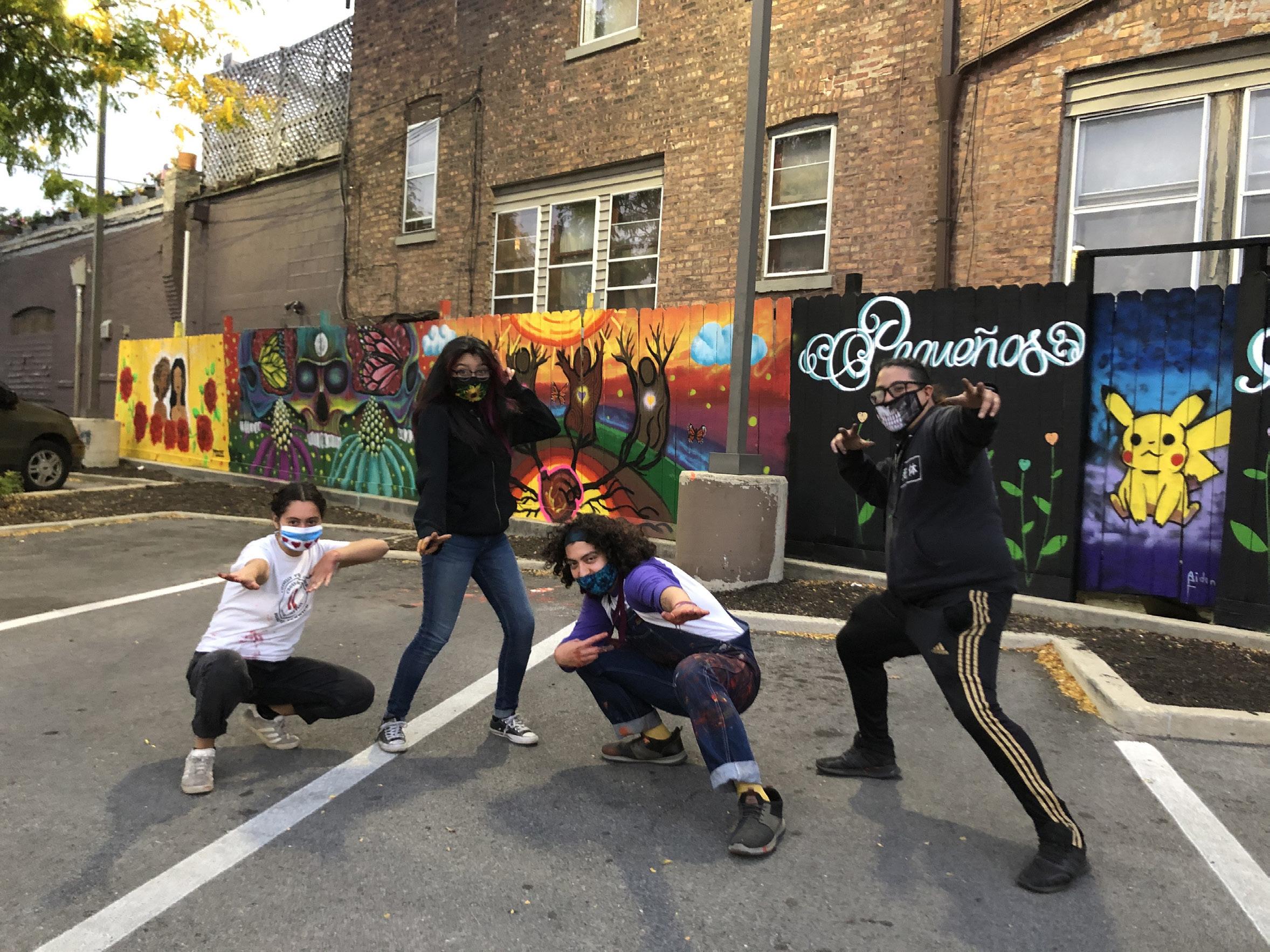
sido abordadas adecuadamente por los funcionarios de la Municipalidad. Ortiz también dijo que es difícil poder ayudar a todos con sus necesidades, las cuales se hicieron más pronunciadas durante la pandemia. "Creo que es aún más importante continuar apoyando a los grupos de ayuda mutua que no son parte de organizaciones sin fines de lucro", dijo. Agregó que BPNC refirió a algunas personas al fondo de ayuda mutua del Gage Park Latinx Council porque la necesidad de asistencia monetaria ha sido muy alta.
Aunque los orígenes de BPNC y GPLXC ocurrieron con algunas décadas de diferencia, comparten la meta de llenar las faltas de servicios sociales en sus comunidades.
Para los líderes de GPLXC, la identidad está al frente de su trabajo en la creación de un espacio inclusivo en Gage Park. El director Antonio Santos dijo que quieren ser un lugar que les dé la bienvenida a todos, especialmente a aquellos que no se sienten visibles dentro de la cultura latinoamericana o estadounidense. "Durante mucho tiempo, pensé que yo era la única persona queer en Gage Park... Recuerdo sentirme como si no perteneciera, como si tuviera que salir para ser quien soy. A medida que fui creciendo, aprendí que esas cosas no son ciertas. La cosa es que no tenemos mucha visibilidad o espacios para celebrarnos y juntarnos".
Construir una comunidad entre sí y reflexionar sobre sus experiencias
comunes fue un factor clave para lanzar iniciativas en Gage Park. El grupo comenzó ofreciendo programación gratuita de alfabetización y de arte para jóvenes en la Biblioteca Gage Park y también pidiendo más libros en español y libros bilingües para niños, que él dice hacían mucha falta. A pesar de operar desde una “pequeña biblioteca en una tiendita”, como la describe Santos, uno de sus eventos contó con la asistencia de 60 jóvenes.
Cuando comenzó la orden de quedarse en casa, GPLXC giró rápidamente para satisfacer las necesidades más urgentes de su comunidad. Santos dice que han estado alimentando a personas los martes desde marzo (hasta 300 familias por semana) y, a través de GoFundMe y una
donación separada, GPLXC recaudó cerca de $90,000 para apoyar a las familias indocumentadas de Gage Park.
El Southwest Collective, que se enfoca en los vecindarios cercanos al área de Midway, es otro grupo que encabeza los esfuerzos de ayuda mutua durante la pandemia. Fundado en 2019, el colectivo aboga por solucionar problemas locales (una petición exige renovaciones en Curie Park) y conectan a las familias con recursos.
“Hemos sido bastante activos en cuanto a la respuesta al COVID, que incluye distribuciones de alimentos, distribuciones de mascarillas, cualquier tipo de distribución de recursos”, dice Enrique Mendoza, vicepresidente del grupo y originario de West Lawn.
Los alimentos han sido una necesidad particularmente crucial para los miembros de la comunidad, dice, "especialmente para las personas indocumentadas que no califican para el programa de beneficios públicos".
De día, Mendoza es un defensor legal del Legal Council for Health Justice y, a través del Southwest Collective, ayuda a los residentes a solicitar programas de asistencia estatal y beneficios públicos como Medicaid y estampillas de comida. Pero sobre todo, dice que las pruebas de COVID-19 son la mayor necesidad. Los códigos postales 60632 y 60629 tienen las tasas de positividad más altas de la ciudad, pero la capacidad para hacer las pruebas no refleja esta realidad.
La ciudad anunció recientemente un nuevo sitio de pruebas en el Aeropuerto Midway, lo que Mendoza considera un buen primer paso, pero agrega que no aborda la falta general de infraestructura de atención médica en el suroeste. “Tenemos muchas familias aquí, ya sean de estatus mixto o indocumentadas, que no tienen muchos lugares a los que pueden ir [para recibir atención médica]”, dice, señalando la falta de centros de salud calificados a nivel federal que ofrezcan servicios de bajo costo en áreas desatendidas.
En esta región, sede de la industria pesada por generaciones, la atención médica está estrechamente ligada a la justicia ambiental. Este año, los residentes se organizaron para exigir la rendición de cuentas de contaminadores en La Villita y para oponerse a la conversión de la antigua planta de carbón Crawford en un centro logístico, la cual los residentes temen será solo otra entrada masiva de tráfico de camiones y contaminantes. La Villita y el resto del suroeste son algunas de las partes más contaminadas de la ciudad.
Como estudiante de Social Justice High School hace cinco años, Karina Solano fue parte de una clase de química AP que examinó muestras de tierra en La Villita. Ella se sorprendió por lo que encontraron y dijo que se enteraron de la gran cantidad de contaminación que enfrentan las comunidades latinas y negras.
Con el tiempo, ella se unió a Únete
La Villita, un grupo de base que tiene como objetivo dar a los residentes de la comunidad más voz sobre el desarrollo del vecindario. También es parte de un nuevo grupo comunitario, Juntos Por La Villita, que Solano describe como liderado por vendedores pequeños y compuesto por jóvenes, personas retiradas y personas que sólo hablan español. El grupo se ha estado organizando para evitar el cierre del Discount Mall en La Villita, un centro de puestos comerciales por más de 30 años, en medio de una remodelación propuesta por un nuevo dueño.
Solano dice que, junto con la implosión de una chimenea industrial en la planta de carbón Crawford el año pasado, la cual enfureció a los residentes y envió nubes de polvo al aire, “Es una combinación de todo, ya no se puede tapar con un dedo porque nos está afectando a todos ".
La desilusión con el gobierno y el sentido de abandono es una constante que se escucha en grupos del suroeste.
Los residentes dijeron que la falta de recursos y apoyo de funcionarios electos como el concejal Ed Burke, cuyo distrito 14 abarca partes de Brighton Park. Gage Park y Archer Heights es algo que tienen en común entre los grupos locales.
Durante la pandemia, dice que la oficina del distrito no ofreció nada de ayuda a BPNC. “No fuimos contactados por su oficina, no tenemos apoyo de su oficina, no tenemos equipo de protección personal”, agregó, “Basado en nuestra relación, no se sabría que la pandemia está ocurriendo."
Dice que la falta de apoyo y recursos de la oficina de Burke no es algo nuevo, sino parte de las desigualdades sistémicas que ha sentido el suroeste. "No tener un concejal, no tener a nadie que funcione como un enlace entre el gobierno de la Municipalidad y la comunidad, es tremendamente difícil", dice Brosnan. "Simplemente crea un gran vacío en la forma en que las organizaciones comunitarias y los líderes comunitarios tienen que responder porque no hay cooperación".
Para Santos, GPLXC es parte de una visión más amplia de construir el poder colectivo en su comunidad. “Nuestra comunidad no se ha organizado en los
últimos 50 años, en el tiempo que hemos tenido a Burke como concejal”, dijo. Santos y Martínez dicen que sienten la responsabilidad de usar sus voces privilegiadas, siendo graduados universitarios, para defender a sus vecinos. Santos dijo que siente que los residentes de Gage Park no han tenido voz en la forma en que se han desarrollado las cosas y los recursos que han recibido. Dijo que todavía no tienen audiencias públicas para los cambios de zonificación o empresas que entran a la comunidad. La llegada de Amazon a Gage Park fue una sorpresa para él. La infraestructura industrial y el movimiento de mercancía en Chicago y sus impactos desproporcionados en áreas del suroeste, como el aumento del tráfico de camiones debido a la expansión de las bodegas, se han convertido en problemas en los últimos años.
Este verano, poco más de dos años después de su formación, GPLXC abrió su propio espacio en un edificio de la calle 51st. Aunque la pandemia ha cerrado las puertas para tener reuniones físicas, el centro es el lugar de reunión para la distribución de recursos para los residentes. Durante el invierno, lanzaron un mercado comunitario gratuito donde los residentes locales podían hacer una cita y recoger ropa de invierno, productos de higiene y más.
“Esperamos que en el futuro el Centro Cultural Gage Park, una vez que se haya ido COVID, sea un espacio que toda la comunidad se sienta cómoda utilizando como si fuera suyo”, dijo Santos.
Para grupos como GPLXC y el Southwest Collective, la creación de lugares es esencial. Ambos grupos han tenido que reunirse en negocios locales o en sus propias casas para poner en marcha su trabajo.
Lo mismo sucedió con BPNC en 2003. Sin la capacidad de abrir un centro comunitario, crearon espacios comunitarios dentro de las escuelas locales de Brighton Park. Brosnan ve muchas similitudes entre la nueva guardia de los grupos del suroeste: desarrollar el poder de la comunidad y representar las voces de los residentes frustrados con la forma en que se toman decisiones en el
vecindario. Él dice que las organizaciones pueden trabajar juntas si son capaces de identificar sus causas comunes y reconocerse y apoyarse mutuamente. Estimulados por la energía de los residentes latinx más jóvenes, están surgiendo nuevos grupos y coaliciones en el suroeste de Chicago para llenar los vacíos en los recursos y servir como voces para asegurar la rendición de cuentas en sus vecindarios. ¬
Este informe fue escrito en colaboración con City Bureau, un laboratorio de periodismo cívico con sede en Chicago. Obtenga más información y participe en citybureau.org.
Lynda López fue miembro del programa de periodismo de City Bureau; también es gerente de defensa del Active Transportation Alliance, donde trabaja en temas de equidad en el transporte público en la región. Escribió anteriormente para el Weekly acerca del referéndum en la boleta electoral sobre el acceso a internet. Puedes seguirla en Twitter en @lyndab08.
BY KRISTIN OSTBERG
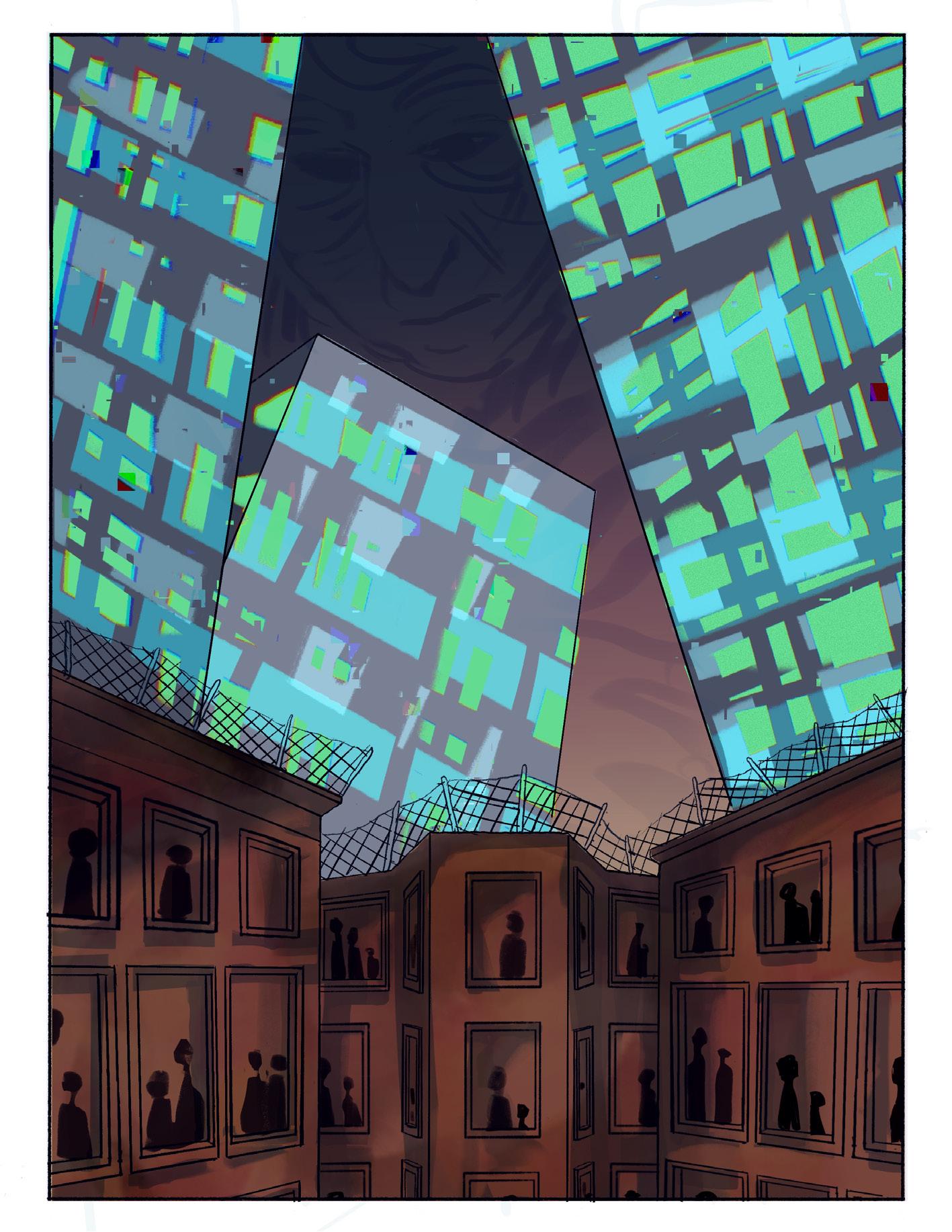
For a hundred years Chicago’s population grew fast and without pausing, and it mostly grew in jumps. Some of it was annexations, the city boundaries redrawn to swallow swelling neighboring settlements. Some of it was native-born whites traveling from farms or eastern cities to seek new opportunities. But a lot of it was waves of immigrants from foreign countries,sent in surges by crises in their homelands, the Irish first, then the Northern Europeans. The twentieth century saw a “new wave” of immigrants from South and Central Europe.
They would arrive poor, ignorant of local customs, and would settle in the slums near the center of the city. And as they learned the language and improved their lot, they moved outward to better neighborhoods. They’d put some distance between themselves and the latest foreigners who didn’t know how to live.
In the 1910s and 20's, social scientists thought these movements resembled populations vying to survive within an ecosystem. They wrote about natural areas, even ‘moral zones’ where people with similar characteristics—ethnic, social, moral—would find each other and settle in enclaves, where their qualities would intensify by mutual reinforcement.
Bridgeport is still marked by these enclaves, the faint outlines still distinct in the memories of guys who were teenagers in the 1970s and 80's. They’ll tell you “I couldn’t come over here,” because of the Polish guys who used to hang out at The Shack at the top of Morgan Street. Or they’ll describe how Armour Park was jealously watched by Italians. I’d never heard anyone use the word “Dago” in conversation until I lived in Bridgeport. Sometimes it sounds like a justification more than a complaint. “We weren’t racist,” an acquaintance says drily. “We hated everybody.”
Each new wave of immigrants endured its share of indignities and prejudices, remembered for generations after the fact. In the 1850s, the WASPs thought the Irish were natural degenerates, prone to drink and crime. Their labor was wanted to dig canals, but Protestant shopkeepers posted signs in their windows that said “Irish need not apply.” In the 1880s, the Germans rioted when nativists passed blue laws to control their drinking on Sundays— Sunday being their only day off, they spent it in the beer garden, indulging in socialist talk. By the 1920s, when the federal government established immigration quotas, they targeted the ethnic proportions as they were in 1890, before the “new wave” of Italians and Poles had overtaken the northern Europeans.
The native-born weren’t just impatient for the immigrants to learn the language and assimilate, they saw them as suspect in a more fundamental sense.
In Black Metropolis, St. Clair Drake and Horace Cayton set the stage for their account of Chicago’s Black ghetto by describing the city as defined by the antagonism between populations. They observed that this antagonism was expressed in two different traditions of reform: “one concerned with stopping ‘vice’ and petty political graft; the other with controlling predatory big business.”
Vice was the special concern of the Protestant establishment—prostitution, gambling, and especially drinking. Their commitment to control the drinking of the lower classes predates Prohibition as a proxy for other tensions.
The working class saw those preoccupations with social control as an excuse to avoid addressing more urgent structural reforms. They wanted to stop child labor, shorten the 12-hour work day, form unions and earn a living wage.