South Mountain P re s s
Friday, JULY 24, 2026
Volume 18 Number39 FREE TAKE ONE


Friday, JULY 24, 2026
Volume 18 Number39 FREE TAKE ONE
Brock McCannell of Brandon has learned the art of fishing from his father and his grandfather, who not only shared knowledge while his prodigy fished off the beautiful Sandy Lake dock on the morning of Friday, July 17, but also placed a minnow on the hook. McCannell was able to land one legal sized walleye that morning, good enough for a lesson on filleting and how good cooked pickerel tastes on a plate.
Provincial forestry crews will be in municipalities across the region this month, including the Municipality of Russell Binscarth and Prairie View Municipality (PVM), checking trees and firewood piles for signs of Dutch elm disease.
Russell Binscarth has confirmed that surveyors will be out in the community from July 23 to
26, arriving in government marked vehicles, wearing high visibility vests, and carrying government ID.
PVM also posted a notice directly by the Manitoba government, stating that Dutch elm disease surveys and emerald ash borer monitoring are underway again this season. Inspectors will be driving or walking public and private properties, looking for infected trees and elm firewood with bark still attached, since that
wood spreads the disease and is illegal to store. They may work evenings and weekends, and staff will not always approach a resident before entering a property. Doorbells get rung, or doors knocked, before any branch sample is taken, or tree marked.
None of this is new, however. The province has run a management program under The Forest Health Protection Act for close to 50 years, and 38 communities across Manitoba, including many

in this region, still sign on for annual surveys because the alternative is losing the trees outright. Native elm bark beetles carry the fungus from tree to tree as they feed in the canopy or burrow near the trunk base, and an infected elm can also pass the disease through touching roots to a healthy neighbour.
What is at stake locally is the tree canopy itself. Mature elms take decades to grow, and they provide shade, windbreaks, and


wildlife habitat that a young replacement tree cannot replicate for years. Once a tree is confirmed infected, removal is usually the only option since there is no cure once the fungus has spread through the vascular system. Both notices reminded residents that elms could not be pruned until after July 31, since fresh cuts attract the bark beetles that carry the disease.

Friday, July 24, 2026
Communities in the coverage area, including Erickson, Foxwarren, Hamiota, Inglis, Kenton, Minnedosa, Newdale, Rossburn, Sandy Lake and Shoal Lake, among others, have long relied on the provincial program to keep their elm canopies standing.
The province also uses the survey window to monitor for emerald ash borer, an invasive beetle that kills ash trees. Under the notice shared by PVM, external contractors will be placing emerald ash borer monitoring traps in areas throughout southern Manitoba this season.
Residents are asked to help by watching their own yards for warning signs. Symptoms of Dutch elm disease include wilting or yellowing leaves in the upper canopy, branches that die back from the top down, and dark staining under the bark of affected limbs. The Tree Line encourages anyone who notices these signs on an elm tree to call before removing or pruning it, since a provincial inspector needs to confirm the diagnosis and oversee proper disposal.
Homeowners are also reminded not to move elm firewood between properties or municipalities. The beetles that spread the fungus can survive in cut wood long af-

ter a tree has died, which is why storing or transporting elm firewood with bark still attached is prohibited under the Forest Health Protection Act.
The disease people hear about every summer has a much longer history than most residents realize. It gets its name from the Dutch scientists who first identified the fungus in the 1920s, though researchers now believe the pathogen originated in Asia. It reached Europe around 1910
RYAN NESBITT
South Mountain Press
Erickson will be a busy spot this Sunday, July 26 as the Erickson Regional Arena teams up with the Erickson & District Chamber of Commerce to host the Erickson & District Mid Summer Fair at the Erickson Arena.
The parade itself will begin at 1:00 p.m., departing from the arena. The route will head west on 2nd Street North to Railway Ave., turn left (south) to Main Street, go left onto Main St. heading east to Queen Elizabeth Way, turn right (south) past the Health Care facility, then finally circle back to the arena. The day will feature a number of events and festivities, including a kids’ entertainer from 4:00 to 5:00 p.m., and adult music until 8:00 p.m. at the Municipal stage. There will also be an antiques, crafts, and garage sale inside the arena, a show & shine, various food options, and a 0% lounge. At the mini golf site, there will be mini golf, frisbee golf, and a poker derby (walking, biking, or ATV). Proceeds from the day will go towards the arena’s cement flood project.
South Mountain P re s s
TO ALLOW FOR STAFF HOLIDAYS, THERE WILL BE NO PAPERS PUBLISHED
FRIDAY, AUG. 7 & 14

and
The fungus, and some of the beetles that carry it, came along with the
The disease was confirmed in the United States by 1930 and spread north into Canada from there.
A second, more aggressive strain of the fungus later replaced the original one across North America and Europe, killing many elms that had survived the first wave. Millions of elms across the continent have died since. The American elm, the species planted along most streets and yards on the Prairies, is among the most vulnerable. Manitoba did not see its first confirmed case until 1975, decades after the disease had already reshaped city streets farther east. Once it reached the province, it became a permanent fixture. There is no cure, so prevention and early removal remain the only real tools against it, which is why the same survey happens here every summer, and likely will for

a long time yet.
Residents who spot inspectors on their property over the next few days should expect them to be identifiable by vest and ID and should not be alarmed if a crew member is already on the property before making contact.
Anyone with questions about the survey, or who suspects an elm tree on their property may be infected, can contact the Manitoba Tree Line at 204-9457866 ortreeline@gov.mb.ca.
The province last reported that survey crews marked roughly 2,567 infected trees across Manitoba in 2025, not including Winnipeg, which runs its own independent program. The number of elms marked for removal has notably declined over the past five years due to the yearly program’s diligence.
Residents are advised to check with their municipality for program date awareness in their direct area.




DARRELL NESBITT
South Mountain Press
The Royal Canadian Legion – celebrating its 100th anniversary (1926 – 2026) – is committed to ensuring youth understand and continue the tradition of Remembrance in a variety ways including the National Youth Remembrance contests.
Two rural Manitoba students, attending Onanole Elementary School and the Oak River Colony School, were congratulated by local Legion branch personnel, along with school staff and fellow students, for being among the 2026 national winners prior to the end of the school year.
Meadow Smid, the 12-yearold daughter of Borden and Gwen Smid, submitted her second place poem entitled ‘For My Country’ in the Intermediate category (Gr. 7-9) as a grade 7 student in the fall of 2025.
When asked, how did she come up with the idea of such a heartfelt and impactful poem, Meadow had this to say… “I think when writing my poem, I wanted to express my gratitude to all the people who helped fight for peace. That includes the courageous soldiers that braved many hardships, the nurses who cared for the sick and wounded, the horses that helped carry the living and dead, as well as the peacekeepers that go into dangerous places in hopes of getting an agreement between nations.”
Growing up Meadow was always surrounded by books and literacy and whereas her parents encouraged her to read they never forced it upon her, so in her own way she grew fond of it, which resulted in the now grade 8 student being transfixed by writing and the never ending possibilities that surround it.
“I think so far in my educational journey I have been fortunate to have been influenced by many different people. But the person who has passed on knowledge to me all my life has to be my mom who also works as an English teacher,” commented Meadow. “She passes down wisdom from small acts like spewing peculiar words, to writing picture books and putting them out for the world to see. So I really want to thank her for always remaining curious and excited about all that makes her happy.”
In terms of the Legion Remembrance Contest, she has taken part for the past three years. Her first time entering was when she was in grade 5.

Over the last three years she has submitted posters and poems to the same contest.
“This is my first year winning at the national level, however, I have won provincially for my poem once before in grade 5,” Meadow stated proudly. “I feel grateful my school provided me with this important opportunity, and that my teachers at Onanole Elementary have introduced me to this important organization.”
Other school interests and involvement for Meadow includes being an active participant in the UNESCO club, participant in various sports, and enjoys being involved in MECCA productions.
“Recognizing the contributions of veterans has always been important to our family,” expressed her parents, who annually take in the Memorial service in Wasagaming or the Remembrance Day service in Erickson. “That Meadow has chosen to use her talent in this way leaves us glad that this ethic is being carried on.”
RACHEL STAHL
Being the sole first place winner from a national level perspective, Rachel Stahl, a resident of the Oak River Hutterite Colony, located
near the town of Oak River, saw her entry of a black and white charcoal / pencil work – the image of two soldiers –one helmeted supporting a wounded fellow soldier with an overlay inscription saying: ‘All GAVE SOME, SOME GAVE ALL’ earn heartfelt praise, provincially and nationally.
Within the frame of Stahl’s artwork, a Maple Leaf in the left bottom corner and poppy flowers in the upper right brought the Canadian and Veterans Remembrance Day symbolism. The message is clear – empathy, struggle, commitment, hardship and camaraderie within the theatre of war.
Speaking on behalf of the Manitoba and Northwestern Ontario Command office of the Legion, Provincial Commander Chris Flood was thrilled to see this Manitoba artist’s work top the field of tens of thousands art pieces in the black/white category.
“The subject matter – the story of bravery, heroism, and sacrifice – are expressed so simply,” stressed Flood.
Through the annual National Youth Remembrance Contests, the Legion National Foundation, with the assistance of The Royal Canadian Legion and schools
across the country, educate Canada’s youth in the history and impact of war and veterans’ contributions over the decades.
The contests include multiple levels of competition. Poster and literary works compete first at the Legion Branch local level, with winning entries moving forward until they reach the provincial level. Video entries compete first at the Legion Command provincial level. Provincial finalists of all contests then move forward for final judging by the Legion National Foundation to determine the national winners. All winners at the national level are awarded a cash prize for their work.
Should you visit Ottawa’s National War Museum between Nov. 11/26 and October 2027, you will find Stahl’s pencil / charcoal artwork hanging. She, along with Smid, received additional awards and money presented locally and provincially.
Each year, nearly 100,000 students from Kindergarten to Grade 12 take part in the National Youth Remembrance Contests, reflecting on the sacrifices of Canada’s Veterans. Through art, writing and video formats, they
By: Meadow Smid
Iam a nurse.
Iknow the sound of pain.
Theirscreams echo in my soul.
Iwill heal the soldiers formy country.
Iam a bluebird flying into action;when everyone is healed, Iknow my duty is done.
Iam a soldier
Iknow the feeling of pain.
The agony echoes inside me.
Iwill protectthis land formy country.
So as the bulletpierces through me, Iknow my duty is done.
Iam a horse.
Iknow the smell of death.
Gunshots echo in my ears, a horrific harmony.
Icarry the wounded soldiers on my back formy country.
When Ipull the lastweapons into the sunset, Iknow my duty is done.
Iam a peacekeeper
Iknow the sights of international conflict.
Words of peace echo in my ears ringing again and again. Iwill try to spread peace everywhere formy country.
Therefore when peace is finally reached, Iknow my duty is done.
Iam a child today.
Iknow the meaning of remembrance.
We all carry the echo of lostsoldiers.
We pay ourrespects in Novemberforourcountry.
So when Iplace a poppy on theirgrace, Iknow my duty has justbegun.
share what Remembrance means to them in ways that are honest and personal.
This program is made possible by donors, partners, Legion Branches, volunteers, and educators whose contri-
butions bring the program into classrooms nationwide, educating the young and old through meaningful pieces of art … fostering a profound respect for Canada’s heroes –our Veterans.




Friday, July 24, 2026
It was with heavy hearts that the Canadian National Ukrainian Festival (CNUF) board made the decision to cancel this year’s festival, three weeks prior of it taking place at the Selo Ukraina site south of Dauphin.
In a press release, the board stated the cancellation of the popular annual event wasn’t because of water at the festival site, as it was not affected by the flooding, however once Prairie Mountain Health (PMH) announced it would be closing the Dauphin Regional Health Centre due to flooding, the CNUF board began discussing the prospects of cancelling the festival. The decision was made after the board consulted with the City of Dauphin, Rural Municipality of Dauphin, MLA Ron Kostyshyn, MP Dan Mazier and its insurance provider.
Initial response efforts have brought to light exten-

sive damage to critical infrastructure, particularly in the basement.The closure will allow for proper assessments, repairs, and remediationactivities to be completed.
“In terms of planning, we know it’s an extended period of time – we don’t know what that means,” stated PMH chief executive officer, Treena Slate, in a Dauphin Herald story. “Once the damages are determined, the logistics
of getting repairs made come into play.”
Third CNUF vicepresident, Cory Lafontaine, said the board came to the realization that that they were not so sure a festival could be staged without a hospital, thus talking to various levels of government entities, as well as the insurance provider.
“The biggest concern was the number of festival patrons who are elderly, as well families,” shared Lafontaine. “We were not confident that putting a patient in an ambulance and sending them 30 kilometres away was the best choice.”
Lanfontaine added, bringing in another 3,000 to 4,000 people to the community of Dauphin via the Ukrainian Festival would put a tremendous amount of pressure on the two temporary rural emergency health care centers 30 plus minutes away. Those who purchased tick-
ets or camping passes to this year’s event can ask for a refund or roll them over to next year’s festival.
Dance groups and performers truly understand the situation, reaching out and concluding with the board that it was the right decision. Most of them are also prepared to come back in 2027, realizing the decision made to cancel the 2026 edition, was in the best interest of the community – in terms of the festival itself and the community of Dauphin.
Before the hospital reopens from a phased standpoint, lots of work is going to be needed to clean up and reestablish services. Slate said the electrical and HVAC systems were affected, as was the maintenance department, food services, laundry facilities, sterilization equipment, pharmacy and medical files.
“The highest priority is to re-establish the emergency department and diagnostic
services as quickly as possible,” Slate said. “For right now, what we’re focusing on is what can we do with the temporary loss of the hospital in terms of facilities and the surrounding areas.”
With staff and physicians willing to provide excellent work in other communities, Slate shared, I just can’t thank them enough.
In terms of emergencies, the Ste. Rose Hospital Emergency Department is open 24 hours a day, seven days a week while the Grandview Emergency Department is open seven days a week on a varied schedule which can be found on the PMH website.
Anyone experiencing an emergent or urgent medical concern should call 911, as Emergency Medical Services transferring you to the nearest open emergency department.
In a full page advertisement, Sammy’s Farm Supply, commended people of the
Parkland Community dealing with flooded homes, businesses, and uncertainty.
“Although the immediate emergency has passed, we know the road to recovery is just beginning. There will be challenging days ahead and we will continue to support you.” – With Sincere Gratitude from your team at Sammy’s
The Swan Valley Ag. Society also announced the cancellation of the 2026 Northwest Roundup and Exhibition, slated for this weekend, with heavy hearts. In their decision, the board weighed many factors, including the current state of emergency in surrounding communities, and the extensive cleanup and recovery efforts underway by contractors, emergency responders, volunteers, and community members.
Thoughts go out to these towns and others dealing with excessive water.
By GAGE HAUBRICH
If Canadians can’t afford necessities, not much else matters.
Prices at the grocery store are skyrocketing and families are feeling the crunch. Governments need to offer real solutions that make life more affordable.
That means cutting taxes, not gambling taxpayers’ money on government-owned grocery store schemes.
The latter is gaining traction across the country. Toronto city council voted on a motion to look into establishing four government-run grocery stores. New Democratic Party Leader Avi Lewis is pushing the idea nationally. The governments of Manitoba and Newfoundland and Labrador also floated it as a way to make life more affordable.
That proposal ignores the fact that taxes are the average Canadian family’s most expensive bill. The average family spends more on taxes every year than it does on housing, food and clothing combined.
A government grocery store is a bill of goods sold by economically illiterate politicians looking to avoid blame for the affordability crisis.
The reality is that a government-run grocery store won’t make food cheaper. It will cost taxpayers cartloads of cash in bailouts.
Private grocery stores already make food as affordable as possible precisely because they need to make money to stay in business.
Competitive corporations will do whatever they can to provide their products at the lowest price possible. That’s because if they don’t, their competitors will, and they lose the sale. Corporations want to make money, that’s how this works.
Loblaws is no friend of Walmart. And precisely because of their cutthroat competitiveness, they will undercut each other on price to win your dollar. That’s why they offer price matching with other stores.
This competition works. Grocery stores typically have profit margins of about 3.5 percent. Does anyone seriously think that it’s possible for the government, an institution not known for running things efficiently, could do it cheaper?
Governments have no such incentive. If times get tough at Government Grocery Co., politicians will force taxpayers to bail it out. That moves the cost from the grocery till to your tax bill. And that’s exactly what happens when these schemes are tried.
Kansas City spent more than $24 million on a government grocery store since 2016. The store closed in August 2025 due to financial troubles and struggles to keep food on the shelves.
So why is everything getting more expensive at the grocery store?
Supply is one reason. Wars in the Middle East make it harder to ship oil
and fertilizer, increasing growing and shipping costs.
Tomato prices increased by more than 45 percent in a year. Tomato farmers didn’t just decide to raise prices. Bad weather wrecked the Mexican crop while Canadians fired up the barbecue.
A government grocery store can’t do anything about either of those problems.
And then there’s inflation. Part of the Bank of Canada’s mandate targets one to three percent inflation every year. Making sure everything is more expensive next year is
the goal of the system.
A government grocery store doesn’t stop the central bank printing press.
Canadian politicians can’t control what happens in geopolitics. And they certainly can’t break the laws of supply and demand, but they can control how much money they take out of your wallet.
And they take a fortune.
The average family’s tax bill increased 2,784 percent from 1961 to 2024, according to the Fraser Institute.
Family tax bills grew three times as fast as food
costs since 1961.
Politicians are looking for a scapegoat and picked your local grocery store when they should be looking in the mirror.
The best way for governments to make life more affordable is substantial tax relief and to stop wasting your money.
That’s the reality and politicians can’t change it. No matter how hard they try.
Gage Haubrich is the Prairie Director for the Canadian Taxpayers Federation.
welcome your comments on editorials, columns, or any subjects important to you. Only letters that include name,address and a daytime phone number will be considered for publication.


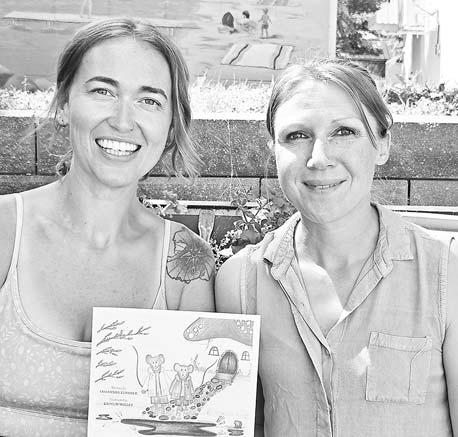
Two area women – Sandi Klunder and Kaitlin Willey – were brought together by mud to publish their children’s book
By RACHEAL FLINTOFT South Mountain Press
Some stories start with an idea. This one started with mud.
Sandi Klunder lives outside of Onanole with her husband and five kids, splitting her days between animals, gardening, and baking for the local farmer’s market. One spring, she noticed her two youngest couldn’t stay out of the mud.
“They would come in all dirty, yet the next thing I knew, they would be right back outside enjoying it over and over again,” Klunder said. “It just seemed like something I had to make into a story!”
That story became “Mooch and Suze”, a children’s book now sitting on shelves thanks to a partnership between Klunder and illustrator Kaitlin Willey, who lives outside of Sandy Lake with her husband and three boys on a grain and livestock farm.
The two women didn’t set out to make a book together. They found each other first.
“Sandi and I were connected through family and friends, both being homeschooling moms,” Willey said. “After meeting, we quickly became great friends.”
It was Klunder who made the connection between friendship and opportunity.
“Once Sandi found out I could draw, she told me about her children’s book and asked me if I would be interested in illustrating it,” Willey said. “I was so thrilled to be asked to work on ‘Mooch and Suze.’ Illustrating a children’s book had always been something I knew I would love to try!”
For Klunder, the writing itself came quickly. The rest of the process did not.
“I think initially I had the storyline written within two days,” she said. “Obviously there were a few changes here and there as the creating of the book took shape. However, I think it was a three-year process from writing to actually publishing.”
That three years covered a lot of ground. Klunder had to find an illustrator, then carve out time with Willey to talk through what pictures the story needed. After that came the drawing, making sure everything from cover to cover
was just right, and then a step Klunder had never faced before. “Finding a publisher was 100% foreign to me, and I wanted to make sure we went the right one for us,” she said.
None of it happened in a quiet office. Both women were building the book around full households. “In between all that we both have busy households, so we worked on the book when we could fit it in,” Klunder said.
When Willey’s first drawings started coming back, something shifted.
“When I saw the first few pictures Kaitlin had come up with, it just made the story come to life!” Klunder exclaimed. “Mooch and Suze came to life! Kaitlin did an awesome job of almost looking into my imagination and making the story come alive. We would get so excited with every new picture.”
For her part, Willey has found her own rhythm keeping several creative projects going alongside farm life. Beyond illustrating, she can be found at local markets selling artisan products and woodwork, fitting the work in between the hustle of the farm, and raising her boys. That same balancing act, of creative work squeezed into whatever hours a farm and a family leave behind, is exactly what

carried “Mooch and Suze” from an idea about muddy kids to a finished book.
Klunder is clear about who the story is for.
“The book is definitely for younger children,” she said. “Ages 0 to 6 would relate to and understand the story. Early readers ages 6 and up would be able to read it themselves fairly easily.”
But she hopes the book leaves young readers with more than a fun story about mud. “I hope they enjoy the adventures of Mooch and Suze and perhaps realize, even though they can’t always do what they want, sometimes mama’s ideas are better,” Klunder said.
It is a small lesson, drawn from an ordinary spring afternoon and two muddy kids who wouldn’t stay inside. For Klunder and Willey, that ordinary moment, and years of drawing, visualizing, and searching for the right publisher, came to fruition, turning into something they can now hand to families across the region.
Readers curious to meet the pair in person will have a chance this weekend. Klunder and Willey plan to be at Sporty’s Market on July 25 in Onanole, where copies of “Mooch and Suze” will be on hand.

Perogy & Kobassa Supper
Saturday, Aug. 8
4:30 6:30 p.m.
Sandy Lake Rec Centre MAIN MENU
Perogies, Sausage, Beans, Coleslaw, Ice Cream Refreshments: Iced Tea, Coffee FOOD SPONSOR/SUPPLIER East40,SandyLakeCo op


The community of Minnedosa has remained a regional hub for quality veterinary care for more than a century
DONALD BERGER
South Mountain Press
Editor’s note: the excellence of Minnedosa’s veterinary care has deep roots, with the current practice continuing a line of service that reaches back more than a century. This is part one of a three part series exploring vet care in the community.
In a rural community, veterinary care has never been only about animals. It has also been about farms, families, food production, animal health, companionship, emergency calls, and the trust that builds when people know proper help is close at hand.
That story in Minnedosa reaches back to 1911, when Dr. William Flowers Sirett began practising veterinary medicine in the community.
According to the Manitoba Historical Society, Sirett served Minnedosa and a wide surrounding area by Model T and horse. He retired 50 years later.
Dr. Jim Comrie recently spoke about that early history after portraying Dr. Sirett during Gossip in the Graveyard, a local cemetery
history event put on by the volunteer Assiniboine Theatre Company. Comrie noted that Sirett’s service area was “every bit as big” as the area served by the present clinic, though Sirett had to reach clients in a very different era. That image belongs to another time, but the underlying purpose has endured.
Producers still rely on veterinary care for livestock health, calving, herd management, disease prevention and emergency work. Families rely on the clinic for the dogs, cats, horses and other animals that are part of daily life.
The present Minnedosa Veterinary Clinic traces its modern roots to the provincial veterinary services district system. In October 1972, the Manitoba government announced that nine veterinary clinics built under joint federal-provincial rural development agreements would officially open that fall, including one in Minnedosa. The announcement described each clinic unit as including a veterinarian’s residence, a large- and small-animal hospital, and a laboratory. Comrie said the Minne-
dosa practice was established at its present location in 1972. He did not begin practising there that year, but later worked for a decade in the original building. Part of that original structure, he said, remains in use in the clinic’s large-animal area.
The current building was added about 30 years ago. Now, after decades of growth, the clinic is expanding again.
Comrie said the need for space has become obvious as the clinic has changed with the times. Staff has grown from two people to 11, and the client base has increased significantly. For a number of years, he said, the clinic team has been “crawling over top of each other” as they tried to keep up with demand.
The new addition, he said, is long overdue and reflects how veterinary medicine has evolved in the Minnedosa practice area. More than a building project, it is part of a larger effort to keep the clinic strong for the future.
Comrie described the goal as maintaining Minnedosa as one of the regional hubs of veterinary service in rural Manitoba, rather than allowing the service to fade as
some rural practices have elsewhere.
That concern is not theoretical. Rural veterinary care has faced pressure across Manitoba, with recruitment, retention, on-call demands, technology and changing client needs all affecting how clinics operate. Comrie said attracting veterinarians has been difficult, and the clinic waited about three years before finding another veterinarian to join the practice.
That veterinarian is Dr. Hanna Kristjanson, who recently joined the Minnedosa clinic. Her arrival gives the practice added capacity after a long search and will be the focus of the second story in this series.
Comrie said geography and fit both matter when recruiting veterinarians. A clinic has to offer the right kind of practice, but the person also has to want the community and location. In Dr. Hanna’s case, he said, the clinic finally found that fit. She is from Oak River and has been a welcome addition to the team.
The clinic has also indicated that Dr. Hanna’s arrival will strengthen its equine services. Comrie said the
practice expects a more intensive approach to equine medicine with her addition, which he described as most welcome.
In Comrie’s view, Minnedosa-area residents are fortunate to have this level of veterinary care close to home. Most clients, he said, understand and appreciate that reality. At the same time, he acknowledged that rural clinics also face occasional unreasonable expectations, especially when demand is high and staff are already stretched.
“We have to look after our staff, too,” he said.
The broader picture is one of continuity and renewal.
From Sirett’s early rounds by horse and Model T, to the establishment of the present clinic in 1972, to Comrie’s 40 years of service in Minnedosa, to the arrival of a new veterinarian and a major clinic addition, veterinary care has continued to adapt to the needs of the community.
Comrie’s own story is closely tied to that community. A Minnedosa native, he was born and raised here before graduating from the
Western College of Veterinary Medicine in Saskatoon in 1983. He began his career in Souris before purchasing the Minnedosa practice in June 1986. Along with his veterinary work, he manages a small mixed farm with annual crop production and a commercial Speckled Park beef herd, and remains active in musical theatre and community choral groups. That mix of professional service and community life is part of what has made veterinary care such a steady presence in Minnedosa. Some services in a rural community are highly visible. Others are quieter, but no less essential. Veterinary care is one of those backbone services – there when a calf is struggling, a horse needs treatment, a family pet is ill, or a producer needs help before a small problem becomes a larger one.
Minnedosa’s veterinary story is not just about one clinic, one building or one veterinarian. It is about stewardship, continuity, adaptation and trust.
And after more than a century, that story is still being written.
Manitoba RCMP is urging everyone to take steps to stay safe following a tragic weekend on the water, on the roads and on the trails that saw two different suspected drowning incidents and two fatal collisions in a 39-hour period – all involving young people.
These incidents include:
•On July 18, an 18-yearold Dauphin male died following a single-vehicle collision on Highway 20 near Road 156 North, in the Rural Municipality (R.M.) of Dauphin. It appears the driver of the vehicle may have lost control while rounding a corner and went into the ditch.
•On July 18, two boys –ages 13 and 10 – are believed to have slipped into fastmoving rapids at Nutimik Lake in Whiteshell Provincial Park and did not resurface. The RCMP Marine Unit – supported by the Hutterian Emergency Aquatic Response Team (HEART) and Lac du Bonnet RCMP – continue to search for the youths today, with divers searching in the falls while patrols are made along the shoreline.
•On July 18, a 16-year-old male youth from Virden died following a collision in Oak Lake, in the R.M. of Sifton. The youth had been riding his dirt bike with friends when he struck an unmarked guy-wire.
•On July 19, an 18-year-


old male went swimming at a gravel pit in the R.M. of Hanover, went under the water and didn’t resurface. Divers from the RCMP URT joined St. Pierre-Jolys RCMP officers at the scene.
“The death of any young person is a tragedy that devastates their families, friends and entire communities. We offer our deepest sympathies to those who have been affected by these tragedies,” said RCMP spokesperson Melanie Roussel. “We know summers in Manitoba have so much to offer, but we are urging everyone to take precautions and make safe choices — whether you are on the water, on the road or riding off-road.”
Additionally, there were some close calls, including:
•On July 18, an off-road vehicle rolled over on Gosselin Road in the R.M. of De Salaberry, injuring three youth – a 15-year-old female, 13-year-old female, and nineyear-old male. All were sent to hospital with minor, non-
life-threatening injuries.
•On July 19, a motorcyclist lost control of his bike on the off-ramp entering Portage la Prairie, causing the bike to tip over. The 47year-old driver was taken to hospital with what appeared to be serious injuries but has since been upgraded to stable condition.
The RCMP encourages Manitobans to take the following advice when on the water:
•Don’t swim alone; Don’t overestimate your swimming abilities; Be aware of currents and strong waters; Never dive head-first into a body of water; With children, don’t rely on water wings, swim rings and other inflatable toys to replace adult supervision; Children should be kept within an adult’s sight and reach at all times when in and around bodies of water; and Wear a lifejacket while boating or doing water sports. When driving on the road, motorists should follow the rules of the road, drive to conditions, wear a seatbelt and drive sober.
For people riding on offroad vehicles (ORV), drivers are reminded to: Learn about the area you’re riding in and ensure you are carrying your cellphone and/or GPS device; Tell someone where you’re going and when you expect to be back.

5:00 to 8:00 p.m.
to 5:00 p.m.

Better yet, ride in a group of two or more; Wear your seat belt if your ORV is equipped; Not be under the influence of alcohol or drugs; Not carry a passenger unless your ORV is designed for two riders; No person should be operating an ORV without a helmet – and it must be securely fastened; No person under the age of 14 is allowed to operate an ORV unless supervised and accompanied by an adult; Not operate an ORV on a roadway. Crossing a roadway is permitted if you hold a valid driver’s license.
On July 14, RCMP responded to a report of a collision between a train and a van west of Portage la Prairie. The collision occurred on Road 40 West, in the R.M. of Portage la Prairie. It appears a southbound Manitoba Sheriffs van collided with a train, causing the van to roll and land in the ditch. The driver, a 28-year-old Portage la Prairie male, died at the scene. The passenger had minor injuries and was transported by paramedics to hospital as a precaution. No one else was inside the vehicle at the time of the collision. RCMP are investigating with assistance from CN Police and Manitoba Workplace Health and Safety.
On July 13, Killarney
RCMP received a report of an assault that occurred in the R.M. of Killarney-Turtle Mountain. RCMP learned the 19-year-old male victim was preparing to leave the community in a vehicle when he was attacked by multiple males who held him down, wrapped him in a blanket and duct-taped his ankles and hands. The suspects then assaulted him with a stick, took his two cellphones and two small knives, loaded him in the back of an off-road vehicle and dropped him off near a wooded area a distance away. The suspects – three of whom were partially masked – then left. The victim was eventually able to free himself from the tape and make it home, at which point RCMP were called. Four suspects from the R.M. of Killarney-Turtle Mountain have since been arrested in connection with the incident, ranging in age from 16 to 31. A 31-year-old male, a 22-year-old male, and a 26-year-old male are each charged with: Forcible confinement; Disguised with intent to commit offence; Overcoming resistance to the commission of an indictable offence; and Robbery. A 16-year-old male is charged with: Forcible confinement; Robbery with weapon; and Overcoming resistance to the commission of an indictable offence. All were released by the courts on release orders.


Friday, July 24, 2026
Dauphin: The Herald –Mike Hlady of Garland recently won a bronze medal at the 2026 National Skills Competition in Toronto, ON. Representing Red River College Polytechnic, Hlady won a gold medal in bricklaying at the provincial skills competition in April, allowing him to advance to the national event at the end of May where the same triangle project (lots of leveling and plumbing) was presented with a few changes.
Russell: The Banner –Thirty-six years ago, Heather Betke typed out the application to the province for Russell’s first daycare, on a typewriter. Now she is retiring. The daycare opened on Jan. 8, 1990 with four staff and Betke was the director. Presently, there’s a staff of 25 full-time, permanent employees and about five casuals. When the daycare was originally opened, it was licensed for 40 spaces. Today, the facility can hold 124 kids.
Moosomin: The WorldSpectator – Harli Raiwet of Whitewood won both at the local Whitewood School level and the provincial level for her Heritage Fair project on Lake Athapapuskow (a large, deep lake located in northern Manitoba near Flin Flon) of which the far western edge is located in Saskatchewan and Pine Point Lodge (fishing camp where she spends summer vacation). The 10 year old said it was a fun project to research, and interesting to learn abouthow the Indigenous people go fishing and about the Canadian Shield.
Roblin: The Review – The Northern Tornadoes Project at Western University in London, ON confirmed it was a tornado that ripped through the Doug and Marlene Lyon’s farm about 20 kilometres south of Roblin around 8:05 p.m. on June 28. The damage was assessed as an EF1 tornado, with an estimated maximum wind speed of 150 km/h. Two days prior, the village of Pelly, SK was also a victim of a tornado, which left some homes and garages totally destroyed.
Baldur / Glenboro: The Gazette – Mark Custance, the successful Progressive Conservative candidate for Turtle Mountain believes in rural Manitoba and common sense leadership. An entrepreneur and father of five, Custance and his wife coown an innovative sustainable agricultural innovative that grows fresh produce for rural Manitoba communities. If elected, Custance will succeed outgoing MLA Doyle Piwniuk, who announced his
from MB/SK weeklies
retirement in late 2025 following 12 years of service to Turtle Mountain and the former constituency of ArthurVirden.
Moosomin: The WorldSpectator – Farmers have access to very advanced technology for their fields today, but a family from the Rocanville area is celebrating technology from a different era. Heather and Tim Graham, who run Cornucopia Gardens near Rocanville on Highway 8, use a tractor (a 1951 International W4) in their garden that has been used by four generations of their family, sharing a unique story.
Killarney: The Guide –Once again, the community of Killarney had lady luck on its side with great bands and weather for its Kick-Off To Summer festival, hosted by the Killarney Community Events Committee. Organizer Liana Smith said the turnout was one of the best attended concerts with over 2,300 tickets sold this year for Doc Walker, Jo Jo Mason, and Jess Moskaluke.
Moosomin: The WorldSpectator – Blade Across the Prairies featuring Dion Campbell of Rocanville rollerblading for five days from Walsh, AB to the Saskatchewan-Manitoba border past Fleming, raised $75,000. The initiative was to raise funds for structural repairs on the rink in the community of Rocanville, at which a July 2 celebration saw Campbell congratulated.
Whitewood: Grasslands News – The 2025 Canadian Western Agribition posted its strongest financial performance since the International Trade Centre opened in Regina, generating roughly $450,000 in profit, however, facilities remained a concern. That concern will go by the wayside for the 2026 event, as the Brandt Group has announced plans to build a new $8.5 million livestock facility at REAL District to replace space being lost through the site’s redevelopment. The new structure will allow all livestock to remain on site during this year’s show, scheduled for Nov. 23-29.
Virden: The EmpireAdvance – The village of Kenton, located at the junction of Highway 21 and Provincial Road 259, celebrated a new commercial kitchen in the Kenton Community Hall and playground as part of their Canada Day celebrations.

DARRELL NESBITT/SOUTH MOUNTAIN PRESS
Heading in after a morning of fishing on Sandy Lake, this trio of fishing buddies are among the many boaters who crave the sport of fishing, especially when the docking system is as pure and simple as the one found in the community. Known for its rich Ukrainian heritage and lakefront recreation, the scenic, four-season farming and resort community sits just 20 minutes south of Riding Mountain National Park, within the Municipality of Harrison Park.





Matthew Kroeker Journeyman Mason
Tile Kitchens, Baths Waterproof Showers
Steam Rooms

Masonry Field Stone, Brick, Veneers Fireplaces Masonry Heaters
All repairs, renovations, and new construction Cell: 204-232-9797
Specializing in Complete Cottage Lot Preparation




This is the last article in a four-part series that is devoted to growing apples. These last cultivars are some of my personal favourites! So read on and enjoy learning more about the apples we grow right here!
‘Patterson’ was released by Dr. Cecil Patterson of the University of Saskatchewan in 1960. Fruit is 6 cm, greenish yellow with orange blush. It matures in late August. Flesh is white, soft, sweet and slightly acidic. It is good for fresh eating, cooking, drying and juice. Will store well for six weeks. It is heavy yielding and must be thinned to one apple per cluster to avoid biennial bearing. Trees are hardy to Zone 2a and resistant to fire blight.
‘September Ruby’ has 6-7 cm round and slightly flattened apples. Fruit also looks slightly ribbed. The base colour is light green with a bright red over colour that may be solid or striped. Flesh is greenish-white and moderately acidic. It is good for fresh eating, cooking, and juice, and will store in good condition for up to four months. Trees are semi-dwarf, upright, spreading with good branch habit. It is hardy to Zone 2a and moderately susceptible to fire blight.
‘Sunnybrook’ fruit is 6.5 cm in diameter, round, yellow, striped with red and mature in early September. Flesh has coarse texture, is slightly acid and sweet but susceptible to water core. It is good for cooking and fresh eating and will store for about four weeks.
Late Season Apples – harvested late September to late October:
‘Collet’ is 6-7.5 cm in diameter, round to cone shaped and light green striped with red. Flesh is white, fine textured, crisp, sweet and slightly acidic. It is good for fresh eating and cooking. It will store for 10 weeks. Trees are medium-sized and round to pyramidal in shape. It requires a protected site in Zone 3 and 2b.
‘Edith Smith’ a seedling of ‘McIntosh’ selected by Leonard Smith of Lucky Lake, SK and introduced in 1964. Fruit is 6-7 cm in diameter, yellowish green washed with pale orange-red. The skin is somewhat tough and bitter. Flesh is greenish-white, medium texture, slightly tough and pulpy. It is fair for fresh eating and good for cooking. It will store

well for up to three months. Plants are hardy to Zone 2b but highly susceptible to fire blight.
‘Goodland’ fruit is 6-8 cm in diameter, light green washed with red. Flesh is creamywhite, fine textured and slightly acid. It is good for fresh eating and cooking and will store for up to 20 weeks. It is susceptible to chlorosis where soil pH is much higher than 7 and is only reliably hardy to 3a.
‘Haralson’ was released from the University of Minnesota in 1923. ‘Haralson’ has been used in much breeding work of hardy apples. Fruit is 6 cm in diameter, round to cone shaped, greenish-yellow almost completely covered with red. Flesh is slightly tough. It is good for cooking and fair for eating. It stores for up to 25 weeks with flavour being enhanced during storage and is only reliably hardy in Zone 3a if growing in a protected microclimate.
‘Luke’ is an apple of unknown parentage that originated with John Luke of Rosthern, SK, and was introduced by the Morden Research Station in 1961. At 9 cm in diameter, ‘Luke’ is the largest apple that can presently be grown on the prairies. The fruit takes on a barrel shape, has a green under colour that is mottled and heavily streaked with dark red. It is fair for eating fresh, and good for cooking. It keeps for 10 weeks. The tree is large, vigorous and rounded to spreading, but fruit is late to ripen, and may be damaged by frost on all but the longest seasons.
Hanbidge is the Lead Horticulturist with Orchid Horticulture. Find us at www.orchidhort.com; by email atgrowyourfuture@gmail.com or on facebook @orchidhort.








Q: I am so confused about vaccines. Can you give me some reliable information about them? – Candice R., San Diego, CA
A: I am glad to report that there’s important news concerning vaccines that I think will help you decide to take advantage of their remarkable, and sometimes unexpected, benefits.
Example 1: A new study in the Annals of Internal Medicine tracked half a million older adults and found that, over the course of four years, those who received the two-shot shingles vaccine slashed their risk of developing dementia by 24%. And even getting one shot lowered the risk a bit (around 6%).
And recently, the American College of Gynecology (ACOG) has, for the first time, released a recommended immunization schedule for pregnant women. It says it’s smart to get the inactivated or recombinant influenza vaccine and the COVID-19, the Tdap (tetanus, diphtheria and whooping cough) and maternal RSV vaccines. This differs from the current Centers for Disease Control and Prevention’s recommendations for pregnant women by including the flu vaccine (it’s only recommended annually by the CDC) and the COVID-19 shot. Thirteen medical societies and health organizations, including the American Academy of Family Physicians and the American Academy of Pediatrics, endorse the ACOG recommendations.
Also, another new study in the Annals that looked at

data on 2.5 million people confirms that receiving the COVID-19 and flu vaccines on the same day is safe. I urge you to discuss the full range of available vaccinations (including those for measles, mumps and rubella, and polio) with your doctor and discover what you and your children can benefit from and when you should have them. (For example, you can protect your kids from cervical and throat cancer by giving them the HPV vaccine series at age 11 or 12). Rekindling life-threatening diseases makes no sense.
Q: I feel so upset and stressed, it’s like I am literally at the breaking point. What can I do to become my old self again, when I could laugh things off or find solutions and move forward more easily? – Frannie H., Tulsa, OK
A: Whether you are contending with challenging personal issues – illness, family conflict, financial struggles, relationship woes – or worries about the world in gen-
eral, stress can ruin your sleep, make it harder to get along with folks, give you aches and pains, and cause body-wide inflammation. That’s just how we are constructed. But fortunately, we are also made to become resilient, tamp down stress and face the world with a sense of possibility and joy.
The secret to what Harvard Medical School says is “anti-fragility” isn’t bubble wrap; it’s creating a posse that offers support, taking time for yourself (just 15 minutes a couple times a day),
meditating, enjoying mindsoothing nature, and understanding that facing challenges is actually easier than turning away from them, at least in the long run.
You cannot avoid life’s stresses, but you can decide to view them as obstacles to be dealt with and overcome. I know firsthand (I’ve been doing it for years) that you can vote for your improved health and happiness by committing to breaking bad habits (I was addicted to diet soda years ago) and enjoying physical activity, improved








nutrition and upgraded sleep habits. These kinds of positive choices provide enormous power physically and emotionally, so that you can shed chronic stress and achieve a happier, healthier ActualAge.
Let me remind you of the measures of health that I recommend you keep track of and optimize: blood pressure, LDL and triglycerides, blood sugar, your waist circumference and your stress level.
For help facing your stressors and rekindling life’s small pleasures, dive into
“The Great Age Reboot” and let me know how you are doing!
Health pioneer Michael Roizen, M.D., is chief wellness officer emeritus at the Cleveland Clinic and author of four No. 1 New York Times bestsellers. Check out his latest, “The Great Age Reboot: Cracking the Longevity Code for a Younger Tomorrow,” and find out more at www.4YOUngevity.com. Email your health and wellness questions to Dr. Mike at drmikerealage@gmail.com.


DEADLINE: Tuesday at 12:00 Noon
Place your Classified Advertisement by Phone, Fax, Mail or E-mail
Ph: 204-759-2644 Ext. 1 Fax: 204-759-2521 E-mail: smpclassified@mymts.net
Mail: Nesbitt Publishing Ltd., Box 160, Shoal Lake, MB, R0J 1Z0

Reach the entire Province: $189.00 (49 weekly papers) Westman or Eastman regions: $119.00
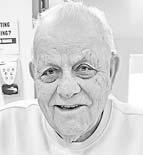
HNATIUK: It is with sadness that we announce the passing of Mike Hnatiuk on July 12, 2026 at the Sandy Lake Personal Care Home at the age of 106 years. The second youngest of 10 children for Effie and Donald Hnatiuk, Mike was born on the family farm in Sandy Lake, MB on Nov. 4, 1919. In the end, Mike would spend 101 of his 106 years residing in the town he was born in. He left at the age of 19 to enlist with the Canadian Armed Forces where he served a total of five years, assigned to the Royal Canadian Corps of Engineers during WWII. His unit served in France, Belgium and Holland. Upon returning from overseas, he married Hazel Junop from Saskatchewan and they had three children. Mike went on to purchase and run his own farm in the Sandy Lake area and had a fulfilling 40year farming career of which he was very proud. Upon retiring, he and Hazel built a house in the town of Sandy Lake, which Mike would reside in for another 35 years. He devoted much of his time in retirement to helping fellow farmers in the area with odd jobs, to the Ukrainian Orthodox Church in Sandy Lake and the Royal Canadian Legion Branch 184 Sandy Lake. Mike might be described by some as an accidental and reluctant centenarian. He was strong and unwavering in his belief on a great many subjects, one of which being that he was actually a year older than his birth certificate proclaimed. He was a fierce propo-

nent of the healing powers of eating raw garlic by the clove. He didn’t believe in food expiration dates, he had a lifelong sweet tooth and frequently requested fried chicken, kobassa, big macs and cinnamon buns be smuggled into his room at the Sandy Lake Personal Care Home. For many decades, his afternoon “medicine” required the use of a shot glass and a toast of “diborja”! Mike will be fondly remembered by his son Dale Hnatiuk of Winnipeg, daughter Evelyn Lockhart of Kelowna, BC, grandchildren Candace, Sheldon, Cheryl, and Michelle (Jason), great granddaughter Presley, and numerous generations of nieces and nephews. He was predeceased by his wife Hazel in 2012, his daughter Sharon in 2007, and by all nine of his siblings. The family wishes to express their profound gratitude to the amazing staff at the Sandy Lake Personal Care Home for the outstanding care they provided Mike over the past seven years. Their tireless dedication and compassion never went unnoticed by Mike and his family. We would also like to add a very heartfelt thank you to the Wozney family for their companionship and support to Mike during the last several years of his life. Daniel, Jennifer, Jessie and Emma, you are all shining starts. A service was held in Shoal Lake, on July 17, 2026 followed by interment at the Sandy Lake Municipal Cemetery.

Classified Advertising Rates
Minimum 25 words $7.00, additional words 25¢ (plus GST) Extra weeks are one-half original cost • Not responsible for errors in handwritten submissions

Special rate for Obituaries, Cards of Thanks, In Memoriams
Minimum 25 words $7.00, additional words 20¢ (plus GST) • It is preferred if Obituaries can be emailed. Any obituary copy that is typeset by our staff will be subject to proof approval prior to publication. No discount for municipal or government ads • Ads not pre-paid by Thursday Noon are subject to a $2.50 billing charge
Erickson Midsummer Fair, Sunday, July 26, 11:00 a.m. to 8:00 p.m., Erickson Arena. Antique, craft, vegetable and flea market tables inside arena. Parade, poker derby, barbeque, 0% alcohol beverage garden and entertainment. For parade entries call Laurence 204-795-2082, for sale tables call Martie 204-720-9577.
Nesbitt Publishing will be closed for Staff Holidays July 31 to Aug. 16. Our last paper will be out July 31. No Crosssroads This Week, Minnedosa Tribune or South Mountain Press papers will be published on Aug. 7 and 14. We return to work on Aug. 17 with our next paper out on Aug. 21.
Seeking dependable, hardworking pre-engineered building personnel for northern Yukon. IMP panel experience preferred; will train the right candidate. Call 780902-3951.
Caught you looking. Get your message out and be seen. Hiring Class 1 Drivers? Selling a home,

boat, RV, or property? Selling online? Having an online meeting? Let us help you book your blanket classified ads and Response and Power Builders ads across Manitoba to increase your marketing presence. Your ad will be seen in the MCNA Member Newspapers, in over 368,000+ homes in Manitoba. Please call this newspaper 204-759-2644 to book now or call MCNA at 204-947-1691 for more details or to book ads. Taking advantage of our great pricing. MCNA - Manitoba Community Newspapers Association. www.mcna.com
Did You Know? We print Personal and Business Cheques! 100 Personal Cheques $113.99 + taxes, call for pricing on Manual Business Cheques and Laser Business Cheques. Call Connie at 204759-2644 Ext. 2 or email ctwprinting@mymts.net. Nesbitt Publishing, Shoal Lake.
Licensed gun dealer looking for firearms in all classes, and anything firearms related. Inheritance assistance provided. Can store handguns during the ban. Call or text Keith 204-471-9015.

Private mortgage lender. All real estate types considered. No credit checks done. Deal direct with lender and get quick approval. 403-543-0927. www.firstand secondmortgages.ca
Attention to all Nesbitt Publishing customers! We have been having problems with the emails that we send out going to people’s junk or spam folders by mistake. So if you are expecting a reply from an email or an invoice please take a moment to check your junk and spam folders just in case.
550+ items! VISIT www.gartonsauction.com for equipment details, pictures, and bidding. TRACTORS, VEHICLES, TRAILERS: Case 830 diesel tractor, cab; 1993 JD 790D long track excavator, buckets; Case David Brown 1210 diesel tractor, 3pth; 1994 Ford L8000 diesel tandem truck, 8.4L Cummins, auto, 15’ gravel box, etc; two flat deck gooseneck trailers; HORSE GEAR: Caboose on bobsleigh; bobsleigh, covered wagon, buggy; horse harness, saddles, collars, bells, blankets, feed tubs, etc; hay bales; FARM EQUIPMENT: Leon 3-bat stone picker; manure spreader; 10’ wide rock rake, pto drive; mowers, bale spear; water tanks, barrels; hydro poles; YARD, GARDEN, SHEDS, RECREATION: Jacobsen golf course 11’ mower, etc; snowblower; garden tools, equipment, décor; garden shed, 10’x13’ storage sheds, plywood, 10’x14’ sports gear; patio set; ice auger, fishing shack; TOOLS AND SHOP: JD hot water pressure washer, 3500psi; saws, drill press, jointer; router 14”x40”/stand; 2014 generator/light plant, 6kw, Kubota 3cyl diesel, 3384 hrs; welder, welding supplies; chainsaw sharpener 12v; small tools, hardware, shop supplies; electrical, automotive, building materials; storage cabinet, tool chest, etc; telescopic manlift, diesel engine; solar panels; live traps, etc; HOUSEHOLD, OUTDOOR COOKING, OTHER ITEMS: Sony stereo system; propane stove, burners; sink/stand/burner; stainless deep fryers, cook pans; smoker, barrel size 18”x41” propane bbq/side burner; large propane grill; Coleman lantern; 142L cooler; meat cutting