South Mountain P re s s
JULY 17, 2026
JULY 17, 2026
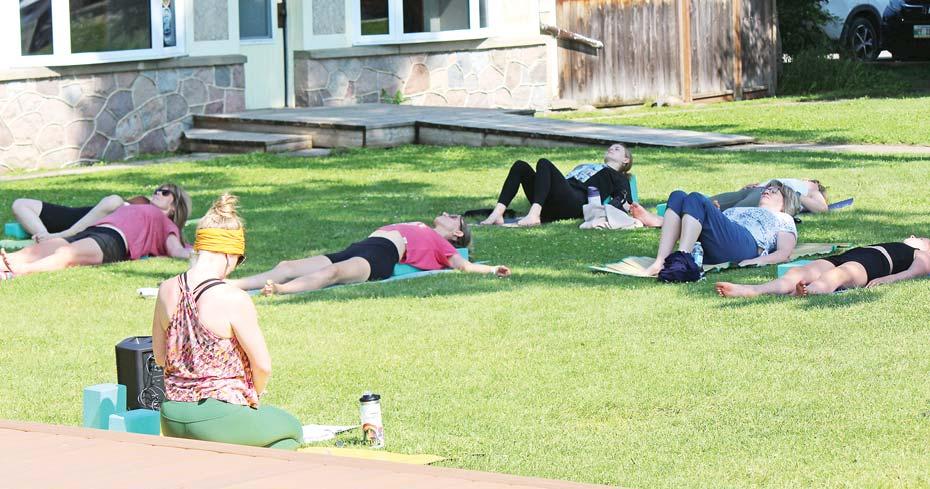
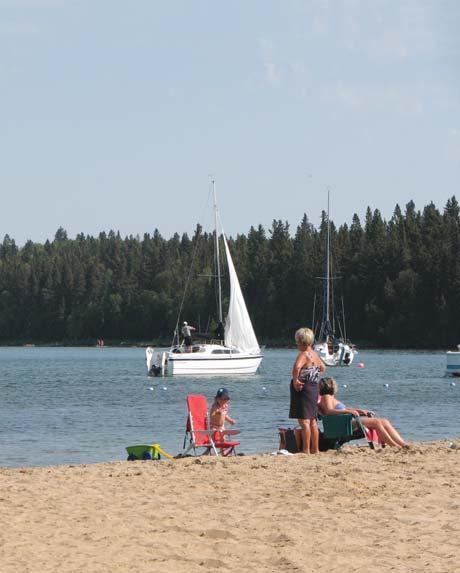
A little relaxation in between yoga movements was enjoyed by a group of women who came together for a peaceful morning of mindfulness on Friday, July 9 in the heart of Wasagaming. Next weekend, the 8th Annual Yoga by the Lake, a special class supporting the CancerCare Manitoba Foundation (CCMF), is an all levels, family-friendly morning class open to everyone on the beautiful shores of Clear Lake.
Insurance adjusters across the region are struggling to reach flood-soaked fields, leaving farmers waiting on crop damage claims that cannot move forward until someone can get out to inspect the loss.
To date, more than 2,000 claims have been filed across Manitoba and Saskatchewan so
far, and the number is still climbing.
The Canadian Crop Hail Association said the claims stem from storms between June 22 and July 5, which brought golf ball to baseball sized hail to parts of the region, along with damaging wind and widespread flooding. Crops affected in Manitoba include barley, canola, corn, edible beans, fababeans, flax, lentils, mustard, oats, peas, rye, soybeans, sunflow-
ers, and wheat.
Communities named in the report include Hamiota, Kenton, Minnedosa, Newdale, Oakburn, Rivers, Roblin, Rossburn, Shoal Lake, Strathclair, St. Lazare, and Virden, among others.
While hail is what triggered many of the claims, insurers said flooding remains the bigger obstacle. Brian Bernauer, with Rain and Hail Insurance Services, explained the problem.

“These conditions are proving to be a challenge to get to field locations with only back road access,” Bernauer said.
Adjusters are working to set up appointments with producers, but muddy, washed-out roads across the Parkland and Westman regions are slowing that process down. Until an adjuster can physically inspect a field, a claim cannot move forward.
Farmers with an existing Agri-


Insurance contract through the Manitoba Agricultural Services Corporation, known as MASC, are covered for both hail and flood-related losses under the same policy. AgriInsurance protects against production and quality losses caused by drought, excess moisture, flood, hail, fire, wind, frost, and several other natural perils.
SEE CLAIMS PAGE 2

Producers who need to replant a damaged crop can qualify for a Reseeding Benefit at no extra premium, and Excess Moisture Insurance specifically covers fields too wet to seed at all.
Hail insurance itself is a separate, field-by-field add-on available only to producers who already hold an AgriInsurance contract. MASC requires claims to be filed within 72 hours of discovering the damage.
Farmers who believe their crops have been damaged are urged to contact a MASC Service Centre as soon as possible to begin the claims process.
Beyond crop losses, the Manitoba government has also rolled out broader financial help for anyone whose home or property was damaged in the flooding. The Manitoba Flood Recovery Program, launched July 10, offers one-time grants to
homeowners and tenants in the hardest-hit communities who do not have adequate insurance to cover their losses.
The province has also begun mailing $500 cheques to the roughly 1,800 people who have applied for Disaster Financial Assistance, with more advance funding to follow.
The full scope of crop losses will not be clear for some time. Adjusters expect claim numbers to keep rising as producers continue assessing their fields, and as access improves in the areas hit hardest by flooding.
Producers can reach a MASC Service Centre to file a claim or ask questions about coverage. Information on the Manitoba Flood Recovery Program and Disaster Financial Assistance is available through the province.
It’s one of the most anticipated moments of the year for Heritage Co-op members: patronage cheques have begun arriving in mailboxes across the region, returning $3.77 million in cash and equity to the people who help make the co-operative strong – its members.
This annual return is more than just a cheque; it’s a celebration of what can be achieved when communities come together to support a business they own.
“Sharing our success with members is at the heart of what it means to be a cooperative,” said Leanne DeVliegere, CEO of Heritage Coop. “Every purchase, every visit, and every interaction helps build something bigger, and patronage is how we say thank you.”
The return follows another strong year for Heritage Co-op, with $280 million in sales and $8.1 million reinvested into local facilities, equipment, and digital systems. These investments help ensure the co-op continues to grow while staying rooted in the communities it serves.
“Patronage does not happen by chance,” DeVliegere added. “It comes from people doing the right things every day and creating a place that members choose because they know they’ll find real value.

DARRELL NESBITT/SOUTH MOUNTAIN PRESS
Exercise in one form or another is a regular daily scene within the townsite of Wasagaming. This movement was photographed on the beautiful sunny morning of Friday, July 10, as vehicles of families visiting the beach, the trails, the dining establishments line the parking spaces on Wasagaming Drive – a one of a kind excursion any time of the day. Noted as the main townsite in the popular tourist destination – Riding Mountain National Park – the attractions are plentiful and beautiful.
It’s something we can all take pride in.”
For members, the benefit is both immediate and longterm. The cash portion provides a welcome boost this summer, while the equity portion remains invested in the co-operative, growing relative to the member’s annual spend. Eligible members can apply for equity to be paid out in a lump sum at age 65, providing meaningful value later in life.
For Heritage Co-op, it’s also a moment to reflect on what makes the co-operative unique.
“We’re a different kind of business,” said Brad Ross, Board President. “We’re owned by the people we serve, and the profits stay local, reinvested in our communities and returned to our members. That’s what makes patronage so meaningful.”







South Mountain Press
Hilltop Baptist Church has served the communities of Clanwilliam, Clear Lake, Erickson, Onanole, and Sandy Lake for 130 years, and this summer, members feel that the church is entering one of the most hopeful chapters in its long history.
On June 28, Pastor Merlito Soriano and his wife Nalyn were installed at Hilltop Baptist Church, in a service that drew 115 people and left the building overflowing.
“We feel God’s direction in bringing Pastor Merlito Soriano and his wife Nalyn to Hilltop,” said Karen Shindruk, a member of the congregation.
The couple’s connection to the area came through a series of small steps the congregation now sees as God’s leading. Pastor Merlito was visiting family in Neepawa last winter when Gerald Parrott, of First Baptist Church in Neepawa, asked if any local churches were interested in a Sunday morning speaker. Hilltop said yes, and Pastor Merlito preached there twice.
“The congregation was blessed by his message,” Shindruk said.

After his second visit, one of Hilltop’s elders asked whether he might be looking for a pastoral position in the area. The congregation followed up with a proposal,
asking him to consider the pastorship at Hilltop. What came next took nearly a year of paperwork and patience.
“The church is grateful to the immigration officer Ingrid Kemp for her diligence and hard work in facilitating the process,” Shindruk said.
Pastor Merlito and Nalyn are no strangers to building a congregation from the ground up. More than 20 years ago, they founded a church in the Philippines that grew to about 1,000 people, with 700 in membership. It had active children’s, youth, women’s and men’s ministries, and the couple became known for training up new leaders. Moving to Manitoba meant leaving behind three grown sons and other family.
“Hilltop has been searching for a pastor for a number of years and we believe this couple is an answer to our prayers!” Shindruk exclaimed.
Since arriving, the Sorianos have thrown themselves into life in the Erickson area.
Pastor Merlito has planted a vegetable garden, and flowers inspired by the Philippines now grow around the church building. The couple has also introduced the community to Filipino cooking.
“Our community has been
blessed by the Filipino extravagant cuisine,” Shindruk added.
Shindruk described Pastor Merlito as a man with a humble, servant heart who connects with people on a personal level and meets them where they are at.
“He is eager to spread the gospel message of what Jesus Christ has done for us,” she said. “He works tirelessly, rarely missing opportunities to connect.”
At the induction service on June 28, guests brought greetings and were recognized for their part in bringing the pastor and his wife to Hilltop. The couple sang for the congregation and received a certificate marking their new position and membership. Afterward, everyone sat down to a traditional Filipino feast.
The history behind that celebration runs deep. Hilltop Baptist Church turns 130 on July 17, chartered under the Swedish Baptist Conference by a small group of pioneering Swedish immigrants. Services were held in Swedish until the switch to English in 1940. The congregation worshipped in homes at first, then built its first church out of local logs in 1898. The present building went up in 1926.
Today, the church holds Sunday morning worship and a children’s Sunday school, along with men’s and women’s Bible studies led by lay leaders during the week. The ladies host a yearly spring tea and take turns leading a monthly service at the personal care home. Some families attend Hilltop only a few weekends each summer, treating it as their summer church home, while others are there year-round and call it family.
Shindruk said the congregation has already noticed growth since the Sorianos arrived and expects that to continue.
“We have already witnessed the church growing and are confident that it will continue as we trust our Lord and Saviour Jesus to direct us,” she said. “Our goal is that we will reach people with the hope of the gospel, of Jesus’s sacrifice on the cross.”
Hilltop Baptist Church welcomes all to worship Sunday mornings at 11:00 a.m. The church is a quarter mile north on Highway 262 off Mountain Road. Vacation Bible School runs Aug. 4 to 7, from 1:00 p.m. to 4:00 p.m., for children aged five to 12.
DARRELL NESBITT
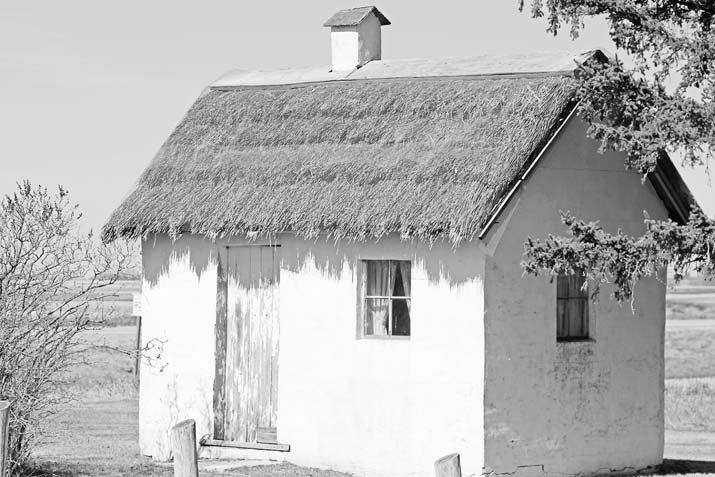
From Japan to Chile to the English Cotswolds, travellers can discover 11 thatched roof villages that celebrate the historic building method. Closer to home, visitors to the Yellowhead Municipality and the hamlet of Menzie on Highway 45 can stop and take a peak in the window of this very small but popular design used by homesteaders, including those of Ukrainian descent. Manitoba’s most prominent surviving Ukrainian thatched-roof house is the 1910 Elaschuk House located on the Keystone Pioneer Museum grounds near Roblin.
Did you know this? If not, you do now, all thanks to a reliable senior citizen – Dennis Basso – who calls Shoal Lake home, alongside his wife Marlene. Dennis is the brother of the late Wayne Basso, who not only taught but also held the principal position for a number of years at the Shoal Lake School, while enjoying life with his wife Isobel and daughters, Diana and Donna. We hope you enjoy this trivia…
As incredible as it sounds, men and women took baths only twice a year (May and October)! Women kept their hair covered, while men shaved their heads (because of lice and bugs) and wore wigs. Wealthy men could afford good wigs made from wool. They couldn’t wash the wigs, so to clean them they would carve out a loaf of bread, put
smpnews@mymts.net the wig in the shell, and bake it for 30 minutes. The heat would make the wig big and fluffy, hence the term “big wig.” Today we often use the term “here comes the Big Wig” because someone appears to be or is powerful and wealthy. In the late 1700s, many houses consisted of a large room with only one chair.

Commonly, a long wide board folded down from the wall, and was used for dining. The “head of the household” always sat in the chair while everyone else ate sitting on the floor. Occasionally a guest, who was usually a man, would be invited to sit in this chair during a meal. To sit in the chair meant you were important and in charge. They called the one sitting in the chair the “chair man.” Today in business, we use the expression or title “Chairman” or “Chairman of the Board.”
Common entertainment included playing cards. However, there was a tax levied when purchasing playing cards but only applicable to the “Ace of Spades.” To avoid paying the tax, people would purchase 51 cards instead. Yet, since most games require 52 cards, these people were thought to be stupid
or dumb because they weren’t “playing with a full deck.”
Early politicians required feedback from the public to determine what the people considered important. Since there were no telephones, TV’s or radios, the politicians sent their assistants to local taverns, pubs, andbars. They were told to “go sip some ale” and listen to people’s conversations and political concerns. Many assistants were dispatched at different times. “You go sip here” and “You go sip there.” The two words “go sip” were eventually combined when referring to the local opinion and, thus we have the term “gossip.”
At local taverns, pubs, and bars, people drank from pint and quart-sized containers. A bar maid’s job was to keep an eye on the customers and keep the drinks com-
ing. She had to pay close attention and remember who was drinking in “pints” and who was drinking in “quarts,” hence the term “minding your “P’s and Q’s.”
One more: bet you didn’t know this!
In the heyday of sailing ships, all war ships and many freighters carried iron cannons. Those cannons fired round iron cannon balls. It was necessary to keep a good supply near the cannon. However, how to prevent them from rolling about the deck? The best storage method devised was a square-based pyramid with one ball on top, resting on four resting on nine, which rested on 16. Thus, a supply of 30 cannon balls could be stacked in a small area right next to the cannon. There was only one problem... how to prevent the bottom layer from sliding or rolling from
under the others. The solution was a metal plate called a “Monkey” with 16 round indentations. However, if this plate were made of iron, the iron balls would quickly rust to it. The solution to the rusting problem was to make “Brass Monkeys.” Few landlubbers realize that brass contracts much more and much faster than iron when chilled. Consequently, when the temperature dropped too far, the brass indentations would shrink so much that the iron cannonballs would come right off the monkey. Thus, it was quite literally, “Cold enough to freeze the balls off a brass monkey.” (All this time, you thought that was an improper expression, didn’t you.)
Until next week… History is a vast early morning system. – Norman Cousins
We welcome your comments on editorials, columns, or any subjects important to you. Only letters that include name,address and a daytime phone number will be considered for publication.


South Mountain Press
Just like the river… history runs deep here too.
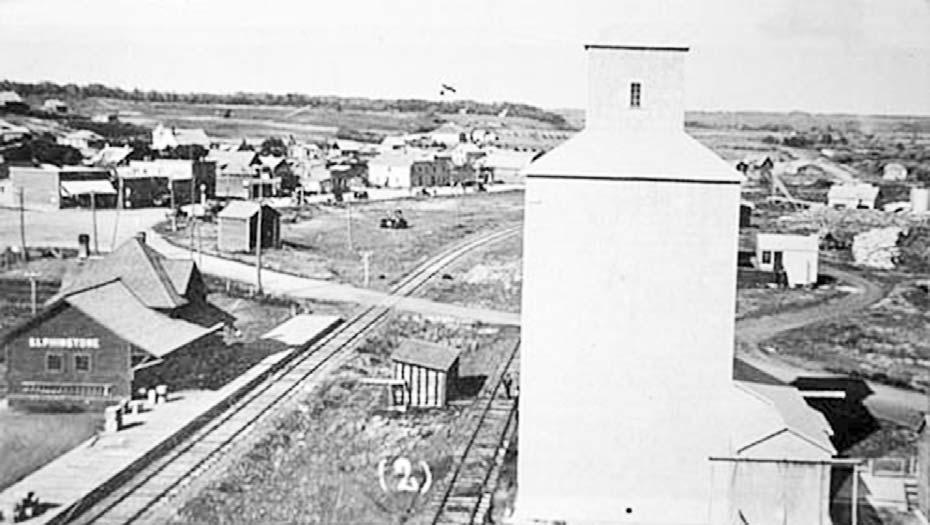
If you have ever driven Highway 45 through the valley of the Little Saskatchewan River, you might have passed by Elphinstone without even knowing it. This quaint community sits just off of the highway to the north, tucked along the bank of the river, and it is easy to miss if you don’t know to look for it.
Most people don’t know much about Elphinstone. But it has a story, and it goes back a lot further than you might think.
Long before there was a highway or a grain elevator or even a trading post, the Cree-Salteaux people under Chief Ouk-an-nay-sic knew this valley. They called the river the Saskawjewum. They hunted buffalo in the hills, fished the lakes, and followed the water south. When the fur trade came west, the Hudson’s Bay Company (HBC) set up a trading post in the area in the late 1850s. That post was really where it all started.
The name Elphinstone comes from a Scottish nobleman who showed up in 1880 as a guest of Robert Campbell, the chief factor of the HBC. His name was William
Buller Fullerton Elphinstone, and he was not just passing through for the scenery. He was president of the Canada North-West Land Company, a British-Canadian syndicate that had bought up millions of hectares of land along the CPR rail line. He looked around, liked what he saw, and bought roughly 13 sections along the Little Saskatchewan. He built an 8,000acre ranch, brought in English cattle, and put up several buildings, some of them made from local stone, with a view over the river valley. Local papers reported in 1880 that he had personally attended to the mowing and stacking of hay after losing cattle the winter before. Not just a name on a deed… Lord Elphinstone actually showed up and worked. But it didn’t stick. Ranching out here was harder than it looked, and Lord Elphinstone eventually headed back to Scotland. He died there in 1893. His family had no interest in keeping the ranch going, but the name stayed though, and the community kept building itself up long after he left. If you know where to look, the stone foundations of his ranch buildings are still out there, sitting at the edge of a field about 400 meters from the nearest road. The river did a lot of the
early heavy lifting to build Elphinstone and its industry. Logs cut from the surrounding hills were floated down the Little Saskatchewan to sawmills as far away as Brandon. The HBC built a flour mill in the town, and the steam boiler to run it was shipped from Fort Churchill by river barge, then dragged overland by settlers and freighters. It was a serious undertaking. According to the Yellowhead Municipality, the old steam boiler is still situated on the original Hudson’s Bay property in Elphinstone.
The Canadian Northern Railway arrived in 1904 and

1905 and things really picked up after that. A blacksmith shop, a boarding house, a lumber yard, a bank, a barber, and general stores… five of them at one point. Three grain elevators, a hotel with a beer parlour where live country and western music played on weekends. Elphinstone was hopping. People came in from surrounding communities on Saturday afternoons. July 1 was a big weekend. The Halloween dance at the community hall was a wellknown event across the whole area. In the summer of 1910, the first car in the district rolled in, a Reo, single
Monday Friday • 5:00 to 8:00 p.m. Saturday & Sunday • 12:00 to 5:00 p.m. 16 miles west of Onanole on Lake Audy Rd (354) Dale Ewasiuk | 204 761 1038
cylinder! People probably stopped and stared! There was even talk at one point of building a health spa on the nearby Salt Lake (Carlton Beach). The waters were said to be medicinal, and Manitoba Premier Norquay was involved in the plans. His death ended the project before it ever got off the ground. The spa never happened, but people in the area have been saying for generations that there is something to those waters.
Today Elphinstone is a lot quieter. But it is not gone. El-
phinstone Kobassa on Railway Street still draws people off the highway for smoked sausage, the way Jarema’s General Store once drew them in for just about everything else. Two churches still hold occasional services. The Memorial Hall is still standing. The valley looks the same as it always did. Like many small communities across the region, Elphinstone may be a dot on the map, but it has earned that dot. The rich history proves it.

On July 7, RCMP executed two search warrants at a residence in Dauphin as part of a months-long investigation into firearms trafficking. The investigation’s origins date back to late March, when RCMP were notified, that firearms charges had been laid in the United States against a 73year-old Dauphin-area male. This prompted an RCMP investigation that resulted in further charges being laid against that individual. While executing a search warrant in that case, RCMP found and seized firearms that were purchased by a second suspect and never lawfully transferred. After further investigation, two warrants to search the second suspect’s home were obtained by the National Weapons Enforcement Support Team (NWEST). The warrants were executed last week by NWEST and the Manitoba West District General Investigation Section, with support from several RCMP units – including the Manitoba West District Crime Reduction Enforcement Support Team (CREST), Manitoba Provincial Serious and Organized Crime, the Emergency Response Team, Dauphin RCMP and Police Dog Services. In total, 439 firearms were seized from the property, as was an antique cannon, ammunition and more than $300,000 in cash. It is expected to take several more weeks for investigators to document the large collection of evidence gathered at the residence and determine how many of the firearms were illegally possessed. So

far, at least three firearms are believed to have been illegally trafficked and one firearm had its serial number tampered with.
“The illegal trafficking of prohibited weapons is a serious offence that threatens public safety,” said RCMP Assistant Commissioner and Manitoba Commanding Officer Scott McMurchy. “We thank the many RCMP officers who are working on this case for their tireless efforts in targeting individuals who are trafficking these dangerous and illegal weapons and bringing them to justice.”
A 78-year-old male of Dauphin is charged with: Firearm trafficking; Possession of a firearm with a tampered serial number; Possession of property obtained by crime over $5,000; Careless use of a firearm x2; Possession of a firearm when knowing possession is unauthorized; Possession of a prohibited device when knowing possession is unauthorized x2; Possession of a restricted/prohibited weapon with ammo without a licence; and Unsafe storage of firearms x3.
The 78-year-old was remanded into custody. He was subsequently released on a


release order. The investigation continues.
On July 9, South Indian Lake RCMP responded to a single vehicle ATV collision on Airport Road in O-PiponNa-Piwin Cree Nation (OPCN). Officers responded immediately and arrived to find a group of people gathered around a seriously injured female on the road, and an ATV in the ditch. Officers from South Indian Lake and paramedics from Manitoba Wildfire Service in Leaf Rapids, who had flown in to assist, provided medical aid to the victim until the trauma helicopter from
The Little Valley Jamboree would like to thank everyone involved in supporting Reese and Nathan, as well as other kids in Westman with medical needs for 2026.
Thompson arrived. The 59year-old female from OPCN, succumbed to her injuries at the scene. She was part of the local essential workers that remained in the community during the current evacuation order. South Indian Lake RCMP continue to investigate.
On July 5, Falcon Beach RCMP responded to a single motorcycle collision on Highway 44, near Provincial Road 312, in the Whiteshell Provincial Park.Officers, along with EMS and Fire department responded. A group of motorcycles were travelling east on Highway

staff, set up and take down running smoothly.
44 when one motorcycle lost control and flipped in the south ditch.The driver, a 56year-old female from Steinbach, was transported to hospital and was later pro-


A huge thank you to all of our sponsors who generously gave, including our Platinum Sponsor Heritage Co-op. We can not do what we do without the unwavering generosity of each and every one of you.
To our Emcee & Bands. As always, you are the heart of our event, and we couldn’t thank you enough for keeping the event moving and engaging the audience!
To the JAM committee who kept the kitchen, refreshments, support
And to all those who sold tickets, helped collect donations, volunteered, or made purchases of tickets and auction items. You are all valued.
We were happy to present cheques for $13,000 each to Reese and Nathan as well as make donations to Ronald McDonald House Manitoba for $15,000 and Swimmingly for $5,000. These donations will go towards helping children and families within our regions to cover room rentals and provide personal swimming lessons/pool expenses.
Forafulllistingofsponsors, pleasevisit www.littlejamboree.com
– Much Love, The LVJ Committee

Virden: The EmpireAdvance – Walleye within the basin known as Oak Lake are getting a long-term boost thanks to a new, purpose built spawning bed installed this winter by the Souris River Watershed District and partners. This $74,500 investment in fish habitat is designed to support a stronger, more resilient walleye population for years to come. The spawning bed complements ongoing efforts to safeguard Oak Lake’s water quality and aquatic habitat.
Neepawa: The Banner & Press – Two Neepawa events were recognized at Tourism Westman’s Tribute to Tourism Awards last month. ArtsForward was presented with the ‘Event of the Year (Budget under $10K)’ honour for the community events known as ArtFest and Amazing Race Neepawa (originally Amazing Race Downtown Neepawa).
Dauphin: The Herald –Dauphin residents were invited to share their thoughts on the national park’s trail network at a recent public meeting at the Dauphin library. The meeting was part of a larger collaborative process involving Indigenous partners, neighbouring communities and the public to ensure “diverse perspectives are considered in the conversation of natural and cultural heritage. The planning process currently underway is an opportunity to step back and take a critical look at the trail system and see how it relates to current strategic direction, goals and priorities.
Boissevain: The Recorder – A program combining needs with opportunities has done so well in Turtle Mountain School Division, the offerings will be doubled in 2026/27. The vocational program is offered in the high schools of Boissevain and Killarney, and being added next year is two more courses – Hairdressing and Aesthetics, and Early Child-
hood Education – will be offered.
Kamsack: The Times – A model of a Red River cart built by Armand and Kelly Jerome of St. Norbert, is now on permanent display at the Fort Pelly-Livingstone Museum. The Red River cart was a simple conveyance developed by the Métis people for use in their settlement of (the) Red River area. As per informative signboard at the display, settlers to the area followed several trails including one that went to Fort Pelly through Fort Qu’Appelle.
Whitewood: Grasslands News – After two Melville RCMP officers were seriously injured in the line of duty on June 21, the community
came together in a powerful show of support. A major fundraising event titled “Support of Heroes – Fundraiser for the Injured RCMP Officers,” held on July 11 brought together residents, businesses and organizations from across the region to help the officers and their families as they face a long road to recovery.
Baldur / Glenboro: The Gazette – Upon selecting 18year-old Carson Carels, the Calgary Flames made bit of history, making the Manitoba product the highest drafted defenseman in franchise history, when they selected him sixth overall. Carels wasn’t in Buffalo at the time of the National Hockey League draft – he was surrounded by friends and family back in Cypress River, when he was announced as the newest member of the Flames organization by




Lanny McDonald.
Dauphin: The Herald – A short run in the 2026 Manitoba Junior Hockey League playoffs resulted in a financial loss for the Dauphin Kings. A year after reporting a profit of more than $47,000, the Kings are reporting a loss of $44,308.
Whitewood: Grasslands News – Grenfell Legion lowered the Canadian flag outside their hall at Stella Street for the last time on June 14. Although the building has been sold, Legion members will continue regular activi-
ties in the community. After nearly two years on the market, the property was officially sold on June 15. It will likely become a private residence.
Rivers: The Banner –While the Hodge house, built in the 1950s, was one of Hamiota’s best-built homes, it sat vacant for several decades before being demolished in early June. Dr. Andy Hodge blazed a trail for veterinary practice in the Westman community, with his lasting legacy being recorded in the Manitoba Agriculture
community.
Boissevain: The Recorder – Stan Peck of Boissevain was named Volunteer of the Year by Tourism Westman on June 11 for his work on the railway display at the Irvin Goodon International Wildlife Museum, which is a major draw for visitors of all ages in Boissevain.



By DAVID TAGGART
Spruce Plains RCMP
In the month of June we had 458 occurrences. We attended 13 motor vehicle collisions this month with one having a fatality involved. In that instance speed was a factor.
On June 11, the Spruce Plains RCMP received a report of suspicious vehicle. We located the vehicle and it turned out to be stolen from Quebec. We arrested a male and female both from Quebec for possession of stolen property. We were opposed to the release of the two suspects and they were released regardless of our request. Since then the couple has been charged with more property crime.
On July 8 at 5:45 a.m. the Spruce Plains RCMP received a call about a vehicle fire. Police attended and the Rapid City Fire Department had put out the car fire. Police spoke to the complainant who had a video of three young males setting the vehicle on fire. The vehicle turned out to be stolen. All three males were arrested for arson, possession of stolen property and found to be in possession of weapons. The three males were between 14 and 18 years old. All three were released on an undertaking with conditions and a court date.
On July 9, the Spruce Plains RCMP responded to a report of an assault in Minnedosa. RCMP learned that a business owner had seen a suspect walking down the street and confronted him about a break-in and theft that occurred overnight at his business. The confrontation escalated and a brief scuffle occurred, with the business owner being pushed. The suspect then left. Officers located the suspect minutes later and arrested him. A 26-year-old male was arrested and faces

Not unlike a toddler claiming a piece of candy by licking it, a butterfly tastes this lilac flower, seemingly signaling it is his. While nectar is their primary food source, butterflies also occasionally “lick” wet soil, carrion, and rotting fruit to extract essential salts and minerals they can’t get from flowers. While nature often shows us its immense power, a majestic butterfly is a peaceful symbol of just how delicate it can be as well.
SPEEDER OF THE MONTH
The speeder of the month was a 19-year-old driver from Winnipeg, travelling 166 km/ hr in a 100 zone. At that speed you get a $914 fine and a serious offence notice. The serious offence notice will trigger a show cause hearing with MPI where they will review the circumstances of the offence, which may cause a driver’s licence suspension.
Law Enforcement: the fraudster will call or email you claiming to be from a law enforcement agency, such as the RCMP, Interpol or Europol. They will use police logos or other identifiers to appear legitimate. The message could be:
A fraudulent letter accusing you of a criminal charges and asking you to contact them to avoid going to jail.
A message demanding you send money to avoid arrest.
An email with a malicious attachment that they ask you to open.
These are all frauds. Law enforcement will never demand payment and will not threaten arrest by email or phone. If in doubt, contact the law enforcement agency directly.
Thecostofadvertisingissmallwhenyouthinkofthenumberofpeoplewhowill potentiallyattendedyoureventsimplybecausetheysawyouradinthisnewspaper. Ifthecostofadvertisingiscoveredbyjusttwoorthreeadmissionstoyourevent, anyadditionalguestsyou welcomeismoney inyourpocket.







Worldwide, there are over 2,500 different types of apples that are grown. Although we may not be able to produce all of the 2,500 different types of apples, we can certainly hold our own and produce enough variety to keep any palate happy.
However, how you decide what apple to grow is sometimes difficult! Please read on and tempt your taste buds to grow your own apples. The following are some of the more popular cultivars of prairiehardy apples. By definition an apple tree that produces fruit that is 5 cm or larger in diameter is considered a true apple. Fruit that is 3.5 to 5.0 cm in diameter is classified an apple-crab, and fruit smaller than 3.5 cm is a crab-apple.
Early Season Apples - harvest in August:
‘Heyer 12’ is a very hardy selection made from a seedling of a Russian apple by Adolph Heyer, an amateur fruit breeder from Neville, SK. Due to its extreme hardiness, and its high degree of fire blight resistance, it has remained a reliable apple for prairie conditions since its introduction in 1940. Fruit is 5-6 cm, round, yellow-green with no red colour. Flesh is creamy white, coarse, and mildly acid. The fruit breaks down very quickly and will not store for more than a couple days.
‘Norland’ is a good quality, medium sized, (6-7 cm) apple suitable for fresh eating or cooking. Fruit shape is oblong conic, slightly ribbed; skin has greenish yellow base colour and a 50 to 60% washed and striped dark red over colour. Flesh is cream coloured with a slightly greenish tint and coarse in texture. It has good flavour with moderate acid. Fruit ripens in mid-late August and stores very well especially if picked slightly before full maturity. Trees are semi-dwarf, upright spreading and annually productive. Trees are considered hardy to Zone 2a but somewhat susceptible to fire blight.
‘Westland’ is a large (7-8 cm) apple with fair quality for eating and good quality for cooking. Fruit shape is round conic with slight ribbing. Skin is yellowish, with 10% to 20% washed and striped light red. Flesh is creamy white tinged red; flavour is moderate acid and sweet. Fruit ripens in

mid-to late August and stores moderately well (up to 8 weeks). Trees are semivigorous with wide angled crotches and are annually productive. They are hardy to zone 1b if provided some protection. ‘Westland’ is suggested as a replacement for ‘Heyer 12’ as a hardy cooking apple.
Mid-Season Apples - harvest in late August to late September:
‘Adanac’ has fruit that is 6 cm in diameter, with green skin with red stripes. The flesh is greenish-white, slightly coarse, slightly acid and good for fresh eating cooking and juice. It forms roundheaded, semi-dwarf trees with good branching habits. It is resistant to fire blight and hardy to 2a.
‘Battleford’ has fruit of 7 cm in diameter with greenishyellow skin mottled and streaked with red. The flesh is yellowish-white, somewhat coarse, and slightly acidic. It stores for one month and can be eaten fresh, used for cooking or juicing. It has limited resistance to fire blight, and is of reliable hardiness only to Zone 2a.
‘Breakey’produces 6-7 cm diameter apples that are round with amber coloured skin that is striped with red. It matures in September. The flesh is white, fine textured, flavourful and juicy. It is excellent for fresh eating, cooking and juice and stores well for eight weeks. It requires a protected site in Zones 3 and 2b and is susceptible to fire blight.
Hanbidge is the Lead Horticulturist with Orchid Horticulture. Find us at www. orchidhort.com; by email growyourfuture@gmail.com or on facebook @orchidhort.








Q: I’m looking for innovative ways to control my blood pressure (BP). I’m avoiding salt and most alcohol, but I need more help to prove to my doctor that I can do this without medication. Any suggestions? – J.B., Knoxville, TN
A: First, taking antihypertensive medication is smart and effective. If your systolic blood pressure (the top number) is 160 mmHg or higher or your diastolic number is 100 mmHg or higher, you need to initiate medication immediately! And it’s important to start medical treatment if you have a systolic reading of 130 mmHg or a diastolic reading of 85 mmHg or higher.
However, if one of my patients has a top number of 130-139 or a bottom number of 80-89 and commits to getting those readings in the normal range within six months using lifestyle changes, I say it’s OK to wait to go on antihypertensives. But if they can’t do it in that timeframe, they’ll start taking medication. The American Heart Association agrees with this approach.
So, if your doctor says you can safely use lifestyle changes to achieve a healthy blood pressure (BP) of 120/75, here are some effective techniques.
1. Lose excess weight. BP may go down by about 1 mmHg for every couple of pounds you lose.
2. Get moderate to vigorous aerobic exercise regularly. It can lower BP by about 5 to 8 mmHg.
3. Maintain a regular sleep routine. A study in Hypertension found that if your bed-



time varies day-to-day by 90plus minutes, you’re at a 92% increased risk of high blood pressure. Vary it by just 30 minutes a day and your risk increases by 32%.
4. Do Inspiratory Resistance Training. See my blog at michaelfroizenmd. substack.com for instructions.
5. Avoid food preservatives. An eight-year study published in European Heart Journal found that eating foods containing preservatives such as potassium sorbate, sodium nitrite, and ascorbic acid, as well as citric acid, can increase your risk of high blood pressure by 22% to 29%, compared to folks who consume the least amount.
Q: I’m 82, and it makes me so mad that folks assume that I’m losing my ability to think clearly. I may move a bit more slowly than before, but I can still learn and contribute. Can you back me up? –Gena H., San Francisco, CA
A: I’m with you 100%. At age 80, my RealAge is 57, and I feel sharper than ever. And the University of Texas Dal-

las scientists who conducted a three-year study of around 4,000 folks ages 19 to 94 are with you too! They found that folks in their 80s and 90s could see noticeable improvements in brain health and cognition and increase their thinking clarity, emotional well-being and sense of purpose.
The researchers found that the most powerful braintraining techniques were connectedness to people, doing activities that interest and challenge you, engaging in strategy-based learning (say, a favorite hobby or game),
and embracing brain-healthy habits like quality sleep, optimal nutrition and regular physical activity.
I also like the findings of various studies that show that dancing in your garden as you watch the birds fly by protects your cognitive powers. Well, it isn’t precisely what they found – but that’s what it comes down to. Hobbies are brain-builders. For example, dance classes are linked to improved shortterm memory, attention, and spatial reasoning. Birdwatchers of all ages have more active and densely connected




brain regions associated with memory, spatial awareness, and object recognition. And older gardeners have increased levels of two proteins that play critical roles in memory and other cognitive skills. So, keep pushing forward and don’t pay attention to ageist attitudes and comments. Instead, lend those folks your copy of The Great Age Reboot that outlines all the ways to have an ActualAge of 50 at 90. And ask them to preorder my next book that gives more sciencebacked, brain-strengthening
ideas: “YOU: Getting Older, the Owner’s Manual to Your Golden Years.”
Health pioneer Michael Roizen, M.D., is chief wellness officer emeritus at the Cleveland Clinic and author of four No. 1 New York Times bestsellers. Check out his latest, “The Great Age Reboot: Cracking the Longevity Code for a Younger Tomorrow,” and find out more at www.4YOUngevity.com. Email your health and wellness questions to Dr. Mike at questions@4YOUngevity.com.



DEADLINE: Tuesday at 12:00 Noon
Place your Classified Advertisement by Phone, Fax, Mail or E-mail
Ph: 204-759-2644 Ext. 1 Fax: 204-759-2521 E-mail: smpclassified@mymts.net
Mail: Nesbitt Publishing Ltd., Box 160, Shoal Lake, MB, R0J 1Z0

Reach the entire Province: $189.00 (49 weekly papers) Westman or Eastman regions: $119.00
return to work on Aug. 17 with our next paper out on Aug. 21.
It’s hard to believe but not everyone has Facebook. This ad you’re reading costs $13.50 and reaches over 5 communities and 3,000 readers every week. And next week it will be half price. Planning an event? If you tell them they WILL come. Call Michelle at 204759-2644 ext. 1.
Private mortgage lender. All real estate types considered. No credit checks done. Deal direct with lender and get quick approval. 403-543-0927. www.firstand secondmortgages.ca
Nesbitt Publishing will be closed for Staff Holidays July 31 to Aug. 16. Our last paper will be out July 31. No Crosssroads This Week, Minnedosa Tribune or South Mountain Press papers will be published on Aug. 7 and 14. We

Attention to all Nesbitt Publishing customers! We have been having problems with the emails that we send out going to people’s junk or spam folders by mistake. So if you are expecting a reply from an email or an invoice please take a moment to check your junk and spam folders just in case it’s in there. We hope to get this resolved soon. Thanks for your patience.
Invest in advertising. The cost of advertising is small when you think of the number of people who will potentially attend your event simply because they saw your ad in the newspaper. If the cost of advertising is covered by just two or three admissions to your event, any additional guests you welcome is money in your pocket. Advertising does not cost, it pays! Call Michelle at 204-759-2644 ext. 1.
Advertisements and statements contained herein are the sole responsibility of the persons or enti-
SURPLUS SNOW REMOVAL EQUIPMENT
The Municipality of Clanwilliam Erickson is selling a Capital I One Way Plow and a Capital I V Plow together as a single lot, both with Balderson lift groups. Condition: Fair
Minimum Bid for both units together: $1,000 Bids Due: July 31, 2026, at 5:00 p.m. CDT View more details at www.ericksonmb.ca/jobstenders.html For more information email: cao@ericksonmb.ca
Classified Advertising Rates
Minimum 25 words $7.00, additional words 25¢ (plus GST) Extra weeks are one-half original cost • Not responsible for errors in handwritten submissions Special rate for Obituaries, Cards of Thanks, In Memoriams

Minimum 25 words $7.00, additional words 20¢ (plus GST) • It is preferred if Obituaries can be emailed. Any obituary copy that is typeset by our staff will be subject to proof approval prior to publication. No discount for municipal or government ads • Ads not pre-paid by Thursday Noon are subject to a $2.50 billing charge
ties that post the advertisement, and the Manitoba Community Newspaper Association and membership do not make any warranty as to the accuracy, completeness, truthfulness or reliability of such advertisements. For greater information on advertising conditions, please consult the Association’s Blanket Advertising Conditions on our website at www.mcna.com.
Does Facebook support local? Has your organization ever called up Facebook and asked them for a donation to your cause? Local businesses rely on local support to exist. Shop local today.
Hiring for the summer? Selling something? Doing an online event?

Let us help you book your blanket classified ads and Response and Power Builders ads across Manitoba to increase your marketing presence. Your ad will be seen in the MCNA Member Newspapers, in over 368,000+ homes in Manitoba. Please call this newspaper 204-759-2644 to book now or call MCNA at 204-947-1691 for more details or to book ads. Taking advantage of our great pricing. MCNA - Manitoba Community Newspapers Association. www.mcna.com
Did You Know? We print Personal and Business Cheques! 100

Personal Cheques $113.99 + taxes, call for pricing on Manual Business Cheques and Laser Business Cheques. Call Connie at 204759-2644 Ext. 2 or email ctwprinting@mymts.net. Nesbitt Publishing, Shoal Lake.

• Shoal Lake • ctwprinting@mymts.net

700+ items! VISIT www.gartonsauction.com for equipment details, pictures, and bidding. FOR INFO OR VIEWING: Contact sellers listed in lot details. TRACTORS, TRAILERS, VEHICLES, BUILDING: Ford Versatile 946 tractor, EZ steer; 2000 Hesston SP tractor unit, 25’ head w/rotor shears, 16’ hay header; 1983 Case 2290 tractor, duals; JD 401D backhoe, hoe/FEL bucket; Ford 9N, other tractors; land roller drums; Wells Cargo trailer, 8.5’x16’, 5000lb torsion axles, etc; 25’ gooseneck trailer, ramps, 7000lb axles, etc; tandem axle HD trailer 8’x22’, 7000lb axles; other trailers; 2006 Travelaire 24.5’ 5th wheel camper; 1998 Golden Falcon 5th wheel camper; 1999 Intl 4700 truck; 1986 Intl 466 grain truck; 1981 Ford King Fire truck, 8 cyl; other trucks; building est 16’x14’, vinyl siding; LIVESTOCK/WAGONS: Suffolk horse team, well trained; 20-yr old Morgan gelding; wagons; FARM AND HAYING EQUIPMENT: Wide variety of farm and haying equipment; JD 9860 combine, etc; JD 9600 SP combine; JD 230 30’ header; Macdon 974 35’ header/cross auger; other augers, discs, harrows; JD 1820 air drill/cart; JD belt conveyor, 12”x23’ Bourgault 38’ cultivator; NH hay bine; electric fencing, posts, fencing, etc; RECREATION, YARD, GARDEN: 1997 Silverline 16’ boat, 115hp Yamaha motor/ trailer; Larson 170 18’ boat, inboard motor/trailer; other boats; Ski-Doo snowmobile; 98 Polaris Sportsman 500; yard/garden equipment, quad trailer; fishing, hunting, camping, sports gear; portable outhouse; TOOLS AND SHOP: Honda EM3500X generator; saws, small tools, shop supplies; qty of carbon steel pcs, concrete forms; doors, windows; tool boxes; motorcycle

AND

Two summers ago, I did something I had been wanting to do for a long time. I hiked approximately 70 kilometres of the Trans Canada Trail solo, from Rossburn to Erickson along the Rossburn Subdivision Trail, camping on the trail and at the little Lions Campground near Elphinstone along the way.
I am an avid hiker. I hike regularly, I do long distances, and I am no stranger to rough terrain or logging the kind of kilometres that make people look at you sideways when you tell them. I thought I was ready… I absolutely was not.
Not because I wasn’t fit. I was fit. But I had never conditioned myself for the specific demands of carrying a full multi-day backpack over that kind of distance. Everything I needed for several days of backcountry camping was on my back. And I’ll tell you, that changes things in ways I did not fully anticipate.
By the time I finished, my hips were screaming. I could barely walk for a couple of days afterward. And it wasn’t my cardiovascular fitness that failed me, and it wasn’t my legs. It was the specific load my hips had never been asked to carry, for that many kilometres, over that many consecutive days.
Here is the science behind why that happens, because I think it’s worth understanding…
When you add a loaded pack to your body, your gait changes immediately. Research has shown that even carrying a load equal to just 10 percent of your body weight measurably alters your hip and ankle mechanics. Your stride length shortens. Your trunk leans forward. Your pelvis rotates differently to compensate for the added weight. The muscles stabilizing your hips, particularly the hip flexors, abductors, and glutes, are suddenly working in ways they aren’t accustomed to, even if those same muscles are strong in other contexts. A hip belt shifts the load from your spine down into your hips and pelvis, which helps, but it also means your hips are now bearing weight in a way that is genuinely different from anything you have trained them for.
This is called specificity of conditioning, and it is one of the most important and under appreciated principles

in fitness. Your body adapts to exactly what you train it for, no more and no less. You can be a strong runner and still find cycling brutal the first few times. You can be a seasoned gardener and still feel a kayaking trip in muscles you forgot you had. Fitness does not automatically
transfer between activities the way most of us assume it does. It is far more targeted than that.
The good news is that the conditioning gap is fixable, and it doesn’t take as long to close as you might think. If you are planning any kind of multi-day backpacking trip this summer, the preparation that matters most isn’t just putting in more hiking kilometres. It’s weighted carries. Walking with a loaded pack, even just around your neighbourhood or down a gravel road, trains the specific stabilizers and joint mechanics you are going to need on the trail. Start lighter than you think you need to and build up over several weeks. Your hips will thank you.
More broadly, if you are picking up any new physical activity this summer,
whether it’s paddling, horseback riding, a new sport, or hauling things around a campsite all weekend, understand that your existing fitness is a foundation, not a guarantee. Give your body a few weeks to adapt to the specific demands of whatever new thing you’re asking it to do, and don’t be discouraged if you’re sore in places you didn’t expect.
I made it from Rossburn to Erickson. I am proud of that, and I would do it again! I would also spend a few weeks beforehand walking around my property with a loaded pack on my back, which I did not do the first time. Lesson learned the hard way, the way most of the good ones are learned.
THIS WEEK,TRY THIS
If you have a physical adventure planned for later
this summer, whether it’s a backpacking trip, a long hike, a paddling weekend, or anything else that will ask your body to do something new, start preparing specifically for it now. Don’t just get generally fitter. Train for the actual thing. Even two or three weeks of targeted preparation makes a real difference. Your body will thank you!
The information in this column is intended for general wellness purposes only. Always consult your doctor or a registered dietitian before making significant changes to your diet or exercise routine. Racheal Flintoft is an editor and writer for South Mountain Press, a certified personal trainer, and the founder of Nü Strength Wellness.
On the date and at the time and location shown below, a PUBLIC HEARING will be held to receive representations from any persons who wish to make them in respect to the following matter:
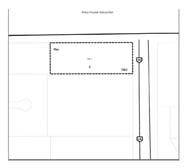
MUNICIPALITY OF HARRISON PARK BY-LAW NO.181 being an AMENDMENT to the RURAL MUNICIPALITY OF PARK ZONING BY-LAW NO. 1311, as amended
HEARING Municipality of Harrison Park
LOCATION: Council Chambers at 43 Gateway Street Onanole, MB R0J 1N0
DATE & TIME: August 12, 2026 at 9:30 a.m.
GENERAL INTENT To rezone Lot 1, Block 2, Plan 7062 part OF BY-LAW of SE-24-19-19-W as shown outlined in NO. 181: a heavy solid line and attached hereto as Schedule “A” and forming part of this by-law, be re-classified:

From: “CG” Commercial General Zone To: “RG” Residential General Zone







FOR INFORMATION Robert Ewashko
CONTACT: Building & Development Officer
Municipality of Harrison Park Ph: 204-848-2561
E-mail: robert@harrisonpark.ca
A copy of the above proposal and supporting material may be inspected at the location noted above during normal office hours, Monday to Friday. Copies may be made and extracts taken therefrom, upon request.