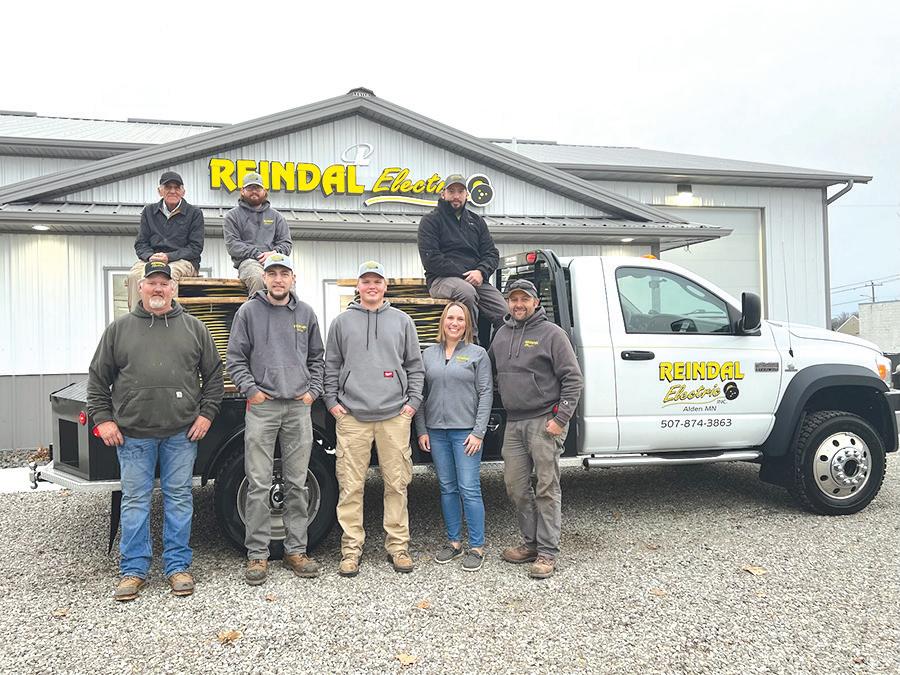
Parts & Accessories: Check out our large selection of belts, capacitors, pulleys, hubs & bearings. If we don't have what you need, we can get it for you.
Electric Motors: We are a proud Distributor of Baldor, WEG, and Leeson motors. In addition, we carry a variety of other motors. If we don't have it in stock we will order it.
Electric Generators: Be prepared for when weather hits! MN-Iowa carries a range of Winco & Kohler Generators. We service them too!
USING FSA DIRECT FARM OWNERSHIP LOANS FOR CONSTRUCTION
The USDA Farm Service Agency’s (FSA) Direct Farm Ownership loans are a resource to help farmers and ranchers become owner-operators of family farms, improve and expand current operations, increase agricultural productivity, and assist with land tenure to save farmland for future generations.
There are three types of Direct Farm Ownership Loans: regular, down payment and joint financing. FSA also offers a Direct Farm Ownership Microloan option for smaller financial needs up to $50,000.
Direct Farm Ownership Loans can be used to construct, purchase or improve farm dwellings, service buildings or other facilities, and to make improvements essential to an operation.
Applicants must provide FSA with an estimate of the total cost of all planned development that completely describe the work, prior to loan approval and must show proof of sufficient funds to pay for the total cost of all planned development at or before loan
closing. In some instances, applicants may be asked to provide certified plans, specifications or contract documents. The applicant cannot incur any debts for materials or labor or make any expenditures for development purposes prior to loan closing with the expectation of being reimbursed from FSA funds.
Construction and development work may be performed either by the contract method or the borrower method. Under the contract method, construction and development contractors perform work according to a written contract with the applicant or borrower. If applying for a direct loan to finance a construction project, the applicant must obtain a surety bond that guarantees both payment and performance in the amount of the construction contract from a construction contractor.
A surety bond is required when a contract exceeds $100,000. An authorized agency official determines that a surety bond appears advisable to protect the
borrower against default of the contractor or a contract provides for partial payments in excess of the amount of 60 percent of the value of the work in place.
Under the borrower method, the applicant or borrower will perform the construction and development work. The borrower method may only be used when the authorized agency official determines, based on information from the applicant, that the applicant possesses or arranges to obtain the necessary skill and managerial ability to complete
the work satisfactorily and that such work will not interfere with the applicant’s farming operation or work schedule. Potential applicants should visit with FSA early in the initial project planning process to ensure environmental compliance. For more eligibility requirements and information about FSA Loan programs, contact your local USDA Service Center or visit fsa. usda.gov.
Kirk W Phelps
County Executive Director
Mower County FSA
NITROGEN PRICE RISK AND CROPPING DECISIONS FOR 2026: A MOWER AND FREEBORN COUNTY PERSPECTIVE
Lynn Hoffmann Farm Business Management Instructor
Riverland Community College, Southland, Suite A212
1700 3rd St SW, Austin, MN 55912, 507-320-8193
lynn.hoffmann@riverland.edu
A member of Minnesota State
There are Mower and Freeborn County farmers heading into the 2026 planting season facing an uncomfortable reality: nitrogen fertilizer such as urea and ammonia has not yet been
booked, and global supply disruptions continue to push prices higher. Nitrogen prices are already nearly double pre–Iran conflict levels, and industry leaders warn there may be further upside risk if supply routes through the Persian Gulf remain unstable. For corn growers who rely heavily on nitrogen, this creates significant uncertainty—not just about input costs, but about overall profitability.
Crop prices have not increased at the same pace as fertilizer and fuel costs, meaning higher input expenses cannot be easily offset with stronger grain markets. This is notably different from 2022, when sharply rising corn and soybean prices helped cushion fertilizer shocks. Today, many producers are facing tighter margins with the increased costs of other inputs needed for producing a crop.
Recent American Farm Bureau Federation survey data underscores this challenge. Roughly 70% of U.S. farmers report they cannot afford all their fertilizer needs for the 2026–27 crop year. Even in the Midwest—where pre-booking is more common—one out of every three farmers still have fertilizer needs uncovered.
For our local area, the question becomes practical and immediate: Does it still make sense to commit to nitrogen-intensive corn acres, or is this a year to consider more soybeans if a significant portion of the nitrogen has not been booked prior to the substantial price increase?
What History Tells Us About Local Profitability
Looking at long-term data for rented land returns in Mower and Freeborn counties offers important context. Over the past 20 years, corn has averaged $82.60 per acre in net returns, compared to $74.67 per acre for soybeans. On the surface, corn has held a modest advantage. However, averages hide volatility—and
corn’s profitability has been far more variable. During the last 20 years, corn has had a negative return for 9 of those years. Whereas during that same period, soybeans have had 3 years of showing a negative return.
In the most recent five-year period, corn shows a strong average return of $130.73 per acre, boosted heavily by 2021 and 2022. Yet the past two seasons tell a different story. Corn posted losses of $19 per acre in 2024 and $43 per acre in 2025, despite strong yields. High yields alone were not enough to overcome the decrease in commodity prices along with the elevated direct and overhead costs.
Soybeans, while not immune to losses, have shown more consistent performance. Over 10-, 15-, and 20-year periods, soybean returns nearly match or exceed those of corn, with slightly less downside risk. Importantly, soybeans do not require purchased nitrogen, which significantly reduces exposure to today’s most volatile fertilizer market.
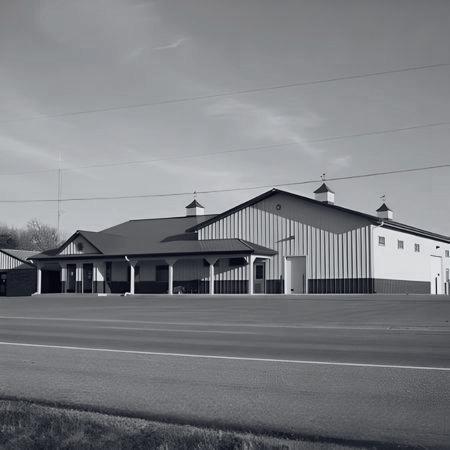
Our skilled, compassionate veterinary team is dedicated to ensuring that your pets receive the best possible care and attention. Providing veterinary services for dogs, cats, and horses.
Nitrogen Risk Is More Than Just Price
Beyond sticker price, nitrogen availability itself poses risk. Roughly onequarter to one-third of the world’s nitrogen fertilizer exports move through the Strait of Hormuz, a single chokepoint vulnerable to geopolitical disruptions. Add in rising energy prices— natural gas and diesel costs that directly affect nitrogen production and farm operations—and corn budgets become even more fragile.
Producers who plant corn without secured nitrogen face a difficult decision: paying more for the nitrogen or cutting back applications in ways that compromise overall returns. Each choice carries financial risk.
When Soybeans May Make More Sense
Switching some intended corn acres to soybeans will not be the right move for everyone. Yet for farmers who have not locked in nitrogen, soybeans deserve serious consideration. Lower upfront cash requirements, reduced exposure to fertilizer and fuel volatility, and historically competitive net returns all support this option.
From 2013 through 2018— a stretch marked by tight
margins and multiple negative corn-return years—soybeans frequently outperformed corn locally. The chart shows the net return per acre for corn and soybeans on rented land for the years 2006 through 2025 for Mower and Freeborn counties. This data was gathered from the FINBIN database from the Mower and Freeborn county farmers that are part of the Minnesota Farm Business Management program.
Final Thoughts
There is no single “right” answer for 2026, but there is clear reason for caution.
Corn remains a high-reward crop in good years, yet it is increasingly sensitive to fertilizer price shocks. For Mower and Freeborn County farmers still exposed to nitrogen price risk, revisiting acreage allocation may be a sound risk-management move.
Running enterprise budgets with current fertilizer quote for what you still need to purchase is critical. In many cases, soybeans may not maximize gross revenue, but they may better protect net income and cash flow in an uncertain year. As always, sound decisions will be farm specific.
Mower/Freeborn Counties
HOW TO DONATE HOMEGROWN PRODUCE TO A FOOD SHELF
University of Minnesota Extension educators Laura Irish-Hanson, Amy Johnston and Susie West.
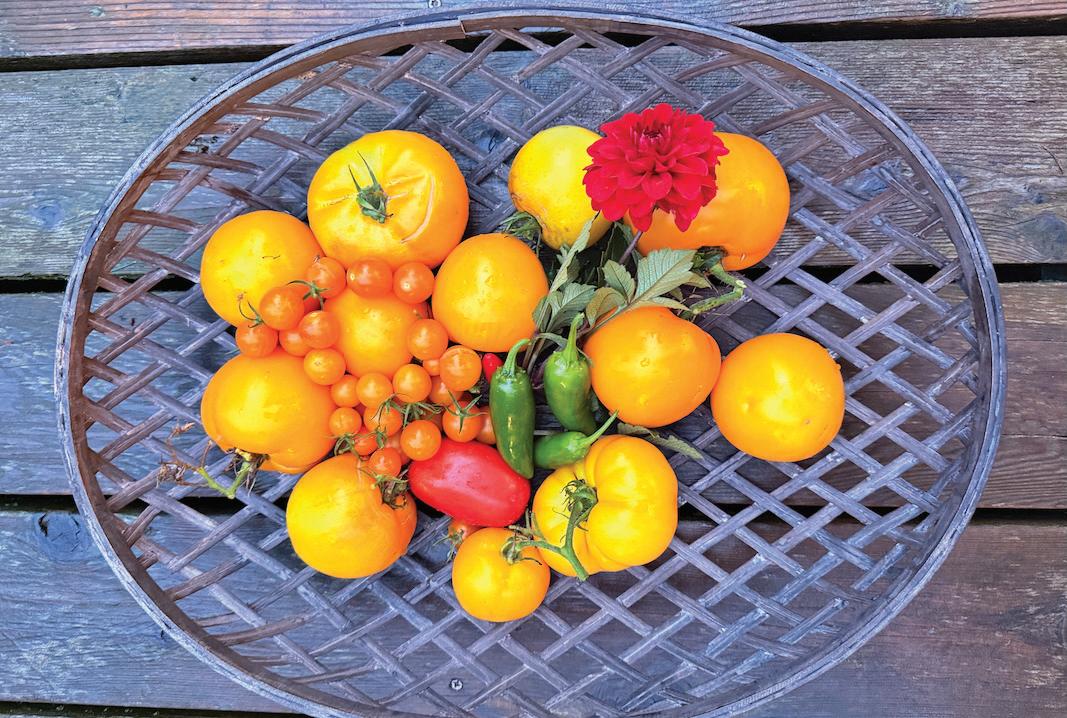
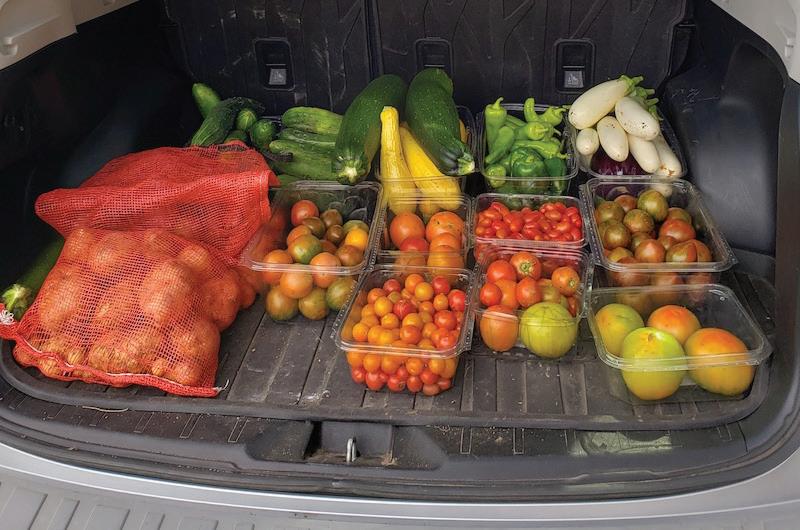
Food shelves are vital resources for keeping our communities nourished. As a gardener, you can positively contribute to your community by donating fresh produce from your garden.
As food shelf visits remain at record highs, with over 9 million visits in 2025, hunger relief leaders continue to express gratitude for the many volunteers and donors who’ve supported them. While the sustained pressure on food sourcing mounts, Minnesotans may be wondering how they can help.
Here are three things to consider right now if you want to donate fresh fruits and vegetables from your garden this year.
1. Connect
Contact your local food shelf to learn if they accept fresh produce and what produce is most wanted this year. Each community and each food shelf is different, they are often meeting the needs of many taste and cultural food preferences.
Volunteering is a great way to get to know your local food shelf, too. Even volunteering for a few shifts can give you better insight into the community they serve, how donations are processed and how food is distributed. If you are ready to drop off produce, it’s always good to check their website or social media for schedules, as hours may change from week to week.
2. Grow extra
Spring is the time to think about what you want to grow and can easily do during the growing season. Maybe it is growing one extra tomato plant or some fresh herbs in a container. Maybe you have space and time to grow a whole extra row of produce. You do not have to donate large amounts of produce to make a positive impact in your community. It’s also a great time to ask your local food shelf what types of
Since 1976 Since 1976
produce their shoppers look forward to the most in summer.
Commonly requested produce:
• Tomatoes
• Peppers, particularly hot peppers
• Eggplants
• Cucumbers
• Greens
• Onions
• Potatoes
• Green beans and peas
• Herbs
Some food shelves also take seedlings to give to participants in the spring. Make sure the plants are clearly labeled and in individual pots so people know what they are getting.
3. Donation best practices
Make a plan for when you can harvest and take produce to the food shelf. The quality of the produce is important for both the shopper and the
food shelf. For example, if the food shelf is not open over the weekend, avoid dropping off produce on Friday afternoons. The produce may sit and spoil over the weekend rather than being taken home and used by shoppers.
Food shelves cannot accept:
• Home-processed or homepreserved foods
• Cottage foods products
Once your produce is ready to harvest, make sure you follow best practices:
• Wash your hands before harvesting, and ask a family member or friend to harvest if you are sick.
• Put harvested produce in a clean bag or box.
• Produce needs to be whole, not cut or damaged.
• Do not donate canned, dried, frozen or pre-cut foods.
• Brush-off dirt and debris before bringing produce to the food shelf.
• Do not wash highly perishable produce like berries or greens as it drastically decreases their shelf-life.
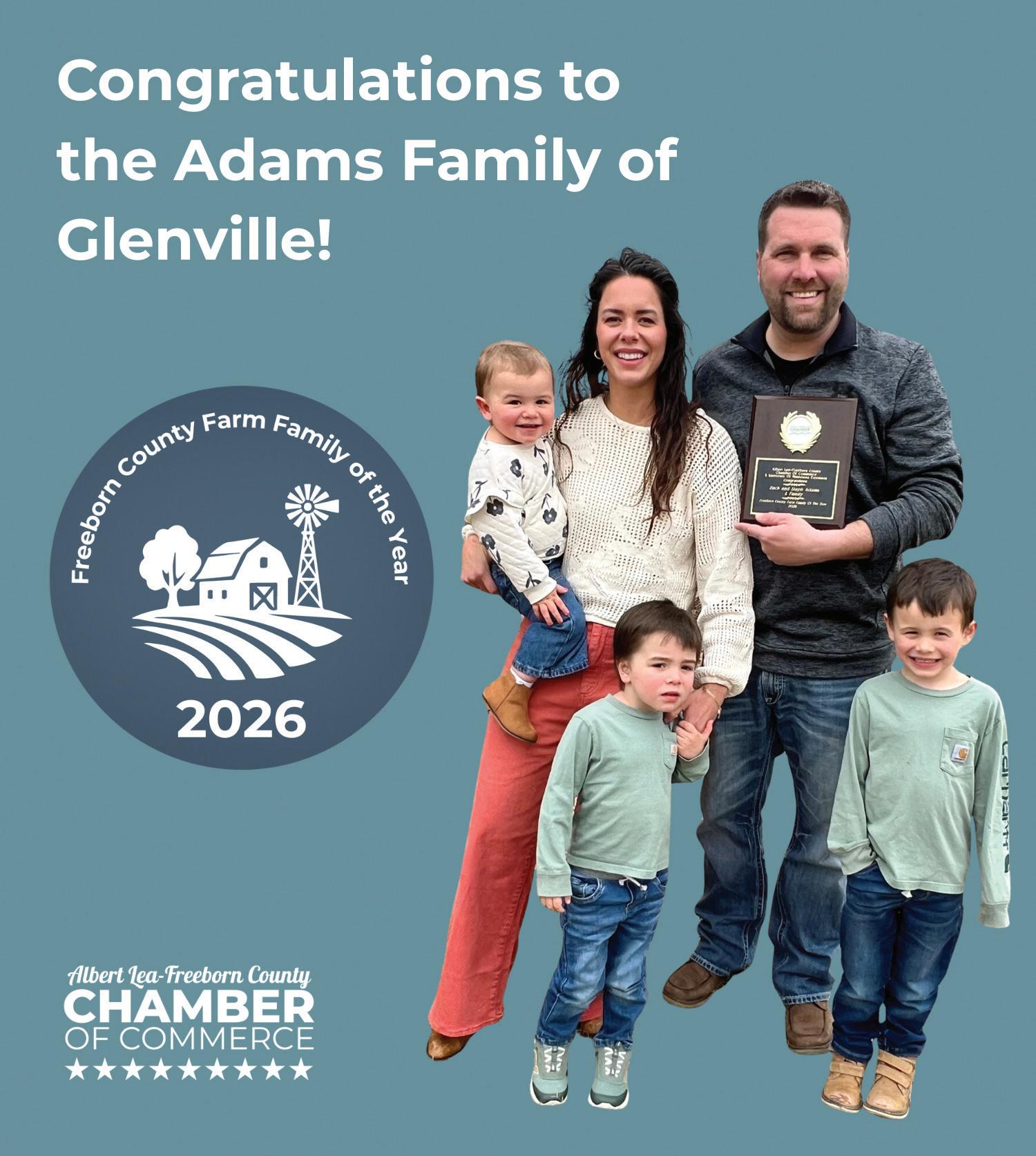
FREEBORN COUNTY FARM FAMILY OF THE YEAR 2026
Zach & Steph Adams Family –Glenville, Minnesota
The annual Agricultural Luncheon has been a longstanding tradition in Freeborn County, bringing the community together to recognize the families who are the backbone of local agriculture. Each year, the Albert Lea–Freeborn County Chamber of Commerce Agriculture Committee honors a “Farm Family of the Year” for their contributions to agriculture, stewardship, and community.
The 2026 honor is awarded to the Adams family of Glenville:
Zach and Steph Adams, along with their three children, Kirk (5), Charlie (3), and Josie (1).
The Adams family operates a row crop farm raising corn and soybeans. Zach manages the farm’s production and business operations, while his father, Dean, remains actively involved, providing valuable experience and support. Steph contributes to business decisions, drawing on her professional background in agriculture from working with Bayer (Dekalb and Asgrow) for the past nine years, partnering with farmers to provide tailored solutions for success.
Their farm reflects a strong multi-generational foundation, combining experience with forwardthinking practices. The family markets their crops through local grain channels, including ethanol production, and is committed to responsible land stewardship to ensure the farm’s future for generations to come.
In addition to their work on the farm, Steph has been actively involved in agricultural leadership for over a decade through her role with the Freeborn County Corn and Soybean Growers Board. She has helped lead scholarship efforts, organize events, and support fundraising initiatives
that benefit students pursuing agriculture-related careers.
The Adams family is also dedicated to agricultural education and outreach. Steph has participated in ethanol promotion events to help educate consumers about cleaner fuel options and has worked with local FFA chapters to speak with students, support job shadowing opportunities, and guide young people exploring careers in agriculture.
Together, the Adams family
represents a modern farm family rooted in hard work, stewardship, and community involvement. As they raise their young children on the farm, they remain committed to agriculture not only as a livelihood, but as a way of life. This recognition is welldeserved. The Adams family exemplifies the values that continue to strengthen Freeborn County’s agricultural community.
CHOOSING UNLEADED 88 SUPPORTS LOCAL FARMERS
By Steph Adams
As a mom raising three young kids on our family farm in Freeborn County, I’ve become especially aware of how quickly everyday expenses have gone up. Like many families, we’re paying closer attention to where our dollars are going and looking for practical ways to stretch them further.
At the same time, being part of a farm family has given me a unique perspective on just how connected our everyday choices are to our local communities. From the crops we grow to the products we use, agriculture plays a role in our daily lives, often in ways we don’t always think about. One of those choices happens every time we pull up to the gas pump.
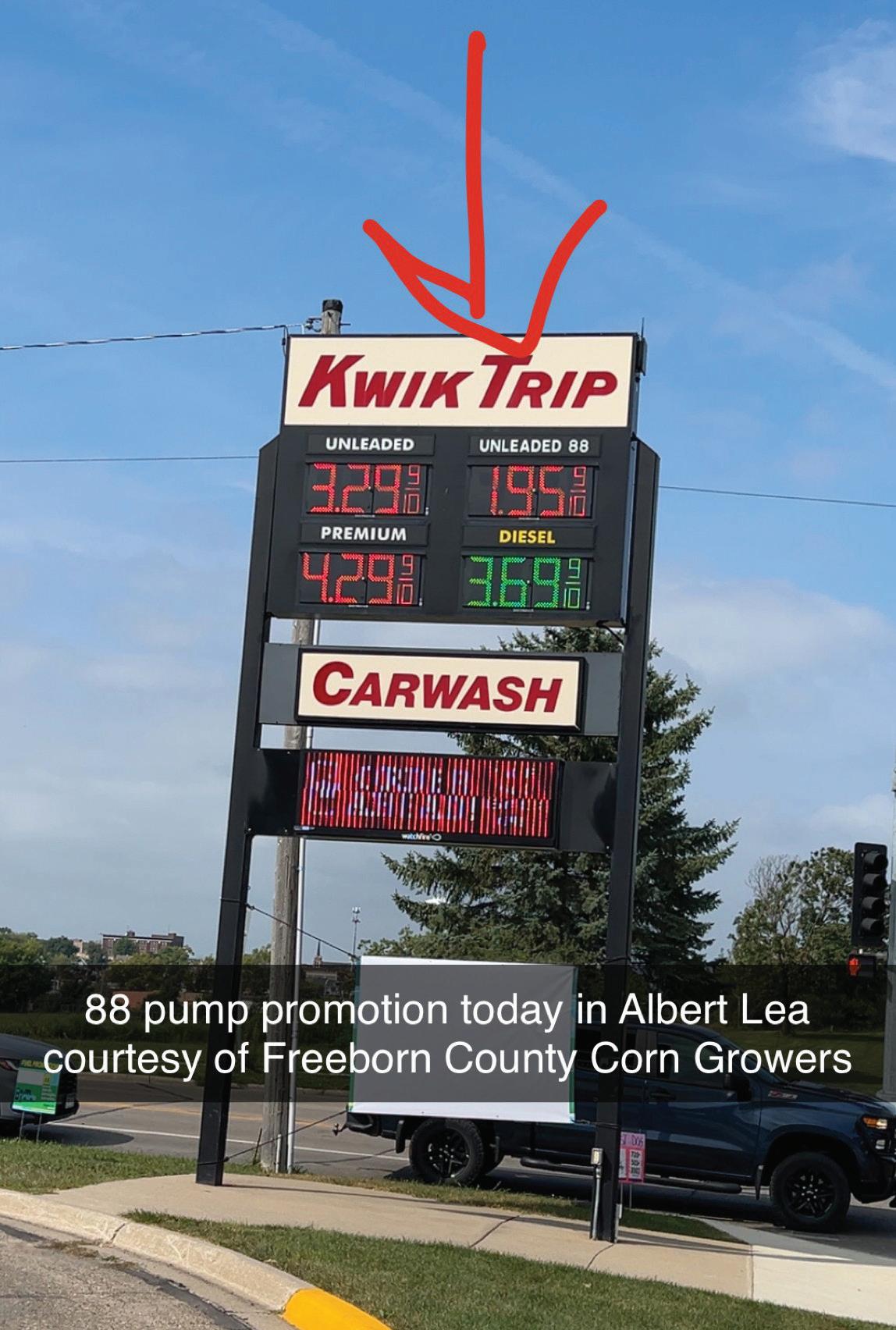
Unleaded 88, also known as E15, is a fuel blend made with 15% ethanol, much of it produced right here in the Midwest using corn grown by farmers like us. It’s approved for use in most vehicles 2001 and newer, which includes the majority of cars on the road today. What many people
don’t realize is that it’s often priced lower than regular unleaded fuel, typically about 10 to 20 cents less per gallon in Minnesota, depending on the time of year.
In addition to farming, I serve on the Freeborn County Corn and Soybean Growers Board. Through this role, I’ve had the opportunity to help share information about ethanol and its benefits within our community. Increased use of fuels like Unleaded 88 supports local agriculture, strengthens rural economies, and helps reduce reliance on foreign energy sources.
Here in southern Minnesota, we’re fortunate to have strong partners who help make these options accessible. Stations like Kwik Trip have been leaders in offering Unleaded 88, making it easy for families to choose a fuel that supports local farmers while saving at the pump.
Last summer, our board hosted a promotion event in Albert Lea to raise awareness about Unleaded 88, and the response was incredibly positive. We’re excited to
bring that event back again this summer and continue helping share how small, everyday choices can make a big impact.
Being named Freeborn County Farm Family of the Year is an honor that means so much to our family. More than anything, it’s a reminder of the role agriculture plays
in keeping our communities strong and connected.
As you think about ways to manage rising costs, consider taking a second look at your fuel choice. Choosing Unleaded 88 is one small change that can support your budget while also supporting local farmers and rural communities like ours.
YOUR LAND, YOUR LEGACY: HOW A LAND PROFESSIONAL CAN HELP
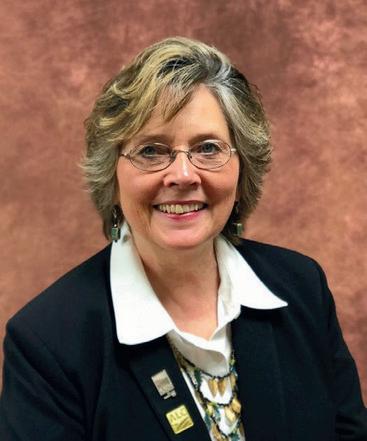
Terri
Jensen, ALC (Accredited Land Consultant) Managing Broker – MN & ND, Auctioneer, Appraiser National Land Realty
https://NationalLand.com/terri-jensen
For many, land is more than just an asset—it’s a legacy. Whether it’s been in your family for generations or is part of your long-term plans, making informed decisions about your land matters. Land professionals with National Land Realty can assist with a wide range of land-related needs:
• Land Acquisition
Looking to expand your operation? Whether you’re adding acres to support a growing family farm or preparing for the next generation to join the operation, we can help locate and secure the right property to meet your goals.
• Land Sales & Disposition
We assist landowners in navigating the sale process with confidence. Whether due to estate settlement, retirement, financial considerations, or the desire to reinvest in a different property, we provide guidance every step of the way. Recently, we facilitated the sale of several
hundred acres as part of a family estate, helping ensure a smooth transition and equitable distribution among heirs.
•
1031 Tax-Deferred Exchanges
If you’re considering selling land to purchase a larger or
The best way to buy, sell, lease, and experience land is here.
With a land company and broker who represent you and helps you reach or exceed your
higher-quality property, a 1031 exchange may allow you to defer capital gains taxes. We work alongside your accountant or attorney to help structure and execute a successful exchange.
• Consultation Services
Not sure what your land is worth or what your options are? We regularly work with landowners to evaluate their property, explore opportunities, and develop strategies aligned with their goals.
• Negotiation & Transaction Management
Even in straightforward situations—such as selling land to a tenant—negotiations and paperwork can be complex. We handle the details, ensuring the process is smooth, compliant,
and in your best interest.
Land transactions can be completed through private treaty or auction, and there are several auction formats available. We help determine the most effective approach based on your specific property and objectives.
Every property is unique, and our services are tailored to fit your individual needs, goals, and circumstances. If you have questions about your land or are considering your next steps, we’re here to help.
Because your land isn’t just property— it’s a legacy worth protecting.
VARIABLE RATE IRRIGATION: WHAT TO CONSIDER BEFORE YOU INVEST
By: Vasudha Sharma
Extension irrigation specialist
With new irrigation costshare opportunities available in Minnesota, more growers may be considering variable rate irrigation (VRI) this season. Recent funding announced through the Regional Conservation Partnership Program (RCPP) is intended to support improved irrigation efficiency, groundwater protection, and better nitrogen management on irrigated farmland across key Minnesota counties. This makes it a good time for growers to think carefully about how VRI can be used effectively in their fields.
Variable rate irrigation is not for every field
VRI can be a useful tool, but it is not something every irrigated field needs. The biggest advantage comes in fields with clear and repeatable variability, such as differences in soil texture, organic matter, elevation, or drainage. In those situations, applying one uniform irrigation depth across the whole field often means some areas get too much water while others do not get enough. VRI helps address that by changing irrigation depth across different parts of the field.
With that said, growers should not assume VRI automatically improves irrigation performance. If a field is relatively uniform, the return from VRI may be limited. In those cases, better scheduling, improved system maintenance, and more informed irrigation timing may provide more value than investing in added hardware or software. (Learn more about other strategies to improve irrigation performance at this web page.) One of the most common
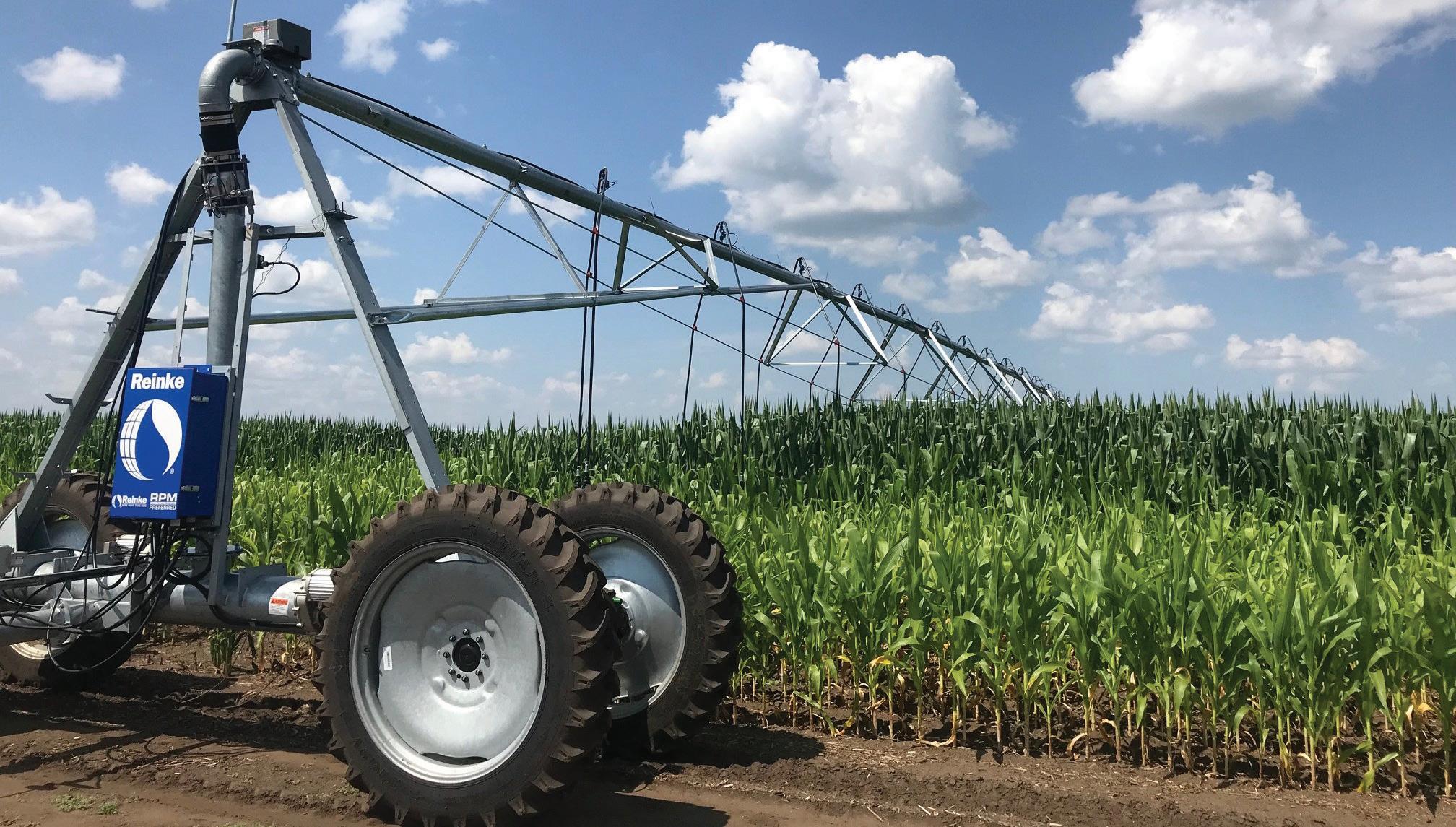
Irrigation equipment near Becker, MN. Photo: University of Minnesota Extension
mistakes that growers make is buying precision technology before confirming that the field variability is strong enough to justify it.
Three key questions for growers thinking about VRI
1. Does the field have meaningful variability?
Sandy ridges, lower areas that stay wet longer, and zones with different crop performance are all signs that VRI may have potential. Soil maps, Electrical Conductivity (EC) data, elevation layers, yield history, and satellite imagery can all help identify these patterns.
2. Do you have a way to decide how much water each zone should receive?
This is where many VRI discussions become too simplistic. Management zones tell you where to irrigate differently, but they do not tell you how much water to apply. That still requires irrigation scheduling, field knowledge, and,
ideally, tools such as soil moisture sensors or a water balance approach. Without that, VRI can still lead to overwatering in some parts of the field and crop stress in others.
3. Are you ready for the management side of VRI?
VRI technology is not only about hardware on the pivot. It also requires prescription maps, software, and a process for updating and using those prescriptions effectively. For some growers, working with a dealer, consultant, or service provider is the best starting point. Others may prefer a simpler entry point using zone-based systems tied to their pivot platform.
Other considerations
In practice, VRI works best when it is treated as part of a broader irrigation management system, not as a stand-alone solution. Pairing VRI with irrigation scheduling tools, field
scouting, and soil moisture information is what turns zone maps into better irrigation decisions.
For Minnesota growers considering investing in VRI this spring or summer, the goal should not be to adopt VRI just because funding is available. The goal should be to adopt it where it makes agronomic, environmental and economic sense. Fields with persistent, well-defined variability are the best place to start. Fields that are already fairly uniform may benefit more from stronger irrigation scheduling, system maintenance, and field monitoring.
For a more detailed overview of how VRI works, the different types of VRI systems, and what is involved in creating management zones and prescriptions, see the University of Minnesota Extension web page on Variable Rate Irrigation.
SPRING GARDEN CHECKLIST
University of Minnesota Extension
Pests and diseases
Prune shrubs that may have been chewed on by rabbits and voles.
Some shrubs will regrow just fine from the base, like dogwoods, shrub willows, and ninebark. If your spring-flowering shrubs were too severely chewed on, they likely will not bloom this spring.
Make a note to protect the plants with hardware cloth cages this fall so you have less animal browsing damage next year.
Trees and shrubs
Plant bareroot trees and shrubs while the plants are still dormant (not growing leaves), and when the soil is above freezing.
Bareroot trees and shrubs are generally cheaper than containergrown plants that are available later in the growing season. They are a great option when you need to buy multiple of the same plant, such as when you want to establish a hedge.
Flowers and other garden plants
Sow seeds in the second half of April; it’s not too late to start some annual plants for your garden!
Cool-season vegetables like peas and leaf lettuce can be safely direct-seeded during April throughout much of the state. Houseplants
Increase watering and fertilizing as day length increases.
Mystery of the month
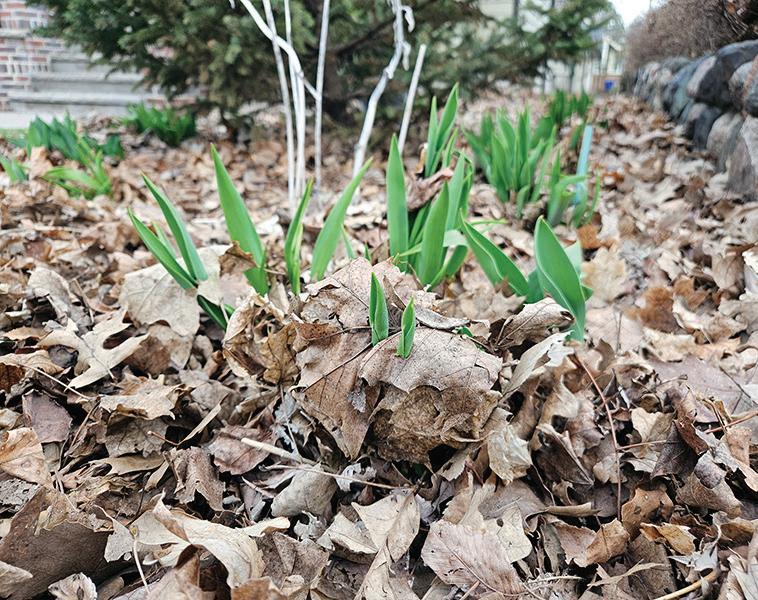
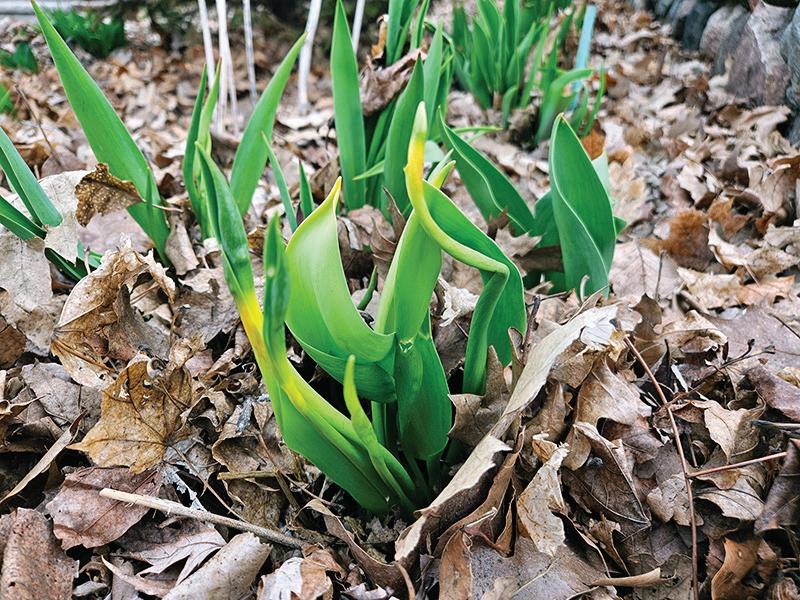
Are your tulips and other spring flower bulbs not coming up well?
Have you noticed mulch or leaves getting stuck on or between the emerging leaves? Find out what you should do at the bottom of this article.
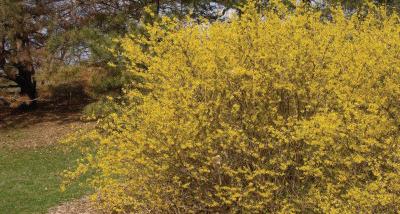
Crabgrass preventers and other preemergent herbicides need to be applied around the time forsythia blooms.
Some houseplants start growing more quickly and require more attention as we move through spring.
Hold off on putting any houseplants outside until nighttime temperatures are at least 60°F.
Lawn
Most lawns do not need a crabgrass preventer or preemergent herbicide application. If you are going to use one, though, you will want to use it around the time forsythia blooms, or when surface soil temperatures reach about 50°F.
If these conditions are already met in your area, consider using crabgrass preventer products containing the active ingredient dithiopyr, as it has some postemergent activity on crabgrass that may have already germinated.
Make sure these and any general lawn fertilizer-only products that are applied are watered in with 0.5 inches of rain or irrigation water.
Solution to the mystery of the month
Mulch, including fallen leaves and wood chips, can create a physical barrier that is difficult for bulbs to push through. Carefully remove the mulch or leaves from the bulb leaves.
To prevent this from happening next year, pull mulch away from where you planted bulbs in early spring, before the plants start to grow.
Other tasks
Get your soil tested to learn what nutrients are already present in your yard and garden.
Most garden soil samples submitted to the UMN Soil Testing lab have excess phosphorus, a nutrient that contributes to polluted waterways.
You may need to gently pull leaves and other mulch away from the plants.
Don’t worry if you see yellowing on the bulb leaves after you pull the mulch away; the leaves will green up after a few days.
AN OLD PROJECT WITH A NEW TWIST
By Amy Wadding Extension Educator, 4-H Youth Development, Freeborn County
Something good, new, and different is happening in 2026 with our swine project that is allowing brand new kids to experience a 100+ year old project with a different twist and intentional learning objectives included in the project learning.
In Freeborn County 4-H, for years we have had a high quality, a highly competitive, & a very invested project for our youth & families. This had led to a small decline each year in terms of pigs exhibited at the county fair. These statistics about the swine project are not very welcoming to someone who is brand new. For a number of years, volunteers and staff have brainstormed what this project would look like if we were to do things differently
with our swine project.
After watching a few other counties do similar projects with their youth enrolled in the swine project, 4 Freeborn County volunteers wanted to tackle doing a twist on our current swine project. They met to lay out what they wanted to offer and see from our swine project. We met with a neighboring county to learn first hand how they did their swine project by offering a commercial swine class at the county fair. We took some of their successes and struggles and reworked them to create a layout for our swine project here in Freeborn County.
We will offer in 2026 a commercial swine production class for our 4-Hers. This class is a county only class which means it is only eligible for the county fair. Participants in this class cannot move to the state level with this class as there is not a class offered
at the state fair through the 4-H program.
This commercial class started off with interested 4-Hers from Freeborn County that completed a survey of why they wanted to try this project, told us what they wanted to learn, explained where their pig would live, and answered questions about their comfort level with animals and if they had any accommodations that needed to be made to make this project a success.
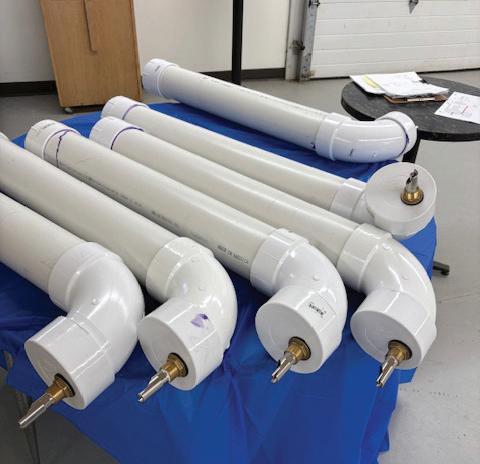
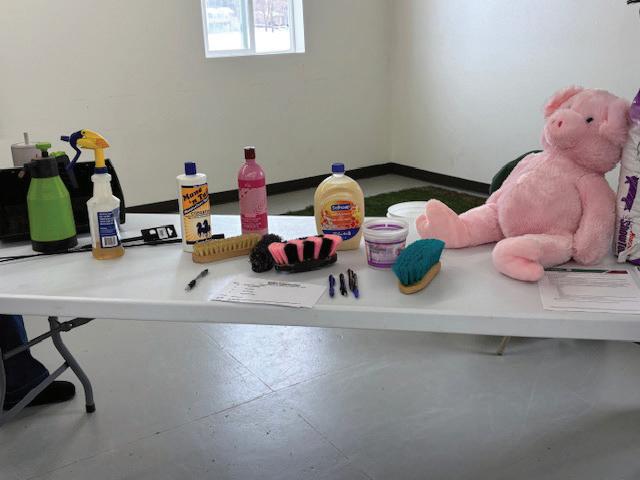
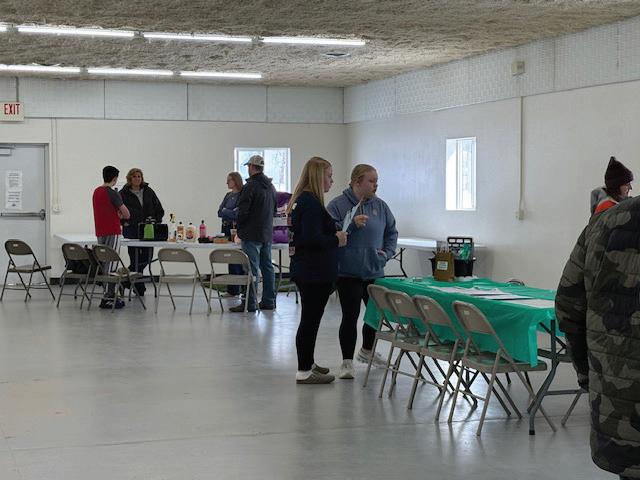
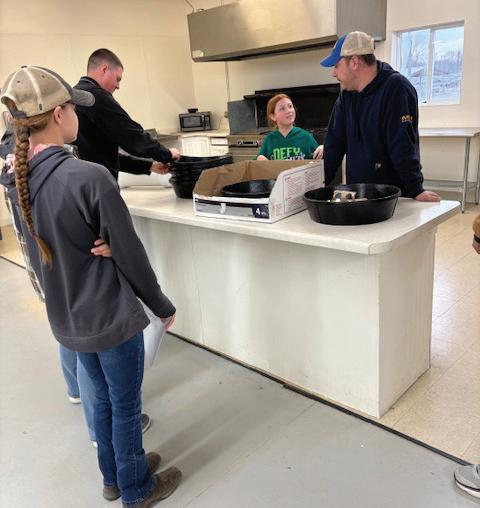
The intentional learning objectives were for these youth to learn about the production side of raising pigs, about their feeding and nutrition programs, about the processing side as well as cuts of meat, rate of gain, and record keeping. Each month from February until August, we will meet with the 11 youth that are participating in this project. The first couple of months have been getting them prepared. They learned about the space needed to house their pig and the products to help keep their pig clean and groomed. They learned about working with their pig and what to do as soon as they get their pig to their house. They made their own waterers and each received a feed pan. They will soon be entering their animal identification information into the 4-H management system. Their pig will be weighed and delivered to the 11 youth that signed up. Side note - the pigs are weighed on the same day, on the same scale, and then will be weighed again when they get to the fair - on the same day, on the same scale. This will allow the pigs to compete for an additional
class that the other show pigs will not be entered into. This rate of gain class tells us how much weight each pig gained per day. And the best daily gain will win. Another topic we will be discussing is record keeping. The 11 youth will keep detailed records of how much feed was purchased, how much time they spent with their pig, any vet calls needed to be made, traits about their breed, trends in the swine industry, cuts of meat, etc. The more detailed the better. Record keeping will be another area that the 11 youth will compete for. The better the records, the better place the 4-Her will earn. The last few topics are brand new to our program as an offering. We have appointments in place that these youth can sell their pigs to a local meat market to be put into their meat counter for customers to buy or these youth can have their pig processed and their family can purchase the meat bundle - and in addition to this - the meat market has offered to let the pigs be viewed when processed so the 4-Her knows exactly what a commercial pig looks like at the end product and what cuts of meat come from where on the carcass.
Through the layout of topics, another topic surfaced. Families wanted to purchase the meat bundle but had indicated their knowledge of how to cook pork products was limited and maybe not the best. Our office has conversations in place with MN Pork to come down to a picnic style opportunity for these 11 youth to each bring in a pork product and MN Pork will have staff come and teach our 11 youth and their
families how to cook/make/ prepare their cuts of meat so that they are given their best foot forward towards success with their recent investment of their processed pig meat bundle. We are trying to break the generational cycles of food consumptions and encouraging embracing a product that has some hesitance about consuming. Like the old saying, if your parents cooked something bad or forced you to eat it and you did not enjoy it, you will not cook it for your family, which means that your kids will not have the opportunity presented to them to try it. We hope by having this offering that our families will learn some new skills that will stick with them.
The amazing thing about working with a committee and volunteers is that they are there because they want to be. And when you have a road block or a situation where something isn’t working out - there are lots of minds and ideas to solve it to make it not a problem. These committee members care. They live and work in and with the swine industry. They want to see this project
succeed. They are the experts. They are instrumental in creating opportunities where this different project can succeed so that these youth have the same opportunities - just a little bit differentas the show pig kids. These committee members want the swine project to succeed, to get more kids to raise and care for pigs, to be able to showcase their months long of hard work and dedication, and to be rewarded for their efforts. They want to see kids experiencing something new.
This will be a new adventure for these 11 youth. So far they have shown up with excitement, lots of questions, and nerves to be taking on a new project. We are all excited to see how this summer lays out with our intentional learning objectives in place.
The 4-H staff in Freeborn County’s hope is that more volunteers will help to think of new and exciting opportunities that we can offer to the young people in our county. Sometimes what you don’t know, is what you don’t know. Trying something new expands us outside of our comfort zones. Our 4-H
program relies on volunteers and they are instrumental in helping to shape, educate, and deliver different & new educational opportunities.
If you would like to learn more about the commercial swine project in Freeborn County, please connect with Amy Wadding at mads0150@
umn.edu. For more information about Freeborn County 4-H, please connect with the Freeborn County Extension Office at 507-3775660. You can also check out our county website at https:// extension.umn.edu/local/ freeborn or our Facebook Page titled Freeborn County 4-H.
EXTENSION, STATE FAIR ANNOUNCE $35 MILLION CAMPAIGN FOR 4-H BUILDING
University of Minnesota Extension and the Minnesota State Fair have partnered to begin a major renovation of the iconic three-story 4-H Building at the State Fairgrounds and an expansion of the statewide 4-H program. This landmark initiative is the largest project of its kind in history for both the State Fair and Extension.
The 85-year-old, 100,000-squarefoot 4-H Building has been a cherished space and launching pad for generations of Minnesota youth from all 87 counties since it opened in 1939.
That tradition continues with the nearly 5,000 Minnesota 4-H youth who earn trips to showcase their projects at the Minnesota State Fairgrounds each year.
The building’s dormitories provide lodging for up to 700 4-H’ers a night during the State Fair, and a cafeteria serves thousands of healthy meals daily to 4-H’ers during the fair and other events. The first floor is open to fair guests during the 12 days of the State Fair to see project displays, demonstrations and live musical performances.
To date, 60% of the $35 million fundraising goal has been raised, thanks in part to a $10 million donation to the Minnesota State Fair Foundation from Kathy and Jim Cargill, which jump-started the campaign. Significant gifts have also come from the Ames Family, Compeer Financial, Riverview LLP and the Rosen Family Foundation.
Exterior work is currently underway, with the majority of building renovations beginning immediately after this year’s fair. The updates will be completed in time for the 2027 State Fair.
A vision for transformation
As part of the building transformation, fair guests and
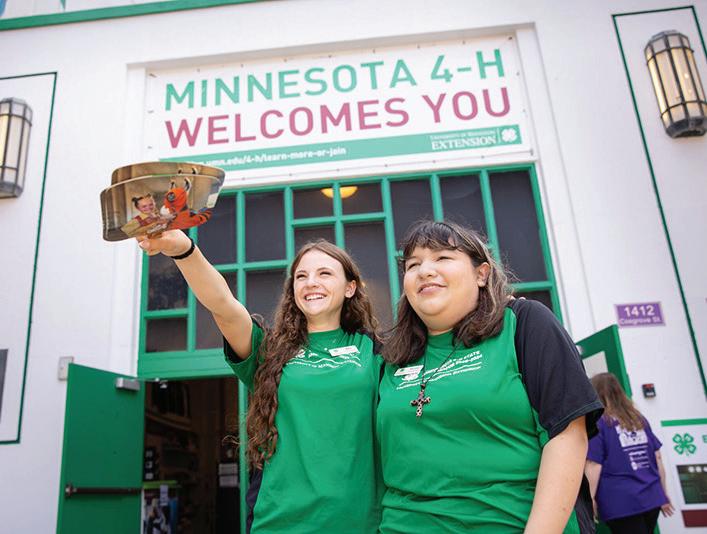
Minnesota 4-H State Ambassadors greet fair guests at the 4-H Building.
participating 4-H’ers will see new stages for performing arts, public speaking and demonstrations; updated spaces for STEM activities, entrepreneurship, agricultural education and judging; a teaching kitchen; a media studio; and flexible spaces for workshops and community gatherings that will make programming possible April through October.
Beyond the State Fair, the building will house community workshops, camps and career-exploration activities for youth from across the state.
Critical functional updates include replacing all windows; repairing and repainting the exterior; installing new elevators and other accessibility features; updating fire alarm and life safety systems; enhancing ventilation; improving electrical and technological capacity; and renovating and expanding building restrooms and shower facilities. The power of 4-H
4-H is part of University of
Associate Dean. “This renovation will allow us to improve how we showcase youth achievement and innovation and build connections to future opportunities by linking fair activities to year-round programs, educational pathways and community engagement.”
Supporting the next generation of Minnesota leaders
Minnesota Extension, which is an important contributor to the University’s mission of educating Minnesota’s future leaders.
“The 4-H Building is more than a structure and its potential expands far beyond the 12 days of the fair,” said Bev Durgan, dean of Extension. “Through this campaign, we are making an investment in the future of 4-H and young people for generations to come.”
Minnesota 4-H reaches nearly 58,000 youth across the state. 4-H enrollment has increased by a third in the past four years, and the program is aiming to reach 100,000 young Minnesotans, with the newly renovated State Fair building serving as a premier center for youth leadership and development.
“The skills Minnesota’s youth need to succeed in life and careers are changing rapidly, and Minnesota 4-H ensures they are ready to meet those challenges,” said Jennifer Skuza, Minnesota 4-H Director and University of Minnesota Extension
“We’re deeply grateful for the early generosity that has helped launch this effort,” said Minnesota State Fair CEO Renee Alexander. “The 4-H Building is an iconic part of our historic fairgrounds, and this investment is about making sure it continues to serve Minnesota’s youth for generations. There’s still work to do, and we’re hopeful Minnesotans will step forward to help us reach our goal to fully realize what this space can be.”
The Cargills said they are excited to offer their support for the project and hope to inspire broader community engagement in the missions of Minnesota 4-H and the Minnesota State Fair.
“At its heart, this initiative is about the students,” Kathy and Jim Cargill said in a statement. “The young people who emerge from the 4-H program demonstrate exceptional strength in agriculture, STEM and the arts — and they grow into leaders who serve communities across the state. The activities housed within the 4-H Building on the fairgrounds represent the culmination of their dedication — showcasing the very best of their work and achievements throughout the year. We are honored to support a new generation of young people who embody the values of hard work, perseverance and integrity, while never losing sight of the joy and camaraderie that make the journey meaningful.”
REVIVING MINNESOTA’S CROP DIVERSITY
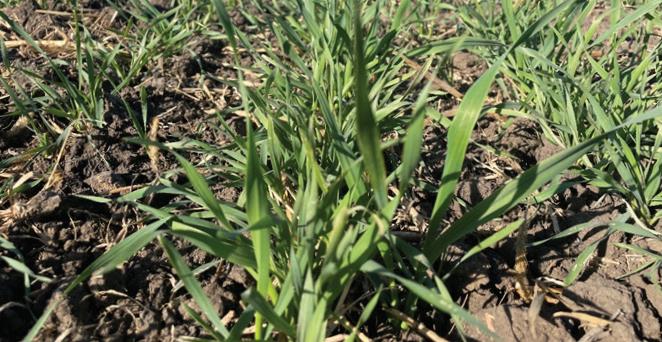
Photo: Cereal Rye planted as a cover crop, helps cover and protect the soil between crops.
By Senja Viktora
Outreach & Technical Specialist, Freeborn SWCD
Before the corn-soybean rotation dominated, Minnesota farms grew a wider mix of crops. It wasn’t uncommon to see a landscape of pastures, hay, oats and other small grains. These crops helped feed animals, but they also quietly fed the soil.
Oats and small grains provided cover earlier in the season. Alfalfa and forage mixes stayed in place for several years, helping fix nitrogen and build deep root systems in the soil. A corn crop following was greeted with wellfed soil. Incorporation of livestock and their manure into the mix helped return nutrients back to the same land it was taken from.
Today, soil health research is proving that past generations’ practice of diversity helps to build stronger soils. Diverse rotations help protect soils against erosion, reduce disease and pest pressure, improve water infiltration, and increase soil organic matter. Benefits that many Minnesota growers are working hard to regain.
Small grains have been returning to Minnesota farm
fields using the technology and knowledge we have today in the form of cover crops. Cover crops are another way to add diversity. By keeping living roots in the soil after harvest, soil is held in place, soil microbes are fed, and nutrients and organic matter are added for next year’s crop.
A third or even fourth crop can be added to a rotation to increase diversity. This can require new equipment, marketing channels, or management skills. However, research from long term trials show diversification can increase profitability through improved yield stability, reduced input needs like fertilizer and pesticides, and reduced soil and nutrient losses.
Modern agriculture has advanced in countless ways, but a lesson from the past remains true: soil does better with diversity. Cover crops and longer crop rotations create resilient soil that weather heavy rains, reduces erosion, and boosts long-term productivity.
Contact your local Soil & Water Conservation District to learn more about cost-share opportunities for cover crops and other practices that help build a healthy soil.
EMERALD ASH BORER: WHAT MINNESOTA LANDOWNERS NEED TO KNOW
What is the Emerald Ash Borer?
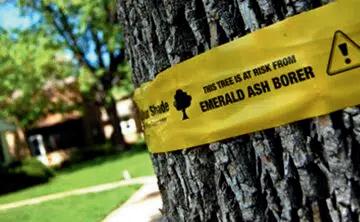
The Emerald Ash Borer (Agrilus planipennis) is a small, metallic green beetle native to East Asia. First detected in the United States in 2002 and in Minnesota in 2009, it has since become one of the most destructive forest pests in North America.
While the adult beetle causes minimal damage, its larvae are highly destructive. After eggs are laid in the bark of ash trees, the larvae burrow beneath the surface, feeding on the inner bark. This feeding creates S-shaped tunnels that disrupt the tree’s ability to transport water and nutrients.
Why It Matters in Minnesota
Minnesota has more ash trees than any other state—nearly one billion across forests, communities, and rural landscapes. This makes the state particularly vulnerable.
All native ash species are susceptible, and once a tree is infested, it will almost always die without intervention. Over time, entire shelterbelts, woodlots, and riparian areas can be lost, impacting:
• Farm windbreaks and erosion control
• Wildlife habitat
• Property values and aesthetics
• Timber and firewood resources
Signs of Infestation
EAB damage often goes unnoticed until it’s advanced. Landowners should watch for:
• Thinning or dying tree canopy
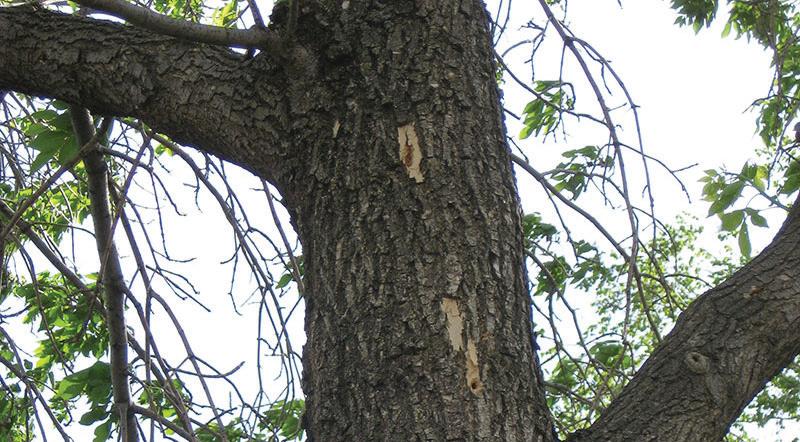
• Increased woodpecker activity (they feed on larvae)
• Bark splitting or flaking
• S-shaped galleries beneath the bark
• Small, D-shaped exit holes
These symptoms indicate the tree is already heavily infested.
What Can Be Done?
While there is no simple cure, there are several management strategies available:
1. Do Not Move Firewood
Transporting firewood is one of the primary ways EAB spreads long distances. Always source and burn wood locally.
2. Monitor and Plan Ahead
Landowners should inventory ash trees on their property and develop a plan before trees decline. Once trees begin to die, removal becomes more hazardous and costly.
3. Chemical Treatments
Insecticide treatments can protect
Adults are 1/2-inch long and 1/8-inch wide with flattened backs. Photo by: David Cappaert, Bugwood.org
Ash tree showing woodpecker flecking. Photo by: Minnesota Department of Agriculture.
high-value trees (such as those near homes or buildings), but they must be applied regularly and before severe infestation. Homeowners can treat ash trees during the summer and early fall months. It is recommended that trees be chemically treated through trunk injections by a professional tree care company.
4. Diversify Tree Plantings
Replacing ash trees with a mix of species reduces future risk from pests and disease.
5. Utilize or Remove Affected Trees
Harvesting ash trees before they die can help recover some value and reduce safety hazards.
Looking
Ahead
The Emerald Ash Borer cannot be completely eradicated, but its spread can be slowed and its impact managed. For Minnesota farmers and landowners, early awareness and proactive planning are key. Homeowners can treat ash trees during the summer and early fall months. It is recommended that trees be chemically treated through trunk injections by a professional tree care company. By taking steps now— monitoring trees, limiting firewood movement, and diversifying plantings—landowners can protect their property and help preserve Minnesota’s landscape for future generations.