





2
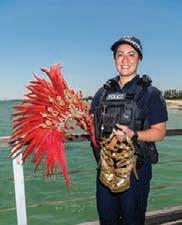
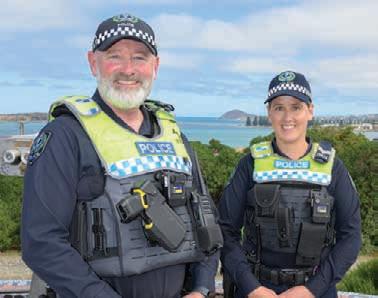
Eyre and Western Region: Ceduna policing
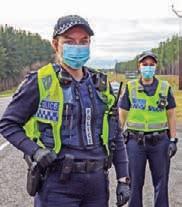
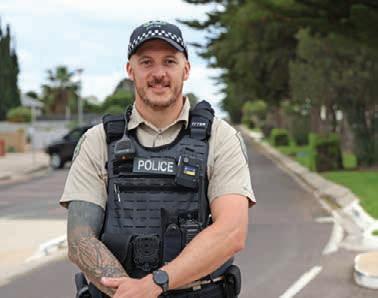
Hills Fleurieu Region: Victor Harbor Highway Patrol
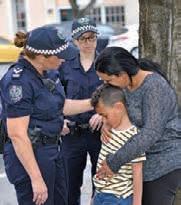
> Murray Mallee Region: Community Constables
> Far North Region: Coober Pedy policing
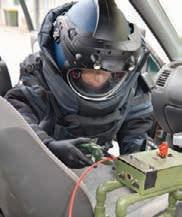
> Murray Mallee Region: Brevet Sergeant Matt Telfer
> Eyre and Western Region: Inspector Caroline Jacobs 2 12 18 24 30 36
Regional policing can be both demanding and rewarding. Officers face unique challenges such as geographic isolation, limited resources and striking the right balance between law enforcer and community member. However, working in regional areas offers fantastic opportunities to hone your policing craft and fast-track your career, along with an enviable lifestyle.
This is clearly evident in this special regional issue of Blueprint. We traverse the state, meeting our people across South Australia Police’s seven regions and discovering their strong sense of identity and purpose, and commitment to the communities they serve. Inspectors Josh Heinze and Caroline Jacobs are prime examples of this, having moved to their respective leadership roles in Far North Region and Eyre and Western Region. They’re now enjoying the country lifestyle, embedding themselves in the
ISSN 1448-1855
Editor: Mathew Rodda
community and drawing upon their vast experience to mentor the next generation of police officers.
Constables Kayla Cox and Aisha Milburn are two young officers who are embracing all that regional policing has to offer. We find out how they’re adapting to country life and the rigours of policing in their first postings in Port Augusta and Port Pirie. We also travel to near the Victorian border to meet Brevet Sergeant Matt Telfer who has been a pillar of the Pinnaroo and surrounding Mallee communities for the last seven years. While in Murray Mallee Region we delve into the vital role of Community Constables in building relationships and trust with local Aboriginal communities.
We head to the far west coast to extol the virtues of Ceduna policing and hear from two enthusiastic English recruits who have made a successful transition to regional policing. Coober Pedy and Kangaroo Island are also on the itinerary –opposites in a geographic sense, but with shared challenges regarding distance. A regional issue wouldn’t be complete without discussing road safety. We get up to speed with Victor Harbor Highway Patrol and learn why the team’s leader, Sergeant Peter Tellam is passionate about preventing road trauma.
• MATHEW RODDA
Writers: Mathew Rodda and Sonja Viduka
Editorial team: Mathew Rodda, Bec van Reesema, Nigel Hunt, Chief Superintendent Robert Papworth, Chief Superintendent Yvette Clark, Assistant Commissioner Ian Parrott.
Designed by: Chris Prunier
Printed by: Newstyle Print
Photos: Andrew Challen, Joash Ng, Brevet Sergeants Rachel Amer, James Brazil, Jennifer Day, Amy Porter and Nigel Raynes, Pink Dust Photography, Rhyy Gaskin Photography, South Australian Tourism Commission, Shutterstock. Blueprint is produced by SAPOL’s Marketing and Communications Unit, Police Headquarters, GPO Box 1539, Adelaide 5001. Internal postcode: 120 Tel: 08 732 23294
Email: dlpolicegazette@police.sa.gov.au
Views and opinions expressed by contributors within this publication are not necessarily those of South Australia Police, the Commissioner of Police or the Government of South Australia. Articles, photographs and other contributions are welcome from every SAPOL employee.
First Nations people are warned this publication may contain images of, or references to, people that have died.
We are continuing to strengthen how we support our regional workforce through a refined regional policing strategy, one that better recognises the diverse environments in which our people work.
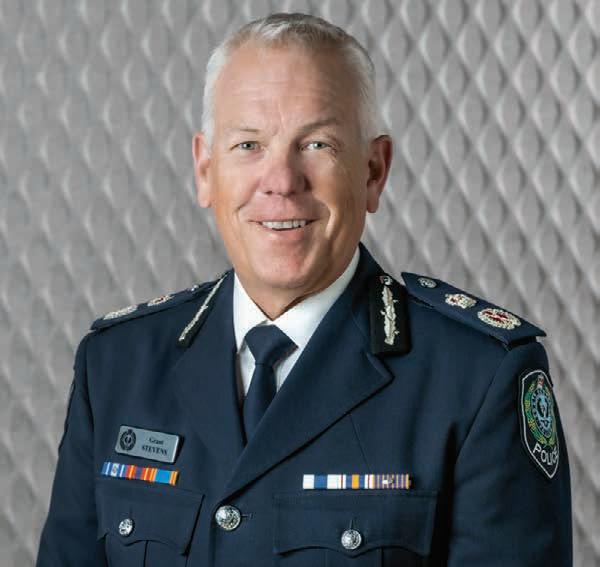
Commissioner's foreword
South Australia’s regions are diverse, expansive, and at times remote, requiring a policing response that is both adaptable and deeply connected to the communities we serve.
At the heart of this is our regional workforce, whose professionalism, resilience and commitment underpin community safety across the state. Their tireless work and unwavering dedication are unmistakably clear in this special issue of Blueprint focusing on our seven policing regions across the state.
Policing in regional and remote locations brings unique challenges. Our people often operate with broad responsibilities, limited resources and significant distances between communities and support services. Despite this, they continue to deliver exceptional service, building strong local relationships and responding to complex and evolving demands with dedication and skill. Their contribution is critical to the safety and confidence of the communities they serve.
We are continuing to strengthen how we support
our regional workforce through a refined regional policing strategy, one that better recognises the diverse environments in which our people work. This includes improving access to capability, enhancing operational support and ensuring our structures are flexible enough to meet local needs.
The BDO Regional Policing Future Directions Project is also providing a deep understanding of how we position regional policing for long-term sustainability. The independent BDO team, supported by two sworn officers with vast regional experience, travelled more than 7500 kilometres while visiting 52 regional police stations. The unique perspectives captured from this engagement provide valuable insight into the operational realities, local contexts, and distinct challenges of regional policing. This will ensure our efforts to enhance regional policing reflects contemporary policing demands, along with the exposure and deep understanding of our people working in the regions.
Integral to building a sustainable regional workforce is attracting and retaining the right people. We are seeing positive outcomes from the recruitment of international and interstate officers through the SAPOL Transition Program (STP), with about 20 per cent of recruits choosing to take up
roles in our regions.
SAPOL has just reached the milestone of delivering 200 experienced international and interstate police officers to our programs, with the latest intake of 27 STP members recently commencing training at the Police Academy. At this stage, 155 STP members have graduated, with 28 posted to regional locations. Seventeen of this cohort have found a new home in Whyalla, Port Lincoln and Ceduna within Eyre and Western Region, with the other members now continuing their policing careers in Far North, Yorke Mid-North, Limestone Coast and Murray Mallee regions. These officers bring valuable experience and perspectives, strengthening local teams and contributing to a more diverse and capable workforce. Their experience is also enabling some to take up specialist roles in their regional locations.
Our regions have also been boosted with 41 new frontline positions, including Family Violence Intervention Officers and Volume Crime Teams.
The successful Police Security Officer (PSO) model is being expanded into regional areas with the State Government providing funding for an additional 98 PSOs over three years.
The 2026-27 State Budget provides further support for our regions. SAPOL will receive $11.3 million over four years to establish a dedicated drone operations
capability. Four drone base stations will be established in the metropolitan area and nine units will be distributed across regional South Australia. Funding has also been provided to undertake the necessary planning work for two new police stations at Mount Barker and Murray Bridge.
Murray Bridge is the home of Senior Community Constable Greg Smith, a 23-year veteran of Murray Mallee Region, who was recognised with an Australian Police Medal (APM) in this year’s King’s Birthday Honours List. Greg is the first Indigenous member of SAPOL to be awarded this prestigious honour. I congratulate Greg, along with Detective Chief Superintendent Catherine Hilliard and Sergeant First Class Silvano Dovi who were all worthy recipients of the APM. You can read more about Greg’s work in the Murray Mallee Region in this issue.
As we continue to evolve, our focus remains firmly on supporting the people who serve in our regions, ensuring they are equipped, valued and empowered to deliver for their communities. I extend my sincere thanks to all our regional and remote personnel. Your commitment, adaptability and connection to community are at the core of policing in South Australia.
• GRANT STEVENS COMMISSIONER





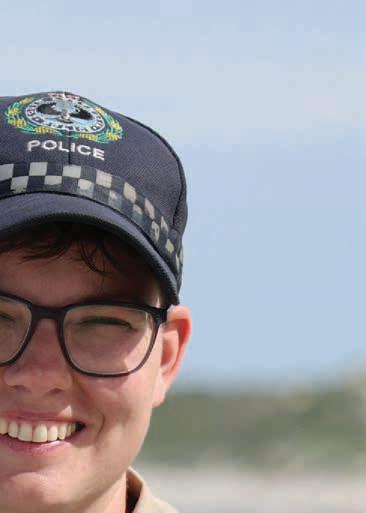


When Senior Constable Eliesa Morello moved to Ceduna in 2022, the decision was largely personal. Her wife had accepted a position at a local school, and family lived nearby in Streaky Bay.
But what began as a move to South Australia’s far west coast for family reasons quickly became something more – a policing role that offered unexpected responsibility, professional growth, as well as a coastal lifestyle that convinced her to stay.

safety, operational policing and community engagement at once.”
The role involves organising additional police resources brought into Ceduna for the event, liaising closely with council and organisers, and managing operational issues as they arise throughout the weekend. It is the kind of responsibility Senior Constable Morello believes regional policing can offer much earlier in an officer’s career.
Similarly, Senior Constable Morello’s day-to-day duties can involve anything from charging and bailing detainees and seizing forensic evidence to managing serious incidents, coordinating searches for missing people and overseeing large community events.

In Ceduna, where less specialist resources mean that regional police are often required to take on a wider range of duties, Senior Constable Morello found herself stepping into opportunities that may have taken far longer to come by in metropolitan policing.
One of those opportunities has been her role as coordinator of the policing response to Oysterfest – Ceduna’s annual long-weekend event that draws thousands of visitors to the coastal town each October.
“It’s a lot of planning and coordination,” she said.
“You’re balancing public
“You gain experience very quickly,” she said.
“You’re exposed to so many different aspects of policing.”
Senior Constable Morello joined South Australia Police (SAPOL) in 2016, graduating from the Police Academy the following year. Before arriving in Ceduna, she spent four-and-a-half years policing in Whyalla and also relieved in the Anangu Pitjantjatjara Yankunytjatjara (APY) Lands.


disorderly behaviour, fighting and offensive language, so a lot of time is spent preventing and managing those situations.”
But alongside those challenges, Senior Constable Morello says regional policing has also strengthened her connection to the area.
“The sense of community here is really strong,” she said.
“You get to know people properly, both within the station and outside of work, and that changes your experience of policing.”

Those experiences helped prepare her for the realities of policing in Ceduna, where alcohol-related offending and its flow-on effects remain among the town’s most persistent challenges.
“With Ceduna being a dry zone, a lot of our time is spent enforcing alcohol restrictions,” she said.
“As a result, we often deal with street offences such as
Outside work, it is the lifestyle that has become one of the biggest reasons she has stayed. Ceduna’s beaches, camping spots and slower pace of life offer a contrast to the intensity of frontline policing, making it easier, she says, to switch off at the end of the day.
“Everything is close, and there are so many beautiful places to explore,” she said.

helping people settle into the community.
“Joining a local footy or netball club is one of the best ways to meet people and become part of the town,” she said.
Ceduna’s slower pace and close-knit community have also made it an appealing place to raise her two young children. Now nearly a decade into life on the Eyre Peninsula, Senior Constable Morello says she feels settled both professionally and personally.
“I really enjoy the work-life balance here and have no current plans to leave,” she said.
For officers considering regional policing, her advice is straightforward.
“Just do it,” she said.

Senior Constable Morello believes local sporting clubs also play an important role in

“The work is really fulfilling, and if you’re willing to get involved in the community and embrace the lifestyle, it can be an incredibly rewarding place to live and work.”





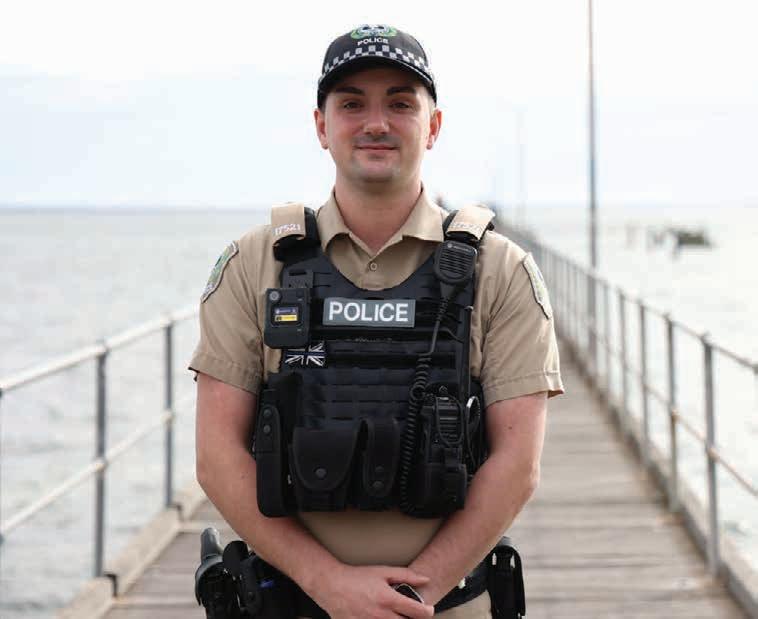
Having traded the grey skies, rainy days and densely populated communities of the United Kingdom (UK) for beaches, open roads and a very different pace of life – and policing – it wasn’t difficult for SAPOL international recruits, Constables Jamie Earl and Simon Rowbotham to settle


into the Ceduna lifestyle.
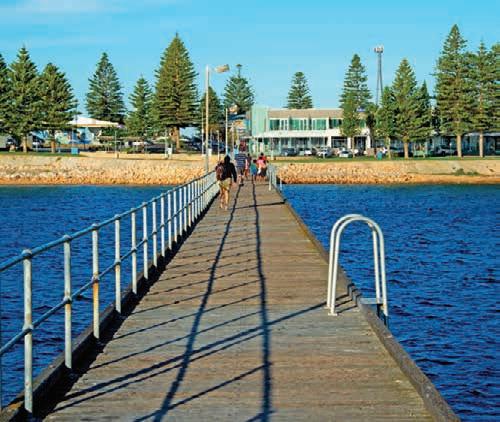
Renowned for its stunning beaches, Ceduna sits on the shores of Murat Bay, about 700 kilometres from Adelaide. The town is known for its fishing industry and serves as a major regional centre for the Eyre Peninsula. While fewer than 4000 people call Ceduna home, about

The work you do here feels visible and meaningful. It pushes you to grow quickly as both an o icer and a person.



more than simply a change of police beats. It was an opportunity to pursue a different lifestyle, experience regional policing in Australia and build new lives in a closeknit community on the Eyre Peninsula.
Constable Earl took up post in Ceduna in March this year after joining SAPOL in November 2024. He was part of the first intake of recruits in SAPOL’s Transition Program which targets experienced police officers from the UK, Guernsey, Republic of Ireland, New Zealand and Canada. Having previously spent eight years with Cumbria Police in northern England, Constable Earl was no stranger to regional policing.
“Cumbria is quite rural in parts,” he said.

“One day I could be dealing with a large affray; the next, I’m moving sheep off the road.”

250000 tourists pass through the town each year – as it serves as a key stopover for travellers crossing the Nullarbor.
For both officers, who find themselves about 16 000 kilometres away from the communities where they once lived and worked, the move to Ceduna represented

There were also frontline deployments during major riots, where officers faced bricks and petrol bombs over several days of unrest.
By contrast, policing in Ceduna presents a different set of challenges – alcoholrelated offending, dangerous driving, public disorder and drug-related crime – often within the dynamics of a small regional community where officers quickly become familiar faces.
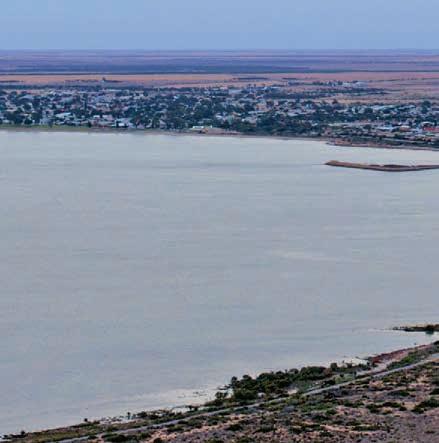

“Ceduna, like a lot of rural places, can have its challenges, mostly around street offences and alcoholrelated incidents,” Constable Earl said.
Initially intending to spend only six weeks in Ceduna, Constable Earl quickly found himself drawn to both the town and its people.
“I got here and thought: I really like this – the beach, the weather and the sense of community,” he said.
By the end of the placement, he had applied to stay. A moment shared with fellow UK recruit Constable Simon Rowbotham sealed the decision.
“We were sitting in the police car overlooking the beach eating an ice cream and both said, ‘Why aren’t we living here?’,” he said.
After a decade of policing in the UK, Constable Rowbotham relocated to Australia with his wife and three children, joining SAPOL in January 2025 through the Transition Program.

The warm welcome of fellow police officers and the local community made settling into regional life easier than he expected.
“Coming from the UK with no friends or family here, that meant a lot,” Constable Earl said.
The financial incentives on offer have also been helpful.
“I love having a 70 per cent reduction in rental payments – my rent here is around $140 per week compared to $600 in the city. It’s a great way to save money and I also get a sea view,” he said.
“Professionally, I was looking for a new challenge, but personally, it was about raising a family somewhere with less congestion, more balance and a stronger sense of community,” he said.
After starting his SAPOL career in Adelaide’s northern suburbs, Constable Rowbotham transferred to Ceduna in early 2026, following a short stint in the area. Now settled into life on the far west coast, he says policing in a town the size of Ceduna creates a different kind of connection with the community.
“You get to know everyone – both in and out of uniform,” he said.

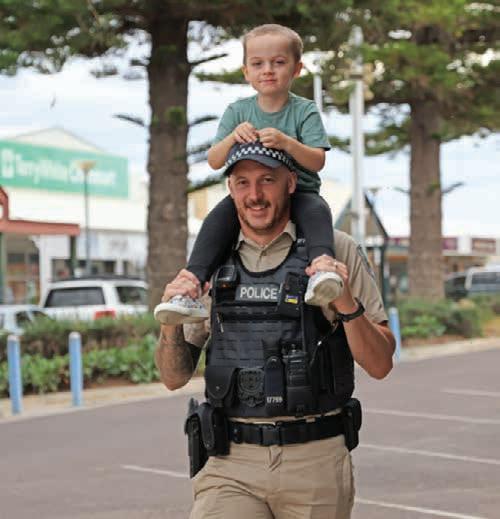
Rowbotham has even been scouted by local Ceduna clubs to play Aussie Rules football.

“The people you deal with at work may also be the people you see at the football club or in the local pub. That changes the nature of policing.”
Outside work, much of family life revolves around exploring the Eyre Peninsula coastline.
“We spend a lot of time camping and enjoying the beaches; the kids are having an amazing adventure,” he said.
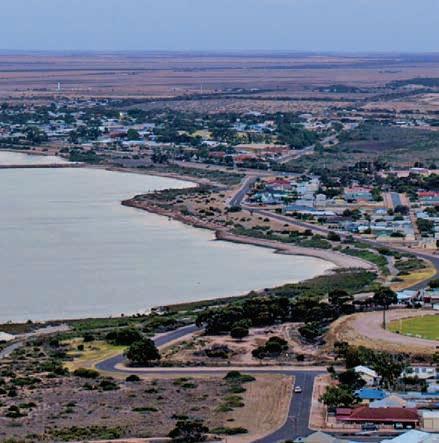
lifestyle is amazing. I strongly encourage international recruits to make the move to South Australia.”
“I’m still getting my head around the rules, so maybe next year,” he said.
Despite the remoteness and the unique challenges that can come with regional policing, both officers say the move has been rewarding and recommend it to others.
“The work you do here feels visible and meaningful. It pushes you to grow quickly as both an officer and a person,” Constable Rowbotham said.
“The people are so helpful and welcoming and the

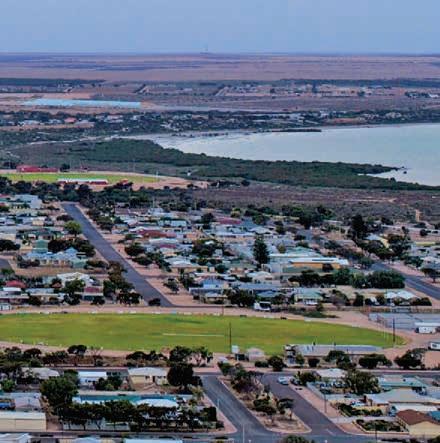

Words: Sonja Viduka








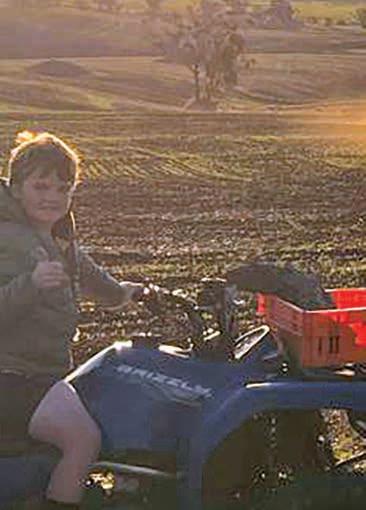
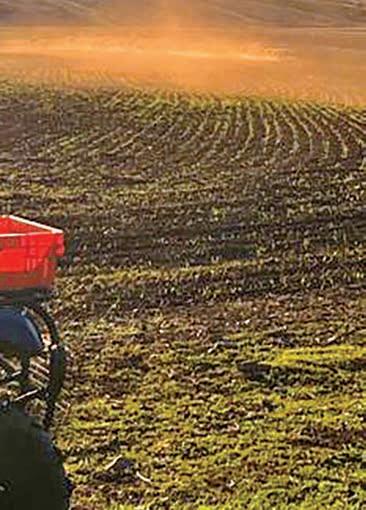
Perched atop a tractor on his farmhouse property near Quorn, Inspector Josh Heinze looks out over the vast acreage, taking in the idyllic environment, with a sense of satisfaction in having made the right move for both him and his family.
Farm life provides a welcome retreat from Inspector Heinze’s busy and challenging role as
Operations Inspector in Far North Region, which he has performed since April 2024.
His newfound lifestyle and policing role are far removed from the intensity and highrisk nature of his 11-year stint in STAR Operations, where Inspector Heinze undertook specialist roles including marksman/observer, field search controller and tactical flight officer. He then spent 20 months as Officer in Charge of Water Operations Unit before realising a long-held goal of pursuing regional policing.




“My wife Sarah and I had contemplated a country move in 2017 but at the time I couldn’t bring myself to leave

I was aware of the complexities and demands presented by Far North Region but knew it would be a great career move due to the exposure and development I would receive.






STAR Operations,” Inspector Heinze said.
“Sarah’s extended family are dotted around the southeast of the state, so we’ve spent a lot of time visiting family farms and scenic beaches. Deep down we knew a country lifestyle was what we wanted.
“I will always cherish my time at STAR Operations – it was fun, challenging and high intensity, but my body couldn’t sustain it forever.”
Inspector Heinze completed the Inspector Qualification Program in 2023, and soon after an opportunity arose in Far North Region.
“After navigating a few challenges, we committed to the move and secured a rented farmhouse 10kilometres from Quorn, which has been the best move we’ve ever made,” he said.
“I was aware of the complexities and demands presented by Far North Region but knew it would be a great career move due to the exposure and development I would receive.
“The move was a huge step out of my comfort zone, going back into general duties policing after 13 years away.”
Inspector Heinze’s career has come full circle, returning to regional policing after spending nearly three years in Whyalla in his first posting after graduating in 2005. He is now responsible for leading and mentoring the next generation of Probationary Constables, who are emulating his humble beginnings in a regional posting.

rewarding,” Inspector Heinze said.
“The ‘can do and have a go’ attitude of young officers never ceases to amaze me.
“Talking to them and hearing the excitement in their voice when they discuss jobs they attended or arrests they made is a great reminder why we join the job – to catch crooks and help the public. It’s important we don’t lose focus on this the longer we are in the job.”

“Port Augusta has a high number of young Probationary Constables, so watching them develop is extremely
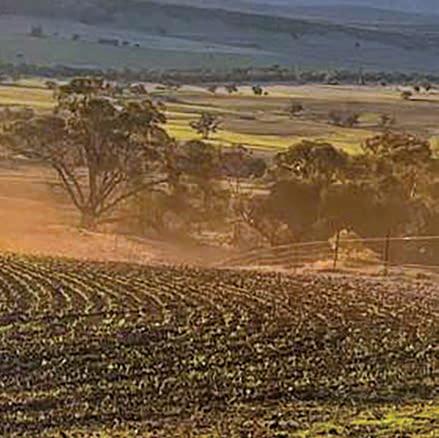
Inspector Heinze is responsible for the operations side of policing in the Far North. He supports Superintendent Paul Isherwood in managing a sprawling area from Port Augusta all the way to the Northern Territory border, including Roxby Downs, Coober Pedy, Anangu Pitjantjatjara Yankunytjatjara (APY) Lands, and the

spectacular Flinders Ranges.

“This is a huge area with many challenges. The biggest one is distance – in my first year I travelled more than 40000 kilometres in my fleet car,” he said.
“My role encompasses community and stakeholder engagement, staff management, incident management across the region, along with compliance and auditing.
“Looking after my staff is what I take the greatest pride in as we have some amazing people working in the Far North.
“I’m constantly thinking about how I can better support our people in dealing with the challenges of remote policing with limited support close by.”






It’s fair to say Inspector Heinze is enamoured with the Far North Region. He relishes the chance to relieve at Superintendent level, while also indulging in the breathtaking scenery throughout the expansive Region.
“The opportunities, development, and exposure to complex issues and tasks are real and you get the


opportunity to sink your teeth into the role,” Inspector Heinze said.
“If you like the outdoors, there are miles of roads to explore. It’s particularly rewarding to see the amazing landscapes when travelling to places like Coober Pedy and the APY Lands.
“I’ve been fortunate to have some of our Community Constables take me to places not many people get to see. Their knowledge and connection to country is a
truly remarkable story to hear.”

When you ask Inspector Heinze what he likes most about his new life in Far North Region, he gives a simple answer – community.
“Living in the small rural town of Quorn, we have met some incredible people. They are genuine and generous, and we felt at home soon after arriving,” he said.
“We have all settled in as a family extremely well. My boys were 10 and 8 when

I’ve been fortunate to have some of our Community Constables take me to places not many people get to see. Their knowledge and connection to country is a truly remarkable story to hear.




we moved – it was tough initially as they started at a new school, but they’ve established a great friendship group, and we now struggle to get them back to Adelaide for a weekend.”
The Heinze family is heavily involved in local sport, with Inspector Heinze integral to re-establishing the Quorn Tennis Club.
“I am the president and coach the juniors which is a great outlet from work,” he said.


“My wife plays for the Quorn Netball Club and is on the committee, while my sons play cricket for the local club and play football with the South Augusta Bulldogs.
“I’m a strong advocate for getting involved in the community and making a go at life no matter where you live. The connections and people you meet are life lasting.”
When not consumed by sport, the Heinze family retreat to their farm.

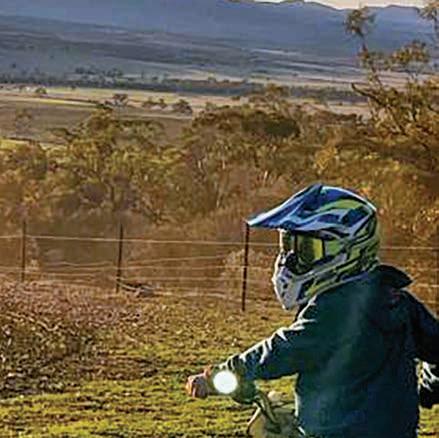
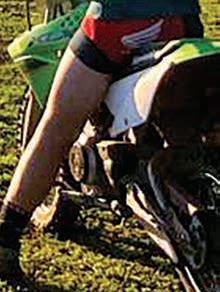
“We spend a lot of time on the farm with the kids motorbike riding, walking the hills on the property, and cutting firewood,” Inspector Heinze said.
“Winter is my favourite time as we can have a bonfire on a random weeknight or take the kids out hunting and teach them some lifelong skills.
“Living in the Flinders Ranges is incredible. Many family and friends have visited from Adelaide and they all comment on how good our life is.”
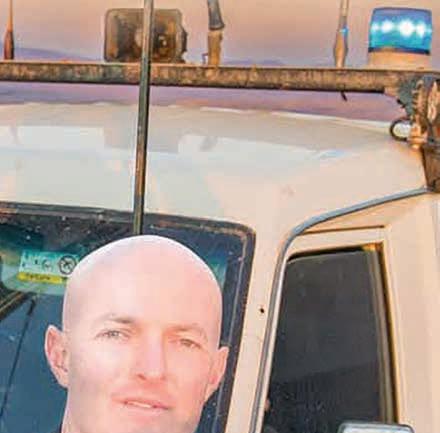
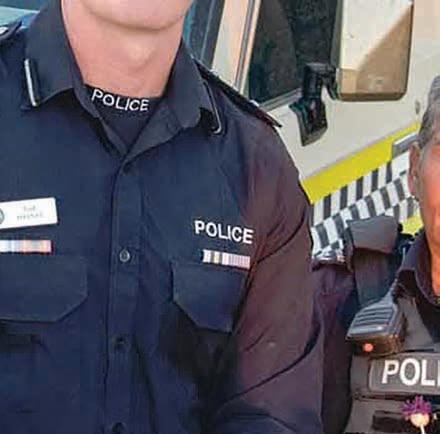
It’s a lifestyle that Inspector Heinze hopes to savour for the foreseeable future.
“We recently purchased a 12-acre block of land just outside of Quorn where we intend to build a house,” he said.
“We had a great life in Adelaide, lived in a nice suburb, kids went to a good school and we had great people in our life, but country living is just different.
“While the country may not offer Uber Eats, heaps of cafes, and flash gyms, there


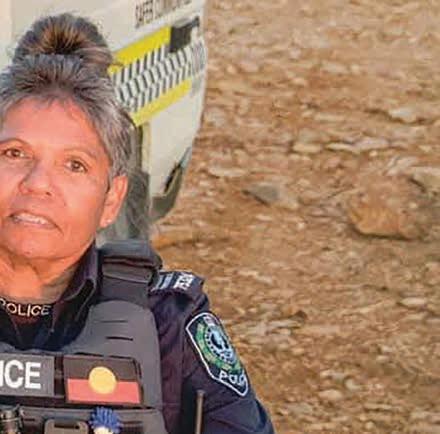

is so much more out here.
“Regional policing offers outstanding career and lifestyle opportunities. I wish I did it earlier.”

Words: Mathew Rodda



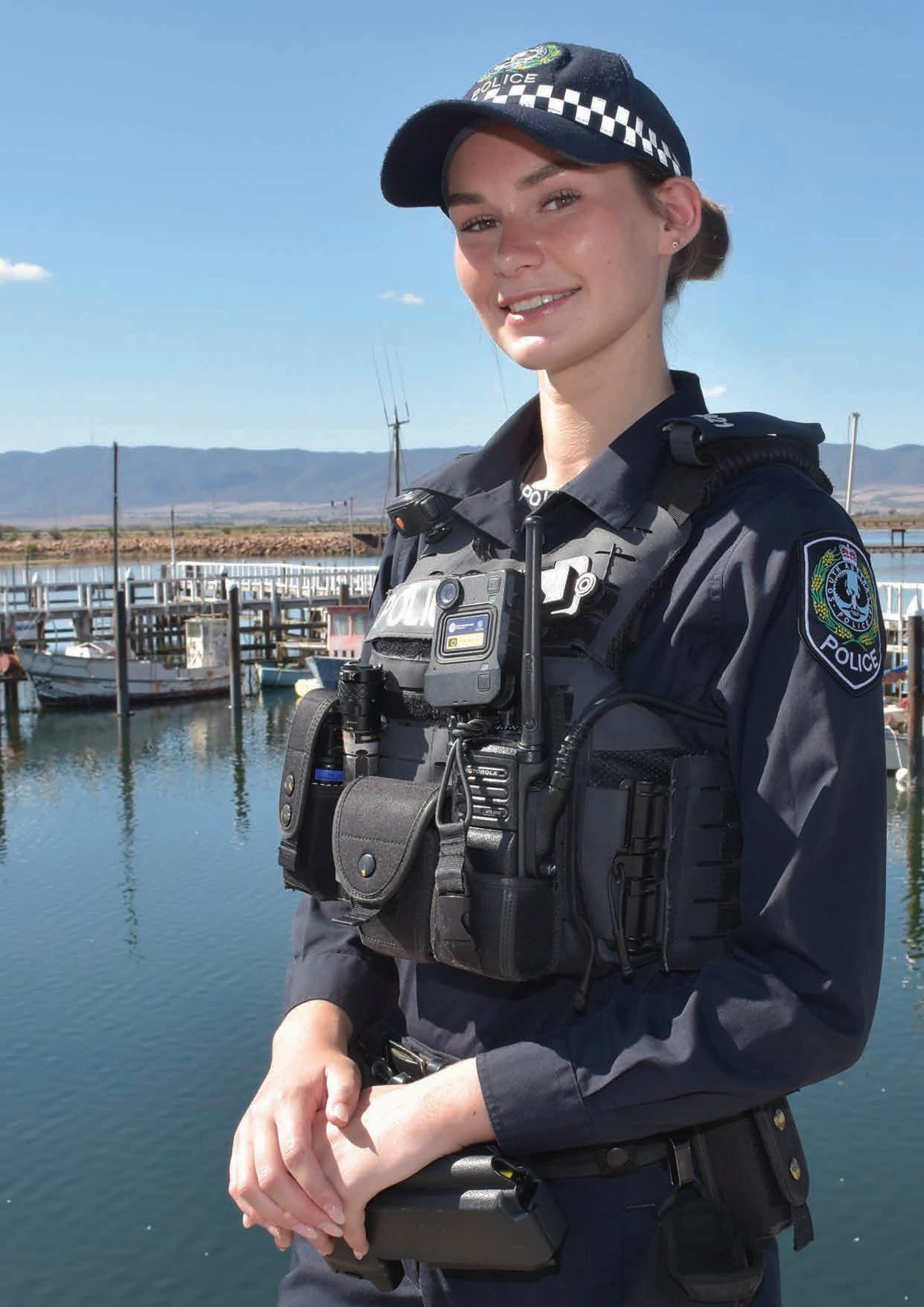

After achieving her lifelong dream of becoming a police officer, an excited Aisha Milburn strode out of the Police Academy in June 2023 to embark on a country odyssey.


Posted to Port Pirie in the Yorke Mid North Region, the then 19-year-old didn’t know what to expect but three years later she is loving regional policing and all the opportunities it provides.
“At the time of graduation, I was given a choice of Port Pirie or Port Augusta. A course mate and I made the decision to move to Port Pirie together, and we are both still working here,” Constable Milburn said.
“I struggled in the first few months in Port Pirie as it was my first time moving out of home. However, the Port Pirie station was so welcoming from day one, and I managed to maintain the social lifestyle I had while living in Adelaide.
“I was not expecting to enjoy living in a regional town as much as I do. There is a close sense of community within the workplace, and I have made some great friends while living here.”
Constable Milburn attends a wide variety of jobs in her role as a general duties officer.
“Country policing means you’re exposed to a broader range of tasks, often quite early in your career,” she said.
“Port Pirie is a relatively junior workplace, so there’s an expectation that you step up and take responsibility and get involved in larger jobs and investigations sooner than you might in a metropolitan location.”
Working in Yorke Mid North Region has fast-tracked Constable Milburn’s development, with involvement in large scale operations and complex investigations. One such investigation focused on the theft of 14 firearms, along with cash and collectable coins valued at more than $1 million from a Yorketown residence.
“I was involved in the recovery of the property and worked closely with local CIB for the four days it
took us to sort through and count everything,” Constable Milburn said.
“I was also the investigating, arresting, and case officer for a drug investigation where the accused was sentenced to imprisonment for trafficking in a large commercial quantity of drugs. This was one of the significant investigations I took on while still being a Probationary Constable.”
An eventful first three years in the job has also seen Constable Milburn attend the seizure of $8 million worth of cocaine found aboard a ship in Port Pirie in 2023 and participate in the arduous search for Gus Lamont who was reported missing in September last year. The search for the four-year-old has been described as one of the largest, most intensive and most protracted searches ever undertaken in the state.
“I feel like I’ve developed skills and experience quickly, simply because of working in a Region. I’m working on the frontline rather than just guarding scenes,” Constable Milburn said.
“I’m also a qualified field tutor and regularly work with Probationary Constables. While it can be demanding at times, especially as I’m still learning myself, it’s been really rewarding helping new officers grow in confidence.”
Yorke Mid North Region covers around 35 000 square kilometres, serving a population of just over 71 000 across 29 police districts. Officers can be
found at 25 ‘Clause 14’ police stations, with Peterborough, Clare, Kadina and Port Pirie patrol base being the only establishments with more than two members. This presents officers with many opportunities to gain valuable skills and experience to further their career, as Constable Milburn can attest to, having relieved as Officer in Charge of Hallett Police Station, and performed stints in Burra and Peterborough. She has also worked in the APY Lands in Far North Region.
“These opportunities have provided exposure to different policing environments and leadership responsibilities that I may not have experienced so early in my career elsewhere,” Constable Milburn said.
“There’s no shortage of opportunities in country policing if you’re willing to put your hand up and try new things.”
Constable Milburn has particularly enjoyed her time in outstation policing, which she sees as a huge change of pace from general duties policing.
“It’s more proactive than reactive, and there is a strong expectation from community members that you will take on local issues, whether it is a police matter or not,” she said.
Yorke Mid North Region offers an enviable lifestyle, providing officers with the perfect opportunity to balance work and personal life.
“The location is ideal, being close to the Flinders Ranges,
the Yorke Peninsula, and still an easy drive to Adelaide to see family and friends,” Constable Milburn said.
“Outside of work, I’m involved in local sports and attend a pilates studio, often with people from the station. I also take any chance I get to travel down the Yorke Peninsula to surf or swim during summer.
“Yorke Mid North Region is a great place to live and work. I really appreciate the opportunity to travel while working. Prior to moving to Port Pirie, I had never driven further north than Port Wakefield, but now I’ve experienced a broad range of locations across the Region.”
Constable Milburn is a strong advocate for regional policing and intends to pursue it for the long-term.
“I have genuinely loved my time in the Yorke Mid North Region and plan to stay out country for the foreseeable future,” she said.
“When I do eventually move on, I can only see myself going to another regional or outstation posting, something I never thought I would have considered, having grown up in the city.
“I strongly recommend country policing to all officers, particularly those without strong ties to Adelaide. Country postings offer an exceptional opportunity to rapidly develop your policing skills, build confidence, and discover areas of policing you might never have considered.”
Words: Mathew Rodda
I was not expecting to enjoy living in a regional town as much as I do. There is a close sense of community within the workplace, and I have made some great friends while living here.
> HILLS FLEURIEU REGION
As a 19-year-old, Peter Tellam thought he had his life sorted. The avid rugby union player was aiming for a rugby scholarship at the University of New South Wales and aspired to join the army. One split second in October 1988 is all it took for those dreams to be shattered.
Driving his mum’s Mazda RX-7, he violently crashed into a stobie pole, suffering horrendous injuries. The impact was also felt on the young man’s plans, putting him on a new trajectory where fittingly he is now a Sergeant in Hills Fleurieu Region’s Highway Patrol team.
“After the crash I spent 13 months recuperating in hospital and the Julia Farr Centre,” Sergeant Tellam said.
“I endured procedures involving bone grafting, steel plates and metal implants.
“After recovering from my serious injuries, I decided to join the police as I wanted to make sure that no-one else experienced what I went through.”
Sergeant Tellam has now been a police officer for 36 years, with the past 26 dedicated to traffic policing. Since 2023 he has been based at Victor Harbor Police Station, leading the six-member Highway Patrol team, following a 20-year stint

with Sturt Traffic. His team revels in the responsibility for delivering road safety to the Fleurieu Peninsula – an extremely popular tourist destination with a burgeoning population.




and the sheer volume of
conditions on country roads, traffic on major thoroughfares such as Victor Harbor Road.”


“We are a ‘go to, come from’ location as opposed to a ‘pass through’, so our work usually becomes busy from Thursday into the weekend,” Sergeant Tellam said.
“We deal with everything on the roads from livestock incidents to casualty crashes.
“Most crashes involve injuries due to the speed involved, with many roads being 100 km/h.”
On average, Victor Harbor Highway Patrol attends around eight crashes per month across the Fleurieu Peninsula. A second, larger Highway Patrol team based at Mount Barker covers the Adelaide Hills part of Hills Fleurieu Region. Comprising two Sergeants and 13 patrol officers, the Mount Barker team responds to just over 30 collisions each month. Despite the different sizes, both teams deal with the same issues causing avoidable road trauma across the Region.
“Distraction is a major issue on the Region’s roads, along with fatigue, complacency, and impatience,” Sergeant Tellam said.
“Some drivers have fatigue moments where they vague out or lose focus, which can be extremely dangerous on high-speed roads.
“Other issues are caused by the influx of visitors who are not used to the driving
Since the start of 2024 there have been 29 fatalities and 251 serious injuries on Hills Fleurieu Region roads. Dangerous driving is the main factor in fatality crashes (41 per cent) followed by speed (28 per cent). Distraction is a factor in 35 per cent of serious injury collisions, with speed (19 per cent) and dangerous driving (18 per cent) also prevalent.
Senior Constable Keirny Barwick is at the forefront of Highway Patrol’s focus on reducing this senseless carnage on the Region’s roads. She joined the Victor Harbor team in February last year, after enjoying a previous four-month secondment there, reuniting with Sergeant Tellam with whom she worked in Sturt Traffic.
“You get a mix of everything in Highway Patrol. The role is diverse and not repetitive,” she said.
“I usually work by myself, doing day and afternoon shifts. It’s a role where you are on your own a lot and need to think for yourself.
“My role has a strong focus on high-visibility policing. I spend countless hours on Fleurieu roads, particularly Victor Harbor Road, where I find the presence of police vehicles changes driver behaviour and deters offending.”

Traversing the Fleurieu Peninsula, with the abundant vineyards, paddocks that stretch into the distance, and stunning coastal landscapes, you could forgive Senior Constable Barwick for sometimes thinking she’s a tourist.
“I really enjoy the freedom and flexibility of my work here,” she said.
“I love driving around the coast while doing highvisibility policing. We are extremely lucky to be working in such a beautiful area.
“The only downside is that we often find ourselves a long way from home and back-up, so we work closely with general patrols – there’s no ‘us and them’ at Victor Harbor.”
Victor Harbor Highway Patrol plays a key role in successfully delivering SAPOL’s regular traffic operations targeting road safety, such as Operation Danger and Safe Long Weekend. While not directly responsible for major regional events like the Tour Down Under and Schoolies, the team steps up to safely deal with the associated higher volume of traffic on local roads. The team’s adaptability is also evident in the jobs they attend.
“We regularly deal with incidents involving cattle truck clean-ups, livestock straying onto the road, and kangaroos coming off secondbest versus a vehicle,” Senior Constable Barwick said.
“This is right up my alley as I’m a country girl who worked on cattle stations before I joined SAPOL.

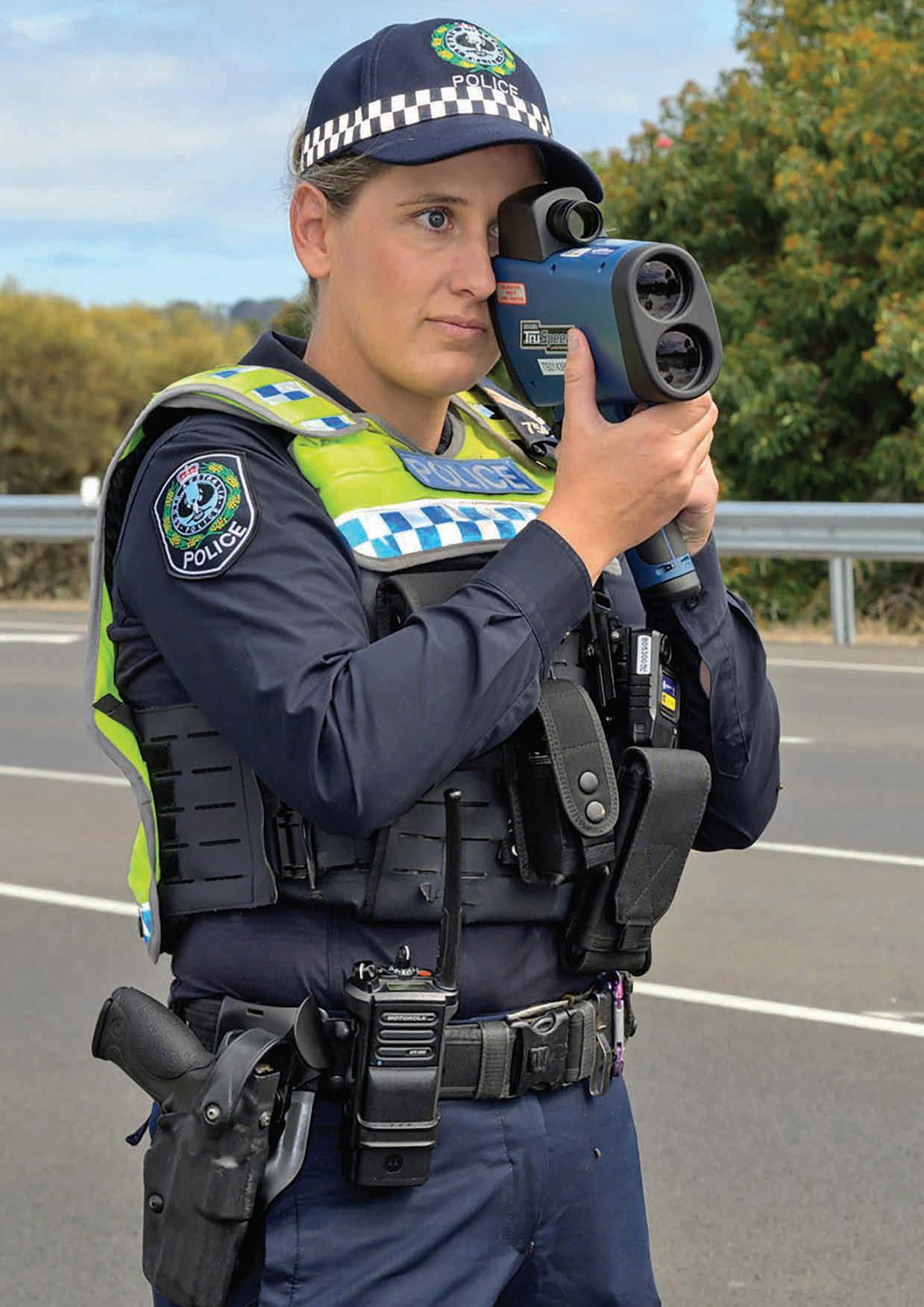


Most crashes involve injuries due to the speed involved, with many roads being 100 km/h.



“My most memorable job here was in May last year when a fully laden B-double cattle truck rolled over near Mount Compass and crashed down an embankment.
“It took nine hours to check and clear all the livestock, remove the truck, and clear the scene so the road could
re-open. It was absolute chaos from beginning to end.”
Sergeant Tellam has seen it all in his extensive traffic policing career.
“For me, the most memorable incident is every life-changing and life-ending crash,” he said.
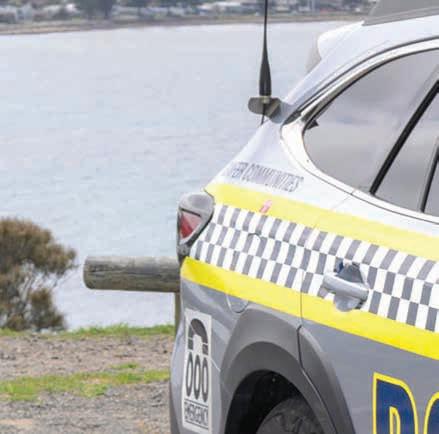




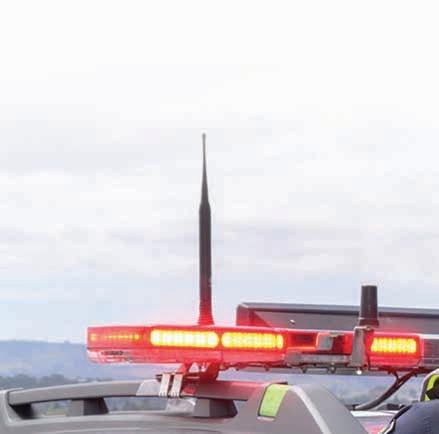
“I remember every door I’ve knocked on and every single person that has died as a result of road trauma.”
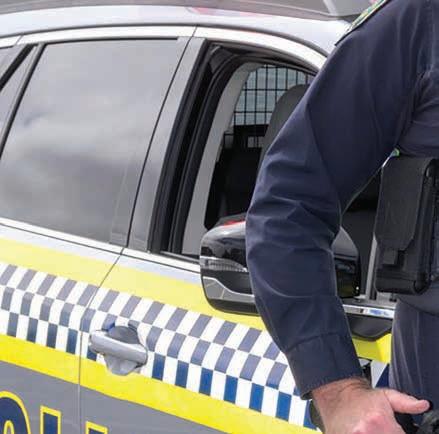
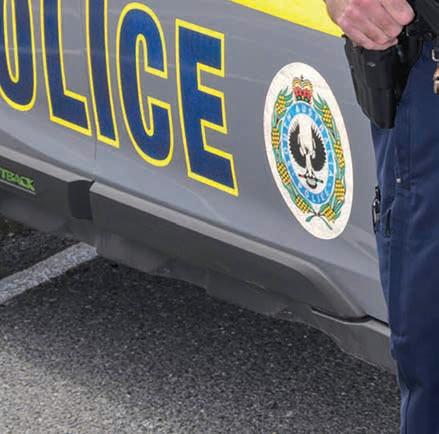




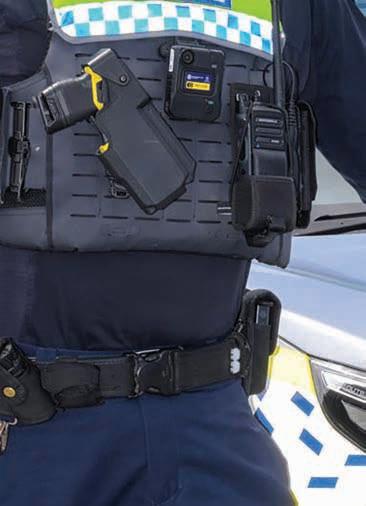
Sergeant Tellam describes his time with Victor Harbor Highway Patrol as a ‘second coming’ in his career.
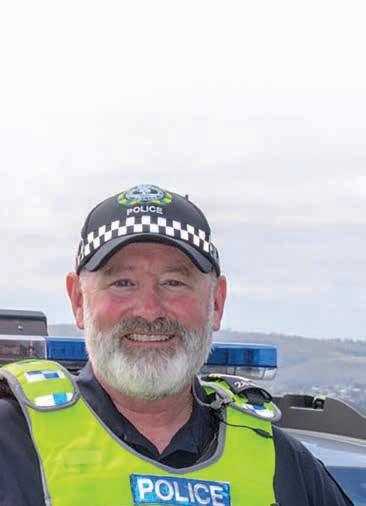

“Joining this team has been a breath of fresh air,” he said.
“What I enjoy most is the people – my colleagues, the people we help and the local community.”
Despite the passing years, Sergeant Tellam is still as dedicated to road safety as he was in the aftermath of

his shocking life-defining crash. He continues to invest time in teaching the next generation of road users through his involvement with schools, while ensuring his team strikes the right balance between education and enforcement when interacting with motorists.

“I’m incredibly proud of my team. They’ve invested in my philosophy of high-visibility policing, and all share a strong desire to reduce road trauma,” he said.
“It’s why we do what we do.”














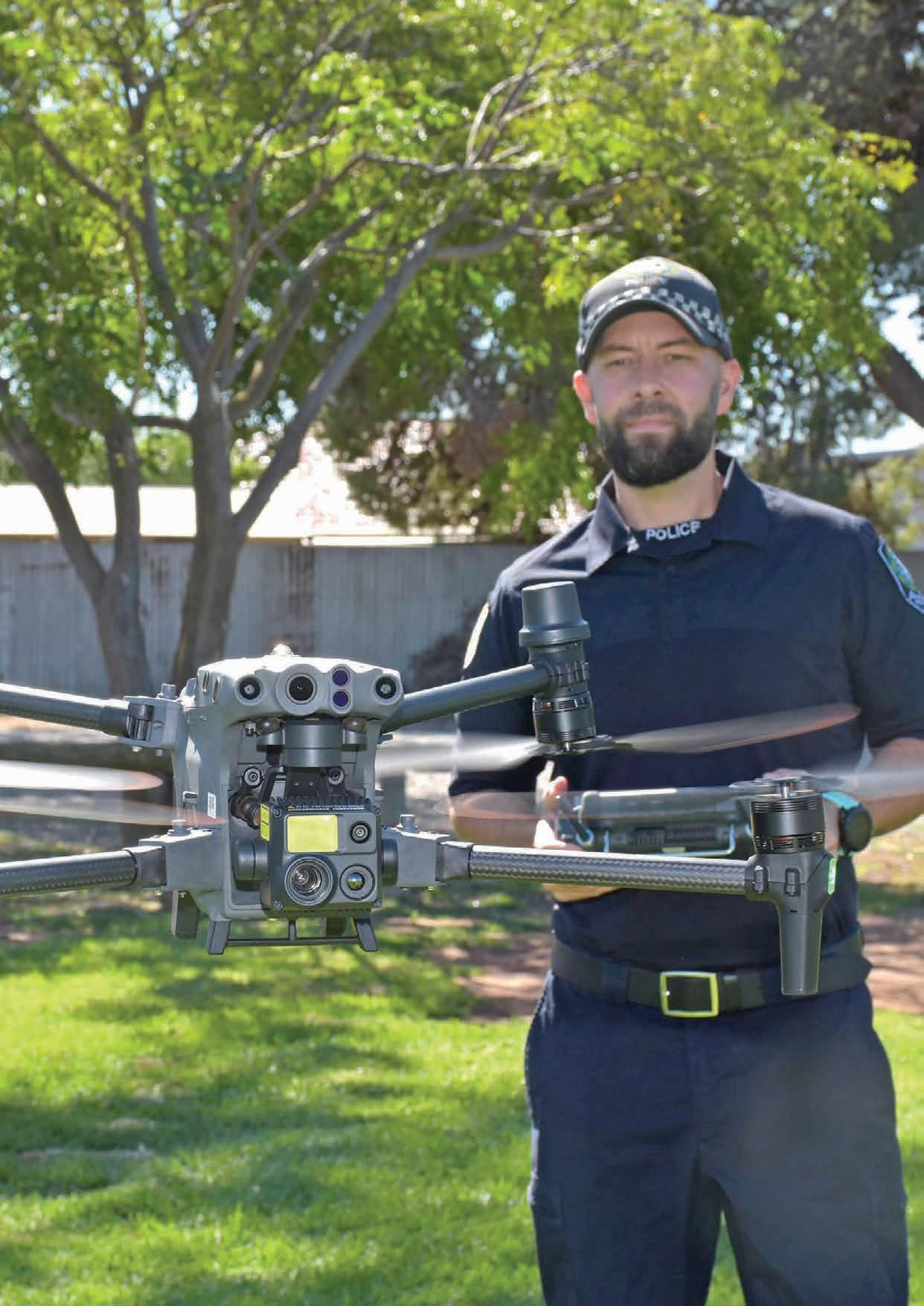
Policing is reaching new heights in Yorke Mid North Region, with a 12-month trial of the Remotely Piloted Aircraft System (RPAS), more commonly known as drones, delivering a range of benefits to both police and the community.
In a first for regional policing in South Australia, four RPAS units were introduced in August 2025, with five officers trained as remote pilots. Operating under South Australia Police’s (SAPOL) RPAS operations manual and guided by Chief Pilot, Senior Constable Joshua Macrow, the capability has integrated seamlessly into day-to-day policing while maintaining full compliance with Civil Aviation Safety Authority (CASA) and SAPOL requirements.
Officer in Charge of Yorke Mid North Region, Superintendent Mark Syrus believes the RPAS trial is already exceeding expectations.
“The trial is delivering strong operational outcomes, officer safety benefits, and substantial cost savings, while enhancing our service delivery,” he said.
“Operational deployments have proven the capability’s value in improving situational awareness, supporting arrests, and reducing the reliance on costly helicopter assets.”
Since August last year, the RPAS has been deployed on 77 operational incidents and 11 training flights, demonstrating strong uptake across Yorke Mid North Region. Most tasks have been completed in under an hour, allowing pilots to quickly resume their core policing duties. The longest and most
demanding deployment was a 16-hour mission supporting the search for missing fouryear-old child Gus Lamont near Yunta.
“Although the RPAS did not locate Gus, its continuous aerial overwatch between helicopter flights significantly improved situational awareness for the search teams,” Superintendent Syrus said.
The technology has delivered several operational success stories. Following a stolen vehicle crash in Port Pirie, the RPAS tracked eight offenders into a residential property where they were all arrested safely. The RPAS was also used for overwatch during an arrest attempt. It located a male leaving a target address on a bicycle, directing patrols to him and enabling two arrests without incident.
“The RPAS is now routinely deployed as overwatch before patrols approach high-risk addresses and drug operations, enhancing officer safety and tactical awareness,” Superintendent Syrus said.
“Having a local RPAS accelerates our response capability and reduces the need to divert air assets from Adelaide. This also decreases the time our officers are on cordons waiting for air support.
“The success of this trial so far has provided an exceptional return on investment and generated strong interest in other SAPOL regions.”
Brevet Sergeant Jake Austin is one of five officers in Yorke Mid North Region currently trained and endorsed to operate the RPAS. Two crime scene officers based in Port Pirie and one in Kadina, along with an outstation member at Yorketown have also undertaken the structured and thorough training process to use the DJI Matrice M30 and 350 aircraft.
“Training initially involved completing a CASA-approved course consisting of extensive online learning modules, multiple examinations, and practical flight assessments,” Brevet Sergeant Austin said.
“This was then followed by additional SAPOL specific examinations and practical flying requirements.
Brevet Sergeant Austin was initially apprehensive when handed the RPAS controller.
“Prior to undertaking the training, I had no previous experience flying drones and had never engaged in gaming, however, the technology, advanced capabilities, and built-in fail-safes of the RPAS meant that I gained confidence quickly and found the system intuitive and userfriendly,” he said.
Since August last year, Brevet Sergeant Austin has deployed the RPAS on 26 occasions while performing his roles as a Field Intelligence Officer and Police Negotiator. He believes the capability has directly enhanced officer safety and operational effectiveness.
“These deployments have resulted in many significant outcomes, including the
identification of large cannabis crops, locating and assisting in the arrest of offenders who fled from police, and providing aerial overwatch and cordon support for patrols conducting drug and firearm searches and high-risk offender enquiries,” he said.
“A major benefit of the RPAS in regional policing is the ability to dynamically deploy an aerial capability without delay. Regional police do not always have immediate access to the resources available in metropolitan areas, and response times can be considerably longer.
“Having the RPAS available locally means that, if a trained pilot is on duty, we can rapidly deploy and have eyes in the sky within minutes, providing valuable real-time situational awareness and support to responding patrols.”
Brevet Sergeant Austin sees the RPAS as a genuine gamechanger for regional policing, particularly with its ability to operate in adverse weather conditions.
“On occasions where PolAir may be unavailable due to weather, the RPAS can still be deployed in cloudy, rainy, and windy conditions,” he said.
“This provides an operational capability that previously did not exist in the regions and significantly enhances our response options, officer safety, and investigative outcomes.”
Words: Mathew Rodda
The trial is delivering strong operational outcomes, officer safety benefits, and substantial cost savings, while enhancing our service delivery.



Engaging with local communities, developing strong relationships and gaining a deep understanding of the people you represent is paramount to being a successful Community Constable. It’s a challenging yet uniquely rewarding role requiring an honest and respected leader who can make a lasting impact on people’s lives.
It’sa responsibility not lost on Senior Community Constable (SCC) Greg Smith. Affectionately known as ‘Unckie’, the proud Ngarrindjeri and Bundjalung man has spent his entire 23-year policing career in Murray Mallee Region, where he is now a highly respected elder whose wise counsel is regularly sought. However, it’s a career that nearly didn’t happen.
“As a young boy growing up in Karoonda, I wanted to be a police officer but I thought it wasn’t achievable for an Aboriginal kid living on a farm,” SCC Smith said.
“At 19 I started truck driving and did that for nearly two decades, doing longhaul interstate routes such as Melbourne to Perth, and regular Murray Bridge to Adelaide trips.”
In 2001, Karoonda-based officer Brevet Sergeant
Justin Cooper approached SCC Smith about becoming a Community Constable, but it wasn’t until 2003 that he joined.
“As a 38-year-old who had driven trucks for 19 years and grew up in the only Aboriginal family in Karoonda, I thought ‘What the hell do I know about Aboriginal families and culture?’ so it was a quick learning curve for me,” SCC Smith said.
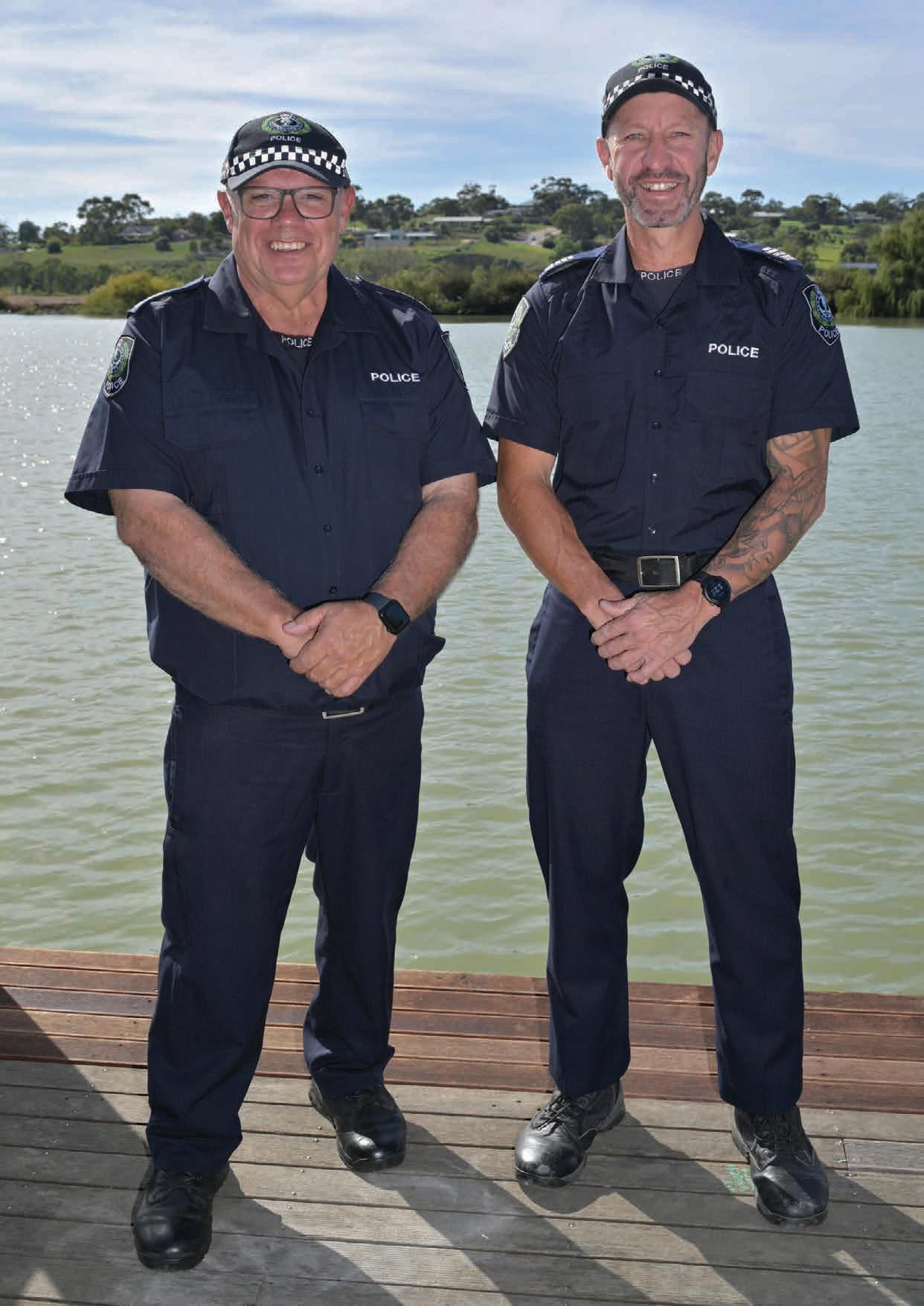
His close colleague, SCC
Derek Mattner took a different pathway. After 19 years of working with swimming pools, fencing, concreting and paving, he dived into a new career as a police officer, heading to Murray Mallee Region following graduation in 2018. Five years later the proud Ngarrindjeri man became the first South Australia Police (SAPOL) sworn officer to transition to Community Constable.
“In my first few years in policing I spent a lot of time outside of work building rapport with local Aboriginal youth who were misbehaving, and in 2020-21 I did an eightmonth secondment in the APY Lands,” he said.
“I thoroughly enjoyed working with Aboriginal communities so it made perfect sense to become a Community Constable.”
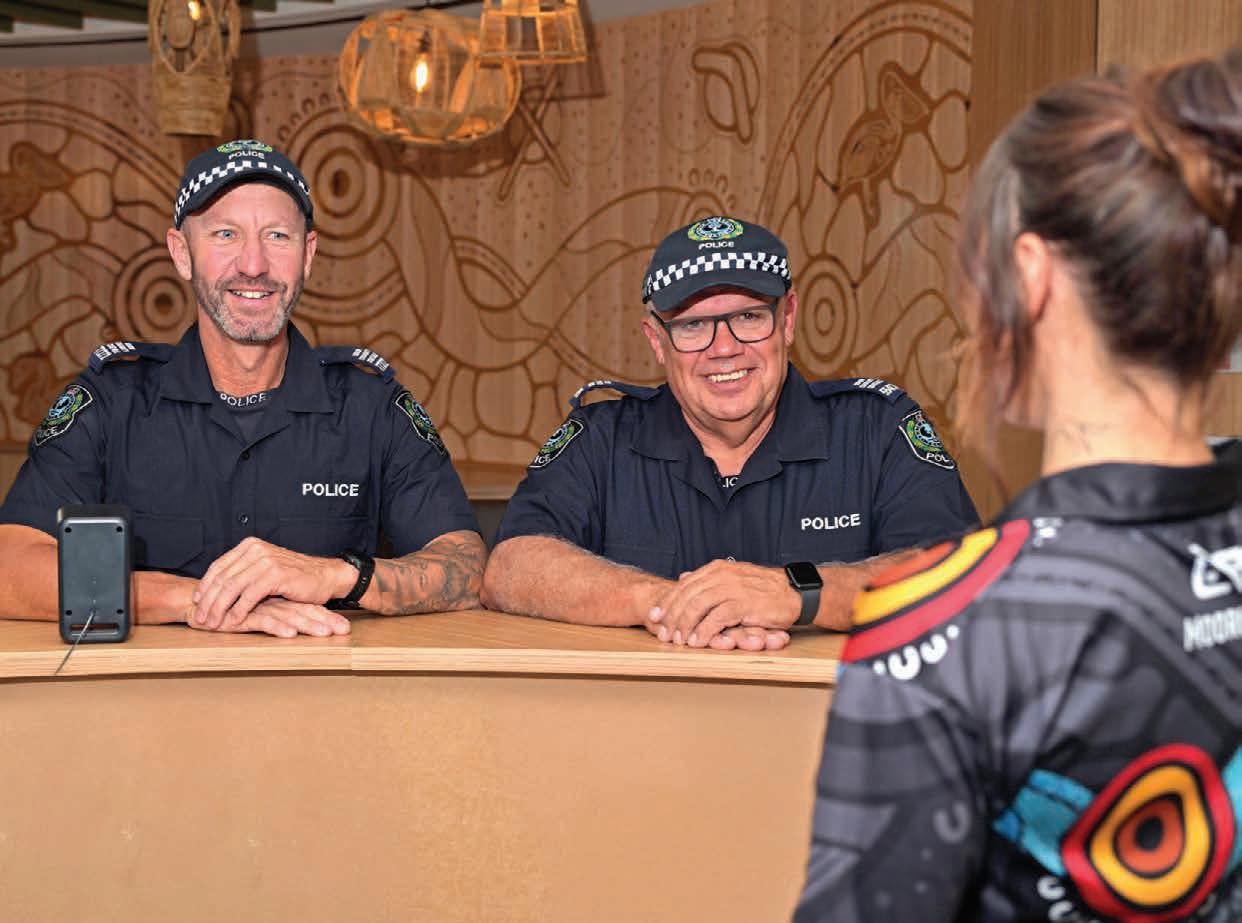
Senior Community Constables Smith and Mattner are an integral part of a five-member Community Constable team that serves the entire Murray Mallee Region, with a particular focus on the Raukkan, Gerard and Kalparrin communities.
“Our role concentrates on resolving issues affecting
local Aboriginal communities by gaining their trust and respect through building strong relationships,” SCC Mattner said.
“Some of the matters we deal with are homelessness, drugs, and youth mental health.
“We also actively run a broad range of programs, particularly for young people.
“Through understanding the cultural and social issues within the community, we’re able to bridge any gaps that exist between Aboriginal communities and local police.”
Walking around Murray Bridge with Senior Community Constables Smith and Mattner, you get a strong sense of their popularity and the esteem in which they’re held. It’s a common theme across the Region.
“Ninety-nine per cent of people here will talk to me. I’ve been in Murray Bridge for so long that I’ve dealt with the parents’ generation and now their kids,” SCC Smith said.
“We know all the different connections to families across the place; we know the people we’re dealing with and we know when someone new comes into town.
“This is important as there’s a high turnover of Aboriginal people in the local community.”
Being a familiar and trusted leader is crucial to managing potentially volatile situations.
“If an incident involves an Aboriginal person we try to go in first, explain what’s going on, calm them down and de-escalate the situation. We will also sit in the cells with them,” SCC Smith said.

“After arrests we try to stay with the family and clarify what’s happening and why. This is often the time when they share information with us that they wouldn’t tell anyone else.”
For SCC Mattner, building rapport with local youth is what he enjoys most about his role.
“I like to start building relationships when they are 13-14 years old, especially with the kids you know could become a handful,” he said.
“All the young lads have my mobile number so they can ring me if they’re in trouble and be honest.
“Recently a boy on home detention got electrocuted and rang me and Greg instead of an ambulance, so Greg took him to hospital. Another child in Loxton asked us to visit, as he needed help with maths and didn’t feel comfortable discussing it with his teacher.”




Our role concentrates on resolving issues a ecting local Aboriginal communities by gaining their trust and respect through building strong relationships.







As a qualified boxing coach, SCC Mattner is heavily involved in the boxing program which has been popular with local Aboriginal youth since it was first held in 2023. Previously run at a local gym, the eight-week program is now part of the local school program.
“The boxing program is a great way to positively engage with young people and help them develop skills, fitness and self-esteem, while building more purposeful and healthy relationships with police,” he said.
“Having a positive rapport with them and gaining twoway trust has proven to be successful in reducing youthbased crime and disorder.
“We now have kids approaching us in public, and it’s a lot easier going to their homes. At some addresses I don’t even need to knock – I just say ‘hey this is Derek’ and walk in.”
The Kuti Blue Light camp has also fostered positive interaction between youth and police, with SCC Smith enjoying his role as camp supervisor.
“The camp sees Murray Mallee Community Constables and police officers work closely with Clontarf and Ngarrindjeri Ruwe Empowered Communities in mentoring a group of high school students,” he said.
“The first Kuti camp at Goolwa involved activities

such as fishing, cockling, cooking, and listening to stories from Elders. This helped participants to develop self-worth, leadership and team building.”
Community Constables work closely with support organisations such as AC Care and Clontarf to deliver valuable programs and are continually coming up with new initiatives to benefit the community.
“We regularly attend youth golf days at Berri and are currently working towards a new program for female students at Murray Bridge High School,” SCC Smith said.
“We are also planning a program that helps people released from Mobilong
Prison to assimilate into the community.”
For SCC Mattner, it’s these opportunities to communicate, build relationships and make a difference that motivate him every day.
“We have a unique policing role – we have more freedom and can spend a whole day speaking to people in the community, and not have to go from job to job,” he said.
“I think it’s the best role in SAPOL. It’s become such a passion for me that I don’t feel like I actually go to work anymore.”
Words: Mathew Rodda

Located just 12 kilometres from Millicent on the picturesque Limestone Coast is one of the most unique life skill adventure training facilities in Australia. Known as Noorla Yo-Long, it has attracted more than 57 000 people over its 31-year lifetime. It is a place where identities are discovered and capabilities are challenged.
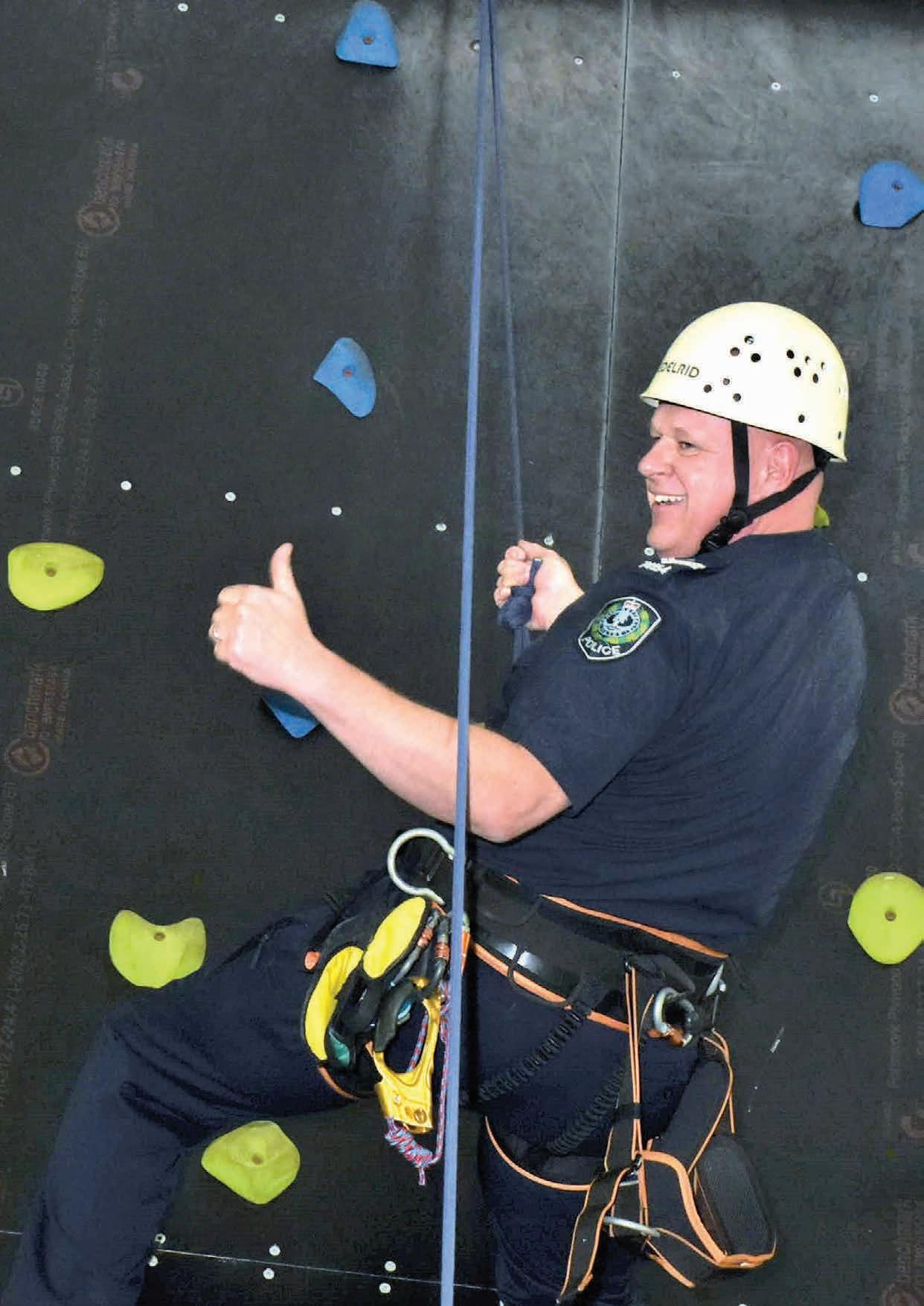



Distinctively positioned on a 20-acre site with its own pine forest reserve, Noorla Yo-Long is home to the Blue Light Outdoor Adventure Program – a crime prevention strategy developed by South Australia Police (SAPOL) in partnership with Blue Light (SA) Inc.
Noorla Yo-Long means ‘house cave’ in the language of the Boandik people, the land’s traditional owners. It has become a home away from home for Senior Constable First Class (SC1C) Geoff Yates who has been the Blue Light camp manager since 2019. With a strong interest in youth work, and experience in planning and leading camps for the Australian Air Force Cadets, he now has what he describes as “the best job in SAPOL”.
“I’m an operational police officer but I have become a not-for-profit business manager, an adventure ropes course leader, bathroom cleaner and everything else in between,” he said.
“I liaise with community groups, youth organisations, schools, universities and the education department, apply for grants, hold fundraisers and run community events for various cultural groups.”
It’s a hectic role with many responsibilities but that’s the unique nature of Noorla Yo-Long as the only camp in South Australia run by a police officer.
“It’s a special role requiring dedication and long hours but I feel both lucky and honoured to have this opportunity,” SC1C Yates said.
“If you told me 25 years ago when I started policing in the United Kingdom that this is what I’d end up doing, I would have laughed at you.”
While SC1C Yates is responsible for facility management and program co-ordination, he is supported by trained staff and Blue Light volunteers, some of whom have been assisting for more than 25 years.
Limestone Coast Crime Prevention Section members have regular involvement
in camp activities as do newly arrived Probationary Constables. In recent years the District Policing Team from Western District, particularly their Community Constables have also played an influential role.
They all work together with camp facilitators to deliver an adventure-based learning experience specifically designed to suit individual or group needs.
“The camp’s adventure activities are aimed at developing participants’ personal life skills through experiential learning,” SC1C Yates said.

“Activities include co-operative team building games, trust activities, initiative problems, medium and high ropes challenge courses, and caving.”
By promoting empowerment, confidence and a positive mindset, Noorla Yo-Long often has a transformative effect on participants.
“I’ve seen young people come in, not make eye contact, try to find ways to avoid activities, but then something clicks,” SC1C Yates said.
“They see the range of exciting activities everyone is doing and cannot help but join in. They soon find their voice and confidence, feel heard, and suddenly they’re taking a leap of faith off the high ropes despite a fear of heights.”
enthused when I discussed TAFE SA courses and travel opportunities.”
A year later, SC1C Yates caught up with Stuart’s teacher.
“They remarked that Stuart had been really surprised that I took the time to speak with him at the camp,” he said.
“After the camp, Stuart returned to school, completed Year 11 and intends to enrol in an outdoor leader course at TAFE once he finishes Year 12. He now has goals for the first time.”
In his time as camp manager, SC1C Yates has faced challenges, some beyond his control. The Covid-19 pandemic and the move of Year 7 from primary to high school saw a sharp drop in numbers during 2021-23, however annual visitors have more than doubled since then, with just under 1900 people attending Noorla YoLong in 2025.
“The camp has been nearly fully booked for the last 15 months, with strong demand from schools and youth groups,” SC1C Yates said.
camp activities remain the same – it’s just the way we present them and encourage participation that changes.”
As Noorla Yo-Long celebrated its 30th birthday last year, SC1C Yates reflected on its enduring qualities, its sustained success and the positive difference it has made to countless young lives.
“Seeing its enormous impact fills me with pride. There’s nothing better than imparting knowledge to youth and presenting them with opportunities where they realise their potential is greater than they thought,” he said.
“This has allowed us to plan future investment in the camp, including upgrading amenities and equipment.
“It’s vital that we interact with young people, particularly those who are disadvantaged, and build simple, respectful relationships with them.
“Somewhere among them are our future leaders of communities, industry, politics and even SAPOL. Take the time to be nice to someone – you may just spark the biggest change in their lives.”
SC1C Yates tells the story of Stuart, a Year 11 student with no enthusiasm or drive, disengaged from school and only at the camp as he thought it was better than being in a classroom.
“Our chats identified that he felt left out as he didn’t have goals and career paths to follow like the other kids did,” he said.
“Once the group training and climbing activities were under way, Stuart became more engaged and took an interest in what staff were doing.
“He asked questions about working in the adventure industry and seemed quite
“We are also considering national programs that will allow us to run longer targeted intervention courses with extended follow-up and support services for disengaged and at-risk youth.”
While Noorla Yo-Long proritises disadvantaged and at-risk youth, the main focus is on schools which SC1C Yates describes as the camp’s “bread and butter”.
“Schools from Limestone Coast and western Victoria will often do single day excursions or two-night camps, with Murray Mallee, Hills Fleurieu and Adelaidebased schools staying for up to four nights,” he said.
“We have groups of children from Year 3 up to Year 12 and beyond, encompassing at-risk youth to high-performance leadership students. The
Noorla Yo-Long is more than just a camp. It’s a testament to the power of community – a group of people who had the foresight to transform an old and overgrown quarry gifted by Wattle Range Council into a spectacular camp site that continues to deliver outstanding outcomes three decades later.
“This can only be achieved by the sustained hard work and dedication of the community,” SC1C Yates said.
“Community buy-in has always been Noorla Yo-Long’s greatest strength. The camp is far bigger than any one individual, but the efforts of each individual combine to produce an amazing result.”

Words: Mathew Rodda

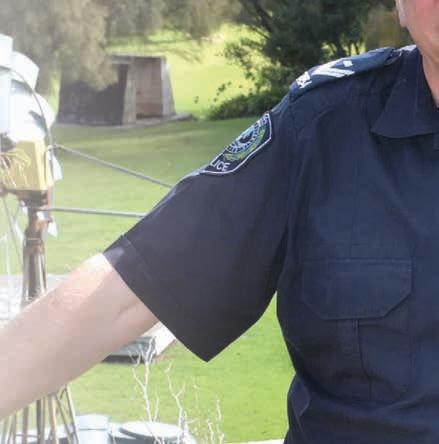
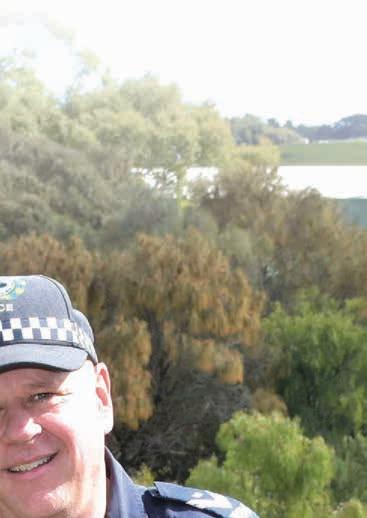
OPPOSITE PAGE: Senior Constable First Class Geoff Yates at the Noorla Yo-Long camp site. Photo: Brevet Sergeant Nigel Raynes.


By promoting empowerment, confidence and a positive mindset, Noorla Yo-Long o en has a transformative e ect on participants.




> EYRE AND WESTERN REGION
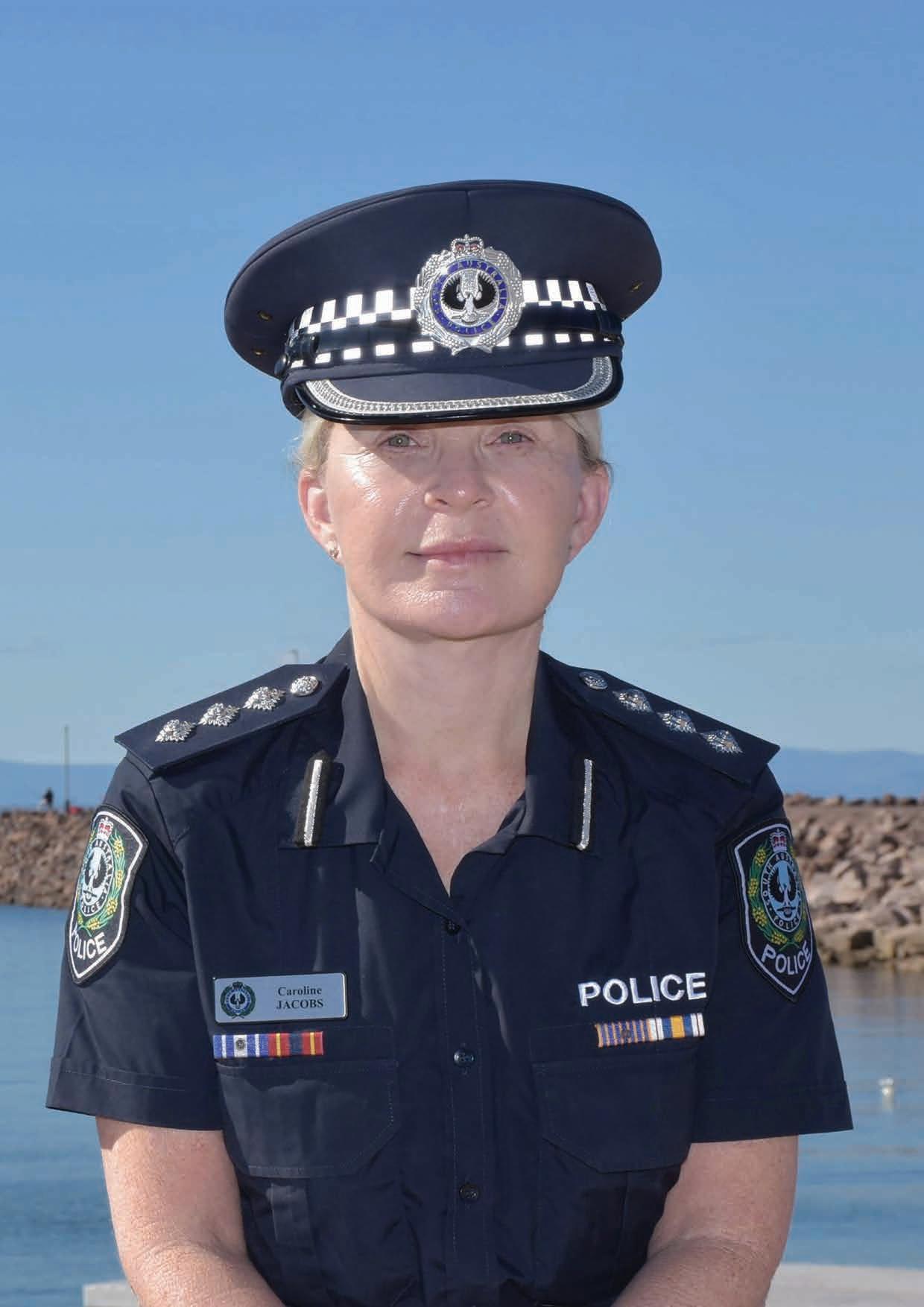
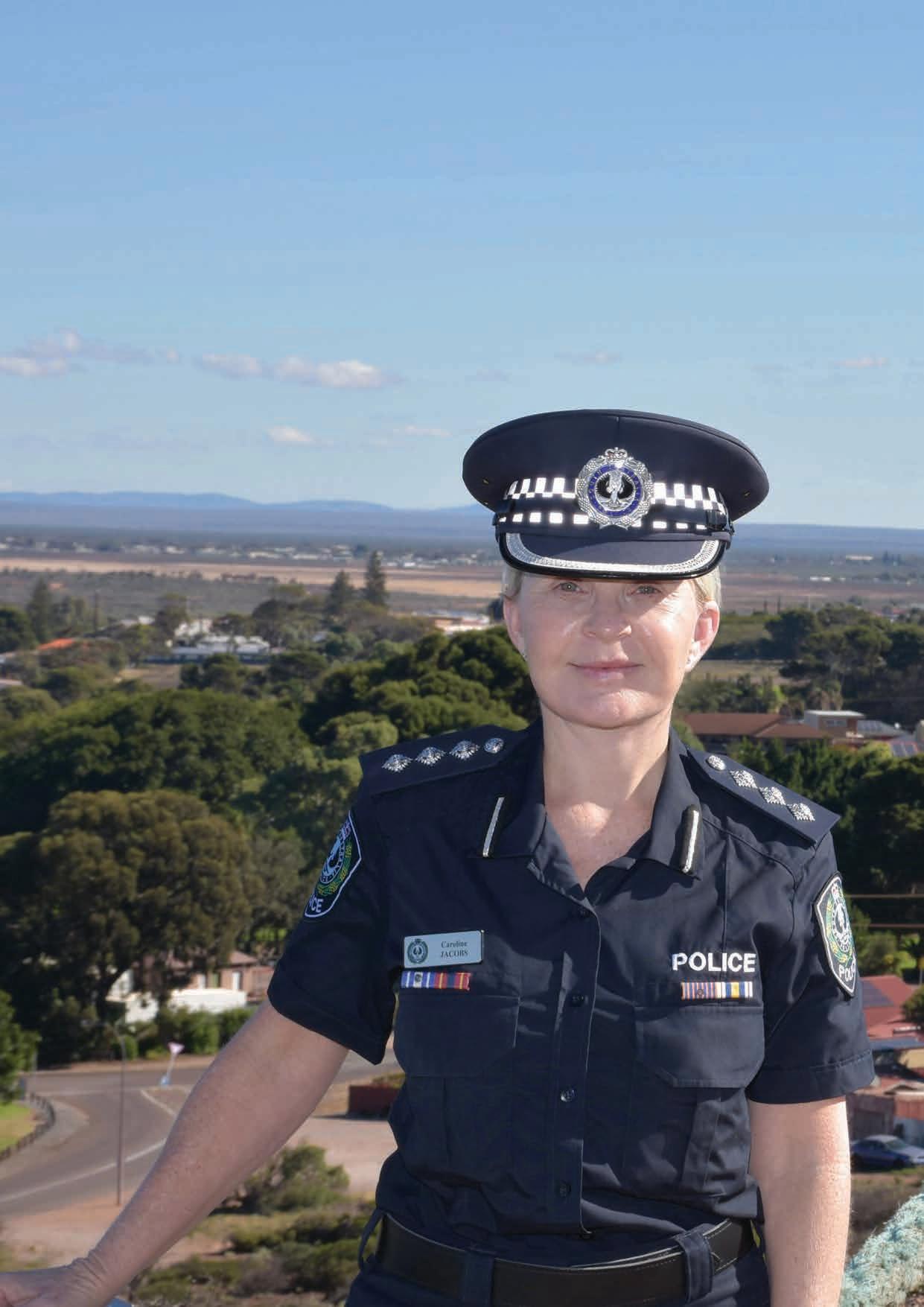
By the time Inspector Caroline Jacobs had her first real taste of country policing, she was already well into her third decade on the job.
Thatfirst foray came via a secondment which wasn’t part of a long-held plan so much as a timely opening. It was a shift that would ultimately redirect the course of a career built on the more structured demands of metropolitan policing.
For three months in 2021, Inspector Jacobs stepped into the role of Operations Inspector in Port Augusta, trading city-based work for the broader, more varied
nature of regional policing.
What began as a temporary assignment quickly became a turning point.
“That experience completely changed my perspective,” she said.
“I honestly became hooked on country policing. I loved the variety, the autonomy and the connection with both members and the community.”
In regional South Australia, policing looks and feels different. The pace shifts, but the scope expands. Officers operate across multiple roles, responding not only to incidents but to the rhythms of the communities they serve.
For Inspector Jacobs, regional policing offered a deeper level of connection with both the community
and colleagues than she had experienced in the city.
The move came at a point when her personal circumstances allowed her to step into something new – and she took it. What she found was not just a change of location, but a fundamentally different way of working.
“It gave me a real insight into what country policing is like – the variety, the responsibility, and how closely you work with both your team and the local community,” she said.
“I absolutely loved it and quickly realised it was a style of policing that suited me.”
Inspector Jacobs’ decision to join the police force in 1987 – and the nearly four-decade career that followed – was more considered.
After finishing Year 12 at Mitchell Park High School, she found herself weighing up two very different paths: nursing or policing. In the end, policing won out, despite early doubts about meeting the height requirements and her family’s reservations.
It was a very different time. In 1987, Neighbours was popular in Australian living rooms, Dirty Dancing filled cinemas and shoulder pads were a woman’s wardrobe staple. Joining the police force, too, was a markedly different experience than it is today.
“As part of the process, a police officer would come to your home and sit down with you and your family to talk through the application and what the job involved – and to see if you were a good fit,”


It gave me a real insight into what country policing is like –the variety, the responsibility, and how closely you work with both your team and the local community.


Inspector Jacobs said.
“Let’s just say, my family wasn’t a fan of the idea of me becoming a police officer.”
Despite those early qualms, Inspector Jacobs has never looked back.
“I was given the opportunity to go through the process and here I am all these years later,” she said.
Inspector Jacobs began her career in response policing before moving through roles in custody management, ComCen, and training and planning.
“Those different experiences gave me a strong understanding of how the organisation works as a whole – not just what happens on the frontline, but what goes on behind the scenes to support our people,” she said.
After becoming a Commissioned Officer in 2018, Inspector Jacobs went on to metropolitan postings
as a District Duty Inspector and Communications Shift Manager.
Her introduction to country policing, however, proved to be a turning point.
“After that secondment, I requested a transfer to the country and spent nearly three years in Yorke Mid North Region, based in Kadina, before moving to my current role in Eyre and Western Region in 2025,” she said.
Professionally, the move felt like a natural progression.
“After my time in Yorke Mid North, I knew that regional policing was where I wanted to continue my career,” she said.
“Eyre and Western Region offered the opportunity to work across a larger and more diverse geographical area, engage with different communities, and manage a broader range of operational challenges.
“Looking back, it has been one of the most rewarding parts of my career.”


As Operations Inspector, she now holds overall operational responsibility for Eyre and Western Region.
“That includes supporting local supervisors, overseeing significant incidents, managing risk, and making sure our members feel supported and backed to do their jobs safely and confidently,” Inspector Jacobs said.
It’s a role where she has had to quickly learn to navigate the constraints unique to country policing.
“One of the biggest challenges is not having assets close by when

incidents unfold. We don’t always have immediate access to specialist resources, so we often need to manage situations locally for extended periods,” she said.
“That means planning ahead, understanding the risks, and being comfortable making decisions without having everything at your fingertips.”
Inspector Jacobs believes ongoing advancements in technology are helping to bridge some of these gaps.
“Improved systems, communications and access to information are making a real difference in the regions. They’re helping
close the distance and making our jobs a lot easier than they once were,” she said.
The move into regional policing has also strengthened Inspector Jacobs’ leadership capability.
“One of the biggest differences is that leadership is much more personal and visible,” she said.
“You know your people well; they know you and there’s nowhere to hide – but I see that as a strength. It pushes you to be consistent,
approachable and genuine in how you lead.
“Looking after our people is also a huge part of the role. In general, we have a very junior workforce in Eyre and Western Region.
“They work incredibly hard, they care about doing the right thing, and they’re still learning.”
Seeing members grow in confidence and capability and knowing she is making a real difference both for her people and the community, makes it worthwhile.


Regional policing has given Inspector Jacobs a strong sense of purpose.
“When you live in the town you police, the work feels more meaningful –you become part of the community. You are not just responding to jobs; you’re helping to protect your community,” she said.
At the same time, the visibility can come with challenges.
“In Yorke Mid North Region, most people knew who I was and where I lived. At times it could feel a little intrusive. Even something as simple as going to the local for a quiet drink – you’re still very visible and very much on show,” she said.
Despite this, on a personal level, Inspector Jacobs says regional living provides a better work-life balance.
“There’s less commuting, life outside of work is a bit slower, and it’s easier to switch off and recharge,” she said.
Inspector Jacobs encourages people of all ranks to consider a move to regional policing.
“It can be demanding, particularly for junior members who may be away from home and support networks for the first time,” she said.
“While it comes with challenges, regional policing also presents significant opportunities. Ongoing

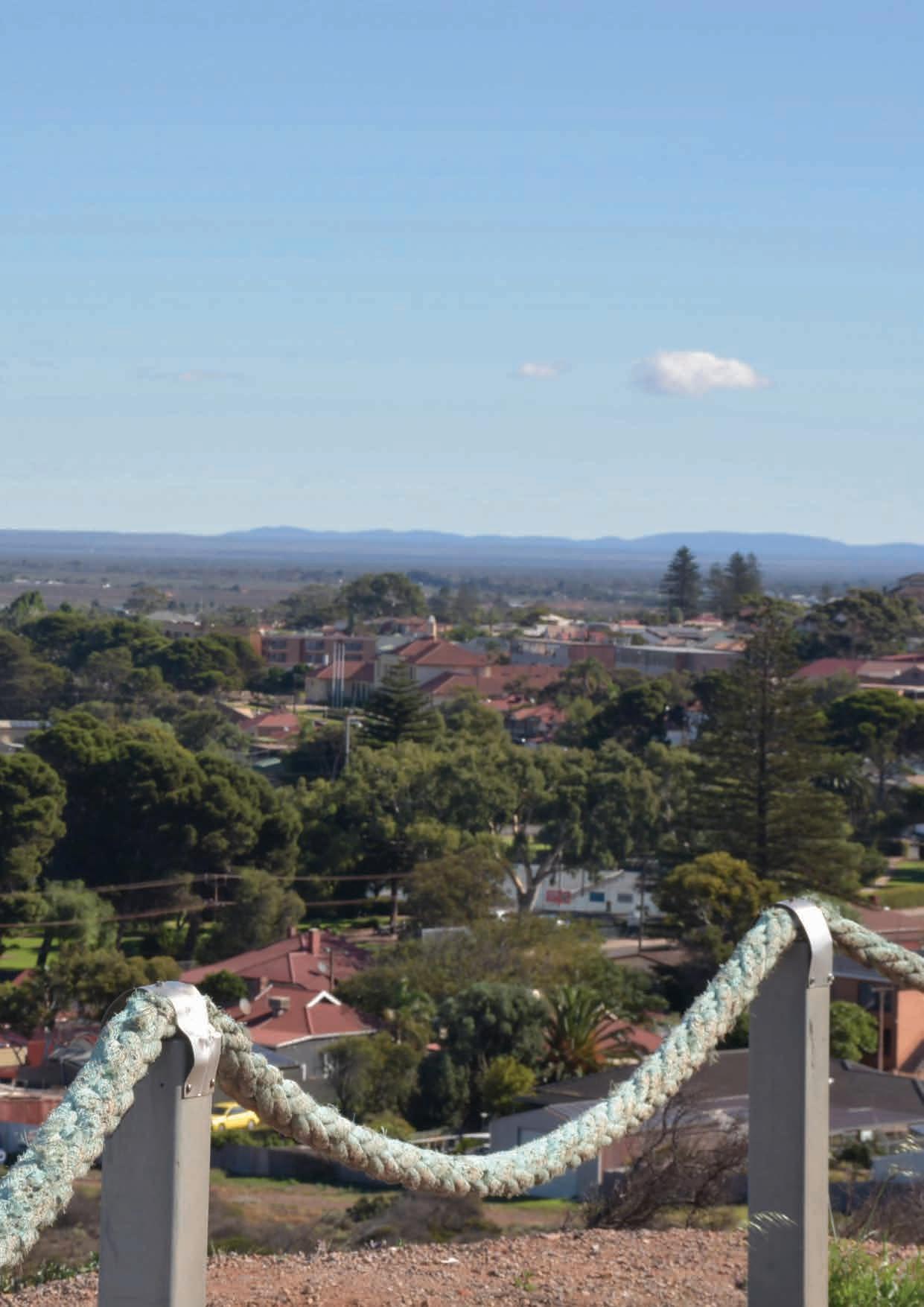
When you live in the town you police, the work feels more meaningful – you become part of the community.
improvements in areas such as housing, technology and work-life balance are making a meaningful difference.
“My biggest advice would be to go with an open mind and be prepared to be challenged – both professionally and personally.”
Words: Sonja Viduka







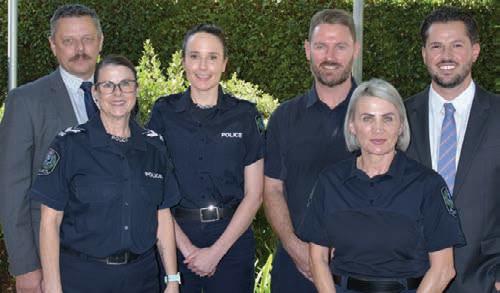
This is a di erent approach to breaking the cycle of domestic and family violence by focusing on o enders and addressing the problem at its roots.

Family violence and/or intimate partner violence is the leading cause of serious injury, disability and death for women in Australia. It is insidious and disempowering, with the trauma having a profound and longterm impact on victim-survivors and families.
Domestic and family violence is unacceptable and demands a strong response. Acknowledging this, Barossa Region has established an innovative program targeting behavioural change in domestic violence perpetrators, which is delivering positive results.
Commencing as an initial six-month trial in April 2024, Operation Intervention – a domestic violence referral action plan – is aimed at preventing and mitigating domestic violence through early intervention. It focuses on male perpetrators of criminal and non-criminal forms of domestic abuse, including emotional, psychological, financial and verbal, who voluntarily consent to counselling referrals.
Detective Sergeant First Class (D/Sgt 1C) Jon Grayshon from Barossa Criminal Investigation Branch has overseen the program since its inception. He believes the collaboration with an external agency is the cornerstone of the initiative.
“We have established a referral pathway to Offender Aid Rehabilitation Service Community Transitions (OARS CT), which offers counselling services to male perpetrators of abuse against current or former intimate partners,” he said.
“This is a different approach to breaking the cycle of domestic and family violence by focusing on offenders and addressing the problem at its roots.
“The main objective is to educate offenders and reduce the likelihood of repeat incidents or escalation.
“The role of OARS CT is invaluable as their counsellors and social workers can address the core issues causing the offending and implement suitable programs to reduce reoffending.”
The initial six-month trial of Operation Intervention saw 33 referrals made to OARS CT. Sixteen individuals engaged in behavioural programs, recording a 25 per cent reoffending rate during the trial period. The other 17 perpetrators who didn’t engage in behavioural programs recorded a 53 per cent reoffending rate. This increased to 58 per cent during the second six-month monitoring phase, while the engaged cohort maintained a 25 per cent reoffending rate.
“Any reduction in the reoffending rate is a success as you’re preventing someone from becoming a victim or being revictimised,” D/Sgt 1C Grayshon said.
“This also assists in freeing up police resources to be directed to other areas of need as officers are no longer regularly dealing with the same offender.”
D/Sgt 1C Grayshon oversees the referral process from the Barossa Region’s Family Violence Investigation Section (FVIS) to OARS CT. Family and domestic violence reports are received from a wide range of sources including victims, hospitals and social workers.
“Victim safety remains the highest priority during the referral process,” D/Sgt 1C Grayshon said.
“Referrals are only initiated with the informed consent of victims, obtained by FVIS members. Upon victim consent, FVIS members explain the referral process
to the perpetrator who then can choose to engage in behavioural change programs run by OARS CT.”
D/Sgt 1C Grayshon says Operation Intervention is making a significant difference, with OARS CT program participants providing positive feedback.
“One offender has asked to deliver components of the program to others – he said that the impact was so positive on him that he wanted to be part of stopping family and domestic violence,” he said.
“Another perpetrator we were monitoring accepted our third attempt at referring him to OARS CT under Operation Intervention and has not offended since.
“He now contacts police to advise if he has left the house to remove himself from a potential domestic violence situation. His improved behaviour is a credit to the work of OARS CT counsellors.”
With Operation Intervention now embedded in the Barossa Region, there are hopes that the program will be implemented in other regions to break the cycle of family and domestic violence and reduce reoffending.
“My ideal scenario is for the program to be available across all regions; however, my ultimate goal is that we no longer have family and domestic violence in our communities,” D/Sgt 1C Grayshon said.
“This program is empowering for victims as they know their voice will be heard. Family and
domestic violence is often under-reported across the community, but our work with OARS CT raises valuable awareness and hopefully encourages both victims and perpetrators to seek available support services.
“Any potential regional rollout will depend on the capacity of OARS CT to take on additional work, and the recommendations of the Royal Commission into Domestic, Family and Sexual Violence.”
OARS CT Chief Executive Officer Louise Kelly is a strong supporter of the collaborative approach.
“Operation Intervention referrals are highly valuable in engaging clients who may not otherwise seek help,” she said.
“SAPOL’s involvement in this program adds credibility and reinforces accountability.
“OARS CT currently has regional staff coverage in the Riverland, Limestone Coast and Yorke Peninsula, and being a phone-based service can deliver services statewide, so we can provide a foundation for expansion if that eventuates.”
Words: Mathew Rodda



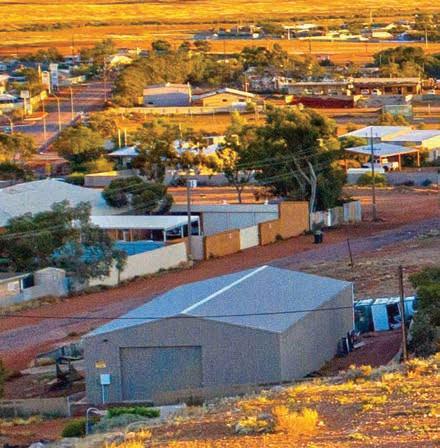
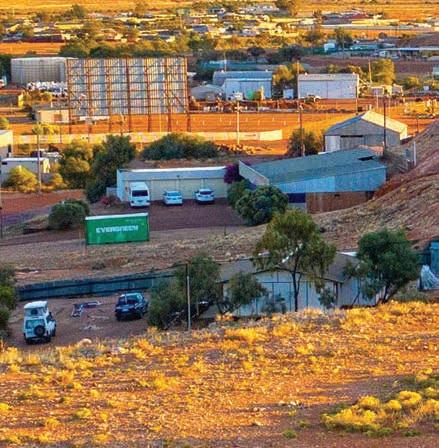
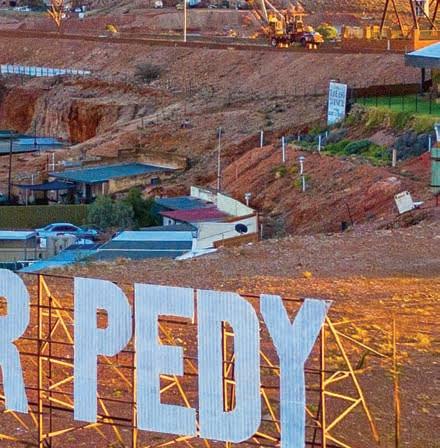
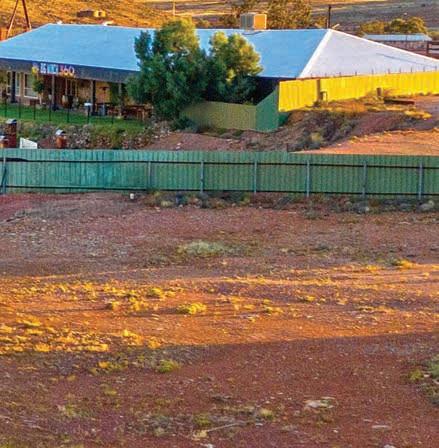
Boasting a sunbaked lunar landscape and labyrinth of underground houses, Coober Pedy is an iconic outback town that offers a unique way of life.
Taking its name from the Aboriginal words “kupa” (white man) and “piti” (hole), Coober Pedy is known as the “opal capital of the world”, with the town and nearby Andamooka and Mintabie producing 85 per cent of the world’s opal supply.
Coober Pedy is located in the far north of the state, around 850 kilometres north of Adelaide and 680 kilometres south of Alice Springs via the Stuart
Highway. It’s a remote desert township that is both fascinating and challenging for those who live and work there.
While the searing summer heat necessitates underground residential ‘dugouts’, hotels, restaurants and even a church, the Coober Pedy Police Station is situated above ground. At full capacity, it is home to a 19-member team comprising an Officer in Charge (Senior



Sergeant First Class), two Sergeants, two Brevet Sergeants, 11 Constables, and three Community Constables. However, attracting and retaining staff can be challenging.
Officer in Charge of Far North Region, Superintendent Paul Isherwood acknowledges this but says that South Australia Police (SAPOL) is taking proactive, strategic action to fill vacancies and support local officers.













“We have a highly capable team that works exceptionally well together and is proficient across all aspects of policing,” he said.
“Absences have been covered by relief staff from Port Augusta and members from State Operations Support Branch.
“We have also attracted numerous officers through our ‘Help out a mate’ and ‘Try before you apply’ country recruitment campaigns, with
people taking advantage of the substantial financial incentives and great opportunities to gain valuable regional policing experience through short-term secondments.”
Financial incentives available to Coober Pedy officers include rent-free depot housing or 70 per cent rental subsidy, a generous annual locality allowance, and a lump sum lifestyle payment.
“Members also receive a
guaranteed posting to their chosen District or Region at the completion of their tenure,” Superintendent Isherwood said.
Superintendent Isherwood believes Coober Pedy has a lot to offer those aspiring to fast-track their policing career.
Australia,” he said.
“Officers posted to Coober Pedy rapidly develop skills and experience that can take many years to gain in metropolitan environments.
“Coober Pedy is certainly remote, but it provides access to remarkable outback communities and some of the best desert country in South




“As a result, when members move on from Coober Pedy, they do so as well-rounded and confident officers who often become senior and highly valued contributors at their next postings.”
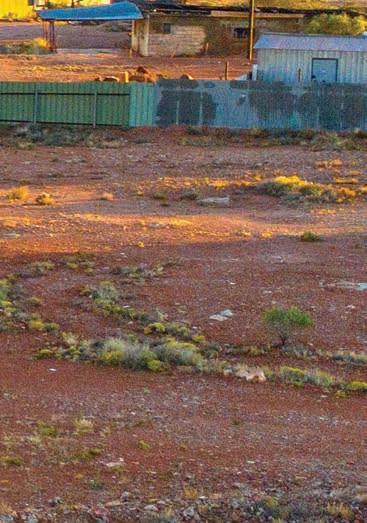

Coober Pedy is certainly remote, but it provides access to remarkable outback communities and some of the best desert country in South Australia.





Coober Pedy’s dramatic arid landscape has been the setting for several hit movies including Mad Max Beyond Thunderdome and Priscilla, Queen of the Desert
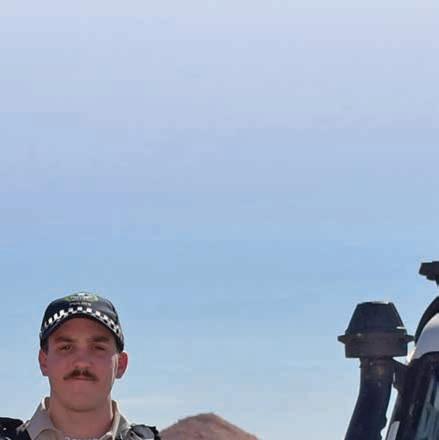
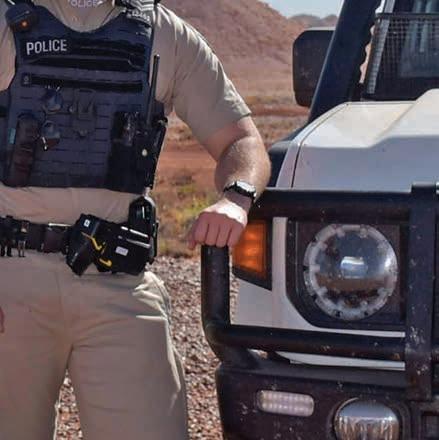
It is also the scene of acting roles for Brevet Sergeant Mayson Waterhouse, who completed a six-month secondment in Coober Pedy in 2023, with another fourmonth stint the following year.
“I undertook those roles while posted to Norwood Police Station and then was successful in winning a Brevet Sergeant position in Coober Pedy in March last year,” he said.
Posted to Port Lincoln in Eyre and Western Region after graduating in 2021, Brevet Sergeant Waterhouse developed his regional policing skills with numerous
relieving spells at Ceduna and Yalata police stations. In 2023 he transferred to Norwood Police Station, but his regional exposure had whet his appetite for more.
“Securing a Brevet Sergeant position in Coober Pedy has allowed me to rapidly develop my policing and junior management skills, while also relieving as Sergeant on a regular basis,” he said.


“The promotion has also been great financially.”
Brevet Sergeant Waterhouse polices a town of around 2000 people, with more than 40 nationalities represented.
“The offending we deal with is primarily alcohol-fuelled violence, affrays in the street, domestic violence assaults, thefts, and traffic-related offences,” he said.
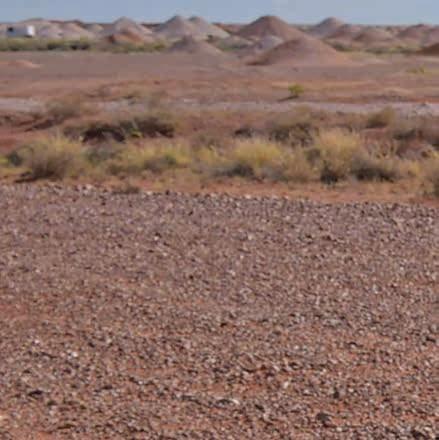



The Brevet Sergeant role can be a mixture of enjoyment, development and complexity.
“I do my daily taskings, manage my investigations, perform Cell Guard and Officer in Charge of Cells duties, and undertake basic supervisory tasks,” Brevet Sergeant Waterhouse said.
“I also police the townshipwide dry zone enforcement, liquor licencing issues and domestic violence reports and follow-ups.”

When there are no taskings, Brevet Sergeant Waterhouse conducts his own investigative follow-ups and performs proactive police work.
“The role can be demanding at times due to staff shortages and fatigue, and the impact of Coober Pedy’s remoteness on daily operations,” he said.
“With Coober Pedy being the main custodial facility for the APY Lands, it can
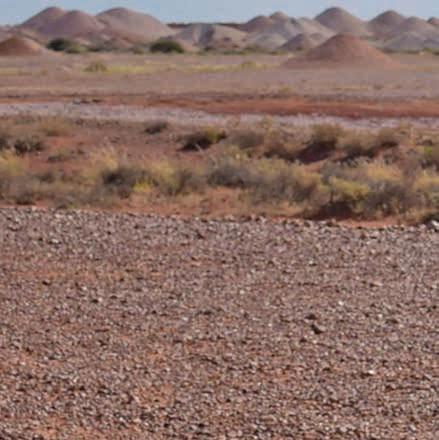

Securing a Brevet Sergeant position in Coober Pedy has allowed me to rapidly develop my policing and junior management skills, while also relieving as Sergeant on a regular basis.



also be a logistical challenge conveying remanded or bailrefused detainees to Port Augusta.”
Despite these challenges, Coober Pedy Police Station is the perfect place to improve your skillset.
“Coober Pedy is a unique working environment, where even junior members find themselves making supervisory decisions and regularly relieving up,” Brevet Sergeant Waterhouse said.

“It’s a place that forces you to learn quickly and actively think on your feet to resolve situations with the limited resources available.
“You also get to build strong working relationships with the community, which is crucial for effectively delivering your daily duties.”
Brevet Sergeant Waterhouse has welcomed the opportunity to play an integral role in various investigations such as a recent youth crime series and
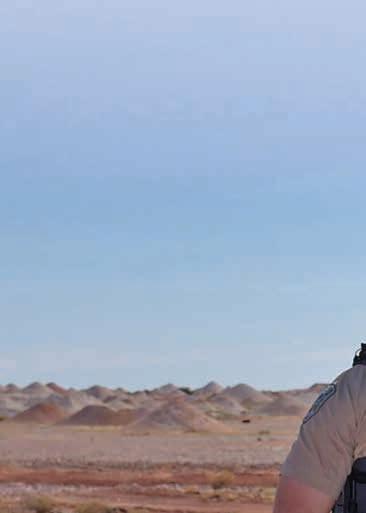


missing person searches.
“I worked with local Community Constables and the State Emergency Service (SES) mine rescue team to locate a male who had been reported missing in the opal fields. We found his vehicle and the mine shaft where he had descended and eventually found the man who had become lost in an extensive underground tunnel network,” he said.
Another interesting job was a three-day search in the desert for a suspect who ran away after a vehicle collision on the highway.
“This involved a multi-agency approach encompassing SA Ambulance Service, SES and local cattle station owners, along with SAPOL resources including Airwing, the remotely piloted
aircraft system, Community Constables doing tracking, and general duties officers from Far North stations,”
Brevent Sergeant Waterhouse said.
“It was a great feeling when our collaborative effort paid off with the suspect located and taken into custody.”
Outside of work hours, Brevet Sergeant Waterhouse enjoys socialising with colleagues and is a member of the local pistol shooting club.

“I mainly focus on my recovery from work, keeping
fit by running and going to the gym, undertaking my Sergeant studies, and regularly catching up over the phone with my Adelaidebased partner, friends and family,” he said.
Brevet Sergeant Waterhouse is candid in his appraisal of Coober Pedy as a rewarding yet challenging experience, for both work and lifestyle. He strongly recommends completing a secondment in the town before deciding to transfer there.
“You need to really commit yourself to living here to make it worthwhile,” he said.
“Do a secondment or two, experience Coober Pedy and the work-life dynamic by working overtime, being on-call and living in a remote area away from essential services and creature comforts before making a longer-term move.”

Words: Mathew Rodda
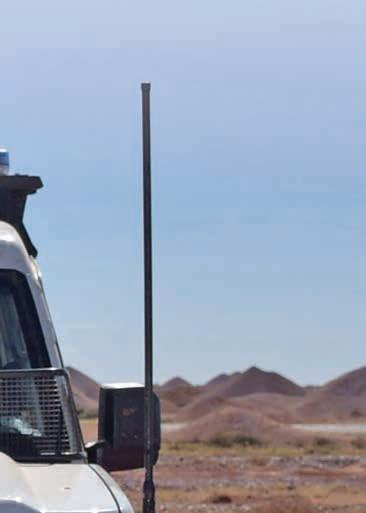







The support and camaraderie within the station made living away from home much easier; it didn’t take long to feel like part of the team.
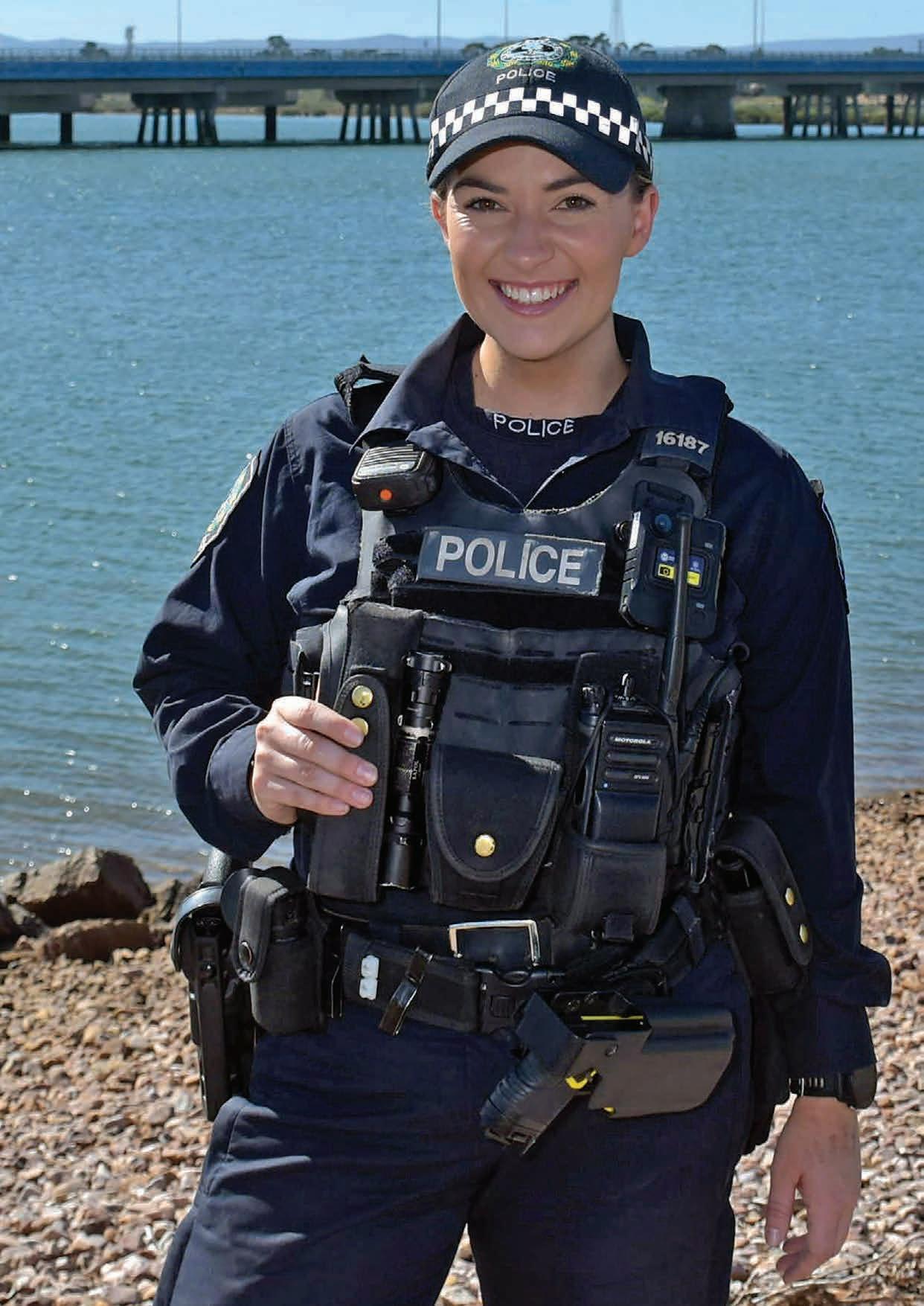



As a civilian member of the South Australia Police (SAPOL) Call Centre, Kayla Cox answered calls from across the state. After 18 months in the role, she finally answered her own inner calling to become a police officer, trading the confines of the Call Centre for the vast expanses of the Far North Region, which covers around 73 per cent of South Australia.
Constable Cox is based in Port Augusta – her first posting after graduating from the Police Academy nearly two years ago. She has embraced regional policing and all it has to offer.
“I opted for a country posting after speaking with several experienced officers who were extremely positive about their time working in regional areas,” she said.
“Hearing their experiences, I knew it would be a great opportunity early in my career.”
Constable Cox initially arrived in Port Augusta alongside a fellow graduate, helping to ease her transition to country policing. But it was the warm welcome from her new colleagues that helped her quickly build strong connections and fill the void of being away from family and close friends.
“From the beginning I felt welcomed, not only by the team I was assigned to, but by the entire station,” she said.
“The support and camaraderie within the station made living away from home much easier; it didn’t take long to feel like part of the team.
“I also found the local community to be very friendly and welcoming, which helped me settle in and feel comfortable in a new environment, while reinforcing the strong community aspect of country policing.”
As a general duties officer, Constable Cox is exposed to a wide variety of incidents, often requiring her to respond to matters independently and make decisions quickly.
“One of the main challenges of policing in Far North Region is the broad scope of work we undertake, along with the distances we travel,” she said.
“However, this also provides a fantastic opportunity to develop strong policing skills and gain experience across many different areas.
“I’ve worked closely with several Aboriginal communities across the Region, which has been an incredibly valuable learning experience and has allowed me to develop a greater understanding of the communities we serve.”
The young officer’s initial feeling that regional policing would accelerate her career development has been vindicated, with regular opportunities to take on extra responsibility and hone her craft.
“I have relieved at stations in Leigh Creek, Marla, Roxby Downs and Quorn, which has given me valuable policing experience across different communities and environments,” Constable Cox said.
“I’ve broadened my understanding of regional policing, gained confidence, and been able to explore more of South Australia than I had ever done before.”
During a regional ‘Day of Action’, Constable Cox acted as the search coordinator for outstanding FINS warrants. Her role involved preparing a tactical order, allocating roles and responsibilities to participating members, delivering the operational briefing prior to deployment, and reporting the operation’s outcomes.
“At the time I was still quite junior, so being trusted with this responsibility was a valuable learning opportunity and an early career highlight,” she said.
“I have personally found that my direct supervisors and management within Far North Region are very supportive and actively encourage members to take on new opportunities.
“This level of support has made it a great environment to learn and grow as a police officer.”
Outside of work, Constable Cox thoroughly enjoys the country town lifestyle.
“The pace of life is slower, the people are friendly, and there is a strong sense of community,” she said.
“It’s easy to meet new people and build connections, both through work and doing
everyday activities around town.
“Living in Port Augusta has also enabled me to set myself up and establish some independence.”
With the move to Far North Region proving to be a winner both professionally and personally, it’s no surprise that Constable Cox intends to continue her career trajectory there.
“This posting has been an incredibly rewarding experience that has offered me professional and personal growth,” she said.
“I strongly encourage anyone considering a move to regional policing to give it a go.
“It’s a unique opportunity to develop a range of policing skills, often with a high level of responsibility and strong support from colleagues and management.
“While it can be a significant change for anyone moving away from family, friends or the metropolitan environment, the sense of community within both the workplace and the town makes the transition much easier.”
Words: Mathew Rodda
Situated on the Mallee Highway, Pinnaroo is the gateway to South Australia from Victoria and New South Wales, making it an ideal stop for travellers. While visitors may come and go, one thing remains constant in the small town – Brevet Sergeant Matt Telfer, who has served as Officer in Charge of Pinnaroo Police Station for the past seven years.
Brevet Sergeant Telfer oversees a policing district covering around 8500 square kilometres and a township of just under 800 people, with a larger surrounding Mallee community of about 2200 people residing in Lameroo, Parilla, and Murrayville. It’s a role that he thoroughly enjoys.
“I joined South Australia Police (SAPOL) in 2013 at the ripe old age of 39. I spent three years at Henley Beach Police Station before going to Ceduna for two years,” he said.
“While in Ceduna I became Senior Constable qualified, and around the same time a friend from my Police Academy days also qualified and then won a role at Lameroo. He suggested I apply for Pinnaroo, and the rest is history.
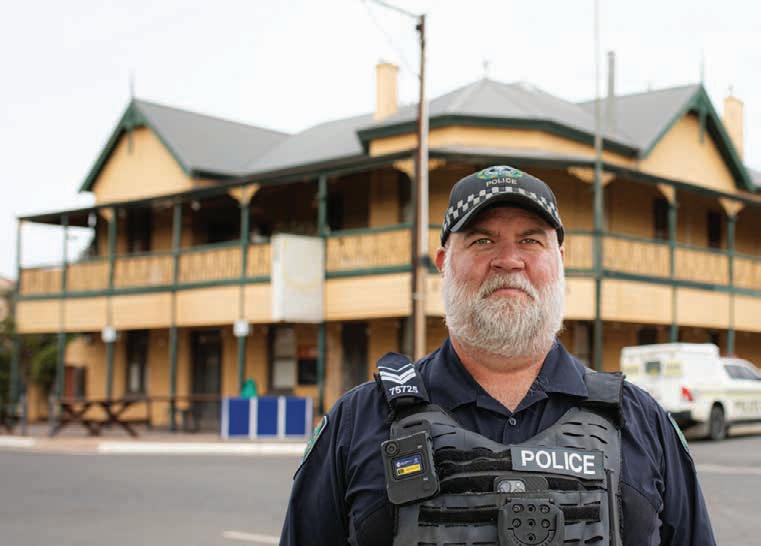
“I can’t claim to be very experienced across a range of policing positions, but I can say I have been fortunate enough to find a spot that suits me to a tee.”
Brevet Sergeant Telfer enjoys the personal nature of policing in Pinnaroo.
“I have some sort of relationship with most of the people in the area, which is great. I even have amiable relationships with most of the crooks too,” he said.
“This helps when I need to sort out some issues or arrest someone as I can call them by their name and use the fact that they know me as a reasonable bloke, and not some nameless copper, to come to a non-violent and satisfactory outcome.
“It can be challenging being the person who knows some of the secrets of the town’s underbelly, but I think I strike
a good balance between law enforcer and community member.”
Community is an important theme for the popular leader.
“I really enjoy the community here. So many Pinnaroo residents care about our community and are motivated to enhance it by being actively involved in sporting clubs, school committees, Country Fire Service, and the list goes on,” Brevet Sergeant Telfer said.
“It’s nice to be able to walk down the street and say g’day to everyone as you pass. The fact that everyone is very hospitable and welcoming makes Pinnaroo a great place to live and work.
“At times I feel like a counsellor as people come to me for advice and assistance with issues that aren’t necessarily police matters, but it’s still very rewarding to
help them.”
Pinnaroo is a regional centre for the surrounding wheat, barley, sheep and mixed farming area. There is also a large potato, onion and carrot growing and processing industry. While it may sound like a quiet and idyllic farming community, there are still plenty of offences to keep Brevet Sergeant Telfer busy.
“As with most areas across the state, domestic violence, mental health, and drugs all cause issues in the local community,” he said.
“There’s also the occasional neighbourly feud, along with theft from farmers’ sheds and sheep getting nicked from paddocks.”
Running a one-person ‘Clause 14’ police station can be challenging, but Brevet Sergeant Telfer likes to focus on the positives.


I can’t claim to be very experienced across a range of policing positions, but I can say I have been fortunate enough to find a spot that suits me to a tee.
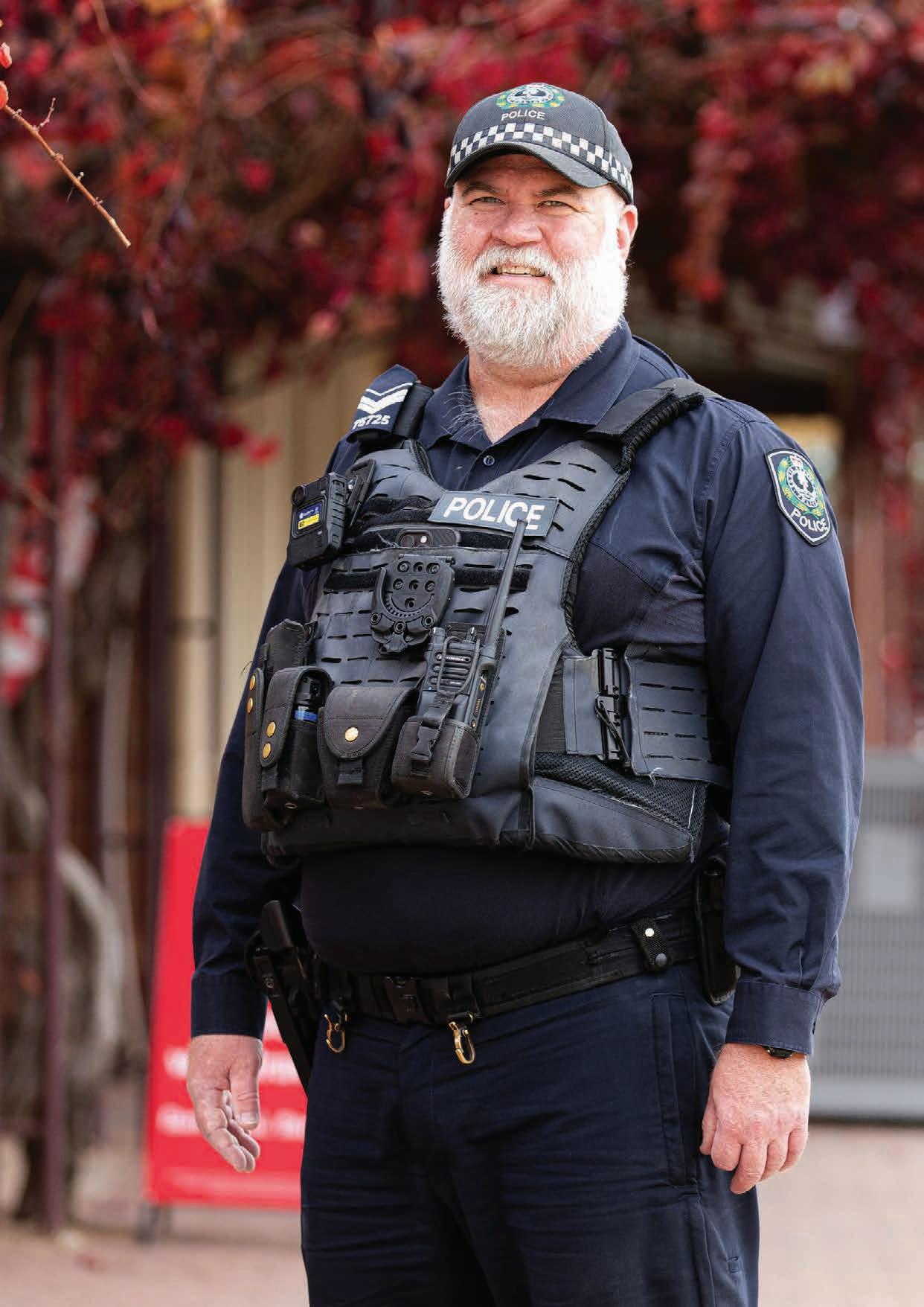




“The country lifestyle and financial benefits, such as subsidised rent and a ‘Clause 14’ allowance offset any negative aspects,” he said.
“I sometimes miss having a patrol partner to bounce ideas off, but I know I can call my supervising Sergeant in Loxton to vocalise my thoughts.
“I work on-call week-on/ week-off with the officer based in nearby Lameroo so that reduces the pressure of being constantly available.
“Clause 14 stations aren’t for everyone but for the right people they’re the best spot in SAPOL. If you’re already working in a regional centre, I recommend taking on a
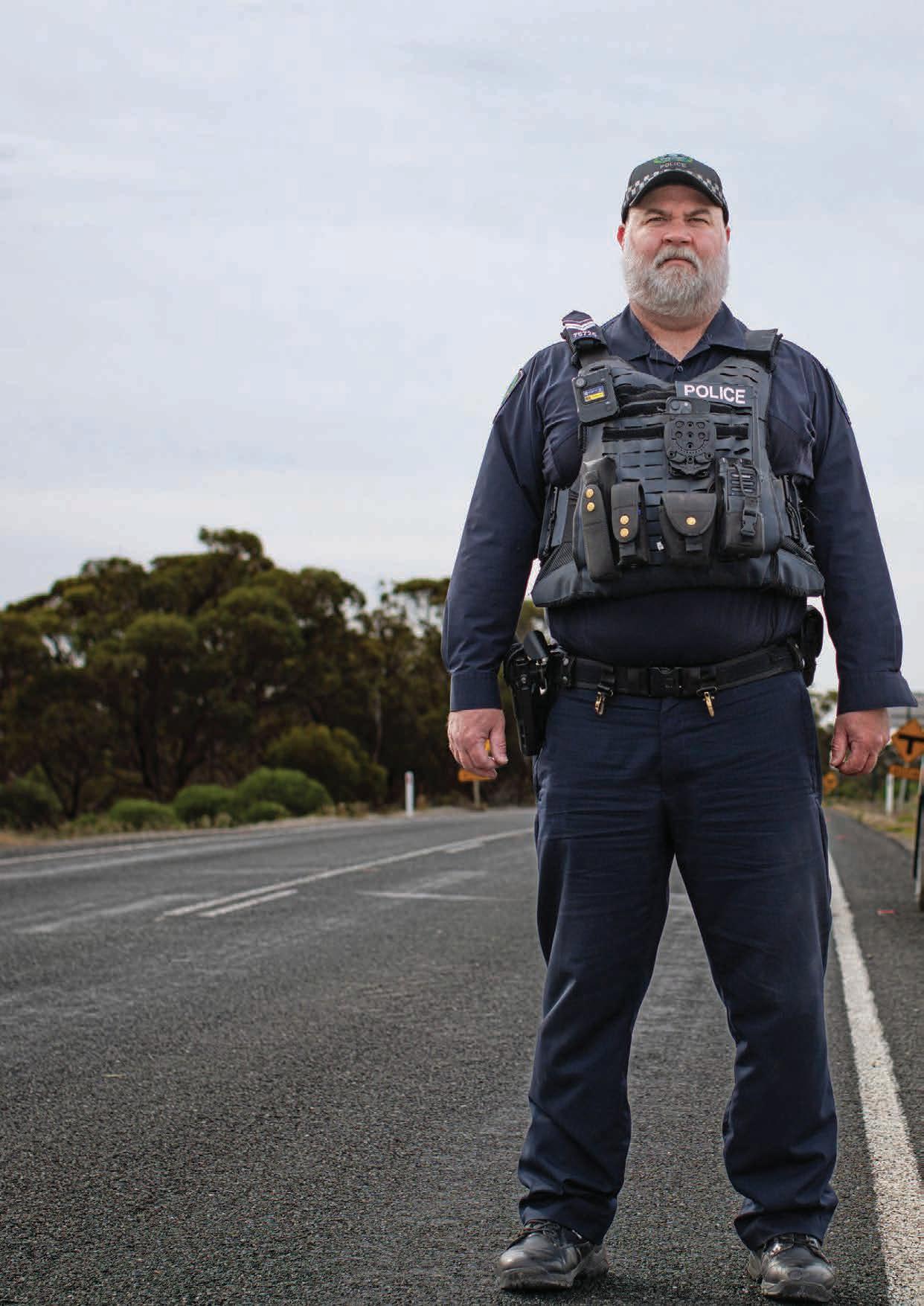

relieving role in one.”
Brevet Sergeant Telfer’s strong contribution does not go unnoticed, with his positive impact on the community recognised by a Certificate of Appreciation Award and nomination for Citizen of the Year on Australia Day in 2023.
“It was a proud moment and a vindication of my policing style,” he said.
“The recognition was heavily influenced by my efforts during the Covid-19 response where I had to find workable solutions to a range of issues caused by the border closure.”
Pinnaroo is located just six kilometres from the Victorian border, with the nearest
neighbouring town being Murrayville in Victoria, 25 kilometres away. With people traversing the border to access shopping and medical services in Pinnaroo, local children travelling to Murrayville for school,

and some farms straddling the border, the strict border closure conditions had a significant impact on the cross-border community.
Brevet Sergeant Telfer’s dedication extended beyond his paid responsibilities, ensuring community safety and allaying people’s fears and confusion. He was also invaluable to the Australian Defence Force, which utilised his innate local knowledge and understanding of the prevailing Covid regulations.
“This was the most significant operation I’ve been involved in. I was working seven 12-hour shifts on the border and three normal shifts a fortnight,” Brevet Sergeant Telfer said.
“A lot of my time was
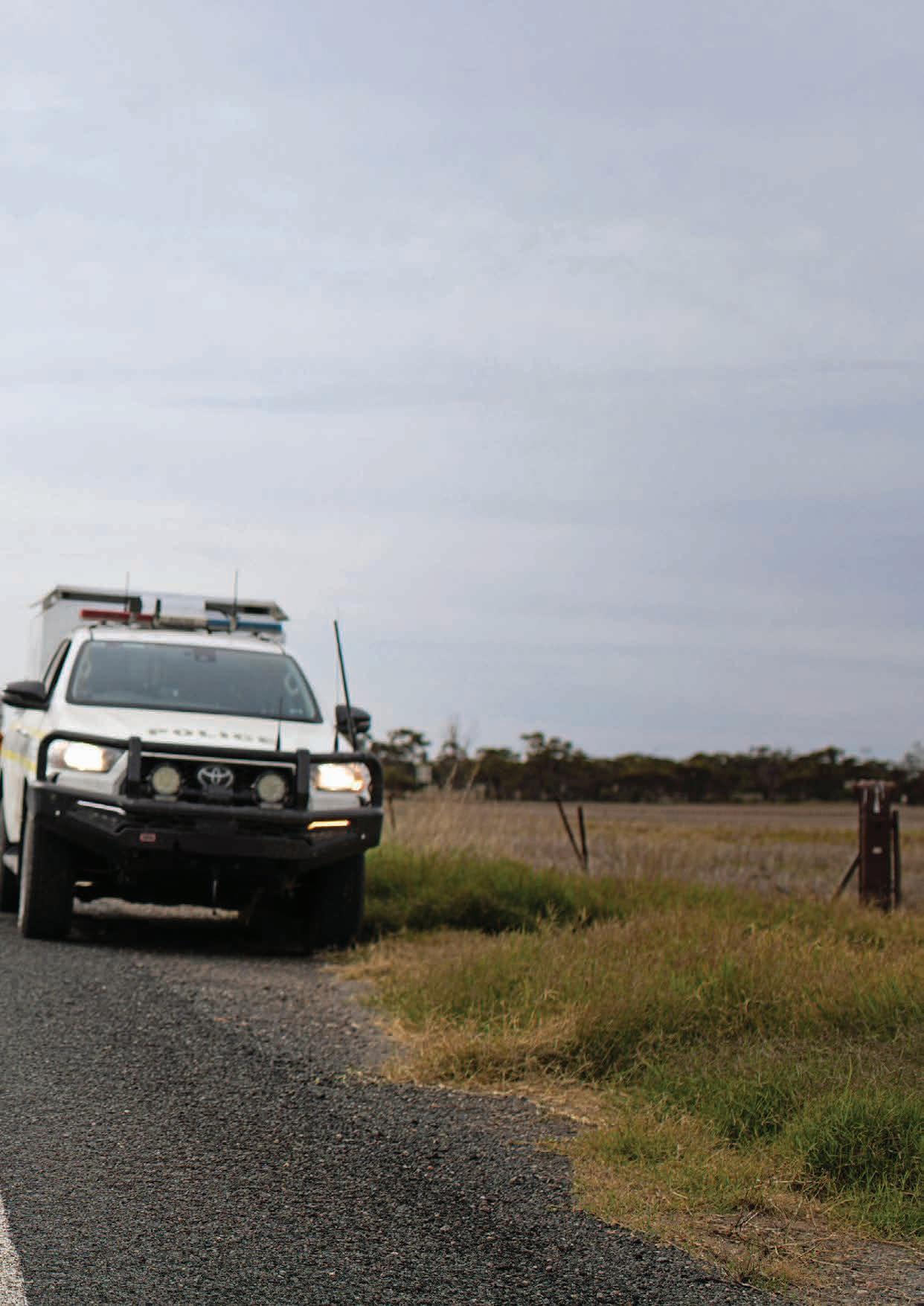
spent interpreting the ever-changing rules and regulations and organising permits for people.”
While the experience sounds onerous, it epitomised the work of the humble, approachable and helpful leader who always has the community’s best interests at heart. It’s a role he intends to pursue for the foreseeable future.
“I have made some great friends here and found that working in a regional location offers lifestyle opportunities that you just can’t get in the city,” Brevet Sergeant Telfer said.
“I enjoy four-wheel-drive off-roading so I’m lucky to have the Border Track, Big Desert, and Murray-
Sunset National Park nearby to explore. There’s also the Ngarkat and Karte conservation parks in the area which are great for walking and camping.
“If you’re working in the city and have thought about a regional position, I recommend trying a shortterm placement to experience the benefits of country policing.”

I have made some great friends here and found that working in a regional location o ers lifestyle opportunities that you just can’t get in the city.


> HILLS FLEURIEU REGION

Located 14 kilometres from the tip of the Fleurieu Peninsula, Kangaroo Island is a nature lover’s paradise, with prolific native wildlife, dramatic coastal sightseeing and bountiful farmlands.
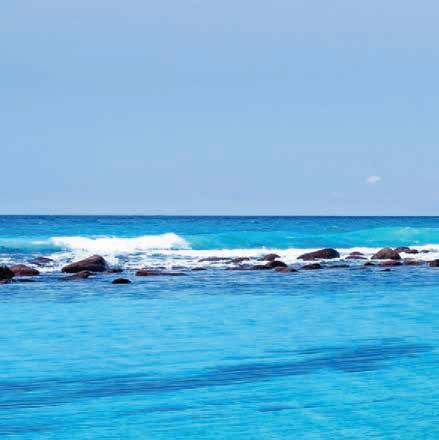
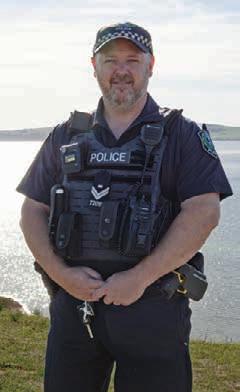

Spanning more than 4500 square kilometres, it is a must-see tourist destination, but for Senior Constable First Class (SC1C) Craig Oates, it’s a place he has called home for the past 15 years.
SC1C Oates is one of three general duties officers based at Kangaroo Island Police Station. Led by a Sergeant, the four-member team serves a population of around 5000 people. They work a threeweek roster comprising a mix of day and afternoon shifts, with two members on call outside of those times.




“Most of the time we work solo, however we receive support from Victor Harbor and Mount Barker when required,” SC1C Oates said.
“Each day brings something different, which is what I really enjoy about working on Kangaroo Island.”
SC1C Oates arrived on Kangaroo Island in 2011, four years into his policing career. After only eight months, he was soon thrust into a leadership role when the Island’s Sergeant moved on.

“A Mount Barker patrol










Sergeant relieved for six weeks and then told the Superintendent that he was confident I was proficient enough to take over,” he said.
“I happily agreed, but after a few weeks it became clear I didn’t really know much about country policing, so I had to learn very quickly.”
After successfully negotiating the steep learning curve, SC1C Oates now has
a deep understanding of policing on Australia’s thirdlargest Island which, despite its serenity, has its fair share of issues to keep him busy.
“The influx of tourists, surrounding ocean, large farming industry, and long travel distances can produce some interesting tasks,” SC1C Oates said.


“Domestic violence incidents, traffic offences and mental health have been the main issues over the past couple of years, along with some significant drug trafficking offences and serious assaults.”

Local police must also deal with the challenges caused by the stretch of water between Kangaroo Island and the mainland.


“Although the distance across the water is quite short, it can take four hours to travel from the main town of Kingscote to Adelaide,” SC1C Oates said.
“This can create resourcing and logistical issues,

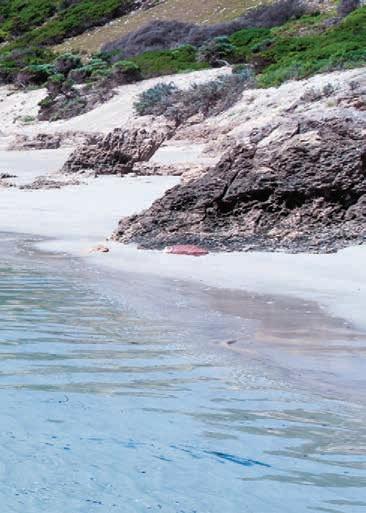



The influx of tourists, surrounding ocean, large farming industry, and long travel distances can produce some interesting tasks.





especially if we a have a large incident and resources are required to be sent from the mainland.
“This is particularly difficult at night or during periods of rough seas, as the ferry doesn’t operate in unsafe conditions.”
SC1C Oates’ connection to his adopted home dates back further than his 15-year stint serving the community.
“My wife was born here. She is a descendent of an original soldier settler family from Karatta, in the southwest of Kangaroo Island,” he said.
“I’d been visiting her family since we first met in 2000 and developed a liking for the rural lifestyle.
“At the time of the move, my eldest child was 18 months old, and my wife and I thought it would be a great opportunity for our children to grow up in an outdoor environment.”
Kangaroo Island Community Education’s governing council. He also finds time to go out boating and fishing and savour the spectacular outdoors.
“I’ve been visiting and living on Kangaroo Island for more than 25 years and I’m still discovering sensational places,” he said.

The Oates family is now fully immersed in island life, with SC1C Oates president of the basketball club where his two sons play, and a long-term member of

“We often go camping on a family-owned block of land at Hanson Bay. There was once a shack there, but it was destroyed by the bushfire in 2020.”
The bushfires that decimated Kangaroo Island in the scorching summer of 2019-20 are still a vivid memory. On 20 December 2019, lightning strikes ignited fires on the north and north-eastern coasts of the island, then in Flinders Chase National Park 10 days later.
“I remember seeing around 200 lightning strikes hit the roadside on that December day while I was making the nerve-wracking 15-kilometre journey from Kohinoor Hill to the Country Fire Service (CFS) group base at Parndana,” SC1C Oates said.
“When I walked into the base, they had placed five magnets on their large map to indicate where a fire had been reported. Within five minutes the number of magnets increased to about 20.”
Over several weeks, the widespread fires burned around 211 400 hectares of land – almost half of Kangaroo Island. It left a trail of devastation, destroying homes, businesses, forests and farmland, and killing over 32 000 head of stock and countless wild animals. Tragically, two people lost their lives.


“We had to work closely with the CFS, council and the tourism body to maintain the safety of the public, tourists and emergency services,” SC1C Oates said.
“It was the most significant police-involved operation ever seen on Kangaroo Island.”





Senior Constable First Class (SC1C) Jonathan Harris recently completed a two-year stint as a general duties officer on Kangaroo Island, where he drew upon his previous regional policing experience in Murray Bridge and Roxby Downs.
“Policing on Kangaroo Island is very different to a busier District,” he said.
“In a small, close-knit community, everyone knows who you are – your reputation isn’t just professional, it’s personal.
“That creates a unique challenge as you need to strike the right balance between enforcing the law and maintaining strong, respectful relationships within the community.”
was able to slow things down and spend more time on individual matters and provide better support to people when they needed it most.
“You have a lower volume of jobs than in a District role, but you gain depth instead. You develop stronger problem-solving skills, better communication, and a more measured approach to policing.

Kangaroo Island presented SC1C Harris with a great opportunity to hone his policing craft.
“There’s a level of flexibility and autonomy that you don’t often get in higher-demand environments,” he said.
“Without the constant pressure of a high workload, I
might not get elsewhere.”
SC1C Harris and his family were drawn to Kangaroo Island’s natural beauty and slower pace of life, but the move also made practical sense.

“It gave us the chance to explore the island and experience everything it had to offer while I was still earning a living,” he said.
Despite now having returned to a metropolitan role, SC1C Harris remains an advocate for regional policing.
“You’re also often working alone, with limited resources and minimal back-up nearby, so you need confidence in your own judgement and the ability to read situations accurately.”
Another advantage of Kangaroo Island policing is the exposure to other agencies.
“There are regular opportunities to work alongside Fisheries, Border Force, National Parks and Wildlife, and Volunteer Marine Rescue,” SC1C Harris said.
“It also worked well for our family situation as we rented out our Adelaide home to cover the mortgage, allowing my wife to stay at home full-time with our two young children.”
The Harris family embraced the Island’s unspoilt natural landscapes and its reputation as a culinary paradise.

“Those experiences help you build strong working relationships and broaden your skillset in ways you
“We made a point of getting out and exploring as much as we could – beaches, national parks, and all the lesserknown spots across the Island,” SC1C Harris said.
“We also enjoyed the local wineries, breweries, and cafés, which became part of our routine.”

“Policing in a small community gives you the opportunity to make a genuine impact. You’re not just responding to jobs –you’re part of the fabric of the community,” he said.
“Small station policing can be incredibly rewarding, but it’s not for everyone.
“You need to weigh up what you’re giving up – distance from family, fewer services, and a quieter lifestyle. If you get that balance right, it can be one of the most fulfilling experiences in your career.
“For the right person, it’s a role that builds not only professional capability, but also resilience, perspective, and a strong sense of connection to the people you serve.”
Words: Mathew Rodda




Policing in a small community gives you the opportunity to make a genuine impact.






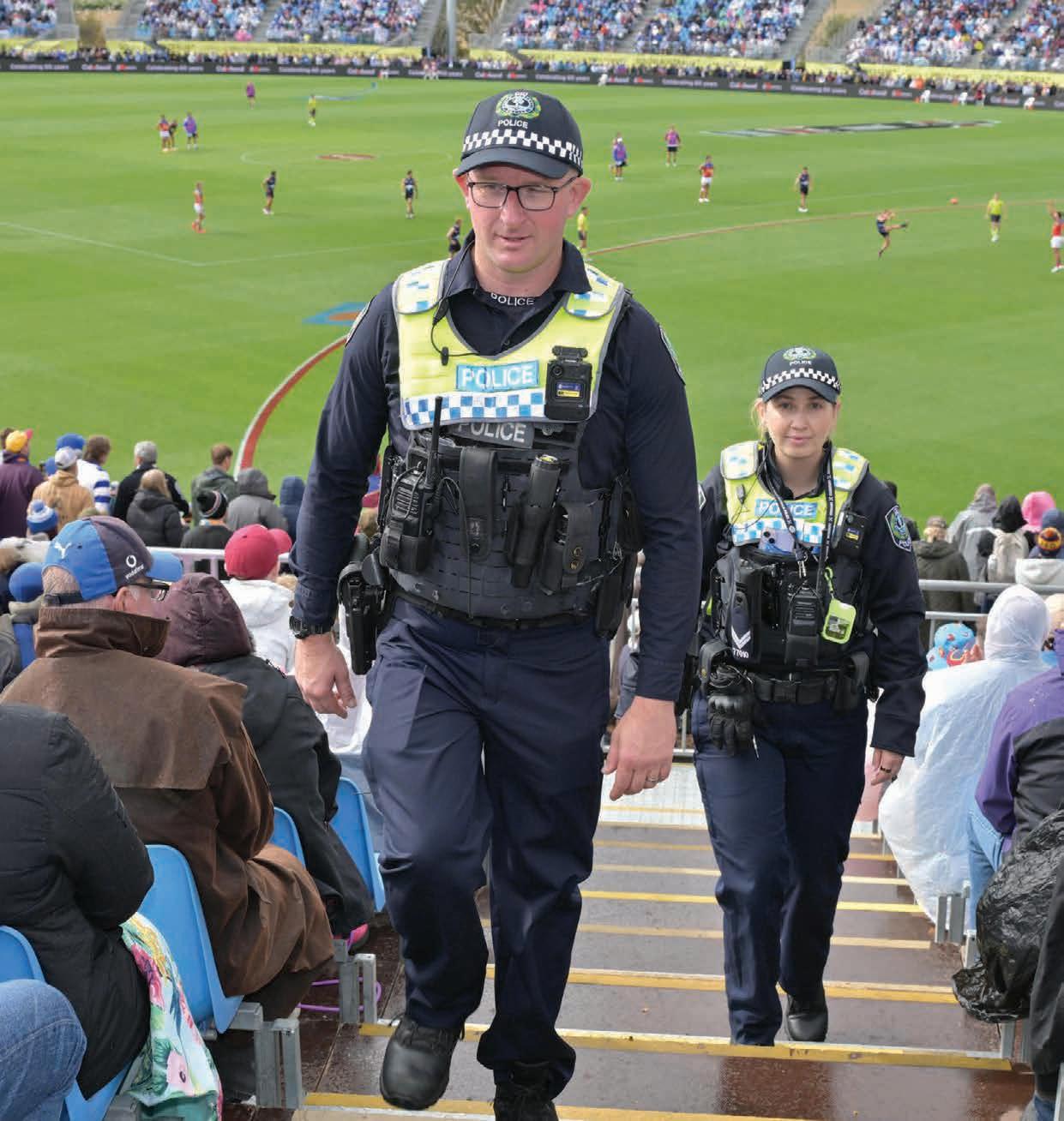
Renowned for its world-class wineries and stunning landscapes, the picturesque town of Lyndoch is a popular destination for tourists wishing to savour the Barossa Valley experience. But for one weekend in April, its rural tranquillity was forgotten as thousands of football fans descended on the historic town for Gather Round, the AFL’s much celebrated festival of footy.
Lyndoch hosted Gather Round matches on 11 and 12 April, with more than 10 500 fans flocking to Barossa Park each day. With a spectacular stadium backdrop of rolling vineyards, and people soaking up the festival atmosphere across the Barossa, the on-field action was almost inconsequential.
While people were enjoying an unforgettable weekend of footy, food, wine and festivities, South Australia Police (SAPOL) was providing a strong visible presence and ensuring their intensive planning was coming to fruition.
Officer in Charge of Barossa Region, Chief Inspector Mark Collise welcomed the responsibility to showcase the Barossa during Gather Round.
“It was a rewarding experience to manage the local policing planning, response and stakeholder collaboration to ensure Gather Round was not only a success for the AFL but highlighted all there is to love about the Barossa,” he said.
“The games were wellattended with the crowds extremely well-behaved. There were no arrests and only one person was evicted from Barossa Park for disorderly behaviour.
“There was a sense of inclusion, enjoyment and community involvement on both days.”
This was the second instalment of Gather Round in Lyndoch, after its successful debut last year. It now joins the Tour Down Under, A Day on the Green, and the Barossa Vintage Festival as iconic annual events attracting vast numbers to the region.
“We plan, resource and manage each event with the overall aim of ensuring the safety of the event, our people and the community,” Chief Inspector Collise said.
“Hosting Gather Round last
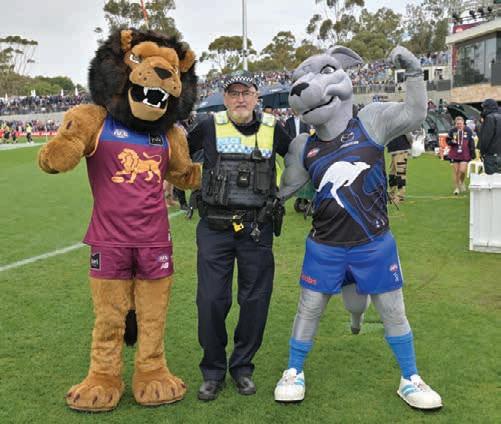
year enabled us to implement some changes for 2026 to enhance emergency service response capabilities.
“The planning and preparation process over the two years has strengthened partnerships with the community, emergency services, the Barossa Council and national bodies such as the AFL and security agencies.”
Acting Sergeant Kristen Forsyth played a pivotal role in the successful Gather Round operation. A member of Barossa Region for the past five years, the Crime Scene Investigator experienced her first Gather Round, relieving in the role of Planning and Audit Officer.
“As the local liaison for the Emergency and Major Event Section (EMES) planning officer, I provided operational support, served as the information officer, coordinated and supervised staff, managed communications, and maintained the operations log during the event,” she said.
“Pre-event I assisted with organisation of equipment, fleets and access to facilities.
“I was also responsible for planning associated activations across the Barossa such as the ‘captain’s run’ events for AFL teams and the Food and Wine Village in Tanunda.”
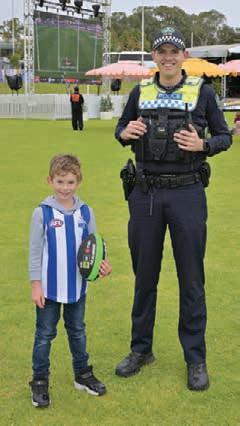
As Gather Round is hosted at three locations, the bulk of SAPOL’s planning is conducted by EMES under a corporate operation order. This year, EMES planning officer Senior Constable First Class Kirby Morley and traffic event planner Senior Sergeant Garreth Jones organised most of the ‘Gather Round – Barossa Region’ event, with Acting Sergeant Forsyth playing a supportive role. She was one of 16 Barossa Region members involved in the 44-member contingent policing the event.
“As with all major events, a major challenge was ensuring the police response was sufficient to allow the influx of people to enjoy their time visiting the Barossa,” she said.
“Having personnel from all areas associated with Gather Round, including other emergency services, within the Event Operations Centre enabled a more streamlined and efficient response to incidents.”
As with all major events in the Barossa Region, road safety was a priority with Barossa Highway Patrol members out in force.
“There was a highly visible police presence in the vicinity of Barossa Park and Lyndoch, and across the broader region, particularly with activations such as the
‘Bounce around the Barossa’ shuttle bus,” Acting Sergeant Forsyth said.
“The focus was on detecting and deterring traffic-related offences and ensuring the safety of motorists and pedestrians.”
Acting Sergeant Forsyth thoroughly enjoyed her first major event planning experience, declaring the Gather Round operation a huge success.
“The team-based focus, mentoring and support provided to me from everyone involved with this event was fantastic,” she said.
“It gave me the confidence to undertake my role’s responsibilities and play my part in a highly effective policing effort that demonstrated why the Barossa Region deserves to continue hosting Gather Round games.
“The operation also highlighted the significant development opportunities available to Barossa Region members in gaining experience in major event policing.”
Words: Mathew Rodda

ABOVE: Brevet Sergeant Kevin Burke with the Brisbane and North Melbourne mascots; Probationary Constable Noah Davis with a young North Melbourne fan. Photos: Andrew Challen








Blueprint is the official magazine of South Australia Police. Each issue focuses on the hard work and dedication of individuals, the feats and triumphs of our teams and the projects and initiatives that are shaping our organisation.
Now, you have the opportunity to influence its future.
We value your feedback and invite you to take part in our Blueprint reader survey. Your insights will help ensure the magazine remains relevant, engaging, and reflective of our evolving audience.
The survey closes on 31 August 2026.
Thank you for taking the time to share your feedback.
Complete the survey: