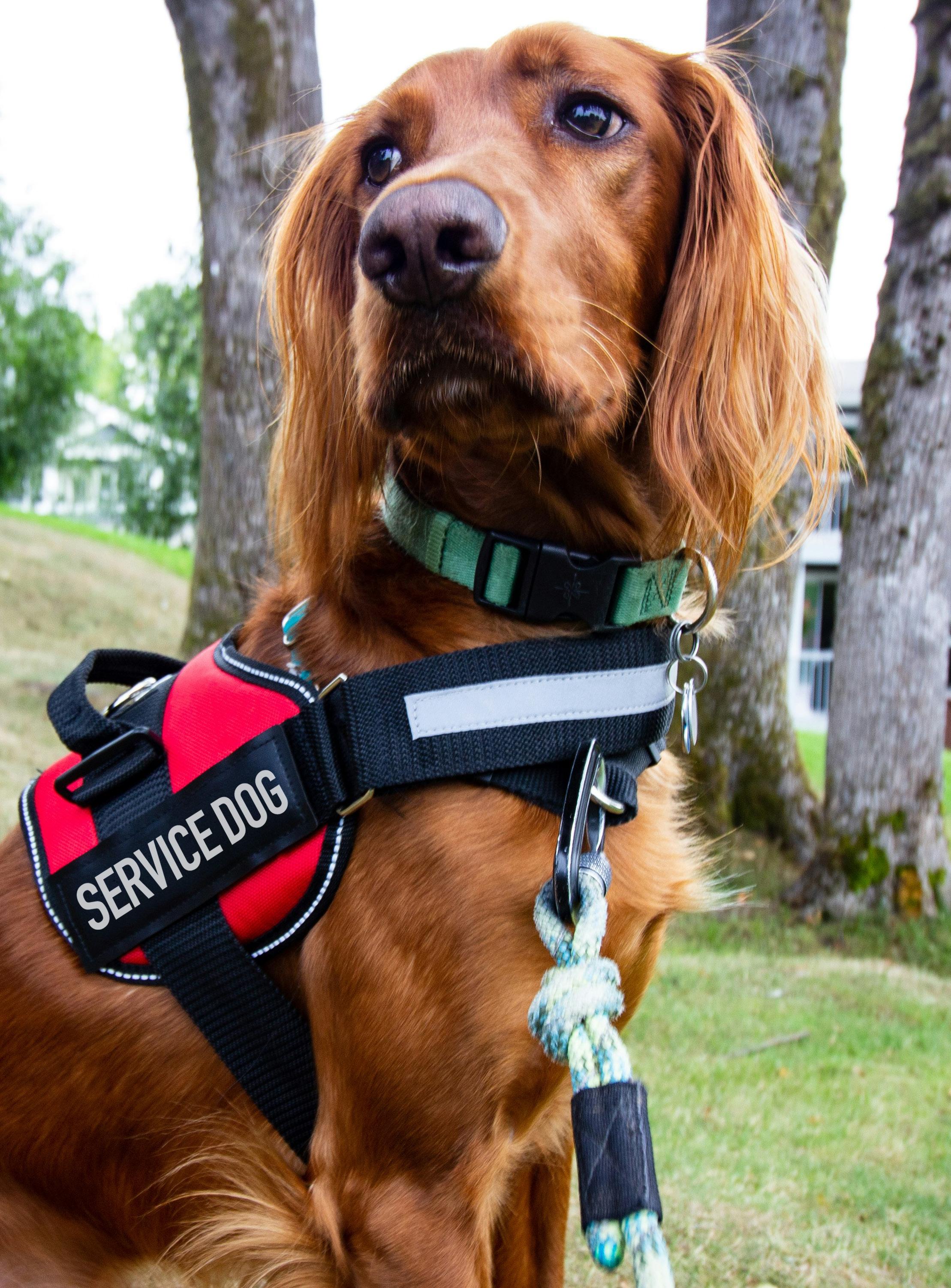
Companion & assistance animals, plus Funding pathways inside :
NDIS reforms
WHAT FAMILIES NEED TO KNOW NOW
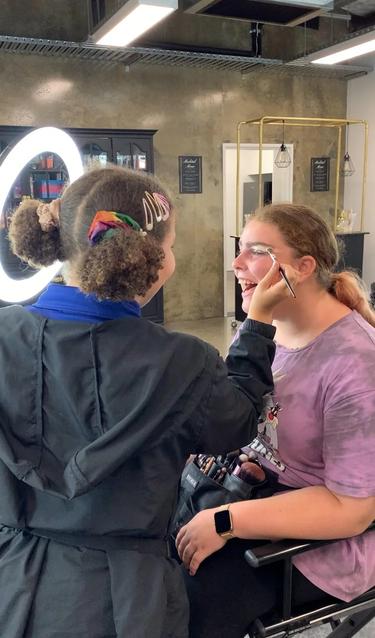
Is your teen ready for their first job?
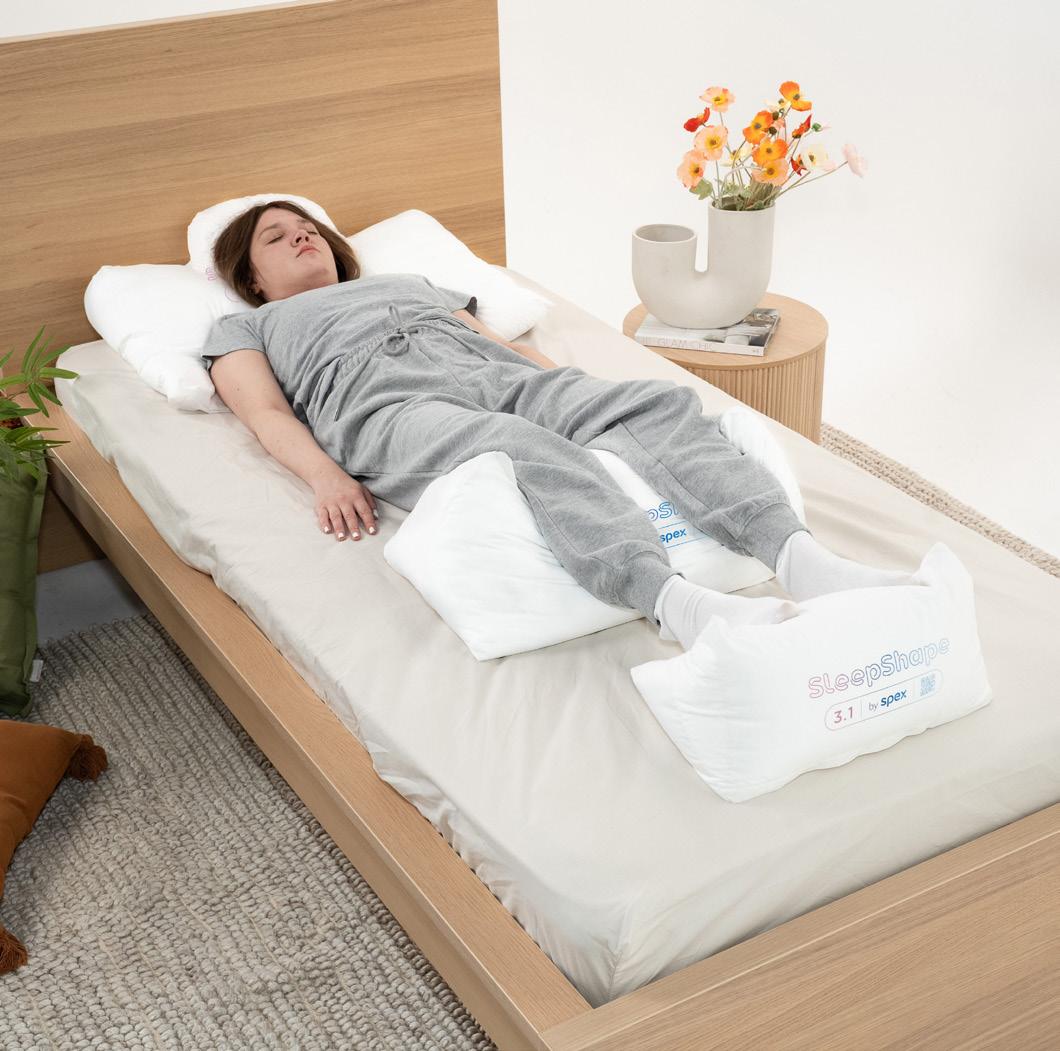
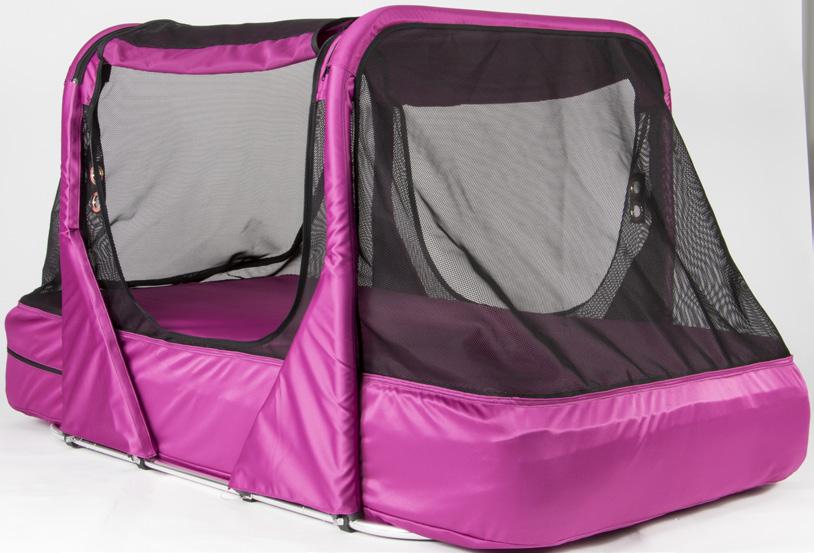
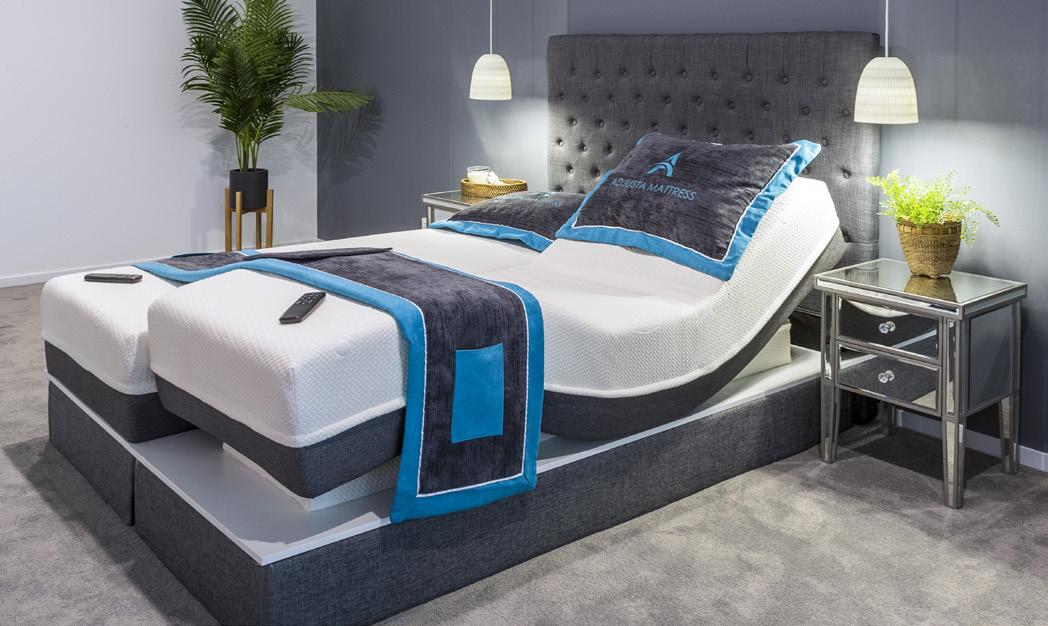
Supportive Slumber Solutions
Embrace the long nights of Winter
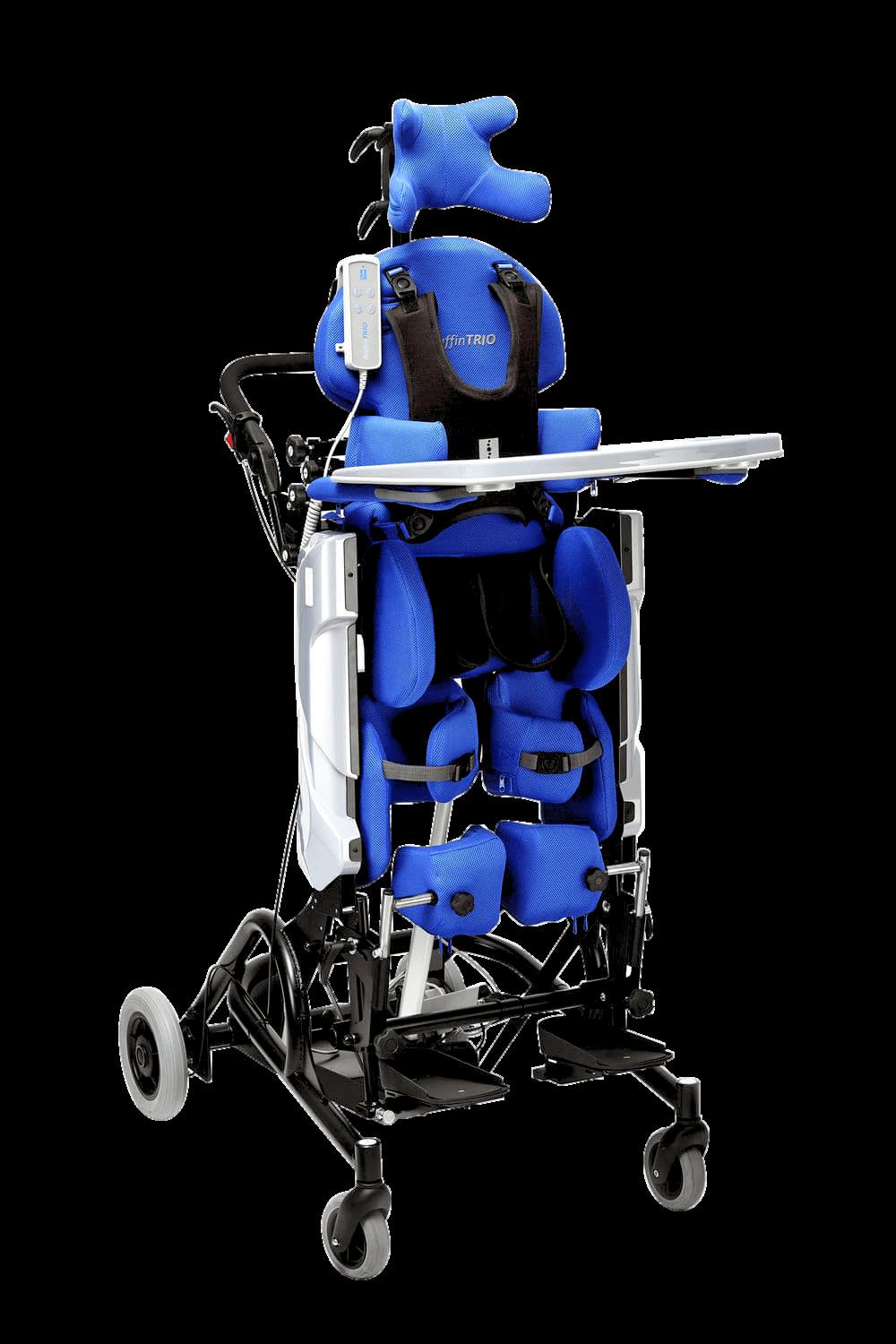
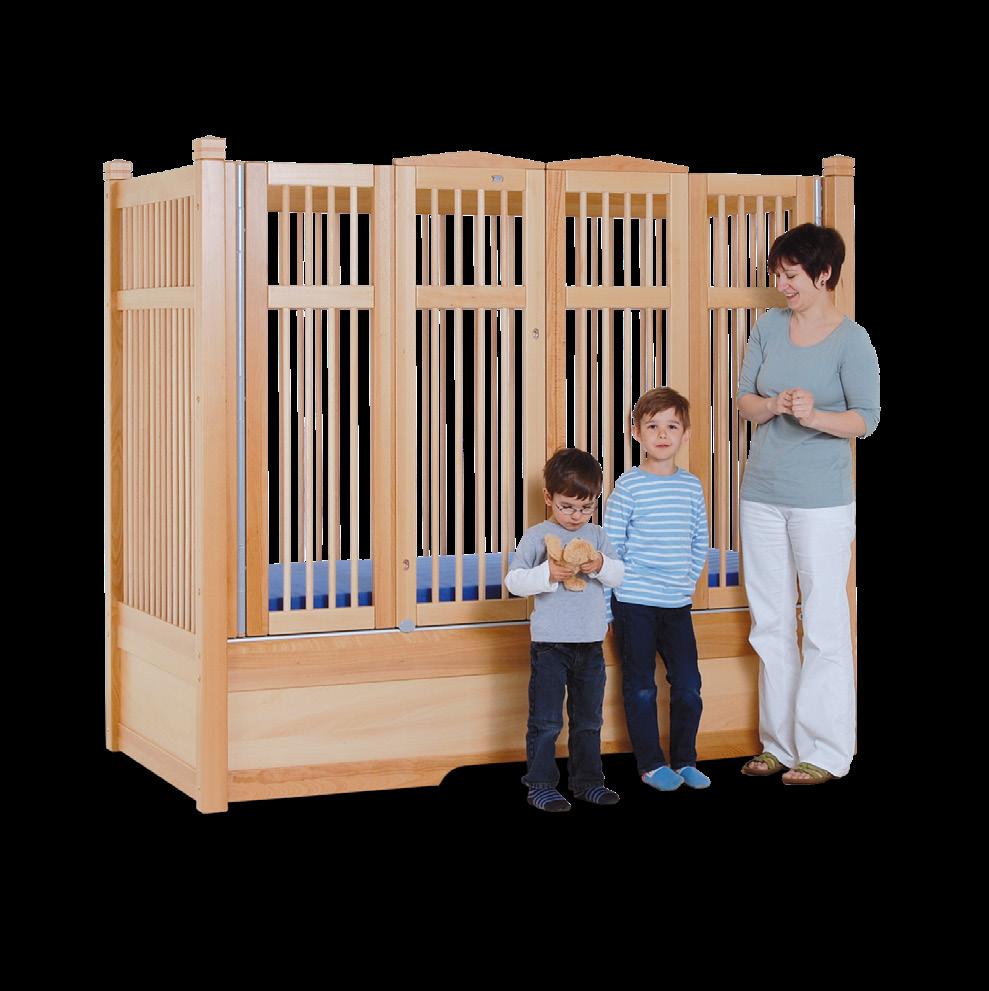
Have you thought about supporting your child’s healthy growth and development while they sleep?
Our range of nighttime positioning aids are designed to promote proper alignment, enhance respiratory function and encourage peaceful sleep.
Help improve your child’s comfort and well-being throughout the night, fostering restorative rest for optimal development.
Explore supported lying systems
HELLO
Winter often brings a shift in focus for families. As the year settles into its rhythm, many parents are thinking not only about the supports their child needs right now, but also about the future – building confidence, encouraging independence, and helping kids and young adults develop the skills to participate more fully in everyday life.
That’s a strong theme throughout this Winter edition. Across these pages, we explore what independence can look like in all its different forms – from daily routines and communication to learning, community participation and supported living. Importantly, we also acknowledge that independence doesn’t always mean doing everything alone. Sometimes it’s about having the right supports, the right environment, and the right opportunities to thrive in a way that works for each individual.
This issue features a range of lived experiences, expert insights and practical advice designed to support families navigating these conversations. We look at the importance of creating environments that build confidence and capability over time, while also recognising the emotional side of growing up, letting go, and supporting children and young adults to find their place in the world.
You’ll also find practical products, resources and ideas throughout the magazine that support everyday participation at home, school and in the community, helping make daily life a little easier, more accessible and more empowering.
As always, thank you for continuing to read, support and share Source within your communities. We hope this issue leaves you feeling informed, encouraged and reminded that every step toward greater participation and independence matters.
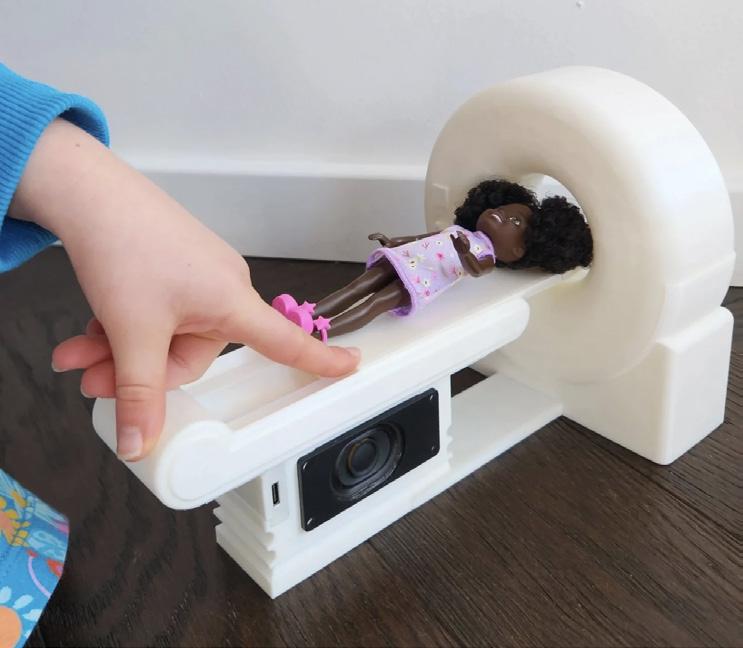
Medical prep and play
TheraPrinted creates 3D-printed tools and resources to help children navigate medical experiences with more confidence. Their realistic miniature aids are designed for use with dolls and teddies, or child-led role-play, giving kids a way to prepare, ask questions and feel a bit more in control.
Check out this mini MRI scanner! Plug it in, press a button, and it plays authentic MRI sounds. Through hands-on play, it helps reduce anxiety and turn the unknown into something familiar. theraprinted.com.au | @theraprinted
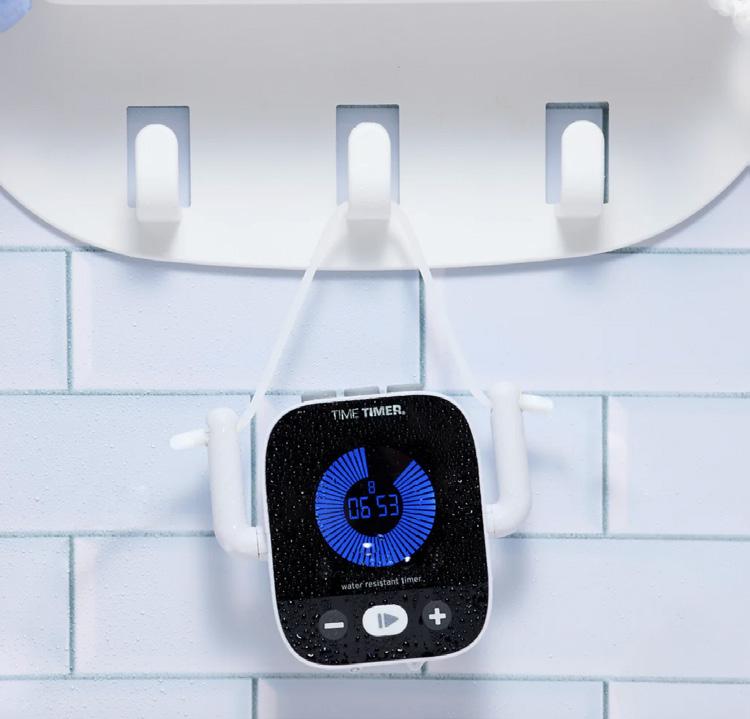
Time Timer Element
Time Timer Element is a waterproof visual timer that helps people see time during daily routines. Ideal for children and adults building independence with tasks like showering, teeth brushing and personal care, especially where autism, ADHD or sensory needs are part of the picture.
Safe for bathrooms and wet areas, it brings clear structure to routines that can otherwise feel rushed or overwhelming. assistivetech.com.au | @assistivetech_au
Clicker fidgets
Madie Fidgets creates 3D-printed articulated fidgets inspired by their 5-year-old autistic daughter, Madison. Their clickers are a go-to for calming and self-regulation, with different mechanical keys offering a mix of tactile and auditory feedback. Helpful for easing tension and anxiety, they also support dexterity, hand-eye coordination and motor skills. madiefidgets.com.au @madiefidgets
Care Station
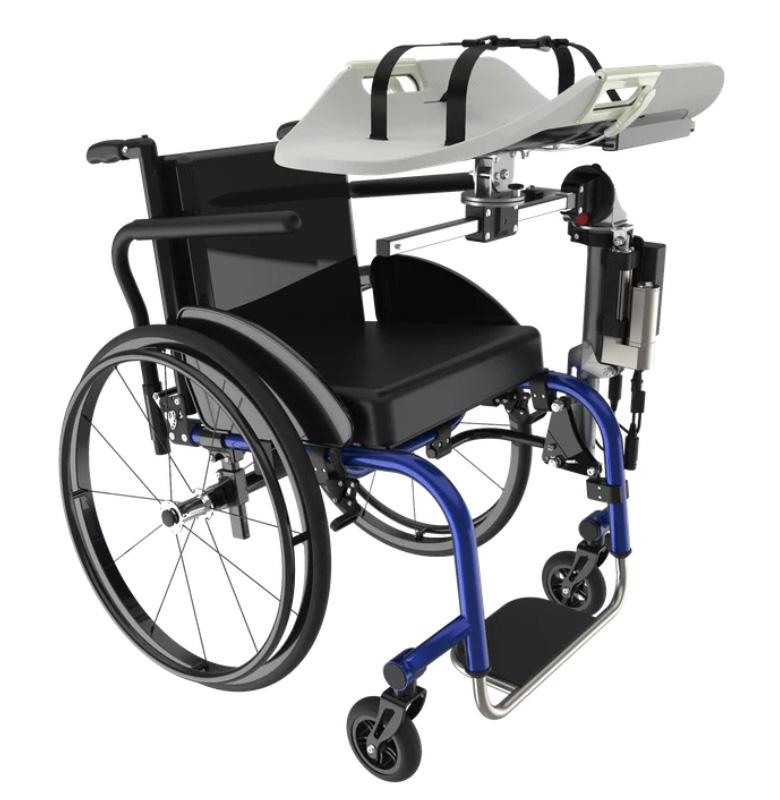
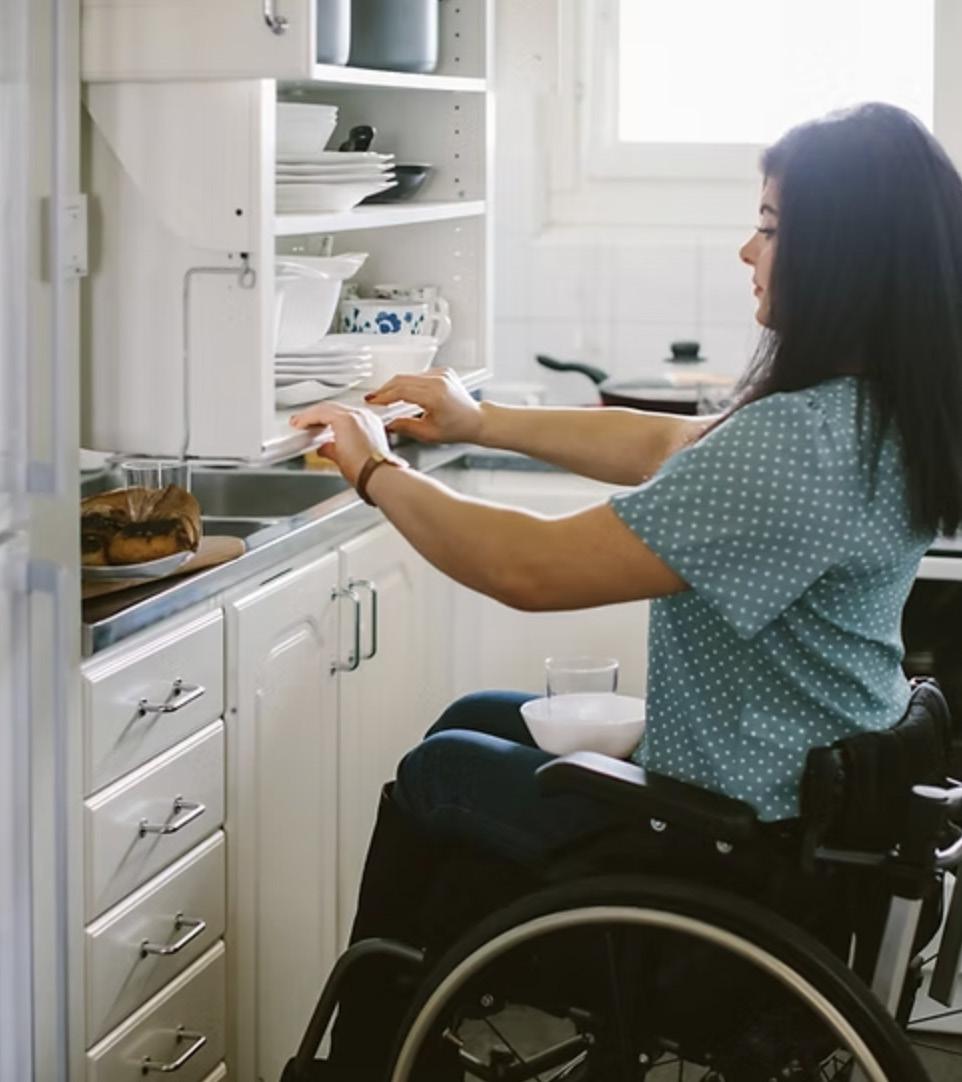
Did you know that 17% of families with children under 15, have one or more parent living with a disability? Invented and developed in Australia, Care Station is a world first attachment designed to support parents in wheelchairs, individuals with disabilities, and those using day chairs, making it easier for parents, grandparents and caregivers to connect and care for their infants. carestation.com.au
Sensory vibration necklace
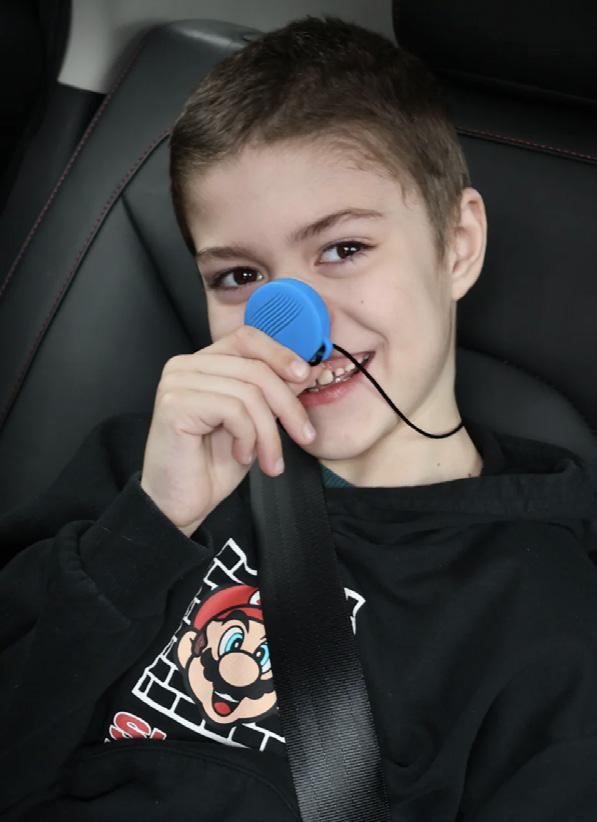
Check out this wearable, hands-free device designed to support auditory, tactile and vestibular stimming, hyperactivity and stress. The Vibrant Hummingbird pendant is quiet and discreet, helping support calm, focus and emotional regulation. Portable, lightweight, water resistant and made from food-grade silicone. Comes with USB charger cable and safety clasp necklace. vibranthummingbird.com.au @vibrant.hummingbird
Declutter, organise, empower
Silently Sorted offers personalised decluttering and organising support for people with disability. They work with you to create a space that’s practical, accessible and tailored to your needs, whether that’s physical, sensory or cognitive. Expect hands-on help, simple systems that actually stick, and step-by-step guidance to make the whole process feel manageable rather than overwhelming. mygain.me/silently-sorted @mygain_deafgain
Shower Access
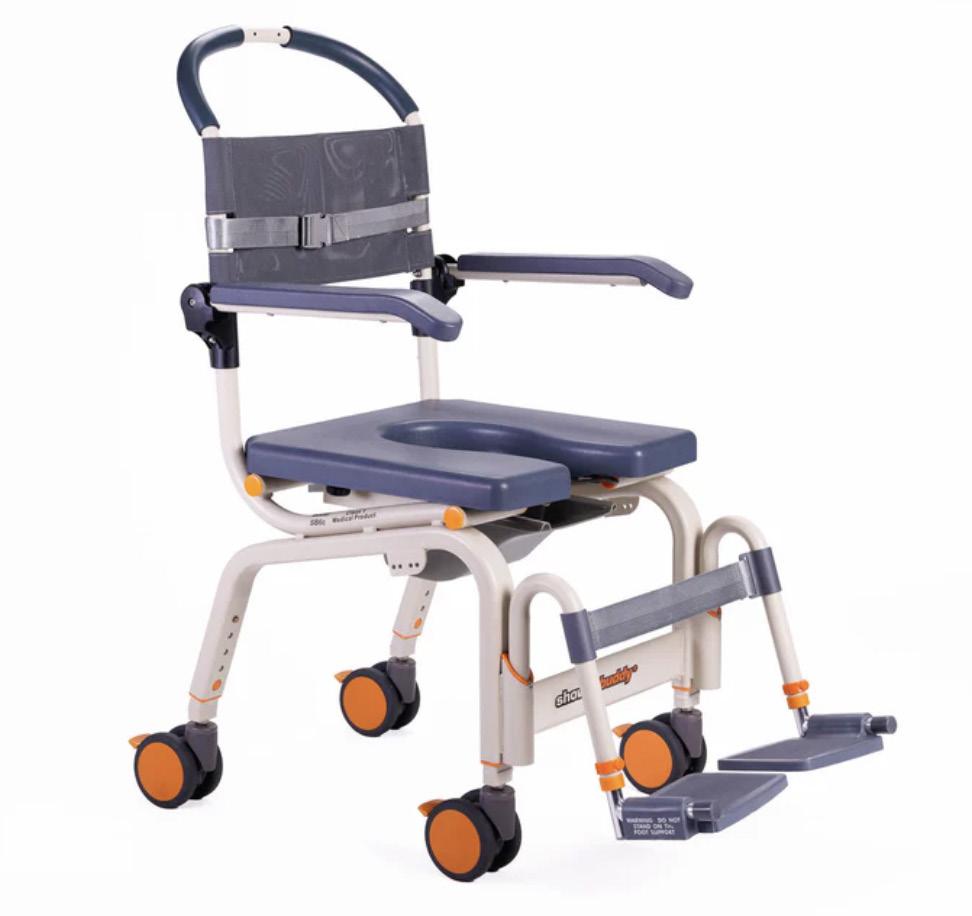
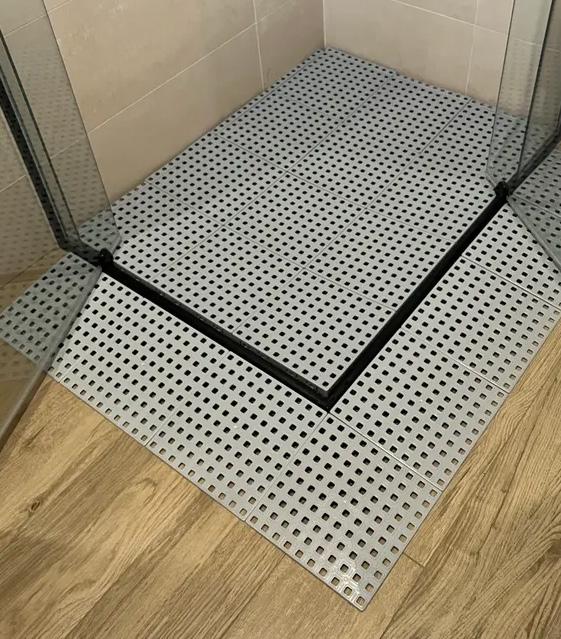
Shower Access helps make bathrooms safer and easier to use without the need for a full renovation. Their ShowerBuddy range has options for different setups, including step-in showers, shower-over-bath and level entry spaces. It allows people with mobility needs to shower and use the toilet with more ease. Quick to set up, easy to move and built for everyday use. showeraccess.com.au
Frosti Pillow
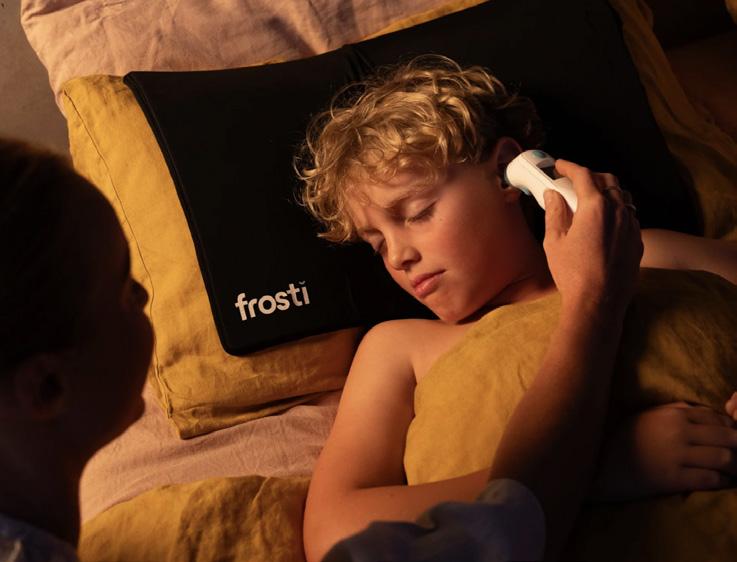
The Frosti Pillow is your essential sleep companion, designed to support deeper rest, improved comfort, and consistent recovery. Using advanced cooling technology and an ergonomic design, it helps regulate temperature, reduce discomfort, and promote more restful, uninterrupted sleep.
frosti.au | @frosti_au
The Brainy Box
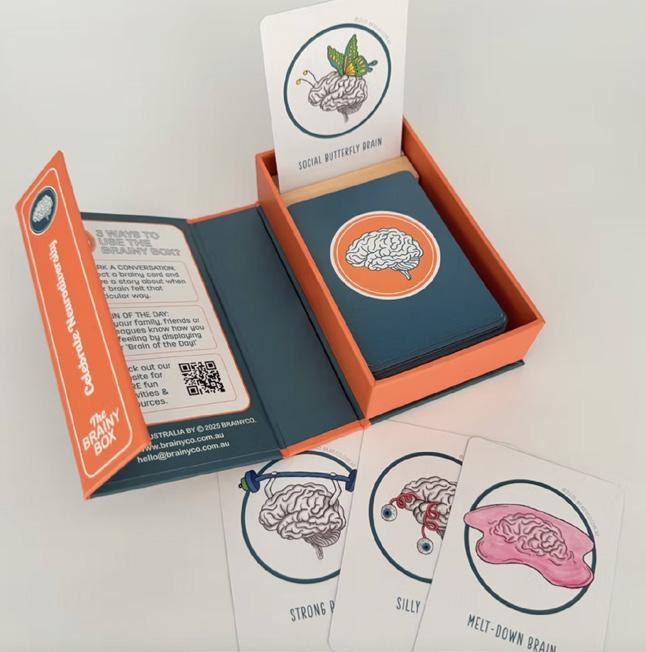
The Brainy Box features 60 conversation cards designed to explore neurodiversity in a thoughtful and practical way. Created for families, educators, friends, and health professionals, the cards encourage conversations about how we think, feel, learn, and experience the world. Each set includes a wooden display stand for your “brain of the day”, plus check out their downloadable resources and placemats to keep the conversations flowing. brainyco.com.au | @brainyco_
Sashaboo kids
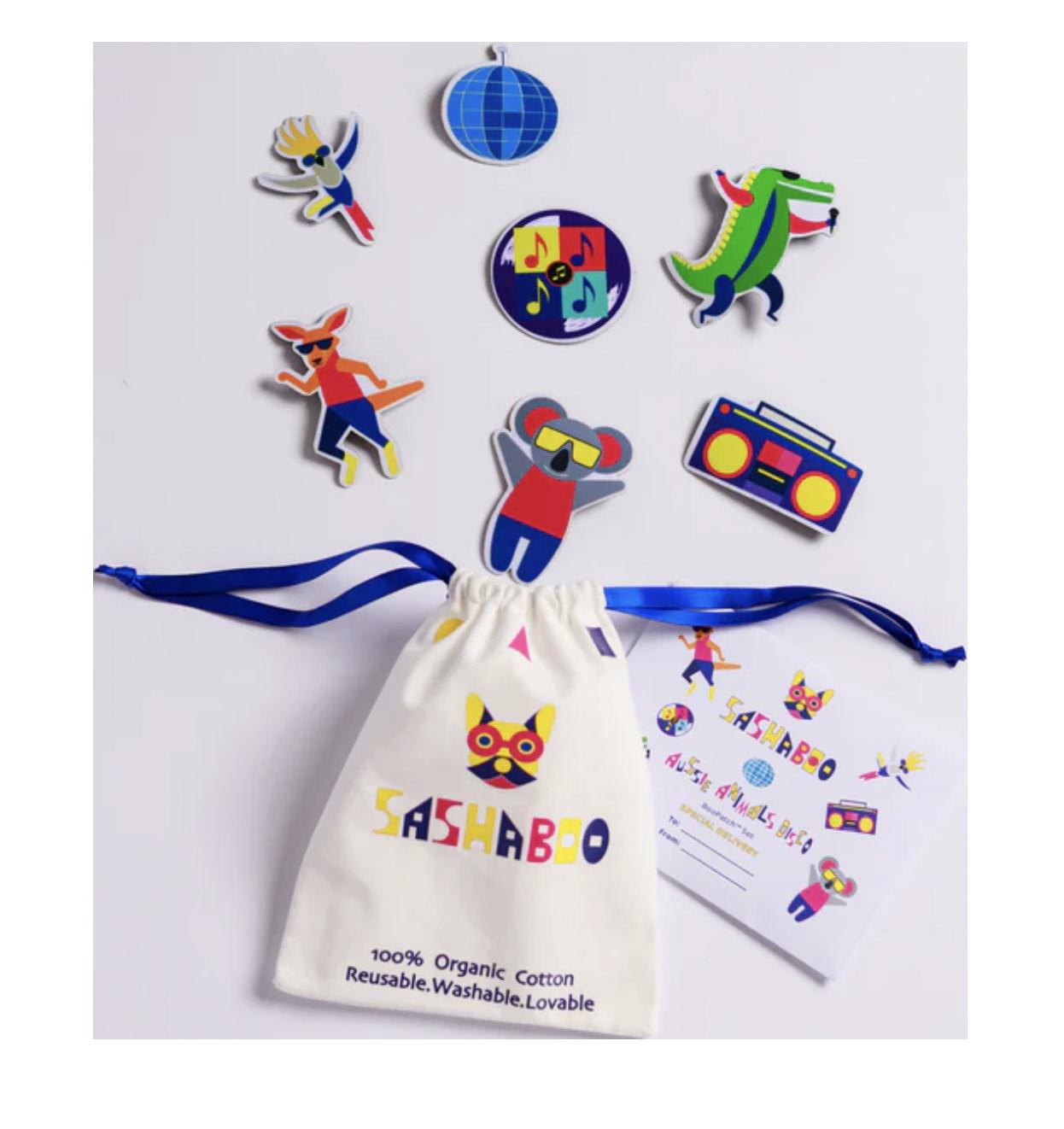
These t-shirts from Sashaboo turn getting dressed into play. Kids mix, match, stick and restick BooPatches to create a new TeeBoo each time. Three colours, endless ideas. Screen-free and interactive for ages 3–8.
one paw
one paw at a time
LEARNING TO TRUST, at a time
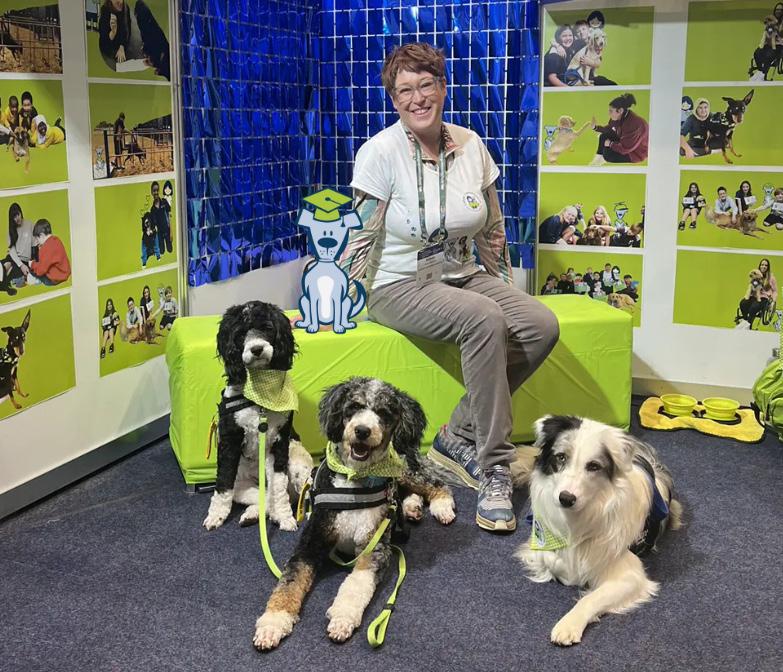
Canine Comprehension is the Melbourne organisation using animal-assisted learning to help children find their feet – in school and in life.
Ten years ago, when Sarah Macdonald introduced her Doberman Ridgeback, Minnie, to a classroom of kids, she didn’t know she was about to start a business. She just knew that Minnie –emotionally intelligent, deeply sensitive, and occasionally freaked out by loud noises – had a way of reaching children that nothing else quite could.
“She would just know to creep up to the right person,” Sarah says. “But she could be fearful. So sometimes we’d go into a noisy classroom, and she’d dive under a chair.” Sarah would turn the moment into a lesson, saying to the children, “This is
how Minnie is feeling right now. What can we do to make her realise you’re safe?” The children, who had plenty of their own issues and challenges, would tune right in – and that’s when the real work would begin.
That insight is at the heart of Canine Comprehension, the Melbourne-based animal-assisted learning organisation Sarah founded over a decade ago. What began with Sarah, Minnie, and another pet “co-worker” named Oscar has grown into a team of 20 people – including 16 mentors, each a qualified professional in education, allied health, or social work, who also hold Animal Assisted Therapy
certification. Together with approximately 20 working therapy dogs, they visit around 35 schools per term across Victoria. The dogs have their own profiles on the Canine Comprehension website, of course.
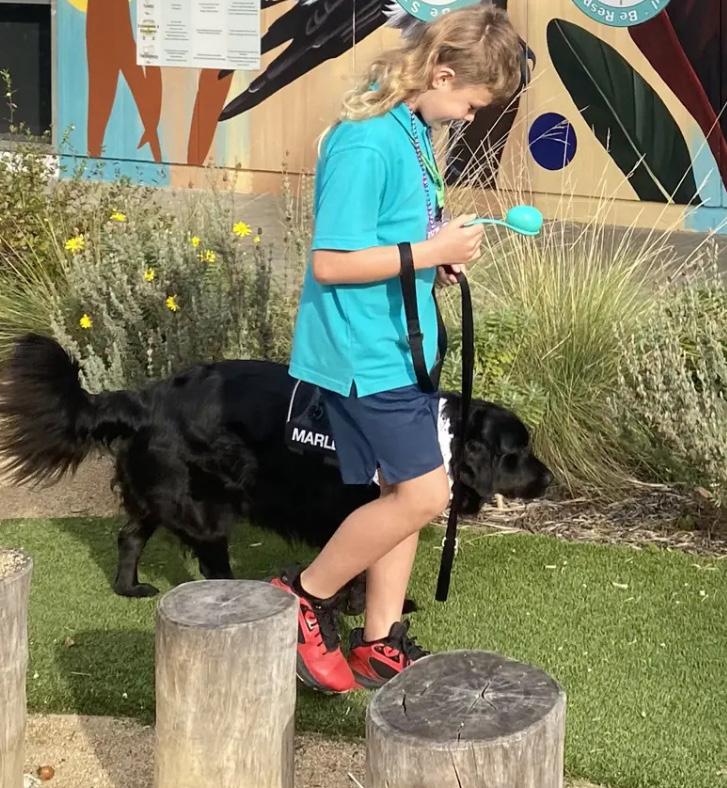
Canine Comprehension’s programs are not “therapy” in the clinical sense. Sarah describes what the dogs offer as Animal Assisted Learning, and the focus is on school readiness: building the emotional regulation, social skills, and wellbeing that, together, allows children to show up and engage.
Programs are carefully tailored to what each school and each child needs. Sessions with special development schools, for
Sarah describes involves attaching three leads to the same dog, and handing one lead to each child. If they pull in different directions, the dog stops. To move forward, they have to work it out together – watch each other, negotiate, find a rhythm. “When the teachers notice what’s happening with the students, they’re often so surprised they stop in their tracks,” Sarah says, smiling. For the children, it’s the kind of spontaneous teamwork that doesn’t happen on demand, but somehow happens around a dog.
is: Did the children connect? The second is: Did they have fun? The third is: Did they do whatever was on the lesson plan? The first two are the most important. If they didn’t connect and they didn’t have fun, we’re not doing our job.”
The dogs themselves are trained with as much care and individuality as the programs they support. Unlike more regimented service dog training, Animal Assisted Learning dogs are allowed to show their personalities and work with their quirks. “They’re not performing monkeys,” Sarah says. “They’re living beings that we observe and show empathy to. That’s the whole point.”
The focus is on school readiness: Building the emotional regulation, social skills, and wellbeing that, together, allows children to show up and engage.
example, look somewhat different to those in a mainstream setting. For example, a large group of children might work with a dog-and-mentor team, or they might run individual 10-minute sessions with several children in rotation, or a longer session with a small group of four children. “We sit down with the school,” Sarah says. “We ask where their kids are at, and we work out what’s going to work for them, and build their program to suit.”
In special development schools, where children are often working at their own pace and in their own world, even getting a small group to acknowledge each other can feel like a win. One of the activities
Another thing Sarah describes is the way a dog changes the physical dynamic of a session. When the dog is on the floor, everyone gets on the floor – not to get down to the child’s level, but simply because that’s where the dog is. It matters more than it sounds. When a mentor sits with a child directly, there’s an implicit expectation of back-and-forth, a demand on the child to engage, respond, and even perform. The presence of the dog removes that pressure entirely, because suddenly everyone’s attention shifts to a third point. “We’re all focused on the dog,” Sarah says, “and that breaks down the expectation of ‘I’m speaking to you and waiting for a response’.” For children who find direct interaction overwhelming, replacing that two-way demand with a shared focus on something else entirely can make all the difference.
Canine Comprehension mentors go into every session with a lesson plan and learning outcomes, but Sarah is clear about what matters most. “The first thing
Canine Comprehension currently operates across Melbourne and wider Victoria. Programs are not funded through NDIS, as the focus is on learning readiness rather than therapeutic intervention. Families can self-fund, or approach community organisations to sponsor a term of eight weekly sessions. In Victoria, public schools can access funding through the Mental Health in Schools menu, and the Department of Education periodically releases animal therapies funding that schools can direct toward programs like this one. Families who homeschool are also welcome, and groups of four to five children can share sessions.
Sarah’s vision is for every school in Victoria to know what Canine Comprehension does, and to be actively choosing whether it is the right fit for their students. “It is not enough just to have good curriculum,” she says. “You need kids that are in the right place to step into it.”
The dogs, it turns out, are very good at helping them find that place.
You can find out more at caninecomprehension.com.au
By Katherine Granich
ANIMAL COMPANIONS Benefits of TO PEOPLE WITH DISABILITY ANIMAL COMPANIONS
The companionship of animals has been cherished for centuries and dogs have proven to be especially beneficial for individuals with disabilities.
Iknow the joy of growing up with dogs as valued members of my family who offered unconditional love and support. Each dog provided me with a profound sense of companionship, diminishing feelings of isolation. During moments when a human presence was lacking, these remarkable creatures remained by my side, offering unwavering support.
The remarkable aspect of animals is their ability to perceive beyond my disability, connecting with the depths of my heart, understanding my emotions, and consistently displaying unconditional love. When I was a teenager and things got hard, my dog was my support and my
friend. My loving canine made me feel less lonely in what seemed to be a strange world.
Now, in my adult years, my loyal companion Oliver is my sanctuary during moments of stress, providing comfort and alleviating my worries. The simple act of stroking his soft, fluffy fur is enough to instantly uplift my spirits. He is a Moodle (Maltese cross poodle) with an incredible personality. His ability to bring laughter to my mother and me is a constant source of joy in our lives.
For those facing challenges in getting out and engaging with the world, dogs are a remarkable source of motivation,
encouraging daily physical activity. Embracing this opportunity not only benefits your own well-being but also deepens the bond with your furry companion, who will undoubtedly cherish the shared moments.
Plus, through socialising with fellow dog owners, you might discover new friendships and connections to expand your social circle.
PROFESSIONAL ASSISTANCE DOGS
Certain dog breeds such as Labradors and Golden Retrievers possess remarkable trainability making them ideal support dogs for people with disability.
Well known non-for-profits Assistance Dogs Australia and Guide Dogs NSW tell the stories of dogs assisting people with a great range of disability. Dogs can be taught to open and close doors, switch off lights, guide individuals with disabilities safely across roads, carrying objects, or alerting others when attention is required. Training of a puppy can take up to 2 years and cost tens of thousands of dollars. While the process of obtaining an assistance dog may be lengthy due to the rigorous training involved, the rewards are truly worthwhile. Having an assistance dog fosters independence and confidence, enabling people to actively participate in various aspects of personal and public life.
The National Disability Insurance Scheme (NDIS) does recognise dogs as a reasonable and necessary support in some circumstances. You can read more on this page of the NDIS website (ndis.gov. au/news/7239-new-assistance-animalsguideline-released).
Dogs have a long history supporting people who are vision impaired, or blind, engage with the world. Dogs are also well known for playing a pivotal role in establishing a structured daily routine to benefit people on the autism spectrum who thrive with consistency. Engaging in manageable tasks to care for an animal companion such as feeding, walking, and grooming can benefit those with depression and mood disorders. These small yet meaningful responsibilities also contribute to a sense of purpose and
well-being for people helping to foster positive outcomes.
Where owning or caring for a non-professional dog might pose challenges for some people due to the level of disability, a therapy dog can be considered. Therapy dogs are primarily trained to offer companionship and emotional support. Depending on your preferences and requirements, these dogs can either become a cherished part of your family or provide shortterm support tailored to your specific needs.
Therapy dogs come in all shapes and sizes. As well as Labradors and Golden Retrievers, German Shepherds, French Bulldogs, Bichon Frise, Yorkshire Terriers, Pomeranians, and Beagles and many more have served as support dogs. And Moodles of course!
My fabulous friend OLIVER
Let us return to the centre of my life, Oliver. He holds an unparalleled place in my heart. My love for him knows no bounds. His awareness of his undeniable cuteness occasionally becomes a charming tool he deploys to his advantage. Oliver is not only my loyal companion but also my best friend.
Despite his inability to speak, he possesses an exceptional ability to listen attentively. I firmly believe that Oliver entered my life with a purpose – to guide me away from negative thoughts and illuminate the path towards a more positive outlook.
One of my greatest joys is taking Oliver for walks in my power wheelchair. We both relish the invigorating fresh air and exploring the neighbourhood together.
Oliver’s presence never fails to bring a smile to the faces of my support workers, who have developed a fondness for him. To my mother, Oliver is like a beloved
grandson – she adores him. He has seamlessly become a cherished part of our family. I can't imagine life without him.
My hope is that this article may inspire you to consider adding a new furry member to your own family, so you can experience the profound love and companionship I am fortunate to have. Trust me, you will not regret it. Perhaps we'll even cross paths at a dog park someday!
By Fiona Bridger, Achieve Australia researcher and writer.
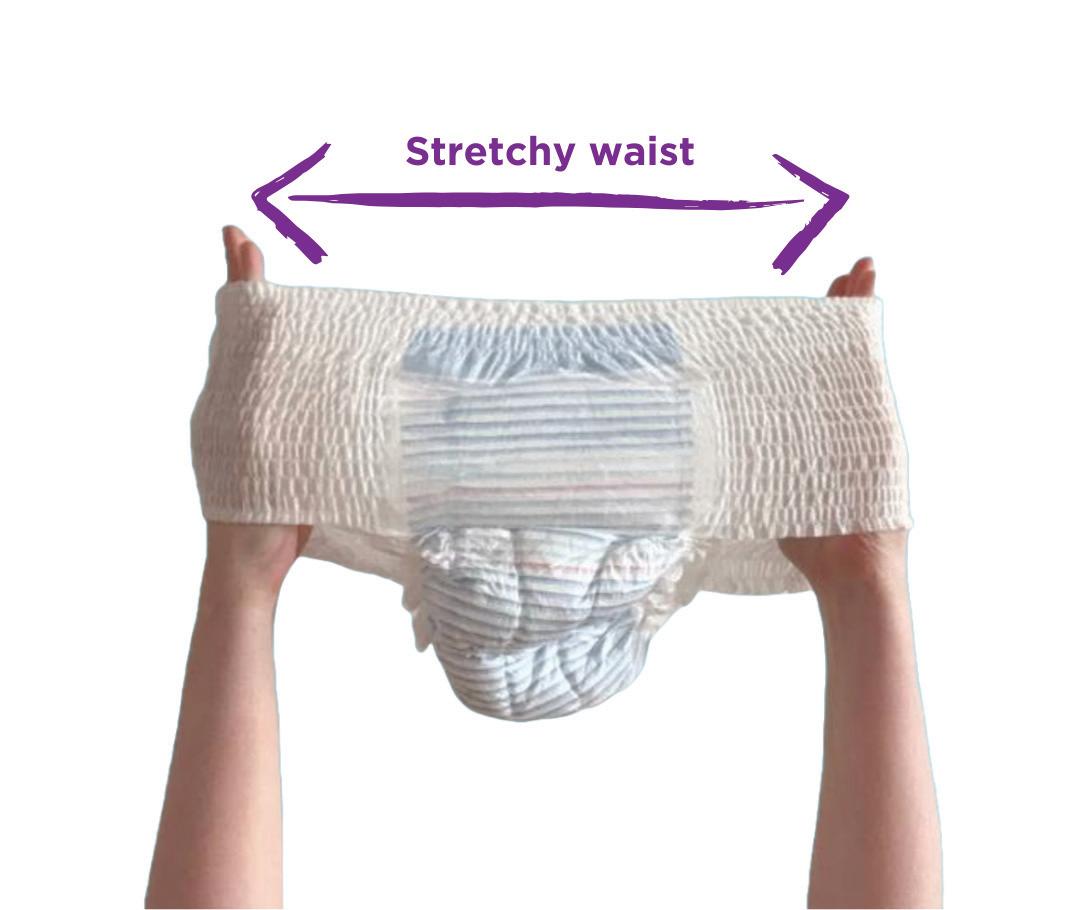
ABENA’s thoughtfully designed continence solutions promote comfort, dignity and confidence. Helping kids participate fully in everyday activities with reassurance for both families and carers.
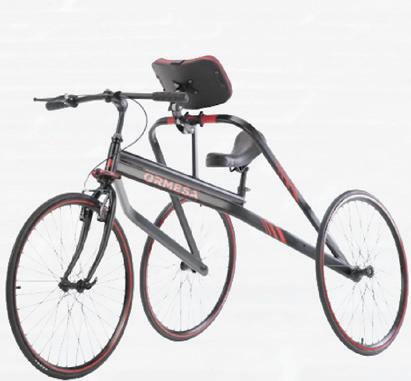
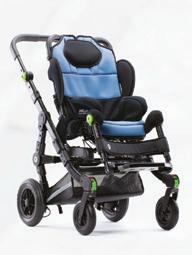
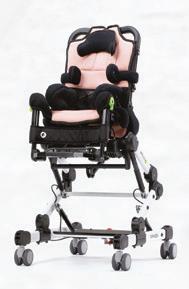
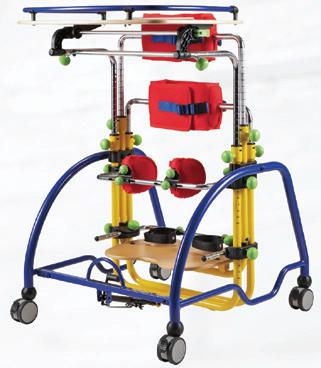
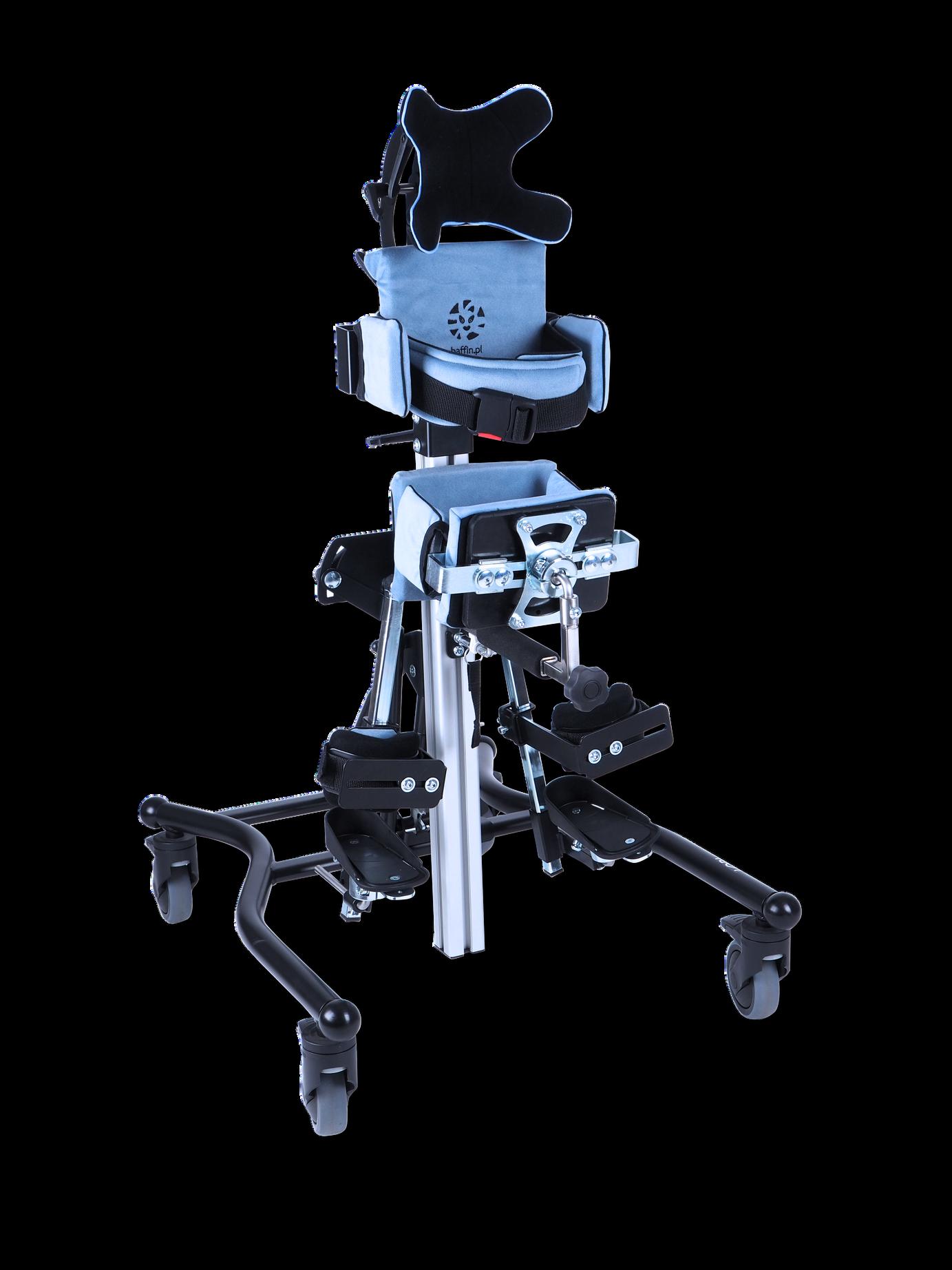
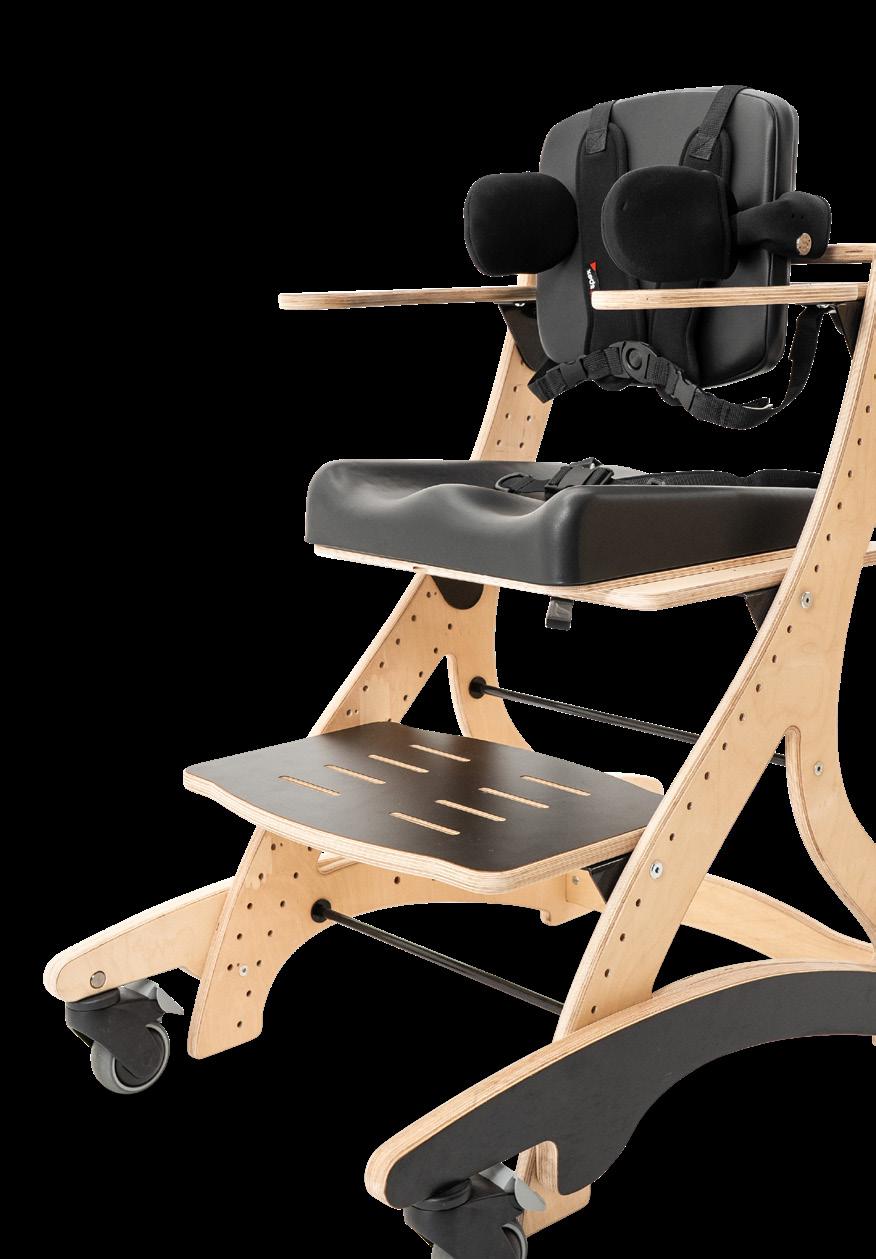
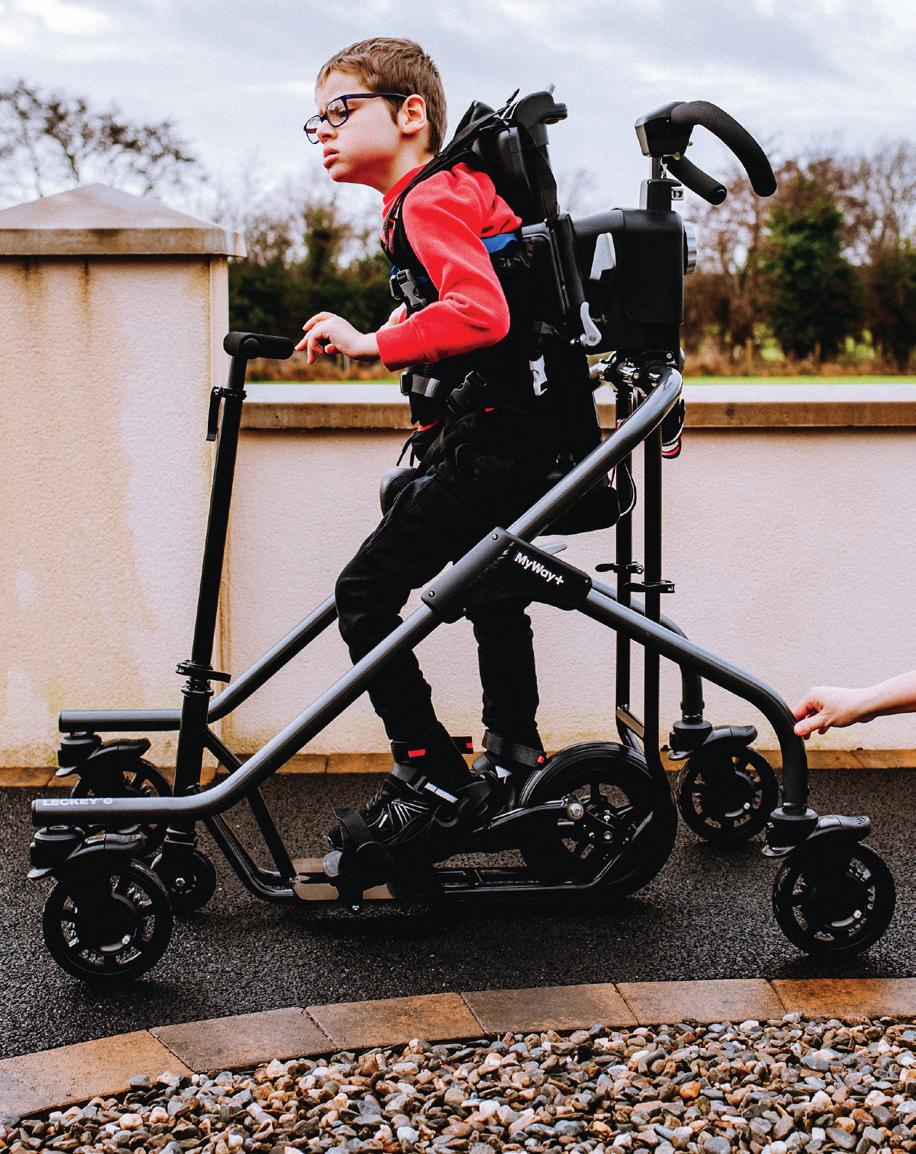
Ormesa designs innovative posture and stabilisation solutions that combine clinical expertise, advanced materials, and uncompromising quality. Every product is purpose-built to exceed international standards and improve everyday life for people with disabilities.
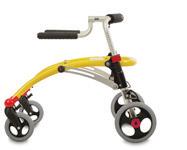
Ormesa Grillo Gait Trainer
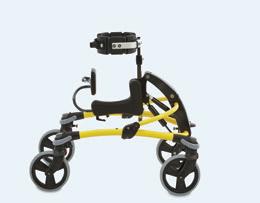
Ormesa Frame Runner NEW
Ormesa Grillo Postural System (GPS)
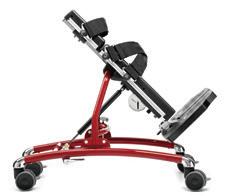
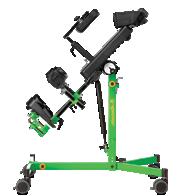
Ormesa Dondolino Standing Frame NEW
Easily Transition Indoor to Stroller
Isabelle
Assistive Technology That Fits You Perfectly
At Astris PME, we believe no two people are the same - and neither are their assistive technology needs. Made for Me is our commitment to delivering Mobility and Positioning Assistive Technology solutions that fit the individual, not just their body, but their life.
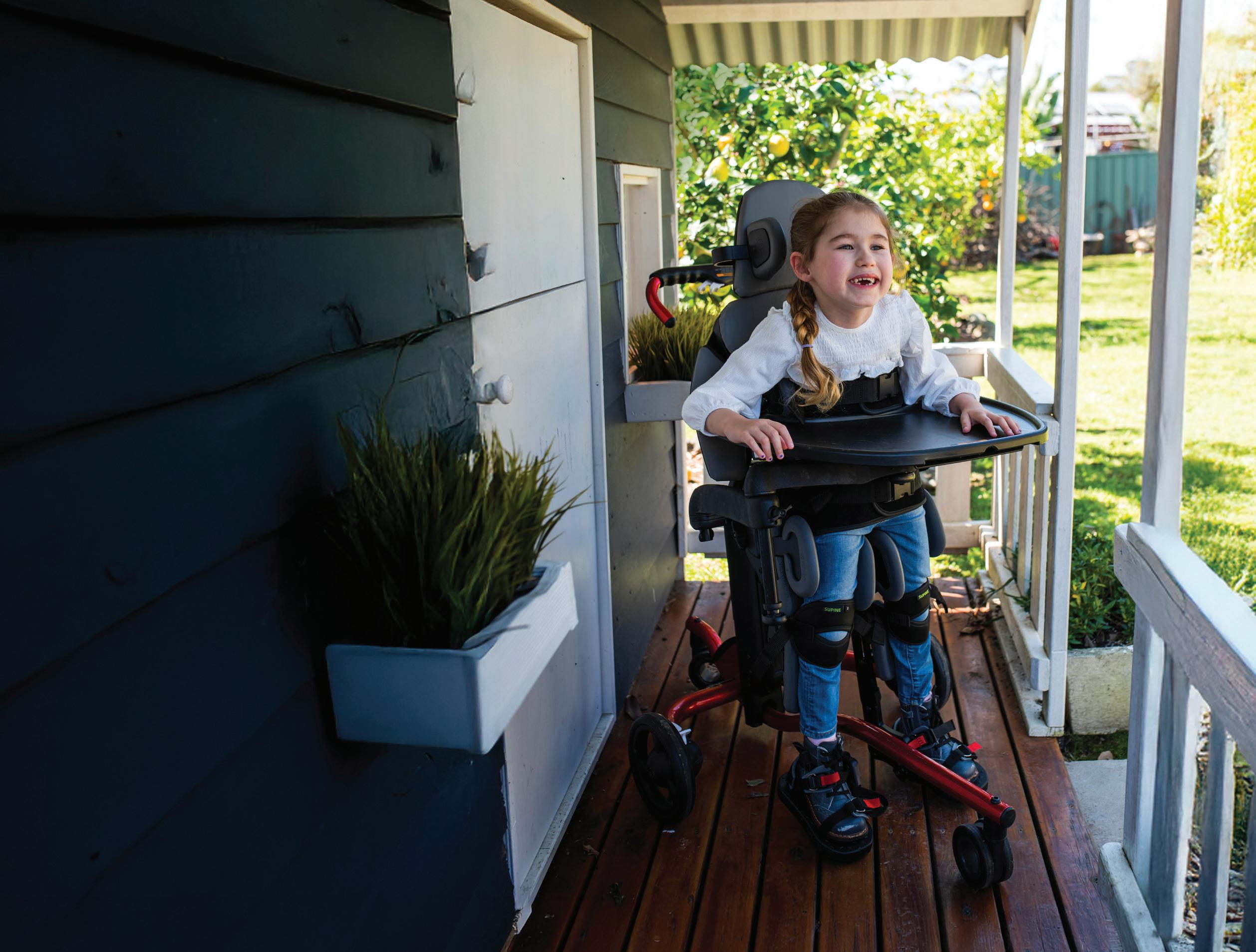
For Isabelle, being the big sister means staying close to the action - spending time with her family and sharing everyday moments with her two younger sisters. With the support of her stander, Isabelle can engage with the world around her at eye level and take part in daily routines, play and family life.
Looking for your perfect fit?
Let’s get to know you and get it right.
Because great assistive technology isn’t just about positioning. It’s about belonging, confidence and growing stronger every day.
GETTING FUNDING FOR
ASSISTANCE ANIMALS
Sara Gingold, Editor-in-Chief of Team DSC’s Resource Hub answers a support coordinator’s question about when the NDIS will fund assistance animals, how to apply (spoiler alert: there’s a lot of paperwork) and what’s included in the funding.
QQI’m supporting a participant who wants to explore funding for an assistance dog to help manage their physical disability (for things like opening cupboards, bringing water bottles, etc). I’m a support coordinator in a regional area, and I’ve never helped anyone access an assistance animal before. What are the eligibility criteria, and how do we apply?
One should never play favourites, but ‒ nevertheless ‒ assistance animals are my favourite NDIS support. From unloading washing machines to helping people navigate public spaces, those pups are nothing short of amazing. And yes, technically, assistance animals don’t have to be dogs. But if anyone knows how to train a cat to follow orders, please email me ‒ I have so many questions.
To obtain NDIS funding for an assistance animal, the NDIA makes people jump through a few bureaucratic
hoops. These animals are too smart to be cheap. But this question comes at a good time, as the NDIA has recently updated its Operational Guidelines for Assistance animals including dog guides. So, let’s take a look at what qualifies as an assistance animal, the evidence the NDIS requires and what’s included in the funding.
WHAT IS AN ASSISTANCE ANIMAL?
When does a dog become a worker? Well, the NDIS has quite strict rules about what qualifies as an assistance animal. According to the transitional Rules to define an NDIS support, an assistance animal can be an NDIS support if the animal has met one of the following criteria:
• Accredited under state or territory law to assist people with disability.
• Accredited by an animal training organisation under the Disability Discrimination Act.
• Accredited by a provider registered with the NDIS Commission to provide assistance animals.
• Has been training to alleviate the impacts of disability and meet public access standards.
In 2016, the NDIA commissioned a report from La Trobe University that sought to differentiate between assistance animals and other animal supports that aren’t funded by the NDIS, including companion animals and emotional-support animals. The definition in the La Trobe report, which has been adopted by the NDIA, says that an assistance animal must:
• Have a high level of obedience and be able to safely visit public spaces that are usually off-limits to animals (aka ‒ must
Tasks can also be things like providing reassurance during times of anxiety, helping people navigate spaces.
not steal food in a butcher, even if it smells like tasty sausage).
• Perform at least 3 tasks or behaviours that a person can’t do because of their disability.
The three tasks need to be things that the dog is specially trained to do and wouldn’t do naturally (like look super cute). The tasks should result in the person needing less other supports. The examples you included in your question ‒ opening cupboards or bringing water bottles ‒would likely qualify as tasks if the person you support can’t do these activities independently because of their disability. Tasks can also be things like providing
reassurance during times of anxiety, helping people navigate spaces, etc.
The NDIS Operational Guidelines also state that the types of assistance animals they fund are:
• Guide dogs or seeing eye dogs
• Physical assistance animals
• Assistance animals for people with Post Traumatic Stress Disorder (PTSD)
The NDIA has previously conducted an analysis of evidence on the effectiveness of assistance animals for people with autism. It concluded that ‘it is likely that some individuals will respond well to animal-assisted supports’ but ‘the current evidence does not suggest that assistance
dogs are more effective than pets.’ However, there’s nothing specifically in the Operational Guidelines on assistance animals for people with autism, so it’s not clear if it’s a hard no.
WHAT ARE THE FUNDING CRITERIA FOR ASSISTANCE ANIMALS?
As with any other NDIS support, assistance animals must meet the reasonable and necessary funding criteria. Specifically, this means the support must be related to the person’s disability; help the person achieve their goals; increase their social and economic participation; represent value for money; be likely to be effective and beneficial; take into account what is it reasonable to expect informal supports to provide; and be an NDIS support (as per the transitional Rules) for that participant.
However, the NDIA looks at some additional considerations when it comes to assistance animals. One of them is the welfare of the animal. During the application process, the participant or supporting provider will need to nominate a primary handler responsible for the animal’s welfare. The NDIA will want evidence that the animal will be properly cared for, in a safe environment and that the task the animal will perform won’t put it at risk. The Operational Guidelines say that the NDIA generally won’t fund assistance animals if the participant has:
• behaviours of concern, including violent and aggressive behaviours
• been admitted to hospital for suicide attempts or self-harm in the last 12 months
• has misused drugs or alcohol in the last 12 months.
The NDIS also won’t fund an assistance animal if it poses a risk to the participant or others, or if the animal will act as a mechanical restraint.
HOW DO PEOPLE APPLY FOR ASSISTANCE ANIMALS?
Now, for the fun part. If filling out forms is your idea of fun.
To fund assistance animals, the NDIA will want to see:
→ Evidence that the animal meets their definition of an assistance animal.
→ An assessment by an allied health professional recommending an assistance animal. The NDIA’s website has templates for these assessments. Using the templates isn’t compulsory, but they do contain all the information the NDIA wants addressed.
→ A suitability assessment ‒ this is an assessment conducted by the assistance animal provider to evaluate whether the person is suitable for an assistance animal. If the participant you’re supporting doesn’t have an assistance animal provider in mind, this is something you’d want to look into before applying. The assessment will look at how the animal will help the person, what training is required, other supports the person has explored, if the person is able to look after the animal and where the animal will live. For dog guides, the suitability assessment must be conducted by a dog guide mobility instructor.
→ Evidence that the animal has passed the public access test (and ignored the sausages!).
→ Any lived experience evidence, if the person has had an assistance animal before.
→ A quote ‒ which should include the cost of assessments, matching the person to a suitable animal, training milestones, equipment, training for the person, and ongoing animal maintenance costs.
This is what I meant when I said the NDIA makes people jump through bureaucratic hoops. The dogs might also need to jump through literal hoops.
WHAT’S INCLUDED WHEN THE NDIS FUNDS ASSISTANCE ANIMALS?
Now for the fun part, if spending money is your idea of fun.
If funding for an assistance animal is approved, the NDIS will fund:
• An assessment to match the participant with the right assistance animal (apparently it’s a bit more complicated than a dog-human version of Tinder).
• The cost of the pup.
• Milestone payments as the dog is being trained.
• Ongoing maintenance costs for the working life of the dog, including: food, grooming (cause the dog has to look its best), medication, flea and worm treatments, vaccinations, vet services and yearly reviews with the assistance animal providers.
Once the dog is qualified, it usually takes an additional 3-4 weeks for the assistance animal provider to train the participant and dog to work well together. In your question, you said that you work in a regional area. If there are no assistance animal providers in the participant’s area, the NDIA might pay for accommodation near the training centre. However, the cost of this will be considered when deciding whether the support is value for money.
Under the NDIS support lists, the NDIS can’t fund pet insurance, taxidermy, pet burials, cremations, or funerals. The taxidermy thing is really quite weird (what’s the story behind that?).
AFTER THE WORKING LIFE OF THE ANIMAL
The NDIS will only fund ongoing maintenance for the assistance animal’s working life. This means that when the animal is no longer able to perform its tasks, whether due to age or illness, the NDIS will no longer pay for food, vet bills, etc. The person can apply for another assistance animal at this time.
It’s probably worth having a conversation with the person you support to make sure they are prepared and can start thinking about what they want to do when this happens. If they have the resources, they might want to keep the animal as a pet, or they might want to look at re-homing it.
Conclusion
Animals are more intuitive than we give them credit for. The other day, I had a terrible migraine and curled up on the couch for a nap. My cat understood this was the perfect time to curl on top of my head for a nap of her own. It’s unclear if she was trying to be helpful or just wanted to punish me for an earlier transgression. But either way, it was surprisingly effective.
Anyway, that story wasn’t at all relevant. But here are some links that might actually help you:
• NDIS Operational GuidelinesAssistance animals including dog guides ndis.gov.au/our-guidelines
• Transitional Rules defining an NDIS Support - legislation.gov.au/ F2024L01257/latest/text
To learn more about animal assisted therapy, check out this article from Team DSC: teamdsc.com.au/resources/ animal-assisted-therapy-v-animaltherapy.
Sara is the Editor-in-Chief of DSC’s Resource Hub. DSC is Australia’s leading training, conference and consulting group specialising in the NDIS. Learn more at teamdsc.com.au
“The best thing about working with Leap in! is being able to talk to people on the phone, have ours questions answered and not feel rushed.
For Alberto it’s using the Leap in! app. He loves technology and the other night he came running in to tell us that his remittance had come through so quickly.
It’s exactly what we wanted. We want him to be involved and slowly become more independent and working with Leap in! is making that possible.”
Julie-Anne, Leap in! Member’s Mum.
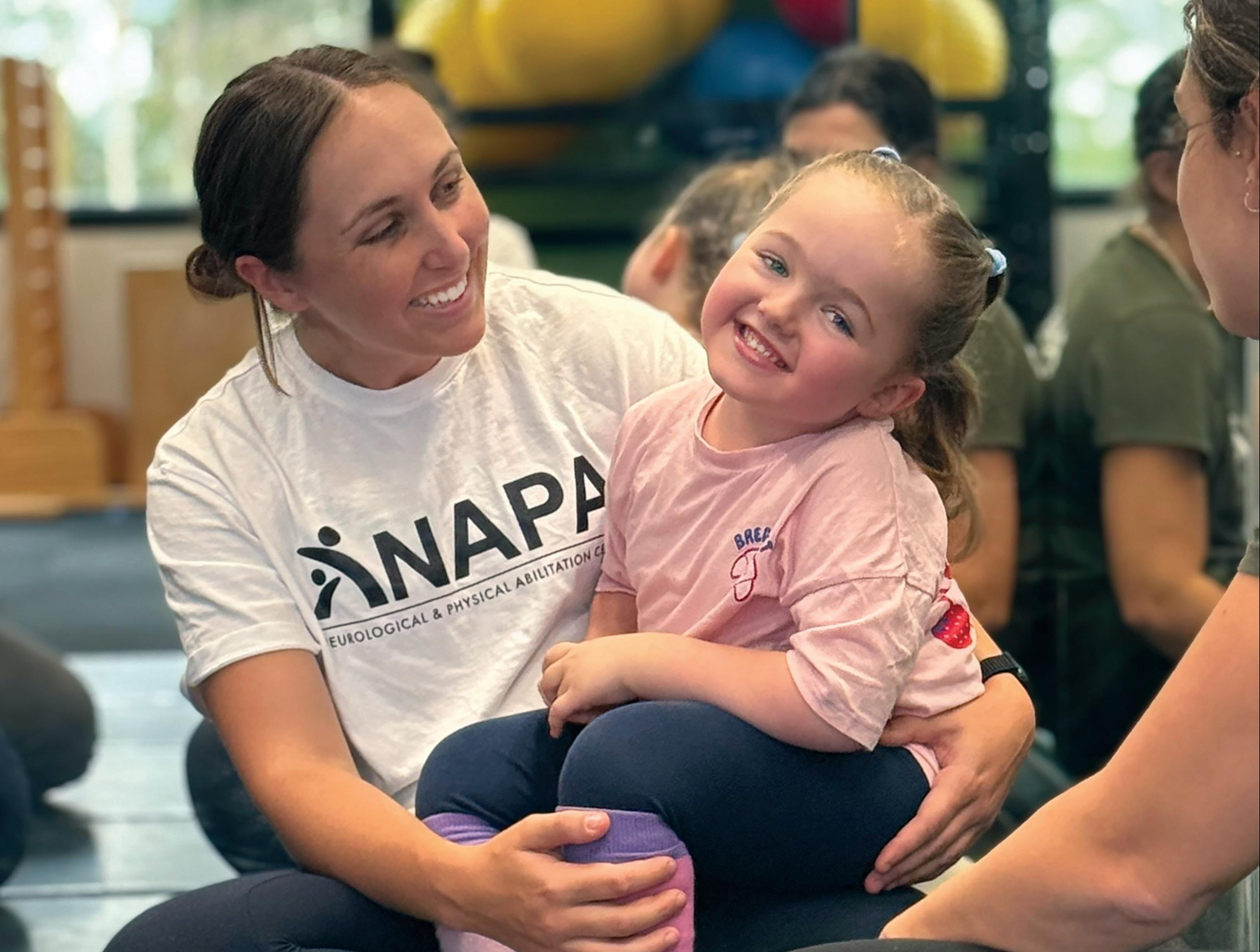
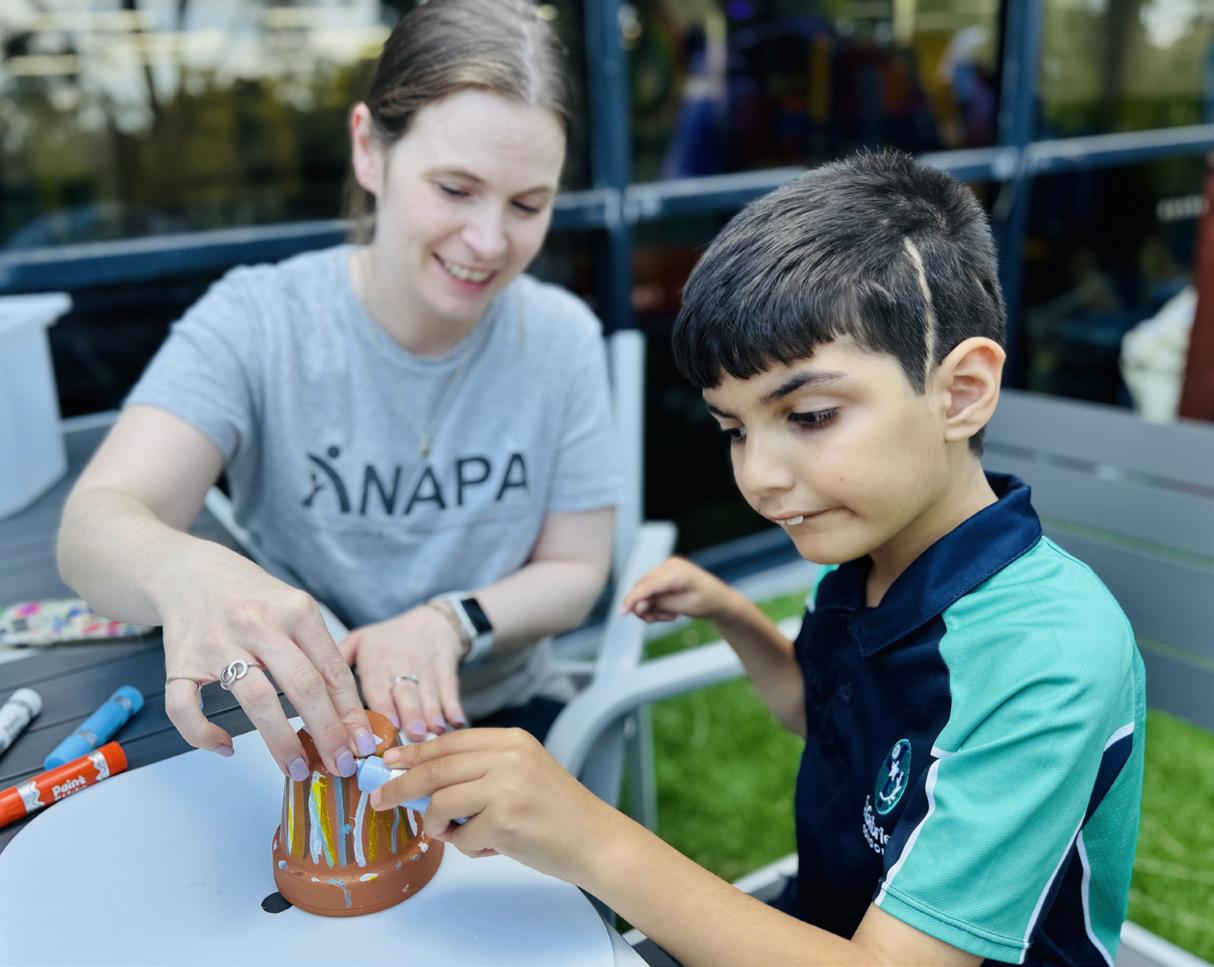
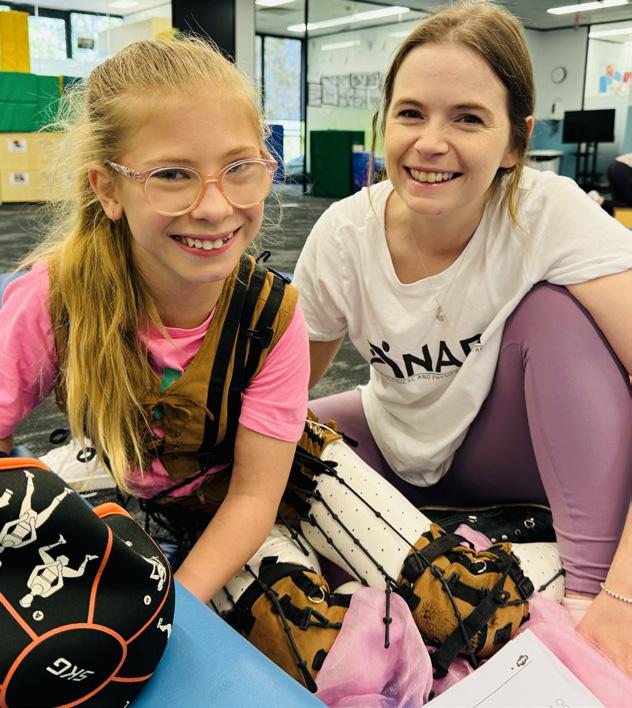
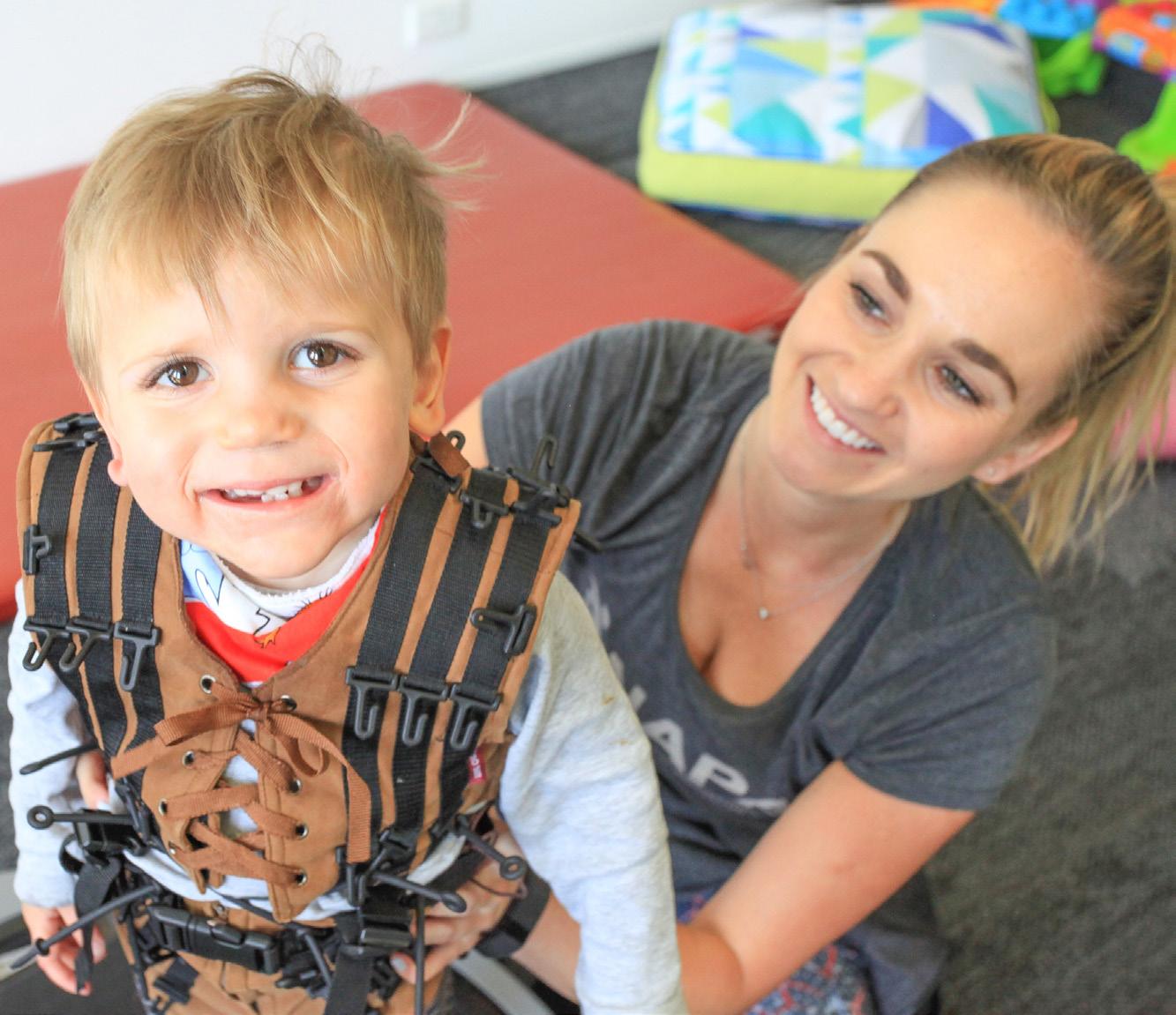
Q&A with Ali Gebhardt, Occupational Therapist and Director of Clinical Operations for NAPA Australia.
Can you tell us about your role at Napa?
I’ve been a paediatric occupational therapist for 17 years, and intensive therapy at NAPA has been the most rewarding part of my career. Over my time at NAPA, I’ve helped grow all three Australian clinics and now focus on maintaining clinical excellence across our programs, training the team in the Intensive Model of Therapy (IMOT), and mentoring therapist development. I’m very privileged to work with a passionate, skilled team committed to the best outcomes for the children and families we support.
You were one of the first therapists helping to set up NAPA here in Australia. Can you tell us what those early days were like?
The early days at NAPA were a buzz of energy – lots of excitement and
YEARS OF NAPA
determination! We were introducing an intensive therapy model quite different from what many Australian clinics were used to, so there was initial hesitation from local clinicians. We felt a strong responsibility to deliver results and represent the model well.
In those first five to six months, we ran pop-up programs that showed families were seeking a more effective model of therapy for their children. It created real momentum, and we established a permanent clinic in Lane Cove, Sydney, with a small team ‒ three therapists and one admin.
Families were incredibly enthusiastic. Many had previously travelled overseas to access this level of therapy, so having it available in Australia was a big deal.
NAPA is known for its intensive therapy programshow do they differ from traditional therapy, and why are they so effective?
What we do isn’t exactly different ‒NAPA’s therapy is delivered by qualified physiotherapists, speech pathologists and occupational therapists. But we offer different program strategies and the ability to intensely focus on a child’s goals for maximum impact.
Typically delivered in three-week blocks, this approach harnesses neuroplasticity ‒ the brain’s ability to adapt and change. That’s where we see meaningful gains emerge, often at a pace that’s difficult to achieve with traditional weekly or fortnightly sessions. The intensive model
of therapy is supported by a strong and growing body of evidence, showing that intensive, high-frequency therapy can drive meaningful functional gains by maximising neuroplasticity and skill acquisition over a shorter period of time.
NAPA also provides traditional therapy, which plays an important role in maintaining skills and supporting steady progress. But when the goal is significant change in a shorter timeframe, intensity becomes key. Repetition, consistency and daily practice allow children to build skills more effectively, while keeping sessions engaging, fun and age-appropriate.
A core strength of our approach is that no two programs are the same. Each intensive is carefully tailored to the individual child, their goals, age, diagnosis and current abilities. Programs are dynamic and responsive; we continually assess and adjust to ensure the best outcomes.
What does a typical day look like for a child on an intensive program, and how do you balance challenge, repetition, and fun?
I’m not sure there is a typical day! No two programs look the same, because each child’s intensive is tailored to their goals, abilities and needs. Generally, a child attends therapy for a recommended number of hours each day, working across a combination of disciplines ‒physiotherapy, occupational therapy, speech pathology, feeding therapy ‒depending on their goals. They see the same therapy team throughout the threeweek block, which creates consistency, routine and strong therapeutic outcomes. That continuity is key. It allows therapists to build on progress day by day, adjust the program in real time, and maintain clear focus on goals.
Balancing challenge, repetition and fun is where the real skill lies. Repetition is essential for learning, but it needs to be embedded in play. Instead of “doing five
repetitions,” children might be rescuing animals, completing an obstacle course, or playing a game that naturally incorporates those movements or communication goals. Ultimately, fun isn’t an add-on, it’s central to the process. When children are engaged, they learn more, retain more, and generalise those skills more effectively into everyday life.
Can you share a breakthrough moment with a child (big or small) that still stays with you?
After more than a decade at NAPA, I am so honoured to say I have seen countless breakthrough moments, which makes it almost impossible to choose just one! The moments that naturally stand out are the “firsts”: a child’s first steps, first time sitting independently, first crawl, or even the first time they can use their hands to play with a toy. These are milestones families hold on to, and they carry enormous meaning.
How has the therapy landscape changed over the past decade, and how has NAPA adapted?
Practice today looks very different to what it did ten years ago in Australia, where therapy was largely delivered in traditional weekly formats and intensive models were relatively uncommon.
At NAPA we challenged that by introducing intensive therapy as a structured, outcomes-focused approach.
Change took time, but as families and clinicians saw the gains children could achieve in a shorter timeframe, intensive therapy became more widely recognised. Multiple clinics now offer it, though NAPA remains the leader in the field.
New technologies have also transformed what’s possible. Tools like robotics, electrical stimulation, body-weight support systems and dynamic suit therapies have expanded how we support movement, strength and skill development.
Our approach is to continuously evolve ‒exploring emerging therapies, integrating new approaches where appropriate, and refining programs based on both research and real-world results.
When you look back over the last 10 years, what makes you feel proudest about your work and the team you’ve helped build? What stands out most is the impact. The progress children make, the skills they gain, and the confidence that builds over time. Alongside that is the sense of hope and community that has developed.
Being part of building something that creates real, meaningful change in children’s lives is incredibly rewarding.
I feel that I (and everyone at NAPA) is contributing to a global vision that has redefined what is possible in paediatric therapy.
Looking ahead, what are your hopes for the next 10 years of NAPA in Australia?
Our focus is to stay at the forefront of innovation; integrating emerging technologies, refining therapy models, and contributing to evidence-informed practice. We want to keep pushing boundaries while staying grounded in what matters most: meaningful, functional outcomes for the children we support.
Learn more about NAPA at napacentre.com.au
Ask a PLAN MANAGER! PLAN MANAGER!
Home automation and the NDIS
Home automation is one way technology can help make everyday life at home easier, safer and more manageable for children, teens and young adults with disability. Q
Experienced Leap in! plan manager Tabitha answers some of the most common questions families ask about home automation and the NDIS.
What is home automation?
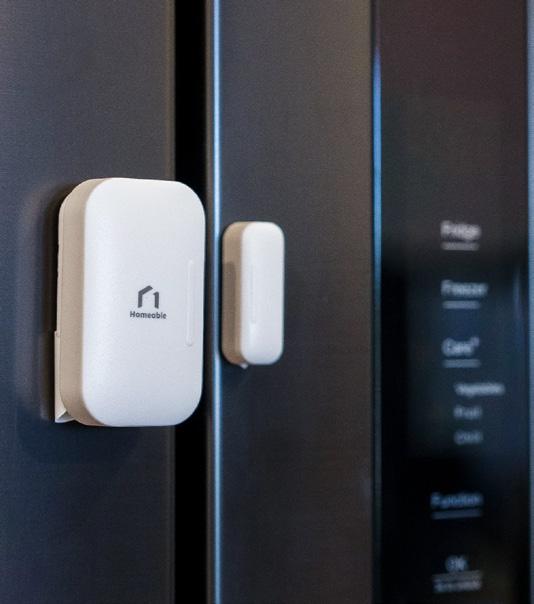
Home automation uses technology to control different parts of the home, such as lighting, doors, blinds, windows, air conditioning or appliances. Under the NDIS, home automation is generally considered a type of home modification. It may include supports that help your child or young person use different areas of the home more independently, such as voice control, sensors, switches, or mobile apps.
GOOD TO KNOW
If approved, home automation is funded through the Capital supports part of your child's NDIS Plan. This means it must be written into their plan before you can access the supports.
When may the NDIS fund home automation?
common type of evidence is a report from an occupational therapist. Your child’s OT will assess how their disability affects daily life at home and what supports may help them be more independent and safe.
Q Q Q
The NDIS can fund home automation if the support is: Directly related to your child’s disability. It must help with daily tasks that are difficult because of your child’s disability. Reasonable and necessary. The support must help your child work towards their goals, improve independence or safety and represent value for money. The most suitable option. The NDIS will look at whether simpler or lower cost solutions could meet the same need first.
Supported by evidence. The most
What evidence do I need?
The NDIS will look at the information you provide to decide if home automation is reasonable and necessary for your child or young person.
The report from their OT should explain:
• Why they need home automation because of their disability
• How the support will help them in daily life
• Why other options aren’t suitable
• How it supports their NDIS goals
• Why it’s good value compared to other ways of meeting the same need.
Clear, detailed evidence can make a big difference. It can also help to include quotes, product comparisons and supporting documents that show the requested support is the best value option.
Do we need to try other options first?
Yes. The NDIS generally expects families to consider low or mid-cost assistive technology first. Depending on your child’s NDIS Plan, these supports may also need approval.
This could include simpler options such as modified switches, remote controls or basic smart devices that may achieve a similar result.
Your child’s OT can help explore these options. If lower cost supports don’t meet their needs, their OT can explain why more advanced home automation is required.
QWhich parts of the home can be automated?
In most cases, the NDIS will only fund home automation in the parts of the home your child or young person uses regularly.
This may include the:
• Bathroom
• Kitchen
• Living areas
• Entry or exit points they use often.
The NDIS will not usually fund home automation for rooms they don’t use regularly or that are mainly used by other people, such as bedrooms of other adults in the home.
You can still choose to pay for additional automation yourself if it is not considered reasonable and necessary under the NDIS.
QWhat won’t the NDIS fund?
The NDIS will not fund home automation if:
• It’s not directly related to your child’s disability
• It doesn’t reduce barriers caused by their disability
• It doesn’t represent value for money
• Other supports already meet their needs
• It’s something everyone needs, whether
LEAP IN! CAN HELP
They can help you explore the available options, understand what evidence may be needed and work out whether home automation may be appropriate for your child’s goals and support needs.
they have a disability or not
• It’s mainly for convenience or comfort, rather than disability support. For example, general home security or lifestyle upgrades are not usually considered NDIS supports.
QHow do we get started?
If you think home automation may help your child or young person, the first step is usually to speak with their OT, NDIS Planner or Local Area Coordinator.
LEAP IN! IS A TWO-TIME WINNER OF THE MOST OUTSTANDING PLAN MANAGEMENT AWARD AND SUPPORTS FAMILIES ACROSS AUSTRALIA TO UNDERSTAND AND USE THEIR CHILD’S NDIS PLANS WITH CONFIDENCE. CALL 1300 05 78 78 OR EMAIL CREW@LEAPIN.COM.AU TO LEARN MORE.
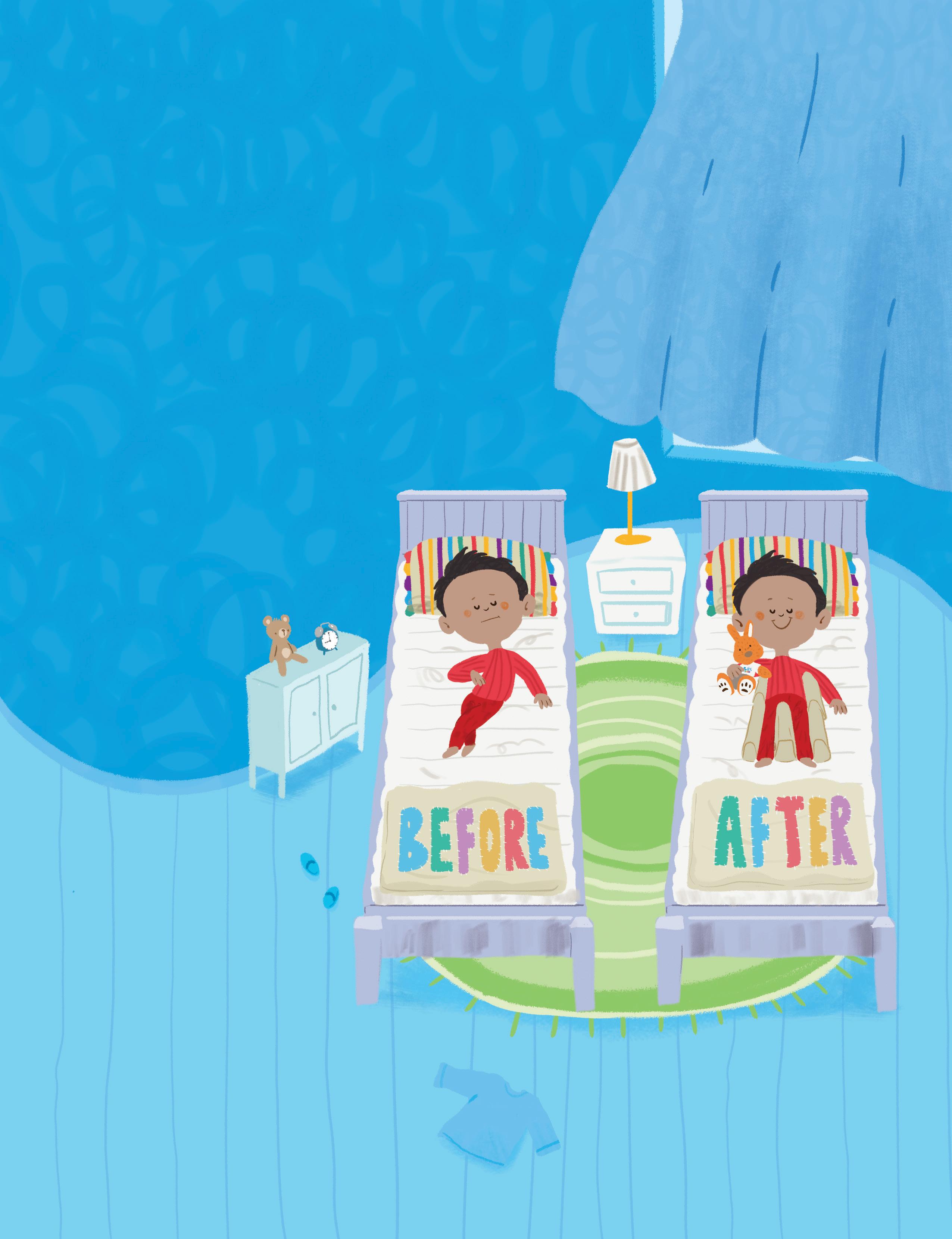
Sleep & disability
FINDING THE RIGHT ROUTINE
FINDING THE RIGHT ROUTINE
For many parents of children with disability, bedtime can feel like a nightly struggle. Sensory sensitivities, anxiety, medical conditions, physical discomfort and irregular sleep cycles all play their part in making sleep harder to come by. Research suggests that children with neurodevelopmental conditions, such as autism and ADHD, are two to three times more likely to experience sleep disturbances than their neurotypical peers. While there’s no single fix, one thing is clear: structured routines and tailored sleep environments can make a difference.
Take bedtime consistency, for example. Sleep studies consistently show that predictable sleep patterns help regulate the body’s internal clock, making it easier to fall asleep and stay asleep. Reviews in sleep research have found that children with developmental disabilities can benefit from consistent, structured bedtime routines as part of broader behavioural sleep strategies. This doesn’t mean an overly strict schedule, it’s not all going to fall apart if you don’t get to bed right on 8pm everyday, just aim for a familiar sequence of calming activities that signal to the brain that sleep is coming. Something as simple as dimming the lights, reading a short book, or listening to soft music can create a predictable pattern that eases the transition to sleep.
While there’s no one-size-fitsall approach, small, thoughtful changes can make bedtime easier.
Of course, not every child responds the same way to bedtime routines. Sensory sensitivities can make what works for one child completely ineffective for another.
Some children need total darkness and silence to fall asleep, while others find comfort in soft lighting or white noise. Occupational therapists often recommend weighted blankets for children who seek deep pressure, as they can help create a sense of security and encourage relaxation. Anxiety around bedtime is another issue many parents encounter. Some children struggle with transitions, making the shift from daytime activity to sleep particularly difficult. Visual schedules, social stories, or verbal countdowns can help ease the shift by providing a sense of control and predictability. For some children, incorporating relaxation techniques – like deep breathing or progressive muscle relaxation – before bed can calm their minds and prepare their bodies for sleep. There is growing evidence that mindfulness and relaxation techniques can help improve sleep, particularly for children experiencing anxiety. Sleep associations also play a major
Try these bedtime routine ideas
A structured bedtime routine helps children feel secure and ready for sleep. Try incorporating a few of these elements to find what works best:
Quiet time before bed: Avoid screens and high-energy activities for at least an hour before bedtime. Swap out TV for a quiet, lowstimulation activity.
A warm drink:
A small cup of caffeine-free herbal tea or warm milk can be soothing for some children.
Soft music or white noise: Some children find gentle sounds calming, while others need complete silence. Experiment to see what works.
Dim the lights: Lowering light levels signals to the brain that it’s time for sleep. Try using a soft nightlight if total darkness is distressing.
A short story or social narrative: Reading a predictable book or using a visual bedtime schedule can help children understand what to expect.
role in whether a child sleeps through the night. Many children rely on specific conditions to fall asleep, such as a parent sitting with them, which means they may wake up needing the same reassurance. In some cases, clinicians have used consistent sleep cues, like a lullaby played each night, to help children gradually transition to independent sleep. Over time, the cue itself can become the sleep trigger, helping the child settle on their own. Establishing
sensory experience that helps transition from activity to rest.
Deep pressure or gentle massage: Some children benefit from a weighted blanket or a light massage to help relax their muscles.
Consistent sleep cues: A familiar bedtime phrase, a favourite stuffed animal, or a certain song can act as a reassuring signal that sleep is near.
positive, independent sleep associations ‒like a favourite stuffed animal, a calming sound machine, or a predictable bedtime phrase ‒ can encourage self-soothing when nighttime awakenings occur.
Then there’s the issue of hidden sleep disruptors. Many parents don’t realise that diet, medication timing, and even physical activity can influence sleep. Stimulant medications for ADHD, for instance, can cause restlessness if taken too late in
A BETTER WAY TO REST AND RESET
A weighted blanket designed entirely with a child’s comfort in mind. Experience calming weight without the noise or shifting beads. Nothing but natural, breathable fibre: choose certified organic cotton for sensitive skin or cooling bamboo for the little hot sleepers.
wovenwoven.com.au
the day. Some children with autism have differences in how their bodies produce or regulate melatonin, making it harder for them to regulate their sleep-wake cycle. A paediatrician may recommend melatonin supplements, which studies have shown can help some children with autism fall asleep faster. However, timing and dosage are key – what works for one child may not work for another.
Beyond routine and environment, some children continue to struggle with sleep despite every effort. In these cases, a sleep study might be worth considering. Sleep studies – also known as polysomnography – can provide valuable insights into what’s happening during the night. They measure brain activity, breathing patterns, oxygen levels, and movement to detect issues like sleep apnoea, restless leg syndrome, or abnormal sleep cycles. Some children with disability may have undiagnosed sleep apnoea, which can significantly impact their rest. A sleep study can help pinpoint underlying medical reasons for persistent sleep struggles, leading to targeted treatment options.
While there’s no one-size-fits-all approach, small, thoughtful changes can make bedtime easier. Whether it’s adjusting the sleep environment, finetuning a routine, or seeking medical guidance, the goal is to create a space where sleep feels safe, predictable, and restful – for both the child and their caregivers. Sleep challenges may not disappear overnight, but with patience and persistence, better sleep is within reach.
THE ZZZZZ-LIST
Bed Wetting Pads
Keep your child’s bed dry and comfortable with Bed Mates high-quality bed wetting mats from The Midnight Gang. Designed to provide superior protection against nighttime accidents, these reusable mats are waterproof, absorbent and easy to clean. Available in a variety of sizes and stylish designs, they fit seamlessly into any bedroom décor.
RRP: $59.95 // themidnightgang.com
Monster Repelling Pack
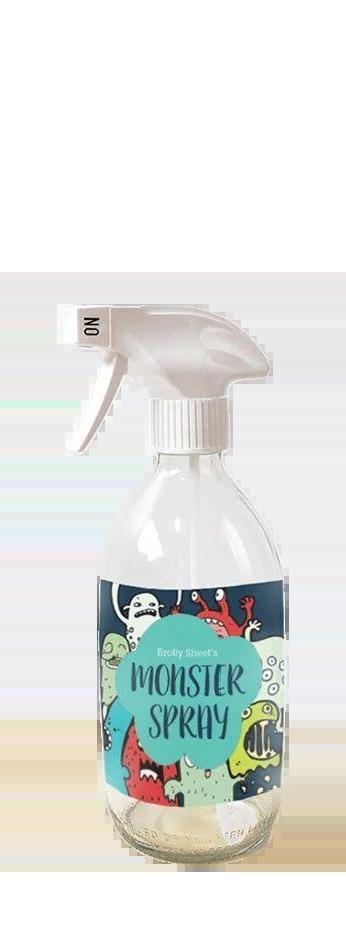
Brolly Sheets has created a simple, imaginative way to tackle bedtime fears. Their Monster Spray, Monster Swatter and Fairy Dust give kids a sense of control, turning “there’s something in my room” into something they can handle.
A digital download with recipes and labels, designed to make bedtime feel a bit less daunting.
RRP: $1.99 // brollysheets.com.au Our product picks to help everyone get a restful night Great for hot sleepers!
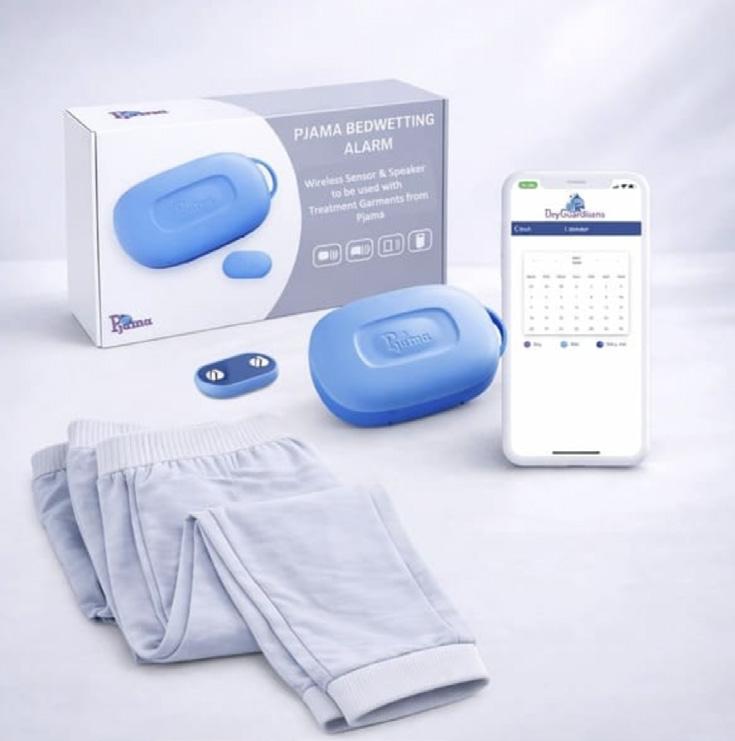
Pjama Bedwetting Treatment Kit - Alarm & Pants
Pjama Treatment Pants combine protection and treatment in one.
These washable, reusable pants connect to a sensor and alarm system to support bedwetting training overnight. Waterproof, breathable and designed for comfort, they’re made for everyday use. Each set includes two pairs of pants, a sensor, alarm speaker and app access.
RRP $565 // pjama.com.au
Kids Bamboo Weighted Blanket
The Mighty Hug weighted blanket from Woven Woven is designed to help overstimulated kids slow the spin cycle at bedtime. Made from breathable bamboo fibre with a bead-free weighted design, it delivers gentle, even pressure to support calm and better sleep without trapping heat. The 3kg blanket is designed for growing children around 30-35kg, with cooling, hypoallergenic fabric that’s particularly good for hot sleepers and kids prone to heat rash or sensitivities. And it’s machine washable too! RRP: $299 // wovenwoven.com.au
Glow Dreaming Sleep Easy
This little machine packs a lot into one bedside companion, combining a humidifier, sound machine and night light into one compact sleep tool. Pink noise, red light and cool mist help create a calmer sleep environment, with optional aromatherapy for added calm. RRP $139.95 // thesensoryspecialist.com.au
Cooling Sheet
Say goodbye to sleepless nights and hello to restful slumber with these cooling sheets. Designed to provide ultimate comfort, they’re perfect for those who experience night sweats or just run hot at night. The advanced Tencel fabric wicks away moisture, while Nylon ensures a breathable, lightweight feel. $149.45 // independentlyyou.com.au
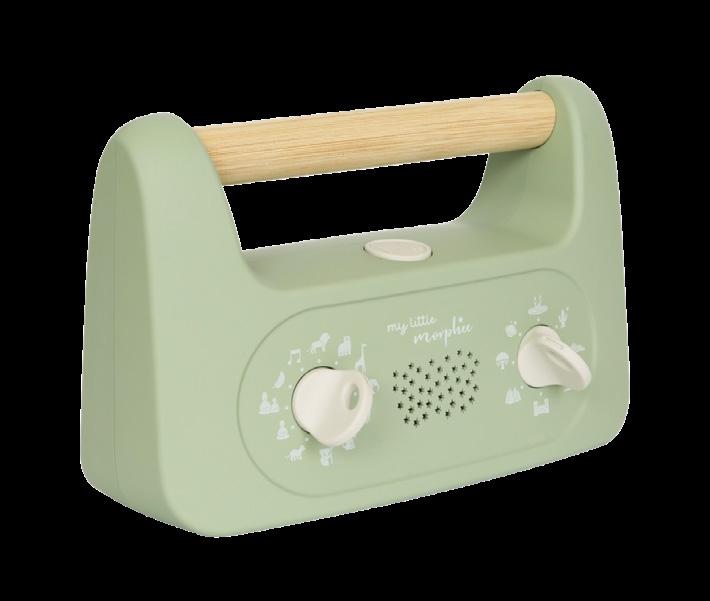
My Little Morphee
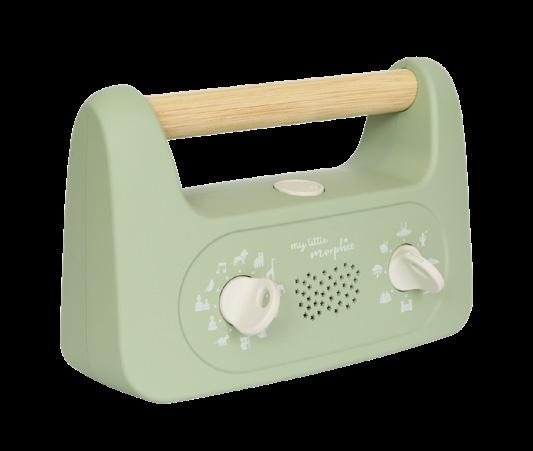
My Little Morphee contains 192 meditative journeys to prepare children before bedtime or help calm them down during the day. These sessions include visualisation, breathing and relaxation exercises, all created by sleep experts. We love that it’s totally analogue and works without a screen, internet or Bluetooth. RRP: $149 // thetherapystore.com.au
Lil Dreamers Soft Touch LED light
These lamps are special little pals that gently light up the room.
Flick the switch on the base to turn them on, then tap your way through different levels of brightness.
They are made from soft, high quality silicone and are rechargable with an included USB cable so you’ll never run out of light!
RRP: $27.95 // thetherapystore.com.au
Snuggly bag – adaptive sleeping bag
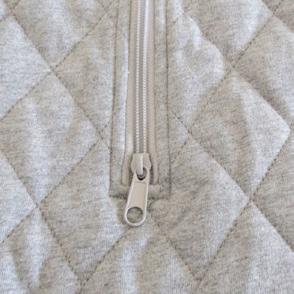
Sleeping bags are perfect to help keep your child secure and sleeping soundly at night as they can’t kick off all the covers! The range includes summer and winter bags, with different weights for the perfect sleep. This 2.5tog version has a warm quilted cotton jersey outer and lining for the colder months. From $189.95 // snugglybags.com.au
Noomi Huggy Roll
Huggy Rolls are soft, squishy and made for comfort. Perfect for lying on, snuggling up to, or getting a big sensory squeeze, they work just as well on beds and couches as they do anywhere else. The gentle pressure can also help create a more settled feeling at bedtime, supporting calmer wind-downs and better sleep. RRP: $99 // sensoryconnect.com.au
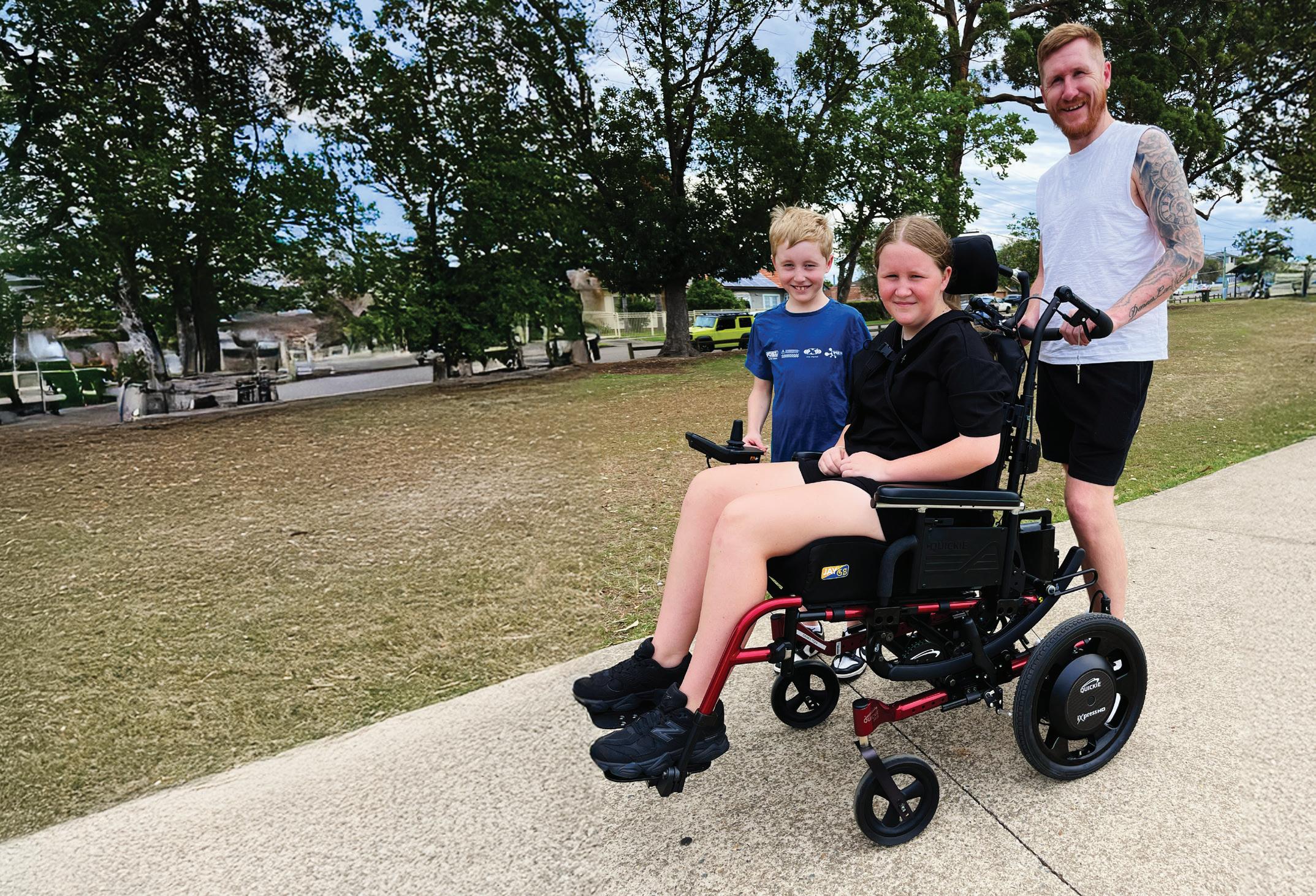
Whether you are going shopping, going to the movies or just hanging around with your family & friends, the iXpress will truly extend life’s little pleasures.
Amplify your effort, accelerate your progress, and achieve your goals sooner with CPA Intensive Therapies.
• Intensive Dysphagia Therapy
• HABIT-ILE
• Mighty Kids
• Bodyweight Supported Treadmill Training
• Powered Mobility Group
• Connect & Communicate Day Out
Like to get started? It’s easy! Request a call from our friendly team. 1300 888 378
LEARN MORE
Winter, Waiting, and the Shape of Independence
There’s a moment each year, usually overnight, when the season shifts. The air changes, the mornings feel different, and there’s a stillness that wasn’t there before. Winter arrives quietly, almost without asking, inviting us to slow down, to come inside, to gather close. And in that slowing, thoughts find their way in.
For me, winter carries a deeper meaning. It brings me back to Stanthorpe, Qld, a place that became a kind of home away from home. A place I took Ruby during her sixteenth year here on earth, a year we quietly held as though it might be her last. There was something about the crisp air, the stillness, the sense of stepping away from everything we knew, that created space to simply be together. To breathe.
To hold each moment with a different kind of awareness.
Now, in her seventeenth year, we will return.
And with that comes a reflection not just on time, but on everything that sits beneath it.
We speak so often about independence, growing into adulthood, planning for the future, reaching milestones that signal freedom. For many families, it’s something long anticipated and deeply celebrated. A breath of relief after years of holding everything together. But for some of us, the story looks different.
I find myself asking questions that don’t have easy answers. Where will my Ruby be after school? What does independence even look like for her? She won’t leave my side or my sight, not in the way the world defines independence, and maybe she never will.
There’s a kind of hypervigilance that becomes part of your being when you’re raising a child with complex needs. It’s not something you switch off at the end
of the day, and it doesn’t soften with time. It lives in your body, in your breath, in the constant awareness that you are the one holding everything together. And I wonder if that ever truly leaves. Will there ever be a moment where I’m not “on”? Where I can fully exhale?
And I know I’m not alone in this.
I have walked beside families who live in a place of profound fatigue, where exhaustion seeps into every part of their being. Families who carry fear, not just for their child, but at times for their own safety, for their other children, for what each day might bring. Families navigating behaviours that feel so far removed from the tiny, innocent child they once held, grieving that version while fiercely loving the person in front of them.
There is a sorrow that sits quietly beneath it all. A grief for what was imagined, for what might never be, and for the vulnerability their child now lives within. And yet, at the very same time, these children, these young people, are simply longing for what we all long for: a safe and nurturing space to be. To be seen. To be held. To be known as someone’s loved one. To feel that they belong somewhere, that they have a place to call home.
Even when home itself can feel like it is being pulled apart.
These are the parents I know so well. The ones whose hearts hold both immense love and an unspoken ache. The ones who sometimes long, just for a moment, to escape the weight of it all, yet cannot fathom the thought of handing their child over to someone else to care for, to shelter, to guide into adulthood. The tension
between needing relief and never wanting to let go is something few truly understand. How does anyone move through this and live life that little bit lighter?
I don’t know that there is a clear answer. A little while ago, I watched a bee die. It moved in small, uncertain circles, back and forth as if searching for something, a place of safety, a warm spot, somewhere to land. Then it turned onto its back, and, within seconds, it was gone. A body.
A shell. A life that had been here, now not. There was something sacred in that moment. Not sad in the way you might expect, but deeply still. It brought an awareness of how fleeting everything is, how quickly life can shift from movement to memory, and how sometimes there is searching without ever really knowing what we’re searching for.
Winter has a way of drawing these reflections out of us. It brings us inward and asks questions we often keep at bay during the busyness of other seasons. It’s the time of warm meals, blankets, and quiet nights. Of holding our loved ones a little closer. Of creating safety within our homes. But alongside that comfort, other thoughts begin to surface.
What happens if I’m not here? Who will love her the way I do? Who will understand her without words, advocate for her, protect her, and hold her through everything life brings?
These aren’t easy thoughts to admit, and yet they exist, quietly, persistently, in the lives of so many parents and caregivers. And still, here we are.
In the stillness of winter, in the uncertainty, in the not knowing, still showing up, still loving, still holding. Returning to Stanthorpe this year feels different. Not because the questions have been answered, but because we are still here to ask them. Still here to feel the crisp air, to wrap ourselves in warmth, to find comfort in simply being together. That
place, once held with quiet fear, now holds something else too, gratitude, presence, and a deeper understanding of just how precious time is.
Maybe independence doesn’t look like letting go. Maybe, for some of us, it looks like something else entirely. It might be about building a world around our children where they are known, safe, and deeply understood, whether we are standing beside them or not. It might be about connection, trust, and the people we surround them with. It might be about redefining what a meaningful, supported life looks like.
Winter reminds us that seasons change, even when things feel still. That beneath the surface, life is quietly preparing for what comes next. That not everything needs to be resolved all at once.
Some things are simply held. And perhaps that is where we find ourselves, not with certainty, not with all the answers, but with love. Endless, unwavering love. Holding our children close in this season, and whatever comes after.
About Bec:
(Bec) Glover is a mum, carer, and lifelong advocate for children with disabilities and their families. Her journey began through raising her daughter with profound and complex needs, giving her an intimate understanding of the daily realities, emotional load, and systemic barriers families face.
Drawing on this lived experience, Bec founded Ruby & Ollie’s All Abilities Childcare and later The Inclusion Network to create practical, compassionate solutions where mainstream systems fall short. Bec now works alongside families, educators, and organisations to advocate for better systems, stronger support, and a future where every child, regardless of their needs, has the opportunity to be seen, supported, and included. Learn more at theinclusionnetwork.com.au
Rebecca
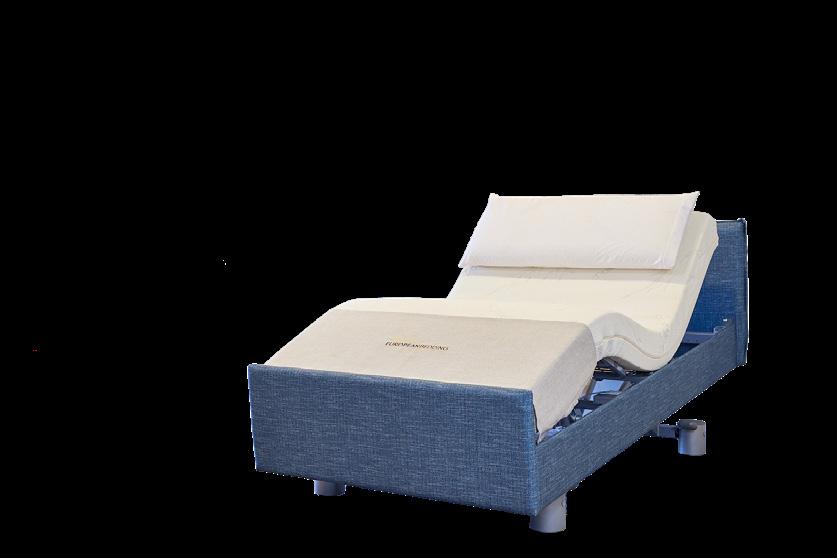
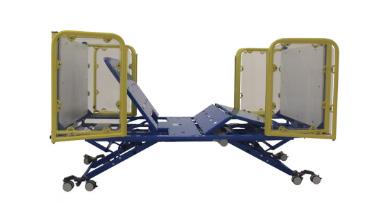
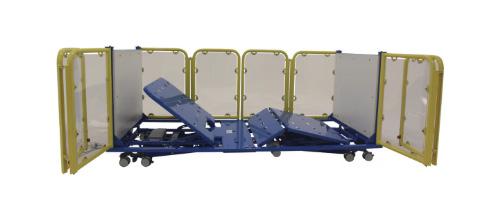
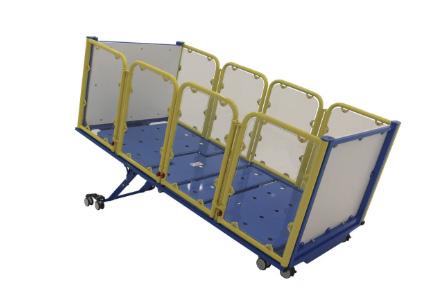
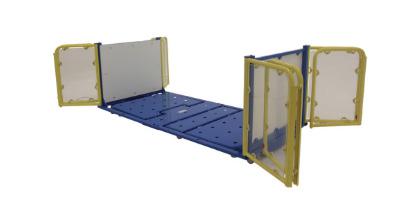
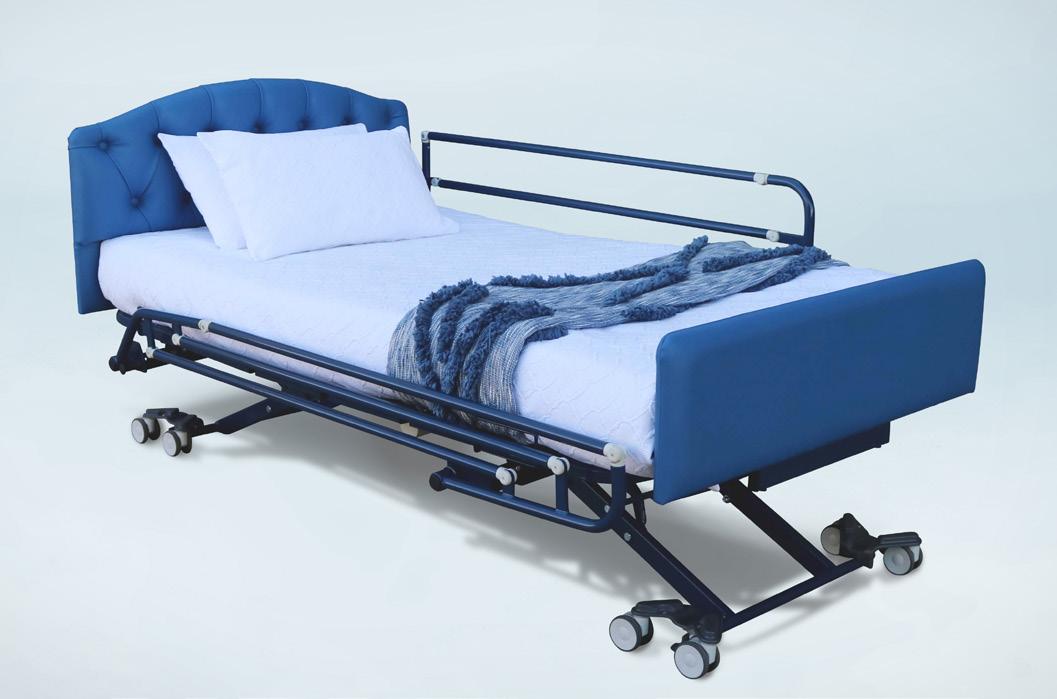
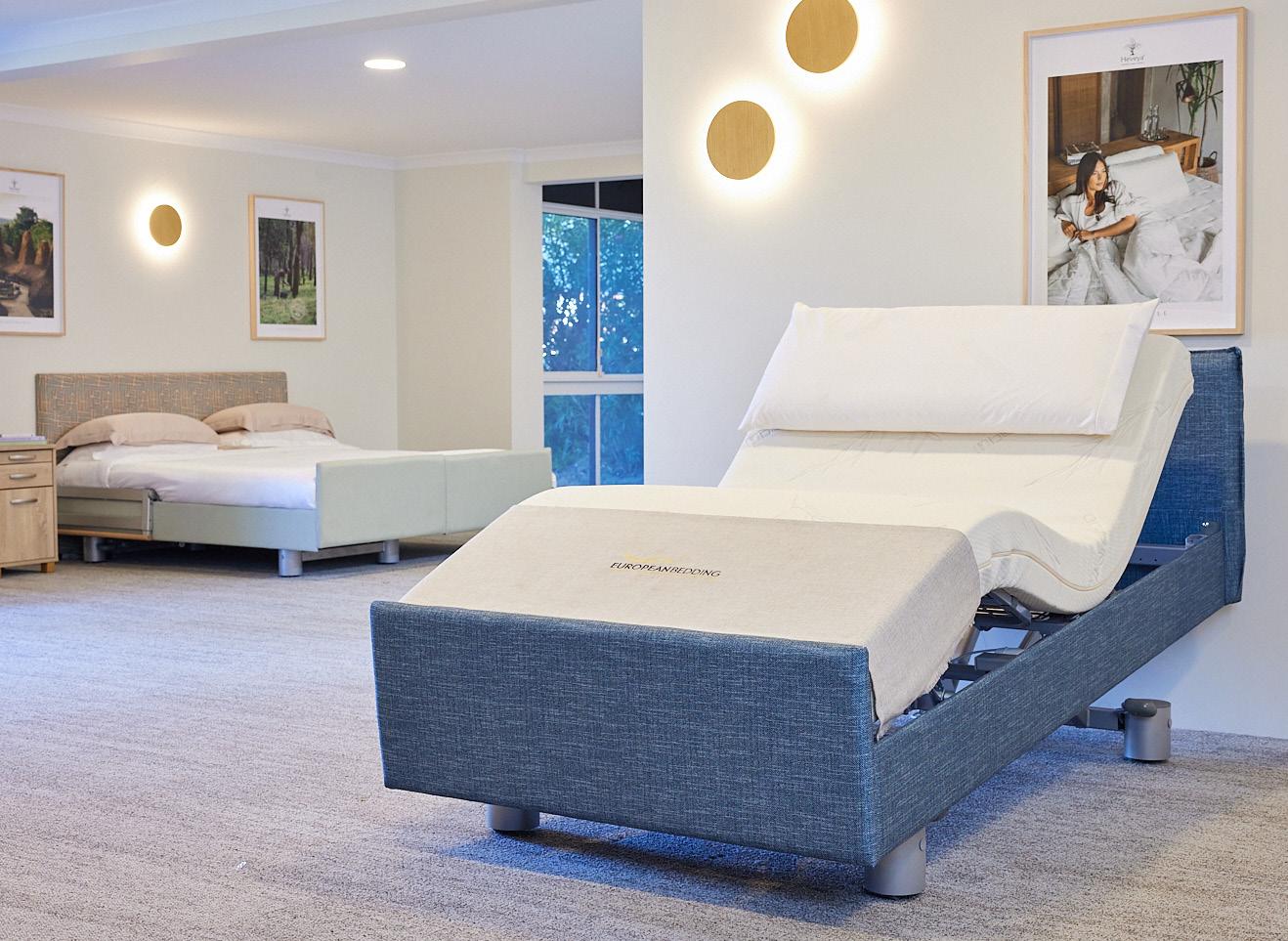
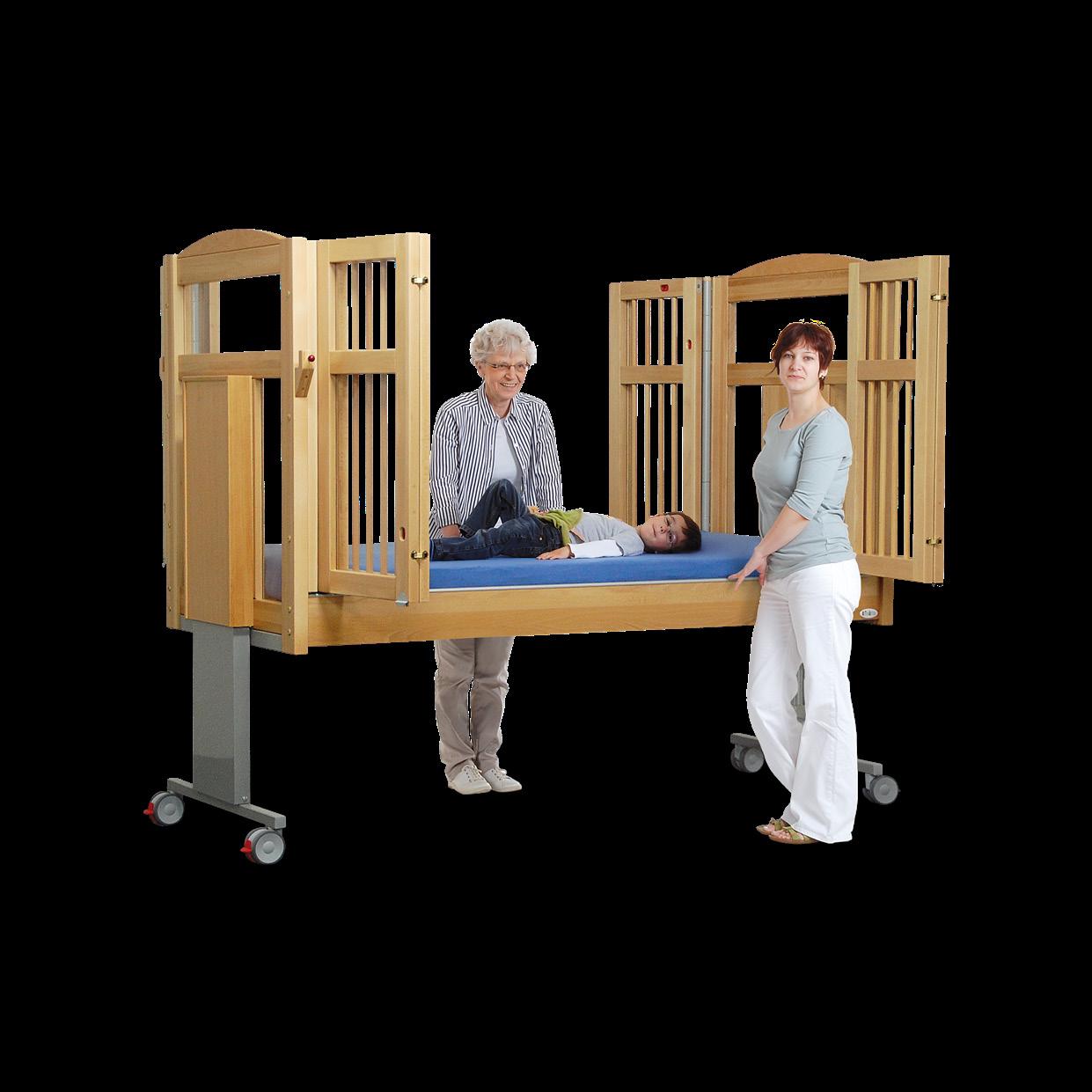
Experience Our Paediatric Bi-fold Bed
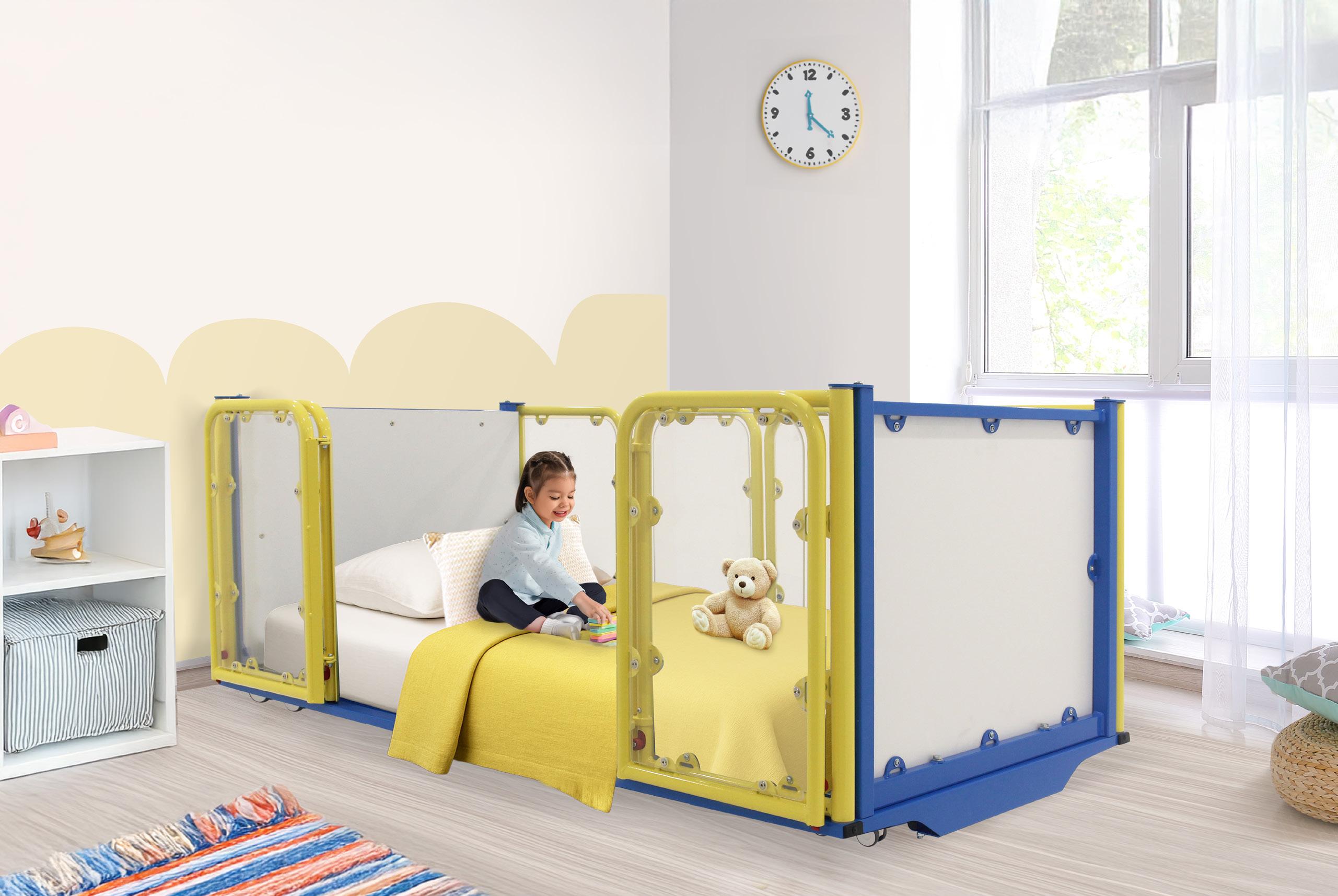
The Nino
Comfort that reassures. Care that eases all.
Safety begins with understanding. Comfort begins with care.
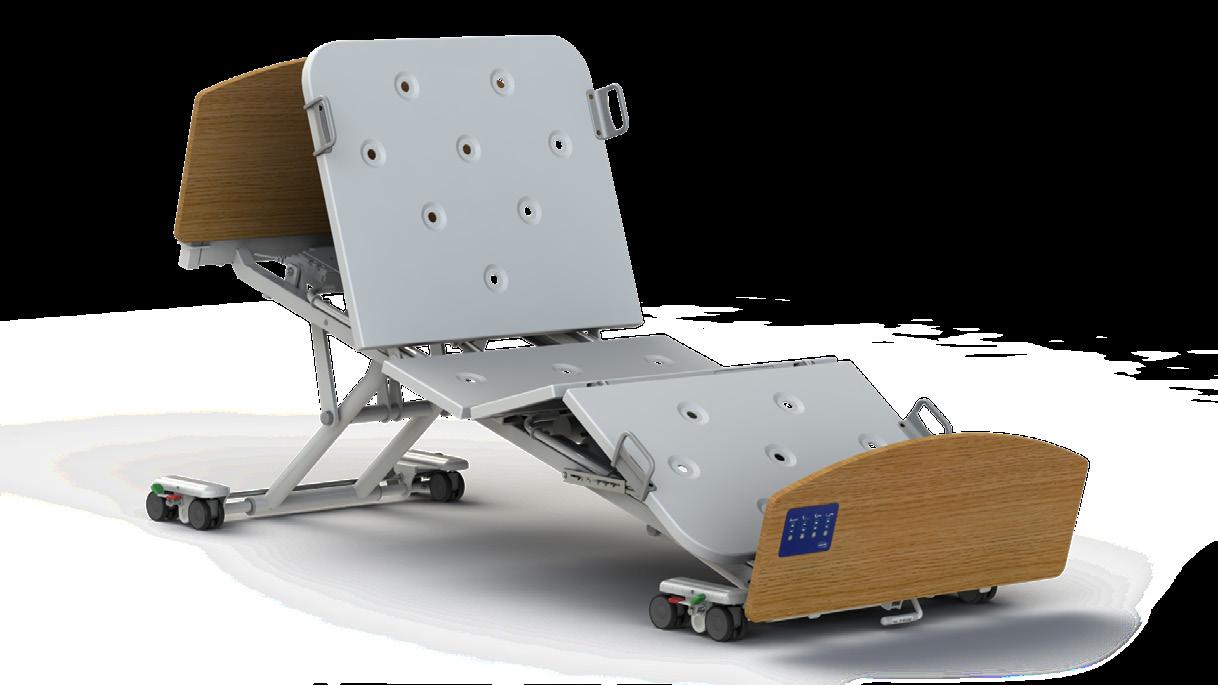
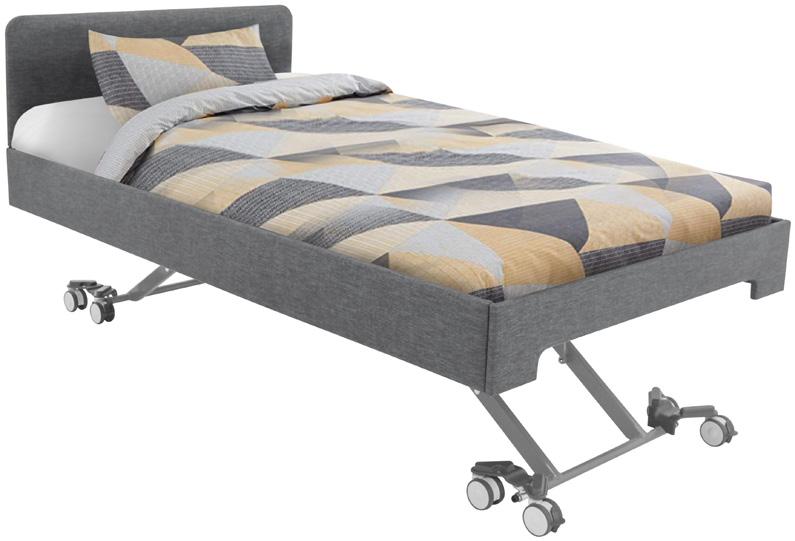
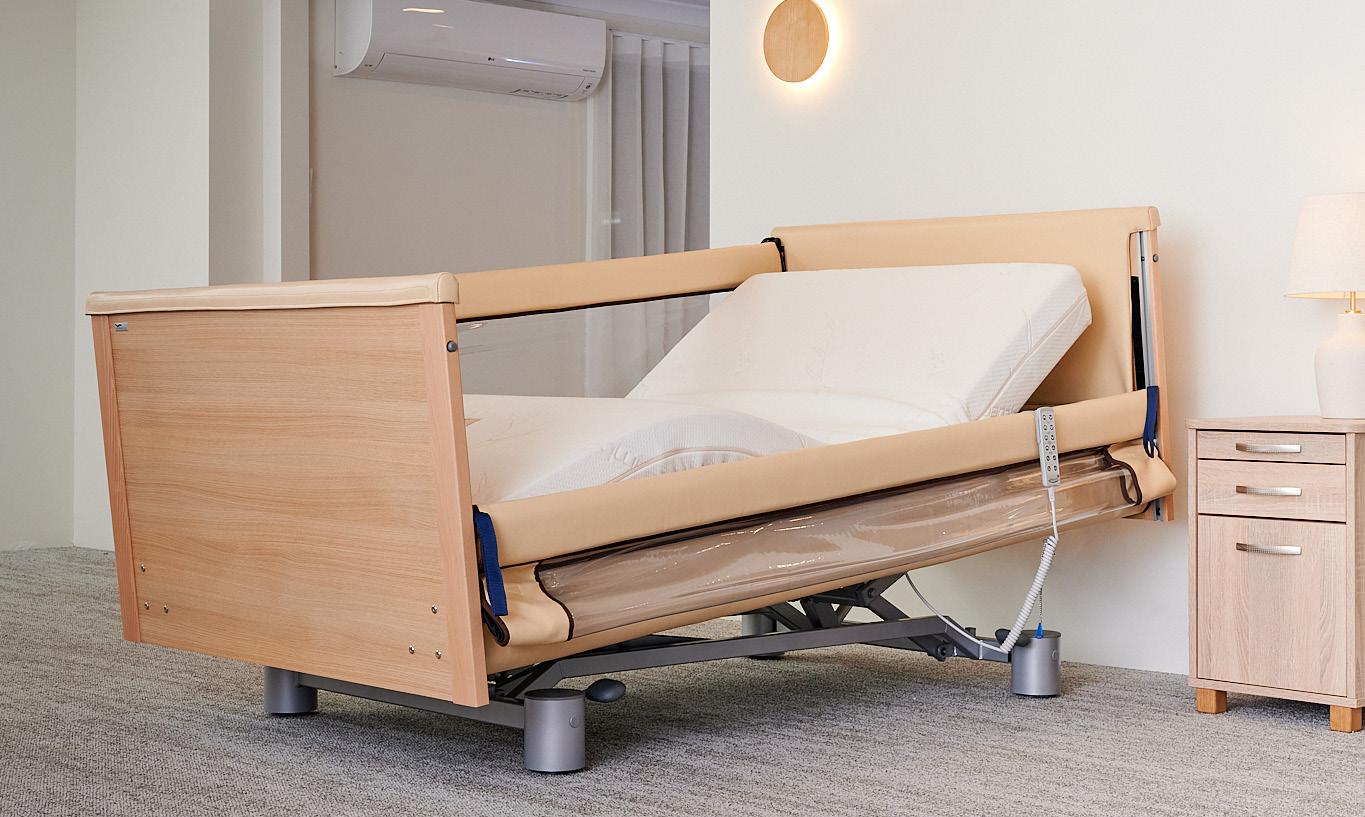
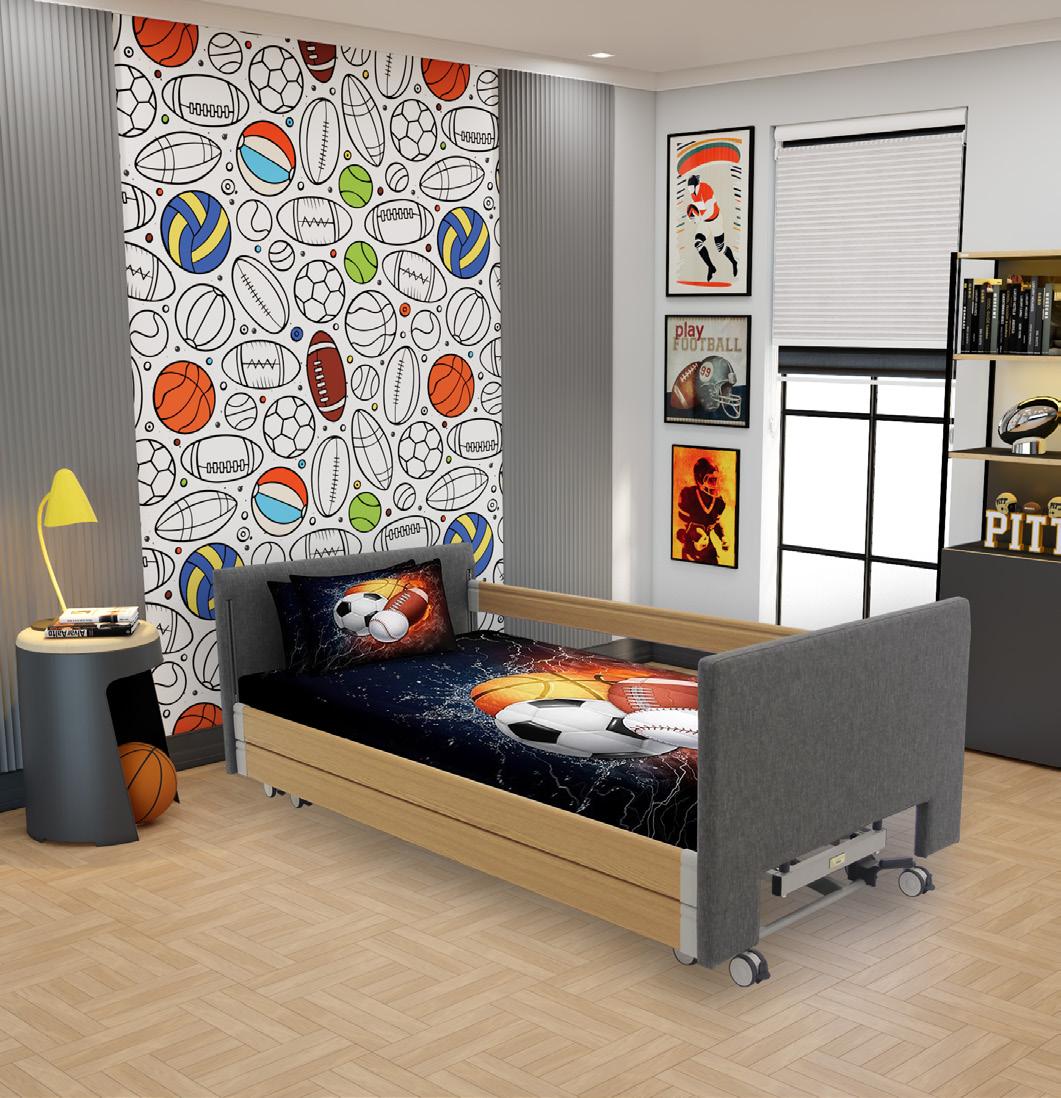
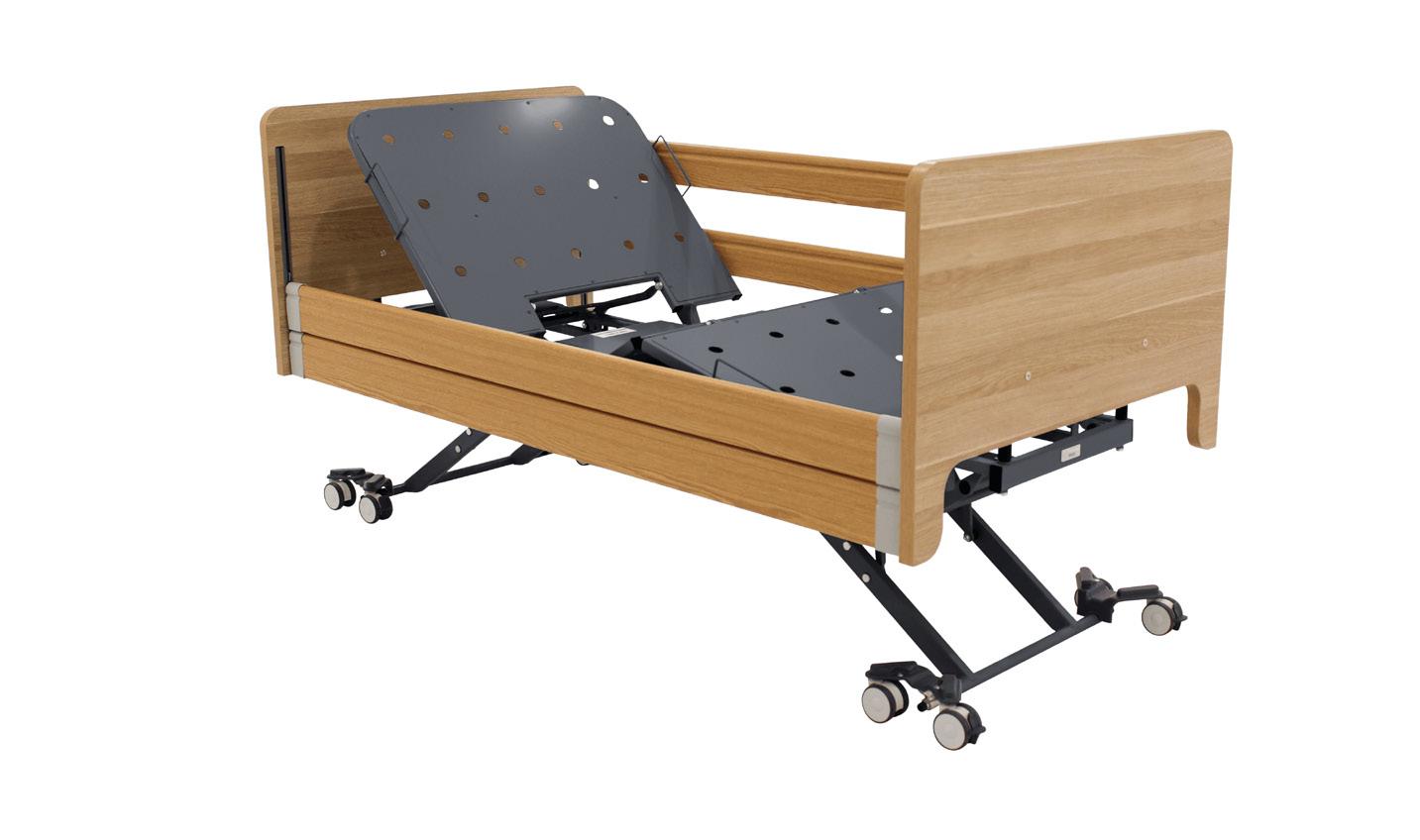
The Nino bed is designed to evolve as care needs change. As a floorline bed, it supports improved safety and accessibility, helping reduce the risk of falls while maintaining a warm, residential aesthetic.
Its modular design allows the bed to adapt over time. Removable surrounds and interchangeable endboards enable the Nino to transition seamlessly from a sleek, low-profile bed into a more clinically supportive configuration when required.
This flexible design ensures the Nino remains suitable across different stages of care, without the need for replacement.
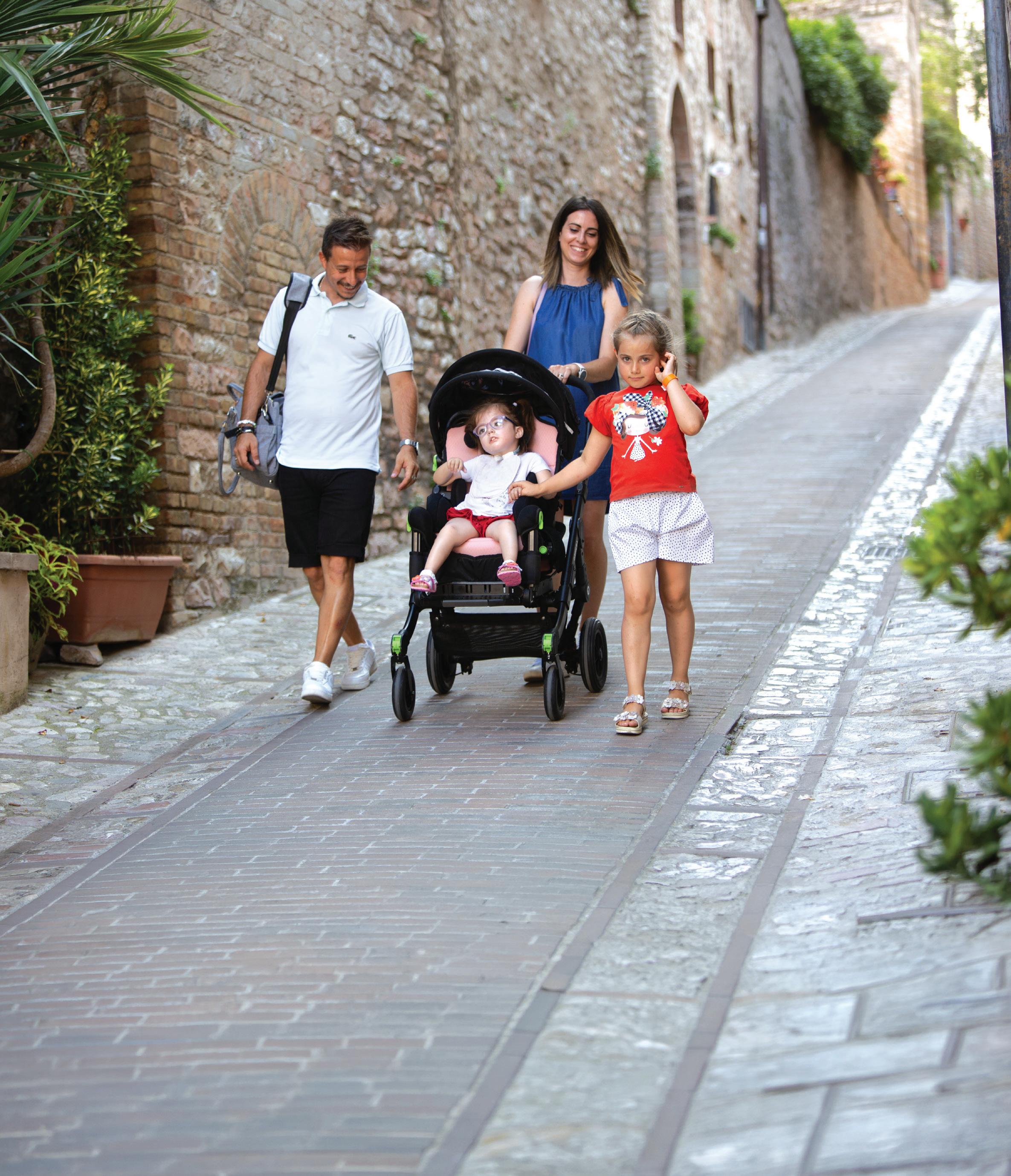
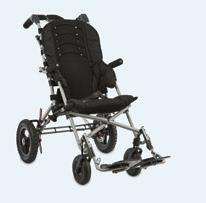
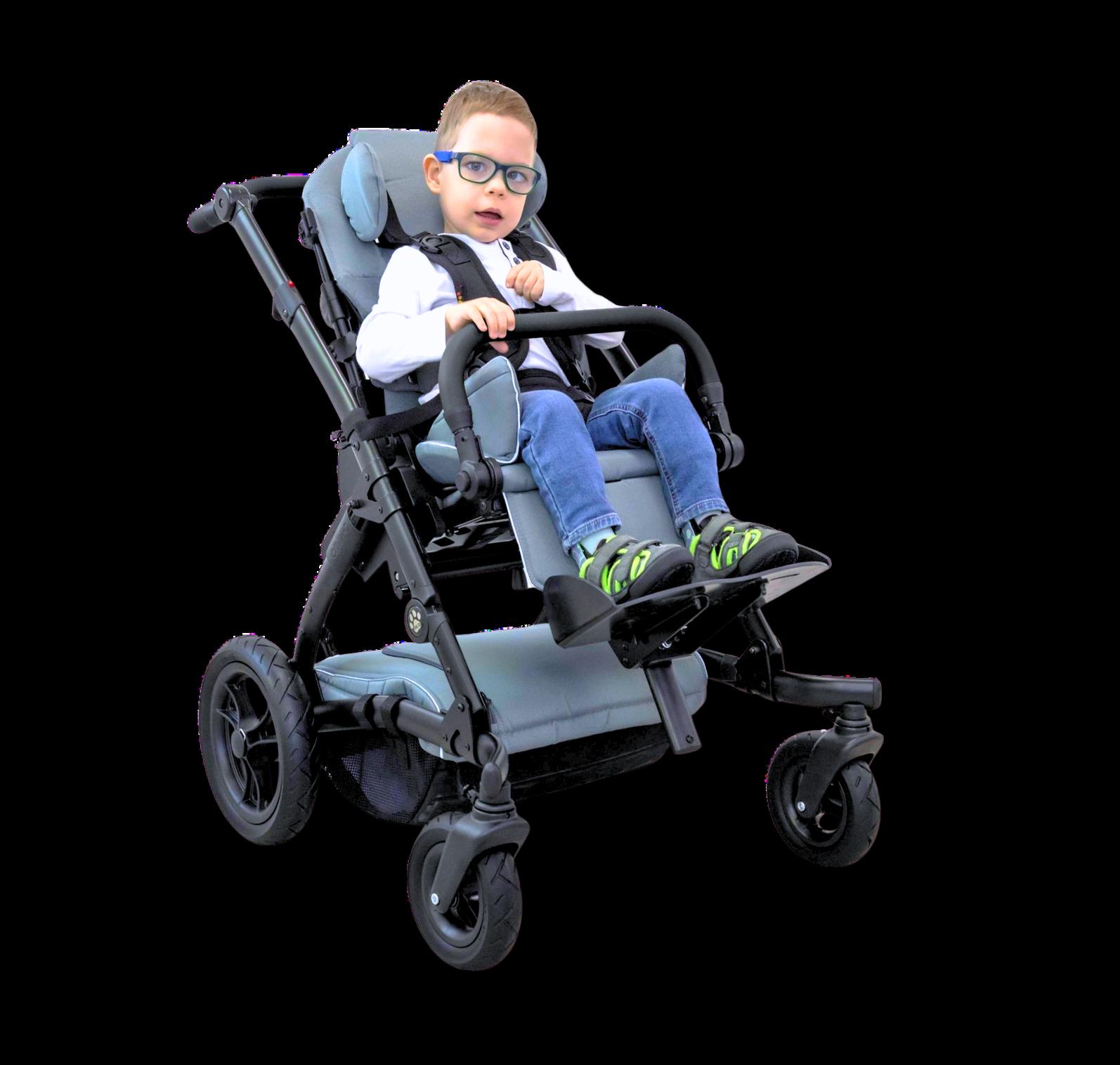
Whether you’re heading away for a cosy family getaway, exploring regional towns or visiting loved ones during the cooler months, the Coaster Scout is ready for road trips and safe vehicle transport. When it’s time to pack up, it folds easily to stow in the car, SUV or campervan.
From crisp coastal mornings to country escapes or bustling winter festivals, the Coaster Scout keeps family adventures moving comfortably all season long.
From beaches to bush tracks to bustling holiday parks, the Coaster Scout keeps family adventures rolling smoothly.
Highlights:
• Lightweight folding stroller for travel
• Fixed tilt options: 10°, 20°, 30°
• Seat depth growth in every size
• Available in 12”, 14”, 16”, 18” widths
WHEN THE TIDE GOES OUT WHEN THE TIDE GOES OUT
What the 2026 NDIS reforms mean for families — and for the sector that serves them
There’s a particular ritual at Australian beaches that I’ve always found quietly telling. Families arrive early, read the waterline, and set up exactly where the tide sits. Towels down, umbrellas up, children running to the water’s edge. And nobody questions it. After all, the water is there, so that’s where you go.
The NDIS has worked the same way for twelve years. Families set up where the funding was. Not recklessly ‒ they went where the system told them support lived, and they built their lives around it. And service providers did the same. Because the waterline was real, an uncapped scheme promising support to those who needed it, regardless of how much it cost. The investment made sense.
But on 22 April 2026, Minister Mark Butler stood at the National Press Club and confirmed what many in the sector had been watching approach for some time. The tide is going out. Not gently, and not slowly. Those of us who know
or work by the coast know that kind of tide ‒ the kind that pulls back so far and so fast that the ground it leaves behind looks like a different landscape entirely.
I want to be clear about one thing before I go further. This is not the end of the NDIS. What it is, is a significant and deliberate reshaping of who the scheme was designed for, and how it will operate going forward. Families and providers deserve an honest account of both.
What this means for families
The announcement that will generate the most anxiety for families is the eligibility change. From 2028, access to the NDIS will no longer be determined by diagnosis. It will be determined by functional capacity ‒ specifically,
whether a person’s disability produces a significant reduction in their ability to manage day-to-day life. And, in the time since the announcement, the assessment tool that will do this work has been named: the I-CAN Support Needs Assessment, developed by the University of Melbourne.
For families of children with complex needs, the immediate question is an understandable one: does this affect my child?
The government has been explicit on the answer, and I think it deserves more airtime than it’s getting. Children with permanent and significant disability ‒children with substantially reduced functional capacity ‒ remain protected under the NDIS. That has not changed. No diagnosis has been removed from the scheme. Autism, cerebral palsy, intellectual disability, psychosocial disability: all remain eligible pathways. What’s changing is that a diagnosis alone will no longer carry a family through the gate. Functional impact must be demonstrated alongside it.
Thriving Kids that remain genuinely unresolved ‒ and I say that not to alarm families, but because I think honest information is more useful than false reassurance. Whether services will be free or co-paid at the point of access is still being negotiated between the Commonwealth and the states.
The functional assessment tool that will determine whether a child enters Thriving Kids or remains eligible for the NDIS has not yet been designed. The clinical category of “low-to-moderate support needs” doesn’t exist in diagnostic frameworks ‒ it’s a policy construction, and its practical meaning will depend entirely on how the tool is built.
For families of children with complex needs, the immediate question is an understandable one: does this affect my child?
The cohort most directly affected by the eligibility shift is children aged eight and under with autism or developmental delay who are assessed as having “lowto-moderate support needs”. From 1 January 2028, this group of children will be directed toward Thriving Kids ‒ the new Commonwealth and state-funded foundational supports program ‒ rather than the NDIS. Thriving Kids has promised to offer parenting supports, navigation, targeted allied health, and access to equipment through existing community and education settings.
What it will not offer is an individualised funded plan, one of the most significant departures from what families have been used to through the NDIS.
There are significant things about
Peak bodies including Amaze, the Disability Advocacy Network Australia, and the Australian Autism Alliance have all raised this as a serious concern. And I share it. Children with needs that are invisible to an assessor ‒managed through enormous family effort, masked in clinical settings, and episodic rather than constant ‒ are the ones most at risk of being misclassified. Getting the tool design right is not just an administrative detail. It is the reform.
For families already on the NDIS, the most immediate change is not eligibility ‒ it’s plan values and the end of fund rollovers. Social and community participation budgets will be progressively reduced from October 2026. Unspent funds will no longer roll over between plan years (so please, spend your budgets). These changes land before the eligibility reforms. Families with significant community participation funding in their child’s plan should be reviewing it now ‒ what it is delivering, whether it’s documented, and whether the documentation is framed around functional need rather than diagnosis.
What this means for service providers
I’ve been analysing the disability sector for long enough to recognise a market correction when I see one. What was announced on 22 April is that, among other things.
The NDIS currently has approximately 260,000 providers. Around 16,000 of them are registered. Minister Butler described the gap between those two numbers as untenable, and he’s right. The commitment to close it ‒ through mandatory registration expansion beginning July 2027, a new digital payment system, and tighter fraud controls ‒ is not incidental to the reform package. It is structural.
For providers who built sustainable, compliant, genuinely purpose-led services, this creates opportunity. The market will contract. The operators who remained unregistered, who operated at the margins of compliance, who built revenue on community participation budgets without the governance to match ‒ many of them will exit. I hope, what remains will be a smaller, more accountable sector. Families will be choosing from a shorter list, and the providers on it will have had to earn their place.
For providers currently unregistered who want to remain in the NDIS space: the window to begin that process is closing rapidly. Mandatory registration is already creating backlogs. The providers who move now will be the ones who get through. Those who wait for certainty before acting will find the door considerably harder to open.
The cuts to social and community participation funding deserve specific attention because their commercial impact on some providers will be severe. This category grew from around $4 billion five years ago to $12 billion today. The government has announced a 30 per cent reduction. Providers who built their primary revenue on this category ‒without the clinical governance, registered
workforce, or service diversity to absorb the change ‒ are facing a genuine business risk. I don’t think it’s unkind to say that plainly. The families those providers serve deserve to know whether the organisation supporting them is on solid ground and what their support system is doing to ensure they can weather the tide shift.
There is a harder conversation underneath all of this, and I want to name it directly. The reforms are, in part, a sorting mechanism. The sector that emerges from this will look different from the one that entered it ‒ smaller in some places, more specialised, and more accountable. Providers who have always operated as though the families they work with are the point of the exercise, rather than a funding vehicle, are well positioned. The reforms make that distinction visible in a way that the previous environment did not require.
The commissioned model for plan management, beginning October 2027, will reshape another significant part of the market. Families will choose from an approved panel rather than the open market. What that panel looks like is still to come ‒ but the direction of travel is toward fewer, better-governed intermediaries.
Support Coordination is also changing. A new commissioned function begins July 2028. The category is not disappearing, but it is being restructured around quality and accountability in ways that smaller or less compliant operators will find difficult to meet. For providers with registered, experienced support coordination teams, this is a consolidation of their position. For those who have offered coordination as an add-on without the governance to support it, the next two years are the time to make decisions.
What comes next? What comes next?
The ground the tide has left behind will be unfamiliar. Some of what was built there won’t survive the exposure. But some of it will – and the families who built carefully, who documented well, who understood their child’s needs in functional as well as diagnostic terms, will be the ones who navigate what comes next most effectively. But nobody knows if the tide will return. All we can do now, is to prepare as best we can.
My honest view of the sector that emerges from this, if the implementation is handled well: is
one where the families who most need intensive, individualised support can find providers genuinely equipped to deliver it. Where navigation is recognised as skilled, qualified work and families don’t have to re-tell their story again and again to providers whose primary concern is their bottom line. Where the system’s complexity is met with matching sophistication, not volume.
That is worth working toward. The tide doesn’t come back to where it was - but what gets built on the newly revealed ground can be better than what it replaces.
By Monique Power, co-founder and CEO, RippleAbility.
RippleAbility is a paediatric specific disability provider, helping families navigate complex systems of support and build their capacity to advocate for appropriate supports and services for their child. Email: monique@rippleability.org | rippleability.org
Al l Day & Al l Night
Kids Protection
Al l Day & Al l Nig t
Kids Protection
Comf y Junior Slip
Comf y Junior Pants Comf y Junior Pants
Pants Plus
Comf y Junior Slip
Comf y Junior Pants omf y Junior Pants
Pants Plus
SOURCEPRO
n conversation
Welcome to Source Pro In Converstation, the powerful new video series that explores the real stories, emotions and insights behind the world of disability, therapy and care.
Welcome to Source Pro In Conversation with Emma Price and Caleb Rixon
Going Beyond Therapy and Honing in on Collaborative Care with Melissa Locke and Clare MacFarlane
Supporting Siblings: Understanding the Impact of Disability with Jacqueline de Mamiel and Lindsay Laskus
From Diagnosis to Carer Burnout with Rebecca Glover and Christine Cronin
Raising the Bar: Innovation & Engagement in Allied Health & Education with Ali Gebhardt, Robert Norman, Julie Taylor and Dimitra Baveas
Ask A Plan Manager with Rachel Elleray
Empowering Families: Advocacy & System Navigation with Fiona Lawton
Neurodiversity Affirming Practice with Children & Young People with Monique Mitchelson
Creating the Extraordinary with Caleb Rixon
LORI STANDER
Assistive pushchair stroller developed with passion to support
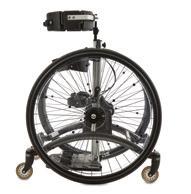
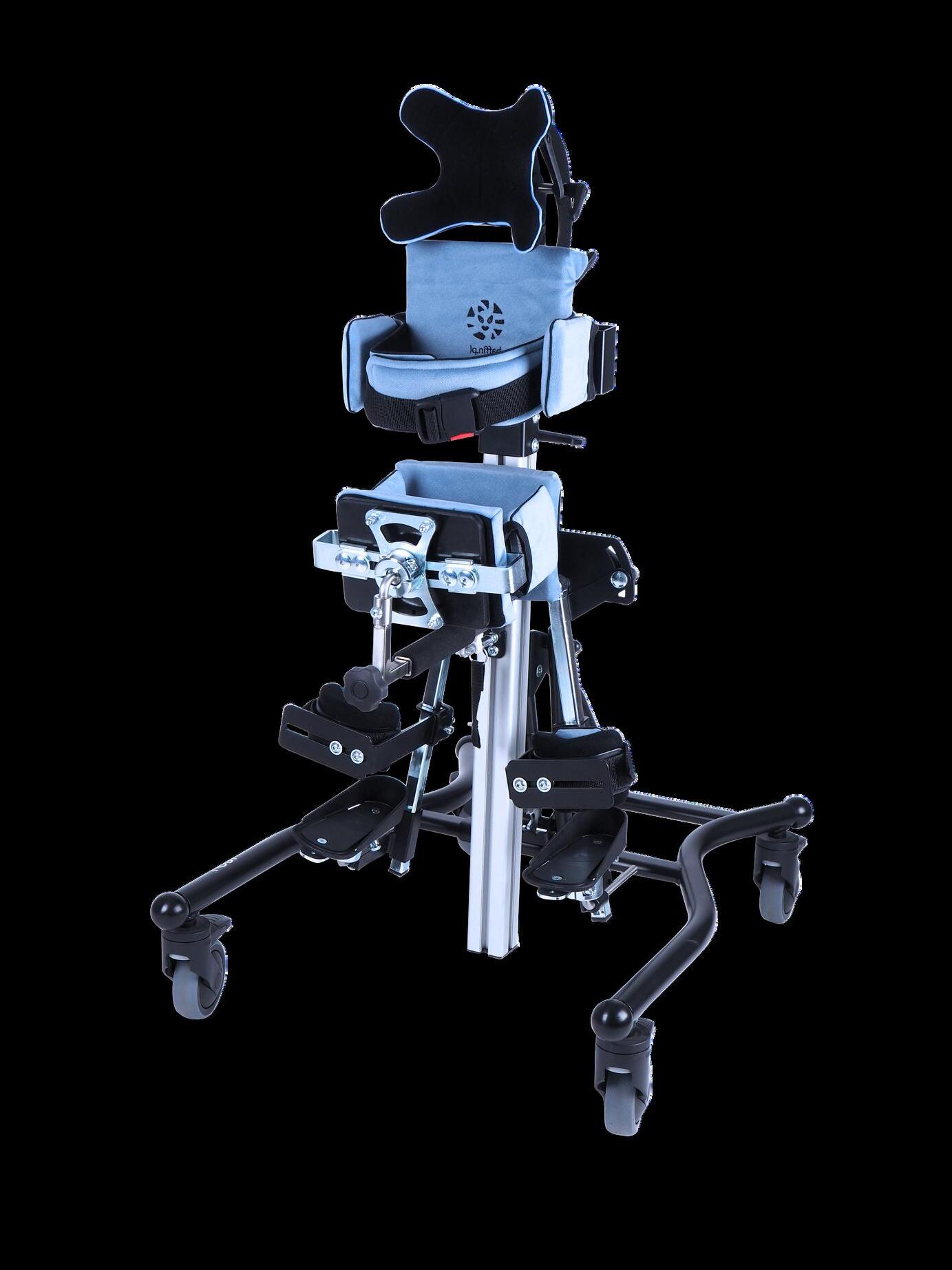
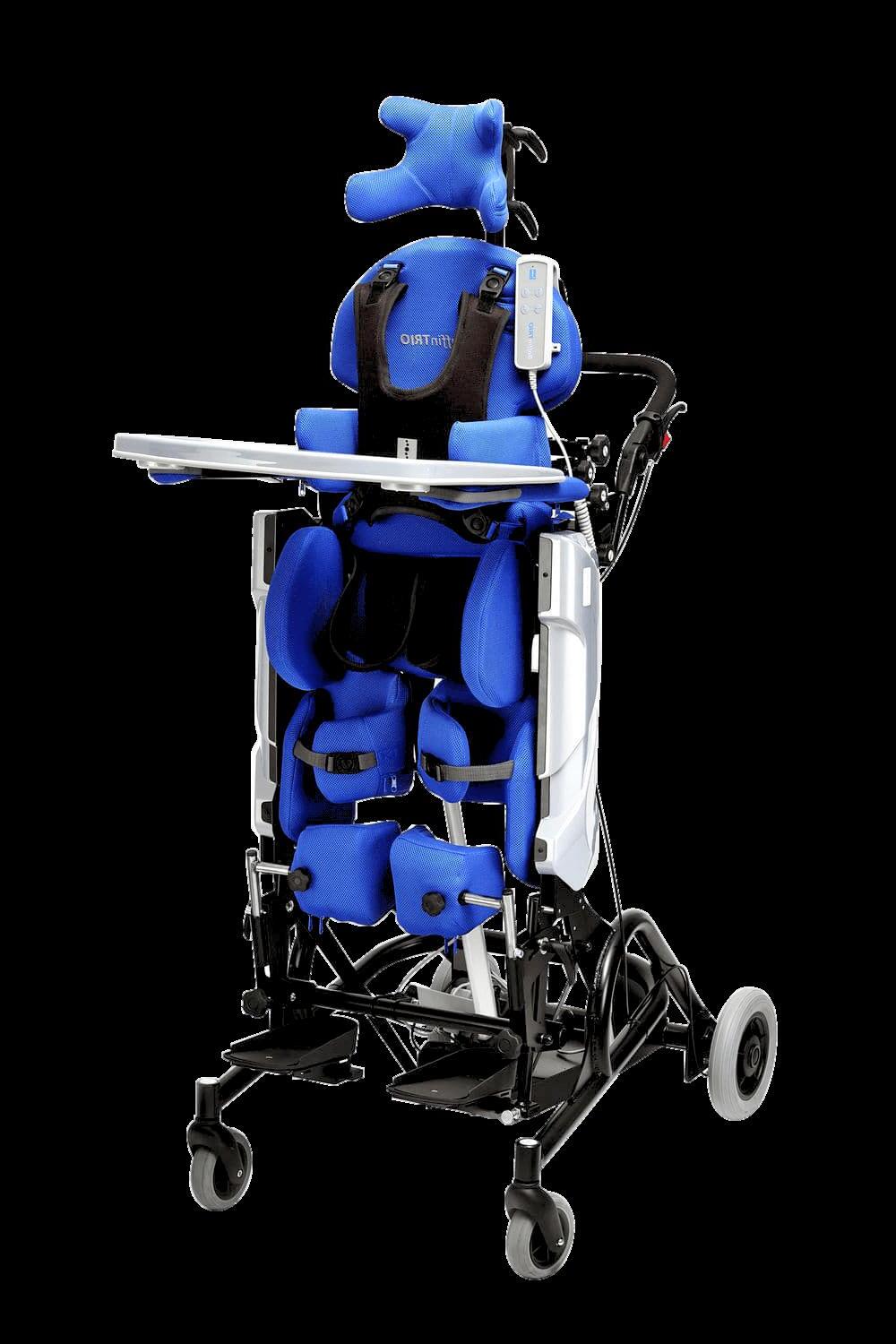
Empowering individuals with mobility challenges to experience the benef its of standing
PROPOSED NDIS
WHAT DO THE PROPOSED NDIS CHANGES MEAN
For people with disability living in supported accommodation?
Amid major reforms to the National Disability Insurance Scheme (NDIS), recently unveiled, NDIS minister Mark Butler announced the government’s plans to commission supported independent living services for people with disability, “rather than relying on a market that isn’t working”.
Supported independent living is NDIS funding for support workers who can assist people with disability who need some level of help at home all the time.
This announcement indicates a shift away from a market-based model – in which NDIS participants choose who provide services to them, and what kinds – to a more regulated, government-vetted system.
For people with the most significant and permanent disabilities, these changes –together with cuts to social and community participation funding – may be significant. Here’s how it might work.
WHAT IS SUPPORTED INDEPENDENT LIVING?
Supported independent living pays for support workers to help with day-to-day activities such as showering, preparing meals and doing laundry.
Supported independent living payments are often used to fund support provided in group homes. This is where a number of NDIS participants live together and one worker provides shared support to them. Some group homes may also receive another kind of NDIS payment, called specialist disability accommodation funding, which pays for purpose-built accessible housing for people with very high needs.
frequently have high and complex support needs, and very few other people in their lives beyond support workers.
HOW DID WE GET HERE?
More than 17,000 people with disability live in group homes in Australia.
Group homes are largely a result of the de-institutionalisation movement in the late 20th century, and grandfathering of supported accommodation from state disability services to the NDIS. People with disability often didn’t have a choice of where they moved to or who they lived with.
More than 17,000 people with disability live in group homes in Australia. Around 30% have intellectual disability. Residents
New kinds of specialist disability accommodation, such as apartment living or independent units, have been developed in recent years through the NDIS. But data shows many people are still sharing with co-residents they
don’t choose, in group living they haven’t chosen.
Stories of abuse, violence and neglect in group homes, shared by residents, are harrowing.
The Disability Royal Commission recommended group homes should be phased out by 2038. But federal, state and territory governments have not yet commenced working together on this recommendation.
A 2023 inquiry also identified many issues in how supported accommodation – meaning the combination of funding for support workers and purpose-built accommodation – currently works in the NDIS.
The inquiry found a greater need for choice and control for people living in group homes (for example, about where they live), better education of the workforce, and more regulation of these living arrangements.
SO, HOW MIGHT COMMISSIONING PROVIDERS WORK?
We still don’t have a lot of detail. But the goal will be to create greater oversight and control over who provides services, and curb safety issues such as neglect and abuse while improving quality.
It could mean the government will purchase more low-cost accommodation where several people share a support worker. And we can expect a more restricted list of registered providers, meaning the companies the government allows to employ the support workers.
Commissioning could also mean the government introduces new rules, such as caps on the number of people with disability who live in one place. Such restrictions are currently in place for specialist disability accommodation, but not supported independent living.
In practice, this might look similar to the current makeup of group homes – mostly small-scale group living – but there will be more regulation. There is also a question about whether commissioning will improve residents’s choice about where they live, or who they live with – a basic right.
The government has also begun trials in ten rural, remote and First Nations communities where they have identified service demand for people with disability far outstrips what is available, including supported accommodation. In these cases, commissioning services will focus on understanding what specific barriers there are to accessing support, considering cultural needs and what local services are available.
LIVING INDEPENDENTLY IS ABOUT MORE THAN ACCOMMODATION
Amid last week’s reforms, the government also announced it will reduce NDIS payments to individuals for social and community participation – from around A$31,000 to $26,000 a year.
These payments fund a person’s needs to travel outside their home, so they are an important part of what it means to live independently. They may cover the cost of attending appointments, shopping or
paying bills, taking part in social activities and developing life skills.
The government has instead unveiled a new $200 million Inclusive Communities Fund. This will fund community groups to “host genuine participation activities” for those with disability.
This is part of the government’s broader push to provide foundational and mainstream supports – such as community or school programs, activities, skillsbuilding and information – for people outside of the NDIS.
In some cases, it could mean better inclusion of people with disability in the broader community, such as through local sporting clubs.
But if the NDIS funding that allows people to take part in their community and build independence is cut before these other supports are properly established, there is a risk of further isolation. This could particularly affect people with disability in group homes with the highest needs who rely on this kind of funding to leave home.
And there continue to be concerns about the potential role of algorithms in determining who will receive NDIS funding and who doesn’t.
People with disability want – and have a right – to live a life connected to people and community. This right must remain at the heart of plans to reform how and where they live.
By, Libby Callaway, Associate Professor, Rehabilitation, Ageing and Independent Living Research Centre and Occupational Therapy Department, School of Primary and Allied Healthcare, Monash University
Jack Francis Kelly, Honorary Research Fellow, School of the Built Environment, University of Technology Sydney
Phillippa Carnemolla, Professor, School of the Built Environment, University of Technology Sydney
Sally Robinson, Professor, Disability and Community Inclusion, Flinders University.
This article is republished from The Conversation under a Creative Commons license. Read the original article here - theconversation.com/what-do-theproposed-ndis-changes-mean-for-peoplewith-disability-living-in-supportedaccommodation-281326
Doing what I love is my kind of independence
Created in collaboration with people with disability, Mable’s Can-do Guides provide useful tips and information to help kids achieve independence by accessing the experiences they love.
An absolute belter Mable’s Can-do Guide to blind cricket
Blind cricket is a great way for your child who is blind or low vision to be active, build a sense of community, and play (arguably) Australia's favourite sport. Howzat!
1 An adapted ball
The blind cricket ball is hollow, made of plastic and larger than a traditional cricket ball. This allows it to have ball bearings, which create sound.
3 Announcements
There are different announcements to alert players to where the ball is. This includes announcing when it is bowled and when the ball hits the bat.
5 The ball must bounce twice
If the batsman is totally blind, the ball must bounce twice when bowled and at least once if the batsman is partially blind.
The biggest thing I love about cricket is the community aspect of it all. You become like a family.
- Steffan Nero, blind cricket player
2 No overarm bowling
Underarm bowling helps players track the ball as it rattles the bearings, and the batsman can tell when it's getting closer.
4 The buddy system
Totally blind players have a runner when batting and are credited with two runs for every run scored off the bat.
If your child needs a little extra support, you can find trusted support on Mable to help you carry gear and support your child.
Check out the Mable Can-Do Guide
What makes blind cricket accessible?
YOUR GUIDETO
INDEPENDENT LIVING
INDEPENDENT LIVING
Over the next few pages, we explore some of the key things to know about independent living, from SDA and SIL to NDIS funding and home modifications that can make everyday life easier. And, keep an eye out for a future eMag where we’ll explore it all in more depth!
WHICH ONE IS RIGHT FOR YOU? ILO VS SIL
Endeavour Foundation untangle two popular NDIS home and living supports so you have a clear understanding of what they are and how they could work for you.
Navigating the National Disability Insurance Scheme (NDIS) is tricky.
It can be challenging to understand what each support is and how it could help you.
Take Independent Living Options (ILO) and Supported Independent Living (SIL), for example. Both are NDIS home and living supports. Both are often mentioned in similar conversations. Yet the pair has clear differences.
Understanding these differences could be crucial to getting the most out of your NDIS plan.
In this article, we explore ILO vs SIL, detailing what each support is, how it differs from the other and how both can help you live a more independent life.
WHAT IS THE DIFFERENCE BETWEEN ILO AND SIL?
The main difference between ILO and SIL is the way in which each funding stream supports an NDIS participant.
Independent Living Options (ILO)
exists to allow people with lower support needs the flexibility to choose where they live, who they live with and how they are supported.
At its core is the creation of a support package that suits a participant’s needs, preferences and goals – so each ILO package is unique.
ILO funding can be used to trial various living arrangements, such as living with a host, living in a share home or living alone. Meanwhile, Supported Independent Living (SIL) is typically for people who require 24/7 support while living in a share home.
It exists to help people with high support needs live as independently as possible with the help of support workers.
SIL funding covers the cost of a package of paid supports the participant receives in that home.
A key difference between ILO and SIL is that ILO support packages can include informal supports, like family, friends and even neighbours, to complement paid supports, such as drop-in support workers.
ILO and SIL EXPLAINED
SUPPORTED
INDEPENDENT LIVING
SIL explained in a nutshell:
• Ideal for people who know how they want to live and the level of support they need.
• Suited to those with higher support needs.
• 24/7 support provided in the home via live-in support workers.
• Support usually delivered in shared accommodation managed by a SIL provider.
• Support staff shared between housemates.
• Includes paid supports.
• The Support Coordinator guides participants through the process and helps them find suitable housing.
• SIL can be inflexible. Changing supports may require a plan reassessment, moving
to another home or living with different housemates.
• Supports depend on a participant’s needs, goals and preferences.
INDIVIDUALISED LIVING OPTIONS
ILO explained in a nutshell:
• Ideal for people who need help to figure out how they want to live and/or how much support they may need.
• Suited to those with lower support needs.
• Drop-in support workers are available. Support emphasises participants’ needs and goals.
• Support staff work one-on-one with participants.
• Support can be provided in various settings, usually when living with a host or with housemates in shared accommodation.
• Includes both paid and informal supports in the support package.
• The Support Coordinator helps participants explore and trial different home and living options.
• ILO is flexible. The mix of supports can be changed.
• Supports are led by a participant’s preferences.
HOW DOES FUNDING FOR SIL AND ILO WORK?
SIL and ILO funding both work differently to most types of NDIS funding. Usually, participants:
• Receive an NDIS plan with dollar amounts assigned to the various categories.
• Decide which service providers they wish to partner with.
• Sign on to receive supports.
HOW SIL FUNDING WORKS
With SIL funding:
• Participants receive funding for SIL in their plan, but it does not have an exact dollar amount assigned to it.
• They work with their Support Coordinator and speak to relevant providers.
• Providers work with Support Coordinators to determine the level of support required and how much supports will cost.
• Participants then work with their Support Coordinator to find a suitable house.
• The SIL provider presents a quote for the whole house.
HOW ILO FUNDING WORKS
With ILO funding:
• Participants receive funding for ILO in their plan, but it does not have an exact dollar amount assigned to it.
• They work with their Support Coordinator to understand and explore their options.
• They work with their Support Coordinator to design their own support package.
Designing the support package happens in two stages:
1. Exploration and design: Working out where to live, who with, what support is needed and who will provide that support.
2. ILO supports: Putting the supports in place.
HOW DO I GET ILO OR SIL FUNDING?
Like all things with the NDIS, to receive funding, it needs to be deemed reasonable and necessary.
So, be prepared to explain to your NDIS planner why ILO or SIL funding is reasonable and necessary for you in your circumstances.
Everyone has different needs and goals, so there is no one-size-fits-all approach to acing your planning meeting. But here are a couple of tips that can help when you meet with your planner:
BE PREPARED
The more you prepare, the better your chances are of receiving the best funding package for you.
BE CLEAR
Remember, your NDIS planner is meeting you for the first time. They do not know you as well as you do, so make sure you give them a really clear idea of your needs and goals.
Whether it is ILO or SIL or plenty else, unleash your potential with quality supports that put you first. Endeavour Foundation are on your side and can help you take charge of your future. Partner with us and live life on your terms. Learn more at endeavour.com.au
ELIGIBLE FOR SDA? ELIGIBLE FOR SDA? WHO IS
Step-by-step eligibility, evidence & application process
Finding the right home is one of the most important parts of living a safe, independent, and meaningful life, especially for people with high support needs. Specialist Disability Accommodation (SDA) was created to make this easier. But even today, many families, support coordinators, and participants still feel unsure about who qualifies and how the eligibility process actually works.
SDA can feel complicated from the outside, but once you break it down, it becomes a clear, step-bystep process focused on making sure people who need high-level housing support can access it.
In this article, we’ll walk through SDA eligibility in a simple, human way ‒ what the NDIS looks for, what evidence is needed, and how to apply. And most importantly, we’ll talk about how to make the process easier for the people at the centre of it all.
At Tibii, we’re proud to be the first in Australia to put the Human-Centred Approach into real practice, supporting people with disabilities through the lens
of Human Rights and genuine care. This perspective shapes everything from how we support participants to how we help them prepare for major decisions like SDA.
WHAT IS SDA, AND WHO IS IT DESIGNED FOR?
SDA is a type of specialist housing under the NDIS. It isn’t the support itself, it’s the bricks, design, layout, technology, safety features, and accessibility that make it possible for a person with high support needs to live comfortably and securely.
SDA is mainly for people who: • Require very high levels of physical support
• Need an environment designed to reduce risk or behaviours of concern
• Need home modifications that go beyond typical residential standards
• Have extreme functional impairment or very high support needs
• Live in situations where their current housing is unsafe or unsustainable
It’s also for people whose independence and daily functioning would improve dramatically if they lived in a well-designed, specialised home.
SDA is not for everyone on the NDIS, and that’s why the eligibility process is strict. The goal is simple: make sure that SDA funding is directed to the people who genuinely need it to live a fuller life.
WHO IS ELIGIBLE FOR SDA?
(NDIS criteria explained simply)
The NDIS looks at three major areas when deciding if someone is eligible for SDA:
Extreme Functional Impairment (EFI)
This applies when a person cannot perform daily activities without significant assistance. This might include support with:
• Personal care
• Mobility
• Transferring in/out of bed
• Using assistive technology
• Moving around safely
If a person can only function safely within a home specifically designed for their needs, they may meet the EFI criteria.
Very High Support Needs (VHSN)
This category includes people who need:
• Constant or intensive daily supports
• Overnight care
• Regular intervention due to medical or behavioural needs
• A home layout that reduces the risk of harm
• Support for complex health requirements
If a person’s support requirements can’t be managed in standard housing, even with home modifications, they may qualify.
It must be the ‘best value’ option for the participant
The NDIS always asks: “Will SDA create better long-term outcomes?”
They look for evidence that SDA would:
• Reduce long-term risk
• Improve independence
• Improve quality of life
• Reduce the need for intensive or costly supports in the future
If SDA helps someone live more safely and independently while reducing longterm support costs, the NDIS sees it as a justified investment.
THE EVIDENCE YOU NEED FOR SDA APPROVAL
One of the biggest challenges families face is collecting strong, clear evidence. The NDIS relies on professional reports that show why a person needs SDA, not just that life is difficult, but that standard housing is unsuitable.
HERE’S THE TYPE OF EVIDENCE THAT MAKES THE BIGGEST IMPACT
OT Functional Capacity Report (FCA) – The most important document The OT report helps the NDIS understand:
• Daily living limitations
• Mobility and safety concerns
• Assistive technology needs
• Structural housing features required
• Risks in the current living environment A good OT report clearly links the person’s needs with the specific SDA category being requested.
Behavioural Assessment (if needed) For participants who experience behaviours of concern, a behaviour practitioner can explain how SDA’s design (like robust materials, safe spaces, reduced triggers) supports wellbeing.
Health and Medical Reports
GPs, specialists, neurologists, psychologists, or rehabilitation physicians may provide letters confirming diagnoses, long-term conditions, and how they affect daily function.
Support Coordinator Report (optional but helpful) They can outline:
• Current living situation challenges
• Previous housing attempts
• The participant’s goals and needs
• How SDA supports long-term independence
LSP Report (living supports profile)
This shows the intensity of daily supports and patterns of care, giving the NDIS a detailed picture of exactly how much assistance the person needs.
STEP-BY-STEP SDA APPLICATION PROCESS
Most families follow the same core steps. Here’s the simplest way to understand the process:
STEP 1
Confirm there’s a real housing barrier
The NDIS will only consider SDA if:
• The person’s current home is unsafe
• The home doesn’t support their daily needs
• The environment leads to injury, isolation, or distress
• Support workers cannot safely perform their duties
• This is the foundation of the application.
STEP 2
Get a comprehensive OT housing assessment
This is the heart of the SDA request. The OT assesses:
• Functional impairment
• Housing barriers
• Assistive technology needs
• Environmental risks
They recommend a specific SDA category (FA, IL, Robust, HPS).
STEP 3
Gather all supporting reports
This includes medical letters, behaviour assessments, and support coordinator statements.
STEP 4
Complete the NDIS home and living form
This is where you express:
• Current challenges
• Goals
• Why SDA is required
• Why other options won’t work
• How SDA will improve long-term outcomes
This form influences how planners and assessors view your whole situation.
STEP 5
Submit an SDA request (or a joint ‘home & living + SDA’ request)
Participants can submit:
• A standalone SDA request, or
• A combined request for SDA + SIL + home & living supports
• Most support coordinators help prepare this to ensure all evidence aligns.
STEP 6
Wait for the NDIS decision NDIS decisions can take up to 90 days, though many are faster. During this period, planners assess evidence and determine:
• Whether SDA is necessary
• Which category is appropriate
• What level of funding is needed
• Whether building type (apartment, villa, group home) is suitable
STEP 7
If approved: start exploring SDA options
Once funding is approved, participants can look for:
• SDA providers
• Vacancies
• Purpose-built homes
• Locations that match lifestyle
• Providers aligned with their values This is where Tibii’s Human-Centred Approach truly makes a difference, ensuring people choose a home that feels right, not just one that’s available.
COMMON REASONS SDA IS NOT APPROVED
The NDIS might decline an SDA request if:
• Evidence is weak or vague
• The OT doesn’t clearly match needs to SDA design
• Standard housing modifications might work
• The current home is unsafe but not due to disability
• The link between housing + long-term outcomes is not clear
• The solution is nearly always more detailed evidence, not giving up.
WHY THE HUMAN-CENTRED APPROACH MATTERS IN SDA
SDA isn’t just about eligibility. It’s about people being heard, respected, and supported to live with dignity.
At Tibii, we’re proud to be the first in Australia to put the Human-Centred Approach into real practice, supporting people with disabilities through the lens of Human Rights and genuine care. This means we don’t look at SDA as a “funding stream ‒ we look at it as a deeply personal decision that shapes a person’s comfort, safety, and independence every day. We advocate, guide, and support families through every step, ensuring the participant’s voice is at the centre of all choices.
SDA eligibility may seem overwhelming at first, but when broken down, it becomes a clear, structured pathway. With the right evidence, strong reports, and a provider who genuinely understands the human side of the process, participants can access a home that finally meets their needs physically, emotionally, and safely.
Tibii is a registered NDIS disability support provider in South Australia and Queensland, offering specialist disability accommodation, supported independent living, and a wide range of tailored supports that uphold a Human Rights Model of Care. With welcoming, accessible homes and humancentred professionals, Tibii focuses on dignity, independence, and real opportunities for people with disability to live life on their own terms. tibii.com.au
Live Independently, Your Way
As the largest provider of home and living services for people with disability in Queensland, and a registered NDIS provider, Endeavour Foundation meets strict safety and high-quality standards. This means you can feel confident knowing you are supported by a trusted organisation. Whether you are seeking a new home or support in your current living arrangement, we work with you to find options to match your goals, needs and way of life.
Looking for more than just home and living supports?
Endeavour Foundation supports people with intellectual disability to thrive at home, work and in the community.
Acorn Stairlifts x Polyspine: Access without compromise
Stairlifts are a common solution for accessing different levels at home; however, for children, adolescents and adults with complex postural needs, standard stairlift seats often lack the alignment, comfort and stability needed for safe use. As a result, stairlifts may be ruled out entirely.
This is the gap Acorn Stairlifts and Polyspine set out to address.
By combining a stairlift with Polyspine’s adjustable system, users can achieve the positioning needed for safe and effective use, making stairlifts a viable option in situations where it previously wasn’t viable.
Both organisations bring lived experience into the design, which shows in the practicality of the solution. Polyspine can also be transferred between environments,
Independence AT HOME Independence
Minor home modifications & assistive tech ideas for independent living
helping maintain consistent postural support across home, school and community settings. For users, that means safer movement and better participation. For families, less physical strain. For providers, a more sustainable way to support complex needs. Ultimately, it supports independence where it matters most - at home. polyspine.com
Voice assistants
Voice assistants like Apple HomePod use voice control to help people manage everyday tasks hands-free.
For people with disability, they can support independence at home by setting reminders, controlling lights or devices, playing music, making calls and answering questions without needing to reach a screen or switch. assistivetech.com.au
Automatic pill dispenser
The Automatic Pill Dispenser helps take the stress out of remembering medication. It’s set up with pre-filled doses and releases them at the right times, with clear sound and light reminders so nothing gets missed. A lockable cover keeps everything secure and helps prevent double dosing. doability.com.au
Door sensor
The Homeable Door/Window Sensor detects when doors or windows are opened or closed and can trigger simple automations through the Homeable Smart Hub. It can support accessibility by reducing the need to physically check or reach for switches, improving safety awareness (like alerts if a window is left open), and enabling hands-free routines such as lights turning on automatically when opening the front door. Part of the broader range of solutions from Homeable, designed to support independence at home through tailored, easy-to-use smart technology. homeable.com.au
Safer shower access
The Excellent Ramp System makes showers safer and easier to access without the need for major renovations. Provided by All Access Ramps, these modular ramps create a level, slip-resistant entry for people using wheelchairs, shower commodes or walkers. They’re quick to install, removable for cleaning, and suitable for rental homes with no permanent modifications required. allaccessramps.com
Stove timers
MAM (Mobility Access Modifications) supplies and installs stove timers to improve kitchen safety and support independent living. Designed for gas, electric, and dual fuel cookers, stove timers provide automatic stove shutoff to reduce the risk of unattended cooking and improve kitchen safety. (Melbourne service area) mobilityaccess.com.au
Access ramps
The first step in creating an accessible home for people with disability includes ensuring safe passage in and out of the home. VIP Access provides disabled access solutions for both residential and commercial clients, with everything from threshold ramps and step ramps to longer access ramps with balustrades. They can supply both ready-made ramps as well as custom built ramps to suit the specific applications. vipaccess.net.au
Skylight Smart Calendar
Smart calendars are a great tool for managing daily routines. With a clear, colour-coded display for schedules, tasks and reminders, the Skylight is especially useful for people who benefit from visual structure and prompts throughout the day. It supports memory, routine-building and independence.
amazon.com.au
Step modifications
Qspec Building and Mobility specialises in home modifications for people with mobility and access needs, including tailored step modifications. Their step solutions help reduce trip hazards and improve access in both new and existing spaces. Designed in collaboration with health professionals, each modification is practical, safe and made to fit seamlessly into your home. qspec.com.au
UNDERSTANDING
NDIS HOME & LIVING SUPPORTS
Moving out of home is a big step for any young person. For families navigating the NDIS, it can also come with a lot of questions. What supports are available? How do you start planning? And what does more independence actually look like in practice? Read on as our friends at Leap in! provide us with some answers.
WHAT ARE NDIS HOME AND LIVING SUPPORTS?
Home and living supports are designed to help your teen or young adult live as independently as possible in a home that suits their needs.
These supports can look different for everyone and may include a mix of funded supports, as well as housing or community services outside the NDIS.
WHAT TYPES OF HOME AND LIVING SUPPORTS CAN THE NDIS FUND?
Depending on your child’s needs and goals, the NDIS may fund different types of supports, including: Assistance with Daily Life: Covers help with everyday tasks such as meal preparation, cleaning and personal care. Home Modifications: Structural changes to a home to improve accessibility and safety such as installing ramps, handrails or widened doorways.
Individualised Living Options (ILO): Flexible supports that allow your young adult to live in a way that suits them, such as living with family, housemates or on their own.
Supported Independent Living: Funding for people with higher support needs that require some level of help at home all the time, often living in shared accommodation.
Medium Term Accommodation (MTA): Transitional housing designed for people awaiting permanent housing solutions, typically funded for up to 90 days.
Specialist Disability Accommodation (SDA): Purpose-built housing designed for people with high support needs, providing an accessible and safe living environment.
Good to know
The NDIS funds disability-related supports, not housing costs. If your young person lives in or is moving to a rental property, home modifications may still be possible, but you will need the landlord’s permission before applying.
WHAT WON’T THE NDIS FUND?
The NDIS won’t cover everyday living costs or general housing expenses. This includes:
• Day-to-day living costs such as rent, groceries, utilities and household items
• Purchase of land, or house and land packages.
• Standard household items, appliances, tools, garden products and furniture
• Standard fixtures or fittings, including standard home security and maintenance or repair costs.
• Mobile homes, caravans, campervans and tents.
• Housing for people with disability other than those eligible for specialist disability accommodation.
Some supports also fall outside the NDIS and are provided by other systems. These include social and community housing, homeless and emergency accommodation services and Commonwealth Rent Assistance, which helps with the cost of housing.
HOW DO I GET HOME AND LIVING SUPPORTS INCLUDED IN MY CHILD OR YOUNG PERSON’S PLAN?
If you’re thinking about future living arrangements, it’s worth starting the conversation early with your NDIS planner or local area coordinator (LAC). There are two main ways supports can be included.
The first is to make sure home and living is reflected as a goal in their plan. For example: “I want to live more independently in a home that meets my accessibility needs.”
Second, if your young person’s plan does not include these goals or supports, and their needs have changed, you may be able to request a plan reassessment or, in some situations, a plan variation. You can do this using the Change of details or change of situation form, by calling the NDIS on 1800 800 110 or by speaking to your child’s LAC.
WHAT EVIDENCE IS NEEDED?
When asking for home and living supports, providing clear information about your young person’s needs and circumstances can make a real difference in helping the NDIS assess your situation. Some of this evidence will need to come from an allied health practitioner, so it’s a good idea to have a chat with your child’s therapists first.
If you’re requesting home and living supports for the first time, the evidence should include:
• Their daily support and housing needs, detailing how often and when they need support. Keeping a daily diary or log of these support needs can be helpful.
• Their functional capacity, which means what they can and can’t do because of their disability and how this affects their daily life and housing needs.
• The other home and living options you’ve considered and why they don’t meet their disability-related support needs.
If you’re asking to change home and living supports already in your child’s plan, the evidence should be recent (after their last NDIS Plan was approved) and explain:
• Major changes to their daily support and housing needs including any new tasks
theinclusionnetwork.com.au
they can or can’t manage on their own.
• Updates to their functional capacity and how these changes impact their daily life and housing needs.
There is a supporting evidence form that you can complete to provide more information. It’s not required but ensures the NDIS has all the information needed to make a decision.
LEAP IN! CAN HELP
If you think home and living supports may be right for your young person, it’s worth having plan management included in their NDIS Plan. The team at Leap in! can help make the most of their supports, connect them with providers and manage payments on their behalf. Learn more at leapin.com.au
• On-the-ground support across home, service, and community
• Practical strategies for behaviour, regulation, and communication
• Mentorship for educators, families, and professionals
• Guidance navigating NDIS, education systems and health systems
• Advocacy navigating complex systems and the gaps in between
• Strengthening collaboration around the child
• Sibling mentorship and support
• Tailored training and support
• Building confidence, capability, and true inclusion.
Support that meets you where you’re at.
SELF ADVOCACY SELF ADVOCACY
and Autism
Developing skills like resilience, self-advocacy, and selfdetermination is crucial for autistic adults. These abilities greatly improve quality of life and help navigate everyday challenges. However, individuals with more profound autism may not be capable of self-advocacy and often rely on parents, carers, or guardians to advocate for their needs.
Self-advocacy is about speaking up for yourself to get what you want and need. It means making sure your needs and preferences are known to others. This is important for ensuring you have the same opportunities, rights, and choices as everyone else.
Self-advocacy isn’t about giving others the answers they expect but expressing your true thoughts and feelings. It’s about standing up for yourself in various situations, whether it’s asking for help with a task, telling a waiter about your dietary preferences, or seeking support in different scenarios. Being informed about your rights, available options, and resources is crucial for effective self-advocacy, as it helps you confidently express your needs and wants.
understanding your unique support needs and what strategies work best for you so you can make informed choices that enhance your independence and quality of life.
Self-determination can boost independence and confidence for autistic individuals. It involves recognising strengths and weaknesses, setting goals, and taking steps to achieve them. This helps you live a life that reflects your values and aspirations.
Self-advocacy and self-determination are important for several reasons: Empowerment: They help you take control of your life and make informed choices.
Learning to selfadvocate is best started at a young age. Parents and educators play a key role in teaching children to express their needs and preferences.
We explore what these terms mean, why they’re important, and how to build these essential skills.
THE IMPORTANCE OF SELF-ADVOCACY AND SELF-DETERMINATION
Self-determination means making decisions about your own life based on your goals and preferences. It also involves clearly
Independence: They promote independence, allowing you to manage your own needs and desires.
Confidence: They build confidence by giving you a sense of control and achievement.
Equality: They ensure you have the same rights and opportunities as everyone else.
Learning to self-advocate is best started at a young age. Parents and educators play a key role in teaching children to express their needs and preferences. For autistic children, parents often advocate on their behalf, which is important. However, including children in these discussions helps them develop their own self-advocacy skills, preparing them for adulthood.
For adults who have recently been diagnosed, learning to self-advocate involves understanding their diagnosis, becoming informed about their rights and available resources, and seeking guidance from support groups, therapists, or
advocacy training programs. This can help them gain the confidence to express their needs and make informed decisions about their lives.
BUILDING SELFDETERMINATION SKILLS
Self-determination skills help you determine what you want and don’t want, identify your strengths and weaknesses, and understand what you need to succeed. These skills, combined with selfadvocacy and self-awareness, allow you to communicate your needs and desires effectively.
BUILDING RESILIENCE
Resilience is the ability to face and overcome challenges. It involves coping with unexpected changes, dealing with adversity, and enduring hardship. Many autistic individuals may struggle with resilience due to past negative experiences, low self-esteem, and a lack of coping strategies.
Building resilience involves knowing yourself and understanding your strengths and weaknesses. It also includes advocating for your needs and supports. Here are some practical ways to build resilience: Self-reflection: Take time to think about your experiences and identify what worked and what didn’t. This helps you learn how to handle future challenges.
Seek support: Get help from trusted friends, family members, or psychologists who can guide you through difficult situations. Discussing what happened and exploring alternative approaches can provide new perspectives and coping strategies.
Practice problem-solving: Develop problem-solving skills by tackling small challenges and gradually increasing complexity. This practice can build confidence and resilience over time. Develop coping strategies: Find and develop coping strategies that work for you,
such as mindfulness techniques, physical activities, or creative outlets.
Learn from experience: Every challenge is an opportunity to learn and grow. Use each experience to build resilience and improve your ability to handle future difficulties.
Building resilience and self-advocacy requires practical steps and ongoing effort. Here are some practical strategies: Set realistic goals: Establish clear, achievable goals that match your strengths and interests. Break these goals into smaller, manageable steps.
Develop a support network: Surround yourself with supportive people who understand and respect your needs. They can provide encouragement, advice, and assistance.
Communicate effectively: Practice clear and assertive communication. Express your needs and desires confidently and respectfully.
Educate yourself: Stay informed about your rights, available resources, and strategies for self-advocacy. Knowledge is a powerful tool for empowerment.
Embrace challenges: View challenges as opportunities for growth. Approach difficulties with a positive mindset and a willingness to learn from the experience. Celebrate successes: Recognise and celebrate your achievements, no matter how small. This can boost your confidence and motivation.
Self-advocacy, self-determination, and resilience are interconnected skills that contribute to a fulfilling and independent life. By embracing these concepts and taking practical steps to develop them, autistic individuals can achieve greater autonomy and wellbeing.
Autism Awareness Australia has been a trusted, independent source of information for autism families for 18 years. Learn more at autismawareness.com.au
10 thi n gs
you ca n use for
Therapy at Home
Before you click ‘purchase’ or head to the shops, take a look around your home - you may already have some great therapy tools in disguise!
1
COUCH CUSHIONS & PILLOWS
Cushions can be used to create soft, unstable surfaces for sitting, kneeling, crawling, or standing. This adds just the right amount of challenge to help develop balance reactions, core strength, and body awareness. Try having your child sit or stand on cushions while playing, reaching, or engaging in everyday activities.
2
ROLLED TOWEL
A rolled towel is a simple way to support tummy time by placing it under your child’s chest. This helps make the position more manageable while still encouraging active head lifting and engagement. The bigger the roll, the more support you are giving; the smaller/flatter the roll, the more your child has to work against gravity. It’s a great way to build neck control, shoulder stability, and upper body strength.
3
PAPER PLATES
Paper plates can turn your floor into a fun “skating” activity. Place one under each foot and encourage your child to slide one leg at a time forward, backward, or side to side. This supports coordination, weight shifting, and the leg control needed for crawling and walking. You might need to stay close for this one as it can become very slippery! Paper plates are also excellent for cutting practice as they are a bit sturdier than regular paper, making them great for developing scissor skills and using two hands together. You can also punch holes around the edges for threading activities, adding another fine motor challenge.
4
MASKING TAPE
Masking tape can be used to create lines, shapes, and obstacle courses anywhere in the home (on the ground but also on the walls!). Children can walk along lines, jump between shapes, or crawl under “laser beams.” They can also trace the tape paths with their hands or fingers, which helps develop early pre-writing patterns, bilateral coordination, and visual-motor skills. These games support motor planning, balance, and whole-body coordination in a fun, structured way.
5
PASTA
Pasta is not just for eating! Children can thread it onto string or pipe cleaners, scoop and pour it between containers, pick it up with fingers or tongs, hide it in sensory bins, or press it into playdough. These activities build fine motor control, hand strength, coordination, and sensory exploration.
6
BOTTLES OR CANS (WEIGHTS)
Filled bottles or canned food can be used as simple weights during play. Children can carry, push, pull, or lift them as part of everyday games or chores. This helps build strength, endurance, and awareness of their body working against resistance. You can also set them up as a bowling alley or target game, encouraging your child to aim, throw, and knock them down, which adds a fun way to practice coordination and accuracy.
7
CLOTHES PEGS
8 9 10
MUFFIN TINS
A muffin tin is perfect for sorting and organising small items into separate sections. Children can sort by colour, shape, or type, or use tongs or fingers to transfer items between spaces. You could even use kitchen tongs to add an extra challenge. This supports fine motor coordination, visual organisation, and early learning skills.
Clothes pegs are great for developing fine motor skills and finger strength. You can clip them onto cardboard, boxes, or clothing, or use them in simple games and patterns. This encourages a strong pincer grasp, which is important for writing and self-care skills. You can also create colour matching games by having your child clip them onto matching coloured paper.
LAUNDRY BASKET
Laundry baskets are incredibly versatile for at home therapy! They can be pushed or pulled (add weight for more challenge), used for tossing games (get those socks in there!), or even used for early sitting activities. You can also attach a rope to practice the coordination for pulling (lots of skills can be developed here – grip strength, bilateral coordination and even core and trunk control!). Overall, using a laundry basket can build strength, coordination, and regulation through “heavy work” input.
This encourages a strong pincer grasp, which is important for writing and self-care skills.
SPONGE (WATER PLAY OR CLEANING GAMES)
Sponges are great for building hand strength through squeezing, especially during fun “cleaning” or water play activities. Remember to get lots of reaching involved for extra shoulder stability and strength work. You can also cut a sponge into smaller pieces and turn it into a fine motor challenge by having your child push the pieces through an egg carton, container holes, or even a slit cut into a tennis ball. This supports grip strength, coordination, and controlled hand use, while also building independence through everyday routines.
By
Laura Connolly. Learn more about NAPA at napacentre.com.au
Laura Connolly is an Occupational Therapist and Clinical Director at NAPA Sydney. She is passionate about helping children reach their full potential and loves bringing creativity into therapy to make it meaningful, fun, and functional for families. Originally from Ireland, Laura brings warmth, energy, and a practical, hands-on approach to her work, and enjoys finding simple, everyday ways to support children’s development. This section was adapted from a blog originally written by her colleague, Pauline Chung.
Postural support, day and night
Supportive positioning for rest, sleep, feeding and play. From lying and rest through to seated activity, Medifab offers positioning solutions designed to help feel comfortable, supported and ready for the moments that matter.
SleepShape is a range of lying and positioning cushions designed to support posture, alignment, comfort and pressure management. With microbead or microfibre filling options, and a choice of comfort or wipeable covers, SleepShape can be tailored to different clinical needs, environments and sensory preferences.
Zoomi+ High Chair
New Postural Package
Snooooooze is a lightweight, portable and flexible lying and positioning system for children and adults. Designed to support changing needs and growth, it helps provide comfort and postural support across everyday rest and care routines.
Versatile support for feeding, play and everyday activities, helping children stay comfortable, supported and ready to participate in daily routines. Featuring Spex Lateral Trunk Supports, the package provides additional postural support to help maintain alignment and stability while seated.
Is your teen ready for their first job? Is your teen ready for their first job? THEM THRIVE AT WORK
HOW OTS CAN HELP
The transition from school into the workforce is a big step for any young person. For adolescents who need additional support, the process can feel even more overwhelming – from figuring out where to start, to managing the demands of a workplace once they’re in.
And it can be an equally daunting experience for parents.
What happens in a workplace is so far out of your hands, it can be a real adjustment. If you’re not sure how best to support your teen looking for their first job, you’re not alone. And your OT is here to support both you and your teen.
Occupational Therapists play a vital role in bridging learned skills and strategies into a workplace environment. At OTHC, we support adolescents by building confidence, developing practical skills, and helping them discover pathways where they can truly thrive.
HOW OTS SUPPORT ADOLESCENTS ENTERING THE WORKFORCE
Building the Foundations
An OTs primary role is to build skills for the future. When it comes time to join the workforce, we begin with basics: Identifying strengths and interests –Helping young people recognise what they’re good at, what they enjoy, and how these can translate into meaningful work. Developing work-related skills –From time management and organisation to computer literacy and fine motor skills, OTs provide practical tools to prepare adolescents for the realities of work. Supporting routines and energy management – Establishing consistent daily routines, teaching pacing strategies, and managing fatigue or stress.
PREPARING FOR THE APPLICATION PROCESS
Once these foundational skills are established, OTs can shift their focus to the more specific elements of finding and preparing for employment. This may include:
Writing resumes and CVs – Supporting adolescents to present their skills and experiences in a clear, professional way. Navigating job-seeker platforms –Guiding them in searching and applying for opportunities online. OTs can also help find suitable employment programs, depending on your teen’s needs and abilities.
Interview skills and confidence –Practising common interview questions, role-playing scenarios, and building selfbelief for face-to-face or online interviews.
THRIVING IN THE WORKPLACE
Of course, the process doesn’t end there. Being employed and working with others in a professional environment is unlike anything children and teenagers experience up until this point. There are certain skills and expectations that may require additional support, especially from an OT, such as:
Communication and social skills –Teaching strategies for teamwork, customer interactions, and navigating workplace relationships.
Flexible thinking and problem solving – Building adaptability when plans change or challenges arise.
Understanding work expectations –Supporting adolescents to grasp workplace culture, professional boundaries, and employer requirements.
Sensory regulation strategies –
Helping young people manage noise, lighting, uniforms, or other sensory
demands within the workplace.
Compensatory strategies –Introducing tools and approaches to support work performance, such as using visual planners, checklists, or modified equipment.
ADVOCACY AND ONGOING SUPPORT
Your OT will always be your advocate and are in it for the long haul. For some teens, that may mean connecting with the new workplace to foster a suitable environment.
Liaising with employers –Working alongside workplaces to ensure environments are inclusive and supportive. This may involve role grading, environmental modifications, or advocating for reasonable adjustments. Building resilience and confidence –Helping adolescents manage feedback, handle stress, and celebrate small wins as part of their growth.
LECKEY MyWay Pedal
Adventure in every step
MyWay Pedal targets and strengthens the big anti-gravity muscles (calf, quads, hamstrings) at their end-of-range, where they are weaker.
The elliptical action provides an experience similar to gait. This helps improve loading around the hip to aid joint development.
WHY THIS MATTERS
Employment is about more than a pay check. For adolescents, their first job is a key milestone. It builds upon their sense of independence and self-worth, while giving them a chance to develop critical life skills. It is a fantastic opportunity to improve social connections, experience responsibility and problem-solving in real-life, and create lasting careers.
With the right supports, young people can move into the workforce feeling prepared, capable, and confident.
OTHC believe every adolescent deserves the opportunity to thrive in work and life. Their Occupational Therapists partner with young people, families, and employers to make the transition smoother, more empowering, and more sustainable. Contact them on 9913 3823 or hello@occupationaltherapy.com.au to learn how they can support your adolescent in preparing for and succeeding in the workplace.
Plan management that puts you first
Join thousands of other NDIS participants who trust Instacare to help achieve their goals.
Budget tracking with InstaAPP
Fast payment terms
Personalised service
Highly rated provider
Navigating NDIS supports – what can you buy with your NDIS funding?
You’ve found a product or service that makes a real difference to your life but aren’t sure if you can use your NDIS funding for it.
At Instacare, we manage thousands of invoices every week. e review every invoice sent to us to ensure it aligns with NDIS requirements.
Understanding what you can buy
The NDIS continues to develop guidelines on how funding can be used However, because every person’s needs are different, there’s no one-si e-fits-all answer.
1. You can use NDIS funds for supports that are directly related to your disability and are NDIS supports. This can include allied health, assistive technology, support workers who help with daily living or community access, and home modifications such as grab rails or ramps
2. There is also a list of supports NDIS funding cannot be used for. This includes everyday living expenses, such as groceries, takeaway food, or rent. Sometimes it can be hard to determine if something is an everyday living cost or something you need For example, the NDIS is unlikely to fund a standard set of cutlery (an everyday household cost). However, they may fund adaptive cutlery for a participant who requires assistive technology to prepare meals independently.
3. In some circumstances, participants may be able to request a substitution from the replacement support list A replacement support isn’t an extra support It replaces an existing NDIS support or supports in your plan For example, a participant with complex communication needs may request a tablet as a replacement support where this is the most appropriate solution for their needs.
Tips for invoices
To ensure your providers are paid quickly, check that their invoices include: Clear descriptions: For example, an invoice stating "Services" may be too vague It should say exactly what was provided, such as "1 hour of Individual Social and ommunity articipation”.
Service dates: very item on an invoice must include a date range or date of service that aligns with your NDIS plan and funding periods
Pricing: NDIS pricing guidance outlines what providers can charge for different supports Invoices must stay within these limits, and providers can’t add gap fees or other surcharges. It’s best to confirm pricing before you purchase from or sign a service agreement with a provider.
How
a plan manager
can help
As a Plan Manager, Instacare does more than just pay bills We act as a safety net by checking your invoices and supporting you to manage your budgets so you can focus on your goals.
If you’re unsure about a purchase or want support managing your NDIS plan, our friendly team is ready to help. isit our website at instacare.com
call 1300
Everyone in
EVERYONE IN TOUCH FOOTY
Touch Football Australia is making the game truly inclusive for kids with disabilities across the country, reports Katherine Granich.
Touch football might not be the first sport that comes to mind when you are looking for inclusive activity options for your child with a disability. But if Gabe Hodges has anything to do with it, that is about to change.
“It’s non-contact; you don’t have to be fast, you can walk!” grins Gabe, the National Participation Programs Manager for Touch Football Australia. “It’s just so welcoming, and everyone is so engaged.”
Developed in collaboration with Sport Inclusion Australia, Down Syndrome Australia, and Autism Spectrum Australia, Touch Football Australia’s All Abilities Football Program is designed to provide equal opportunities and fully integrate people with physical and intellectual disabilities into the sport. Introduced in 2019, the program has grown rapidly, with several teams across three tiers that accommodate different disability types and levels of support.
While the national All Abilities program officially launched in 2019, its foundations were laid years earlier by Gold Coast special education teacher Graeme Clancy, who started Touch Football Specialised Inc. after one of his students asked if he could play with him
at the State Championships. What began as a grassroots local initiative grew into inclusive competitions and pathways for players with intellectual disabilities, supported by Sport Inclusion Australia and Queensland clubs Southern Storm and University of Queensland, both of which continue to compete annually at the Queensland State Cup.
It’s just so welcoming, and everyone is so engaged.
What makes the program stand out is its commitment to genuine inclusion rather than a separate, parallel experience. All Abilities athletes play on the same fields, under the same match conditions, with the same referees, and are featured on broadcast
alongside their able-bodied teammates and competitors. While modified rules allow for a maximum of three non-certified athletes to play alongside teams in a support capacity, Gabe is clear: “That’s where the differences stop.”
This commitment to inclusion is not incidental – it is central to who Touch Football Australia is. The organisation’s strategic plan is anchored by a purpose of uniting communities through safe, social, and meaningful touch football experiences, and a vision of a game that is dynamic, inclusive, and growing with every play. “Inclusion is one of our four core values,” says Gabe. “It runs through everything we do.”
From national championships to local competitions
The national championships All Abilities stream runs across three tiers depending on the type and level of disability, but the program’s reach extends well beyond the national stage. In Canberra, All Abilities players compete in standard weekly competitions alongside able-bodied players – not in a separate stream, but in the same draws. In South Australia, the program is being introduced into schools, and pockets of activity are growing in New South Wales as well.
The annual ACT All Abilities Cup, held in October in Canberra, is a highlight.
“It’s my favourite event of the year,” Gabe says. “People form these big tunnels in the stadium for the Grand Final – it gives you goosebumps. I’ve got to know some of our athletes over the years, and they’ll see me on the field and run over for a high five. It is just fantastic.”
For many participants, the All Abilities Cup represents something far more significant than a day of competition.
“For some of the athletes, it’s the first time they have ever competed in a big competition,” says Gabe. “And they just don’t stop smiling!” The same athletes return year after year, and Gabe has begun to recognise familiar faces from the championships – a sure sign that the program is delivering something that genuinely keeps people coming back.
More than just a game
One of the special aspects of the program is the opportunity it creates for families to play together. Because athletes with
If you would like to find out more or get your child involved, visit touchfootball.com.au/inclusion/allabilities to find your local association and learn about All Abilities programs in your area.
disabilities can compete alongside their siblings without disabilities in standard competitions, touch football becomes a shared family experience rather than a separate one. “They get to play in a competition together,” says Gabe. “The benefits go far beyond the field.”
The program has also opened up unexpected pathways for athletes with disabilities as referees. In Canberra, for example, several athletes with a disability have been trained to officiate, an initiative that has had some wonderful and occasionally surprising side effects. For autistic athletes in particular, the clear, rulebased structure of refereeing can be a genuine draw – and being in charge of enforcing those rules, a source of great satisfaction.
that clubs and programs can work hand in hand, giving players with disabilities pathways across both codes and a broader network of support. The Women’s Open captain of the Australian national team previously ran the All Abilities program nationally – a reminder that this is not a peripheral initiative, but one that sits at the heart of the sport’s culture and is championed at its highest levels.
They get to play in a competition together. The benefits go far beyond the field.”
Gabe has also seen the program change lives in ways that extend well beyond the field. “We’ve had kids join the All Abilities program and find a supportive, caring niche where they can really thrive,” she says. “The confidence and sense of belonging they gain through All Abilities flows on into other parts of their lives too – school, home, friendships.” That ripple effect, she believes, is one of the program’s greatest and most underappreciated gifts.
A sport with genuine pathways
Touch Football Australia’s commitment to inclusion does not exist in isolation. A partnership with Rugby League means
The program also works hard to be as accessible as possible in terms of cost, with affiliates and clubs keeping fees as manageable as they can. For Gabe, the biggest barrier is simply awareness, and her advice to parents who are curious but hesitant is straightforward: Find a way to watch a game, either in person or online. “Just the joy on the athletes’ faces will sell it for you,” she says.
Getting involved
Several years on, the All Abilities program is showing no signs of slowing down. The same athletes return year after year, the smiles get bigger, and the Grand Final tunnels keep growing. “It is, without doubt, one of the best initiatives the sport has implemented across Touch Football Australia’s 58-year history,” says Gabe –and watching the faces of the athletes who run out onto that field, it is very hard to argue with her.
By Katherine Granich
TOUCH FOOTY
Everyone in
LONG SLEEVE LEG SUIT
• 1.5 Tog Rating.
• Two way zip, fold over cuff on the sleeve and leg.
NAPA Centre is celebrating 10 years in Australia and they are giving Source readers the chance to win one of 10 $1000 therapy boosters to put towards an intensive in one of their 3 Australian clinics! NAPA Centre specialise in providing multidisciplinary physiotherapy, occupational therapy and speech and feeding therapy for children with complex physical disabilities. Their worldleading interventions are sourced from all over the world and therapists trained to the highest standards to ensure that your child receives the very best care in their intensive and weekly therapy.
Our prize consists of 10 X $1000 credits to put towards an intensive therapy program at any of the NAPA Centre Australian clinics located in Sydney, Melbourne and Brisbane. Our winners will have up to three years from the draw date to utilise the prize, which cannot be used in conjunction with any other offer. There are three chances to win throughout the year with the next set of $1000 credits up for grabs now.
100% woven cotton sleeveless sleeping bag
Watches and Reads
Books and shows on our radar right now… MAISY AND DAISY MOVE HOUSE
by Michelle de Robillard
Written by an Australian physiotherapist and mother, this rhyming picture book follows Maisy and her wheelchair, Daisy, as they move house for the first time. From front doors that won’t fit to hallways that finally do, it’s a gentle introduction to what accessibility actually means in practice. For ages 2-8. nosetotoesphysiotherapy.com
Season 4 of the US version of the show premiered on Netflix in April, bringing back fan favourites alongside new singles navigating the dating world. The reality series continues to offer an honest, warm look at autistic adults looking for connection, friendship and romance. netflix.com
NIXON MEETS THE SNUGGLE PUFFLINGS
by Laurelle Swan
A storybook designed to help children understand and work through emotions in healthy ways. Alongside the narrative, there’s space for activities and free drawing at the back, giving kids room to process in their own way. amazon.com.au
MY BUSY BRAIN
by Natalie Shaw
Meet Max, a child with a busy brain, big feelings and amazing ideas. This book helps kids aged 4-9 (and their families) understand and manage ADHD with warmth and practical strategies. One to read and explore together. mybusybrain.com.au
Jordan Moore and Emily Prior host this podcast from student radio station BOOM Radio, discussing what life with disability/disorder actually looks like. Educational without being heavy-handed, the show mixes serious topics with humour and features guest speakers sharing their own experiences. facebook.com/profile. php?id=61584870609841
BEDS & SLEEP SYSTEMS
Y A SAFE SURROUND PLUS BED
Supplier: Medifab
Weight: Up to 150kg | Height: N/A
• Height-adjustable lying surface range from 52-92 cm (floor to top of mattress), low entrance for self-transfers and providing a safe working height for caregivers.
• The unique opening door system prevents the doors being opened from the inside and gives complete access to user from side of the bed.
• Contouring sleep platform assists physical needs of the user with a 5 section profiling sleeping platform.
The Safe Surround Plus Bed is designed to provide a safe environment for active people that have the physical ability to stand. Available in two height variations, 135cm or 170cm.
Practical solutions supporting comfort, positioning and safer overnight care.
ALRICK EN9000 ENDLESS BED
Supplier: Active Medical
Weight: Up to 250kg | Height: N/A
• Available in Single, King Single, Double and Queen widths.
• Genuine 3-in-1 bed (Floor line, Hi-Lo and Bariatric).
Universal 3-in-1 bed to suit low-high and bariatric care. It has a low height of 100mm and no towers!
ETUDE PLUS
Supplier: Invacare
Weight: Max 165kg | Height: Suits 200cm mattress
• Electric four section positioning bed.
• Tool-less assembly and easy to transport.
TRANSFERMASTER BED
Supplier: Solace Sleep
Weight: N/A | Height: N/A
Transfermaster 1000 is Solace Sleep’s premium adjustable bed base, providing the user and caregivers a complete customisable sleep system.
• Hi Care 5 function hi/lo and lo/lo mechanism.
• Under bed clearance for hoist.
• Real 25 year guarantee.
KNUT PAEDIATRIC BED
Supplier: Alivat
Weight: N/A | Height: N/A
• Models with electric height adjustment have a residual height of at least 300mm if the lying area is completely raised.
• Lockable control element prevents unsupervised opening. Manufactured with the greatest care using natural timber in the construction for a more tactile experience for children.
‘Tailor-made’ options to suit a range of individual needs.
C Y
ALRICK NINO
Supplier: Active Medical
Weight: Up to 200kg | Height: N/A
• Fully customisable. Width, colours, ends, gate height style, and materials. Optional perspex, fabric, timber, or upholstery is available.
• Peace of mind: NINO provides protection and security while allowing the user to have an unrestricted view of their surroundings.
• Electric backrest, one-touch chair position, kneebrake, safety door lock.
A Supplier: Invacare
Weight: Up to 250kg | Height: Suits 198cm mattress
• Electric four section positioning floorline bed with battery backup.
• One-button chair positioning.
• High safe working load of 250kg.
Y
A
LUXA HOMECARE ENDLESS
Supplier: Active Medical
Weight: Up to 250kg | Height: N/A
• Extremely low minimum position (150mm) with vertical lift.
• Auto-Regression backrest.
• Ash, Almond or Ocean padded headboard with full padded surround.
PRIMO SUPINE 3
Supplier: Sunrise Medical
Weight: Up to 10kg | Height: N/A
• Early intervention positioning system.
• Provides safe, secure resting place/posture for young babies.
• Portable and easy to use.
C Y
SAFE LOAD OF 250KG
IMPULSE 400 LOW BED
Supplier: European Bedding
Weight: Up to 225kg | Length: 200cm
(with possibility of 20cm extension at the foot end)
• Includes wall hugging height adjustability of 25-82cm for easy of bed transfers and care needs; backrest raise with best-in-class mattress regression plus knee brake to help eliminate friction and sheering.
• Hidden castors, duo-locking brakes for effortless moving and making of the bed + handset lockout.
• Versatile handle and rail options: choose from a telescopic mobilising handrail to split side rails, long rails or a combination with the option for padded rail covers (vinyl or mesh) and height extension rails.
The Impulse 400 Low Bed has all the clinical future proofing needs with an exceptional homely appearance. Possible to customise with fabric surrounds.
KLEARSIDE LOW BED
Supplier: European Bedding
Weight: Up to 225kg | Length: 200cm (with possibility of 20cm extension at the foot end)
• Visible side panels: offers maximum visibility and protection for the user, great alternative for full length side rails (available in clear vinyl, clear perforated and mesh).
• Height adjustable: you can raise and lower the bed lying surface to help with care or getting in and out of bed easier + handset lockout.
• Hidden wheels: move the bed for cleaning or care purposes, wheels are hidden within the feet of the bed for a more homely appearance.
ALRICK PLEXA SERIES BED
Supplier: Active Medical
Weight: Up to 250kg
Low position: 150mm High position: 725mm
• Full-length timber drop down rails to provide security, featuring a locking system, ensuring the rails stay in place.
• Auto-regression backrest, reverse and forward Trendelenburg.
• Extremely low minimum position.
Available in single, king single and wide single sizes
PLEXA - Teenage Sport Bedroom
GENIE BED
Supplier: Medifab
Weight: Up to 150kg | Height: N/A
• Exceptional height adjustment from floor (42cm) to waist height (102cm) enabling independent transfers and a safe working height for caregivers.
• A unique opening door system prevents the doors from being opened from the inside and ensures that the bed is “sibling safe” with a two-handed release lock. Has 8 outward opening doors to enable complete access to the user to provide therapy, changing and care.
• Assists physical needs of the user with 4 section profiling
I CARE BED
Supplier: iCare Medical Group
Weight: N/A | Height: N/A
• Hand piece – backlit for night time use. Easy press buttons. Wired stretch cord. Hook attachment for hanging to side of bed. Wipeable.
• Strong breathable mattress platform.
• Available with headboards.
The IC333 Bed is available in several sizes, and is unmatched for function and durability, taking the hospital look out of your room. This four-function bed, features dual lift motors, unlimited under-bed clearance and eight heavy duty castors.
THE SAFETY SLEEPER
Supplier: Avant Innovations
Weight: Up to 227kg | Height: N/A
The ultimate solution for young escape artists who put themselves at risk by leaving their bed space intentionally or otherwise.
• Sleeping enclosure for children at risk of harm when leaving their bed space.
• Fully portable for travel use, giving parents peace of mind when on holiday.
• Funded through the NDIS & not-for-profit organisations.
• Adjustability; High Density Memory Foam Mattress; 3 Memory positions.
• 100% Certified Organic Fabric; Anti-Snore; Zero Gravity.
• 3 levels of massage intensity.
With an Adjusta Mattress you can enjoy & benefit from all the advantages of an adjustable bed whilst being able to keep your current bed base and surround.
Most of these products will be on display at our expos: sourcekids.com.au/disability-expo
Allied Health Services available. Don’t wait to get support.
Our caring, multi-disciplinary team work together to deliver high- quality evidence -based care to support children and individuals to achieve their goals.
Supports are available. Waitlists move quickly, with resources or short term support available whilst awaiting allocation.
We offer in-person consultations, telehealth and in-home sessions for all services.
Allied health services can be accessed through NDIS funds or your own funding (out of pocket or private health insurance).
Supporting children up to the age of 12 in areas of:
� Speech Pathology (short term blocks available for Gippsland region)
� Dietitian
� Occupational Therapy
� Physiotherapy
� Psychology
� Early childhood development
Supporting individuals over the age of 12 in areas of:
� Dietitian
� Psychology
TRUST
Be You Artistry offers welcoming, inclusive Art, Makeup & Creative Social Groups, designed to help participants build confidence, creativity, social skills, and independence in a supportive environment.
At Be You Artistry we are passionate about creating safe spaces where participants can express themselves through art, makeup and creative activities while working toward skill development and social and community participation goals.
With the guidance of our creative support workers, participants are encouraged to create whatever they can imagine in a fun, sensory safe, and empowering setting.
PHYSIOTHERAPY
Community-based physiotherapy services tailored to individual goals and functional needs, including:
• Home visit physiotherapy
• Post-operative physiotherapy
• Hydrotherapy
• Respiratory physiotherapy for clients with complex respiratory needs, chronic conditions, reduced airway clearance, or ventilatory support requirements.
SUPPORT COORDINATION
Supporting participants to navigate their NDIS plan, connect with providers, and build greater independence and confidence within their supports.
Community Nursing Personalised nursing support delivered within the community, including: