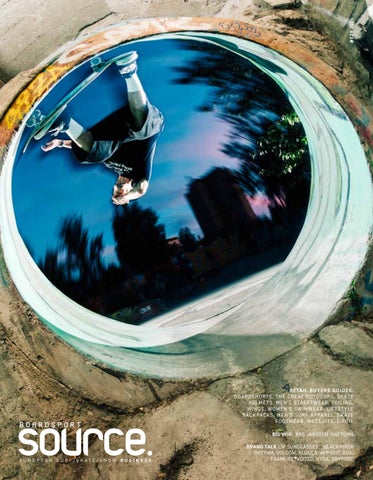
#129 2026 RETAIL BUYERS GUIDES: BOARDSHORTS, THE GREAT OUTDOORS, SKATE HELMETS, MEN’S STREETWEAR, FOILING, WINGS, WOMEN’S SWIMWEAR, LIFESTYLE BACKPACKS, MEN’S SURF APPAREL, SKATE FOOTWEAR, WETSUITS, E-FOIL BIG WIG: BAS JANSSEN ONETURN BRAND TALK LIP SUNGLASSES, , BLACKRIVER RHYTHM, VOLCOM, ALUULA, WIP-OUT, BOA, FOAMLIFE, VOITED, HYDA, DRYROBE
W H E R E LEGENDS ARE MADE Join us in honoring the legacy of the world’s best shapers. At Surftech, we bring visionary designs to life with unparalleled craftsmanship. Our commitment is to the creation of extraordinary surfboards, the elevation of the shapers who build them, and the enhancement of your experience on the water. For your part; we simply ask that you enjoy — every wave you ride is a testament to the legends who made it possible. Together we celebrate the artistry of the master board builders. Surftech — where legends are made.
Aipa invites all generations of the inspired to experience the blend and balance of an authentic surf legacy and connect on a journey to imagine and live “The Next Move”.
Surftech is honored to be a part of Aipa’s next move. Our product collaboration aims to, in the words of Ben Aipa, “Make a statement, emphasize design, but always have blend and balance.” We feel conf ident our range f rom AIPA, built-in cutting edge Dual Core and Fusion HD constructions, lives up to and maybe even exceeds Ben’s vision.
BIG BROTHER STING INTRODUCING THE
SUPER NOVA
BIG BOY STING
MODERN SWALLOW
DARK TWINN
SUPER NOVA
Axel Gérard by @vpi.ctures
FLEXIBLE + WATERTIGHT
by
The U-Zip is built on two elements: a U-shaped opening that runs from shoulder to shoulder, and a zip that’s more flexible than classic closures. Together, they deliver 3 major benefits:
MAXIMUM RANGE OF MOTION Minimal material around the neck and shoulders, with a soft & light zip for more freedom and better paddling. MORE WATERTIGHT The U-Zip closes the opening as tightly as possible to limit water ingress. SUPER EASY ON AND OFF Easier and faster than a classic chest zip. No need to twist your neck.
SOÖRUZ Surfwear Company - FRANCE - Tél. : 05 46 34 67 54 - surfwear.sooruz.com
HELLO
SOURCE#129 Face-to-face consumer touch points are becoming more and more valuable to brands as consumers are swamped in the digital world. What should we believe with so much choice and unsubstantiated information all over our digital screens? Meanwhile for brands, it’s increasingly difficult for them to differentiate themselves in the ever-competitive media landscape. The answer is direct face-to-face, in person events where the shop or brand meets the customer first hand. What can be better when selling a product, than a shared experience that can move into a friendship based on trust.
B2B trade shows seem to have weathered the storm and brands are now evaluating their face-to-face value rather than exclusively their ROI. The relaunch of ISPO and the European Outdoor Week, with both trade shows and conferences in one, are proof of this. You never know the value of an unexpected in-person encounter before it starts. On snow demos are flying the flag for human touchpoints breaking down the barriers for band and retail staff by using product in the environment it’s intended for. Also, don’t underestimate the trust these first hand usage stories and insights build with customers on the shop floor. The Rock On Snow in Avoriaz has for years been offering this experience to consumers. The launch of the Ride On Shred Fest by the 1st Try crew will plug the gap in the DACH region for a similar consumer on snow demo experience that offers the same fun and involvement and face-to-
face experience as their business event. It’s all designed to build the community and makes this kind of bonding invaluable for brands and consumers. Expect the number of face-to-face events to continue to grow as we seek more real life experiences in a virtual world. Another real experience is reading or flicking through a magazine like the one you’re looking at now, it’s 3D so adds to that real life connection you feel. This issue is crammed with our end of summer retail buyer’s guides, ten brand profiles and our market insights. Sitting in the middle is the Big Wig with OneTurns’ Head of Brand for etnies, Emerica& éS EMEA Bas Janssen. If anyone has seen our industry go through a few changes, it’s Bas… Always Sideways sharing that experience Clive Publisher
CONTENTS P.8 Trade Event previews
P.28 Big Wig: Bas Janssen OneTurn Europe
P.51 Lifestyle Backpacks SS27
P.11 Skate Footwear SS27
P.31 Wetsuits SS27
P.54 Brand Update Foam Life
P.14 Retailer Profile: Bana Skate Portugal
P.34 Brand Profile: WIP-OUT
P.55 Brand Profile Blackriver
P.16 Boardshorts SS27
P.35 Brand Profile: Volcom Eyewear
P.57 Men’s Surf Apparel SS27
P.18 Brand Update Lip Sunglasses
P.37 Men’s Streetwear SS27
P.60 eFoil SS27
P.19 Brand Update: Dry Robe
P.41 Skate Helmets and Protection 2026
P.62 New Products
P.21 Foiling SS27
P.43 The Great Outdoors SS27
P.63 Brand Profile: BOA
P.24 Brand Profile Rhythm
P.46 Brand Profile: Voited
P.64 European Regional Market Insights
P.25 Band Profile: Aluula
P.47 Brand Profile Hyda
P.71 Opportunities
P.26 Wings SS27
P.48 Women’s Swimwear SS27
P.74 Events
TEAM Editor Harry Mitchell Thompson harry@boardsportsource.com
German Editor Natalia Maruniak tala@boardsportsource.com
Skate Editor Dave Morgan davemorgan@boardsportsource.com
French Editor Marie-Laure Ducos ducos@boardsportsource.com
Senior Surf Contributor David Bianic david@boardsportsource.com
Graphic Design Louis White hello@louiswhite.co.uk
Snowboard Contributor Matthieu Perez Matthieu@boardsportsource.com
Proof-readers Natalia Maruniak, Marie-Laure Ducos Contributors Rocio Enriquez, Benoît Brecq, Gordon Way, Franz Holler, Nuno Principe, Toby Hammer,
No part of this publication may be reproduced or transmitted in any form or by any means, or stored in any retrieval system of any nature without prior written permission, except for permitted fair dealing under the Copyright Designs and Patents Act 1988. Application for permission for use of copyright material including permission to reproduce extracts SOURCE only puts industry employees on our front covers. No pro athletes for us. This is our way of recognising all the hard work and effort put in, which normally goes unnoticed. Please email submissions to harry@boardsportsource.com
Alain Frei, Juliana Schneider, Anna Heimhilcher Dylan Selvey James Dalziel Advertising & Marketing Clive Ripley clive@boardsportsource.com Accounts Manager accounts@boardsportsource.com To Subscribe boardsportsource.com subs@boardsportsource.com
Publisher publisher@boardsportsource.com Published by ESB 22 Friars Street, Sudbury Suffolk, CO10 2AA. UK Boardsport SOURCE is published bi-monthly © ESB. All Rights Reserve
boardsportsource.com
in other public works shall be made to the publishers. Full acknowledgement of author, publisher and source must be given. The views expressed in this publication are not those necessarily held by the Publisher. ISSN # 1478-4777
On the cover: David Morgan, Source’s Skate Editor Photo: Joel Peck 7
TRADE EVENTS PREVIEWS
SPORT ACHAT ETÉ, GRENOBLE, FRANCE SEP 7-8, 2026
Sport-Achat Été returns on 7–8 September 2026 as a key professional meeting point for the outdoor and mountain industry, bringing together brands, distributors and specialist retailers during the Spring/Summer 2027 buying season. Held over two days, the trade show provides an opportunity for industry professionals to discover new products, identify emerging trends and prepare their next collections. The event covers five core sectors: Cycle, Climbing & Mountaineering, Trail & Running, Hiking & Camping, and Lifestyle. With 95 exhibitors and 240 brands represented at the 2026 edition, Sport-Achat Été remains an established part of the industry’s ordering calendar. The 2026 edition comes at a relatively positive time for French mountain destinations. The summer season is continuing to show growth, with occupancy rates up 0.8% and approaching the 50% mark. Against this backdrop, the diversification of mountain tourism and the changing expectations of outdoor consumers are important themes for retailers and brands. Hiking and bivouac are particularly prominent at this year’s show. The offering brings together the majority of France’s leading distributors alongside key brands in the sector, reflecting continued interest in outdoor activities and equipment. A dedicated footwear display at the entrance will showcase more than 80 pairs of shoes, giving visitors a quick overview of the latest products and trends in the category. Other dedicated areas include a Tent Exhibition and Mood boards highlighting key trends for the coming season. The cycling sector also maintains a strong presence (despite the current challenges facing the bike industry in France and internationally). The 2026 conference programme addresses several of the issues currently shaping the outdoor sector. Monday begins with “Summer Season Review in Figures”, offering an overview of key figures and trends from the summer season. Next up is “Summer Diversification in the Mountains: A Driver of
EUROSIMA SURF SUMMIT SEIGNOSSE, FRANCE SEP 24-25, 2026
The 23rd edition of the annual EuroSIMA Surf Summit will take place on September 24 and 25, bringing together the European action sports industry for two days of talks, networking and debate. As in 2025, the event will be hosted at the Belambra Club in Estagnots, Seignosse, in southwest France. Open to the entire action sports industry, the EuroSIMA Surf Summit offers a preferential company package for EuroSIMA and UESC-NA members, allowing entire teams to attend. Following last year’s theme, “Keep Riding the Change,” which focused on adapting to a changing market, this year’s message is more direct: “Drop In.” The focus is no longer simply on understanding how the market is changing, but on deciding how businesses will respond. Business models, regulation, sustainability, people management and artificial intelligence are all reshaping the industry. The message from EuroSIMA is clear: the market will no longer reward waiting. It is time to take a position and “drop in” to the next wave of change. The two-day programme features 10 talks, panel discussions, keynotes and workshops, alongside networking opportunities, the official evening event, a surf session, the announcement of the winner of the EuroSIMA 2026 Innovation Call for Projects and closing drinks. The Summit opens at 9:30am with a speech from EuroSIMA President JeanLouis Rodrigues. Over the two days, discussions will focus on four key areas of decision-making. 8
Market & Business Models: The traditional action sports business model
Resilience for Mountain Destinations”. This is followed by a practical session, “10 Practical Uses of AI for an Outdoor Retailer”, exploring how artificial intelligence can be applied in day-to-day retail. Tuesday turns the focus towards consumers and changing markets. “Retail Café: Who Is the New Generation of Hiker?” will examine the evolution of hiking consumers, while “Why Is Trail Running Changing?” will explore developments in the trailrunning market. The programme concludes with “Mountain Trail Test Lab: A Review of the Experiment”, presented with UESC by USC.
The 2026 visual identity has been created by Basque Coast photographer and filmmaker Arthur Picard, an emerging talent in aquatic photography and video. Additional activities include the annual Surf Summit cocktail party on Thursday evening at 70 Hectares et Ocean in Seignosse, celebrating the winners of the EuroSIMA Innovation projects. Friday begins with a 9:00am surf session with Hossegor Surf Club, followed by the presentation of the EuroSIMA Call for Innovation winner at 1:30pm. The Summit will also host the ninth edition of
Alongside the exhibition and conference programme, Sport-Achat Été offers several spaces designed to encourage discovery and networking. The Fresh Zone focuses on emerging brands and innovative young companies, while dedicated shoe, tent and bike exhibitions provide additional product showcases. The Food truck Village will provide a social meeting point throughout. On Monday evening, exhibitors and visitors are also invited to the Sport-Achat Été Summer Party, taking place from 6:30pm in the Food truck area, with cocktails and a buffet.
ISPO AMSTERDAM, NETHERLANDS NOV 3-5, 2026
Sport-Achat Été 2026 will open from 9:00am to 7:00pm on Monday 7 September and from 9:00am to 6:00pm on Tuesday 8 September. Grenoble is also well connected by motorway and TGV from both Paris and Marseilles. Airports in the region include Grenoble, Geneva and Lyon Saint-Exupéry. So, jump on a plane or get in the car and come and see next year’s products. The event’s 2026 performance builds on a strong 2025 edition, which welcomed 98 exhibitors and around 225 brands, while visitor attendance increased by 10% compared with 2024.
The move marks a significant change for one of the sports industry’s best known trade events, bringing ISPO to a major international business and transport hub. RAI Amsterdam provides a central meeting point for the global sports industry, while its proximity to Schiphol Airport offers convenient international connectivity for visitors travelling from across Europe and further afield.
So with its strong hiking and outdoor offering, continued cycling presence and programme addressing major industry developments, the show is set to remain the most important meeting point as brands and retailers plan their Spring/Summer 2027. SPORT-ACHAT-ETE.COM
is under pressure. Wholesale is struggling, D2C continues to grow and the second-hand market is becoming increasingly established, The central question is how brands can take the lead and evolve their business models rather than waiting for the market to dictate the next move. Brands & Consumers: The industry’s greatest asset remains its imagination and cultural influence, yet mainstream brands increasingly borrow from action sports without the original industry necessarily capturing the value it creates. The Summit will explore the changing relationship between core communities and mainstream consumers. Sustainability & Regulation: Environmental and impact-related issues are multiplying, while regulation is developing rapidly. The Summit will examine how companies can turn regulatory pressure into a competitive advantage. It will also address a challenging question: what is inaction really costing businesses, both in terms of biodiversity and the bottom line? People, Management & AI: People and management are becoming increasingly important business issues as organisations restructure, traditional reference points shift and teams come under greater pressure. Sessions will examine purpose and meaning at work, health and energy as business concerns, and the growing role of AI. The discussion will also consider AI’s unintended consequences, including “workslop”, AI-generated content that appears polished but lacks substance, ultimately shifting the real work onto the person receiving it. Confirmed speakers include psychologist Mathilde Depaulis, Anais Georgelin, Laurence Descamps and Thomas Escot. Other contributors include marketing consultants Ludovic Pouilly and Bruno Lee, Frederic Tain, and Stéphane Popescu, co-founder of responsible fashion consultancy Cose 361. The full and latest speaker programme is available through the EuroSIMA website.
ISPO 2026 will bring the international sports and boardsports industry to Amsterdam from 3–5 November, as the event moves from its longstanding home in Munich to RAI Amsterdam for the first time.
With 900 exhibitors already confirmed, more than 500 key buyers registered and more than 40 industry and media partnerships in place, this year’s event is set to provide a major meeting point for brands, retailers, manufacturers and innovators across the boardsports and wider outdoor industry. For boardsports in particular, ISPO 2026 will combine business and networking with a strong programme of live experiences, product discovery and on floor action. Rock A Rail brings street-style action to ISPO One of the biggest new additions for 2026 will be Snowfest presents Rock A Rail ISPO Amsterdam, taking place at ISPO Congress Square at RAI Amsterdam on 4–5 November. The Snowfest crew will bring the internationally renowned Rock A Rail Tour to Amsterdam, turning Congress Square into the stage for one of the show’s most exciting live activations. Rock A Rail and Jibworx will join forces for the ISPO stop, creating a full-scale street- style jam directly on the show floor. An actual bus will form part of a unique setup for snowboarders and freeskiers to showcase their rail skills, with creative tricks and serious rail action expected throughout the two-day activation. The Snowfest Village, already known from the Innsbruck and The Hague stops, will also be part of the Amsterdam edition, bringing the wider Snowfest experience to ISPO. Now in its fifth year, the Rock A Rail Tour presented by Snowfest is known for creating unique and challenging urban setups that bring world-class snowboard and freeski street style action directly into the heart of a city. In Amsterdam, that action will be brought directly into the heart of ISPO, giving visitors the chance to experience the competition alongside the brands and businesses shaping the industry. Alongside the live activation, the show floor will provide opportunities to discover, test and discuss the latest products and technologies across snowboarding, surf, skate, outdoor and action sports. Connecting brands, retailers and buyers The commercial programme is another major focus for ISPO 2026, with a €1 million Hosted Buyer programme designed to connect influential decision makers from brands, retailers and suppliers.
the Surfing Lounge exhibition, showcasing innovative products and services from across action sports. Visitors will have the opportunity to see the products first-hand and meet their creators. So, if you need to visit South West France for business or for pleasure, add the Surf Summit to your calendar and participate in Europe’s number one networking event for the surf industry. See you in the line-up. EUROSIMA.COM
Recognised names already involved include GoPro, On and Naish Kites, alongside retail partners including INTERSPORT and Ellis Brigham. The programme is designed to create more opportunities for face to face meetings between brands and the people making purchasing, distribution and partnership decisions. For boardsports businesses, where product experience, relationships and specialist retail knowledge remain particularly important, the opportunity to meet decision makers in person provides an important commercial element to the event. The presence of major international brands and retailers also means ISPO provides a chance to look beyond individual product launches and understand some of the wider developments influencing the market; from changing consumer behaviour and retail strategies to new approaches to sustainability, technology and product innovation. A programme beyond the show floor The wider ISPO programme will also feature the ISPO Leaders Summit, bringing together senior figures from sport, business, technology and culture for a day of discussion and insight for C-suite leaders, ahead of the main exhibition. Global names including Happ Klopp (Founder of North Face) and Augustus Doricko (Founder and CEO, Rainmaker) will be sharing their thoughts on prevalent topics shaping the future of the winter, outdoor and boardsports community. Happ Klopp will be speaking alongside Fredrik Ekstrom (Above the Clouds) and Nina Hajikhanian (General Manager, EMEA, Patagonia) discussing strategies for a changing planet from both a science and business perspective. Whilst founder of the climate tech company developing next generation tools for precipitation enhancement, Augustus Doricko will be discussing the future implications for winter sports resilience. Raccoon Media Group has also committed a €3 million strategic investment to ISPO 2026, split between the Hosted Buyer programme, content development around the ISPO Leaders Summit and the €1 million Impact Fund. For the boardsports community, the combination of major international brands, retailers and buyers who will all be in attendance at ISPO 2026 alongside the curated programme of live action and product experiences specific to the boardsports industry will showcase ISPO as a key meeting point for the sector in 2026. And when the show floor closes, the fun keeps rolling. The ISPO After Party will bring the industry together for an evening of celebration, networking and connections across four floors of a high-energy central Amsterdam nightclub; the perfect way to cap off a day of business, inspiration and all things sport. ISPO 2026 takes place at RAI Amsterdam from 3–5 November 2026. Tickets for ISPO 2026 are on sale now, secure your place now. Visit ISPO.com for more information See you in Amsterdam for the new style ISPO. ISPO.COM
9
retail buyer’s guide
RETAIL BUYER’S GUIDE
S K AT E F O O T W E A R S S 27
WORLD INDUSTRIES
The footwear market is currently like many industries: it’s going through peaks and troughs. The constant turbulence of the world right now is making the skateboard industry uncertain; however, brands are braving the storm and delivering some great new additions to their lines. We take a look at all things footwear with the SS27 retail buyers’ guide with Dave Morgan.
MARKET Shops are struggling across the board, with some brands describing the market as stagnant. For many OG skate footwear brands, it’s not the first time they’ve witnessed this kind of activity within the industry, so they’re used to dealing with market fluctuation. Supporting retailers and working closely with them is the best thing brands can do. Brian Barber, General Manager at Osiris, said, “It’s really about managing through the storm, maintaining strong relationships, and being ready when the market rebounds.” Newer brands like Hoursisyours have relied purely on distributors to sell the brand thus far; however, Dennis Martin, Footwear designer at Hoursisyours, said, “We have taken a step back in 2026-27 to let the industry reset before we move back into the market.” New Balance Numeric’s EMEA Commercial Manager, Andrés Araya, spoke of how “there are still good opportunities for authentic skate brands that remain committed to skateboarding and continue to deliver genuine performance products.” Etnies, éS and Emerica Head of Brand Bas Janssen said similarly: “We believe the brands that stay disciplined - protecting distribution, controlling volume, and putting the right product in the right accounts - will come out stronger. That’s exactly the approach we’re taking with SS27.” The transition to Nidecker Group and the new EMEA partnership with OneTurn has also given us a fresh operational foundation - on-time delivery, clearer segmentation, and stronger support for the shops that carry us.”
“Opus hasn’t increased price points since we launched in 2022.” Mirko Mangum, Opus
PRICE POINTS Brands are trying to maintain similar price points to the previous season to help retailers and consumers through these challenging times. New Balance Numeric’s Andrés said, “Our focus is on delivering even greater value through product innovation, quality and durability without passing additional costs on to the market.” Of course, price points vary depending on the amount of product development investment, so for a shoe requiring more technical performance, that would naturally come in at a higher price. Bas from Etnies said, “The focus is on making sure every price point is justified by what’s in the shoe, and that retailers can confidently sell the value story to their customers.” On the other end of the spectrum, you have smaller brands like Opus, whose founder Mirko Mangum said proudly, “Opus hasn’t increased price points since we launched in 2022.” THEMES & STORIES There seems to be a theme of rebuilding and reevaluating classic models, as well as creating new ones. Andrés from NB Numeric said, “One of the key stories for SS27 is the launch of the new 11
retail buyer’s guide
“the clearest trend we’re seeing - and leaning into - is heritage re-contextualisation.” Bas Janssen, Etnies/ éS/ Emerica
Templeton’s early-2000s Emerica era”, as Bas explained. For Etnies, alongside the main story of the Marana Pro being released, the brand continues to build their team rosters around riders who genuinely wear and skate the product - Kylie Frank, Leo Romero, Nick Garcia, Kevin ‘Spanky’ Long, Justin Figueroa, Stu Kirst, Barney Page and TJ Rogers among them. Bas added, “We also have a new Etnies rider who will be announced this summer in our new video.” On the pro model/ colourway conversation, Hoursisyours are proudly releasing a signature shoe for Baker’s own Tyson Peterson, whilst Ipath give transition ripper Ben Raybourne a very deserving colourway of the classic Reed Low.
NEW BALANCE
DESIGN TRENDS & MATERIALS With many brands moving towards lifestyle-driven products, it’s good to see some skate brands sticking to their guns and creating authentic skateboard footwear. Andres from New Balance Numeric said, “Rather than chasing short-term trends, we remain committed to building the best skate shoes possible while incorporating insights from our athletes and skateboard community.”
480v2. Through several updates to the construction, we have been able to make the 480 even more comfortable and durable while maintaining the same price point.” Osiris will be focusing on bringing “brighter colour palettes, more expressive materials and fresh seasonal storytelling, while staying grounded in the iconic silhouettes and heritage models that have defined the brand for decades”, as Brian explained. Etnies, Emerica and éS are focused collectively on doing the work properly, as Bas explained: “This is the first full season where NDK Skateboarding has taken the Etnies, éS and Emerica footwear program from A to Z - design, development, delivery - and that consistency shows in the product.” It’s great to see these brands maintaining their legacy under new ownership and delivering solid, authentic products. Bas added, “The common thread across all three
“It’s really about managing through the storm, maintaining strong relationships, and being ready when the market rebounds.” Brian Barber, Osiris
brands is authenticity: product that makes sense for skateboarding, placed in the right accounts, supported with real marketing.” Whilst some skateboarders desire tech-heavy shoes for specific styles, brands like Hoursisyours are keeping things simple. Their formula is, as Dennis said, “Crisp and clean, no caffeine” COLLABORATIONS, COLOURWAYS & PRO MODELS SS27 sounds like it will have a strong collaborative nature, with brands bringing in refreshing outside inspiration. Osiris will be joining forces with the mighty SOUR SOLUTION to release ‘The SOURFISH’, marking their second collaboration with the Barcelona-based, Swedish board company. Staying on the subject of 90’s footwear brands, we also see Ipath bringing some collaborative flavour, partnering up with NYC based Bronze56K. Knowing their creative output, be it in video format or physical goods, it’ll be one for the books. World Industries aren’t collaborating this season; however, Brand Director RP Bess mentioned: “ Our Collab with Palace Skateboards didn’t suck.” For éS, a collaboration with Memory Screen AKA Jan Maarten Sneep will see an Accel X Tom Penny Colourway, whilst Emerica has “two standout colourways: the Decon x Stu Kirst (Olive/Black, waxed canvas) and the Decon x PFranks - a bold animal-print interpretation nodding to Ed 12
Opus footwear continues to source and refine fabrics, as Mirko explained: “We’ve updated our thread to German bio-engineered thread that has high abrasion tolerance. We’ve also changed our rubber compound, finding the happy balance between board feel and a longer-lasting sole.” With pant leg sizes continuing to grow, brands are keeping up by adding puffier tongues and wider silhouettes. World Industries Brand Director RP Bess said, “We’re seeing the community still gravitating to chunky skate silhouettes with graphics. Plus, us being a mid 90’s brand has also helped. The early millennials are at the age where they remember the mid 90’s World Industries with fondness.” RP Bess also added that people are favouring graphic shoes and dark soles. Ipath will be keeping things classy with some funky suedes, whilst Hoursisyours will be working with some fine Italian imported leathers. Earthy tones are being spoken of this coming season in several brands. Brian Reid, Chief Creative Officer at Osiris said, “We’re blending earthy, grounded tones with vibrant fluorescent pops, while continuing to support the core classic colourways that have always resonated with our consumers” Bas from éS, Emerica & Etnies seconded this saying “The design palette across SS27 skews earthy: rust, tan, olive, brown/gum, navy - colours that work in skate and lifestyle contexts without feeling forced.” In addition, for Etnies, Bas said “the clearest trend we’re seeing - and leaning into - is heritage re-contextualisation: taking shapes and references from the late 80’s through early 2000’s and rebuilding them with real performance intent rather than just nostalgia value.” WRAP UP It’s so good to see footwear brands doing tours and reviving the classic demo energy felt in the 90’s/2000’s. New Balance Numeric recently did exactly that with the ‘Running Numbers’ tour, whereas Etnies took their whole team to Helsinki during the ever-fantastic Helride / Koff Race to skate and premiere their new video. Brian from Osiris couldn’t reveal too much; however, he said, “We’re currently planning several launch events and activations around the season with our retail and brand partners. Specific dates and locations are still being finalised, but the focus will be on authentic, grassroots skateboarding experiences that support the local skate community.” It’s going to be a very interesting season for SS27, with fingers being crossed things pick up again, and brands can ride the HIGHLIGHTS choppy waters. 1 Earthy tones
2 Redesigned classics & Nostalgia Visit our website to see in depth brand previews of this category. B OA R D S P O R T S O U R C E .C O M
3 Brands supporting stores 4 New technology & luxury materials 5 Price points remain relatively stable
retailer profile
BANA SKATE
RETAILER PROFILE BANA SKATE, PORTUGAL In a market dominated by large online retailers, independent skate shop, Bana Skate has remained a constant presence in the Portuguese skate community for more than 33 years. We caught up with the team to discuss their history, best-selling categories and the importance of authenticity in an increasingly competitive market. Please give us a brief history of the store Bana Skate has been part of the Portuguese skate scene for more than 33 years. We started as an independent skate shop closely connected to the local skate community, and over the years we have grown together with skateboarding in Portugal.
What makes your store different and in what ways does your store excel beyond your competition? Our biggest difference is our experience, independence and connection to skateboarding.
For us, Bana has always been more than just a retail store. We have supported skaters, events and the development of skateboarding in Portugal for decades.
After more than 33 years, we have a deep understanding of the Portuguese skate scene and what skaters actually need.
We have seen skateboarding go from a relatively small community to a much bigger and more established scene. Through all these changes, we have remained independent and focused on what we know best: skateboarding.
Being independent allows us to offer honest, personal advice based on experience rather than simply trying to sell a particular product. Our history and connection with the Portuguese skate community are difficult for large online retailers to replicate.
What have been the best three selling categories for you in the last 12 months and why? Our three best-selling categories have been technical skate equipment, Bana clothing and skate protection. Technical skate equipment remains one of our strongest categories because skateboarding is at the core of our business. Customers rely on our experience to help them choose decks, trucks, wheels, bearings and other technical products. Bana clothing has also performed very well because, as an independent Portuguese skate brand with more than 33 years of history, it has a genuine connection with our customers and the local scene. Skate protection has also become increasingly important, particularly as new generations of skaters and parents recognise the value of helmets, knee pads and other protection. What recent product has been a best seller? What’s working and what isn’t? Our recent best sellers have been skateboard decks and Bana clothing. Customers appreciate authenticity – they respond well to products that come from a real skate background. The online market remains challenging, given the amount of competition and choice available. As an independent shop, we compete through our identity, experience, product knowledge and personal service. What percentage of your sales are from online business (from your website) compared to your in-store sales? Online sales currently represent around 3-4 percent of our total business, with most business still coming from our physical store. Our strength has always been the physical shop and the relationship we have built with our customers over more than 33 years. They come to the shop to see products, ask questions, get advice and talk about skateboarding. We know we need to continue improving our online presence, but the physical store remains an important part of what makes Bana different.
What kind of advice can you give other independent retailers who are trying to compete in this complex marketplace? Stay true to what makes you different. Independent retailers cannot compete with large online companies on price alone, so they must offer knowledge, experience, service and genuine relationships with customers. Know your community and products, and avoid trying to sell everything to everyone. Careful stock management is also essential in a competitive market where customers have more choice than ever. Most importantly, don’t lose your identity trying to compete with bigger companies. Independence and connection to your community can be your biggest advantages. How has your customer base changed? Our customer base has changed considerably over the years. When we started, skateboarding was a much smaller community in Portugal, and our customers were mainly young skaters. Today, the scene is more established, and our customers span several generations. Some people who first came to Bana as teenagers now return with their own children. At the same time, social media and online shopping have made it possible for us to reach customers outside our local area and from other parts of Portugal and Europe. The biggest change is that customers now have much more choice and access to information. They can compare products and prices instantly. This makes the role of an independent skate shop even more important. We need to offer something beyond the product itself — experience, knowledge, trust and a genuine connection to the skateboarding community.
BANA.PT
15
Cord, Tautog Cargo, Epoch and Skipper Lounge) for guys who want the same look off the water.”
B OA R D S H O RT S S S 27
When Europe turns tropical in a record-breaking summer long heatwave, “life’s [really] better in boardshorts” as the iconic tag line told. If the category remains a banger for retailers, consumer demands in utility and value for their money force the industry to be thoughtful as per their moves. By David Bianic
SS27 PRICE POINTS The economic landscape for Spring-Summer 2027 is defined by a “sweet spot” tension, i.e. retailers are balancing price sensitivity against a clear demand for premium technical features that justify a higher MSRP. As a result, the market is increasingly resistant to paying “mid-tier” prices for products without a technical hook. Brands like Boardies and Jetty are anchoring the volume market, hitting the €59–€79 sweet spot. However, as Boardies Founder Nick Crook points out, “sadly there seems to be fewer conversations on sustainability and price seems to be the biggest priority”. On the premium end, Commune Des Vagues and Florence Marine X are holding the line at €90–€120. These brands justify their “equipment” status through proprietary technologies (Florence’s Cordura® platforms or BN3TH’s 3D Pouch). A €99 Cordura short isn’t an apparel purchase; it’s a long-term investment in durability, a narrative that resonates with the core consumer even in a cautious economy.
“Everyday shorts are becoming lighter, stretchier, and more tailored, moving away from traditional rigid chino constructions.” Dez Price, BN3TH
retail buyer’s guide
retail buyer’s guide
RETAIL BUYER’S GUIDE
COMMUNE DES VAGUES
Just as the plain logoed t-shirt used to be an easy sell piece for the surfing industry, the boardshort used to be a “commodity” buy, where retailers simply filled racks with deep runs of generic trunks. That time is long gone. In its place is a tactical, “selective value” model, says Dez Price, CEO & Co-Founder of BN3TH: “The consumer is looking for versatility and value, so products that only serve one purpose are becoming harder to justify.” While brands like Jetty and Oxbow confirm the category remains an “easy sell-in” due to its high-turnover nature, the prerequisite for shelf space has narrowed. Buyers are no longer just looking for apparel; they are looking for high-performance equipment that doubles as a lifestyle essential. Jetty acted accordingly to meet the retailers feedback: “What has changed is that buyers now expect the boardshort wall to sit alongside walkshorts and beachshorts, so we build the category as one connected drop rather than a single style,” explains Benoit Brecq, Marketing Director, Jetty Europe (Hoff Distribution). This versatility mandate is non-negotiable. Each and every SKU must justify its existence. “Retailers are looking for products with a clear point of difference, whether that’s premium fabrics, authentic surf heritage, responsible sourcing or versatile styling,” says Antoine Chenut, Brand Manager, Katin. SS27 STRATEGIES Range architecture in 2027 turned into a strategic defense against SKU bloat and over-inventory. Brands are aggressively streamlining their collections to ensure every piece hits a specific consumer profile. By balancing core performance with lifestyle crossover pieces, brands maximise the impact per square foot by reducing overlapping styles that fight for the same consumer money. The market currently displays two contrasting but effective philosophies. Florence Marine X has doubled down on a “narrow16
“Retailers are looking for products with a clear point of difference, whether that’s premium fabrics, authentic surf heritage, responsible sourcing or versatile styling.” Antoine Chenut, Katin
ing” strategy: “Where we had two pieces doing a similar job, we kept the better one. That gives retailers fewer SKUs, deeper size runs and a cleaner story on the wall,” explains Hector Caldwell, UK/EU Brand Manager. In contrast, Oxbow utilises a sophisticated tiered approach through 4 lines of boardshorts: Edge, Crest, Heritage, and Drift. This laddering strategy helps with inventory management as it allows retailers to trade the customer up from the entry-level Drift to the high-margin, elite-performance Edge line, ensuring there is a price-and-performance entry point for every demographic. Rhythm also applied a clear segmentation which offers an instant comprehension on the boardshort offering, built around 3 key pillars. The vintage-inspired Heritage Trunk (shorter-length trunks made from a durable nylon twill; The Signature Trunk (everyday comfort, specific art techniques, fabrications, and fine details); The Core Trunk (a refined take on the current 1990s market trend, featuring a longer outseam). Price isn’t the only segmentation criteria obviously, as seen at Jetty, where the SS27 range is split into two blocks: “A core performance boardshort block built on Repreve™ recycled fabric (Driftlock, Atlantic, Swoop, Holyoke, Tower, Signal, Mako) for true surf sessions, and a beach/daywear block of walkshorts, cargo, corduroy and lounge styles (Fairview, Midship
SS27 WALKSHORTS AND BEACHSHORTS TRENDS In the beachshort sub-category, inseams are trending shorter (5–7”), but fabrics are becoming more “elevated.” Jetty and TCSS are leading this charge with tactile, high-character materials like waffle corduroy, Bedford cord, and linen-cotton blends. This focus on hand-feel is critical as TCSS Brand Founder Sam Coombes notes that “guys really do shop by hand-feel”. Their TCSS Mixed Tape trunks remain a best-seller precisely because they master this tactile appeal. This precisely rhymes with comfort as “everyday shorts are becoming lighter, stretchier, and more tailored, moving away from traditional rigid chino constructions”, says Dez Price (BN3TH), a move justified by the fact “consumers want something polished enough for everyday wear but comfortable enough for travel or an active lifestyle”. Same vibe with the Weekend Shorts for Oxbow, which received excellent feedback, “just as suitable for the beach as they are for the city”. SS27 COLOR AND PRINT NARRATIVES Colour is being used as a tool for brand heritage. We see two dominant chromatic narratives: earthy, Pacific-inspired neutrals and the radical anarchy of the 70s. “The market has shifted away from 80s / 90s nostalgia and loud prints to more minimal, tonal chic designs,” notes Nick Crook at Boardies. The first trend, championed by BN3TH, Katin, and Jetty, focuses on grounded natural tones - sand, stone, agave, and olive - balanced with washed ocean blues. This “Pacific Coast” palette is designed to be timeless and commercial, ensuring that carry-over stock doesn’t date. Oxbow, however, is offering a split narrative: one side features 70’s inspired pastels and sun kissed tones, while the other captures a raw energy through deep blacks and electric colours.
‘‘Where we had two pieces doing a similar job, we kept the better one. That gives retailers fewer SKUs, deeper size runs and a cleaner story on the wall.” Hector Caldwell, Florence Marine X
Camouflage also remains a staple print, serving as a signature print for both Florence Marine X and Katin. SS27 MATERIALS: SUSTAINABLE + TECHNICAL Fabric choice is no longer just about aesthetics, it has become the ultimate differentiator that justifies a brand’s technical and environmental commitment. As recycled polyester such as Repreve™ is now the industry baseline, brands are forced to seek out more specialised materials to stand out. We are seeing a significant shift toward high-durability fabrics like Cordura (Florence Marine X) and Katin’s signature “Kanvas” for a heritage hand-feel, as exemplified on their timeless best-seller, the Waterman Trunk. For TCSS as
OXBOW
SS27 BOARDSHORT DESIGN TRENDS Visually, Spring-Summer 2027 is splitting the floor, between “modern utility” - a quietly technical, no-logo-shouting aesthetic - and a resurgence of “technical nostalgia” rooted in the Y2K era. This creates a dual-strategy requirement for retailers: one side of the floor must cater to the Gen Z fashion-forward crowd, while the other serves the core performance surfer. Oxbow and The Critical Slide Society (TCSS) are leading the Y2K charge, embracing longer 20–21” outseams that fall below the knee. This sits in direct contrast to the athletic 17–19” foundation favored by Jetty or BN3TH. Regardless of the length, the technical refinement is peak-level. We see laser-cut drainage, silicone-dipped drawcords, and heat-sealed seams becoming standard. Commune Des Vagues is pushing the envelope by using SeamSoft© thread throughout their interiors to minimise friction.
well, cotton canvas still is relevant in 2027 because “it has a real heritage tie back to surfing, has a durability and washes and wears beautifully over time”, says Sam Coombes. Jetty also implements garment-dye finishes and enzyme washes for a “broken-in look”. Interestingly, synthetic fabrics can also carry the vintage vibe, as a throwback to the original trunks (think Birdwell), as seen at Rhythm, where they use non stretch nylon “to reinforce our vintage inspired heritage story, staying true to the materials and character of the era”. On the other hand, more advanced approaches like Florence Marine X’s Airtex® (airflow and water-release) and SeamSoft© thread (Commune Des Vagues) provide retailers with the technical talking points needed to close a sale. RETAILERS OVER D2C: FEEL IT Despite the digital surge, the physical surf shop remains the strategic heart of the boardshort market as some innovations, like BN3TH’s 3D Pouch, or the hand-feel of a TCSS canvas, simply cannot be communicated through a screen. Furthermore, brands are fortifying their wholesale partners with exclusive advantages. Jetty Europe, through their new Hoff Distribution wholesale channel, is offering exclusive European colourways and styles that are not available on their D2C site. By ensuring retailers have product before it hits the web and avoiding heavy D2C discounting, brands like TCSS and Jetty are protecting the specialty ecosystem that sustains surf culture. The symbiotic relationship between brand innovation and retail expertise is what will define the success of the SS 2027 season, ensuring that the boardshort remains a high-value, high-turnover pillar of the industry… with an unexpected helping hand from global warming.
HIGHLIGHTS
1 Fewer, streamlined SKUs Visit our website to see in depth brand previews of this category. B OA R D S P O RT S O U R C E .C O M
2 Handfeel & texture for walk/beachshorts 3 Y2K nostalgia expands silhouettes. 4 Retailer-exclusive colorways 17
brand profile
brand profile
LIP LiP has built its reputation around high-performance eyewear designed specifically for watersports. CEO Graham Saunders shares insights on the brand’s latest developments, key markets and LiP’s outlook for SS 27. How have the last 12 months been for the business? The last 12 months have been very positive for LiP. We’ve continued to grow despite a fairly turbulent global trading environment, while expanding both our product offering and the number of markets and watersports communities we reach. We’re continuing to respond to some of the major shifts within watersports, particularly the rapid growth of foiling disciplines, with the introduction of two new helmet-friendly models designed around the changing needs of riders. What is currently your best-selling product and why? The Typhoon remains our best-selling model and continues to set the pace in 2026. Its appeal comes largely from its versatility – it crosses comfortably between surfing, sailing, kiteboarding, windsurfing, foiling, kayaking and other water activities, while offering the dependable security and extra comfort needed for long sessions on the water. At the same time, we’re seeing solid growth from newer models like the Mari and Surge Aero, particularly as the range expands to address more specific rider needs. How would you describe LiP’s positioning in the market? LiP occupies a very specialist position in the eyewear market. We design sunglasses specifically for use on the water, rather than adapting conventional eyewear to work there. That focus influences everything from frame geometry and retention to lens technology, coatings and prescription options. It’s a relatively small category, but one where specialist knowledge and attention to detail really matter. You have a strong connection to the water LIP-SUNGLASSES.COM 18
DRYROBE community. How has this influenced the brand? Our connection with the water community has shaped LiP from the beginning. Although we spend a lot of time on the water ourselves, we also listen closely to riders across different sports, and their experiences often highlight problems or opportunities that feed directly into product development. As watersports evolve, so do the demands placed on eyewear. Staying close to the people who are out there using our products, keeps our thinking present and relevant. Which is your best market in Europe and why? Bulgaria and the Netherlands continue to be our strongest European markets, supported by established partners and active watersports communities. Overall, however, the European market has been relatively subdued so far in 2026, with Spain in particular softer than in previous years. On the positive side, we’ve recently established distribution in Germany and are encouraged by the early momentum we’re seeing there. Which two of your SS 27 products are you most excited about? Due to launch in Q4 2026, the Ripple is the product we’re most excited about for SS 27. It’s our first cylindrical shield design and represents quite a departure from the more traditional spherical-lens sunglass shapes that have defined LiP until now. It has a bold, contemporary look while retaining the functionality we require for use on the water, including a low-profile, helmetfriendly design. The other is our expanding ‘Aero’ concept. The Surge Aero, launched in February 2026, has been showing strong growth, particularly with surfers, as its low-profile, duck-dive-friendly design has found a natural audience. In early 2027 it will be joined by the new Typhoon Aero, bringing the same helmet-friendly thinking to our best-selling model. Given the strength of the Typhoon and the response to the Surge
From a homemade waterproof cape to the world’s first outdoor changing robe, Dryrobe® has helped define an entirely new category of outdoor apparel. We sat down with Jamie Gatley Head of Global Sales to discuss the brand’s evolution, product development and sustainability, as well as the new Waterproof Parka for 2027. Aero so far, we have high expectations for this new Aero variant. How are changes in watersports influencing the way you develop new eyewear? Watersports are evolving incredibly quickly, and that inevitably changes what we ask of our eyewear. Foiling in particular has brought higher speeds, increased helmet use and a new generation of riders crossing between different disciplines. That influences everything from frame profiles and retention to lens coverage and visibility. Our approach is increasingly to look at where these sports are heading and develop products around those changing demands, rather than simply following trends in the wider sunglasses market that have little relevance to specialised eyewear. Where do you see the biggest opportunities for LiP over the next few years? We see plenty of opportunities ahead. The continued growth and evolution of foiling is opening up new product possibilities, while prescription watersports eyewear is increasingly becoming an important part of our business. Geographically, there are still many opportunities in markets where specialist eyewear for use on the water is relatively underdeveloped. Our aim is to keep broadening our product range and to reach new communities, without losing the specialist focus that defines LiP.
How has Dryrobe evolved since its launch and what have been some of the biggest milestones along the way? Dryrobe® began in 2010 when our founder, Gideon Bright, addressed a problem he had experienced for decades as a Cornish surfer. Inspired by a homemade waterproof cape his mum sewed together for him as a teenager, he created the world’s first outdoor changing robe. Since then, Dryrobe® has evolved from a single product used on local beaches into a global brand that defines an entire garment category. Changing robes remain our core, but the range now includes kids’ products and accessories for outdoor use in any weather, like change mats, car seat covers, and dog jackets. Key milestones include achieving B Corp™ certification, proudly supplying changing robes to Team GB Olympic and ParalympicGB athletes across multiple Games, launching the Dryrobe® Warmth Project, becoming a proud member of 1% for the Planet, introducing adaptive gear like the Dryrobe® Adapt, and pioneering zero-fossilfuel material innovations like Dryrobe® PURE. How has the brand built such a strong connection with outdoor adventure and watersports communities? We stay connected to our roots by supporting grassroots sports, cold-water swimmers, surfers, paddleboarders, and outdoor enthusiasts worldwide. Through the Dryrobe® Warmth Project, we donate 1% of our revenue to non-profits like
The Wave Project, Surfers Not Street Children, and Save The Waves Coalition, ensuring outdoor activity remains accessible and protective of natural spaces. How do partnerships with athletes, sporting events and outdoor organisations contribute to the brand’s identity? Working alongside elite athletes like big-wave surfer Andrew Cotton and Olympic surfer Camilla Kemp, as well as partners like Red Bull, Team GB, and O2 Surf Town Munich, allows us to test our gear in the most demanding real-world conditions. These relationships reinforce our identity as dependable, high-performance experts. When top-level competitors rely on Dryrobe® products, it proves to our everyday users that our gear delivers uncompromised warmth and protection. What are your two most popular pieces and why? Dryrobe® Advance: The original weatherproof changing robe that created the category. Its oversized design lets users pull their arms inside and change easily anywhere, while a 100% recycled, waterproof outer shell and fast-drying fleece lining protect against the elements. This is complemented by the packable Tech-Lite and top-of-the-range Nexus changing robe. Dryrobe® Organic Towel Poncho: A cornerstone of our warm-weather collection. Its main fabric is made from 100% GOTS-certified organic cotton, and it offers soft, highly absorbent coverage for changing after summer surf or swim sessions. Side pockets, an adjustable hood and a minimalistic design have resonated with customers. This is complemented by the high-spec Full Zip Towel Robe, one of our fastest-selling products since its introduction last year. How have you kept up with the demand for sustainable, eco-friendly products in the market today? Our strategy is grounded in our ethos of “buying less, buying better”. We focus on engineering products built to last for years, using durable, certified recycled nylon and polyester, along with GOTS-certified organic cotton and PFC-free water-repellent finishes. As a Certified B Corp™,
our commitments are verified through rigorous independent standards. Most recently, our drive toward circular manufacturing led us to integrate circular materials like Tex2Tex™ textile-to-textile recycled polyester into our Thermal Gilet. How has customer feedback influenced product design choices? Customer input directly shapes our design process. We gather feedback from athletes, adaptive sports communities, and everyday outdoor users. Working closely with para-sports athletes led to the creation of the Dryrobe® Adapt, a two-piece change robe designed specifically for wheelchair users and adaptive athletes. Similarly, requests for easier changing in towel robes brought about our full-zip organic towel models, while demand for a sleek, tailored profile that bridges the gap between shoreline changing and city commuting inspired the Dryrobe® Nexus. Can you run us through the new line of products for 2027 In addition to fresh colourways across our existing range and a few practical outdoor accessories, we’re introducing the Dryrobe® Waterproof Parka. Drawing on customer feedback, this streamlined, regular-fit parka delivers full-scale weather protection for your daily routine. It takes inspiration from our weatherproof changing robes, but without the changing space and with a more practical design for everyday life, extending our range to more versatile use cases away from the coast.
DRYROBE.COM 19
retail buyer’s guide
RETAIL BUYER’S GUIDE
F O I L I N G S S 27
ELEVEIGHT
The foil segment matures into a more selective and price-conscious space, driving the development of versatile, durable set ups and boards that offer accessible upgrade paths. By Rocio Enriquez.
2026 has been a year of maturity for the foil segment. Twinned with the wings category, the joint customer base has grown into a more selective and price sensitive one. Foilers know what they want and what is a fair price for it. Despite the persistent challenging economy, slowed down by ongoing geopolitical crises, growth remains steady, building from the broadly positive sell-through experienced last year. Growth is driven by mid-length boards and refined foil ranges. Wing foiling remains the largest volume driver, but parawinging, foil assist, and pump or dock-start foiling have become hot topics of conversation, emerging as growth pockets. Pump and dock-start foiling have attracted a lot of keen riders who value their lowwind dependency. SS2027 FOILS We observe two key trends in the construction of foil systems: the widespread use of high-modulus carbon fibre for masts and the application of the principles of modularity and compatibility across mast, fuselage, and wings. High or ultra-high modulus (HM or UHM) carbon produces thinner and stiffer masts. These, in turn, enable higher-aspect-ratio front wings that provide more glide and efficiency which were not possible with the old aluminium masts. “It’s really the mast material innovation that’s unlocking what’s happening on the wing side”, says AFS CEO, Ghislain Melaine. Sabfoil relies on its Blackbird with monobloc carbon construction to deliver the best stiffness-to-weight performance. Aluminium remains available for the rider looking for a price conscious option, but the proven capabilities of carbon fibre are driving a demand for a more accessible carbon offering. GA Foils introduces its all-new full-carbon UHM Team foil in 2027. It features a UHM mast, a one-piece front wing, and a carbon fuselage, paired with
‘‘Riblet-based set ups paired with our modular Airwave components give retailers a straightforward upgrade story and a performance platform that evolves with the ability and riding style of the customer” Jarra, NSP
the versatile all-water wing range, all for under two-thousand euros. Liquid Force releases the Horizon Alloy paired with its full alloy Fuse Lock system, a progression kit that sits between the starter’s Launch 1200 system and the full carbon Stratus sets. Compatibility with existing equipment is crucial for the implementation of new technologies. “Riders who have invested significantly in their set ups do not want to replace everything at once”, says GA Foils International Marketing Manager, Julien Leclerc. Modularity helps riders upgrade their set ups without having to replace every single component. This includes masts, fuselages, and wings, but also adapters and upgrade paths. Indiana launches the Trinity connection system. Very stiff and stable, it uses three M8 screws and a wider contact surface. NSP continues to build around its proven modular Airwave platform with the efficient high-aspect Riblet front wings. “Riblet-based set ups paired with our modular Airwave components give retailers a straightforward upgrade story and a performance platform that evolves with the ability and riding style of the customer”, says Design 21
retail buyer’s guide
“We have now developed a new construction that significantly reduces overall weight while using a more accessible production process” Ollie O’Reilly, Starboard
ARMSTRONG
foil boards weighing under 4.5 kg, but the complex manufacturing process made them expensive. “We have now developed a new construction that significantly reduces overall weight while using a more accessible production process”, says Brand Manager, Ollie O’Reilly. Armstrong is proud of its X-Form construction, which focuses the stiffness and strength on the areas where they are needed, reducing unnecessary weight. Indiana is proud of the unique construction of its Magic HD boards. “We use a unique construction featuring HD foam stringers combined with ultra-lightweight PMI foam, resulting in an exceptionally light board while maintaining stiffness”, says Development and Marketing Manager Gunnar Biniasch.
and Communications Manager, Jarra. Armstrong’s A+ system has gained widespread appreciation for its cross-range compatibility, creating a second-hand market demand for its older components. Versatile systems that can be used across many disciplines are expected to sell well. Indiana highlights the Hawk set up. With a 16.9 aspect ratio, it is a premium-performance option that is equally well-suited to parawing, performance wing foiling, SUP downwind, and expert pump foiling. Its Dolphin and Trinity Barracuda ranges complete Indiana’s multi-discipline offering. GA Foils expects great results from its Carbon UHM Team foil, thanks to its performance across wingfoiling, dockstart, and parawing, this meets versatility demands with its UHA range of ultra-high-aspect wings. “The UHA 1260 is the most versatile wing in our line-up, working in SUP foil, surf foil, downwind, and parawing”, says Founder and CEO Bruno Sroka. AFS updates its Enduro system, an 11-aspect ratio wing aimed at riders who want stability and durability across a wide range of conditions. It pushes the EVO range as the ideal set up for riders looking to progress. Eleveight announces a complete reworking of its freeride foil range. Its RSF line will be developed with new shapes and new moulds. There are still some 2027 launches targeted at niche segments. For the growing practice of parawing we find Sabfoil’s Balz Pro front wing. Pump foiling enthusiasts will welcome Indiana’s Trinity UHM 78cm dedicated pump foil mast. Surf foiling fans will keep enjoying the Surge by Axis, the SeaDevil Blackbird by Sabfoil, and the updated Silk V2 by AFS. SS2027 FOIL BOARDS Mid-length boards have become very popular, valued for their versatility across wing foil, parawing, SUP foil, and downwind foil. Substantial design efforts have gone into mid-length constructions. Armstrong achieved strong results from the changes in outline and volume distribution applied to its MK II board. Eleveight is increasing the size offering of its mid-length Chaser. Sroka has widened its LW V2 to create more stability. NSP has refined the Marlin’s rocker, rail and tail profiles to improve touchdown recovery and release through take-off. AFS highlights its Black Bird allrounder and Single F surf foil board. Axis’ Mini Dart combines optimal weight with ease of take-off and connected feeling to the foil. GA Foils has high expectations for its Tabou Rocket+ board with a new hull shape. Indiana continues to develop its compact mid-length boards like the Super Fly and G-Pro ranges. Norden highlights its Futurama Fusion range. “The Futurama is a mid-length board that covers all disciplines and also performs really well in all”, says CEO and Product Designer, Andy Wirtz. Starboard keeps relying on its Above board, one of its most versatile models thanks to the additional length and narrower outline that maximise efficiency. Product developers are aiming for lighter and stiffer board constructions. This is achieved with hollow-shell designs or optimised sandwich builds that allow developers to cut weight by losing the traditional EPS core without sacrificing rigidity without driving up the cost too much. Eleveight introduces the Chaser Pro board with its new HS Tech construction, a composite hollow-shell technology. Starboard pioneered full carbon hollow
22
Carbon is a safe bet in terms of lightness and durability. Sroka offers a full carbon sandwich construction as its premium build. For pump foil, it produces its boards with prepeg carbon in moulds, with a stringer for maximum stiffness. Axis offers a bespoke carbon range of boards designed by Francesco Maffei. Norden offers a carbon hybrid construction to cater for riders who are budget conscious. It features a combination of carbon, glass, and wood in a sandwich construction. Dedicated boards for pump foil and downwind SUP foil are gaining traction. Sroka launches the Pump board 80 V2, a sweet combination of high-end construction and attractive price. Indiana offers the Magic HD for highperformance pumping. Starboard has developed a few prototypes for downwind foiling that are performing very well in events. NSP’s weapon for downwind is the Bluefin EVO. Axis offers the Mako 2 with improved ease of take-off when riding with the new small, ultra-high-aspect front wings. Sroka pushes its DW model in 7’2 size for the multidisciplinary rider and 8’3 for the downwind purist. GA Foils expects the Tabou Super Yaka downwind board to sell well. SUSTAINABILITY In products as technically sophisticated as foils, manufacturing materials are carefully curated and difficult to replace for sustainability’s sake without impacting the quality of the result. Therefore, sustainability efforts are focused primarily on durability and longevity. This includes commercial practices too. Armstrong does not follow seasonal cycles, limiting its launches to whenever there is a meaningful improvement for the rider. Sroka keeps compatibility from one year to the next, building its fuselages to be cross-compatible, to enable upgrading without buying everything again. Longevity feeds into the waste-reduction principle that is widespread in production practices. AFS reuses every carbon offcut. Other aspects of production offer some opportunities to care for the environment. Local and in-house manufacturing shortens supply chains. AFS manufactures in France, and Sabfoil in Italy. Brands adopt a “do what we can” mentality. Liquid Force’s factory is powered by solar energy. Starboard tracks its carbon footprint and collaborates on mangrove restoration projects. RETAILER SUPPORT Retailer support relies on two main pillars. One is to get riders physically hands-on with the gear. For this, demos and test-days are crucial, so brands will be investing in expanding their events. AFS, Armstrong, Sabfoil, and NSP announce significant investment in this area. Another pillar is to make business easier for the retailer through better digital and B2B tools and a greater number of marketing assets. Starboard invests in AI-powered search functions across its product database, and it has also invested in a new B2B sales system to streamline ordering. NSP offers staff training, coordinated launch assets, and professional product videos and usage guides that make this technical category easier to explain. Liquid Force has yearly photoshoots to create fresh and engaging content that its retailers can use in their marketing. Indiana provides product imagery, technical information, and clear communication about its products to support retailers at their point of sale. Brands are focusing efforts on refining what already works rather than chasing novelty. The result is wellthought-out ranges of foil set ups and boards that meet the needs of the HIGHLIGHTS increasingly educated and selective 1 Modularity increases the customers. value of the product Visit our website to see in depth brand previews of this category. B OA R D S P O R T S O U R C E .C O M
2 Mid-length boards dominate the offering 3 Widespread use of carbon 4 Growth pockets beyond wing foiling
AT YOUR FINGER TIPS How you want it, where you want it, when you want it...
Source means business www.boardsportsource.com
brand profile
brand profile
RHYTHM Known for its blend of surf culture and effortless style, Rhythm continues to expand. Source spoke to Josh Barrett, Global General Manager, who walked us through the background of the Australian brand, its team and its wider distribution in Europe. Please tell us the story of the brand since its foundation. Rhythm is an Australian alternative surf lifestyle brand founded in 2003 with the iconic ethos, “The Sound of Change.” Rhythm has always positioned itself outside mainstream trends, believing authentic brands can grow strongly within surf and sports. Our global head office is in Burleigh Heads, Australia, where global design and marketing are created for international markets. In 2009 Rhythm expanded into the USA, now our largest market and still growing. Our objective is careful global growth while remaining true to our product, marketing and wholesale partnerships. D2C has also grown significantly, but we use it to better understand consumers and translate those insights into our wholesale partnerships, which remain central to Rhythm. What is Rhythm’s USP? Rhythm combines the authenticity and consumer following of an established independent surf brand with a speed-tomarket model that responds rapidly to changing consumer demand. Our Speed to Market programs allow us to bring product to market with the agility of much larger fashion businesses while maintaining Rhythm’s brand integrity. These programs have strongly supported growth in Australia and the USA, and we believe they now create significant opportunities for European wholesale partners. Please tell us about your new European set up and how are you now distributing the brand in Europe? Rhythm now operates brand-direct with wholesale customers across most key RHYTHMLIVIN.COM 24
ALUULA ALUULA first became known for bringing a new generation of highperformance composite materials to wind sports, Source reached out to CEO Sven Sandahl to hear the latest.
European markets; supported by Bleckmann in the Netherlands as our 3PL partner and an expanded Australian head-office team. While non-traditional for Europe, we believe having the brand led by the same people who have grown Rhythm over the past 23 years will be key to achieving its European potential. Global initiatives can now be executed consistently across Europe, allowing Rhythm to be presented authentically as its true self. Who is on the management team? In Europe, Sales Manager François Lassègue manages our independent sales network. Internationally, I am Rhythm’s Global General Manager and have been with the business for 22 years. Jacob Byrne, our Global Brand Manager, leads creative initiatives; Natalie Fontes, Global Sales and Planning Manager, ensures collections reflect market needs; and Ces Wilson, International Business Development Manager, brings extensive experience building brands internationally. Our 60-plus employees across Australia and the USA also contribute enormously to creating and protecting the genuine Rhythm brand experience. How do you feel the hot European summer has affected the market? After a challenging spring marked by poor weather and softer in-store sales, most retailers benefited from the hot summer. Rhythm’s summer collections are designed to move seamlessly from beach to terrace dinner, making these conditions ideal. Northern markets including Brittany, the French Alps and the UK performed particularly strongly. We also acknowledge retailers affected by wildfires. We’re standing by them and hope September brings the strong business. What are the key trends in the men’s and women’s Surf Apparel market for SS27? Rhythm remains focused on a contemporary approach to surf and lifestyle apparel, guided by surf, art, music and travel. For men, layering, colour and versatility. For women, balanced femininity with a relaxed sensibility continues: summer dresses and fashionable tops paired with jeans. Swim and overswim will continue evolving, with elevated pieces moving naturally from beach into everyday summer dressing.
Which country in Europe does Rhythm sell best and why? Rhythm has a strong presence across coastal France, Spain, Portugal and the UK, where our surf and contemporary lifestyle positioning and premium quality resonate strongly. Selective distribution also creates demand beyond coastal markets as consumers discover Rhythm while travelling and continue wearing it at home. This is driving growth in key regions such as Paris, Rhône-Alpes, London, Germany and Benelux. Our repositioning in pricing and product range is also driving growth across action sports, while our lifestyle network expands through design direction, quality and premium positioning. How do you support retailers who carry your brand? Rhythm’s first direct European deliveries only began in June, so retailers are yet to see the full level of support. From 2027, European partners will be included in our global marketing and retail-support programs. These include fixtures, window displays, gift-with-purchase promotions, events and other creative initiatives aligned with Rhythm’s brand image and designed to increase in-store presence. This is one of the most exciting aspects of our new model and a major focus as we build Rhythm’s European business.
What makes ALUULA fundamentally different from conventional composite textiles? ALUULA started with a simple idea back in 2019: what if we could create a material that was incredibly light and strong for extreme conditions, without the compromise found in traditional composite textiles? At the core of our materials is ultra-high molecular-weight polyethylene (UHMWPE),u sed in a highmodulus yarn or woven form. It is then combined with a matrix comprised of other polyethylene materials to create a high-performance composite textile. Our products are known for their exceptional strength-to-weight ratio (i.e., specific strength and specific modulus) which is more than eight times stronger than steel by weight. This characteristic is enabled by our patented fusion manufacturing process which eliminates adhesives typically required to create UHMWPE composite products. The result for wind sports is products that are lighter, stronger, stiffer, and more durable without compromising on sustainability. ALUULA composites enable designers to advance their product designs not only through improved material properties, but also through construction techniques. Since the materials utilize a composition that can fuse/weld to itself without damaging the underlying performance, ALUULA materials can be used in construction that eliminates sewing or adhesives/glues/ PSAs. This material-to-material welding process, known as ALUULA No-Sew™ technology, opens up new possibilities for product are design and construction. Across applications from kites, wings and sails to backpacks and tents, ALUULA No-Sew™ technology enables brands to move beyond material selection and rethink construction architecture.
Tell us about ALUULA No-Sew™. How does the technology work and why do you believe that traditional sewn seams are ready for a remake? Sewing is the standard method for constructing performance materials, but every needle pass creates a hole through the material. This is problematic for air-gas and water-tight construction because exposed threads can undergo fatigue and creep, resulting in failure. PSAs rely on physical adhesion and are prone to failure in demanding conditions, especially on low surface energy materials such as ALUULA. As a result, seams are often the weakest point of the construction. No-Sew™ reverses this weakness by using controlled heat and pressure to molecularly fuse the ALUULA panels, ultimately creating a seam that can be stronger than the material itself. We are looking forward to seeing how product designers and innovative brands leverage the No-Sew™ technology in their products to create next-generation of high-performance products. In wind sports, we have already seen this, with weight reductions in our in-house examples of up to 1/2 the weight (ref. DEIFIED). The ALUULA No-Sew™ opens new possibilities for next generation high performance products, which are already coming to market! Can you give us an example of how ALUULA NoSew™ can be applied? We recently showcased ALUULA No-Sew™ technology through DEIFIED, our in-house R&D Program which develops one-off concepts, to demonstrate what is possible across ALUULA applications. The first concept, “The Ross Effect,” was developed by leading wind sport designer Ross Harrington and featured a 100% No-Sew™ leading edge, including the closing seam. The prototype weighed just 287g, including the bladder, compared to 598g for a fully sewn sample using the same material, realizing a product at half the weight through construction advances. This proof of possibility demonstrates how both material composition and construction can substantially impact the resulting product, enabling brands to extract greater performance from ALUULA materials. The weight reduction
is only one benefit. No- Sew™ overlap seams are over 60% stronger and elongate 50% less than the material, while delivering greater seam stiffness and durability than sewn, PSA, or adhesive construction. That’s the opportunity we see with No-Sew™ - it’s about disrupting the way we think about construction and turning the seam from a traditional weak point into a structural strength point, opening new possibilities for how high performance products are designed and built. Where do you see ALUULA No-Sew™ going next? Wind sports has been an incredible test ground for ALUULA because every gram matters and products must perform in demanding conditions; salt, wind, UV, sand, snow, heat, cold, wet, etc. But we’re now seeing opportunities across performance outdoor, aerospace, defense and other applications where lightweight stiffness, strength, and durability are critical. ALUULA products can combine different value-added features, enabling us to serve many market requirements in a product that eliminates key failure pathways (i.e., delamination, seam failure) at the product level and in construction. For us, that’s the exciting part of what’s next. NoSew™ is a stepping stone to design innovation, giving designers a way to rethink what is now possible. ALUULA.COM 25
WINGS SS27
SS27 will see tighter wing ranges, with tougher materials and a retailer strategy built for a more selective and mature buyer. By Rocio Enriquez.
ARMSTRONG
and Challenge Sailcloth. Ensis manufactures with Dacron, moving to premium materials for its ACE line. The Score ACE features Aluula, and the Topspin ACE features Dyneema. Constructions focus on targeted reinforcement and weight saving. Eleveight uses X4 ripstop in the main canopy and X6 ripstop in the trailing edge, a combination that increases structural tension and stability while maintaining low weight. NSP adds Kevlar or protective wear patches at exposed points, triple stitching, and two-ply reinforcement in key areas. “High-stress zones receive added reinforcement, while lighter materials are used where controlled flex improves handling”, explains NSP Design and Communications Manager Jarra. Its Meteor wing features composite rigid handles. Ensis introduces the new Ergo boom. “This 100% carbon boom is lighter, stiffer, and thinner in diameter”, says Karl Müller. GA Wings introduced removable two-piece carbon booms across its range this year, and for 2027 it announces the introduction of the Z-strut across every model. “The Z-strut brings increased rigidity and improved profile stability, resulting in an even more precise and controlled feel on the water”, says Marketing Manager Julien Leclerc.
SS2027 WINGS 2027 wing ranges are tight, with brands offering from two to five models, segmented as accessible or premium and performance. AFS will offer the Stream and its accessible version, the Stream One. It is also offering the Stow parawing, which it expects to gain traction. Eleveight offers two construction options of the WFS, the V8 aimed at the freeride market and covering the needs of the majority of riders, and the highperformance Pro V3 for advanced and performance-driven riders. It adds the GT5 Plus to the range for wave riding. Ensis sticks to its two lines, Topspin and Score, with a focus on racing, a segment it expects to grow. “Both wing lines will be offered in a standard line and a highperformance ACE line”, says Ensis Owner Karl Müller. GA Wings offers five wings next summer. The Cross, Poison, and Cross LW cover the needs of the broadest range of riders. The Pure and Jet are designed for
GA
The wings market has shown signs of maturity in 2026, with a more selective and value-conscious buyer. Sales have continued the momentum of 2025, which had a steady sell-through for all brands despite the tough economic environment. Eleveight and Ensis sold out before the end of the year with GA Wings and Armstrong reporting growth. Thoughtful and innovative product development has driven these sales, satisfying the demands of informed buyers. AFS’ Stream was the result of intensive R&D and quickly earned recognition from retailers and consumers. The addition of the Stream One this year expanded their sales into the mainstream segment. NSP capitalised on their proven Fireball for progressing riders. Armstrong’s new masts, redesigned ML board, and new performance wing were well received. Eleveight invested heavily in product development for 2026, positioning itself as a brand of choice for performance-driven riders. Amongst these new products, parawings have drawn a lot of attention. AFS launched its first model, the Stow, last June, with very positive feedback. In 2026, accessible and versatile wings have sold best for every brand. Wings that meet these characteristics have a good priceto-performance ratio and are easy to recommend. This category includes AFS’ Stream, Armstrong’s XPS, GA Wings’ Cross, NSP’s Fireball, and Eleveight’s WFS V7. “The WFS V7 combines high performance with the versatility and accessibility that most riders are looking for”, says Marketing Director and Co-Founder Robert Bratz. Premium and performance models have been strong second bestsellers, with GA Wings’ Pure and Jet, Armstrong’s X-Wing Performance, NSP’s Meteor, and Ensis’ ACE line as examples. 26
‘‘We are constantly testing new materials, but they have to deliver a real improvement in performance, durability, consistency, and overall rider experience” Aidan Nicholas, Armstrong A growing second-hand market reinforces the market growth by offering solutions for a broader range of customers. The core buyer of wings is an experienced water sports athlete, either migrating from another water sport, or progressing from an intermediate to an advanced level. Most brands segment their product for these types of riders. Eleveight and Armstrong also observe a diversifying base, expecting growth from newcomers and inland winging too. Buyers are performance-aware, but not at any cost. Value and durability are crucial. Stiffer frames and better handling matter more than weight. There is increased focus on targeted reinforcement over exotic materials, on the back of some fragility issues raised by new materials like Aluula and Dyneema. Fabrics like UPE (Ultra Performance) offer a better balance of durability and weight and are more resilient for intensive use. Carbon booms are becoming standard. “Carbon booms bring a real gain in stiffness and weight reduction compared to the aluminium options”, says AFS CEO Ghislain Melaine. Tiered constructions and materials offer customers choices between performance benefits and price points.
retail buyer’s guide
retail buyer’s guide
“We will continue to invest in demos, team rider appearances, and regional events that put the wings into customers’ hands” Jarra, NSP
RETAIL BUYER’S GUIDE
“The Z-strut brings increased rigidity and improved profile stability, resulting in an even more precise and controlled feel on the water” Julien Leclerc, GA wings
advanced riders and competitors. NSP presents the all-rounder Fireball, and the lighter and more premium-performance Meteor. Armstrong announces exciting developments for 2027, although details will follow. The philosophy underpinning the choice of materials is to use proven and durable ones. The interest in new materials remains, but switching to them for novelty’s sake is generally avoided. “We are constantly testing new materials, but they have to deliver a real improvement in performance, durability, consistency, and overall rider experience” says Armstrong. We see tiered constructions and choice of fabrics. “The idea is to give customers a choice between different constructions, each offering its own performance benefits and price point”, says Eleveight’s Robert Bratz. Eleveight uses Aluula for its Pro range, combining it with a specific construction technology, Polyfusion®, which welds the seams of the leading edge, reducing the amount of stitching and additional reinforcement required. The GT5 Plus features the new XTC TEX 2.0 that is 25% lighter and offers five times greater tear resistance than Dacron. The WFS V8 is made with XT 2.0, a high tenacity material developed in partnership with Teijin. AFS uses UPE for its higher-end wings, and the well-proven Dacron. NSP uses a hybrid construction with different weights of Dacron according to load and required flex. GA Wings chooses premium fabrics from Teijin, Dimension-Polyant,
SUSTAINABILITY Durability is the main sustainability claim across the board. Delivering a longer-lasting product is the most meaningful contribution wing brands can make to the environment when the reality is that the industry relies on petrochemical materials. This involves quality in production, re-use, and repairability. Improving packaging and transport efficiency also contributes meaningfully. NSP repurposes its factory offcuts into packaging components, ties, and hang tags, reducing waste and singleuse plastic. It also offers replaceable bladders and repair services to keep wings in service for longer. Eleveight’s packaging is largely plasticfree and the brand strives to shorten shipping routes and improve logistics wherever possible. It works with suppliers who have high standards of waste and water management. Armstrong constantly evaluates new manufacturing processes that can improve durability and reduce unnecessary waste. RETAILER SUPPORT Support is practical and product focused. The goal is to enable retailers to recommend the right product to the customer. “A better experience for the retailer and the customer is better for the brand in the long term”, says Aidan Nicholas from Armstrong. Experiential methods like test days and similar events are very valuable. AFS will create more opportunities for riders to try its products, by organising more events and expanding its demo fleet. NSP also invests in creating experiences. “We will continue to invest in demos, team rider appearances, and regional events that put the wings into customers’ hands”, says Jarra. Education and training tools help build retailer’s confidence. NSP provides clear product videos, specification sheets, and staff training tools that make its range easy to explain. Service is a fundamental part of the brand-retailer relationship. GA Wings focuses on two particular needs of retailers: stock availability for fast-moving products, and healthy margins that keep the business sustainable even during promotional periods. “Our ability to maintain healthy inventory levels allows us to absorb market fluctuations and respond quickly to retailer demand”, says Julien Leclerc. NSP offers practical replacement-part support. Other traditional marketing efforts are also present. Eleveight invests in building a strong team and creating high-quality content, to create product awareness and build a positive brand perception. NSP provides digital launch assets for dealer communication. SS2027 is more about refining proven materials and constructions rather than chasing novelty. Thoughtful combinations and tiered constructions allow increasingly savvy riders to choose their price point and performance features. With tighter ranges that cover all HIGHLIGHTS the fundamentals, retailers will have what they need to keep customers 1 Maturing wing market satisfied.
Visit our website to see in depth brand previews of this category. B OA R D S P O RT S O U R C E .C O M
2 Tiered constructions for accessibility and premium performance 3 Tighter ranges 4 Durability as main sustainability pitch
27
And the most difficult decision you have made during your career and why? Saying no to things! There are so many good things out there in the skateboarding world. It’s always a hard decision to turn something down! What are the biggest lessons you have learned during your time in the Skate industry? The industry is small, let’s make sure we all get along and don’t burn your bridges, that way it’s a lot more fun!
bigwig interview
bigwig interview
I really enjoy helping skateboarders take it to the next level, and I’m glad to say there are a few AMs I’ve worked with over the years who today can be proud to have their name on their board
been more accessible, more parks, coaching, tutorials, the Olympics, and yet fewer young people are committing to it. That’s a threat to the whole retail landscape as well. The 15 to 20 year olds are the group that makes skateboarding desirable in the first place. So we need to focus on that new young skateboarder in a more open, accessible way, pushing the fun of skateboarding rather than the best trick way of doing events and such, as this is not what they are looking for. If we get this right, skateboarding and its retail would be thriving again. So maybe this answer is more focused on the community side rather than the retail landscape, but these two are heavily connected in my opinion.
Which skate product are you proudest to have worked on and why? I wouldn’t say this is a product “I” worked on alone, but the one we’re all incredibly proud of at Nidecker and OneTurn is the new Marana Pro, which we’ve just sold in for SP27. The Nidecker product team did an amazing job creating a fresh, updated version, and it was a pleasure to strategize and sell it in this season. There’s more great stuff in the pipeline for this model and franchise going forward. Can you talk us through éS, emerica and Etnies offerings and how they work with each other? Throughout the transition from Sole Technology to Nidecker, a lot of time was spent making sure the three brands complement rather than cannibalise each other. This is based on product, pricing, consumer profile and brand differentiation
BIG WIG INTERVIEW
B A S JA N S S E N , H E A D O F B R A N D E T N I E S , E M E R I C A & É S E M E A It all started with a birthday present in 1990. More than three decades later, that first board has led to a career spanning skate shops, sponsorship, international travel, sales, marketing with some of the biggest names in skate footwear. From riding for Element and working at Hardcore Supplies to becoming Sales and Marketing Director for etnies, Emerica and éS in Europe, Bas has experienced the skate industry from almost every angle. Now, as OneTurn has recently taken over the European distribution for the three brands, Bas is beginning another new chapter, focused on building connections with the core skate community, strengthening retail, expanding apparel while bringing fresh energy to some key skate franchises. We caught up with Bas to talk about the changing European skate market, the challenges facing the next generation of skateboarders, the new Marana Pro, the future of etnies, Emerica and éS, and why, despite the challenges, he remains convinced that skateboarding will always come back on top. Please tell us about your background and what led you to your current position? It all started with one thing: that first skateboard I got for my birthday in 1990. To me, that has been the common thread in everything I do or have done in my life, and it shaped me into who I am today. In the late 90’s I got sponsored and started working in the local skateshop (Juhroen Skateshop) at the same time. Through them I got introduced to the Dutch skateboard distributor, who in turn introduced me to Element Skateboards, which resulted in a very fine 10 years of skateboarding and travelling (many thanks to Samuli “Hessu” Heino, Phil Lalement and Christian Vankelst!). When the new generation was taking over, I started working in sales and marketing at that same skateboard distributor that had introduced me to Element (Hardcore Supplies). Full circle no. 1. After a few years, while still being sponsored through Sole Technology, I decided to move over and started working as a sales rep for etnies and ThirtyTwo. Over 10 years that role developed into sales and marketing director for etnies, Emerica and éS in Europe. In 2024 I moved together with the brands to the Nidecker Group as Head of Sales EMEA APAC, and since early this year I’m leading the same brands for Europe through OneTurn, who have taken over the European brand management and distribution. That is full circle no. 2 for me, working with Joost Grootswagers again after we first started out together at Sole Technology 12 years ago.
28
What do you see as the opportunities for the brands in Europe in the skate shoe market? On the core side the market is clearly under pressure and the “real core” community is shrinking. That said, the appetite is still there, but we need to build and invest in that community to earn that wall space in store. The new etnies promo video and the Back in the Street events are just a start, and there’s more coming! At the same time, the Y2K trend is not slowing down on the lifestyle side. It’s shifting in style, but the young consumer is showing real interest in our heritage.
We need to focus on that new young skateboarder in a more open, accessible way, pushing the fun of skateboarding rather than the best trick way of doing events.
The Y2K trend is not slowing down on the lifestyle side. It’s shifting in style, but the young consumer is showing real interest in our heritage.
Will there now be a greater focus on apparel development for the 3 shoe brands? YES! OneTurn is taking over apparel development for EEE globally, so expect Volcom standards of quality starting Fall 27 and new designs in Spring 28. Don’t expect a huge collection from the start, but we will be investing sensibly and growing our apparel offering step by step. I’m very excited about this part!
Please can you explain the organizational set up in Europe and who the key people are in the management team at OneTurn: On the EEE side, as we call it (etnies, Emerica, éS), the setup is slim. Effectively, Kevin Parrott (Sr. Marketing Manager EMEA) and I are the only two people 100% dedicated to EEE. Across OneTurn all departments work across all brands, so we have a lot of resources and people supporting us, which is amazing. On top of that, we still work very closely with Nidecker to make sure we get the best footwear and global marketing possible.
What do you see as the benefits to having Volcom and the three skate shoe brands all operating under the OneTurn roof in Europe? Synergy. A lot of the operations and the general way of working are very similar between our footwear brands and Volcom (streetwear). OneTurn has a great service track record with direct wholesale customers and distributors across Europe, and we need to make it easy for our customers, not harder. But on a brand and marketing level too, there are a lot of similarities between our brands, so we can learn and scale together and have fun while doing it.
What achievement are you most proud of since you started in the business? I really enjoy helping skateboarders take it to the next level, and I’m glad to say there are a few AMs I’ve worked with over the years who today can be proud to have their name on their board, or a solid skateboard career in general.
What are the biggest changes happening in the EMEA skate market retail landscape, and where do you see the opportunities and threats moving forwards? Bubble Skate Mag published a great piece “This ain’t the ‘90s” about how the skate scene has shifted. His argument is that skateboarding has never
How has your use of social media to promote your brands changed over the last few years ? Social media is constantly changing, and as brands we need to adapt just as fast, which isn’t easy. It’s not just about the channel, but the type of content per channel, moving consumers across channels, and how consumers shop, including on social media, which makes it all very interesting. We’re all trying to keep pace with each other. How do you support your retailers? At OneTurn we have an amazing team of people across customer service, finance, logistics to make sure the operational process goes as smoothly as possible, with the large experience and hands-on approach we can make sure we are a company that is easy and a pleasure to work with which is the backbone of any operation. On the front end we have Kevin Parrott leading the marketing for Europe with, again, an amazing group of staff to back him up. OneTurn has a large experience in events which we will tap into as well as creation of amazing POP, Gift with Purchase and other fun items to support us on the retail floor. Already big steps have been made in the first season for SP27 with much more to come in the future. How do you see the future for the European skateboard Industry? Bright! Yes times are challenging and many things are changing, but skateboarding will always come back on top! 29
retail buyer’s guide
RETAIL BUYER’S GUIDE
W E T S U I T S S S 27
O’NEILL
An historically flat spelled summer combined with Sahara-like temperatures made our wetsuits useless these past few months. How will the brands adapt for Spring Summer 2027? Crystal ball reading by David Bianic.
While everyone thought we eventually made our way past the rogue wave known as “post-pandemic inventory hangover”, mother nature just gave us a big slap in the face once again, as the 2026 season served as a brutal reminder that the thermometer is the ultimate floor manager. “Feedback from our retail network was blunt: it was simply ‘too hot’ for wetsuits. Warm sea temperatures pushed customers towards boardshorts and rash vests instead,” tells James Trevelyan, Director at Circle One. This climate hurdle leads back to inventory dilemmas, as the health of the retail ecosystem seems quite uneven. Big legacy players are still battling an excess of neoprene that’s sitting on racks, while leaner, more agile brands are already reporting healthy stock positions and “conventional” buying patterns. Brands like Oxbow have adopted a defensive strategy, intentionally missing out on a few sizes rather than overproducing to ensure they aren’t flooding the market with discounted leftovers later. Simon Neep, Sales & Product Development at Alder Wetsuits, adds that “despite being heavily discounted... demand appears to remain weak.” Jimmy Pinfield of C-Skins offers a more optimistic view: “We felt the clearance overhang clearing through last season, and the majority of our key retail partners are now in a healthy stock position. If anything, we’re seeing more urgency to bring in fresh products rather than sit on old inventory.” SS27 PRICE TAG Houses like O’Neill and Circle One are signaling that price increases are likely inevitable due to compliance and transportation costs. Conversely, brands like Mistral and WIP are holding the line, using carry-over strategies and pricing stability to lure retailers who are tired of margin erosion. MDNS tried to absorb as much of the cost rise by re-engineering “the construction and sourcing more efficiently for the new MRL neoprene used across SLAB and PEARL, so SS27 price increases are being kept to a minimum,” ensures Benoit Brecq, Marketing Director & Brand Manager. Manera responded to
‘‘If anything, we’re seeing more urgency to bring in fresh products rather than sit on old inventory.” Jimmy Pinfield, C-Skins
the cost pressure with a new model, designed with the customer’s wallet in mind, reveals Bud Freitas, Global Sales Director: “At under $300 in the U.S., The Classic opens Manera to a broader customer without diluting the brand’s quality standards. Early retailer response and sell-through have been strong, making it a central volume opportunity within the SS27 range.” Steve West at Mistral offers a rare bit of stability: “Fortunately prices will remain the same, in a market where neoprene costs can spike.” To justify these price tags, brands are leaning into technical refinements that make the SS27 hero models feel like a genuine leap forward rather than a simple color-swap. SS27 HERO MODELS AND INNOVATIONS The SS27 strategy is a masterclass in “Surgical Innovation.” Instead of reinventing the wheel, brands are refining the chassis. We’re seeing a heavy focus on ergonomics and pattern engineering. MDNS, for example, focused on a LUMBAR2ZIP construction that connects seams from the collar to the lumbar to reduce stress points. Likewise, Soöruz unveiled a new “redesigned and refined” U-Zip system: “It combines three key benefits: maximum freedom of movement thanks to its lightweight construction around the neck and shoulders, easier entry and removal, and excellent water resistance thanks to its shoulder-to-shoulder closure, unlike a traditional chest zip”, available on their Men and Women’s GURU PRO line. 31
retail buyer’s guide
“Lightweight TB4X reacts to body heat for toasty sessions without the firewall weight.” Tom Copsey, O’Neill Wetsuits
CIRCLE ONE
the alternatives took over. Period. Alder Eco ID is a prime example, using Oystershell foam - created by grinding discarded shells - to actually reduce the amount of limestone required in the process. Patagonia remains the gold standard with its decade long neoprene free mission, but the rest of the pack is catching up fast. Thomas Chastol of Oxbow breaks down the mix in next season’s collections: “All the range uses a natural rubber foam. Half is using Ocena foam which is 82% bio based content, and the other half is made with OXBprene.” From 2026, Manera also implemented Ocena in their XTEND range.
O’Neill is using its 75th Anniversary to drop the Hyperfreak 75, a suit that leans on its legacy while pushing the limits of lightweight Grapheneinfused tech: “Featuring a special edition of our graphene-infused 4th Gen TechnoButter with a new TB4X line pattern. [...] Lightweight TB4X reacts to body heat for toasty sessions without the firewall weight,” explains Tom Copsey, Product Manager. As per MDNS, they rebuilt their entire sizing grid (offering M/L, M/XL, etc.) as “consistent sizing remains the top priority for our core school/rental customers, and there was clear room to widen our size offer to fit a broader range of body types”, tells Benoit Brecq. In a warmer water environment, the layering also has to be rethought, as Stan Bresson, President at Saint Jacques Wetsuits, praises modularity: “A neoprene short combined with a long-sleeve zipped jacket is a better answer than a long-sleeve shorty: two pieces, more possible combinations, and a far wider temperature range.” No doubt the long-sleeved springsuit is the key
“At under $300 in the U.S., The Classic opens Manera to a broader customer without diluting the brand’s quality standards.” Bud Freitas, Manera
silhouette for SS27, as O’Neill also adds a Hammer LS spring for the youth market and a women’s Hyperfreak version. Another trend seems to be boosted by the “waterman” shift. People aren’t just surfing; they’re winging, foiling, and SUPing. This means they are spending more time on the water than in it, which changes the design brief entirely. Though not technically a wetsuit, WIP’s Rashguard UV Hooded compete with the latter during summertime: “Full resistant and comfortable Full UV protection... Special, innovative openings for harness or trapeze hook. Semi-rigid neoprene visor.” Benjamin Tillier, Marketing Manager at WIP , defines their niche: “Our DNA is the protection, from the impacts, cuts but also from the sun. [...] The choice of high visibility on the Steamy LS 3.2 was also a great success on the security side.” Booties’ expert Solite also met great success with alternative pieces like their Neo-Front rash guard series, now be available both in hooded and hoodless versions. “These are the only rash guards on the market with rib-protection with a 1.5mm perforated neoprene chest panel that pads your ribs on long paddling days while still keeping you cool”, details Jamie Meiselman, CoFounder. FOAM FROTH: NO OIL, PLEASE While the whole world has its eyes on oil prices, the once precious liquid totally disappeared from the wetsuit industry. Forget “neoprene”, say “foam” from now on. Oystershell, Hevea tree rubber, bio-based Ocena foam, 32
EST. 1976
SS27 LININGS: BREATHABILITY OVER INSULATION In a 3/2mm or 2/2mm suit, you’re not fighting hypothermia; you’re fighting skin chafe and water absorption. Jimmy Pinfield of C-Skins reminds us why the first touch matters: “In thinner SS models, the lining is often the first thing the wearer notices - how it feels against the skin, how quickly it dries, and how it holds up after repeated use.” To that end, they use Halo X2 recycled linings across the range, offering excellent soft-touch comfort and fastdry performance without compromising on eco credentials. A minimalist approach keeps the suit light and unrestricted, which is exactly what a surfer wants when the water is 17°C but the sun is blazing. James Trevelyan of Circle One explains the minimalist shift: “For SS27 it’s about breathability and quickdry performance rather than insulation. We’ve placed XTEND fabric lining just where it’s needed across the shoulders and arm panels.” Tom Laine of Soöruz highlights their tech: “We are introducing an upgraded version of our recycled polyester lining, Stormdry2. It is lighter and more flexible.” Similar move at Oxbow: “We keep our thermal lining on our summer 3/2 wetsuit for the mid season. On the other hand all the springsuit styles are thermal lining free and replaced by stretch recycled fabrics.”
YEARS
SEPTEMBER 16-18, 2026 WEDNESDAY | THURSDAY | FRIDAY
ORANGE COUNTY CONVENTION CENTER WEST CONCOURSE, ORLANDO, FL
A MODERN MARKETPLACE FOR RETAIL DISCOVERY
For those who venture into the southern hemisphere’s tropical reefs, Solite’s new 2mm Reeflow booties also went next-level on linings, redesigned with “a flexible puncture proof lining material to protect against urchin spines, and a new Powerflow molded outsole which is 6X more abrasion- resistant than rubber outsoles, along with better grip and flexibility”. SUSTAINABILITY: TOWARDS A CIRCULAR CLOSED-LOOP ECOSYSTEM For SS27, brands are realising that the best way to keep a customer is to keep their suit in the water. Camaro’s “3-Year No Questions Asked” repair service is a bold move that builds massive B2B confidence. In an age of “fast fashion” backlash, a brand that stands by its seams for 36 months is a brand that shop owners can sell with a straight face. Leonard Basse of Patagonia describes the circular loop: “Our first-ever end-of-life wetsuit program turns old, worn-out natural rubber wetsuits into an ingredient to make our new suits.” The old rubber is broken down at the molecular level by Bolder Industries and then used as carbon black in the dyeing process of future Patagonia wetsuits. And while we bring up chemistry, why don’t you simply get rid of biocides, enzymes and biological agents from your wetty using Nikwax’ Wetsuit Refresh. Not only does it eliminate unpleasant odours but the solution helps keep the neoprene soft, supple and comfortable. Meanwhile, James Trevelyan of Circle One highlights their milestone partnership with Barefoot.Tech running since 2020: “We’ve now repurposed thousands of end-of-life wetsuits, from any brand, into new products like bags and accessories, which we also sell on our website.” REBUILDING RETAILER CONFIDENCE After a few years of high-seas drama in the B2B world, SS27 is about stability. The strategy is clear: support the brick-and-mortar shops and avoid the D2C price-slashing that ruined trust in years past. The simple answer comes from Manera which does not sell direct to consumers, as “our focus remains on building the brand alongside retailers through dependable service, strong products and long-term partnerships,” advocates Bud Freitas. Via stock holding in both the UK and Europe, C-Skins allows retailers to order “little and often” to reduce cash-flow risk. Same pattern at Circle One through flexible terms, “that includes accommodating smaller order sizes as well as splitting deliveries into batches, rather than insisting on a full pre-order in one hit”. Oxbow cannot praise enough their ultimate tool: people. “We tend to visit more and more retailers to support them with sales tools, such as technical booklets with details, pictures, and key features in order to be able to explain the difference with competitors.”
SURF | SWIM | FOOTWEAR | SHORELINE OUTDOOR BOUTIQUE | GIFT & DECOR | RESORT | SOUVENIR
HIGHLIGHTS
1 Streamlined/narrower ranges Visit our website to see in depth brand previews of this category. B OA R D S P O R T S O U R C E .C O M
2 Warmer water options 3 Light & breathable lings 4 Free repair services
REGISTER NOW OR AT SURFEXPO.COM Su r f Ex po i s a t rade on l y even t , open to qu al i fied ret ai l buye rs.
brand profile
brand profile
VOLCOM
WIP-OUT WIP is taking its expertise in watersports protection into the surf world with the launch of WIP-Out. Benjamin Tiller explains how the new range combines technical protection with the mobility required for surfing and is designed to meet the needs of riders from beginners to big-wave specialists. Please tell us about WIP’s expertise in water protection? Founded in Switzerland in 2015, WIP has become a leading brand in protective equipment for sailing and boardsports. Its mission is summed up in its name: WIP stands for WATER IMPACT PROTECTION. For more than ten years, the objective has remained the same: to develop equipment that allows riders to push their limits while providing protection adapted to the everincreasing demands of watersports. Product development has been built around close relationships with top riders around the World - world champions, Olympic champions and specialists in the most demanding disciplines are directly involved in the development process. Their feedback from the water helps to identify new needs, test solutions in real-life conditions and continuously improve the products. Why is WIP entering the surfing world with WIPOut? Today, WIP is taking another major step forward by expanding into the surfing world with WIPOut, a dedicated universe specifically developed for the sport. The name is no coincidence: WIPOut is, of course, a reference to “wipeout”, the term every surfer knows for a fall — sometimes a particularly heavy one — in the waves. It perfectly reflects the DNA: supporting riders as they push their limits and developing protection solutions for those moments when impact becomes a reality. Just as was the case with skiing and skateboarding several years ago, there is a growing awareness in the surfing world about safety. More people in the waves, new activities, combined with riders willing to take ever more risks: these are the key factors that have driven this evolution in mindset. WIPOUT.SURF | FORWARD-WIP.COM 34
Having developed solutions for most of the fastest watersports, it was a natural step for WIP to expand into the surfing world. At the same time, they were approached by several leading names in big-wave surfing who were looking for protection solutions specifically tailored to their needs.
Volcom is expanding its presence in Europe with the relaunch of its optics range , with its new European licensee, Loubsol. Source spoke with the Loubsol team to find out about the launch collection, market positioning, sustainability and the brand’s distribution plans across Europe.
How ae WIP-Out products developed? To fully understand these challenges, the WIPOut developers had to immerse themselves in the most extreme conditions. Their teams therefore travelled to Nazaré to closely observe the challenges faced by big-wave surfers and the teams responsible for their safety. This hands-on approach continues with the WIPOut Team, which includes, among others, Tom Constant and Gautier Garanx, the Billabong XXL winner who is now heavily involved with S3, an association of rescue professionals specialising in big-wave surfing. Their experience provides essential insights for product development. WIP-Out also works with surfing federations and surf schools. The goal is not to limit protection to big-wave surfing: the need for protection exists at every level, from learning and progression through to the most extreme conditions. What does the WIP-Out range offer? The first WIP-Out range is built around three surf helmets and bump shells: > WISURF CARBON is THE premium model, with a construction designed to combine protection, lightness and performance. > WISURF SLIDE, developed on a similar base, incorporates a system that allows the helmet to slide forwards and backwards for a particularly precise fit. > WISURF takes a different approach with an EVA construction. > BUMP SHELLS, available in cap or bob versions and in different colours, are also a good option for initial protection against minor impacts and cuts. WIP-Out also develops a range of wetsuits and equipment featuring integrated protection in strategic areas of the body, including a Big Wave Short John. The objective is to maintain the mobility required for surfing while providing additional protection exactly where it is needed.
The WIP-Out universe also includes premium sunglasses and goggles, developed with the same focus on technical performance, comfort and quality. Both on and off the water, the ambition is to provide equipment that meets the needs of surfers and the environments in which they operate. Many new WIP-Out products are currently under development for the seasons ahead. As with all their equipment, their design is driven by discussions with top riders, surf professionals, rescue teams, federations and surf schools, allowing them to address real needs identified in the field. In what ways does WIP go beyond protecting riders? Their approach to protection extends beyond the rider. WIP is a member of 1% for the Planet and supports organisations committed to protecting oceans, including Sea Shepherd and the Surfrider Foundation. With WIP-Out, they apply the same method to surfing that has driven WIP’s success: observe, listen to the best riders, develop, test in real-world conditions and continuously improve. From surfers beginning to push themselves into more challenging conditions to big-wave specialists tackling some of the world’s most powerful waves, the philosophy remains the same: to help riders go further with protection designed for the realities of the sport. Because wipeouts are part of surfing, WIP-Out is there to act as a guardian angel.
Why was Loubsol chosen to be the new European licensee for Volcom Optics? Authentic and the Volcom team wanted to build a proper eyewear line in the EU. They nail every other category, and for this one they wanted category specialists, so we jumped. Our design studio sits in Bourg-Saint-Maurice, in the heart of the Alps, and we’ve been fans forever. What we love is that the brand is core, with a real edge, but stays accessible. Skaters, snowboarders and surfers take slams in Volcom gear; it isn’t just for show or hype. On our side, Loubsol has been making sunglasses and ski goggles since 1948, worn from the X-Games and FWT down to ski patrol huts across the Alps. We know how to build bulletproof product at a price people can actually pay, and we already have the sales and logistics network a brand like Volcom needs. Please take us through the launch line Sixteen frames, around 45 references, across five tiers from 60 to 140 euros. We named the tiers after venue access — The Pit, Guestlist, Backstage, All Access — because the range should feel like a night out, not a price list. Materials climb with the ladder: TR90 frames at entry, metal-core temples and cast logos through the middle, hand-milled acetate and adjustable cores at the top. Above the ladder sits the Bootleg tier, a limited drop that ignores the rules entirely. Frame names are short and blunt; Overkill, Knockout, Nightshift, Shortfuse, Spacecase.
Will you also have a prescription offer? The optical channel is central to the plan, so yes, there will be a defined Rx-ready selection rather than the whole range being available for glazing. Frames like Contour, Letterbox and Jetlag were drawn with the lens depth and base curve tolerance an optician actually needs, and they adjust by hand at the bench. Loubsol already runs an optical and readers business in France, so the back end is in place. What are Volcom Optics’ key brand values and how is it positioned in the market? Volcom has been skate, snow and surf since 1991 and has never been polite about it. That irreverence is what we’re protecting. Commercially we’re deliberately sitting in the gap: above the 45-60 euro direct-to-consumer players whose product doesn’t hold up, below the 150-250 euro streetwear names, where a lot of what you’re paying for is the logo. Between 60 and 140 euros you can give a retailer real build quality, real margin and a brand with genuine attitude. That space has been open too long. How do you ensure Volcom sunglasses are eco-friendly, how are you reducing your environmental impact? We’d rather do a few things properly than publish a green-tinted manifesto. The biggest lever is durability: metal-core temples an optician can fit, and heavy-duty hinges that don’t loosen, so a pair gets worn for years instead of binned in a season. Beyond that, we’re moving to bio-based acetate on the top tiers, recycled content in the technical frames, plastic-free FSC packaging, and sea freight as standard. We measure what we can, and we don’t claim what we can’t. Which upcoming products are you most excited about? The Stone. It’s the halo piece, and borderline unreasonable. Hand-milled acetate, the lens itself is cut into the shape of the Volcom Stone, and moulded temples with acetate logos inlaid by hand. Nobody needs a frame built like that,
which is precisely why we built it. After that, Knockout in rose crystal, and Fastback, a shield that looks like it’s doing 200 standing still — park, beach or chairlift. Any plans for other winter categories? That’s half the deal, not an afterthought. Snow goggles and snow and skate helmets are in the licence alongside eyewear. Goggles in particular are home turf: it’s a category Loubsol has built for the French mountain market for decades, with the products handmade in Italy, just over the border from our studio. Volcom was born on a snowboard trip; it has every right to be on the hill. Timings when we’re ready. Please tell us about your distribution setup in Europe. Four channels, each with its own selection: independent and chain optical, core boardsport, sports specialty and high-volume sport retail, and lifestyle. The entry tier deliberately stays out of optical and core doors — it protects the specialists. We’re building through our own sales force plus agents and distributors in key markets, starting with France, the Alps, DACH, Iberia and Benelux, with the commercial push kicking off with SS27. And where Volcom already has an apparel wall, the eyewear should be standing next to it.
LOUBSOL.COM 35
retail buyer’s guide
RETAIL BUYER’S GUIDE
M E N S S T R E E T W E A R S S 27
PARIA
It’s a pretty crazy time, to say the least. Brand stores are competing with second-hand stores, reselling platforms, and consumers who are increasingly reluctant to pay full price for goods. However, streetwear brands are being tactical and listening to what customers want, leading to some exciting new pieces. We look into all things streetwear with the Retail Buyers Guide for SS27 by David Morgan.
MARKET The current market is tough, according to those working within it. A natural response to global uncertainty, however, streetwear remains a strong and relevant category. New brands are popping up every day, while larger retailers are copying and reproducing ideas at much lower prices. Sam Morgan, Founder of Paria Streetwear, noted that the streetwear market has matured significantly over the last few years. Sam said, “Consumers have become more discerning, less driven by hype and increasingly focused on authenticity, quality and brands with a genuine point of view. Simply putting a logo on a hoodie is no longer enough.” Joseph Janus, CEO & CMO at WeSC, agreed, adding that “Streetwear is becoming more intentional and product-led. Consumers still want cultural relevance, but they are moving away from logo-only hype toward authentic brands, stronger quality and pieces they can wear repeatedly.” Julian Wolf, Brand Manager for HOMEBOY, noted that “second-hand shops and their associated online platforms are booming. Buying cheap has become a flex. I’ve noticed that it’s more important than ever to appeal to a clear community.” Streetwear brands cater to a very specific and loyal community, and we are seeing more brands joining forces. Anthony “ANF” Garcia, Sales Manager at RIPNDIP,
“The classic baggy pants that we were selling like hot cakes just two years ago have changed. The silhouettes have become more modern and fashionable, and the finishes more elaborate.” Julian Wolf, Homeboy
said, “I’ve been really happy to see brands becoming more open to collaborating again. It reminds me of the late 2000s and early 2010s.” PRICE POINTS Freight costs and raw material costs, amongst other factors, are affecting pricing across the board. However, these brands are striving to maintain price points for the coming season. Joseph Janus from WeSC said, “The goal is to give retailers clear opening, core and statement price points without losing the quality or identity of the brand.” Palle Bruun Rasmussen, Founder and Design Director at RVLT Clothing, said, however, that “global uncertainty can make it difficult to predict whether expected price levels can be maintained over time.”
37
retail buyer’s guide
“The goal is to give retailers clear opening, core and statement price points without losing the quality or identity of the brand.” Joseph Janus, WeSC
IRIE DAILY
STYLES & MATERIALS Trends are always changing, with some noticing that the baggypant revolution is not what it once was. While still popular in skateboarding, brands like HOMEBOY have noticed a shift. Julian Wolf from HOMEBOY said, “The classic baggy pants that we were selling like hot cakes just two years ago have changed. The silhouettes have become more modern and fashionable, and the finishes more elaborate.” Anthony from RIPNDIP sees “apparel move toward simpler, more basic silhouettes, while some of the louder items are happening through headwear and bottoms.” Simplicity is key sometimes. WESC’s Joseph anticipates utility details and carpenter-style denim, with “comfortable but still shaped fits.” He added that “The strongest pieces will feel expressive and culturally grounded while remaining easy to merchandise and wear.”
COLLECTION THEMES & STORIES Nostalgia seems to be a trending story through SS27, with brands bringing inspiration from previous generations that are significant to them. Denise Graff, Marketing Manager at Berlin’s Irie Daily, said their stories focused on a “high-contrast, exciting look that blends traditional ‘snobby’ college style with classic streetwear and the hip-hop style of the ‘80s and ‘90s.” Staying true to one’s roots is vital for a brand whose day-one customers bought into it back then, and WeSC is leaning into that. Joseph explained that “The collection brings back the energy of the brand’s early years - graphic confidence, denim, skate utility and a strong sense of community - while updating proportions, washes and fabrication for how people dress now.” Colour also seems to be a varying theme, as Palle from RVLT said, “We are a Scandinavian brand, but unlike many other brands that are increasingly moving towards a more muted and neutral colour palette, we continue to embrace colour.” HOMEBOY also brings a refreshing colour palette. As Julian said of their themes, “Nice colours, unique washes and a positive attitude – that’s our motto. Being special while staying true to our heritage is a key priority for us.” COLLABORATIONS It sounds like brands are warming to the idea of collaborating again, which is only a good thing. HOMEBOY will be launching a collection with the mighty SK8MAFIA out of California, while RIPNDIP are joining forces with BAM for SS27. Irie Daily will be linking up with the amazing Swedish eyewear brand CHPO to redesign two existing frames in new colourways. RVLT are doing something a little different, as Palle explained: “Ours will be event-based via run and bike, as we look to grow the popularity of Bad At Sports Run Club into a regular multi-touchpoint event.” Hydroponic – the Spanish skate/streetwear brand – has been working on something big. Jordi Quinto, Marketing Manager, announced: “For SS27 we are introducing a new collab with the late, great, Bruce Lee. We have been working for months with his family and estate developing an exciting catalogue in streetwear and skate hardware we are sure shops and the public are gonna like.” 38
It’s also refreshing to hear that the techwear trend is shifting. As Sam from Paria said, “We anticipate consumers continuing to move away from overtly technical sportswear towards products that blur the lines between performance, fashion and everyday lifestyle.” ACTIVATIONS & EVENTS A big part of staying in the public eye in the current social-mediaheavy environment is having physical activations and events. RIPNDIP, for example, will have a booth at ComplexCon in DTLA, followed by an afterparty at their HQ. Anthony said, “We’re looking forward to being part of the whole experience and then bringing everyone back to our space afterwards to hang out and celebrate with friends of the brand!” Although RVLT haven’t got any activations planned for now, they “have recently opened a store in collaboration with agents in Portugal, located in Lisbon’s LX Factory district,” as Palle said. SUSTAINABILITY Brands continue to experiment with environmentally conscious production. Irie Daily, for example, “are collaborating with the Fair Wear Foundation to actively work together towards working conditions for textile workers in the textile manufacturing industry,” as Denise explained proudly. WESC looks for longevity, as Joseph explained: “We are tightening buys to reduce overproduction, improving fabric utilisation and working with suppliers on more efficient water, energy and chemical processes.”For RVLT, they recently became GOTS certified, marking a big step in their commitment to responsible production. Sustainability is vital in the streetwear industry and can set brands apart from one another, with people willing to pay a little more for a conscious product. WRAP UP An uncertain yet exciting time for the streetwear market, and it doesn’t seem like these brands are slowing down. They continue to provide good quality and refreshing styles to keep ahead of the game. Customers want more subtle silhouettes, and less inyour-face branding and box logos. The shift from loud to subtle is something brands are gradually getting a grip on, and this leads to more innovative designs and creative pieces. HIGHLIGHTS 1 Brands are collaborating more 2 Baggy pants are changing Visit our website to see in depth brand previews of this category. B OA R D S P O R T S O U R C E .C O M
3 Basic silhouettes 4 Support the community 5 Less hype-driven consumers
retail buyer’s guide
@YEPABR AND YEPABR AND.COM
RETAIL BUYER’S GUIDE
S K AT E H E L M E T S 2026
Skate participation is healthy and growing every year, driven by an increase in public facilities, events, and competitions that open the activity to a wider audience. We dive into what brands are doing this year in the Helmets & Protection Retail Buyers Guide for 2026. From those first stepping onto a board, to those throwing 5’s on the vert, protection and a solid helmet are vital. This and the fact that many competitions require helmets for all riders is helping keep the protection industry afloat.
SAFETY CERTIFICATION It’s almost unheard of now for brands to be selling uncertified protection, and that’s only a good thing! Brands such as TSG communicate their certification info online. Yana from Protec said proudly, “We hold all certifications: CPSC, ASTM, CE and AS/ NZS, so retailers can confidently recommend our helmets” Lizzie from Yepa explained that “When it comes to new riders or even seasoned pros, we’re letting them know that our helmets may feel slimmer, but are fully certified and super safe.” Dan from S1 holds this issue very close to his heart, saying, “There are still noncertified helmets on the market waiting to be purchased. Please do not buy these close-out products online or in stores; they will not work!”
PROTEC
STYLES AND DESIGNS REKD’s Rudee has noticed a trend in “Slimline padding that can be worn under clothing.” People want to be able to move freely and still have vital protection. In helmets, simple design also seems to be the one. Yana from Triple 8 said simply, “Low-profile is king. Skaters want a helmet that sits close to the head, looks clean, and doesn’t feel like a bicycle helmet.” For Protec, Yana said, “Fit is the most important trend no one is talking about loudly enough.”
TARIFFS & PRICE POINTS Tariffs are causing brands to think of new options, with brands moving to European distribution, including Triple 8/Protec, as Yana Farrally-Plourde - VP. Product & Marketing explained: “We recently made a substantial operational change in Europe by moving to Shiner as our Europe-wide master distributor.” Rudee Rolston - Sales Manager at REKD noted that even though the protection market is positive, “Tariffs and global shipping costs are pushing prices up. We’re absorbing some of that, but overall the market is more expensive than it was.” Nadja from TSG said, “The tariff situation remains highly dynamic, which makes planning more difficult.” Price points seem steady, with some brands creeping up. Dan McCashin, Co-Founder at S1 Helmets said, however, “We are keeping pricing consistent for everyone, not trying to tax the scene.” T
O
S I G N A T U R E
S
C
M
M O D E L
W O O D S _ C A M O
H
A
A
R
AVAIL ABLE OCTOBER 2026
PARTICIPATION GROWTH With new generations picking up skateboarding, the need for quality protection is growing. Yepa, the new helmet brand owned by Vans pro Lizzie Armanto said “I think we’re seeing a lot more people of all ages entering skateboarding in the last few years, and without a doubt, protection is critical for anyone just beginning or picking it back up after years away.” This seems especially so for the female community as Yana from Triple 8 said: “You have athletes like Mia Kretzer on the team bagging a Gold Medal at every X Games event this year at the age of 11. That seems to be translating into girls getting out there and discovering skateboarding.”
NEW COLOURS AND COLLABS Things are getting colourful this year, with brands bringing some brightness to the park. Triple 8’s Yana said, “ On top of a mega Spitfire Collab for Protec, Triple 8’s GrlSwirl collab has been a huge success. Yepa will be dropping a new pro helmet for the mighty Tom Scharr, who recently joined their team. Dave Gitlin from Yepa announced, “His signature YEPA T-Shell PRO Helmet in woods camo is dark and subtle up top, and dripping with deathcore trims.” Bern is simplifying things, as Josh said, “Colour-coordinated pad sets & helmets are gaining traction.” TECH Technology is continuing to evolve, and brands are introducing new elements to their products to keep riders protected. Triple 8’s headline innovation is the retracting shell ‘Hidden-Hinge Technology in the Deep Cover helmet ’; Bern helmets have RibTech EPS Liners, which, as Josh explained, “are exclusive to Bern and are designed to add protection for both low-energy impacts and higher-energy crashes.” Rudee from REKD is shouting about “expanding our range using REKD Energy Foam, which reduces up to 75% more energy impact compared to standard HD foam.” Regarding pads, TSG’s Nadia explained that their vert knee pads “use a layered impact-pad construction that combines smart foam with conventional impact foam.” It’s looking like we have a much safer year thanks to the solid output from brands. Here are some things to be aware of in HIGHLIGHTS 2026. 1 Bright colour pad/helmet combos 2 Helmet certification Visit our website to see in depth brand previews of this category. B OA R D S P O RT S O U R C E .C O M
3 Slimline pads 4 Increasing price points 5 Fit is everything! 41
G R E AT O U T D O O R S S S 27
From camping to hydration, apparel to care products, and - not forgetting the holy grail - footwear, the outdoor universe keeps proving there’s a place for everyone in it. But SS27 isn’t just about restocking the same categories: it’s about where they’re heading. Sustainability has shifted from marketing angle to industry baseline, hydration keeps blurring the line between outdoor and lifestyle, apparel is being built for people who move between activities rather than committing to one, and even footwear is having its own conversation. Meanwhile, care and repair are becoming a retail opportunity in their own right. Let’s dive into the SS27 Great Outdoor Retail Buyer’s Guide, by Matthieu Perez.
BLANKETS | CHANGEWEAR | RAINWEAR | FOOTWEAR FROM 100% RECYCLED PLASTIC BOTTLES
SUNDAY AFTERNOON
MADE WITH
retail buyer’s guide
RETAIL BUYER’S GUIDE
HOT STUFF If there’s one word doing the heavy lifting this season, it is circularity. Frank Voit, Founder and CEO at Voited, sets the tone: “Looking to 2027, we expect circularity, repair and resale to move from niche to mainstream, alongside a growing ‘slow outdoors’ mindset that favours comfort and simplicity over gear-heavy setups.” That shift is driven by a deeper awareness of climate change. Nina HoferKollaritsch at Cocoon puts it plainly: “New trends are emerging as a result of a changing level of consumer awareness regarding climate change,” adding that “sustainability is no longer just a marketing tool, but an industry standard.” At Xtratuf, Milly Pestell, Marketing Director, frames it as a three-way balancing act: “Sustainability, functionality and fashion continue to shape our product development”, evident in the brand’s new Legacy Mule, which brings all three together “while staying true to our brand DNA.”
COMFORT, MADE FOR OUTSIDE ROOTED IN NATURE BUILT TO COVER ADVENTURES
Hydration is riding its own version of this shift, toward everyday relevance. Klean Kanteen’s Brand Manager, Henry Hoogenveen, notes that “to grow the business, brands and retail focus more and more on lifestyle. The line between outdoor and lifestyle becomes thinner.” Owala is betting on that same blur as it enters Europe. Nathalie Meinfelder, Head of Marketing at Amplifi Coalition AG, explains the brand arrives as “one of top 3 players in the US for hydration” and “the leading brand in the US market” for bottles, with the rollout starting “with partners who share the DNA of Owala.”
‘‘Looking to 2027, we expect circularity, repair and resale to move from niche to mainstream, alongside a growing ‘slow outdoors’ mindset that favours comfort and simplicity over gear-heavy setups.” Frank Voit, Voited comfort over ultralight. Third, crossover. Surf, camping and home lifestyle are blurring into one category, and the retailers who merchandise across them are the ones growing the basket.” Helinox sees that same blurring from the consumer side. CEO Young Lah describes a new kind of outdoor customer: “Today, we also speak to people who may enter the outdoors through travel, cycling, running, festivals, design or contemporary culture. They may not define themselves as traditional outdoor enthusiasts, but they share an appreciation for products that are functional, portable, durable and well designed.” He says, “This creates an important opportunity for both Helinox and our retail partners to bring new consumers into the outdoor category.”
Apparel’s transformation is less about sustainability, more about versatility. Hervé Domenighini, EMEA Sales Director at Rab, notes: “Consumers are increasingly participating across multiple activities rather than identifying with a single sport, driving demand for versatile products that perform across a range of environments while remaining lightweight, comfortable and protective.”
Some brands are simply riding the season in front of them. Catherine Morris, Commercial Director at Red Equipment, reports that, given the exceptionally hot and dry 2026 summer season, “We’re also seeing strong demand for products that are helping people make the most of the weather. Demand has outstripped supply for our lighter-weight Quick Dry Change robes and we’ve also seen very strong demand for our Paddleboard Range which has completely sold out.”
Few articulate the 2027 outlook as confidently as Liss. CEO and Co-founder, Lior Zimmerman, lays out three forces: “First, freestanding gear that needs no trees, no drilling and no permission, because more people are enjoying the outdoors in places where you cannot fix anything to anything. Second,
WHAT’S THE SCOOP? Performance remains the anchor at Rab. “Performance is the starting point for every Rab product,” explains Domenighini. He continues, “Our expertise comes from designing equipment for challenging mountain environments,”
43
retail buyer’s guide
“This creates an opportunity for brands and retailers to focus on value, durability and helping consumers get more from the gear they already own.” Zoe Hewitt, Nikwax
How far a niche idea can travel is on full display at Sunslice with its portable solar energy tech. CEO Henri Gernaey recalls: “Sunslice started as a student project, with one product, the Photon.” Eight years on, the range holds 40 major references to solve the need for off-grid energy. A repositioning is really the new direction at Klean Kanteen: “From pure outdoor we shifted to a healthy mix between outdoor and lifestyle,” Hoogenveen notes. He sums up, “Hydration is needed every day and everywhere.”
ABD CAMP
CHANNEL IT! Physical retail hasn’t lost its edge. Data cited by Duer’s Jon Plackett shows “UK outdoor apparel purchasing has shifted further towards stores, highlighting the importance of consumers being able to see, touch and try products before buying.” Brick-and-mortar remains the benchmark for showcasing products.
“Someone who’s decided their feet deserve better than the normal super cushioned conventional shoe.” Lewis Grinsell, Xero Shoes spanning “insulation technologies and lightweight fabrics to repairability and extending product lifetime.” Meredith Cole, Marketing Manager at Duer echoes the blending of activity and identity: “Outdoor participation is becoming less compartmentalised. Consumers may cycle to work during the week, hike at the weekend, travel frequently and incorporate activities such as climbing, trail running or bikepacking into their lifestyle. They don’t necessarily want a separate wardrobe for every activity.” Not every conversation is about growth, though. Zoe Hewitt, Head of Marketing at Nikwax, points to a tougher backdrop: “The outdoor market is facing a changing consumer landscape. While participation remains strong, rising costs and pressure on household spending mean consumers are becoming more selective about new purchases.” For Hewitt, that’s an opening rather than a threat: “This creates an opportunity for brands and retailers to focus on value, durability and helping consumers get more from the gear they already own.” At Storm Care, Tobias Yoh, Marketing Director, sees the same pattern from the care side of the business: consumers are “looking to care and repair as a way to extend the life of the equipment they already have and are less likely to engage with spontaneous purchasing or replacement when it’s not necessary.” Footwear faces its own challenge at Xero Shoes. Lewis Grinsell, Marketing Director, is candid: “The biggest challenge we’re navigating right now is perception. A lot of outdoor retailers feel barefoot is still too ‘niche’ rather than a credible performance category.” He concludes, “Getting the outdoor retailers on board means doing that education ourselves, rather than [letting] the category sell itself.” Elsewhere, it’s milestones being celebrated: Halti turns 50 this year, and Sales and Marketing Manager, Tord Nilson isn’t shy about the brand’s roots: “The humble beginnings of designing aluminum expedition rucksacks to how Halti became one of the biggest apparel brands in Finland shows credibility in the product, the brand and the industry.” Heritage and commitment. NEW STUFF The name says it all for Liss. Zimmerman says, “Liss stands for Living in Sunshine, and the mission is exactly that: make it easier for people to spend more of their day outside.” The brand bridges the gap between surf culture and the wider outdoor industry. A genuinely new SKU comes from Cocoon: Hofer-Kollaritsch introduces the Pack Pillow, as “an all-rounder that serves as the perfect travel companion, not only for long-distance trips but also for daily commuters.” Multipurpose at its best. 44
Consistency across every touchpoint drives the strategy at Rab, as Domenighini describes: “Retail channels are becoming increasingly interconnected. Our role is to support retailers through a 360° approach that combines staff training, consumer marketing, visual merchandising, digital assets, events and sell-through support, helping create a consistent brand experience across all touchpoints.” A similar cross-channel view shapes Sunday Afternoons, built around the versatility to be sold in different sales channels, embracing a wide spectrum of activities and consumers: from the technical hike/run to a laidback afternoon at the lake. A mindset, not a demographic, is how Xero Shoes has built an identity where its customer is “Someone who’s decided their feet deserve better than the normal super cushioned conventional shoe,” as Grinsell puts it. Just as selective about partners is Xtratuf. Pestell states, “We will never compromise on product functionality, quality, or our brand’s authenticity and heritage.” A shared philosophy of smart versatility closes it out for Voited: “everything we make should do more than one job, be durable, compact, repairable and modular, and outlast the season it was designed for,” Voit explains. He continues, “That thinking shapes every product decision, and it shapes who we partner with too; we look for retailers who value longevity over fast turnover.” The same logic extends to retail partnerships for Helinox. Lah elaborates, “We want Helinox to be more than another product on the shelf. We work with partners who can communicate the technology, design and experience behind the brand, and increasingly look at retail as a place to create discovery and engagement around outdoor culture.” GREENISH Sustainability credentials are increasingly measurable, not just claimed, across numerous brands. Hewitt brings a proof point: “Nikwax was honoured to receive a King’s Award for Enterprise in Sustainable Development in 2026.” Standing out as a different alternative to the bigger brands, Nilson sets Halti’s ambition: “We aim to cement ourselves as the most sustainable brand possible in all our product categories utilising innovative technologies.” Education, not design, is the real challenge for Storm Care. Yoh illustrates, “The end consumer looks to the brand for answers on why their jacket may be underperforming, when it simply needs a clean and reproof for restored water repellency.” He stresses, “This piece of information needs to be delivered collectively by the outdoor industry to mitigate the risk of garment turnover and wasted apparel to landfill.” Concrete commitments close out the sustainability story at Voited: “Recycled REPREVE® ripstop, fluorine-free water-repellent finishes, and materials chosen to be durable, repairable and modular so gear lasts for years rather than a season.” He concludes, “We back that up with tree planting through Greenspark and ocean plastic collection with CleanHub.” Act for the planet motto. Education leads by example, from generation to generation, from shop floor to customer. Because the best gear in the world means nothing if nobody knows how to care for it, repair it, or pass it on. Keep it simple, keep it tight, pack the strict necessary, stock water, and you’re good to go. That’s the season in one line - but behind it sits a whole industry rethinking what “necessary” even means: less gear-heavy, more built-to-last; less single-sport, more all-terrain mindset. Let’s feed nature’s dreams. Keep our planet clean. Get out, boys and girls - SS27 is HIGHLIGHTS calling. 1 Circularity
Visit our website to see in depth brand previews of this category. B OA R D S P O R T S O U R C E .C O M
2 Versatility 3 Sustainability 4 Lifestyle
Helinox Invented the Category of Ultra Lightweight, Packable Furniture. Find out more on Helinox.com
brand profile
brand profile
VOITED VOITED, the versatile outdoor brand has grown significantly over recent years. It’s innovative product range is aiming for wider audiences while staying true to its mission. Source caught up with founder Frank Voit to find out what’s new for the brand and where it’s headed in the future. Please can we have a brief update on the brand. VOITED is still doing what it does best: making gear that refuses to be just one thing. What started as a blanket that folds into a pillow, poncho and sleeping bag has now grown into a full outdoor lifestyle range covering apparel, footwear and travel accessories, sold across the UK, Germany, France and the wider EU. Same mission, just a lot more ways to wear it. In 2026 we’re gaining popularity in Scandinavia, where we are focusing on communities in van life, and younger, styleconscious crowds. What are the key values behind the brand? We are a little obsessed with things that can do more than one job. Everything we make has to be durable, compact, repairable, modular and built to outlast the season it was designed for, and ideally to last for several. Sustainability is not a sticker we slap on either: recycled REPREVE® ripstop, fluorine free water-repellent finishes, tree planting with Greenspark and ocean plastic collection with CleanHub, all come as standard. Less stuff, more life. In which country in Europe has the brand been most successful, and why? Germany, Austria, Switzerland and the Benelux region. It’s our home turf, and where the brands mission of durable, multi-functional gear for life outdoors has resonated the longest and strongest. What are the key current trends in the Outdoor market? Sustainability has stopped being a nice to VOITED.EU / .CO.UK / .DE / .FR 46
HYDA HYDA surf helmet’s Chairman and CEO Brad Steward met up with Source and walked us through their testing, design choices and new, enhanced product line.
have and become the entry fee, especially with younger buyers quick to call out greenwashing. Multi-functional gear is having a real moment too: people want fewer things doing more jobs, not another single use gadget cluttering the boot of the car. Add the rise of gorpcore (hiking boots at brunch, technical jackets on the school run) and a steady boom in van life and road trips, and you have got a market that’s equally practical and fashion forward. How has the typical outdoor consumer changed over the last few years? The outdoor crowd has widened out a lot. It’s not just committed adventurers anymore, its city dwellers, families, van lifers and weekend warriors who want their gear to earn its keep at home as well as on the trail. They are also sharper: quicker to spot real sustainability credentials versus a nice sounding label, and just as likely to wear their outdoor kit to the pub as to a summit. How does customer feedback influence your product development? We listen a lot, probably more than is strictly efficient. Feedback from our community, reviews and our ambassador crew feeds straight back into how we tweak products. A good example is the Queen size CloudTouch® blanket, which came straight from customers wanting a size generous enough for two to bundle under comfortably. Ambassador testing has also fed directly into our upcoming Footwear slipper and Allweather Jacket launches over the coming weeks. Please take us through your current line. Think of it as five families under one roof, each built for a different way you show up outdoors. Blankets. The 4-in-1 Series, headlined by our cosiest CloudTouch® in Standard and Queen size, alongside the Ripstop PillowBlanket™, Fleece and the Little Roamer. Alongside these, Camping Companions, offer multipurpose covers for trail wandering, beach lounging or anything in between.
Change wear. Packable, insulated, quickdrying surf ponchos and waterproof changing robes, including the Changing Robe/Drycoat 3.0, Outdoor Poncho 3.0, Micro Fleece Poncho and Apex Cetacea Poncho. Apparel. Body Warmer, Alpha Jacket, 3-in1 Wearever Jacket, Rain Poncho 2.0 and Sherpa fleece layers, for everyday wear. Footwear. Rounding out the offer are our comfort slippers, the new RidgeLoft SlipOn, Soul Slipper and CloudTouch® Slipper, built for the indoors and out. Travel Accessories. Packing cubes, everyday sacks, Trail Towel, Beach Towel, our Mizu insulated bottle collab and the new NeckPack™ Travel PillowBlanket™. Which of your new products are you most excited about in next seasons line? Two products stand out. The RidgeLoft SlipOn which is a packable, insulated slipper with a heel pull tab, made from DWR-coated recycled nylon with a rugged rubber outsole, available in a range of sizes for women and men. The NeckPack™ Travel PillowBlanket™ is also exciting - a smart 3-in-1 neck pillow, cosy travel blanket or wrap-around cape, lightweight and easy to pack, whether on a long-haul flight or road-tripping.
What’s the story/inspiration behind the HYDA brand and designs? Safety is a huge benefit but it isn’t what started HYDA. What started it was watching how athletes in other sports were ‘unlimiting’ themselves by wearing protection. The moment helmets became normal in snowboarding, progression went next level, and not because a helmet makes anybody better. The company launched SIMBA Surf in 2016, the Sentinel 1 in 2020, and by 2025 the name no longer fit our perspective. Surfers, Kite and Wing, Foil these are water athletes. We rebranded as HYDA via the group I used in my prior role as President of Action Sports for Amer Sports, London based studio Planning Unit. How has feedback from the surf community influenced your approach to the product? It’s the only thing that matters. Younger guys who came up skating, snowboarding and on bikes already worn helmets. The older athletes took longer. In one survey of 1,348 surfers, only 8% wore a helmet. Their feedback was more around the product sphere; if it messes with your hearing, throws your balance, drags on a duck dive or fills with water they won’t wear it. How did you test the helmet in real surf conditions? Two ways. The Coandas are certified to EN 1385, the European water sports standard, so there is independent impact and retention testing behind them. Furthermore prototypes go to riders at Pipeline, Rocky Point, Nazare and Teahupoo, and into the surf parks. Kai Lenny became part owner
in HYDA earlier this year, we’re working on product and following his lead. How do you balance safety with freedom? You want people to forget they have it on. The shell uses the Coanda Effect so water runs around it rather than catching it, which shows up on duck dives and hold-downs and keeps weight off the neck. This is different than what other brands are doing - and I think helmets are going to be like shoes (in the end). People like different fits and feels. The ear vents are tuned so you can hear somebody calling you off and your inner ear knows which way is up. The buckle is a FIDLOCK magnet, one hand, done. Can you run us through your ‘lineup’ of products? Coanda Fusion is the top of the range at $199.95, EN 1385 certified, in Lumen, Ether and Stealth. Coanda Core is $149.95, same shell and most of the same technology at a lower price, in Moon Grey, Stealth and Cobalt, S to XL. Then the SIMBA Sentinel S1 at $99.95, which we keep as a heritage piece, the three-quarter face guard we started with at 372 grams. Everything we build from here is certified. How do you see the brand and products evolving in the future? We have three new designs in the works we haven’t said much about. We want them to be the best helmets anybody can buy, and they are being created with the most advanced water athlete on the planet. HYDA is progression-centred, and surf is one piece of it. We’ve launched design and development on next years’ products, with Kai driving what we make. What makes HYDA surf helmets unique from others in the market?
Most helmets in the water came out of whitewater or wake and got adapted. Ours were drawn for surfing. Dr. Brian Saway, a neurosurgeon at the Medical University of South Carolina who advises us, co-authored a review this year covering 25 studies and 72,000 patients, and the board itself came out as the leading cause of injury, up to 55% of emergency room visits. That is what we design around, along with fins, reef and the ocean floor. Can you talk us through the materials and technologies used in the designs of your helmets? An impact-resistant outer shell over a liner that manages energy, with our ERT (Energy Reduction Technology) pads inside. ERT is a soft polymer that handles rotational as well as linear impact including small hits. Fit is a dial we call InstaFit, adjustable while you’re sitting out there, and fit is a key piece for us – again. To repeat the footwear analogy, if the helmet slops around on your head, it’s not helping you progress. If you want to loosen your helmet while you wait for a wave, or have a convo in the line-up, you can do that - then quickly and instantly dial in the fit. HYDAHELMETS.COM 47
Next summer’s women’s swimwear sends a clear message: technical performance and elevated design are no longer two separate stories, but one and the same. By Rocio Enriquez.
RHYTHM
SHAPES Swimwear design is mainly focused on sculpting and shaping pieces. They enhance the feminine figure while offering support, contributing to body confidence. This could explain the ongoing increasing popularity of the one piece, the silhouette that best meets this purpose. Swimsuits blend function and fashion in a versatile range from sexy to sporty, catering to different customer needs. Billabong, Lightning Bolt, Barts, and Protest position the one-piece as a hero item. Barts has added a sexier version of their popular Plunge shaping one piece, with high legs and cheeky bum. Oxbow expands the concept. “We introduce a new onesie style with a full long sleeve for sun protection, but with a trendy shape”, announces Product Manager Thomas Chastol. Retro influences remain strong. Many designs aimed for nostalgic appeal offer sculpting benefits too. Billabong, Barts, and Protest channel this vintage charm. “Sharp curves and highleg silhouettes elongate the body and add a daring, sexy edge”, says Billabong’s Design Manager, Isabelle Weppe. “We added a sexy, cheeky high-waist piece that covers the belly area but emphasises on bum and leg”, explains Kenny Janmaat. Practical silhouettes remain prominent in collections thought for active use and all-day wear. Women who surf, swim, or train outdoors demand designs that move with them. High support, freedom of movement and comfort are essential. Lightning Bolt, Protest, Oxbow, and Barts offer many options in this space. “Our designs ensure secure support, combining true freedom of movement with elegant confidence”, says Lightning Bolt’s Brand Manager, Brianna Moore. Mix-and-match modularity helps customise the fit as well as the look, ensuring the right support and coverage for each part of the body. Protest and Lightning Bolt highlight this feature. “Whether you prioritise comfort, elegant details, or supportive halter styles, we have options for everyone”, says Cassandra Panayotopoulos from Protest.
The overall women’s swimwear market is strong and consistently expanding. In the board sports industry, this category leads the growth charts within the larger apparel ecosystem. With strong margins and broad marketing potential, women’s swimwear plays a crucial role in keeping brands relevant. This is a product that meets all the important consumer demands at once. The post-pandemic mentality has driven more women to the ocean seeking fitness, freedom and a deeper connection to nature. There is also growing awareness around the environment, body inclusivity, and functionality. New highly technical and sustainable fabrics with mindful designs are ticking these boxes. Social media influencers spread the news of these innovations quickly and authentically. Current trends reflect these values. It is hard to find a piece that is not made with some kind of recycled or eco-friendly fabric. Functionality and versatility lead design purpose. Some pieces can equally be used in the gym or in the water. Some bathing suits become a bodysuit when the sun sets. Constructions account for body inclusivity with flattering designs, internal support, and extended size ranges. On top of these “must-have” features, ladies are leaning towards statement looks. Bold prints, textured fabrics, and a retro surf culture inspiration dominate the aesthetics. The one-piece is the most popular shape, offering flattering sculpting capabilities and a fusion of fashion and comfort. Triangle tops remain key, particularly adjustable ones. There is a preference for cheeky bottoms and high leg cuts. Mixand-match offerings are well rewarded due to their personalisation options. 48
MATERIALS Regenerated polyamides and polyesters are now the industry standard. Durability bridges the demand for sustainability and
‘‘Our pieces work because they meet the demands of the modern surf woman: comfort, support, authenticity and clean design” Cristina Cano, Pukas
LOOKS SS26 collections are driven by emotional storytelling. Three main colour and print trends stand out: a celebration of nature and coastal living, nostalgia for past decades, and a youthful energy boost. Earthy, organic colours dominate the colour palettes. They reflect the natural elements of the beach, imbuing the collections with a sense of calm and connection to nature. Oxbow uses brown and earthy red. Rhythm’s rich browns are the foundational element in every collection. Lightning Bolt works with mineral greens, warm sand beiges, and terracotta hues. Barts evokes the natural elements with prints like foliage, earthy geometrics, minimalist florals, soft animal prints, swirls, and stripes. Protest also uses prints like flowing waves, and coastal natural motifs. The glowing summer sunset light is reflected with colours like gold, warm orange, or peachy pink. There is a strong presence of retro colour and print stories that celebrate the beach life heritage. Faded stripes, vintage-inspired graphics, and washed tones nod to the surf culture of the 90s and early 00s. “We embrace the
‘‘The No Signal Shapewear collection offers a flawless combination of a technical surf suit and a flattering silhouette that never compromises on style’’ Manon Jouanine, Oxbow performance. Consumers expect swimwear that lasts, performs under pressure, and resists wear from salt, sun, and chlorine. Technical resilience cannot compromise comfort, though. Pieces that do not dig, dry quickly, and stay where they belong allow for carefree, all-day activity. Soft and natural feeling fabrics make the experience far more pleasurable. Fabric looks are then elevated through texture. “From wavy effect and crochet-inspired details to striped sun faded hues and mini waves checks, every piece is crafted to bring depth and dimension to your beach look”, says Isabelle Weppe. SUSTAINABILITY Sustainability now extends well beyond recycled fabrics. Brands are embracing end-to-end strategies that address product design, production methods, supply chain ethics, and packaging. Lightning Bolt integrates sustainability into every stage. “Local production in Portugal, European-sourced recycled and organic materials, smallbatch collections to avoid over production, and designs built for timeless wear”, says Brianna Moore. Reducing transport emissions
retail buyer’s guide
W O M E N S S W I M W E A R S S 27
retro waves with an 80s inspired surf collection with strong graphics and a bold colour palette”, says Charlotte Lefrançois from Rip Curl. Youthful energy is injected through the strategic use of bright tones. They are often combined with neutrals or dark tones, an aesthetic that appeals particularly to younger women. Barts features the Camelia, an eye-catching colour inspired by digital brights. “Our timeless and sophisticated dark tones are paired with vibrant blue-lilac and a spark of peachy pink”, says Marketing Manager Kenny Janmaat. Oxbow goes bright with a strong flower overall print with a cool gradient effect. Billabong offers hand-drawn tropical florals, Mediterranean prints, and bold placement prints with vibrant hues of pink and aqua green. Across all aesthetics, one feature remains key: mix-and-match coordination. It increases value for money and personalisation, especially if the tonal consistency is kept across swimwear, beachwear, and accessories. Barts, Protest, and Rip Curl embrace this strategy.
JETTY
retail buyer’s guide
RETAIL BUYER’S GUIDE
while improving oversight of labour conditions is important for Oxbow too. They produce in Tunisia and focus on localised sourcing. “Being a BCorp company, we are heavily involved in increasing the sustainability of our products”, says Thomas Chastol. Barts emphasises supplier accountability and ethical standards. They prioritise partners who align with their values of fair working conditions and environmental impact reduction. RETAILER SUPPORT Next summer’s marketing stories will be themed around nature, beach life, nostalgia for good old days, and youthful energy. The synergy of diverse support platforms carries the message to the consumer in a consistent and timely manner. POS materials play a big role. All participating brands offer some sort of display and visual assets. Lightning Bolt curates their visual assets for their placement and provides merchandising guides for their POS kits. The packaging contributes to reinforcing the message, particularly the sustainability one. Oxbow delivers their swimwear in an innovative, reusable pouch made with recycled fabrics. Brick and mortar efforts are backed by awareness in the digital world. Social media activation amplifies the marketing stories. In addition to these proven retail support methods, each brand sprinkles in their own ideas of support. Rhythm activates gift-for-purchase programmes and invests in pop-ups to push the brand’s awareness. Barts coordinates their swimwear and accessories lines thoughtfully, so they complement each other, boosting sales of both. They also offer flexible re-ordering options throughout the season, with quick delivery from their in-house warehouse. Protest offers their retailers customised marketing activities. SS26 collections reflect a powerful convergence of functionality, sustainability, and style. The category continues to grow, driven by an increasingly active and valuesconscious consumer. Women’s HIGHLIGHTS swimwear is a product that inspires as much as it performs, a winning 1 Recycled fabrics are now combination for healthy sales. the industry standard 2 Constructions focus on support Visit our website to see in depth brand previews of this category. B OA R D S P O RT S O U R C E .C O M
3 Colours are nature-inspired 4 Crossover to apparel and accessories enables easy merchandising 49
L I F E S T Y L E B AC K PAC KS S S 27
NITRO
It’s this time again. Summer has wound down, leaving behind a trail of walks, sport missions, hikes, and visits that filled up everyone’s calendars. One thing ties them all together: the bag, the carrier, the companion. The backpack. Few items cross generations quite like it - a fixture since the 1950s, with roots running back over a century. But the backpack of SS27 isn’t just carrying gear anymore, it’s carrying identity. One bag now has to flex across a whole week of different lives, and buyers are watching for silhouettes that feel personal and details that give a shopper a reason to choose one brand’s story over another’s. Function opens the door; the narrative behind it closes the sale. Ladies and gentlemen, let’s dive into the SS27 Lifestyle Backpack Retail Buyer’s Guide by Matthieu Perez.
retail buyer’s guide
RETAIL BUYER’S GUIDE
TREND Ask a dozen brands where the lifestyle backpack category is headed, and you’ll get a dozen answers - and yet they converge on one word: versatility. For Lukas Liechti, co-founder and CEO of Wili Wili Tree, the landscape “ranges from simple or functional designs, through modular and smart systems, to overly elaborate products.” His own read on real demand is blunt: “People who are often on the move simply need suitable, modular bags. We firmly believe that, above all, these must be robust, weatherproof and sustainably manufactured.” That same instinct - strip away the noise, keep what works - echoes at Chrome Industries. David Fee, Global VP, frames it as a question of authenticity: “Authentic product for real people living in the city. We see a growing need for bags that are versatile for all kinds of city travel - walk, bike, skate, fly that still look great and give an opportunity for self-expression.” Jenny Cooper, Marketing Manager at Cotopaxi, puts a finer point on it: shoppers no longer want a drawer full of single-purpose bags. “Consumers are looking for one versatile bag that can meet the demands of multiple aspects of their lifestyle,” she says, adding that “sustainability also remains an important consideration, with consumers increasingly prioritising recycled materials and brands that offer repair and product longevity programmes.” A single bag increasingly has to do a week’s worth of different jobs, as Philip Haendeler, Product Manager at Nitro, frames it - “carry a laptop during the week, work as a travel companion at the weekend and still be comfortable enough for everyday activities.” Their FIVE-O is offered as the proof of concept: 36 litres, a separate laptop and shoe compartment, a trolley strap and a hand-luggage-compatible format, “designed to work equally well for urban everyday use, city trips and weekend travel.”
‘‘Identity [is] a stronger sales driver than technical specs alone.” Forvert
Finally, Tobias Baier, Evoc’s Head Of Sales, distills it into two words: “Versatility and style are currently two of the key trends shaping the lifestyle backpack market.” Dakine’s read on the moment splits into two parallel tracks, according to marketing manager Benjamin Chapuis: “Right now we’re seeing color and material trends move in two directions at once: bold, energised colourways sitting alongside a strong focus on lighter-weight, weather-resistant, recycled materials.” On the design side, he adds, modularity remains a clear trend — and “considered detail – stitching, embroidery, branding – is also becoming as important as the silhouette itself.” Not every signal is positive though. Marc Normand, Manager at FreeTime, flags a countertrend worth watching: “We are also seeing a growing trend towards buying cheap, poor-quality, non-durable rucksacks, in both the lifestyle and outdoor sectors, and this phenomenon is hurting serious players in our market.” THREATS That appetite for versatility is running headlong into a much harder business reality: getting products made and shipped at all. Fee is candid about the pressure at Chrome: “Global trade pressures of tariffs, shipping costs and 51
retail buyer’s guide
“We firmly believe that modern bags must be durable, weatherproof, and manufactured responsibly.’’ Lukas Liechti, Wili Wili Tree
Function is only half the sale for some, with the other half being identity. Forvert points to a narrative “deeply rooted in urban lifestyle, creative independence, and authentic street heritage,” making “identity a stronger sales driver than technical specs alone.” Chrome, meanwhile, proves technical pedigree doesn’t have to announce itself: “unique solutions for bike travel with lock storage, reflectivity, rugged materials, helmet and other gear storage that doesn’t scream ‘BIKE!’” Fee explains. “They can be used on the bike, but are also great for walking, skating, travel, the daily commute and more.”
EVOC
Even a brand built on technical trust like Pacsafe needs a story, according to Johnsson: “Storytelling matters more than ever. We’ve spent over 25 years earning trust as a brand that keeps your things safe while you travel, and that’s not going anywhere. But trust alone doesn’t make someone pick up a bag over one that looks just as good sitting next to it. So we spend more time now telling the story of where the bag takes you, not just what’s protecting your things inside it.”
customs are impacting the materials we choose, where we make the product, how much we order and when.” It’s one reason, he notes, that Chrome is “returning to making products in the USA for some of our assortment.” Some brands are answering the same pressure with process rather than geography. Wili Wili Tree points to “continuous planning, improved delivery readiness, and the efficient allocation of the necessary financial resources.” Others are spreading risk across multiple production bases rather than betting on one location. As Marcus Johnsson, VP Brand & Creative at Pacsafe, puts it: “We’re dealing with a more complicated environment for shipping and costs than a few years ago. Making our products in a few different countries gives us flexibility, and we’re planning further ahead so we’re not caught off guard.” FUNCTION VS DESIGN If the trend section is about what consumers want and the threats section is about what’s getting harder to deliver, this is where brands explain how they’re squaring the two. Alizée Berg, Topo Designs’ Brand Manager, locates the brand’s edge precisely at that intersection: “Our differentiation comes
“Trust alone doesn’t make someone pick up a bag over one
that looks just as good sitting next to it.” Marcus Johnsson, Pacsafe
from the combination of distinctive design, outdoor functionality and everyday versatility. We want our backpacks to feel at home on a commute, in a café or travelling through an airport, while retaining the durability and functionality required for outdoor adventures.” Haendeler, at Nitro, sees the aesthetic pendulum swinging toward restraint: “There is a strong demand for clean, understated designs with functional details. Materials are becoming increasingly important as well as consumers want products that not only look good, but are durable and able to withstand everyday use.” That logic has been built into a whole new line at Peak Design. Lorenzo Saibene, International Marketing Lead, points to the recent City Line launch as the clearest statement of intent: “It’s exactly how we think about a true lifestyle backpack.” Built from a new material the brand calls MonoShell™, it deliberately dials back the technical vocabulary - “a softer, less technical feel and fewer features, chosen carefully” while keeping, as Saibene puts it, “all the Peak Design DNA: quiet functionality, thoughtful details, and the build quality we’re known for.” Dakine draws a similarly direct line from its technical roots to its lifestyle line. “Our vision for lifestyle backpacks is simple: performance gear that never stops working once you leave the mountains or the ocean,” says Chapuis. “Every lifestyle piece carries the same design DNA as our technical snow, surf and bike bags, so retailers aren’t just selling a fashion accessory, they’re selling into 40+ years of Dakine’s action-sports credibility.” 52
IN STORE WITH Winning the design brief is one thing; winning the shop floor is another. Evoc invests on both fronts at once with in-store presentation tools alongside digital “product and lifestyle imagery and videos” building “specific packages to optimise product presence, sell through and margin for committed retail partners.” The retail assortment itself is shifting shape, according to Peak Design. “Retailers are generally looking to offer a broader range that keeps their assortment fresh and purposeful,” and Saibene expects the balance to tilt: “travel inspired backpacks [will] make real inroads into the outdoor and lifestyle channel, while single-purpose, hiking-centric packs lose ground.” The most structural step of the group comes from Wili Wili Tree, which is choosing to walk away from certain distribution entirely, ending its partnerships with major online-only stores by 2026. Liechti frames the move as a bet on the specialty channel: “In collaboration with our retail partners, this strategic move provides us with better price stability and tighter control over sales and brand positioning.” SUSTAIN OR DIE If there’s one thread tying every conversation together, it’s that sustainability has stopped being a marketing layer and become a design brief in its own right. Marie Cadars, Head of Marketing at Topo Designs, sees it as a shift in what “new” even means to shoppers now: “Consumers are becoming more conscious of longevity and value. They are looking for backpacks that can be used for years, rather than products driven purely by seasonal trends.” The goal, she says, is “to create products that consumers want to keep, use and repair for many years.” That ambition is backed with proof points at Pacsafe: fabrics held to standards like bluesign and the Global Recycled Standard, plastic-free packaging, and a five-year warranty on every pack building on the logic that “the most sustainable product is the one you don’t have to replace.” Through its Turtle Fund, the brand also gives 1% of webstore sales to conservation, which has “helped more than 85,000 baby turtles reach the ocean safely.” Baier points to a more experimental route into circularity for Evoc with a partnership with matterr, a recycling-technology company, that produced “a small capsule collection together with Red Bull athlete Danny MacAskill, featuring recyclable fabrics at a new level.” No one closes the loop more emphatically than Wili Wili Tree. “Sustainability is not a trend, but the very foundation of its product development,” Liechti adds: “We firmly believe that modern bags must be durable, weatherproof, and manufactured responsibly.” That runs from raw material with fabrics made from 100% recycled PET bottles through water-saving dope-dyeing. The real answer to a product’s end of life, the brand argues, isn’t recycling as it’s never needed to: “through high-quality materials and timeless design, we drastically extend the lifecycle of our backpacks and actively counter today’s throwaway culture.” From trend to threat, from function to feeling, one thing hasn’t changed since the first bag was slung over a shoulder: it’s still about where you’re going, not just what you’re carrying. Hop on a sidewalk, trail or bike, carry your life on your shoulder and feel free! Backpacks will show you the world! Stock them, tell a story, HIGHLIGHTS and make someone happy. 1 Versatility Visit our website to see in depth brand previews of this category. B OA R D S P O R T S O U R C E .C O M
2 Hybrid lifestyle 3 Identity 4 Longevity
MADE FOR A LIFE
ON THE GO
brand profile
brand profile
BLACKRIVER
FOAMLIFE Source caught up with FoamLife Co-Founder and Brand & Product Consultant, Karl Read, to hear about the new set up and product plans following the brand’s recent acquisition by Hectic. Can we have a brief history of the brand up to today? FoamLife was founded in 2020 and was launched in the summer of 2021. Shaped by life around the coast, travel and adventure, with a simple idea to create footwear that combines all-day comfort with a focus on more sustainable materials. The brand grew from a UK launch in 2021 into international distribution across 15 countries. In 2026 FoamLife entered a new chapter, becoming part of Hectic Europe, https:// hecticeurope.com/ giving the brand a stronger operational and commercial platform while retaining its original identity and direction. How is the team structured today? I shape the brand and product direction, working alongside the wider Hectic team across marketing, sales, distribution, operations and finance. It gives FoamLife access to strong infrastructure and specialist support across the business, while keeping the brand focused. Now that FoamLife is part of the Hectic Group, how is this helping the brand’s development? Hectic has a proven track record in scaling brands. A huge benefit is the infrastructure, giving FoamLife access to established warehousing, logistics, international sales relationships and a wider industry network. This creates more time to focus on better product, new categories, stronger creative and building distribution, while giving FoamLife a more stable platform for growth. What are the plans for the next collection? The strongest styles are the ones that communicate the FoamLife proposition THEFOAMLIFE.COM 54
clearly: comfort, simplicity and versatility, made with more considered materials. Those core flip-flops and slides will remain important. Currently we’re developing a new generation of FoamLife product, with new silhouettes, colour stories and material executions that move the range forward while staying unmistakably FoamLife. There’s a lot coming, and we can’t wait to start showing it to retailers through 2027.
Source got in touch with Blackriver, one of the biggest names in fingerboarding, to discuss how the brand developed from its base in Germany to a worldwide audience as well as their impact in the fingerboarding scene.
We are also looking at how FoamLife can naturally move into adjacent footwear categories for Autumn / Winter 2026. A key new developments is the Slyde, the first FoamLife closed-toe style for Men’s and Women’s. It started with a simple problem, what to put on when the seasons shift or the weather changes. So we built something warmer, more comfortable and easier to wear. PrimaLoft® insulation helps hold warmth, while a water-repellent upper deals with changeable weather. Crafted with a cushioned, sugarcane EVA sole and arch support keeps things light, supportive and comfortable. The collapsible heel lets you wear the Slyde two ways: heel up as a shoe, or fold the heel down and step into it like a mule, for ease.
Please tell us how the brand has performed over the last 12 months. This year has been very positive for Blackriver. Our Cyber and Christmas campaigns once again delivered our strongest sales of the year, while community activity remained a major focus through Fast Fingers, Fingerboard Con and the many events we supported internationally. We also completed a successful sales tour in the US and opened a distribution centre in Utah to support our US B2C business.
How are you now distributing the brand in Europe? Europe will be a real focus, combining Hectic’s infrastructure with experienced distribution partners in key territories. The aim is not simply to open as many accounts as possible, but to work with retailers and partners that understand the brand and can represent it properly. FoamLife already has products stocked with strong European boardsports, outdoor and lifestyle retailers. FoamLife’s next stage is about strengthening those relationships while opening the right new markets. How do you feel this year’s super-hot summer has influenced the size of the market? It has definitely helped. Long periods of warm weather extend the selling window and create much more immediate demand for open-
toe footwear. Retailers can sell through stock faster, while consumers have been making multiple purchases adding to their wardrobe. A hot summer also exposes the importance of comfort. If people are wearing flip-flops every day rather than occasionally, product quality matters much more. That plays directly into FoamLife’s strengths. It’s been interesting to see the growth in FoamLife’s own E-Commerce from loyal, repeat customers as well as new customer acquisition. How do you see the brand evolving going forward? The goal is to make FoamLife a broader outdoor lifestyle footwear brand without losing identity. Flip flops and slides will remain at the centre, but there is an opportunity to expand and take the same comfort-first approach with more responsible material choices into other seasons, travel and life outdoors. Creatively, the direction is to build a stronger message around the product & brand: travel, coastal & outdoor living.Product has always been the foundation. The next phase is about improving the products further and giving the brand around it the same level of clarity.
What has been your most successful model and why? Ramps remain one of our most consistent product groups, with established products such as the Stairset continuing to be reliable sellers. For retailers, miniature versions of recognisable skateboard obstacles remain particularly strong. The Table and Mini 2 products are easily accessible. When did you start production in Germany, and what can you tell us about the manufacturing facility? There wasn’t a defined point when Blackriver decided to begin manufacturing in Germany. The production simply grew here with the company. Martin started by building obstacles
himself at home, and as demand increased the operation gradually became too large for the garage. A large number of production steps are still completed by hand. Many of the people producing our products are fingerboarders, skaters or closely connected to the scene themselves, so there is a strong understanding of how the products need to perform. What was the thinking behind manufacturing locally? Local manufacturing gives us much greater control over product quality and allows us to keep development and production closely connected. Flexibility is extremely valuable in testing or developing new products. Sustainability is also very important. Producing locally helps us reduce the carbon footprint associated with long international supply chains. It also allows us to support the local region and maintain fair wages and working conditions. How do you best engage with the consumer? For us, events remain the most important connection with the community. They allow us to meet riders directly, see how products are being used and receive immediate feedback. Digital communication is essential as well, particularly within such a young and fast-moving market. The challenge
is to keep evolving with the audience without losing the identity of the brand. What are currently the three most important trends in this market? Firstly, the fast-growing market over recent years allows for more brands to develop into multi-product companies rather than specialising in only one category. Secondly, there has been significant growth in entry-level products, making fingerboarding more accessible and giving retailers more opportunities to introduce new consumers to the market. Thirdly, collaborations fingerboarding are increasingly important.
beyond becoming
Partnerships with names such as WuTang, Independent, Shark Wheels, Santa Cruz and Girl Skateboards are helping connect fingerboarding more closely with skateboarding, music and the wider boardsports and streetculture market. BLACKRIVER-SHOP.COM 55
M E N S S U R F A P PA R E L S S 27
retail buyer’s guide
RETAIL BUYER’S GUIDE
Less is definitely more as we look toward the Spring Summer 2027 season for Men’s Surf Apparel. The industry is recalibrating, moving away from an era of “inventory bloat” and into a phase of strategic restraint. Not a retract though. Have faith. Preach by David Bianic
TCSS
rhythmlivin.com
Tired of being overweight for a few seasons, you committed to a long and strict diet, until you reached healthy figures on your bathroom scale. Fit, sure, yet hungry as hell. This is where the surf apparel industry is at: the overstocks have finally cleared, leaving a leaner, hungrier retail landscape in its wake. While Oxbow faced the economic reality of a softening French wholesale market, driven largely by the struggles of national groups like Intersport and Sport 2000, they found salvation in a solid international growth spurt: “E-commerce and export markets (Spain, Germany, Austria, UK, Belgium, and Italy) performed well with 20% growth, while business with major French retailers was a bit slower. We successfully managed stock levels, and our higher price positioning was well received,” reveals Manon Jouanine, Product Manager, Oxbow. Caution is the mantra among retailers, as seen at Florence Marine X, whose buyers who took a cautious first order came back with a bigger second one, says Hector Caldwell, UK/EU Brand Manager: “Overall pre-orders were placed later and tighter, buyers carrying less stock and reordering in-season instead, with a noticeable pressure on mid price points, from discounting elsewhere in the market.” SS27 RANGE STRATEGIES AND DISTRIBUTION For SS27, the prevailing echo is “less but better.” The industry has realised that massive collections often lead to cluttered rails and confused customers. By slashing SKU counts and focusing on carryover bestsellers, brands are protecting retailer margins and ensuring deeper size runs of the products that actually move. Look no further at Mistral, after the brand renewed its apparel presence in 2025. “We will carry-over success styles in new colours to maintain continuity
‘‘Overall pre-orders were placed later and tighter, buyers carrying less stock and reordering in-season instead, with a noticeable pressure on mid price points, from discounting elsewhere in the market.” Hector Caldwell, Florence Marine X
and keep the inventory simple and will add in only a limited number of new styles, some based upon retailer feedback,” explains Steve West, consultant for Mistral. Most brands mirror that philosophy, as Manon Jouanine (Oxbow) praises “consistency”, while introducing “strategically designed new models is important to be tomorrow’s commercial anchors”. After moving away from the previous distributor model to be managed directly from their global headquarters in Burleigh Heads, Australia, Rhythm has opened the EU and UK business to their complete global collections, including Early Release capsules. “These allow retailers to secure a curated selection of indent styles up to three months earlier than the standard seasonal delivery, helping them respond to more immediate sales opportunities,” explains Jacob Byrne, Global Brand Manager. SS27 STYLE NARRATIVES In a world of digital noise, heritage acts as a lighthouse. For SS27, brand storytelling is divided into two distinct camps: Modern Utility, i.e. technical equipment, and 90’s/00’s Nostalgia, celebrating surf 57
retail buyer’s guide
culture’s disruptive years. Consumers aren’t just buying clothes; they are buying narratives of legitimacy. Whether it’s the rugged, North Shore-tested durability of Florence Marine X or Oxbow’s “Echoes of Icons, Made Now” philosophy, the archive is the ultimate design compass. This translates for Oxbow into a Tribute collection, whose hero piece is the Cuadro tee, a 100% organic cotton shortsleeve shirt which “redefines indie-streetwear, by merging an iconic heritage motif with bold, industrial graphics”. TCSS doubles down on the Y2K nostalgia with two 00’s capsules, Metal and Sphere. “These are very much trend based capsules with a Critical Slide approach. We have however stayed true to our brand DNA for the season and are offering elastic waist trunks and printed shirting,” adds Sam Coombes, Founder.
“Guys in particular appreciate something a little more lived in, rather than crisp from the packet.” Sam Coombes, TCSS
Interestingly, Jetty’s story steps aside from the California/Hawaii/ Australia trilogy, as the brand’s foundations lie in East Coast, New Jersey surf-and-fishing heritage. Visually this is told through handdrawn logos and typography, marine/fishing graphics, and an “Americana thread that plays well with the European resort and coastal-lifestyle customer”.
SS27 MATERIALS: ADVANCED & TACTILE FABRICS The touch & feel experience is the new battleground for retail sellthrough. When a customer pulls a garment off the rail, the “buttery” feel or the rugged weight of the textile often justifies the premium price point. Plush and snug is the feeling at Mistral using soft, highly tactile fabrics, and include cotton jersey, linen and terry towelling. “Terry towelling shirts and sweaters make for superb, practical beach and resort wear,” says Steve West. Sam Coombes at TCSS, notes that “guys in particular appreciate something a little more lived in, rather than crisp from the packet”. On a different note, Florence Marine X material choices are dictated by a technical, purpose-built approach. “Two platforms carry us. Cordura®, recycled, for anything that meets abrasion, salt or a board rail: shorts, pants, utility jackets and shells. And Airtex®, our own airflow and water-release construction, which is what makes a shirt or short breathe, dry fast and stop holding water weight,” sums up Hector Caldwel. Jetty blends synthetics and natural fibers for a chic yet techy result, as seen on their Garwood Woven short-sleeved shirt, “a classicfit, breezy woven shirt blending Repreve™, polyester and cotton
‘‘With the EU and UK business returning to Rhythm’s global brand direction, the market will now have access to our complete global collections.’’ Jacob Byrne, Rhythm
for a soft, cotton-like hand feel with real stretch. The breathable construction keeps it comfortable from beach to bar”. Needless to say, material sourcing favors sustainability across the brands’ spectrum, reaching “a new milestone” at Oxbow as 70% of all models (across all genders and product categories) are now crafted from eco-responsible materials. SS27 VISUAL PALETTE Color strategy for SS27 is about margin protection, based on organic tones that won’t date, yet balanced with fresh entries to keep the floor energetic. Florence Marine X took no chances, relying on a palette taken from marine and rescue equipment “rather than from a trend forecast, and it has a real commercial benefit: nothing in it dates, so carry-over works and shops don’t inherit an unsellable colour”. Can’t beat that. Mistral also went for a low-key look as prints and embroideries are mostly tonal “without a strong contrast in order to remain subtle”.
58
FLORENCE MARINE X
And love it or hate it, polos are still a thing in men’s surf apparel. Mistral’s take with the Duke Polo Sweater is a heavy-duty collared sweatshirt crafted from hard-wearing cotton ; a coherent choice for a brand whose roots are deeply set in the sailing scene. Collars also feature at Rhythm as well with a couple long-sleeve/short-sleeve Rugby Polo.
While Rhythm remains grounded in earthy colours, organic patterns and naturally inspired artwork, SS27 will introduce lighter and more sun washed tones for the summer season. Oxbow coined its SS27 aesthetics through two stories that need no further explanation: Simple Harmony (organic palette of soft, earthinspired tones) and Beautiful Disorder (dynamic, contrasting hues paired with striking allover motifs). If you are looking for a more irreverent style, check the Cosmo Shirt from TCSS, “an Aussie take on the classic Lobster shirt worn by Kramer in Seinfeld”. Not your typical surf icon! A HELPING HAND FOR RETAILERS For SS27, brands are investing in the floor rather than just the digital feed. That starts with a limited distribution strategy designed to stop price wars, as Hector Caldwell (Florence Marine X) tells that “a shop that isn’t fighting the store down the road on price is a shop that can sell the brand properly, at full margin, and build a customer who comes back”. Meanwhile, staff empowerment is on the agenda at Oxbow, who provides a detailed and increasingly exhaustive Tradebook that allows retailers to understand their brand heritage and seasonal narratives, while identifying key products backed by marketing and communication campaigns. If anything, surf apparel brands custom-tuned their SS27 collections for a safe journey, making sure retailers sail smoothly along the upcoming season. The high seas will wait. HIGHLIGHTS
The leading trade show for outdoor professionals since 2003
JANUARY 2027
1 “Less but better” range volumes Visit our website to see in depth brand previews of this category. B OA R D S P O R T S O U R C E .C O M
25, 26 and 27
ALPEXPO, GRENOBLE FRANCE
2 Tonal + Y2K hues still praised 3 Hand feel fabrics 4 From beach to bar styles www.sport-achat.com
retail buyer’s guide
RETAIL BUYER’S GUIDE
EFOIL SS27
eFoiling has moved beyond the early-adopter phase and brands are delivering the right product to broaden the customer base. By Rocio Enriquez. presents The Cloud Wings for everyday versatility, precision and comfort. SiFly introduces the Glide wing series. “The Glide Wing Series is designed to give riders more choice depending on their riding style and progression level”, says CEO Alexander Bachev. It is travel-friendly, rental-ready, and offers upgrade paths. Lift offers the Lift5 for premium electric cruising and the LiftX for powered and unpowered foiling. Manta Foils introduces the TakeOff Evo, a complete hybrid kit of board and integrated mast, travel-friendly, and with battery options from 200 Wh up to 1300 Wh, all under 20 kg. Awake is developing the new racing board Vinga, an aggressive, high-speed shape still in prototype stage. Waydoo also introduces a 65L race-focused setup for experienced riders seeking speed. Foil Drive continues to refine its already strong lineup with innovations. Modularity is key. Interchangeable batteries, masts, or wings enable upgrading paths.
FOIL DRIVE
Some new designs are aimed at newcomers. Manta Foils announces the launch of the Voyager, an accessible and stable eFoil for families, schools, and resorts, suited for hot climates. Waydoo expands beyond traditional formats. “We have a new 200L inflatable scooterstyle platform designed to make electronic water sports accessible to a wider audience”, says Managing Director, Jochem Koning. Lift’s offering for this segment is the Lift5 F.
The eFoil market has moved beyond its early “toy” novelty phase into sustained, regular use. At the same time, the customer base has broadened beyond core enthusiasts. There is a growing demand coming from families, beginners, and experience-led buyers. 2025 was a year of development for the category. New-generation gear will be lighter and better integrated. Batteries are receiving increased R&D attention. They are becoming lighter, more powerful, and swappable. “Sub-20kg setups with 1+ hour autonomy are now realistic thanks to better battery density and more efficient motors”, says Manta Foils. Modular batteries let the rider match the autonomy to the session needs. Integration is becoming an industry standard. Some solutions extend to cross-brand compatibility, like open fuselages that can work with foils from other brands. SiFly mentions a growing use of software features, such as geofencing, riding modes, safety systems, or session data. Personalisation and hybridisation are key. Modular and multi-use setups are replacing single-purpose machines. “Quick mounting systems snapping the eFoil modules together are becoming a must have”, says Florian Garbaccio from Awake. Hybrid setups offer the option to run as a full eFoil or as assisted take-offs. More selective buyers are looking beyond the newest product, demanding reliability, safety, and aftersales support. Personalised and accessible kit offers beginners and lifestyle fans better upgrade paths to support their progression. In terms of materials, carbon-fibre dominates, but it is not the only option. “Carbon construction serves the premium performance end, while fibreglass boards and aluminium masts offer another route into the sport”, explains Antti Koskinen from Lift Foils. 2027 EFOILS Across the board, the primary focus for next summer’s offering is on products that grow with the rider. Flexibility across rider levels comes through new wing series and hybrid/integrated kits. Awake 60
Versatility and multi-use value are expected to drive growth. Some of the expected bestsellers in summer 2027 are Awake’s Vinga Carve LR with Cloud Wings, Foil Drive’s Fusion, Lift Foils’ Lift5 and LiftX, Manta Foils’ TakeOff Evo, SiFly’s Rider range, and Waydoo’s Evo range. SUSTAINABILITY eFoiling has an intrinsic sustainable value: electric propulsion has zero emissions. Nevertheless, there are still important questions around product longevity and battery end-of-life. Making products durable and repairable helps. Modularity adds value, as it allows the user to replace only the part that is damaged, not the whole setup. “We focus heavily on modularity, durability, and serviceability so our products remain on the water for years to come”, says Caitlyn Francis from Foil Drive. Batteries and other electronic components still carry a footprint and need to be dealt with sustainably at the end of their life cycle. Lift and Manta Foils send their lithium batteries to specialist recycling and disposal facilities. Manta has even identified networks that give the cells a second life in eBikes and eSkateboards. RETAILER SUPPORT Retailer support relies heavily on training and demonstration events. The more a dealer knows about the product, the more it can engage its community. The goal is that the dealer can help riders test different configurations and find the right kit for them. The infrastructure supporting the sale is also important. This goes from technical support to warranty handling. With the rising focus on modularity, spare parts availability is crucial too. All the brands interviewed offer these forms of support to retailers. With the widening interest in eFoiling met by more versatile and increasingly accessible products, the market is set for growth. With the right support, retailers will be able to turn new riders into longHIGHLIGHTS term customers.
1 Lighter and more modular setups
Visit our website to see in depth brand previews of this category. B OA R D S P O R T S O U R C E .C O M
2 Product designed to grow with the rider 3 Accessibility and longevity key design directions
C
M
J
CM
MJ
CJ
CMJ
N
brand profile
NEW PRODUCTS
01
01 / S U N B U M S I G N AT U R E S P F 3 0 MINERAL LIP BALM Don’t forget your lips. The sun won’t. Sunbum’s 100% non-nano zinc oxide lip balm blends into skin while providing longlasting SPF 30 Broad Spectrum protection. Glides on comfortably, and won’t bleed into mouth. Keep one in every pocket for all outdoor adventures. SUNBUM.COM
03 / N I K WA X W E T S U I T R E FR E S H Banish odours and keep your wetsuit feeling fresh with Nikwax Wetsuit Refresh. This powerful, non-biological cleaner and conditioner is specially formulated for wetsuits and neoprene gear. It removes salt, chlorine and organic residues that can build up over time, helping to eliminate unpleasant odours while keeping neoprene soft, supple and comfortable. Free from biocides, enzymes and biological agents. NIKWAX.COM
Source spoke to BOA® to hear all about the brand’s growth from its roots in snowboarding into a global performance fit platform, used across snow sports, cycling, trail running, golf, outdoor footwear, workwear, and performance bracing. The evolution of BOA® makes the brand a stand out in the sportswear market as it launches its new technology and celebrates their 25th anniversary.
03
0 4 / B O A H 5 P L AT F O R M The H5 dial platform is BOA®’s next generation snowboard solution, engineered to deliver a more precise and customizable fit experience. For the first time in snowboarding, riders can make micro-adjustable fit changes in both directions, tightening or loosening on the fly without fully releasing tension. The platform also introduces a mirrored user interface which creates a consistent tightening and loosening experience, regardless of dial placement, that allows riders to fine-tune performance faster and more intuitively than ever before. BOATECHNOLOGY.COM 0 5 / S U N B U M S I G N AT U R E S P F 3 0 MINER AL FACE STICK Sun Bum non-nano zinc oxide stick blends into skin while providing long-lasting SPF 30 Broad Spectrum protection. Comfortable on skin, pocket sized, and ready for every outdoor adventure. SUNBUM.COM 62
BOA
02
02 / PA C S A F E® G O 15L A N T I -T H E F T B A C K P A C K Meet your new everyday favorite: the compact GO anti-theft backpack combines sleek style with smart security. Featuring space for a 13” laptop, hidden storage, cutresistant materials, securable zippers, and an RFID-blocking pocket. Made from rPET, equivalent to 21 recycled plastic bottles, with 100% PFC-free water repellency. Available in a range of colours. PACSAFE.COM
04
Please can we have a brief history of the brand since its foundation? BOA® was born in the Rocky Mountains of Colorado in 2001 with a simple ambition: to improve snowboard boot fit and performance. The first BOA®powered snowboard boot introduced a groundbreaking alternative to traditional laces, giving riders a more precise, and even fit. What began as a snowboard-specific innovation quickly gained traction across the industry, establishing BOA® as a pioneer in performance-focused fit solutions. Over the past 25 years, the company has continued to push the boundaries of fit through athlete feedback, biomechanical research, and close collaboration with many of the world’s leading snowboard brands. Best described in the words of Zoi Sadowski-Synnott: “ There’s nothing like being locked in for the day after a multitude of satisfying clicks and locks of my BOA.” And some current stats on the brand? Today, BOA® has helped dial millions of athletes and workers across more than 80 countries. We operate globally with offices in North America, Europe, and Asia, to work as close as possible with our partners. BOA® still invests heavily in innovation and research to continously improve athlete to gear connection. In snowboarding specifically, the BOA® Fit System has become one of the industry’s most widely adopted fit technologies.
05
How will you be celebrating your 25th anniversary?
Our 25th anniversary is less about looking back and more about looking forward. We are celebrating the milestone with one of the most significant snowboard innovations in our history: the launch of the new H5 dial platform and the expansion of BOA® PerformFit™ Wrap solutions. Most importantly, this anniversary is about recognizing the snowboard community that helped shape BOA® into what it is today. The athletes, brand partners, product teams, and passionate riders who believed in the idea of better fit have continually pushed us to innovate and evolve. The H5 platform is a reflection of that shared commitment to innovation and marks an exciting new chapter in the BOA® story. Please tell us about your new H5 Platform. The H5 dial platform is BOA®’s nextgeneration snowboard solution, engineered to deliver a more precise and customizable fit experience. For the first time in snowboarding, riders can make microadjustable fit changes in both directions, tightening or loosening on the fly without fully releasing tension. The platform also introduces a mirrored user interface that creates a consistent tightening and loosening experience regardless of dial placement. That allows riders to fine-tune performance faster and more intuitively than ever before. How has the H5 been received, who are your launch clients in snowboarding? The response from both athletes and brand partners has been extremely positive. Riders immediately recognize the value of multi-directional adjustment and the ability to make precise fit changes without interrupting a run. Olympic gold medallist Sage Kotsenburg described H5 as “the future of snowboard boot tech,” highlighting the impact of multi-directional adjustment on precision fit. What exactly is a BOA® PerformFit™ Wrap? BOA® PerformFit™ Wrap is an advanced boot construction approach that uses independent wrapping panels to uniformly wrap the foot, ankle, and lower leg. The result is improved heel lock, enhanced midsole connection, and more even pressure distribution across the boot. Research
conducted by the BOA® Human Performance Fit Lab shows that, compared to traditional snowboard boot laces, PerformFit™ Wrap solutions can deliver up to 4.5% improved power transfer and up to 9% improved stability and control. In practical terms, that means quicker energy transfer, sharper edge response, and greater rider confidence across a variety of terrain and riding styles. The result is unmatched board feel, built to conquer every mountain. How is the snowboard boot market, any key trends you are seeing? We continue to see strong demand for performance-driven products. Riders increasingly expect precise fit customization, zonal adjustment, and solutions that enhance performance. Another major trend is the move toward more advanced boot constructions - from injected tongues to redesigned outer shells - that improve riderto-board connection, stability, and control. Where do you see the biggest potential for growth for the brand? The biggest opportunity lies in continuing to elevate performance through fit innovation. Technologies like H5 and BOA® PerformFit™ Wrap enable brands to rethink snowboard boot construction and unlock measurable performance benefits for riders. Ultimately, our focus remains the same as it was 25 years ago: collaborating with brand partners to make the best gear even better. BOAFIT.COM 63
MARKET INSIGHT
MARKET INSIGHT UK
Three reasons to be cheerful?
FRANCE GERMANY SPAIN PORTUGAL ITALY SWISS
• The sun is [was] shining. • We’ve had a belting hot summer. • It’s just started raining (20.08.26).
We’re a funny lot, us Brits. We love to talk about the weather, but being in the boardsports industry, we have a better excuse than most to keep a ‘weather eye on the weather’. And yes, you can say that — although I apologise to any non-English speakers who may find the phrase a little strange. Of course, I could ask ‘whether the weather makes any difference’... but I won’t. The English language is complicated enough as it is! So, yeah — it’s been hot. And yeah, it has brought people out onto the UK’s beaches in their droves, and it has helped participation (to some degree) in watersports. But it hasn’t delivered the boost we all crave, and it’s been a long, hard summer for a lot of people. SUP sales have well and truly started to recover — nowhere near where we need them to be and, of course, nowhere near the Covid boom. The wind has been lacking, so windsports haven’t been reaping the rewards of the weather. Surf has been poor, so whilst beginner lessons for holidaymakers have been good, dedicated surfers haven’t been getting their fix. Has it been too hot to skateboard? It’s actually been too hot to do anything physical a lot of the time. Wetsuit sales aren’t great, but the good news is that slaps, sliders. flip-flop sales are on the up and up. Cold comfort for some in hot weather! (See what I mean about the English language?) Down in the West Country, I spoke to Steve from Mad Watersports. The store is now in its fifth year and fighting the good fight. “The weather has made such a difference, and it’s come at just the right time. I know people are moaning about it, but it has brought holidaymakers to the West Country — and to the shop. For me, it’s been great.” So, tell me: what’s good and what’s not? “Surf has been slow and we’ve had no swell to speak of - although today the wind is blowing, so hopefully some will be coming in soon. So, surf is down. “SUP is good. It’s not back where it once was, but it’s still good, and people are coming in to trade up. They’ve bought their cheap bit of a SUP, found they like the sport and now they want something better. That’s good to see — and we’ve even seen a few hard SUPs, race SUPs and touring SUPs going out the door.” The robe category has been OK. As soon as the temperature drops a little, people pile in to buy their robes, so overall I’m happy with that category. Nothing else is setting the world on fire.”
64
same for them: surf not so good (poor); SUP strong (very strong — one of their busiest years); and wetsuit sales is all about shorties. One thing he did add was: “Hire has been really strong — like, really strong.” Does this bode well for the future? I used to think so, but I now wonder: once a renter, always a renter? How many hires actually translate into sales of boards and wetsuits? Surf may be busy on the beach, but this may not be translating through to the tills. Of course, we need a pipeline, but I have a feeling that pipeline is being squeezed. The key is getting people beyond the hire stage and into equipment ownership. How do we do that? So, heading east to Henry at Shore Watersports: “If you can’t make money in this sunshine, then you’re doing something wrong,” he said, adding, “A rising tide lifts all boats” — ie everyone should be doing Ok and making hay whilst the sun shines. (These are coming thick and fast). That said, Henry does appreciate that hardware sales haven’t been so great, so not everyone will be happy. “The wind and the surf haven’t delivered, so there will be some losers. But after a terrible start to the season — and I mean a really terrible start to the year — we are so pleased to be well and truly back on track... and indeed tracking better than we have for a long time. It’s not the ‘knock-your-socks-off’ Covid era, but it’s good.” What’s the best thing about the season thus far? “The margin. The margin. The margin. There’s definitely less discounting, and our margin is tracking well above last year. That’s nothing but great news.” All in all, a happy Henry. Finally (almost), to skate and Paul from Black Sheep. I’ve said it before and I’ll say it again: this guy is one of the happiest and most relaxed people in the business. No matter what $h*t has been thrown at him over the years, he remains calm, relaxed and pragmatic—and is always a pleasure to talk to. “It’s been normalised. Skating is no longer niche. It’s normal. It doesn’t matter if the old guard are unhappy about that or if they want to keep it to themselves—it’s too late. It’s out of the bag, and skating is normal. Like it or not.” And has that translated into sales? “I’m not really sure, but it’s been a good year and we’re doing OK, so I’m happy if this is the new normal.” And what about all the overstock — is that sorted? “Yeah, just about. There was a real glut after Covid that people said would take a year to clear — and it’s taken a lot longer. But we’re back to normal, and consumers are now getting used to paying normal money for their kit. ”That’s a lot of normal in there! A quick word on wintersports. Retailers are confident after a good 2025/26 season, which also ended particularly strongly. Stock is coming in early, and stores are happy to take early deliveries. Of course, the glaciers in Europe have had a pretty torrid time during the heatwave, and a lot of summer snowsports activity has been cut short. But things remain really positive amongst the UK retail base so far. Fingers crossed. Let’s just hope we get a storming winter to give us yet another strong sell-through.
And on the negative side? “Well, wetsuits are poor — who needs a wetsuit in this weather? We’ve sold entry-level shorties well enough, and lots of kids’ suits, but the mid- and top-end stuff just isn’t selling. And, using your crystal ball, how does the future look? “Oh, that’s just impossible to say. But better, I hope. We’ve had a few competitors leave the marketplace, so that may help us, but I really have no idea. I’m hoping for some good autumn swells to give the surf enthusiasts a bite of the cherry.”
Three reasons to be cheerful?
A quick call to Olly at Zuma Jay confirmed it was very much the
GORDON WAY
• • •
Stocks are down. Margins are up. Winter is coming.
What more can we ask for?
FRANCE GERMANY SPAIN PORTUGAL ITALY SWISS UK
Summer 2026 began against an economic and international backdrop marked by uncertainty. Geopolitical tensions remain, affecting energy prices, transportation and business operating costs. In France, GDP fell by 0.1% in the first quarter before rebounding by 0.2% in the second – positive, but insufficient to indicate a genuine recovery in consumer spending. Inflation also remains a concern. It reached 2.1% year-on-year in July, with energy prices accelerating particularly sharply. Petroleum products became more expensive, pushing up fuel prices. This matters during summer, when car travel remains essential for reaching France’s coastlines and tourist destinations.
French tourism remains resilient. French people continue to go on holiday, but with greater budget trade-offs: shorter stays, accessible destinations and tighter spending. International visitors also remain present, allowing many tourist regions to maintain strong activity. Summer 2026 was nevertheless marked by several significant climate-related events. Extreme heat affected certain activities, while wildfires severely disrupted several tourist areas. In Gironde, the July fires led to major evacuations and a sudden drop in visitor numbers in some areas. Several tourism professionals recorded cancellations or destination changes, with direct repercussions for local businesses. Despite this turbulent environment, the French surf market is maintaining a degree of momentum. The three interviews reveal a highly contrasting season across regions. Weather, tourist numbers, water temperature and wave conditions increasingly determine shop performance. In Arcachon, at Le Moulleau, Mathieu Desaphie, manager of Sen No Sen, describes a season that has required more effort but ultimately met its targets. “It hasn’t been easy between the heatwaves and the July fires. Strangely enough, we’re hitting our numbers, but it requires a little more effort,” he explains. The shop was affected by the Gironde wildfires. “We felt a complete slowdown during the week of the fires. Tourists left, trains stopped running, some roads were closed, and the Gironde prefect’s announcement asking people to cancel their holidays in the region this summer was really tough.” Desaphie nevertheless highlights the exceptional mobilization of local businesses and is grateful that no damage was recorded around the store. Hot weather dictated sales. Swimwear, flip-flops, caps, sunglasses and T-shirts performed best, while heavier items, footwear and raincoats struggled. Neoprene also remains challenging, affected by particularly warm water, a lack of waves and constant online promotions. “The lack of waves doesn’t help,” the manager notes, although he has seen a significant revival in the premium segment and in custom Sen No Sen wetsuits. The shop has also decided to stop selling footwear and skateboards. “The margins are too low considering the stock we have to carry, consumer behavior and brands that discount too heavily. It’s not worth it.” By contrast, the shop’s own clothing line remains strong, while several new brands broaden the offering. For Mathieu Desaphie, however, the main challenge remains consumer behavior: “They have access to every brand online, often at a lower price than in stores, so you have to differentiate your offer.” For Sen No Sen, that difference comes through service, advice and the overall experience: “Their visit to us is part of their experience while they’re here.” Further south, in Moliets-et-Maa in the Landes, Hervé Cancouet, manager of Maa Surf Shop and School, also describes an unusual season. “It’s quite different from previous years, with fewer people in July than usual, but August is looking promising.” With its seasonal staff and surf instructors, the business is particularly dependent on tourist numbers and surfing conditions. The fires disrupted momentum, “with some holidaymakers changing destinations,” Hervé explains. Others did the opposite, leaving destinations farther north for Moliets.
Reduced purchasing power is also becoming apparent. “We noticed a decline in our average basket value.” Consumers still enjoy their holidays but watch spending more closely. Hot weather benefited rash guards, caps and sun protection, while the surf school saw increased equipment rentals. Neoprene sales, however, declined as a result of the exceptionally hot summer. The shop’s long-standing positioning around Rip Curl and Billabong remains an asset. For Hervé, the store represents a gateway into surfing: “When our customers walk through our doors, they’re looking for a genuine immersion in the surf world.” More than a retail outlet, the shop becomes a place for interaction and sharing within the local community. In Brittany, at Guidel-Plages, the outlook is more positive. Anthony Uhel, manager of Karriguel, reports approximately 15% sales growth compared with 2025. “There was more activity, especially at the beginning of July, thanks to very good weather,” he explains. Brittany may also have benefited indirectly as some holidaymakers redirected their trips towards the region. Here too, weather dictated sales. Sunglasses, skimboards, flip-flops, swimwear, caps and hats were in strong demand. Karriguel even increased its skimboard inventory, while sun-care products were occasionally in short supply. Conversely, neoprene and surf equipment suffered from high water temperatures and a lack of waves since May. The shop is focusing particularly on Ocean & Earth, whose hats and rash guards are well suited to these changing summer conditions. Anthony observes a change in customer behavior: “Very few impulse purchases, even for relatively inexpensive products. Customers think about it, compare prices and come back.” Advice therefore remains crucial for customers looking for the right equipment. Together, these three accounts provide a representative picture of the French surf market in summer 2026. Shops in major tourist areas have felt the impact of wildfires and extreme weather, but demand has not disappeared. It has shifted and adapted to the conditions. Weather is one of the main drivers of the season. A hot summer immediately boosts swimwear, sunglasses, flip-flops, caps and sun-protection products, while automatically reducing demand for neoprene and technical equipment when waves fail to materialize. Another common lesson is that physical retail must justify its added value. Faced with consumers who know the prices and brands before they even enter a store, the product itself is no longer enough. Advice, customer service, expertise and experience have become the real selling points of independent shops. Summer 2026 has therefore been a season of adaptation. Between wildfires, heatwaves, budget trade-offs and destination changes, professionals have had to operate in a volatile environment. But the three accounts also demonstrate their ability to adapt: adjusting product ranges, strengthening sun-protection offerings, developing lifestyle products and moving toward higher-end technical products. Despite these contrasts, the overall picture is far from negative. Favorable weather conditions in many parts of France have helped maintain genuine summer momentum. In Brittany, Karriguel is even reporting double-digit growth, while Sen No Sen has managed to maintain its figures despite an especially difficult environment. In Moliets, activity at the surf school and equipment rentals are also providing encouraging signs. The end of the season could bring pleasant surprises. A strong late summer, favorable temperatures and tourist activity continuing into September could allow shops to strengthen their results. The back-to-school period will then open a new chapter, with equipment replacement and preparation for the next collections. The French surf market therefore remains true to its DNA: capable of weathering difficult periods, but also of bouncing back as soon as conditions become favorable again. Professionals are approaching the end of the season cautiously, but also with hopes of a strong late summer and a dynamic start to the new season. BENOIT BRECQ 65
MARKET INSIGHT
SPAIN PORTUGAL ITALY SWISS UK FRANCE
Germany: Consumers haven’t disappeared – they’ve simply become more selective.
The German retail sector, and with it the board sports market, is heading into the autumn and winter season against a backdrop of a continuing challenging economic environment. Inflation has recently risen again, standing at 2.9 per cent in August. At the same time, energy prices were 10.5 per cent higher than a year earlier, whilst fuel prices have risen by as much as 27.7 per cent. On the other hand, actual wages rose by 1.5 per cent in the second quarter. Purchasing power has therefore not completely disappeared, the bigger problem for the retail sector is the continuingly cautious consumer sentiment. This trend is also clearly evident in the German boardsport retail sector. Customers are still buying, but are thinking more carefully about what they spend their money on. A customer who might previously have simply bought a new snowboard, wakeboard or wetsuit because the new collection was available, now more often asks themselves whether the product they already own will last for another season. Price comparisons, online research, previous year’s models and special offers are therefore playing an increasingly important role in the purchasing process. For retailers, this means that it is not necessarily the case that there is no longer any demand. Rather, the challenge lies in actually converting existing interest into a purchase. The key question is increasingly: What gives the customer a specific reason to buy now? In the snowboard sector, the market appears to be stabilising slightly, whilst retailers remain cautious with their purchasing. Last year’s models and attractive pricing remain important. Premium products can still sell well if the customer clearly recognises the technical or functional added value. However, high-priced products require more advice than they did a few years ago. Product knowledge, advice and good service are therefore becoming more important for high-street retailers. This is confirmed to me by Thomas Müller from Fun Sport Vision, who is currently selling older models quite well. “You can tell that, after this very hot summer, people are looking forward to winter. Unfortunately, I’m not seeing that yet with my new stock.” A similar picture emerges in the wakeboarding sector. The scene continues to have a strong core community, and many riders are willing to invest in good equipment. At the same time, the decisionmaking process has become longer. A new board, including bindings, represents a significant investment, particularly for families and recreational riders. Accessories, spare parts and products that offer an immediately noticeable benefit in terms of comfort, performance or safety can therefore represent an important additional source of revenue for retailers. Sven (owner of the Geissenfeld wakeboarding centre) explains: “We don’t have an online shop; we only sell in-store. However, this is becoming increasingly difficult due to price comparisons. That said, we’ve noticed that when we offer a certain level of service – such as camps, holiday packages, yoga and so on – this also translates into sales in the shop.” The surfing market in Germany also remains a niche but interesting one. The growing number of surfing venues and wave pools is creating new points of contact with the sport and bringing new customers into the market. At the same time, experienced surfers continue to invest in new equipment when there is a clear performance advantage. Meanwhile, attractively priced previous-year models and versatile board shapes are gaining in importance. Customers are increasingly looking for products that can be used as flexibly as possible. I spoke to Stöps from Frittboards, who confirmed exactly that: “Second-hand or test boards are selling very well at the moment – it’s a bit like Vinted.” 66
Following the exceptionally strong years of growth during the COVID-19 pandemic, the SUP market remains in a period of consolidation. Low-cost entry-level products are under significant price pressure, whilst established brands offering durable products, quality and good service stand a better chance. Consumers have become more experienced and are paying closer attention to what they actually get for their money. Wing and foil remain interesting categories, whilst at the same time the market is becoming increasingly mature. Many early adopters have already invested in equipment. Further growth will therefore depend more heavily on attracting new customers to the sport and persuading existing riders to upgrade. Clear product explanations, durable products and good advice are crucial for specialist retailers in this regard. Across the board, accessories and replacement parts are gaining in importance. Fins, bindings, boots, helmets, impact vests, leashes, wetsuit accessories and other spare parts have a lower absolute retail price than complete boards and are therefore easier for the cautious consumer to justify. At the same time, they offer retailers the opportunity to increase turnover per customer interaction. The market remains challenging in the apparel sector too. Customers are still buying clothes, but full-price sales depend more heavily on brand strength, design, functionality and a clear product narrative. Standard products are becoming increasingly interchangeable due to online price comparison. Technical products, distinctive designs and brands with a strong community, on the other hand, can still justify a higher price. For independent and core retailers, this presents both challenges and opportunities. Competing solely on price against large online platforms is difficult. The strength of specialist retailers therefore increasingly lies in other areas: personal advice, product testing, fittings, local knowledge, events and community. This was also confirmed to me by Michi from Epoxy in Deggendorf: “Events attract people and bring in customers.” Particularly in a market where the purchasing decision takes longer, these services can be decisive. Customers may no longer visit the shop simply to buy “a new board”. They come to find out which board actually suits them, their skill level and the conditions they face.
2026
GERMANY
The German boardsport consumer has therefore not disappeared – they have simply become more selective. Retailers need to emphasise more clearly why a product is worth its price and why now is the right time to buy. Previous year’s models, promotions and attractive pricing remain important sales tools. At the same time, premium products can continue to be successful if they offer demonstrable added value in terms of performance, innovation, quality and service. For the coming season, therefore, the focus will be less on simply selling as many products as possible. Rather, the key will be to understand consumers and their changing motivations for buying. For specialist German boardsport retailers, the formula could therefore increasingly be: good products + expert advice + an authentic community + service + a compelling value for money. It’s not just the cheapest price that determines a sale – but whether the customer sees a good enough reason to spend their money on this particular product right now. After this mega ‘Hot German Summer’, I’m looking forward to the new winter season. I’d rather not comment here on politics in northeastern Germany… So, onto the boards… Ride on
TOBI HAMMER
TEST. CONNECT. CELEBRATE.
MARKET INSIGHT
SPAIN Being a Spanish consumer can be confusing these days. The Spanish economy is displaying contradictory signs. Employment and economic activity maintain a positive trend, but people’s pockets tell a different story. Inflation has risen to 4.3% in August, mainly due to rising fuel prices and the ongoing pressure of housing costs. This has not stopped Spaniards from spending but has certainly encouraged a more discerning attitude in how they spend. As far as our industry is concerned, there is no need to worry too much. Household spending on recreation, sport, and culture rose 4.7% in 2025, suggesting that leisure remains an important part of the family budget. Nevertheless, cost-of-living pressure is significant, and spending on sports needs to be well justified. For an increasingly selective buyer, value, price, functionality, and durability are key purchasing factors.
PORTUGAL ITALY SWISS UK FRANCE GERMANY
This is the impression that two contributors to this article, Ole Surf shop and PlayGop distribution, share. They agree that, whilst the market remains stable, there is a polarised consumer profile: one segment is ready to spend what it takes for technological innovation and quality, while another is price-conscious one and actively looks for discounts. The popularity of board sports has receded from the pandemic surge; it remains stable, albeit not growing. Hardgoods have been hit hardest. Even with snow-blessed conditions, sales of snowboards declined last winter. “In the post-pandemic years, we would sell boards every day; we now sell approximately ten boards a year”, explains Guillermo Garay from Ole Surf. Second-hand purchases are growing, possibly because it is a pocket-friendly way of acquiring a premium product. So is the rental market. Rental businesses are demanding higher quality boards to meet current customer demand. Technological innovation in accessories drive sales in this environment. “Sales of boards have not grown, but sales of bindings have. This is due to innovation; new technologies like Supermatic,
PORTUGAL ITALY SWISS UK FRANCE GERMANY SPAIN
Portugal’s economy grew 2.5% year-on-year in Q2 2026, outperforming the Eurozone and EU. However, the IMF has revised its 2026 growth forecast down to 1.7%. July inflation reached 3.1%, mainly driven by higher energy prices, putting pressure on consumer spending. Tourism is still growing but losing momentum, with tourist spending weakening and its GDP contribution falling from 16.2% in 2024 to 16.1% in 2025 (€49 billion). The outlook remains resilient, but weaker tourism, inflation and lower purchasing power will continue to challenge businesses and retailers throughout 2026.
For Pipeline Surf Shop, a core surf shop in Faro, Algarve, sales performance has been relatively steady. “Since May, sales have grown steadily”, says the owner Bruno Pinto. He adds that heatwaves reduced afternoon footfall, though customers shopped earlier. Caps, especially among English customers, have been the best performers, while sales for T-shirts, walkshorts and watches declined. Pinto notes demand is moving from 15”/17” to 19”/21” walkshorts. Moreover, running and gym customers are becoming an important new segment, to which surf brands have been responding by increasingly introducing more technical products. Visits from Portuguese customers fell as Algarve holidays shortened from 15 days to one week, but Pinto expects October sales to match or even beat last year. Asked to name a good example of brand collaboration, he highlights Firewire. “Firewire has particularly impressed us with its communication and, above all, its strong partnerships with retailers. Rather than positioning themselves almost as competitors, as is the case with some other brands, Firewire has developed a genuine collaborative relationship with its retailers. The new Seaside Full Carbon Surfboard is a good example of this approach; a limited edition model developed in collaboration with Rob Machado and an artist. Having the product available in store ahead of the official launch date is a significant advantage and reflects the level of trust and the quality of the partnership established with the brand.” 68
Step On, and FASE are offering an opportunity to upgrade your board”, says Guillermo Colomer from PlayGop. Spring and summer sales have been shy, with the skate market particularly weak. Apparel is the category that offers steadier sales, with potential for growth as a surf-inspired trend emerges. Big mainstream fashion retailers are developing their own collections inspired by the board sports brands that influenced high street fashion back in the 90s. The hope is that this trend will turn the gaze of customers towards surf, skate, and snow shops, seeking an authentic look. For now, however, increasing costs faced by retailers due to economic and geopolitical reasons - up to threefold in Guillermo Garay’s experience - are not matched by equivalent sales growth, making business difficult. Online retailers, who don’t face the same challenges, are difficult to compete with. There is less room for error, and brick-and-mortar retailers are becoming more risk-averse. “We can no longer afford to bet for a new brand, because it could be a very expensive mistake”, says Guillermo Garay. “When introducing a new brand, retailers increasingly ask about distribution strategy and pricing policy before they even discuss the product”, says Guillermo Colomer. In-season re-orders have surpassed pre-orders. Operating costs and pressure from online competition are the biggest challenges that specialised retailers face. The health of the brickand-mortar retail business depends as much on participation as on product sales. Events, schools, clubs, and any added experience the shop can offer bring people into the sports and create long-term customers. Ole Surf organises snowboarding trips. For Guillermo Colomer, it is particularly important to target younger participants in order to create a future consumer base. Both shop and distributor point to brand investment in physical points of sale as the most helpful form of support. They are the only touchpoint that allows the client to assess the quality they are now demanding. They also build a sports fanbase through a sense of belonging, one of the strongest bonds. The future of board sports relies on this. ROCIO ENRIQUEZ In terms of customer experience, the shop continues to improve both its physical store and online platform, aiming to provide the best possible service. Xen & Co Surf Shop, a core store in the Cascais area, is under pressure. Owner Xenico Vidal says: “Sales declined by between 20% and 30% compared with the previous year”, mainly because of lower tourism and reduced purchasing power among Portuguese consumers and fewer store visits. Online discount campaigns from supplier brands are compounding the problem: “These aggressive online promotions are difficult for independent retailers to compete with and have a direct impact on in-store sales.” On the positive side, “we have achieved growth in both the new and used surfboard segments. We have established ourselves as a reference point for used surfboards, as well as for technical gear advice and support in the Cascais area.” While social media remains an important tool for reaching customers, word-of-mouth continues to be one of their strongest assets. Recommendations and positive customer experiences have helped the shop build strong credibility within the local surf community. In terms of apparel, this was the first summer in which they did not carry products from their own brand, as they prioritized clearing existing stock. Regarding hardgoods and emerging trends, he says: “The outlook for surfboards remains positive. After two months of either no waves or very small ones, alongside unusually warm water temperatures, demand was particularly strong for children’s beginner surfboards, both in retail stores and through surf schools. This segment has performed well and reflects the continuous importance of accessible equipment for younger and less experienced surfers.” Looking ahead to autumn/winter, he says: “We have some concerns about the next season. The traditional product cycle involves refreshing collections every six months. However, brand sales representatives are now contacting us weekly to ask whether we need additional products. The current market conditions make stock management increasingly important as we approach the next season.” NUNO PRINCIPE
MARKET INSIGHT
ITALY Italy enters late summer with low but positive economic momentum. GDP grew 0.2% quarter-on-quarter and 1.0% year-on-year in Q2, with 2026 growth now running at around 0.8%. July inflation eased to 2.9%, while unemployment was 5.7% in June. Consumer confidence improved in July, yet households remain selective and energy costs keep pressure on discretionary spending. For boardsports retail, the heatwave has been double-edged: excellent beach weather, but extreme temperatures and fires have disrupted travel and footfall. In addition an exceptionally hot June and July reduced shopping time in city stores.
SWISS UK FRANCE GERMANY SPAIN PORTUGAL
After the closures of the past two years, the Italian boardsports landscape looks more stable, but the remaining retailers are running lean. Many have cut staff, brands and other non-essential costs. Hardware has been one of the clearer positives since Q1, helped by fewer retailers sharing the market and cleaner inventories. Stores are happier to see product moving at full price, yet they remain unwilling to rebuild deep stock positions. Also skate completes are on the rise again after a heavy overstock situation over the last few years. Surf is still driven more by tourism and lifestyle than by performance. Women’s swimwear, boardshorts, sandals and easy summer apparel benefit from coastal traffic, while men’s surf apparel is harder and heavily exposed to fast fashion and brands’ own B2C channels. Wetsuits sell when conditions create an immediate need, but pre-books remain conservative. Wings, foils and e-foils attract attention and premium customers, although price, technical complexity and rental competition limit volume. One retailer summed it up: “Surf is no longer about waves in Italy; it is mostly lifestyle, driven by tourism. Tees, walkshorts and sandals are moving, but boards are slow.” Snow is quiet at retail during summer, but ordering behaviour already reflects concern about winter reliability. Outdoor products with year-round use, technical layers and accessories are easier commitments than highly seasonal stock. Lifestyle backpacks also remain dependable because they
cross between travel, school, commuting and mountain use. Retailers are increasingly interested in products that work in several settings and can stay relevant beyond one weather window. As Carlo, a sales representative from Milan, says: “We are all worried about snow reliability. It affects how much stock stores are willing to commit, and rental is still growing.” Skate hardware has performed well since Q1, with decks, completes and replacement parts moving more consistently from both U.S and EU brands. Only wheels and truck are dominated by U.S labled products, for example Spitfire & Bones for wheels or Thunder & Independent for trucks. The reduced number of specialist dealers has concentrated demand among survivors. Core Skate footwear remains essential but small in numbers and stores are frustrated when brands compete against them through direct online discounts. Helmets continue to gain slowly, especially for children, beginners and park users, although they are still not a fashion-led category. Baggy fits, workwear references and subtle graphics for skate. For streetwear more is more and a Y2K trend is slowing starting to rise. Men’s streetwear is still the most difficult category. Fast fashion reacts faster, prices lower and copies trends quickly, while brand-owned B2C stores and websites intensify competition in both textiles and footwear. Traditional sale months have lost their impact because discounting now begins earlier and consumers wait for promotions. Alex Berger of Fakieshop explains: “The generational change makes it harder to reach kids. New B2C trends take customers away from us, and the speed at which brands appear and disappear makes planning a major challenge.” Retailers are therefore buying later, shallower and closer to actual demand. What is in? Useful hardware, clean design, versatile outdoor products, reliable delivery and controlled distribution. What is out? overproduction, constant promotions, weak mid-market products and brands undercutting their own dealers. The market is not booming, but disciplined brands can still perform. For shops, survival now depends less on chasing every trend and more on cash flow, community, trust and a genuinely differentiated in-store experience for customers. FRANZ JOSEF HOLLER
SWISS UK FRANCE GERMANY SPAIN PORTUGAL ITALY
The spring/summer 2026 season in Switzerland developed positively overall and benefited from good and largely stable weather conditions. In particular, the warmer periods allowed for an early dynamic start to the outdoor, boardsports and watersports season - June was exceptionally warm, supporting activity on Swiss lakes and waterways.
At the same time, the overall economic environment remains challenging. Only moderate economic growth is expected in Switzerland in 2026. While inflation remains comparatively low, the labour market has weakened slightly compared with previous years. Consumer behaviour therefore remains selective, particularly for higher-priced leisure and sporting goods, where purchasing decisions are increasingly more carefully considered and value-driven. Despite this cautious economic backdrop, the favourable weather conditions resulted in high levels of activity on and around the water and supported positive development within the Swiss boardsports and watersports market. The early start to the season and extended periods of good weather created stable demand and contributed to overall market growth. Rather than generating only short-term, weather-driven sales peaks, the conditions provided a longer and more consistent period for participation and consumption. Within the boardsports and watersports market, diversification continued. Wingfoil and foil continue to generate technical innovation and consumer interest, while windsurfing retains a loyal and technically experienced customer base. Wakeboard, wakesurf and wakefoil continue to benefit from Switzerland’s strong lake and watersports culture. At the same time, individual categories are developing at different speeds, making a more differentiated view of the market increasingly important. The hardware market is showing more characteristics of a mature market. Consumers have access to a wide range of brands and products, while innovation cycles remain short. Customers continue to invest but increasingly expect a clearly identifiable technical benefit when purchasing higher-priced hardware. This also increases pressure on previous-season models and existing inventory. Good product availability, attractive price positioning and technical credibility are therefore becoming increasingly important. Rental,
testing and the second-hand market are also gaining relevance, in particular for consumers entering technically demanding and relatively expensive sports, such as foiling. Sun protection is developing into an increasingly important complementary summer category. UV shirts recorded growth of approximately 13% during the season, indicating that functional sun protection is becoming more relevant for outdoor and watersports activities. Consumers are spending longer periods on, and around, the water, looking for straightforward products that combine protection with functionality. From a retail perspective, consumer behaviour remains selective despite the positive season. Favourable conditions are supporting market growth, but consumers are also comparing prices more actively and expect a clear value proposition, particularly for hardware. Promotions and price transparency remain important factors. Accessories, UV protection and functional products offer additional opportunities for incremental sales. At the same time, immediate product availability is becoming more important, as demand can rise quickly when favourable weather and wind conditions occur. Online and brick-and-mortar retail are developing together rather than independently. Consumers research products and compare prices online and expect to know whether a product is locally available before visiting a store. However, the final transaction does not necessarily take place online. Particularly for technical products, customers continue to value advice, testing and final purchase confirmation from a specialist retailer. The “here and now” is therefore becoming increasingly important. Local retailers should not view their online shop primarily as an additional cost or purely as an e-commerce sales channel, but rather as a digital showroom and an important part of their overall visibility. Accurate and transparent local stock availability can be decisive in converting online research into an in-store purchase. This also changes the relevance of traditional KPIs. Direct online sales alone no longer provide a complete picture of digital performance. It is equally important to understand which products customers view and search for online and how this interest subsequently translates into in-store sell-through. Website traffic, product views, local stock availability and physical retail sales should therefore increasingly be analysed together. ALAIN FREI
69
OPPORTUNITIES
CHINA KOREA ITALY FRANCE DENMARK NORWAY RUSSIA SPAIN & MORE
ARDS.COM CONTACT: JOE@PUBLICSNOWBO WWW.PUBLICSNOWBOARDS.COM
TO ALL CURRENT AND FUTURE DISTRIBUTORS: PUBLIC IS HEADING TO SHOPS 1ST TRY FOR THE FIRST TIME, AND WE CAN’T WAIT TO CONNECT! WE’RE HERE TO MEET THE COMMUNITY FACE-TO-FACE, SHARE OUR VISION FOR SNOWBOARDING, AND BUILD REAL PARTNERSHIPS ROOTED IN TIMELY DELIVERY, STRONG VALUE, AND SHOWING UP WITH POSITIVITY AND PASSION. WE MAY BE SMALL BUT WE ARE NIMBLE, AND WE’VE GOT INDEPENDENT SNOWBOARDING IN OUR DNA. SWING BY, CHECK OUT THE BOARDS, OR JUST SHARE A COFFEE, WATER, OR WHATEVER YOU’RE INTO. LIFE IS SHORT, DRINKS ARE ON US!
DISTRIBUTORS DISTRIBUTORS WANTED
CAUTION! WE’RE ON THE LOOKOUT FOR DISTRIBUTORS AND AGENTS ALL OVER EUROPE TO HELP US SPREAD THE PASSION TO SKATE, SURF AND SNOW THROUGH OUR STUFF.
EST.2006
CATALOGUE
DESIGNED TO LOOK GOOD
COALITIONBRAND.COM
CONTACT BEN BERNABÉ
B2B SALES DIRECTOR BEN@BLACK-LINE.CO +33 7 67 03 22 19
WE ARE FUELED BY PASSION. SURFING, SKATEBOARDING, AND SNOWBOARDING DRIVE THE COALITION LIFESTYLE AND NATURALLY FLOW INTO OUR COLLECTIONS. OUR DESIGNS BLEND URBAN STYLE, DURABILITY, AND COMFORT. WE WANT EVERYONE TO LOOK GREAT AND FEEL EFFORTLESS. COALITION IS A BRAND THAT SIMPLY REFUSES TO BE BOXED IN.
brought to you by Boardsport Source & ActionsportsJOB.com
CONTACT US AT: B.MOCKO@ETOS.PL K.GRZONKOWSKI@ETOS.PL
71
OPPORTUNITIES
OPPORTUNITIES
Now seeking international distribution partners SS27 Currently active : France (Atlantic coast) Seeking partners in : UK, Spain, Portugal, Germany, Australia, USA...
Sustainable Eyewear and Lifestyle Clothing
Contact us : sas.304surfboard@outlook.com
Expand Your Lineup with Whatever Man Baselayers & Boardsport Apparel Designed in Switzerland Made in Portugal
NOW SEEKING DISTRIBUTION PARTNERS
Looking for
DISTRIBUTORS WA N T E D Handmade surf helmets in the UK, looking for EU distributors. Find out more about us and our helmet below!
info@geckoheadgear.com www.geckoheadgear.com
WANTED
DISTRIBUTORS
SCANDINAIVA | JAPAN | USA | CANADA
WANTED
Sales Agents and Distributors info@unionofsurf.com
Premium lyocell-merino baselayers & clothing made for adventure. Join our growing network of retailers and agents Become a retail partner: info@whateverman.ch
www.whateverman.ch | @whateverman.lifestyle
MADE FOR A LIFE
ON THE GO
AGENTS
GERMANY - NRW/NORDEN/OSTEN
INTERESTED? CONTACT US AT INFO@REHALL.COM
WWW.REHALL.COM 72
brought to you by Boardsport Source & ActionsportsJOB.com
brought to you by Boardsport Source & ActionsportsJOB.com
73
E V E N T S #129 surf
BOARDMASTERS LONGBOARD PRO
surf
TAHITI PRO TEAHUPOʻO
kite outdoor
worldsurfleague.com
Tahiti | 8 - 18 Aug
worldsurfleague.com
KITE SURF MASTERS
St Peter-Ording, Germany | 19 - 21 Aug
kitesurf-masters.de
OUTDOOR RETAILER
Minneapolis, USA | 19 - 21 Aug
outdoorretailer.com
Fiji | 25 Aug - 4 Sep
worldsurfleague.com
Virginia Beach, USA | 1 - 3 Sep
thesurfparksummit.com
surf
FIJI PRO
surf
SURF PARK SUMMIT
street
WHO'S NEXT
outdoor
SPORT ACHAT ETE
Grenoble, France | 7 - 8 Sep
sportair.fr
foiling
AWSI
Hood River, USA | 8 - 11 Sep
windkitesup.org
surf
LEXUS TRESTLES PRO
Trestles, USA | 11 - 20 Sep
worldsurfleague.com
surf
SURF EXPO
Orlando, USA | 16 - 18 Sep
surfexpo.com
surf
QUIKSILVER FESTIVAL
Hossegor, France | 20 - 28 Sep
quiksilver.eu
surf
EUROSIMA SURF SUMMIT
Hossegor, France | 24 - 25 Sep
eurosima.com
optics
SILMO
Villepinte, Paris, France | 25 - 28 Sep
silmoparis.com
paddle
PADDLE SHOW
Strasbourg, France | 30 Sep - 2 Oct
thepaddlesportshow.com
snow
ROCKARAIL
surf
BOARDROOM
Paris, France | 5 - 7 Sep
Hintertux, Austria | 2 - 3 Oct
whosnext.com
rockarail.tv
Del Mar, USA | 10 - 11 Oct
boardroomshow.com
PERFORMANCE DAYS
Munich, Germany | 13 - 14 Oct
performancedays.com
surf
SURF ABU DHABI
Abu Dhabi, UAE | 14 - 18 Oct
worldsurfleague.com
surf
TAGHAZOUT SURF EXPO
Taghazout, Morocco | 22 - 25 Oct
taghazoutsurfexpo.com
surf
MEO RIP CURL PRO
Peniche, Portugal | 22 Oct - 1 Nov
worldsurfleague.com
FUNCTIONAL FABRIC FAIR FALL
New York, USA | 26 - 28 Oct
performancedays.com
ISPO
Amsterdam, Holland | 3 - 5 Nov
ispo.com
ROCKARAIL
Amsterdam, Holland | 4 - 5 Nov
rockarail.tv
textiles
textiles all snow surf/wind
SURF EXPO AFRICA
outerwear
ASAP
Annecy, France | 23 Nov
sportair.fr
outdoor
ITALIAN OUTDOOR FEST
Milan, Italy | 28 - 30 Nov
italianoutdoorfestival.com
snow
RIDE ON
Hochfügen, Austria | 4 - 6 Dec
rideon-shredfest.com
surf
LEXUS PIPE MASTERS
Oahu, Hawaii, USA | 8 - 20 Dec
worldsurfleague.com
ROCK ON SNOW
Avoriaz, France | 11 - 13 Dec
sportair.fr
snowboard
74
Fistral Beach, UK | 5 - 9 Aug
Cape Town, South Africa | 6 - 8 Nov
scan to get your ticket. prices start from €59
surfexpoafrica.com
surf
SURF EXPO
Orlando, USA | 6 - 8 Jan
snowboard
FUTURE TRY
Saanenmöser, Switzerland | 10 - 11 Jan
snowboard
PROWINTER
Bolzano, Italy | 10 - 12 Jan
fierabolzano.it
snowboard
WINTERPRO
Tignes, France | 10 - 12 Jan
actsnowboarding.com
snowboard
SLIDE AND OTS
Liverpool, UK | 12 - 14 Jan
slideotswinter.co.uk
streetwear
PITTI IMMAGINE UOMO
Florence, Italy | 12 - 14 Jan
uomo.pittimmagine.com
snowboard
LAAX OPEN
Laax, Switzerland | 13 - 16 Jan
open.laax.com
streetwear
WHO'S NEXT
Paris, France | 16 - 18 Jan
whosnext.com
snowboard
SHOPS 1ST TRY
Hochfügen, Austria | 17 - 19 Jan
shops-1st-try.com
snowboard
IF BASE CAMP
Pila, Italy | 24 - 25 Jan
ifbasecamp.com
snowboard
SPORT ACHAT HIVER
Grenoble, France | 25 - 27 Jan
sportair.fr
snowboard
INTERLUDE
Salt Lake City, Utah | 25 - 26 Jan
interludesnowshow.com
snowboard
SIGB SNOW TEST
Champoluc, Aosta Valley, Italy | 26 - 30 Jan
Leaders summit - 3 nov 2026 expo - 4-5 nov 2026
surfexpo.com snowboardbox.ch
sigb.org.uk
jimmy chin • nick sargent
celine del genes • Avi Samtani • hap klopp alpina • fabletics • rab • grangers
Snowfest presents Rock A Rail ISPO Amsterdam ispo after party • ispo awards • brandnew village