INDIAN HOSPITALITY
William ‘Bill’ Heinecke, Founder & Chairman, Minor Hotels Boutique Blueprint
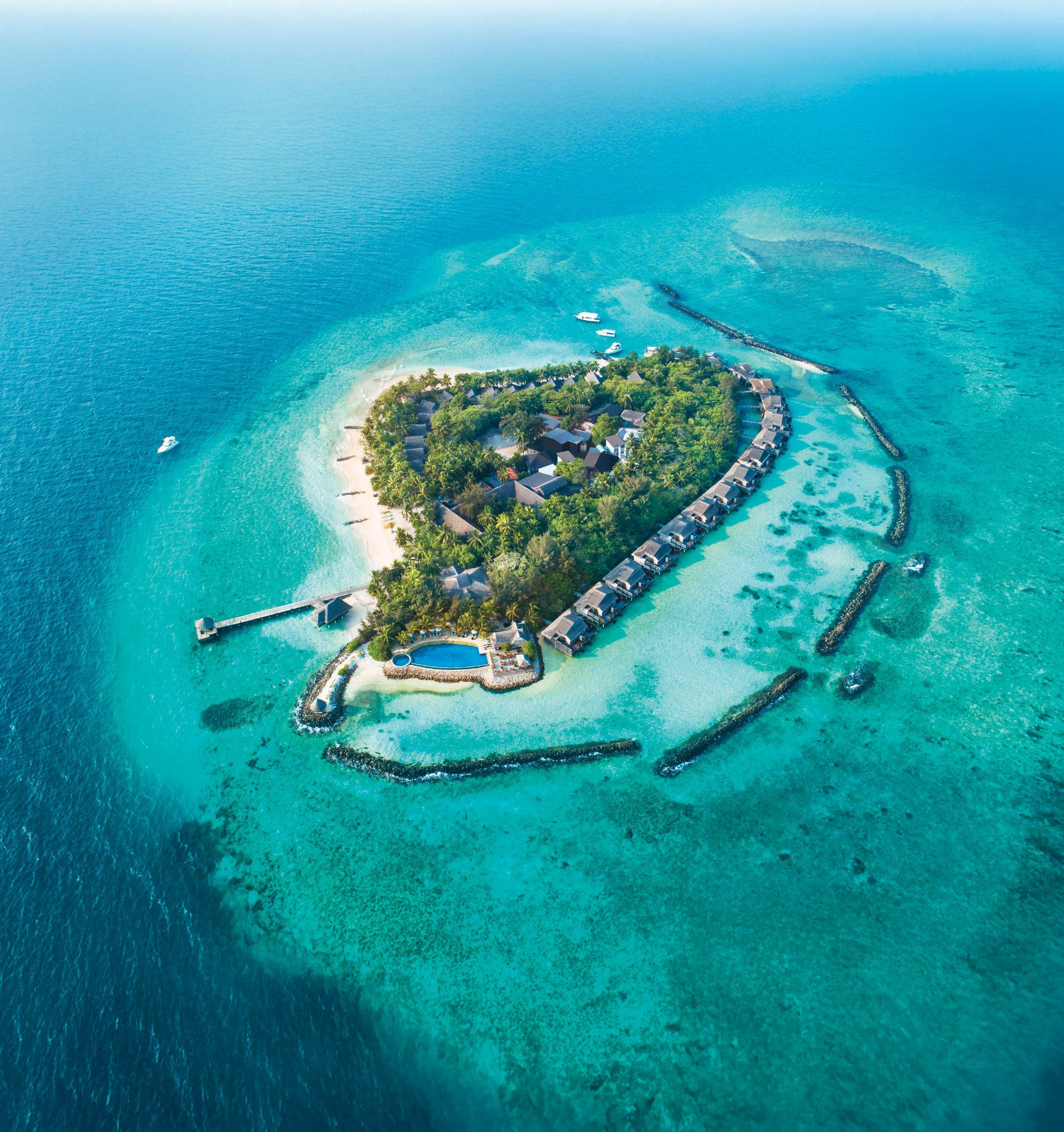
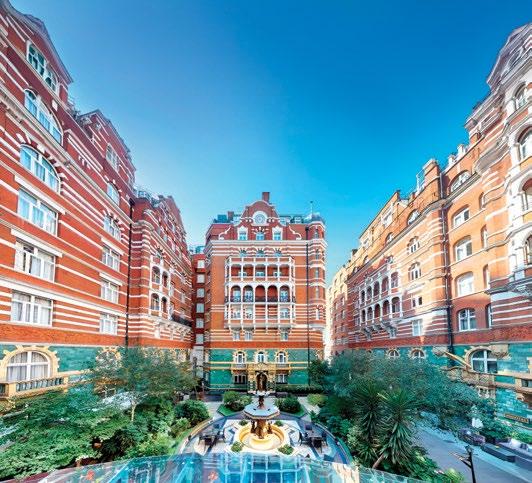
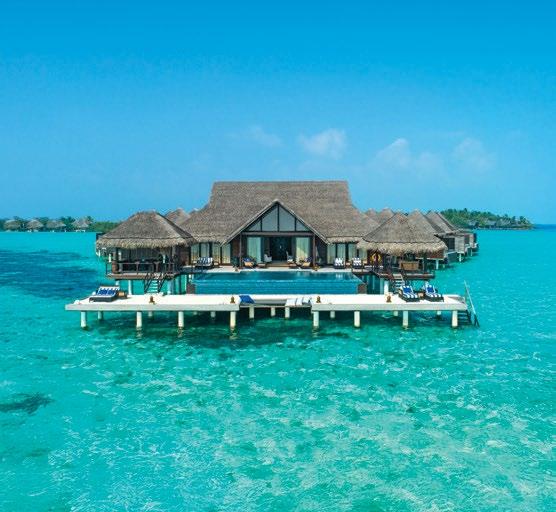
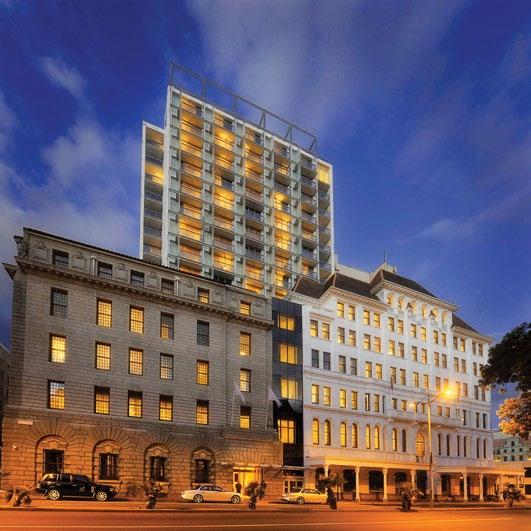
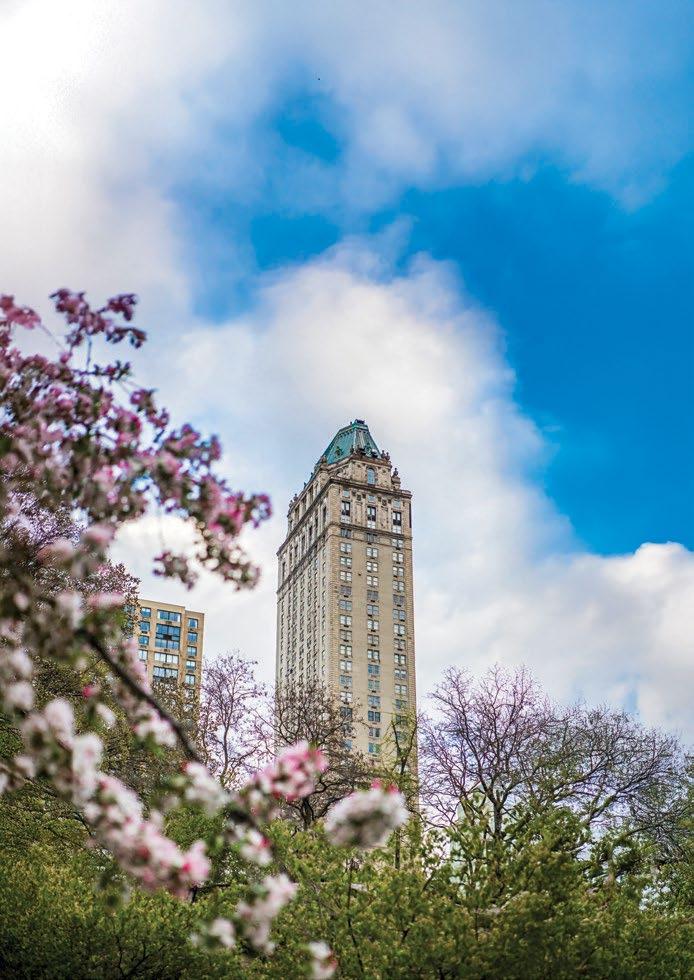
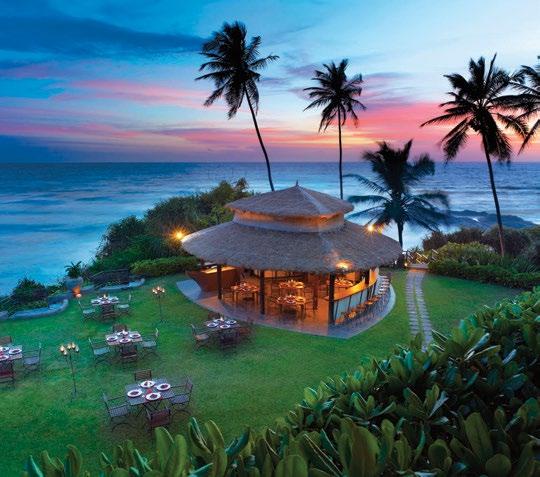


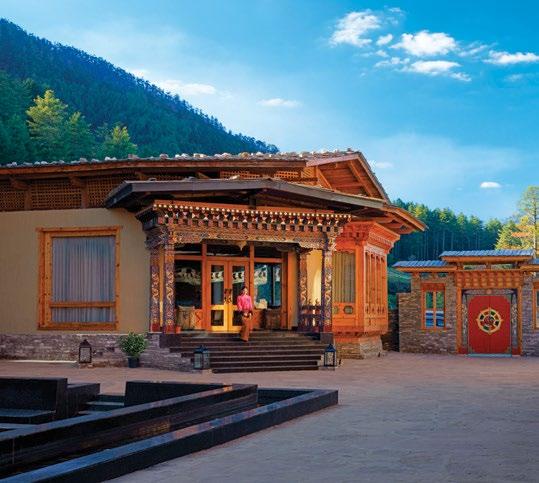
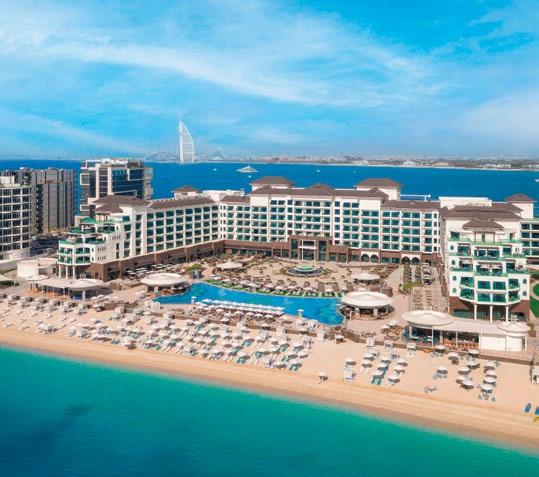
Taj 51 Buckingham Gate Suites and Residences, London
Taj Exotica Resort & Spa, Maldives
Taj Cape Town, South Africa
The Pierre, A Taj Hotel, New York
Taj Gangtey Resort & Spa, Bhutan
Taj Exotica Resort & Spa, The Palm, Dubai
Taj Bentota Resort & Spa, Sri Lanka





















FOUNDER'S NOTE
THE THIRD SPACE SHIFT
There was a time when hospitality operated within clearly defined boundaries.
Hotels were for travellers. Restaurants were for dining. Offices were for work. Homes were where life happened. But increasingly, those lines are beginning to disappear.
Across cities around the world, and now visibly across India, hospitality spaces are quietly transforming into what sociologists once described as “third spaces”: environments that exist somewhere between home and work, where people gather not out of obligation, but out of choice. And perhaps this is one of the most important shifts shaping modern hospitality today. Because increasingly, people are no longer seeking spaces that merely serve a function. They are seeking spaces that serve a feeling.
A sense of belonging. A sense of energy. A sense of pause. Community. Identity. Connection.
In many urban lives today, especially after years of digital acceleration and post-pandemic behavioural change, traditional social structures have evolved. Work is no longer confined to offices. Meetings happen over coffee. Creative collaborations begin in hotel lounges. Wellness rituals have become social experiences. Cafés double up as workplaces, networking spaces, and cultural hubs. Hotels are increasingly becoming places where people live, work, socialize, recover, and express identity, sometimes all within the same day.
Hospitality, in many ways, is becoming the new urban living room. This shift is particularly
visible among younger consumers and modern travellers who value flexibility over formality and experience over structure. They are drawn towards spaces that feel layered and emotionally intuitive, spaces where design, music, food, wellness, culture, and community coexist seamlessly. This is why we are seeing the rise of: members clubs, lifestyle hotels, community-driven cafés, mixed-use hospitality developments, co-working hospitality concepts, wellness social clubs, and culturally programmed spaces that blur the boundaries between hospitality, retail, entertainment, and lifestyle.
The business implications of this shift are profound. The future of hospitality may no longer be defined solely by occupancy rates or room inventory. Increasingly, value will also come from relevance, engagement, repeat community interaction, and the ability to remain woven into people’s daily lives, not just their travel calendars. For India, this evolution arrives at a fascinating moment. As urban lifestyles become faster, more fragmented, and digitally saturated, there is a growing desire for physical spaces that feel human again. Spaces that encourage conversation, creativity, slowness, collaboration, and emotional comfort. This presents an extraordinary opportunity for hospitality brands, developers, restaurateurs, and experience creators across the country. Because the next generation of hospitality may not simply be about where people stay. It may be about where people feel they belong.

GURMEET KAUR SACHDEV gurmeetsachdev@soulinkkworldwidemedia.com

THE WIDENING MAP
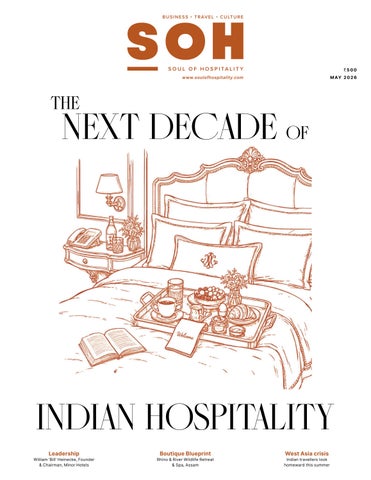
The numbers tell one story. Occupancy at 68%, RevPAR climbing steadily, a branded pipeline that could push India's hotel inventory toward 360,000 keys by 2030. The online accommodation market, valued at close to $9 billion today, headed for $16 billion by 2031. Demand outpacing supply. Pricing power holding. But the more interesting story is happening at the edges of the map. Hospitality leaders answer some questions in our cover story.
In this issue, we spend time with William 'Bill' Heinecke, founder-chairman of Minor Hotels, architect of a 600-property empire, built brick by brick, without inherited capital or a grand strategy. His approach to India, where Minor now plans some 50 properties, is characteristically measured: the right product in the right place, and no more.
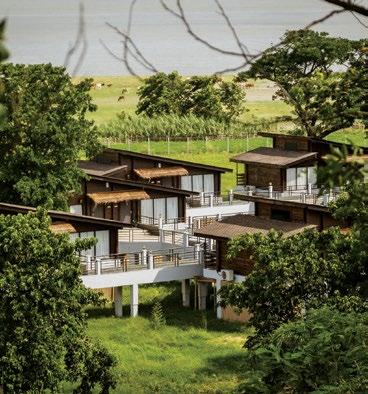
We also visit a region that rarely makes it to the limelight: the Brahmaputra floodplains of Assam, where the five-acre Rhino & River Wildlife Retreat & Spa has become the first resort on the river's banks, and recently joined the Small Luxury Hotels of the World network. Luxury, here, is redefined on its own terms.
Elsewhere, with outbound travel disrupted by geopolitical turbulence, Indian travellers are turning inward—to Puri, Meghalaya, Thiruvananthapuram—and across Asia, to Busan, Tokyo, Osaka. The domestic imagination, it turns out, is wider than the pipeline suggests. There is a lot more: the Kathiawada House as Mumbai’s new cultural sentinel; an exclusive tour through Goa’s Indo-Portuguese governor house; and Bengaluru's Kai Bar's cutting-edge design.
We hope you enjoy the issue.
Warm regards,
DEEPALI NANDWANI, EDITOR, SOH
Founder and Publisher
Gurmeet Sachdev
Editorial
Editor Deepali Nandwani
Managing Editor Rupali Sebastian
Digital Editor Rachna Virdi
Contributing Writer
Chandreyi Bandyopadhyay
Ruth Dsouza Prabhu
Suman Tarafdar
Madhumita Das
Creative
Creative Director Tanvi Shah
Team Shiv Soni
Business Head
Vipin Yadav Delhi, +91 99998 85515 vipin@soulinkkworldwidemedia.com
Sales Manager Deepa Rao Mumbai, +91 9136 000369 sales@soulinkkworldwidemedia.com
Head of Events and Alliances Karishma Shah karishma@soulinkkworldwidemedia.com
Office Manager Deepak Rao
Accounts Head Amey Acharekar
For queries: editorial@soulinkkworldwidemedia.com sales@soulinkkworldwidemedia.com info@soulinkkworldwidemedia.com
Printed and Published by Gurmeet Sachdev on behalf of Soulinkk World-Wide Media LLP. Registered office: 1/2, Old Anand Nagar, Nehru Road, Santacruz East, Mumbai, Maharashtra - 400055. Printed at Silverpoint Press Pvt. Ltd., A-403, TTC Industrial Area, Near Anthony Motors, Mahape, Navi Mumbai – 400709. Editor: Deepali Nandwani. All rights reserved worldwide. Reproducing in any manner without prior written permission prohibited. SOH takes no responsibility for unsolicited photographs or material all photographs, unless otherwise indicated, are used for illustrative purposes only. Unsolicited manuscripts will not be returned unless accompanied by a postage pre-paid envelope. All disputes are subject to the exclusive jurisdiction of competent courts and forums in Mumbai only. Copyright Soulinkk World-Wide Media LLP.










































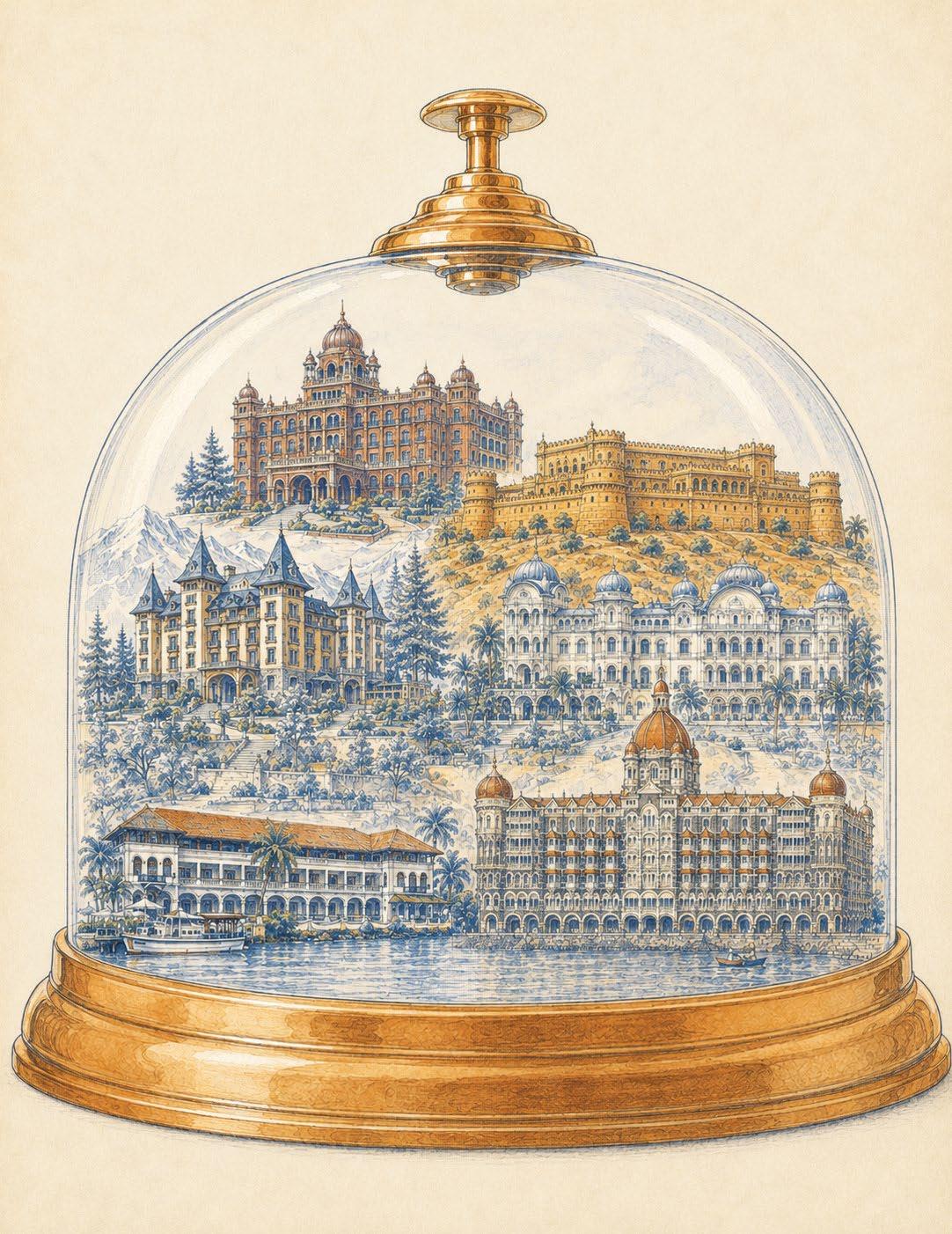
The Decade That Will Define Indian Hospitality
The numbers are extraordinary and the ambition is real. Scale is the easy part. What the hospitality industry builds inside it is the only question that matters now.
20
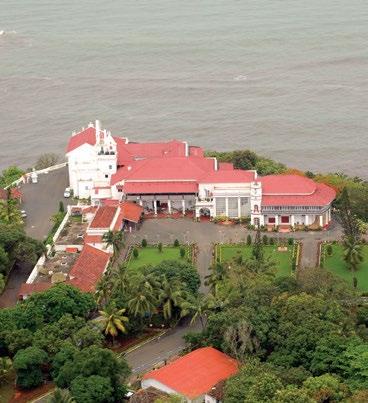
Goa’s Seat of Power Lok Bhavan opens to reveal Goa’s layered political past.
12
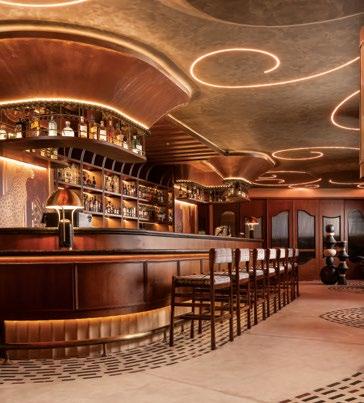
Modern Durbar Kai Bar brings palatial glamour to Bengaluru's skyline.
26
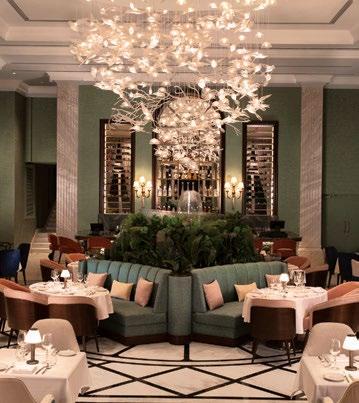
European Reverie Louve brings European grandeur to Lutyens’ Delhi dining.
30

88
Summer Turns Inward Travel shifts home as global routes tighten due to geopolitical tension.
Minor's Major Moves Hotelier William Heinecke bets big on India’s hospitality.
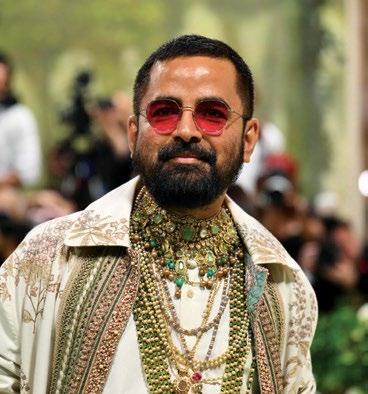
80 Voyages of Influence For Sabyasachi, journeys are emotional, lived-in, and deeply cultural.
108
At the Riverfront Assam's newest retreat brings Pobitora rhino sanctuary into focus.
16
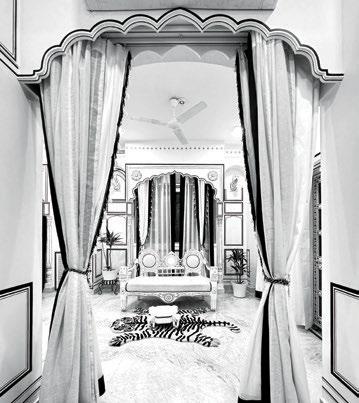
Illustrated Haveli A heritage hotel in Jaipur blurs boundaries between art and stay.
A BAR ROOTED IN INDIAN PALACE ARCHITECTURE
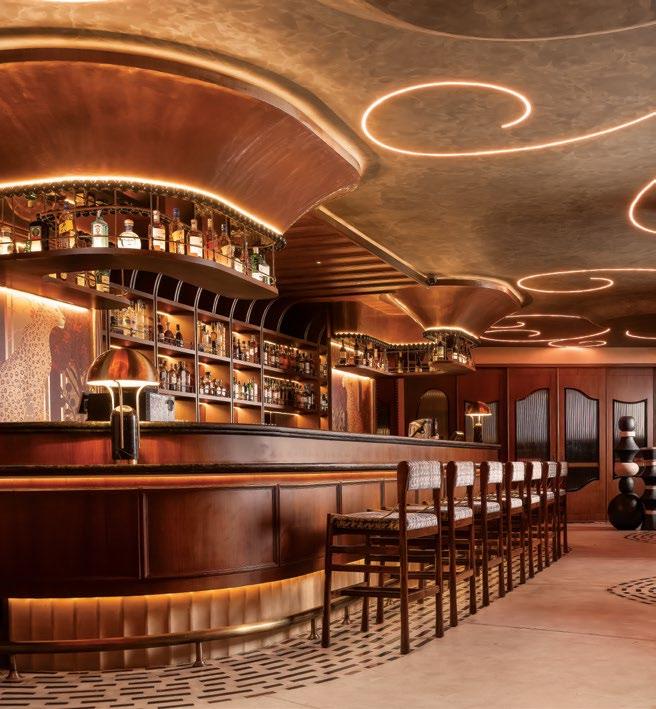
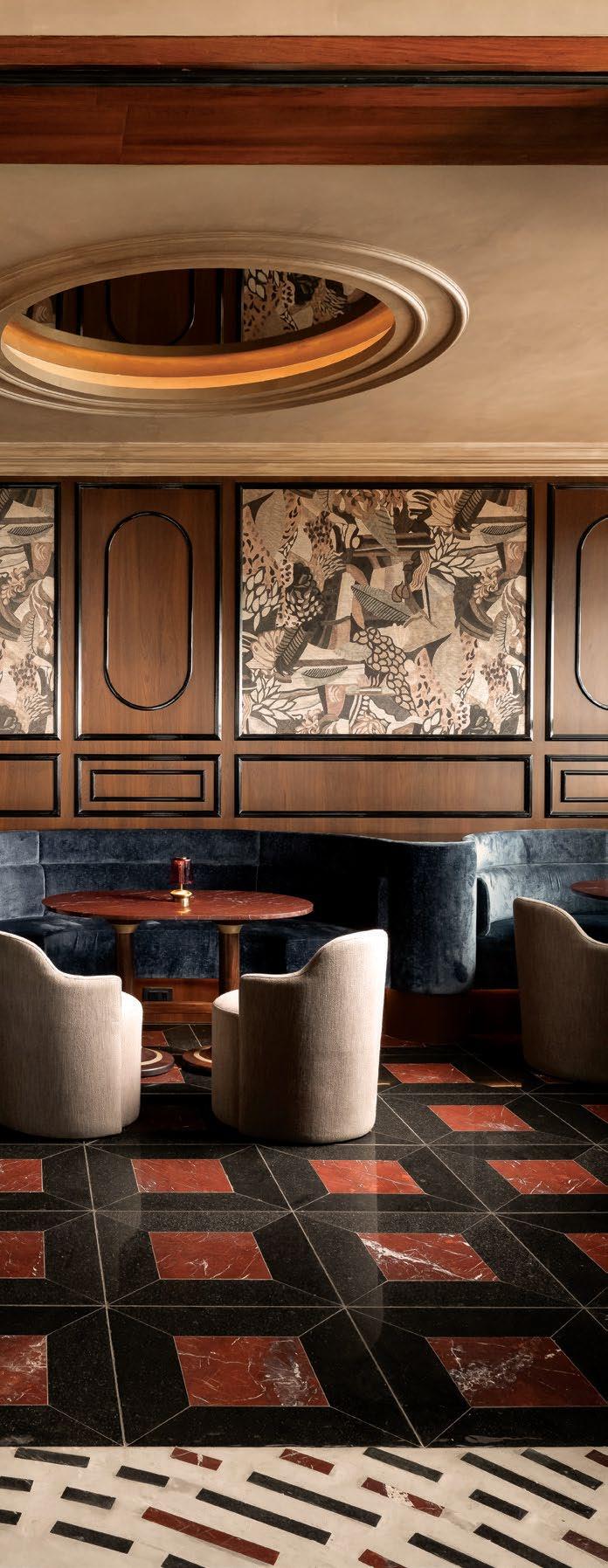
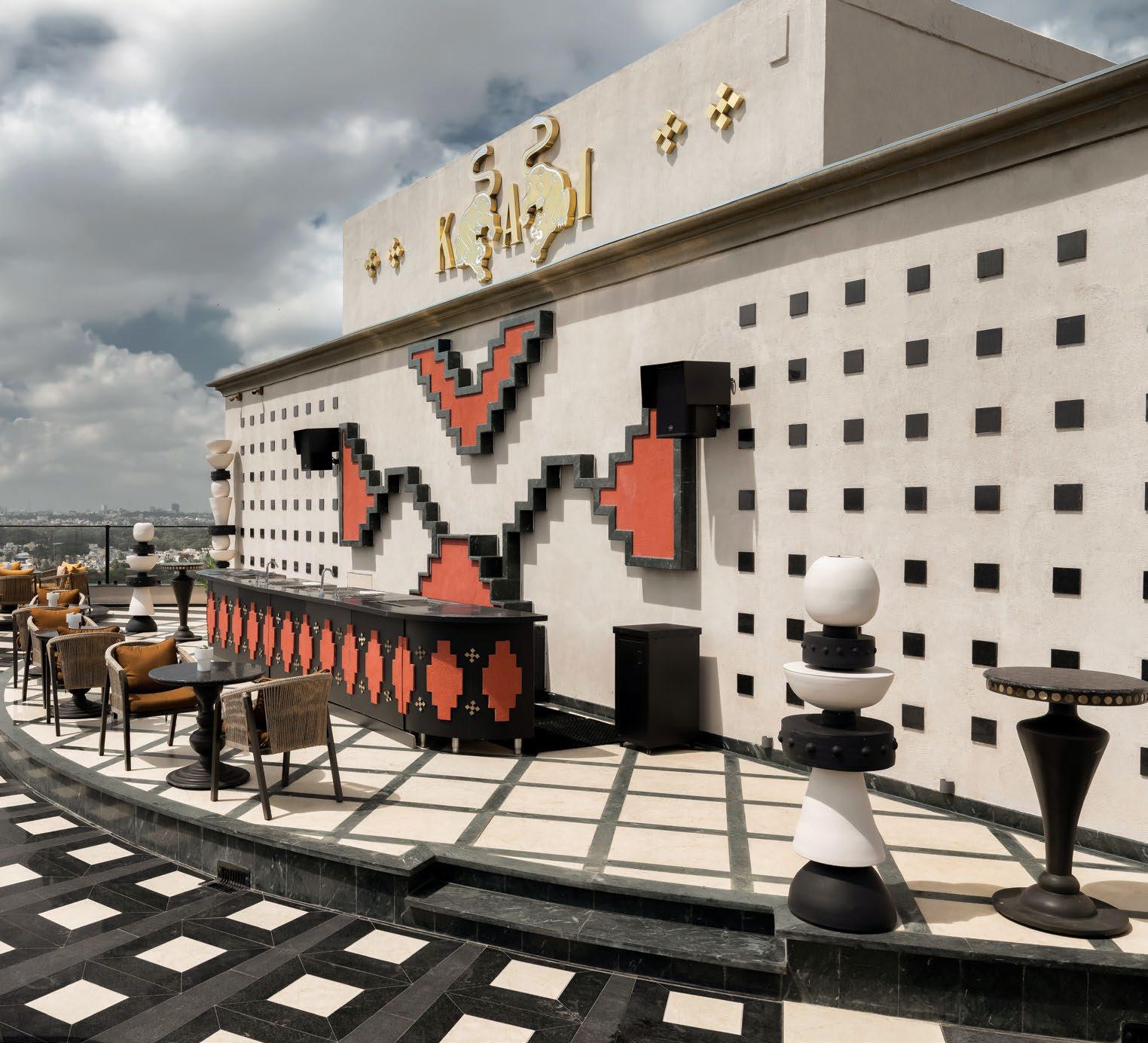
Perched on the 13th floor of an Art Deco building, Kai Bar and Kitchen was 1.5 years in the making. Converting a penthouse to a symmetrically fluid and flexible bar has been an exercise in creativity and balance for Maze Concept Design Studio.
RUTH DSOUZA PRABHU
In the early 2000s, the Central Business District (CBD) of Bengaluru was where all the action was at. MG Road, Brigade Road, and Residency Road had some great restaurants, pubs, and bars, and were the ultimate hangout spaces for folks of all wallet sizes. Then, thanks to Bengaluru's circular growth pattern, the localities of Indiranagar, Koramangala, JP Nagar, Whitefield, Sarjapur Road, each began to see spectacular levels of expansion, particularly in the F&B space, keeping crowds locality bound. From the 2020s, the OG localities have been seeing a spate of new openings.
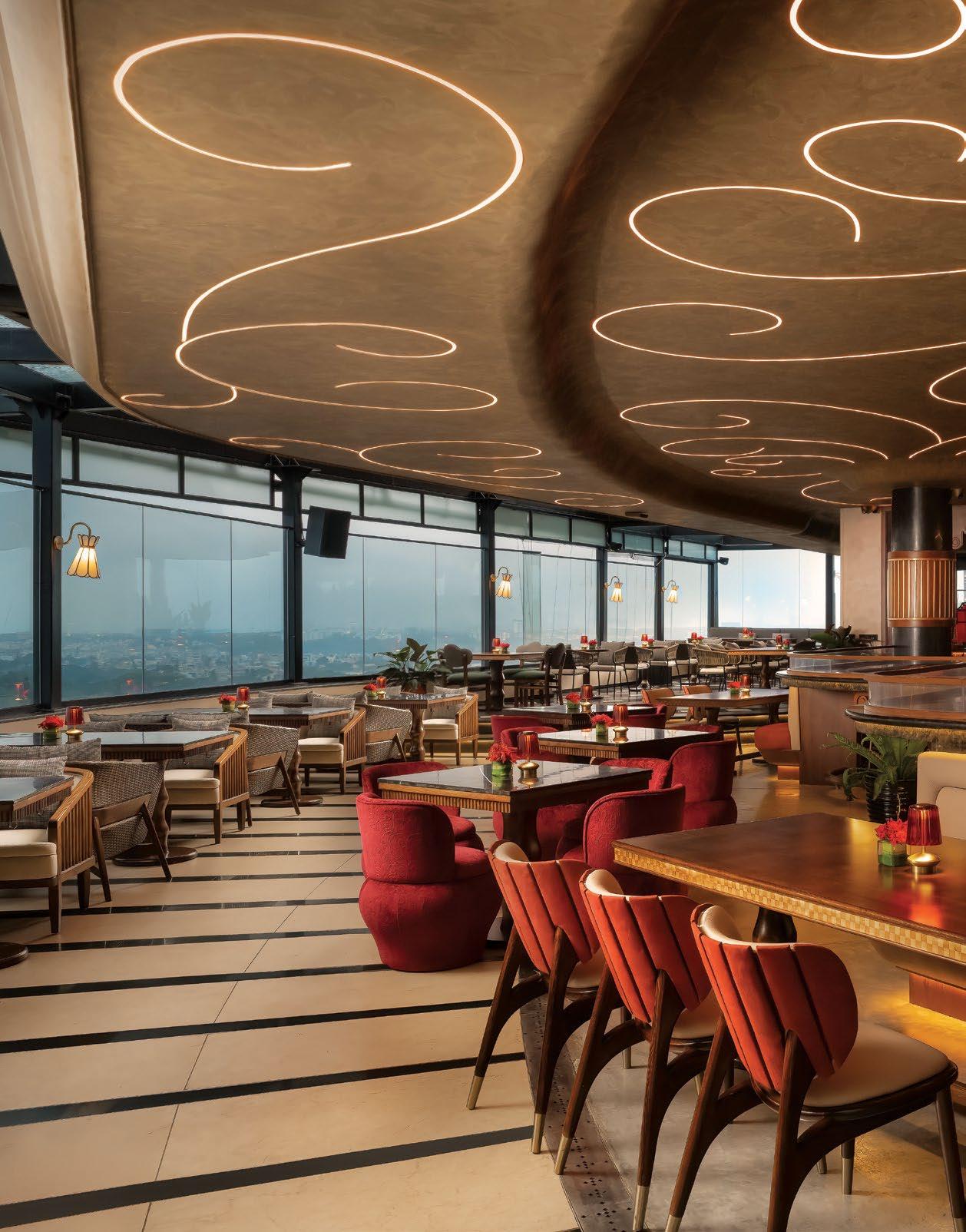
RIGHT: Interiors combine visual elegance and genuine comfort.
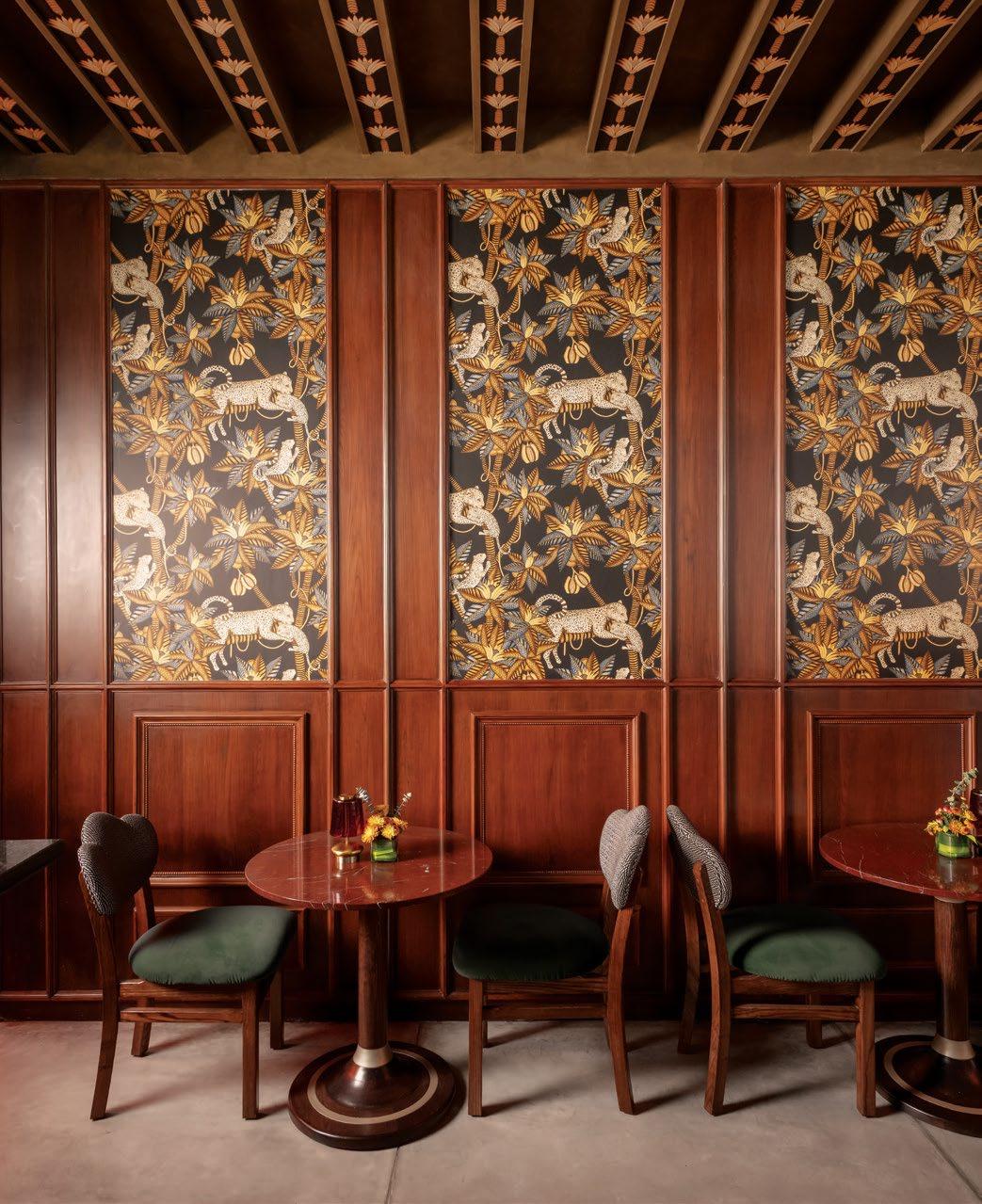
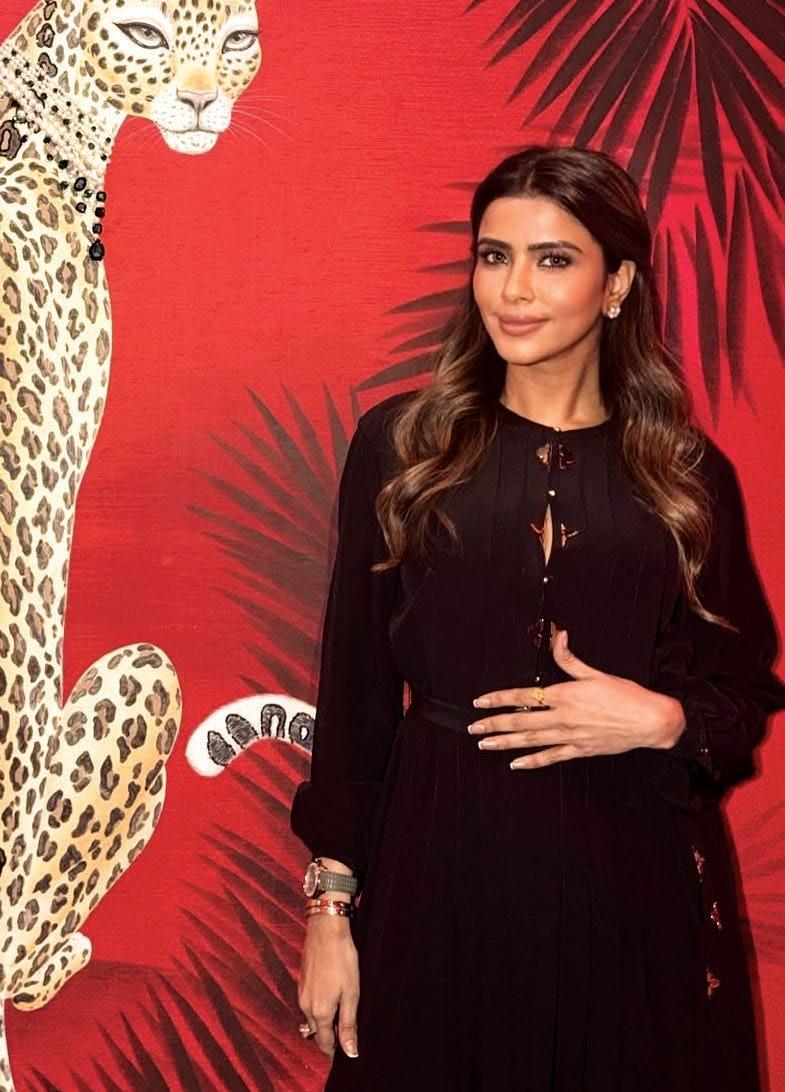
BELOW: Wallpaper uses a symmetrical leopard motif, the Kai mascot.
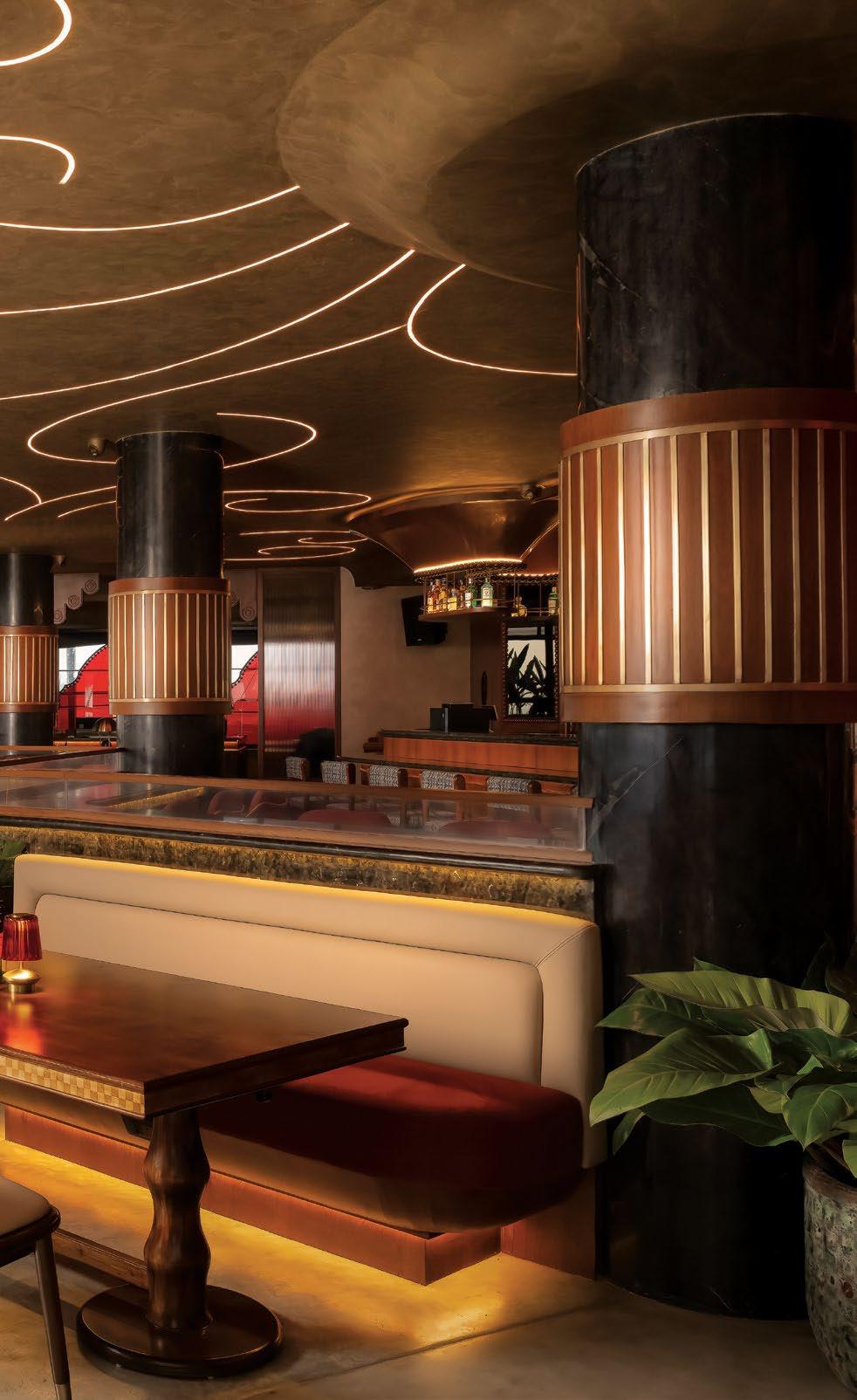
FAR RIGHT: The main floor contains booth seating, community seating, individual tables, and the bar.
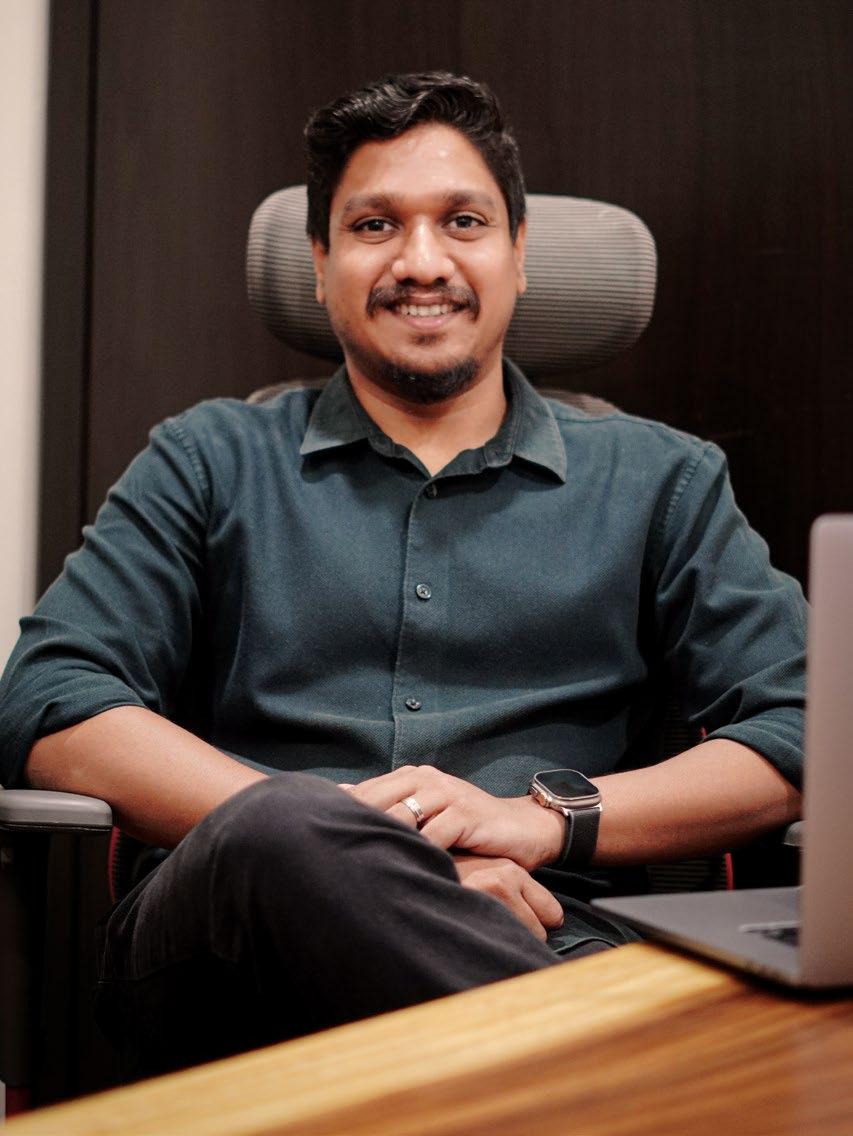

Recently joining the scene, capitalising on Bengaluru’s legendary weather, is Kai Bar and Kitchen. Set atop the 1996-built Du Parc Trinity—a 13-storey Art Deco commercial building—the interiors of Kai draw heavily from the maximalism and intricacy of Indian palaces. Principal designers of Maze Concept Design Studio, Koushik B. R. and Priyanka M. C. have reinterpreted these royal inspirations in a contemporary, non-intimidating way.
The creation of Kai Kai, a character-led identity rather than a linguistic one, introduces itself through the subtle recurrence of a leopard motif, setting the tone for an architecture that builds narrative through form and detail.
Step into Kai, and you can’t help but feel like you are walking into a modern-day durbar. The 6,500sq. ft., two-level space draws from the Rajasthani tradition of ornate arches, layered surface patterning, and material richness, interpreting it for the modern city.
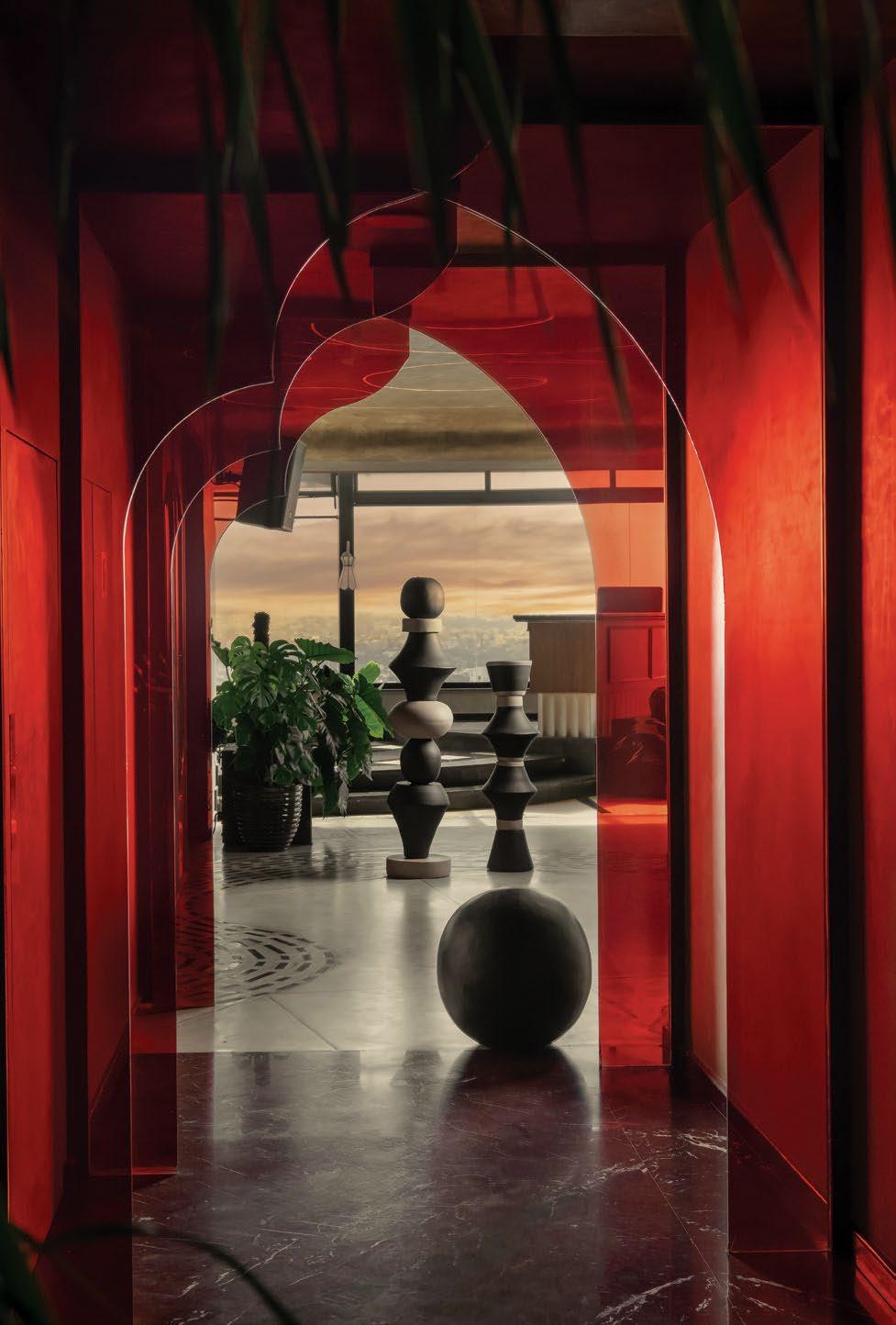
Guests walk past split arches designed to give the visual effect
of being whole, in a red-on-red hue. The layout on this floor is anchored by a central bar, conceived as the spatial nucleus around which all movement unfolds. Raised internally by a foot to accommodate plumbing below, its back wall flanking two structural building shafts is finished in liquid metal paint, a copper powder substrate that oxidises over time. “It will change colour,” says Priyanka. Mirrors amplify the bottle shelf lighting, while the brackets and mouldings are scaled up from carved timber brackets found in traditional Indian doorframes. Red glass panels backlit at the bar shift the ambient colour of the space around it. Between seating spaces on the floor, drain inlays are a custom CNC-cut motif taken from the Kai logo. The ceiling motif is drawn from the peacock feather, abstracted into a curved symmetry built from pixel LED strips. “It enables those operating the space to change the vibe instantly,” says Koushik, during a demonstration that moves from a fine dining setup to a highenergy night.
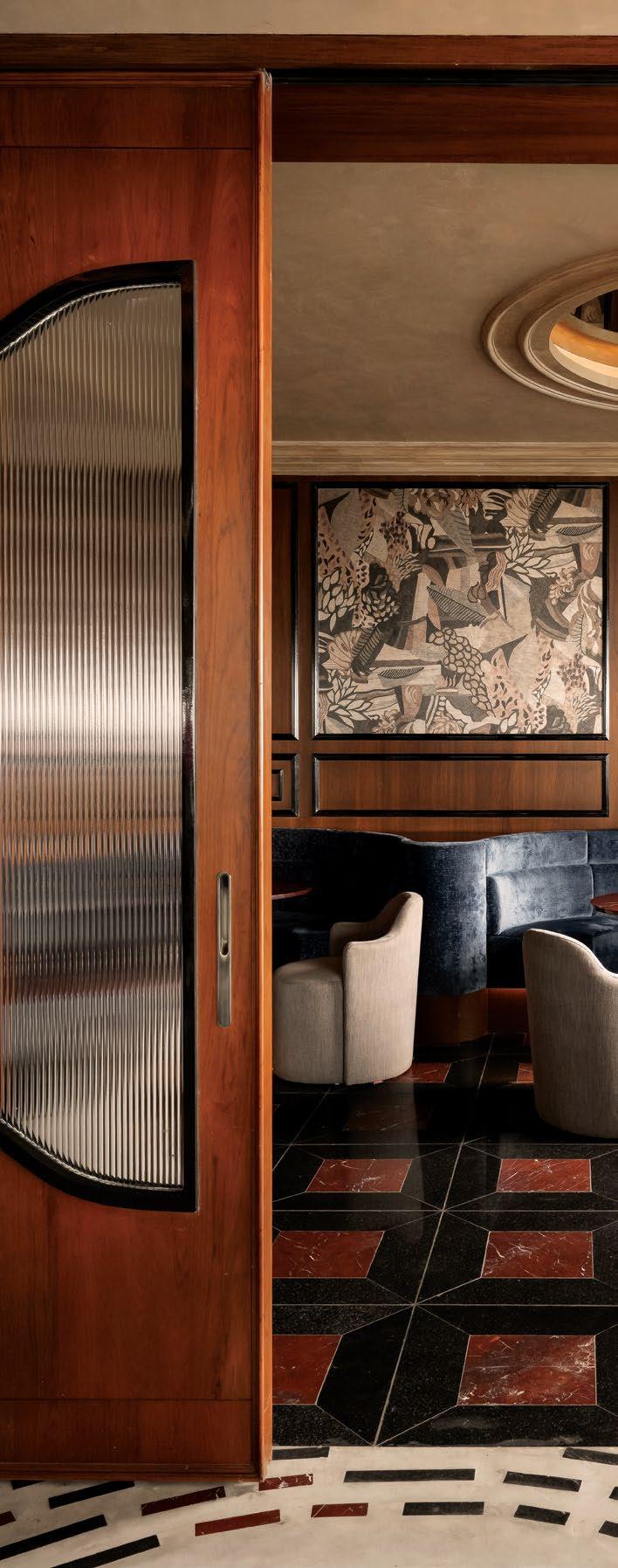
FAR LEFT: The half-arch at the entry is designed to be an illusory full arch. LEFT AND ABOVE: Koushik B. R. and Priyanka M. C., Principal Designers, Maze Concept Design Studio.
Materiality carries the narrative. Floors combine marble and granite in custom-cut inlay patterns that were factory-cut off-site and assembled here due to elevator constraints. “Marble is softer,” notes Priyanka, explaining the need to protect the finish. The main dining area’s wallpaper, a symmetrical leopard motif printed on metallic foil, was designed in the studio. Brass threads through fixtures and surfaces.
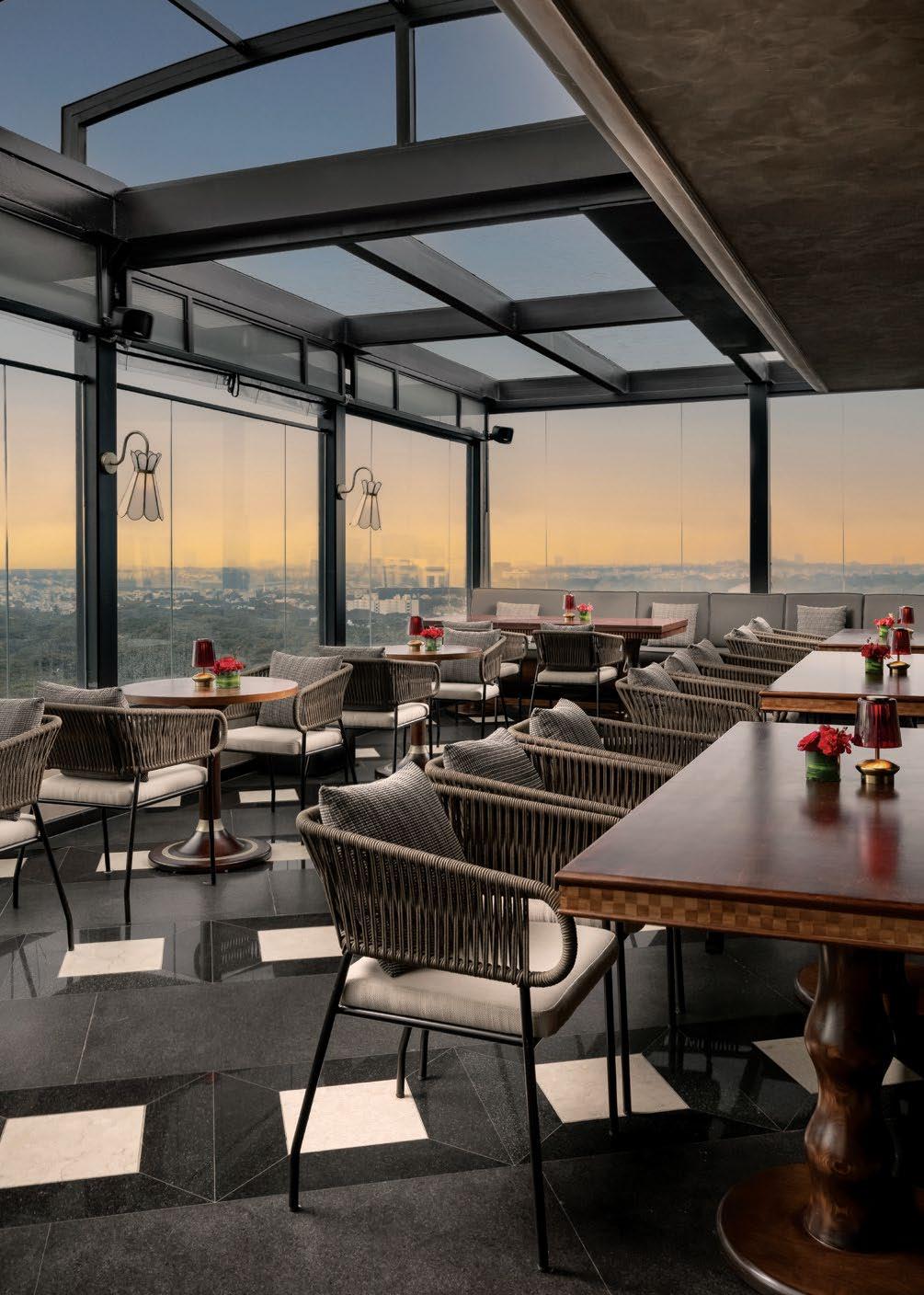
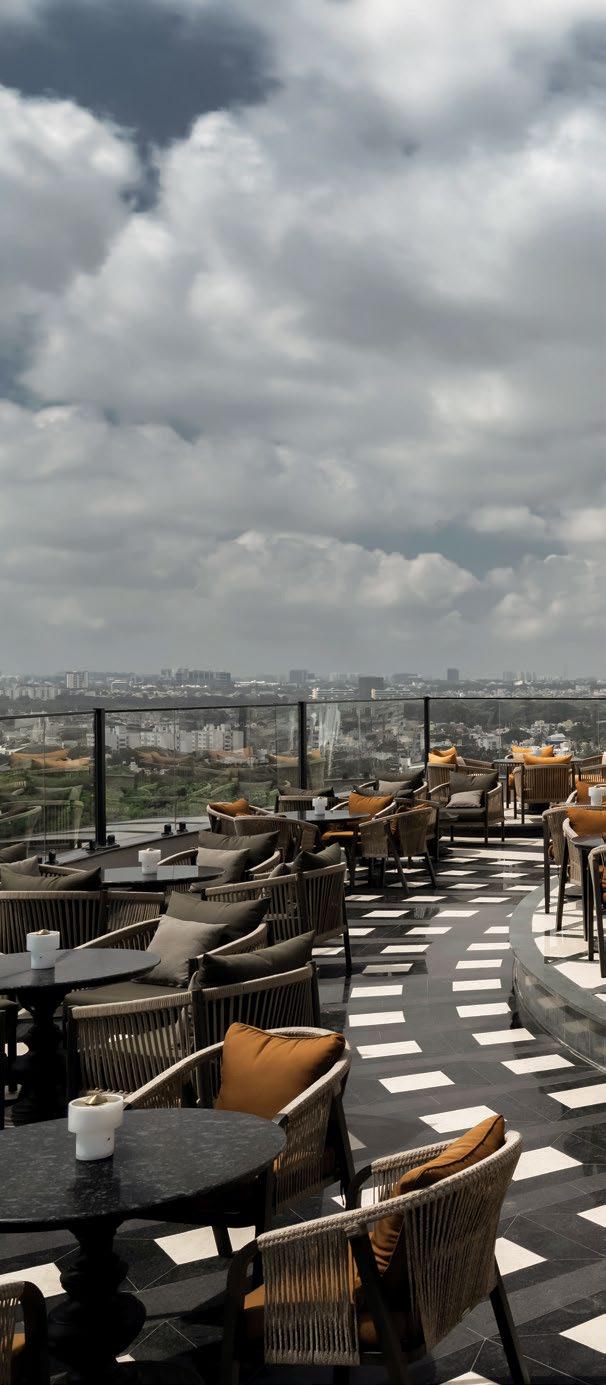
But the more telling quality of Kai is how the space moves. “We wanted all the seats to face the view,” says Koushik. Every zone is oriented toward the panoramic skyline. The community bench along the glass perimeter is grouped in threes, positioned to the view and fully loose. It works as a quiet spot for two, a sociable stretch for a group, or a standing ledge when the DJ console comes alive and the floor clears. “You move everything, and it becomes a dance floor,” he says.
The raised deck within the main floor offers an elevated vantage, allowing sightlines over those below toward the bar and the view. Tables can be joined or kept separate. The private dining enclosure seats around 20, closes on a telescoping sliding mechanism, and is the only air-conditioned zone, an intimate chamber that can be absorbed back into the main hall.
The upper floor, added later, is a continuation of this fluid logic. On weekends, it operates as an open party space, tables removed, and the floor given over to standing and dancing. “You can just take this entire space and arrange it however you want,” says Koushik.
Food that keeps pace Kai, as a space, shifts easily between moods. Its menu follows a similar rhythm. It moves across
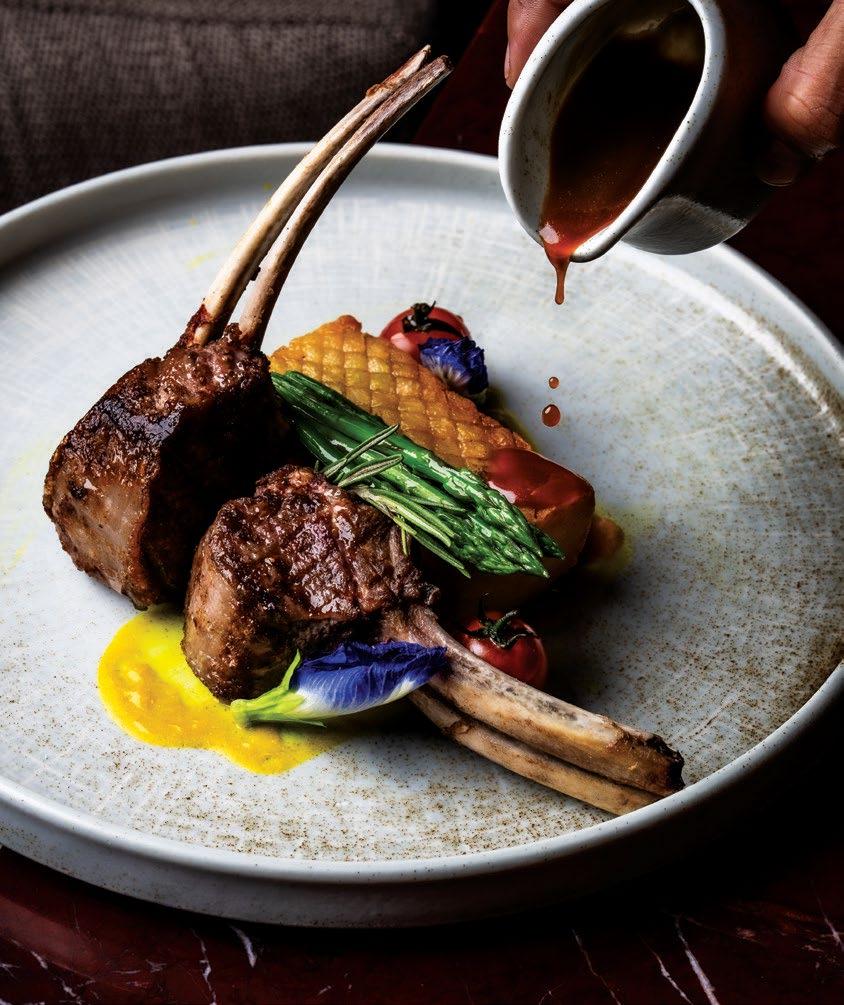
ABOVE: Kai does a gamut of popular international cuisines, showcasing a number of small plates.
BELOW: The retractable roof installation involved significant waterproofing challenges.
a global mix, drawing from Japanese, Asian, Indian, and Mediterranean influences, without leaning too heavily into the fine dining space. Instead, it reads as a spread designed to hold a table together, with something for everyone, whether you are here for a full meal or just a drink and a few plates to share.
Small plates set the tone. The Smoked Chicken with Baby Arugula and Yuzu Vinaigrette is clean and balanced, the bitterness of the leaves and the sharp citrus lifting the tenderness of the meat. Bar nibbles keep things easy. Polenta bites with Strawberry Salsa are great flavour contrasts, while the crispy spicy Shake Salmon Roll brings in crunch through tempura flakes with a gentle heat. Basil Butter Prawns are straightforward and satisfying, and the Char Siu Crispy Pork holds onto that familiar sweet-savoury depth. The selection of dumplings
ABOVE: The semi-enclosed private dining space accommodates roughly 20 guests.
BELOW: An upper-floor extension that transforms from large-group dining space to an open party venue for weekend nights and sundown sessions.
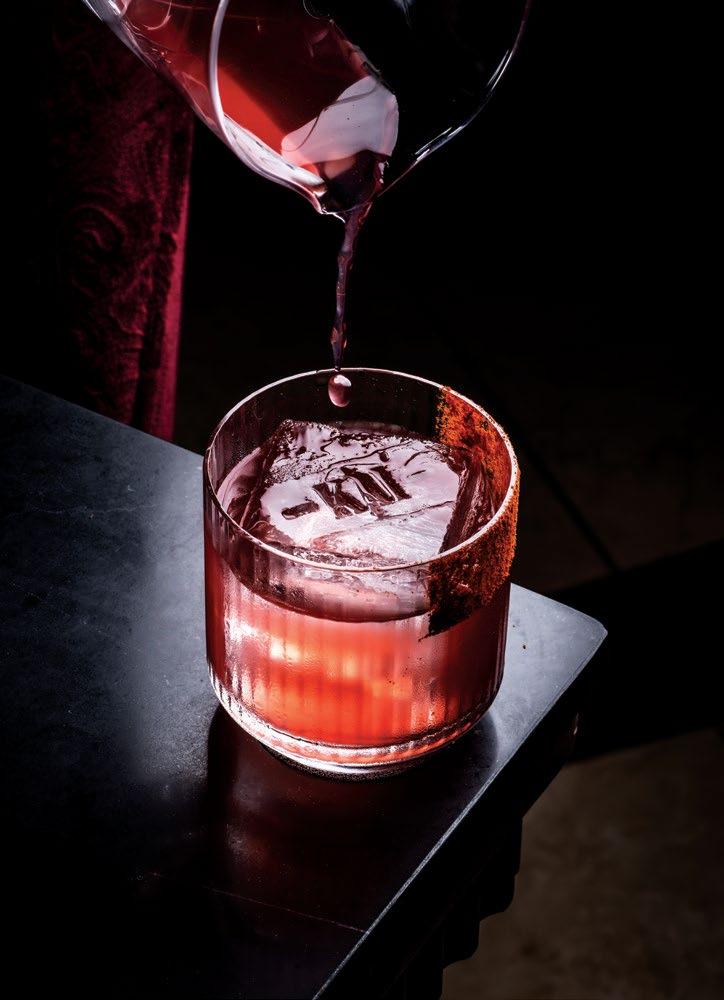
ABOVE RIGHT: Kai's cocktail programme is both flavourful and well-balanced.
and gyozas is more about comfort than flourish.
The mains stay in that same space. The Pad Prapow, with lamb mince, bird’s eye chilli, basil, soy, and ginger, is robust and direct. You can also opt for a Pistachio and Cottage Cheese Steak, Vodka Prawn Spaghetti, Malabar Seared Fish, Dum Murgh with Kulcha or the classic green Thai curry chicken with jasmine rice.
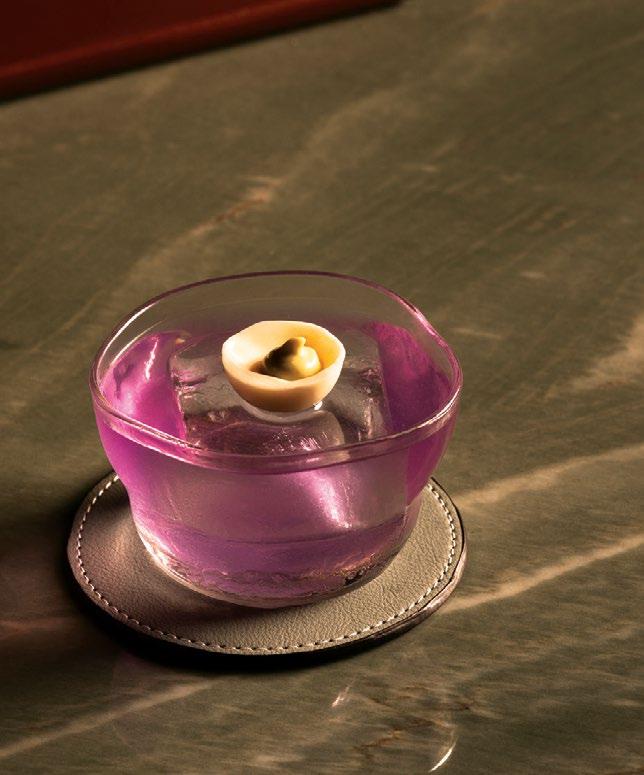
Cocktails carry a bit more play. The Meiju works through layers, with Camino Real Blanco, plum brine pickle, and clarified green apple coming together in a drink that is sharp and slightly unexpected. The Hibana leans fruit-forward, pulling together Tanqueray, Ketel One, Camino Real Blanco, pineapple, and pomegranate molasses into something brighter. The Trinity Paloma, carbonated and built on pink grapefruit and plum, keeps things light and easy to return to.
Dessert closes simply. A berry chocolate tart made with singleorigin chocolate, familiar in structure, but enough to round off the meal without slowing it down. Like the space, the food does not fix itself into one idea. It moves, adapts, and settles where it needs to.
DRAWN TO STAY
A Jaipur home becomes a living, immersive homestay, where heritage is redrawn around the guest experience.
RUPALI SEBASTIAN
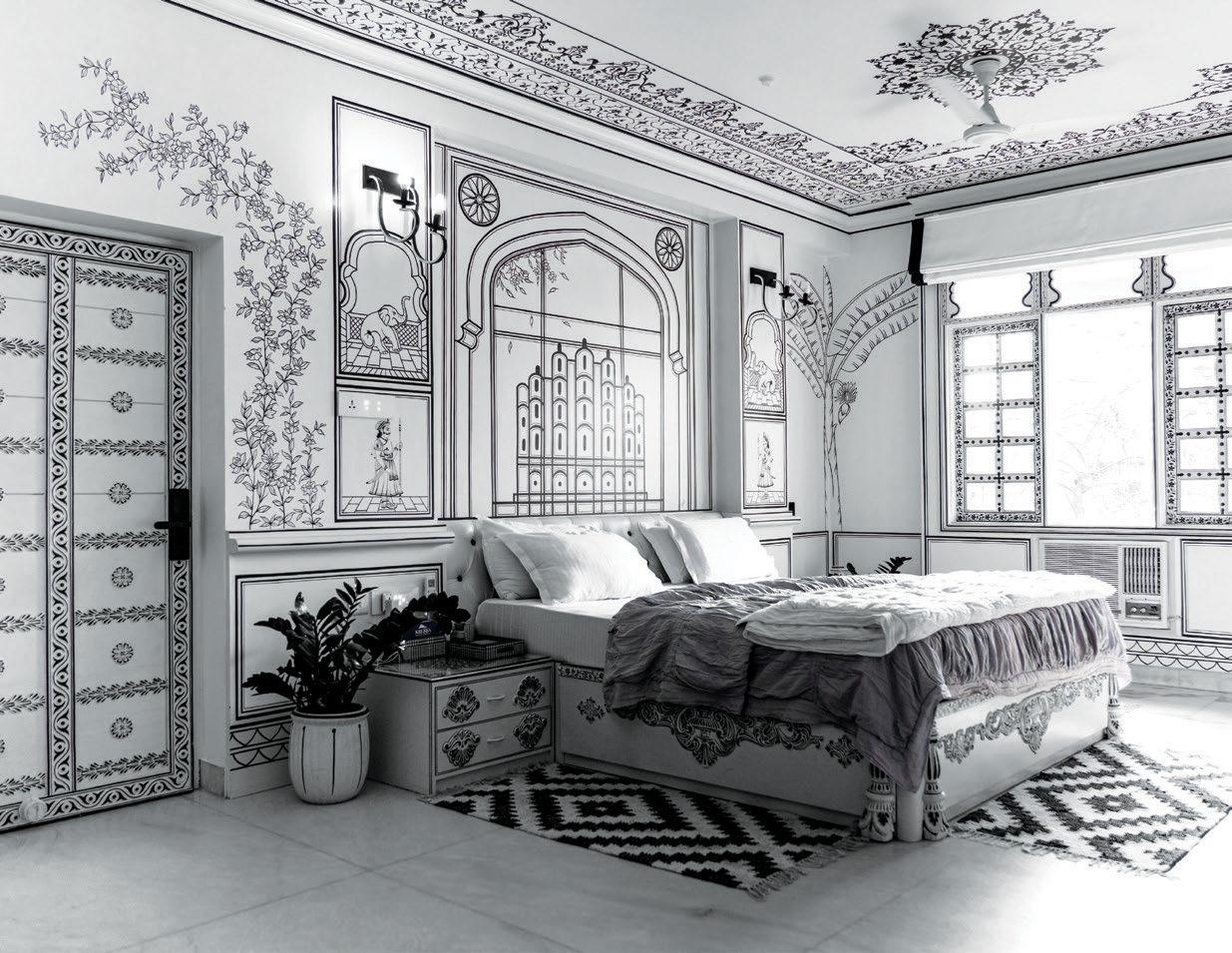
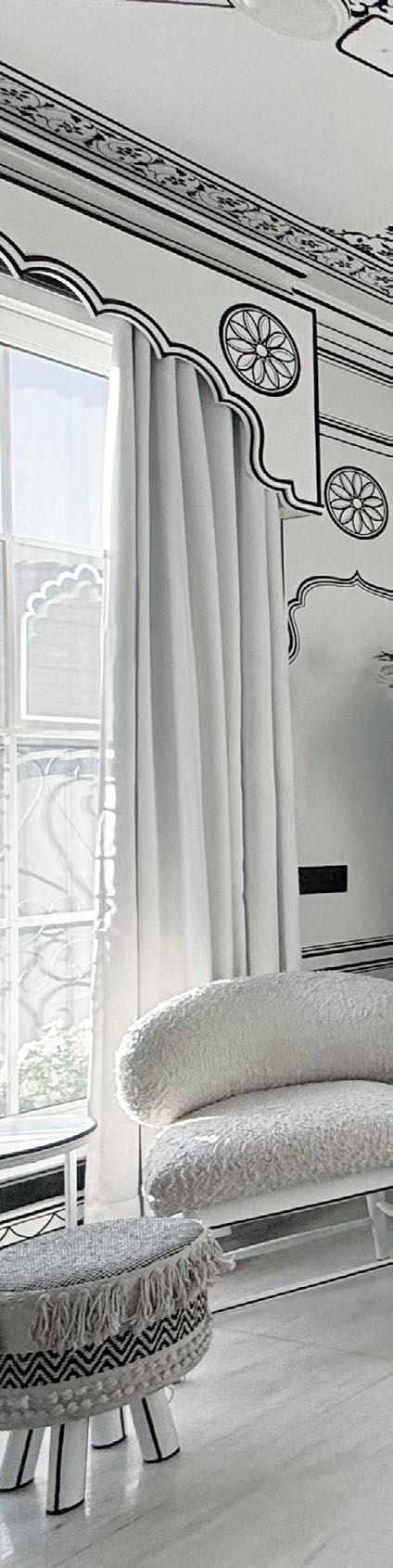
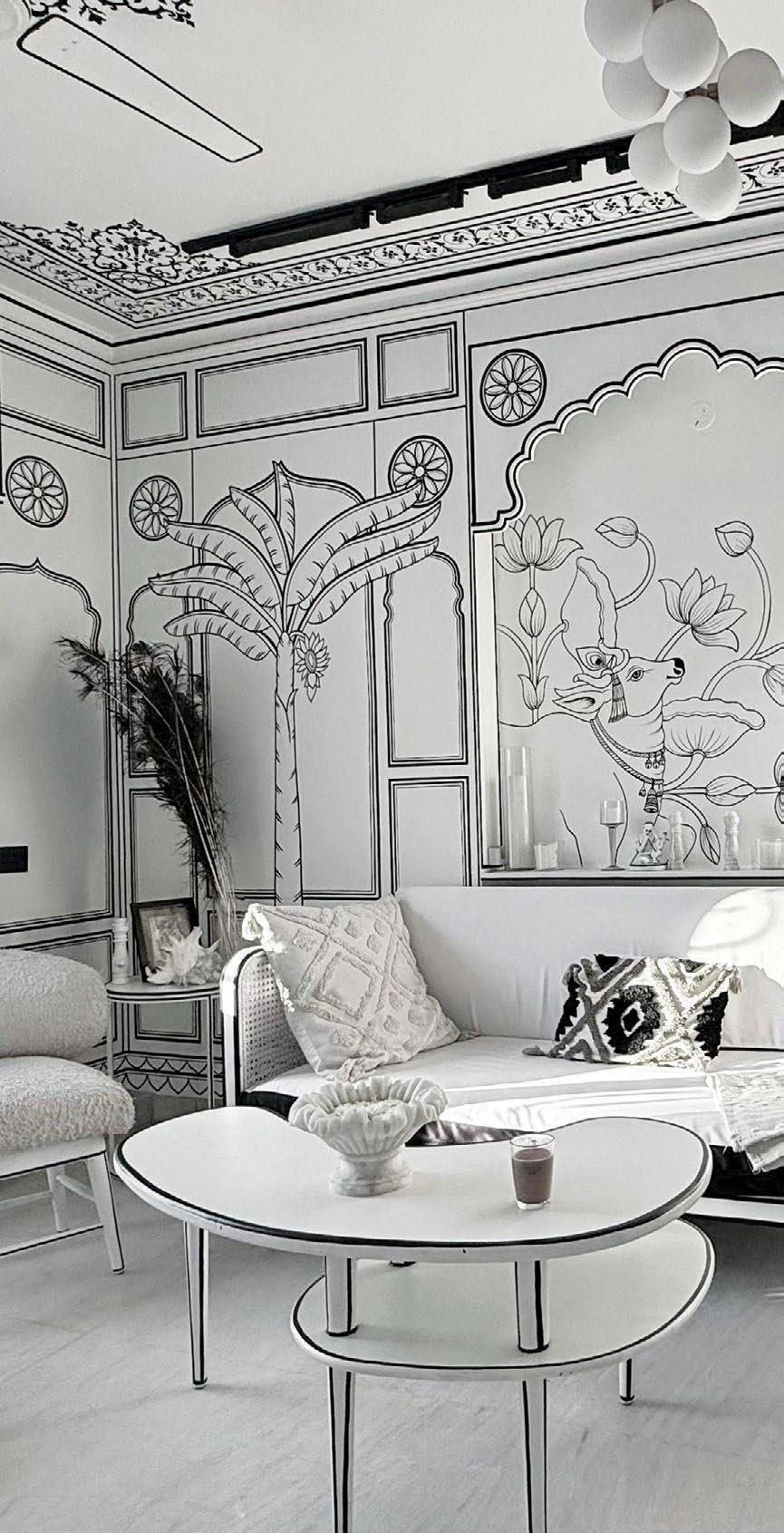
In a city where heritage is often framed at a distance—admired in façades, photographed in fragments—Lalluji Luxe turns that relationship inside out. Here, the haveli is not something you look at; it is something you inhabit.
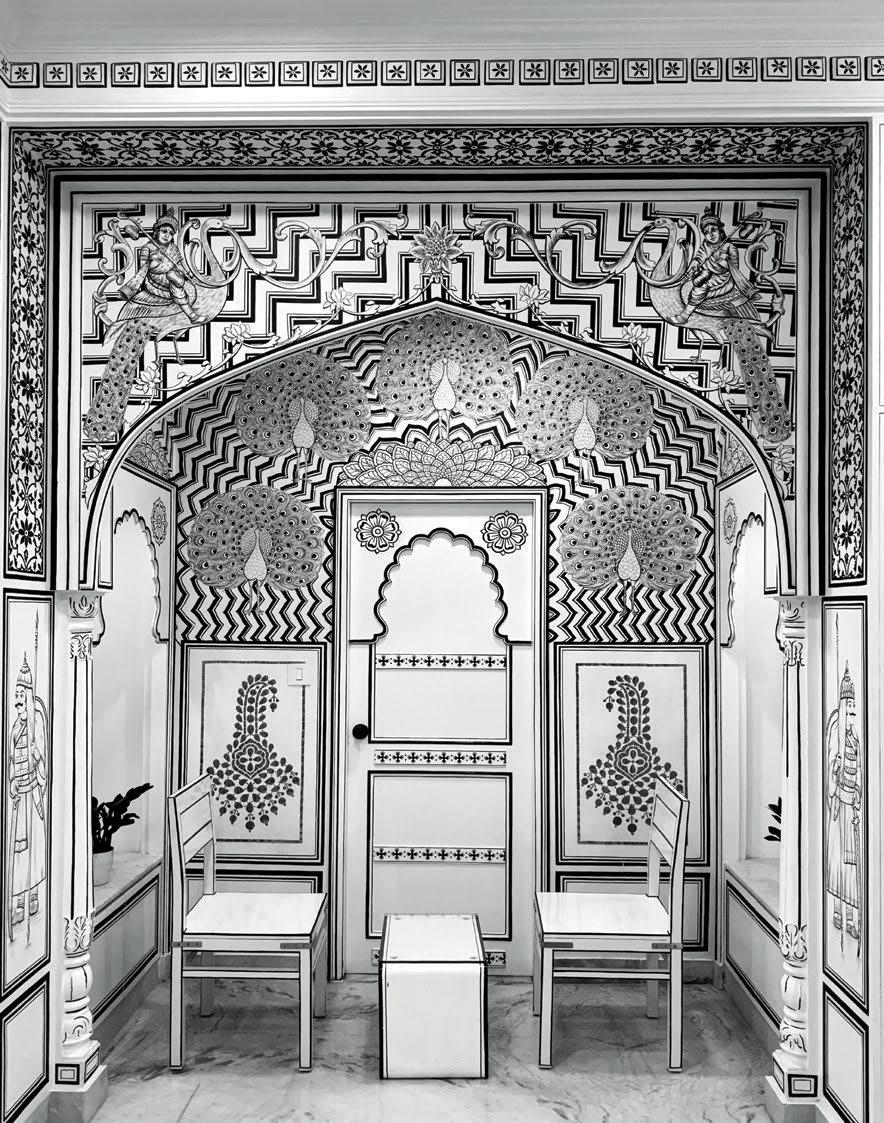
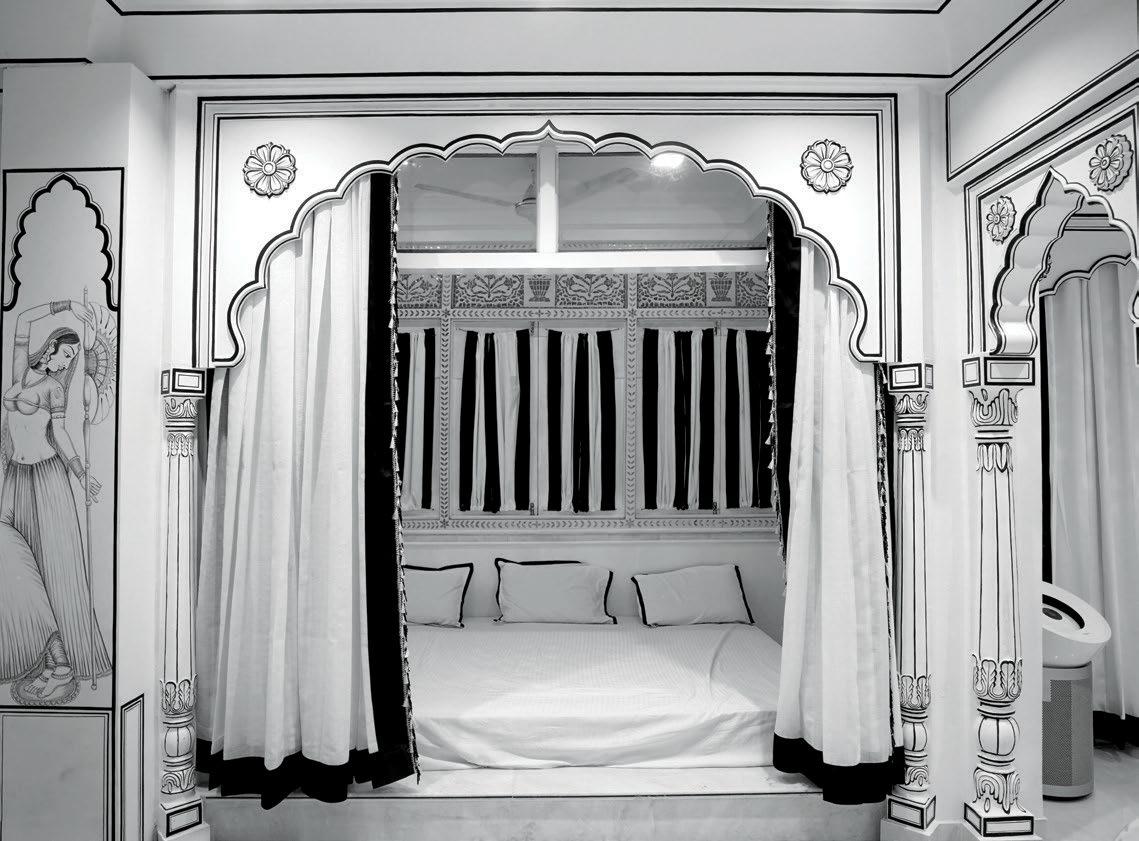
Set within Kapil Purohit’s own family home in Jaipur’s C-Scheme, the luxury homestay does not announce itself through scale or spectacle. Its provocation is quieter, more immersive. Every surface—walls, furniture, even objects—has been hand-painted in monochrome linework, collapsing
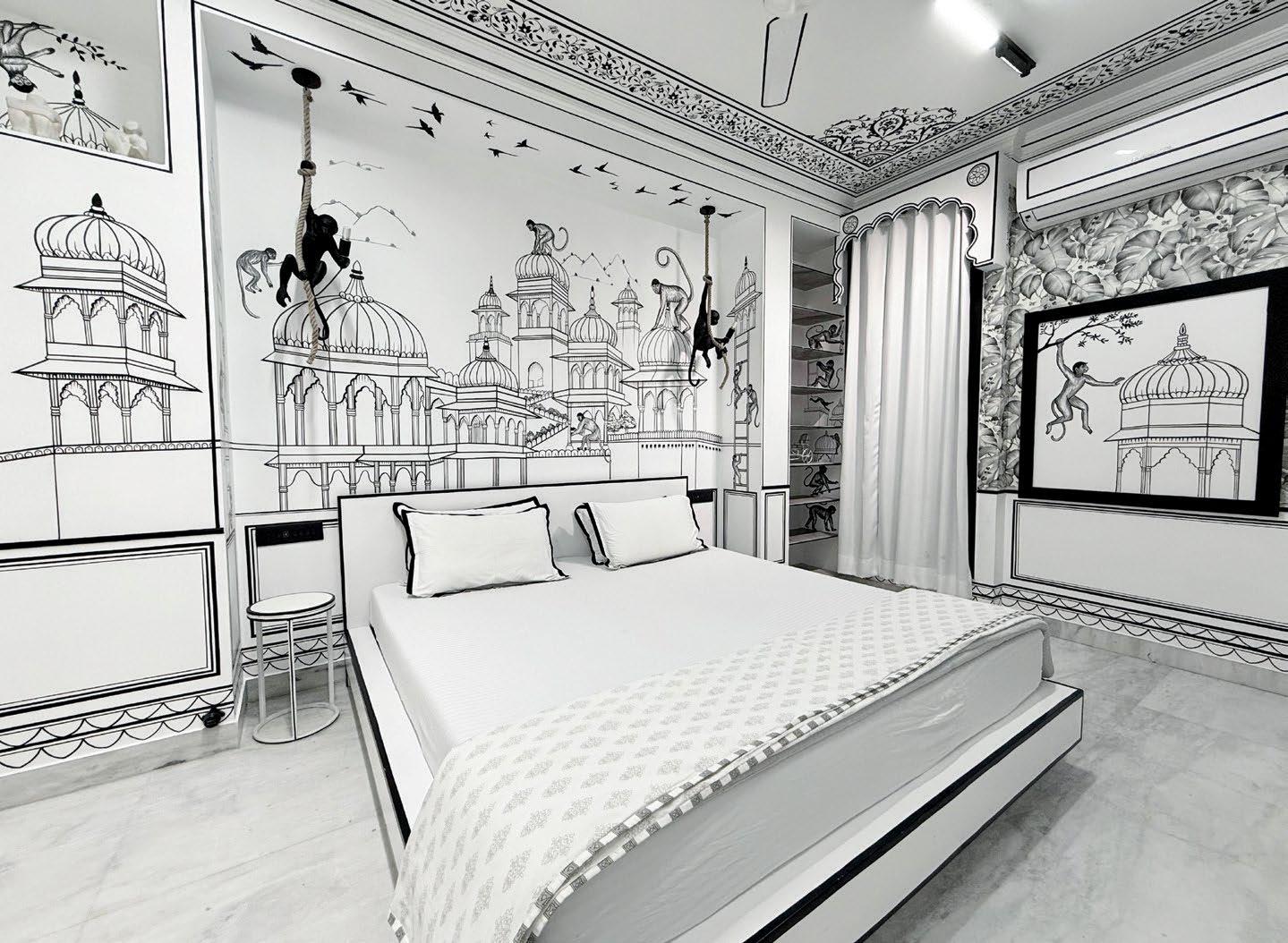
depth into drawing. The result is a space that feels less built than sketched, as though architecture has momentarily stepped aside to let illustration take over.
But to read Lalluji Luxe purely as a visual experiment would be to miss its more personal beginnings. Conceived in part as a tribute to his father, the project emerged from a deeper discomfort around how Jaipur was being experienced.
“People were only talking about the havelis, the palaces,” Purohit reflects. “But the guest—the person actually coming in, spending time, looking for a break—was missing from that conversation.”
The response was not to recreate heritage, but to reframe it around the guest. The idea of a two-dimensional haveli—drawn rather than built—emerged less as a stylistic flourish and more as a device. If visitors were to be central to the experience, the setting had to respond to them, not overshadow them. In photographs, in memory, even in movement, the guest becomes part of the composition, almost as though stepping into a sketch.
THIS SPREAD: Lalluji Luxe, a luxury homestay where architecture dissolves into line. What begins as visual intrigue gradually settles into experience—where craft, restraint, and hospitality come into quiet alignment.
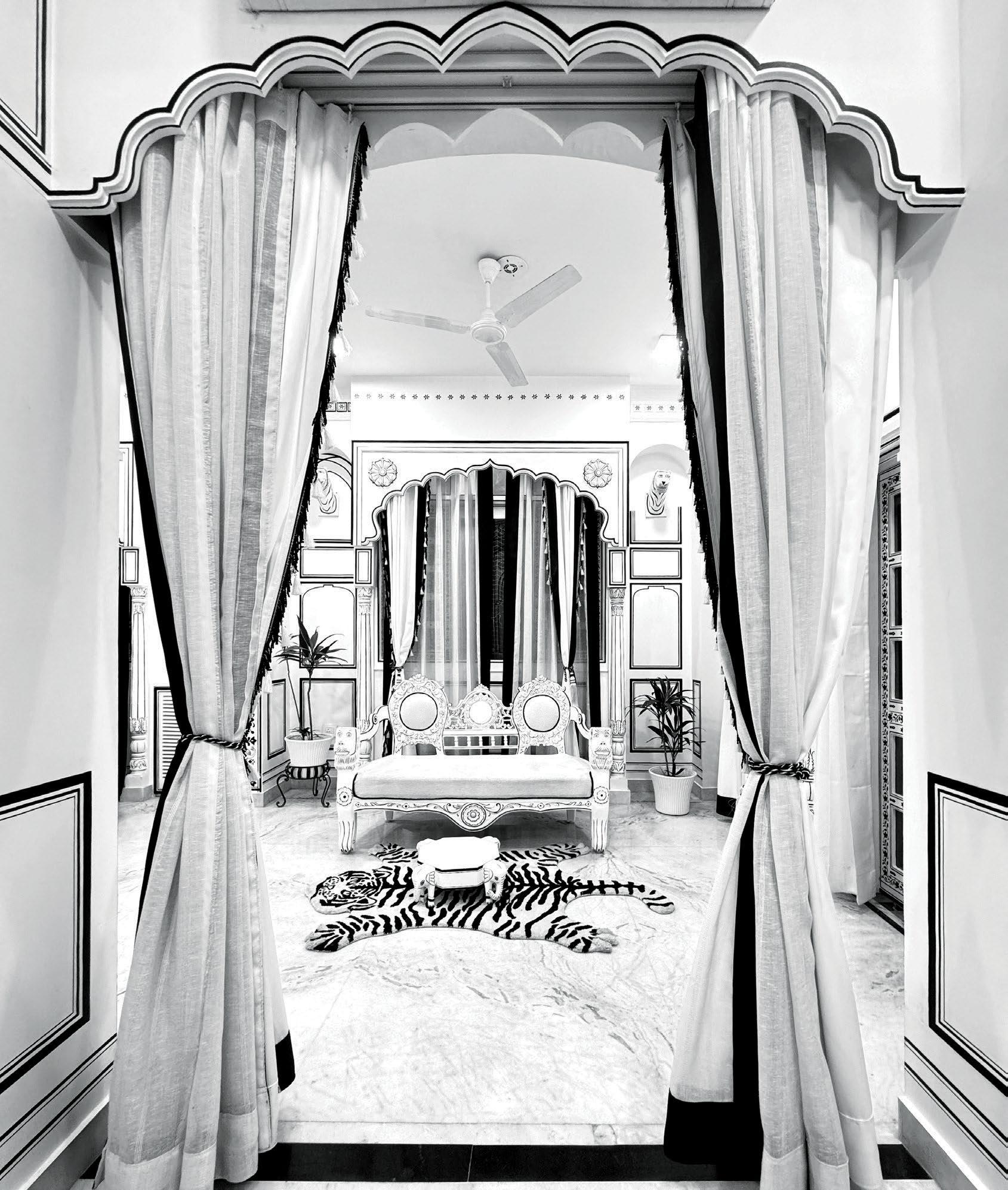
This conceptual pivot found its spatial language through Monika Sharma Design Studio, which translated the idea into a system rather than a motif. What appears effortless is tightly controlled— every line calibrated, every surface considered in relation to the next.
That shift—from object to experience—also meant confronting a pragmatic question early on: could such a concept sustain itself as hospitality?
“The biggest risk was that it might work visually, but fail as a living experience,” Purohit admits. A monochrome, handpainted interior carries the danger of becoming overwhelming, even impractical over time. The instinct, especially for something rooted in personal memory, is to preserve.
Hospitality, however, demands the opposite; it requires spaces to be used, inhabited, and altered.
“I had to shift my mindset from protecting a home to hosting experiences,” he says. “Now I see wear and tear as proof that the space is being experienced.”
That recalibration between emotion and operation runs through the project. The house, once private, now exists in a state of constant reinterpretation. Guests arrive, decode the illusion in their own way, interact with it sometimes playfully, sometimes tentatively.
“Some treat it like an art installation rather than a home,” he notes, an early lesson that immersive design does not end at the visual. It must also guide behaviour.
For Sharma, the challenge was to ensure that the space never tipped into spectacle at the cost of comfort. “The intention was never to create an installation: it had to function as a home first,” she explains. High-use zones— beds, seating, circulation paths— were deliberately moderated, allowing ergonomics to ground the experience even as the visual language remained intact.
That language is built almost entirely through line. In the absence of colour, depth is suggested rather than stated. “Line weight and negative space became the most powerful tools,” Sharma says. “Even a slight variation can change how the eye reads the space.”
This becomes most evident in transitional moments—corners, junctions, thresholds—where the illusion is most vulnerable. Here, the project demanded an almost cartographic precision, mapping how lines travel across surfaces without breaking the visual field. The discipline is graphic, but the execution remains resolutely hand-done.
Lighting, too, is not incidental. It operates as a collaborator, shaping how the illusion holds across time. “Light can either enhance the depth or completely flatten it,” Sharma says. The choreography of intensity, direction and shadow ensures that the space retains its character through the day.
And yet, for all its control, the project resists becoming overly rigid. The hand remains visible—small variations, subtle irregularities—moments where craft surfaces through precision. It is a balance the studio chose consciously: not to eliminate imperfection, but to contain it.
The experience unfolds in two stages. The first is visual— immediate, almost theatrical. But it is the second that interests Sharma more. “A few minutes in, people stop looking at the design and start
THE MAKING OF A 2D WORLD
At Lalluji Luxe, the illusion of two dimensions is not a surface treatment—it is a carefully constructed visual language.
The idea began with a simple provocation: what if a haveli could be experienced as a sketch rather than a structure? From there, the process unfolded through trial, error, and iteration. Walls were painted, reassessed, repainted, and refined until the visual read felt precise.
Depth, paradoxically, is what makes the flatness convincing. Instead of a single line, the team developed a system of three—thin, medium, and bold—to create hierarchy and visual layering. Furniture, artefacts, even everyday objects were treated similarly, outlined so they appear embedded within the drawing.
Execution relied heavily on traditional craft. Local artisans, trained in miniature painting and Pichwai traditions, were brought in—each contributing according to their strengths.

Materials played a critical role. Lime plaster formed the base, while the black linework drew from a traditional preparation similar to kajal—natural carbon soot blended with castor oil and plant-based binders such as babul gum. In select areas, natural watercolours were also introduced, allowing for softer tonal variation while maintaining the overall monochrome discipline. This gave the lines their depth while anchoring the work in vernacular technique.
Crucially, restraint was key. “If the walls became too busy, the experience could feel overwhelming,” says Kapil Purohit, owner of Lalluji Luxe. Each surface was calibrated to hold detail without tipping into excess.
The result is not just an aesthetic, but a method— one that turns drawing into space, and space into experience.
being in the space,” she says. It is in that transition that the project finds its footing.
If the design draws people in, it is something else that brings them back. Purohit is clear on this distinction. “Design creates the first impression. But hospitality builds the memory.”
That memory is constructed through details that sit in quiet contrast to the starkness of the visual language. The homestay layers in contemporary comforts— Kimerica toiletries, Maeka biodynamised water, Dyson air purification, and Alexa-enabled controls—ensuring the experience remains intuitive.
Equally, the hospitality remains deeply personal. Meals are home-curated, interactions are conversational, and the scale allows for a certain attentiveness that larger properties often struggle to maintain. It is here that the project quietly repositions itself—not as a novelty stay, but
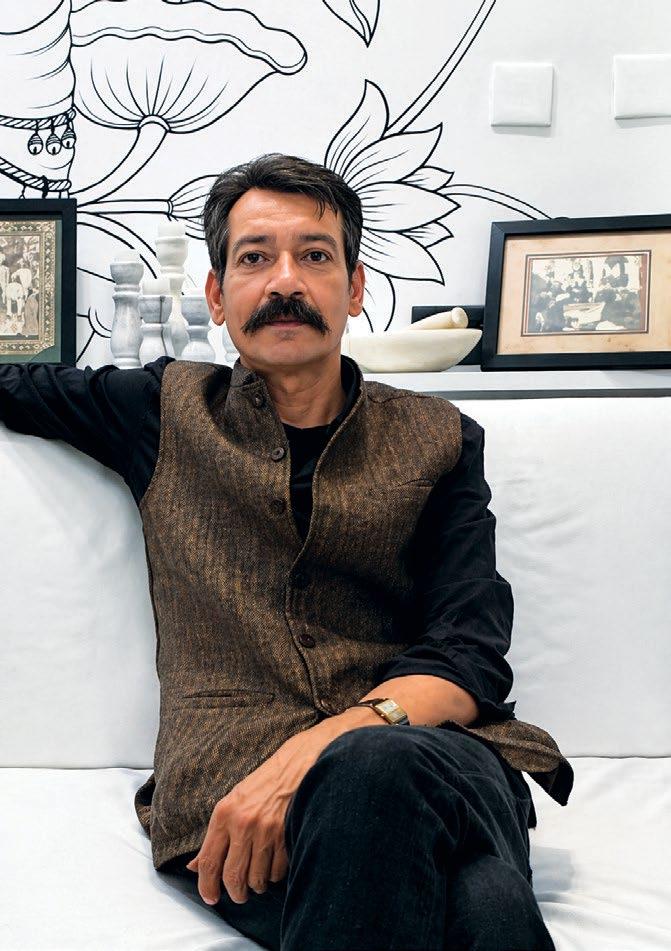
Kapil Purohit (ABOVE), owner of Lalluji Luxe, with Monika Sharma of Monika Sharma Design Studio (LEFT), who translated the idea of a two-dimensional haveli into a precisely calibrated spatial language.
as a considered model of luxury homestay living.
Interestingly, Purohit does not see the concept itself as something to be replicated. The philosophy of experience-led, design-forward hospitality can travel. The form, he insists, should not. “Each space should have its own story,” he says. “The idea is not to copy Lalluji Luxe, but to evolve from it.”
Beyond the photographs, beyond the immediate cleverness of the illusion, it proposes a different way of thinking about heritage, not as something fixed in time, but as something that can be redrawn, quite literally, around the person experiencing it.
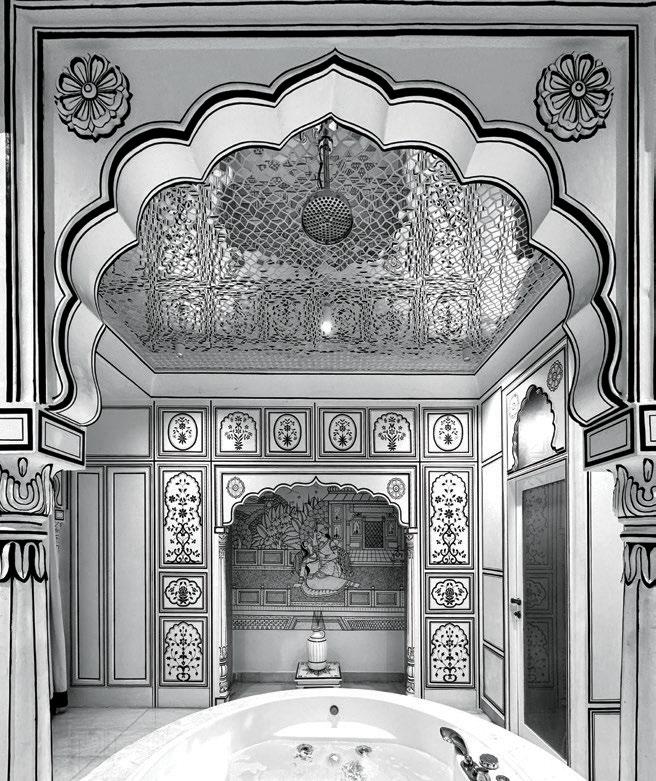
PAGE: Inspired
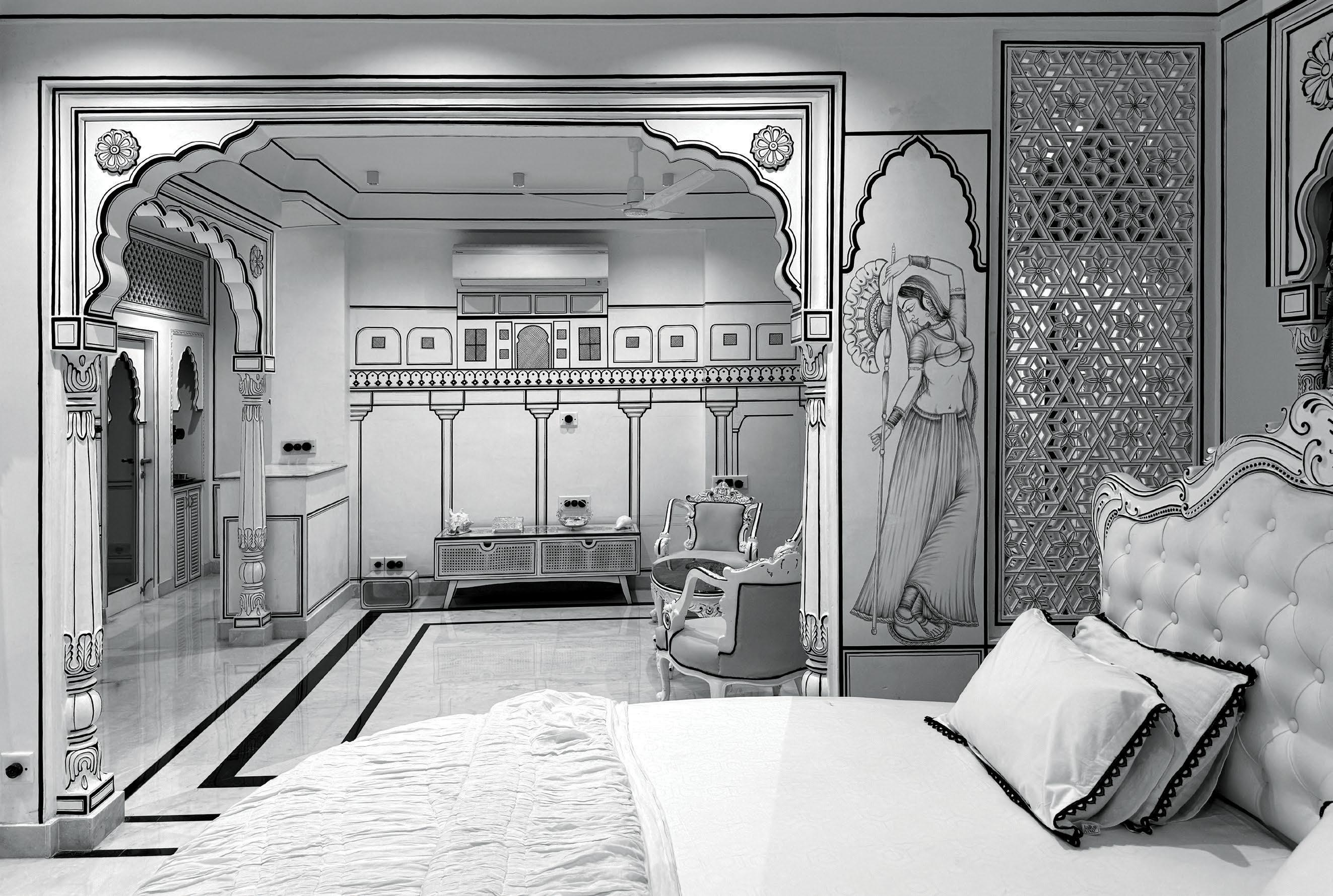
THIS
by Jaipur’s Sheesh Mahal, blackand-white miniature fresco techniques meet shimmering detail through mirror-work in the newly unvieled Princess Suite, creating a heightened spatial illusion.
GOA’S HERITAGE SEAT OF POWER
Perched on the highest point of Cabo, Goa’s Governor’s House, or Lok Bhavan, is where the sea, empire, religion, architecture, politics, and memory converge. A newly introduced trail by the state tourism department and Soul Travelling invites travellers and history enthusiasts to explore this layered past.
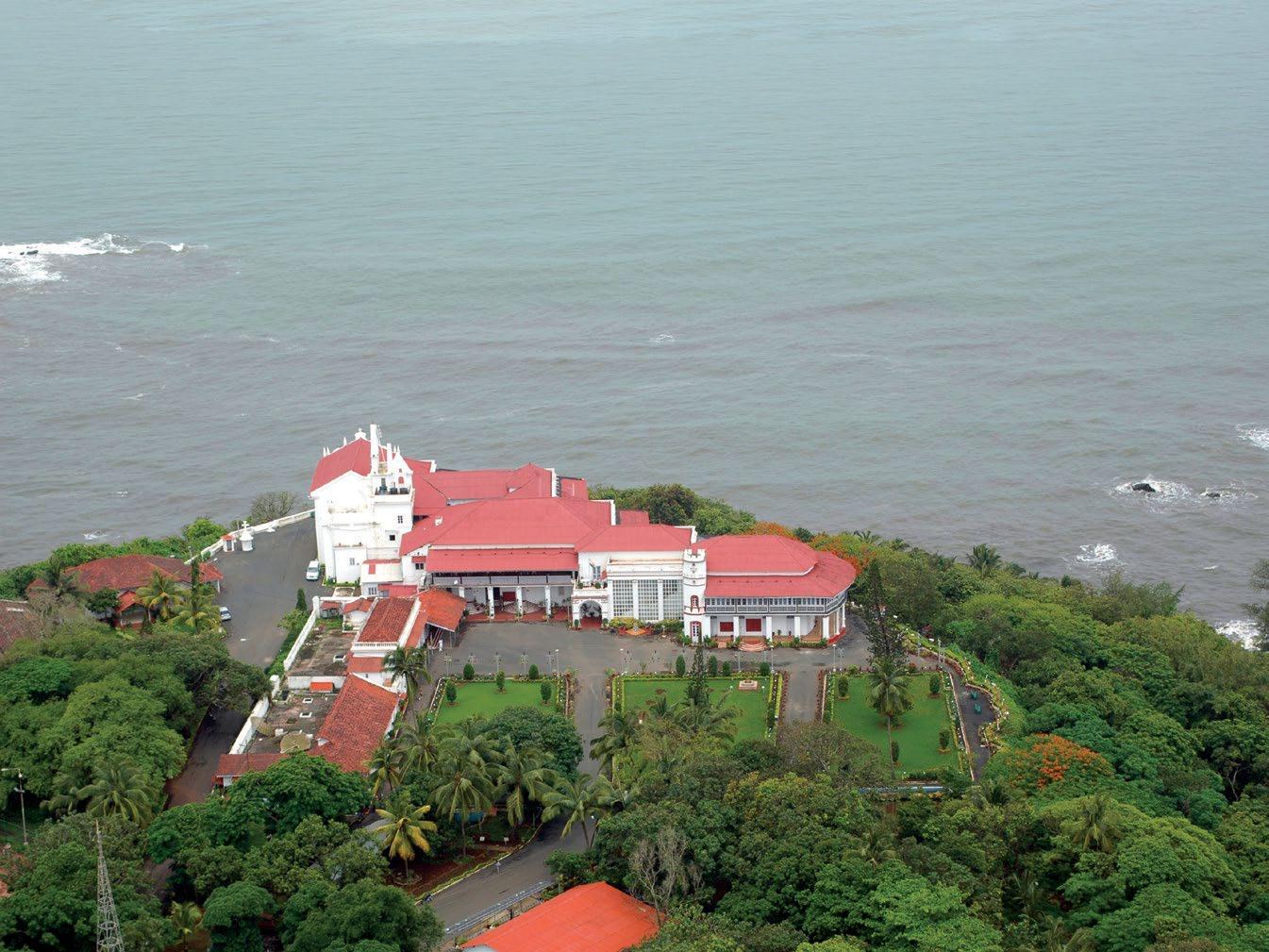


On a dramatic promontory at Cabo (Cape Goa), overlooking the Arabian Sea near Dona Paula, stands Goa’s Lok Bhavan (formerly Raj Bhavan), the official residence of the Governor of Goa and among India’s rare historically layered government residences.
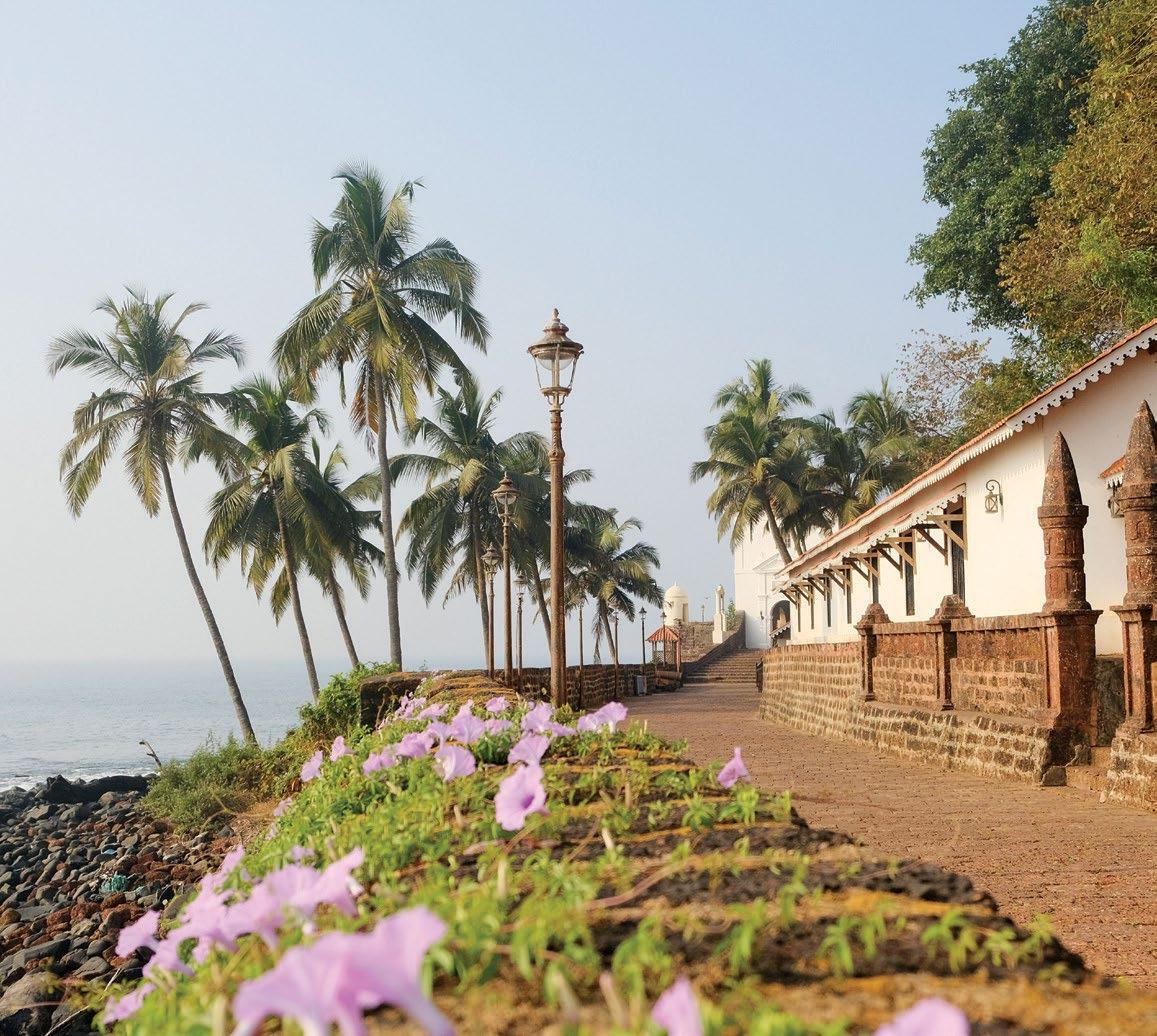
From the highest point on this headland, the Mandovi and Zuari estuaries sweep into the sea in shades of blue-grey. The drive into Lok Bhavan winds past wooded slopes, sea cliffs, and hidden coves before the residence emerges— not as a grand mansion, but as a secluded coastal retreat shaped by centuries of occupation, weather, religion, and maritime history.
DEEPALI NANDWANI
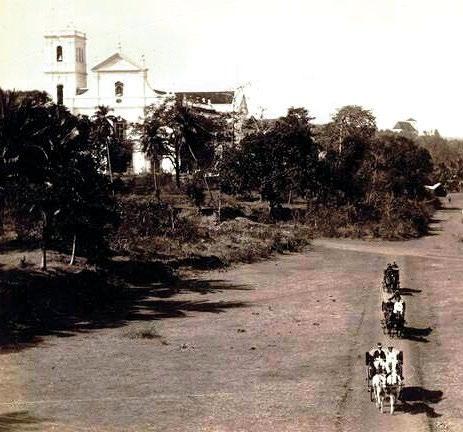
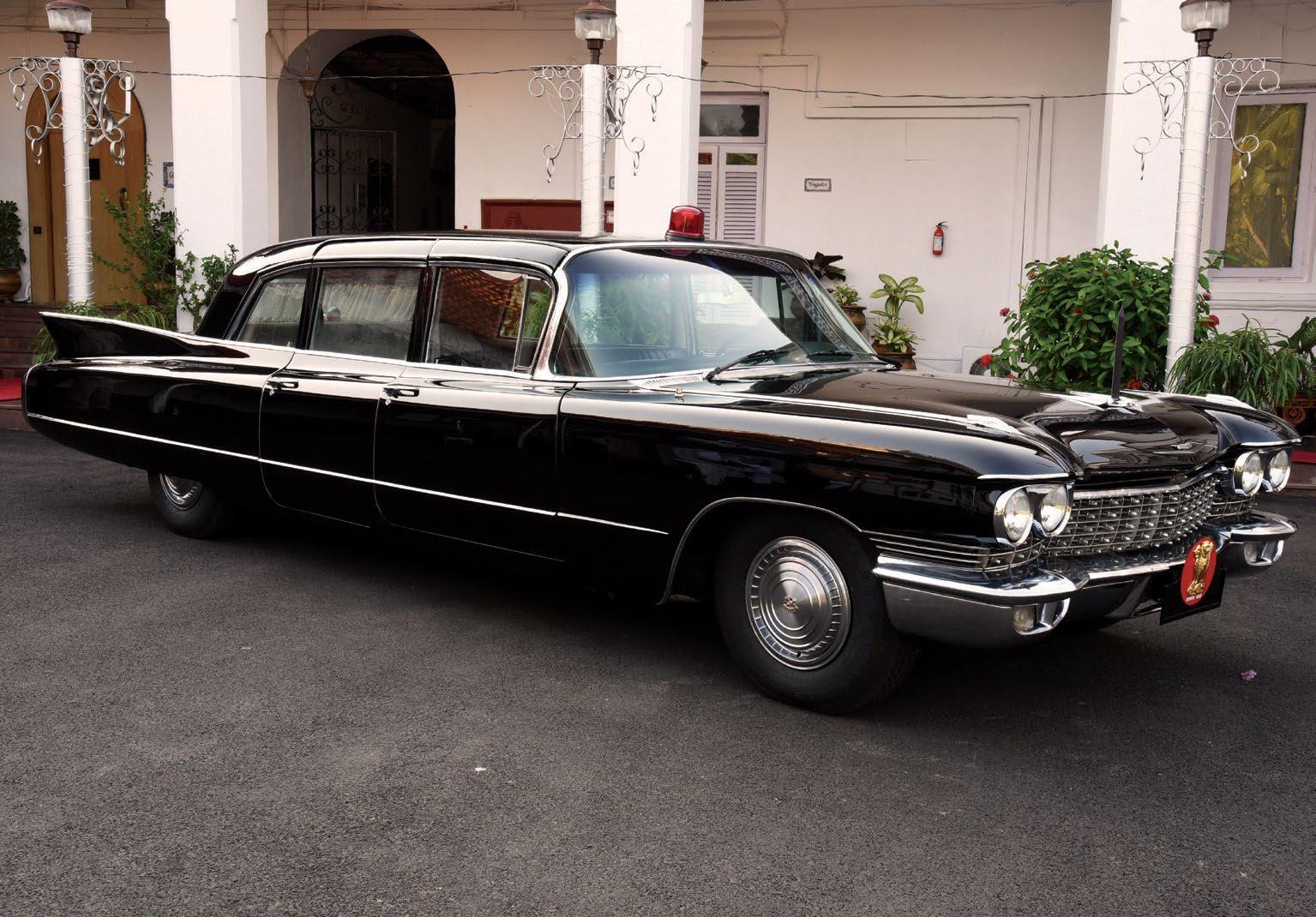
CLOCKWISE FROM TOP: Lok Bhavan sits on Cabo’s highest point, where defence, governance and the Arabian Sea converge; an 1880 view of the Governor’s House, long before it became Lok Bhavan; an old Cadillac sits as a reminder of Lok Bhavan’s administrative past.
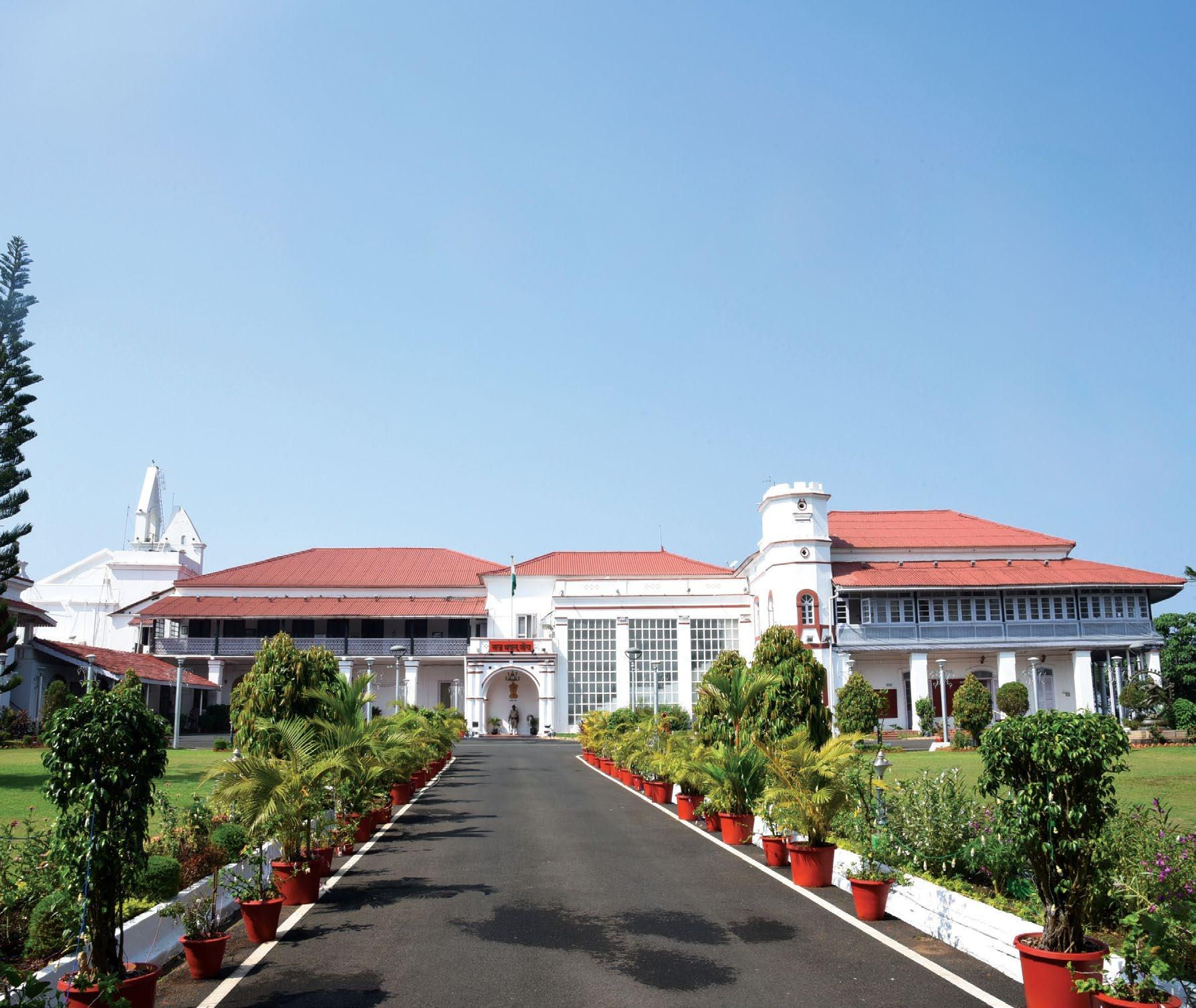
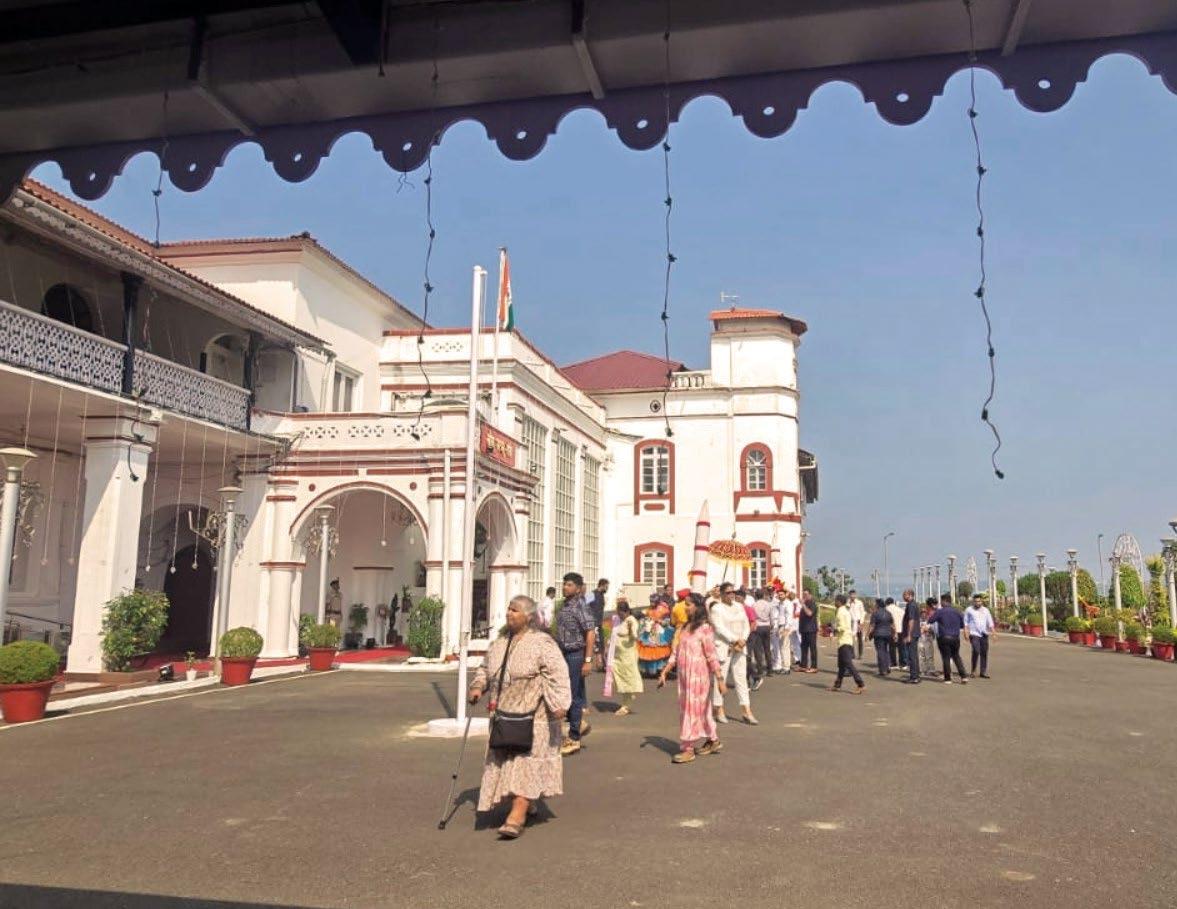
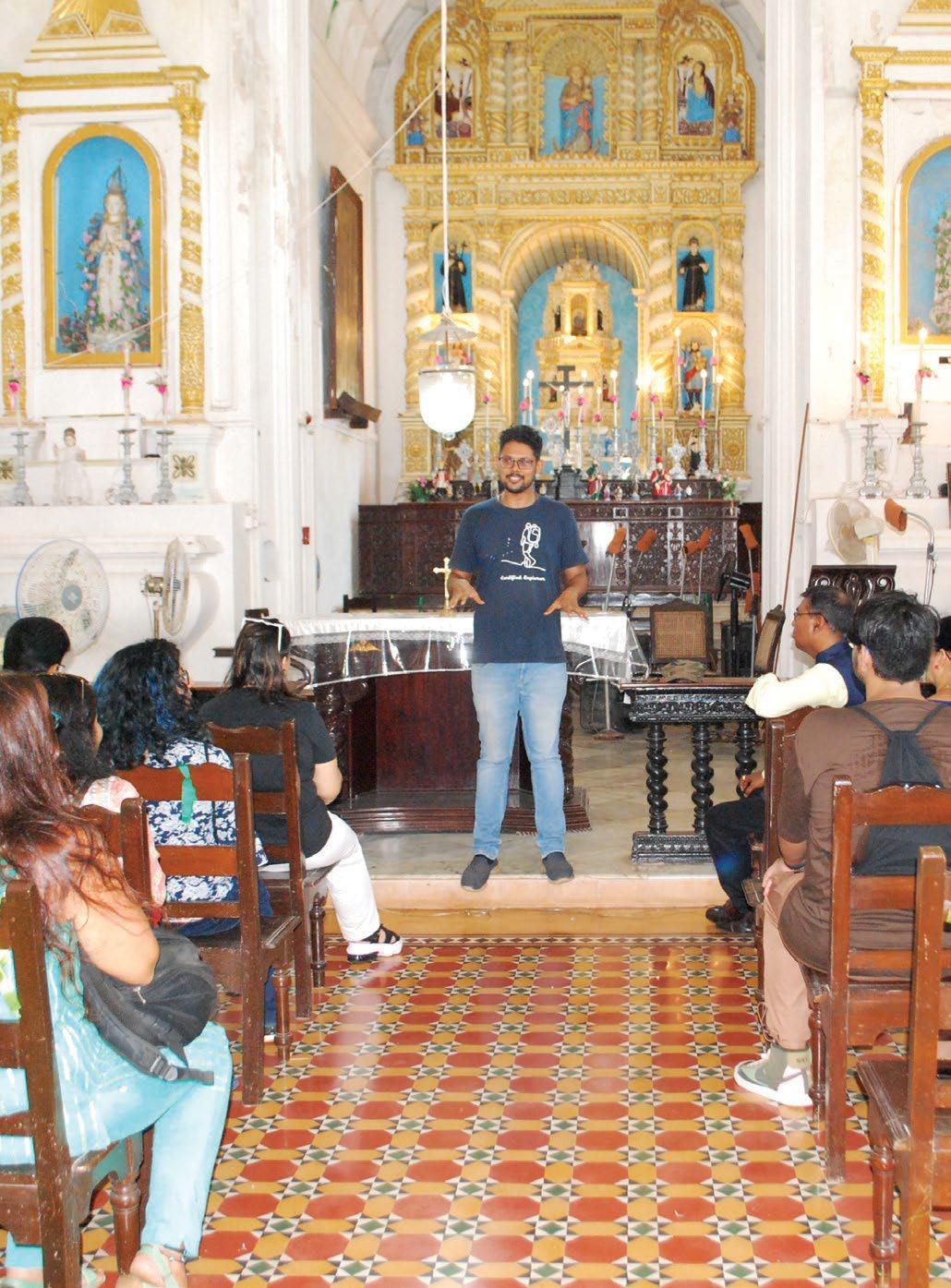
Goa Tourism and Soul Travelling, an experiential travel company, now offer access to parts of Lok Bhavan through a curated heritage trail, moving through chapels, cemeteries, gardens, viewpoints, grottoes, and political halls as it traces the regimes that shaped Goa. Soul Travelling’s cofounder Varun Hegde explains, "Our aim is to reveal more of Goa, beyond its usual projections. This government partnership lets us showcase another side of Goa beyond the beaches."
A strategic headland
Long before it became a governor’s residence, Cabo was prized for its geography. Historian Sanjeev V.

Sardesai, who curated the trail, describes it as “a natural lookout point, from where maritime movement could be monitored.”
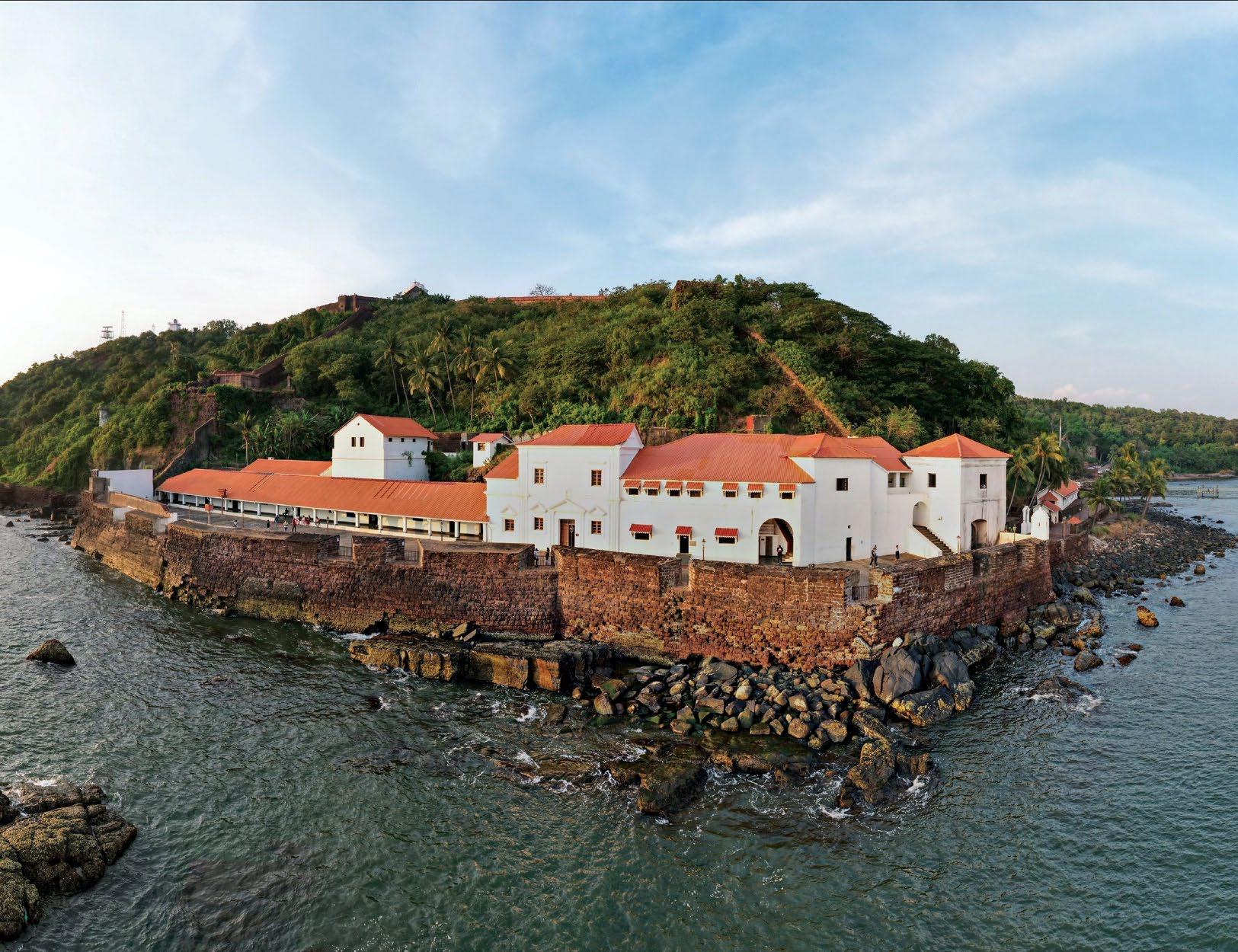
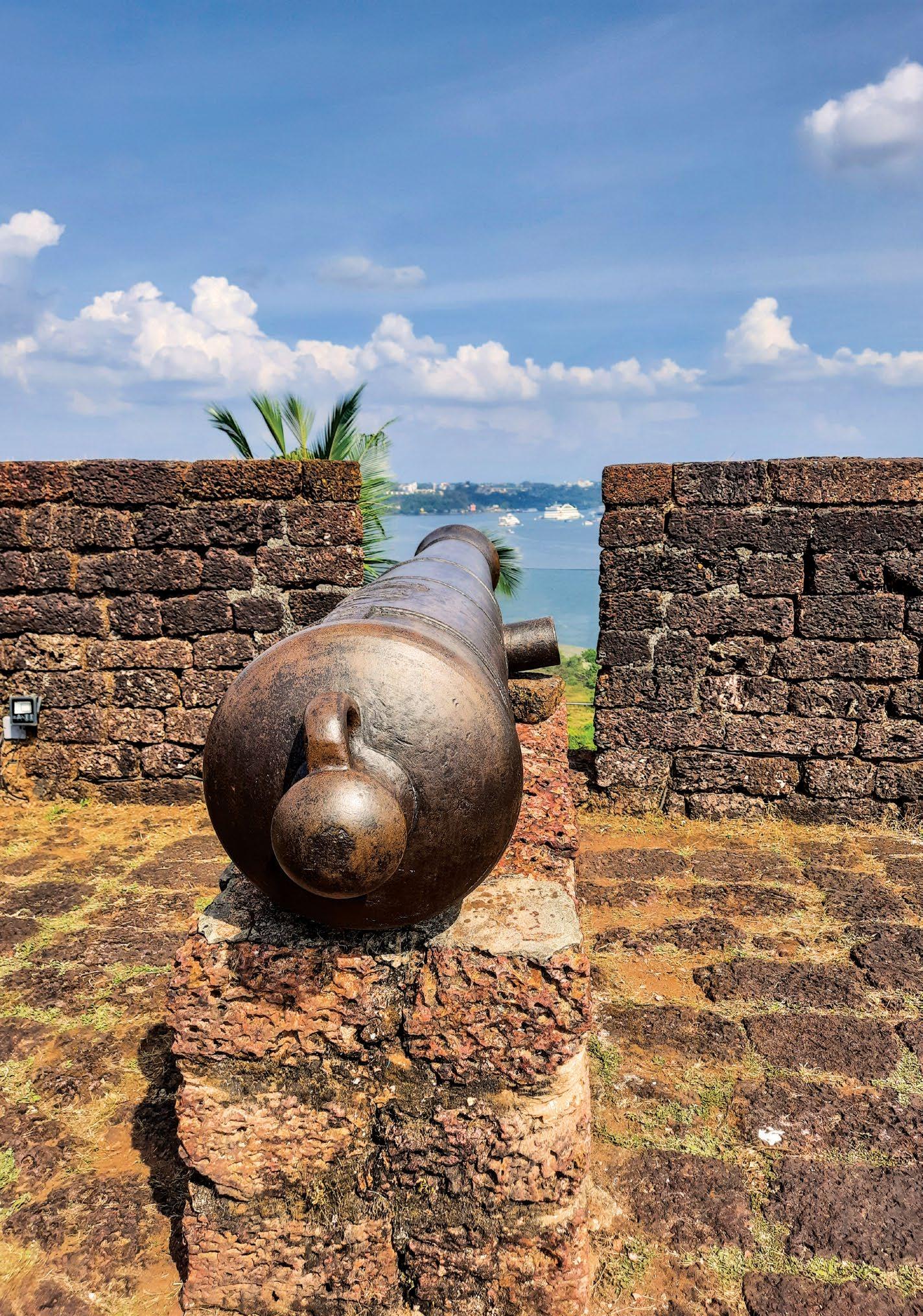
Before the Portuguese arrived, the Adil Shahi rulers of Bijapur used the hill to watch ships entering the Mandovi estuary. The Portuguese later integrated it into a larger coastal defence network protecting Old Goa and its waterways. The headland formed one point of a triangular maritime surveillance system. Fort Aguada guarded the outer sea approach, while Reis Magos Fort monitored entry into the Mandovi River. On the Panjim side stood the nowvanished Gaspar Dias Fort. Cabo itself functioned as a lookout and artillery point. “In 1597–1598, two Dutch ships tried to enter the mouth of the river,” says Sardesai. “That made the Portuguese realise they needed stronger defence.” The response eventually led to the strengthening of Cabo’s fortifications and the construction of Aguada Fort in 1604.
Even today, traces of this history remain within the estate at Cannon Point, where cannoneers once trained. Fragments of the fort
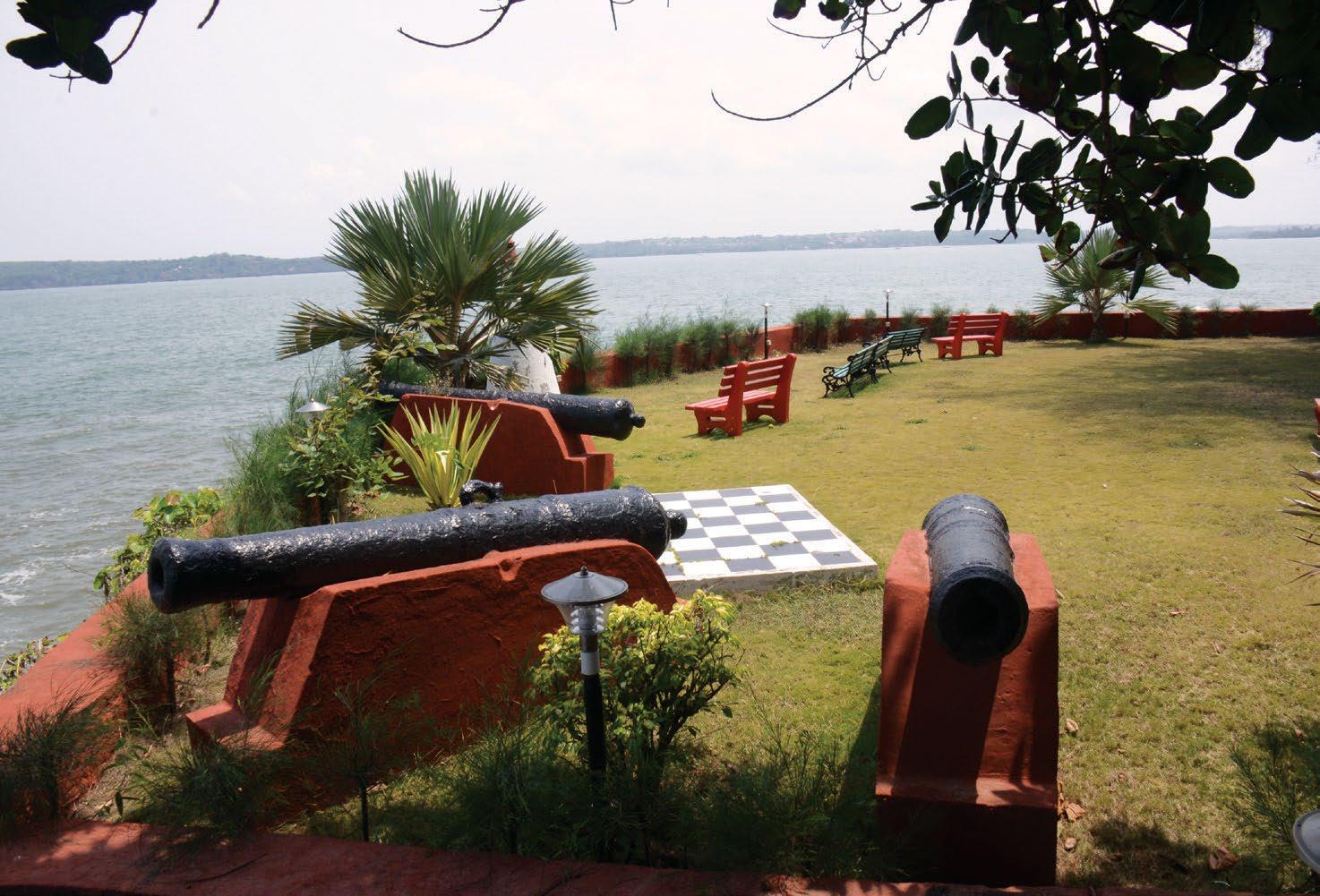
ABOVE: Whitewashed façades, deep verandas and laterite walls reflect Goa’s Indo-Portuguese architectural language.
BELOW: From Lok Bhavan’s lawns, the Mandovi and Zuari estuaries sweep into the Arabian Sea.
walls, and laterite quarries were later repurposed into rainwater harvesting systems.
More than a military outpost
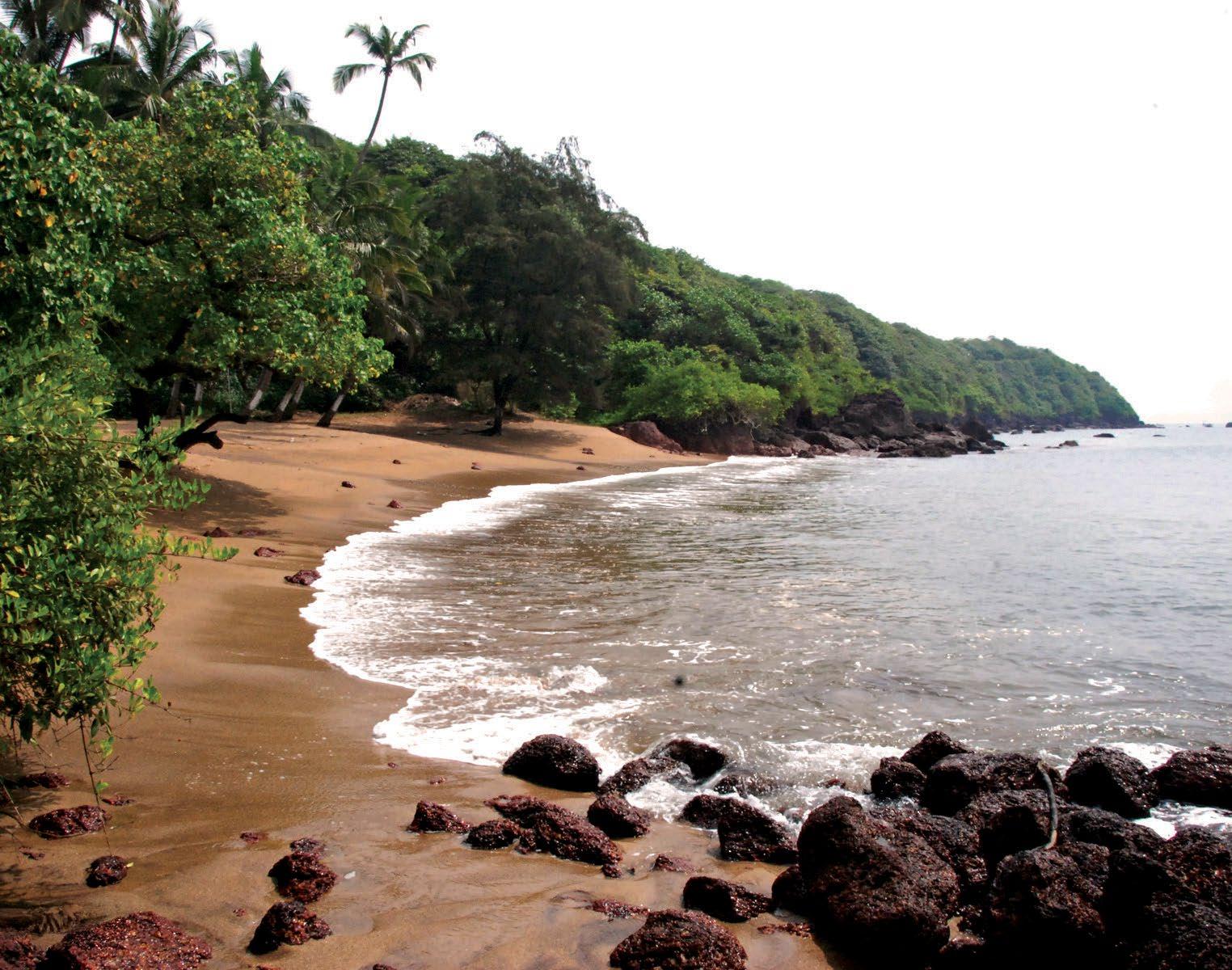
And yet, Cabo was never merely strategic. Its dramatic cliffs, restless sea, and isolation transformed the headland into both a defensive and tranquil refuge. In the 1540s,
LEFT AND ABOVE: Fort Aguada formed part of the larger coastal defence network that once worked in tandem with Cabo’s lookout point.
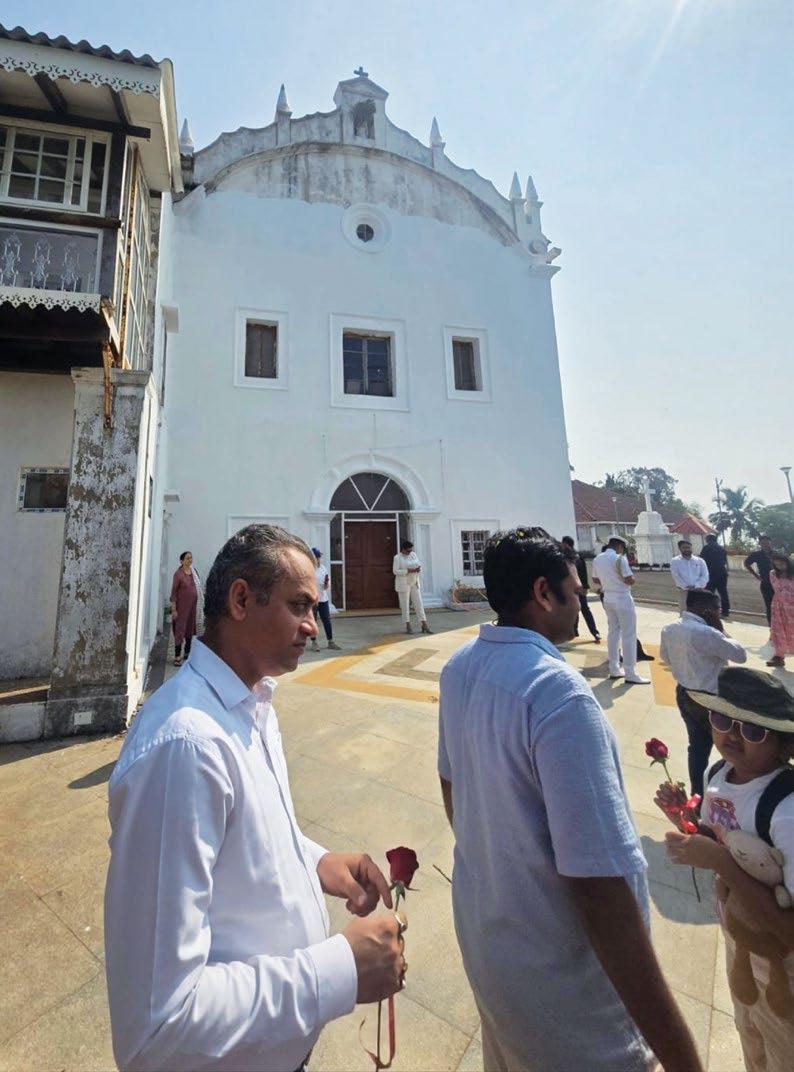
BELOW, LEFT AND RIGHT: The Lok Bhavan trail moves through gardens, viewpoints and hidden corners usually closed to the public.
Portuguese governor Estêvão da Gama envisioned a chapel here. “Chapels usually have a large façade and are built high,” explains storyteller and Soul Travelling ambassador Adolfina Thamm during the trail. “That would be the first visible point for ships arriving or leaving. It became a reference point, almost like a map.”
The Portuguese eventually built the Chapel of Nossa Senhora de Boa Viagem (Our Lady of Good Voyage), where sailors prayed before long voyages. Franciscan priests later settled here and expanded the site into a convent. Sardesai notes that for ships

sailing toward Portugal or further east into Asia, “it was the last manmade structure they would see once they crossed the horizon.”
Over time, the convent evolved into an administrative residence and, in the early 20th century, became the Governor's residence.
The truth about Dona Paula
A fascinating part of the trail dismantles Goa’s most repeated legend—the tragic love story of Dona Paula. “Please correct people when you hear that story,” Thamm says, referring to the myth that Dona Paula leapt to her death for love. “That story has been made famous

by taxi drivers.” Instead, the trail reconstructs the historical figure behind the name. Sardesai explains that the land once belonged to the influential Sotomayor family.
Dona Paula de Menezes, daughter of a Portuguese viceroy, married António Sotomayor and became associated with the estate. The area itself was originally known as Odda Vale, likely named after the small coves scattered along the shoreline below the hill.
During restoration work inside the chapel, workers discovered her burial slab beneath the flooring, confirming that Dona Paula was buried there. “If she had committed suicide,” Thamm says, “she would never have been allowed burial inside a Catholic chapel at that time.”
The famous twin statues at Dona Paula Jetty, Sardesai adds, have no connection to her either. Sculpted by Yrsa von Leistner and inaugurated in 1969, they were intended to represent ʻImage of Indiaʼ and ʻThe Far East Travellers,ʼ symbolic of Portuguese journeys eastward from Goa.
Architecture shaped by Goa What survives at Lok Bhavan today is not purely Portuguese architecture, but something more layered and localised. “In Goa, we donʼt have Portuguese houses,” says Sardesai. “We have Indo-Portuguese architecture, or European architecture blended with Indian architecture.”
And Lok Bhavan embodies that hybridity. Thick laterite walls temper tropical heat. High ceilings, verandas, deep corridors, and sea-facing openings allow wind and light to move through naturally. Whitewashed exteriors
emerge dramatically against dense greenery and the Arabian Sea beyond.
Inside the chapel, local craftsmanship reveals itself. The pulpit, carved by Goan artisans, carries motifs drawn from the region—flowers, creepers, hibiscus blooms, and even cashewinspired detailing. “Each artisan incorporated local elements into their ornamental vocabulary,” Thamm explains. Nearby sits the choir loft, another feature common to churches built before 1962. Throughout the estate, architecture and adaptation overlap constantly. Parts of the original flooring had to be replaced due to sea-facing erosion. The cliff itself began to collapse toward the sea, forcing reinforcement work along the Arabian-facing edge. Old laterite extraction pits became reservoirs. Passageways connected the Governor ʼs residence directly to the chapel.

LEFT: Small in scale but richly detailed, the chapel’s white-and-gold wooden altar reflects early seventeenth-century additions to Cabo.
BELOW: The quiet beach below Lok Bhavan reveals the hidden coves that shaped Cabo’s coastal geography.
GAURAV SAHAI
The many lives of Cabo
The history of Cabo is layered with occupation after occupation. Between 1799 and 1813, during the Napoleonic Wars, British troops occupied Goa to prevent French expansion into Portuguese territories. Around 1,000 British soldiers took charge of strategic points across the region.
The British left behind traces still visible today. A quiet cemetery near Lok Bhavan holds 47 graves, including soldiers and engineers, connected to later railway and port construction projects. In 1982, former British Prime Minister Margaret Thatcher visited the cemetery and laid a wreath there during the Commonwealth Heads of Government meeting in Goa.
Following Goa’s liberation in 1961, the Indian Army briefly converted the estate into the headquarters of the military
governor before it became the residence of the Lieutenant Governor of Goa and eventually, the official residence of Goa’s Governor after statehood.
One of the ceremonial halls inside Lok Bhavan has since witnessed the swearing-in ceremonies of several chief ministers and cabinet ministers. Former Governor Mridula Sinha added the Darbar Hall and parts of the bonsai complex to the estate, while former Governor P. S. Sreedharan Pillai expanded the bonsai garden into the Vaman Kala Udyan.
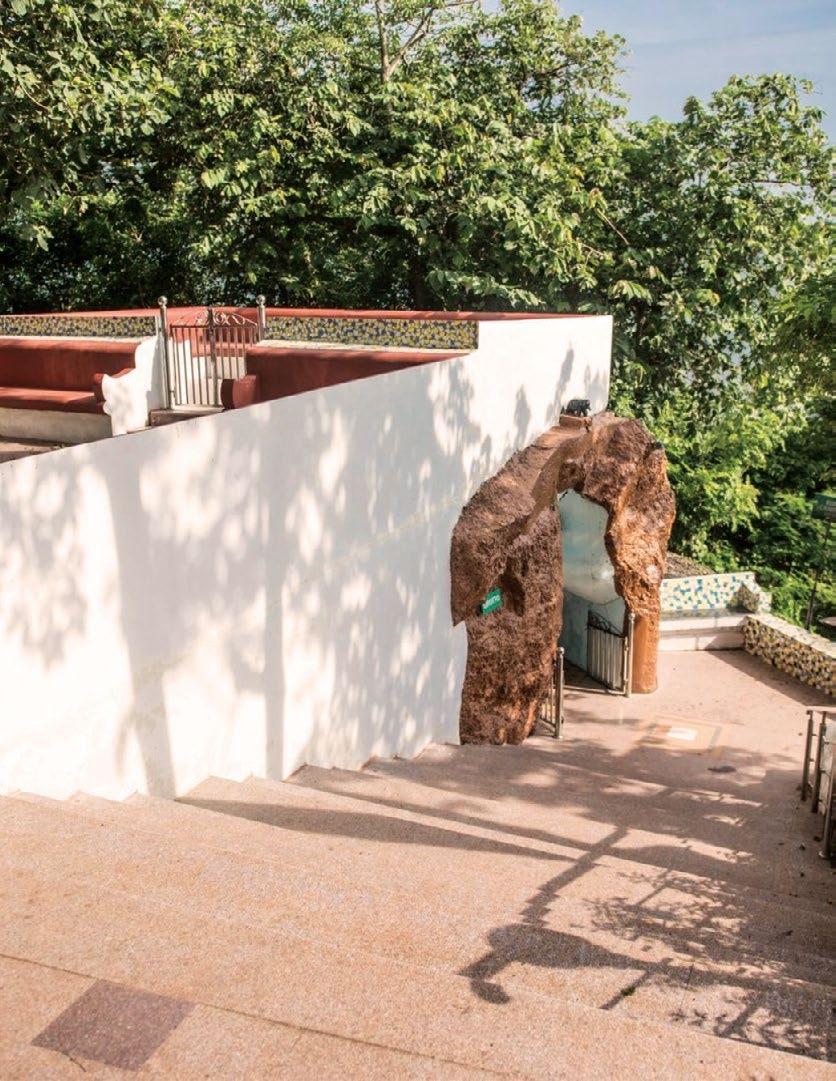
The grotto is among the estate’s most atmospheric spaces,
situated below the chapel complex and approached by a staircase descending toward the seafacing edge of the promontory. A cave-like devotional space with openings on both sides allowing light and sea air to pass through, it houses a female figure dressed in a saree, an Indianised representation of Saint Paulina, believed to grant wishes asked of her.
What makes the Lok Bhavan Trail compelling is that it never treats history as static. Instead, it unfolds through stories of priests, sailors, local artisans, British soldiers, forgotten quarries, hidden coves, and burial slabs beneath chapel floors.
BELOW: Laterite steps descend to the grotto of Santa Paulina, where her recumbent figure rests beside the sea-facing altar.
RIGHT: Reis Magos Fort’s cannons formed part of the wider defence network protecting Goa’s river mouth and coastline.


LO(U)VE IN LUTYENS’ DELHI
A European-leaning dining room in Delhi brings together neo-classical architecture, layered interiors and a menu shaped by Italian and French traditions.
The legend of Rome, arguably the grandest empire in human history, is of course intertwined with the shewolf, lupa, who nursed the city's founders Romulus and Remus. She gets a tribute in the heart of Delhi in the form of Louve, one of the city’s more visually striking new restaurants.
The recently opened Louve styles itself as a ‘European gastronomic destination’. It has the look down pat. “Louve was born from a desire to create something Delhi had not experienced before—a dining destination that feels globally fluent yet deeply grounded, where cuisine, design, and atmosphere exist in perfect harmony,” says Shikha Begwani, Founder, Louve. “Every detail has been carefully considered, from the architecture and interiors to the way food is crafted and experienced. It reflects my commitment to quality over scale, depth over trends, and timeless elegance over momentary spectacle, created for those who value refinement, restraint, and enduring sophistication.”

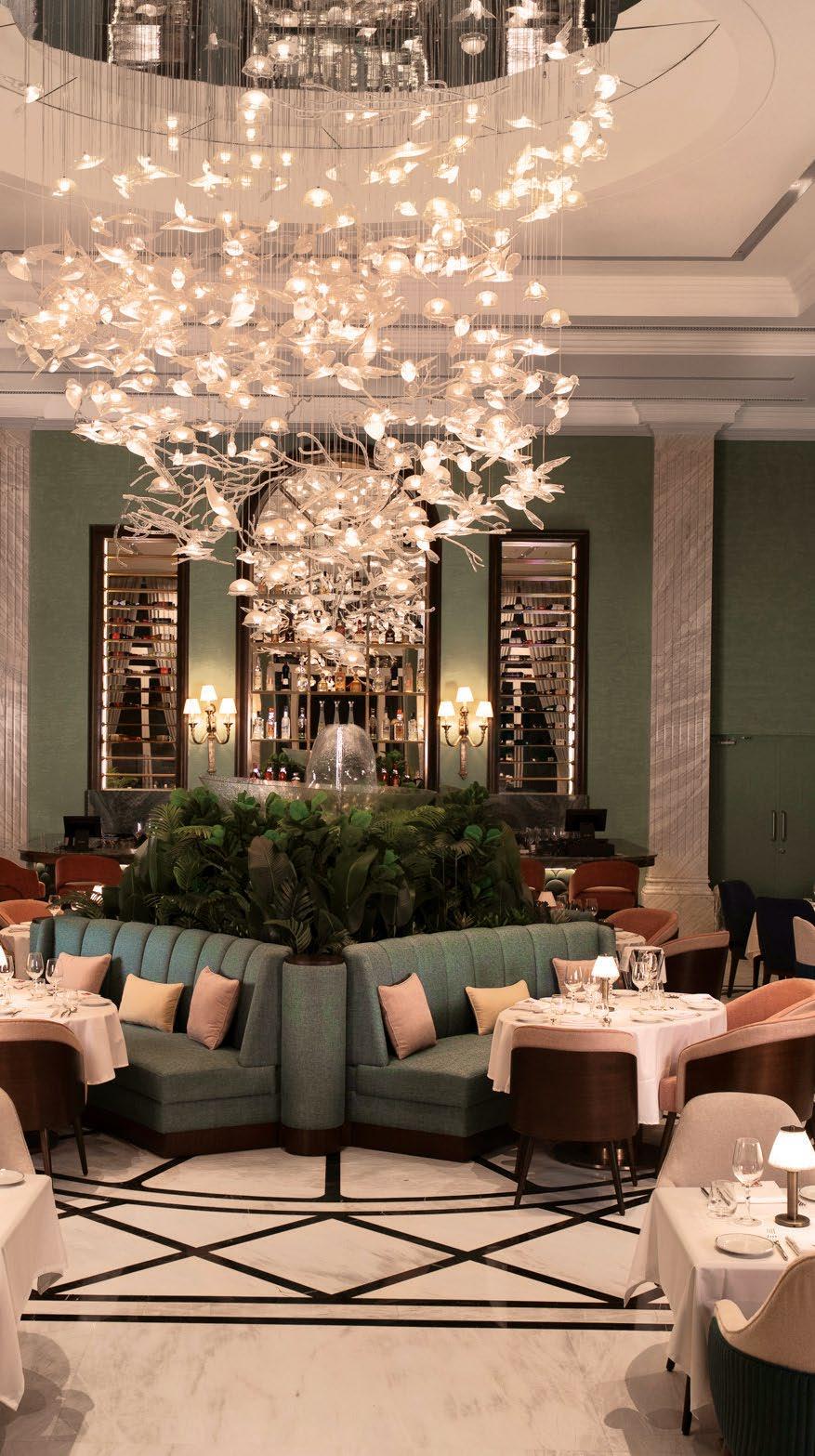
CLOCKWISE FROM TOP LEFT: Louve’s John Dory fillet is one of its most popular dishes; a striking chandelier, Eden de Crystal dominates the interior; Epicure is one of the stars of the impressive cocktail menu; Saffron Tagliatelle and Chicken Breast; Louve Meringue Cake.


SUMAN TARAFDAR


Love the look
Louve’s design philosophy mirrors its culinary ethos—refined, powerful, and understated. Inspired by classic Italian dining rooms and the restraint of French Michelin restaurants, the space has been designed by Sarbjit Singh, Principal Designer, Fabinteriors. It also draws from the architectural language of Lutyens’ Delhi. Located in the tony neighbourhood of Khan Market, the building reflects a modern interpretation of neo-classical design, defined by symmetry, arched windows and doors, and elegant proportions.
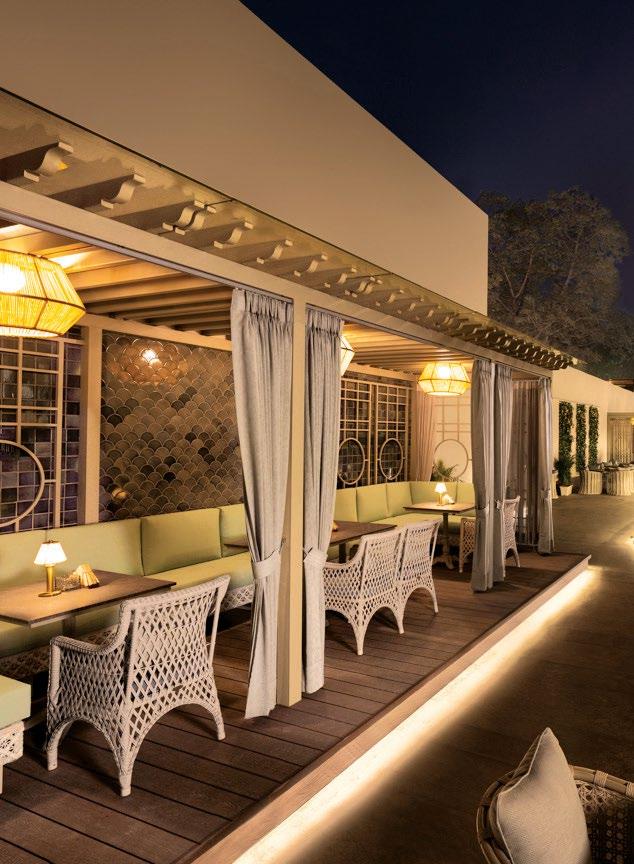
Design nods to its locale are constant. Note the colonialstyle lanterns at the entrance, referencing the historic street lamps of Lutyens’ Delhi. Seating at the 170-cover restaurant is spread between a cosy interior and gazebostyle garden dining pavilions, with classical lattice detailing sheltered beneath modern pergola structures. Inside, double-height interiors create a sense of openness and

scale, while plush seating and soft lighting introduce warmth and intimacy. Step inside, and a giant bespoke crystal chandelier known as Eden de Crystal dominates the centre—crystal branches and birds suspended above a circular fountain. Beneath it, a glass bowl fountain is surrounded by live plants, creating a compact ecosystem of light, water and plant life. Huge arched French windows bring in natural light, suffusing the space in a warm glow.
More allusions to Roman classical architecture appear in the geometric black-and-white marble flooring and grand arched figurative paintings. A break in style comes in the form of floral wall artworks arranged in structured grids, inspired by Cubism and early French modernism.
‘A table at 1’
The table complements the design in multiple ways. Indeed, an address—1 Humayun Road—carries its own heft. “In a city like Delhi, an address often carries a sense of identity and cultural weight,” explains Begwani. “With Louve, we wanted to translate that into an experience centred around the table. ‘A Table at 1’ therefore becomes both a literal and symbolic invitation to be part of a one-of-a-kind dining experience, where food, service, design, and conversation come together in perfect balance.”
The menu has been designed by Chef Selim Fidan, whose culinary journey includes the Michelin-starred Mikla in Istanbul and Cipriani in both Istanbul and Dubai. He refers to the menu as a quiet harmony of Italian
CLOCKWISE FROM TOP LEFT: Gazebostyle garden dining pavilions, perfect in cool weather; Gorgonzola and Basil Cheese Balls; Shikha Begwani, Founder, Louve; Metis, signifying wisdom, is a bittersweet, floral tequila, aperol and vermouth based cocktail.
comfort, French precision, and Indian warmth.
Currently, the kitchen is helmed by Balwant Kumar, Executive Chef, who ensures it delivers at its best. Having learnt a great deal from Chef Selim, he stresses that the food is at the level of a top European restaurant. “From sourcing ingredients such as San Marzano tomatoes to celeriac to implementing techniques, we are using what European restaurants use,” he points out. “The restaurant’s menu is most directly influenced by classic Italian and French finedining hubs, particularly Venice and Milan, reflecting Chef Selim’s professional journey and culinary philosophy.”
The menu isn’t extensive, but selective. There are 10 pasta and eight pizza options, along with four risottos, besides several large plates, sides, soups and salads. Burrata with Grapes (creamy burrata, roasted fennel, balsamic) makes for a comforting start. Going by looks alone, you would be forgiven for mistaking the Smoked Salmon Cheesecake (mascarpone, black tobiko, gold leaf) for a dessert from the bakery counter.
John Dory Fillet (pan-seared with sliced potatoes, pinot grigio, lemon sauce) is an expected favourite. Another hit is the Sous-Vide Lamb Loin (black garlic, cauliflower mash, jus, maque choux), heavily encrusted. Alternate tempting choices include Truffle Brie Crostini, and Chitarra Cacio e Pepe. There is a strong dessert selection too, including the Louve Meringue Cake.
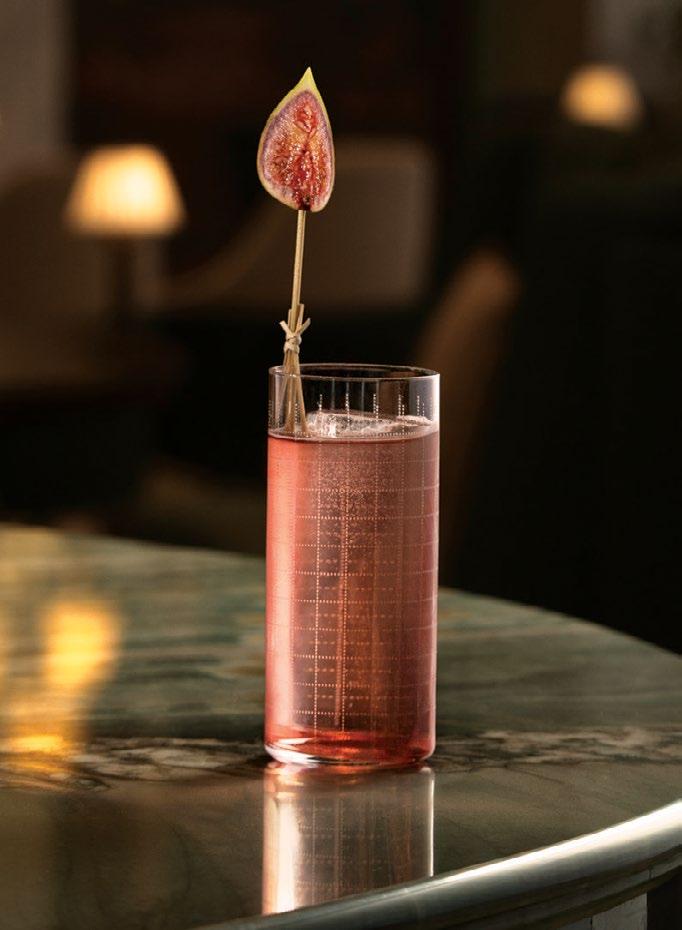
The bar menu is a highlight— and note how thoughtfully it is done. As the menu says, ‘there is a cocktail for every mood’. Each of the eight comes with a story. Equilibrium (gin, fig, elderflower, seltzer) stands for balance with time. The descriptor reads, “striking the tender balance
between leisure and duty…”. Maybe you prefer happiness (Epicure), freedom (Memento Mori) or just wisdom (Metis).
Louve, where ‘food, service, design, and conversation come together in perfect balance’, is set to expand further with a new Chinese restaurant opening on the upper level soon. Adding another 150-odd covers, it will become one of the city’s larger dining destinations. As for lupa, she stands as a symbol of strength, instinct, and quiet power—apt for a space that is as much about atmosphere as it is about intent.
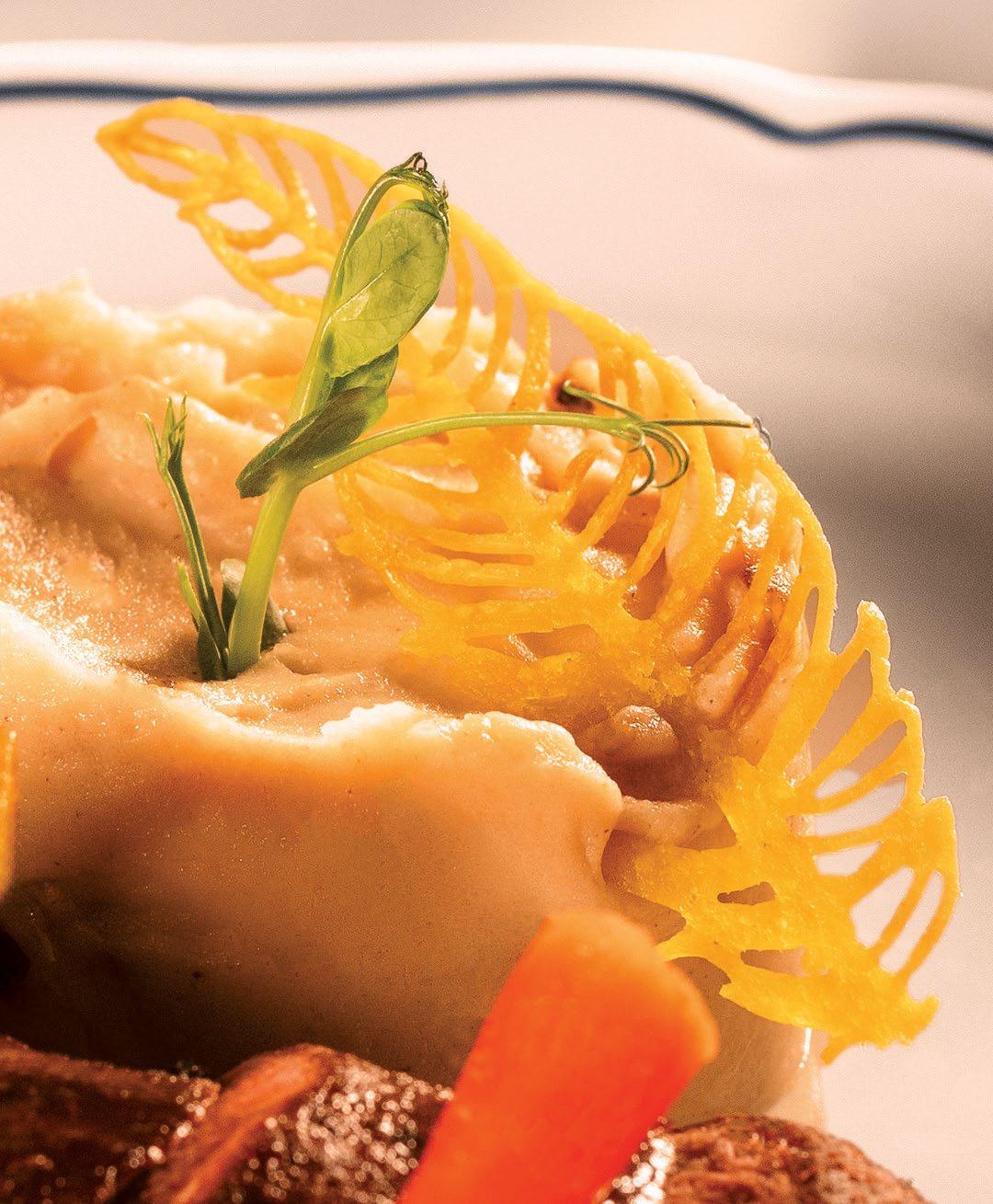
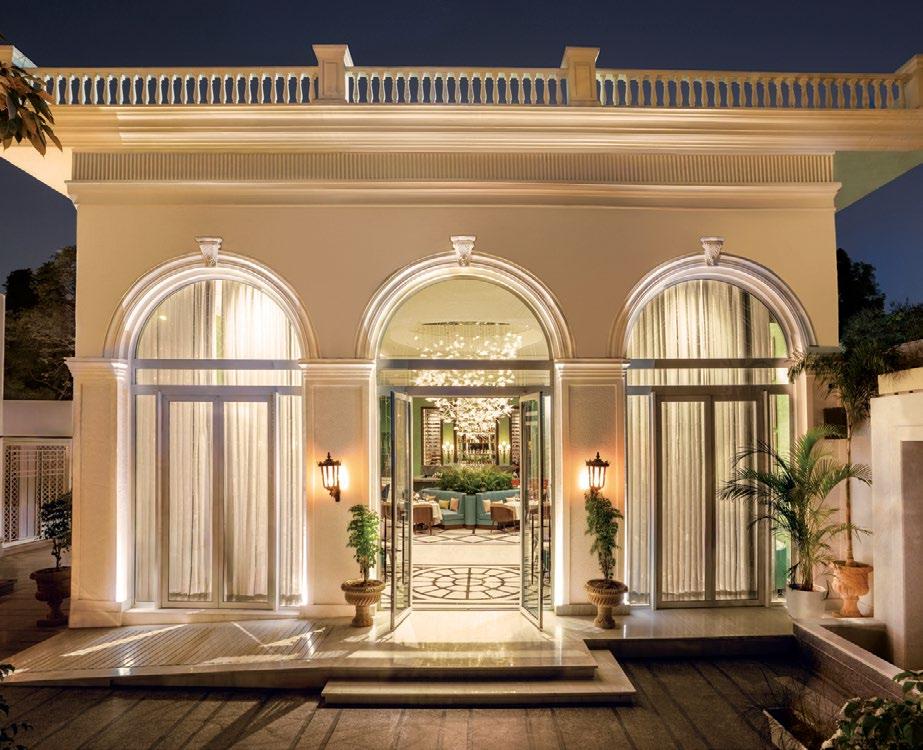
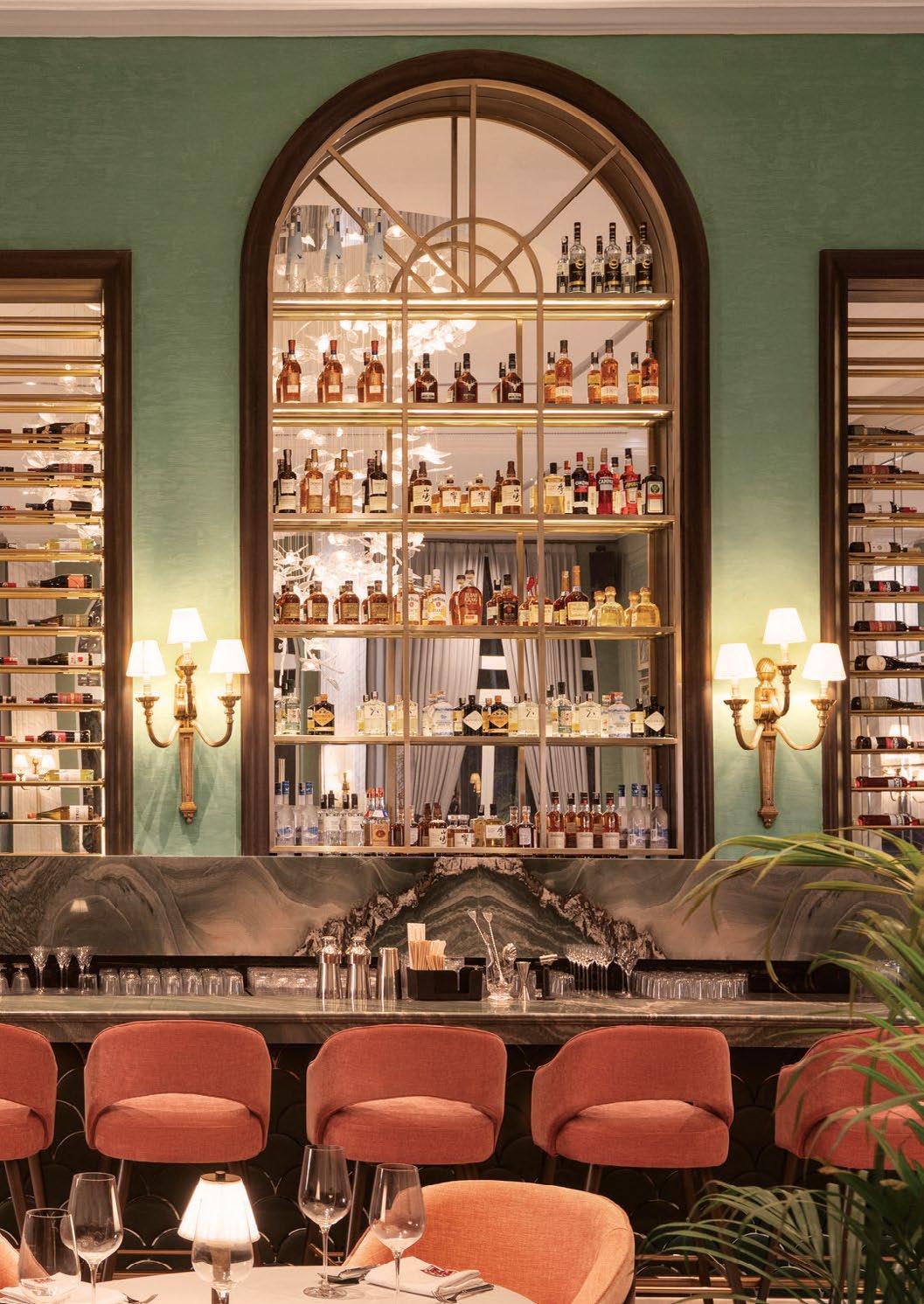
CLOCKWISE FROM TOP LEFT: Sage Butter Tortelloni; Chicken Schnitzel; a beautiful bar takes up the entire rear wall; Equilibrium is a star of the cocktail menu, designed by head mixologist, Vasile Dorofeev; the entrance fits in seamlessly with its Lutyens environ.

THE ‘MINOR’ KEY
William ‘Bill’ Heinecke saw Asia’s rise before others did. Long ago, he began building a hospitality empire, now focused on India as its next frontier.
not as indulgences but as necessary counterweights to work, part of a philosophy that treats balance not as an aspiration but as a discipline.
Building without a blueprint
DEEPALI NANDWANI
The soft-spoken William ‘Bill’ Heinecke (you have to virtually strain to hear him speak) is a man of many parts, each as fascinating as the other. He reminds us of the earlier generation of entrepreneurs who did more, spoke less, and created empires in the most unassuming manner.
His reputation as a hotelier, and, more unusually, as a kind of modern renaissance figure, is widely recognised. Much of the legend surrounding the founder of Minor Hotels rests on a life lived with appetite, aeroplanes, yachts, food, and travel. He speaks of these
More defining, however, is his cross-cultural identity. American by birth, Heinecke built his empire in Thailand without inherited capital or institutional scaffolding, assembling it piece by piece through ventures that, in retrospect, appear improbably eclectic. In the early years, he sold pizzas to a market that had never encountered them, ran cleaning and advertising businesses, and moved fluidly between industries, from food to aviation.
At 76, he retains the restlessness of the 17-year-old who borrowed twelve hundred dollars from his Indian tailor in Bangkok to start a cleaning business. Because he was legally a “minor,” the company took on a name that would, in time, become iconic, Minor International (MINT). Today, MINT encompasses Minor Hotels, Minor Food, and Minor Lifestyle, a portfolio of more than 600 hotels and serviced residences, thousands of restaurants, and operations in over 60 countries.
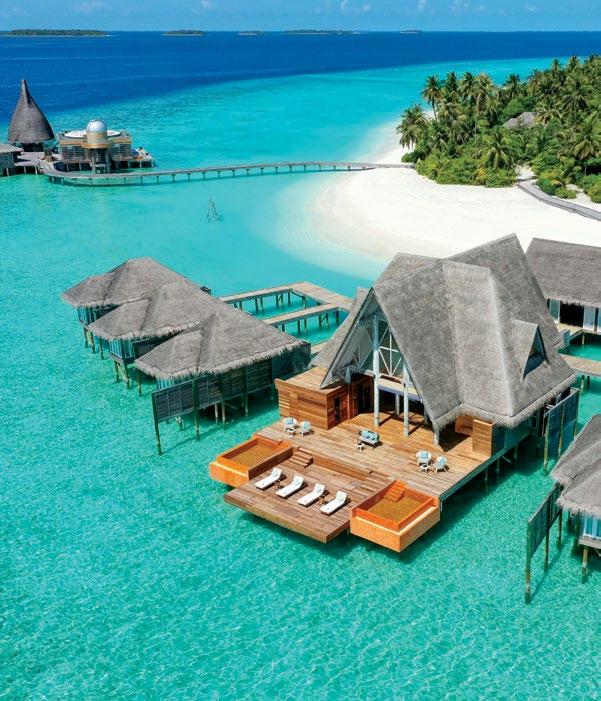
ABOVE: A villa at Anantara Kihavah Maldives.
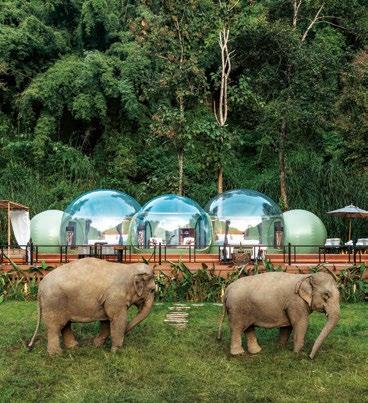
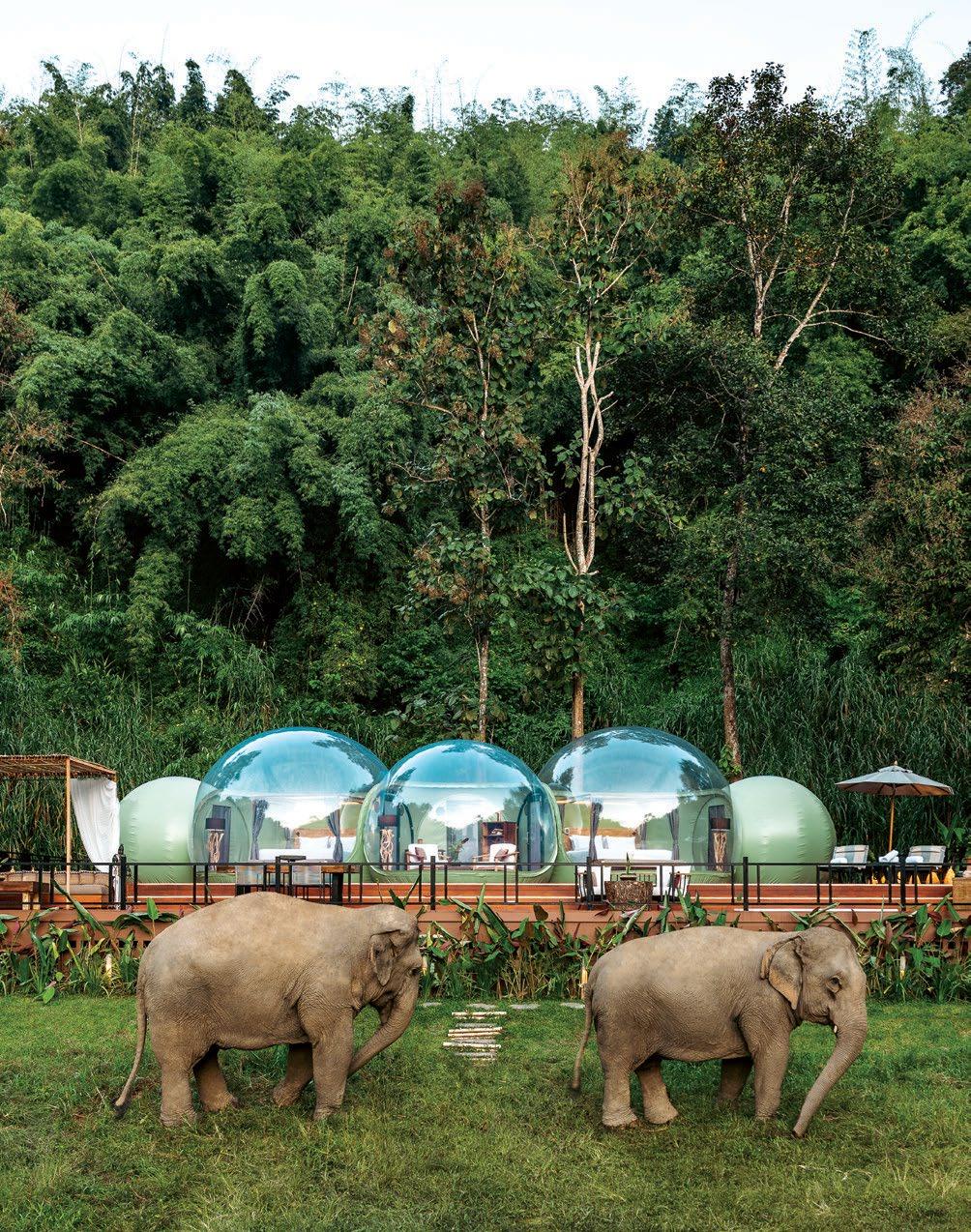
BELOW: A jungle bubble at Anantara Golden Triangle Elephant Camp & Resort.

The growth was never engineered through grand strategy documents. “We didn’t even have five-year plans,” Heinecke says. “We were just trying to make payroll the next month.” Expansion came incrementally, one hotel, one restaurant, then another, until, as he says, “you look back and realise you’ve built a wall of enterprises”. Walls are not imagined, they are constructed, brick by brick, through repetition and patience.
The making of an inveterate entrepreneur
Heinecke’s early life offered little in the way of conventional structure. Born in 1949 in Quantico, Virginia, he spent his childhood moving across Japan, Hong Kong, and Malaysia, before settling in Bangkok at 14. His father, a former U.S. military officer turned foreign service official, and his mother, an Asia correspondent for Time magazine, left him largely to his own devices. School held limited appeal; go-karting did not.
At 17, he launched Inter-Asian Enterprises, an office cleaning business, alongside an advertising venture selling space for the Bangkok World newspaper in exchange for a column. He repaid his loan within three months, with interest, a detail he recounts without emphasis but not without pride.
An Asian story, ahead of its time
Heinecke’s entry into hospitality in 1978 now reads like a foundational anecdote. The Royal Garden Resort in Pattaya was followed by a series of moves that, at the time,
seemed speculative. Bringing Pizza Hut to Thailand— “Thais did not eat pizzas,” he says—was widely considered audacious. Yet the bet worked. So did what followed: The Pizza Company, Dairy Queen, Mister Donut. By 1988, the company was listed.
What came next was less a departure from instinct than its refinement. The launch of Anantara in 2001 marked a deliberate move into experiential luxury, while the 2018 acquisition of Spain’s NH Hotel Group expanded Minor’s footprint into Europe and Latin America. Today, the portfolio spans Anantara, Avani, NH Collection, nhow, Oaks, Elewana, and Tivoli, brands that suggest a particular vision of hospitality, global in reach, but resistant to sameness.
Heinecke’s preference for lived understanding over abstract analysis continues to shape his thinking. Despite building his business largely on intuition, he is neither dismissive of data nor resistant to technology. “Both are important,” he says. “Technology like AI simplifies planning and gives you quick insights. What used to take weeks of research can now be done instantly. It enhances decision-making rather than replacing intuition.” Technology, in
his view, sharpens judgment; it does not replace it.
India, a market of discovery
That sensibility extends to the way he travels. He describes India, where Minor Hotels is now expanding, not in terms of markets or metrics, but experiences—desert treks, camel rides, horseback riding, polo matches, and car shows. “India has tremendous history and variety,” he says.
“With a little research, a traveller can find endless things to do.”
Discovery, for Heinecke, is not passive. It requires curiosity, attention, and a willingness to look beyond the obvious.
India, in business terms, is what he calls a “big discovery market,” one of Minor’s most significant growth frontiers. The ambition is to build approximately 50 properties over the next decade. Yet the approach remains measured. A self-described late entrant, he emphasises “the right product in the right place,” resisting the impulse to scale indiscriminately.
The early markers are already in place: Anantara Jewel Bagh Jaipur, opened in 2025, the forthcoming Anantara Zanti Coorg Resort, the brand’s first resort in India, and
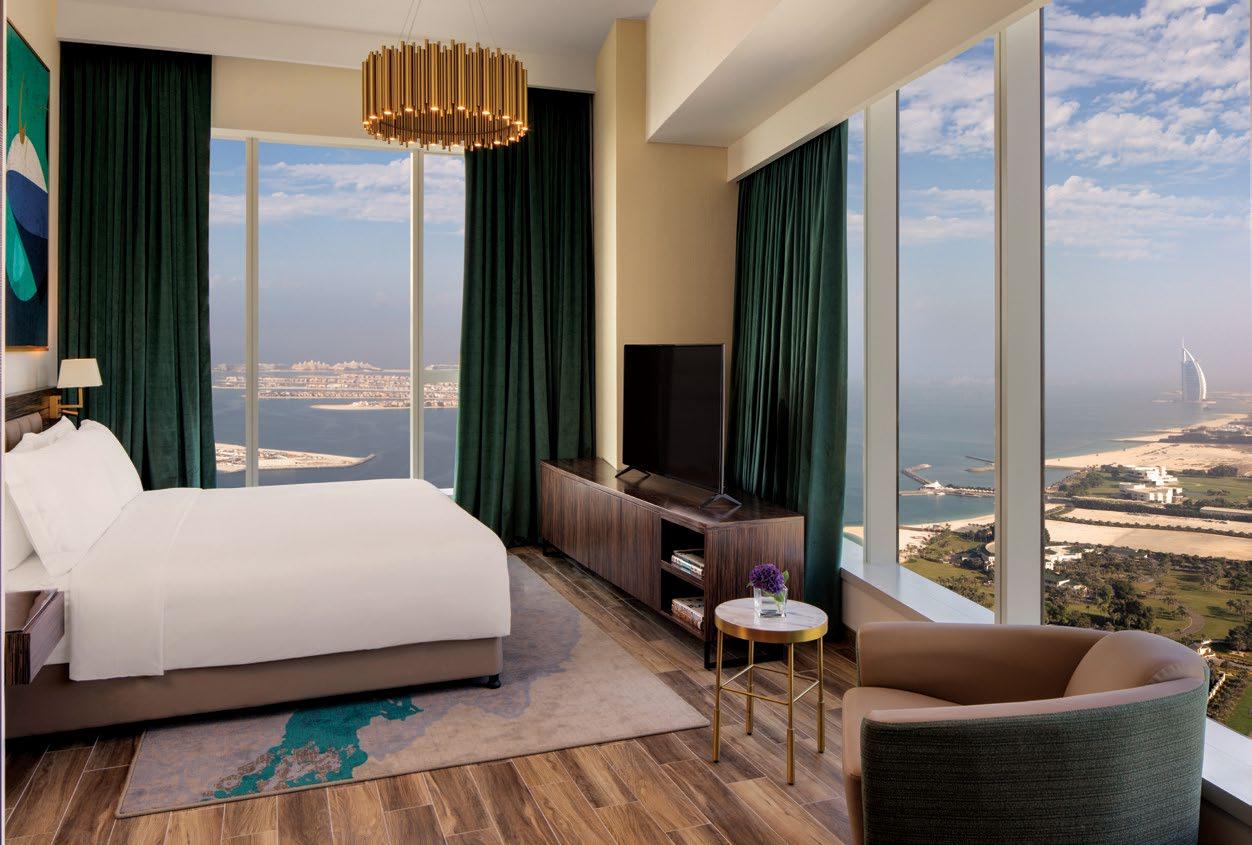
RIGHT: Seamless comfort at Avani+ Palm View Dubai Hotel & Suites.
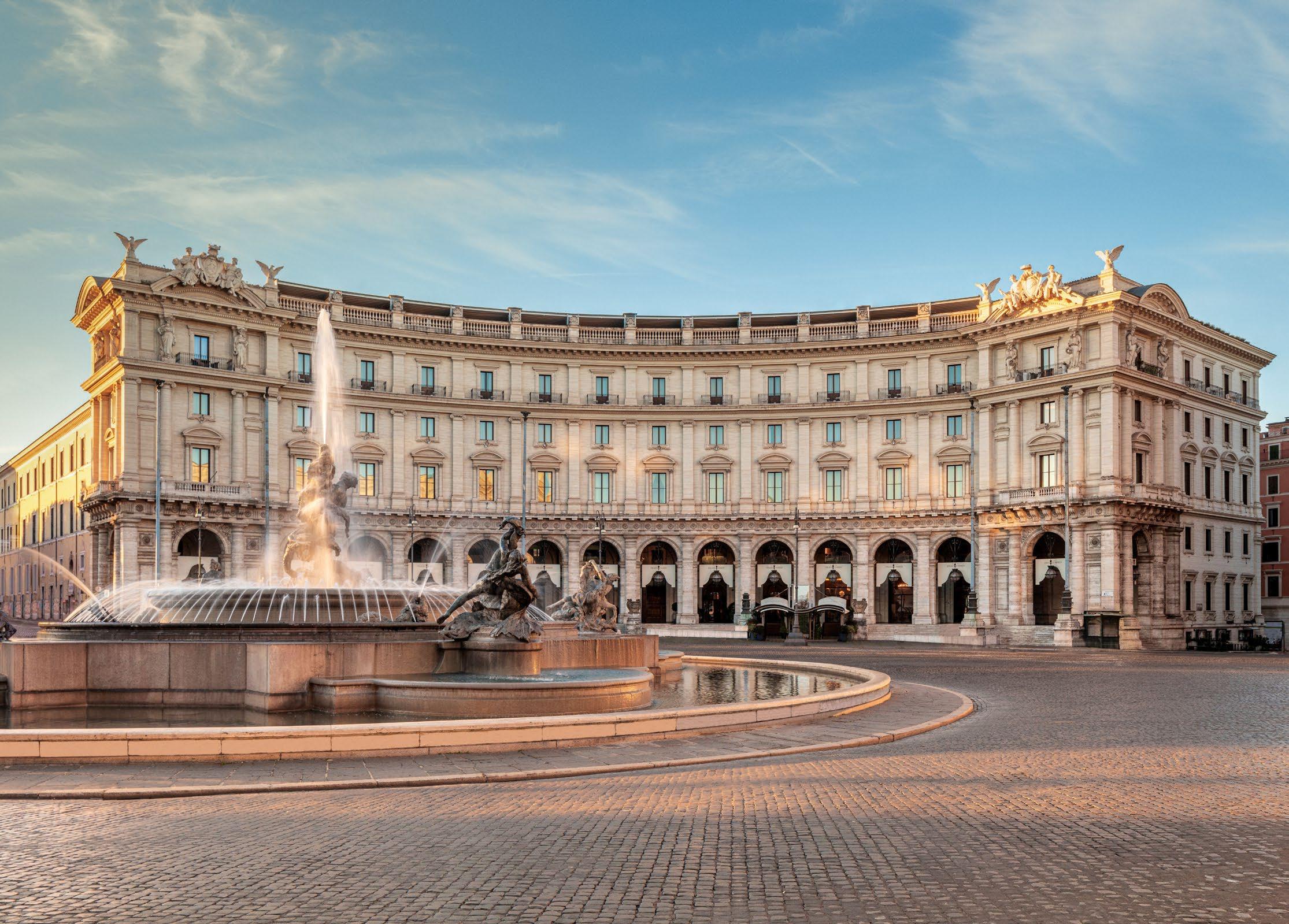
OPPOSITE TOP: Anantara Palazzo Naiadi Rome Hote, timeless and relevant across generations.
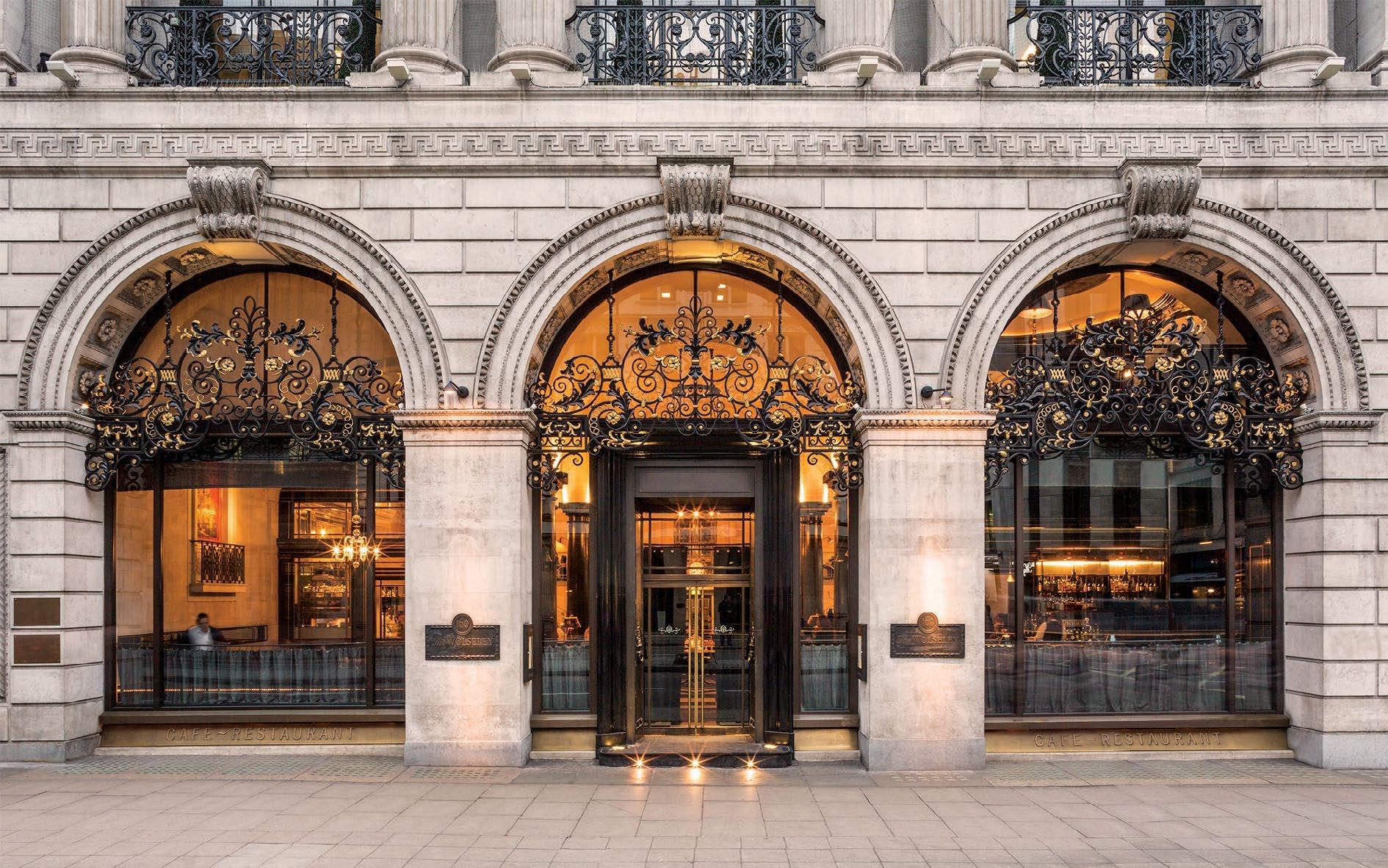
OPPOSITE BELOW: The Wolseley, London's iconic restaurant, speaks about Heinecke's love for automotobiles.
the Anantara Kolkata Hotel at the World Trade Center. A pipeline of a dozen deals is underway, with at least eight expected by the end of 2026. The model is largely assetlight, management contracts and partnerships with local developers, focused on luxury and lifestyle segments through brands such as Anantara and Avani.
While Heinecke says that Indian travellers are “very demanding,” in his view, this aligns with Minor’s emphasis on experience over standardisation. He also points to broader tailwinds, shifting travel patterns, and the redirection of global flows as forces likely to accelerate growth.
Taken together, the India strategy reads less like expansion than continuation, an extension of the same instincts that guided his earliest ventures. Identify an emerging market, adapt the model, build local partnerships, and maintain quality. The variables change, the method does not.
In the end, Heinecke’s story resists neat categorisation. It is at once American and Asian, intuitive yet methodical, expansive yet restrained. What holds it together is not geography or scale, but the persistence of a particular way of seeing the world. The 17-year-old who borrowed money from a tailor to start a business has not, in any essential sense, disappeared. He has simply acquired a larger canvas.
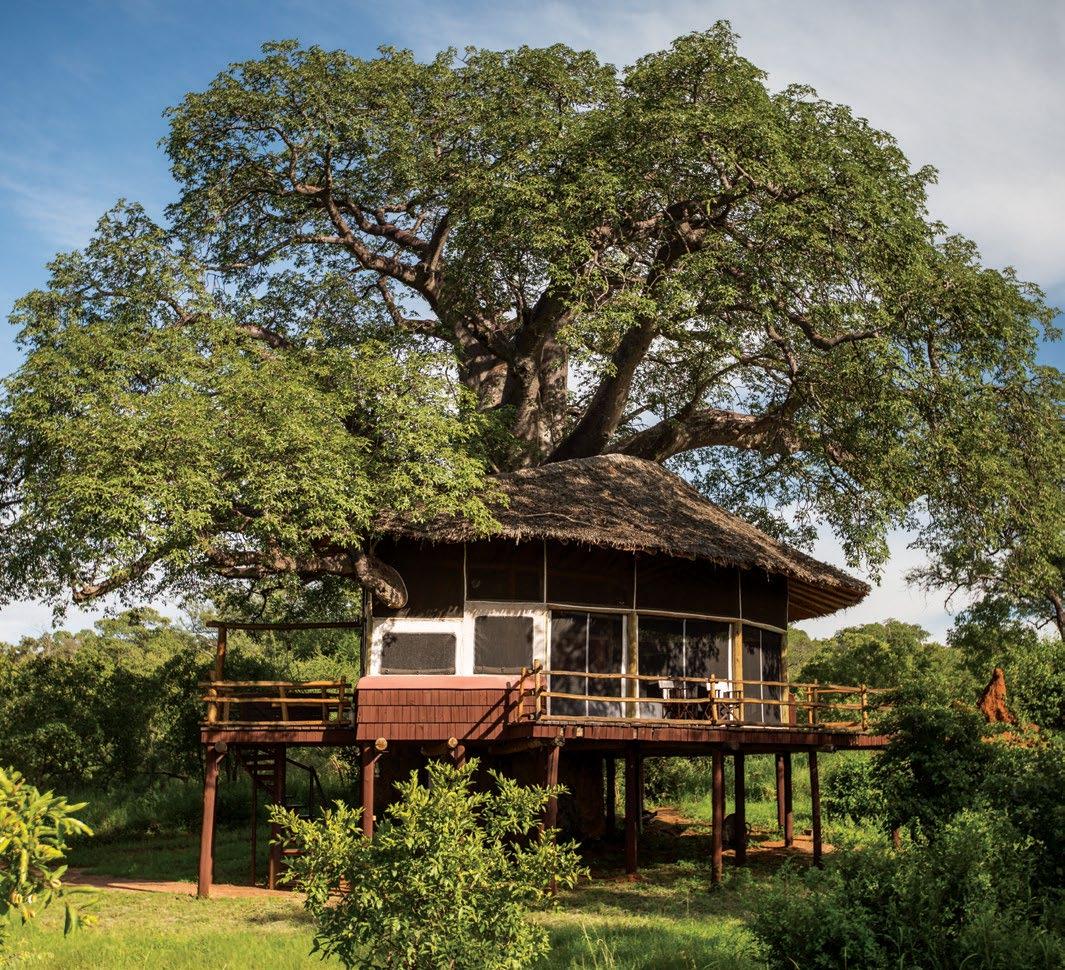
At
Elewana Tarangire Treetops, Minor International chairman’s affinity is clear—toward places that feel discovered rather than merely visited.
In an exclusive with SOH, Bill Heinecke speaks about all things personal and business. Some excerpts:
William ‘Bill’ Heinecke
FOUNDER AND CHAIRMAN, MINOR INTERNATIONAL WITH
You have been coming to India for years, even before the country became cool as a destination. Could you go back in time and tell us what brought you to India first and what your experience was like?
I came to India a very long time ago, and one of my first hosts was Mr Singhania from JK and Raymond Woollen Mills. He was a very keen pilot, so we had something in common with our flying. I saw a lot of India— some of it industrial in those days—but it was already clear that country was beginning to emerge. Today, I think it’s on fire.
From a hotel standpoint, those were primitive days. What prevailed was the incredible service and the willingness of our friends here to share what the country was really all about, because you had to rely on the people you knew. There wasn’t Google or other easy ways of discovering a place as exotic and interesting as India as there are today.
It was also the very early period of our company, shortly after I had founded it. There was only one airline flying in, Air India. There was also Safari Air, I think it was called, owned by Mr Singhania. It was an adventure at its best. You didn’t really know where you were going, and transportation was challenging. You certainly didn’t have Mercedes on the roads.


Visiting the Taj Mahal meant taking your life in your hands on those roads and in those cars. You had to come with a sense of adventure. Today, you can come with a desire to experience luxury along with that adventure.
Which destinations have stayed with you the most, and what are your early memories of places like Kolkata, especially given the perception that it remains in a time warp compared to cities such as Mumbai or Delhi?
I’ve spent more time in the first-tier cities because they’re all so different and unique. One of my strongest memories is coming to Calcutta (editor: Kolkata was earlier called Calcutta) on my first trip; I flew my own plane there. This would have been in the ’70s, nearly 50 years ago. Calcutta was always the last stop before Thailand, because we flew singleengine propeller planes. I would usually land in Mumbai, then Calcutta, and then Bangkok.
Travel to India in those days—40 or 50 years ago—was truly an adventure. But once you were in your hotel, whether in Jaipur or Calcutta, you were wrapped in Indian hospitality. It was always a very special environment. Today, it’s something you no longer need to be an adventurer to experience.
If a modern traveller were to ask you about your experience of India then and now, and the evolution you’ve seen, what would you tell them?
I would tell them that today is the time for India. People coming here now look forward to longer trips. It’s a long distance, but they stay longer. All the creature comforts that experienced travellers want are now available, so it’s no longer a chore. The days of not being able to find great meals, of any cuisine, are over. India is as much a luxury destination as anywhere in the world, and the hospitality is perhaps far superior to many places.
Today, it’s very different from when I first came 40 years ago. For the luxury traveller, it’s almost a seamless experience, whether you’re going from India to Thailand or elsewhere. The hospitality is there, and all the comforts that an experienced traveller wants are now available. India has hit its prime. It’s ripe for discovery; you don’t have to be adventurous anymore to experience it.
Given your affinity for India, why did Minor enter the Indian market relatively recently? What changed? India is a very complex market, and we tended to have limited funds, so investment was always difficult. Today, India has developed to such a degree that you have incredible developers. While there is still a maze of red tape, our partners— experienced Indian operators and developers—make it possible for us to come in and manage hotels.
We were very asset-heavy, and earlier our focus was on markets like Europe, which were easier to navigate. Today, India has matured, and we’re able to enter like many of our peers.
We finally have an Anantara here, with many more scheduled.
BEYOND THE B IO
CARS, YACHTS, JETS, AND THE THRILL OF BEING ON THE MOVE
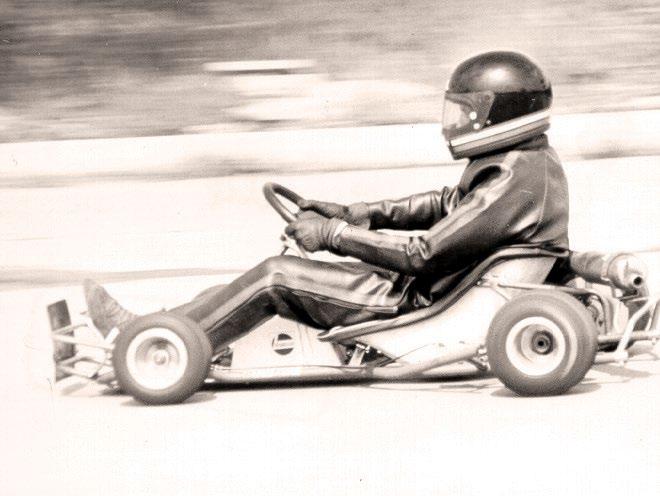
CLOCKWISE FROM RIGHT: Heinecke on one of his many motorcycles; racing a vintage Jag at a rally in Macau; the intrepid entrepreneur co-owns MJets, a charter company; he first discovered the thrill of speed behind the wheel of a go-kart.
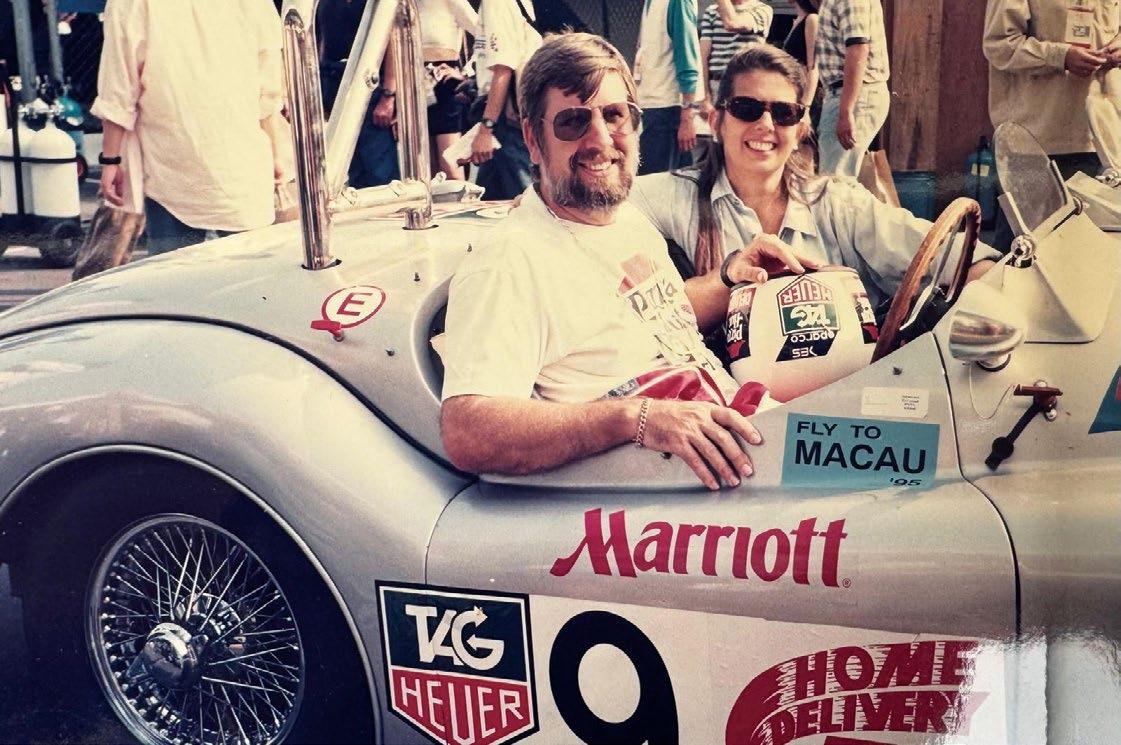

Long before William ‘Bill’ Heinecke built a global hospitality empire, he was RACING GO-KARTS as a teenager, chasing velocity with the same appetite that would later define his business life. That early fascination evolved into overland record attempts, a STINT AT THE MACAU GRAND PRIX, and eventually a more measured, though no less exacting, pursuit of vintage rallying.
Today, his COLLECTION READS LIKE A PRIVATE MUSEUM OF MID-CENTURY AUTOMOTIVE EXCELLENCE: 40 to 45 cars and 10 to 15 motorcycles, anchored by an extraordinary roster of 1950s–1970s Ferraris—many of them one-offs or rare prototypes. Alongside them sit Jaguars, Porsches, MercedesBenz (including the iconic 300SL Gullwing), Maseratis, Lamborghinis, and even a Shelby Cobra once featured in Ford v Ferrari. “I have a very special Ferrari 330 Speciale. They only made four of them,” he says.
The collection is as global as his business—housed across Phuket, Oxford, and Monterey—and constantly in motion. Cars are shipped to Europe to be driven properly and shown at concours events such as Pebble Beach and Cavallino, where provenance is as prized as performance. “I USED TO RACE CARS IN MY YOUTH,” he reflects. “NOW, I DO A LITTLE BIT OF RALLYING AND VINTAGE CAR RACING.”
If the road offers adrenaline, the ocean provides equilibrium. Heinecke OWNS A 28–30 METRE SUNSEEKER YACHT, MAJOR AFFAIR, BASED IN PHUKET, ALONG WITH ANOTHER VESSEL SOMETIMES REFERRED TO AS MINOR AFFAIR. Here, the pace slows. Boating becomes less about speed and more about stillness—an extension of his passion for scuba diving. He has dived alongside whale sharks, hammerheads, and even great whites in cages.

That connection to the sea is perhaps best expressed at NH Collection Maldives Reethi Resort, which he describes as “a diver’s paradise, alive with sea turtles, manta rays, enormous whale sharks, and vibrant clownfish.”
In the air, the narrative shifts again. A licensed pilot, Heinecke is also CO-OWNER OF MJETS, A PRIVATE CHARTER COMPANY. Flying—between properties, across continents, or simply for pleasure—is routine, less transport than autonomy.
Taken together, these pursuits are not trophies, but expressions of a life built around movement, curiosity, and control over time. “WHATEVER YOU LOVE, PURSUE IT WITH AS MUCH PASSION AND ENERGY AS YOU PUT INTO YOUR BUSINESS,” he says.
“
India has experiential destinations in abundance—wildlife, plantations, history, and architecture. That’s what we like to deliver to our guests.
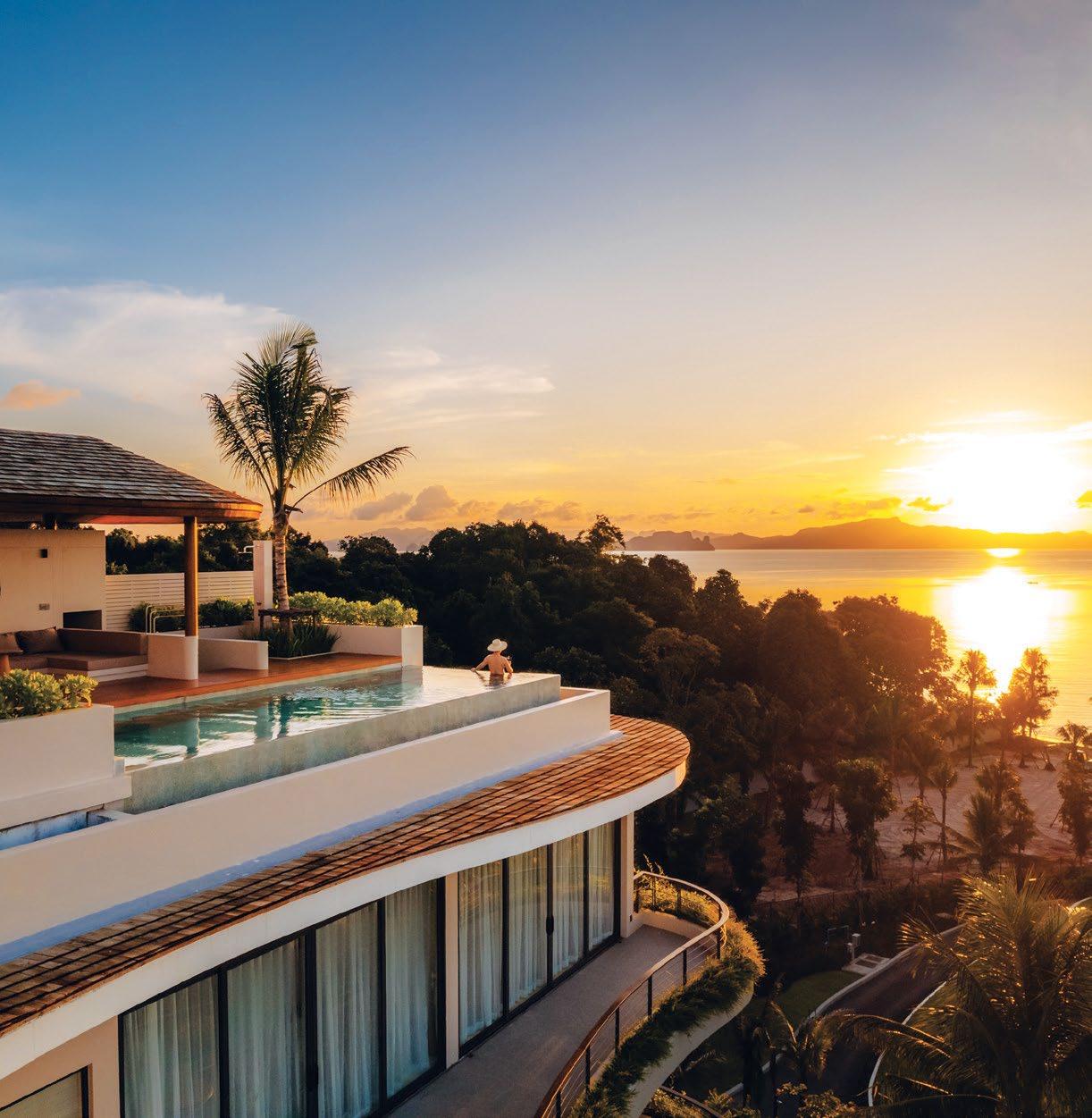
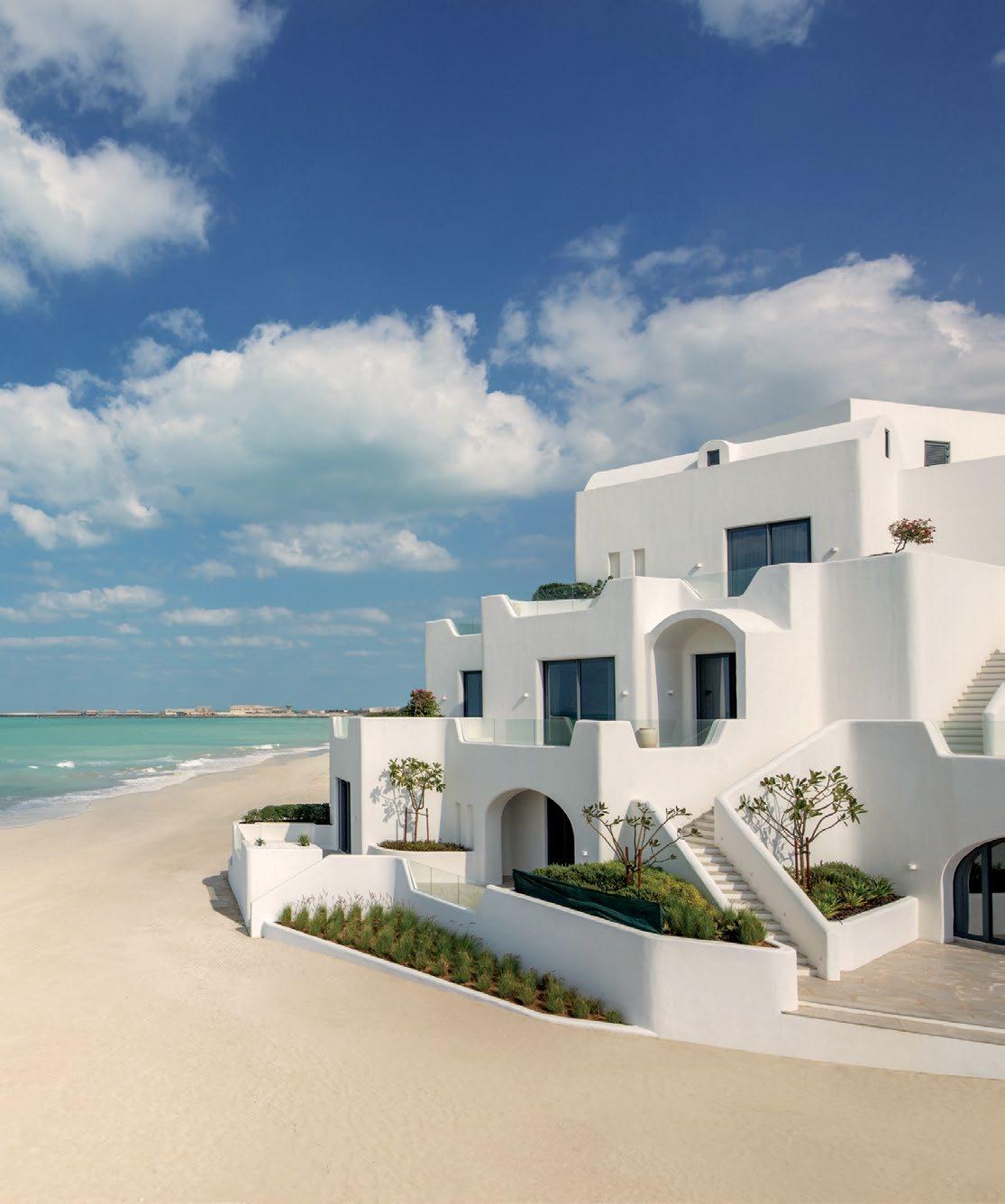
For the seasoned hotelier, luxury works best when it feels effortless—immersive, restorative, and quietly removed from excess. Seen here are a glimpse of Anantara Koh Yao Yai Resort & Villas (LEFT) and Anantara Santorini Abu Dhabi Retreat (ABOVE).
What’s encouraging is that so many people in India already know our brands, thanks to Indian outbound travel. Earlier, we had to explain ourselves. Today, we don’t; they know Anantara, they know Avani, and they’re ready for us.
If you let your heart lead instead of business logic, which Indian destinations would you choose, and what kind of experiences draw you most strongly?
It would probably be experiential destinations such as Varanasi, Alibaug, Coorg, Darjeeling, and Assam. These places have a unique appeal. India has experiential destinations in abundance—wildlife, plantations, history, and architecture. That’s what we like to deliver to our guests.
Why did you use Jaipur as your entry point into India, and what makes it significant from both a business and traveller perspective?
We take opportunities as they’re presented. Jaipur was an opportunity, and we’ve never regretted it. It’s a big market for weddings and MICE, and
it has performed extremely well. From a traveller’s perspective, Jaipur is magical. The history is incredible, and along with Jodhpur and Udaipur, it forms a compelling starting point.
You’ve chosen Kolkata for your next hotel, a market many global players approach cautiously. What led to that decision, and how do you see its potential? Again, it comes down to opportunity. The World Trade Center project was unique for us. Kolkata is also a gateway to eastern India—Varanasi and beyond. Projects in India take time, especially greenfield ones, with permits and approvals. So while Kolkata will take a few years, we may have other hotels, like Coorg, opening earlier.
What were your earliest impressions of Kolkata, including your stay at the Oberoi?
The first time I travelled to Kolkata
was in 1975 or ’76, flying my own plane. I stayed at the Oberoi. Outside, there was chaos, but inside, it was a walled compound that gave you all the creature comforts. We stayed just one night initially, and I returned later for another short stay.
You’ve often entered destinations before others. What signals do you look for that others might miss?
I’ve always been drawn to destinations I’ve personally discovered—Africa, Mozambique, the Maldives. These places require more effort, but they’re rewarding. India now fits into that space, especially with the growing demand from Indian travellers who already know our brands globally.
Does India still feel exotic, given rapid development and construction?
Absolutely. If you go into a rainforest or a tea plantation, you don’t see that development. There are still many untouched, beautiful parts of India. For the international traveller, it remains exciting, exotic, and comfortable.
You’ve spoken about vintage cars and experiences revolving around them as one way to attract discerning travellers. How do you see that translating into India?
India has incredible vintage collections, the Rolls-Royces and Bentleys used by Maharajas. I personally prefer Italian cars. We’re organising the Anantara Concorso in Rome and would love to bring similar automotive experiences to India. We also have the Wolseley brand, based on an old English car brand. But we need more scale in India first; we’re targeting
50 hotels. Once we reach that, we can create curated experiences like these.
When you think about India as a destination, what is the quintessential experience you want to offer guests?
Food is central. Indian cuisine is loved globally, but sometimes not showcased enough within India. We’re known for our cooking schools, and I would love to introduce Indian cooking schools in our hotels so guests can both experience and learn the cuisine.
When building brands across geographies and price points, what is harder? It’s about making something timeless that continues to evolve and remain relevant across generations.
If you could change one thing about the hospitality landscape today, what would it be? And how do you see global tensions impacting travel?
I would eliminate geopolitical tensions. But travel doesn’t stop; it gets redirected. As we saw during COVID, recovery is quick. Travel is here to stay, even if crises create temporary shifts.
How do you see the hotel of the future evolving?
Travellers today want authentic, sustainable experiences. There’s more awareness of overtourism and its impact. Governments and operators are becoming more careful. The future is about responsible, communityconscious travel.
If you were starting Minor Hotels today, what would you do differently?
Nothing. I would just start earlier. The best decade of my life is yet to come
According to Heinecke, luxury today is about comfort delivered with quiet, uninterrupted ease.
Door Closer (DC500/700)
ASSA ABLOY Fire Rated Door Closers are vital for emergency fire doors, where they compartmentalize fire and smoke while ensuring safe evacuation for the occupants



The next decade Indian of hospitality
The numbers are extraordinary, and Indian hospitality has never looked stronger on paper. But paper is not where the next decade will be won or lost. It will be won in the lobby, at the table, the way the hotel is designed, in the moment a guest feels genuinely seen in a place that knows exactly where it is, the kind of conversations the industry needs to have.
DEEPALI NANDWANI
There is a particular kind of confidence that comes with good numbers. Indian hospitality has them in abundance right now. Occupancy at 68%, the highest in recent memory; Average Daily Rates up 8.6% to ₹8,624; RevPAR climbing 10.8% to ₹5,522; a branded supply pipeline of 144,000 rooms that could push the country's total hotel inventory toward 360,000 keys by 2030. Tourism is projected to support nearly 64 million jobs by 2035. The online accommodation market, valued at close to $9 billion in 2025, is on its way to $16 billion by 2031. Demand is outpacing supply. Pricing power is holding.
And yet, if you sit in a room with the people who actually run this industry—the CEOs, the architects, the investors, the lawyers who write the contracts that bind brands to owners for decades—the conversation is rarely about the numbers. It is about something harder to measure. Who truly owns the guest in an age when an app can stand between a hotel and the person sleeping in its bed? What does Indian luxury actually mean, on its own terms, without borrowing the vocabulary of somewhere else? Can you build a portfolio of a hundred hotels and still have the thing that made the first one worth staying in?
These are the questions that will define the next decade of Indian hospitality. Not the pipeline. The pipeline is the easy part.
Puneet Chhatwal, MD & CEO, IHCL, puts the larger transformation in context: "The last 10 years have been transformative for India, its economy, and consumer behaviour. Being such a large domestic market of 1.5 billion people, everything else has to change with it, and hospitality is no exception." For Chhatwal, the sector's evolution goes beyond customer service: "From being just a customer service–driven business, there are many facets to customer service, which is at the core, that have been added. Some of those include creating shareholder value, being very good with all stakeholders—not just your own employees, but your suppliers, your partners, anybody who works in the hospitality ecosystem."

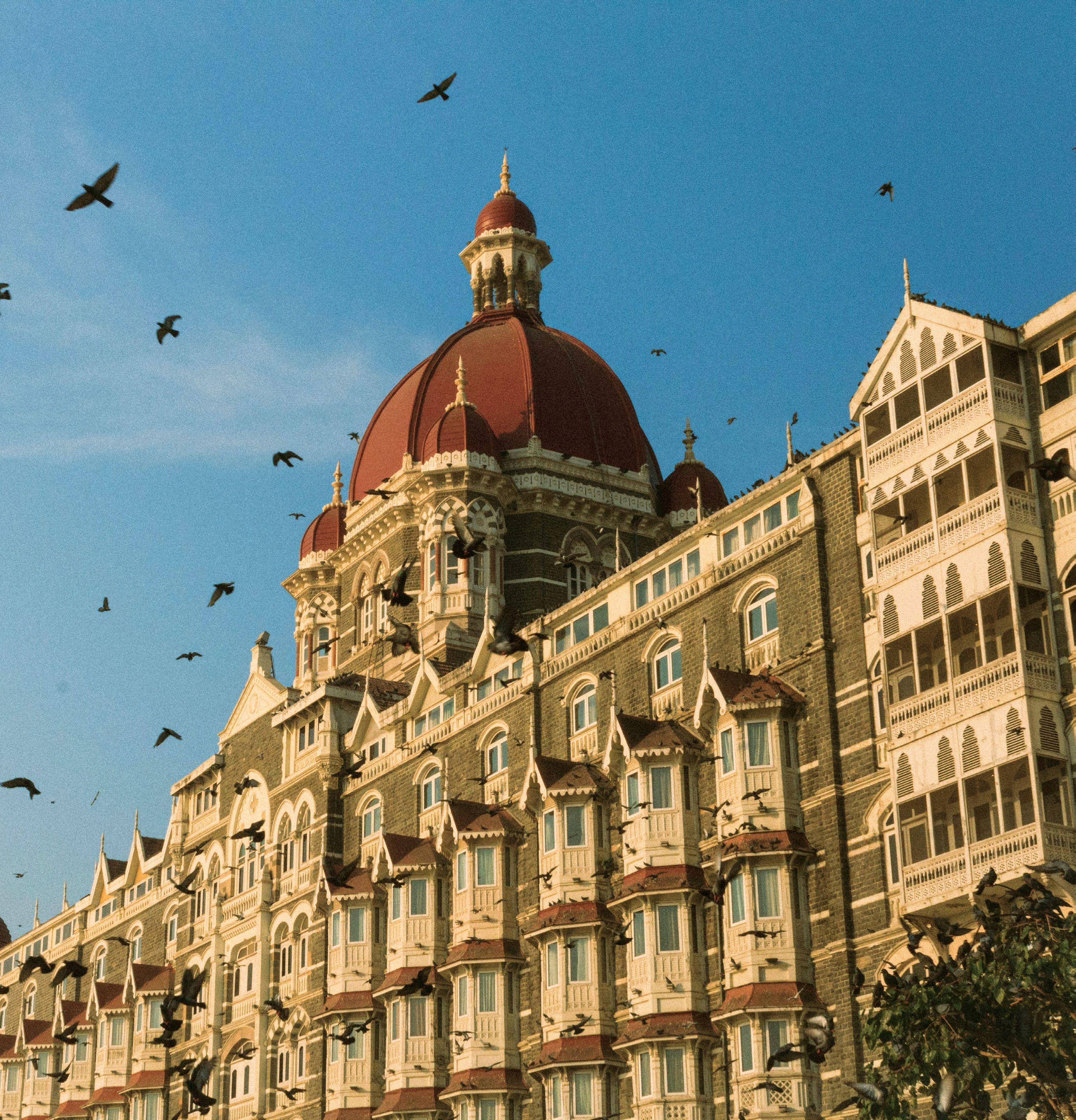
ABOVE: Taj Mahal Palace, Mumbai, where Indian hospitality's century-long story began.
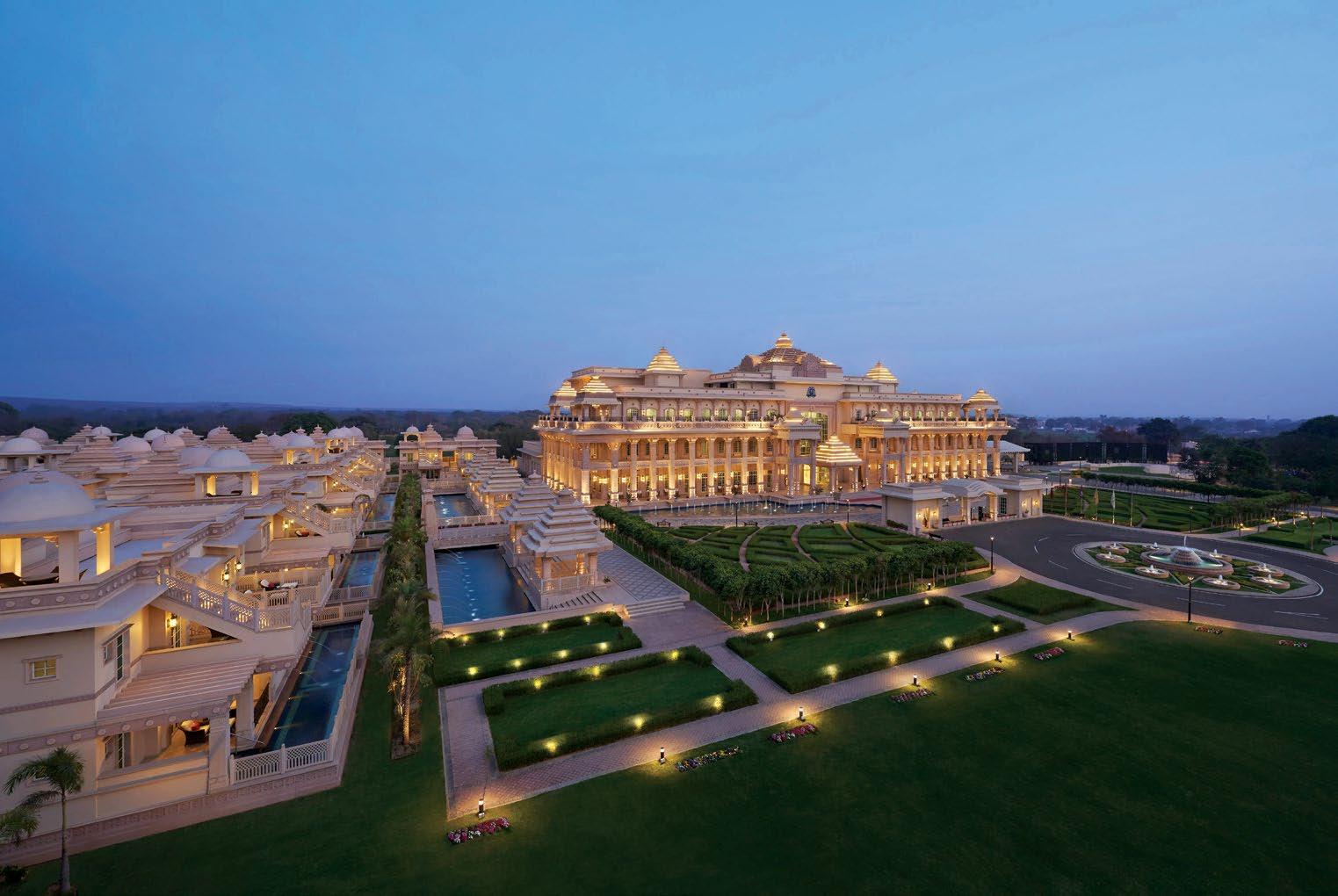
LEFT: ITC Grand Bharat, Gurugram represents the new face of Indian luxury: rooted and yet global.
PHOTO BY
THE NEW POWER MAP: WHO OWNS THE GUEST?
The asset-light model—management contracts, franchises, white-label operators—has been the industry's operating logic for years now. Brands expanded without balance-sheet exposure. Owners got global distribution and reservation infrastructure without building a brand from scratch. A tidy arrangement, except for one unsettling question that has moved from the edges of industry conversations to the centre: in all of this, who actually owns the guest?
Not the brand, necessarily. Not the owner, certainly. Increasingly, the answer is the platform.
Online travel agencies hold a commanding position. Third-party portals accounted for 58.66% of India's online accommodation market in 2025. MakeMyTrip's hotels and packages segment grew gross bookings by 22.6% in Q4 FY'25, with hotel room nights up 23.2%, their highest-growth segment. The platform's own investor presentation projects India's online travel market growing from $12 billion in 2022 to $60 billion in 2030. That is the number their entire investment thesis is built around, and hotels are the product they are most excited about.
Airbnb's India numbers are among the most telling data points of the moment. During the December 2025 quarter, nights booked in India surged 50% year-on-year, with first-time bookers up more than 60%. India is now explicitly one of Airbnb's fastest-growing origin markets globally. Their 'Feet on Street' host recruitment strategy expanded Tier 2 and Tier 3 city listings by over 30%. OYO, meanwhile, acquired US-based G6 Hospitality (of Motel 6 and Studio 6 fame) for $525 million in December 2024, a move that confirmed the platform ambition is no longer merely domestic.
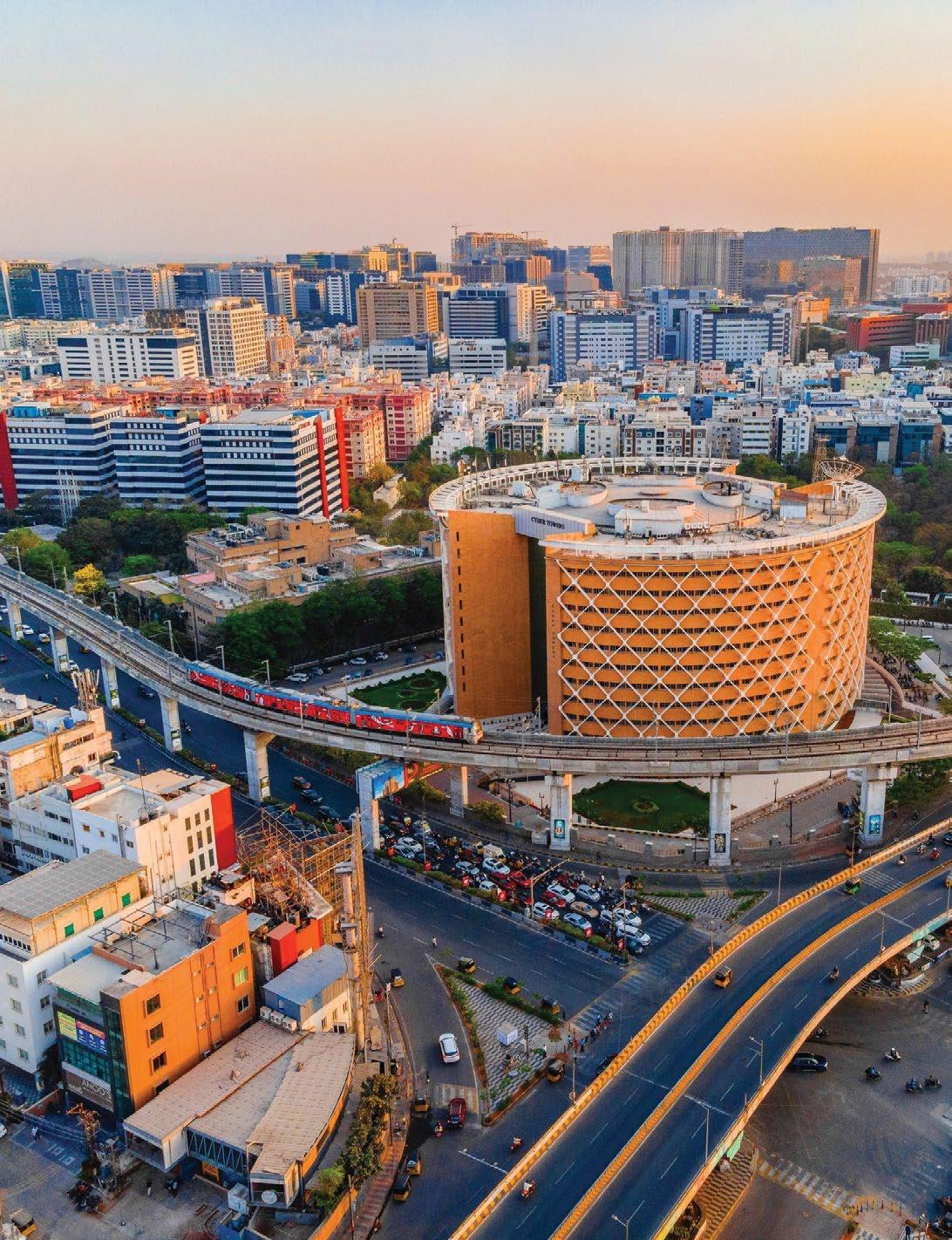
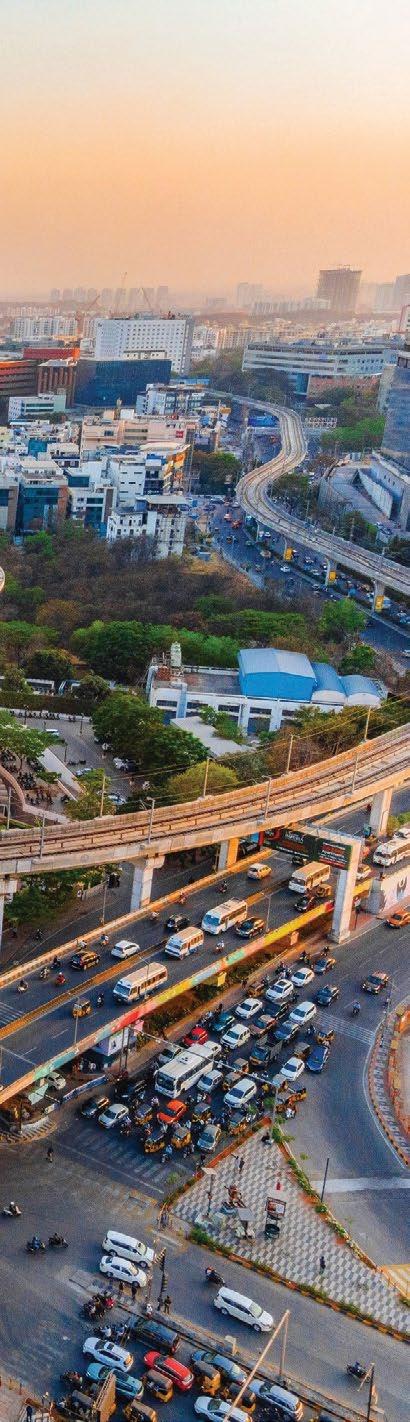
BELOW: Hyderabad HITEC City: The corporate corridors of India's tech capital are finally getting the hotels they deserve.
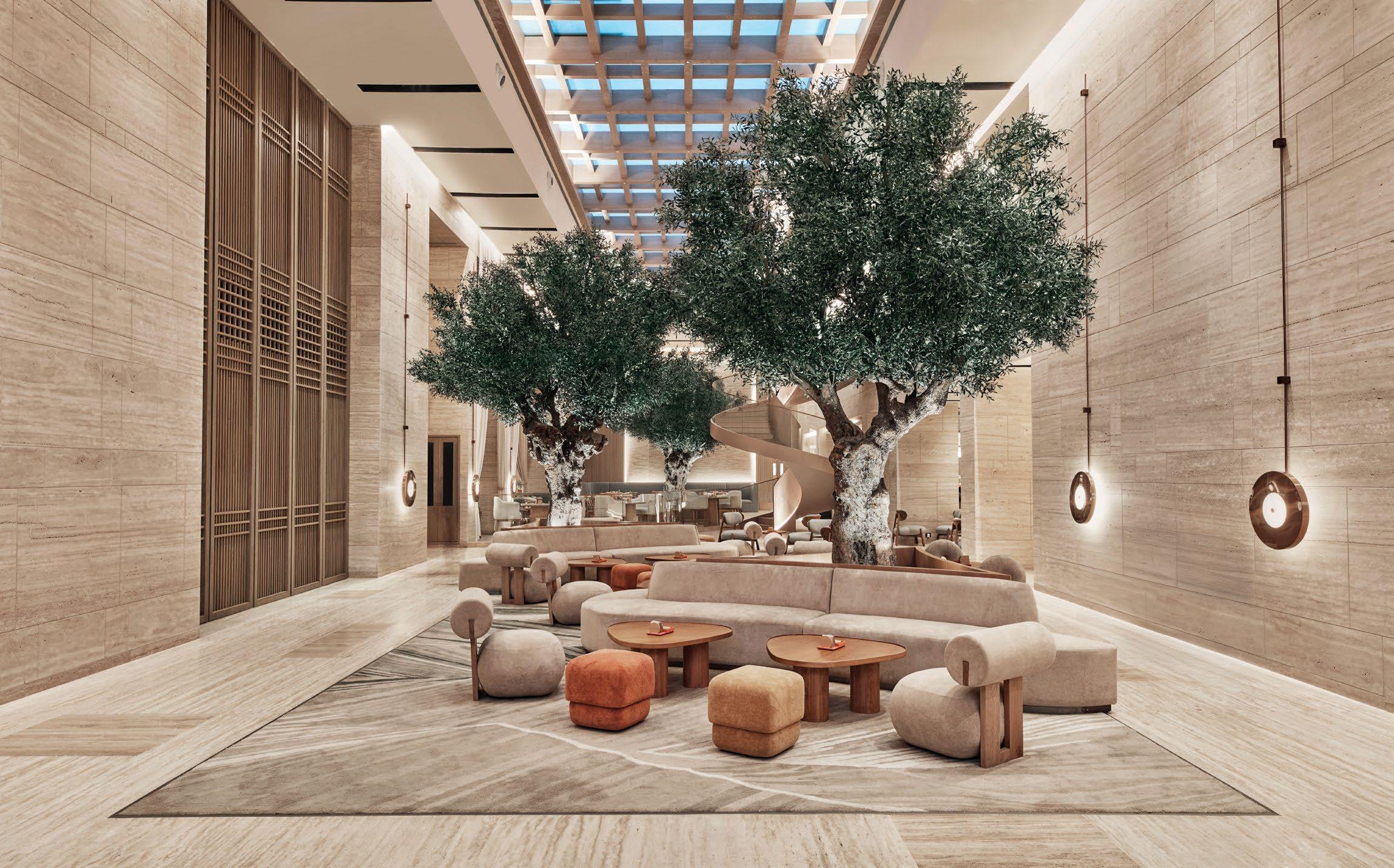
RIGHT: Hilton Baani City Centre, Gurugram's lobby was designed to undo the city before it undoes you.
MakeMyTrip's launch of 'Myra,' a multilingual GenAI trip-planning assistant, signals that the next hundred million travel users will be unlocked through vernacular, conversational interfaces rather than a standard English booking page. And yet. Direct bookings remained remarkably stable in 2025, staying within 1.5 percentage points of the prior year in 95% of markets analysed. Hotels that have invested seriously in their own booking infrastructure are holding ground against the OTA squeeze. Mobile now drives 87.5% of search and booking activity. There are 140 million high-income households arriving in India by 2030, along with 90 million new households headed by millennials who grew up booking things online. The demand is structural. The question is only who gets to sit between it and the hotel bed.
Nirupa Shankar, Managing Director, Brigade Hotel Ventures Ltd., cuts through the platform anxiety with unusual directness: "An app might own the transaction, but the hotel owns the experience. The platform is often just the digital front door." The real shift over the next decade, she says, is not about fighting the platforms. It is about what happens once the guest walks through that door: "If a guest books through an app but arrives to find their room temperature exactly where they like it, or their favourite local coffee waiting because our internal systems remembered them, that loyalty shifts to us." Data, in her framing, is not a technology story. It is an attention story. "The relationship is ours to build the moment the user becomes a guest."
Shwetank Singh, MD & CEO, Chalet Hotels Limited, frames the same question at a longer time horizon: "The more important question is who owns guest preference, trust, and emotional recall over time." A platform can facilitate a transaction, he says, but long-term loyalty is built through the quality of the experience, consistency of service, and the emotional connection a guest develops with a brand or property. "Over the next decade, the competitive advantage for hospitality brands will increasingly come from their ability to create differentiated and memorable experiences rather than just acquire customers efficiently." At Chalet, technology is an enabler rather than a substitute: "Data and digital tools
will become increasingly important in understanding guest behaviour and removing friction from the journey, but hospitality will still remain deeply human at its core."
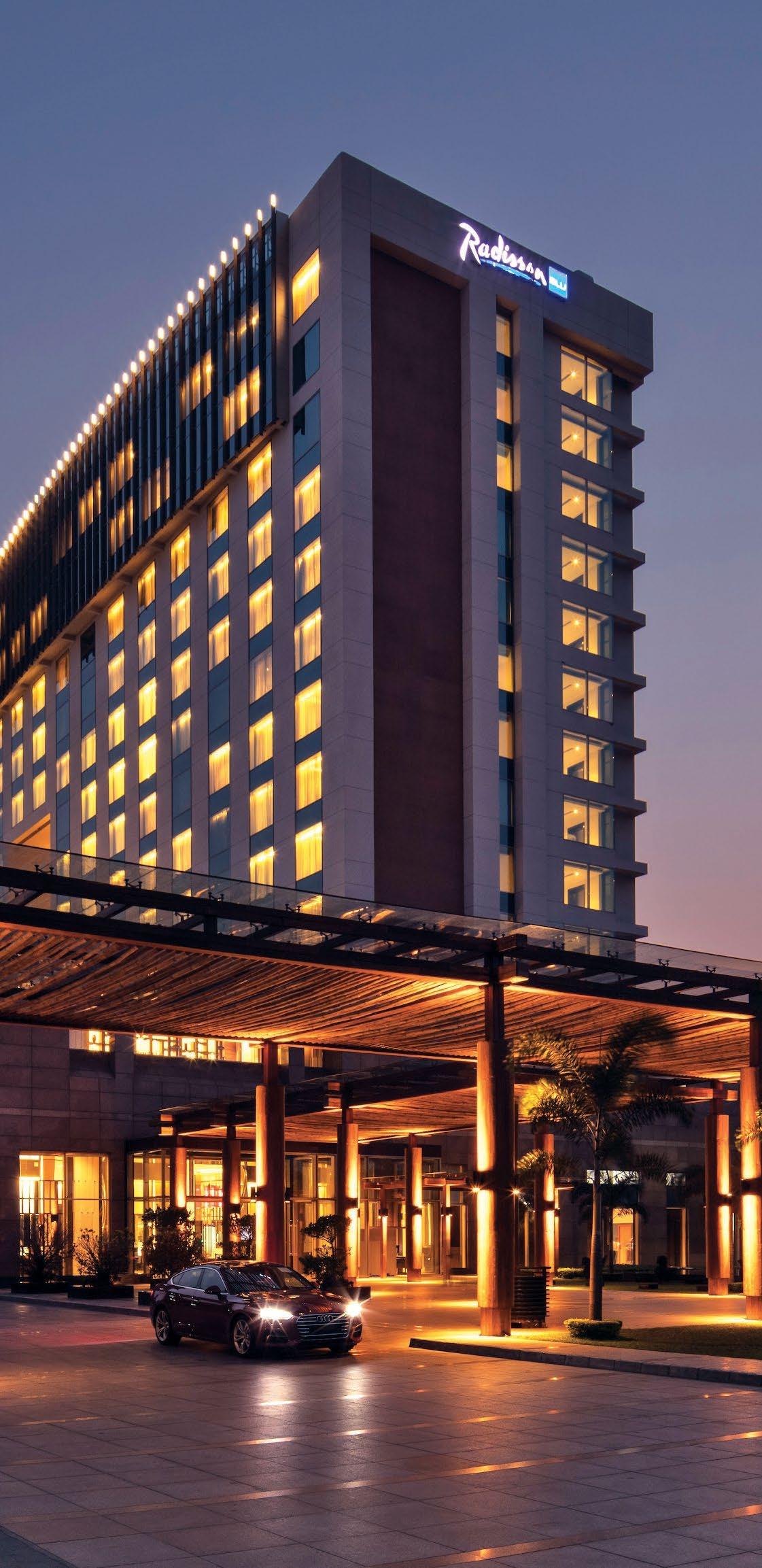
Nikhil Sharma, Managing Director & COO, South Asia, Radisson Hotel Group, makes the commercial logic explicit: "OTAs and super-apps are important distribution partners because they expand visibility and reach, especially in a dynamic market like India. However, long-term loyalty is built through personalised experiences, seamless service, and meaningful engagement beyond the transaction itself." Radisson is investing in its digital ecosystem, loyalty platforms, and data-driven personalisation to deepen direct guest engagement across the full lifecycle—before, during, and after the stay. The industry, Sharma says, is witnessing a broader shift toward loyalty-led ecosystems, "where guests increasingly expect recognition, flexibility, and curated experiences rather than just room inventory."
The wildcard in all of this is the Open Network for Digital Commerce, or ONDC, a government initiative that could allow smaller hotels to access multiple buyer apps without paying OTA discovery fees, potentially redrawing the economics of distribution in ways no single commercial player has been able to manage. For owners who feel squeezed by commissions on one side and brand fees on the other, it is a development worth watching very closely.
That squeeze, incidentally, is getting sharper. Sujjain Talwar, Cofounding Partner, Economic Laws Practice, who has spent years inside the legal architecture of hotel deals, describes how the shift towards institutional capital has changed everything: what was once "largely promoter-driven and relationship-based" is now "far more documentdriven, contract-led, and granular." Management contracts, he says, remain "heavily skewed in favour of brands." Fee structures are typically tied to revenue, which means brands collect their fees regardless of how an owner's debt is performing. "There is likely to be greater insistence on brands having skin in the game," he says, aligning fees more closely with net profitability after financial obligations. Without that, he adds, longterm project viability itself could be at risk.
There is another legal frontier emerging that the industry has barely begun to grapple with. Data privacy regulations now carry penalties of up to ₹250 crore for breaches, and hotels, which sit on extraordinarily sensitive personal data across every booking touchpoint, are caught between owners who argue they lack operational control and brands that resist full liability. "There is currently a gap in how this risk is allocated," Talwar notes. It will not remain a gap for long.
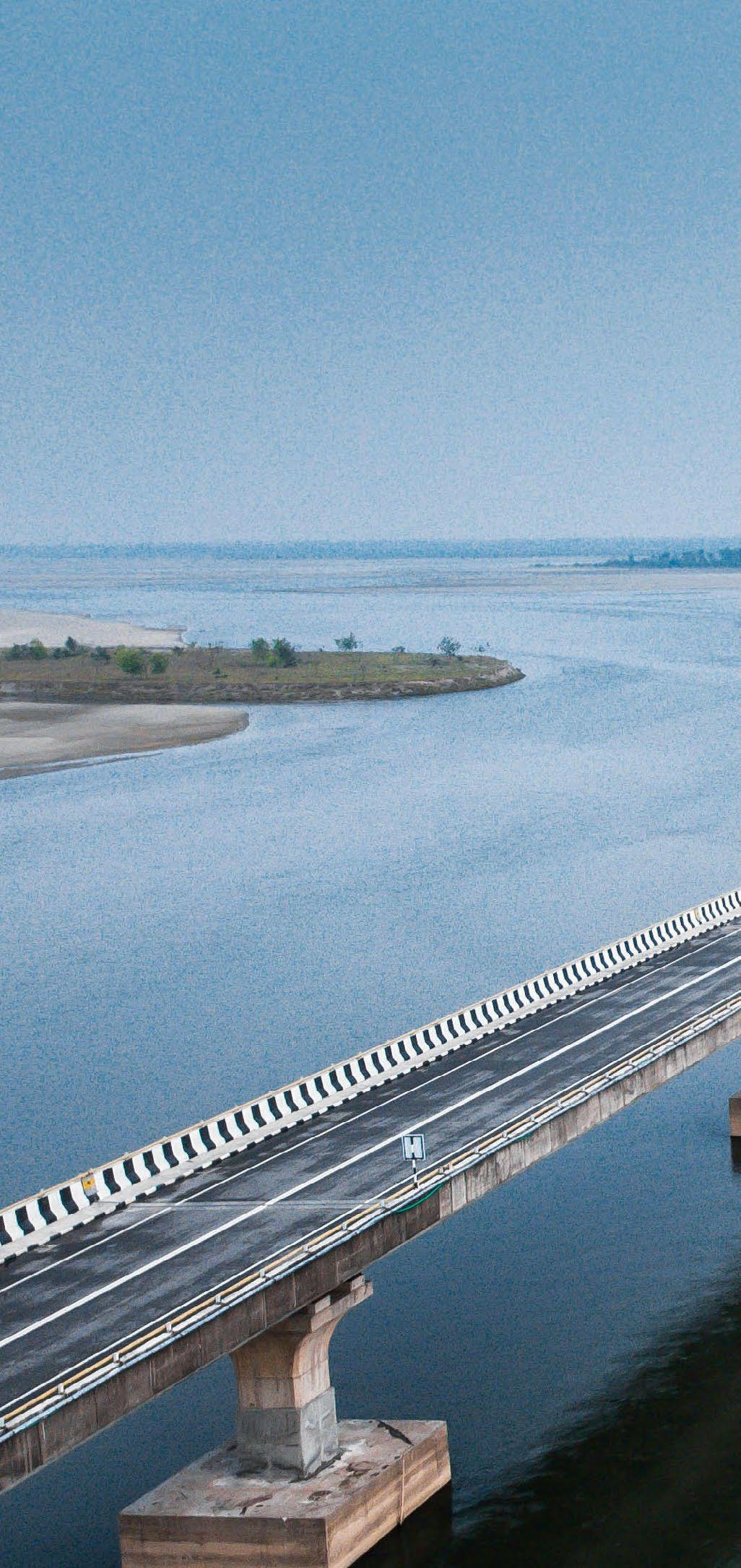
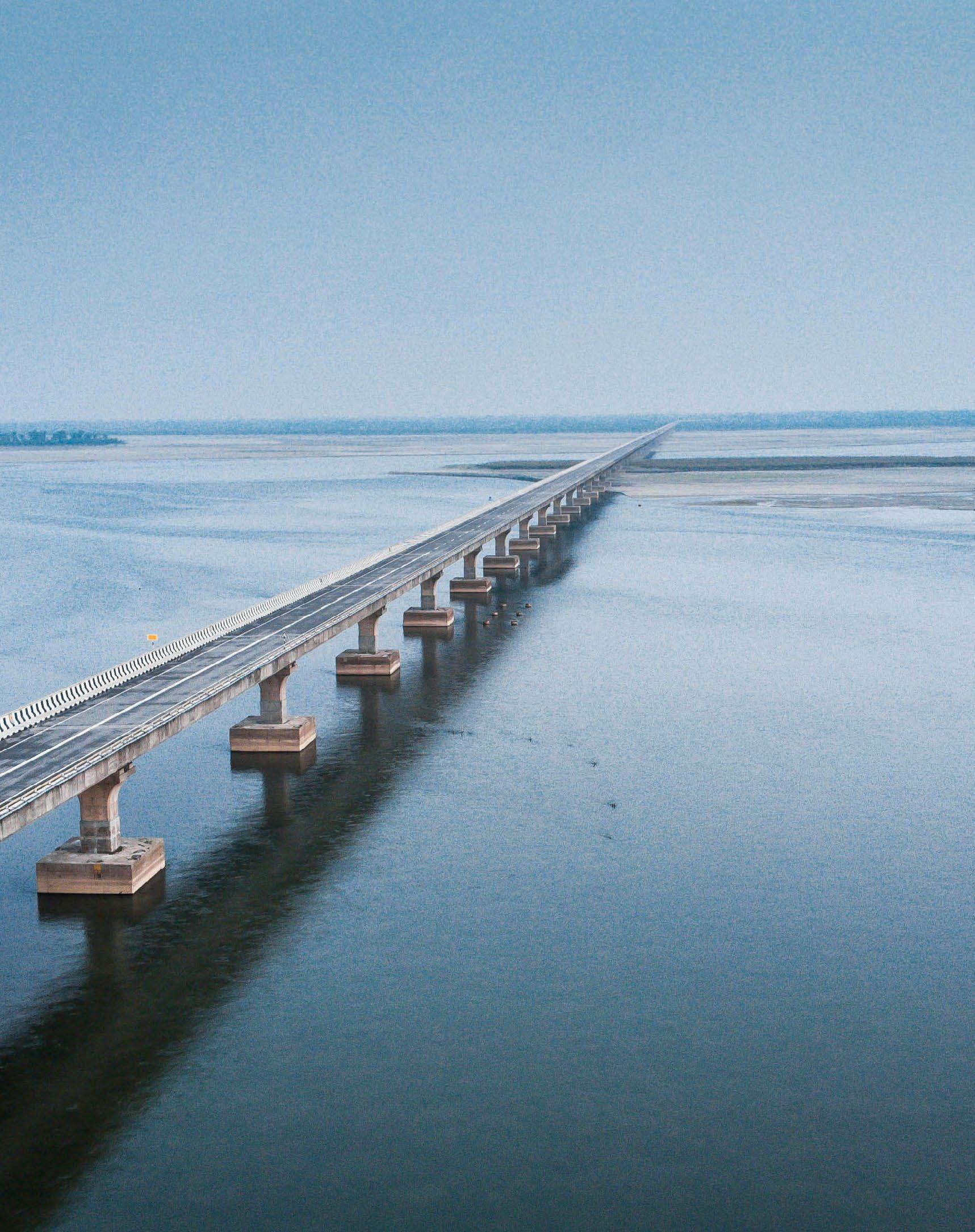
At 9.15 kilometres, the Dhola Sadiya Bridge has done more for Assam's hospitality story than a decade of marketing ever could.
PHOTO BY AKHIL VERMA ON UNSPLASH
INDIA IS NO LONGER ONE MARKET
For a long time, Indian hospitality operated as though Delhi and Mumbai were India. The data is now making that position increasingly difficult to hold.
Tier 2 and Tier 3 cities are no longer emerging. They are the market. The Hotelivate Trends & Opportunities report, tracking the sector for 28 years, notes that the proposed supply pipeline now introduces branded hotels into 177 new markets. For the first time in over a decade, India's proposed branded supply has crossed the 100,000-room mark, a 58% surge in five years.
Infrastructure is redrawing the map of where travel happens: UDAN's third round added 106 tourism routes with plans to link 120 destinations serving 40 million passengers. Government investment in roads, railways, and logistics is expected to nearly double from ₹51.2 trillion in FY'17–23 to ₹103.8 trillion in FY'24–30. Emerging hotspots such as Indore and Varanasi are challenging the dominance of traditional metros. In online accommodation specifically, the northeast is projected to grow at a 15.89% CAGR through 2031, the fastest of any region in the country.
Chhatwal reads this infrastructure buildout as something close to a civilisational moment: "I always call it the renaissance of train stations, millions of square kilometres of highways getting built, doubling of airports—all that is happening." The demand that follows, he argues, is not incidental. "You can't become the world's fourth-largest economy, aspiring to become the third-largest, and have the same behaviour pattern as you did at number 20 or 25 or 30. The
change in GDP growth, in the per capita income, and in disposable income is going to drive consumer sectors. And within the consumer sectors, definitely travel, tourism, hospitality, and aviation are among those."
Anil Chadha, Managing Director, ITC Hotels Limited, connects that infrastructure story directly to where hotel development is heading: "Improved air, road and railway connectivity is helping the growth into new markets. The experience of discovering India by oneself is getting better each year and our ability to develop micro-cultural hubs along with new business based micro-markets is helping the hotel development boom." For Chadha, the signal is visible in India's newest airports: "Our new airports—Navi Mumbai and Jewar more recently—and the development around them is a demonstrated case of the same." On Tier 2 and Tier 3 cities specifically, he is precise about what is actually driving the numbers: "The new hotel growth markets, which today qualify as Tier 2 and Tier 3, is where the recent year-on-year growth is being witnessed owing to a small to limited base of branded hotel rooms. India's pilgrimage destinations have existed for many decades; however, it is only very recently that the demand of quality hotel accommodation in many of these locations has started to outpace supply."
Ajay K. Bakaya, Chairman, Sarovar Hotels & Director, Louvre Hotels India, is equally clear that infrastructure is necessary but not sufficient. For him, the more important question is what kind of growth the industry is actually building toward: "Growth is not just about adding more hotels, but about building relevance across diverse markets. Scale creates longterm value when it strengthens distribution, brand trust, and operating efficiencies. However, in emerging leisure and pilgrimage destinations,
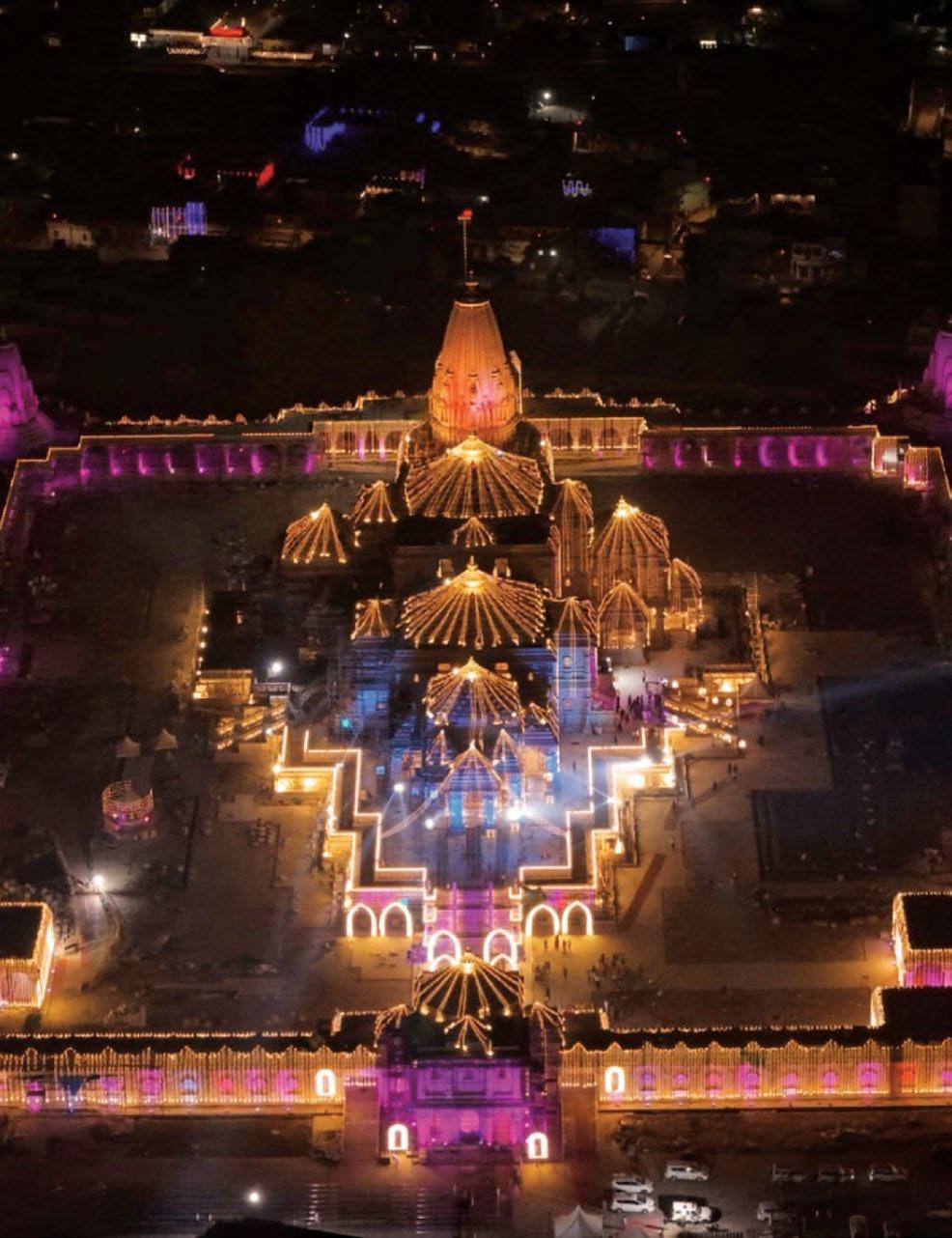
LEFT: The Ram Mandir in Ayodhya, spiritual tourism's most powerful icon, lit up for the world to see.
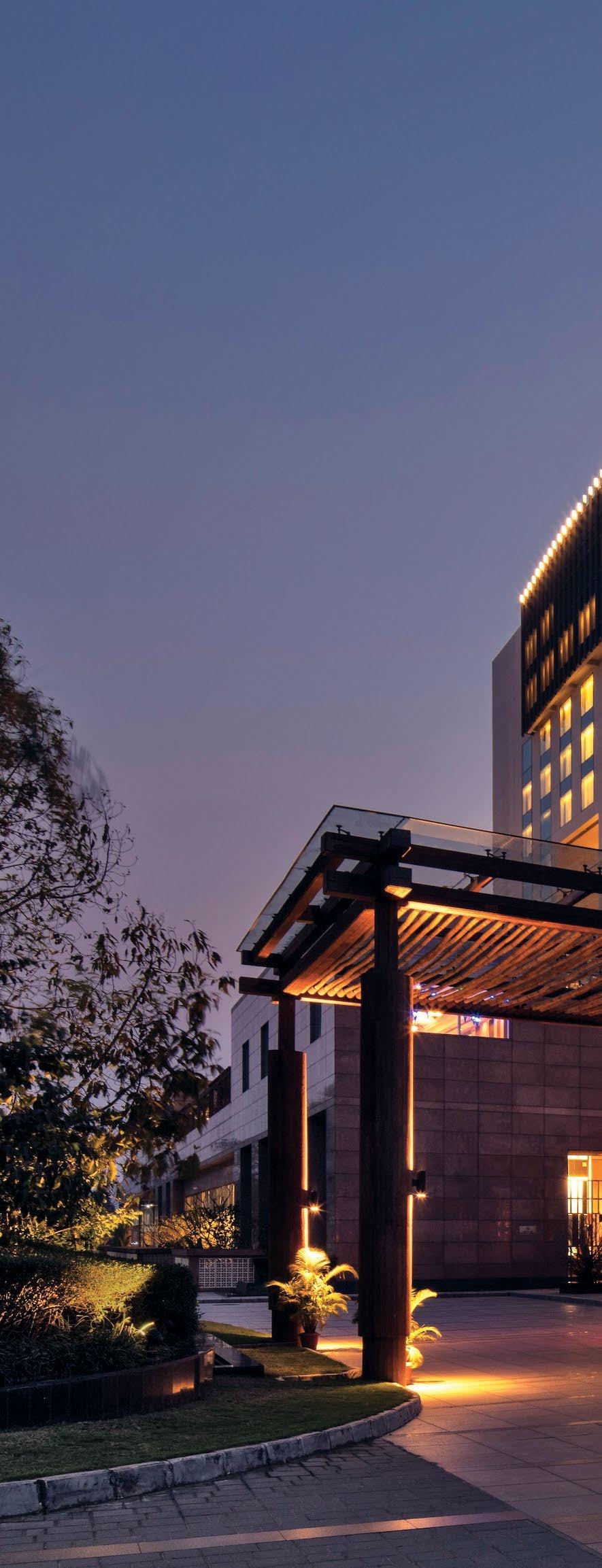
BELOW: Radisson Blu Hotel, Guwahati is proof that branded hospitality has finally caught up with the northeast's moment.
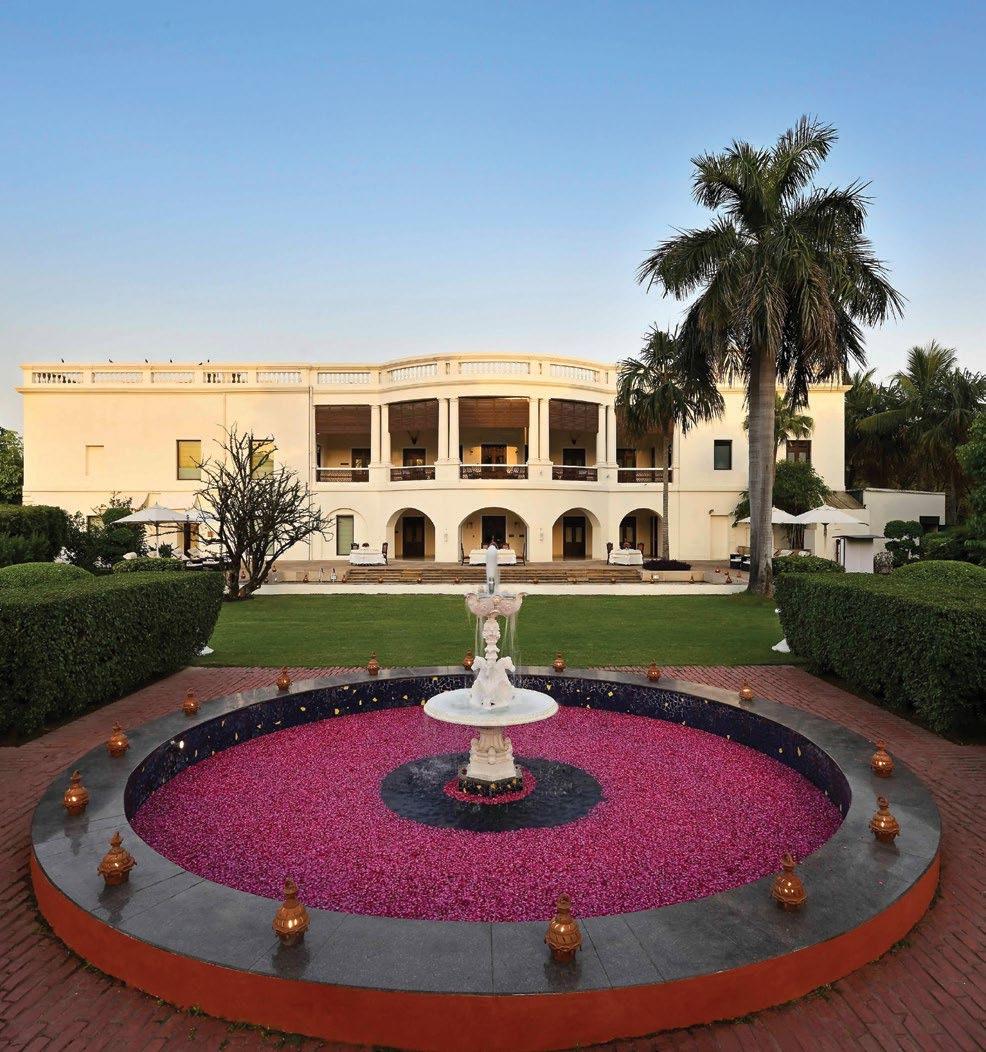
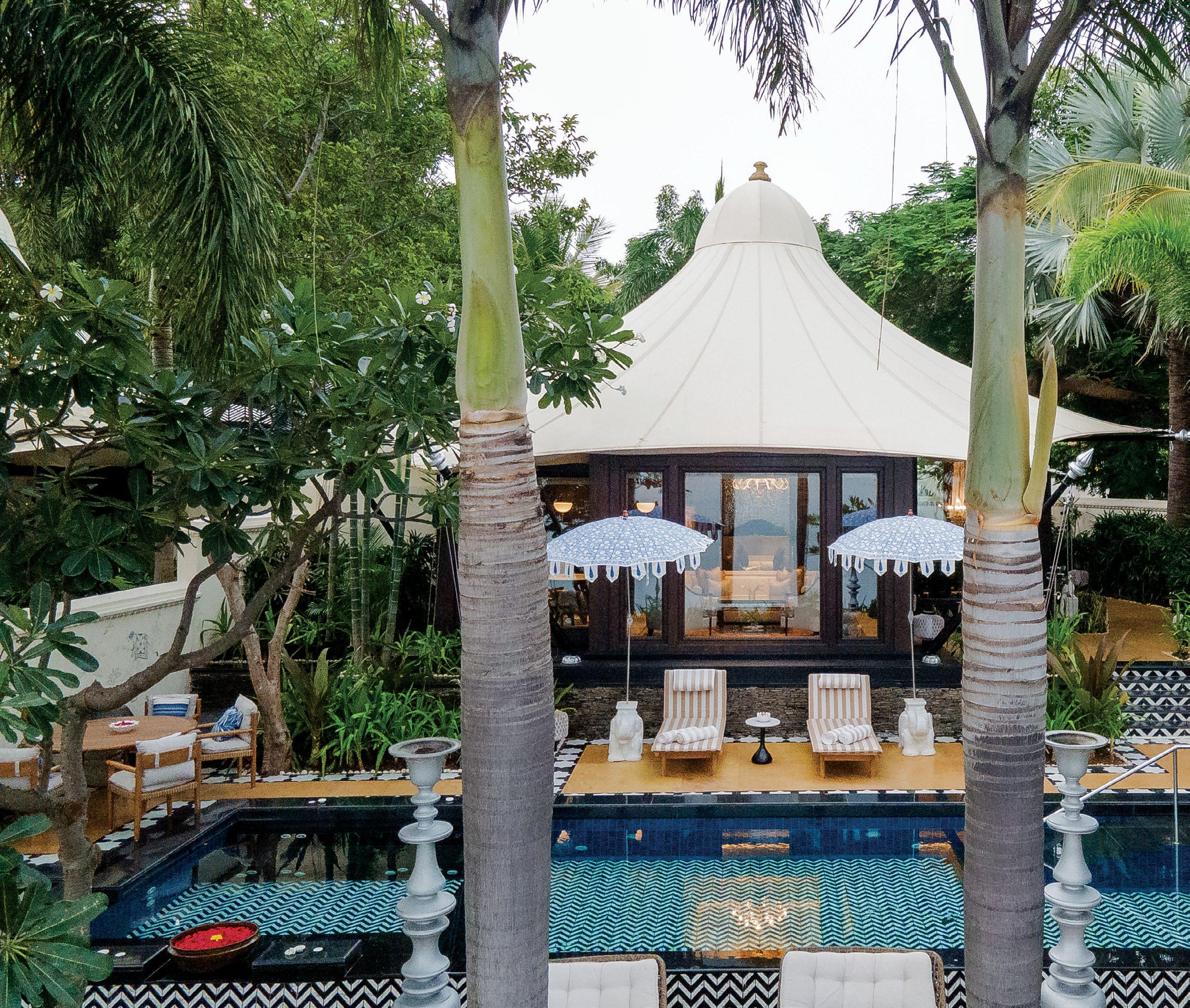
Taj Nadesar Palace, Varanasi represents an ancient city, intimate estate, and everything the new Indian luxury conversation is actually about.
cultural sensitivity and localisation become equally important." A hotel in Omkareshwar, Rishikesh, or Sindhudurg, he says, cannot be approached with the same lens as a metro business hotel. "Travellers today are looking for authenticity, local connection, and destination-led experiences. Our approach has therefore been to scale with sensitivity— adapting experiences, food, and service to the destination rather than imposing a uniform hospitality template." On the question of which markets justify long-term capital, Bakaya looks for structural signals rather than momentum: "Infrastructure development is often the first signal—airports, highways, rail connectivity, industrial corridors, and tourism projects tend to create long-term hospitality ecosystems." Equally important, he says, is diversified demand: "Markets supported by a mix of business travel, leisure, weddings, pilgrimage, and social events tend to be far more resilient over time." The risk he watches most carefully is the one the industry least likes to discuss: "One of the key risks in fast-growing destinations is over-supply before demand fully matures, which can eventually impact pricing and long-term returns. Sustainable expansion requires balancing opportunity with long-term market depth."
Zubin Saxena, Senior Vice President & Regional Head, South Asia, Hilton, brings a framework to the geography question that is worth sitting with. Before scaling into any Tier 2, 3, or spiritual destination, he says, Hilton looks closely at three things: demand durability, infrastructure readiness, and brand-market fit. "High footfalls alone don't make a strong hospitality market. The real question is whether the demand is consistent and diversified through the year." Markets like Jaipur, Varanasi, Surat, Kochi, Indore, Vrindavan, Ayodhya, and Guwahati, he says, have seen major improvements in connectivity and economic activity that are now translating into stronger demand for branded hospitality. But the third filter is the most important: "Not every city needs a luxury product. In many emerging destinations, full service and focused service brands actually make far stronger business sense because they align better with customer demand and owner economics." The conclusion is disciplined: "Sustainable growth is not about being present everywhere. It is about disciplined capital allocation and a clear understanding of long-term demand quality."
Shankar takes the same logic and adds a dimension that is specific to Brigade's development model. Roughly 45% of their portfolio is already in Tier 2 cities, but the approach has been deliberately integrated: "We don't just build a standalone hotel; we build as part of a larger, thoughtful plan.
Most of our projects are mixed-use developments, where the hotel lives alongside office spaces, retail, and homes. This creates a natural energy and a built-in community from the day we open our doors." What she calls "ecosystem readiness"—a reliable airport, a growing corporate landscape, a local spirit worth tapping into—is what tells her a market is genuinely ready. And she is candid about where Brigade's own focus is shifting: "Our primary focus for growth will be back in Tier 1 markets where we see deep, sustained demand. The exception to that rule will be leisure destinations in Tier 2 areas; in those spots, the beauty of the destination itself is the draw."
Not everyone agrees on the implications. Arun Saraf, Chairman and MD, Juniper Hotels, is unequivocal about a different logic: "We continue to prioritise large hotels in major cities." For Saraf, who has completed a successful IPO and is now accountable to public markets, the argument
is about expertise and discipline. "As a hotel owner and developer, we cannot operate everywhere, so we must be selective and focus on areas where we have expertise." He is not wrong. The Tier 2 story is real, but it is not a story for everyone.
What the Horwath HTL India Hotel Market Review 2025 observes is perhaps the most grounded read on the geography question: lower saturation in Tier 2, Tier 3,
The Arq by Leela, Lake Pichola is invitation-only, and exactly the kind of experience that makes the word luxury feel earned again.
and pilgrimage destinations could keep national occupancy in the mid-to-high 60% range for the next several years, precisely because demand in these markets is growing faster than supply. Religious and pilgrimage travel, weekend getaway destinations near business cities, and state markets like the northeast, Odisha, Andhra Pradesh, and Madhya Pradesh are the next wave.
FROM ROOMS TO RITUALS: WHAT ARE WE ACTUALLY SELLING?
Ask anyone running a hotel in India in 2025 what their core product is and almost no one says rooms anymore. The language has shifted so dramatically towards experiences, ecosystems, storytelling, and emotional resonance that one occasionally wonders whether anyone still changes the sheets.
But the shift is real. The question is whether the industry is ahead of it or merely performing it.
Anuraag Bhatnagar, CEO, The Leela Palaces, Hotels and Resorts, describes the structural change with the confidence of someone who has the numbers to back it up: "Hotels are no longer defined only by the rooms they sell, but by the ecosystems they create across cultural, social, and experiential dimensions. By 2026, this shift will no longer be a differentiator; it will be an expectation." The Leela's ecosystem includes Aujasya by The Leela, which integrates wellness into the core guest journey; Arq By The Leela, an invitation-only members' club for private cultural and culinary experiences; and The Leela branded residences, which carry hospitality-led service into long-stay living. The commercial evidence is not soft: RevPAR growth of 13% in H1 FY'26; EBITDA margins of 48.2%. Experience-led hospitality, it turns out, is not just more meaningful. It is more profitable.
Chadha frames the same shift with a philosophical breadth that is hard to argue with: "Luxury hospitality today is no longer confined to just scale or physical opulence. What hotels are truly selling today is how people feel, what they remember, and increasingly, what they become through those experiences." For ITC Hotels, this is not a recent pivot but a long-standing position: the promise of Responsible Luxury, rooted in what Chadha calls Authentic Indigenous Experiences. "Long before
sustainability became a global conversation, ITCHL believed luxury could be both world-class and deeply conscious: luxury that exists in harmony with the environment and society, while remaining rooted in Indian sensibilities." The hotel, in his framing, has become something larger than itself: "Hotels are no longer just places to stay, they are becoming cultural platforms, social ecosystems, culinary destinations, wellness spaces, and communities where people connect and engage."
Bakaya locates the same shift in the changing grammar of what Indian guests actually want: "Hotels today are no longer just selling rooms or conventional luxury. Increasingly, hospitality is about experiences, emotional connection, and a sense of belonging." For many travellers, he says, luxury has been quietly redefined: "It is becoming less about imported global markers and more about authenticity, personalisation, wellness, and meaningful experiences. For many travellers today, luxury could mean a spiritually immersive stay in Haridwar, a nature-led retreat in Sindhudurg, or locally rooted culinary experiences that reflect the destination." The commercial logic follows: "There is a clear shift toward experience-led value, where guests are willing to spend more on memorable and culturally relevant experiences rather than only physical opulence."
Singh at Chalet puts it with a directness that cuts through the marketing vocabulary: "At its core, hospitality is about making people feel something—whether that is comfort, belonging, inspiration, restoration, or emotional connection. Hotels are no longer just selling rooms or physical infrastructure. Increasingly, they are selling time well spent." Guests are highly discerning, he says, and
can immediately tell the difference between experiences curated with intent and those that exist only at a branding level. That thinking shaped the launch of Athiva Hotels and Resorts, Chalet's upper-upscale lifestyle brand: "The intention was not simply to introduce another hospitality offering, but to build experiences centred around joy, wellness, immersive engagement, and a stronger connection with the destination itself."
Saxena at Hilton returns the conversation to a proposition that cuts through the vocabulary accumulation: "Fundamentally, hospitality is still about one core idea: it matters where you stay." Wellness, he says, has moved far beyond spas and fitness facilities—it now means better sleep, healthier dining, intuitive technology, flexible spaces, personalised service, and a seamless, stress-free experience. "Similarly, experiences are becoming more personal and destination-led. Guests want stays that feel relevant to why they are travelling, whether for business, leisure, pilgrimage, or celebration." The test, always, is whether the concept survives contact with the actual guest journey.
Sharma at Radisson makes the same point from an operational angle: "Experiences become meaningful only when they are locally rooted and thoughtfully integrated into the guest journey." At Radisson, the translation from concept to reality runs through hyperlocal food experiences, local culture and design integrated into properties, seamless digital journeys, and personalised interactions at every touchpoint. "We achieve that by translating these ideas into tangible outcomes rather than positioning statements."
Shankar at Brigade is equally grounded about what genuine experience looks like in practice: "Today, we aren't just selling a bed; we are selling a lifestyle, which can mean different things to different people." For some guests, lifestyle means a power shower, sound sleep, and a hearty breakfast. For others, it is downtime, healthy food, and green spaces. At Grand Mercure Mysuru, the F&B reflects local narratives through cuisine and the items served. "We ensure our ecosystem includes everything from co-working spaces to curated local art, making the hotel a neighbourhood hub, not just a transit point."
Hotels will no longer be viewed as standalone accommodation providers but as lifestyle platforms, integrating dining, wellness, culture, entertainment, and community engagement into a cohesive guest journey.
Sanjay Sood, CEO, Leisure Hotels—whose portfolio sits in Uttarakhand, across hill and spiritual destinations along rivers and lakes in Corbett, Haridwar, Rishikesh, Nainital, and Naukuchiatal—is perhaps the most direct of all: "The focus is firmly on experiences. The goal is to offer a holistic, immersive stay rather than just accommodation." He runs his business on a straightforward principle: create experiences both within the hotel and in the surrounding destination, so that guests engage with local culture and environment, not just the property's thread count. The data agrees. Domestic visitor spending reached approximately ₹16 trillion to ₹16.8 trillion in 2025. Younger travellers are consistently choosing experience-led trips and spending more per trip as a result. Millennials and Gen Z are driving vacation rentals at an 18.24% CAGR through 2030. Curated brands like SaffronStays and StayVista are proving that the experience proposition works at least as well outside the traditional hotel format as within it. Workations are extending average lengths of stay in hill and leisure destinations in ways that are quietly rewriting the economics of seasonality.
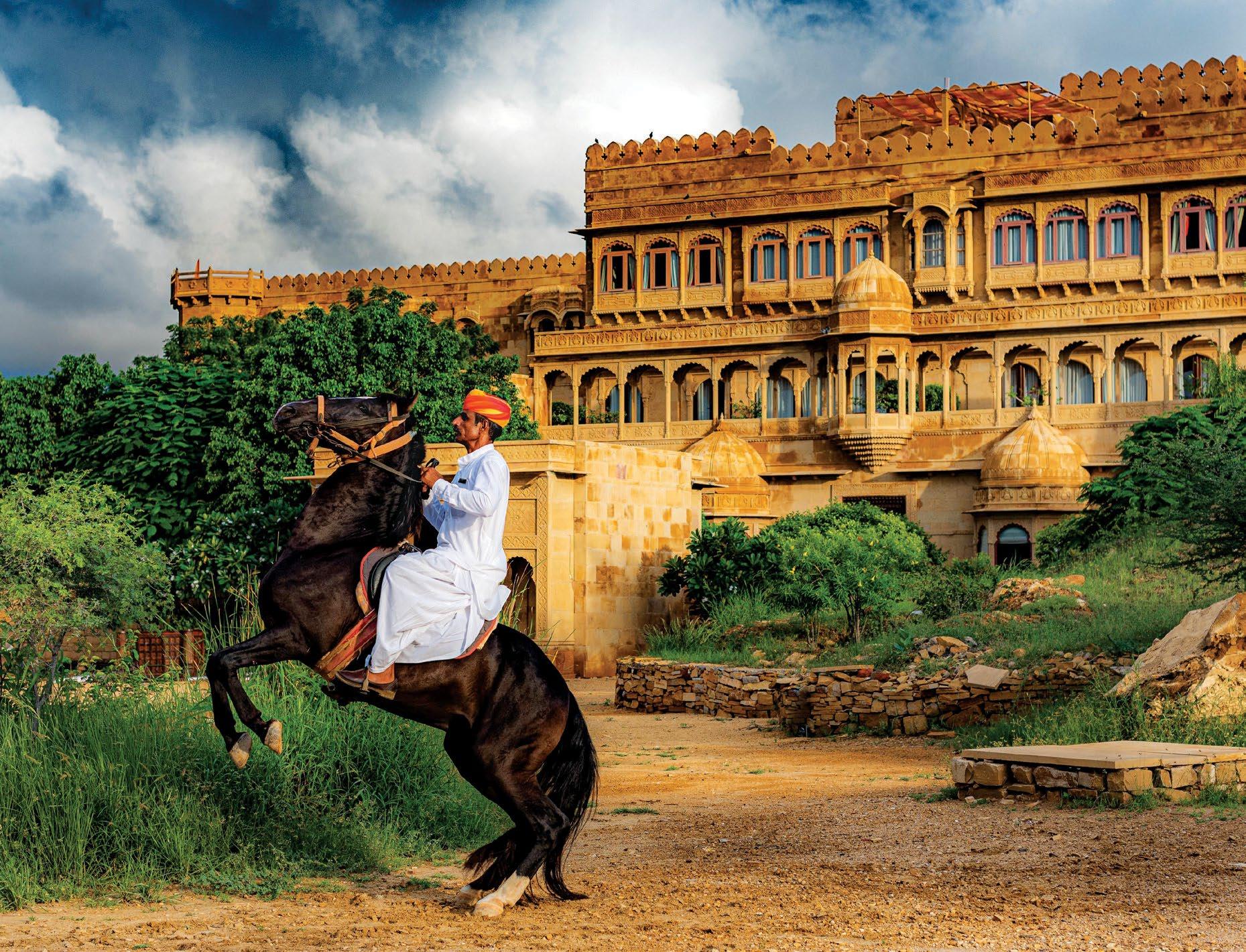
THE GREAT INDIAN GUEST: ASPIRATIONAL, DISCERNING, AND MISREAD
The domestic Indian traveller is the most consequential variable in hospitality's next decade and also, it has to be said, the most consistently underestimated. Not in terms of demand—everyone can see that—but in terms of taste, intelligence, and exactly what they are and are not prepared to pay for.
The Indian traveller of 2026 will be less willing to pay for clichéd luxury, unnecessary frills, and predictable experiences. Chadha reads the younger affluent Indian
traveller with particular clarity: "The Indian consumer, particularly the younger affluent traveller, is moving away from transactional luxury towards meaningful luxury. They are seeking authenticity over excess, personal enrichment over passive indulgence, experiences that feel culturally rooted rather than globally standardised." On the question of where Indian luxury draws its confidence from, he does not hesitate: "India itself offers one of the richest foundations for luxury anywhere in the world through its culture, cuisine, wellness traditions, craftsmanship, spirituality, and extraordinary diversity of experiences. The world is coming to India. Namaste has mesmerised the globe."
Saxena frames the consumer evolution with precision: "The Indian consumer today is globally exposed, digitally aware, making them far more discerning than ever. At the same time, India treats tradition as a source of innovation rather than constraint." Whether in room design,
Suryagarh Palace, Jaisalmer: What happens when a hotel takes its location seriously enough to become part of the landscape itself.
source materials, food and beverage, or wellbeing, the task is combining global standards with local relevance—"because India is not one luxury market. It is many distinct consumer mindsets and travel behaviours."
The proof of that, he says, is in how Indians are actually travelling: for weddings, for wellness, for long family stays, for culinary adventures. "Hospitality has to be designed around those reasons, not retrofitted to them."
Kiran Andicot, Senior Vice President, South Asia, Marriott International, sees the same shift playing out on the ground across one of the world's largest hotel portfolios: hotels, she argues, are no longer selling accommodation; they are selling experiences, connection, and a sense of place. In India especially, she says, "localisation is not a trend; it is an expectation." That expectation runs deep, from regionally inspired culinary journeys and indigenous wellness rituals to architecture
and storytelling that celebrate local heritage. Even in food and beverage, Marriott is seeing a strong pull toward what she calls "hyperlocal storytelling"—regional cuisines and destination-specific dining—always aiming to make the experience feel, in her words, "rooted, relevant, and emotionally engaging." Whether in room design, source materials, or wellbeing, Saxena's task is the same: combining global standards with local relevance—"because India is not one luxury market. It is many distinct consumer mindsets and travel behaviours."
Sharma at Radisson makes a structural observation about where the market is heading: "The future of luxury in India will be defined less by excess and more by exclusivity, emotional resonance, and immersive experiences that feel deeply contextual to the destination and the guest." The Indian luxury traveller today, he says, values authenticity, privacy, wellness, personalisation, and meaningful storytelling as much as physical appearance.
Shankar at Brigade cuts to the philosophical heart of what Indian luxury actually is: "I think India has taught the world what true hospitality luxury is. Be it the palace hotels or a mid-market hotel, the Indian hospitality sector teaches the world about luxury when it comes to service and standards." For her, luxury is not a category. It is a capability: "Luxury means knowing your customer, anticipating what the customer wants before they even ask for it and delivering it well."
Bhatnagar at The Leela has a data point that crystallises the commercial logic of this shift: The Leela's Net Promoter Score of 86, driven by experience quality rather than visible opulence, "directly translates into loyalty and long-term value. Luxury today is defined by how meaningful and considered an experience feels, not by how elaborate it appears."
Chhatwal makes the competitive argument with equal directness: "Travellers do not come to Goa simply because it is inexpensive. They come
BELOW LEFT: Refined and rooted, The Leela Palace Jaipur has rewritten what Indian luxury looks like on its own terms.
BELOW CENTRE: Fontainhas, Goa is the cobbled heart of a destination people cross the world for, not for a deal, but for this.
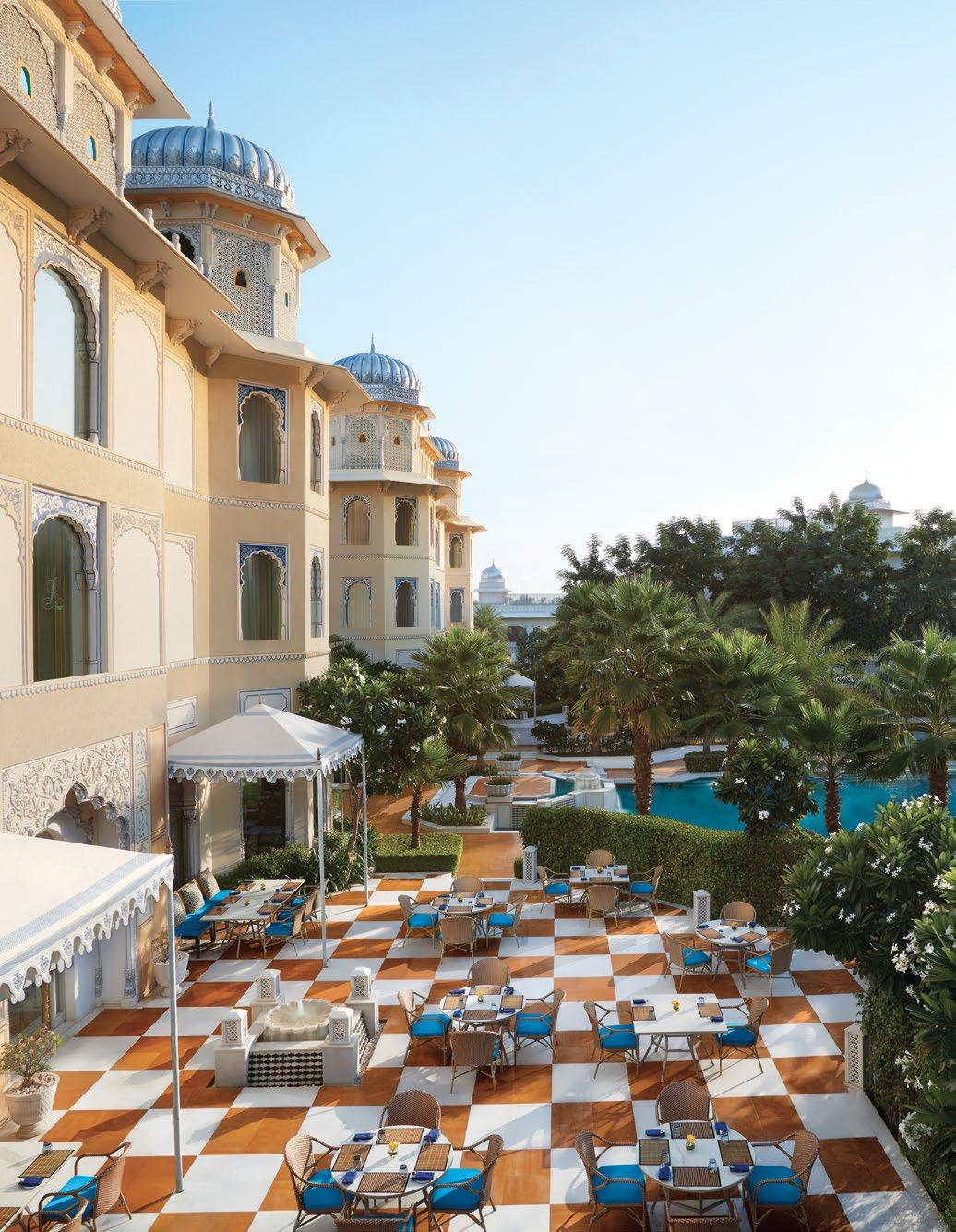
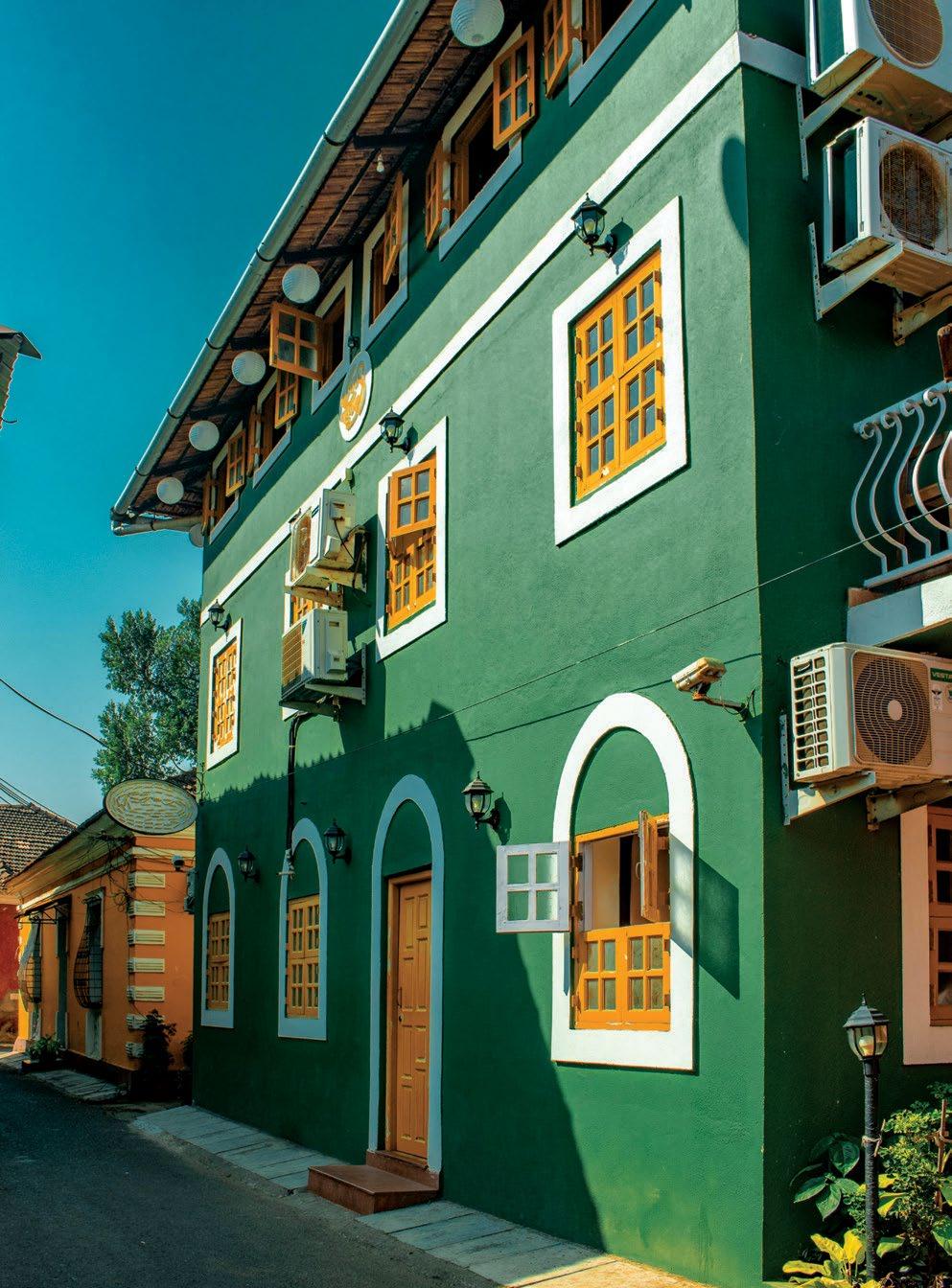
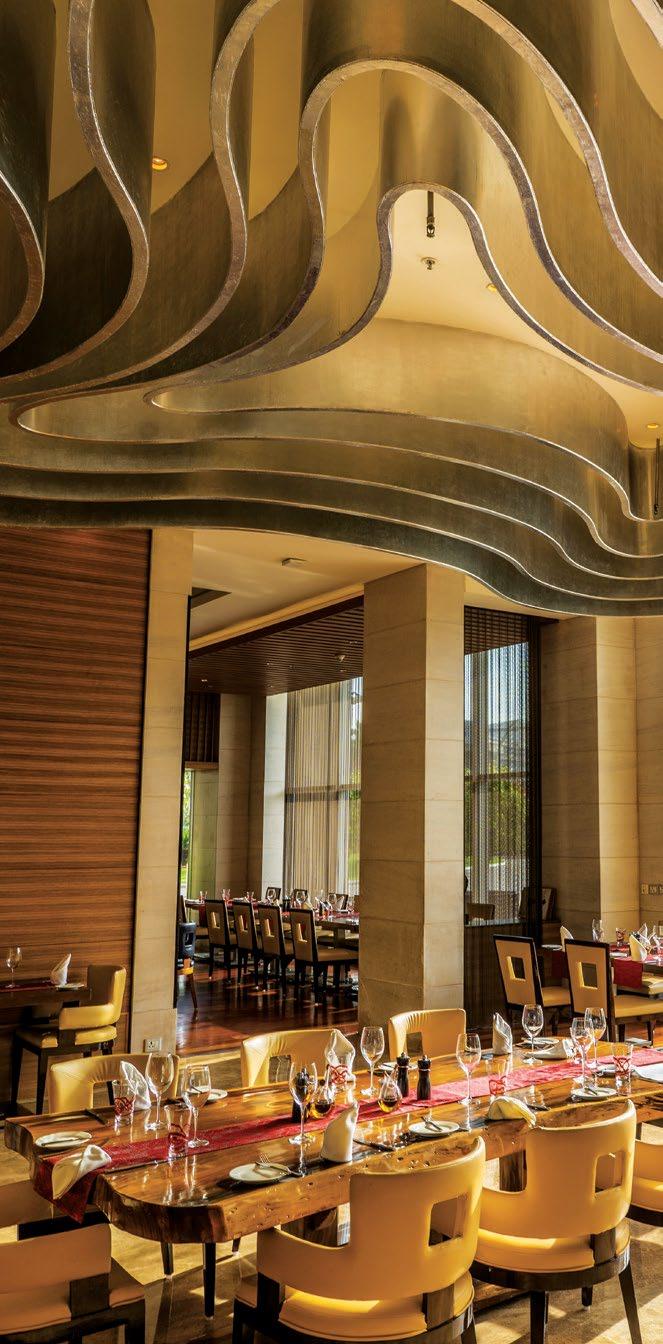
BELOW RIGHT: Bengaluru Marriott Hotel Whitefield sits where India's new economy clocks in every morning.
for its multicultural character, its Portuguese history, and the way the state transforms into a beautiful place at Christmas. Destinations in India offer many such distinct facets that make them unique and special." On the question of pricing— and the comparison with cheaper Southeast Asian destinations that often surfaces in this conversation— he is characteristically unequivocal: "As a large economy, India's cost of living is higher than in many other countries, which raises the cost of service and, in turn, the ability— and need—to charge higher rates. It is difficult to compare them with much smaller countries, some of which are smaller than the size of our smallest state in India."
Former NITI Aayog CEO and India's G20 Sherpa Amitab Kant—a man who has stayed in hotels on every continent—made the point with an elegance at HICSA 2026 that no PowerPoint could: "I travel across borders every day and generally prefer experiential hotels. I tend to avoid overly
ostentatious spaces and prefer places with character and command over their identity. In India, one standout is CGH Earth in Kerala. It captures the essence of Kerala in a refined manner and elevates the visitor experience with a strong sense of place and spirituality." When one of the country's most well-travelled public figures says this, it is worth paying attention.
The investment community is. Arjun Anand, Partner, Antares Legal, notes that ADRs have climbed significantly, that branded residences are attracting strong interest in Gurgaon and Mumbai as lifestyle-led assets with recurring income potential, and that the emerging deal structure of choice is the platform investment, or portfolios of hotels rather than single-asset bets. "While branded hotel assets remain limited in India, the market has significant capacity to absorb more." IPOs, he adds, are becoming the preferred long-term exit pathway, with Juniper Hotels and Ventive Hospitality both having made that journey recently.
Ranjit Batra, CEO, Ventive Hospitality, whose post-IPO discipline shapes every capital allocation decision, is refreshingly clear about what the investment thesis actually requires: "A successful hotel must be located in a strong, undersupplied market with robust pricing power."
Not every hotel will succeed. International branding and attractive renderings are not a substitute for market fundamentals. Ventive's own strategy, which is geographically concentrated in Pune, with an ultra-luxury Maldives presence for dollar earnings and portfolio diversification, reflects a deliberate balance between ambition and discipline.
Saraf puts the owner's wisdom simply: "The most important quality is patience. Decisions should not be driven by ego or personal taste, but by a clear understanding of the target customer, the value proposition, and the price point the market can sustain."
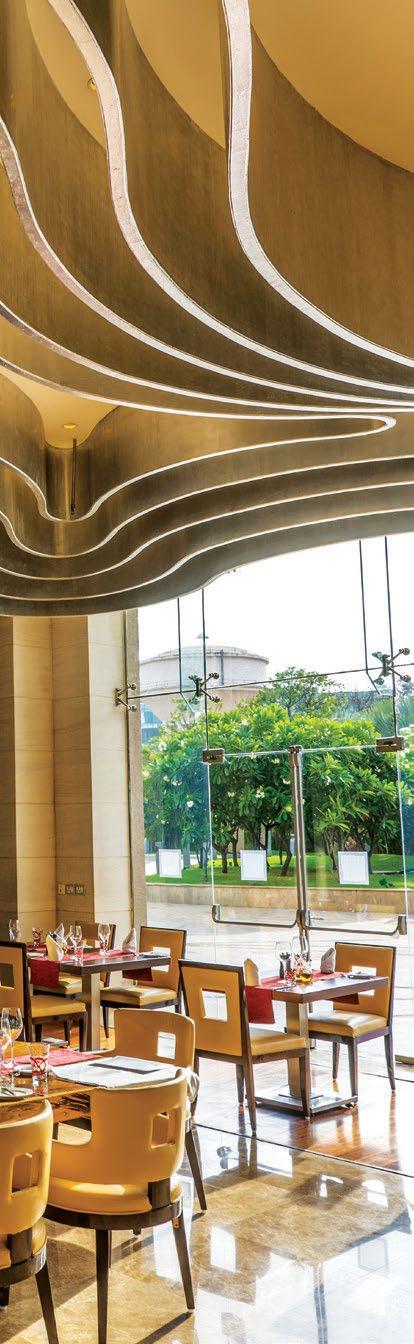
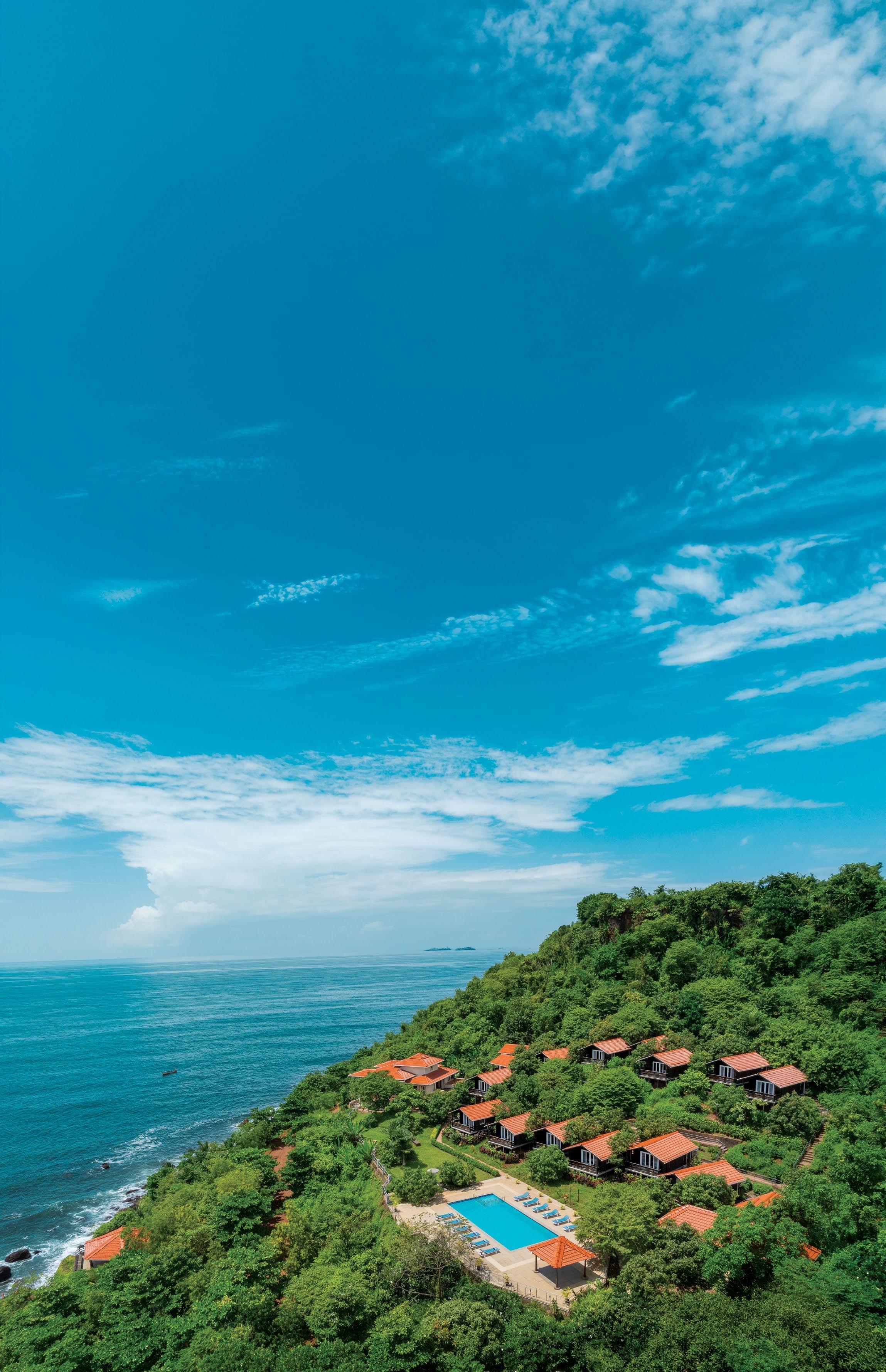
With Highland Sarovar Portico, Sindhudurg, branded hospitality arrived in one of Maharashtra's most breathtaking and long-overlooked coastlines.
DEFINING INDIAN LUXURY, ON INDIAN TERMS
Here is the question that matters most and gets answered least honestly: is Indian luxury still borrowing its vocabulary from somewhere else, or is it beginning to speak in its own voice?
The evidence of the past five years suggests a genuine shift, though incomplete and still contested. The language emerging from the industry's most serious practitioners is not minimalist in the Scandinavian sense, not maximalist in the old Rajput palace sense. It is something more specific and, arguably, more interesting: privacy over display, emotional resonance over marble square footage, local rootedness over global template, wellness that runs through the property rather than sitting at the end of a corridor with a sliding glass door.
Manvendra Singh Shekhawat, Founder & MD, The MRS Group does not hedge: "In the long run, only what is true to a place and its people will endure. Authenticity cannot be replicated or manufactured. Experiences rooted in lived history and cultural continuity will always hold greater value." He describes regeneration—cultural and environmental—as a more comprehensive concept than sustainability: "There is significant untapped cultural and civilisational capital, and when it is meaningfully regenerated, it can create outsized value."
Arun Saraf, Chairman & MD, Juniper Hotels reaches for the oldest frame in Indian hospitality, and finds it still holds: "The principle of Atithi Devo Bhava is deeply embedded in Indian culture and will continue to define hospitality in the country. As the industry grows, this value will become even more refined and pronounced. While all hotels offer similar infrastructure, guests return for the quality of experience, which remains a strength of Indian hospitality." He is not being sentimental. He is making a competitive argument.
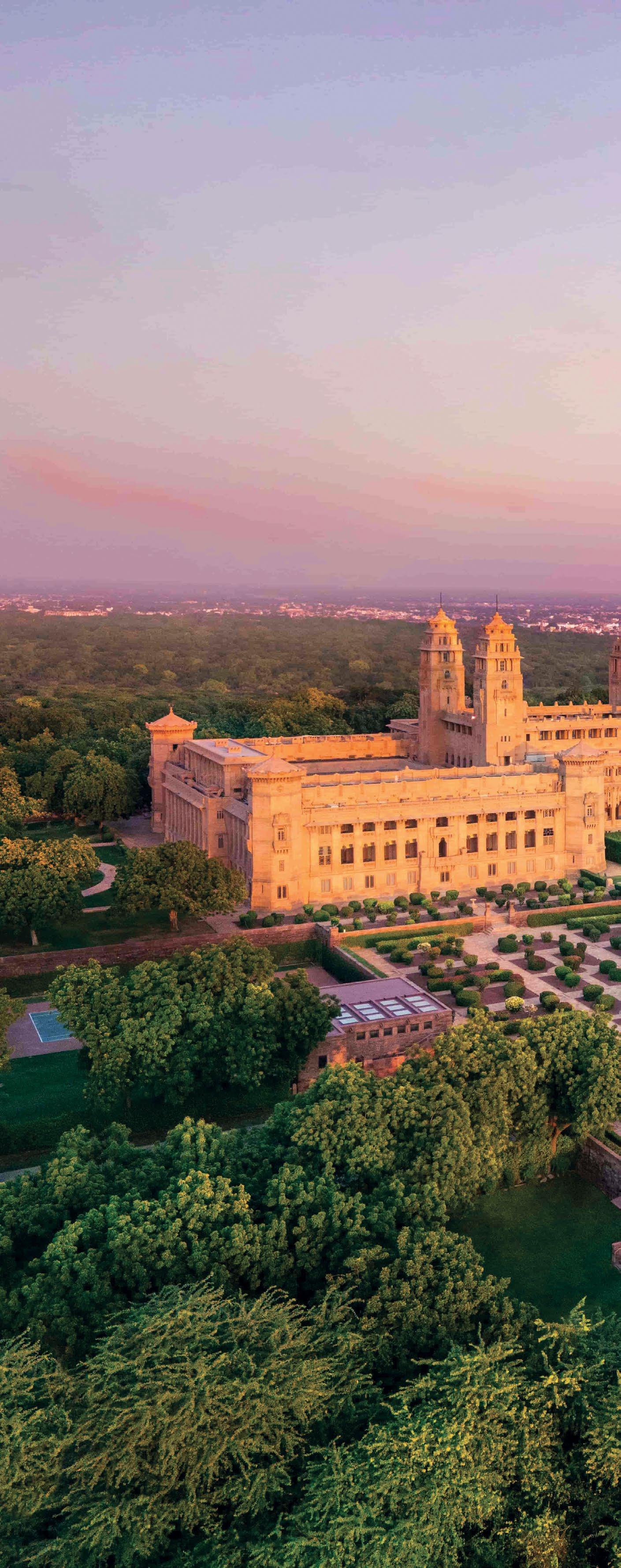
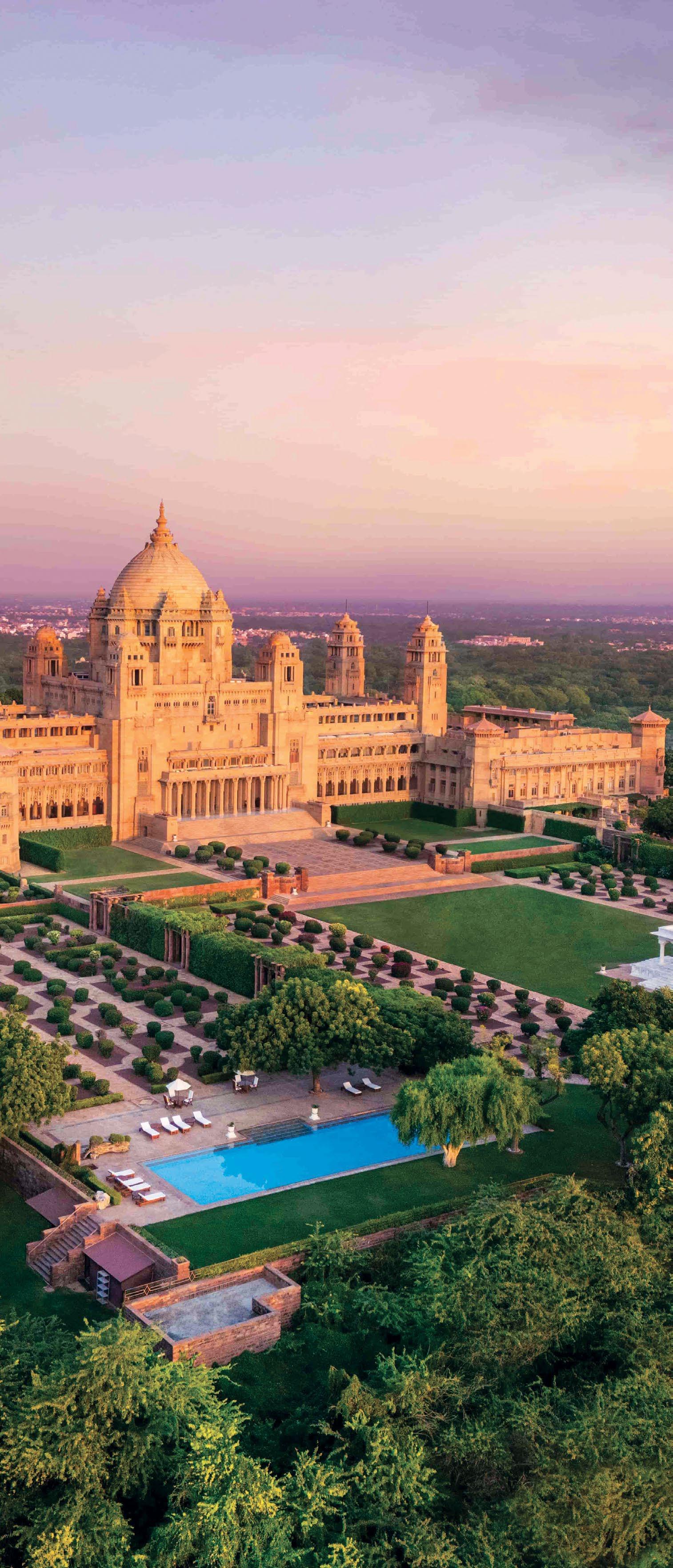
Ajay K. Bakaya, Chairman, Sarovar Hotels, and Director, Louvre Hotels India frames the same evolution in terms of what the Indian guest is now actively choosing: "The definition of luxury in India is becoming less about imported global markers and more about authenticity, personalisation, wellness, and meaningful experiences." A spiritually immersive stay in Haridwar, a nature-led retreat in Sindhudurg, a meal that tastes unmistakably of where you are—these, he says, are what guests are returning for. The template borrowed from elsewhere is losing its grip. What is replacing it is something more grounded, and more Indian.
Anil Chadha, Managing Director, ITC Hotels Ltd. puts the civilisational argument most expansively: "For many years, luxury hospitality globally was shaped by fairly uniform templates. But India is at an important inflection point. Our imagination of luxury is not borrowed from elsewhere." What makes India's foundation for luxury so distinctive, in his view, is its sheer breadth: culture, cuisine, wellness traditions, craftsmanship, spirituality, and an extraordinary diversity of experiences, all of it waiting to be interpreted with the right flair. The future of Indian luxury hospitality, he says, will offer the world "authentic, glocal experiences—exclusive, yet accommodating, versatile and diverse in its offerings yet united by the warmth of Namaste—a treasure trove of stories that are relatable, resolute, restorative and rare. People travel to discover such stories and, in the process, they become a part of the story." His conclusion is not modest, but it is earned: "The India experience is unmatched, and I believe that is India's greatest opportunity in the decades ahead."
Puneet Chhatwal, MD & CEO, IHCL, whose organisation has spent more than a century building the case for Indian hospitality on its own terms, puts the sector's opportunity and its obligation in the same breath: "India is what it is, and I don't think there will be a onedimensional approach in any sector, including hospitality. There is enough space for small, medium, and large enterprises. Having said that, there is always one or two players that emerge as leaders or the largest in the sector." What leadership means, for him, is not scale alone: "In our 100-plus-year legacy, we continue to drive the values of hospitality as leaders and as those who put hospitality on the map of India." That is not nostalgia. It is, in the most competitive sense of the word, a standard.
INDIAN HOSPITALITY, IN NUMBERS PERFORMANCE THE PIPELINE
68%
National hotel occupancy, highest in recent memory, above pre-pandemic levels.
Courtesy: Hotelivate
₹8,624
Average Daily Rate, up 8.6% year-on-year
Courtesy: Horwath HTL India Hotel Market Review 2025
₹5,522
RevPAR, up 10.8%— pricing power, not discount-led recovery
Courtesy: Horwath HTL
19,000+
New hotel rooms added in 2025—one of the strongest supply years on record
Courtesy: Horwath HTL
1,44,000
Rooms in India's branded hotel development pipeline
Courtesy: Horwath HTL
177
New markets where branded hotels are proposed—for the first time, proposed supply crosses 1,00,000 rooms
Courtesy: Hotelivate
3,60,000
Total hotel inventory possible by 2030—though 3,00,000 considered more realistic
Courtesy: Horwath HTL
THE DEMAND STORY
$185bn
Domestic visitor spending in India, 2024
Courtesy: Mordor Intelligence
$60bn
India's online travel market projected by 2030—from $12bn in 2022
Courtesy: MakeMyTrip investor presentation, June 2025
THE NICHE NUMBERS
$58.2bn
India's medical tourism market projected by 2035, up from $18.2bn in 2025
Courtesy: IBEF
15.89%
CAGR projected for online accommodation in India's Northeast through 2031— fastest of any region
Courtesy: Mordor Intelligence
64mn
Jobs tourism is projected to support in India by 2035, up from 46.5mn in 2024
Courtesy: IBEF
50%
Surge in Airbnb India nights booked, Dec 2025 quarter—first-time bookers up 60%+
Courtesy: Airbnb Q4 2025 results
59%
Of international travellers motivated by cultural and heritage tourism—revenue potential $21.9bn
Courtesy: IBEF
If there is a single force reshaping demand across every segment—leisure, luxury, wellness, pilgrimage—it is the traveller's deepening search for stillness. Not quiet, exactly. Stillness. The kind that wildlife reserves and river banks and ancient temples offer, and that no city hotel can manufacture, however many aromatherapy candles it lights.
The pandemic accelerated this. The post-pandemic bounce sustained it. By 2025–26, it has become structural, a shift not in what people choose to do on holiday but in what they travel for at all.
Bhatnagar points to wildlife-led regions like Bandhavgarh and Ranthambore, spiritually significant centres like Ayodhya, Sikkim, and Srinagar, and heritage landscapes like Jaisalmer as the places where the most significant demand growth will surprise the industry, not just in volume but in the sophistication of what visitors expect to find there. "Travel priorities are shifting from movement to meaning," he says. "Luxury travellers increasingly expect hospitality to be locally rooted and mindful of its environmental and community impact."
The numbers behind these statements are not soft at all. India's medical tourism market is expected to grow from $18.2 billion in 2025 to $58.2 billion by 2035 at a CAGR of 12.3%, combining clinical care with Ayurveda and the government's 'Heal in India' initiative. Cultural and heritage tourism motivates 59% of international travellers to India, with a revenue potential of $21.9 billion. Culinary tourism motivates 56% of them, with similar potential of around $21 billion. These are not niches. They are the mainstream that is forming.
Amruda Nair, Founder & Director, Araiya Hotels and Resorts, who has been building in remote and unconventional locations before they became desirable, frames the entire enterprise as storytelling: "When
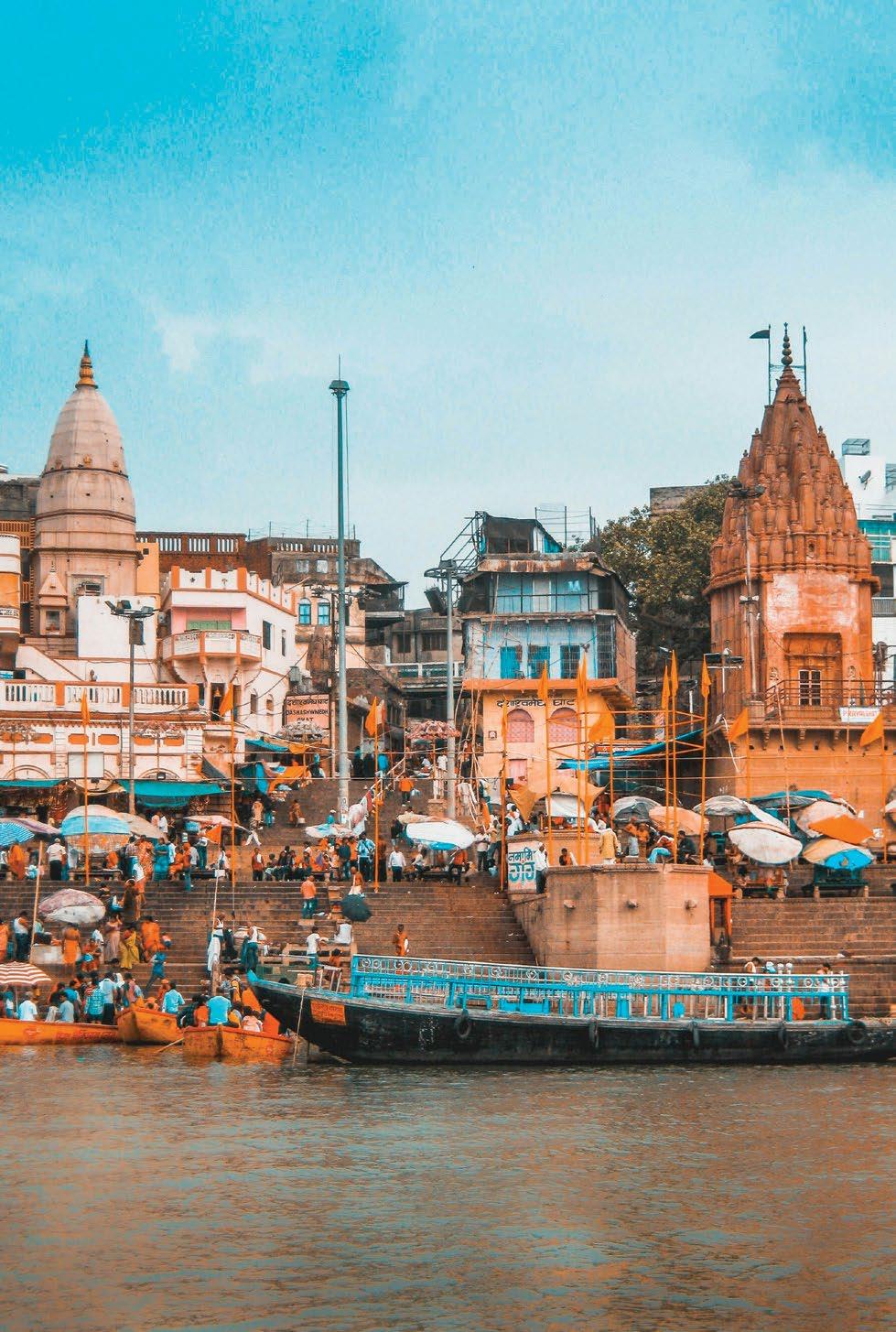
NATURE, SPIRIT, AND THE LONG SEARCH FOR STILLNESS

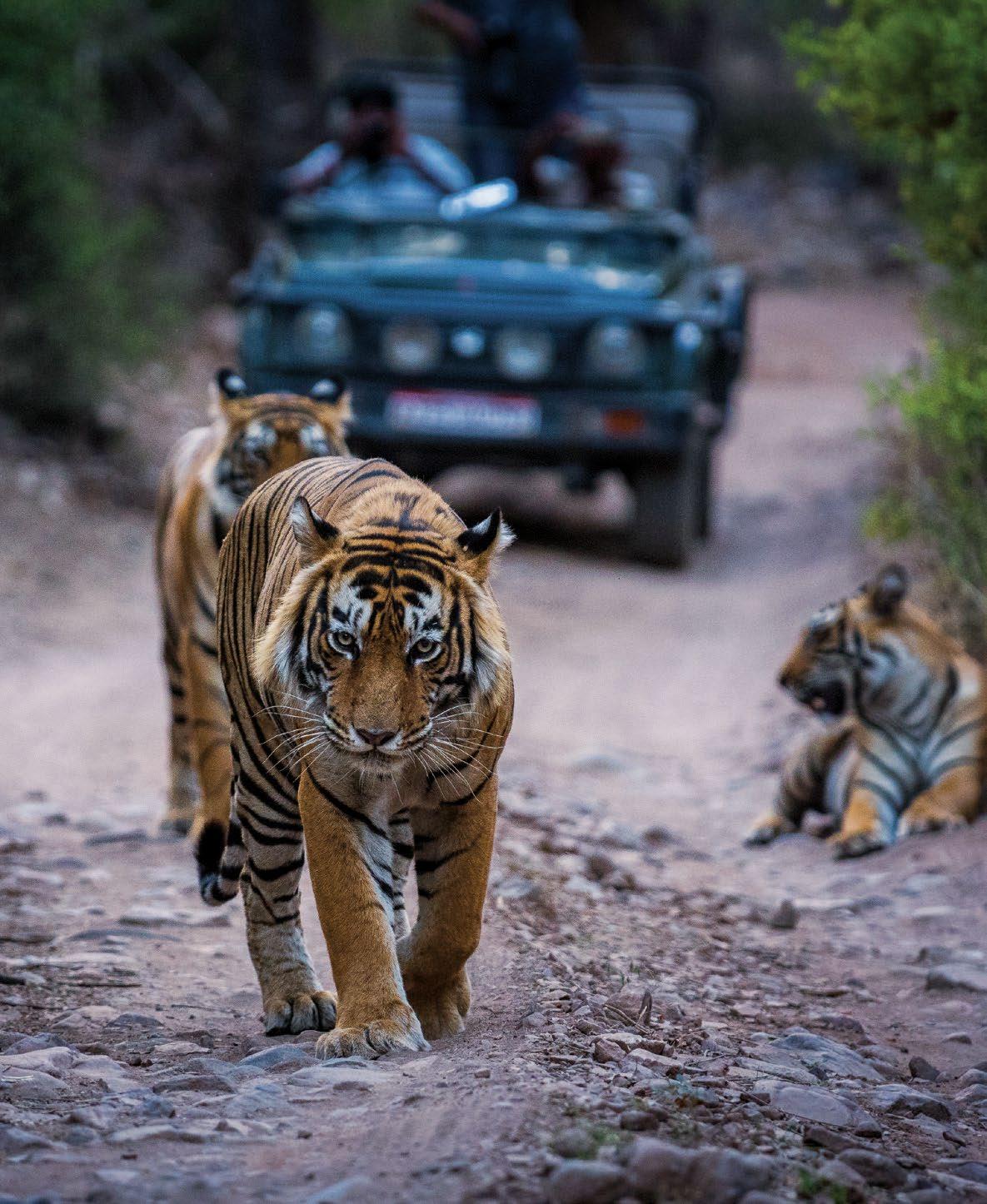
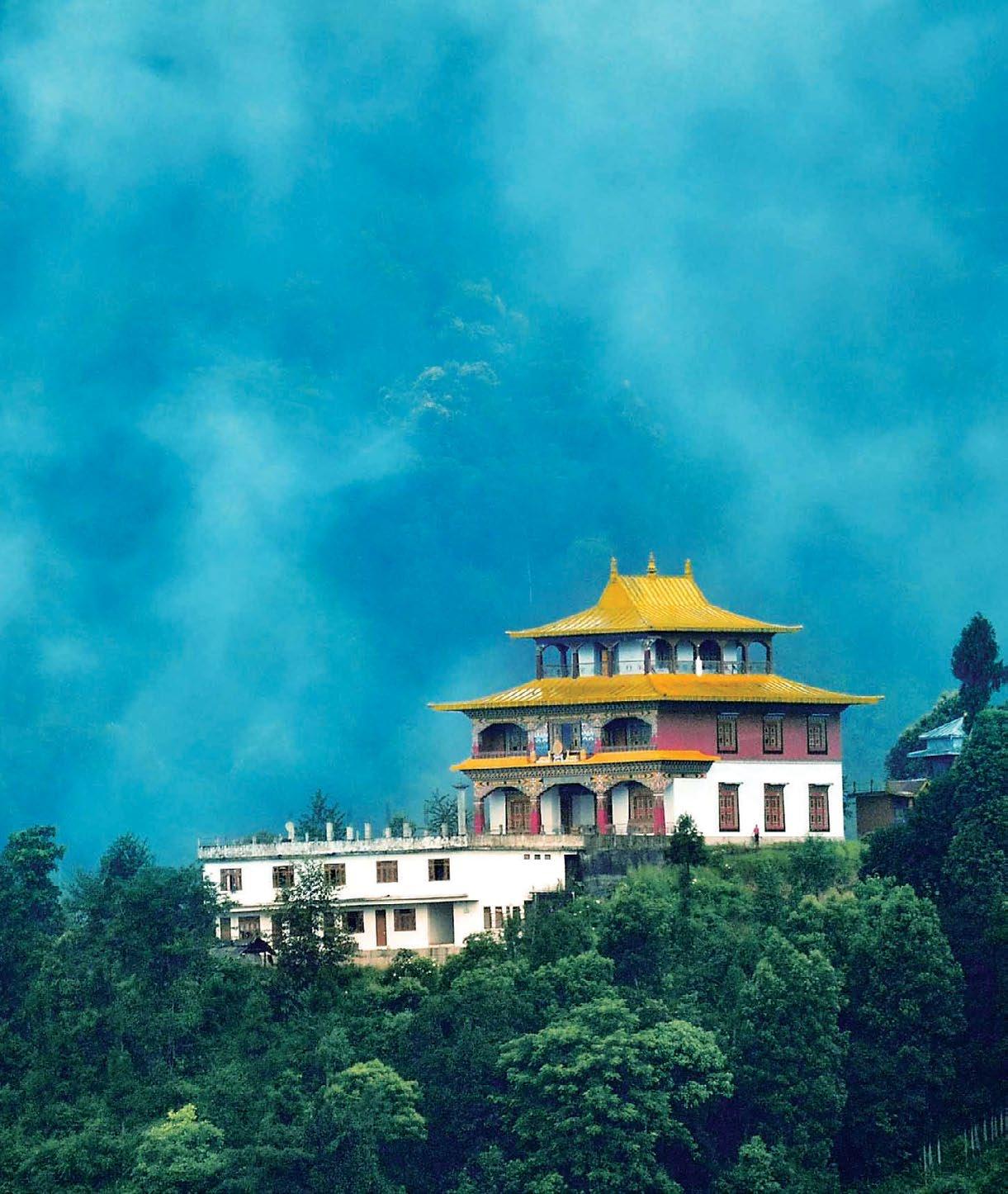
evaluating a site, we look for a narrative that can be meaningfully communicated to guests." In Ramgarh near Nainital, beyond the obvious scenic appeal, Araiya discovered the destination's association with Rabindranath Tagore, who wrote Gitanjali there. That cultural specificity— the fact of Tagore sitting at a desk in that precise spot—becomes the differentiator that no hotel chain can replicate. "The fact that a destination is undiscovered can itself be a strong selling point," Nair adds, "when paired with compelling storytelling and visual communication." The investment arithmetic helps too: in remote locations, land can account for approximately 25% of project cost, against 40–50% in prime leisure or urban markets.
Manvendra Singh Shekhawat, Founder & MD, The MRS Group—whose Suryagarh in Jaisalmer has become one of the most convincing arguments for what happens when a hotel takes its location seriously—makes the philosophical case without hedging: "The closer you stay to the context and the story of a place, the stronger both authenticity and the business case become. These are not opposing forces." His own role, he says, has evolved from "artisan of a product to architect of a system", scaling with specificity and storytelling rather than standardisation. What he wants his work to stand for, beyond hospitality: "a catalyst for regional development, creating economic opportunity
rooted in local culture and ways of life, without eroding identity or environment."
Sood at Leisure Hotels has turned the perennial hill destination challenge— seasonality—into a year-round proposition, drawing MICE groups in lean months, weddings during auspicious periods, and long-weekend leisure travellers whenever traffic on the DelhiDehradun highway permits. Booking patterns are strong. Rising international travel costs are pushing domestic travellers toward premium hill and nature experiences within driving distance. "Our properties, being largely within driving distance, are well positioned," he says.
FROM LEFT TO RIGHT: The Varanasi ghats have been doing India's tourism storytelling long before the industry knew what experiential travel meant; Ranthambore is where the search for stillness stops being a concept and walks out of the jungle towards you; At Rumtek Monastery in Gangtok, spirituality and stillness do what no hotel amenity kit ever could.
DESIGN: THE PART NOBODY TALKS ABOUT UNTIL THEY FEEL IT
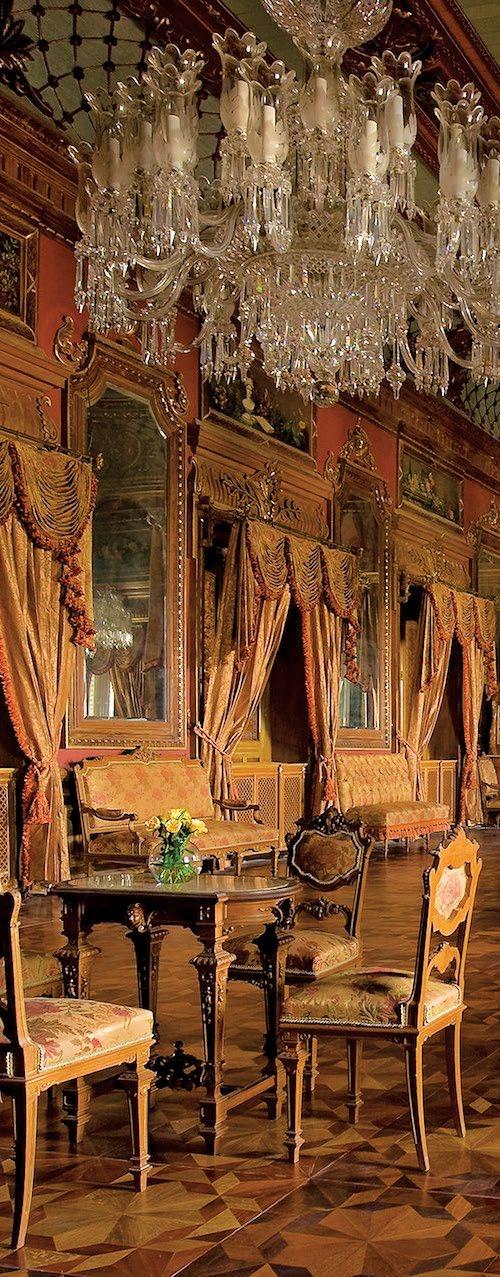
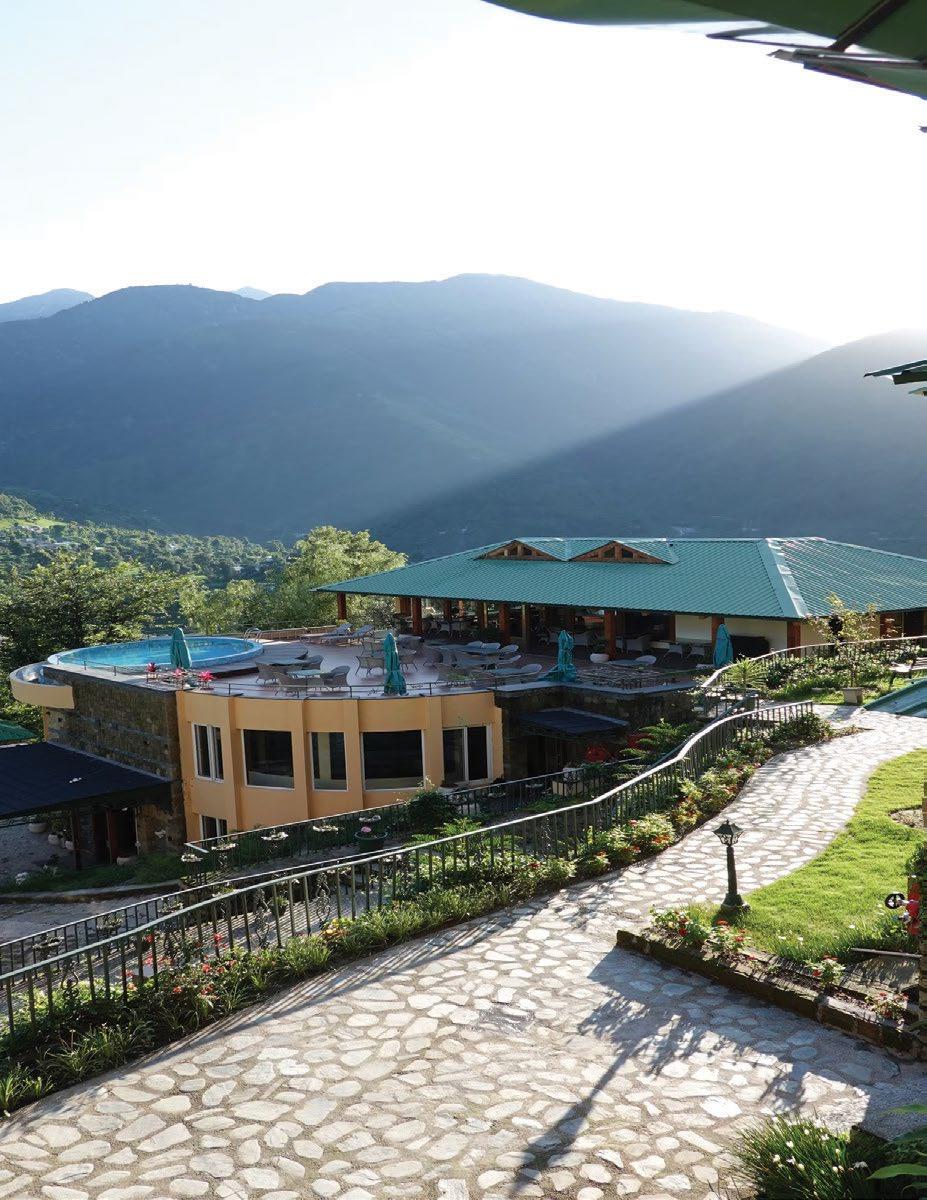
The most underrated competitive variable in Indian hospitality right now is design, not in the Instagram sense—though that matters too—but in the deeper sense of how a space makes a guest feel before they have spoken to a single member of staff or read a single item on the menu.
Purposeful design rooted in geography, community, and climate will remain central. Bobby Mukherjee, Founder, Bobby Mukherrji Architects, is precise about the details that guests register without knowing they are registering them: "In a high-energy business city, the design aims to counterbalance stress. From the moment you enter, the space is intended to calm and reset your senses." At the Hilton Gurugram Baani City Centre, he created a large-volume space with a skylight and full-grown preserved olive trees—earthy tones, indirect lighting, high ceilings that allow sound to dissipate. Guests use it all day: for work, for meetings, for nothing in particular. That, he says, is the point.
He is equally direct about the most expensive mistake in hotel design: "Designing purely around trends. Trend-driven spaces become dated within eight–10 years. Timeless design sustains value over a longer period." The hotel that follows the trend cycle pays for it twice, once in the redesign, once in the lost revenue while it is happening.
Singh at Chalet captures the stakes of this in a single formulation: "Consistency in hospitality should be about trust and quality, not
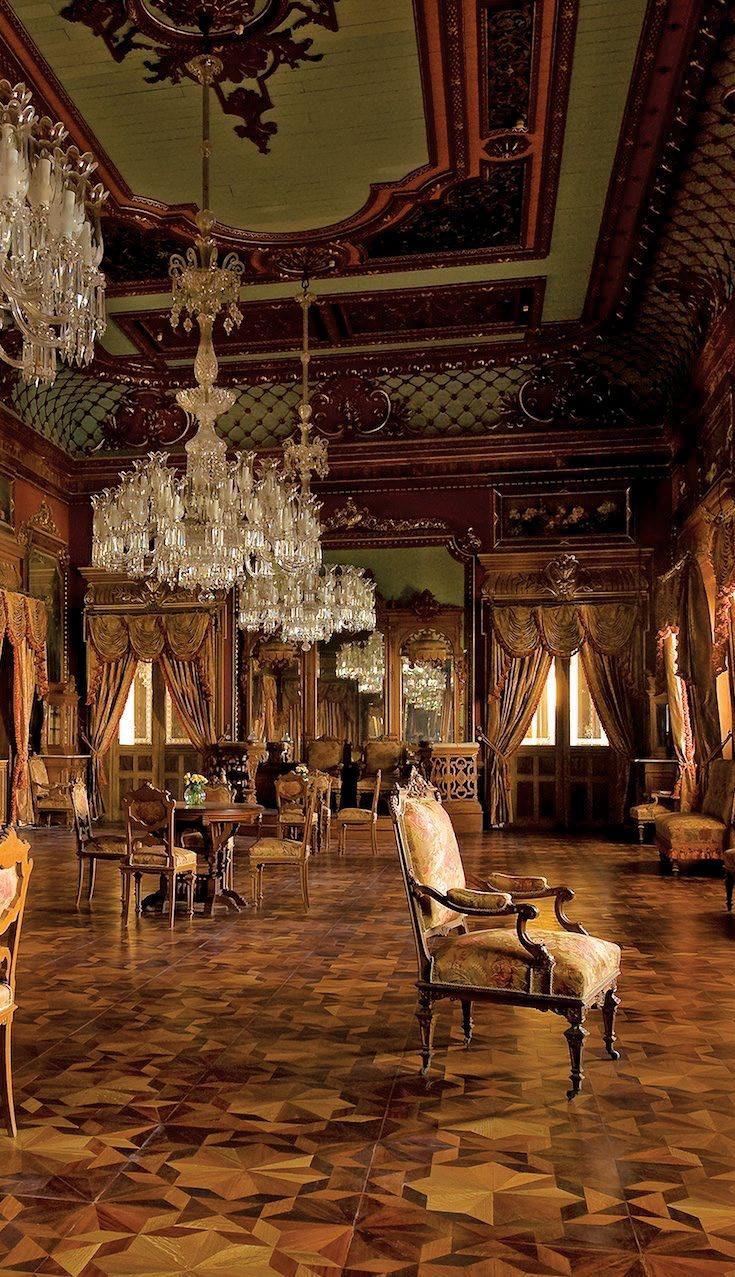
ABOVE: Taj
BELOW: The Chinese fishing nets of Kochi rise against the Arabian Sea like giant kinetic sculptures, remnants of a 14th-century maritime exchange that still lend Fort Kochi its haunting, time-suspended rhythm.
sameness." As portfolios expand rapidly, the tension between operational standardisation and genuine sense of place grows sharper. His answer is to draw a clear line between what should remain consistent and what should remain contextual: systems, service standards, technology, and execution discipline on one side; design, food, storytelling, programming, and service nuance on the other. The guest experience itself, he says, "should remain deeply rooted in the identity of the destination."
Shankar at Brigade makes the same argument with a phrase that is worth stealing: "Standardise the back, localise the front." Her properties' backend infrastructure—revenue management, procurement, energy commitments—is consistent across the portfolio. But the experience the guest actually encounters must breathe the culture of its location: "I want a guest to wake up and recognise exactly where they are, simply because the property breathes the culture and spirit of its location." That means vernacular design, regional artists integrated into the interiors, indigenous cooking techniques that tell a real culinary story. "A hotel in Bengaluru should never feel like a carbon copy of one in Delhi."
Gary Greene, Principal at Gary Greene Design—working in India on a Westin beach resort in South Goa on the former Majorda Beach Resort site, a JW Marriott in Sakleshpur within a coffee estate, and a JW Marriott in Alibaug as a ranch-style resort with equestrian elements—identifies a shift he finds significant: "There is a growing shift toward refined minimalism, even at the highest levels of luxury. Traditionally, markets such as India have leaned toward opulence, but the emphasis is moving towards quality within minimalism rather than excess." Technology, he adds, should be invisible: "The most effective technology is intuitive and integrated, enabling smoother interactions while remaining in the background." Circadian lights that follow you, app-controlled environments, seamless content integration—these are no longer differentiators. They are table stakes.
Toby Kyle, Studio Director–Landscape, WATG, argues that the memorable landscape does not announce itself. It ambushes you: "What creates lasting memories are unexpected interactions—light filtering through trees at a particular moment, encounters with wildlife, or sensory experiences that feel spontaneous and authentic. These moments of wonder are what guests carry with them long after their stay." In his previous work on the Grand Hyatt Singapore renovation, he introduced the concept of biodiversity—butterfly corridors, ecological networks—as a wellness design principle.
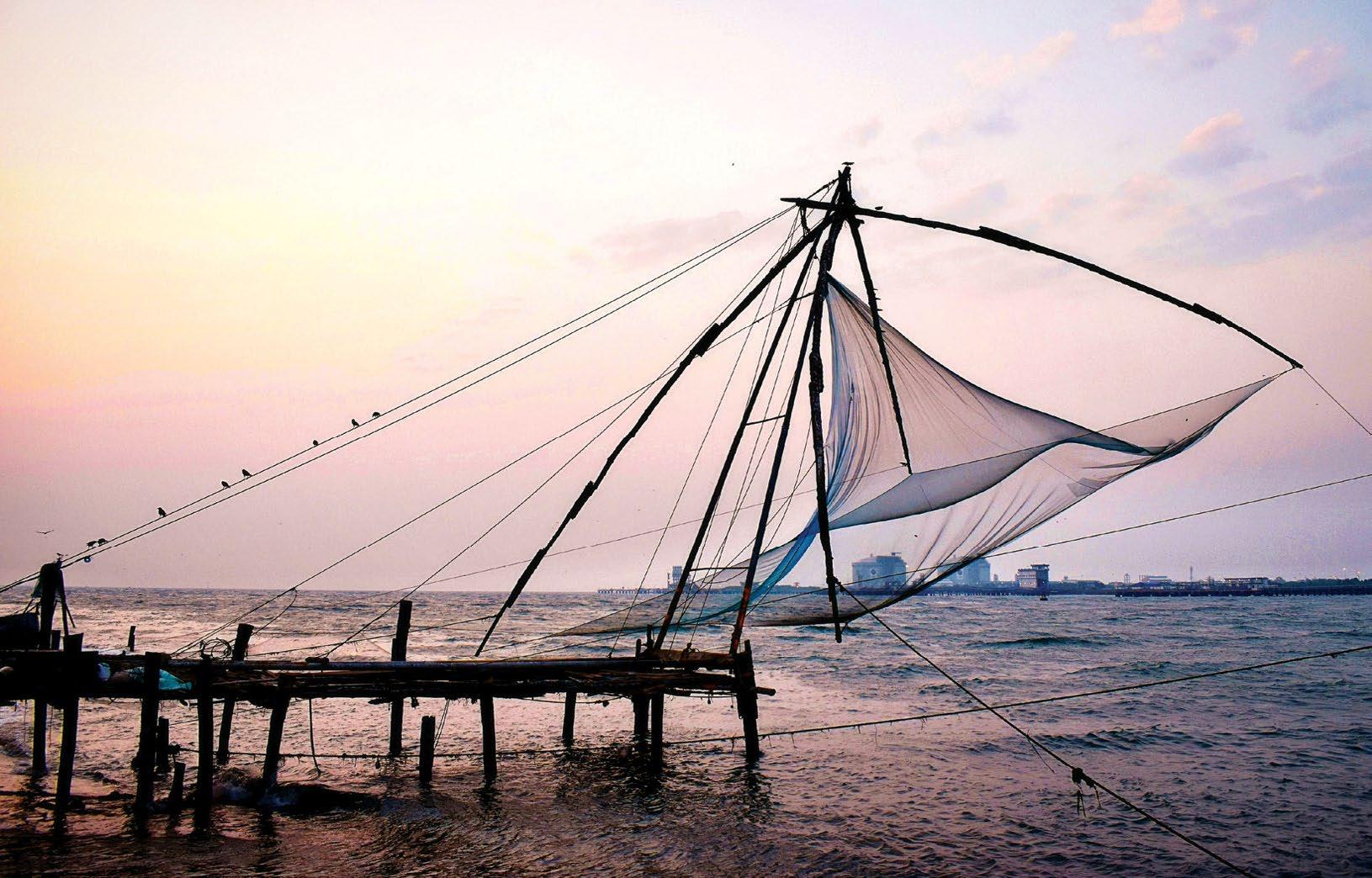
LEFT: Araiya Palampur, tucked into the Kangra Valley with the Dhauladhar range as its backdrop, makes the case that undiscovered is a selling point.
Falaknuma Palace, Hyderabad, a former nizam's hilltop palace, set the standard for Indian palace hotels with its opulence and history.
HOW IMPORTANT IS THE TECH QUESTION?
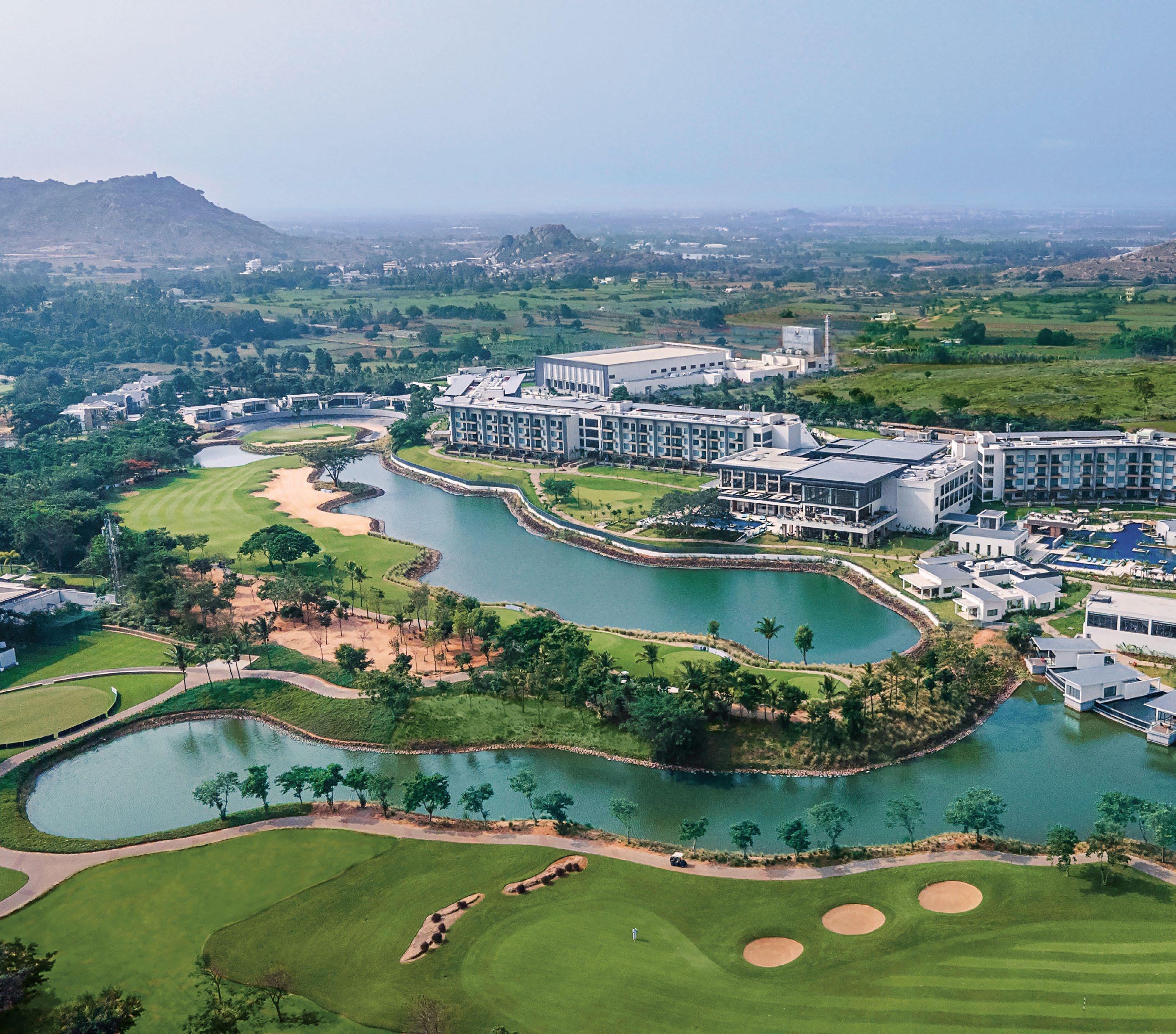
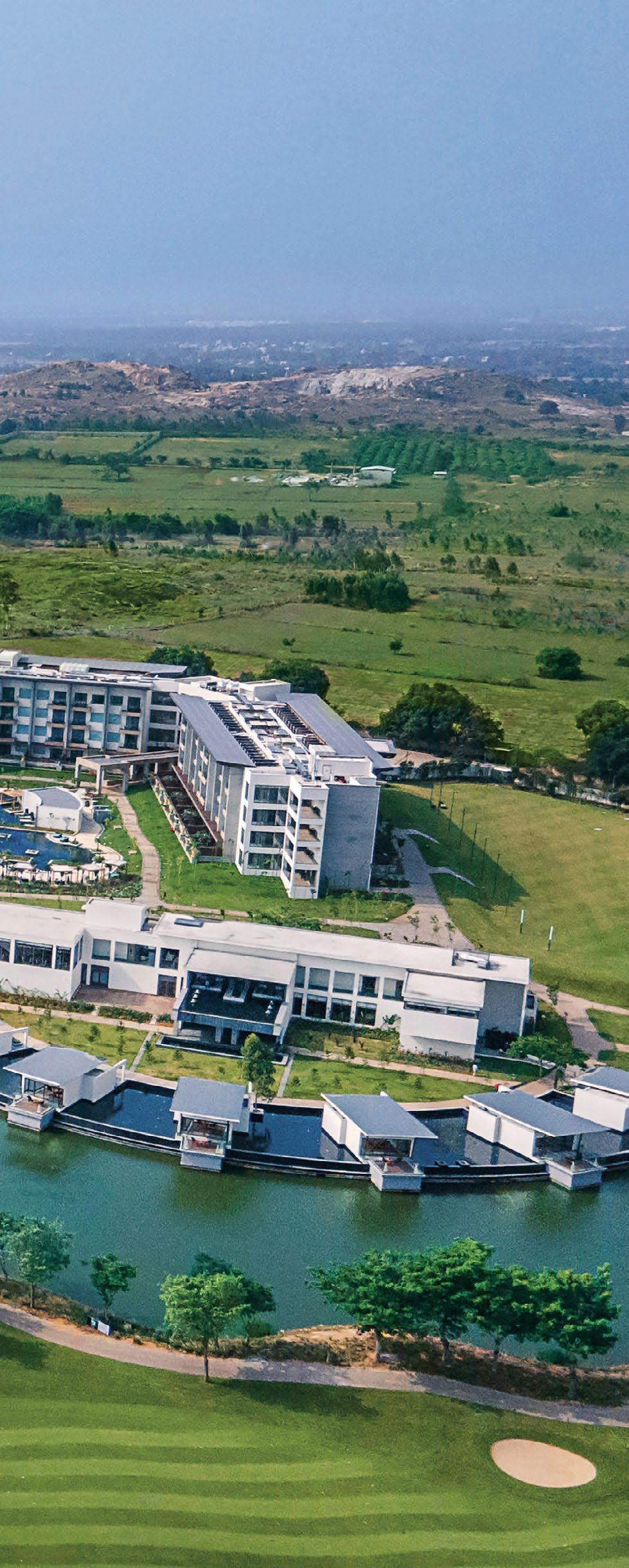
Amitab Kant, who has framed India's development challenge with the clarity of someone who thinks in 22x growth curves, makes the macroeconomic case with unusual directness: India needs to grow tourism by 22 times over the coming decades, alongside GDP growing 9 times and manufacturing 16 times. "We are also at a moment when the world is poised to see the greatest rise in productivity in history, driven by data, machine learning, and artificial intelligence." India must, he argues, technologically leapfrog by harnessing AI across sectors, and hospitality is not exempt. The numbers, when framed this way, stop feeling like industry statistics and start feeling like a national project.
AI enters the conversation across the industry, but the most thoughtful voices keep returning to the same distinction. Shekhawat calls it "a powerful tool that can enhance efficiency and free up resources, allowing for deeper, more meaningful human interactions."
On which parts of the guest journey should become automated and which should not, there is a striking consistency of view across the industry's most serious operators. Saxena draws the line cleanly: digital check-ins, digital keys, service requests, concierge communication— these are natural inclusions, and done well, they enhance rather than strip the experience of character. "But hospitality ultimately is a people business. Guests may appreciate the efficiency of the technology, but they return because of how a stay made them feel." Sharma at Radisson reaches for what has become the industry's most useful formulation: "The future hotels will likely operate on a 'high-tech, high-touch' model, where technology removes friction, allowing teams to focus more deeply on meaningful guest engagement rather than transactional processes."
Shankar at Brigade is the most direct: "I think any task should be automated. Checking in, adjusting the lights, or paying the bill should be one-click and seamless. If tech can remove the chore of staying at a hotel, we should use it." But hospitality itself, she says, cannot be programmed: "You can't automate empathy or the intuition a team member has when they notice a guest is having a rough day and offers a small, genuine gesture of comfort."
Mukherjee envisions lobbies becoming "more experiential and less transactional" as digital check-ins displace the front desk. Circadian lighting and app-controlled environments are likely to become standard. But none of them—not one—suggests that technology replaces the human encounter that Indian hospitality, at its best, has always been built on. Chadha draws the line with precision: at ITC Hotels, digital tools and operational systems are deployed to reduce transactional friction, "thereby allowing associates to spend more time engaging meaningfully with guests." Technology enables; it does not replace.
JW Marriott Bengaluru Prestige Golfshire Resort & Spa unfolds like a secluded sanctuary at the edge of the Nandi Hills, where championship golf, vast landscaped greens, and slow luxury create the feeling of a private country estate.
THE MATTER OF TALENT
There is one constraint the industry discusses with conspicuously less enthusiasm than supply pipelines and branded residence launches: people. The leadership pipeline and service workforce face increasing strain. Expansion is moving faster than the industry's ability to staff it with the depth of talent that genuine hospitality requires. And hospitality's reputation as a long-term career, particularly among India's aspiring young workforce, has never been more fragile.
This is the uncomfortable conversation. But it is also the one that may ultimately determine whether the next decade of Indian hospitality lives up to its numbers. A 300,000-room inventory projection means very little if the people filling those properties do not have the training,
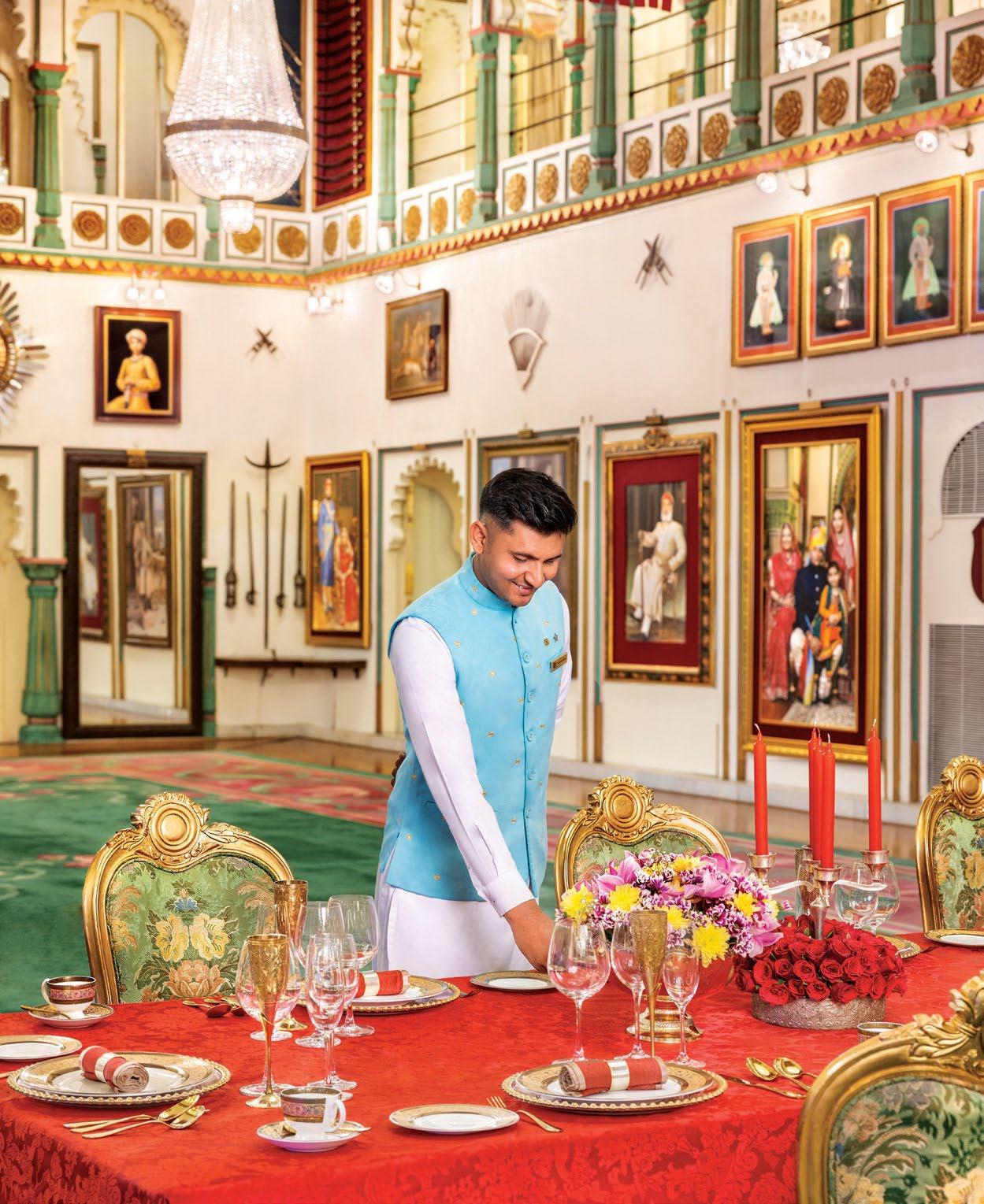
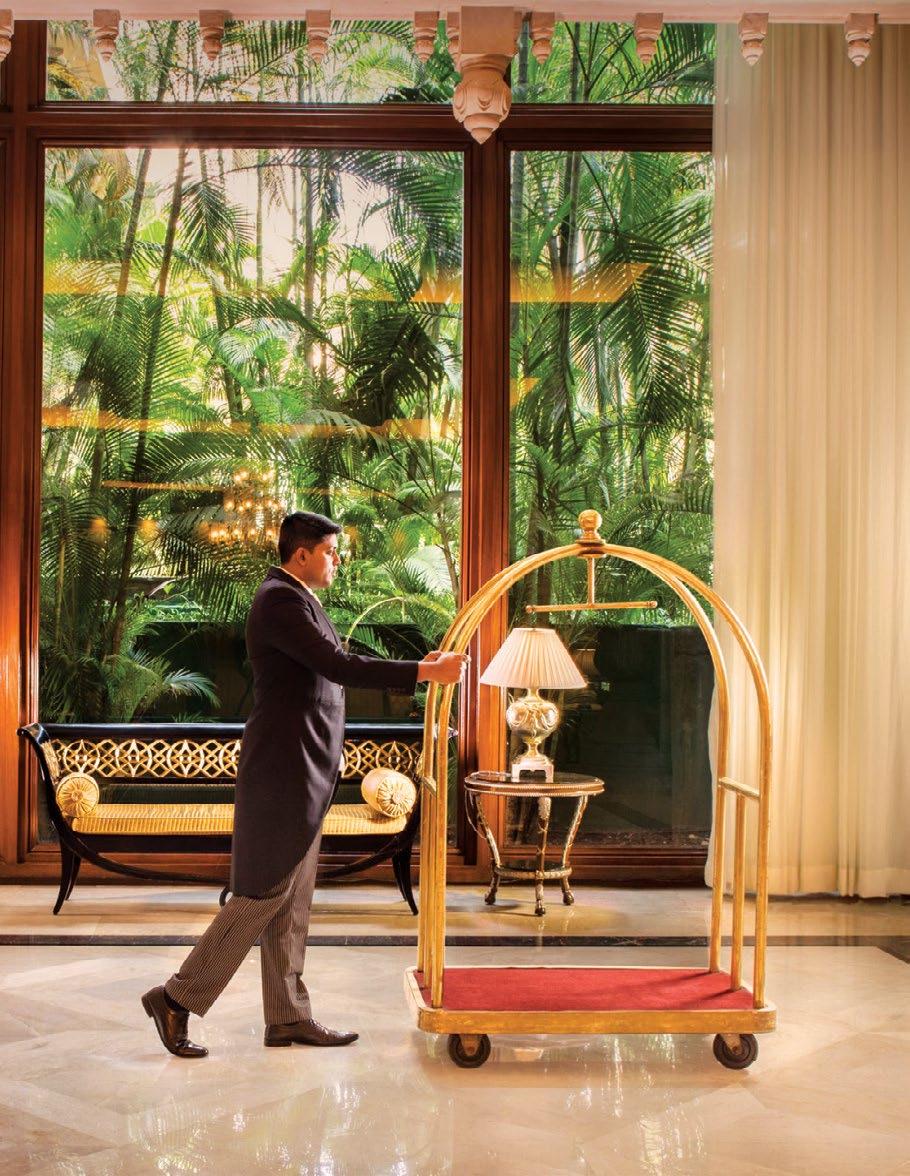
LEFT: The Imperial Delhi remains one of India’s grandest colonial-era hotels, where museum-worthy art, and oldworld elegance evoke the atmosphere of a fading empire reimagined for modern luxury.
ABOVE: India's most dynamic city has always known how to scale. The Leela Palace Bengaluru reminds it how to pause.
the institutional knowledge, or the cultural fluency to make a guest feel genuinely welcomed.
Chadha has thought about this problem with more structural rigour than almost anyone else in the industry, and his answer is worth sitting with. The starting point, he says, is hiring for attitude rather than skill: "Technical skills can be trained; empathy, humility, and guest-centric instinct are far harder to teach." But recruitment is only the beginning. What ITC Hotels is building, in his framing, is not a workforce but a talent ecosystem—one where culture does the work that standard operating procedures cannot: "Standard operating procedures create consistency, but culture creates guest memory. Teams are trained not merely on 'what to do,' but on 'how to make guests feel.' This includes nuances of anticipation, discretion, personalisation and emotional connect." The hardest parts of hospitality—warmth, grace under pressure, genuine ownership—are transmitted not through manuals but through mentorship: "Senior leaders and hotel leadership teams play a direct role in coaching frontline talent. The objective is to transmit the intangible aspects of hospitality which are best learned through observation."
And on the question of retention, which is where most talent strategies quietly fail: "Retention becomes critical in a talent-constrained market. ITC Hotels invests in internal mobility, HiPo development, learning ecosystems and growth pathways so that associates see longterm careers within the organization." The differentiator, Chadha says, is ultimately not operational capability but "the organisation's ability to cultivate people who deliver hospitality with authenticity, intuition and cultural intelligence—consistently, across geographies and formats."
In most branded hotels, it takes a well-trained team to run banquets for conferences and events.
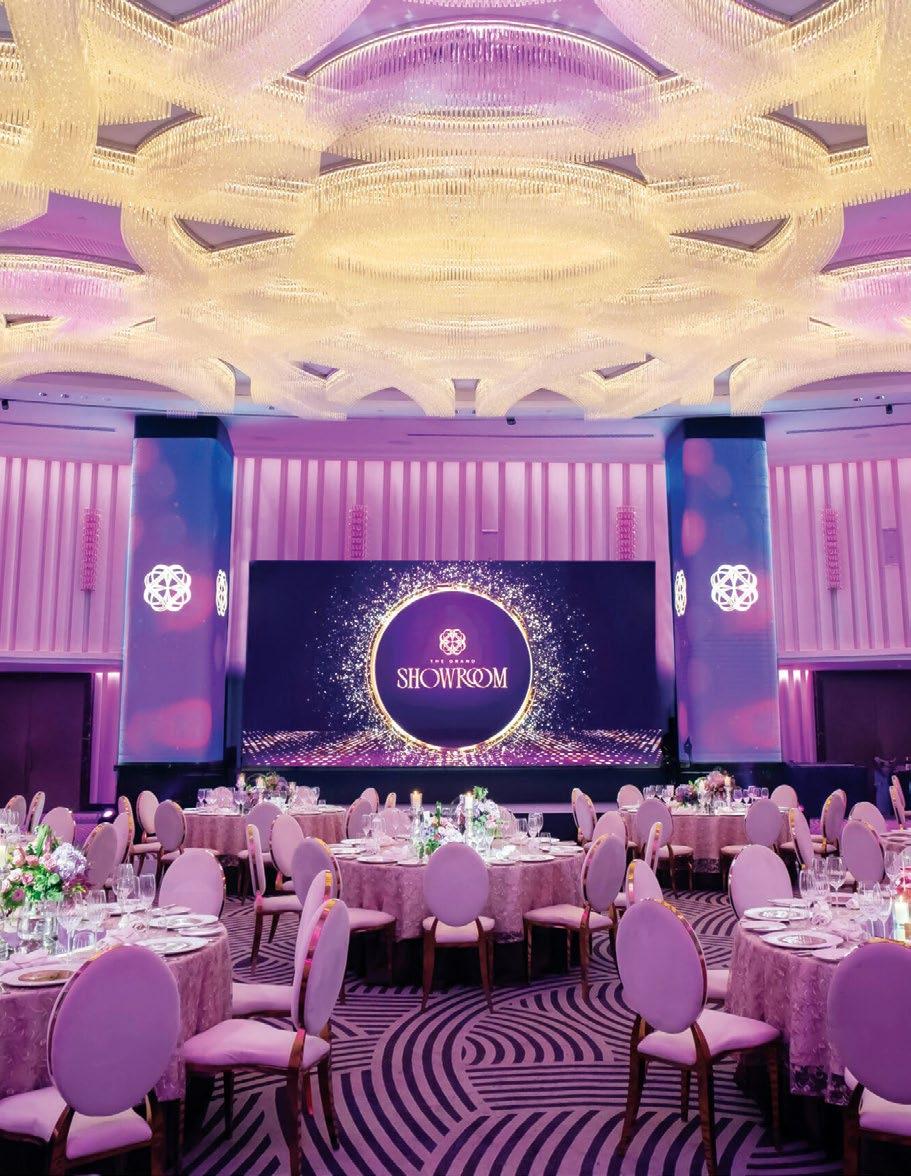
Bakaya approaches the talent question from a different angle, and it is one the industry would do well to take seriously: the value of hiring locally. "In many emerging destinations, local teams bring a natural understanding of language, culture, and guest behaviour, which adds authenticity to service delivery." That is not a compromise position; it is a competitive one. At Sarovar, the philosophy combines structured training with stronger local hiring and internal mobility across the portfolio. But Bakaya is clear that the harder challenge is not building teams; it is building culture at scale: "The challenge is not just scaling teams, but scaling culture and service philosophy." Leadership development and cross-property exposure, he says, remain essential to maintaining consistency as the network grows. The observation underneath all of this is one that the entire industry shares, even if it does not always say it plainly: "Hospitality cannot be built only through technical training. Operational efficiency is important, but warmth, empathy, intuition, and cultural understanding are what truly define guest experience."
Saxena makes the case that team member experience and guest experience are inseparable: "When people feel supported, recognised, empowered, and
included, they naturally deliver more intuitive and authentic hospitality." As Hilton expands deeper into diverse markets across India, cultural fluency becomes critical—teams need to understand local behaviour, celebrations, food preferences, and travel motivations, "because increasingly, guests expect hospitality to feel personalised and locally relevant." Sharma at Radisson is working to close the industry-academia gap systematically, partnering with hospitality institutes and sector skill bodies including the Tourism and Hospitality Skill Council and Job Plus to develop programs combining classroom learning with practical exposure. More than 600 candidates have been trained and certified so far, with nearly 54% women's participation. "Through industry immersion projects, leadership interactions, and our Future Leaders Program, we are building a future-ready talent pipeline equipped with both operational expertise and the warmth and cultural fluency that hospitality truly demands."
Singh at Chalet identifies the most important shift in how the industry needs to think about talent development: moving beyond traditional classroom-led hospitality learning toward more immersive and experience-based models. Chalet's Lakshya initiative
is aimed at developing future-ready hospitality leaders through crossfunctional learning and deeper on-ground experience. But the argument he makes underneath the programme specifics is the one that matters most: "In a service business like hospitality, culture ultimately becomes a strategic advantage. Organisations that invest early in people, create strong workplace environments, and build long-term capability rather than only hiring for immediate demand will be far better positioned to scale sustainably without diluting guest experience."
Shankar at Brigade makes the hiring argument with unusual bluntness: "We shouldn't just look for degrees; we should look for attitude and warmth. You can teach someone the technical side of a hotel, but you can't teach them to genuinely care about a stranger's comfort." Cultural fluency— understanding the nuances of how people want to be treated—should be
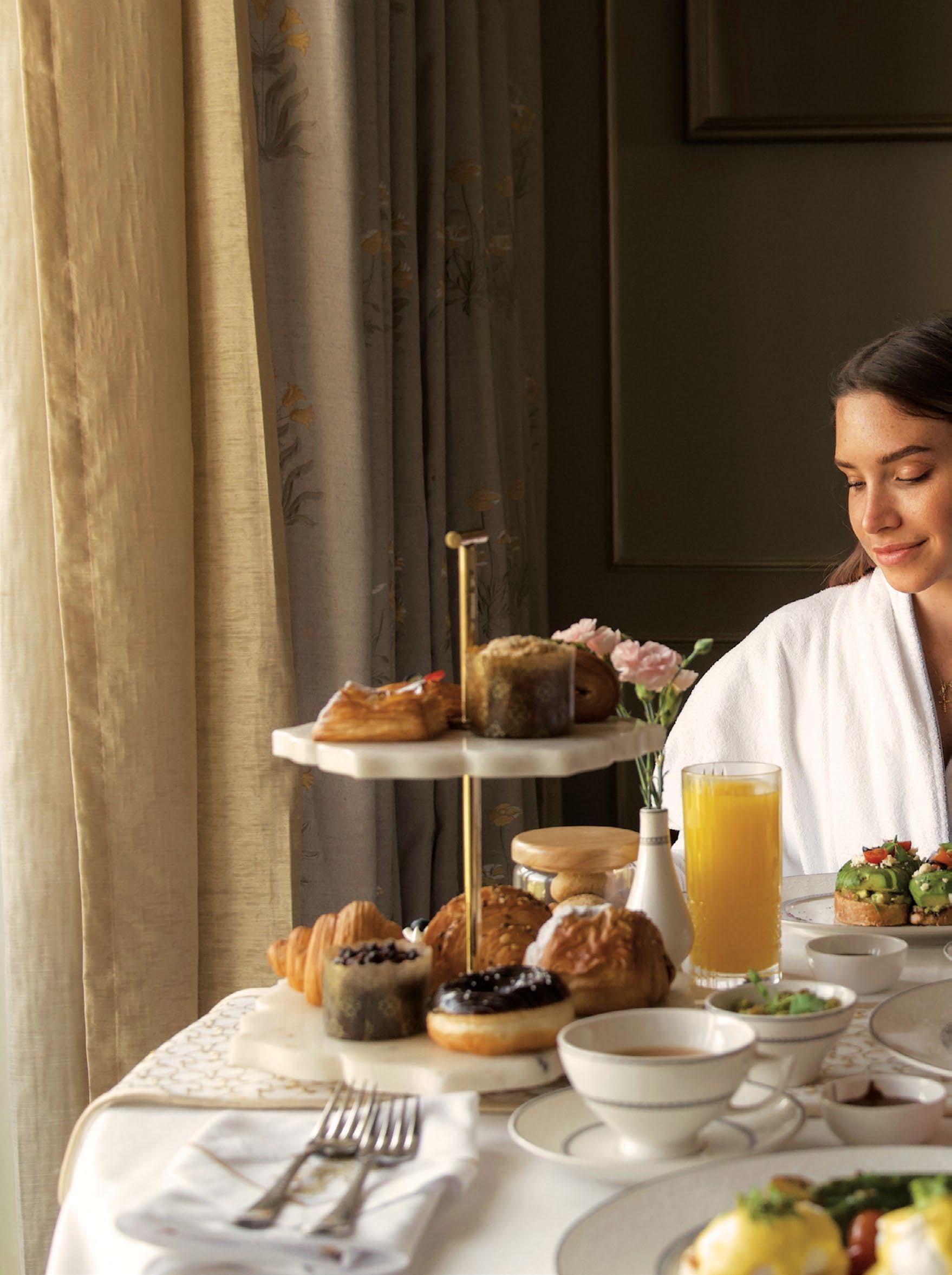
RIGHT: In the next decade of hospitality, talent will matter more than scale, because guests may remember the hotel, but they never forget how people made them feel.
BELOW: At the heart of India’s next hospitality decade are people like Nikita bringing warmth, intuition, and genuine pride to every guest experience at Raffles Udaipur.

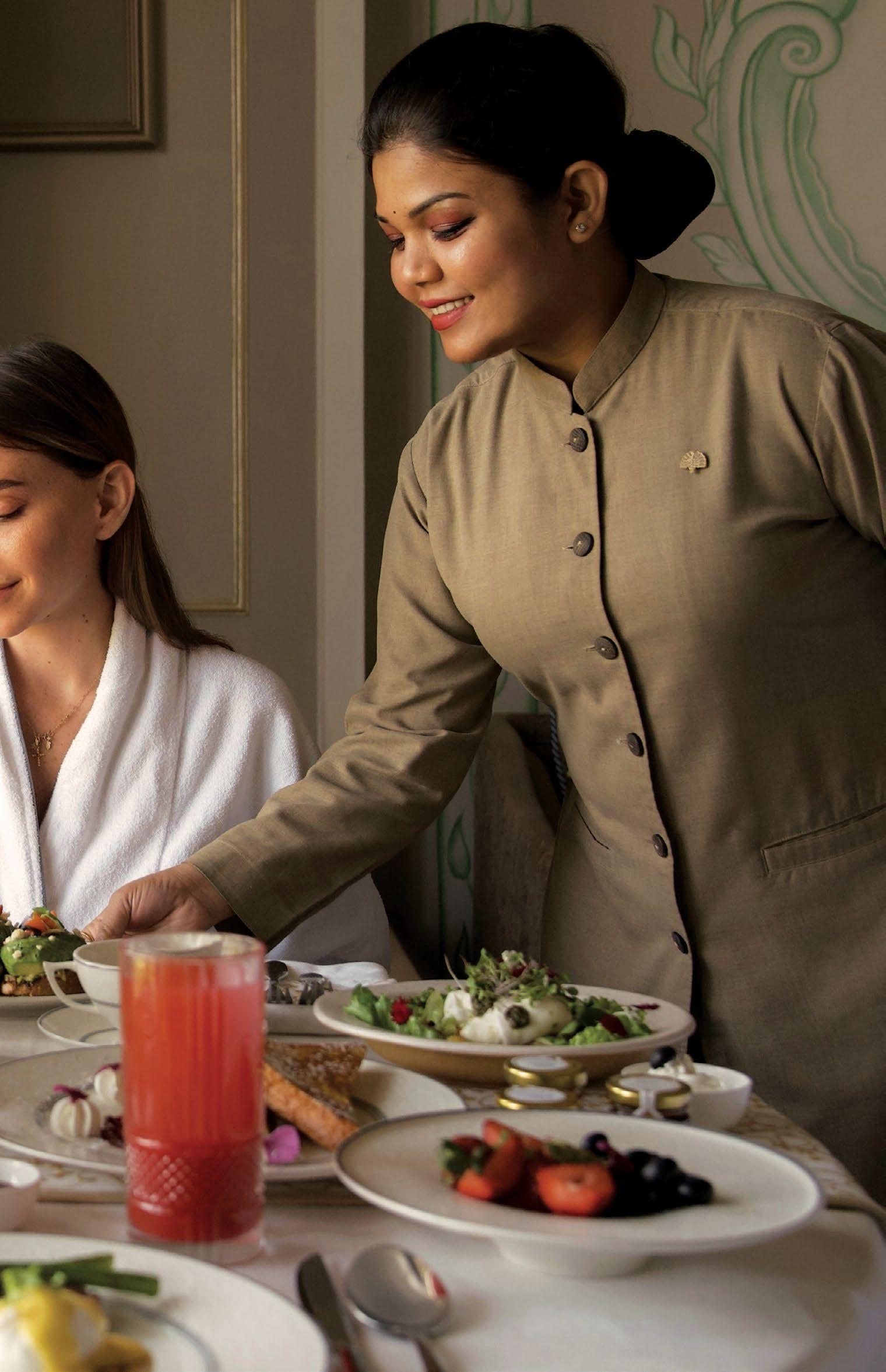
seen as a high-level skill. "We are not just servicing buildings; we're taking care of people."
Leisure Hotels' Sood offers the formula that the best operators still hold to, regardless of portfolio size: "Focus on five key principles: a warm welcome, a fond farewell, strong product and service quality, anticipating guest needs, and meaningful customer engagement. These principles apply universally, whether operating a small homestay or a large hotel." These are not complex ideas. They are, however, ideas that require people to embody them, and people who stay long enough to learn how.
Chhatwal locates the sector's long-term opportunity precisely here, in the gap between what Indian hospitality can become and what the Western world is retreating from: "Services in the Western hemisphere, from where we learned the business of hospitality, have declined because of an ageing population and rising cost structures. I see this as a significant opportunity for Asian hotel brands in general, and Indian luxury brands in particular, to travel with Indian customers outside India, to destinations they prefer, build hotels there, take Indian hospitality to the world, and make it a global benchmark." It is an ambitious claim. It is also, given everything the sector has demonstrated over the past decade, not an implausible one.
THE LEADERSHIP MATRIX
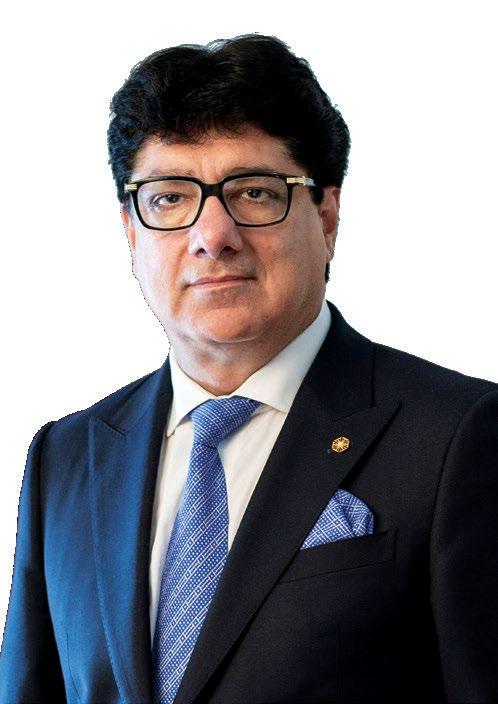
P U N E E T C H H AT WA L
MD & CEO, IHCL
“The tourism and hospitality sector is in a growth phase. It is not yet mature enough to attract large global institutional funding. Having said that, I think there is enough capital available in India. All we need is to improve the ease of doing business and reduce the number of permissions needed to build a hotel from 70+ to maybe 10+. The licences, whether a liquor licence, licence to operate, or fire licence—there are several permissions required before a hotel can be built, open, and operate.”
A N I L C H A D H A
Managing Director, ITC Hotels Limited
“India is at an important inflection point. The country offers one of the richest foundations for luxury anywhere in the world through its culture, cuisine, wellness traditions, craftsmanship, spirituality, and extraordinary diversity of experiences. The world is coming to India. Namaste has mesmerised the globe. This shift is very much in sync with ITC Hotels philosophy of offering authentic indigenous experiences through the promise of responsible luxury.”
Z U B I N S A X E N A
Senior Vice President & Regional Head, South Asia, Hilton
“High footfalls alone don’t make a strong hospitality market. The real question is whether the demand is consistent and diversified through the year across business, leisure, spiritual travel, weddings, wellness, and other travel experiences to support sustainable long-term performance. Infrastructure is equally critical to support branded hospitality. Most important is matching the right product to the market.”
A R U N S A R A F
Chairman & MD, Juniper Hotels
"The most important quality of a hotel owner is patience. Success cannot be achieved with a single hotel overnight. Separate your personal preferences from the needs of the asset. Decisions should not be driven by ego or personal taste, but by a clear understanding of the target customer, the value proposition, and the price point the market can sustain."
R A N J I T B AT R A
CEO, Ventive Hospitality
"It makes sense to invest in hotels, but not every hotel will succeed. Projects may look attractive on renderings and international branding may create the perception of strong returns—that is not always the reality. A successful hotel must be in a strong, undersupplied market with robust pricing power, the right location, and a wellconsidered mix of elements that drive performance."
N I K H I L S H A R M A
Managing Director & COO, South Asia, Radisson Hotel Group
“Ownership of the guest relationship will ultimately belong to the brand that delivers trust, consistency, and emotional connection. OTAs and super-apps remain important distribution partners, expanding visibility and reach, especially in a dynamic market like India. However, longterm loyalty is built through personalised experiences, seamless service, and meaningful engagement beyond the transaction itself.”
A N U R A AG B H AT N AG A R
CEO, The Leela Palaces, Hotels and Resorts
"Luxury travellers increasingly expect hospitality to be locally rooted and mindful of its environmental and community impact. Design, energy choices, local craftsmanship, and community engagement must be integral to the guest experience—not separate considerations. Travel priorities are shifting from movement to meaning."
A JAY K . B A K AYA
Chairman, Sarovar Hotels & Director, Louvre Hotels India
“Growth is not just about adding hotels, but building relevance across diverse markets. In emerging leisure and pilgrimage destinations, cultural sensitivity and localisation matter as much as scale. A hotel in Omkareshwar, Rishikesh, or Sindhudurg cannot be approached like a metro business hotel. Travellers today seek authenticity, local connection, and destination-led experiences.”
M A N AV T H A DA N I
Founder-Chairman, Hotelivate
“I think the days of independent operators is over and will be in the next decade with the exception of few. Regional players will be forced to get some sort of a distribution pipeline. We are already seen that happening the past two to three years.”

N I R U PA S H A N K A R
Managing Director Brigade Hotel Ventures Ltd
“We are building hotels faster than we are training people. I think we must change how we hire. We shouldn't just look for degrees; we should look for attitude and warmth. We need to build a workforce that feels empowered to use their intuition.”
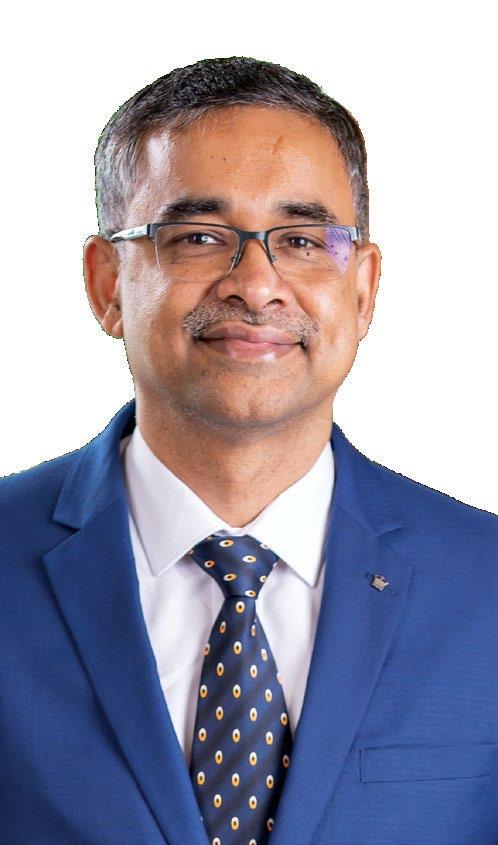
S H W E TA N K S I N G H
MD & CEO, Chalet Hotels Limited
“Asset quality, location selection, operational excellence, brand differentiation, and disciplined execution will become increasingly important as the industry scales. But long-term success will still depend on the strength and durability of underlying demand.”
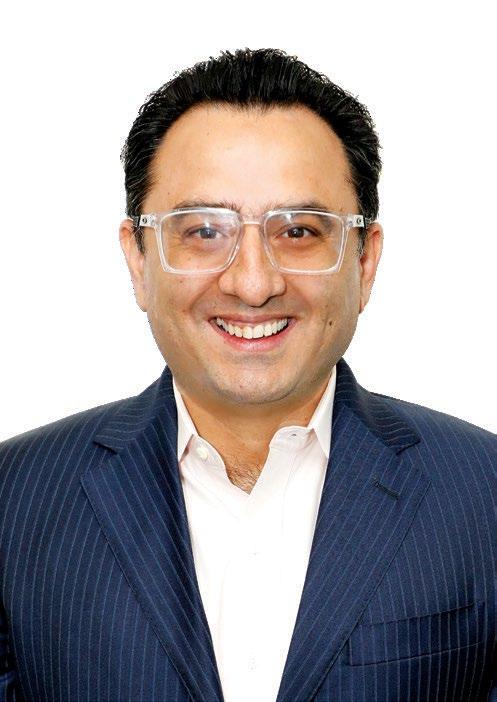
A R J U N A N A N D
Partner, Antares
Legal
"Hospitality has historically delivered returns of 7–8%, modest for private equity. But the sector is increasingly a long-term play. Investors are more willing to hold assets over time, focusing on sustained value creation. The emphasis is shifting from exit strategies to long-term returns as the sector matures."
G AU R AV S H A R M A
MD & Head of Hotels & Hospitality Group for India, JLL
"Branded residences allow developers to unlock capital that can be reinvested into hotel development—but the segment requires careful selection of locations and partners. Mid-scale hotels in Tier 1 cities attract steady capital. Large-format resort hotels with strong MICE capabilities are seeing significant investor interest."
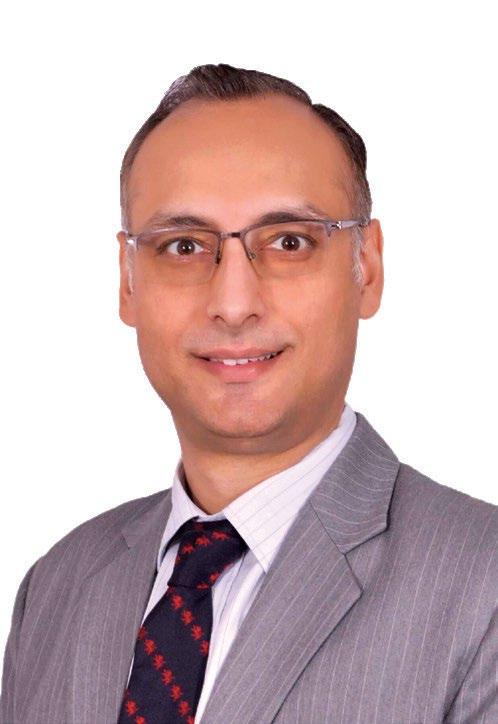
S U J JA I N TA LWA R
Co-founding Partner, Economic Laws Practice
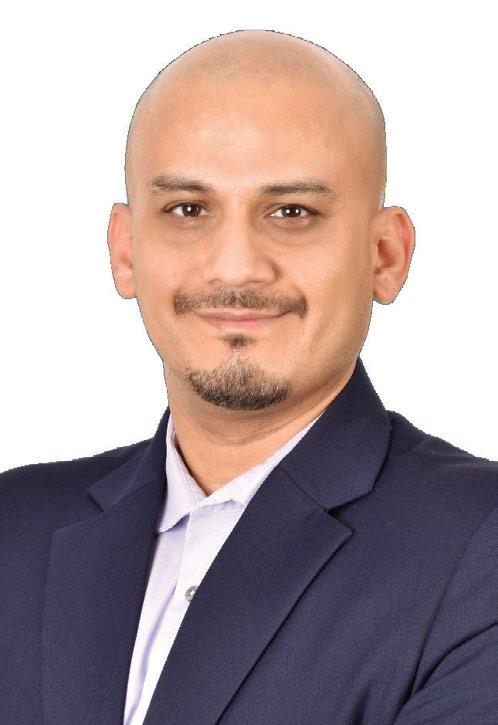
S A N JAY S O O D
CEO, Leisure Hotels
"Investor interest in leisure assets is growing alongside interest in emerging destinations. The broader industry is recognising both leisure and non-metro markets as viable investment opportunities."
"The industry has largely moved toward asset-light models, with fee structures linked to revenue and gross operating profit. But contracts remain heavily skewed in favour of brands, performance clauses often depend more on how they are drafted than on actual operational outcomes."
A K A S H DAT TA
Managing Director (South Asia), HVS Ananrock
“The next phase of growth cannot be only about adding more keys or properties. It also has to be about building stronger brands, deeper leadership pipelines, bettertrained talent, and businesses that can remain relevant well beyond the current growth cycle."
A M R U DA N A I R
Founder & Director, Araiya Hotels & Resorts
"In urban markets, land can account for up to 50% of project cost, and around 40% in prime leisure destinations. In more remote locations, this reduces to approximately 25%, improving overall project viability. Many first-time hotel owners in these regions already hold land at historical values, making hospitality development an effective way to monetise existing assets."
Founder & MD, The MRS Group
"The approach to translating intangible heritage—stories, traditions, memory—into a tangible hospitality experience is to weave both into a cohesive narrative that informs experience design. Architecture often reflects climatic and cultural responses developed over generations. These principles can be adapted into contemporary design."
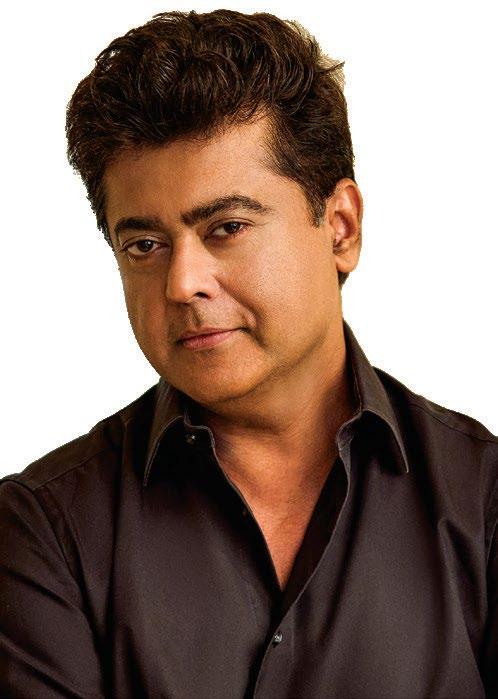
B O B B Y M U K H E R J E E
Founder, Bobby Mukherrji Architects
"Lobbies will become more experiential and less transactional. The reception desk may shrink or disappear, replaced by concierge-style interactions or flexible social spaces. Hotel F&B spaces will need to become more distinctive or specialised. In cities with strong standalone dining scenes, guests increasingly prefer exploring external options."
T O B Y K Y L E
Studio Director – Landscape, WATG
"Memorable landscapes are driven by moments of surprise and emotional engagement. What creates lasting memories are unexpected interactions— light filtering through trees, encounters with wildlife, sensory experiences that feel spontaneous and authentic. These moments of wonder are what guests carry with them long after their stay."

G A RY G R E E N E
Principal, Gary Greene Design
"The focus has shifted from designing buildings as static objects to creating immersive experiences. Wellness is now integrated into the entire guest journey—how spaces are navigated, how natural and built environments interact, and how guests feel throughout their stay."
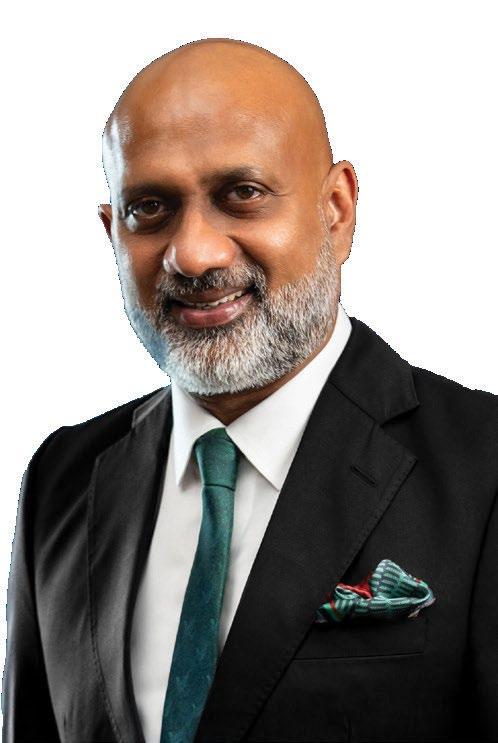
K I R A N A N D I C O T
Senior Vice President, South Asia, Marriott International
"India is among Marriott International's most strategic growth markets. We're seeing strong momentum across resort, leisure, and spiritual destinations— from Tirupati and Amritsar to upcoming properties in Somnath and Ujjain—alongside rising opportunity in Tier 2 and Tier 3 cities as domestic travel continues to broaden."

WHAT 2026 WILL, AND WON’T, REVEAL
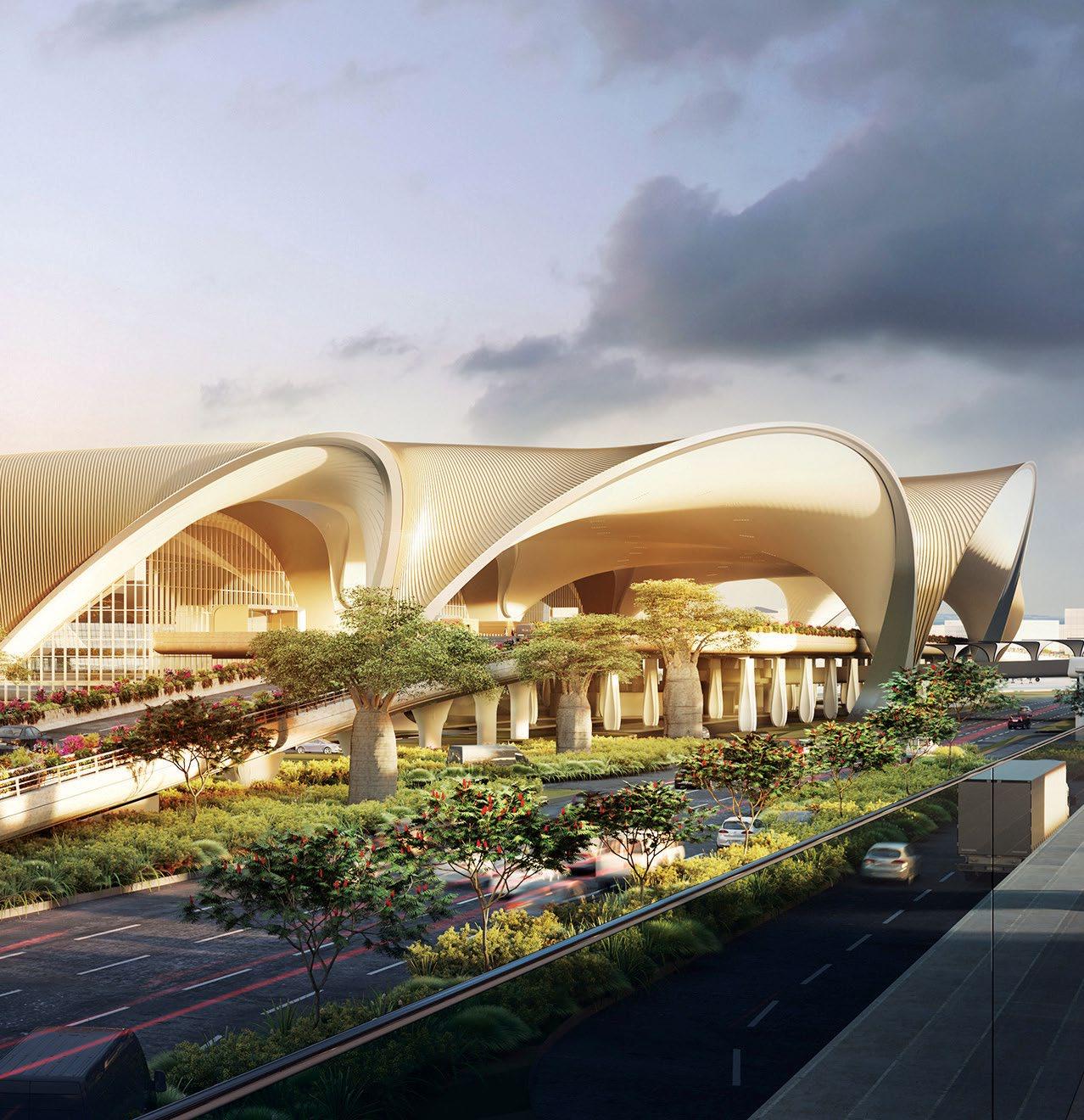
The supply pipeline is growing at a pace that would have seemed ambitious even three years ago. Hotelivate tracks a 58% surge in proposed branded supply over five years, entering 177 new markets. Hotel groups are launching subbrands, lifestyle labels, wellness extensions, branded residences, and invitation-only members' clubs. The ambition is visible everywhere. The risk is equally real, and the more thoughtful voices in the industry are not pretending otherwise.
Manav Thadani, FounderChairman, Hotelivate, is one of the few people with both the data and the standing to say what many are thinking but not saying publicly. His view of the decade ahead is not pessimistic, but it is unsparing: "The hospitality industry is going to see a seismic shift in the way things operate. The Indian economy is going to be impacted on the IT-ITES sector, manufacturing sector,
Navi Mumbai International Airport is exactly the kind of infrastructure hospitality leaders have in mind when they say the development around new airports tells you everything about where hospitality is heading next.
industrial sector, and this will have a cascading effect on how hotel demand shifts. It's going to be a bumpy ride and potentially rough landing for many of the brands that operate." On the IPO wave that has swept through the sector in recent years, Thadani sees both discipline and distraction: "Hopefully we will see potentially more discipline in product development which I believe is key for success. Fascination with design and F&B-led development will hopefully slow down." He is pointed about why: "Hotels—well, a large number of brands including some of the best—simply don't know how to operate F&B." The general managers of the future, he says, will have to be far more analytical. Asset management will be the capability that separates serious operators from the rest.
Akash Datta, Managing Director (South Asia), HVS Anarock, offers a read on the competitive landscape that is more layered than most: "The competitive landscape is likely to become more layered rather than consolidated around one type of player. Indian hotel companies are strengthening rapidly, global brands continue to bring scale and distribution strength, while regional operators and independents remain important because travellers increasingly value local character and differentiated experiences." Rising institutional capital and recent listings—Leela Palaces Hotels & Resorts, Brigade Hotel Ventures, ITC Hotels—are pushing the sector toward greater discipline around governance, profitability, and long-term value creation. But the question underneath all of that, Datta says, is not one that any balance sheet answers cleanly: "Ultimately, the companies that endure will probably not be the ones that are only focusing on expansion, but the ones able to scale without diluting service culture or guest experience. That is where the real leadership challenge lies for the industry over the next decade, because the sector, despite becoming more institutionalised, still remains a deeply people-driven business."
"As portfolios expand rapidly, the tension between standardisation and individuality becomes more visible," the Hotelivate Trends & Opportunities report notes. It is a tension that surfaces in almost every conversation. Brands risk losing cultural nuance in the pursuit of replicable models. Bhatnagar describes it as the challenge of maintaining "depth, relevance, and a strong sense of place" as scale increases.
Gaurav Sharma, Managing Director and Head of Hotels & Hospitality Group for India, JLL, adds a structural dimension that gets less airtime than it deserves: hotel development in India can require over 40 approvals depending on the city. Single-window clearance, land aggregation reforms, and liberalised financial regulations would meaningfully
At a time when Indian hospitality is redefining luxury through experience, storytelling, and emotional connection, spaces like Library Blu at The Leela Palace New Delhi reflect the industry’s growing shift towards immersive hospitality.
accelerate growth. "India is still a relatively nascent market in terms of hospitality supply," he says. "Global institutional investors typically prefer stabilised, incomegenerating assets and are cautious about development risk. As India builds more high-quality, largescale hotel assets, it will naturally attract greater global capital." The limitation, he is clear, is not structural demand. It is the availability, scale, and quality of investable assets.
Chhatwal has been making a version of this argument for years, and he is specific about where the friction lies: "All we need is to improve the ease of doing business and reduce the number of permissions needed to build a hotel from 70+ to maybe 10+. The licences, whether a liquor licence, licence to operate, or fire licence— there are several permissions required before a hotel can be built, open, and operate." On the question of capital, he is equally direct: the sector is in a growth phase, not yet mature enough to attract large global institutional funding, but he sees enough domestic capital available if the structural conditions improve. "Look at how we can use land that is available with clear titles, and how states can work with the centre to develop tourism in a mission mode, identifying locations meant specifically for

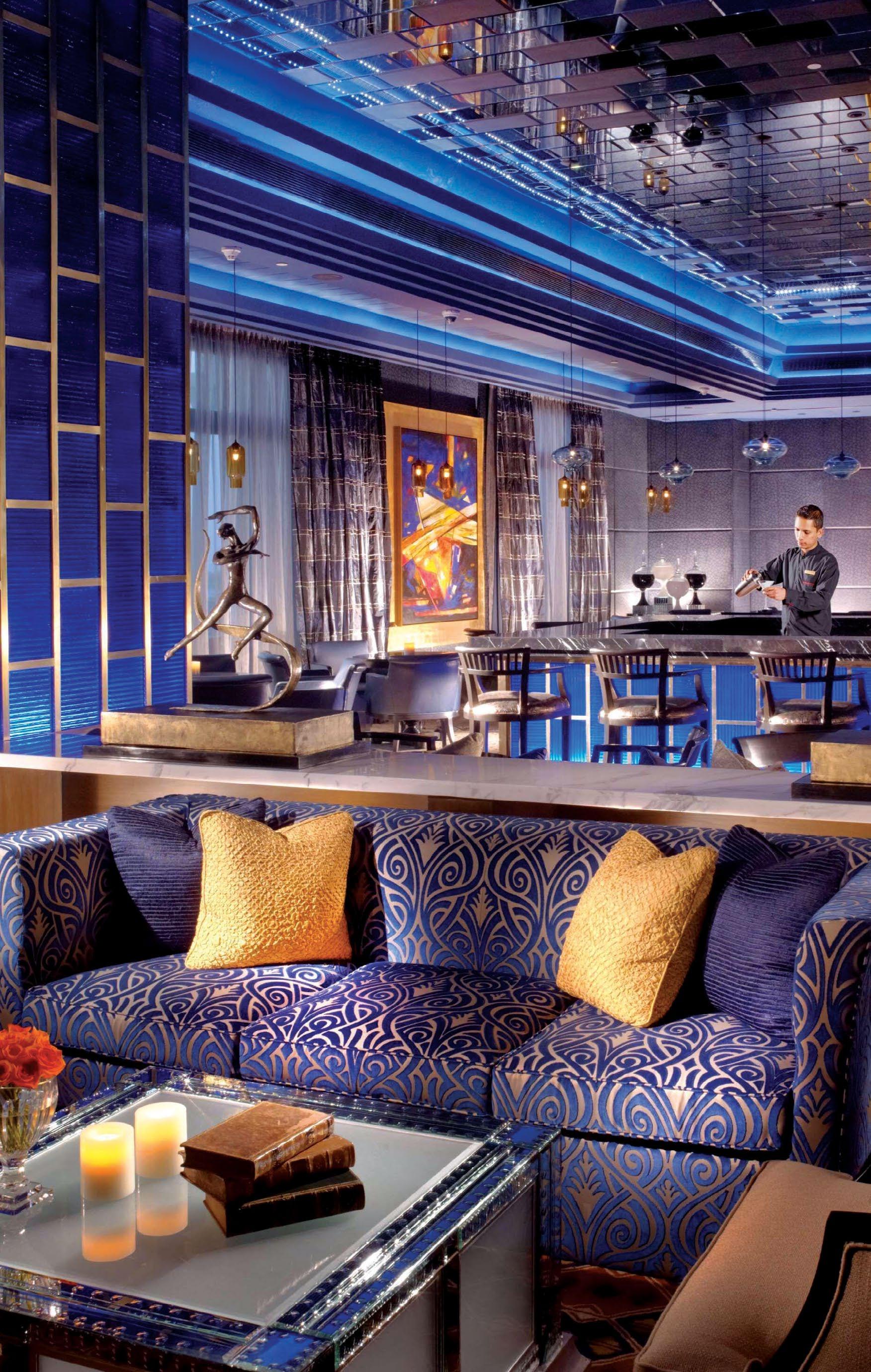
hotels, so that they are not priced at normal fair market value." The 50 new destinations outlined in the Finance Minister's Budget speech, he says, is good work in progress, "but it needs to be expedited and pushed."
Talwar at Economic Laws Practice identifies the structural shift quietly changing the industry's architecture: a move toward franchise models supported by third-party operators, creating a hybrid ecosystem of owners, brands, and independent operators. India is likely, he says, to follow global patterns and move from ownership-heavy models to franchise-led structures. Exit flexibility will be critical; investors need the ability to change operators or terminate agreements if they are to unlock an asset's future value. Without it, current valuation is constrained. "Termination at convenience," typically involving compensation payments, is becoming nonnegotiable in serious deal structures.
Independent hotels still hold 56.45% of market share. Chain hotels are projected to grow at a 16.76% CAGR through 2031 on the back of asset-light expansion. The branded world is growing fast. But the soul of Indian hospitality—its specificity, warmth, and sense of place— still lives disproportionately in the independent and boutique segment. The question for the decade is not whether the branded sector will grow. It will. The question is whether it can absorb the right lessons as it does. Thadani is unsentimental about the independent operator's prospects: "The days of independent operators is over and will be in the next decade with the exception of few. Regional players will be forced to get some sort of distribution pipeline." It is
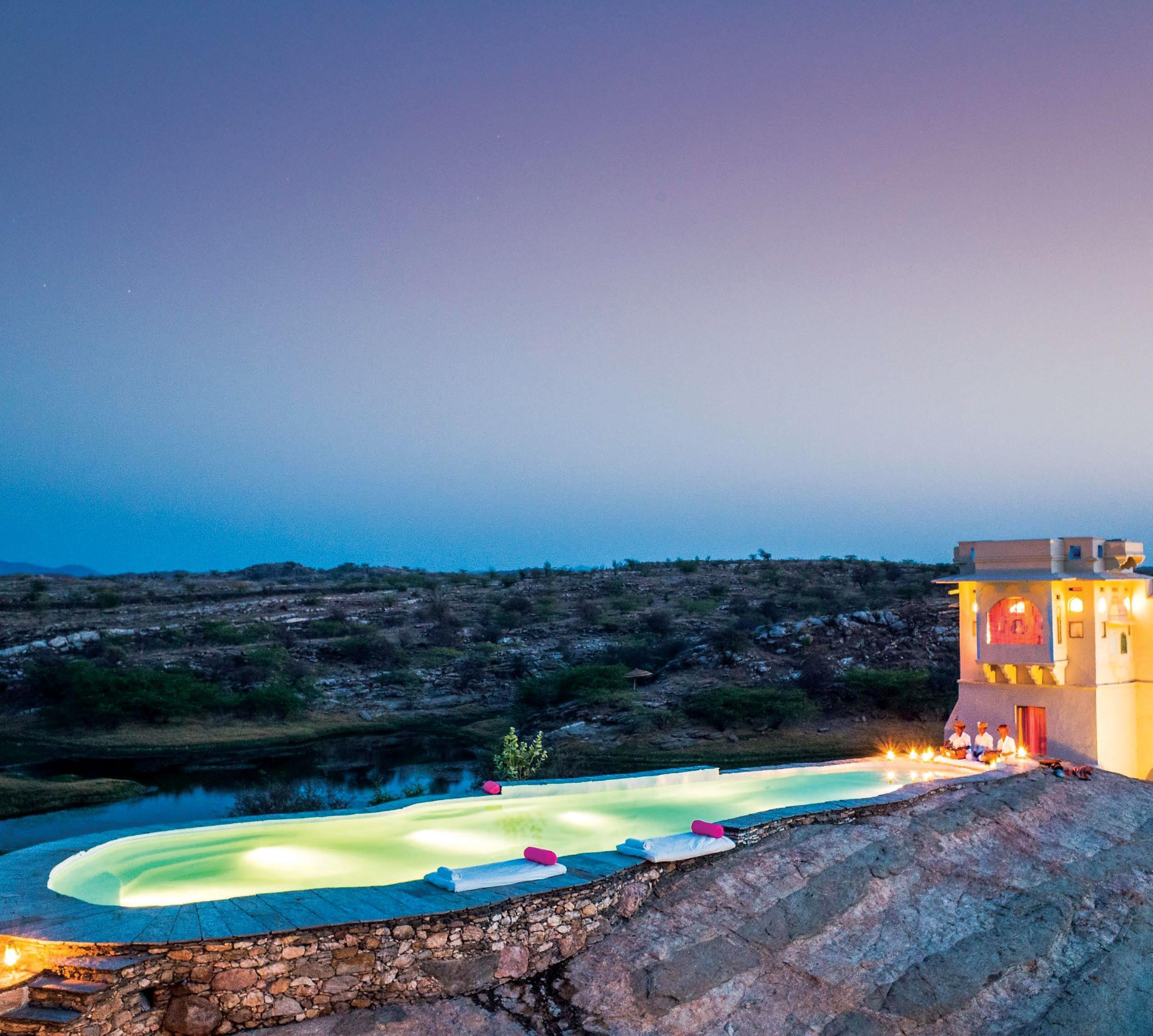
a structural prediction, not a value judgement. And the data, over the past two to three years, has been moving in exactly that direction.
Saxena looks a decade out and sees an industry whose map will be almost unrecognisable: "India is in the middle of a structural infrastructure transformation, with new airports, expressways, convention centres and industrial corridors reshaping where travel demand comes from. The hospitality map of India is going to look very different 10 years from now." India's traveller base, he says, is becoming far more segmented and sophisticated, and growth will not come from one category alone. "It will come from being able to serve luxury,
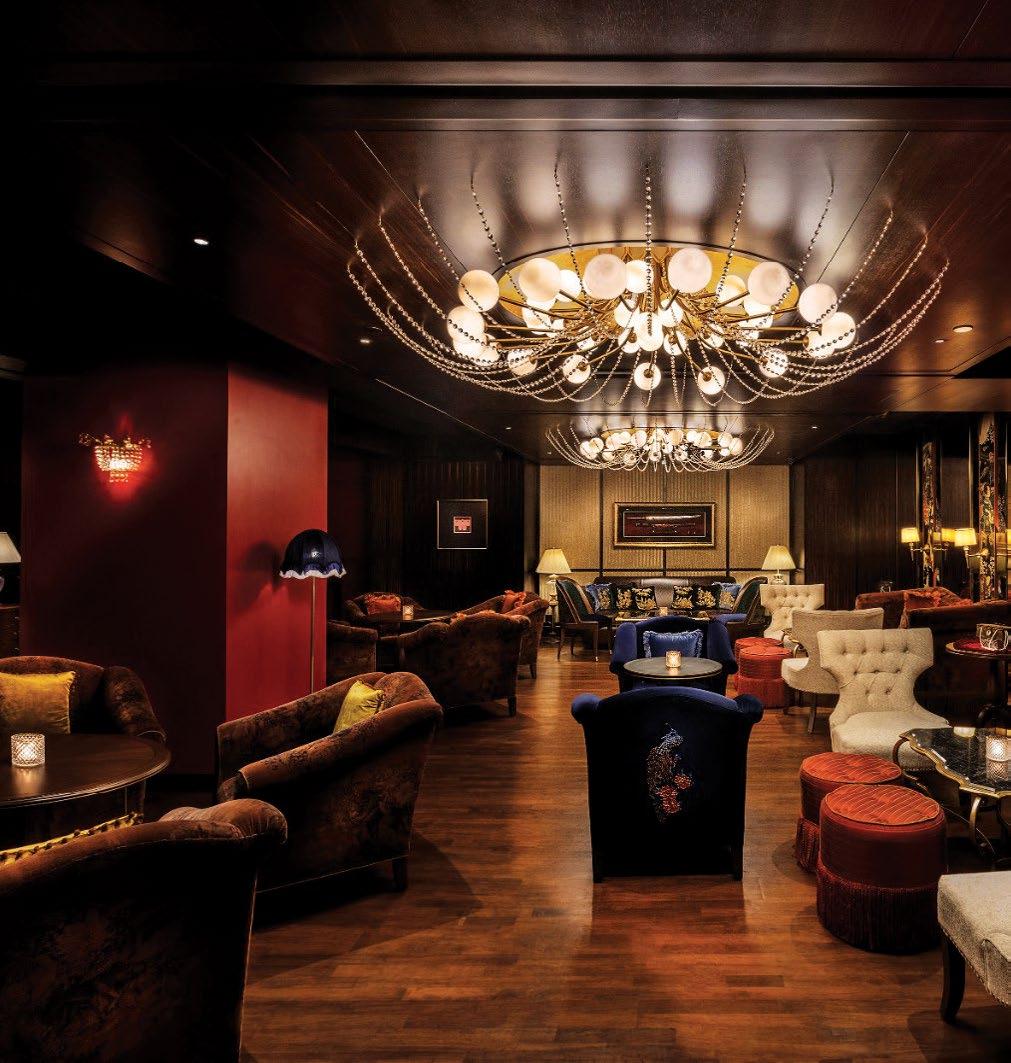
ABOVE: Brij Lakshman Sagar, Pali is a village reservoir, a handful of cottages, and the most convincing proof yet that undiscovered is a selling point, not a liability.

lifestyle, full service, focused service, with equal clarity." Sharma at Radisson puts the deeper challenge plainly: "What the industry may still underestimate is how rapidly guest expectations are evolving. The future traveller will demand far greater personalisation, sustainability, flexibility, authenticity, and emotional relevance. Success will not be defined only by occupancy or room count, but by the ability to remain culturally relevant, digitally intelligent, and emotionally resonant in a rapidly changing environment."
Shankar at Brigade makes what may be the most important point about where the industry is still looking in the wrong direction: "The biggest misunderstanding in our industry right now is underestimating the domestic traveller. We spent so much time looking outward for validation, but the heartbeat of the next decade is the Indian traveller. They are well-travelled, they know what quality looks like, and they want to see their own culture reflected with respect and modern flair." The conclusion she draws from that is direct: "The next 10 years isn't about bringing the world to India; it's about showing the world how India does hospitality best."
The Hotelivate report uses a Formula 1 metaphor for the current state of Indian hospitality. It is well chosen. "It's not just speed," it notes. "It's about racecraft: knowing when to attack, when to defend, and when to press the brakes." The 2026 season, it adds, may bring its own version of new 'car' regulations—changed rules, uncertain performance, teams that dominated last year suddenly less certain of their positions.
Uncertainty comes from multiple directions: geopolitical volatility, currency pressures on inbound tourism, the disruptions the Horwath HTL report lists for 2025. West Asia travel disruption, harsh weather events, airline disruptions, slower foreign tourist arrivals. Despite all of them, the sector grew. Which is the most meaningful thing in the data: structural demand held even when multiple external variables pushed against it simultaneously.
Almost every leader, asked for their word for 2026, reaches for something that is not a synonym for growth. Bhatnagar calls it "intent and refinement." Saraf at Juniper Hotels captures the decade's challenge in two words: patient discipline. "The most important quality is patience. Success cannot be achieved with a single hotel overnight." He has made that argument to investors, to architects, and to himself. It is the
argument the entire industry now needs to make.
India's hotel sector is not merely recovering from anything. According to the Horwath HTL India Hotel Market Review 2025, it is "consolidating into a long-term growth market where pricing strength, diversified demand, and measured supply expansion are shaping the next decade of hotel development." That is a measured sentence. Behind it is an industry that has survived the pandemic, navigated the post-pandemic bounce, absorbed enormous supply additions, and still grown its rates. That is not luck. That is structure.
The battle for relevance in Indian hospitality over the next 10 years will not be won in the pipeline meeting or the investor deck. It will be decided in the lobby, at the table, on the river bank, in the moment a guest realises that where they are staying knows something specific about where it is, and has taken the trouble to say so. The hotels that figure this out will be the ones people talk about long after the checkout date.
That conversation has barely started. Which is, in its own way, the most exciting thing about what comes next
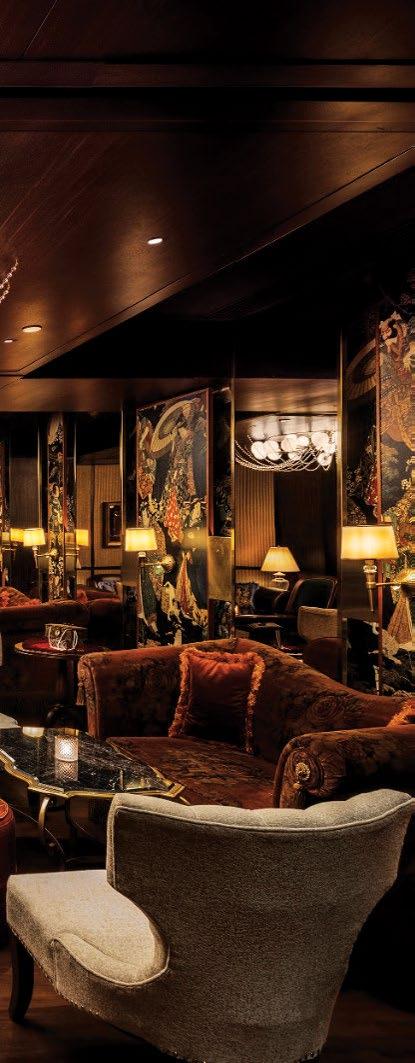
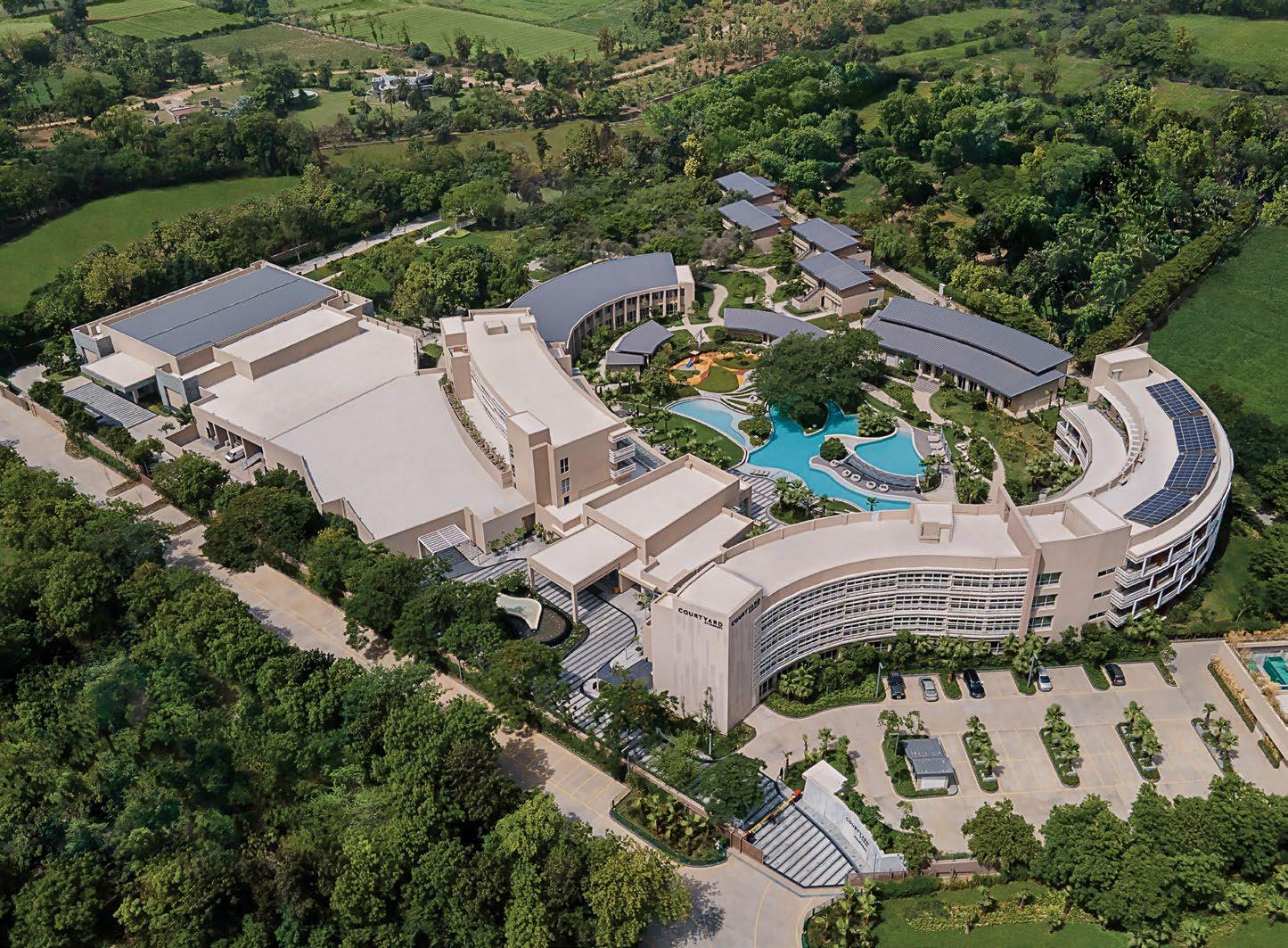
RIGHT: Resorts like Aravali Marriott Resort & Spa reflect the growing demand for experience-led luxury, wellness, and destination-driven stays near India’s major metros.
LEFT: The award-winning ZLB23 at The Leela Bengaluru is a perfect example of high design and a evolved cocktail culture.
THE ART
Sabyasachi
Mukherjee believes luxury is about emotion, not price. His travels prove it. From the monsoon streets of north Kolkata to a horse carriage arrival at Taj Falaknuma Palace, every destination he loves is an act of remembering.
Marrakesh riads are intimate sanctuaries that combine traditional Moroccan architecture with serene, inward-facing courtyards.
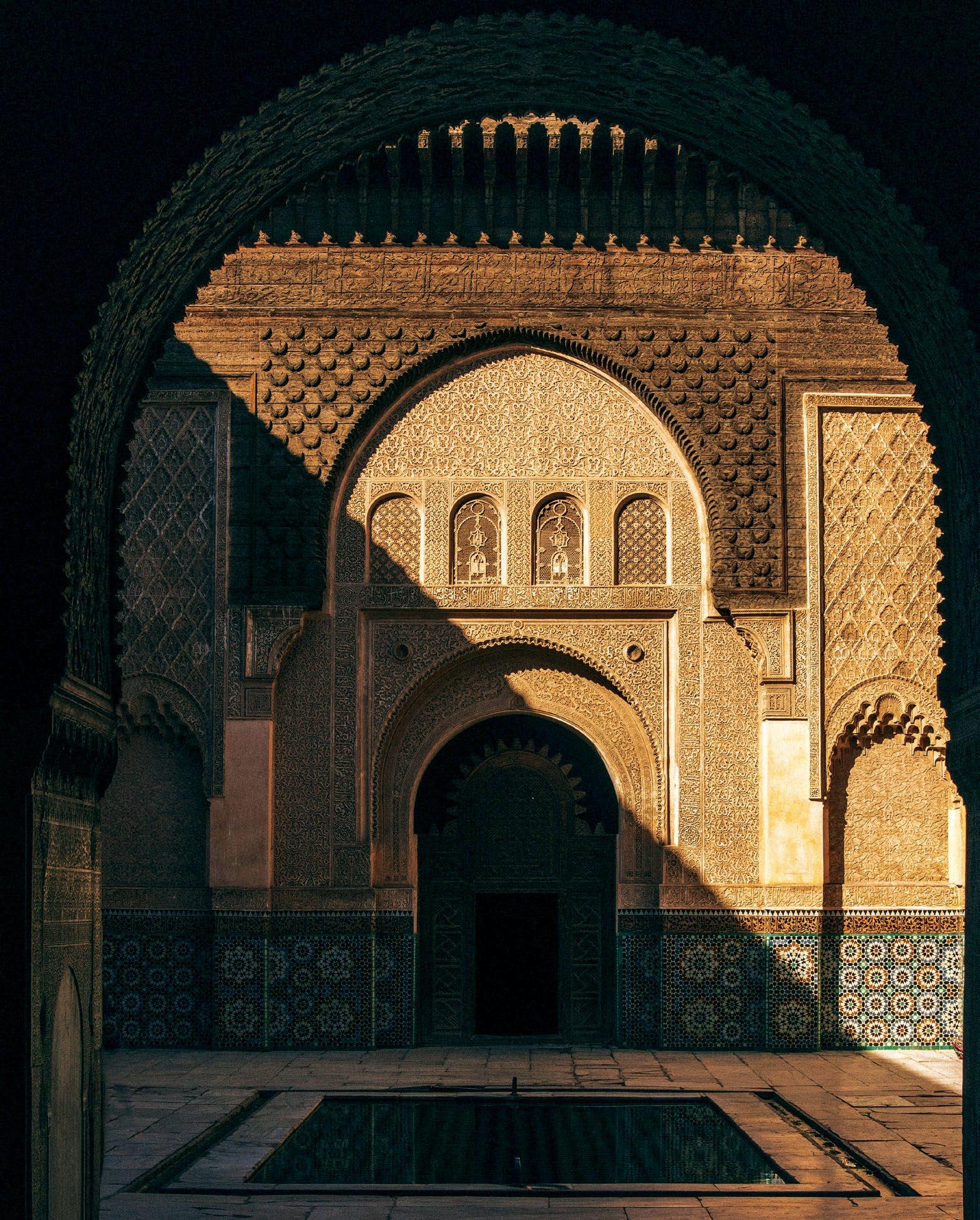
OF ARRIVAL
MADHUMITA DAS
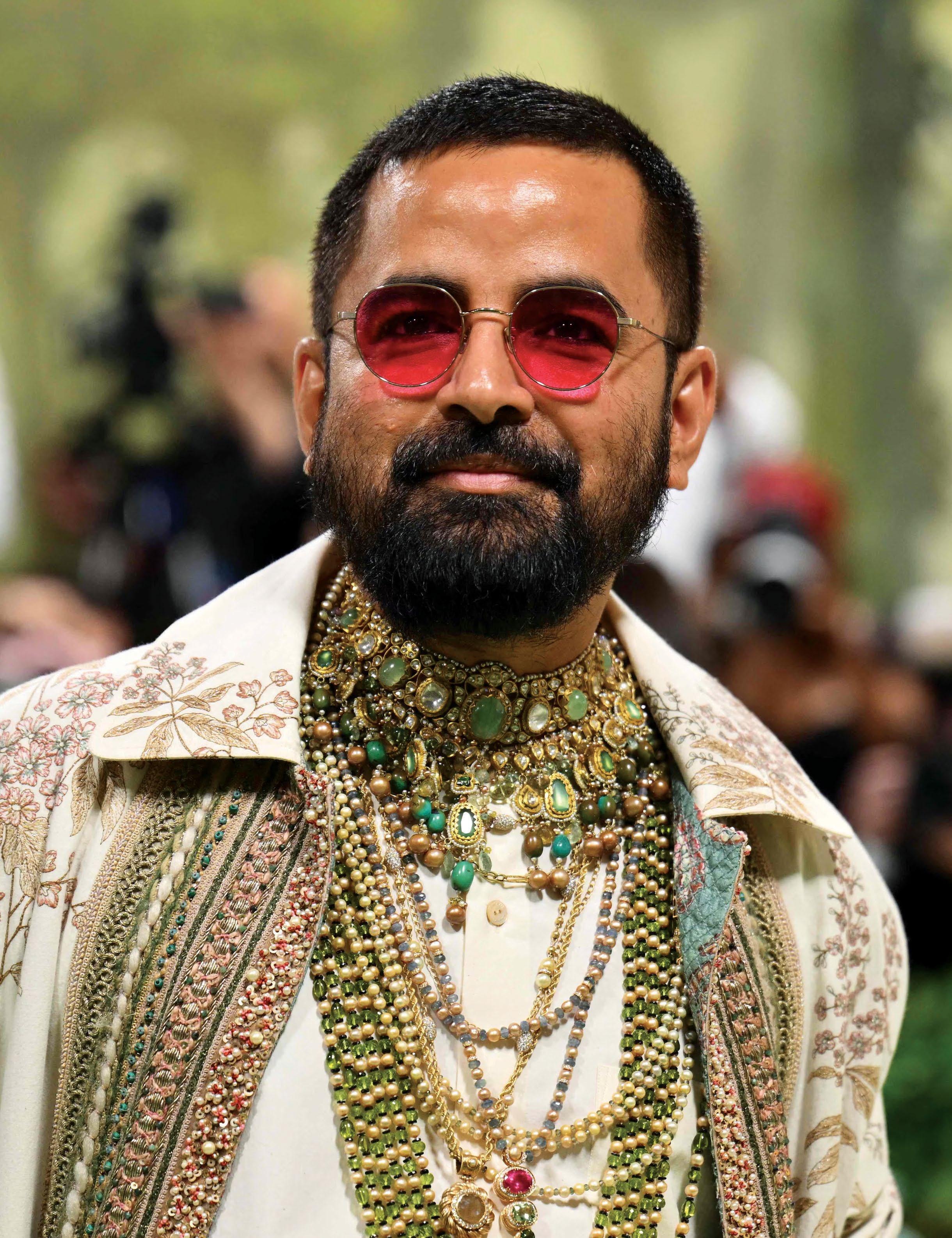
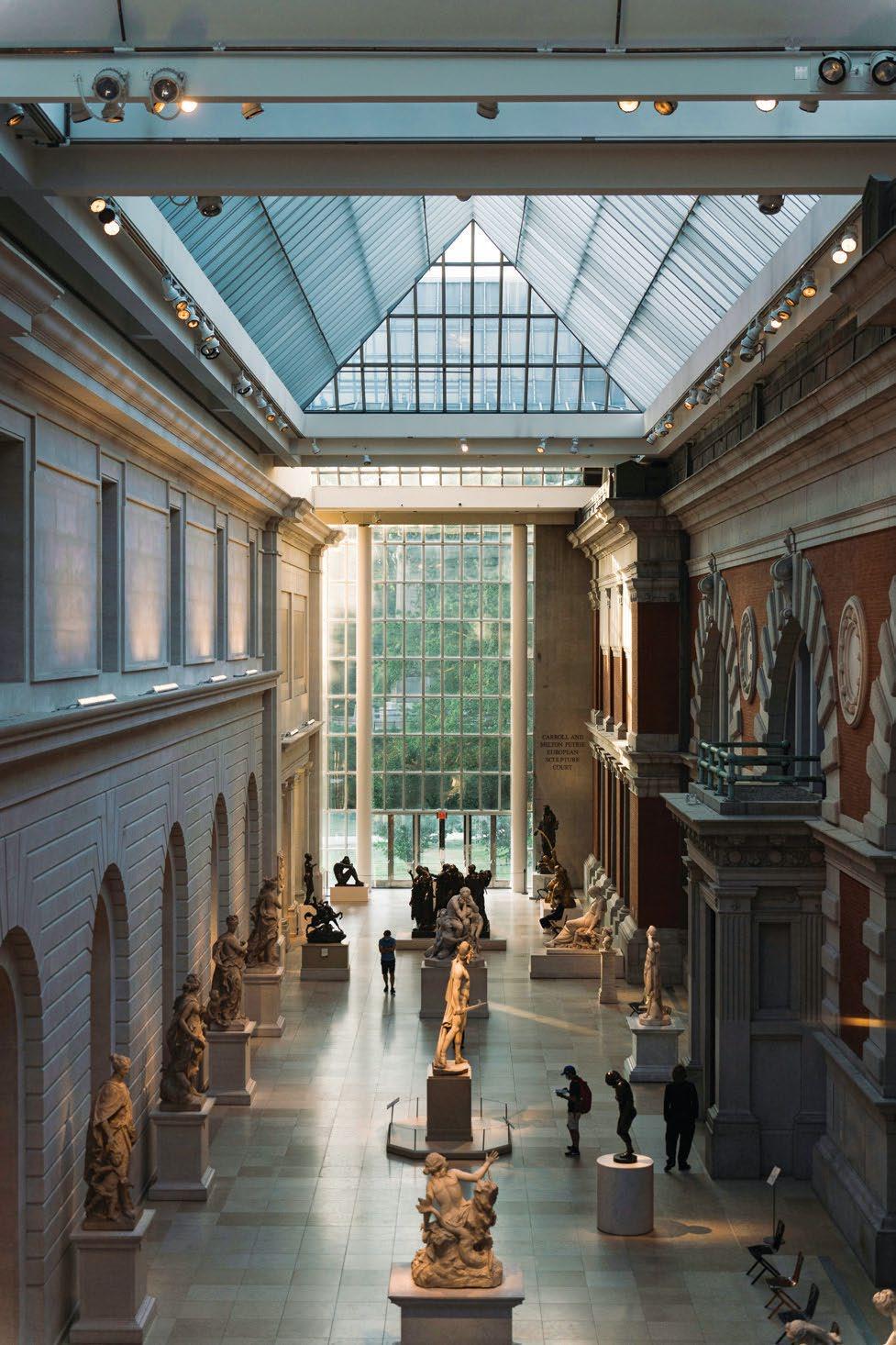
For Sabyasachi Mukherjee, travel has never been about escape but about accumulation. Of fading cities, inherited rituals, tea rooms, bazaars, old hotels and memories. From the intellectual melancholy of Kolkata to the cinematic glamour of Mumbai and the disciplined romance of New York City and Paris, the designer’s journeys reveal a world where memory itself becomes luxury.
Sabyasachi grew up in Kolkata (then Calcutta), and remembers the grandeur of the past: the beautiful heritage houses or baris, the colonial-era homes with Bengali aesthetics; the bustling bazaars; the way men and women dressed in elegant dhotis and saris with blouses that had lace edges; evening tea served in silver cutlery and strolls down Park Street.
The designer has built one of India’s most recognisable luxury brands not merely on fashion, but on memory. His work is layered with echoes of old Kolkata mansions, European flea markets, heirloom textiles, Bengali tea rituals, colonial clubs, fading photographs and cities that wear their history imperfectly.
With a busy schedule, travel for pleasure is rare. “As I am getting older, I can’t really rest or sleep. And you realise it’s become a kind of disease because I complain that I don’t have time to go on holiday, so my holiday pattern is very unusual. I’ll go somewhere
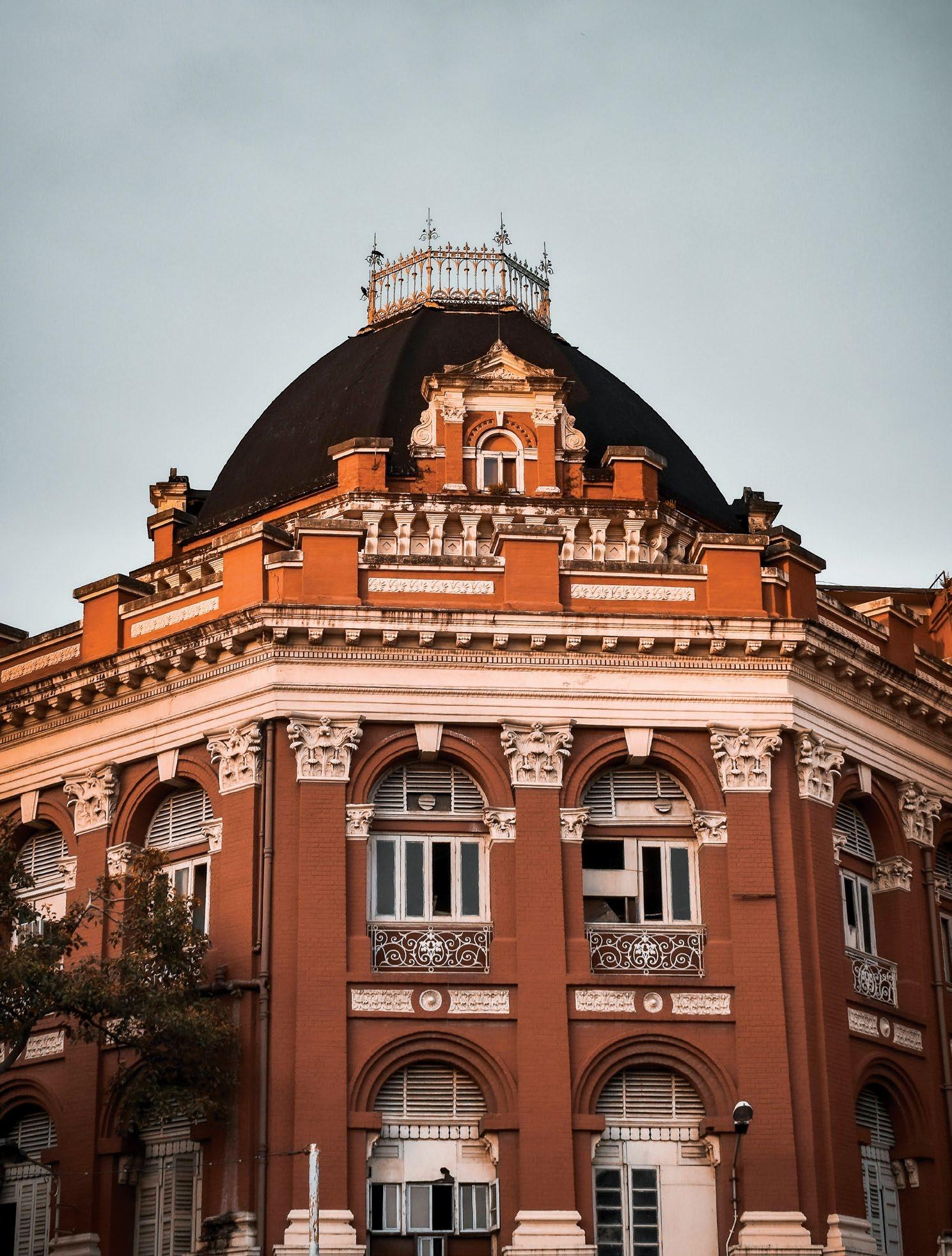
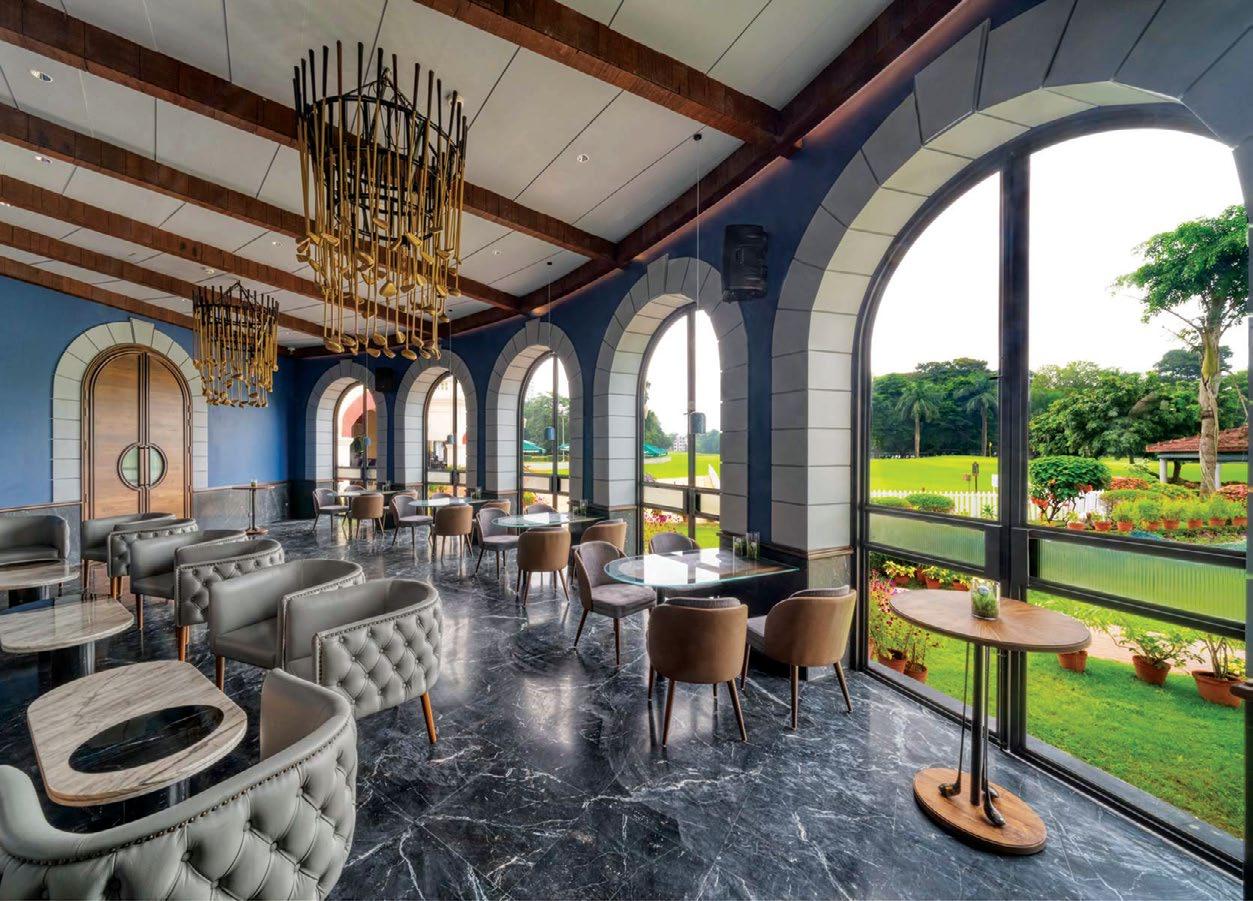
TOP LEFT AND ABOVE: At the MET in New York, you can walk from an ancient Egyptian temple to a Van Gogh masterpiece in a single afternoon; in Kolkata, grand neoclassical facades still tell stories of the British Raj.
BELOW: The Royal Calcutta Golf Club is the oldest golf club outside Great Britain, established in 1829, decades before golf spread across much of the world.
PHOTO BY YILEI (JERRY) BAO, SIDDHARTHA ACHARYA BOTH ON UNSPLASH
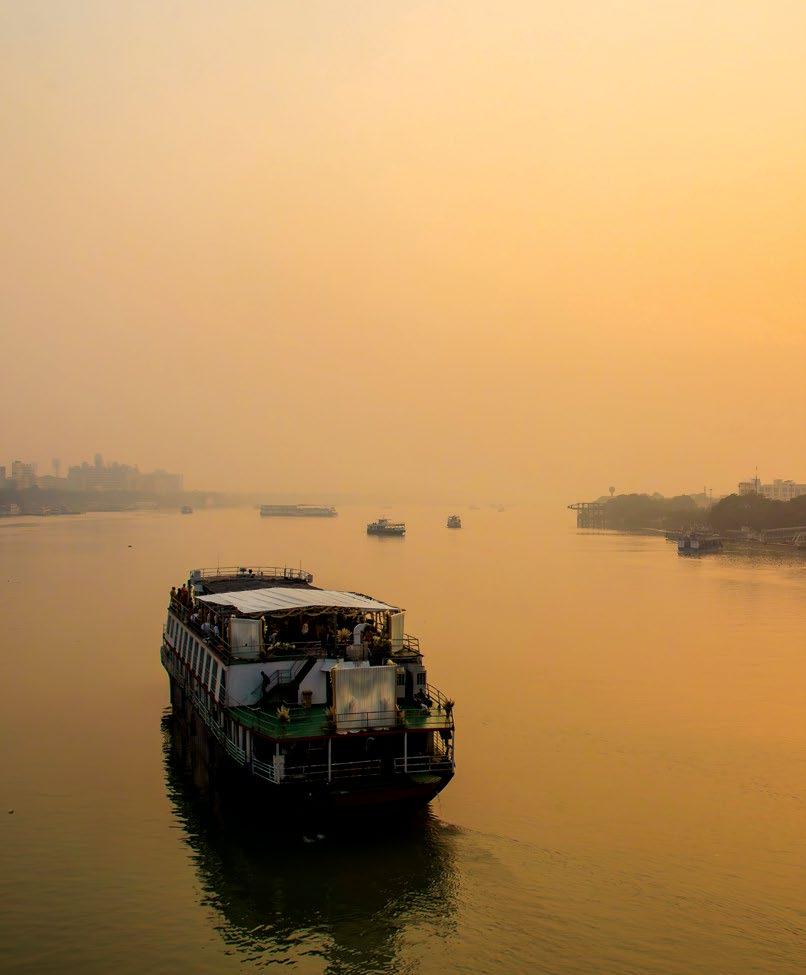
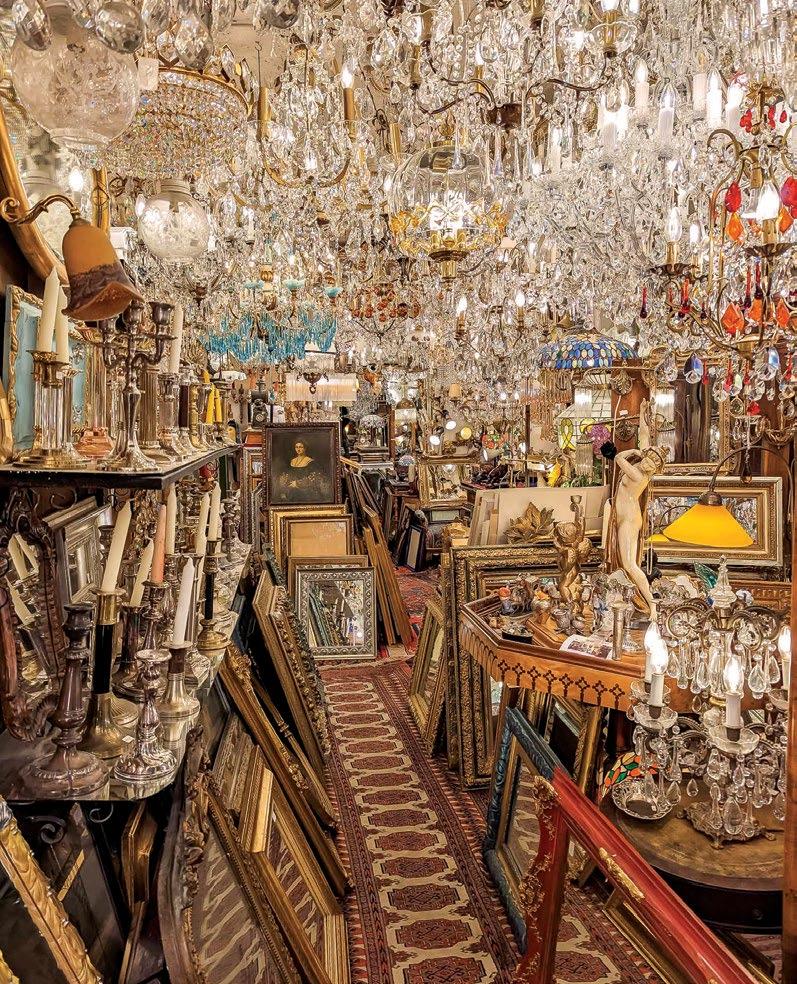
very far from India, where I am not going to meet any friends or clients. I’ll pick a 12-hour flight where I am going to sleep throughout; that is how tired my body is. When I go, I plan many things… I’m going to do this, I’m going to do that, but I end up sleeping in my hotel and ordering room service. And after two days, I’m like, ‘I need to go back home to my work’. I can’t enjoy my holiday. So, what happens with creativity is, it’s also a training of your mind, so you train your mind to get wider and wider... You want your mind to stretch to the maximum.”
EXTREME LEFT: The French-colonial riverside of Chandannagar, home to shuttered mansions and slow-moving boats, echo of Bengal’s forgotten European past.
LEFT: European flea markets are treasure troves of antiquities and curiosities.
BELOW: The collaboration between Thomas Goode and Sabyasachi brought together British heritage craftsmanship and opulent Indian maximalism.
Sabyasachi does not travel in search of novelty; he travels in search of resonance. The cities that appear to fascinate him tend to be destinations with layers: old New York, Parisian Left Bank cafés, Marrakesh riads, North Calcutta mansions, the art deco glamour of old Bombay, or Europe’s antique markets.
Food enters his universe in similarly intimate ways. Dining, for Sabyasachi, is not performance but inheritance. He has often spoken about the Bengali culture of hospitality and collecting objects associated with entertaining at home. “As Bengalis, we have
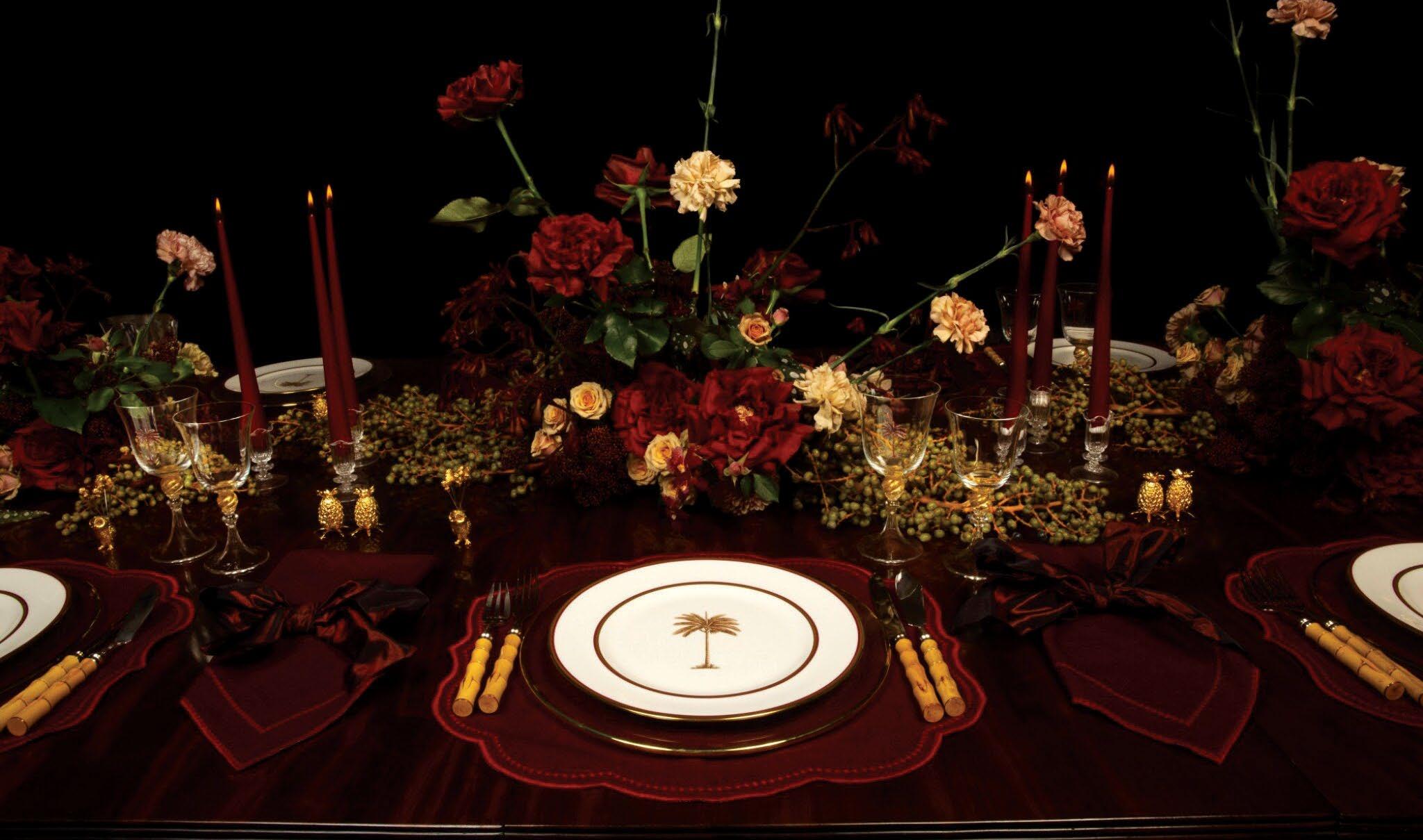
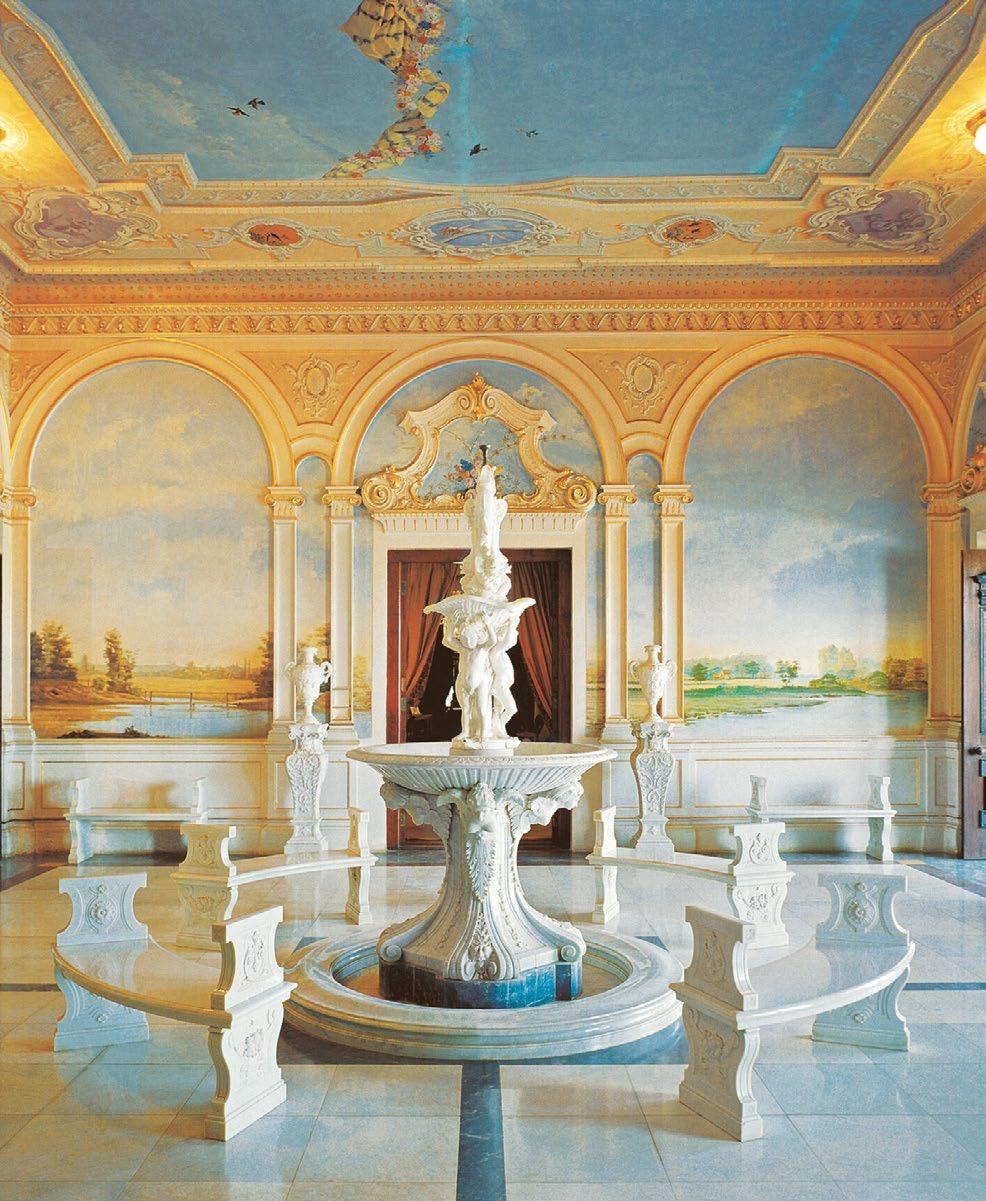
a culture of collecting dinner sets and tea sets,” he says, a sentence that feels almost like a manifesto for his layered, maximalist idea of luxury. Elsewhere, speaking about entertaining and meals, he once noted, “Food is one of the biggest expressions of love in an Indian home.”
To understand Sabyasachi’s relationship with travel and food is to understand that luxury is never sterile. It is emotional, lived-in and deeply cultural.
Kolkata: The city that’s home
At the centre of Sabyasachi’s universe lies Kolkata, not simply as a hometown but as an emotional archive. “I wouldn’t have thought of settling anywhere but Calcutta because Calcutta gives me the unique edge of being who I am,” he says. Another remark perhaps explains his philosophy of travel even more clearly: “Settle in a place that is local to you; you can travel the world.”
Kolkata appears repeatedly in his work not merely as geography, but as mood: tramlines cutting through monsoon streets, old libraries, colonial clubs, North Kolkata mansions, embroidered upholstery, inherited textiles, silverware and the intellectual melancholy of Bengal. His collections often feel like visual memoirs of the city’s faded grandeur.
Even his childhood memories carry a cinematic softness. “I went to school on a hand-rown boat,” he remembers. “All the children used to sing Rabindra Sangeet, and we would pass Tagore Summer House. We used to have magical Christmas parties where women wore organza sarees and played mahjong while men played bridge. It was magical because it was idyllic. We were secluded and didn’t have much, so all we could depend on was imagination.” That atmosphere continues to shape his visual vocabulary decades later.
LEFT: Sabyacahi calls Taj Falaknuma Palace his absolute favourite, for its design, architecture, food, and the entire experience.
BELOW: Sabyasachi at his Mumbai flagship, which brings together his passion for Mumbai, luxury and heritage.
BOTTOM: Café de Flore, patronised by philosophers, writers and artists, who gathered under its red awning every evening, is a significant part of Paris's literary history.
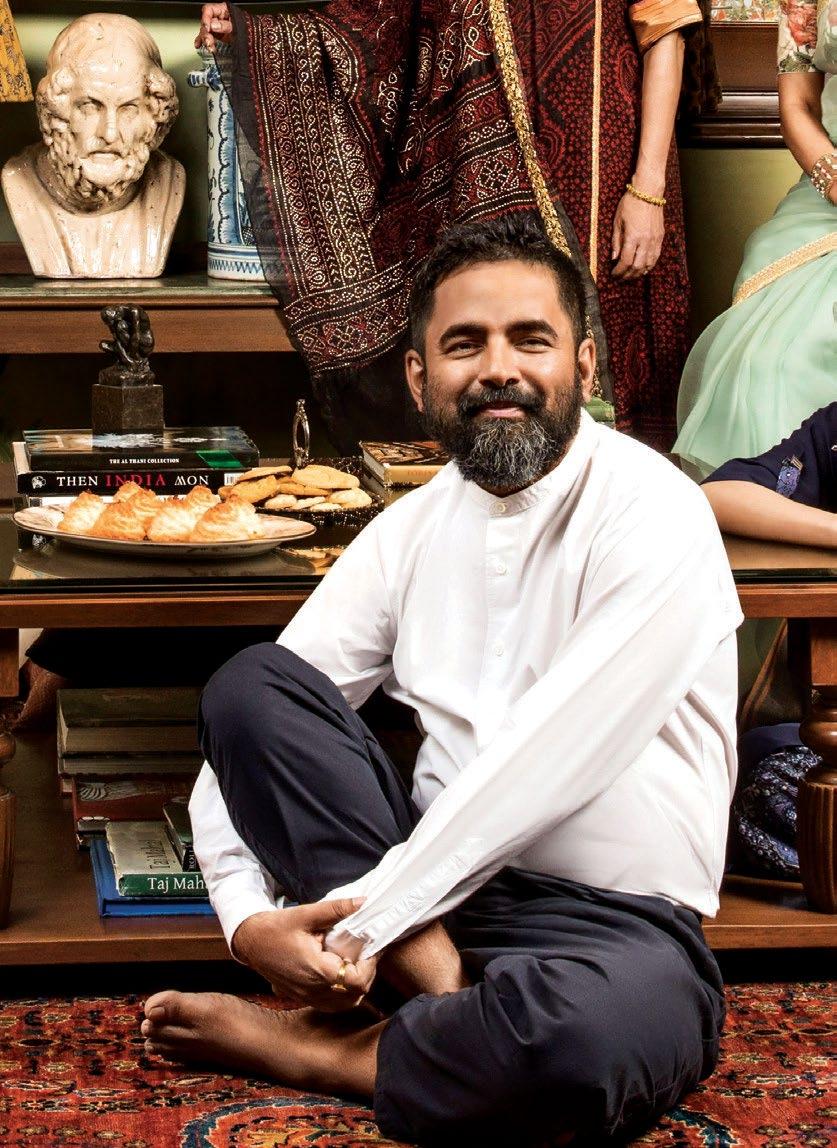
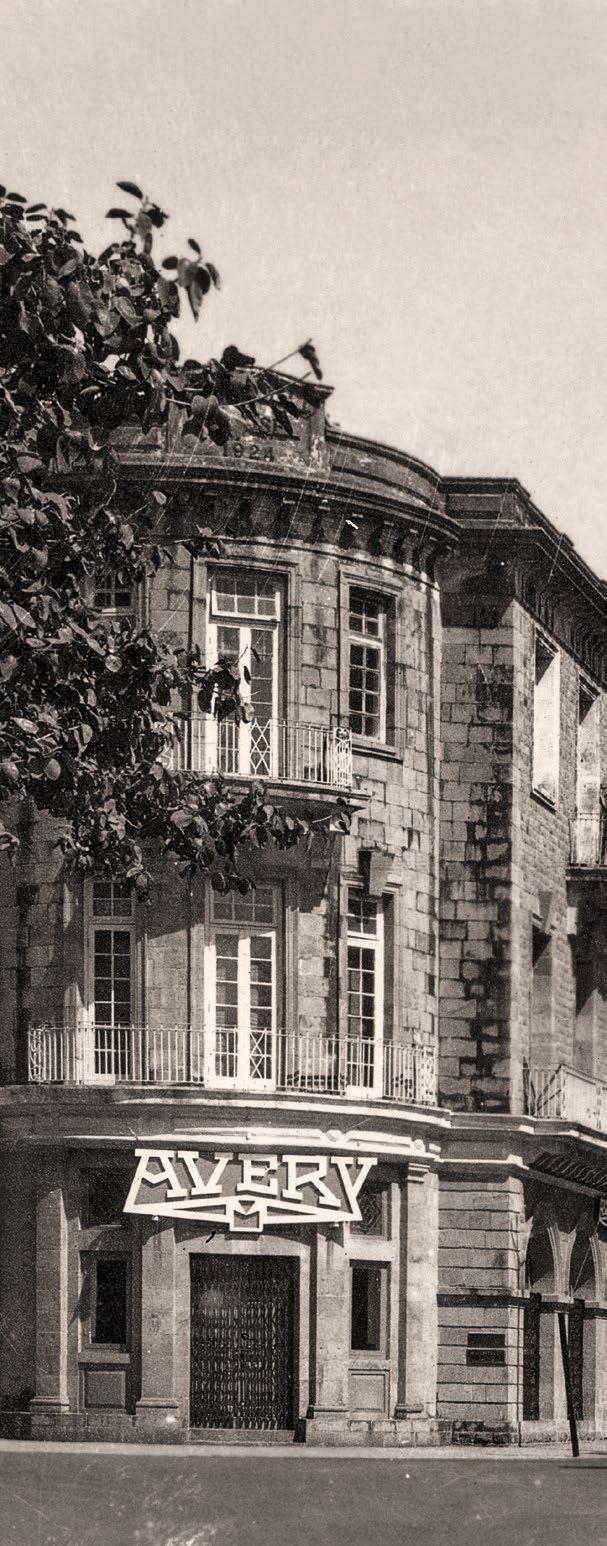
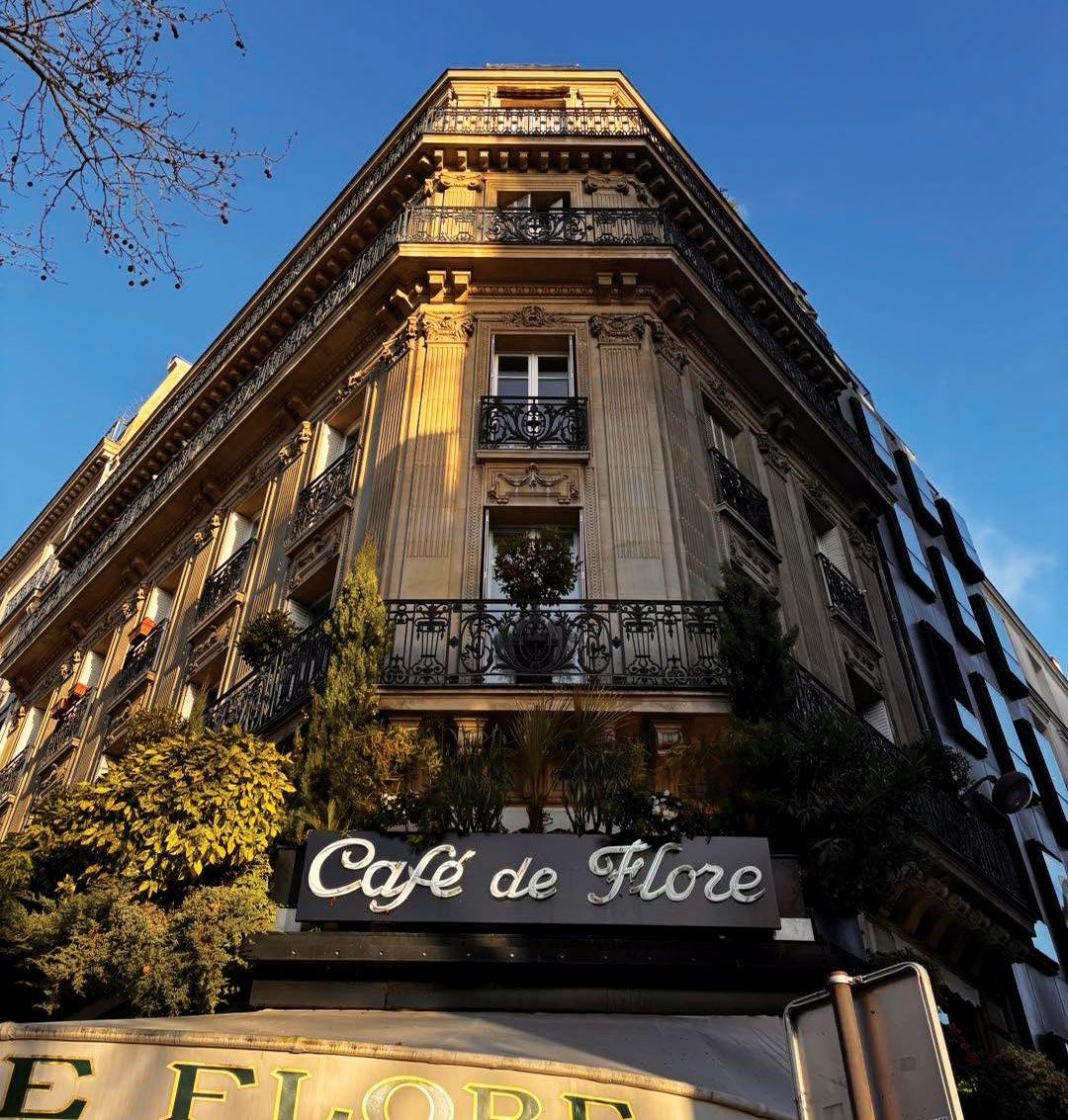
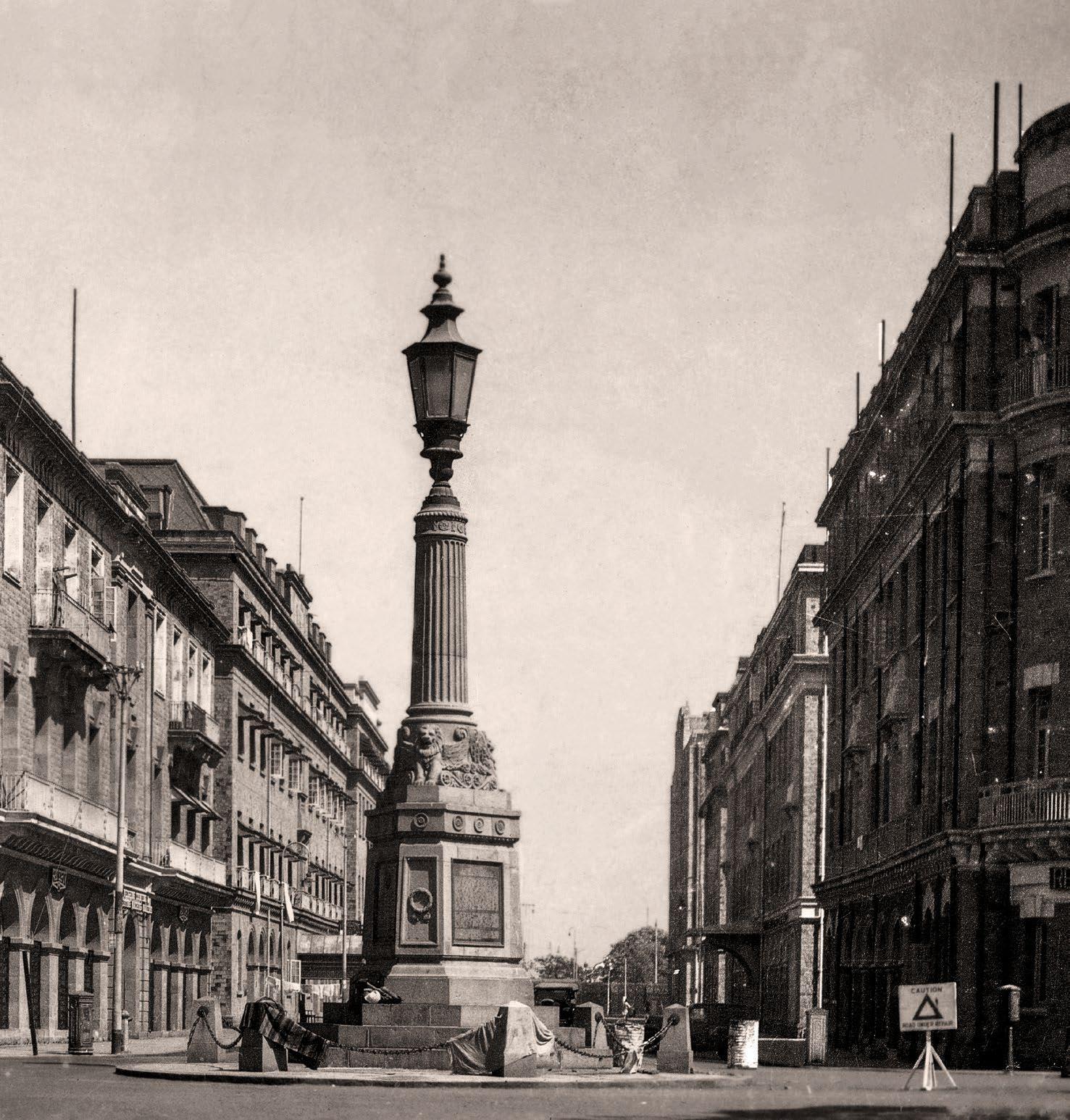
Food, tea and the Bengali idea of hospitality
Food enters the Sabyasachi world not as spectacle but as inheritance. Dining, in his universe, is deeply tied to memory, family and ritual. “As Bengalis, we have a culture of collecting dinner sets and tea sets,” he muses, while discussing his collaboration with luxury tableware house Thomas Goode. “It’s a part of prestige in Bengali families. I don’t know if we care much for fancy cars, but we do care for a good tea set.”
The collaboration itself reportedly began over dinner at The Oberoi. “All good things happen over food,” he says. “It was how my collaboration with Christian Louboutin began, and now with Thomas Goode as well.”
Within his Mumbai flagship too, hospitality is treated almost ceremonially. “Today it’s the tearoom,” he once said while describing his favourite corner of the store. “It’s in calm blue and green tones and behind silk velvet drapes. And all my favourite teas are on the menu. There’s nothing like sipping on long-leaf Darjeeling tea in this quiet corner of the store.
Mumbai: The old quarters and bazaars
The Mumbai that fascinates him is not the city of glass towers and relentless speed. It is the layered Bombay of Colaba, Ballard Estate, Irani cafés, sea-facing art deco buildings and old harbour hotels.
“Mumbai is a city very close to my heart,” he says. “It’s my second home in India, and the home to my largest flagship yet. What makes this city a timeless classic is the way the past and present come together. Its beauty lies in its fabled heritage.”
No place embodies that emotional connection more strongly than The Taj Mahal Palace. “They don’t make hotels like this anymore!” he adds. “The 120-year-old harbour landmark is an absolute architectural and historical marvel.”
The hotel, he says, has been his “home away from home” for nearly two decades. “I’ve lived there and worked there, and it was my retreat and makeshift
LEFT: A vintage photograph of Bombay Port Trust's World War I Memorial in Ballard Estate, where Sabyasachi has spent many a evening walking and absorbing the ambience.
BELOW: The Sabyasachi flagship store in Mumbai is a microcosm of all his passion for design, art, fashion, and colonial era homes and buildings.
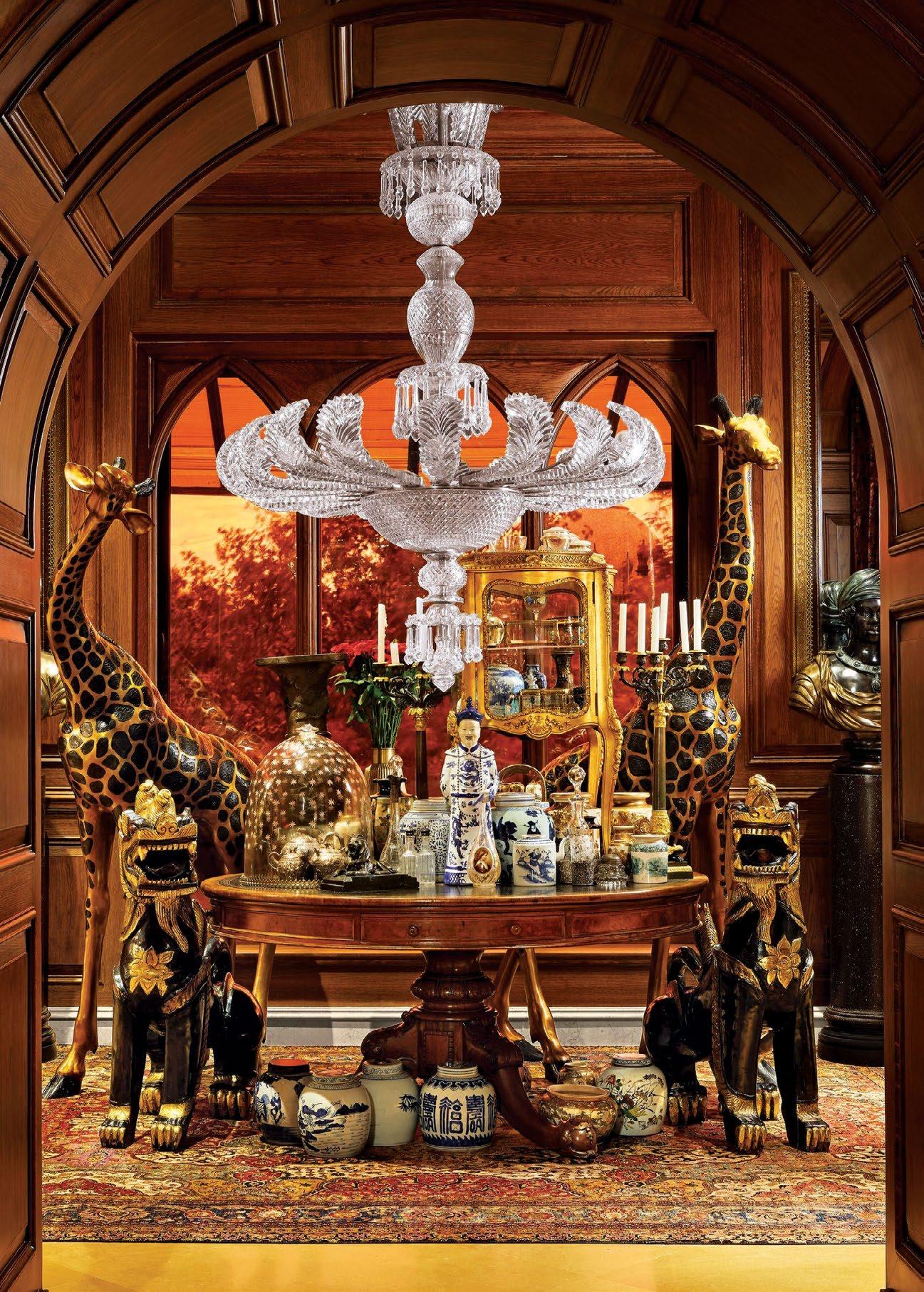
headquarters when setting up my Mumbai store. I have no second hotel in Mumbai; if there’s one place you must stay, it’s the Taj.”
Mumbai itself unfolds like a carefully composed itinerary. There is the Edwardian architecture of Ballard Estate, which he describes as “a beautiful example of preserving the past but keeping it dynamic and functional for today.” There are the seafood meals at Trishna, berry pulao and raspberry soda at Britannia & Co., kebabs at Khyber Restaurant and late afternoons browsing through curiosities at Crawford market and antiques at Chor Bazaar.
“I have always been inspired by bazaars and souks,” he says. “I think they’re an explosion of culture, craft and retail. Walking through South Bombay’s first deliberately planned commercial hub, which was built in the early 1900s, evokes a sense of the country’s rich history and heritage. The roads are named after former jetties, including Goa Street, Cochin Street, and Calicut Street. It’s a beautiful example of preserving the past but keeping it dynamic and functional for today. The piècede-résistance is the Edwardian-style architecture along beautiful tree-lined avenues. It has greatly inspired me over the years. Ballard Bunder Gatehouse, now a maritime museum within the estate, is where ‘boat trains’ connected Bombay to the world."

Hyderabad: The city of Nizami grandeur
Among the hotels that have left the deepest impression on him is Taj Falaknuma Palace, which he once called his absolute favourite. “The hotel left me speechless,” Sabyasachi recalls. “Its design, its architecture, the amazing food, indeed, the entire experience, transports you to a higher plane.” His arrival there remains vividly etched in memory. “Arriving in true Nizami style, in a horse carriage, being showered with flowers… it was a fabulous welcome and prepared you for what lay in store at the Falaknuma.”
The food, unsurprisingly, became central to the experience. “The food was one of the big highlights,” he says. “I especially loved the patthar ka gosht, Hyderabadi kacchi biriyani and the shikampuri kababs.”
Even now, he says, he would return both “for a holiday and for fashion shoots, because the Falaknuma as a backdrop is quite mind-blowing.”
Decadence and textures
The cities that fascinate Sabyasachi tend to possess strong personalities and layered histories. Paris appears through references to couture salons, Left Bank romance and architecture. “Paris has romance built into its architecture,” he says.
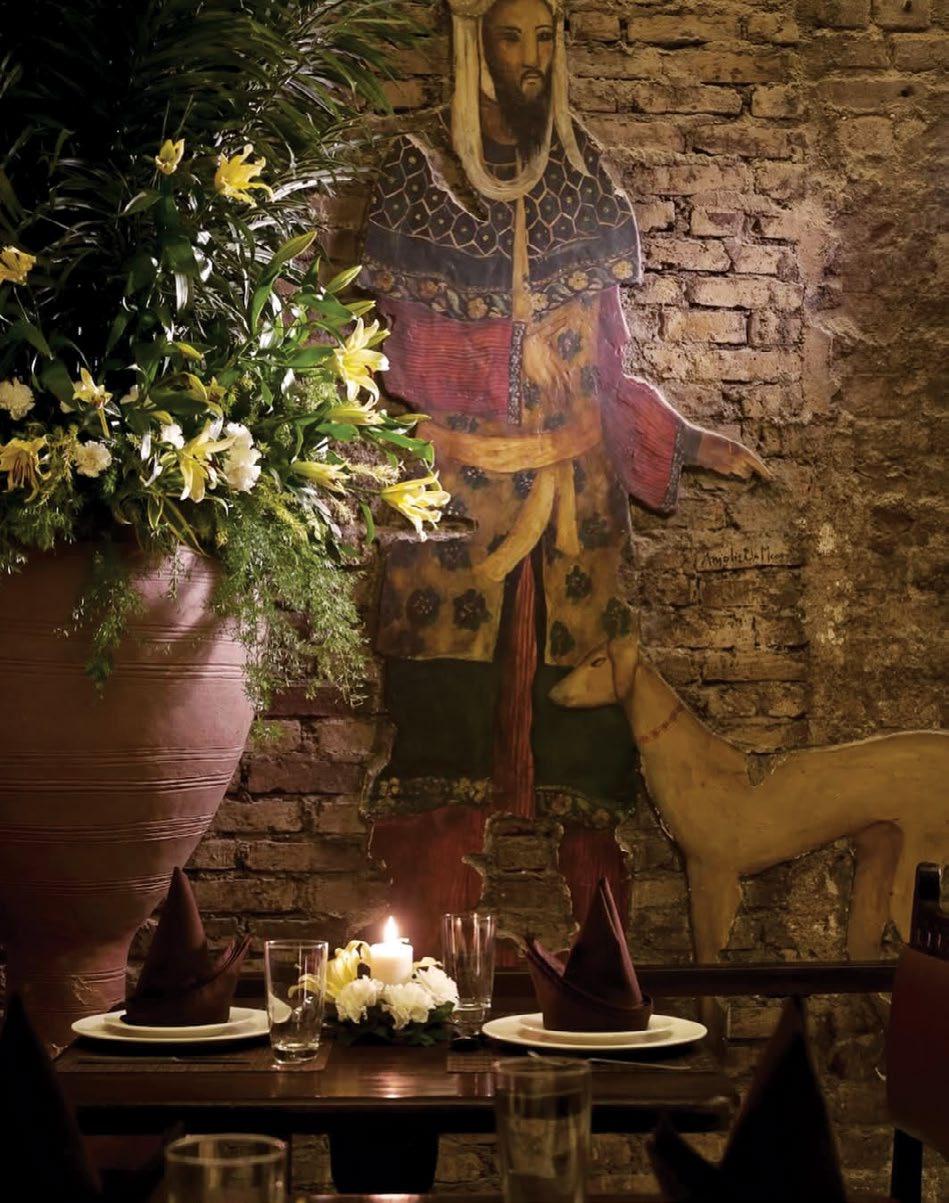
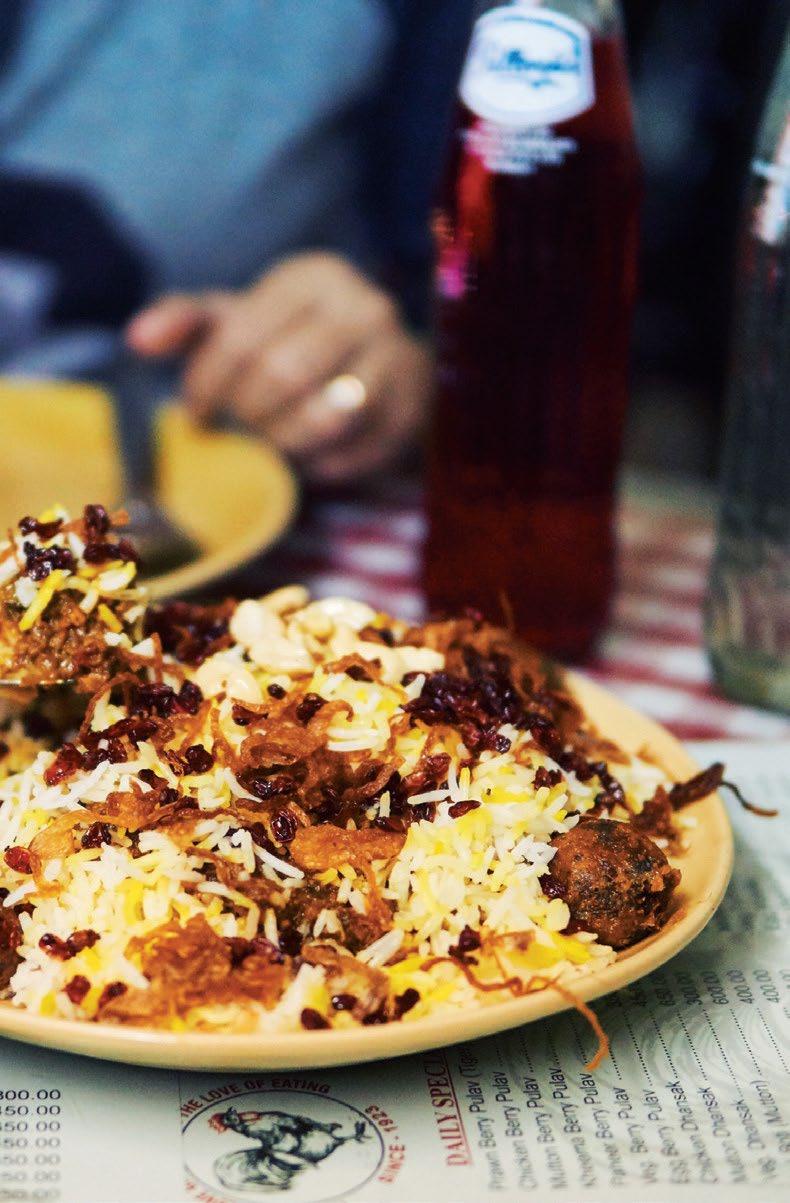
BELOW: Whenever in Mumbai, Sabysachi eats at classic restaurant that remind him of the city of the past, such as Trishna, Khyber and Britannia & Co.
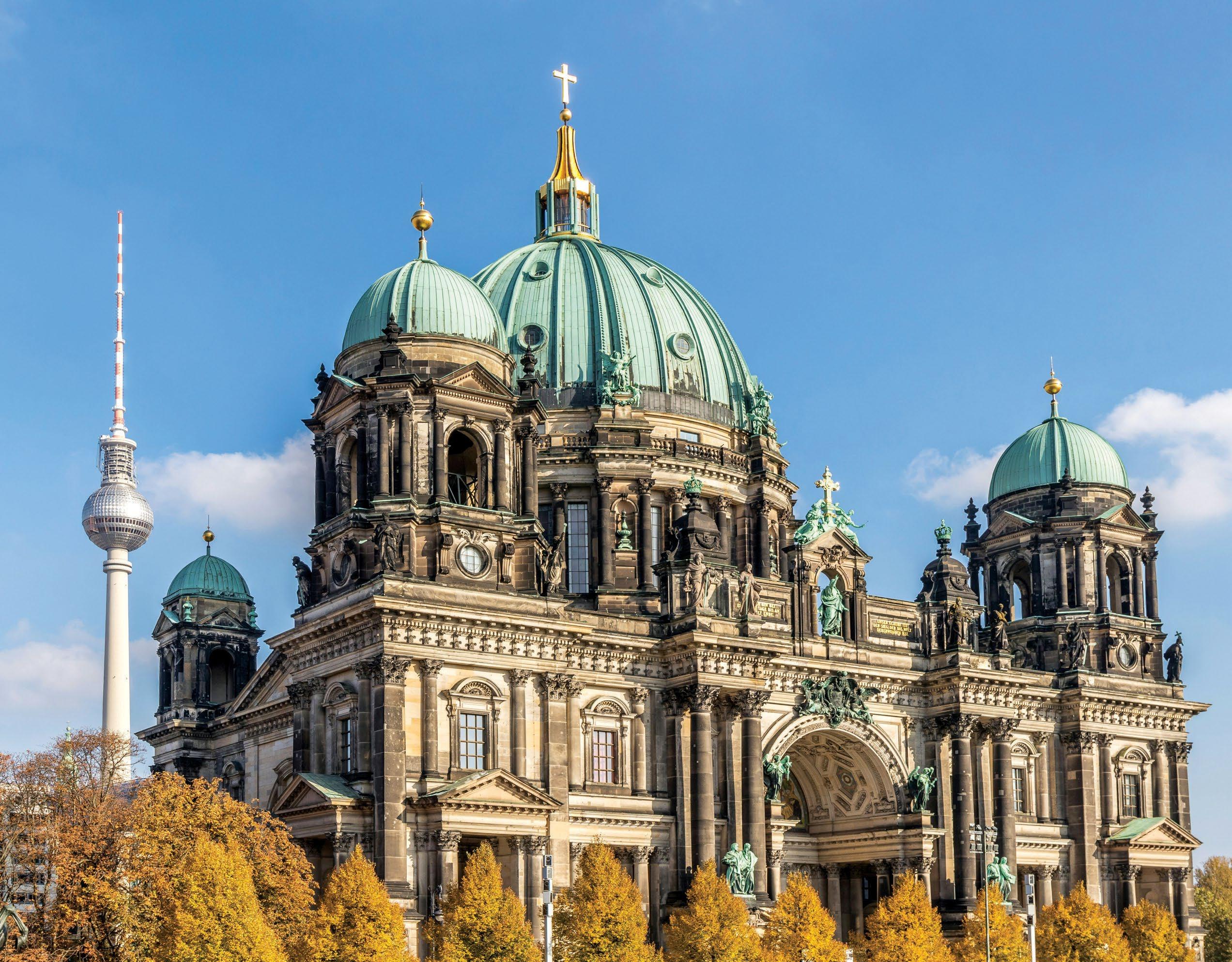

New York City, especially the West Village, where he opened his flagship store, appeals to him for its individuality and character rather than spectacle. “There is a discipline and sharpness to New York that I admire immensely,” he adds.
The New York store itself became “a metaphor for this journey from Calcutta to New York. I’ve often said I see myself as a ferryman between the past and the future,” he reflects while discussing the store’s interiors filled with Mughal miniatures, Persian artwork and chandeliers.
Sabyasachi is equally inspired by the decadence of Berlin, the bohemian ease of Barcelona and the richly textured romance of Marrakesh. In describing one collection, he famously referenced “the discipline of New York, the nostalgia of Kolkata, the decadence of Berlin, the romanticism of Paris and the bohemian flair of Barcelona.”
The traveller who never stops looking Travel, however, rarely offers him complete rest. “I realise that I have a problem and the problem is that I can’t really rest or sleep,”. Holidays, for him, often involve flying somewhere far away, ordering room service and sleeping through exhaustion before returning to work.
Yet, even in transit, his mind continues scanning the world. “Anywhere that I go, whether I see a product, whether I see a building, whether I see the colour of a wall… my mind keeps talking to me at a furious pace,” he says. “Could this become a new outfit? Could this be packaging? Could this be a location for my next shoot?”
Perhaps that endless observation explains why Sabyasachi’s journeys feel so textured, gathering inspiration from architecture, food, conversations, craft traditions and memory until they form an interior archive. “Luxury,” says, “is about emotion. It is not about price.”
Rising grandly over Museum Island, Berliner Dom is like an imperial statement in stone, its colossal dome reflecting the ambition and theatricality of old Prussia.
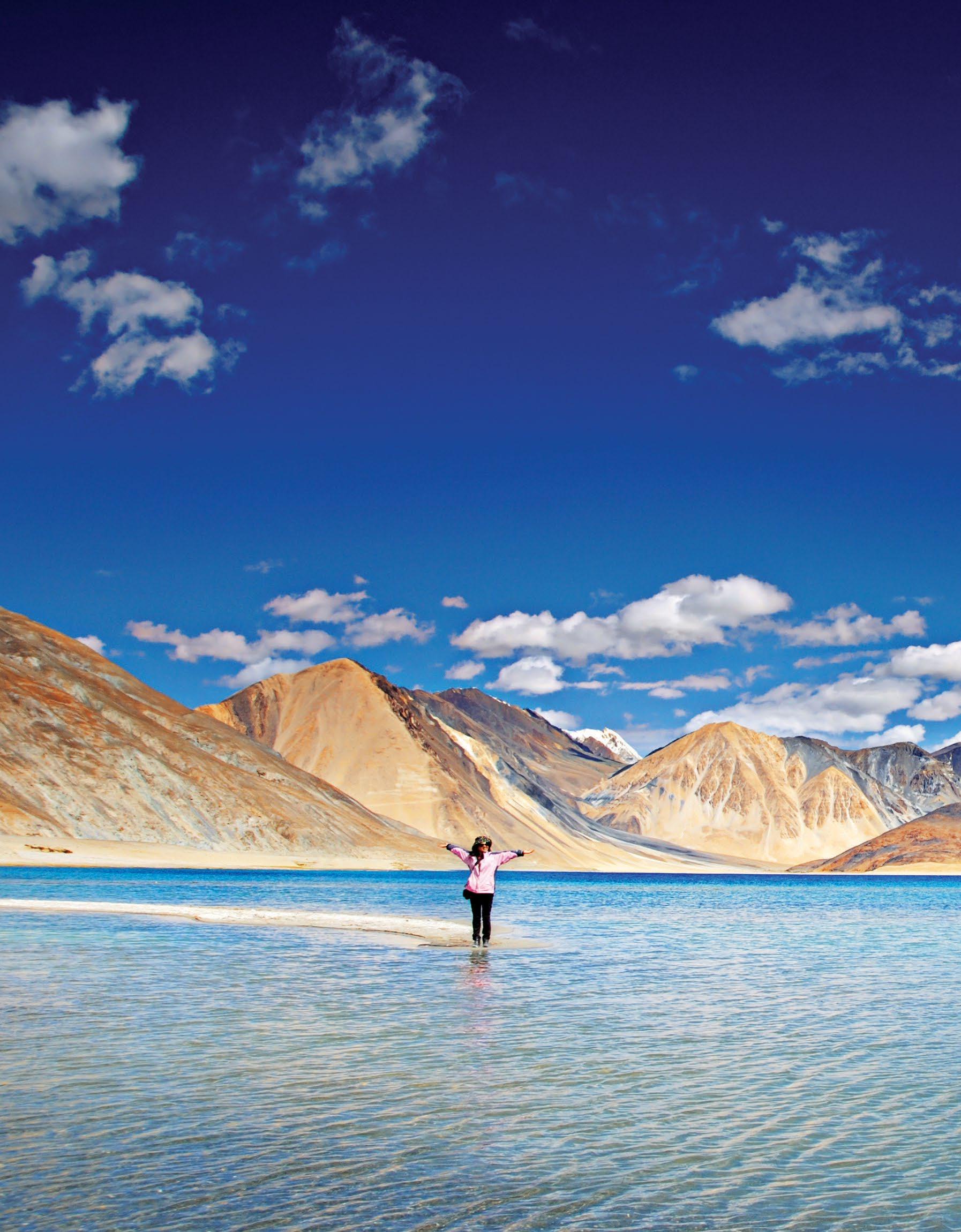
INDIA’S SUMMER OF 2026
The geopolitical disruptions unfolding across West Asia have unexpectedly redrawn the contours of India’s summer travel season. As international routes face cancellations, rising fares, and uncertainty, Indian travellers are increasingly redirecting their plans toward domestic destinations and short-haul Asian escapes. The result is not merely a seasonal shift, but potentially the beginning of a larger structural realignment in how—and where—Indians choose to travel.
CHANDREYI BANDYOPADHYAY
Sustainability and conscious travel pushes fragile regions like Ladakh towards increased travel interest from luxury spenders.
The summer of 2026 was expected to be the year Indian outbound travel peaked, driven by rising disposable incomes, expanding passport penetration, and improved connectivity to Europe and the US. Instead, escalating geopolitical tensions in West Asia have disrupted global air routes, driven up fuel prices, and triggered widespread cancellations of international holidays. Since the escalation of hostilities in late February 2026, more than 40,000 flights to and from the Middle East have been cancelled or rerouted, according to aviation analytics provider Cirium. Industry numbers and sentiments indicate a dramatic pivot towards domestic travel and short-haul alternatives across Asia, emerging from India.
"What we are seeing this summer is travel driven by curiosity and culture," said Amanpreeit Singh Bajaj, Country Head, Airbnb India and Southeast Asia. Domestic travellers are increasingly looking beyond established hotspots and exploring destinations that offer nature, heritage and cultural richness. Thiruvananthapuram (over 90% growth in searches), Puri (over 30%), Jaipur (over 70%) and Meghalaya (over 70%) have all seen strong growth in interest.
Airbnb also reveals surging Indian traveller interest across Asia, with Busan (over 95%), Tokyo (over 90%) and Osaka (over 85%) recording the
sharpest jumps in search growth, driven by pop culture fandom, culinary appeal and easier travel access. Kuala Lumpur (over 50%) and Bangkok (over 35%) held steady, buoyed by strong connectivity and long-standing familiarity.
Disruption or opportunity?
A section of Indian travellers who would have otherwise travelled overseas is likely to redirect their holidays toward domestic destinations. A shift already visible, with booking platform Thrillophilia reporting a 312% spike in search for Kashmir and Ladakh within days of the disruptions starting.
BELOW: Classic experiences like the toy train in Darjeeling become attractive choices domestically.
OPPOSITE PAGE: Hotel developments in all categories are seeing a boost. The Oberoi Rajgarh Palace introduced a luxury stay near Khajuraho in December 2025.
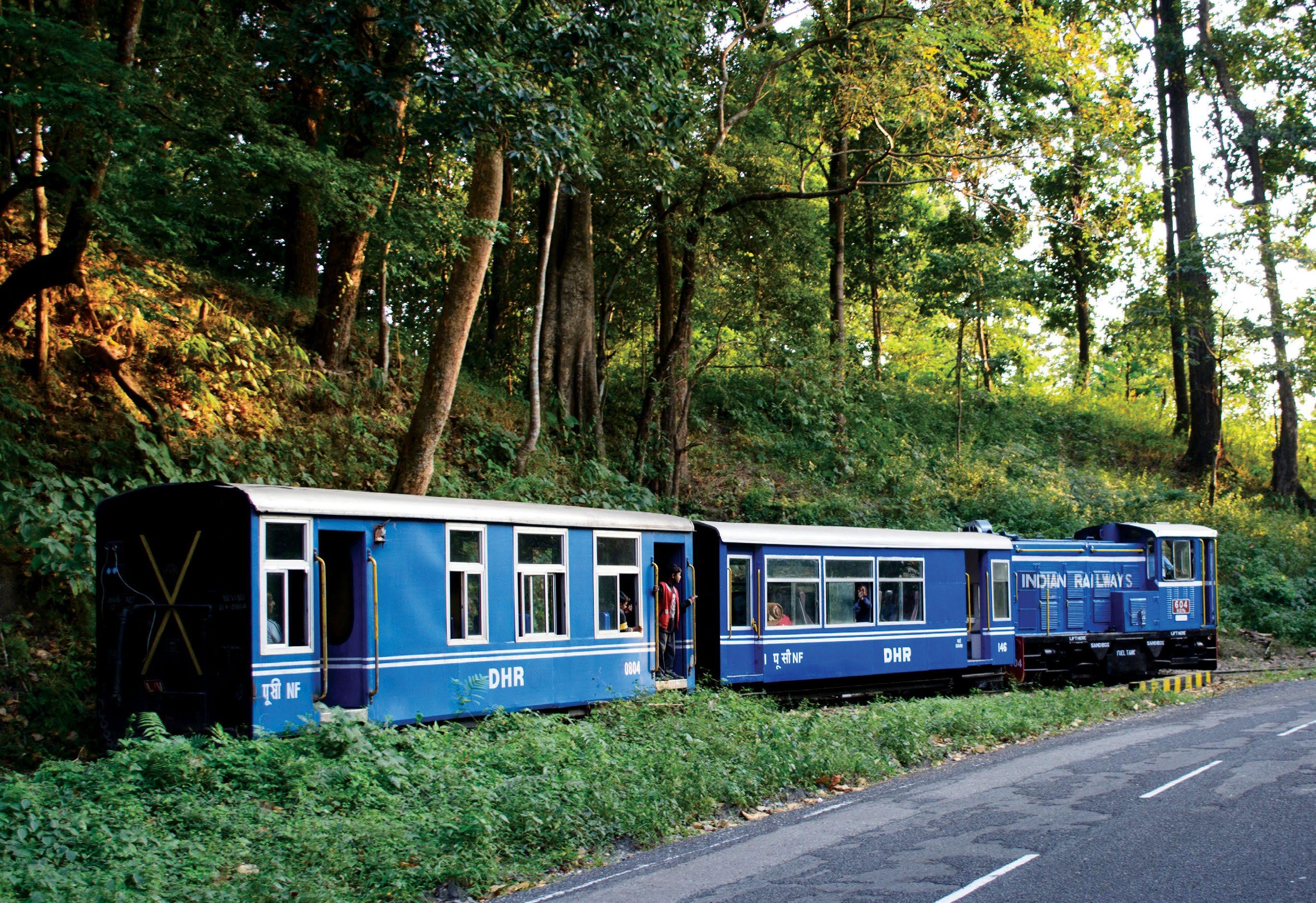
As a result, the domestic hotel sector is entering Summer 2026 with strong momentum, and the current global environment is likely to amplify this further. “National occupancy levels in early 2026 (YTD February) were in the range of 70–73%, with ADR growth of 9–12% and RevPAR up by 10–13% year-on-year, building on an already high base in 2025,” informs Akash Datta, Managing Director (South Asia), HVS ANAROCK.
Even as occupancy seems stabilised through spring and summer, ADR growth holds firm across Indian hotels, with luxury and upper-upscale segments pulling ahead of economy categories, a pattern increasingly described as a ‘rate-led’ cycle, where pricing power, rather than occupancy spikes, is driving RevPAR growth.
The March 2026 monitor by HVS Anarock found most markets holding occupancy above 75%, with hotels posting double-digit ADR growth on the back of strong demand from weddings, MICE, and corporate travel. The momentum is expected to continue into April and early May, as:
Easter travel fell in April 2026
Wedding demand remained strong International inbound has improved
Supply growth is still relatively constrained in premium markets
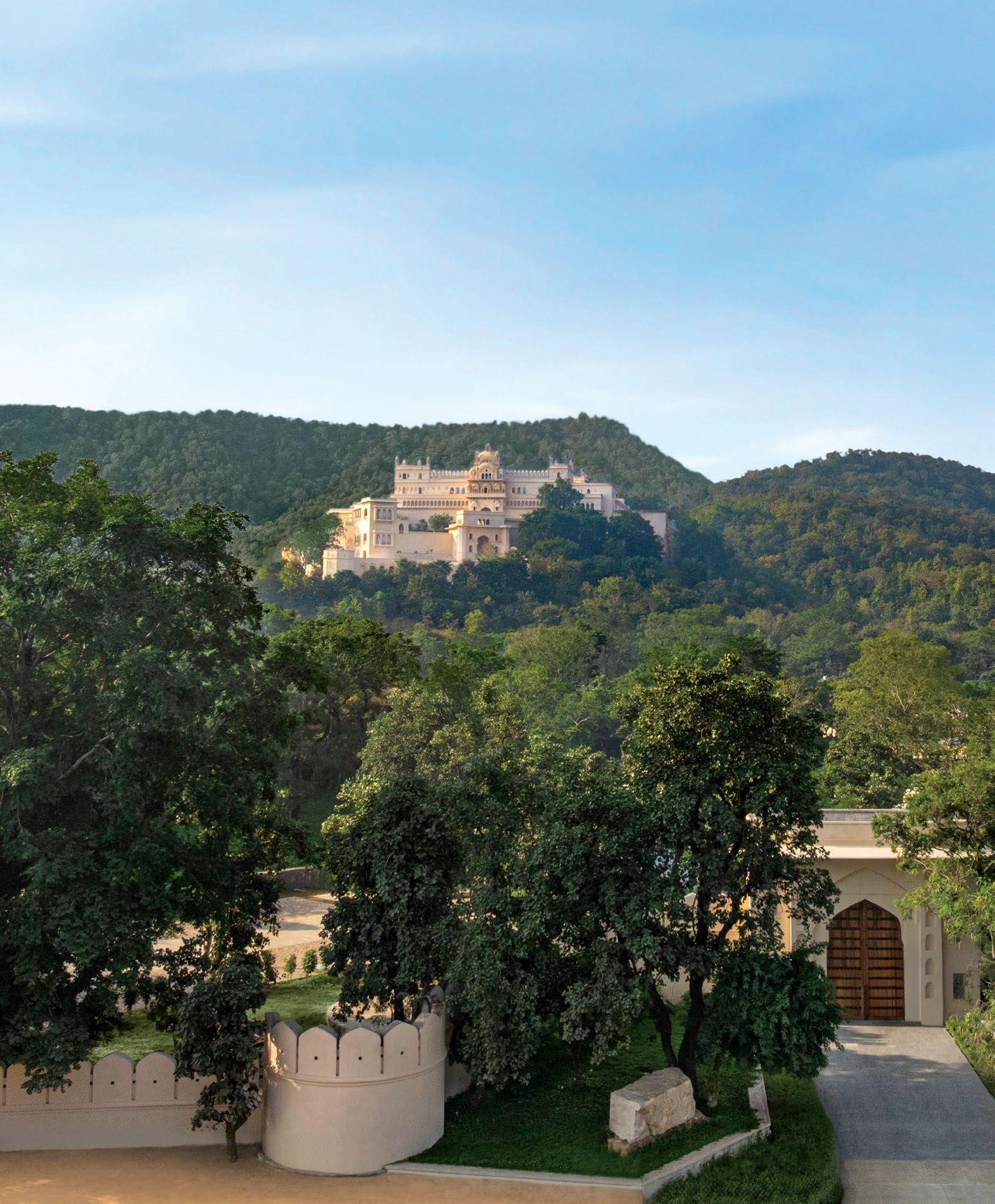
So, what’s driving the optimism? ICRA says the sector is being supported by:
Strong domestic leisure travel
Weddings
MICE demand
Resilient business travel
Concerts and large events
Religious tourism
Growth in Tier 2 and Tier 3 destinations

AKASH DATTA
MANAGING DIRECTOR (SOUTH ASIA), HVS ANAROCK
“India’s domestic hotel sector is entering Summer 2026 with strong momentum and the global environment will amplify this further with stronger demand concentration in leisure markets.”
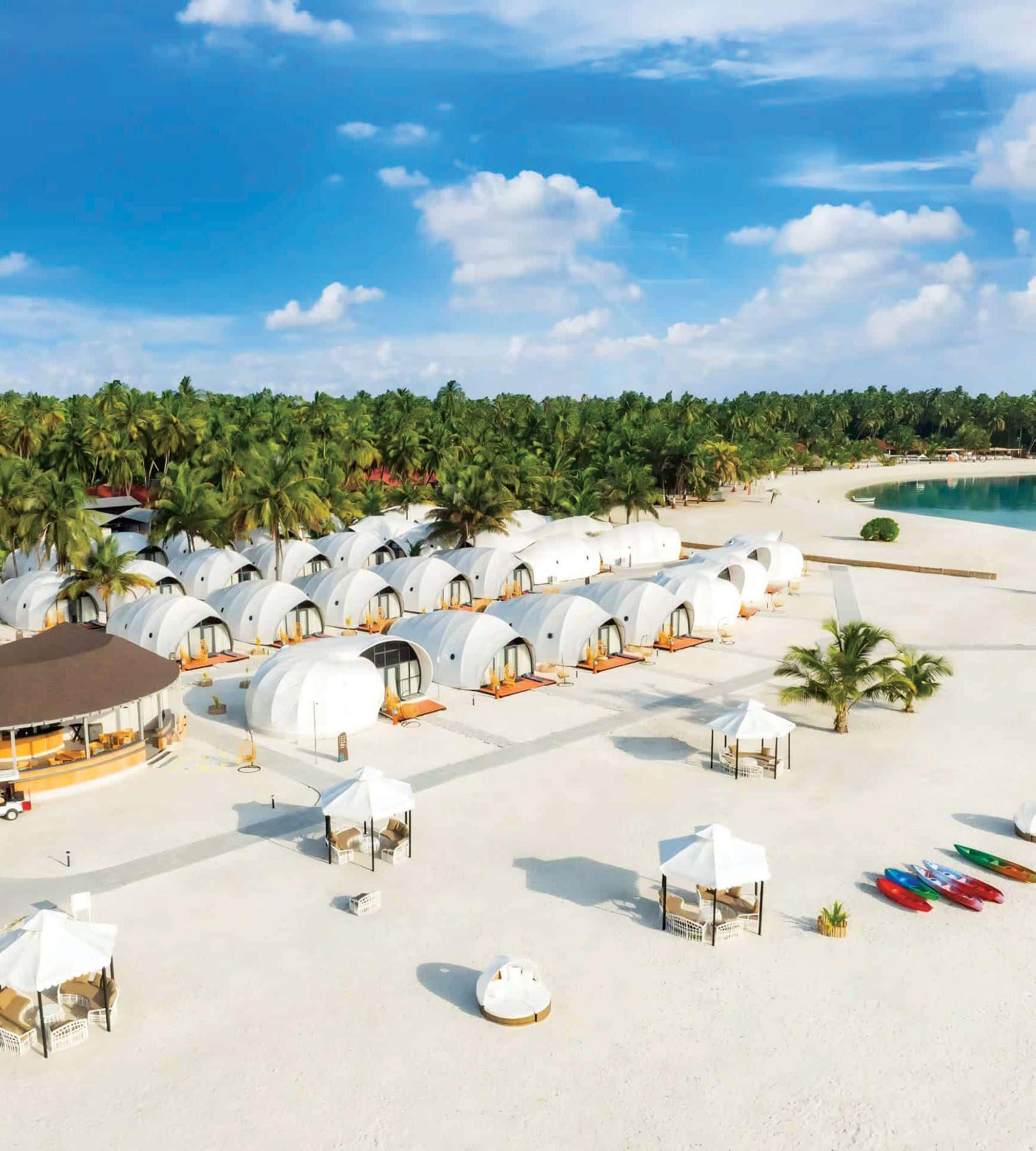
THE INTERNATIONAL CIRCUIT
While outbound travel has slowed down, it hasn’t completely halted. Increased flight prices from longer routes due to the airspace and security concerns in the Middle East have disrupted travel globally, bringing not just a wave of cancellations, but a structural shock to how Indian outbound travel has traditionally been routed. “A significant share of long-haul traffic from India to Europe and North
America has historically relied on transit through West Asian hubs. When that corridor became uncertain, the system fragmented almost instantly,” notes Hemant Mediratta, Founder & CEO, One Rep Global.
World Travel & Tourism Council (WTTC) data shows that Travel & Tourism was the world’s fastest-growing sector in 2025, contributing
While India may not be a direct substitute for traditional Mediterranean or Gulf leisure circuits, the shift presents another strategic opportunity for India, says Mandeep S Lamba, President & CEO (South Asia), HVS Anarock. “The current environment presents a clear opportunity for India to emerge as a stronger MICE destination. With world-class convention infrastructure now in place, India is well-positioned to capture demand that may shift away from established hubs such as Dubai,” he says.
Kristi Gole, EVP - Strategy, Global Hotel Alliance, supports this trend. “While February saw a notable spike, demand was pulling back sharply in March. Inbound travel tells a steadier story, with international arrivals to India posting lower cancellation rates than the previous year, pointing to more stable traveller intent,” Gole noted.
A domestic boom
Thomas Cook India and SOTC Travel's summer edit for 2026 shows a strong preference for experience-led holidays spanning
a record US$11.6 trillion to global GDP (9.8% of the global economy). Additionally, the industry grew 4.1%, exceeding overall economic growth of 2.8%, and supported 366 million jobs—a figure higher than the US population.
Gloria Guevara, President and CEO, WTTC, however, believes markets affected by security-related incidents often see the fastest
recovery times. “In some cases, it takes as little as two months. Additionally, 92% of destinations affected by shocks regain their visitor numbers,” she says.
While the conflict in the Middle East has cost the regional tourism sector an estimated $600 million per day in visitor spending, the global travel industry remains resilient. However, the
Lakshadweep is being developed for a tourism boost with a new hotel by IHCL SeleQtions.
cool mountains, tropical islands, and culturally rich regions—Kashmir, Darjeeling and Gangtok, Kerala, Sikkim, Ladakh, Rajasthan, the Andamans and Lakshadweep, and the northeastern states, including Meghalaya and Arunachal Pradesh.
“India’s leisure hospitality ecosystem today is far better placed to absorb incremental demand than in previous cycles, with over 42% of the newly opened hotels being in leisure destinations,” Datta says. Several high-quality launches across key leisure locations, including The Oberoi Rajgarh Palace, Khajuraho; Fairmont Udaipur Palace; IHCL SeleQtions' properties in Lakshadweep; Storii By ITC Hotels Narindera Orchards, Kufri; dusitD2 Fagu Shimla; and Radisson Resort & Spa Sasan Gir, among others. “This expansion has broadened the quality accommodation base and strengthened the ability of domestic leisure destinations to attract higherspending travellers,” he adds.
Udaipur continues to add rooms to its bursting wedding and inbound capacity.
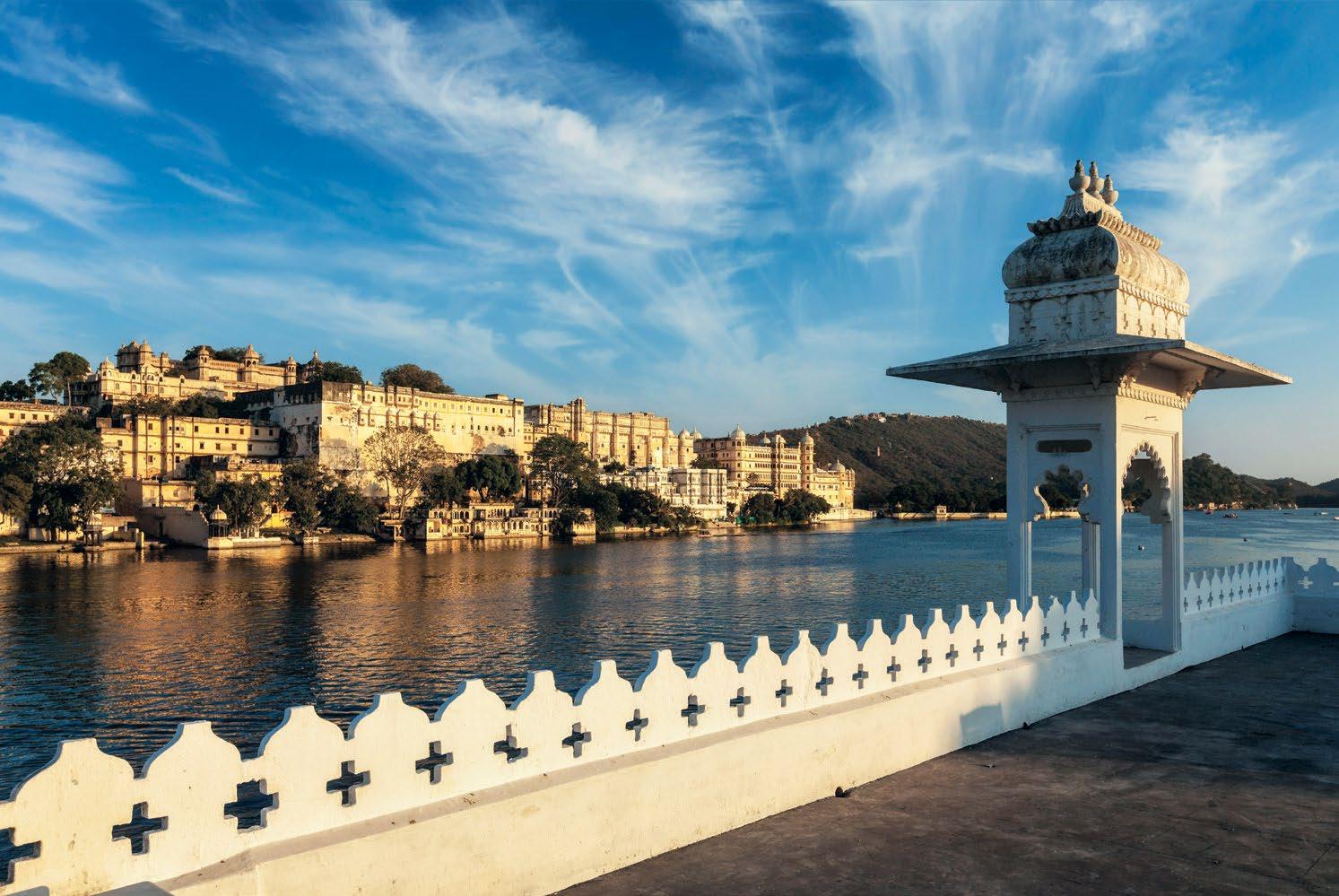
softening of discretionary, leisure-led long-haul travel demand is now visible, Mediratta notes.
“Outbound travel from India continues to show strong upward momentum. While some travellers may have adjusted or redirected their plans, the appetite for international travel remains robust,” says Seema Roy, Area Managing Director -
South Asia, Middle East & Africa, Preferred Hotels & Resorts. Traditional favourites continue to hold significance, though travellers are increasingly making more deliberate decisions influenced by value, unique experiences, and travel convenience, she notes.
“Q1 2026 booking patterns highlight the continued evolution and

KRISTI GOLE
EVP – STRATEGY, GLOBAL HOTEL ALLIANCE
“Inbound travel tells a steady story, with international arrivals to India posting lower cancellation rates than the previous year, pointing to more stable traveller intent.”
diversification of India’s outbound travel market. We witnessed a 36% increase in outbound room-night bookings, a trend expected to continue despite current disruptions, reflecting the market's resilience and sustained strength. While Singapore remains a leading destination, Malaysia and Japan are emerging strongly, reflecting Indian travellers’ growing
preference for culturally enriching and seamlessly connected destinations across the Asia-Pacific region,” Roy adds.
Meanwhile, Australia and Japan have emerged as new long-haul interests among Indian travellers, destinations that saw little traction last year, suggesting an early but meaningful shift in outbound appetite, GHA data shows.
Akshita M Bhanjdeo, Co-Owner, The Belgadia Palace, Odisha, reveals that “inbound enquiries are increasingly skewing towards longer stays (threeseven nights), anchored in heritage and nature circuits with strong interest in craft, wildlife, and community-led experiences.” Boutique and private stays are being preferred over large hotels. She also notes that a noticeable uptick in last-minute planning likely reflects the broader uncertainty shaping outbound travel decisions right now.
Industry veterans echo that the shift is less about cancelling travel altogether and more about redirecting it toward domestic destinations that feel easier, more flexible and better suited to family holidays. “Summer 2026 is shaping up to be a strong season for domestic leisure, especially as uncertainty around international travel has made many Indian travellers rethink long-haul holiday plans,” says Devendra Parulekar, Founder, Saffronstays, a premium holiday rental platform.
Overall, the sector is not only well positioned to see a strong summer season but is also experiencing a broader structural shift where domestic tourism continues to deepen and absorb a larger share of India’s travel demand, Datta believes. Indian Railways has approved 908 summer special trains to operate 18,262 trips between 15 April and 15 July 2026 to manage the seasonal passenger rush. Of these, 660 trains accounting for 11,294 trips have already been notified for advance booking.
“We’ve seen a 30-35% uptick in domestic bookings compared to the same period last year, particularly in the past few weeks, as uncertainty around international travel has increased,” reveals Amit Damani, CoFounder, StayVista. Parulekar affirms this saying, “as of mid-April, bookings have grown by approximately 25–30% year-on-year, while May is already tracking at ~40% higher than the same time last year.”
Delhi and Mumbai continue to lead pricing in the hospitality segment as per HVS Anarock Monitors, with Delhi occupancy touching 78–80% and ADRs crossing ₹10,500 in several upscale segments. Goa, by contrast, has seen softer rate growth from increased luxury supply and more ratesensitive domestic demand, though premium resorts still hold firm over long weekends and destination-event periods. Leisure markets, including

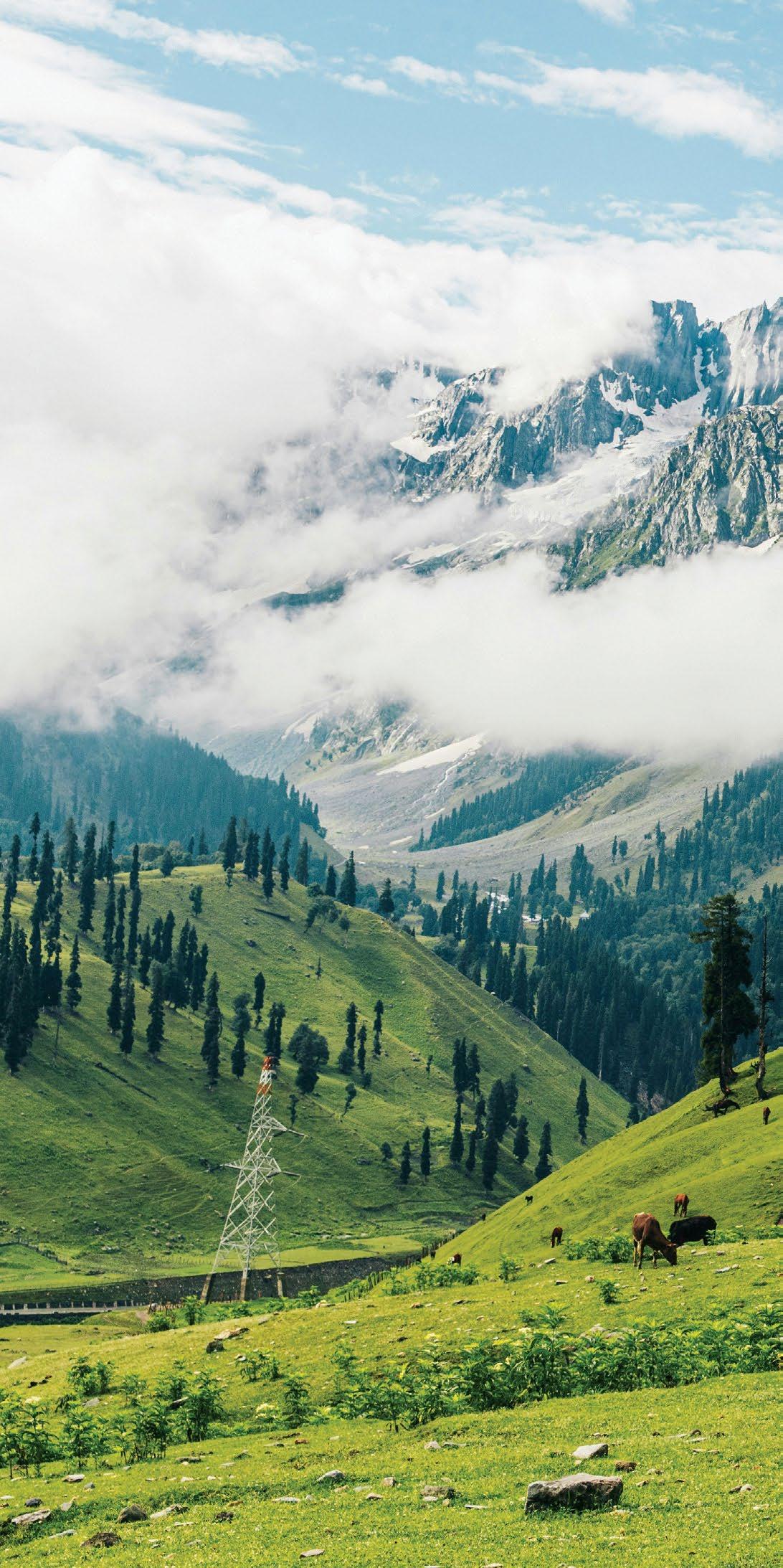
AKSHITA M BHANJDEO
CO-OWNER, THE BELGADIA PALACE
“Inbound enquiries are increasingly skewing towards longer stays anchored in heritage and nature circuits with strong interest in craft, wildlife, and communityled experiences. There is an uptick in last-minute planning, likely reflecting the uncertainty shaping outbound travel.”
ABOVE: Kashmir and Ladakh saw a 312% jump in travel searches since the West Asia conflict began.
RIGHT: Regional palace hotels like The Belgadia Palace put crafts and heritage immersion at the forefront.
PHOTO
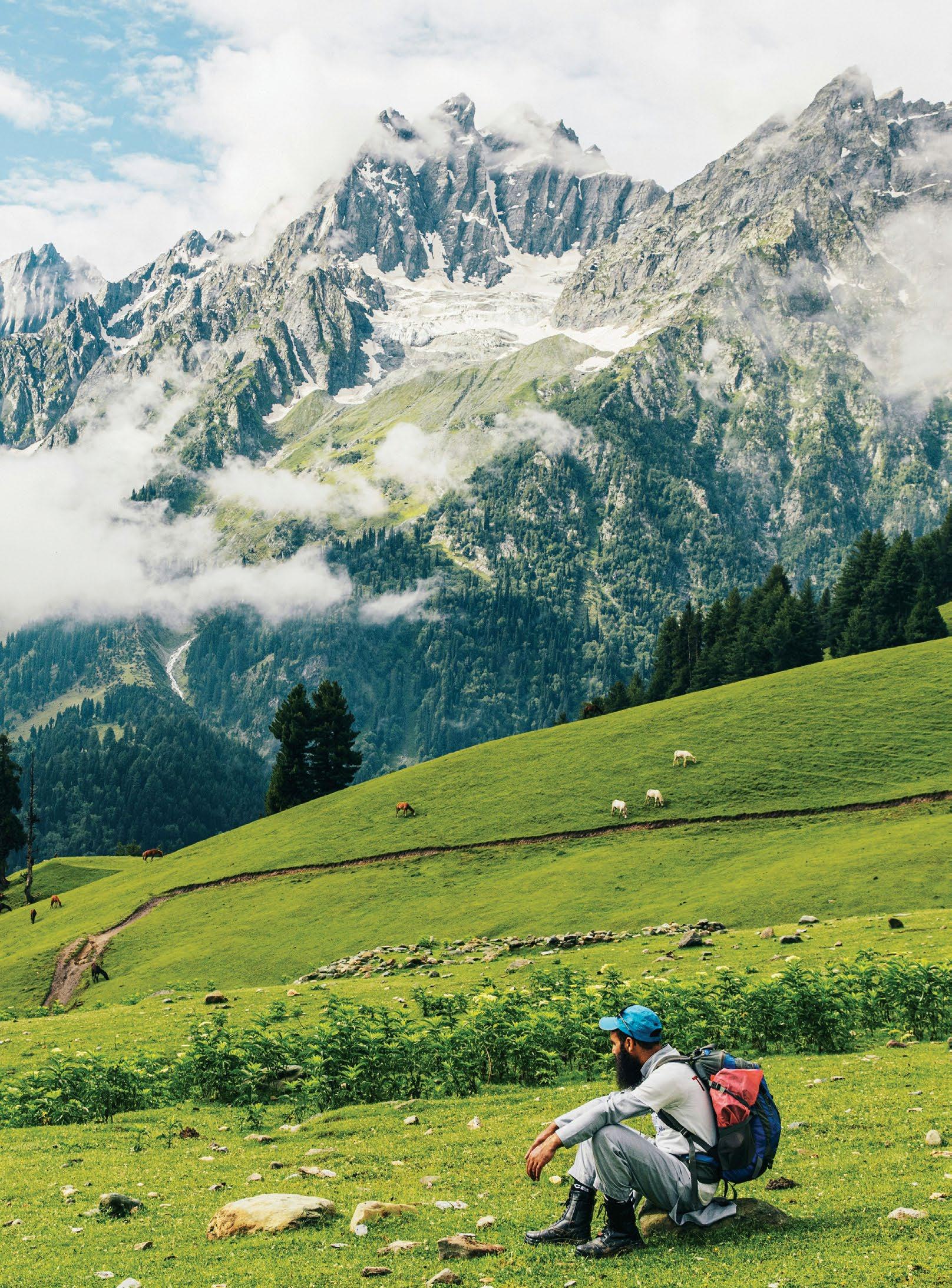
MARKET-SPECIFIC STR/ COSTAR INSIGHTS
According to the latest India Hotel Market Review using CoStar performance data:
Mumbai led occupancy among major Indian markets at 77.1%
Udaipur posted ADRs around ₹15,900 Delhi crossed ₹10,500 ADR
Goa showed softer ADR performance compared to several metros
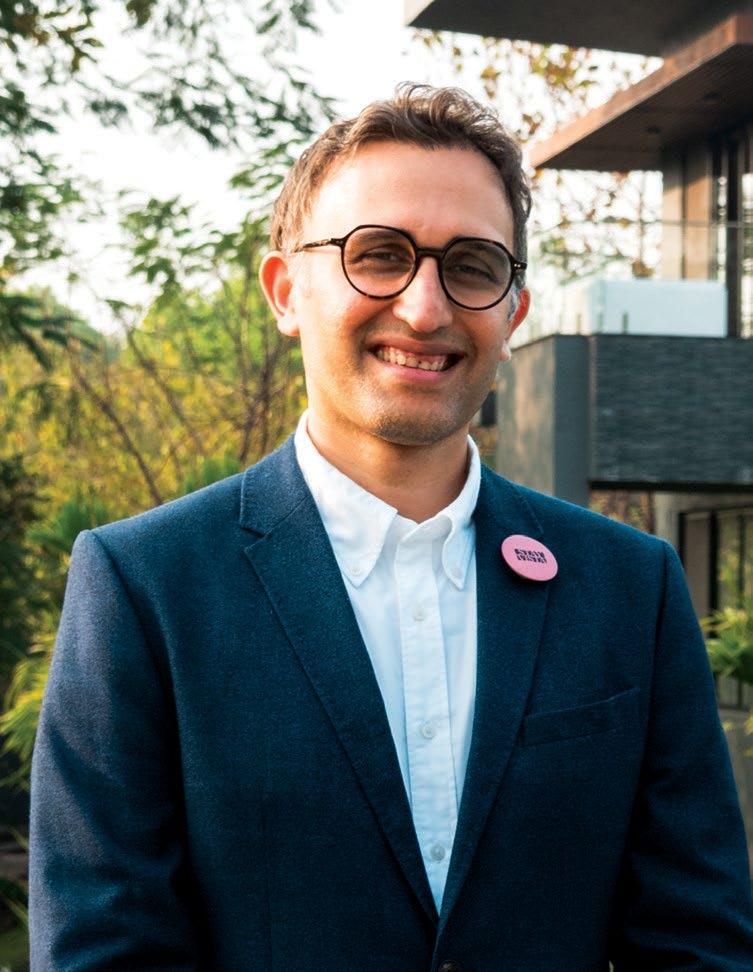
AMIT DAMANI
CO-FOUNDER, STAYVISTA
“We’ve seen a 30-35% uptick in domestic bookings compared to last year, particularly as uncertainty around international travel has increased. As of mid-April, bookings have grown by approximately 25–30% yearon-year, while May is already tracking at ~40% higher.”
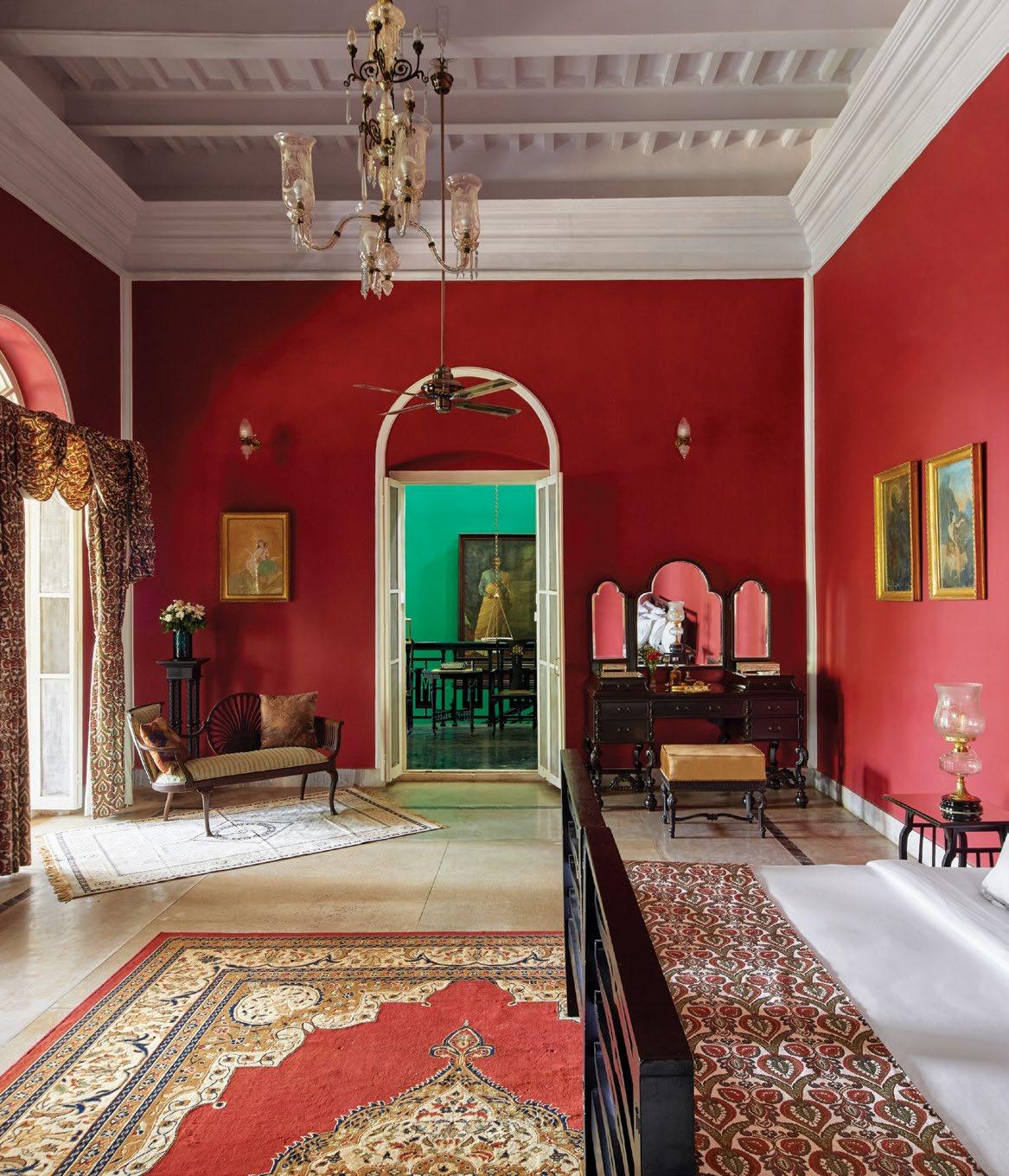
FLIGHT PRICE INCREMENT ACROSS SECTORS
Delhi – London
Pre-conflict fares
₹35,000–₹45,000 Post-conflict fares
Mumbai – New York Pre-conflict
₹85,000–₹1.2 lakh
Bengaluru – Frankfurt
Pre-conflict fares
₹40,000–₹50,000
Delhi – Bangkok
Pre-conflict fares
₹10,000–₹12,000
Hyderabad – Dubai
Pre-conflict fares
₹12,000–₹15,000

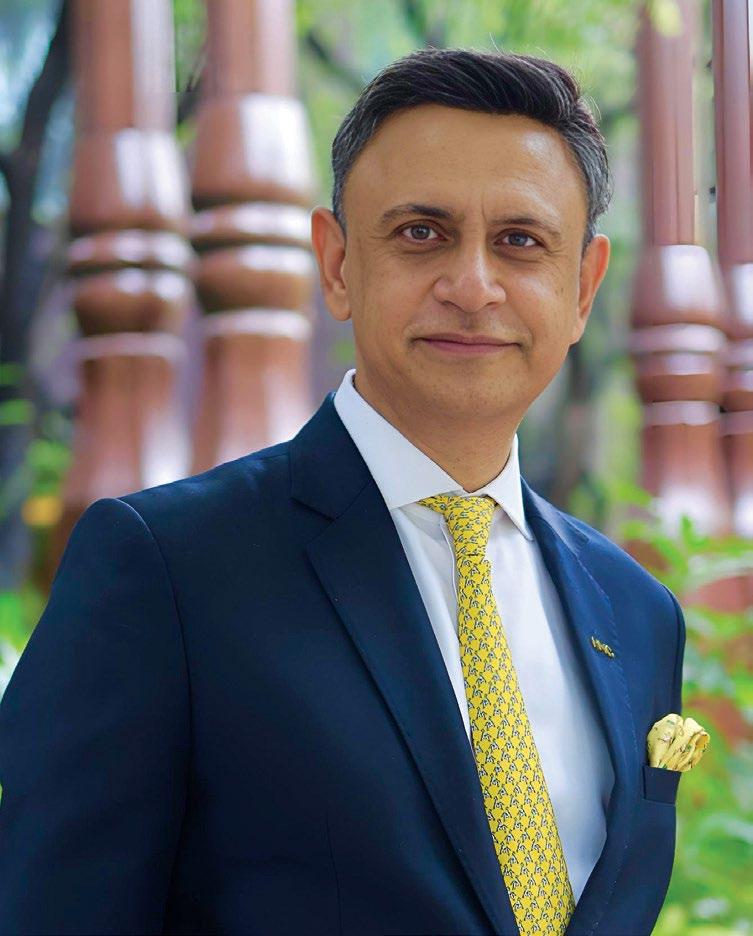
HEMANT MEDIRATTA
FOUNDER & CEO, ONE REP GLOBAL
“What we are seeing is what could be described as ‘revenge deferral’ rather than a departure. Europe continues to hold an unmatched experiential value for Indian travellers. At the same time, the sudden redirection of demand has exposed pressure points. Premium inventory is being absorbed at a far quicker pace.”
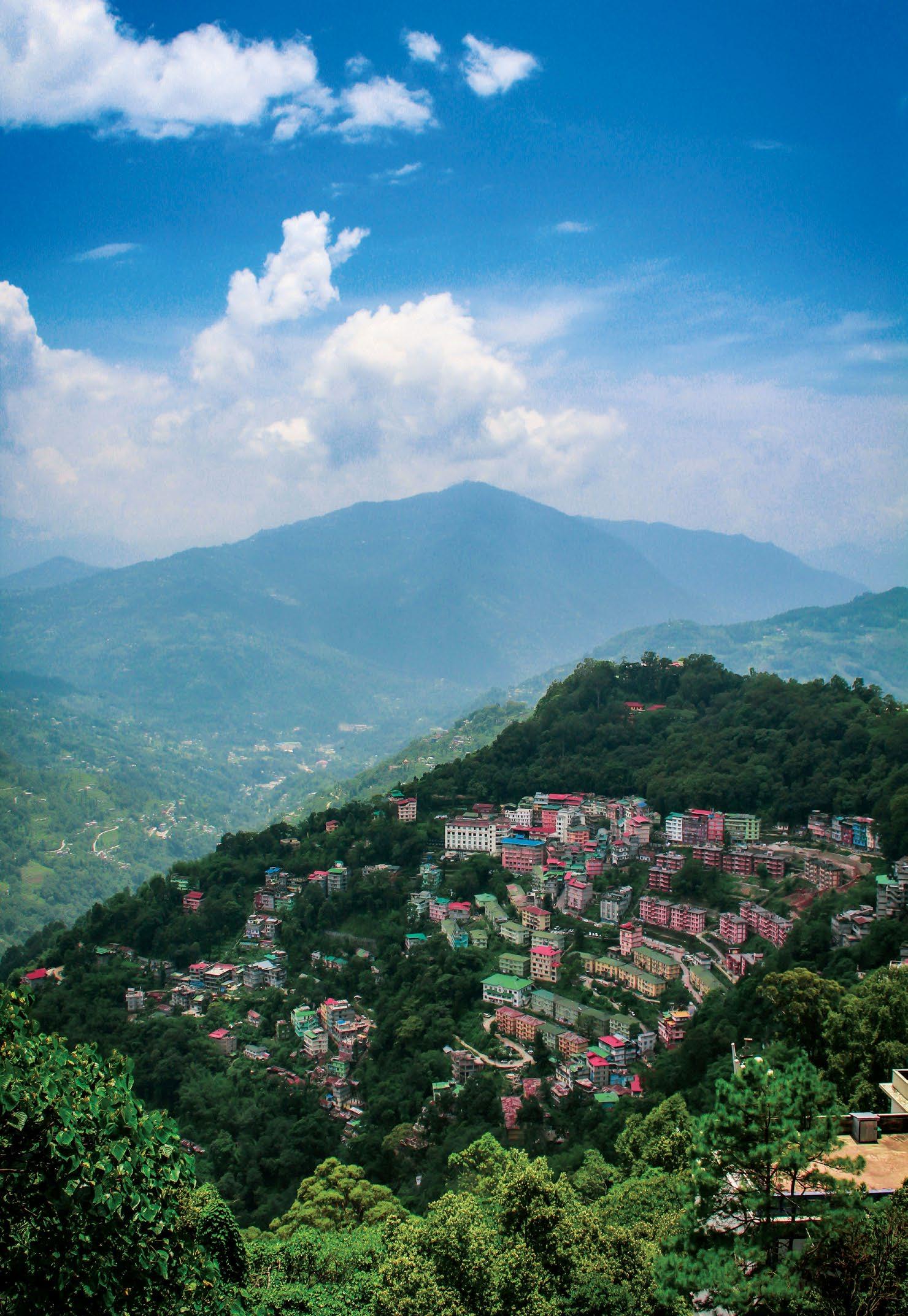
Udaipur, Jaipur, Rishikesh, Kerala, and the wildlife circuits, are riding a confluence of experiential travel, weddings, luxury domestic demand, and returning international visitors.
As discretionary travel budgets are retained within the country, domestic leisure markets are likely to see stronger demand concentration, especially across resort destinations, hill stations, and drive-to markets. “For hotels, this is expected to translate into sustained pricing power during the peak summer period, with demand outpacing supply in several highperforming leisure destinations,”

MEGHANA ARORA
SALES DIRECTOR - INDIA & MIDDLE EAST, LIBERTY INTERNATIONAL TOURISM GROUP
“For younger travellers, this disruption will become a discovery. They’ll visit closer destinations out of necessity and return by choice, marking a genuine shift. For the experienced outbound traveller, the appetite doesn’t disappear; it just defers.”
INDUSTRY REPORTS USING STR/COSTAR DATASETS INDICATE THAT INDIA REMAINS IN A STRONG ADR-LED GROWTH CYCLE.
Key indicators:
A strong preference for experience-led travel has benefitted northeastern destinations such as Gangtok.
BROADER NATIONAL INDICATORS FROM THE HVS MONITORS (FROM THE JANUARY–MARCH 2026 SEQUENCE OF REPORTS)
JAN/FEB 2026 MOSTLY STABLE-TO-STRONG YOY GROWTH DOUBLE-DIGIT GROWTH IN SEVERAL CITIES
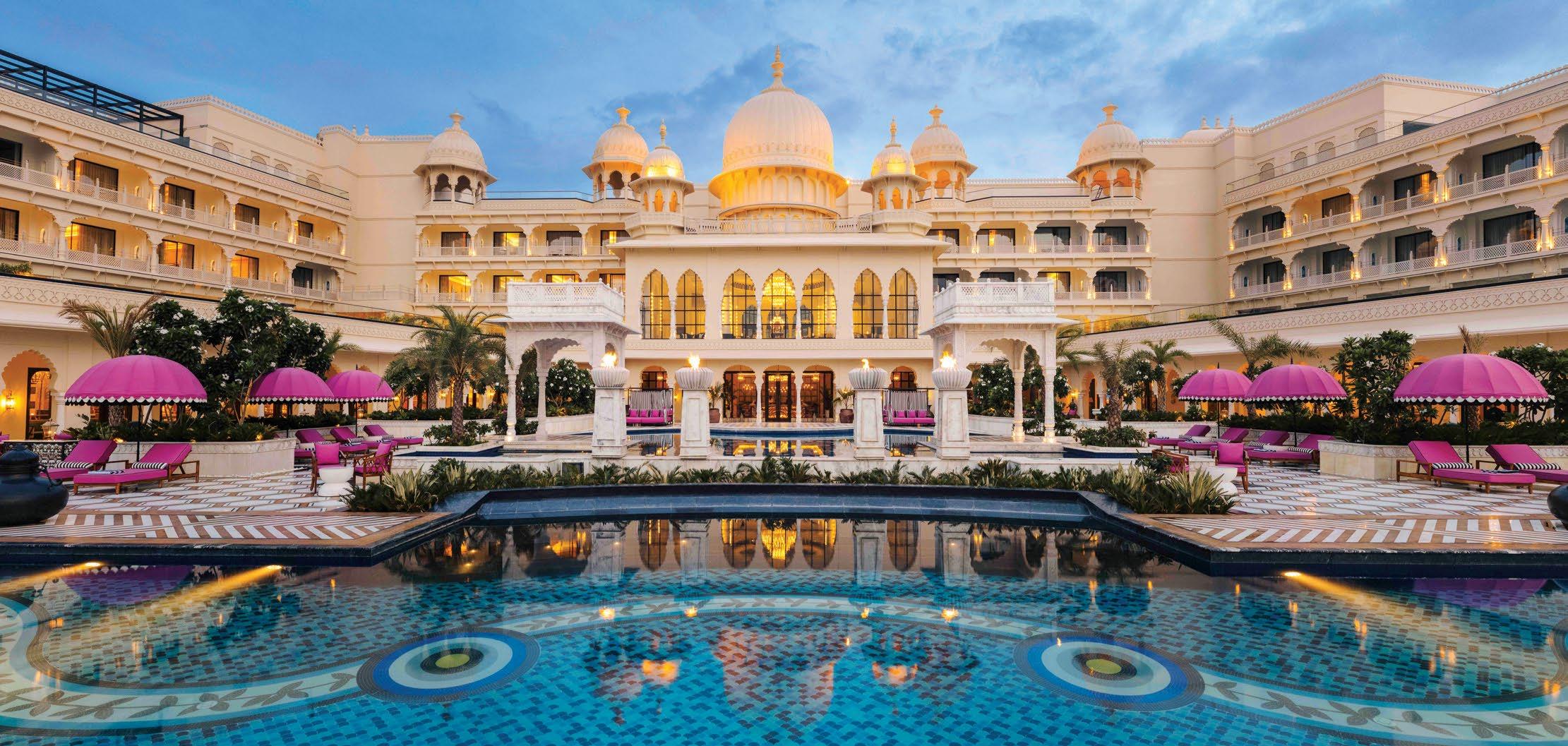

GLORIA GUEVARA PRESIDENT AND CEO, WORLD TRAVEL AND TOURISM COUNCIL (WTTC)
“History shows that the region, which accounts for around 5% of global international arrivals and 14% of international transit traffic, is incredibly resilient and will recover. Experience shows tourism demand following security-related incidents can recover in as little as two months when governments and industry work together.”
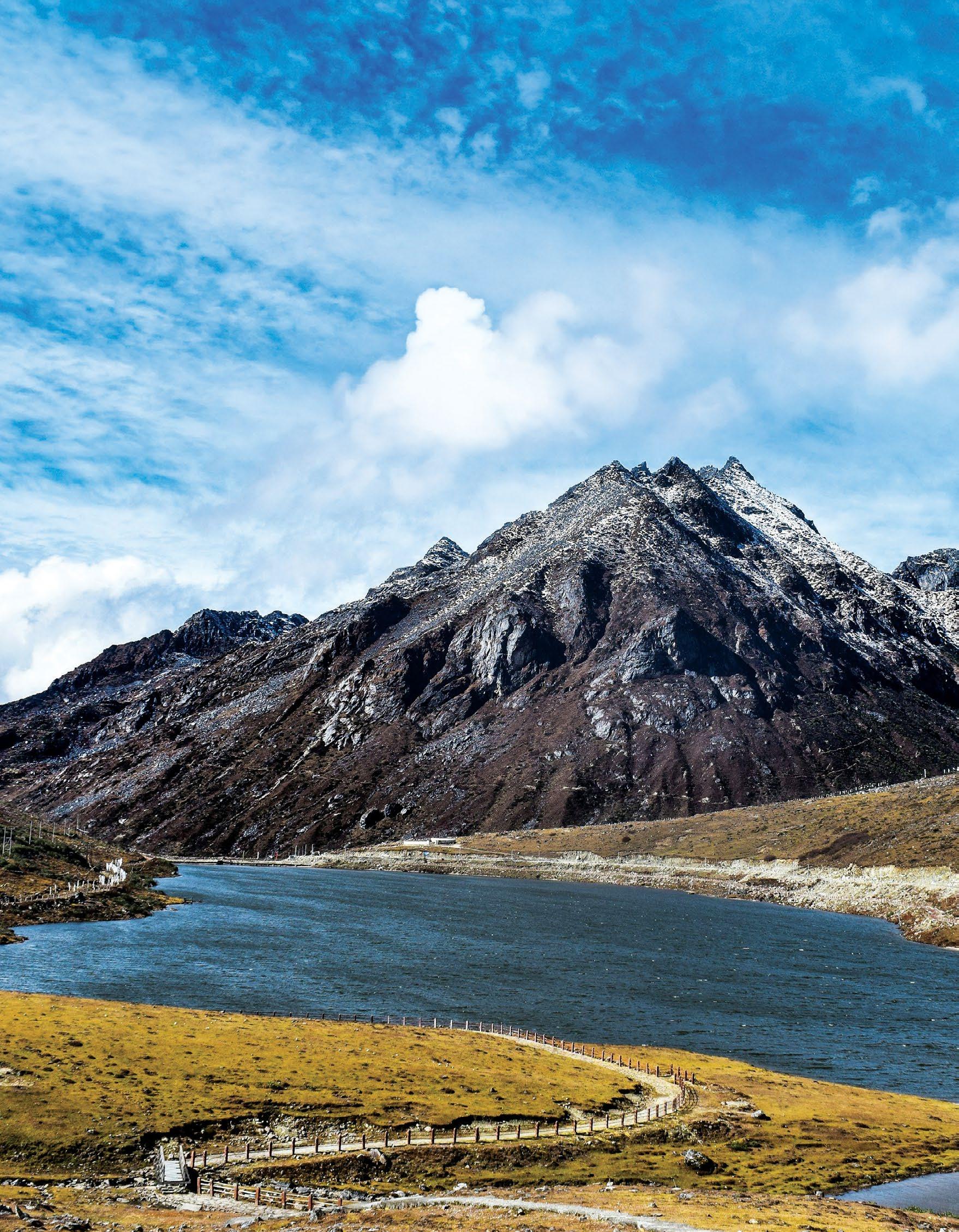
ACROSS VARIOUS HVS, HORWATH HTL, ICRA AND MARKET OUTLOOK REPORTS
OPPOSITE: Fairmont Udaipur Palace aims to cater to large scale weddings and MICE demand in Udaipur.
LEFT: Arunachal Pradesh's unparalleled natural beauty is increasingly resonating with Indian travellers.
Datta confirms.
But supply is tightening. For travellers making late decisions, availability is becoming the primary challenge. The premium heritage properties, the better tented camps, and good guides in destinations that don’t usually see this kind of footfall weren’t set up to absorb a sudden rush.
“But that’s also what makes this moment interesting,” says Meghana Arora, Sales Director - India & Middle East, Liberty International Tourism Group. “We’re seeing parts of India that were always deserving of more attention get discovered in a genuine shift. For younger, first or second-time international travellers, this disruption will become a discovery. They’ll visit somewhere domestically or in Southeast Asia out of necessity and return by choice. But for the experienced outbound traveller with a mental checklist of far-away destinations, the appetite doesn’t disappear, it simply defers,” Arora notes.
ICRA's latest outlook on Indian hospitality points to a market where demand continues to outpace supply, sustaining hotel pricing power well into summer. Q3 FY2026 occupancies touched 76–78%, and the trajectory implies those levels hold through May and June, with premium hotels maintaining strong ADRs and leisure-heavy markets and wedding destinations staying particularly robust. The broader takeaway from ICRA's reporting, however, is a structural one. Indian hospitality has moved decisively beyond its recovery narrative into a cycle defined by fewer discounting rounds, sustained rate discipline, asset-light expansion, and luxury
2026 GLOBAL TRAVEL TRENDS

IT’S PERSONAL
Travellers design trips that express who they are, not where they go.
HOW IMPORTANT IS TRAVEL?
“It expresses my identity and values.”
2026 TRIPS PLANNED
BUSINESS TRAVEL LEISURE TRAVEL
SLOW AND STEADY
Meaningful, unplanned and restful trips with safety and comfort in mind are key.
NEW FRONTIERS
Exploration will rule with travellers seeking new places and splurging only on quality.
TRAVEL PREFERENCES
“It matters more than career or education milestones.” 61% of travellers use AI for trip planning 79% of Gen Z travellers plan trips using AI
OFF-THE-BEATEN PATH
Smaller cities and rural escapes.
Quality upgrades rather than splurge freely.
Concierge services, private transfer, priority access.
TRAVEL DESTINATIONS IN 2026
Special access to experiences.
prefer new places, a trend shared across generations and countries.
RISE OF AI
are comfortable with the idea of an AI concierge
*Based on Oct 2025 survey to GHA DISCOVERY members in EN, DE, SP, ZH and JP with D$10 incentive. 4.2K responses analysed.
CHINA USA THAILAND AUSTRALIA JAPAN
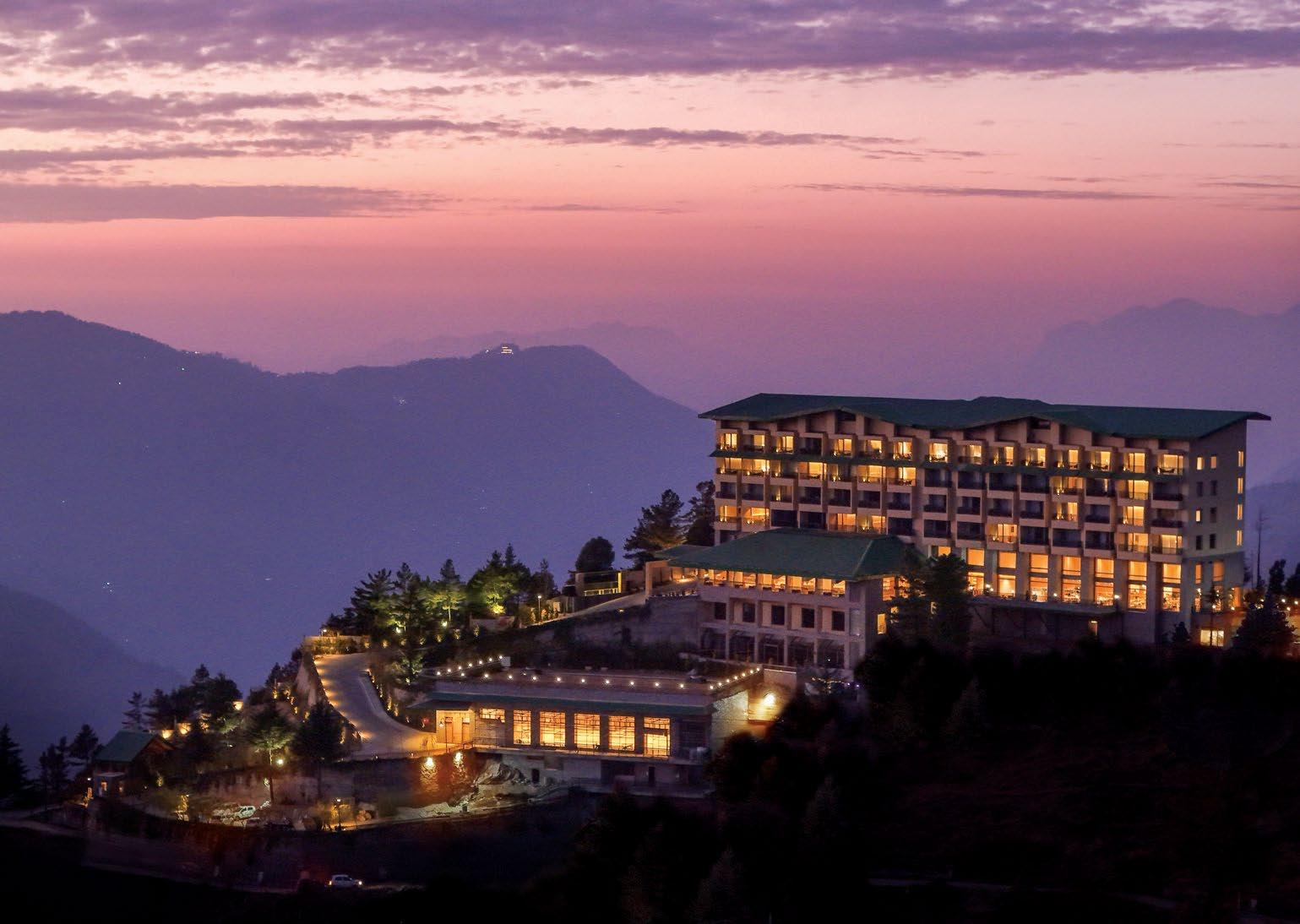
ICRA FY2026 OUTLOOK NUMBERS

SEEMA ROY
AREA MANAGING DIRECTOR - SOUTH ASIA, MIDDLE EAST & AFRICA, PREFERRED HOTELS & RESORTS
“Outbound travel from India continues on an upward momentum, with summer demand accelerating steadily. Q1 2026 booking patterns highlight a 36% increase in outbound room night bookings, a trend that reflects the resilience and sustained strength of the market.”
demand outperforming wider consumption trends, which is why even incremental new supply hasn't dented the ability of hotels to push ARR growth.
Damani notes an increase in shorter booking windows, with many travellers confirming stays within seven–10 days of travel, compared to longer planning cycles earlier. “At the same time, there’s a clear trend of premiumisation, with guests reallocating budgets from international travel toward higher-value domestic stays,” he adds.
According to Hemant Mediratta, Founder & CEO, One Rep Global, “if this disruption sustains through the season, it could leave behind a more lasting shift. Indian outbound travel has long followed a predictable
pattern, with Europe anchoring the summer calendar. This moment is expanding that mindset with a more diversified travel approach.”
Nearly 40% of Indian travellers heading westward rely on the Middle East for connectivity. The outbound tourism market is valued at $23.4 billion in 2026 and projected to reach $68.8 billion by 2036 on an impressive CAGR, predicated on continued low-cost connectivity through Gulf hubs. The current conflict has inserted a question mark into that projection that the industry will be answering for years to come.
Dusit Thani Hotels has returned to India with multi-property signings in place.
BIGGER ISN’T DELIVERING BETTER RETURNS
Why India’s hotel developers may be overbuilding guestrooms.
For decades, Indian hotel development has been guided by an almost reflexive belief: larger rooms signal higher quality, command higher rates, and ultimately deliver better returns. The logic feels intuitive. More space suggests greater comfort, stronger positioning, and a competitive edge in a market where aspiration often shapes product decisions.
Yet the data tells a different story. According to Hotelivate’s analysis of branded hotel performance across India for 2024–25, the relationship between room size and RevPAR is far weaker than most developers assume (Does Size Really Matter by Megha Tuli and Mihir Chalishazar) in many cases, larger rooms not only fail to
SOH TEAM
generate higher revenue but can actively erode project economics by reducing key count, increasing capital expenditure, and diluting return on investment.
At an average development cost of approximately ₹11,300 per sq.ft., incremental space is expensive space. When additional square metres fail to translate into proportionate revenue gains, they represent locked-in inefficiency—a structural decision that cannot easily be reversed once construction is complete.
When bigger stops delivering better
Hotelivate analysed the correlation between base room size and RevPAR across branded hotels in India, segmenting the dataset by location type,
administrative zone, brand origin, hotel inventory size, city tier, and positioning. Across segments, the conclusion remains consistent: beyond a certain threshold, larger guestrooms produce diminishing financial returns.
Urban hotels: a 30% size difference with no RevPAR upside
Urban hotels represent approximately 55% of Hotelivate’s dataset. Within this segment, properties with base room sizes between 35sqm. and 45sqm. achieve broadly similar RevPAR performance.
In practical terms, this means that increasing room size by approximately 30% does not yield a significant improvement in revenue performance. Developers
Source: Hotelivate Research
Across multiple segments, guestrooms between 35sqm. and 50sqm. demonstrate comparable performance outcomes. Beyond this range, additional square footage generates limited revenue advantage.
Source: Hotelivate Research
who expand room footprints by an additional 10sqm. incur significant construction cost increases without a corresponding uplift in yield.
The implication is clear: incremental space does not automatically translate into incremental value.
Leisure hotels: when more space can reduce performance
The leisure segment, representing roughly 45% of the sample, produces one of the most striking insights in the analysis. Hotels with base room sizes between 45sqm. and 50sqm. outperform those with rooms exceeding 50sqm.
Increasing room size by at least 11% beyond this range does not merely plateau performance—it correlates with lower RevPAR. This finding reinforces an important structural reality of leisure demand: the destination itself is the primary driver of guest choice.
Landscape, experiences, amenities, and atmosphere shape pricing power far more than marginal increases in room size. As Hotelivate notes, allocating additional floor area to guestrooms in leisure destinations often diverts capital away from public spaces, amenities, and experiential elements that influence guest satisfaction more directly.
Hotel size lens: more space, fewer
returns
Inventory size further highlights the economic trade-offs of oversized guestrooms.
Among hotels with 100–149 keys (approximately 17% of the sample), RevPAR remains consistent across room sizes
ranging from 25sqm. to 40sqm.—a 60% variation in spatial allocation. At the upper end of this range, RevPAR performance declines. Similarly, for hotels with 150 keys or more (approximately 18% of the sample), the 25–35sqm. range delivers stable performance
REVPAR BY BASE ROOM SIZE BINS (NATIONWIDE-URBAN)
REVPAR (₹) BASE ROOM SIZE BINS (IN SQM.)
Source: Hotelivate Research
REVPAR BY BASE ROOM SIZE BINS (NATIONWIDE-LEISURE)
BASE ROOM SIZE BINS (IN SQM.)
Source: Hotelivate Research
REVPAR (₹)
with no discernible benefit from increasing room size by up to 40%. Larger rooms reduce the number of keys that can be accommodated within a given built-up area. Fewer keys translate into lower revenue potential per sq.ft. of development, directly impacting project IRR.
Tier 2 and Tier
3
markets: where overbuilding risks are highest
In Tier 2 and Tier 3 cities, the performance gap becomes even more pronounced. Hotels with base room sizes between 45sqm. and 50sqm. perform at par with, or better than, properties offering rooms above 50sqm.
In these markets, demand is often more price-sensitive and less dependent on spatial luxury. Overspecifying guestrooms increases capital intensity without improving revenue outcomes, placing pressure on project viability.
Identifying the “sweet spot” in room sizing
One of the most actionable insights from Hotelivate’s research is the identification of an optimal room size band where RevPAR performance stabilises relative to development cost.
Across multiple segments, guestrooms between 35sqm. and 50sqm. demonstrate comparable performance outcomes. Beyond this range, additional square footage generates limited—and sometimes negative—revenue advantage. This plateau suggests that developers should treat room size as an optimisation exercise rather than a branding statement.
Once rooms exceed approximately 50sqm., the marginal return on each additional square metre declines sharply.
India’s rooms are already generous by global
standards
Indian hotel rooms are, in many cases, already larger than global benchmarks.
According to The Leela Industry Report (2025), the average luxury hotel room size in India is approximately 45sqm. Global benchmarks from SiteMinder
Increasing room size reduces the number of keys achievable on a site, lowering potential revenue per sq.ft. and weakening yield efficiency.
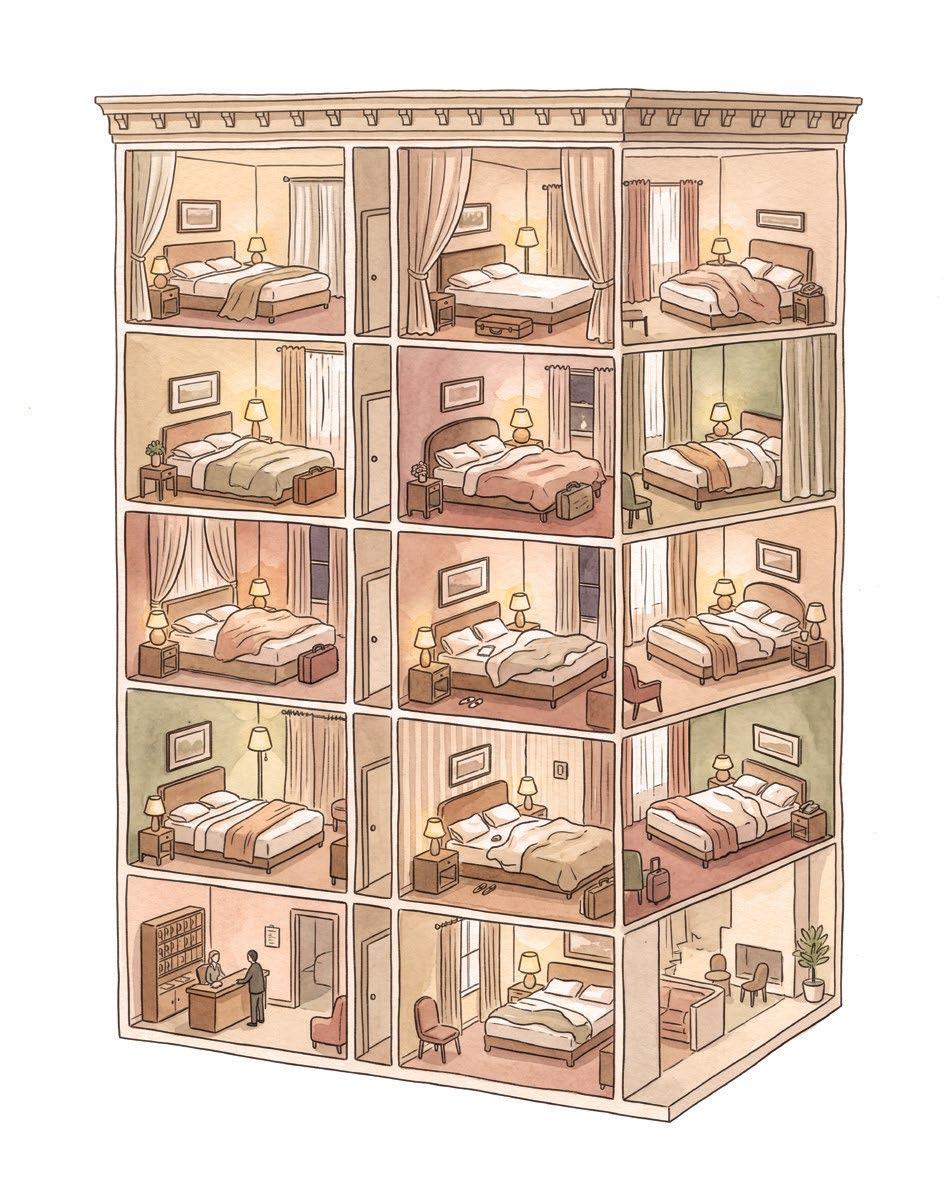
50-80%
OF
TOTAL BUILT-UP AREA CONSUMED BY GUESTROOMS
and Ming Sun Design Standards indicate that efficient urban hotels internationally often operate with significantly smaller room footprints:
Typical global standard rooms: 20–30sqm.
Upper upscale rooms: 30–40sqm.
Suites: 50–80sqm.
Compared to these benchmarks, India’s spatial standards are relatively generous, particularly in urban markets where land and construction costs continue to rise.
Pipeline growth makes efficiency more urgent
Design discipline becomes increasingly important as India’s hotel supply pipeline expands.
Horwath HTL estimates that India’s branded hotel inventory will reach approximately 105,000 additional rooms by 2029, representing substantial growth relative to the current supply base. If oversized guestrooms continue to be replicated across this pipeline, inefficiencies will be embedded at scale. Also, strong operating performance may temporarily mask cost implications of spatial over-specification.
According to HVS ANAROCK’s 2024 industry overview:
• National occupancy levels remain strong at 63–65%.
• Average Room Rates (ARR) are approximately ₹7,800–₹8,000.
• RevPAR has grown 27–29% compared to pre-pandemic benchmarks.
Favourable trading conditions can absorb higher capital costs in the short term. However, structural inefficiencies become more visible as market cycles normalise.
The structural constraint
Room size decisions also influence the total number of keys a hotel can accommodate within a given development envelope.
SEGMENT SWEET SPOT WHAT HAPPENS ABOVE
Budget 20-22sqm. RevPAR caps regardless of size
Midmarket 24-26sqm. RevPAR remains flat
Upper Midmarket 28-30sqm.
70% more space = only 40-45% more RevPAR
Upscale 32-34sqm. Diminishing returns quickly
Upper Upscale 36-38sqm. Comparable RevPAR beyond this
Luxury 45-48sqm.
Source: Hotelivate Research
Data from the Ministry of Tourism’s Indian Hotel Industry Survey indicates:
Average hotel size historically: 76 rooms
Average five-star hotel: 148 rooms
Average five-star deluxe hotel: 225 rooms
Increasing room size reduces the number of keys achievable on a site, lowering potential revenue per sq.ft. and weakening yield efficiency. Because hotels are long-term assets, design decisions made during planning shape financial performance for decades. Unlike pricing or operational strategies, room size cannot easily be adjusted once the building is complete.
What actually drives hotel performance
Hotelivate’s analysis reinforces a broader industry truth: room size is not a primary driver of RevPAR performance. Instead, performance is more closely linked to:
Location: A well-located hotel consistently outperforms a poorly located one, regardless of room dimensions.
Brand strength and distribution reach: Brands with strong reservation networks and loyalty ecosystems deliver
50sqm. gains drive by marquee/legacy assets only
HOTELIVATE VERDICT
No case for larger rooms. Ever.
Restrain the brief. 26sqm. is sufficient.
Poor return on floor area. Hold at 30sqm.
Quality of finish matters more than area.
Brand and design earn the rate, not floor area.
Only true luxury flagships justify 50sqm.+. For everyone else, 48sqm. is the ceiling.
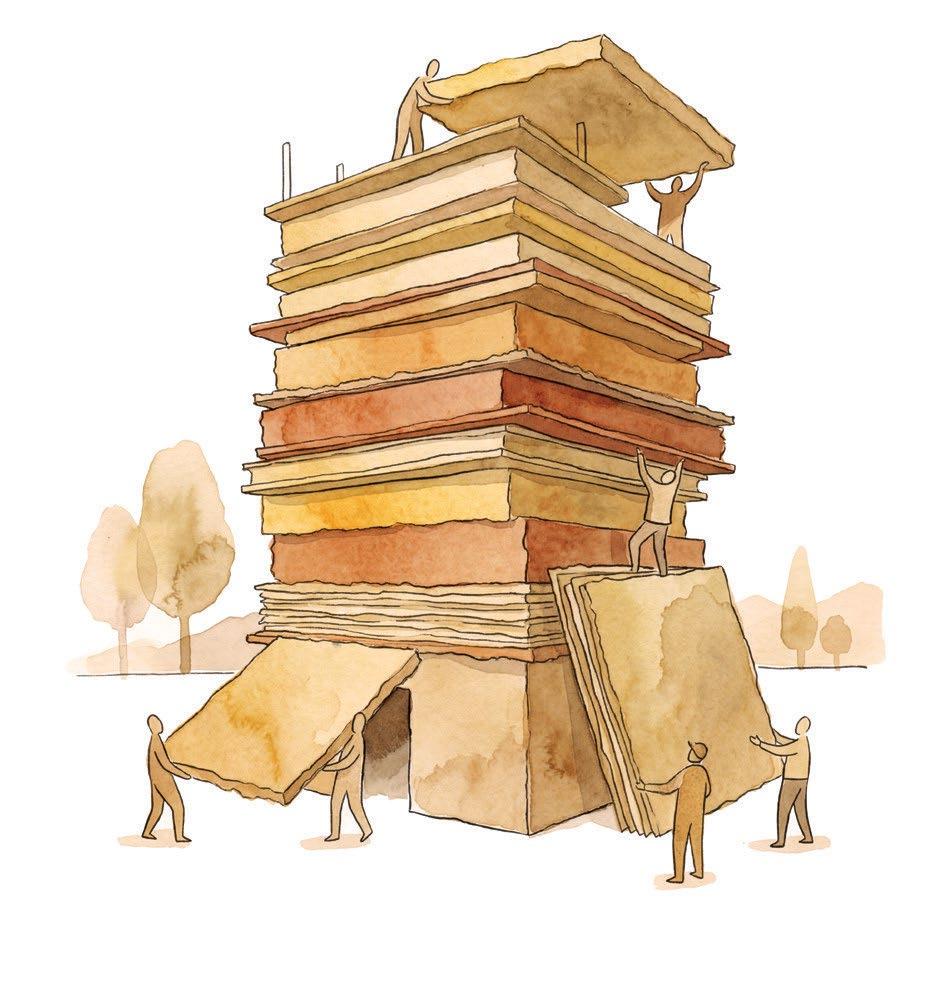
11,300
AVG. DEVELOPMENT COST PER SQ.FT. IN INDIA
occupancy advantages that outweigh incremental increases in room size.
Product-market fit: Hotels designed around the needs of their specific demand segments—rather than generic design assumptions— demonstrate stronger commercial outcomes.
Experience design: Public spaces, food and beverage
programming, wellness facilities, and destination-driven experiences often have a greater influence on guest satisfaction and pricing power than marginal increases in room area.
Longevity and character: As holding periods extend, brand equity, design relevance, and narrative identity differentiate top-performing assets.
Build smarter, not bigger
India’s hotel development cycle is entering a period of accelerated expansion, with more than 120,000 rooms currently in the pipeline, representing over half of the existing supply base. The opportunity is significant. But so is the risk of embedding inefficient design decisions that compromise long-term returns.
Hotelivate’s analysis provides a clear takeaway: once guestrooms reach the optimal size range, additional square footage adds cost without adding value. In an environment where land, construction, and capital costs continue to rise, disciplined design decisions are no longer optional; they are essential.
The next generation of highperforming hotel assets is unlikely to be defined by the largest rooms, but by the most carefully calibrated ones. Right-size the room. Right-size the return.

B LUE P RI N T TH E
BOUT IQUE
THE RIVER, THE RHINO AND THE SPELL
The world’s densest rhino habitat is also its most overlooked, until now. On the banks of the Brahmaputra, Assam's newest luxury retreat, Rhino & River Wildlife Retreat & Spa, is making the case for a destination that has always deserved more than a passing glance.
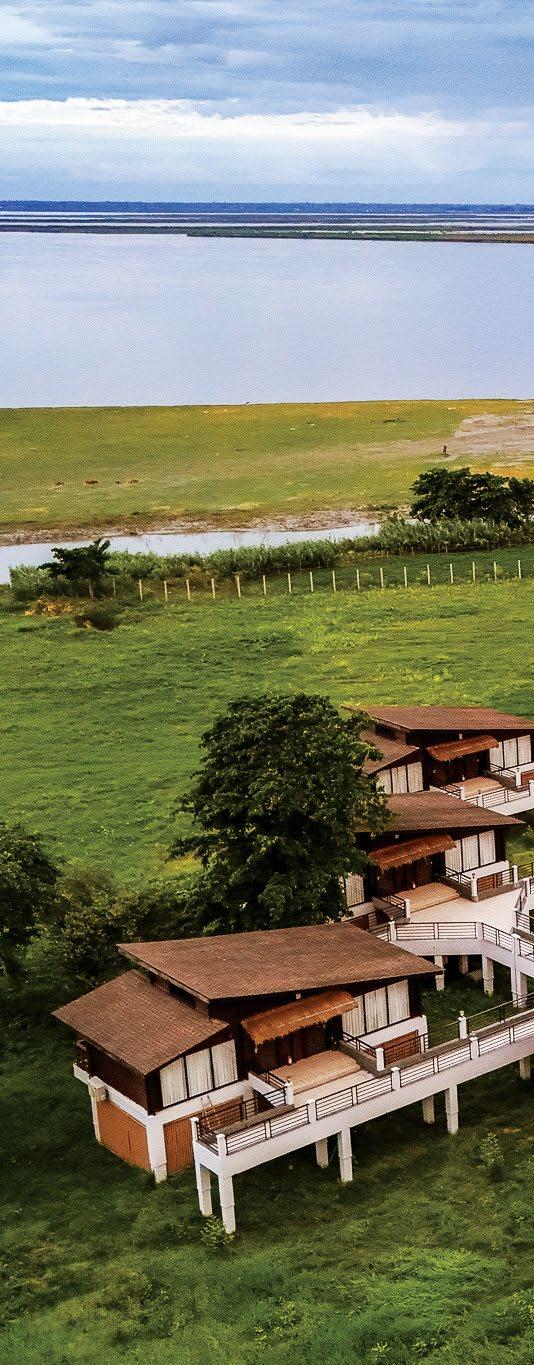
DEEPALI NANDWANI
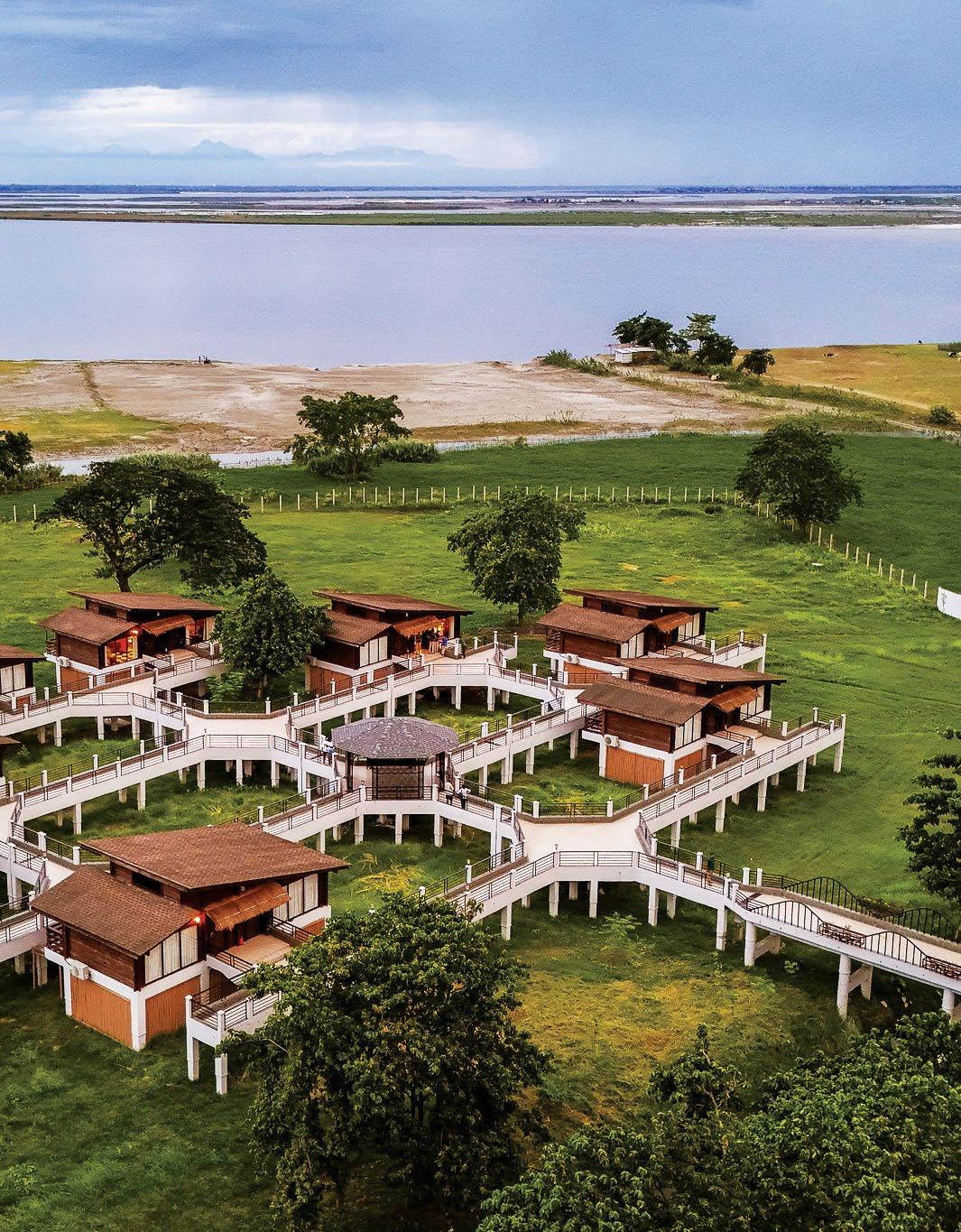
Set between the Brahmaputra’s floodplains and rhino country, Rhino & River rises quietly on stilts, shaped by the logic of the land.
Pobitora Wildlife Sanctuary, all of 38.8sq. kms., home to over 107 rhinos , just an hour’s drive from Guwahati (three hours on a bad day, when Guwahati’s chaotic traffic mimics big-city sprawl), is exactly the kind of country you would expect to go to when you want to escape. This is the land touched by the beauty and fierceness of the mighty Brahmaputra, the only Indian river referred to in the male gender.
Though at a comfortable driving distance from Guwahati, it feels a world apart—accessible, and yet such an immersive experience that blends wildlife, an ancient culture, and a cuisine built around balance, not spice. You can go from the airport to a rhino sighting in under two hours, rare for serious wildlife destinations.
A new address on the Brahmaputra
Resorts here are few and far between. Which is why the Rhino & River Wildlife Retreat & Spa, the first resort on the banks of the Brahmaputra, is such a crucial opening in a region that’s discovering what responsible and sustainable tourism can add to its travel landscape. It recently became a member of the Small Luxury Hotels of the World (SLH) network, a significant stamp of credibility for a property that only opened in late 2025. It has opened up the hotel to the possibility of international tourists, of whom they have had quite a few over the past year.
Rhino & River is where you head when you want some amount of rest and retreat within Assam’s bucolic villages, or want to spot rhinos up close and personal, and the abundant birdlife, especially cranes.
From the cottages of Rhino & River, the fertile Brahmaputra lies just a few metres away; yet it isn't directly accessible. You have to walk out of the resort, take a village road to a sandy embankment, and clamber down the sacks of sand that line it to stop erosion by a river that floods the villages during the monsoon, to get to the Brahmaputra. And there it lies, molten gold with inflexions of blue under a gentle mist, peaceful on the surface. But underneath, a strong current creates a shifting architecture of water and sediment, constantly reshaping the river, even when the surface appears still.
Tucked between the floodplains of the Brahmaputra and the world’s densest rhino habitat, the five-acre, 16key Rhino & River Wildlife Retreat and Spa is redefining what luxury means in India’s northeast.
Design rooted in place
The cottages stand on stilts, a common design detail in a land where the river floods villages during particularly fierce monsoon months. So strong are the flood currents in some years that even rhinos get washed away. While the frame of the resort was built by Assam Tourism, the current management, SM JDB Estate Private Limited (a
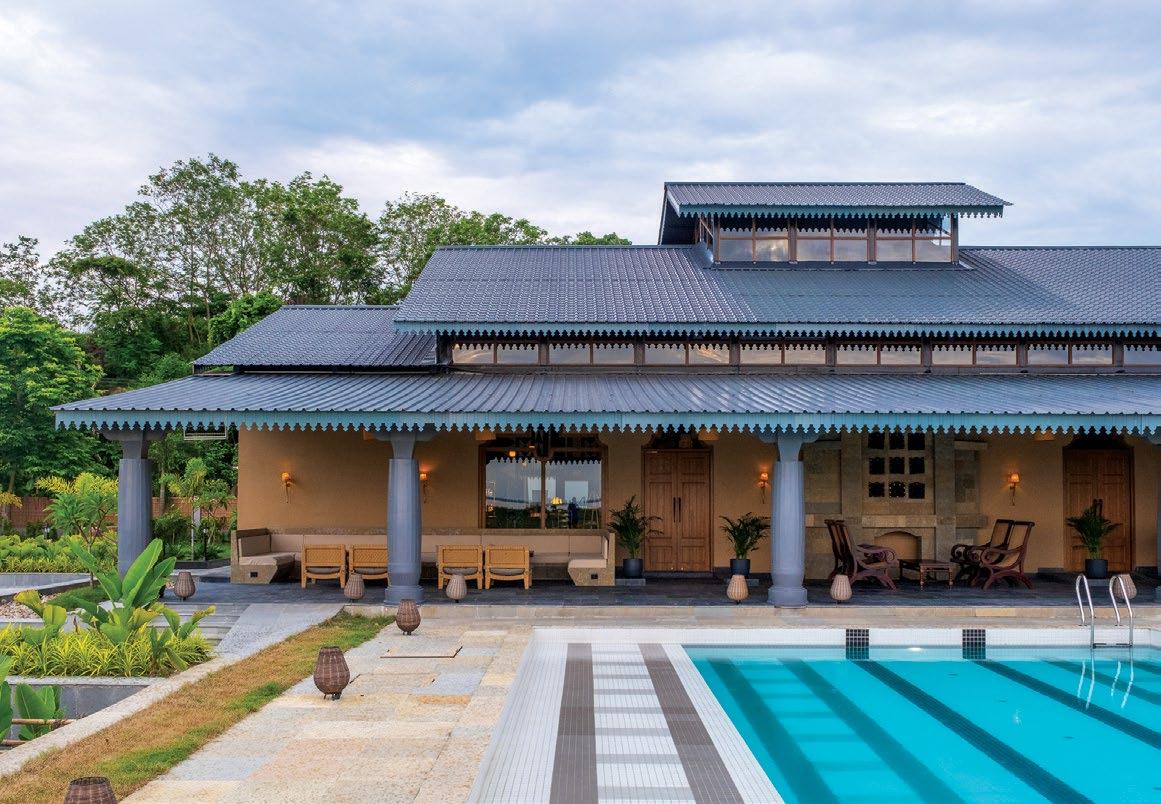
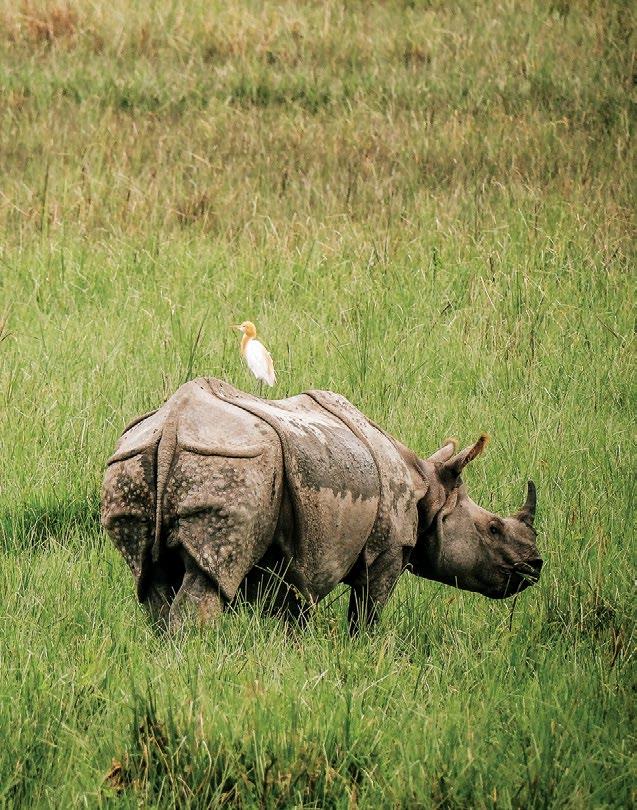
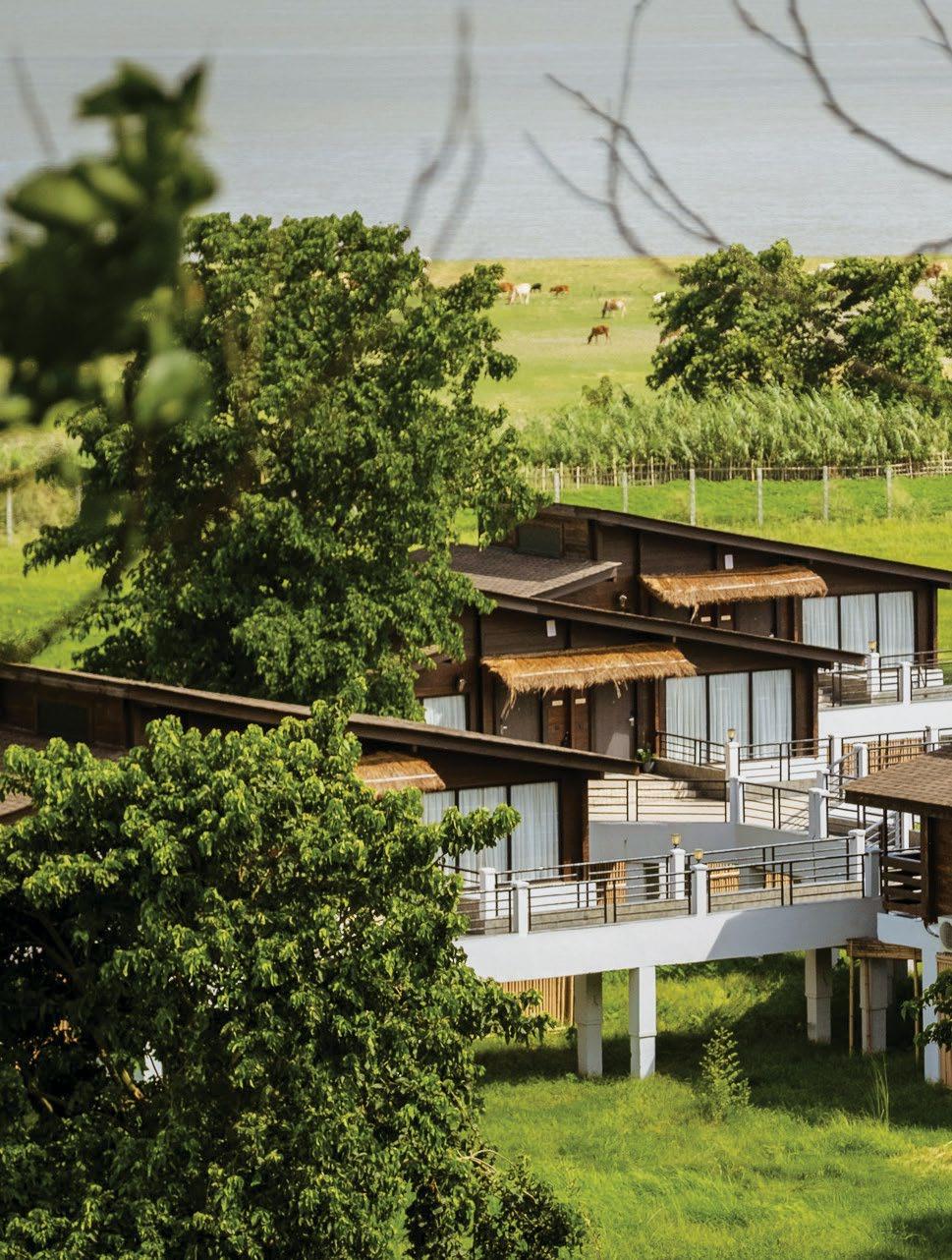
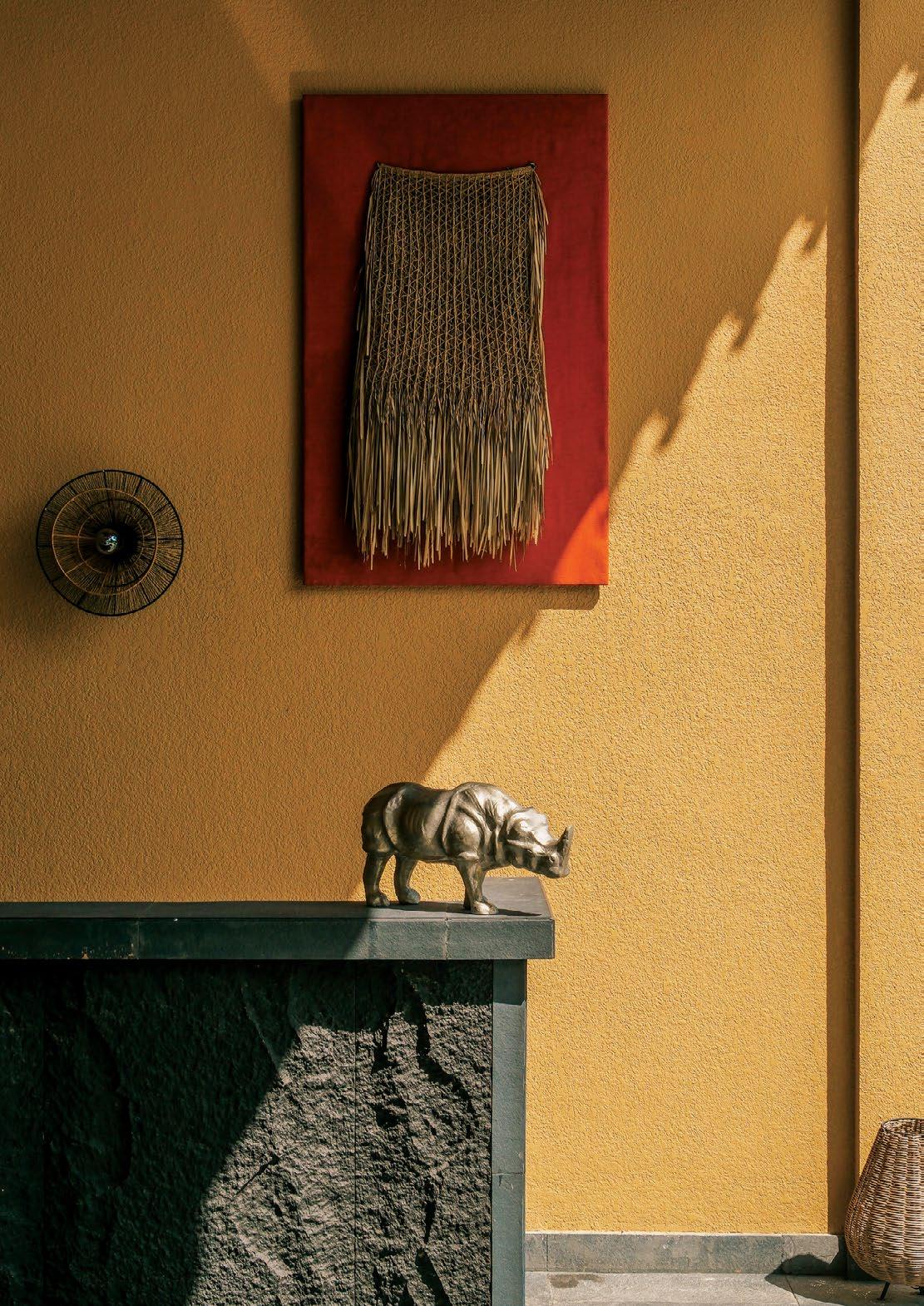
CLOCKWISE FROM TOP LEFT: The buildings reflect vernacular Assamese forms; metal rhinoceros sculptures turn the sanctuary’s most enduring resident into a design motif; village walks move beyond safari—to a life shaped entirely by the Brahmaputra’s rhythm; Seen through the trees, the retreat feels less like a resort and more like part of the river’s own landscape; in Pobitora, rhino sightings are less a matter of luck and more a quiet certainty.
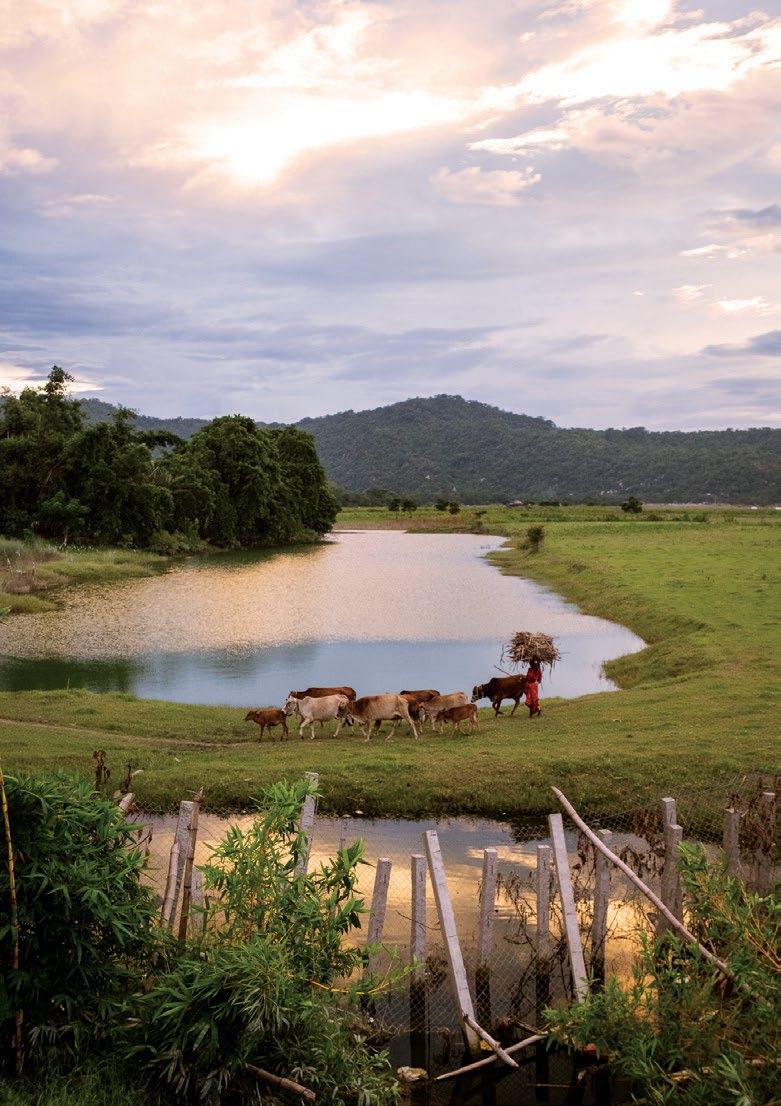
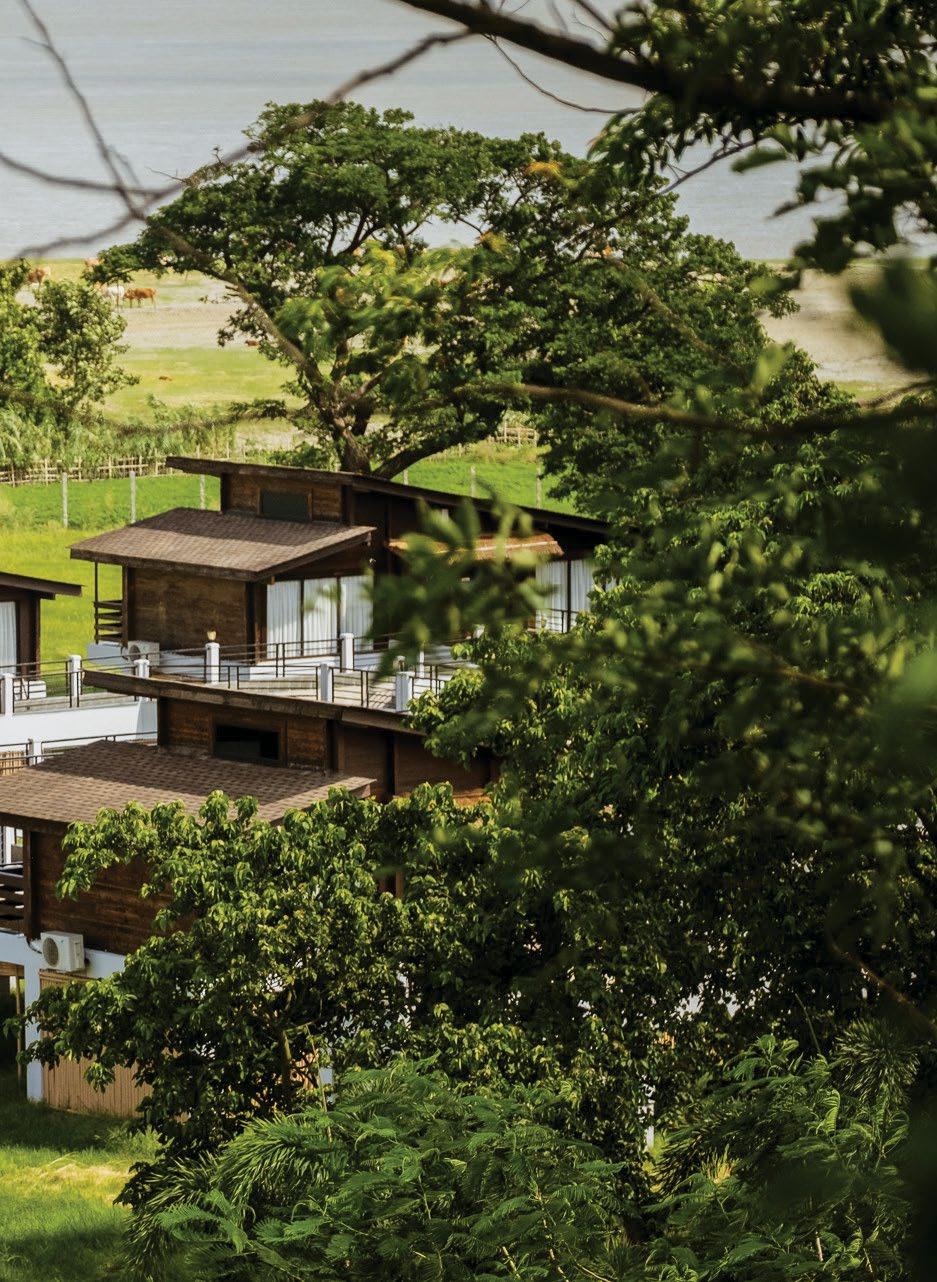
joint venture between two prominent Guwahati-based business groups SM Developers and the JDB Group that focuses on real estate and hospitality projects in northeast India), has refurbished the retreat to position it for premium travellers.
At the heart of Rhino & River is the dining area, Baan Kahi, sprawling and almost cavernous. The interiors, designed by EDIDA-winning Naga designer Aku Zeliang, are anchored in northeastern, particularly Naga, design traditions. A wall with black-and-white geometric motifs forms the core, while materials such as jute, water hyacinth and wood reference the region’s material palette.
Within the rooms, the Brahmaputra’s muted browns and greens become the core palette. The wetland’s light and mist translate into layered interiors. The rhino itself becomes a tactile reference, seen in textured, almost armour-like finishes and metal rhinoceros figures across the retreat. As Resort Manager Mani Gurung says, “The idea was to be as local as possible, while allowing a certain contemporary layer to come in. Modernisation touches the design, but the respect for local remains intact.” Aku Zeliang reinterprets traditional Assamese homes through a contemporary lens, pairing asymmetrical sloping roofs with warm timber and layering in cane and bamboo elements handcrafted by local artisans.
You walk to your cottage through a long on-stilts bamboo pathway, which at one point has a delicate lattice or jaali gateway, somewhat like a pergola. The
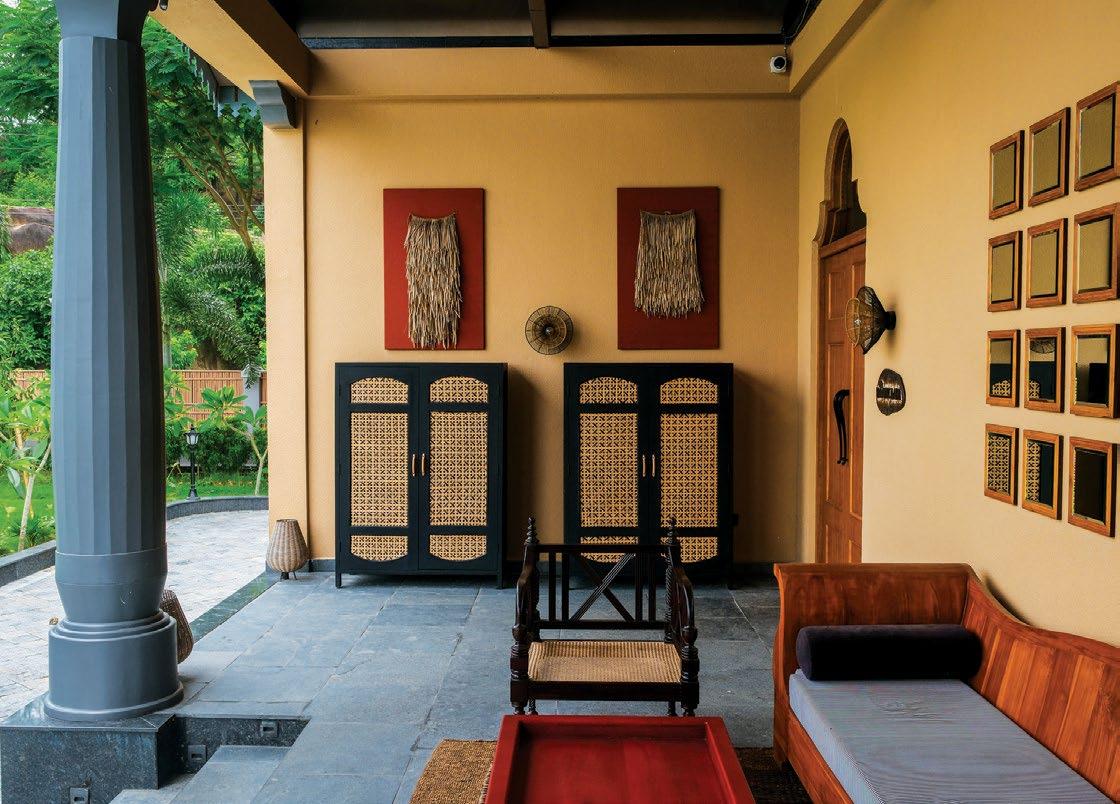
honeycomb-shaped gateway, painted black, frames the cottages, trees, and the Brahmaputra in the distance.
The room interiors are inspired either by safari lodges of yore, with leather and wood touches, or by the tea estates of Assam. The furniture in the dining area is all cane, much of it sculptural objets d’art, yet comfortable enough to sink into. In the tea estate cottage, the green rattan peacock chair is the highlight. “We don’t really have room numbers,” says Gurung. “Each room is named to reflect either the wildlife or the tea landscape, so the experience begins even before you step inside.”
Where sightings feel inevitable
This is rhino country, so there is a safari through Pobitora Wildlife Sanctuary, where I am “guaranteed” a
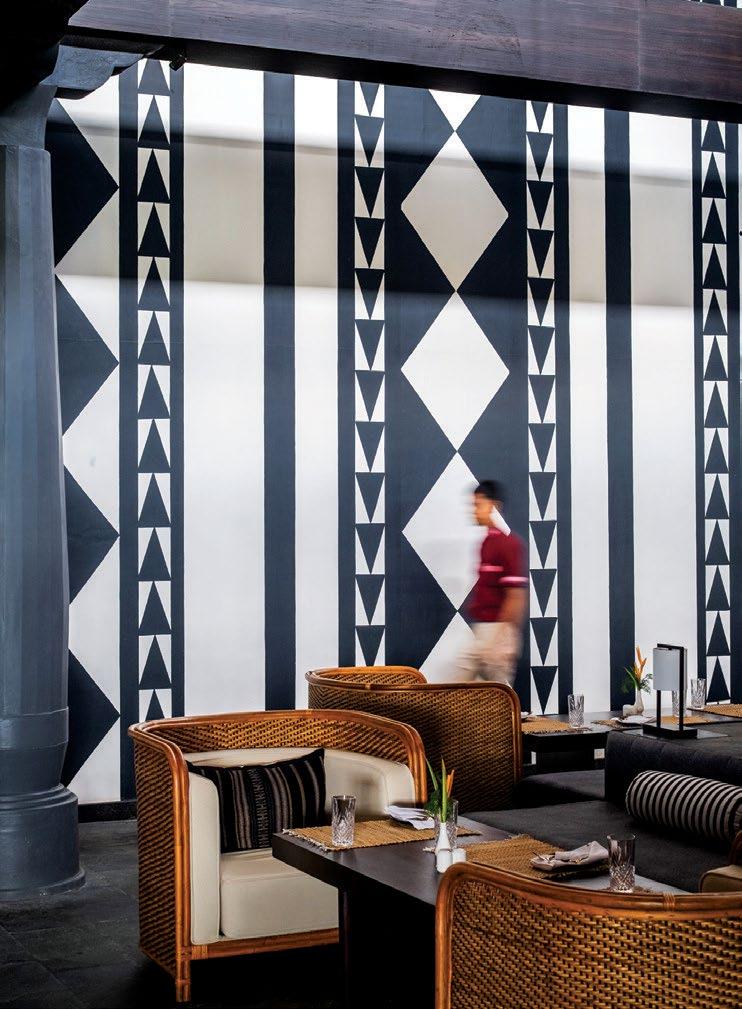
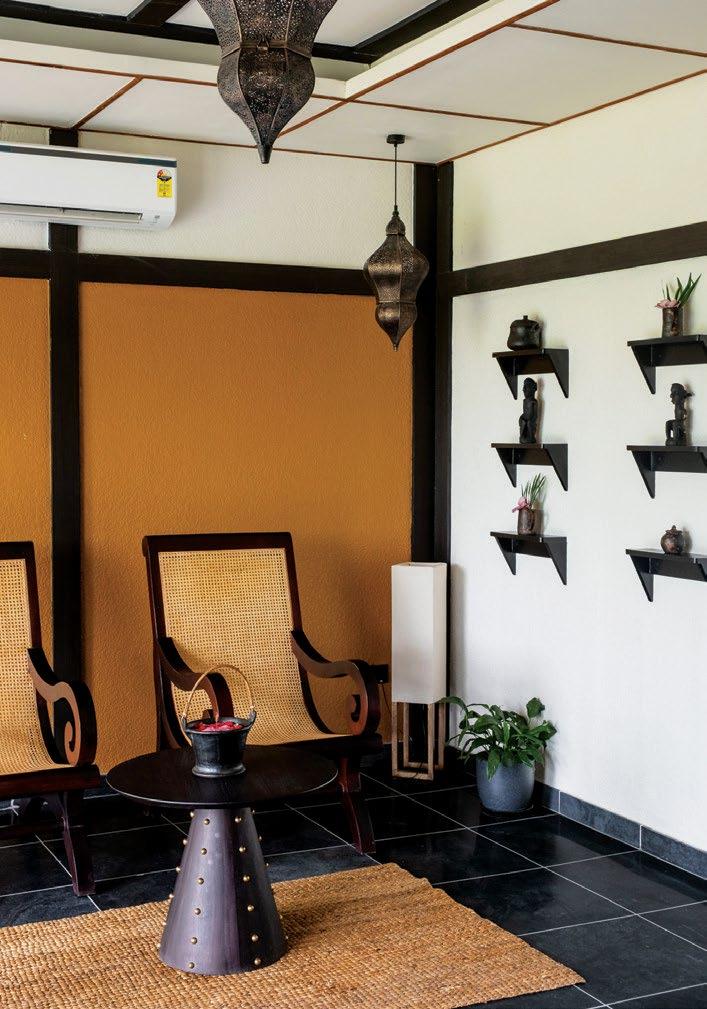
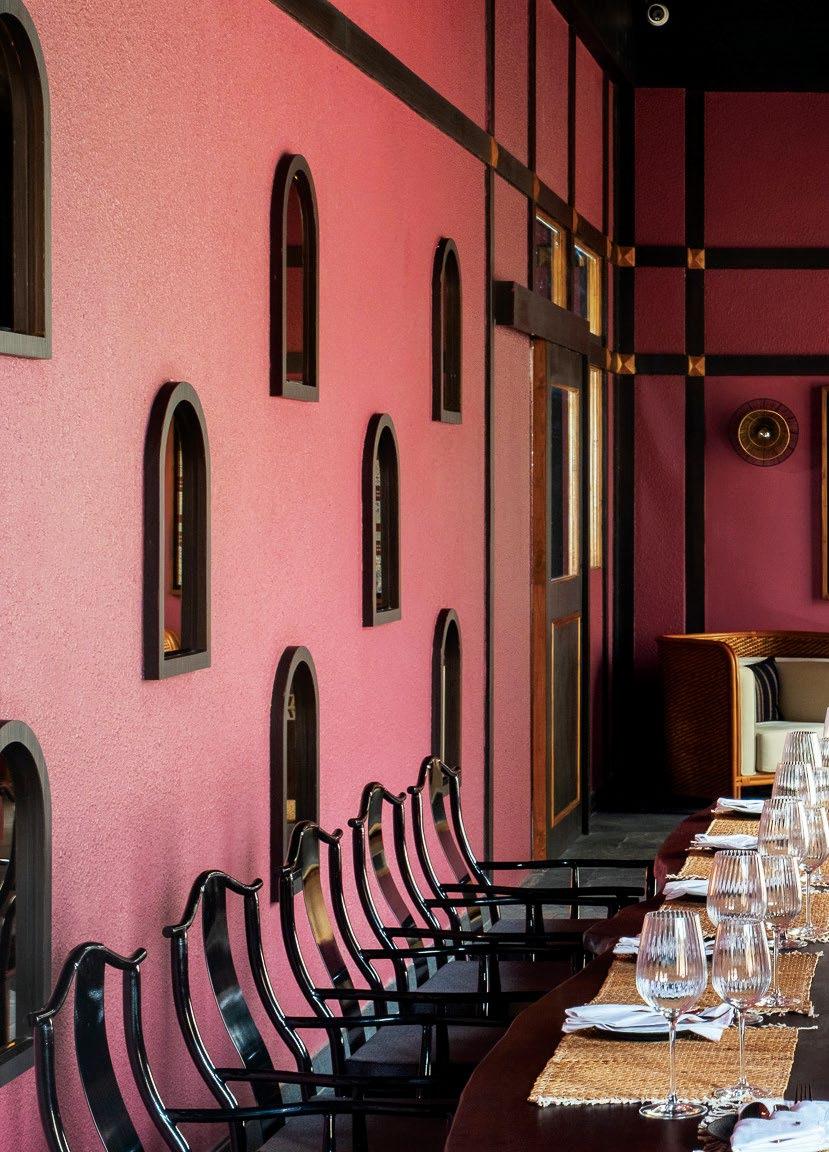
BELOW LEFT AND RIGHT: The spa is designed less for indulgence than recovery.
INSET: Birding reveals a wetland alive with migratory visitors.
BELOW RIGHT: Rooms draw from the Brahmaputra—muted greens, softened light and colours that echo the rhino.
rhino sighting by Gurung. I have largely been lucky with sightings in the wild, but seeing over five rhinos in one morning was a first, even for me, one of them so close that I could reach out and touch her… if I wanted to. Here was a beast built like an army tank, highly territorial, capable of running at 45km/hr. And yet, she seemed nonchalant as she munched on fresh grass, her tough hide glistening in the morning sun.
If you’re expecting Pobitora to be a lesser cousin of Kaziranga National Park, it isn’t. The resort naturalist Amar Jyoti says sightings here aren’t a matter of luck; they’re almost assured. A drive across Pobitora reveals a magical landscape, a mosaic of marshes, floodplains, and tall elephant grass through which rhinos move stealthily. Safaris are often on elephant back, though we were in an open-air jeep.
The marshes and water bodies formed by the river are flush with migratory birds from Siberia and Central Asia—cranes, Oriental Pied Hornbills, storks, herons and thousands of Lesser Whistling ducks, who trill instead of quacking! “Over 200 species thrive in this ecosystem,” says Amar Jyoti. “The entire landscape shifts dramatically with seasons, sometimes resembling a floating world during monsoons.”
ABOVE LEFT AND RIGHT: At Baan Kahi, the dining experience draws from Assamese memory.
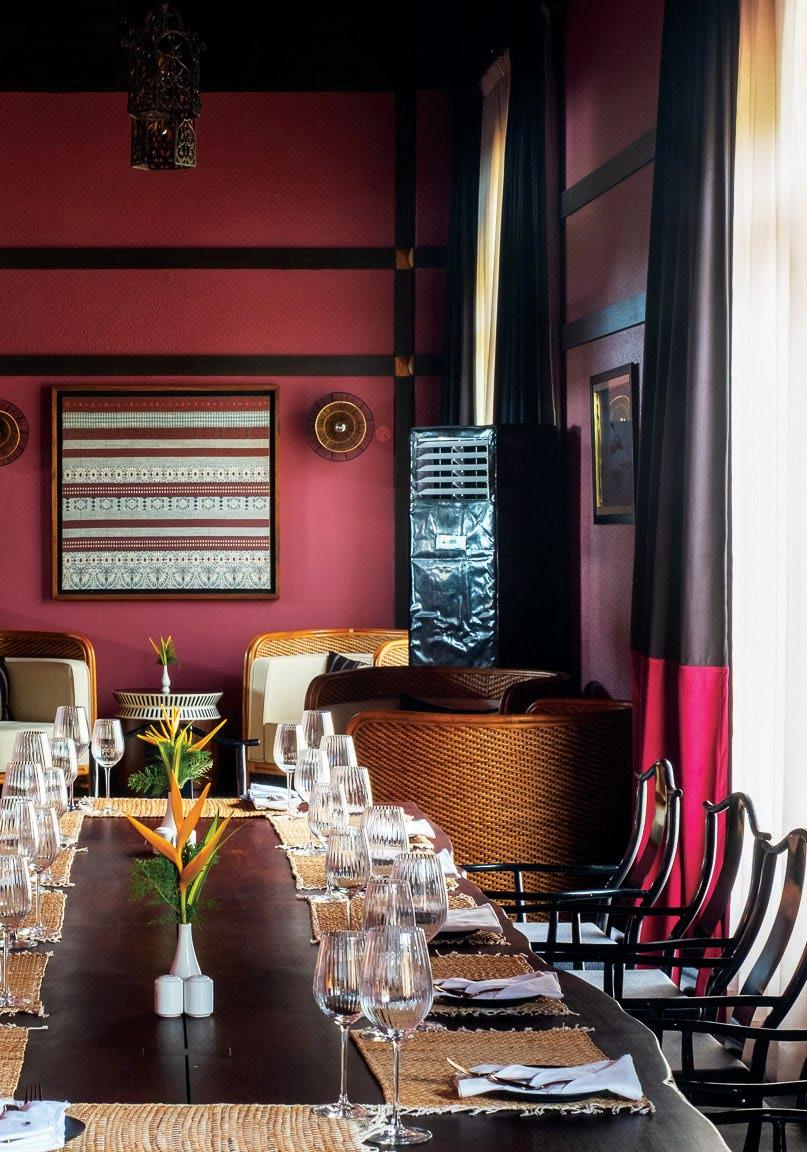
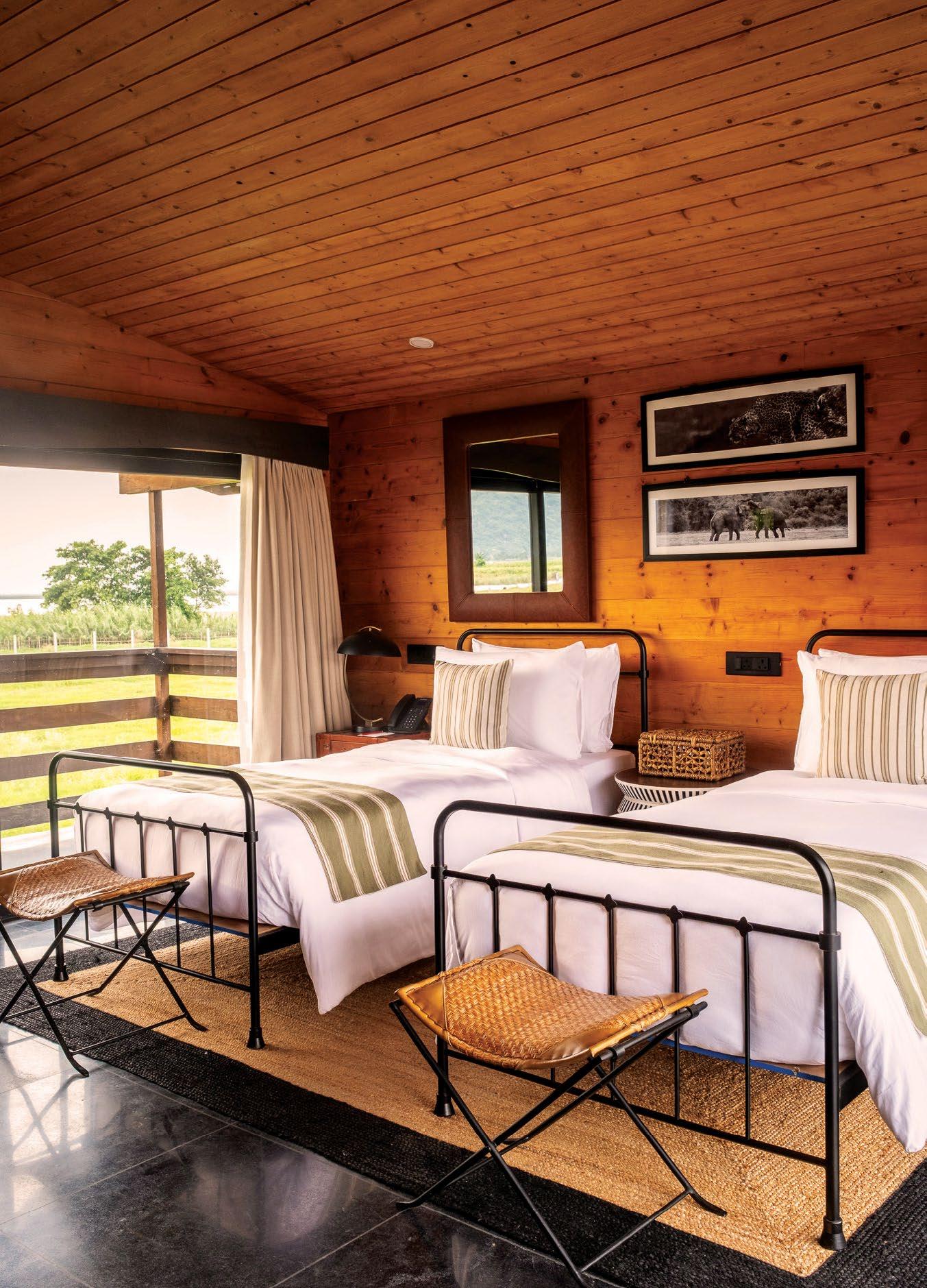
Black magic, handlooms and village walks
Rhino & River Wildlife Retreat & Spa positions itself as an experiential resort, and there is plenty to do in Pobitora despite its seclusion. The safari remains central. “Our focus is to bring Pobitora into the spotlight,” says Gurung. “Everyone knows Kaziranga, but very few people know Pobitora. Here, rhino sightings are almost guaranteed, and the culture is ancient.”
The region lies within the larger Mayang district, where black magic once flourished and where healers still treat years of pain and disease. The Mayang Museum, dedicated to practitioners and healers, chronicles the region’s tryst with black magic. People no longer practise black magic, Babumani Saikia, also a naturalist and storyteller, assures me, though there are healers—bejes—who practise ‘white magic’.
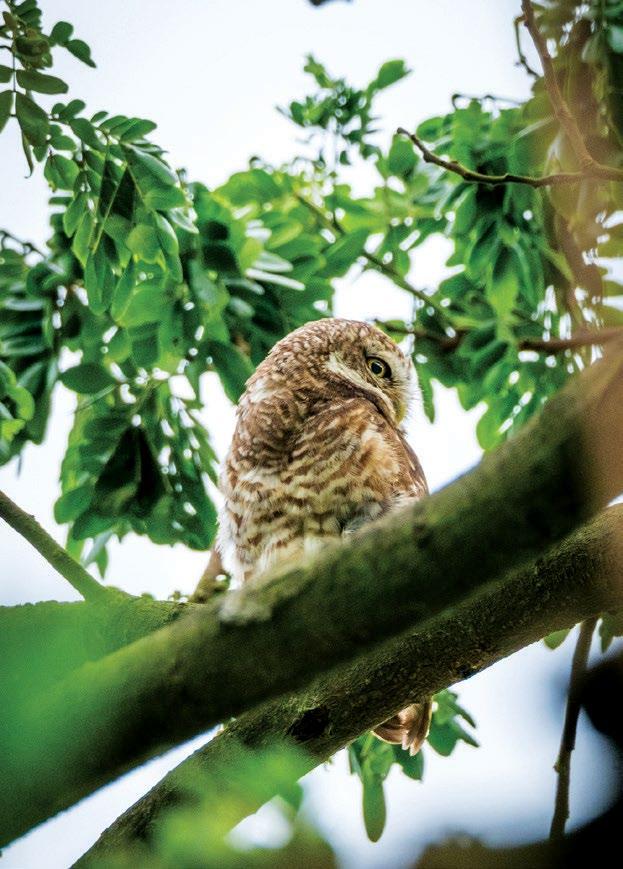
The Mayang Museum is not a large building, but it holds an unsettling amount of history. Old manuscripts line the walls, their edges worn soft with age, each page dense with spells, invocations, and rituals described with the precision of a medical textbook. There are skulls. There are talismans. Photographs of practitioners stare out from behind glass, men and women who could, according to the records, turn people into animals, find stolen goods, or treat malaria with methods that no pharmacy would recognise.
Babumani lets me take my time here, which I appreciate, because this is not a place you move through quickly. "People think magic ended," he says quietly. "It didn't. It just changed its shape." Outside, the village looks entirely ordinary—children, chickens, a woman hanging washing. I stood there for a moment, trying to reconcile the two. I couldn't quite.
The museum evoked a feeling that sits between fascination, curiosity and unease. For me, travelling through the region became as much about understanding an ancient culture steeped in magic and mystery as it was about the rhinos or the cuisine of the river people.
Beyond that, Rhino & River offers river experiences and village walks. On the first day, the boat I take— more like a dhow—moves down the Brahmaputra, with villages on both sides. We dock at river islands where people farm vegetables and spices on land made fertile by river sand, and where life is shaped by the everchanging current.
The river, for now, moves with deceptive gentleness. But as Babumani tells me, come monsoon, it swells and quickens, the sediment-laden currents building and erasing sandbanks, restlessly redrawing the land as shifting channels give rise to temporary islands that are formed, eroded, and reshaped.
Walking through the sandbanks and over sacks of sand is a workout, as is climbing a few hundred steps to the Shiva temple atop a hill, from where the view of Pobitora is exquisite, with the river in the distance, hills beyond, and villages in between. This simple temple, with the voice of the local priest chanting, the dog who followed me for the prasad, and the vista that loomed large, is exactly what you need to slow down and let go.
On a quieter evening, I walked through the village, meeting local weavers who create red-and-white Assamese gamosa (gamcha) and mekhela-chador (a two-piece garment) on traditional looms, ending at Babumani’s house for a cup of Assam black tea.
There were other moments of quiet and beauty over the three exploratory days: watching ducks trilling away or a rhino munching just a few metres away; a heron standing motionless in the shallows; the smell of river sand; the sound of the loom in the weaver’s house; the beauty and simplicity of naamghars, or the home temples; and the black Assam tea from just a few kilometres away, among the best I have had.
Evenings that unfold slowly
Back at the resort, evenings unfold in the dining area, where local musicians perform boatmen’s songs and flute music, a popular Bihu troupe takes over with effortless energy, while you dine on Assamese and global dishes. The meals are fresh, local and sustainable. The black rice kheer, Assamese thali with river fish, puris, pani pitha and jolpaan are a testament to how a boutique hotel should be run. Then there is the large multi-room spa with steam, shirodhara and en-suite showers, where, they say, the foot spa is pure magic.
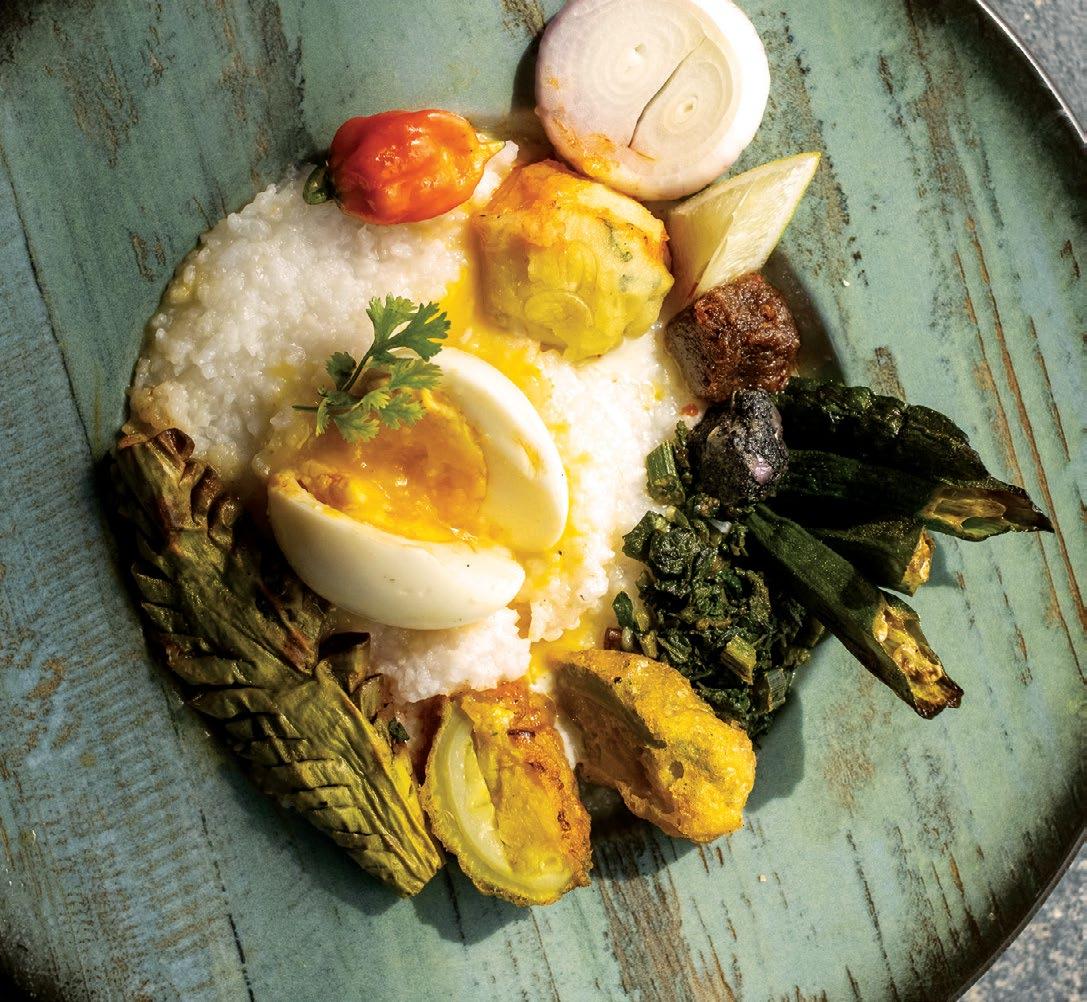
MD & CEO, SM DEVELOPERS WITH
Vikas Agarwal
On
building a destination-led retreat where the river, the rhino and the region remain inseparable.
Rhino & River Wildlife Retreat & Spa is located in a destination that is still emerging on the tourism map. What made you believe this could become a viable hospitality destination?
Rhino & River is the first resort on the banks of the Brahmaputra, ever. Moreover, as a location just an hour from Guwahati—besides being a great weekend option—it is also easily accessible for anyone flying into the city. I felt it was time Pobitora, with the highest density of rhinos and its location in Mayang (the black magic capital), started getting its due, all of which could be woven into an interesting story.
What went into designing the resort?
Typically, northeastern design has always focused on timber and very in-your-face tribal artefacts. My vision was to house a contemporary northeast aesthetic within a traditional architectural shell. This way, while the structure evoked a bygone ‘Assam-type house’ era, the art and furniture remained comfortable, aesthetic and timeless. We have used materials from different parts of the region—Sohra Stone from Meghalaya,
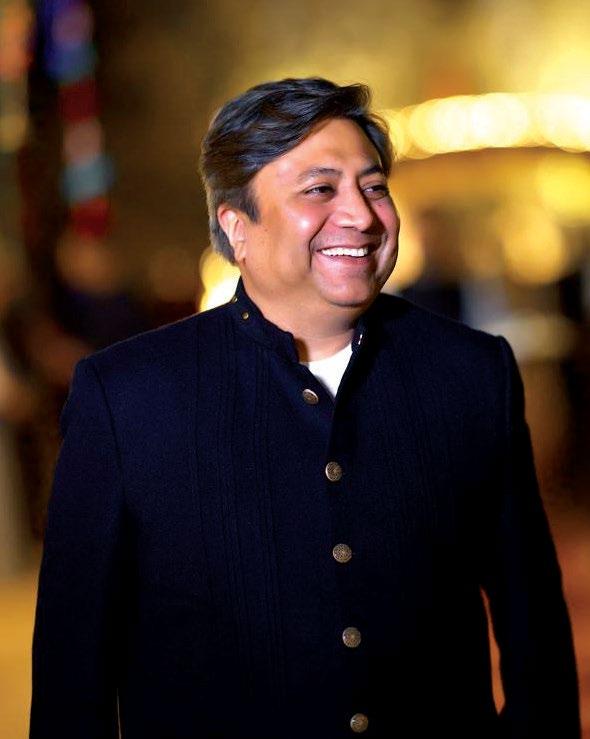
“
Rhino
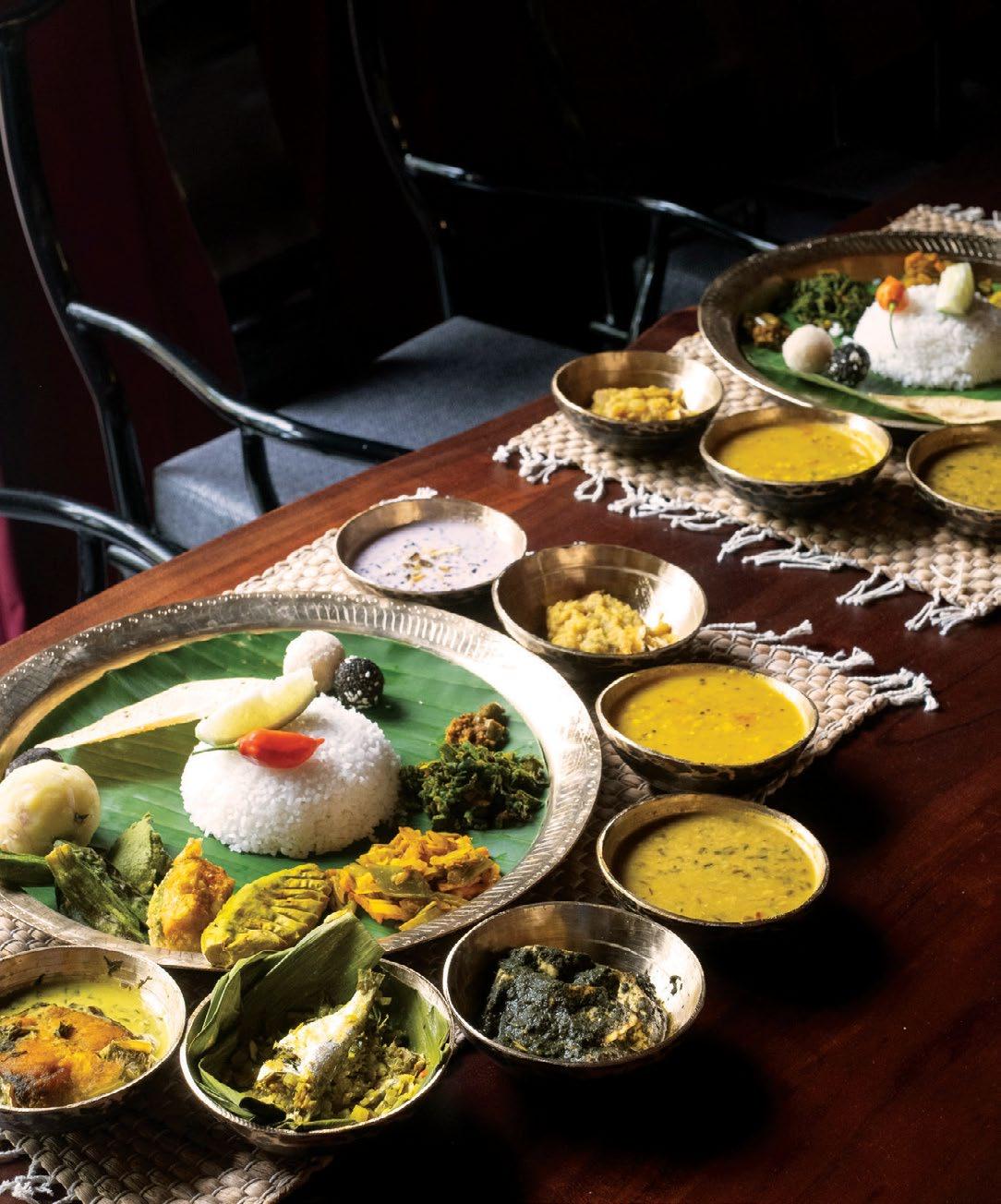
furniture from Nagaland, art from Arunachal—while keeping Assam as a focal point of the architecture, uniforms, and naming or signage. Our restaurant is called Baankahi, the traditional plating system of Ahom kings, while the bar is called Apong, or rice beer of Assam, and the spa is Nirban (nirvana).
How did you decide the experiences you would offer to your guests?
The entire ethos has been to offer truly local, immersive experiences. I was quite sure that we had to provide avenues for people to engage with nature in its rawest form and explore the area. We even got rabbits and ducks so that urban children, who don’t even get to see birds, feel the excitement of petting a rabbit. And you have to see how they go absolutely crazy doing that!
How do you create a sense of destination where existing tourism infrastructure is limited? What comes first—the product, the narrative, or the ecosystem around it?
I feel scale would define it. If you are planning a 200room mega resort, you can literally plug it into any
& River Wildlife Retreat & Spa couldn’t be what it has become without the rhino, the river, or the 500-year-old Shiva temple around it.”
location where logistics are convenient, and seasonality is not too dominant. However, in the case of ultraexclusive properties like Rhino & River, the product and ecosystem must have a great sense of synergy. Once you achieve that, the service and narrative follow. Rhino & River couldn't be what it has become without the rhino or the river, or the 500-year-old Shiva temple around it.
Assam’s tourism story is often dominated by Kaziranga. Do you see Pobitora as part of a broader shift in the axis of travel within the state? What makes this micro-destination compelling today?
I definitely cannot say that the axis will shift. However,
ABOVE: The Assamese thali at Baan Kahi features flavours built on balance.
OPPOSITE: Breakfast arrives, with local staples that root the stay firmly in Assam.
Pobitora, and more specifically Rhino & River, provides a decent, quick fix for someone with limited time. You need at least three days to get anything out of Kaziranga. On the other hand, an 18-hr sojourn at R&R is a great way to experience the northeast. Also, this is our attempt to shift Guwahati from a transient location to a place where visitors can spend two nights and experience the entire region.
What were the biggest challenges in conceptualising and building Rhino & River Wildlife Retreat & Spa?
We partnered with Assam Tourism for the land. So that wasn’t very difficult. I feel conceptualising, and then bringing the right team to design the experiences, brand and art, have been the most interesting aspects. You have to get it right the first time, so all decisions have to be very carefully made. Therefore, although we have just 16 rooms, we have a reasonably large multi-room spa with steam, shirodhara and en-suite showers. We also have a heated pool so that even during peak winters, people can enjoy the property as a simple getaway with families or friends.
Boutique hotels often rely on strong storytelling. How did you define the identity of the retreat—as a wildlife retreat, a wellness escape, or a cultural immersion experience?
So, we are not located inside the Serengeti. And we realised it right when we started designing the property that Pobitora Sanctuary would be a sixmonth highlight. Thus, it was very important that we had multiple points of attraction for our patrons as
CLOCKWISE FROM TOP:
Village walks often end at the loom, where Assamese gamosa and mekhela-chador are still woven by hand; each room is named for the wildlife or tea landscape around it; in nearby villages, blacksmiths continue working with the same slow precision that shapes everyday rural life; local rice beer, still brewed the old way; from the balcony, the floodplains stretch toward the Brahmaputra.
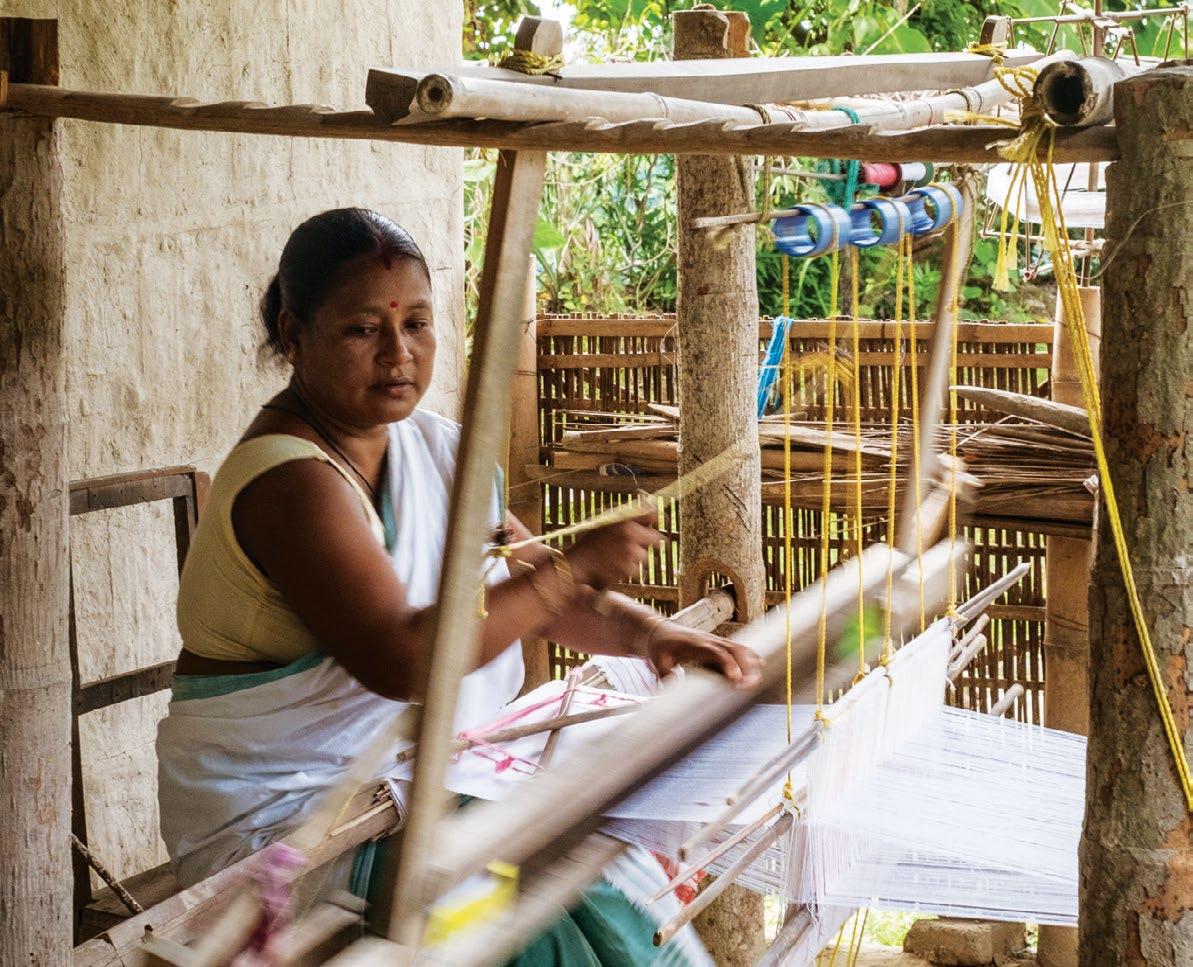
an all-season destination. Being the melting pot of the northeast, Guwahati attracts travellers from all over the region, besides the rest of the country and the world.
Assam still faces constraints in connectivity, visibility, and perception. What structural challenges do hotel owners encounter when operating here?
Lack of connectivity is a myth. Guwahati airport is now the seventh busiest airport in the country. Any guest from any major city in the country can reach Guwahati within three hours. We need to work on visibility and perception, and our government—both the centre and the state—is doing
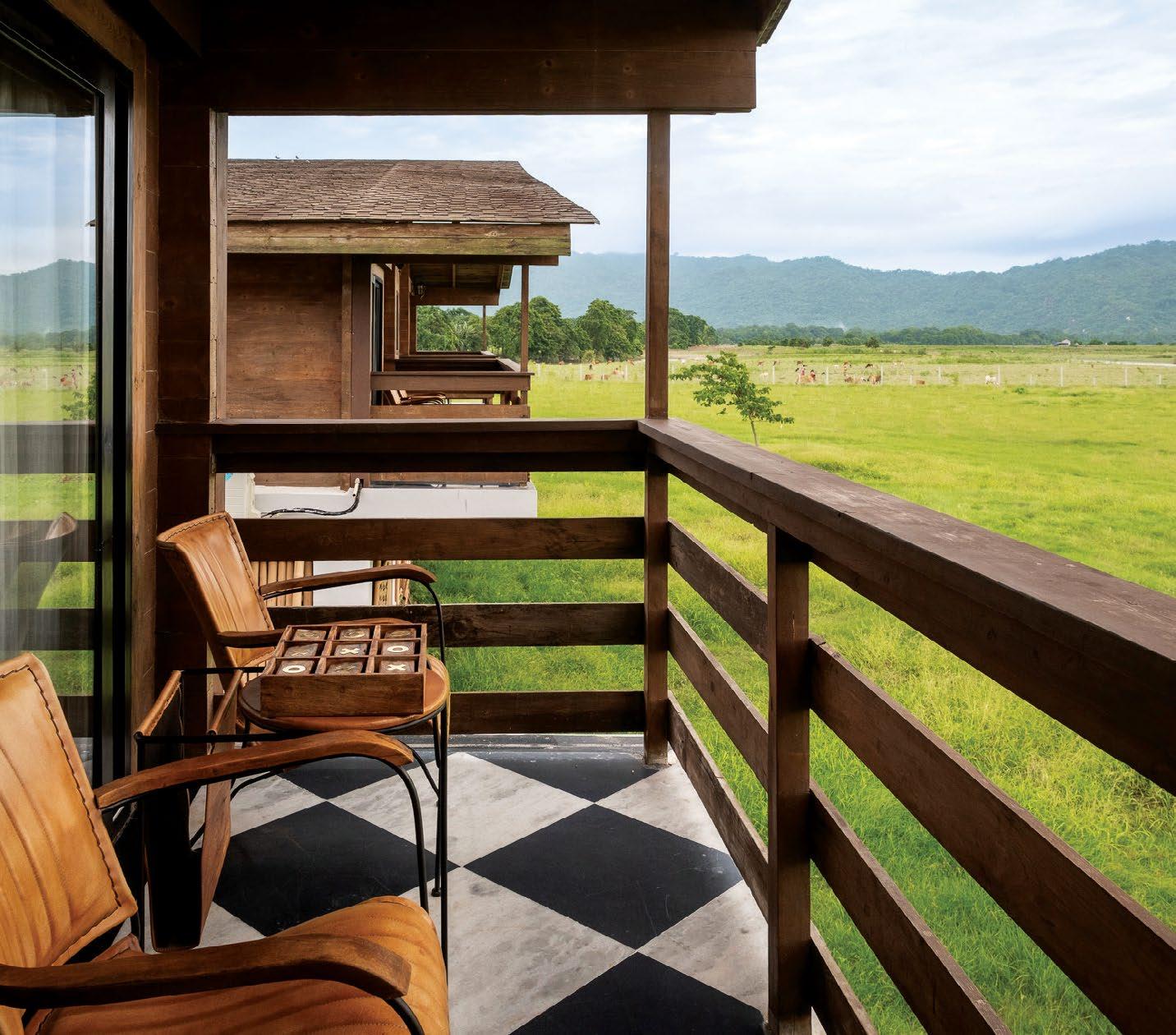
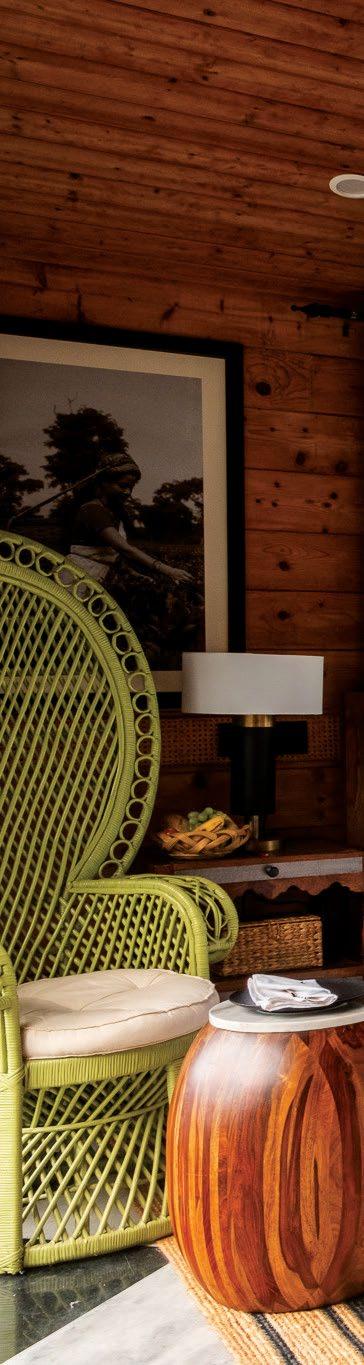
If you are planning an ultra-exclusive property like Rhino & River, the product and ecosystem must have a great sense of synergy. Once you achieve that, the service and narrative follow.”
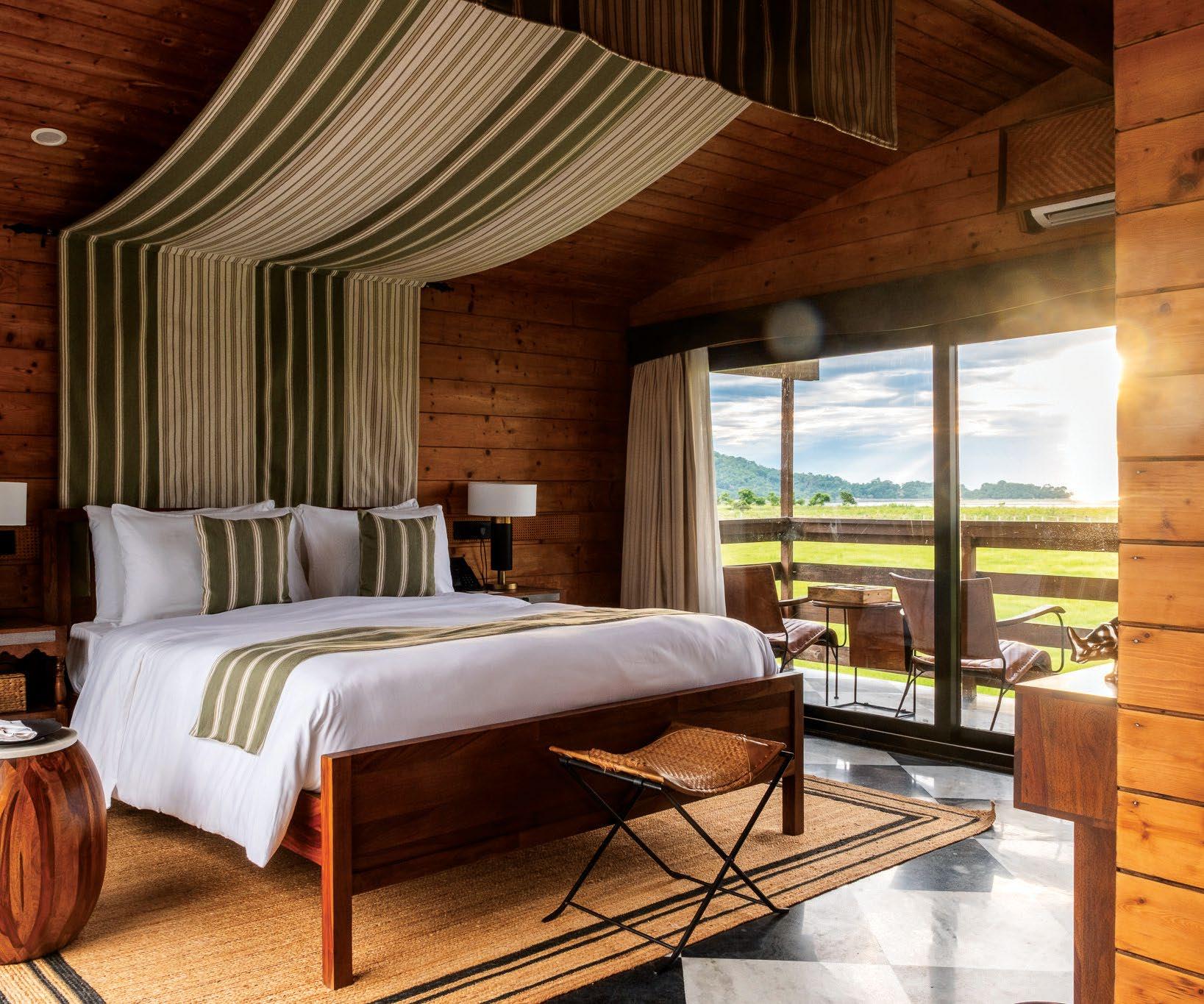
a fantastic job. It is safe, it is connected, and now we need to up the ante.
Do guests come to Rhino & River specifically for Pobitora, or does the hotel itself act as the primary draw?
The right property is extremely important as an anchor. It is not that there weren’t other properties before Rhino & River. But the price point or the offering was for a different category, from a different time, and nothing to write home about. We felt that it was high time the region got a property for which people would travel from far and wide. So yes, we now have guests coming from Mumbai or even London, just to stay with us and travel onwards.
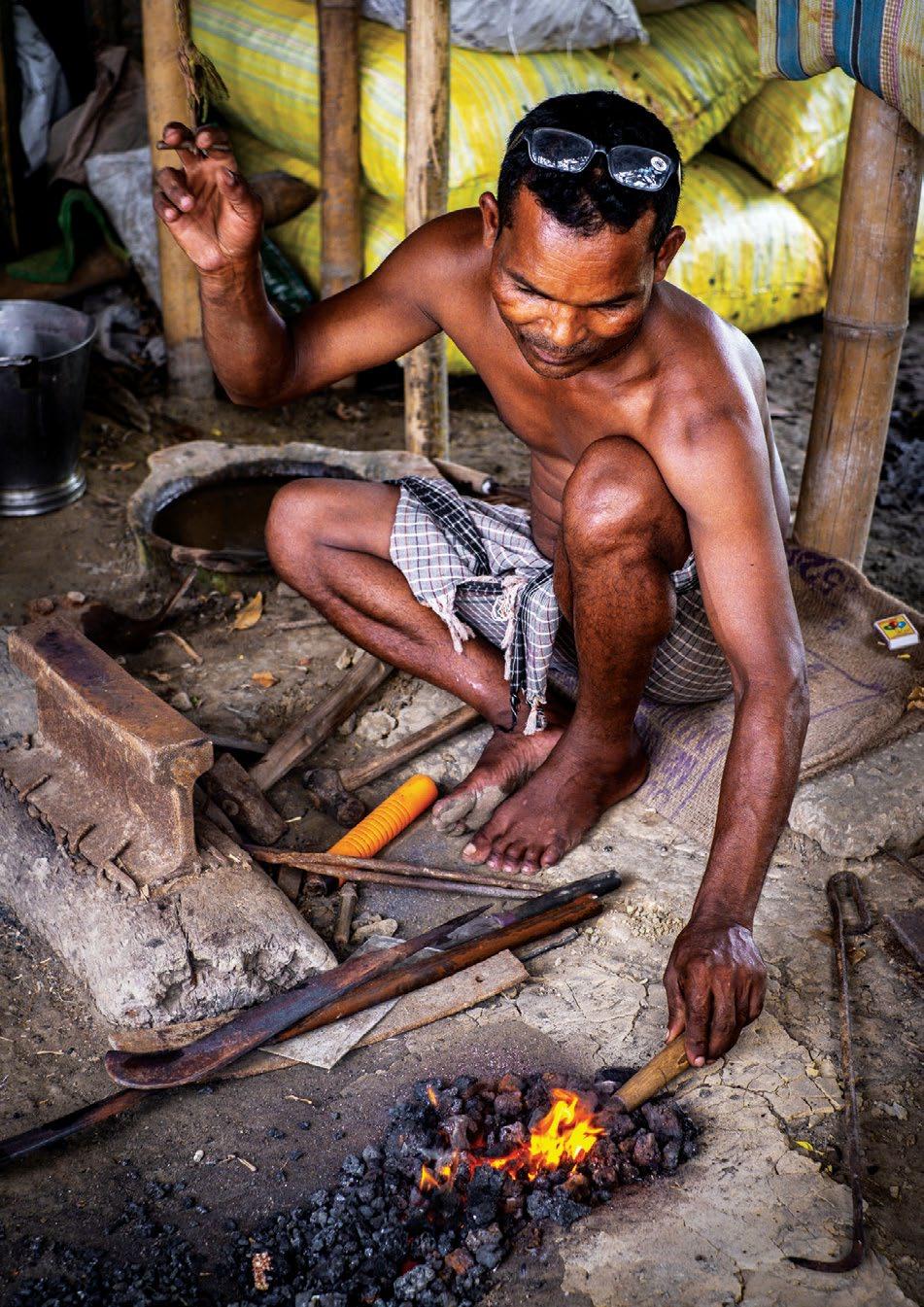
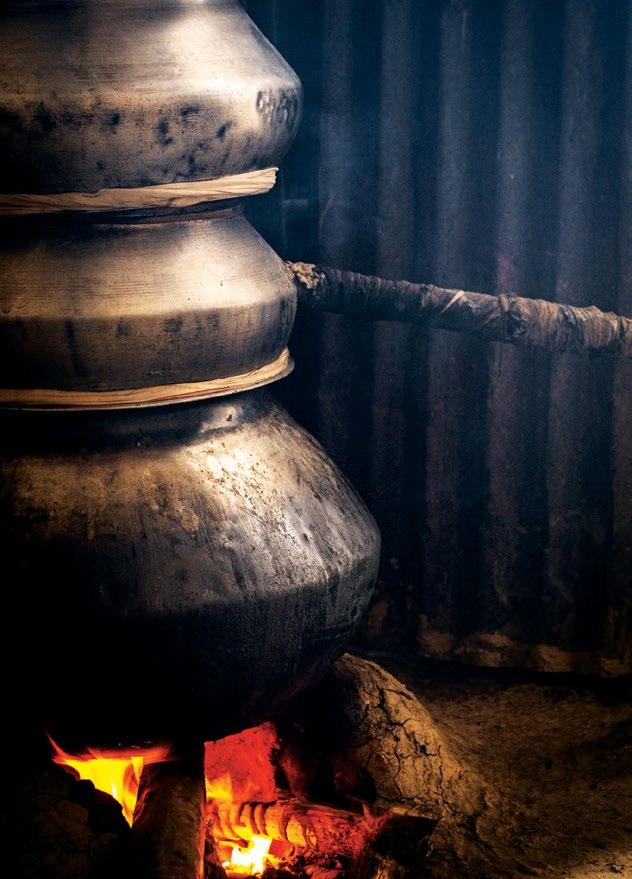
What will it take for Assam to emerge as a more mainstream luxury and boutique travel destination?
We are at a very, very nascent stage as far as luxury is concerned. We have to ensure that the time invested by the guest with us has a 101% return. The memories and the experiences that they carry have to last a lifetime. Moreover, Assam has not two, not three, but seven or eight national parks. Maybe even a few more. So we need about 15 to 20 more Rhino & Rivers. Only then, in the next couple of decades, will we see a real luxury circuit developing in the region. Until then, the river needs to keep flowing, and the birds need to continue chirping.
SOH NEWS
THE LATEST IN HOSPITALITY, TRAVEL, HOTELS, DESIGN & REAL ESTATE WORLDWIDE
INDIA'S TIGER RESERVES ARE FINALLY FIGHTING BACK AGAINST THE SELFIE SAFARI
You're riding in a jeep through a sun-dappled Indian forest when a tiger materialises from the undergrowth, magnificent, unhurried, and real. Your hand instinctively goes to your pocket. You angle your phone to get your awestruck face and the cat in the same frame. The tiger slinks away, unbothered. Or so you tell yourself.
That scene is now officially restricted in India. After a Supreme Court judgement in the long-running T.N. Godavarman forest conservation case, that banned or restricted mobile phones from the core tourism zones of the country's tiger reserves, there is far more silence and restraint in India’s forests. The
Court also barred night tourism in core habitats and restricted tiger safaris to buffer areas. The message was blunt: tourists have been behaving badly, and the animals are paying for it.
The evidence isn't hard to find. This February, a video went viral showing a wild tiger in Ranthambore National Park, Rajasthan completely surrounded by safari vehicles, forced to weave between jeeps to reach the treeline while tourists shouted and snapped photos metres away. The tiger looked cornered and visibly stressed. In India, these pile-ups have their own name: "safari jams." Beyond the dramatic incidents, the subtler damage adds up. Tourists were broadcasting live tiger locations on WhatsApp, drawing more vehicles to the same spot. Ringtones were spooking animals mid-movement. Loud phone conversations were cutting through habitat that should be silent.
India has real skin in this game. The country is home to more than 3,600 wild Bengal tigers, roughly 75% of the entire global wild population, across 58 official tiger reserves. Those numbers are a conservation triumph: India's wild tiger population doubled between 2010 and 2022. Losing ground now to Instagram instincts would be a particularly modern kind of tragedy.
Mumbai is getting a 126-km transport spine
Mumbai is preparing for one of its biggest infrastructure transformations ever after the Maharashtra government approved Phase 1 of the Virar–Alibaug Multimodal Corridor, a 126-kilometre, accesscontrolled transport spine stretching from Virar in Palghar to Alibaug in Raigad, cutting through some of the fastest-growing urban and industrial belts surrounding the city.
Phase 1 alone spans 96 kilometres and is estimated at ₹31,793 crore, with total project costs expected to exceed ₹37,000 crore including land acquisition. The corridor, featuring up to 14 lanes in stretches, is being developed by MSRDC and will pass through Vasai, Bhiwandi, Kalyan, Panvel, Navi Mumbai, and Uran, connecting directly to the upcoming Navi Mumbai International Airport, Jawaharlal Nehru Port, and the Mumbai–Pune Expressway.
The pitch is simple: cut the Virar-to-Alibaug journey by nearly 90 minutes and give Mumbai a bypass-style route that keeps freight, logistics, and commuter traffic out of the city's alreadychoked core. Urban planners are calling it the ‘Third Mumbai backbone.’ The bigger play, though, is decentralisation. If it delivers, the corridor could shift Mumbai's next decade of economic growth outward, into Bhiwandi, Panvel, Raigad, and beyond.
INDIA'S UDAN SCHEME JUST GOT A ₹28,840 CRORE UPGRADE
The Union Cabinet has approved a revamped Regional Connectivity Scheme-UDAN, committing ₹28,840 crore over the next decade to build 100 new airports and 200 helipads across underserved and remote parts of India between FY2027 and FY2036. The revised scheme extends airline subsidy support from three to five years, a direct response to criticism that many original UDAN routes collapsed once early funding dried up. Helicopter connectivity gets a significant push this time, targeting hilly, island, and tribal regions where fixed-wing operations aren't practical. The Northeast, Himalayan states, and aspirational districts are expected to be the biggest beneficiaries. Whether this phase can finally convert infrastructure into sustained passenger demand remains the real test.
Marriott thinks letting staff go home on time might fix India's hospitality talent crisis
India's hospitality sector is in the middle of one of its biggest expansion cycles with thousands of branded hotel rooms expected to enter the market over the next five years, with chains like Marriott, IHCL, Hilton, Hyatt, and Accor all aggressively expanding. But filling beds is proving considerably easier than filling rosters. Attrition is rising, and younger workers are walking away from hospitality careers citing long hours, burnout, and a work culture that has historically treated overtime as a badge of honour. A 2024 Tourism and Hospitality Skill Council report warned the problem was getting worse even as new hotel projects multiplied. Marriott International India is pushing back with a programme called "Life on Time", which simply ensures staff leave when their shifts end. No late stays, no expectation of overtime. "The talent is there; it just needs encouragement," says Neeraj Govil, Marriott's COO for Asia Pacific. In an industry built on endurance, that may be the most radical idea yet.
DELHI BETS ₹500 CRORE ON A NEW CULTURAL HUB
Delhi wants to be a global tourism destination. A ₹500 crore cultural hub might be how it gets there. A new government plan suggests Delhi's ambitions are shifting from preservation to creation. The Delhi Tourism and Transportation Development Corporation (DTTDC) has announced plans for a ₹500 crore cultural and tourism hub to be built on approximately 200 acres of land in Kanjhawla, in outer northwest Delhi. The project falls under the Centre's ‘One State, One Global Destination’ scheme, an initiative that aims to build at least one internationally benchmarked tourist destination in every Indian state and Union Territory, as part of India's broader Viksit Bharat roadmap. The hub, expected to take roughly three years to develop, is envisioned as a living cultural district rather than another heritage complex. Think amphitheatres, craft bazaars, food streets, literature and arts zones, performance venues, and immersive local experiences, all under one roof. Private sector participation and performancelinked incentives will be central to how it gets built and run.
Etihad Airways is quietly repositioning itself in India, and it has little to do with adding new routes. The Abu Dhabi-based carrier has significantly expanded its Etihad Guest loyalty programme in India, allowing members to earn and redeem miles not just through flights, but through banking, retail, food delivery, online shopping, and everyday on-demand services. The play is straightforward: stay relevant to Indian consumers even when they're not flying.
The timing makes sense. India is already one of Etihad's largest markets by passenger volume, with flights connecting Abu Dhabi to eleven Indian cities. But outbound travel demand is surging, competition from
ETIHAD WANTS INDIAN TRAVELLERS TO EARN AIR MILES WHILE ORDERING DINNER
Emirates, Qatar Airways, Air India, and IndiGo is intensifying, and loyalty has become the new battleground. By tapping into India's UPI-driven consumer economy and fintech boom, Etihad is betting that younger,
aspirational travellers will choose an airline they already interact with daily over one they encounter only at the airport. It's a model that turns grocery runs and restaurant orders into business-class upgrades.
India has built the airports. Now it needs the passengers
A decade into the UDAN regional connectivity scheme, India has operationalised 95 regional airports and over 660 routes. Yet provincial airports still handle just 2-3% of total domestic passenger traffic, according to Crisil Intelligence. Some UDAN airports recorded fewer than 2,000 passengers in all of FY’25. The infrastructure has outrun the demand. Last month, the Union Cabinet approved a revamped UDAN with a ₹28,840 crore outlay to add 100 airports and 200 heliports by 2036. But analysts say the real work now is building the economic ecosystems—tourism, logistics, industry—that turn airports into destinations rather than empty obligations.
Maharashtra moves to regulate its adventure tourism boom
Maharashtra is bringing order to its wild outdoors. The state has rolled out a formal registration and certification framework for adventure tourism operators—covering everything from trekking and rappelling in the Sahyadris to scuba diving and kayaking along the Konkan coast—under its Tourism Policy 2024. Operators must now meet prescribed safety norms, equipment standards, and emergency protocols aligned with ISO and Bureau of Indian Standards guidelines. Over 800 applications have already come in, with nearly 700 operators certified so far. The push comes as destinations like Kolad, Tarkarli, and Harishchandragad have seen surging footfall alongside a rise in accidents and unregulated operators. Maharashtra's model may well set the template for how the rest of India manages its fast-growing adventure tourism sector.
JAIPUR'S ALBERT HALL MUSEUM IS GETTING A ₹25 CRORE MAKEOVER
One of Rajasthan's most beloved heritage landmarks is about to get considerably more dramatic. The Rajasthan government has announced a ₹25 crore modernisation project for Jaipur's Albert Hall Museum, with plans to upgrade all 18 galleries with digital integration, install QR codes linking visitors to Rajasthan's art, culture, and culinary traditions, and introduce nightly light-and-sound shows as part of the Pink City's growing after-dark tourism push.
Conservation, architectural lighting, and sensor-based entry systems are also part of the overhaul. The museum, which already draws up to 8,000 visitors a day during peak season, houses over 24,930 artefacts, including a 2,300-year-old Egyptian mummy from the Ptolemaic period that remains one of Jaipur's most surprising draws. The Indo-Saracenic building itself, designed by British architect Samuel Swinton Jacob and inaugurated in 1887, is a landmark. The revamp signals something broader: Rajasthan is done letting its heritage sit quietly behind glass.
INDIA'S NEXT 100 MILLION TRAVELLERS WON'T COME FROM ITS METROS
For years, India's organised travel economy ran on a fairly predictable engine: urban, English-speaking consumers with disposable incomes and a comfort with digital platforms. That's changing fast.
AI-powered travel tools, vernacular booking interfaces, and mobile-first ecosystems are opening up the industry to an entirely new generation of travellers from Tier-2, Tier-3, and semi-urban India. Online travel platforms are deploying multilingual chat support, voiceenabled search, and simplified booking journeys designed specifically to reduce the friction that first-time digital consumers face. Many are now available in Hindi and other Indian languages, because language accessibility, it turns out, is as much a growth lever as price. The shift is being driven by a confluence of forces: affordable smartphones, UPI payments, regional aviation growth under UDAN, better highways, and social media algorithms that have made aspirational travel visible to millions who previously had no entry point into the organised travel economy.
WERE YOU AWARE?
BY DEEPALI NANDWANI
How Vietnam made coffee its own
Food and beverage systems are so tangled by migration, war, colonisation and trade that pulling the strands apart is almost impossible. Take coffee in Vietnam. Introduced by French missionaries in 1857, the country didn't just become the world's second largest producer; it kept reinventing the drink entirely. With no dairy industry in the 19th century, Vietnamese drinkers turned to imported condensed milk, producing something richer and sweeter than the original. Milk shortages prompted egg coffee. A café owner in Huế decided salt belonged in the cup. Most recently, coconut milk blended with condensed milk has taken over. Borrowed cultures rarely stay borrowed.
Sweden has a hotel for sourdough starters
In Sweden, you can check your sourdough starter into a hotel while you holiday. RC Chocolat at Stockholm's Arlanda Airport started the service around 2015, after customers joked that someone should babysit their starters while they travelled. It caught on because, in Sweden, it solves a real problem. Workers take several uninterrupted weeks off in summer, and an active starter needs feeding every day or two. But the hotel is more than a convenience. Anyone who has kept a starter knows it stops feeling like ingredients fairly quickly. Bakers name them, document their age, pass them down like heirlooms. Some are said to be centuries old. Checking one in, labelled jar and feeding instructions included, feels less like luggage and more like leaving a pet.
A recipe born from the Raj
The Dak Bungalow curry wasn't born in royal kitchens or fine clubs. It came from the road. The British Raj built rest houses across India from the 18th century onward for travelling officers and government employees. Local khansamas staffed them, cooking with limited ingredients, no refrigeration, and long hours. What emerged was a slow-cooked, deeply flavourful curry, onions darkened until sweet, whole spices, meat simmered into submission. Its richness came from patience, not cream. Some versions added boiled eggs or potatoes; others carried faint British traces through vinegar, pepper, and Worcestershire sauce. Every cook interpreted it differently, making it less a fixed recipe and more a philosophy of improvisation. It also helped shape Britain's idea of Indian food than anything served in a restaurant.
Sake is Japanese. Its soul is Chinese.
Sake feels so quintessentially Japanese that its Chinese origins tend to come as a surprise. Yet historians believe its foundations—rice cultivation, fermentation knowledge, early grain alcohol—travelled from China via the Korean peninsula over 2,000 years ago. Ancient China had developed sophisticated fermented grain drinks long before refined sake emerged in Japan, with archaeological evidence dating back 7,000 to 9,000 years. But sake was never simply copied. It evolved into a distinctly Japanese drink, shaped by local ingredients, climate, spirituality and centuries of refinement.