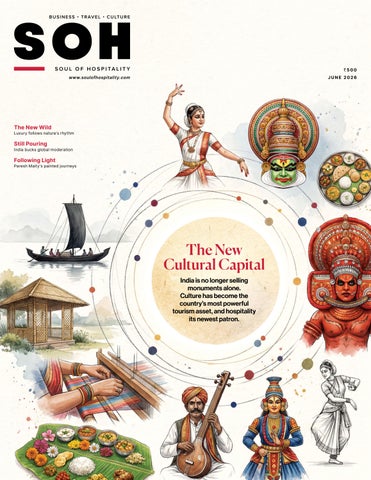
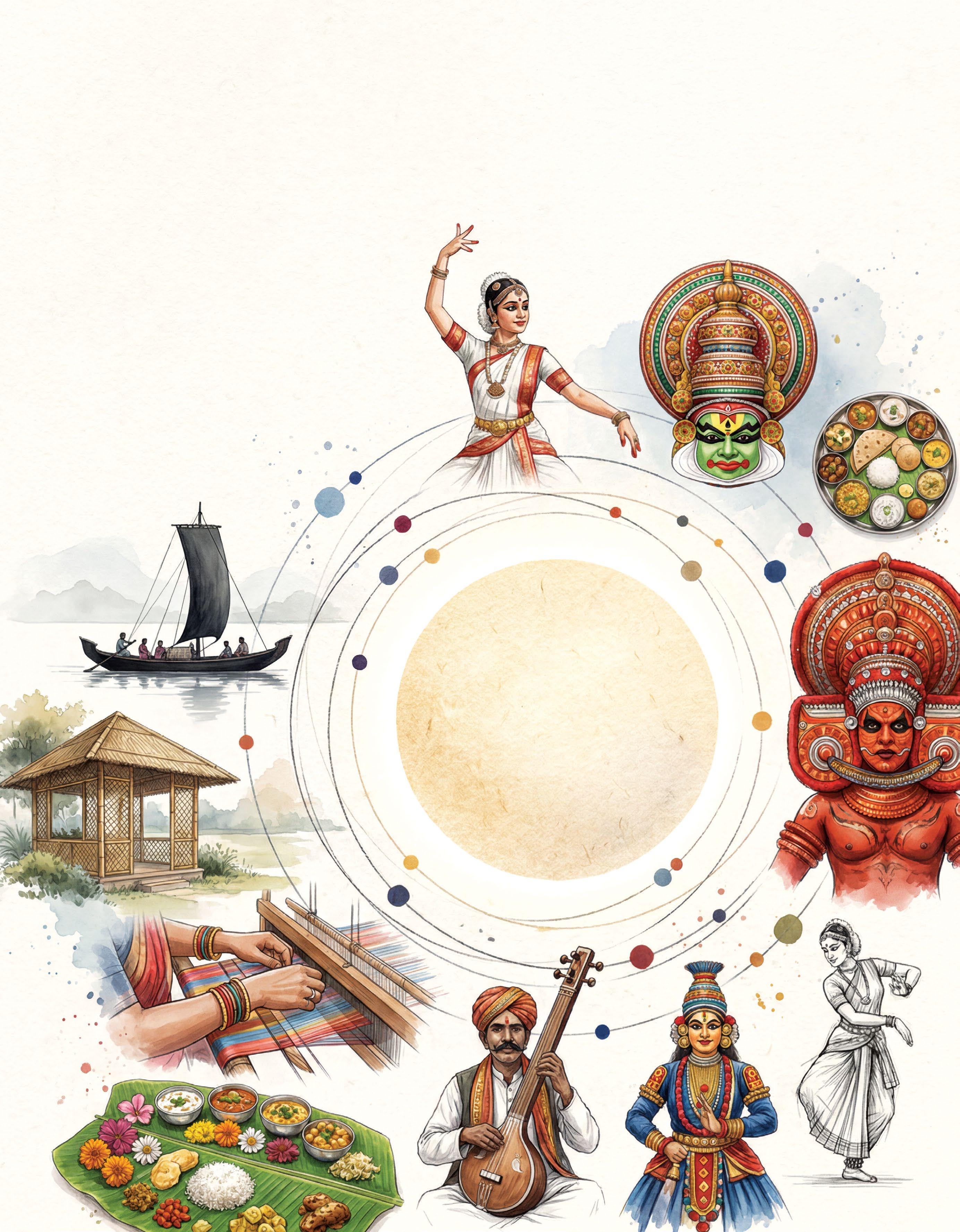
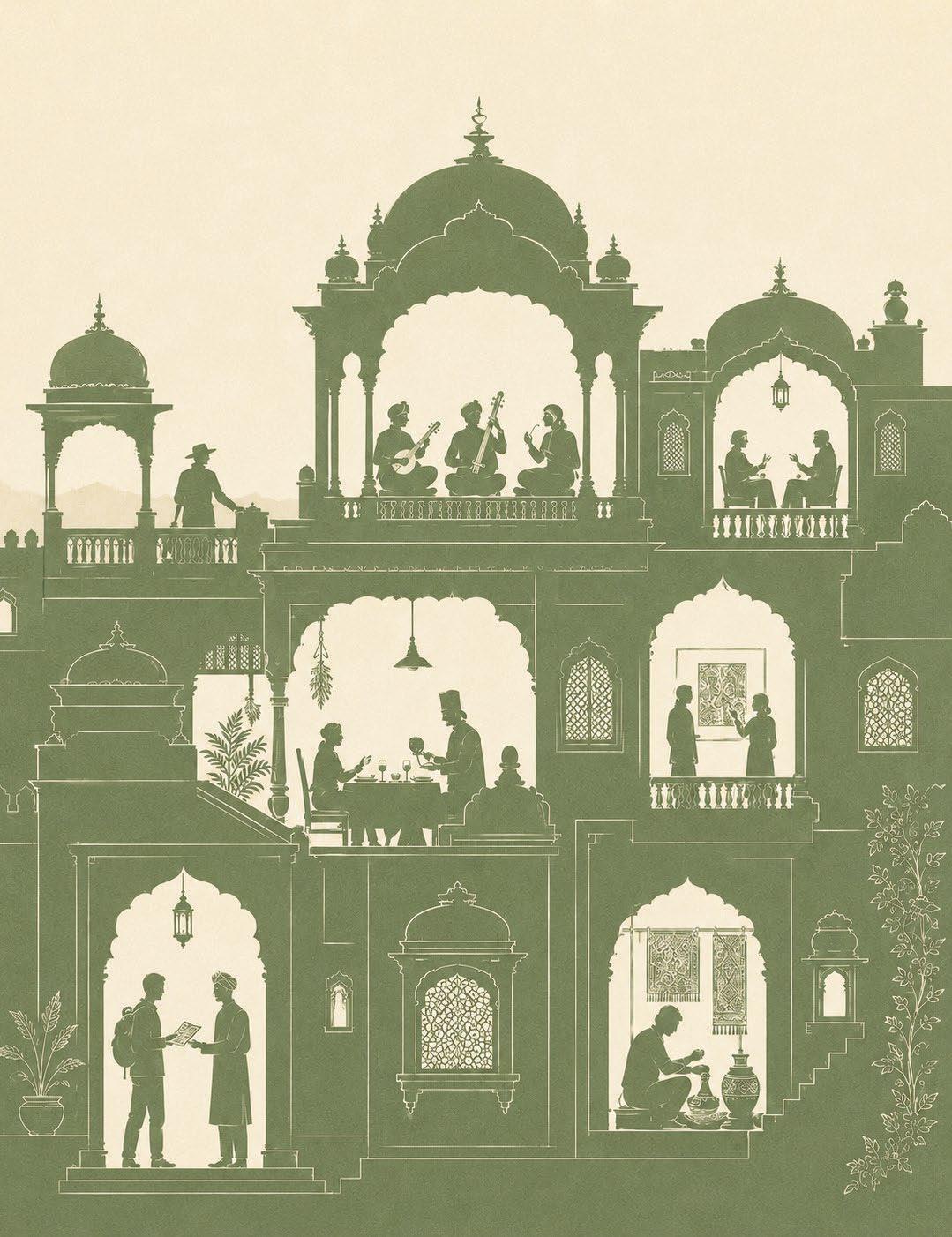
India is no longer selling monuments alone. Culture has become the country's most powerful tourism asset, and hospitality its newest patron.
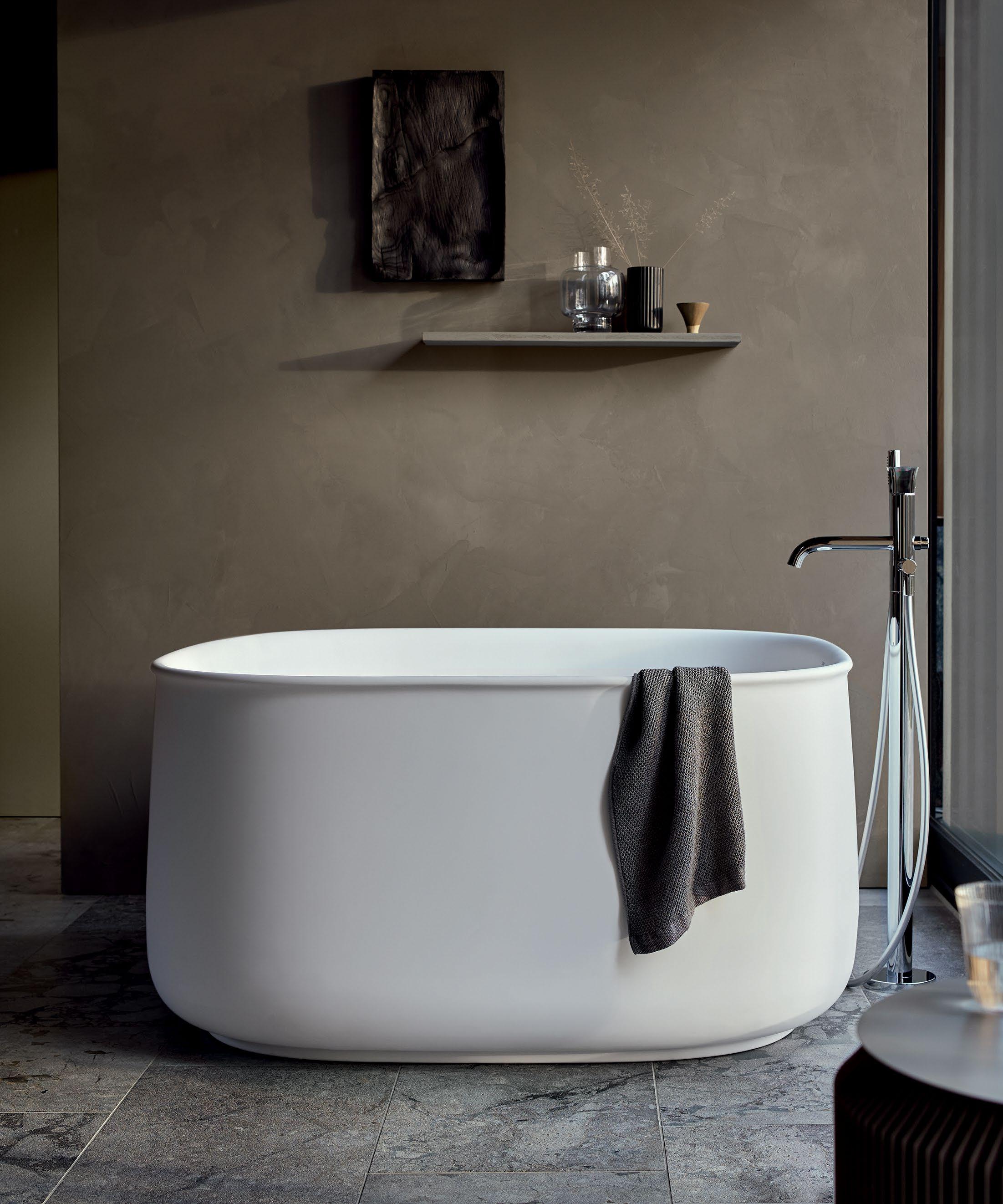
Zencha Design by Sebastian Herkner
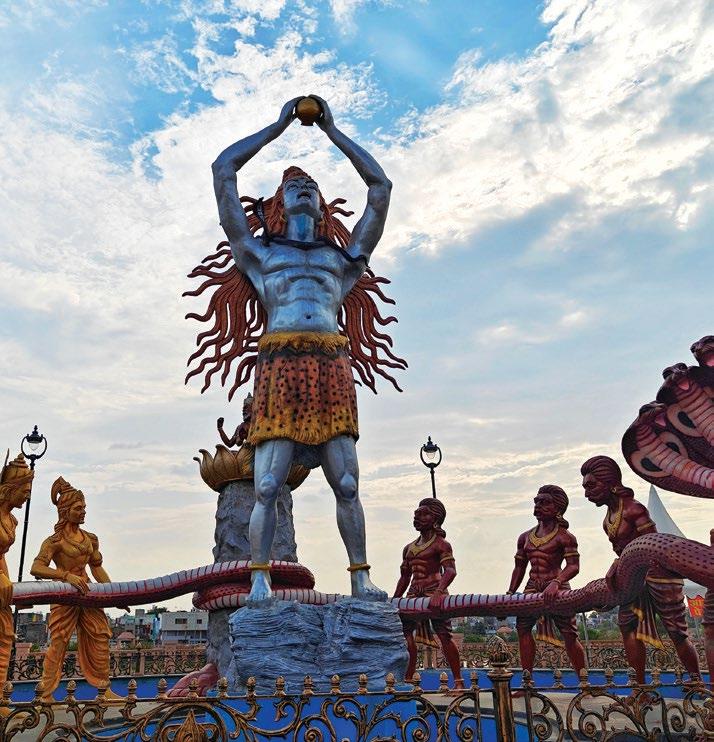
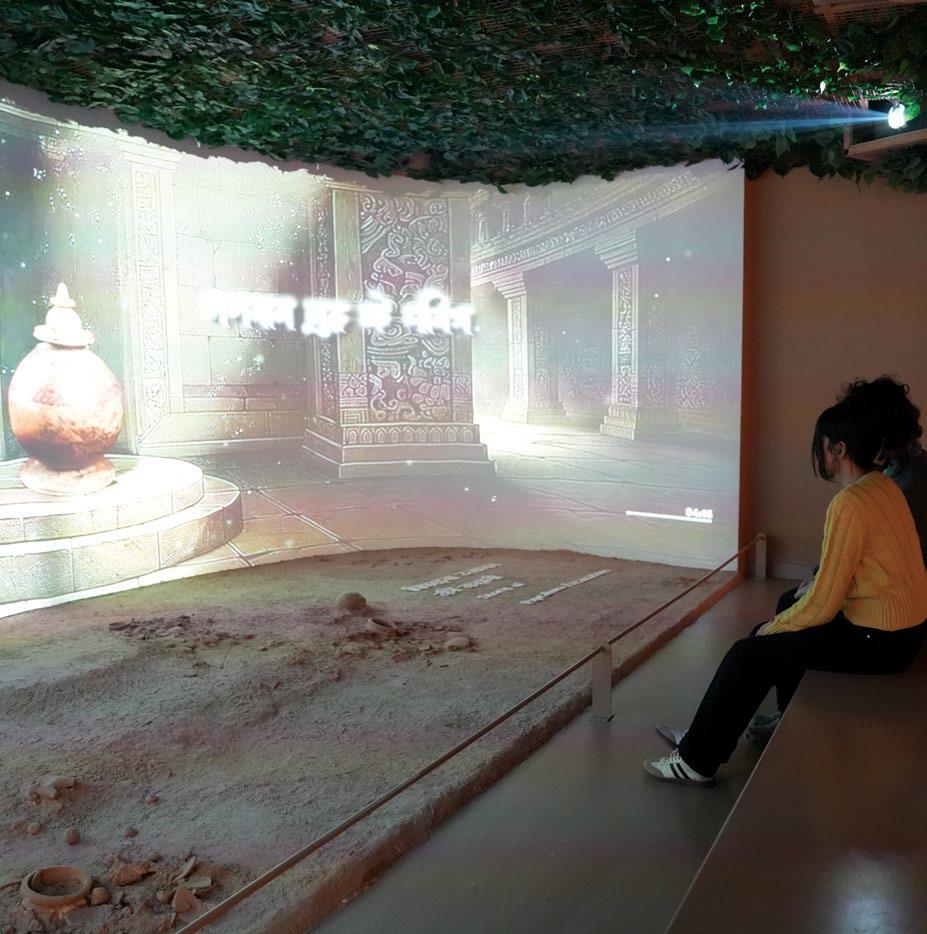
across 319 cities in 2024, an 18% increase over the previous year. Samit Garg, Founder, EEMA, points to formats that would have been difficult to imagine a decade ago. Shiva Immersive, India’s first permanent-format immersive mythology franchise, uses 360-degree projection mapping, spatial audio and AI-powered dramaturgy to render ancient narratives in a language familiar to audiences raised on streaming platforms and gaming. “While Japan exports anime and Korea exports K-dramas,” says the association’s co-founder, “India has owned the civilisational raw material of mythology but never learned to tell it in a future-ready language. Shiva Immersive changes that.”
FOUNDER'S NOTE
LUXURY'S NEW COMPASS
What unites these seemingly disparate developments—a biennale in the high Himalayas, photographers documenting Kerala, writers working from Rajput forts, mythology reimagined through immersive technology, regional cuisines carried home through hospitality—is a refusal to separate the cultural from the experiential, the local from the contemporary.
For decades, luxury came with a familiar vocabulary. It was shaped by European traditions, measured against international benchmarks and perfected through consistency. The finest hotels across the world shared a common language—impeccable service, grand lobbies, celebrated restaurants and experiences designed to feel reassuringly familiar, whether you were in Paris, Dubai or Singapore. For a generation of travellers, that was the very definition of luxury. But something has shifted.
Today’s affluent traveller is no longer searching for familiarity. They are searching for distinction. The most coveted destinations are no longer those that look like everywhere else; they are the ones that could exist nowhere else. Authenticity, identity and a genuine sense of place have become the new markers of luxury. That change presents an extraordinary opportunity for India.
For decades, India invited travellers to witness the achievements of its past. The emerging cultural economy makes a different proposition. It asks visitors to participate in a living culture that continues to evolve, create and reinvent itself. The monument remains important. But increasingly, it is the story, the craft, the performance, the meal and the community around it that travellers come seeking. India is no longer simply marketing its past. It is making an argument about its present.
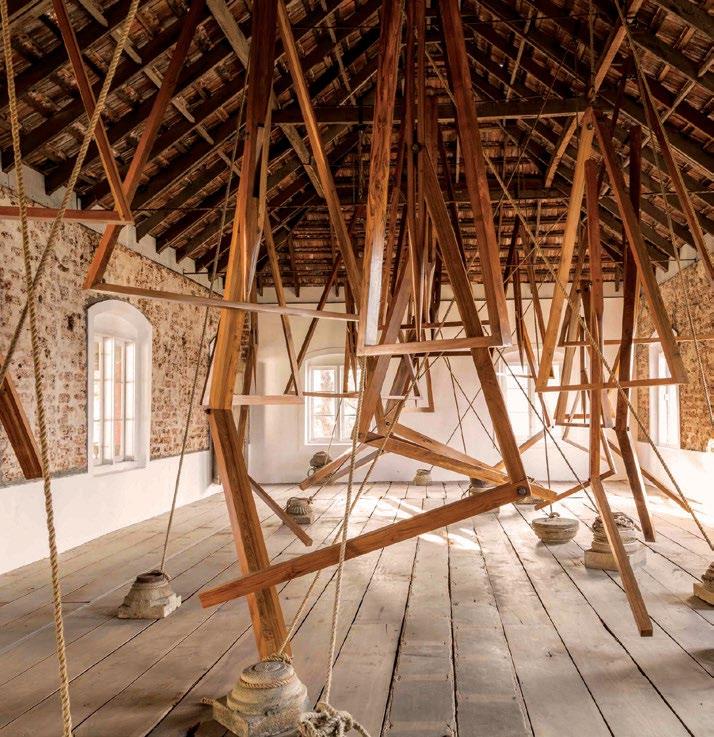
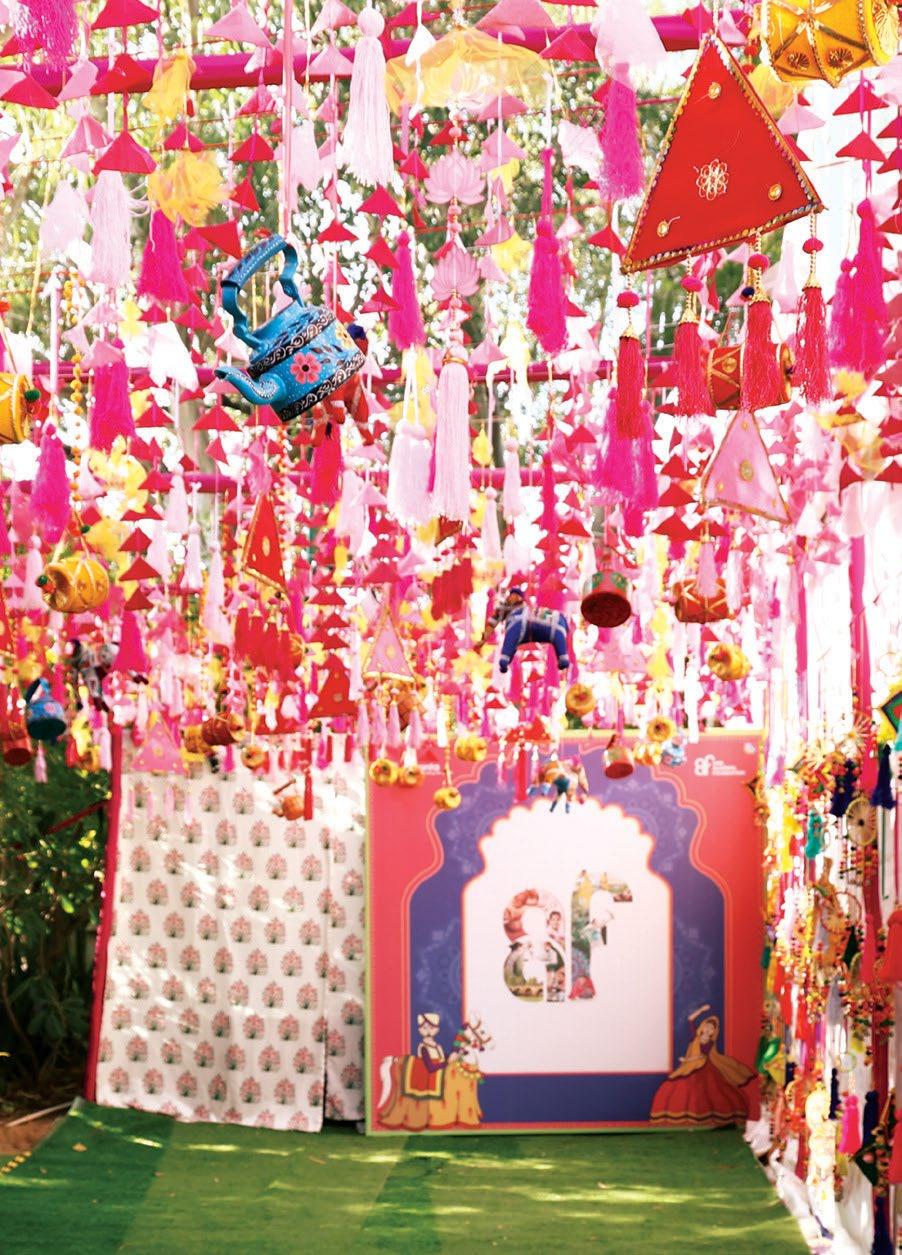
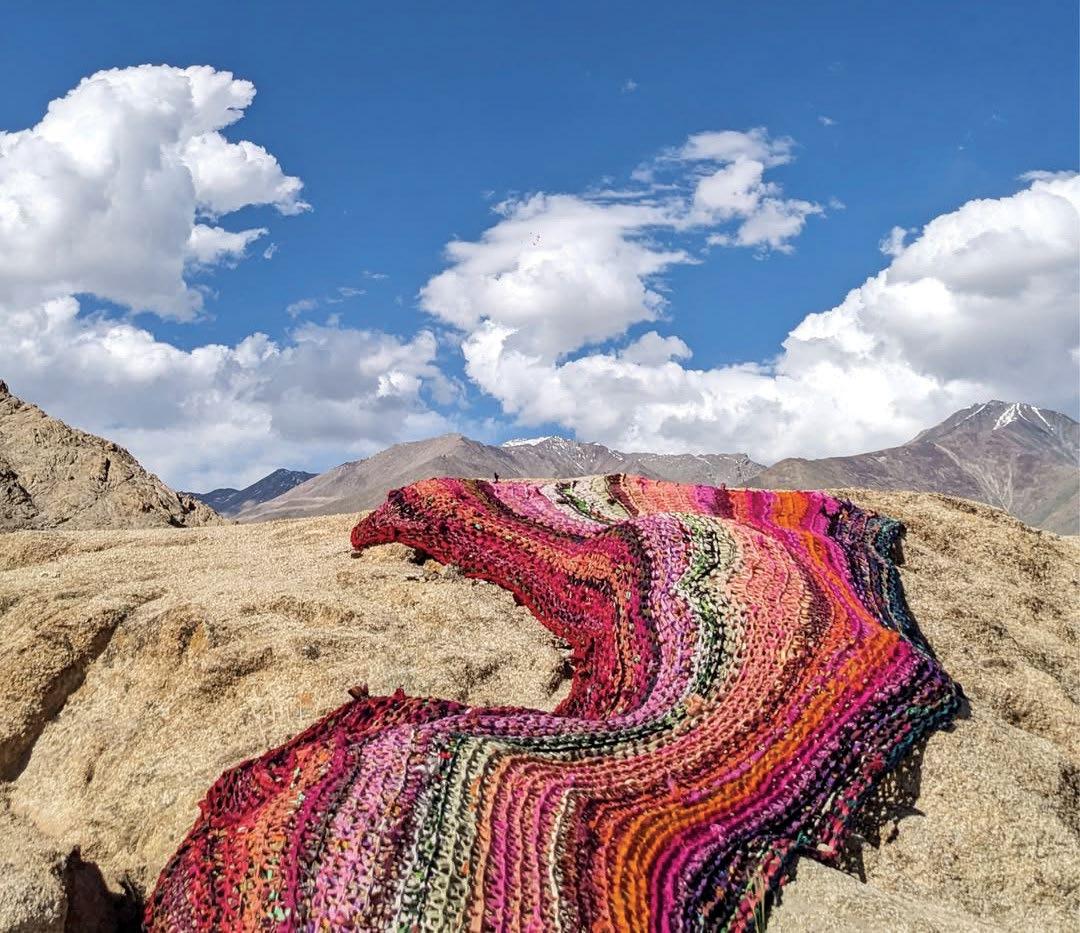
LEFT: With experiences such as Light and Lotus, cultural-tech is creating contemporary pathways into India's heritage. BELOW: At over 3,000mts. above sea level, the sā Ladakh Biennale is reshaping the identity of a destination.
Around the world, hospitality has mastered efficiency. Technology anticipates preferences, personalises recommendations and delivers seamless service. These are important advancements, but they are not, by themselves, memorable. The experiences that stay with us are often the most human ones—a conversation with a local host, a regional dish prepared with pride, a story that reveals the soul of a destination, or a welcome that feels sincere rather than scripted.
These moments cannot be replicated through design standards or operating manuals. They emerge from culture. This is why I believe Indian hospitality stands at a defining moment.
For years, Indian hospitality often looked outward for inspiration, measuring itself against established global standards. Yet, in doing so, we sometimes overlooked our greatest competitive advantage—not something we needed to create, but something we have always possessed. Our extraordinary diversity.
Few countries offer such remarkable contrasts within a single journey. Landscapes transform from mountains to coastlines, deserts to rainforests. Languages, cuisines, architecture, rituals and artistic traditions evolve from one region to the next. Every destination carries its own cultural memory, offering travellers not just a change of scenery but an entirely different way of experiencing a place.
India is not one destination. It is many destinations, each with its own identity. And in an increasingly homogenised world, that identity has become one of our greatest assets. Yet India’s true distinction extends beyond geography. It lies in the way we host.
Across the country, a new generation of hotels, resorts and experiences is embracing regional identity rather than replacing it. Local cuisines are becoming centrepieces instead of alternatives. Indigenous wellness traditions are finding renewed relevance. Artisans, communities and cultural narratives are no longer decorative elements; they are becoming integral to the guest experience. These are not passing trends. They reflect a broader shift in how the world understands luxury.
For decades, the question facing Indian hospitality was whether it could meet global standards. Today, perhaps the more interesting question is whether global luxury is beginning to move towards India—not because India has changed to resemble the world, but because the world has begun to value what India has always been.
Perhaps the future of luxury will not be defined by how universal it feels, but by how deeply it belongs to the place from which it comes.
If that is true, India is no longer following the conversation. It is uniquely placed to lead it.
602A & 602B, Maker Maxity, 4 North Avenue BKC, Bandra East, Mumbai, Maharashtra, 400051, India
A NATION REIMAGINED
For decades, India sold its past to travellers: the monuments, the forts, the marble. What is shifting now is far more interesting. In our June 2026 cover story, we explore how India is creating an ambitious cultural economy in which living intangible heritage, the weave, the recipe, the performance, the festival, has become the primary tourism asset. The question worth sitting with: who gets to shape that story, and who truly benefits?
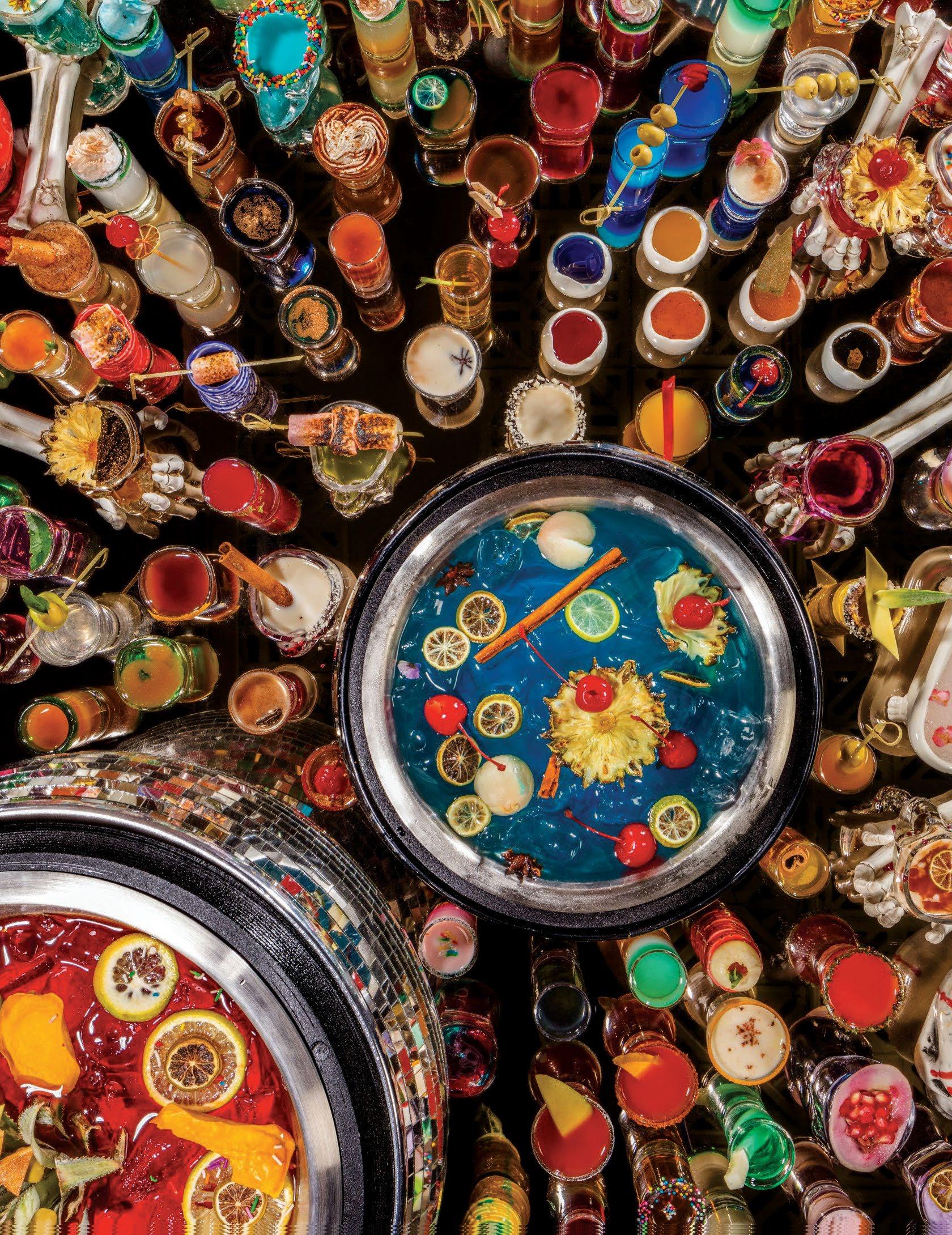
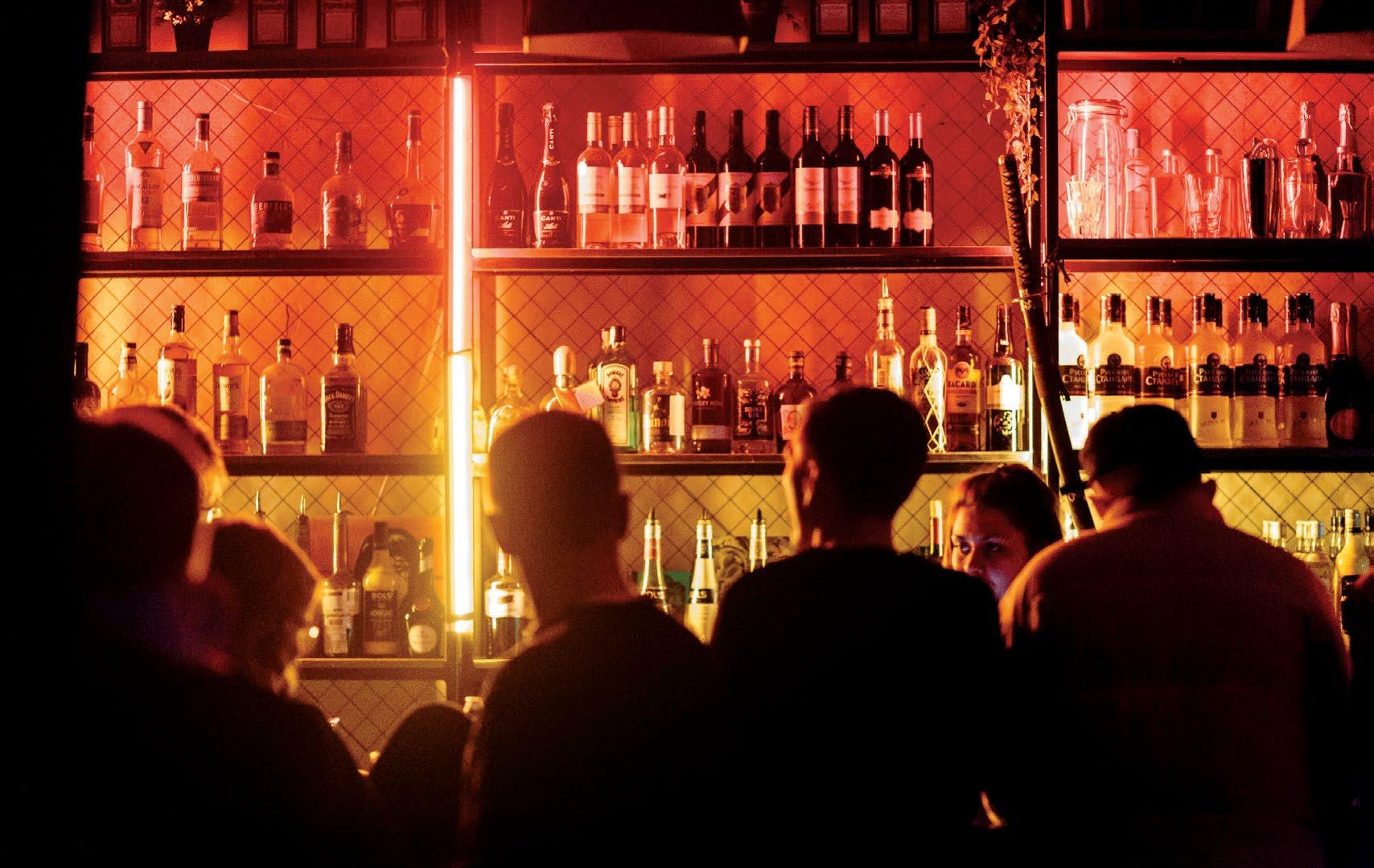
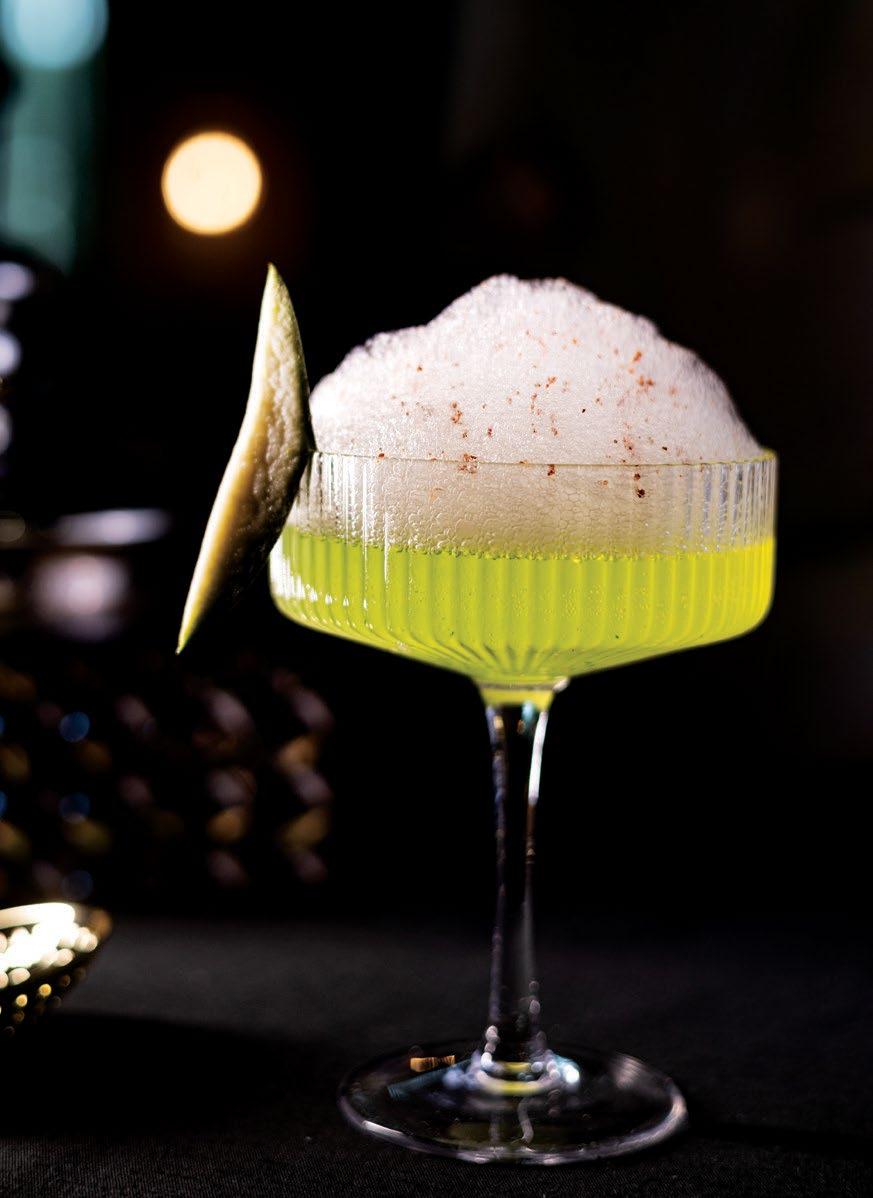
The West, meanwhile, is sobering up. Dry January is mainstream, Gen Z is going alcohol-free, and per capita consumption has fallen 20% across key global markets. India is doing the opposite. On a packed Thursday night in Bengaluru, someone is asking the bartender about their vermouth. In our Drink section, we ask why India has become the last great drinking market, and what it is doing with that distinction.
The blackboard near the entrance of a safari lodge once told you everything, chalked up weekly, listing what had been seen, confirming the forest was alive. That board has largely disappeared. In its place, a different kind of wilderness hospitality is emerging, one where depth of encounter, not the sighting checklist, is the new measure of luxury in the wild.
Elsewhere in this issue, we follow IHCL's luxury march along the Ganga, visit Yakten as India's most intriguing destination for the nomad worker, and report on a new opening, the Sarovar Premier Jim Corbett.
Warm regards,
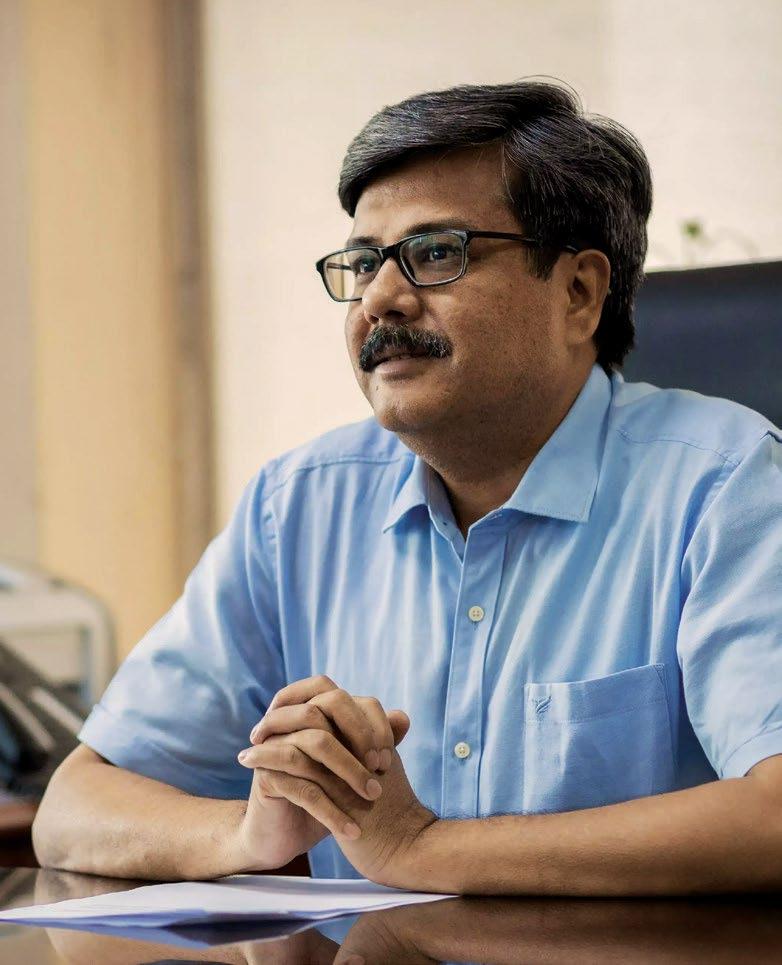
DEEPALI NANDWANI, EDITOR, SOH
Founder and Publisher
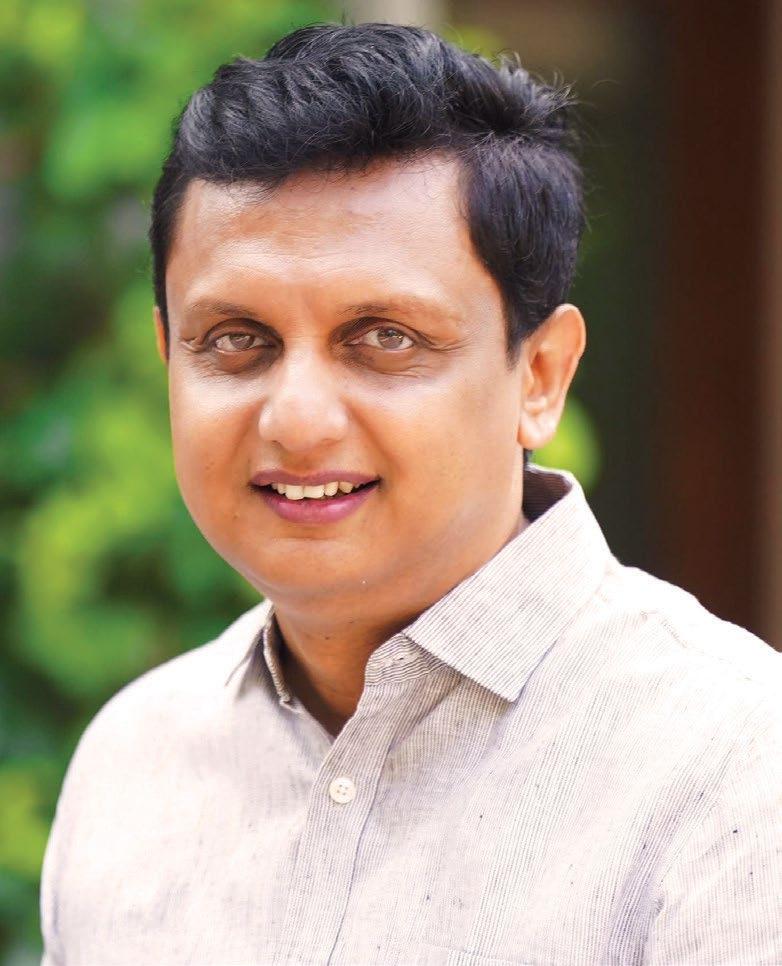
Gurmeet Sachdev
Editorial
Editor Deepali Nandwani
Managing Editor Rupali Sebastian
Digital Editor Rachna Virdi
Contributing Writer
Chandreyi Bandyopadhyay
Ruth Dsouza Prabhu
Suman Tarafdar
Madhumita Das
Creative
Creative Director Tanvi Shah
Team Shiv Soni
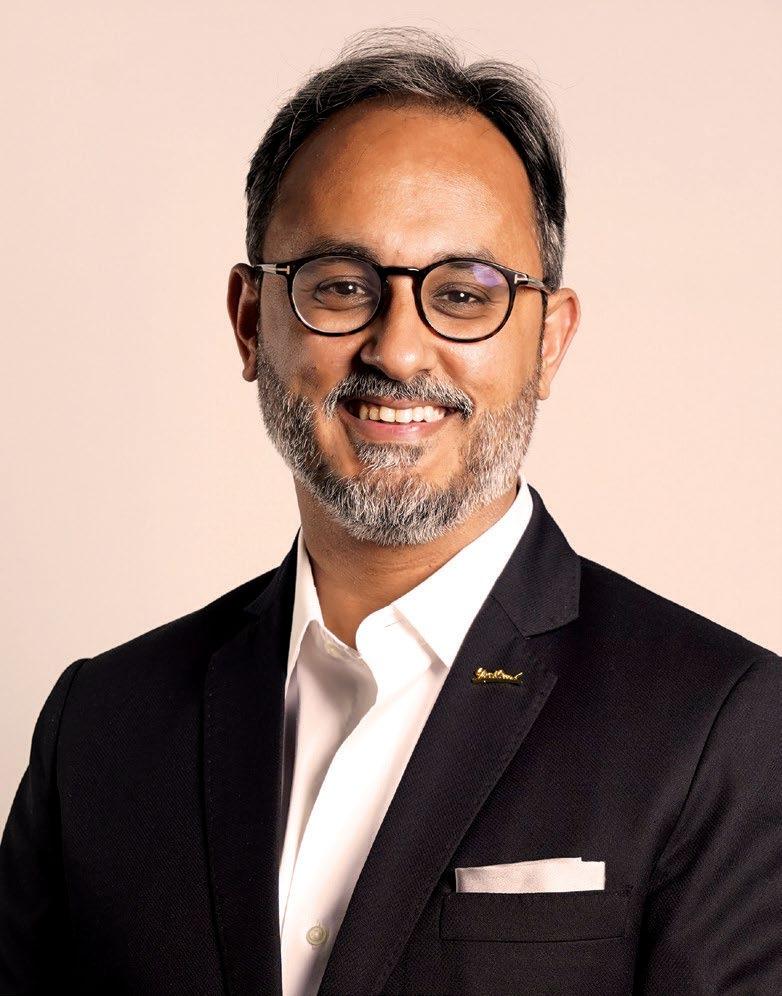
Business Head Vipin Yadav Delhi, +91 99998 85515 vipin@soulinkkworldwidemedia.com
Head of Events and Alliances Karishma Shah karishma@soulinkkworldwidemedia.com
Office Manager Deepak Rao
Accounts Head Amey Acharekar
For queries: editorial@soulinkkworldwidemedia.com sales@soulinkkworldwidemedia.com info@soulinkkworldwidemedia.com
Printed and Published by Gurmeet Sachdev on behalf of Soulinkk World-Wide Media LLP. Registered office: 1/2, Old Anand Nagar, Nehru Road, Santacruz East, Mumbai, Maharashtra - 400055. Printed at Silverpoint Press Pvt. Ltd., A-403, TTC Industrial Area, Near Anthony Motors, Mahape, Navi Mumbai – 400709. Editor: Deepali Nandwani. All rights reserved worldwide. Reproducing in any manner without prior written permission prohibited. SOH takes no responsibility for unsolicited photographs or material all photographs, unless otherwise indicated, are used for illustrative purposes only. Unsolicited manuscripts will not be returned unless accompanied by a postage pre-paid envelope. All disputes are subject to the exclusive jurisdiction of competent courts and forums in Mumbai only. Copyright Soulinkk World-Wide Media LLP.
Image
Tania Chatterjee
When Culture Becomes the Destination
As travellers seek stories and experiences, food, craft, music and community are becoming central to how places are imagined and marketed.
Sarovar Hotels Brings India’s Regional Flavours to Your City with Culinary Caravan
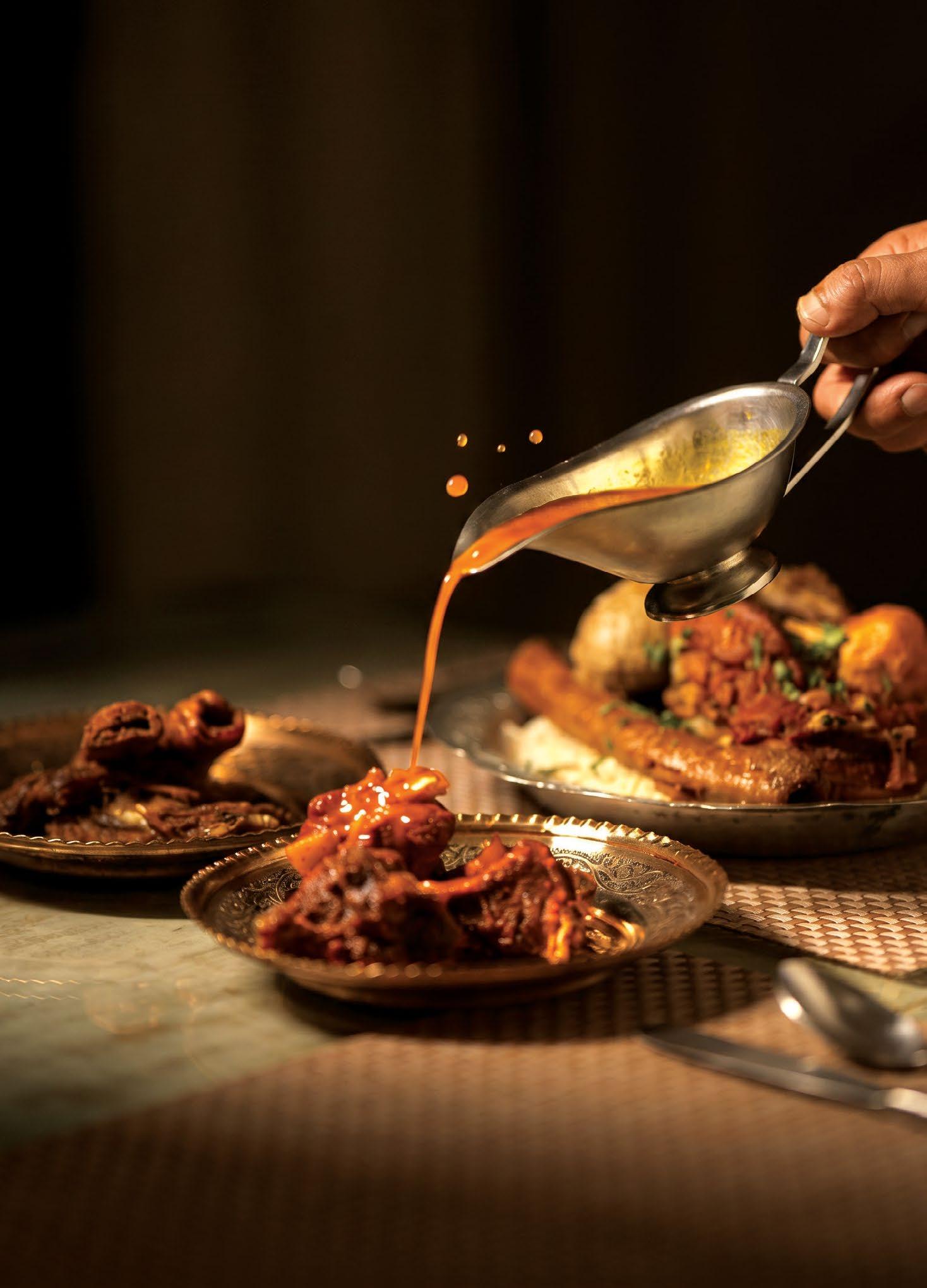
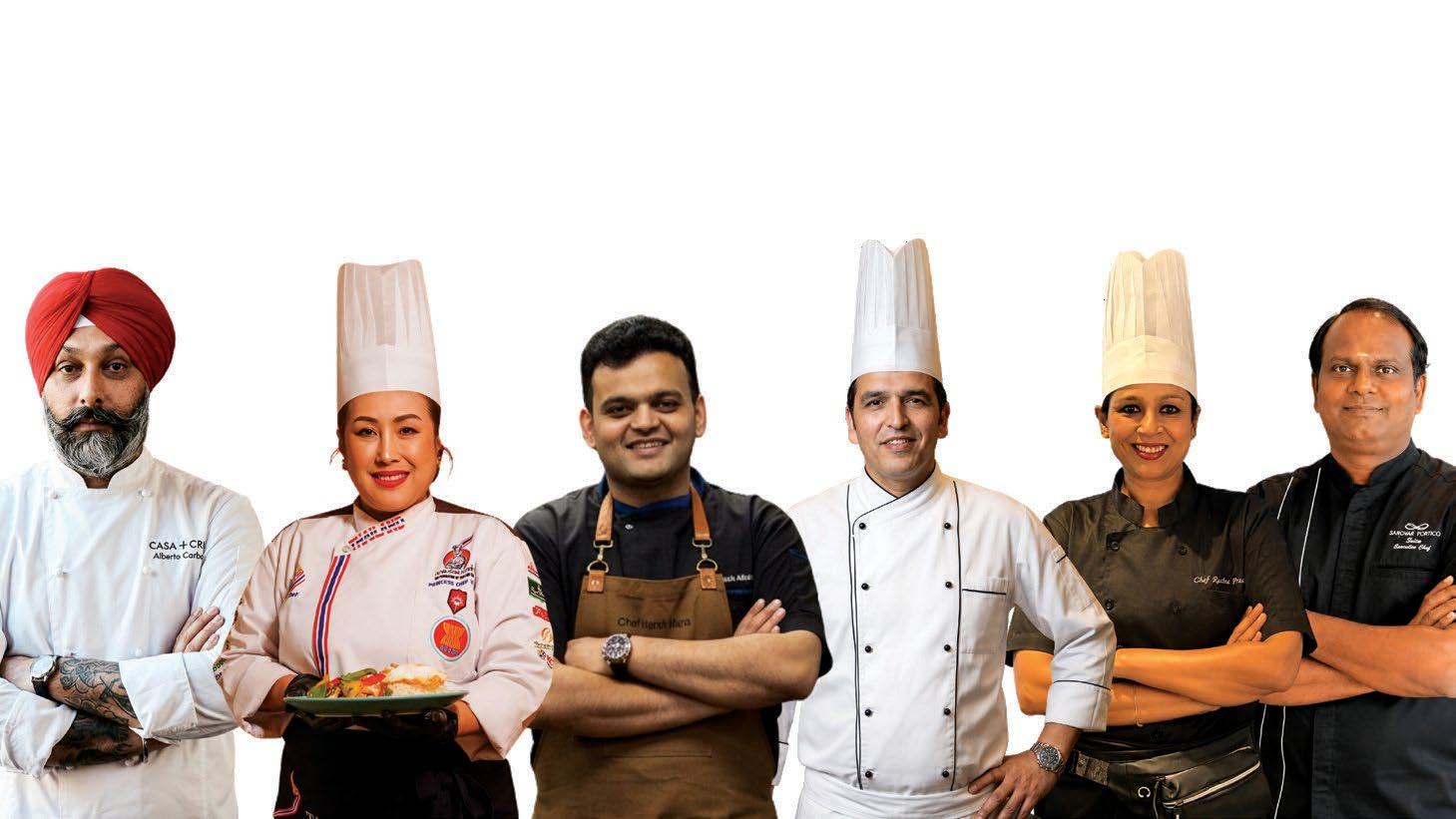
The modern traveller follows flavours - making food one of the biggest drivers of travel today. With Culinary Caravan, Sarovar Hotels turns that into a travelling series of pop-up dining events, each built around a different regional cuisine and the chef behind it.
Ask younger travellers, especially millennials and Gen Z, what stays with them most after a trip, and chances are they will talk about a meal: a local dish they discovered, a flavour they had never experienced before, or a recipe that could only belong to that one place. Culinary Caravan is inspired by these unforgettable food memoriesbringing India’s distinctive regional flavours, stories, and culinary traditions closer to you, one experience at a time.
It is a series of pop-up dining events that moves from one of the group's hotels to the next. Instead of the usual buffet, each stop is given over to a single regional cuisine. A guest chef leads the kitchen, with a set menu, live cooking counters and a masterclass, and every dish is served with the story of where it comes from.
The journey began with Mitti Ka Swaad at Hometel Lucknow, where Chef Rachna Prasad showcased Bihar’s
Quick Guide
On the menu:
Chef's tables, regional buffets, masterclasses, live counters, and dishes from Bihari, Kashmiri, Chettinad, Amritsari and Thai kitchens.
Coming up in:
Hyderabad, Greater Noida, Chandigarh, Puducherry, Sriperumbudur, Mumbai, Tirupati and Ghaziabad.
flavours through Litti Chokha, Champaran Mutton, Sattu specialities and festive sweets. Later chapters will head further across the country, and beyond it: Abbas Ka Wazwan (Kashmiri), Virundhu (Chettinad, from Tamil Nadu), Pind Da Swaad (Amritsari, from Punjab) and Siam Soiree (Thai).
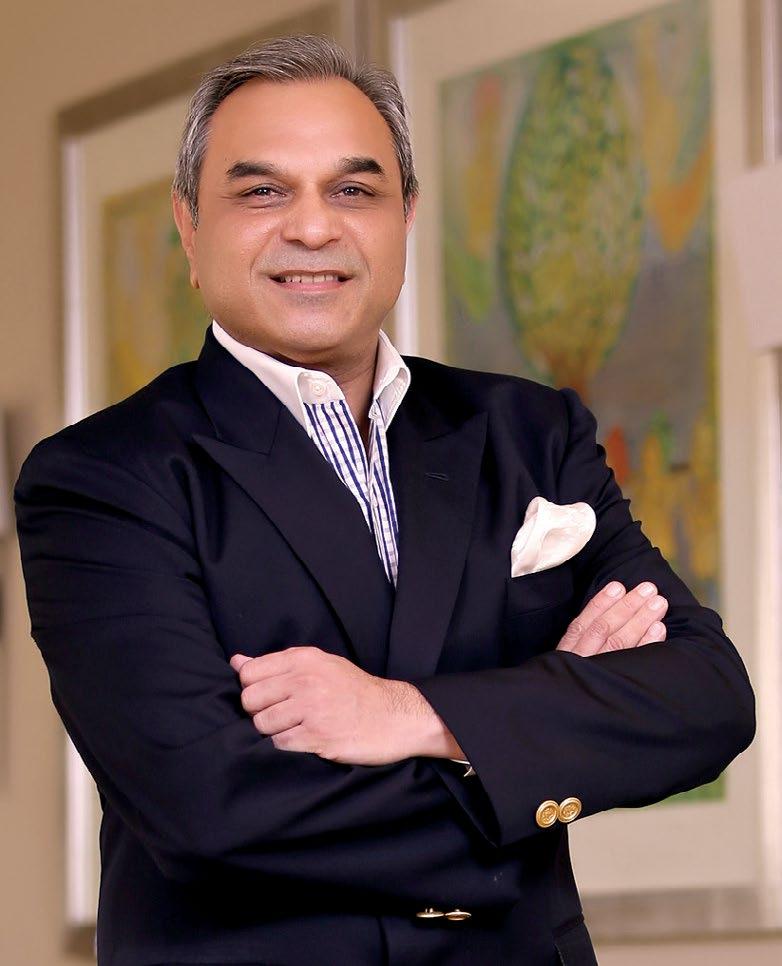
“Today's travellers want more than the standard hotel buffet," says Jatin Khanna, CEO of Sarovar Hotels. He further adds, "They want food that belongs to the place they are visiting, made with local ingredients and old family recipes. With Culinary Caravan, we want every dish to give guests a real taste of a region and its culture”
For food-first travellers, Culinary Carvaan offers a new reason to check in.
94
Beyond the Safari Luxury finds the wild beyond sightings and speed.
16
Along the Ganga IHCL maps a sacred journey through India.
86
Still Raising Glasses India’s drinking culture expands as cities world-wide retreat.
78
Keeping It Personal Why Fateh Collection remains owner-led and local.
28
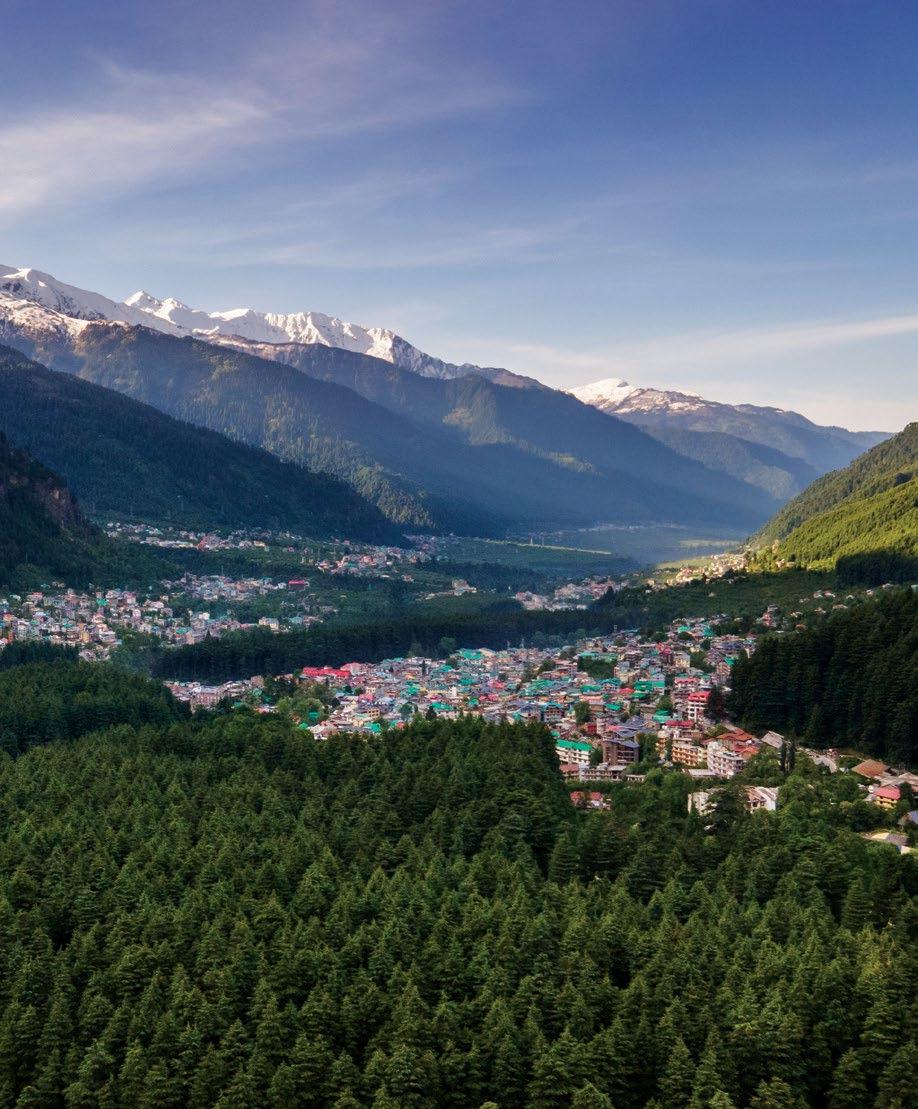
Glass and Mountains Sarovar Premiere brings fresh energy to the Kumaoni region.
108
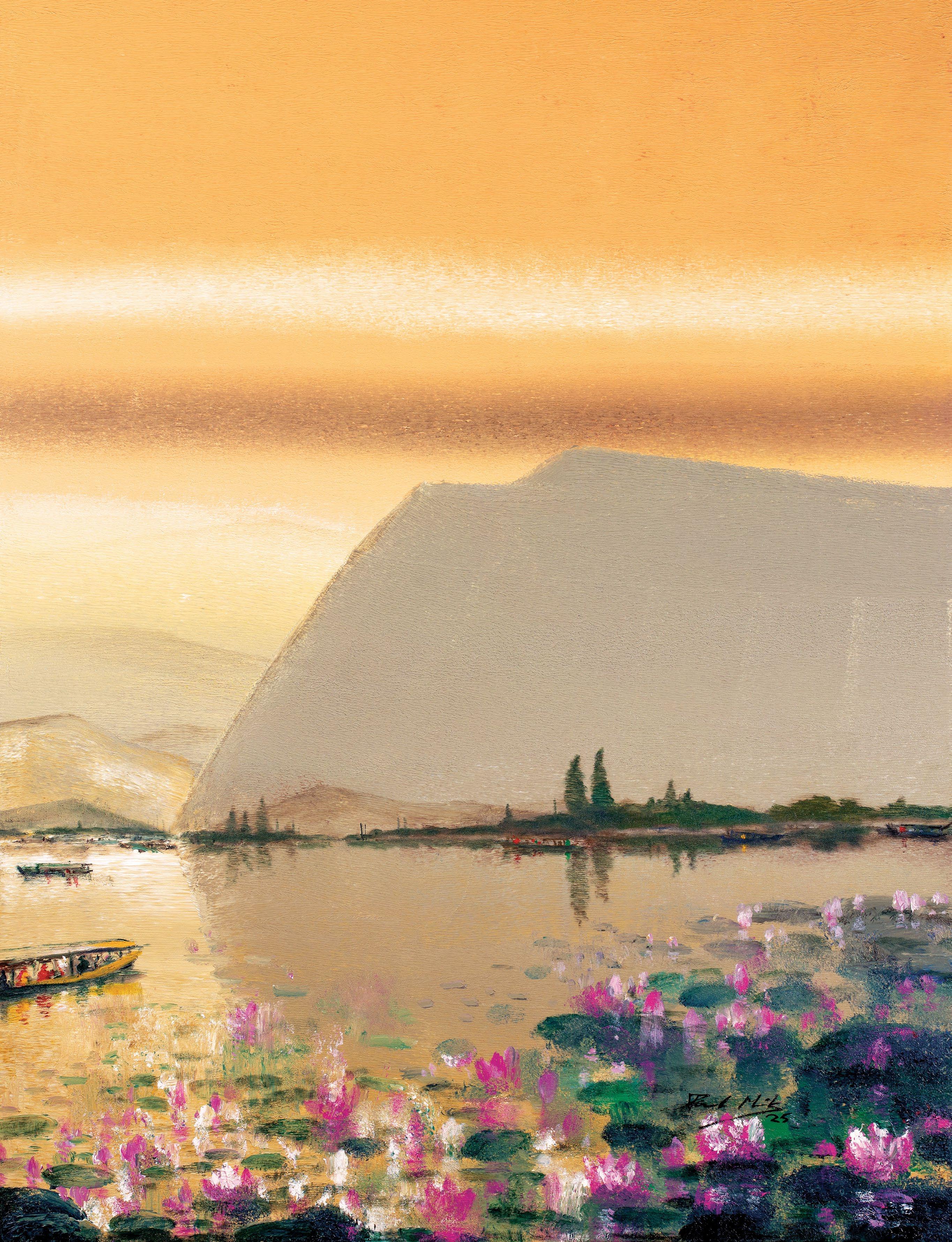
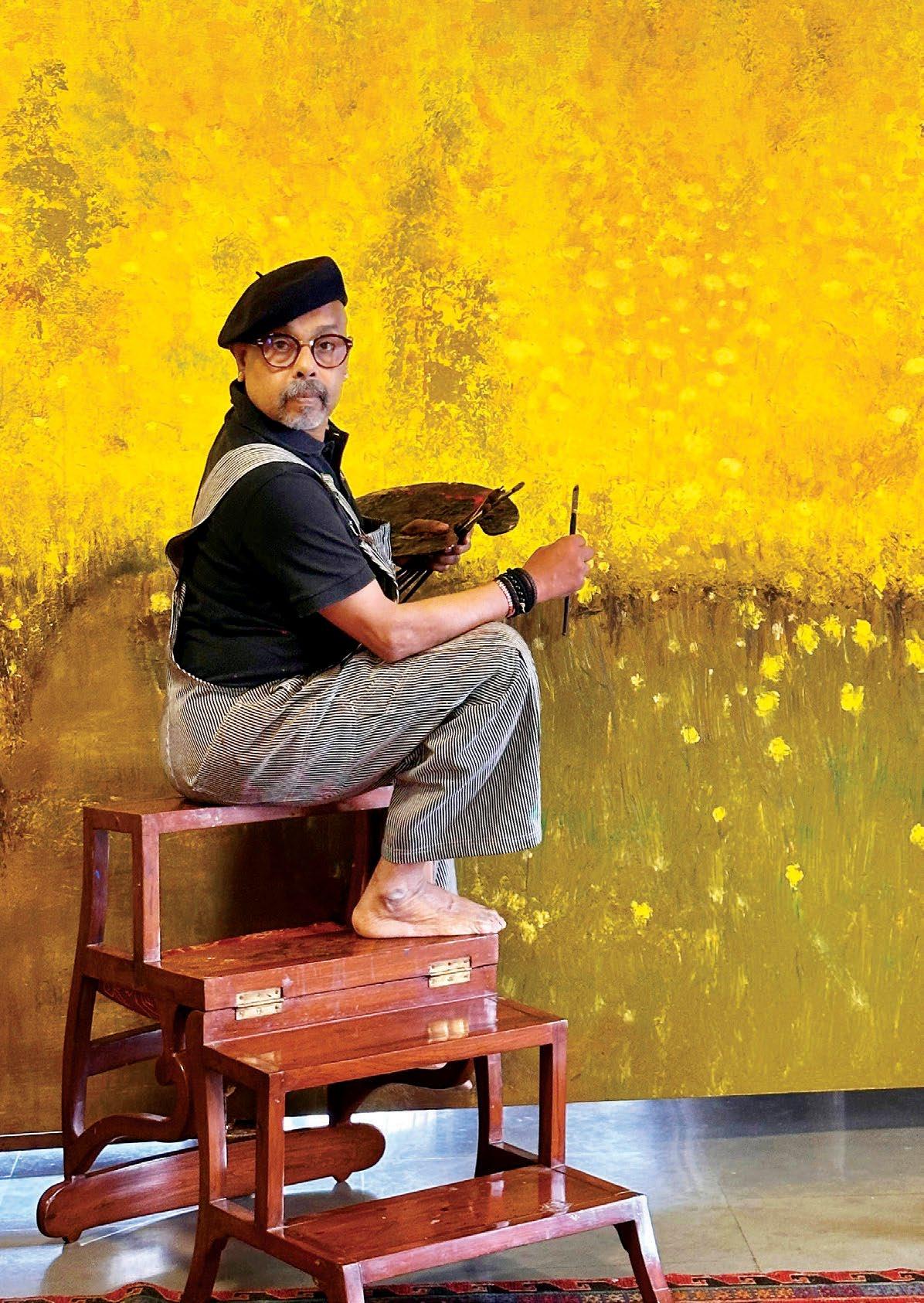
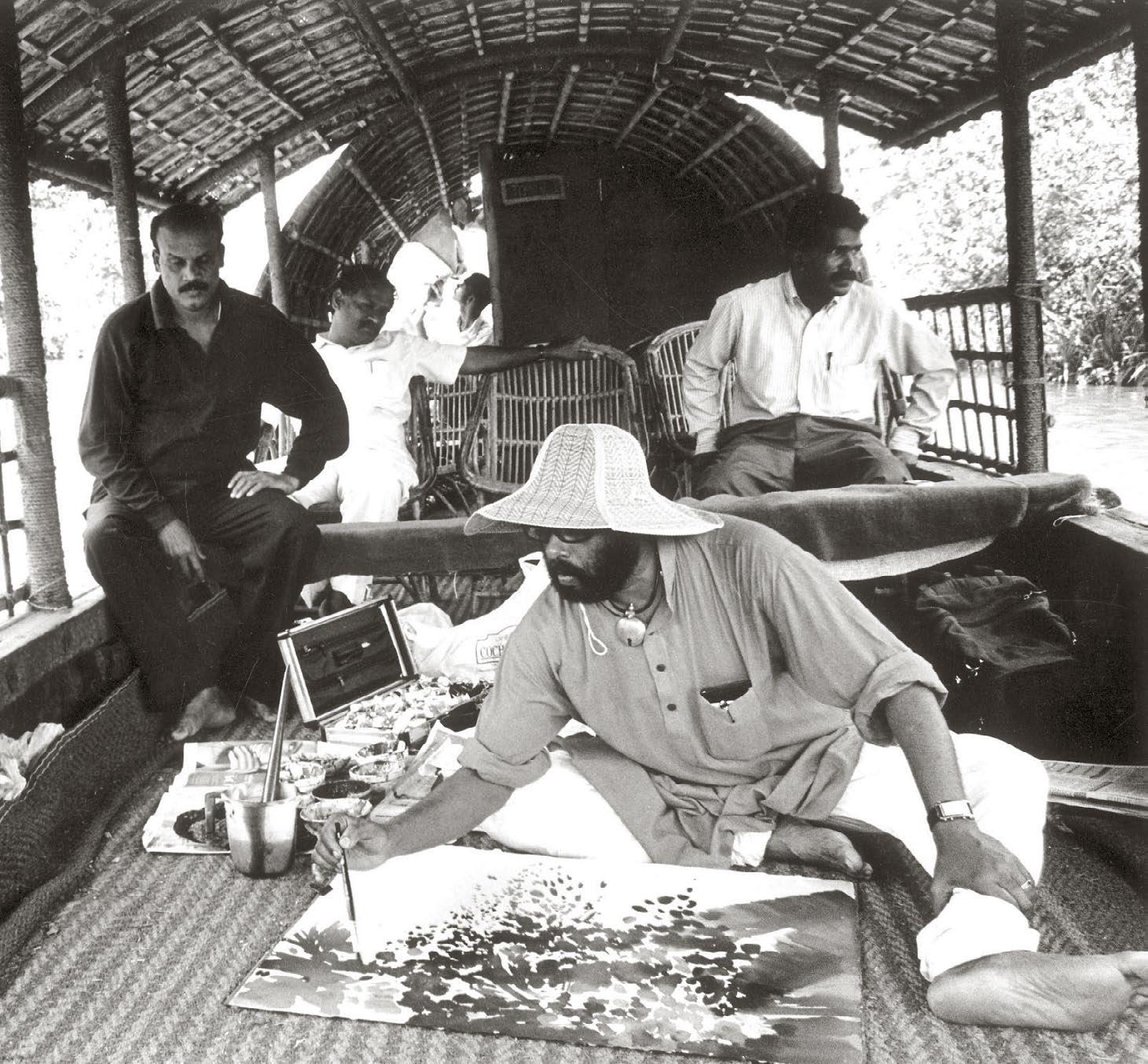
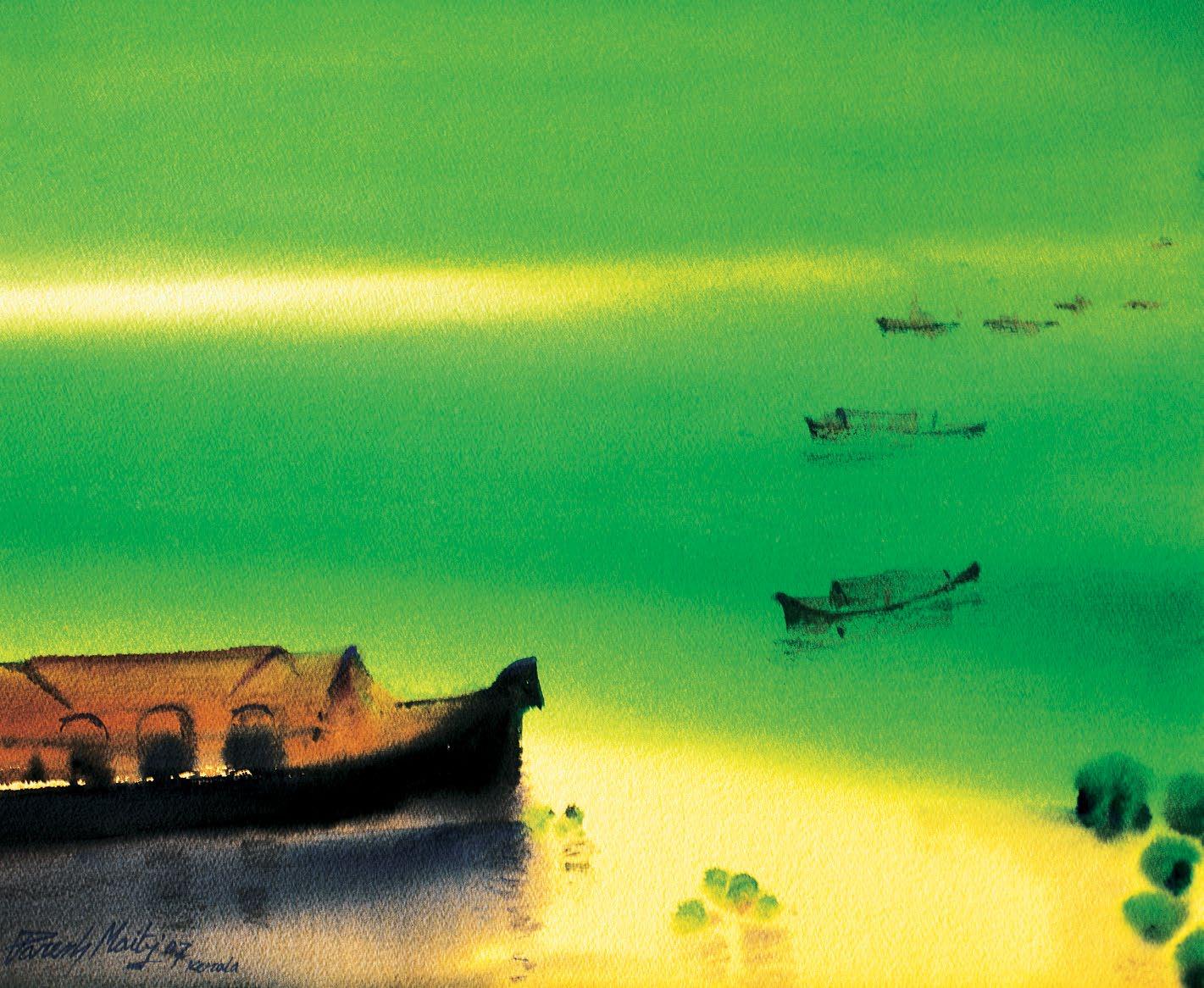
The Moving Canvas Artist Paresh Maity paints through travel and discovery.
72
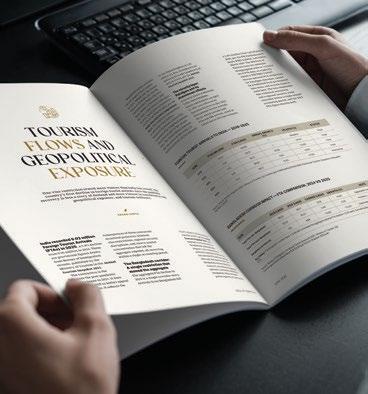
Reading the Numbers Tourism data reveals where vulnerabilities still remain.
20
The Reuse Logic Discarded materials find new purpose in the port-city of Tuticorin.
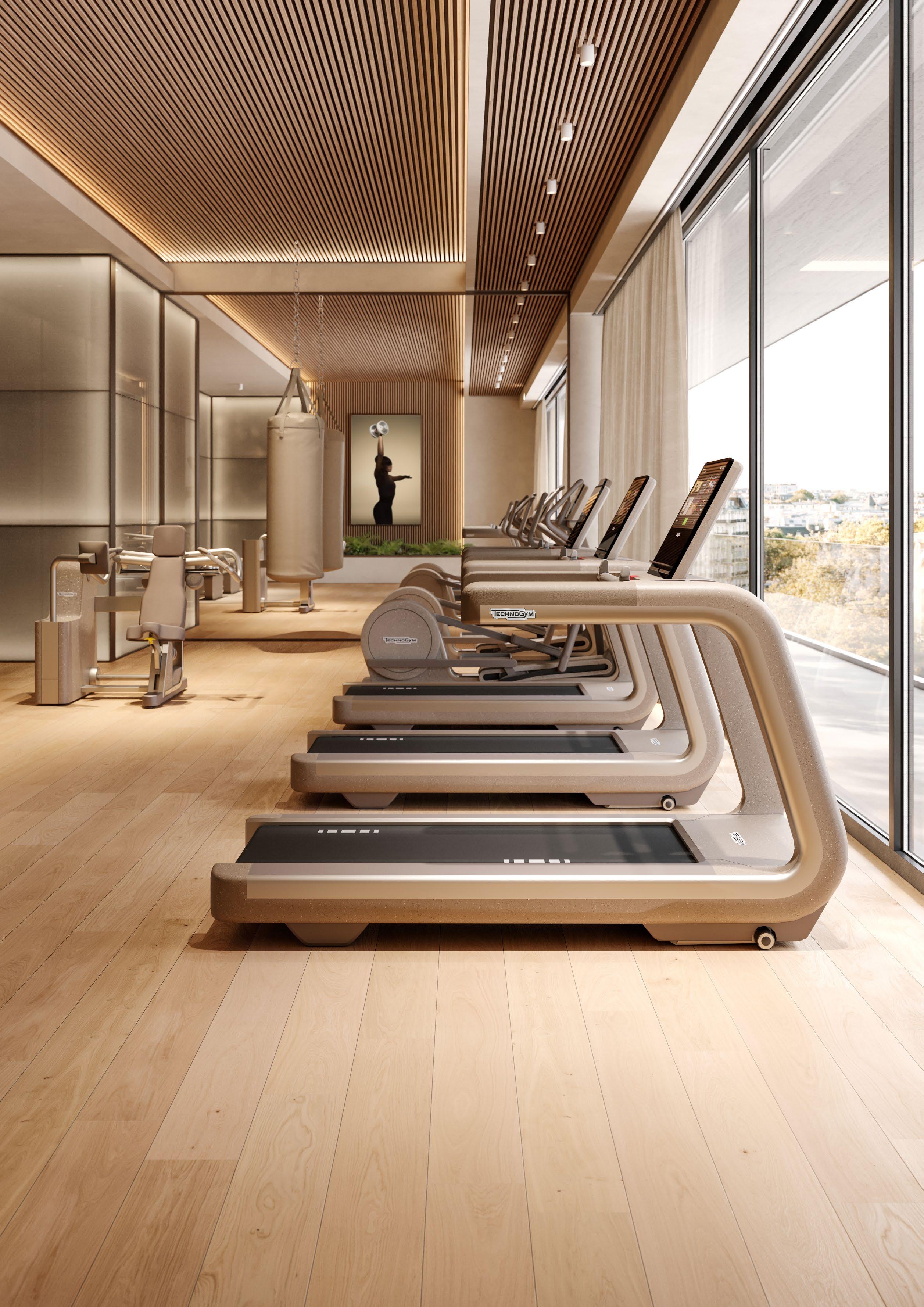
Discover Technogym Artis Luxury redefines the essence of luxury wellness with the new “Sandstone” identity. A seamless aesthetics unifies Artis Cardio, Artis Strength and Artis Biostrength as well as Technogym Checkup, creating an unmatched immersive workout experience.
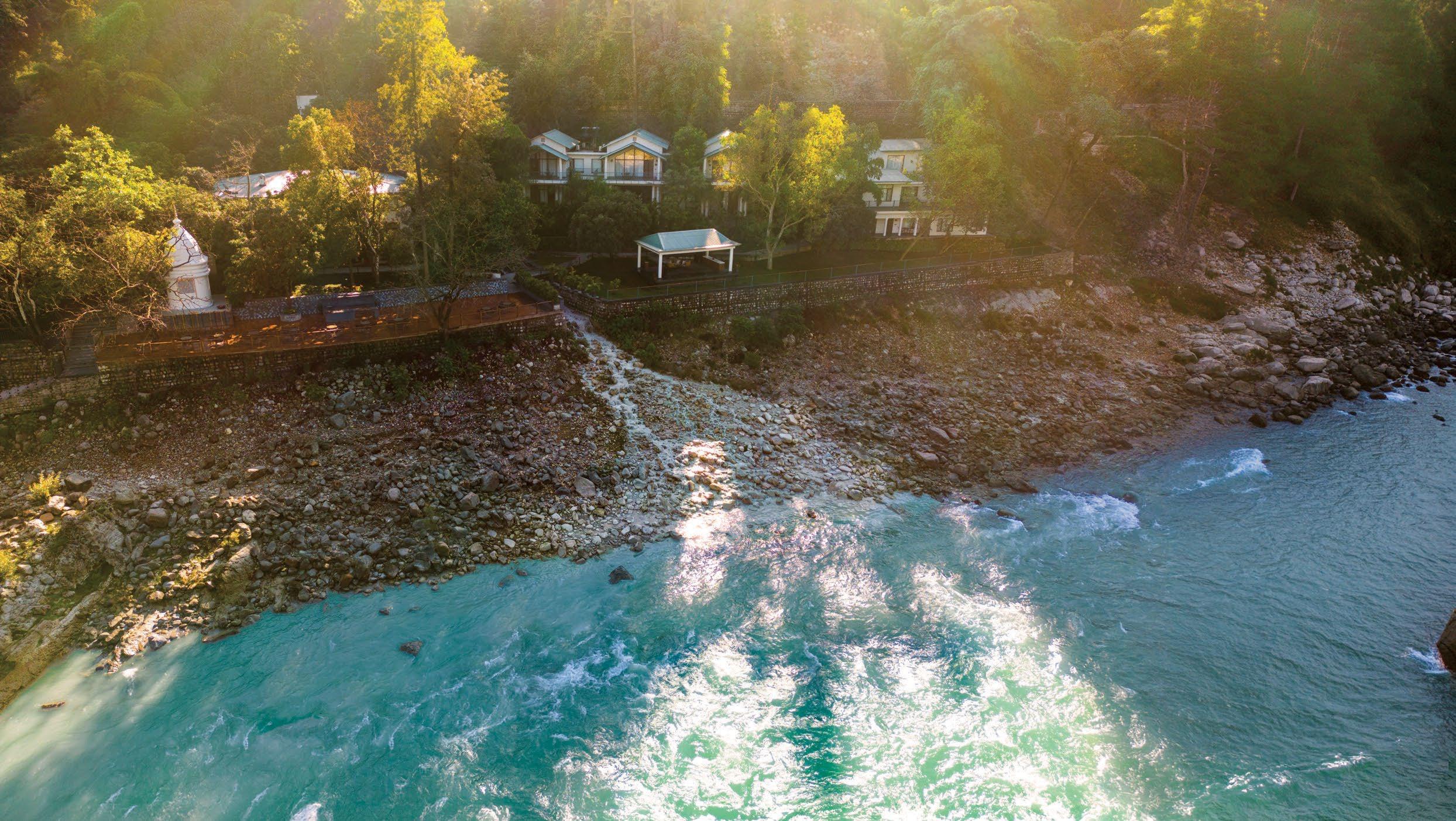
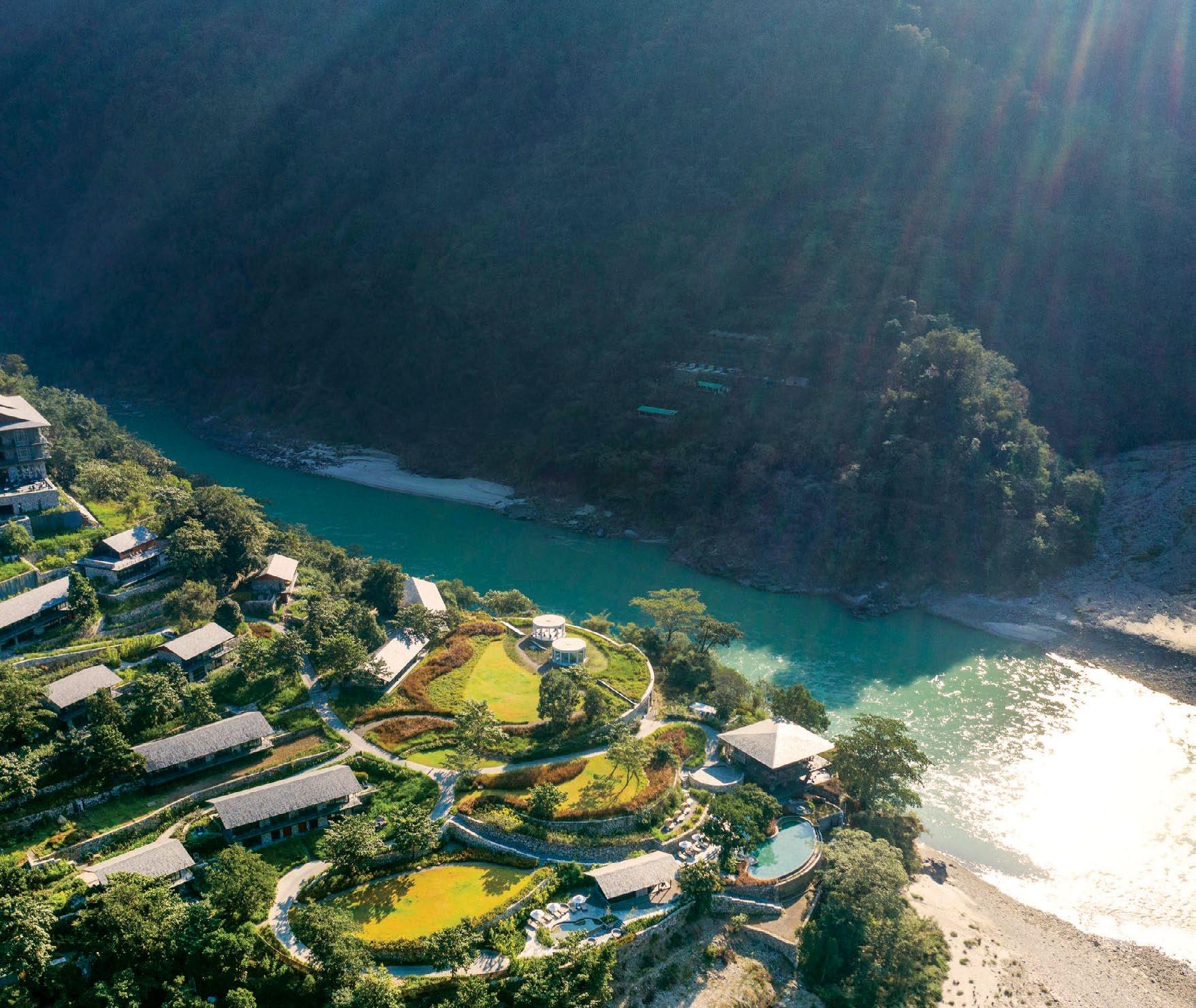
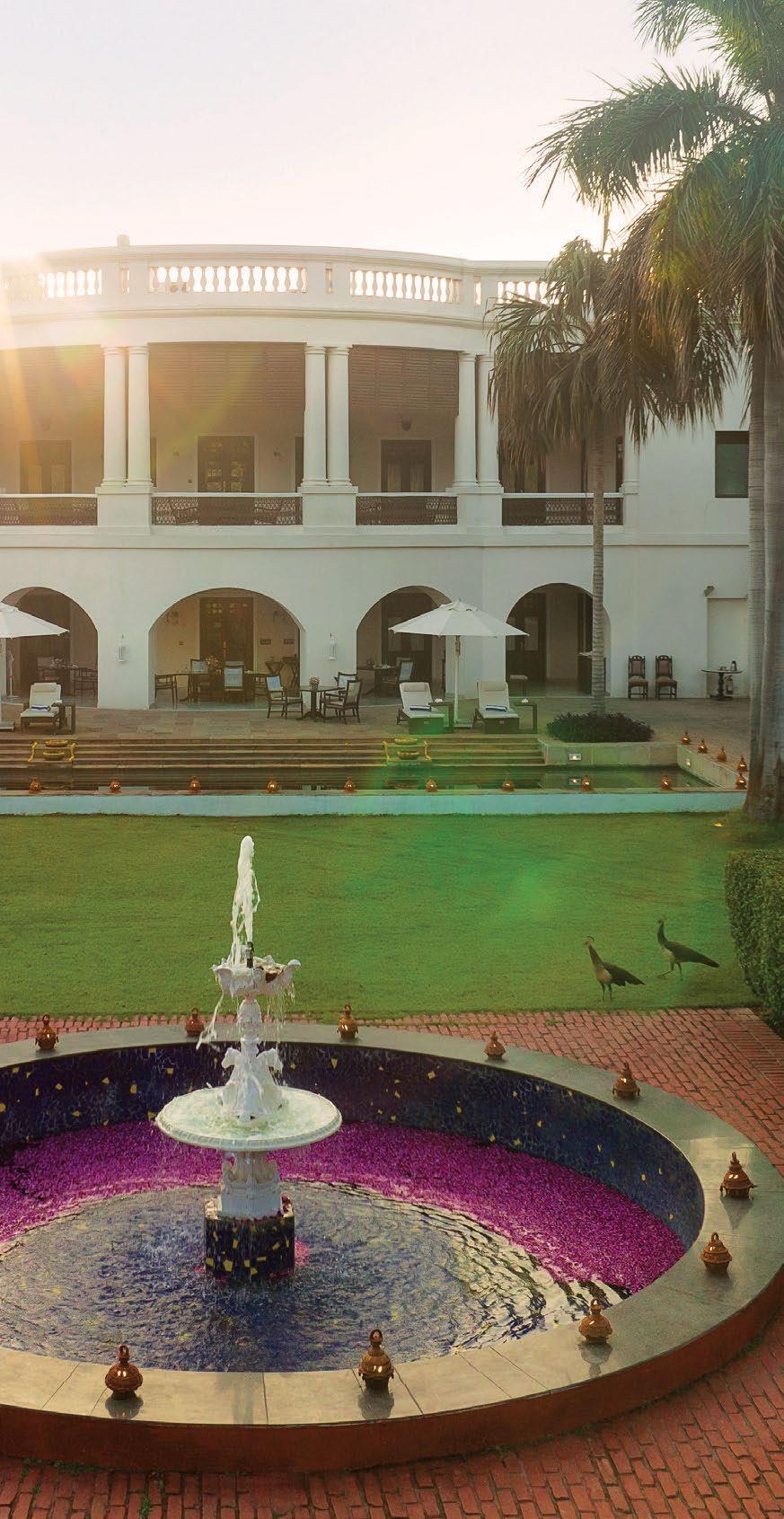
BELOW: Anand Kashi by the Ganges, IHCL SeleQtions sits on an auspicious bend of the river, framed by forested hills.
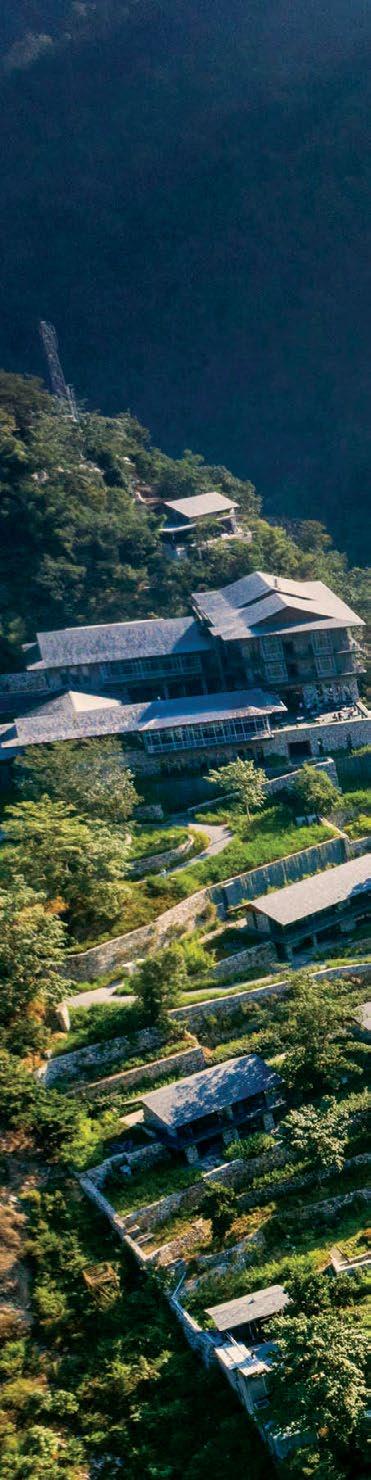
RIGHT ABOVE: Taj Rishikesh Resort & Spa, Uttarakhand occupies a hillside overlooking the Ganga and the Shivalik mountains.
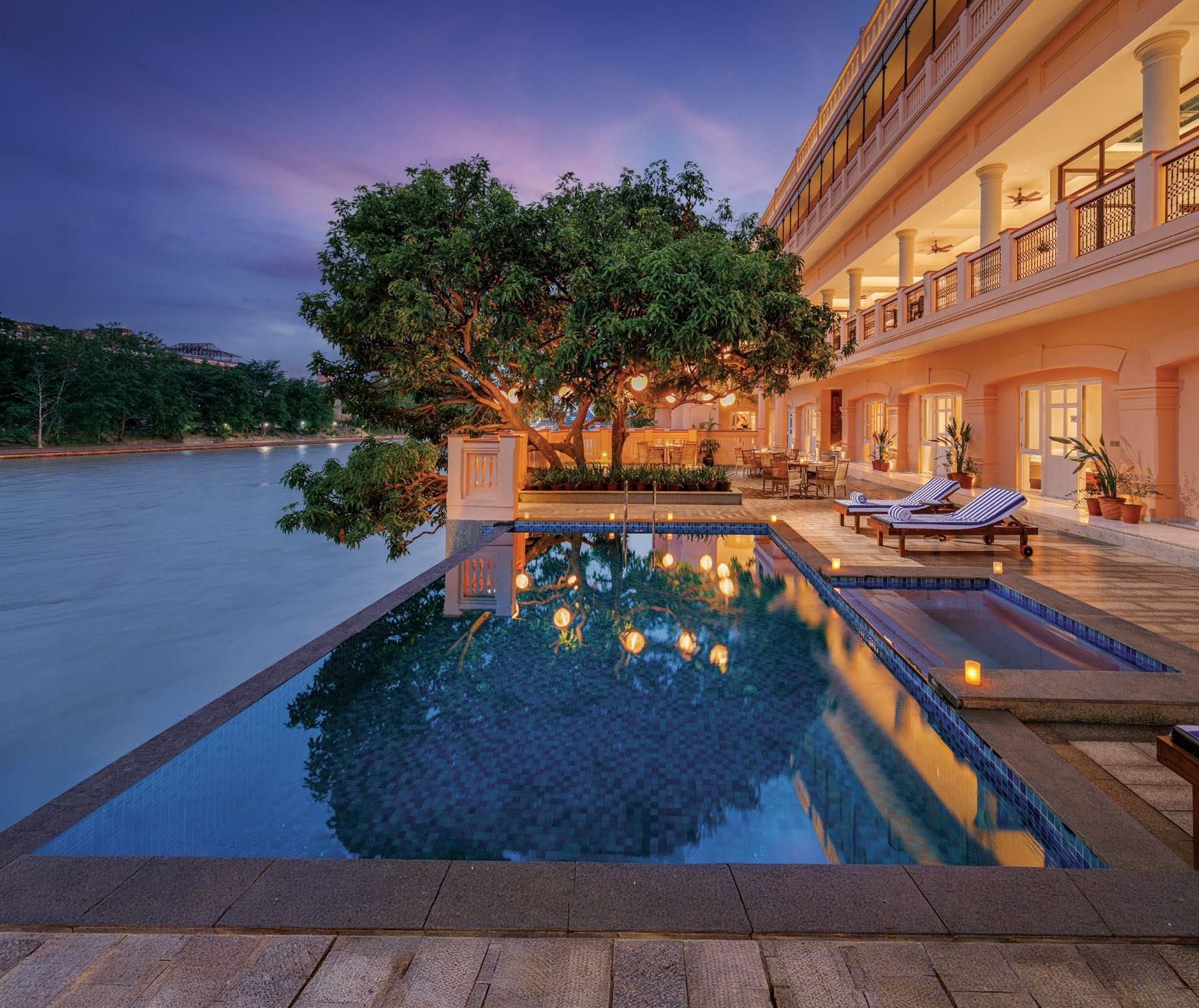
RIGHT BELOW: Heritage, hospitality and the Ganga converse intimately at Pilibhit House, IHCL SeleQtions.
THE SACRED JOURNEY
How IHCL is redefining the Ganga journey.
SOH TEAM
Ganga, India's sacred river, is remarkable in so many ways. Originating in the icy heights of the Gangotri Glacier in Uttarakhand (technically at Gaumukh) and emptying into the Bay of Bengal in West Bengal, it runs through varied terrain: land and river basins, forests, cities, and small towns. Its journey spans 2,525kms.
and traverses five states, from the mountainous Uttarakhand, the plains of Uttar Pradesh, the northern state of Bihar to the forestcovered Jharkhand, besides the eastern state of West Bengal, before ending in the lush Sundarbans delta, which India shares with Bangladesh.
Anand Kashi by the Ganges, Rishikesh - IHCL SeleQtions
Taj Rishikesh Resort & Spa, Uttarakhand
It is also home to a variety of wildlife: India's national aquatic animal, the Gangetic dolphin; the slender-snouted gharial; the feared mugger crocodile; the famous Himalayan fish, mahseer; and, not to mention, the endangered olive ridley turtle. On the banks of the river, everyday life and divinity merge in ways that the world has rarely witnessed anywhere else.
This massive river attracts Indians for both leisure and spirituality. For a long time, the accommodation along its banks reflected that duality in the most utilitarian way: pilgrim guesthouses on one end, the occasional boutique hotel on the other. IHCL has changed that calculus entirely. With a string of properties now open and announced along the river's length, from the Himalayan foothills to the plains of Uttar Pradesh, the group has effectively created a luxury corridor along the Ganga, one that makes it possible to travel the river's most storied stretches without compromising on either comfort or context.
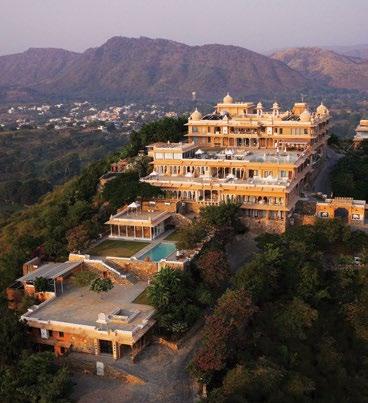
In Haridwar, where the river descends from the mountains onto the plains and pilgrims have gathered for centuries, Pilibhit House, IHCL SeleQtions, brings a new kind of intimacy with the river. A century-old heritage mansion, originally built between the 1920s and 1930s by a prominent family from the town of Pilibhit, it has been meticulously restored into a luxury property while retaining its historic domestic scale, the kind of place that feels less like a hotel and more like staying as a guest in a home of considerable lineage. Its 33 rooms and two suites are spread across terraced courtyards and balconies, all oriented towards the Ganga, so that the river is never far from sight or mind. The
interiors carry the quiet confidence of early 20th-century aristocratic design: unhurried, considered, and rooted in a specific time and place.
But it is the property's relationship with the river that makes it truly distinctive. Its private bathing ghat, one of the largest on this stretch, allows guests to perform ritual dips, observe navgraha puja, or participate in Ganga aarti away from the overwhelming crowds of Har Ki Pauri. Here, the sacred is personal rather than congregational, and the Ganga becomes a functional and devotional axis of the stay rather than a distant, scenic backdrop.
Further upstream, in Rishikesh, where the river is faster and framed by the first ridges of the Himalayas, IHCL has two distinct properties, each pitched at a different kind of traveller. Anand Kashi by the Ganges, IHCL SeleQtions, sits on an auspicious bend of the river, on the grounds of what was once the Maharaja of Tehri Garhwal's summer hunting lodge. That royal lineage gives the property its bones. What gives it its character is a genuine attentiveness to where it stands. A private white-sand riverbank allows an unhurried daily aarti to unfold within the hotel's own grounds rather than the public spectacle it becomes at the main ghats. The design draws from Vedic Panchamahabhuta philosophy, Garhwali architectural idioms, and a wellness programme built around yoga and meditation.
Taj Nadesar Palace, Varanasi
An on-site Shiv Mandir grounds it in the devotional culture this stretch of the Ganga has carried for centuries.
The second Rishikesh property, Taj Rishikesh Resort & Spa, takes a different approach. It is more retreat than residence, more contemplative than ceremonial. Set on a forested hillside in Singthali, approximately 30kms. from central Rishikesh, it is deliberately removed from the town's bustle. Built in the Garhwali vernacular tradition with locally sourced stone, timber, and slate, the resort seems to grow naturally from its surroundings, its terraced layout allowing uninterrupted views of the Ganga and the Shivalik mountains from virtually every vantage point. A pebble-strewn private beach serves as the setting for sunset Ganga aarti each evening. The wellness offering, anchored by Taj's J Wellness Circle, brings together Ayurvedic therapies, yoga, and meditation in a programme that draws its meaning directly from the spiritual geography it inhabits.
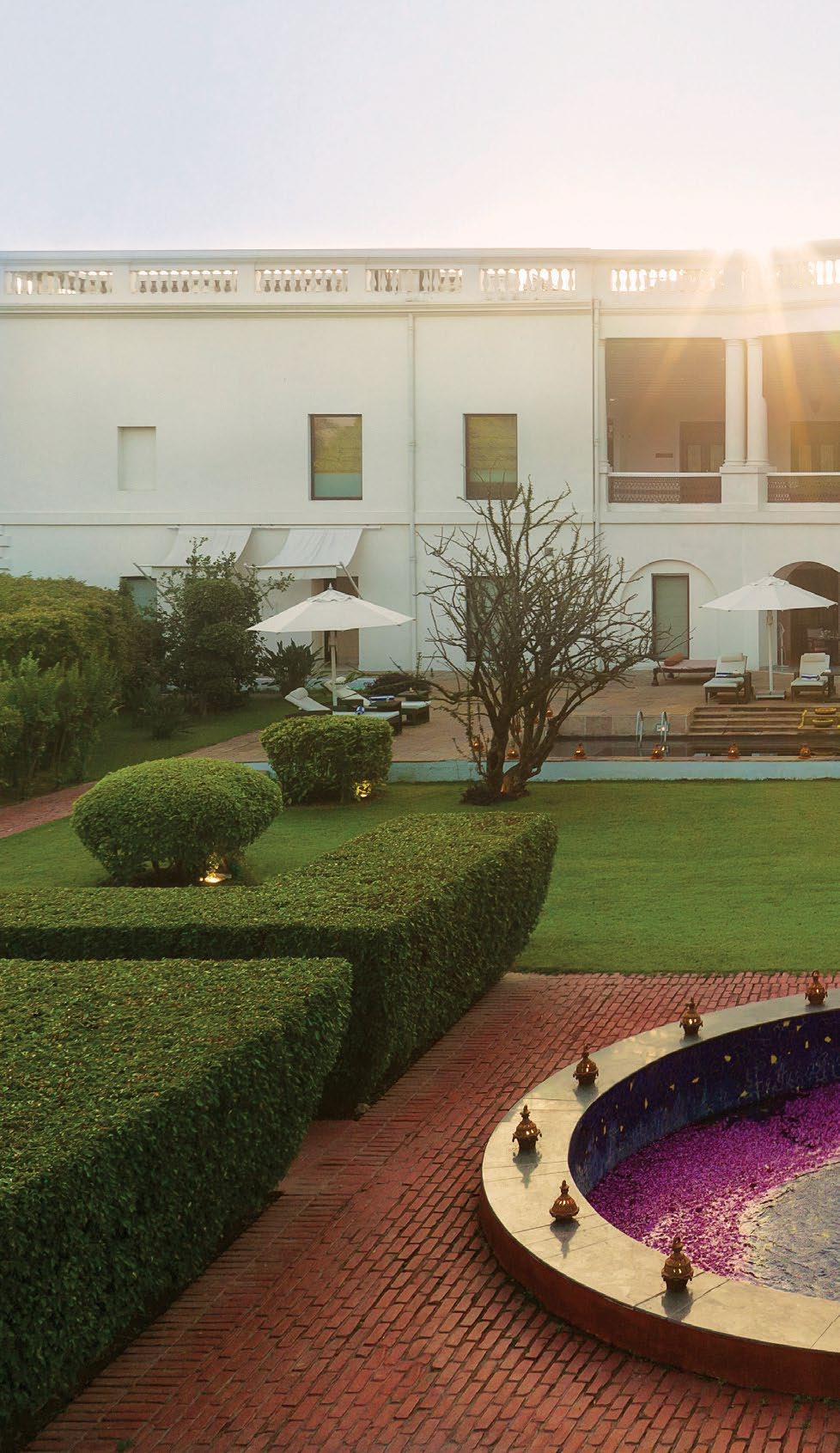
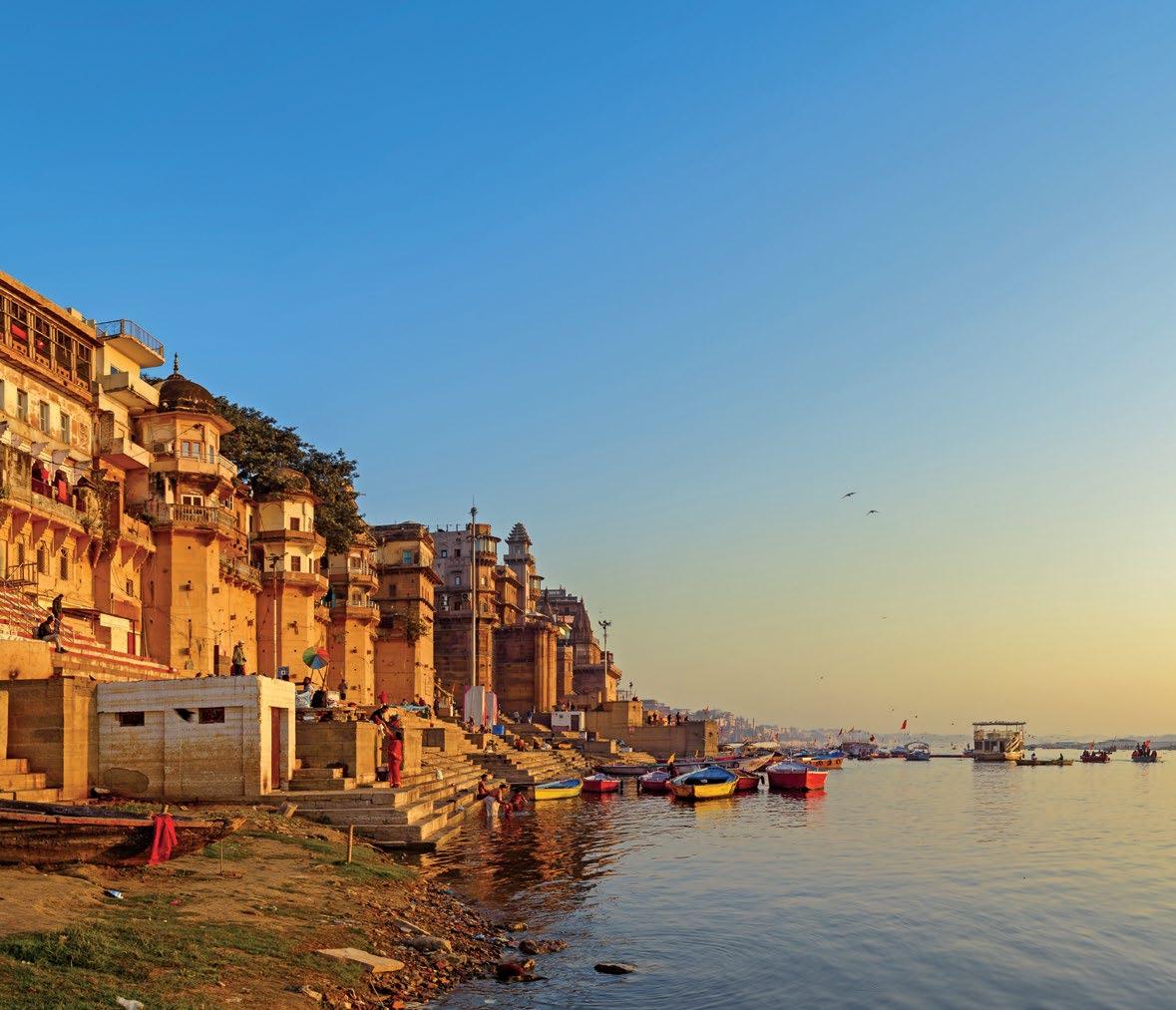
As the Ganga moves southward and eastward, gathering both water and myth, it eventually reaches Varanasi, the spiritual capital of the river's entire 2,500km. journey, and one of the oldest continuously inhabited cities on earth. Here, IHCL's presence takes the form of Taj Nadesar Palace, and the contrast
with the Rishikesh properties could not be more instructive. Where those hotels lean into the river's natural drama, Nadesar is defined by enclosure and stillness. Built in 1782 and once part of the estate of the Maharaja of Benares, the 14-room palace sits on 40 acres of landscaped gardens, orchards, and flowering groves.
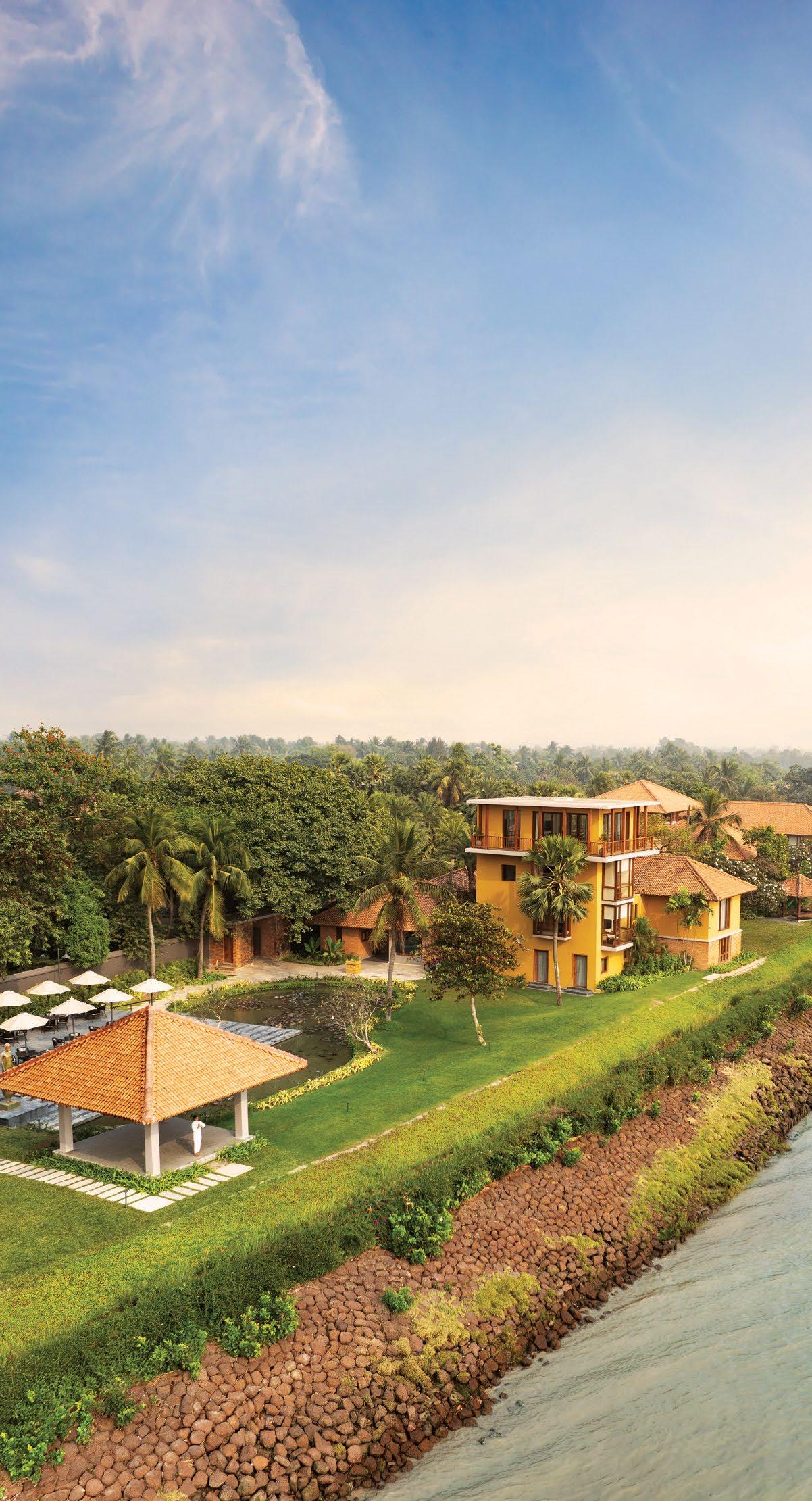
Kutir Resort & Spa at Raichak sits on a 100-acre estate near the confluence of the Ganga and the sea, a sprawling, rurally rooted property with 155 rooms that draws on the idyllic character of Bengal's countryside, a fittingly unhurried close to a journey that begins in the ice and altitude of the Himalayas.
The suites are furnished with artefacts and heirlooms from the Maharaja's personal collection, giving the property the feel of a royal residence that receives guests rather than a hotel that has borrowed some history. Located five kilometres from the principal ghats, it offers proximity to the living rituals of the city: the dawn boat rides, the evening aarti at Dashashwamedh, and the lanes of the old city, while providing a retreat defined by privacy, historical continuity, and an unhurried pace.
The river's final act, as it fans out towards the Bay of Bengal through West Bengal, is now also part of the IHCL story. Taj Ganga
The group is also expanding Taj Ganges, its existing Varanasi property, with the addition of 100 rooms, a signal of just how much demand this city is generating. On the horizon is a 500-key Taj Patna, positioned opposite Gandhi Maidan with the Ganga flowing to the north, a property that, when complete, will fill the one remaining gap in IHCL's riverlength presence.
From the glacier-fed upper reaches to the delta’s edge, the properties have created a benchmark in hospitality, comfort, luxury and its spiritual grounding.
Taj Ganga Kutir, Raichak
TOP: Set within 40 acres of gardens and orchards, Taj Nadesar Palace offers a rare sense of stillness in the heart of Varanasi.
ABOVE: At Raichak, Taj Ganga Kutir Resort & Spa draws on the unhurried character of Bengal’s riverine landscape.
THE CASE FOR BUILDING LESS
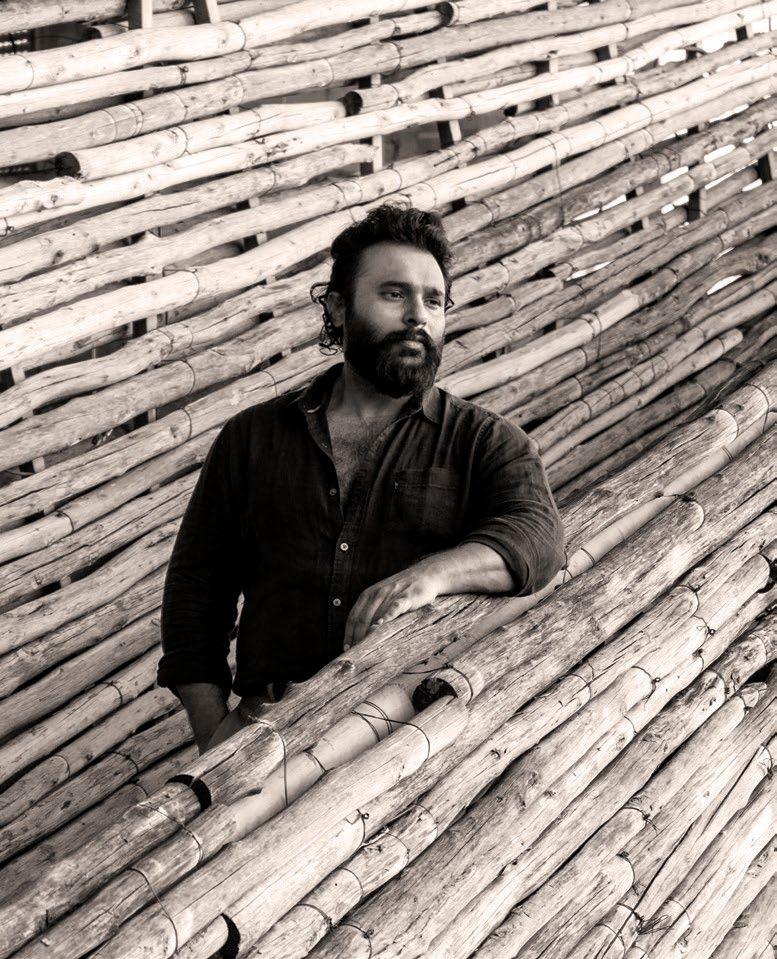
Using discarded shipping containers and earth, Vinu Daniel of Wallmakers shapes a restaurant in Tuticorin around climate, constraint, and material intelligence.
RUPALI SEBASTIAN
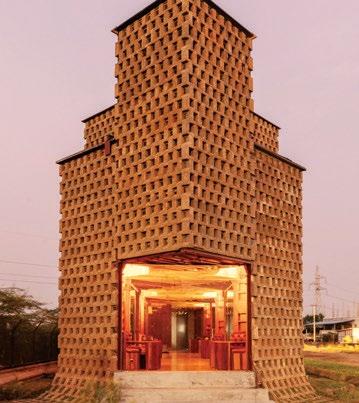
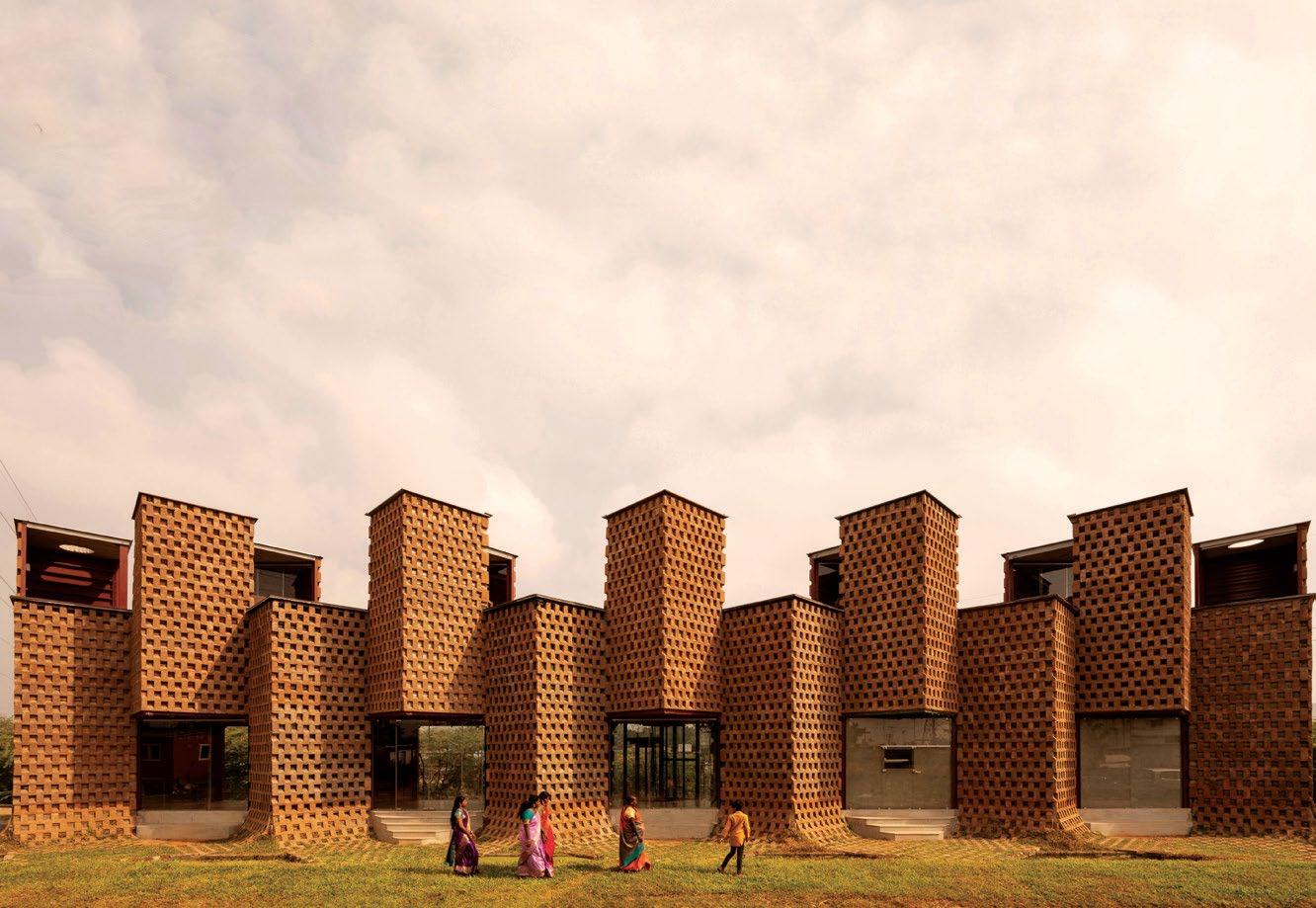
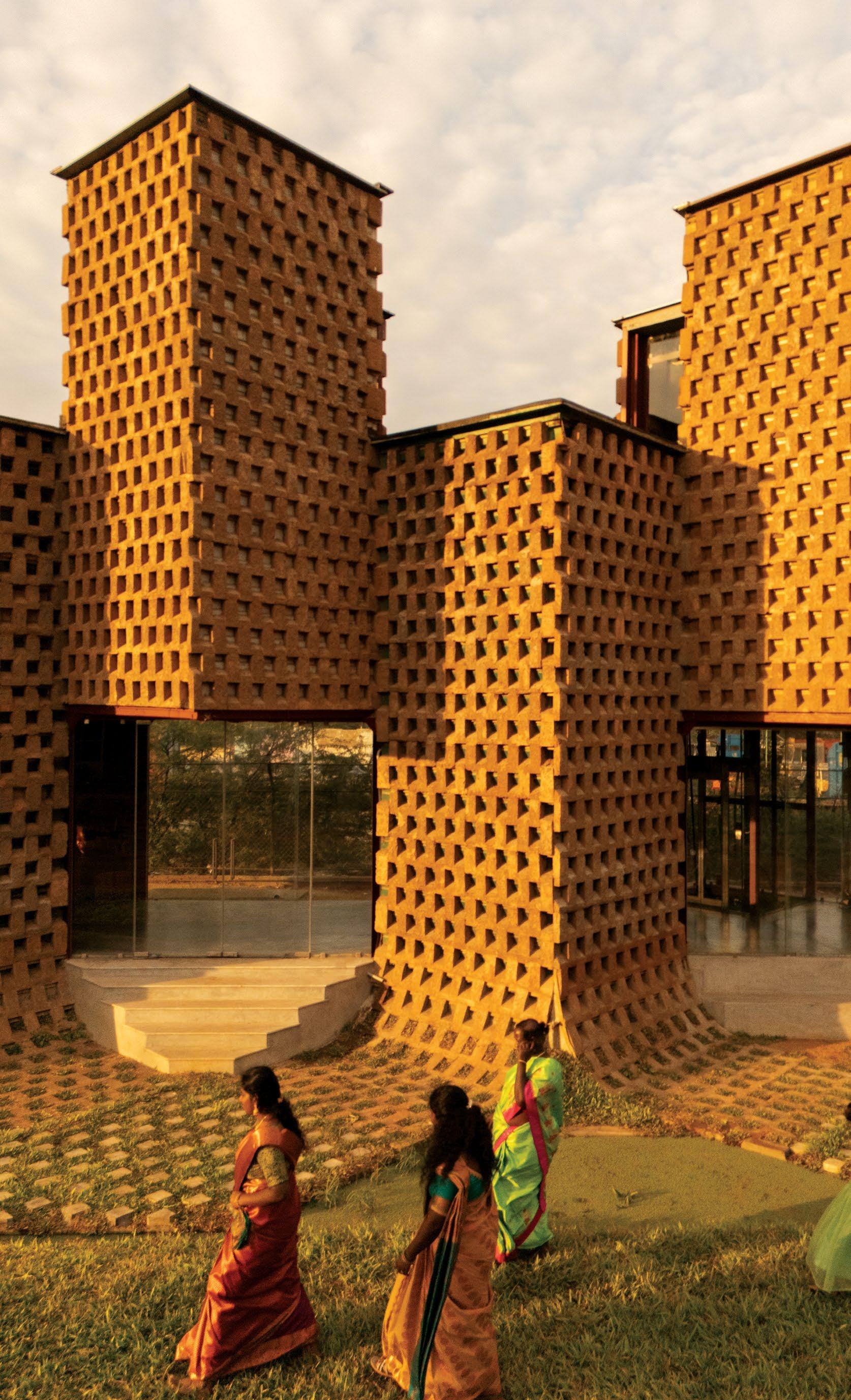
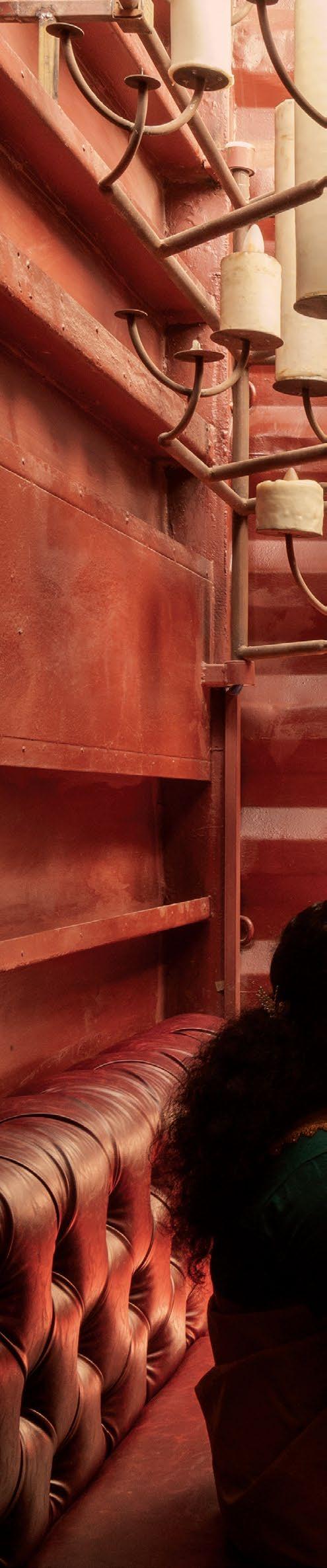
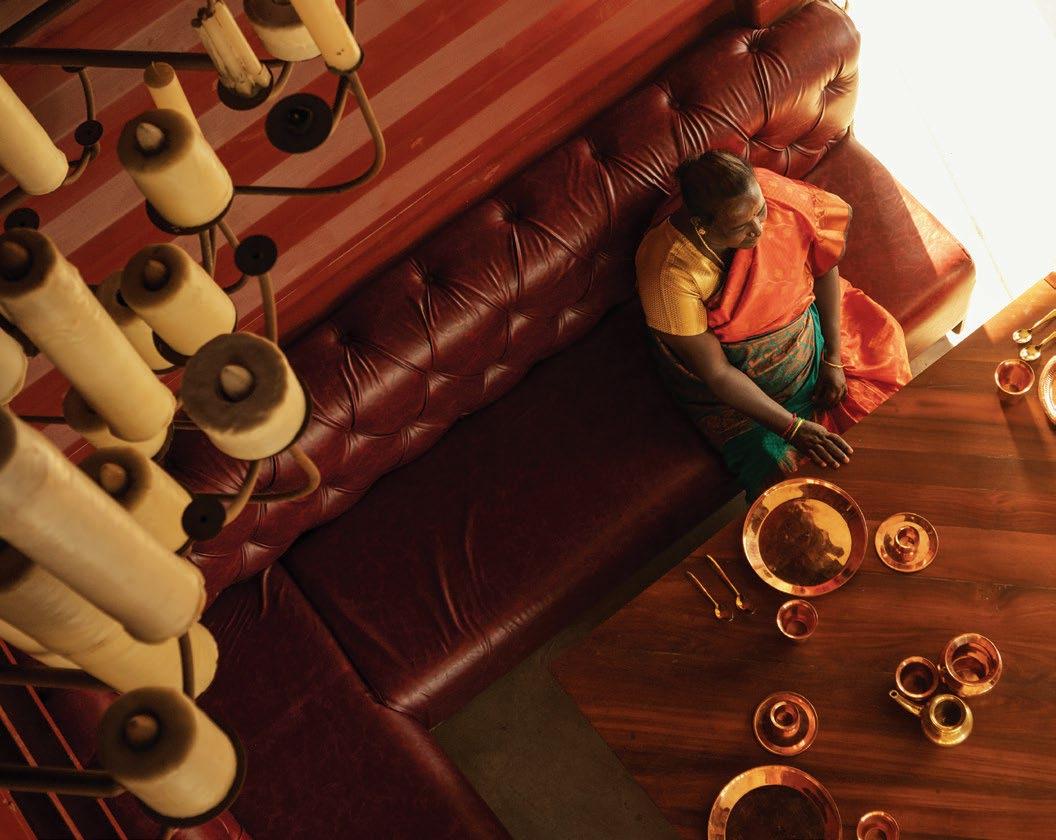
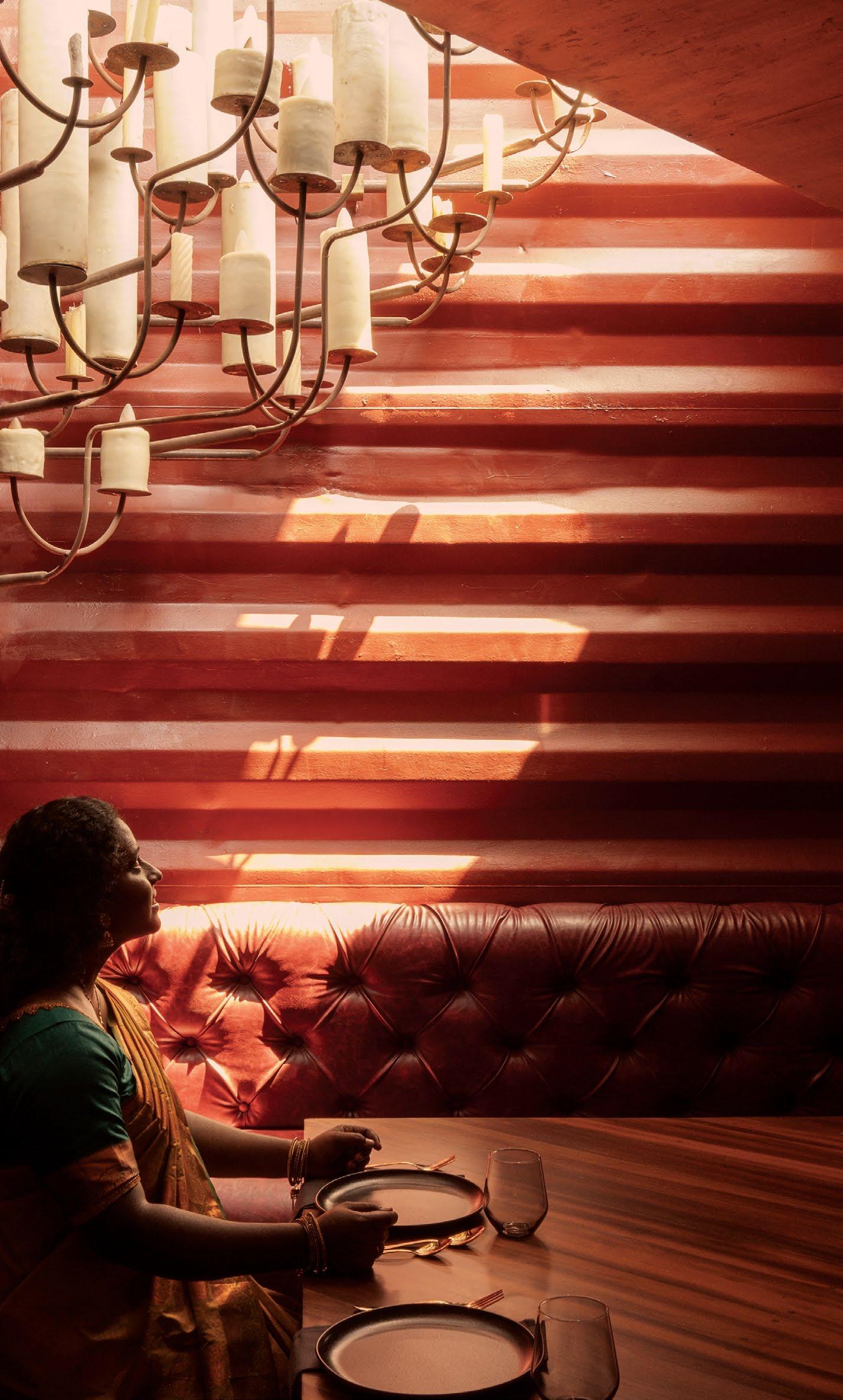
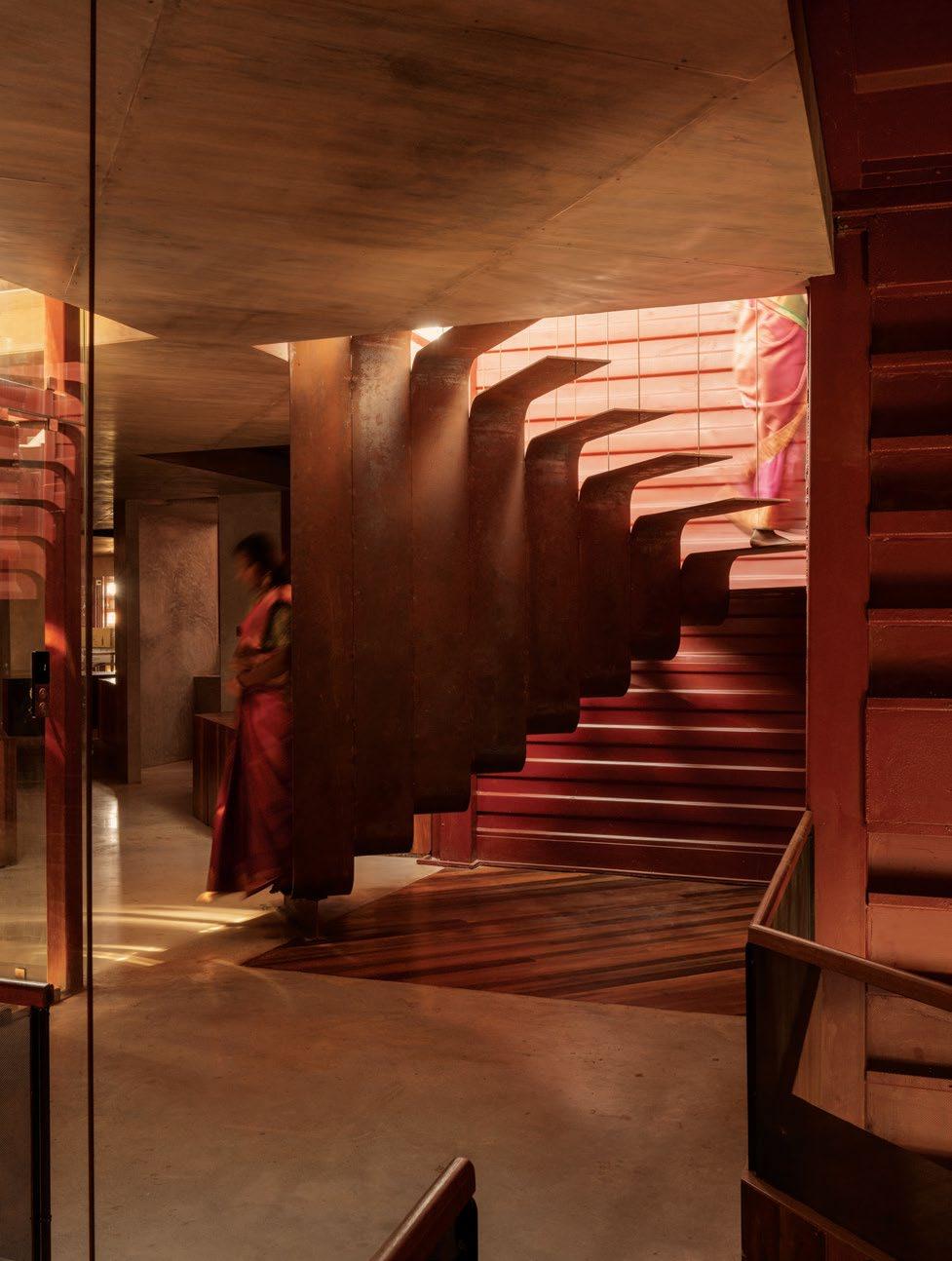
RIGHT AND ABOVE: Twelve discarded shipping containers reoriented vertically transform a familiar industrial object into a porous, lightfilled structure. A skin of earth wraps the container framework, insulating the building while softening its edges.
What does it mean to build less and still offer more?
At Petti, a restaurant by Vinu Daniel of Wallmakers, the question is not rhetorical. It is embedded in the way the building is put together, in the materials it draws from, and in the choices it refuses to make. The architecture does not present itself as a finished object. It feels assembled, almost provisional, as though it could still shift or extend. Yet, it holds its ground with quiet assurance.
The project sits in Tuticorin, a port city shaped by centuries of maritime trade. The context is not invoked through imagery or reference, but through material. Discarded shipping containers, a common residue of the port, become the structural basis of the restaurant. Their presence is not treated as a visual gimmick. Instead, they are reoriented and reworked to produce something more spatially open than their original form allows.
As Daniel puts it, “The sheer number of discarded shipping containers in Tuticorin pushed us to work with what the city was already leaving behind.”
Set vertically, the containers shed their usual compression. What is typically a low, horizontal module becomes a taller volume, capable of holding air and light. Twelve such units are assembled and stitched together. The building does not read as a single mass. It is a series of staggered elements, each slightly offset from the next, allowing gaps to emerge between them.
The site is narrow and linear, a condition that often leads to straightforward planning. Here, that linearity is broken down. The restaurant unfolds as a sequence of pockets rather than a continuous corridor. Movement is not forced along a single path. Instead, it slows down, disperses, and gathers again in moments that feel unplanned.
The outer layer plays a crucial role in this experience. A skin of earth is applied over the container structure. It performs first as insulation, tempering the intense heat of the region. At the same time, it alters how the building is read. The surface is uneven, retaining the marks of its making. Light does not fall evenly across it. It shifts through the day, revealing depth and thickness.
“We combined two materials that are usually not brought together, steel and mud, to make the system work climatically,” Daniel notes.
This layer is further shaped into a recessed pattern, creating a façade that is less about openings and more about modulation. Direct apertures are limited. On the upper level, particularly along the south, the building avoids them almost entirely. Air is allowed to move through the staggered
TOP AND ABOVE: Movement unfolds through a series of staggered volumes, breaking down the site's narrow linearity into smaller spatial moments.
BELOW: Petti extends architect Vinu Daniel's ongoing exploration of material reuse.
THINKING INSIDE THE BOX
At Petti, the numbers tell their own story.
The skeletal structure was completed in 45 days, against the 180 days a comparable RCC building would demand.
Eighty to ninety per cent of what went into the project comes from within a five-mile radius, from discarded shipping containers to site-sourced earth and reclaimed elements. The structure itself relies on 12 containers, each costing about ₹1.2 lakh, including transport.
At roughly ₹2,500 per sq.ft., Petti undercuts the ₹3,000 per sq.ft. typical of a conventional RCC build, landing at a 15–20% saving on overall construction cost. Finishes step back, with interiors and finishing at about ₹1,000 per sq.ft.
Plastering, putty, painting, and conventional waterproofing are largely out of the picture, reducing both upfront cost and the burden of maintenance over time.
The earth-insulated envelope, working with a passive layout, brings down active cooling requirements by around 38%, easing both energy use and HVAC load.
volumes rather than through punctures in a wall. Ventilation is achieved through arrangement, not intervention.
Inside, the language remains consistent. The containers are not concealed behind layers of finish. Their presence is visible, registering as part of the interior experience. Floors in oxide and reclaimed deck wood introduce warmth, but do not compete for attention. The material palette is held in check.
The plan works with the structure rather than against it.
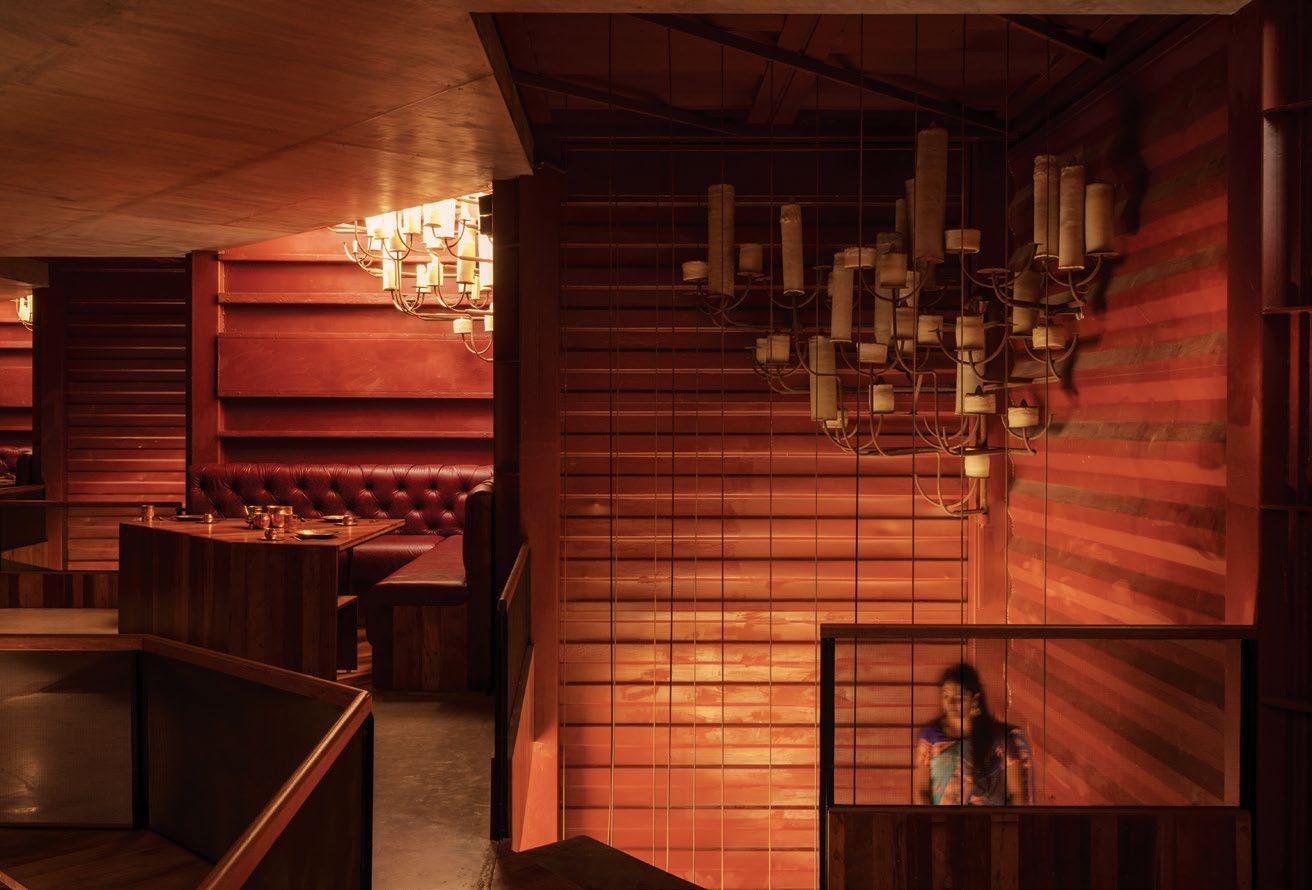
Seating is organised in clusters that align with the volumes. Corners become quieter, more intimate zones. Larger groups occupy the more open stretches. Even within the constraints of the site, the layout avoids a sense of crowding. Each table feels placed, not fitted in. Light completes this shift in atmosphere. During the day, skylights bring in a diffuse brightness that softens the interiors. By evening, custom chandeliers assembled from old wax and pipes take over. They do not attempt spectacle. They draw the scale of the room downwards,
creating a more contained, almost domestic sense of enclosure.
There is clear restraint at work. Services are not aggressively hidden. Surfaces are not layered with finishes to achieve a sense of polish. The building does not rely on excess to establish itself. In a hospitality landscape where visual richness is often equated with value, Petti moves in the opposite direction. It suggests that comfort can emerge from proportion, light, and air as much as from material abundance.
What is striking is how little the project insists on being read as sustainable. There are no overt gestures that signal intent. The logic is embedded instead in decisions that remain close to the ground. What is used, what is reused, and what is left out carry more weight than any visible marker.
“Petti is an attempt to show that materials often treated as waste can perform efficiently in tropical conditions when handled with the right system,” says Daniel.
The construction follows a similar line of thinking. The use of modular units allows the building
THIS SPREAD: Inside Petti, the language remains consistent. Reclaimed materials, exposed container surfaces and chandeliers assembled from old wax and pipes create an interior that relies on atmosphere rather than excess, allowing light, volume and material honesty to shape the experience.
to be assembled with a certain economy of means. At the same time, it leaves room for change. The structure does not lock itself into a fixed form. It could extend, adapt, or reconfigure without requiring a complete overhaul.
This openness reflects a way of thinking about buildings as processes rather than objects.
Petti does not attempt to resolve the question it raises. It does not present itself as a model to be replicated in exact terms. Instead, it operates as a prompt. It asks whether building more is always necessary, or whether rethinking what is already available might be enough.
In a city defined by movement and exchange, the project draws from a logic of reuse and redistribution. Materials shift roles. Spaces adjust. The building settles into place without appearing final. It does just enough and leaves the rest open.
A DIFFERENT KIND OF CASUAL DINING
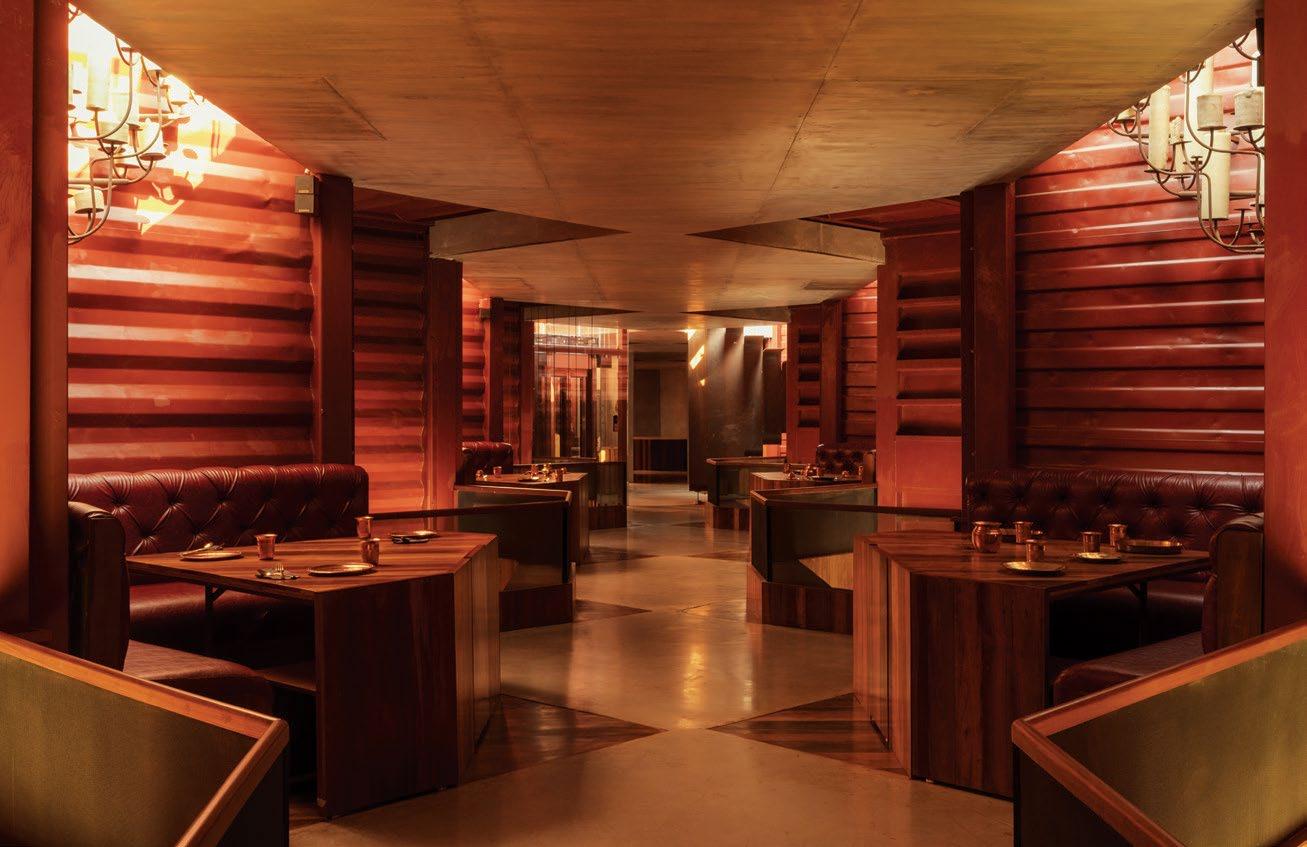
Studio Camarada introduces a more deliberate spatial experience in MISU’s latest Bengaluru address, where restraint and drama coexist without tipping the balance.
RUPALI SEBASTIAN
It takes a moment before the room settles. And then you begin to notice what’s holding it together.
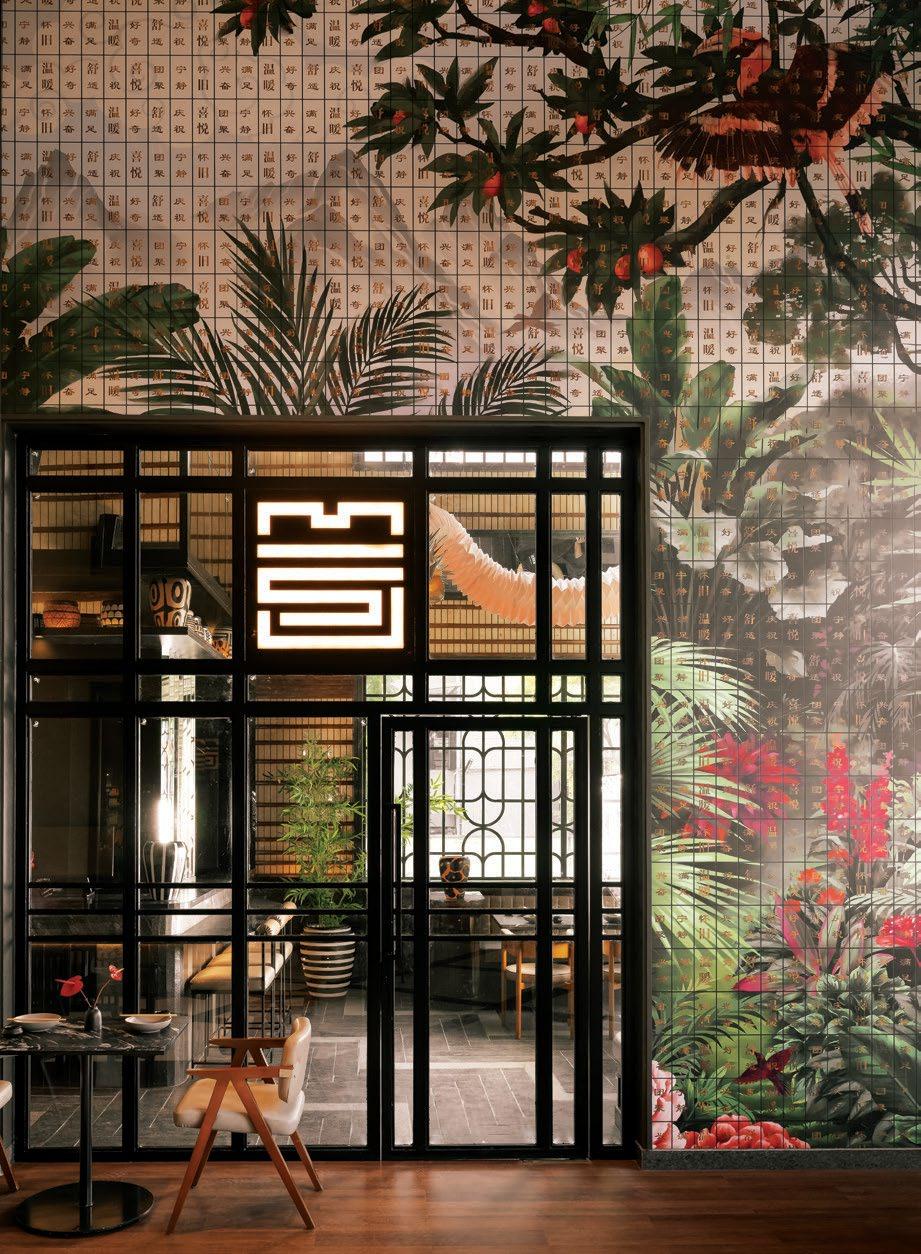
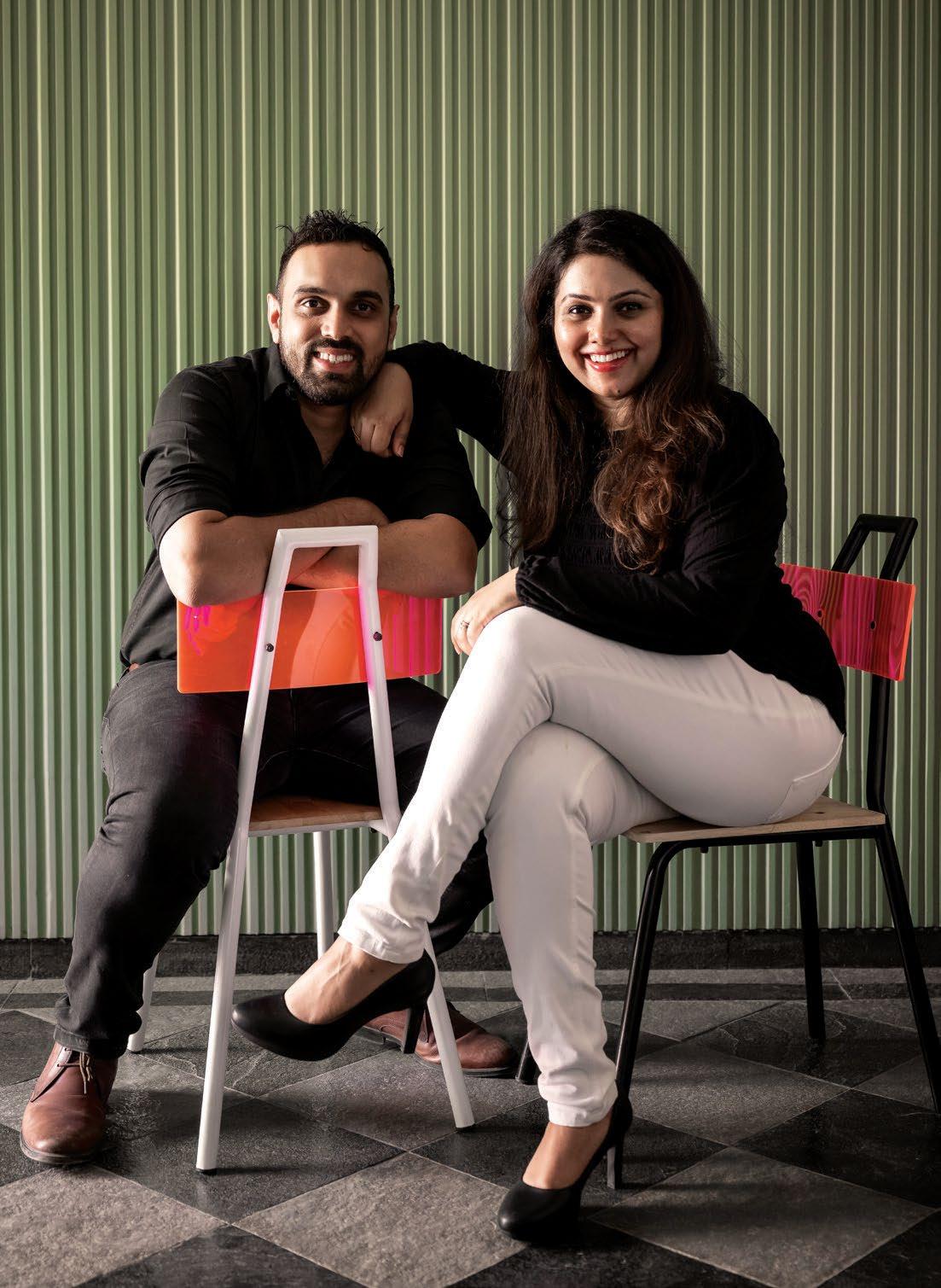
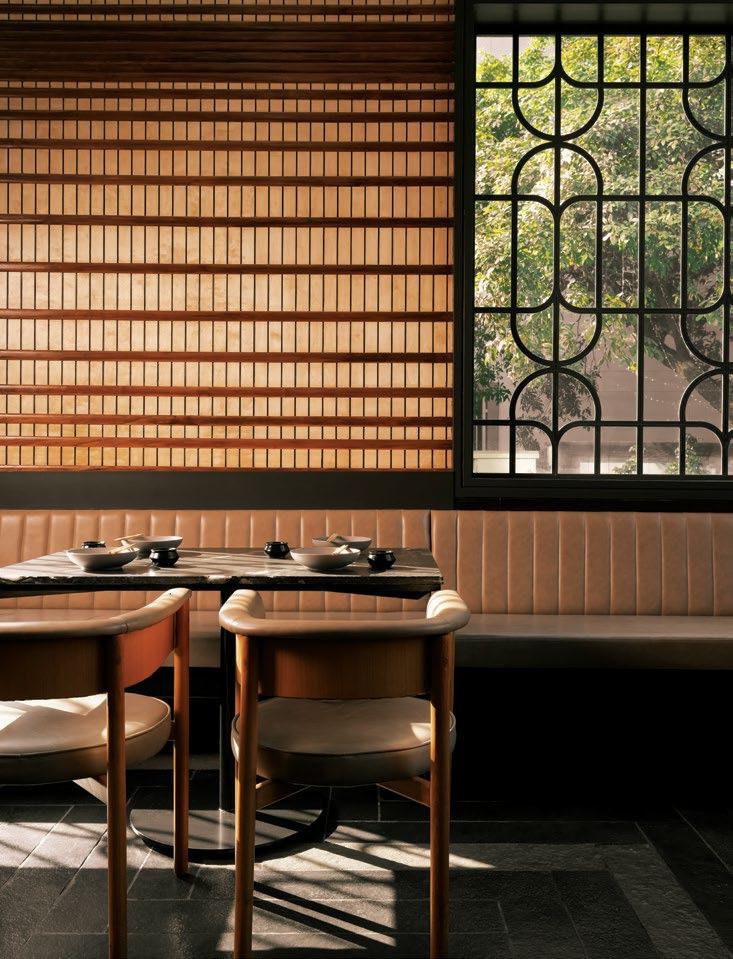
Designed by Andre Camara and Shravya Shetty of Studio Camarada, MISU’s St. Marks Road location marks a quiet shift in the brand’s spatial language. MISU has typically operated within a register of restraint. Here, that restraint hasn’t been pushed aside, it’s been adjusted, just enough, to hold something more charged. That shift is intentional. As founder Amit Ahuja sees it, this move signals a more design-forward, experience-led version of the brand.
For Camara, the brief was unusually direct— “bold, sexy, and impactful.” The response, though, is surprisingly disciplined. “We consciously limited ourselves to just two or three strong elements,” he says, “and allowed them to define the interior.” That decision—to do less, but with greater clarity—sits quietly beneath everything that follows.
Holding the space together
The plan is linear, almost insistently so. It could easily have felt narrow, even restrictive. Instead, it reads as continuous, and much of that comes down to how the surfaces are handled.
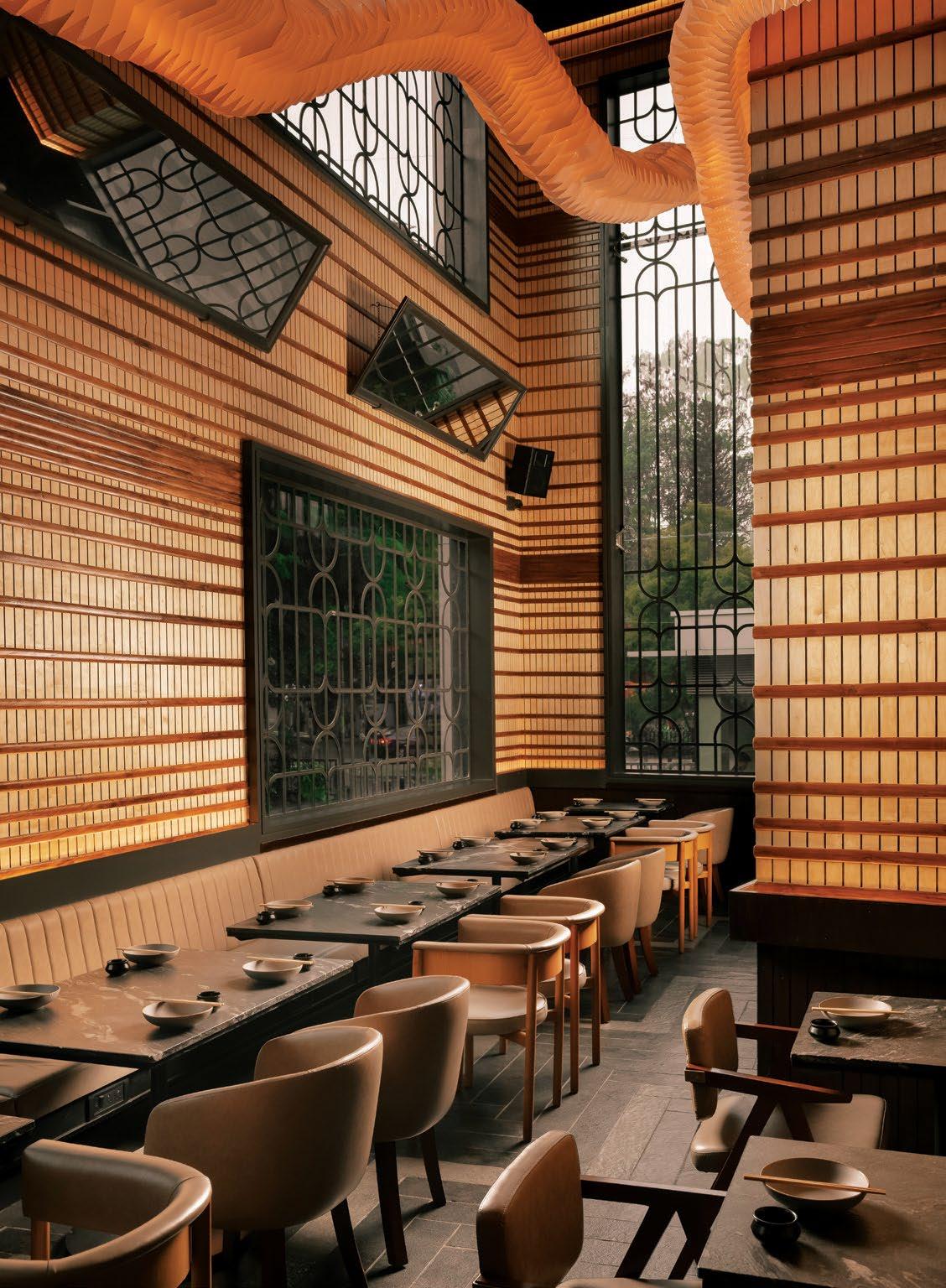
The wall panelling establishes a rhythm early on— distinct, but not attention-seeking. Alongside it, the black-and-grey herringbone flooring in natural stone introduces a quieter kind of movement, something you register more as you move through the room than when you first enter it. As Shetty points out, these elements were never meant to operate independently; they are part of a single visual field. The flooring carries through onto the bar fascia, the panels repeat with restraint, and nothing breaks abruptly or calls undue attention to itself. The room begins to feel larger than it is. Not dramatically, but enough to shift how you move through it, setting up how the rest of the interior is experienced.
ABOVE AND BELOW: Panelling and filtered light establish an early rhythm, setting the
before larger gestures unfold.
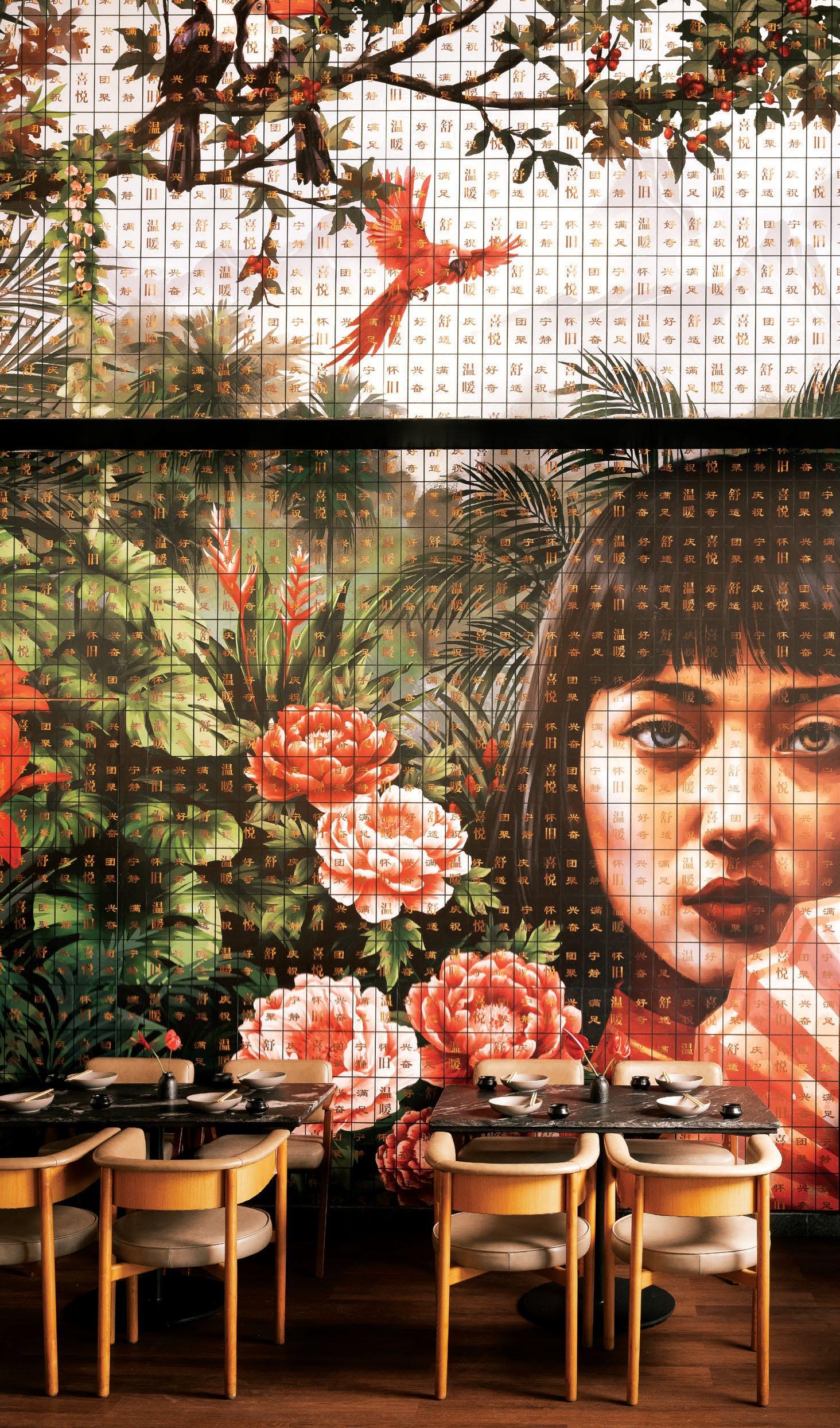
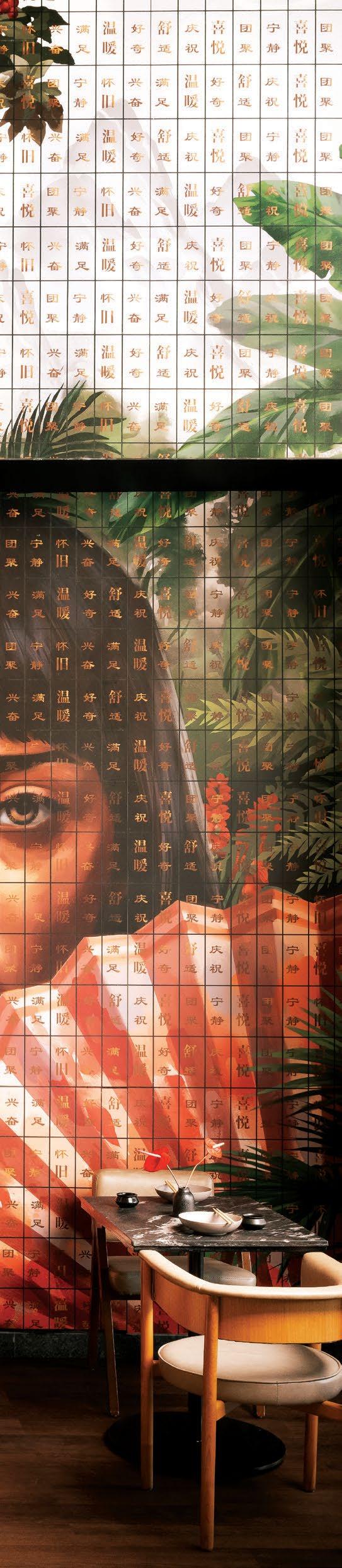
OPPOSITE PAGE AND CENTRE: The restaurant’s public face—a portrait rendered in wooden tiles, shifting from graphic to tactile as you move closer.
ABOVE LEFT: Andre Camara and Shravya Shetty of Studio Camarada.
tone
Layering without clutter
Within that continuity, layering becomes the way depth is introduced. Rather than relying on partitions or clearly defined zones, the design builds variation through overlap of materials, reflections, and light.
“The flooring, wall panels, and lighting come together to create these layers,” Shetty explains, “giving the space depth without overwhelming it.” The bar sits at the centre of this, both literally and socially, but it doesn’t behave like a focal point in the conventional
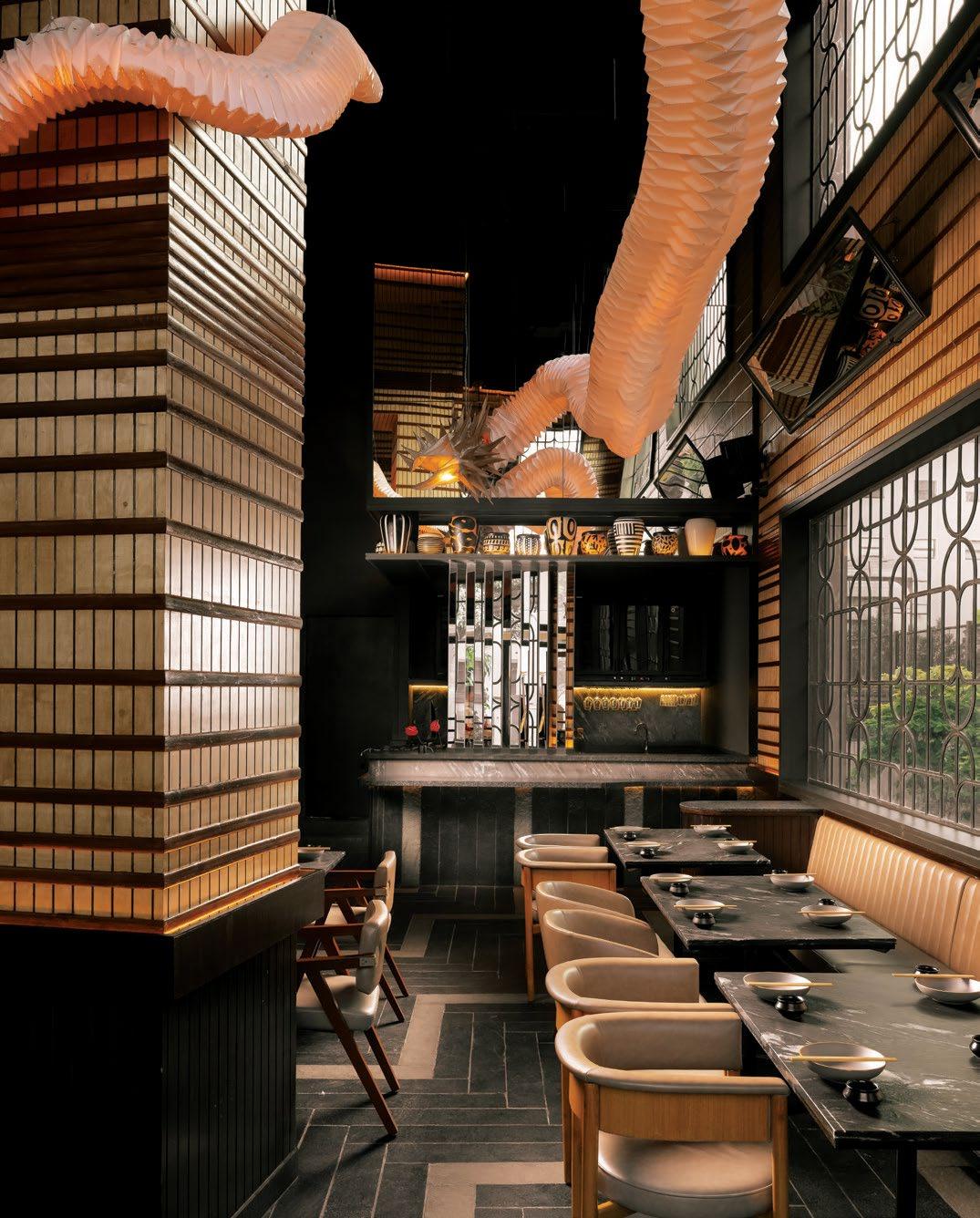
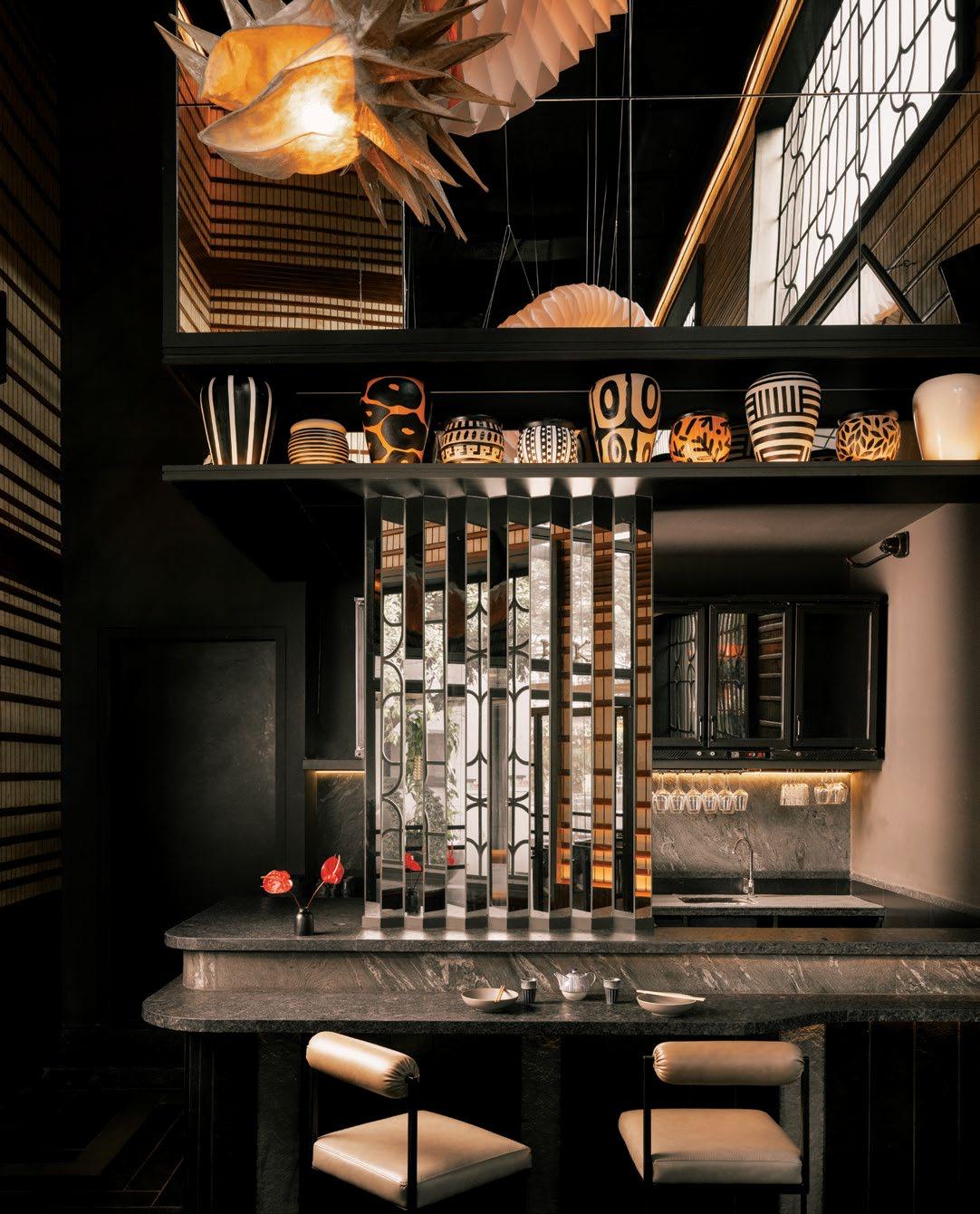
sense. There’s no attempt to elevate it as an object; instead, it is absorbed into the same material language, its presence felt without being overstated. It also anchors the programme—built around soju and sojubased cocktails—giving the room a distinctly eveningled rhythm. Behind it, a mirror stretches the room outwards, extending sightlines and gently altering perception—doing a lot without making a show of it, and carrying that calibration forward.
An edited reading of culture
Given MISU’s pan-Asian positioning, the risk of slipping into the familiar is always present, but here the references feel filtered, almost edited.
“If you look closely,” Camara notes, “the elements are inspired by the kind of menu peg systems seen in parts of Asia—where individual dishes are displayed as small tiles, slotted or hung across a wall.” It’s not something that announces itself immediately, and that restraint begins to shape how the interior is read—less as a themed setting, and more as something that reveals
A CEILING THAT HOLDS THE ROOM
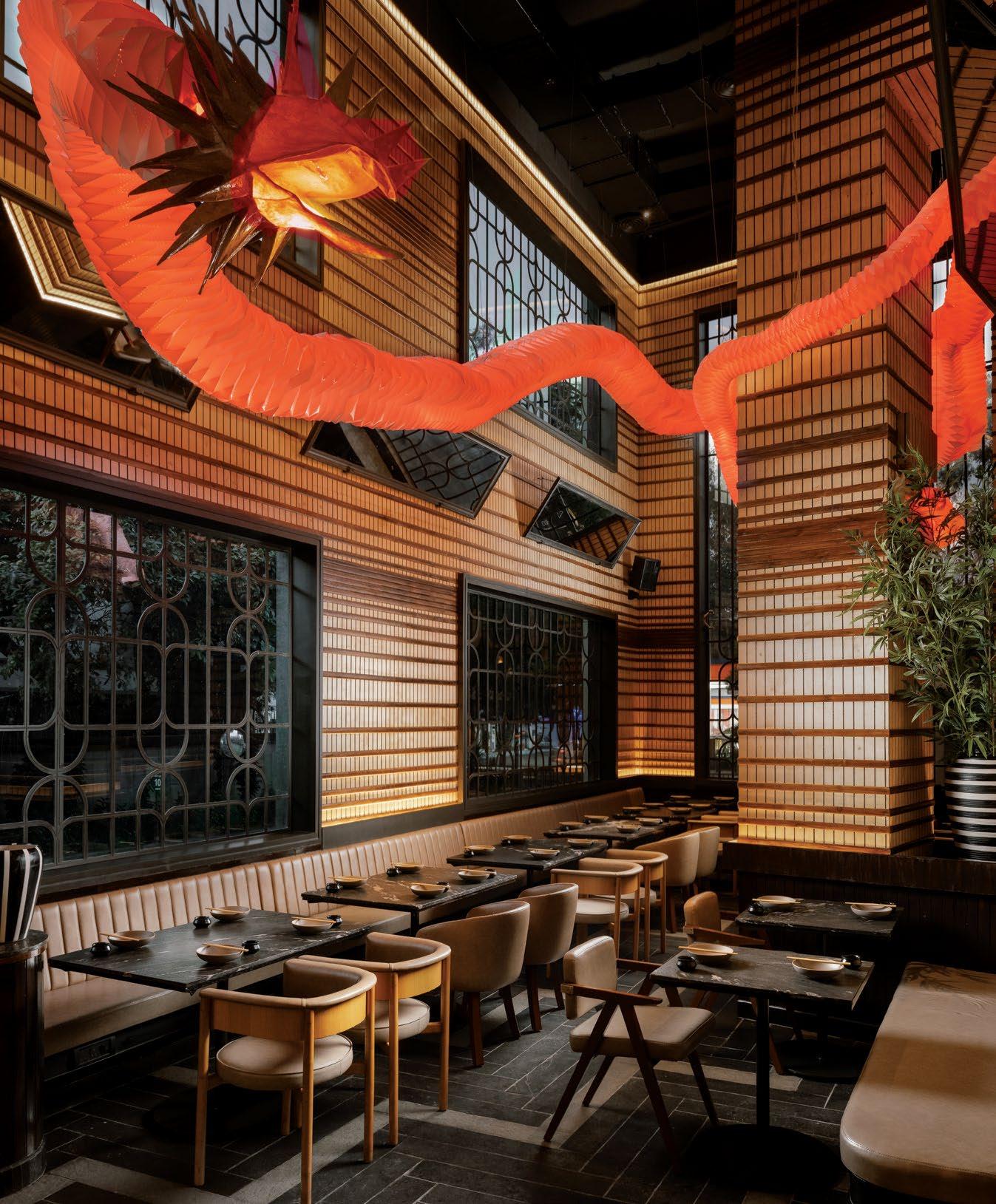
The suspended installation at MISU Bengaluru is less a fixture and more a spatial intervention.
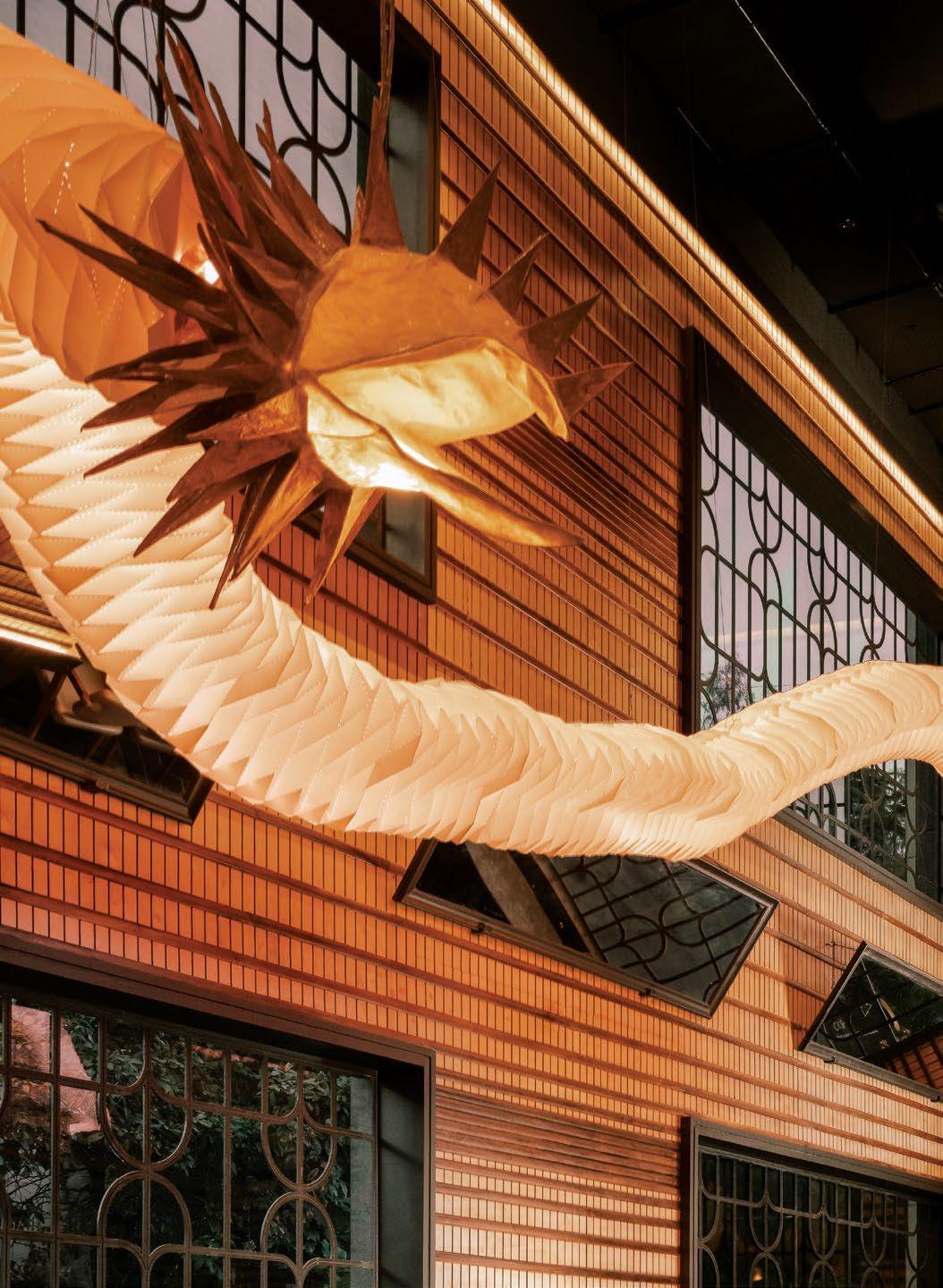
Developed in collaboration with Aditi Anuj of Adigami, along with co-founder Neelam Nagrani, the piece takes the form of an origami-inspired dragon: abstracted, fluid, and deliberately unresolved in its reading.
It wasn’t conceived as the centrepiece from the outset. It “took centre stage” only once the decision to leave the ceiling untreated was firmly in place.
From there, the installation evolved in response to the room—its height, its narrowness, its need for a single unifying gesture. What it does is subtle, despite
its scale. It shifts attention, introduces a sense of movement without literal motion, and changes how the volume holds together.
THIS PAGE: The bar anchors the room both visually and socially, integrated into the same material language.
itself in fragments. That approach keeps it from tipping into stylisation, while also holding the project within the realm of casual dining, just with a sharper edge than what we’re used to seeing.
Working with what’s given
The volume is unusual—long, narrow, and significantly tall—a combination that could easily have been corrected through standard interventions.
“Scale was perhaps the biggest challenge,” Shetty notes. The instinct in such settings is often to compress, to break, to contain. Here, the decision was to leave the volume intact and work with it, allowing its proportions to remain visible. That choice carries through the project, quietly shaping what follows.
For most of its length, the setting remains grounded—material, tactile, measured—and then, almost unexpectedly, it lifts. Suspended overhead, an origami-inspired installation takes over the ceiling plane, drawing the eye upward and altering how the room is read. It’s the most dramatic move in the project, but it doesn’t arrive as a rupture.
“From day one, we were clear about not wanting a false ceiling,” Camara says. “The idea was to have a single element that could take over the volume.” What began as an intention gradually found form— eventually evolving into a dragon-like installation that
THIS PAGE: The ceiling is treated as a single, continuous surface, using light and form as a design strategy to hold the volume together rather than fragment it.
responds directly to the proportions of the space. It’s a dramatic move, yes, but it never quite takes over, and that balance holds as the experience continues.
A quieter gesture outward
If the interior works through layering and control, the facade takes on a more graphic role, though it, too, resists obviousness.
Constructed from a field of wooden tiles that reference menu peg systems, the facade reads as a 20ft.-tall portrait—graphic, almost urban in its presence, and hard to miss from the street. The reference draws from Asian street culture, but it avoids directness, holding back just enough.
As Shetty notes, it may not be immediately legible— and that seems to be the point. It isn’t designed for instant recognition, but for gradual discovery—for the moment when something clicks, often after you’ve already encountered it from the outside.
For Studio Camarada, MISU Bengaluru doesn’t stand apart so much as it extends an ongoing line of inquiry. “It becomes part of the larger fragments of the body of work that we do,” Camara reflects. With a multidisciplinary approach, variety is expected. But what this project introduces is a slight shift in tone. “This falls in that space of bold meets casual,” Shetty adds.
What MISU proposes sits slightly differently within the casual dining landscape. A space that holds onto ease, but allows for a degree of drama. One that doesn’t rush to declare itself, and in doing so, stays with you a little longer.
THE HILLS ARE CALLING
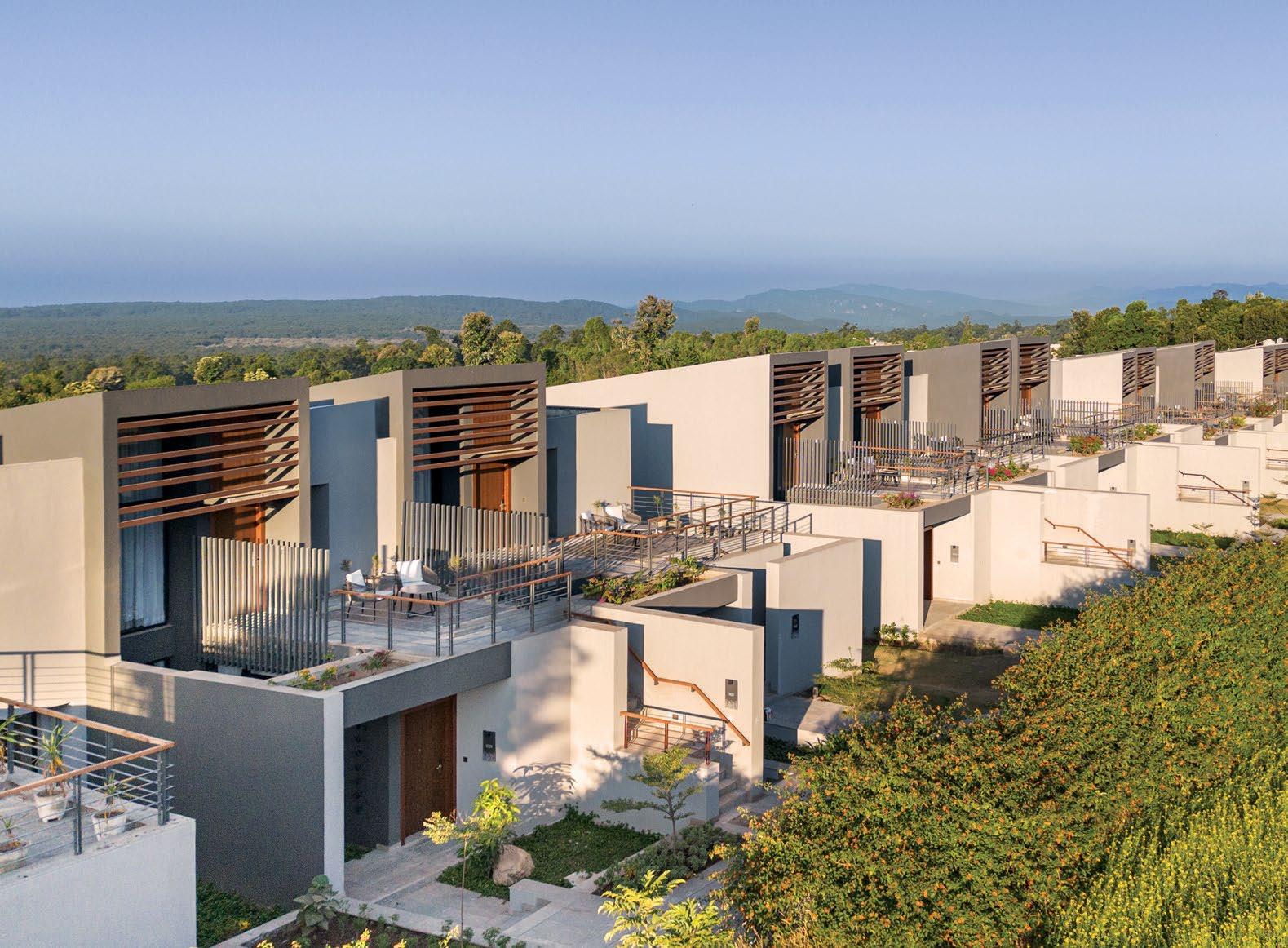
Sarovar Hotels introduces a Himalayan getaway that blends contemporary design with local Kumaoni influences.
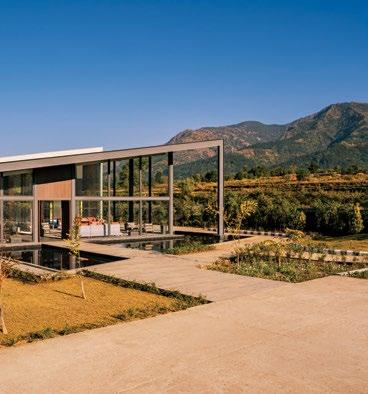
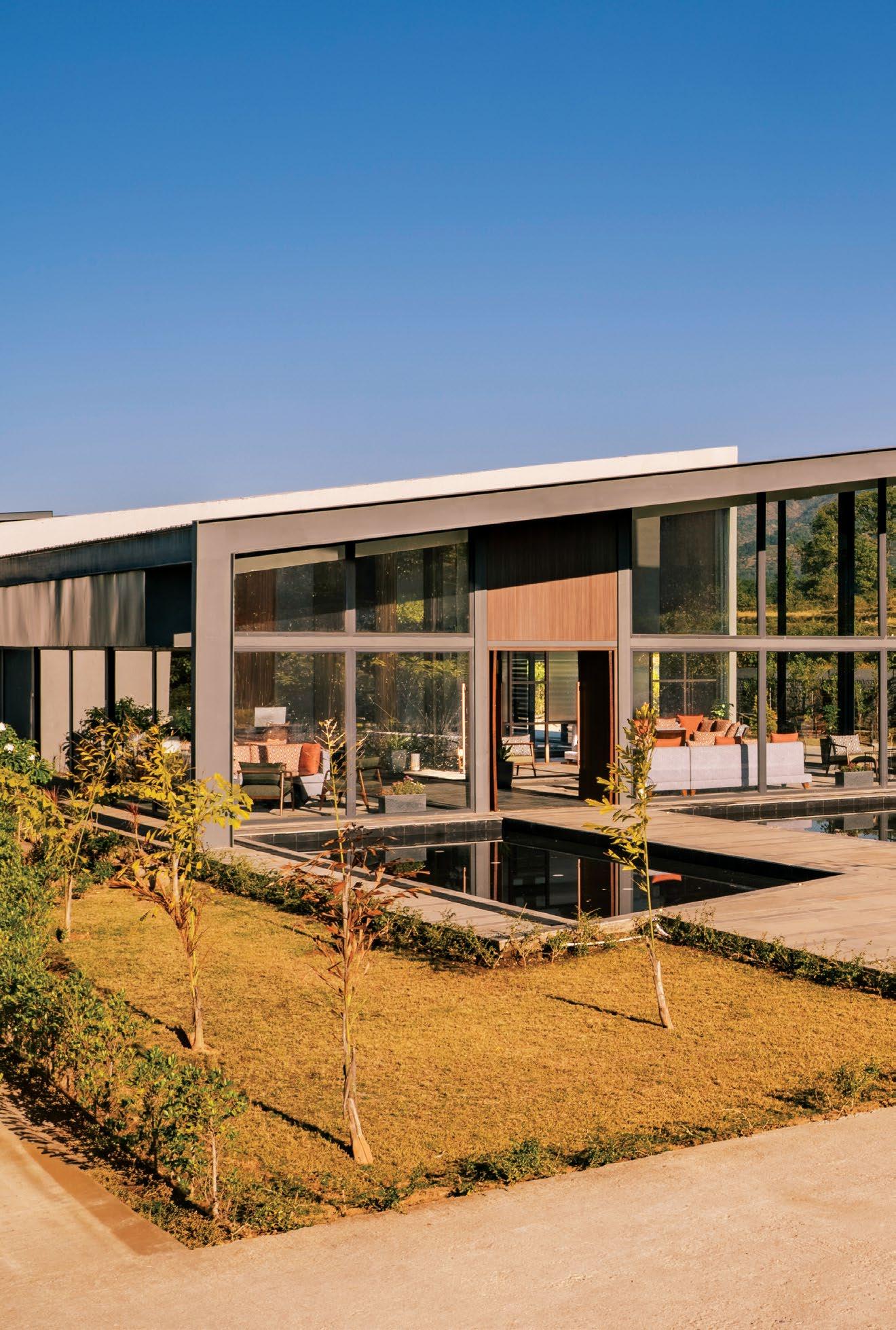
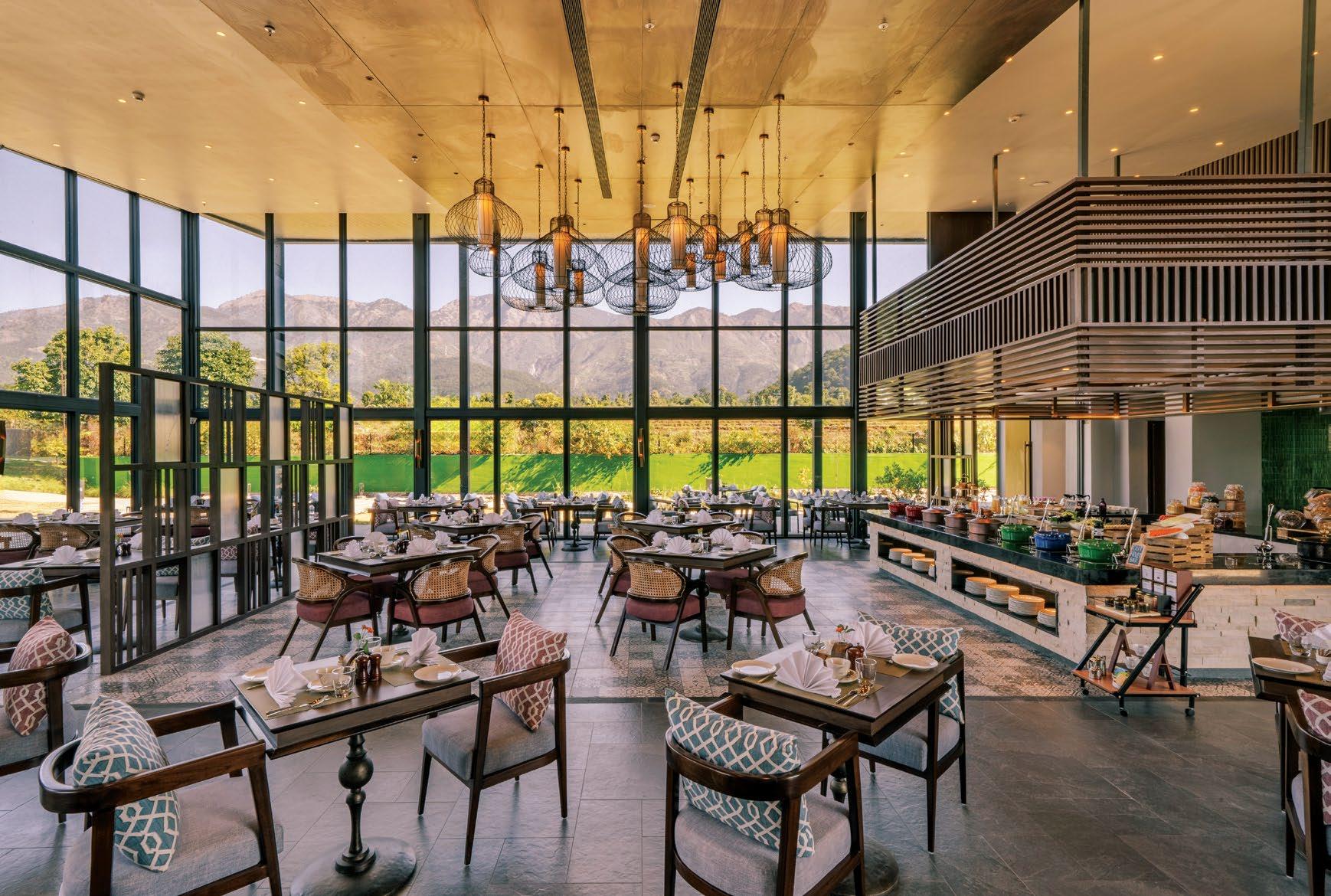
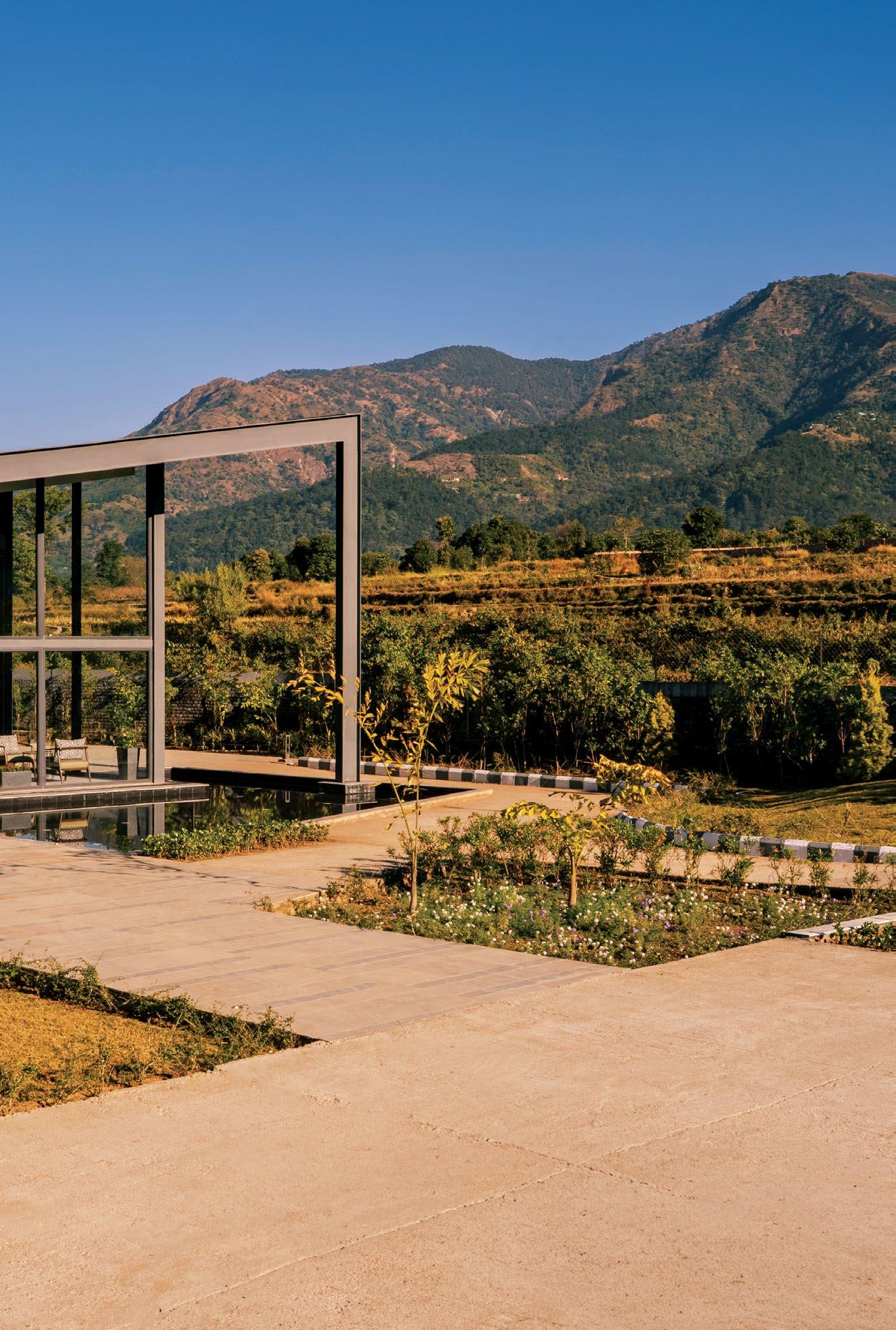
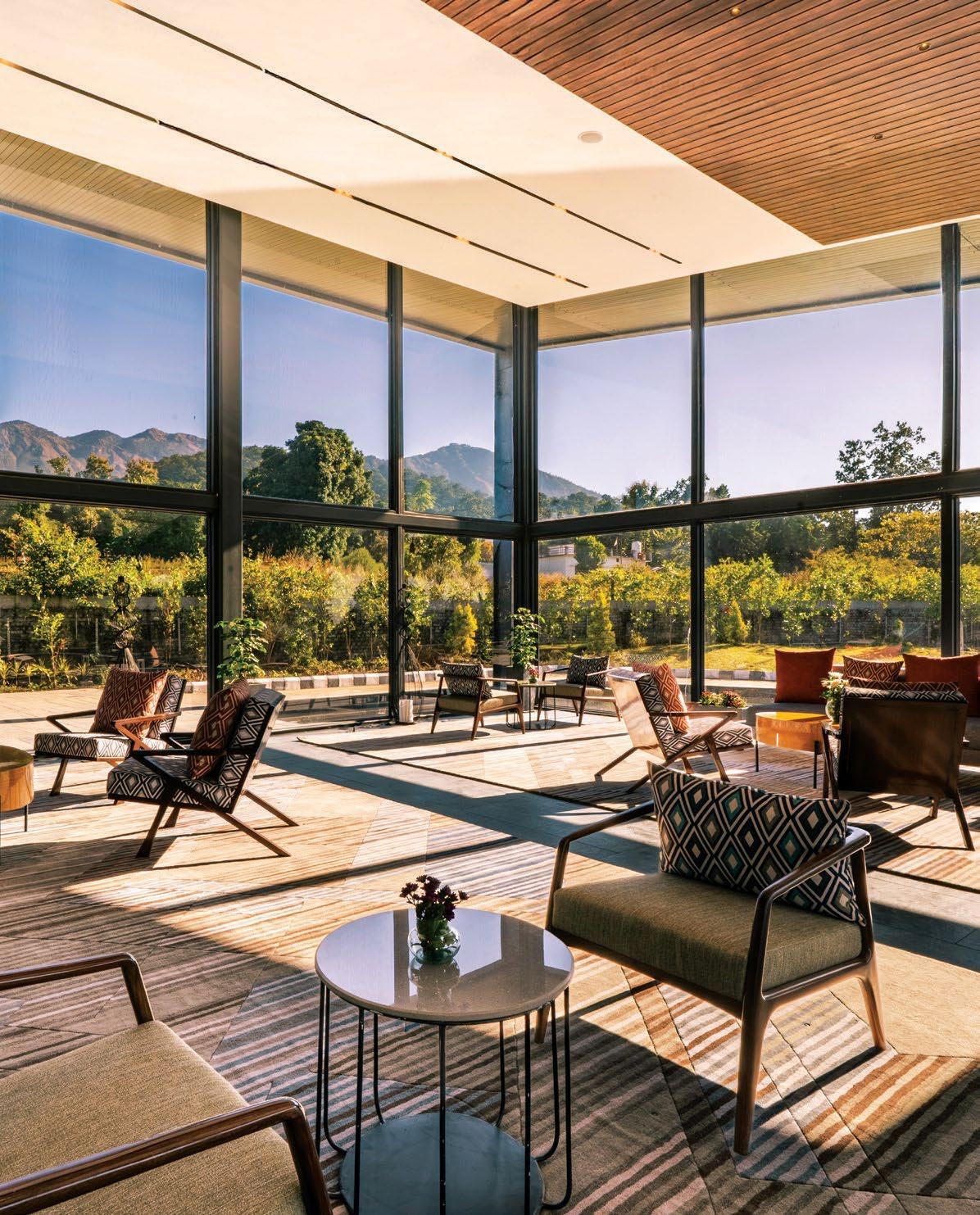
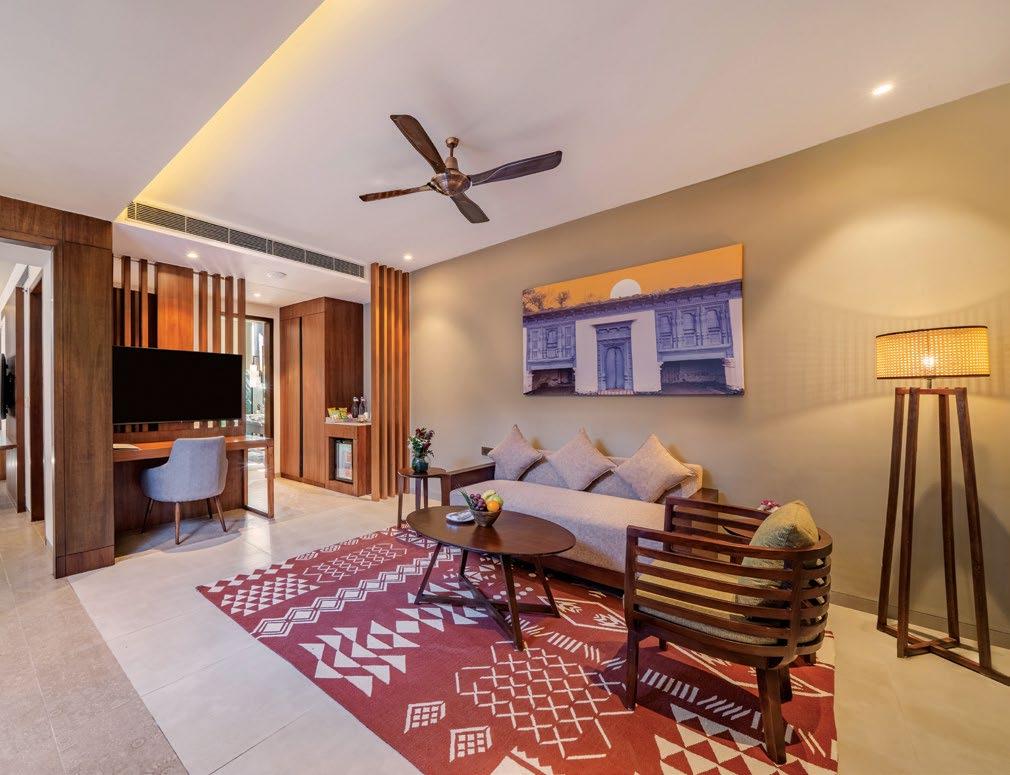
An entirely glass façade, clean lines, and a restrained, minimal language shimmer in gold against the inky black of the mountains—it could easily belong in Scandinavia. Except, it sits in the Kumaoni hills.
The latest Sarovar Premiere, the top tier of the 150-hotel group known primarily for its midscale properties, has launched a branded hotel in a lesser-known pocket near India’s oldest national park. The Jim Corbett Vandhara Sarovar Premiere Resort & Spa, Patkote—if we were to use its full name—takes a distinct aesthetic route. And yes, it is stunning at first glance.
The 73-key resort has much going for it. For one, it sits at the foothills of the Mailani range. Its form is unusual—low-rise yet markedly elongated. A full round of the property is about a kilometre, as Atul Gupta, General Manager, points out. In a sense, that works to a
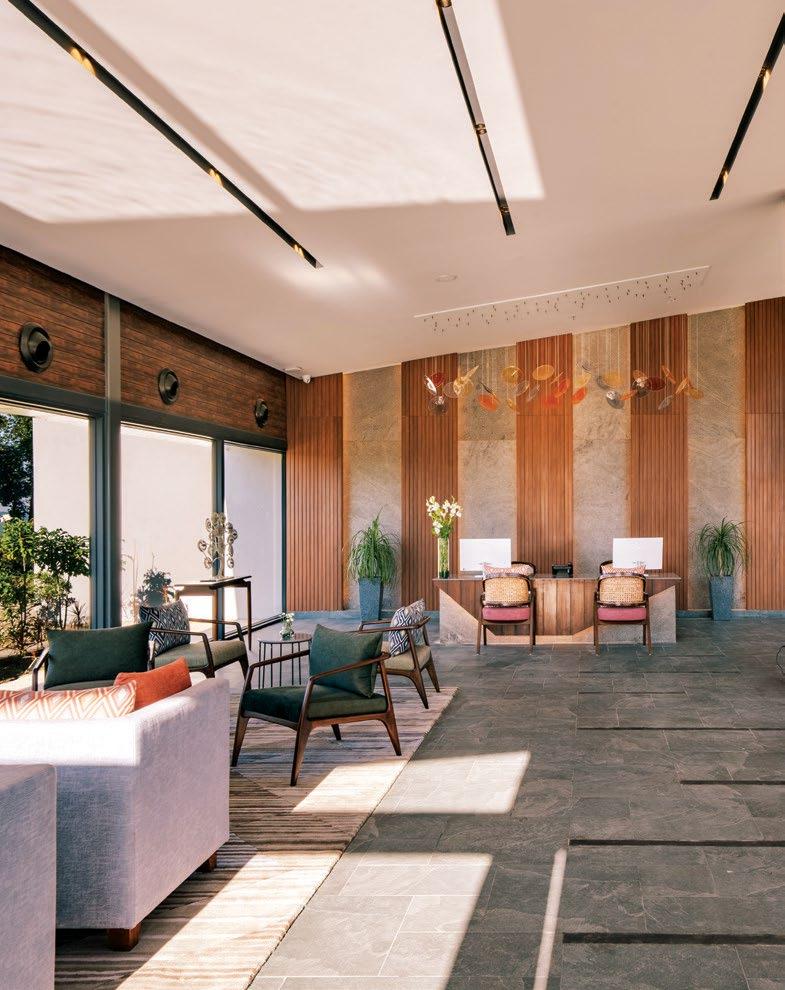
ABOVE: The lobby is a bright, welcoming space.
RIGHT: The architectural language is minimal, as can be seen in Brahmakamal, the resort's restaurant.
BELOW: The all-day diner serves Indian and global fare, along with generous helpings of panoramic views!
SUMAN TARAFDAR
guest’s advantage—from almost any point, views of the Himalayas lend both calm and energy. It also means the entrance and back gate are far apart, with staff often using scooters to move around.
Easily the most striking feature, apart from the views, is the main restaurant block. Brahmakamal, named for Uttarakhand’s state flower, offers arresting panoramas—you cannot help but reach for your camera. The all-day diner serves both
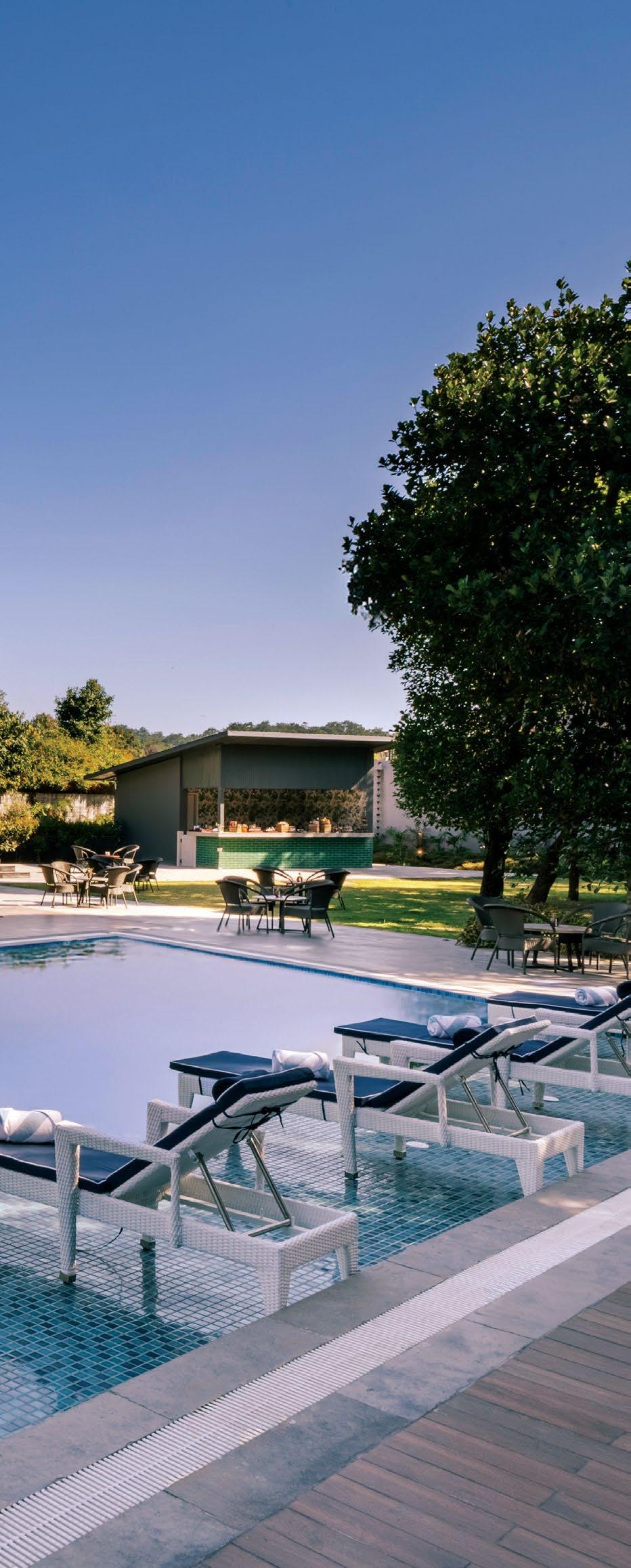
Indian and global fare, alongside a dedicated section for local dishes. The hotel recently opened its bar, Somras, where you can unwind in the evenings over a tipple. The resort can also set up special tables by the swimming pool or at other locations across the property.
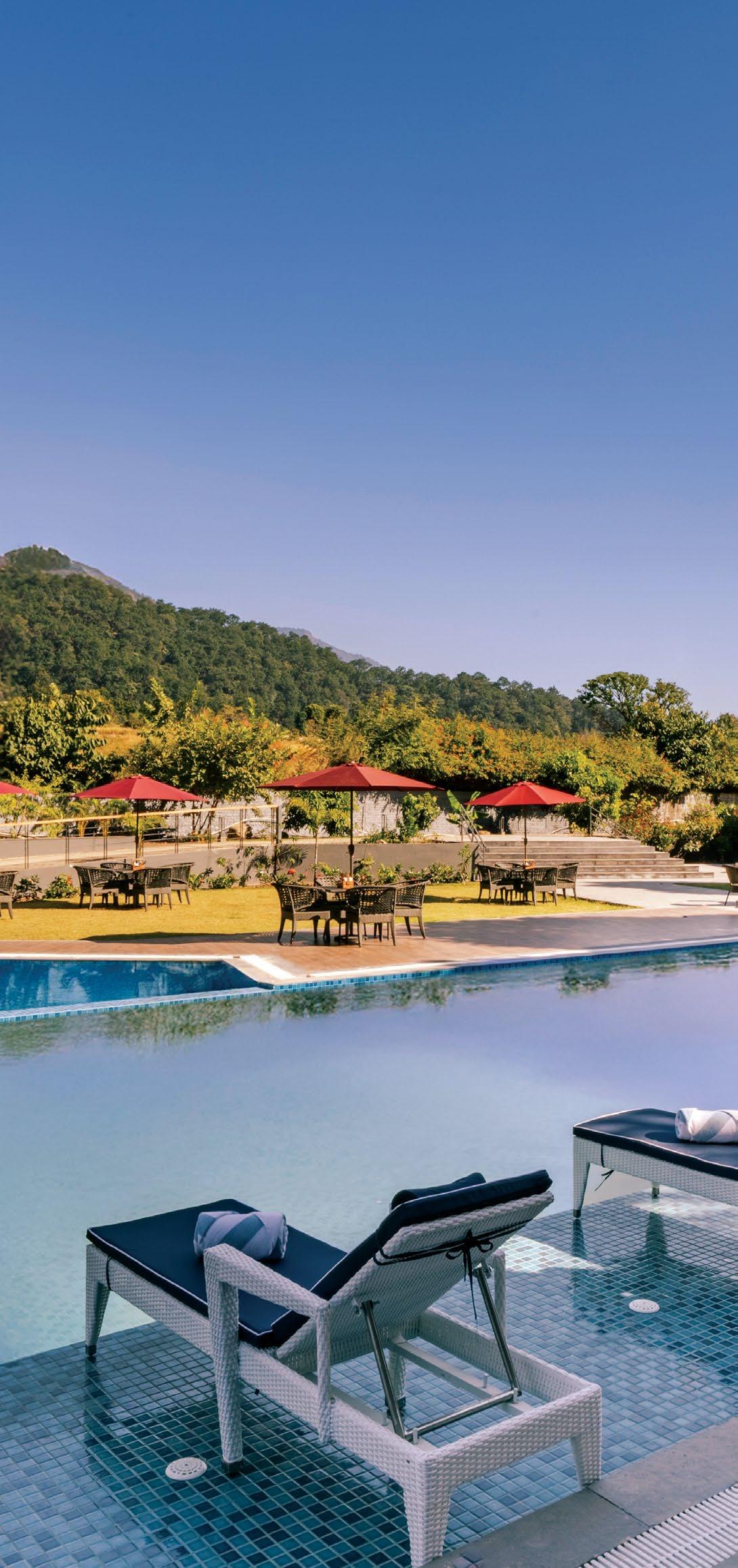
The resort offers a range of activities beyond pool-related experiences too. There are ATVs and cycles that can be used within the property, while an indoor area houses various sports and games. Wellness comes through a fitness centre and spa. The expansive grounds, with open spaces and
BELOW: The discreet entrance to the resort.
BOTTOM: A corner of Brahmakamal basks in the Himalayan sun.
lawns, make pursuits such as stargazing especially appealing. As with most hill resorts, it is full of floral plants—masses of spring flowers such as petunia, along with bougainvillea, hibiscus and, interestingly, lantana. This is perhaps the first hotel where the last is actively used as décor in rooms. An indicator of changing times was the signage reading ‘selfie point’, another first for me.
If you want to explore the area, the neighbouring national park is the obvious first choice. Dense thickets, towering sal and teak trees, and rich foliage make any drive enchanting, even if wildlife sightings are scarcer than in other national parks. You could also drive around the neighbourhood or ramble through the village of Patkote, with a house dating back
to the mid-19th century, and the nearby Sitabani temple.
The hotel is designed as a wedding destination as well, with spacious indoor and outdoor banqueting areas called Nakshatra. It also doubles up for conferences and offsites.
The rooms are utterly charming. Unless you are aiming for the Presidential Villa, I recommend the Villa with Terrace Mountain View. Located on the upper levels (there are only two across the property), they offer views on both sides, with
ABOVE: The hotel stretches out in an almost straight line—and these villa rooms are perfectly placed to take advantage of the scenic surroundings.
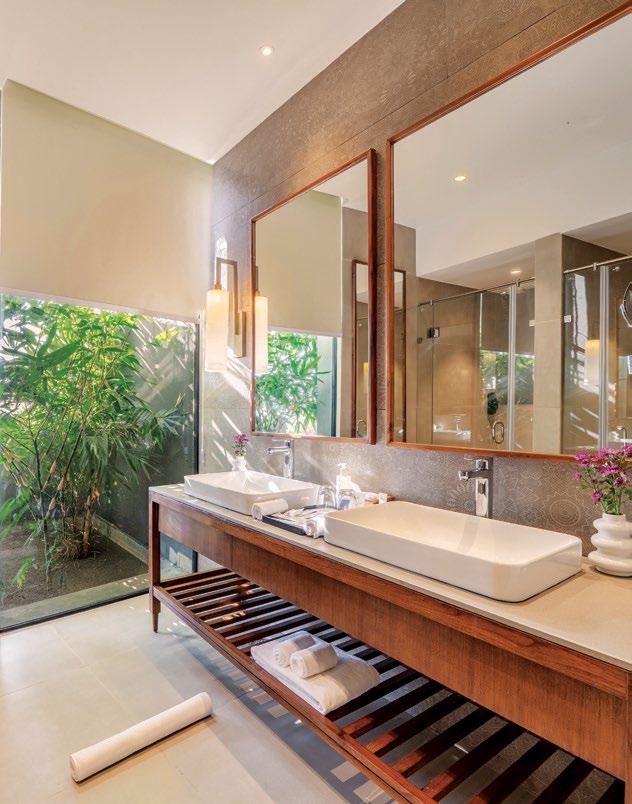
RIGHT: The rooms are well stocked with amenities and views!
ABOVE RIGHT: The pool offers respite from the summer blaze.
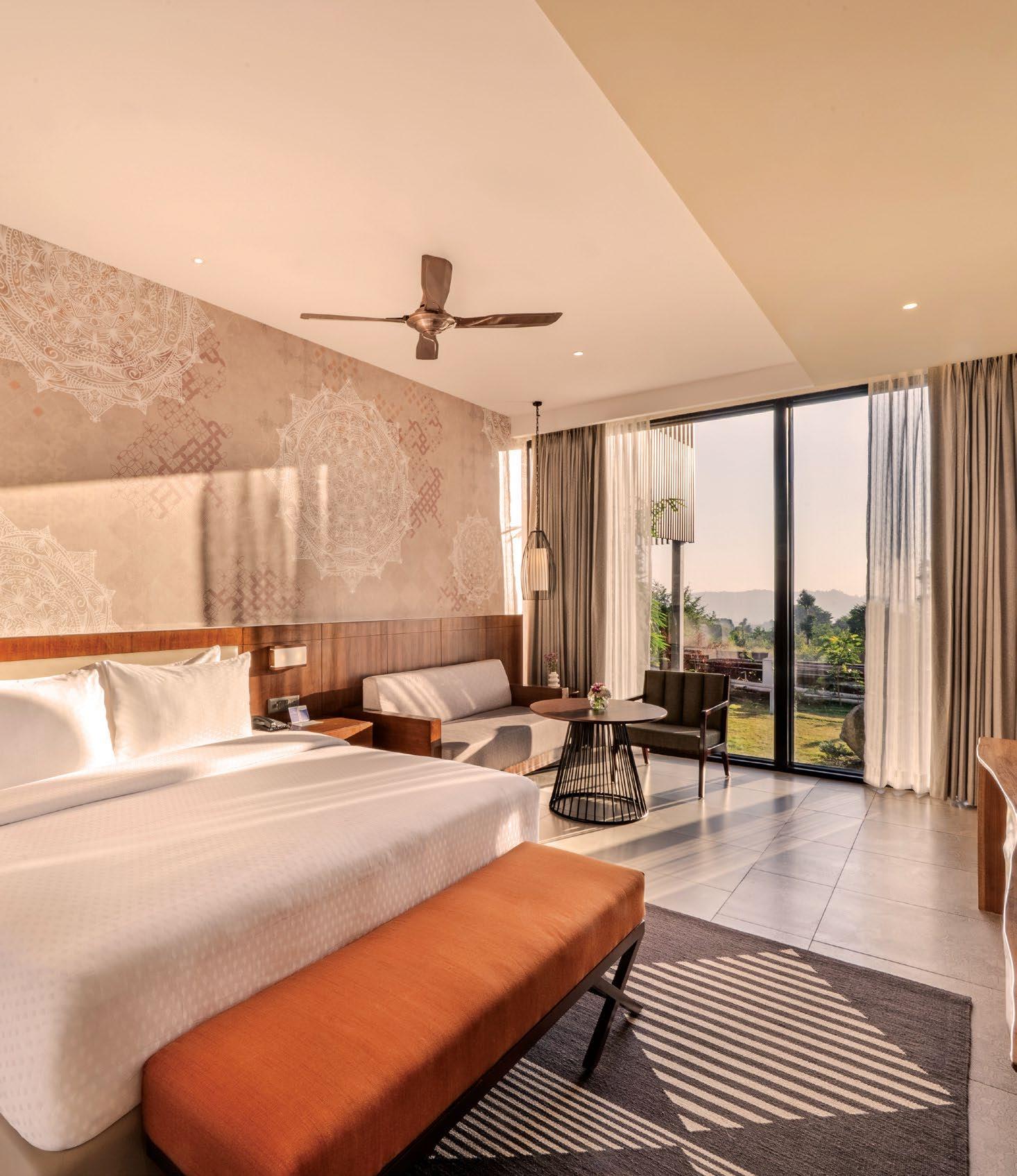
French windows enhancing them— so even a leisurely lie back in bed comes with spectacular vistas. The generously proportioned 450sq.ft. rooms also feature balconies on both sides, ideal for sunrise or sunset, best enjoyed with a beverage of your choice.
Even the base category room, Deluxe King Room with Balcony, is amply provisioned and, as the name suggests, comes with that star quality—the viewing balcony. The resort’s design team has done an outstanding job incorporating
aipan, Kumaon’s traditional folk art, characterised by intricate white rice paste patterns (bisvar) drawn on a brick-red ochre (geru) base. In a contemporary update, the visuals, used innovatively in the rooms, appear in softer pastel tones.
There are multiple ways to reach Patkote. The closest railway station is Haldwani, a little over two hours away, with mostly picturesque sections that can occasionally feel like a gentle digestive. The nearest domestic airport is Pantnagar, about three hours away. A drive from Delhi, the nearest metro city, takes about six hours.
However, once at the resort, a combination of crisp air, verdant mountains rising around you, a river valley alongside, and a rare, almost magical silence—broken only by birdsong—along with attentive service, makes it a perfect new getaway.
BELOW: The use of warm hues within the room makes them especially inviting.
BOTTOM: Note the use of aipan, the traditional art form of the area, in enhancing room aesthetics and connecting with the local culture.
ABOVE: Peppered with bold hues, the interiors of Sora are designed to impress.
TOP LEFT: So wonderful is the plating of each dish that you will need time to admire—and click!
BELOW: CEO Ridhi Choudhary describes the cuisine as a dialogue between Peru and Japan.
NIKKEI GOES VEG
Offering Asian Peruvian cuisine, Sora breaks new ground for Ahmedabad’s rapidly growing culinary scene.
SUMAN TARAFDAR
Nikkei cuisine combines Japanese precision in cutting and preparing seafood with the bold flavours of Peruvian vegetables and spices. And Ahmedabad's Sora takes this a step further by going all vegetarian with it!
Along with Sahtain and Vyanj, Sora forms a trio of eateries under an umbrella destination called The Primo, with each restaurant exploring a distinct cuisine. From the early conceptual phase to the final opening, the journey of formation spans two years. It is part of Mann & Salwa, a bespoke citybased catering brand established around a decade ago.
Sora is inspired by the cultural dialogue between Peru and East Asia, particularly the Nikkei tradition that emerged through Japanese migration to Peru, points out CEO Ridhi Choudhary. “The menu interprets those influences through a modern, vegetarian lens, exploring techniques, textures and flavours from both regions while remaining rooted in thoughtful, contemporary cooking. At its core, Sora is about a balance between bold flavours and quiet refinement, between heritage and innovation.”
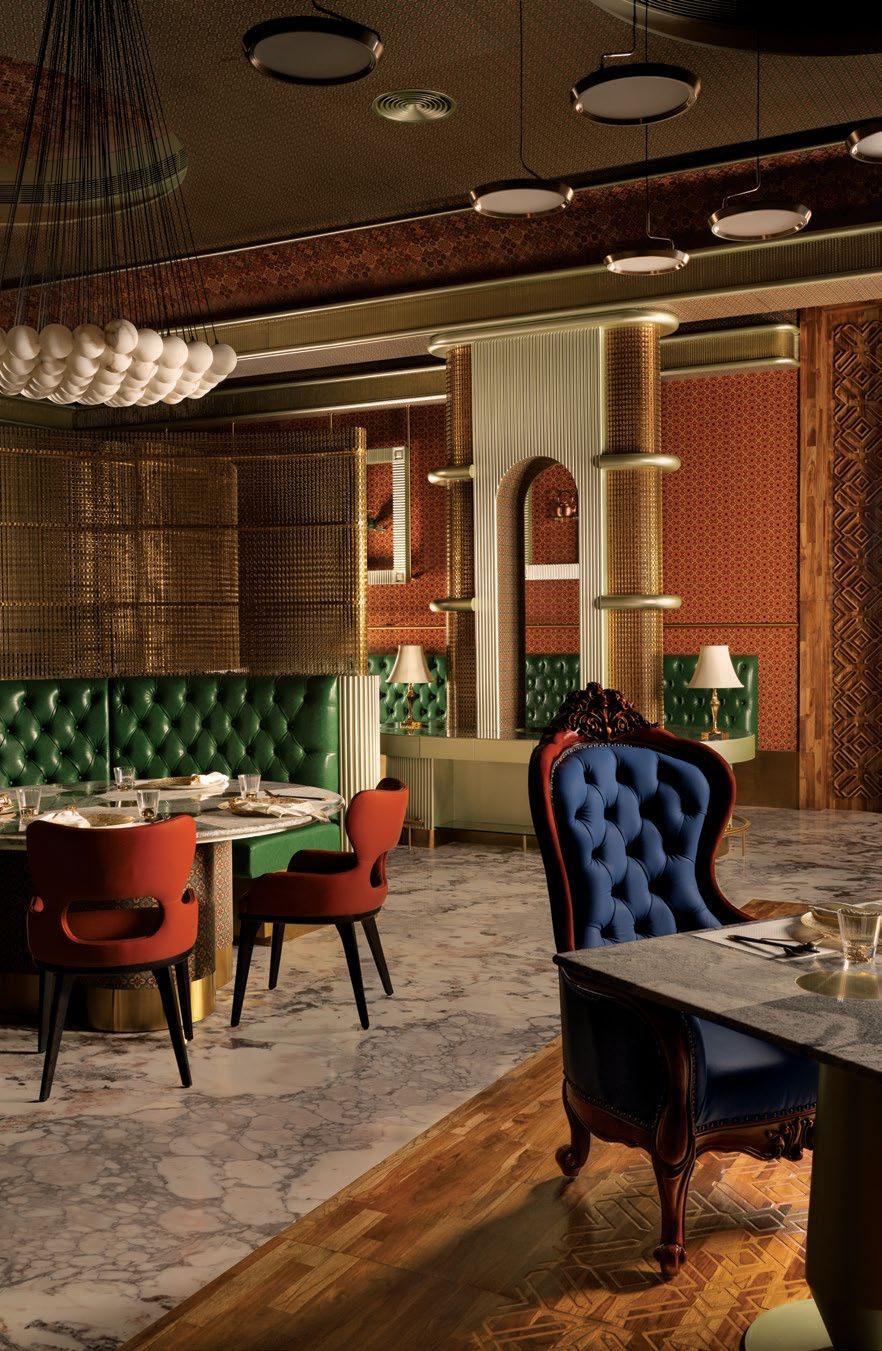
The Art Deco-inspired interiors of the 130-cover Sora are designed
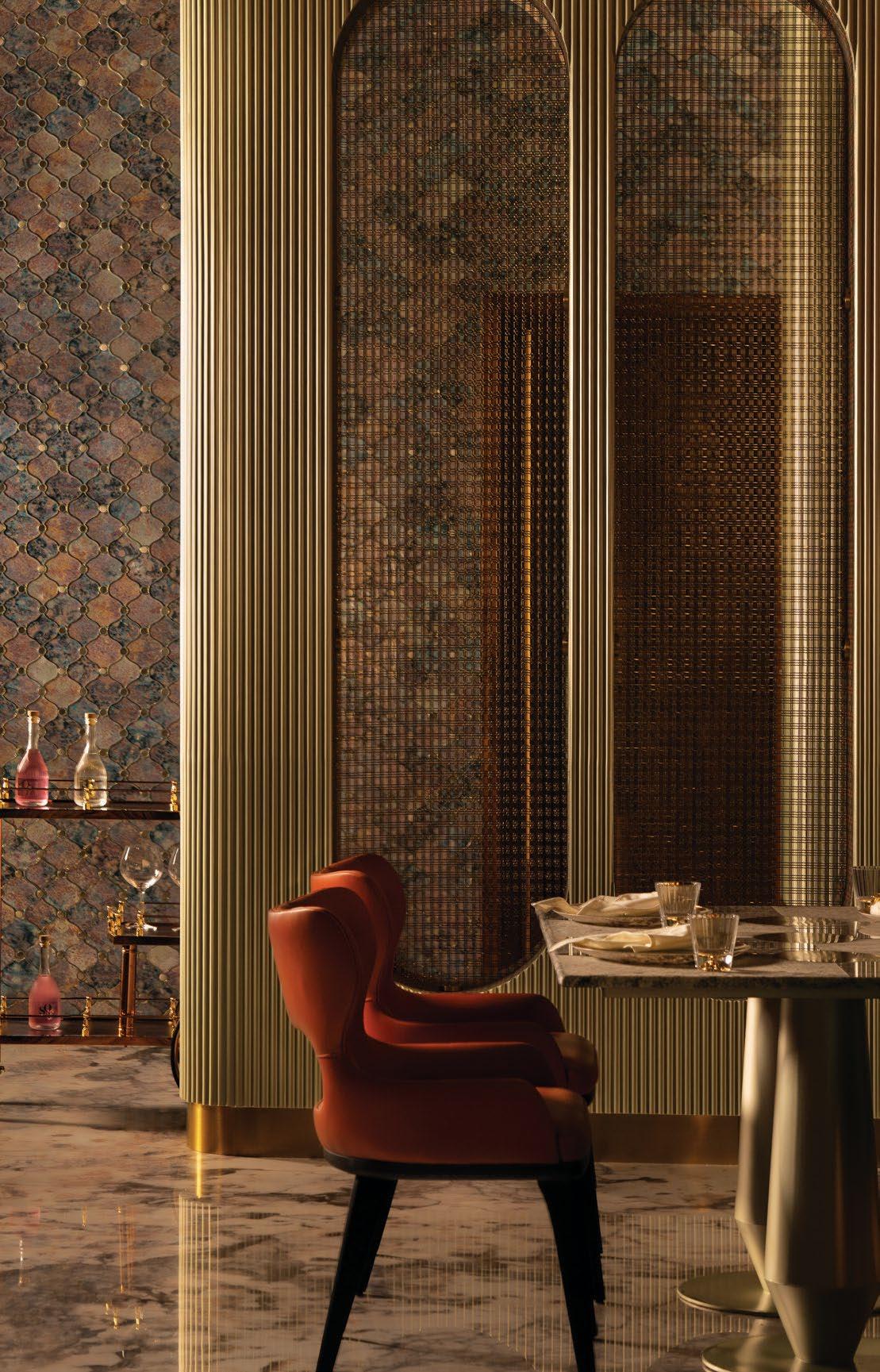
to impress. Its cavernous space is dotted with marble-topped tables in an array of settings, cleanlined partitions adding to a feel of contemporary elegance. Arches are lit in gold along the walls; curvy banquettes add to the allure of the space. Tufted leather seating, brass screens and warm wood evoke calmness and character. Bold hues of deep red, green, and blue over varying textures, are balanced by diffused golden light. Sculptural lighting in the form of spherical and circular pendant lamps imparts a playful yet luxurious feel.
The most striking feature, of course, is the decision of going vegetarian for a cuisine that is primarily not plant based.
“Operating in Ahmedabad, we wanted the restaurant to feel authentic to its culinary inspiration while also remaining accessible to the city’s predominantly vegetarian audience,” says Choudhary. “We approached it as an opportunity for creativity. Many ingredients, techniques, and flavour structures within both Japanese and Peruvian cuisines adapt beautifully to plantbased ingredients.”
Peruvian cuisine offers vibrant acidity, chilli heat, and citrusforward marinades, while Japanese
cuisine contributes precision, balance, and umami, points out Chef Sadik Khan, the restaurant's culinary mentor. “When you apply those principles to vegetables, mushrooms, tofu, and grains, you discover entirely new expressions of the cuisine. The menu therefore becomes less about substitution and more about reinterpretation.”
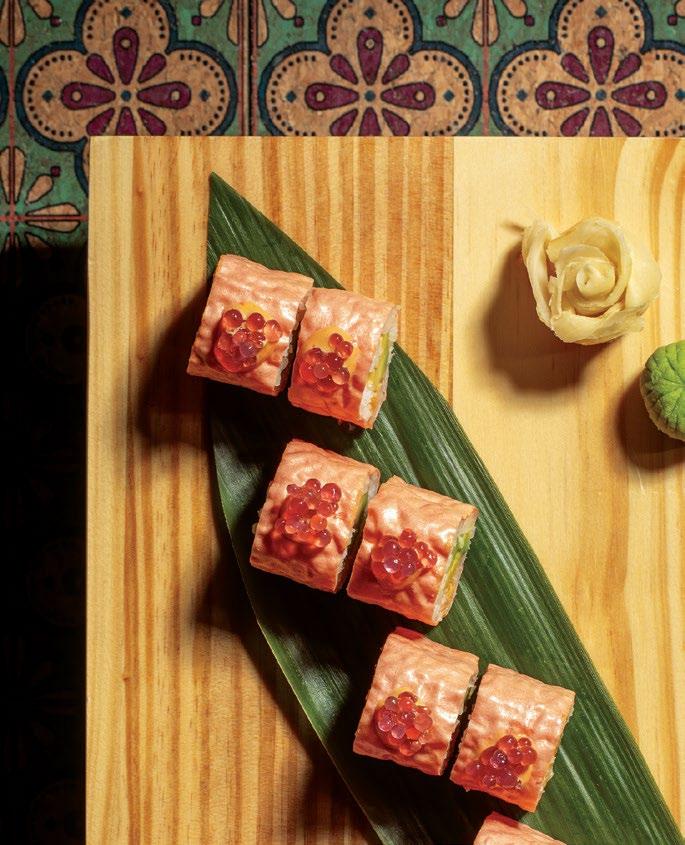
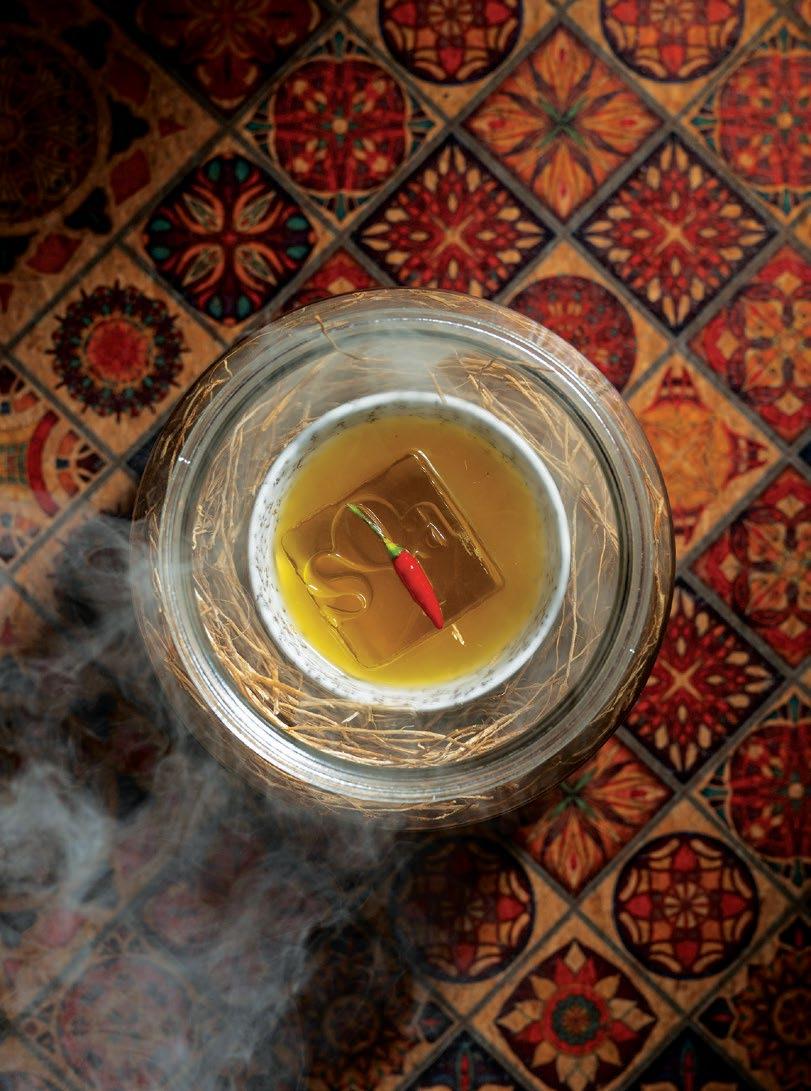
Expect the unexpected. The iconic Nikkei dish ceviche features Thai mango, maiz chulpe, aji panca and leche de tigre. It is immaculately presented—gooey gold topped by petals, swimming in a dark brown bowl. Tiradito, traditionally a Peruvian raw fish dish, transforms here into delicate slices of silken tofu with yuzu soy and hot sesame oil.
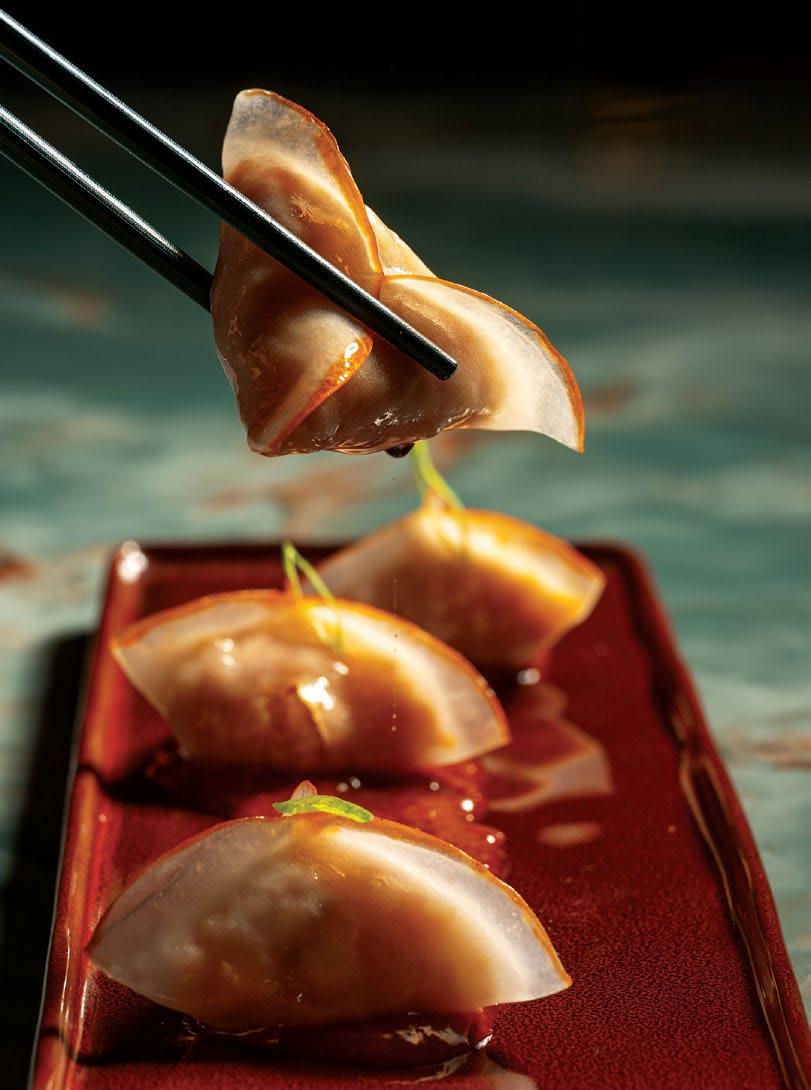
Sushi options include Inka (shitake, pickled carrot, cucumber, red pepper, huancaina sauce) and Cream Cheese Nigiri (velvety cream cheese, chimichurri). It arrives in beautifully crafted bamboo cages, complete with wasabi and myoga. Dimsum variants such as Black Garlic (lotus root, water chestnut, broccoli, carrot, black garlic oil) and Broccoli & Pine Nut (broccoli, pine nut, cream cheese, leek, water chestnut) are commendable options. Even purists of Japanese cuisine could find something to appreciate.
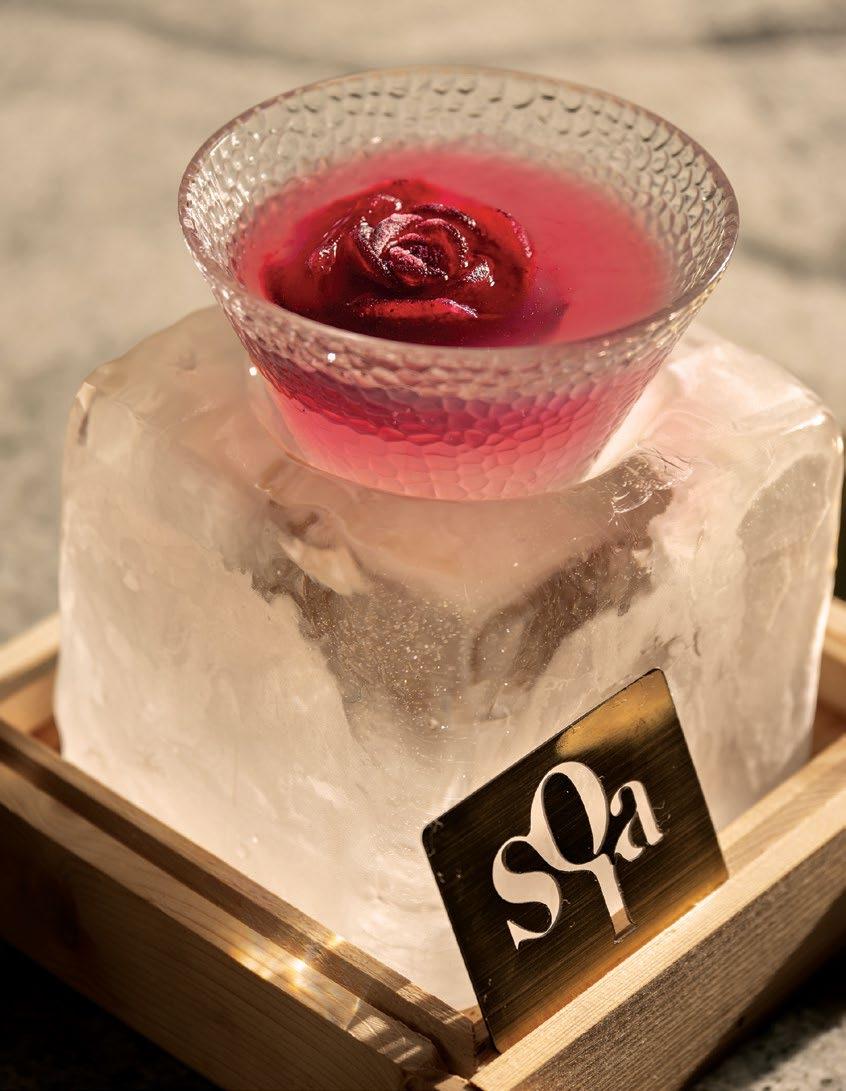
If there is space left, there are the large plates including Quintotto del Bosque (quinoa, mushroom, aji Amarillo cheese sauce), Soba Noodles, and Donburi (short grain rice, vegetables, lantern sauce). Presentation continues for the drink, and this being Gujarat, via mocktails. Hanami (sakura, mangosteen, dragonfruit, cucumber, Thai basil, citrus) and Sober Shiro ('house rum', coffee, tiramisu, soy, white chocolate coconut foam) are delectable. Aji Eclipse (passionfruit, jalapeño, aji amarillo, cilantro, citrus) is presented as a glass within a glass and comes with instructions: first, have a sip from the outer glass; then feel the rosemary smoke (yes, that’s there too!); and finally, lift out the inner glass. You can be justifiably apprehensive of flubbing the move. Memory created, though! Sora’s success could well depend on the younger demographic of the city’s wellheeled, well-travelled residents. “There is also a growing appreciation for chef-driven restaurants where the menu reflects a clear culinary identity," points out Choudhary. "This has created space for more specialised and experimental dining formats.” Sora definitely pushes the envelope in all of the above.
ABOVE, LEFT TO RIGHT: Chef Sadik Khan, culinary mentor, takes care to point out the uniqueness of each dish, including the stunning cocktails.
BELOW: Art Deco-inspired interiors combine perfectly with playful luxe of the dishes.
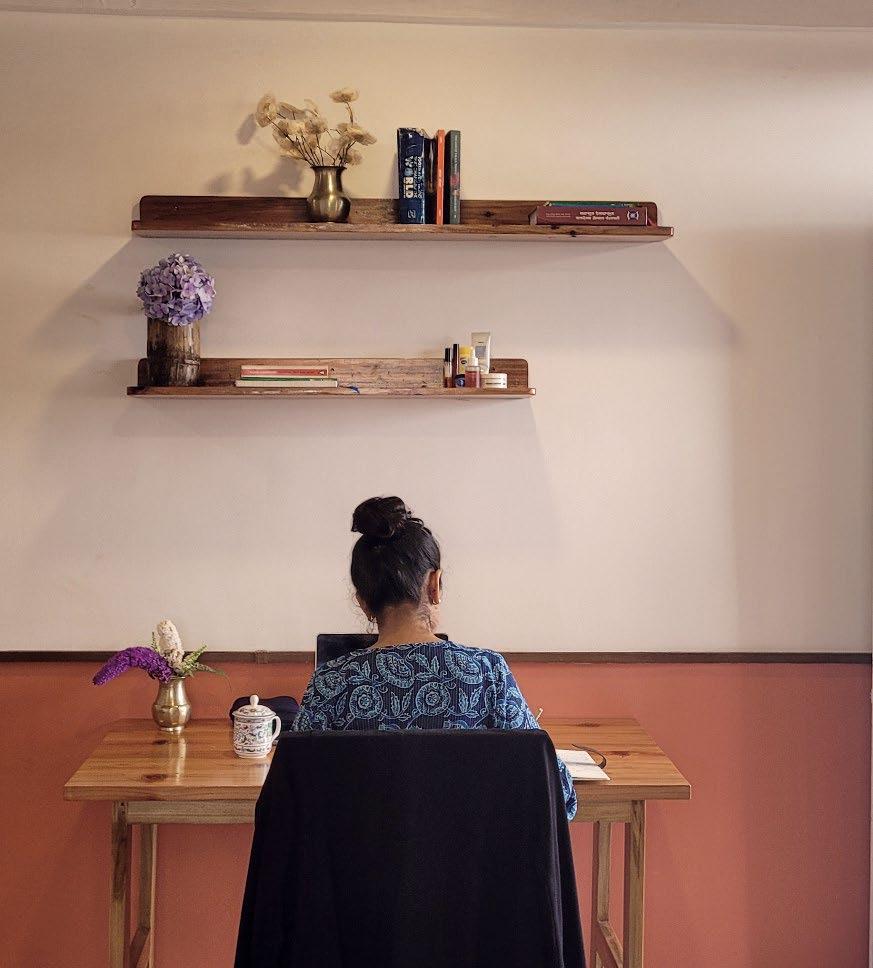
THE MOUNTAIN VILLAGE REWRITING THE RULES OF WORK
High above Pakyong, Sikkim, an experiment is connecting local households with a new generation of long-stay travellers.
DEEPALI NANDWANI
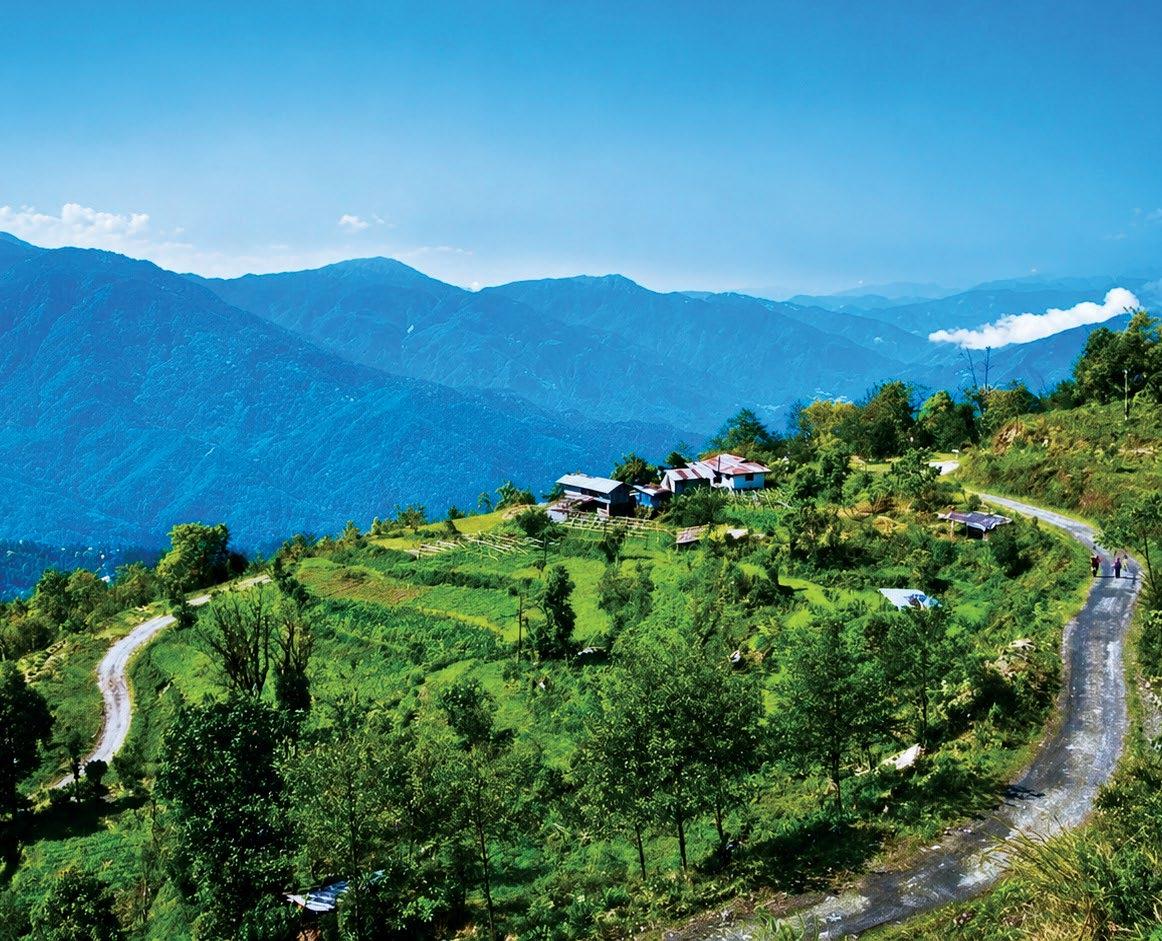
At 5,300ft., the air already feels different. Thinner, cooler, carrying the faint green weight of an alpine forest. Yakten sits here, ten kilometres uphill from Pakyong— Sikkim's newest airport—cradled by the Himalayas like something the mountains chose to keep for themselves.
It is also India’s first officially recognised digital nomad village, which has captured national
attention, won the region many awards, such as the SKOCH Gold Award in the District Governance category and inspired remote work destinations across the country, the most recent being Goa’s 'work from the beach' initiative.
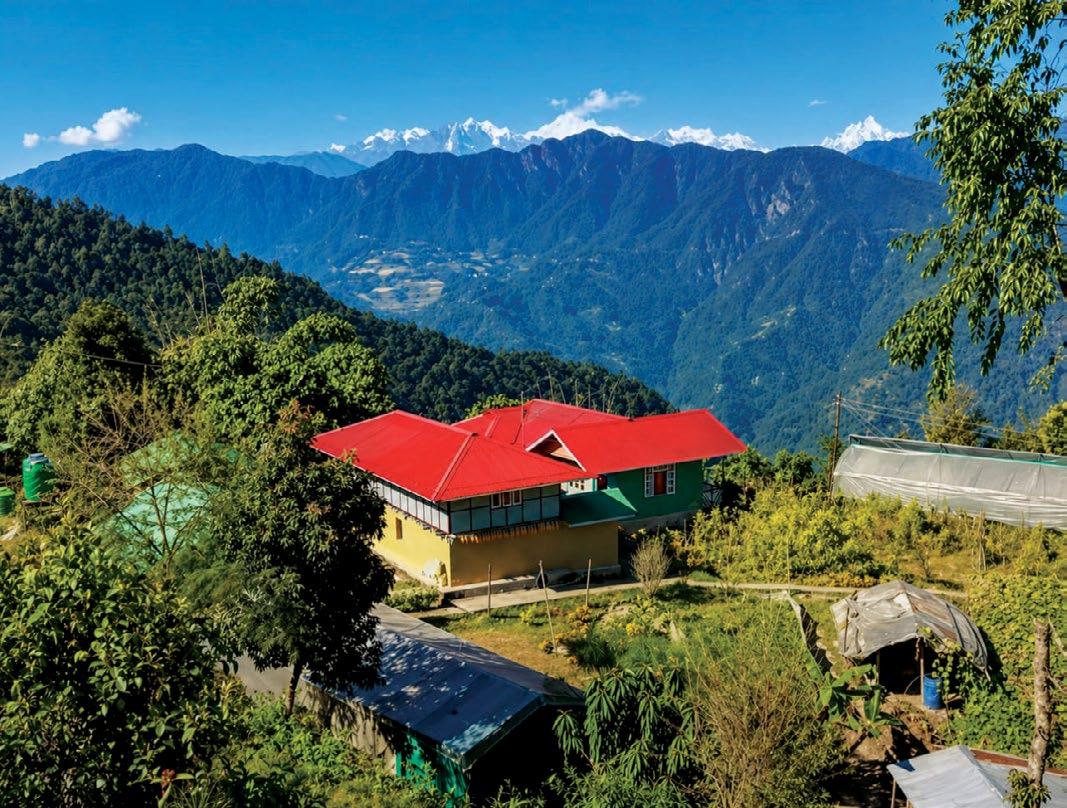
This isn't co-working with a view. This is where the boundary between work and world quietly dissolves, where you close a tab and open a window onto orchid gardens, where your lunch is grown a field away and tasted a minute later, where sel roti arrives hot beside your morning call. The homestays are run by Limboo and Buddhist families who have been here long enough to know the unhurried rhythms of this land, and who now welcome people chasing the opposite of burnout. The wi-fi is fast. The culture is ancient. These two facts coexist without contradiction.
The Nomad Sikkim initiative, launched by the Pakyong District Administration alongside NGO Sarvahitey, supported by the state government and backed by the Asian Development Bank, was built on a simple but quietly radical idea: that opportunity doesn't have to mean concrete. That a family in an off-season lull can find steady income. That a remote worker can be more productive, not less, when they are also somewhere genuinely alive.
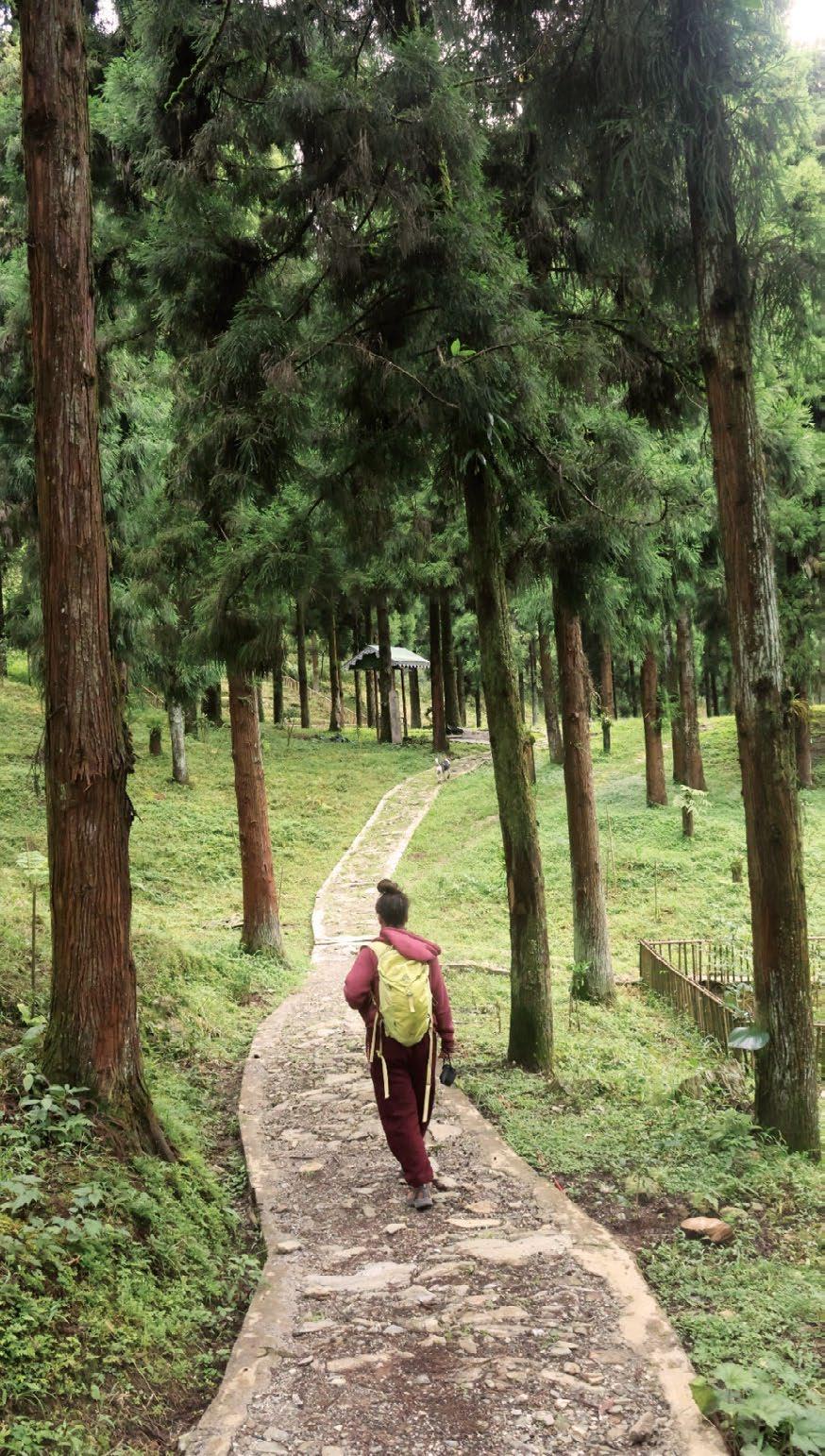
Destinations like Madeira and Bali proved the model abroad. Yakten is proving it here, in a state that was already India's most organic, already committed to a kind of development that doesn't cost the land its soul. Greenhouses and fields supply the kitchens. Nature trails unspool between meetings. Cultural evenings and community bonfires fill the hours after dark.
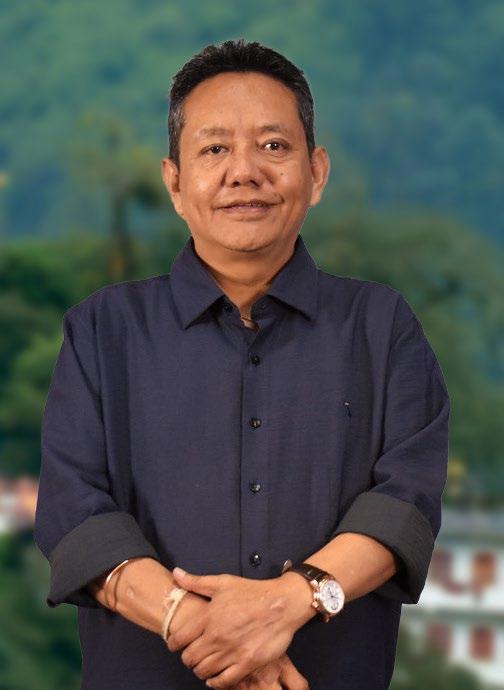
Pamin Lepcha, the local MLA and one of the key figures behind the initiative, says Yakten is proof that the future of work doesn’t
SOH | DIGITAL NOMAD
have to be urban. “The project aims to build a model where opportunity meets nature, not concrete.”
The programme runs as a three-year pilot, and is monitored for economic, environmental and cultural impact, with the quiet ambition of something that knows it might be the first of many. Road upgrades and improved water supply have made the village more accessible. But Yakten has managed something harder by becoming accessible without becoming ordinary.
The completely kitted out East Sikkimese village has everything needed to support India’s digital nomad community: home-cooked meals, fast internet, peaceful surroundings, and nature treks
THIS SPREAD, CLOCKWISE FROM TOP LEFT: Yakten sits high above Pakyong, where mountain quiet and high-speed connectivity coexist without contradiction; from sel roti to local produce, meals remain closely tied to the land; the programme places local families at its centre; Yakten’s proposition is simple: productivity need not come at the expense of peace; nature trails replace the daily commute; homestays anchor the initiative, creating income for local families while offering a slower way to work.
squeezed between meetings. The local community is now promising longer stays, creating a symbiotic relationship between digital nomads and work-from-anywhere people and the local economy, which thrives on sustained engagement. Through workshops, cultural exchanges, and community events, digital nomads and locals can get an opportunity to share knowledge, traditions, and ideas.
Bringing the community together
Unlike working from a café in a city, Yakten offers an integrated experience grounded in spirituality, slowness, sustainability and community. While digital workers benefit from mental clarity and meaningful routines, the local community is also seeing a shift. Previously reliant on seasonal tourism, homestays now enjoy steadier occupancy thanks to the growing remote work model.
As Lepcha says, “Contrary to the idea that productivity and
work have to be linked to being in an office, and be accompanied by burnout and chaos, the model suggests a new normal with fresh mountain air, organic meals, cultural richness and a slower, more fulfilling rhythm of life.”
THE CULTURAL SALON RETURNS TO MUMBAI
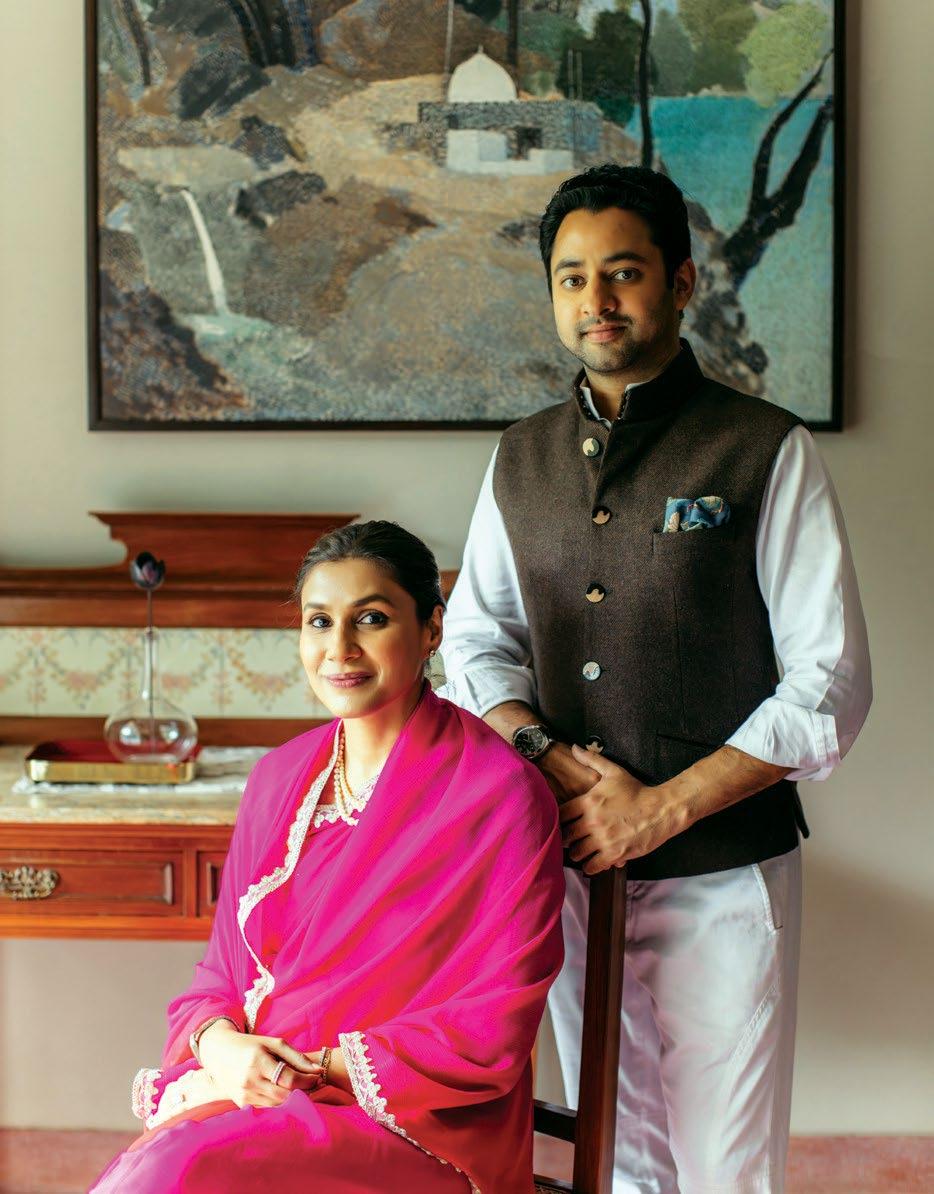
Kathiwada City House, a heritage mansion in the heart of Mumbai, has evolved into a multidisciplinary cultural landmark—a lived archive of design, art, and memory. Like other global cities, Mumbai is rediscovering the power of heritage structures as cultural anchors.
69, Sir Pochkanawala Road, Worli, is the current address for fine living in Mumbai
Here, once you get past the tall gates and canopy of trees shrouding Kathiwada City House (KCH), you find fine art romancing with fine dining. Circle Sixty Nine, headed by Aditi Dugar, is at the heart of this cultural initiative started by the Kathiwada family in the restored
MARIA LOUIS
1940s Art Deco bungalow built by art patron and former Sheriff of Bombay, Jehangir Nicholson, and acquired by them in 2003.
The House has always sheltered art. Formerly known as West More Apartments, the Art Deco building (constructed in 1943) served as Mr Nicholson’s residence until his passing in 2001. Hidden discreetly behind a stone wall and a profusion
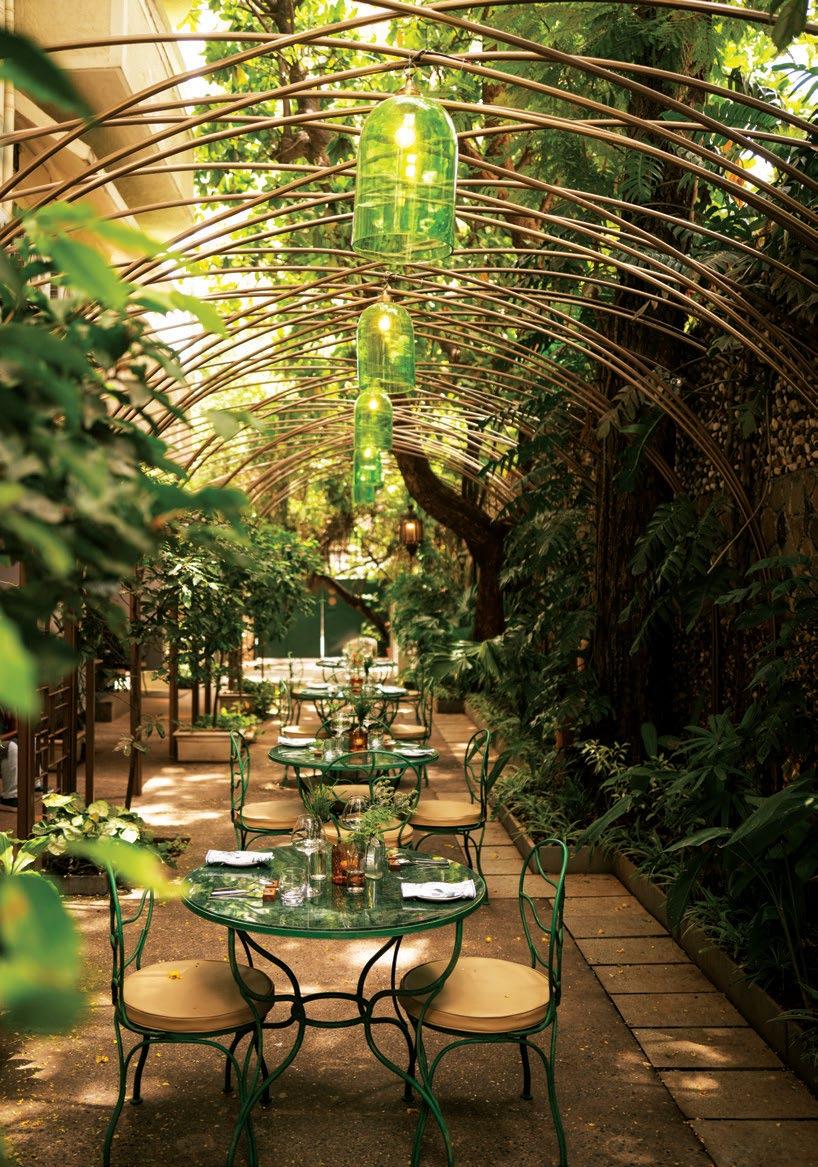
OPPOSITE: Aditi Dugar-led Circle Sixty Nine is the heart of Kathiwada City House. BELOW, LEFT TO RIGHT: The alfresco area of Circle Sixty Nine with its green canopy; the Central Gallery of KCH, which can be booked for art and culture shows; warm and cosy lighting in the artistic interiors of the bistro creates an inviting ambience.
of foliage, only its curvilinear cantilevered balconies juxtaposed with rectilinear eyebrows are visible to passers-by in the lane leading to it. While the interiors of this privately-owned property are a mystery unless you attend an event at the cultural centre or dine at the bistro, the inner spaces were no secret to culture lovers hosted by the art patron in its earlier avatar. When the royal family of Kathiwada, an erstwhile princely state, were looking for a place that would reflect their own patronage
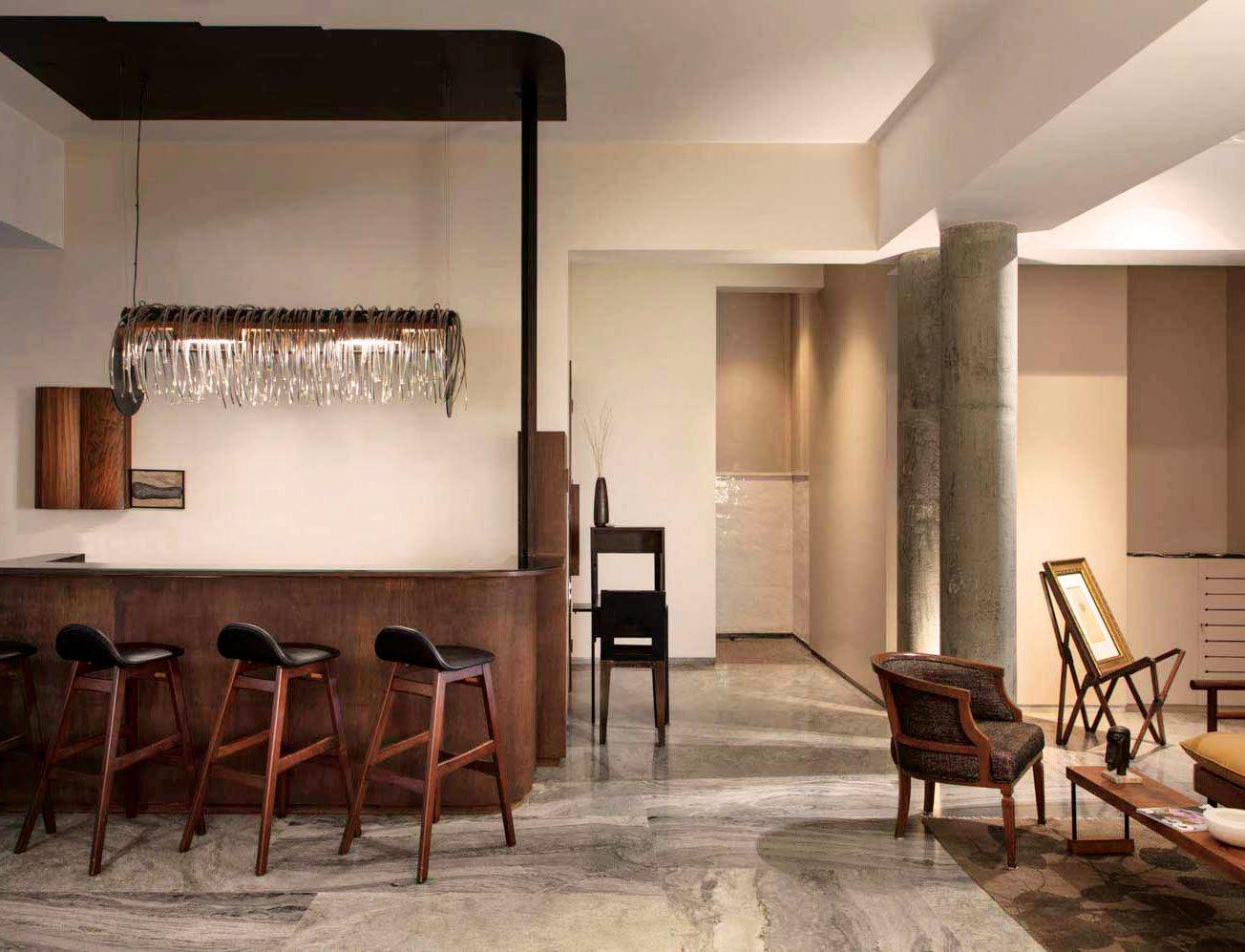
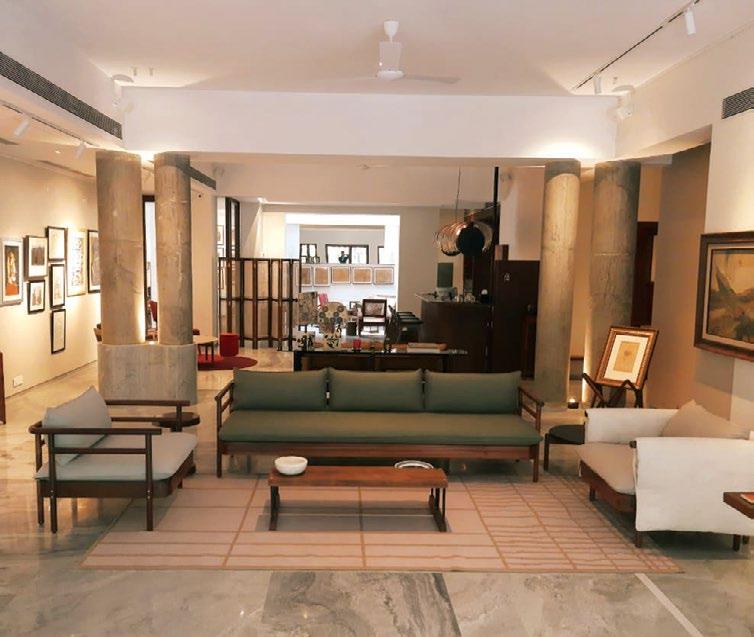
of the arts, and decided to buy the Nicholson residence, the House received a new lease of life. Defined by clean geometric lines, soft curves, terrazzo flooring, and expansive windows, the fluid rooms below embody the timeless language of Art Deco while being thoughtfully restored and adapted for contemporary use.
Leasing out the space would have been the easier option, admits Rana Digvijay Sinh Kathiwada, chair of the Kathiwada Foundation. But, as a family shaped by a 600year legacy, they wanted to offer the city something meaningful. With his mother, Sangita Devi Kathiwada, his wife, Swati Sinh Kathiwada, and himself at the helm, they decided to open their residence to culture lovers in a phased manner. Beginning with the members’ club model, they introduced the space while retaining a degree of control
over its programming. “It helped us build a rhythm, understand our audience, and maintain intimacy in the early stages,” explains Rana. “But there is a much larger culturally-aligned community that was being left out of what we were building… and restricting access began to limit its potential. Opening it up was more in tune with what the space was meant to be—a shared cultural environment, not a closed circle.”
Now a public sanctuary, the House offers art, culture, culinary
and wellness activities through lush garden terraces, intimate galleries, and the open-to-all bistro, which has new private dining rooms. The family’s collection of art is displayed in rotation on the walls alongside the KCH library, and this is where Rana and Swati host an elegant soiree to introduce restaurateur Aditi Dugar’s brandnew menu.
Trays of small plates float around enticingly, adding to the drama—zucchini parcels layered with yellow pepper coulis and
caramelised onion, Halloumi paired with puffed rice and date chilli jam, Pork Tacos dusted with Pastrami spice, Chilli Butter Prawns finished with chipotle butter and raw mango salsa, and house BBQ rubbed Chicken Wings, alongside favourites such as Patatas Bravas with aioli and arrabbiata.
That’s just the beginning of a culinary adventure that will take the diner on a gastronomic journey of exciting flavours, textures and sensations. “Aditi is clearly a leader in her domain,” acknowledges Rana, “but more importantly, she brings both substance and sensitivity to her work, perfect for Kathiwada City House and for her experiments, which we love to indulge in. We were clear that if food was going to be an integral part of the experience, it needed to be led by someone who understood not just cuisine but also the context, and how it fits into a larger cultural narrative.”
The Kathiwadas consider Circle Sixty Nine integral to the ecosystem
they are creating. “Food is perhaps the most immediate and universal form of culture, especially in India and in a city like Mumbai,” insists Rana. “While art and design are contemplative, food is experiential.”
We all know that food brings people together effortlessly and creates an immediate sense of comfort. Rana is appreciative of the fact that the cuisine at their bistro breaks barriers and gives people a natural entry point into KCH—a reason to come in, sit down, and interact with the space. As he sums up, “Someone may walk in for a meal, but will almost always end up engaging unintentionally with art and design. It keeps the space accessible, which is critical to all our functions now.”
The family, who live upstairs, sees KCH as a cultural landmark in the city, which functions as a lived archive of design, art, and memory. By opening it up, they hope to allow the house to continue evolving into a place where ideas circulate, disciplines
intersect, and people come together meaningfully. “We often say this is our urban embassy for rural good, since a lot of what we do here translates into some activity happening in Kathiwada (Madhya Pradesh),” discloses Rana.
The vision for KCH extends beyond culture into holistic wellbeing, so the space also offers a series of intimate, sensory-led wellness experiences. Sound baths, guided meditation, craniosacral therapy, energy healing sessions, breathwork circles, and slow movement workshops—each of these programmes is designed to encourage pause, reflection, and deeper connection within a serene, heritage setting.
What has been most rewarding to the Kathiwada family is seeing the space take on a life of its own. Conversations, collaborations, and communities have begun to form organically in ways they could not have imagined. “We are looking forward to some meaningful impact-driven events and projects coming through, which makes it feel like we’re doing some genuine good, while enjoying the process,” says a visibly elated Rana. “This aligns perfectly with the Kathiwada Foundation.”
Most reassuring, however, is the way people engage with the space—with respect, curiosity, and appreciation for what it is and what it can become in the future.
Like other global cities, Mumbai seems to be rediscovering the value of heritage structures as cultural anchors. We say cheers to that with Kathiwada Fizz from Circle Sixty Nine’s new beverage programme —a sparkling mahua-based cocktail celebrating the heritage of the region and the spirit of Kathiwada City House.
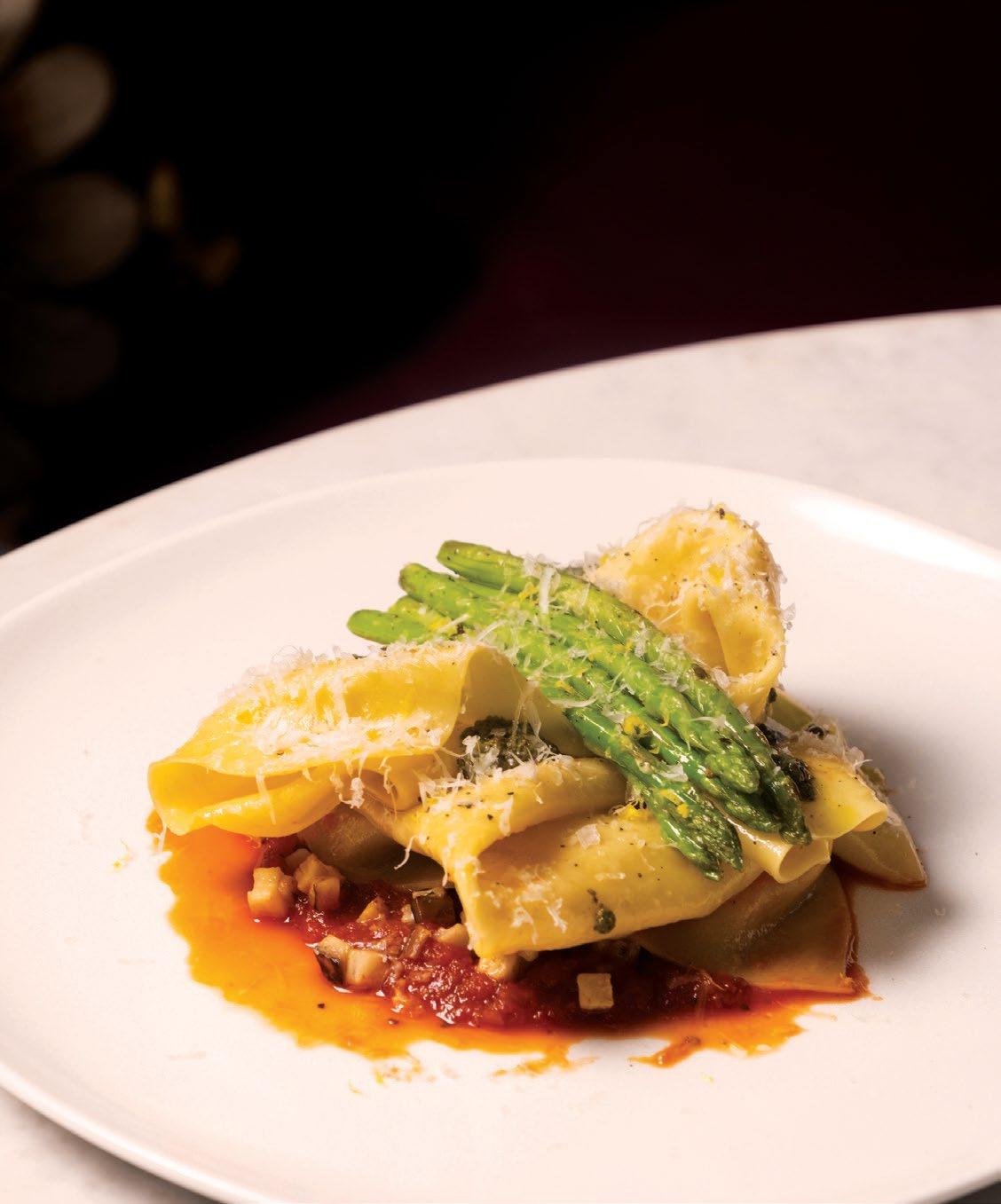
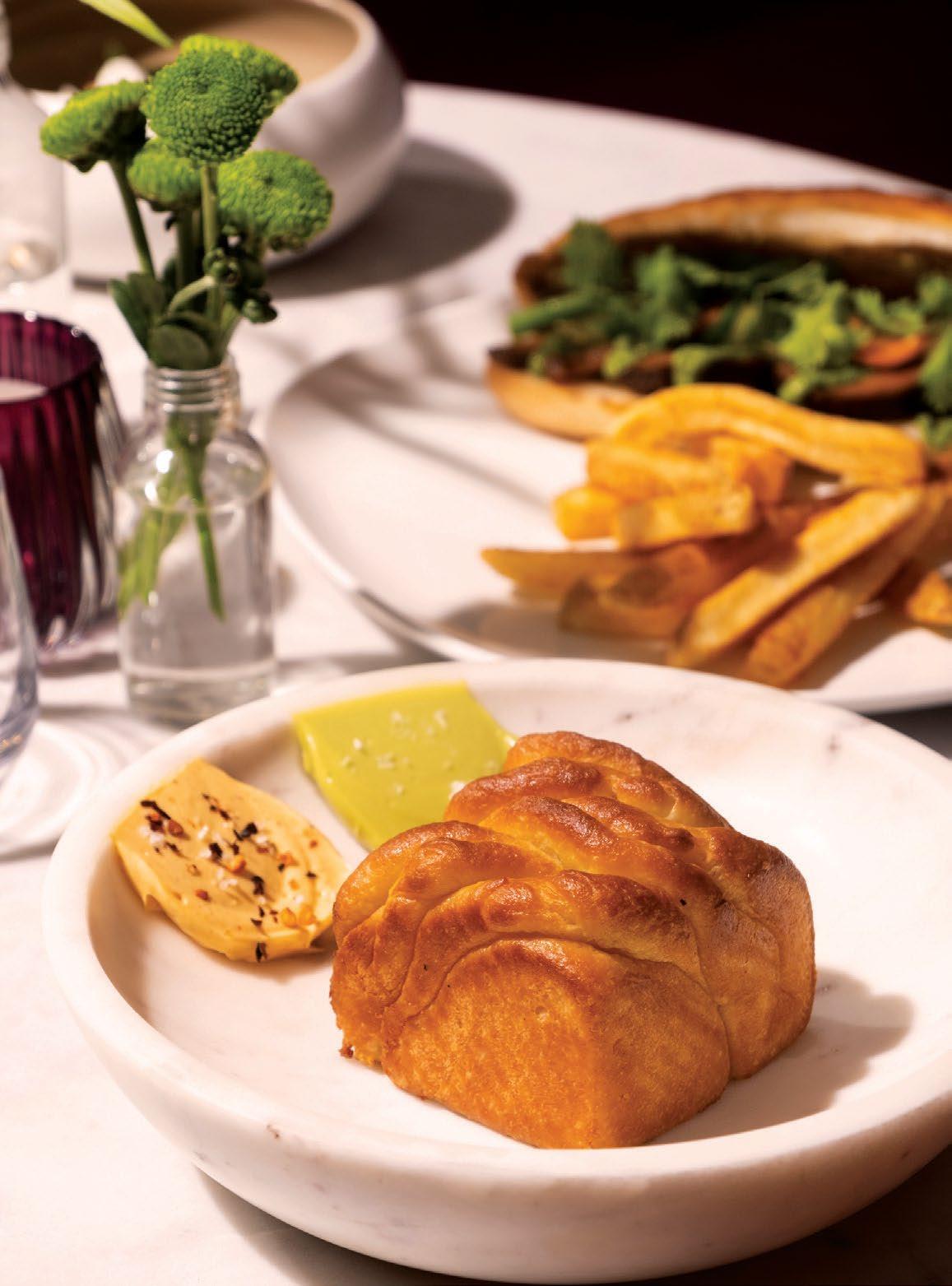
THIS SPREAD, CLOCKWISE FROM TOP LEFT: Fazzoletti Arrabiatta; Rana Digvijay Sinh Kathiwada with his wife, Swati Sinh Kathiwada; pull-apart bread, served with chilli popcorn butter and sage sea salt butter; the walls of the living area showcase the Kathiwada family's collection of art in rotation; The bar at KCH has easy access to the bistro.
Cultural CAPITAL THE NEW
For decades, India sold its past to travellers. In 2026, we are creating an ambitious cultural economy in which the living intangible heritage—the weave, the recipe, the performance, the festival—has become the primary tourism asset.
DEEPALI NANDWANI INPUTS BY CHANDREYI BANDYOPADHYAY
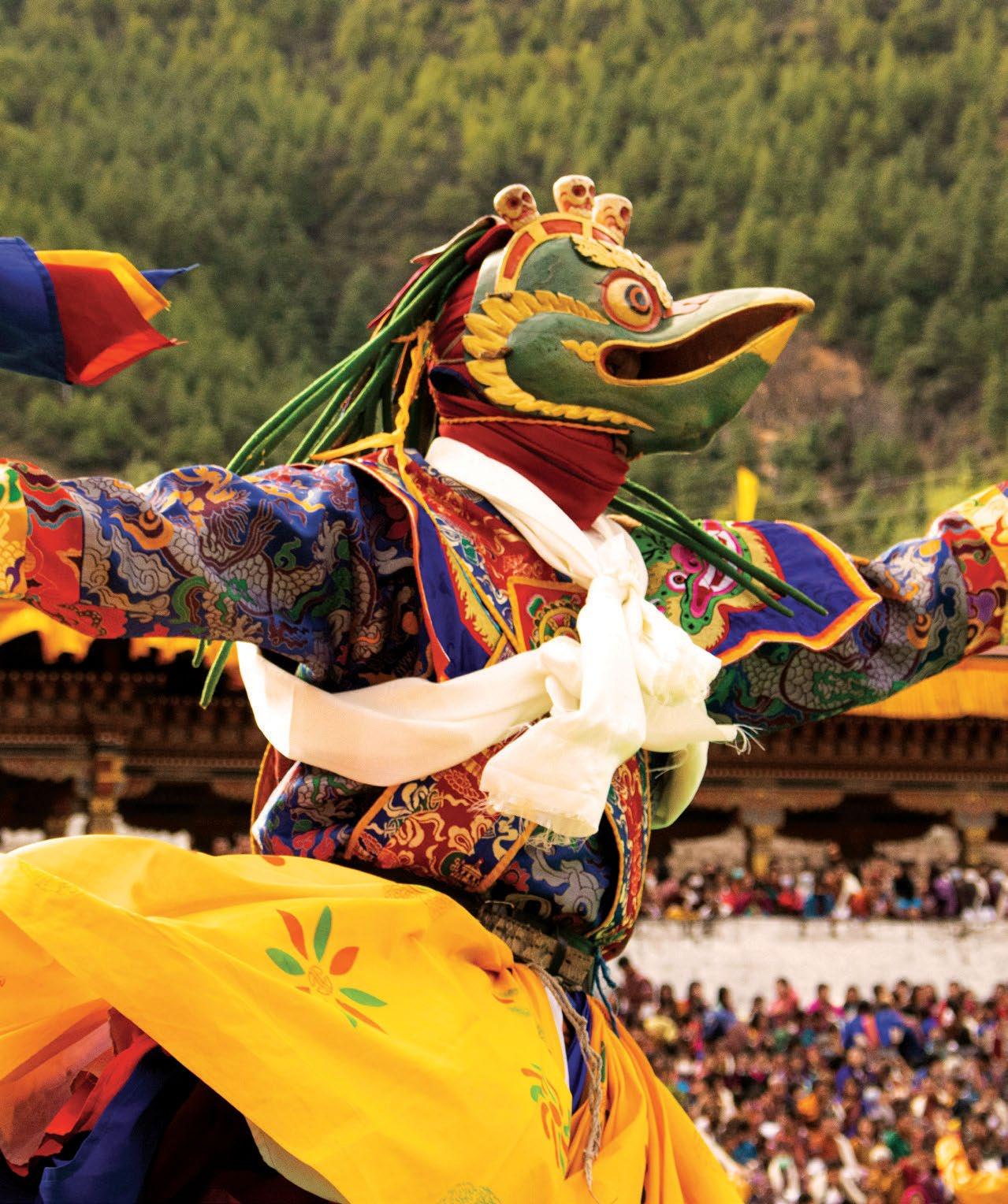
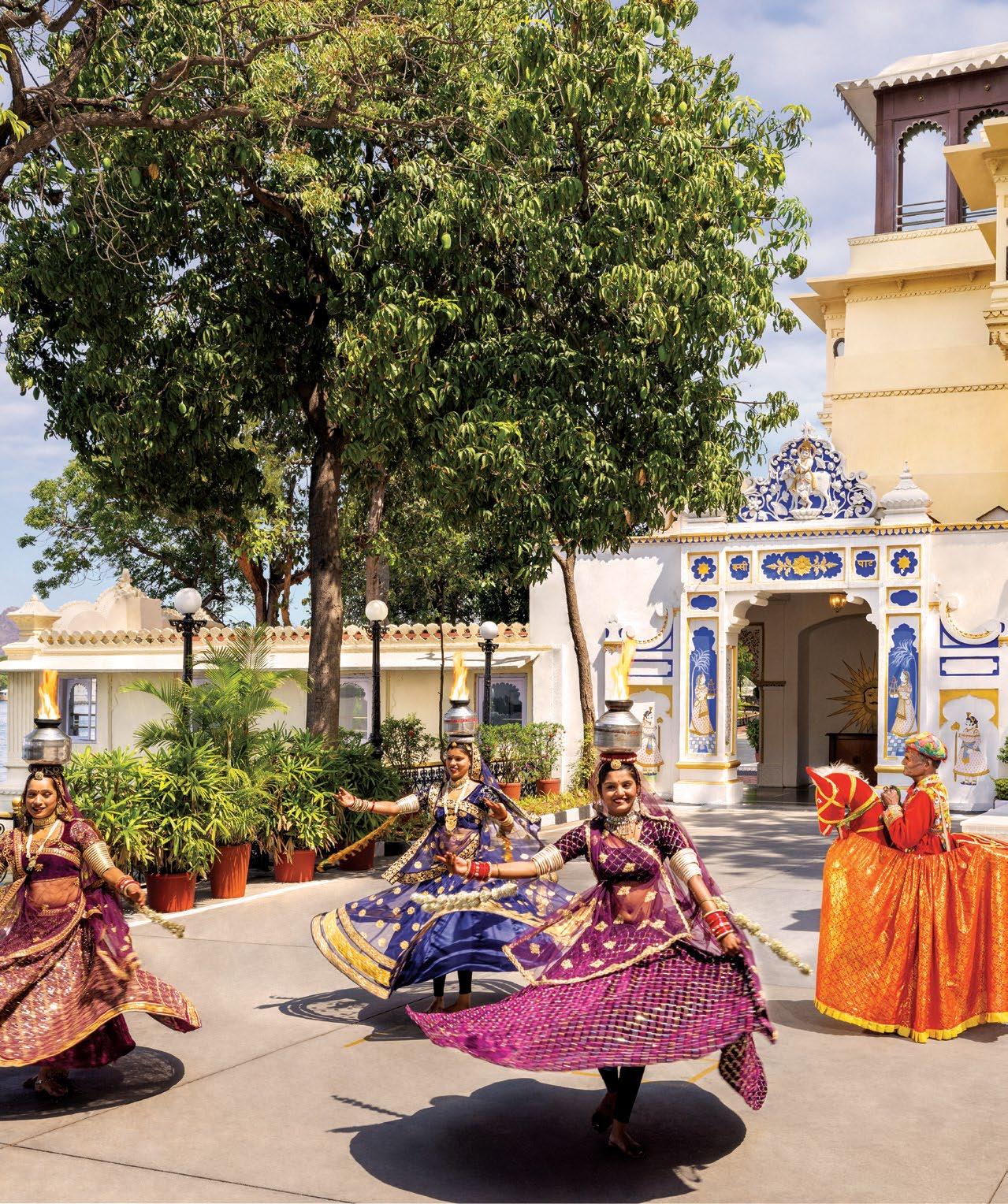
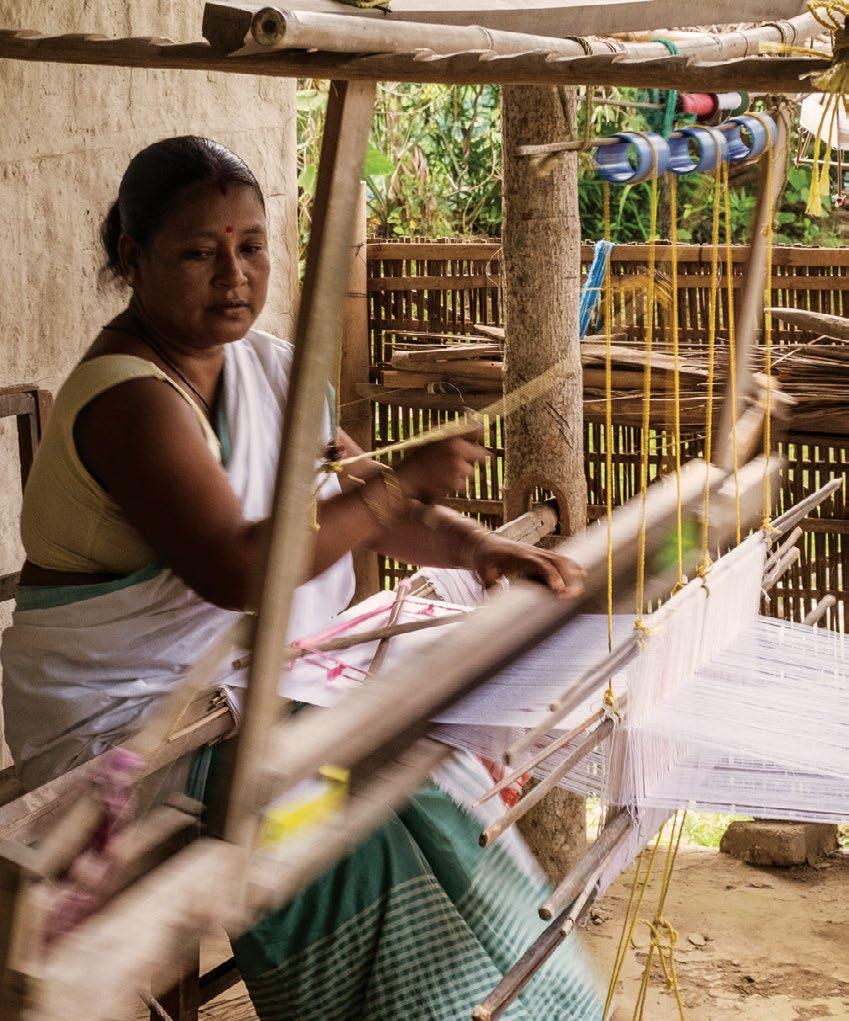
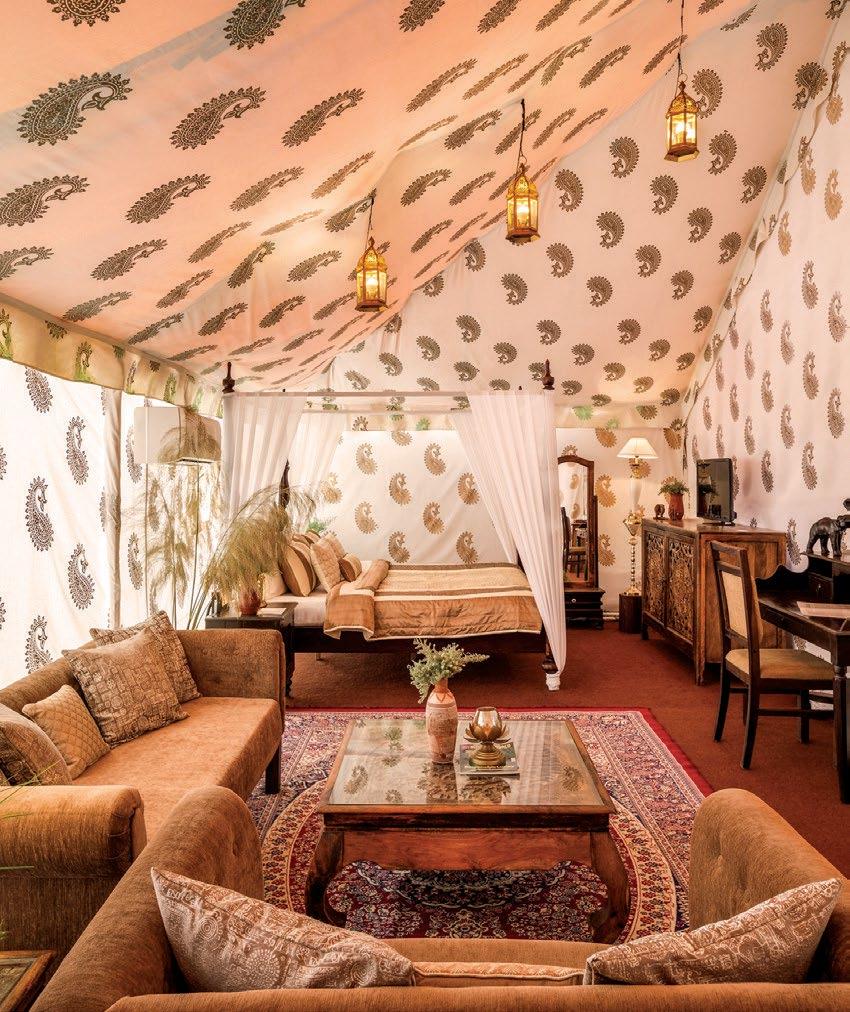
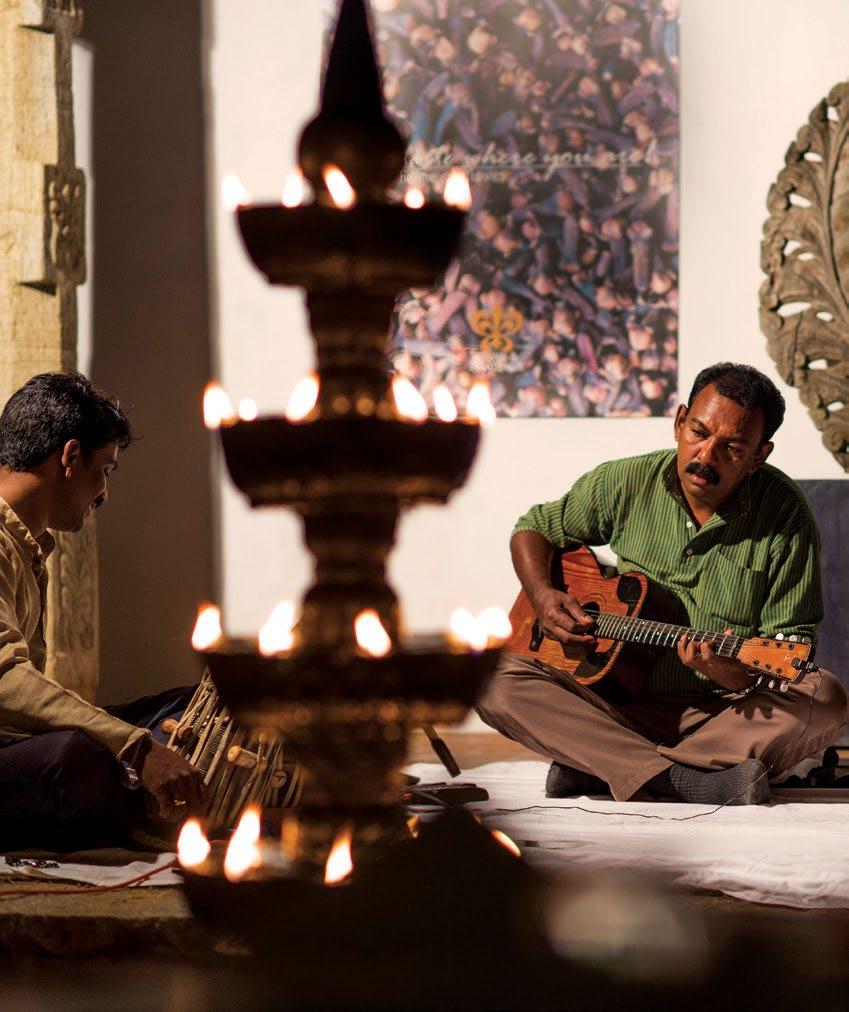
THIS SPREAD, CLOCKWISE FROM TOP LEFT: Festivals are increasingly becoming destinations in their own right; at Taj Fateh Prakash Palace, Udaipur, living culture unfolds through the city's rhythms and rituals; at The Malabar House, Fort Kochi, music and performance remain part of daily life; the Rann Utsav transformed culture, craft and landscape into a thriving seasonal economy; at Rhino & River Wildlife Retreat & Spa, Pobitora, craft traditions remain inseparable from the communities that sustain them.
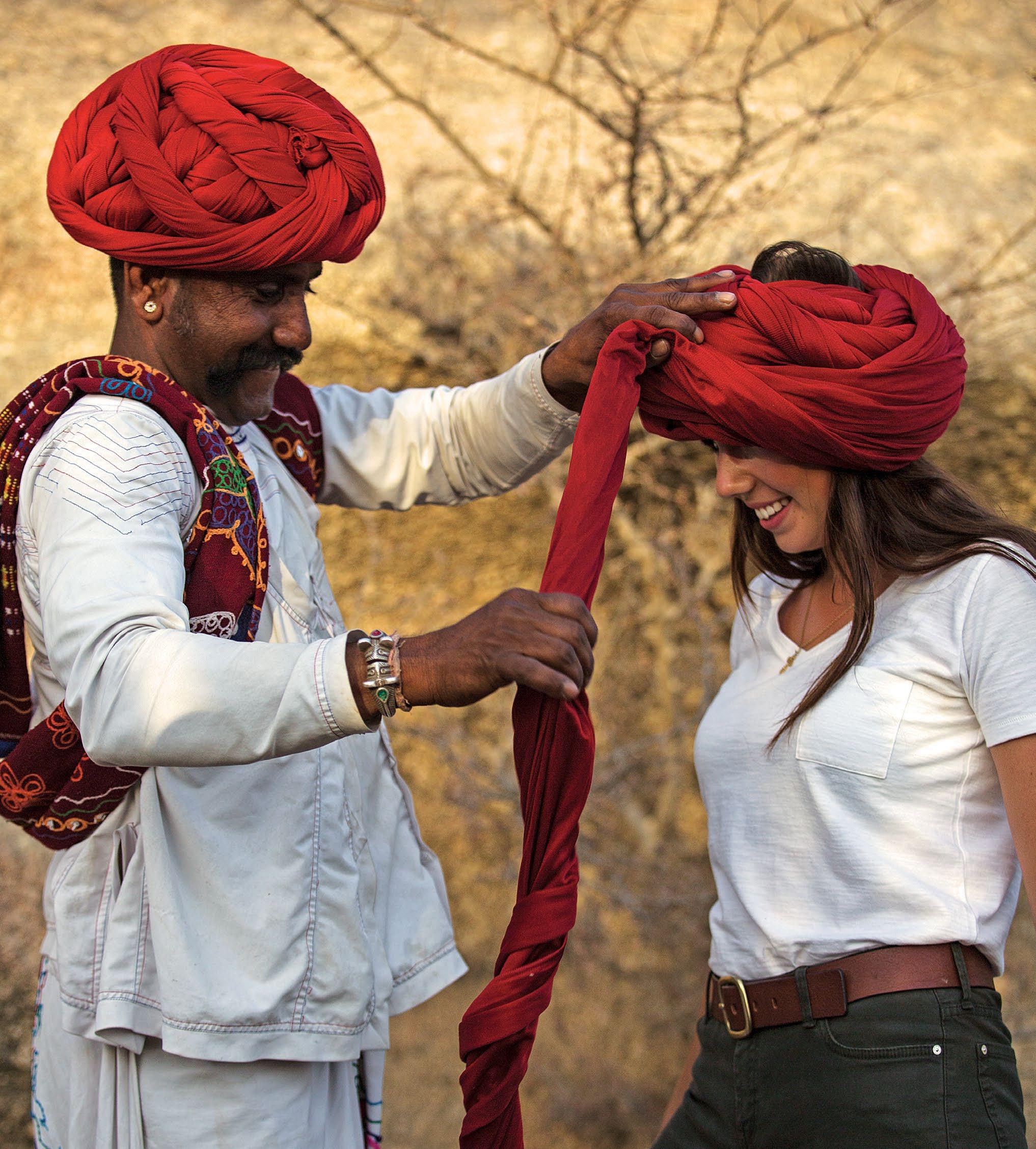
At Relais & Châteaux SUJÁN JAWAI, the encounter is as much with the community as it is with wilderness.
the city of Panaji, or Panjim, comes alive with art, music, theatre and dance. The cafes fill with people who have not come for the beaches. The old Latin Quarter, or Fontainhas, normally in a state of sussegad through the afternoons and after dark, awakens as theatre and art move into bylanes and venues within the old residential zone. At the various
venues of the Serendipity Arts Festival, you find a grandmother from Goa watching a contemporary dance piece. An architect from Bengaluru deep in conversation with a textile artist from Manipur. A young couple from Delhi, who planned a five-day trip around a single performance, extending their stay by three days. This is not an arts festival in the conventional sense.
“We never imagined people would plan their calendars around Serendipity Arts Festival,” says Sunil Kant Munjal, Chairman of Hero Enterprises and founder of the festival. “But they do now, and that has been transformative for Goa’s economy and ecosystem.” He chose Goa deliberately for what he calls ‘a culture of relaxation’. “People come to do nothing, unwind, or simply have fun. That mental openness makes them far more receptive to art, theatre, music and culture.”
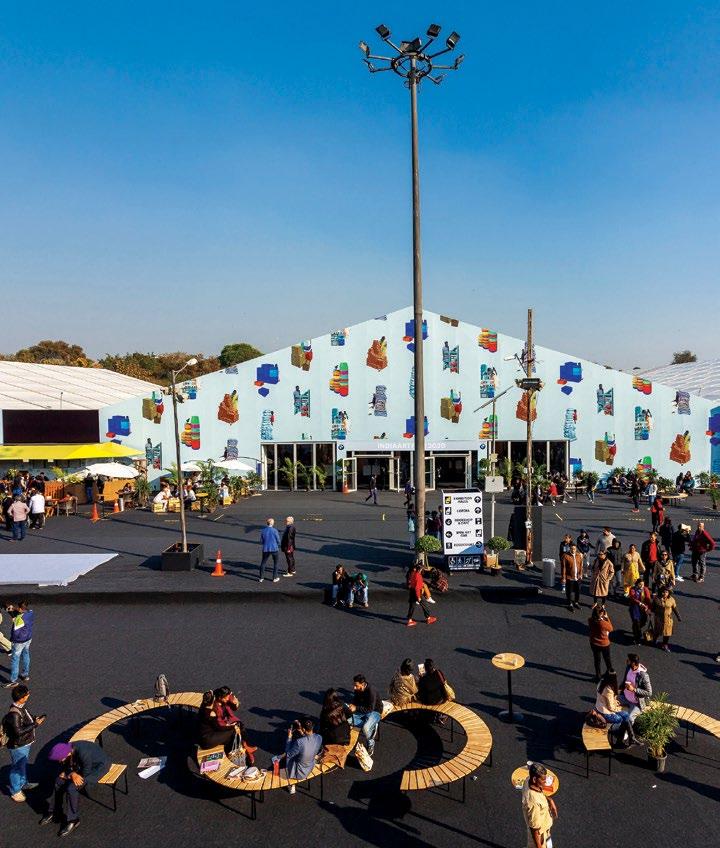
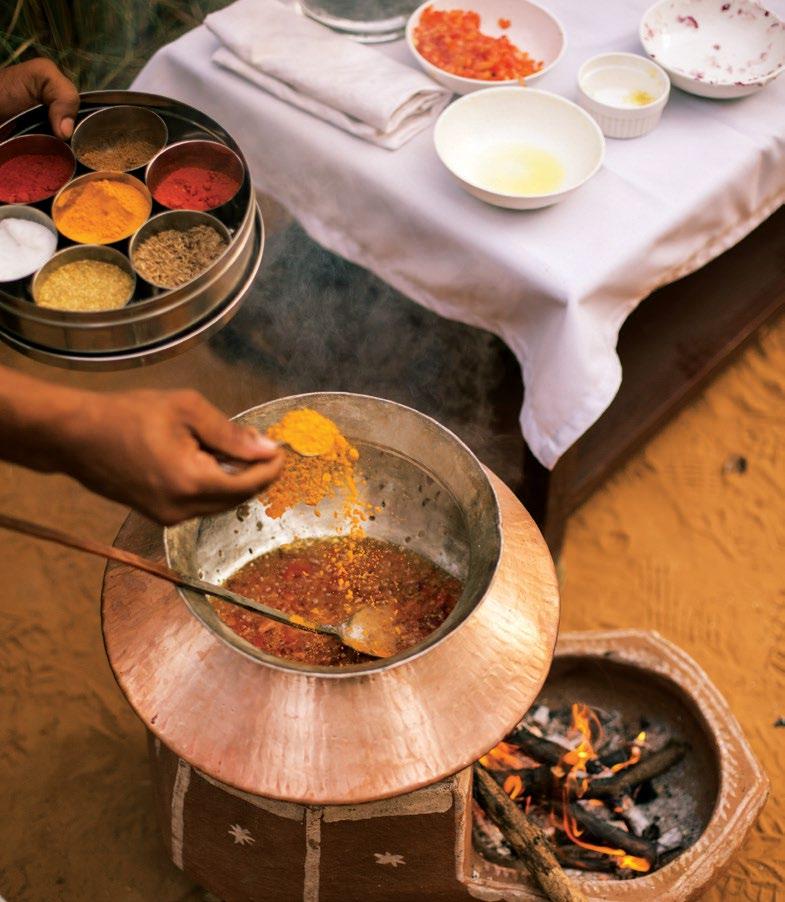
LEFT: India Art Fair has become one of the country's most significant cultural draws, attracting collectors, curators and travellers alike. BELOW:At Relais & Châteaux SUJÁN Sher Bagh, food offers an introduction to place, landscape and tradition.
BOTTOM: Serendipity Arts Festival has demonstrated how cultural programming can reshape a destination's tourism economy.face of Indian luxury: rooted and yet global.
That receptiveness sits at the centre of a structural shift underway across India’s tourism and hospitality landscape. For decades, the country marketed itself through its monuments, inviting travellers to see what previous generations had built. Increasingly, however, destinations are competing through identity rather than geography. “Travellers are choosing places because of the stories they tell, the traditions they preserve and the experiences they offer,” says Anjali Mehra, Executive Vice President – Brand and Communication, The Leela Palaces Hotels and Resorts.
The clearest signal of this shift is institutional. Union Minister for Culture and Tourism Gajendra Singh Shekhawat, who holds both portfolios, has consistently spoken of culture not as heritage to be preserved but as power to be deployed. “Our nation’s growing soft power is in its rich cultural fabric and its myriad manifestations in the form of art, music, dance, textiles among others,” he said on assuming charge in 2024. At the World Audio Visual and Entertainment Summit in Mumbai in 2025, he went further: “This is the time for the rise of India’s cultural creative economy. The orange economy rests on three pillars: content, creativity and culture.” And at the WION World Pulse Summit, he made the ambition explicit: “India is today not only politically and economically powerful, but also culturally.”
At the state level, the work is more granular. Madhya Pradesh, which won India’s Leading Tourist Board at the World Travel Awards 2024 and welcomed 134.1 million tourists in 2024, a 19.6% rise from the previous year, has moved decisively from marketing geography to building cultural narrative. Sheo Shekhar Shukla, Principal Secretary, Tourism and Culture, and Managing Director,
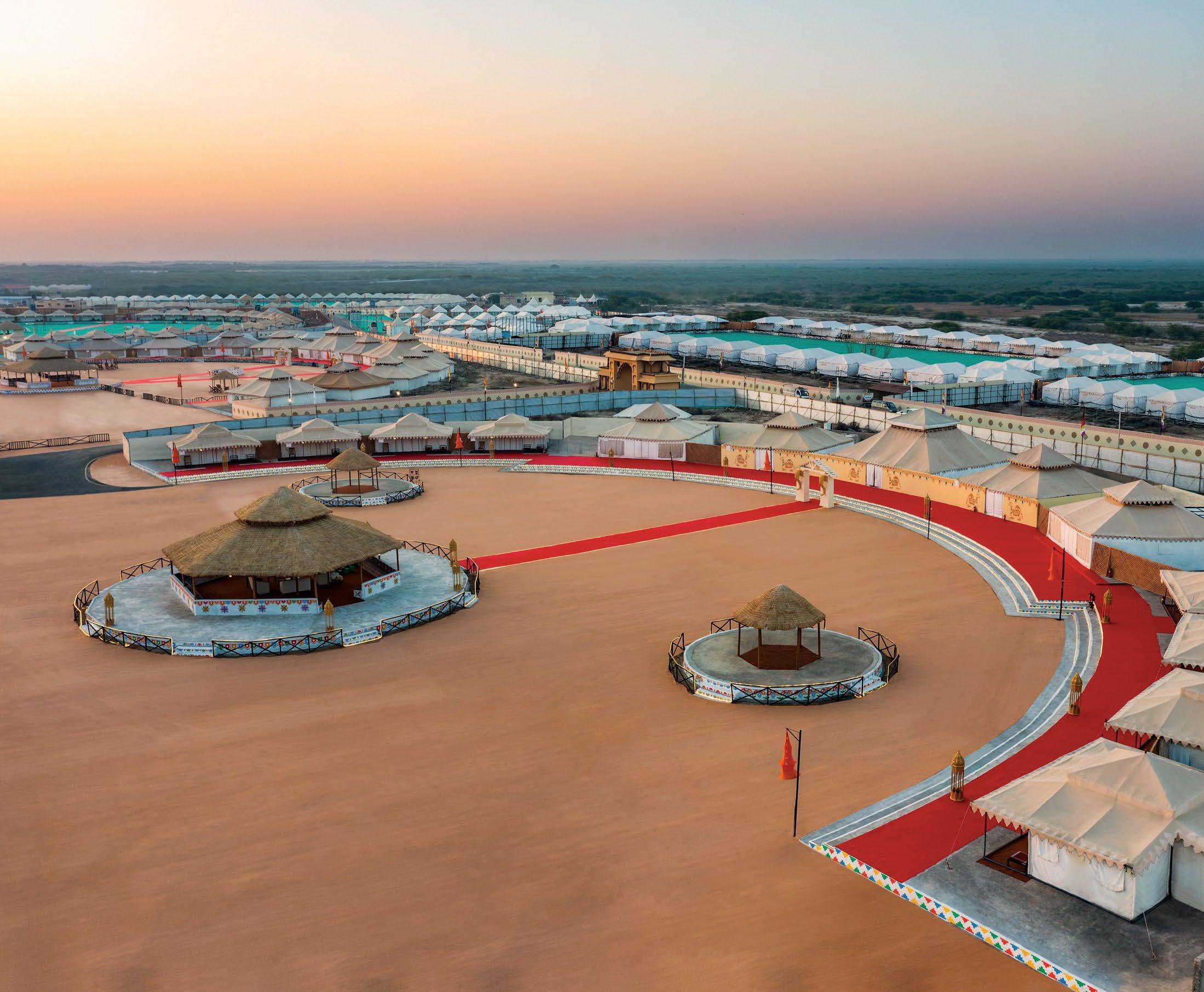
The Rann Utsav transformed culture, craft and landscape into one of India's most successful tourism economies.
PHOTOS
Madhya Pradesh Tourism Board, speaking at a UNESCO heritage session, set out the governing principle: “Heritage cities can be developed and conserved simultaneously by placing the community at the core. We must sensitise the community, instill a sense of ownership, and generate livelihood opportunities around both built and intangible heritage.” Long sold on the twin draws of Khajuraho and tigers, the state has built an entirely different narrative, one of civilisational depth, through Mahakal Lok in Ujjain, Ahilya Lok, tribal circuits
and handloom trails, and has secured UNESCO nominations for Bhagoria Dance, Gond Painting and Narmada Parikrama as intangible cultural heritage. Shukla is direct about what drives this: “Tourism is most impactful when locals are not just passive participants but active stakeholders.”
Kerala, which won the World Travel Awards for India’s Leading Tourist Board in 2025, operates a different but equally deliberate model. Kerala Tourism 2.0, a $43 million sustainable tourism initiative, builds travel corridors between Kochi and lesser-visited destinations while programming around local festivals, from Thrissur Pooram to the KochiMuziris Biennale. Former Tourism Minister P.A. Mohammed Riyas says, “Kerala Tourism has always strived to strike a judicious balance between the commercial growth of tourism and its sustainability to ensure participation and well-being of local communities.” His description of the Kerala model as having “set an exemplar for the entire world on account of its emphasis on sustainability and inclusivity” reflects a policy architecture built over years that insists culture belongs to its communities first.
THE state AS CULTURAL brand
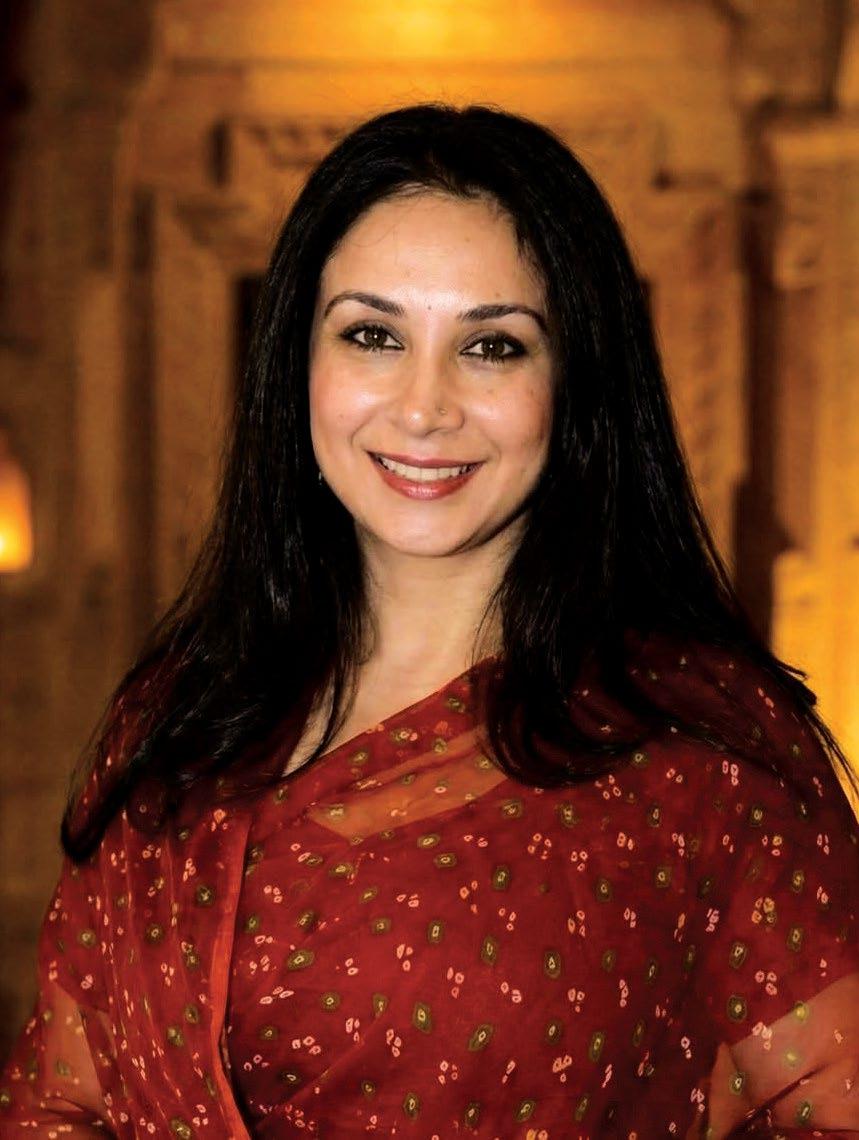
Rajasthan, India’s fifth most-visited state with 230 million domestic visitors in 2024 and a 28.5% year-on-year rise, frames culture as an investment proposition. The state’s Tourism Policy 2025 explicitly aims to “connect Rajasthan’s culture, heritage, art and natural diversity with the requirements of the new era.” Deputy Chief Minister and Tourism Minister Diya Kumari says, “While Rajasthan is globally renowned for its magnificent forts, palaces and monuments, we are equally focused on diversifying our tourism offerings. The art, craft and cuisine should be pushed using aggressive and sustainable campaigns.”
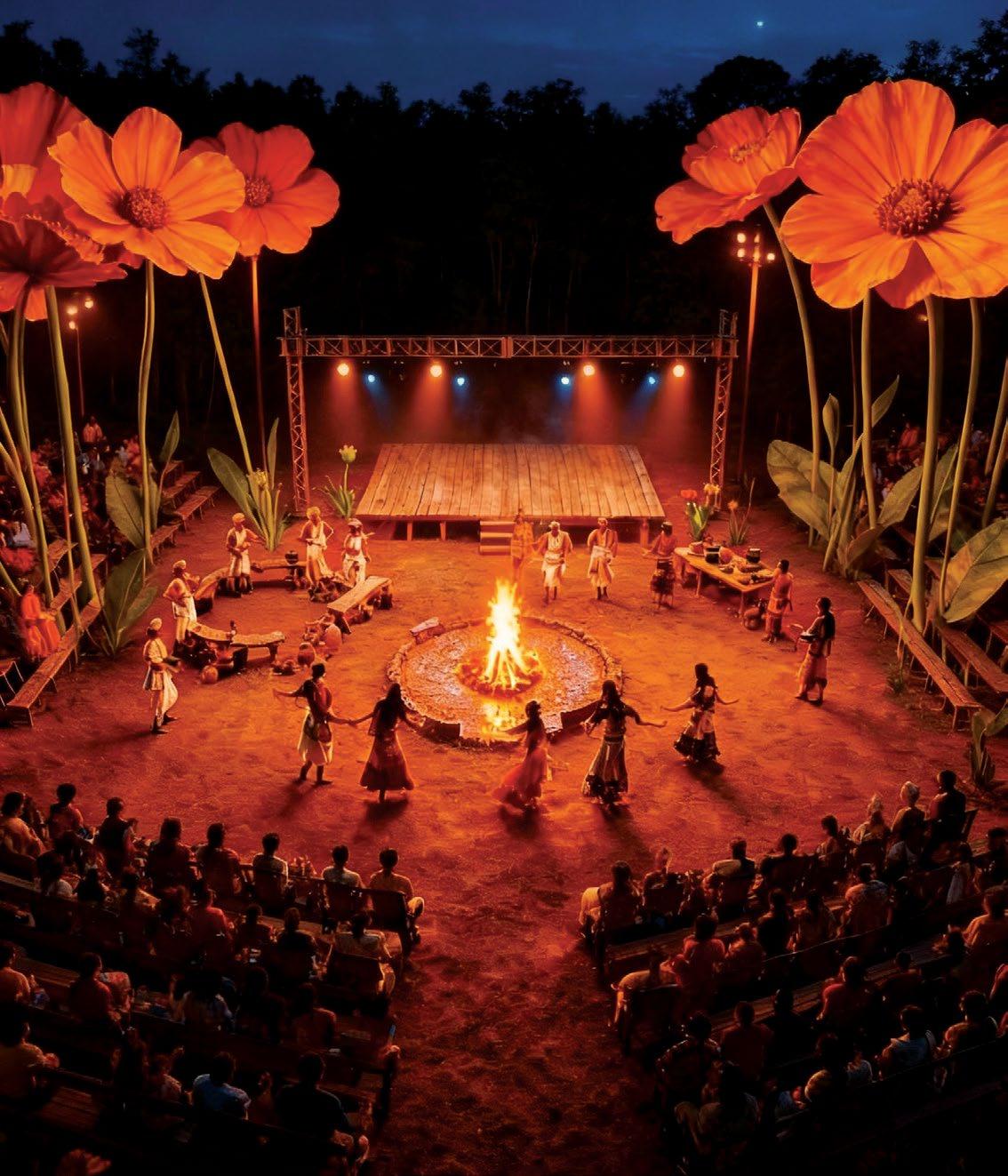
Gujarat recognised the tourism potential of intangible heritage long before it became industry shorthand. Navratri and Garba were packaged as tourism products years before most destinations understood the commercial logic of living culture. The Rann Utsav transformed a secluded salt desert, a craft ecosystem and a cultural calendar into a seasonal economy that draws visitors from across the world. The 2024–25 edition alone drew 7.42 lakh visitors to Tent City, generating over ₹6 crore for craft stalls and ₹1.36 crore for food vendors.
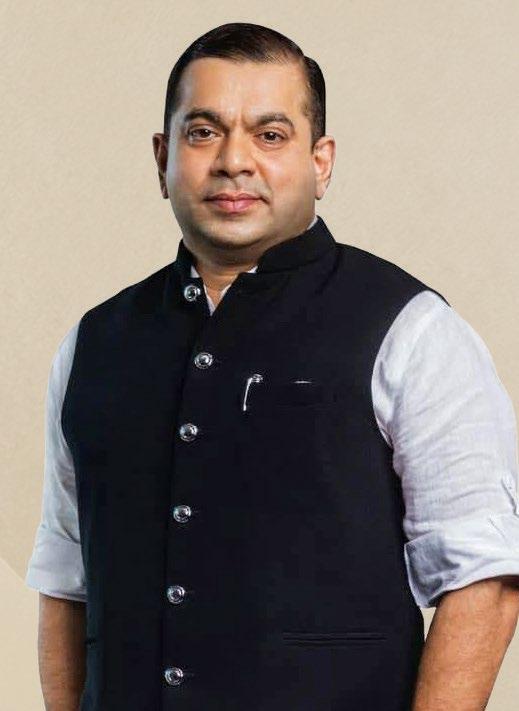
Goa, meanwhile, is rewriting its tourism narrative with equal urgency. Tourism Minister Rohan Khaunte, named Tourism Minister of the Year at ITB Berlin 2024, has positioned the ‘Goa Beyond Beaches’ campaign as a cultural rebranding of the state’s identity. “Goa’s heritage is a treasure trove that deserves global recognition. While our pristine beaches have
long been the hallmark of Goa’s tourism industry, we are now embracing a broader vision, one that celebrates our history, traditions, and architectural marvels. Through strategic interventions and policy-driven initiatives, the Department of Tourism is actively working towards revitalising heritage tourism, ensuring that our legacy is not just preserved but thrives as a living experience for visitors.” As the first state in India to adopt a Regenerative Tourism model, Goa is also building a new calendar of cultural events, from Ekadasha Teertha circuits and traditional village cuisine trails to the Serendipity Arts Festival, all anchored in the argument that Goa’s culture, not just its coastline, is the draw.
Arunachal Pradesh is making perhaps the most ambitious case for the Northeast. The state’s ‘Take a New Turn in Arunachal’ campaign, launched in early 2026 by Tourism Minister Pasang Dorjee Sona, repositions one of India’s most biodiverse and culturally complex states as a destination for immersion rather than sightseeing. “Arunachal is a region as old as history, with rising mountain peaks, colourful vegetation, Buddhist heritage, snow-capped landscapes, diverse tribal culture, and breathtaking biodiversity,” said Sona at the launch. “It has all the ingredients required to be a top tourist destination, from heritage and wildlife to adventure, nature, unique festivals and distinct culture. The very idea of Arunachal Pradesh has resplendence ingrained in it, and the experience of this land is no different.” The state’s Tourism Policy 2025–30 specifically prioritises tribal tourism as a distinct category, developing infrastructure around indigenous dance, music and food traditions, from the Apatani tribe of Ziro
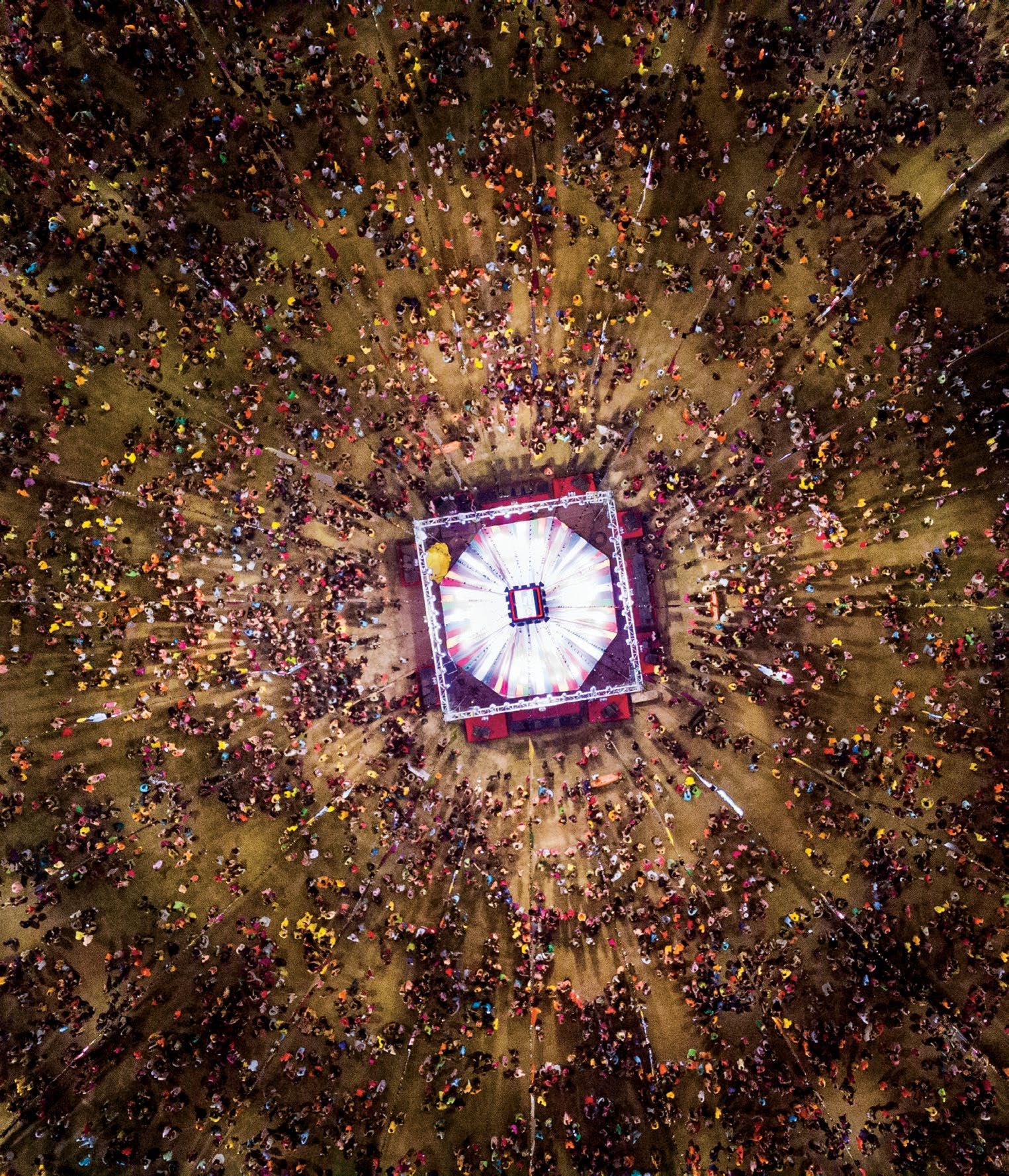
Garba helped establish Gujarat as one of India's earliest examples of culture-led tourism.
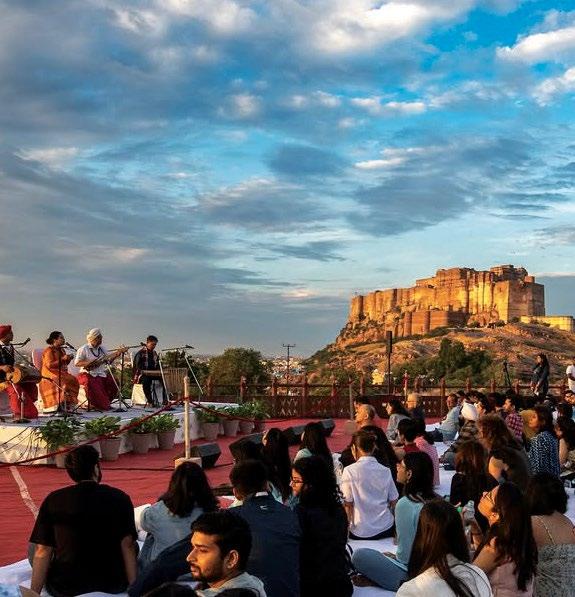
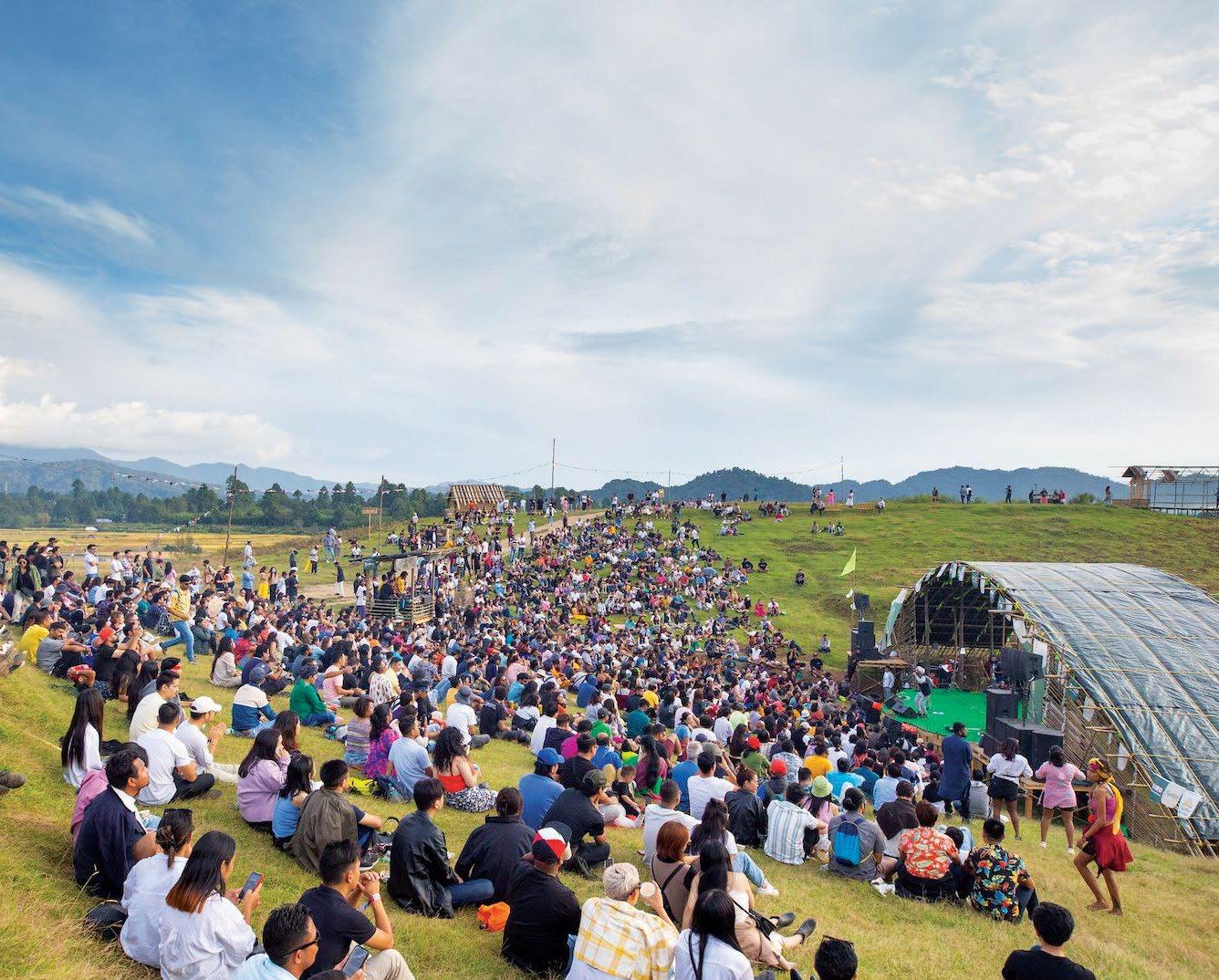
CLOCKWISE FROM TOP: Mahakal Lok, Ujjain reflects Madhya Pradesh's effort to build a cultural narrative around civilisational heritage; in Arunachal Pradesh, festivals such as Ziro offer an entry point into the region's diverse cultural landscape; Rajasthan International Folk Festival, Jodhpur creates a contemporary platform for folk traditions that have shaped Rajasthan's cultural identity for generations; Bharti Kher's Three Decimal Points at Kochi-Muziris Biennale.
to the Buddhist heritage of Tawang, without flattening them into performance.
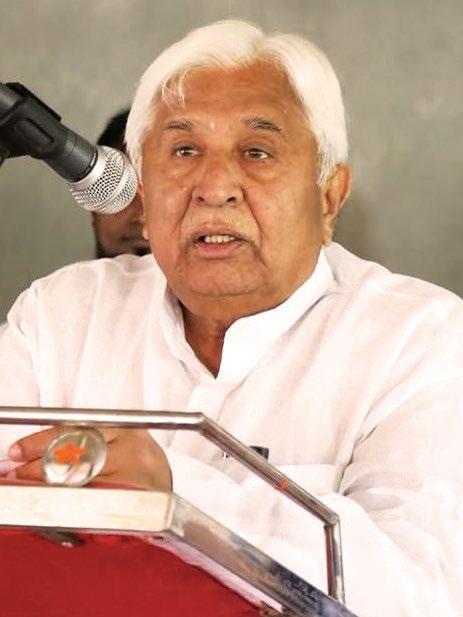
Karnataka grounds its cultural tourism case in the sheer depth of what it holds. Tourism Minister H.K. Patil points to an extraordinary and underutilised asset: “There are about 25,000 worthy monuments in the state. Many destinations across Karnataka stand as living proof of the state’s rich heritage.” The state’s Tourism Policy 2024–29, branded ‘One State, Many Worlds’, has embedded culture into nine strategic pillars. “Karnataka offers immense opportunities across eco-tourism, heritage conservation, adventure tourism, and hospitality infrastructure. We are committed to creating a robust ecosystem that balances growth with sustainability, while ensuring community participation and global visibility.”
What unites these strategies is the recognition that genuine distinction lies in the cultural intelligence embedded in a place: the food, the weave, the ritual, the music, the story. States are operating, in effect, like cultural brands, and the tourism board has become the creative director.
Shoba Rudra, Partner and Founder of RARE India, who has spent years working at the intersection of luxury travel and authentic experience, frames it plainly: “Festivals, crafts and performing arts are being taken up to position the state’s tourism identity and potential.” She points to the Maha Kumbh, to Durga Puja, to Holi and Bihu, events that now appear in tourism brochures. What she is more cautious about is the gap between visibility and depth. “States are driven more by numbers than by content,” she says. “Smaller curations promoting art and performing arts don’t get much attention. Local communities are not the focus. They find opportunity in these large fairs as collateral advantage, not by design.”
Photo: Sangeeth Thali
THE monument IS NO LONGER THE product
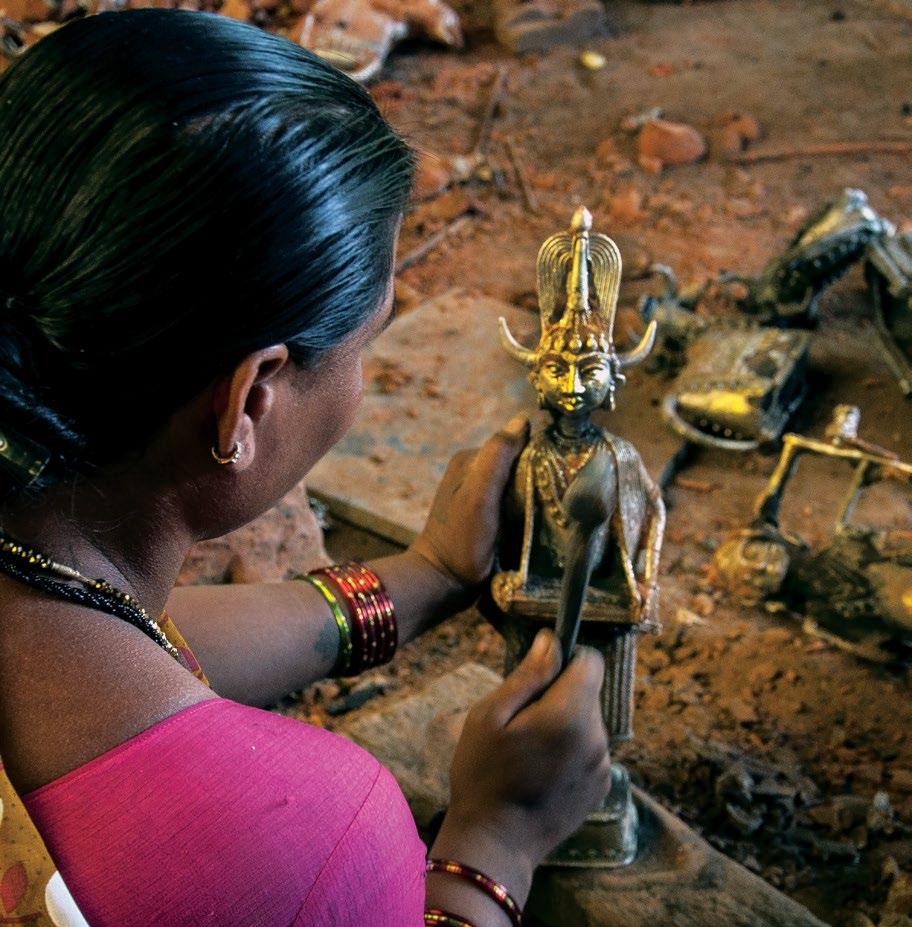
Living crafts such as Dokra carry stories that no monument can tell alone.
For most of the last century, heritage tourism operated on the premise that the monument, something old and architecturally significant, was the product. The experience was visual, passive and often concluded at the souvenir shop. That model still exists, but it is no longer what is driving travellers.
The national imagination around heritage is shifting toward what UNESCO has long called intangible heritage: oral traditions, folk music, food, weaving, ritual and festival. When culture itself becomes the experience, the cultural practitioner becomes the infrastructure, requiring different kinds of investment, stewardship and a fundamentally different relationship between the visitor and the visited.
Akshita M Bhanj Deo, from the royal Mayurbhanj family and custodian of The Belgadia Palace in Odisha, articulates this distinction with precision. Mayurbhanj is not a conventional tourism destination. No mass market has arrived to smooth its edges, package its traditions or build a theme park around its tribal culture. “Odisha, unlike Rajasthan, Kerala, and Goa, has not experienced mass tourism; it’s still untouched,” she says. “There is a high-value tourist who realises he is the last who is going to experience something like this: meeting nomadic or pastoral tribes, meeting the last speakers of a language, learning a skill from a 12th generation Dokra artist who has not been impacted by the digital age. This is rare.”
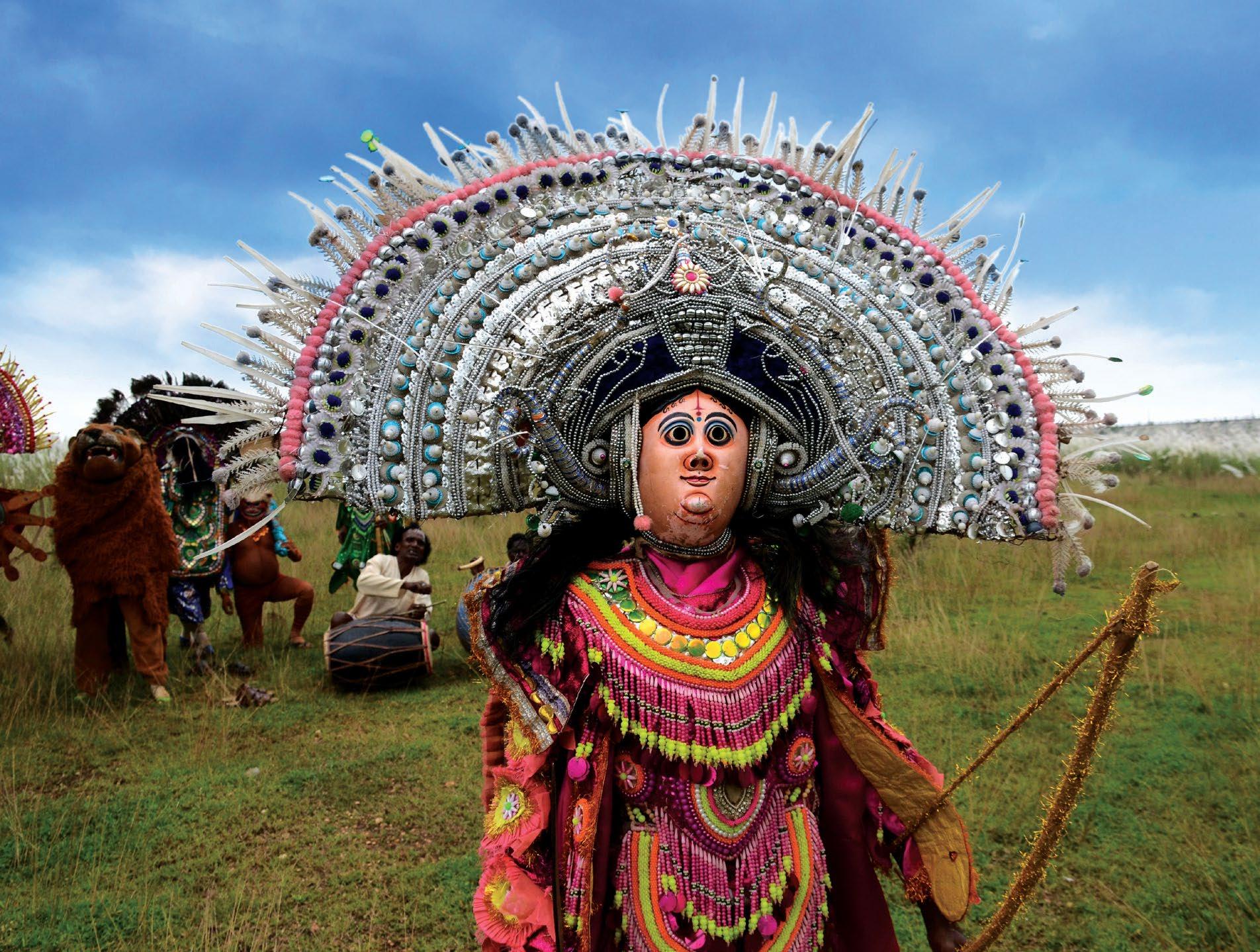
What Belgadia offers is not a curated experience of Odisha but an introduction to the state through people who carry its culture: the Chhau dancer who performs in the same tradition his grandfather did, the phuta jhala weaver whose handloom predates most of what we call contemporary design. The palace is the entry point, says Bhanj Deo, “but Mayurbhanj itself is the destination. My job is simply to make that legible to someone arriving from Mumbai or Monaco.” Also, she says, culture cannot be reverse-engineered. “You cannot decide to have a tribal heritage and then build infrastructure around it. The infrastructure has to follow from genuine cultural stewardship over time.”
For many travellers, encounters with traditions such as Chhau are becoming as compelling as visits to historic sites.
This is where hotels enter the story. They may not be leading India’s cultural renaissance, but they are responding to it. States created the conditions; hospitality became the stage, offering experiences that interpret culture, cuisine, craft and community for travellers.
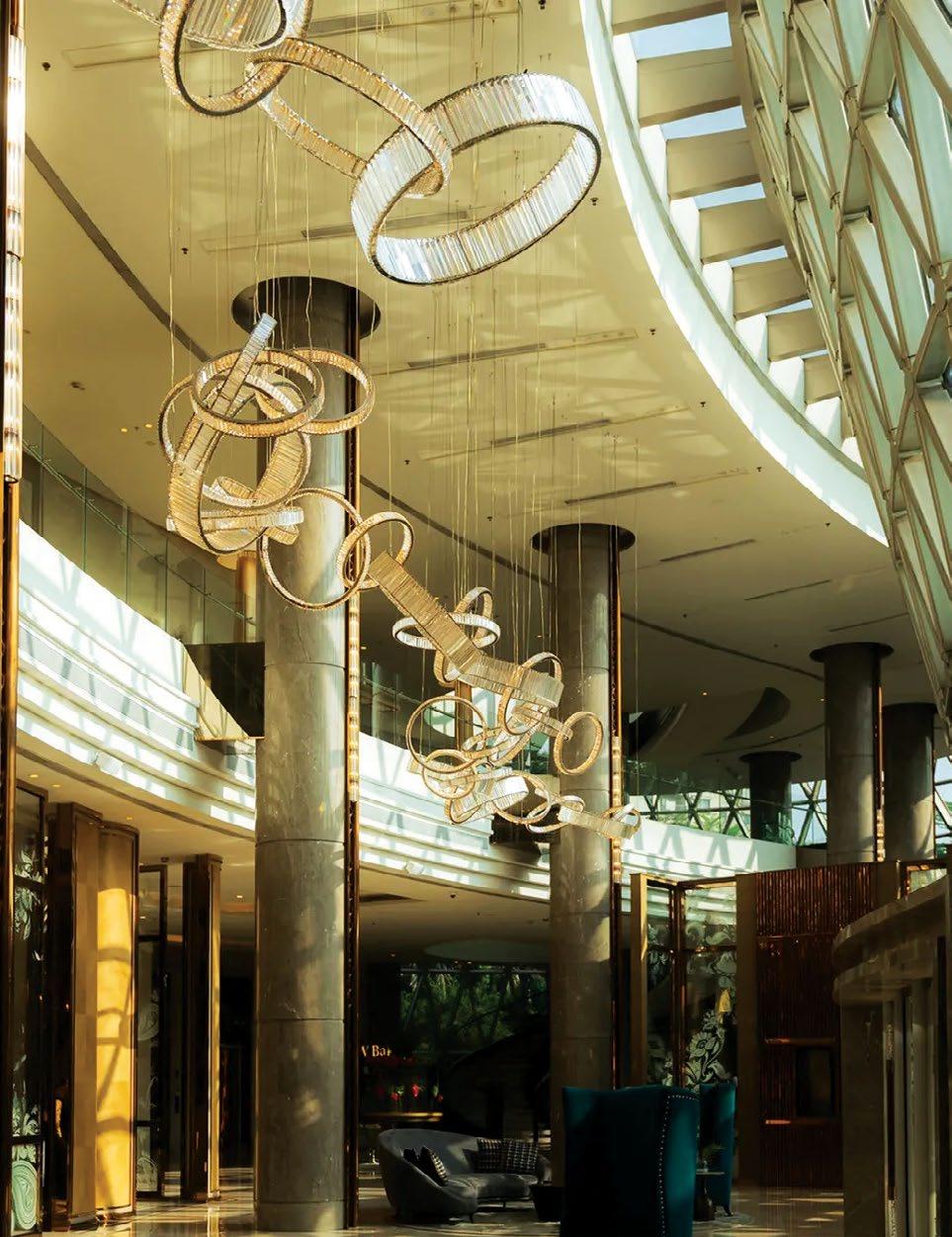
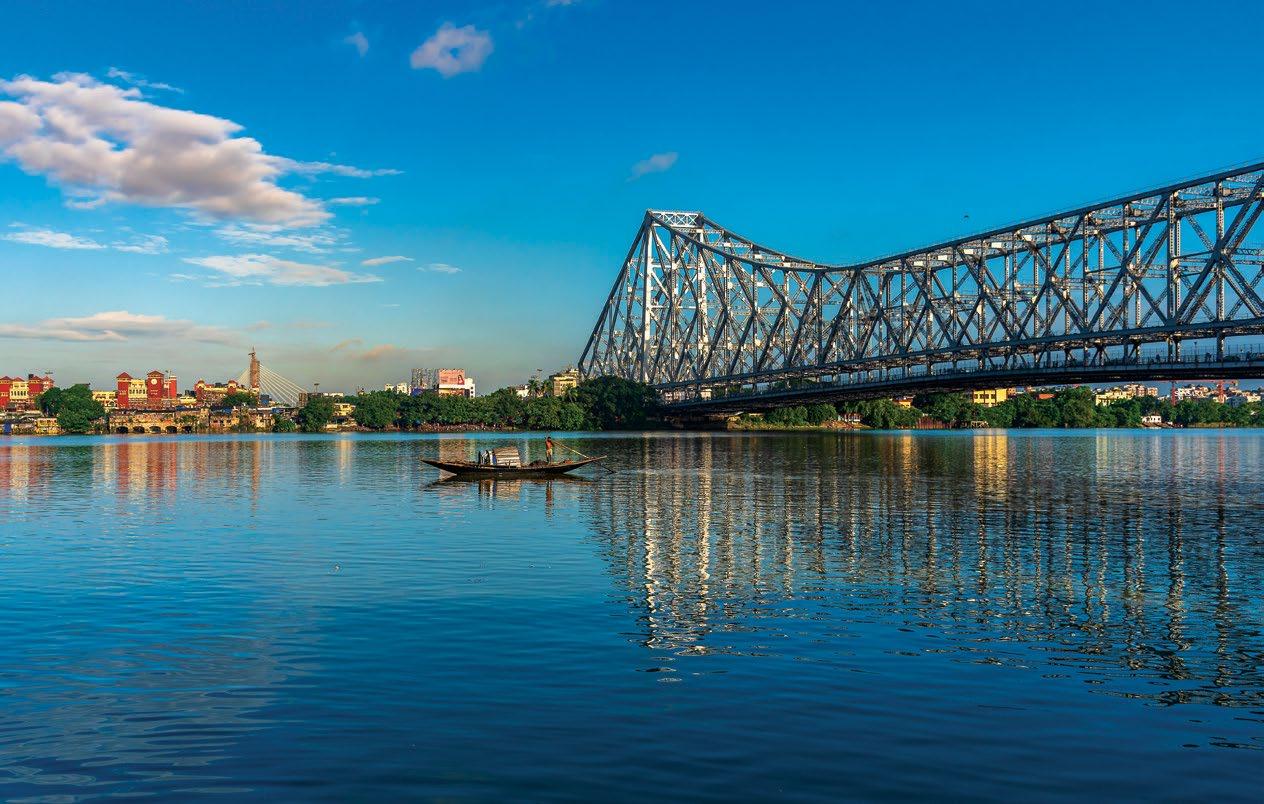
At JW Marriott Kolkata, the chandelier in the lobby is more than a design feature. Inspired by the bangles worn by Goddess Durga during Durga Puja, it becomes, for many guests, a first introduction to the city’s cultural identity. “For many guests, it becomes their first introduction to the spirit of Kolkata,” says General Manager Gorav Arora, “a city where art, faith, and community are deeply intertwined.”
For IHCL and the Taj group, cultural storytelling stretches back more than a century. “For over a century, IHCL has served as a custodian of India’s cultural and architectural legacy,” says Gaurav Pokhariyal, Executive Vice President, Human Resources. “By integrating conservation, adaptive reuse, and community engagement, we view heritage as a vital pillar of sustainable development, preserving the past while ensuring its relevance for future generations.” That philosophy finds expression through HeritEdge Celebration, introduced under Paathya, IHCL’s ESG+ framework, which brings regional traditions, local craftsmanship and lived cultural practices into the guest experience. Examples range from reviving regional recipes through curated culinary sessions at Taj Lake Palace in Udaipur and guided explorations of Goa’s historic churches at Taj Exotica Resort and Spa to craft-led workshops at Taj Sawai Ranthambore that create direct revenue streams for local artisans. “Across its portfolio,” says Pokhariyal, “IHCL enables travellers to engage directly with India’s living heritage,” from interactions with the Bishnoi community in Rajasthan and the Molela terracotta artform in Udaipur to Durga Puja in Kolkata and the Ganga Aarti in Varanasi.
On hotels becoming cultural institutions, his answer is unequivocal: “Hotels are increasingly taking on a broader role, particularly in destinations where culture shapes the identity of the experience. The focus is on curating experiences that bring together multiple art forms within settings that are historically and culturally significant.” The inaugural edition of Ninaad at Rambagh Palace, Jaipur, bringing together curated performances, immersive heritage encounters and culinary experiences within the Mughal Lawns and Maharani Mahal, is the latest expression of that ambition.
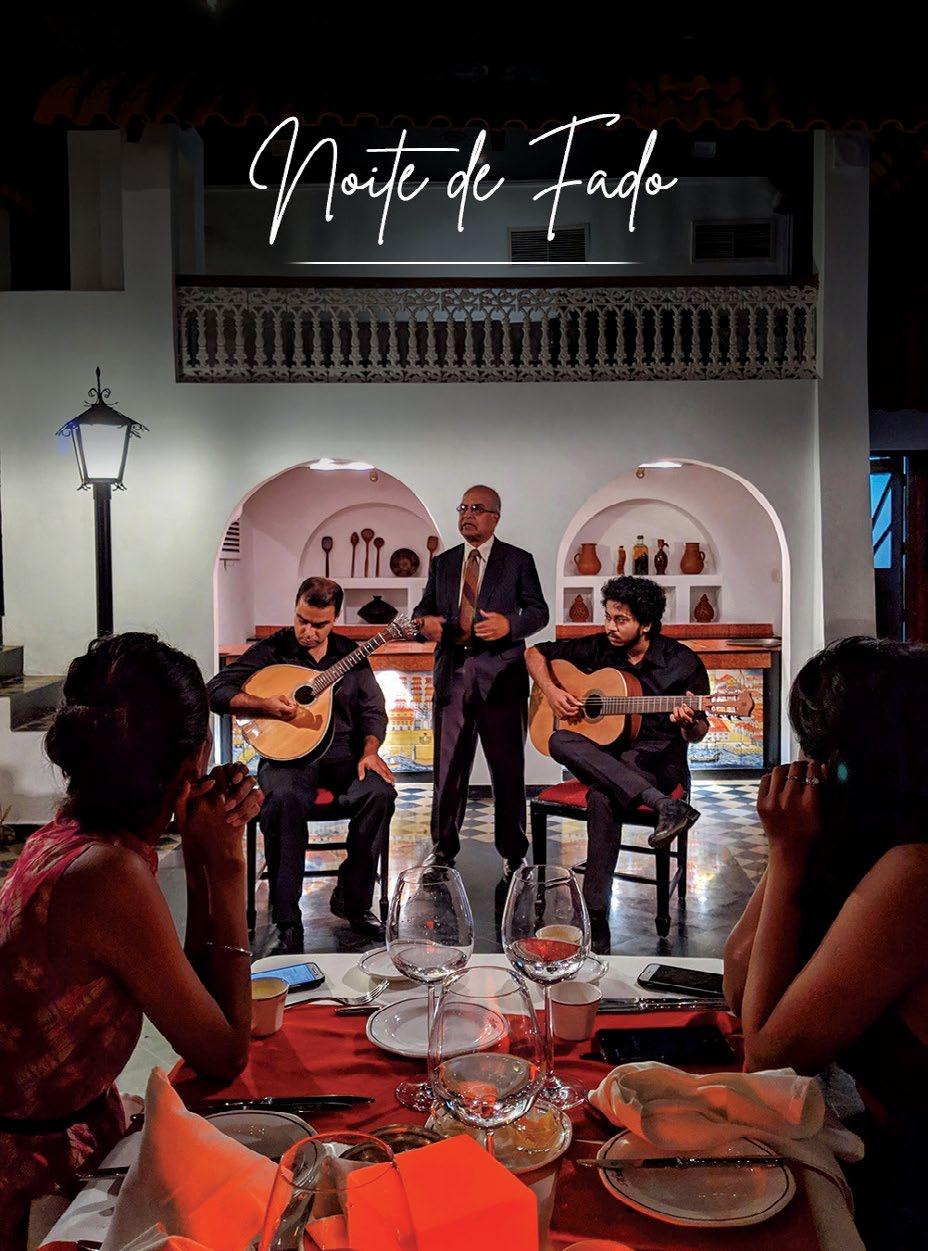
IHCL's Goa properties have moved well beyond hospitality into active cultural stewardship. Fado performances at Alfama, the restaurant at Taj Cidade de Goa Heritage, keep a dying musical tradition alive; heritage walks through Panjim and Old Goa connect guests to layers
HOTELS AS CULTURAL infrastructure
THIS SPREAD, LEFT TO RIGHT: At JW Marriott Kolkata, design draws on the city's artistic and literary heritage to create a distinct sense of place; at Taj Cidade de Goa Horizon, Noite de Fado brings a shared Indo-Portuguese cultural legacy into the guest experience; The Jaipur Literature Festival demonstrates how ideas, authors and audiences can become a destination draw in their own right; ITC Maurya illustrates how hotels can become cultural storytellers, translating heritage into contemporary design.
of colonial history; and the Tribal Food Festival, developed with Tata Steel Foundation, brought indigenous recipes and sacred food practices into the mainstream spotlight. Corporate support for Forest Recipes of Goa extended that commitment to the page. The ambition, says Ranjit Phillipose, Senior Vice President, Operations, Goa, IHCL, is to offer "authentic connections rather than just sightseeing" — making the hotel, in his words, "a powerful custodian and storyteller of India's rich cultural legacy."
ITC Hotels has dovetailed India’s cultural offerings with experiential luxury through a commitment that predates the current industry conversation by decades. The WelcomArt initiative, launched in the 1970s, transformed hotel spaces into living galleries, not as a branding exercise but as a sustained commitment to commissioning, collecting and displaying Indian art. At ITC Maurya, one of the country’s most significant private collections of modern Indian art includes works by Tyeb Mehta, FN Souza, MF Husain, Krishen Khanna and Satish Gujral.
“Every property is conceptualised as a distinct expression of regional identity,” says Managing Director Anil Chadha, “drawing upon local history, architecture, craftsmanship and traditions to create a deeply contextual and authentic guest experience.” That principle extends from the temple-inspired grandeur of ITC Grand Chola and the aristocratic elegance of ITC Royal Bengal to the Gujarat-inspired jaali motifs of ITC Narmada. In collaboration with Tata Steel Foundation, the brand also runs tribal food pop-ups across Mumbai, Goa and Jamshedpur, alongside a culinary training programme that, over three years, has engaged 56 participants from 10 states across 15 tribes. “Cuisine is a defining element of India’s cultural identity,” says Chadha. “We showcase this diversity through initiatives rooted in regional traditions, while creating entrepreneurial avenues for the communities that sustain them.”
The Leela Palaces Hotels and Resorts has built its cultural positioning through long-term institutional partnerships: a five-year association with the Jaipur Literature Festival, a partnership with India Art Fair and the Icons of India initiative celebrating cultural luminaries. “Hotels today sit
at the intersection of culture and access,” says Mehra. “A guest may arrive for a stay but leave having discovered an artist, a writer, a craft tradition or a cultural narrative they may never have encountered otherwise.”
SUJÁN, three of whose four properties are members of Relais & Châteaux, has woven conservation and authenticity into its very DNA. “We never stage or curate any cultural experience. That goes against our ethos completely,” says Global Brand Director Laura McGowan.
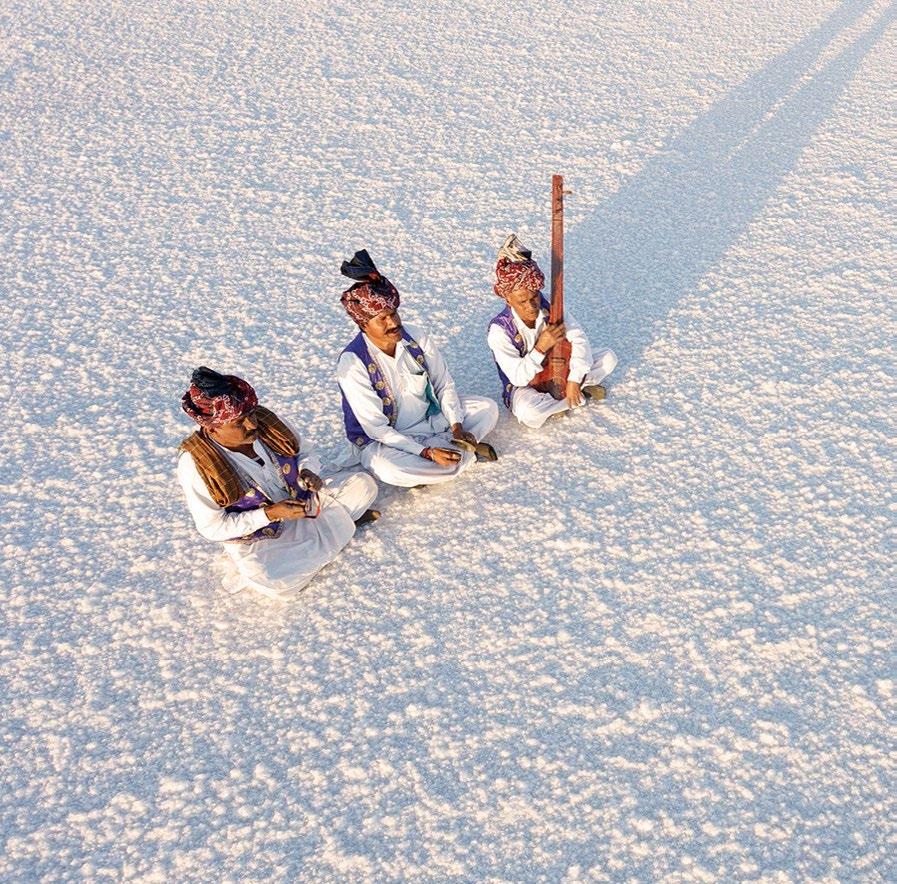
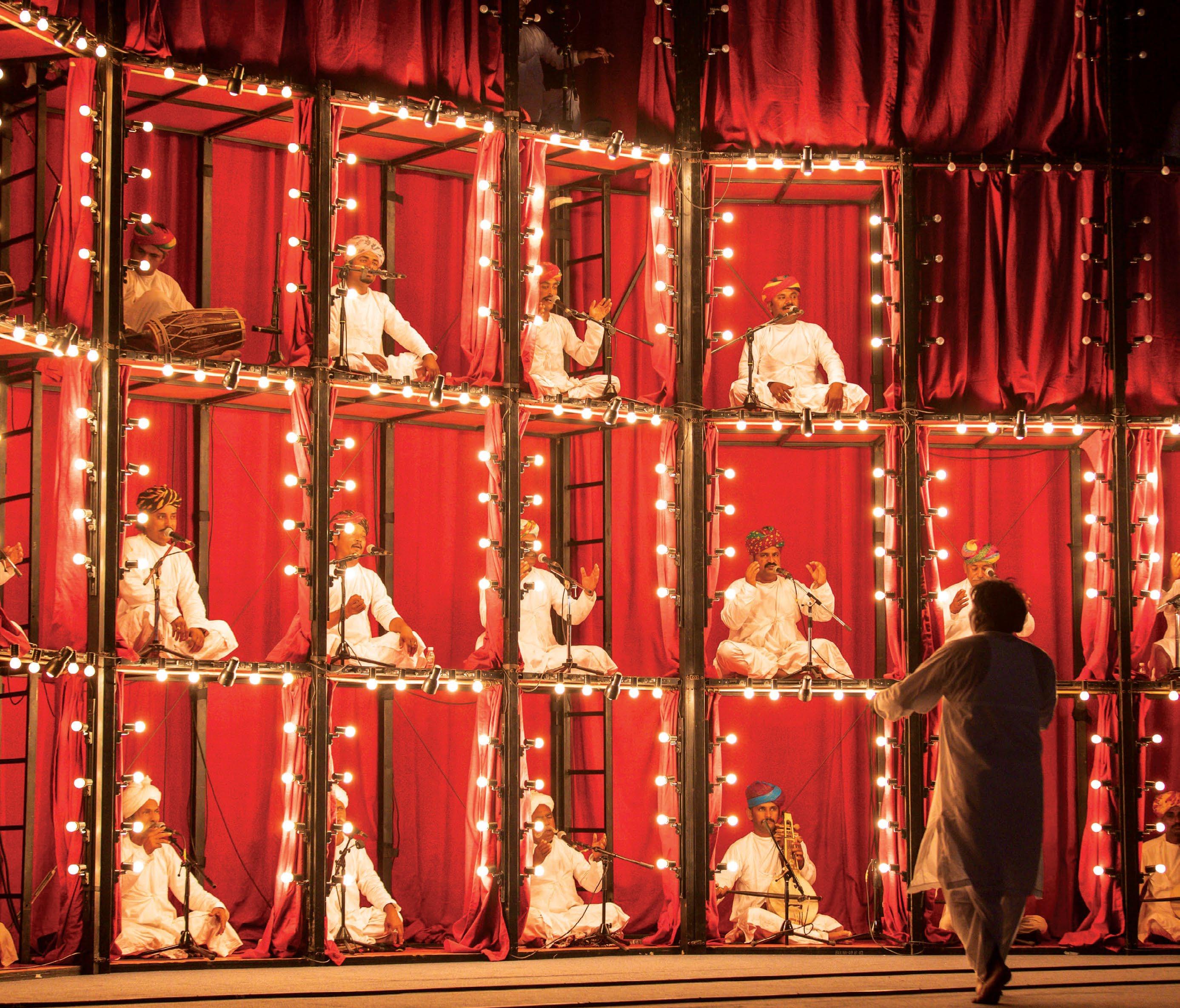
“The artisans, musicians, cooks, guides and storytellers we work with are not performers following a script; they are custodians of their own heritage.” The Manganiyar musicians of the Thar Desert have a long-standing relationship with SUJÁN, not as entertainment but as neighbours and collaborators. With 82% of its team drawn from Rajasthan and 12 schools supported across three districts, SUJÁN’s argument is not that culture makes good hospitality. It is that conservation without cultural stewardship is incomplete.
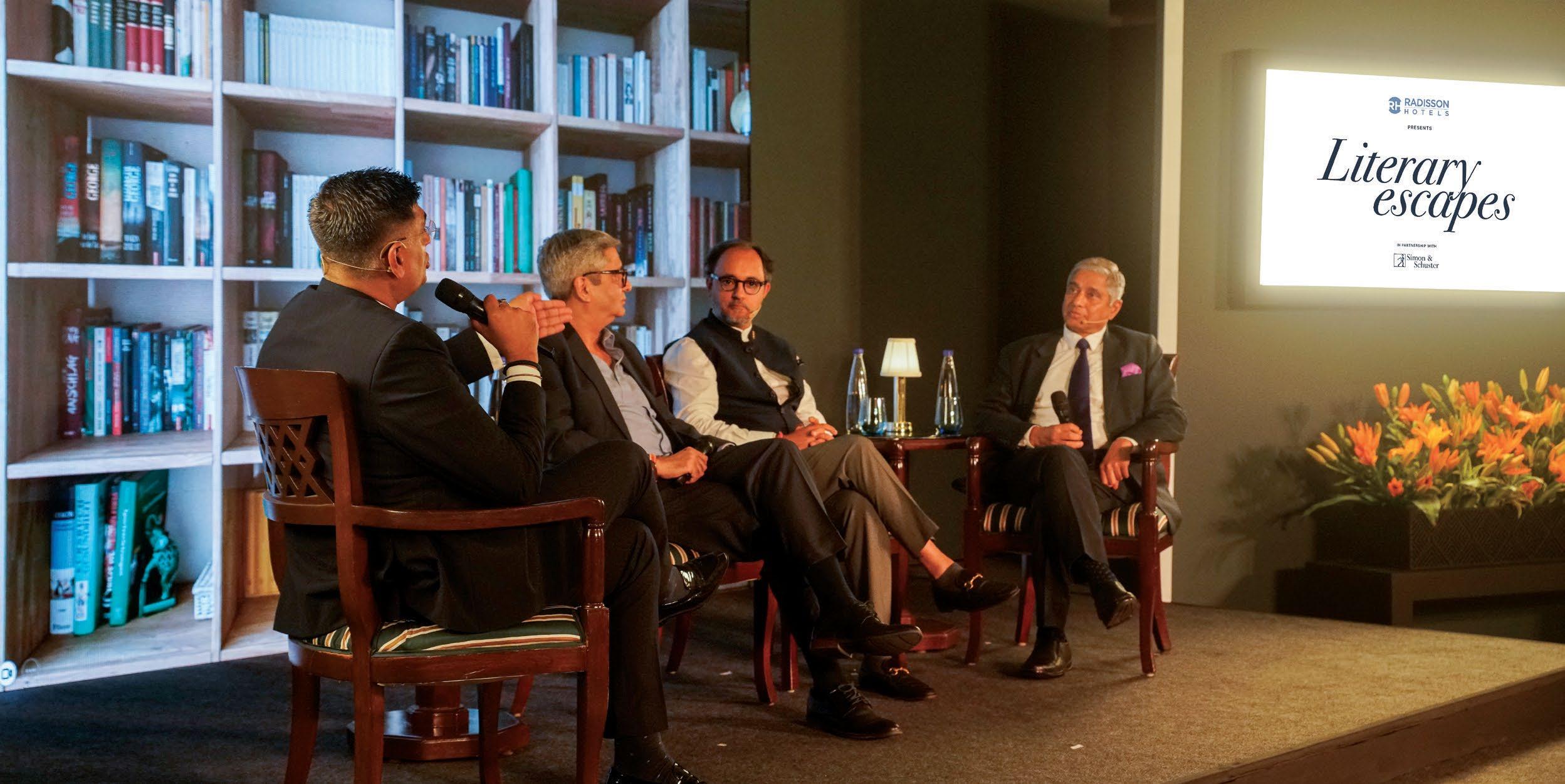
Through initiatives such as Literary Escapes, Radisson Hotels is extending cultural engagement beyond the hotel stay.
THE CONSENSUS cultural
Gajendra Singh Shekhawat
Union Minister for Culture and Tourism
“Our nation's growing soft power is in its rich cultural fabric and its myriad manifestations in the form of art, music, dance, textiles, among others. This is the time for the rise of India's cultural creative economy. The orange economy rests on three pillars: content, creativity and culture.”
Diya Kumari
Deputy Chief Minister and Tourism Minister, Rajasthan
“While Rajasthan is globally renowned for its magnificent forts, palaces and monuments, we are equally focused on diversifying our tourism offerings. The art, craft and cuisine should be pushed using aggressive and sustainable campaigns.”
Rohan Khaunte
Tourism Minister, Goa
“Goa's heritage is a treasure trove that deserves global recognition. We are are now embracing a broader vision, one that celebrates our history, traditions, and architectural marvels. The Department of Tourism is actively working towards revitalising heritage tourism, ensuring that our legacy is not just preserved but thrives as a living experience for visitors.”
Pasang Dorjee Sona
Minister of Tourism, Arunachal Pradesh
“Arunachal is a region as old as history, with rising mountain peaks, colourful vegetation, Buddhist heritage, snow-capped landscapes, diverse tribal culture, and breathtaking biodiversity. The very idea of Arunachal Pradesh has resplendence ingrained in it, and the experience of this land is no different.”
H.K. Patil
Tourism Minister, Karnataka
“Karnataka offers immense opportunities across eco-tourism, heritage conservation, adventure tourism, and hospitality infrastructure. We are committed to creating a robust ecosystem that balances growth with sustainability, while ensuring community participation and global visibility.”
Sheo Shekhar Shukla
Principal Secretary, Tourism
and
Culture, and Managing Director, Madhya Pradesh Tourism Board
“Heritage cities can be developed and conserved simultaneously by placing the community at the core. We must sensitise the community, instill a sense of ownership, and generate livelihood opportunities around both built and intangible heritage. The historicity of a city can be leveraged for the wider welfare and benefit of the people at large.”
Nikhil Sharma
MD and COO, South Asia, Radisson Hotel Group
“A large hotel network has the scale and reach to make cultural experiences more accessible to a wider audience. Hotels naturally bring together people, making them ideal spaces for intellectual and creative exchange. Hospitality brands can help nurture reading culture through curated reading spaces, author interactions, literary evenings, and publisher collaborations.”
Anil Chadha
P.A. Mohammed Riyas
Former Tourism Minister, Kerala
“ The Kerala tourism model set an exemplar for the entire world on account of its emphasis on sustainability and inclusivity. It reflects a policy architecture, built over years, that insists culture belongs to its communities first and to its visitors second. ”
Managing Director, ITC Hotels
“Hotels are increasingly becoming cultural touchpoints, complementing the role of museums, galleries and cultural institutions. While these remain vital custodians of heritage, hospitality offers a more immersive and accessible way to engage with culture. Through architecture, design, cuisine, music, craftsmanship and storytelling, hotels are transforming the stay itself into a cultural experience.”
Gaurav Pokhariyal
Executive Vice President, IHCL
Michael Dominic
CEO and MD, CGH Earth
Experience Hotels
“Beyond creating memorable guest experiences, hospitality can help sustain traditional livelihoods, support local artisans and performers, preserve regional knowledge systems, and ensure that the economic benefits of tourism reach the communities that keep these traditions alive.”
“As travel becomes more experiential, guests are seeking a deeper understanding of place. The hospitality industry, therefore, has a responsibility to interpret and present local identity with sensitivity. In doing so, it can help sustain artistic practices, enable new forms of expression and ensure that cultural heritage continues to evolve as a dynamic, lived tradition.”
Vibhas Prasad
Founder and Director, Leisure Hotels
“While cultural institutions remain the primary custodians of art, history, and heritage, hotels can complement their role by creating authentic connections between guests and local communities through regional cuisine, community-led experiences, local storytellers, artisans, and cultural traditions.”
Akshita M Bhanj Deo
Custodian of Heritage, The Belgadia Palace
“The House of Mayurbhanj aims to be a cultural institution. You have to keep asking yourself how can one build community, belonging, and a sense of identity from a 1,000-year-old history of the Bhanja Dynasty.”
Shobha Rudra Partner and Founder, RARE India
"Colour, music, and chaos seem to make it to the top as instagrammable topics. But the aspects that can really promote state are the ones that tell stories, build connects and act as references which travellers are able to connect with.”
Anjali Mehra
Executive Vice President – Brand and Communication, The Leela Palaces Hotels and Resorts
“One of the most significant shifts in tourism today is that destinations are increasingly competing through identity rather than geography. Travellers are choosing places because of the stories they tell, the traditions they preserve and the experiences they offer. At The Leela, every hotel is designed to reflect the spirit of its destination.”
Samit Garg
President, EEMA (Event & Entertainment Management Association)
“The emergence of ‘cultural-tech’ as a distinct category represents India's unique contribution to global aesthetic innovation. Unlike Western immersive art, Indian cultural-tech synthesises civilizational mythology with contemporary technology, creating narratives simultaneously ancient and futuristic.”
Deep Mohan Arneja
General Manager
Relais & Châteaux
Ran Baas The Palace
“There is tremendous scope for private stakeholders like us to strengthen government-led initiatives efforts by integrating artisans directly into the hospitality value chain, not just as suppliers, but as storytellers and collaborators.”
Gorav Arora
General Manager, JW Marriott Kolkata
“ When people think of conservation, they often think of natural resources. We believe cultural heritage deserves the same level of stewardship. Kolkata's identity has been shaped by generations of storytellers, artists, musicians, intellectuals, and culinary pioneers. Preserving those traditions is as important as preserving the environment. ”
Laura McGowan
Global Brand Director, Relais & Châteaux SUJÁN
“Conservation is about protecting entire ecosystems. Landscapes are shaped not only by wildlife and natural habitats but also by the communities, traditions, music, craftsmanship and knowledge that have evolved alongside them over centuries. Preserving these traditions helps maintain a sense of place and identity.”
Chef Aksharaj Jodha
Formerly ITC, now independent chef and consultant
“ A luxurious setting has its novelty, but what matters more is the food story. The moment you engage with a guest, that story becomes everything. Collaboration at the table, an à la carte order, a chef walking out to talk about an ingredient—all of it feeds into this. In regional food, that's what gives a meal its meaning. ”
Sasikumar K
General Manager –Operations, Relais & Châteaux The Malabar House
“Food, in particular, is a powerful storyteller, and through local ingredients, seafood, spices, and traditional recipes, we offer guests a genuine taste of Kerala's culture and history.”
Many hotels now function almost like living galleries, and the commitment extends well beyond art on walls.
At JW Marriott Aerocity New Delhi, the art roster has included Padma Shriawarded sculptor Hemi Bawa’s Frangipani, built from recycled toughened glass, mirror and resin; Ashfika Rahman’s Than Para (No Land Without Us), an installation of temple bells bearing the fingerprints of nearly a thousand indigenous Bangladeshi villagers; and Spanish artist Carlos Aires’s Haiku, in which enlarged eyes of world leaders, lifted from banknotes, demand that the viewer stop and be present in a space designed for rushing through. These are works that provoke in a setting most people move through on autopilot.
The Imperial in New Delhi houses what is believed to be the world’s largest private collection depicting India between the late 17th and 18th centuries, comprising over 5,500 rare works including aquatints, lithographs, engravings and oil paintings. The Royal Ballroom anchors a monumental durbar scene from the early 1900s. In the Imperial Suite, an Archibald Herman Muller oil painting and a nearly century-old longcase clock still keeping time speak to a stewardship that goes beyond aesthetics.
Art ON THE WALLS AND IN THE room
At The Leela Palace New Delhi, a partnership with Masha Art has installed a large-scale digital art wall at The Qube, rotating works by established and emerging Indian artists across the dining day. At Four Seasons Hotel Bengaluru, the Cur8 exhibition programme is explicitly framed around the city’s creative ecosystem. “We invite guests to not only engage with the art but to connect with the city in its purest form,” says General Manager Biswajit Chakraborty.
Elsewhere, art and heritage are woven into broader cultural narratives. At Noor Mahal Palace, Karnal, India’s first Autograph Collection hotel, the collection ranges from regional artefacts and colonial memorabilia to century-old textiles, reflecting centuries of Mughal, Rajput, Punjabi and Persian cultural confluence. “The collection serves as a bridge between generations,” says Managing Director Binny Choudhary, “preserving traditions and narratives that might otherwise be lost with time.”
Relais & Châteaux Ran Baas, The Palace in Patiala, a restoration of the historic Qila Mubarak complex and Punjab’s first luxury palace hotel, grounds its approach in the cultural ecosystem of the city itself. Gurjeet Singh’s distinctive soft sculptures occupy pride of place in the lobby, bespoke chandeliers by Aseem Jain draw from the Maharaja’s chandelier at Moti Bagh Palace, and the Nabha Foundation supplies organic produce and handlooms. “We are not just preserving the past,” says General Manager Deep Mohan Arneja. “We are reinterpreting it for the discerning modern traveller, one handcrafted detail at a time.” Long term, the property intends to deepen direct engagement between guests, artisans and artists, extending heritage hospitality beyond preservation into participation.
CLOCKWISE FROM TOP LEFT: At The Qube, The Leela Palace New Delhi, a digital art wall created with Masha Art rotates works by established and emerging Indian artists; Carlos Aires's Haiku at JW Marriott Aerocity New Delhi invites guests to pause through enlarged eyes lifted from banknotes; regional artefacts and textiles at Noor Mahal Palace, Karnal reflect a rich cultural confluence; Frontier Mail at Noor Mahal Palace reimagines railway history through dining; digital art at The Qube expands how contemporary artists engage with audiences; the courtyards of Noor Mahal Palace form part of the region's living cultural archive; curated by CUR8, the exhibition programme at Four Seasons Hotel Bengaluru connects guests with the city's creative ecosystem.
CGH Earth, one of India’s oldest practitioners of this philosophy, has always believed that the destination is the hero. From Kathakali performances at Marari Beach and Chaya Chechi’s canoeborne tea service at Coconut Lagoon to the Syrian Christian kitchens of Kerala and the making of traditional Poi bread at Mansao Curtorim in Goa, the company’s network is built around the belief that genuine culture, encountered respectfully and directly, needs no embellishment. “When culture is allowed to remain true to itself,” says Managing Director Michael Dominic, “it becomes far more powerful than any staged experience.”
Kamat Hotels India’s Fort Jadhavgadh near Pune, a beautifully restored Maratha fort, grounds its offering in Maharashtra’s cultural legacy. “For today’s travellers, authentic experiences and a genuine connection with the destination are becoming more valuable than standardised luxury,” says General Manager Lalit Mundkur. Traditional architecture, antique artefacts, folk performances and regional cuisine work together not as themed amenities but as context.
Leisure Hotels Group, working across Uttarakhand, has built its philosophy around the landscapes it inhabits. Regional ingredients, seasonal harvests, indigenous grains and cherished recipes from local farming communities are hospitality decisions rooted in the culinary heritage of the mountains. “Cultural authenticity has emerged as a defining aspect of luxury,” says Director Vibhas Prasad, “because it offers experiences that cannot be replicated anywhere else.”
The Radisson Hotel Group’s Literary Escapes initiative applies the same logic to intellectual culture. Through curated reading spaces, literary evenings and author-led engagements developed in collaboration with Simon and Schuster India, the programme creates opportunities for guests to engage with ideas beyond the conventional hotel stay. “Travellers today are increasingly looking for experiences that feel meaningful, immersive, and emotionally enriching rather than purely transactional,” says Nikhil Sharma, MD and COO, South Asia. “Through initiatives such as Literary Escapes, we wanted to create environments where guests can slow down, reflect, and engage with ideas in a more thoughtful way.”
Hotels, Sharma argues, are naturally suited to this role. “They bring together people from different geographies, professions, and backgrounds, making them ideal spaces for intellectual and creative exchange. Hospitality brands can help nurture reading culture in more engaging and informal environments. These experiences become part of the travel journey rather than standalone events.”
In Chennai, this approach extended to the GReaT Conversation, coproduced by Radisson Blu Hotel and Suites GRT Chennai and Ministry of Chutneys at the historic Amir Mahal. Military historians, food historians, hospitality leaders and cultural custodians came together to explore the connections between regimental mess culture, cantonment kitchens and the culinary traditions of South India. “Some of the most meaningful travel experiences are often shaped around the table, through the flavours we discover, the stories we hear and the people we share them with,” says Sharma. “Events such as the GReaT Conversation offer a unique opportunity to celebrate the traditions and narratives that continue to influence the way we experience food and culture today.”
The audience included diplomats, military veterans, food historians and business leaders, a reminder that cultural tourism increasingly operates across disciplines rather than within neat categories.
For CGH Earth, the destination has always been the hero, with culture encountered directly and respectfully.
THE heritage OF A destination
BELOW: At Brij Anayra, local communities remain active participants in the guest experience. OPPOSITE PAGE: The ITC Hotels Historic Vehicles Drive reflects a growing interest in preserving and experiencing automotive heritage.
THE NEWpatronage
India’s cultural traditions were sustained for centuries through a layered system of patronage. Royal courts commissioned art, architecture and music. Temples funded craft traditions and performance. Wealthy merchant families supported literature and learning. Colonial interruption, Partition and the nationalisation of cultural institutions disrupted many of these structures. The state stepped in, imperfectly, with bureaucratic constraints and limited budgets, but could not entirely replace the role private patronage once played.
What is happening now in Indian hospitality is, in some respects, the emergence of a new form of patronage. Hotels are commissioning artists and craftspeople, supporting chefs and food researchers, restoring buildings, hosting writers and building audiences for traditions that might otherwise struggle to find contemporary platforms.
SUJÁN runs 12 schools across three districts. The Belgadia Palace sustains tribal athlete programmes and Chhau practitioners. ITC Hotels preserves culinary traditions across 15 tribes. The Leela supports Karigar Foundation artisans and the Mouth and Foot Painting Artists Association. CGH Earth has worked for over 25 years with the same Ottanthullal artist, sustaining a performance tradition that might otherwise remain invisible to the audiences he now reaches.
“As travel becomes more experiential, guests are seeking a deeper understanding of place,” says Pokhariyal. “The hospitality industry has a responsibility to interpret and present local identity with sensitivity. In doing so, it can help sustain artistic practices, enable new forms of expression and ensure that cultural heritage continues to evolve as a dynamic, lived tradition.”
Chadha puts it in terms of legacy: “Hotels now offer environments where guests continuously interact with architecture, design, cuisine, music, craftsmanship and storytelling, transforming the stay itself into a cultural experience.”
At ITC, this extends well beyond the lobby. The ITC Hotels Historic Vehicles Drive, the Himalayan Car Rally flagged off from Welcomhotel The Savoy Mussoorie, and ITC Grand Chola’s association with Ed Sheeran’s music video for Sapphire, filmed in the kitchens of Avartana, are all expressions of a brand that sees itself as a cultural participant rather than a cultural backdrop.
The Fairmont Jaipur’s India Music Retreat, a four-day immersive festival of classical ragas, folk music, ghazals and contemporary fusion, drew in 2025 a lineup that included Kaushiki Chakraborty, Ustad Shujaat Khan, Jayanthi Kumaresh and Aruna Sairam. These are names that fill concert halls in Indian cities. Here, they reach not only guests but also audiences who arrive for Rajasthan and leave having encountered a deeper layer of India’s musical traditions. This is not an amenity. It is patronage, albeit commercially motivated
Food AS THE DEEPEST archive
RIGHT: At The Relais & Châteaux The Sarvato, City Palace Jaipur, food becomes a lens through which to understand Rajasthan's layered history.
FAR RIGHT: At Jehan Numa Retreat, Bhopal, the Under the Babul Tree experience places regional food traditions in direct conversation with landscape and place.
If there is one domain in which the argument for culture as tourism infrastructure is most urgently and convincingly being made, it is food.
Food is perhaps the most complete form of cultural expression. A dish carries geography, climate, migration history, caste dynamics, trade routes, royal preferences, colonial interruption and the accumulated adaptations of generations of cooks responding to the world around them. To eat regional Indian food is to read a kind of palimpsest.
Former ITC chef Aksharaj Jodha, now a restaurant and food consultant, is a custodian of Akheraj Deolia cuisine, the culinary tradition of his Rajput family. He speaks of its complexity with the ease of someone who has lived inside it. The cuisine he is reviving is not a fixed set of dishes but a record of movement. His greatgrandfather’s friendship with the Maharaja of Kashmir brought Kashmiri cooks to a village in Rajasthan, where they cooked alongside local cooks and exchanged techniques. “So Yakhni entered our cuisine, 110 to 120 years ago,” he says. “Rajasthani food had no tomatoes 100 years ago. Now we use tomatoes.”
Indian food is inherently hybrid, and its evolution tells a larger story about trade, migration and exchange. “If someone wants to do something meaningful in regional cuisine,” Chef Jodha says, “food stories are the most important element. When you’re engaging with the guest, it becomes important that the food comes with the stories.” What interests him is the cultural understanding that regional cuisine can unlock. “The transition from what we think of as Indian food to what it can become is a huge opportunity.”
ITC Hotels is one of the deepest practitioners of this thinking. “Indian cuisine at ITC Hotels is presented not merely as a dining offering, but as a cultural narrative that reflects the history, geography and traditions of each destination,” says Anil Chadha, Managing Director, ITC Hotels. The emphasis on heirloom recipes, hyper-local sourcing, indigenous grains and artisanal produce runs through initiatives such as Mighty Millets, Still Made Here and Vocal for Local.
Signature restaurants carry distinct mandates: Dum Pukht preserves the elegance of Awadhi cuisine; Bukhara celebrates robust frontier-style cooking; Dakshin showcases the diversity of southern Indian flavours; and Avartana has reimagined South Indian cuisine through a contemporary lens that brought it into the global fine-dining conversation.
“Chef pop-ups and regional food festivals serve a purpose that extends well beyond commercial viability,” says Chadha. “Their deeper value lies in their ability to act as platforms for cultural expression, knowledge sharing and storytelling. They spotlight indigenous ingredients, community-driven recipes, and lesserknown food traditions that may otherwise remain underrepresented in mainstream dining. Select dishes are integrated into regular menus, helping sustain interest in regional cuisines while creating continued demand for local and artisanal produce.”
IHCL’s approach to tribal culinary traditions, spanning pop-ups presenting indigenous ingredients and traditional cooking methods supported by training across 15 tribes, is perhaps the most scaled expression of food as cultural infrastructure in Indian hospitality.
At The Belgadia Palace, Odia cuisine becomes an introduction to a rarely explored culture. Guests eat mudhi-mangsho and pakhala, ask what they are eating, and “suddenly they’re in a conversation about Odisha’s agrarian calendar and the logic of fermented indigenous rice in a hot climate,” says Akshita Bhanj Deo, Custodian of Heritage, The Belgadia Palace. “We source from tribal farming communities in Mayurbhanj, which means the ingredient on the plate has a provenance worth talking about.”
At The Sarvato within Jaipur’s City Palace, the tasting menu explores Rajasthan’s culinary landscape not as a greatest-hits compilation but as an archaeology of the region: recipes from royal courts, the nourishing food of pastoral and warrior communities, and traces left by traders and travellers across centuries. “We were conceived as a living museum of Rajasthan’s heritage,” says Founder Abhishek Honawar, “using food and hospitality as a medium to share the region’s stories and traditions.” The restaurant sits within a working palace, providing a depth of context that no amount of themed décor could manufacture.
THE counterargument
counterargument
And yet, the cultural shift in Indian hospitality creates a problem its practitioners rarely address directly. If hotels become the primary curators of cultural life, the spaces where artists find platforms, regional cuisines find audiences and craft traditions find patrons, then culture inevitably becomes luxury-coded. Access is priced. Which artists are selected is determined not by cultural consensus but by what fits a hospitality brand’s narrative and target demographic. Which cuisines get celebrated depends on which ingredients are photogenic, which stories translate easily to an international guest with limited context and two nights to spare.
What happens to independent galleries, community art spaces, regional theatres and street food traditions that do not fit this frame? What happens to the Chhau dancer in Mayurbhanj when the guests who witness his performance become the entirety of his audience outside his own community? Rudra is characteristically direct: “The best of local culture is promoted by connoisseurs, experts and hotel owners. I don’t think any of this is a focus for state tourism departments.” The implication is double-edged. Private hospitality is doing work the state cannot or will not do. But in doing so, it is helping shape a cultural economy
that serves, primarily, the people who can afford to stay in luxury hotels.
Shekhawat, speaking at FICCI’s Annual General Meeting in November 2025, gestures at this very partnership: “India needs private investment to reimagine hospitality models, develop innovative experiential tourism products, establish globally benchmarked service excellence and build strong community linkages. The government has created an enabling environment and now it is the industry’s moment to lead, shape, and elevate the country’s tourism brand globally.”
The division of labour is clear: the state sets the frame, the private sector fills it. What remains unresolved is whether that framework will ever extend meaningfully beyond the premium traveller.
The Malabar House, Fort Kochi occupies a position that makes this tension particularly visible. The property sits in a neighbourhood shaped by centuries of cultural confluence: Arab, Portuguese, Jewish, Dutch, British, Malayali and, now, the Kochi-Muziris Biennale, one of Asia’s most significant contemporary art events. Guests engage with Kochi’s creative life not because it has been packaged for them, but because the hotel is embedded in a city where art is inseparable from daily life. “Fort Kochi is a place where cultures have met for centuries, and that spirit is reflected in everything we do,” says General Manager Sasikumar K. “Local culture is not something we showcase occasionally; it is part of our everyday identity.” The Biennale, in that context, is a city-wide event that the hotel helps guests navigate. The distinction matters.
Sharma of Radisson frames the responsibility plainly: “Hospitality brands are often the first touchpoint for travellers, which gives us an important responsibility to act as gateways to local culture and contribute meaningfully to destination storytelling.” Pokhariyal agrees, but broadens the obligation: “The hospitality industry has a responsibility to interpret and present local identity with sensitivity, ensuring that cultural heritage continues to evolve as a dynamic, lived tradition.” What neither says, what almost no one in the industry says directly, is who bears the cost when the lived tradition does not fit neatly into a guest experience.
The Serendipity Arts Festival offers a partial answer to the access question. By choosing public venues, programming free events and structuring the festival as a public intervention rather than a curated experience, it has managed to create a form of public culture that attracts tourists.“The result is a remarkably diverse mix of visitors,” says Munjal. “At times, simply standing at a venue and watching people pass by becomes an experience in itself.”
The Manganiyar Seduction shows how traditional art forms can find new audiences without losing their cultural roots.
SO, WHAT COMES next
The signals point in several directions simultaneously.
The sā Ladakh Biennale, set at over 3,000mts. above sea level across eight locations along the Leh-Kargil corridor, brings together local Ladakhi artists and international names under the theme Signals from Another Star, rooted in climate, memory and lived experience. One of the highest art festivals in the world, it is taking place in a landscape understood until recently almost exclusively as a trekking destination. With partners including the German Embassy, LAMO and the Rubin Museum of Art, the initiative extends well beyond a conventional art showcase.
Kerala Tourism’s Lenscape project, a travelling exhibition commissioning India’s leading photographers to document the state, takes cultural tourism a step further: the documentation of culture
itself becomes the tourism product. Siyahi’s writers’ retreats at Alila Fort Bishangarh and Samode Haveli similarly position heritage hospitality as creative infrastructure, creating intensive environments where writers and translators can work alongside one another rather than simply consume culture as spectators.
In the live entertainment space, the shift is unfolding at scale. India hosted 30,687 live events
across 319 cities in 2024, an 18% increase over the previous year. Samit Garg, Founder, EEMA, points to formats that would have been difficult to imagine a decade ago. Shiva Immersive, India’s first permanent-format immersive mythology franchise, uses 360-degree projection mapping, spatial audio and AI-powered dramaturgy to render ancient narratives in a language familiar to audiences raised on streaming platforms and gaming. “While Japan exports anime and Korea exports K-dramas,” says the association’s co-founder, “India has owned the civilisational raw material of mythology but never learned to tell it in a future-ready language. Shiva Immersive changes that.”
What unites these seemingly disparate developments—a biennale in the high Himalayas, photographers documenting Kerala, writers working from Rajput forts, mythology reimagined through immersive technology, regional cuisines carried home through hospitality—is a refusal to separate the cultural from the experiential, the local from the contemporary.
For decades, India invited travellers to witness the achievements of its past. The emerging cultural economy makes a different proposition. It asks visitors to participate in a living culture that continues to evolve, create and reinvent itself. The monument remains important. But increasingly, it is the story, the craft, the performance, the meal and the community around it that travellers come seeking. India is no longer simply marketing its past. It is making an argument about its present.
LEFT: With experiences such as Light and Lotus, cultural-tech is creating contemporary pathways into India's heritage. BELOW: At over 3,000mts. above sea level, the sā Ladakh Biennale is reshaping the identity of a destination.
TOURISM FLOWS AND GEOPOLITICAL EXPOSURE
One visa restriction erased more visitors than India lost overall. The country’s first decline in foreign tourist arrivals since the pandemic recovery is less a story of demand and more a lesson in concentration risk, geopolitical exposure, and tourism resilience.
India recorded 9.02 million Foreign Tourist Arrivals (FTAs) in 2025, a 9.4% decline from 9.95 million in 2024. These are provisional figures drawn from Bureau of Immigration records, published by the Ministry of Tourism in the Annual Tourism Snapshot 2025. The contraction is the first since the post-pandemic recovery began in 2022. It does not reflect a shift in India’s appeal as a destination. It reflects the
SAGARI GUPTA
consequences of three concurrent structural pressures: bilateral visa restrictions, regional security disruptions, and source-market concentration that left the aggregate exposed, all occurring within a single accounting period.
The Bangladesh corridor: A single restriction that moved the aggregate
The aggregate FTA decline in 2025 is a single-corridor story. Arrivals from Bangladesh fell
73.37%, from 17,50,165 in 2024 to 4,66,012 in 2025, per the Annual Tourism Snapshot 2025. India imposed visa restrictions on Bangladeshi nationals after August 5, 2024, following the political transition in Dhaka. The net national FTA decline between 2024 and 2025 was 9,35,128. The Bangladesh decline alone was 12,84,153, exceeding the aggregate national contraction. Excluding Bangladesh, FTAs recorded positive growth of 4.25% in 2025.
Bangladesh ranked as India’s second largest source market in 2024, behind only the United States at 18,04,586, per the PIB Parliamentary Reply USQ 1412, Rajya Sabha, 11 December 2025. By 2025, it had fallen to fifth place. In 2023, South Asia accounted for 29.02% of all FTAs to India, per the India Tourism Data Compendium 2024. That regional concentration is precisely what makes a bilateral diplomatic closure this consequential. Long-haul markets absorbed no part of the volume loss. The United States remained the top source in 2025 with 1.81 million arrivals (20.1%), followed
by the United Kingdom at 1.07 million (11.8%), Australia at 0.54 million (6.0%), and Canada at 0.53 million (5.9%), per the Annual Tourism Snapshot 2025
The security layer: Pahalgam and its downstream effects
A terrorist attack at Baisaran Valley near Pahalgam, Jammu and Kashmir on April 22, 2025, was followed by Operation Sindoor in May 2025. International Tourist Arrivals (ITAs), which include both FTAs and NRI arrivals, stood at 2,00,85,644 in 2025 (provisional),
FOREIGN TOURIST ARRIVALS TO INDIA — 2019–2025
a 2.4% decline from 2,05,68,622 in 2024, per the PIB Parliamentary Reply PRID 2240654, Lok Sabha, March 2026. The Ministry of Tourism does not maintain disaggregated state or corridorlevel FTA data, as explicitly stated in PIB PRID 2220107. Precise national FTA attribution for Pahalgam therefore, cannot be established from government data alone, and no such claim is made here. The data establishes that a bilateral restriction and a regional security event coincided within a single annual accounting period, and the 2025 FTA figure absorbs both.
Source: Annual Tourism Snapshot 2025 : Ministry of Tourism, GoI (tourism.gov.in/sites/default/files/2026-02/Annual Tourism Snapshot 2025.pdf); PIB PRID 2220107
BANGLADESH CORRIDOR IMPACT — FTA COMPARISON, 2024 VS 2025
Key finding: The Bangladesh corridor alone (-12.84 lakh) exceeded the aggregate national FTA decline (-9.35 lakh). Excluding Bangladesh, FTAs grew 4.25% in 2025.
Source: Bureau of Immigration via Annual Tourism Snapshot 2025 : Ministry of Tourism, GoI (tourism.gov.in/sites/default/files/2026-02/Annual Tourism Snapshot 2025.pdf)
INDIA’S TOP SOURCE MARKETS : 2024 VS 2025
Bangladesh: Fell from Rank 2 (2024) to Rank 5 (2025), a 73.3% decline in arrivals. Bangladesh alone accounted for 12,84,153 of the aggregate national FTA contraction of 9,35,184; exceeding total net decline.
INDIA’S TOP SOURCE MARKETS — 2025 (% SHARE OF FTAS)
Foreign exchange earnings: The per-visitor quality signal
Source: PIB USQ 1412, Rajya Sabha, 11 Dec 2025 (tourism.gov.in/sites/default/files/2025-12/usq.1412 for 11.12.2025.pdf); Annual Tourism Snapshot 2025; Ministry of Tourism, GoI
The FTA contraction reflects the consequences of three concurrent structural pressures: bilateral visa restrictions, regional security disruptions, and source-market concentration that left the aggregate exposed.
Foreign Exchange Earnings (FEE) from tourism do not track the FTA decline proportionally. FEE rose from ₹1,69,917 crore (USD 21.360 billion) in 2022 to ₹2,66,045 crore (USD 32.189 billion) in 2023, and further to a revised ₹2,93,033 crore (USD 35.016 billion) in 2024—a growth of 8.78 %, before contracting to ₹2,73,638 crore (USD 31.33 billion, provisional) in 2025, per the India Tourism Data Compendium 2025 and the Annual Tourism Snapshot 2025. India’s FEE accounted for 2.02% of global tourism receipts in 2024, per the India Tourism Data Compendium 2025. From 2022 to 2024, FEE grew 72.5% while FTAs grew 54.6%; earnings outpaced arrivals by nearly eighteen percentage points across that span. Pervisitor expenditure supports this divergence. The India Tourism Data Compendium 2024 records average tourist spending at ₹2.90 lakh per visitor in 2023, excluding transport. Tourism’s contribution to India’s GDP stood at 5.00% (direct and indirect)
AIR PASSENGER TRAFFIC IN INDIA — DOMESTIC VS INTERNATIONAL, FY
2022–23 TO 2024–25
Source: DGCA Handbook of Statistics 2024–25; Ministry of Civil Aviation Parliamentary Reply, Lok Sabha, Annexure (sansad.in/getFile/annex/268/AU51_BrUPo.pdf)
PASSENGER TRAFFIC : DOMESTIC VS INTERNATIONAL (MILLION)
in 2022-23, and the sector supported 76.17 million direct and indirect jobs in that year, per the same Compendium. The FEE contraction of ₹19,395 crore in 2025 relative to the revised 2024 figure is a fiscal signal, not a tourism statistic alone.
Facilitation architecture: Where policy has moved and where it has not India has extended e-visa access to nationals of 167 countries across nine sub-categories, with entry through 31 designated airports and six seaports as of
December 2024, per the Ministry of Tourism Annual Report 2024-25. 31.74 lakh e-visas were issued between November 2024 and November 2025, per the PIB USQ 1412, Rajya Sabha, 11 December 2025. Mode-wise data for 2024 confirms that air travel
(MN)
(MN)
FOREIGN EXCHANGE EARNINGS FROM TOURISM — 2022–2025
Series note: Compendium 2024 recorded FEE 2023 as Rs 2,31,927 crore / USD 28.077 billion. Compendium 2025 revises this upward to Rs 2,66,045 crore / USD 32.189 billion using the updated RBI BoP travel receipts series. Compendium 2025 figures are used throughout as the most current government estimate.
The Bangladesh decline alone exceeded the aggregate national contraction.
Excluding Bangladesh, FTAs recorded positive growth of 4.25% in 2025.
accounted for 83.41% of foreign arrivals, with land routes at 16.05% and waterways at 0.55%, per the India Tourism Data Compendium 2025. On the aviation infrastructure side, international air passenger traffic grew 10.6% to 73.87 million in FY 2024-25, per the DGCA Handbook of Statistics 2024-25 and Ministry of Civil Aviation Parliamentary Reply, Lok Sabha, Annexure I. Gateway infrastructure expanded even as inbound tourist volumes contracted. Air arrivals remain spatially concentrated. Delhi and Mumbai jointly handled 57.2% of all air-mode FTAs in 2023, and December alone recorded 1.10 million arrivals: 11.5% of the annual total per the India Tourism Data Compendium 2024 Gateway concentration and peak-season congestion are structural constraints that visa facilitation and airport expansion
at the national level do not directly resolve.
The exposure structure
Three layers define India’s inbound tourism vulnerability. The neighbourhood layer: South Asian arrivals are diplomatically reversible at the speed of a bilateral notification, as the Bangladesh corridor demonstrated in 2025. The security layer: regional conflict events suppress bookings rapidly, with effects on arrivals extending beyond the immediate response window. The macroeconomic layer: FEE has partially decoupled from FTA growth, supported by a shift toward higher per-visitor spending, but this position is not secured by durable source-market diversification. In 2023, the top 10 source markets accounted for 70.06% of all FTAs, as per the India Tourism Data Compendium 2024. The top
five in 2024: the United States, Bangladesh, the United Kingdom, Australia, and Canada accounted for 55.73 lakh arrivals, per PIB USQ 1412. The concentration is not just geographic. It is diplomatic.
The Ministry of Tourism’s pre-2025 projection of 20 million International Tourist Arrivals, cited in the India Tourism Data Compendium Key Highlights 2024, was not met. ITA in 2025 stood at 2,00,85,644 (provisional), per PIB PRID 2240654. India’s FTA figure of 9.02 million in 2025 sits 17.5% below its own 2019 peak of 10.93 million. The data does not question India’s position as a destination. It asks whether the source market and security architecture are resilient enough to absorb the next corridor-level disruption in 2026, given that 2025 shows they could not adequately absorb this one.
Data note: The most recent data available at the time of writing is the Ministry of Tourism Monthly Tourism Snapshot for January 2026, which recorded 10.07 lakh FTAs and Foreign Exchange Earnings of ₹31,200 crore (USD 3.44 billion) for January 2026. February–March 2026 data and Q1 2026 provisional figures were not available at the time of writing.
Duravit at the Porsche Tennis Grand Prix
The designer bathroom manufacturer applies effective integrated measures to bring its brand into play both on- and off-court
A TOP-FLIGHT LINE-UP and more than 34,000 spectators at the event: The Porsche Tennis Grand Prix once again underscored its importance as an international stage for elite sport – and as a platform for integrated brand communication which reaches both end customers and business partners.
"Our aim is to raise awareness of the brand and to create an integrated global brand experience," says Lüder Fromm, CMO at Duravit. "In this context, the design and excellence which are at the core of our brand can be brought to life in a natural way, reaching both end customers and business partners."
AN ALL-EMBRACING BRAND EXPERIENCE
The central theme for the purposes of brand activation was the combination of design and excellence – a defining feature of both the product and the sports competition. The focus was on an all-pervasive brand experience which continued beyond the event itself. For selected customers and partners, Duravit developed a VIP program extending over several days which was aimed specifically at B2B target groups – from hospitality at the arena through to the post-tournament events at the company's headquarters in Hornberg.
The journey to the event in vehicles provided by Porsche followed by an interactive factory tour combined the emotional dynamism of elite sport with the precision craftsmanship of ceramics
manufacturing. In this way, brand values were brought to life in direct communication with business partners.
BRAND ACTIVATION & CAMPAIGN: THINKING BEYOND MATCH DAY
In parallel with these measures, Duravit addressed end customers through integrated brand communication on various aspects of the tournament. A key focus was on the launch of the campaign with brand ambassador and tennis star Marta Kostyuk, who was embedded in the event.
Activation was further promoted via attentiongetting formats at the event: The Winner's Ball was promoted to the spectators daily and combined with direct winning mechanisms. A mirror installation in the players' area served as a content hub for social media posts and provided for organic coverage via the athletes themselves. Across all initiatives, a direct link was established between the brand's visibility and the product range of the designer bathroom supplier.
Alongside these measures, Duravit collaborated with influencers from the sphere of tennis, who further propagated presentation of the brand via digital media and tapped into additional target groups.
This resulted in a coordinated combination of B2B-oriented brand experiences and B2C-driven brand communication, with the aim of
Combination of sponsorship, brand activation and campaign launch
Interlinking of physical experience, digital propagation and brand communication
Specific targeting of business partners and end customers via differentiated measures
reaching both target groups through different but interlinked measures.
ABOUT DURAVIT
Founded in 1817 in Hornberg in the Black Forest, Duravit is today a leading international manufacturer of designer bathrooms and is active in more than 130 countries worldwide. During product development, the complete bathroom supplier’s internal-design team worked hand in hand with a global network of designers such as Cecilie Manz, Philippe Starck, Antonio Citterio, Christian Werner, Sebastian Herkner and Patricia Urquiola. As an energy-intensive company, Duravit is aiming to be entirely climate-neutral by 2045 and avoid CO2 offsetting as far as possible.
A FAMILY VISION
What began as a desire to build family homes are now a network of heritage hotels in Udaipur and Kumbhalgarh by the Kelwa-Rathores under the umbrella group, Fateh Collection.
CHANDREYI BANDYOPADHYAY
The story of the Fateh Collection of hotels began with a house that Omkar Singh Rathore built on land he purchased on the outskirts of Udaipur. The year was 1968. Outside the old city, in what was then fairly open country, the house was located well on the lakeside with fabulous views.
“We moved into the house in 1975. He named it Rampratap, after our great-grandfather Ram Singh ji, the father of our grandfather Fateh Singh ji. That name, Fateh, meaning victory, is the same name that runs through everything we have built since. It was his choice, and it became the foundation of everything,” says Jitendra Rathore, owner of Fateh Collection.
The transition into hospitality came when six rooms were added to the property, creating Ram Pratap Palace. Built by Raghvendra Rathore, it became the seed of what would grow into a family-led hotel group
LEFT: The Fateh Collection properties possess a strong approach to local heritage and legacies.
BELOW: Jitendra Rathore, owner of Fateh Collection.
spread across some of Rajasthan’s most scenic destinations. The family’s hospitality journey was strengthened by Jitendra Rathore, the youngest of three brothers, who entered the industry through a different route. “I worked with Taj Hotels and later joined the HRH Group of Hotels as President Commercial,” he says.
Leaving HRH in November 2000 to focus on the family business, Rathore oversaw a steady expansion. Ram Pratap Palace grew to 35 rooms, followed by Fateh Bagh in Ranakpur (2004), Fateh Garh (2008), Fateh Safari Resort (2015), Fateh Safari Suites (2017), Fateh Vilas (2022), and Khas Mahal Suites (2025). Rebranded as Fateh Collection in 2015, the group now operates seven owner-managed, greenfield properties—five in Udaipur and two in Kumbhalgarh— built entirely from the ground up.
ABOVE: The Udaipur collection spans multiple wedding venues to more intimate luxury stays.
BELOW: Curated setups, brought in with heartfelt Mewari warmth and grace.
WITH
Jitendra Rathore
OWNER, FATEH COLLECTION
What is your strategy for building hotels that form part of Fateh Collection?
There is no process, no thesis. Different pieces of land came to us at different times, some bought as investments, some with a vague idea of building family homes. The Ram Pratap land, bought by our father in 1968, was a family home before it became a hotel. Fateh Niwas was acquired so we could build our own houses there. Then government policy changed in a way that made a hotel possible instead.
Between roughly 2000 and 2010, we accumulated most of the land our hotels now stand on. One project worked, and that funded the next. Everything we run is built from scratch, greenfield—no conversions, no takeovers. We are 100% owners and operators. It is slow, but I have genuinely loved every moment of the building process.
What is the USP in a crowded market such as Udaipur, and what do you do that large chains simply do not replicate?
When Fateh Garh opened in 2008 on an Aravalli hillside, it was among the first hotels built at elevation on the outskirts of Udaipur. The established addresses were palace hotels along the shores of Lake Pichola. We approached it differently—hilltop views, open vistas, and a distinct relationship with the landscape.
But the real differentiator is not the location or architecture; it is the life that unfolds within. Guests have breakfast accompanied by live classical flute music. A vintage car experience offers a choice of a Chrysler Dodge, Mustang, Mercedes, Land Rover, or Kaiser Jeep. Sundown equestrian encounters at the Fateh Stud Farm are particularly popular. None of this was conceived as a hotel product. It is simply who we are, and that is genuinely difficult to replicate.
Large chains cannot easily institutionalise the mindset that comes from a family running every aspect of the business. The frugality is genuine, reflected in investments in solar energy, rainwater harvesting, food-waste composting, and the use of salvaged materials. Around 60% of our team is local, and some have been with us for more than 30 years. That continuity is something guests can feel. The people looking after them know the land, the culture, and the history intimately.
TOP, BOTH IMAGES:
RIGHT: Hand-painted art, carefully curated artefacts adorn each space without overwhelming.
What is your design philosophy, and how does heritage renaissance work in practice?
We design all our hotels ourselves. Architects do the structural drawings, but the vision and detail are mine—the proportions, the materials, or how each space connects to the landscape. I draw from traditional Mewari architecture, which is both grand and liveable. The philosophy is always minimal intervention: build on large parcels, cover as little land as possible, and let natural light do the work.
Plunge pool suites offer views of Lake Pichola while culinary offerings extend from Indian to continental.
BEYOND THE B IO
THE VINTAGE CAR COLLECTOR
Your vintage vehicles collection runs to 51 vehicles—cars, jeeps, military hardware, horse carriages, and a camel cart. When did this become a serious hobby?
I am not sure it ever stopped being a hobby. The moment you start thinking of it as a collection, something to be catalogued and displayed, you lose the thread of why you started. I did not set out to acquire 51 vehicles, but to find things that moved me. A 1931 Cadillac Roadster in red. The MercedesBenz Patent-Motorwagen from 1886, which is effectively the first automobile ever made. A Studebaker Amphibian that crossed water and land during the war. Each one arrived because it had a story that should not disappear. The number is just what happens when you cannot say no to a good story.
The collection spans nearly a century, from an 1886 Mercedes to a 1974 Dodge Charger. Is there a philosophy to what you chase? Purely instinct, and I would not have it any other way. There is no era preference, no marque loyalty. What I look for is character, a vehicle that carries its age visibly, that has not been over-restored into something generic. The 1932 Standard Avon Special Sports is a good example. Almost nobody knows that car. It is not a trophy name. But the lines on it are extraordinary, and it represents a moment in British motoring that is almost entirely forgotten now. The 1938 Daimler DB 18 is the same. It is a car statesmen rode in, a car with gravitas. The Kaiser Jeep CJ-5 from 1959 spent its life going places no road reached. These things matter to me more than provenance certificates.
The two-wheelers are an interesting detour. I see a 1942 BSA, a Triumph Tiger Twin, and a Rajdoot GTS 175 from the film Bobby. That last one feels personal. Everything in this collection is personal, but yes, the Rajdoot is something different. It is not a rare motorcycle by international standards. But it is part of the texture of a certain Indian adolescence, which spans the film, the freedom, and what that machine meant to a generation. I am Rajasthani, and I grew up with those references embedded in me. The AJS from the 1930s and the BSA from the war years are remarkable machines from a remarkable period in engineering. The Triumph Tiger Twin is one of the finest motorcycles ever built. But the Rajdoot makes people smile the moment they recognise it. That matters too.
What does restoration of vehicles mean to you, given that your hotel design philosophy is also rooted in salvage and revival?
I had not consciously connected them until someone pointed it out, but yes, the thinking is identical. In both cases, I am working with something that has aged and carries damage and wear, and I have to decide how much to intervene. The principle is always the same: do not erase the evidence of time but work with it. A fully restored car that looks factory-fresh has lost something. The patina, the small imperfections, are its biography.
CLOCKWISE FROM BELOW: An 1886 Mercedes-Benz Patent-Motorwagen sharing the same space with a temple cart; a Cadillac Series 61 (1939) white coupe; a Ford Mustang (1967) convertible; the Rajdoot motorcycle from the movie Bobby
The Mercedes 300 Adenauer was former Chancellor of Germany, Konrad Adenauer's preferred state car. That car carried the weight of postwar Germany. I am not going to sand that history off it. The Morris Oxford Mark 2 is a humbler machine, but it has the same right to its story. Restoration for me means making something functional and presentable again, not making it anew.
The heritage vehicles sit outside what most collectors would touch. What drew you there?
Those pieces are Rajasthan to me in a way that no automobile can be. A camel cart is not glamorous by any collector's standard. But it is how goods moved across this landscape for centuries. The temple carriage was built for procession, for ceremony, for a public life that has largely vanished. The double-horse convertible carriage is the kind of vehicle a zamindar or a minor royal would have used for travel before the motor car arrived and changed everything. I find it important to hold that continuum—to have the 1886 PatentWagen sitting in the same space as a bullock cart, because that span is the actual history of movement in this part of the world. One does not make more sense without the other.
Heritage Renaissance means revival, not replication. We salvage stone, pillars, jaalis, and carved pieces from dilapidated havelis and forts and reassemble them using traditional Vastu principles. The stone pillars and doors throughout Fateh Garh came from a structure near Neemuch in MP, inaugurated by Maharana Sajjan Singh, the 72nd ruler of the Mewar dynasty, the same man who built Sajjangarh. The cornerstone of that structure sits at Fateh Garh's entrance, positioned to face north, pointing directly towards Sajjangarh fort. The stones at your feet and the fort on the horizon share the same history.
People assume this approach is expensive. It actually is the opposite. Salvaged stone, old doors, and carved wood cost a fraction of commissioning new work, and nothing new can match what they bring. What takes effort is not money but time, knowing where to look, and the commitment to see it through.
How is the business funded and what is your ownership model?
We are entirely self-funded. The base came from the marble mining business my brothers Anant and Raghavendra run. Beyond that, operational surpluses were reinvested into the next project, with bank loans whenever needed. We don’t have any outside investors or private equity, which is a deliberate choice. It meant growing slowly, but we answer to nobody but our guests.
We are fully asset-heavy and intend to stay that way. The moment you separate ownership from management, personal accountability goes out the window. Everything we do depends on the
family being answerable not to a board or a fee structure, but to our own standards and to our guests.
How does the family identity shape the brand, and does it create limitations at scale?
We never designed as a brand. It is what happens when a family builds hotels around what it genuinely cares about, such as my passion for vintage cars and architecture, Anant's dedication to Marwari horses, Raghavendra's love for shooting. These are not amenities someone put on a brief. They are our lives.
Does it create limitations? Yes, honestly. The model hinges on the family being physically present and engaged. We build within roughly 100kms. of Udaipur, so we can stay involved. Beyond that distance, it starts to become managed remotely, which we do not do. The next generation is now active in the business, which gives us more range. But the moment family presence thins out, something essential goes with it. We know that, and we have made our peace with it.
How have guest expectations changed, and what drives your approach to the regional experience?
There has been a clear shift from checklist tourism to meaningful, slower-paced immersion. Guests now crave authenticity, cultural depth, wellness in natural settings, and stories that resonate with their own heritage. Post-pandemic, there is greater appreciation for mindful luxury—fewer but richer interactions, personalised curation, and properties that feel like sanctuaries.
Regional elements are not a curated add-on. Sixty per cent of our team comes from surrounding villages. The food highlights Rajasthan's flavours using local produce. The landscape is a cohost. The craftsmanship tells living
ABOVE: Augmenting the philosophy of "heritage renaissance", the group focuses on an asset heavy model deliberately.
OPPOSITE, ALL IMAGES: Personal attention and intimate experiences anchor the luxury of spacious venues and accommodations.
stories. It is both a natural extension of our family's historical ethos and a genuine response to what today's travellers are seeking.
What are Udaipur’s strengths and weaknesses as a destination, and what is the case for Kumbhalgarh?
Udaipur rewards patience. The lakes, the old city, the hills, the Mewar culture—it has a layered quality very few Indian cities have. But the old city gets badly overcrowded in peak season, the range of activities beyond the core sights is still limited, and the airport is significantly underdeveloped for a city of Udaipur's tourism standing. Better flight connectivity and rail links would transform the destination.
Kumbhalgarh is underrated and I think deliberately so. The fort is extraordinary and far less crowded than Rajasthan's more famous landmarks. The Aravalli landscape, the wildlife sanctuary, the quiet—it has a rawness that Udaipur, for all its beauty, no longer has. People who go expecting a lesser version of Udaipur come back having found something they were not expecting.
Where does the business stand commercially, and who is the Fateh Collection guest?
We do not share revenue numbers, but the mix across seven properties for the last financial year is instructive. Weddings, events and corporate are roughly 34% of room nights—Fateh Vilas runs at 57%, exactly what it was designed for. Domestic leisure is close to 47% and has grown strongly. Inbound through agents is around 19% and has not recovered to pre-pandemic levels. We stopped waiting for it and focused on the domestic market instead.
The domestic traveller has changed considerably since the pandemic. Indian travellers today are more willing to seek out something real, something with heritage and a story behind it. That works in our favour. Inbound will return, and when it does, we are well-positioned. Until then, we are genuinely proud of the domestic base we have built.
THE LAST GREAT
LEFT: India’s drinking culture is becoming as much about place and occasion as the drink itself. OPPOSITE: Choice has never been broader, with new labels, categories and styles entering the market each year.
DRINKING MARKET
As moderation reshapes the West, India is still embracing the ritual, status, and experience of drinking.
DEEPALI NANDWANI
11 pm, Bengaluru. One of the city's newest watering holes, Bar Spirit Forward, is packed to the gills. There are those winding down after a long workday, friends celebrating, old acquaintances catching up, and one patron introducing a visiting friend to Bengaluru's fabled nightlife. And it isn't even Saturday. It's Thursday.
10 pm, Goa. On what was meant to be a quiet Monday, local nightclub Cohiba—popular with natives and tourists alike—is rocking to a live gig. Alcohol is flowing freely, and the drink of choice, after beer, is tequila.
The scene is repeating itself across India. While there is no single consolidated database tracking every new label in a market fragmented by state regulations, the numbers tell a vivid story. In 2024–25 alone, well over 100 new brands and variants
entered the market, spanning everything from mass-market blends and collector-grade single malts to spirit categories that barely existed in India three years ago.
The headline figure comes from the 2025 What India Is Drinking report, which surveyed 125 bars across 17 cities and tracked more than 550 brands across 21 alcoholic and non-alcoholic categories. Its most striking finding: Indian single malts now command 53% of the national single malt market, overtaking Scotch for the first time.
But the story is about more than volume. It's about the extraordinary breadth of what's available, and who's drinking it.
While the world abstains, we get high
The dichotomy is stark. As the world sobers up, India is flying high, or at least, experimenting with its spirits and cocktails. US alcohol consumption has hit a 90-year low, according to Gallup data. Nearly half of Americans (49% in 2025, up from 34% in 2023) are planning to reduce their drinking. Dry January is now mainstream: 30% of Americans participated in 2025, a 36% jump from the year before. Nearly two in three Gen Zers plan to drink less, and 39% plan to go dry not just in January, but for the entire year.
The structural global decline is real. IWSR's No/Low Alcohol Strategic Study reports that per capita consumption of pure alcohol has fallen 20% since 2000 across ten key markets. Wine consumption dropped 4% globally in 2024, while beer and spirits fell 3.5% and 3%, respectively. Eventbrite, a specialised events company, saw a 92% increase in sober-curious events between 2023 and 2024.
Interestingly, India is swimming against the current. Per IWSR's data, India recorded the highest alcohol consumption growth among major global markets in 2025, and is expected to become the world's fourth-largest alcohol market by 2027, overtaking Japan. India's total beverage alcohol volume grew 6% in 2024, and rose 7% in the first half of 2025. Imported spirits are surging at a CAGR of 16% between 2019 and 2024. India's whisky market is projected to grow from USD 19.16 billion in 2024 to USD 48.65 billion by 2030.
The global drinks industry has, in effect, pivoted to India to compensate for Western losses, focusing on premium products and emerging markets like India and Brazil, where consumption is still rising, to offset declines in the West.
BELOW: Bars are emerging as cultural spaces, not merely places to order a drink. RIGHT: Premiumisation is reshaping the market, one drink at a time.
LEFT: India is finally discovering drinking as a social experience rather than a mere transaction.
ABOVE: Drinking is now part of a lifestyle, and does not carry a stigma it once did.
So, what's driving India's great Uno Reverse on global drinking trends? We asked the people who know best.
The manifold reasons
The most straightforward explanation is structural: India is simply at an earlier point on the consumption curve. Millions of people reach legal drinking age every year. Tier 2 cities are growing. Bars and restaurants are opening at a staggering pace. And for the first time, awareness of cocktails, spirits, and wine is accessible to anyone who wants it.
Nikhil Agarwal, Founder, All Things Nice, points to another catalyst: India is signing Free Trade Agreements with major wine- and spiritproducing countries, ensuring they are more accessible in the years ahead. "Assuming our consumption will remain the same over the next 5–10 years is an obvious error."
But demographics alone do not explain the shift. Rehan Guha, Founder, Oxymorons, a premium speakeasy bar in Hyderabad, sees a move from alcohol as a transaction to alcohol as an experience. "For the longest time, drinking here wasn't about the experience. It was more about availability. Limited choice, restrictive regulations, and fairly transactional consumption defined the market. What's changed now is that India is finally discovering drinking as a social and cultural experience. Bars are no longer just places to consume alcohol; they're spaces to gather and engage with storytelling and craft."
Rakshay Dhariwal, Founder, Maya Pistola Agavepura, sees it as a matter of timing rather than divergence. While Western markets are moving from maturity into moderation, India remains in a phase of expansion and acceptance. A decade ago, alcohol carried a social stigma. Urbanisation and a younger population have changed that, making drinking a more integrated part of lifestyle.
Evgenia, Drinks Director, Nao Spirits & Beverages, brings economics into the picture. "India is experiencing an economic boom; consumers are earning more and spending more on leisure. India is a young country with a huge number of millennials, a generation that enjoys their drink. While Gen Z opts for mindful drinking, millennials continue to party hard. It's especially enjoyable when you can financially afford high-quality leisure."
More, better, or both?
The more interesting question is whether Indians are drinking better. The answer, almost unanimously from those in the trade, is yes, but not evenly across the market.
FOUNDERS, DISTILLERS, BARTENDERS AND INDUSTRY OBSERVERS WEIGH IN ON INDIA’S EVOLVING RELATIONSHIP WITH ALCOHOL
“In Western markets, moderation became part of the conversation after a long period of drinking culture. India, at scale, hasn’t really followed that same arc. In many ways, we are entering a more considered drinking culture without first having gone through that phase of fatigue in the same way.”
EVGENIA
DRINKS DIRECTOR, NAO SPIRITS & BEVERAGES
“I think India has its own path, largely driven by demographics, namely, the average age in the country. Moderation may come eventually. However, to reach moderation, you first need to fully indulge. That’s true for everything, including alcohol. In the next 10 years, I think demand will only grow.”
DIVASHRI SINHA
FOUNDER, BAR SOGO
RAKSHAY DHARIWAL
FOUNDER AND MANAGING DIRECTOR, MAYA PISTOLA AGAVEPURA
“In more globally exposed circles, you can already see early signs of moderation and mindful consumption. At a broader level, India is still in a growth phase. While India may eventually follow similar patterns to the West, it will happen much later and in a far more uneven way across different consumer segments.”
“There is a more meaningful shift happening at the premium and luxury end of the market, with a stronger focus on flavour, quality and overall experience. Growth is being driven parallelly by both, new entrants into the category and by an upgrade in how existing consumers are choosing to drink.”
REHAN GUHA FOUNDER, OXYMORONS
“Among younger, urban consumers, the focus is shifting from “what you’re drinking” to “where you’re drinking and what the experience is.” The narrative, the craft, and the overall experience are becoming stronger markers of identity than the brand alone.”
VARUN JAIN FOUNDER, SMOKE LAB
VODKA
“Premiumisation is clearly leading the narrative. There is a visible shift toward craft spirits, premium vodkas, single malts, and artisanal products. Consumers are increasingly interested in quality, ingredients, and the story behind the product. Volume growth exists, but the real momentum is in value growth.”
NIKHIL AGARWAL FOUNDER, ALL THINGS NICE
“Whisky in India continues to thrive. However, many people who previously drank single malt Scotch whisky have switched to high-end tequila. Vermouth is popular because it is used in cocktails. The love for sake is growing, and the consumption of wine is increasing steadily. I see international rum becoming a bigger category over time and select liqueurs like Fernet Branca becoming more mainstream in cocktail bars.”
VANIITHA JAIIN CO-FOUNDER, REVELRY DISTILLERY AND VANAHA GIN
“Interestingly, in India, alcohol is no longer just transactional. It’s becoming cultural. For a younger audience, it sits alongside food, travel, design and identity. That context makes the growth feel more intentional than purely consumption-led.”
CHEF VISHESH JAWARANI
FOUNDER AND EXECUTIVE CHEF, JSAN, GOA
“Travel, social media, and access to international food and beverage culture have given guests a far more nuanced understanding of quality and experience. Many of our guests have enjoyed a standout cocktail in Tokyo, a memorable wine experience in Italy, or a mezcal tasting in Mexico, so they return with a clear reference point.”
CLOCKWISE FROM RIGHT: Social rituals remain central to why Indians gather around a drink as seen here at Naked & Famous, Bengaluru; global influences increasingly arrive in the glass, but are often reinterpreted through local tastes; knowledge, technique and storytelling are becoming as important as the bottle itself.
Divashri Sinha, Founder, Bar Sogo in Goa, captures the divide with characteristic precision. "In Tier 1 cities, the shift toward premiumisation is very real. Guests are more curious, Indian single malts are being taken seriously, and spending per drink has gone up even if people are choosing to drink fewer rounds. But the picture changes completely when you zoom out. Tier 1 India is drinking better. The rest of the country is still largely drinking more."
For Varun Jain, Founder, Smoke Lab Vodka, the shift is being driven not just by taste, but by a growing curiosity about what's in the glass. "Consumers are increasingly interested in quality, ingredients, and the story behind the product. Volume growth exists, but the real momentum is in value growth." Sanaya Dahanukar, Marketing Manager, Tilaknagar Industries, sees both forces at work simultaneously: new consumers are entering the market even as existing drinkers are upgrading their choices. “Greater awareness of flavour, quality, and production methods is increasingly shaping decisions across price points.”
At the restaurant level, Chef Vishesh Jawarani, Founder and Executive Chef, JSan in Goa, sees that shift reflected in ordering behaviour. “Guests are far more willing to spend on a well-crafted cocktail or a premium spirit than order multiple basic drinks. What stands out is that this choice is increasingly informed. Guests are responding not just to brands, but to balance, ingredients, technique, and the overall drinking experience.”
Tokyo, London, Mexico City, then back home
Ask anyone in the industry what accelerated the shift, and global exposure comes up almost immediately. Travel, fine dining, international bar culture, and social media have dramatically raised what Indian consumers expect when they walk into a bar. Vaniitha Jaiin, Co-founder, Revelry Distillery and Vanaha Gin, points to how quickly that exposure now translates into behaviour. "Ten years ago, international trends felt aspirational and distant. Today, they're being adopted, adapted, and sometimes even reinterpreted locally. That's why you're seeing a far more confident consumer who isn't intimidated by unfamiliar categories."
Sinha has seen the change from behind the bar. Five years ago, bartenders were explaining drinks. Today, they're keeping up with guests who reference bars in Tokyo, London, and Mexico City, asking about vermouth, debating Negroni ratios, and sending a cocktail back if it feels off.
But the more interesting development is what India is doing with that knowledge, filtering it through something distinctly local. At Bar
Sogo, the cocktail programme draws from classic structures but interprets them through Goa's ingredients, history, and flavour memory: guava, cashew, cherry tomato, spice, and local produce worked through housemade ferments, cordials, and bitters. Sinha says, "When a guest arrives with global references, the exchange becomes more interesting, not more difficult. They may recognise the form of the drink, but what stays with them is the way it has been translated through Bar Sogo's lens."
Evgenia believes that India's openness is part of what makes it such fertile ground. International brands are eager to establish themselves here because the market is enormous. Famous mixologists have been running masterclasses and guest shifts across Indian cities for years. It's increasingly difficult to surprise consumers with the arrival of yet another industry master.
Status, signals, and shifting codes
In mature markets, what you drink has largely decoupled from what you're worth. In India, that link is still alive, but becoming more sophisticated. The old status symbol was simple: the most recognisable expensive bottle on the table. Today, particularly in metro markets, the signal is more coded. As Sinha observes, it's less about ordering the costliest label and more about demonstrating that you understand what you're drinking, a newer, more informed form of performance. "Not everyone loves the music, but they have to show they were there. You have no idea how many people tell me what great bottle of wine they've opened," says Agarwal.
Dahanukar sees a similar shift in how consumers define aspiration. Today, consumers are placing greater value on the overall experience, the spirit's origin, how it is made, and the story behind it. Craft, authenticity, and narrative are increasingly shaping perception, creating space for strong homegrown brands to be seen as equally aspirational.
That evolution extends beyond the bottle itself. "Among younger, urban consumers, the focus is shifting from 'what you're drinking' to 'where you're drinking and what the experience is.' A well-crafted cocktail in a thoughtfully designed space often holds more value today than just ordering a premium label," says Guha.
Will India eventually sober up?
The short answer: eventually, probably—but not like the West, and not for a while.
Dhariwal sees early signs in affluent, globally exposed circles. But India remains firmly in a growth phase, supported by a rapidly expanding middle class and rising disposable incomes. Any convergence with Western moderation trends, he believes, will come much later and unfold unevenly across consumer segments.
Evgenia offers a simple framework: to reach moderation, you first need to fully indulge. That's true for everything, including alcohol. In her view, demand will continue to grow over the next decade.
Sinha is perhaps the most measured voice on the subject, and the most candid about the limits of prediction. "A significant share of India's future drinkers has not even entered the market yet, and the regulatory environment shifts constantly from state to state. What is clear is that the sober-curious conversation is already emerging in Tier 1 cities. You can see it in the way menus are being designed and in the growing expectation that non-drinkers should not be treated as an afterthought. But India rarely adopts drinking trends in a direct or linear way. It tends to absorb them, reinterpret them, and turn them into something more local. Moderation will come, but it is unlikely to arrive as an imported idea."
Jawarani frames it as a question of intent rather than volume. Guests may drink less over time, but they will choose better and savour more. The future, he says, is not about drinking less or more; it's about drinking with intention. And Agarwal, who has watched the market evolve for decades, simply refuses to bet against it. "India has a distinct culture; its growth, decline, speed, or manner of evolving—whether toward greater consumption or moderation—will be its own unique story. We must stop comparing. I, for one, will bet on India's rise."
Back at Bar Spirit Forward on that packed Thursday in Bengaluru, somebody orders a Negroni and asks the bartender what they're doing with their vermouth. The bartender answers without missing a beat. The global drinks industry has been watching this moment arrive for years. India, it turns out, isn't following anyone else's playbook. It's writing its own.
THIS PAGE: Earthy and beautiful, Sariska Lodge offers open jeep safaris, birding trails and nature walks.
OPPOSITE: Red Pandas inhabit highaltitude bamboo forests in Sikkim, Arunachal Pradesh, and West Bengal.
THE SLOW GRAMMAR OF THE WILD
For decades, safari sightings equalled success of a trip. But a transformative shift is underway across India’s wildlife lodges. From regenerative design to naturalist-led immersion, a new generation of wilderness hospitality is redefining luxury as ecological understanding.
A blackboard near the entrance said everything you wanted to know at a safari lodge. Chalked up weekly (or daily), it listed what was seen—a tiger, a sloth bear, birds of prey—and that was enough for guests to lean forward and ask questions. The board never promised; it simply confirmed that the forest was alive and full of wonders.
Then safari tourism surged, and the blackboard quietly disappeared. Not all at once, not everywhere, but lodge by lodge, the checklist gave way to new concepts. A whole gamut of properties are now asking not what the guest might see, but how they might truly encounter the wild.
For decades, sightings on safaris equalled success. The more dramatic the encounter, the more memorable the stay. But increasingly, the value of time spent in the wild is being measured not by the number of animals seen, but by the depth of connection forged with landscapes, ecosystems, and the rhythms of nature itself. Wilderness hoteliers are developing methods to engage guests authentically beyond safari drives— as permit availability becomes scarce across big cat destinations like Ranthambore, Kanha, Kaziranga, Jim Corbett, Bandhavgarh, or even Yala (Sri Lanka). From regenerative design to naturalist-led immersion, a new generation of wilderness hospitality is redefining luxury as attentiveness, patience, and ecological understanding.
The personal voice
Aramness in Sasan-Gir offers bespoke wildlife immersion with 18 exclusive kothis, because fewer guests mean more thoughtful experiences, deeper engagement, and a lighter footprint. "The checklist mentality reduces the wild to a scoreboard, and that's precisely what we've built against. Success for us isn't measured in what was spotted, but in what was felt and understood,” says Jimmy Patel, its founder.
“Much of luxury that is promoted today has a colonial twist or has unnecessary excesses,” says Shoba Rudra, Founder, RARE India, a collection of ownerled hotels in South Asia that audits its members for conservation and environment sensitivity. “While luxury in the wilderness is about space, health of the forest and true conservation. The luxury we promote is about engaging with every aspect of the forest including the communities living on the fringes,” she explains.
At CGH Earth Wayanad Wild, the ‘wild’ is interpreted beyond conventional safaris with intent. Instead of fleeting sightings, they focus on crafting immersive interactions with nature’s wonders. Lodge manager and acclaimed naturalist David Raju articulates the approach in the context of the rainforest. “The smaller inhabitants of the rainforest hold remarkably compelling stories. We interpret these, highlighting the
ABOVE: Actress Shruthy Menon churns butter on a village visit from Chunda Shikar Oudi in Udaipur.
BELOW: Aly Rashid of Jehan Numa Wilderness scans the landscape for wildlife on a horseback safari in Satpura near Bhopal.
ecological significance of the ecosystem for our guests. In contrast to destinations that predominantly focus on large mammals, we sensitise guests to the intricate, often overlooked layers of the forest, fostering a deeper appreciation and awareness.”
At Snow Leopard Lodge, the approach shifts considerably. “A fair degree of flexibility is built into the programme and a lot depends on whether guests have spotted snow leopards already,” says Hashim Tyabji, Director - Kaafila Luxury Camps, which manages and operates the lodge. “Guests can head out to explore monasteries and villages in winters and go bird watching, cycling on wildflowers and insect walks (in summers),” he elaborates. Accompanying naturalists remain connected with spotters and get the guests to a sighting quickly when needed.
Instances of naturalist-led itineraries earlier belonged only to Africa; but it was a partnership
between IHCL and &Beyond (then known as CCAfrica) in 2004 to launch Taj Safaris, that brought the tangible requirements for professionals who would explain the small delights of nature to guests with equal enthusiasm and knowledge, as they would about mammals. Kanhai Kapoor, AVP - Taj Safaris says, “Our naturalists are, in many ways, the heart of the experience and one of our strongest differentiators.”
Not mere happenstance
Taj Safaris invested deeply in building a cadre of highly trained naturalists who bring together field knowledge, interpretive skill and a genuine passion for the wild. Many of the country’s leading naturalists who continue to shape wildlife hospitality across India, have emerged from this ecosystem—a fact that Kapoor heartily agrees with. “The programme remains actively focused on developing talent who can go beyond guiding;
CLOCKWISE FROM TOP: A Purple Heron at Menar wetlands captured by Joydeep Mondal; a naturalist can offer an in-depth view of wildlife even on safari drives; an outdoor sundowner meal with Taj Safaris.
VOICES ON LUXURY'S WILD LEDGER
DAVID RAJU LODGE MANAGER, WAYANAD WILD, CGH EARTH
“For us, what began as contextual sensitivity has deepened into a more intentional regenerative framework today.”
JIMMY
PATEL FOUNDER, ARAMNESS
"The checklist mentality reduces the wild to a scoreboard, and that's precisely what we've built Aramness against. Success for us is measured in what was felt.”
ALY
RASHID DIRECTOR AND FIELD NATURALIST, JEHAN NUMA WILDERNESS
“Discerning travellers understand that luxury is no longer about material indulgence, but about meaningful, transformative experiences.”
SHOBA RUDRA FOUNDER, RARE INDIA
“Much of luxury that is promoted today has a colonial twist or unnecessary excesses. The kind of luxury we promote is about guests engaging with every aspect of the forest and understanding its rhythms.”
ANAND SHEKHAWAT
FOUNDER, SARISKA LODGE
“Boutique wildlife resorts have the potential to become climate-forward models of hospitality, provided they are built with intent, sensitivity, and a deep respect for their surroundings.”
HASHAN
COORAY DIRECTOR
MARKETING & DEVELOPMENT, JETWING HOTELS
“Wildlife resorts should inherently be climate-forward models because their success is directly tied to the health of the ecosystems they inhabit. It must support local communities as custodians of nature, through employment, responsible sourcing, and education.”
individuals who can interpret landscapes, explain the nuances of flora and fauna, and help guests engage meaningfully with the forest,” he explains.
When Durgesh Singh (formerly with Taj Safaris) set out to build a bio-lodge, he chose the landscape he has spent most time in. Opened in late 2024, Outpost12 is an ode to the forgotten naturalists who discovered and studied Kanha long before it became a tiger reserve, and offers guests the opportunity to live in an “animist, forest-first” way at its nine-cottage property. In a region where everything and everyone hypes the big cat, Outpost12 centres on the 12-antlered endangered Barasingha, which is endemic to Kanha but largely forgotten.
“The wilderness can be experienced as a complete, thriving ecosystem rather than a hurried, speciesfocused chase during the safaris, by being driven to interesting things that happen around us in a natural habitat. Trained naturalists can help achieve this for guests who have only known the thrill of safaris on previous trips to the forests,” Singh says.
Such precedents were also set by Ratna Singh and Wasim K. of Saccharum Safari Lodge in Kanha, Sadhvi and Harshvardhan Singh of Bandhavgarh Jungle Lodge, and Chandravijay Hada of Chunda Shikar Oudi in Udaipur, all alumni of Taj Safaris.
At Chunda Shikar Oudi, spotting Indian eagle owls on rocks from a sunset boat ride on the private lake could be rewarding. The erstwhile hunting lodge has
become a cherished eight-suite lodge for guests seeking nature and quiet, away from the buzzing streets of Udaipur. Wildlife immersion expands to birding visits to the nearby Ramsar wetlands. Expert guidance is at hand through Hada’s team of young local naturalists, who come prepared with binoculars and are adept at driving a vintage Willys.
“I went to my village after working for years in central India because I never felt there would be another opportunity to be ethically close to nature, closer to home,” Hada admitted candidly. “The vision for this 30+ acre land was not to generate revenue, but to give back the forest to Mewar,” says the amiable naturalist leader who has installed a tripod with binoculars on the patio opening to a stunning infinity pool on the sundeck. “Nature’s activities are omnipresent, one only has to look,” he informs.
Owner-led legacy camps are far and few in India now. Among the ones who have evolved with shifting landscapes is Jehan Numa Wilderness from Bhopal. Aly Rashid, Director and Field Naturalist, observes that modern travellers often arrive with the right expectations. “Thanks to years of consistent, high-quality experiences and strong word of mouth,
ABOVE: In Sri Lanka, wildlife experiences are diverse—from walking trails to see elusive loris to tuk tuk rides to see elephants grazing.
discerning travellers understand that luxury is no longer about material indulgence, but about meaningful, transformative experiences,” he explains.
Slowing time by design
Engineered moments of pauses: slow breakfasts under a canopy, river-side sundowner picnics, stargazing, night walks to seek smaller species like spiders and reptiles are now expected in a practical, new expression of a wildlife lodge, where agency is returned to the forest.
At Aman-i-Khás in Ranthambore, a day moves from dawn birdwatching at Surwal Lake through Chambal river cruises and Marwari horseback rides, to astronomer-led stargazing beneath clear desert skies. “Aman-i-Khás may be best known for its access to Ranthambore’s wildlife, but its experiences reach far beyond safari, offering a deeper connection to Rajasthan’s landscapes, culture and history,” says Theo Cromhout, Regional Director for Aman in India, Bhutan and Sri Lanka.
Camping in remote landscapes, quietly observing a big cat in its natural habitat, trekking in the high mountains searching for snow leopards or observing migratory birds from a canoe—moments that define true exclusivity are plenty in the wild. “As a result, the more premium the guest, the less they seek in terms of material excess, and value sustainability, authenticity, and a deeper connection with the natural world instead,” Rashid explains.
Design is inherently important in blending safari lodges into their landscapes seamlessly, and with sustainable choices being a factor in attracting premium pricing, the materials used are almost always local. “The jaali screens were inspired by the perforations of dried sal leaves found in the surrounding forest. The palettes came directly from the textiles and landscape around us,” shares Patel, who built Aramness on an erstwhile corn farm. The Rhino & River Wildlife Retreat & Spa in Pobitora (Assam) plays on this too, sitting on eight acres with just 16 rooms. “The hardscape and softscape are vernacular, the materials used are tactile, giving an earthy texture and nothing very modern or glaring is used,” informs Vikas Agarwal, MD and CEO of SM Developers, which owns the property.
Nature and wildlife experiences in India go overwater as well, with Antara Cruises offering intimate, low-impact luxury river cruises across heritage rivers and waterways; with bespoke itineraries exploring rich cultural landscapes and riverside life. Sailing through remote ecosystems like Bhitarkanika National Park and the Sundarbans, their journeys enable close encounters with wildlife
and fragile mangrove habitats while prioritising conservation and minimal environmental footprint.
“Our low-impact catamaran operations prioritise slow, quiet, and controlled navigation, maintaining safe distances from wildlife, avoiding sensitive habitats, and following strict zero-pollution practices, respecting the natural ecosystems,” says CEO Vineet Arora.
All-suite vessels offer spacious, balcony-equipped cabins complemented by flexible configurations and full-ship charter options.
On the other hand, Sariska Lodge near Alwar in Rajasthan, with only 11 suites, offers a choice to holiday more mindfully, for travellers transiting from NCR.
“Boutique wildlife resorts have the potential to become climate-forward models of hospitality, provided they are built with intent, sensitivity, and a deep respect for their surroundings,” says its founder Anand Shekawat.
“From afforestation and creating a self-sustaining microecosystem with zero-waste policy, a successful guest
THIS SPREAD, CLOCKWISE FROM TOP LEFT: Night treks at CGH Earth's Wayanad Wild reveals stunning species diversity; a staff sets up lanterns at Mahua Tola in Kanha by Taj Safaris; a night spent on the starbed at Outpost12 reveals cosmic magic amid natural sounds.
experience is one where travellers slow down, engage meaningfully with their surroundings, and leave with a deeper appreciation for the natural world.”
Debt to the landscape
Wildlife resorts are uniquely positioned for climate action, because they exist within ecologically sensitive landscapes where the impact of every intervention is almost immediately visible. “This proximity creates both a responsibility and an opportunity to operate in ways that actively support ecological balance rather than merely minimise harm,” Raju presents.
According to Rudra, conservation in reality begins with location choice, design, experiences of the forest and how the community is involved in tourism. Each member hotel of RARE India is audited through the lens of sustainable design, local employment and environment friendly operations.
CGH Earth built its properties consciously a long time back, respecting local architecture, climate, and culture. “What began as contextual sensitivity has deepened into a more intentional regenerative framework. Today, the focus is not just on reducing impact, but on enhancing ecosystems, restoring biodiversity, reviving traditional agricultural practices, and strengthening local economies,” Raju informs.
In essence, while the core philosophy remains unchanged for the brand, the expression has become more deliberate, measurable, and future-facing. While it is something that newer entrants may have learned by observation, a straightforward and transparent approach to climate action is now a noticeable attribute for travellers willing to pay more.
The difference between a beach resort and a wilderness lodge, therefore, is not simply one of location but of contextual storytelling.
According to Hashan Cooray of Jetwing Hotels, wildlife resorts should inherently be climate-forward models because their success is directly tied to the health of the ecosystems they inhabit. “Equally important is the social dimension. It must support local communities as custodians of nature, through employment, responsible sourcing, and education,” Cooray says.
The blackboard may not return, not to the lodges that care. But a deeper understanding has taken its place, where encounters emerge from the slower grammar of the wild, built by the work of naturalists who know the forest by heart, not merely by checklists.
THE LATEST IN HOSPITALITY, TRAVEL, HOTELS, DESIGN & REAL ESTATE WORLDWIDE
KAZIRANGA'S TOURISM BOOM SIGNALS THE GROWING APPETITE FOR NATURE TRAVEL
As India's tourism industry looks beyond beaches and cities, wildlife destinations are emerging as some of the country's strongest growth stories. Nowhere is that more evident than at Kaziranga National Park, where visitor numbers have surged over the past decade, with foreign arrivals rising by 4.5% and overall tourist footfall increasing four-fold, according to recent state
tourism data. The park welcomed a record 4.68 lakh visitors during the 2025-26 season, making it one of India's fastest-growing wildlife destinations.
The growth reflects a broader shift in traveller preferences. Increasingly, travellers are seeking experience-led travel centred on nature, conservation and authenticity rather than conventional sightseeing. Kaziranga, a UNESCO World Heritage Site best known for its population of one-horned rhinoceroses, has benefited from that trend while also capitalising on improved infrastructure, stronger conservation outcomes and expanded tourism offerings.
The park's rise highlights the growing economic role of protected landscapes. Tourism has become an important source of income for communities surrounding Kaziranga, supporting hospitality businesses, transport operators, guides and local artisans. New attractions, including cycling trails, birdwatching experiences and community-led tourism initiatives, have helped broaden its appeal beyond traditional wildlife safaris.
Adani airports bets on lifestyle infrastructure with Bastian Hospitality
Airports are increasingly being asked to do more than move passengers. The latest example comes from Adani Airport Holdings Limited (AAHL), which has partnered with Bastian Hospitality to launch Maison Twenty-Seven, a 52,000sq.ft. hospitality, wellness and lifestyle destination adjoining Terminal 2 at Ahmedabad's Sardar Vallabhbhai Patel International Airport.
Maison Twenty-Seven combines dining, wellness, fitness, recovery, entertainment and co-working facilities within a single destination aimed at travellers, business professionals and local residents alike. Facilities include cryotherapy, plunge pools, flotation therapies, yoga studios and fitness spaces alongside Bastian's signature dining concepts.
Located near Gujarat International Finance Tec-City (GIFT City), the development also positions itself as part of a broader economic corridor that is rapidly emerging around Ahmedabad and Gandhinagar.
For AAHL, the launch is another step in a strategy that extends beyond aviation. The company recently partnered with IHG Hotels & Resorts to develop five airport-linked hotels across India, signalling its ambition to create integrated airport precincts that blend hospitality, retail and lifestyle experiences.
INDIAN RAILWAYS LOOK BEYOND BORDERS
Indian Railways is taking its Bharat Gaurav tourism programme beyond India's borders for the first time, with a dedicated tourist train connecting central India to Nepal's key religious and cultural destinations. Operated by IRCTC under the Pashupatinath Nepal Darshan Yatra circuit, the nine-night, 10-day journey begins at Indore and covers Kathmandu, Pokhara and Chitwan, along with some of Nepal's most significant pilgrimage sites. Shared religious traditions, strong cultural ties and visafree travel for Indian citizens have long made Nepal one of India's most accessible international destinations.
Launched in 2021, the Bharat Gaurav initiative combines rail travel, accommodation, sightseeing, meals and guided excursions into curated tourism packages, catering to the growing demand for experiential and faith-based travel. With this integrated approach, Indian Railways is banking on convenience and spiritual tourism to drive the next phase of cross-border travel growth.
Young Indians fuel demand for more conscious travel: Booking.com Report
Indian travellers are increasingly embracing sustainable travel, with younger consumers leading the shift towards more conscious tourism, according to Booking.com’s latest Travel & Sustainability Report 2025
The study found that 87% of Indian travellers plan to travel more sustainably over the next year, indicating that sustainability is becoming a mainstream consideration rather than a niche concern. Travellers are also looking beyond environmental issues, paying greater attention to tourism's impact on local communities and destinations.
Among respondents, 51% said they intend to reduce waste while travelling, 50% plan to lower their energy consumption, and more than half are interested in greener transport options. Demand for sustainable accommodation is also rising, with travellers increasingly seeking properties that can demonstrate credible sustainability practices.
The report highlighted growing demand for transparency, with nearly three-quarters of respondents wanting sustainability information and filters integrated into booking platforms to help identify responsible accommodation, experiences and activities. According to Booking.com, younger travellers are at the forefront of this shift, favouring travel choices that support local economies and minimise negative impacts on destinations.
OYO parent Prism Hotels & Resorts has received approval from the Securities and Exchange Board of India (SEBI) for its long-awaited initial public offering, moving the hospitality technology company a step closer to a stock market debut. The company plans to raise ₹6,650 crore through the public issue, which is expected to be one of the largest hospitality-related IPOs in recent years.
The approval marks a significant milestone for Prism after multiple attempts to go public and follows its confidential filing route with the market regulator. The proposed listing comes amid improving financial performance at OYO, which has reported stronger profitability and operational growth.
The Indian tourism ministry has unveiled plans to develop 15 archaeological and heritage sites, including Lothal, Sarnath and Hastinapur, into immersive cultural tourism destinations as part of a broader effort to enhance India's heritage tourism offering.
The initiative will focus on upgrading interpretation centres, visitor amenities and last-mile connectivity while using storytelling and technology to create more engaging visitor experiences. The government aims to encourage longer stays and deepen visitor engagement at destinations that are central to India's civilisational and cultural history.
Complementing the infrastructure push, a 12-week pilot programme in partnership with leading Indian Institutes of Management (IIMs) will train 10,000 tourist guides across
CENTRE TO TRANSFORM 15 HERITAGE SITES INTO IMMERSIVE TOURISM DESTINATIONS
20 destinations. The curriculum will focus on storytelling, language proficiency, destination knowledge and visitor engagement, helping create a more professional and globally competitive tourism workforce.
The twin initiatives reflect a growing emphasis on experienceled tourism, combining heritage conservation with skill development to strengthen India's appeal as a cultural travel destination.
Indians lose nearly ₹ 155 crore in Schengen visa rejections
Indian travellers lost nearly ₹155 crore in non-refundable Schengen visa fees in 2025 after more than 181,000 applications were rejected, underscoring the rising cost of outbound travel to Europe.
According to European Commission data, Indians filed over 1.15 million Schengen visa applications last year, making India the world's third-largest source market. Of these, 181,111 were rejected, resulting in a refusal rate of just over 15%. With visa fees at €90 per application, unsuccessful applicants forfeited an estimated ₹154.9 crore in processing fees. India ranked second globally in financial losses from visa refusals, behind Turkey.
The losses were also higher than in 2024, when Indian travellers forfeited an estimated ₹136 crore on rejected Schengen visa applications, reflecting both rising demand for European travel and continued scrutiny of applications.
Decentralisation Emerges as Defining Trend Across India's Travel Economy
One of the defining trends reshaping India's travel and hospitality sector is decentralisation, with growth increasingly shifting beyond major metros to smaller cities, emerging destinations and regional tourism circuits.
The shift is visible across aviation, hospitality, tourism and dining. Airport infrastructure is expanding rapidly in Tier 2 and Tier 3 cities, while major hotel chains, including Marriott International, IHG Hotels & Resorts and Indian Hotels Company Limited, are expanding into destinations such as Jodhpur, Coorg, Ayodhya, Siliguri and Dibrugarh rather than concentrating solely on metros.
Travel demand is also becoming more regional. States are investing in Buddhist, Ramayana, tribal, eco-tourism and heritage circuits, while initiatives such as Meghalaya's plan for 3,000 new homestays and the Centre's development of 15 archaeological sites aim to spread tourism beyond established hubs.
Dining is following a similar path, with restaurants and hotels increasingly celebrating local ingredients, regional cuisines and hyperlocal stories. Together, these developments point to a tourism economy where growth is no longer centred on a handful of gateway cities, with regional India emerging as the industry's next major growth engine.
BUILDING CAPACITY ON THE RAILS
India is doubling down on its rail-led infrastructure strategy, with the Ministry of Railways approving 100 projects for FY'26 worth ₹1.53 lakh crore ($16.4 billion), one of the largest annual expansion programmes in the network's history. Spanning more than 6,000kms., the projects include new lines, track doubling, multitracking works, flyovers and bypass routes aimed at boosting capacity on some of the country's busiest corridors.
Key projects include the Kasara–Manmad third and fourth lines (₹10,150 crore), Kharsia–Naya Raipur–Parmalkasa fifth and sixth lines (₹8,740 crore), Itarsi–Nagpur fourth line (₹5,450 crore) and Secunderabad–Wadi third and fourth lines (₹5,000 crore).
The investment underscores the growing importance of railways in India's infrastructure agenda, with the sector increasingly viewed as critical to improving logistics efficiency, regional connectivity and long-term economic growth.
INDRI WINS GLOBAL DESIGN HONOUR AT WORLD WHISKIES AWARDS 2026
Indian single malt whisky brand Indri has become the first Indian whisky label to win the Best Special Edition Design award at the World Whiskies Awards 2026. The recognition was awarded to Indri's Diwali Collector's Edition, created in collaboration with Krsnaa Mehta, founder of India Circus.
The limited-edition packaging celebrates India's festive traditions through vibrant artwork and contemporary design, reflecting the growing emphasis premium spirits brands are placing on storytelling and collectability. The win marks another milestone for India's fast-rising whisky industry, which has increasingly gained international recognition for innovation and brand building.
Meghalaya’s 3,000homestay plan aims to create 15,000 jobs
The Meghalaya government has announced an ambitious plan to develop 3,000 new homestays across the state by 2028, reinforcing its commitment to community-led tourism and rural economic development. The initiative, launched under the Chief Minister’s Meghalaya Homestay Mission, is expected to create more than 15,000 direct and indirect employment opportunities while significantly expanding the state’s accommodation capacity. The programme builds on Meghalaya’s growing success in the homestay sector. Through earlier phases of the scheme, hundreds of local entrepreneurs have been encouraged to enter
the tourism industry, helping create new lodging options in destinations beyond the state’s traditional tourism hubs. The government believes the expanded network will enable visitors to experience Meghalaya’s culture, cuisine, traditions and natural landscapes more authentically while ensuring tourism revenues reach local communities.
To encourage participation, the scheme offers financial assistance to homeowners seeking to establish or upgrade homestays. The government is also supporting operators through training and capacity-building programmes aimed at improving service standards and visitor experiences.
INDIA TAKES HELM OF INAUGURAL BRICS TOURISM WORKING GROUP
India is set to play a key role in shaping tourism cooperation among emerging economies as it chairs the inaugural BRICS Tourism Working Group in 2026. The initiative comes as the expanded BRICS bloc, now comprising 11 member nations, represents a significant share of global population, economic activity and outbound travel demand.
The Working Group will culminate in ministerial meetings later this year, where members are expected to discuss measures to strengthen cross-border travel, improve
connectivity and boost tourism exchanges. Discussions are likely to focus on easing travel barriers, expanding air links, promoting multicountry itineraries and enhancing destination marketing across BRICS nations.
Tourism officials have also identified opportunities for collaboration in digital tourism, sustainable destination development, skill building, investment promotion and tourism resilience. For India's travel and hospitality sectors, the platform could unlock opportunities in some of the world's fastest-growing outbound tourism markets, including China, the UAE, Saudi Arabia, Brazil and Russia.
Uttar Pradesh Chief Minister Yogi Adityanath has announced a $2 billion tourism investment plan aimed at strengthening the state's position as one of India's leading cultural and spiritual destinations. The initiative will focus on upgrading tourism infrastructure and visitor experiences across Varanasi, Ayodhya, Agra and Lucknow.
The investment will support the restoration and enhancement of Varanasi's waterfront temple precincts, further development of Ayodhya's historic and religious sites, conservation of Agra's lesser-known monuments beyond the Taj Mahal,
UP UNVEILS $2 BILLION TOURISM PUSH ACROSS FOUR HERITAGE CITIES
and the preservation of Lucknow's iconic Awadhi architectural heritage.
The announcement signals Uttar Pradesh's continued emphasis on tourism as a driver of economic growth, employment and urban renewal. By expanding attention beyond marquee attractions, the state aims to encourage longer visitor stays, disperse tourist traffic and unlock the potential of underexplored heritage assets.
Encalm takes its hospitality ambitions into the sky
Encalm Hospitality has entered the aviation catering business with the launch of Encalm Skyplates, marking its most significant expansion beyond airport infrastructure to date. The move positions the company in a sector traditionally dominated by specialist inflight caterers and signals its ambition to become an end-to-end hospitality provider for air travellers.
Having built a presence through lounges and passenger services at airports including Delhi, Hyderabad and Goa, Encalm sees inflight dining as the next step in connecting the travel experience. The company is positioning Skyplates as an extension of its hospitality ecosystem rather than a standalone catering operation.
The platform combines large-scale food production, aircraft-side logistics and aviation-grade safety standards with a stronger focus on culinary identity. Menus will blend international formats with regional Indian flavours, reflecting a broader shift away from standardised airline meals towards more experienceled dining. For Encalm, Skyplates is more than a new business vertical; it is an effort to create a seamless hospitality journey spanning the lounge, terminal and aircraft cabin.
MAITY MOVEMENTS
OPPOSITE: Winter in Dal Lake captures the Kashmir landscape that immediately recalled Monet’s water lilies.
A student journey through the Himalayas with barely enough money for the next meal, to the canals of Venice and the savannahs of Africa, artist Paresh Maity has spent a lifetime moving through the world with a brush in hand, exploring light, colour, people, and landscape.
AS TOLD TO MARIA LOUIS
CLOCKWISE FROM RIGHT: A 1984 visit left the painter captivated by Varanasi's ghats and spiritual atmosphere; Bengal's rivers were his earliest horizon; Venice remains a recurring presence; South of France recalls a landscape of winter fog, mist and light.
delicate brushstrokes and an instinct for capturing fleeting light across shifting landscapes earned him early recognition and a devoted following. Over time, his practice expanded into oil, mixed media and sculpture, each new form absorbing the textures and atmospheres gathered along the way. His sculptures, often monumental in scale and deeply rooted in Indian culture, carry the same sense of accumulated experience that defines his paintings.
Venice has drawn him back repeatedly, a city that seems made for an artist who thinks in water and light. Currently, his sculpture Equilibrium, presented by Art Alive Gallery, is on view at the Marinaressa Gardens as part of Personal Sculptures - Confluences, hosted by the European Cultural Centre Italy and presented in parallel with La Biennale di Venezia, until November 22nd.
Memories of travel
For Paresh Maity, the journey has always been as important as the canvas. Born in Tamluk, a quiet town in West Bengal where the river was his first horizon, he grew up with a restlessness that no single landscape could contain. That hunger to see, absorb and translate the world has since taken him from the ghats of Varanasi to the deserts of Rajasthan, from the backwaters of Kerala to the canals of Venice. And it is this perpetual motion that has shaped one of India's most prolific contemporary artists.
Trained at the Government College of Art & Craft, Kolkata, and later at the College of Art, New Delhi, Maity first made his mark with watercolour, a medium that rewards both speed and sensitivity, and is well suited to an artist who paints on the move. Vibrant colour,
Travel entered my life very naturally at a young age. Growing up in Tamluk, I was always drawn to the riverside and to unfamiliar landscapes beyond my immediate surroundings. Even as a child, I felt a deep curiosity to explore new places and experiences. To me, travel was never simply about movement, it was about discovery: meeting people, observing nature, and absorbing the interactions and emotions that shape one's understanding of the world.
Travel, today, is a continuous journey of exploration and discovery for me. It is about encountering new
ABOVE: The artist often paints on location, responding directly to place and atmosphere.
BELOW: The villages around Manali formed part of a transformative Himalayan journey.
places, colours, cultures, people and light. Like a flowing river, it constantly moves and transforms. Every journey brings fresh inspiration that naturally enters my work through colour, atmosphere, and emotion.
The role of light
Travel has never been an escape for me; it is a way of life and an essential part of my artistic practice. Light, in particular, plays a vital role in my art. I remember arriving in the South of France one winter, surrounded by fog and mist. The following morning, the golden light illuminated the medieval villages so beautifully that I understood why the Impressionist masters were captivated by that landscape. I have experienced similar moments in Venice, Rajasthan, Kerala, the Himalayas, and countless other places.
Every journey introduces me to new light and new atmospheres, which continuously reshape my paintings, drawings and sculptures. My art evolves spontaneously through these experiences, becoming more dynamic and layered with every place I encounter.
Another unforgettable memory is my first visit to Varanasi in 1984 with two friends. Sitting by the ghats, immersed in the beauty of the river, the light, and the spiritual atmosphere, we painted continuously. Experiences like this stay with me and become part of my artistic language.
How travel shapes the work
Travel influences my art in a profound and constant way. Wherever I go, from China and Japan to Mexico, North America, and across India, I absorb new visual experiences that transform my work. The landscapes of the Himalayas, the deserts of Rajasthan, the backwaters of Kerala, the ghats of Varanasi, or the villages of Bengal — they all carry their own colours, rhythms and emotions.
When I first visited Kashmir and saw Dal Lake filled with lotus flowers, it immediately reminded me of Monet's water lilies. The experience deeply affected my visual imagination. Similarly, my first trip to Rajasthan in the early 1990s transformed my use of colour entirely. The vibrant yellows, reds, blues, and greens of the region entered my work, shifting it from quieter landscapes towards a more expressive, figurative style. The energy and intensity of Rajasthan changed the visual vocabulary of my paintings. Travelling through villages, fairs, and remote regions across India continues to shape my art even today.
The spontaneous traveller
What I enjoy most is the constant sense of discovery. Every journey brings new emotions, new conversations, new forms, and new inspiration. I love meeting people, understanding their perspectives, and experiencing different ways of living. Sometimes it is a fleeting line, a colour, a face, or even a moment of silence that becomes the beginning of a painting or sculpture. Travel keeps my mind and imagination alive.
I never get tired of travelling. In fact, travel energises me. People often joke that I have "wheels on my feet" because I am always moving from one place to another. I am a very spontaneous traveller—I often decide to visit a place suddenly and begin sketching or painting as soon as I arrive. I like responding instinctively to the mood, light and emotion of a place. While my travels are spontaneous, my artistic practice remains very focused and meticulous. I like to keep my brushes, colours and art supplies carefully organised.
I feel that the entire world is my home. Wherever I travel, I feel connected to the place and its people. As an artist, I see myself as part of a larger universe, and every destination contributes something meaningful to my work and understanding of life.
On luxury, food and the ideal journey
I rarely travel purely for leisure. Most of my journeys are connected to my art and the search for inspiration. I often travel alone, though sometimes with family or friends. Even when I am surrounded by people, I tend
to remain inwardly solitary, observing, absorbing, and experiencing the world quietly.
In my case, luxury is not defined by star hotels or extravagant resorts. Any place that allows me to paint and create comfortably becomes a luxury. A small guesthouse, a quiet village, or an offbeat location can often feel far more meaningful than a conventional luxury stay. If a journey allows me to create a strong body of work—whether drawings, watercolours, or paintings—that becomes my most luxurious experience. Those are the journeys I always wish to revisit because they leave behind lasting creative fulfilment.
I enjoy simple and authentic food the most. Some of my most memorable meals have been at roadside dhabas, small cafés, or modest local eateries. Freshness and honesty in food matter more to me than fine dining. But food is not the deciding factor in my travels. What draws me to a place is the possibility of discovering new light, landscapes, emotions, and human interactions. Inspiration itself becomes a kind of nourishment.
“Sometimes it is a fleeting line, a colour, a face, or even a moment of silence that becomes the beginning of a painting or sculpture.”
ABOVE:
LEFT: A frequent visitor to Venice, Maity continues to find new perspectives in its canals and piazzas.
The African savannah offered another landscape defined by scale, atmosphere and discovery.
ABOVE: For the watercolourist, waterways have long been a source of both subject and inspiration.
BELOW: Venice remains a city of water, light and endless rediscovery.
The journey that started it all
One of my most unexpected and remarkable journeys began in 1986, when two friends and I travelled from Kolkata to the Himalayas as students of the Government College of Art and Craft. We had almost no money, but an immense sense of adventure. From Howrah, we boarded the Kalka Mail, and from Kalka, somehow managed to squeeze ourselves onto the overcrowded toy train to Shimla. It was my first encounter with the mountains of North India, and I was overwhelmed by their beauty and serenity.
Museums worth the detour
I have always loved museums that allow viewers to experience art intimately and deeply. In Paris, I greatly admire the Musée d'Orsay and the Musée Picasso. The Picasso Museum in Antibes, in the South of France, is especially memorable for its warmth and atmosphere. I also enjoy visiting the Museum of Modern Art and the Metropolitan Museum in New York, the Picasso Museum in Barcelona, and the Van Gogh Museum in Amsterdam. These spaces are deeply inspiring because they preserve the spirit and vision of great artists across generations. I would encourage people to visit France, Spain and Japan for a heightened experience of art—countries with extraordinary museums, artistic traditions, and cultural histories that enrich one's understanding of creativity.
The journey was full of struggle and discovery. We carried our own luggage along with hundreds of sheets of watercolour paper on our shoulders, and people often mistook us for porters. At times, we even helped carry other people's bags to earn a little money for the trip. While painting in Shimla one day, a family noticed my work from their balcony and came down to buy a watercolour for 200 rupees. For us, that felt extraordinary, and it allowed the journey to continue.
We travelled through Shimla, Kullu-Manali, Rohtang Pass, Nagar, and many remote villages, staying in modest government guest houses. At Rohtang Pass, we arrived on the very first day the road had reopened after snowfall. The landscape was breathtaking, but suddenly a snow blizzard trapped us there. Eventually, an army truck rescued us after the soldiers realised we were stranded. That moment of fear and wonder has stayed with me ever since.
What I remember most vividly is the spirit of those mountains—the stone-roofed houses, the quiet villages, cattle resting below while families lived upstairs, and orchards overflowing with apples, cherries, apricots, and plums that we had never seen before. We painted constantly, bathed in freezing water before dawn because the supply would run out later in the day, and survived purely on enthusiasm and curiosity. The trip lasted nearly one and a half months, during which we completed hundreds of watercolours. It remains one of the most beautiful, unexpected, and transformative journeys of my life.
The journeys yet to be taken
There are still many destinations I would love to explore, especially across South America—Brazil, Argentina and Peru. I am deeply curious about their landscapes, colours and cultures. I would also love to discover the more remote regions of Russia and Scandinavia, where nature and atmosphere offer entirely different visual experiences.
WERE
YOU AWARE?
BY DEEPALI NANDWANI
Vienna's best-kept modernist secret is now a hotel
Vienna's Villa Beer, built in 1930 by Josef Frank and Oskar Wlach, has just opened as a museum hotel after a €10 million restoration. The four-storey Hietzing residence was designed as a city unto itself, its asymmetric facade giving way to a dramatic double-height hall and spatial surprises at every turn. Foundation director Lothar Trierenberg is clear: the aim is to fill the house with life, not museify it. Three attic guest rooms are bookable individually or as a block for those who'd rather not share a 1930s bathroom.
Where a lobby dome tells the story of a civilisation
Delhi's ITC Maurya, among India's first five-star hotels, is often described as a living museum. Its art collection spans the Progressive Artists’ Group, the Modernists and the Bengal School, with works by Krishen Khanna, MF Husain and A. Ramachandran woven into its public spaces. The centrepiece is Khanna's The Great Procession, a mural painted onto the lobby dome that took four years to complete in 1979, and is perhaps one of the largest artworks in any Indian hotel. The building echoes a Buddhist stupa; the lobby recreates the panelled dome of a chaitya.
The masterpiece is where you sleep
In Cape Town, The Silo Hotel sits six floors above Zeitz MOCAA, the world's largest museum dedicated to contemporary art from Africa and its diaspora. Architect Thomas Heatherwick transformed a former grain silo into a landmark of industrial minimalism, its dazzling prismshaped windows now a defining feature of the city skyline. The hotel holds over 300 pieces of contemporary African art and a dedicated Art Concierge for private collection tours.
Sleep inside the museum. No, really.
Benesse House on Japan's Naoshima Island opened in 1992 as a museum, and has never quite decided to stop being one. Designed by architect Tadao Ando on high ground above the Seto Inland Sea, the building's large apertures dissolve the boundary between interior and landscape. Artworks appear not just in galleries but throughout the building and along the seashore. Guests get what day-trippers never do: the museum after dark, entirely to themselves.