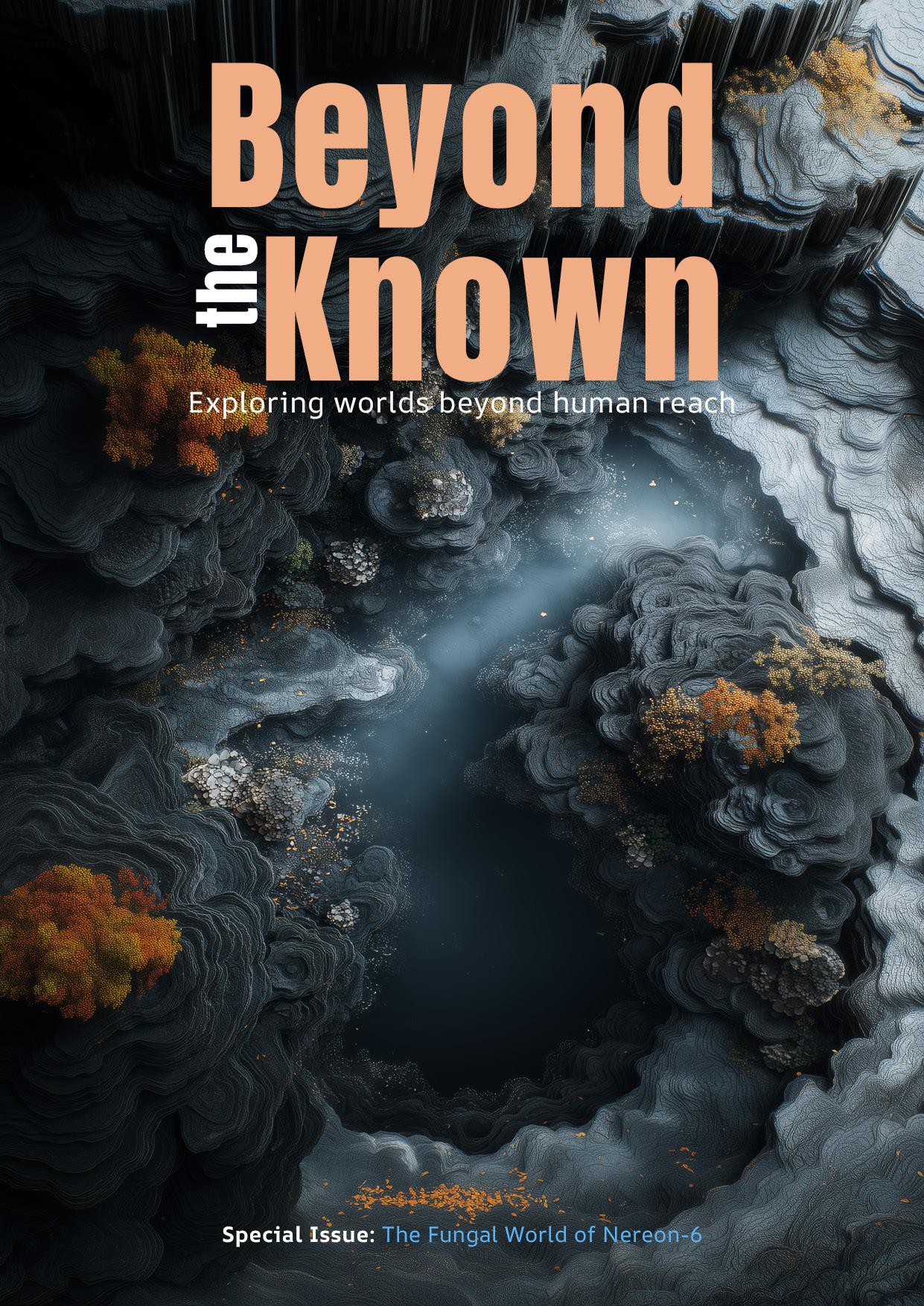
When humanity first launched the Artemis-VI probe, we hoped for answers. What we received was a vision of another world alien, beautiful, and unlike anything in our solar system. This special issue brings you the first reports from Nereon-6, an exoplanet orbiting a dim red star, where sunlight barely touches the ground and life thrives in shadows.
Dr.SelinaMarr,ChiefExplorationOfficer
Mission Overview
Journey to Nereon-6
Journey to Nereon-6
In the early decades of the 23rd century, humanity had mapped thousands of exoplanets yet only a handful displayed conditions that hinted at life. Nereon-6 was first spotted in 2198 by the orbital telescope FarSight, its faint signature almost lost in the glare of its red dwarf sun. Preliminary scans revealed an unusual surface composition: high carbon content and metallic reflectivity, paired with atmospheric traces of methane and oxygen.
In 2207, the United Exploration Agency authorized the Artemis-VI mission a fully autonomous probe capable of deep-soil sampling, atmospheric analysis, and high-resolution imaging. Utilizing quantum-fold propulsion, the probe made the 43-light-year journey in less than six Earth years, arriving in orbit in late 2213.
Descent was challenging: turbulent winds, dust storms of fine metallic particles, and gravity slightly higher than Earth’s. Yet Artemis-VI touched down flawlessly, deploying its sensor arrays within hours. What it found stunned scientists a vast alien wilderness dominated not by trees or grasses, but by towering fungal structures that glowed softly in the eternal twilight.
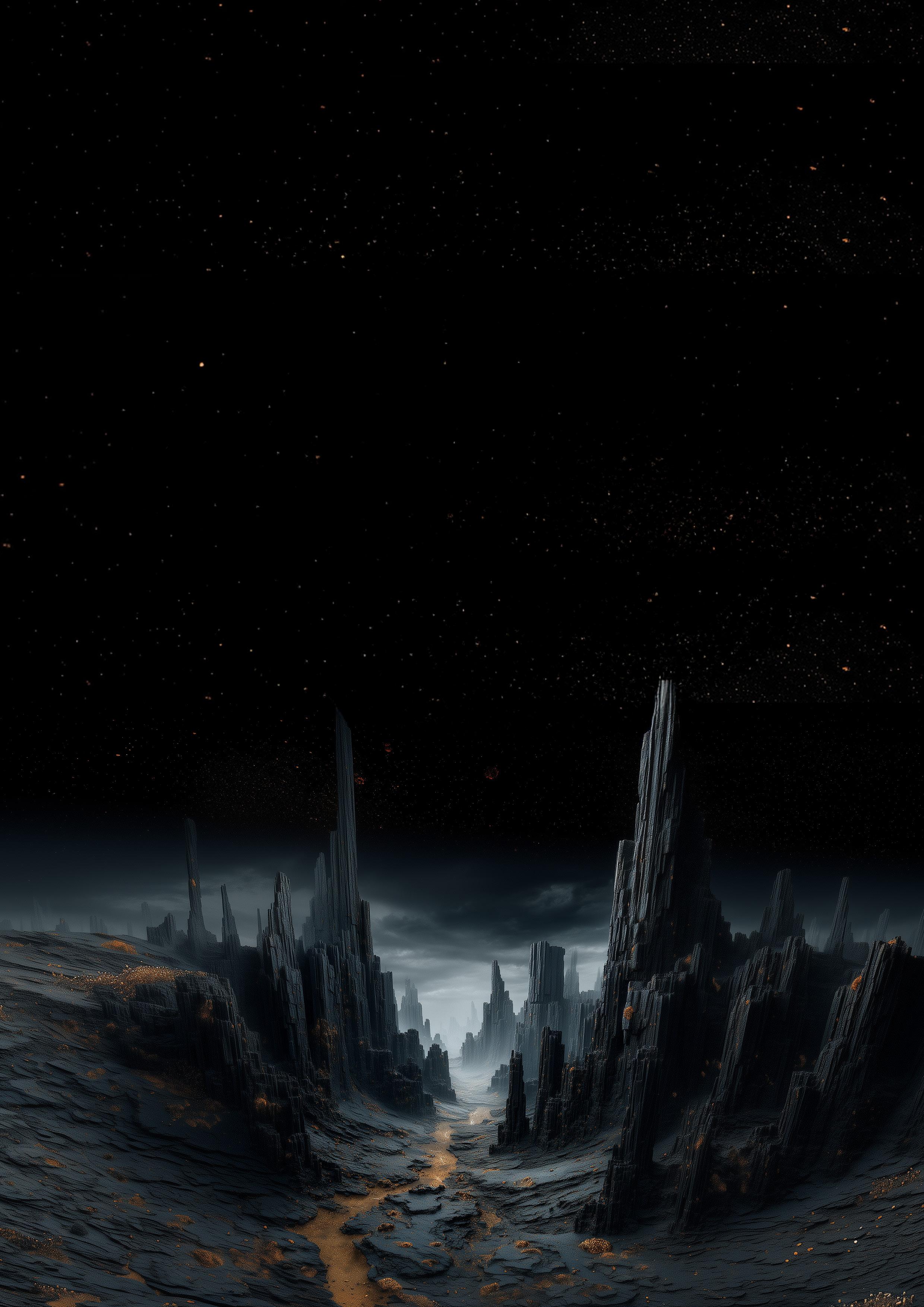
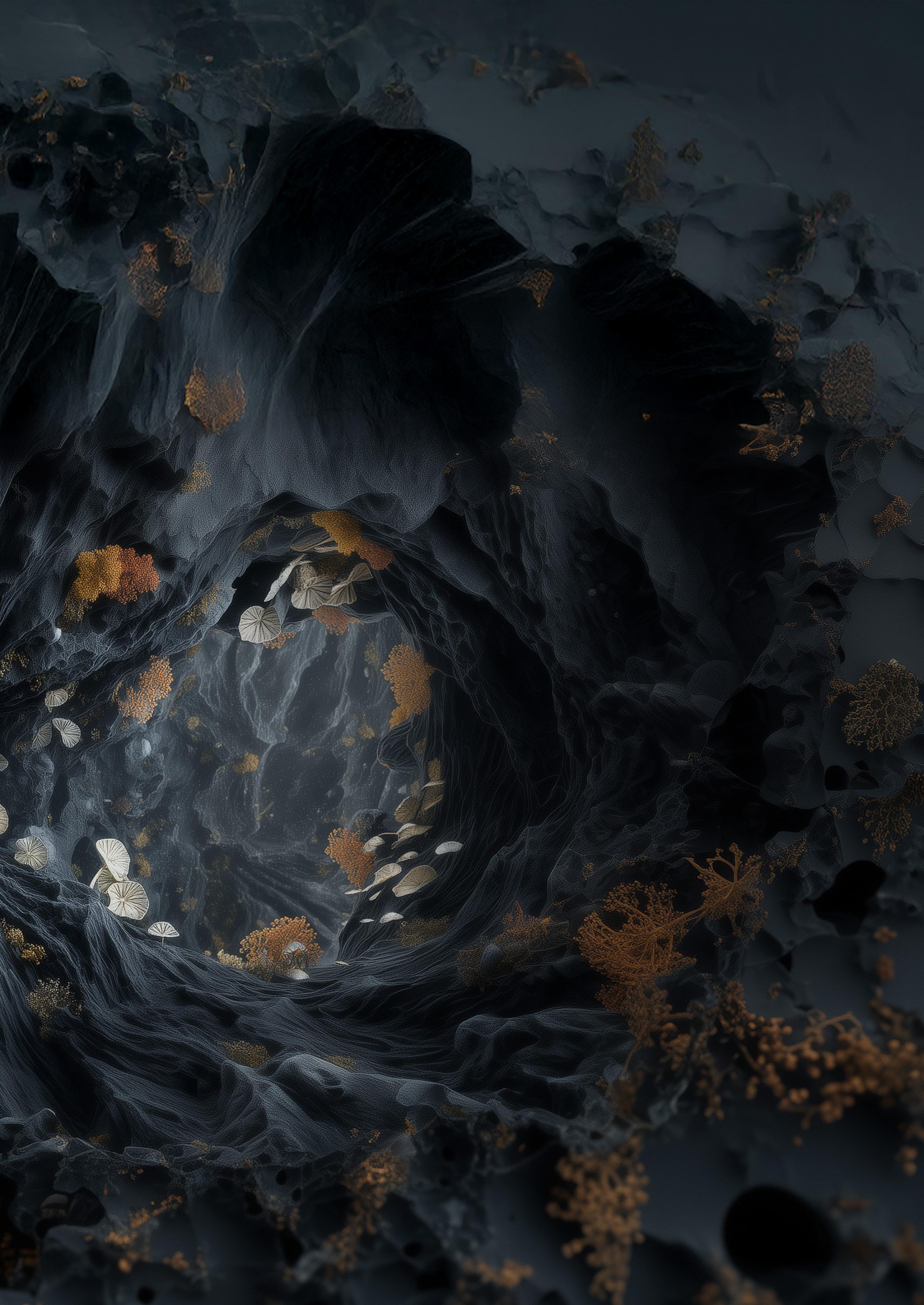
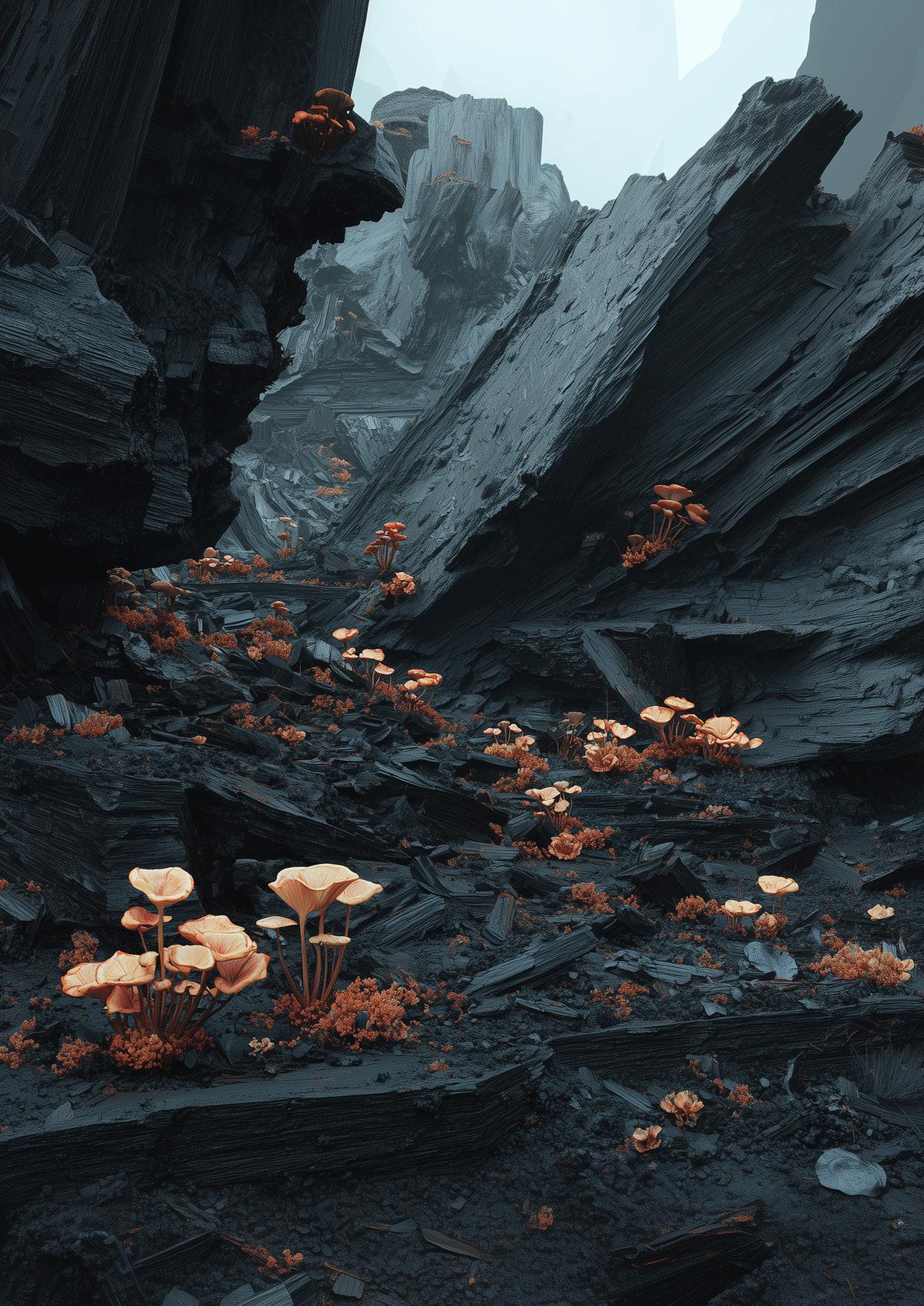
The geography of Nereon-6 is a stark, breathtaking blend of contrasts: jagged basalt cliffs overlook sprawling plains of soft, black soil, while deep fissures vent slow, curling plumes of silver mist. Unlike Earth, where plants and sunlight shape the biosphere, Nereon-6 thrives in near-darkness.
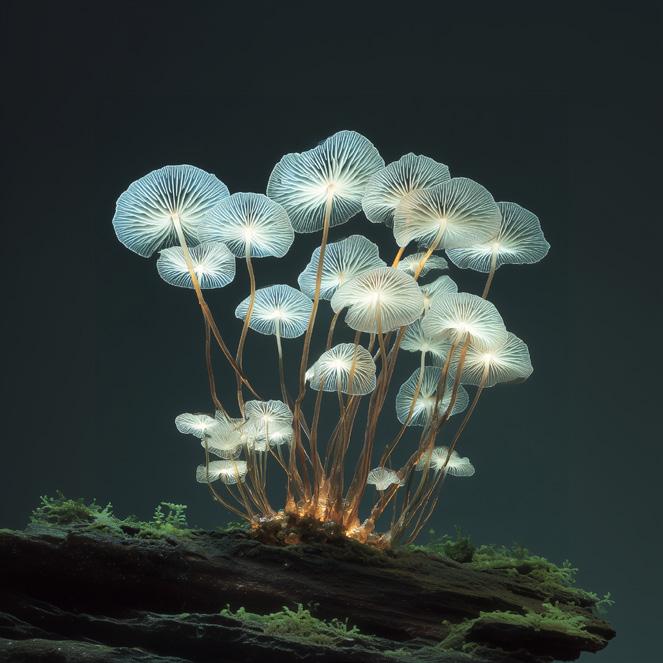
Its dim red sun, known locally to scientists as Tauris-12, emits only a fraction of Earth’s solar energy. This forces native lifeforms to adapt in extraordinary ways: some fungi produce their own light via bioluminescence; others rely on metallic soil compounds to store and release heat.
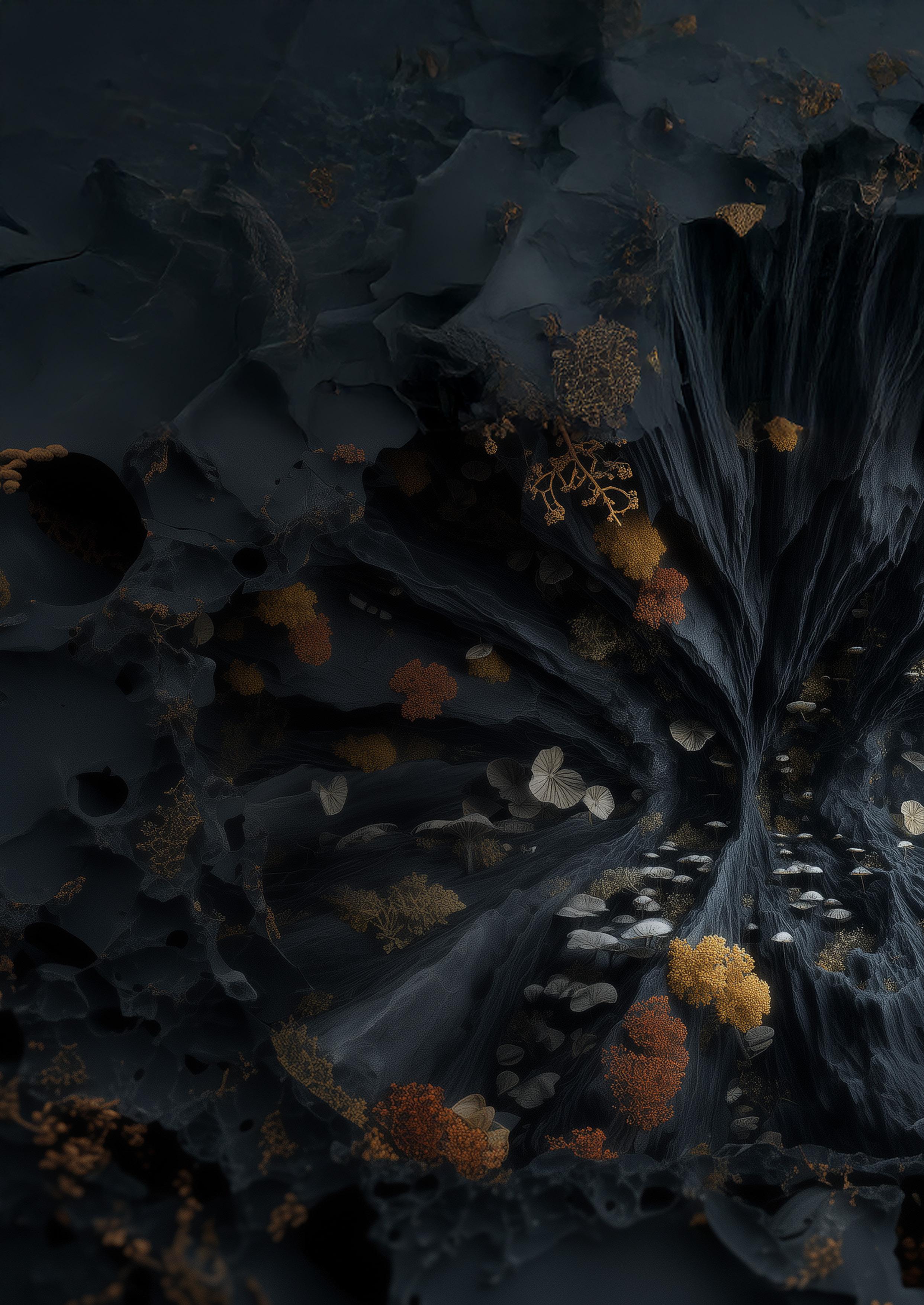
Wind here is slow but persistent, carrying spores across kilometers, ensuring the survival of vast fungal “forests” that may be centuries old. Under their shadow, mosslike mats and crystalline growths cover the ground in shimmering patterns almost as if the planet itself was designed as a living work of art.
Life in the Shadows
Fungal Diversity of Nereon-6
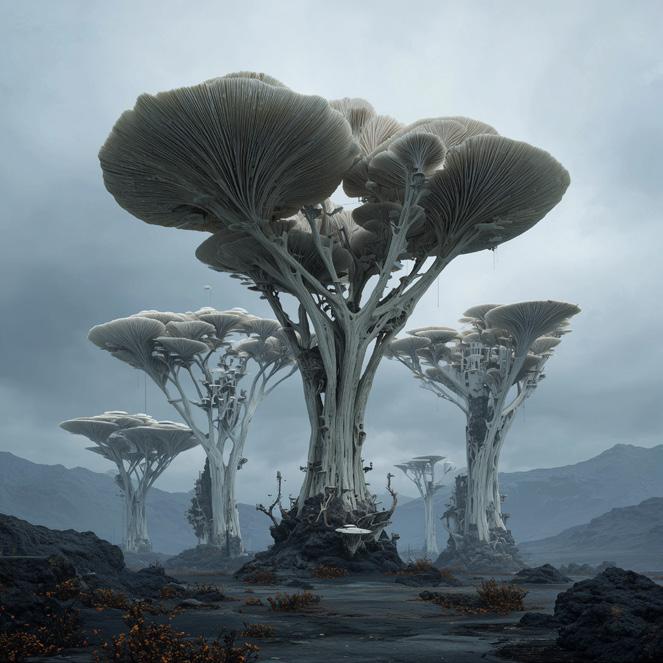
Spire Caps (Myco Colossus)
Towering up to 25 meters, these colossal fungi resemble pale stone pillars topped with umbrella-like caps. Beneath their wide overhangs, smaller organisms find shelter from wind and temperature shifts. Their root systems penetrate deep into the metallic substrata, possibly for structural support and mineral absorption.
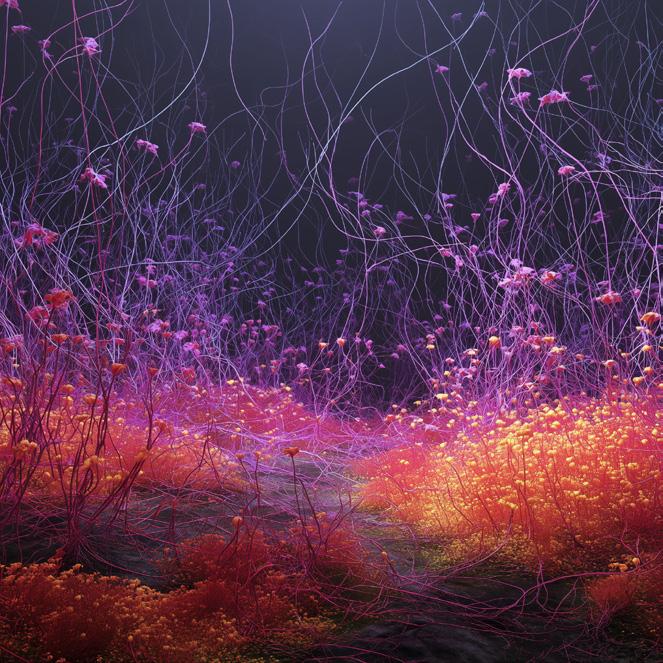
Lumin Thread Moss
At ground level, vast carpets of hair-thin filaments glow with a faint violet hue. This moss appears to capture trace radiation from the red sun and convert it into usable energy, a form of alien photosynthesis scientists are still decoding.
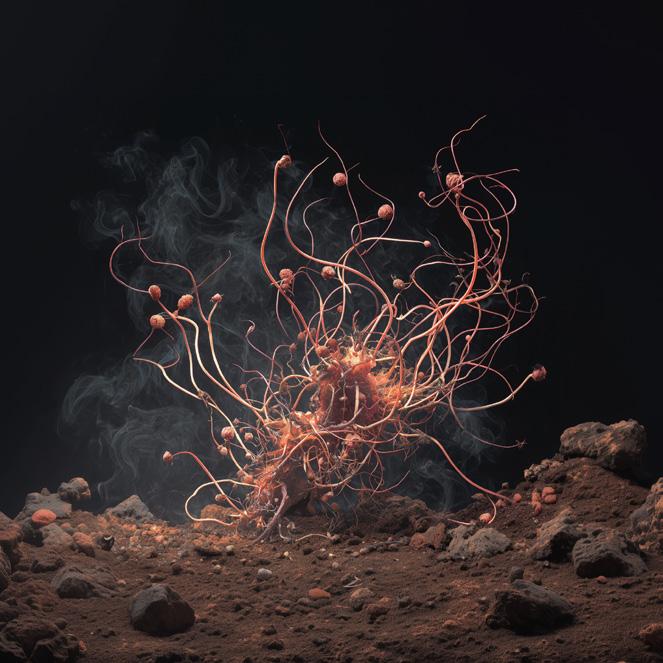
Ironroot Fungus
Named for its rust-colored tendrils, this hardy species thrives in mineral-rich soil. When disturbed, it releases dense clouds of reddish spores, staining the air in bursts of color. Soil analysis shows that the spores contain ferrosporin, a compound unknown to Earth’s biochemistry.
Crystal Fronds
Perhaps the most beautiful discovery, these fungi grow in branching crystal-like patterns. Their transparent structures refract light, creating dazzling displays at dawn and dusk. It is hypothesized they use refraction to lure light-sensitive microfauna, aiding in spore dispersal.
Artemis-VI Robot
Engineering for the Unknown
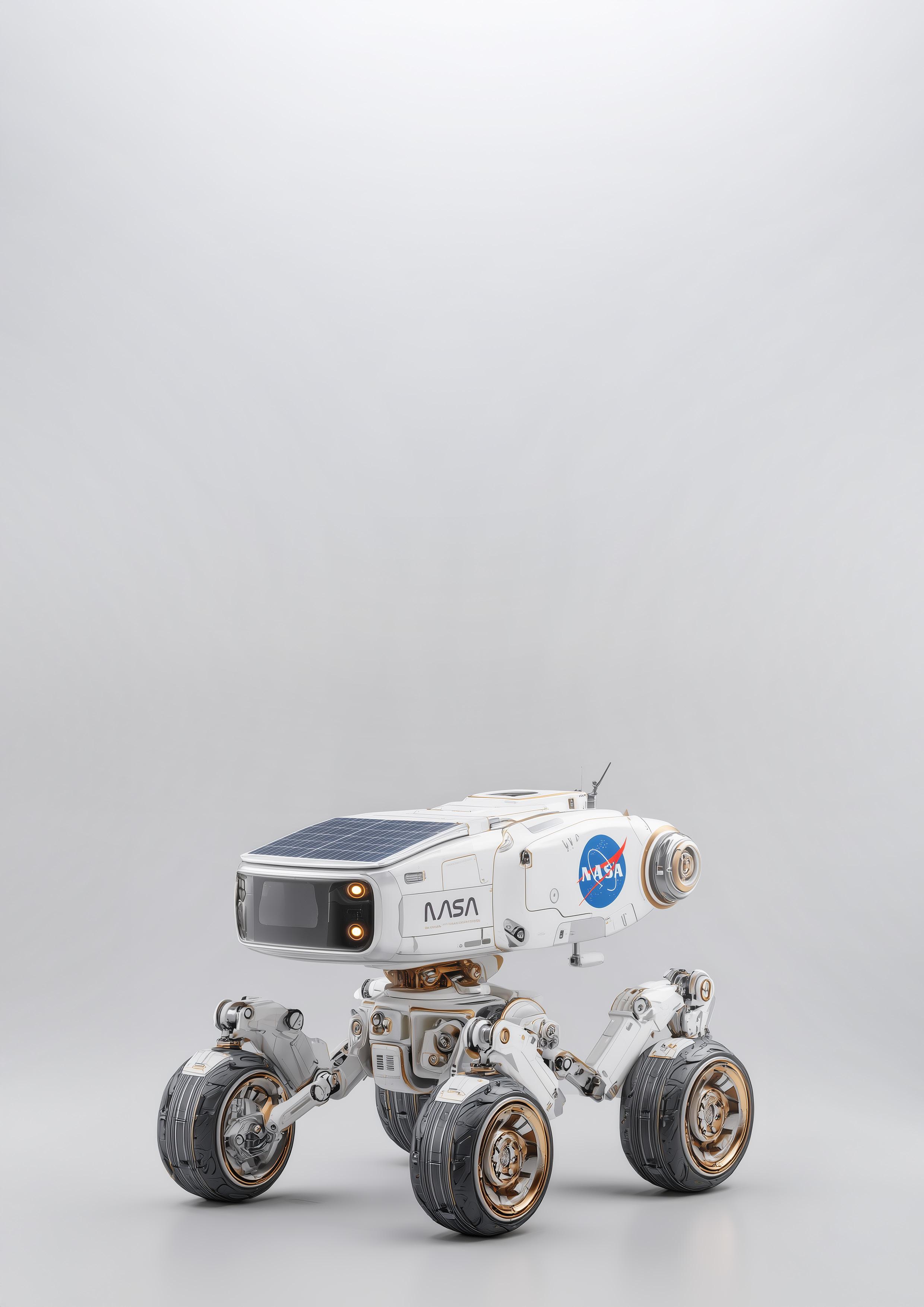
Built over a decade of design iterations, Artemis-VI is more than a probe — it’s a self-repairing, adaptive field laboratory. Its six multi-jointed legs can navigate unstable ground and vertical surfaces. Its sensor dome contains spectrometers, LiDAR, and chemical analyzers, allowing for in-situ study without human intervention.
The onboard AI, Lysander, was trained using billions of simulated planetary scenarios, enabling it to identify anomalies, prioritize sampling, and even reroute its mission plan in real time. This autonomy was essential on Nereon-6, where conditions often shifted unpredictably.
Hull Material: Nano-reinforced composite with self-healing capacity
Energy Source: Hybrid nuclear-microbial fuel cell
Soil Drill: Triple-core rotary system, depth up to 3 meters
Atmospheric Sensor: Multi-spectrum, can detect trace gases at 0.001% concentration
First Data Transmission
Soil Secrets and Chemical Surprises
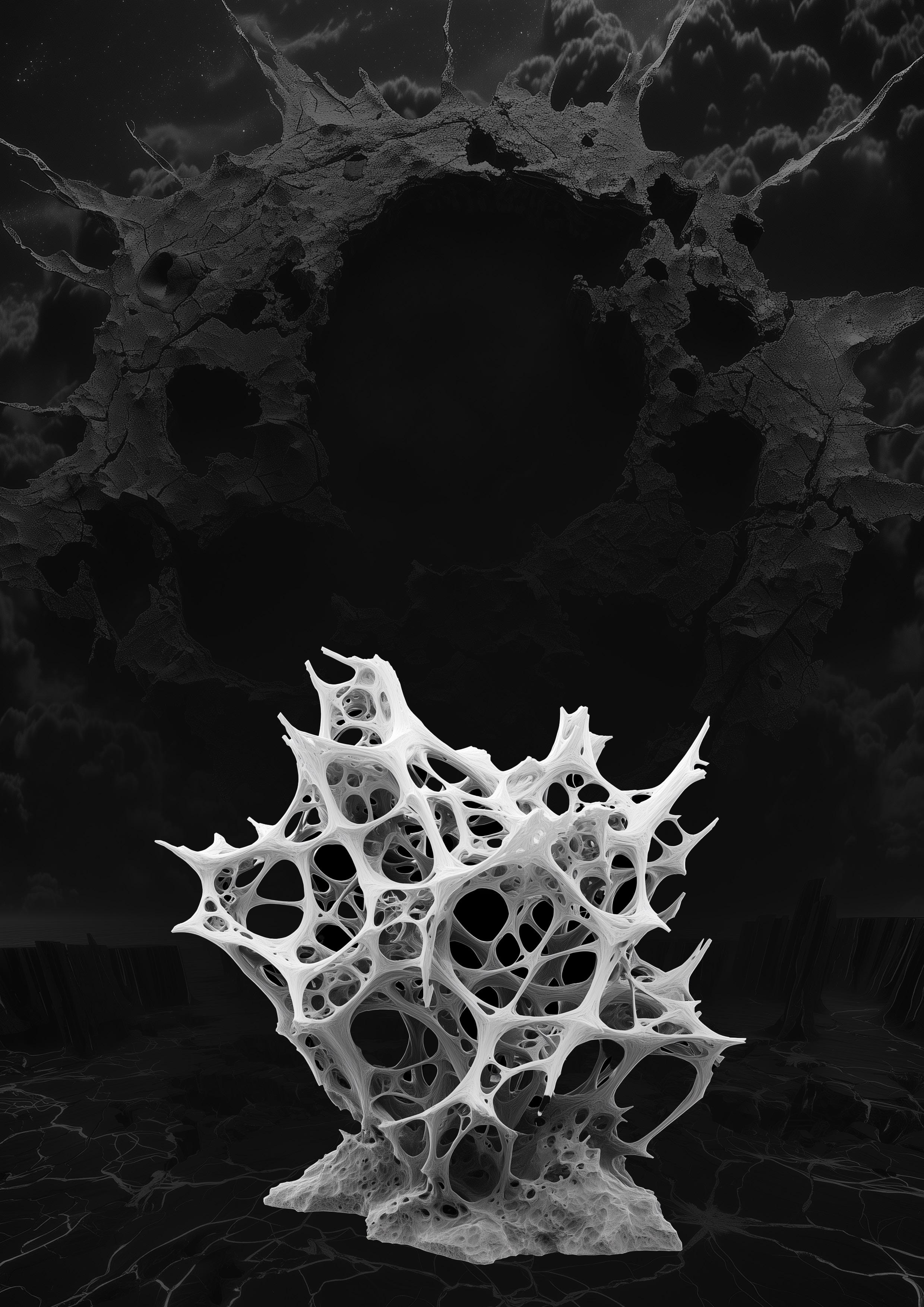
The first major transmission from Artemis-VI included over 8 terabytes of environmental scans. Among the most startling discoveries was the presence of Mycosteel-9, a previously unknown bio-mineral produced by certain fungal species in symbiosis with the metallic substrata. Mycosteel-9 has a tensile strength comparable to high-grade titanium, yet it is grown organically in complex lattice structures.
Laboratory models suggest that, if cultivated on Earth, this material could revolutionize construction, aerospace, and biomedicine. Its self-repairing nature, observed in fungal colonies, could lead to a new era of “living architecture.”
What’s Next?
Future Exploration of Nereon-6
The United Exploration Agency has already greenlit the next phase: Artemis-VII, a hybrid drone-lab equipped with return capability. Unlike Artemis-VI, this mission will attempt to transport live fungal samples back to Earth for detailed study under controlled conditions.
Mission planners are currently assessing the risks of biological contamination, both to Earth and to Nereon-6. “We’re stepping into unknown territory,” says Dr. Marr. “This is not just exploration — it’s a first step toward responsibly interacting with alien ecosystems.”
Beyond the Known The Universe Awaits
From the faint glow of distant stars to the silent depths of alien valleys, Nereon-6 has revealed only a fraction of its secrets. The fungal forests and metallic plains are more than a scientific curiosity — they are a reminder that life thrives in ways we have yet to imagine.
This is not the end of exploration. It is the first chapter in a story that will span light-years and generations. As the Artemis-VI probe rests under the dim light of a red dwarf sun, its successor is already being prepared. Humanity stands at the threshold of a new frontier, where each discovery reshapes our place in the cosmos.
Next issue: The Return of Artemis
United Exploration Agency — Special Scientific Report • 2214 Edition • Digital Issue