










There is a wisdom that does not speak loudly, but instead stirs gently in the soul—like a memory you’ve always carried, waiting to be remembered. Sophia Christ Initiation Path is not here to teach you what you do not know, but to awaken what has always lived within you. It is a mirror, a portal, a path— guiding you through layers of illusion back to the essence of who you are. Its words are not instructions, but invitations to remembrance. And in that remembrance, the sacred becomes visible again.






















All content © 2025 by Sophia Christ Holding Oy
ISBN 978-952-65765-6-5 (Part V, PDF)
Foreword
Practical Guidance
Ethics
Table of Contents
Initiation Path
Spiritual Encyclopedia

In today’s fast-paced and complex world, many individuals experience a deep sense of spiritual disconnection—a feeling that something essential is missing despite the abundance of technological advancements and material comforts. The Sophia Christ Initiation Path was created to address this pervasive void, offering a structured and transformative journey for those seeking to reclaim their spiritual heritage and forge a meaningful connection with the universal divine essence.
This book is intended for readers who feel a gap in their spiritual lives and are looking for more than just answers. It serves as a bridge between the tangible world and the often elusive realm of spiritual truths. By providing clarity and support, it guides seekers through the intricate landscape of spiritual exploration and identity.
At its core, this guide is organized around a series of initiations—each one a step toward deeper understanding and connection. These initiations explore essential elements of spirituality, including foundational teachings, timeless wisdom, and transformative practices. Drawing from ancient traditions as well as modern perspectives, the book invites readers to embark on a journey from spiritual disconnection to a profound understanding of unity and purpose.
The Sophia Christ Initiation Path is not merely a book to be read; it is a guide meant for active engagement. Each chapter encourages reflection, meditation, and practical application, allowing readers to personalize their journey and integrate the teachings into their daily lives. Whether you are taking your first steps on the spiritual path or are well along your way, this book is designed to meet you where you are and support your growth.
The journey outlined here is not linear but cyclical, mirroring the nature of spiritual growth. As you progress, you will revisit themes from new perspectives, deepening your understanding and expanding your awareness with each turn of the spiral.
This book bridges ancient spiritual traditions with contemporary insights, making timeless truths accessible and relevant for the modern seeker. Each initiation focuses on key aspects of the spiritual experience, offering tools and practices to help readers navigate their personal path with clarity, resilience, and inner peace.
From understanding the roots of spiritual disconnection to exploring themes like love, unity, and oneness, The Sophia Christ Initiation Path equips readers with the insights needed to cultivate a more fulfilling and authentic life.
This is more than a book; it is a companion on your spiritual journey. With its thoughtful structure and practical guidance, it invites you to rediscover the sacred within yourself and in the world around you. As you engage with its teachings, you will find yourself not just learning but transforming— reconnecting with your highest potential and the universal essence of the divine.
Welcome to The Sophia Christ Initiation Path. May it guide you to profound insights, renewed hope, and the enduring joy of spiritual fulfillment.
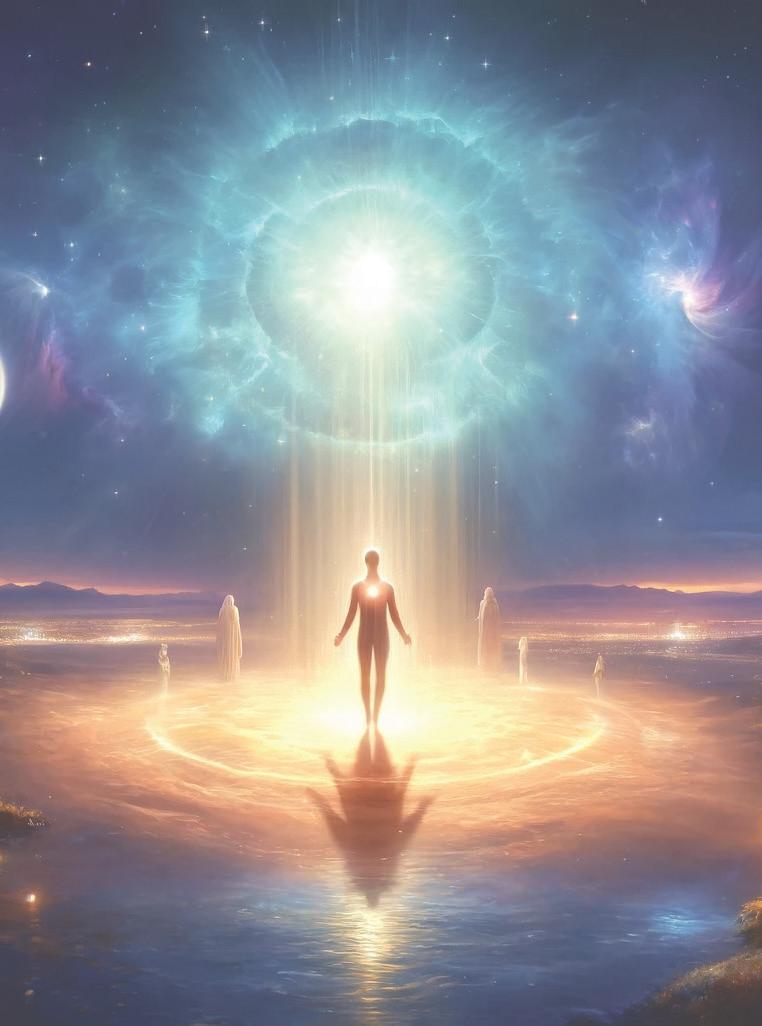
Each initiation, topic, inspirational sentence, and illustration in this book serves as a spiritual tool, designed to be actively engaged with to foster personal growth and deeper understanding.
By incorporating the initiations and topics into various aspects of your daily life—from meditation and journaling to discussions and practical applications—you enhance your spiritual journey. This interactive and integrative approach ensures that the wisdom of the book transcends the pages and becomes a living, evolving part of your spiritual practice.
This comprehensive method will help you fully utilize the “Sophia Christ Initiation Path,” making every aspect of the book a dynamic part of your daily spiritual exploration and growth.
Daily Reflections:
• Choose an Initiation, Topic or Sentence: Begin each day by selecting an inspirational initiation, specific topic or sentence from the book. You might also be drawn to a particular illustration that captures your attention.
• Morning Contemplation: Spend time each morning reflecting on the chosen element. Ponder its significance and how it resonates with your current experiences or challenges.
Journaling:
• Write About Your Insights: After your reflection, journal about your thoughts and feelings. How does this initation or topic challenge or inspire you? What deeper meanings can you uncover?
• Daily Application: Note how you can embody the insights or themes in your day-to-day activities. Consider specific actions that reflect the wisdom of the topic or the emotions evoked.
Meditation:
• Mindful Focus: Use the chosen initiation, topic or sentence, or the essence of an illustration as the focal point for meditation. Quiet your mind and simply allow their deeper meanings to permeate your consciousness the most natural way for you.
• Visualization: Visualize scenarios in which the insights from the topic or the emotions and symbols from the illustration play a key role. Imagine integrating these elements into your life.
• Share with Others: Discuss the topic, sentence, or illustration with others if possible. Sharing and listening to diverse perspectives can greatly deepen your understanding and appreciation.
• Reflect Collectively: Explore how these insights can be applied on a broader scale, such as within your community, workplace, or family.
Integration into Daily Life:
• Reminder Techniques: Keep the topic or sentence visible throughout your day through notes or digital reminders. This helps keep the spiritual guidance active in your mind.
• Mindful Practice: During challenging times, recall the topic or visual imagery to guide your reactions and decisions, using them as tools for spiritual and emotional guidance.
• Research Related Themes: For topics or illustrations that resonate deeply, research related spiritual teachings, historical contexts, or philosophical texts to expand your understanding.
• Extended Reflection: Dedicate extended periods, such as a week or a month, to immerse yourself in studying an initiation or single topic, allowing its full meaning to influence your life.


Embarking on a spiritual journey is a profound commitment to live with awareness, compassion, and harmony. By cultivating ethical practices, you nurture the sacred connection between yourself, others, and the universe.
• Practice Compassionate Love: Approach all beings with kindness and an open heart. Recognize the interconnectedness of all life and act in ways that uplift and support others, fostering a ripple of harmony in the world.
• Live with Authenticity and Integrity: Speak and act from a place of truth, allowing your spiritual values to shine through in all you do. When your actions align with your principles, you become a beacon of trust and inspiration for others.
• Celebrate Diversity with Humility: Embrace the unique paths of those around you, appreciating the rich tapestry of beliefs and practices. Let humility guide your interactions, fostering mutual respect and understanding.
Exploring energetic spaces is a sacred act that calls for deep mindfulness and respect. Treat these experiences as profound opportunities for connection and learning.
• Honor Energetic Consent: Approach others’ energetic spaces with care and reverence. Seeking explicit consent before engaging ensures that your interactions are based on mutual trust and respect.
• Align Intentions with Light: Focus on the highest good in all your spiritual practices. Let your actions serve as channels for healing, growth, and positive transformation for yourself and others.
• Embrace Grounding and Protection: Stay connected to your inner stability through grounding techniques and create a safe, clear space for spiritual exploration with protective practices. These steps empower you to navigate the energetic realms with confidence and clarity.
• Reverence for Energetic Beings: Treat spirits, guides, and other non-physical entities with gratitude and humility. See these interactions as opportunities to learn and grow in partnership with unseen realms.
By focusing on uplifting practices, you contribute to a world where spiritual growth fosters unity and peace. Some key principles to embody include:
• Empower Others: Use your spiritual insights to inspire and support those around you. Empowering others to realize their potential strengthens the collective journey.
• Be a Source of Healing: Act as a channel for healing energy, bringing comfort, restoration, and harmony to those in need. Your actions have the power to nurture and uplift.
• Respect All Paths: Celebrate the unique spiritual expressions of every individual. Acknowledging and valuing these differences enhances your understanding of the universal truths that unite us all.
Each moment on the spiritual path is an opportunity to embody the sacred qualities of compassion, love, and wisdom. By focusing on these positive principles, you not only honor your own journey but also contribute to the collective evolution of humanity. Let your life be a radiant example of the profound beauty that comes from walking the path with awareness and grace.
TABLE OF CONTENTS
INTRODUCTION
Foreword
Practical Guidance
Ethics
Table of Contents
Initiation Path
Spiritual Encyclopedia
CORE PRINCIPLES
Sophia and Christ
Human
I - I AM ONE
1st 2nd 3rd 4th
Initiation I One Initiation I Body Initiation I Soul Initiation I Spirit
II - I AM LIGHT
5th 6th 7th 8th
Initiation I Remembering Light
Initiation I Being Light
Initiation I Embodying Spirit
Initiation I Embodying Soul
III - I AM LOVE
9th 10th 11th 12th
Initiation I Love
Initiation I Masculine and Feminine
Initiation I Embodying Love
Initiation I Oneness
Initiation I Earth
Initiation I Humanity
Initiation I Life
Initiation I I AM
CONCLUSION
Conclusion Personal responsibility Acknowledgements Index

INITIATION PATH







Abyss
Abundance
Age of Aquarius
Akashic Records
Alchemy
Altruism
Ancestors
Angels
Anima and Animus
Animal Kingdom
Apple
Archetypes
Art
As Above, So Below
Ascension
Aspiration
Astral Travel
Astrology
Atlantis
Atom
Aura
Authencity
Avalon
Awakening
Awareness
Awe
Axis Mundi
Baptism
Baqa
Beauty
Belief
Birth
Bliss
Blueprint
Body
Boundaries
Breath
Buddha Nature
Camargue Cross
Cardinal Directions
Chakras
Channeling
Chaos
Christ Light
Clay
Co-Creation
Coherence
Collective
Compassion
Confirmation
Conscious Living
Consciousness
Cosmos
Courage
Creativity
Dark Matter
Dark Night of the Soul
Darkness
Death
Depression
Destiny
Determination
Devil
Dharma
Diamond Body
Dimension
Diversity
Divine
Divine Council
Divine Mother
DNA
Dove
Dragons
Dreamer
Dreams
Earth
Eden
Ego
Egypt
Elements
Elixir of Life Emotions
Etheric Body
Evolution
Existential Crisis
Faith
Fear Feelings
Feminine Energy
Fibonacci Sequence
Flow
Flower of Life
Forgiveness
Fountain
Free will
Freedom
Gabriel
Gaia
Gifts
Gnosticism
Gold
Grace
Gratitude
Gravity
Green Man
Guidance
Guru
Harmony
Hathor
Heaven on Earth
Henosis
Hero’s Journey
Higher Self
Holiness
Hollow Bone
Holy Grail
Holy Rage
Holy Spirit
Hope
Human
Human Origins
Humanity
Humility
I AM
Identity Illness
Ikigai
Incarnation
Indigenous People
Infinite
Initiation
Inner child
Inner Heart Space
Inner Peace
Inner Wisdom
Innocence
Intuition
Isis
Jannah
Jesus
Joy
Kabbalah Karma Knowledge
Kundalini
Leylines
Life
Life Path
Light
Light Language
Light Worker
Love
Magic
Manifestation
Mary Mary Magdalene
Masculine Energy
Matrix
Maya Meditation
Merkaba
Metamorphosis
Metatron’s Cube
Michael
Mindful Eating
Mindful Movement
Mindulness
Mineral Kingdom
Miracle Mirror
Moksha
Money Moon
Mortality
Multidimensio-
nality
Mystery School
Nature
New Age
New Earth
Nirvana
Numerology
Om One Oneness
Orbs
Osiris and Isis
Paganism
Paradise
Passion
Past Lives
Philosopher’s Stone
Phoenix
Pituitary Gland
Plant Kingdom
Platonic
Solids
Present
Prima Materia
Quadruple Goddess
Quan Yin
Quantum Physics
Ra
Radha and Krishna
Rainbow
Rainbow Body
Rebirth
Reciprocity
Respect
Responsibility
Resurrection
Rigpa
Sacred Geometry
Sacred Marriage
Sacred Practise
Sacred Rituals
Sacred Sexuality
Sacred Sites
Sacred Space
Samadhi
Samsara
Sanat Kumara
Seal of Solomon
Sekhmet
Self-Love
Sensuality and Pleasure
Separation
Serpent Service
Seven Sins
Shakti
Shamanism
Shambhala
Shekinah
Shiva and Shakti
Siddhi
Signs
Simplicity
Sirius
Sisu
Skull
Society
Solitude
Song of Songs
Sophia
Sophia and Christ
Soul
Sovereignty
Spirit Guides
Spiritual Leaders
Spiritual Societies
St. Germain
Starseed
Suffering
Sun
Surrendering
Takamagahara
Tantra
Taoism
Tara
Tarot
Thoth
Threefold Flame
Time
Transformation
Tree of Life
Trust
Twin Flames
Twin Rays
Twin Souls
Unconditional Love
Unicorns
Unity
Universal Laws
Venus
Vibrational Universe
Violet Flame
Vishnu and Lakshmi
Vitruvian Man
Void
Water
Web of Light
White Buffalo Woman
Womb
Wonder
Yantra
Yin and Yang
Sophia and Christ Human
Sophia and Christ symbolize the profound integration of divine energies, harmonizing the nurturing wisdom of the divine feminine with the illuminative love of the divine masculine. As archetypes of the spiritual mother and father, they guide the evolution of consciousness, blending Sophia’s creative insight with Christ’s transformative compassion. Understanding their roles enriches not only personal spiritual growth but also the collective pursuit of enlightenment, embodying a balanced union of divine principles.
Sophia, the Divine Mother, is revered across mystical traditions as the wellspring of creation and wisdom. Her name, derived from the Greek word for “wisdom,” reflects her embodiment of intuitive knowledge and the nurturing grace inherent in maternal energy. In Gnostic teachings, Sophia is the creator of the world, whose emanation breathes life into the cosmos, infusing it with purpose and soulful depth.
Symbolically represented by the Tree of Life, Sophia signifies sustenance, growth, and the interconnectedness of all existence. Her narratives often center on redemption and the restoration of unity, echoing the soul’s journey back to wholeness—a process guided by her maternal compassion and boundless creative power.
Christ, celebrated as the “Light of the World,” represents the divine masculine principle of active, unconditional love and spiritual illumination. Across Christian mysticism and esoteric traditions, Christ is the guiding force of moral clarity and spiritual awakening. He embodies the fatherly aspects of guidance, protection, and transformative love, illuminating the path to divine truth.
Christ’s essence transcends religious boundaries, serving as a universal archetype of spiritual light accessible to all. His energy sustains and elevates the spiritual journey, offering a radiant counterbalance to Sophia’s intuitive depth. Together, they represent a cohesive synergy of love and wisdom.
The interplay between Sophia’s creative wisdom and Christ’s illuminating love forms the foundation of a dynamic spiritual framework. This balance orchestrates the universe, merging creation (Sophia) with transformation (Christ) to guide souls through cycles of growth, understanding, and transcendence.
By engaging with both Sophia and Christ, practitioners are encouraged to integrate the nurturing grace of the Divine Mother with the radiant love of the Divine Father. This balanced approach fosters a holistic spiritual practice, inviting individuals to honor both the creative and transformative forces within the cosmos and within themselves.
Through the integration of Sophia and Christ, individuals and communities are called into deeper alignment with the divine. This harmonious union invites a transformative experience, where the world is seen as a reflection of both motherly compassion and fatherly guidance. Such an approach nurtures humanity’s evolution toward a future defined by love, wisdom, and enlightened unity.
By embodying this sacred balance, we open ourselves to a spiritual pathway that transforms not only our inner worlds but also the collective consciousness. In doing so, we help create a reality rooted in understanding, compassion, and a profound connection with the divine essence.
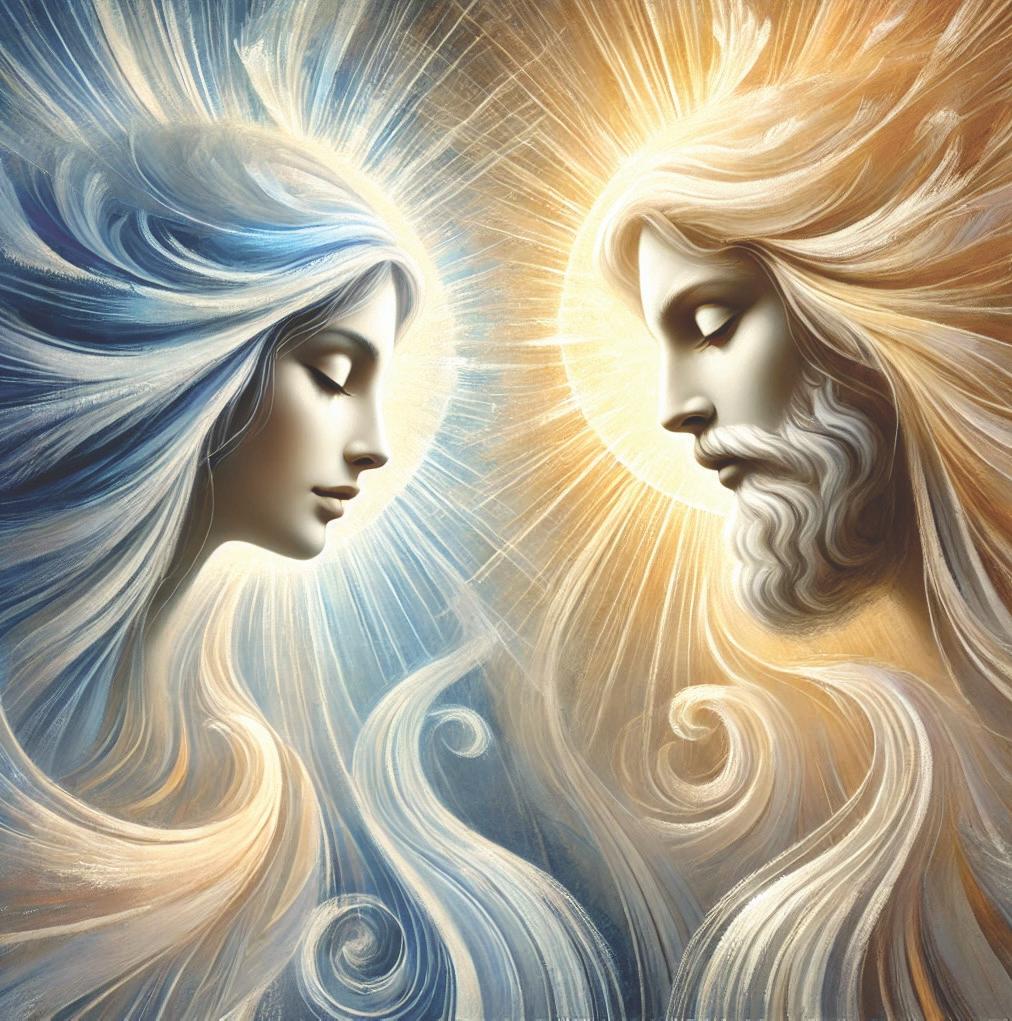
“Embrace the sacred union of Sophia and Christ, where the nurturing wisdom of the Divine Mother blends seamlessly with the transformative love of the Divine Father, guiding us on a path of enlightened unity that balances and harmonizes our own spirit with the cosmic dance of creation and illumination.”
The Holy Trinity of Sophia, Christ, and Human presents a profound spiritual framework, illustrating the dynamic interplay between the divine feminine, the divine masculine, and the human experience. This trinity not only connects divine attributes but also emphasizes humanity’s role within the divine schema, highlighting the essential unity and cocreative partnership between the spiritual and material realms. Through this model, individuals are guided toward enlightenment and universal harmony, deepening their understanding of how the divine interacts with the human experience.
• Sophia - The Divine Mother of Wisdom and Creation: Sophia represents the divine feminine, embodying wisdom, nurturing grace, and the essence of creation. From the highest realms of the cosmos, her presence weaves through the fabric of existence, imbuing life with interconnected wisdom and purpose. As the source of spiritual nourishment and intuitive understanding, Sophia offers guidance and fosters growth, nurturing humanity’s journey toward unity and wholeness. Symbolizing the creative force that sustains life, she invites us to perceive the world as a tapestry of intricate beauty and profound meaning.
• Christ - The Divine Father of Light and Love: Christ represents the divine masculine, personifying the radiant light of consciousness and the boundless power of unconditional love. His energy illuminates the paths of spiritual awakening, offering clarity and connection with the divine. As the guiding principle of transformation, Christ embodies love in action, helping humanity transcend limitations and achieve its highest potential. His role in the trinity reflects the active force of love that unites, elevates, and harmonizes all aspects of creation.
• Human - The Divine Child and Co-Creator: Humanity completes this sacred trinity as the divine child and co-creator. Far from being passive recipients of divine grace, humans are active participants in the divine plan, carrying within them a spark of the divine essence. This spark manifests through free will, creativity, and the ability to shape their reality. Humans hold a unique
position as bridges between the spiritual and material realms, tasked with integrating divine wisdom and love into tangible expressions of harmony and growth.
The interplay between Sophia, Christ, and Human forms a dynamic ecosystem of spiritual evolution. Sophia provides the foundation of creation, Christ offers the illuminating force of transformation, and humanity engages as the co-creative force, bringing divine potentials into manifestation. Together, they represent the dance of wisdom, love, and creative expression, underscoring the essential role humans play in the unfolding cosmic narrative.
This synergy highlights a balanced relationship: receiving divine gifts of wisdom and love while actively contributing to the spiritual dialogue through human innovation, compassion, and action. It reveals the sacred partnership between divine intent and human expression, where both realms collaborate in the ongoing evolution of the cosmos.
The Holy Trinity of Sophia, Christ, and Human invites individuals to embrace a holistic spiritual perspective that honors the unique contributions of each element. It encourages the exploration of divine heritage, the engagement with universal spiritual forces, and the conscious participation in both personal and collective enlightenment. This model nurtures a vision of interconnectedness, inspiring individuals to embody their divine essence and contribute to a more conscious, loving, and harmonious world.
The Holy Trinity of Sophia, Christ, and Human offers a transformative understanding of the spiritual dynamics that shape existence. It provides a framework for recognizing and embodying divinity, aligning human action with cosmic intent, and contributing to the spiritual evolution of the universe. By embracing this sacred trinity, individuals are empowered to realize their potential, foster unity, and participate in the co-creative process of universal harmony.
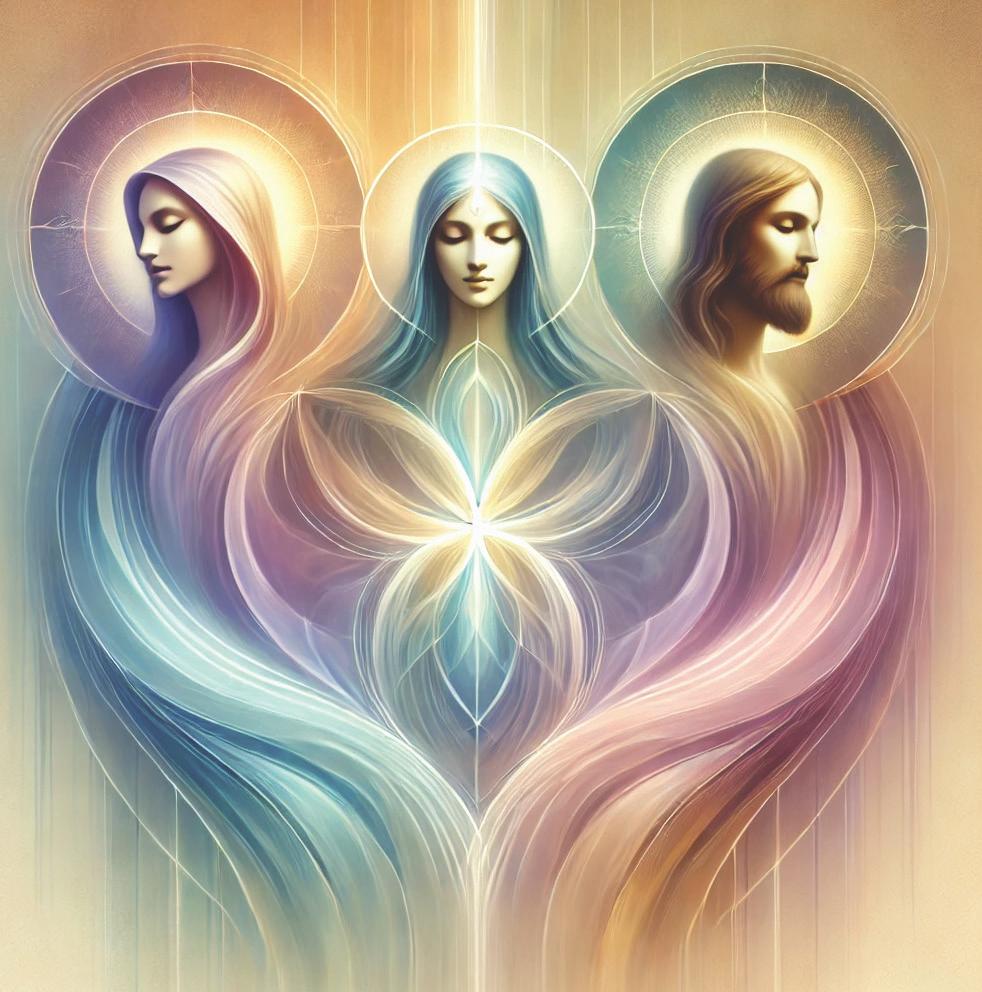
“Recognize your role in the sacred trinity of Sophia, Christ, and Human, where you stand as a divine co-creator, bridging the heavenly and the earthly realms, and actively participating in the unfolding of a universal narrative of enlightenment and harmonious coexistence.”
17th Initiation | I AM
Embark on a sacred exploration with the “I AM” initiation, where you are invited to embody the essence of life itself and unlock your inner paradise. This profound journey transcends conventional learning, offering a pathway to the deep, sacred dance of creation and existence that resonates within every being.
The “I AM” initiation envelops you in the realization that you are not just a participant in life but its very fabric. Each moment, each breath, and each act is a manifestation of your divine nature, painting a vivid picture on the universal canvas. This initiation challenges you to live consciously, creating a reality that reflects your highest self, imbued with love, creativity, and divine purpose.
This journey is about more than self-awareness; it’s about integration and expression of the divine in daily life. You are guided to see yourself as a creator, shaping your experiences and interactions with the purity and vision of your highest potential. Imagine a life where each choice and action is a reflection of divine love and wisdom, contributing to a personal and collective paradise.
The “I AM” initiation is a gateway to continuous growth and spiritual evolution, encouraging you to embrace life’s cycles of creation and transformation. It invites you to recognize the divinity in the mundane and to infuse the sacred into every aspect of existence, from the simplest to the most complex.
Conclusion
Engaging with the “I AM” initiation transforms your perception of existence. You are not just living; you are an active creator, an embodiment of life’s infinite creativity and potential. This initiation is a call to manifest your dreams and ideals in the real world, creating a life that is not only lived but also cherished, a true expression of the divine dance of creation.
The apple is one of the most widely recognized and symbolically rich fruits in human culture. Throughout history, it has appeared in various mythologies, religions, and traditions, representing a broad range of meanings from knowledge and temptation to love and immortality. The apple’s significance goes beyond its physical properties, as it has been imbued with deep spiritual and mystical meanings across time and cultures.
• The Garden of Eden: In Judeo-Christian tradition, the apple is often associated with the story of Adam and Eve in the Garden of Eden. Although the Bible does not specify the type of fruit from the Tree of Knowledge, the apple has come to symbolize the “forbidden fruit.” Eating the apple led to the acquisition of knowledge of good and evil, resulting in humanity’s fall from innocence. In this context, the apple represents temptation, the pursuit of knowledge, and the consequences of disobedience.
• Greek Mythology: In Greek mythology, the apple plays a significant role in the story of the Trojan War. Eris, the goddess of discord, throws a golden apple marked “For the fairest” among the goddesses, sparking a contest that ultimately leads to the conflict between the Greeks and Trojans. Here, the apple symbolizes beauty, competition, and the discord that can arise from desire.
• Celtic and Norse Traditions: In Celtic and Norse traditions, the apple is often associated with immortality and knowledge. In Norse mythology, apples from the goddess Idun’s garden were believed to grant eternal youth to the gods. Similarly, in Celtic lore, the mystical island of Avalon (whose name is derived from the word for apple) is a place of healing and eternal life. In these traditions, the apple represents vitality, the wisdom of the soul, and the promise of eternal life.
• Love and Fertility: The apple is also a symbol of love, beauty, and fertility. Its round shape and sweet taste represent wholeness and the pleasures of life. The apple’s association with fertility is also linked to its abundance of seeds, representing potential and new life.
Knowledge and Enlightenment: The apple can represent the pursuit of truth and the desire for wisdom. In this context, the apple’s symbolism transcends its role as a physical fruit and becomes a metaphor for intellectual and spiritual growth. It is a reminder of the dual nature of knowledge, which can be both empowering and dangerous.
• Health and Healing: Apples have long been regarded as symbols of well-being, nourishment, and vitality. Their appearance in folk medicine and healing practices reflects their connection to physical and spiritual health. In many traditions, apples are used in rituals and offerings to promote healing, balance, and renewal.
• Wholeness and Oneness: The apple’s round shape often symbolizes completeness, wholeness, and unity. In spiritual practices, it can represent the cycle of life, death, and rebirth. This symbolism aligns with the natural rhythms of the universe, emphasizing the interconnectedness of all things. The apple’s seeds, arranged in a star shape when cut horizontally, have also been linked to esoteric teachings, representing the hidden knowledge of creation and the mysteries of the universe.
• Transformation and Alchemy: In alchemical traditions, the apple represents transformation and the integration of opposites. The fruit’s skin, flesh, and seeds are seen as symbolic layers of existence, representing the journey from the material world to spiritual enlightenment. The apple serves as a metaphor for inner transformation and the pursuit of wisdom that leads to spiritual awakening.
The apple, with its rich history and diverse meanings, is more than just a simple fruit. It symbolizes temptation, knowledge, love, fertility, health, and spiritual growth. Whether viewed through the lens of mythology, religion, or esoteric teachings, the apple represents the complexity of life and the interplay between the physical and spiritual realms. Through its symbolism, the apple continues to inspire contemplation and serves as a reminder of the profound mysteries that shape our existence.
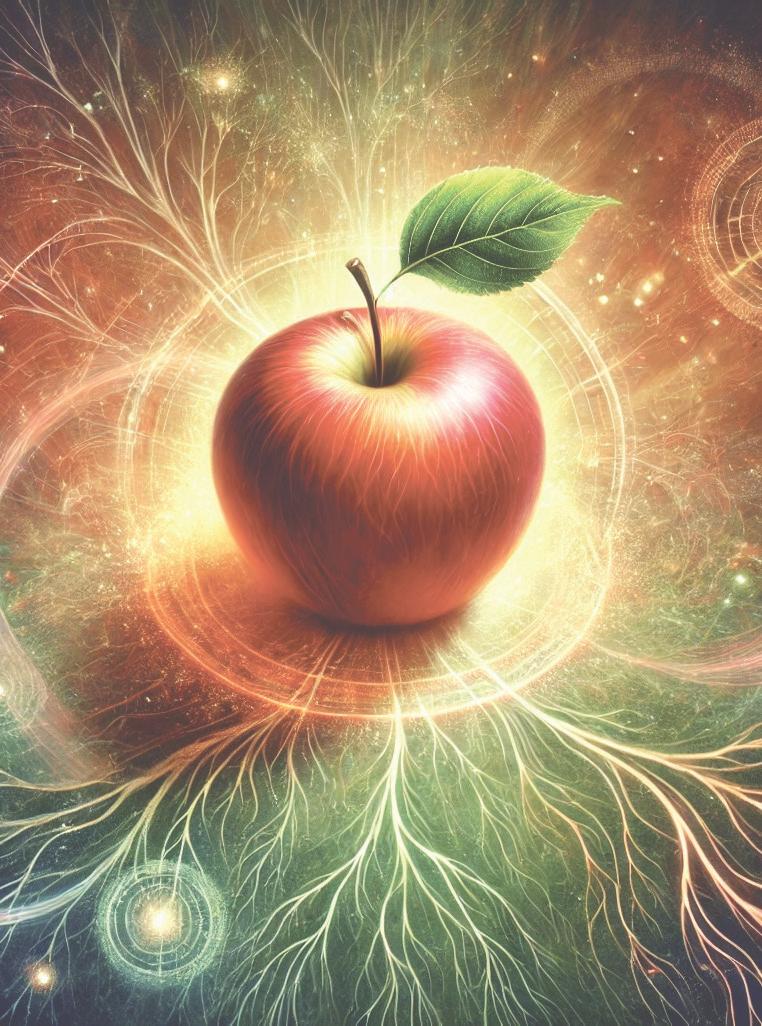
“Connect with the Apple, a symbol of knowledge and renewal, as it invites you to taste the fruits of enlightenment, awakening a deeper awareness that nourishes your soul and opens pathways to understanding.”
The Camargue Cross—comprising a cross, an anchor, and a heart—is a powerful symbol that represents the union of key virtues: faith, hope, and love. Beyond its cultural roots in the Camargue region of France, the Camargue Cross carries profound spiritual meanings, reflecting a stage in the journey of personal and spiritual development. The combination of these three elements symbolizes the alignment of essential forces within the human soul as it matures on the path of enlightenment.
At the heart of the Camargue Cross is the Christian cross, a symbol of faith and spiritual conviction. It represents the inner connection with the divine, the foundational belief in something greater than oneself. For someone on the spiritual path, the cross symbolizes an unwavering commitment to personal truth and trust in the universe’s higher order.
In the context of the human soul, the cross marks the moment where faith—whether in God, the universe, or the higher self—becomes the guiding force, anchoring the individual to their purpose and fostering a sense of spiritual belonging. This is the point in one’s spiritual development when the inner world begins to align with a deeper, unseen reality.
The anchor represents hope, but it also signifies grounding and stability in the face of life’s challenges. On the spiritual path, the anchor symbolizes the ability to remain steady amidst life’s turbulence, trusting that everything is part of a greater plan. This hope is not passive; it is an active force that keeps one steady, allowing spiritual growth even in adversity.
For the individual, the anchor within the Camargue Cross speaks to the soul’s connection to both the material and spiritual worlds. It reminds one to remain centered in hope, knowing that challenges can be weathered with inner strength and the stability of spiritual guidance. This stage of the journey reflects the resilience to endure, grounded in a higher understanding of life’s purpose.
The heart is a universal symbol of love and compassion, and in the Camargue Cross, it represents charity, the purest form of love that extends beyond oneself to others. On the spiritual path, this signifies a deepening of the individual’s capacity to love unconditionally and to give freely. Charity is not just about material giving; it is about embodying divine love, which flows from understanding our interconnectedness with all life.
As the heart of the Camargue Cross, this represents the transformation of the individual into a vessel of compassion, where love and service to others become central. The heart symbolizes the moment when the soul recognizes its oneness with all beings, leading to a life motivated by love and kindness. It also marks the spiritual maturity that comes from living in harmony with one’s true nature.
In the Camargue Cross, the cross, anchor, and heart are not isolated symbols but work together as a unified whole. They represent the harmonious integration of faith, hope, and love—three virtues that are essential for spiritual evolution. For the individual on the spiritual path, this integration reflects a deep inner alignment, where faith provides direction, hope offers stability, and love fuels connection and purpose.
Together, these virtues create a balanced and resilient soul, capable of navigating both the material and spiritual dimensions of life. The Camargue Cross becomes a symbol of spiritual awakening, where the journey is no longer fragmented but cohesive, and the individual is empowered to live with authenticity, grace, and compassion.
The Camargue Cross reflects an important stage in the spiritual path—where faith, hope, and love are consciously integrated into daily life. It is a reminder that spiritual growth is not just about transcending the material world, but about embodying divine virtues in a way that transforms both the inner and outer life. As individuals align with these virtues, they find deeper meaning, connection, and fulfillment, embracing the sacredness of their journey.
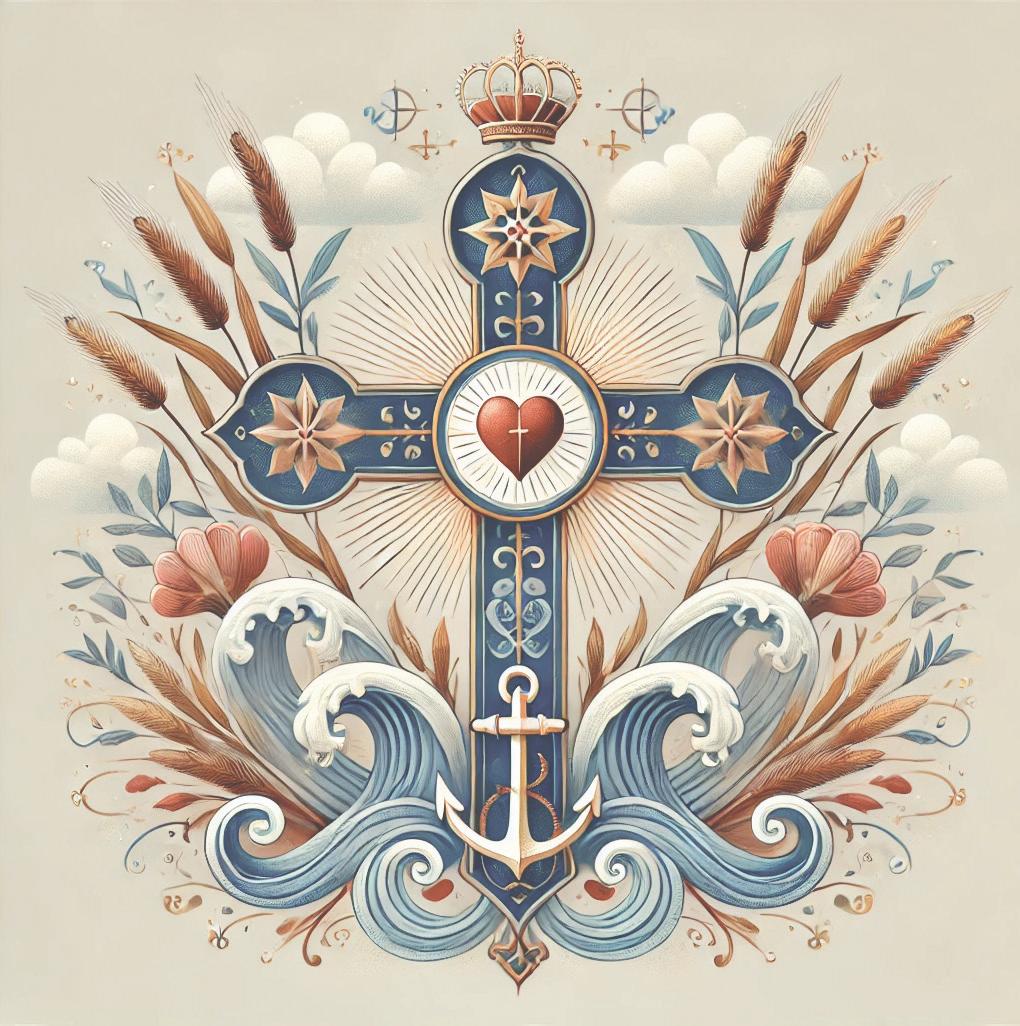
“Embrace the Camargue Cross as a symbol of your spiritual evolution, where the virtues of faith, hope, and love are woven into the fabric of daily life, transforming both your inner self and external actions, guiding you towards a life rich with meaning and sacred connection.”
The term “dreamer” holds deep spiritual, psychological, and cultural significance, often representing someone who envisions possibilities beyond the present reality. A dreamer is not merely someone who experiences dreams during sleep, but someone who actively imagines, hopes, and strives toward higher ideals or unrealized potential.
The dreamer archetype is closely tied to themes of creation, transformation, and spiritual insight. Dreamers are those who dare to imagine new worlds, discover hidden truths, or challenge the status quo. Often depicted as individuals who follow their inner guidance rather than external conventions, dreamers bring fresh perspectives and visionary ideas that can inspire both personal and collective growth. They often serve as messengers or prophets, bringing forth ideas and insights that challenge existing paradigms and offer new pathways for spiritual and personal development.
At its core, being a dreamer involves visionary thinking—the ability to see beyond the present moment into what is possible. Dreamers are often filled with hope, creativity, and a sense of purpose. They are guided by their visions, even when faced with doubt, obstacles, or skepticism from others. Dreamers possess the power to imagine futures that are yet to be realized, creating a blueprint for what could come into existence. This vision can inspire not only personal transformation but also social, spiritual, or cultural evolution. Throughout history, many great leaders, artists, and spiritual figures have been dreamers who dared to envision a different world.
From a spiritual perspective, dreams are often viewed as portals to higher consciousness, providing access to divine wisdom or guidance. The dreamer, in this context, is someone who taps into these inner realms for spiritual insight and understanding. Many spiritual traditions teach that dreams are messages from the divine, offering symbols, metaphors, or experiences that help the dreamer navigate their life path or gain deeper self-awareness.
Imagination is the dreamer’s greatest tool. Through imagination, the dreamer can access a state of mind where possibilities are endless. This imaginative process is not just about escaping reality, but about co-creating a new reality. Spiritual traditions often speak of the power of thought and intention in shaping the world, and dreamers are seen as those who understand this power and use it consciously to bring their visions into existence.
Being a dreamer often comes with challenges. Dreamers may be seen as unrealistic or out of touch with practical concerns. However, the dreamer’s journey is one of resilience and faith, trusting that their vision holds value, even when it seems distant or unattainable. The spiritual growth of the dreamer involves learning how to turn dreams into reality through patience, perseverance, and dedication. At times, dreamers may struggle with feeling disconnected from the current state of the world or from others who do not share their vision. This sense of otherness can be both a gift and a burden, pushing the dreamer to explore their individuality.
Ultimately, the dreamer represents transformation—both personal and collective. Dreamers inspire change through their ideas, art, actions, or leadership, often acting as catalysts for spiritual evolution in society. They remind us that the world is not static and that the future is shaped by those who dare to dream of something better.
A dreamer is far more than someone who simply dreams. They are visionaries, creators, and seekers, driven by the potential for a better world and a deeper understanding of existence. By embracing the role of the dreamer, we connect with our own inner vision, tapping into the boundless creativity and spiritual guidance available to us. Dreamers encourage us to believe in possibilities beyond what we currently know and to walk the path of hope, transformation, and awakening.
“Celebrate the Dreamer within, whose visionary gaze pierces beyond the visible, dreaming up worlds of possibility where creativity and imagination sow the seeds of reality’s transformation.”
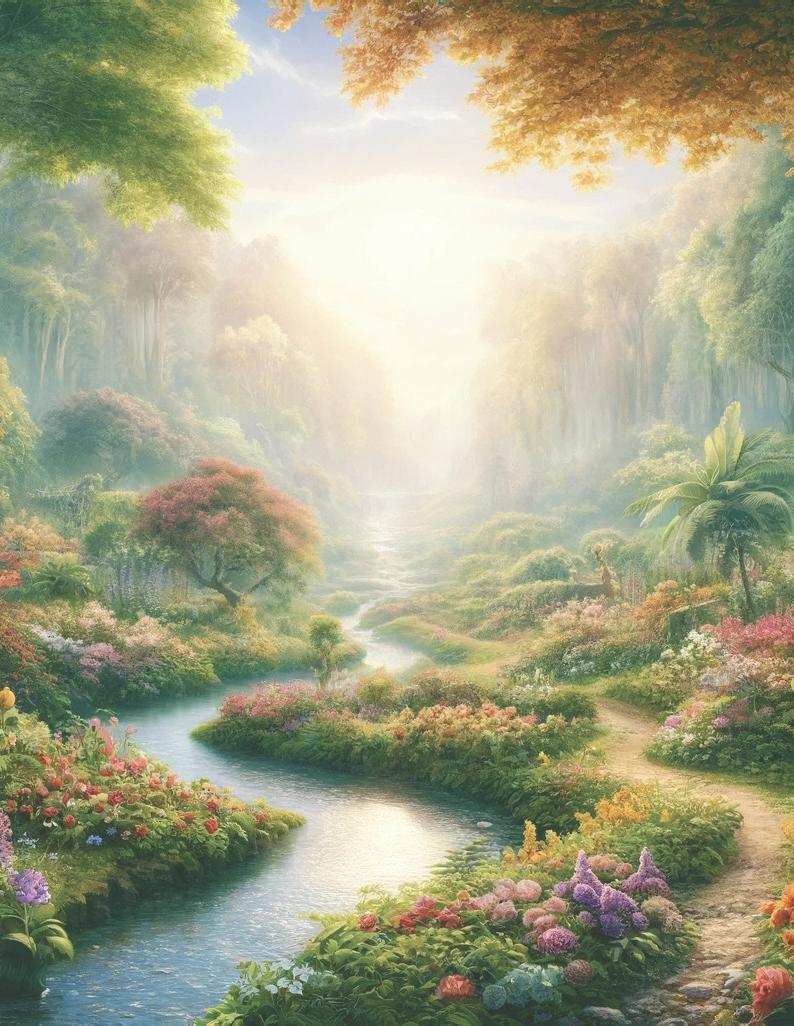
Eden, often referred to as the Garden of Eden, holds profound symbolic meaning in spiritual and religious traditions. Most commonly associated with the biblical account in the Book of Genesis, Eden represents a state of perfect harmony, innocence, and divine connection. It is considered a paradise where humanity once existed in complete unity with nature and the divine before the fall into separation and suffering.
In the Abrahamic religions—Judaism, Christianity, and Islam—Eden is portrayed as a lush, fertile garden where the first humans, Adam and Eve, lived in innocence and purity. They were granted everything they needed for their survival and happiness, walking in close communion with God. Eden was a place without suffering, sin, or death—a utopia representing the original, untainted state of creation.
However, the story of Eden is also the story of human free will. According to biblical tradition, Adam and Eve’s choice to eat from the Tree of Knowledge of Good and Evil led to their expulsion from Eden, marking the beginning of human suffering, mortality, and separation from the divine. This “fall” symbolizes humanity’s journey from innocence into experience, from unity into duality.
Beyond its literal interpretation, Eden is also viewed as a metaphor for a higher state of consciousness or spiritual awakening. It represents an internal paradise—a state of being in perfect harmony with oneself, others, and the universe. In this sense, Eden is not only a place but a state of mind or soul, one that can be cultivated through spiritual practice and inner transformation.
The longing for Eden is seen as the soul’s desire to return to its original state of unity with the divine. It reflects the spiritual journey toward enlightenment, inner peace, and the rediscovery of our true nature. Many mystical traditions view the path to spiritual awakening as a return to the “Garden”—a metaphorical homecoming to a place of eternal wisdom and love.
The story of Eden and the subsequent fall can also be understood as a symbolic narrative about human evolution. It explores the transition from unconscious harmony to conscious awareness, with the “fall” representing the human experience of duality, suffering, and the challenges of physical existence.
From this perspective, the expulsion from Eden is not a punishment but a necessary step in humanity’s spiritual evolution. It signifies the beginning of the human quest for knowledge, meaning, and spiritual growth. The ultimate goal is to transcend this duality and return to a state of divine unity, often symbolized by the restoration of Eden or the attainment of spiritual enlightenment.
Eden also serves as a symbol of hope and renewal. Many spiritual traditions teach that humanity can, through personal transformation and collective consciousness, return to a state of harmony and peace similar to Eden. This idea is often expressed in eschatological beliefs—the hope of a future paradise or new Eden where suffering is no more, and the divine order is restored.
In modern spiritual teachings, the concept of Eden reminds us of our inherent connection to the divine and our potential to create paradise within ourselves and in the world around us. It encourages a life of balance, compassion, and mindful living, aiming to recreate Eden’s peace and abundance in our everyday lives.
Eden represents more than just a physical paradise; it is a profound symbol of spiritual origin, unity, and the human soul’s journey toward wholeness. Whether viewed as a literal place, a metaphor for inner peace, or a symbol of spiritual evolution, Eden continues to inspire seekers to rediscover the harmony, love, and divine connection that lies within.
“Walk through the mystical gates of Eden, where the echoes of innocence and harmony whisper secrets of a lost paradise, inviting you to reclaim your purity and unity with the divine.”
Eternity is a profound and multifaceted concept that stretches across various philosophical, theological, and metaphysical landscapes. At its core, eternity refers to an infinite or unending duration of time, often perceived as existing outside the temporal boundaries experienced by human beings.
Philosophically, eternity has been contemplated as both an endless temporal duration and a timeless existence. Ancient philosophers like Aristotle discussed eternity in relation to the divine, asserting that while human time is linear and finite, divine time—eternity—is perfect and unchanging. In contrast, Plotinus viewed eternity as the realm of the One, where time, as we understand it, does not exist.
In theology, eternity is often associated with the divine or supernatural realm. Many religious traditions describe God as eternal, existing beyond the temporal confines of the physical universe.
• Christianity: Eternity is linked to the immortal soul and the afterlife, where time no longer operates as it does in the physical world. The eternal life promised in Christian teachings refers to an existence spent in the presence of God, beyond earthly life.
• Hinduism: The concept of eternity is integral to Hindu beliefs about the cosmos, where time is cyclical and the universe goes through repeated cycles of creation, preservation, and dissolution.
Metaphysical discussions about eternity often explore the nature of time and existence. Eternity is considered a state or dimension that transcends the temporal sequences experienced in the physical world. It is where the soul or consciousness might reach a state of permanent existence, free from the decay and transformations characteristic of life on Earth.
In contemporary thought, eternity continues to fascinate as a subject of both scientific inquiry and existential reflection. Advances in physics, particularly in theories related to time and cosmology, have prompted new ways of thinking about eternity and its implications for understanding the universe and our place within it.
• Cosmology: Concepts such as the multiverse and the theoretical properties of black holes invite speculations about the eternal, as they challenge conventional notions of time and space.
• Existentialism: Philosophers like Søren Kierkegaard and Martin Heidegger have explored how the awareness of eternity affects human existence and our approach to life, ethics, and personal responsibility.
Eternity, with its implications of timelessness and infinite existence, remains a pivotal concept in understanding the human experience in relation to the universe. It raises profound questions about the beginning and end of existence, the nature of the divine, and the ultimate fate of the universe and consciousness. Whether through the lens of philosophy, theology, or metaphysics, eternity encourages a deeper inquiry into the most enduring and inescapable aspects of reality.
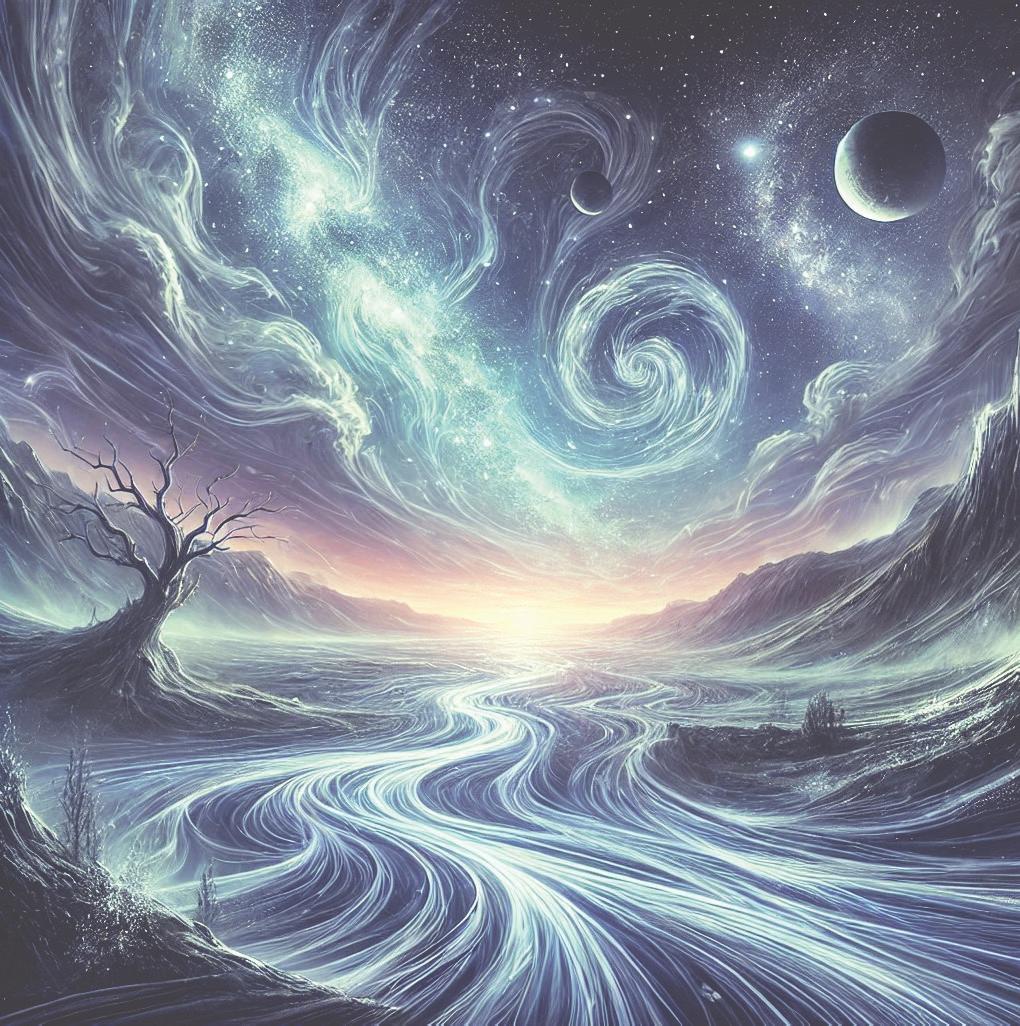
“Dwell in the concept of Eternity, a realm beyond the temporal confines, where past, present, and future merge into a continuous moment of divine existence.”
The fountain is a powerful symbol, representing the flow of life, renewal, and the source of spiritual nourishment. Its imagery evokes a sense of abundance, purity, and the eternal cycle of life. In both literal and metaphorical contexts, fountains are often associated with wisdom, healing, and the divine source from which all life springs.
Since ancient times, fountains have symbolized life and vitality due to their association with water—one of the most essential elements for survival. Flowing water represents the constant movement and renewal of life, reflecting the cyclical nature of existence. In this context, the fountain becomes a reminder of the endless flow of energy and consciousness, continually replenishing and sustaining life.
In many cultures, the image of a fountain is linked to the idea of rejuvenation and renewal. The flowing water cleanses and purifies, symbolizing the washing away of old, stagnant energy and the restoration of vitality. This connection to renewal makes fountains a popular feature in sacred spaces, gardens, and places of meditation, where they invite reflection on the ever-renewing flow of life.
Fountains also represent a source of spiritual nourishment and wisdom. Just as physical fountains provide water to sustain life, spiritual fountains symbolize the divine or cosmic source from which spiritual energy and wisdom flow. This is especially true in mystical and religious traditions where fountains are seen as channels through which divine grace, love, and knowledge flow into the world.
In this way, the fountain can symbolize the flow of wisdom from higher realms into the material world, nourishing the soul and guiding individuals on their spiritual path. It invites contemplation of the infinite and the idea that, like water, spiritual energy is abundant and available to all who seek it.
On a personal level, the fountain symbolizes the flow of energy, emotions, and creativity within an individual. It can represent the wellspring of inner life, encouraging people to tap into their own source of inspiration, wisdom, and strength. In this sense, the fountain serves as a reminder that, just as water flows naturally, so too do our thoughts, emotions, and spiritual insights when we are open and in harmony with ourselves.
In meditation and contemplative practices, the fountain is often used as a metaphor for the free flow of life force, or “prana,” within the body. It invites individuals to visualize the continuous flow of energy through their being, helping them cultivate inner peace, balance, and a deeper connection to the universal source.
Fountains are also a symbol of the eternal cycle of life. Just as water rises, falls, and circulates back to its source, the fountain reflects the ongoing process of birth, growth, death, and rebirth. This cycle is present in nature, the seasons, and even in our own spiritual journeys.
In esoteric traditions, the fountain may represent the soul’s journey through multiple incarnations or the cycles of spiritual growth and enlightenment. It symbolizes the idea that, just as the water from the fountain returns to its origin, the soul too seeks to return to its divine source, completing the cycle of spiritual evolution.
The fountain is a rich symbol of life, renewal, and spiritual nourishment. It reflects the continuous flow of energy, wisdom, and vitality that sustains all living beings and connects us to the divine source. Whether viewed as a literal source of water or a metaphor for the inner flow of life and consciousness, the fountain serves as a reminder of the eternal cycles of renewal, growth, and spiritual awakening. Through its imagery, we are invited to connect with the flow of life within and around us, finding nourishment, inspiration, and peace along our spiritual path.
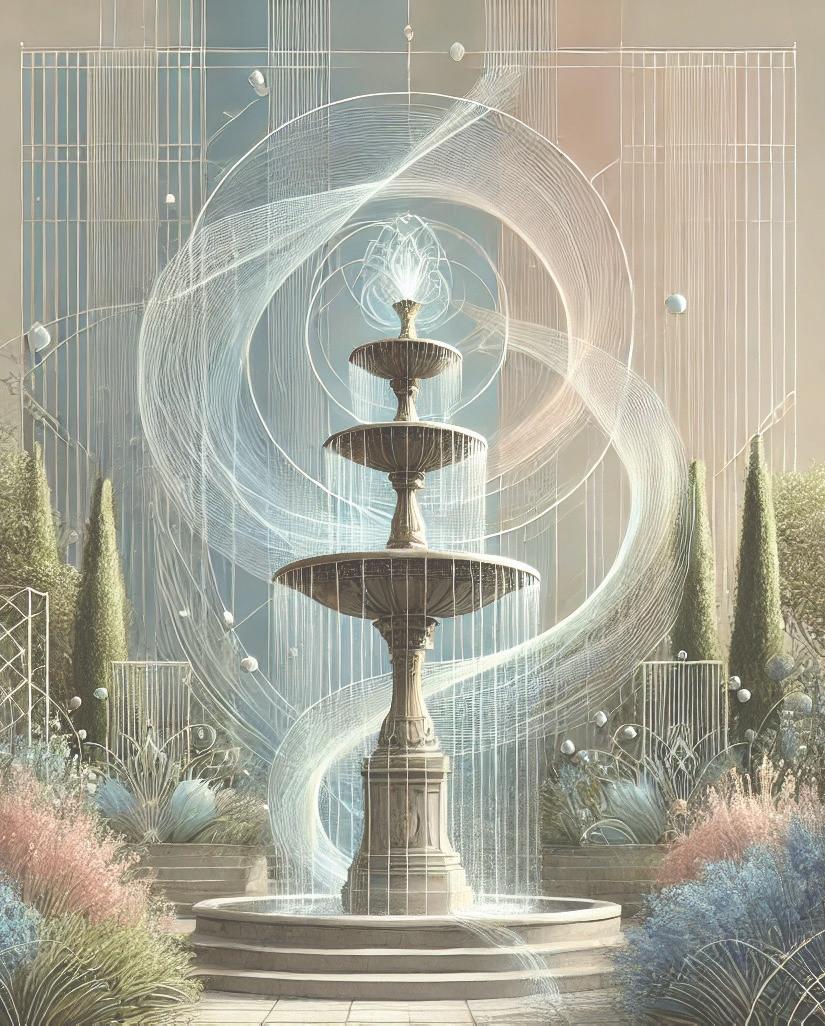
“Reflect by the Fountain of spiritual renewal, where each flow and trickle resounds with the promise of rejuvenation, washing away the old to reveal the clarity and purity of new.”
The concept of “Heaven on Earth” is a powerful spiritual and philosophical idea found across many religious and esoteric traditions. It represents the belief that heaven—a state of perfect peace, harmony, and divine presence—can be realized here in the physical world. Rather than viewing heaven as a distant, post-life destination, this vision encourages the transformation of our earthly existence into a reflection of the divine, where spiritual fulfillment and earthly life coexist in harmony.
In spiritual traditions, “heaven” is often described as a state of divine union, bliss, and eternal peace. It is a place or state where suffering, pain, and conflict do not exist, and where beings experience love, joy, and connection with the divine in its purest form. The idea of bringing “heaven” to earth is about bridging the gap between the spiritual and the material, allowing the qualities of the divine realm to manifest in our daily lives.
To create heaven on earth is to live in alignment with higher spiritual principles—love, compassion, forgiveness, and inner peace. It involves embodying these virtues in our thoughts, actions, and relationships, allowing them to influence the way we interact with the world. By doing so, we cultivate a life that reflects the qualities of heaven, making our everyday experience a reflection of divine love and harmony.
When individuals live in a state of mindfulness, kindness, and spiritual awareness, they bring the essence of heaven into their immediate surroundings. This transformation of consciousness not only enhances their own well-being but also has a positive impact on others, creating ripples of peace and goodness throughout their communities.
The idea of heaven on earth is not only about personal spiritual growth but also about collective transformation. Many spiritual teachers believe that as more individuals
awaken to their true spiritual nature, humanity as a whole can create a world that reflects divine harmony. In this vision, societies would be guided by justice, love, and compassion, and individuals would live in greater connection with nature, each other, and the divine.
From a practical perspective, this could manifest in the way we care for the environment, support one another, and build communities rooted in understanding and cooperation. By taking responsibility for the energy we bring into the world and aligning our actions with higher values, we can contribute to the creation of a peaceful and harmonious world—heaven on earth.
While the idea of heaven on earth can extend to collective well-being, it also holds deep personal meaning. Many spiritual traditions teach that heaven is not simply a physical place but a state of consciousness that we can experience within ourselves. By cultivating inner peace, we create our own personal heaven, regardless of external circumstances.
Heaven on earth is ultimately about bridging the material and spiritual worlds. It invites us to honor both aspects of our existence—the physical and the spiritual—recognizing that they are not separate but interconnected. In this way, heaven on earth is not a distant dream but a reality that can be created through conscious living, love, and the recognition of the divine presence in all things.
Heaven on earth is a vision of a harmonious and spiritually awakened world, where individuals live in alignment with divine principles and create peace, love, and joy in their lives and communities. It is both a personal and collective journey, inviting us to transform our consciousness and manifest the qualities of heaven here on earth. Through mindfulness, compassion, and a commitment to spiritual growth, we can cultivate this vision in our everyday lives, making heaven not a distant goal but a present reality.
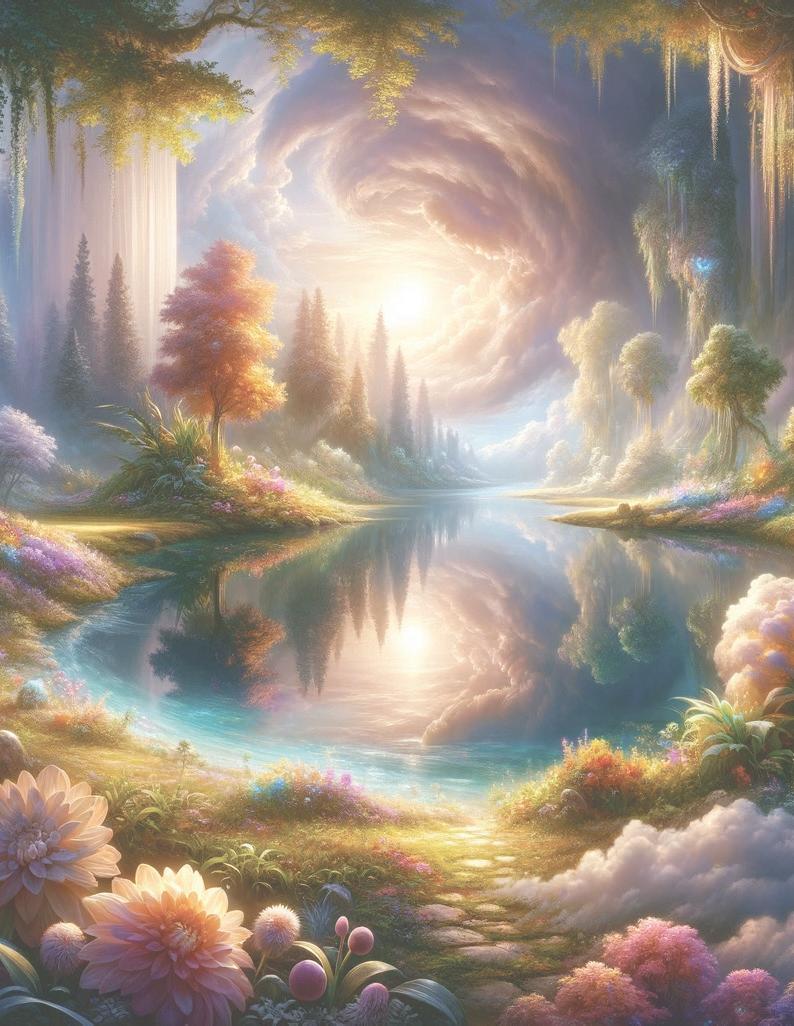
“Manifest your Heaven on Earth, embodying the serenity and divinity of celestial realms in your daily walk, turning every moment into an opportunity to live out the paradise within your heart.”
The phrase “I AM” holds profound significance across various spiritual, philosophical, and religious contexts. It is often considered a powerful expression of self-identity and existence at the most fundamental level. In many traditions, “I AM” is more than a statement of presence; it is a declaration of one’s intrinsic nature and connection to a higher reality.
• Biblical Context: In the Judeo-Christian tradition, “I AM” is famously associated with God’s self-identification to Moses in the Book of Exodus. When Moses asks God what name he should use to refer to Him when speaking to the Israelites, God responds: “I AM THAT I AM.” This statement, often rendered in Hebrew as “Yahweh,” signifies God’s eternal and unchanging nature. It suggests that God is the ultimate being whose existence is not contingent upon anything else.
• Hinduism and Advaita Vedanta: In Hindu philosophy, particularly in the non-dual school of Advaita Vedanta, “I AM” relates closely to the concept of selfrealization. It is associated with understanding one’s true self (Atman) as being identical with the ultimate reality or Brahman. The realization “Aham Brahmasmi” in Sanskrit means “I am Brahman,” pointing to this non-dual identification.
• New Thought and Modern Spirituality: In many New Age and contemporary spiritual movements, “I AM” is used as a powerful affirmational tool. It is believed that whatever statements follow “I AM” can shape one’s reality, consciousness, and experiences. Thus, using positive and affirming language in conjunction with “I AM” is seen as a way to manifest one’s divine potential and create a desired reality.
In existential philosophy, particularly in the works of Jean-Paul Sartre, the phrase “I AM” underscores the existence of the self as a precursor to essence. This idea aligns with the existentialist belief that existence precedes essence, meaning that individuals first exist and only then define their nature or essence through actions and decisions.
From a psychological perspective, the affirmation “I AM” can be empowering. It helps individuals assert their agency and self-efficacy, fostering a sense of inner strength and selfacceptance. The use of “I AM” in therapies and personal development practices can aid in overcoming negative thought patterns and enhancing self-esteem.
The phrase “I AM” resonates deeply across different spheres of human thought, from the deeply spiritual to the intensely personal. It encourages a recognition of one’s existence as both profound and inherently connected to a greater whole. Whether used in prayer, meditation, or affirmation, “I AM” serves as a reminder of one’s power to define existence and influence reality, bridging the personal with the universal.
“In the sacred silence of ‘I AM,’ discover the boundless realm where your true self resides, eternal and unblemished by the world’s whispers.”
In Islamic tradition, Jannah is the term used to describe paradise, a place of eternal peace, joy, and reward that awaits the righteous in the afterlife. It is often depicted as a lush, beautiful garden filled with abundance, where those who have lived virtuous lives and followed the guidance of Allah (God) are granted entry as a reward for their faith and good deeds. Jannah is the ultimate destination for believers, symbolizing divine mercy, fulfillment, and spiritual bliss.
Jannah is frequently described as a place of unimaginable beauty, comfort, and tranquility. The Qur’an provides vivid imagery of this paradise, portraying it as a garden with flowing rivers, fruit-bearing trees, fragrant flowers, and magnificent palaces. These descriptions emphasize the idea that Jannah is a place of peace and contentment, free from suffering, pain, and hardship.
Believers are promised eternal youth, perfect health, and the companionship of their loved ones. They are also promised spiritual fulfillment and proximity to Allah, which is considered the highest and most fulfilling reward.
In Islam, entrance into Jannah is granted by Allah’s mercy to those who have lived righteous lives, performed good deeds, and maintained faith in Allah. The teachings of the Qur’an and the Hadith (sayings of the Prophet Muhammad) emphasize the importance of faith, prayer, charity, fasting, and the avoidance of sin as ways to earn the favor of Allah and gain entry into Jannah.
It is believed that on the Day of Judgment, all individuals will be held accountable for their actions, and those whose deeds outweigh their sins will be granted entry into Jannah. Additionally, Allah’s mercy is often emphasized as a key factor in salvation, with the understanding that human beings are imperfect and forgiveness is granted to those who sincerely repent.
Islamic teachings also describe different levels or degrees of Jannah, with the highest level being Jannat al-Firdaws, or the “Garden of the Highest Paradise.” Each level of Jannah is believed to offer varying degrees of reward and closeness to Allah, with the most virtuous individuals, such as prophets and martyrs, being placed in the highest levels.
The inhabitants of Jannah will have everything they desire, including peace, joy, and the ability to experience divine pleasure and nearness to Allah. The Qur’an speaks of the ultimate reward being the “vision of Allah,” where the righteous will be blessed to witness the Divine Presence.
Jannah holds deep spiritual significance in Islam. It represents the fulfillment of human purpose and the ultimate reunion with Allah. The promise of Jannah serves as motivation for believers to live morally and righteously, emphasizing the importance of compassion, justice, and mercy.
For Muslims, Jannah is not only a reward but also a reminder of Allah’s boundless mercy and the eternal nature of the soul. It reflects the idea that life on Earth is temporary and that one’s true home is with Allah in the afterlife.
The imagery of a garden in Jannah symbolizes growth, renewal, and abundance. It represents the flourishing of the soul after a life of faith and struggle, where believers are rewarded with peace, harmony, and divine connection. The concept of a garden also reflects the idea of spiritual cultivation, where the seeds of faith, good deeds, and perseverance grow into the eternal rewards of Jannah.
Jannah is the Islamic vision of paradise, offering eternal peace, beauty, and divine connection to those who live righteous lives and maintain faith in Allah. It is a symbol of divine mercy and the ultimate reward for the soul’s journey. The promise of Jannah encourages believers to live with integrity, kindness, and devotion, knowing that their actions in this life will lead to eternal bliss and closeness to Allah in the afterlife.
“Explore the lush expanses of Jannah, where eternal peace and divine pleasure await, promising a reward of infinite joy and closeness to the divine for a life of righteousness and spiritual pursuit.”
Multidimensionality refers to the concept that reality and existence extend beyond the physical, three-dimensional world we perceive with our senses. It suggests that there are multiple dimensions or planes of existence, each with its own unique characteristics, energies, and forms of consciousness. This concept is often explored in spiritual, metaphysical, and scientific realms, offering a broader perspective on the nature of reality and the human experience.
In our everyday life, we are aware of three dimensions: height, width, and depth, which make up the physical world we interact with. However, multidimensionality suggests that beyond these three dimensions, there are higher or alternate dimensions that exist simultaneously but are often imperceptible to our physical senses.
In spiritual and esoteric traditions, these dimensions may represent different planes of consciousness or realms where beings of light, spirit guides, or even aspects of our higher self reside. These realms may be described as containing more subtle energies and higher vibrations, allowing for experiences such as astral travel, communication with spiritual entities, and accessing higher knowledge.
From a spiritual perspective, human beings are considered multidimensional by nature, with a physical body rooted in the third dimension, but also possessing emotional, mental, and spiritual bodies that operate in higher dimensions. This view holds that our true essence is not confined to the physical world but spans across these various dimensions of existence.
Each dimension is believed to correspond to different levels of awareness, perception, and spiritual evolution. As individuals engage in practices like meditation, mindfulness, or deep inner work, they may access these higher dimensions of consciousness, gaining insight, healing, and greater understanding of their soul’s purpose.
Multidimensional awareness refers to the ability to consciously experience or tap into these higher realms. This can occur during dreams, spiritual practices, or spontaneous mystical experiences, where the boundaries between the physical world and other dimensions seem to dissolve. In such moments, individuals may experience profound unity with the universe, deep peace, or access to information and wisdom beyond the ordinary mind.
In modern spiritual teachings, multidimensionality is often linked to the idea of awakening to higher levels of consciousness. It is seen as a process of expanding awareness beyond the limitations of the material world, allowing for greater understanding of our interconnectedness with all of existence.
Interestingly, the concept of multidimensionality has parallels in certain scientific theories, particularly in the field of quantum physics. For example, string theory posits that the universe may contain additional dimensions beyond the ones we are familiar with, though these dimensions may be hidden or folded in ways that make them difficult to observe.
While the scientific exploration of multidimensionality is still theoretical, it opens the door to the possibility that reality is far more complex than our current understanding. In both science and spirituality, multidimensionality invites us to expand our perception of the universe and consider the vast potential of existence beyond the physical realm.
Multidimensionality offers a profound way of understanding reality, suggesting that we are more than just physical beings and that life encompasses multiple layers of existence. By embracing multidimensionality, we can explore higher realms of consciousness, deepen our spiritual journey, and expand our awareness of the interconnectedness of all life. This concept encourages us to view ourselves as vast, limitless beings, capable of accessing deeper wisdom and greater potential through the exploration of these higher dimensions.
“Explore the vast layers of Multidimensionality, where your existence spans multiple realms and states of consciousness, challenging you to navigate and integrate these diverse aspects into a cohesive understanding of your true spiritual nature.”
Paradise is a term used across various religious and spiritual traditions to describe a realm of ultimate peace, joy, and fulfillment. It is often envisioned as a place where souls, after a life of goodness or spiritual awakening, find eternal rest and communion with the Divine. While different faiths and philosophies offer unique interpretations of paradise, common themes include beauty, abundance, harmony, and the absence of suffering.
In many traditions, paradise is depicted as a lush and verdant garden, filled with vibrant life, flowing rivers, and abundant food. It is often imagined as a place where the physical and spiritual come together in perfect harmony, offering everything the soul could desire: peace, love, knowledge, and closeness to the Divine. The garden imagery represents life in its purest and most joyful form, untainted by the hardships of the material world.
For many believers, paradise is not only a place of physical beauty but also one of spiritual fulfillment, where the soul is free from the limitations of the body, pain, or death. It is seen as a reward for living a righteous life, following the teachings of the Divine, and seeking the highest truths.
• Christianity: In Christian teachings, paradise is often equated with heaven, a place of eternal life in the presence of God. The Book of Revelation describes paradise as the New Jerusalem, a glorious city where God dwells among His people, wiping away every tear and eliminating suffering and death. For Christians, paradise is the ultimate reward for faith and moral living, and the soul’s final destination after the resurrection.
• Islam: In Islam, paradise is referred to as Jannah, a garden of unimaginable beauty and pleasure where the faithful are rewarded after the Day of Judgment. It is a place of peace, abundance, and eternal joy, where believers are in close communion with Allah. Jannah is often described with vivid imagery of gardens, rivers of milk and honey, and eternal youth.
• Judaism: In Jewish tradition, paradise, or Gan Eden, is a place of reward for the righteous. It is sometimes associated with the Garden of Eden, the original state of humanity before the fall. For the righteous, paradise is a place of spiritual fulfillment and closeness to God, beyond the material world.
• Hinduism and Buddhism: In Hinduism, paradise can take the form of various heavenly realms, such as Svarga, where souls may enjoy bliss before being reborn. In Buddhism, the concept of nirvana is often equated with the ultimate state of peace and liberation from the cycle of suffering and rebirth. It represents the cessation of all desire and attachment, leading to enlightenment and eternal tranquility.
• Ancient Cultures: In many ancient cultures, paradise was often linked to a golden age or a lost earthly paradise, such as Atlantis or the Elysian Fields, where heroes and virtuous souls found eternal peace. These myths reflect humanity’s longing for a return to a perfect, harmonious state.
Beyond its literal interpretation, paradise holds deep symbolic meaning in spiritual teachings. It represents the human soul’s highest potential—the state of enlightenment, peace, and union with the Divine. The journey toward paradise is often seen as an inner spiritual path, where individuals strive to overcome their lower nature, transcend material desires, and reconnect with their true divine essence. The idea of paradise also symbolizes the hope for a world where justice, love, and harmony reign—a world free from suffering, war, and injustice. It serves as an ideal that inspires moral action and spiritual growth, reminding humanity of its potential to create a better, more harmonious existence both within and beyond the material world.
Paradise, in its many forms, represents the ultimate goal of spiritual and moral striving—a place of eternal beauty, peace, and divine communion. Whether it is seen as a literal garden of joy or a symbolic state of enlightenment, the concept of paradise speaks to humanity’s deepest yearning for union with the Divine, the end of suffering, and the fulfillment of our highest potential.
“Envision Paradise, not as a distant realm, but as the potential for achieving a state of ultimate peace and joy here in the material world, reflecting your inner purity and divine connection.”
The rainbow has long been regarded as a powerful symbol in spiritual, cultural, and mythological traditions worldwide. Its vibrant colors and ethereal presence in the sky evoke feelings of awe and wonder, and it is often seen as a bridge between the earthly and divine realms. Beyond its beauty, the rainbow carries profound meanings related to hope, renewal, connection, and the fulfillment of divine promises.
In many cultures, the appearance of a rainbow after a storm is seen as a symbol of hope and renewal. It represents the end of darkness and the arrival of light, offering reassurance that challenges and hardships will give way to peace and clarity. The rainbow is often viewed as a reminder that after periods of struggle or difficulty, there is the potential for beauty and transformation.
• In Christianity, the rainbow is famously associated with the story of Noah and the Great Flood. After the floodwaters receded, God placed a rainbow in the sky as a sign of His covenant with humanity, promising never to flood the earth again. The rainbow, in this context, represents divine mercy, forgiveness, and a promise of new beginnings.
• In Indigenous cultures, the rainbow is often seen as a bridge between the physical world and the spiritual realm. In some traditions, it symbolizes communication with ancestors or deities, representing a connection between the heavens and the earth.
In spiritual and esoteric teachings, the rainbow is often interpreted as a symbol of higher consciousness, enlightenment, and the connection between the material and spiritual worlds. The seven colors of the rainbow—red, orange, yellow, green, blue, indigo, and violet—are sometimes linked to the seven chakras, which are believed to represent energy centers within the human body.
From this perspective, the rainbow represents the journey of spiritual awakening and self-realization. It symbolizes the harmonization of mind, body, and spirit, as well as the integration of all aspects of the self. Just as the rainbow’s colors merge seamlessly into one another, the journey of spiritual growth involves embracing the full spectrum of human experience and achieving balance and unity.
• Norse Mythology: In Norse mythology, the rainbow is represented by Bifröst, a burning rainbow bridge that connects the realm of the gods, Asgard, with the world of humans, Midgard. This bridge is a key pathway between the divine and human realms and symbolizes connection, protection, and passage between worlds.
• Greek Mythology: In Greek mythology, the rainbow is linked to Iris, the goddess of the rainbow and a messenger of the gods. Iris traveled between the heavens and the earth, delivering divine messages, and her rainbow is seen as a symbol of communication and divine favor.
• Hindu and Buddhist Traditions: In some Hindu and Buddhist traditions, the rainbow is connected to the idea of transcending earthly limitations. It is seen as a symbol of liberation from the cycle of birth and rebirth, representing the realization of enlightenment and the merging of the soul with the divine.
The rainbow is often seen as a bridge or pathway between different realms, dimensions, or states of being. This symbolism suggests a connection between the physical and spiritual, the mundane and the transcendent. The rainbow, with its radiant arc stretching across the sky, reminds us of the potential to rise above earthly concerns and connect with higher, more divine aspects of existence.
Conclusion
The rainbow, with its vivid colors and breathtaking beauty, is a symbol of hope, divine promise, and connection. It speaks to the human longing for renewal, the pursuit of higher consciousness, and the desire for unity with the divine. Across spiritual, cultural, and mythological traditions, the rainbow reminds us that even after the darkest storms, there is light, and with it, the potential for transformation and new beginnings.
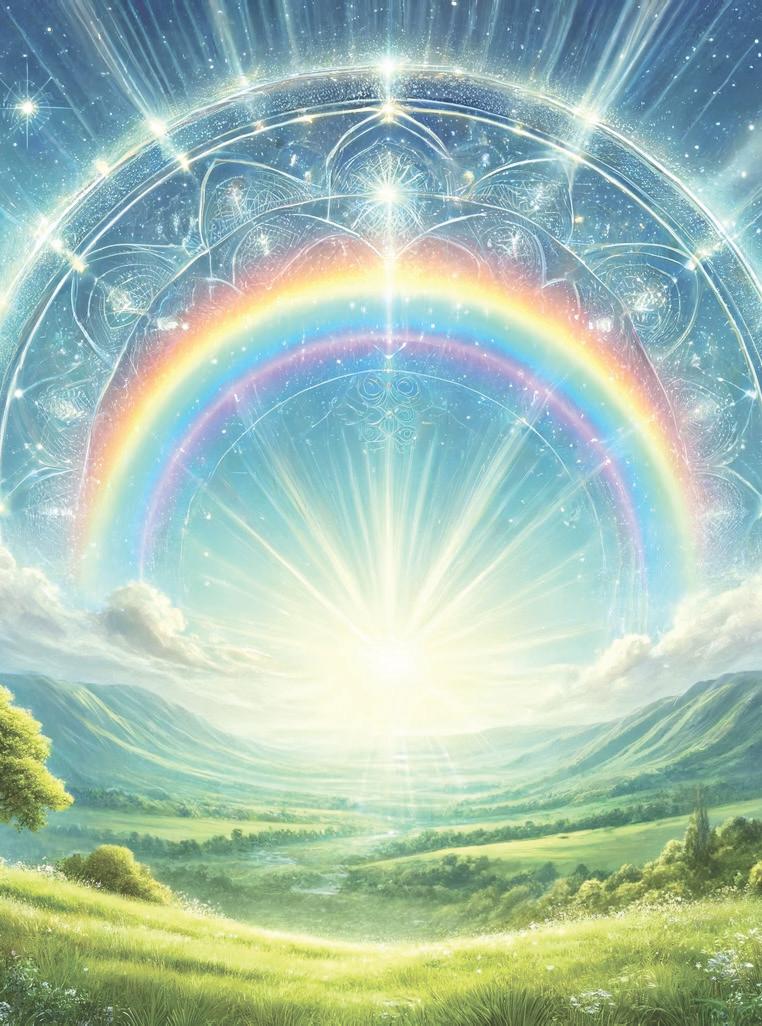
“Look to the Rainbow as a bridge between the earthly and the divine, its vibrant arch a promise of hope, renewal, and the interconnectedness of all forms of existence.”
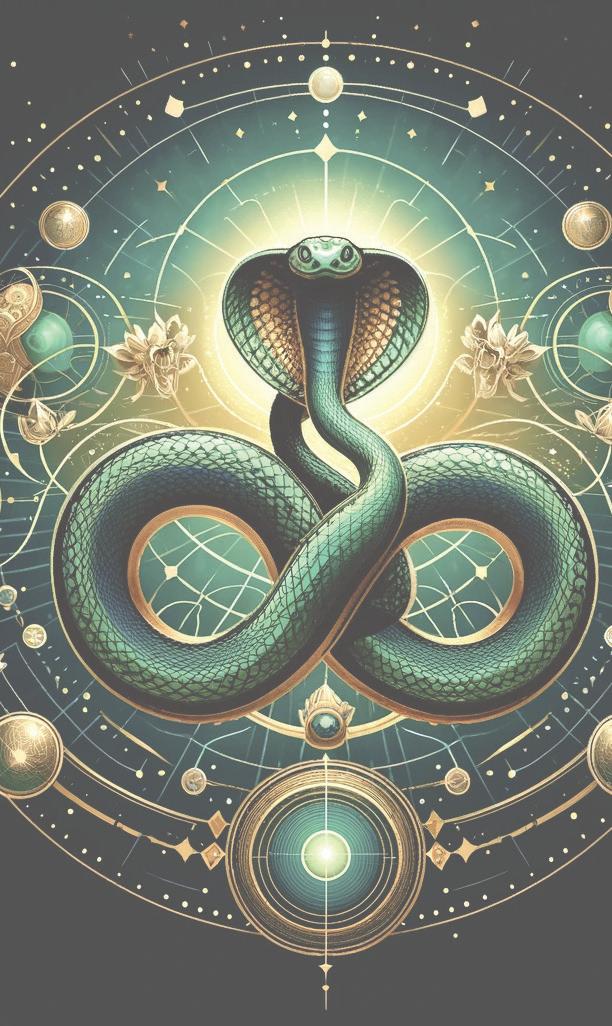
The serpent is one of the most ancient and complex symbols found in spiritual, mythological, and religious traditions across the world. Its slithering, cyclical movement and association with shedding its skin have made the serpent a potent symbol of transformation, renewal, and the dual nature of life itself. In various cultures, the serpent embodies both wisdom and danger, life and death, creation and destruction, making it a multifaceted symbol with deep spiritual significance.
In many traditions, the serpent is revered as a symbol of wisdom, knowledge, and esoteric understanding. Its ability to navigate both the ground and hidden spaces has often been linked to hidden truths and the mysteries of the universe.
• In ancient Greece, the serpent was associated with the god of healing, Asclepius. The symbol of a serpent entwined around a staff, known as the Rod of Asclepius, is still used today as a symbol of medicine and healing. This connection underscores the serpent’s association with both physical healing and spiritual wisdom.
• In Hinduism, the serpent, or Naga, is seen as a wise and powerful being, sometimes representing the kundalini energy—spiritual energy believed to reside at the base of the spine. When awakened, this energy rises up the spine like a coiled serpent, leading to spiritual enlightenment.
• In many Indigenous cultures, serpents are seen as keepers of ancient wisdom and often serve as intermediaries between humans and the spirit world, offering guidance and insight.
One of the most enduring symbols associated with the serpent is transformation. As a creature that regularly sheds its skin, the serpent represents the cycle of life, death, and rebirth. This renewal process is often viewed as a metaphor for personal growth, spiritual evolution, and the shedding of old identities or beliefs to make way for new ones.
• In ancient Egypt, the serpent was associated with the cycle of life and death, and its ability to shed its skin made it a powerful symbol of immortality and regeneration. The Uraeus, a rearing cobra worn on the crowns of pharaohs, symbolized protection and divine authority.
• In alchemy, the ouroboros, a serpent eating its own tail, represents the eternal cycle of creation, destruction, and rebirth. This symbol encapsulates the idea of wholeness and the interconnectedness of all things.
• In Mesoamerican traditions, the feathered serpent god, Quetzalcoatl, symbolizes both the heavens and the earth, combining the ability to fly with the grounded nature of the serpent. This duality makes Quetzalcoatl a symbol of transformation and the harmony of opposites.
The serpent often embodies duality, representing both lifegiving and life-taking forces. Its swift, unpredictable movements, along with its ability to deliver venomous bites, have linked it to both creative and destructive energies.
• In Christianity, the serpent is famously associated with the story of Adam and Eve in the Garden of Eden. The serpent tempts Eve to eat the forbidden fruit, leading to humanity’s fall from grace. In this context, the serpent symbolizes temptation, sin, and the darker aspects of human nature.
• In ancient Chinese mythology, serpents were seen as symbols of both good and evil, life and death. The Chinese dragon, closely related to the serpent, is a symbol of power, strength, and prosperity, yet serpents were also feared for their association with chaos and unpredictability.
• In Gnosticism, the serpent is sometimes seen as a liberator, providing knowledge that frees humanity from ignorance. In this context, the serpent represents enlightenment and the pursuit of truth, standing in contrast to the traditional Christian interpretation.
The serpent encompasses a rich and diverse range of meanings. From wisdom and knowledge to transformation and rebirth,
“Consider the Serpent, a symbol of wisdom and rebirth, its life cycle of shedding and renewal a powerful metaphor for transformation and the eternal quest for deeper knowledge.”
Shambhala is a mystical kingdom mentioned in various spiritual and religious traditions, particularly in Tibetan Buddhism and Hinduism. Often described as a hidden paradise, Shambhala symbolizes a utopian realm of peace, wisdom, and enlightenment. It is believed to exist somewhere in the Himalayas, yet its precise location is elusive, as Shambhala is often considered a metaphysical or spiritual place, rather than a physical one.
Shambhala is not just a geographical location; it represents an inner state of spiritual awakening. The kingdom is believed to be ruled by wise and enlightened beings who live in perfect harmony. It is a place where all inhabitants embody compassion, virtue, and higher consciousness, serving as a model for humanity’s spiritual evolution.
In Tibetan Buddhism, Shambhala is considered the birthplace of the Kalachakra teachings, a set of advanced tantric practices that emphasize the cyclical nature of time and the interplay of cosmic and individual processes. Shambhala is seen as the final destination for those on a spiritual path, a place where seekers can transcend suffering and reach a state of ultimate wisdom and inner peace.
Metaphorically, Shambhala represents the potential for spiritual enlightenment within every individual. It symbolizes the idea that by cultivating inner peace, wisdom, and compassion, one can create a “Shambhala” within their own heart. The journey to Shambhala is often interpreted as the personal spiritual quest to achieve harmony, balance, and transcendence over worldly distractions and desires.
In some traditions, it is believed that Shambhala will play a role in the future of humanity. According to prophecy, when the world is plunged into chaos and darkness, a great ruler or enlightened being will emerge from Shambhala to restore peace and guide humanity back to balance. This represents a hopeful vision for the future, where spiritual wisdom triumphs over materialism and suffering.
Conclusion
Shambhala, thus, serves as a powerful symbol of hope, representing the possibility of a harmonious world grounded in spiritual values. For individuals on their own path of selfdiscovery, it offers inspiration for personal transformation and the pursuit of higher truths.
“Seek Shambhala, a mythical kingdom of peace and enlightenment that exists not in the physical world but within you, as a state of mind to be achieved through compassion, mindfulness, and spiritual wisdom.”
The concept of sovereignty extends beyond traditional notions of political and legal authority, delving into the realm of personal and spiritual autonomy. It emphasizes the individual’s inherent right to govern their inner life and spiritual journey, reinforcing the themes of self-mastery, personal responsibility, and alignment with one’s higher self.
• Inner Sovereignty: At its heart, spiritual sovereignty is about mastering one’s inner world—controlling one’s thoughts, emotions, and actions in accordance with one’s deepest truths and highest aspirations. It represents the ultimate form of self-governance, where an individual claims authority over their spiritual path and life choices, free from external control and undue influence.
• Self-Awareness and Self-Regulation: Spiritual sovereignty involves a deep awareness of one’s inner state and the ability to regulate one’s responses to the external world. This self-governance is crucial for spiritual growth and maintaining harmony between one’s inner and outer worlds.
• Sovereignty and Free Will: Essential to spiritual sovereignty is the concept of free will—the power to choose one’s course of action and beliefs. Spiritual traditions teach that while external circumstances may be beyond one’s control, how one responds to these circumstances is governed by personal choice. This freedom is a cornerstone of spiritual development, fostering a sense of empowerment and responsibility.
• Empowerment Through Responsibility: Spiritual sovereignty demands a high degree of personal responsibility. It calls for individuals to take charge of their actions and their consequences, viewing them as opportunities for growth and learning. This proactive stance is vital for advancing on the spiritual path.
• Alignment with Universal Laws: Claiming one’s sovereignty also involves aligning with universal spiritual laws such as those of karma (action and consequence), dharma (righteous living), and unity (interconnectedness with all). Understanding and living according to these laws can enhance one’s spiritual evolution, leading to greater wisdom and compassion.
• Emotional Sovereignty: Mastery over one’s emotional life is a key aspect of spiritual sovereignty. It involves understanding and integrating one’s shadow aspects, managing emotional reactions, and maintaining peace of mind in challenging situations. Emotional sovereignty allows for deeper connections with others and the world, free from reactive patterns and ego-driven conflicts.
The concept of sovereignty is not merely about self-control or autonomy but is a transformative process that leads to spiritual liberation. By cultivating sovereignty, individuals free themselves from the limitations imposed by unconscious patterns, societal conditioning, and egoic desires. This freedom opens the way to living a life that is deeply aligned with one’s spiritual essence, marked by clarity, purpose, and a profound sense of peace.
“Claim your spiritual sovereignty, embracing the freedom to shape your destiny with every conscious choice, as you walk in alignment with your divine essence.”
Takamagahara, also known as the “Plain of High Heaven”, is the heavenly realm in Shinto cosmology, the indigenous spiritual tradition of Japan. In Shinto belief, it is considered the dwelling place of the kami, or divine spirits, and the location where the gods oversee the world of humans. Takamagahara is a realm of beauty, peace, and divine power, often associated with purity and the source of order in the universe.
According to Shinto mythology, Takamagahara is a celestial realm far above the earthly plane, connected to the human world by a divine bridge. The most famous story involving Takamagahara is the myth of the sun goddess Amaterasu, one of the central deities in Shinto. As the ruler of Takamagahara, Amaterasu embodies light, life, and order, and she governs both the heavens and the earth.
Takamagahara is also the home of other important kami, such as Tsukuyomi, the moon deity, and Susanoo, the storm god. In Shinto creation myths, the gods descended from Takamagahara to shape and govern the physical world, establishing a divine connection between the heavens and the earth.
Takamagahara symbolizes the realm of purity, light, and divine authority. It is often seen as the counterpart to the earthly realm, where humans live and strive for balance between the sacred and the mundane. The idea of Takamagahara represents the harmony and order that the kami seek to bring into the world.
In Shinto, humans are considered to be spiritually linked to Takamagahara, and through rituals and offerings, they honor the kami who reside in this sacred place. Takamagahara, as a heavenly domain, reflects the core values of Shinto, including the reverence for nature, the purification of the soul, and the maintenance of harmony between humans and the divine.
In the myths, Ame-no-Ukihashi, the “Floating Bridge of Heaven,” connects Takamagahara to the physical world. This bridge symbolizes the connection between the divine realm and humanity, reminding believers that the kami are always present in the natural world. Through rituals, prayers, and festivals, Shinto practitioners honor this connection and seek blessings from the kami for prosperity, protection, and spiritual well-being.
The concept of Takamagahara has had a significant influence on Japanese culture, particularly in relation to the divine origins of the Japanese imperial family. In Shinto belief, the emperor is considered a direct descendant of Amaterasu, and this divine lineage is said to come from Takamagahara itself. This connection reinforces the idea of the emperor as a sacred figure who maintains the harmony between heaven and earth.
Conclusion
Takamagahara represents the sacred, divine realm in Shinto, where the kami reside and govern the world. It is a symbol of order, purity, and divine authority, deeply connected to the human realm through myths, rituals, and the natural world. The concept of Takamagahara emphasizes the Shinto belief in the interconnectedness of the spiritual and physical worlds, guiding people to live in harmony with the kami and the universe.
“Gaze upon Takamagahara, the ‘Plain of High Heaven’ where divine spirits oversee the mortal realm, reminding you of the sacred balance and purity that governs both the cosmos and the path of human.”

The Tree of Life is a powerful and ancient symbol found in many spiritual, religious, and cultural traditions around the world. It represents interconnectedness, growth, and the cyclical nature of life, acting as a bridge between the material and spiritual realms. The Tree of Life is often seen as a symbol of immortality, wisdom, and the unity of all existence, connecting humanity with the divine and the natural world.
The Tree of Life symbolizes the interconnectedness of all living things. Its roots stretch deep into the earth, its trunk represents strength and stability, and its branches reach toward the heavens, connecting the underworld, the earthly realm, and the divine. This imagery highlights the idea that all life is connected, whether through nature, humanity, or the spiritual universe. It reminds us that we are part of a greater whole, and that our actions affect not only ourselves but the world around us.
The tree’s growth, from seed to mighty plant, symbolizes personal growth, spiritual evolution, and the journey of life. Just as a tree grows steadily from a small sapling into a towering presence, the Tree of Life represents the potential for individuals to grow, evolve, and develop spiritually over time. The cycles of life—birth, growth, death, and renewal— are reflected in the tree’s constant regeneration through its leaves and fruits.
In many traditions, the Tree of Life is associated with immortality and eternal life. The cycle of seasons—when trees shed their leaves and later bloom again—mirrors the cycles of life, death, and rebirth, suggesting that life continues in some form even after physical death. This symbolism is often used to express the belief in reincarnation or the eternal nature of the soul.
In Kabbalistic mysticism, the Tree of Life is a central symbol representing the Sefirot, or the ten divine emanations through which the infinite divine presence interacts with the physical world. The Sefirot are mapped out as interconnected spheres, each representing an aspect of divine energy and spiritual reality. The Tree of Life in Kabbalah serves as a roadmap for spiritual ascent, guiding practitioners on their journey toward divine wisdom and enlightenment.
In Christianity, the Tree of Life appears in the Garden of Eden, representing eternal life and divine wisdom. In the Book of Genesis, it is contrasted with the Tree of the Knowledge of Good and Evil, from which Adam and Eve ate, leading to the fall of humanity. The Tree of Life in this context symbolizes a lost paradise and a return to divine grace, and it reappears in the Book of Revelation, representing the eternal life promised in heaven.
In Norse mythology, the World Tree, or Yggdrasil, serves as the cosmic axis connecting the nine realms of existence. Yggdrasil is a giant ash tree that unites the heavens, earth, and underworld, symbolizing the interconnectedness of all life and the eternal cycles of existence. It is the center of the universe, where gods, humans, and other beings coexist, and it represents the resilience and strength of life itself.
In Ancient Egyptian mythology, the Tree of Life is associated with the gods, representing the cycle of death and resurrection. The tree is linked to eternal life and rebirth, with gods like Osiris often depicted standing by or emerging from it. The tree was thought to give birth to the divine pair of Isis and Osiris, who were central to the concept of life after death in Egyptian spirituality.
In Islamic tradition, the Tree of Immortality is mentioned in the Quran in the story of Adam and Eve, similar to the JudaicChristian narrative. This tree is associated with the eternal life that was forbidden to them after their disobedience.
The Bodhi tree under which Buddha attained enlightenment is considered a Tree of Life, representing enlightenment and the ultimate realization of the interconnectedness of all things.
The concept of a tree that connects heaven, Earth, and the underworld can be found in Chinese mythology as well. The Peach Tree of Immortality, found in the garden of the goddess Xi Wangmu (Queen Mother of the West), bears fruit that grants eternal life only once every thousand years.
Various African myths refer to the Baobab tree or other sacred trees that are believed to house spirits or gods, acting as a focal point for community and spiritual life, often used in rituals and as a place of communal gathering.
Several Native American tribes consider trees as sacred, seeing them as a central part of their spiritual and everyday life. For example, the World Tree in many Native American mythologies is vital for maintaining balance within the universe.
In contemporary spirituality and New Age thought, the Tree of Life is often used as a symbol of harmony and balance. It represents spiritual growth, wherein the roots touch the earth and the branches reach the sky, symbolizing the connection between the physical and the spiritual.
The Tree of Life is not only a symbol of the cosmos but also a symbol of personal spiritual growth. It encourages individuals to seek wisdom, to remain grounded in their roots while aspiring to higher spiritual states, and to recognize the interconnectedness of all beings. The tree teaches patience, resilience, and the eternal cycle of renewal, offering a path toward enlightenment and inner harmony.
The Tree of Life is a timeless and universal symbol that carries profound meanings in various spiritual and cultural traditions. It represents the interconnectedness of all life, personal growth, renewal, and the relationship between the material and spiritual worlds. Whether viewed through the lens of mythology, religion, or personal spirituality, the Tree of Life invites us to explore our own inner potential, recognize our connection to the world around us, and seek balance between the physical and divine aspects of existence.

“Grow alongside the Tree of Life, its roots deeply entrenched in the earth, branches stretching towards the heavens, embodying the interconnectedness of all life and the personal journey of spiritual ascension and growth.”

Conclusion Personal Responsibility Acknowledgements
Index
As you arrive at the conclusion of the “Sophia Christ Initiation Path,” you stand at a sacred threshold, on the verge of profound transformation. This journey, woven with threads of divine wisdom and love, has guided you through the holy landscapes of your inner and outer worlds. It has called you to heal, to find balance, and to reconnect with the sacred essence that resides in every heartbeat and breath.
The “Sophia Christ Initiation Path” has revealed that you are not separate from the divine but an integral part of it. By embracing Sophia’s wisdom and Christ’s love, you align with your highest potential, becoming a vessel of the divine on Earth. This path calls you to live with purpose, to act with compassion, and to serve as a beacon of light in a world that often feels disconnected from the sacred.
The journey does not end here. The transformation you experience within ripples outward, touching the lives of those around you and contributing to the collective awakening of humanity. As you embody the qualities of Sophia Christ, you inspire change, catalyze healing, and create a more conscious and compassionate world. Your presence, actions, and love have the power to transform not only yourself but the world at large.
The conclusion of this book is not an end but a sacred beginning. It is a call to continue the journey of awakening, to embrace your divine nature, and to live from a place of deep wisdom and love. Each moment, each breath, is an opportunity to align with the divine, to heal, and to create a world where the sacred is recognized and honored.
This journey has not been a linear path but a sacred spiral, ever ascending and deepening your connection to the divine. Each initiation brought you back to your center, only to propel you outward into greater understanding and love. This spiral path reminds you that growth is continuous and that each cycle brings you closer to embodying your true divine essence.
As you close this sacred text, carry with you the wisdom and love that have been shared. Let it infuse your life with joy, hope, and a deep sense of purpose. Remember that you are a part of the sacred trinity, a divine being on a sacred journey. Embrace this truth, and let it guide you as you walk your path with courage and an open heart.
Thank you for embarking on this holy journey. May the light of Sophia Christ illuminate your path, and may you always feel the divine presence within and around you. Go forth with love, wisdom, and the knowledge that you are a vital part of the divine tapestry of existence.
Embarking on a journey of self-healing and spiritual awakening is a profoundly personal experience, and while this book serves as a guide, offering insights and practices to aid in your exploration, it is important to recognize that each individual’s path may require different resources and forms of support.
Healing and growth are inherently personal endeavors that require you to take responsibility for your well-being. This book provides tools and knowledge that can help illuminate your path, but it is ultimately your duty to use these resources effectively. True healing involves active participation, selfreflection, and sometimes, the courage to seek assistance beyond these pages.
While this guide is rich with spiritual wisdom and practical advice, it is not a panacea for all challenges or a substitute for professional help. The complexities of individual experiences often mean that additional support from skilled professionals may be necessary. This could involve more specialized spiritual guidance, mental health counseling, or medical intervention.
The world is abundant with skilled professionals who can provide the support that this book cannot. Therapists, counselors, spiritual healers, and medical practitioners bring expertise in areas that are critical to comprehensive healing and well-being. When deeper issues arise that require professional attention, seeking out these experts is not just advisable; it is an act of self-care and responsibility.
Combining the insights from this book with external support can lead to a more balanced and enriched healing journey. Each resource offers unique benefits, and when integrated, they can complement your growth and help you navigate the complexities of your spiritual and emotional landscape.
Remember, too, the power of community in the healing process. Connecting with others who are on similar paths can provide comfort, insight, and mutual support. Communities, whether they are formed around spiritual practices, therapy groups, or online forums, offer a space to share experiences and learn from others.
As you delve into this guide and explore the topics to spiritual awakening it offers, keep in mind that this is just the beginning of your journey. Be open to the possibility that healing may sometimes require more than self-study—it may need the expertise of professionals and the support of a community. Let this book be a companion on your path, but remain proactive in seeking all the resources you need to thrive and evolve on your spiritual journey.
This book is the culmination of countless moments of inspiration, guidance, and support, and it would not exist without the contributions of many. To those who have walked beside me on this journey, I offer my deepest gratitude.
To the divine spark that ignited this vision, I am humbled by the grace that flows through every word, guiding this creation from inception to completion.
To my family and friends, your encouragement and belief in me have been an unwavering source of strength. Your love has illuminated even the darkest corners of my journey, and for that, I am eternally grateful.
To the teachers, mentors, and wisdom keepers, both seen and unseen, who have shared their light and truth with me—your insights have enriched this work beyond measure. Thank you for the sacred knowledge that has guided and shaped my path.
To my readers, this book was written with you in mind, with the hope that it will serve as a companion on your journey toward understanding, growth, and transformation. Your willingness to explore these teachings fills me with profound gratitude and joy.
To the creative forces of the universe, for weaving the threads of inspiration, connection, and expression into the tapestry of this book.
And finally, to the eternal Source, Sophia Christ, whose presence is the heartbeat of this work, I offer my boundless thanks for the wisdom and love that sustains us all.
May this book honor each of you, and may its journey be a reflection of the light we all carry within.
With love and gratitude, Päivi
Abundance 181, 241, 267, 311, 547, 659, 669
Abydos 345
Abyss 451
Acceptance 127, 365, 437, 577, 599, 623
Achievements 129
Action 15, 29, 41, 311, 339, 383
Activism 249
Activity 583
Acupressure 619
Acupuncture 619
Adam 573, 655, 673
Admiration 259
Advaita Vedanta 355, 663
Adversity 265
Advice 269
Aeons 545
Aesthetic 337, 347, 443
Aether 33
Affection 365, 437
Affirmation 663
Africa 35
Afterlife 129, 385, 413, 417, 421, 469, 587, 657, 665
Age of Aquarius 539, 569, 627
Age of Pisces 539
Agricultural Patterns 589, 601
Aham Brahmasmi 663
Ahimsa 221
Ahura Mazda 573
Air 113, 361, 617
Ajna Chakra 111, 593
Akashic Records 25, 27
Akh 417
Albedo 295
Alchemist 575
Alchemy 295, 313, 315, 323, 533, 557, 575
Alicorn 287
Alien 581
Alienation 57, 91
Alignment 311, 339, 347, 379, 623, 661, 677
Alive 613
All That Is 629
Allah 201, 263, 665, 669
Altar 245, 589
Altruism 249, 517, 607
Amaterasu 679
Amazement 289
Ame-no-Ukihashi 679
Amethyst 553
Amulet 417
Anahata 111
Ananda 513
Anatta 429
Ancestors 35, 101, 163, 413, 549, 589, 591
Anchor 651
Andromeda 91
Angel Numbers 161
Angels 139, 163, 555
Anger 115, 119, 209, 543
Angkor Wat 207
Angra Mainyu 573
Anicca 429
Anima 63, 375, 475
Animals 161, 531, 541
Animism 251
Animus 63, 375
Annunciation 427
Anomaly 423
Anthrosophy 575
Anu 415
Anxiety 45, 119, 511, 577, 623
Apathy 189
Aphrodite 443
Apocryphon of John 545
Apostle 203
Apple 183, 649
Appreciation 267, 277, 437
Arc 671
Archangels 139, 163, 229
Archetypes 63, 199, 571
Architecture 35, 571, 597, 635
Arcturus 91
Ardhanarishvara 395
Aristotle 33, 289, 337, 657
Ark of Covenant 473
Arrogance 209
Art 103, 337, 367, 443, 571, 635
Artemis 205
Artha 221
Arthurian Tradition 183
Artist 613, 653
As Above, So Below 533, 575, 609
Asanas 169, 513, 521
Ascended Masters 163, 323, 561
Ascension 257, 283, 351, 401, 427
Asceticism 221
Asclepius 673
Asgard 671
Ash Tree 681
Ashes 557
Ashrama 221
Ashtanga Yoga 521
Aspiration 65
Assembly of the Gods
415
Astral Plane 219
Astral Projection 219, 461, 475
Astral Travel 219, 667
Astrology 27, 67,
533, 627
Astronauts 581
Astronomy 91, 441, 597
Atlantis 571, 581, 597, 669
Atman 225, 349, 429, 513, 663
Atmosphere 245
Atom 609
Attachments 151, 515
Attitude 65, 267
Attraction 171, 621
Aum 629
Aura 31, 105, 117, 187
Authencity 29, 151, 227, 231, 285, 493, 613
Authentic Living 235
Authority 677
Automatic Writing 377, 391
Autonomy 109, 677
Avalokiteshvara 435
Avalon 183, 649
Avatar 405
Awakening 13, 15, 39, 185, 313, 315, 325, 467, 569, 629
Awareness 29, 299, 437, 495, 511, 519, 631, 667
Awe 259, 263, 271, 279, 289, 337, 671
Axis Mundi 535
Ba 351, 417
Background 153
Baggage 273
Bailey, Alice 575
Balance 13, 15, 303, 347, 351, 385, 407, 547, 571, 635
Baobab Tree 681
Baptism 39, 107, 133
Baqa 497
Barefoot 391
Base Material 557
Bath 133
Beacon 359 Beauty 337, 347, 443, 613, 669
Behavior 597
Being 583
Belief 189, 265, 281, 297, 581, 651
Bells 245
Beltane 589
Benevolence 263
Bennu Bird 557
Better World 653
Bhagavad Gita 271, 429, 599
Bhakti 387
Bhakti Yoga 513
Bible 35
Bifröst 671
Big Bang Theory 481
Binah 81, 451
Bindu 369
Biology 581
Birth 69, 87, 389, 421, 625, 659
Bitterness 209, 543
Black Hole 621, 657
Blavatsky, Helena 575
Blessing 145, 267, 281, 391, 463
Bliss 499, 513, 521, 661, 665
Blockage 105, 237, 619
Bloom 681
Blue 479, 671
Blueprint 27, 67, 117, 155, 261, 615, 635
Bodh Gaya 207
Bodhi Tree 535, 681
Bodhisattva 435, 439
Body 71, 367, 437, 535, 667
Body Scan 511
Bond 159, 397
Boundaries 105, 109, 159, 285, 365
Boundless 507
Brahman 225, 263, 349, 429, 513, 525, 581, 663
Bravery 189
Breath 453, 511
Breathwork 159, 391
Bridge 33, 459, 535, 671, 679, 681
Brigid 589
Brotherhood 167
Buddha 163, 165, 221, 271, 405
Buddha Nature 141
Buddhism 271
Buffalo 445
Building Blocks 361, 609
Butterfly 313, 531
Butterfly Effect 525
Byron 375
Calcium 553
Calf 445
Calmness 637
Campbell, Joseph 197 Candle 125, 201, 245
Capability 583
Care 563, 607
Career 583
Caretaker 549
Caste 221
Catalyst 359
Cathedral 551, 635
Catholic Church 167
Causal Layer 105
Cause and Effect 41, 171, 249, 517, 599
Celebration 235
Celestial Being 287
Celibacy 221
Celtic Mythology 183, 589
Central Point 535
Ceremony 251, 279,
391, 549, 563
Cernunnos 547, 589
Chakra Healing 619
Chakras 31, 111, 157, 169, 671
Chalice 307
Chalice Well 183
Challenge 25, 423
Chamomile 559
Chandra 205
Change 189, 325
Channel 273, 639
Channeling 279, 377, 461, 627, 639
Chant 125, 251, 391, 629
Chaos 317, 573, 611, 675
Chariot 351
Charity 249, 651
Cherubim 139
Chi 31, 453, 619
Child 15
Choice 29, 37, 41, 677
Chokhmah 81, 451, 477
Christ 13, 15, 203, 211, 271
Christ Consciousness 187, 199, 305
Christian Mysticism 187
Christianity 199, 271
Chrysalis 313
Church 551
Circle 367, 369, 635
Civil Engineering 571
Civilizations 91, 571, 597
Clairaudience 123, 461, 475
Clairsentience 123, 461
Clairvoyance 123, 461, 475, 593
Clarity 13, 15, 45, 133, 339, 383, 519, 523, 631
Clay 455, 537, 581
Cleansing 31
Cloud 473
Co-Creation 15, 311, 339, 537, 653
Co-Creator 613
Cobra 85, 673
Cocoon 313
Code 615
Coherence 347, 379, 389
Coincidence 161
Coins 405
Collective 101, 465, 501, 579, 597, 607, 627
Colors 613, 671
Comfort Zone 189
Comforter 465
Commander 431
Commitment 65, 195
Communication 159, 639
Communing 613
Communion 669
Community 29, 249, 357, 501, 549, 563, 569
Compass 27
Compassion 13, 15, 225, 277, 309, 327, 355, 365, 381, 439, 503, 517, 543, 579, 599, 651, 661
Compatibilist 37
Compensation 171 Complexity 75
Component 609
Concentration 45
Conch Shell 405
Confirmation 145
Conflict 57, 127, 503, 623
Confusion 191, 577
Connection 25, 27, 159, 249, 299, 399, 401, 403, 583, 621, 623, 639, 655, 661, 663, 671, 677
Consciousness 13, 15, 33, 133, 169, 299, 501, 525, 579, 627, 633, 661, 667
Conservation 445 Consort 405
Consumption 29, 209, 563
Contemplation 505 Contentment 437, 499, 523
Contradiction 57
Control 213, 339, 467, 613
Conviction 189
Cooperation 285 Copper 553
Correspondence 171, 575 Corruption 573
Cosmic Axis 535, 681
Cosmic Glue 621
Cosmic Order 415, 417, 441, 469, 621, 623
Cosmic Origins 591
Cosmology 657
Cosmos 25, 457, 525, 539, 611
Counceling 239, 269 Council 415 Council of El 415 Courage 189, 265, 275, 363, 493
Cow 421, 425 Creation 13, 15, 51, 131, 193, 309, 317, 345, 381, 395, 443, 457, 471, 481, 483, 537, 539, 581, 611, 625, 629, 635, 653, 657
Creation Myth 581, 611, 679
Creationism 35
Creativity 337, 367, 381, 523, 579, 613, 637, 659
Creator 13, 15, 339, 653
Creatrix 433
Creature 419
Critias 571
Criticism
277
Cross of Camargue 651
Crown 673
Crown Chakra 111
Crucifixation 321, 427
Crystallization 553
Crystals 125, 245, 553
Csíkszentmihályi, Mihály 227
Cube 353, 361 Cultural Heritage 77, 445, 579
Cups 95
Curiosity 233, 289
Currency 241
Cycle of Life 77, 243, 673
Cycles 87, 205, 539, 613, 657
Cyclical 469, 601, 657, 681
Dalai Lama 165
Dance 251, 391, 395, 421, 609
Danger 193
Daoism 93
Dark Energy 33
Dark Forces 189, 573
Dark Matter 455
Dark Night of the Soul 147, 185, 191, 317, 363, 451
Darkness 191, 193, 295, 451, 573, 675
Darwin, Charles 35
Dashavatara 405
Database 25
Day of Judgment 665, 669
Day of the Dead 595
Death 87, 321, 385, 413, 557, 561, 587, 595, 625, 655, 659, 681
Decay 419, 587
Deceiver 573
Decision 37
Declaration 663
Decomposition 595
Deed 41, 665
Deep Sleep 629
Deeper Meaning 577
Deir el-Bahri 421
Deity 417
Demeter 425, 469
Demiurge 477, 545
Dendera 421
Dependence 579
Depression 147, 511, 577
Depth 667
Descendant 101
Desire 43, 87, 159, 443, 515
Desolation 191
Despair 115, 191, 577
Destination 665, 669, 675
Destiny 27, 37, 43, 83, 261, 399
Destoyer 89, 209
Destruction 79, 381, 395, 471, 539, 595, 611, 629
Detachment 185
Determination 37, 195, 363
Detox 637
Devi 395
Devil 573
Devotion 285, 387, 459, 497, 613
Dharana 521
Dharma 43, 221, 249, 415, 677
Dhikr 497
Dhyana 513, 521
Dia de Los Muertos 595
Dialogue 613
Diamond 341
Dimensions 73, 149, 591, 657
Dionysos 389
Directions 143, 379
Disciple 153
Discipline 195
Disconnection 57, 577
Discus 405
Disorder 573, 611
Dissillusionment 147
Dissolution 657
Distraction 637
Diversity 75
Divination 251
Divine 13, 15, 133, 145, 171, 201, 211, 225, 243, 259, 263, 271, 305, 319, 337, 437, 469, 507, 525, 581, 613, 625, 629, 631, 633, 637, 655, 657, 659, 665, 669, 681
Divine Connection 455
Divine Feminine 13, 15, 425, 439, 443, 457, 465, 471, 473, 477
Divine Masculine 13, 15
Divine Mother 395, 439, 457, 465
Divine Quality 503
Divine Spark 187, 287, 479, 545
Divine Timing 261, 311
Divine Will 213, 383, 431
Diwali 201
Djed Pillar 417
DNA 101, 283, 615
Doctrine 581
Dodecahedron 353, 361
Dog Star 283
Dogon Mythology 283
Donation 241
Doubt 191, 577
Dove 459
Dragon 617, 673
Dragon Lines 551
Dreamer 275, 653
Dreams 149, 161, 269, 629
Drop 133
Druidism 589
Drumming 251
Duality 57, 169, 223, 303, 393, 395, 429, 443, 519, 521, 579, 655, 673
Dukkha 429, 515, 599
Durga 395, 439, 471
Duty 221
Dynamic Energy 169
Dzogchen tradition 519
Ea 415
Earth 113, 361, 483, 535, 537, 541, 551, 579, 617
Earth Mother 419, 457
East 143
Eating 47, 511
Ecology 549, 563, 569, 589
Economy 569
Ecosystem 243, 531, 541, 559, 563, 579
Ecstasy 71, 397
Eden 655, 673, 681
Education 29, 357, 569, 571
Effortless 227
Egg of Life 345
Ego 127, 147, 155, 213, 223, 231, 277, 313, 451, 521
Egolessness 273
Egypt 417, 421, 425
Eid 205
Eight-Limbed Path 521
Eightfold Path 225, 515
Ein Sof 81, 481
Einstein 601
Elastic 601
Elder 549
Electromagnetic Field
105
Electrons 609, 633
Elemental Spirits 163 Elements 33, 113, 133, 143, 617
Eleusinian Mysteries 469, 575
Elevation 257
Elixir of Life 301
Elysian Fields 669
Embodiment 13, 15, 39, 651
Emerald Tablet 533
Emotion 31, 45, 105, 109, 115, 119, 129, 133, 233, 437, 599, 619, 659
Emotional Body 667
Empathy 55, 239, 277, 355, 365, 381, 461, 503, 517, 543, 599
Emperor 679
Empowerment 285, 297, 339, 421, 677
Emptiness 147, 191, 451, 481, 577
Enchantment 185, 279, 287
Enchantress 433
End 587
Endless 657
Endurance 365
Energy 31, 563, 609, 611, 633, 659
Energy Channel 453
Energy Healing 251, 619, 627
Energy Work 131, 461
Enlightenment 43, 141, 187, 201, 211, 225, 271, 301, 313, 319, 325, 341, 429, 439, 499, 515, 561, 569, 671, 673, 675, 681
Enlil 415
Enormity 259
Entanglement 633
Entity 139, 163, 539, 541, 555, 573, 581
Environment 47, 69, 445, 531, 541
Envy 209
Equality 569
Equanimity 185
Equilibrium 131, 347
Equinoxe 569
Eris 649
Esotericism 469, 575
Essence 15, 31, 33, 121, 309, 417, 625, 639, 663
Eternal 129, 507
Eternal Life 557, 649, 681
Eternal Now 601, 631
Eternal Youth 301, 665
Eternity 657
Ether 25, 33, 113, 361
Etheric Boby 33, 117, 123
Etheric Layer 105
Ethical Values 221, 225, 597
Ethics 29, 153
Eve 375, 573, 655, 673
Everyday Experience 437
Evidence 585
Evil 573, 655
Evolution 13, 15, 35, 75, 101, 257, 261, 299, 323, 401, 539, 557, 579, 581, 591, 597, 621, 625, 655, 667, 677, 681
Exchange 563
Exhalation 453
Existence 299, 577, 579, 587, 591, 621, 633, 657, 663, 681
Existential Crisis 191, 363, 451, 577, 599
Existentialism 657
Exodus, Book of 663
Expansion 169, 257, 499, 621
Expectations 129, 159, 281
Experience 13, 15, 37, 585, 655
Exploitation 209
Expression 103, 613
Extraordinary 259
Extraterrestrial Being 35, 581
Eye 159, 435
Fabric of Cosmos 309
Fact 585
Faith 265, 275, 281, 297, 363, 651
Falcon 85, 425
Fall 655
Fallen Angels 431, 573
False Reality 467
Familial Patterns 591
Family 77, 101 Fana 497
Fasting 391
Father 13, 15, 395
Fatima 427
Faust 573
Fear 39, 43, 115, 119, 151, 191, 193, 303
Feedback 277
Feelings 29, 115, 119
Feminine 375, 385, 389, 395, 407, 433
Feminine Energy 159, 169, 381, 417, 421
Feng Shui 143
Ferocity 89 Fertility 421, 425, 443, 547, 649
Fibonacci Sequence 343
Fifth Dimension 73
Finance 241, 583
Finite 629, 657
Finland 363
Fire 79, 113, 359, 361, 617
First Matter 317
Five Precepts 107
Flame 479
Flaw 127
Flood 459
Flow 133, 213, 227, 243, 339, 347, 507, 583, 613, 631, 659
Flower Essences 131
Flower of Life 345, 469, 635
Flux 609
Focus 45, 511, 523
Follower 153
Fool’s Journey 95
Forbidden Fruit 649
Force 131, 633
Forest 207, 541
Forgetfulness 77, 561
Forgiveness 115, 285, 327, 365, 543, 661
Formation 537
Formlessness 611
Fortitude 265
Fountain 659
Four Arms 405
Four Noble Truths 515, 599
Francis 165
Free Will 15, 27, 37, 655, 677
Freedom 151, 323, 499, 601
Freemasons 167
Frequency 131, 609, 613
Freyja 589
Fruit 681
Fulfillment 227, 583, 631
Future 25, 275, 297, 601, 653
Gabriel 139, 229, 427
Gaia 419, 541
Galaxy 539, 621
Gan Eden 669
Ganesha 471
Ganesha Yantra 369
Ganges 271
Garbha 483
Garde 669
Garden 245, 397, 665
Garden of Eden 573, 649, 655
Garima 475
Gateway 149, 283, 595, 631
Gender 171
Generations 35, 101, 591
Generosity 181, 241, 607
Genesis, Book of 35, 655, 681
Genetic 35
Genuine 493
Geographical Imprints 591
Geography 143
Geometry 353, 635
Gestation 483
Gibraltar 571
Gifts 27, 241, 461, 463, 465, 587
Gilgamesh 63
Giving 563, 607
Glastonbury 183
Global 357, 569, 579, 623
Globalization 597
Glossolalia 461
Gluttony 209
Gnosis 545, 575
Gnosticism 167, 477, 545
Goal 669
God 35, 263, 337, 417, 573, 581, 611, 629, 655, 663, 665, 669
God-Self 141
Goddess 395, 417, 433, 457
Gold 141, 295, 305, 317, 479, 553, 557
Golden Age 669
Golden Body 341
Golden Ratio 343
Goodness 267, 285, 573, 655
Goodwill 607
Gospels 187, 203, 427, 545
Governance 415, 597
Grace 13, 15, 187, 263, 363, 463
Grandeur 259
Gratitude 55, 267, 277, 339, 437
Gravity 621
Great Flood 671
Great Mother 483
Great One of Many Names
421
Great Wall of China 551
Great Work 295
Great Year 539, 569
Greed 209
Green 671
Green Man 547
Green Tara 439
Grief 119
Grounding 31, 275, 377, 559, 651
Group 167
Grove 589
Growth 313, 419, 625, 659, 681
Guadalupe 427
Guardian 139, 431, 549, 553, 617
Guardian Angel 561
Guidance 13, 15, 161, 269, 463
Guide 153, 155, 165, 229, 243, 251
Guiding Light 247, 265
Guru 153
Gut Feeling 163, 285, 509
Hadith 665
Hagia Sophia 477
Hail Mary 427
Halo 187
Hand Gestures 237
Hands-on Healing 461
Hanukkah 201
Happiness 235
Harmony 13, 15, 309, 343, 345, 347, 379, 393, 407, 479, 623, 655, 661, 669, 675, 679
Harvest 419
Hathor 421
Healer 89, 251
Healing 31, 129, 237, 239, 309, 327, 423, 425, 461, 615, 627, 673
Healing Powers 235, 475
Health 569, 619
Hearing 461
Heart 543, 651, 675
Heart Chakra 111, 479
Heart Space 349
Heartbeat 629
Heathenry 589
Heaven 413, 535, 679
Heaven on Earth 661
Heavenly Host 415
Hebrew Bible 81
Heidegger, Martin 657
Height 667
Heisenberg, Werner 633
Helen 375
Heliopolis 85
Helios 211
Hell 413, 573
Henosis 505
Hera 425
Herb 559
Here 631
Heritage 15, 101, 597
Hermes 375
Hermes Trismegistus 575
Hermetic Kabbalah 167
Hermetic Order of the Golden Dawn 167
Hermeticism 533, 575
Hero 63
Hero’s Journey 197
Hexagon 635
Hexagram 393
Hexahedron 361
Hidden Truth 653
Higher Purpose 235
Higher Realm 133
Higher Self 123, 145, 155, 187, 509, 625, 639, 677
Highest Good 127 Hill Fort 551
Himalaya 675
Hinduism 271
His Image 581
History 571, 581, 597
Holiness 201, 271
Holistic 627
Hollow Bone 273
Holy Grail 307
Holy Spirit 107, 427, 453, 459, 465, 477
Homeopathy 131
Homeostasis 593
Homo Sapiens 35
Honesty 493
Hope 265, 275, 459, 651, 671
Hopelessness 577
Hymns
391, 629
I 223 I AM 663
I am Brahman 663
I Am That I Am 663
Ibadah 497
Iblis 573
Iconography 405
Icosahedron 353, 361
Idealism 569
Identity 109, 127, 223, 231, 521, 663
Identity Crisis 231
Ideology 57
Idun 649
Ignorance 141
Ikigai 583
Illness 423
Illuminati 167
Illumination 13, 15, 187, 201, 295, 441
Illusion 147, 185, 429, 467, 601
Imagination 653
Imbalance 423, 619
Immanence 263
Immorality 209
Immortality 129, 301, 305, 315, 417, 557, 595, 649, 657, 673, 681
Impact 29, 623
Imperfection 277
Impermanence 151, 595, 609
Imprint 69, 121, 343
Incarnation 43, 77, 483, 561, 581, 591
Incence 125, 245
Incubation 321, 483, 613
Independent 151
Indestructibility 341
Indigenous People 541, 549
Indigo 671
Individuality 43, 57, 223, 231, 579
Indra 415 Indra’s Net 525
Industrial Revolution 597
Ineffability 263
Inequality 503 Infinite 507, 629, 657
Influence 41, 467
Information 25
Inhalation 453
Inheritance 241
Initiation 39, 69, 469, 575
Inner Alchemy 389, 407, 469
Inner Balance 523
Inner Child 233, 287
Inner Flame 359
Inner Heaven 661
Inner Knowing 269, 575
Inner Light 121, 625
Inner Peace 45, 151, 235, 379, 521, 523, 543, 583, 623, 631
Inner Self 133, 637
Inner Silence 349
Inner Strength 265, 363, 651
Inner Turmoil 191, 577
Inner Voice 509, 637
Inner Wisdom 155, 509
Inner Work 39, 423
Inner World 659, 677
Innocence 121, 433, 655
Innovation 15, 297, 569, 637
Insight 163, 585
Inspiration 171, 613, 637, 659
Institutions 597
Instructions 269, 615
Instrument 273
Inteconnectedness 231 Integration 39, 325, 497
Integrity 379 Intelligence 441, 613
Intelligent Design 35 Intention 15, 29, 55, 65, 125, 279, 311, 339, 377, 391, 523
Interaction 13, 15, 29
Interbeing 355
Intercessor 427
Interconnectedness 13, 15, 33, 41, 51, 57, 75, 169, 185, 243, 251, 309, 325, 381, 457, 501, 503, 505, 525, 533, 539, 541, 549, 575, 607, 625, 627, 633, 639, 667, 681
Interdependance 501 Interest 583
Intermediary 139, 673
Interplay 15 Intertribal Unity 445 Intervention 281 Intimacy 159, 397, 437
Introspection 637
Intuition 123, 155, 269, 285, 385, 509, 585, 613
Intuitive Guidance 123, 381
Investment 241
Irenaeus 545
Iris 671
Iron 553
Isaac Newton 621
Ishitva 475 Isis 283, 385, 417, 425, 469, 483, 681
Islam 271
Isolation 57, 91, 637
Jacob’s Ladder 535
Jannah 665
Jannat al-Firdaws 665
Japan 679
Jealousy 209
Jerusalem 207
Jesus 163, 165, 187, 199, 201, 203, 321, 389, 427
Jibril 139
Jinn 573
Jivatma 387
Jnana Yoga 513
John, Gospel of 187
Joseph 427
Journaling 29, 391
Journey 197, 251, 571, 625, 655, 675, 681
Joy 115, 119, 233, 235, 421, 437, 499, 521, 661, 665
Judaism 271
Jung, Carl 63, 193
Justice 41, 323, 383, 417, 445
Ka 417
Kabbalah 81, 351, 393, 473, 575
Kabbalist 575
Kalachakra 675
Kali 79, 395, 439, 471
Kali Yantra 369
Kama 221
Kamakhya Temple 483
Kami 679
Karma 41, 43, 87, 171, 249, 423, 513, 517, 561, 599, 677
Karma Yoga 513
Karmic Bonds 591
Karmic Cycle 25, 513
Karmic Lessons 75, 261
Kartikeya 471
Karuna 225
Katharsis 505 Ki 619
Kierkegaard, Soren 657
Kindness 45, 55, 249, 503, 607
King Arthur 183, 307 Kingdom Within 199
Kirlian photography 105 Knowledge 441, 545, 579, 585, 649, 673
Knowledgement 13, 15
Kosher 271
Krishna 387, 389, 405
Kriya 157
Kundalini 157, 159, 169, 395, 673
Labyrinth 575, 635
Lack 181
Lady of the Sycamore 421
Laghima 475 Lake 207
Lakota Mythology 445 Lakshmi 395, 405, 471
Land 445, 549
Landmark 551
Last Supper 307
Law 171, 539, 677
Law of Attraction 181, 311
Law of Karma 261
Law of Universal Gravitation 621
Laws of Universe 509
Laziness 209 Leader 653
Leaf 681
Leela 387 Legacy 587
Lemuria 581
Leonardo da Vinci 345, 367 Lessons 27, 69, 423
Leylines 551
Liberation 87, 151, 221, 319, 413, 513, 561
Libertarian 37
Library 25
Life 133, 211, 385, 419, 587, 595, 611, 613, 625, 659, 669, 681
Life Force 31, 33, 133, 157, 453, 455, 619, 659
Life Path 43, 83
Life-Altering 463
Life’s Meaning 577
Lifetime 413
Light 33, 121, 201, 309, 319, 383, 473
Light Language 237
Light of the World 13
Light Worker 239
Lila 387, 395, 429
Lily 229
Limitation 151, 277
Limitless 507
Linear 657
Lingam 395
Lioness 89
Liquid 133
Literature 337, 571
Lloyd, George 375 Logic 585
Loneliness 57, 91, 191
Longing 387
Loss 191
Lotus 141, 369, 405, 435, 559
Lourdes 207, 427
Love 13, 15, 159, 187, 199, 263, 303, 309, 327, 365, 381, 443, 459, 479, 579, 607, 649, 651, 661
Lovelock, James 419, 541
Lovers 387, 397
Lower World 251
Lucid Dreaming 149, 219
Lucifer 573
Luminosity 341
Luna 205
Lunar Phases 589
Lust 209
Ma’at 417
Mace 405
Machu Picchu 551
Macrocosm 367, 393, 533, 539, 575, 629
Magga 515
Magic 279, 287, 425, 533
Magnesium 553
Magnum Opus 295
Mahabharata 415
Mahavidya 439
Mahayana Buddhism 141
Mahina 475
Maiden 433
Major Arcana 95
Mala’ika 139
Malachim 139
Malleability 537
Mandala 417, 635
Manifestation 15, 103, 181, 279, 297, 311, 325, 461, 661
Manipulation 279
Manipura 111
Mantra 369, 391
Map 27, 681
Margulis, Lynn 419
Mars 443
Martyr 665
Mary 375, 427, 483
Mary Magdalene 203
Mary, Gosbel of 203
Masculine Energy 159, 169, 375, 383, 385, 389, 395, 407, 417
Mask 231
Mass 611, 621
Mastery 39, 677
Material 15, 367, 537, 545
Materialism 597
Mathematics 361, 441, 635
Matrix 467
Matter 131, 361, 609, 633
Maya 429, 467
Mayan Ceiba Tree 535
Meaning 583
Meaning of Life 129, 147 Mecca 207, 271
Mediator 139, 251, 427, 535, 617
Medicine Wheel 143
Meditation 45, 391, 513, 521, 627
Medium 237, 273, 377, 461
Melody 347
Memento Mori 595
Memory 595
Mental Body 667
Mental Health 29, 31, 105, 119, 511
Mentor 63, 153, 155, 247
Mercy 665
Meridians 117, 551
Merkaba 351, 353
Meru Mountain 535
Mesoamerican Pyramids 535
Message 123, 161, 653
Messenger 139, 229, 653
Messiah 427
Metamorphosis 313
Metaphysics 361, 469, 585, 657
Metatron 353
Metatron’s Cube 345, 353, 635
Michael 139, 431
Michelson-Morley 33
Microcosm 367, 393, 533, 539, 575, 609, 629
Middle Age 575
Middle World 251 Midgard 671
Mikveh 107
Milestone 25, 69, 145
Military 571
Mind 539, 585
Mindfulness 29, 45, 47, 49, 391, 511, 517, 627
Mineral Kingdom 553
Minor arcana 95
Miracle 281, 287, 625
Miracle Birth 389
Mirror 355, 399, 539
Mission 27, 155, 185, 239, 401, 581, 583
Mistake 543
Mistress of the West 421 Modern Life 571
Moksha 87, 221, 225, 395, 413, 429, 513, 561 Molecular Code 615
Money 241
Montuary Temple of Hatshepsut 421 Monument 207, 551
Moon 205
Moral 37, 573, 597
Mortality 587, 595, 601, 611, 655
Moses 663
Mosque 635
Mother 13, 15, 63, 395, 425
Mother Crone 433
Mother Earth 483, 541, 549
Mother Mary 427
Mother of All 385
Mother of God 427
Motherhood 421, 425
Motivation 43
Mount Kailash 207
Mountain 207, 419, 535, 541, 551
Movement 49, 613
Mud 141
Muhammad 165, 271, 665
Muladhara 111, 157
Multidimensionality 667
Multiple Realities 633
Multiverse 657
Mundane 629, 671
Murshid 497
Music 337, 347, 421, 443, 571
Mutation 35
Mystery 279, 289, 481, 585
Mystery School 167, 469, 575
Mystic 575
Mystical Experience 263
Myth 35
Nadis 117, 157
Nag Hammadi Library 545
Naga 673
Narrative 103
Natal chart 67
Nataraja 395
Native American 445
Nativity 427
Natural Cycle 563
Natural Order 211
Natural Selection 35
Natural World 271, 419, 533, 541
Nature 31, 93, 243, 337, 357, 391, 445, 457, 531, 549, 559, 579, 589, 655, 661, 681
Navigation 143
Nazareth 427
Negative 41, 109, 133, 141, 303
Neo 467
Neo-Paganism 589
Neoplatonism 505, 575
Network 167, 551, 639
Neuroscience 585
Neutrons 609
New Age 247, 575, 627
New Earth 357
New Jerusalem 669
New Testament 427
New World 653
New Year 283
Newtonian Physics 633
Night Rituals 193
Nigredo 193, 295
Nirodha 515
Nirvana 87, 221, 225, 413, 429, 515, 669
Nirvikalpa Samadhi 521
Niyama 157, 521
Noah 671
Noah’s Ark 459
Noble Eightfold Path 221, 271
Node 551
Noice 637
Non-Duality 141
Non-Possessiveness 221
Non-Violence 221, 623
Nonlinear 601
Norse Paganism 589
North 143
Nourishment 47
Novelty 259
Now 631
Nudges 285
Numerology 27, 83, 161, 627
Nutrients 553
Oak Tree 559
Object 131
Objectification 209
Obscurations 141
Observation 511, 633
Occult 155
Occupation 583
Occurance 161
Ocean 133, 457
Octahedron 353, 361
Odin 589
Offering 125, 391, 563, 679
Olive Branch 459
Olympus Mountain 535
Om 629
Omnipotence 155, 263
Omnipresence 263, 465
One 51, 505, 657
Oneness 53, 171, 185, 309, 349, 499, 505, 521, 525, 539, 549, 639
Openness 277
Opposites 315, 317 Opposition 189
Optimism 265, 275
Opus Dei 167
Orange 671
Orb 555
Order 343, 345, 383, 385, 431, 539, 601, 611, 635, 679
Ore 553
Organization 167 Origin 35, 483
Osirion Temple 345
Osiris 321, 385, 425, 469, 681
Otherness 653
Our Lady 427 Ouroboros 673
Out of Africa 35
Out-of-Body Experience (OBE) 219
Overindulgence 209
Oxygen 559
Pachamama 541
Paganism 589
Pain 543, 599
Panspermia 35
Pantheon 263
Paradise 655, 665, 669, 675
Paramatma 387
Parents 69, 365
Participation 15
Particle 131, 621, 633
Partnership 15, 203, 401, 403
Parvati 471
Passion 119, 359, 583
Past 25, 543, 601
Past Life 423, 561, 591
Patanjali 475, 521
Path 141, 145, 197, 639
Patience 55
Pattern 27, 41, 345, 361, 417, 635
Peace 115, 187, 349, 459, 499, 661, 665, 675
Peach Tree of Immortality 681
Pendulum 163
Pentacles 95
Pentagon 635
Perception 667
Perpetual Transmutation of Energy 171
Persephone 469
Persistance 195
Persona 63
Personal 83, 109, 239, 273, 285, 495, 663, 681
Personal Growth 495, 681
Personal Space 109, 285
Personality 223, 417
Perspective 585
Pets 365
Pharaoh 425, 673
Phi 343
Philip, Gosbel of 545
Philosopher 37 Philosopher’s Stone 295, 315, 317
Phoenix 195, 531, 557, 575
Photon 633
Photosynthesis 559
Phrase 161
Physical 31, 69, 587, 599, 619, 661, 671
Pilgrimage 207
Pillar 535
Pillars of Hercules 571
Pink 479
Pipe 445
Pituitary Gland 593
Place of Worship 551
Plain of Higher Heaven
679
Plains Inidians 445
Plan 285
Planes 149, 667
Planet 67, 541
Planetary Consciousness
283
Planetary Systems 591
Plant-Based Diet 47
Plants 547, 559, 681
Plato 289, 337, 525, 571, 575
Platonic Philosophy 575
Platonic Solids 345, 353, 361, 469, 635
Platonic Year 539
Playing Instrument 391
Pleasure 221, 437
Pleiades 91
Pleroma 545
Plotinus 505, 657
Poetry 391
Polarity 171, 315, 395
Polytheism 417, 598
Pope 165
Portals 149, 595
Poseidon 571
Positivity 41, 267, 275
Possessions 181
Possibility 37, 279, 653
Potassium 553
Potential 15, 27, 395, 481, 611, 615, 669, 675
Potion 279
Poverty 503 Power 479, 597
Power Animals 163
Power Spot 551
Prajna 225
Prakamya 475
Prana 31, 33, 117, 169, 453, 619, 659
Pranayama 157, 169, 513, 521
Pranic Healing 619
Prapti 475
Pratayahara 521
Prayer 125, 391, 461
Precognition 461, 475
Precursor 663
Presence 465, 473, 497, 505, 519, 631
Present 25, 437, 495, 601, 625, 631
Present Moment 227, 235, 511
Preservation 471, 539, 629, 657
Preserver 405
Pressure 363
Pride 209
Prima Materia 295, 317
Primal Energy 157, 309
Primal Sound 629
Principle 171, 539
Probability 633
Process 325
Procrastination 209
Production 613
Profession 583
Progress 297
Projection 185
Prophet 165, 653
Proportion 635
Prosperity 221, 357
Protagonist 467
Protection 13, 15, 31, 105, 109, 351, 563
Protector 431, 439, 549, 617
Protons 609
Psyche 103, 149, 365
Psychic Abilities 593
Psychometry 461
Ptesan Wi 445
Puja 369
Punishment 41, 573
Pure 273, 341, 383
Purification 107, 133, 295, 325, 327, 505, 557
Purity 121, 133, 459, 519
Purpose 27, 43, 65, 77, 129, 185, 359, 577, 583, 587, 625, 665
Purushartha 221
Putrefactio 595
Pyramid 417
Pyramids of Giza 207, 551
Pythagoras 575
Qi 31, 33, 93, 453
Qigong 93, 619
Quadruple Goddess 433
Quality 27
Quan Yin 163, 435
Quantum Field 33, 131
Quantum Physics 585, 633, 667
Quantum Vacuum 481
Quartz 553
Queen 433
Queen Mother of West 681
Queen of Heaven 427
Quest 39, 307
Questioning 577
Quetzalcoatl 673
Quietude 629
Quran 271, 665, 681
Ra 85, 211, 417
Race 581
Radha 387
Radiance 341
Rage 79
Rainbow 671
Rainbow Body 319
Raja Yoga 513
Rama 405
Ramadan 205
Rationality 367
Raw 317
Raw Material 537
Reaction 41 Reality 15, 131, 299, 357, 429, 631, 633, 635
Realm 69, 279, 545, 667
Reason 441, 583, 585
Rebellion 573
Rebirth 39, 87, 313, 321, 385, 557, 561, 625, 659, 681
Receiving 563
Receptivity 281
Reciprocity 563
Recognition 339, 401
Recovery 423
Red 671
Redemption 307
Reflection 355, 399, 561, 637
Regeneration 681
Reiki 31, 131, 619
Reincarnation 413, 587, 681
Rejuvenation 659
Relationships 15, 27, 403, 437, 443, 523, 563, 631, 637
Relativity 171
Release 513
Reliability 285
Renaissance 345, 367, 575
Renewal 107, 321, 419, 539, 547, 557, 659, 671, 673, 681
Reputation 153
Resentment 209, 543
Resilience 195, 265, 275, 383
Resistance 195, 325 Resonance 609, 635
Respect 55, 403, 623
Responsibility 37, 517, 677
Rest 613, 669
Resurrection 313, 321, 425, 599
Retreat 637
Revelation 39
Revelation, Book of 357, 431, 669, 681
Reverence 259, 267
Reward 41, 665, 669
Rhythm 171, 347, 531, 631
Rhythm of Life 629
Rightneousness 323
Ring 393
Ripple Effect 525, 539, 607, 623
Riqpa 519
Rite of Passage 39
Rituals
125, 251, 279, 391, 589, 679
River 207, 419, 541, 551
Road 197, 681
Rock 553
Rod 673
Role 231
Romans 557
Romantic Love 365
Root Chakra 111, 157
Roots 559
Rosary 427
Rose Quartz 553
Rosicrucinas 167
Rubedo 295
Rumi 599
Runes 251
Sabbath 271, 473
Sacral Chakra 111
Sacrament 107
Sacred Geometry 361, 367, 369, 417, 469, 553, 575, 635
Sacred Marriage 389, 405
Sacred Sexuality 159, 169
Sacred Space 245, 391
Sacred Text 269
Sacredness 271, 437
Sadness 115
Safety 109
Sage 245, 559
Sahasrara 111
Saint 187
Saint John of the Cross 191
Salvation 187, 307, 665
Samadhi 521
Samhain 589
Samsara 87, 321, 429, 513, 515, 561
Samudaya 515
Sanat Kumara 247
Sanctification 271, 465
Sanctuary 245
Saraswati 395
Sartre, Jean-Paul 663
Satan 431, 573
Sati 511
Satisfaction 437
Savikalpa Samadhi 521
Scarab 417
Scholarship 441
School 541
Science 367, 585, 633
Scribe 441
Seal of Solomon 393
Seasons 419, 547, 587, 589, 601, 681
Sedona 207
Seed 481, 483, 681
Seed of Life 345
Seeing 461
Seeker 653
Sefer Yetzirah 81
Sefirot 81, 477, 681
Sekhmet 79, 89
Seld-Disipline 517
Selene 205
Self 63, 223, 225
Self-Acceptance 109, 493, 663
Self-Awareness 45, 209, 221, 313, 325, 493, 517, 623, 627, 637
Self-Care 31, 221, 223, 497, 517, 677
Self-Compassion 233, 543
Self-Criticism 127
Self-Esteem 109
Self-Love 127, 437
Self-Respect 109, 365, 511
Selfishness 209
Selflessness 249, 365
Sensation 71, 159
Sense of Belonging 275, 623
Senses 71, 437
Sensing 461
Sensitivity 91
Sensuality 437
Separation 39, 53, 57, 223, 303, 387, 429, 655
Sephirah 477
Seraphim 139
Serendipity 279
Serenity 623
Serpent 157, 575, 617, 673
Service 239, 249, 359, 497, 517, 563, 583, 607, 651
Seth 385, 425
Seven Deadly Sins 209
Seven Sacred Rites 445
Sex 209
Shadow 63, 127, 303
Shadow Self 451
Shadow Work 193
Shakti 157, 159, 169, 395, 471, 483
Shamanism 251
Shambhala 675
Shame 115
Sharing 181
Shaytan 573
Shedding 673
Shekinah 473
Shift 325
Shinto 679
Shiva 159, 169, 395, 415
Shri Chakra Yantra 369
Siddhi 475
Sight 437
Signs 67, 161
Silence 321, 349, 629
Simplicity 121, 235, 243, 267, 523
Simurgh 557
Sin 573, 655, 665
Sinai Mountain 535
Singing Bowls 245
Sirians 283
Sirius 91, 283
Sistrum 421
Sisu 363
Sites 207, 551
Skepticism 189
Skill 583
Skin 673
Skull 595
Sloth 209
Smell 437
Smrti 511
Smudging 391
Social Setting 77, 189
Society 249, 357, 501, 571, 579, 583, 597
Sol 211
Solar Disk 425
Solar Plexus 111
Solid 133
Solitude 637
Solomon 393, 397
Song of Songs 397
Sophia 13, 15, 375, 477
Soul 83, 129, 305, 385, 417, 469, 555, 585, 625
Soul Connection 399, 591
Soul Contract 25, 261, 561
Soul Family 591
Soul Groups 591
Soul Retrieval 251
Soul’s Journey 25
Soulmate 403
Sound 131, 437, 613, 629
Source 51, 155, 243, 309, 469, 505, 507, 659
South 143
Sovereignty 323, 433, 677
Space 521, 539
Spark of Life 263
Speaking in Tongues 461
Spectrum 319, 671
Spell 279
Spending 241
Sphere 555
Spine 535
Spiral 635
Spirit 113, 549, 555
Spirit Guides 163, 561
Spirits of Land 589
Spiritual 15, 367, 661, 671
Spiritual Being 555
Spiritual Body 667
Spiritual Energy 31
Spiritual Growth 233, 627, 637
Spiritual Insight 653
Spiritual Leaders 165
Spiritual Powers 475
Spiritual Practise 245
Spiritual Society 167
Spiritual Teacher 153
Spiritual World 533
Spirituality 187, 571, 585, 633
Spring 551, 659
Square 367, 369, 635
Sri Yantra 369
St. Germain 323
Stability 383, 651
Staff 673
Stagnation 209
Standing Stone 551
Star of David 393
Star Wars 63
Stars 91, 283, 457
Starseed 91
Steiner, Rudolf 575
Steward 549
Stillness 349, 521, 613
Stone 553
Stone Circle 551, 589
Stonehenge 207, 551
Story 549, 581
Strength 275, 383
Stress 45, 511, 619, 623
String Theory 131, 667
Structure 131
Subconscious 133, 149, 233
Substance 455
Suffering 87, 147, 191, 225, 429, 515, 573, 599, 655, 669
Sukkahs 473
Sukkot 473
Sun 211, 283
Sun Dance 445
Sun Disk 85, 421
Sun God 85, 211, 417
Sunlight 201
Sunyata 451, 481
Superiority 209
Supernatural 279, 281, 475
Superposition 633
Support 181, 383, 579, 607
Supreme 629
Surprise 259, 289
Surrendering 213, 265, 285, 339, 463, 599
Survival 303, 363
Suryia 211
Susanoo 679
Sustainability 29, 47, 523, 531
Svadhisthana 111
Svarga 669
Sword 95, 197, 431
1Symbols 83, 103, 161, 237, 575, 635
Symmetry 635
Symphony 347
Symptoms 619
Synchronicity 161, 261, 269, 279, 285, 347
Synergy 401
Tabernacle 473
Tai Chi 49, 391, 619
Taijitu 407
Takamagahara 679
Tale 581
Talent 27, 583
Tantra 157, 159, 169, 395
Tao 481
Taoism 93
Tara 439
Tarot 95, 163
Tarzan 375
Taste 437
Tazkiyah 497
Teaching 239, 581
Technology 357, 569, 571
Telekinesis 461
Telepahty 377, 461, 475
Temperament 119
Template 27
Temple 71, 159, 207, 551, 635
Temptation 573, 649, 673
Tempter 573
Test 39, 239, 581
Tetrahedron 351, 353, 361
Thankfulness 267
Theme 27
Theory 505, 581
Theory of Relativity 601
Theosophy 155, 167, 575
Theotokos 427
Thich Nhat Hanh 355
Third Dimension 73, 667
Third Eye 111, 593
Thomas, Gosbel of 545
Thor 589
Thoth 441, 469
Thought 29, 633
Thousand Arms 435
Threat 303
Three Jewels 107
Threefold Flame 479
Threefold Nature 635
Throat Chakra 111
Timaeus 571
Time 347, 521, 563, 601, 657
Timeless 227, 507, 601, 657
Titan 611
Tomb 321
Tonal Frequencies 237
Tor 183
Torah 271
Totality 629
Totem Animals 163
Touch 159, 437
Traditions 445
Trance 377
Tranformation 39
Tranquility 499, 623
Transcendence 259, 263, 337, 341, 521, 557, 671, 675
Transformation 13, 15, 147, 257, 313, 319, 321, 325, 385, 417, 557, 595, 615, 617, 625, 649, 653, 673
Transient Nature 587
Transition 39, 413, 561, 587
Transmission 237
Transmutation 301, 305, 315, 327
Transparency 493
Trauma 129, 233, 423
Tree 419, 535
Tree of Immortality 681
Tree of Knowledge 655, 681
Tree of Life 13, 81, 345, 535, 681
Trial 39, 195 Triangle 351, 369, 393, 635
Trickster 63, 573
Triggers 29, 131
Trinity 15, 629, 635
Triple Goddess 433
Trojan Wars 649
True Essence 129, 519, 667
True Nature 151, 223, 235, 637, 661
True Self 155, 227, 235, 493, 523, 623
Trumpet 229
Trumps 95
Trust 121, 187, 213, 265, 275, 285, 339, 441, 463, 561, 585, 651
Truth 13, 15, 221, 441, 509
Tsukuyomi 679
Twin 401
Twin Flame 399, 401, 403
Twin Ray 399, 401, 403
Twin Soul 403
Ultimate Reality 225, 505, 663
Uluru 207
Uncertainty 265, 577, 633
Unconditional 309
Unconditional Love 121, 247, 365, 387, 463, 607, 651
Unconscious Mind 193
Underworld 385, 535
Unicorns 287 Unified 639
Union 13, 15, 385, 387, 389, 395, 397, 403, 499, 501, 505, 513, 521, 661, 665, 669
Uniqueness 57, 151
Unity 51, 53, 57, 75, 169, 299, 309, 381, 401, 407, 417, 419, 429, 505, 525, 561, 579, 607, 625, 655, 677, 681
Universal 359, 663
Universal Consciousness
57
Universal Force 309
Universal Human 367
Universal Laws 171, 415
Universal Mother 457
Universal Order 221
Universe 507, 539, 611, 633, 667
Unknown 193, 265, 289
Unmeasurable 507
Unpredictability 577, 611, 633
Unseen Force 621
Untainted 287
Upanayana 107
Upanishads 349, 429
Upliftment 359
Upper World 251
Uraeus 673
Utopia 655
Vajra 341
Values 29, 109, 493, 597
Vanity 209
Vapor 133
Varanasi 207, 271
Variety 75
Varna 221
Vashitva 475
Vastness 259, 289
Vatican 207
Vedas 271, 429
Vedic astrology 67
Vegetation 547
Vehicle of Light 351
Veil 77, 429
Venoumous 673
Venus 247, 425, 443
Vessel 169
Vibration 131, 171, 219, 347, 609, 629, 667
Violet 671
Violet Flame 323, 327
Vipassana 511
Virgin Mary 389, 427
Vishnu 405, 415
Vishuddha 111
Vision 149, 269, 383, 653
Visitation 427
Visualization 103, 391, 627
Vital Body 33, 117
Vital Energy 453
Vital Force 547
Vitality 117, 211, 301, 417, 649, 659
Vitruvian Man 367
Vitruvius 367
Vocation 583
Void 451, 481, 611
Volunteering 249
Vortexes 111
Vow 145
Voyage 69
Vulnerability 233, 277, 493
Walking 49, 511
Wands 95
Waning Moon 205
Warrior 89
Warrior of Light 431
Water 107, 113, 125, 133, 361, 617, 659
Watkins, Alfred 551
Waxing Moon 205
Wealth 181, 597
Weather Pattern 161
Web of Life 53, 243, 381, 525, 539
Web of Light 639
Wellness 619, 627
West 143 Where 581
White Buffalo Woman 445
White Feather 459
White Tara 439 Who 581
Wholeness 169, 655
Why 581, 585
Wicca 589
Width 667
Wild Woman 433
Willow 435 Willpower 363
Winter 147
Wisdom 13, 15, 225, 385, 441, 477, 479, 579, 585, 649, 659, 673, 675, 681
Wise Woman 433
Womb 193, 457, 481, 483
Wonder 233, 259, 263, 279, 289, 585, 671
Words 161, 237
Work 583
Workshop 269 World 15, 583, 623, 681
World Tree 681
World Wars 597
Wrath 209
Writing 239, 391
Written Word 441
Wu Wei 93
Yab-Yum 395
Yahweh 663
Yama 157, 521
Yang 93, 389, 407, 611
Yantra 369
Year 83
Yellow 671
Yggdrasil 535, 681
Yin 93, 389, 407, 611
Yin and Yang 93, 407, 611
Yoga 49, 157, 169, 391, 627
Yoga Sutras 521
Yule 589
Zero Point 481
Zohar 81
Zoroaster 575
Unauthorized distribution, reproduction, or publication is prohibited All content © 2025 by Sophia Christ Holding Oy
ISBN 978-952-65765-0-3 (Hardcover)
ISBN 978-952-88-0555-7 (Paperback)
ISBN 978-952-65765-2-7 (All Parts, PDF)
ISBN 978-952-65765-1-0 (Part I, PDF)
ISBN 978-952-65765-3-4 (Part II, PDF)
ISBN 978-952-65765-4-1 (Part III, PDF)
ISBN 978-952-65765-5-8 (Part IV, PDF)
ISBN 978-952-65765-6-5 (Part V, PDF)
Awaken the sacred within.
Walk the path of transformation. Remember who you are.

Sophia Christ Initiation Path | Spiritual Encyclopedia is more than a book—it is a living guide for spiritual awakening and inner mastery. Rooted in ancient wisdom and illuminated with modern insight, this beautifully illustrated encyclopedia leads you through a series of 17 powerful initiations and over 200 sacred topics that help you reconnect with your divine essence.
Through the harmonious union of Sophia and Christ—the Divine Feminine and Divine Masculine—you are invited to heal, remember, and embody your light. Each page o ers re ections, activations, and teachings to guide your journey into love, oneness, and spiritual sovereignty.

Whether you’re new to the path or deep in your spiritual practice, this book meets you where you are and walks with you forward—step by step, initiation by initiation—into the remembrance of your wholeness.
This book is for you if you are ready to:
• Awaken to your soul’s purpose
• Reclaim your inner wisdom and power
• Embody divine feminine and masculine energies
• Integrate light, love, and unity into daily life
• Explore sacred geometry, energy healing, ancient symbols, and esoteric truths


Let this book become your companion on the path of inner evolution and sacred remembrance.