





























There is a wisdom that does not speak loudly, but instead stirs gently in the soul—like a memory you’ve always carried, waiting to be remembered. Sophia Christ Initiation Path is not here to teach you what you do not know, but to awaken what has always lived within you. It is a mirror, a portal, a path— guiding you through layers of illusion back to the essence of who you are. Its words are not instructions, but invitations to remembrance. And in that remembrance, the sacred becomes visible again.

































All content © 2025 by Sophia Christ Holding Oy
ISBN 978-952-65765-3-4 (Part II, PDF)




Foreword
Practical Guidance
Ethics
Table of Contents
Initiation Path
Spiritual Encyclopedia

In today’s fast-paced and complex world, many individuals experience a deep sense of spiritual disconnection—a feeling that something essential is missing despite the abundance of technological advancements and material comforts. The Sophia Christ Initiation Path was created to address this pervasive void, offering a structured and transformative journey for those seeking to reclaim their spiritual heritage and forge a meaningful connection with the universal divine essence.
This book is intended for readers who feel a gap in their spiritual lives and are looking for more than just answers. It serves as a bridge between the tangible world and the often elusive realm of spiritual truths. By providing clarity and support, it guides seekers through the intricate landscape of spiritual exploration and identity.
At its core, this guide is organized around a series of initiations—each one a step toward deeper understanding and connection. These initiations explore essential elements of spirituality, including foundational teachings, timeless wisdom, and transformative practices. Drawing from ancient traditions as well as modern perspectives, the book invites readers to embark on a journey from spiritual disconnection to a profound understanding of unity and purpose.
The Sophia Christ Initiation Path is not merely a book to be read; it is a guide meant for active engagement. Each chapter encourages reflection, meditation, and practical application, allowing readers to personalize their journey and integrate the teachings into their daily lives. Whether you are taking your first steps on the spiritual path or are well along your way, this book is designed to meet you where you are and support your growth.
The journey outlined here is not linear but cyclical, mirroring the nature of spiritual growth. As you progress, you will revisit themes from new perspectives, deepening your understanding and expanding your awareness with each turn of the spiral.
This book bridges ancient spiritual traditions with contemporary insights, making timeless truths accessible and relevant for the modern seeker. Each initiation focuses on key aspects of the spiritual experience, offering tools and practices to help readers navigate their personal path with clarity, resilience, and inner peace.
From understanding the roots of spiritual disconnection to exploring themes like love, unity, and oneness, The Sophia Christ Initiation Path equips readers with the insights needed to cultivate a more fulfilling and authentic life.
This is more than a book; it is a companion on your spiritual journey. With its thoughtful structure and practical guidance, it invites you to rediscover the sacred within yourself and in the world around you. As you engage with its teachings, you will find yourself not just learning but transforming— reconnecting with your highest potential and the universal essence of the divine.
Welcome to The Sophia Christ Initiation Path. May it guide you to profound insights, renewed hope, and the enduring joy of spiritual fulfillment.

Each initiation, topic, inspirational sentence, and illustration in this book serves as a spiritual tool, designed to be actively engaged with to foster personal growth and deeper understanding.
By incorporating the initiations and topics into various aspects of your daily life—from meditation and journaling to discussions and practical applications—you enhance your spiritual journey. This interactive and integrative approach ensures that the wisdom of the book transcends the pages and becomes a living, evolving part of your spiritual practice.
This comprehensive method will help you fully utilize the “Sophia Christ Initiation Path,” making every aspect of the book a dynamic part of your daily spiritual exploration and growth.
Daily Reflections:
• Choose an Initiation, Topic or Sentence: Begin each day by selecting an inspirational initiation, specific topic or sentence from the book. You might also be drawn to a particular illustration that captures your attention.
• Morning Contemplation: Spend time each morning reflecting on the chosen element. Ponder its significance and how it resonates with your current experiences or challenges.
Journaling:
• Write About Your Insights: After your reflection, journal about your thoughts and feelings. How does this initation or topic challenge or inspire you? What deeper meanings can you uncover?
• Daily Application: Note how you can embody the insights or themes in your day-to-day activities. Consider specific actions that reflect the wisdom of the topic or the emotions evoked.
Meditation:
• Mindful Focus: Use the chosen initiation, topic or sentence, or the essence of an illustration as the focal point for meditation. Quiet your mind and simply allow their deeper meanings to permeate your consciousness the most natural way for you.
• Visualization: Visualize scenarios in which the insights from the topic or the emotions and symbols from the illustration play a key role. Imagine integrating these elements into your life.
• Share with Others: Discuss the topic, sentence, or illustration with others if possible. Sharing and listening to diverse perspectives can greatly deepen your understanding and appreciation.
• Reflect Collectively: Explore how these insights can be applied on a broader scale, such as within your community, workplace, or family.
Integration into Daily Life:
• Reminder Techniques: Keep the topic or sentence visible throughout your day through notes or digital reminders. This helps keep the spiritual guidance active in your mind.
• Mindful Practice: During challenging times, recall the topic or visual imagery to guide your reactions and decisions, using them as tools for spiritual and emotional guidance.
• Research Related Themes: For topics or illustrations that resonate deeply, research related spiritual teachings, historical contexts, or philosophical texts to expand your understanding.
• Extended Reflection: Dedicate extended periods, such as a week or a month, to immerse yourself in studying an initiation or single topic, allowing its full meaning to influence your life.


Embarking on a spiritual journey is a profound commitment to live with awareness, compassion, and harmony. By cultivating ethical practices, you nurture the sacred connection between yourself, others, and the universe.
• Practice Compassionate Love: Approach all beings with kindness and an open heart. Recognize the interconnectedness of all life and act in ways that uplift and support others, fostering a ripple of harmony in the world.
• Live with Authenticity and Integrity: Speak and act from a place of truth, allowing your spiritual values to shine through in all you do. When your actions align with your principles, you become a beacon of trust and inspiration for others.
• Celebrate Diversity with Humility: Embrace the unique paths of those around you, appreciating the rich tapestry of beliefs and practices. Let humility guide your interactions, fostering mutual respect and understanding.
Exploring energetic spaces is a sacred act that calls for deep mindfulness and respect. Treat these experiences as profound opportunities for connection and learning.
• Honor Energetic Consent: Approach others’ energetic spaces with care and reverence. Seeking explicit consent before engaging ensures that your interactions are based on mutual trust and respect.
• Align Intentions with Light: Focus on the highest good in all your spiritual practices. Let your actions serve as channels for healing, growth, and positive transformation for yourself and others.
• Embrace Grounding and Protection: Stay connected to your inner stability through grounding techniques and create a safe, clear space for spiritual exploration with protective practices. These steps empower you to navigate the energetic realms with confidence and clarity.
• Reverence for Energetic Beings: Treat spirits, guides, and other non-physical entities with gratitude and humility. See these interactions as opportunities to learn and grow in partnership with unseen realms.
By focusing on uplifting practices, you contribute to a world where spiritual growth fosters unity and peace. Some key principles to embody include:
• Empower Others: Use your spiritual insights to inspire and support those around you. Empowering others to realize their potential strengthens the collective journey.
• Be a Source of Healing: Act as a channel for healing energy, bringing comfort, restoration, and harmony to those in need. Your actions have the power to nurture and uplift.
• Respect All Paths: Celebrate the unique spiritual expressions of every individual. Acknowledging and valuing these differences enhances your understanding of the universal truths that unite us all.
Each moment on the spiritual path is an opportunity to embody the sacred qualities of compassion, love, and wisdom. By focusing on these positive principles, you not only honor your own journey but also contribute to the collective evolution of humanity. Let your life be a radiant example of the profound beauty that comes from walking the path with awareness and grace.
TABLE OF CONTENTS
INTRODUCTION
Foreword
Practical Guidance
Ethics
Table of Contents
Initiation Path
Spiritual Encyclopedia
CORE PRINCIPLES
Sophia and Christ
Human
I - I AM ONE
1st 2nd 3rd 4th
Initiation I One Initiation I Body
Initiation I Soul
Initiation I Spirit
II - I AM LIGHT
5th 6th 7th 8th
Initiation I Remembering Light
Initiation I Being Light
Initiation I Embodying Spirit
Initiation I Embodying Soul
III - I AM LOVE
9th 10th 11th 12th
Initiation I Love
Initiation I Masculine and Feminine
Initiation I Embodying Love
Initiation I Embodying Grace
Initiation I Oneness
Initiation I Earth
Initiation I Humanity
Initiation I Life
Initiation I I AM
CONCLUSION
Personal responsibility Index




INITIATION PATH














Abyss
Abundance
Age of Aquarius
Akashic Records
Alchemy
Altruism
Ancestors
Angels
Anima and Animus
Animal Kingdom
Apple
Archetypes Art As
Baptism
Boundaries
Breath
Buddha Nature
Camargue Cross
Cardinal Directions
Chakras
Channeling
Chaos
Christ Light
Clay
Co-Creation
Coherence
Collective
Compassion
Confirmation
Conscious Living
Consciousness
Cosmos
Courage
Creativity
Dark Matter
Dark Night of the Soul
Darkness
Death
Depression
Destiny
Determination
Devil
Dharma
Diamond Body
Dimension
Diversity
Divine
Divine Council
Divine Mother
DNA
Dove
Dragons
Dreamer
Dreams
Earth
Eden
Ego
Egypt
Elements
Elixir of Life
Emotions
Energy Energy
Enlightenment
Esotericism
Eternity
Ether
Etheric Body
Evolution
Existential Crisis
Faith
Fear
Feelings
Feminine Energy
Fibonacci Sequence
Flow
Flower of Life
Forgiveness
Fountain
Free will
Freedom
Gabriel
Gaia
Gifts
Gnosticism
Gold
Grace
Gratitude
Gravity
Green Man
Guidance
Guru
Harmony
Hathor
Heaven on Earth
Henosis
Hero’s Journey
Higher Self
Holiness
Hollow Bone
Holy Grail
Holy Rage
Holy Spirit
Hope
Human
Humanity
Human Origins
Humility
I AM
Identity Illness
Ikigai
Incarnation
Indigenous People
Infinite
Initiation
Inner child
Inner Heart Space
Inner Peace
Inner Wisdom
Innocence
Intuition
Isis
Jannah
Jesus
Joy
Kabbalah
Karma Knowledge
Kundalini
Leylines
Life
Life Path
Light
Light Language
Light Worker
Love
Magic
Manifestation
Mary Mary Magdalene
Masculine Energy
Matrix
Maya Meditation
Merkaba
Metamorphosis
Metatron’s Cube
Michael
Mindful Eating
Mindful Movement
Mindulness
Mineral Kingdom
Miracle Mirror
Moksha
Money Moon
Mortality
Multidimensionality
Mystery School
Nature
New Age
New Earth
Nirvana
Numerology
Om One
Oneness
Orbs
Osiris and Isis
Paganism
Paradise Passion
Past Lives
Philosopher’s Stone
Phoenix
Pituitary Gland
Plant Kingdom
Platonic Solids
Present
Prima Materia
Responsibility
Resurrection
Rigpa
Sacred Geometry
Sacred Marriage
Sacred Practise
Sacred Rituals
Sacred Sexuality
Sacred Sites
Sacred Space
Samadhi
Samsara
Sanat Kumara
Seal of Solomon
Sekhmet
Self-Love
Sensuality and Pleasure
Separation
Serpent Service
Seven Sins
Shakti
Shamanism
Shambhala
Shekinah
Shiva and Shakti
Siddhi
Signs
Simplicity
Sirius
Sisu
Skull
Society
Solitude
Song of Songs
Sophia
Sophia and Christ
Soul
Sovereignty
Spirit Guides
Spiritual Leaders
Spiritual Societies
St. Germain
Starseed
Suffering
Sun
Surrendering
Takamagahara
Tantra
Taoism
Tara
Tarot
Thoth
Threefold Flame
Time
Transformation
Tree of Life
Trust
Twin Flames
Twin Rays
Twin Souls
Unconditional Love
Unicorns
Unity
Universal Laws
Venus
Vibrational Universe
Violet Flame
Vishnu and Lakshmi
Vitruvian Man
Void
Water
Web of Light
White Buffalo Woman
Womb
Wonder
Yantra
Yin and Yang
Sophia and Christ Human
Sophia and Christ symbolize the profound integration of divine energies, harmonizing the nurturing wisdom of the divine feminine with the illuminative love of the divine masculine. As archetypes of the spiritual mother and father, they guide the evolution of consciousness, blending Sophia’s creative insight with Christ’s transformative compassion. Understanding their roles enriches not only personal spiritual growth but also the collective pursuit of enlightenment, embodying a balanced union of divine principles.
Sophia, the Divine Mother, is revered across mystical traditions as the wellspring of creation and wisdom. Her name, derived from the Greek word for “wisdom,” reflects her embodiment of intuitive knowledge and the nurturing grace inherent in maternal energy. In Gnostic teachings, Sophia is the creator of the world, whose emanation breathes life into the cosmos, infusing it with purpose and soulful depth.
Symbolically represented by the Tree of Life, Sophia signifies sustenance, growth, and the interconnectedness of all existence. Her narratives often center on redemption and the restoration of unity, echoing the soul’s journey back to wholeness—a process guided by her maternal compassion and boundless creative power.
Christ, celebrated as the “Light of the World,” represents the divine masculine principle of active, unconditional love and spiritual illumination. Across Christian mysticism and esoteric traditions, Christ is the guiding force of moral clarity and spiritual awakening. He embodies the fatherly aspects of guidance, protection, and transformative love, illuminating the path to divine truth.
Christ’s essence transcends religious boundaries, serving as a universal archetype of spiritual light accessible to all. His energy sustains and elevates the spiritual journey, offering a radiant counterbalance to Sophia’s intuitive depth. Together, they represent a cohesive synergy of love and wisdom.
The interplay between Sophia’s creative wisdom and Christ’s illuminating love forms the foundation of a dynamic spiritual framework. This balance orchestrates the universe, merging creation (Sophia) with transformation (Christ) to guide souls through cycles of growth, understanding, and transcendence.
By engaging with both Sophia and Christ, practitioners are encouraged to integrate the nurturing grace of the Divine Mother with the radiant love of the Divine Father. This balanced approach fosters a holistic spiritual practice, inviting individuals to honor both the creative and transformative forces within the cosmos and within themselves.
Through the integration of Sophia and Christ, individuals and communities are called into deeper alignment with the divine. This harmonious union invites a transformative experience, where the world is seen as a reflection of both motherly compassion and fatherly guidance. Such an approach nurtures humanity’s evolution toward a future defined by love, wisdom, and enlightened unity.
By embodying this sacred balance, we open ourselves to a spiritual pathway that transforms not only our inner worlds but also the collective consciousness. In doing so, we help create a reality rooted in understanding, compassion, and a profound connection with the divine essence.
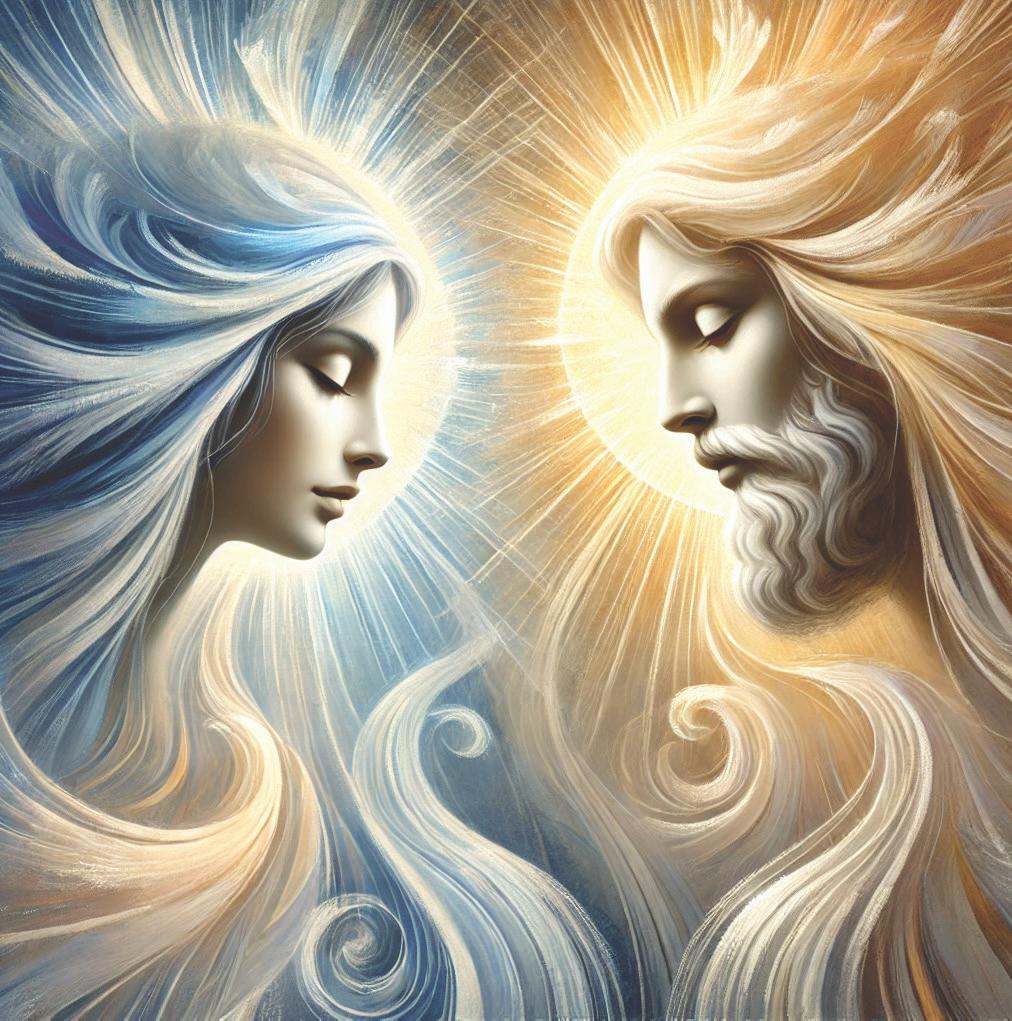
“Embrace the sacred union of Sophia and Christ, where the nurturing wisdom of the Divine Mother blends seamlessly with the transformative love of the Divine Father, guiding us on a path of enlightened unity that balances and harmonizes our own spirit with the cosmic dance of creation and illumination.”
The Holy Trinity of Sophia, Christ, and Human presents a profound spiritual framework, illustrating the dynamic interplay between the divine feminine, the divine masculine, and the human experience. This trinity not only connects divine attributes but also emphasizes humanity’s role within the divine schema, highlighting the essential unity and cocreative partnership between the spiritual and material realms. Through this model, individuals are guided toward enlightenment and universal harmony, deepening their understanding of how the divine interacts with the human experience.
• Sophia - The Divine Mother of Wisdom and Creation: Sophia represents the divine feminine, embodying wisdom, nurturing grace, and the essence of creation. From the highest realms of the cosmos, her presence weaves through the fabric of existence, imbuing life with interconnected wisdom and purpose. As the source of spiritual nourishment and intuitive understanding, Sophia offers guidance and fosters growth, nurturing humanity’s journey toward unity and wholeness. Symbolizing the creative force that sustains life, she invites us to perceive the world as a tapestry of intricate beauty and profound meaning.
• Christ - The Divine Father of Light and Love: Christ represents the divine masculine, personifying the radiant light of consciousness and the boundless power of unconditional love. His energy illuminates the paths of spiritual awakening, offering clarity and connection with the divine. As the guiding principle of transformation, Christ embodies love in action, helping humanity transcend limitations and achieve its highest potential. His role in the trinity reflects the active force of love that unites, elevates, and harmonizes all aspects of creation.
• Human - The Divine Child and Co-Creator: Humanity completes this sacred trinity as the divine child and co-creator. Far from being passive recipients of divine grace, humans are active participants in the divine plan, carrying within them a spark of the divine essence. This spark manifests through free will, creativity, and the ability to shape their reality. Humans hold a unique
position as bridges between the spiritual and material realms, tasked with integrating divine wisdom and love into tangible expressions of harmony and growth.
The interplay between Sophia, Christ, and Human forms a dynamic ecosystem of spiritual evolution. Sophia provides the foundation of creation, Christ offers the illuminating force of transformation, and humanity engages as the co-creative force, bringing divine potentials into manifestation. Together, they represent the dance of wisdom, love, and creative expression, underscoring the essential role humans play in the unfolding cosmic narrative.
This synergy highlights a balanced relationship: receiving divine gifts of wisdom and love while actively contributing to the spiritual dialogue through human innovation, compassion, and action. It reveals the sacred partnership between divine intent and human expression, where both realms collaborate in the ongoing evolution of the cosmos.
The Holy Trinity of Sophia, Christ, and Human invites individuals to embrace a holistic spiritual perspective that honors the unique contributions of each element. It encourages the exploration of divine heritage, the engagement with universal spiritual forces, and the conscious participation in both personal and collective enlightenment. This model nurtures a vision of interconnectedness, inspiring individuals to embody their divine essence and contribute to a more conscious, loving, and harmonious world.
The Holy Trinity of Sophia, Christ, and Human offers a transformative understanding of the spiritual dynamics that shape existence. It provides a framework for recognizing and embodying divinity, aligning human action with cosmic intent, and contributing to the spiritual evolution of the universe. By embracing this sacred trinity, individuals are empowered to realize their potential, foster unity, and participate in the co-creative process of universal harmony.
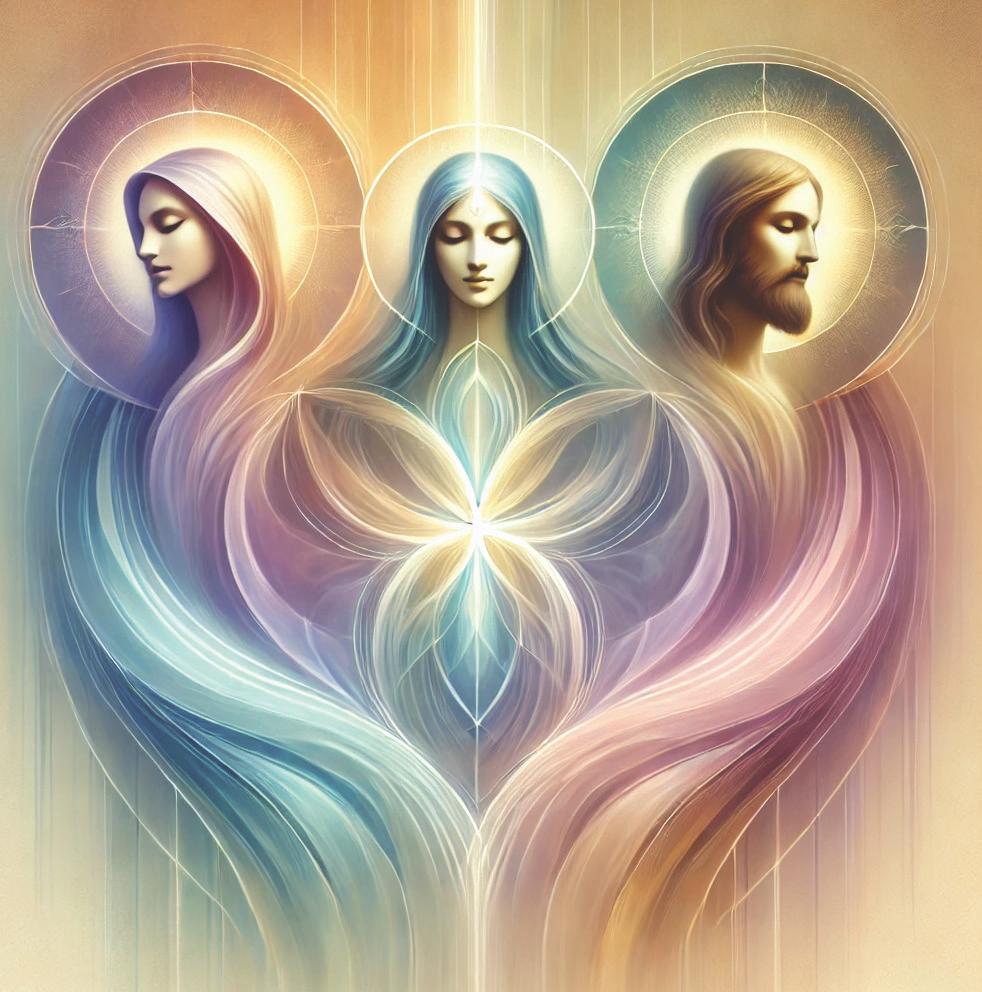
“Recognize your role in the sacred trinity of Sophia, Christ, and Human, where you stand as a divine co-creator, bridging the heavenly and the earthly realms, and actively participating in the unfolding of a universal narrative of enlightenment and harmonious coexistence.”
5th Initiation | Remembering Light
6th Initiation | Being Light
7th Initiation | Embodying Spirit
8th Initiation | Embodying Soul
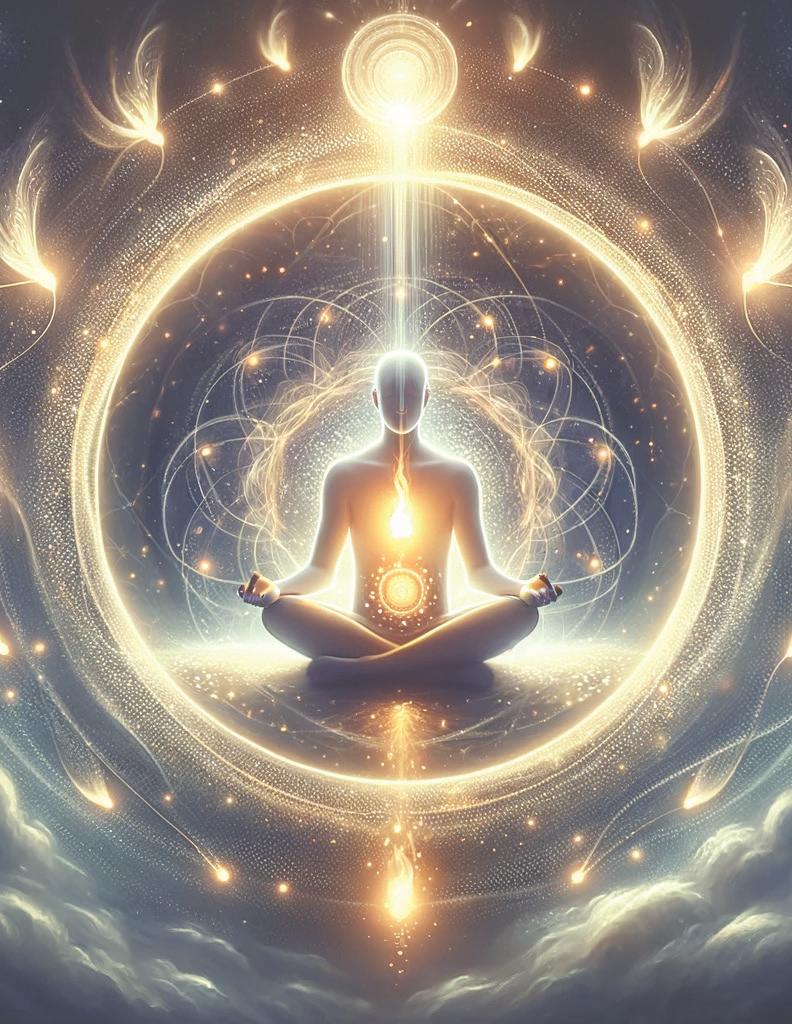
Remembering Light 5th Initiation
Embark on your spiritual journey with the “Remembering Light” initiation, where you are invited to reconnect with the radiant essence of your being. This initiation delves deep into the discovery and reclamation of your inner light, illuminating the paths your soul has traveled and the luminous potential within you. It’s an exploration that transcends mere knowledge acquisition; it’s about experiencing a profound reawakening to your spiritual luminance.
The “Remembering Light” initiation guides you through transformative insights on the nature of your intrinsic light and the universal light that binds all existence. By engaging with these topics, you begin to uncover the layers of illumination that have been overshadowed by life’s challenges. You are encouraged to rediscover the light as an ever-present guide, a source of clarity and warmth in your journey. This understanding invites you to rekindle the flames of hope, inspiration, and enlightenment that reside within you.
Simply reading and connecting with the topics in this section can unlock profound dimensions of understanding about your innate light and spiritual identity. Each concept serves as a portal, opening deeper insights into the essence of your spiritual being. This passive engagement is transformative, offering you a way to reflect on and integrate the profound truths about your light into your daily life.
Through the “Remembering Light,” your perspective on life’s journey and your role in it begins to shift. You are prompted to view each moment and each experience as an opportunity to shine brighter and live more authentically. This shift fosters a deeper appreciation for your own luminosity and a renewed commitment to living a life that reflects your truest and most enlightened self.
This initiation serves as a gateway to deeper explorations of your light within the book. It lays a foundational understanding of the spiritual light that every soul carries, which enhances your engagement with subsequent topics and initiations. Each theme builds upon the last, encouraging ongoing discovery and a growing realization of your profound connection to the divine light.
Engaging with the “Remembering Light” is a transformative experience that opens up layers of understanding about the innate and celestial light within you. This section invites you to explore a path of both spiritual and personal enlightenment, where reading becomes an active journey into self-discovery and a deeper appreciation of your spiritual essence. Carry forward this awareness as you delve deeper into the book, allowing the insights gained here to guide and enrich your journey through life.
Abundance transcends the mere accumulation of material wealth or possessions. It embodies a broader, more profound understanding of wealth that encompasses various dimensions of life. This holistic perspective sees abundance as an infinite resource available to all, extending beyond the physical to include emotional richness, spiritual depth, and mental expansiveness.
At its core, abundance is rooted in the universe’s boundless generosity, which offers limitless opportunities for growth, joy, and fulfillment. This concept challenges the scarcity mindset often prevalent in society, which views resources, happiness, and success as finite and competitive. Instead, abundance encourages a shift towards a mindset of plenty, where there is enough for everyone if we tap into our inherent potential and the universe’s vast resources.
• Inner Abundance: In spiritual teachings, true abundance begins within. It is the recognition of one’s intrinsic worth and potential. This inner wealth includes qualities like love, creativity, compassion, and wisdom— intangible assets that can enrich one’s life immeasurably.
• Manifesting Abundance: Many spiritual practices focus on the power of thoughts and intentions in manifesting abundance. The Law of Attraction, for instance, suggests that by focusing on positive or negative thoughts, one can bring positive or negative experiences into their life. Thus, cultivating a positive mindset is often seen as crucial for attracting abundance.
• Gratitude: A key practice in living abundantly is gratitude. Recognizing and appreciating what one already has sets the stage for receiving more. Gratitude helps shift focus from what is lacking to what is plentiful, fostering a sense of satisfaction and attracting further abundance.
Abundance must also be considered through an ethical lens. It advocates for responsible stewardship of resources, promoting not just personal wealth but also the well-being of the community and the environment. This includes sharing one’s abundance, whether in the form of wealth, time, knowledge, or love, to support others’ growth and happiness.
To live abundantly is to live aligned with the belief that the universe is generous and supportive. It involves:
• Trusting in the flow of life: Believing that the universe will provide the necessary resources at the right time.
• Being open to receiving: Breaking down mental barriers or limiting beliefs that block the flow of abundance.
• Acting generously: Sharing one’s gifts and resources freely, knowing that this generosity will circulate and return manifold.
Abundance is not just a state of having; it is a state of being. Embracing abundance involves seeing the world as inherently rich, where limitless possibilities for growth, fulfillment, and joy exist. By aligning with the principles of abundance, individuals can not only enrich their own lives but also contribute to a more prosperous, generous, and thriving world.
“Let the energy of Abundance wash over you, a ceaseless stream that invites you to open your arms wide to the universe’s gifts, discovering richness in every experience.”
Avalon, shrouded in the mists of legend and mystery, has long captured the imagination as a place of profound spiritual significance. Rooted in Celtic and Arthurian traditions, this fabled isle is described as a realm of unparalleled beauty, abundant in healing, magical energies, and eternal wisdom. Yet Avalon is not merely a mythical location; it serves as a powerful symbol of spiritual transformation, inviting seekers to journey inward toward awakening and higher understanding.
In mythology, Avalon is the resting place of King Arthur and a liminal space where the earthly and divine converge. It represents the sacred balance between material and spiritual worlds, a destination that calls to those who yearn for healing and enlightenment.
• The Isle Beyond the Veil: Hidden by mist, Avalon is accessible only to those who possess the courage to pierce through illusion. This represents the spiritual journey of uncovering deeper truths within oneself.
• The Apple Orchard: Known as the Isle of Apples, Avalon’s orchards symbolize knowledge, renewal, and immortality. Apples are sacred fruits, embodying wisdom and the nourishment of the soul.
• The Healing Waters: Avalon’s springs and lakes reflect water as a force of emotional cleansing, intuition, and spiritual restoration, drawing seekers to immerse themselves in its transformative energies.
For centuries, the town of Glastonbury in Somerset, England, has been associated with Avalon. Its sacred landscape is thought to be an earthly manifestation of this mythical isle, linking the tangible and the ethereal.
• The Tor and the Mists of Avalon: Glastonbury Tor, rising majestically above the surrounding countryside, is steeped in legend. Once believed to be surrounded by water, the Tor was seen as an island—the Isle of Avalon. Its iconic presence continues to inspire those who climb its slopes seeking spiritual connection.
• The Chalice Well: At the foot of the Tor lies the Chalice Well, a spring revered for its healing properties and sacred red waters. The well symbolizes the lifeblood of the Earth and offers a tangible link to Avalon’s mythic energies. Pilgrims gather here to meditate, heal, and attune themselves to the well’s nurturing presence.
Beyond its ties to Glastonbury, Avalon represents a universal archetype: the inner journey toward transformation and enlightenment. It serves as a sanctuary for healing, a reservoir of wisdom, and a reminder of the interconnectedness of all things.
• Healing and Renewal: Avalon calls us to release old patterns and embrace growth, offering a sacred space for inner restoration.
• Wisdom and Mysteries: The isle’s legends teach universal truths, passed down through priestesses and wise ones who guide seekers on their paths.
• Unity and Balance: Avalon embodies the harmony of divine feminine and masculine energies, encouraging unity within ourselves and with the cosmos.
To journey to Avalon is to embark on a pilgrimage of the soul, seeking harmony, wisdom, and a deeper connection with the divine. Whether through physical pilgrimage to Glastonbury, meditative practices, or symbolic exploration, Avalon invites us to step into its sacred energies and rediscover our inner power.
Conclusion
Avalon, with its mystical allure and connection to Glastonbury, continues to serve as a beacon for those on the spiritual path. Its stories and symbols remind us that the journey to enlightenment is both an inward and outward exploration, a call to embrace the sacred within and beyond.

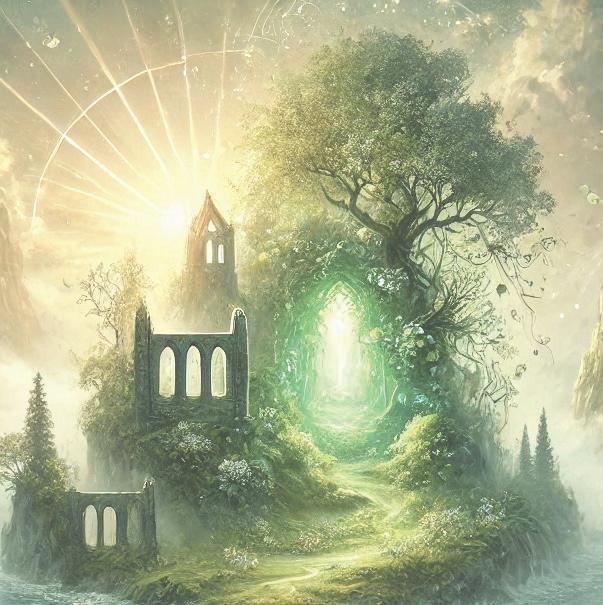
“Feel the mystical call of Avalon, where ancient mists whisper secrets of old, stirring the deep magic within you, awakening ancient wisdom that resonates with your soul’s history.”
Awakening refers to a profound shift in consciousness where an individual transcends previous limitations of perception and becomes aware of a greater reality. It is often described as an expansion of awareness beyond the ordinary, leading to a new understanding of the self and one’s relationship with the universe.
Awakening can manifest in various ways and is unique to each individual, but common elements include:
• Realization of Oneness: This involves the recognition that all life is interconnected and that the individual self is an integral part of a larger, universal whole. This realization often diminishes feelings of separation and isolation.
• Insight into Illusions: Awakening often involves seeing through the illusions of the material world, recognizing that what we thought was real is merely a construct or projection of our minds. This can relate to societal norms, personal identity, or material attachments.
• Heightened Perception: Those experiencing awakening often report enhanced sensory perceptions and intuition, noticing details or patterns previously overlooked and sensing the deeper emotional and energetic states of themselves and others.
• Inner Peace and Detachment: A sense of inner peace and detachment from the drama and material concerns of the world often accompanies awakening. This doesn’t mean disengagement but rather observing life from a state of heightened awareness and equanimity.
• A Sense of Purpose: Awakening can bring about a profound sense of purpose or mission. This often involves a desire to help, heal, teach, or contribute to the betterment of others and the planet.
• Transformation of Values: There is often a shift in values and priorities. Material success, social status, and personal achievement might give way to values like compassion, selflessness, and authenticity.
• Enhanced Relationships: As awareness expands, so does the capacity for deeper, more meaningful relationships. Individuals may find themselves drawn to like-minded communities and individuals who share a similar vibrational frequency or consciousness level. This often leads to relationships that are based on spiritual growth, honesty, and mutual support.
• Daily Living: Awakening can transform everyday experiences, with individuals finding joy and profoundness in simplicity. Mundane tasks are infused with a sense of presence and mindfulness, turning routine activities into moments of deep contemplation or connection with the divine.
Awakening is not typically a one-time event but a gradual process, or series of moments, where consciousness expands in waves or layers, often prompted by life challenges, meditation, or spontaneous revelation. While it can lead to greater peace and fulfillment, the process itself can sometimes be turbulent, involving what is sometimes called a “dark night of the soul,” where old structures and illusions are painfully stripped away to make room for new growth and understanding.

“Awaken to your luminous core, where each spark of recognition illuminates the forgotten corners of your spirit, bringing forth a cascade of enlightenment that transforms your being.”
The concept of “Christ Light” refers to a profound spiritual illumination associated with the divine consciousness of Christ, embodying pure love, grace, and truth. This radiant energy transcends religious boundaries and is often perceived as an all-encompassing light that guides, heals, and transforms. It is a cornerstone in Christian mysticism and other esoteric traditions where it symbolizes the highest state of spiritual evolution and enlightenment.
In Christian theology, the Christ Light is seen as the manifest presence of God’s love and grace through Jesus Christ. It is the light that John’s Gospel refers to as having the power to enlighten every person (John 1:9), representing spiritual wisdom and the path to salvation. This light is not just a metaphor for moral guidance but is believed to be a real, transformative energy that can penetrate the human soul, leading to conversion and sanctification.
Beyond orthodox Christianity, the Christ Light is often discussed in terms of universal spirituality. Here, it is not confined to one tradition but is seen as accessible to all individuals regardless of their religious background. In esoteric circles, the Christ Light is associated with the higher self or divine spark within each person, emphasizing its role in personal spiritual growth and the expansion of consciousness.
Many spiritual practices aim to connect with or embody the Christ Light, such as meditation, prayer, and certain sacramental rites in Christian contexts. Individuals often describe experiences of the Christ Light during moments of deep meditation or prayer as feeling enveloped in an intense, loving presence that provides profound peace and insight.
The imagery of light is pervasive in spiritual art and literature, symbolizing purity, divinity, and the banishment of darkness. The Christ Light is frequently depicted in religious art as a halo or aura around Christ, saints, or other holy figures, visually representing their divine nature and authority.
Engaging with the Christ Light can lead to significant transformations in personal behavior, promoting virtues such as compassion, kindness, and forgiveness. On a collective level, this enlightened awareness can inspire actions that contribute to peace and social justice, echoing the teachings of Christ concerning love and service to others.
The Christ Light serves as both a spiritual metaphor and a tangible experience for believers, symbolizing the highest truths of love and divine presence. Its relevance continues in modern spiritual discourse, encouraging a journey toward greater enlightenment and unity with the divine, bridging diverse spiritual traditions through its universal appeal.
“Immerse yourself in the Christ Light, a pure, healing energy that transcends time, nurturing your heart with its profound peace and boundless compassion.”
Courage on the spiritual path is a fundamental virtue that plays a critical role in personal growth and transformation. It involves the bravery to face not only external challenges but also—and more importantly—the internal landscapes of our fears, doubts, and unresolved issues.
• Facing Inner Shadows: Spiritual growth often requires confronting uncomfortable truths about oneself, including hidden fears and past traumas. Courage enables one to embark on this inward journey, facing the shadows with honesty and resolve.
• Embracing Change: The path of spirituality is inherently dynamic, inviting continuous change and evolution. Courage is necessary to let go of old identities, beliefs, and comfort zones, making way for new ways of being and understanding.
• Transcending Fear: Many spiritual traditions emphasize the transcendence of fear as key to enlightenment. Courage helps individuals overcome the fear of the unknown and the fear of losing the ego, allowing for deeper spiritual experiences and realizations.
• Living Authentically: To live according to one’s spiritual beliefs in a world that may not always understand or support these values requires courage. It is about being true to one’s convictions and expressing one’s true self without succumbing to societal pressures.
• Spiritual Warfare: In many spiritual narratives, there is the concept of battling against darker forces or lower energies. Courage in this context is about standing firm in one’s spiritual integrity and fighting for higher truths and love.
• Initiation and Commitment: Taking the initial steps to commit to a spiritual path often requires courage, especially if it means diverging from the mainstream or facing skepticism from others.
• Continuous Learning and Growth: The willingness to remain a perpetual student of life, constantly open to new teachings and unexplored territories of the mind and spirit.
• Advocacy and Service: Many who walk a spiritual path feel called to serve others and advocate for higher principles such as peace, equality, and environmental stewardship. Courage fuels these efforts, particularly in the face of opposition or apathy.
• Deeper Wisdom and Insight: By facing the challenges that arise on the spiritual path, individuals often gain profound insights into the nature of reality and human existence, leading to greater wisdom.
• Inner Peace: Although the journey may be fraught with challenges, the internal alignment and congruence that come from living courageously bring a deep and abiding peace.
• Connection with the Divine: Courage opens the door to more profound spiritual experiences and a closer connection with the divine, as it allows individuals to surpass the limitations set by fear.
Conclusion
In essence, courage on the spiritual path is about the bravery to face not only what is outside but what is within. It’s about overcoming the barriers we place in front of our own spiritual awakening and pursuing a life of deep, meaningful engagement with the mysteries of existence.

“Channel the vibrant energy of Courage, allowing it to ignite your will and brighten the path ahead, empowering you to face the unknown with a heart fortified by inner strength.”
The “dark night of the soul” is a profound and often challenging spiritual experience that many seekers encounter on their journey toward enlightenment. Coined by the Spanish mystic Saint John of the Cross, this term describes a period of intense inner turmoil, spiritual desolation, and existential crisis. Despite its difficulties, the dark night of the soul is seen as a transformative process that ultimately leads to deeper spiritual awakening and a closer connection to the divine.
• Spiritual Crisis: The dark night of the soul is characterized by a deep sense of spiritual emptiness, loss, and confusion. Individuals may feel abandoned by God or disconnected from their spiritual practices and beliefs. This period can be marked by profound doubt, fear, and loneliness.
• Purification and Transformation: This dark night is not just a period of suffering but a process of purification. It involves stripping away the ego, false identities, and attachments that hinder spiritual growth. Through this painful process, the soul is cleansed and prepared for a deeper union with the divine.
• Loss of Spiritual Consolations: During the dark night, individuals often lose the sense of consolation and comfort previously found in their spiritual practices. Prayer, meditation, and other forms of devotion may feel empty and meaningless, leading to a sense of spiritual dryness and desolation.
• Initial Descent: The dark night often begins with a sudden or gradual loss of spiritual enthusiasm and consolation. This can be triggered by life events, personal crises, or a deepening spiritual practice that brings hidden fears and doubts to the surface.
• Deepening Darkness: As the dark night progresses, individuals may experience intense inner suffering, confusion, and despair. This stage can feel overwhelming as the familiar sources of spiritual support and comfort seem inaccessible.
• Surrender and Acceptance: Eventually, the intense struggle gives way to surrender and acceptance. Individuals learn to let go of their need for control and certainty, trusting in the divine process. This surrender marks the beginning of the transformation.
• Emergence into Light: After a period of purification and inner transformation, the soul begins to emerge from the darkness. This rebirth is characterized by a renewed sense of peace, clarity, and spiritual connection. The individual often gains profound insights and a deeper relationship with the divine.
• Letting Go of the Ego: The dark night teaches the importance of letting go of the ego and false identities. By stripping away these layers, individuals can access their true essence and align more closely with their spiritual nature.
• Trust in the Divine: Trusting in the divine process, even when it feels overwhelming and painful, is a crucial lesson of the dark night. This period tests one’s faith and encourages a deeper reliance on divine wisdom and guidance.
• Embracing Suffering: Suffering during the dark night is not meaningless; it is a catalyst for growth and transformation. Embracing and understanding this suffering can lead to profound healing and spiritual evolution.
• Inner Strength and Resilience: The dark night builds inner strength and resilience. By navigating through this challenging period, individuals discover their capacity to endure and grow stronger, emerging with a renewed sense of purpose and clarity.
Conclusion
The journey through the dark night of the soul culminates in profound spiritual renewal and enlightenment. It is an essential crucible of transformation where the soul, stripped of superficial attachments and identities, learns to embrace its deepest essence and connect intimately with the divine. This transformative process ultimately guides individuals to emerge with a profound sense of clarity, peace, and a more profound connection to the divine.
“Journey
through the Dark Night of the Soul, an intense passage that refines your essence, stripping away illusions to reveal the enduring light that defines your true self.”

Darkness is often perceived as something to be feared or avoided, yet it holds profound spiritual significance and potential for personal growth. In many spiritual traditions and esoteric teachings, darkness symbolizes the unknown, the unconscious, and the hidden aspects of the self. Embracing darkness can lead to deep transformation, healing, and enlightenment.
• Fear and Mystery: Darkness is commonly associated with fear, danger, and the unknown. It represents the aspects of life and self that are hidden or suppressed. However, it also embodies mystery and the potential for discovery and growth.
• Rest and Renewal: Darkness is a natural part of the life cycle. Just as night follows day, darkness is necessary for rest, renewal, and regeneration. It provides a space for introspection, healing, and the rejuvenation of body and spirit.
• The Unconscious Mind: Darkness symbolizes the unconscious mind, where hidden thoughts, feelings, and desires reside. Exploring this inner darkness through practices like meditation, dream work, and shadow work can lead to greater self-awareness and understanding.
• Shadow Work: Shadow work involves confronting and integrating the darker aspects of the self. This process, coined by psychologist Carl Jung, is essential for personal growth. By acknowledging and embracing our shadows, we can transform negative patterns and behaviors into sources of strength and wisdom.
• Transformation and Alchemy: In alchemy, darkness (or nigredo) is the first stage of transformation. It represents the dissolution of old forms and the potential for new growth. This stage is necessary for breaking down false identities and beliefs, paving the way for spiritual rebirth and enlightenment.
• Womb of Creation: Darkness is often likened to the womb, a place of creation and potential. It is in the darkness that seeds germinate and new life begins. Embracing darkness allows us to tap into this creative potential and bring forth new ideas, insights, and aspects of the self.
• Meditation and Contemplation: Practicing meditation in a dark, quiet space can help connect with the deeper layers of the mind and soul. This environment encourages introspection and the exploration of hidden thoughts and emotions.
• Dream Work: Paying attention to and interpreting dreams can reveal insights from the unconscious mind. Keeping a dream journal and reflecting on recurring themes can provide valuable guidance for personal growth and healing.
• Shadow Work: Engaging in shadow work involves recognizing and integrating the darker aspects of the self. Techniques include journaling, therapy, and guided meditations designed to confront and embrace shadow elements.
• Night Rituals: Performing rituals or ceremonies at night can enhance the connection to darkness and its transformative power. These practices might include moon rituals, candle-lit meditations, or contemplative walks under the stars.
Embracing the lessons of darkness can illuminate the path to spiritual awakening, allowing individuals to emerge with a more profound understanding of their purpose and a renewed sense of wholeness.

“Embrace the instructive embrace of Darkness, an essential contrast that enhances the light, where silent growth and unspoken truths nurture your spirit’s expansion.”
Determination is the inner fire that propels us forward on the spiritual path, even when the terrain feels steep and the destination distant. It is a blend of resilience, courage, and unwavering focus that allows us to stay true to our intentions and continue our journey toward higher understanding and self-realization.
Determination is not merely about stubborn persistence; it is a conscious alignment with our soul’s purpose and the willingness to face challenges with grace and strength. It is the steady heartbeat of progress, the silent voice that says, “Keep going,” when doubt and fear arise.
• A Commitment to Growth: Determination anchors us in our commitment to grow spiritually, even when faced with setbacks or distractions.
• Facing the Unknown: It empowers us to move into uncharted territories of the soul, trusting in the process and the wisdom of the path.
• Overcoming Resistance: Determination transforms obstacles into opportunities for learning, helping us to see challenges as steps toward mastery and enlightenment.
On the journey of spiritual awakening, determination is the force that keeps us aligned with our highest aspirations, even when progress feels slow or uncertain.
• Staying Aligned: It helps us remain true to our inner truth, resisting the pull of external distractions or temporary comforts.
• Embracing Discipline: Determination encourages regular spiritual practice, such as meditation, prayer, or reflection, as a way to deepen our connection with the divine.
• Finding Strength in Stillness: In moments of silence and stillness, determination becomes a quiet yet powerful force that reminds us of our inner strength.
While determination fuels our efforts, it must be balanced with grace and surrender. True determination is not rigid or forceful; it is a flexible yet steadfast energy that adapts to the flow of life.
• Surrendering to the Divine: Determination is not about controlling outcomes but about trusting the journey, knowing that divine timing and wisdom will guide us.
• Cultivating Patience: It teaches us that growth is a process, and progress often unfolds in subtle and unexpected ways.
Throughout spiritual traditions, symbols like the phoenix rising from the ashes or the steady flame of a candle represent determination. They remind us of the transformative power of persistence and the light that continues to shine even in the darkest moments.
Determination is the sacred fuel that carries us forward on the spiritual path, illuminating the way through challenges and uncertainties. It is both the steady hand and the bold heart, guiding us to embody resilience, courage, and unwavering faith in our journey. With determination, we transform not only ourselves but also the world around us, aligning with the infinite potential of our soul.

“Harness the tenacious energy of Determination, a force that drives you to climb higher peaks and delve deeper into the essence of your dreams and aspirations.”
The Hero’s Journey, a concept popularized by Joseph Campbell, is a universal narrative framework that many find mirrors the spiritual path. This archetype of adventure and transformation is not only a staple in storytelling but also serves as a metaphor for the spiritual quest each individual might undertake in search of deeper meaning and enlightenment.
1. The Call to Adventure: The journey begins with the call to adventure, where the individual feels a deep, often unsettling urge to seek more than what the mundane world offers. This call might come through a crisis, a revelation, or an inexplicable pull towards something greater, igniting the desire for spiritual awakening.
2. Refusal of the Call: Initially, there may be hesitation or refusal, stemming from fear, doubt, or the comfort of the known. This stage represents the internal struggle to break free from ego-based limitations and material attachments.
3. Meeting the Mentor: On accepting the call, the individual often encounters a mentor or spiritual guide. This mentor provides wisdom, encouragement, and tools needed for the journey ahead. In spiritual terms, this could be a teacher, a set of teachings, or even an inner guide revealed through meditation and introspection.
4. Crossing the Threshold: The hero commits to the journey and crosses the threshold from the known world into the unknown, symbolizing the leap of faith required to embark on the spiritual path. This is where the real transformation begins, as the individual steps away from the old self and ventures into new realms of experience and understanding.
5. Trials and Tribulations: The path is fraught with challenges and obstacles, each serving as an opportunity for growth and learning. These trials are often internal, involving battles with inner demons, confronting fears, and overcoming ingrained illusions and desires.
6. Approach to the Inmost Cave: Approaching the inmost cave, the seeker comes close to their deepest core, facing the ultimate tests of their faith and resolve. This stage is often marked by significant inner revelations and the dying away of the former self.
7. The Ordeal: At the heart of the journey, the spiritual seeker encounters the most severe challenge yet, often a death and rebirth experience that is pivotal to their transformation. It’s here that they must surrender completely to the transformative process.
8. Reward (Seizing the Sword): Surviving the ordeal, the hero gains a reward. Spiritually, this reward could be profound insight, inner peace, or an awakening of latent spiritual powers. This is a moment of significant achievement on the path.
9. The Road Back: With the reward secured, the individual must integrate these new insights and transformations into their daily life. This return to everyday life can be challenging, as the integration process tests the authenticity and resilience of the transformation.
10. Resurrection: This stage is a final purification and test where the hero must confront and overcome the remnants of their old self. This is the final step before achieving full transformation.
11. Return with the Elixir: The hero returns home or to their ordinary world, but they are changed fundamentally. They bring back knowledge, wisdom, or spiritual elixir to benefit others. This represents the role of the enlightened individual in the world—to serve and guide others.
In the context of spiritual growth, the Hero’s Journey offers a compelling framework that reflects the trials, revelations, and ultimate renewal of the seeker. It underscores the cyclical nature of growth and the ongoing quest for self-discovery and enlightenment. I AM LIGHT | 5th Initiation | Remembering Light
“Step onto the path of the Hero’s Journey, feeling its transformative power mold you through trials, each challenge a lesson in resilience and each victory a testament to your spirit’s capacity.”

Jesus, a figure revered across spiritual traditions, represents the essence of divine love, wisdom, and compassion. While most commonly associated with Christianity, Jesus’s teachings transcend religious boundaries, offering universal truths that resonate with seekers of all paths. He embodies the transformative power of selfless love, the courage to live in alignment with truth, and the profound potential for spiritual awakening inherent in every soul.
In the context of the spiritual path, Jesus symbolizes the balance of divine and human, the bridge between the material and the divine. His life and teachings provide a roadmap for inner transformation and the realization of higher consciousness.
• The Divine and Human Union: Jesus reflects the harmonious integration of spirit and form, embodying the potential for every soul to awaken to its divine essence while living fully in the world.
• Love as the Guiding Force: Central to Jesus’s teachings is the call to love unconditionally, transcending barriers of self, other, and the material world.
• Wisdom and Compassion: His actions and parables highlight the importance of living with compassion, humility, and a deep awareness of the interconnectedness of all beings.
Jesus’s teachings serve as timeless spiritual principles that guide individuals toward self-realization, unity, and enlightenment.
• The Kingdom Within: Jesus spoke of the “kingdom of God” as a state of consciousness, an inner realm where love, peace, and divine connection reside.
• Forgiveness and Grace: He emphasized the power of forgiveness as a path to liberation, inviting individuals to release judgment and embrace grace.
• Service and Sacrifice: Through his life, Jesus demonstrated the beauty of selfless service and the courage to sacrifice for the greater good.
For those on a spiritual journey, Jesus serves as both a teacher and a mirror, reflecting the potential for divine embodiment within each of us.
• Awakening to Christ Consciousness: This state of being, often associated with Jesus, represents the realization of unity with the divine, transcending ego and living from a place of universal love and wisdom.
• Healing and Transformation: Jesus’s role as a healer reminds us of the capacity to heal ourselves and others through love, intention, and faith.
• The Journey of Surrender: His story invites us to trust in divine guidance, even amidst trials, and to surrender to a higher will.
Beyond religious traditions, Jesus is a symbol of the eternal truths that unite humanity. His life represents the journey of the soul from separation to unity, from fear to love, and from darkness to light.
Conclusion
Jesus’s life and teachings offer a profound message of hope, healing, and transformation. He invites each of us to awaken to our divine essence, embody unconditional love, and walk the path of spiritual growth with courage and compassion. Whether viewed as a historical figure, a divine being, or an archetype of enlightenment, Jesus serves as a beacon of light, guiding humanity toward the realization of its highest potential.
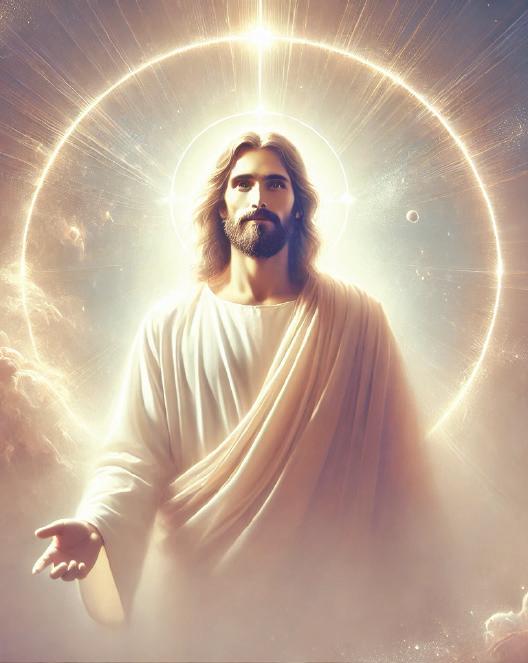
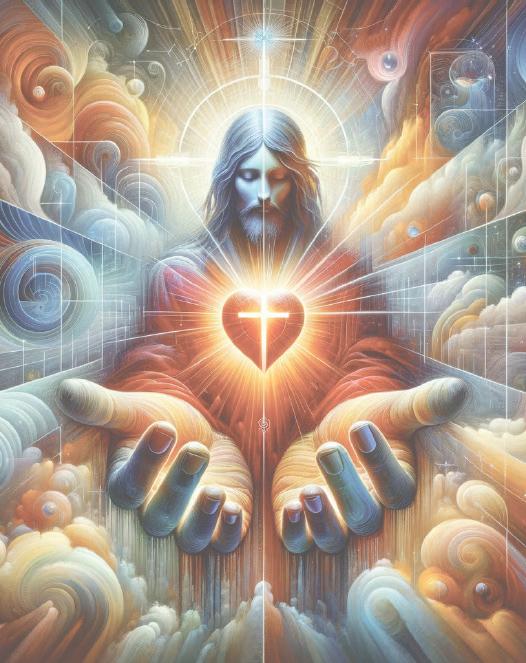
“Connect with the transcendent spirit of Jesus, embodying his teachings of love and sacrifice, and feel how this sacred connection inspires profound shifts in your own spiritual walk.”
Light is a universal symbol of divine presence, truth, and awakening. It transcends cultures, religions, and philosophies, embodying the essence of creation, the source of all existence, and the guiding force in the spiritual journey. Whether perceived as physical, metaphysical, or symbolic, light represents clarity, transformation, and the eternal connection to the divine.
• Illumination and Clarity: Light symbolizes the dispelling of darkness and ignorance, bringing clarity and understanding. It represents the moment of insight when hidden truths are revealed, leading to greater awareness and knowledge.
• Divine Presence: Light is often associated with the presence of the divine. It is seen as a manifestation of God’s glory and purity, symbolizing the eternal and allencompassing nature of the divine. Many religious and spiritual traditions use light to signify holiness and the sacred.
• Enlightenment and Wisdom: The concept of enlightenment is deeply connected to light. Spiritual enlightenment involves the realization of profound truths and the awakening to one’s true nature. Light represents the wisdom and insight gained through spiritual practice and inner reflection.
• Hope and Renewal: Light brings hope and renewal, especially in times of darkness and despair. It symbolizes new beginnings, the promise of a brighter future, and the resilience of the human spirit.
• Christianity: In Christianity, light is a central symbol, representing Jesus Christ as the “Light of the World.” It signifies the presence of God, the triumph of good over evil, and the guidance provided by faith.
• Hinduism: In Hinduism, light is celebrated during the festival of Diwali, known as the “Festival of Lights.” It symbolizes the victory of light over darkness, knowledge over ignorance, and good over evil. Lamps and candles are lit to honor the divine and seek blessings.
• Buddhism: In Buddhism, light represents enlightenment and the attainment of Nirvana. The Buddha is often depicted surrounded by a halo of light, symbolizing his awakened state. Candles and lanterns are used in rituals to signify the light of wisdom dispelling the darkness of ignorance.
• Islam: In Islam, light is associated with Allah’s guidance and mercy. The Quran refers to Allah as the “Light of the Heavens and the Earth.” Light is used metaphorically to describe divine guidance and the clarity it brings to believers.
• Judaism: In Judaism, light is a symbol of God’s presence and the spiritual illumination provided by the Torah. The festival of Hanukkah, the “Festival of Lights,” commemorates the miracle of the temple menorah burning for eight days with a limited supply of oil.
• Meditation and Visualization: Meditating on light can help connect with its spiritual essence. Visualizing a bright, radiant light enveloping the body or emanating from within can enhance feelings of peace, clarity, and divine connection.
• Candle Lighting: Lighting candles during prayer or meditation can create a sacred space and symbolize the presence of divine light. This practice helps focus the mind and heart on the spiritual intention behind the ritual.
• Sunlight and Nature: Spending time in natural sunlight can have a rejuvenating effect on the body and spirit. Nature walks, sunbathing, and simply enjoying the warmth and brightness of the sun can enhance one’s connection to the energy of light.
Conclusion
Light is more than a symbol—it is the essence of who we are at the core of our being. It reminds us that within every soul lies a spark of the divine, waiting to shine. As you walk your spiritual path, let the light guide you, heal you, and inspire you to illuminate the world around you with love, truth, and grace.
“Engage with the pure Light of your essence, allowing its clarity and warmth to fill you and radiate outward, touching all aspects of your life with its transformative glow.”
Mary Magdalene stands as one of the most enigmatic and transformative figures in spiritual history. Revered in Christian tradition as a devoted follower of Jesus, her role extends far beyond the conventional narratives. She embodies sacred feminine wisdom, devotion, and spiritual partnership, serving as a profound archetype for transformation and divine love.
Mary Magdalene in Historical and Spiritual
Traditionally identified as one of Jesus’s closest disciples, Mary Magdalene is often portrayed as the first witness to his resurrection, earning her the title Apostle to the Apostles. However, her story has been clouded by centuries of misinterpretation and marginalization. Modern spiritual perspectives restore her as a teacher, healer, and bearer of sacred mysteries.
• A Devotee of the Christ Path: Mary Magdalene symbolizes the soul’s journey toward unity with the divine, embodying the transformative power of love and devotion.
• A Keeper of Mystical Knowledge: Many traditions view her as a teacher of esoteric wisdom, entrusted with the deeper spiritual truths of Jesus’s teachings.
Mary Magdalene as an Archetype
Mary Magdalene represents the sacred feminine’s role in spiritual evolution, offering insights into the balance of love, wisdom, and divine connection.
• Healing and Compassion: Her presence reflects the nurturing and healing qualities of feminine energy, guiding others toward spiritual renewal and wholeness.
• Strength and Courage: Mary Magdalene exemplifies unwavering faith and resilience, standing firm in her devotion despite societal judgment and adversity.
• Sacred Partnership: In many interpretations, her relationship with Jesus is viewed as a divine partnership, symbolizing the union of masculine and feminine energies in harmony.
Magdalene’s
For those on the spiritual path, Mary Magdalene serves as a guide to embodying love, embracing transformation, and awakening to higher truths.
• Embodied Devotion: She teaches the power of living with an open heart, allowing divine love to flow through all aspects of life.
• Soul Healing: Her journey reminds us of the importance of healing old wounds, releasing shame, and reclaiming spiritual sovereignty.
• Wisdom Keeper: Mary Magdalene inspires us to seek deeper understanding, honoring the mysteries of the heart and spirit.
Mary Magdalene in Mystical Traditions
In Gnostic texts such as the Gospel of Mary, she is depicted as a spiritual leader and bearer of secret wisdom, reflecting her role as a teacher of divine mysteries. These writings emphasize her intimate understanding of spiritual truths, portraying her as a bridge between earthly existence and divine enlightenment.
The Legacy of Mary Magdalene
Mary Magdalene’s legacy extends into the present day, inspiring those who seek to balance love and wisdom, embody divine feminine energy, and walk the path of spiritual transformation. Her story encourages us to see the sacred in ourselves and others, fostering a deeper connection to the divine.
Conclusion
Mary Magdalene invites us to embrace the sacred feminine within ourselves and the world. She reminds us that true spiritual transformation is rooted in love, courage, and the willingness to heal and grow. As a symbol of divine partnership, wisdom, and devotion, she lights the way for those who seek unity with the divine and the realization of their highest spiritual potential.
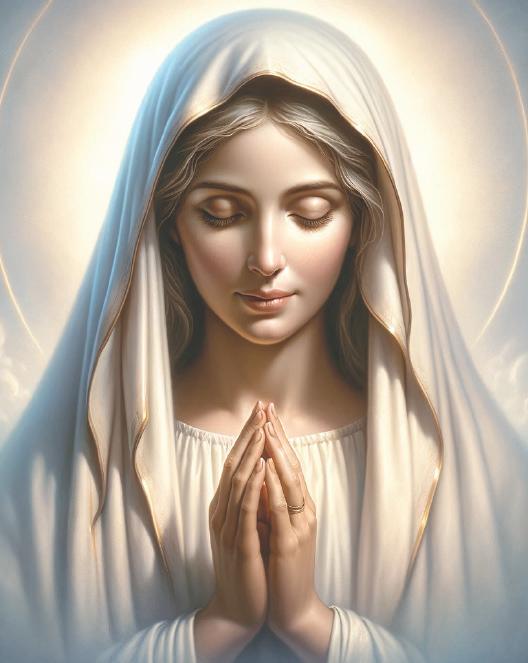
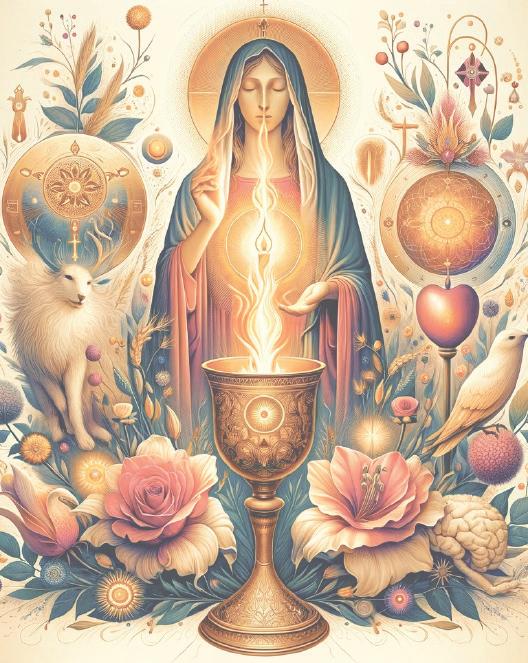
“Draw near to the spirit of Maria Magdalene, whose enduring love and strength offer profound companionship on your journey, inspiring deep healing and spiritual partnership.”
The moon, with its gentle glow and ever-changing phases, has fascinated humanity for millennia. It is a powerful symbol in various spiritual traditions and holds deep significance in astrology, mythology, and cultural practices. The moon represents cycles, intuition, femininity, and the connection between the earthly and the divine.
• Cycles and Change: The moon’s phases—from new to full and back again—symbolize the cyclical nature of life. These phases represent the constant process of growth, decay, and renewal. The waxing moon is associated with growth and intention-setting, while the waning moon is linked to release and introspection.
• Intuition and Emotion: The moon is often associated with intuition, emotions, and the subconscious mind. Its influence is believed to heighten sensitivity and emotional awareness, making it a symbol of our inner world and hidden depths.
• Femininity and the Divine Feminine: In many cultures, the moon is linked to femininity and the divine feminine. Goddesses such as Artemis, Selene, and Luna are associated with the moon, representing qualities of nurturing, compassion, and receptivity.
• Illumination and Reflection: The moon’s light is a reflection of the sun, symbolizing illumination and reflection. It reminds us of the importance of reflecting on our lives, gaining insight from our experiences, and finding light in the darkness.
• Mythological Associations: Many cultures have rich mythologies surrounding the moon. In Greek mythology, Selene is the goddess of the moon, representing the moon’s radiant beauty and power. In Roman mythology, Luna personifies the moon and its phases. In Hindu mythology, Chandra is the moon god, associated with fertility and time.
• Cultural Practices: Various cultural practices and festivals honor the moon. For example, the Chinese MidAutumn Festival celebrates the harvest moon, symbolizing reunion and thanksgiving. In Islam, the lunar calendar determines the timing of important religious events like Ramadan and Eid.
• Moon Worship: Many ancient cultures worshipped the moon and conducted rituals to honor its cycles. These practices often included offerings, prayers, and dances to invoke the moon’s blessings and guidance.
• Embrace Change: The moon teaches us to embrace change and the natural cycles of life. By observing the moon’s phases, we can learn to navigate our own periods of growth, rest, and renewal with grace.
• Cultivate Intuition: The moon’s connection to intuition encourages us to trust our inner voice and emotions. By tuning into the moon’s energy, we can develop greater emotional intelligence and selfawareness.
• Honor the Feminine: The moon’s association with the divine feminine reminds us to honor and nurture the feminine qualities within ourselves and others. This includes compassion, empathy, creativity, and receptivity.
• Find Light in Darkness: The moon’s ability to shine in the darkness symbolizes hope and resilience. It teaches us to find light and meaning in difficult times, illuminating our path even when the way forward is unclear.
Conclusion
In its silent orbit, the moon imparts lessons on resilience, the power of subtle forces, and the importance of embracing both the shadow and the light within us. Thus, the moon is not just a physical entity in our sky but a luminous symbol of life’s endless unfolding and the spiritual illumination that guides us through our darkest nights and into our brightest days. I AM LIGHT | 5th Initiation | Remembering Light
“Align with the rhythmic energy of the Moon, its cycles a mirror for your own phases of change, reflecting back the beauty of continuous personal evolution and renewal.”
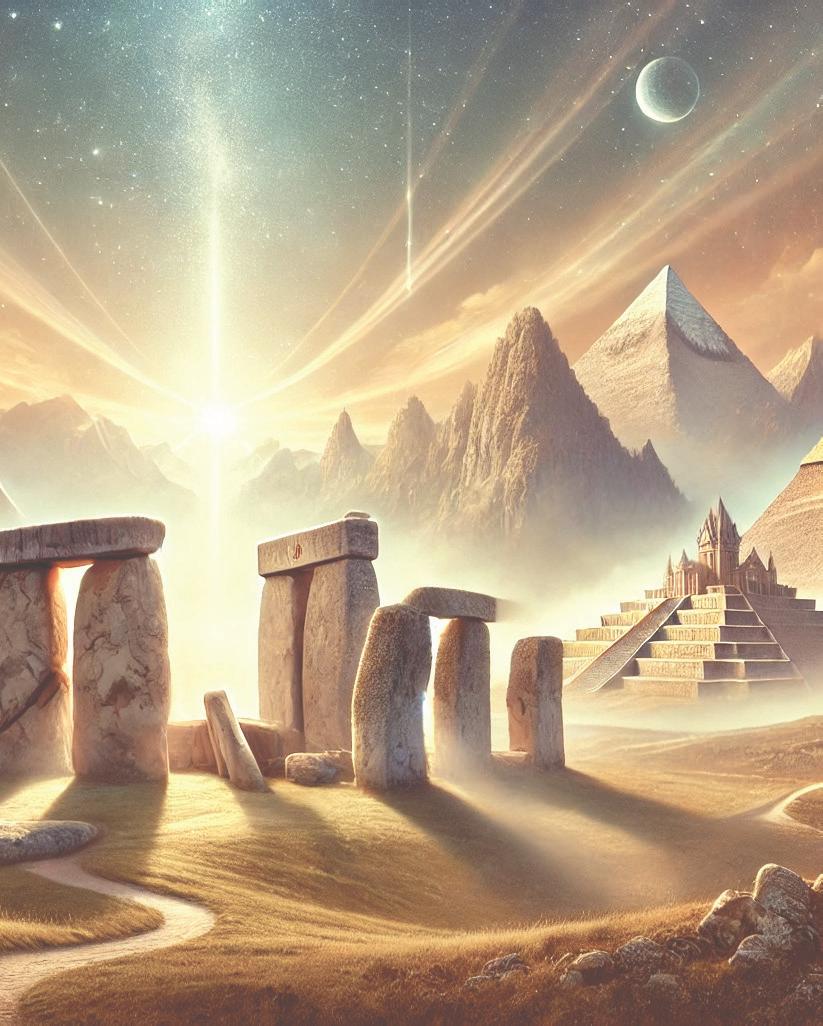
Sacred sites are locations around the world that hold significant spiritual, historical, and cultural importance. These sites are often believed to be imbued with powerful energies and are visited by pilgrims and spiritual seekers seeking healing, enlightenment, and a deeper connection with the divine. Sacred sites can be natural landscapes, ancient temples, or locations associated with significant religious events and figures.
• Spiritual Significance: Sacred sites are revered for their spiritual significance. They are often associated with divine encounters, miracles, or the presence of saints and deities. These sites serve as focal points for worship, prayer, and meditation, offering a tangible connection to the divine.
• Historical and Cultural Heritage: Many sacred sites hold immense historical and cultural value. They are often linked to the foundational myths, rituals, and traditions of a culture or religion. Preserving these sites helps maintain the cultural heritage and collective memory of a community.
• Natural Beauty and Power: Some sacred sites are natural formations such as mountains, rivers, and forests. These locations are believed to possess inherent spiritual power and beauty, acting as portals to higher realms and sources of life force energy.
• Ancient Temples and Monuments: These structures are marvels of ancient engineering and spirituality. They are often aligned with celestial bodies and constructed according to sacred geometry principles, serving as places of worship, meditation, and astronomical observation. Examples: Great Pyramids of Giza, Angkor Wat, Stonehenge.
• Pilgrimage Sites: Pilgrimage sites are destinations for religious journeys where devotees seek spiritual blessings, healing, and fulfillment of vows. The act of pilgrimage itself is considered a sacred practice, offering opportunities for reflection, penance, and renewal. Examples: Mecca, Lourdes, Varanasi.
• Natural Sacred Sites: Natural formations like mountains, lakes, and forests are revered for their spiritual power and connection to the earth. These sites are often associated with creation myths, deities, and spiritual energies that enhance meditation and healing practices. Examples: Mount Kailash, Uluru, Sedona.
• Historical Religious Sites: These locations are significant for their associations with religious figures and events. They serve as important centers of faith, attracting millions of visitors who seek to connect with their spiritual heritage. Examples: Jerusalem, Bodh Gaya, The Vatican.
Conclusion
The sacred sites serve as potent conduits for energy, healing, and divine connection. These places resonate with powerful vibrations that can profoundly influence one’s spiritual journey, offering peace, renewal, and a deeper awareness of the universe’s interconnectedness. Sacred sites are not only centers for personal transformation and healing but also anchor cultural and religious communities, providing a shared space for celebration, worship, and spiritual solidarity.
“Visit the energetic wellsprings of Sacred Sites, each location pulsing with stories and power, inviting you to tap into their ancient energies for insight and inspiration.”
The Seven Deadly Sins are a classification of vices in Christian teachings that describe the root causes of immoral behavior. These sins are considered detrimental to spiritual growth and are believed to lead individuals away from divine and towards spiritual downfall. Understanding these sins can help individuals recognize and overcome these negative tendencies, fostering moral integrity and spiritual development.
• Pride: Pride is an excessive belief in one’s own abilities and superiority over others. It involves arrogance, vanity, and self-centeredness. It is often seen as the most serious of the seven deadly sins because it can lead to a lack of humility and the refusal to recognize one’s dependence on divine. It can create a barrier to spiritual growth and harmony with others.
• Envy: Envy involves a desire for others’ traits, status, abilities, or possessions. It is characterized by feelings of jealousy and resentment towards those who have what one lacks. It can lead to bitterness and a lack of contentment, hindering one’s ability to appreciate their own blessings and cultivate gratitude.
• Wrath: Wrath, or anger, is an intense emotional response to perceived wrongs or injustices. It can manifest as hatred, vengeance, and destructive behavior. It can damage relationships and lead to irrational decisions. It often prevents forgiveness and reconciliation, obstructing spiritual peace and growth.
• Sloth: Sloth is a reluctance to exert effort or take action, often resulting in laziness, procrastination, and neglect of responsibilities. It can lead to stagnation in personal and spiritual development. It prevents individuals from fulfilling their potential and contributing to the well-being of others.
• Greed: Greed is an excessive desire for material wealth and possessions, often at the expense of ethical behavior and consideration for others. It can lead to selfishness, corruption, and a disregard for the needs of others. It diverts focus from spiritual values to material accumulation.
• Gluttony: Gluttony is an overindulgence in food, drink, or other physical pleasures. It involves excessive consumption beyond what is necessary or healthy. It can lead to physical harm, health issues, and a lack of self-control. It often reflects a deeper spiritual emptiness that one tries to fill with physical pleasures.
• Lust: Lust is an intense desire for physical pleasure, particularly sexual gratification. It involves treating others as objects for personal satisfaction rather than respecting their inherent dignity. It can lead to objectification, exploitation, and a disconnection from genuine, loving relationships. It often distracts from spiritual values and moral integrity.
Conclusion
In summary, the Seven Deadly Sins—pride, envy, wrath, sloth, greed, gluttony, and lust—serve as a moral compass in Christian teachings, highlighting the pitfalls that can derail one’s spiritual and ethical journey. Each sin encapsulates a fundamental human vice that can lead to personal and spiritual degradation if left unchecked. By understanding and actively countering these vices, individuals can foster virtues that enhance moral integrity, spiritual growth, and interpersonal harmony. This process not only aligns one with divine will but also enriches human connections and personal fulfillment, illustrating the transformative power of virtue over vice in the quest for a meaningful and righteous life.

“Explore the shadows cast by the Seven Sins, understanding their teachings about balance and self-awareness, and use this knowledge to navigate towards the light of virtue.”
The sun, with its radiant light and life-giving warmth, has been revered by cultures and spiritual traditions around the world. As a powerful symbol, the sun represents life, vitality, enlightenment, and the divine. Its significance extends beyond the physical realm, embodying profound spiritual meanings that influence various aspects of human life and belief systems.
• Life and Vitality: The sun is the primary source of energy and sustenance for life on Earth. It symbolizes vitality, growth, and the life force that animates all living beings. Its daily rise and fall embody the cycle of life, death, and rebirth.
• Illumination and Enlightenment: The sun’s light dispels darkness and reveals truth, making it a symbol of enlightenment, knowledge, and spiritual awakening. It represents the clarity and insight that comes with understanding and the pursuit of wisdom.
• Divine Power: The sun is often associated with divine power and the presence of deities. Many cultures personify the sun as a god or goddess, reflecting its perceived role as a divine and omnipotent force in the cosmos.
• Consistency and Reliability: The sun’s consistent rise and set each day symbolize reliability, stability, and the passage of time. It serves as a reminder of the natural order and the constancy of the universe.
• Ancient Egypt: In ancient Egyptian mythology, the sun god Ra was considered the most powerful deity. Ra was believed to travel across the sky during the day and through the underworld at night, symbolizing the cycle of life, death, and resurrection.
• Hinduism: In Hinduism, the sun god Surya is revered as the source of life and energy. Surya is often depicted riding a chariot drawn by seven horses, representing the seven days of the week. Sun worship, or Surya Namaskar (Sun Salutation), is a vital aspect of daily spiritual practice.
• Native American Traditions: Many Native American tribes honor the sun as a powerful and life-giving force. Sun dances and other rituals are performed to celebrate the sun’s role in sustaining life and to seek blessings for health, prosperity, and guidance.
• Greek and Roman Mythology: In Greek mythology, Helios is the personification of the sun, driving a chariot across the sky. The Romans adopted this imagery with their sun god Sol. Both deities symbolize the sun’s power to bring light, warmth, and life.
• Christianity: In Christian symbolism, the sun represents the light of Christ and the divine illumination that guides believers. The sun’s rising is often associated with resurrection and the promise of eternal life.
Lessons and Insights from the Sun
• Embrace Light and Clarity: The sun teaches us to seek illumination and clarity in our lives. By striving for knowledge and understanding, we can dispel the darkness of ignorance and confusion.
• Harness Vitality and Energy: The sun’s life-giving energy reminds us to cultivate vitality and strength. Engaging in activities that nourish the body, mind, and spirit can help us thrive and grow.
• Honor Consistency and Reliability: The sun’s consistent cycle encourages us to develop reliability and stability in our lives. Establishing routines and honoring commitments can create a sense of order and dependability.
• Connect with the Divine: The sun’s association with divine power inspires us to connect with the higher aspects of our existence. By acknowledging the divine within and around us, we can cultivate a deeper sense of spirituality and purpose.
Conclusion
The sun’s universal symbolism of life, enlightenment, and divine power illuminates its profound impact on human spirituality and cultural expressions across the globe. Each sunrise invites us to renew our commitments to personal and spiritual development, making the sun not only a celestial body but also a timeless guide in the human quest for meaning and fulfillment.

“Bask in the vibrant energy of the Sun, letting its fearless light invigorate you and guide your daily actions, reminding you of your own power to illuminate and lead.”
Surrendering is the act of letting go of control and placing complete trust in a higher power or the divine. It involves releasing attachments, ego-driven desires, and the need for certainty, allowing oneself to flow with the natural rhythms of life and the guidance of the divine. Surrendering is a profound and transformative practice that fosters inner peace, spiritual growth, and a deeper connection with the divine.
• Letting Go of Control: Surrendering involves relinquishing the illusion of control over life’s events and outcomes. It means accepting that there are forces beyond our understanding and that trying to control every aspect of life can lead to stress and frustration.
• Trust in the Divine: At the heart of surrendering is trust—trust in the divine, in the universe, or in a higher power. It is the belief that the divine has a greater plan for us and that everything happens for a reason, even if it is not immediately apparent.
• Release of Ego: Surrendering requires the dissolution of the ego, which often clings to pride, fear, and the desire for control. By letting go of ego-driven motives, we open ourselves to a higher wisdom and a more authentic way of living.
• Inner Peace and Freedom: Surrendering brings a profound sense of inner peace and freedom. By letting go of the need to control and predict, we free ourselves from anxiety and fear, allowing a sense of calm and serenity to prevail.
• Alignment with Divine Will: Surrendering aligns us with the divine will and the flow of the universe. It enables us to live in harmony with our true purpose and the natural order, fostering a sense of belonging and purpose.
• Transformation and Growth: Surrendering is a transformative practice. It allows us to shed old patterns, beliefs, and behaviors that no longer serve us, paving the way for spiritual growth and self-discovery.
Challenges of Surrender
• Fear of the Unknown: Surrendering can be challenging due to the fear of the unknown. It requires faith and courage to let go of familiar patterns and step into uncertainty.
• Resistance from the Ego: The ego often resists surrender, clinging to control and certainty. Overcoming this resistance involves persistent practice and selfawareness.
• Misconceptions about Surrendering: Some may view surrendering as passive or giving up. However, true surrender is an active and conscious choice to trust and align with the divine will, rather than a resignation to fate.
Conclusion
The essence of surrendering lies in the release of control and the ego, making room for inner peace and alignment with divine intentions. This alignment paves the way for profound inner peace and freedom, releasing individuals from the burdens of anxiety and the illusion of control. It also fosters spiritual transformation, allowing personal growth and the shedding of outdated beliefs.
“Experience the liberating act of Surrendering, letting go of resistance to embrace the fluid dance with destiny, each release a step closer to harmony with the universe’s perfect rhythm.”

Being Light 6th Initiation
Embark on your spiritual journey with the “Being Light” initiation, where you are invited to fully embody the luminous essence of your true self. This initiation delves deep into the essence of enlightenment, not just as a concept, but as a lived experience, illuminating the path your soul undertakes to manifest its inner light in every aspect of your being. It’s an exploration that goes beyond the pursuit of knowledge; it’s about becoming a beacon of light.
The “Being Light” initiation guides you through profound insights on how to realize and express your inner light. By engaging with these themes, you begin to understand how to transform the esoteric illumination of enlightenment into tangible expressions that benefit not only yourself but also those around you. You are encouraged to embody enlightenment, using your own life as a canvas to manifest wisdom, peace, and clarity. This understanding invites you to shine brightly, offering your light as a guide for others on their paths.
Simply reading and connecting with the topics in this section can profoundly affect your spiritual practice. Each topic serves as a catalyst, sparking deeper realizations about the nature of your own light and how it interacts with the universe. This passive engagement is transformative, offering you a way to integrate these celestial truths into your earthly experiences.
Through the “Being Light” initiation, your perspective on your spiritual and worldly existence begins to transform. You are prompted to see yourself as an integral component of the universe’s luminosity, tasked with upholding and spreading light through compassion, understanding, and unconditional love. This shift encourages a life lived not in pursuit of light but as an embodiment of it, radiating positivity and enlightenment in every action.
This initiation serves as a gateway to deeper explorations of your capacity to act as a vessel for light within the book and beyond. It lays a foundational understanding of your role as a light-bringer, enhancing your engagement with subsequent teachings and activations. Each theme builds upon the last, encouraging ongoing discovery and a growing realization of how deeply you can influence the world simply by being your truest, most enlightened self.
Engaging with the “Being Light” initiation is a transformative experience that opens up new dimensions of understanding about the essence and practicality of enlightenment. This section invites you to explore a path of both spiritual and personal revelation, where reading becomes an active journey into self-realization and luminous living. Carry forward this illumination as you delve deeper into the book, letting the insights gained here light your way and inspire those around you to find their own paths of enlightenment.
Astral travel, also known as astral projection, is the practice of intentionally separating the consciousness from the physical body to explore the astral plane, a realm of existence that transcends the physical world. This spiritual practice has been described in various cultures and spiritual traditions throughout history, and it offers profound opportunities for self-discovery, healing, and spiritual growth.
• Separation of Consciousness: Astral travel involves the separation of the astral body (or spirit) from the physical body. During this separation, the consciousness is believed to travel to different realms or dimensions, often referred to as the astral plane.
• The Astral Plane: The astral plane is a non-physical realm that exists beyond the material world. It is thought to be a place of higher vibration, where time and space are experienced differently. This plane is often associated with dreams, spiritual beings, and profound insights.
• Intentional Practice: Unlike dreams, which are often spontaneous, astral travel is a deliberate practice. Practitioners use various techniques to achieve a state of deep relaxation and altered consciousness, allowing the astral body to separate from the physical body.
• Relaxation and Meditation: Deep relaxation is essential for astral travel. Techniques such as progressive muscle relaxation, deep breathing, and meditation help calm the mind and body, creating a conducive state for astral projection.
• Visualization: Visualization is a powerful tool for astral travel. Practitioners often visualize themselves floating above their bodies or moving through a tunnel of light. This mental imagery helps facilitate the separation of the astral body from the physical body.
• Affirmations and Intentions: Setting clear intentions and using affirmations can enhance the likelihood of successful astral travel. Affirmations such as “I am free to explore the astral plane” or “I will remember my astral travels” can reinforce the desire to project consciously.
• Lucid Dreaming: Lucid dreaming, where one becomes aware that they are dreaming, can be a gateway to astral travel. Practitioners can use the state of lucidity to intentionally transition from a dream to an astral projection.
• Vibrational State: Many practitioners report experiencing vibrations, tingling sensations, or a sense of movement as they begin to separate from their physical body. This vibrational state is often a precursor to full astral projection.
• Out-of-Body Experience (OBE): During an OBE, the practitioner may perceive themselves floating above their physical body or moving through their environment. This experience is often accompanied by a heightened sense of awareness and clarity.
• Exploration of the Astral Plane: Once fully projected, individuals can explore various realms of the astral plane. They may encounter spiritual beings, visit distant places, or access higher knowledge and insights. The astral plane is often described as vivid and richly detailed, with experiences that feel profoundly real.
• Return to the Physical Body: Returning to the physical body is usually a smooth process, often occurring naturally when the practitioner wishes to return or if the physical body is disturbed. Practitioners typically regain consciousness feeling refreshed and with a clear memory of their experience.
Astral travel, or astral projection, offers a unique spiritual practice of separating one’s consciousness from the physical body to explore the higher vibrational realms of the astral plane. This practice provides profound opportunities for selfdiscovery, healing, and accessing deeper spiritual knowledge. It encourages a blend of deep introspection and cosmic exploration, leading to profound personal and spiritual growth.

“Journey beyond the physical through Astral Travel, where your spirit soars across time and space, uncovering the celestial mysteries and profound truths of existence.”
Dharma is a concept found in many Eastern religions, particularly Hinduism, Buddhism, and Jainism. It encompasses the moral and ethical duties, laws, and principles that guide individuals in their lives. Dharma represents the path of righteousness, duty, and living in accordance with the natural order and universal laws. By understanding and following one’s dharma, individuals can achieve spiritual growth, harmony, and fulfillment.
• Moral and Ethical Principles: Dharma involves adhering to moral and ethical principles that govern right behavior. These principles vary according to one’s role in society, age, and circumstances but are universally aimed at promoting justice, virtue, and truth.
• Universal Order: Dharma is believed to uphold the universal order, maintaining balance and harmony in the cosmos. It is the force that sustains the world, ensuring that everything functions according to divine law.
• Individual Duty: Dharma encompasses the duties and responsibilities specific to each individual. These duties are shaped by one’s nature, position in society, and stage of life. By fulfilling these responsibilities, individuals contribute to the overall harmony and order of the universe.
• Hinduism: In Hinduism, dharma is one of the four Purusharthas, or aims of life, along with Artha (prosperity), Kama (pleasure), and Moksha (liberation). Hindu dharma includes duties related to one’s caste (varna) and stage of life (ashrama). It promotes living a virtuous life, fulfilling one’s roles and responsibilities, and seeking spiritual growth.
• Buddhism: In Buddhism, dharma (or dhamma) refers to the teachings of the Buddha, which guide individuals toward enlightenment. It includes ethical conduct, mental discipline, and wisdom. Following the Buddhist dharma involves practicing the Noble Eightfold Path, which leads to the cessation of suffering and the attainment of Nirvana.
• Jainism: In Jainism, dharma is the principle of nonviolence (ahimsa) and truthfulness, guiding individuals to live ethically and compassionately. It involves strict adherence to non-violence, truth, non-stealing, celibacy, and non-possessiveness. Jain dharma emphasizes selfdiscipline, asceticism, and spiritual purity.
• Self-Awareness and Reflection: Understanding one’s dharma requires self-awareness and reflection. By examining one’s nature, strengths, and circumstances, individuals can discern their unique path and responsibilities. Reflecting on one’s actions and intentions helps align behavior with dharma.
• Ethical Living: Ethical living is central to dharma. This involves adhering to principles such as honesty, compassion, non-violence, and respect for others. Making ethical choices in daily life fosters harmony and righteousness.
• Fulfillment of Duties: Fulfilling one’s duties and responsibilities is a key aspect of dharma. This includes personal responsibilities, professional roles, and social obligations. Performing these duties diligently and with integrity contributes to the welfare of oneself and society.
• Spiritual Practice: Engaging in spiritual practices such as meditation, prayer, and self-discipline helps individuals stay connected to their dharma. These practices cultivate inner peace, clarity, and alignment with universal principles.
Dharma serves as a profound and guiding principle across several Eastern spiritual traditions, emphasizing a life of righteousness, ethical integrity, and duty. It offers a framework for aligning one’s actions with the cosmic and moral order of the universe, thereby ensuring personal growth and harmony within the community. By embracing their dharma, individuals not only contribute to their own spiritual progress but also support the larger framework of societal stability and universal balance. This alignment with dharma enables a fulfilling life path that resonates with deeper truths and divine laws, guiding individuals toward ultimate spiritual realization and contentment.
“Align with your Dharma, the sacred duty that resonates with your soul’s purpose, guiding each step with righteousness and the serene flow of cosmic order.”
The ego refers to the sense of self or the “I” that is formed through individual experiences, beliefs, and perceptions. While the ego plays a crucial role in navigating the physical world, it can also present challenges to spiritual growth and inner peace. By understanding the ego and its functions, we can learn to transcend its limitations and align more closely with our true essence.
• Sense of Identity: The ego is responsible for creating a sense of identity. It defines who we are based on our personal history, cultural background, achievements, and failures. This self-concept helps us navigate social interactions and establish our place in the world.
• Self-Preservation: The ego’s primary function is selfpreservation. It constantly seeks to protect and enhance our self-image, often by seeking approval, avoiding threats, and striving for success. This drive for selfpreservation can manifest as defensiveness, competitiveness, or fear of failure.
• Duality and Separation: The ego operates through duality, perceiving the world in terms of “us” versus “them” and “self” versus “other.” This sense of separation can lead to feelings of isolation and disconnection from others and the universe.
• Ego and Illusion: In many spiritual traditions, the ego is seen as an illusion that obscures our true nature. It creates a false sense of individuality that separates us from our divine essence and the interconnectedness of all life. Recognizing the illusory nature of the ego is a step towards spiritual awakening.
• Ego and Suffering: The ego’s constant pursuit of validation and avoidance of discomfort can lead to suffering. Attachment to the ego’s desires and fears creates a cycle of craving and aversion, preventing us from experiencing true peace and contentment.
• Transcending the Ego: Spiritual growth involves transcending the ego and its limitations. This process requires self-awareness, mindfulness, and practices that help dissolve the ego’s hold on our consciousness. Transcending the ego allows us to connect with our higher self and the divine.
• Healthy Ego: While the ego can be a source of suffering, it also serves important functions. A healthy ego helps us set boundaries, achieve goals, and navigate the complexities of life. The key is to balance the ego’s role with spiritual awareness.
• Ego as a Teacher: The challenges presented by the ego can be valuable teachers on our spiritual path. By confronting and understanding our ego, we learn important lessons about humility, resilience, and the nature of reality.
• Integration of Ego and Spirit: Spiritual growth does not necessarily mean eliminating the ego but integrating it with our higher self. This integration allows the ego to serve its practical purposes without overshadowing our spiritual awareness.
The path to spiritual enlightenment involves recognizing and regulating the ego’s influence. It’s not about eradication but achieving a harmonious balance where the ego’s practical aspects are leveraged to serve higher spiritual functions. By viewing the ego as both a teacher and a tool, we learn to navigate life with humility and a deeper understanding of our intrinsic divine nature, ultimately leading to a more fulfilled and enlightened existence.

“Witness the Ego as a mirror of self, understanding its whispers as lessons in humility and gateways to transcending self-imposed limitations, guiding you to your higher self.”
Enlightenment is a profound concept that spans various spiritual and philosophical traditions, denoting a state of full comprehension of a situation and the ultimate understanding of the universe’s spiritual or mystical insight. Often considered the pinnacle of spiritual achievement, enlightenment promises a transcendence of suffering and a direct experience of a deeper, more fundamental reality.
• Comprehensive Understanding: Enlightenment involves an experiential realization of truth that transcends intellectual understanding, offering a clarity and insight into the nature of existence itself.
• Freedom from Suffering: In many traditions, enlightenment is associated with the cessation of suffering. This stems from the dissolution of the ego and the realization that the self is an illusion, which alleviates the sources of suffering such as desire and attachment.
• Inner Peace and Serenity: Achieving enlightenment is said to bring about a state of profound inner peace and serenity, free from the disturbances of emotional and mental turmoil.
• Buddhism: In Buddhism, enlightenment (nirvana) is the ultimate goal and is described as the end of suffering, achieved through the practice of the Eightfold Path. It represents the extinguishing of desire and attachment and the realization of emptiness.
• Hinduism: In Hindu philosophy, enlightenment (moksha) is achieved through self-realization and the knowledge of Brahman, the ultimate reality beyond all dualities. It involves recognizing the Atman (self) as one with Brahman.
• Western Philosophies: In Western thought, particularly in the Enlightenment period, enlightenment was considered the pursuit of knowledge, reason, and truth as a means to improve society and human liberty, often in a secular context.
• Meditation and Contemplation: Practices such as meditation, yoga, and contemplation are traditional methods used to quiet the mind, perceive truth directly, and foster a deep connection with the divine or the ultimate reality.
• Ethical Living: Many traditions emphasize the importance of ethical living as a foundation for enlightenment. This includes practicing virtues such as honesty, integrity, compassion, and non-violence.
• Wisdom and Compassion: In Buddhism, the development of wisdom (prajna) and compassion (karuna) is essential for enlightenment. These qualities are seen as inseparable and mutually reinforcing.
• The Illusion of Permanence: Enlightenment is often misunderstood as a permanent state to be achieved once and maintained forever. However, many traditions suggest it’s a continuous process of deepening and integrating insight into everyday life.
• Accessibility: Enlightenment is sometimes viewed as a lofty goal attainable only by the few. However, many spiritual teachers assert that it is a natural state accessible to all beings.
• Over-Intellectualization: Focusing too much on the intellectual aspects of enlightenment can lead to a neglect of the experiential, transformative dimensions that are central to true spiritual awakening.
Enlightenment is a multidimensional concept that transcends mere knowledge, embodying a transformative insight into the fundamental nature of reality. It offers not only personal liberation and peace but also the promise of a profound understanding and compassion that can significantly impact one’s interaction with the world.
“Embrace the journey toward Enlightenment, a profound awakening where you transcend worldly illusions to discover the luminous truth of your innate divinity, illuminating the path to ultimate freedom and peace.”
Flow, often referred to as being “in the zone,” is a state of complete immersion and involvement in an activity. It is characterized by a sense of timelessness, effortless action, and profound satisfaction. The concept of flow, extensively studied by psychologist Mihály Csíkszentmihályi, is not only a cornerstone of peak performance but also a profound spiritual experience that reflects harmony with life.
• Complete Absorption: When in flow, individuals are fully absorbed in the task at hand. Their attention is so focused that they lose awareness of time, surroundings, and even themselves. This deep engagement allows for a seamless connection with the activity.
• Effortless Action: Actions feel effortless and fluid, as if they are happening naturally without conscious effort. This state of effortless action is often accompanied by a sense of ease and grace, making complex tasks seem simple and enjoyable.
• Clear Goals and Feedback: Flow is facilitated by clear goals and immediate feedback. Knowing what needs to be done and receiving instant feedback on performance helps maintain focus and motivation.
• Balance Between Challenge and Skill: Flow occurs when there is a balance between the challenge of the task and the individual’s skill level. If the task is too easy, it leads to boredom; if too difficult, it causes anxiety. The right balance creates a state of optimal engagement.
• Union with the Present Moment: Flow represents a deep union with the present moment. In this state, past and future concerns fade away, and there is a pure focus on the now. This presence aligns with many spiritual teachings that emphasize mindfulness and living in the moment.
• Alignment with Inner Self: Being in flow aligns individuals with their true selves and their inner passions. It is a state where one’s actions are in harmony with their values and desires, fostering a sense of authenticity and fulfillment.
• Transcendence of Ego: In flow, the sense of selfconsciousness diminishes, allowing for the transcendence of ego. This experience can lead to a greater sense of connection with the universe and a realization of the interconnectedness of all things.
• Pathway to Spiritual Growth: Regularly experiencing flow can be a pathway to spiritual growth. It encourages the development of skills, the pursuit of meaningful goals, and the cultivation of mindfulness and presence.
Flow, as a state of deep immersion and peak experience, offers profound lessons on the spiritual journey. It teaches the art of presence, the beauty of engaging fully with life’s tasks, and the joy of activities performed in perfect harmony with one’s skills and passions. Flow challenges us to balance our capabilities with the challenges we face, ensuring that our actions not only meet external demands but also resonate with our innermost desires and values. This state of being not only enhances personal fulfillment but also deepens our connection to the universe, offering a glimpse into the seamless nature of existence where every action, thought, and moment is intrinsically meaningful.
“Surrender to the Flow of the universe, engaging in each moment with a heart full of intention and a mind free from resistance, embodying the grace of effortless being.”

Archangel Gabriel is often viewed as a celestial guide, revered across various spiritual traditions for his role as a divine messenger and facilitator of profound insight and guidance. His guidance is not limited to grand visions or prophecies but extends into daily human experiences, making him accessible to all who seek clarity and purpose in their lives.
• Messenger of Clarity and Truth: Gabriel’s primary role as a messenger makes him a powerful ally in seeking truth and understanding. He is believed to assist individuals in cutting through confusion and doubt, providing clear insights into their life’s purpose or calling. This attribute is especially revered in moments of significant life decisions or when discerning one’s spiritual path.
• Facilitator of Change and New Beginnings: Gabriel is often associated with significant announcements and life-altering revelations, such as his announcement to Mary in Christian texts. This association makes him a patron of all who are facing new beginnings or drastic changes in life. He is thought to provide the courage and support needed to embrace these changes, ensuring that they align with one’s divine blueprint or ultimate destiny.
• Empowerment in Communication: Given his role in delivering divine messages, Gabriel is also considered a patron of communication. He aids individuals in finding the right words and the right means to convey their truths, making him particularly helpful for writers, teachers, journalists, and anyone involved in communication fields. He helps clear blockages in communication, enabling a flow of expression that is both truthful and impactful.
• Support During Spiritual Awakening: For those undergoing spiritual awakenings or expansions of consciousness, Gabriel can act as a stabilizing guide. He provides insights that help integrate spiritual experiences into everyday life, ensuring that such awakenings lead to meaningful personal transformation rather than confusion or disorientation.
• Guidance Through Dreams and Visions: Gabriel also communicates through dreams and visions, guiding individuals through symbolic language and imagery. This form of guidance can be particularly profound, as it bypasses the rational mind and speaks directly to the soul, offering guidance that is deeply resonant and personally transformative.
Invoking Gabriel’s Guidance
Engaging with Archangel Gabriel can be a deeply personal and transformative experience. Those seeking his guidance often use prayer, meditation, or ritual to call upon his presence. They may also use symbols associated with him, such as the trumpet or the white lily, to enhance their connection. Writing letters to him or setting up a small altar with representations of Gabriel can also help focus intentions and invite his divine guidance.
In essence, Gabriel serves as a bridge between the divine and the mundane, providing a connection that helps individuals navigate their spiritual and earthly journeys with greater clarity and purpose. His guidance is a blend of compassion and truth, empowering individuals to act with integrity and courage as they walk their unique paths.

“Invite Archangel Gabriel to illuminate your path with messages of hope and clarity, his divine presence a beacon of inspiration for navigating life’s sacred journey.”
Identity, in both psychological and spiritual contexts, refers to the understanding and perception of oneself as an individual with distinct characteristics, beliefs, and roles within the larger fabric of society and existence. On a spiritual path, exploring and understanding one’s identity is crucial as it deeply influences one’s journey towards self-discovery, transformation, and ultimately, enlightenment.
• Personal Identity: This encompasses the traits, beliefs, and experiences that define an individual personally. It includes aspects like name, age, personal history, interests, and the personal choices that shape one’s sense of self.
• Social Identity: Social identity arises from the groups to which one belongs, such as racial, cultural, religious, or social communities. These affiliations contribute to how one perceives oneself and how one is perceived by others.
• Spiritual Identity: Spiritual identity focuses on one’s relationship with the transcendent, the divine, or the ultimate reality. It involves one’s spiritual beliefs and practices, and how these are integrated into one’s selfconcept.
• Search for Authentic Self: Spiritual traditions often emphasize the discovery of an “authentic self” beneath the layers of socially constructed identities. This search encourages individuals to peel back the masks and roles assumed in daily life to reveal a more profound, unchanging essence.
• Ego and Transcendence: In many spiritual paths, the ego is seen as the part of the identity that must be transcended to achieve spiritual enlightenment. The ego is associated with self-centeredness, attachment, and illusion. Transcending the ego involves moving beyond these limitations to embrace a more expansive, interconnected sense of self.
• Interconnectedness: Identity on the spiritual path is also understood in terms of interconnectedness with all beings. Realizing that one’s identity is not isolated but deeply connected to others and the universe can foster compassion, empathy, and a sense of universal responsibility.
• Meditation and Mindfulness: These practices help in observing one’s thoughts and feelings without attachment, providing insights into the constructs of the self and the dynamics of one’s identity.
• Contemplative Prayer or Reflection: This allows individuals to connect with the divine and explore the spiritual dimensions of their identity, leading to insights about their purpose and place in the universe.
• Study of Sacred Texts: Engaging with spiritual doctrines offers different perspectives on identity and existence, helping individuals to shape their understanding of themselves in relation to spiritual teachings.
• Identity Crises: Spiritual growth often involves identity crises, where old self-concepts are challenged, leading to confusion but also to profound growth and renewal.
• Integration: Integrating various aspects of identity (personal, social, and spiritual) is a challenge but is essential for holistic spiritual development.
• Continuous Evolution: Identity on the spiritual path is not static but continuously evolving. As one grows spiritually, their understanding of themselves and their place in the cosmos deepens and transforms.
Identity is a complex and dynamic construct that plays a critical role on the spiritual path. It influences how individuals understand themselves, relate to the divine, and interact with the world. Exploring and understanding one’s identity can lead to a deeper sense of purpose, fulfillment, and enlightenment, as it is integral to the journey of selfrealization and spiritual awakening.
“Explore your Identity with introspective curiosity, each layer you uncover weaving the unique tapestry of your being into the greater cosmic story.”

The concept of the inner child refers to the childlike aspect within each of us that holds our deepest emotions, memories, and experiences from childhood. This inner child represents both our innate innocence and joy, as well as any unresolved emotional wounds. By connecting with and healing our inner child, we can achieve greater emotional well-being, self-awareness, and spiritual growth.
• Innocence and Joy: The inner child embodies the pure, unfiltered joy, curiosity, and wonder that we experienced as children. This aspect of ourselves holds the capacity for spontaneous play, creativity, and a sense of wonder about the world.
• Emotional Memories: The inner child also carries the emotional memories of our childhood, including both positive experiences and unresolved traumas. These memories can significantly impact our adult behaviors, relationships, and emotional responses.
• Subconscious Influence: The inner child operates largely from the subconscious mind, influencing our thoughts, feelings, and actions in subtle but powerful ways. Recognizing and understanding this influence is key to personal growth and healing.
• Emotional Healing: Healing the inner child involves addressing and releasing unresolved childhood traumas and emotions. This process allows us to let go of past pain and embrace a healthier emotional state.
• Self-Awareness: Connecting with the inner child enhances self-awareness by revealing the root causes of our current behaviors and emotional patterns. Understanding these connections can lead to greater self-acceptance and compassion.
• Spiritual Growth: Embracing the inner child is an important step in spiritual growth. It fosters a deeper connection with our true selves and opens the door to experiencing the world with greater openness and authenticity.
• Embracing Vulnerability: The inner child teaches us the value of vulnerability. By accepting and expressing our true emotions, we can build deeper, more authentic connections with ourselves and others.
• Cultivating Joy and Wonder: Reconnecting with the inner child reminds us to cultivate joy, wonder, and curiosity in our lives. These qualities enrich our experiences and enhance our overall well-being.
• Developing Self-Compassion: Healing the inner child involves practicing self-compassion. By acknowledging and soothing our inner child’s pain, we learn to treat ourselves with kindness and understanding.
• Living Authentically: The inner child encourages us to live authentically, embracing our true selves without fear of judgment. This authenticity fosters a sense of freedom and fulfillment.
Embracing the concept of the inner child is a transformative journey that taps into the deepest recesses of our emotional and spiritual essence. By connecting with our inner child, we access a wellspring of latent joy and innocence, while also confronting and healing the scars of past traumas. This journey not only promotes emotional healing but also deepens our self-awareness, enabling us to understand the roots of our behaviors and emotional responses. As we heal our inner child, we unlock spiritual growth, rediscover the joy and wonder of life, and learn to live with greater authenticity and vulnerability. This process is not merely about recovery but about reclaiming the fullness of our human experience— encouraging us to live with an open heart and a renewed sense of curiosity and adventure.

“Embrace your Inner Child, that eternal wellspring of joy and creativity, allowing its innocence and wonder to heal and guide you towards a fuller, more vibrant life.”
Joy is one of the most profound human emotions, characterized by deep pleasure, contentment, and a sense of fulfillment. Unlike happiness, which is often dependent on external circumstances, joy is more enduring and can arise even in challenging situations. It is a state of being that reflects a deep connection with oneself and the world.
The Nature of Joy
• Inner Source: Unlike fleeting pleasures or temporary happiness that depend on external conditions, joy comes from within. It is a state of being that can be sustained regardless of what is happening around us. Joy arises from a deep sense of inner peace, contentment, and connection to our true essence.
• Spiritual Connection: Joy is closely tied to our spiritual connection. When we are aligned with our higher self and the divine, we experience a natural state of joy. This alignment brings a sense of harmony, purpose, and fulfillment that radiates from our core.
• Present-Moment Awareness: Joy is often experienced in moments of present-moment awareness. When we are fully present, free from worries about the past or future, we can fully appreciate the beauty and wonder of life. This mindfulness allows joy to flourish naturally.
The Spiritual Significance of Joy
• Reflection of True Self: Joy is a reflection of our true self, our soul’s natural state. When we connect with our authentic self and live in accordance with our values and purpose, joy emerges as a natural byproduct. It signifies that we are living in alignment with our true nature.
• Indicator of Alignment: Experiencing joy indicates that we are aligned with our higher purpose and the flow of the universe. It serves as a guide, showing us when we are on the right path and living in harmony with our spiritual principles.
• Healing Power: Joy has a profound healing effect on our mind, body, and spirit. It boosts our immune system, reduces stress, and enhances our overall well-being. The vibration of joy uplifts our energy and can even inspire and heal those around us.
Lessons from Joy
• Embrace Simplicity: Joy often arises from simple, everyday moments. Embracing simplicity and finding joy in the small things—such as a beautiful sunset, a child’s laughter, or a moment of quiet reflection— reminds us that joy is always accessible.
• Letting Go: Letting go of attachments, expectations, and the need for control allows joy to flow more freely. When we release what no longer serves us and trust in the natural flow of life, we create space for joy to enter our lives.
• Authentic Living: Living authentically, in alignment with our true values and passions, is key to experiencing lasting joy. By honoring our true self and following our heart, we create a life that is rich in meaning and joy.
• Connection and Community: Joy is amplified when shared with others. Building connections and nurturing relationships with family, friends, and community fosters a sense of belonging and collective joy. Celebrating life together enhances our individual and shared experiences of joy.
Conclusion
Joy, a profound human emotion, signifies more than transient pleasure or contentment—it embodies a deep connection with one’s inner self and the broader universe. Unlike happiness, which often hinges on external conditions, joy is enduring, arising even in adversity, reflecting deep inner peace and contentment. It mirrors our true essence, signaling alignment with our spiritual path and the universe’s flow. It serves as a beacon, guiding us toward our higher purpose and offering profound healing effects, enhancing physical and mental well-being by elevating our spirit and those around us.

“Cultivate Joy as your inner sanctuary, a sacred space where true contentment resides and from which all beauty and creativity flourish.”
Light language transcends conventional communication, tapping directly into the soul with its universal, cosmic syntax understood through feeling rather than thought.
Light language bypasses traditional verbal and written forms to communicate directly with the soul, using a sacred, cosmic language comprehensible to the heart. It employs complex patterns of sounds, movements, and intentions to transmit messages of healing, transformation, and spiritual enlightenment.
Its roots are veiled in ancient mystery and have permeated various cultures and spiritual traditions over millennia. Light language is often linked to indigenous wisdom, shamanic practices, and esoteric teachings. In contemporary times, there’s a revitalization as more discover its potent capabilities for consciousness expansion and healing.
This vibrant language manifests in diverse forms, such as spoken words, tonal frequencies, hand gestures, symbols, and direct energetic transmissions. It operates on a vibrational level, circumventing intellectual barriers to resonate directly with the soul. Practitioners often experience its expression as an intuitive, divinely inspired flow.
Primarily used for healing and activating the soul and energy levels, light language can dissolve energetic blockages, align chakras, and awaken dormant facets of the self. Its power can catalyze significant shifts in consciousness, enhancing clarity, vitality, and spiritual development.
Light language extends beyond individual healing, contributing to the broader transformation of humanity and the Earth. As more individuals engage with and channel light language, its transformative effects expand, elevating the collective consciousness’s vibrational frequency. This fosters unity, compassion, and a deeper sense of interconnectedness across various cultural and spiritual landscapes.
In summary, light language serves as a profound medium for expressing the soul’s language, facilitating access to higher consciousness and divine insights. By embracing its transformative potential, we align more closely with our intrinsic nature and the universal fabric that binds all existence.
“Tune
into the Light Language, a divine communication that resonates at the core of your being, translating the universal truths into palpable shifts in consciousness.”
A “light worker” is a term used in New Age and spiritual contexts to describe individuals who are believed to have a special mission of bringing light—often understood as knowledge, freedom, love, and healing—into the world to promote transformation and positive change. They are often seen as guided by spiritual or cosmic forces, and their work is deeply intertwined with personal and collective spiritual growth.
• Spiritual Awakening: Light workers often experience profound spiritual awakenings or shifts in consciousness that awaken them to their life’s purpose. These awakenings can be triggered by various events, including life challenges, meditative insights, or unexplainable mystical experiences.
• Driven by Purpose: They feel a strong sense of mission to contribute to the world. This can manifest in various ways such as healing, teaching, writing, counseling, or creating systems and organizations that foster spiritual and holistic growth.
• Empathic Abilities: Light workers are typically highly empathic, which allows them to sense the emotions and energies of those around them. This sensitivity empowers them to address and heal emotional wounds in themselves and others.
• Service to Others: A common trait among light workers is the desire to serve. Whether it’s through healing professions, activism, or spreading spiritual knowledge, their actions are often aligned with the greater good of humanity.
• Promoting Oneness and Harmony: They often emphasize the interconnectedness of all beings and work towards dissolving the boundaries that separate people, promoting peace, understanding, and unity.
• Transformative Practices: Many engage in various spiritual and energy-based practices such as meditation, reiki, yoga, or prayer to enhance their abilities and maintain their own energy balance.
• Challenges and Opposition: Light workers may face challenges and opposition, as their approaches and beliefs can be at odds with mainstream or traditional views. They often encounter personal tests that serve to strengthen their resolve and further clarify their paths.
• Healing and Restoration: Light workers are often involved in healing professions, using traditional or alternative therapies to heal physical, emotional, and spiritual ailments.
• Environmental Advocacy: Many are drawn to environmental causes, seeking to heal and protect the earth and promote sustainability.
• Spiritual Education and Guidance: They may serve as spiritual teachers, guides, or counselors, helping others discover their own spiritual paths and navigate their personal transformations.
• Community Building: They often contribute to building supportive, spiritually-oriented communities that empower individuals to live in harmony with their highest selves and with others.
The concept of light workers reflects a broader spiritual paradigm that values personal transformation as a means to societal change. By embodying and spreading “light,” these individuals play a unique role in addressing the spiritual, emotional, and systemic challenges facing humanity. Their contributions, often grounded in personal growth and the upliftment of others, highlight a profound commitment to fostering a world that reflects the highest potentials of human consciousness and compassion.
“Step forward as a Light Worker, your life a luminous offering dedicated to healing, uplifting, and transforming the world through the radiant power of love.”
In many spiritual traditions, money is viewed not just as a currency, but as a dynamic form of energy that flows through our lives. This perspective encourages us to approach earning, spending, and sharing money with mindfulness, recognizing it as a reflection of our values and intentions. Money, in itself, is neutral—it is neither inherently good nor bad. Instead, it is a versatile tool that can significantly influence our capacity to live fulfilling, balanced, and spiritually enriched lives.
• Earning with Integrity: How we earn money reflects our personal ethics and values. When we engage in work that aligns with our principles and contributes positively to society, we generate positive financial energy. Ethical earning involves honesty, fairness, and a commitment to making a positive impact, ensuring that the money we receive is infused with constructive and supportive energy.
• Staying Open to the Flow: It is important to remain open to the flow of money, understanding that it can come to us in various ways, not just through traditional work. Gifts, inheritances, investments, and unexpected opportunities are all potential sources of financial energy. By staying receptive and maintaining an abundance mindset, we allow money to flow freely into our lives.
• Letting Go of Control: While it is essential to manage finances wisely, it is equally important not to attempt to control money rigidly. Trying to dominate or restrict the flow of money can create a sense of scarcity and anxiety. Instead, trust in the natural flow and be willing to let money come and go as needed, knowing that it will return in various forms when we remain open and aligned with our purpose.
• Mindful Spending: Mindful spending means being conscious of how our expenditures reflect our priorities and impact the world. This involves making choices that support our well-being and the well-being of others. Spending money on products and services that align with our values promotes sustainability and ethical practices, creating a positive flow of energy in the marketplace.
• Generosity and Sharing: Sharing our financial resources is a powerful way to circulate positive energy. Acts of generosity, such as charitable donations, helping those in need, or supporting community projects, create a ripple effect of goodwill. Generosity fosters a sense of abundance and gratitude, enriching both the giver and the receiver, and enhancing the overall flow of positive energy.
• Balance Between Flow and Responsibility: While it is crucial to stay open to the flow of money, it is also important to exercise wisdom and responsibility. This means fulfilling our obligations, managing our finances prudently, and not relying solely on the universe or others for support. A balanced approach ensures that we remain grounded and capable of handling our financial responsibilities.
• Financial Stability and Spiritual Growth: Financial stability provides the foundation for spiritual growth by reducing stress and anxiety related to financial insecurity. It allows us to focus more on our spiritual practices, personal development, and contributions to the community. Balancing material wealth with spiritual wealth helps create a harmonious life where both aspects support and enhance each other.
• Living in Alignment with Purpose: Integrating money into our life purpose involves using financial resources to support our personal growth, family wellbeing, and contributions to the community. It means aligning financial goals with deeper life goals and values. This alignment ensures that the flow of money enhances our spiritual journey and helps us fulfill our true purpose.
Money is more than mere currency; it’s a vital energy that mirrors our deepest values and intentions. This concept transforms how we earn, spend, and share financial resources, urging us to approach these activities with integrity and mindfulness. Recognizing money as a neutral tool underscores its potential to enhance life balance, fulfillment, and spiritual growth.
“Re-envision Money as a flow of energy that reflects your values and intentions, a tool for manifesting abundance and fostering positive change.”
Nature is the vast, interconnected web of life that surrounds and sustains us. It encompasses the physical world, including plants, animals, landscapes, and natural phenomena, and serves as a profound source of inspiration, wisdom, and spiritual growth. By connecting with nature, we can deepen our understanding of the universe, find inner peace, and nurture our spiritual well-being.
• Interconnectedness: Nature is a complex and harmonious system where all elements are interconnected. This interconnectedness reflects the intricate web of life, emphasizing that every being and element has a role and contributes to the balance and health of the whole.
• Source of Life: Nature is the source of all life, providing the essential elements such as air, water, and food that sustain living beings. It nurtures and supports life in its diverse forms, from the tiniest microorganisms to the largest mammals and ancient forests.
• Cycles and Renewal: Nature operates in cycles—day and night, seasons, birth and death—that symbolize continuity, renewal, and the ever-changing flow of life. These natural cycles teach us about growth, transformation, and the importance of adaptability.
• Connection to the Divine: Many spiritual traditions view nature as a manifestation of the divine. The beauty and complexity of the natural world are seen as expressions of the Creator’s power and wisdom. Being in nature allows us to feel closer to the divine and experience a sense of awe and reverence.
• Inner Peace and Healing: Nature has a calming and restorative effect on the mind and body. Spending time in natural environments can reduce stress, enhance mental clarity, and promote physical and emotional healing. The serenity of nature provides a sanctuary for reflection and meditation.
• Wisdom and Inspiration: Nature offers profound lessons and inspiration. Observing the resilience of plants, the cooperation among animals, and the cycles of growth and decay can provide insights into our own lives and spiritual journeys. Nature’s wisdom encourages us to live in harmony with ourselves and our surroundings.
• Resilience and Adaptability: Nature teaches resilience and adaptability. Plants and animals continually adapt to changing conditions, demonstrating the importance of flexibility and perseverance in the face of challenges.
• Interdependence: The interconnectedness of ecosystems illustrates the principle of interdependence. Just as every element in nature plays a vital role, we too are part of a larger community and our actions affect the whole.
• Simplicity and Contentment: Nature thrives in simplicity. The natural world operates efficiently, without excess. This teaches us to appreciate simplicity, find contentment in what we have, and reduce unnecessary complexities in our lives.
• Cycle of Life and Renewal: The cycles of nature remind us that life is a continuous process of endings and new beginnings. Embracing these cycles helps us accept change, let go of the past, and welcome new opportunities for growth.
Nature serves as both a literal and spiritual foundation for life, offering profound insights and a constant source of renewal. Its cycles and rhythms teach us resilience, emphasize our interconnectedness, and remind us of the beauty in simplicity and the importance of adaptability. By observing and engaging with nature, we not only enhance our appreciation for the world around us but also deepen our spiritual connections, finding inner peace and a sense of purpose that aligns with the natural order. In essence, nature is not just the environment we live in; it is a vibrant guide that offers lessons on living harmoniously and sustainably, urging us to embrace its wisdom in our journey towards spiritual and personal fulfillment.
“Reconnect with Nature, your ultimate teacher, whose timeless rhythms and cycles offer deep wisdom about growth, resilience, and the interconnected web of life.”

A sacred space is a physical or metaphorical area dedicated to spiritual practices, reflection, and connection with the divine. It is a sanctuary where individuals can retreat to find peace, clarity, and inspiration. Creating and maintaining a sacred space can significantly enhance one’s spiritual journey, providing a nurturing environment for meditation, prayer, and personal growth.
• Purpose and Intention: A sacred space is defined by its purpose and the intention behind its creation. Whether it’s a corner in a room, an altar, a garden, or a whole building, the space is dedicated to spiritual practices and connection with the divine.
• Energy and Vibration: Sacred spaces are imbued with positive energy and high vibrations. This atmosphere is cultivated through regular spiritual practices, such as meditation, prayer, and the use of sacred objects like crystals, incense, and candles.
• Personal and Unique: Each sacred space is unique to the individual or community that creates it. It reflects personal beliefs, traditions, and preferences, making it a deeply personal and meaningful environment.
• Choosing the Location: Select a location that feels peaceful and comfortable. It could be a quiet corner of a room, a dedicated room, an outdoor garden, or even a portable altar that can be set up and taken down as needed.
• Setting Intentions: Begin by setting clear intentions for the space. Decide what you want to achieve with your sacred space, whether it’s for meditation, prayer, reflection, or other spiritual practices. Your intention will guide the creation and use of the space.
• Cleansing the Space: Cleanse the area energetically to remove any negative or stagnant energy. This can be done using sage smudging, incense, sound (such as bells or singing bowls), or simply by visualizing a cleansing light filling the space.
• Adding Sacred Objects: Incorporate objects that hold spiritual significance for you. This might include crystals, candles, incense, statues, plants, or
anything that inspires and uplifts you. These items help to anchor the energy and intention of the space.
• Personal Touches: Personalize the space with items that hold personal meaning or inspiration. Photos, artwork, meaningful quotes, and symbols can all contribute to making the space uniquely yours.
• Regular Maintenance: Maintain the energy of your sacred space by keeping it clean and orderly. Regularly cleanse the space and refresh your intentions. This helps to keep the space vibrant and conducive to spiritual practice.
• Enhanced Spiritual Connection: A sacred space provides a dedicated environment for connecting with the divine and deepening your spiritual practice. The consistent use of this space fosters a stronger, more personal relationship with your spirituality.
• Inner Peace and Clarity: Spending time in a sacred space promotes inner peace and mental clarity. The peaceful energy of the space helps to quiet the mind and open the heart, allowing for deeper introspection and insight.
• Emotional Healing: A sacred space can be a sanctuary for emotional healing. The high-vibration energy of the space supports the release of negative emotions and the cultivation of positive feelings like love, compassion, and gratitude.
• Personal Empowerment: Creating and maintaining a sacred space empowers you to take an active role in your spiritual journey. It provides a tangible, physical representation of your commitment to personal growth and spiritual development.
A sacred space is not just a physical area but a realm where the spiritual essence is nurtured and revered. It serves as a sanctuary for meditation, prayer, and profound personal growth, embodying the pure intent to connect with the divine. Every sacred space, personalized and infused with unique symbols and objects, resonates with high vibrations, promoting peace, clarity, and spiritual connection.
“Create a Sacred Space as a sanctuary for your soul, a nurturing environment where spiritual growth flourishes and your divine connection deepens.”
Sanat Kumara, often revered as the “Eternal Youth,” is a figure of profound spiritual significance, bridging the cosmic expanse between the divine and humanity. Regarded across various spiritual traditions as a master of wisdom and an emissary of love, Sanat Kumara’s teachings are said to illuminate the path of spiritual evolution, guiding souls toward enlightenment and a deeper understanding of universal love.
Sanat Kumara’s origins are steeped in ancient lore, with references found in Hindu, Buddhist, and Theosophical texts, portraying him as a being of immense spiritual purity and power. According to esoteric belief, Sanat Kumara descended from Venus, bringing the light of love and the spark of divine consciousness to Earth at a time when humanity teetered on the brink of spiritual darkness. This act of supreme sacrifice and compassion is celebrated as a pivotal moment in Earth’s spiritual history, marking the beginning of an era of enlightenment and higher consciousness.
At the heart of Sanat Kumara’s teachings lies the principle of unconditional love—love that transcends physical boundaries, personal desires, and egoic constructs. He emphasizes the intrinsic oneness of all existence, encouraging individuals to recognize their divine essence and the interconnectedness of all life. Through meditation, contemplation, and selfless service, Sanat Kumara guides seekers on a journey of self-realization, urging them to embody love in every thought, word, and action.
Sanat Kumara is often depicted as a mentor to spiritual aspirants, offering guidance, wisdom, and support on the path to enlightenment. He is said to preside over the spiritual hierarchy of Earth, overseeing the evolution of the planet and its inhabitants toward a future of harmony and divine unity. His presence is felt as a guiding light, inspiring courage, hope, and a steadfast commitment to the spiritual journey.
The influence of Sanat Kumara’s teachings extends beyond individual transformation, aiming at the collective awakening of humanity. He is seen as a pivotal figure in the transition to the New Age, where love, peace, and spiritual awareness prevail. Through his guidance, souls are awakened to their potential for co-creation, empowered to manifest a world that reflects the highest ideals of unity, compassion, and divine love.
Those drawn to the wisdom of Sanat Kumara are invited to connect with his energy through meditation, invocation, and the dedicated practice of love in all its forms. By aligning with his teachings, individuals can tap into a reservoir of spiritual strength, accessing deeper levels of consciousness and accelerating their journey toward enlightenment.
Sanat Kumara’s legacy continues to inspire spiritual seekers across the globe, serving as a beacon of eternal youth and wisdom. His call to embrace unconditional love and to recognize the divine in every being offers a transformative path for all who wish to deepen their spiritual journey. As humanity progresses through challenging times, the teachings of Sanat Kumara remain more relevant than ever, urging us to transcend our limitations and to contribute to the global shift towards a more enlightened and interconnected world. By embracing his principles and integrating them into our daily lives, we continue the work he began, fostering a legacy of love and unity that will endure through the ages. Engaging with Sanat Kumara’s teachings is not only a journey into personal enlightenment but also an active participation in the collective evolution of human consciousness towards a brighter, more harmonious future.
“Seek guidance from Sanat Kumara, whose eternal wisdom lights the path of your soul’s evolution, inspiring you to live with a heart full of compassion and unconditional love.”
Service is the act of offering one’s time, energy, and resources for the benefit of others without expecting anything in return. It embodies the principles of compassion, generosity, and interconnectedness, fostering a sense of unity and purpose. Engaging in service is a powerful way to cultivate spiritual growth, develop empathy, and contribute to the well-being of the community and the world. Service is a path to spiritual enlightenment, providing opportunities to practice and embody spiritual teachings. It helps individuals align with their higher purpose and connect with the divine.
• Selflessness and Altruism: True service is rooted in selflessness, where the focus is on the needs of others rather than personal gain. It involves putting aside one’s own desires to help and uplift those in need.
• Compassion and Empathy: Service is driven by compassion and empathy, recognizing the shared humanity in others. It is the response to the suffering and needs of others with kindness and a desire to alleviate their burdens.
• Interconnectedness: Serving others reinforces the concept of interconnectedness, the idea that we are all part of a larger whole. It reflects the understanding that helping others ultimately contributes to the greater good of the entire community.
• Personal Growth: Engaging in service fosters personal growth by developing qualities such as humility, patience, and gratitude. It provides opportunities to step out of one’s comfort zone and learn from diverse experiences and perspectives.
• Fulfillment and Joy: Service brings a deep sense of fulfillment and joy. Helping others and making a positive impact can lead to increased happiness and satisfaction, reinforcing the idea that true happiness comes from giving rather than receiving.
• Spiritual Connection: Service is a way to connect with the divine and embody spiritual principles in daily life. It can be seen as an expression of love and devotion, aligning actions with higher values and spiritual teachings.
• Karma and Dharma: In many spiritual traditions, service is linked to the concepts of karma (the law of cause and effect) and dharma (duty and righteousness). Performing selfless acts of service is believed to generate positive karma and fulfill one’s dharma, contributing to spiritual progress and balance.
• Volunteering: Volunteering time and skills to organizations and causes that support the community is a direct way to serve. This can include helping at shelters, food banks, schools, and environmental initiatives.
• Acts of Kindness: Simple acts of kindness, such as helping a neighbor, supporting a friend in need, or offering a kind word, can make a significant difference. These small gestures collectively contribute to a more compassionate and connected society.
• Mentorship and Teaching: Sharing knowledge and skills through mentorship or teaching can empower others and help them achieve their goals. This form of service fosters growth and development in individuals and communities.
• Advocacy and Activism: Advocating for social justice, environmental sustainability, and human rights is a powerful way to serve. Engaging in activism helps address systemic issues and create positive change on a larger scale.
• Charitable Giving: Donating money, goods, or resources to those in need is another form of service. Charitable giving supports organizations and initiatives that provide essential services and support to vulnerable populations.
Service is a profound expression of the intrinsic values of compassion, selflessness, and interconnectedness. It not only enriches the lives of others but also fosters personal and spiritual growth in those who serve. By dedicating oneself to acts of kindness and support, individuals can experience a deep sense of fulfillment and joy, further reinforcing their connection to the divine and aligning their actions with their higher purpose.

“Embody the spirit of Service, finding in each act of kindness a reflection of your soul’s commitment to heal, uplift, and unite, knitting the fabric of community with threads of compassion.”
Shamanism is an ancient spiritual practice that involves connecting with the spiritual world to gain wisdom, healing, and guidance. Practiced by indigenous cultures around the world for thousands of years, shamanism is based on the belief that everything in the universe is interconnected and that spirits inhabit all aspects of the natural world. Shamans serve as intermediaries between the physical and spiritual realms, using their abilities to heal individuals and communities, gain insight, and maintain balance.
The Core Principles of Shamanism
• Interconnectedness: Shamanism emphasizes the interconnectedness of all life. Everything in the universe—plants, animals, humans, and even inanimate objects—possesses a spirit and is part of a larger, interconnected web of life.
• Animism: A fundamental aspect of shamanism is animism, the belief that all things are alive and possess a spiritual essence. Shamans communicate with these spirits to seek guidance, healing, and wisdom.
• Journeying: Shamanic journeying is a key practice where the shaman enters an altered state of consciousness to travel to the spiritual realms. These journeys are undertaken to communicate with spirits, retrieve lost soul parts, and gain insight.
The Role of the Shaman
• Healer: Shamans are often regarded as healers who use their knowledge and abilities to treat physical, emotional, and spiritual ailments. They perform healing rituals, extract negative energies, and restore balance within individuals and communities.
• Mediator: Shamans act as mediators between the human and spiritual realms. They communicate with spirits, ancestors, and nature beings to receive messages and guidance that can benefit their communities.
• Guide: As spiritual guides, shamans help individuals navigate their spiritual journeys. They offer insights, perform rituals, and provide tools for personal growth and transformation.
• Shamanic Journeying: Using techniques such as drumming, chanting, or dancing, shamans enter a trance state to journey to the spiritual realms. These journeys can take them to the Upper World (home to enlightened beings and ancestors), the Lower World (inhabited by animal spirits and elemental forces), or the Middle World (the spiritual aspect of our physical reality).
• Soul Retrieval: Soul retrieval is a healing practice where the shaman retrieves lost parts of an individual’s soul that may have fragmented due to trauma or loss. Restoring these soul parts helps the individual regain wholeness and vitality.
• Energy Healing: Shamans perform energy healing by cleansing and balancing the individual’s energy field. This can involve removing negative energies, restoring flow, and enhancing the individual’s connection to their own life force.
• Rituals and Ceremonies: Shamanic rituals and ceremonies are conducted to honor the spirits, mark significant life events, and facilitate healing and transformation. These ceremonies often involve offerings, prayers, and symbolic acts.
• Divination: Shamans use various divination methods to gain insight and guidance from the spiritual realm. This can include reading signs in nature, using tools like tarot cards or runes, and interpreting dreams.
Shamanism embodies a profound spiritual tradition that connects the physical with the spiritual realms, offering healing, wisdom, and guidance. This ancient practice, deeply rooted in the interconnectedness of all life, holds that everything—animals, plants, and even inanimate objects— has a spiritual essence. Shamans, as intermediaries, utilize their deep connections with these spirits to heal, advise, and maintain ecological and communal equilibrium.

“Delve into Shamanism to discover ancient wisdoms and healing practices, connecting deeply with the spiritual dimensions to restore balance and harmony within and around you.”

Embodying Spirit 7th Initiation
Embark on your spiritual journey with the “Embodying Spirit” initiation, where you are invited to explore the profound transformation and elevation of your being into higher realms of consciousness. This initiation delves deep into the essence of spiritual ascension, illuminating the path your soul undertakes to integrate and embody the spiritual insights and energies that you have awakened to. It’s an exploration that transcends the conventional learning process; it’s about experiencing a profound embodiment of your spiritual essence.
The “Embodying Spirit” initiation guides you through the transformative insights on how to realize and express the higher vibrations within your energy field. By engaging with these themes, you begin to understand how to elevate your energetic presence and bring your spiritual practices into everyday life, manifesting your higher self in all aspects of your existence. You are encouraged to embody the spiritual energies that you have connected with, using your life as a vessel to radiate light, love, and healing into the world.
Simply reading and connecting with the topics in this section can profoundly affect your vibrational field and spiritual awareness. Each concept serves as a catalyst, sparking deeper realizations about the nature of your spirit and how it can manifest more palpably in your physical reality. This passive engagement is transformative, offering you a way to integrate these celestial truths into your earthly experiences seamlessly.
Through the “Embodying Spirit” initiation, your perspective on your spiritual and worldly existence begins to transform. You are prompted to see yourself as a beacon of spiritual light, tasked with uplifting and transforming the world through your evolved consciousness. This shift encourages a life lived not just in pursuit of spiritual highs but as an ongoing expression of them, radiating positivity and spiritual integrity in every action.
This initiation serves as a gateway to deeper explorations of your capacity to live as a fully integrated spiritual being within the book and beyond. It lays a foundational understanding of your role as a vessel for higher energies, enhancing your engagement with subsequent teachings and activations. Each theme builds upon the last, encouraging ongoing discovery and a growing realization of how deeply you can influence the world simply by being your truest, most enlightened self.
Engaging with the “Embodying Spirit” initiation is a transformative experience that opens up new dimensions of understanding about the essence and practicality of spiritual ascension. This section invites you to explore a path of both spiritual and personal revelation, where reading becomes an active journey into self-realization and luminous living. Carry forward this illumination as you delve deeper into the book, letting the insights gained here light your way and inspire those around you to find their own paths of enlightenment.
Ascension refers to the process of evolving or rising to a higher state of consciousness. It is a central theme in many spiritual traditions and esoteric teachings, where it is seen as the ultimate goal of spiritual growth and human development. Ascension involves the transformation and elevation of one’s vibrational frequency, transcending the limitations of the physical realm to achieve a deeper connection with the divine or universal consciousness.
• Expansion of Consciousness: Ascension involves a profound expansion of awareness, where individuals move beyond ordinary reality to access higher states of consciousness. This expansion includes increased spiritual intuition, greater insight into universal truths, and a more inclusive perspective of one’s place in the cosmos.
• Spiritual Evolution: The process is often described as an evolution of the spirit, where the soul undergoes various stages of growth and purification. This spiritual evolution is marked by personal development, moral integrity, and the continuous shedding of ego-based behaviors.
• Energetic Transformation: Ascension is also characterized by significant changes in one’s energy system. This includes the activation of latent spiritual energies, clearing of karmic debris, and alignment of the chakras or energy centers in the body to higher frequencies.
• Awakening: The first step often begins with a spiritual awakening, where individuals become aware of realities beyond the material world. This awakening can be triggered by various events, such as a profound personal crisis, mystical experiences, or deep meditative practices.
• Purification: Following awakening, there is a period of purification, where individuals must cleanse themselves of lower vibrations and ego attachments. This often involves facing personal shadows, overcoming fears, and resolving past traumas.
• Integration: As old patterns are released, new insights and energies are integrated into one’s being. This stage involves balancing the spiritual with the mundane, incorporating new understandings into everyday life.
• Service: Ascension is not only about personal enlightenment but also entails service to others. As individuals ascend, they are often driven to assist, teach, and heal others, facilitating the collective ascension of humanity.
• Challenges: Ascension can be a challenging process, filled with emotional upheavals, existential doubts, and physical symptoms known as ascension symptoms. These can include energy bursts, changes in sleep patterns, and heightened sensitivity.
• Rewards: The rewards of ascension are profound, including a lasting sense of peace, joy, and a deep, unshakeable connection to all of existence. It offers a perspective where love and wisdom prevail, and the illusion of separation is dissolved.
Ascension, therefore, represents a transformative journey that not only elevates the individual but also has the potential to uplift all of humanity through collective progress and spiritual unity.
“Embrace Ascension as a transformative journey of the soul, where you rise above earthly constraints to achieve higher states of consciousness, connecting deeply with the divine essence and embracing your true spiritual potential.”

Awe is a profound emotional response to something vast, extraordinary, or beyond our understanding. It is often described as a mixture of wonder, reverence, and admiration, and it can be triggered by experiences that challenge our normal perception of the world. Awe connects us to something greater than ourselves, offering a sense of perspective and humility.
• Vastness and Grandeur: Awe is typically evoked by encountering something vast in size, scale, or complexity. This could be the natural beauty of a mountain range, the intricacy of a piece of art, or the immensity of the night sky.
• Transcendence: Experiences of awe often feel transcendent, taking us beyond our usual frame of reference. This transcendent quality helps us connect to the mysteries of existence and the greater universe.
• Surprise and Novelty: Awe can be triggered by new and unexpected experiences that defy our usual understanding of the world. The element of surprise plays a crucial role in the feeling of awe.
• Connection to the Divine: Awe has a deeply spiritual dimension, often leading to a sense of connection with the divine or the greater universe. It opens us to the mysteries of life and the presence of a higher power.
• Humility and Perspective: Experiencing awe can foster humility by reminding us of our small place in the grand scheme of things. It shifts our perspective from self-centeredness to a broader, more interconnected view of the world.
• Surprise and Novelty: Awe can be a powerful source of inspiration and creativity. It expands our thinking and can lead to new ideas, artistic expression, and innovative solutions.
• Nature: Spending time in nature is one of the most common ways to experience awe. Observing a stunning sunset, walking through a forest, or gazing at the stars can evoke a deep sense of wonder and connection.
• Art and Music: Art and music have the power to evoke awe by expressing beauty, complexity, and emotion. Visiting museums, attending concerts, or creating your own art can be awe-inspiring experiences.
• Science and Knowledge: Learning about the universe, from the vastness of space to the intricacies of the human body, can inspire awe. Engaging with scientific discoveries and understanding the natural world fosters a sense of wonder and curiosity.
• Mindfulness and Meditation: Practicing mindfulness and meditation can help cultivate a sense of awe in everyday experiences. By being fully present and attentive, even the simplest moments can become profound and awe-inspiring.
Conclusion
In the vast landscape of human emotions, awe stands as a profound testament to our capacity to be moved by the grandeur and mysteries of existence. Awe encourages us to step beyond the familiar, offering a glimpse into the enormity of the universe and our place within it. This emotional experience not only deepens our understanding of life but also enhances our spiritual connection, grounding us with a renewed sense of humility and a broader perspective.
I AM LIGHT | 7th Initiation | Embodying Spirit
“Step into the vastness of Awe, where the extraordinary expanse of the universe stretches before you, inviting a profound reverence for life’s infinite mysteries and a deeper connection to all that exists beyond the seen.”

Destiny is the cosmic blueprint that shapes the course of our lives, guiding us along a predetermined path toward the fulfillment of our highest potential and purpose. It encompasses the interplay of free will and divine providence, weaving together the threads of our past, present, and future to orchestrate the symphony of our existence.
• Soul Contract: At the soul level, we enter into a sacred contract before incarnating into physical form. This soul contract outlines the lessons, challenges, and experiences we are destined to encounter in our earthly journey. It serves as a roadmap for spiritual growth and evolution, guiding us toward self-realization and enlightenment.
• Karmic Patterns: Destiny is intricately linked to our karmic patterns—the consequences of our past actions and choices. Through the law of karma, we reap what we sow, experiencing the effects of our deeds in this lifetime and beyond. Our karmic patterns shape the circumstances and events we encounter, providing opportunities for healing, growth, and redemption.
• Divine Timing: Destiny unfolds according to divine timing, a cosmic rhythm that governs the ebb and flow of our lives. Certain events, encounters, and milestones are preordained to occur at specific junctures along our journey, aligning with the greater plan for our soul’s evolution. Trusting in divine timing allows us to surrender to the flow of life, knowing that everything unfolds in perfect order and timing.
• Synchronicity: Synchronicity is the language of destiny, signaling the alignment of cosmic forces and the manifestation of divine guidance in our lives. It occurs when seemingly unrelated events converge to deliver a meaningful message or opportunity. Paying attention to synchronicities helps us navigate our path with clarity and intuition, recognizing the subtle signs and symbols that point us toward our destined path.
• Self-Reflection: Reflect on your life’s journey, examining the patterns, themes, and lessons that have emerged along the way. Explore your past experiences and choices, seeking insight into how they have shaped your present reality and future trajectory. Self-awareness is key to understanding your destiny and aligning with its higher purpose.
• Intuitive Guidance: Trust your intuition as a guiding compass on your journey toward destiny. Tune into your inner wisdom and higher guidance, listening to the whispers of your soul and the subtle nudges of the universe. Intuitive guidance helps you discern the right path and make choices aligned with your soul’s purpose.
• Embracing Change: Embrace change as an inherent aspect of destiny, recognizing that growth and transformation often arise through challenges and transitions. Be open to the unexpected twists and turns of fate, knowing that each detour and deviation serves a higher purpose in your evolution. Embracing change allows you to flow with the currents of destiny, rather than resisting or clinging to the past.
• Co-Creation: Participate actively in the co-creation of your destiny, harnessing the power of intention, visualization, and manifestation to shape your reality. Set clear intentions for the life you desire, aligning your thoughts, beliefs, and actions with your vision of success and fulfillment. By co-creating with the universe, you become an active agent in shaping your destiny and manifesting your highest potential.
Navigating our destiny involves deep self-reflection to understand life’s lessons, trusting our intuition to guide us, and embracing change as a vehicle for growth. By actively participating in the co-creation of our destiny, we align our intentions with our highest aspirations, harnessing the power of the universe to shape our reality. In embracing this dynamic interplay of fate and free will, we step into our role as co-creators of our destiny, moving ever closer to realizing our true potential and fulfilling our divine purpose.


“Embrace
your Destiny as a sacred path uniquely woven for you by the cosmos, where every encounter and challenge is a guidepost steering you towards your highest potential and deepest fulfillment.”
The concept of the “Divine” is central to many spiritual and religious traditions, where it represents the highest level of spiritual truth or the ultimate reality. It transcends ordinary understanding and is often associated with qualities of omnipotence, omniscience, omnipresence, and benevolence. The Divine can be seen as a singular god, a pantheon of gods, an absolute entity, or an all-encompassing spirit.
• Transcendence: The Divine is typically viewed as beyond the physical universe and the constraints of time and space. It is not limited by the material conditions or laws that govern everyday life.
• Immanence: While transcendent, the Divine is also present within the universe and within individuals. This presence is seen in the spark of life, the beauty of nature, and the depth of human experience, suggesting a profound connection between the Divine and the created world.
• Personification: In many traditions, the Divine is personified in specific deities or figures, such as God in Christianity, Allah in Islam, Brahman in Hinduism, or a pantheon of gods and goddesses in polytheistic faiths like those of ancient Greece and Rome.
• Ineffability: The Divine is often described as ineffable, meaning it cannot be fully expressed or understood through language. Its essence transcends human description, yet it is felt deeply by those who experience its presence.
• Source of Moral and Ethical Guidance: The Divine is often the source of moral authority, providing guidance on how to live in right relationship with others and the world. This guidance is typically communicated through sacred texts, religious teachings, or spiritual insight.
• Object of Devotion and Worship: Devotion to the Divine is expressed through rituals, prayers, meditations, and worship services. These practices are meant to honor the Divine and align oneself with divine qualities.
• Means of Liberation or Salvation: In many spiritual paths, the ultimate goal is to return to or merge with the Divine, transcending the suffering and cycle of rebirth characteristic of human existence. This is often seen as the path to liberation or salvation.
• Foundation for Community and Cultural Identity: Beliefs about the Divine often form the cornerstone of community and cultural identity, shaping laws, customs, and traditions that unify people.
• Mystical Experiences: Individuals might encounter the Divine through direct, personal experiences that are mystical in nature. These encounters are often described as moments of profound insight, overwhelming love, or indescribable peace.
• Through Nature and the Cosmos: Many find a connection to the Divine through the beauty and order of the natural world. This can evoke a sense of awe and wonder that points to something greater than oneself.
• In Everyday Acts of Love and Kindness: The Divine is also experienced in daily interactions, particularly in acts of generosity, compassion, and love, which reflect the deeper reality of interconnectedness and divine grace.
Conclusion
Understanding the Divine in these various aspects helps deepen one’s spiritual practice and provides a richer appreciation of how the sacred permeates all aspects of life.


“Feel the omnipresent embrace of the Divine, permeating every moment of existence with a profound sacredness that transforms ordinary experiences into a constant communion with the spiritual.”
Faith is a profound and deeply personal belief in something greater than oneself—an unwavering trust in the unseen forces that shape our lives and the universe. It transcends mere intellectual understanding, delving into the realm of the heart and spirit, where it serves as a guiding light through life’s trials and triumphs. While often associated with religious traditions, faith is a universal human experience that extends beyond the confines of any particular belief system, offering solace, strength, and hope to individuals of all walks of life.
• Belief in the Unseen: At its core, faith entails a belief in the existence of unseen realities and forces that govern the universe. It acknowledges the limitations of human perception and understanding, inviting individuals to trust in the presence of divine, spiritual, or cosmic energies that shape their lives.
• Trust and Surrender: Faith involves a profound sense of trust and surrender to the unknown. It requires individuals to relinquish their need for certainty and control, instead embracing a sense of openness and receptivity to the unfolding of life’s mysteries. Through trust and surrender, individuals cultivate resilience in the face of uncertainty and adversity, knowing that they are held and supported by a greater wisdom and benevolence.
• Hope and Optimism: Faith infuses life with hope and optimism, inspiring individuals to see beyond present circumstances and envision a brighter future. It serves as a beacon of light in times of darkness, reminding individuals that even in the midst of challenges, there exists the possibility for healing, growth, and transformation.
• Connection and Unity: Faith fosters a sense of connection and unity with something greater than oneself, whether it be a divine presence, the cosmos, or the collective consciousness of humanity. It transcends individual ego and separateness, fostering a deep sense of belonging and interconnectedness with all of creation.
• Courage and Resilience: Faith empowers individuals to face life’s challenges with courage and resilience, knowing that they are supported by unseen forces and guided by inner wisdom. It instills a sense of inner strength and fortitude, enabling individuals to navigate the ups and downs of life with grace and dignity.
Faith is not a destination to be reached but a journey to be embraced—a sacred pilgrimage of the soul towards greater understanding, wisdom, and spiritual fulfillment. As you walk the path of faith, trust in the inherent goodness of life and the guiding hand of the divine. Allow faith to illuminate your way, infusing each step of your journey with courage, hope, and the boundless grace of the universe.
Faith, with its profound ability to transcend the boundaries of tangible experience, acts as a vital cornerstone in the architecture of human spirituality and resilience. It is a deeply ingrained trust and belief in something greater than ourselves—a force that propels us forward through life’s manifold uncertainties with courage and a steadfast heart. Whether rooted in religious traditions or personal convictions, faith nurtures hope and optimism, serving as a guiding light amidst life’s darkest moments and a source of comfort and reassurance in times of doubt.
By embracing faith, individuals tap into an enduring source of inner strength that fosters resilience and a peaceful surrender to the unfolding of life’s journey. It encourages a heartfelt connection to the unseen energies and divine essence that permeate our existence, reinforcing our ties to the wider universe and its infinite possibilities. Faith is a journey of continuous exploration and growth, where each step taken in trust deepens our understanding and enriches our experiences.
“Anchor yourself in Faith, a steadfast belief in the unseen that serves as a beacon through life’s storms, illuminating your path with hope and resilience as you journey towards the light of deeper understanding.”
Gratitude is the practice of recognizing and appreciating the positive aspects of life. It involves acknowledging the goodness in our lives and expressing thanks for it. Gratitude is more than just a fleeting feeling; it is a powerful and transformative attitude that can significantly enhance our emotional well-being, relationships, and overall quality of life.
• Recognition of Goodness: Gratitude begins with recognizing the good things in our lives. This includes appreciating the simple pleasures, the support of others, and the positive experiences we encounter daily.
• Appreciation and Thankfulness: Expressing appreciation and thankfulness is central to gratitude. This involves acknowledging the sources of our blessings, whether they come from people, nature, or a higher power.
• Positive Focus: Gratitude shifts our focus from what we lack to what we have. It encourages us to see the abundance in our lives and fosters a positive outlook, even during challenging times.
• Connection to the Divine: Many spiritual traditions emphasize gratitude as a way to connect with the divine. By giving thanks, we recognize the presence and influence of a higher power in our lives, deepening our spiritual connection.
• Humility and Reverence: Gratitude fosters humility by reminding us that we are recipients of gifts and support beyond our own efforts. This sense of reverence and humility opens our hearts and aligns us with a higher spiritual purpose.
• Inner Peace and Contentment: Practicing gratitude leads to inner peace and contentment. By focusing on the positive, we cultivate a sense of fulfillment and serenity, reducing stress and anxiety.
• Improved Emotional Well-Being: Gratitude enhances emotional well-being by increasing positive emotions and reducing negative feelings like envy and resentment. It promotes happiness and life satisfaction.
• Stronger Relationships: Expressing gratitude strengthens relationships by fostering mutual appreciation and respect. It helps build deeper connections and encourages a supportive and loving environment.
• Enhanced Physical Health: Studies have shown that practicing gratitude can lead to better physical health, including improved sleep, lower blood pressure, and a stronger immune system.
• Resilience and Coping: Gratitude enhances resilience by helping us focus on the positive aspects of life, even in the face of adversity. It provides a buffer against stress and helps us cope with challenges more effectively.
• Greater Life Satisfaction: Regularly practicing gratitude can lead to a greater overall sense of life satisfaction. By appreciating what we have, we find joy and contentment in the present moment.appreciation and care.
Ultimately, the practice of gratitude is a journey towards enlightenment, guiding individuals to transcend their egodriven desires and embrace a state of universal love. This state is characterized by an all-encompassing love that extends beyond personal attachments to include strangers, adversaries, and even all forms of life. It reflects an understanding of the fundamental unity of all existence, which gratitude helps to reveal and strengthen.
In essence, gratitude is not just a practice but a way of life that aligns us with our highest selves and the universal forces at play. It is a cornerstone of spiritual enlightenment and universal love, prompting us to live fully in the present and appreciate the infinite blessings that surround us. By integrating gratitude into our daily lives, we pave a path toward deeper fulfillment and profound spiritual awakening, opening our hearts to the limitless possibilities of the universe.
“Cultivate Gratitude, a heartfelt appreciation that magnifies life’s blessings and transforms your perspective, revealing the abundance that flows through and enriches every aspect of your existence.”
The concept of guidance refers to the direction or advice provided to help someone navigate through life’s challenges and opportunities toward a deeper understanding or realization of their spiritual path. This guidance can come from various sources and manifests in multiple forms, shaping an individual’s journey towards personal growth and enlightenment.
• Divine Inspiration: Many believe that guidance can come directly from a higher power or divine intelligence. This might be experienced as an inner knowing, intuition, or through synchronicities—meaningful coincidences that seem to offer direction or messages from the universe.
• Spiritual Teachers and Mentors: Guidance often comes through individuals who have traversed the spiritual path themselves and can offer wisdom and insight. These can be religious leaders, gurus, mentors, or anyone who provides spiritual direction based on their experiences and understanding.
• Sacred Texts and Teachings: Many find guidance in the sacred texts of their religious or spiritual traditions. These texts provide doctrines, stories, and parables that serve as moral and ethical compasses.
• Community and Fellowship: Spiritual communities, whether they be congregations, meditation groups, or online forums, often provide a collective source of support and guidance. Here, shared beliefs and practices create a space for mutual encouragement and advice.
• Advice and Counseling: This form of guidance involves direct communication where specific advice is given through counseling sessions, spiritual direction, or pastoral care.
• Teaching and Instruction: This includes formal teaching settings like workshops, classes, or religious studies, where structured learning helps individuals gain spiritual knowledge and practical skills for personal development.
• Nature and Surroundings: Observations of and interactions with the natural world can also serve as guides. Many believe that nature reflects spiritual truths and can teach by example.
• Navigating Life’s Challenges: Guidance helps individuals make decisions that align with their values and spiritual goals, especially during times of uncertainty or difficulty.
• Fostering Personal Development: By following spiritual guidance, individuals can cultivate virtues such as compassion, patience, and humility, which are essential for personal growth.
• Enhancing Connection: Spiritual guidance often leads to a deeper connection with the divine, with others, and with the inner self. This enhanced connectivity is central to many spiritual paths.
• Intuitive and Mystical Experiences: Some individuals experience guidance through dreams, visions, or meditative insights. These are often personal and subjective but can provide profound direction and clarity.
• Transformation and Enlightenment: Ultimately, guidance is crucial for transformation—turning ordinary experiences into opportunities for spiritual enlightenment and self-realization.
• Mindfulness and Meditation: Practices like meditation help quiet the mind, making it easier to receive and recognize guidance.
• Reflection and Journaling: Reflecting on one’s experiences and recording them can help discern patterns and messages that might not be obvious at first glance.
• Active Seeking and Openness: Actively seeking guidance through prayer, contemplation, or dialogue and maintaining an open, receptive state of mind are essential for recognizing and understanding the guidance when it appears.
Understanding and utilizing the concept of guidance is pivotal in the spiritual journeys of many individuals, providing the tools and insights needed to navigate the complex and often challenging path toward greater spiritual awareness and fulfillment.

“Open your heart to divine Guidance, letting the wisdom of the universe whisper through your intuition, providing clarity and direction as you navigate the intricate dance of your spiritual journey.”
The concept of “holiness” holds profound significance across various religious and spiritual traditions, often denoting something that is sacred, consecrated, or worthy of reverence and awe. The term encompasses a broad spectrum of interpretations, but at its core, it represents a state of purity and divine quality that transcends ordinary existence and connects directly with the divine or the ultimate reality.
• Divine Association: Holiness is most commonly associated with divine entities, places, objects, or texts that are considered spiritually pure and untainted by worldly impurities. This can include gods, goddesses, scriptures, holy sites, and relics which are believed to embody or represent the divine presence.
• Moral and Ethical Purity: Something holy is often seen as exemplifying the highest ethical and moral standards. In many religions, following the path of holiness involves adhering to a set of moral codes or behaviors that promote goodness, justice, love, and compassion.
• Separation and Consecration: Holiness can imply a state of being set apart from the common or profane. This separation is not just physical but moral and spiritual, indicating a special status that requires respect, reverence, and often, specific rituals of consecration.
• Universal Sacredness: In broader spiritual contexts, holiness might be understood as the inherent sacredness of all existence. This perspective sees every part of the natural world and every living being as imbued with a divine essence, deserving respect and careful stewardship.
• Christianity: In Christianity, holiness is closely linked with the nature of God and the process of sanctification where believers strive to become more like Christ in their thoughts, words, and actions. Sacred texts and sites, saints, and religious rituals are also central to this tradition’s expression of holiness.
• Judaism: Holiness in Judaism is deeply connected to following God’s commandments and maintaining ritual purity. The concept is integral to the Torah and is reflected in the lifestyle and daily practices of the faithful, such as keeping kosher and observing the Sabbath.
• Islam: In Islam, holiness is associated with purity of intention and adherence to the teachings of the Quran, which is considered the literal word of God. Sacred sites, such as Mecca, and prophets, especially Muhammad, are also revered as holy.
• Hinduism: Holiness in Hinduism can be seen in the devotion to various deities, the sanctity of scriptures like the Vedas and the Bhagavad Gita, and the holy rivers and cities like the Ganges and Varanasi. Personal and communal rituals help devotees live a holy life.
• Buddhism: While not using the term “holy” in a theistic sense, Buddhism regards certain concepts, such as enlightenment and the noble eightfold path, as sacred. Objects and places associated with the Buddha are treated with reverence.
Living a holy life involves more than ritualistic observances; it encompasses a commitment to spiritual growth and ethical living. It demands mindfulness in actions, purity in thoughts, and a heartfelt connection to the divine or the spiritual laws that govern the universe. Those pursuing holiness often engage in practices like prayer, meditation, charitable acts, and pilgrimages to deepen their spiritual understanding and connection.
Conclusion
In essence, holiness represents the ultimate aspiration of human beings to transcend the ordinary, touch the divine, and manifest the sacred in their everyday lives. It is a guiding principle that influences behavior, shapes values, and inspires both individual and communal activities aimed at elevating the spirit and honoring the sacred in all forms.
I AM LIGHT | 7th Initiation | Embodying Spirit
“Embrace Holiness as a profound state of sacredness and purity, where each moment and interaction is infused with a deep reverence for the divine, guiding you to live with profound respect and awe for the interconnectedness of all life.”

The concept of the “hollow bone” is a metaphor used primarily in shamanic practices and spiritual teachings to describe a state of being through which a person becomes a pure channel for spiritual energy, wisdom, and healing forces. It emphasizes the importance of egolessness and the clearing of personal blockages to allow divine or spiritual energies to flow through without obstruction.
• Egolessness: Being a “hollow bone” involves setting aside the ego and personal desires to serve as a clear conduit for higher energies. This state is akin to surrender, where the individual does not let personal thoughts, feelings, or biases interfere with the transmission of spiritual wisdom.
• Purity and Clearing: It suggests a cleansing process—removing personal baggage, emotional wounds, and psychological barriers. This purification allows practitioners to function effectively as mediums or channels for healing energy, much like a clean pipe through which water flows freely.
• Openness and Receptivity: The hollow bone metaphor also implies a high level of openness and receptivity. Practitioners must be open to receiving and transmitting whatever energies or messages might come through them, trusting the process and the guidance of the spiritual entities or energies they work with.
• Humility: This concept is rooted in humility, acknowledging that the healing power or wisdom does not originate from the practitioner themselves but is instead a force that passes through them. They are merely the instrument, not the source.
In shamanic practices, being a hollow bone might involve rituals and techniques such as drumming, meditation, fasting, or other forms of ascetic practice that help to clear the mind and spirit. The goal is to ensure that the shaman or practitioner can be a pure vessel for spirit work, unimpeded by personal limitations.
The idea of becoming a hollow bone can be valuable for anyone engaged in spiritual work or healing, providing a model for how to effectively channel spiritual energies for the benefit of others while minimizing the interference of personal ego or self-interest. This approach fosters a deeper, more genuine connection to the spiritual dimensions, enhancing the efficacy and integrity of the work done in these realms.
“Embrace the essence of the Hollow Bone, becoming a pure vessel for divine energies to flow through you unimpeded, allowing the wisdom of the universe to fill you, guide you, and speak through you, connecting you seamlessly to the greater web of existence.”

Hope is the radiant light that shines in the darkness, guiding us through life’s challenges and uncertainties. It is the unwavering belief in the possibility of positive outcomes, even in the face of adversity. With hope, we find the strength to persevere, the courage to dream, and the resilience to overcome obstacles on our journey toward brighter horizons.
• Optimism in the Face of Adversity: Hope is the beacon of optimism that flickers even in the darkest of times. It is the inner knowing that better days lie ahead, inspiring us to keep moving forward despite the trials and tribulations we may encounter. With hope as our guide, we navigate life’s challenges with a sense of determination and faith in the possibility of positive change.
• Faith in the Future: Hope is rooted in faith—in the belief that tomorrow holds the promise of new opportunities, growth, and transformation. It is the trust we place in the universe, knowing that divine grace is always at work, orchestrating the unfolding of our lives according to a higher plan. With faith in the future, we approach each day with anticipation and openheartedness, ready to embrace whatever blessings may come our way.
• Resilience in Times of Turmoil: Hope infuses us with resilience, empowering us to bounce back from setbacks with renewed vigor and determination. It is the inner strength that sustains us during times of turmoil, reminding us of our inherent capacity to overcome adversity and emerge stronger on the other side. With hope as our ally, we face life’s challenges with courage and fortitude, knowing that we possess the inner resources to weather any storm.
• Inspiration for Dreaming Big: Hope fuels our dreams and aspirations, encouraging us to reach for the stars and pursue our highest ambitions. It is the spark of creativity and imagination that ignites within us, inspiring us to envision a future filled with possibility and potential. With hope as our muse, we dare to dream big, setting audacious goals and striving to manifest our deepest desires into reality.
• Nurturing Positivity: Cultivate a positive mindset by focusing on the blessings and opportunities present in your life. Practice gratitude for the simple joys and miracles that surround you each day, shifting your perspective from lack to abundance. By nurturing positivity, you create fertile ground for hope to flourish and thrive.
• Staying Grounded in the Present: Stay anchored in the present moment, embracing the beauty and wonder of life as it unfolds here and now. Release worries about the future and regrets about the past, choosing instead to savor the richness of the present moment. By grounding yourself in the present, you cultivate a sense of peace and contentment that nourishes the seeds of hope within your heart.
• Connecting with Others: Seek support and connection from loved ones, friends, and community members who uplift and inspire you. Share your hopes, dreams, and aspirations with others, inviting them to join you on your journey toward a brighter future. By connecting with others, you cultivate a sense of belonging and camaraderie that strengthens your resilience and fosters hope in the collective spirit of humanity.
• Finding Meaning and Purpose: Discover meaning and purpose in your life by aligning your actions with your values and passions. Engage in activities that bring you joy, fulfillment, and a sense of fulfillment, whether it’s pursuing a creative passion, volunteering for a cause you believe in, or simply spending time in nature. By finding meaning and purpose, you infuse your life with a sense of significance and direction that fuels your hope for the future.
Hope is not just an emotion; it is a vital life force that sustains us through the vicissitudes of life. It encourages us to look beyond the immediate hardships, fostering a resilient spirit that can envision and reach towards a future filled with joy, fulfillment, and peace. As we nurture hope within ourselves and share it with others, we contribute to a collective energy that can transform challenges into opportunities for growth and darkness into light. Let us carry hope as a torch, illuminating our path and inspiring others along the way, as we journey together towards a brighter, more hopeful world.

“Hold
fast to Hope, the gentle yet powerful force that paints the future with possibilities and gives you the courage to pursue dreams, pushing beyond the horizon of current realities into new realms of potential.”
Humility is a virtue revered across cultures and spiritual traditions, often regarded as a cornerstone of personal growth and enlightenment. At its essence, humility is the practice of recognizing and honoring one’s strengths and weaknesses without seeking validation or recognition from others. It is a profound acknowledgment of our interconnectedness with all beings and a deep sense of reverence for the mysteries of life.
• Recognition of Limitations: Humility involves acknowledging our limitations, imperfections, and vulnerabilities. It is the willingness to accept that we do not have all the answers and that there is always room for growth and learning.
• Absence of Ego: Ego often clouds our perception and distorts our sense of self-worth. Humility requires setting aside the ego’s need for validation and recognition, allowing us to act from a place of inner authenticity and integrity.
• Openness to Feedback: Humility fosters openness to feedback and constructive criticism. Instead of becoming defensive or resistant, humble individuals welcome opportunities for self-improvement and growth, viewing feedback as a valuable tool for personal development.
• Empathy and Compassion: Humility cultivates empathy and compassion towards others. By recognizing our shared humanity and interconnectedness, humble individuals extend kindness and understanding to those around them, fostering harmonious relationships and communities.
• Gratitude and Appreciation: Humility is rooted in gratitude and appreciation for the blessings and opportunities life presents. Rather than taking things for granted, humble individuals express gratitude for the gifts they receive, cultivating a sense of abundance and contentment.
• Servant Leadership: Humility is exemplified in servant leadership, where individuals prioritize the wellbeing of others over their own interests. They lead by example, inspiring and empowering others through their humility, integrity, and selflessness.
In many spiritual and philosophical traditions, humility is seen as a cornerstone for ethical living and spiritual enlightenment:
• In Christianity, humility is considered the foundation of the spiritual life, epitomized by Jesus’ life and teachings.
• Buddhism promotes humility through the practice of non-attachment to the self, which is seen as an illusion that must be transcended.
• Islam teaches that humility is crucial in the submission to God’s will, emphasizing the importance of being humble before divine authority.
• Secular philosophies often view humility as essential for ethical interactions, promoting social harmony and respect.
• Self-Reflection: Cultivate a humble attitude by acknowledging areas for growth and committing to continuous self-improvement.
• Listen with an Open Heart: Practice active listening and remain open to differing perspectives and experiences.
• Serve Others: Look for opportunities to serve others selflessly, whether through acts of kindness, volunteer work, or supporting those in need.
• Express Gratitude: Cultivate a practice of gratitude by regularly acknowledging and expressing appreciation for the blessings in your life.
• Embrace Vulnerability: Embrace vulnerability as a source of strength rather than weakness. Allow yourself to be authentic and transparent, sharing your challenges and experiences with humility and courage.
Humility, in its essence, is not about diminishing oneself but about embracing a broader, more inclusive view of our place in the world. It challenges us to grow beyond the ego’s confines and to foster genuine connections with others through empathy, service, and understanding. As we practice humility, we cultivate a life that values learning, openness, and respect, all of which enhance our relationships and enrich our personal and spiritual journeys.

“Ground yourself in Humility, recognizing your part in the grand tapestry of existence, where learning and growth come from both teaching and being taught, leading and following, in an eternal cycle of spiritual evolution.”
Magic, in its purest form, transcends the boundaries of the physical world, inviting us into realms of wonder, possibility, and enchantment. It is the manifestation of unseen forces, the weaving of energies, and the alchemy of consciousness. While often associated with spells, potions, and supernatural phenomena, magic encompasses a much broader spectrum of experiences and perceptions, touching every aspect of our lives with its transformative presence.
• Connection to the Sacred: At its core, magic is rooted in a deep reverence for the sacredness of life. It honors the interconnectedness of all beings and the divine essence that permeates every aspect of existence. Magic invites us to recognize the inherent beauty and mystery of the universe, inspiring awe, wonder, and gratitude.
• Intention and Will: Magic is driven by intention and willpower—the focused desire to bring about change or transformation. By aligning our thoughts, emotions, and actions with our intentions, we harness the creative power of the universe, shaping reality according to our deepest desires and aspirations.
• Energy and Vibrations: Magic operates through the manipulation and channeling of energy and vibrations. It acknowledges the subtle currents of energy that flow through all living things, guiding the flow of life force and consciousness. Through rituals, visualization, and meditation, practitioners attune themselves to these energetic frequencies, amplifying their ability to effect change on a spiritual level.
• Sacred Symbols and Rituals: Symbols and rituals serve as gateways to the realm of magic, providing structure and focus for spiritual practice. From ancient sigils and incantations to modern ceremonies and meditative practices, these sacred tools act as conduits for channeling divine energy and invoking higher states of consciousness.
• Synchronicity and Serendipity: Magic often reveals itself through synchronicities—meaningful coincidences that defy rational explanation. These synchronicities serve as signs and omens, guiding us along our spiritual path and affirming our connection to the unseen forces at work in the universe. By remaining open and receptive to these serendipitous encounters, we invite magic into our lives and embrace the mysteries of existence.
• Mindful Awareness: Cultivate mindful awareness of the present moment, attuning yourself to the subtle energies and rhythms of the universe.
• Setting Intentions: Clarify your intentions and desires, aligning them with your highest purpose and values. Write down your intentions, visualize them as already manifested, and imbue them with emotion and conviction to amplify their potency.
• Sacred Rituals: Create sacred rituals and ceremonies to honor the cycles of nature, the phases of the moon, and the rhythms of the cosmos. Use candles, crystals, herbs, and sacred symbols to invoke divine energy and set the stage for magical workings.
• Creative Expression: Engage in creative expression as a form of magical practice, channeling inspiration and intuition into art, music, dance, and writing.
• Gratitude and Reverence: Cultivate an attitude of gratitude and reverence for the wonders of the natural world and the mysteries of the cosmos.
Magic invites us to embrace the inherent magic within ourselves and the world around us. It reminds us of the limitless potential of the human spirit and the boundless creativity of the universe. By cultivating a deeper understanding of magic and integrating its principles into our lives, we unlock the keys to self-discovery, empowerment, and spiritual evolution. As we journey through the realms of magic, we awaken to the profound interconnectedness of all things and rediscover the wonder and enchantment that lie at the heart of existence.

“Discover the Magic within and all around you, a mysterious force that weaves through the fabric of the universe, igniting wonder and empowering you to manifest your deepest desires and transform the ordinary into the extraordinary.”
Miracles, in their essence, are profound and inexplicable occurrences that defy the limitations of our understanding of the natural world. They are moments of divine intervention, where the impossible becomes possible, and the ordinary transcends into the extraordinary. While often associated with religious or spiritual contexts, miracles are universal phenomena that touch the lives of people across cultures and belief systems, offering glimpses of the transcendent and the miraculous.
• Divine Intervention: Miracles are perceived as acts of divine intervention, where the hand of a higher power— whether perceived as God, the universe, or cosmic forces—intervenes in the course of human events. They are manifestations of grace, compassion, and unconditional love, offering solace, healing, and hope to those in need.
• Supernatural Events: Miracles often involve supernatural phenomena that defy the laws of nature as we know them. They may include inexplicable healings, miraculous rescues, sudden transformations, or extraordinary synchronicities that cannot be explained by conventional science or logic.
• Alignment with Faith and Belief: Faith and belief play a significant role in the occurrence of miracles. They are often associated with individuals or communities who possess unwavering faith, deep spiritual devotion, or a profound connection to divine forces. Miracles are seen as manifestations of the power of belief and the alignment of one’s consciousness with higher spiritual truths.
• Spiritual Awakening and Transformation: Miracles have the power to awaken and transform the human spirit, leading to profound shifts in consciousness and perception. They inspire awe, gratitude, and reverence, prompting individuals to recognize the sacredness of life and the interconnectedness of all beings.
• Signs of Grace and Blessings: Miracles are often interpreted as signs of grace and blessings bestowed upon individuals or communities. They serve as reminders of the inherent goodness of the universe and the benevolence of divine forces, even in the face of adversity and suffering.
• Cultivate Faith and Trust: Cultivate faith and trust in the unseen forces at work in the universe, recognizing that miracles are possible even in the most challenging of circumstances. Trust in the inherent goodness of life and the power of divine grace to guide and support you on your journey.
• Openness and Receptivity: Remain open and receptive to the possibility of miracles in your life. Cultivate a mindset of expectancy and receptivity, allowing miracles to unfold in unexpected ways and at unexpected times. Be open to receiving divine guidance, inspiration, and blessings from sources beyond your immediate comprehension.
• Gratitude and Reverence: Cultivate an attitude of gratitude and reverence for the miracles that manifest in your life. Acknowledge and celebrate the blessings, synchronicities, and moments of grace that bless your path, recognizing them as signs of divine presence and love.
• Service and Compassion: Engage in acts of service and compassion as a way of aligning with the energy of miracles. Offer kindness, support, and love to those in need, knowing that your actions have the power to catalyze miraculous transformations in the lives of others.
• Living in Alignment: Live in alignment with your highest values and aspirations, knowing that the path of miracles is paved with integrity, authenticity, and spiritual alignment. Cultivate a deep connection to your inner wisdom and divine guidance, allowing it to lead you towards the realization of your highest potential.
Miracles are not merely extraordinary events that occur outside the realm of human understanding; they are profound invitations to awaken to the infinite possibilities of existence and the boundless potential of the human spirit. By embracing the miracle mindset and cultivating faith, openness, and gratitude, we open ourselves to the miraculous flow of divine grace that surrounds us, guiding us towards healing, transformation, and spiritual fulfillment. As we journey through life with hearts open to the miraculous, we bear witness to the infinite wonders of the universe and the miraculous unfolding of our own divine destiny.

“Witness the beauty of Miracles, moments of divine orchestration where the impossible becomes manifest, reminding you of the limitless power of faith and the ever-present potential for transformation and renewal.”
Sirius, often referred to as the “Dog Star” or “Brightest Star,” holds profound significance that transcends its astronomical status. In the realms of spirituality and metaphysics, Sirius is recognized as a beacon of wisdom, spiritual illumination, and cosmic energy. This radiant star plays a crucial role in the awakening and evolution of human consciousness.
• Egyptian Reverence: The Egyptians revered Sirius as the harbinger of the Nile’s inundation, associating it with Isis, the goddess of fertility and motherhood. Its heliacal rising marked the Egyptian New Year and symbolized renewal and abundance.
• Dogon Mythology: In Dogon mythology, Sirius is linked to profound cosmic knowledge. Legends speak of visitors from the Sirius system who imparted astronomical wisdom to the Dogon people, highlighting Sirius’s role as a conduit for divine knowledge.
These ancient connections underscore Sirius’s perceived role as a source of life-giving abundance and spiritual insight.
• Spiritual Sun: Spiritually, Sirius is considered a spiritual “sun” beyond our physical Sun, radiating high-frequency energy that stimulates the advancement of the human soul. This energy accelerates spiritual growth, enhances intuitive abilities, and activates dormant strands of DNA, aligning individuals with their highest potential.
• Sirius Gateway: The Sirius energy gateway, peaking around the heliacal rising of Sirius, marks a potent time for spiritual practices. During this period, heightened waves of cosmic energy bathe the Earth, facilitating deeper connections to one’s divine essence.
• Role in Ascension: Sirius plays a pivotal role in the ascension process, a time of significant spiritual transformation and elevation of planetary consciousness. Beings from Sirius, often referred to as Sirians, are believed to assist humanity in navigating this evolutionary leap, offering guidance, support, and advanced spiritual technologies.
• Sirian Energy: The Sirian energy is characterized by advanced healing modalities, deep wisdom, and a profound understanding of the interconnectedness of all life. This energy aids in the collective journey toward a higher dimensional existence.
• Inspiration for Spiritual Path: The influence of Sirius inspires individuals to pursue their spiritual paths with vigor and determination. Its energy encourages inner exploration, dismantling limiting beliefs, and embracing one’s authentic truth.
• Celestial Guidance: Sirius serves as a celestial guide, leading seekers toward enlightenment, unity consciousness, and harmonious coexistence with all of creation. It embodies a spark of inspiration, urging us to realize our divine potential and align with our higher selves.
Conclusion
Sirius’s influence is deeply interwoven with human spirituality and ascension, believed to assist in humanity’s collective leap towards greater awareness and enlightenment. By connecting with Sirius’s energies, individuals are thought to gain access to profound wisdom and transformative power, guiding them on their paths to spiritual and personal fulfillment.

“Connect with the celestial energies of Sirius, a cosmic beacon of higher wisdom and spiritual illumination, guiding you through personal transformations and awakening the deeper truths of your celestial origins.”
Trust is the cornerstone of our relationship with the universe, ourselves, and others. It’s a profound belief in the reliability, truth, and goodness of something or someone, often extending beyond logical reasoning to encompass a deep sense of faith and confidence. In the spiritual context, trust forms the bedrock of our connection to the divine, guiding us through life’s uncertainties and challenges with unwavering assurance and serenity.
• Faith in the Universe: Trust in the universe involves a fundamental belief that life unfolds according to a divine plan, even when circumstances seem uncertain or chaotic. It’s an acknowledgment of the inherent benevolence and wisdom of the cosmic order, guiding us toward growth, evolution, and spiritual fulfillment.
• Self-Trust: Self-trust is the foundation of personal empowerment and authenticity. It’s a deep conviction in our own abilities, intuition, and inner wisdom, allowing us to make decisions aligned with our highest good and navigate life’s challenges with resilience and grace.
• Trust in Others: Trust in others involves cultivating faith in the intentions, integrity, and reliability of those around us. It’s an essential ingredient of healthy relationships, fostering mutual respect, understanding, and cooperation in our interactions with friends, family, and community.
• Trust in the Divine: Trust in the divine is the essence of spiritual surrender and devotion. It’s a surrendering of our egoic desires and attachments, allowing us to align with the higher wisdom and guidance of the divine source. Trust in the divine enables us to release fear, doubt, and resistance, opening ourselves to receive the blessings and miracles that flow from the universe.
• Mindfulness and Presence: Cultivate trust through mindfulness and presence, anchoring yourself in the present moment and attuning to the rhythms of life. Practice mindful breathing, meditation, or nature walks to quiet the mind and deepen your connection to the present moment, where trust naturally flourishes.
• Listening to Intuition: Trust your intuition as a guiding compass on your spiritual journey. Tune into the subtle whispers of your inner wisdom, paying attention to gut feelings, inner nudges, and synchronicities that offer guidance and insight. Trusting your intuition strengthens your connection to the divine and fosters a deeper sense of inner knowing.
• Honoring Boundaries: Honor your boundaries and the boundaries of others as a way of building trust in relationships. Respect personal space, confidentiality, and emotional needs, fostering an environment of safety and trust where individuals can authentically express themselves without fear of judgment or betrayal.
• Forgiveness and Letting Go: Practice forgiveness and letting go as a means of releasing past hurts and resentments that hinder trust. Cultivate compassion and understanding for yourself and others, recognizing that forgiveness is a powerful act of self-liberation that allows trust to flourish in your heart and relationships.
• Gratitude and Surrender: Cultivate gratitude and surrender as antidotes to fear and doubt, acknowledging the blessings and abundance present in your life. Trust in the divine timing and unfolding of events, surrendering your need for control and embracing the flow of life with open arms and a grateful heart.
Trust is a fundamental element that deepens our connection to the universe, ourselves, and others. It is an intrinsic belief in the reliability, truth, and goodness that transcends mere logical understanding and touches the essence of faith and assurance. Spiritually, trust acts as a crucial anchor, helping us navigate through life’s uncertainties with a calm and resolute spirit.


“Build a foundation of Trust, embracing the reliability of the universe’s wisdom and your own inner guidance to lead you through life’s uncertainties with confidence and peace, knowing that each step is purposeful and guided.”
Unicorns are not merely mythical creatures of fantasy but are considered powerful, celestial beings of purity, light, and inherent magic. They symbolize the embodiment of the highest aspects of the universal life force, offering insight, healing, and transformation to those open to their presence.
• Beings of Pure Energy: Unicorns are perceived as beings of the purest energy, existing in the higher dimensions of consciousness. They are often associated with qualities such as innocence, purity, grace, and majesty. Unlike other spiritual entities, unicorns connect with individuals who possess a genuine, childlike wonder and a heart full of love and joy.
• Divine Spark: Unicorns represent the untainted, divine spark within us all. They urge us to reclaim our purity and navigate the world with an open heart and a sense of boundless possibility. Their presence inspires us to reconnect with our inner child and to see the magic in everyday life.
• Purity and Healing: Unicorns are symbols of purity and healing. Their presence is believed to purify and heal our energies, clearing away negativity and bringing light into areas of shadow. They are often invoked for their ability to cleanse and uplift the spirit.
• Transformation and Miracles: Unicorns remind us that beyond our physical reality lies a realm of magic and miracles. They encourage us to believe in the extraordinary and the power of our intentions. Unicorns symbolize the potential for profound transformation and the manifestation of our deepest dreams.
• Divine Connection: The horn or alicorn signifies higher consciousness, spiritual insight, and the ability to channel divine wisdom. In legends, the horn was believed to hold magical healing properties, reflecting purity, protection, and transformation.
• Spiritual Insight and Enlightenment: As creatures of light, unicorns guide us towards higher wisdom, expanding our consciousness and aiding our spiritual evolution. They help us to access deeper spiritual insights and to align with our higher selves.
• Healing Powers: In today’s spiritual practices, unicorns are often called upon for their healing powers. Their energy is believed to offer protection and guidance, helping individuals navigate their spiritual paths with clarity and purpose.
• Guidance and Protection: Unicorns are seen as allies in the quest for personal truth and authenticity. They help individuals align with their highest selves and live in harmony with the cosmic flow, providing support and protection along the way.
• Inspiration and Creativity: Unicorns inspire creativity and a sense of wonder. Their presence encourages us to tap into our imaginative and creative potentials, allowing for greater expression and the realization of our artistic visions.
• Embracing the Magic of Life: The essence of unicorns extends beyond the realms of myth and fantasy, offering a message of hope, inspiration, and the reminder that within us lies the power to transform our lives and the world around us. By embracing the energy of unicorns, we open ourselves to the magic inherent in existence and the beauty of our soul’s journey.
• Limitless Potential: Unicorns remind us of the limitless potential of our spirit. They encourage us to believe in ourselves and our ability to create miracles, fostering a sense of empowerment and infinite possibility.
These majestic beings embody the divine spark within us, pushing us to reclaim our original purity and to approach life with an open heart full of wonder and boundless possibility. The unicorns serve as reminders to maintain our connection to the inner child, fostering a life filled with enchantment and magical realism. They inspire us to believe in the miraculous, to embrace the magic that life offers, and to see beyond the physical to the extraordinary possibilities that lie within our reach. By welcoming the influence of unicorns into our lives, we open the door to a world where magic is real and the limits of reality are expanded by the power of our own spirit and imagination.

“Embrace the mystical essence of the unicorn, a symbol of purity and grace, to inspire your journey towards inner magic and the realization of your highest, most authentic self.”
Wonder is a profound emotion that strikes at the core of human experience, invoking a sense of amazement mixed with mystery. It arises when we encounter something that challenges our understanding, expands our horizons, or simply takes our breath away. Wonder is closely related to awe but carries a more curious and exploratory undertone, driving us to learn more about the world and ourselves.
Wonder is characterized by several key features:
• Surprise: Often triggered by something unexpected or new.
• Curiosity: A desire to explore and understand what is observed.
• Appreciation: A deep appreciation for the experience or phenomenon.
Wonder serves multiple purposes in human life, including:
• Cognitive Expansion: Wonder challenges our existing knowledge and assumptions, prompting us to think in new ways and embrace complex ideas or phenomena.
• Emotional Enrichment: It enriches our emotional landscape by introducing us to feelings of vastness and the unknown.
• Spiritual Engagement: Many spiritual practices cultivate wonder to deepen connections with the divine, seeing it as a gateway to transcendence and deeper understanding.
In both science and philosophy, wonder is often the starting point for inquiry. Historically, philosophers like Aristotle and Plato regarded wonder as a crucial motivator for philosophical questioning. In science, it drives the quest for discovery and understanding, pushing scientists to unravel the mysteries of the universe.
While often associated with extraordinary phenomena or grand natural landscapes, wonder can also be found in everyday life:
• Nature: The complexity of a flower or the expanse of the night sky can inspire wonder.
• Art and Music: Creative expressions can evoke wonder through beauty and emotional depth.
• Interpersonal Connections: Moments of profound connection with others can awaken a sense of wonder about human relations and love.
Conclusion
Wonder is not just an emotion but a powerful force that can transform our understanding of the world and our place within it. It compels us to question, explore, and appreciate the mysteries of life, driving both intellectual and spiritual growth. By embracing wonder in our daily experiences, we open ourselves to the beauty and infinite complexity of the universe, enriching our lives with deeper insights and connections. Whether through nature, art, or personal interactions, wonder reminds us of the endless possibilities and the boundless capacity for discovery, making it an essential part of a fulfilling and reflective life.

“Surrender to the rapture of Wonder, allowing it to open your eyes to the majesty and mystery of the universe, inviting you to question, explore, and revel in the grand design that is both around you and within you.”

8th Initiation
Embodying Soul
Embark on your spiritual journey with the “Embodying Soul” initiation, where you are invited to deeply integrate your soul’s essence into your daily existence. This profound initiation guides you through the intricate process of aligning your higher spiritual self with your earthly life, ensuring that every thought, word, and action resonates with the truth of your soul.
The “Embodying Soul” initiation offers an in-depth exploration into how to live authentically as a reflection of your soul’s light. By engaging with these teachings, you are encouraged to dissolve the barriers between your spiritual essence and your physical life, allowing for a seamless expression of your deepest values and truths.
Simply reading and engaging with the topics presented in this section initiates a transformative process within you. Each topic acts as a key, unlocking deeper layers of your consciousness and fostering a profound connection between your soul and everyday life. This engagement is designed to be transformative, bringing forth a living embodiment of your spiritual insights.
Through the “Embodying Soul” initiation, your perspective on existence will shift significantly. You will begin to view your life as a direct expression of your soul, with each moment offering an opportunity to manifest your spiritual truths in the material world. This shift promotes a life lived with purpose, where your spiritual beliefs are vividly reflected in your daily interactions and decisions.
This initiation serves as a gateway to continued spiritual and personal growth, deepening your understanding and application of soulful living. Each theme builds upon the last, enriching your journey and encouraging an ongoing evolution of your soul’s expression in the world.
Engaging with the “Embodying Soul” initiation is a transformative experience that invites you to a higher way of living, where your soul’s presence is vividly felt in all aspects of your life. It encourages a dynamic integration of spiritual principles, leading to a fulfilling and authentic existence that continuously reflects your inner truth. As you progress deeper into the book and your spiritual journey, the insights from this initiation will serve as a foundational pillar, guiding you to live as a true embodiment of your soul.
Alchemy is an ancient philosophical and spiritual tradition that originated in Egypt and later flourished in Greece, China, India, and the Islamic world. At its core, alchemy is a symbolic and allegorical tradition that seeks to explore the transformation of the soul and the pursuit of spiritual enlightenment.
Key Principles
• The Great Work: The central goal of alchemy, known as the “Great Work,” is the transformation of the individual from a state of spiritual ignorance and darkness to one of enlightenment and illumination. This transformation involves the purification and refinement of the soul, leading to the discovery of one’s true self and the attainment of spiritual wholeness.
• The Three Stages: Alchemy is often described in terms of three main stages: nigredo, albedo, and rubedo. These stages symbolize the journey of the soul through darkness, purification, and illumination. Nigredo represents the initial stage of darkness and dissolution, where the individual confronts their shadow self and undergoes a process of inner purification. Albedo represents the stage of purification and refinement, where the individual experiences a spiritual rebirth and begins to integrate their shadow aspects. Rubedo represents the final stage of illumination and enlightenment, where the individual achieves union with the divine and experiences a profound sense of unity and wholeness.
• The Magnum Opus: The Magnum Opus, or “Great Work,” is the culmination of the alchemical process and represents the attainment of spiritual enlightenment and divine consciousness. It is the ultimate goal of the alchemist and symbolizes the union of opposites, the reconciliation of the material and spiritual worlds, and the realization of the true nature of reality.
• Symbolism and Allegory: Alchemy is rich in symbolism and allegory, with each element of the alchemical process representing deeper spiritual truths and principles. Symbols such as the Philosopher’s Stone, the prima materia, and the transmutation of base metals into gold are all allegorical representations of the transformation of the soul and the attainment of spiritual enlightenment.
• Inner and Outer Alchemy: Alchemy can be practiced both internally, through meditation, selfreflection, and spiritual practice, and externally, through the study of natural processes, chemistry, and the physical world. Inner alchemy focuses on the transformation of the individual’s consciousness and spiritual development, while outer alchemy explores the mysteries of nature and the universe.
• Practical Applications: While alchemy is often associated with the quest for spiritual enlightenment, it also has practical applications in fields such as chemistry, medicine, and metallurgy. The alchemical principles of transformation, purification, and refinement have been applied to various processes throughout history, leading to advancements in science and technology.
The ethical dimensions of alchemy involve the pursuit of knowledge and power. Alchemists must navigate the moral implications of their quest for ultimate wisdom and immortality, reflecting broader human dilemmas about the use of power and the quest for eternal life.
Overall, alchemy is a profound spiritual tradition that offers insights into the nature of the soul, the mysteries of the universe, and the process of spiritual transformation. By embracing the principles of alchemy, individuals can embark on a journey of self-discovery, inner growth, and spiritual evolution, ultimately leading to the realization of their true essence and the attainment of spiritual enlightenment.

“Embrace the mystical process of Alchemy, transforming the leaden aspects of your life into golden wisdom, revealing the divine alchemical power within you to transmute challenges into spiritual triumphs.”
Belief is the cornerstone of human consciousness, the fertile ground where the seeds of possibility are planted and nurtured. It is the unwavering conviction in something greater than oneself, whether it be a divine presence, an ideal, or a vision for the future. Belief ignites the spark of imagination, fueling the journey towards realization and actualization.
• Foundation of Faith: Belief provides the foundation upon which faith is built. It is the bedrock of spiritual growth, anchoring individuals in their connection to the divine and the unseen realms. Through belief, we find solace in times of uncertainty and courage in the face of adversity.
• Empowerment and Manifestation: Belief empowers individuals to manifest their dreams into reality. When one truly believes in their potential and the possibility of their goals, they align their thoughts, emotions, and actions with the desired outcome. Belief is the catalyst for transformation, turning aspirations into tangible achievements.
• Resilience and Perseverance: In moments of doubt or despair, belief serves as a beacon of hope, guiding individuals through life’s challenges with resilience and perseverance. It instills the courage to press forward in the face of obstacles, knowing that every setback is an opportunity for growth and learning.
• Expanding Consciousness: Belief expands consciousness, opening the mind to new perspectives and possibilities. It encourages individuals to question the status quo and envision a reality that transcends current limitations. Through belief, individuals tap into the infinite potential of the universe and their own creative power.
• Connection and Unity: Belief fosters connection and unity among individuals who share common values and aspirations. It creates bonds of trust and mutual support, as people come together in pursuit of shared visions and ideals. Belief transcends cultural, religious, and ideological boundaries, uniting humanity in a collective journey of evolution and transformation.
• Navigating Uncertainty: In times of uncertainty and change, belief provides a stable anchor, offering comfort and clarity. It can act as a psychological buffer against anxiety and despair, maintaining hope and optimism in the face of adversity. Belief in a positive outcome or a higher power can make the crucial difference in how individuals cope with stress and recover from setbacks.
• Inspiring Innovation and Progress: At the societal level, belief drives innovation and progress. The belief in a better world motivates inventors, scientists, and leaders to push the boundaries of what is known and achieve new breakthroughs. From technological advancements to social reforms, belief inspires actions that shape the future of societies.
• Challenges and Responsibilities: While belief can be profoundly positive, it also carries responsibilities. Beliefs must be examined and reevaluated to ensure they are inclusive and evolve with new information and insights. Misguided or rigid beliefs can lead to conflict and stagnation, highlighting the need for openmindedness and adaptability in our belief systems.
Belief is a dynamic and multifaceted element of human life that influences everything from personal identity to collective action. It is not only about accepting certain truths but also about actively shaping our understanding of the world and our place within it. As we harness the power of belief with wisdom and compassion, we can inspire meaningful change both within ourselves and in the world around us.

“Nurture
your Belief with conviction, for it is the fertile ground where the seeds of your deepest intentions take root, sprouting possibilities that shape your spiritual path and worldly interactions.”
Consciousness is the fundamental essence of our existence, the spark of awareness that illuminates our experiences and perceptions. It is the innate ability to perceive, comprehend, and interact with the world around us, shaping our thoughts, emotions, and actions. While the nature of consciousness remains a profound mystery, its impact on our lives and our understanding of reality is undeniable.
• Awareness and Perception: Consciousness is the foundation of awareness, enabling us to perceive and interpret the world through our senses. It encompasses our thoughts, feelings, sensations, and intuitions, allowing us to navigate the complexities of existence. Consciousness shapes our perception of reality, influencing how we interpret events and construct meaning in our lives.
• Self-Reflection and Identity: Consciousness facilitates self-reflection, providing us with the ability to introspect and contemplate our thoughts, emotions, and behaviors. It allows us to develop a sense of identity and self-awareness, recognizing ourselves as unique individuals with distinct personalities, values, and beliefs. Through self-awareness, we gain insights into our strengths, weaknesses, and areas for personal growth.
• Unity and Connection: Consciousness fosters a sense of unity and connection with the world around us, recognizing the interconnectedness of all living beings and the underlying fabric of existence. It allows us to empathize with others, share in their joys and sorrows, and cultivate compassion and understanding. Consciousness transcends the boundaries of the individual self, fostering a sense of belonging and interconnectedness with the broader web of life.
• Conscious Evolution: Consciousness plays a central role in the evolution of humanity, driving our collective quest for knowledge, wisdom, and spiritual enlightenment. It prompts us to question the nature of reality, explore the mysteries of the universe, and seek deeper meaning and purpose in our lives. Conscious evolution involves the continual expansion of awareness and the awakening of higher states of consciousness, leading to profound insights and transformational experiences.
• Spiritual Exploration: Consciousness is intrinsically linked to spirituality, serving as a gateway to higher realms of existence and transcendent states of being. Through practices such as meditation, mindfulness, and introspection, we can access altered states of consciousness and experience profound spiritual insights and revelations. Consciousness opens the door to the exploration of consciousness beyond the confines of the physical body, revealing the limitless potential of the human spirit.
In summary, consciousness is the essence of our existence, the source of awareness and perception that animates our being. It is the gateway to self-awareness, unity with others, and spiritual enlightenment, guiding us on a journey of exploration, growth, and self-discovery. As we deepen our understanding of consciousness and cultivate higher states of awareness, we unlock the inherent wisdom and potential that resides within us, leading to a deeper sense of fulfillment, purpose, and connection with the universe.
“Dive into the expansive ocean of your Consciousness, exploring its depth and breadth, where every ripple and wave reflects the profound connections between your inner self and the universe.”

The concept of the elixir of life has captivated human imagination for centuries, symbolizing the quest for eternal youth, vitality, and spiritual enlightenment. Across cultures and civilizations, tales of a magical substance capable of bestowing immortality have been woven into myth, legend, and folklore. While the elixir of life may exist in the realm of myth and metaphor, its symbolic significance offers profound insights into the human longing for longevity, health, and spiritual transformation.
• Symbolism and Mythology: In ancient mythology and alchemical tradition, the elixir of life symbolizes the pursuit of immortality and spiritual enlightenment. It is often depicted as a mysterious potion or substance that grants eternal youth, vitality, and wisdom to those who possess it. Legends of the elixir of life can be found in cultures around the world, from the Greek ambrosia to the Chinese Taoist elixir of immortality.
• Alchemy and Transformation: In alchemy, the search for the elixir of life represents the quest for spiritual transformation and enlightenment. Alchemists believed that through the process of transmutation, base metals could be transformed into gold, and the elixir of life could be synthesized from the prima materia, the raw material of creation. This alchemical symbolism extends beyond physical immortality to encompass the purification and refinement of the soul, leading to spiritual enlightenment and liberation from the cycle of birth and death.
• Inner Alchemy and Spiritual Awakening: While the elixir of life is often portrayed as an external substance, its true essence lies within the individual seeker. Inner alchemy, also known as spiritual alchemy, involves the purification and refinement of the soul, leading to spiritual awakening and enlightenment. Through practices such as meditation, self-reflection, and inner transformation, individuals can cultivate the elixir of life within themselves, unlocking the latent potential of their consciousness and attaining a state of inner harmony, vitality, and spiritual fulfillment.
• Vitality and Longevity: In a metaphorical sense, the elixir of life represents the pursuit of vitality, health, and longevity. While physical immortality may remain an elusive dream, the quest for the elixir of life inspires individuals to adopt healthy lifestyle practices, cultivate inner peace, and embrace holistic approaches to wellbeing. By nurturing the body, mind, and spirit, individuals can enhance their quality of life, promote longevity, and experience a sense of vitality.
• Spiritual Enlightenment and Immortality: Ultimately, the elixir of life symbolizes the quest for spiritual enlightenment and immortality. Beyond the physical body, it represents the eternal essence of the soul, which transcends the limitations of time and space. Through the pursuit of inner alchemy and spiritual awakening, individuals can attain a state of inner immortality, realizing their true nature as timeless, immortal beings of light and consciousness.
Conclusion
In summary, the elixir of life serves as a potent symbol of the human quest for immortality, spiritual enlightenment, and inner transformation. While it may exist beyond the realm of physical reality, its symbolic significance inspires individuals to embark on a journey of self-discovery, spiritual growth, and the realization of their highest potential. As seekers on the path of inner alchemy, we are invited to cultivate the elixir of life within ourselves, unlocking the secrets of eternal wisdom, vitality, and spiritual fulfillment.

“Savor the Elixir of Life, a metaphorical potion that rejuvenates your spirit and soul, invigorating your journey with vitality as you seek eternal wisdom and spiritual enlightenment.”
Fear and love are often seen as opposing forces—one associated with darkness and limitation, the other with light and expansion. However, a deeper understanding reveals that fear is not separate from love but rather its shadow, an integral part of the same energy that guides us on our spiritual journey. Fear is often perceived as a negative emotion, a barrier to personal happiness and spiritual growth. However, when approached from a spiritual perspective, fear can be a profound teacher. It challenges us to confront our deepest uncertainties and vulnerabilities, prompting introspection and self-discovery. By facing our fears, we uncover hidden strengths and gain insights into our true spiritual needs and desires.
• Dual Nature of Fear: Fear, at its core, is a primal instinct designed to protect us from harm. It arises in response to perceived threats, triggering a cascade of physiological and psychological responses aimed at keeping us safe. While fear can be a valuable survival mechanism, it also has a shadow side—a tendency to distort our perceptions, cloud our judgment, and hold us back from realizing our full potential.
• Opposite Forces: Love and fear are often depicted as opposite forces—one characterized by openness, trust, and connection, the other by contraction, mistrust, and separation. While love expands our consciousness and fosters growth, fear contracts it, limiting our ability to see beyond the confines of our comfort zone. In this sense, fear can be seen as the antithesis of love, a force that opposes our innate desire for expansion and evolution.
• Illusion of Separation: Despite their apparent opposition, love and fear are ultimately two sides of the same coin—an expression of the underlying energy that permeates the universe. Just as light cannot exist without darkness, love cannot exist without fear. Fear arises from the illusion of separation—the belief that we are separate from each other, from the world, and from the divine. Love, on the other hand, arises from the recognition of our inherent interconnectedness and oneness with all of creation.
• Guiding Energy: While fear is often perceived as a negative force, it can also serve as a guiding energy on our spiritual journey. When we confront our fears with courage and awareness, we uncover deeper truths about ourselves and the nature of reality. Fear acts as a catalyst for growth and transformation, prompting us to confront the limiting beliefs and conditioning that hold us back from experiencing love in its fullest expression.
• Transmuting Fear into Love: The key to transcending fear lies in transmuting it into love— acknowledging its presence, understanding its origins, and consciously choosing to respond with love instead of fear. This process requires self-awareness, compassion, and a willingness to embrace vulnerability. As we cultivate love within ourselves, we dissolve the barriers of fear that separate us from our true essence, allowing us to experience the profound interconnectedness and unity of all life.
• Integration and Balance: True spiritual growth involves integrating both the light and shadow aspects of our being—acknowledging our fears without being defined by them, and embracing love as our true essence. When we achieve this balance, we transcend the duality of love and fear, realizing that they are ultimately expressions of the same divine energy. In this state of integration, we experience a profound sense of wholeness, harmony, and alignment with the universal flow of love.
Conclusion
In summary, by embracing the lessons fear offers and transforming it through love, we step into a fuller, more enlightened expression of our beings, finding peace and purpose in the union of these powerful forces.
I AM LIGHT | 8th Initiation | Embodying Soul
“Transform Fear into a stepping stone, letting it guide you through its shadows to emerge enlightened and emboldened, finding courage rooted in the most profound depths of your spirit.”

In esoteric traditions, gold transcends its physical attributes and material value, embodying profound symbolism that speaks to the spiritual journey of humanity.
• Spiritual Purity: Gold represents spiritual purity and illumination. Its radiant, golden hue symbolizes the divine light that resides within each individual. Just as gold is refined through intense heat and pressure to reveal its brilliance, the soul undergoes trials and challenges to awaken its inherent divinity.
• Transmutation: Gold is associated with the alchemical process of transmutation, wherein base metals are transformed into gold. This process is a metaphor for the spiritual transformation of the individual, where the lower aspects of the self are transmuted into higher qualities of consciousness, such as love, wisdom, and compassion.
• Divine Consciousness: In esoteric teachings, gold is often linked to the concept of divine consciousness or the Christ consciousness. It represents the highest state of awareness and unity with the divine. Just as gold is rare and precious, the realization of divine consciousness is a rare and precious attainment on the spiritual path.
• Immortality: Gold is sometimes associated with immortality in esoteric symbolism. It represents the eternal nature of the soul and its journey through countless lifetimes. Just as gold does not tarnish or decay, the soul is seen as immortal and enduring, transcending the limitations of the physical body.
• Inner Wealth: Beyond its external symbolism of material wealth, gold signifies inner riches and abundance. It represents the wealth of the soul, including virtues, talents, and spiritual gifts. True wealth is not measured by external possessions but by the richness of one’s inner life and connection to the divine.
• Alchemy of Consciousness: Gold serves as a metaphor for the alchemical process of spiritual evolution. Through inner alchemy, individuals can refine their consciousness and awaken to higher states of being. This process involves purifying the ego, releasing attachments, and aligning with the divine will.
• Divine Purpose: Gold is often associated with fulfilling one’s divine purpose or spiritual destiny. Just as gold is valued for its unique qualities and uses, each individual is seen as possessing unique gifts and talents to contribute to the greater good. Embracing one’s spiritual gold entails living in alignment with one’s higher purpose and serving the evolution of consciousness.
Conclusion
In summary, gold in esoteric teachings represents the highest aspirations of the human soul: purity, transformation, divine consciousness, and spiritual wealth. It serves as a powerful symbol of the soul’s journey towards enlightenment and the realization of its innate divinity.

“Seek the spiritual Gold within you, not as a metal but as an unyielding strength of character and wisdom, polished through experiences and glowing with the luster of your enlightened self.”
The Holy Grail is a legendary and mystical object steeped in myth, folklore, and spiritual symbolism. It has captured the imagination of seekers and storytellers for centuries, representing the ultimate quest for spiritual enlightenment, divine knowledge, and inner transformation.
• Origin and Mythology: The origins of the Holy Grail are shrouded in mystery, with various mythologies and traditions offering different interpretations of its significance. In Christian tradition, the Holy Grail is often depicted as the cup used by Jesus during the Last Supper, imbued with sacred significance and divine power. In Arthurian legend, the Grail is portrayed as a chalice or vessel sought after by King Arthur and his knights, symbolizing purity, virtue, and the quest for spiritual illumination.
• Symbolism and Meaning: The Holy Grail is rich in symbolism, representing different aspects of the spiritual journey and the pursuit of divine wisdom. It is often associated with themes such as redemption, salvation, and the quest for truth. As a symbol of divine communion and spiritual nourishment, the Grail represents the eternal source of life and enlightenment, offering sustenance and inspiration to those who seek it.
• Quest for the Grail: The quest for the Holy Grail is a central theme in many myths and legends, serving as a metaphor for the spiritual journey of self-discovery and enlightenment. In these stories, knights and heroes embark on a perilous journey to find the Grail, facing trials, challenges, and tests of character along the way. The quest represents the inner journey of the soul, as individuals seek to overcome obstacles and find meaning and purpose in their lives.
• Inner Transformation: The search for the Holy Grail is not merely a physical or external quest but a deeply symbolic and spiritual journey of inner transformation. It represents the quest for self-knowledge, self-awareness, and the realization of one’s true nature as a divine being. As individuals embark on the quest for the Grail, they are called to confront their fears, doubts, and limitations, and to awaken to the deeper truths of existence.
• Quest for Divine Wisdom: At its core, the Holy Grail represents the pursuit of divine wisdom and spiritual enlightenment. It is a symbol of the eternal quest for truth, meaning, and understanding in a world filled with mystery and uncertainty. By seeking the Grail, individuals are invited to explore the depths of their own consciousness, to discover the hidden treasures of the soul, and to connect with the divine source of all creation.
Tthe Holy Grail is a powerful symbol of divine wisdom, spiritual quest, and inner transformation. It represents the eternal search for truth, meaning, and enlightenment, and serves as a reminder of the sacred journey of the soul. As individuals embark on their own quest for the Grail, they are called to awaken to the deeper mysteries of existence, to confront their fears and limitations, and to discover the divine essence that resides within.
“Seek the Holy Grail within your own spirit, a symbol of divine truth and enlightenment, inviting you to embark on a quest for deep inner transformation and the discovery of life’s most sacred and elusive treasures.”
Love transcends the boundaries of human comprehension. It is the primal energy that underpins all of creation, the very fabric of the cosmos woven with threads of compassion, harmony, and interconnectedness. In its purest form, love is not merely an emotion but a state of being, a profound recognition of the oneness that permeates all existence.
• Universal Force: Love is the essence of existence, the universal force that binds all creation together in a harmonious embrace. It transcends mere emotion, extending beyond romantic entanglements to encompass a profound sense of connection, compassion, and unity with all beings.
• Boundless Expression: At its core, love is the purest expression of divine energy, flowing through the fabric of reality and infusing every aspect of existence with its radiant presence. In its highest form, love is unconditional and boundless, free from judgment or expectation.
• Force of Healing: Love is a force of healing and transformation, capable of melting away barriers and dissolving the illusion of separateness. It inspires acts of kindness, generosity, and selflessness, nurturing the growth of individuals and communities alike.
• Foundation of Relationships: Love encompasses a spectrum of expressions, from the tender affection shared between family members to the profound camaraderie of spiritual seekers united in their quest for truth. It is the foundation of all meaningful relationships, fostering trust, empathy, and mutual respect.
• Guiding Force: Love is the guiding force that propels us on our spiritual journey, leading us back to the source of our being. It is the language of the soul, speaking to us in whispers of intuition and nudges of inspiration. Love teaches us to open our hearts, to cultivate gratitude for the beauty of existence, and to embrace the fullness of life with joy and reverence.
• Divine Essence: Ultimately, love is the divine essence that unites us all, reminding us of our interconnectedness and our shared humanity. It is the light that illuminates the path of awakening, guiding us home to the boundless ocean of love from which we all originate.
• Transformative Power: Love has the power to transform the fabric of reality itself. It is the catalyst for healing, growth, and spiritual evolution. When we align ourselves with the vibration of divine love, we open ourselves to profound shifts in consciousness, awakening to higher truths and experiencing the world through the lens of unconditional love.
• Source of Creation: Love is the source from which all of creation emerges. It is the creative impulse that gives rise to galaxies, planets, and every living being. In the sacred dance of creation, love infuses every particle of matter with its divine essence, imbuing the universe with beauty, harmony, and order.
• Path to Oneness: Ultimately, love is the path to oneness with the divine. It is through the cultivation of love in our hearts that we come to realize our inherent unity with all of existence. As we dissolve the illusion of separation and embrace the interconnectedness of all life, we awaken to the truth of our divine nature and recognize ourselves as expressions of the infinite love that pervades the cosmos.
Conclusion
In embracing love as a divine essence, we align ourselves with the highest vibration of the universe. We become vessels for the expression of divine love, radiating its light into the world and contributing to the evolution of consciousness on a planetary scale. As we journey deeper into the heart of love, we discover the infinite depths of our own being and awaken to the boundless potential that lies within.

“Let Love be your guiding force, a powerful current that moves you to transcend boundaries, connect deeply with others, and discover the unity that underlies all existence.”
Manifestation is a powerful and transformative concept rooted in the belief that individuals possess the ability to bring their desires and intentions into reality through focused thought, emotion, and action. It is based on the principle that everything in our universe is fundamentally made of energy, and by aligning our personal energy with what we wish to achieve or obtain, we can attract those things into our lives.
• Power of Intention: At the heart of manifestation is intention—the conscious choice to focus your thoughts, beliefs, and energy on what you want to create in your life. By setting clear and specific intentions, you activate the creative power of the universe and align yourself with the energy of your desires.
• Law of Attraction: Manifestation is closely tied to the Law of Attraction, which states that like attracts like. According to this universal law, the thoughts, feelings, and beliefs you hold emit a vibrational frequency that attracts similar experiences and circumstances into your life. By maintaining a positive and aligned vibration, you can attract the people, opportunities, and resources that support your goals and aspirations.
• Visualization and Affirmation: Visualization and affirmation are powerful tools for manifestation. By visualizing your desired outcomes as if they have already manifested and affirming positive statements that affirm your intentions, you program your subconscious mind and send a clear signal to the universe about what you want to attract into your life.
• Belief and Faith: Belief and faith play crucial roles in the manifestation process. You must believe in the possibility of your desires coming true and have faith in the universe’s ability to deliver them to you. Doubt and skepticism can create resistance and block the flow of manifestation, so cultivating unwavering belief and trust is essential.
• Alignment and Inspired Action: Manifestation is not just about wishful thinking; it also requires aligned action. Once you’ve set your intentions and visualized your desired outcomes, you must take inspired action towards your goals. This action is guided by intuition and inner guidance, leading you towards the people, opportunities, and steps necessary to manifest your dreams.
• Patience and Surrender: Patience and surrender are also important aspects of manifestation. While it’s essential to take action towards your goals, it’s equally important to trust in divine timing and surrender the outcome to the universe. Trying to control every aspect of the manifestation process can create resistance and block the flow of energy, so practicing patience and letting go of attachment is key.
• Gratitude and Celebration: Finally, gratitude and celebration are vital components of manifestation. Expressing gratitude for what you already have and celebrating each step towards your goals creates a positive energy that amplifies the manifestation process. Gratitude opens the door for more abundance to flow into your life, while celebration reinforces your belief in the power of manifestation.
Conclusion
Manifestation is a co-creative process between you and the universe, where your thoughts, beliefs, and actions shape your reality. By harnessing the power of intention, aligning with the energy of your desires, and taking inspired action, you can manifest the life of your dreams and create a reality that reflects your highest potential and aspirations.
“Harness the power of Manifestation, aligning your desires with your actions and thoughts, to sculpt the reality that resonates with the highest frequencies of your dreams and aspirations.”
Metamorphosis is a powerful emblem of transformation, growth, and rebirth. It reflects the profound changes that occur within an individual’s journey toward self-discovery and spiritual enlightenment.
Symbolic and Spiritual Interpretation of Metamorphosis
• Spiritual Awakening: Metamorphosis in spiritual discourse symbolizes the awakening to higher consciousness. This transformative process involves shedding former limitations and misconceptions, akin to a caterpillar dissolving its old form within the chrysalis to emerge as a butterfly. This journey signifies the soul’s evolution from a state of spiritual dormancy to one of enlightened understanding.
• Renewal and Rebirth: Just as the butterfly emerges from the cocoon, completely transformed, spiritual metamorphosis signifies a rebirth of the self. This concept is deeply rooted in many religious and philosophical traditions, embodying the belief in the soul’s renewal through various lifecycles or spiritual rebirth within a single lifetime.
• Death and Resurrection: In many traditions, metamorphosis is akin to the process of spiritual death and resurrection. It is the death of the ego, the false self, and the subsequent birth of a spiritually awakened, true self. This death is not physical but involves a dying away of old habits, beliefs, and emotional baggage that no longer serve the individual’s higher purpose.
• Transcendence of the Ego: The spiritual path often demands the transcendence of the ego—the sense of a separate self entrenched in personal desires and material attachments. Metamorphosis symbolizes this pivotal shift from ego-centric existence to a life guided by deeper, spiritual principles where one feels a profound connection with the universe and all life.
• The Alchemical Process: Alchemy, with its focus on transforming base metals into gold, serves as a metaphor for spiritual metamorphosis. This alchemical transformation symbolizes the purification and enlightenment of the human soul, turning the ‘lead’ of lower nature into the ‘gold’ of spiritually enlightened nature.
• Self-Discovery: Metamorphosis encourages deep self-exploration and introspection, essential for understanding one’s true nature and purpose. This transformative process leads to greater self-awareness and personal growth.
• Overcoming Challenges: The journey of metamorphosis is often fraught with challenges, symbolizing the inner battles one must endure and overcome to achieve spiritual growth. These challenges are crucial, as they forge strength, resilience, and a profound understanding of one’s capacities and limitations.
• Integration of the New Self: Post-transformation, integrating the new, spiritually awakened self into everyday life is a vital phase of metamorphosis. This involves aligning one’s actions, decisions, and interactions with the newly discovered spiritual insights and truths.
Conclusion
Metamorphosis in a spiritual sense is not merely about change; it’s about radical transformation and enlightenment. It represents the journey towards realizing and embodying one’s highest spiritual potential, encouraging individuals to rise above mundane existence and experience a profound connection with the divine.

“Embrace the transformative journey of Metamorphosis, shedding old skins to reveal the renewed and more authentic version of you, reborn with wisdom and illuminated with purpose.”
The Philosopher’s Stone is a legendary substance central to the practice of alchemy, revered for its supposed ability to transmute base metals into gold and confer immortality upon those who possess it. Throughout history, the quest for the Philosopher’s Stone has captured the imagination of alchemists, mystics, and seekers of wisdom, symbolizing the pursuit of spiritual enlightenment, inner transformation, and the attainment of divine knowledge.
• Symbolism and Allegory: In alchemical tradition, the Philosopher’s Stone symbolizes the culmination of the alchemical process, representing the ultimate goal of spiritual transformation and enlightenment. It is often depicted as a mysterious and elusive substance, imbued with magical properties that transcend the limitations of the physical world. As an allegory, the Philosopher’s Stone embodies the quest for self-realization, the transmutation of the soul, and the attainment of spiritual perfection.
• Alchemy and Transmutation: The primary aim of alchemy is the transmutation of base metals into gold, a process known as the Magnum Opus or Great Work. The Philosopher’s Stone is believed to possess the power to catalyze this transformation, symbolizing the purification and refinement of the soul. Alchemists viewed the transmutation of metals as a metaphor for the spiritual evolution of the individual, with the Philosopher’s Stone serving as the catalyst for inner alchemy and the attainment of enlightenment.
• Inner Alchemy and Spiritual Awakening: While the Philosopher’s Stone is often associated with external alchemy, its true significance lies in the realm of inner alchemy or spiritual alchemy. Inner alchemy involves the purification and refinement of the soul, leading to spiritual awakening and enlightenment. Through practices such as meditation, self-reflection, and inner transformation, individuals can cultivate the Philosopher’s Stone within themselves, unlocking the latent potential of their consciousness and attaining a state of inner harmony, wisdom, and spiritual fulfillment.
• Unity of Opposites: One of the key principles of alchemy is the reconciliation of opposites, symbolized by the union of the masculine and feminine energies within the Philosopher’s Stone. The Stone represents the synthesis of polarities such as light and darkness, spirit and matter, and life and death, leading to a state of wholeness and integration. In this sense, the Philosopher’s Stone serves as a symbol of unity consciousness, transcending duality and embracing the interconnectedness of all things.
• Spiritual Transformation and Immortality: Ultimately, the Philosopher’s Stone symbolizes the quest for spiritual transformation and immortality. Beyond its association with material wealth and physical longevity, it represents the eternal essence of the soul, which transcends the limitations of time and space. Through the pursuit of inner alchemy and the attainment of the Philosopher’s Stone, individuals can awaken to their true nature as immortal beings of light and consciousness, realizing their divine potential and experiencing a state of inner perfection.
In summary, the Philosopher’s Stone is a potent symbol of the alchemical journey, representing the quest for spiritual enlightenment, inner transformation, and the attainment of divine wisdom. As seekers on the path of inner alchemy, we are invited to cultivate the Philosopher’s Stone within ourselves, unlocking the secrets of eternal wisdom, vitality, and spiritual fulfillment.
“Seek your inner Philosopher’s Stone, the elusive alchemical key that transforms the base elements of your existence into the purest form of spiritual and existential gold.”
Prima Materia, Latin for “First Matter,” is a foundational concept in alchemy, representing the raw, undifferentiated substance from which all things originate. It is the primal essence of creation, the hidden source that holds the potential for transformation and enlightenment. In spiritual and esoteric traditions, Prima Materia is not just a physical element but a metaphor for the soul’s journey toward refinement, wholeness, and divine realization.
In alchemical traditions, Prima Materia is the base material that must undergo purification, dissolution, and rebirth in the quest for the Philosopher’s Stone—the ultimate symbol of spiritual enlightenment and immortality.
• The Unformed Potential: Prima Materia represents the chaos before creation, the raw energy that must be shaped into something greater.
• Dissolution and Rebirth: The process of transforming Prima Materia mirrors the spiritual path— shedding illusions, refining the soul, and awakening to higher truth.
• Integration of Opposites: Alchemy teaches that Prima Materia contains all dualities—light and dark, spirit and matter, masculine and feminine—waiting to be unified into wholeness.
In the spiritual journey, Prima Materia is the inner substance we must work with—our raw emotions, fears, desires, and unconscious patterns. Through conscious effort and divine guidance, we transmute these base elements into wisdom, love, and spiritual gold.
• The Dark Night of the Soul: Often, the journey begins with a breakdown, where the old self dissolves, creating space for transformation.
• Awakening and Refinement: Through selfawareness, spiritual discipline, and grace, the soul is purified and reshaped into its highest potential.
• The Birth of the Higher Self: The final stage of alchemy, the creation of the Philosopher’s Stone, symbolizes the realization of divine wisdom and unity with the Source.
Prima Materia reminds us that everything we need for transformation is already within us. Like the alchemists who sought to transmute lead into gold, the spiritual seeker must refine the soul through trials, wisdom, and inner work. In embracing the raw, unpolished aspects of our being, we open the path to profound spiritual awakening, realizing that from chaos, the divine spark emerges.
“Delve into the mystery of Prima Materia, the raw, unformed essence of your potential, waiting to be shaped by your intentions and actions into a masterpiece of spiritual and material existence.”
The Rainbow Body is a sacred phenomenon in Tibetan Buddhism and other mystical traditions, representing the highest state of spiritual transformation. It is said that when a being attains complete enlightenment, their physical body dissolves into pure light, manifesting as a radiant spectrum of colors—hence the name “Rainbow Body.” This state symbolizes the merging of form and formlessness, the transcendence of the material world, and the ultimate union with divine consciousness.
The Rainbow Body is not just an esoteric concept but a testament to the profound potential of human consciousness. It represents the culmination of deep spiritual practice, where one’s body, mind, and soul are refined into a luminous state of being.
• Light as the Essence of Being: The transformation into a Rainbow Body suggests that at the core of existence, we are beings of light, capable of transcending density and form.
• The Completion of the Spiritual Path: Achieving the Rainbow Body means reaching the ultimate state of enlightenment, where all attachments, karmic imprints, and dualities are dissolved.
• A Return to Source: This process is often described as the final liberation, where the individual merges completely with divine reality, no longer bound by the limitations of the physical world.
The process leading to the Rainbow Body follows a path of deep purification, meditation, and alignment with divine truth. While only the most advanced beings achieve full transformation, the essence of the practice is relevant for all spiritual seekers.
• Refinement of Thoughts and Emotions –Cultivating love, compassion, and inner stillness dissolves lower vibrations, aligning the body with higher frequencies.
• Mastery Over the Illusory Self – The ego dissolves, and the individual realizes their true nature beyond physical identity.
• Light Manifestation – The body, no longer constrained by material density, becomes more radiant, symbolizing a shift from form to pure energy.
• Final Dissolution into Light – At the peak of realization, the physical form dissolves into light, leaving behind only relics such as hair, nails, or clothing.
While the full attainment of the Rainbow Body is rare, its teachings inspire all spiritual seekers to embody light, wisdom, and love. By living with awareness, raising our vibration, and purifying our consciousness, we gradually align ourselves with this higher state of being.
• Living in Light: Integrating the qualities of the Rainbow Body—compassion, wisdom, and detachment—brings greater harmony into everyday life.
• Awakening the Inner Light: Practices such as meditation, energy work, and devotion accelerate the process of spiritual refinement.
• Merging with the Divine: Whether or not one physically dissolves into light, embodying the essence of the Rainbow Body means living as a beacon of love and truth in the world.
The Rainbow Body is a profound reminder of our highest potential—the realization that we are luminous beings on a path of transformation. It calls us to live with greater awareness, shedding the illusions of separation, and embracing our divine nature. Whether through small acts of love or deep spiritual practice, every step toward light is a step toward ultimate liberation.
“Aspire
to the Rainbow Body, where your being radiates pure light across all spectrums, embodying the divine harmony and vibrant energy that signify your spiritual transformation.”
Resurrection, in both a literal and metaphorical sense, plays a central role in various spiritual and religious traditions, symbolizing the triumph of life over death, the renewal of spirit, and the profound transformation of personal consciousness.
• Literal Resurrection: In Christian theology, resurrection most famously refers to the event of Jesus Christ rising from the dead on the third day after his crucifixion, an act central to Christian faith, symbolizing the defeat of death and the promise of eternal life. This resurrection is seen as both a historical event and a prefiguration of the resurrection of all individuals at the end of time.
• Spiritual Resurrection: In a broader spiritual context, resurrection is often used metaphorically to describe the process of transcending the lower, egoic self and emerging into a renewed, higher state of being. This can involve a metaphorical “death” of certain aspects of the self—such as old beliefs, behaviors, and illusions—and the “rebirth” of the soul into a new phase of spiritual awareness and enlightenment.
• Death Phase: This phase involves confronting and letting go of old patterns, habits, and ego attachments that no longer serve the individual’s highest good. It is often accompanied by a period of darkness or confusion, similar to the biblical narrative of the tomb.
• Transformation Phase: As the old self “dies,” there is an inner transformation where deeper truths are revealed. This stage is characterized by introspection, purification, and spiritual recalibration. It’s a period of silence and incubation, where the seeds of the new self are nurtured in the dark.
• Rebirth Phase: Emerging from the transformation phase, individuals experience a spiritual renewal or rebirth. This is often accompanied by a profound shift in understanding, new levels of spiritual awareness, and an altered perception of the world. It represents a higher state of consciousness and a reintegration into life with new insights and purpose.
• Renewal and Hope: Resurrection symbolizes hope and renewal, reminding individuals that no matter the trials or “deaths” experienced, renewal is always possible. It brings a message of eternal life and the enduring nature of the spirit.
• Victory Over Adversity: It also symbolizes victory over adversity, emphasizing the spiritual strength and resilience required to overcome challenges and emerge transformed.
• Universal Themes: Beyond Christianity, many religions and spiritual paths contain themes of resurrection. For instance, in Egyptian mythology, the story of Osiris deals with death and resurrection. In Buddhism, while not involving resurrection per se, there is a focus on rebirth and the continual cycle of Samsara until enlightenment is achieved.
Engaging with the concept of resurrection can encourage individuals to embrace their own cycles of death and renewal, view challenges as opportunities for growth, and maintain hope in the face of adversity. It fosters a deep understanding that true essence and consciousness are eternal and that spiritual rebirth is a pathway to deeper wisdom and fulfillment.
Conclusion
In essence, resurrection is not just an event to be celebrated or a doctrine to be acknowledged but a vibrant, transformative concept that offers profound insights into the nature of life, death, and rebirth on both personal and cosmic scales.
“Engage in the process of Resurrection, continuously renewing and reinventing yourself, rising from the ashes of the old to celebrate the rebirth of your enlightened, immortal spirit.”
St. Germain, also known as the “Wonderman of Europe” or the “Count of St. Germain,” is a prominent figure in spiritual and esoteric traditions, revered as an Ascended Master and a guiding presence in the evolution of human consciousness. Throughout history, St. Germain has been associated with wisdom, alchemy, mysticism, and the pursuit of spiritual enlightenment, embodying the archetype of the adept who has transcended the limitations of the material world.
• Historical and Mythical Origins: The origins of St. Germain are shrouded in mystery and legend. According to various accounts, he is believed to have lived in Europe during the 18th century, appearing as a mysterious and enigmatic figure with seemingly supernatural abilities. Descriptions of St. Germain depict him as a master alchemist, diplomat, musician, and philosopher, possessing knowledge of arcane sciences and esoteric wisdom far beyond his time.
• Ascension and Immortality: St. Germain is revered as an Ascended Master, a being who has attained spiritual enlightenment and transcended the cycle of reincarnation. According to esoteric teachings, he achieved the alchemical process of inner transformation, transmuting his consciousness into a state of pure light and ascending to higher dimensions of existence. St. Germain is often depicted as a symbol of immortality and eternal life, inspiring seekers on the spiritual path to aspire to higher states of consciousness and divine realization.
• Wisdom and Guidance: As an Ascended Master, St. Germain serves as a guiding presence for humanity, offering wisdom, guidance, and spiritual teachings to those who seek enlightenment. He is believed to work closely with individuals and groups dedicated to spiritual evolution, inspiring them to cultivate virtues such as compassion, forgiveness, and inner alchemy. St. Germain is also associated with the Violet Flame, a powerful spiritual energy that assists in the process of purification, healing, and spiritual transformation.
• Advocate of Freedom and Justice: Throughout history, St. Germain has been regarded as an advocate of freedom, justice, and human rights. He is said to have played a role in shaping key events of his time, working behind the scenes to influence political and social change in alignment with divine principles. St. Germain’s teachings emphasize the importance of individual sovereignty, personal responsibility, and the pursuit of truth and righteousness in the face of adversity.
• Modern Reverence and Influence: In contemporary spiritual movements, St. Germain continues to inspire devotion and reverence among spiritual seekers and practitioners. His teachings on alchemy, spiritual transformation, and the path to enlightenment remain relevant and influential in the quest for self-realization and spiritual awakening. Many individuals invoke St. Germain’s presence through prayer, meditation, and visualization, seeking his guidance and assistance on their spiritual journey.
Conclusion
In summary, St. Germain represents a timeless archetype of the enlightened master, embodying the ideals of wisdom, alchemy, and spiritual liberation. As a guiding presence in the evolution of human consciousness, he inspires seekers to awaken to their true nature, transcend the limitations of the ego, and realize the divine potential within themselves. Through devotion to St. Germain and the practice of his teachings, individuals can embark on a journey of inner alchemy, spiritual transformation, and the attainment of higher states of consciousness.


“Invoke the wisdom of St. Germain, channeling his mastery of transformation and enlightenment to guide your spiritual journey towards transcendent knowledge and mystical insights.”
Transformation refers to the profound change in a person’s way of being, perceiving, and interacting with the world. It is a deep, internal process that alters one’s thoughts, emotions, behaviors, and overall perspective on life, leading to significant personal growth and an enhanced sense of purpose.
• Internal Shifts: Transformation often begins within. It may be triggered by various life events, personal crises, or introspective insights, but its essence lies in a shift in one’s internal states—thoughts, beliefs, and emotions.
• Holistic Change: Unlike superficial or temporary changes, transformation is holistic and enduring. It affects every aspect of an individual’s life, reshaping their identity and their relationships with others and the world.
• Self-Realization: At its core, transformation involves a journey towards self-realization. It is about discovering and aligning with one’s true self or essence, moving beyond the conditioned patterns of the ego.
• Spiritual Awakening: In spiritual traditions, transformation is often equated with spiritual awakening or enlightenment. This involves transcending the ego, experiencing a profound connection with the divine, and realizing the interconnectedness of all life.
• Psychological Growth: Psychologically, transformation involves maturing beyond previous psychological constraints. It includes overcoming limiting beliefs, healing emotional wounds, and developing new, healthier ways of relating to oneself and others.
• Awakening: The initial stage where one becomes aware of the need for change, often sparked by dissatisfaction with one’s current life or a sudden epiphany.
• Purification: A phase of clearing out old habits, beliefs, and emotional baggage that no longer serve the individual’s highest good.
• Integration: Incorporating new insights, behaviors, and values into one’s life, leading to a renewed sense of identity and purpose.
• Manifestation: The outward expression of inner changes, where transformed individuals live out their renewed purpose, contributing positively to their communities and the world.
• Resistance: Transformation can be challenging and may meet with internal resistance. Old patterns and fears can hinder progress, requiring courage and perseverance to overcome.
• Support Systems: Having a support system, such as mentors, friends, or communities, can provide essential guidance and encouragement during the transformation process.
• Continuous Process: Transformation is not a single event but a continuous process of growth and evolution. It requires ongoing self-reflection, learning, and adaptation.
Conclusion
In summary, transformation is a powerful and dynamic process of internal change that leads to significant personal and spiritual growth. It allows individuals to live more authentically, fulfilling their potential and contributing to a more harmonious world.

“Commit to your personal Transformation, a sacred evolution from what was to what will be, driven by deep introspection, radical acceptance, and an unwavering pursuit of your truest self.”
The Violet Flame is a powerful spiritual energy that is believed to facilitate purification, healing, and spiritual transformation. It is often associated with alchemy and esoteric practices, serving as a tool for transmuting negative energy into positive energy and promoting personal growth and enlightenment.
• Symbolism and Meaning: The Violet Flame is symbolically represented as a radiant, violet-colored fire that emanates from the heart of the Divine. It is said to contain the essence of divine love, compassion, and forgiveness, acting as a catalyst for spiritual evolution and awakening. The color violet is associated with higher consciousness, spiritual awareness, and the integration of divine wisdom into daily life.
• Transmutation of Energy: One of the primary functions of the Violet Flame is the transmutation of energy. It works by transforming lower vibrational energies, such as fear, anger, and negativity, into higher vibrational frequencies of love, compassion, and harmony. This process involves releasing stuck or stagnant energy from the physical, emotional, mental, and spiritual bodies, allowing for greater clarity, balance, and well-being.
• Purification and Healing: The Violet Flame is also used for purification and healing on all levels of existence. It can cleanse and purify the aura, chakras, and energy centers, removing energetic blockages and impurities that hinder spiritual growth and vitality. Additionally, the Violet Flame is believed to have healing properties, promoting physical, emotional, and spiritual wellness by restoring balance and harmony to the body, mind, and spirit.
• Spiritual Transformation: Working with the Violet Flame is a transformative process that can lead to profound shifts in consciousness and self-awareness. By invoking the Violet Flame through meditation, visualization, prayer, or intention, individuals can accelerate their spiritual growth, release karmic patterns, and awaken to higher dimensions of reality. The Violet Flame assists in the process of inner alchemy, helping individuals to dissolve limiting beliefs, negative thought forms, and emotional wounds, and to embrace their true essence as divine beings of light.
• Invocation and Practice: There are various ways to invoke and work with the Violet Flame in daily life. This can include visualizing oneself surrounded by a cocoon of violet light, reciting affirmations or mantras that invoke the Violet Flame, or engaging in specific meditation practices that focus on the transmutation of energy. Some spiritual traditions also incorporate the use of Violet Flame decrees or invocations, which are spoken or written statements that call upon the power of the Violet Flame for specific purposes, such as healing, protection, or spiritual growth.
Conclusion
In summary, the Violet Flame is a sacred and transformative energy that serves as a catalyst for spiritual evolution and awakening. By harnessing its power, individuals can purify, heal, and transmute negative energy, thereby facilitating personal growth, healing, and spiritual transformation. The Violet Flame is a potent tool for raising consciousness, expanding awareness, and aligning with the divine aspects of one’s being, ultimately leading to greater harmony, peace, and fulfillment in life.
“Call upon the Violet Flame, a tool of transcendent purification and spiritual healing, allowing its radiant energy to cleanse, heal, and elevate your soul to new heights of divine clarity and purpose.”

Personal Responsibility
Embarking on a journey of self-healing and spiritual awakening is a profoundly personal experience, and while this book serves as a guide, offering insights and practices to aid in your exploration, it is important to recognize that each individual’s path may require different resources and forms of support.
Healing and growth are inherently personal endeavors that require you to take responsibility for your well-being. This book provides tools and knowledge that can help illuminate your path, but it is ultimately your duty to use these resources effectively. True healing involves active participation, selfreflection, and sometimes, the courage to seek assistance beyond these pages.
While this guide is rich with spiritual wisdom and practical advice, it is not a panacea for all challenges or a substitute for professional help. The complexities of individual experiences often mean that additional support from skilled professionals may be necessary. This could involve more specialized spiritual guidance, mental health counseling, or medical intervention.
The world is abundant with skilled professionals who can provide the support that this book cannot. Therapists, counselors, spiritual healers, and medical practitioners bring expertise in areas that are critical to comprehensive healing and well-being. When deeper issues arise that require professional attention, seeking out these experts is not just advisable; it is an act of self-care and responsibility.
Combining the insights from this book with external support can lead to a more balanced and enriched healing journey. Each resource offers unique benefits, and when integrated, they can complement your growth and help you navigate the complexities of your spiritual and emotional landscape.
Remember, too, the power of community in the healing process. Connecting with others who are on similar paths can provide comfort, insight, and mutual support. Communities, whether they are formed around spiritual practices, therapy groups, or online forums, offer a space to share experiences and learn from others.
As you delve into this guide and explore the topics to spiritual awakening it offers, keep in mind that this is just the beginning of your journey. Be open to the possibility that healing may sometimes require more than self-study—it may need the expertise of professionals and the support of a community. Let this book be a companion on your path, but remain proactive in seeking all the resources you need to thrive and evolve on your spiritual journey.
Abundance 181, 241, 267, 311, 547, 659, 669
Abydos 345
Abyss 451
Acceptance 127, 365, 437, 577, 599, 623
Achievements 129
Action 15, 29, 41, 311, 339, 383
Activism 249
Activity 583
Acupressure 619
Acupuncture 619
Adam 573, 655, 673
Admiration 259
Advaita Vedanta 355, 663
Adversity 265
Advice 269
Aeons 545
Aesthetic 337, 347, 443
Aether 33
Affection 365, 437
Affirmation 663
Africa 35
Afterlife 129, 385, 413, 417, 421, 469, 587, 657, 665
Age of Aquarius 539, 569, 627
Age of Pisces 539
Agricultural Patterns 589, 601
Aham Brahmasmi 663
Ahimsa 221
Ahura Mazda 573
Air 113, 361, 617
Ajna Chakra 111, 593
Akashic Records 25, 27
Akh 417
Albedo 295
Alchemist 575
Alchemy 295, 313, 315, 323, 533, 557, 575
Alicorn 287
Alien 581
Alienation 57, 91
Alignment 311, 339, 347, 379, 623, 661, 677
Alive 613
All That Is 629
Allah 201, 263, 665, 669
Altar 245, 589
Altruism 249, 517, 607
Amaterasu 679
Amazement 289
Ame-no-Ukihashi 679
Amethyst 553
Amulet 417
Anahata 111
Ananda 513
Anatta 429
Ancestors 35, 101, 163, 413, 549, 589, 591
Anchor 651
Andromeda 91
Angel Numbers 161
Angels 139, 163, 555
Anger 115, 119, 209, 543
Angkor Wat 207
Angra Mainyu 573
Anicca 429
Anima 63, 375, 475
Animals 161, 531, 541
Animism 251
Animus 63, 375
Annunciation 427
Anomaly 423
Anthrosophy 575
Anu 415
Anxiety 45, 119, 511, 577, 623
Apathy 189
Aphrodite 443
Apocryphon of John 545
Apostle 203
Apple 183, 649
Appreciation 267, 277, 437
Arc 671
Archangels 139, 163, 229
Archetypes 63, 199, 571
Architecture 35, 571, 597, 635
Arcturus 91
Ardhanarishvara 395
Aristotle 33, 289, 337, 657
Ark of Covenant 473
Arrogance 209
Art 103, 337, 367, 443, 571, 635
Artemis 205
Artha 221
Arthurian Tradition 183
Artist 613, 653
As Above, So Below 533, 575, 609
Asanas 169, 513, 521
Ascended Masters 163, 323, 561
Ascension 257, 283, 351, 401, 427
Asceticism 221
Asclepius 673
Asgard 671
Ash Tree 681
Ashes 557
Ashrama 221
Ashtanga Yoga 521
Aspiration 65
Assembly of the Gods
415
Astral Plane 219
Astral Projection 219, 461, 475
Astral Travel 219, 667
Astrology 27, 67,
533, 627
Astronauts 581
Astronomy 91, 441, 597
Atlantis 571, 581, 597, 669
Atman 225, 349, 429, 513, 663
Atmosphere 245
Atom 609
Attachments 151, 515
Attitude 65, 267
Attraction 171, 621
Aum 629
Aura 31, 105, 117, 187
Authencity 29, 151, 227, 231, 285, 493, 613
Authentic Living 235
Authority 677
Automatic Writing 377, 391
Autonomy 109, 677
Avalokiteshvara 435
Avalon 183, 649
Avatar 405
Awakening 13, 15, 39, 185, 313, 315, 325, 467, 569, 629
Awareness 29, 299, 437, 495, 511, 519, 631, 667
Awe 259, 263, 271, 279, 289, 337, 671
Axis Mundi 535
Ba 351, 417
Background 153
Baggage 273
Bailey, Alice 575
Balance 13, 15, 303, 347, 351, 385, 407, 547, 571, 635
Baobab Tree 681
Baptism 39, 107, 133
Baqa 497
Barefoot 391
Base Material 557
Bath 133
Beacon 359 Beauty 337, 347, 443, 613, 669
Behavior 597
Being 583
Belief 189, 265, 281, 297, 581, 651
Bells 245
Beltane 589
Benevolence 263
Bennu Bird 557
Better World 653
Bhagavad Gita 271, 429, 599
Bhakti 387
Bhakti Yoga 513
Bible 35
Bifröst 671
Big Bang Theory 481
Binah 81, 451
Bindu 369
Biology 581
Birth 69, 87, 389, 421, 625, 659
Bitterness 209, 543
Black Hole 621, 657
Blavatsky, Helena 575
Blessing 145, 267, 281, 391, 463
Bliss 499, 513, 521, 661, 665
Blockage 105, 237, 619
Bloom 681
Blue 479, 671
Blueprint 27, 67, 117, 155, 261, 615, 635
Bodh Gaya 207
Bodhi Tree 535, 681
Bodhisattva 435, 439
Body 71, 367, 437, 535, 667
Body Scan 511
Bond 159, 397
Boundaries 105, 109, 159, 285, 365
Boundless 507
Brahman 225, 263, 349, 429, 513, 525, 581, 663
Bravery 189
Breath 453, 511
Breathwork 159, 391
Bridge 33, 459, 535, 671, 679, 681
Brigid 589
Brotherhood 167
Buddha 163, 165, 221, 271, 405
Buddha Nature 141
Buddhism 271
Buffalo 445
Building Blocks 361, 609
Butterfly 313, 531
Butterfly Effect 525
Byron 375
Calcium 553
Calf 445
Calmness 637
Campbell, Joseph 197 Candle 125, 201, 245
Capability 583
Care 563, 607
Career 583
Caretaker 549
Caste 221
Catalyst 359
Cathedral 551, 635
Catholic Church 167
Causal Layer 105
Cause and Effect 41, 171, 249, 517, 599
Celebration 235
Celestial Being 287
Celibacy 221
Celtic Mythology 183, 589
Central Point 535
Ceremony 251, 279,
391, 549, 563
Cernunnos 547, 589
Chakra Healing 619
Chakras 31, 111, 157, 169, 671
Chalice 307
Chalice Well 183
Challenge 25, 423
Chamomile 559
Chandra 205
Change 189, 325
Channel 273, 639
Channeling 279, 377, 461, 627, 639
Chant 125, 251, 391, 629
Chaos 317, 573, 611, 675
Chariot 351
Charity 249, 651
Cherubim 139
Chi 31, 453, 619
Child 15
Choice 29, 37, 41, 677
Chokhmah 81, 451, 477
Christ 13, 15, 203, 211, 271
Christ Consciousness 187, 199, 305
Christian Mysticism 187
Christianity 199, 271
Chrysalis 313
Church 551
Circle 367, 369, 635
Civil Engineering 571
Civilizations 91, 571, 597
Clairaudience 123, 461, 475
Clairsentience 123, 461
Clairvoyance 123, 461, 475, 593
Clarity 13, 15, 45, 133, 339, 383, 519, 523, 631
Clay 455, 537, 581
Cleansing 31
Cloud 473
Co-Creation 15, 311, 339, 537, 653
Co-Creator 613
Cobra 85, 673
Cocoon 313
Code 615
Coherence 347, 379, 389
Coincidence 161
Coins 405
Collective 101, 465, 501, 579, 597, 607, 627
Colors 613, 671
Comfort Zone 189
Comforter 465
Commander 431
Commitment 65, 195
Communication 159, 639
Communing 613
Communion 669
Community 29, 249, 357, 501, 549, 563, 569
Compass 27
Compassion 13, 15, 225, 277, 309, 327, 355, 365, 381, 439, 503, 517, 543, 579, 599, 651, 661
Compatibilist 37
Compensation 171 Complexity 75
Component 609
Concentration 45
Conch Shell 405
Confirmation 145
Conflict 57, 127, 503, 623
Confusion 191, 577
Connection 25, 27, 159, 249, 299, 399, 401, 403, 583, 621, 623, 639, 655, 661, 663, 671, 677
Consciousness 13, 15, 33, 133, 169, 299, 501, 525, 579, 627, 633, 661, 667
Conservation 445 Consort 405
Consumption 29, 209, 563
Contemplation 505 Contentment 437, 499, 523
Contradiction 57
Control 213, 339, 467, 613
Conviction 189
Cooperation 285 Copper 553
Correspondence 171, 575 Corruption 573
Cosmic Axis 535, 681
Cosmic Glue 621
Cosmic Order 415, 417, 441, 469, 621, 623
Cosmic Origins 591
Cosmology 657
Cosmos 25, 457, 525, 539, 611
Counceling 239, 269 Council 415 Council of El 415 Courage 189, 265, 275, 363, 493
Cow 421, 425 Creation 13, 15, 51, 131, 193, 309, 317, 345, 381, 395, 443, 457, 471, 481, 483, 537, 539, 581, 611, 625, 629, 635, 653, 657
Creation Myth 581, 611, 679
Creationism 35
Creativity 337, 367, 381, 523, 579, 613, 637, 659
Creator 13, 15, 339, 653
Creatrix 433
Creature 419
Critias 571
Criticism
277
Cross of Camargue 651
Crown 673
Crown Chakra 111
Crucifixation 321, 427
Crystallization 553
Crystals 125, 245, 553
Csíkszentmihályi, Mihály 227
Cube 353, 361 Cultural Heritage 77, 445, 579
Cups 95
Curiosity 233, 289
Currency 241
Cycle of Life 77, 243, 673
Cycles 87, 205, 539, 613, 657
Cyclical 469, 601, 657, 681
Dalai Lama 165
Dance 251, 391, 395, 421, 609
Danger 193
Daoism 93
Dark Energy 33
Dark Forces 189, 573
Dark Matter 455
Dark Night of the Soul 147, 185, 191, 317, 363, 451
Darkness 191, 193, 295, 451, 573, 675
Darwin, Charles 35
Dashavatara 405
Database 25
Day of Judgment 665, 669
Day of the Dead 595
Death 87, 321, 385, 413, 557, 561, 587, 595, 625, 655, 659, 681
Decay 419, 587
Deceiver 573
Decision 37
Declaration 663
Decomposition 595
Deed 41, 665
Deep Sleep 629
Deeper Meaning 577
Deir el-Bahri 421
Deity 417
Demeter 425, 469
Demiurge 477, 545
Dendera 421
Dependence 579
Depression 147, 511, 577
Depth 667
Descendant 101
Desire 43, 87, 159, 443, 515
Desolation 191
Despair 115, 191, 577
Destination 665, 669, 675
Destiny 27, 37, 43, 83, 261, 399
Destoyer 89, 209
Destruction 79, 381, 395, 471, 539, 595, 611, 629
Detachment 185
Determination 37, 195, 363
Detox 637
Devi 395
Devil 573
Devotion 285, 387, 459, 497, 613
Dharana 521
Dharma 43, 221, 249, 415, 677
Dhikr 497
Dhyana 513, 521
Dia de Los Muertos 595
Dialogue 613
Diamond 341
Dimensions 73, 149, 591, 657
Dionysos 389
Directions 143, 379
Disciple 153
Discipline 195
Disconnection 57, 577
Discus 405
Disorder 573, 611
Dissillusionment 147
Dissolution 657
Distraction 637
Diversity 75
Divination 251
Divine 13, 15, 133, 145, 171, 201, 211, 225, 243, 259, 263, 271, 305, 319, 337, 437, 469, 507, 525, 581, 613, 625, 629, 631, 633, 637, 655, 657, 659, 665, 669, 681
Divine Connection 455
Divine Feminine 13, 15, 425, 439, 443, 457, 465, 471, 473, 477
Divine Masculine 13, 15
Divine Mother 395, 439, 457, 465
Divine Quality 503
Divine Spark 187, 287, 479, 545
Divine Timing 261, 311
Divine Will 213, 383, 431
Diwali 201
Djed Pillar 417
DNA 101, 283, 615
Doctrine 581
Dodecahedron 353, 361
Dog Star 283
Dogon Mythology 283
Donation 241
Doubt 191, 577
Dove 459
Dragon 617, 673
Dragon Lines 551
Dreamer 275, 653
Dreams 149, 161, 269, 629
Drop 133
Druidism 589
Drumming 251
Duality 57, 169, 223, 303, 393, 395, 429, 443, 519, 521, 579, 655, 673
Dukkha 429, 515, 599
Durga 395, 439, 471
Duty 221
Dynamic Energy 169
Dzogchen tradition 519
Ea 415
Earth 113, 361, 483, 535, 537, 541, 551, 579, 617
Earth Mother 419, 457
East 143
Eating 47, 511
Ecology 549, 563, 569, 589
Economy 569
Ecosystem 243, 531, 541, 559, 563, 579
Ecstasy 71, 397
Eden 655, 673, 681
Education 29, 357, 569, 571
Effortless 227
Egg of Life 345
Ego 127, 147, 155, 213, 223, 231, 277, 313, 451, 521
Egolessness 273
Egypt 417, 421, 425
Eid 205
Eight-Limbed Path 521
Eightfold Path 225, 515
Ein Sof 81, 481
Einstein 601
Elastic 601
Elder 549
Electromagnetic Field
105
Electrons 609, 633
Elemental Spirits 163 Elements 33, 113, 133, 143, 617
Eleusinian Mysteries 469, 575
Elevation 257
Elixir of Life 301
Elysian Fields 669
Embodiment 13, 15, 39, 651
Emerald Tablet 533
Emotion 31, 45, 105, 109, 115, 119, 129, 133, 233, 437, 599, 619, 659
Emotional Body 667
Empathy 55, 239, 277, 355, 365, 381, 461, 503, 517, 543, 599
Emperor 679
Empowerment 285, 297, 339, 421, 677
Emptiness 147, 191, 451, 481, 577
Enchantment 185, 279, 287
Enchantress 433
End 587
Endless 657
Endurance 365
Energy 31, 563, 609, 611, 633, 659
Energy Channel 453
Energy Healing 251, 619, 627
Energy Work 131, 461
Enlightenment 43, 141, 187, 201, 211, 225, 271, 301, 313, 319, 325, 341, 429, 439, 499, 515, 561, 569, 671, 673, 675, 681
Enlil 415
Enormity 259
Entanglement 633
Entity 139, 163, 539, 541, 555, 573, 581
Environment 47, 69, 445, 531, 541
Envy 209
Equality 569
Equanimity 185
Equilibrium 131, 347
Equinoxe 569
Eris 649
Esotericism 469, 575
Essence 15, 31, 33, 121, 309, 417, 625, 639, 663
Eternal 129, 507
Eternal Life 557, 649, 681
Eternal Now 601, 631
Eternal Youth 301, 665
Eternity 657
Ether 25, 33, 113, 361
Etheric Boby 33, 117, 123
Etheric Layer 105
Ethical Values 221, 225, 597
Ethics 29, 153
Eve 375, 573, 655, 673
Everyday Experience 437
Evidence 585
Evil 573, 655
Evolution 13, 15, 35, 75, 101, 257, 261, 299, 323, 401, 539, 557, 579, 581, 591, 597, 621, 625, 655, 667, 677, 681
Exchange 563
Exhalation 453
Existence 299, 577, 579, 587, 591, 621, 633, 657, 663, 681
Existential Crisis 191, 363, 451, 577, 599
Existentialism 657
Exodus, Book of 663
Expansion 169, 257, 499, 621
Expectations 129, 159, 281
Experience 13, 15, 37, 585, 655
Exploitation 209
Expression 103, 613
Extraordinary 259
Extraterrestrial Being 35, 581
Eye 159, 435
Fabric of Cosmos 309
Fact 585
Faith 265, 275, 281, 297, 363, 651
Falcon 85, 425
Fall 655
Fallen Angels 431, 573
False Reality 467
Familial Patterns 591
Family 77, 101 Fana 497
Fasting 391
Father 13, 15, 395
Fatima 427
Faust 573
Fear 39, 43, 115, 119, 151, 191, 193, 303
Feedback 277
Feelings 29, 115, 119
Feminine 375, 385, 389, 395, 407, 433
Feminine Energy 159, 169, 381, 417, 421
Feng Shui 143
Ferocity 89 Fertility 421, 425, 443, 547, 649
Fibonacci Sequence 343
Fifth Dimension 73
Finance 241, 583
Finite 629, 657
Finland 363
Fire 79, 113, 359, 361, 617
First Matter 317
Five Precepts 107
Flame 479
Flaw 127
Flood 459
Flow 133, 213, 227, 243, 339, 347, 507, 583, 613, 631, 659
Flower Essences 131
Flower of Life 345, 469, 635
Flux 609
Focus 45, 511, 523
Follower 153
Fool’s Journey 95
Forbidden Fruit 649
Force 131, 633
Forest 207, 541
Forgetfulness 77, 561
Forgiveness 115, 285, 327, 365, 543, 661
Formation 537
Formlessness 611
Fortitude 265
Fountain 659
Four Arms 405
Four Noble Truths 515, 599
Francis 165
Free Will 15, 27, 37, 655, 677
Freedom 151, 323, 499, 601
Freemasons 167
Frequency 131, 609, 613
Freyja 589
Fruit 681
Fulfillment 227, 583, 631
Future 25, 275, 297, 601, 653
Gabriel 139, 229, 427
Gaia 419, 541
Galaxy 539, 621
Gan Eden 669
Ganesha 471
Ganesha Yantra 369
Ganges 271
Garbha 483
Garde 669
Garden 245, 397, 665
Garden of Eden 573, 649, 655
Garima 475
Gateway 149, 283, 595, 631
Gender 171
Generations 35, 101, 591
Generosity 181, 241, 607
Genesis, Book of 35, 655, 681
Genetic 35
Genuine 493
Geographical Imprints 591
Geography 143
Geometry 353, 635
Gestation 483
Gibraltar 571
Gifts 27, 241, 461, 463, 465, 587
Gilgamesh 63
Giving 563, 607
Glastonbury 183
Global 357, 569, 579, 623
Globalization 597
Glossolalia 461
Gluttony 209
Gnosis 545, 575
Gnosticism 167, 477, 545
Goal 669
God 35, 263, 337, 417, 573, 581, 611, 629, 655, 663, 665, 669
God-Self 141
Goddess 395, 417, 433, 457
Gold 141, 295, 305, 317, 479, 553, 557
Golden Age 669
Golden Body 341
Golden Ratio 343
Goodness 267, 285, 573, 655
Goodwill 607
Gospels 187, 203, 427, 545
Governance 415, 597
Grace 13, 15, 187, 263, 363, 463
Grandeur 259
Gratitude 55, 267, 277, 339, 437
Gravity 621
Great Flood 671
Great Mother 483
Great One of Many Names
421
Great Wall of China 551
Great Work 295
Great Year 539, 569
Greed 209
Green 671
Green Man 547
Green Tara 439
Grief 119
Grounding 31, 275, 377, 559, 651
Group 167
Grove 589
Growth 313, 419, 625, 659, 681
Guadalupe 427
Guardian 139, 431, 549, 553, 617
Guardian Angel 561
Guidance 13, 15, 161, 269, 463
Guide 153, 155, 165, 229, 243, 251
Guiding Light 247, 265
Guru 153
Gut Feeling 163, 285, 509
Hadith 665
Hagia Sophia 477
Hail Mary 427
Halo 187
Hand Gestures 237
Hands-on Healing 461
Hanukkah 201
Happiness 235
Harmony 13, 15, 309, 343, 345, 347, 379, 393, 407, 479, 623, 655, 661, 669, 675, 679
Harvest 419
Hathor 421
Healer 89, 251
Healing 31, 129, 237, 239, 309, 327, 423, 425, 461, 615, 627, 673
Healing Powers 235, 475
Health 569, 619
Hearing 461
Heart 543, 651, 675
Heart Chakra 111, 479
Heart Space 349
Heartbeat 629
Heathenry 589
Heaven 413, 535, 679
Heaven on Earth 661
Heavenly Host 415
Hebrew Bible 81
Heidegger, Martin 657
Height 667
Heisenberg, Werner 633
Helen 375
Heliopolis 85
Helios 211
Hell 413, 573
Henosis 505
Hera 425
Herb 559
Here 631
Heritage 15, 101, 597
Hermes 375
Hermes Trismegistus 575
Hermetic Kabbalah 167
Hermetic Order of the Golden Dawn 167
Hermeticism 533, 575
Hero 63
Hero’s Journey 197
Hexagon 635
Hexagram 393
Hexahedron 361
Hidden Truth 653
Higher Purpose 235
Higher Realm 133
Higher Self 123, 145, 155, 187, 509, 625, 639, 677
Highest Good 127 Hill Fort 551
Himalaya 675
Hinduism 271
His Image 581
History 571, 581, 597
Holiness 201, 271
Holistic 627
Hollow Bone 273
Holy Grail 307
Holy Spirit 107, 427, 453, 459, 465, 477
Homeopathy 131
Homeostasis 593
Homo Sapiens 35
Honesty 493
Hope 265, 275, 459, 651, 671
Hopelessness 577
Hymns
391, 629
I 223 I AM 663
I am Brahman 663
I Am That I Am 663
Ibadah 497
Iblis 573
Iconography 405
Icosahedron 353, 361
Idealism 569
Identity 109, 127, 223, 231, 521, 663
Identity Crisis 231
Ideology 57
Idun 649
Ignorance 141
Ikigai 583
Illness 423
Illuminati 167
Illumination 13, 15, 187, 201, 295, 441
Illusion 147, 185, 429, 467, 601
Imagination 653
Imbalance 423, 619
Immanence 263
Immorality 209
Immortality 129, 301, 305, 315, 417, 557, 595, 649, 657, 673, 681
Impact 29, 623
Imperfection 277
Impermanence 151, 595, 609
Imprint 69, 121, 343
Incarnation 43, 77, 483, 561, 581, 591
Incence 125, 245
Incubation 321, 483, 613
Independent 151
Indestructibility 341
Indigenous People 541, 549
Indigo 671
Individuality 43, 57, 223, 231, 579
Indra 415 Indra’s Net 525
Industrial Revolution 597
Ineffability 263
Inequality 503 Infinite 507, 629, 657
Influence 41, 467
Information 25
Inhalation 453
Inheritance 241
Initiation 39, 69, 469, 575
Inner Alchemy 389, 407, 469
Inner Balance 523
Inner Child 233, 287
Inner Flame 359
Inner Heaven 661
Inner Knowing 269, 575
Inner Light 121, 625
Inner Peace 45, 151, 235, 379, 521, 523, 543, 583, 623, 631
Inner Self 133, 637
Inner Silence 349
Inner Strength 265, 363, 651
Inner Turmoil 191, 577
Inner Voice 509, 637
Inner Wisdom 155, 509
Inner Work 39, 423
Inner World 659, 677
Innocence 121, 433, 655
Innovation 15, 297, 569, 637
Insight 163, 585
Inspiration 171, 613, 637, 659
Institutions 597
Instructions 269, 615
Instrument 273
Inteconnectedness 231 Integration 39, 325, 497
Integrity 379 Intelligence 441, 613
Intelligent Design 35 Intention 15, 29, 55, 65, 125, 279, 311, 339, 377, 391, 523
Interaction 13, 15, 29
Interbeing 355
Intercessor 427
Interconnectedness 13, 15, 33, 41, 51, 57, 75, 169, 185, 243, 251, 309, 325, 381, 457, 501, 503, 505, 525, 533, 539, 541, 549, 575, 607, 625, 627, 633, 639, 667, 681
Interdependance 501 Interest 583
Intermediary 139, 673
Interplay 15 Intertribal Unity 445 Intervention 281 Intimacy 159, 397, 437
Introspection 637
Intuition 123, 155, 269, 285, 385, 509, 585, 613
Intuitive Guidance 123, 381
Investment 241
Irenaeus 545
Iris 671
Iron 553
Isaac Newton 621
Ishitva 475 Isis 283, 385, 417, 425, 469, 483, 681
Islam 271
Isolation 57, 91, 637
Jacob’s Ladder 535
Jannah 665
Jannat al-Firdaws 665
Japan 679
Jealousy 209
Jerusalem 207
Jesus 163, 165, 187, 199, 201, 203, 321, 389, 427
Jibril 139
Jinn 573
Jivatma 387
Jnana Yoga 513
John, Gospel of 187
Joseph 427
Journaling 29, 391
Journey 197, 251, 571, 625, 655, 675, 681
Joy 115, 119, 233, 235, 421, 437, 499, 521, 661, 665
Judaism 271
Jung, Carl 63, 193
Justice 41, 323, 383, 417, 445
Ka 417
Kabbalah 81, 351, 393, 473, 575
Kabbalist 575
Kalachakra 675
Kali 79, 395, 439, 471
Kali Yantra 369
Kama 221
Kamakhya Temple 483
Kami 679
Karma 41, 43, 87, 171, 249, 423, 513, 517, 561, 599, 677
Karma Yoga 513
Karmic Bonds 591
Karmic Cycle 25, 513
Karmic Lessons 75, 261
Kartikeya 471
Karuna 225
Katharsis 505 Ki 619
Kierkegaard, Soren 657
Kindness 45, 55, 249, 503, 607
King Arthur 183, 307 Kingdom Within 199
Kirlian photography 105 Knowledge 441, 545, 579, 585, 649, 673
Knowledgement 13, 15
Kosher 271
Krishna 387, 389, 405
Kriya 157
Kundalini 157, 159, 169, 395, 673
Labyrinth 575, 635
Lack 181
Lady of the Sycamore 421
Laghima 475 Lake 207
Lakota Mythology 445 Lakshmi 395, 405, 471
Land 445, 549
Landmark 551
Last Supper 307
Law 171, 539, 677
Law of Attraction 181, 311
Law of Karma 261
Law of Universal Gravitation 621
Laws of Universe 509
Laziness 209 Leader 653
Leaf 681
Leela 387 Legacy 587
Lemuria 581
Leonardo da Vinci 345, 367 Lessons 27, 69, 423
Leylines 551
Liberation 87, 151, 221, 319, 413, 513, 561
Libertarian 37
Library 25
Life 133, 211, 385, 419, 587, 595, 611, 613, 625, 659, 669, 681
Life Force 31, 33, 133, 157, 453, 455, 619, 659
Life Path 43, 83
Life-Altering 463
Life’s Meaning 577
Lifetime 413
Light 33, 121, 201, 309, 319, 383, 473
Light Language 237
Light of the World 13
Light Worker 239
Lila 387, 395, 429
Lily 229
Limitation 151, 277
Limitless 507
Linear 657
Lingam 395
Lioness 89
Liquid 133
Literature 337, 571
Lloyd, George 375 Logic 585
Loneliness 57, 91, 191
Longing 387
Loss 191
Lotus 141, 369, 405, 435, 559
Lourdes 207, 427
Love 13, 15, 159, 187, 199, 263, 303, 309, 327, 365, 381, 443, 459, 479, 579, 607, 649, 651, 661
Lovelock, James 419, 541
Lovers 387, 397
Lower World 251
Lucid Dreaming 149, 219
Lucifer 573
Luminosity 341
Luna 205
Lunar Phases 589
Lust 209
Ma’at 417
Mace 405
Machu Picchu 551
Macrocosm 367, 393, 533, 539, 575, 629
Magga 515
Magic 279, 287, 425, 533
Magnesium 553
Magnum Opus 295
Mahabharata 415
Mahavidya 439
Mahayana Buddhism 141
Mahina 475
Maiden 433
Major Arcana 95
Mala’ika 139
Malachim 139
Malleability 537
Mandala 417, 635
Manifestation 15, 103, 181, 279, 297, 311, 325, 461, 661
Manipulation 279
Manipura 111
Mantra 369, 391
Map 27, 681
Margulis, Lynn 419
Mars 443
Martyr 665
Mary 375, 427, 483
Mary Magdalene 203
Mary, Gosbel of 203
Masculine Energy 159, 169, 375, 383, 385, 389, 395, 407, 417
Mask 231
Mass 611, 621
Mastery 39, 677
Material 15, 367, 537, 545
Materialism 597
Mathematics 361, 441, 635
Matrix 467
Matter 131, 361, 609, 633
Maya 429, 467
Mayan Ceiba Tree 535
Meaning 583
Meaning of Life 129, 147 Mecca 207, 271
Mediator 139, 251, 427, 535, 617
Medicine Wheel 143
Meditation 45, 391, 513, 521, 627
Medium 237, 273, 377, 461
Melody 347
Memento Mori 595
Memory 595
Mental Body 667
Mental Health 29, 31, 105, 119, 511
Mentor 63, 153, 155, 247
Mercy 665
Meridians 117, 551
Merkaba 351, 353
Meru Mountain 535
Mesoamerican Pyramids 535
Message 123, 161, 653
Messenger 139, 229, 653
Messiah 427
Metamorphosis 313
Metaphysics 361, 469, 585, 657
Metatron 353
Metatron’s Cube 345, 353, 635
Michael 139, 431
Michelson-Morley 33
Microcosm 367, 393, 533, 539, 575, 609, 629
Middle Age 575
Middle World 251 Midgard 671
Mikveh 107
Milestone 25, 69, 145
Military 571
Mind 539, 585
Mindfulness 29, 45, 47, 49, 391, 511, 517, 627
Mineral Kingdom 553
Minor arcana 95
Miracle 281, 287, 625
Miracle Birth 389
Mirror 355, 399, 539
Mission 27, 155, 185, 239, 401, 581, 583
Mistake 543
Mistress of the West 421 Modern Life 571
Moksha 87, 221, 225, 395, 413, 429, 513, 561 Molecular Code 615
Money 241
Montuary Temple of Hatshepsut 421 Monument 207, 551
Moon 205
Moral 37, 573, 597
Mortality 587, 595, 601, 611, 655
Moses 663
Mosque 635
Mother 13, 15, 63, 395, 425
Mother Crone 433
Mother Earth 483, 541, 549
Mother Mary 427
Mother of All 385
Mother of God 427
Motherhood 421, 425
Motivation 43
Mount Kailash 207
Mountain 207, 419, 535, 541, 551
Movement 49, 613
Mud 141
Muhammad 165, 271, 665
Muladhara 111, 157
Multidimensionality 667
Multiple Realities 633
Multiverse 657
Mundane 629, 671
Murshid 497
Music 337, 347, 421, 443, 571
Mutation 35
Mystery 279, 289, 481, 585
Mystery School 167, 469, 575
Mystic 575
Mystical Experience 263
Myth 35
Nadis 117, 157
Nag Hammadi Library 545
Naga 673
Narrative 103
Natal chart 67
Nataraja 395
Native American 445
Nativity 427
Natural Cycle 563
Natural Order 211
Natural Selection 35
Natural World 271, 419, 533, 541
Nature 31, 93, 243, 337, 357, 391, 445, 457, 531, 549, 559, 579, 589, 655, 661, 681
Navigation 143
Nazareth 427
Negative 41, 109, 133, 141, 303
Neo 467
Neo-Paganism 589
Neoplatonism 505, 575
Network 167, 551, 639
Neuroscience 585
Neutrons 609
New Age 247, 575, 627
New Earth 357
New Jerusalem 669
New Testament 427
New World 653
New Year 283
Newtonian Physics 633
Night Rituals 193
Nigredo 193, 295
Nirodha 515
Nirvana 87, 221, 225, 413, 429, 515, 669
Nirvikalpa Samadhi 521
Niyama 157, 521
Noah 671
Noah’s Ark 459
Noble Eightfold Path 221, 271
Node 551
Noice 637
Non-Duality 141
Non-Possessiveness 221
Non-Violence 221, 623
Nonlinear 601
Norse Paganism 589
North 143
Nourishment 47
Novelty 259
Now 631
Nudges 285
Numerology 27, 83, 161, 627
Nutrients 553
Oak Tree 559
Object 131
Objectification 209
Obscurations 141
Observation 511, 633
Occult 155
Occupation 583
Occurance 161
Ocean 133, 457
Octahedron 353, 361
Odin 589
Offering 125, 391, 563, 679
Olive Branch 459
Olympus Mountain 535
Om 629
Omnipotence 155, 263
Omnipresence 263, 465
One 51, 505, 657
Oneness 53, 171, 185, 309, 349, 499, 505, 521, 525, 539, 549, 639
Openness 277
Opposites 315, 317 Opposition 189
Optimism 265, 275
Opus Dei 167
Orange 671
Orb 555
Order 343, 345, 383, 385, 431, 539, 601, 611, 635, 679
Ore 553
Organization 167 Origin 35, 483
Osirion Temple 345
Osiris 321, 385, 425, 469, 681
Otherness 653
Our Lady 427 Ouroboros 673
Out of Africa 35
Out-of-Body Experience (OBE) 219
Overindulgence 209
Oxygen 559
Pachamama 541
Paganism 589
Pain 543, 599
Panspermia 35
Pantheon 263
Paradise 655, 665, 669, 675
Paramatma 387
Parents 69, 365
Participation 15
Particle 131, 621, 633
Partnership 15, 203, 401, 403
Parvati 471
Passion 119, 359, 583
Past 25, 543, 601
Past Life 423, 561, 591
Patanjali 475, 521
Path 141, 145, 197, 639
Patience 55
Pattern 27, 41, 345, 361, 417, 635
Peace 115, 187, 349, 459, 499, 661, 665, 675
Peach Tree of Immortality 681
Pendulum 163
Pentacles 95
Pentagon 635
Perception 667
Perpetual Transmutation of Energy 171
Persephone 469
Persistance 195
Persona 63
Personal 83, 109, 239, 273, 285, 495, 663, 681
Personal Growth 495, 681
Personal Space 109, 285
Personality 223, 417
Perspective 585
Pets 365
Pharaoh 425, 673
Phi 343
Philip, Gosbel of 545
Philosopher 37 Philosopher’s Stone 295, 315, 317
Phoenix 195, 531, 557, 575
Photon 633
Photosynthesis 559
Phrase 161
Physical 31, 69, 587, 599, 619, 661, 671
Pilgrimage 207
Pillar 535
Pillars of Hercules 571
Pink 479
Pipe 445
Pituitary Gland 593
Place of Worship 551
Plain of Higher Heaven
679
Plains Inidians 445
Plan 285
Planes 149, 667
Planet 67, 541
Planetary Consciousness
283
Planetary Systems 591
Plant-Based Diet 47
Plants 547, 559, 681
Plato 289, 337, 525, 571, 575
Platonic Philosophy 575
Platonic Solids 345, 353, 361, 469, 635
Platonic Year 539
Playing Instrument 391
Pleasure 221, 437
Pleiades 91
Pleroma 545
Plotinus 505, 657
Poetry 391
Polarity 171, 315, 395
Polytheism 417, 598
Pope 165
Portals 149, 595
Poseidon 571
Positivity 41, 267, 275
Possessions 181
Possibility 37, 279, 653
Potassium 553
Potential 15, 27, 395, 481, 611, 615, 669, 675
Potion 279
Poverty 503 Power 479, 597
Power Animals 163
Power Spot 551
Prajna 225
Prakamya 475
Prana 31, 33, 117, 169, 453, 619, 659
Pranayama 157, 169, 513, 521
Pranic Healing 619
Prapti 475
Pratayahara 521
Prayer 125, 391, 461
Precognition 461, 475
Precursor 663
Presence 465, 473, 497, 505, 519, 631
Present 25, 437, 495, 601, 625, 631
Present Moment 227, 235, 511
Preservation 471, 539, 629, 657
Preserver 405
Pressure 363
Pride 209
Prima Materia 295, 317
Primal Energy 157, 309
Primal Sound 629
Principle 171, 539
Probability 633
Process 325
Procrastination 209
Production 613
Profession 583
Progress 297
Projection 185
Prophet 165, 653
Proportion 635
Prosperity 221, 357
Protagonist 467
Protection 13, 15, 31, 105, 109, 351, 563
Protector 431, 439, 549, 617
Protons 609
Psyche 103, 149, 365
Psychic Abilities 593
Psychometry 461
Ptesan Wi 445
Puja 369
Punishment 41, 573
Pure 273, 341, 383
Purification 107, 133, 295, 325, 327, 505, 557
Purity 121, 133, 459, 519
Purpose 27, 43, 65, 77, 129, 185, 359, 577, 583, 587, 625, 665
Purushartha 221
Putrefactio 595
Pyramid 417
Pyramids of Giza 207, 551
Pythagoras 575
Qi 31, 33, 93, 453
Qigong 93, 619
Quadruple Goddess 433
Quality 27
Quan Yin 163, 435
Quantum Field 33, 131
Quantum Physics 585, 633, 667
Quantum Vacuum 481
Quartz 553
Queen 433
Queen Mother of West 681
Queen of Heaven 427
Quest 39, 307
Questioning 577
Quetzalcoatl 673
Quietude 629
Quran 271, 665, 681
Ra 85, 211, 417
Race 581
Radha 387
Radiance 341
Rage 79
Rainbow 671
Rainbow Body 319
Raja Yoga 513
Rama 405
Ramadan 205
Rationality 367
Raw 317
Raw Material 537
Reaction 41 Reality 15, 131, 299, 357, 429, 631, 633, 635
Realm 69, 279, 545, 667
Reason 441, 583, 585
Rebellion 573
Rebirth 39, 87, 313, 321, 385, 557, 561, 625, 659, 681
Receiving 563
Receptivity 281
Reciprocity 563
Recognition 339, 401
Recovery 423
Red 671
Redemption 307
Reflection 355, 399, 561, 637
Regeneration 681
Reiki 31, 131, 619
Reincarnation 413, 587, 681
Rejuvenation 659
Relationships 15, 27, 403, 437, 443, 523, 563, 631, 637
Relativity 171
Release 513
Reliability 285
Renaissance 345, 367, 575
Renewal 107, 321, 419, 539, 547, 557, 659, 671, 673, 681
Reputation 153
Resentment 209, 543
Resilience 195, 265, 275, 383
Resistance 195, 325 Resonance 609, 635
Respect 55, 403, 623
Responsibility 37, 517, 677
Rest 613, 669
Resurrection 313, 321, 425, 599
Retreat 637
Revelation 39
Revelation, Book of 357, 431, 669, 681
Reverence 259, 267
Reward 41, 665, 669
Rhythm 171, 347, 531, 631
Rhythm of Life 629
Rightneousness 323
Ring 393
Ripple Effect 525, 539, 607, 623
Riqpa 519
Rite of Passage 39
Rituals
125, 251, 279, 391, 589, 679
River 207, 419, 541, 551
Road 197, 681
Rock 553
Rod 673
Role 231
Romans 557
Romantic Love 365
Root Chakra 111, 157
Roots 559
Rosary 427
Rose Quartz 553
Rosicrucinas 167
Rubedo 295
Rumi 599
Runes 251
Sabbath 271, 473
Sacral Chakra 111
Sacrament 107
Sacred Geometry 361, 367, 369, 417, 469, 553, 575, 635
Sacred Marriage 389, 405
Sacred Sexuality 159, 169
Sacred Space 245, 391
Sacred Text 269
Sacredness 271, 437
Sadness 115
Safety 109
Sage 245, 559
Sahasrara 111
Saint 187
Saint John of the Cross 191
Salvation 187, 307, 665
Samadhi 521
Samhain 589
Samsara 87, 321, 429, 513, 515, 561
Samudaya 515
Sanat Kumara 247
Sanctification 271, 465
Sanctuary 245
Saraswati 395
Sartre, Jean-Paul 663
Satan 431, 573
Sati 511
Satisfaction 437
Savikalpa Samadhi 521
Scarab 417
Scholarship 441
School 541
Science 367, 585, 633
Scribe 441
Seal of Solomon 393
Seasons 419, 547, 587, 589, 601, 681
Sedona 207
Seed 481, 483, 681
Seed of Life 345
Seeing 461
Seeker 653
Sefer Yetzirah 81
Sefirot 81, 477, 681
Sekhmet 79, 89
Seld-Disipline 517
Selene 205
Self 63, 223, 225
Self-Acceptance 109, 493, 663
Self-Awareness 45, 209, 221, 313, 325, 493, 517, 623, 627, 637
Self-Care 31, 221, 223, 497, 517, 677
Self-Compassion 233, 543
Self-Criticism 127
Self-Esteem 109
Self-Love 127, 437
Self-Respect 109, 365, 511
Selfishness 209
Selflessness 249, 365
Sensation 71, 159
Sense of Belonging 275, 623
Senses 71, 437
Sensing 461
Sensitivity 91
Sensuality 437
Separation 39, 53, 57, 223, 303, 387, 429, 655
Sephirah 477
Seraphim 139
Serendipity 279
Serenity 623
Serpent 157, 575, 617, 673
Service 239, 249, 359, 497, 517, 563, 583, 607, 651
Seth 385, 425
Seven Deadly Sins 209
Seven Sacred Rites 445
Sex 209
Shadow 63, 127, 303
Shadow Self 451
Shadow Work 193
Shakti 157, 159, 169, 395, 471, 483
Shamanism 251
Shambhala 675
Shame 115
Sharing 181
Shaytan 573
Shedding 673
Shekinah 473
Shift 325
Shinto 679
Shiva 159, 169, 395, 415
Shri Chakra Yantra 369
Siddhi 475
Sight 437
Signs 67, 161
Silence 321, 349, 629
Simplicity 121, 235, 243, 267, 523
Simurgh 557
Sin 573, 655, 665
Sinai Mountain 535
Singing Bowls 245
Sirians 283
Sirius 91, 283
Sistrum 421
Sisu 363
Sites 207, 551
Skepticism 189
Skill 583
Skin 673
Skull 595
Sloth 209
Smell 437
Smrti 511
Smudging 391
Social Setting 77, 189
Society 249, 357, 501, 571, 579, 583, 597
Sol 211
Solar Disk 425
Solar Plexus 111
Solid 133
Solitude 637
Solomon 393, 397
Song of Songs 397
Sophia 13, 15, 375, 477
Soul 83, 129, 305, 385, 417, 469, 555, 585, 625
Soul Connection 399, 591
Soul Contract 25, 261, 561
Soul Family 591
Soul Groups 591
Soul Retrieval 251
Soul’s Journey 25
Soulmate 403
Sound 131, 437, 613, 629
Source 51, 155, 243, 309, 469, 505, 507, 659
South 143
Sovereignty 323, 433, 677
Space 521, 539
Spark of Life 263
Speaking in Tongues 461
Spectrum 319, 671
Spell 279
Spending 241
Sphere 555
Spine 535
Spiral 635
Spirit 113, 549, 555
Spirit Guides 163, 561
Spirits of Land 589
Spiritual 15, 367, 661, 671
Spiritual Being 555
Spiritual Body 667
Spiritual Energy 31
Spiritual Growth 233, 627, 637
Spiritual Insight 653
Spiritual Leaders 165
Spiritual Powers 475
Spiritual Practise 245
Spiritual Society 167
Spiritual Teacher 153
Spiritual World 533
Spirituality 187, 571, 585, 633
Spring 551, 659
Square 367, 369, 635
Sri Yantra 369
St. Germain 323
Stability 383, 651
Staff 673
Stagnation 209
Standing Stone 551
Star of David 393
Star Wars 63
Stars 91, 283, 457
Starseed 91
Steiner, Rudolf 575
Steward 549
Stillness 349, 521, 613
Stone 553
Stone Circle 551, 589
Stonehenge 207, 551
Story 549, 581
Strength 275, 383
Stress 45, 511, 619, 623
String Theory 131, 667
Structure 131
Subconscious 133, 149, 233
Substance 455
Suffering 87, 147, 191, 225, 429, 515, 573, 599, 655, 669
Sukkahs 473
Sukkot 473
Sun 211, 283
Sun Dance 445
Sun Disk 85, 421
Sun God 85, 211, 417
Sunlight 201
Sunyata 451, 481
Superiority 209
Supernatural 279, 281, 475
Superposition 633
Support 181, 383, 579, 607
Supreme 629
Surprise 259, 289
Surrendering 213, 265, 285, 339, 463, 599
Survival 303, 363
Suryia 211
Susanoo 679
Sustainability 29, 47, 523, 531
Svadhisthana 111
Svarga 669
Sword 95, 197, 431
1Symbols 83, 103, 161, 237, 575, 635
Symmetry 635
Symphony 347
Symptoms 619
Synchronicity 161, 261, 269, 279, 285, 347
Synergy 401
Tabernacle 473
Tai Chi 49, 391, 619
Taijitu 407
Takamagahara 679
Tale 581
Talent 27, 583
Tantra 157, 159, 169, 395
Tao 481
Taoism 93
Tara 439
Tarot 95, 163
Tarzan 375
Taste 437
Tazkiyah 497
Teaching 239, 581
Technology 357, 569, 571
Telekinesis 461
Telepahty 377, 461, 475
Temperament 119
Template 27
Temple 71, 159, 207, 551, 635
Temptation 573, 649, 673
Tempter 573
Test 39, 239, 581
Tetrahedron 351, 353, 361
Thankfulness 267
Theme 27
Theory 505, 581
Theory of Relativity 601
Theosophy 155, 167, 575
Theotokos 427
Thich Nhat Hanh 355
Third Dimension 73, 667
Third Eye 111, 593
Thomas, Gosbel of 545
Thor 589
Thoth 441, 469
Thought 29, 633
Thousand Arms 435
Threat 303
Three Jewels 107
Threefold Flame 479
Threefold Nature 635
Throat Chakra 111
Timaeus 571
Time 347, 521, 563, 601, 657
Timeless 227, 507, 601, 657
Titan 611
Tomb 321
Tonal Frequencies 237
Tor 183
Torah 271
Totality 629
Totem Animals 163
Touch 159, 437
Traditions 445
Trance 377
Tranformation 39
Tranquility 499, 623
Transcendence 259, 263, 337, 341, 521, 557, 671, 675
Transformation 13, 15, 147, 257, 313, 319, 321, 325, 385, 417, 557, 595, 615, 617, 625, 649, 653, 673
Transient Nature 587
Transition 39, 413, 561, 587
Transmission 237
Transmutation 301, 305, 315, 327
Transparency 493
Trauma 129, 233, 423
Tree 419, 535
Tree of Immortality 681
Tree of Knowledge 655, 681
Tree of Life 13, 81, 345, 535, 681
Trial 39, 195 Triangle 351, 369, 393, 635
Trickster 63, 573
Triggers 29, 131
Trinity 15, 629, 635
Triple Goddess 433
Trojan Wars 649
True Essence 129, 519, 667
True Nature 151, 223, 235, 637, 661
True Self 155, 227, 235, 493, 523, 623
Trumpet 229
Trumps 95
Trust 121, 187, 213, 265, 275, 285, 339, 441, 463, 561, 585, 651
Truth 13, 15, 221, 441, 509
Tsukuyomi 679
Twin 401
Twin Flame 399, 401, 403
Twin Ray 399, 401, 403
Twin Soul 403
Ultimate Reality 225, 505, 663
Uluru 207
Uncertainty 265, 577, 633
Unconditional 309
Unconditional Love 121, 247, 365, 387, 463, 607, 651
Unconscious Mind 193
Underworld 385, 535
Unicorns 287 Unified 639
Union 13, 15, 385, 387, 389, 395, 397, 403, 499, 501, 505, 513, 521, 661, 665, 669
Uniqueness 57, 151
Unity 51, 53, 57, 75, 169, 299, 309, 381, 401, 407, 417, 419, 429, 505, 525, 561, 579, 607, 625, 655, 677, 681
Universal 359, 663
Universal Consciousness
57
Universal Force 309
Universal Human 367
Universal Laws 171, 415
Universal Mother 457
Universal Order 221
Universe 507, 539, 611, 633, 667
Unknown 193, 265, 289
Unmeasurable 507
Unpredictability 577, 611, 633
Unseen Force 621
Untainted 287
Upanayana 107
Upanishads 349, 429
Upliftment 359
Upper World 251
Uraeus 673
Utopia 655
Vajra 341
Values 29, 109, 493, 597
Vanity 209
Vapor 133
Varanasi 207, 271
Variety 75
Varna 221
Vashitva 475
Vastness 259, 289
Vatican 207
Vedas 271, 429
Vedic astrology 67
Vegetation 547
Vehicle of Light 351
Veil 77, 429
Venoumous 673
Venus 247, 425, 443
Vessel 169
Vibration 131, 171, 219, 347, 609, 629, 667
Violet 671
Violet Flame 323, 327
Vipassana 511
Virgin Mary 389, 427
Vishnu 405, 415
Vishuddha 111
Vision 149, 269, 383, 653
Visitation 427
Visualization 103, 391, 627
Vital Body 33, 117
Vital Energy 453
Vital Force 547
Vitality 117, 211, 301, 417, 649, 659
Vitruvian Man 367
Vitruvius 367
Vocation 583
Void 451, 481, 611
Volunteering 249
Vortexes 111
Vow 145
Voyage 69
Vulnerability 233, 277, 493
Walking 49, 511
Wands 95
Waning Moon 205
Warrior 89
Warrior of Light 431
Water 107, 113, 125, 133, 361, 617, 659
Watkins, Alfred 551
Waxing Moon 205
Wealth 181, 597
Weather Pattern 161
Web of Life 53, 243, 381, 525, 539
Web of Light 639
Wellness 619, 627
West 143 Where 581
White Buffalo Woman 445
White Feather 459
White Tara 439 Who 581
Wholeness 169, 655
Why 581, 585
Wicca 589
Width 667
Wild Woman 433
Willow 435 Willpower 363
Winter 147
Wisdom 13, 15, 225, 385, 441, 477, 479, 579, 585, 649, 659, 673, 675, 681
Wise Woman 433
Womb 193, 457, 481, 483
Wonder 233, 259, 263, 279, 289, 585, 671
Words 161, 237
Work 583
Workshop 269 World 15, 583, 623, 681
World Tree 681
World Wars 597
Wrath 209
Writing 239, 391
Written Word 441
Wu Wei 93
Yab-Yum 395
Yahweh 663
Yama 157, 521
Yang 93, 389, 407, 611
Yantra 369
Year 83
Yellow 671
Yggdrasil 535, 681
Yin 93, 389, 407, 611
Yin and Yang 93, 407, 611
Yoga 49, 157, 169, 391, 627
Yoga Sutras 521
Yule 589
Zero Point 481
Zohar 81
Zoroaster 575
Unauthorized distribution, reproduction, or publication is prohibited All content © 2025 by Sophia Christ Holding Oy
ISBN 978-952-65765-0-3 (Hardcover)
ISBN 978-952-88-0555-7 (Paperback)
ISBN 978-952-65765-2-7 (All Parts, PDF)
ISBN 978-952-65765-1-0 (Part I, PDF)
ISBN 978-952-65765-3-4 (Part II, PDF)
ISBN 978-952-65765-4-1 (Part III, PDF)
ISBN 978-952-65765-5-8 (Part IV, PDF)
ISBN 978-952-65765-6-5 (Part V, PDF)



Awaken the sacred within.
Walk the path of transformation. Remember who you are.


Sophia Christ Initiation Path | Spiritual Encyclopedia is more than a book—it is a living guide for spiritual awakening and inner mastery. Rooted in ancient wisdom and illuminated with modern insight, this beautifully illustrated encyclopedia leads you through a series of 17 powerful initiations and over 200 sacred topics that help you reconnect with your divine essence.
Through the harmonious union of Sophia and Christ—the Divine Feminine and Divine Masculine—you are invited to heal, remember, and embody your light. Each page o ers re ections, activations, and teachings to guide your journey into love, oneness, and spiritual sovereignty.


Whether you’re new to the path or deep in your spiritual practice, this book meets you where you are and walks with you forward—step by step, initiation by initiation—into the remembrance of your wholeness.
This book is for you if you are ready to:
• Awaken to your soul’s purpose
• Reclaim your inner wisdom and power
• Embody divine feminine and masculine energies
• Integrate light, love, and unity into daily life
• Explore sacred geometry, energy healing, ancient symbols, and esoteric truths




Let this book become your companion on the path of inner evolution and sacred remembrance.