Comprehensive Guide to CasinoCMS Software and iGaming Management Solutions
Introduction Building a successful online gaming platform demands robust digital architecture and reliable technological partners. Operators and digital publishers face constant pressure to manage massive data volumes while maintaining strict regulatory standards. Modern teams need powerful tools that streamline publishing workflows and secure user transactions without causing administrative bottlenecks. Therefore, choosing the right digital foundation directly determines whether an online gaming venture achieves sustained growth or stalls out.
Understanding this technical ecosystem requires examining how front-end publishing systems interact with secure back-end operations. Industry professionals must juggle dynamic bonus structures, fast-loading game libraries, and complex player databases on a daily basis. Relying on manual oversight creates massive vulnerabilities, prompting digital teams to adopt specialized software solutions for automation. Ultimately, mastering these foundational components empowers creators to construct resilient online properties that adapt seamlessly to changing market demands.
What Is a Casino CMS? Specialized publishing software engineered for the gaming industry serves as the primary engine for managing structured data like operator reviews and game libraries. Standard blogging platforms often fail when forced to handle complex relationships between software providers, payment gateways, and geographic restrictions. Conversely, a dedicated casino CMS equips webmasters with custom content types that enforce strict formatting rules across thousands of individual pages.
Implementing this tailored content architecture slashes the time required to update promotional banners, expired welcome offers, and fluctuating rating scores. Editors simply update a single master record when a wagering requirement shifts, and the change propagates across the entire domain instantly. Content teams subsequently redirect their focus toward strategic growth and editorial quality control rather than wrestling with broken HTML structures.
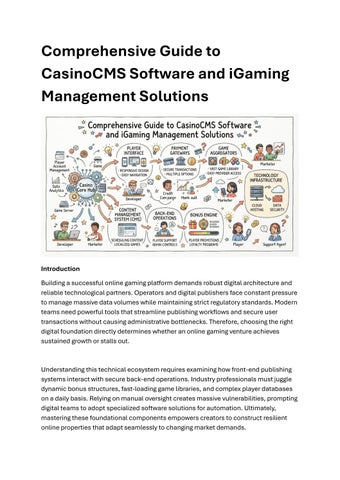
How Casino Management Software Works A powerful administrative core handles day-to-day operational logic and data flows behind the consumer-facing frontend of any modern gaming property. This central control center oversees critical functions such as user account registration, identity verification, wallet transactions, and responsible gaming limits in real time. Centralizing these operations enables compliance officers and risk management teams to monitor suspicious activity efficiently.
This core technology also acts as a master hub that synchronizes data between thirdparty vendors, customer support desks, and internal marketing databases. The system logs every user interaction to generate accurate financial reporting and trigger personalized engagement campaigns whenever players deposit funds. Operators consequently gain deep visibility into user behavior patterns, allowing them to refine service offerings and maintain a secure environment.
Understanding iGaming Software
The broader umbrella of wagering technology encompasses everything from live dealer streaming engines to random number generator verification tools. Developing or licensing these digital assets demands strict adherence to international regulatory standards to guarantee absolute fairness. High player expectations for speed and visual fidelity also require developers to utilize high-performance architectures that eliminate latency during peak traffic hours.
This technology extends far beyond core gameplay mechanics to incorporate sophisticated bonus engines, loyalty program trackers, and multi-currency payment gateway integrations. Operators frequently mix proprietary systems with white-label components to build a unique portfolio that stands out in a crowded global market. Investing in robust digital infrastructure ensures that the user journey remains uninterrupted, secure, and engaging from start to finish.
Key Features of Modern Casino Software Evaluating available technology requires assessing specific functional capabilities that drive efficiency, scalability, and user satisfaction across digital gaming properties. A modern software suite offers modular architecture, allowing operators to scale their feature sets up or down as business models evolve. Seamless mobile responsiveness and cross-platform compatibility also remain non-negotiable requirements for capturing modern mobile audiences.
Feature Category
Primary Function
Operational Benefit
Wallet Integration
Manages multi-currency deposits and withdrawals
Ensures secure, fast financial transactions
Promotional Engine
Automates bonuses, free spins, and loyalty tiers
Boosts player retention and engagement
Analytics Dashboard
Tracks real-time KPIs and user behavior
Informs data-driven marketing decisions
Feature Category
Primary Function
Operational Benefit
Compliance Guardrails
Enforces KYC, AML, and age verification
Mitigates regulatory and legal risks
Implementing these advanced features ensures that digital platforms remain competitive, secure, and capable of delivering exceptional value to target audiences. Robust reporting capabilities empower managers to identify bottlenecks in the user journey and optimize conversion rates continuously across all active channels.
Casino CMS vs. Traditional CMS Generic publishing platforms handle basic blogging tasks well, yet they struggle severely when managing the complex data structures unique to the gaming sector. Generic setups typically require dozens of clunky plugins to handle custom post types, dynamic comparison tables, and automated affiliate tracking links. This patchwork approach frequently triggers slow page load speeds, security vulnerabilities, and constant maintenance headaches.
Purpose-built publishing platforms provide native fields and taxonomies designed specifically for organizing operator ratings, software providers, and payment gateways out of the box. This specialized architecture ensures optimal database performance, cleaner codebases, and significantly better search engine optimization results. Digital publishers save countless hours on custom development, redirecting those saved resources toward creating high-quality editorial content.
What Is an iGaming CMS? Specialized publishing solutions built explicitly for the digital gaming industry bridge the gap between raw data feeds and engaging editorial presentations. These systems handle massive volumes of frequently changing data, including live odds, fluctuating tournament prizes, and time-sensitive bonus promotions. Editors publish complex content updates across multiple localized domains with just a few clicks, maintaining brand consistency effortlessly.
These platforms incorporate built-in compliance checking tools that flag prohibited terms or missing regulatory disclosures before pages go live on the public internet. This proactive approach protects publishers from accidental regulatory violations and ensures every review meets strict industry standards. Adopting a purpose-built publishing engine allows media sites and affiliate portals to scale operations safely and efficiently.
Role of Casino Platform Software Comprehensive platform technology integrates all disparate back-end services into a single, cohesive management environment that serves as the operating system for digital gaming sites. This infrastructure unifies game aggregation feeds, player relationship management tools, affiliate tracking systems, and secure payment processing gateways. Consolidating these functions eliminates data silos and provides operators with a unified view of their entire business ecosystem.
Expansive platforms provide robust application programming interfaces that allow thirdparty developers to plug in new features, games, and marketing tools with minimal friction. This flexibility helps operators stay ahead of emerging industry trends and consumer preferences without undergoing costly full-system migrations. Businesses innovate rapidly while maintaining rock-solid operational stability behind the scenes.
How Casino Website Software Supports Content Teams Specialized web tools empower editors, copywriters, and SEO specialists to work more productively behind every high-performing gaming portal. Modern publishing software offers collaborative workflows, version control history, and automated schema markup generation to elevate search engine rankings. Drag-and-drop layout builders additionally enable non-technical team members to construct visually stunning landing pages without writing code.
Team Role
Primary Software Need
Key Benefit
Content Editors
Intuitive publishing interfaces and templates
Faster content creation and consistency
SEO Specialists
Automated schema and metatag management
Higher search engine visibility
Marketing Teams
Dynamic promotional banner management
Real-time campaign deployment
Developers
Clean APIs and modular codebase integration
Easier maintenance and scaling
Empowering content creators with the right digital tools directly translates into higherquality publishing outputs, better user engagement, and improved organic search rankings. Removing technical barriers allows editorial teams to focus entirely on delivering insightful, accurate, and compelling information to readers.
Types of Casino Management Systems Operational technology in the gaming sector falls into distinct categories based on whether businesses focus on front-end publishing, back-end operations, or hybrid models. Affiliate management platforms prioritize traffic tracking, commission calculations, and deep-link generation to help publishers monetize audiences effectively. Operator-facing systems focus heavily on player account management, risk scoring, and game aggregation protocols.
Understanding these distinctions helps stakeholders select exact tools that align with specific business models and long-term strategic growth objectives. A pure media publisher maintains very different technological requirements than an active whitelabel casino operator running live tables. Choosing the right category from the outset prevents wasted investments and ensures optimal performance across specialized operational workflows.
Important Features to Evaluate Conducting a thorough technology audit requires assessing several critical criteria before committing to software licenses or platform subscription agreements. Scalability remains paramount because chosen technology must handle sudden traffic spikes and expanding content libraries without performance degradation. Robust data security protocols and adherence to international privacy standards also protect sensitive user information against cyber threats.
•
Platform architecture must offer robust API documentation for seamless thirdparty integrations.
•
Systems should include built-in SEO tools and clean URL structuring capabilities.
•
Multi-language and multi-currency support remain vital for global expansion plans.
•
Responsive customer support and regular software update cycles ensure longterm viability.
•
User interface intuitiveness minimizes onboarding time for new team members.
Weighing these critical factors carefully allows decision-makers to choose resilient technology stacks that support sustainable business growth and deliver exceptional return on investment. Taking a strategic approach to software evaluation safeguards digital assets against obsolescence in a fast-paced market.
How iGaming Software Platforms Connect Different Systems Modern digital infrastructure relies on sophisticated middleware and application programming interfaces to ensure that various specialized software modules communicate seamlessly. Transaction data from payment gateways must instantly
update player balances and trigger relevant CRM loyalty points during deposits. Robust integration frameworks prevent data discrepancies that quickly lead to operational errors and compliance breaches.
Interconnected ecosystems allow operators to swap out individual components—such as switching payment processors or adding new game providers—without disrupting entire platforms. Modular flexibility keeps businesses agile, enabling the adoption of emerging technologies the moment they emerge in the marketplace. Maintaining a wellintegrated software architecture remains a vital prerequisite for long-term competitiveness.
Choosing the Right Casino Technology Selecting ideal digital infrastructure requires a clear understanding of current operational bottlenecks, budgetary constraints, and future expansion goals. Rushing into software purchases without mapping out data workflows leads to costly migrations and frustrated teams down the road. Involving key stakeholders from IT, compliance, content, and marketing early in the evaluation process ensures all departmental needs receive proper attention.
Balancing immediate functional requirements with long-term technological adaptability guarantees that investments continue delivering value as businesses scale into new markets. Methodical evaluations ensure success whether projects require advanced publishing platforms or comprehensive back-end control centers. Right-sized technology acts as a powerful catalyst propelling digital gaming projects toward greater efficiency.
How CasinoBullseye Helps You Research Casino Technology Navigating the complex world of online gaming technology proves overwhelming given the sheer number of vendors, platforms, and software solutions available. CasinoBullseye cuts through the noise by delivering structured comparisons, in-depth software reviews, and expert insights tailored specifically for industry professionals. Comparing publishing platforms or researching back-end operational tools becomes significantly simpler through centralized resources.
Centralizing valuable industry knowledge into one accessible destination empowers operators, publishers, and developers to make informed choices without wasting countless hours on independent research. Transparent, practical guidance helps teams build, scale, and optimize digital properties effectively. Comprehensive guides and comparison tables keep professionals ahead of the curve in a competitive market environment.
Frequently Asked Questions About CasinoBullseye What core objectives drive the creation of CasinoBullseye? Operators, publishers, and developers access reliable insights into modern digital publishing and operational technology through this comprehensive resource hub.
How do specialized publishing engines differ from standard blogging tools? Specialized systems incorporate native data structures designed to handle complex gaming reviews, ratings, and compliance requirements without relying on clunky plugins.
Why do gaming sites depend heavily on back-end operational software? Back-end tools automate user registration, wallet transactions, and compliance checks while maximizing security and regulatory adherence.
What specific capabilities define top-tier publishing software? Essential capabilities include clean SEO structuring, scalable content architectures, responsive design templates, and robust API integration frameworks.
Do these platforms accommodate international multi-market expansion? Advanced systems feature multi-currency, multi-language, and geo-targeting tools that facilitate seamless growth across global jurisdictions.
In what ways do third-party integrations influence overall platform performance?
Well-implemented APIs facilitate smooth communication between payment gateways, game aggregators, and CRM tools without slowing down frontend loading speeds.
Does managing these advanced software solutions require deep technical expertise? Initial setup demands technical knowledge, but modern platforms feature intuitive interfaces designed specifically for non-technical content editors.
How frequently should organizations audit their existing technology stacks? Operators and publishers conduct annual technology reviews to verify that software infrastructure continues meeting evolving business and regulatory demands.
What function do compliance guardrails serve during software selection? Automated compliance tools verify ages, manage KYC protocols, and prevent regulatory infractions across all published pages and operational workflows.
Where do professionals find detailed comparisons of competing software solutions? CasinoBullseye supplies structured comparison tables and in-depth guides designed to help teams evaluate and select ideal technology tools.
Final Thoughts
Mastering the intricacies of digital gaming technology empowers creators to build resilient, scalable, and profitable online properties. Understanding vital differences between specialized publishing platforms, back-end management tools, and integrated software ecosystems enables confident, data-driven decision-making. Utilizing the right digital infrastructure eliminates operational friction, enhances user engagement, and enforces strict regulatory compliance across all target markets. Centralized resources provide the comparative insights necessary to thrive in a competitive industry.