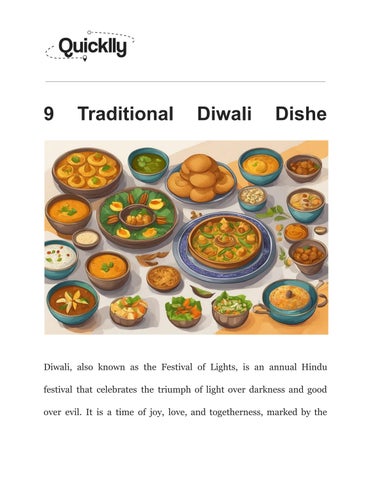
9 Traditional Diwali Dishe
Diwali, also known as the Festival of Lights, is an annual Hindu festival that celebrates the triumph of light over darkness and good over evil. It is a time of joy, love, and togetherness, marked by the
exchange of gifts, the lighting of lamps, and the preparation and consumption of delicious food.
One of the mostimportant aspects ofDiwaliis the traditional dishes thatarepreparedandsharedamongfriendsandfamily.Eachdishhas itsownuniquehistoryandsignificance,oftenrootedinancientHindu mythologyandculture.Inthisarticle,wewillexploreninetraditional Diwalidishesandtheirfascinatinghistories.Fromthesweetandspicy flavorsofkheelnamkeentothecrispyandsavorysamosa,thesedishes aresureto delightyour tastebudsanddeepenyourunderstandingof this beloved festival.
Origins of Diwali and Its Culinary Traditions Diwali, is one of the most significant festivals in India and is celebratedbymillionsofpeopleworldwide.Itisafive-dayfestivalthat marks the victory of good over evil, light over darkness, and
knowledge over ignorance. The festival has its roots in Hindu mythology and is celebrated by Hindus, Sikhs, and Jains.
The culinary traditions of Diwaliarean essential partofthe festival. The festival is celebrated with avariety oftraditional dishes thatare prepared withgreatcare andattentiontodetail.Thesedishesarenot only delicious but also have a fascinating history.
OneofthemostpopularDiwalidishesisthe“Poori.”Itisafriedround bread that is made with wheat flour and is typically served with a potato curry in tomato sauce. Another traditional Diwali dish is the “Kheer,” which is a rice pudding that ismade with milk,rice, sugar, and cardamom. The dish is usually garnished with almonds and raisins.
Another popular Diwali dish is the “GulabJamun,” which isasweet dessert madewith milk solidsandsoaked insugarsyrup. Thedishis believed tohave originatedin medievalIndiaandwasinitiallyserved to the Mughal emperors.
“Malpua”isanotherpopularDiwalidishthatismadewithwheatflour, milk, sugar, and cardamom. The dish is usually deep-fried andthen soaked in sugar syrup.
“Aloo Tikki” is a popular Diwali snack that is made with boiled potatoes, peas, and spices. The mixture is then shaped into small patties and fried until golden brown.
“Chakli”isasavorysnackthatismadewithriceflour,gramflour,and spices. The dough is then shaped into spirals and deep-fried until crispy.
“Besan Ladoo” is a sweet snack thatis madewith gram flour,sugar, and ghee.The mixtureisthenshapedintosmallballsandservedasa dessert.
“Rasgulla” is a popular Diwali dessert that is made with chenna (cottage cheese) and soaked in sugar syrup. The dish is believed to have originated in eastern India.
“Shakkarpara” is a sweet snack that is made with flour, sugar, and ghee. The dough is then shaped into small squares and deep-fried until crispy.
Significance of Food in Diwali Celebrations Food plays a significant role in Diwali celebrations. The festival is synonymouswith feastingandindulgingintraditionaldelicacies.The
preparationoffoodforDiwaliisalaboroflove,anditisbelievedthat thefoodpreparedduringthefestivalisblessedwiththedivineenergy of Goddess Lakshmi, the goddess of wealth.
During Diwali, it is customary to prepare a variety of sweets and snacks. Many of these dishes are made with ingredients that have symbolic significance. For example,theuseofjaggeryinsweetdishes isbelievedtopromotegoodhealth,whiletheuseofsaffronisbelieved to bring happiness and prosperity.
One of the most important aspects of Diwali food is the concept of sharing. It is customary to share sweets and snacks with family, friends, and neighbors during the festival. This act of sharing is believed to promote unity and harmony among people.
In addition to sweets and snacks, Diwali also features a variety of savory dishes. These dishes are often made with a combination of vegetables, lentils, and spices. Some popular savory dishes include chana masala, aloo gobi, and paneer tikka.
Traditional Diwali Dishes Diwali is celebrated with great enthusiasm and fervor in India and aroundtheworld.Oneofthemostimportantaspectsofthisfestivalis thefood.Diwaliisatimetoindulgeintraditionaldishesthatarerich, flavorful, and full of history. In this section,wewillexplore someof the most popular traditional Diwali dishes and their fascinating histories.
Sweets: Barfi and Gulab Jamun
Sweets are an essential part of Diwali celebrations, and two of the most popular sweets are Barfi and Gulab Jamun. Barfi is a dense, fudgy sweetmadefrom milk,sugar, andflavorings likecardamomor rosewater.GulabJamunisasoft,spongysweetmadefrommilksolids andsoakedinasugarysyrup.Bothofthesesweetshavealonghistory in India and are believed to have originated in the Mughal era.
Barfi is said to have been introduced to India by the Mughals, who wereknown fortheirlove ofsweets.Theword“barfi”isderivedfrom the Persian word “barf,” which means snow, and refers to the soft, snowytextureofthesweet.GulabJamun,ontheotherhand,issaidto have been invented by the Mughal emperor Shah Jahan’s personal chef. Legend has it that the chef accidentally added flour instead of milk solids to a batch of sweets, and thus, Gulab Jamun was born.
Savory Snacks: Samosas and Chakli Savorysnacksare another importantpart ofDiwalicelebrations,and twoof the mostpopularsnacksareSamosasandChakli.Samosasare crispy, triangular pastries filled with spiced potatoes, peas, or meat. Chakli is a crunchy, spiral-shaped snack made from rice flour and spices. Both of these snacks have a long history in India and have become popular all over the world.
Samosas are believed to have originated in Central Asia and were brought to India by traders. They were initially filled with meat but wereadapted to suit the vegetariandietofIndia.Chakli,ontheother hand,isatraditionalMaharashtriansnackthatismadeduringDiwali. It is believed to have been invented by the Maratha ruler Shivaji’s mother.
Main Course: Biryani and Puri
ThemaincourseofaDiwalimealisusuallyalavishaffair,withdishes likeBiryaniandPuritakingcenterstage.Biryaniisafragrantricedish that is flavored with spices and usually contains meat or vegetables. Puriisadeep-friedbreadthatismadefromwheatflourandisusually served with a side dish like Chana Masala or Aloo Sabzi.
Biryani is believed to have originated in Persia and was brought to IndiabytheMughals.IthassincebecomeapopulardishalloverIndia andisknownforitsrich,aromaticflavors.Puri,ontheotherhand,isa staple of Indian cuisine and is a popular dish during festivals like Diwali.
In conclusion, traditional Diwali dishes are an essential part of the festival and havearich history thatdatesbackcenturies.Fromsweet treats likeBarfiandGulab Jamunto savorysnacks likeSamosasand
Chakli, andmaincoursedisheslikeBiryaniandPuri,thesedishesare a reflection of India’s diverse culinary heritage.
The Fascinating Histories Behind the Dishes
The Story of Barfi Barfi is a popular Indian sweet that is enjoyed during Diwali. It is made from condensed milk and sugar, and is often flavored with cardamom, rose water, or saffron. The origins ofBarfi canbe traced back tothe Mughalera,whereitwascalled“Barf”whichmeanssnow in Persian. It was named so because of its white color and soft, snow-like texture. Over time, the recipe evolved to include different flavors and variations, but the sweet remains a staple during Diwali celebrations.
The Journey of Gulab Jamun GulabJamun isanother popular sweetthat isenjoyedduringDiwali. Itismadefrommilkpowder,flour,andsugar,andisdeep-friedbefore being soaked in a sweet syrup. The origins of Gulab Jamun can be traced back to Persia, where it was called “luqmat al qadi” which means“thejudge’sbite”.Itwasnamedsobecauseitwasbelievedthat thesweetwassodeliciousthatevenajudgewouldbetemptedtotake a bite.Overtime,therecipeevolvedandthesweetbecamepopularin India during the Mughal era.
The Origins of Samosas Samosas are a popular savory snack that is enjoyed during Diwali. They are madefrom apastry shellthat isfilled withspiced potatoes, peas, or meat. The origins of Samosas canbe tracedback to Central Asia, where theywerecalled “samsa”.They were introducedto India during the Mughal era and over time, the recipe evolved to include
different fillings and variations. Samosas are now a staple snack during Diwali celebrations.
The Tale of Chakli Chakli isacrispysnackthatisenjoyedduringDiwali.Itismadefrom rice flour, gram flour, and spices, and is deep-fried before being served. The origins of Chakli can be traced back to Maharashtra, where it was called “murukku”. It was introduced to other parts of IndiaduringtheMarathaEmpireandovertime,therecipeevolvedto include different variations. Chakli is now a popular snack during Diwali celebrations.
Biryani: A Dish with a Past BiryaniisapopularricedishthatisenjoyedduringDiwali.Itismade from rice, meat or vegetables, and a variety of spices. Theorigins of
BiryanicanbetracedbacktoPersia,whereitwascalled“birian”which means “fried before cooking”. It was introduced to India during the Mughal era and over time, the recipe evolved to include different variations. Biryani is now a staple dish during Diwali celebrations.
The History of Puri PuriisapopularIndianbreadthatisenjoyedduringDiwali.Itismade from wheat flour, water, and salt, and is deep-fried before being served. The origins of Puri can be traced back to the Vedic period, whereitwascalled“purohit”.ItwasintroducedtootherpartsofIndia during theGuptaEmpireandovertime,therecipeevolvedtoinclude different variations. Puri is now a popular bread during Diwali celebrations.