
fall ‘25 volume XV • issue I

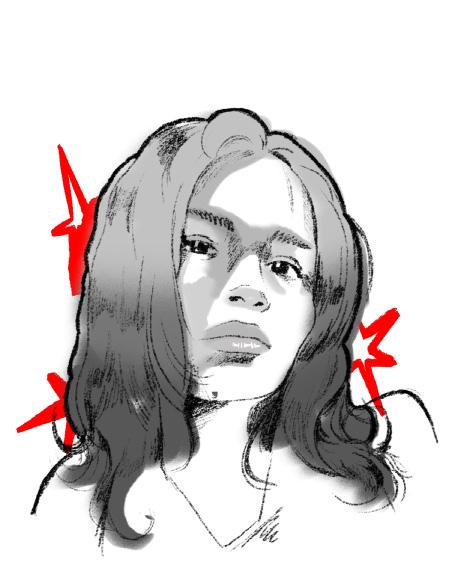
Daneisha Rodríguez ‘27
Co-Editor in Chief de Puerto Rico
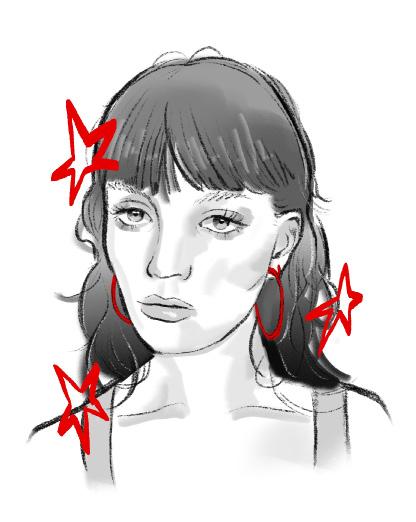
Leah Freedman ‘27
Lead Portuguese Editor de Brasil
Jack Zarate ‘27
Co-Editor in Chief de Colombia
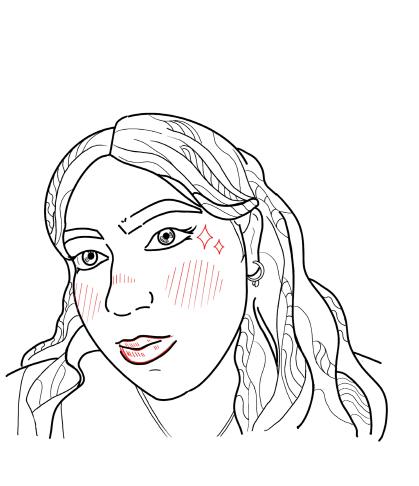
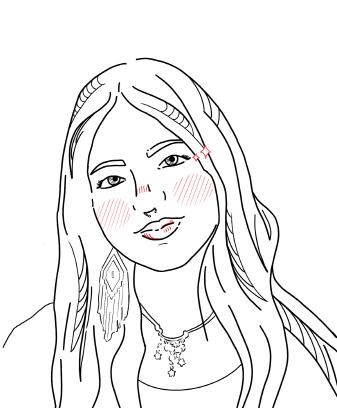
Natalia Lopez ‘27
Financial Advisor de México y Guatemala
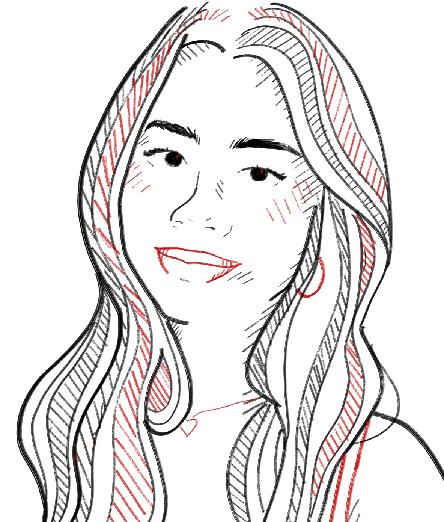
Victoria Sgarbi ’27
Lead Design Editor de Brasil
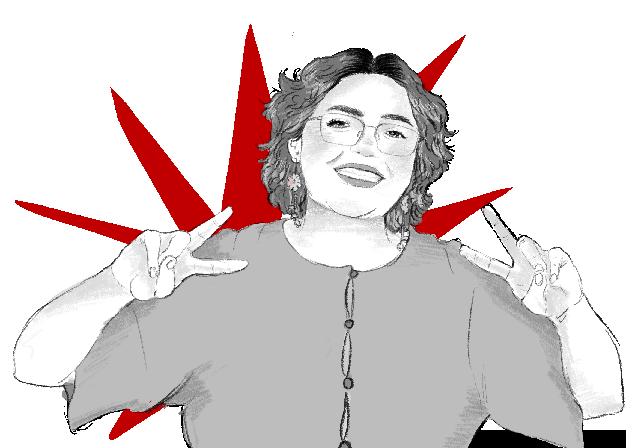
Mayriel Diaz-Aguilar ‘28
Lead Spanish Editor de México y Cuba
General
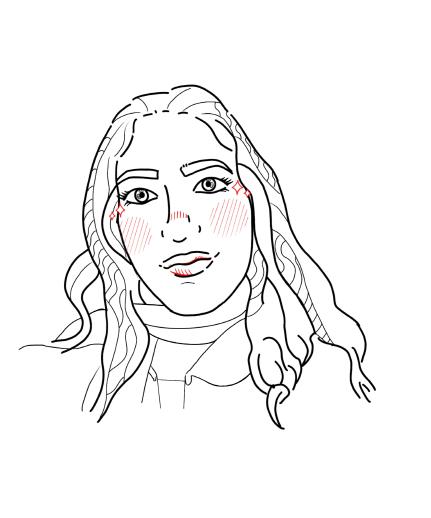
Fabiola Penafiel ‘28
Lead English Editor de Ecuador
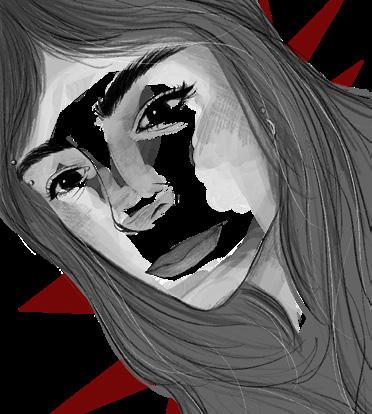
Adi Zweibil Frischer ‘27
Design Editor de Brasil
Ana Mijares ‘27
Design Editor de México
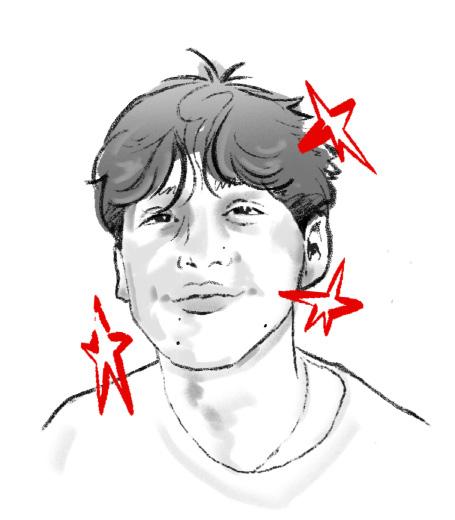
Jaime Hernandez ‘29
Design Editor México
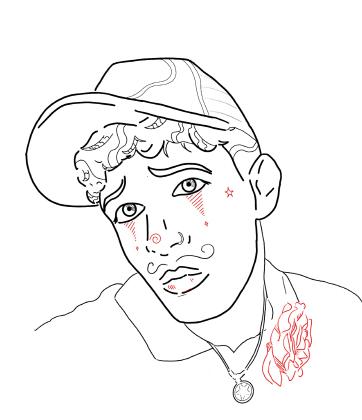
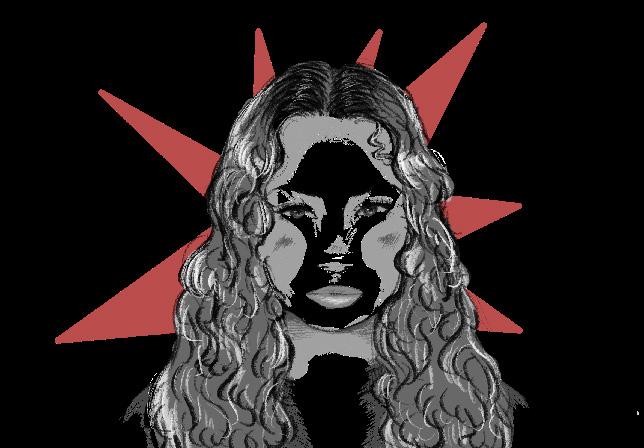
Alvaro Uribe ‘26
Design Editor de México y Morocco
“A friend told me, ‘A revolution is successful if it stems from love’ This has stayed with me since” - Maryori Conde
Dear Reader,
1995 marked the official beginning of team has always sought to create a magazine that unapologetically embraces the art works, experiences, and histories held within its pages—hoping to always represent the Latine community best we can. In curating our Fall 2025 magazine, our team hoped to shine a glimmer of hope on the world while still grappling with the perpetual feeling of an overcast storm lingering over our heads since last November. It is during times like these that art, art-making, and art-appreciating become so incredibly important and powerful. Creativity and passion lies within the heart of community—helping both ourselves and others find a sense of comfort when it feels like there is no other place for people to go.

We have always, and will forevermore, dedicate our mission to ensure SOMOS serves as a safe space for the creativity and passion of the Latine community at Brown, the greater Providence community, and beyond. During times when so much is uncertain, SOMOS promises to forever cherish our identity and celebrate our roots, working to give a voice to those who historically have been silenced.
Lastly, we want to express our love and gratitude to the SOMOS team—who, without their hard work and efforts, this magazine would not be possible. Your dedication is reflected in the flip of every page, along with your creativity, passion, voices, and stories—all of which we are immensely grateful for. We would also like to thank the Latine creatives who contributed to this issue, from Brown, RISD, and beyond, for entrusting us with your art. Together, we have created something truly special that reflects the beauty, diversity, and unwavering strength of the Latine community.
Gracias por compartir nuestra misión. Thank you for sharing in our mission. Obrigado por compartilhar a nossa missão.



This magazine includes sensitive topics, such as generational trauma, racialized language, violence, migration, and diaspora. We ask that you navigate this semesters issue with care, sensitivity, and at the pace that feels most comfortable.
Nietzsche on Rain & Phlegm
El Jardín de mi Abuela
Mi Bodegón
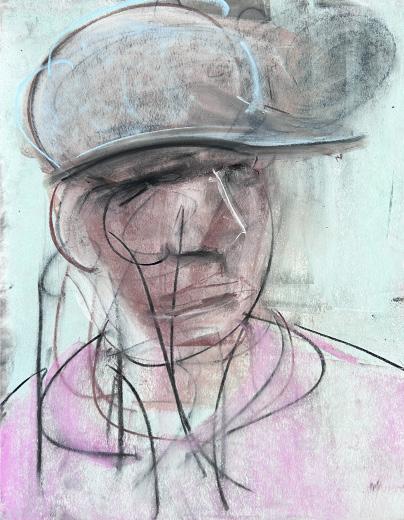
Untitled
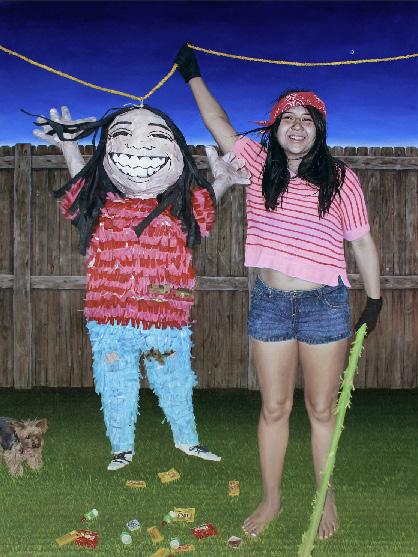
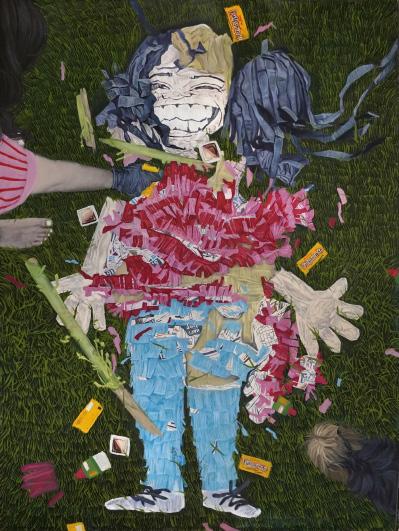
A Sketch of Yellow Bells
Don’t Beat Yourself Up
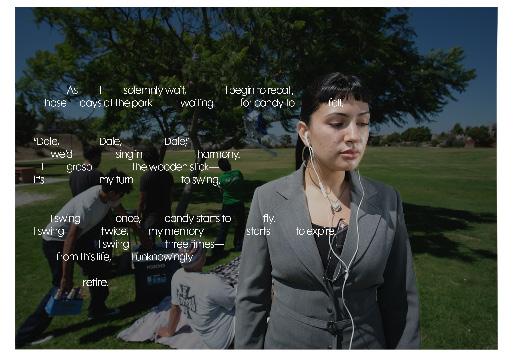
Dale, Dale, Dale
Untitled (Stars)
Velvet Riot
Pobrecito
Sin Miedo
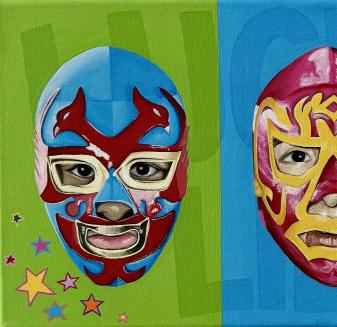
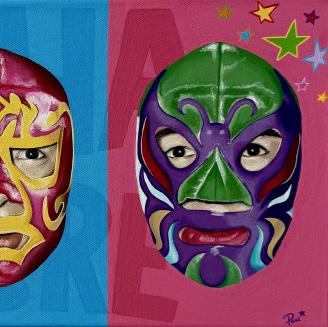
Lucha Libre
Paco
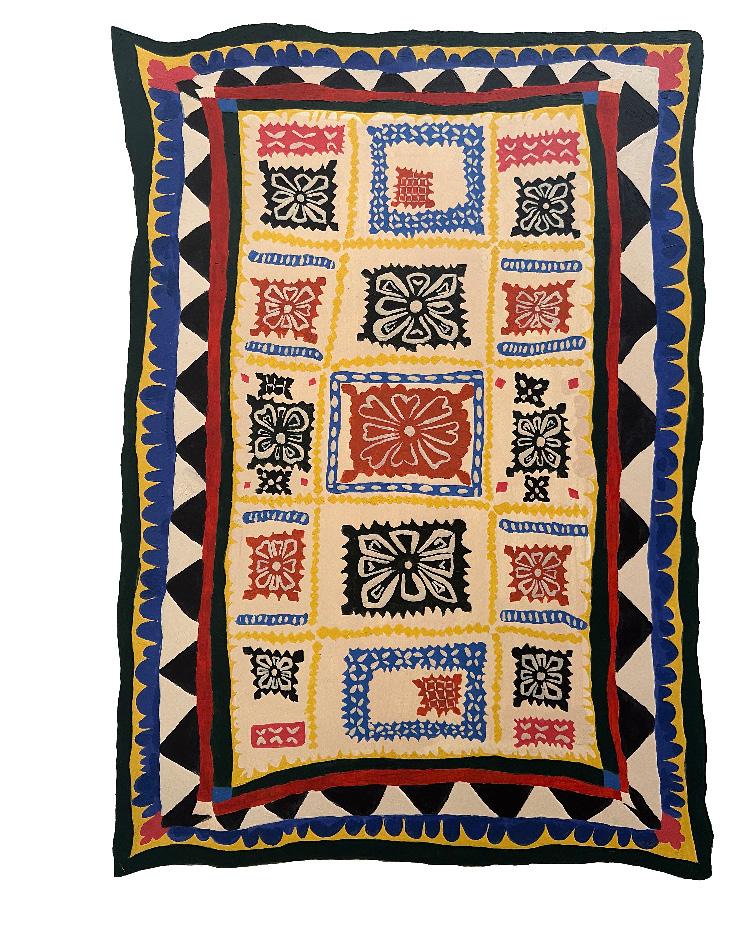
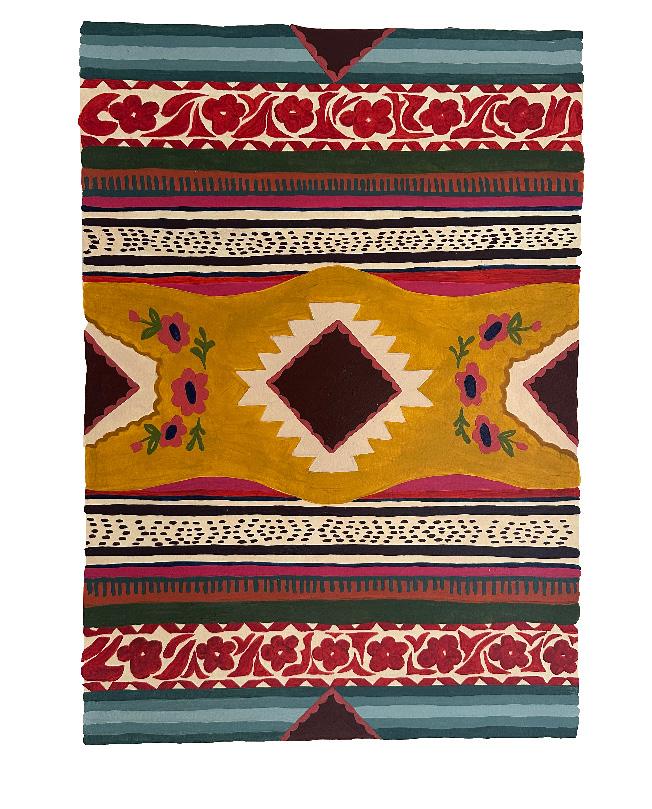
Ralli
Tejido
Ch’o’jine (Fighter) En Attic
Onion Skin
¿Donde Están?
luchadora
A King Con Amor
Nuestra Lágrima
Monik Rodriguez
Maison Teixeira
Sophia Basaldúa
Carlos Quinteros iii
Monik Rodriguez
Camila Salinas
Camila Salinas
Nathaniel Campos
Jack Zarate
Matthew Rebecchini
Matthew Rebecchini
Paulina Ortega
Cresencio Med
Alison Villa
Alison Villa
Jett Houtz
Ana Mijares
Fabiola Peñafiel
Kayla Carabes
D.G. Rosales
Andres Preciado & Hernany Torres
Alejandra Mayorga
Nicole Naim Dib
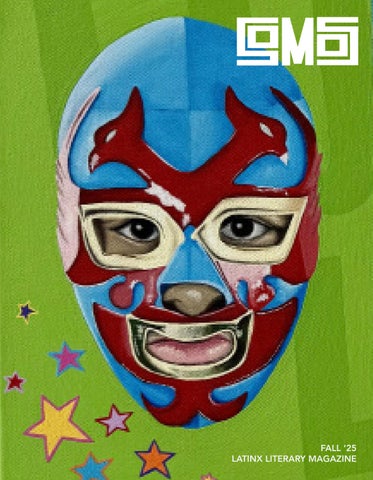
*cover art by Paulina Ortega
** titles and team portraits designed by Jaime Hernandez, Ana Mijares, Adi Zweibil Frischer, and Alvaro Uribe
Monik Rodriguez, Brown 2025, Poetry
Smoking, I am procrastinating on the essay I have due at midnight. I have titled it: Nietzsche’s Ressentiment, Slave Revolt, & The Origin of Moral Values. That is all I have. It is raining, which makes my smoke break all the better and worse. Philosophers know all too well the urge to converse with raindrops. Rain can never just be rain. No! Precipitation’s pretty pitter-patters must be the flicks of a philosopher’s wet tongue. I had hoped that the words we would share in nicotine breath would be just the words I am looking for. But, today, all I see is rain.
My throat phlegms, and I stop searching for Nietzsche in raindrops. Instead, I turn to imagining my congealed spit joining the downpour: my productive cough, its mucousy splatter, and the rain that would follow and cleanse the poor surface victim to my phlegm. & in fact, that is just the place where I finally find Nietzsche.
SOMOS 1
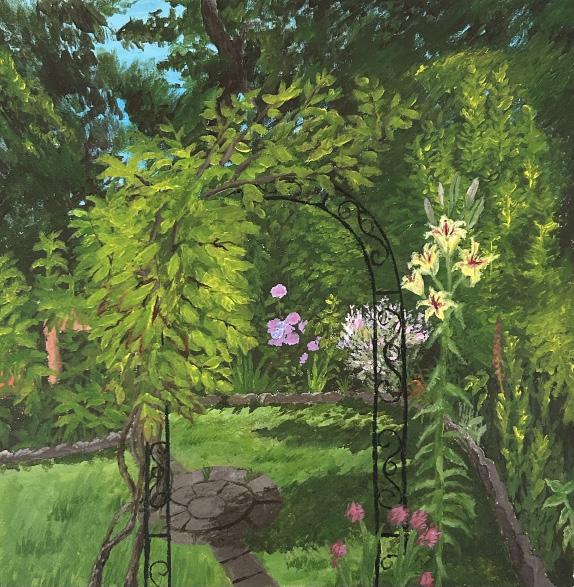
Sophia Basaldúa, RISD 2029
Acrylic on canvas
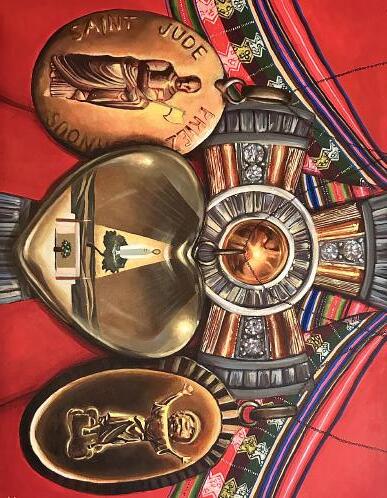
Carlos Quinteros iii, Poetry
Society looks at you like you have tectonic tendencies—
yet, rarely is anyone born a hurricane. Language labels the storm, setting the xene, fueling the panic, painting brown folk green—
revoking souls has never been enough to pay the American dream toll.
Propaganda punch cards
Stereotypes stamped on skin.
Refuge advertised as invasion Sold to the masses as drastic, imminent, fatal.
In this country, Only phrases and slogans seem to stick.
Single words do the trick.
Words like Alien. Stripped of anything human. All features foreign and fearsome. Remember. Aliens. They are infiltrating jobs and wreaking havoc on American values.
Yeah, but some might say, remember. Aliens.
They are not to blame for it is the big companies taking advantage of the “duty-free” labor of other countries. Some even may say, remember. Aliens.
They work for 65 cents or less a day to pick roses that we charge 65 dollars for here in the States. The disdain shouldn’t be toward the Aliens
but toward a government exploiting brown bodies for profit. Remember.
4
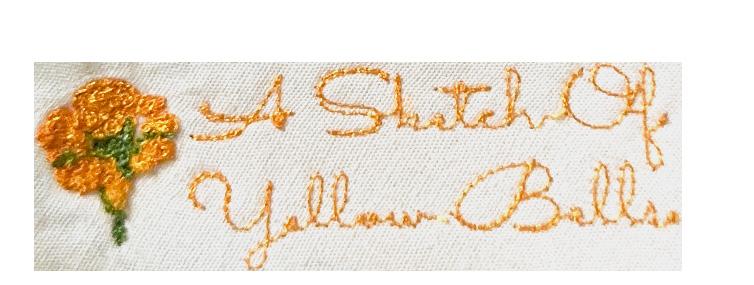
Monik Rodríguez, Brown University 2025, Poetry
A trumpetbush outside the Speers Memorial Library
Reminds me of elementary days popping not-yet blossomed buds
On my arms, my hands, and the arms and hands of friends I no longer know. Their pops like sweet kisses on our skin.
Now, I pluck one of these buds and press it into my palm, wanting once again to hear its sweetness kiss my hand. I give myself two more kisses before I enter the library, condemned to grade sketchbooks.
Teaching art is a careful poetry that reads, “Give me your eyes, your brain, & I will give you a “something” I do not quite have the words for yet.”
In the 4th grade, I learned that I should never use “something” in my writing, that there is always something specific I could say. Just the other day, I ran into my 4th grade writing teacher, a smiley woman who I begged to give me the words to describe the “something” she had given me in her class so long ago.
For many of my students, my art class is their first encounter with art. Art, no longer a stranger, but not an easy friend.
So far we have learned:
Graphite pencils chrome our fingertips. Charcoal sticks dwindle to dust. Still lifes never move.
SOMOS
Grading, I find the ringlets of missing pages caught in sketchbook spirals. The sound of tearing a sketchbook paper like a tender coo that tealls the child, “It is okay. It is gone. I promise.”
To hell with this promise, I want to see those pages. The smudges and streaks you damn “mistakes” know of something I don’t & never will.
After class, a student hands me a paper. It is folded in half: “To Ms. Rodríguez” I open the paper, the student right beside me, revealing a drawing of a flower, “They’re yellow bells,” she points at the blossomed flowers. My eyes remain on the paper and I say, “You know, the buds pop when you press them.”
“Really?” Her eyes light up, eager for the sweet kisses that await her. “Yes,” I promise with a smile.
7 SOMOS
9 SOMOS
Jack Zarate, Brown University 2027, poetry

Light hums under my Havaianas, streets folding sideways, and I spill into neon and air, into pulse. Fingers leave sparks that burn backward into memory I do not hold, I am not holding.
The corner of Wyckoff Avenue wraps around me, heat sticky on my skin, twenty years old and untouchable. Every glance cuts, every motion shifts the air. I find what I want and hold it. My hands reach for the invisible, tracing shapes that shimmer just beyond the edges of the world, shapes that hum with their own rhythm.
Wind bites soft but insistent, like it knows my spine is wire, coil, tendon, lightning. Every step a fracture, every heartbeat a riot. Hips tracing constellations that only I can name. Shadows stretch long, then curl back, bending around me, and I bend with them, folding into the friction of heat and air, folding into the ache of being alive.
I spin, spin, spin—fragments of me flashing in streetlight, in shop windows, in the cracks of the pavement. Glittering fragments folding into themselves and still unfolding, irreverent, untouchable, electric. Music hums under my skin, low and sharp, pulling me sideways and upward at once. I catch it, let it lift me, let it teach me how to move in ways no one else can.
And then

I am everywhere, a river of light, wind, heat, and friction, a body unbound, a pulse that refuses pause, exploding and folding into itself, tasting, moving, spinning, claiming, shaping the sky, and it fractures and blooms, a single current of heat, wind, and motion I carry through everything.

Matthew Rebecchini, RISD 2026
Cresencio Medina, Los Angeles Film School 2012, Screenplay
El cumpleaños de Paco
Cada alma que nace en este mundo llega con un destino. Algunas cargan luz, otras cargan sombra. Muchas pasan la vida sin descubrir por qué fueron elegidas. Yo soy Nakin, guardián de la Ciudad Dorada, y he observado los destinos desde el primer aliento del tiempo. Hoy, mi mirada se posa en un niño. Su nombre es Paco. Cumple siete años, y aunque aún no lo sabe, sobre sus pequeños hombros descansa el peso de generaciones.
El sol de la mañana bañaba de oro las colinas de Villa Purificación. En la granja de los Medina, la risa se elevaba como incienso. Paco corría descalzo por el patio, persiguiendo gallinas, mientras su padre ordeñaba la vaca y su madre preparaba chilaquiles en la cocina.
Pero no era la comida lo que hacía sagrado ese día, sino la presencia de Doña Dolores, la abuela cuya fe era tan firme como las montañas. Llegó envuelta en su rebozo oscuro, con el rosario tintineando entre sus dedos. Sus ojos, severos y tiernos a la vez, se iluminaron al ver a su nieto.
Paco se lanzó a sus brazos. “¡Mama Lola!” gritó con alegría. “Mi niño precioso,” susurró ella, besándole la frente. “Ya siete años como pasa el tiempo.” La familia se reunió en la cocina, donde la mesa rebosaba de frijoles, tortillas y un pastel en la esquina esperando el momento justo. El aire olía a chile asado y a café de canela. Las hermanas de Paco se reían y lo molestaban, diciendo que él intentaría comerse todo el pastel solo.
Doña Dolores alzó la mano, y el bullicio se detuvo. “A ver, muchachas,” dijo con firmeza. “Inclinen sus cabecitas. Vamos a dar gracias.” El silencio llenó la habitación. Incluso Paco, inquieto como potrillo, obedeció. Los ojos se cerraron, las cabezas se inclinaron, y la voz de la abuela marcó el compás de la oración. “Señor,” comenzó, fuerte y serena, “gracias por este pan, por este maíz, por la leche que nos alimenta. Gracias por la risa de estos niños, por la fuerza de sus padres y por la paz de este hogar. Bendice a
los que trabajan la tierra y a los que la cuidan. Amén.” “Amén,” respondió la familia al unísono.
Por un instante, la cocina brilló con una calma que iba más allá del tiempo. Paco, con un ojo entreabierto, vio cómo la luz del sol acariciaba el rostro de su abuela, convirtiendo la plata de su cabello en fuego. Algo se agitó dentro de él: orgullo, amor y un peso extraño que todavía no comprendía. Yo lo vi también. Esa oración no era solo por la comida ni por la familia. Era una bendición sobre el destino que pronto despertaría en Paco, un destino ligado a la Ciudad Dorada, a las sombras que acechaban en el horizonte y al sacrificio de un linaje que había protegido el secreto por siglos. La risa regresó cuando alguien señaló el “bigote de leche” en los labios de la abuela. Las carcajadas inundaron la mesa, disipando el silencio. Paco volvió a reír con la inocencia de un niño, pero yo sabía lo que ellos no: su camino ya había comenzado. Y aunque el mundo veía solo un cumpleaños, yo veía el primer destello de un guardián.
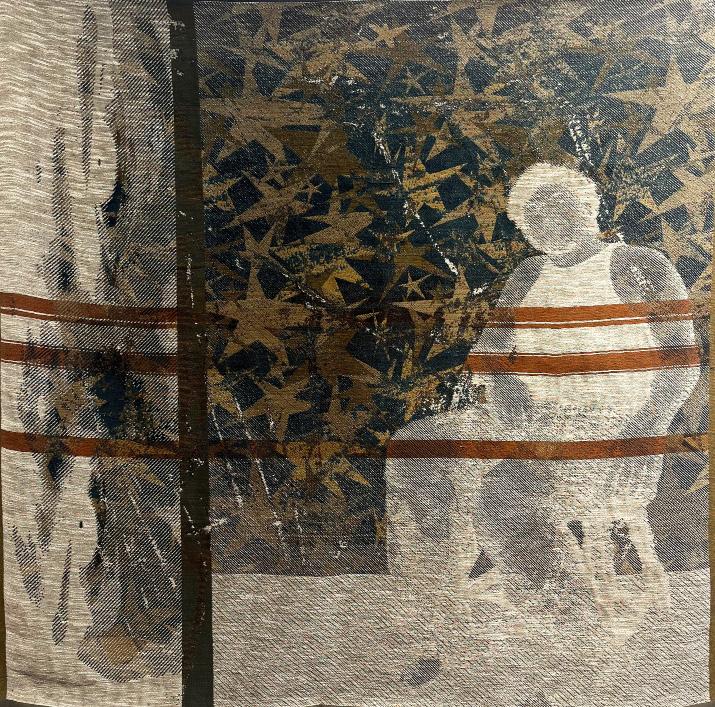
Ralli (inspired by Ralli, as seen in RISD Museum)
Alison Villa, Brown University 2027
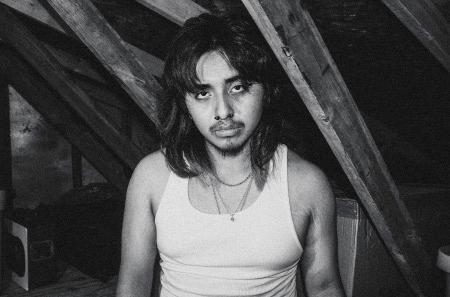
Ch’o’jine (Fighter) En Attic
Jett Houtz, RISD 2028
Digital Photography
Jett uses his lens to capture his feelings as he reconnects with his Latin heritage in a society where being a Latino with brown skin, brown eyes, and dark black hair is frowned upon. He intends to create a claustrophobic atmosphere in the attic in analogy to the Holocaust (which is being compared to Latinos detained unlawfully by ICE). He hides in the onslaught, but his attitude remains strong. He doesn’t let hiding change who he is. He is brown, proud, and ready to fight for what’s right.
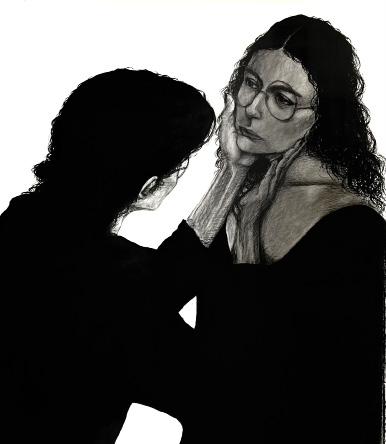
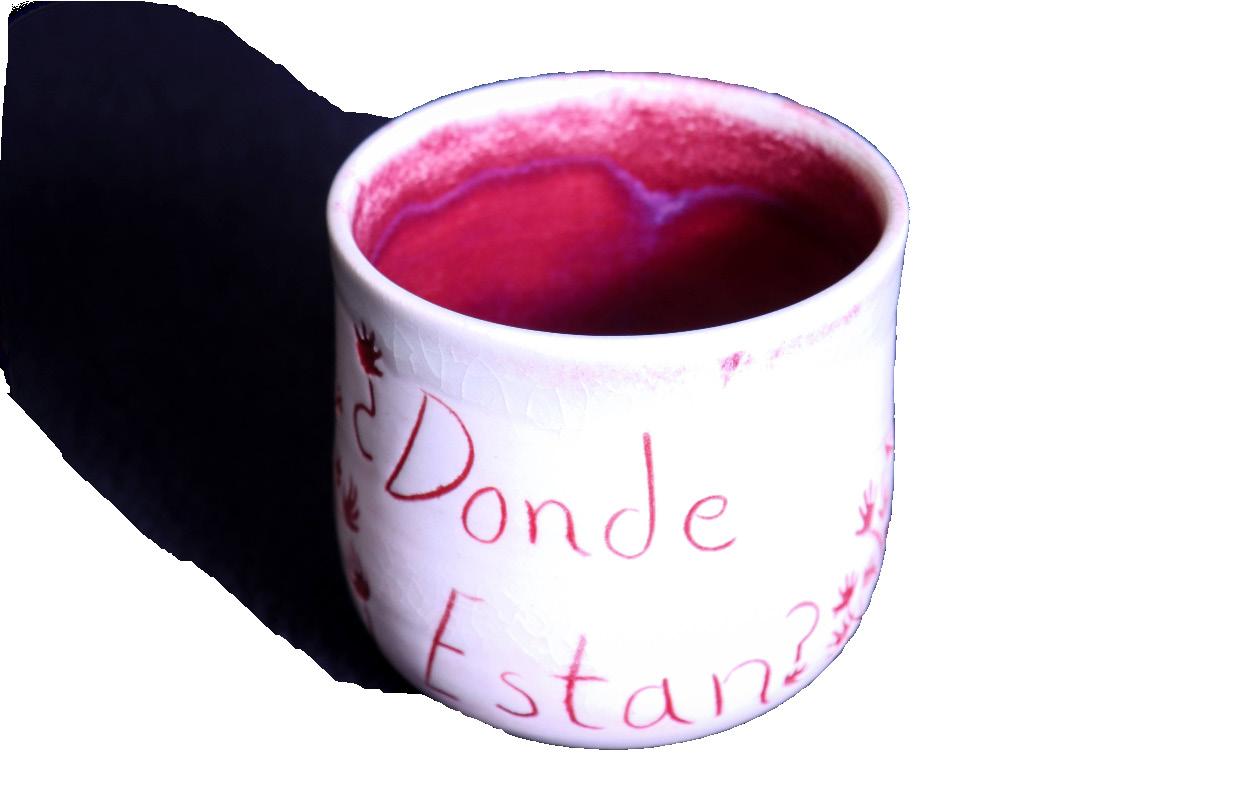
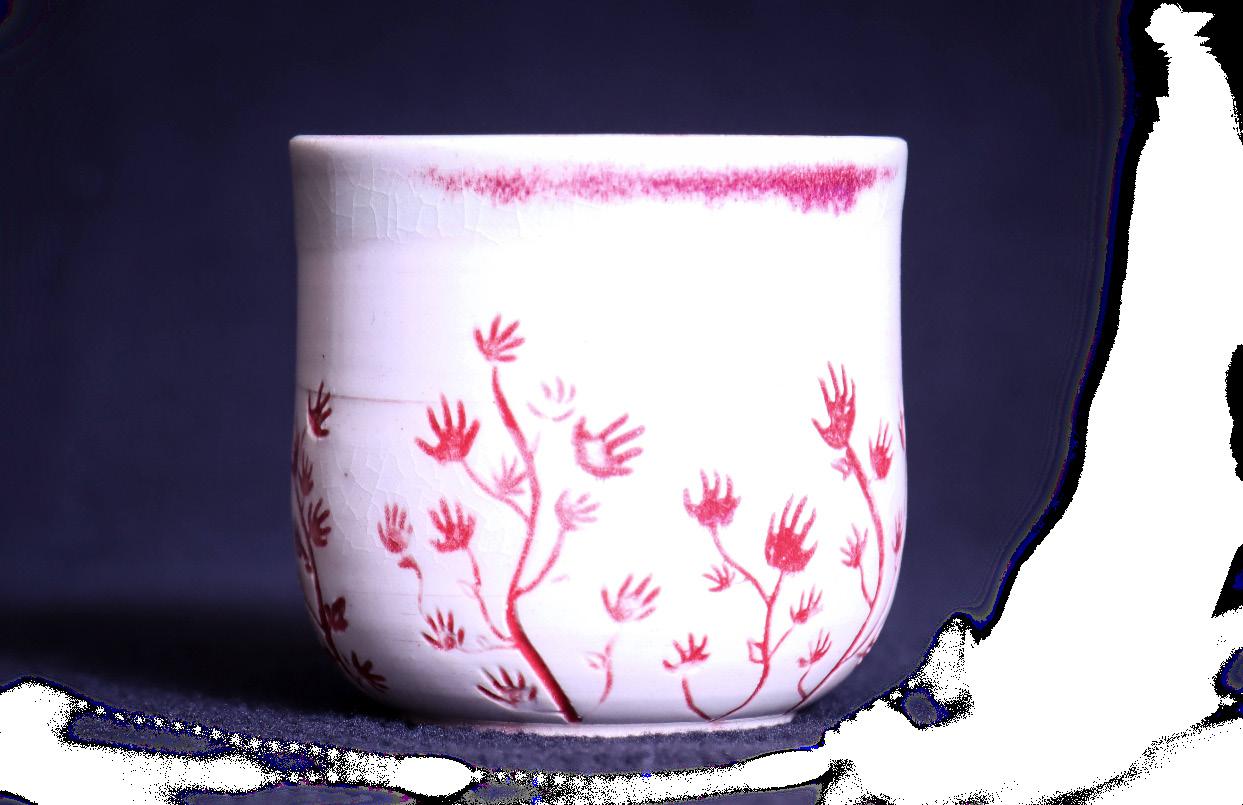
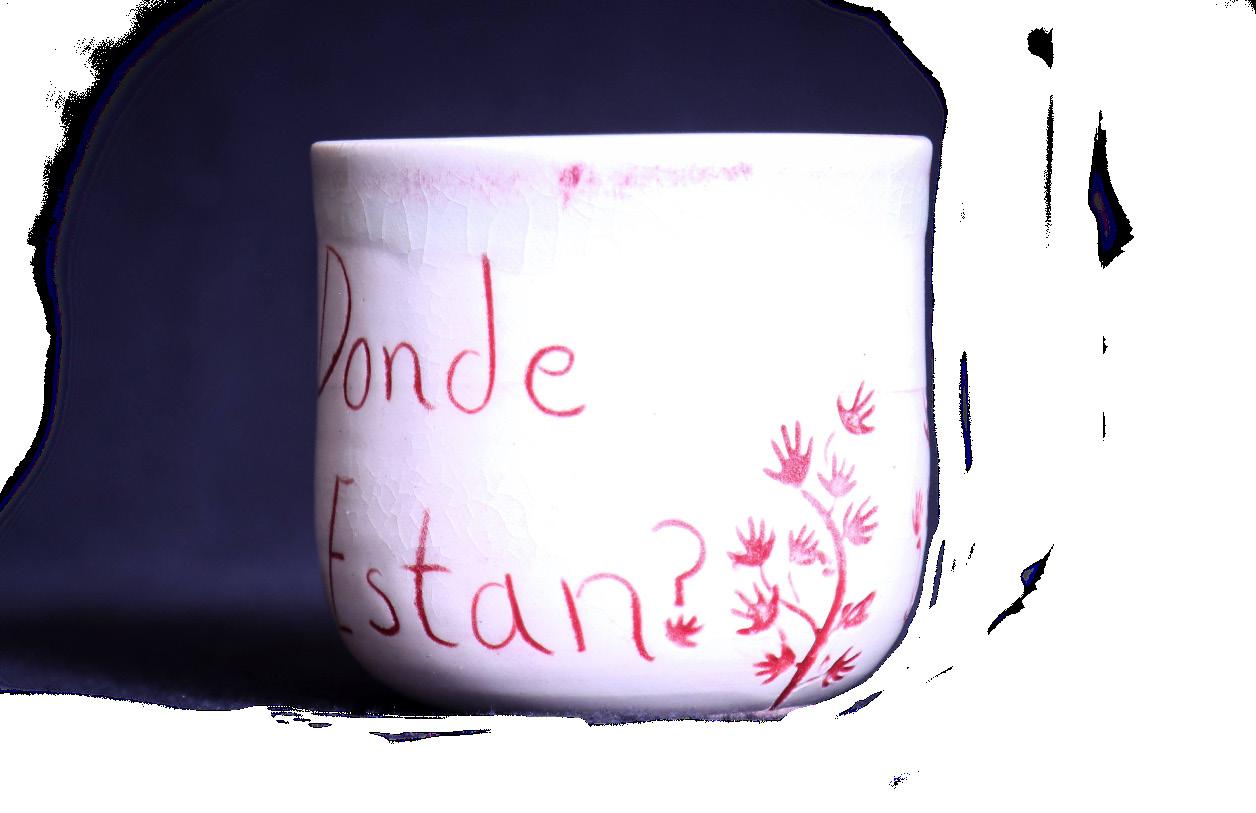
¿Donde Están?
Fabiola Peñafiel, Brown University 2028 Ceramics
A ceramic piece to commemorate those whose fates remain in limbo. While initially based on research about the Guatemalan Genocide’s desaparecidos, the cup alludes to a legacy of silencing, disappearance, and terror that transcends a single moment. Now, whether asking about those historically vanished across Latin America or the ICE-led disappearances of immigrants off the streets today, the cup forces the audience to contend with the unanswerable question of “¿Donde están?”
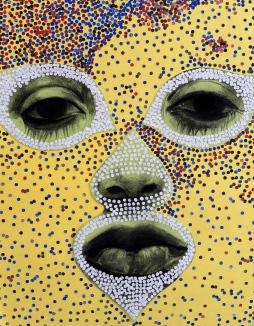
luchadora
Kayla Carabes, RISD 2026
Paper collage, water color, oil pastel and charcoal
D.G. Rosales, poetry
There once was a man called Prepotente, A king beloved by toda su gente.
To them, a great campeón. But he stung like un escorpión. The good of the realm, ni en mente.
He promised each worker un techo, A home as a right, su derecho. But permits grew thin, “Not for your darkened skin,”
While his friends raised palacios, con provecho.
He laughed while he slashed la pensión, Claimed “sacrifice builds la nación.”
The viejos stayed still, Though the cold made them ill, Yet they whispered his name in oración.
When crops didn’t grow como antes, He blamed foreign hands—los migrantes. While the fields turned to dust, The rich just said, “Trust,” Toasting wine on their decks arrogantes.
He crowned himself guardia del suelo, Made truth bow down beneath su pañuelo. With his ink-stained decree, He cut down every tree, Dead stood the forest, no bird taking vuelo.
But then he turned on them with acero. They still cheered him on: faithful, sincero. One by one, they knelt low— Offered throats, whispered “Go.”
Blood drenched the soil in the black aguacero.
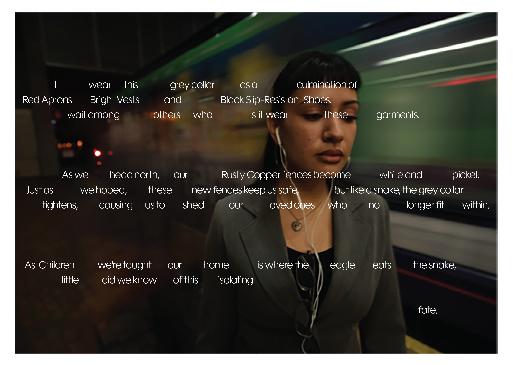
Nuestra Lágrima
Andres Preciado & Hernany Torres, Boston College 2027
Mixed media - Photography and Poetry
Nicole Naim Dib, Prose/interview
For years, while living in New York, I interviewed Latin American immigrants I met on the streets. I wanted to understand more about them—their lives, their dreams, their struggles, the ways they carried their stories into the city we all shared. I listened as they shared fragments of their lives between shifts, commutes, or deliveries. If they wished, I photographed them holding a snow globe, a familiar souvenir reframed as a symbol of their inner world.
Thats how I met Antonio. He had streaks of white in his hair and fine white lines at the corners of his brown eyes that looked like zigzagging rivers. His frequent smile made the wrinkles ripple like flowing water. Beside him, his bike rested with a large box bearing a restaurant logo. It was late at night, but Antonio’s shift was just starting. Working late wasn’t an issue for him, he explained, having worked two jobs many times before.
“It´s my age,” he said. “That’s the problem.” Antonio paused, exhaled, and continued.
“I worked construction in Puebla. It’s not a stable job, and sometimes weeks can go by without any work. In those difficult moments, that’s when you say, ‘Pues, vámonos.’
Both times I crossed were dangerous. The first time, I came with two distant nieces. Walking along the border with young women is very risky. In fact, one night someone tried to kidnap them. I regretted bringing them. We got caught and were taken to a detention center, but eventually we were able to cross. I went back home for a while and tried to apply for a tourist visa so I could return to the US without facing so much danger. Thankfully, I have two houses of my own, some land, property deeds, and a bank account in Puebla. But because I had been detained before and my fingerprints were on record, my tourist visa was denied.
The second time, I had to cross through Reynosa, which is very dangerous. We walked for a while, crossed the Río Bravo by motorboat, and then walked some more. The worst part is leaving loved ones behind. In our group, there was a
27 SOMOS
very chubby man with badly injured feet. I remember he was very funny, always making us laugh. Eventually, he couldn’t walk anymore. We had to leave him behind in the middle of the desert. I felt terrible. We never knew what happened to him; if he lived, if he died. On two occasions, we found human skeletons in the desert, remnants of people who had been left behind. In those moments, first you feel fear. But then a profound sadness sinks into your chest. You can’t help but think, ‘What’s the difference between me and that skeleton?’ That skeleton could’ve been me, it could’ve been one of my family members, or it could’ve been my chubby friend. Both times, I let the group move ahead and knelt down to pray. The desert doesn’t forgive anyone.
Many people who embark on this journey never make it. Some are left in the river, others in the desert, or under a train. No one really knows what happens to them. But all those who didn’t make it are brought into this country in the minds of those of us who did. They are what we could’ve been, and we are what they could never become. I don’t know if that makes sense.
Close to where I live, there’s a boy from Guatemala. He says the hardest part of the journey for Central Americans is traveling across Mexico. His story is really sad. He was riding on top of La Bestia, heading to Veracruz with a group of people. Then, five men approached them and befriended them, pretending they were also going to cross. But they didn’t want to cross; these men were thieves. They all planned to meet early the next morning. They spent the entire day walking together, and the thieves even gave them food and water when the boy’s group ran out. But that night, around two in the morning, they woke everyone up at gunpoint. ’‘This is a robbery, and you’re all screwed. Give us everything you have right now.
The women in his group were raped in front of everyone, and several boys were shot. The bodies were left on the train tracks. The survivors climbed back on the train and continued until they reached the border. He said that for them, Central Americans, Mexico is hell. Hearing stories like this makes me sad, especially as a Mexican, and an immigrant, just like them.
I have to go now; I have several deliveries to make. But before I leave, I want to say one last thing. Please, tell young women not to cross alone.”
This publication is operated independently from Brown University. The statements, views, opinions, and information contained in the publication are personal to those of the authors and student group and do not necessarily reflect those of Brown University. The publication is not reviewed, approved, or endorsed by Brown University or its faculty and staff

View the SOMOS Latinx Literary Magazine archive on Issuu
InDesign typeset by SOMOS Team at Brown University
Titles - Avenir Heavy 14
Body Text - Avenir 12, leading 14.4
Visual Submission Descriptions - First line Avenir Heavy 9, second line Avenir Book Oblique 9, Avenir Book 9, Leading 10.8
Visual Submission Captions - Avenir Light Oblique 9, leading 9
Written Submission Descriptions - Avenir Book and Book Oblique 10
Page Numbering - Avenir Book 10 November 2025.