

LATINX LITERARY MAGAZINE
fall ‘23






Dear reader,
In curating this semester’s issue, we sought to create a magazine that would hold tenderly the art works, experiences, and histories that live in its binds. While SOMOS does not seek out pieces of a particular theme, many works in this issue uniquely grapple with the idea of memorialization. Whether it is through finding love in the pockets of an old jacket (pg. 12) or the careful textures of handmade paper (pg. 24), the yearn to preserve our memory and the memory of others is apparent throughout the magazine.
Notably, many pieces memorialize the art of border crossing in beautiful and unexpected ways, grappling with both personal and familial ties to migration. Others remind us that even within the loss and yearning held carefully within neighboring pieces, there is still so much humor and joy to be had. All works memorialize with such deep love, care, and compassion. Even our own personal design touches (doodles and all!) act as ways to embed ourselves in the robust SOMOS archival. Therefore, we invite you to navigate the pages of this issue as tenderly as we pieced them together.
This magazine would not be possible without the efforts and contributions of our amazing team. What started as a small group of students dedicated and committed to showcasing Latinx art in the 1980s has grown to be a vibrant cast of 40 team members, making this our largest SOMOS team to date. We are so excited to continue to see the growth of our beautiful community. To you all, thank you for your commitment, perspective, and engagement in helping us bring this magazine to life. Thank you to all the Latinx creatives that contributed to this magazine from Brown, RISD, and beyond. We thank you for placing your trust in us to create a space for your voices, visions, and creations to be heard, seen, and experienced. We hope the contents of this magazine inspire you to think of the thousands of ways in which our community grieves, loves, and heals.
Con cariño,

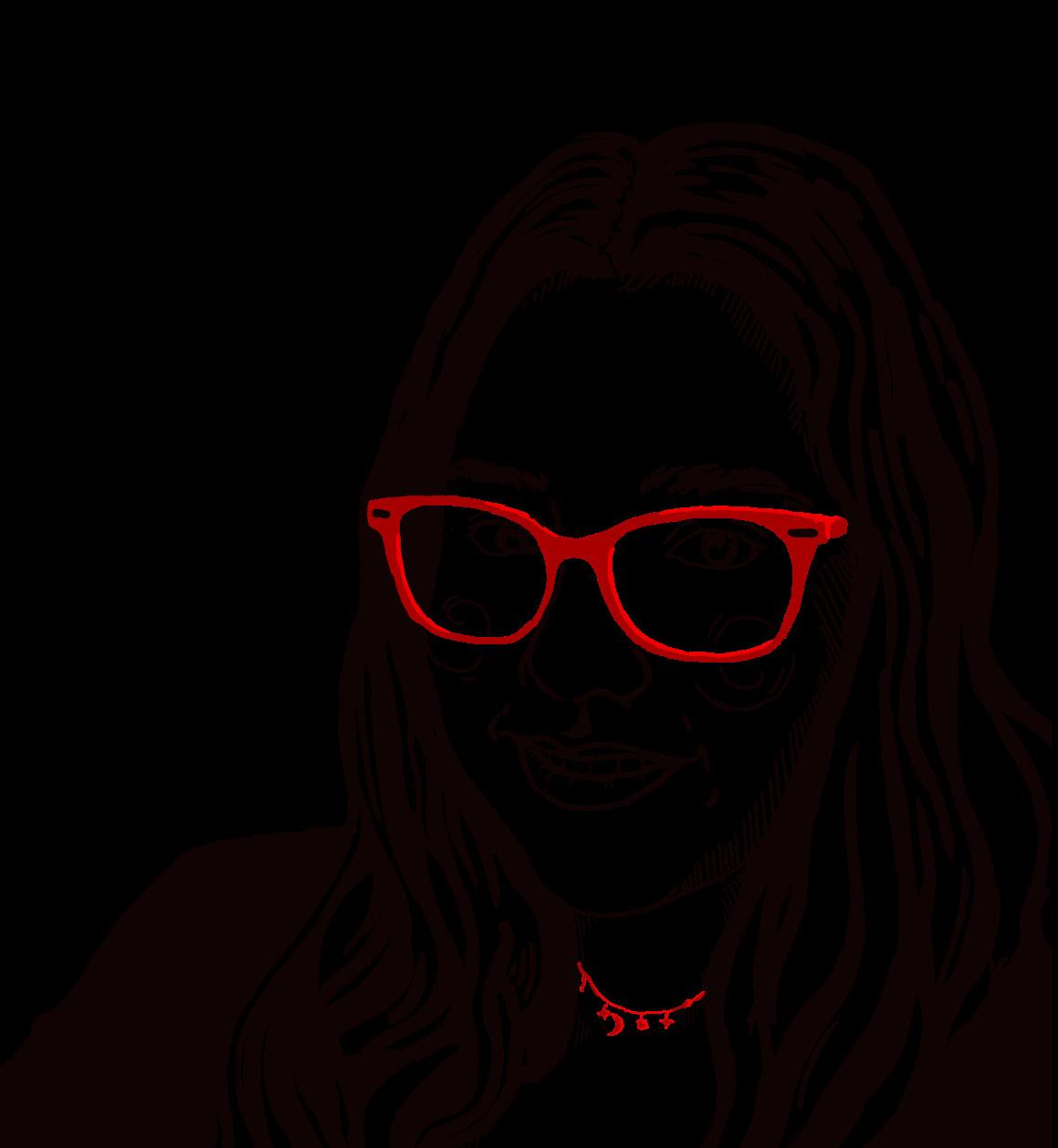
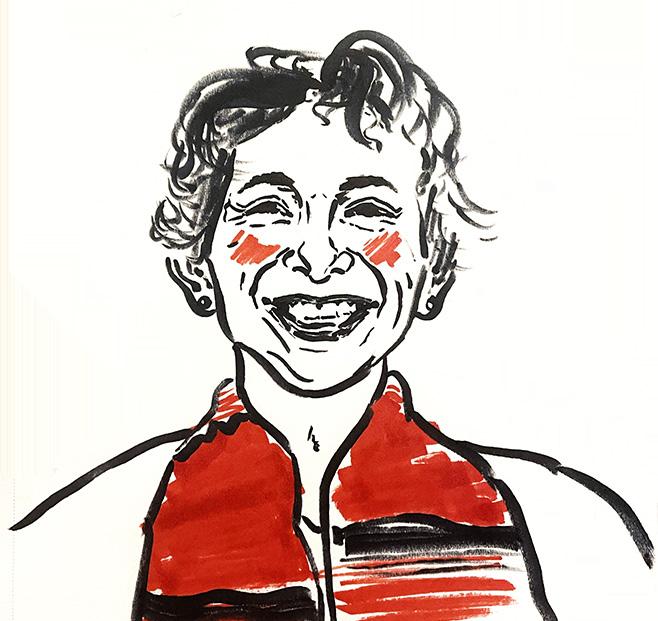
Katherine Williams
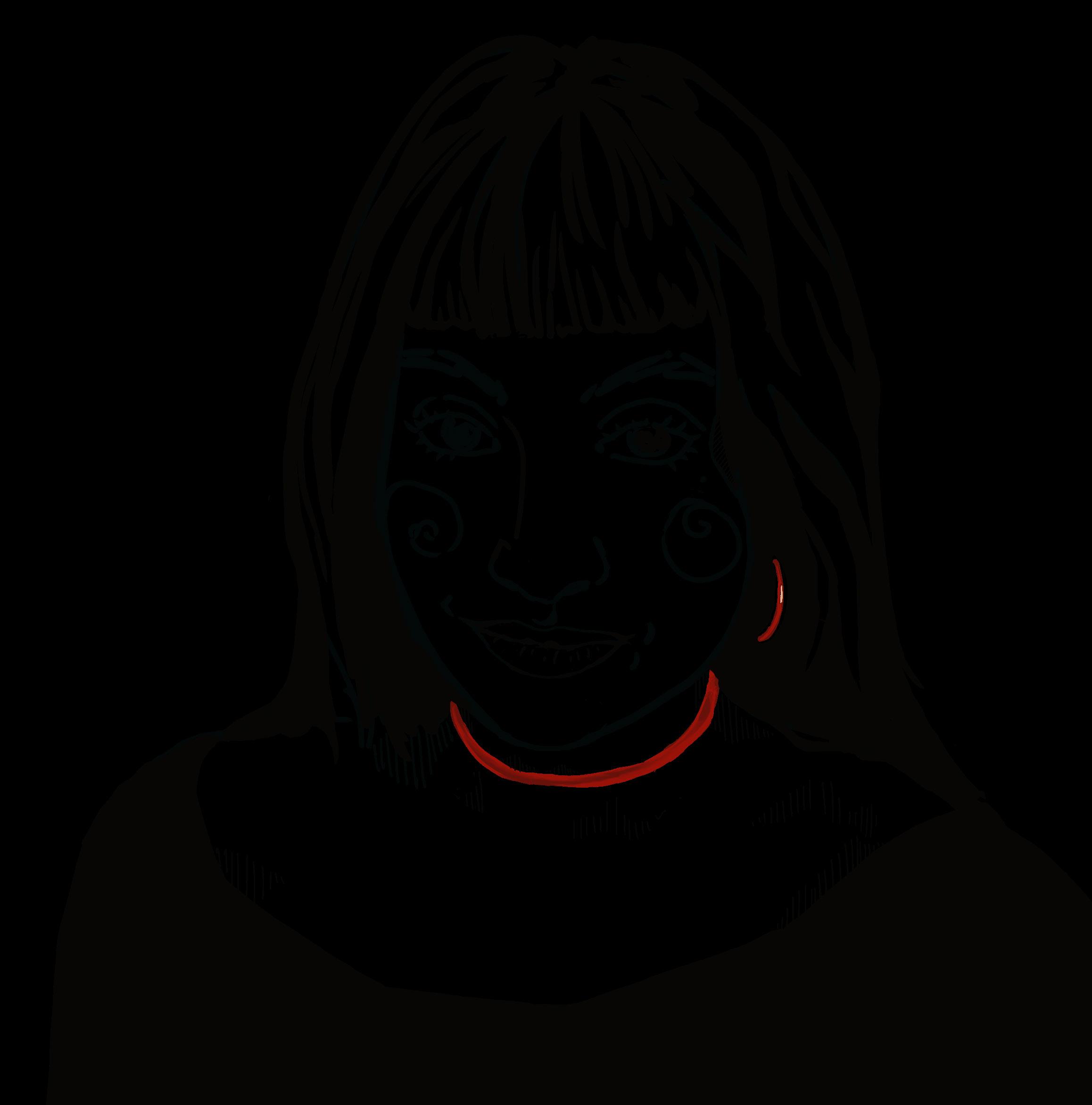
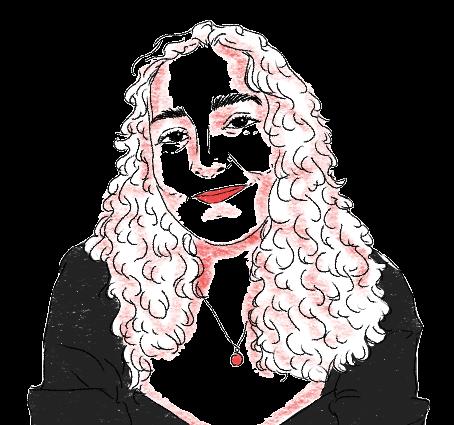
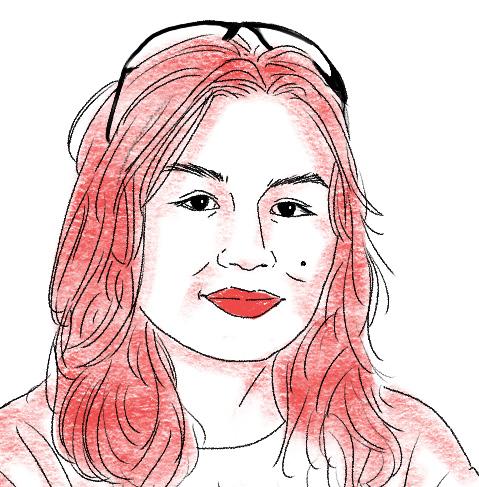
Ariadna Sanchez
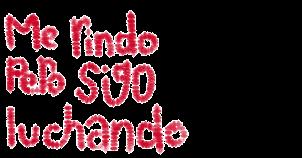
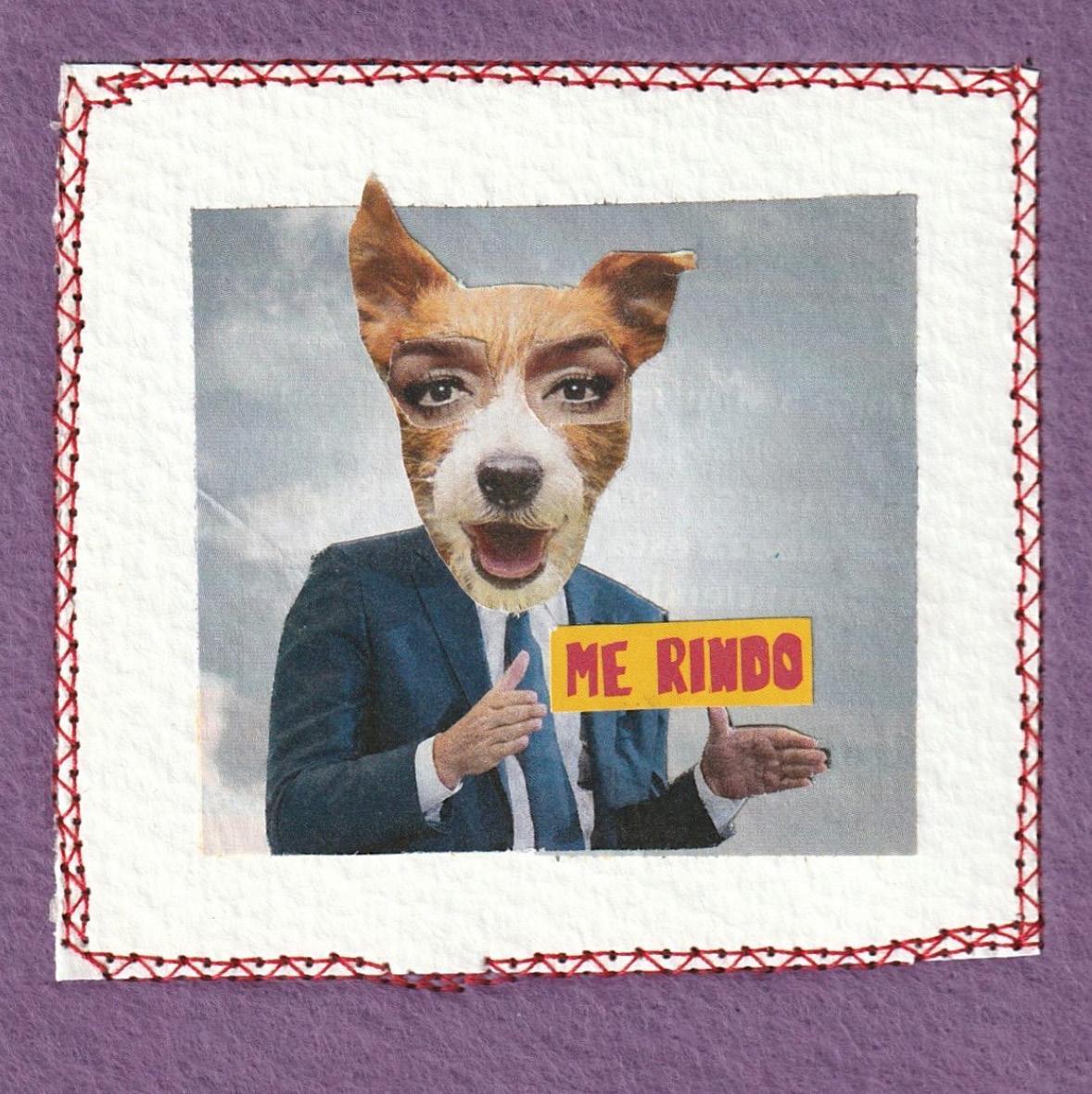
Me rindo pero sigo luchando Sentimientos Extranos Untitled Norteada Boriquén
I don’t need stereotypes la casita
Self-Portrait of a Mexican Artist
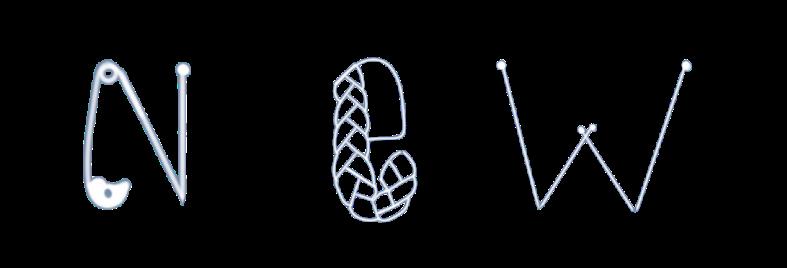
New Jacket
Borderlesque
My Mami
When language fell in love
Raza Pura
Ecuadorian AF
42,000 Scales
Sí, soy una víbora
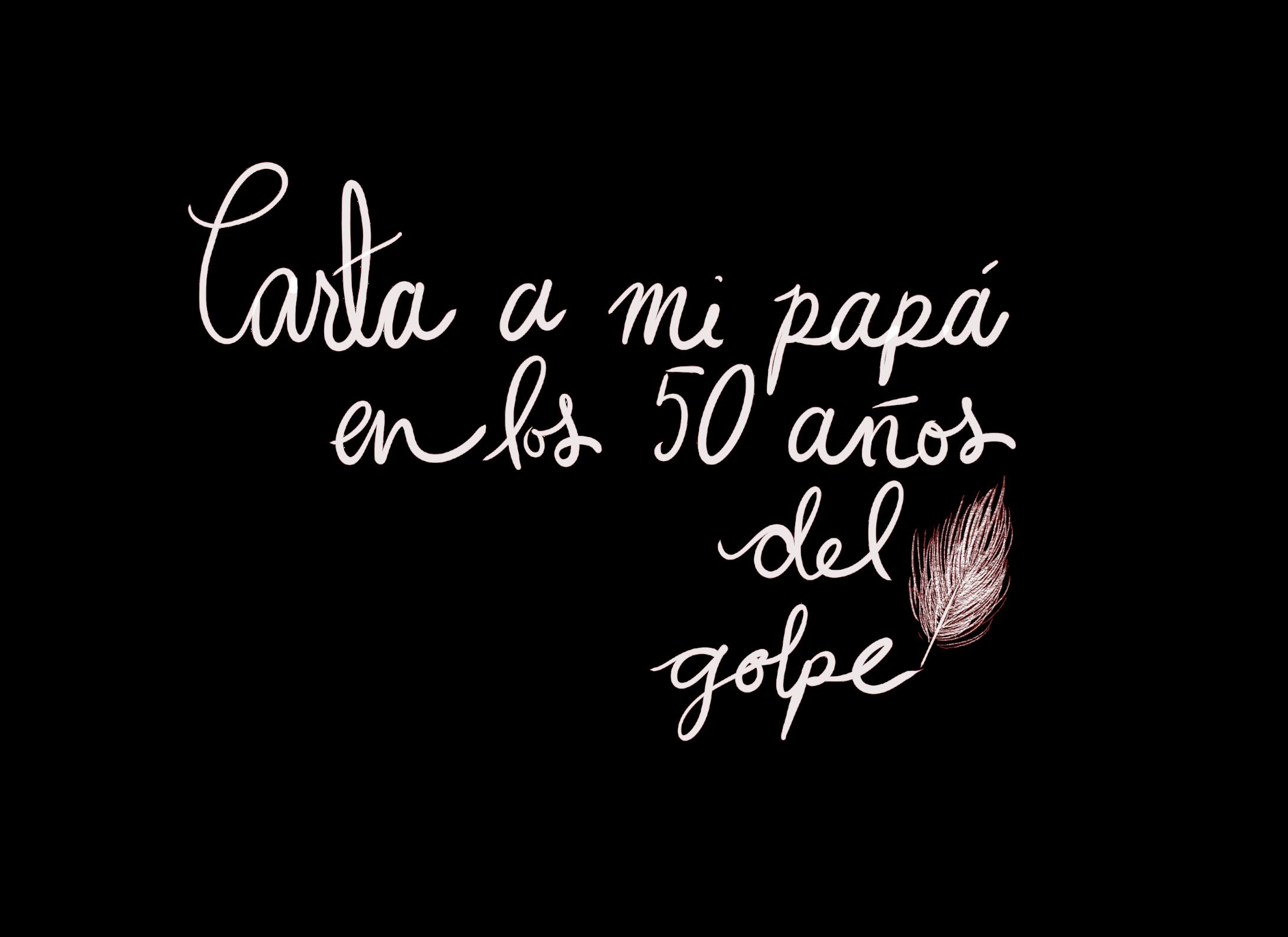
Carta a mi papá en los 50 años del golpe
Forgive Me…
Novenario a los Desaparecidos
La Sangre que Me Llena
El Charro
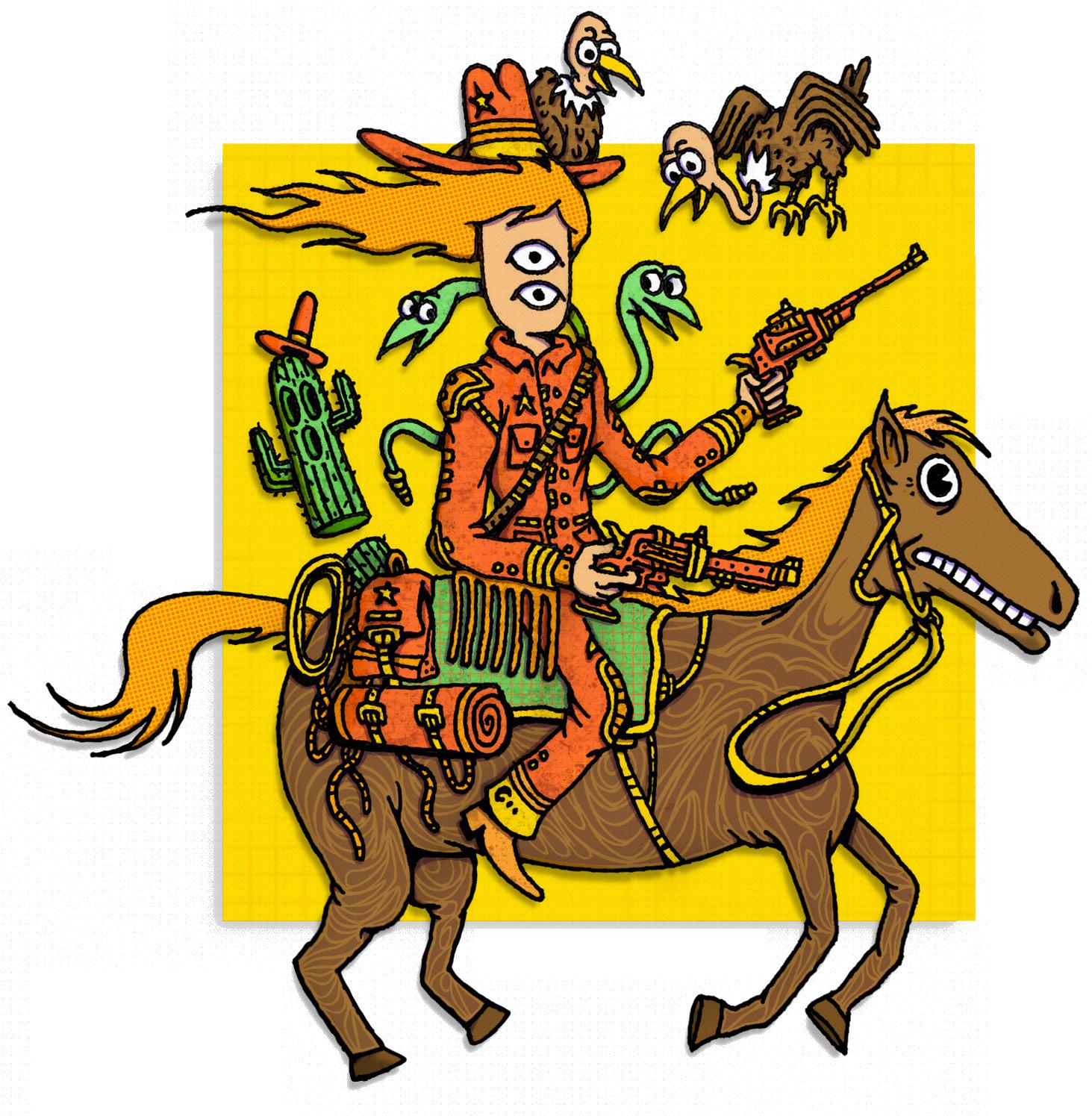
Paperback Cowboy the unveiling; a slam poem
Martín with a tilde in the í
Through the woods
Cheeseburger
Sombra en el Viento
Sandro Alberto Galicia Toledo
Jessiel Castillo Espinal
Sofia Ruiz
Kimberly Ayala Najera
Naomi Nesmith
Alondra M. Garza
ailyn mendoza
Luca Suarez
Katherine Williams
Monik Rodriguez
Meilyn Farina
Natalia Baños Delgado
Britney Simbana-J Sky
Margil Sanchez Carmona
Alondra M. Garza
Gabriela Venegas-Ramirez
Bryson Olivarez
Jessie Burciaga
Wendy Amador
Mando Mata
Luca Suarez
Aysha Facey
Martín Revelo
Alec Lippman
Alexia Sánchez Contreras
Jack Zarate
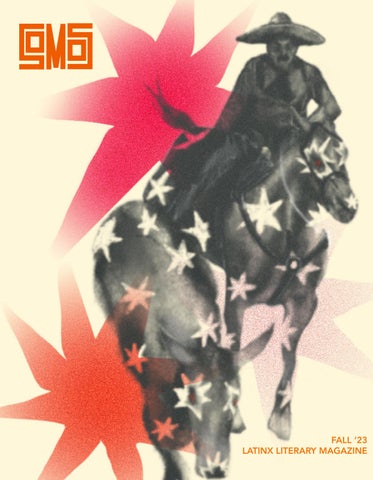
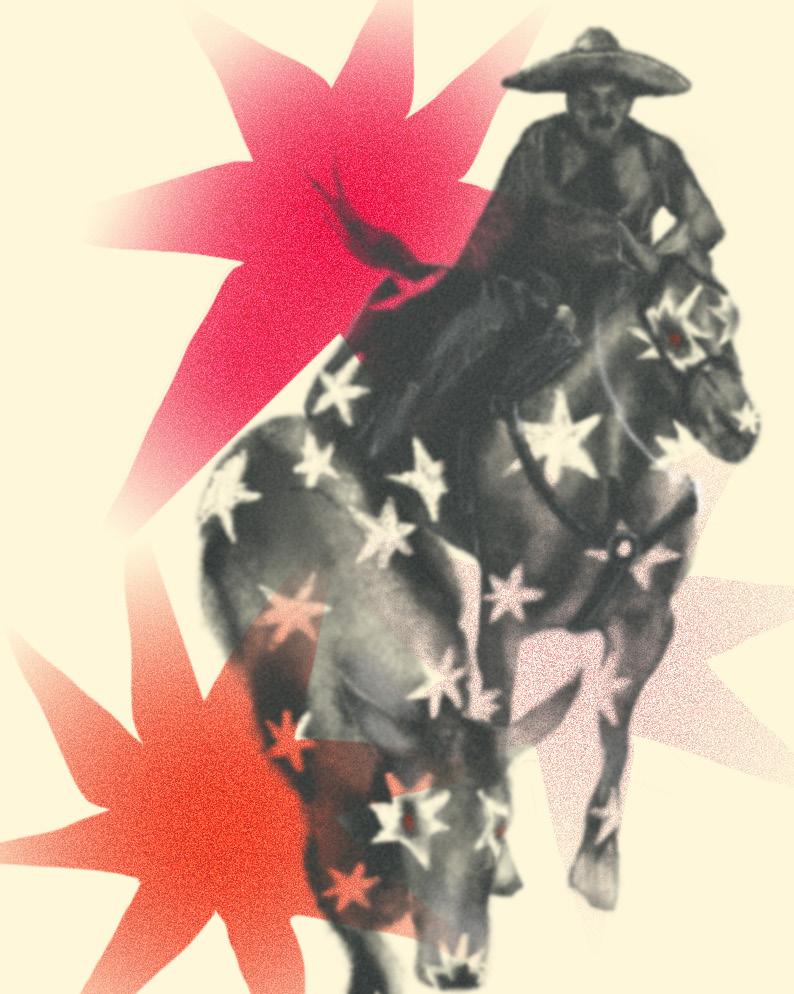
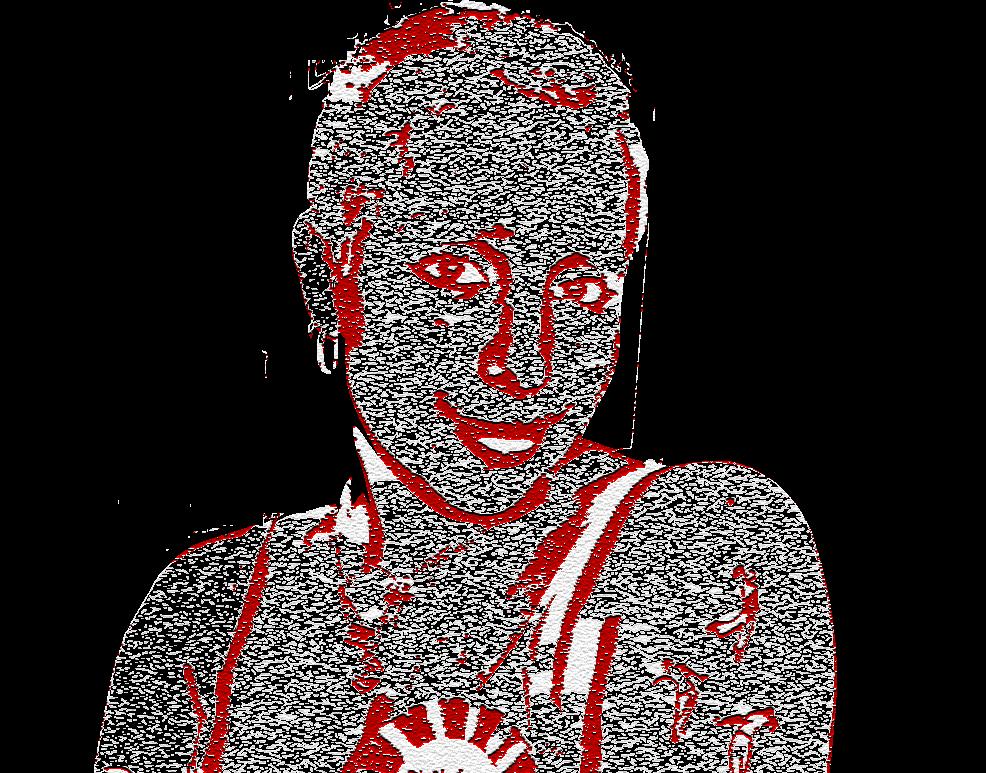
*cover and close-ups designed by Mando Mata
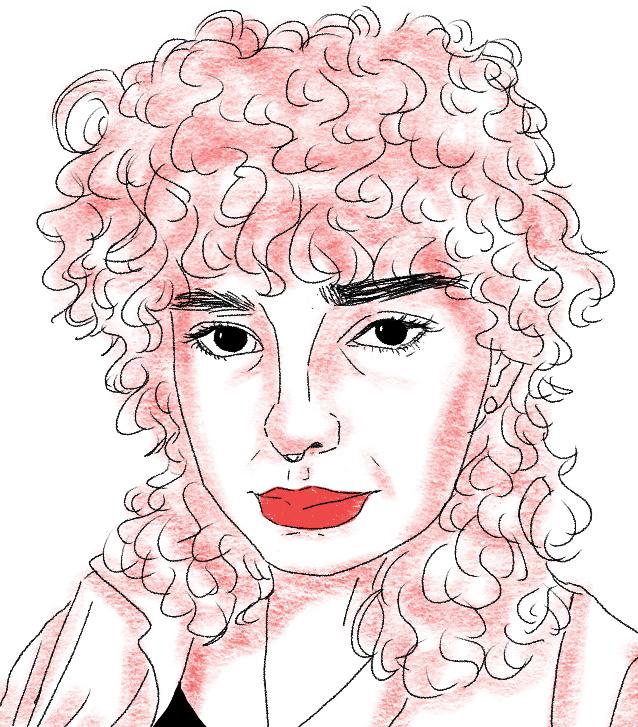
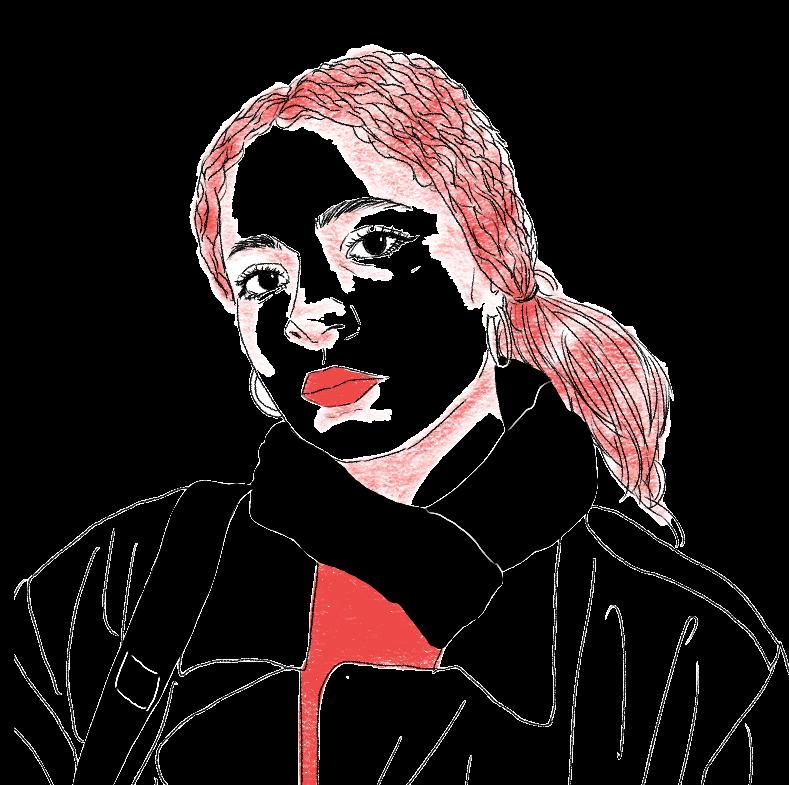
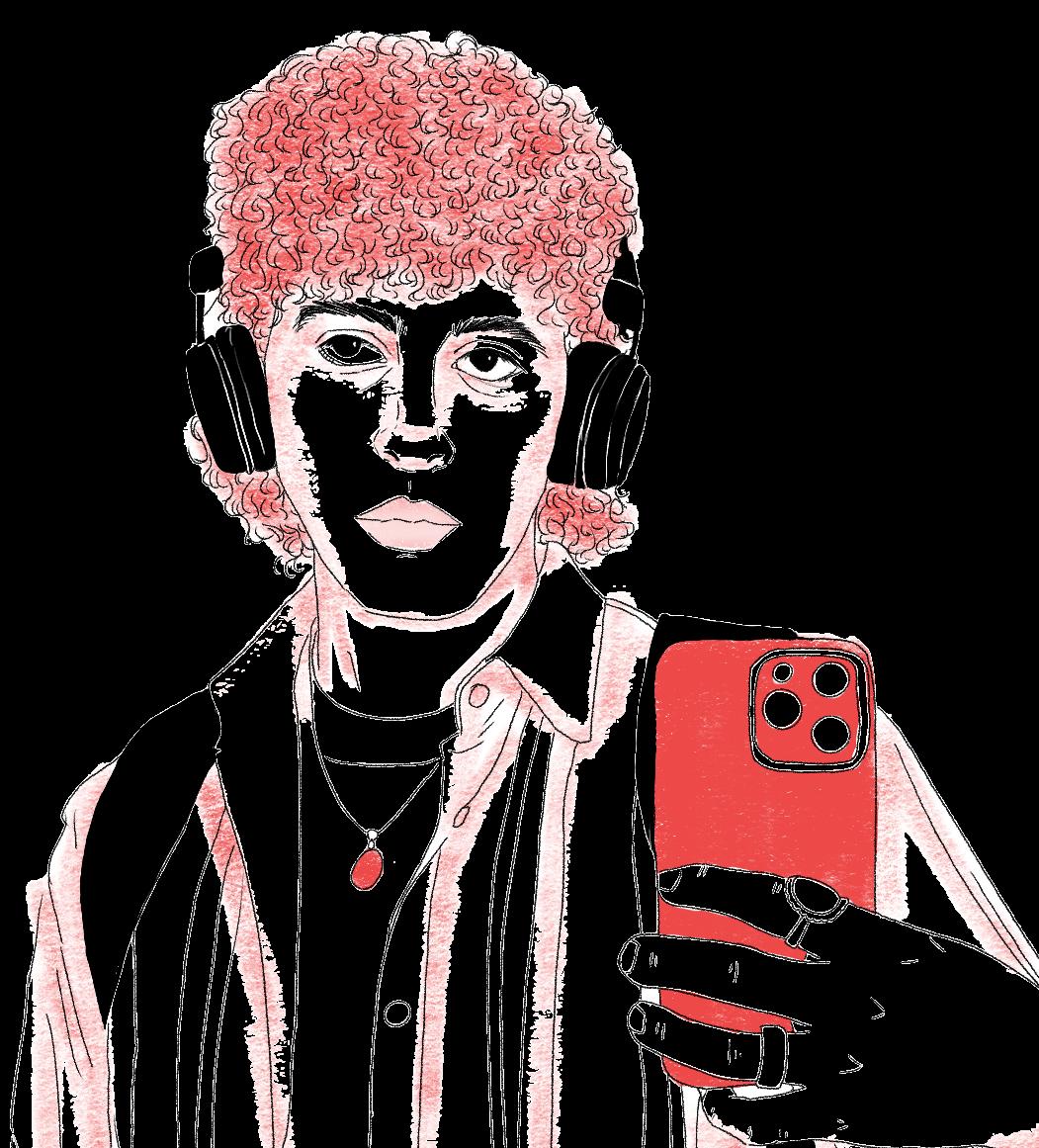
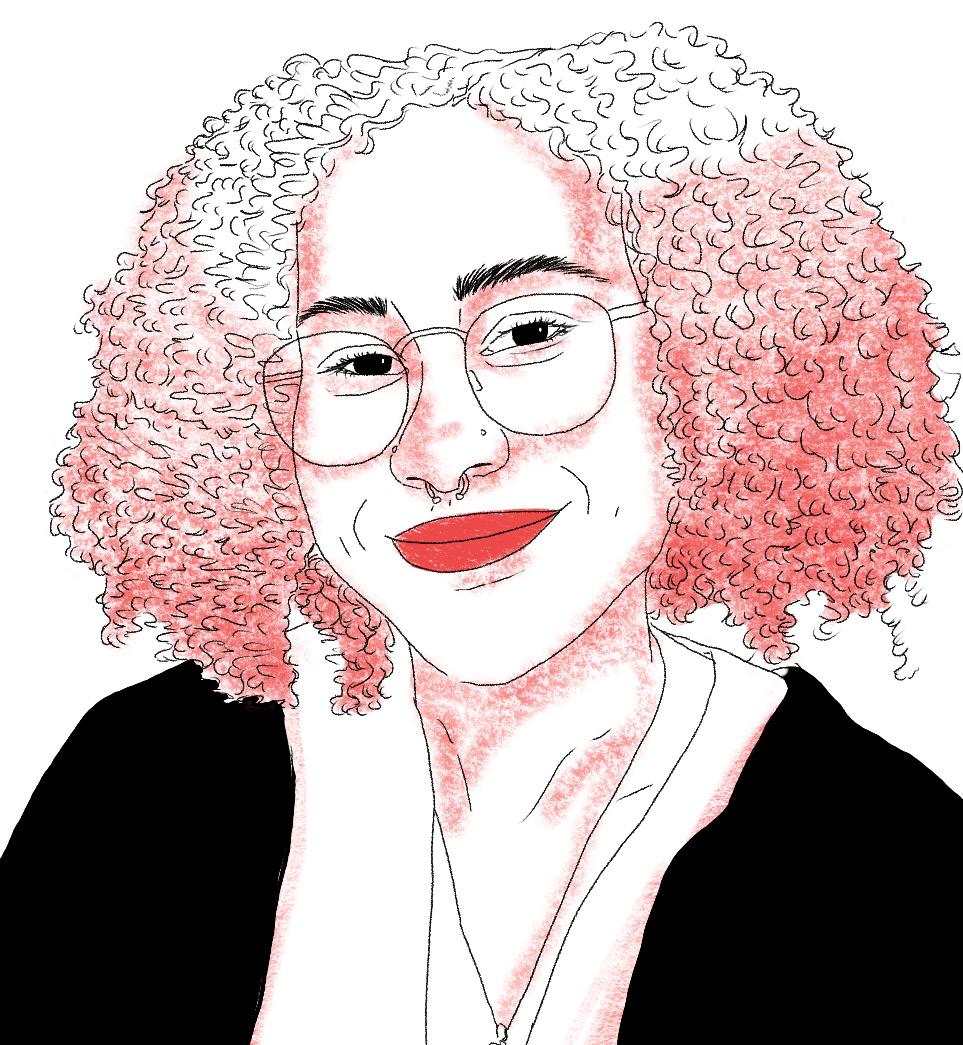
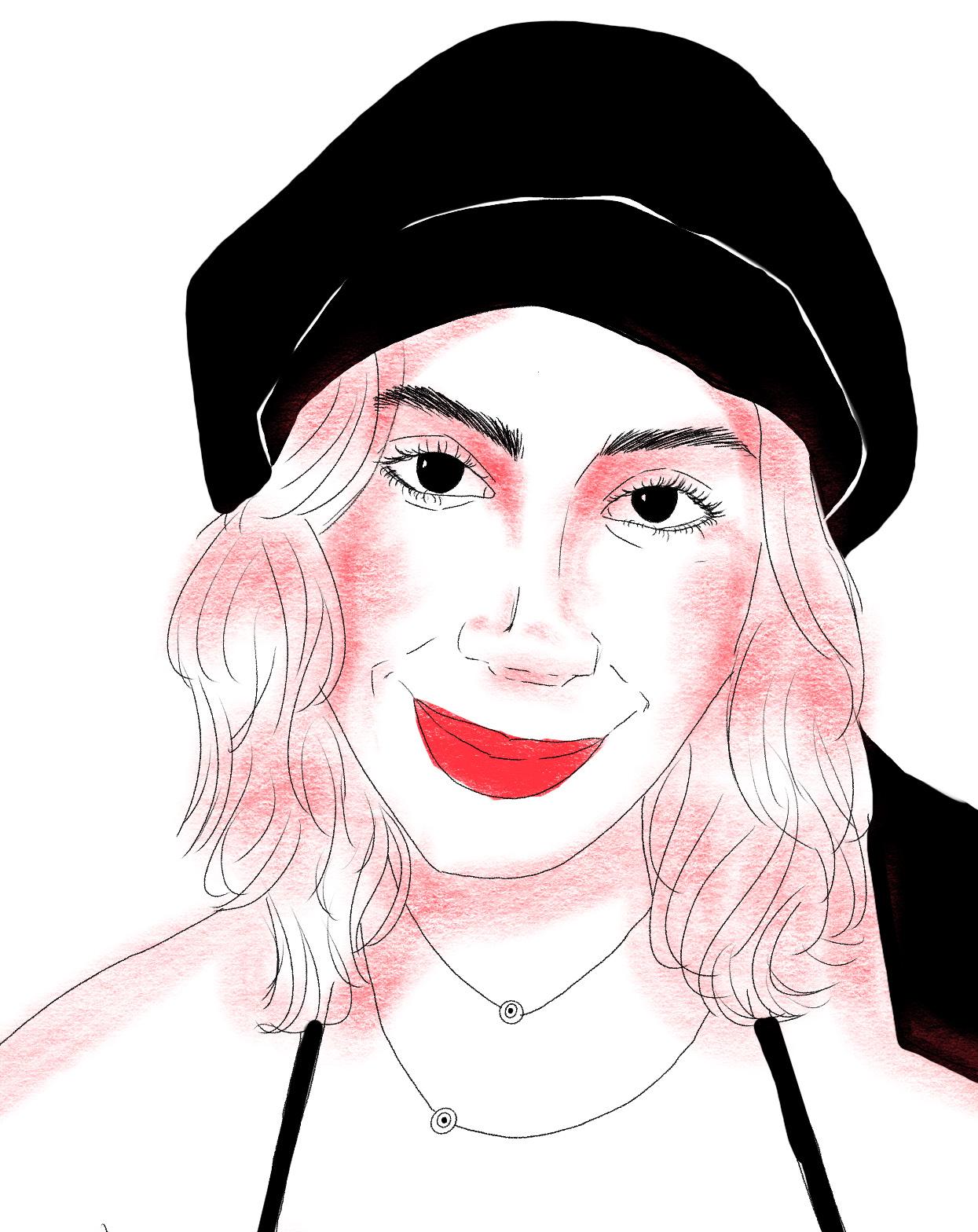
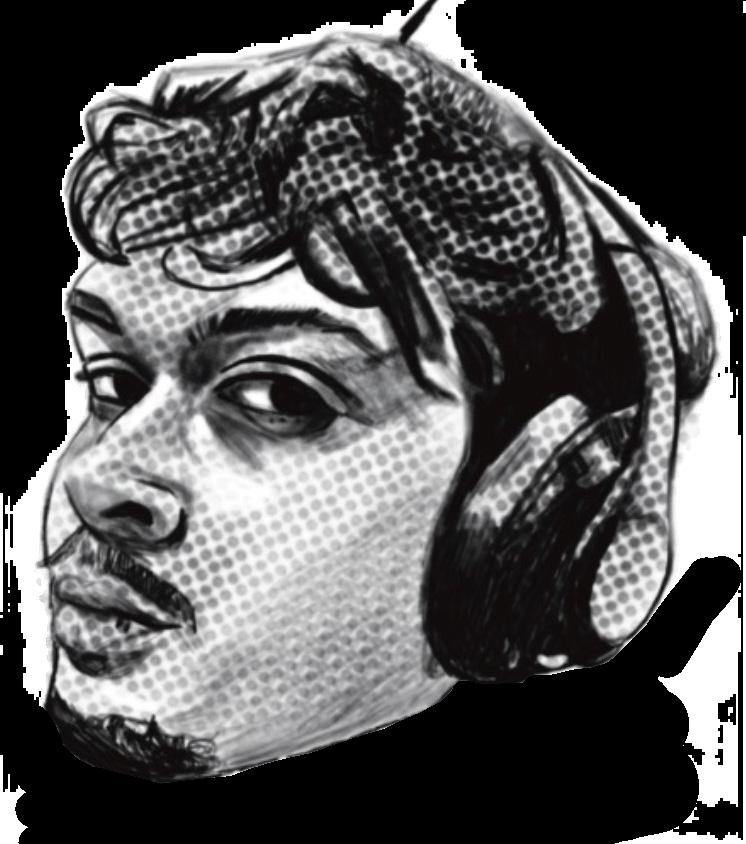
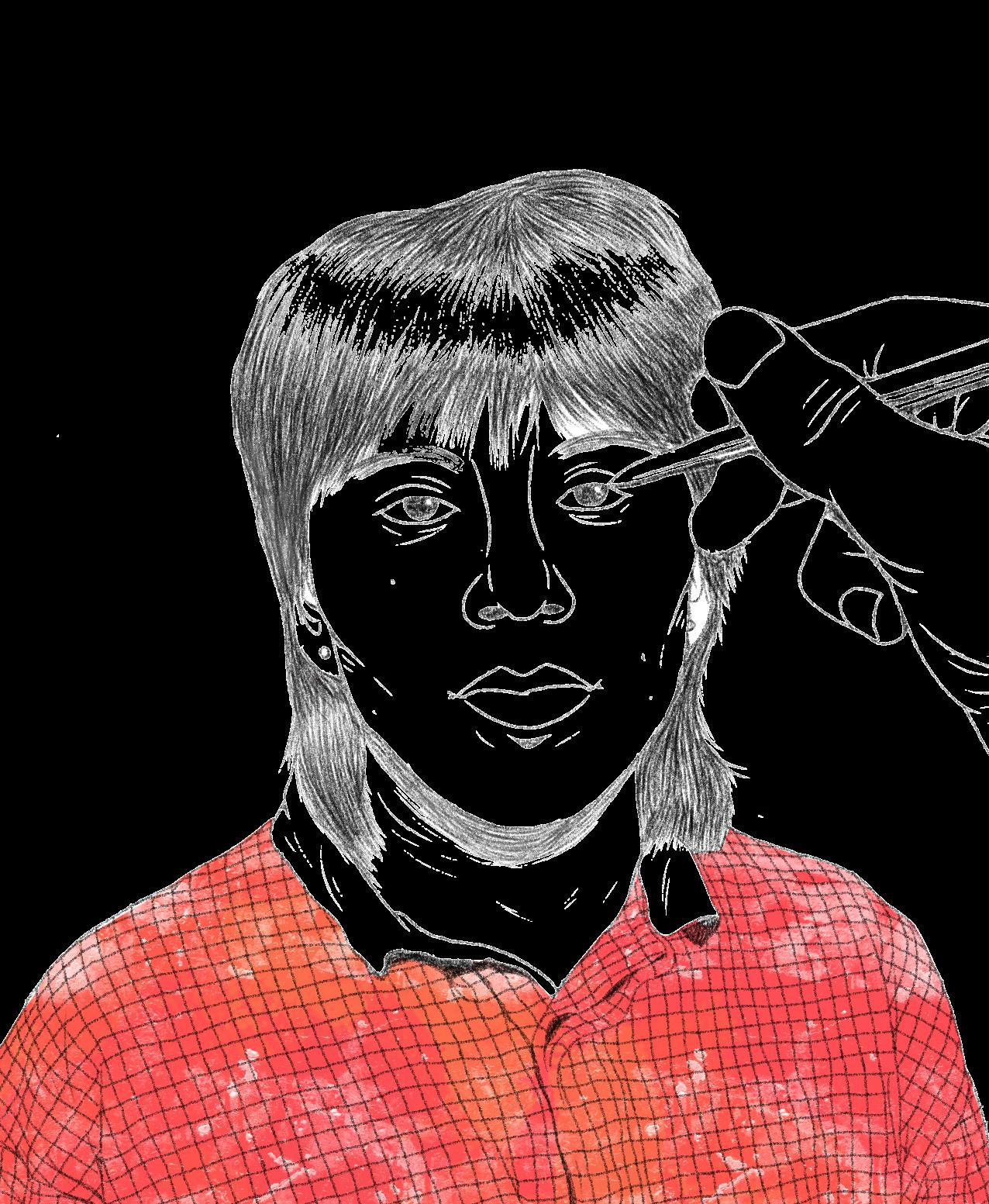
**titles and team portraits designed by Fiona Killian,
Luca Suarez, Alvaro Uribe, Alison Vila, Gabriel Herrera, Ana Mijares, Daniela Pozo, Anila Lopez Marks, and Katie Williams

My leg moves as if on its own (But it’s me
I know it is.) and she falls off the branch.
I don’t want someone to love I want someone to worship. I grovel at her feet, begging to be seen, begging for the resentment burning as it rises from my gut, crawling its way up and out (Get out!
Get out of my body!) to leave me.
I beg her for her time as I wait for her heart to stop beating.

En el ir y venir del día a día se me ha olvidado contemplar la llovizna. Esas aguas que caen de repente que perfuman la tierra seca esas que levantan olores sabrosos que hasta dan ganas de comerse la tierra a puños esas que inyectan vida a lo abandonado que pintan de colores lo que está arruinado.
En mi afán de querer y tener más he sido lentamente devorado por el consumismo. Envuelto en este juego pérfido también he perdido los chiflidos del viento y noches de luceros tiernos.
Pero lo que más me duele son los cientos de abrazos que no me di a mí mismo. Eso sí que me duele, dormir vacío y acartonado. Dejé morir mi alma sobre la cobija blanca con indicios a canela molida. Solo las motas de polvo se pasean descaradas en el cuarto; la mudez reina en todo el espacio.
Cargo varios desperdicios del alma atorados entre mis débiles canas así mismo un paliacate rojo por si en algún momento tengo que limpiarme los mocos. Escrito sobre las palmas de las manos con letra chiquita cargo el nombre de mi ‘amá’ para llevarla cuantas veces sea necesario a mi pecho y volver a empezar. Esa llovizna, esas aguas tempraneras son necesarias para detenerse para frenar súbitamente para valorar la vida la creación, el olvido, y hasta la misma muerte.

Sentimientos Extraños
Ya escribo lo que pienso No lo puedo hablar
Porque tengo un crudo sentimiento en el corazón Que me amarra el torso y aprieta
Hasta dejarme sin palabras.
Mi gran miedo es que no seamos compatibles
Que al verte
yo me quede mirándote
Y tú gires al otro lado.
Mi gran miedo
es que no seamos unos para el otro
Y sigamos enroscando un tornillo corrido
Es que ya no me quieres como antes Tu amor se diluyó con la distancia
Y la gasolina está muy cara Como para viajar hasta mi
Y eso es si quieres
Aunque ya no creo que quieras.
Hoy viraste al otro lado
A un lado más bonito
Donde yo no existo
Donde tu mundo es feliz y lleno de atención
Escribo mejor cuando me siento así
Lástima que no dure
Ya no quiero escribir
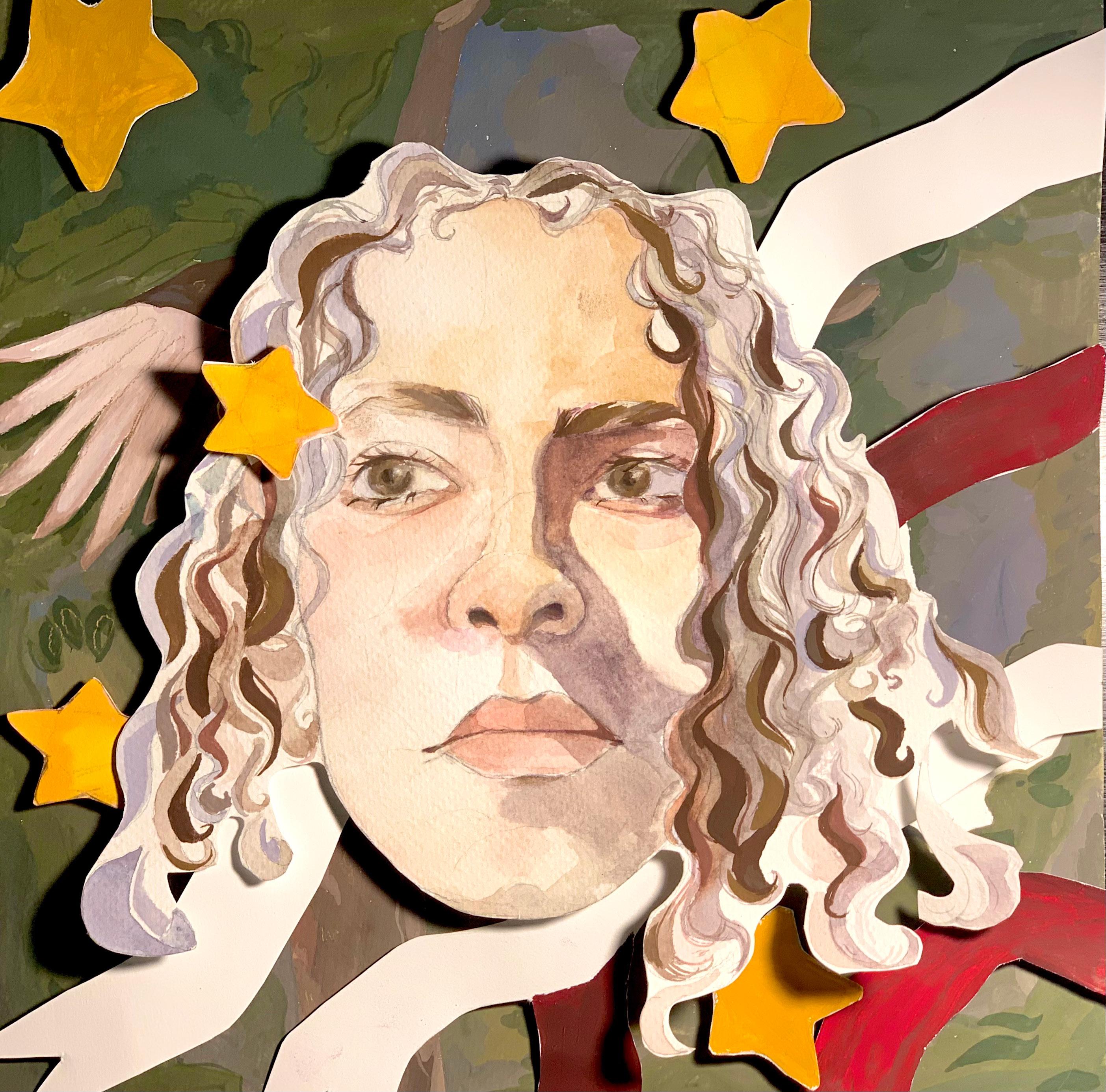

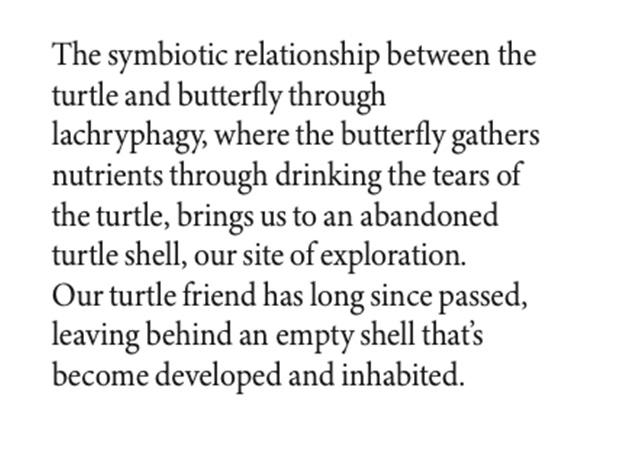
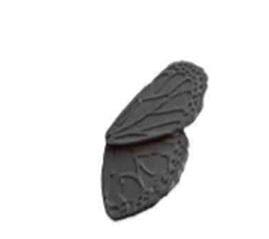
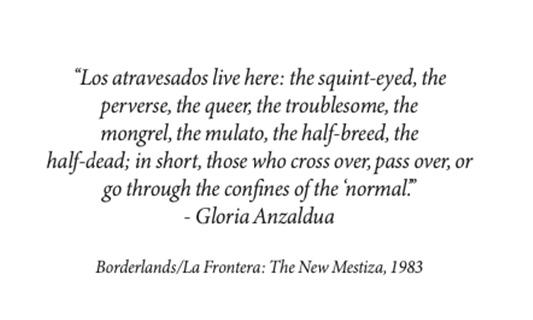
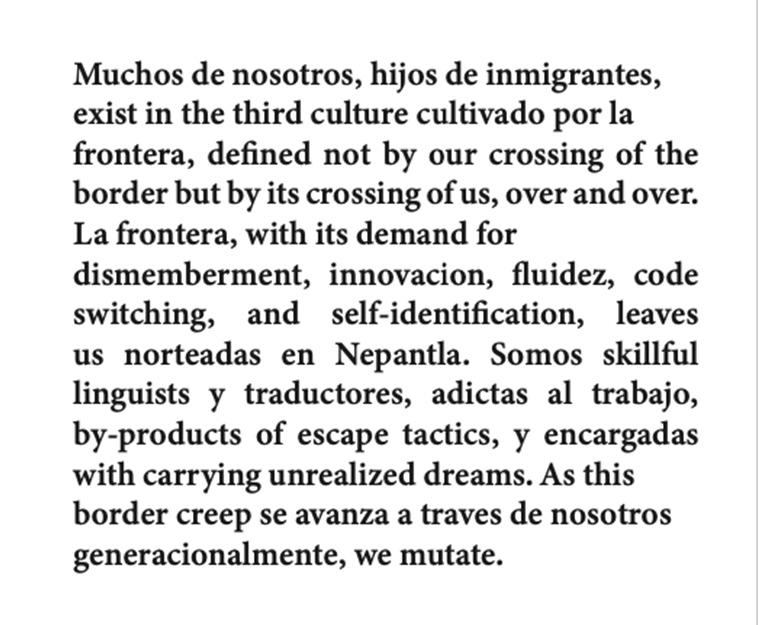
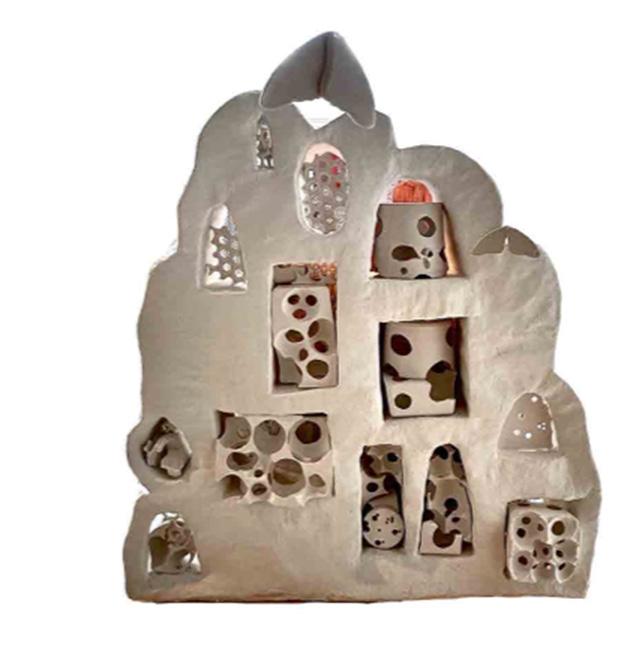
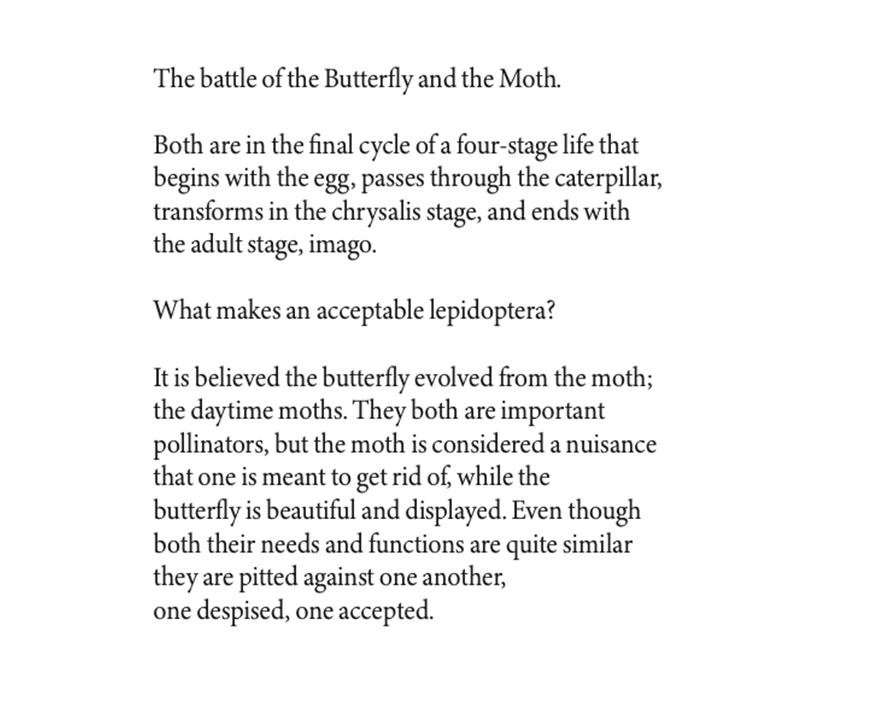

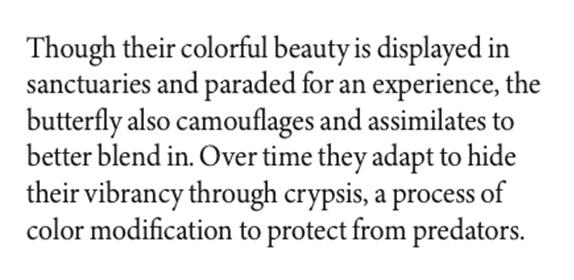
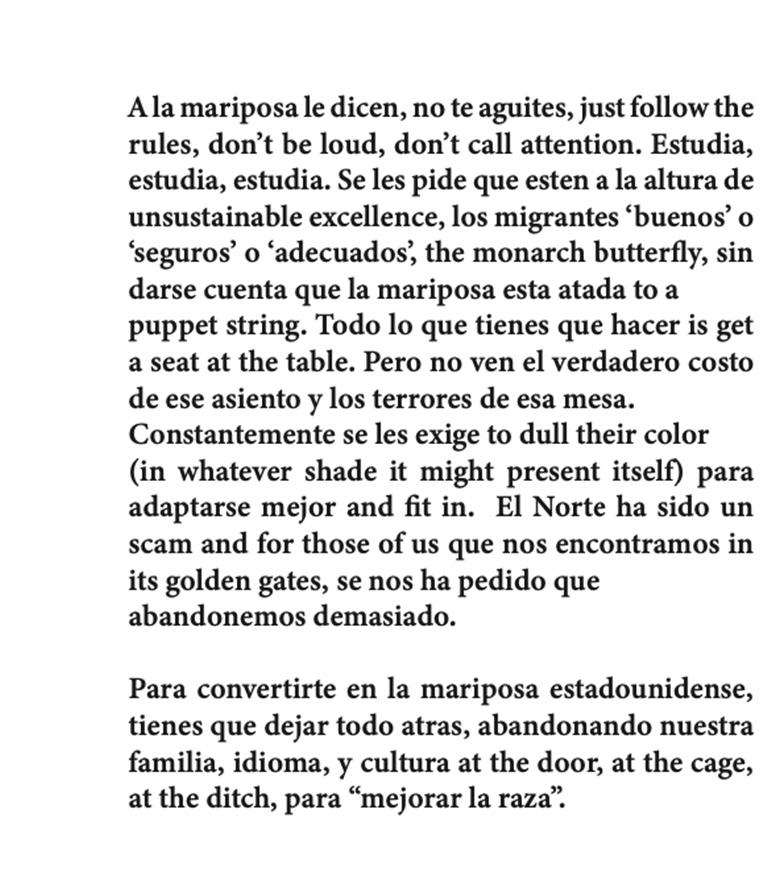
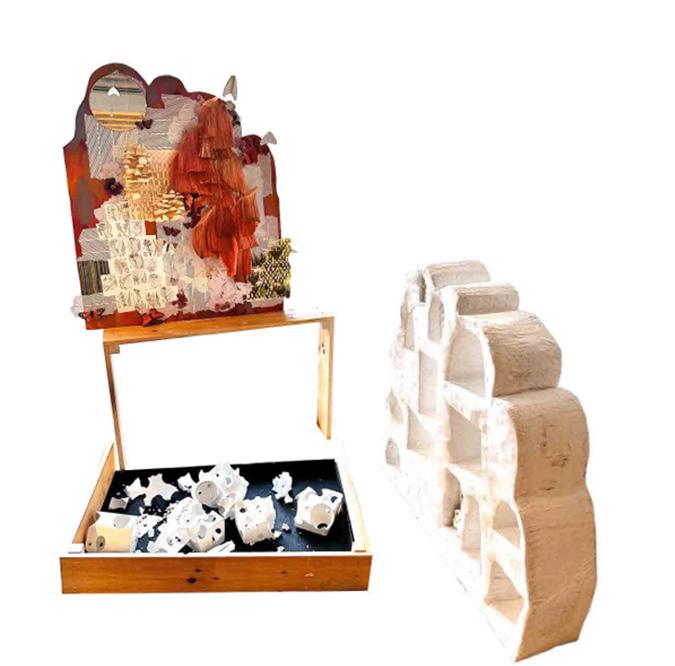
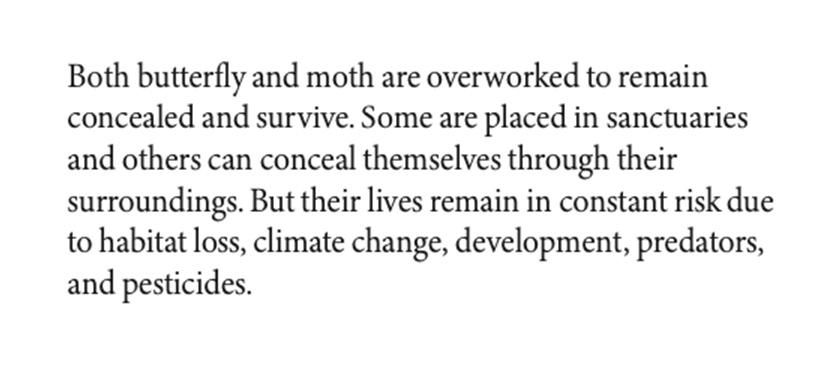
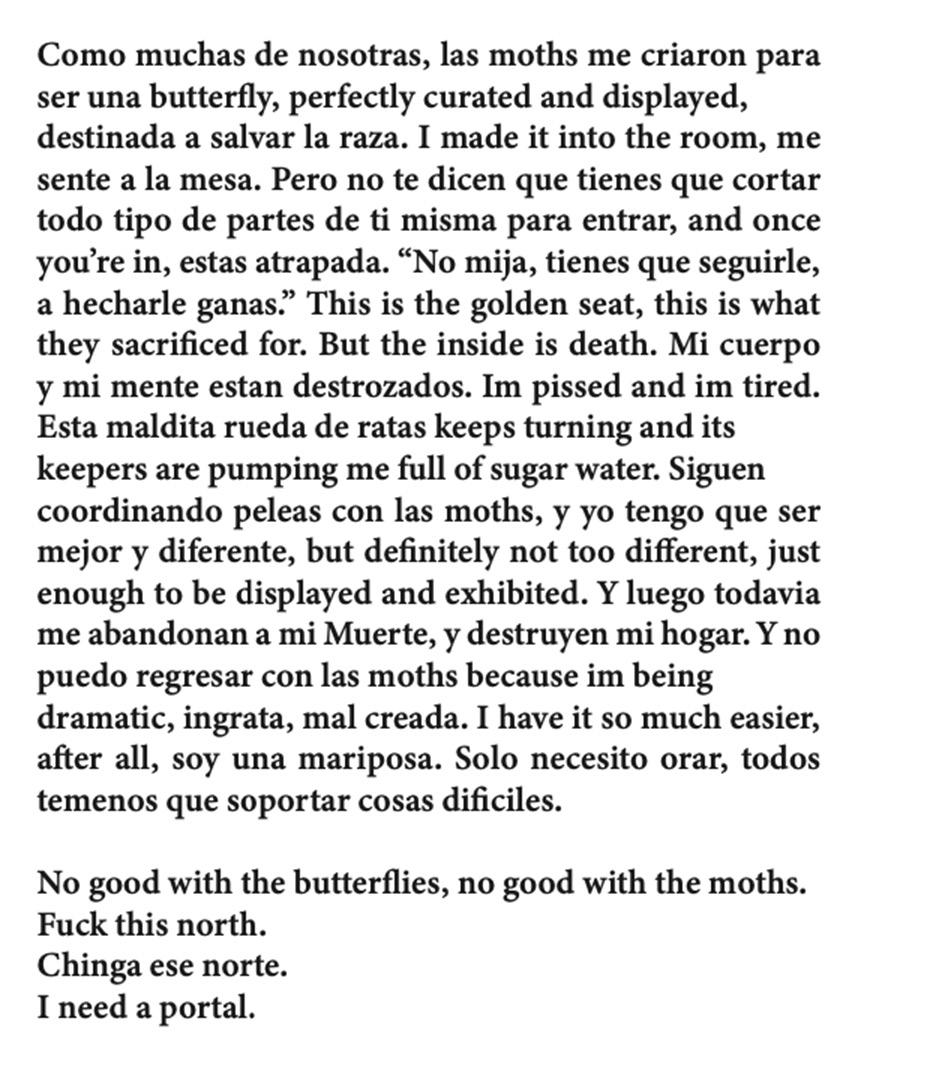
This piece is a portion of Ayala Najera’s RISD Masters of Architecture Thesis.
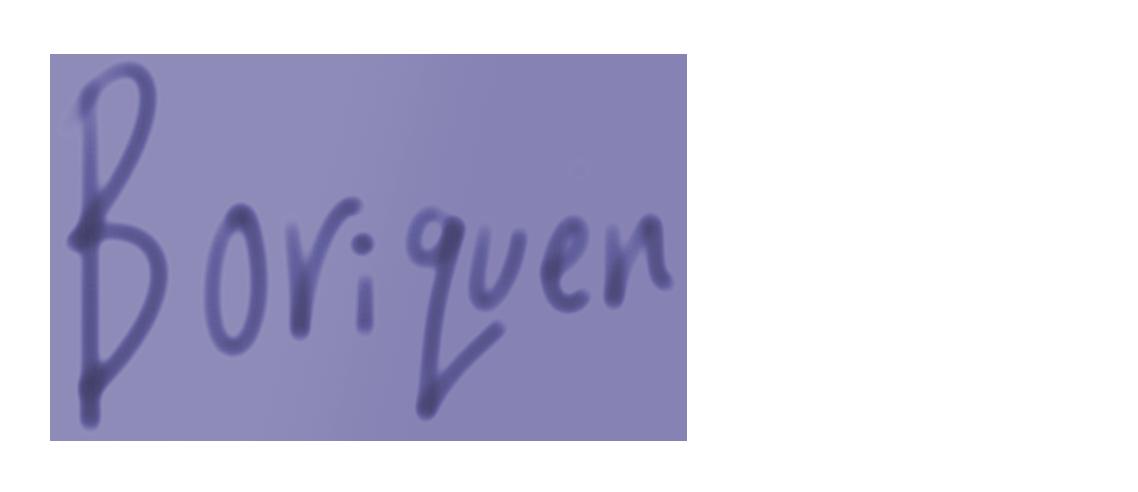
Naomi Nesmith, Brown ‘26.5
Mi Abuelo was a short man with two faces. One was graced with el sol de Puerto Rico, a jibaro among Brownsville’s city-people. All Alcolado, musica de salsa, and rum. I’m still fond of the combination of smells and rhythms. He wasn’t a tough man but he was funny. Liked to wiggle his dentures at children in the street, make them laugh. Sold piraguas and hot dogs in the summer and dealt numbers for gangs all other times. Could never work a 9-5 job. Last time he tried to a group of moreno’s robbed and jumped him for being a “spick.” I always thought it was mildly impressive that they could tell. He looked Italian, he was so white. Mi Abuela, a woman 11 years his junior, would smile at the thought. She hated his guts by the end of their marriage but boy, was she proud to marry a man so white. Abuela was the lightest of her family, hence she was the pretty one. Hair not a lick straighter than mine but the beauty salon could hide it. Plus she had “ojos verdes cuando era pequeña” which I was never allowed to forget.
Appearances were everything to her. She didn’t let anyone know how illiterate she was. How she repeated sixth grade three times in P.R. before ditching school for boyfriends completely. How she grew up with the shame of being an orphan, her father in jail for murder and her mother scornful against him and his “seed.” Appearances meant everything to her. It’s why she never cried, never apologized. Hardly ever spoke sweet words. She could not imagine herself without a grudge, without a ghetto, without a person to devor through words. Without a reason to feed the pigeons and plants by the window and reminisce on a time and a place different from this one.
Abuelo couldn’t make her happy, and neither could she- him. So they hid; Abuela behind her pride and Abuelo behind his rum. That’s when his second face grew. It would prowl low like a tiger while Abuela parroted hard words at him. Menacing, but never pouncing, until one night Abuelo’s second face danced a blade so close to Abuela’s that her pride slipped for just a second. In her eyes was the first real look I ever saw her give. But Abuelo held a look I didn’t recognize. He stopped and stumbled away, ashamed. Never before did he weep as openly as he wept that night. Sounds of grief into the sky for the man he was becoming. I could never forget that sound. Nor that face. Nor Abuela’s terror.
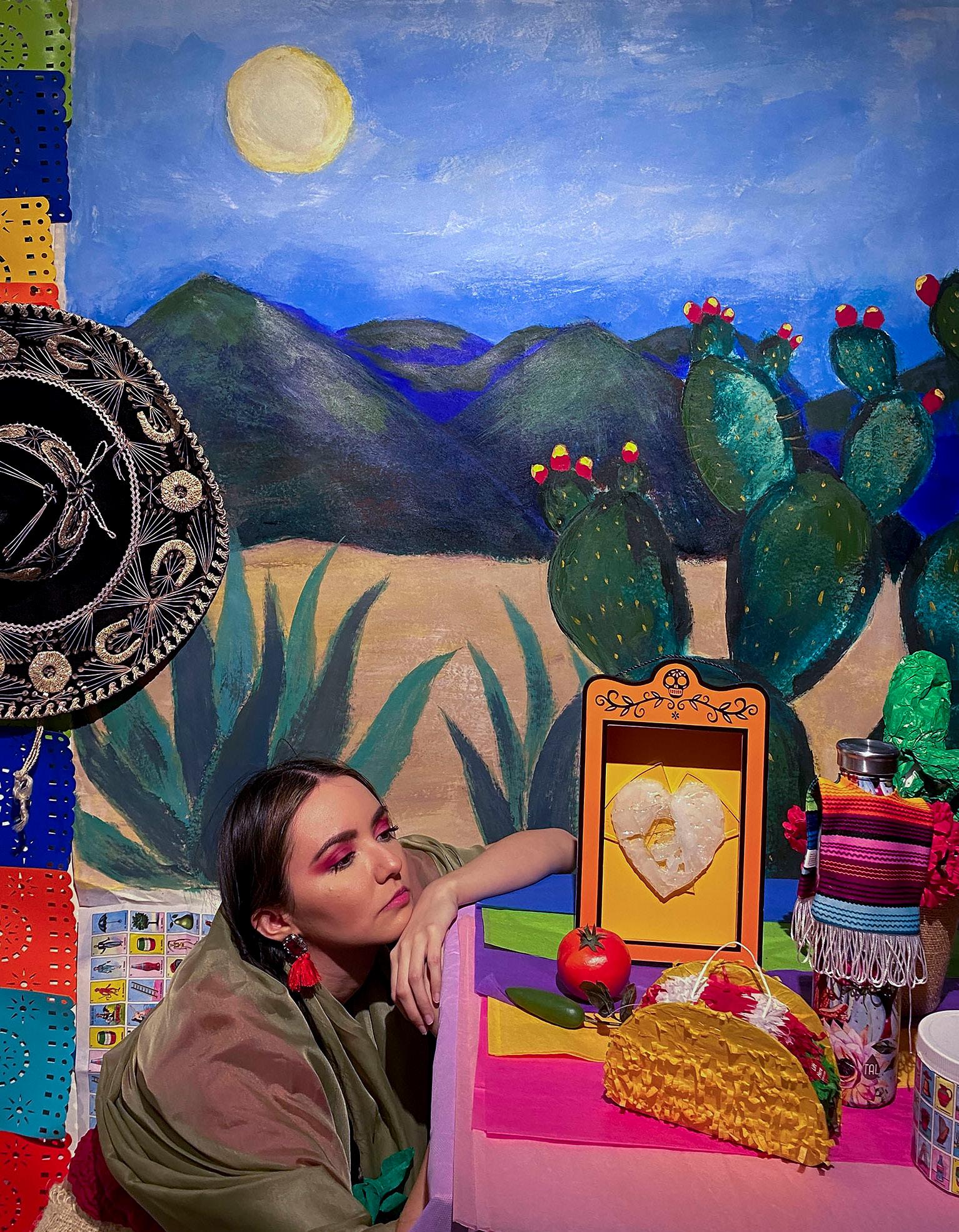
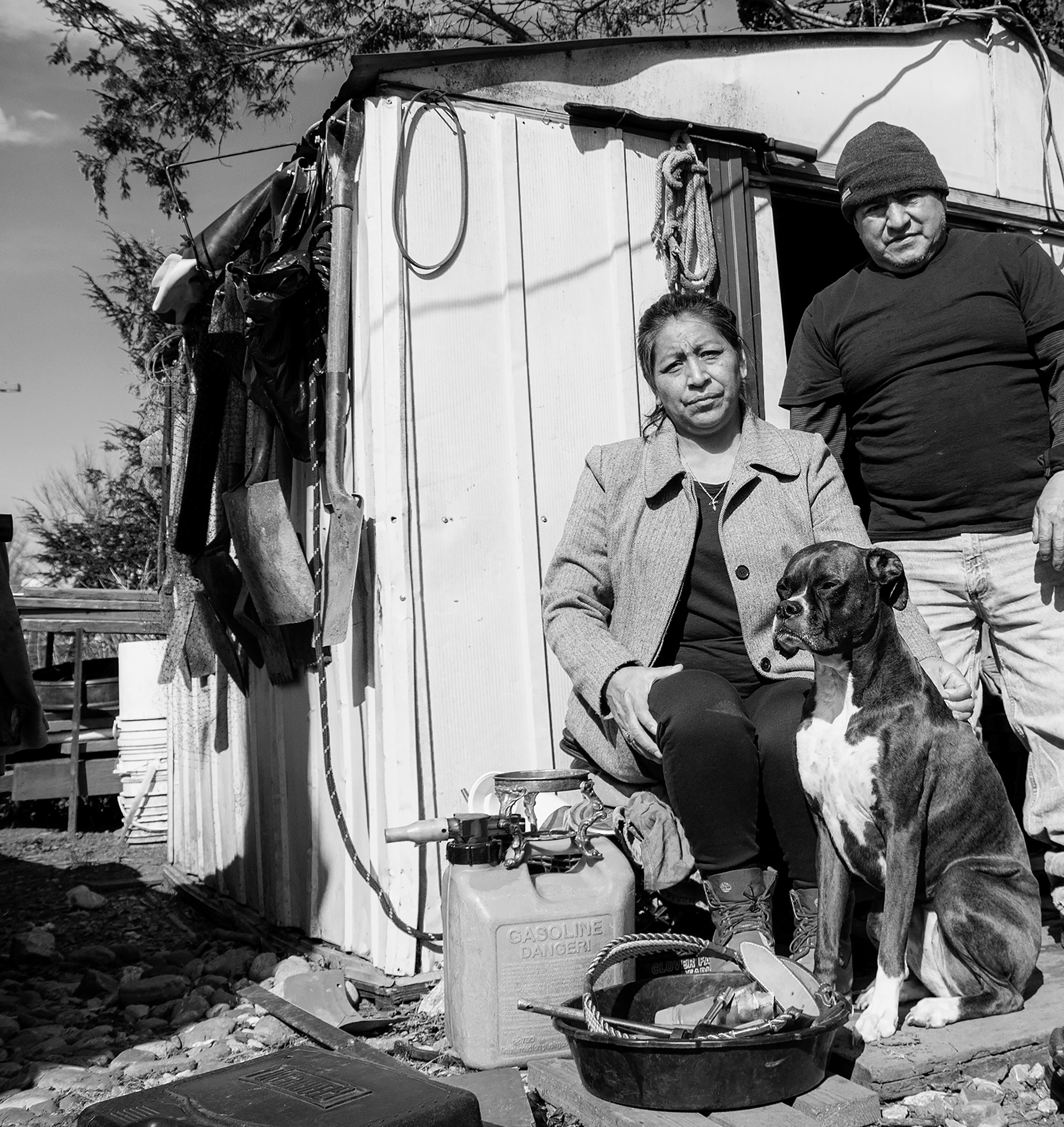
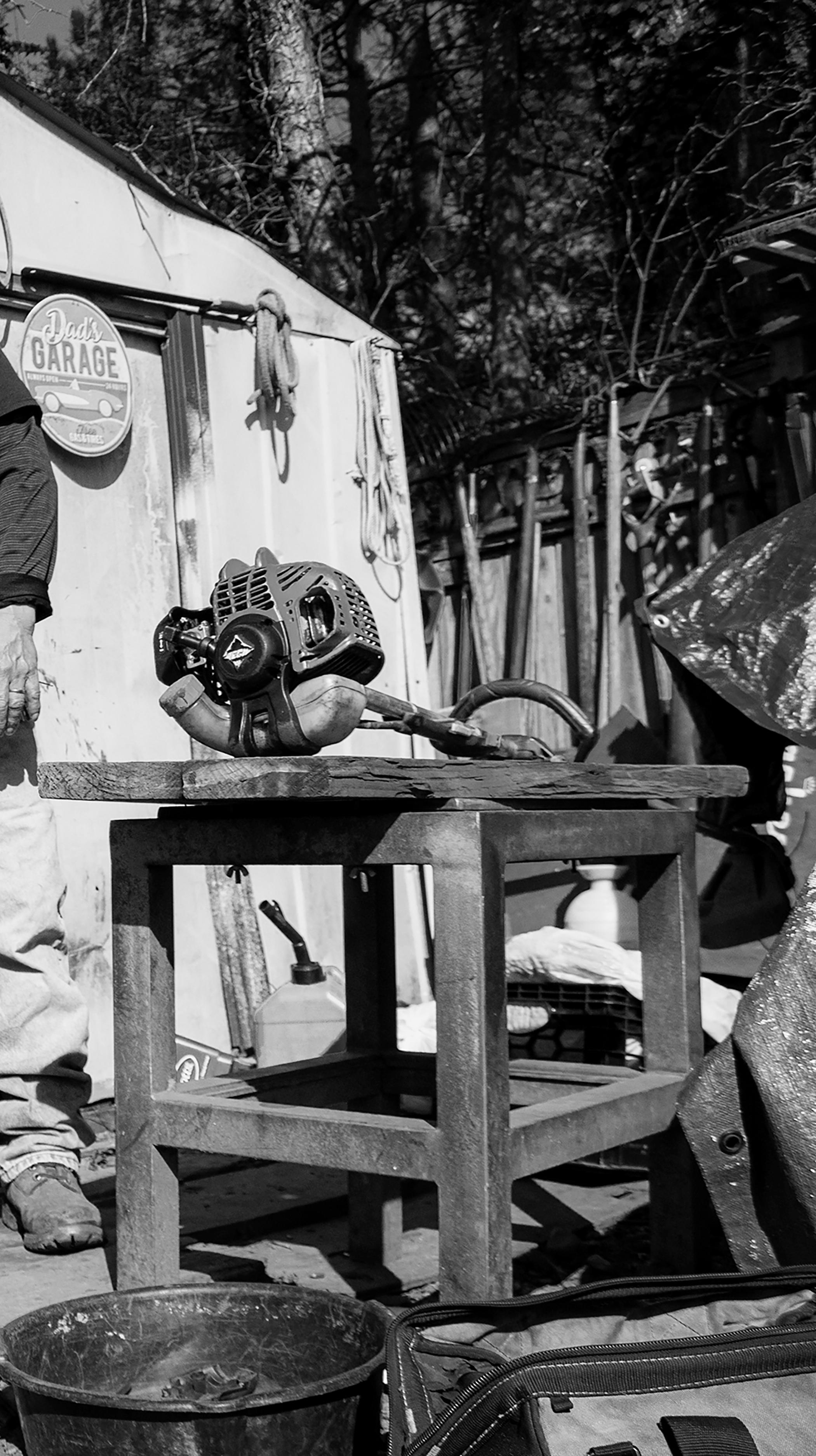
I don’t need stereotypes
Alondra M. Garza, Minneapolis College of Art and Design, MFA ‘21 Photography series, performance 24” x 36”
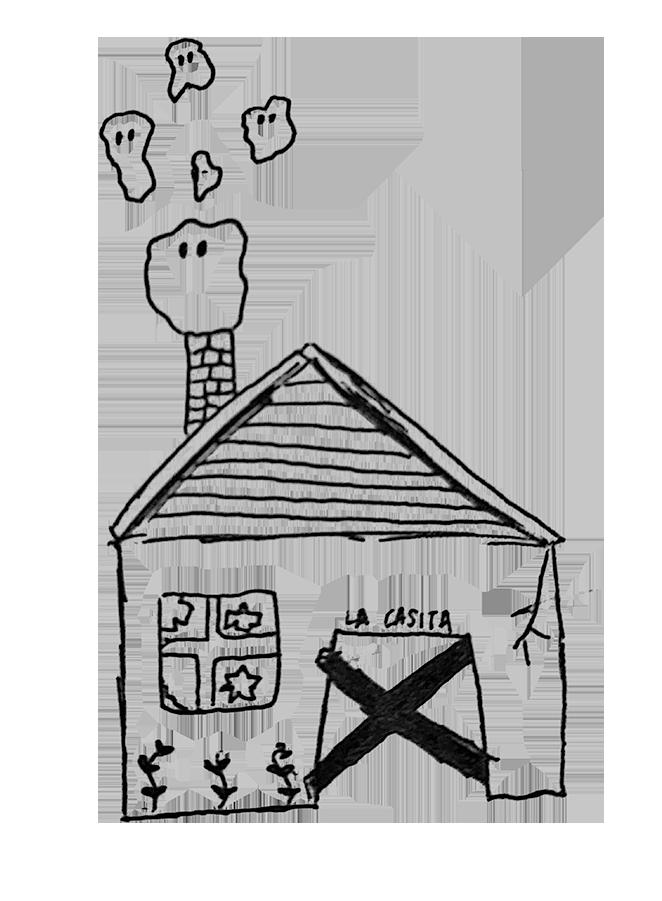
la casita was a small shed, not a small house, assembled by angry architects: my father and his father.
this small shed was birthed in the summer, a happy season, but the heat calls for heated arguments, so la casita was made out of hard material, loud material. but not as hard or as loud as words exchanged by an angry father and his angry son.
most days, it was more bickering than building, so la casita ended up sturdy and dense, much like my father and his father, battling illness after illness–– they both must’ve took it out on the shed.
so much time was spent yet la casita never lived a day to see a father and his son smile.
and soon after my father’s father’s farewell to this world, la casita was destroyed, beaten and broken down.
la casita was replaced by some storage shed on sale with pretty windows, and nice handles–one that looked more like a house.
but nothing beats what held la casita together. it was more than just bolts and screws, but the bickering of an angry father and an angry son.
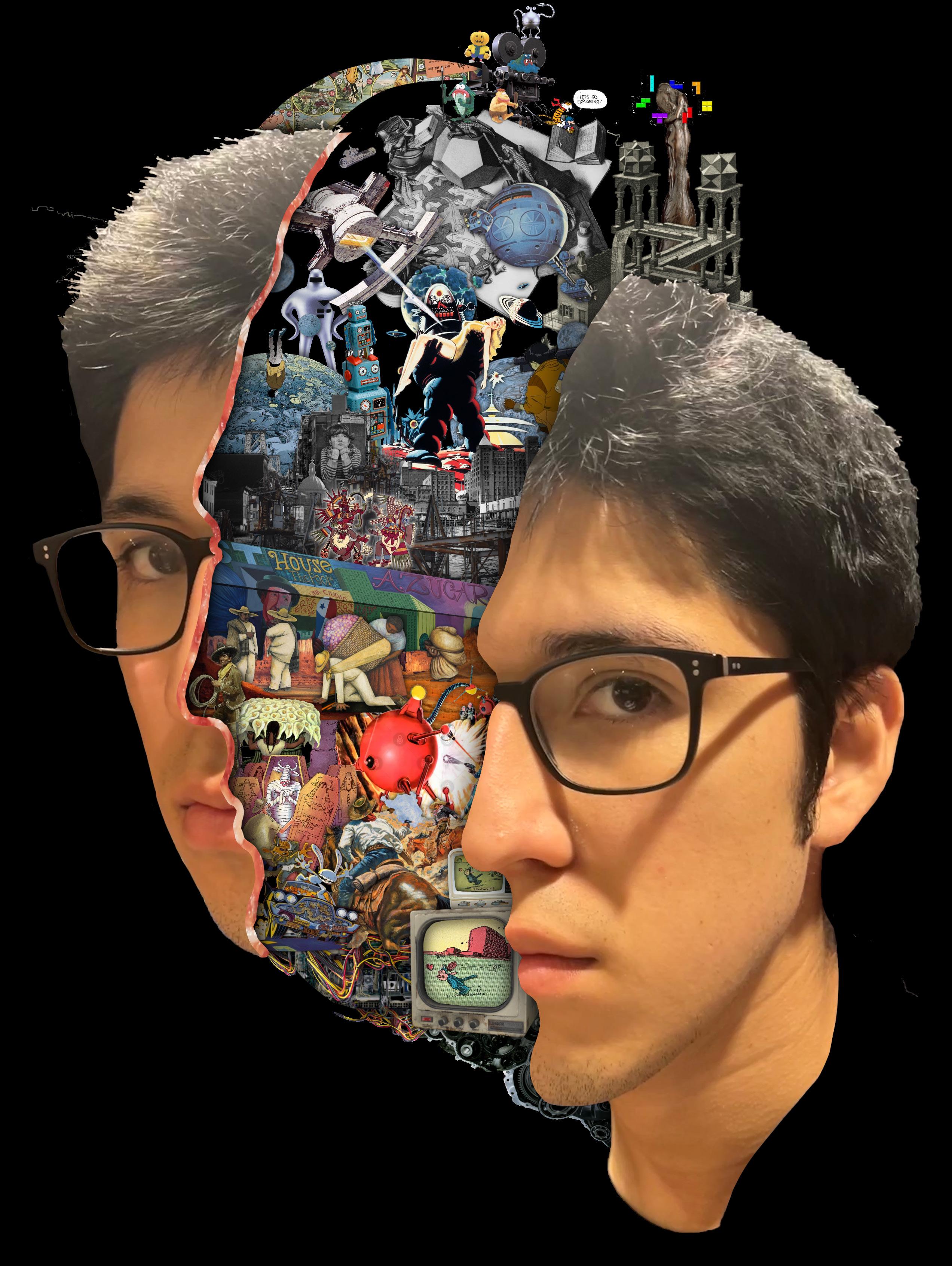 Self-Portrait of a Mexican Artist
Old jacket.
My body was all sharp angles and gangly limbs, and I curled into myself with a crunch of weathered fabric. Hiding.
Can’t you see how I’m surrounded by so many things now? – things I’ve bought, things I’ve found, things that are mine now now
Mine now!
It’s all mine now.
I want you to see.
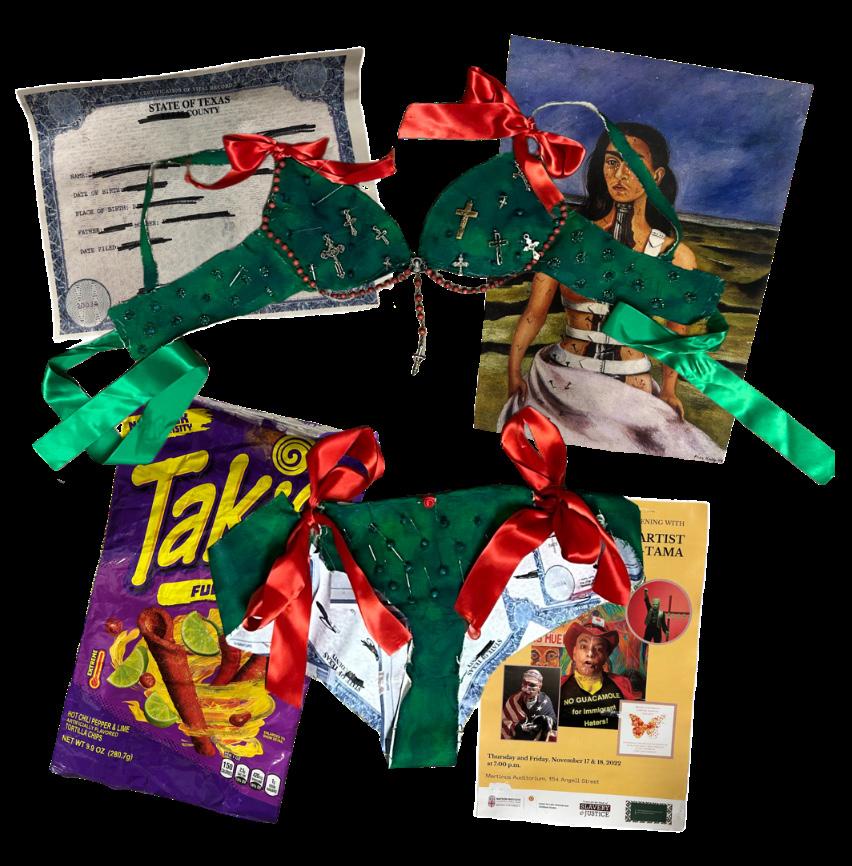
Borderlesque
Monik Rodriguez, Brown ‘25
Papier-mache, mixed media, digital collage
 Farina, Brown ‘26
is it mommy or mami?
you meet my parents you admit to me you think it’s funny i use the term “mommy”
you snark and giggle you devalue my relationship you call me innocent and naive
what if i am saying “mami”? would you feel bad?
for making fun of me for making fun of my heritage my culture, my background, my childhood, my upbringing my mom?
“mom” is too distant she is part of the white american dream a soft, subtle woman that serves meatloaf with peas on thursdays and calls for her kids to come inside for dinner as she stands behind a white picket fence
my mami knows no picket fence knows no boundaries is that why she is so detested? made fun of for her Puerto Rican flare to cover up others’ discomfort with her strength her presence, her mouth, her power
a mom with agency is unthinkable in white america but my mami has a voice and will defend me against your ridicule against your hatred of “mami”
14 SOMOS
Meilyn
And as we looked at each other—bed too small to fit us both, bodies collapsed against eachother, a single silhouette reflecting on the wall—my mind could barely grasp the idea that if we’d been a few years too soon, our love would’ve been lost in translation. Every time you stared into my soul and, in a foreign language, declared to me your love, I understood that maybe the affection I perceived wasn’t all. There are certain nuances only language can manifest and English never did justice to what you truly had to say.
I discovered love at a much younger age—a different type of love: one that knew not lust and felt like the warmth of an intense morning sun. A love that resembles an everlasting hug, an imprint of fuchsia lips on my cheek. A love written in Spanish and spoken with ease. It is sand in my mouth after a day at the beach, it is family banter, fried fish, and repeat. It feels like the air that escapes my mouth when my accent forgets the letter s, it is crashing words against each other when you’re not doing your best. It feels quick, like the tempo in my head forcing words out of my mouth at a faster pace than I or anybody around me can understand—I believe my brain is just trying to shield itself from misunderstanding that Way.
I understood infatuation in English before you came along, and until then all my emotions had been filtered until I no longer pronounced them wrong. The intensity of my voice was toned down, intention was out the window. English is just much slower, and my passion too quick to stick to its realm of words. But, with you, my accent morphed into a new language. I discovered new words, became fluent in nonsense because I knew you were listening to it all. No longer did I worry about sentence structure or pace, my only goal was to make sure you understood the mayhem that was in my head. Although you’d never understand all my catchphrases and jokes, in translation a thing or two would get lost, we closed those gaps with the language of our love.
Now, when we no longer lay side by side, and romantic love faded into something we can’t yet name, I’m hoping you’re still whispering galletica under your breath. That your English has more of a Spanish influence than it did before, and the cadence of your words tells people that I was yours. Because when I see beautiful things, frumoasa escapes my mouth, and the sharpness of your accent changed mine into what it is now. I wonder what it’ll be like when we meet again, Will there be remnants of our love in the way you say someone else’s name? Will I want to hear it if that’s the case? Will our language be heartbroken when it finds out things have changed?

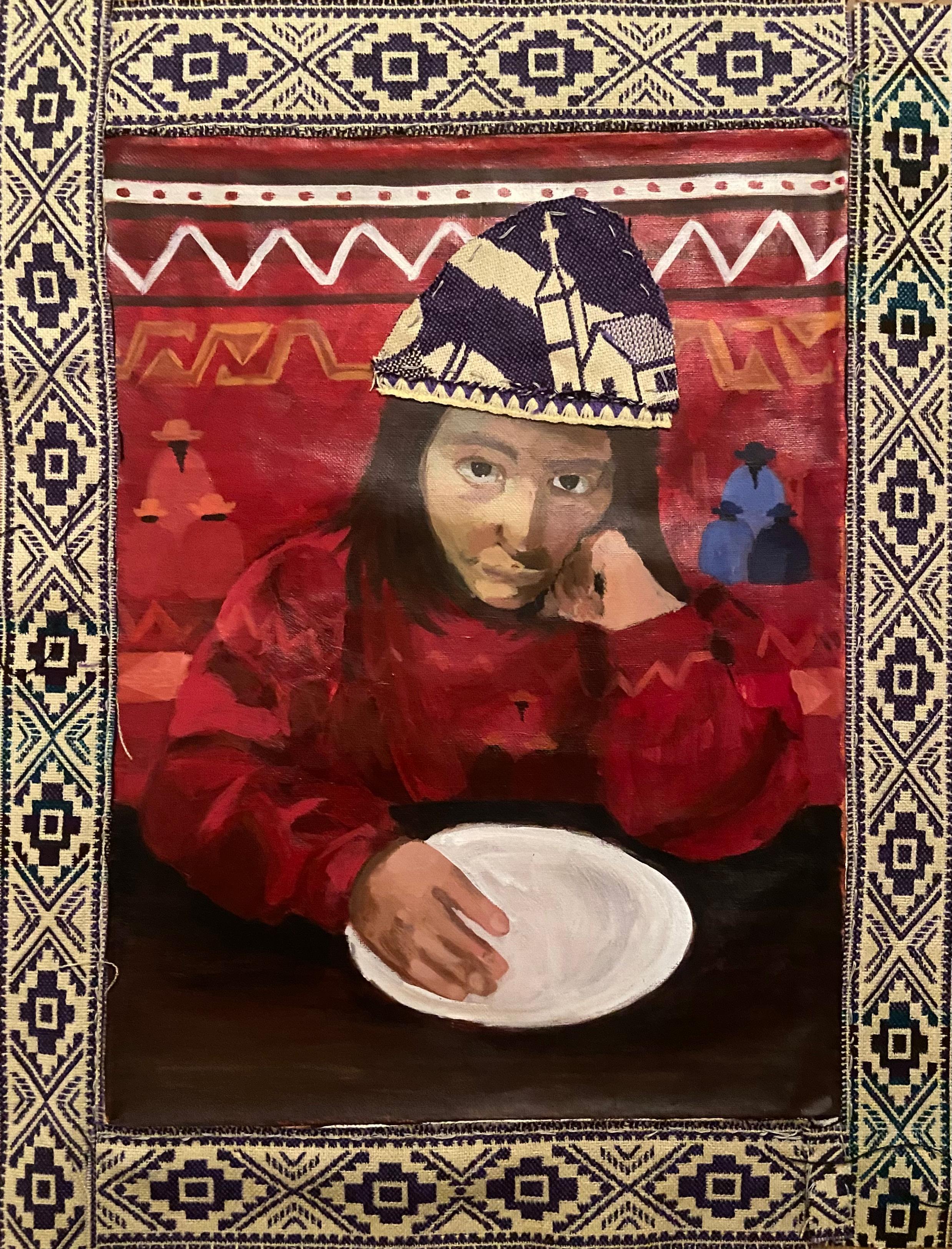
Sky, RISD ‘27
Mixed-media, acrylic paint, fabric
The trees formed an arch over the place where the water met the stones; where the boy stood on the edge, where he stood to skip stones.
To his family, he dedicated one, which disappeared into La Presa because he can’t skip stones.
Another he dedicated to the body of the bear he used to see outside el rancho. A body now nowhere to be found. A body riddled with illness and malnutrition; A body too small, its brightness sucked by the acts of men.
The stone disappeared into La Presa, because he can’t skip stones.
As the night fell, a figure emerged from the trees—a mother who had recently lost her child. She had a stone in her mouth which she returned to the boy.
“Gracias, pero un niño debería de tener algo con que jugar. Lo sé, porque solía ser una madre,” she said.
“¿Y su hijo?” asked the boy.
“Debería estar en el cielo, pero se ha perdido. Mi hijo ahora es solo un cuerpo. Un cuerpo vencido por la enfermedad y desnutrición. Un cuerpo demasiado pequeño, su brillo disminuido por acciones humanas. Y lo único que me queda de él, es un trozo de su cabello,” and she opened her paws to show a single strand of fur.
But the boy gave the stone back to the mother, “Un regalo para su hijo, por si algún día lo encuentra.”
The mother thanked him. Then she walked to the trees on the other side of La Presa and had her rest.
Every night since, the boy would head to La Presa to look for the mother who always told him magnificent stories.
Stories about her travels–how she befriended a jaguar, how she hibernates in the winter and hopes she’ll wake up with her son by her side.
“Me tengo que ir,” the boy one day told her.
“Entiendo, mijo. Ya has crecido.”
“Regresaré, no quiero que estés sola.”
But the mother simply laughed and told him, “Yo nunca estaré sola. Aquí tengo a La Presa, y la compañía del bosque entero. Si algún día me necesitas, sabes donde encontrarme.”
So, the boy went, too far away, to a city where he’d never find her no matter how hard he looked.
A city he one day escaped while driving through the night with his new friends, and he saw her in the distance, roaming through the shrubs.
He waved and yelled, but she didn’t look. And he realized then she was alone.
So, he went back home where everyone received him with glee. “¡Ya está bien gringo!” they said, “Ay déjalo, es el que nos sacará de pobres.” But there was someone he’d yet to greet.
So, he ran to La Presa. Past the trees and the stones, and the mountains of dirt that weren’t there before, and the tractors on the ground that carried metal poles.
To La Presa, which had moved a couple meters north of the arch where it used to meet the stones.
He looked for the mother. He called, he screamed, he roared, but she was nowhere to be found.
Devastated, the boy sat on the stones, staring at the only being left on La Presa: a snake guarding a single strand of fur.
A snake he’d never seen before.
“Estamos solos,” the boy said to the snake. But the snake said nothing back. It just slithered over to the boy, spiraling up his leg and through his chest as the boy stayed sitting, counting its scales.
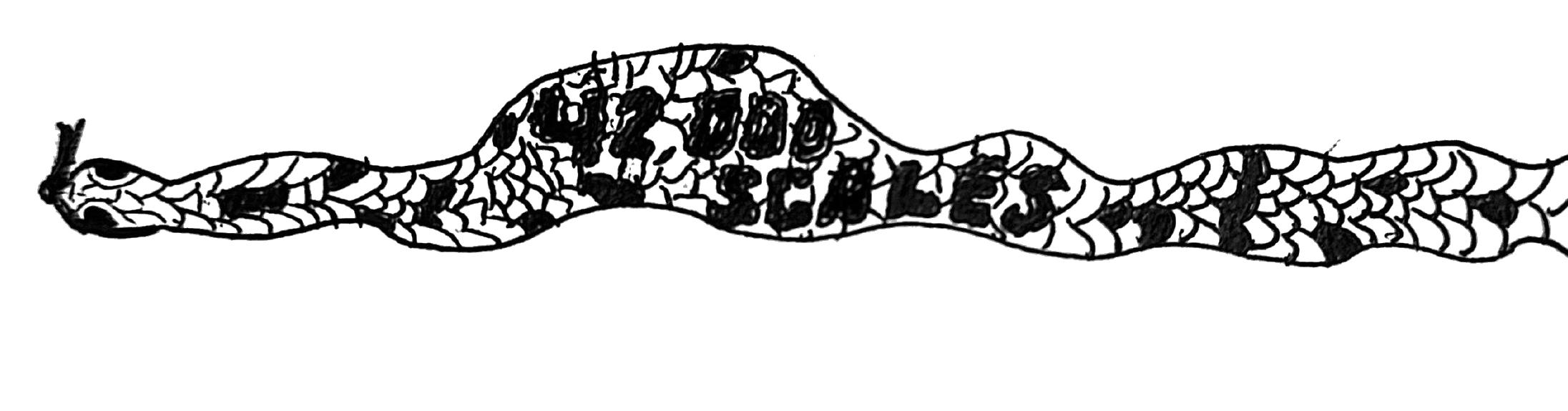
Then he looked at the sky, the snake spiraling around his head, covering his eyes, until he could see nothing but a single strand of fur, and 42,000 scales.
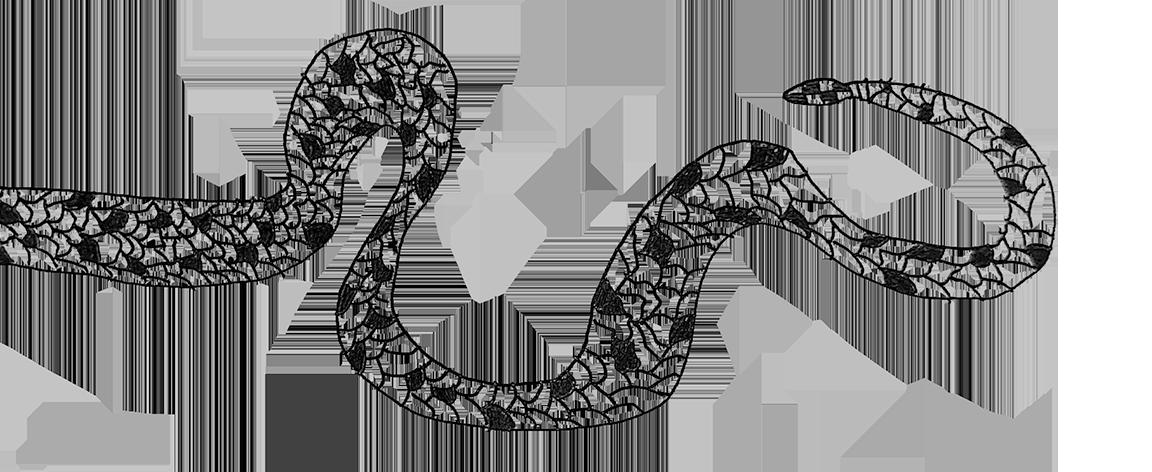
Sí, soy una víbora
Alondra M. Garza, Minneapolis College of Art and Design, MFA ‘21
Mixed media paper sculpture 40” x 20”
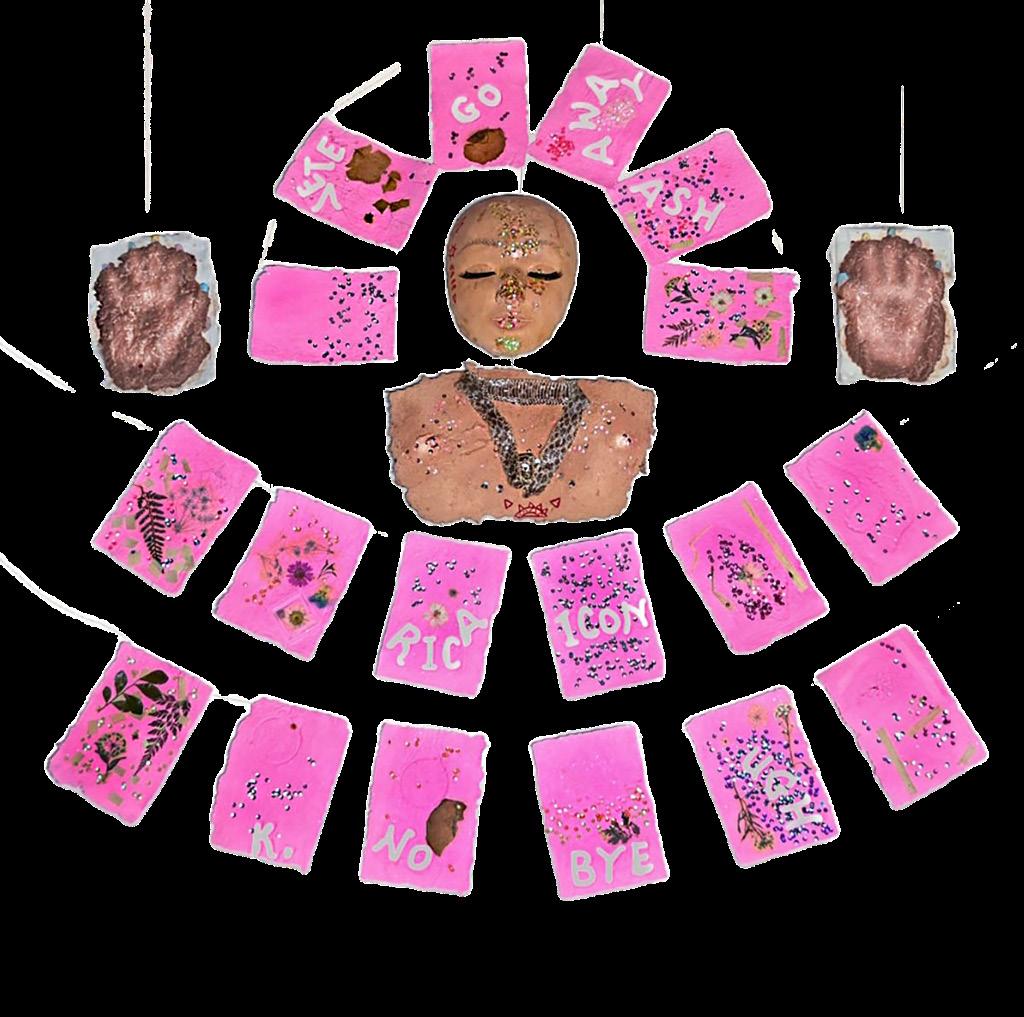
Cogerlo de la mano y decirle que todo va a estar bien. Que los perros no lo van a morder. Que los hombres de anteojos no lo van a lastimar. Decirle que sus papás nomás se fueron a trabajar, que ya volverán.
Que su mamá no ha tenido que huir a un país lejano. Que su papá no ha sido detenido, no lo están torturando. Cómo quisiera taparle los ojitos para que no viera la piscina, los fusiles, las cárceles, el alambre. Cómo quisiera taparle los oídos para que no oyera los llantos de las almas destruidas a su alrededor. Te digo, mi papá, como quisiera devolverme, décadas atrás, y cogerte de la mano, en el centro de la Villa Grimaldi.
Y decirte que estarás bien. Que pronto volverás a jugar y reír y oír el canto de los pajaritos al atardecer.
Forgive Me…
Found object/ Mixed media sculpture 19”x10.5” x13”
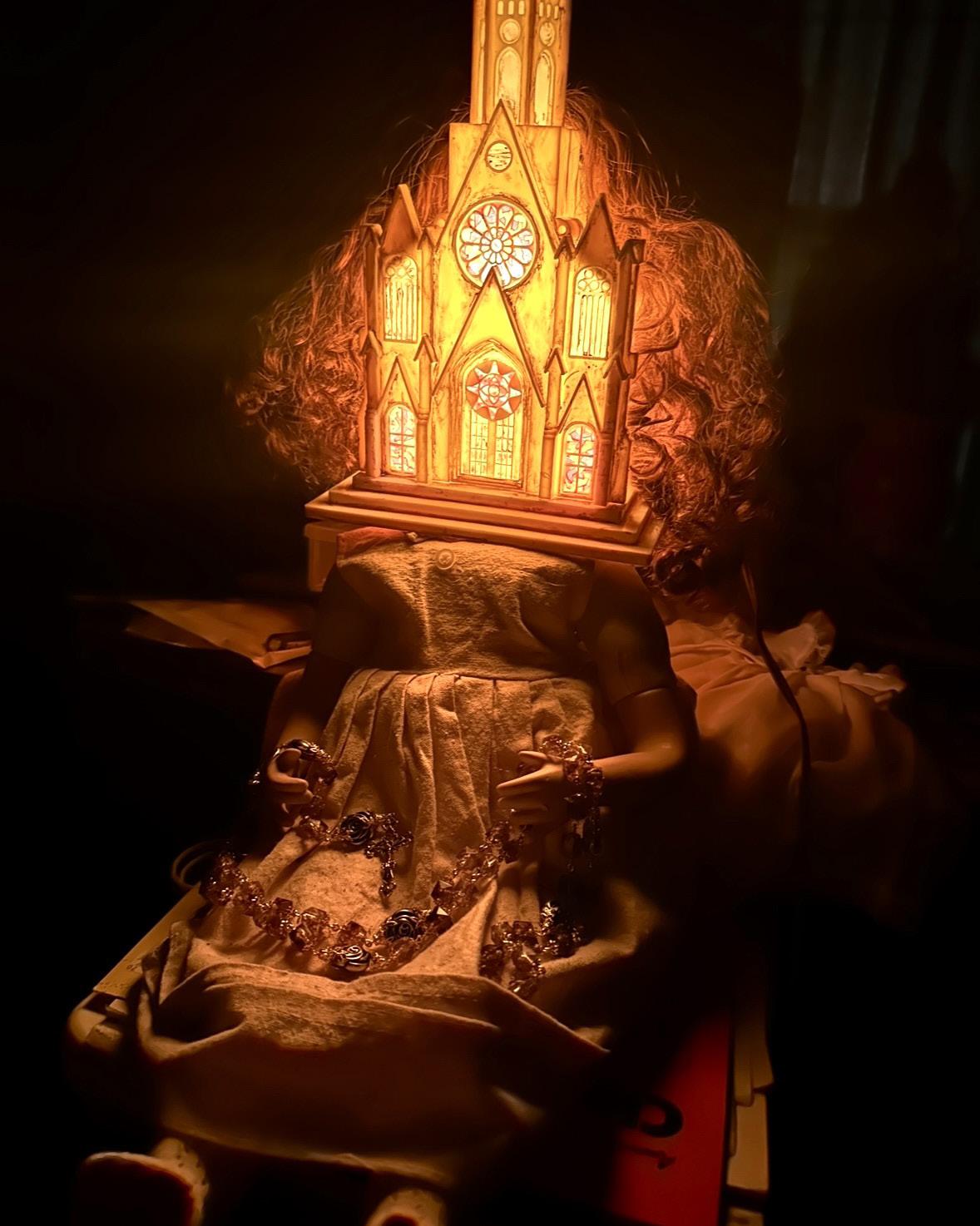
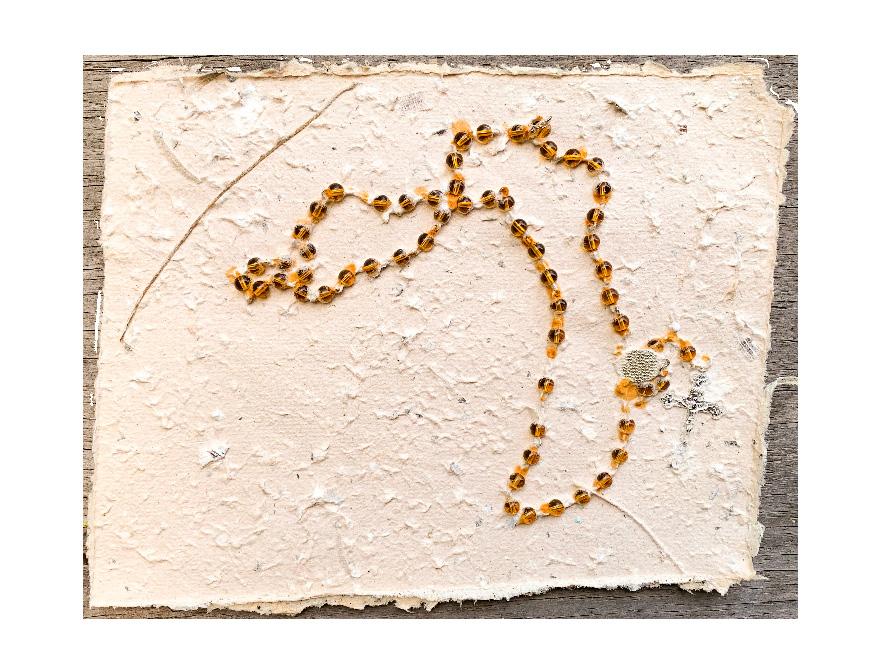
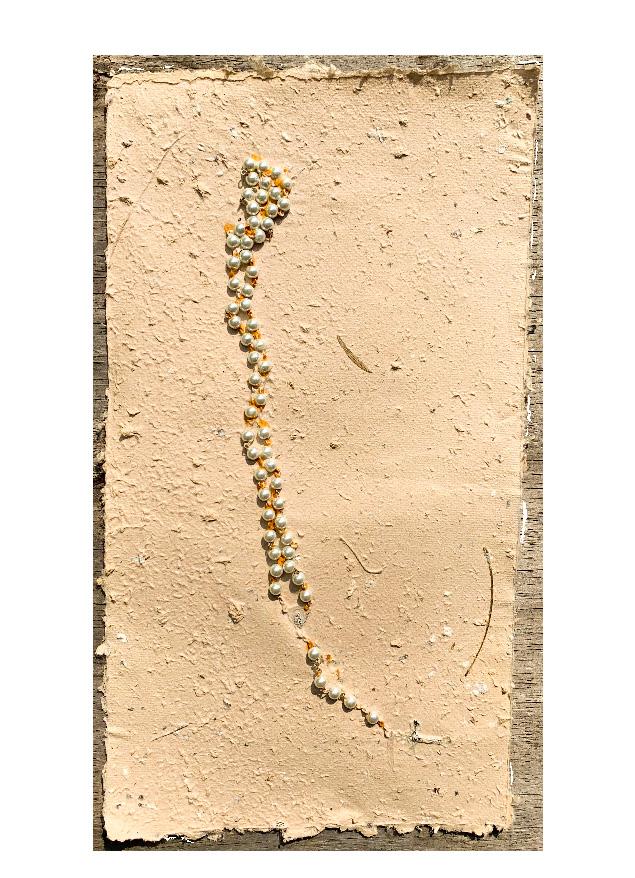
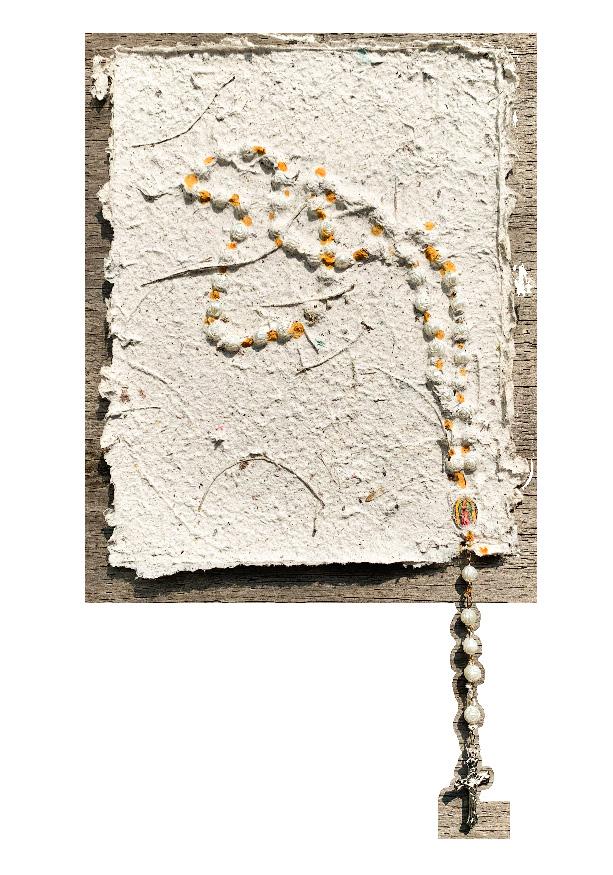
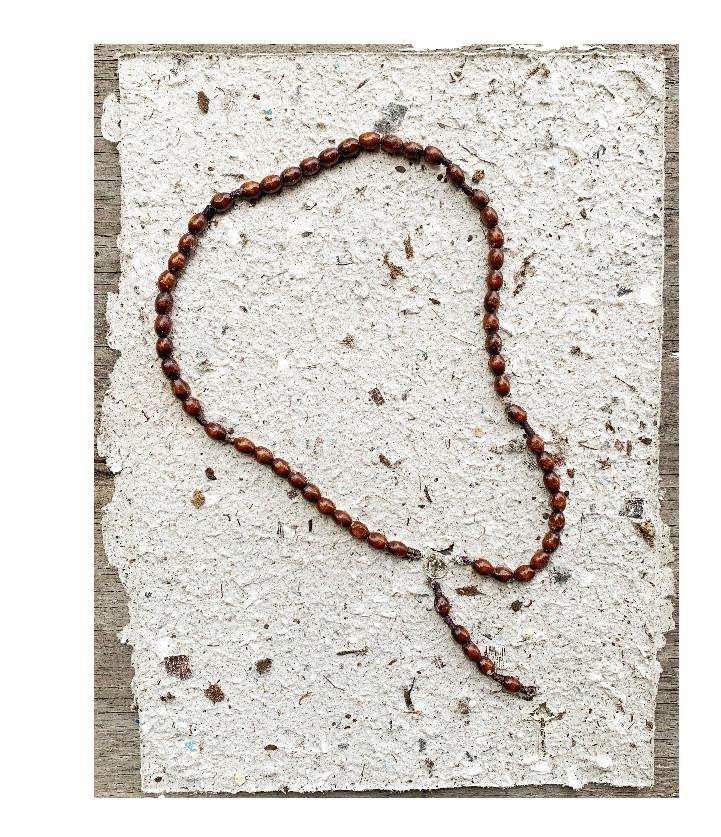
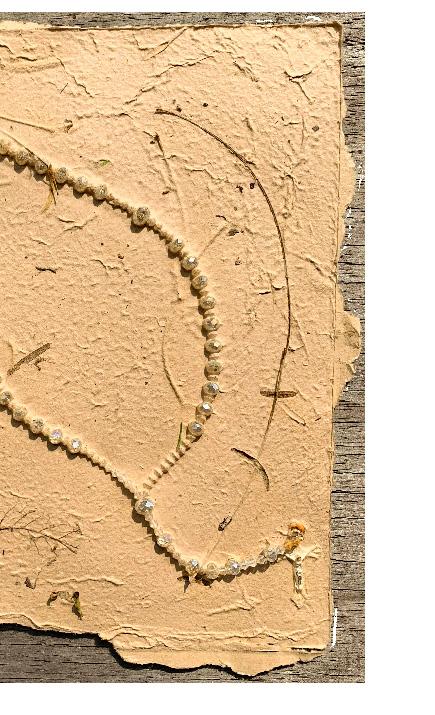
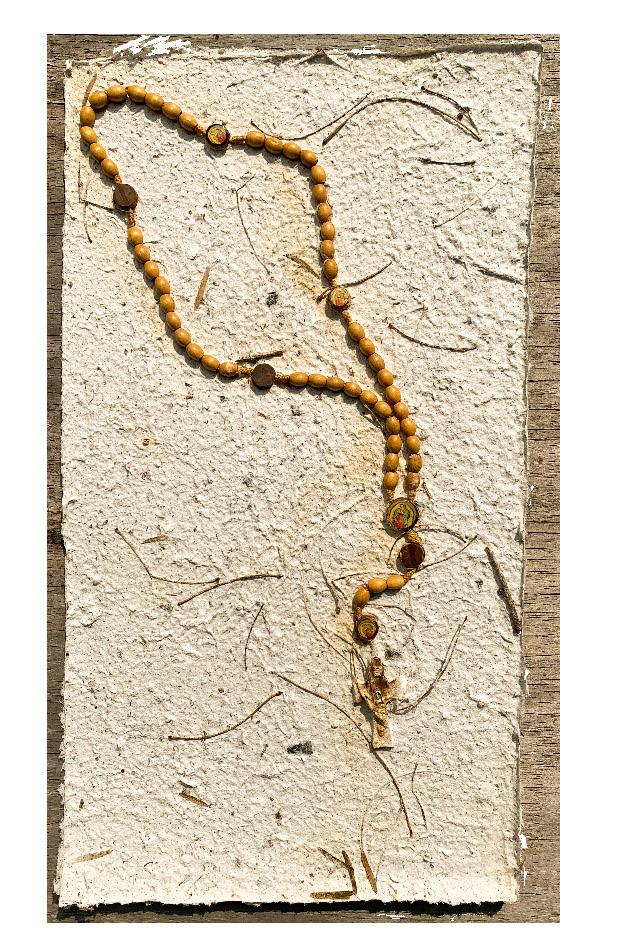
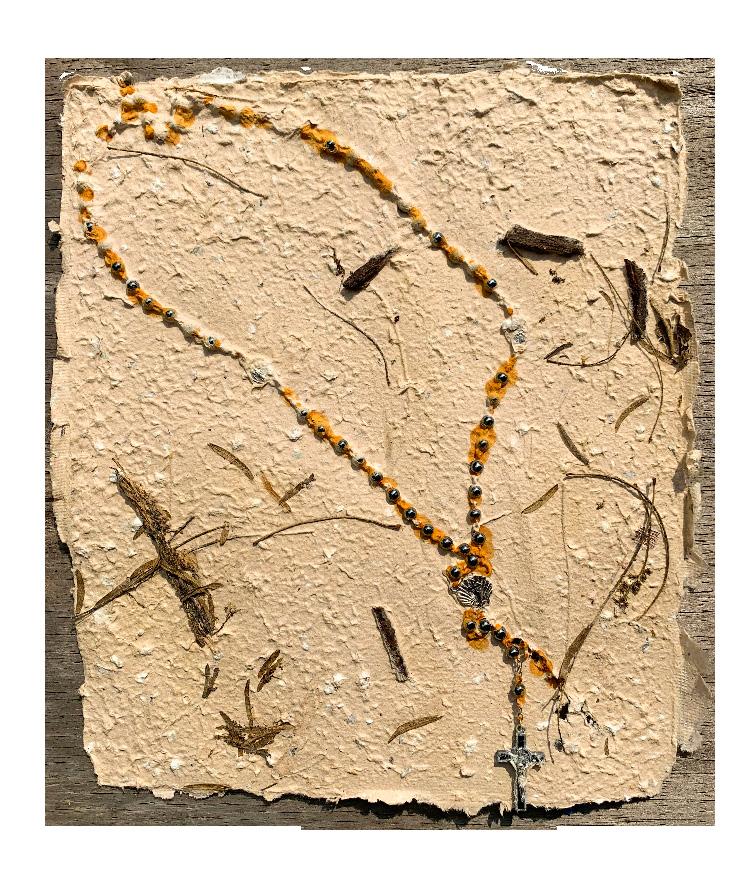
Novenario a los Desaparecidos
Jessie Burciaga
Rosarios in handmade paper 10” x12”
Found object/ Mixed media sculpture 19”x10.5”X13”
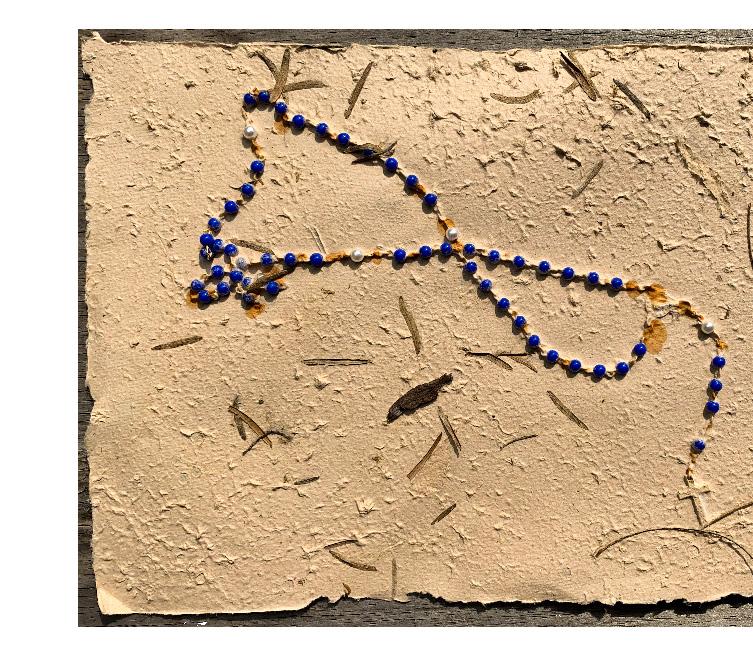
The series “Novenario para los Desaparecidos” (Novenary for the Missing) is nine Handmade papers, each infused with a rosary that was used in a Novenario prayer. These objects are meant to act as certificates of death to give closure to grieving families. The number nine symbolizes Novenario prayer in the Catholic tradition. The Novenario is a nine-day novena (prayer)
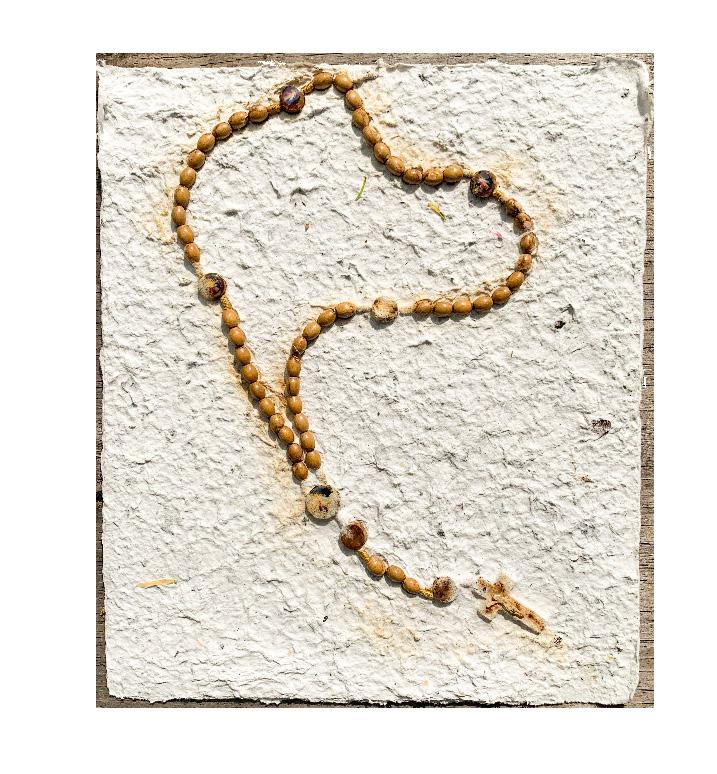
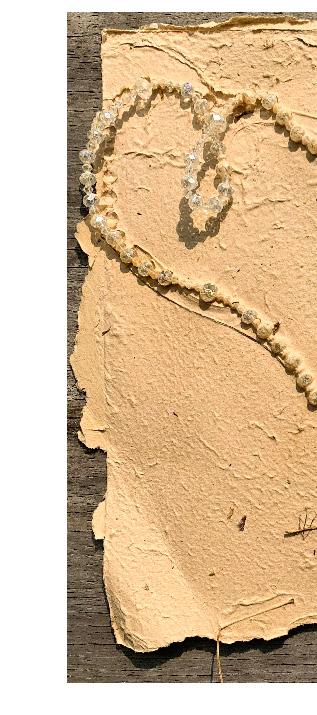
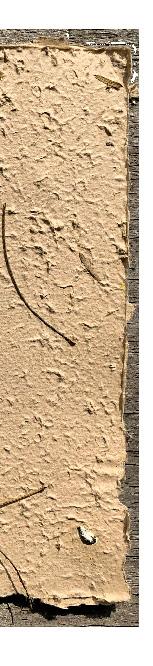
held every evening after Holy Mass. On the fortieth day after the declaration of death, a celebration is held to observe the deceased’s ascension to Heaven. This body of work is the only type of closure that most family members will get from the missing love ones. For my family, this body of work is our closure for my brother. It is my hope that it can bring closure to others as well.
 Wendy Amador, Brown ‘26
I wore red lace as the clock struck 12, January one, because you told me it’ll bring me love. You showed me your layered cake of yellow (dinero), white (salud), and red. You wanted all of the above and I was desperate to meet the one. When we lost our loved one last year I wore white praying it would keep you safe. In 31 days, I’ll wear red again. But not for the men, for the promise that this year I will love you again.
White, red, Welcome to Brown. We cried that day. I was wearing that cranberry colored turtleneck, my eighteenth birthday three days away. We opened a bottle of sparkling cider to celebrate. The letter said I did it, but it was us. All along it has been and forever will be you & me.
The first time I bled, you licked my wound and held me close. As I’m away from you, I’ve never felt you hold on tighter.
I miss us singing in the car and the way you shout my full name when you’re angry. I miss the bottle of Stella Rosa we share because it’s cheap and delicious and nothing makes us richer than moments like this at our kitchen table, 11pm, pajamas and rancheras in the background. You reminding me how naive I was as a child, and me thinking what would I be without you?
The sunset danced around the Statue of Liberty. I saw New York and you weren’t there beside me.
It is easy to write about my pain, a crime to cause yours. If the lines in your eyes blush again, I’ll throw on my armor and defend your honor. If all you’ve ever given me was your life, the least I could do is erase the traces of hurt in your iris and exile the one who painted them.
There is a fire that has kept you fighting and now ignites in me. For those who came before, for those who will come after, for the hope that I may one day return 1/3 of the infinity you have shown me I can achieve with a genuine smile and this flame.
I met a family that doesn’t celebrate christmas. That same day, I bought you a gift, brought to you by a small town straight out of Hallmark. It’s an ornament. I packed it in mistletoe colored tissue and put it in my suitcase. I called you when I got back to my room, “Mami, Te amo.” I’ll be home for Christmas.
As the trees fade from shades of sunset and sand to cherries and chocolate, I realize the color has always been yours. Ever since your mother named you Alma Rosa. Since before you ever called me yours.
When I tinted my hair like Ariel’s, I claimed it was my own, but it was never mine to claim. You simply gifted it to me, like you did your youth, your shoulders, your hands, your words. I could never repay a gift like that, so instead I buy you roses and write you poems, and I tell everyone you are my mother.
SOMOS
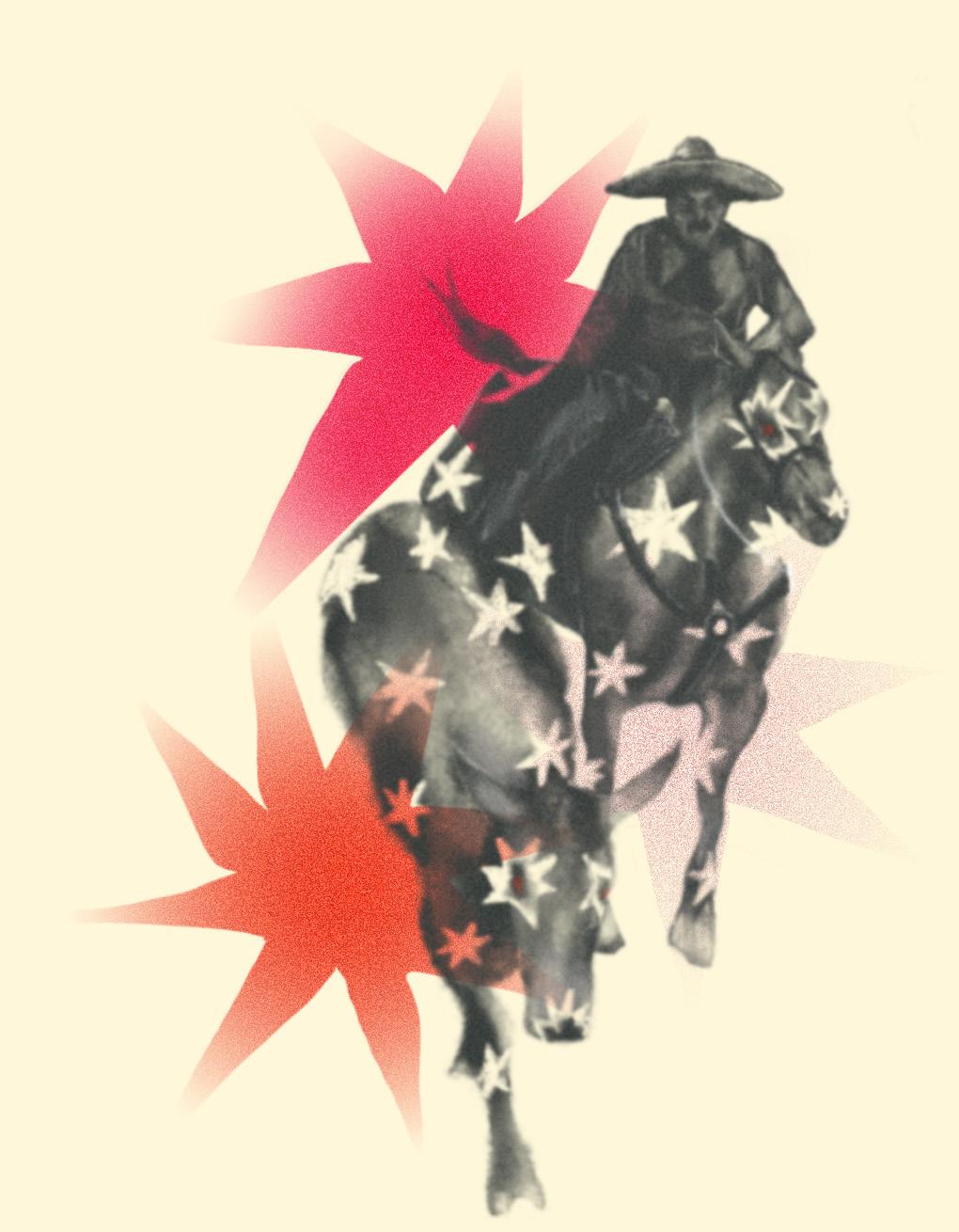
Mando Mata, RISD ‘24 3rd year Grad Charcoal with digital painting overlay, 16”x20”

I can’t exactly remember when the coils of my hair became something of shame.
Maybe it was when I first learned how to straighten my hair; The coils that sprang like whispers of my ancestry, Screeching under the heat of a metal straightener.
The faint smell of something burning in the air—
Maybe it was my heart that day, Melting under the heat of denial and self-loathing.
Or maybe it was before all of the relaxers—
The burn of my eyes from the chemicals, Of my scalp—My brain.
And the humming of an old radio.
When I was eight, Every kid my age was hyper-fixated on the latest video game
But I was sitting in front of a vanity mirror, Painting my mother’s foundation onto my own skin
Because her skin– It was lighter than mine.
In the mirror’s reflection, I saw a distorted face, A fragmented image, estranged from time and space.
And when I fantasized about myself in the most–Fantastical of situations,
I had pale skin and my hair was straight.
But I could only play pretend for so long.
Because each morning–Each goddamn morning–
We wrapped it into a tight bun, My mother and I.
The stickiness of the hair gel, A reminder that it wasn’t something I could swipe across my shoulder, And let drop down my back Swinging in sync with the pace of my sneakers Against grimy school corridors.
In the streets I would get stares, From prying eyes that skinned me layer by layer.
And they would ask, “Can I touch your hair?”
As if I were an exhibit laid bare.
Their fingers, restless violators.
With each strand of my curly mane, I felt their gaze, invasive and profane.
They reached out, palms grazing my locks, As if I were livestock.
¿Y quién les dio permiso?
Who gave them the right?--
To touch me, consume me, out of sheer spite?
I am not your curiosity, nor an object on display—
My hair had potential to be a mane of pride–
Now, my curls are threads of rebellion, Because you stroked me, A human to mere cattle.
My hair, an object of fascination, Exotic.
In your gaze, in your touch, We were an object, a simple trophy.
My mother’s tongue, Dripping from the lips of everyone around me–But not mine.
I spoke a borrowed language, foreign to my teeth, To sever connections, like severed fingertips. A language of romance dances in my heart, Yet it remains silenced— Unheard, unsung. In the crucible of denial, My spirit was caught in an intricate web of lies, spun by none other than I.
Pero ¿por qué? ¿Por qué, me preguntas? Why did I abandon her? My younger self left on a park bench in the peak of winter, Alone and cold.
A visage of vacant eyes and limbs numb with exhaustion
From desiring to be someone else all of the time. Como marioneta, dancing to society’s tune, In the melting pot’s embrace–I was a puppet.
Tangled in strings of deceit, For the world demanded assimilation and faced with its demand, I bit my tongue and let it bleed. I surrendered.
An everyday occurance, To find notes shoved into a desk–A locker.
Degrading us with graphite on paper, In messy handwriting
From the giggling of the culprit. Whose skin was also a shade of brown— “Friendly Fire”, they called it. We used to pack our pistols full of derogatory terms And aim them between each other’s eyes— Hoping to blur the invisible line between the color of our palms, The color of you, from us.
In forsaking myself, I became a masterpiece— A living canvas adorned with borrowed brushstrokes. But each day, the weight of denial grew heavier And I grew more agitated— More angry, more vengeful. My own silent act of revenge, Before the curtain draws
I will dance to the music of my roots, To reclaim the essence of my very own name.
So let me stand before you, stripped of pretense, A shattered vessel, a seeker of recompense, In each curl there is a chronicle, I have burned my essence, I have buried my voice, In search of acceptance, I refused myself, Like a beaten shape sorter– And I, a triangle
Trying to fit into the mold of a square.
SOMOS
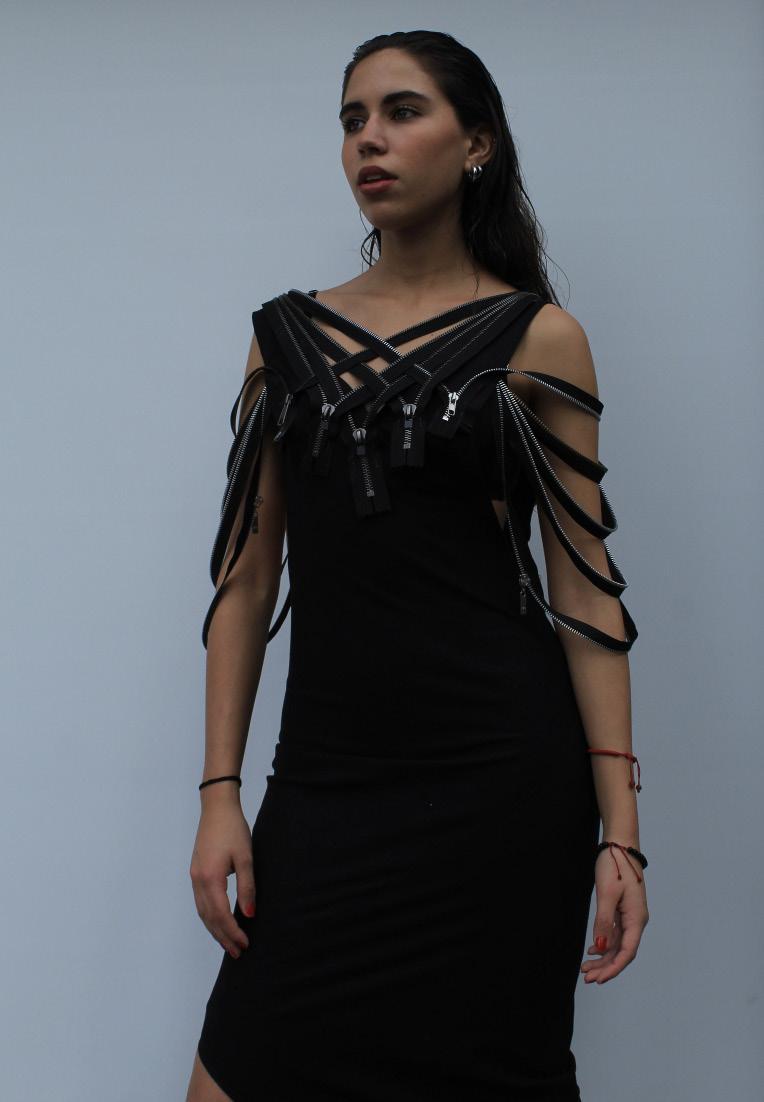
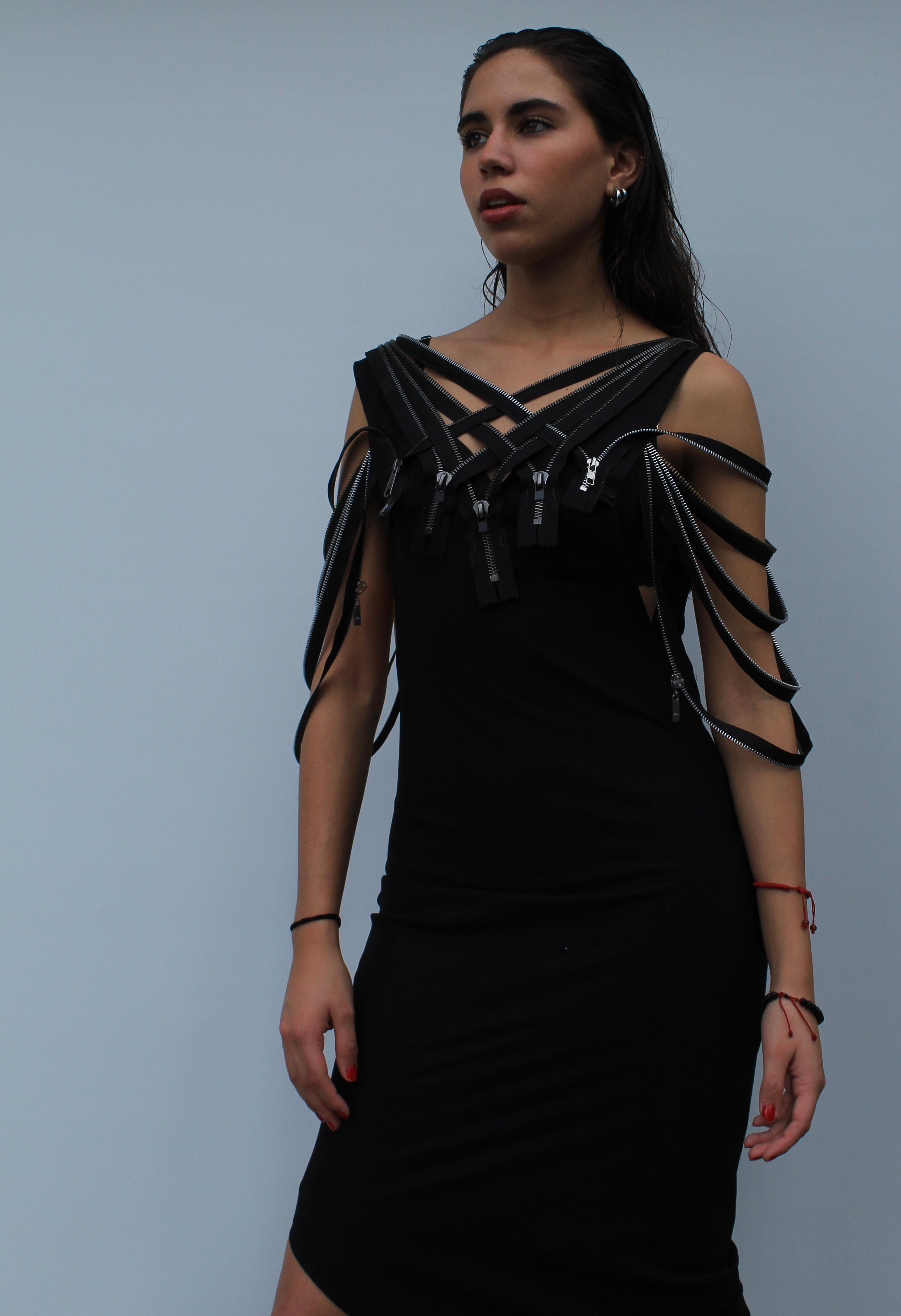
Martín with a tilde in the í Martín Revelo, Colegio Menor San Francisco de Quito, Ecuador ‘24 Fashion Campaign Photoshoot
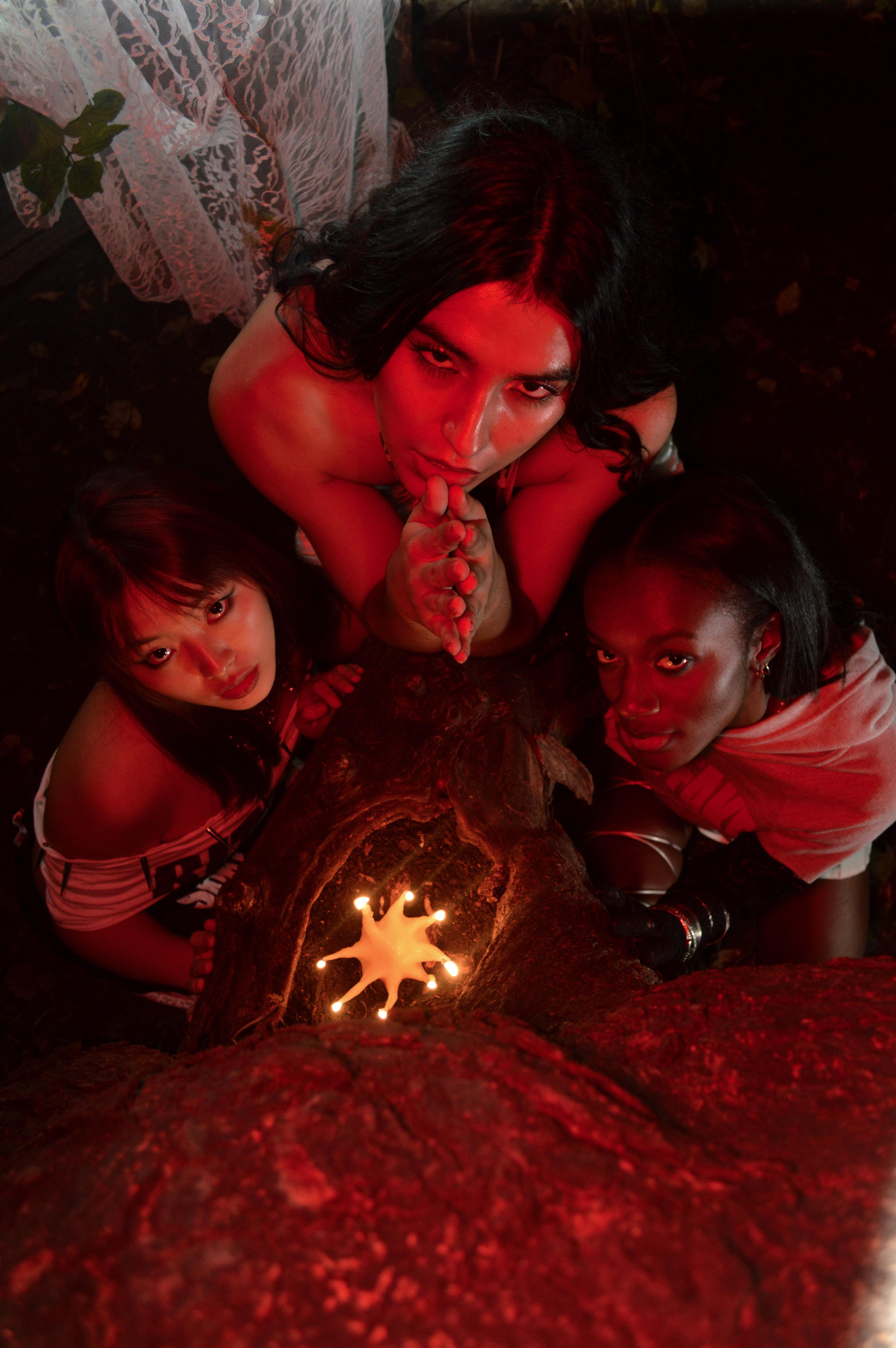
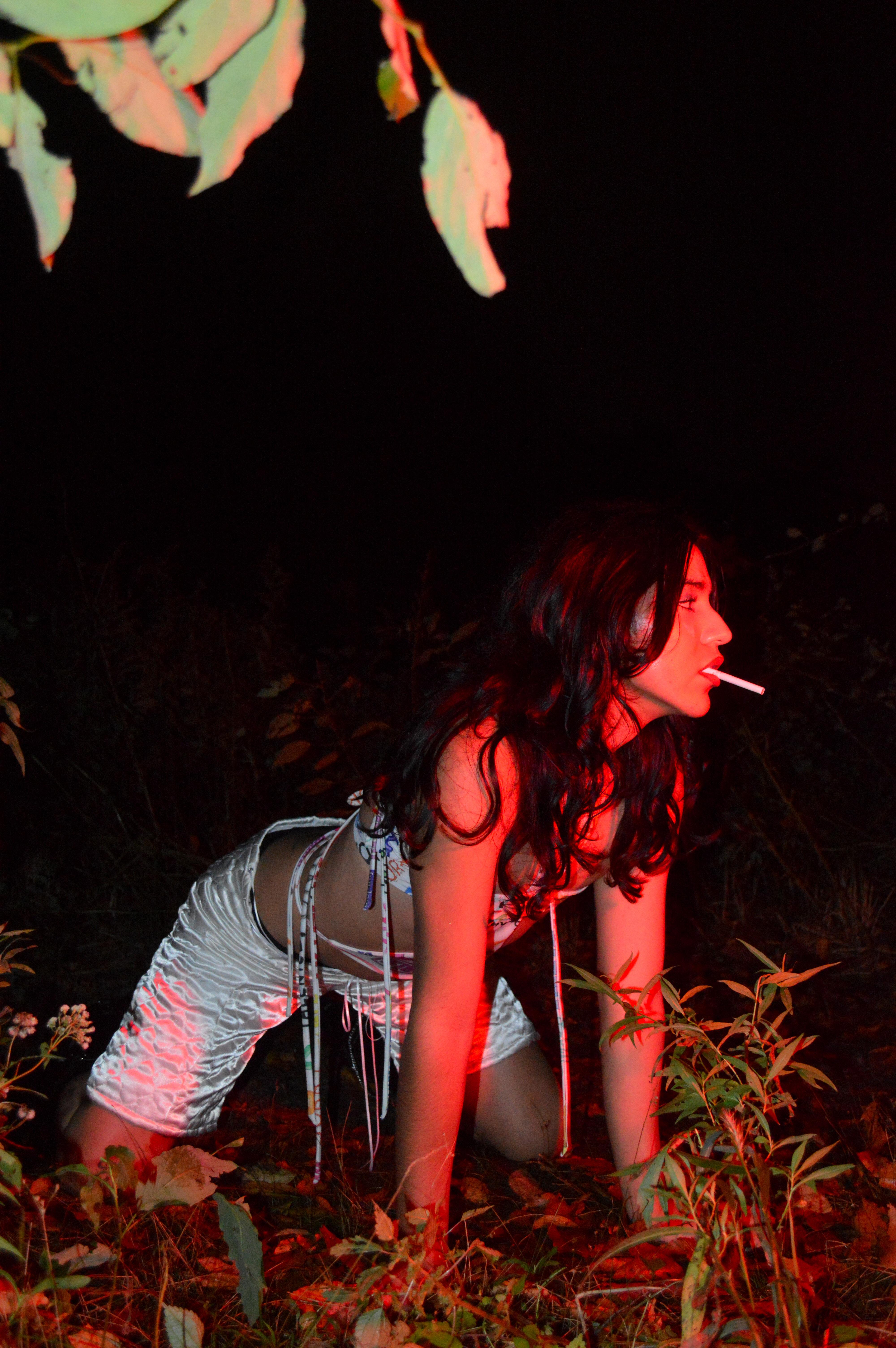
Through the Woods
Directed and Fabricated by Alec Lippman Brown ‘25 reworked collection using samples and misprints from LA based brand OGBFF
Photography by Erin Xi Photography assistance from Kira Held
Modeling by June Dike, Vivian Li, and Lu Elias
Un día hace muchos años, Caya me dejó con mi abuela. No recuerdo qué tan grande era porque aún era muy pequeño para darle sentido a la edad pero fue hace mucho tiempo. Yo despertaba todas las mañanas con el olor de tortillas de harina, recién hechas calientes del comal. Eran tan deliciosas que sólo necesitabas agregar mantequilla para darles sabor. O quizá mantequilla era todo lo que había. Fui a la primaria por un tiempo y recuerdo que las comidas costaban monedas. Le pedí a Mama Lola si podía darme monedas. Mamá Lola solamente sonrió.
Eventualmente, Mamá Lola y yo nos quedamos sin monedas así que ya no pude ir a la escuela. Estaba en tercer año de primaria, ocho o nueve años, cuando comencé a vender tacos de harina a la orilla de la carretera. Mamá Lola era vieja, solo podía amasar tortillas. Ella no podía caminar hasta la carretera. Tanto tiempo paso y deje de ser pequeño. Ahora alcanzaba las ventanas de los carros y podía cargar más tacos de harina en mi hielera. Regresaba a donde Mama Lola con más monedas - a veces.
Mi celebración favorita del año era Navidad. Caya regresaba del norte y traía consigo bolsas llenas de ropa para vender. “Es ropa de marca” me decía “se vende muy bien aquí.” Me enseño un par de zapatos negros con una palomita blanca, “estos son naik” continuo “estos son muy caros.” Por un momento, mire mis pies, mis zapatos no tenían un nombre atrayente como naik, no sabía que los zapatos podían tener nombre. Pero nada de esto es la razón por la cual yo amaba la Navidad. Yo amaba la Navidad porque en medio de esas bolsas llenas de ropa y zapatos, había una bolsa de papel que decía burger king. En Valle Hermoso no hay Burger King y si lo hay, nunca he ido. Pero dentro de esa bolsa de papel, húmeda por el viaje y arrugada por ser aplastada en el camino de regreso, había una hamburguesa. Caya les decía “hamburguesa de dólar,” así también les decía yo. Cada diciembre cuando mamá regresaba para recordarme que no me había olvidado, ella me traía una hamburguesa de dólar para decirme que me amaba - quizá.

In the silent chambers of a bygone time, Your fleeting voice echos softly through my veins, I ponder all the questions left unasked, Seeking long-buried truths of yesteryears.
Teextraño,Abuelito
Memories now wrapped in a gauzy haze, I long to hold those days in never-ending embrace, Unspoken stories, cloaked in silence’s shroud, I yearn to be enveloped in their gentle guidance.
Anheloelayerunavezmás
The years have drawn you farther from my sight, Leaving questions, mysteries as I wake. In wishing for your presence, I’ve lost myself Now, we are both distant, dimming lights.
¿Cuántotiempomásmesentiréasí?
My steps are hesitant, my spirit in shift, I search upon the white horizon where sea meets sky, My soul adrift in the depths of life’s labyrinth— Now, I too am a shadow in the wind,
Sombraenelviento.

View the SOMOS Latinx Literary Magazine archive on Issuu
InDesign type set by the SOMOS Team at Brown University Titles - Avenir Heavy 14
Body Text - Avenir 12, leading 14.4
Visual Submission Descriptions - First line Avenir Heavy 9, second line Avenir Book Oblique 9, third line Avenir Book 9, leading 10.8
Visual Submission Captions - Avenir Light Oblique 9, leading 9
Written Submission Descriptions - Avenir Book and Book Oblique 10
Page Numbering - Avenir Book 10
December 2023.