Somerville House Connections Magazine Vol 25 | 2026
CONNECTING OUR COMMUNITY THROUGH GIVING
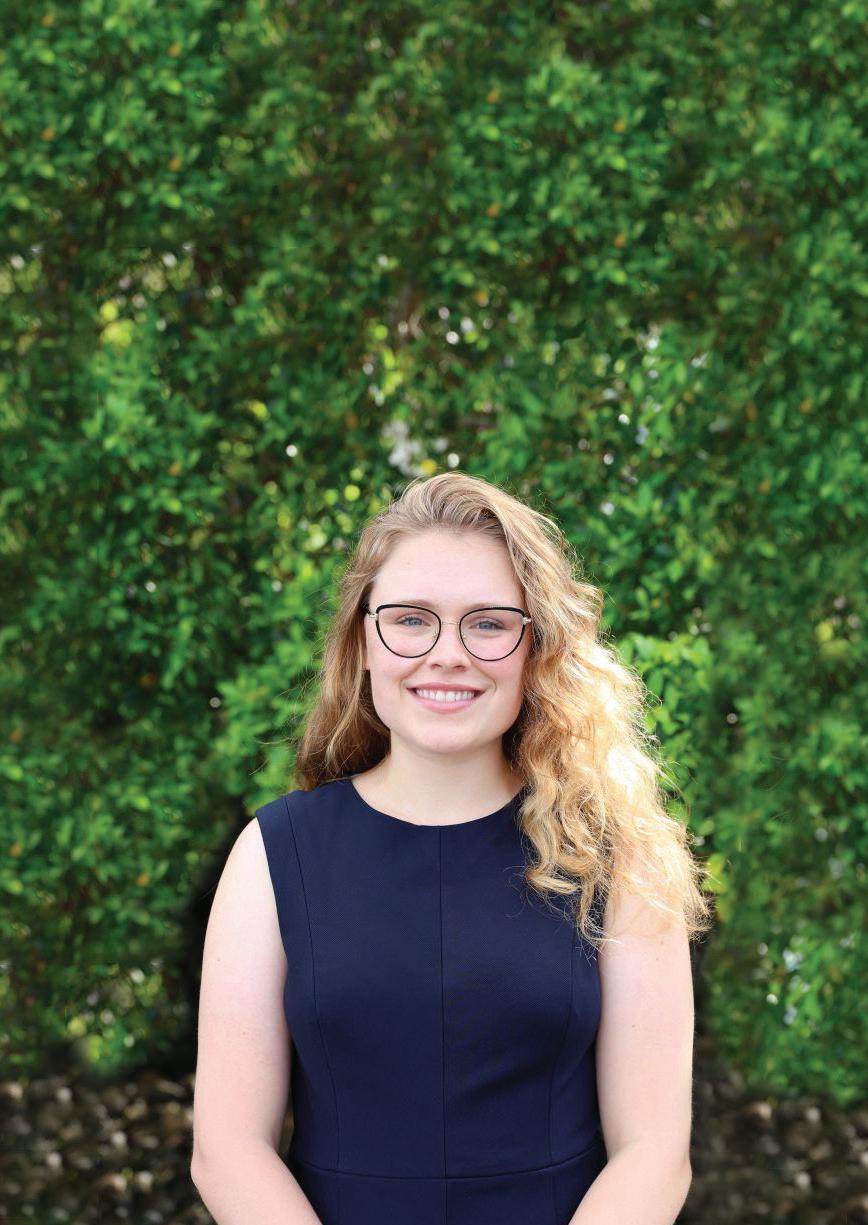
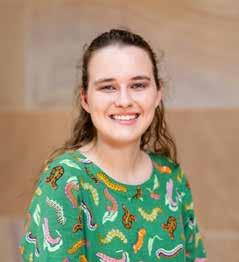
(Class of 2019) Giving Back Through Purpose, Action & Service
SOMERVILLE HOUSE OLD GIRLS’ ASSOCIATION
Celebrating 125 Years
CELEBRATING OUR SOMEY SUPPORTERS: A Spirit of Giving GIVING THROUGH SERVICE LEARNING
TheThank you to those who contributed stories and photos to make this edition possible. If you are interested in submitting content for the next edition, please email communication@somerville.qld.edu.au
This publication highlights the stories of the Somerville House community. The School has made every effort to ensure that the information in this publication was correct at the time of printing.
Formal education has its roots in the Greek civilisation. It was organised by priests and kings for male scribes and clerks so they could administer and lead on behalf of the ruling class in an elito-literate society.
In Plato’s time (427 – 347 B.C.) education was almost entirely for male students with rare exceptions including the Platonic Academies of ancient Greece that allowed occasional exceptional adult women, like Plato's student Lastheneia (who attended dressed as a man) and the famous mathematician, astronomer, and philosopher Hypatia.
Fast forward to the end of the 19th Century in Queensland, education finally became more broadly available to girls with Somerville House (then known as the Brisbane High School for Girls) opening in 1899. Looking back to the past certainly reminds us about how far education has come and about the gains women have made to now receive equal access to learning, at least in most western countries of the world.
While our past informs where we are today in education, it does not define how learning should be facilitated now or how it will be facilitated in the future. So how do we think learning will change in the future and what is best practice in preparing our students for their yet undefined futures? None of us know with certainty how learning will need to change to be responsive and relevant to serve the needs of a future society. However, there are important and constructive steps that can be taken.
This year Somerville House partnered with the Future Anything
and the International Baccalaureate organisations to expand and enhance current pedagogical offerings and practices to ensure that student learning is focussed on preparing them for success in an uncertain future. Through ongoing professional learning and the sharing of innovative practice, our teachers are adapting their teaching methodologies and curriculum materials to ensure they are capability-rich, inquiry based and embedded with opportunities for our students to develop design thinking and entrepreneurial skills through a framework of project-based learning. This form of learning is drawn from cognitive science research to ensure students “build deep knowledge, refine their thinking, and transfer learning beyond the classroom” (Future Anything).
So, as we continue to iteratively reconstruct and adapt learning at Somerville House, we need to continue to foster agility and a growth mindset in our students and teachers. In her 2016 book Mindset: The New Psychology of Success, the wellknown psychologist, Carol Dweck, argued that a growth mindset will provide us all with the enduring desire to embrace learning, challenges, and setbacks as sources of growth that in turn creates the motivation and resilience to influence success in virtually every area of life. At Somerville House we have capitalised on the growth mindset of generations of teachers, leaders and students to adapt and facilitate relevant and engaging learning for over 125 years and will continue to do so for many years and generations of students and teachers to come.
Quality teaching matters, it really matters
As I moved through my career, I never lost the strong belief that quality teaching matters, it really matters to every student in every school and it really makes a profound difference in the lives of the students at the time as well into their futures. There are many names and faces we will forget as we age, but I am sure all of us, regardless of our age, remember the names and faces of at least one special teacher who made a difference in our lives.
Great teaching is a profession that comes from the heart, it involves great intellect as well as great stamina, dedication and empathy; it also involves a commitment to student wellbeing. There is nothing more important in our school than the wellbeing of our students, as we know that the presence of wellbeing is a precursor to success in learning and academic performance.
This year, to complement the progressive pedagogical renewal happening across the school, our teachers are also progressively implementing the four domains of the Berry Street Education Model (BSEM). The training program for teachers is as follows:
• Domain 1: Supporting students to build self-regulation when learning, was completed by all teachers in Term 1 this year.
• Domain 2: Harnessing strong educator-student relationships to cultivate learning and wellbeing, will take place in Semester 2 2026.
• Domain 3: Maximising student engagement in learning and prioritising stamina for academic achievement, will be undertaken by all teachers in Semester 1 2027
• Domain 4: Identifying, nurturing, and celebrating student and community strengths to ensure positive cultures of safety, belonging, and achievement, will be undertaken by all teachers in Semester 2 2027.
The BSEM has been designed in the belief that every lesson can teach both academic content and strategies for wellbeing. The aim of the program is to “support students to be resilient, self-regulated, and connected when learning”
(Brunzell, T. & Norrish, J., 2024).
The important and exciting renewal work in pedagogical practice, focussing on student wellbeing and preparedness for future success, has been planned carefully to ensure Somerville House continues to serve the needs of our students and school community now as well as for many generations to come. The School is intentional about being progressive, innovative and brave in its decision-making. We have a clear focus to remain a high-achieving wholistic school for girls as well as the School where the wellbeing and personal development of our students is as important as is their reaching beyond their academic potential.
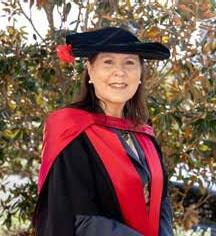
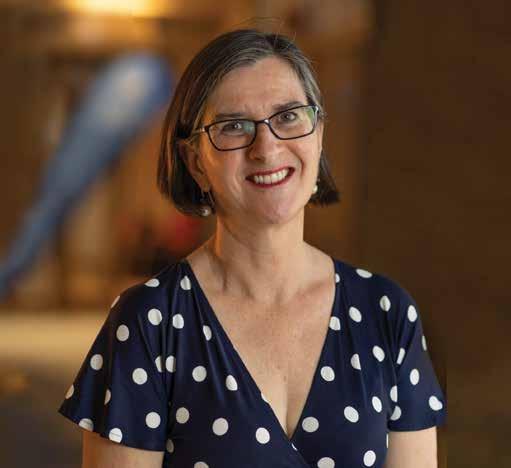
Dr Deborah Priest
Principal
References:
Brunzell, T. & Norrish, J. (2024). Be rry Street Education Model: Curriculum and classroom strategies. Domain 1: Berry Street Victoria. Dweck, C. S. (2016) Mindset: The New Psychology of Success, Random House USA Inc, New York. Future Anything: (accessed 15 May 2026), https:// www.futureanything.com.
Her journey is not defined by singular achievements, but by the culture she nurtured and the way she made others feel confident, supported and inspired.
A Journey of Joy, Leadership and Connection
Somerville House bids a fond farewell to the 13th Principal of Somerville House, Dr Sandra Hastie, who has returned to New Zealand for family reasons and now takes up the role of Principal at Diocesan School for Girls in Auckland.
During her time at Somerville House, Dr Hastie brought with her a fresh perspective that was felt across every corner of the School. From her first days on campus, she led with humility, warmth and an unmistakable sense of joy.
Her leadership style was characterised not by formality, but by genuine connection, approachability and deep care for the girls entrusted to our community.
Dr Hastie had an extraordinary ability to make people feel seen and valued. Whether greeting students in the playground, sharing in conversations with staff and parents, or celebrating milestones at assemblies and events, she brought sincerity and humour to
every interaction. Her laughter was infectious, her wisdom quietly powerful, and her belief in girls’ education unwavering.
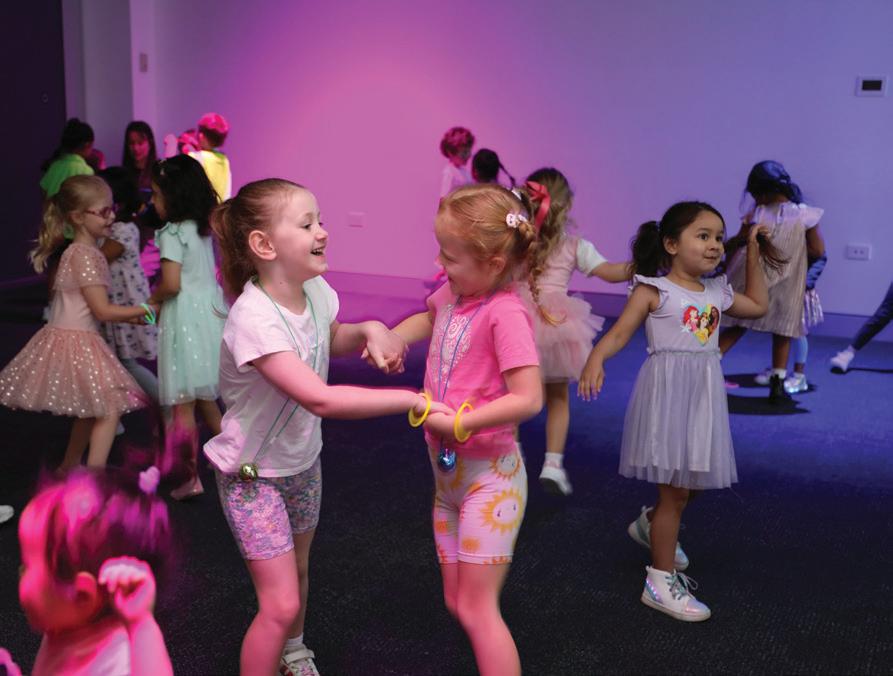
Some of the most enduring and joyful images of Dr Hastie reflect her love of music and dance. Her favourite song, Dancing Queen, became something of a signature. At school events, celebrations and gatherings, she delighted in taking every opportunity to join students on the dance floor, creating moments of shared joy that will be remembered long after the music stopped. These moments perfectly reflected who she was as a leader: present, engaged and wholeheartedly committed to celebrating young people and the community around them.
Under Dr Hastie’s leadership, Somerville House continued to flourish as a place where academic excellence is matched by compassion, wellbeing and belonging. With a future-focused approach, she encouraged courageous thinking, positive change and reflection, while always grounding her leadership in kindness and respect. Her legacy is not defined by singular achievements, but by the culture she nurtured and the way she made others feel confident, supported and inspired.
Class of 2025: Inspiring the Future
We are proud to share the academic achievements of the Class of 2025 and acknowledge the resilience, determination, and genuine passion for learning these young women have shown throughout their senior years.
They have embraced every opportunity, supported one another, and led our community with confidence and grace.
We are incredibly proud of their hard work and dedication.
Principal, Dr Sandra Hastie, recognised the outstanding attitude and achievements of the 2025 cohort of remarkable young women:
“I congratulate the Class of 2025 on your exceptional accomplishments. You have led by example — in classrooms, on sports fields, under stage lights, and most memorably, in the quiet acts of support and friendship
that shape our school’s character. You have shown us that a true community is built not on comparison, but on genuine connection. As a school community, we are immensely proud of the way you have balanced academic excellence with wellbeing and embraced opportunities in sport, music, and cultural activities. These experiences will serve you well as you embark on the next chapter of your lives.”
At Somerville House, we believe success is measured by more than academic results. A strong focus on wellbeing, combined with diverse
opportunities in sport, music, and cultural activities, all contribute to developing resilient young individuals who excel in their academic pursuits.
We are delighted to announce the 2025 Dux (Shared), Rachel Chen and Ee Lin Saw (99.95), and Proxime Accessit, Aarushi Chauhan (99.70), and warmly congratulate them on their outstanding achievements.
2025 QCE Results
At Somerville House, all senior students are enrolled in 5 or 6 academic subjects, studied across Years 11 and 12. Some students elect to study a Diploma of Business as their fifth or sixth subject.
The Class of 2025 cohort has performed strongly across a broad range of disciplines, reflecting their commitment to learning and the high standard of teaching and support provided throughout the Senior Years.
Perfect Subject Scores
Number of subject scores of 100/100: 7
The 7 perfect scores of 100/100 were achieved across 3 different subjects.
Full Marks External Assessment
Number of students achieving full marks in their External Exam (/25 or /50): 15
Final QCE Subject Grades
The median subject score for the Class of 2025 across all subjects was 87/100
In 2025, 60.5% of students achieved a grade of ‘A’ in at least three of their five or six subjects.
Dux (shared)
Rachel Chen 99.95
Lin Saw 99.95
We eagerly anticipate seeing these talented young women thrive in their future academic and professional endeavours, and we are excited to honour the accomplishments of our most recent Somerville House Old Girls.
9.35%
TOP 1% in Queensland. ATAR 99 and above.
STUDENTS
29.9% TOP 5% in Queensland. ATAR 95 and above.
STUDENTS
99.7
52.3%
TOP 10% in Queensland. ATAR 90 and above. 56 STUDENTS
30 STUDENTS ACHIEVED AN ADDITIONAL QUALIFICATION 91.6 MEDIAN ATAR 84.11% TOP 20% in Queensland. ATAR 80 and above. 90 STUDENTS
Ee
Aarushi Chauhan
GGreen AN D IN Growlow
The theme for 2026 represents what we, as a cohort, wanted to build on at Somerville House this year. Through brainstorming with our cohort and Prefect group, we knew that we wanted the theme to embody our year levels goals and visions for the year, which included growing sisterhood, growing spirit and growing connection.
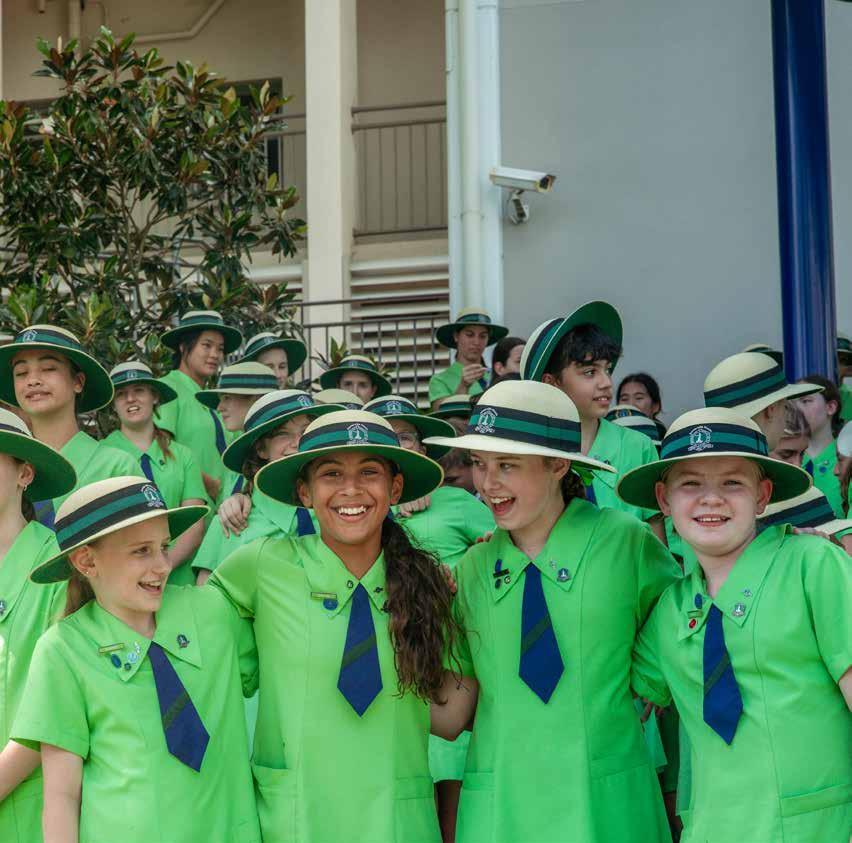
We also wanted the theme to embrace the lively spirit and zest felt within the school’s community, and so as a result, our theme, Grow and Glow in Green came to be. The theme touches on the idea of building the sisterhood and the Somey spirit in a very Somerville House way, in green and we hoped that it would remind girls that everyday they’re in their uniform, it is a chance for them to embrace the school’s culture and build connection throughout the community. We launched our theme in early Term 1 which included the Year 12s faking a blackout and cracking glowsticks, along with announcing the theme badge competition. It was so wonderful to see girls from across all year levels send in their insightful and detailed designs for the theme badge, deciding a winner was not easy. As a reminder of this year’s theme, our cohort also planned on constructing a tree with staff and students fingerprints to display the connection within our school and how it is growing every day.
Her advice was simple and compelling: find problems, and run towards them. Build skills not for status, but to do good. Remain curious. Be bold. Take the road less travelled — and never forget how lucky you are to be in a position to help others.
Finding the Courage to Run Towards Change
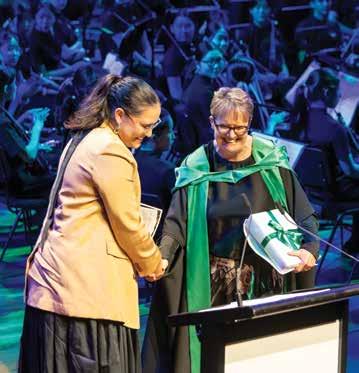
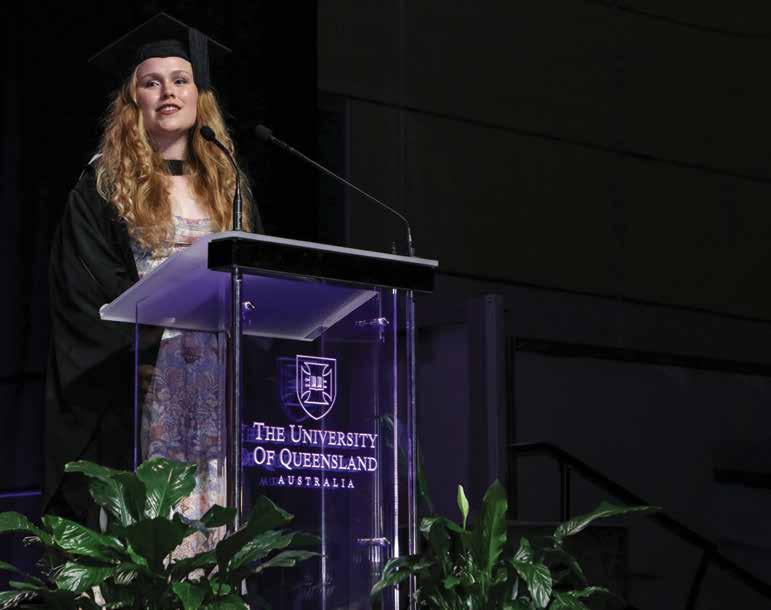
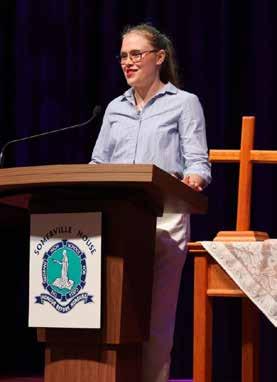
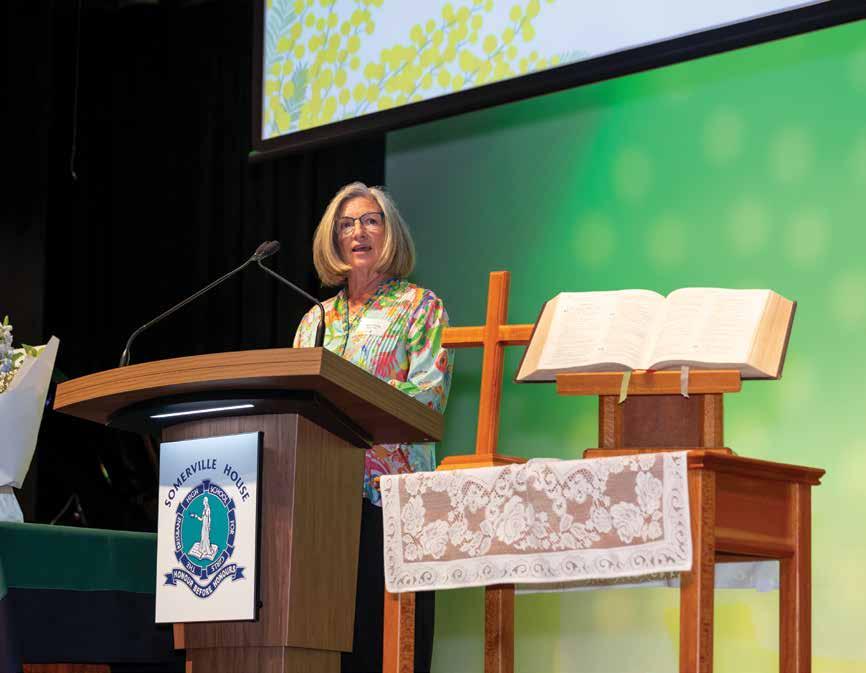
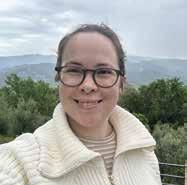
When Grace Beattie (Class of 2019) returned to Somerville House to speak at the International Women’s Day Assembly on Thursday 5 March 2026, she described the moment as "surreal".
Standing once again on the school grounds she had left seven years earlier, Grace was no longer the quiet student slipping into the library at lunchtime. She was a recent university Valedictorian and Oxford bound postgraduate who was about to be admitted as a lawyer the very next week, yet her message to students was not about accolades, but about courage, curiosity and learning to say yes. Looking out at the students before her, Grace acknowledged the strange symmetry of the moment: returning not as someone with all the answers, but as someone willing to speak honestly about how change can begin, and how often it starts in small, ordinary decisions.
Grace opened her address with a simple greeting and gratitude for the invitation to speak. As she looked out at the students before her, she reflected on how unlikely the moment felt, considering how her time at Somerville House began. It is easy, in hindsight, to join the dots between a confident speaker and a confident path but Grace’s story resists that neat narrative. Instead, it traces something far more familiar: the slow work of building self-belief, the courage to try (and sometimes to fail), and the decision to keep moving forward even when the next step is unclear.
A Quiet Beginning
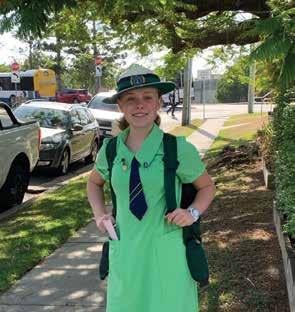
Grace joined Somerville House in 2015 after attending a small state primary school. She described feeling like “a small fish in a big pond”, unsure of herself, out of place and quietly overwhelmed. For many students, the shift into a new school environment can feel like learning a new language: new routines, new faces, new expectations. Grace remembers wearing a green dress adorned with wonky pins, clutching a laminated Bible, and feeling acutely aware of every difference between herself and those around her. It was, she recalled, a time of noticing more than speaking, watching, listening, and hoping that, eventually, she might find her people.
“I spent a lot of lunchtimes hiding in the library with a book,” she shared. While she tried lots of school sports, including rowing, she quickly realised they weren’t her strength. Rather than forcing herself into spaces that didn’t fit, Grace began paying attention to where she felt most at ease. Instead, she found her place through quieter pursuits: choir, debating and book club. These spaces, she said, felt “more my speed”, places where she could contribute thoughtfully, build confidence in her own voice, and feel the steady reassurance of belonging.
Grace was not a student who sought attention. She described her time at Somerville House as largely under the radar, period of observation, reflection and gradual confidence building. What she did not yet recognise was how deeply those years were shaping her. The very skills she was practising quietly, reading closely, thinking critically, learning to argue respectfully, finding community, would become the foundations she later drew upon. In many ways, her return to speak was its own form of giving back: a chance to name those invisible beginnings for students who may be living them right now.
The Cocoon Effect
“How did I get from where you’re sitting, to where I’m standing now?” Grace asked the assembly.
Her answer was simple, and powerful: life became more colourful when she stepped outside her comfort zone.
Grace described Somerville House as a “cocoon”, a place that quietly equips students for transformation, even if that change is not immediately visible. Somerville House “sets you up for surprising changes once you emerge from it,” she reflected.
It is a metaphor that speaks to the Somerville House experience: growth that is often incremental, sometimes invisible, and only fully understood later. Looking back, Grace suggested, you begin to see how the cocoon holds more than memories, it holds practice. Practice at showing up, at trying new things, at being part of something bigger than yourself. Those habits matter because they shape what you do when the world asks more of you, and, eventually, what you are willing to give back in return.
As she approached the end of school, Grace resisted the idea of narrowing her options too early. When completing her QTAC preferences, she listed an eclectic mix of degrees, including journalism, science, communications and law, wanting to preserve variety rather than lock herself into a single path. It was an early exercise in giving herself permission to explore: to stay open to new interests, and to trust that clarity can come through experience rather than certainty. Ultimately, she placed law at the top of the list, drawn by a lifelong interest in debate, English and advocacy, interests first nurtured during her school years.
In February 2020, Grace arrived at university with law textbooks in hand, excited for independence, new friendships and the next chapter of life. Like many first-year students, she was ready for a world that felt bigger, faster, and full of possibility.
Then, the world changed.
Learning Through Uncertainty
Like so many students of her generation, Grace’s introduction to university was shaped by the pandemic. Lecture theatres closed. Campus life disappeared. Days were spent at home, attending classes online, often in pyjamas, disconnected from the experience she had imagined. The life she had pictured (new places, new people, new independence) shrank to a laptop screen. It was disorienting, and it asked a new question of first-year students everywhere: how do you keep learning, and keep growing, when the world feels paused?
She admitted feeling deeply disappointed. But when restrictions eventually eased, Grace made a conscious decision: she would not let hesitation define her experience. Instead, she would say yes. For her, it was less about constant confidence and more about momentum, choosing action over avoidance, and learning on the move.
“I became determined to say yes to absolutely everything,” she explained. “Every opportunity I was offered was a chance to either love it or learn from it.”
That mindset reframed opportunity as something practical rather than intimidating. Saying yes might mean putting your hand up, joining a group
those small acts of bravery accumulate. They become the scaffolding for confidence, not the kind that arrives all at once, but the kind you build through repetition and resilience.
Grace immersed herself in university life. She participated in law competitions, took on leadership roles, explored work opportunities, engaged in community initiatives and became involved in mentoring. She tried a wide range of legal roles before graduating, allowing herself the freedom to explore without fear of failure. What mattered most was not collecting experiences for their own sake, but noticing what each one taught her, about the law, about people, and about the kind of contribution she wanted to make.
Along the way, she made friends who were “brilliant, passionate and inspiring”, people who challenged her thinking and helped her discover her genuine interests almost without realising it.
Over six years, Grace says, she evolved from an awkward teenager into someone confident in her own skin, not because she had everything figured out, but because she allowed herself to keep learning. In the process, she discovered that growth is rarely linear. It comes in seasons: moments of stretch and uncertainty, followed by moments of clarity. Looking back, Grace’s message to students was reassuring because it was honest: you can move forward without having the full map.
Purpose and Possibility
In December last year, Grace graduated from the University of Queensland with a Bachelor of Arts and Bachelor of Laws (First Class Honours). She served as President of the UQ Justice Law Society in her final year and was ultimately chosen as Valedictorian of Law, an honour she described as both humbling and affirming.
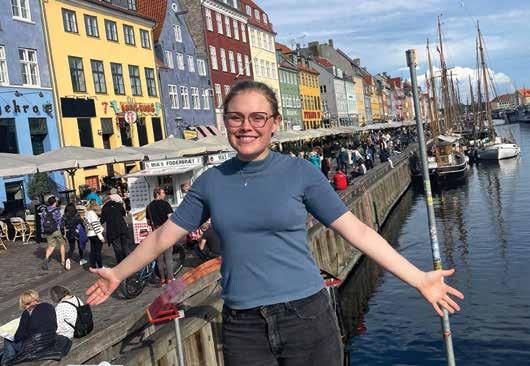
Her university studies also took her far beyond Brisbane, with transformative experiences in Darwin, Denmark and Indonesia. Each location, she said, expanded her understanding of the world and her place within it.
Taken together, these experiences helped shape Grace’s sense that education is not an end in itself. It is a set of tools, and, with those tools, a responsibility. In a theme of giving back, that responsibility can take many forms: advocating for others, contributing to community, and using your skills to improve systems that affect real lives. Grace’s story suggests that purpose often becomes clearer when you stop asking only what you can achieve, and start asking who you can help.
Recently, Grace received offers to study at both Oxford and Cambridge Universities. She moved to England in early April and will commence a Master of Environmental Change and Policy at the University of Oxford in September, pursuing what she described as a long held dream. Until her course begins, she is working in environmental law research roles. She also was admitted as a lawyer in Australia in mid-March, all before her mid twenties.
Despite these achievements, Grace was clear that success is not the point.
That distinction matters, especially for young women who are often encouraged to measure themselves against timelines, titles and tidy definitions of success. Grace’s return to Somerville House gently redirected the focus. Achievements can open doors, she implied, but what you do once they open is the real point. Who do you bring with you? What do you notice needs changing? How do you use your education to give back, to your community, to the environment, to people whose voices are not always heard?
A Message for the Next Generation
Grace closed her address by sharing a modified version of her valedictory speech, one that resonated deeply with the International Women’s Day theme of progress, responsibility and impact. It was a message designed not to impress, but to equip: a set of ideas students could carry with them long after the Assembly ended.
“You are in the best possible position to create change,” she told students. “You are equipped with a fresh, shiny education and enormous potential.”
For Grace, potential is not a compliment to be admired; it is something to be put to work. In that sense, giving back is not a future obligation reserved for “someday”, it is a mindset you can practise now. It begins with paying attention to what is happening around you, noticing what feels unfair or unfinished, and recognising that even small actions can contribute to something larger.
She encouraged students to imagine the many paths before them, becoming lawyers, surgeons, engineers, astronauts or authors; curing diseases, rewriting unfair laws, defending the environment, protecting the vulnerable and uplifting unheard voices.
“What impact do you want to have?” was the key question she posed to the students.
Her advice was simple and compelling: find problems, and run towards them. Build skills not for status, but to do good. Remain curious. Be bold. Take the road less travelled, and never forget how lucky you are to be in a position to help others. It was a call to action grounded in possibility, but also in responsibility: to use opportunity as a way to expand opportunity for others.
A Story Still Unfolding
Grace is, in many ways, an Honour before Honours old girl, quietly driven, deeply thoughtful and motivated by purpose rather than praise.
Her journey is a powerful reminder that confidence grows, paths evolve, and extraordinary impact often begins in ordinary moments. In returning to share her story, Grace modelled a form of giving back that is both accessible and deeply meaningful: offering encouragement, normalising uncertainty, and reminding students that they do not need to wait for permission to contribute. The Somerville House community celebrated International Women’s Day with a message that felt both hopeful and practical, that education is not only a pathway to personal success, but a platform for service.
Grace’s return to Somerville House was a reminder that growth is often quiet, nonlinear and deeply personal. Her journey from being a reserved student in green to a globally minded graduate reflects enduring Somerville House values: learning, service, courage and compassion. As students left the Assembly Hall, they carried with them not just a story of achievement, but an invitation, to trust the process, embrace uncertainty, and look for the problems that call to them. In a world that needs thoughtful people willing to act, that is one of the most powerful ways to give back.
Achievements
Tennis
Somerville House Tennis students closed out the second half of 2025 with a series of strong performances across both team and individual competitions, laying a solid foundation for an impressive start to the 2026 season.
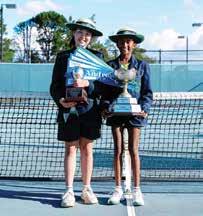
In representative tennis, Alexis Tran competed at the Queensland Representative School Sport State Championships for Met East, while our Years 7–9 team of Isla Slatter, Annie Tran, Chelsea Guo, Alexis Tran and Aurelia Wells secured an outstanding third place at the Tennis Queensland Secondary Schools Cup State Finals.
Our Junior players also enjoyed exceptional success. At the Tennis Queensland Primary Schools Cup, Somerville House delivered remarkable
results across all divisions. The Red Ball Years 3–4 team claimed both the Met East and State titles, achieving back-to-back State Championships following their 2024 win.
The Years 5 Orange Ball team placed third at Met East, and the Years 6 Green Ball team finished second.
Interhouse competition remained equally strong, with Somerville House crowned Knowles Cup Champions, highlighted by first place finishes in both Open A and Open B, alongside podium finishes in the Intermediate and Junior divisions.
Building on this momentum, 2026 has already seen continued success and promising performances across
the program. The Years 3–4 Red Ball team returned to the State Finals and secured third place, while Somerville House delivered a dominant showing at the Andrews Cup, winning four of the five divisions. Notably, Open A, Open B, Open C and Open D teams remained undefeated, with six of eight competitive teams finishing on the podium.
Individually, Annabel Trolove and Chantelle Lim have progressed through the Queensland School Sport pathway, qualifying at the Central Sharks Districts through to the Met East Regional Trials. Advance here and they will compete in the State Championships.
At the secondary level, Isla Slatter, Chelsea Guo, Alexis Tran and Olivia O’Neill claimed first place at the Tennis Queensland Secondary Schools Cup Met East Finals, earning their place at the upcoming State Finals in Gladstone later this year.
Left to right: Alexis Tran, Chelsea Guo Below (L-R): Andrews Cup Captains, Kiana Gray and Alicia Justus
A Fairytale Achievement for Georgiana and Hannah
We are delighted to celebrate two talented Somerville House students who have been selected to perform in Ballet Theatre Queensland's 2026 production of Snow White, presented at The Star Gold Coast and Queensland Performing Arts Centre from 2–12 July 2026.
Year 5 student,Georgiana Beynon has been selected as a Junior Cast Member, alongside Year 8 student, Hannah Robinson, who has been selected as an Intermediate Cast Member. Their selection, through a highly competitive audition process, is a significant achievement and reflects their talent, dedication and commitment to the art of ballet.
As Australia's oldest continuously operating ballet company, Ballet Theatre Queensland has been nurturing young dancers for more than 85 years. Selection to perform with the company is a significant honour, recognising emerging talent and providing exceptional opportunities to train, perform and learn from leading industry professionals.
As a Year 5 student, Georgiana's selection as a Junior Cast Member is a wonderful recognition of her emerging talent, dedication and potential. Hannah's selection as an Intermediate Cast Member reflects her continued growth and development as a dancer, with the role offering opportunities to perform more advanced choreography and further refine her performance skills. Both selections are significant achievements and a testament to the hard work, commitment and passion each student has invested in their craft.
Georgiana and Hannah's success highlights not only their individual talent and perseverance, but also the strength of the performing arts within the Somerville House community.
We congratulate Georgiana and Hannah on this outstanding achievement and look forward to following their continued success.
Scan the QR code to learn more about the production.
Choir
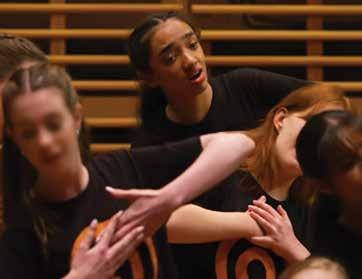
Selection for Gondwana Voices, Australia’s premier youth choir, is a remarkable achievement, with auditions held nationwide and only the most accomplished young singers chosen. We are proud to celebrate Year 9 student Vaishnavi Manivasanth, whose talent and dedication have earned her a place in this prestigious program. In her own words, Vaishnavi reflects on this enriching and memorable experience:
Being part of Gondwana Choirs for the past 3 years has been an incredible experience and something I look forward to every year. Held in Sydney from January 12–24 this year, the program allowed me to meet talented singers from all across Australia and make new friendships. I was part of Gondwana Voices, the SSAA choir for advanced treble singers aged 13–17, with other ensembles including Gondwana Chorale, Gondwana Novus and Gondwana Singers. During the program, we stayed at The Women’s College in Sydney and rehearsed for around seven hours a day with Australian and International conductors. One of my favourite parts was learning and performing songs in approximately seven different languages and learning many exercises, which made rehearsals both interesting and fun. Towards the end of the trip, all choirs performed their individual repertoire at St James’ Church and later came together for the final concert at the Sydney Conservatorium of Music, where we also performed combined pieces as one large choir. Outside of rehearsals, we also enjoyed activities such as shopping at Broadway, movie nights and dance nights, which made the experience even more memorable. Gondwana Choirs also provides opportunities for singers to tour internationally, making it an even more exciting and unique program to be part of. Overall, it has helped me improve my singing techniques and skills so much, and I would strongly encourage any passionate singer to audition for this amazing opportunity.
Vaishnavi Manivasanth
Hannah Robinson
Georgiana Beynon
AMEB Student Achievements
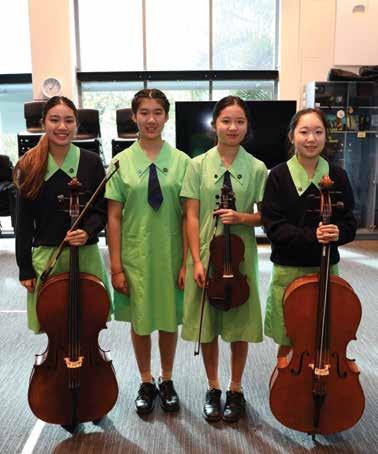
The Australian Music Examinations Board levels of Certificate of Performance, Associate of Music and Licentiate of Music demonstrate an exceptional level of commitment, dedication and practise for the given instrument. Well done to the following students who have all reached this milestone in their musical journeys:
Certificate of Music
Audrey Long - Cello
Tiara Ng - Piano
Associate of Music
Cindy Liu - Piano
Irene Oh - Cello
Jasmine Oh - Violin
Licentiate of Music
Stephanie Yuan - Piano
Mira Wang-Lee - Cello
Stephanie Yuan - Violin
Roxanne Zhao - Piano
Chess Excellence on the National and International Stage
Somerville House has celebrated outstanding success in chess, with students achieving remarkable results across national and international competitions.
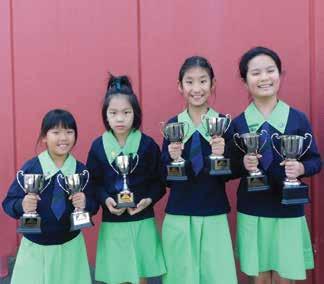
In December, Somerville House placed second in the Primary Girls Division at the Australian Schools Teams Chess Championships, held in Melbourne on Saturday 6 and Sunday 7 December. The team delivered an exceptional performance against some of the strongest schools in the country. Olivia Chu and Iris Wang each won four of their five games, while Clarissa Liu and Charlotte Ong remained undefeated, earning Best Board 2 and Best Board 4 respectively.
Individually, several students have continued to excel at the highest levels. Clarissa Liu has had an exceptional year, becoming the Australian Under 10 Girls Chess Champion after winning the Puzzle, Blitz and Classical Championships. She also secured first place in the Under 10 Girls Division at the 2025 Oceania Zonal and has earned a Women’s Candidate Master title. Clarissa has now been selected to represent Australia at the World Cadets Cup in Georgia in June 2026.
Charlotte Ong achieved 6th place at the Australian Under 10 Girls Junior Championships and placed 2nd at the 2026 Oceania Zonal. Kalista Liu earned 3rd place in both the Under 8 Girls Blitz and Classical Championships, while
Aniya Mao secured 3rd place in the Under 8 Girls division at the Oceania Zonal.
These achievements reflect the dedication, skill and competitive spirit of Somerville House’s chess players, who continue to make their mark on the world stage.
Left to right: Mira Wang-Lee, Roxanne Zhao, Jasmine Oh, Irene Oh
Above (L-R): Charlotte Ong, Iris Wang, Clarissa Liu, Olivia Chu
Giving through Service Learning
How Somerville House students are turning empathy into action—one initiative, one lunch break, and one small act of kindness at a time.
At Somerville House, giving is not a once-a-year appeal, it is a way of showing up for others, woven through school life and shaped by the belief that character is revealed in what we do when nobody is watching. Service Learning provides a practical, studentled pathway for that belief to become action: raising awareness, building empathy and responding to need with hands-on support.
The Service Learning Portfolio brings together student leaders from Years 9 and 12, alongside leaders across the Junior School, creating a wholeof-school approach that invites every student, staff member and family to play a part. Initiatives are designed so the entire community can contribute, and ideas are welcomed from anyone, students and staff can submit proposals via the Service Learning Proposal form on SomerLink. In a school guided by the motto Honour Before Honours, service becomes something we do for its own sake: because it is right, and because it matters.
Behind each donation drive and fundraising day is careful student
planning. The Portfolio typically spends one to two lunch breaks mapping out each event, identifying the cause, clarifying what is needed, then spreading the word through year-level networks and SomerLink notices. When donations arrive, the Senior Service Learning leaders often stay after school to sort, pack and decorate items for delivery, usually a focused two to three hours that transforms piles of supplies into gift bags, hampers and practical packs ready to support families.
Giving in action: so far Service Learning at Somerville House spans awarenessraising, fundraising, donation drives and volunteering, each one offering students a different way to practise generosity.
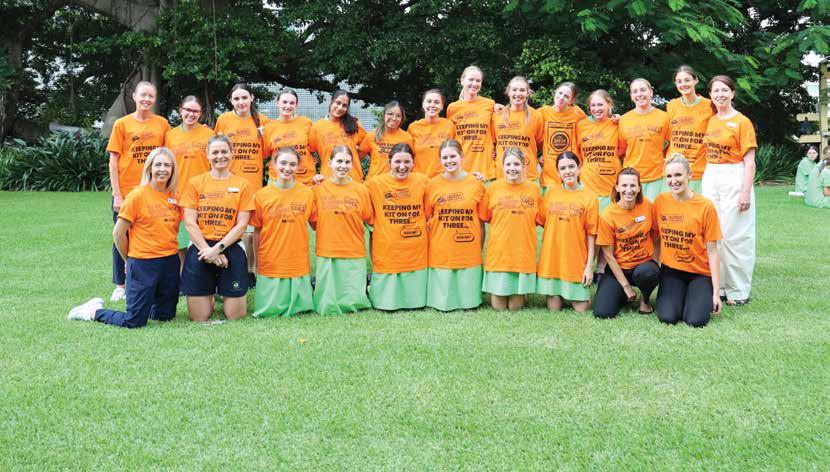
Early in the year, the Sudsy Challenge encouraged students and staff to wear the same shirt for three days, without washing it, to build empathy and start conversations about homelessness, while raising funds for Orange Sky Laundry. It was a simple idea with a powerful message: dignity is not a luxury, and small discomforts can spark big awareness.
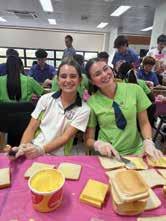
Each term, students also join with St Laurence’s College for an Eat Up session, making and packing lunches for children who arrive at school without reliable access to food. Working sideby-side, students learn that service can be both practical and relational, meeting a need while strengthening community connection.
In Term 1, the school’s annual Easter Egg donation drive supported families staying in the Leukemia Foundation villages. Even in a year where the rising cost of Easter treats made giving harder, the response from our community was remarkable. The team also introduced alternative options to ensure families with allergies and dietary requirements were not overlooked, an intentional reminder that inclusion is part of generosity.
For International Women’s Day, students hosted a BBQ and ribbon sale, donating proceeds to the United Nations to support work that advances equal rights for women. It was a chance to link celebration with action, marking the day while contributing to change beyond our school gates.
Across the semester, staff and students have also laced up for causes close to many hearts, forming a Somerville House team for 86K for a Cure to support the Children’s Cancer Institute, and taking on the March Charge for Cancer Council. Whether running a set distance over a month or aiming for personal goals, students experienced how collective effort builds momentum, and how wellbeing and philanthropy can sit side by side.
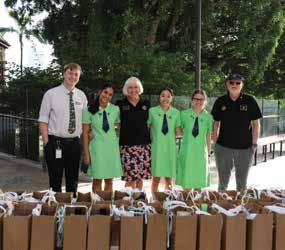
This term, Year 12 students led a heartfelt project: collecting and packing Mother’s Day gift bags for mothers staying with the Windana Women’s Refuge. Working with Toowong Rotary, the girls were asked to prepare 63 bags, an ambitious target, but they packed 64, ensuring that every mother received a gift. The feedback was humbling: Toowong Rotary noted Somerville House as the most generous donor supporting Windana through initiatives like the Mother’s Day bags and the Christmas hampers prepared later in the year.
And giving is not only about fundraising for material needs, it is also about solidarity. This term, the Service Learning Portfolio and other student leaders are launching “You Are Not Alone” (YRNA) wristbands, with gold coin donations directed to YRNA to help shine a light on youth mental health.
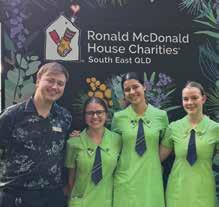
For many students, some of the most meaningful moments happen away from the spotlight. Ronald McDonald House Charity volunteering sessions for the Kids Club continue throughout the year, and interest has been so strong that there is currently a waitlist of around 60 students eager to spend an afternoon supporting children and families during challenging times. It is a quiet example of what service can look like: turning up, helping out, and bringing joy.
“Each small act of kindness truly goes a long way.”
Looking ahead: what’s coming up
The calendar ahead is equally busy. Upcoming initiatives include National Boarding Week’s bake sale, fortnightly busking in the mall by music students to raise donations for Beyond Blue, as well as Jersey Day in support of Beyond Blue. In June, students will take on The PushUp Challenge for Headspace, followed by Pyjama Day for the The Pyjama Foundation on Friday 24 July and a Junior School PJ Day and bake sale for SolarBuddy in Week 3 of Term 3.
Term 3 will also see Rock the Chop, The Ponytail Project in support of the Cancer Council, running across the term.
Each small act of kindness truly goes a long way.
In Term 4, the annual Wishing Tree appeals will again invite the community to donate toys for the Starlight Children's Foundation, pantry items and gifts for Ronald McDonald House Charities, essential items for Share the Dignity, cleaning packs for the Leukaemia Foundation, and Christmas hampers for Windana.
Why Service Learning matters
Service Learning helps students look beyond themselves. It builds awareness of hardship and inequality, but it also empowers students to respond, showing them that they can make a real difference in someone’s life. At its heart, this work reflects Honour Before Honours: students give not for recognition, but because they care. Along the way, they build stronger connections to the wider community and develop social and emotional awareness, traits that are pivotal in today’s world.
In a year themed Giving, Somerville House Service Learning reminds us that generosity is both organised and ordinary: a lunchtime of planning, a few hours of packing after school, a gold coin donation, a run completed, a gift bag carefully decorated. Under the guidance of the Service Learning Coordinator and alongside student leaders across year levels, the program continues to create opportunities for our community to practise kindness in practical ways, and to see, firsthand, the impact of showing up for others.
Kyle Shellack-Potter has been part of the Somerville House community for four years and stepped into the role of Service Learning Coordinator, helping student leaders turn ideas into action.
For Kyle, the appeal of Service Learning is simple: it is practical and deeply connected to Somerville House's values.
What inspired you to take on the role?
I’ve enjoyed being involved in Service Learning initiatives at Somerville House, where we embed service into pastoral care through the Wishing Tree Appeals. When I saw the Coordinator role advertised, it felt like a opportunity to become involved in events and support students with their ideas and initiatives.
What has been a highlight this year? The role has been a highlight of my year, being able to see the impact Somerville House makes to communities and charities. The Leukaemia Foundation was blown away by the donations received this year, and it was special to provide options for families with allergies and dietary needs.
Working with Rotary Club of Toowong on the Mother’s Day gift bags for Windana was a moment, 63 bags were requested, and our Year 12s packed 64 to ensure every mother received one.
What do you hope students take from Service Learning?
I love seeing students recognise the impact they can have on life. Volunteering, donating, and showing kindness helps strengthen community connection and builds emotional awareness.
I’m honoured to support our work and look forward to continuing in this space.
Thinking Globally: Inside Our First Year of the IB Diploma Programme
This year marks an exciting new chapter at Somerville House with the introduction of the International Baccalaureate Diploma Programme. Designed for curious and globally minded learners, the IB encourages students to think critically, act purposefully and engage meaningfully with the world around them. We invited current IB students to share why they chose the programme and how it is shaping the way they learn, think and grow.
What made you choose the IB programme?
RM: Honestly, there was no 'convincing' factor about the programme; everything seemed to appeal to me. It was more of a collection of things that cemented this decision for me. I'm really interested in the lineup of subjects available that ATAR doesn't present. For example, Global Politics, Psychology, and math options, which aren't simply Math One and Math Two but are based on how you may use your math in the future, for things like applications and interpretations or analysis. Additionally, the concept of having HLs (High Level) and SLs (Standard Level), where you can choose a couple of subjects that dive deeper into the topics you're passionate about. Also, creating a CAS project with others just seems exciting to me.
JC: I chose the IB programme because I wanted to challenge myself to become a more open-minded, risk-taking, and knowledgeable learner as I aspire to pursue my studies abroad. To me, the IB is more than just a programme;
it is a gateway that opens doors to opportunities around the world and prepares me to step through them with confidence, passion, resilience and determination.
What are you enjoying the most about the IB programme?
RM: Out of everything in the IB programme, the main element would be the languages program for me. I'm studying French HL and everything about how and what we're learning really suits my preferences. I've always been interested in literature and the deeper aspects of the language and the IB programme allows you to build on what you've learnt and apply it to so many things, like reading books, French literature, learning to speak a language in addition to the one you're familiar with and learning the overall culture.
JC: What I enjoy most about the IB is the intensity of the courses and the way learning goes beyond just memorising content, focusing instead on truly understanding how to apply knowledge to real-life contexts. This
approach helps me develop a deeper understanding of my subjects, which makes me enjoy them even more. Additionally, the IB feels like a family, where we genuinely support each other as we work towards our future goals.
The IB doesn’t only make you learn, but makes you want to learn.
They are very different from my previous classes because we’re constantly encouraged to be better inquirers. Our teachers often connect what we learn to Theory of Knowledge (TOK) questions, which pushes us to think more critically.
For example, in Math, while studying the Pythagoras theorem, we might pause to reflect on questions like whether it’s ethical that Pythagoras is credited for a theorem that may not
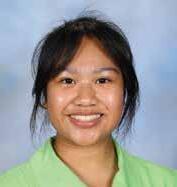
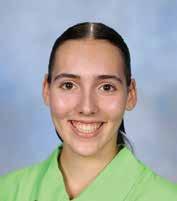
Rose-Celena Mojica,11C Jeanne Chabrerie,11O
have been entirely his own. This really challenges us to think beyond the content.
Which higher-level subjects are you studying and why did you choose these?
In other subjects, we apply our learning to real-world case studies such as studying terrorism in Iran within the unit of Power in Global Politics. In English, we explore a wider range of books across different time periods and genres, which broaden our perspective. Languages are also more immersive and intensive, as our teacher engages with us directly in the targeted language and encourages us to develop our reading, speaking and listening skills to a much higher level than before.
viewing opposing arguments, and how those opinions were crafted. Really, my reflective skills have grown the most.
JC: I would say that, thanks to IB, I have become a much stronger critical thinker. I am now more confident to question and evaluate the reliability and validity of different perspectives. Because of the IB’s unique learning style and intensity, I have also had to adapt my study techniques, which has helped me become a more effective and organised learner.
How are the IB classes/lessons different to previous classes?
Those who are curious, self-motivated and take initiative are perfect for this programme.
RM: I'm studying HL French, HL Language and Literature, and HL Psychology. I've always been interested in French, both the language and culture, and I knew that this programme would expand and strengthen my skills. In terms of HL, I love literature, so learning it in a language I love seemed like a natural choice to me. I chose HL Language and Literature because English has consistently been a strong subject for me and I love literary analysis across a diverse range of books that reflect aspects of our world. Lastly, I chose Psychology because it was a subject I've always wanted to do, but it wasn't offered outside the IB programme. The content is interesting, being able to apply it to real life is interesting, and as a subject of interest for university, having this experience will benefit my future studies.
RM: A notable difference for me is that I can see how IB fosters and caters towards your future study, rather than just preparing you to learn content to pass exams. I really enjoy how we're learning, not just to memorise answers and content for a topic that may not be used again but learning for the sake of learning. For example, I feel that languages within the ATAR curriculum are less about learning conversational topics and things that will be useful to apply the language in the future, but are more about learning how to answer exam questions that can't truly be applied in the real world. In IB, you can apply everything you learn beyond classrooms and exams. For example, in TOK, we discuss real-world problems and develop critical thinking skills. In French, we engage in conversation and explore topics like literature, global focus, and really prioritise the idea of bilingualism – a focus of this program. This can be applied to all subjects, global politics, psychology, and even maths.
Lastly, I’ve become more openminded and curious beyond the classroom, whether that’s reading the news, exploring historical topics, or participating in language competitions to continue learning.
The IB doesn’t only make you learn, but makes you want to learn.
What type of students would benefit from the IB programme at Somerville House?
JC: I chose the higher-level subjects History, Global Politics and English. I chose History and Global Politics because they are my favourite subjects, alongside Chinese, and I aspire to work in the fields of international relations and political science.
Which skills have you developed the most?
RM: Probably my critical thinking and analysis skills. You develop a number of skills, but especially in the Theory of Knowledge, expanding on things you believe you know, and diving deeper into what that could entail. I've strengthened my ability to think about situations from ethical perspectives, objectively
RM: Those who are intrigued with working or living internationally in the future, but honestly, students who are thinkers, innovators, or inquirers. Those who are curious, self-motivated and take initiative are perfect for this programme. Those who want to learn in general rather than learn for their grades. But in saying that, I believe anyone can benefit from this programme if they have the right motivation and intention.
JC: I think the IB is really suited to students who are curious and enjoy learning beyond the classroom. It’s for those who are open-minded, adaptable and independent learners willing to challenge themselves, especially if they are interested in gaining an international perspective to study abroad.
Additionally, as a non-native English speaker, I chose English HL as a challenge to further extend my language proficiency. English is also the primary international language, and most Universities require it as a prerequisite, so having studied it at a higher level will give me an advantage.
Little Frogs, Big Beginnings
From first steps in sport and dance to moments of curiosity and discovery, the Little Frogs program nurtures confidence, creativity and connection from the earliest years at Somerville House.
At Somerville House Junior School, the journey of exploration begins early, as students take their first steps into cocurricular life through the much-loved Little Frogs Club Program.
Designed for students in Pre-Prep to Year 2, Little Frogs offers a joyful and purposeful introduction to enrichment, nurturing curiosity, confidence and connection. Through a diverse range of age-appropriate experiences, including Sports, Music and Movement, Chess and Ballet, students are encouraged to explore new interests in a supportive environment, building foundational skills while forming friendships beyond the classroom.
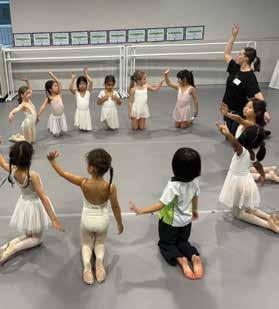
A significant addition in 2026 has been the introduction of Little Frogs Movement and Music – Ballet. Responding to growing enthusiasm for dance, the program is delivered in a newly created, purpose-built ballet space designed to inspire imagination, movement and confidence. Within
this environment, students are guided through structured sessions that blend music, storytelling and early technique. From first positions to expressive movement, each class builds towards a performance sequence, offering students the opportunity to share their learning and celebrate their progress.
Alongside this, the Little Frogs Sports Program continues to play a central role in early physical development. Open to students from Pre-Prep to Year 4, the program provides a safe and supportive environment in which girls can explore a wide variety of activities while developing fundamental movement skills. Across the year, students are introduced to sports such as touch football, soccer, athletics, netball and AFL, as well as general ball and striking games. These sessions are designed not only to build physical capability, but also to foster teamwork, resilience and a lifelong enjoyment of being active.
Across all Little Frogs offerings, a consistent focus remains on creating engaging and inclusive experiences that support the development of the whole child. Whether learning rhythm and coordination through Music and Movement, engaging in strategic thinking through Chess, or expressing creativity through Ballet and Sport, students are encouraged to discover what excites and motivates them. A highlight for many is the opportunity to participate, perform and share alongside their peers, building confidence in a supportive and encouraging environment.
in their schooling, students develop the confidence to try new experiences and embrace opportunities as they progress through the Junior School.
As students move into the later years, this foundation is further strengthened through an expanding range of enrichment opportunities. From Year 4, girls are introduced to Robotics, alongside clubs such as STEM Club, SUPA Club and Arts Clubs, all designed to foster creativity, collaboration and problem-solving skills. These offerings complement the International Baccalaureate Primary Years Programme (PYP), which encourages students to think critically and reflectively.
Enrichment at Somerville House remains centered on developing the whole child. Opportunities such as Da Vinci, Maths Olympiad, Readers’ and Writers’ Cup and Halogen Leadership Day extend learning beyond the classroom, while Student Council empowers girls to lead and contribute meaningfully to their community.
Together, these experiences create a vibrant and inclusive environment in which every student is encouraged to explore her interests and grow in confidence, with the Little Frogs program providing a strong foundation for a lifelong love of learning, participation and connection.
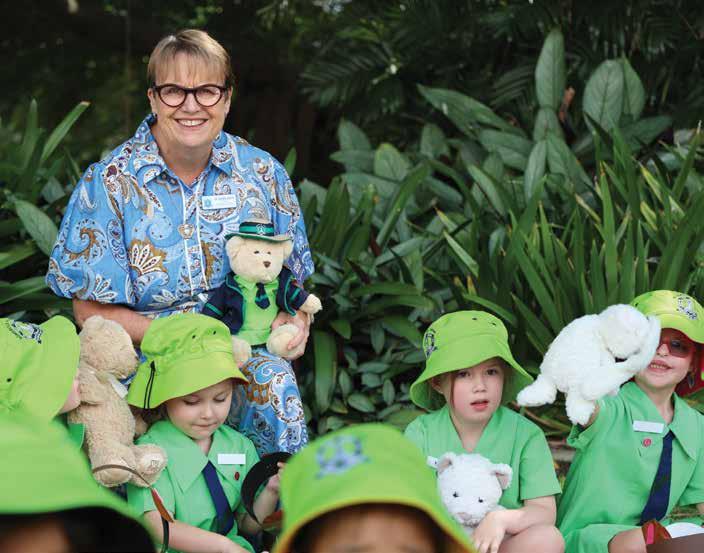
Mrs Susan Clarke Head of Junior School
Importantly, Little Frogs provides a gentle introduction to the broader cocurricular program at Somerville House. By exploring a range of activities early
2026/2027
Being involved allows you to actively support your daughter’s commitment, celebrate her progress and better understand the discipline and teamwork the sport requires.
Celebrating Our Somey Supporters: A Spirit of Giving
At the heart of every strong school community are the people who quietly and generously give of themselves for the benefit of others. In keeping with this year’s Connections theme of Giving, we felt it was important to celebrate the many P&F Support Group volunteers whose time, care and commitment do so much to enrich life at Somerville House. These Q&As offer a glimpse into the generosity behind the scenes and shine a light on just a few of the parent leaders who make up the army of volunteers who help nurture the spirit, strength and sense of community that enriches the experience of students, families and staff alike.
MARK WOOLLEY
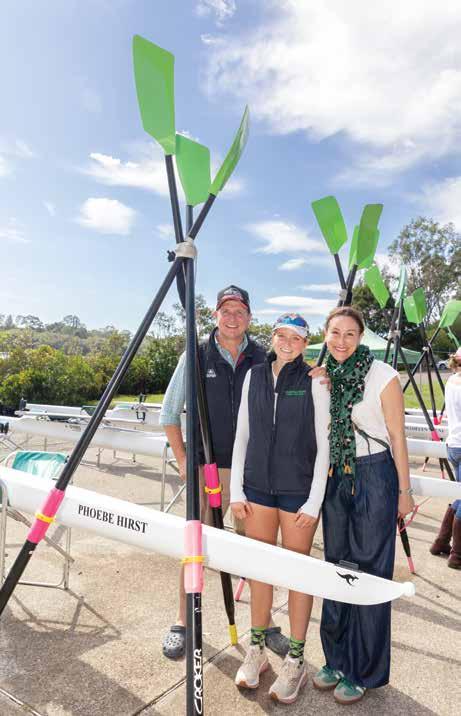
Rowing Support Group President
Tell us a little about your connection to Somerville House.
My name is Mark Woolley and my daughter, Emma, is currently in Year 11. My wife, Rachel (née Ellis), is an Old Girl who finished at Somerville House in 1992.
What P&F Support Group are you currently involved in, and what does your role entail?
I am currently the President of the Rowing Support Group. Rowing is a sport that takes a whole community to support the girls and coaches in the program. Parents take on a wide range of roles, including preparing breakfasts three mornings a week, baking for regattas, setting up tents and equipment at the dam, organising host regattas, transporting boats
and equipment to camps, supporting fundraisers and helping maintain the Somerville rowing shed at Yeronga through the annual working bee and other repairs.
Volunteering takes time and commitment. What does a typical term look like for you in this role?
The Rowing Support Group meets monthly to coordinate events and planning. In the lead-up to major events such as the host regatta and Long Lunch, subcommittees may meet several times a week.
What motivated you to become involved in the P&F Support Group?
Our daughter has rowed since Year 8, and in that first year we saw firsthand the important role the committee plays in building a strong parent community. Because rowing is such a time-intensive commitment, becoming
involved in the committee felt like a meaningful way to contribute to that sense of connection and to support the positive impact rowing has had on our daughter and the wider group of girls in the program.
What do you find most rewarding about contributing your time and energy in this way?
Being involved allows you to actively support your daughter’s commitment, celebrate her progress and better understand the discipline and teamwork the sport requires. At the same time, you build connections with other parents, coaches and the school, creating a supportive network that enhances both your daughter’s experience and your own. It is deeply rewarding to help foster a positive team environment, reinforce your daughter’s confidence and show her that her efforts matter beyond the water.
How do you see the impact of the P&F Support Groups on the wider Somerville House community?
Speaking for rowing, the program simply could not operate without parent support. Parents work side by side with coaches, staff and students to ensure the girls have the best experience possible. Involvement in support groups gives families a front-row seat to witness the way students progress and thrive with the right support and structure, while also strengthening the wider school community.
Has being involved helped you connect more deeply with the school or other members of the Somerville House community?
Yes. Being involved has given me a real appreciation for the work that goes into running a successful program and allowed me to be part of a supportive community that contributes in meaningful ways to students’ experiences at the School.
What would you say to parents who may be considering getting involved but aren’t quite sure where to start?
It does not have to be a major time commitment. It can be as simple as signing up for the occasional barbecue shift or breakfast service. Every contribution helps.
MEG CLARKE
Senior Years Support Group Vice President, Rowing
Support Group Vice President
Tell us a little about your connection to Somerville House. I am a parent of current student Gemma Clarke, who is in Year 10. Our Somerville House journey began in January 2018, when Gemma started in Year 2.
What P&F Support Groups are you currently involved in, and what does your role entail?
Presently, I am Vice President of both the Rowing Support Group and Senior Years Support Group, and I am also a member of the P&F. My roles include attending meetings, helping plan events, serving on breakfast crews, supporting stalls, wrapping gift days, cooking barbecues, assisting at Open Days and helping new Rowing families with their questions.
Volunteering takes time and commitment. What does a typical term look like for you in this role?
How do you see the impact of the P&F Support Groups on the wider Somerville House community?
Support Groups help volunteers contribute to fun events in the school calendar that the girls look forward to and enjoy. They play an important role in strengthening the sense of community across the School.
It is deeply rewarding to help foster a positive team environment, reinforce your daughter’s confidence and show her that her efforts matter beyond the water.
In Term 2, Rowing involves three days a week on the breakfast roster from 5.00 am, collaborating with other parents, compiling lists of items for the Quartermaster to reorder, cooking barbecues, attending meetings, checking in with the Director of Rowing and new families, and planning and delivering the Rowing Long Lunch.
What motivated you to become involved in the P&F Support Group?
I wanted to gain a greater understanding of how the School works in relation to my child’s interests, extend my friendship circle with other parents and enjoy opportunities to serve the students.
In one sentence, how would you describe what it means to you to give back to Somerville House? Giving back to Somerville House through involvement in support groups means contributing your time and energy to strengthen the community, support students’ opportunities, and help create a positive and enriching environment for everyone.
What do you find most rewarding about contributing your time and energy in this way?
You become a familiar face to the girls and to the staff, and they can call on you when a need arises. That sense of being able to help and support the students is especially rewarding.
Has being involved helped you connect more deeply with the school or other members of the Somerville House community?
Absolutely. From not knowing anyone when Gemma started, Support Groups have extended my friendship groups far beyond my daughter’s friends and their families. I now have friends in each year level throughout Somerville House.
What would you say to parents who may be considering getting involved but aren’t quite sure where to start?
Volunteer, as it gives you a wonderful way to journey through school life and allows Support Groups to do their good work. Your Support Group may change as your child’s interests change, so be willing to pass on the baton as you move on to the next group.
In one sentence, how would you describe what it means to you to give back to Somerville House? It has given me so much enjoyment to be involved over the past nine years.
ANDREW AND JAIME HIRST
Boarding House Support Group President, Rowing Support Group Vice President
Tell us a little about your connection to Somerville House.
We are Andrew and Jaime Hirst. Our daughters are Phoebe in Year 12, Bridget in Year 10 and Heidi in Year 8.
What P&F Support Groups are you currently involved in, and what does your role entail?
We are involved in the Boarding House Support Group, where we serve as President, and in the Rowing Support Group, where we serve as Vice President. The Boarding House Support Group involves one meeting per term, planning for the annual Town and Country event, consulting with Boarding staff when needed, supporting the boarding sleepover experience and welcoming new boarder parents on the first day of Term 1. The Rowing Support Group includes monthly meetings, setting up tents at regattas, helping at the rowing shed working bee and, in recent years, transporting coaches’ tinnies to rowing camp at Bucca Dam.
Volunteering takes time and commitment. What does a typical term look like for you in this role?
In the Boarding House Support Group, a typical term includes one meeting, preparation for key events and ongoing support for Boarding staff and families as needed. For Rowing, it includes monthly meetings, regatta support, the rowing shed working bee and practical help with major activities such as camp logistics.
What motivated you to become involved in the P&F Support Group?
Being part of Support Groups has always felt like a responsibility to us. These groups are important, and sometimes vital, in helping deliver the school programs our children benefit from. We believe sharing this workload with other volunteers is part of supporting the School community.
What do you find most rewarding about contributing your time and energy in this way?
We have enjoyed many rewarding experiences, met remarkable people and built enduring friendships. At times, we genuinely feel that we get even more back from volunteering than we contribute.
How do you see the impact of the P&F Support Groups on the wider Somerville House community?
We do not see many programs being deliverable without Support Groups. These groups bring together likeminded people who are busy but still make time to support the School and its students. In doing so, they help create opportunities for connection, service and community spirit.
Has being involved helped you connect more deeply with the school or other members of the Somerville House community?
Yes. Much of this involvement happens in person, and there are often opportunities to socialise after tasks are completed. These are the moments when connections are formed and celebrated.
What would you say to parents who may be considering getting involved but aren’t quite sure where to start?
Just turn up with a smile. All groups require different skill sets. Arrive on time, offer your help and someone will point you in the right direction. You will always be welcomed at any Somerville House Support Group.
In one sentence, how would you describe what it means to you to give back to Somerville House?
For us, giving back means helping rowers row, coaches coach, boarders feel supported and families feel connected within a strong and welcoming school community.
NATHAN VICKERS
Football Support Group President
Tell us a little about your connection to Somerville House.
Lauren is in Year 11 and has really thrived through both the academic and co-curricular opportunities provided by the School. We previously had boys go through BBC and wanted to continue with PMSA schools because of the values they uphold.
I am immensely grateful for the schooling experience Somerville House is providing, and it is rewarding to know that I and other parents can contribute to that positive outcome as well.
What P&F Support Group are you currently involved in, and what does your role entail?
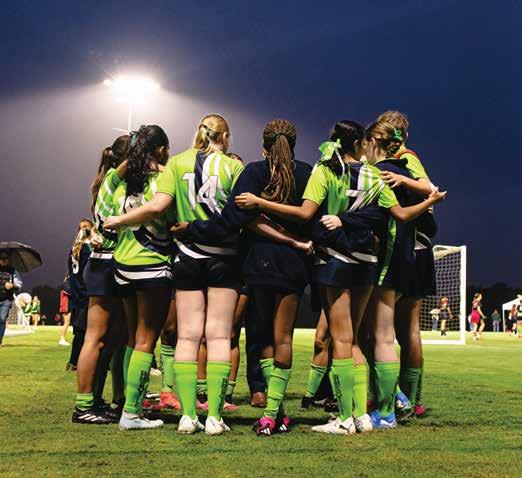
I am President of the Football Support Group. We primarily work to assist the School with enhancements to the football program, advocate for the girls to improve player ability and safety, and help fund initiatives that support this where possible. We also have dedicated volunteers who regularly help with breakfast after morning training and barbecues at home games.
Volunteering takes time and commitment. What does a typical term look like for you in this role? We usually hold two to three meetings as the season progresses, along with two to three off-season meetings to review the year and prepare for the next season. Outside meetings, the support group regularly communicates by email, and much of my additional volunteering happens on game days, often helping at the SomerFields barbecue trailer.
What motivated you to become involved in the P&F Support Group?
When I joined, the support group had not been running for a few years, so a number of parents came together to re-establish it. Although I have only played socially, I have been around club and school football for around
20 years, so I had a sense of what a well-run program looks like and wanted to help football grow stronger at Somerville House.
What do you find most rewarding about contributing your time and energy in this way?
By far the biggest reward is knowing that we have helped make changes that remove barriers to playing enjoyable football. This includes improvements to equipment, coaching, morale and player confidence. When players realise they can contribute positively to their team, that is incredibly rewarding. Winning is welcome, but very much a secondary reward.
How do you see the impact of the P&F Support Groups on the wider Somerville House community?
A successful co-curricular activity strengthens the status and desirability of the School overall. It also builds school spirit, camaraderie, unity and a wider culture of positivity. Parents can play a significant role in helping create that environment.
Has being involved helped you connect more deeply with the school or other members of the Somerville House community?
Absolutely. We have formed some great connections within the school community. It is not always easy to
get to know people, but it becomes much easier when you get involved. It has also been valuable to meet staff beyond my daughter’s subject teachers and to be part of constructive discussions about the future of the football program.
It is not always easy to get to know people but it becomes much easier when you get involved.
What would you say to parents who may be considering getting involved but aren’t quite sure where to start?
We would love to have more parents involved to ensure the football program continues to improve beyond our years at Somerville House. Getting involved is a meaningful way to support your child and contribute to something positive for the wider school community.
In one sentence, how would you describe what it means to you to give back to Somerville House?
I am immensely grateful for the schooling experience Somerville House is providing, and it is rewarding to know that I and other parents can contribute to that positive outcome as well.
2026 FOUNDATION BOARD (as of 10 June 2026, AGM)
BOARD CHAIR
Michelle Allan (Class of 1984)
PERMANENT DIRECTOR
SCHOOL ADVISORY COUNCIL CHAIR
Matthew Miller
PRINCIPAL
Dr Deborah Priest (Ex-Officio)
COMPANY SECRETARY compsec@somervillehousefoundation.com.au
FINANCE AND RISK CHAIR
Scott Kelly
COMMITTEE MEMBERS
Georgia Barkell (Class of 1997)
Trudy Naylor (Class of 1991)
Paul Pavlic
DEPUTY CHAIR
David Le
ELECTED DIRECTORS
Michelle Allan (Class of 1984)
Jane Kwok (Class of 1993)
Scott Kelly
David Le
Paul Pavlic
COMMITTEES
NOMINATIONS CHAIR
Rebecca Bauer (Class of 1988)
COMMITTEE MEMBERS
Michelle Allan (Class of 1984)
Matthew Miller
APPOINTED DIRECTORS
OGA REPRESENTATIVE
Rebecca Bauer (Class of 1988)
P&F REPRESENTATIVE To be appointed
COMMUNITY ENGAGEMENT CHAIR
Jane Kwok (Class of 1993)
COMMITTEE MEMBERS
Jonathan Chew Ping Han
Louise Potter (Class of 1999)
Message from the Foundation Chair
As we reflect on the past 12 months, we are reminded that the story of Somerville House has always been one of community, generosity and vision.
Since its founding in 1899, generations of families, Old Girls, staff and friends have helped shape the school through their commitment, support and belief in the value of a Somerville House education. The opportunities enjoyed by students today are the result of those who came before us choosing to invest in the future.
The Somerville House Foundation exists to continue that tradition, connecting our community through philanthropy and ensuring future generations of students benefit from the same spirit of generosity that has shaped the school for more than 125 years.
Fundraising and Philanthropic Impact
The Somerville House Foundation plays a vital role in advancing the strategic priorities of the school through philanthropy. By connecting the generosity of our community with opportunities that have lasting impact, the Foundation helps ensure
Somerville House continues to thrive for generations to come.
In 2025, the Foundation delivered another strong year of philanthropic support, with donors contributing towards scholarships, future capital projects and initiatives that will strengthen the educational experience of current and future students.
Behind these figures are tangible outcomes that are helping shape the future of Somerville House.
2026 OUTCOMES
Scholarship funding continues to create opportunities for students, while contributions to the Building Fund are helping deliver the facilities and learning environments that will support future generations.
The Foundation remains focused on turning generosity into lasting impact. Through the support of our donors, members and volunteers, we are preserving the legacy of Somerville House while helping shape its future.
The achievements of 2025 are a powerful reflection of what can be accomplished when a community comes together with a shared commitment to education, opportunity and excellence.
SomerFields: Philanthropy in Action
One of the most significant milestones during the reporting period was the continued development of SomerFields. The Foundation is proud to play a role in supporting this important development through the Building Fund, which exists to support projects and infrastructure that enhance the educational experience and create lasting impact for the school community.
Following the successful activation of field lighting in 2025, construction commenced on the new SomerFields Clubhouse in May 2026. This milestone has been made possible through the collaboration of the PMSA, Somerville House and Somerville House Foundation, together with the generosity of our donor community. Importantly, support generated through Giving Day 2025 helped contribute to the commencement of this exciting next stage.
As construction progresses towards completion in 2027, we look forward to sharing future milestones and celebrating the lasting impact of the philanthropy helping bring this vision to life.
Giving Day 2026
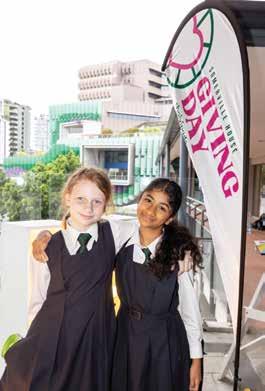
On 11 June 2026, the Somerville House community came together for Giving Day under the theme "We Are Somerville House. Together, we are building what comes next."
The campaign invited support for the Foundation's key philanthropic priorities: the Building Fund, Scholarships and Bursaries Fund, and Cultural Fund.
Through the collective support of parents, Old Girls, staff, students and friends of the School, Giving Day raised $209,880 and inspired 379 donors to contribute to the next chapter of Somerville House.
We extend our sincere thanks to our Giving Day Matching Donors whose generosity helped drive the campaign and ensured all donations made by our community on the day were doubled: Albert & Teresa Ting, A Somerville Family, Dr Deborah Priest, Eaton Services Group, Geely Brisbane City, Katrina & Scott Kelly, PMSA, Sarah Hackett + Place, Somerville House P&F, The Jinks Family, The Liao Family, The Petrulis Family, The Potter Family, The Siganto Foundation, and the Wu + Chien Family.
Their support, alongside the generosity of donors across our community, will create a lasting impact for Somerville House students.
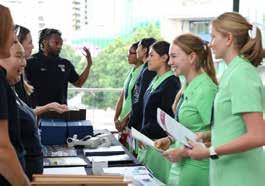
A particular highlight of the campaign was the enthusiasm of our students. The energy across campus, combined with the fierce House competition that has now become a cherished Giving Day tradition, reflected the very best of Somerville House. Giving Day once again demonstrated the strength of our community and what can be achieved when we come together to invest in the future of the School.
Celebrating 125 Years of Legacy
A significant highlight of the year was our Donor Thank You Event in October 2025, which also marked the launch of
GIVING DAY 2026 RESULTS
TOTAL DONORS 379 TOTAL RAISED $209,880 AVERAGE DONATION $554 MATCHING DONORS 15
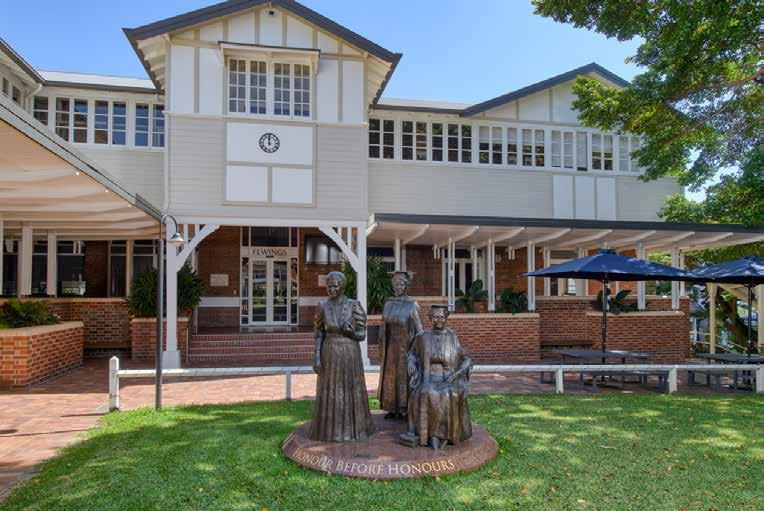
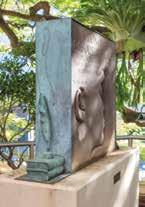
Produced as part of the school’s 125th anniversary celebrations, the publication documents the journey behind the sculptures of our founding Principal’s that stand proudly on Fewings Lawn. More than a record of their creation, the book celebrates the vision, courage and leadership of those who established Somerville House and whose legacy continues to influence the school today.
As a Foundation, it is a privilege to preserve and share these stories, ensuring that the history, traditions and values that have shaped Somerville House continue to inspire those who follow.
Connecting Community and Future Pathways
The Foundation's role extends beyond fundraising to fostering meaningful connections across the Somerville House community.
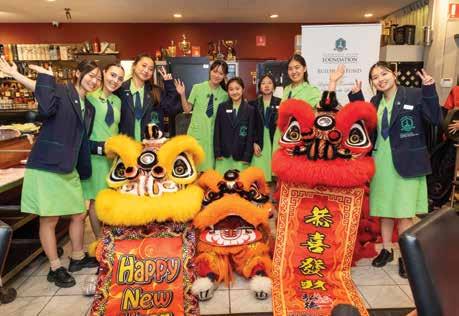
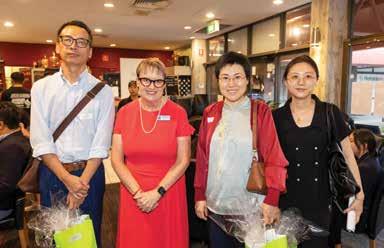
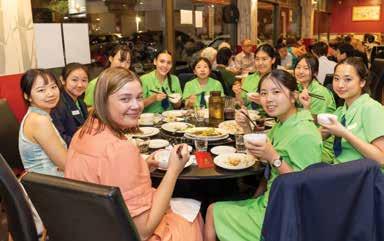
During the year, we were pleased to host a Lunar New Year celebration, bringing together families, supporters and friends of Somerville House to celebrate the cultural diversity that enriches our School and strengthens our sense of belonging.
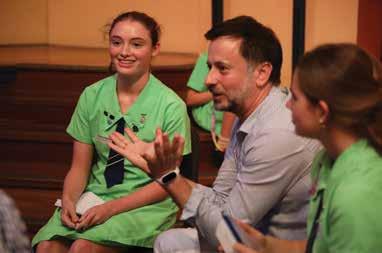
The Foundation also proudly supported SomerBuilt, an initiative connecting students with industry leaders, Old Girls and professionals across the built environment sector. Through shared experiences and conversations, students gained valuable insights into future careers in architecture, engineering, construction, property and design.
These initiatives highlight the strength of the Somerville House community and the value of bringing generations
together. Whether celebrating culture, sharing expertise or opening doors to future opportunities, they reflect the Foundation's commitment to fostering connection, engagement and lifelong relationships with the School.
We thank the many speakers, mentors, volunteers and community members whose generosity of time and expertise helped make these experiences possible.
Looking Ahead
The past year has highlighted the important role philanthropy plays in preserving our heritage, enriching the student experience and helping realise the future aspirations of the School.
Whether through celebrating our history, strengthening community connections, creating opportunities for students, supporting transformational projects such as SomerFields, or inspiring participation through Giving Day, the impact of generosity can be seen across every aspect of Somerville House.
On behalf of the Foundation Board, I extend my sincere thanks to our donors, Foundation Members, volunteers and the wider Somerville House community. Your support, commitment and generosity continue to make a meaningful difference.
As we look to the future, we remain committed to creating opportunities, advancing important projects and ensuring future generations of Somerville House students can thrive. Together, we honour the legacy of those who came before us, and together, we are building what comes next.
Michelle Allan Board Chair
Somerville House Foundation
the 125th Anniversary Sculptures book.
HOUSE COMPETITION WINNER: Macarthur
Connecting our Community
One of the things we enjoy most about our roles at Somerville House is the opportunity to connect with so many members of our community throughout the year.
Whether we are working alongside the Foundation, Old Girls' Association, P&F, current families, staff, students, volunteers or donors, we are constantly reminded of the incredible generosity, expertise and sense of belonging that exists across our community. Every conversation, event and shared experience contributes to the vibrant culture that makes Somerville House such a special place.
Every conversation, event and shared experience contributes to the vibrant culture that makes Somerville House such a special place.
Over the past year, we have seen this community spirit on display in many different ways. We have welcomed families and supporters to community events, celebrated the enthusiasm and generosity of Giving Day, worked alongside volunteers and industry professionals through SomerBuilt, supported the planning of the P&F Ball, and created opportunities for Old Girls, parents and friends of the School to reconnect and engage with one another.
What continues to stand out is the willingness of people to become involved. Whether sharing professional expertise, volunteering time, supporting an event, making a donation or simply showing up to connect with others, every contribution helps strengthen the fabric of our School community.
While there has already been much to celebrate this year, we are equally excited about the opportunities still to come.
On Wednesday 30 July, we look forward to welcoming members of our medical community to the Dr Lorna Archibald Medical Networking Event. These networking events are a wonderful example of the power of the Somerville House community, bringing together professionals, Old Girls and students to share knowledge, experiences and connections.
Our Foundation Lunch on Friday 14 August is shaping up to be another highlight of the year. Proudly supported by Edge Orthodontics, Sarah Hackett + Place and Eaton Services Group, the event will bring our community together at the beautiful Howard Smith Wharves for an afternoon of connection, entertainment and celebration. With live music from Cainan and an incredible collection of auction and raffle prizes, it promises to be a truly memorable occasion.
Then, on Friday 16 October, we return to Indooroopilly Golf Club for the annual Foundation Golf Day. Anyone who joined us last year will know just how special this event was. From the outstanding venue and hospitality to the camaraderie shared throughout the day, it was a fantastic celebration of community. We are looking forward to welcoming both familiar and new faces for what is sure to be another outstanding day.
Thank you to everyone who has supported, participated in and contributed to our community throughout the year so far. We are incredibly fortunate to work alongside such an engaged and passionate group of people, and we look forward to connecting with many more of you at our upcoming events.
Kate Parry
and Tamara Allen
School Develo pment and Community Engagement
Somerville House
Above (L to R): Tamara Allen and Kate Parry
Spotlight On
Karen Wu (Class of 1998)
Can you tell us a little about yourself, your family and the journey you have taken since graduating from Somerville House?
I graduated from Somerville House in 1998 and, like many students, probably left without fully appreciating all the school had given me. You only really understand that with time. I am now back in Brisbane with my husband, Andy, and our two children, Chelsea and Aiden, which has made that connection to Somerville House feel even more meaningful.
After Somerville House, I studied at The University of Queensland, completing a double degree in Commerce and Arts with majors in Banking, Finance and Japanese, followed by a Master of
International Economics and Finance. I began my career in banking with ANZ in Brisbane before moving to Taipei, where I joined State Street Bank. Taiwan had always felt familiar to me, so the move felt natural — and it turned out to be one of the best decisions I made, reconnecting me with the country where I was born.
I also spent time in Japan to develop my language skills and experience a new culture, before joining our family business, Sunlit Transportation and Logistics, based in Taiwan. Andy and I built much of our life there. We lived in Taiwan for twelve years, and both of our children were born there.
In 2023, we decided to return to Brisbane, largely because we wanted Chelsea and Aiden to grow up here
and experience the kind of upbringing I had. In 2026, I am so happy to have both my children at school at Somerville House (if only for 1 year). Chelsea is now in Year 3 and Aiden is in Pre-Prep. Seeing them both there has been a very special fullcircle moment.
What role has Somerville House and its enduring connections played in your life, both personally and professionally?
More than I expected, to be honest.
After graduation, everyone naturally heads off in different directions, pursuing different careers and lives. But the friendships from Somerville House have never really faded. What I have come to appreciate most is
seeing where these women are now, across Asia, the UK, the US and Australia, working in law, medicine, finance, business, the arts and many other fields.
The connection holds even across time and distance. You can reach out after years apart, and there is still an immediate sense of familiarity and trust because you share that common ground. That makes it easy to offer help, whether it is professional advice, an introduction, or simply being a sounding board for someone navigating something unfamiliar.
When we returned to Brisbane in 2023, that network was a big part of feeling settled again. I have leaned on it over the years, and I hope I have also given back to it.
Giving back through community involvement and philanthropy is clearly important to you and your family. Where does that passion come from?
It really starts with my parents.
They have been patrons of Mater Hospital and Mater Foundation for many years, and, Members of the Somerville House Foundation where they were the Principal Donors behind the Murray Evans Sports and Aquatic Centre. They funded this significant project after I had already graduated, knowing I would never personally benefit. That says a lot about how they think about giving. It is not about what comes back to you; it is about who comes after you.
Watching them live that so consistently and without fanfare has shaped how I think about giving more than anything else.
Running a family business has added another layer. When you are responsible for your team’s livelihoods and connected to the wider communities your business touches, you develop a sense of responsibility that goes beyond the numbers.
That is something Andy and I try to carry forward. For us, it means supporting causes and institutions we believe in, as well as being available
to the people around us when they need help. I want Chelsea and Aiden to grow up seeing that generosity is not a one-off gesture. It is part of how you live.
Why do you believe supporting the work of the Somerville House Foundation and future generations of students matters?
Everything that made my time at Somerville House so valuable, the education, the confidence, the friendships and the opportunities, was made possible by families and Old Girls who came before me.
The friendships, values and confidence you build during these years will last far longer than you might realise.
Both matter, and neither requires waiting for a grand moment.
Chelsea and Aiden have grown up across two cultures and two languages, and they already see the world from a broader perspective than I did at their age. I hope they use that perspective to connect with others, contribute meaningfully, and understand that we all have something to offer, wherever we are.
What advice would you give to current students, Old Girls and Somerville House families about staying connected, giving back and making a positive difference in the world?
To current students, be present and make the most of your time at Somerville House. The friendships, values and confidence you build during these years will last far longer than you might realise.
I feel that very personally. At the time, my parents gave to the school without expecting our family to benefit. Years later, Chelsea is now swimming in that very pool. To me, that captures what this kind of giving is about. It travels forward in ways you cannot always predict.
That is what the Somerville House Foundation represents, and I am genuinely committed to supporting it.
What values or lessons do you hope your children take from the example of generosity, service and community that you are striving to lead?
I hope they understand that generosity takes many forms.
Sometimes it means supporting a cause, a school, a hospital, or an institution that benefits many people. Other times, it is more personal, noticing when someone in front of you needs help and actually doing something about it.
To Old Girls, keep the connection alive, even if only occasionally. I spent more than a decade living overseas, and it would have been easy to drift away from those friendships. I am very glad I did not. There is something about shared history that makes those relationships especially resilient.
And to families, get involved while you have the chance. The years go by quickly. Support the school where you can, financially through the Foundation, with your time, or simply by helping someone in the community who needs it. A school community is strengthened by the people who continue to support it, and that includes all of us.
From the Archives Memories of Boarding Life, 1964
In this personal reflection, Old Girl Helen Stone (Class of 1965), Prefect and Dux, shares a vivid glimpse into boarding life at Somerville House in 1964. Through a story centred on friendship, loyalty and youthful romance, Helen recounts a small but meaningful act that quietly defied the strict rules of the time.
Written in her own words, Helen’s piece captures both the structure of boarding life in the era and the enduring power of connection, offering a thoughtful tribute to relationships that continued well beyond the school gates.
2025 marked 60 years since we Seniors of 1965 completed our secondary education in Year 12 at Somerville House. Since leaving school, we have all, in different ways, developed our lives, our personal relationships, our careers and our interests, and we have also had a wide range of life experiences, many joyful, some quite sad, but generally inspiring our resilience and our hopes for the future.
concerned the letter-writing rules of the Boarding House which was run very strictly by the Headmistress, Miss Isobel Taylor, a noted educationist of that era. The ‘Swinging Sixties’ had certainly not entered Somerville House, and the arrival in Brisbane of The Beatles in 1964 was viewed with great disquiet by several members of staff! Life at Somerville House, and especially for the boarders who had very few privileges, was quite austere with a focus on strong discipline and unquestioning respect for authority.
The ‘Swinging Sixties’ had certainly not entered Somerville House, and the arrival in Brisbane of The Beatles in 1964 was viewed with great disquiet...
On a recent visit to Somerville House, I was reflecting on certain aspects of those ‘old days’ with the School Archivist, Connie Baird, who then asked me to write an account of one incident, in particular, which I remember vividly. It
The parents of the boarders were asked to supply a list to Miss Taylor, stating the names of their daughters’ friends to whom they were allowed to write letters. These were carefully recorded by Miss Taylor who permitted only one letter a week to be sent to a person on a boarder’s list, and it had to be posted by a Boarding House mistress. One of my friends, a boarder, Margaret Steel, was very fond of a boarder at Brisbane Boys’ College (BBC), John Houghton, and she felt a great need to write more frequently to him in our Sub-Senior year (Year 11); in a recent letter to me, she touchingly described herself as ‘a 17-year-old girl in love’. She therefore
asked me, a day girl, if I would consider posting her extra letters to John when I was travelling home. I knew how challenging and restrictive boarding life was in that era and that Margaret was a lovely, sincere person, and I was happy to do this for her. I suppose I was taking rather a risk, but I felt it was definitely worthwhile, and I was also deeply moved by their shared affection. The post box near my tram-stop saw quite a few letters from Margaret that year!
The outcome of this mutually-devoted correspondence was Margaret’s engagement to John in 1967, followed by their marriage in December 1968 and the creation of a rich and loving family life. To quote Margaret’s own words, ‘we had two beautiful daughters and four precious grandchildren’. However, tragedy intervened with the very sad loss of John from cancer in 2007. Nevertheless, true love lives on
eternally, and Margaret recently wrote to me, saying that ‘he was, and still is, the love of my life’.
When I reflect on my secondary education at Somerville House, I am very grateful, both to my parents and my teachers, for the in-depth education I received, which stood me in excellent stead at university, but I think that being a small player in the love between Margaret and
John, remains my happiest and most worthwhile memory of my schooldays.
Helen Stone
Prefect and Dux of School, 1965
Top (clocwkwise): Margaret Houghton and Helen Stone, Somerville House 50th Reunion, 2015. Margaret, John and their daughters at the Ekka, 1977. Margaret and John's Wedding Day, 1968.
Valmai Pidgeon AM
(Class of 1944)
28 September 1924 – 5 June 2026
A Legendary Queenslander
and a Remarkable Somerville House Old Girl
On Friday 5 June 2026, Miss Valmai Pidgeon AM, a leading figure in the arts and the construction industry in Queensland, passed away at 101 years of age, having lived a remarkable life. The news of her passing has touched everyone with a sense of sadness but mostly gratitude, for her decades of support and generosity to Somerville House and beyond.
Somerville House
Florence Valmai Miller Pidgeon AM, born 28 September 1924, started her school life at Somerville House in February 1940 as a day girl, in Form VB2. In 1942, when the School relocated to Stanthorpe during the War, she persuaded her father to let her become a boarder. While boarding at Stanthorpe, Valmai was Vice Captain of the tennis team, played netball and participated in athletics. She was an enthusiastic photographer, taking photos of life in Stanthorpe for the 1942 and 1943 School Magazines. These were some of her happiest school memories and Valmai often spoke of that time to family and friends. A member of the School Committee 1943-1944, she passed the Senior Examination and was awarded the Edna Tunley prize for Scripture Knowledge in 1944. For the first half of 1945, Valmai worked in the Boarding House as an assistant.
F.A Pidgeon & Son Pty Ltd
In the mid-1940s Valmai joined her father's building construction business F.A. Pidgeon & Son Pty Ltd, founded in 1927. She was appointed Company Secretary in 1950, a Director in 1957, Joint Managing Director with her brother Sir John Pidgeon in 1980 and Managing Director in 1993. Under their joint stewardship, F.A. Pidgeon & Son Pty Ltd grew into one of the largest privately owned construction companies in Queensland, leaving its mark on the skylines of Brisbane and the Gold Coast (Waterfront Place, The Oasis Shopping Centre and Hotel, Stradbroke and Macleay Towers, Dockside to name a few).
Honours and Awards
Valmai was recognised with a Member of the Order of Australia in 2001 for three main areas: to the Arts as a Patron and Benefactor; to Women - in the area of industrial democracy in the workplace; and to
the Community. In 2005, she was conferred with the degree of Doctor of the Queensland University of Technology for her outstanding contribution to the community and QUT through distinguished service to the construction industry, the arts and the advancement of women. In 2009, Valmai was inducted into the Queensland Business Leaders Hall of Fame with the recognition that she played an integral role in many physical and social changes that had benefited Queensland over her career.
The Performing Arts and Philanthropy
Valmai loved the performing arts and attended ballet, theatre, opera, concerts and musicals throughout her life. She supported arts organisations extensively and was a benefactor and patron at the highest donor levels for the Queensland Ballet, Opera Queensland, Queensland Art Gallery, QUT Art Museum and more. Nationally, she supported Opera Australia and the Australian Ballet (a Les Étoiles tier supporter, one of the highest levels of the Patron Program). Her 100th birthday was celebrated at the Thomas Dixon Centre, home to the Queensland Ballet.
The Somerville House Old Girls’ Association
Valmai loved Somerville House and was one of the Old Girls’ Association’s longest serving Management Committee Members, with over 44 years of volunteer dedication. Her first year on the Committee was the year she left school, 1945, and then continuously from 1970. She held the position of Treasurer from 1972 until the early 2000s and was a part of the 1987 Management Committee that fought to save the South Brisbane
Above: Valmai's Business Leaders Hall of Fame induction
Above: Somerville House tennis team, 1944. Valmai far right.
site, securing Somerville House’s future in its present location. When she retired from the Management Committee at the end of 2011, Life Membership was bestowed upon her, in recognition of her years of contribution, service and support.
The Somerville House Foundation
Miss Valmai Pidgeon AM is the most significant donor in the Foundation’s 47 year history, giving even more in an anonymous capacity. She was a major sponsor of the Centenary Project Fundraising campaign. Valmai also gave to the School, independently from the Foundation. She is therefore, the largest donor in the School’s history. In 2000, the Valmai Pidgeon Performing Arts Complex was named in her honour – something she was incredibly proud of and aligned perfectly to her love of the arts.
Travel and a World View
Valmai also loved travelling for the history, culture, architecture and more. She travelled extensively throughout the world and visited every continent. At one Old Girls’ meeting, fellow Committee Member and close friend Barbara Duhig
(née Willers, Class of 1955) remarked that she would love to visit Antarctica and Valmai replied “me too”, so off they went. Valmai visited Antarctica a second time with Isabel Bauer’s tours and was a participant for numerous more to Europe. When she wasn’t travelling in a small group, Valmai asked Isabel to create bespoke itineraries of her most loved places in the UK and Europe, as well as those on her wish list. Together, they visited the Skeleton Coast of Africa, the last discovered land mass above Russia, and beyond.
The Person
Rosalie Lewis (née Barclay, Class of 1975, OGA President 20052010), long term Barclay/Pidgeon family friends and colleagues in the construction industry, said Valmai was in the mould of her father -
Valmai was in the mould of her father - resolute and business focused.”
resolute and business focused. As a former OGA President and Committee Member with Valmai over a 10-year period, Rosalie said her fondest memory was when Valmai’s secretary would ring me and say, “Rosalie, Miss P would like to see you tomorrow if you can find some time” – and find some time she always did. Rosalie said she would sit in the Boardroom of the Pidgeon Office at West End (with fabulous views of the river) or her office, with a cup of tea and biscuits, discussing OGA finances and philanthropy for the School. Her happiness in seeing recognition for the OGA and all that that had been done and still is to this day was very evident.
Above: Valmai with Murray Evans at the opening of VPAC (Valmai Pidgeon Performing Arts Complex)
Above: 1990s - Old Girls' Association Committee.
When Isabel Bauer (née Bloomer, Class of 1955, OGA President 1982-1999, OGA Life Member, now deceased) wrote an article for Connections in 2011 acknowledging Valmai’s retirement from the OGA Committee, she said Valmai was one of Somerville’s most generous Old Girls who, due to her love for the School, always said 'yes' and gave of her time, business support and money.
Barbara Duhig (née Willers, Class of 1955, OGA Life Member) said Valmai had a great love of the School and retained interest in supporting it. She appreciated that she had wealth and was more than happy to put it to good use for the benefit of others and the community. She enjoyed seeing what the OGA, Foundation and School were doing - supporting them all.
Beverley Folliott (née Gardam, Class of 1959, Foundation President 2002-2005, 2010-2014) said Valmai was a person who knew what was going on and was interested in what was happening at the School –she had a brilliant mind. Her financial support and gifts were widespread –directly to the School, as well as the Foundation. What Valmai has done
for Somerville House is amazing and she will be very much missed.
Flo Kearney, Principal 2011 to 2017, remembers Valmai extremely fondly as very warm, highly engaged and supportive - a highly valued member of the Somerville House Community. The Valmai Pidgeon Performing Arts Complex was a game changing building from establishment and today, is a lasting legacy for Somervile House. It is a wonderful tribute to Valmai and her connection to Somerville House, standing at the front of the School, visible to all.
Pidgeon Fami ly
Valmai’s nieces and great nieces also attended Somerville - Margaret Pidgeon (Class of 1969), Jenny Chatteron (née Pidgeon, Class of 1972), Di Morton (née Pidgeon, Class of 1973), Liz Pidgeon (Class of 1979), Jessica Chatterton (Class of 2005), Anna Chatterton (Class of 2010), and Annie Wikman (Class of 2018).
Her Legacy
Miss Valmai Pidgeon AM (Class of 1944) was a true stateswoman of Somerville House. The Old Girls’ Association acknowledges the passing of one of our greatest Old
Girls, and the decades of her service and devotion to the Association and the School. The Foundation commemorates Valmai Pidgeon, the benefactor and patron, whose legacy of financial generosity to the School to this day, has no parallel.
Rebecca Bauer (Class of 1988) Co Vice President Old Girls’ Association
OGA Appointed Director, Somerville House Foundation
Above: 2021 Birthday Lunch hosted by the OGA - Valmai 97 years cuts the birthday cake.
Above: VPAC (Valmai Pidgeon Performing Arts Complex)
CONNECTING THE SOMERVILLE HOUSE OLD GIRLS’ COMMUNITY
SOMERVILLE HOUSE OLD GIRLS’ ASSOCIATION 2025 and 2026 COMMITTEE
Visit the OGA Member portal www.somervillehouseoga.com.au to access hundreds of news articles, event photo galleries, up to date event information and much more.
Contact the OGA via connect@somervillehouseoga.com.au
Celebrating 125 Years Of The Somerville House old girls' association 1901 - 2026
The Old Girls’ Association (OGA) was conceived in 1901 by Eliza Fewings, Founder of the Brisbane High School for Girls, who recognised the importance of maintaining connections between past and present students, and to foster a sense of community.
From inception to the present day, the OGA has maintained the ideal of giving back through service to the School, the Somerville House community and its members.
During its 125 year history, the Somerville House Old Girls’ Association has made a major contribution to the development of the School, through the generosity and the voluntary effort of its members.
From 1901 to the late 1980s, the OGA was the fundraising powerhouse for the School, contributing either in entirety, or as the major donor towards buildings and capital works; prizes and recognition for achievement and good citizenship; gifts to enhance the School’s ethos, history and traditions; beautification of the physical environment; and the advancement of
a liberal education. Since the early 1990s, the OGA has channelled support to the Somerville House Foundation which has led philanthropic contributions to the School from that time.
To this day, the OGA is still the most generous donor of prizes at Speech Night. We present an annual gift to the School on Commemoration Day, its birthday, and through the Bursary, each year support an Old Girl in the further pursuit of her career. Our annual events such as the Birthday Lunch, New Old Girls’ Night, Year 12 Leavers Panel and the Mother/Significant Other and Daughter Dinner (key events in the Year 12 calendar), demonstrate our continued commitment to create and enhance connections with Old Girls of all eras, including our very newest and as soon-to-be Old Girls.
For 125 years, the OGA Management Committee and our Members have volunteered countless hours of service to the Association and Somerville House. We celebrate this incredible milestone with the whole school community, our >5,000 active Members and Old Girls past, present and future. The OGA is, and has always been, an ever-present force of the Somerville House Old Girl spirit.
Above: Miss Eliza Ann Fewings
Somerville House Old Girls' Association 125 Years Of Giving
Creating an Enduring Connection to the Past, Present and Future, through the marking of milestones, advancement of learning and celebration of achievement, the contribution to leadership, community and fellowship, and enhancement of the built environment.
GIFTS FOR BUILDINGS AND THE CAMPUS
1920s to Present - Several Million Leadership and funding of entire building projects or significant contributions to buildings, transformation projects and the development of the campus’ built environment.
Highlights include
• Senior School Building Stage I (now Fewings), leadership of the Jubilee Fund (1920)
• Senior School Building Stage II, Jubilee Wing (now Fewings), leadership of the Extension Fund (1924-1927)
• Swimming Pool (1920s)
• Old Girls Library (in its entirety, now the Chapel) (1934)
• Art Studio (in its entirety, now the first section of the Chapel) (1940)
• Music and Drama Building (in its entirety, 1947)
• Stained glass windows, Old Girls’ Library (1949)
• Hazel Gray Building, contributions to the extension (1980s)
• Chapel, conversion works from Old Girls’ Library (1993)
• Stained Glass Windows, The Chapel (1992-1995)
• Aquatic Centre, contributions to (1997)
GIFTS FOR THE SCHOOL’S HISTORY AND TRADITIONS
1920s to Present >$800,000 Anniversary, ceremonial and enduring legacy gifts throughout the School to recognise its diverse, treasured and significant history.
Highlights include
• School Bible
• School Bell + Bell Tower which is rung the first and last day of every term
• Numerous significant clocks including the bronze clock for the Senior School Building (now Fewings)
• Antique furniture + restoration for Old Girls’ Library, Chapel and Chambers
• Cumbooquepa steps brass railings
• Multiple commemorative plaques + bronze letters for Fewings Building and Heritage Heart Precinct
• School oral history + restoration projects and computers for Archives
• Flag Poles for the Junior School
• Cumbooquepa stained glass window restoration project (in partnership with the Foundation)
• 125th Anniversary Sculptures of Fewings, Harker and Jarrett (in partnership with the Foundation)
GIFTS FOR THE SCHOOL ENVIRONMENT AND SPIRITUAL HEART
1940s to Present >$400,000
Numerous works of art including sculptures, paintings, photographs, drawings, etchings (and more), throughout the School, its classrooms and buildings, the Boarding School, Chapel and outdoor spaces.
Highlights include
• Multiple paintings and sculptures by significant artists, including Old Girls
• Multiple stained-glass windows for the Old Girls’ Library and Chapel
• Sandstone and bronze sculpture + teak outdoor contemplation bench seat for the Chapel
• External sculptures for the Valmai Pidgeon Performing Arts Complex
GIFTS FOR ACHIEVEMENT AND CONTRIBUTION
1904 to Present >$300,000 >750 prizes
Speech Night prizes, Choral Festival and music competitions, sporting shields, cups, trophies, and school honour boards for academic, sporting and musical excellence + contribution to community, leadership and fellowship across the Senior, Boarding and Junior Schools.
Highlights include Edna Tunley Award for a Junior School student is the oldest, ongoing OGA award (since 1943, >80 years)
In 1962 the OGA identified the need to encourage the future women of STEM with science prizes
• Since 2015, the OGA has given 6 Speech Night prizes of equal value per annum (4 for Senior School + Boarding + Junior School)
GIFTS FOR LEARNING AND EDUCATION
1900s to Present >$300,000
Teaching aids, musical instruments, sporting equipment, library books, outdoor/ playground items, computers and more.
Highlights include
• School Pipe Organ
• Pianos (2x grand + upright), 2x marimbas, organ, harpsichord, strings + other musical instruments
• Teaching microscope and video camera for the opening of D Block in 1984 (most advanced scientific equipment of the time)
GIFTS FOR BURSARIES
1900s to Present >$100,000
Financial support to students and Old Girls
Highlights include
• Academic, music, leadership and fellowship
• COVID Relief Fund for students
• Since 2021, the Isabel Bauer OGA Bursary of $5,000 p.a. for further development of an Old Girls’ career
Clockwise: Bronze letters. School bell and tower. Stained glass windows. Trophies, cups and shields. Chapel Contemplation seat. Bronze letters. Paintings. Chapel sculpture. Opposite: 125th Anniversary Sculptures. School pipe organ. Sculpture. Chapel sculpture. Paintings.
Somerville House OGA 125 Years Of Service
OGA Management Committee Members who have contributed 10 years or more to the Association, fellow Members and the School.
JESSIE ANDREWS (Class of 1927) 1930s to 1990 59 years
VALMAI PIDGEON (Class of 1944 ) 1940s to 2011 44 years
BETTY EREAUT
(née Shirras, Class of 1941) 1960s to 1999 34 years
TRUDY NAYLOR (Class of 1991) 2000s to Present 24 years
ANN PENFOLD (née Trewern, Class of 1952) 1980s to 2003 22 years
KAY JOHNSON (née Johnson, Class of 1960) 1980s to 2003 19 years
ISABEL PHIPPS
(née Christie, Class of 1922) 1930s to 1958 18 years
ISABEL BAUER (née Bloomer, Class of 1955) 1970s to 2020 50 Years
BARBARA DUHIG (née Willers, Class of 1955) 1980s to 2022 42 years
KATHLEEN (BETTY) GILL (née Blair, Class of 1936) 1930s to 1971 31 years
EUNICE CLARK (née Wainwright, Class of 1940) 1960s to 1987 23 years
MARY GRANT (née Boyd, Class of 1949) 1980s to 2001 20 years
JENNIFER MARKS (née Wornham, Class of 1955) 1980s to 2003 19 years
EDNA TUNLEY (Class of 1918) 1920s to 1948 18 years
WINIFRED GOUGH (née Gordon, Class of 1922) 1930s to 1980 44 years
GAYE PITMAN (Class of 1971) 1980s to Present 38 years
JOSEPHINE FRANCIS (née Massey, Class of 1940) 1970s to 2002 28 years
PEG PARKINSON (née Parker, Class of 1940) 1970s to 2003 23 years
PAM WOODGATE (née Tait, Class of 1953) 1980s to 2005 20 years
BEVERLEY FOLLIOTT (née Gardam, Class of 1959) 1960s to 2025 18 years
ANN BEATTY (née Danaher, Class of 1959) 1990s to 2006 16 years
HAZEL GRAY (Class of 1929) 1930s to 1993 16 years
INA MORGAN (Class of 1913) 1961-1976 16 years
AILSA VASSELLA (née Hallt, Class of 1958) 1980s to 2003 15 years
HAZEL BEESTON (née Woods, Class of 1941) 1940s to 1950 11 years
MARJORIE HARDING
(née Walters, Class of 1940) 1960s to 1973 13 years
JANICE IVEY-ANDERSON (née Boyling, Class of 1965) 1990s to 2018 16 years
JOY LAMB
(née Topham, Class of 1956) 1960s to 1974 15 years
BETTY CRIBB (née McLean, Class of 1959) 1990s to 2004 14 years
BELINDA COONEY (née Smith, Class of 1982) 2000s to 2016 11 years
SUE FOLLIOTT (Class of 1980) 2010s to Present 12 years
MARGARET THURGOOD (formerly Morton, née Broadbent, Class of 1936) 1960s to 1969 10 years
DORA BROWN (née Littledike, Class of 1926) 1930s to 1945 16 years
ROSALIE LEWIS (née Barclay, Class of 1975) 2000s to 2018 15 years
PRETORIA BILINSKI (née Irwin, Class of 1987) 2010s to Present 13 years
DULCIE MC CASKIE (née Zavadsky, Class of 1933) 1950s to 1971 11 years
EDALINE THOMASON (née Hall, Class of 1928) 1930s to 1959 11 years
2026 OGA Management Committee Tenure
GAYE PITMAN (Class of 1971) 38 years
SUE FOLLIOTT (Class of 1980) 12 years
ALISON KOLB (née Scobbie, Class of 2004) 8 years
EMMA HENDERSON (née Kelly, Class of 2000) 1 year
TRUDY NAYLOR (Class of 1991) 24 years
REBECCA BAUER (Class of 1988) 9 years
KATE GOLDER (Class of 1995) 5 years
MARNI ZAMMATARO (Class of 2021) 1 year
PRETORIA BILINSKI (née Irwin, Class of 1987) 13 years
MIRIAM MUSGRAVE (née Bauer, Class of 1990) 9 years
SANDRA CONNORS (née Rodgers, Class of 1991) 3 years
2025/26 has been another busy and rewarding period for the Somerville House Old Girls’ Association (OGA), filled with events that celebrated connection, community, and the enduring spirit of Somerville House women.
In August 2025, the School Leavers Panel saw five inspiring recent graduates return to share their journeys. Alice Coutel (Class of 2020), Phoebe Marsh (Class of 2020), Tamara Birtasevic (Class of 2021), Stephanie Lee-Sterre (Class of 2021) and Michelle Lian (Class of 2022) offered honest and practical reflections on life after school, from navigating university life to starting careers and finding balance between passion and financial stability. Their message to the Year 12s was one of courage, adaptability, and self-belief: “Fake it until you make it.”
Later that month, on 21 August, the OGA hosted the Mother/Other Significant Woman and Daughter Dinner at Victoria Park, a special evening marking the Class of 2025’s final year and their transition into the OGA community. It was particularly heart-warming to see many Old Girls attending as proud parents, including several from our boarding families who travelled long distances to share in the celebration.
October was a month of tradition and reflection as the School marked its 126th Birthday and Commemoration
Day. The OGA was delighted to welcome guest speaker Helene Young (Class of 1980) — author, pilot, sailor, and retired Qantas airline captain. She captivated guests with stories from her aviation career and her life’s adventures woven through her seven award-winning novels, including Return to Roseglen (2018).
The celebrations continued the next day with the Birthday Lunch, where guests from across the Somerville House community gathered to honour the School’s history. During the event, Old Girl Justine Ohlrich
(Class of 2016) was awarded the 2025 Isabel Bauer OGA Bursary to support her PhD research in platypus conservation. This work is vital to understanding and protecting South-East Queensland’s native populations.
We closed 2025 with changes to the OGA Executive and Management Committee, farewelling Bev Folliott and Jennifer Bright, and welcoming Emma Henderson and Marni Zammataro. Kate Golder handed the role of President to Pretoria Bilinski.
In February 2026, we hosted an Old Girls Who Are Current Parents Morning Tea (changing from the cocktail party) and it was a delightful morning co-hosted by the OGA and the School, held at Under the Clock shortly after drop off.
We are again looking forward to welcoming the School and Old Girl community to our annual lunch in October, this year to celebrate our landmark 125 years. Tickets have already started selling for Saturday 10 October 2026.
Written
Clockwise from top: Commemoration Day. School Leaver’s Panel - Michelle Lian (2022), Stephanie Lee-Sterre, Tamara Birtasevic (2021), Phoebe Marsh and Alice Coutel (2020). Justine Ohlrich (2016).
by Kate Golder (Class of 1995) and Pretoria Bilinski (née Irwin, Class of 1987) Old Girls’ Association President
Above: Barbara Bedwell (Bishop) and Diana Cummings (Hervey) Class of 1955 celebrating their 70th reunion at the Birthday Lunch.
Mother/Significant Other Woman & Daughter Dinner hosted by the OGA
Commemoration Day hosted by the OGA and
Somerville House
Events 2025
Somerville House Birthday Lunch hosted by the OGA
Sue Lincoln, Natalie Beatty, Victoria Daly (Benjamin, 1991), Anne Lutteral (Grierson, 1988) Natalie Robinson
Trevor and Diana Downes (Ray, 1958), Liz and Russell Bird
Belinda Scammels (Ferguson), Anne Lutteral (Grierson) and Rebecca Bauer (1988), Jacqueline Armitstead, Nikki Accornero and Allyson Seaborn (Willie) (1988)
Kate Golder (1995), Wendy Brown (Gilchrist, 1997), Julia Jamieson (Golobocov, 1995), Jess Lambert and Zoe Golder (1996), Georgina Dove (1995) Far left: Trudy Naylor (1991), Justine Ohlrich (2016) Isabel Bauer OGA Bursary 2025 Recipient, Kate Golder (1995) Left: Lorraine Kelly
Sarah Hoffman, Kerrie and Stephanie Scobbie (2007), Alison Kolb (Scobbie, 2004), Nadine and Debra Domalewski, Graham Kolb
Tahnee Elliott (2002) and Mistey Curran
1980 - Albertina Hill, Sue Folliott, Jenny McIntosh (Busby), Cath Porter (1982), Helene Young
Celebrating Somerville House and Saturday, 10th October 2026 from 12.00 midday
The Honour Room, Foundation Building 17 Graham Street, South Brisbane
Alastair McLeod’s Al’FreshCo catering Inspiring Old Girl Panellists and Performers
Announcement of the 2026 Isabel Bauer OGA Bursary Recipient
The entire Somerville House community - Old Girls, Parents, Friends & Staff are welcome to join us for this milestone celebration.
Tickets | $135 pp
RSVP by 25th September www.somervillehouseoga.com.au
Honouring a Legacy of Service
Beverley Folliott (née Gardam, Class of 1959)
Bev Folliott started her Somerville House journey in kindergarten, aged four, the year the School returned to South Brisbane after World War II. After spending a year away in the UK with her family in 1955, Bev returned to the Senior School and graduated with the Class of 1959, formerly the year below. In fact, if you ask Bev, she will often say she has two years of connection, 1959 and her original Class of 1958 – with deep friendships across both, meeting regularly for decades and to this day.
In 1960, Bev joined the Old Girls’ Association Management Committee, was Treasurer from 1962 to 1964 and served until 1968. In the 1970s when her daughters Susan (Class of 1980) and Jane (Class of 1982) started in Junior School (Year 5 in 1973 and 1975), Bev became involved with the Mothers’ Committee and the Parents and Friends Association (P&F). In fact, she was not only President of the P&F but for five years managed the Tuckshop, in the era when it was totally staffed by volunteers.
When the Foundation was established in 1984, Bev, with a number of dedicated parents and fellow Old Girls, helped to not only create an organisation that has had long lasting partnership and impact for the School but stewarded
2024, with other former Presidents, Chairs and current Directors, many of whom were part of that integral, founding group.
In 2015, Bev rejoined the Old Girls’ Association Management Committee, this time with daughter Sue and it was wonderful to see two generations of Somerville House women giving back to the school they loved. At the 2025 AGM, the Old Girls’ Association farewelled Bev and thanked her for her 18 years of collective contribution
to the OGA. Whilst Bev has now retired from leadership and committee positions across multiple Somerville House stakeholder groups, we recognise that Bev has had an in-depth connection to the School for 80 years, as a little girl and student, parent, dedicated volunteer, donor, developer of relationships and ever-present supporter.
Rebecca Bauer (Class of 1988) OGA Co Vice-President
Eighty years of connection, service and support to
it as President for eight years. Upon her retirement from the Foundation in 2014, a significant dinner was held in her honour at The Brisbane Club and Principal Flo Kearney presented Bev with a beautiful Waterford Crystal engraved bowl, to recognise her wonderful contribution of 30 years. Bev was also present at the 40th Anniversary of the Foundation lunch in November
Above: Bev Folliott - Flowers from the OGA presented by Pretoria Bilinski, President.
Somerville House.
Isabel Bauer (Bloomer, 1955) is integral to what Somerville House is today. She was the OGA’s longest standing President, leading our Old Girl community for over 20 years, and served on the OGA Committee from 1971 until her passing in July 2020. Isabel achieved much in her life both within and outside of the Somerville community. She was a dignified and passionate advocate for female education, a strong leader and a fierce supporter of her fellow Somerville sisters, contributing to robust discussions about Somerville’s past, present and future for over 50 years.
Forever a ‘Somerville girl’ and a legendary Old Girl, Isabel was deeply loved by our community. The Somerville House Old Girls’ Association is delighted to name a bursary to support a fellow Old Girl, in her memory. The annual postgraduate bursary will provide $5,000 to support an Old Girl in fulfilling her professional potential.
Key Dates 2026
1 May - Applications open for Old Girls of Somerville House
15 July - Closing date for applications
10 October - Public announcement of the 2026 recipient at the OGA Somerville House Birthday Lunch
To Donate
The OGA is seeking donations for this important bursary, and to show your support, donate or to enquire about sponsorship opportunities for this year and the future, please visit www.somervillehouseoga.com.au/donations/isabel-bauer-bursary
Meet the 2025 Isabel Bauer OGA Bursary
Recipient
Justine Ohlrich
Ten years on from my time at Somerville House, I am a PhD candidate at the University of Queensland, in the Centre for Biodiversity and Conservation Science. My research is about saving the platypus from extinction, focusing specifically on understudied areas in Queensland. Prior to my PhD, I received first class honours for my project investigating best practice methods for invasive rat control at the Port of Brisbane.
There is a dire need for platypus research, especially here in Queensland. Platypus populations are threatened by a multitude of factors including urbanisation, invasive species, habitat destruction, reduced water availability and climate change.
At the national level, a proposal to list the platypus as vulnerable to extinction was put forward in 2020, based on their range declining by 22.3% over the last 30 years. Unfortunately, we do not know the full extent of their decline in Queensland specifically, as the last statewide platypus survey was conducted more than two decades ago. This lack of knowledge is worrying because without detailed ongoing monitoring, we cannot get platypus on the threatened species list and thus, cannot obtain funding to save them. The overarching aim of my work is to gather data crucial to preventing the extinction of the platypus.
My mentor, Dr Tamielle Brunt, is an incredible woman and a true trailblazer in conservation science and community outreach. She singlehandedly reestablished platypus research in Queensland from 2015 onwards, using a combination of live trapping and
environmental DNA sampling. I met her while I was still at Somerville House, through a program at the UQ Gatton campus for students interested in STEM careers. At that stage, she was researching the platypus population of Moggill Creek, which flows into the Brisbane River. Her passion for platypus conservation inspired me to follow in her footsteps. I have been lucky enough to work closely with her since 2021, firstly as a fieldwork volunteer and then as a PhD candidate. Tamielle works for the Wildlife Preservation Society of Queensland (an organisation co-founded by the famous poet Judith Wright), based just up the road from Somerville House in Highgate Hill.
During my PhD, I have worked with collaborators from the University of Queensland, the University of New South Wales, Brisbane City Council, Logan City Council and community groups including The Gap Sustainability Initiative, all united by our love of the
iconic platypus. I am currently working on the manuscript for my first scientific publication, detailing factors affecting platypus occurrence across southeast Queensland and northern New South Wales. My team will leverage this research to impact government policy and make a real on-the-ground difference for the platypus. I have also presented my research at two national conferences (The Future of the Platypus, 2023 and the Ecological Society of Australia, 2024), and for the Logan community, after receiving a grant from the Logan City Council EnviroGrants Program in 2024.
The Bursary’s Impact
I applied for the Isabel Bauer OGA Bursary to explore timelapse camera use as a platypus monitoring tool. At the tail end of platypus breeding season in October 2025, I ventured out, deploying cameras on trees
overhanging Bullockhead Creek in Wacol. Unfortunately, summer storms came early last year. A large storm hit on the 17th of October, causing the water to rise by a good metre and a half, nearly washing away my cameras! I persevered but the area continued to be battered by storms and the risk of flooding to the equipment and my personal safety became too great to ignore.
Science is, by nature, experimental, and although this hasn’t worked out quite as I hoped, I haven’t given up yet. I am grateful to the OGA for supporting my ongoing research, with all the twists and turns the environment throws at me.
Justine Ohlrich (Class of 2016)
Clockwise from top: Justine collecting DNA. Justine with a platypus. Cameras deployed in the field.
Isabel Bauer OGA Bursary Recipients –Where Are They Now?
Libby Lewis (2004) 2021 Recipient
My opera The Nurses At Vung Tau seems both just yesterday and an age ago, as with the paradox of time. Being the inaugural receipt of the Isabel Bauer OGA Bursary was not only an honour but a lovely reminder of the time I spent in the Somerville House Music Department. A place which not only stoked my love of the art form but was my initial training ground for a career that would take me around the world.
Receiving the funds from the Bursary meant that we had the seed money to mount our own production of this new work and shine a light on the amazing women who served their country during the Vietnam War at the hospital base at Vung Tau. As with many things in my life I did it the hard way, mounting my own production with my second child, only four months old at the time, at rehearsals and doing production notes at midnight during nighttime feeds. At times I thought I must be crazy but knowing that this production meant so much to so many people kept me forging ahead.
We were rewarded by the audiences who came and experienced the production with us. There were so many veterans in the audience, many seeing each other for the first time in many years. In fact, I was approached by a gentleman after one performance who had seen himself in one of the visual montages of photos we used as the backdrop. He asked where I had got the photo – I replied that it was from a friend of my father’s, who had served. The gentleman asked if his name was Dougie and if he was still
with us. I was happy to reply in the affirmative. As happens, they had been tent mates and hadn’t seen each other since they had demobbed. I am happy to say they have since met up and much reminiscing was had.
Now, four years on from this production, I don’t sing very much, choosing to focus on my family.
However, interviewing those remarkable, intelligent, witty, caring women lit a spark within me to try and make a difference like they did. This semester I will be starting my studies to become a practising psychologist and hopefully make a substantive change in peoples' lives for the better.
Being a part of the Isabel Bauer OGA Bursary story means a great deal to me and helped me realise a professional dream and aided in my discovery of a new direction in my life. Being an Old Girl and being a part of the legacy that Somerville House has always made me proud but to now be a part of the OGA’s history means even more.
Tahnee Elliott (2002) 2022 Recipient
I finally qualified as an International Board-Certified Lactation Consultant, as was my intention with the Bursary money. I flew to Melbourne in April 2024 to sit the exam under the strictest exam conditions I had ever seen (entering the exam room involved a 'pat down' from the attendant) and received the exciting news in July 2025 that I had passed. At that time, I was
only working on a casual basis as a Midwife at the Warwick Hospitalnot at all where I wanted to be living or working. In November, I applied for a Child Health position in Longreach and in January 2026 I moved here to start my new job as a Clinical Child Health Nurse for Queensland Health - just in time for my kids to start the school year.
My role includes all things child health, such as development checks and vaccinations, and of course breastfeeding. I am supporting mums and families (from two weeks up to seven months postpartum), who are having issues with oversupply, mastitis and difficult or painful breastfeeding (just to name a few). I think it is so exciting to be able to offer this kind of expertise, especially as they may have never had access to this previously.
I am forever grateful for the support the Bursary gave to me to achieve my career goals and the absolute icing on the cake is for me to have secured a job working in outback Queensland,
supporting families with my skills and qualifications in breastfeeding. I am absolutely loving it here and looking forward to getting around the district to support more and more families.
I am forever grateful for the support the Bursary gave to me to achieve my career goals.
Great work Somerville House OGA –I sing your praises whenever I can, not only for helping me to further develop my career but for supporting the health needs of families in Western Queensland!
Above: Tahnee Elliott and family 2026 flooding in Queensland, Longreach.
Hilary Pearl (1977) 2023 Recipient
The Bursary set me on course for my "third career" - a mix of paid and volunteer work, running botanical workshops and walks across the Sunshine Coast, relating to my 2023 PhD in botany and ecology. The Bursary funds enabled me to register, travel to and attend six conferences across Australia where I delivered three presentations. These included the Australian Native Plant Society of Australia Conference and the Ecological Society of Australia Conference.
l have delivered many workshops on heathland and general botany, and also continue to collaborate with Rowena Thomas (1983) running rainforest plant identification workshops in Maleny. Recently, Rowena and I, and a local field botanist, received funding from the Thorsborne Trust to develop workshops in the identification of the fiendishly difficult local grasses, sedges, and restiads. This has been a great success and you can read about this project via the QR code right.
I lead the Wallum and Coastal Heathland Study Group for the Australian Native Plant Society of Australia and organise plant identification walks for people ranging in age from six, to ninety!
A recent delight was a children's walk during wildflower season.
Again, I thank the OGA for awarding me the Isabel Bauer OGA Bursary. Backed up by a lot of hard work and collaboration, it has led to projects and work which enable me to continue to give back to my community in a meaningful and relevant way. Part of the joy was having the OGA believe in me, and value “third careers.”
Scan the QR code to learn more about the project.
Top: The 2026 launch of the workshop about the sedges and restiads of the Sunshine Coast heathlands – a fiendishly difficult group of plants to identify. Right: A Sunshine Coast Wildflower Festival children’s walk, run by Hilary in 2025 at Mooloolah River National Park to identify.
Amy Stewart (2007) 2024 Recipient
I have just had two new series launch on the ABC: Flower and Flour on ABC Kids, and Caper Crew on ABC Family. I wrote seven episodes of Flower and Flour and two episodes of Caper Crew. In late April/early May I was in a writers' room for a new one-hour drama series by Warner Brothers for Binge, whilst also writing episodes for three upcoming series for ABC Kids.
I arrived at Nostos Retreat (Tuscany) on May 9th and I couldn’t wait to get here! I'll be taking lots of photos and writing a little journal of what happens on Nostos Screenwriters' Retreat, where I'll be working on the second draft of my series M.B.U.
I can't thank the OGA enough for the support to get me here. It is my first extended time away from my two little boys who are now 4-years and 10-months old (they're staying at home with my husband - and my Mum and Dad will be driving down to Sydney to help him out), so I'm a little tentative about how things will go but mostly, I am so excited and longing for this uninterrupted time away to work on my story, my craft, and to connect with other screenwriters. This really is such a monumental and invaluable experience!
Update
I’ve just returned from the Nostos Screenwriters Retreat and I wanted to say a huge thank you to the OGA and the generosity of the Isabel Bauer
OGA Bursary for getting me there. I had a fantastic and incredibly productive two weeks, where I replotted the pilot for my project M.B.U, have almost finished writing a new draft and was able to replot the season outline. I received really encouraging and positive feedback about the script and the project from the retreat mentor and my fellow retreat attendees. It was invaluable to have such a supportive network surrounding me as I reworked the project. I have a meeting with the production company attached to the show next week to talk through the new draft, so I am hoping that goes well. Thank you again for the support on this journey. I have gotten so much out of the experience. I can't tell you enough how grateful I am.
Would you like to become a sponsor of this important Bursary? We welcome enquiries from the whole Somerville House community and beyond (individuals, families or corporates), and can be contacted via connect@somervillehouseoga.com.au
Class of 195570 Year Reunion
70 years of Somervile House friendship was celebrated at the Birthday Lunch with our School Captain Christine Walmsley and two House Captains Diana Hervey (Chisholm) and Sue Seaman (Franklin). Many of us meet regularly throughout the year but it was wonderful to see those who live beyond Brisbane.
We had a fabulous time at the Lunch and Commemoration Day.
Class of 20241 Year Reunion
Right: Class of 1955 Barbara Bedwell (Bishop), Barbara Duhig (Willers), Elizabeth Thomson, Christine Pidgeon (Walmsley), Diana Cummings (Hervey), Susan Bienkowski (Seaman)
Class of 196560 Year Reunion
The Class of 1965 gathered over the Commemoration Day weekend to celebrate their 60 year reunion. On the Friday our group gathered for Commemoration Day, all appreciated the meaningful service, the excellent guest speaker, the music and the most enjoyable High Tea. On Saturday a larger group gathered for a wonderful catch up at The Ship Inn with a highlight being the Panama Hat shaped reunion cake cut by the four girls who started at Somerville House in Kindergarten.
Reunion organisers Ruth Kidd (née Marsh) and Janine Tritton.
Day
Above: Class of 1965 social gathering at The Ship Inn
Left: Cutting the reunion cake (in the shaped of the Somerville House panama hat) by the four girls who started at Somerville House in Kindergarten. L-R: Helen de Lacy (Parkinson), Stella Darmody (Woodward), Ann Brown (McCaskie) and Carita Lee (Deans).
Below: Class of 1965 Reunion Group attended the Commemoration
Service and High Tea.
Class of 197550 Year Reunion
As we all said farewell in that December of 1975, I am sure that very few of us even considered the possibility that we would meet up again 50 years later. After all, 50 years was an eternity away! Yet here we were at Somerville House doing just that. Many made a special effort distance wise to be there, with one old girl coming all the way from England!
The walk around the school was fascinating. There had been so many, many changes in those years. Yet here and there, memories of the past still existed. With that physical evidence, stories came flooding back. The boarders, in particular, had some wonderful tales to tell!
The years fell away as we reconnected with old friends; a catchup of 50 years of living. It was an afternoon of wonderful camaraderie. Our sincere thanks to the organizers. It was indeed a very special reunion!
Class of 1980 - 45 Year Reunion
Class of 198540 Year Reunion
Above: Girls who attended Years 1-12 – Melissa Brown (Seimen), Amanda Johnson, Saraan Finney, Emily Catterall (Crisp), Kate Grant. Absent: Donna Banavas, Naomi Burton
2026 Reunions
CLASS OF 2025 - 1 Year Reunion
Date: Friday 11 September 2026
Registration to open mid July 2026
For email invitation activate your OGA membership via www.somervillehouseoga.com.au
CLASS OF 2021 - 5 Year Reunion
Seeking organiser
CLASS OF 2016 - 10 Year Reunion
Seeking organiser
CLASS OF 2006 - 20 Year Reunion
Date: Saturday 7 November 2026
Time: 12.30pm to 4.00pm
Venue: Club Felix, Naldam House
Tickets: $100.00
For ticketing and general reunion information please contact Erin Huttenmeister RSVP: shclassof06@gmail.com
CLASS OF 2001 - 25 Year Reunion
Date: Saturday 8 August 2026
Venue: The Ship Inn Function Room, South Bank
Tickets: $35.00 canapes and cash bar.
Ticketing to be released soon. For further information, please contact Clare De Luca (née McMahon) RSVP: clare@freshrepublic.com.au
CLASS OF 1986 - 40 Year Reunion
Date: Saturday 25 July 2026
Time: 6pm
Venue: The Magee, Fortitude Valley
For further information, please contact Melinda Zerner (mzerner@gmail.com)
Tickets: $50.00 plus booking fee via ticketing link https://events.humanitix.com/ somerville-house-1986-40-year-reunion
CLASS OF 1976 - 50 Year Reunion
Date: Friday 9 October 2026
Time Lunch starting at 12.00pm
Venue: The Ship Inn, Southbank
Tickets: There is no ticket price as lunch and drinks are available upon individual order. Reunion organisers, Fiona Swain (née Urquhart) and Penny O'Neill (née Beames) have created a reunion email address fiftyreunion@gmail.com.
Please RSVP via email by 31 August 2026
CLASS OF 1966 - 60 Year Reunion
Reunion weekend
Dates/Times: Friday 9 October 2026
Commemoration Day Service 11.00am followed by High Tea.
Saturday 10 October
Lunch at 11:30am, The Ship Inn, South Bank. Please contact the reunion committee for more information Susan Dean (née Vickery), Rosemary Fryer (née Russell) or Barbara Fea (née Brown). RSVP and email enquiries to Anne Zafer azafer@bigpond.net.au.
CLASS OF 1956 - 70 Year Reunion
Seeking organiser
ANNUAL SCHOOL BIRTHDAY LUNCH
Date: Saturday 10 October 2026
All Old Girls are welcome, individually or as a reunion group, to attend the OGA hosted Annual School Birthday Lunch. Tickets are available to be purchased individually via OGA website www.somervillehouseoga.com.au Seating preferences can be arranged in year groups or decade groups. This event is a great way to reconnect.
Interested in organising a reunion?
Please contact us at connect@somervillehouseoga.com.au if you would like to organise a reunion or are seeking further information regarding reunions. We will continue to update reunion information as it is available. We recommend contacting the individual organiser, when listed, as the best contact for any queries you may have. Please scan the QR code for updated information about reunions as it becomes available.
Old Girl News
Condolences - Deaths
Barbara Muir (née Heading, Class of 1937)
Martha (Marty) Arrowsmith (née Wilson, Class of 1940)
Valmai Pidgeon (Class of 1944)
Dr Joan Hocking (née Cochran, Class of 1947)
Marjorie Sinclair (née Wilson, Class of 1947)
Patrica Greenwood PSM (Class of 1948)
Vera Best (née Dyer, Class of 1950)
Nienke Firrell (née Van De Meene, Class of 1954)
Ann Beatty (née Danaher, Class of 1959)
Pamela Blackwell (née Ellis, Class of 1959)
Jennifer Green (née Petrie, Class of 1962)
Erene Kastrissios (Class of 1974)
Sally Dowling (née Armstrong, Class of 1977)
Bronte Robinson (Class of 2011)
Future Somey Girls
Goldie Harding
Elle Lau
Join and Stay Connected!
Whether you completed your schooling at Somerville House as a Senior in Year 12 or earlier in your education journey - you are forever a Somerville House Old Girl. Somerville House OGA membership is open to any student who has attended for a minimum of 12 months. Students who leave earlier than Year 12 (including the Junior School) qualify for Undergraduate Membership and transition to Lifetime Membership when Year 12 equivalent - enabling ongoing connections with your Somerville House community along your future journey.
$200 Lifetime Membership
All current Year 12 membership fees are covered by the School
Our new OGA website and Members Only Portal offers exciting opportunities to stay connected including;
• Social Networking (Search for other Old Girls from your cohort or your geographic location)
• Professional Networking (Search for Old Girls in your industry or organisation)
• Staying up to date with the latest news on Old Girls
• Latest Event / reunion information
• Applying for opportunities including mentoring and jobs advertised
• Accessing the OGA Business Directory
• Promoting your own business/service
• Opportunities to contribute back to fellow Old Girls and current students
Request membership at www.somervillehouseoga.com.au/signup All enquiries to connect@somervillehouseoga.com.au
All existing OGA members can activate their access to the portal via the same link.
I have been a member of the OGA since graduating in 1989, and have served on the Committee as a member and President. Being a member of the OGA provides the opportunity to connect with other Old Girls and the School through reunions and other events. The new OGA portal provides further opportunity to network and reconnect with old friends.”
Vanessa Saxby (nee Abbott, Class
of 1989)
Thought I’d flick you a quick email just to express my gratitude as I am so humbled by all the amazing opportunities I have had access to as an old girl of Somerville and just wanted to thank you and the rest of the OGA for supporting my and other old girls’ journeys beyond school. It is an absolutely amazing group to be part of and I’m so glad to be part of this big, green team.”
JSSG STUDENTS AND THE SIGNIFICANT MEN IN THEIR LIVES DISCO
Junior School Badge Presentation Assembly 13 Aug
2⁸ Jul
Your trusted experts in education cleaning & facility care
For over 110 years, Eaton Services Group has delivered reliable commercial cleaning & facility services. From early learning centres & schools to universities & boarding facilities, we understand that education spaces need more than cleanliness — they need safe, healthy & inspiring environments for students, staff & families.
With ISO‐accredited systems, specialist expertise & tailored cleaning strategies, we provide quality, safety & sustainability that help education providers maintain spaces that support learning, confidence & wellbeing.
Our Services
Daily Cleaning
Our reliable teams keep classrooms, amenities, common areas & offices spotless every day. By reducing student & staff illness, we create hygienic environments that give families peace of mind.
Periodical Maintenance & Deep Cleaning
Scheduled services preserve the long-term presentation & compliance of your facility. From deep floor & carpet cleaning to window washing & exterior washdowns, we ensure every area meets high hygiene standards.
Supplementary Service Provision
We provide high-quality & eco-friendly solutions for cleaning consumables & laundry support, early learning & boarding environments & infection control - all tailored for education settings that is reliable & cost-effective.
AI & Robotic Technology
AI & robotic cleaning at Eaton’s enhances efficiency by taking on routine, repetitive tasks so our team can focus on detailed, high‐touch cleaning that needs human skill. Robotic units boost consistency, support our staff & help facilities clean more while saving more.