BACK AT A PIVOTAL YEAR OF GROWTH, ACHIEVEMENT AND STRENGTH BEFORE UNPRECEDENTED GLOBAL CHALLENGES.
2024 marked a year of extraordinary reach and impact for the Solidarity Center— the culmination of decades of growth and global partnerships.
Today, as we navigate a period of profound change, we honor that legacy and remain steadfast in our mission to advance worker rights and democratic participation around the world.
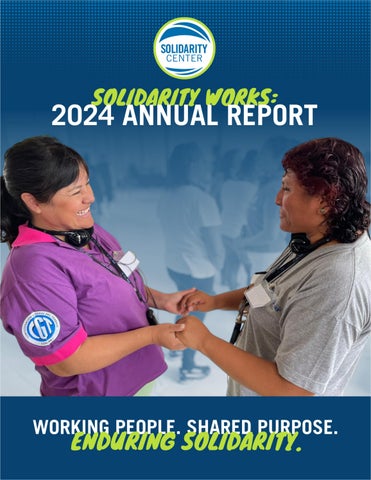
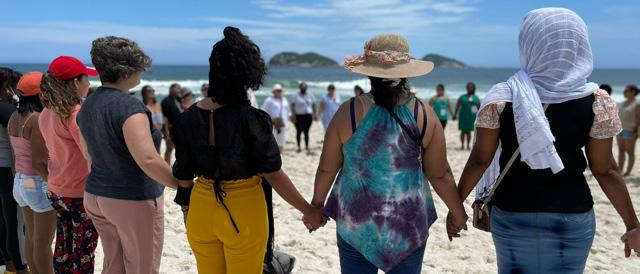
On the cover: Participants in the LUNA program. Credit: Alexis De Simone
Written and edited by Connie Mabin and Tula Connell
Designed by Natalie Tate
2024: BUILDING POWER THAT LASTS
In 2024, the Solidarity Center reached new heights. With programs in more than 60 countries, 34 field offices, and a growing global team, we partnered with unions around the world to expand worker rights, strengthen unions, and deepen partnerships that advanced democracy and fairness for millions of people. With Solidarity Center-supported activities, millions were assured of decent working conditions that evened the playing field for all workers.
Just months later, that progress came under attack. In early 2025, sweeping U.S. government cuts to global labor programs dismantled decades of work. Support from the Department of Labor, State Department, and USAID was terminated, forcing the closure of offices, layoffs of dedicated staff, and suspension of long-standing programs around the world.
This report reflects a moment in time, a snapshot of what we achieved at our biggest. It shows the power of solidarity and what workers can achieve when their rights are respected. Our staff and partners showed courage and commitment that continue to define who we are.
Today, we are smaller but no less determined. We are not rebuilding the past; we are reimagining the future—leaner, more resilient, and grounded in the same purpose: advancing worker power as a foundation for democracy.
Thank you for standing with us,
Shawna
GLOBAL REACH, LOCAL ROOTS
The Solidarity Center is the largest U.S.-based international worker rights organization. We partner with workers and their organizations to promote fair treatment, strengthen democratic participation, and advance economic justice worldwide.
We envision a world where all working people can join together through democratic unions to improve their workplaces, support their families, and build communities that thrive.
FOUNDED: 1997 | HEADQUARTERS: Washington, D.C.
2024 REACH:
67
Programs in countries
34
5
Regions: Africa, Asia, Euro-Asia, Latin America & Caribbean, Middle East & North Africa staffed field offices
1,000 + worker and community partner organizations, reaching 70 million people
A RECORD YEAR: $81.4 MILLION IN SUPPORT & REVENUE
KEY FIGURES (FY2024):
• Federal awards: $78,303,944
• In-kind for federal awards: $278,668
• Other contributions (foundations, unions, individuals): $1,818,537
• Other revenue: $985,682
TOTAL SUPPORT AND REVENUE: $81,386,831
SPENDING BY FUNDER (FY2024):
* Other funding includes private foundations, donations, and privately covered expenditures.
** Global includes Communications, Rule of Law, Domestic Workers, Trade Union Strengthening, PQLC, USAID GLP technical programs, AFL-CIO funded programs. TOTAL FY2024 SPENDING: $80.2M
BUILT ON TRUST DRIVEN BY PARTNERSHIP
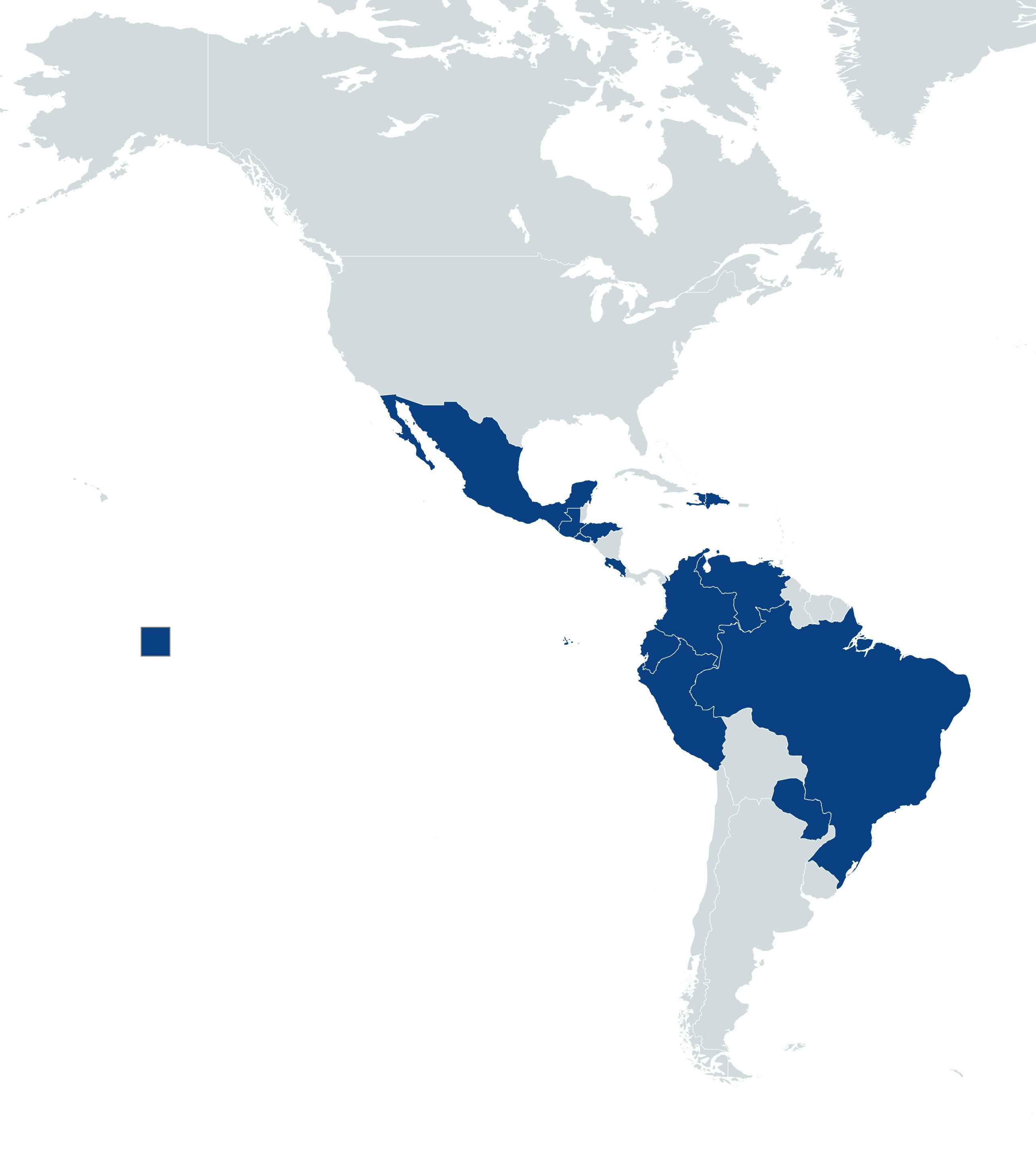
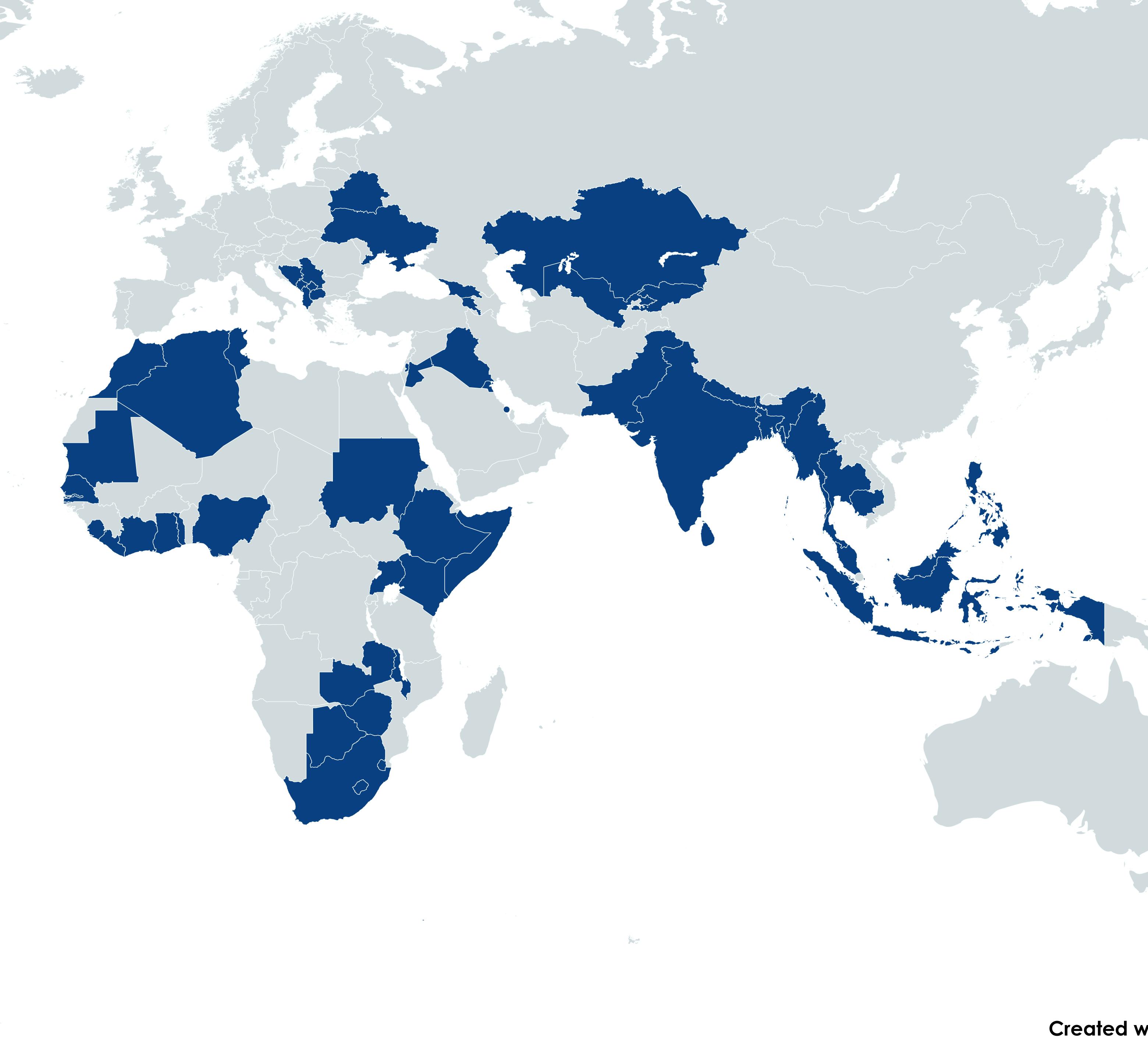
We work side-byside with more than 1,000 partners in 67 countries. Most are trade unions and grassroots organizations focused on practical improvements in people’s working lives. Together we train organizers, strengthen unions, support strategic litigation, and connect leaders across borders.
Brazil
Colombia
Costa
Dominican
Ecuador
El
Botswana
Eswatini
Ethiopia
Gambia
Ghana
Ivory
Kenya
Lesotho
Liberia
Malawi
Mauritania
Nigeria
Senegal
Somalia South
Uganda
Zambia
Zimbabwe
LATIN AMERICA & CARIBBEAN
AFRICA
MIDDLE EAST & NORTH AFRICA
EUROPE & CENTRAL ASIA
* Map reflects 2024 activity and office locations. Confirmed by regional program directors.
REAL CHANGEEVERYWHERE WE WORK
In 2024, workers and their organizations made measurable gains in every region— strengthening rights, safety, and democracy at work. Here are a handful of the successes we achieved in each region.
AFRICA
In Kenya , medical interns won national health coverage after a months-long strike supported by union lawyers trained through Solidarity Center programs.
In Nigeria , unions united with government ministries and civil society to launch a national campaign on heat stress and climate adaptation, which served as a model across West Africa.
And through a new alliance of union federations, governments in Ghana and Senegal committed fresh public funding for social protection programs benefiting informal workers, a breakthrough for the continent’s majority workforce.
ASIA
“We are a rich continent with poor people. Worker rights and collective bargaining must be at the center. ”
— Zingiswa Losi, President, Congress of South African Trade Unions (COSATU)
Across Asia, workers advanced collective power in both traditional and emerging sectors.
In Bangladesh , tannery and garment workers negotiated access to protective equipment after toxic exposure incidents.
In Indonesia , women trade unionists secured anti-harassment clauses in factory contracts, while miners in the nickel industry organized for enforceable safety standards central to the global clean-energy supply chain.
And in the Maldives , Parliament passed sweeping labor reforms—establishing workers’ right to organize, bargain, and form joint safety councils for the first time.
In Uzbekistan and Georgia , unions and employers rebuilt labor inspection systems to prevent forced labor and improve workplace safety after decades of decline.
Journalists in Albania and Serbia organized new unions to protect editorial independence and resist political and commercial pressure.
And in Ukraine , domestic workers—long excluded from legal protections— formed a national union and helped secure the country’s first legal recognition of household staff as workers under labor law.
“Our greatest success was a collective bargaining campaign in San Luis Potosí. The resulting agreement was transformative for working people and their families .”
— Verónica Vázquez López, Graduate, Solidarity Center Union School, Mexico
EUROPE & CENTRAL ASIA
Solidarity Center’s Union School in Mexico trained new organizers who helped workers win contracts that raised pay and improved conditions in major industrial corridors.
In Colombia , miners signed a first collective agreement guaranteeing wage increases, sick leave, and safety standards, while banana workers in Guatemala launched a new independent union amid threats and intimidation.
LATIN AMERICA & THE CARIBBEAN
In Tunisia , agricultural workers won new legal protections under a national decree.
In Iraq , unions signed first-of-their-kind agreements with government ministries on occupational health and safety, marking a turning point for postconflict labor relations.
In Morocco , textile workers joined independent unions and negotiated pay and safety improvements.
Youth organizing in hospitality also led to collectively bargained job security and wage gains during hotel renovations.
EAST & NORTH AFRICA
ORGANIZING FOR SAFE & HEALTHY WORKPLACES
Millions of workers face unsafe and unfair conditions every day—handling toxic chemicals without protective gear, enduring extreme heat, forced overtime, or harassment and violence on the job. When workers can speak up and bargain collectively, they make jobs safer and more dignified for everyone.
In 2024, Solidarity Center partners tackled these challenges head-on by negotiating access to safety equipment and addressing the challenges of heat stress through workplace heat stress agreements and campaigns with civil society allies. At the same time, partners around the world advanced the implementation of International Labour Organization (ILO) Convention 190 on eliminating violence and harassment at work. In Indonesia , women trade union leaders negotiated anti-harassment clauses in collective agreements. In Lesotho and Bangladesh , worker advocates helped design new prevention and response mechanisms rooted in C190 principles.
Through this organizing and advocacy, workers are showing that job safety and dignity go hand in hand—and that international standards are most powerful when they are won and enforced from the ground up.
Across every region, Solidarity Center partners advanced worker-led solutions to protect safety, health, and dignity in 2024. For example:
Africa
Unions in Nigeria launched a national heat-stress campaign uniting labor, government, and civil society to protect outdoor workers and address climate impacts.
Asia
Garment and tannery workers in Bangladesh and Cambodia organized for protective gear and limits on forced overtime, while unions in Cambodia also negotiated greater recognition of worker voice in safety committees and won five factory-level agreements requiring heat-stress prevention measures—such as turning on cooling systems when temperatures exceed 35°C and installing thermometers to monitor conditions.
Meanwhile, workers in the mines and smelters of Indonesia’s critical minerals sector— central to the global EV supply chain—continued to organize to end highly dangerous working conditions and negotiated enforceable health and safety standards, fair pay, and social protection in partnership with unions across the region.
Europe & Central Asia
Workers in Uzbekistan and Georgia helped rebuild labor inspection systems to prevent forced labor and improve workplace safety.
In June 2024, after Solidarity Center partners conducted a nationwide campaign with Solidarity Center support, the Kyrgyzstan government ratified ILO Convention 190, which aims to end violence and harassment in the world of work.
Latin America & Caribbean
Building on Mexico’s labor reforms, unionized factory workers negotiated new agreements that guarantee health and safety committees and paid sick leave.
In Colombia , gold-silver miners secured a first collective bargaining agreement with wage increases and extended sick leave coverage, while banana workers in Guatemala organized a new union to combat anti-union firings and improve workplace safety.
Middle East & North Africa
In Morocco and Tunisia , unions won legal and collectively bargained protections for fair pay and safe conditions in textile and agricultural sectors, with training programs reaching thousands of young workers.
Cross-Regional
The renewal of Lesotho’s pioneering agreement against violence and harassment of women at work inspired unions globally to integrate anti-harassment clauses into bargaining.
Across Asia, Africa, and Latin America, platform worker associations demanded that employers be held accountable for accidents, heat exposure and unsafe delivery systems in the growing digital economy.
WORKER POWER IN ACTION
Organizing and trade union strengthening is how communities shape democracy and fair rules at work. In 2024, our partners led campaigns that delivered measurable improvements. Here are just a few.
Liberia
The Firestone Agricultural Workers Union (FAWUL) organized 3,500 subcontracted workers who voted to join the union, opening the door to bargaining over wages, benefits, and safety.
Mexico
“We’ve become better negotiators, organizers, and leaders. We are forever grateful to Solidarity Center for helping us ensure Firestone treats all workers with dignity.”
— Rodennick Bongorlee, Chair, Firestone Agricultural Workers Union of Liberia
Graduates of the Solidarity Center Union School supported campaigns that delivered wage gains and safer conditions in major industrial workplaces.
Global Organizing Institute
A new program that pairs hands-on campaign placements with long-term mentoring to grow the next generation of organizers.
Contract worker organizing campaign for FAWUL Firestone’s Harbel Plant in Liberia. Credit: Scott Weaver
LEADERS WHO ANCHOR LASTING CHANGE
Strong movements are built by leaders rooted in their communities. In 2024, we invested in leadership at multiple levels, such as:
Cross-regional exchange
26 labor leaders from 14 countries in Africa and Latin America met to share practical strategies. New roundtables were then launched in East and Southern Africa through the Black Women’s Roundtable (BWR).
Leadership for Unity, reNewal, and Amplification (LUNA Latin America)
39 domestic worker leaders from 19 unions in 16 countries completed a six-month leadership journey. LUNA participants exceeded the membership growth goals they set as part of the project, organizing 1,500 new domestic workers members and developing the leadership capacity of 200 additional worker-leaders to fight for increased protections in the care economy.
Global Labor Leadership Initiative (GLLI) with Cornell University Senior leaders strengthened strategy, communications, and coalition skills to shape policy and grow worker voice at home.
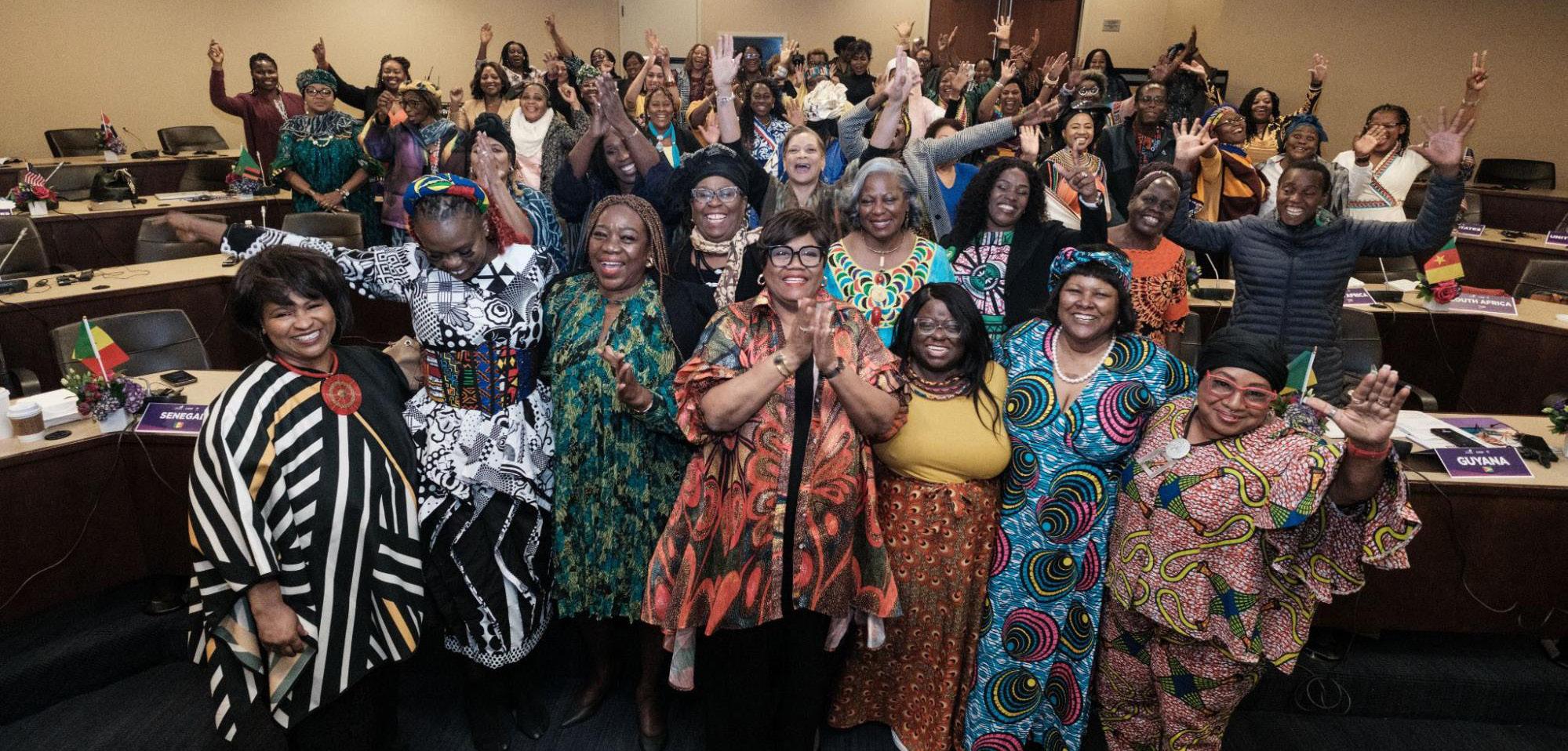
Black Women’s Roundtable 2024. Credit: Bill Lee
BUILDING FAIR WORK IN A CHANGING ECONOMY
Workers are on the front lines of a changing world—from rising temperatures to new digital business models. In 2024, the Solidarity Center supported workers to shape solutions that protect both jobs and the planet.
On platform and app-based work: The Solidarity Center expanded organizing among app-based workers who often lack legal protection. In Mexico , new federal legislation recognized 2.5 million platform workers as employees with access to social benefits.
Delivery riders in Thailand and the Philippines organized and won wage theft cases and better pay systems. In Georgia and West Africa , worker-rights lawyers and unions joined forces to defend platform workers in court and advocate for fair digital era policies.
On
climate and just transition:
“One of the most inspiring moments of my life was gathering with others who have taken action to unionize app-based drivers and platform workers.
The Solidarity Center leadership training equipped us with the skills to communicate and lead, while building a strong bond among us as union women.”
— Aisha Ahmad, platform worker organizer in West Africa
The Solidarity Center’s Climate and Labor Department launched a just energy transition program supported by the German Government through its International Climate Initiative’s Innovation Regions for a Just Energy Transition (IKI JET) consortium. As the labor implementing partner, the organization’s efforts included support for impacted workers and their unions in Colombia to engage in policy discussions to ensure access to good jobs in the context of planned mine closures, and building the groundwork for an international community of practice for trade unionists on just transition.
In Cambodia , the Solidarity Center partnered with Royal Holloway, University of London, to release groundbreaking research showing that unionized garment workers experience half as much heat stress as nonunion workers—and that workers whose unions bargain over heat mitigation, experience 74 percent fewer minutes at high core body temperatures. Presented during United Nations Climate Week through a
public report and webinar, the findings underscore that collective bargaining—led by informed worker organizations—is one of the most effective ways to advance climate adaptation and protect workers’ health.
“The heat keeps getting worse, but when we organize and collectively bargain, we can protect ourselves and our future. Workers must be part of finding solutions, and the Solidarity Center’s help with this is irreplaceable.”
— Ayuba Wabba, Nigeria Labour Congress (NLC)
Working people in Nigeria and Indonesia also launched campaigns to reduce heat stress and improve job safety while partners in the Maldives and Bangladesh linked environmental adaptation with fair wages and collective bargaining.
This work builds on the department’s foundational work in the global movement toward a just transition—one that balances economic opportunity, environmental responsibility, and worker rights. Whether in a factory or through an app, workers are facing the same challenge: how to secure fairness and voice in an economy that’s changing faster than the rules.
Together, these campaigns show how worker leadership can keep democracy and fairness alive in every corner of the modern economy.
The Solidarity Center Global Labor and Supply Chains Initiative examines the global reach of major Asian transnational companies and other emerging economic actors—including China, the largest investor in the global economy—and their impact on working people and democratic space worldwide. Through research, collaboration, and advocacy, the program supports unions and civil society organizations that document labor rights violations, strengthen independent worker representation, and promote transparency and accountability in global supply chains.
In 2024, the initiative and its partners advanced analysis of how new and emerging transnational investment and production models affect workers’ rights. It built cross-regional networks to ensure that labor standards and democratic participation remain central to the future of global trade and development.
ILAW: ADVANCING WORKER JUSTICE
The International Lawyers Assisting Workers (ILAW) Network, founded and coordinated by the Solidarity Center, is now the world’s largest network of labor lawyers and advocates—more than 1,400 members across 100 countries working to strengthen the rule of law for working people.
ILAW connects worker rights lawyers who often operate in isolation, giving them access to shared legal strategies, comparative research, and rapid support when workers’ rights are under attack. Through this collaboration, local victories become global precedents—helping to shape fairer labor laws, stronger protections, and more democratic workplaces around the world.
In October 2024, over 200 members from more than 50 countries around the world assembled in Casablanca, Morocco for the third ILAW Global conference, where they strategized on issues including the informal economy, corporate accountability, technology and labor, and the role of lawyers in union growth.
In 2024, ILAW members advanced some of the most pressing issues facing workers today:
• Informal and precarious work: Partnered with regional human rights bodies to draft model guidelines extending legal protections to millions of informal workers.
• Technology and AI: Ensured that global conversations about automation and algorithmic management include worker voice and legal safeguards.
• Freedom of association: Supported a landmark case before the International Court of Justice affirming the right to strike as a fundamental human right.
• Platform work: Developed cross-border legal strategies with app-based and gig workers ahead of key (ILO) debates on digital labor standards.
Through the Solidarity Center’s leadership, ILAW has transformed how lawyers collaborate across borders, creating a shared infrastructure for worker justice that will shape labor law for decades to come.
“ILAW is doing incredible work for workers and their lawyers.
Every day we face David versus Goliath in our struggle as worker rights lawyers, and with ILAW we will have a better future.”
— Maximiliano Garcez, ILAW Network Member, Brazil
BUILT TO LAST POWERED BY SOLIDARITY
The kind of change we pursue is never simple or fast. It demands trust, endurance, and belief in the power of ordinary people to do extraordinary things.
The Solidarity Center’s work has always been about democracy in its most practical form—workers making choices together, solving problems collectively, and holding institutions accountable. Around the world, our partners prove every day that democracy doesn’t begin in parliaments or courts. It begins where people work, organize, and raise their voices for fairness.
That kind of hard, world-changing work isn’t easy—but 2024 reminded us what’s possible when we do it together.
This report reflects what we built together by the end of 2024: strong organizations, practical gains, and leaders who carry the work forward. The crisis that followed has been painful, but it has also clarified our purpose.
We will stay grounded in worker voice. We will focus on what delivers real results. We will keep building alliances that turn practical solutions into lasting change.
The spirit that defined our greatest year still defines us now—and will guide everything we rebuild.
Participants in the LUNA program. Credit: Alexis De Simone
HONORING WORKER RIGHTS CHAMPIONS
We stand with those who gave everything for the basic promise of fair work and a voice on the job. In 2024, trade unionists and worker leaders lost their lives in countries around the world. Their legacies guide our work.
WE REMEMBER OUR PARTNERS
Adelinda Díaz Uriarte, leader of National Federation of Paid Domestic Workers of Peru (FENTRAHOGARP)
Anastacio Tzib Caal, General Secretary of the SITRATEXPIA II union at SAE-A Trading Texpia II apparel factory, Guatemala
Juan Ló Pesca, human rights activist, member of the Honduran Network Against Anti-Union Violence (RedContraVA)
COMMEMORATING BILL LUCY
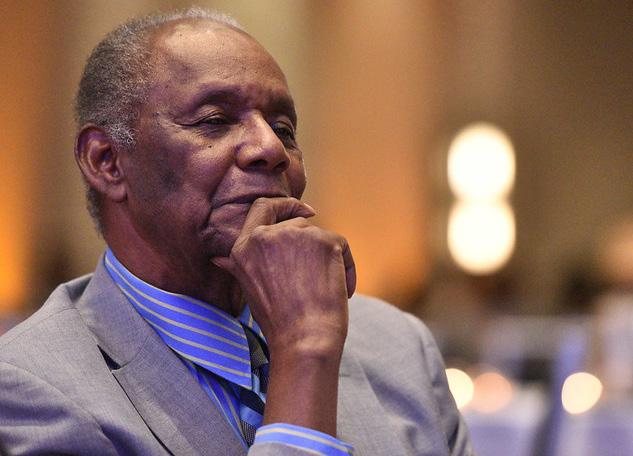
We honor AFSCME SecretaryTreasurer Bill Lucy—a giant of the labor and civil rights movements and a long-time Solidarity Center board leader— whose commitment to global solidarity continues to inspire.
STANDING WITH THE COURAGEOUS
Detained and exiled unionists in Belarus Those fighting for democracy in Myanmar Workers organizing for safety in Palestine, Sudan, and Ukraine Partners forced from Eswatini for their safety And to all who keep fighting for what’s right in the face of unimaginable challenges— we stand with you.
BOARD OF TRUSTEES & SENIOR LEADERSHIP
BOARD OF TRUSTEES
Chair: Elizabeth Shuler, President, AFL-CIO
Secretary-Treasurer:
Fred Redmond, Secretary-Treasurer, AFL-CIO
SENIOR LEADERSHIP
Executive Director: Shawna Bader-Blau
Executive Team:
Al Davidoff
Erika Fagan
Connie Mabin
Sarah McKenzie
Quoc Nguyen
Rudy Porter
Senior Adviser: Kidane Kinney
Program Directors:
Anne Amorosa
Fred Azcarate
Hind Cherrouk
Kate Conradt
Alexis De Simone
Alberto Fernández
Christopher Johnson
Arina C. Lester
Fay Lyle
Monika Mehta
Neha Misra
Sonia Mistry
Joell Molina
Nghia Nguyen
Robert Pajkovski
Sanjiv Pandita
Vanessa Parra
OUR STAFF
Members:
Gabrielle Carteris
Evelyn DeJesus
David McCall
Terrence L. Melvin
Doug Moore
Marggie Peters Muhika
Rudy Porter
Sean Rudolph Melysa Sperber
Andrew Tillet-Saks
Jeff Vogt
Stephen Wishart
Administration and Finance:
Allison Aguilar
Farhad Ahmad
Joseph Heckman
Michael Lawrence
Yosef Negasi
Roberts Omolo
Catherine Pajic
Alaa Shelbaia
In 2024, more than 400 staff worked in Washington, D.C. and 34 field offices, across five continents, and many languages. Many are local movement leaders who share the lived experience of the communities they serve.