On Top of the Wold
FLASH
deaeration
FILTRATION
CIP
NITROGENATION
Carbonation
beer
wort
DOSING yeast


FLASH
deaeration
FILTRATION
CIP
NITROGENATION
Carbonation
beer
wort
DOSING yeast
As I write this, preparations are currently in full swing at SIBA HQ for the biggest annual celebration of independent beer in the UK – BeerX!
This year’s show is set to be our biggest, boldest and best attended ever, with more exhibitors, seminars, tastings, awards and fringe events across the two days than there have ever been (see our BeerX Guide on pages 49-55 for more details on what’s happening).
BeerX is not just a trade show, but a mustattend event for anyone working in the independent beer sector who is looking for ideas, inspiration, guidance and advice on any area of their business, and I am looking forward to meeting many of you there and hearing your thoughts on some of the challenges and opportunities coming down the line in 2026.
In this magazine we also feature an interview with Sacha Lord, Chair of the Night Time Industries Association, who will be the keynote speaker at BeerX this year, sharing insight into the work he has been doing to win more vital support for the hospitality sector from Government (see pages 32-37).
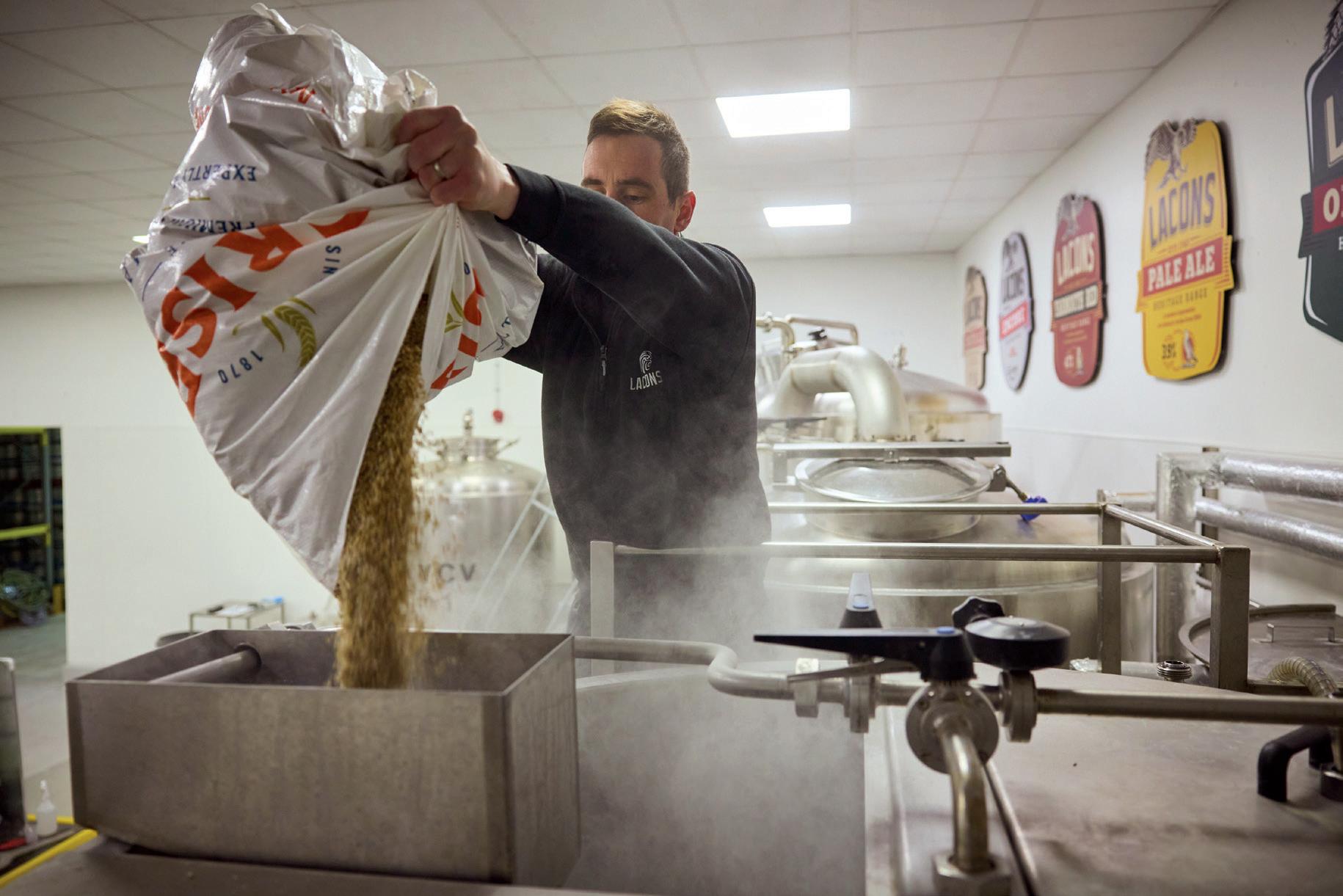
We also caught up with two SIBA members for our two Business Profile features this issue. Wold Top (featured on our cover), run by one of SIBA’s Regional Directors Alex Balchin, who grows his own barley on the family farm, for malting to use in his beers (see pages 56-63).
And trailblazing business Vocation Brewery run by our regular Independent Thinking columnist Gail Lumsden (see pages 40-47).
Elsewhere, our guest writer this issue is South
Society of Independent Brewers and Associates PO Box 136, Ripon, North Yorkshire HG4 5WW Tel: 01765 640 441
www.siba.co.uk
Email: office@siba.co.uk All
Africa-based beer writer Lucy Corne, who explores the pioneering use of sustainable grains in the burgeoning African independent beer market, where the tough climate has led brewers and farmers to develop droughtresistant crops that will no doubt become a global necessity in the future (see pages 28-31).
We also bring you news of plans for this year’s Indie Beer Week (see pages 14-15) with some ideas and inspiration on how to get involved and make the most of this annual festival of independent beer.
Happy reading!
And please do keep sending me your press releases, updates, news and views to caroline. nodder@siba.co.uk so that we can share your experiences, thoughts and successes in future magazines – the deadline for submissions for our Summer magazine will be April 30th
Caroline Nodder Editor
SIBA Independent Brewer Magazine
Editor: Caroline Nodder (caroline.nodder@siba.co.uk)
Published by: Media Alive Limited
Produced on behalf of SIBA by: Media Alive Limited, 2nd Floor, The Red House, 119 Fore Street, Hertford, Hertfordshire SG14 1AX. T: 01992 505 810
Creative Director: Darren Kefford (darren@wearema.co.uk)
Studio Manager: Jon Hardy (jon@wearema.co.uk)
Advertising Manager: Claire Rooney (claire@wearema.co.uk)
Managing Director: Dan Rooney (dan@wearema.co.uk)
CF48 3TD


Cover
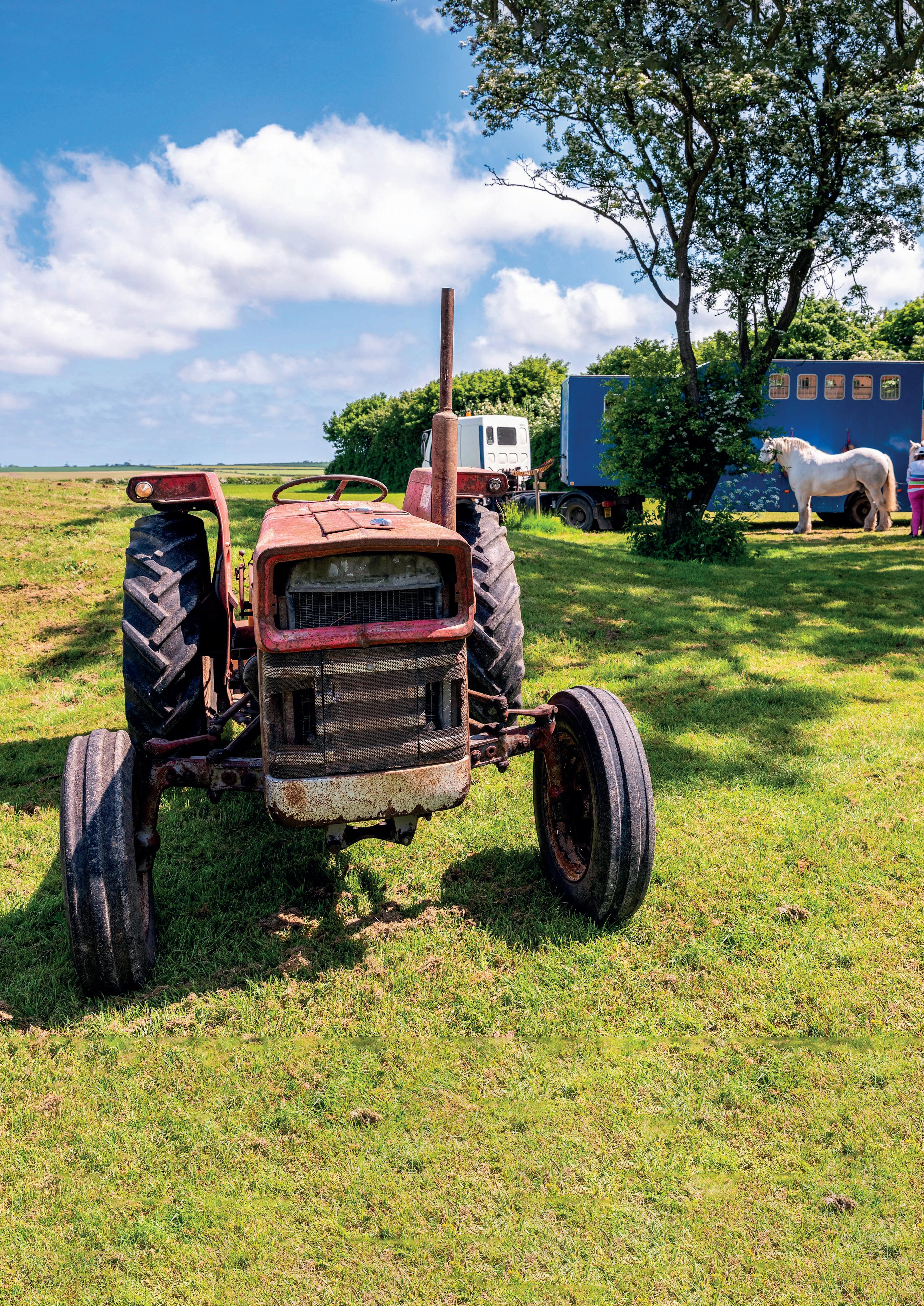
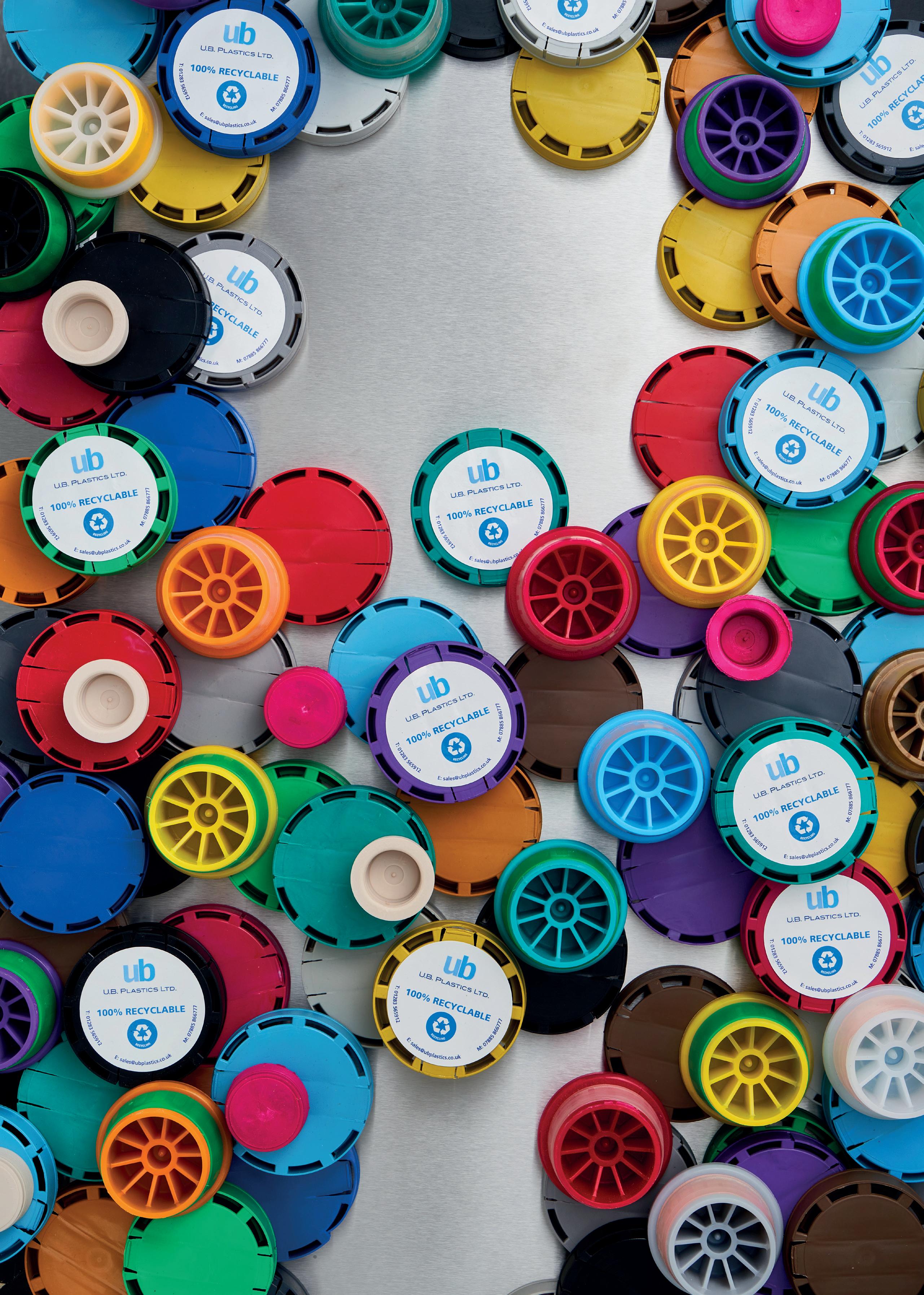
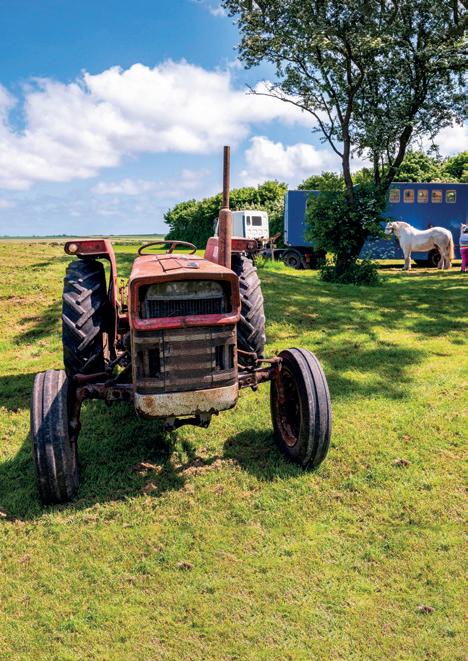
Our cover shot for this issue was taken on the family farm which is home to Wold Top Brewery, featured in our Business Profile on pages 5663. The brewery uses barley grown on the farm in its beers, as well as water from the farm’s own borehole, making it a true champion of the grain to glass ethos.
9-13 SIBA News All the news from SIBA HQ
14-15 SIBA Indie Beer Week Plans for this year’s celebration of independent beer
16-17 Membership Update A round-up of the latest SIBA Membership benefits
49-55 Beer X Preview What’s happening at indie beer’s biggest event of the year in 2026
74-81 SIBA Indie Beer Awards Results from the regional online bottle and can competition
82-93 Brewery News The latest from our Brewing Members around the UK
95-101 Supplier News Updates from SIBA’s Supplier Associate Members
7 CEO’S Update Andy Slee, SIBA’s Chief Executive, examines the need for a united voice in challenging times
8 Chairman’s Comment National Chair Richard Naisby looks back on three years in his role
18-19 The View From Westminster Our regular political update
22-23 Independent Thinking Gail Lumsden, Chair and CEO of Vocation Group, on navigating the challenges brewers face post-Budget
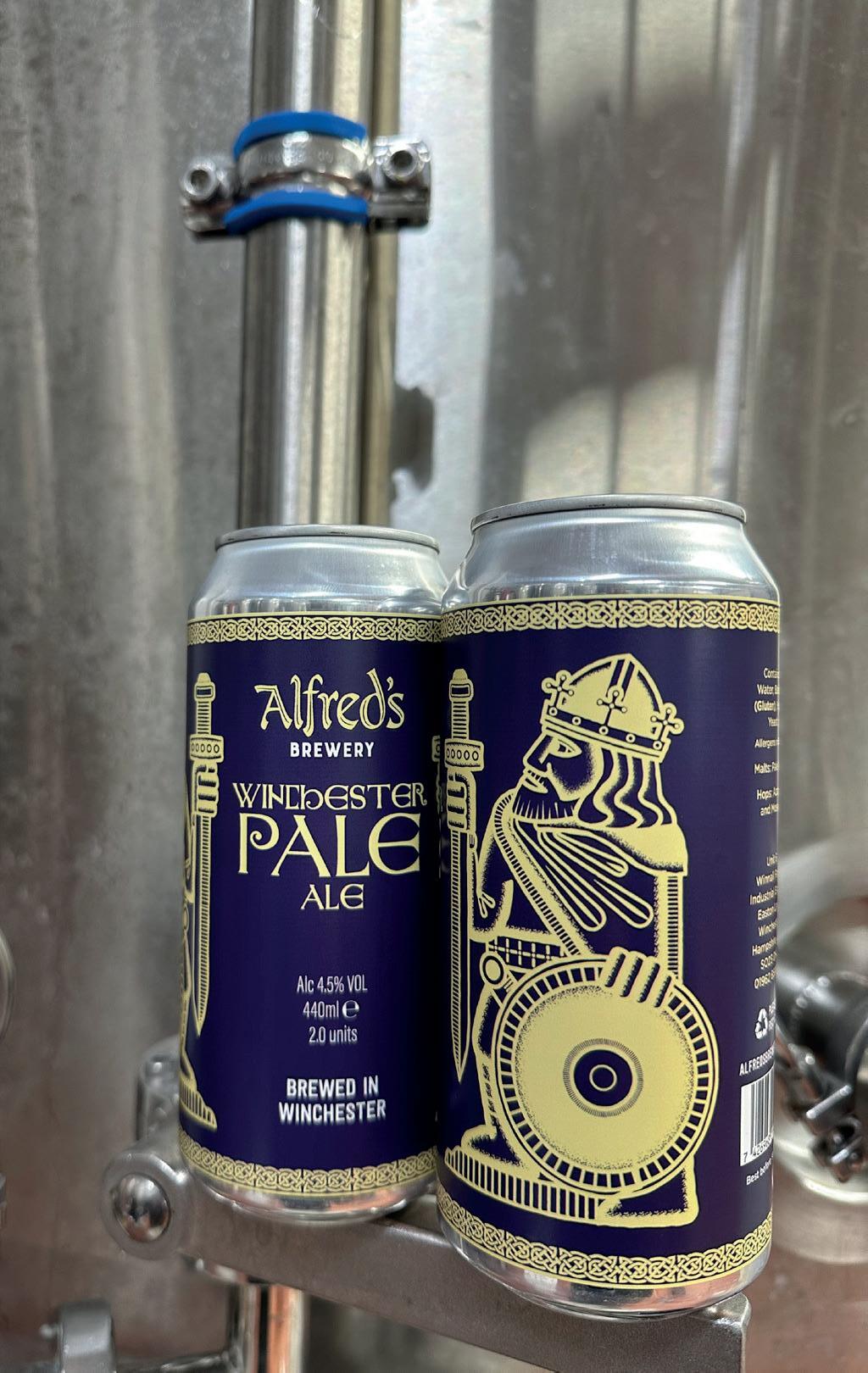
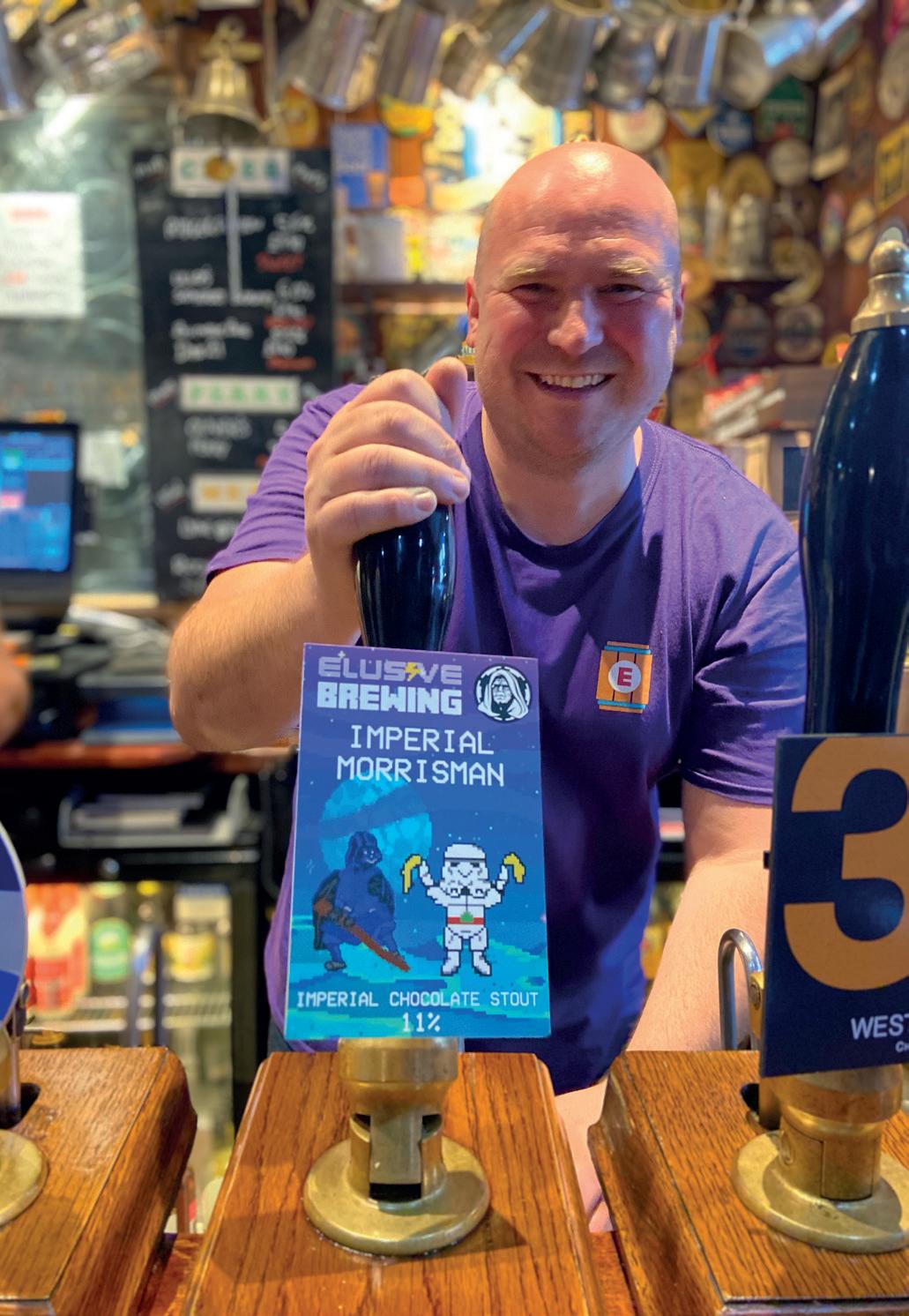
26-27 Homebrew In Focus Andy Parker from Elusive Brewing explores the history behind Winchester Pale Ale
28-31 Guest Writer Beer writer Lucy Corne explores the independent beer market in Africa
69 Tech Focus Brewlab’s Dr Keith Thomas on why mould presents a challenge for brewers
103 Supplier Viewpoint Andrew Butler from Atlas Copco looks at CO2 recovery systems
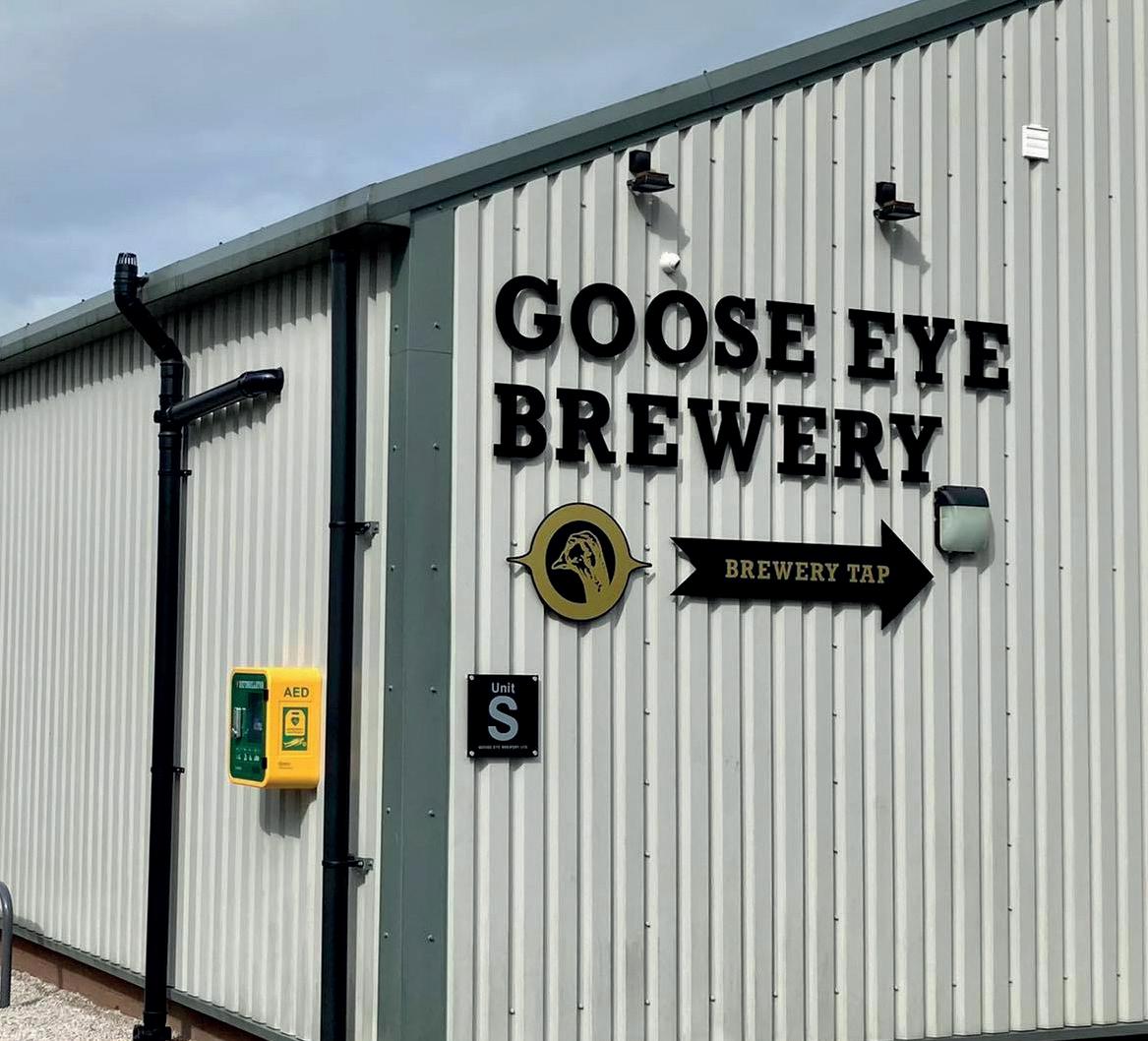
25 Taproom Focus Featuring Goose Eye Brewery taproom near Leeds
32-37 The Big Interview We meet Sacha Lord, Chair of the Night Time Industries Association and a keynote speaker at BeerX
40-47 Business Profile Featuring Vocation Brewery in Hebden Bridge
56-63 Business Profile We catch up with SIBA Regional Director Alex Balchin to find out more about his brewery, Wold Top
65-67 Business Advice Legal and brand & marketing insight
70-73 Gold Members Croxsons and Festival Glass
104 Gold & Silver Members Listing of our key sponsors
107 Contacts Key SIBA contacts

+44 (0) 1733 834264 www.gravity-systems.co.uk
+44 (0) 1733 667052
Presenting a united front on the issues that really matter to members is key to success in 2026, says SIBA’s Chief Executive Andy Slee, as he looks forward to welcoming brewers from across the UK and beyond to BeerX in Liverpool this month…
As I travel the nation, brewers tell me that “demand for what we brew is really strong, especially locally, but making sustainable profits is becoming harder and harder”.
Rachel Reeves’ Autumn budget was a big blow to our sector. Despite a manifesto commitment and subsequent verbal assurances to equalise the tax burden between traditional and online tech businesses, the business rates ‘reform’ saw pub rates increase at six times that of the likes of Amazon.
It is policy and politics so poor it can only have been a mistake.
On a bad day, our sector is a labyrinth of groups representing a wide range of often conflicting vested interests. In nearly 40 years I have never seen all of those groups more unified in anger and a sense of deep injustice. SIBA will stand alongside others to make sure the fight continues.
On business rates it is important as a sector we stick together. On other matters, our unity as independent brewers is what matters.
In 2026, we look forward to the publication of the Government’s review into ways independent brewers can gain better access to market, we at SIBA announce developments on Indie Beer (including the crowning of the first “Indie Beer” Champion and Indie Beer Week) and establishing our partnership with the Licensed Trade Charity.
These things, and much more, come together in two days of celebration of our sector at BeerX in Liverpool on March 18/19. And whilst there are challenges ahead, we have much to be proud about and I am delighted that the Independent Brewers of Europe, SIBA's equivalents from across the continent, will be joining us in Liverpool as well.
On behalf of the SIBA team, I look forward to welcoming you and your teams to BeerX with optimism for what lies ahead.
As long as we stick together on the things that matter to us most we have every reason to be optimistic.
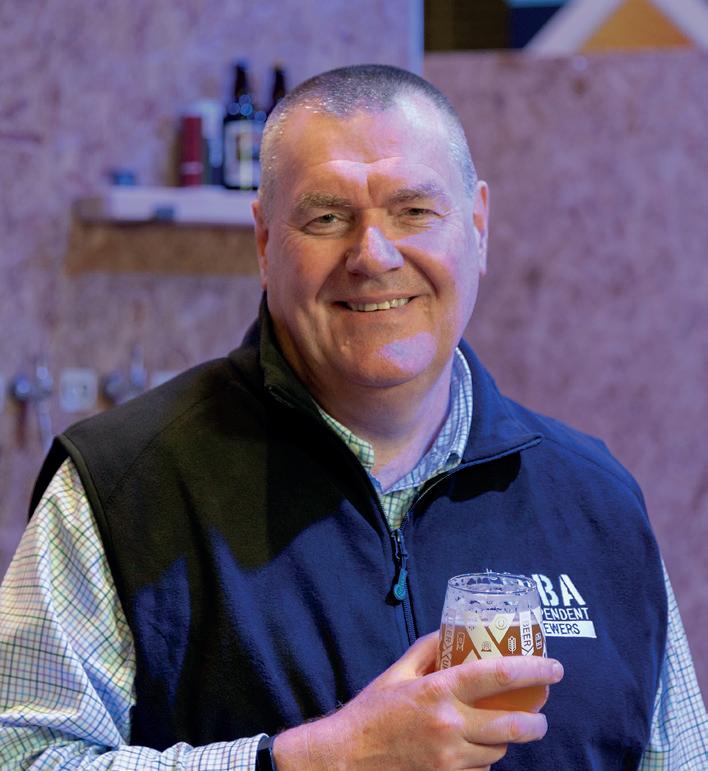
Andy Slee Chief Executive SIBA
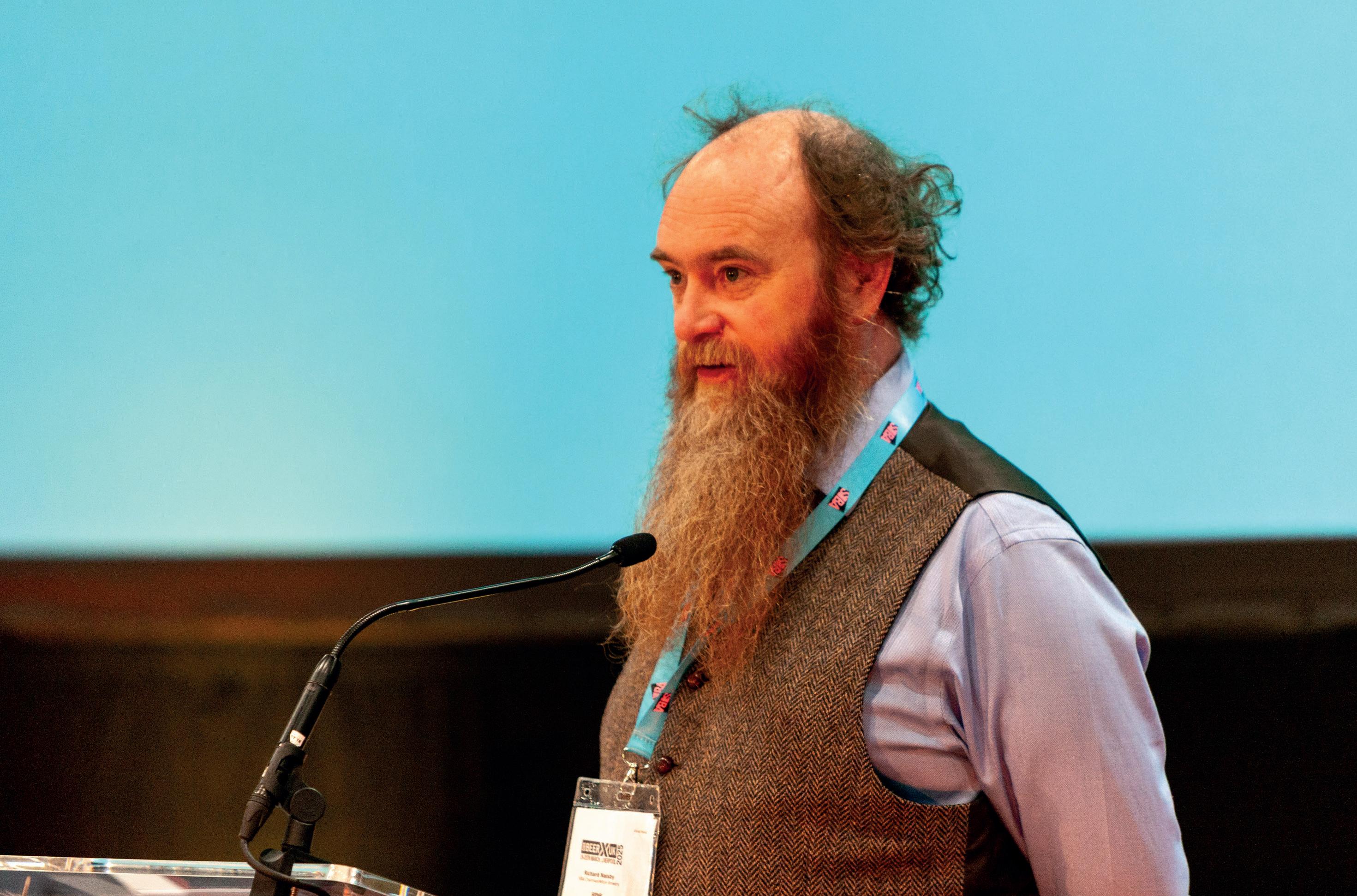
SIBA’s National Chair Richard Naisby reflects on his time in the role and some of the challenges and opportunities members have faced over the last three years…
The Society of Independent Brewers and Associates elects a Chair for three years. My term is coming to an end and by the time you read this a new Chair will be in place.
Much has happened since November 2022 and this seems like a good time to reflect on what changes we have seen and the many challenges that remain for independent breweries of all sizes.
When I became Chair, the industry was still staggering from the repeated blows inflicted by the Covid pandemic. Some of that damage remains and there are some well known breweries which are no longer with us. Thankfully, the threats of lockdowns and absurd restrictions seem to behind us. The struggle for profitability continues.
Unfair competition from the global breweries is a perpetual issue. The announcement of a minister led review into the beer market was greeted with great enthusiasm by us. That was back in October 2024. SIBA expended much time and energy demonstrating to civil service officials the seriousness of the challenges facing the independent beer sector. The report was produced over last summer. A ministerial
reshuffle has resulted in it sitting on a Whitehall desk for six months…
The duty paid by cider producers is still a fraction of brewers. Heineken (with a global turnover over €35 billion) pays less duty on a pint of Strongbow than the smallest UK beer brewer. SIBA continues to push for fairness here and I believe we are starting to see some positive results.
Business rates for breweries remain a mess. Legacy breweries enjoy preferential rates over their newer, industrial estate based rivals. Surely we deserve a better system than 'Does your brewery possess a brick chimney?'
Sadly, the business rates system for brewers looks comparatively sane versus the system employed for pubs. As I write, we are promised another governmental U-turn and material support for the thousands of pubs at the heart of communities. The anger around this issue produced an unprecedented amount of unanimity within the sector. I was proud to send the Chancellor of the Exchequer a SIBA letter signed by every single director – a first. We will keep the pressure up until we get a positive result. After all, Britain's brewers need healthy pubs for us to thrive.
SIBA membership is holding up well despite the factors buffeting the sector. Our latest figures show that the proportion of brewers who are SIBA members has risen by nearly 10 percent in the last year.
One of the big successes of the last three years has been the development of BeerX. It is now firmly established as the annual UK brewing event, larger and more comprehensive than ever. This year we look forward to hosting visitors from our brewing friends in both the USA and Europe. Bart Watson, the US Brewers Association CEO, will address our AGM. The next meeting of the Independent Brewers of Europe will be held at BeerX.
The position of the Chair is made easier when the SIBA board is strong and motivated. I have been extremely lucky to have such an excellent group with whom to work. The current board of directors is the finest I can recall. Andy and the staff team are a wonderfully committed and effective group who achieve magnificent results from tremendous exertions.
I will remain on the SIBA Executive and will serve as a director for the East region. The new Chair will be introduced at BeerX - in Liverpool - in March. I'd like to thank all SIBA brewers for their support over the last three and bit years.
Cheers!

Richard Naisby Chairman SIBA
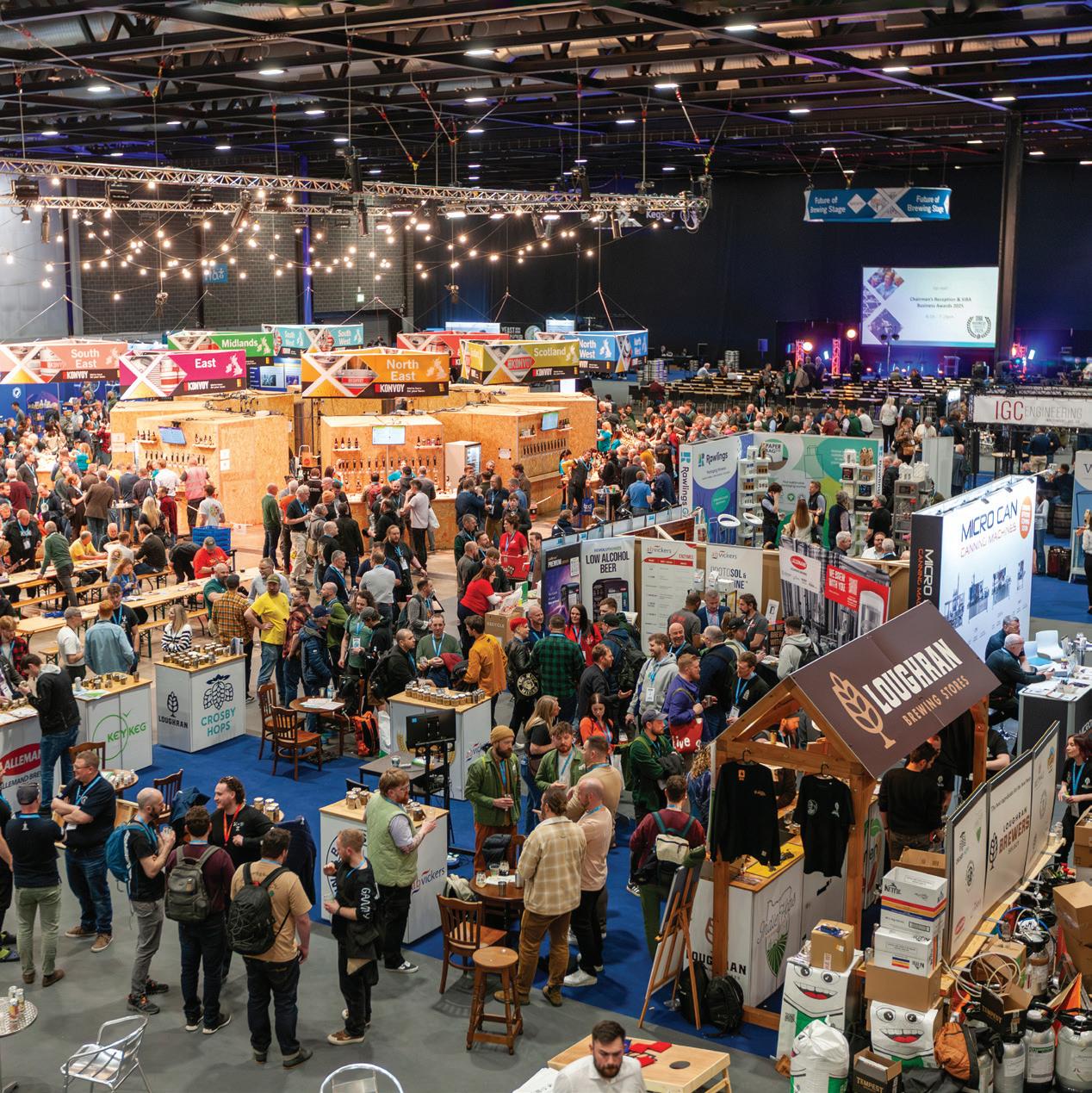
SIBA’s flagship event, BeerX UK, has been shortlisted as a Finalist in the Trade Association Forum (TAF) Awards 2026 after achieving impressive growth in recent years.
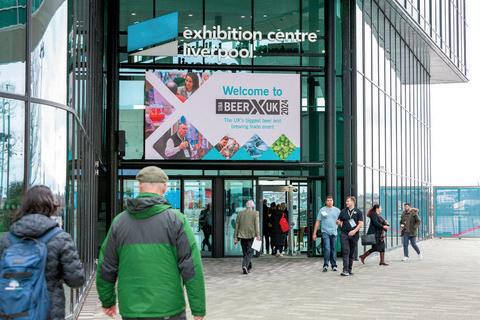
Now by far the UK’s biggest beer and brewing trade event, BeerX has been recognised by the judging panel of the TAF Awards after a record-breaking year in 2025, which clocked their largest attendance ever and a 50% bigger footprint than previous years.
Andy Slee, SIBA Chief Executive, said: “I am hugely proud of what our small team achieves with BeerX, an event that brings together the very best of the independent brewing industry all under one roof – from brewers and brewery employees, to suppliers, manufacturers and industry buyers. The event has gone from strength to strength in recent years, growing in both size and attendance, whilst managing to score incredibly high approval ratings with both Delegates and Exhibitors.
“We are very proud to be presenting the brewing sector at the prestigious Trade Association Forum Awards 2026 and would like to thank the judging panel for naming BeerX as a finalist from the many hundreds of entries received.”
BeerX expanded into three halls of Exhibition Centre Liverpool in 2025, dramatically increasing the event size and creating space for more exhibitors than ever before.
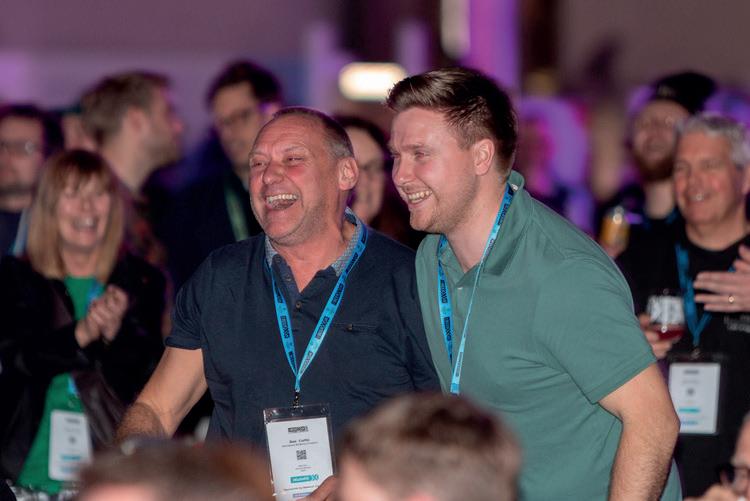
Attendance also increased to match, rising from 2,995 in 2024 to an all-time high of 3,493 in 2025. The event features a packed content schedule of seminars, talks and tastings, the Indie Beer showcase of 9 regional bars, the SIBA AGM and Members’ Conference, and the Indie Beer Awards and SIBA Business Awards 2026, presented by Sunday Times Beer Columnist Pete Brown.
Approval ratings from attendees also remained impressively high in 2025; with 97% of Exhibitors stating that BeerX is the UK’s best brewing trade show, and 99% of Delegates would recommend BeerX to an industry colleague.
As the magazine went to print, SIBA was due to find out if they’ve been successful at the presentation of the TAF Awards at the end of February in London.
For more information on BeerX 2026 visit www.beerx.org.
‘Industry newcomer’ and ‘Beer Champion’ categories to highlight outstanding individuals from the industry
The SIBA Business Awards 2026, due to be presented this month at BeerX in Liverpool, including two new categories for ‘Brewing Industry Individual Newcomer of the Year’ and ‘Independent Beer Champion of the Year’.
The Awards seek to congratulate excellence in the brewing industry across a variety of categories, from pump clip, can and bottle design, to efforts taken by brewers to make their business more sustainable, innovative or diverse, as well as naming the UK’s best pubs, bars and retailers of beer from independent breweries.
The Brewing Industry Individual Newcomer of the Year award recognises an individual who having joined the independent brewing industry in the last twelve months has made a significant and positive impact. This positive impact could be on the business, organisation or association they have joined or on the broader brewing industry over the last year.
The Independent Beer Champion of the Year award seeks to highlight the beer industry individual who has had a hugely positive influence on independent beer over the last twelve months. This could be an individual who has delivered positive change or opportunities for independent brewers, championed a new industry cause, helped to create a more inclusive or diverse industry, or helped to shine a light on the sector in an impactful or innovative way. Nominations can be made by anyone working in the independent beer industry, with the winner then voted for by SIBA Members.
The SIBA Business Awards 2026 are judged by a panel of industry experts and presented by Sunday Times columnist Pete Brown at BeerX UK.
For more about the awards, and a full list of this year’s categories, see our BeerX event overview on pages 49-55.

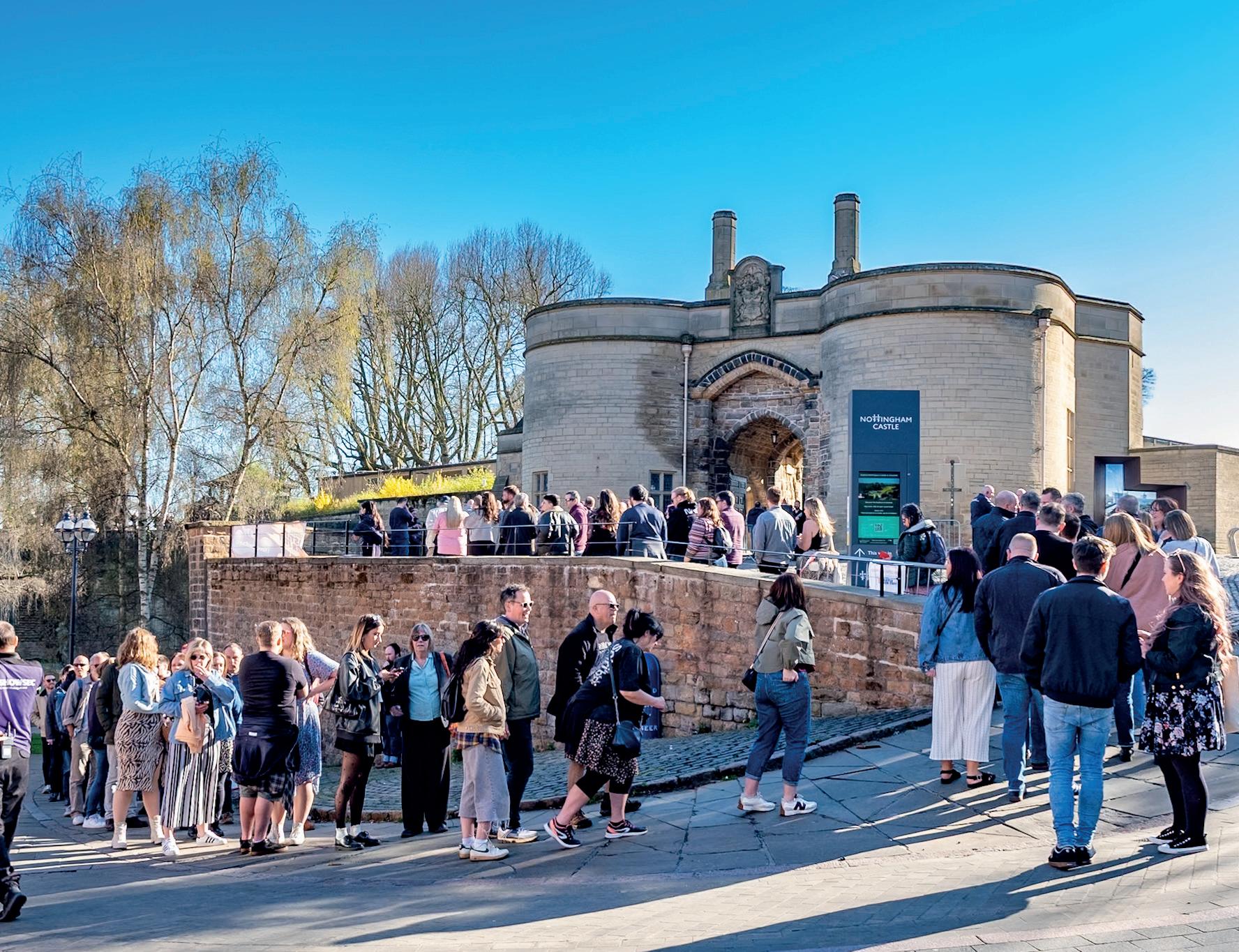
Nottingham Independents’ Castle Beer Fest returns to Nottingham Castle on 24th-25th April 2026 after a successful debut last year, once again demonstrating how independent beer, collaboration and community go hand in hand.
Organised by Nottingham breweries themselves, and supported by SIBA, the festival champions the values at the heart of the UK’s independent brewing sector: independence, quality and local impact. It’s a celebration not just of beer, but of the people and small businesses that give Nottingham its distinctive local flavour and food and drink culture.
Nottingham breweries in attendance include Black Iris Brewery, Blue Monkey Brewery, Castle Rock Brewery, The Grumpy Fish Brew Co, Hollow Stone, Lincoln Green Brewing Company, Liquid Light Brewing Company, Lenton Lane Brewery, Magpie Brewery, Neon Raptor Brewing Co and Shipstone's. Together, they offer a taste of Nottingham’s independent beer scene: breweries of different ages and sizes, offering an eclectic mix of styles from heritage cask favourites to modern, hop-forward keg beers.
The festival will also offer locally sourced cider, spirits, indie street food and local entertainment, prioritising a relaxed and inclusive atmosphere that celebrates place as much as pints.
Following strong demand in its first year, the 2026 event expands to three sessions across two days: an evening session on Friday 24 April, followed by both daytime and evening sessions on Saturday 25 April. With tickets starting from just £11, Castle Beer Fest is designed to be accessible, encouraging more people to discover independent beer and engage directly with the brewers behind it.
Anthony Hughes, founder of Lincoln Green Brewing Company and SIBA Vice Chair, said: “We’re incredibly proud of Nottingham and the brilliant beer being brewed here. Putting Castle Beer Fest together with our fellow local breweries has been a real joy, and the response to the first year showed just how much people value local, independent beer. We can’t wait to do it all again this April – this time with an extra session and a new ‘Friends of Nottingham’ bar, allowing us to feature even more great breweries and offer more choice for festival goers.”
With panoramic views across the city and a strong sense of collaboration at its core, Nottingham Independents’ Castle Beer Fest continues to demonstrate the power of independent breweries working together: supporting their communities, celebrating local identity and showcasing the very best of indie beer.
SIBA has joined industry calls for urgent pub specific relief on Business Rates following the changes announced in the Autumn Budget.
Without immediate support community pubs face significant and growing costs which ratchet up over three years, with an average pub seeing a 76% increase in Business Rates. In comparison, warehouses operated by online tech giants will only pay 16% more.
The vast majority of beer from independent breweries is sold in local community pubs with many also operating their own pubs and taprooms. Some independent breweries have found their rateable values increasing 300% and facing new costs they will struggle to absorb.
Industry research published in December suggests that a pub specific relief at 30% from 1 April 2026 could protect around 15,000 jobs now under threat in the pubs sector and prevent widespread closures.
This call for pub support follows an open letter sent post-Budget from SIBA’s Board expressing its deep concern at the impact of the Business Rates decision on the hospitality sector.
“The last orders bell is ringing very loudly in our community pubs after the shock changes to Business Rates in the Budget,” said Andy Slee, Chief Executive of SIBA. “Publicans and brewers feel badly let down by a system that still isn’t fairly addressing the imbalance between big Global tech companies and small business owners.
“We were promised proper reform of Business Rates in the Labour manifesto last year and a rebalancing of the tax regime but this has not been delivered. Pubs therefore need urgent help to address the planned increase in costs through a pub specific relief and then we must introduce full and meaningful reform.”

An MBE has been awarded to Paul Hegarty, of Lichfield, a trustee of the Licensed Trade Charity, for charitable service to the hospitality sector.
Andy Slee, the Chief Executive of SIBA, where Paul is a Non-Exec Director, had this to say: “Paul has a long and illustrious history in the beer and brewing industry, and has through his work at the Licensed Trade Charity increased the availability of support for members of the hospitality industry. Most recently he was instrumental in facilitating a partnership between the LBC and SIBA to make financial, emotional and mental health support more readily available for brewers, their employees and families.
“On behalf of SIBA I’d like to congratulate him on being awarded a much-deserved MBE in this year’s New Year’s Honours.”
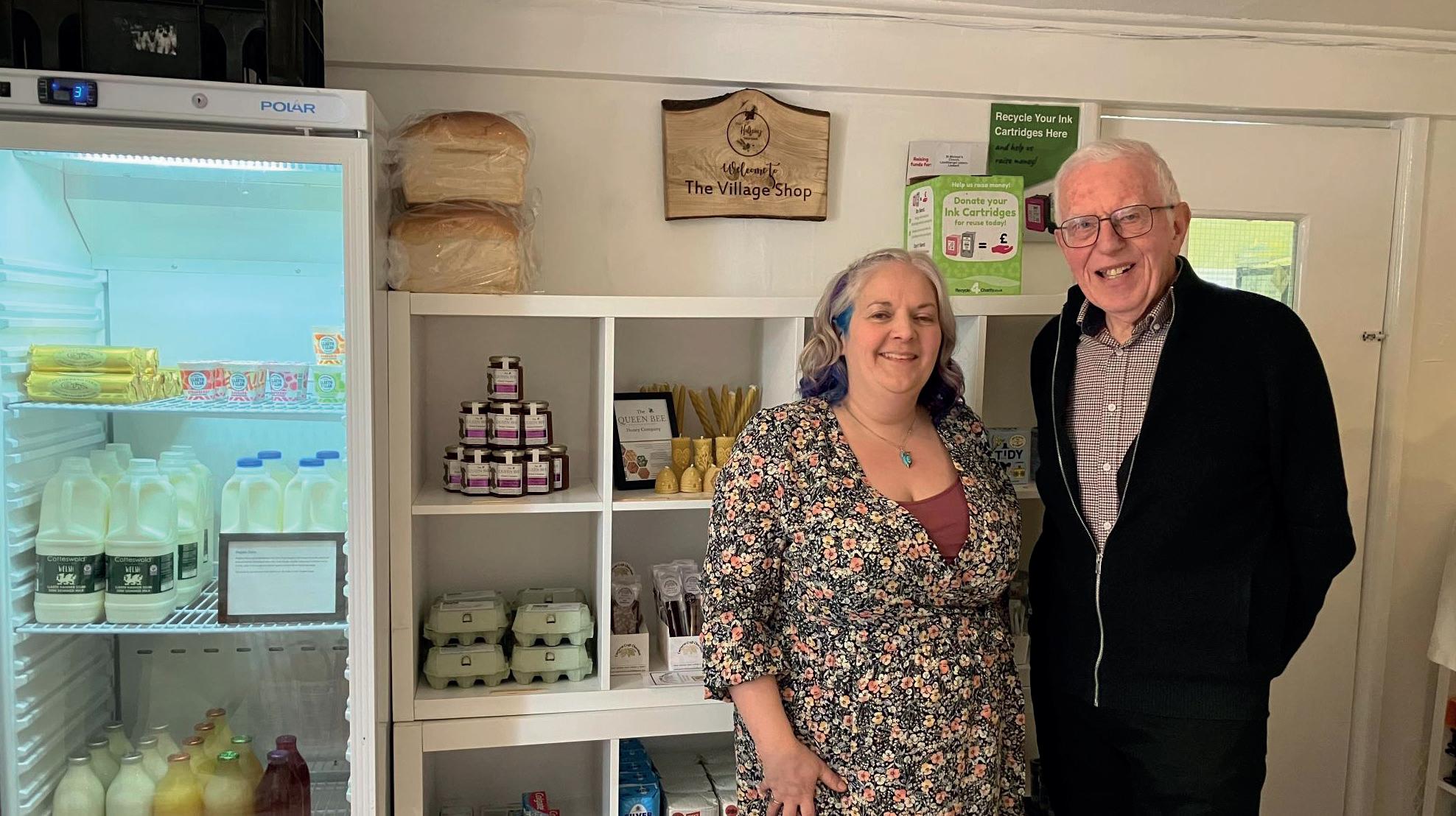
Pub is The Hub can offer grants of up to £6,000 to SIBA members running pubs in rural, remote, or deprived areas, who want to offer additional services and/or activities in their pubs to help local communities.
These can include a range of services from community cafes, village stores, and allotments, to activities such as theatre and craft workshops, to help bring people together to combat social isolation and loneliness.
The not-for-profit organisation, founded by HM King Charles III when he was Prince of Wales, offers independent specialist advice to publicans and their communities on service diversification and activities, so they can provide viable local services at the heart of their communities.
Pub is The Hub chief executive John Longden OBE said: “In isolated rural and deprived areas, adding a service such as a village store, community café or running activities such as craft workshops or theatre at the local pub can be a great way to support people living locally.”
Pub is The Hub recently revealed it will be helping and advising more pubs to diversify their local services and activities after receiving access to Government funding. Pubs will need to meet the eligibility criteria to qualify for a grant.
For more information go to www.pubisthehub.org.uk, contact enquiries@ pubisthehub.org.uk or fill out an online expression of interest form on the website.
The results of the UK’s biggest online judging of beers from independent breweries are in, with a range of breweries across all SIBA’s regions taking home silverware with Bronze, Silver, Gold and ‘Category Champion’ awards being given in a broad range of beer style categories.
The Indie Beer Awards are organised by SIBA and judged by expert beer judges, beer sommeliers, master brewers, and beer industry professionals –with medals awarded to beers for their appearance, aroma, flavour and overall quality. SIBA Head of Comms & Marketing Neil Walker, who is also a Beer Sommelier, ran the judging and had this to say on this year’s winners: “The Indie Beer Awards name the very best beers in a wide range of categories; from modern pale ales, lagers and IPAs, to traditional stouts, porters and bitters, as well as speciality and international-styles. All the beers in the competition come from genuine independent breweries and medals are only awarded to beers of the very highest quality – with Category Champions being the very best of best.”
All of the winners from the competition will now go forward to the UK Finals this month at BeerX in Liverpool.
For a round-up of the full results from all the regions see pages 74-81.
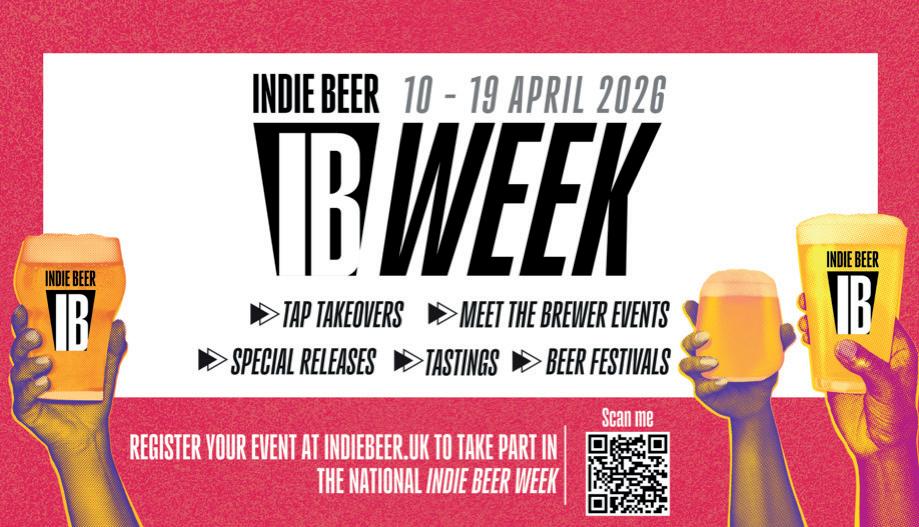
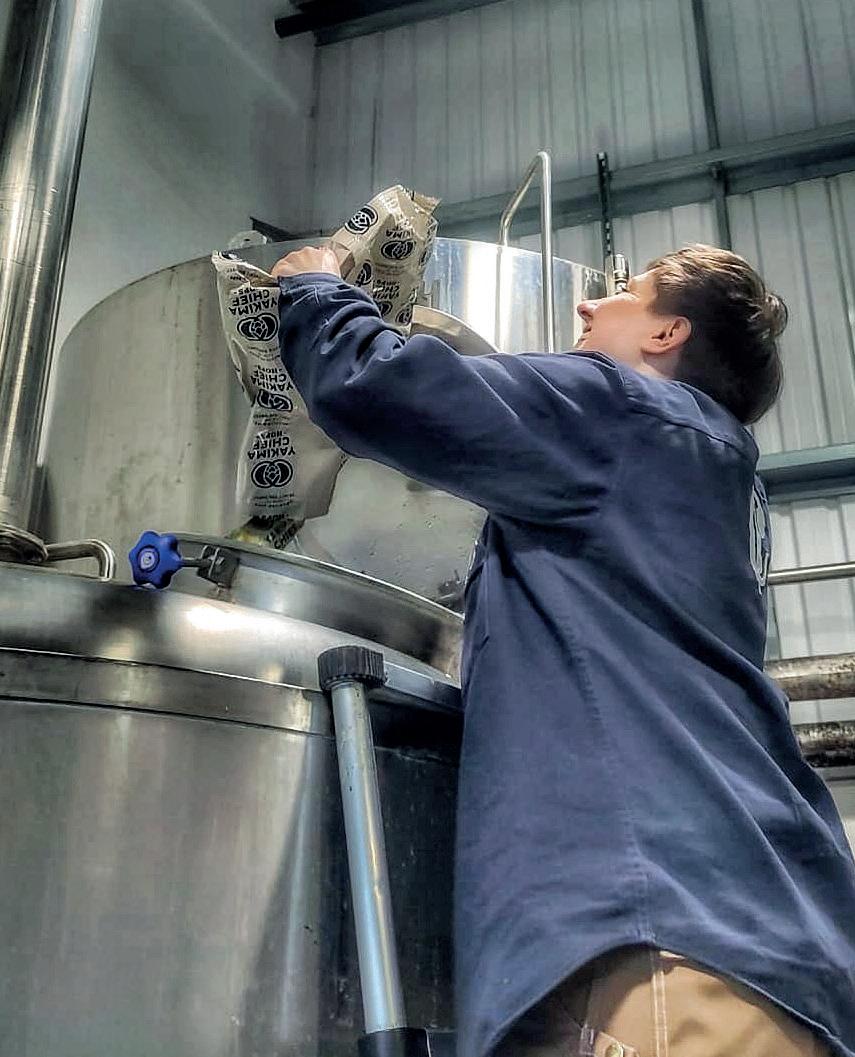
Indie Beer Week, promoting ‘independent beer, pubs and people’, is returning for a second year in 2026, with a string of events set to take place in pubs, bars and brewery taprooms.
Indie Beer Week 2026 will take place from the 10th to the 19th April (taking in two weekends), with pubs, breweries and beer retailers running meet the brewer events, tap takeovers, beer festivals and more across the UK.
Indie Beer Week was launched by the Indie Beer campaign last year as part of a drive to make it easier for consumers to identify beers from genuine independent breweries rather than Global beer giants.
Last year 118 breweries across the UK ran events as part of the inaugural Indie Beer Week, a number which organisers are keen to surpass in 2026.
SIBA’s Neil Walker, Indie Beer spokesperson, said: “The response to the first Indie Beer Week last year was great, with a massive lineup of beer events happening across the UK and independent breweries of all shapes and sizes getting involved. It’s all about celebrating Indie Beer, grabbing the attention of new customers or offering something fun and engaging to your existing ones – getting involved is as simple as submitting your event via the website.
“If you’re a brewery, pub, bottle shop, or venue selling independent beer and want to get involved drop us a line and we can make Indie Beer Week 2026 even bigger and better.”
The Indie Beer campaign now has 667 independent breweries actively enrolled and has struck a chord with consumers too – with an impressive 31% of young (18-24) beer drinkers now aware of the campaign.
The campaign was launched at the end of 2024 in response to confusion amongst consumers over which beers were independent, after YouGov polling found 75% of people surveyed believe consumers are being misled when purchasing beer from once independent craft breweries, such as Beavertown, Camden, and Fullers that are now owned by Global beer giants Heineken, Budweiser and Asahi respectively. The figure for beer drinkers surveyed was even higher, with 81% of beer drinkers believing consumers are being misled.
The UK-wide Indie Beer Week is being run via the IndieBeer.uk website and social media channels. Any UK brewery, pub or beer venue can apply to have an Indie Beer Week event added free of charge.
Visit the website: www.indiebeer.uk
Indie Beer Week is open to all types of venue that serve or sell beer from local independent breweries, attracting new customers to your venues or creating something interesting for your regulars – here are just a few ideas for events you could run for #IBW2026.
Register your event here
Running a special offer or a new ‘Indie Beer Week’ tasting flight can be a great way to capitalise on the buzz of the event and drive some sales through your shop. Again we’ll be promoting as many of these offers as possible so don’t miss the opportunity to drive some sales to your business during #IBW2026.
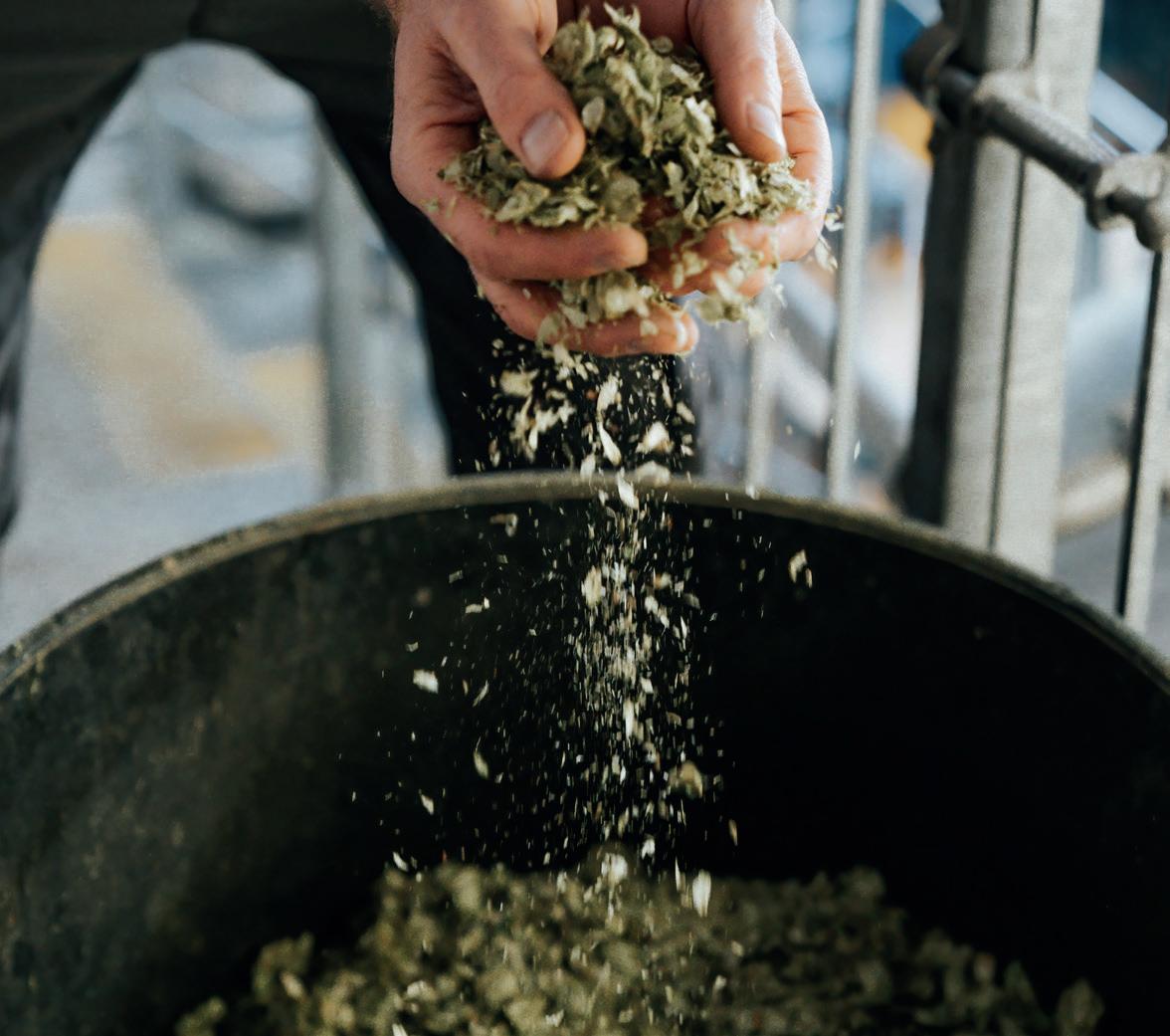
Best done in conjunction with a Tap Takeover, Meet the Brewer events can be a great opportunity to engage with customers and talk them through the beers from a local brewery.

Beer festivals can be a great way to attract new customers and build your local following, so why not take advantage of the increased press and promotion opportunities of Indie Beer Week to run a festival, large or small, at one of your venues? We’ll be promoting all events via the Indie Beer social channels and to our growing database of beer fans.
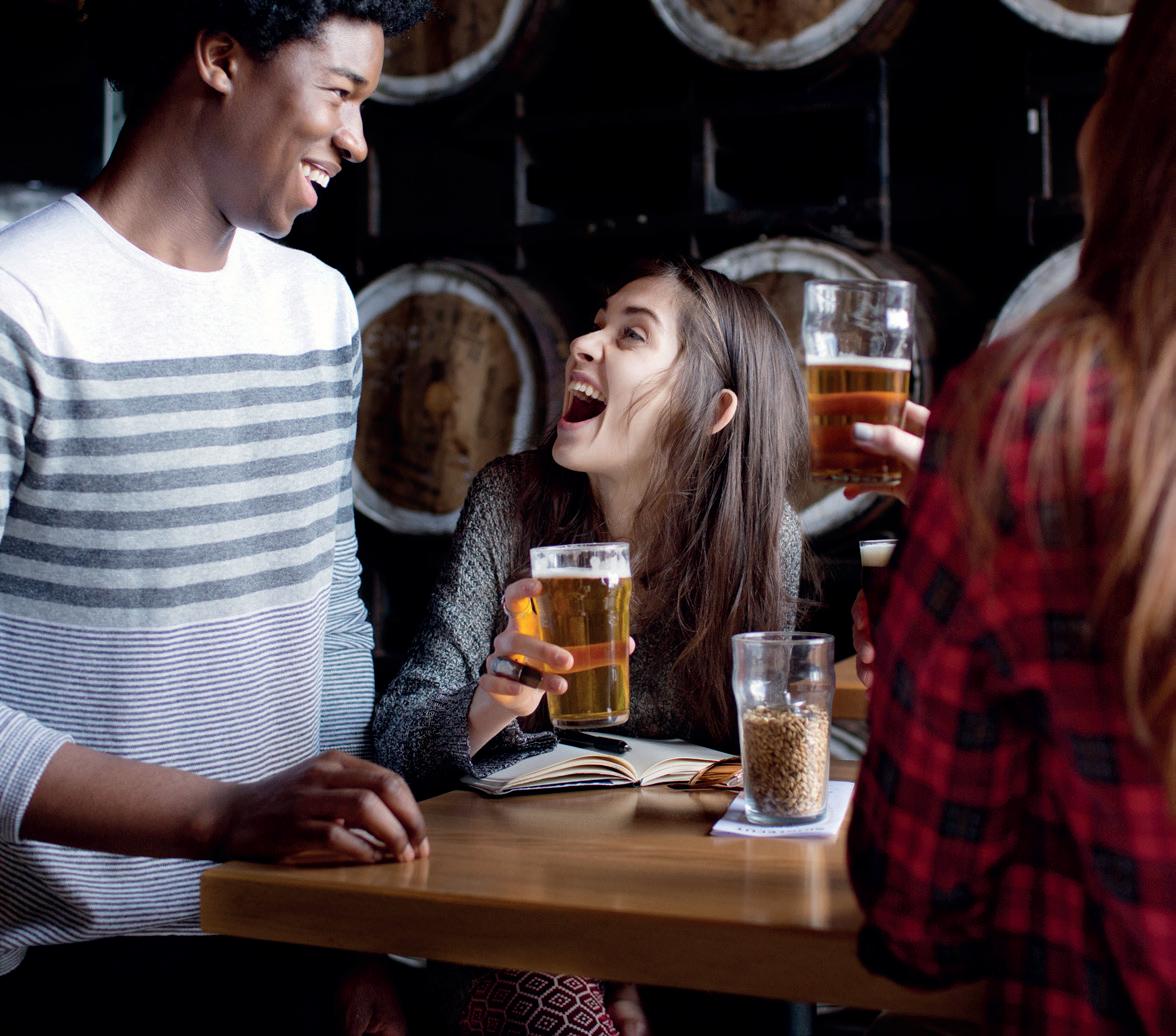
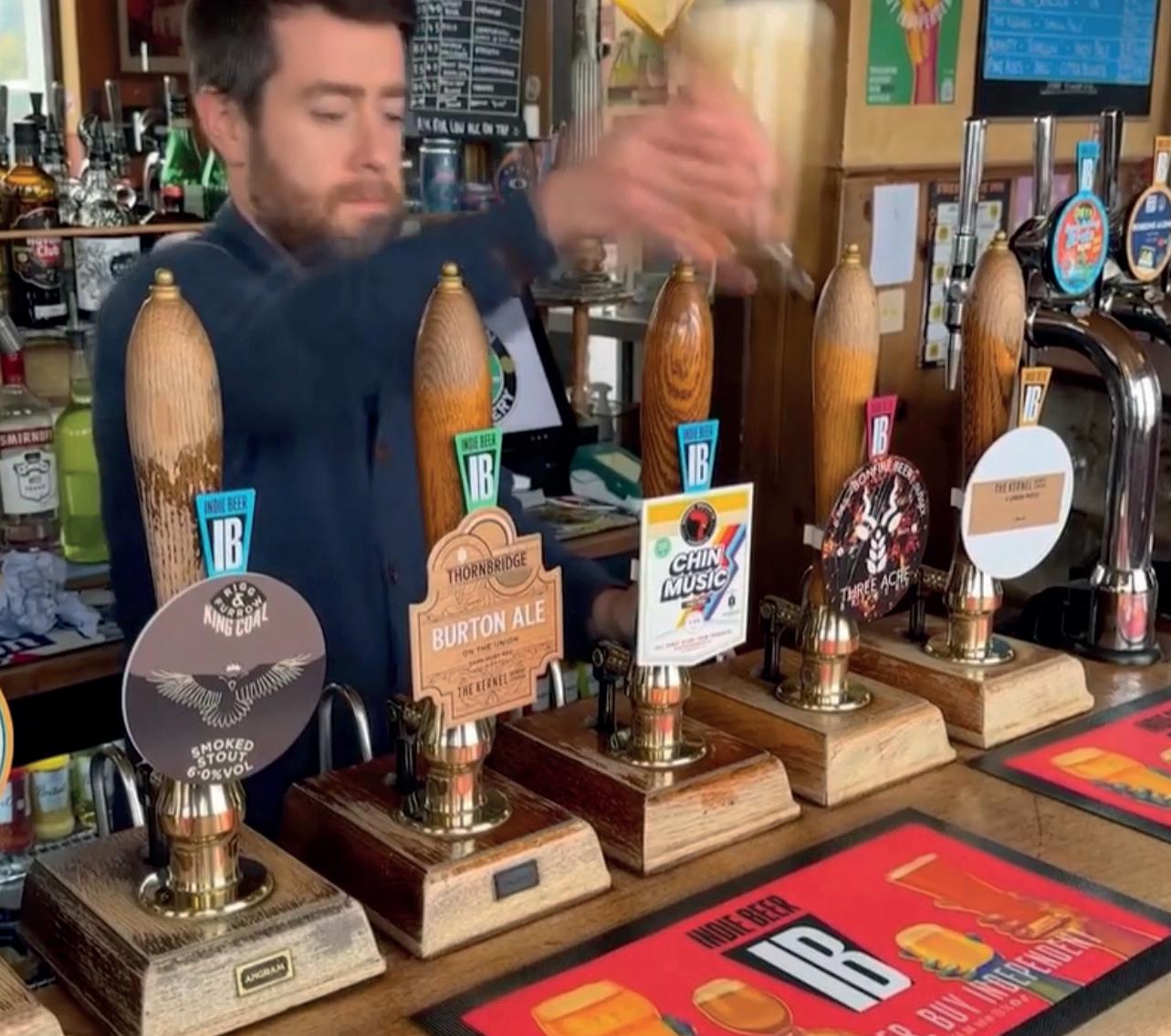
Tap Takeovers can be a great way to get a range of local beers in front of new customers and we’d encourage all independent beer venues, bottle shops and pubs to get in touch with local brewers and get more Indie Beers on the bar during #IBW2026.
If you’ve got a tap takeover planned make sure to add it to the website and we can help promote.
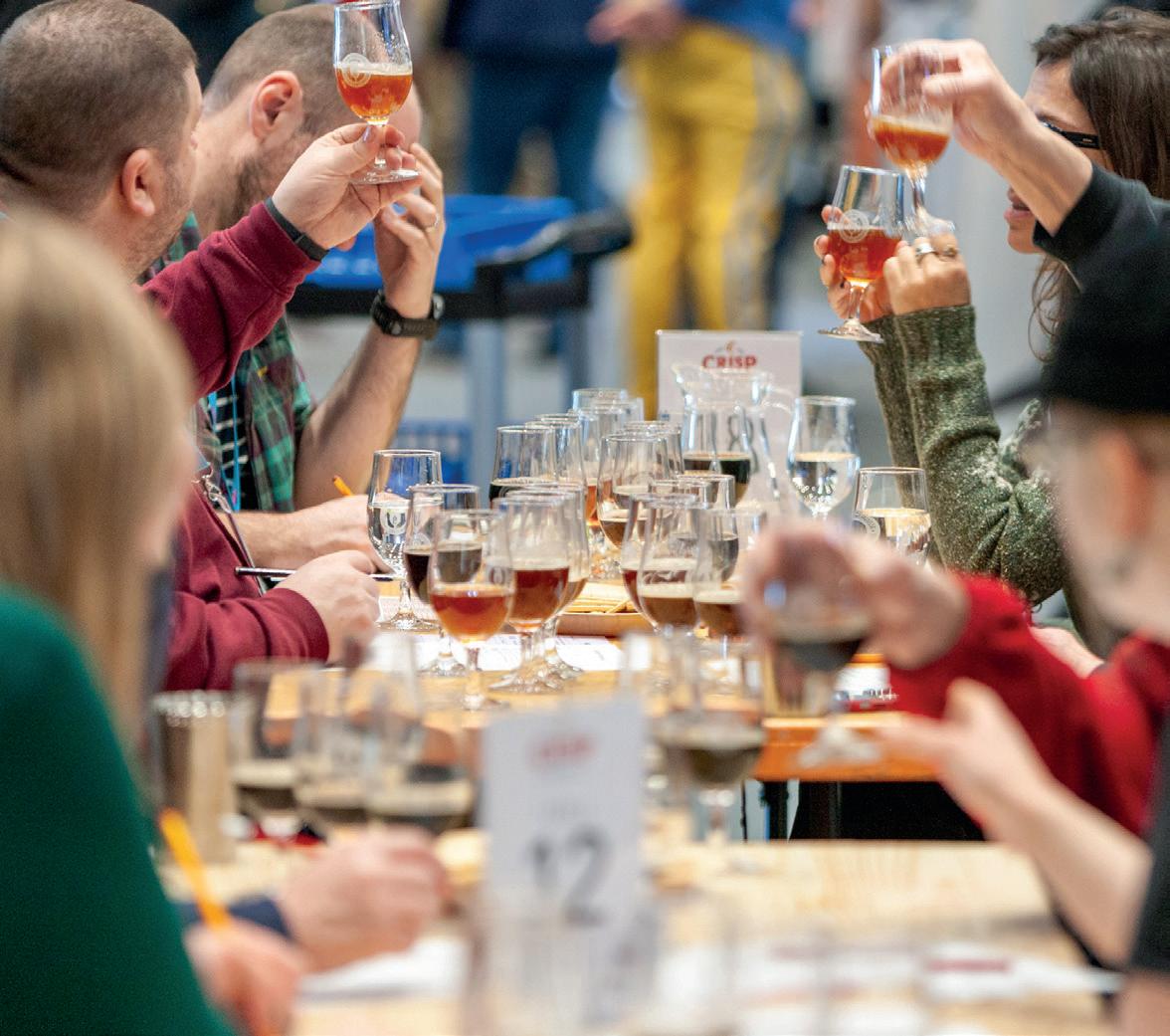
The consumer research conducted as part of the Independent Beer Report frequently shows that consumers increasingly look for an ‘experience’ when choosing where to spend their money, particularly amongst younger demographics – and tutored tastings can be a great way to offer this in a fun and engaging way.
Talking people through a range of beers, discussing the beer styles and what makes each beer special is a great way to get people thinking differently about beer and potentially convert some new beer-lovers.
Offering a range of Membership benefits from as little as £3.15 per week, SIBA, the BIG Voice of Independent Beer is the one stop shop for Independent Craft Breweries SIBA are committed to ensuring that our Members’ are equipped with the Tools, Legislative advice, access to market and insight data required to run a successful Brewing business Look out for the * to see what you could be saving by joining SIBA.
Various opportunities for increasing sales within the on and off trade accounts through direct delivery, resources or exclusivity at prestigious events
PROMOTION Exclusive access to promote your beers at prestigious events such as the British Guild of Beer Writers Awards, BeerX and much more Access to the BGBW event would cost a single brewery *£4k, with other events costing much more.
INDIE CAMPAIGN Stand out from ‘big beer’ by increasing visibility on your brands with discounted Indie bottle Caps, Cask Crowners, Keg Promo fix - assuring consumers that they are buying from an Independent Craft Brewer.
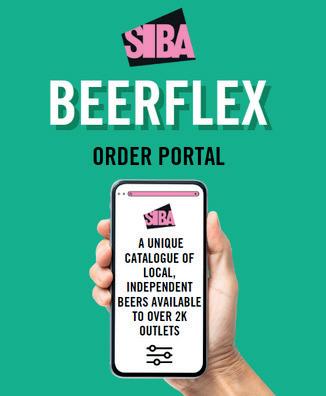
An option for all SIBA members to develop on trade sales by supplying to large pub operators at a price band of your choice and with favourable payment terms
The average Beerflex Member generating *£15k turnover.
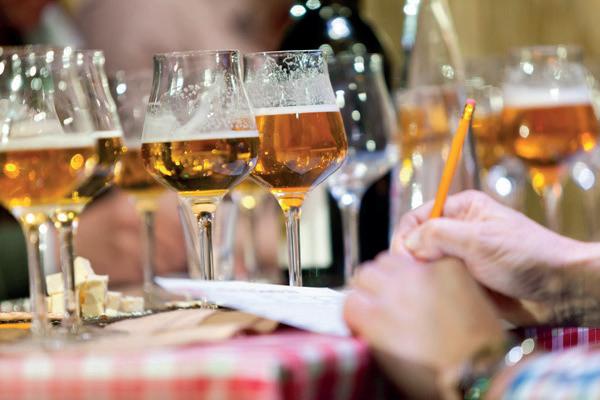

Raising the bar for your brewery and beer by obtaining invaluable industry information and data
REGIONAL MEETINGS Access to quarterly meetings, with presentations from industry experts and members of the SIBA Management Team, with complimentary food and beer for you and your fellow brewers
LOBBYING Securing Support & Advice via Political representation with a user friendly synopsis of Government Legislation available to members
GOVERNANCE Eligibility to take a seat at the table of SIBA Board Directors, helping set the strategic direction of the trade association
BREWING IN BRIEF Weekly email newsletter, containing member news, Industry news and upcoming events A snap shot of the week in brewing
CRAFT BEER REPORT Opportunity to contribute towards data insight and analysis on brewing businesses and the industry, providing invaluable data for your business planning

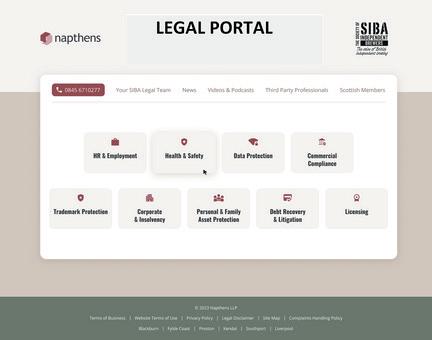


SIBA LEGAL HELPLINE: 0845 671 0277
BUSINESS ADVICE & ACCOUNTANTCY FREE one-hour consultation from Johnston Carmichael, who offer brewers a wide range of services, from payroll and accounting to corporate finance, taxation and business strategy
LEGAL ADVICE Members can contact the dedicated SIBA Legal Helpline, facilitated by Napthen’s Solicitors for 1 hour FREE advice With legal specialists covering England, Scotland, Wales and Northern Ireland ensuring no eligible SIBA member goes without There is no limit on the number of times members can contact the helpline. Potential saving of *£200 per call.
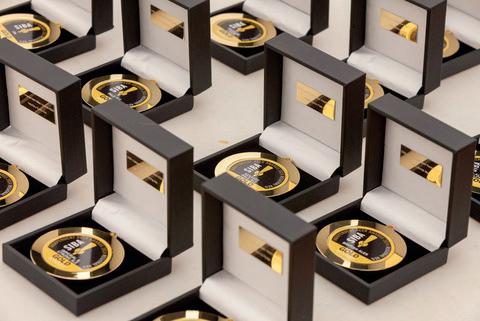
Unlocking access to exclusive
whether it be entering
From Legal issues, to user friendly calculators and Tools, SIBA has its members covered in all areas with the Business Benefits, potentially saving each member a substantial amount of time & money
HR & EMPLOYMENT Covering all areas within HR & Employment, SIBA Members have access to an array of Templates to customise to their own business branding in addition to a 30 min *free* HR consultation with a team of HR experts Estimate value exceeding *£3000
COMPLIANCE Assisting members with legal compliance, a number of Tools are available for members to customise to their own business needs From HACCP and traceability tools, H&S guides, a practical guide to labelling your draught and packaged products and Insurance guidance to ensure you are fully covered Est value in the region of *£3000
COSTING TOOL A Tool aimed at smalled brewers whom perhaps are unable to justify the expense of accounts personnel. Members can access at any time the Brewery Costing Tool to ensure that your sell price is calculated to run a sustainable business
DEBT RECOVERY & DISPUTES Debt recovery & insolvency are hot topics at the moment and members can access free of charge template letters to customise and issue Saving on average *£500
ALCOHOL DUTY In addition to ensuring Independent Brewers voices are being heard in Government, SIBAs Political team supply members with user friendly guides and simplified Duty calculators
LEGAL PORTAL Taking away from our members the stress and pressures of being kept up to date on Legislations The SIBA Legal Portal, in collaboration with Napthens Solicitors contains every day legal documents tailored to Brewing Businesses
INDUSTRY SUPPLIERS From brewery equipment to ingredients, to business saving experts and promotional items Members can find a SIBA Supplier Associate Member for every business need from the SIBA Trade Directory.
EXCLUSIVE SERVICES Access to a range of discounts and offers - from Business & Commercial, Brewing Services & Capital equipment, SIBA have a range of offers provided by our Supplier Members Saving *£’s.
JOINT PURCHASE SCHEMES From glassware to beer mats and bar runners - SIBA are able to offer its members promotional items at competitive rates.
WEBINARS Opportunity for you and your team to attend an unlimited number of live & recorded webinars covering a range of subjects. Saving *£80 per webinar.
AWARDS With Beer Competitions for cask, keg and packaged judged by beer sommeliers and Business Awards judged by industry leaders, members have unlimited entries into SIBA Competitions with winners having the opportunity to be included within exclusive event promotions and to liaise with buyers and retailers across the UK *£450 (based on three entries into similar awards)
FREE ADVERTISING Forget Facebook Marketplace - SIBA Classified Ads is the place to advertise everything and anything Brewery related From equipment for sale or a wanted section, all ads are free to members Job vacancy? Find the right candidate by posting for free on the SIBA Jobs Board. *£85.
CASK REPATRIATION INC ORANGE LABELS Protecting your assets with cost effective semi-permanent labels to affix to containerskeeping track of your containers across the country!
BEERX Owners of the UK’s largest Independent Brewing Trade Show, members can access SIBA’s flagship event FREE A forever expanding Trade Show showcasing the best beer industry suppliers and packed seminar schedules, from workshop to informative seminars led by key industry personnel - saving *£65, based on 2x Delegate Passes
As we enter another year, a question I get asked is – what’s the big thing which will occupy the brewing sector in 2026?
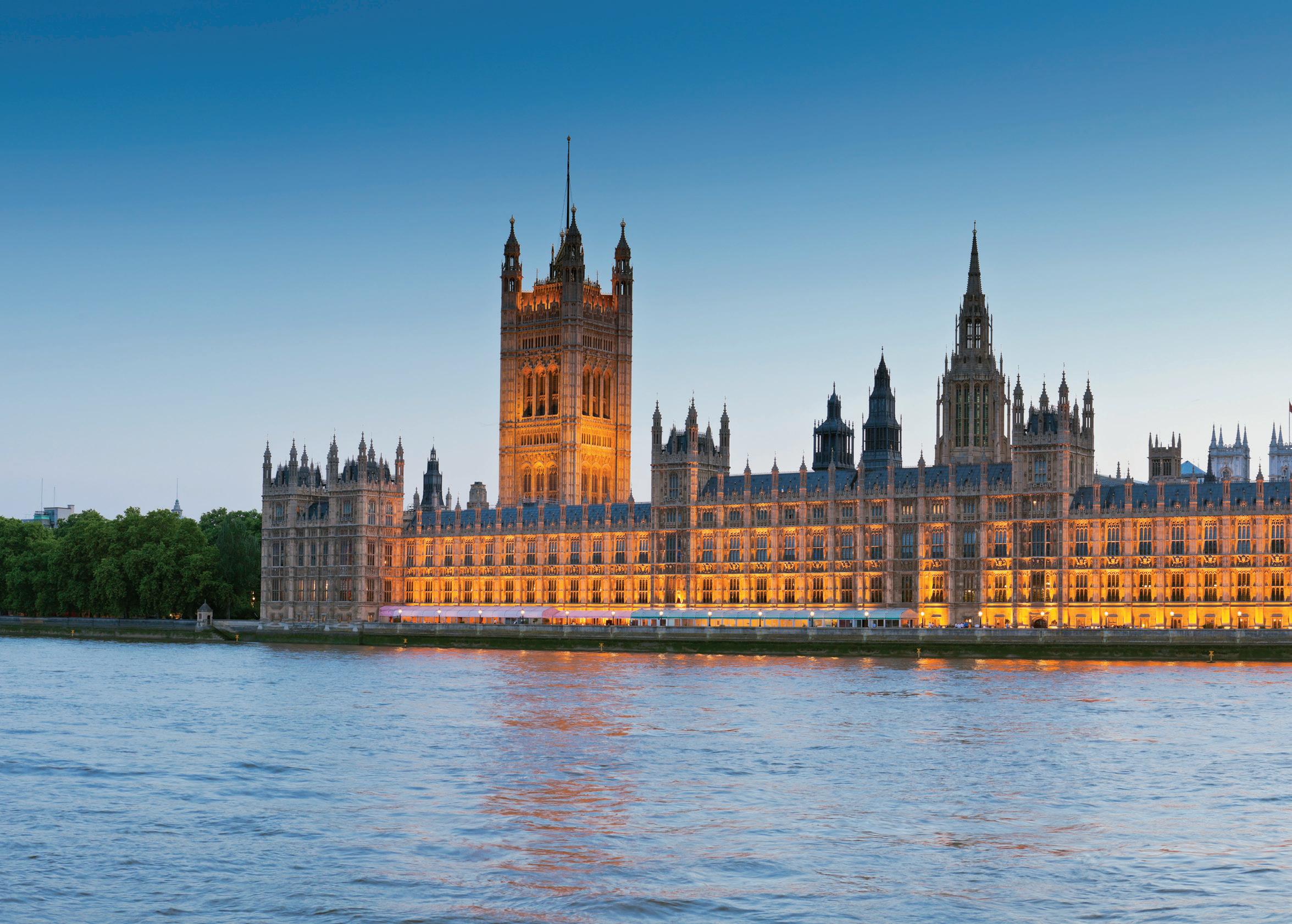
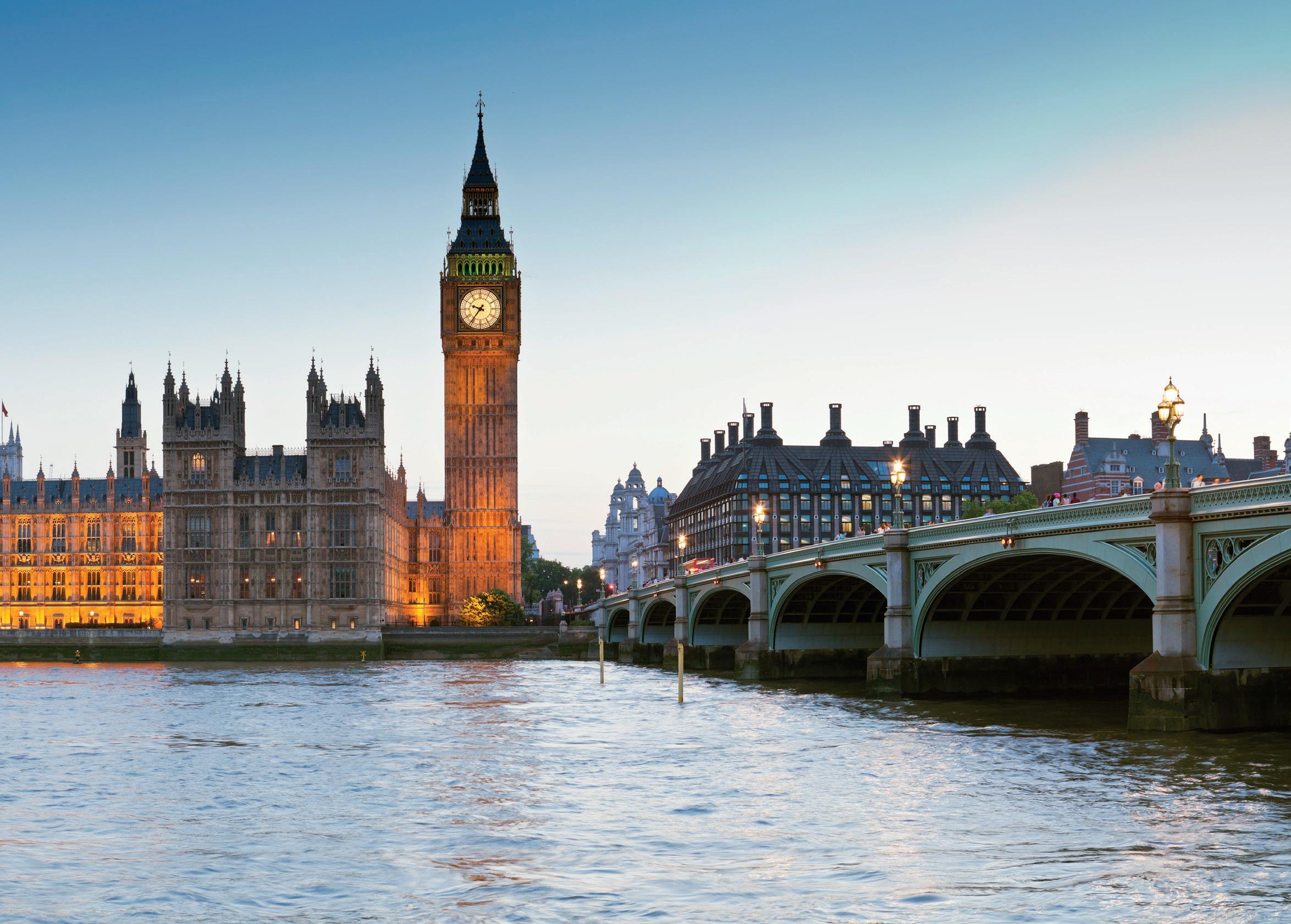
Of course, there’s lots of pressures and issues coming up. Business Rates has rightly dominated discussions since the Budget in November. The combination of the revaluation and changes to the relief system - with the introduction of a lower multiplier for hospitality, leisure and retail businesses – meant that pubs faced an 11% increase in bills this year, increasing up to 76% over the next three years. It appears that the Government has seen sense on this issue for pubs, although the wider hospitality and retailers rightly continue to argue for support as well.
Apart from this, for me there’s three issues which will be high on breweries’ radars this year. The first is all about labelling. The Deposit Return Scheme (DRS) is being introduced in October 2027 and means that most breweries that package into small pack – cans but potentially also glass bottles if you sell in Wales – will have to alter their labels.
At a minimum it involves having to put a barcode and logo on the pack. However, it’s very likely they’ll want to see other standardised changes as well. While there is an exemption for those packaging fewer than 5,000 cans per brand, for those doing sizable volumes it will mean making changes to labels.
The Deposit Management Organisation (DMO) tasked with setting up and managing the scheme is currently writing the rules and SIBA has a role to play in shaping them. The danger is that they’ll design the system so that it works for the big guys but is painfully time consuming and costly for the small brewer. We’ll be pushing for you. Expect more information and details on how this will work and how to prepare later in the year.
Linked to labelling is the alcohol labelling consultation we’re expecting as part of the Government’s 10 Year Health Plan. We anticipate this to include mandatory health labels such as pregnancy, drink driving, Chief Medical Officer’s guidelines, calories and nutritional information as well as possible
cancer warnings. The hope is that they at least try and co-ordinate this with the DRS so brewers don’t have to keep re-designing their labels. We live in hope!
The second issue is proposed changes to drink driving limits in England and Wales. The Government has announced its new Road Safety Strategy which includes a consultation on reducing drink driving limits from 35 micrograms of alcohol per 100 millilitres to 22 micrograms (as they have in Scotland). The evidence from Scotland suggests that there has been little improvements in road safety following its introduction but it did have a negative impact on pubs, especially those in rural areas. SIBA will be responding to this consultation which is open until the end of March.
The third issue is the promised review of the alcohol duty system. It has been almost three years since the new system was introduced in August 2023 and this is the opportunity to consider reforms. This will focus on Small Producer Relief but also the lower and higher alcohol bands. Interestingly, according to the
The Deposit Management Organisation (DMO) tasked with setting up and managing the scheme is currently writing the rules and SIBA has a role to play in shaping them. The danger is that they’ll design the system so that it works for the big guys but is painfully time consuming and costly for the small brewer. We’ll be pushing for you.
SIBA members’ survey, 42% of brewers say it has had no impact on the beers you brew. While over a third have taken advantage of the new lower duty rate to brew some new innovative beers below 3.4%. Only 1 in 10 have reduced the ABV of existing brands. At the same time, nearly a quarter have changed their beers that were above 8.5%. This review also gives us the chance to make the case to equalise cider duty which allows global producers to benefit from a duty rate 46% of that on beer.
I’m sure there will be other issues, twists and turns this year as it develops, but for me labelling ,alcohol duty and road safety are three of the top policies which will dominate.
As ever, if you want to know more or have any views on any of these issues please do get in touch using the details on this page. Equally, if you’re interested in hosting an MP visit please let me know.
Barry Watts is Head of Public Affairs and Policy at SIBA. He covers political relations and policy for SIBA members. He can be contacted at barry.watts@siba.co.uk or 07977837804.



All the tools. One platform.
Always online, cloud-based and secure, so your team can access the same up-to-date information whether they’re on the brewery floor, in the office or out on deliveries
’ ’Breww has delivered huge improvements to our business’ ’
Tap Social Movement
‘’Having a system that allows us to work smarter and not harder has been invaluable’ ’ Full Circle Brew Co
‘’We are very impressed, such a capable, intuitive platform to use and designed specif ically for breweries’’
Burning Sky Brewing
‘’If you had told me that I could save 3 days per week of admin just by using Breww I would not have believed it, but that is exactly what we have been able to do’ ’
Three Tuns Brewery
Trusted by over 750 breweries worldwide Try for free at breww.com
Gail Lumsden, Chair & CEO of Vocation Group, draws on her extensive experience in senior roles within the drinks industry to offer business insight and ideas on where independent brewers need to focus in order to succeed in a tough market…
Following the Autumn Budget, it’s become increasingly apparent that the economic and cultural value created by beer and pubs is still not fully understood at a policy level. Measures such as small producer, draught duty and business rates relief may be welcome and necessary for many players, but do not address the fundamental question about how we create and sustain a thriving UK beer and pub industry and culture.
Beer and hospitality are navigating a range of headwinds that are constraining growth, eroding value creation and putting the longterm health of both sectors at risk. Alongside an ongoing consumer spending squeeze, the industry is grappling with rising taxes through excise duty and VAT, increasing input costs and business rates and the growing cost and complexity of regulatory initiatives such as Extended Producer Responsibility (EPR).
While scale undoubtedly aids resilience, it doesn’t always deliver what’s needed to keep beer interesting, relevant and culturally rooted. The result is an accelerating “survival of the fittest” dynamic that risks narrowing consumer choice.
There is an inherent risk in relying on a series of incremental changes to meet policy objectives and raise tax revenue from what was once a highly profitable industry.
While it is right that the sector contributes taxes and takes a responsible environmental and societal approach to doing business, this must be balanced with its ability to support economic growth, sustain employment, enable consumer choice, allow pubs to differentiate their offering and remain culturally relevant.
Left unchecked, the cumulative impact of these incremental changes risk working against the wider interests of consumers and communities by undermining the health and vibrancy of the sector – with smaller independent brewers and smaller pub operators often feeling the effects most acutely. These measures also risk working against the national interest by eroding the value they were intended to generate.
Findings from our recent Beer Audit underline that drinkers are noticing narrowing choice.
Nearly four in five Brits (79%) say they would visit the pub more often if there was a better selection of beers on tap, while more than eight in ten (81%) would be willing to pay slightly more for a pint if pubs offered greater variety. Almost three quarters (74%) believe big breweries are overrepresented in pubs, and 30% describe big-brand or mainstream beers as predictable and uninspiring.
A lack of genuine choice risks dulling the appeal of the category at a time when beer needs to work harder than ever to earn its place in people’s drink repertoires and spending.
While government support clearly matters, the scale and complexity of the challenges mean that piecemeal measures alone are not enough. Long-term structural reform is required – underpinned by a clearer, shared understanding of the desired goals.
A valuable starting point would be a nationwide discussion about the role we expect beer and pubs to play for consumers, customers and communities, while also contributing fairly to the public purse. We should be asking what the characteristics of a thriving UK beer and pub sector actually are, and what needs to be in place to enable them.
This will take time, so the most powerful catalyst for change in the near term lies in collective people power and bolder choices being made by brewers, pubs and consumers.
Brewers have a role to play by standing out through distinctive, relevant beers and brand stories, more effective consumer engagement and thoughtful approaches to how they do business. Pubs, meanwhile, can free up taps to better reflect their communities and create more compelling and differentiated offers for different occasions. Plus, consumers can vote with their feet and their wallets by actively getting out and supporting pubs and breweries that champion choice and creativity.
At Vocation, we believe progress isn’t driven just by policy. Sometimes it begins by creating space for brewers, pubs and drinkers to reconnect around what makes the category special in the first place.
Inspiring and harnessing the power of people is behind Vocation’s The Wandering Inn, a pint-sized mobile pub touring cities across the UK celebrating what’s great about UK pubs, sparking conversations about access and choice, delivering discovery and excitement and encouraging collaboration across the sector. By having honest conversations about how the category can evolve, initiatives like this can help reframe the narrative in a positive and inclusive way.
A United Voice for Beer
By working together, independents can help stimulate a broader conversation within the industry and, over time, with policymakers about the kind of beer and pub sector we want to sustain for the long term. One that balances responsibility with resilience, growth and economic contribution.
While government support clearly matters, the scale and complexity of the challenges mean that piecemeal measures alone are not enough. Long-term structural reform is required – underpinned by a clearer, shared understanding of the desired goals.
By championing choice, creativity and openness, independent brewers and UK pubs can help create a fairer, more dynamic and more consumer-focused beer market. In doing so, we’ll help safeguard the future of a category that plays a vital role in UK culture and communities.
If you’re interested in contributing to the conversation, Gail and the team would welcome your thoughts at marketing@vocationbrewery.com. And find out more about Vocation’s story in our Business profile on pages 40-47.
© Jon Nicholson

Gail Lumsden, Chair & CEO of Vocation Group, is a board-level leader with expertise in strategy and driving profitable growth. Drawing on her extensive experience in board and non-executive roles, as well as senior executive positions at Diageo and SABMiller, she’s responsible for leading Vocation and championing growth, quality and innovation.
At Croxsons, we understand the UK’s beer producers. We know you want the very best in glass bottles. We’re very proud to support the British beer industry, not just as valued and reliable suppliers but also as trusted experts.
Our JAC, AMC and Standard bottles come in stylish flint, amber or green and give any brand an edge. Perfectly seal and finish with our beautiful range of closures and decoration for the full packaging supply you need.
Take a look at our range of products for the British beer industry: www.croxsons.com
SIBA’s Head of Comms & Marketing Neil Walker highlights one of his favourite taprooms to visit in the UK…

Name: Goose Eye Brewery Taproom
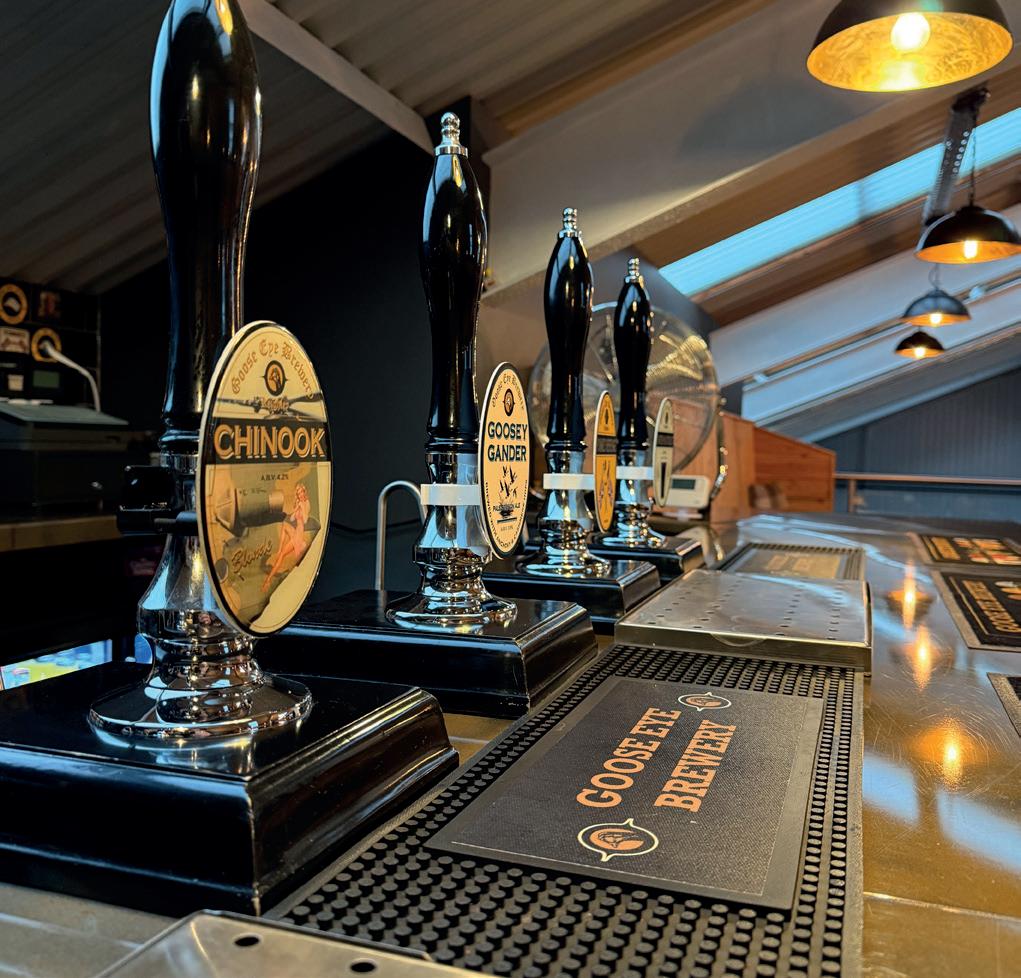
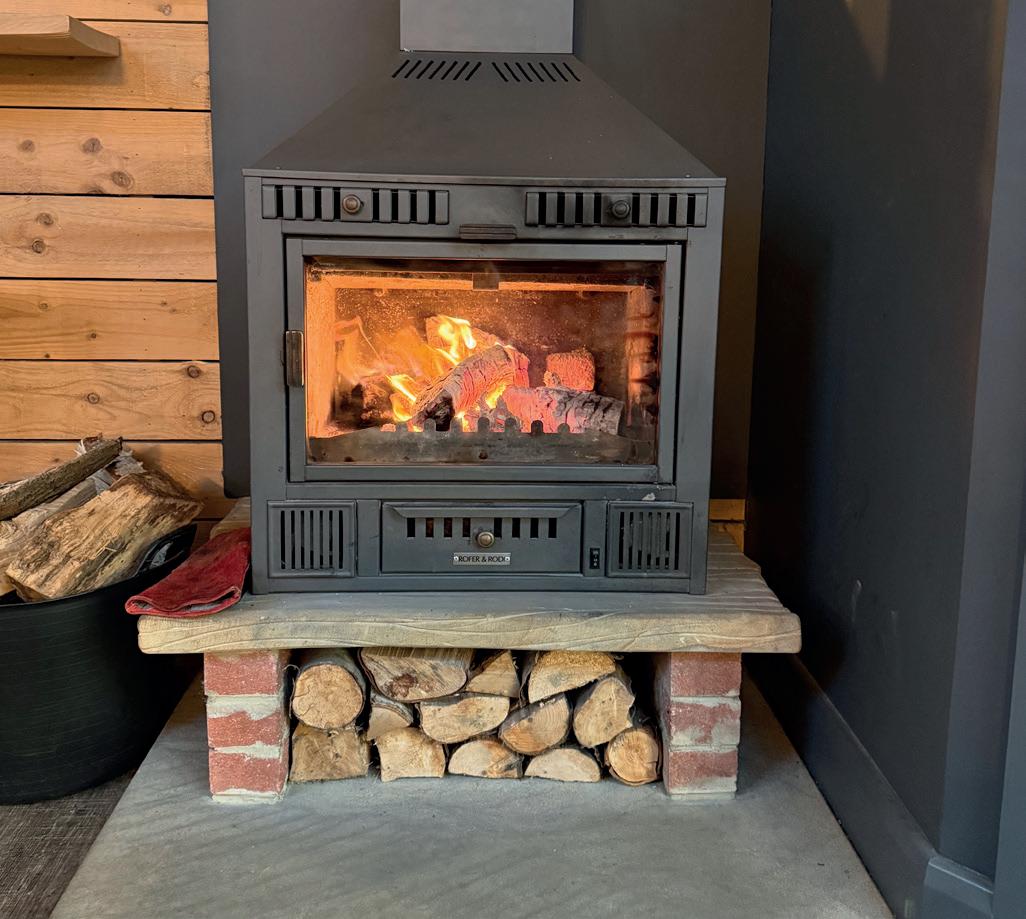
What’s on offer: Six hand-pulled ales, craft lagers, wines and spirits served in a cosy dog-friendly venue with a view of the working brewery, that regularly hosts street food vans at weekends offering a range of different dishes.
Location: Unit 5, Castlefields Industrial Estate, Crossflatts, Bingley BD16 2AF
Opening hours:
Monday 8am–5pm
Tuesday 8am–5pm
Wednesday 8am–4pm
Thursday 8am–4pm
Friday 8am–10pm
Saturday 12–10pm
Sunday Closed
Having spent my formative drinking years in Leeds I’m a little embarrassed to admit that my recent visit to Goose Eye Brewery in Crossflatts, near Bingley, and a mere 20 min train journey from Leeds, was my first.
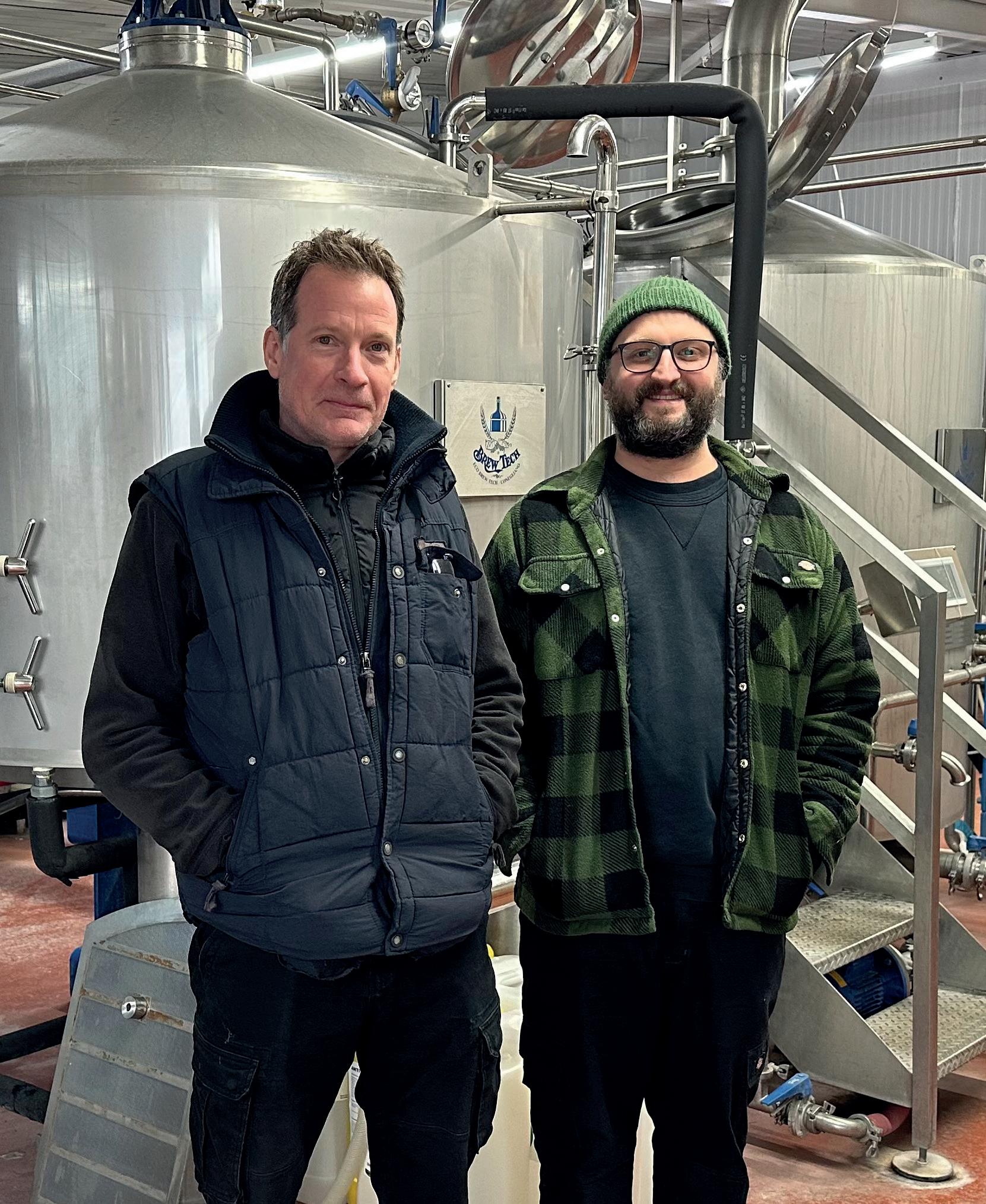
My first impressions were “what a superb space”. A modern, spacious mezzanine bar overlooking the working brewery with some superb cask beers on offer, I can see why this taproom is a hit with locals and pulls people in from neighbouring Leeds and Bradford.
Their beers are all brewed to be sessionable and drinkable, says brewer Joe, and every beer I tried was superb, but their best-selling Chinook was a real standout. Bright and resinous with a distinctive bag-of-hops aroma, it’s dry, peppery and incredibly clean – but finishes much less bitter than you’d expect. A real treat and a beer with bags of flavour but which you could easily enjoy a fair few pints of.
Starting proper in 1991 (there was an earlier brewery by the same name), Goose Eye expanded from a 7 barrel kit to their current 20 barrel setup in 2017, and has been going strong ever since.
Their beers are perfectly made, drinkable, and full of flavour; a brewery that deserves to be on your radar and which is well worth a visit.
Andy Parker from Elusive Brewing, the current British Guild of Beer Writers’ Brewer of the Year, looks at the history behind Alfred’s Winchester Pale Ale and the city it takes its name from…
Founded by Steve Haigh in 2012, Alfred’s is one of those breweries which, until recently, you had to visit Winchester or the immediate local area in order to sample their highly regarded beers as they were produced on such a small scale. A recent expansion has seen more Alfred’s beer heading out of the door and Jim Fullegar joined as Head Brewer in late 2023, having previously worked with Double-Barrelled, Unity and Broken Bridge Brewery.
Steve tells the story of how he got started and their journey since: “I started brewing professionally in 2001 at Hampshire Brewery. I’d been unsure of what career route that I wanted to head down and saw the job advert in the local paper. It looked like a good mixture of physical work and problem solving which suited my energy and active brain, and I liked the challenge of learning a new skill.
“I studied brewing whilst working, and would occasionally take wort home and ferment it differently or dry hop it differently to help unpick how it all worked and to help test out ideas and processes. I spent 11 years working across different local breweries before taking the plunge and going out on my own, there was always an itch I wanted to scratch and it seemed mad that there wasn’t a brewery in Winchester at the time. Starting small seemed the least risk and allowed further learning and development whilst finding my feet and becoming established locally.”
“Jim and I have known each other since he started brewing professionally, meeting through a network of Hampshire brewers. We’ve always got along and the moons aligned, I felt like the brewery needed a fresh perspective and it was time to take the next step of stable growth and invite Jim to join the team as we expanded. We’ve got a productive synergy, complimentary skills and experience so the two of us together works really well.”
Winchester Pale Ale
Specification:
OG: 1.043
FG: 1.009
ABV: 4.5%

Whirlpool (reduce to 90C)
4g Citra T90
4g Mosaic T90
Target Water Profile:
Mash pH 5.2
Ca 120 ppm
Cl 150 ppm
SO4 100 ppm
Malt Bill (Mash at 67°C for 60 minutes)
3.25kg Simpsons Best Pale
Malt
200g Flaked Oats
200g Crisp Torrefied Wheat
200g Bestmalz Carapils
Boil (60 Minutes)
6g Cascade @ First Wort
5g Cascade T90 (@ 10 mins)
5g Citra T90 (@ 10 mins)
2g Cascade T90
8g Citra Incognito
Dry Hops
10g Simcoe Cryo
10g Citra Spectrum
Fermentation (7 days)
11g Lallemand Verdant
Pitch at 20°C and let it free rise to 22-24°C once gravity reaches 1.015. Add dry hops then sit for 48 hours before cold crashing.
Winchester has links back to Roman times and was one of England's most important cities in the Anglo-Saxon period, which Alfred's branding makes references to. What can you tell us about the history of brewing in the city and the significance of Alfred's being based there?
Steve: “There’s a brilliant book written by A local historian, Phil Yates, about the beer and brewing history of the city, but there were loads of breweries in Winchester back in the day and over a hundred pubs, and the closure of all of those breweries will have had a big impact on the recent history how the city all operates too.
I’ve always lived in and around Winchester and when I decided to open the brewery, despite its rich history, there wasn't one here at the time, so I decided that this was the place to do it. The history of the City has always fascinated me, and walking around there are so many interesting little features on buildings and things like that that it seemed a good inspiration for the branding of a business where I wanted there to be a real local tie for the community.
Alfred's brews a range of styles, both traditional and recently more modern. Has that been a conscious evolution or something driven by market demand?
Steve “The key priority for both Jim and I has always been to brew a good, well made and tasty pint. Our only core beer is Saxon Bronze which still accounts for over 80% of our production, it’s got a few more modern twists to it beyond a proper old school bitter but the outcome is still designed to tick those same boxes.”
“I never really chased trends and just wanted to make what our local market wanted where it was just me on my own, there wasn’t the resources to send the beer to far afield. I’d occasionally brew specials here and there if there was scope or demand, but now there’s two of us we’ve been able to send the beer further and had the manpower to keep the kit turning over more regularly and offer a wider range of styles, with a focus on quality of ingredients and getting a tasty pint across the bar.”
Winchester Pale definitely falls into the more modern takes on the style. Tell us a little bit about the recipe and its design.
Jim: “Steve has always focussed on quality when purchasing ingredients, which drew him very early on to the American varietals. Citra was in very short supply back then so it couldn’t become a regular beer. It was first brewed for Winchester CAMRA beer festival and back then it had a little bit of Cascade in the boil but was mainly led by the Citra. When I joined, I wanted to add a bit more depth and complexity to it, but without pushing it to saturation point and keeping it true to the original beer.
“I’ve taken a fairly classic modern pale grist and pared it back slightly, so we get some texture from the flaked oats and torrefied wheat and a little residual sweetness from the carapils without adding too much colour. We use Simpson’s Best Pale Ale as our base for all our ales as I like the depth of flavour it brings and it’s extremely consistent in how it performs in the brewhouse.”
“For the hopping, Cascade lays a really good foundation on the hot side and is rich in bound thiol precursors, so this is layered throughout the boil and whirlpool. Citra and Mosaic in the late additions and the whirlpool add your classic punchy flavours and aromas. Using Incognito in the whirlpool allows a higher quantity of hops to be used without absorbing too much wort, it also goes into solution more efficiently and consistently.”
“We use Lallemand Verdant as our house yeast, it carries out some biotransformation on the thiol precursors and adds layers of flavour, it also adds a smooth and round texture and produces some lovely tropical aromas of its own.”
The recipe uses some liquid hop products. What have been your experiences with them and how can a home brewer benefit from using them?
Jim “In my past roles in other breweries I have been lucky enough to work with many of the available liquid hop products. On a commercial scale the benefits can be huge, the increased yield as the hop product just mixes in rather than absorbing packageable beer, and that increased packaged volume can make a massive difference to the balance books in a very challenging time for our industry.”
“I’ve always felt though that the quality of the beer going out the door should be the number one priority and the improvement in the range of liquid hop products available in recent years has been huge, with products optimised for specific steps in the brewing process and made in ways that ensure true to varietal consistent flavour. They can be tricky to dial in in terms of how they’re used, but there’s loads of resources out there to help problem solve and optimise depending on your setup.”
“Whilst these might seem like things that are only worth worrying about on a commercial scale, it translates to more beer for your buck and a consistent and repeatable product, which can never be a bad thing in my book!”
Based in South Africa, beer writer Lucy Corne shares an overview of the current independent beer sector across the continent and explores the impact that sustainable grains are having in a heavily climate dependent market…
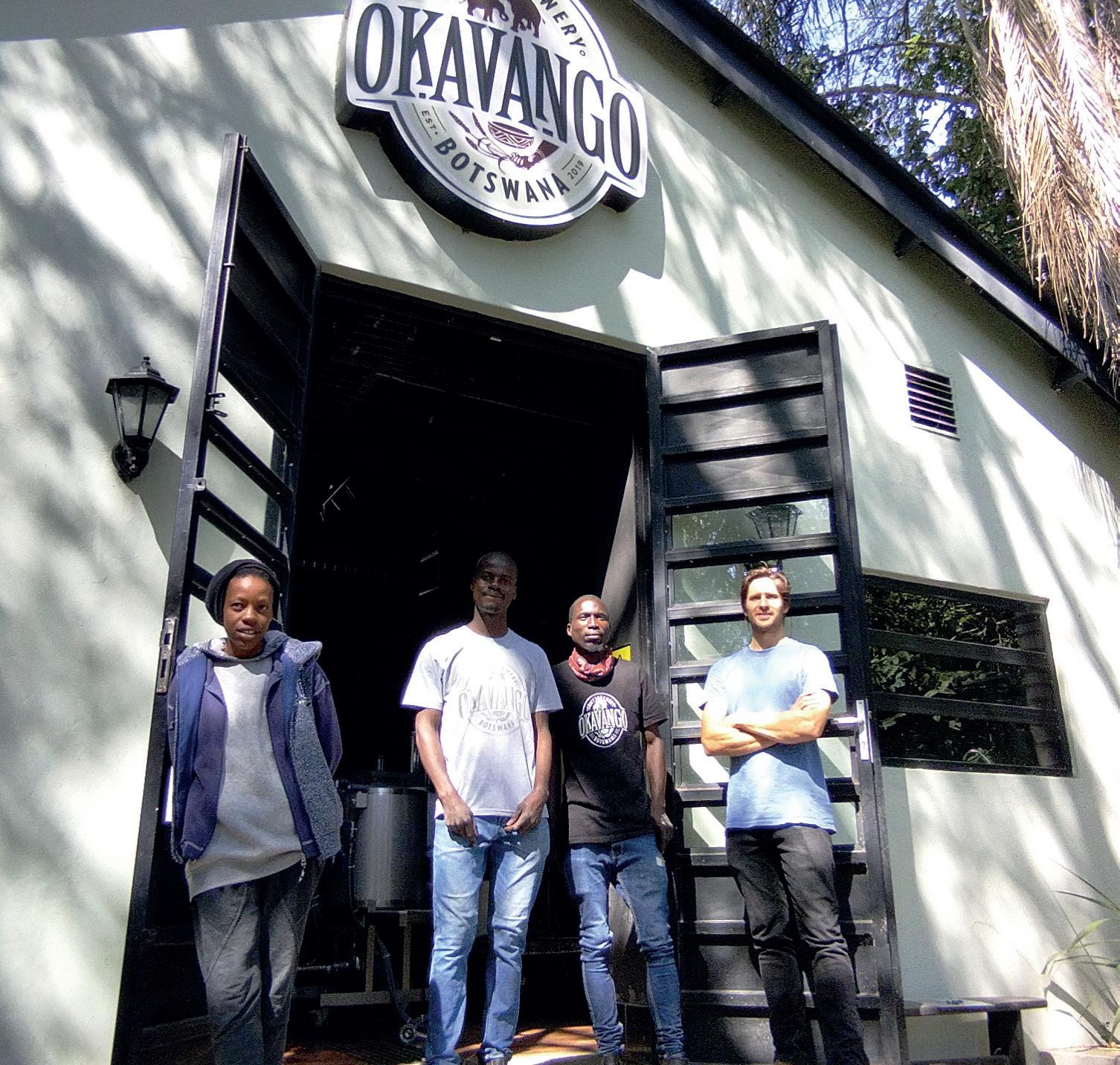
Botswana’s only microbrewery wouldn’t exist without elephants. It sits in Maun, a small but important town serving as the gateway to the Okavango Delta. But its story begins further north on the border with Namibia in a region known as the Panhandle. Here, 15,000 elephants co-exist alongside 15,000 people, most of them subsistence farmers.
Life between the two isn’t always harmonious. Farmers often use obtrusive means to keep the pachyderms away – banging drums, shooting guns – and for their part, the elephants can accidentally destroy a family’s entire crop in seconds simply by walking through it.
So some of the world’s leading elephant conservationists, working together in an organisation called Ecoexist, devised an action plan to get northern Botswana’s subsistence farmers to implement elephant-friendly farming practices. Of course, changing the way you do things costs time and money, and the farmers were initially sceptical of reform, so to sweeten the deal, Ecoexist agreed to purchase any surplus of the farmers’ main crop: millet.
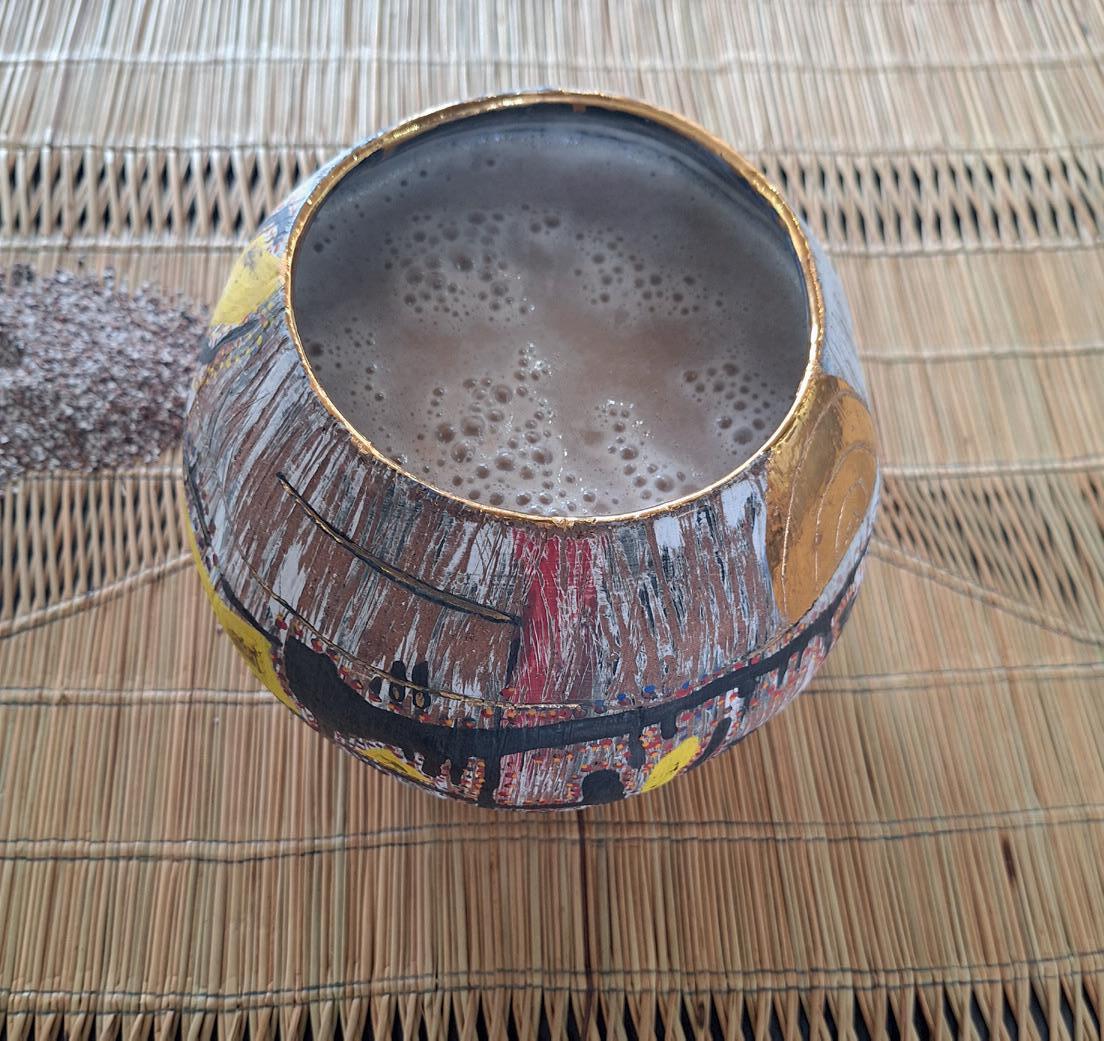
Millet is a cereal grain from the grass family, used as a staple food across Africa in the form of porridges, pastes and breads. It is also widely used in traditional brewing around the continent. Drought-resistant and thriving in nutrient-poor conditions, it is a staple crop in the dusty north of Botswana, where sand passes for soil and virtually no rain falls for six months each year. But since most of the subsistence farmers grow their own millet, there isn’t much of a market for its sale and so the Ecoexist team had to create a market of their own. After bouncing around a few other ideas, they decided the best use for their elephant-friendly grain was to turn it into beer, and in 2020 Okavango Craft Brewery opened its doors.
All of Okavango’s beers feature millet in the grain bill. South African-born head brewer Murray Stephenson has experimented right up to 100% millet, but generally the beers feature between 15 and 30% alongside imported malts.
The BJCP refers to grains like millet as ‘alternative’, but in Africa these are traditional grains, and using them alongside malted barley is a small but growing trend across the continent.
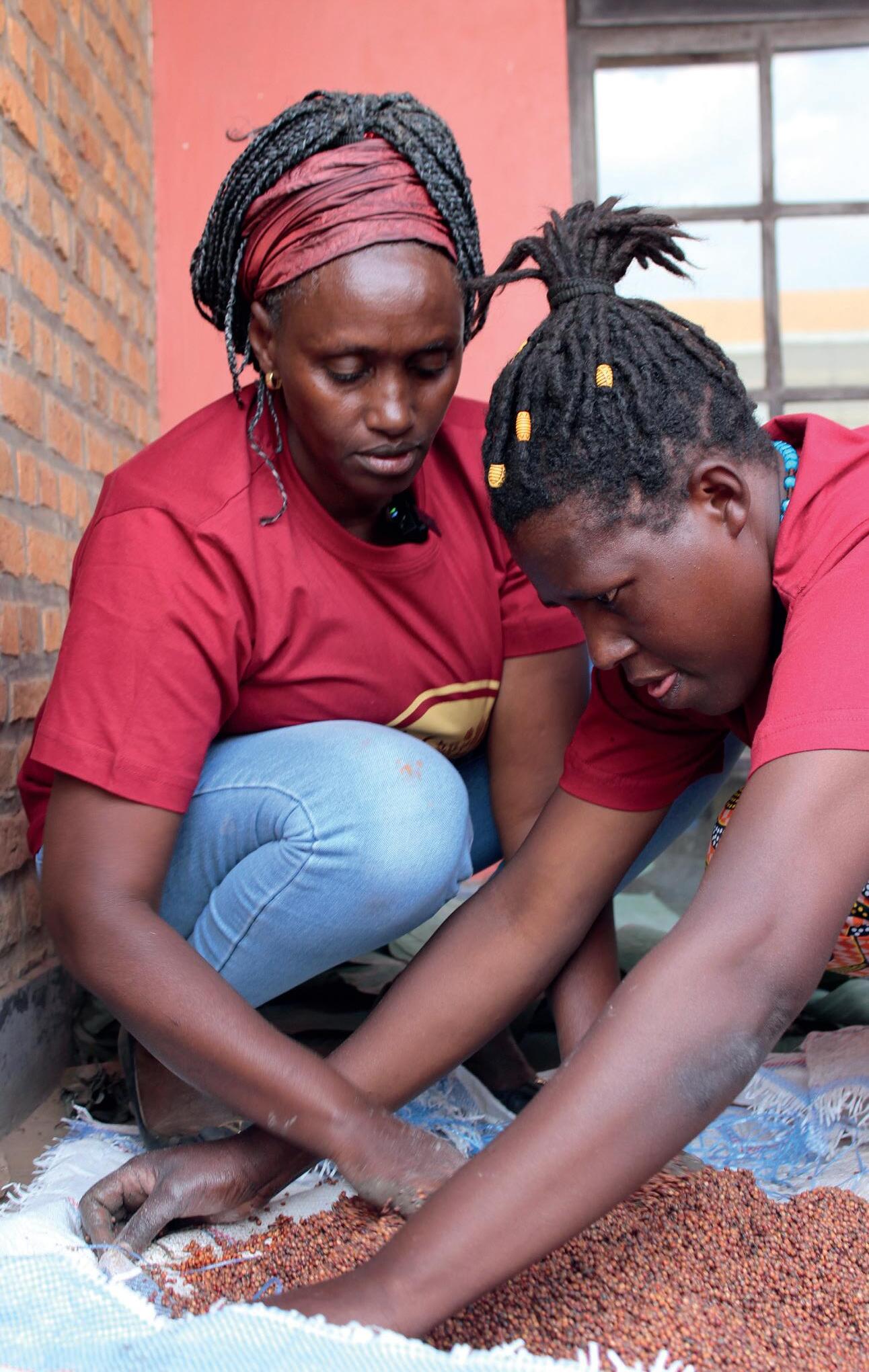
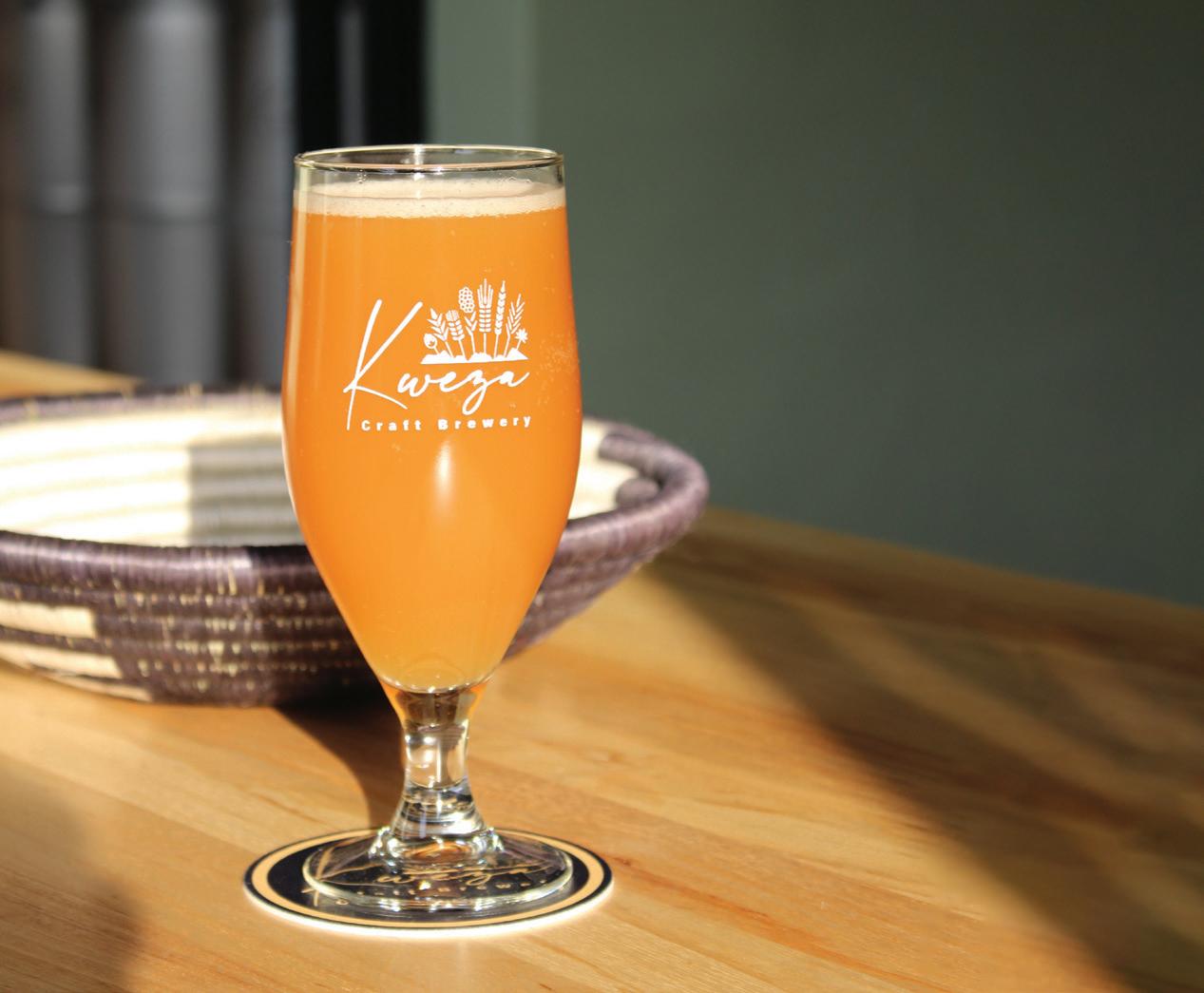
Like Botswana, diminutive Rwanda has just one craft brewery, and like Botswana’s, it boasts a marvellous backstory, fuelled by a drive towards sustainability. Kweza Craft Brewery opened in 2022 following a lengthy crowdfunding campaign that had global reach. It is probably the first country in the world whose craft beer scene was started by women, with the brewery conceptualised as a female empowerment programme, employing women to brew and serve the beers – and supporting female farmers in their traditional grain of choice: sorghum.
Jessi Flynn is the CEO and MD of Kweza Craft Brewery. “It was very important to us to keep Kweza as Rwandan as possible,” she says. “Sorghum is native here, and is part of the endemic biodiversity, so it made sense to utilise it in our beers. It is very drought tolerant and doesn’t require pesticides or fertilisers.”
Kweza’s beers, which include a pale ale, IPA and a stout, all contain at least 70 per cent sorghum, which is locally sourced and malted. They’re served on tap at venues around Kigali, and canned for distribution further afield in the landlocked country. The high percentage of sorghum lends haze, slightly grainy notes and a touch of fruitiness to the beers, but a
Kweza’s beers, which include a pale ale, IPA and a stout, all contain at least 70 per cent sorghum, which is locally sourced and malted.
carefully controlled brewing regime and the use of imported hops means the beers are still familiar interpretations of the styles and more akin to modern craft beer than to traditional ikigage (a thick, sour, opaque beer).
Much like millet and sorghum, fonio is also a member of the grass family; a West African grain again used as a staple starch. It has less of a pedigree as a brewing grain, with traditional beers in the region tending to use millet, but in 2024 fonio became the unlikely star of the beer world when Garrett Oliver began to champion the use of this grain in his Brewing for Impact campaign. The project saw Oliver promoting the use of sustainable grains and collaborating with seven global breweries to create a range of beers using fonio – from a fonio-driven cask ale from Thornbridge to a 100% fonio lager produced by Carlsberg.
Perhaps the most important was the Brooklyn a Dakar Pilsner, a collaboration with tiny Senegalese brewery Maison Kalao. “Four years ago, when we were searching for Senegalese grains, we didn't even know fonio existed,” says Maison Kalao founder Raphael Hilarion. It was by chance during a trip to the east of the country that we discovered it, a surprise and an opportunity to try this incredibly resilient grain.”
Fonio, much like millet, is drought-tolerant and thrives in the poorest of soils, making it a particularly sustainable grain. Like most non-barley grains, it does present the brewer with a range of challenges. “There was little information available on the use of these grains, so we had to experiment ourselves and find the right formula – around 30 recipes per beer,” says Hilarion. “We took inspiration from the traditional West African brewing process and adapted it. Now all our beers contain a percentage of local grains: sorghum, millet, fonio, rice, and cornmeal. Some of our beers are made with 100% African grains.”
This slow but steady rise in the use of traditional brewing grains is helping to shape the African craft beer scene. The African Beer Cup – the continent’s largest beer competition – now has a category for beers using traditional African grains, while South Africa’s Intervarsitybrew, a unique competition open to university brewing teams, has a category for beers that use entirely African ingredients. The ultimate goal for many brewers is to one day see an African style make it into the BJCP or Brewers Association guidelines.



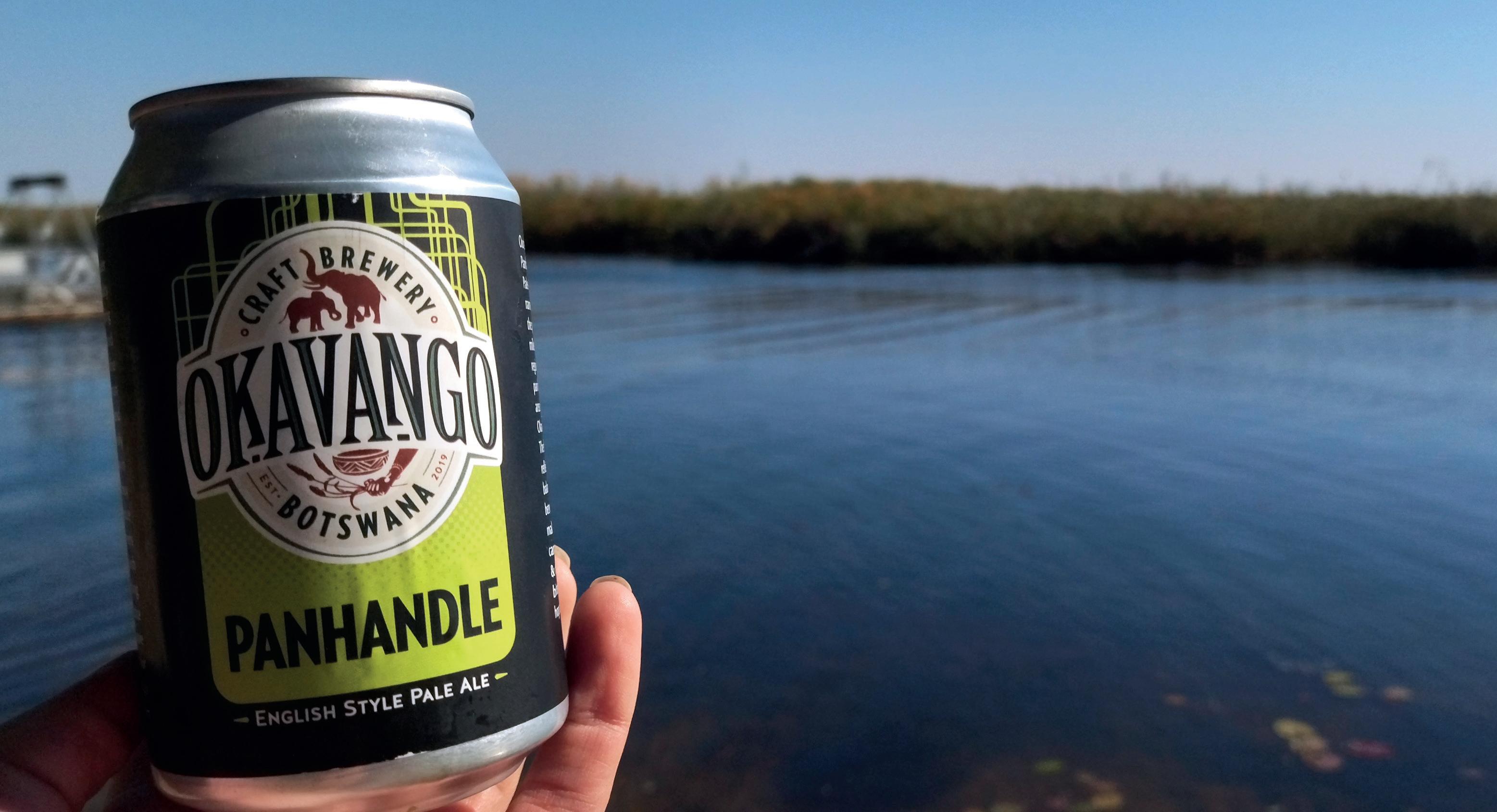
But of course, it’s not all about African-inspired beers – brewers are also winning acclaim with global beer styles. Nigeria’s Bature Brewery boasts an award-winning imperial stout featuring locally grown coffee, Namibia’s microbreweries tend to pay homage to their country’s German history through their beers, and the expat communities in Nairobi and Dar es Salaam ensure that IPAs and pale ales remain on the menus of Kenyan and Tanzanian craft breweries.
Across the continent though, no style is more popular than pale lager and nowhere is this truer than in South Africa. South Africa leads the way in Africa’s craft beer scene, with its oldest microbreweries dating back to the late 90s. There are now around 120 craft breweries around the country, compared to fewer than 50 across the rest of the continent.
South Africa’s breweries range from small country brewpubs serving restrained European-style ales, to progressive breweries pumping out 50 different beers a year, to sizable setups focusing on the country’s beloved lagers – although to survive, every brewer needs to make a pale lager or something akin to it.
The hazy IPA didn’t quite make the splash here it has elsewhere, but IPAs are still the star player on South Africa’s craft beer scene. Some use vast amounts of hops imported from the US or New Zealand, while others are more muted and seek to showcase South African hops.
And there are a few breweries here dabbling in African grains. Johannesburg’s Swagga Breweries won a major award for their 100% sorghum ale in 2024, Tolokazi Beer produces a pilsner that features sorghum alongside barley, and Charlie’s Garage in Cape Town has released beers made with millet and even tzenza, a bitter tuber also known as Livingstone’s potato.
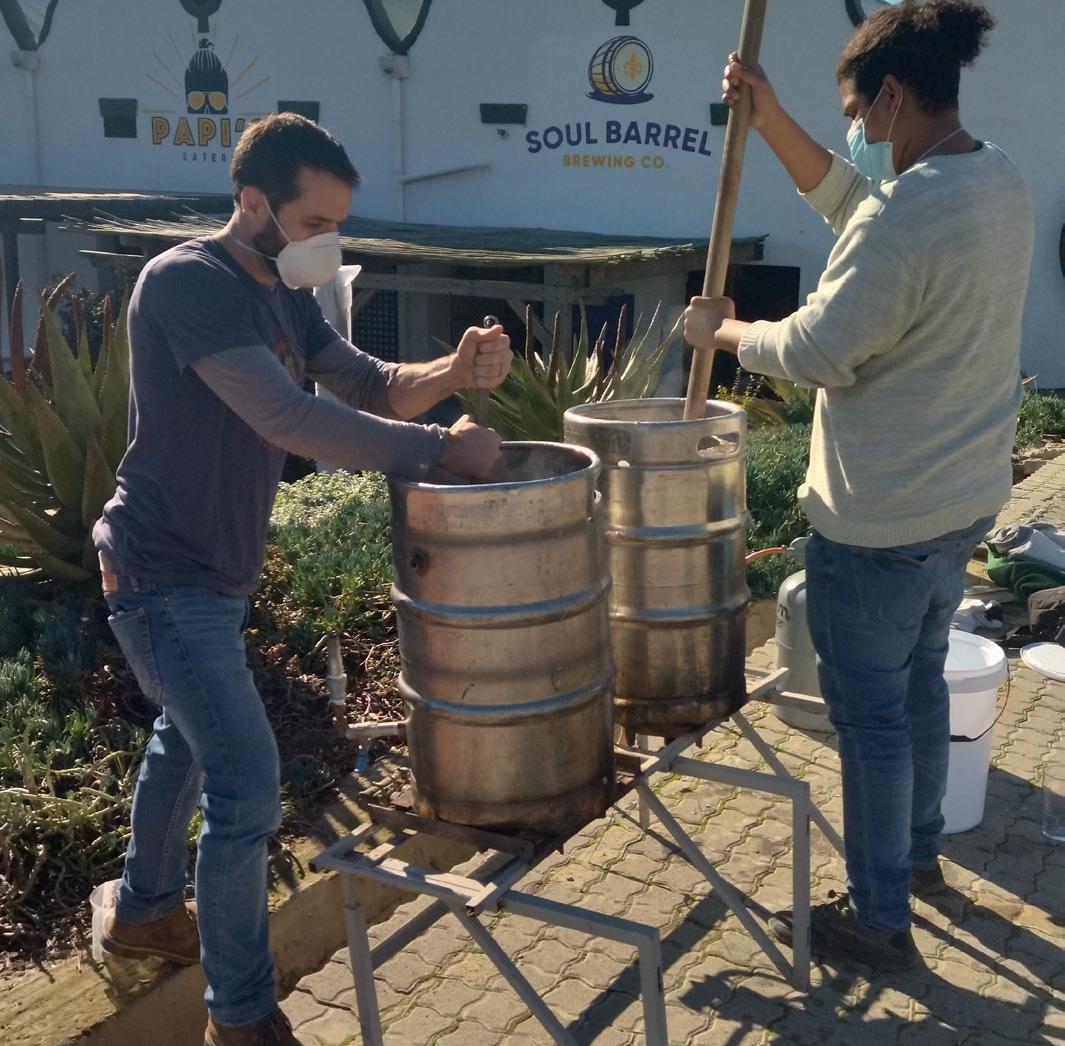
But nowhere will you find a greater homage to all that is South African than at Soul Barrel Brewing, an intensely experimental brewery in the Cape Winelands. American born owner-brewer Nick Smith harnesses wild yeasts from native flora and fauna, malts local grains in his cellar, champions the use of South African hops in IPAs and is a vocal advocate for using traditional African grains.
His Wild African Soul, a collaboration with Johannesburg’s Tolokazi Beer, blends the brewery’s farmhouse ale with traditional umqombothi, a thick, opaque sorghum and maize-based beer that’s been brewed in African homes for millennia. Aged in former wine barrels and dosed with local hops, it is a celebration of Africa, and fittingly won the title of Best Beer in Africa at the 2025 African Beer Cup.
“South Africa is one of the best places in the world to brew beer; with its unique beer history, strong culture, and wide range of ingredients,” says Smith. “Craft beer is all about experimentation and while brewers here of course follow global trends, we also want to create a few of our own for others to follow.”
"South Africa is one of the best places in the world to brew beer; with its unique beer history, strong culture, and wide range of ingredients."
Nick Smith
Soul Barrel Brewing
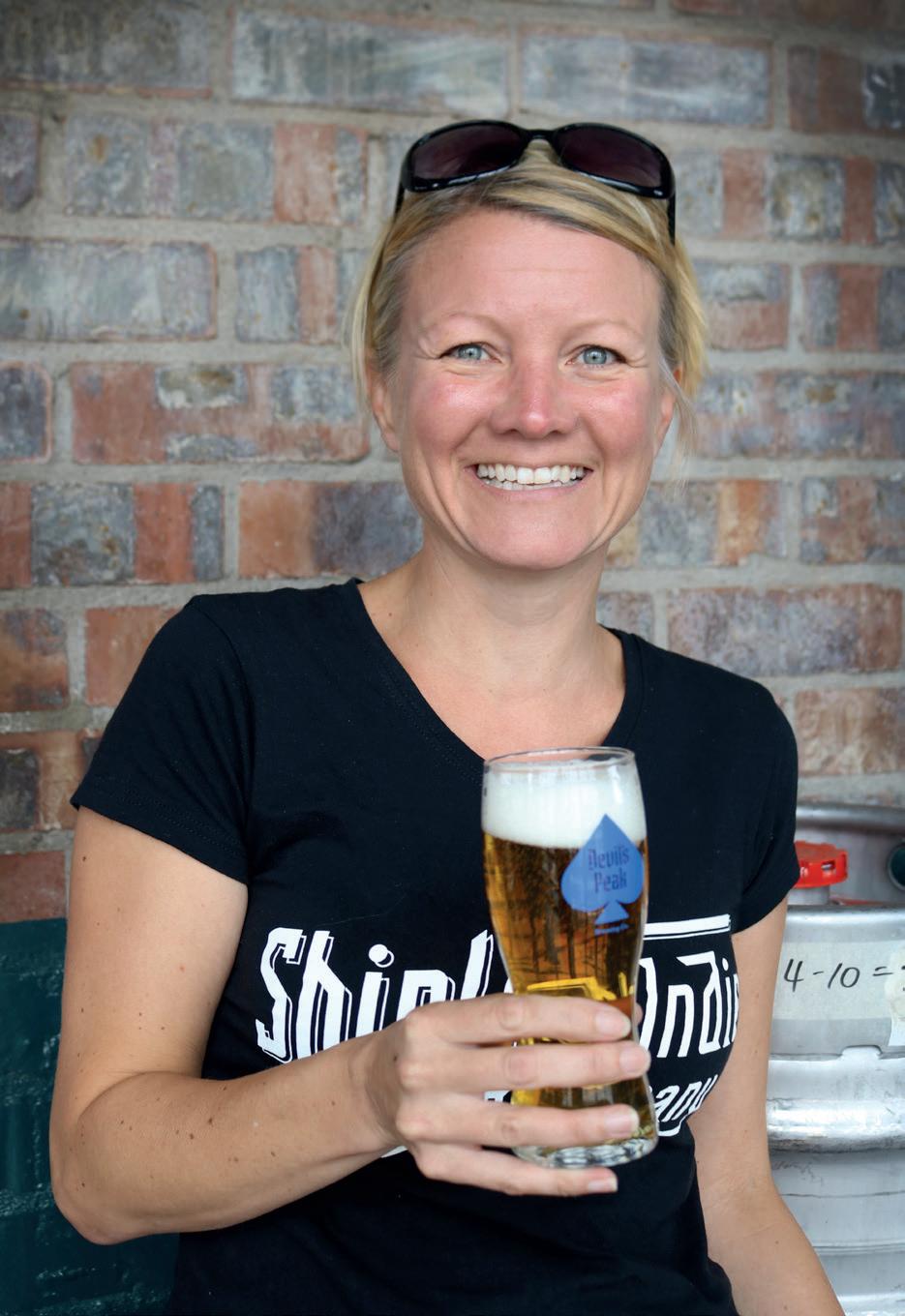
Lucy Corne is a beer writer and educator based in South Africa. She has travelled extensively through Africa, documenting the continent’s beer scene for publications around the world including Craft Beer & Brewer, All About Beer, Good Beer Hunting and Zymurgy. Lucy is Africa’s first Advanced Cicerone and a qualified BJCP judge who has participated in the World Beer Cup, European Beer Star and Brussels Beer Challenge, among others. She is the co-founder and competition director of the African Beer Cup, and a partner and organiser of BeerEx Africa, an annual conference and expo.
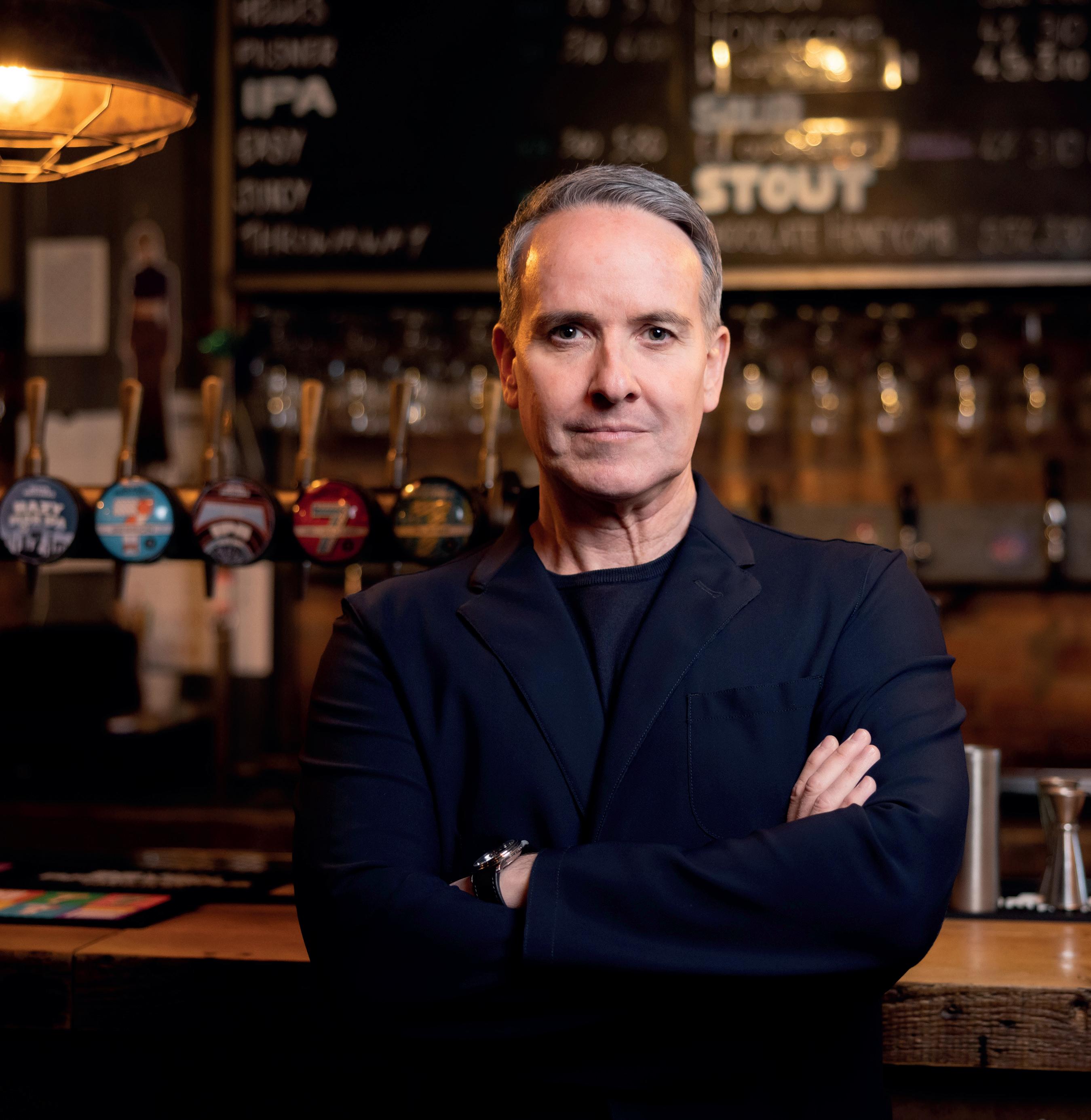
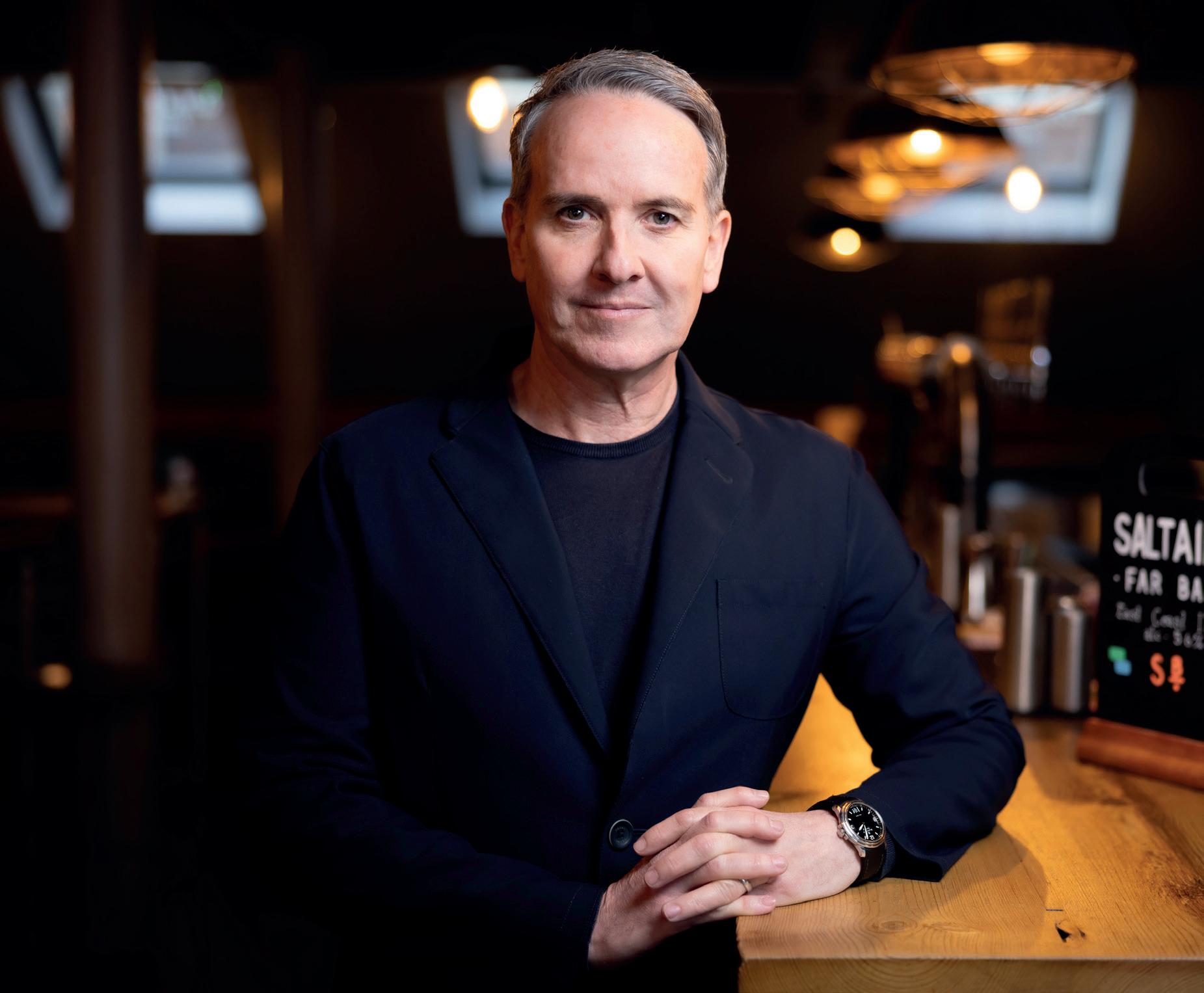
As the keynote speaker at this year’s BeerX, Sacha Lord is one of the most prominent spokespeople for hospitality and will be a familiar figure to many from his many appearances in the media, representing the interests of the sector at a time when industry challenges are many. As Chair of the Night Time Industries Association (NTIA) he represents around 1,500 operators, including SIBA members with taprooms and pubs operating later into the evening. Independent Brewer’s Editor, Caroline Nodder, caught up with Sacha in mid-January, in the midst of a flurry of meetings in Westminster where he was arguing the case for extra support for hospitality businesses in light of the additional business rates burden placed on them in the Autumn Budget. Here, Sacha shares his thoughts on the current storm facing the industry and what, if any, concessions he believes the sector could realistically win from Government…
"We know there's help coming down the line for pubs, but it has to spread across the whole of hospitality. It can't just be for pubs.”
Who do you represent at the NTIA and what are your current priorities?
“I am the Chair of the Night Time Industry Association, which is a trade body that represents organisations and businesses within the night time economy - we class that as being the hours between 6pm in the evening, and 6am in the morning. The membership consists of all sorts - it can be restaurants, bars, we've got casinos, nightclubs, festivals. In total we've got a strong membership of about 1,500 members. And in terms of what we're working on at the moment, it's all about lobbying Government hard over this monumental mess that they've created with regards to business rates. We know there's help coming down the line for pubs, but it has to spread across the whole of hospitality. It can't just be for pubs.”
The economic and political situation the hospitality sector finds itself in has been described as a ‘perfect storm’. What do you see as the main challenges the sector faces in 2026?
“I think the people that survive Q1 - so that's January, February and March - will be okay, but I think in the next three months, we're going to see more closures than we've ever seen before. And I'll be honest with you, it's heartbreaking. I'm speaking to business owners now who are about to lose their livelihood, the businesses that they've had for some of them for decades. And not only are their finances in a complete mess, but their mental health is in tatters. I know people whose marriages are breaking up over this. I was a Labour Party member and a Labour Party donor. I no longer am. I was promised at their manifesto launch that this would be the Party of business and growth by the Chancellor, and it absolutely is not the case. We've seen that investment is stagnant. We've lost 110,000 jobs since the previous Budget, before the last one. When you dig down into that, the vast majority of those are the jobs that would support you to get through college or university. Saturday and Sunday jobs in a pub, they're now sparse because of the National Insurance and wage increase, people have had to cut hours.”
Given that situation, what can the Government do to better support the sector?
“I would urgently say to the Government, that as well as financial support and U-turning on some of what they have already done, I think there's two things that I would strongly ask for. The first one is a VAT reduction. Coming out of Covid, VAT was reduced to 5% and that saved many businesses, and many jobs. Now we're seeing it at 20%, which makes us one of the highest in the whole of Europe. So I'd like to see that reduced. At 13% we would still be the 26th most VATed country, but that 7% reduction would actually really, really help businesses. And the other thing is that there's a tourism minister, but I think there has to be a minister of hospitality. I strongly believe that, because we've seen so many times how they don't understand the sector. We are the fifth biggest industry in the whole of the UK, we are the third largest employer, and we need a seat at the table!”
Do you realistically expect to win any concessions for hospitality in the coming months?
“I think we're going to see something on business rates [An announcement was expected as this magazine went to press]. I also think the pub has really pulled on people's heartstrings, and we've seen that from the pages of most major newspapers. The Sun yesterday ran something on it – and being from Manchester and next to Liverpool, I can't retweet the Sun [due to the Sun’s false coverage of the Hillsborough disaster] - but the pressure is really on. And I think it pulls on people's heartstrings because as kids, you probably went to the pub with your dad, I know I did. And I think of my granddad when he lost my grandma and at six o'clock each night, he used to go down to his local pub. He wasn't great for the landlord because he'd sit nursing the same pint for two hours, but he'd see his mates. And if he didn't do that, he'd be sat in his front room all by himself, he'd be lonely. So I think this has really pulled on the public's heartstrings. All of a sudden they've realised how powerful we are when we all come together, whether it's the NTIA, SIBA, UK Hospitality, the BBPA - we all came together for this one purpose, and we are a very powerful voice. So I think they're going to find it very hard to ignore us.”
How do you view the independent beer market in the UK?
“I really support it. I sold my businesses a couple of years ago. The Warehouse Project and Park Life, which was a festival for 80,000 people. It's now owned by an American company called Live Nation. But I've sat back since then, and I've looked at it. And sometimes when you're in the thick of it, it's always about selling tickets, selling tickets, selling tickets - I was blinkered. That's all I was interested in. But now I think, with these big, large scale festivals like Leeds, Reading, Cream Fields, Glastonbury. I understand why they have to do sponsorship deals with the likes of Heineken and the big guys, but I think they should carve out 20% for craft beer, to support the local brewers. And I think if some of the big festivals came out and said that they'd get so much love and support. Because they're seen as these huge, big corporate monsters that wheel in and wheel out again and take the money. And I think there's a real opportunity missed there.”
Continued on page 35
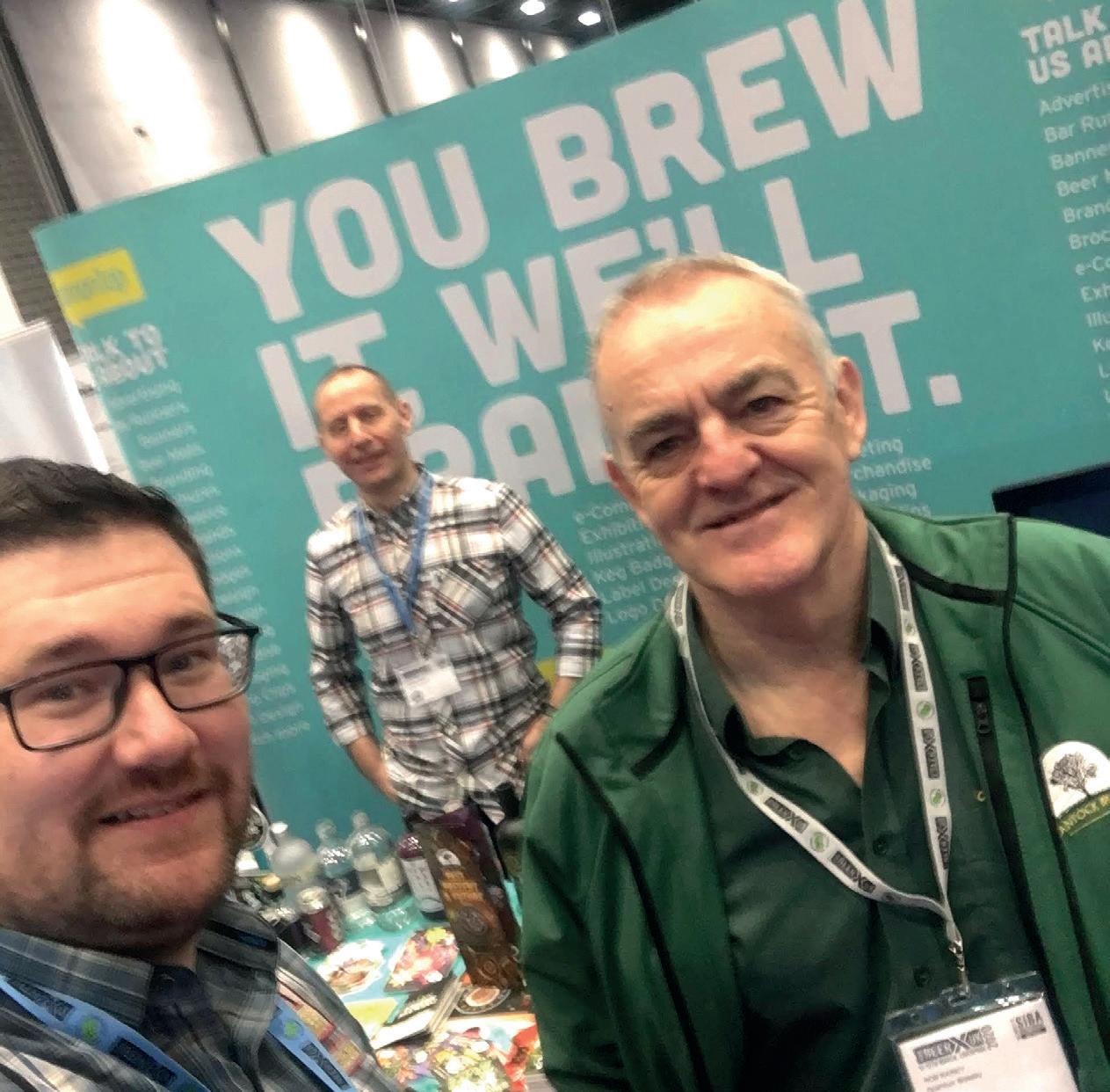
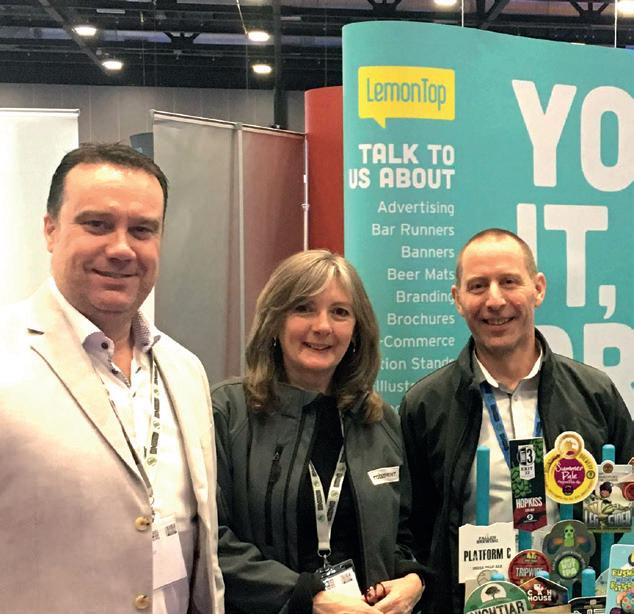
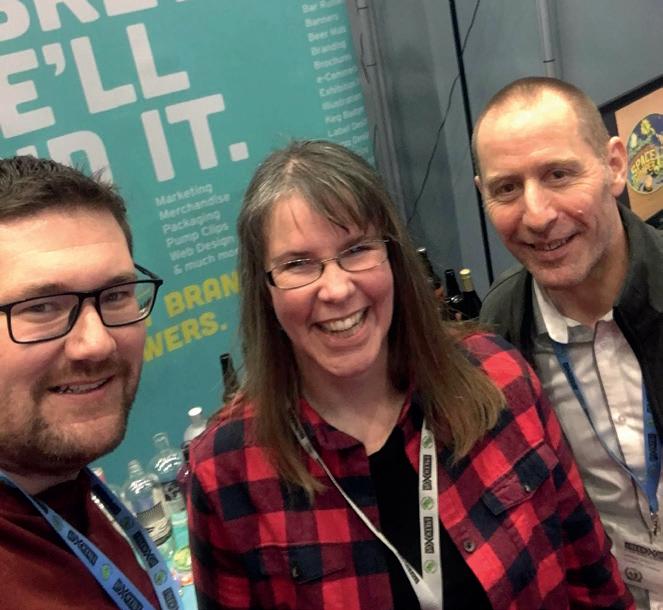
The people who are surviving at the moment and who are getting footfall are the ones who are actually putting things on, so pubs, for example, are putting on more quizzes or darts competitions or a live band maybe one night. They're the ones who are getting the footfall.
Are you seeing any opportunities for growth in the sector in 2026?
“It's a really negative answer, but I don't at the moment, to be honest. I think it's survival of the fittest over the next 12 months. The people I'm speaking to are not investing at the moment. They're just watching their bank balances.”
How are you seeing consumer behaviour changing and how is it affecting the sector?
“If I think back to when I was 16, 17, 18, and just starting to go out, quite frankly when I look back on myself, I must have been a complete disgrace, because if I didn't end up in a kebab shop at two in the morning - that's when Hacienda used to close - it wasn't a very good night! And I was also one of these people on a Friday night who would meet my mates in the park on the park bench, and we’d manage to get a bottle of Diamond White by getting someone to go to the off-licence for us and get it. But now, kids under the age of 25 one in five don't drink alcohol. And I was shocked yesterday when I saw another government policy that came out. They want to ban 16 and 17-year-olds from drinking non-alcoholic beer. And I think that is such a mistake, because actually, if you start drinking these non-alcoholic beers, there's a good chance you're going to remain on those non-alcoholic beers, rather than going hell for leather and binge drinking, which is what my generation used to do. So again, another ridiculous policy. But from my experience, people are certainly drinking less. The spend per head at my events started to go down. I think it was something to do with social activities changing during Covid and people
not understanding what it used to be like. People were locked down for two years during Covid, and they got into gaming and that kind of thing instead. So I'm definitely seeing a change there.”
Have you been inspired by any recent innovations you’ve seen in the sector?
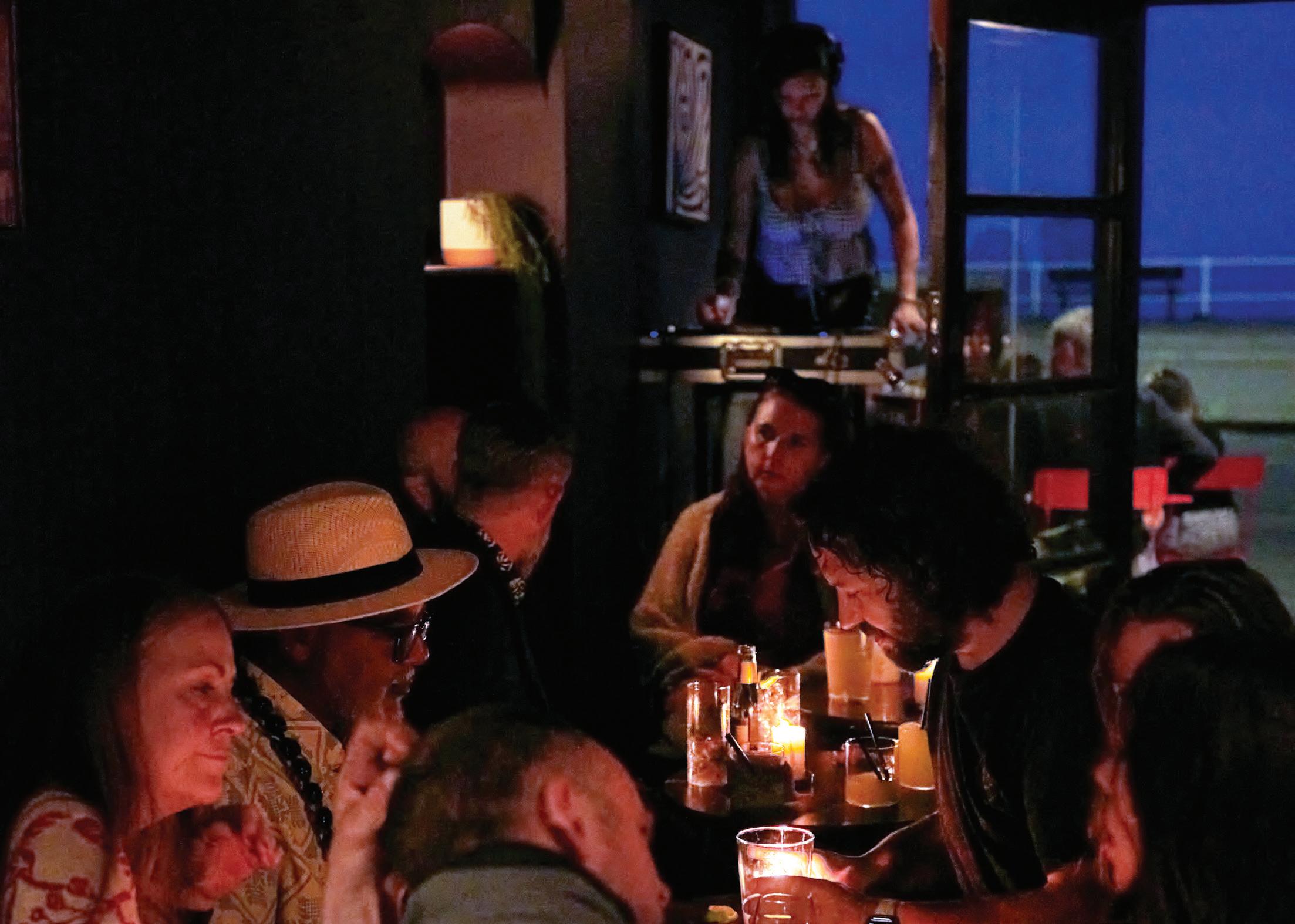
“I wouldn't say necessarily inspiring, but the people who are surviving are the ones that are adapting. So you see some really good success stories, like Flight Club, for example, the darts concept. The people who are surviving at the moment and who are getting footfall are the ones who are actually putting things on, so pubs, for example, are putting on more quizzes or darts competitions or a live band maybe one night. They're the ones who are getting the footfall. The ones that are just opening the doors and expecting people to come in when we know money is so tight at the moment are not getting the footfall, with the cost of living crisis and the cost of a pint having been forced up. Not by the landlords, I’d add. So many times I get a kicking from people, my friends even, who go to Spain on a holiday in the summer and buy a pint for two Euros, then ask, ‘Why am I paying £6.50 in Manchester?’ And you've got to explain, that when you break it down, we're paying alcohol duty that’s 20 times more than a pint in Spain or Germany, which is crazy. And when you've paid for all your costs, all of them, the profit on a pint is 12p so we've been forced to charge £6.50. The public aren't actually getting that. So the people that are putting on a bit of entertainment, a reason to visit, are the ones that are surviving.”
Continued on page 37



We've lost 110,000 jobs since the previous Budget, before the last one. When you dig down into that, the vast majority of those are the jobs that would support you to get through college or university.
Saturday and Sunday jobs in a pub, they're now sparse because of the National Insurance and wage increase, people have had to cut hours.
What was your best ever night out?
“My best night out was the first time I went to the Hacienda. It was 1989 so it was actually at its absolute peak. We'd heard all the cool kids at school in the sixth form talking about the Hacienda, and this is when Manchester was known as Madchester - so the Stone Roses, Happy Monday's, New Order. And my friend, Pete Armistead, and I walked into the Hacienda. There were 1,800 people in there, and we thought, ‘what is this ridiculous dance that everybody's doing?’ It was this acid house dancing, arms in the air, and we just laughed. Well within half an hour, the energy and the atmosphere took us, and we were doing the same thing. It was probably only six months after that, we realised that of 1,800 people, we were probably the only two people not on ecstasy - but that was something I had just never experienced before. I'd been going to clubs where you play a record, and then you might announce that it's Tracy's birthday, or something like that. But we walked in there and Mike Pickering was mixing these house tracks that I'd never heard before. And I remember the last one he played was Black Box, Ride on Time, and then it was on Top of the Pops three months later, I was like, ‘I heard that in the Hacienda!’ So that was my best night out, and it undoubtedly changed my life.”
Who do you most admire in the industry and why?
“Someone I really respect in hospitality, and it's high end, but we have a chef in Manchester called Tom Barnes who cut his teeth at L’Enclume in the Lake District, which has three Michelin stars. And he opened in Manchester and immediately got a Michelin star, but he's done it a different way to other Michelin star restaurants. It's very, very casual, and he chooses the set list himself, the music that he plays and everything. And it's just extremely friendly. There's no aloofness about it. So he's certainly up there as someone I'd respect. Also Tom Kerridge as well. People listen to Tom, and I do know that when he did his interviews last week [Tom Kerridge spoke out in the media over business rates for hospitality in January], that was a major turning point on business rates.”
What is your favourite beer, and where would you most like to drink it?
“I know this won't impress anybody, but one of my favourite places is Barbados. I just love how it's so casual, and I love all the little shacks on the beaches and everything like that. And for me it would have to be sat at half four on the beach in Barbados with a Banks in my hand, which is their local beer, watching the sun go down. It's just the most perfect thing.”
An outspoken voice for the hospitality and cultural sectors, Sacha Lord is one of the UK’s most wellknown night time economy experts. Starting his career in music at the legendary Hacienda and moving on to own one of the most renowned nightclubs in Manchester, Sankey’s Soap, Sacha went on to co-create Parklife (Europe’s largest metropolitan festival) and The Warehouse Project - the largest nightclub in the world.
From 2018 to 2025, Sacha held the role of Greater Manchester’s Night Time Economy Advisor to the city region’s Mayor Andy Burnham. After seven years in the role, he stepped down to concentrate on his role as Chair of the NTIA and adopt a broader, national voice for hospitality, without being tied to political policy or specific region.
Sacha will be appearing on the Future of Brewing stage at BeerX on Wednesday March 18th from 17:15-18:00.

The popularity of beer and cider demands quality. A reliable and quality supply of CO2 is therefore crucial to your business, whether you operate within the manufacturing industry, or if you own a bar or restaurant.
Carbonation (or ‘forced’ carbonation) within beers and ciders is crucial for a variety of reasons. Not only does it enhance appearance, but the flavour and aroma are both improved too. Forced carbonation is the method of choice for breweries and bottling plants today.
We understand the need for a reliable CO2 supply, so as well as manufacturing a CO2 pressure vessel that is tailored to your exact requirements, we can work with gas suppliers to source a CO2 supply without the need to be tied to a single gas contract.
Come and visit our stand at
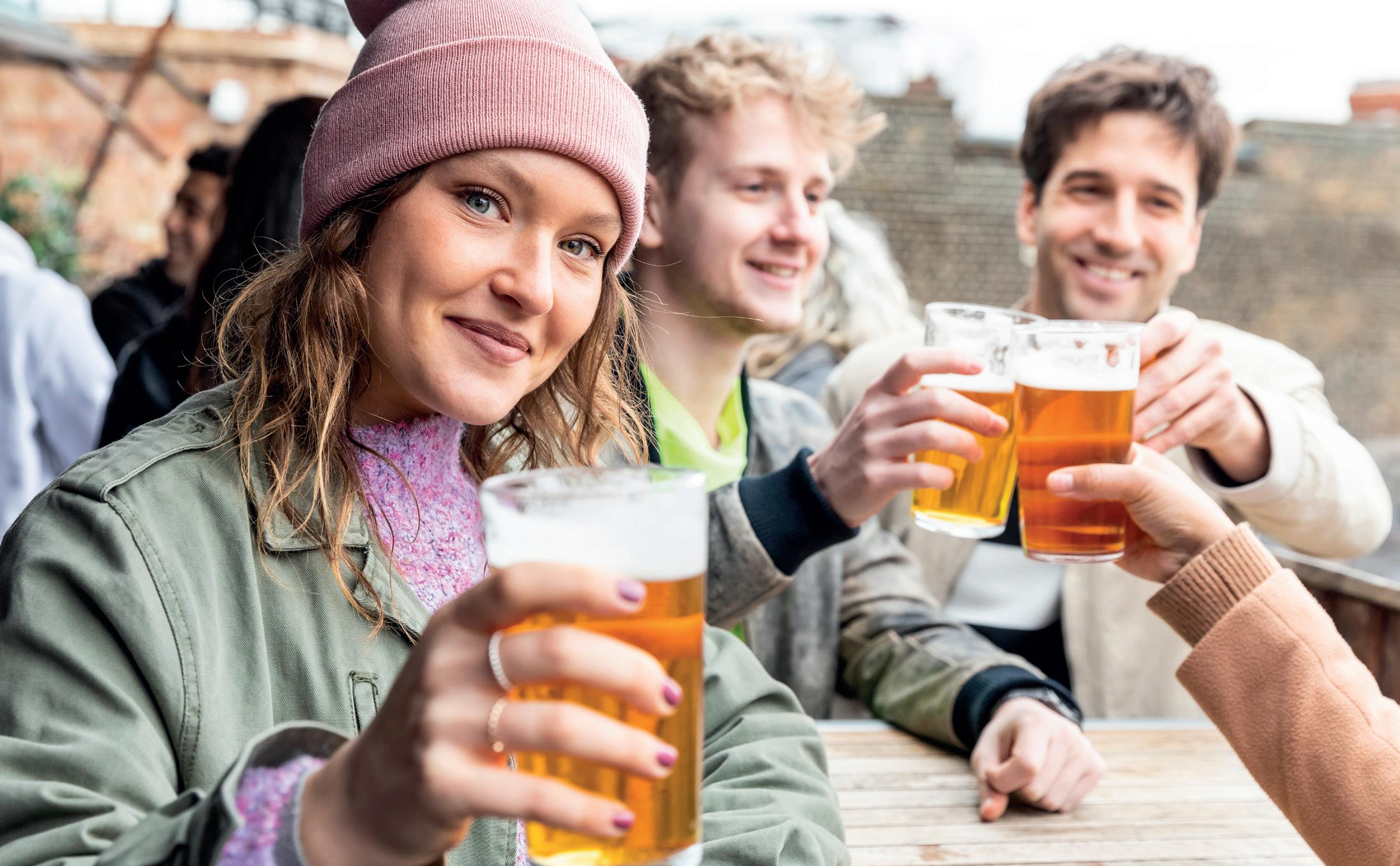
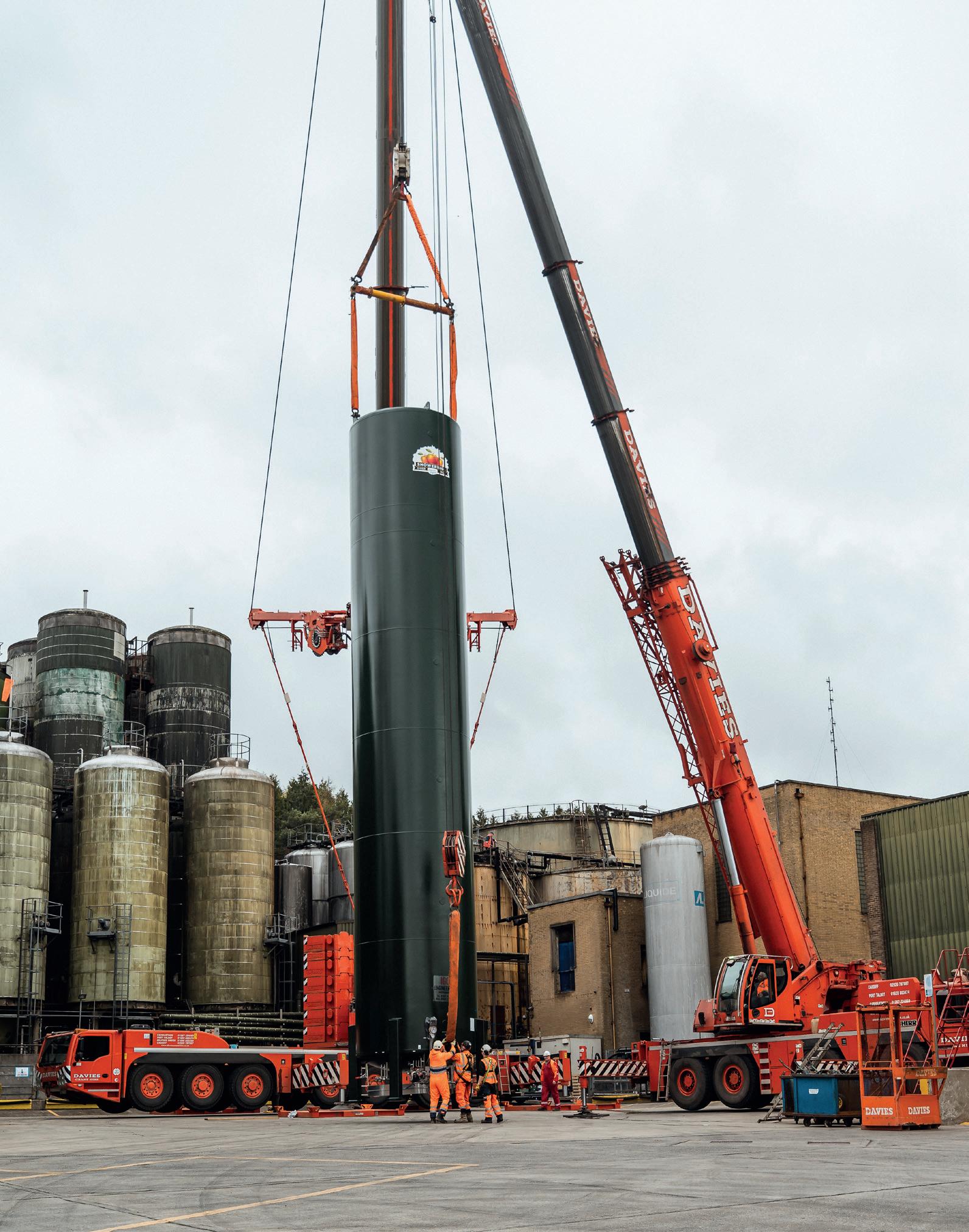
Our Comprehensive Service Guide
■ Sales centre of pressure vessels
■ Vessel capacities from 120ltr up to 2500 tons
■ New and reconditioned pressure vessels
■ Engineering and servicing undertaken
■ Mixed Gas filling
■ Contractual advice and negotiations
■ Pressure system safety regulations 2000 (from HSE)
■ Hall & Woodhouse ■ Aston Manor ■ St Austell
■ Hepworths ■ Adnams ■ McMullens
Get in touch or request a quote today
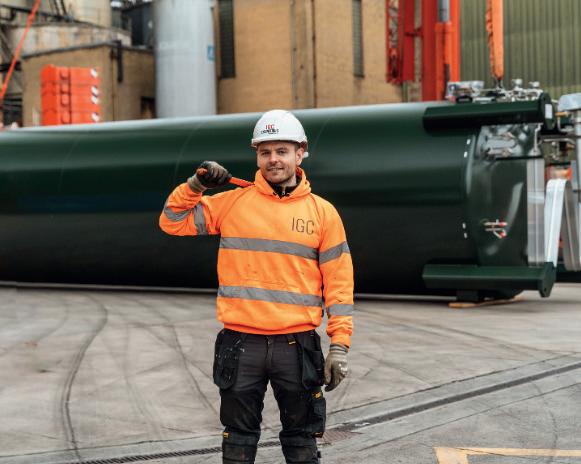
From installations to inspections, IGC’s 25 year experience is ready to help you. With storage tank packages, including rental and purchase, its time to claim gas independence!
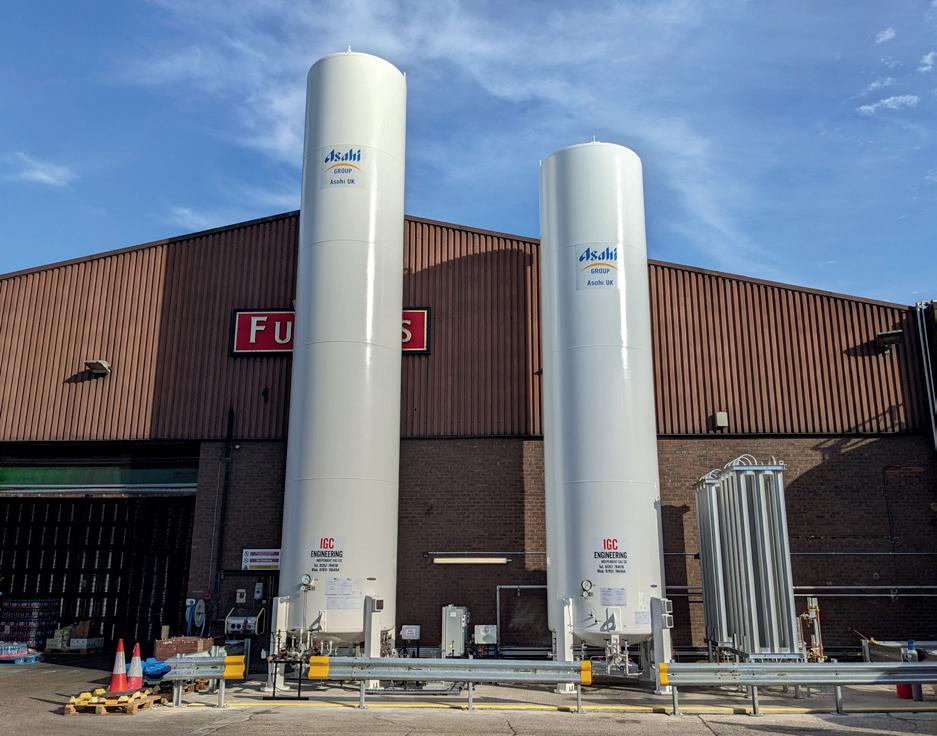
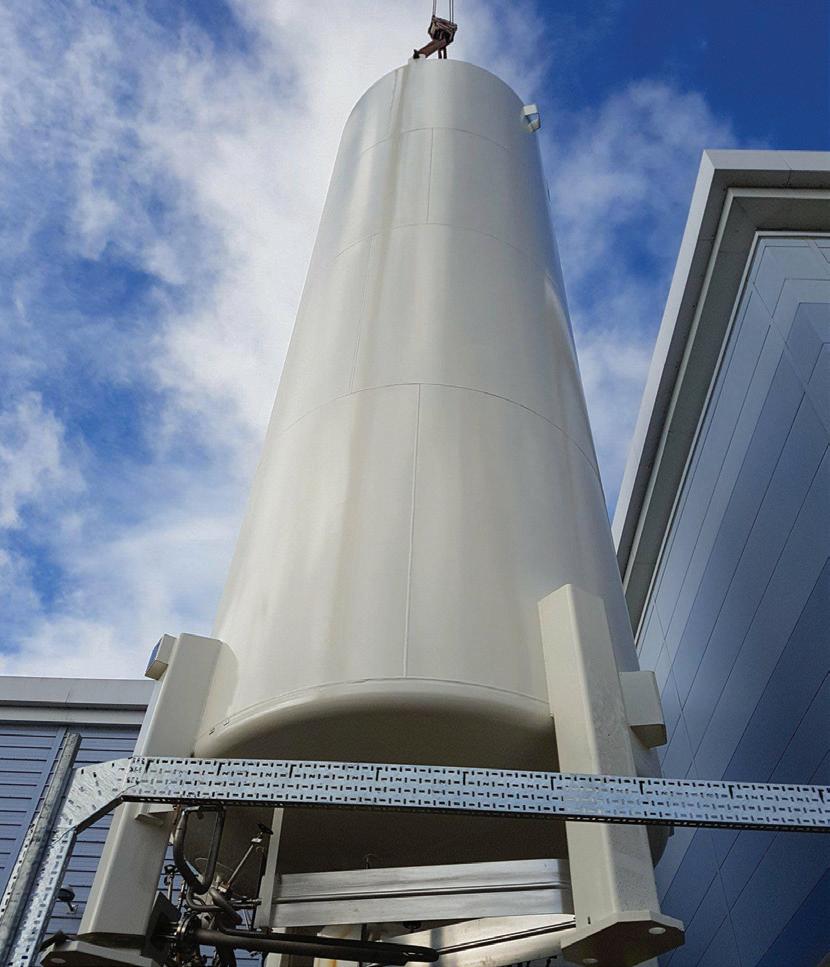
Phone: 01257 794170
Mobile: 07931 765454
info@igc-pressure-vessels.co.uk
www.igc-pressure-vessels.co.uk
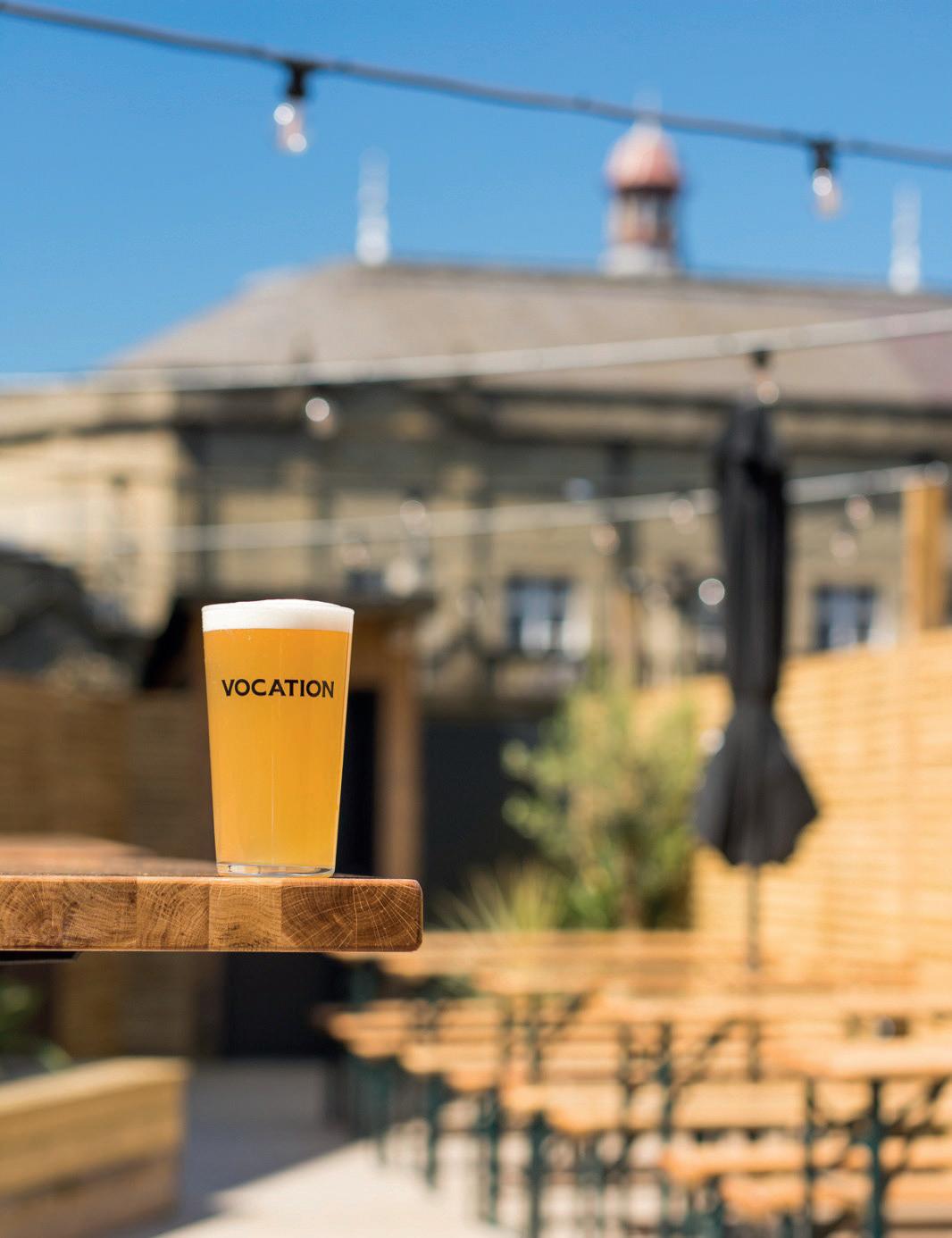
From humble beginnings in a converted chicken shed at the very top of the longest continuous incline on the hills above historic Hebden Bridge, Vocation is now building an independent beer brand known across the UK and beyond. Founded in 2015 by John Hickling, the business has grown rapidly since, with annual production now of an impressive 60,000HL, and since 2023 the operation has been overseen by CEO Gail Lumsden. With career experience in senior roles across the drinks industry, Gail is best known for building and growing strong, relevant brands within the market. She has now brought those talents to bear at Vocation, where the focus is on harnessing the brewery’s independent credentials and fleetness of foot to drive growth in the on-trade by building consumer awareness and connection with the brand and its story. The quality and flavour of Vocation’s beers remains paramount, of course, and the team is also focussed on innovation and ensuring its portfolio of products meets the needs of an ever evolving retail and pub market. Independent Brewer’s Editor Caroline Nodder met up with Gail in January to hear more about her ambitious plans for the brand, and how Vocation is supporting the pub trade that it is so intrinsically linked to…
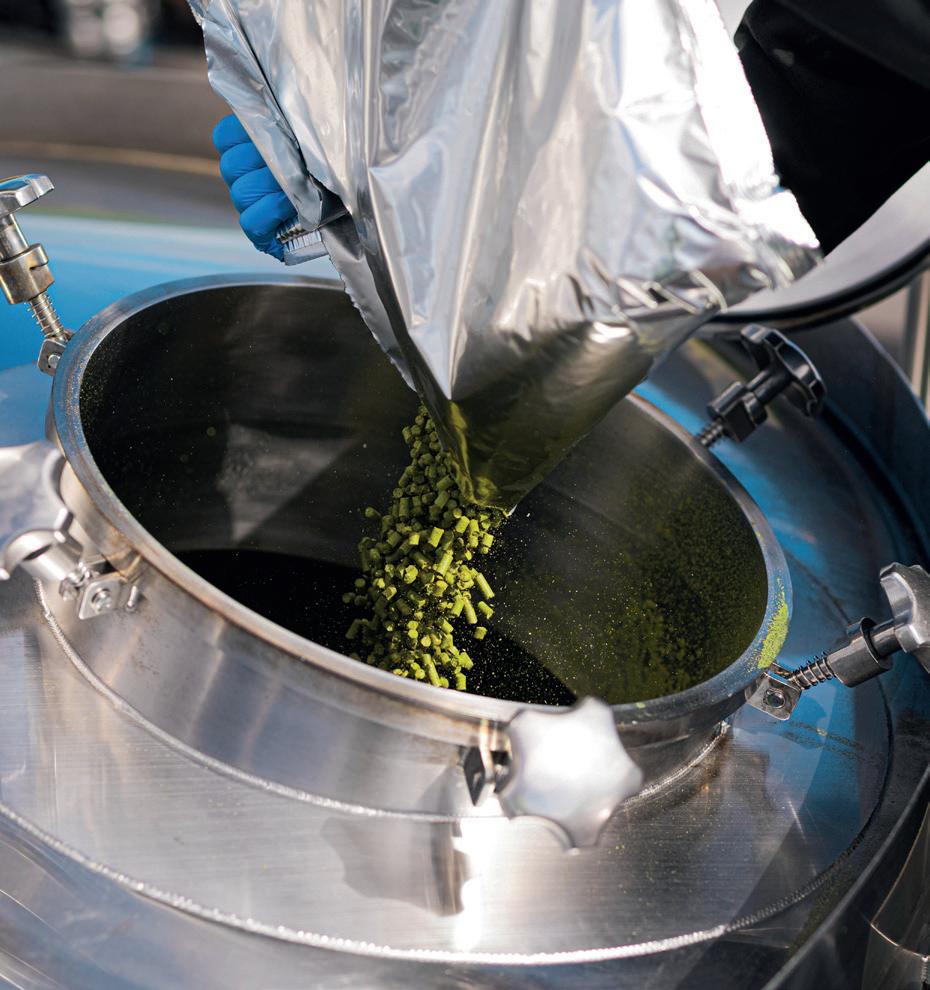
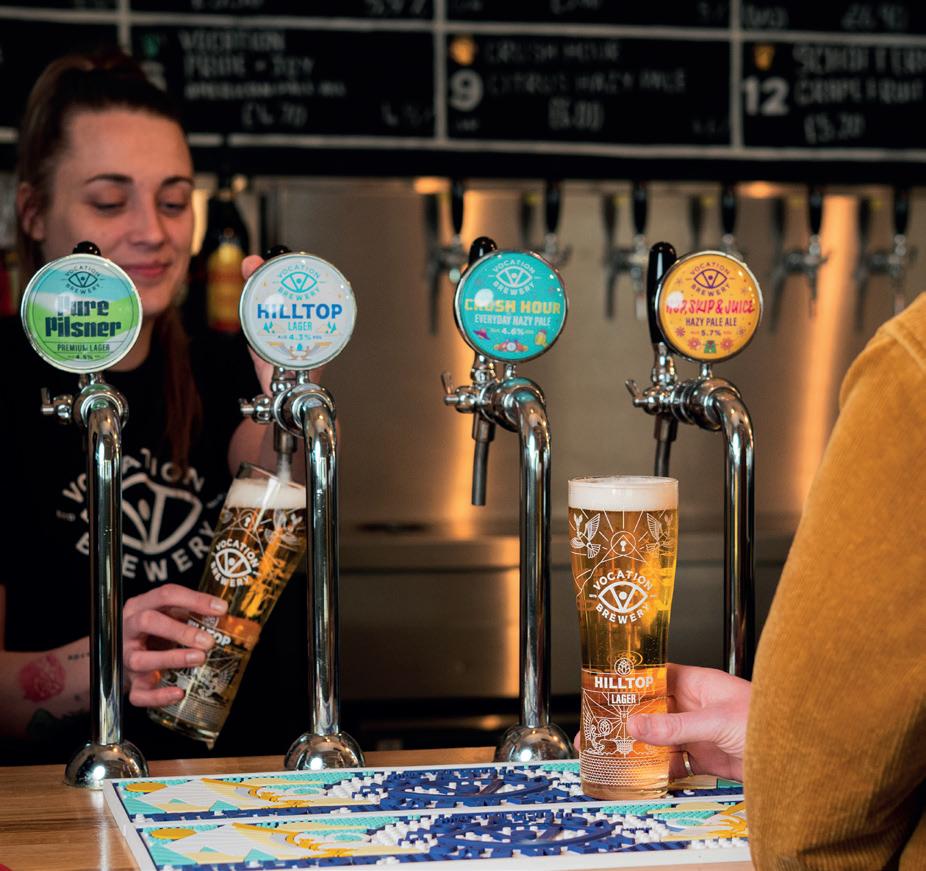


Name: Vocation Brewery
Founded: 2015
Location: Hebden Bridge, Yorkshire
Annual production: c60,000HL
Production split: 12% Cask, 18% Keg & 68% Cans (2% balance being “other”)
Head Brewer: Robert Beck
Total Staff: c130 people (76 full time & 50 part time)
Number of Pub/Taproom sites: 4 (Hebden Bridge, Halifax, Manchester & Sheffield)
Core beers: Life & Death (Classic IPA 6.5% ABV). Crush Hour (Everyday Hazy Pale 4.6% ABV), Hop, Skip & Juice (Hazy Pale 5.7% ABV), Heart & Soul (Gluten free IPA 4.4% ABV), Love & Hate (NEIPA 7.2% ABV), Bread & Butter (Modern Cask Ale 3.9% ABV), Naughty & Nice (Range of Stouts various ABVs) & Hilltop Lager (Lager 4.3% ABV)
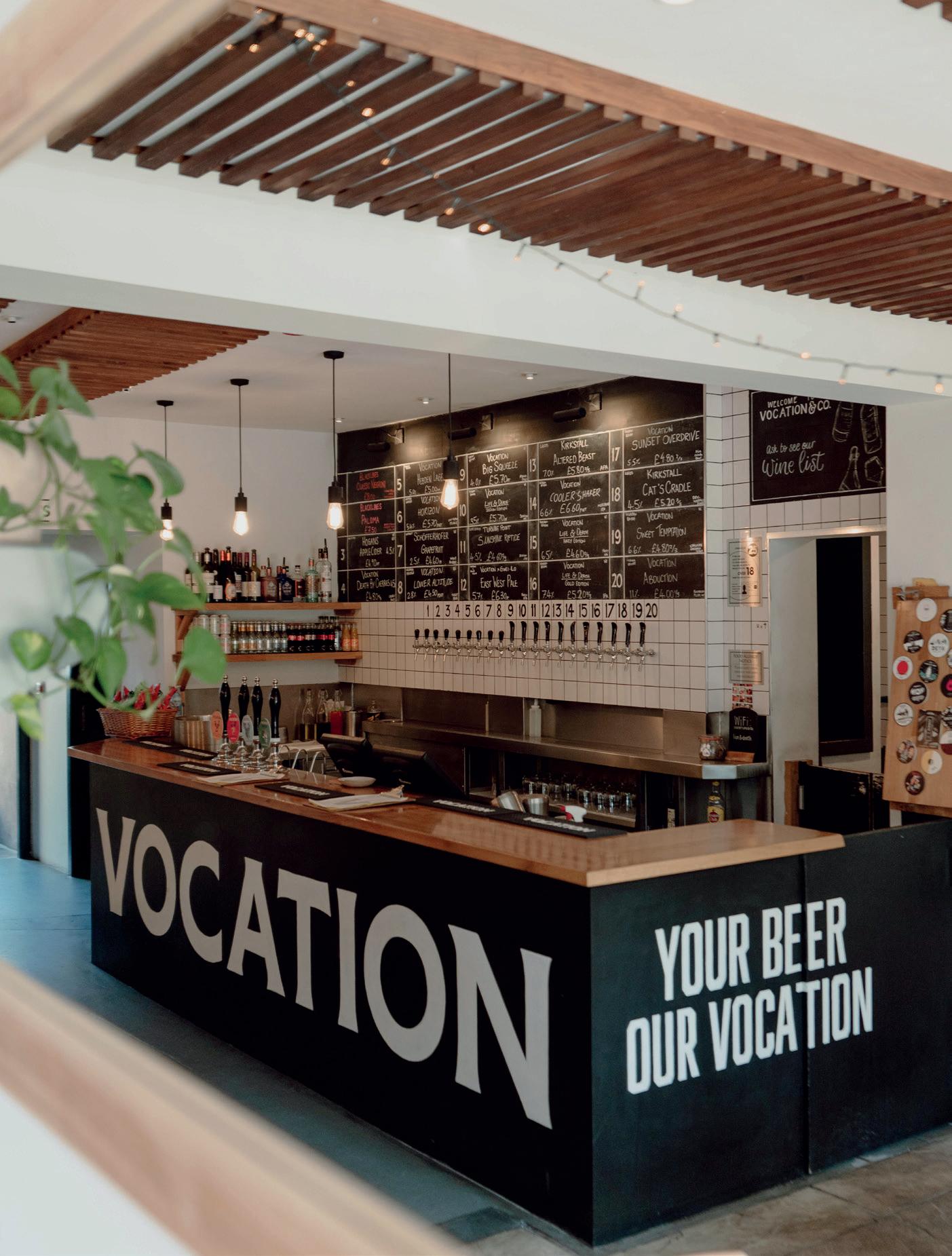
When was Vocation founded and how has the business developed since then?
“The business was founded in 2015 by John Hickling. John previously worked in IT, and had a desire to do something more exciting than spreadsheets. He started brewing beer in his kitchen, and discovered that all his friends and family loved it. So he returned to his native Yorkshire, and he transformed what was an old chicken shed here at the top of the hill at Cragg Vale above Hebden Bridge. It is at the top of the longest continuous incline in England. It's not the place that you would look to obviously as a site for a brewery! So it was a bold choice that John made, first of all to leave his job in IT, and then also to build a brewery on the hilltop. He was passionate, and I suppose an obsessive to some degree, about brewing beer that he liked, that was quality beer, that had full flavour. And since then, it's grown from a small Yorkshire brewery into a nationally recognised beer brand, selling the equivalent of 10,000 pints a year, both in the UK and internationally. We now sell to around 30 export markets around the world.”
What is your background and how did you come to take the helm at Vocation?
“I've been in the alcohol business all my life. I haven't had what I’d call a traditional career path, following a function, I'm a generalist, and
I've always worked across functions and internationally. I was a senior exec at Diageo and then at SAB Miller. And I'm a Board level leader with expertise in strategy, but also in how you drive profitable growth in branded businesses. I'm a problem solver at heart. And that's what I love doing. I joined Vocation as it was expanding and scaling up in December 2020 initially as Non Executive Chair. And then I expanded my responsibilities to become CEO in October 2023. John wasn't in the business so much on a day to day basis at that time, but John still sits on our Board as a Non Exec.”
And what was your priority when you came on board?
“First of all, putting consumers and customers front and center in our business. And actually, Vocation already made great beer, but it's about making great beer and then building a brand in Vocation.”
What are your main areas of focus currently in your role?
“It's about scaling up for growth, building the brand and brand awareness, leveraging our scale and flexibility. This is one of the things I think where independent brewers can do something that the majors can't. It is about trying to leverage scale while being agile and innovative. It's both scale and agility that I'm trying to balance, but it's really about building the Vocation brand. If you think about something like Coca Cola, for example, if there was a massive earthquake that destroyed all
Continued on page 43
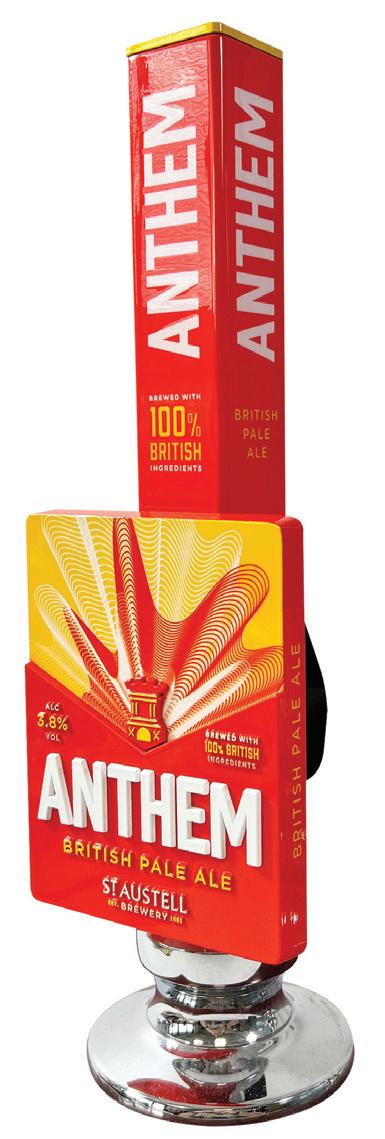
The business was founded in 2015 by John Hickling. John previously worked in IT, and had a desire to do something more exciting than spreadsheets. He started brewing beer in his kitchen, and discovered that all his friends and family loved it. So he returned to his native Yorkshire, and he transformed what was an old chicken shed here at the top of the hill at Cragg Vale above Hebden Bridge.
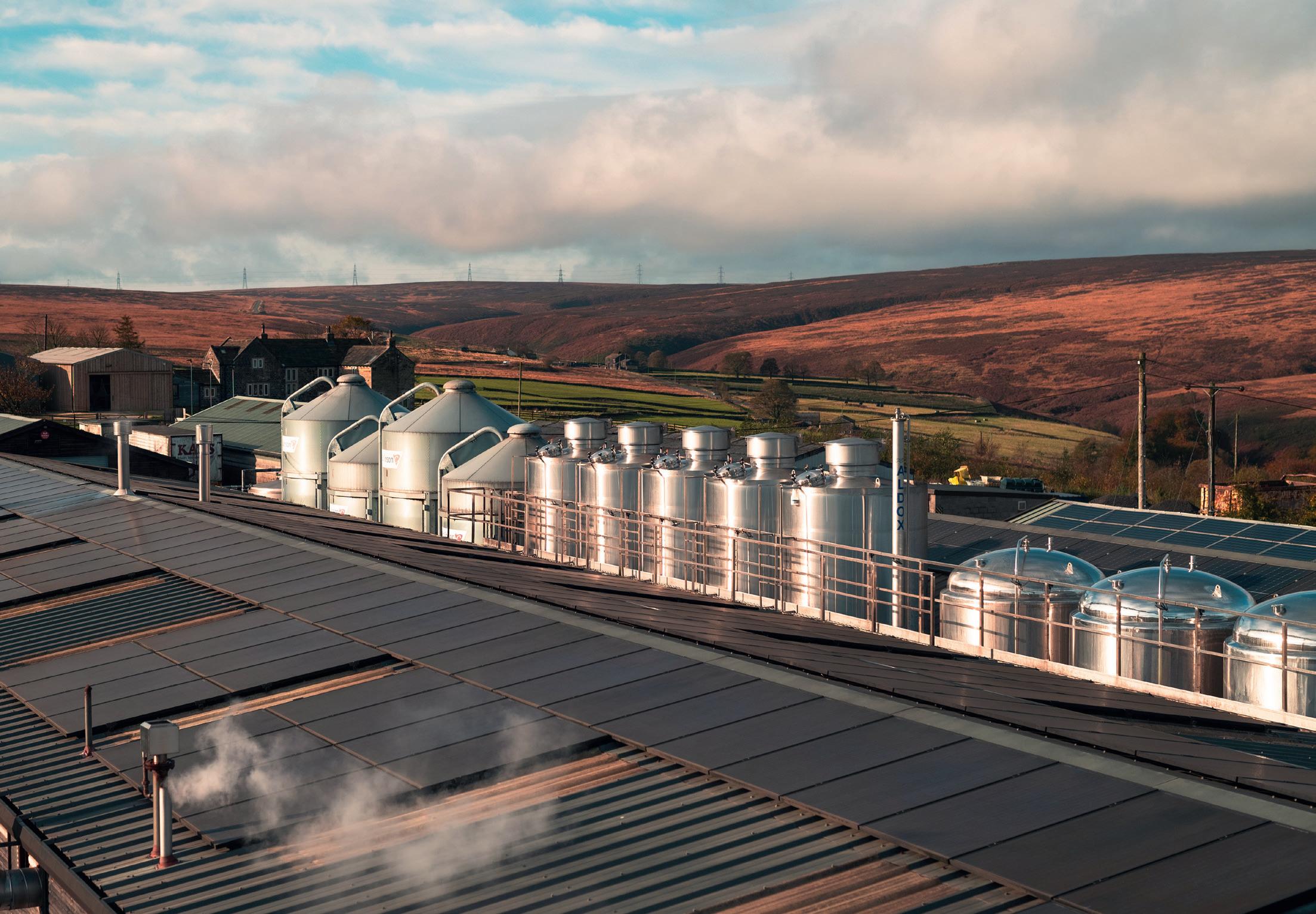
Coca Cola's production, it is possible that Coca Cola would still survive. But if consumers lost their memory about the Coca Cola brand, I think the business would die. So what we're trying to do is create brand memories and a relevant brand story with an emotional connection to consumers and customers, as well as delivering bold and flavourful, great quality beer and innovation. What we've been doing is we have grown, but our focus actually has been on the sources and drivers of what I would call repeatable growth, repeatable and scalable growth. Because it's easy to sell a beer, particularly an NPD beer, but actually, and this is why building a brand is really important, consumers and customers need to come back again and again. So we've been weeding out what I'd call some of the tactical sales and driving greater focus behind those areas of the business, like growing in the on-trade, growing in grocers, which is what drives the lion's share of growth for the future.”
What is the ethos behind the beers you brew?
“We brew bold and flavourful beers - that's the key thing. Supported by the belief that great tasting beer, quality beer, should be for the many. In other words, if we're to grow, we need to make our beer more accessible to more people and enjoyed more widely across a number of occasions, whether that's the first sip of a cold beer at the end of a hard day, socialising with friends, kicking back and having a treat on a Friday night, or celebrating a milestone. So it’s linked with a beer experience. It's more than just the product.”
What does Vocation do differently?
“We're focused on brewing bold beer, which is high quality and consistent. But I think what we are doing differently, is we're focused on building a bold brand. What I mean by that is it's not about just delivering functional benefits, in terms of the aroma and the flavour of the beer, to consumers and customers, but it's also about creating a memory and an emotional connection which is culturally relevant to consumers.”
What do you see as the main challenges you face as a business currently?
“Growing in the on-trade, that's our big focus area. We're looking at our portfolio, we're being very focused in who and what we're targeting and
how we're going after it. I think the challenge is access to market in most cases, and number of taps. You've got the majors who are tying up the taps basically through the tie, through supply agreements, by exercising portfolio power, even now through dispense systems. And when times are tough as well for both independent brewers and for pubs, the economics are more difficult. Those incentives that the majors can give, as well as locking out taps, are making it more difficult, I think, for publicans to make a bold choice, actually to have something different. But actually having something different and distinctive that delivers a better beer experience is actually critical to driving the success of their business. Consumers, I think, are looking for better beer experiences, better pub experiences, because they have a finite amount of disposal or discretionary income to spend.”
And how are you approaching that challenge?
“So we have a pint sized pub, actually, a mobile, pint sized pub that we call The Wandering Inn. It was launched just before Christmas, and the whole point of that is really inspiring and harnessing the power of people to get out and support their pub. To stimulate conversations about what makes the UK beer and pub scene interesting and important and exciting, and sparking conversations about access and choice. And encouraging discovery about new beers and new tastes and styles amongst users. It is about trying to get excitement back into the category, into the public experience, and encouraging collaboration across the sector.” [read more about the Wandering Inn in the Brewery News section on pages 82-93]
Where do you see growth opportunities for independent brewers in 2026?
“It's really about focusing on what others can't do, and can't replicate. So innovation, experimentation, agility, being nimble, and proudly flavour forward. I think independents can own their unique space. They can celebrate their strengths of flavour and variety and points of difference, and champion choice and discovery. I think that's the important thing, because in the beer category overall the growth has slowed, and beer is facing competition, not only within beer, but also from other categories and other experiences. Whether that's wine and spirits or even soft drinks, and from other things, other experiences, you whether that's chocolate,
If you’re talking bottling and
lines, shouldn’t you be talking to us?



At the Enterprise Group you will find a personal commitment to your project, whether it’s a single machine for integration into your existing line or a turnkey project on a green field site.
At the Enterprise Group we are not just agents, we can offer you a total package. Our experienced project layout engineers working with state-of-the-art CAD facilities, combined with our team of field engineers, allows us to respond quickly and accurately as your project develops.
This commitment continues with machine efficiency trials and performance tests, followed by full aftersales service and backup.
So whatever your requirements, you should be talking to us.
Visit : www.enterprisetondelli.com

HEAD OFFICE : Enterprise Tondelli Srl. Via La Spezia, 193/A - 43126 Parma – Italia. Tel +39 - 0521-940068 Fax +39 - 0521-940067 E-mail : info@enterprisetondelli.com
INTERNATIONAL TECHNICAL SALES OFFICE Unit 7, College Farm, Barton Road, Pulloxhill ,Bedfordshire, MK45 5HP, United Kingdom. Tel. +44 (0)1525 718288 E-mail : info@enterprisetondelli.co.uk
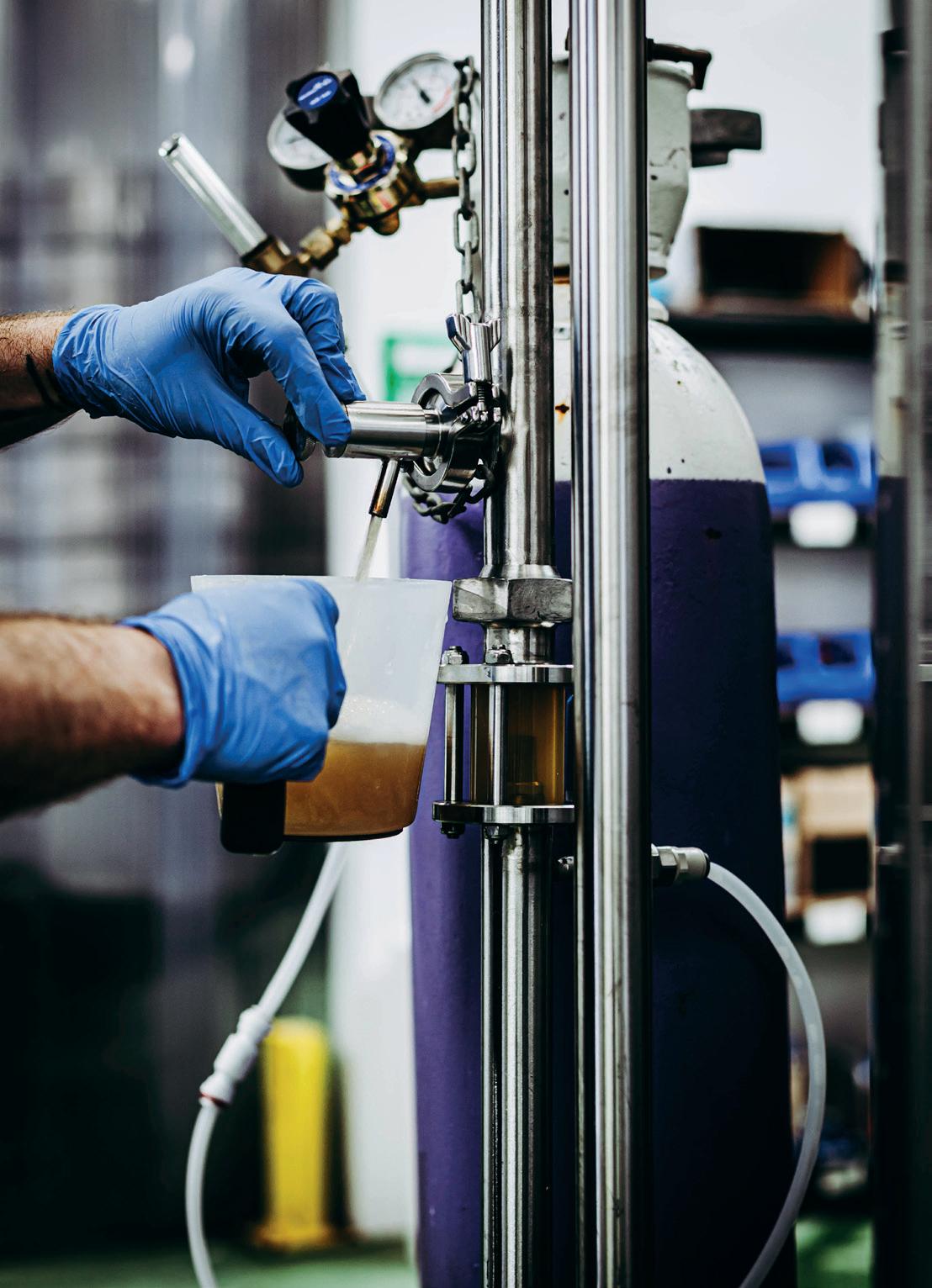
We're looking at our portfolio, we're being very focused in who and what we're targeting and how we're going after it. I think the challenge is access to market in most cases, and number of taps.
for instance, as an indulgence. And all those categories are competing for the scarce consumer spend. So it's about how do you create excitement? How do you stay relevant? How do you show up and compete in all those areas? I think purposeful innovation plays a critical role.”
How are changing consumer habits impacting what you do?
“So obviously there's a lot of talk about low and no, but one of the trends is people are drinking less, but better. So they're being far more intentional and choiceful about what they drink. It's less about volume and more about value. And as I've already said, it's not just about the beer itself, but about the whole experience around it, about where and how that beer is enjoyed and who it's with, and the storytelling and connection and the sense of occasion. Those things are as important, I think, as what's in the glass. And that's not in any way to undermine what is in the glass, because that's part of it. So we're investing in creating a beer experience that feels special and is special every day, as well as for heydays and holidays, and is considered. We're conscious that our beer needs to earn its place on the bar and in venues and in occasions, and needs to give consumers reasons for choosing Vocation, whether that's great aroma and flavour, but also, we're encouraging consumers actually to make a bold choice.”
How do you measure quality at Vocation?
“We think about quality not just in terms of the beer, but actually every touch point throughout the business and in every function. So of course, beer quality is important, and so we do all the analytics, the lab tests for microbial haze, ABV, fermentation, specs, gluten. And we do tasting, with tasting specifications, dissolved oxygen, CO2. We're also looking at doing some training on tasting amongst the team. So I'm sure that's what a lot of brewers do anyway. But for us, it's about more than just beer quality and brewing standards, it's about consistent quality across all touch points. So it extends from the brewing process all the way through beer quality, flavour, visual appeal, aroma stability, shelf life, they're all non-negotiable. But then it goes into things like our service levels to the big grocers, so we monitor on time and in full to each of the grocers. Professional interactions. Quality service for our field sales team is about our brands, our brand identity and our brand story, the way that is communicated and is relevant across our packaging and the way we show up.”
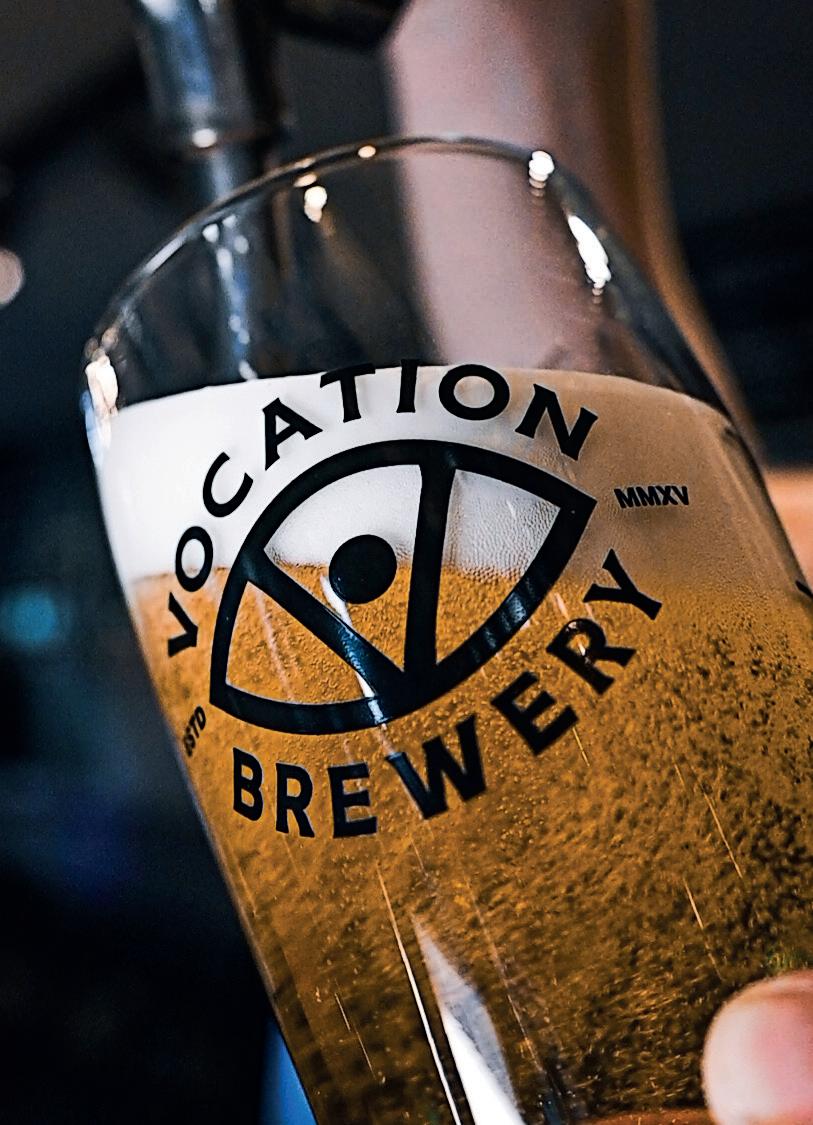
How important is sustainability at Vocation?
“Of course it's important, but we approach that in a way that is consistent with how we approach other things at Vocation, which is that it's about making continuous improvement. It's about continuous, incremental change. So, for instance, we've just invested in a nitrogen generator. We've just shifted to a sustainable source of CO2 last year. And on Beer Day Britain, we released two special edition beers, one of which was putting sustainable brewing practices firmly in the spotlight. It was called Worth its Weight, a British golden ale, using the Roots Revival malts from Pauls Malts, putting UK regenerative barley farming front and centersupporting soil health, biodiversity, reduced carbon emissions.”
How do you inspire and motivate your team?
“Well maybe you should ask my team! I'm passionate about what I'm doing and I'm passionate about Vocation, about our people, about our business, about our brand, about our beers. I care very deeply about that, and I hope that comes across, and that passion is communicated to my team. I believe that Vocation, and the independent brewing sector, has a really critical role to play in ensuring that we've got a thriving UK beer and pub culture and industry - that's key. So, I want to share that passion and excitement, and I hope that's inspiring and motivating for my team, but it's also in how I manage the team. It's a combination of what I call both hands. It's about both being challenging and providing challenge, but also providing support. It's about being tough minded and being empathetic. And it's about flexing my style at the appropriate time with different people and how they respond to that. That is what I am constantly thinking about, because that engagement is critical with the team, and I try and encourage a culture of continuous learning and development, continuous improvement.”
What is your view on the future for the independent beer sector?
“That's a difficult one to call. I think there will be further consolidation - because that's the dynamics of markets. So when you look at the beer category overall, the growth is not as high as it was, but actually, I'm a firm believer that that masks lots of opportunities for growth.
As a leading glassware supplier, we are expanding our machine park and bringing new colours and limitless possibilities to production with SAHM RELIEF³

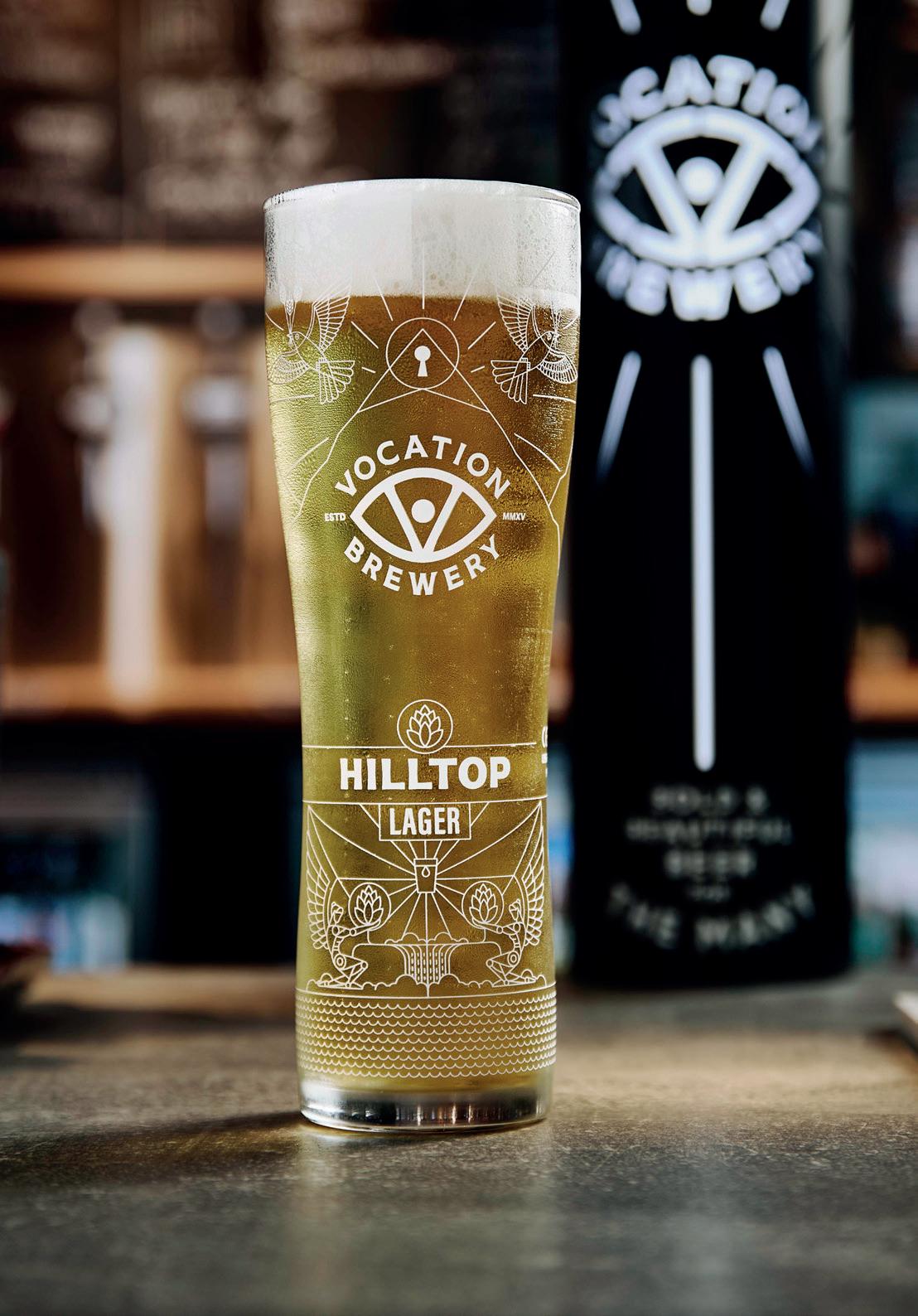
With a previous boss of mine, we used to talk about the challenges to find and own the opportunities for growth. And actually, I think the independent beer sector is about creating that growth. You can't just take it as a given. It's in our hands to create the growth, and that's about relevance to consumers, both in the beers that we make and in our brands. And it's about engaging with our consumers and customers, because that's what will drive the growth. That's in our hands. And that's through innovation and experimentation. Finding what captures the wave. What creates excitement. What's the next wave?”
Do you think there is enough strong female leadership within the beer industry?
“I think it's important to encourage that. But in my own career, I've never defined my career by my gender, and I fundamentally believe that it's cognitive diversity that really, really matters. So different perspectives, different thinking styles, different approaches, different life experiences. I think it's important to bring that to bear. I think it's a bigger issue than just male and female. And my experience here at Vocation is that we have several strong females across all functions, actually. And we might not be big in numbers, relatively, but boy, we pack a punch! And they bring a different perspective and a different way of approaching problem solving and ways of working and interaction in the workplace.”
Are you investing in the business currently and if so, where is that investment going?
“We're investing in building our brand. That's a big area of investment. We're investing in continuous operational improvement, in doing things better. We're investing in excellent customer service. Working more
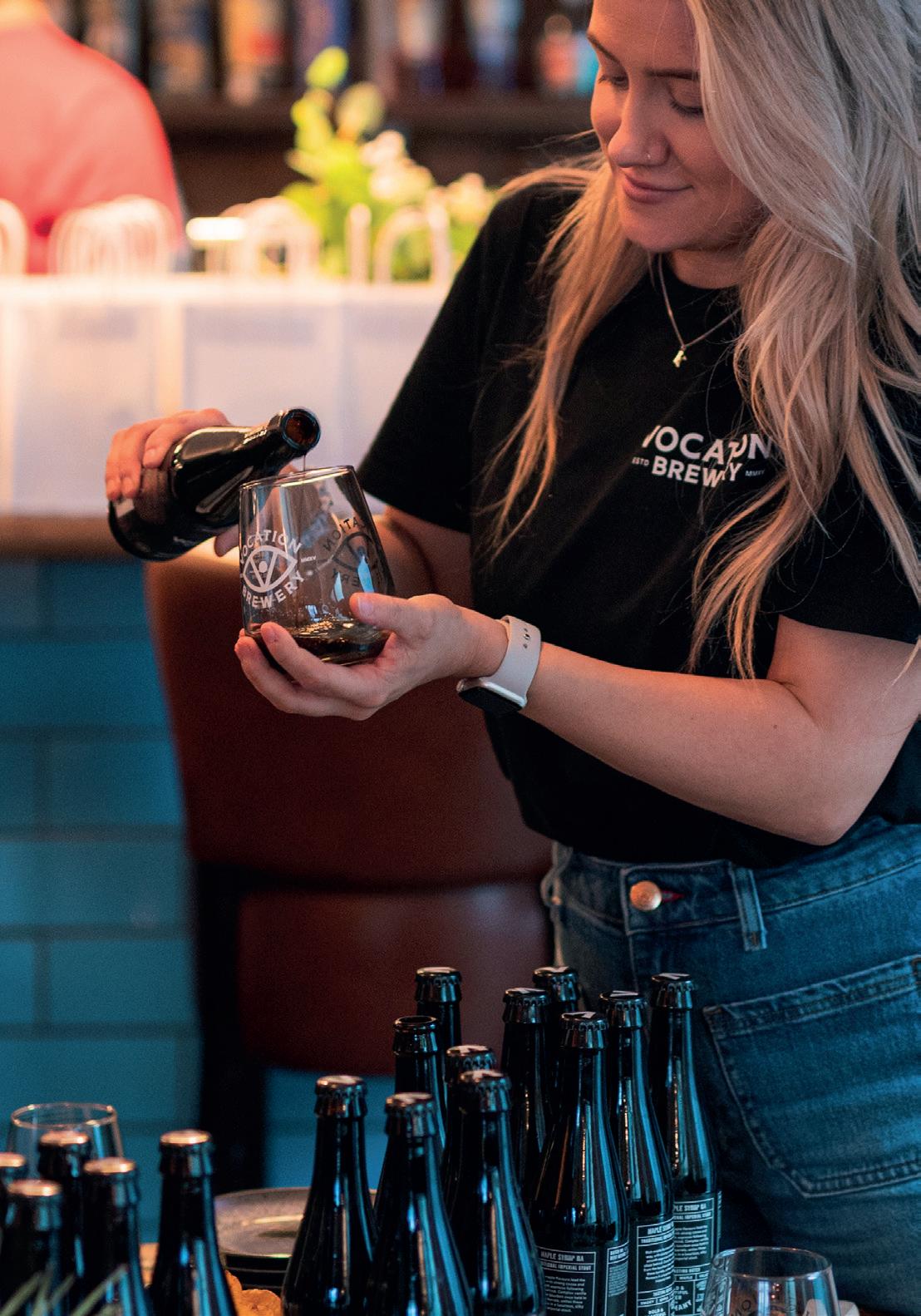
collaboratively with people in the trade. And also building the capability and capacity of our team.”
Where do you go for ideas and inspiration?
“I'm a very curious person, actually. So I pick ideas and inspiration up from lots of things. But as much as anything, it's not about the source. It is actually about connecting things. It's about connecting different ideas and perspectives and putting them together. Sometimes you speak to people and they actually don't really see the value or the interest in something that they might say, that they think is quite innocuous, but when you connect it with something else, then it gets really powerful. So I'm a sort of connector of ideas and different inspirations. Whether that's that I went to the National Gallery at the weekend and saw the Joseph Wright of Derby exhibition. And the importance of light and dark. And I would say that, in a busy CEO role, that is one of the challenges, is actually making the time to make sure that you're getting inspiration from as wide a variety of sources as you can.”
Who do you most admire in the independent beer sector, and why?
“Actually, I admire a lot of people. I admire people for a variety of reasons, but essentially, those people that make a bold choice to run a small business, to follow their passion, whatever that is, to be true to themselves, to take a path less travelled, to step out from the norm and the ordinary, to try and lead rather than just follow. Those are the people that I admire.”
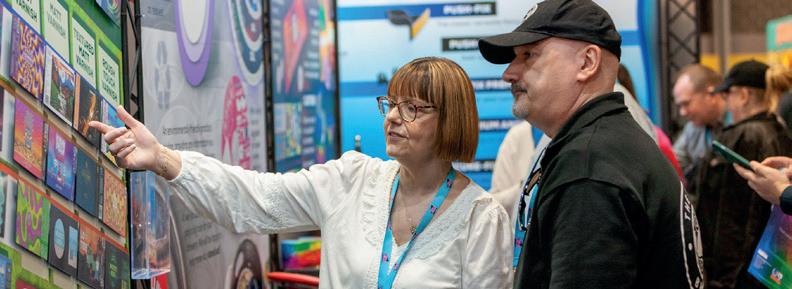
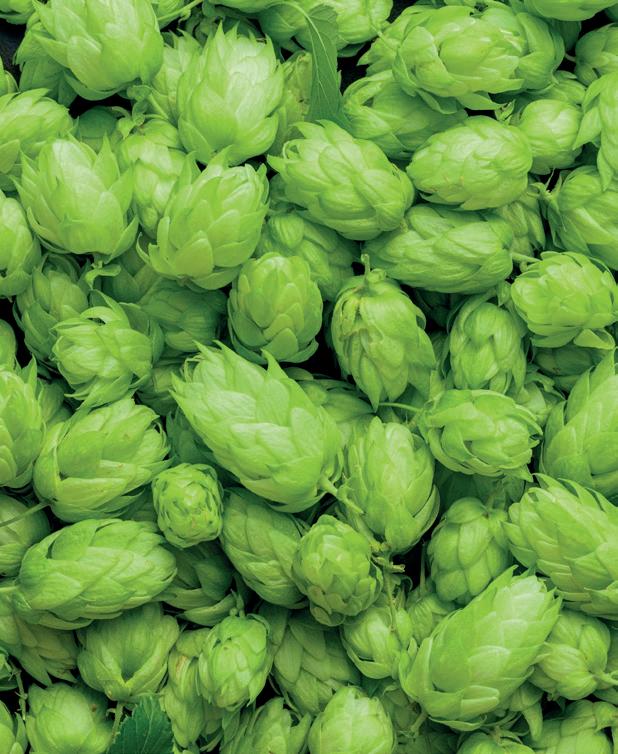
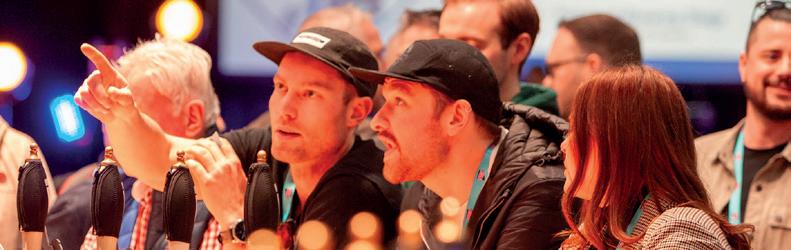
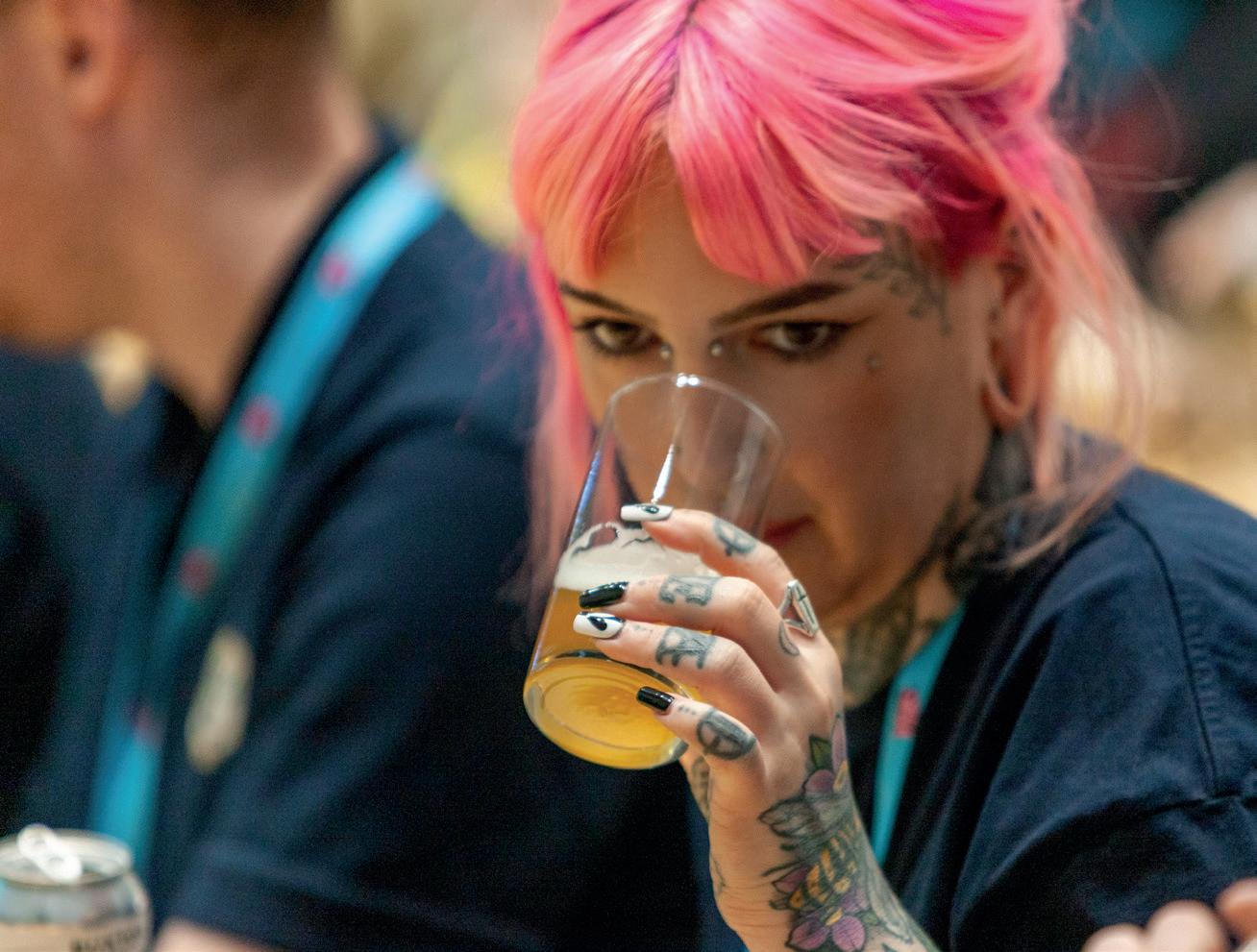
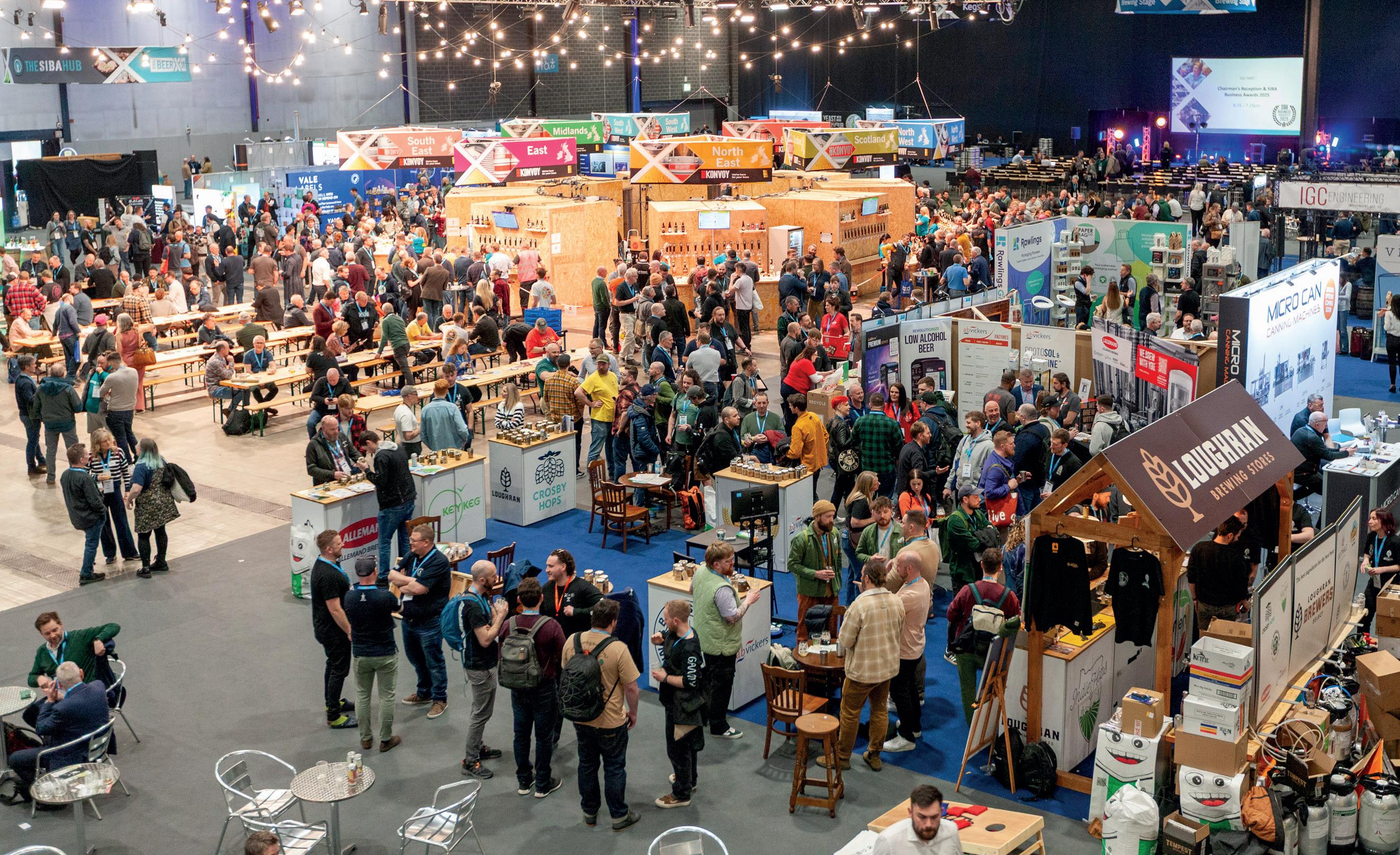
Featuring the representatives from the Independent Brewers of Europe and the Brewers Association in
SIBA are delighted to welcome ekeg on-board as our BeerX Headline Supporter for the next three years.
“The support of our Headline Supporter ekeg is hugely valued by myself and the SIBA Team and enables us to deliver the UK’s very best beer and brewing trade event, offering once again free tickets to all SIBA members wishing to attend the event. On behalf of SIBA I’d like to thank Christian and the ekeg team for their support of SIBA’s flagship beer event.”
Andy Slee, SIBA Chief Executive
ekeg provide renting, leasing, servicing and tracking solutions to over 600 customers daily, own more than 1 million kegs and casks, service just under 4 million kegs and casks every year and “see” over 10 million keg and cask trips from brewery to bar and back again with their award-winning proprietary tracking technology.
“Becoming the headline supporter of SIBA’s BeerX is another landmark moment for all of us at ekeg. We’re all about kegs made simple, and BeerX is the perfect industry platform to showcase and deliver exactly that. SIBA, its members, and BeerX have been a big part of our leadership journey in kegs and casks, so it’s cool to give back with our support, commitment, and energy—fuelling another year of great independent beer, with more draft and less carbon” said ekeg CEO Christian Barden.
Christian will also be part of a panel discussing investment in the brewing and the ekeg team will deliver a separate seminar on ‘Kegs as a service’ –giving expert insight into the logistical challenges and solutions for breweries in the UK.
A must-attend for the
Attracting over 3,500 attendees from the beer industry last year, BeerX is attended by brewers and homebrewers, as well as beer retailers, buyers and industry professionals looking to expand their knowledge, discover the UK’s best independent craft beers, view the latest brewing equipment, ingredients and services, or network with others from across the industry.
BeerX UK features a packed schedule of seminars, talks, and panel debates, from some of the most respected voices in the beer industry. Topics range from brewing techniques to marketing strategies and sustainability practices, offering attendees invaluable insights that they can apply to their own businesses.
The Trade Exhibition showcases an array of products and services that cater to the brewing sector; From hops to state-of-theart brewing equipment, the trade show is a treasure trove of innovation, allowing attendees to discover the latest trends and technologies shaping the industry. It's a unique opportunity for industry professionals to connect and engage with suppliers, creating relationships that can lead to future collaborations.
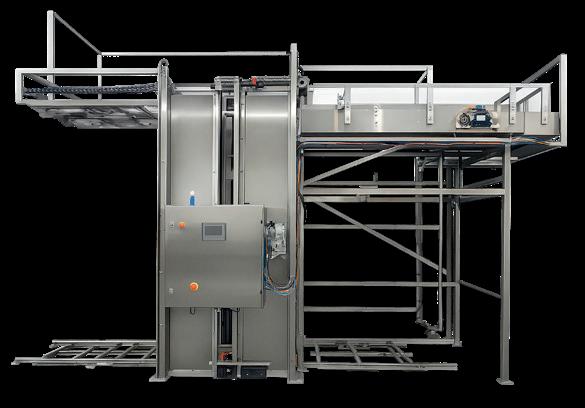
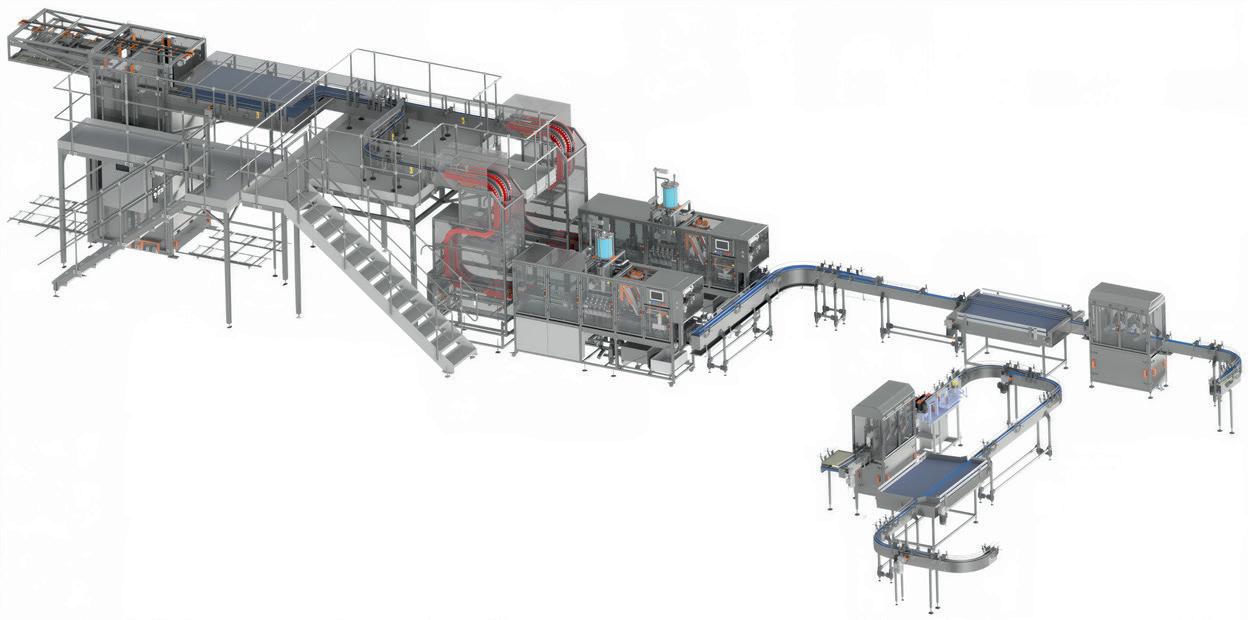
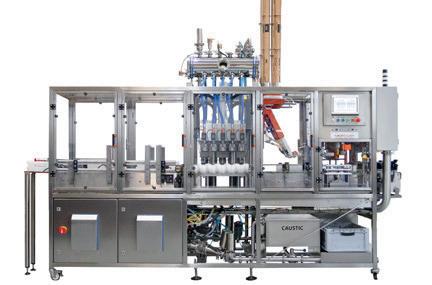
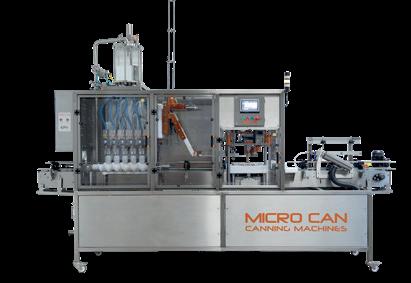
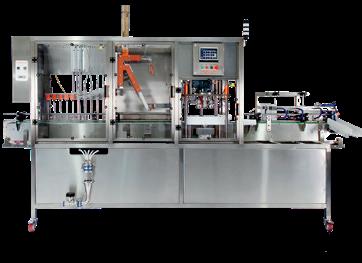
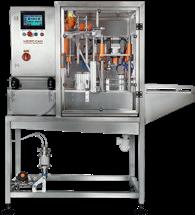
✔ All hose compliant with various brewing standards
✔ Large range of stainless steel hygienic end fittings available
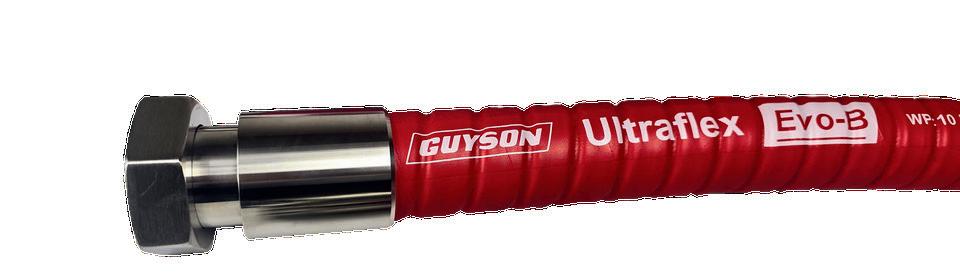
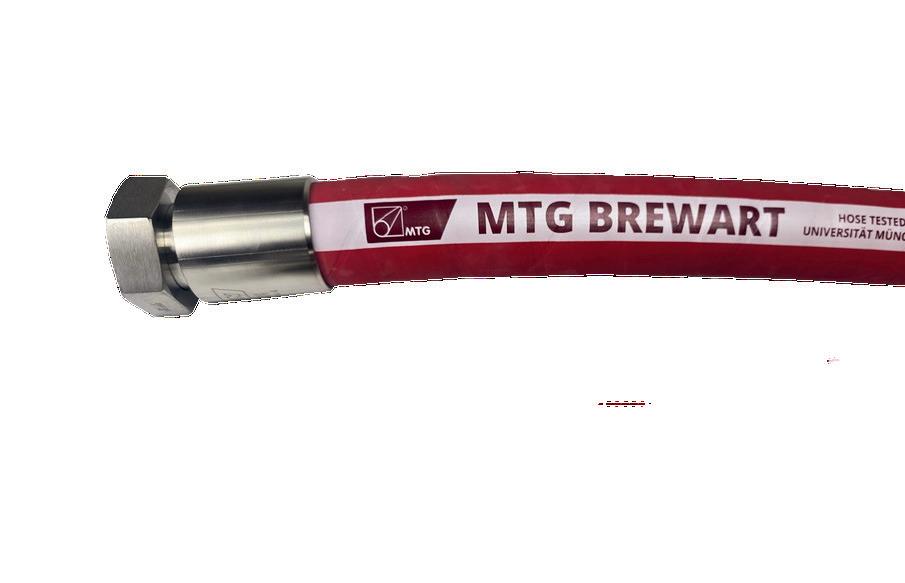
✔ Hose assemblies 100% tested before despatch
✔ On-site advice and hose inspection available
✔ Fast supply of customer’s requirements


An outspoken voice for the hospitality and cultural sectors, Sacha Lord is one of the UK’s most well-known night time economy experts, founder of Parklife and The Warehouse Project, author of Tales From The Dancefloor (A Sunday Times Bestseller), and Chair of the Night Time Industries Association.other superb seminars taking place the BeerX speaker lineup has never been stronger.
In a Keynote talk delivered as part of the SIBA AGM, the CEO & President of the Brewers Association (USA) will give an update on the US Beer Market and how the organisation is promoting and protecting independent craft brewers in 2026.
BeerX UK 2026, set to take place on the 18th and 19th of March in Liverpool, is the biggest trade event in the UK for beer and brewing businesses and beer retailers – now taking place across all three halls of Exhibition Centre Liverpool. 2026 is a very special year for the event, with the independent beer representatives from across the Globe joining the BeerX lineup. Representatives from independent beer trade associations from across Europe will be at BeerX as part of the Independent Brewers of Europe group, who are launching the first ever European Independent Beer Report at the event. And Bart Watson the CEO of the Brewers Association in America will be joining the SIBA AGM as a special keynote speaker on Thursday.
We are also delighted to have Sacha Lord, Chair of the Night Time Industries Association, on the lineup as our keynote interview on the main stage Wednesday. Alongside all of the other superb seminars taking place the BeerX speaker lineup has never been stronger.

In a new transatlantic partnership between independent brewing trade associations, Champion brewers from the UK are going to have the opportunity to go up against the best that the USA and rest of the World has to offer at the World’s biggest beer competition The World Beer Cup and Europe’s biggest beer competition European Beer Star National Champions from the Bottle & Can Indie Beer Awards, taking place at BeerX, will have their beer entered into the American Brewers Association’s World Beer Cup and European Beer Star – organised by Association Private Breweries in Germany. “Some of the best beers in the World are being brewed in the UK right now in a huge variety of styles, from homegrown bitters and stouts, to international beer styles like American IPAs or German-style lagers – this partnership is an opportunity to increase the number of UK breweries in the running at the World’s biggest beer competition and I want to wish all of the entrants the best of luck at next year’s competition.”
Andy Slee, SIBA Chief Executive.
All entry fees and overseas logistics will be funded by SIBA on behalf of Champion brewers, giving members another reason to enter the UK’s leading beer competition: The Indie Beer Awards.
The below session titles and highlights are correct at the time of going to print. For Live session timings and locations, plus the full content schedule, visit beerx.org or download the dedicated BeerX App (Apple and Android).
■ Official Opening and Welcome with SIBA CEO Andy Slee
■ Branding for Breweries: How to Build a Brand That Sells More Beer
■ Independent Brewers of Europe: Beer Report Official Launch
■ Troubleshooting with Lallemand; it's the yeast we can do!
■ Tasting: Flavour That Works For You
■ Craft Beer is Dead, Long Live Indie Beer
■ Solutions from the frontline: A year in the life of the Napthens helpline
■ How the LTC portal can support your team's mental heath and more
■ Panel: The state of beer media
■ Responsible Drinking
■ Kegs as a Service
■ Tasting: Mastering the art of assessing beer
■ BEER 50/50: An update from Women on Tap
■ Making the Alcohol Duty system work for all brewers
■ Tasting: A spotlight on classic British beer styles
■ KEYNOTE: In conversation with Sacha LordChair of the Night Time Industries Assoc.
■ KEYNOTE: Bart Watson, Brewers Association - on the US Beer Market and more
■ Innovation in Flavour and Efficiency in Brewing Yeast
■ Tasting: 3•2•1 A Cross-Style Brewing Showcase
■ Sustainability and water usage
■ Going for gold! Beer competitions, beer judging and how to excel at both
■ Getting to grips with the Deposit Return Scheme ahead of 2027
■ Transitioning between generations as a business
■ Balancing Body, Flavour and Fermentability in Low & No Beer
■ Head Retention: Mental Wellbeing in Brewing
■ Tasting Notes: Beer and music pairing with Pete Brown
■ Quality & Control: SALSA plus Beer and FSQ Accreditation for Breweries
■ Panel: Is the Beer sector worth investing in?
■ Stronger brewery financial management, funding options and succession planning for brewers
■ Using Automation and AI to Cut Energy and Improve Consistency
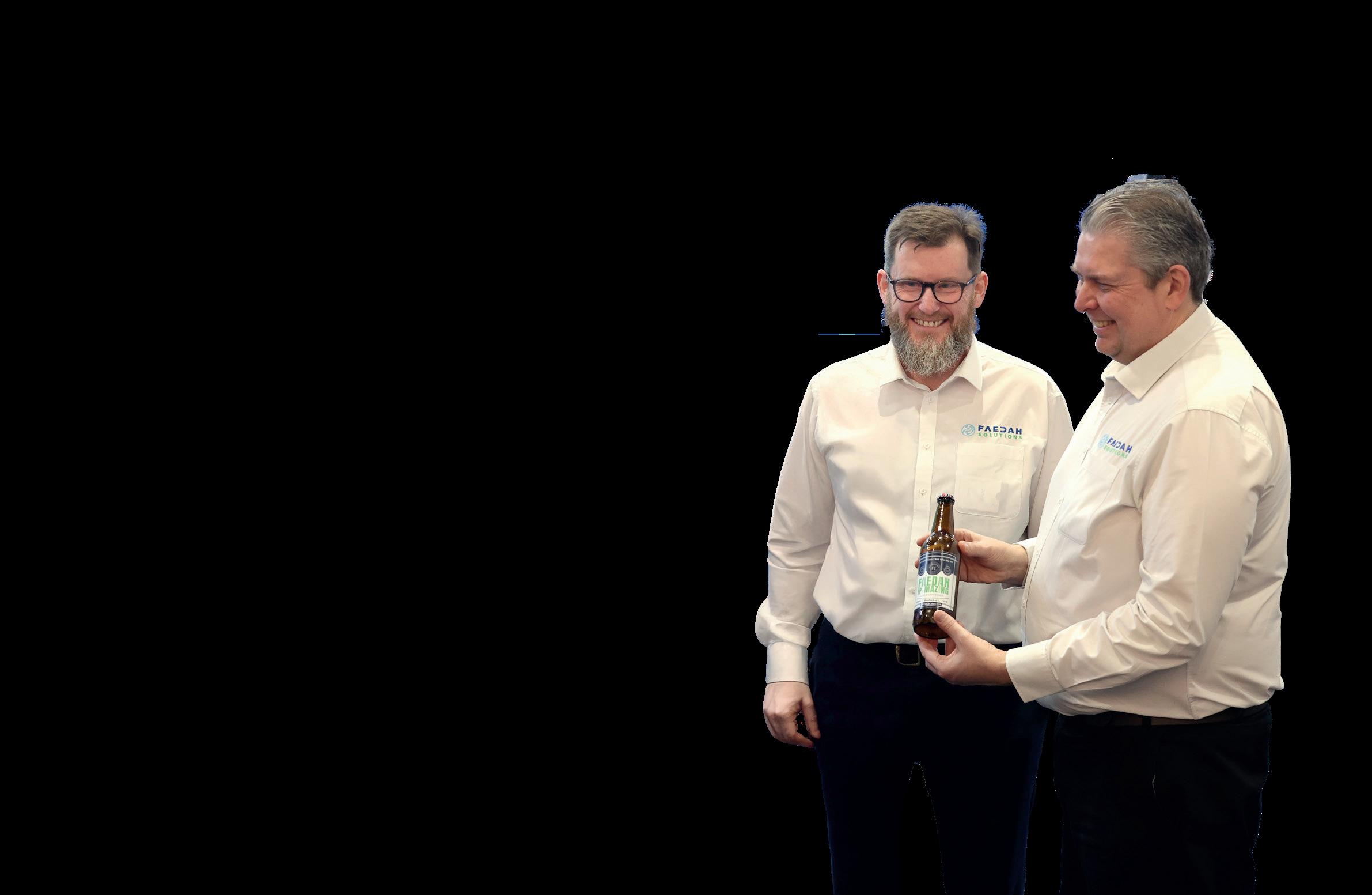

Bottle Formats
Sizes: 275ml, 330ml & 500ml
Packing: Tray & film or fully enclosed box (on request)
Can Formats
Sizes: 330ml, 440ml & 500ml
Standard/Sleek options available
Nitro-dosing: Available for smooth flow
pour and still products
Packing: 12s & 24s FEC corrugate
New for 2026: Multipack can FEC capability
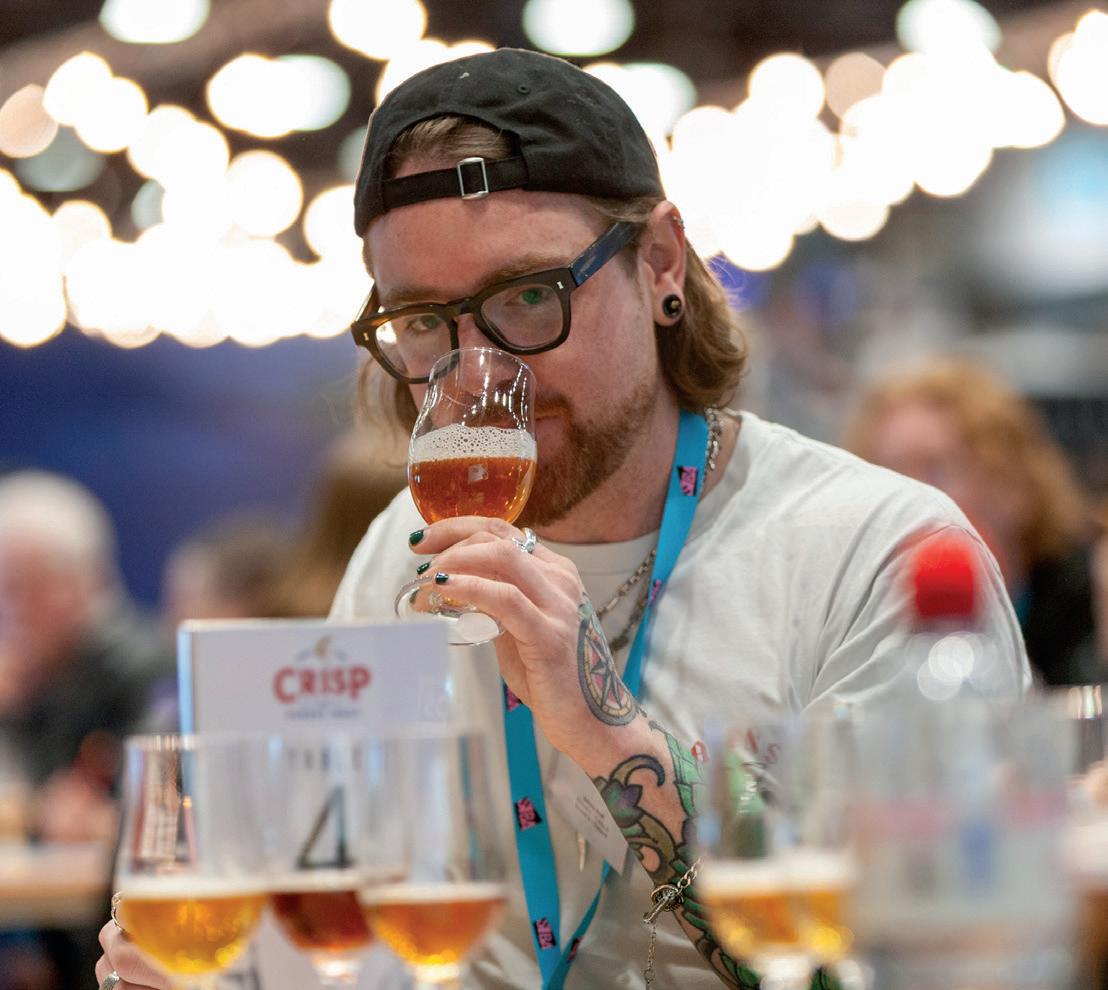
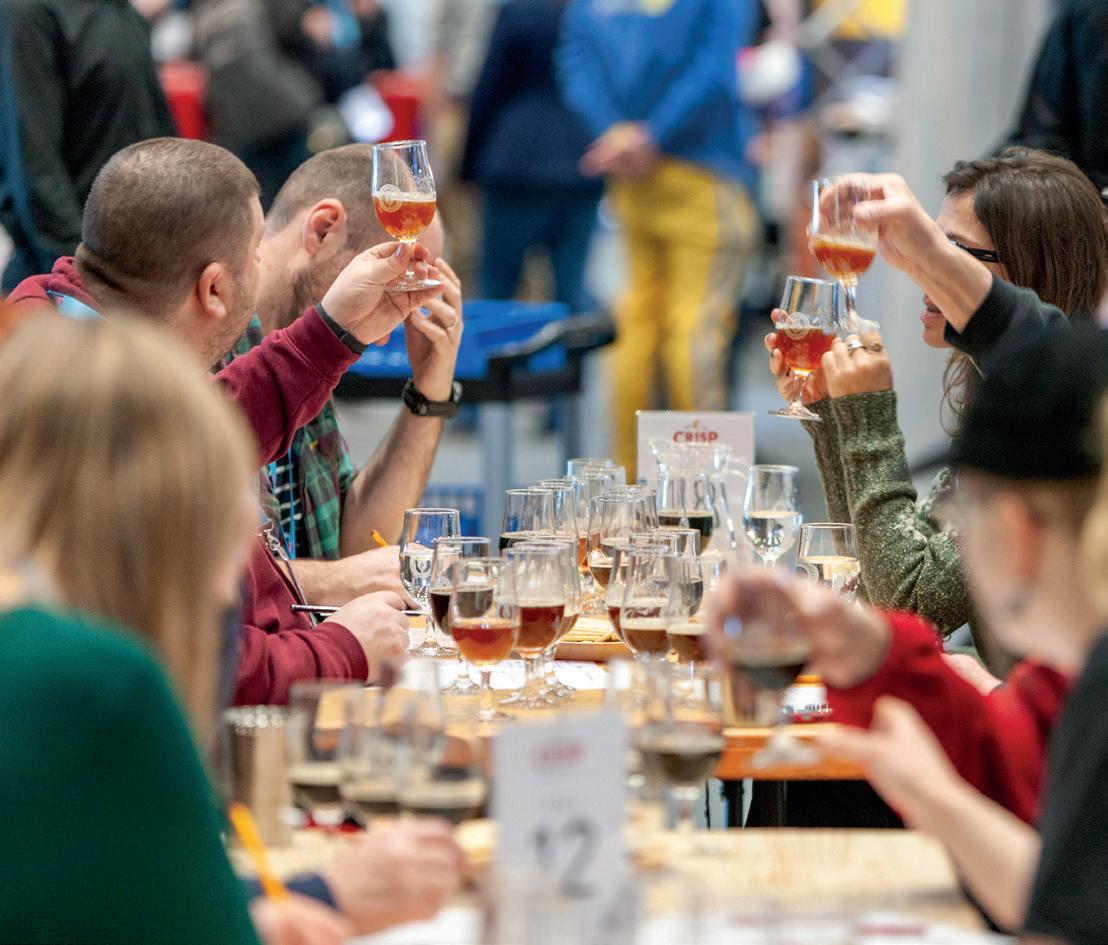
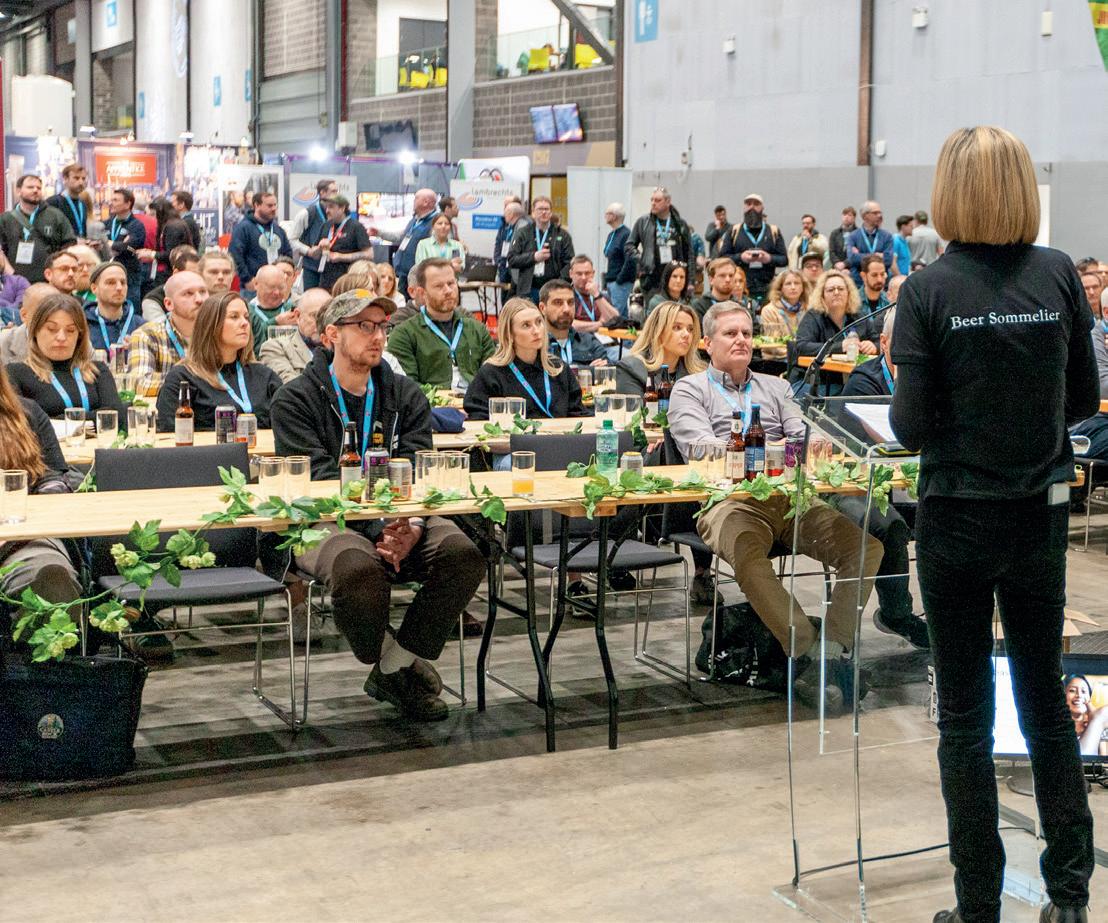
The BeerX tutored tastings have become a firm favourite with Delegates and are always a full-house, so our bigger tasting theatre is returning, with space for up to 100 participants.
Below are just a few of the tasting sessions we’ve got planned for you in 2026
In response to a question brewers often ask, “How does the same hop perform across different beer styles?”, this immersive tasting session brings together three brewers, each presenting two beers brewed with a single hop variety. Guided by the Charles Faram panellists, the 3,2,1 format explores how one hop can express itself in dramatically different ways depending on style, process, and creative intent.
What if you could explore new flavour possibilities and cost efficiencies without changing your recipes? At this session, Matty Gilliland from New Belgium Brewing Company in Fort Collins, CO demonstrates how he’s expanded creativity, stability, and cost efficiency with no recipe tweaks. Hear the stories behind the discoveries, see data that informs every decision, and taste brews from popular British brews putting innovative solutions to work in the glass.
Ever wondered how to assess a beer that sits outside of traditional style guidelines? In this session, you’ll learn how to taste, describe, and evaluate the quality of any beer using WSET’s Systematic Approach to Tasting. We’ll sample three beers together so you can build your skills through a live demonstration. Perfect for anyone looking to develop their tasting technique or discover WSET’s beer qualifications.
Award-winning beer writer Pete Brown started pairing his favourite beers and songs as a joke, then discovered that scientists at Oxford University were doing something very similar, and taking it really seriously. The return of one of our most-requested tasting sessions ever, Pete will be hitting BeerX with a fresh set of beers to challenge our audience into thinking differently about the way sound affects our perception of flavour.
This story-telling tasting explores why certain British beer styles emerged in the time they did and what was going on societally and politically to certain styles becoming popular. More importantly, why have some of these styles stood the test of time and how are contemporary brewers re-interpreting the style? Join Annabel Smith for a beer tasting with an historic twist.

Tel: +44 (0)24 7635 2000 Email: info@lanemark.com
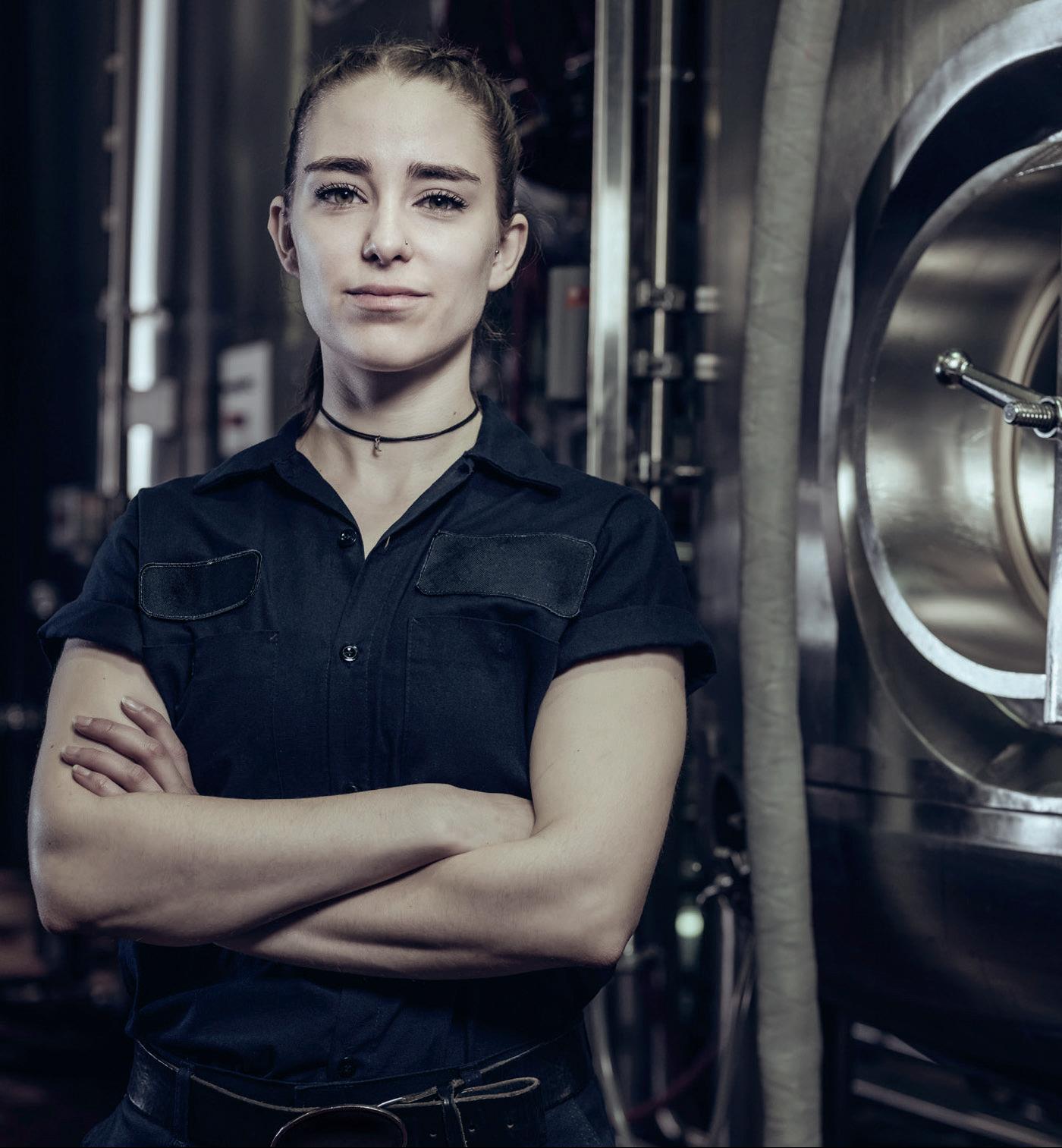
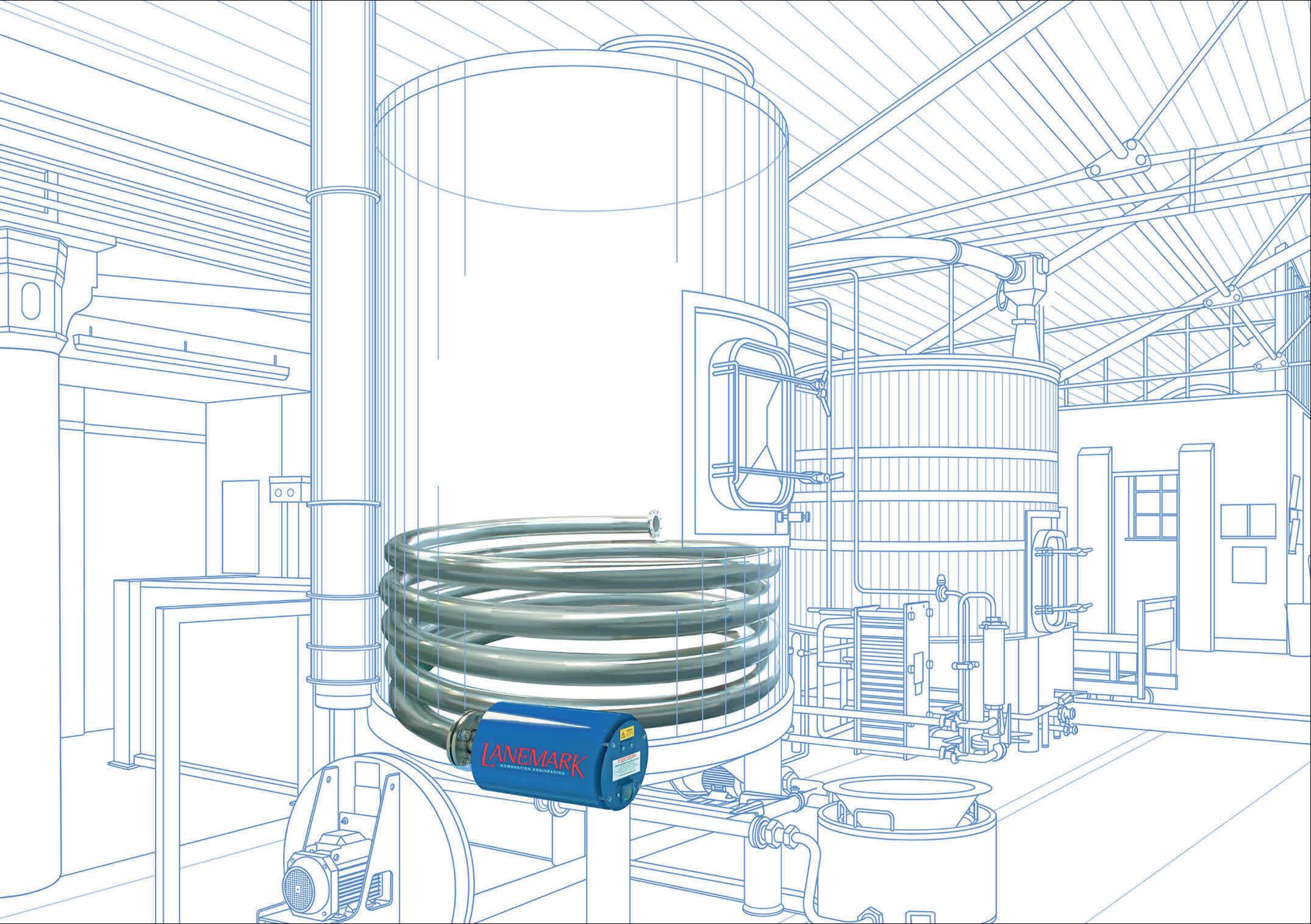
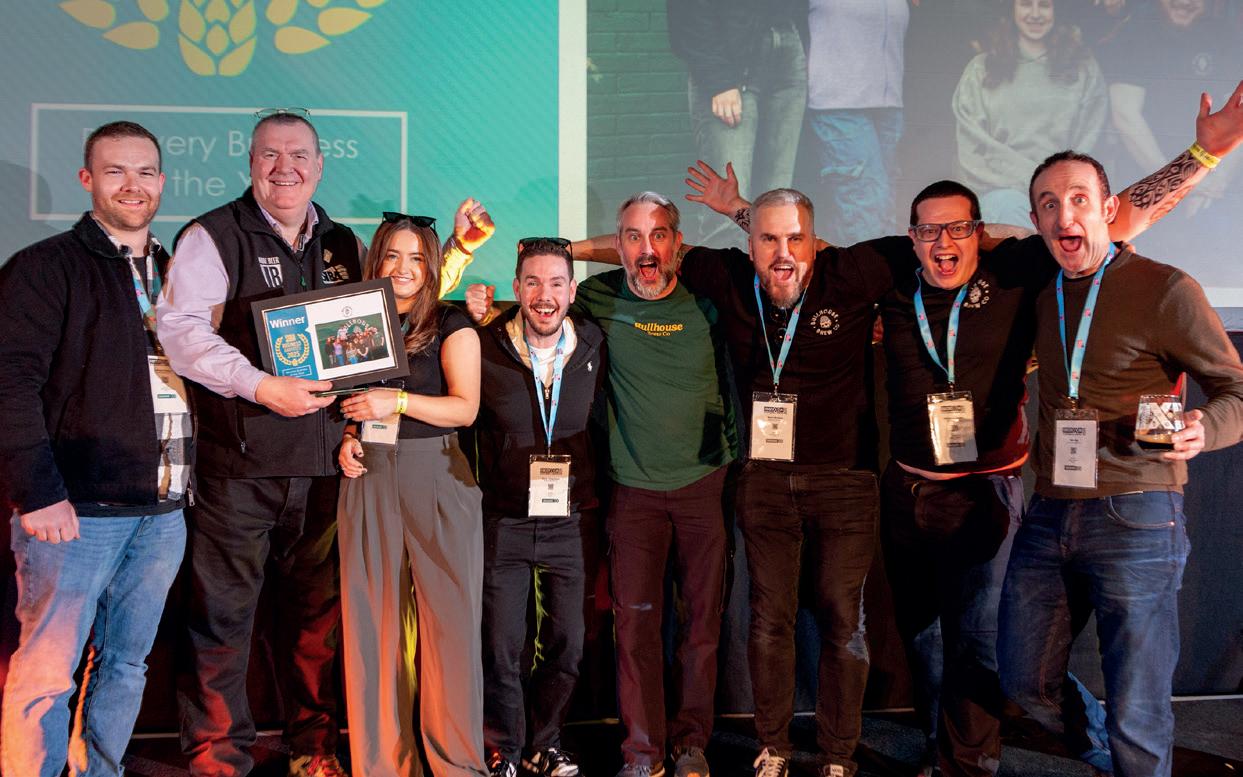
Including new ‘Industry newcomer’ and ‘Beer Champion’ categories to highlight outstanding individuals from the industry
The SIBA Business Awards 2026 include two new categories for ‘Brewing Industry Individual Newcomer of the Year’ and ‘Independent Beer Champion of the Year’.
The SIBA Business Awards, presented in association with Napthens Solicitors, seek to congratulate excellence in the brewing industry across a variety of categories, from pump clip, can and bottle design, to efforts taken by brewers to make their business more sustainable, innovative or diverse, as well as naming the UK’s best pubs, bars and retailers of beer from independent breweries.
The Brewing Industry Individual Newcomer of the Year award recognises an individual who having joined the independent brewing industry in the last twelve months has made a significant and positive impact. This positive impact could be on the business, organisation or association they have joined or on the broader brewing industry over the last year.
The Independent Beer Champion of the Year award seeks to highlight the beer industry individual who has had a hugely positive influence on independent beer over the last twelve months. This could be an individual who has delivered positive change or opportunities for independent brewers, championed a new industry cause, helped to create a more inclusive or diverse industry, or helped to shine a light on the sector in an impactful or innovative way. Nominations can be made by anyone working in the independent beer industry, with the winner then voted for by SIBA Members.
The judging panel for the prestigious SIBA Business Awards is chaired by Neil Walker, SIBA’s Head of Comms and Marketing, who had this advice for businesses looking to enter this year’s awards;
“The SIBA Business Awards celebrate the very best of the British brewing industry and shine a light on all of the elements of running a successful business which go well beyond simply brewing great beer. As a judging panel we are looking for businesses who have gone beyond the norm and done something truly special, innovative or impactful. The two new categories seek to recognise individuals from the beer and brewing industry who are pushing us all towards an even brighter future for independent beer.”
The SIBA Business Awards 2026 are judged by a panel of industry experts and presented by Sunday Times columnist Pete Brown at the UK’s biggest beer and brewing event – BeerX UK in Liverpool, March 2026.
This year's awards categories are:
■ Marketing Implementation
■ Sustainable Business
■ Community Engagement
■ Best Individual Design
■ Best Concept Design
■ Business Innovation
■ Commercial Achievement
■ Best Collaboration
■ Diversity Champion of the Year
■ Employer of the Year
■ NEW! Brewing Industry Individual Newcomer of the Year
■ UK’s Best New Independent Brewery
■ UK’s Best Independent Brewery Taproom
■ UK’s Best Independent Brewery Webshop
■ UK’s Best Independent Beer Retailer
■ UK’s Best Independent Beer Bar or Pub –City
■ UK’s Best Independent Beer Bar or Pub –Rural
■ Brewers’ Brewer of the Year (Brewer nominated)
■ Supplier Associate of the Year (Brewer nominated)
■ NEW! Independent Beer Champion of the Year (Brewer nominated)
■ SIBA Brewery Business of the Year (Judging Panel Awarded)
View the Official Category Criteria here
For more information about BeerX 2026 visit www.beerx.org BeerX 2026 The UK's Biggest Beer & Brewing Trade Event 18th & 19th March. Exhibition Centre Liverpool Kings Dock, Liverpool Waterfront, L3 4FP This programme was correct at the time of publication but go online to www.beerx.org for the latest information.
www.beerx.org

Located on the family farm in a remote part of the Yorkshire wolds, Wold Top Brewery epitomises the concept of grain to glass, using malted barley grown on the farm, and water from the farm’s own borehole, in the beers it produces. The brewery was originally founded in the early 2000s as a way to broaden the income streams the site was able to draw on and make the small arable farm a sustainable business for future generations of the Mellor family. Patriarch Tom Mellor, who first started the brewery, has since passed it down to his daughter Kate and her husband Alex Balchin, also a SIBA Regional Director, who have seen the site expand and production grow significantly over the last decade. Unusually for a SIBA member, Wold Top has been driven by a focus on small pack, initially a necessity in such a remote location where local taps are fewer. But this has proved useful not only in reaching a much broader geographical area with the brewery’s beers, but also led to a growing export trade to the EU and beyond. Caroline Nodder, Independent Brewer’s Editor, spoke to Alex in mid January to find out more about Wold Top’s unique operation…
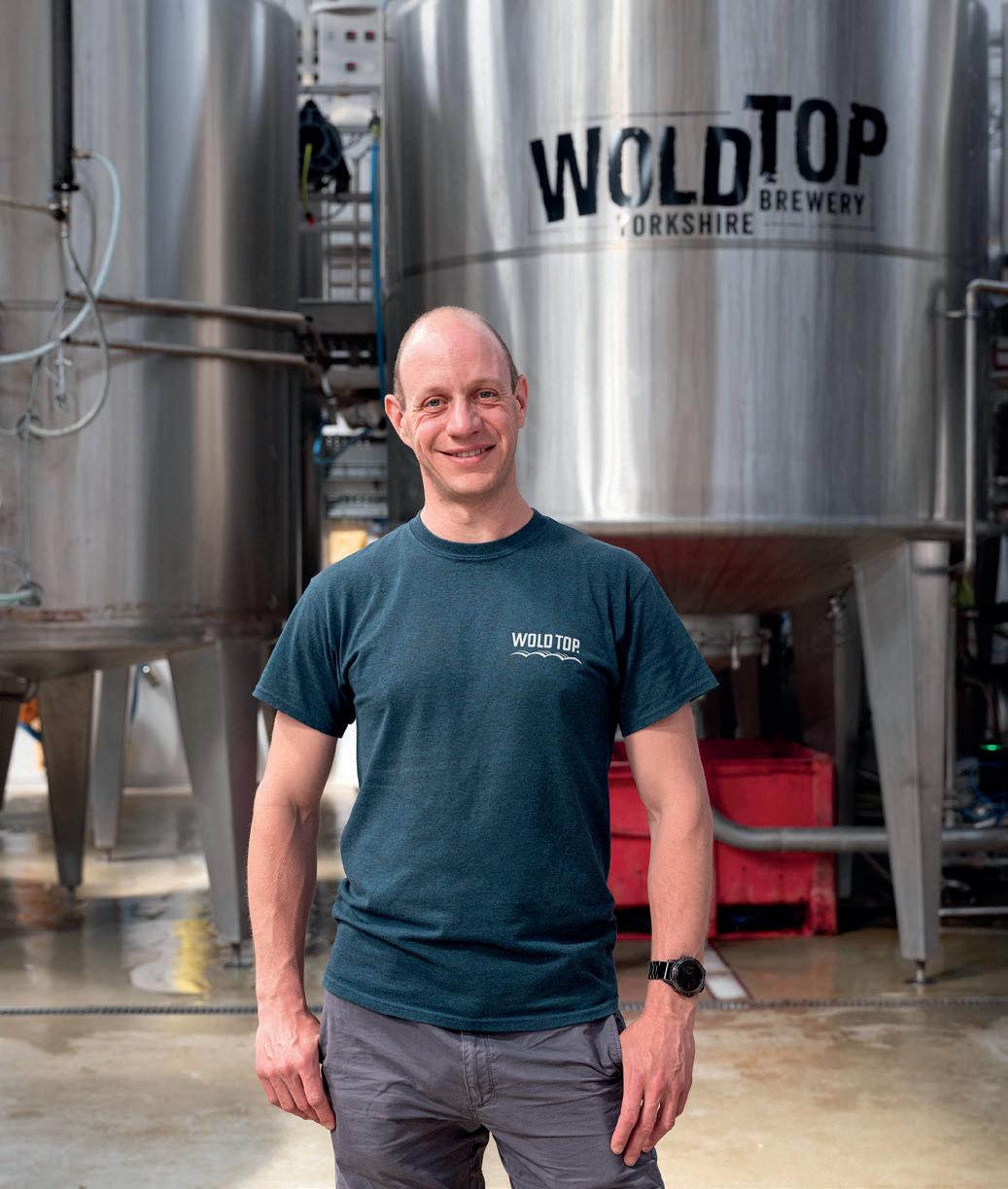

Name: Wold Top Brewery
Founded: May, 2003
Location: Hunmanby, North Yorkshire
Annual production: 10,000HL (including contract brewing)
Production split: 70% small pack, 20% cask, 10% keg
Head Brewer: Alex Balchin
Total Staff: 21 (including 2 or 3 part time)
Core beers: Wold Gold (Golden Wheat Beer 4.8% ABV), Wold Top Bitter (Session Bitter 3.7% ABV), Headland Red (Ruby Red Beer 4.3% ABV), Landmark Lager (English Lager 4.2% ABV), Anglers Reward (Golden Pale Ale 4% ABV) & Marmalade Porter (Dark Porter 5% ABV)
Number of pub/taproom sites: 1 taproom (only used for special events)
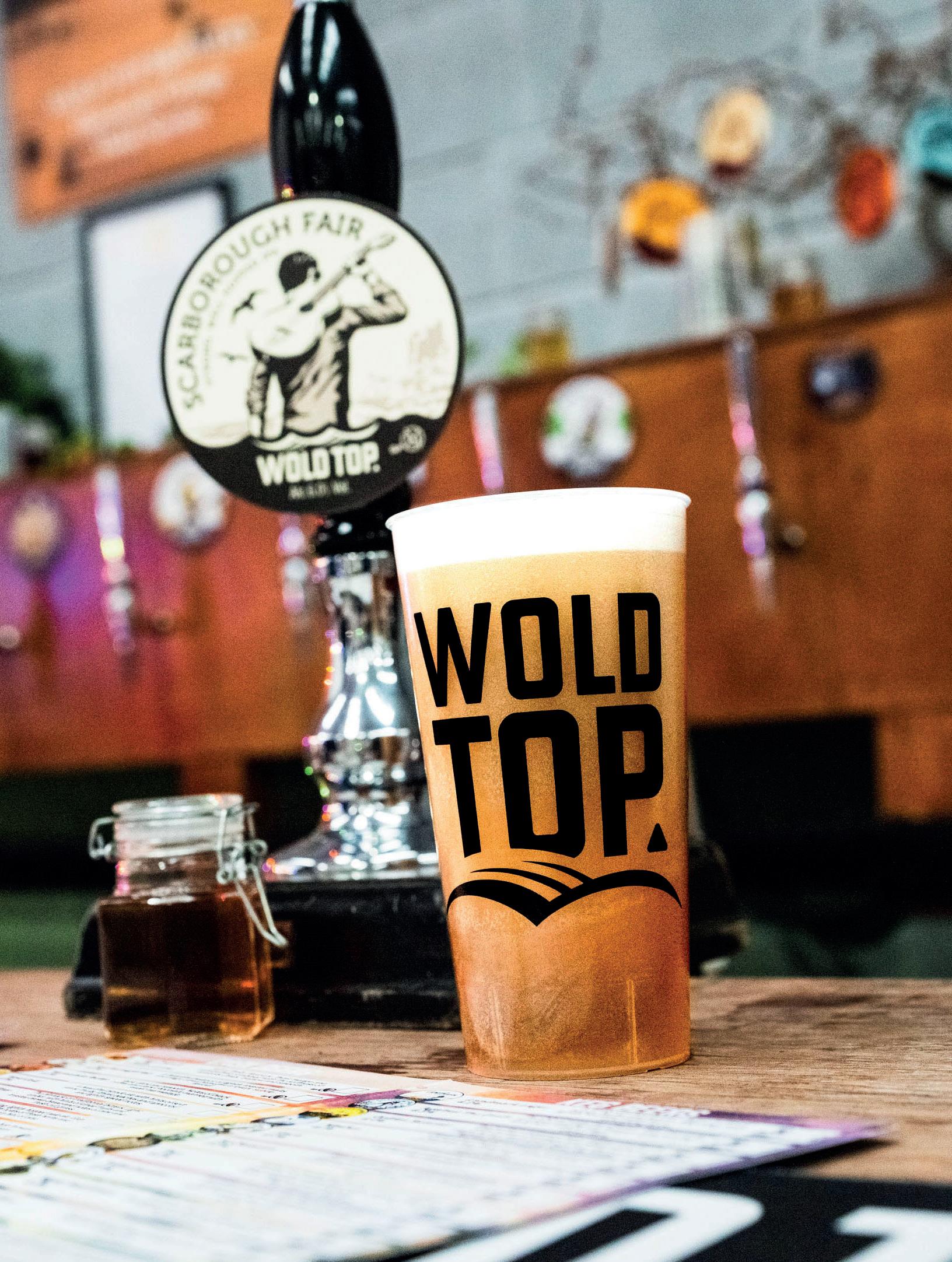
How and when was Wold Top founded?
“We were founded back in 2003 and it all really came out of a farm diversification project. At the turn of the 2000s farming wasn't in a great position, and we were based on a 600 acre farm [owned by Alex’s wife Kate’s family], which sounds like a lot, but in farming terms is a medium to small end farm, particularly for an arable farm, which is what we are. So we needed to find another stream of income into the farm. I didn't actually arrive on the scene until 2010 but it was set up in 2003 by Kate’s father Tom [Mellor] because he needed to underpin the farm for future generations, and ensure that it was viable moving forward. We grow barley on the farm - this part of the world is known for its malting barley all the way down the east coast of the UK. It's some of the best growing malting barley, and the farm doesn't actually have any mains water to it either, it’s fed off a borehole. So with the barley and the water, when you've got those two things together, you're halfway towards making a beer. Initially, the first thinking was, ‘why don't we just bottle the water?’ Because it’s relatively cheap for us, because it's coming out of the borehole. But when Tom began to investigate that, fairly quickly he realised that there's not really a lot of creativeness with bottled water. There's not a huge amount of depth that you can go in to with it, and at the time, it didn't feel like that was really the right place to go. But we were already selling the barley
to a grain merchant who was then selling it on to Muntons, or one of the other maltsters around us at the time. And after a conversation with them, he found out that a lot of it goes into making beer and whiskey. And that's really how it all started to get going. He then went on a brewing course with David Smith at Brewing Services, and he invested in what was then a 10 Barrel kit.”
And how has the business developed since then?
“So that was in 2003, and the business grew and grew and in around 2012 we put in a 20 Barrel kit. And then the business continued to grow until about 2015/16, when we put in the current kit, which is a 40 Barrel kit. And you will notice from our production split, we don't really look like a lot of other people in the SIBA landscape. Most of them are very much draught-led, rather than small pack. But one of the things that we realised pretty early on, because of our geographic location, most of our traditional distribution circle is North Sea, so we have to go a long way in the other direction to have the same kind of coverage. The nearest big cities are York and Hull, neither of which are big cities, so there's just not a lot of population around us and so as a consequence of that, there's just not as many outlets. So we've very much had to focus on how we get the beer to people at a distance. And that's why we've ended up focusing much more heavily on small pack. “





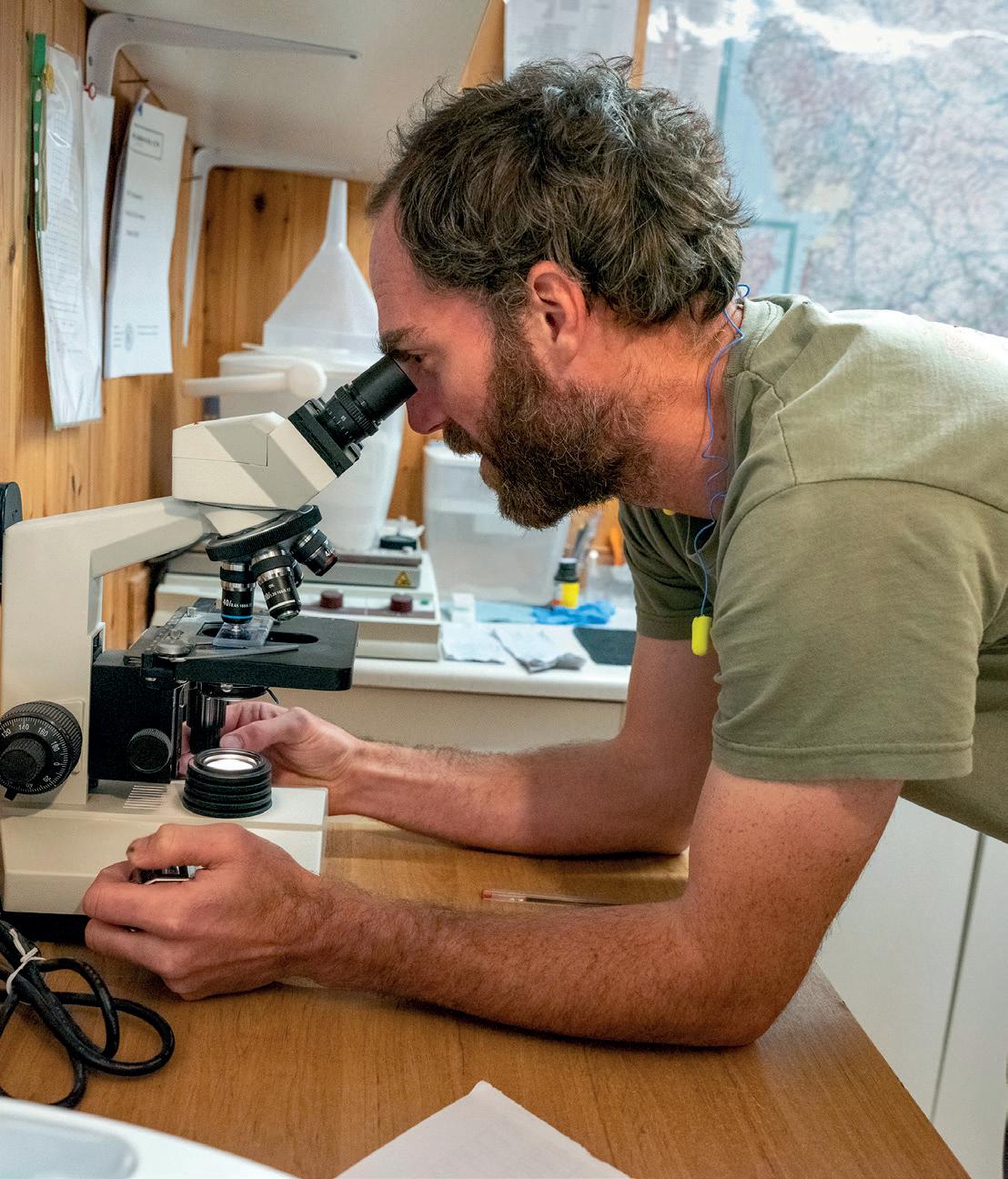
What is your background and how did you get in to brewing?
“I'm a biologist by training, I studied biology at Uni, and I met Kate at Uni. And the original idea was to become a pilot. But I didn't quite make it through all the various tests for that. So that was the universe saying, ‘Go and find something else to do.’ And so we were back on the farm, doing various bits and pieces, and eventually started just helping out and it grew from there. Also, as with so many people, my first job was in my local village pub, and that got me interested. So I always knew about beer and brewing and the hospitality side of things. It's always been a part of my life. And it was nice to not just go over to the other side of the bar, but right the way back to the source. And then we really started properly in the business in early 2010.”
What is the ethos behind the beers you brew?
“One of the guiding principles, is that we've always wanted to brew beers that got people coming back for another. So it's not about the shock factor, we always wanted to produce something where you take a sip of a beer, and it’s good, and you get to the bottom the glass and say, ‘I'll have another one of those’. That's really what we're always trying to do with whatever we're producing. Obviously, we started in 2003 and so hazy pale ale wasn't really a thing then, whereas that is very much a thing now. So we've very much moved with the times. And while the traditional range doesn't necessarily look like some of those more modern styles, we do brew those as part of our monthly specials. And eventually, as things do settle down, we probably will find that the core range does shift over time to reflect what people are wanting to consume.”
How does Wold Top stand out from the crowd?
“Sustainability has always been a big thing for us, with us growing the barley which we then use as the base malt for the beers on the farm. That whole grain to glass mentality has followed us all the way through. We weren't able to do that right at the beginning, because our size meant that we weren't able to access maltsters that were able to take the barley directly from us, malt it and then bring it all back in one ring-fenced batch, whereas now we are of a size that we can achieve that. So that's
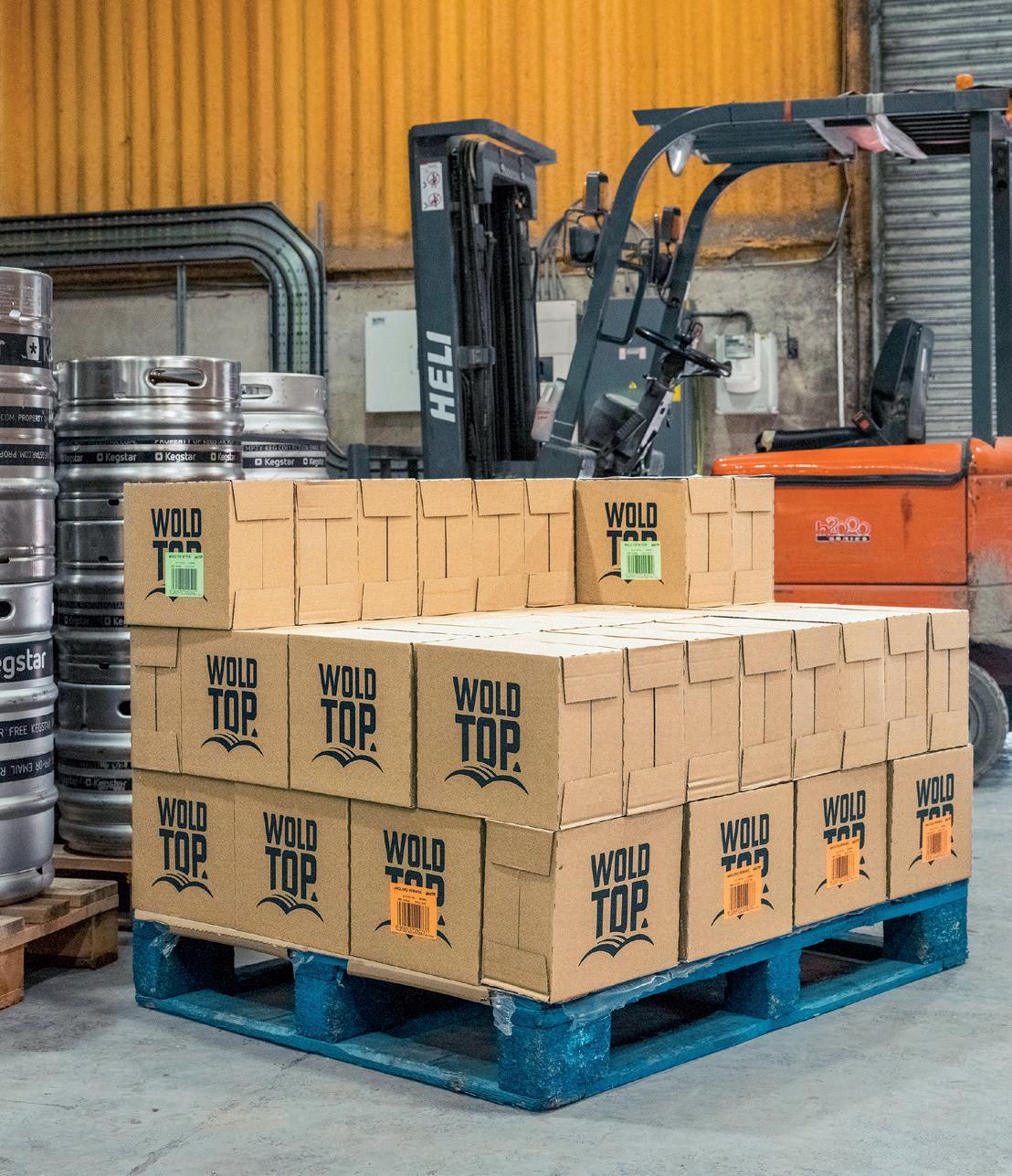
what we do now. I'm not going to say it's unique, because I know there are other brewers who are based on farms who do that, but we're one of a handful of brewers that are able to do that. That’s one of the reasons that we stand out. And as well as that we're not about being flashy, and we're not about trying to be the next big thing. What we're really after making is just really good beer.”
What are the main challenges you face as a business currently?
“Obviously tax rises, whether that's personal tax rises, or the cost of employment, all those elements certainly don't help. The other one is that the UK seemingly wants to talk a good game about being a manufacturing powerhouse again. And I know the UK does some incredibly good manufacturing, but one of the things that hurts any business that's involved in any kind of manufacturing is just the sheer cost of energy sometimes, certainly compared with our peer nations. It does seem that the cost of our energy is excessive, and that's not to say anything about the more recent changes as well, about the introduction of EPR and all the other red tape. I don't want to sound like I'm moaning, though, because the UK is a fantastic place to do business as well. So I don't want to say it's all doom and gloom, because I don't believe that it is.”
So what opportunities do you see for your business in 2026?
“One of the things that we've been quite strong in over the years, is our export market. So about 10% to 15%, depending on the year, of our production annually goes for export. Our focus on small pack has enabled some of that route, although it's not all small pack. The single biggest export market for us currently is Italy and we do have a few outlets in the Scandi region and then Switzerland as well, and there's a bit that goes off to Canada. We're in active discussions with a few others, mostly in the EU. And one of the nice things, is that we can sell it on provenance, and on the quality of the product, and the fact that it is something that you can't necessarily get from every outlet in that country, so it can command something of a price uplift. And the other opportunity is that people very much now are wanting experiences, and so we're leaning more into that. We're doing more events at the brewery. One of the things that we're doing quite a lot of at the moment is walking events. There's a 10km
Continued on page 61
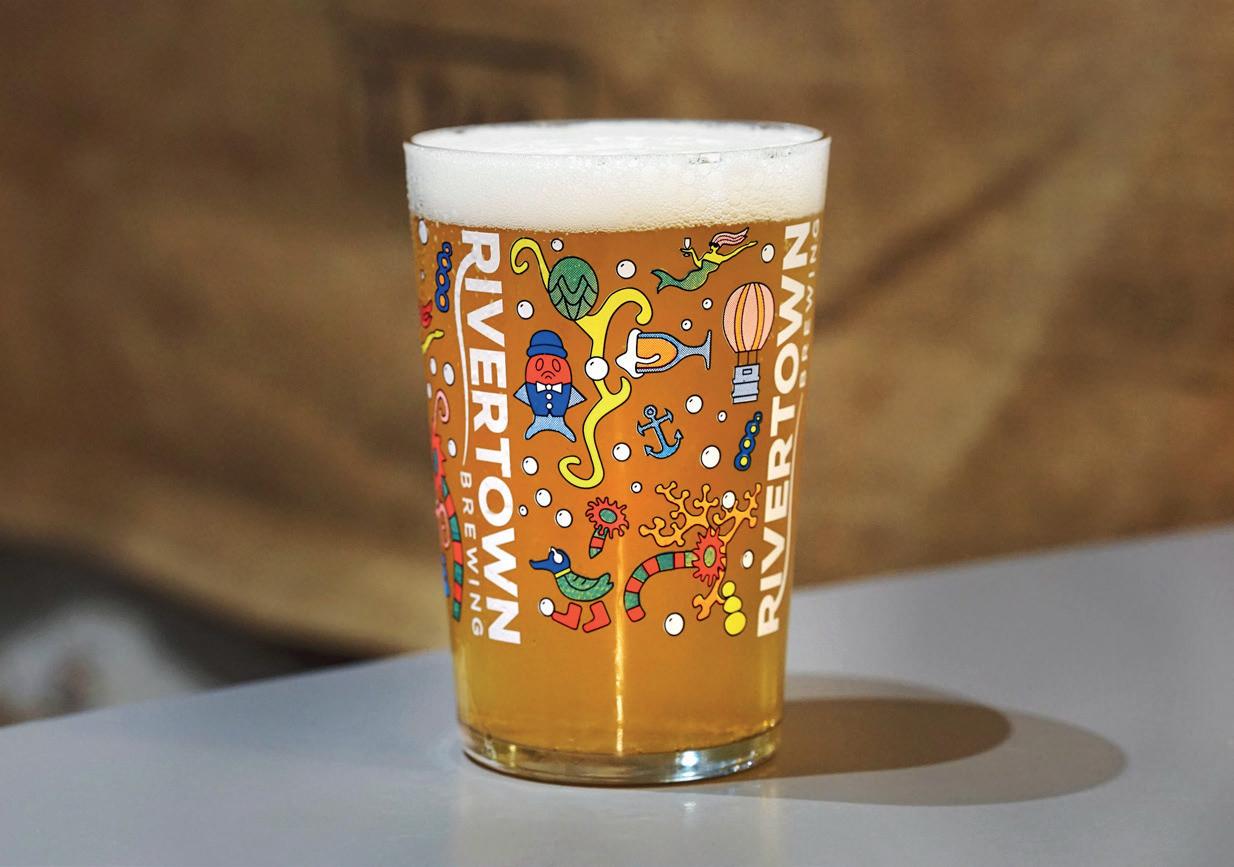
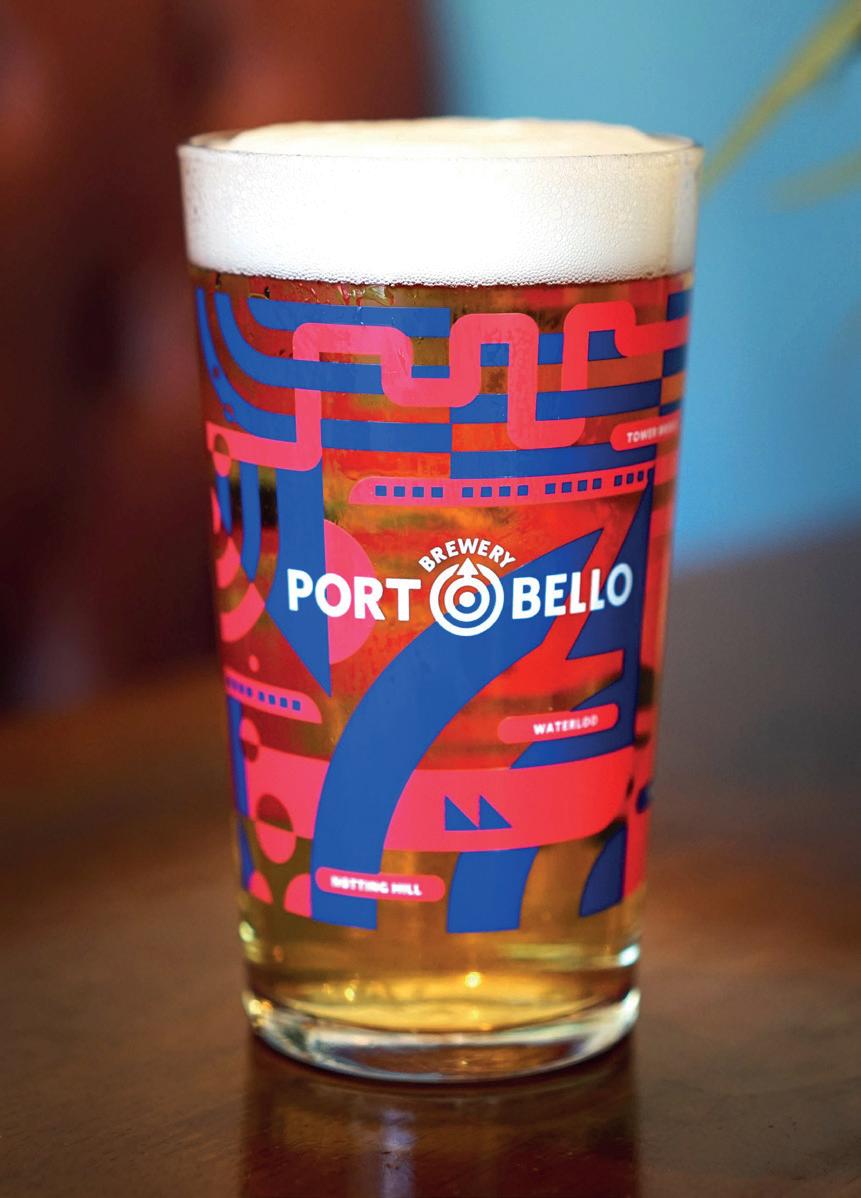
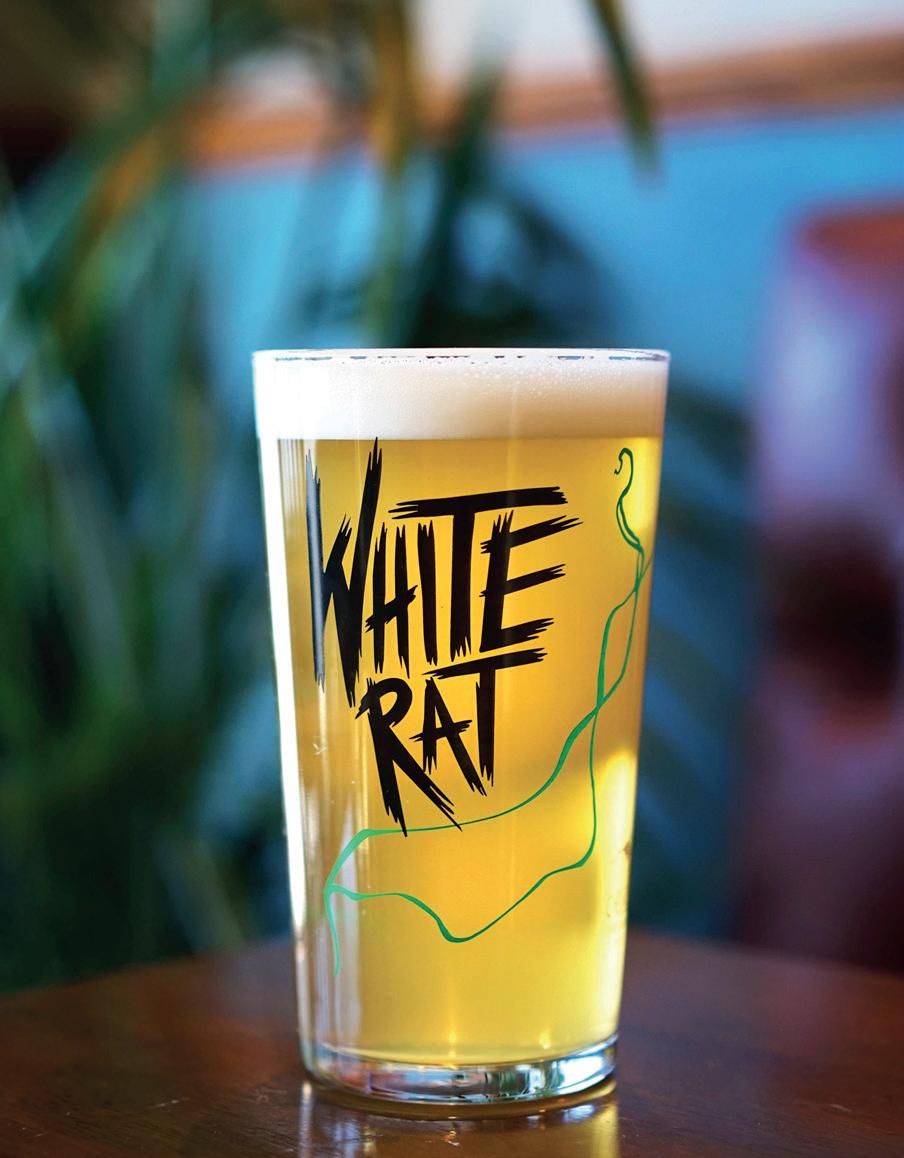
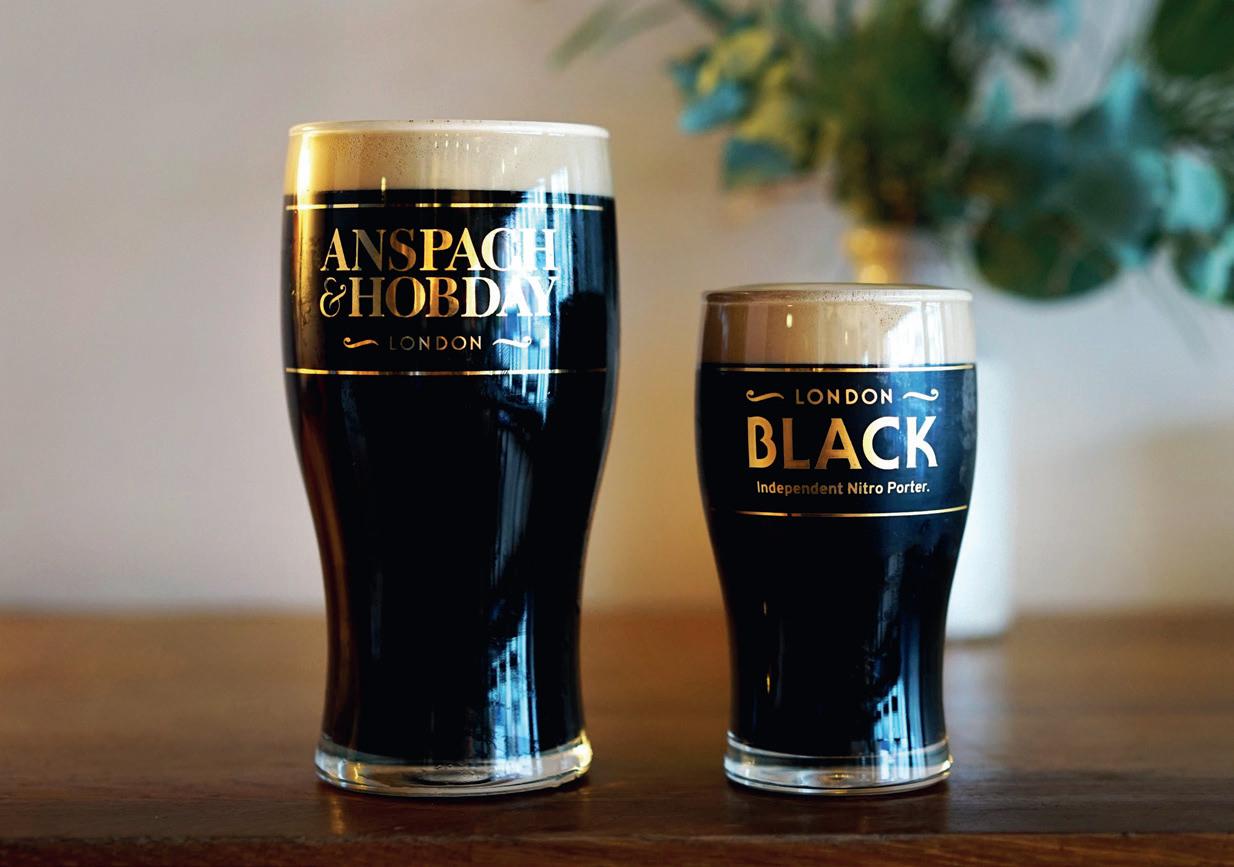
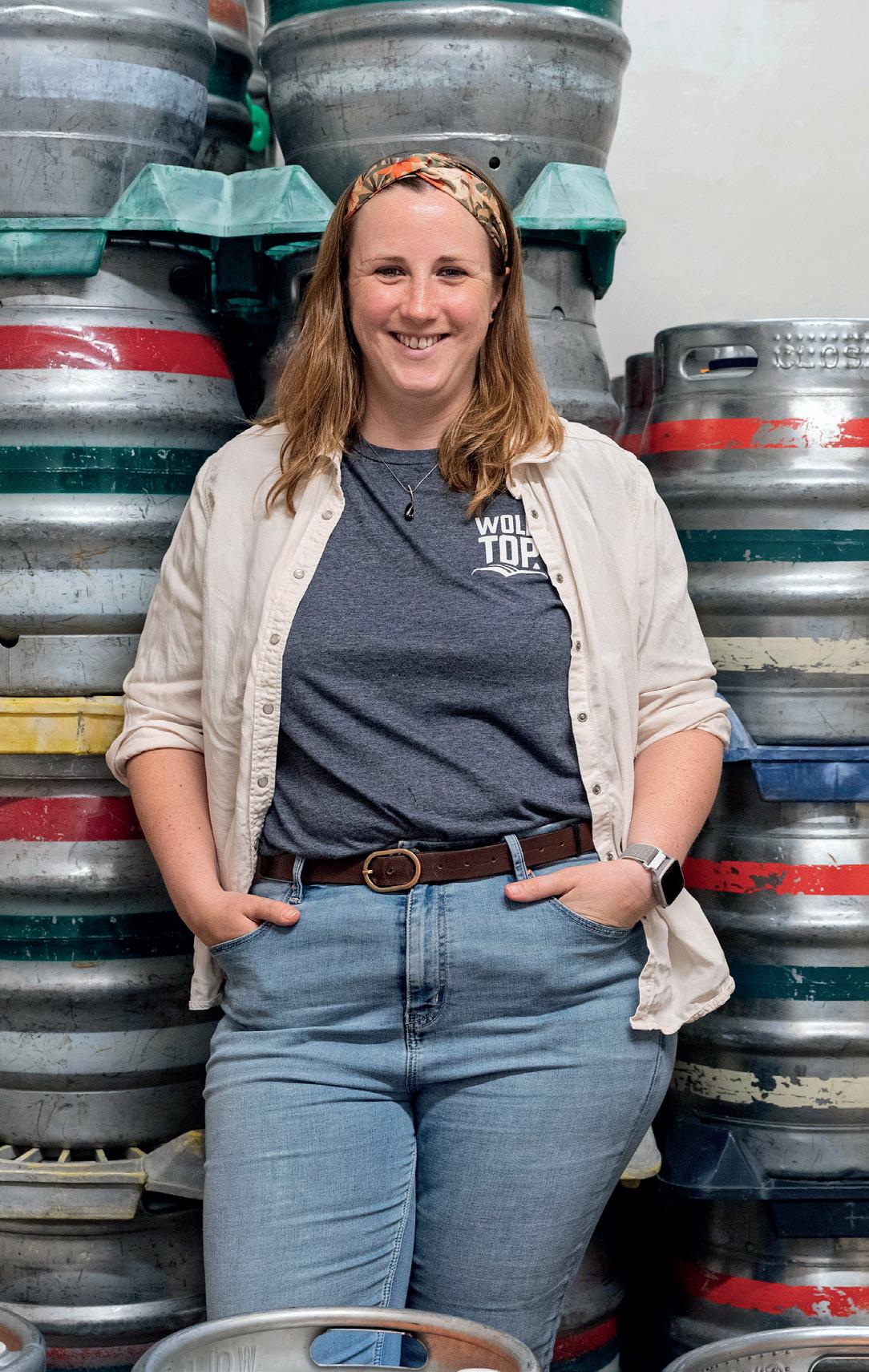
route that you walk, which is through some beautiful, dry valleys that surround the farm, because we're up on the Yorkshire wold. We do a beer festival up here as well, once or twice a year, and we do a cycling event. And our sister company, which is the Spirit of Yorkshire, they make York's first single malt whiskey. So in addition to the 10,000HL of beer we make, we're also producing the wash for spirits as well.”
You are a SIBA Regional Director. What is your key focus in your role on the board?
“I've always wanted to get more involved with SIBA, and I hope that I bring a different view, and perhaps a different perspective to the Board, because my business is very different from some of the other members. Particularly with the production split, and with an understanding of how the spirit side works, and the production end from a barley perspective, so the farming perspective all the way through. SIBA has, I believe, been a force for good in the industry, and I wanted to be a part of that, and to try and move it forward. And ultimately, I suppose, it's about ensuring that the lobbying arm of what SIBA does is being effective, which it absolutely is under the current team, in some very challenging times. I'm really proud to be a part of that.”
Is market access an issue for your business, and if so, how are you approaching this?
“I think market access is an issue for everybody. There's no denying that. So how do we make it work? Well, we've made it work by focusing on small pack, which does allow our distribution to go that little bit further and also opens up markets overseas. In terms of how we approach it, it
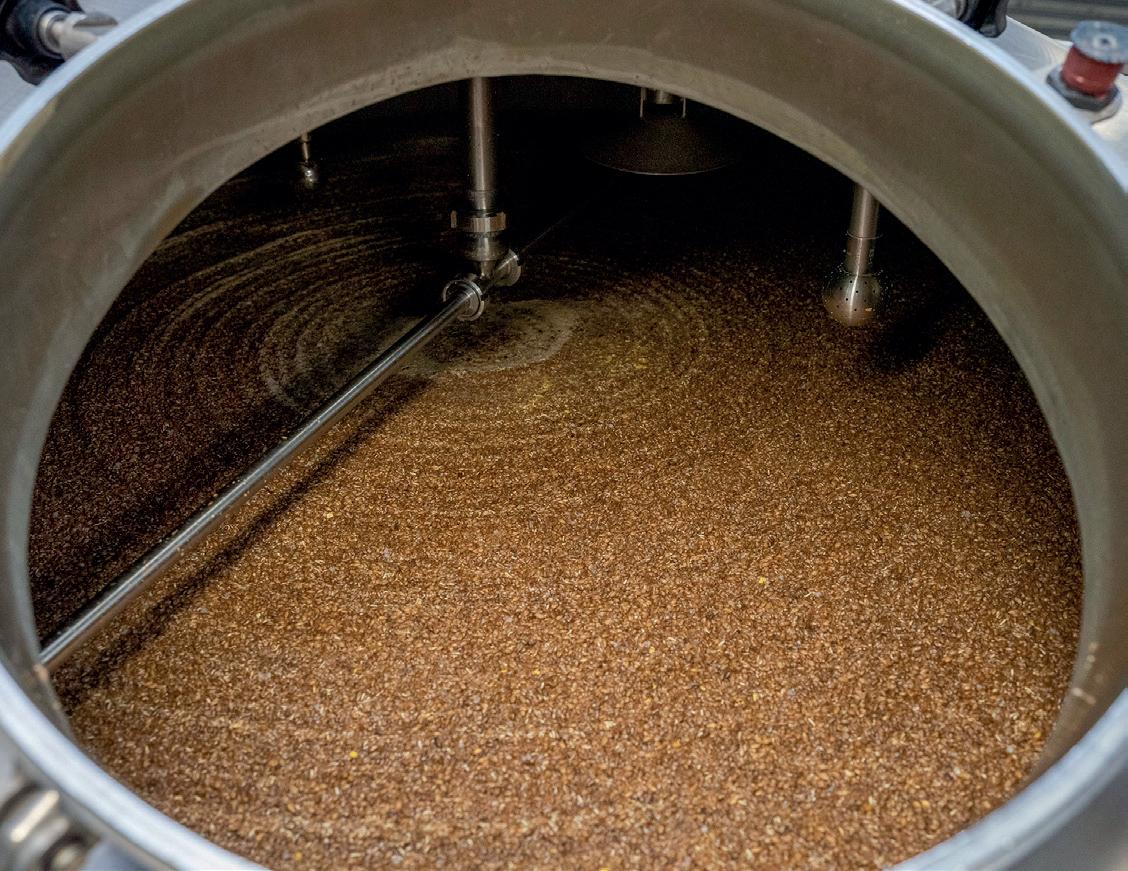
I think market access is an issue for everybody. There's no denying that. So how do we make it work? Well, we've made it work by focusing on small pack, which does allow our distribution to go that little bit further and also opens up markets overseas.
goes right back to the offering, and trying to ensure that where there is an opening in a local bar, restaurant, whatever it may be, we're offering them the right products that fit their mix. And we just continue to beat the drum around there being a demand from local people for locally produced beers. Reports show that even though we're in a technically declining market, there is still a demand that outstrips the current supply for locally produced and independent beers.”
You have spoken about your grain to glass ethos but how important is the wider issue of sustainability at Wold Top?
“We have got our own turbines and we're hoping to install some solar panels on the roof of the building as well, hopefully by the end of the year. But one of the big projects, from a sustainability perspective, is the installation of a CO2 capture system. We'll be putting one of those in this year. And then linking right back to the farm, because we grow our own barley, we have control over what we're putting on it. So we've dramatically reduced the amount of fertiliser that we're putting on, and we've started to use cover cropping and direct drilling as well, which has really helped. And that runs right through to all of the businesses that use that barley. So that's both Wold Top and also Spirit of Yorkshire [the family’s independent whiskey business]. That's a really important sustainability aspect to both of those businesses. I've always viewed sustainability as a journey, not necessarily an end goal. It’s about moving at a speed that is quite literally sustainable. No point in bankrupting the business in order to become sustainable, what we have to do is move at pace, but at a pace that is doable over the long term.”
Continued on page
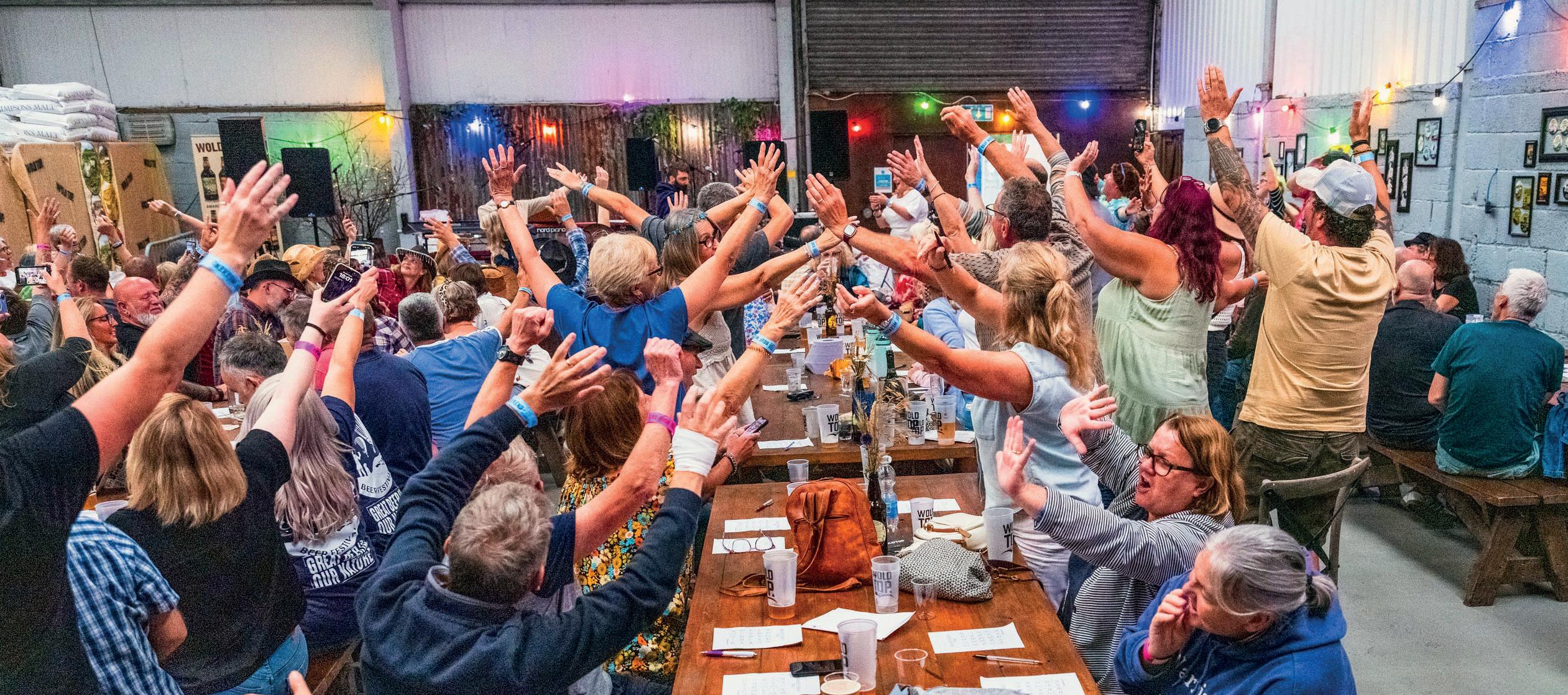
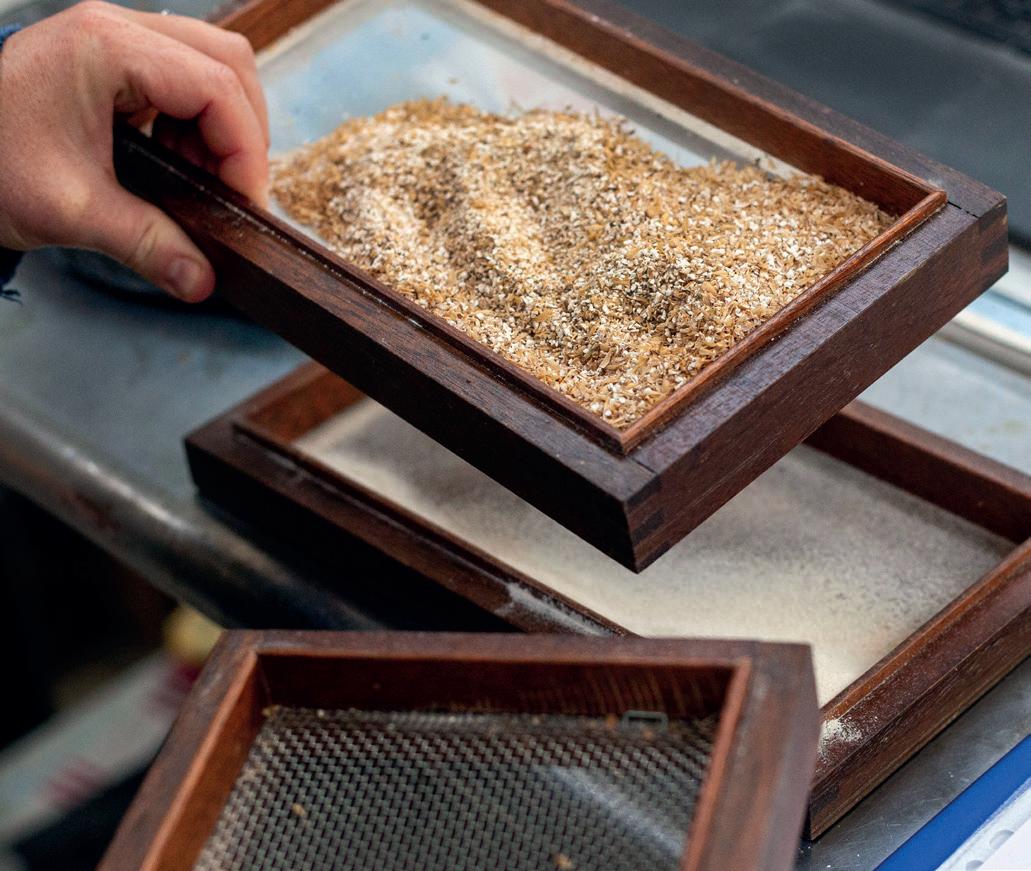
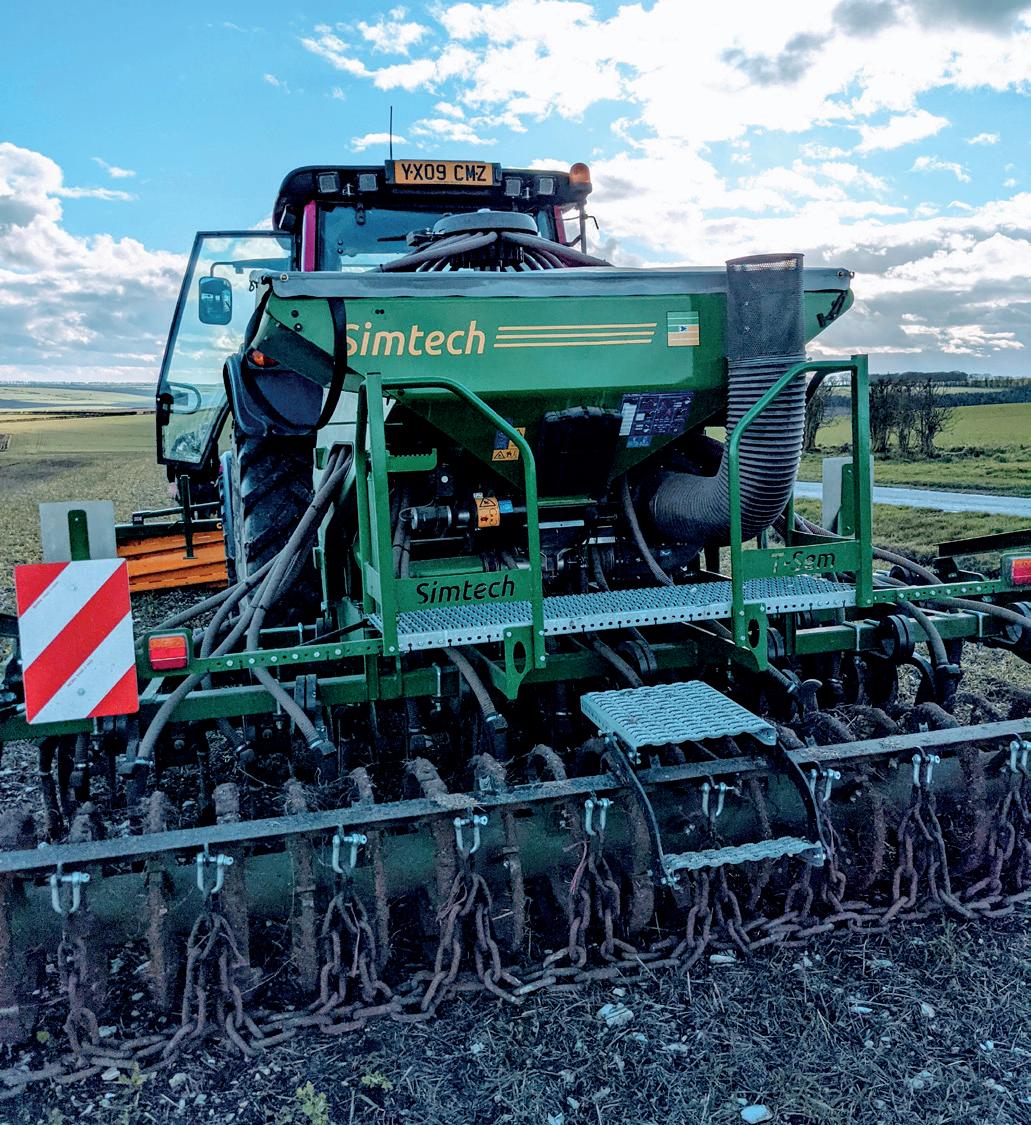
Are you investing in the business currently and if so, where is that investment going?
“So, the CO2 capture and potentially the solar rig as well of course. Then we put in the canning line last year as well. And actually, that goes back to access to market. I mean, that is something else that we've done to give us access to lots of different markets. It means where there is an opportunity, we can try to move to it. The other thing that we do is contract brewing and packaging. So again, if we've got some spare capacity, we can sell that capacity to somebody else. And that's actually a bit of a sustainability plus as well, because it means you don’t need to necessarily build new kit out there, there is an environmental cost of building new stainless steel kits, and that shouldn't necessarily be overlooked. So it’s a way of ensuring the capacity within the industry is fully used by contract brewing and packaging, ensuring that we really are getting maximum use out of things there. And then in terms of other investment, one of the things that we've always tried to do is invest in staff training when that's possible as well. Because ultimately, the better trained your staff are, the better able they are to do the job that you're asking them to do, which ultimately leads to more efficiency and a better quality product at the end of the day. Then on top of that just various other equipment upgrades, small little bits and pieces here and there to try and make people's lives easier. One of the things that we've always tried to do, no matter what conditions are out there, is try to keep the business moving forward. I think when you stand still, and it's absolutely okay to stand still, but if you stand still for too long, you become stagnant. Momentum really can build once you're in motion.”
What is the best piece of business advice you have been given?
“I think one of the best pieces of business advice I've ever been given is, ‘if you can't fit it on one side of a sheet side of A4 it's too long!’ And also then there's the really important bit, which is turnover. Turnover is vanity, profit is sanity. But also try to have some fun along the way. I think that's really stuck with me.”
What is your favourite beer and where would you most like to drink it?
“I'm not sure I could truly pick a favourite, as there are so many great beers out there, and also so many great places to visit and have a drink - whether that is a local pub at the end of a hike or a city center venue with a great history. But at the risk of not answering the question in full, I would have to say that I first got interested in beer drinking in the local pub where I had my first job, and they served Broadside by Adnams. So to this day, I have a soft spot for that beer in that place. It is my favourite? I don't know, there are so many good ones out there to choose from. But it is definitely up there, as one of those that brings back memories.”

• Longer Payment Cycles: Distributors and trade customers are increasingly delaying payments, leading to cashflow challenges for small breweries.
• Cashflow Risk: Cashflow remains the main risk for small breweries, making prompt payment crucial for sustainability and growth. Delayed payments can hinder business operations, causing stress on supplier relationships and limiting reinvestment opportunities.
• Clear Payment Terms: Establish clear and concise payment terms upfront in customer contracts (e.g. net 30, net 60) to set expectations from the start.
• Late Payment Penalties: Include late payment fees and interest charges for overdue invoices, making it financially less attractive for customers to delay payment.
• Credit Limits: Set appropriate credit limits based on the customer's payment history and financial standing. Monitor and adjust limits regularly to mitigate risk.
• Deposit Requirements: Consider requesting a deposit for large orders, particularly for new or high-risk customers. This helps mitigate the financial risk if payments are delayed or not made.
• Document Everything: Always maintain detailed records of orders, communications, and agreements to protect against future disputes.
• Clear Product Descriptions: Ensure that the quality and specifications of products are clearly outlined in contracts to avoid ambiguity during disputes.
• Return Policies: Implement clear return policies, detailing conditions under which returns are accepted, and ensure these are agreed upon in writing with customers before transactions.
All companies face issues around managing debt, but with cashflow often a reason why businesses fail, Napthens litigation specialist James Stephenson looks at how the licensing sector can manage debtors and when to call in for support if debts become long-term…
• Dispute Resolution Clause: Include a formal dispute resolution process in contracts to ensure that disagreements are handled efficiently, whether through negotiation, mediation, or arbitration.
Personal guarantees — when to ask for them
• Mitigate Risk: Personal guarantees can help protect against the risk of nonpayment by holding individuals personally liable for business debts.
• When to Ask: Request personal guarantees when dealing with new customers or high-risk clients, particularly those with limited credit history or a poor payment track record.
• Limitations: Be clear on the terms and limits of personal guarantees, ensuring they are legally sound and enforceable in case of non-payment.
Simple steps to reduce debtor days without damaging relationships
• Proactive Communication: Regularly check in with customers to ensure they’re satisfied with their orders and to remind them of approaching payment deadlines.
• Flexible Payment Plans: Offering flexible payment options (e.g. instalment plans) can help customers manage their cash flow without damaging the business relationship.
• Early Payment Discounts: Encourage early payments by offering small discounts (e.g. 2% off for payment within ten days), which can help improve cashflow.
• Set Payment Reminders: Use automated reminders for upcoming due dates, helping customers stay on track and avoid accidental delays.
Legal options when invoices go unpaid
• Reminder Letters: Start with gentle reminders, escalating to formal written notices outlining the consequences of nonpayment.
• Legal Action: If the matter escalates, pursue legal action, including court claims. Small claims court can be an option for smaller debts, while larger amounts may require more formal proceedings.
• Judgments and Enforcement: A County Court Judgment (CCJ) or High Court writ can be obtained for unpaid debts. These are enforceable by law, meaning that funds can be seized or deducted directly from the debtor’s account.
High Court or mediation? Choosing the right dispute route
• High Court Action: If negotiations fail and the debt is significant, taking legal action through the High Court may be necessary. This route is more formal and expensive but may be needed for larger claims or particularly difficult debtors.
• Mediation: Mediation is a less costly and more collaborative alternative. It can resolve disputes faster and preserve relationships by involving a neutral third party to facilitate negotiations.
• Choosing the Right Route: For smaller debts, mediation or arbitration is typically faster and less expensive, while High Court action may be required for larger sums or if a customer is uncooperative.
In a slow-paying market, it is essential for small breweries to take proactive measures to safeguard their cash flow.
Tightening customer contracts, being clear about payment terms, handling disputes effectively, and using legal options, when necessary, can significantly reduce the risk of non-payment.
By fostering transparent communication and using tools like personal guarantees and mediation, breweries can strike a balance between protecting their business and maintaining strong customer relationships.
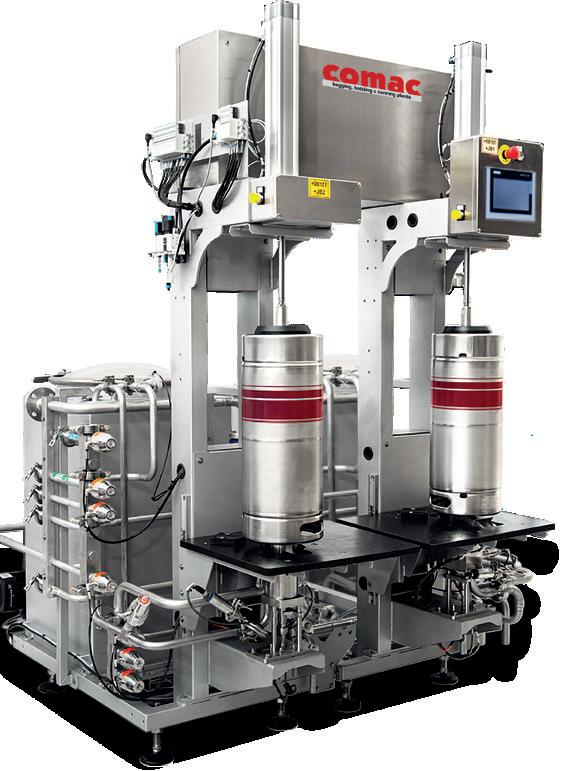
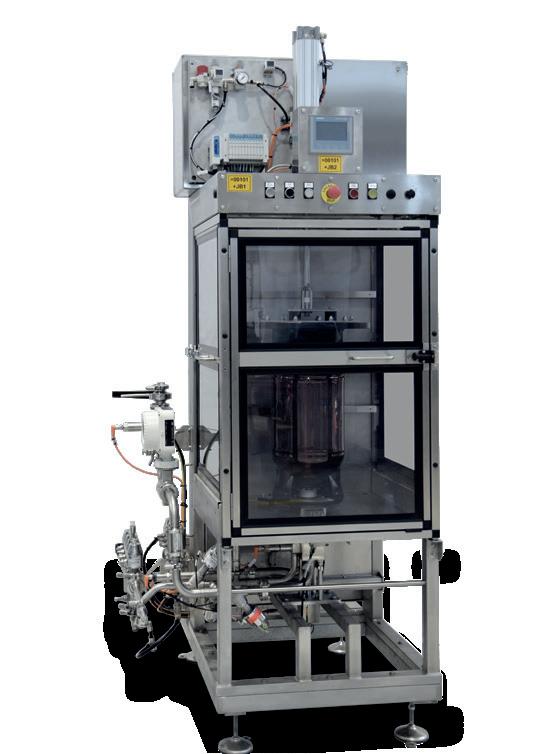
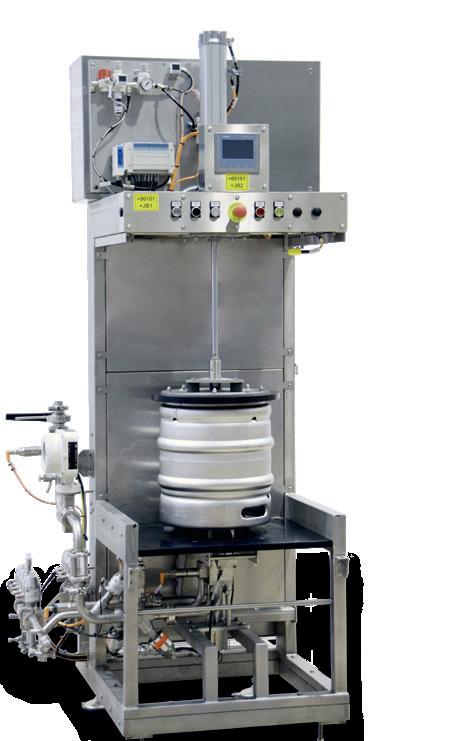
For over seven years I ran the Hop Forward Podcast to help listeners get ahead in the brewing and beer business. After Episode 200, I decided to call time at the bar.
In that final episode, I sat down with Damien Doherty from Emperor’s Brewery intending to talk about big hefty Imperial Stouts, a style Damien is renowned for. Instead, we mostly ended up talking about how craft beer has changed over the last 10–15 years. Yes, there are the obvious pressures: post-Covid trading, higher costs, shifting consumer habits. But there’s another shift I’ve watched unfold that most people aren’t talking about: maturity. In the early days of the modern craft boom, people left stable jobs and chased a dream: build a brewery, make great beer, join a ‘movement’. Plenty swore they’d never brew a bright, easy-drinking lager for the masses, instead throwing themselves into the IBU arms race, mixed fermentation, big hazy monsters, or anything ‘weird’.
Now, many of those same breweries have added steady, easy-going beers (even ‘yellow fizz’) not because they’ve stopped caring, but because it serves a purpose. It’s the pint that works for the mates who’ve been dragged along by the one craft-beer friend for prefootball drinks, and it’s often the pint that keeps the bar moving at festivals and events. They’ve not done this because they’ve ‘sold out’ but because they’ve learned what customers actually order week in, week out. Taste is personal, bills are not. If a dependable pale lager pays for your barrel programme, that isn’t a compromise; it’s a strategy.
This is where Michael Gerber’s The E-Myth Revisited is still relevant decades after it was first published (go read it!). Gerber describes the ‘technician’ seized by the desire to become an entrepreneur: someone excellent at the craft who assumes the business will
Brand and marketing guru Nick Law looks back over 15 years of change in the sector and ponders what a ‘grown up’ independent beer sector has learned…
look after itself. Brewing attracts technicians (people who know how to brew beer) but many recent casualties weren’t killed by mediocre beer, they were killed by cashflow, pricing, sales, systems, people management and fatigue.
Maturity looks like accepting that the ‘dream’ needs a system. Core ranges - once dismissed as unimaginative - are now recognised as repeatable cash-cows that serve a significant purpose to a business. It’s cheaper to win one customer and keep them than it is to chase a new customer for every one-off release. Flagships build familiarity, familiarity builds trust, trust becomes habit, and habit keeps the lights on.
That doesn’t mean creativity has to die; it means it needs a framework. The healthiest breweries I work with treat innovation like R&D, not roulette in a bad casino. They plan seasonals and collaborations but they don’t gamble employee wages on whether the next hype release lands. Limited releases become learning: what sells in the taproom, what works in wholesale, what genuinely adds value.
You can see maturity in operations too. A decade ago, craft beer social media was full of war stories played for laughs: mash-tuns emptied on the floor, exploding tri-clamp valves from pressurised vessels; these days, the best breweries I walk into are much calmer. There’s signage in place, I’m asked to sign-in via a visitor book, cleaning records exist, and training is intentional. Safety culture has moved from ‘look how hardcore we are on this rickety ladder’ to ‘we want everyone to go home in one piece and not get sued’.
Branding has matured in a similar way. Early on, being different was often enough. Now, shelves are crowded and consumers are more selective. The breweries that stand out aren’t always the ones shouting the loudest; they’re the ones communicating clearly and
consistently: who they are, who they’re for, what they make, and why it matters.
Generative AI is complicating that. It’s easier than ever to produce ‘content’ but not necessarily to build a brand. When everyone can generate a design in seconds, the temptation is to cut your graphic designer costs at the cost of actually saying nothing about who you are and why it matters. The more automated things get, the more valuable genuine human craft becomes: real photography, real illustration, real stories, real faces.
All of this points to a bigger truth: the world has matured, and craft beer has had to mature with it. Costs are higher. Margins are tighter. The on-trade is under pressure. Wholesale is brutally competitive. Longevity demands discipline.
But maturity doesn’t have to mean only brewing yellow fizzy lagers. The best artists don’t stop experimenting; they learn which experiments are worth doing. Bowie reinvented himself without losing what made him Bowie. Queen moved between styles while staying unmistakably Queen. Breweries have their own versions of that. Some mature by refining a house style until it is a modern classic, while others mature by building a world around their beer: a taproom that feels like home, a community that shows up on a regular basis, and a brand voice that sounds like a person rather than a ChatGPT written press release. The common denominator for all of this is intentionality. You don’t have to choose between creativity and stability; you have to decide which parts of the business carry which weight, then build the systems to support it.
If making 200 episodes taught me anything, it’s that the breweries still standing aren’t always the loudest or the most hyped. They’re the ones who’ve built solid foundations and have matured like a fine barley wine.
Nick Law is the Creative Director of Hop Forward: a branding, marketing and business consultancy for the brewing industry. Find out more at www.hopforward.beer or email nick@hopforward.beer
Your natural solution for sulfur-free brews, every time.

Introducing ISY S-REDUCE - AB Vickers new natural solution for eliminating unwanted sulfur compounds in beer. ISY S-REDUCE ensures a clean, crisp taste in every batch. Enjoy reduced off-flavors and enhanced fruity aromas, all while benefiting from a yeast-derived, biologically bound source of copper.
Scan to learn more lallemandbrewing.com
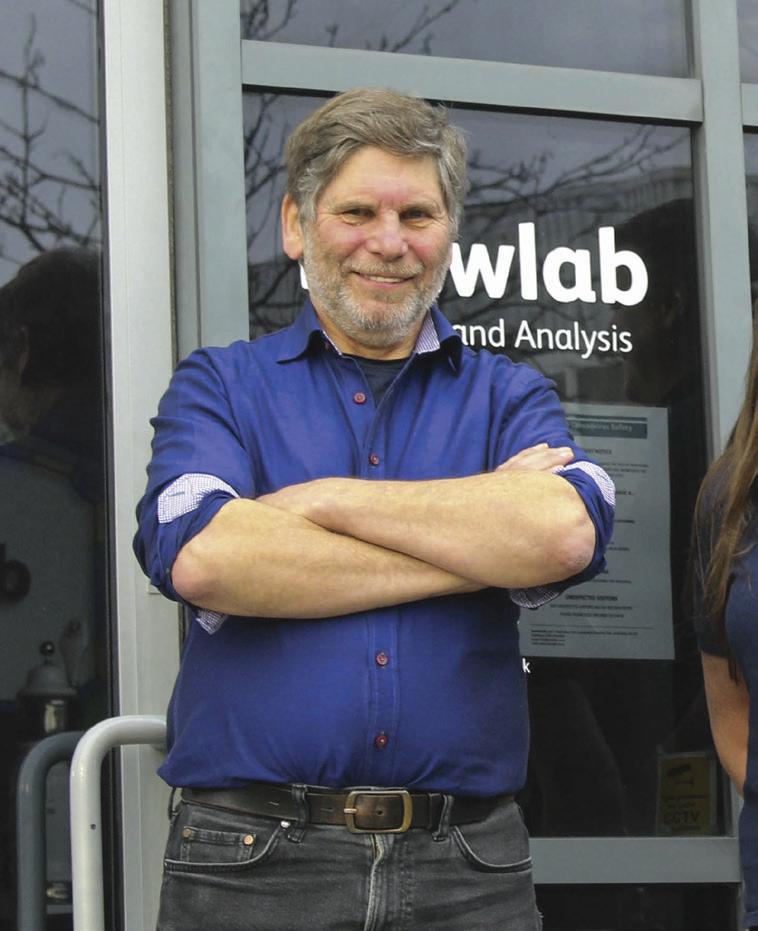
Brewlab’s Dr Keith Thomas looks at the potential dangers associated with working in a warm, damp environment where fungi and mould can thrive…
Breath in deeply, hold - and breath out. What do you notice? A gentle sigh or a wheeze and a cough? If the latter look around your brewery for fungus on the walls – in particular for mould which could be fermenting in your bronchioles.
Of course we work with fungi every day, although mostly of the yeast variety. As such we know what’s good about fungi. In particular yeast fermenting wort to produce alcohol and flavours. Without fungi we would have no beer. Or wine, spirits, cider and other alcoholic beverages. Accepting that yeast are a desirable face of fungi what about their less desirable side? High on the list here are fungus diseases which can infect our ingredients but also ourselves. As brewers we are most conversant with spoilage for barley and hops, both of which suffer losses in yield and deterioration in quality. Mouldy beer doesn’t sell well and to avoid needs good quality management by growers and suppliers in production and storage.
Less evident problems with fungi are the potential effect of mould on staff in the brewery particularly as working conditions are often conducive to mould growth – generally wet, warm and with plenty of secluded surfaces for growth.
Look around any brewery and there will be extensive opportunity for condensation and for mould growth. In heavily contaminated areas green and black moulds grow on walls and floors, beneath vessels and into surfaces, digesting materials eventually releasing spores when mature. Wood, plaster board and paint are particularly susceptible. Dry rot is a prime example in digesting timbers, but some moulds can weaken concrete and mortar giving your brewery structural damage.
Problems don’t just develop in production areas. Cellars, toilets and kitchens are great for mould growth if poorly ventilated and once present contamination spreads easily resulting in the, sadly named, sick building syndrome and, as a consequence, sick staff.
The problem here is the invisible release of spores from the mould and their infection in your lungs. That said spores aren’t only in mouldy buildings. Spores are everywhere. We probably inhale over 1000 in every breath even in clean environments. Most get exhaled but a few can lodge in the crevices of your lung with potential to infect and grow. Thankfully we’ve evolved good immune responses in the lungs to mop up such invaders which, given good health, are neutralized.
In a mouldy environment with many more spores this becomes a more difficult challenge and, with poor health, has potential for a major lung disease. Moreover, we have a further dimension of hazard. Because some moulds produce mycotoxins they are more pernicious with potential to invade beyond the lung. Not just a wheezy cough but a residential hospital case.
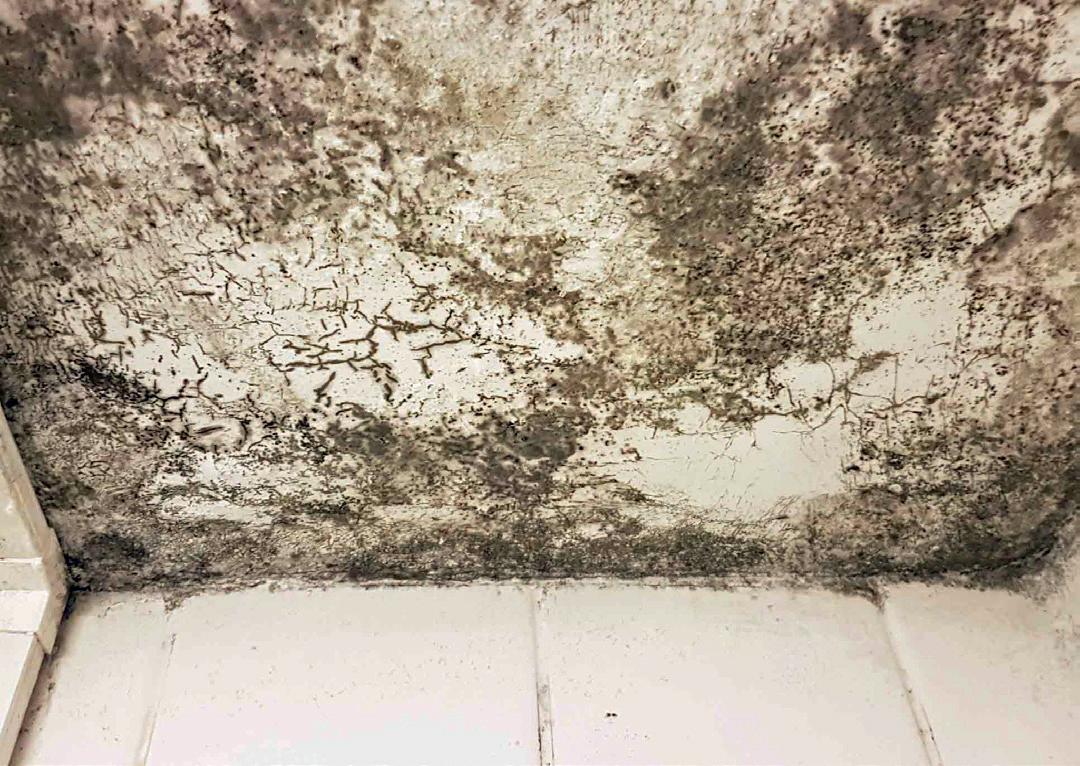
Are there specific fungus diseases to avoid? Two are worth noting, although no one wants a wheezy chest from anything. Farmers lung is an unpleasant option and typically associated with growth of Aspergillus fungus in wet hay, straw and compost. Pitchforking these releases clouds of very small spores which easily penetrate deep into your lungs as you cough. Not perhaps common materials in brewing but mouldy grain may be a more likely source.
Alternatively try Parrot fever, another fungus disease due to growth of psittacosis, a Chlamydia fungus, and Cryptococcus, both typically associated with breathing in dried bird excreta. Bird fungi are common sources of human infections as they are adapted to birds’ higher body temperature. Again, birds aren’t a typical feature of breweries but may be present if you have open access and roosting opportunities for pigeons. While these infections are more prevalent amongst pigeon fanciers occasional outbreaks are recorded in unexpected locations. Workers in a 7th story office recently suffered a major outbreak from feeding pigeons on the window ledges. Children in play parks can contract infections if bird food is regularly spread nearby.
Major lung infections are thankfully rare, but irritation can give you low level breathing difficulties leading to asthma which could become persistent.
Breath in and listen for that wheeze.
Find more from Brewlab at www.brewlab.co.uk

We are delighted to have received B Corporation (B Corp) certification – a globally recognised standard that measures social and environmental performance, transparency and accountability.
Only a select group of innovative organisations meet the high verified standards of B Corp and we are proud to now be part of the movement. Our certification by B Lab, the non-profit organisation behind the B Corp initiative, proves we have legally embedded our commitment to purpose beyond profit into our operations. Our transparency goes far beyond our glass.
Evaluating our business across governance, workers, community, environment and customers, the requirements of B Corp certification match the socially responsible values we have always held at Croxsons. Like all B Corp companies, we are committed to transforming the global economy to benefit people, communities and the planet.
Our CEO Tim Croxson says: “B Corp not only gives us the accountability and transparency to demonstrate we ‘walk the walk’ but also provides a framework for how we can be even better. As a business, we can’t do everything but we must do something.”
Scan the QR code for more information.
Sharing our expertise is always a joy, so our CEO Tim Croxson can’t wait to speak at this year’s BeerX (18-19 March). Celebrating the best of British beer and the independent brewing community, BeerX at the Exhibition Centre Liverpool is one of our favourite events on the calendar.
Take the chance to hear Tim discuss the challenges and joys of transitioning between generations in a family business. He’s rightly proud of how each new leadership team at Croxsons has kept the company fresh and innovative, always breaking new ground. And if you want a good chat about the business of beer, you can also catch up with Tim and the team on Stand 138 at the show.
Scan the QR code to register now.
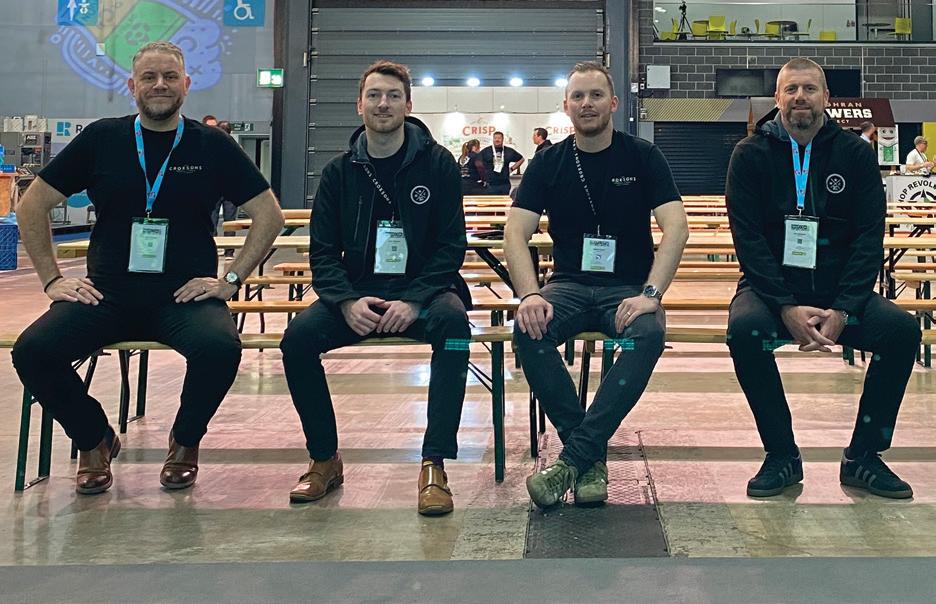
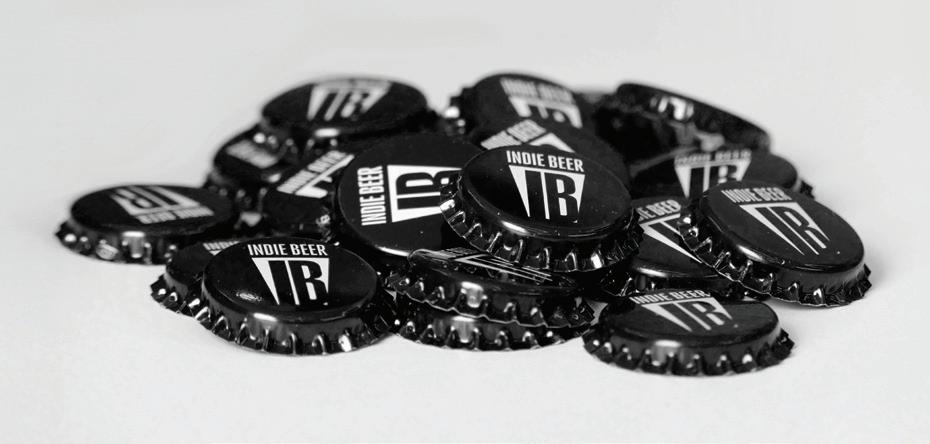
We are proud supporters of SIBA’s INDIE BEER campaign at Croxsons. Nothing tastes quite like high-class craft and cask beer brewed in the UK.
In fact, we even offer stylish INDIE BEER crowns to SIBA members, so consumers can see at a glance their beer comes from a truly independent brewer. Building a brand customers trust is so important.
To order your SIBA INDIE BEER crowns, scan the QR code.

IT’S THE RIGHT TIME FOR RIGHTWEIGHT ®
We always work closely with customers and our supply chain to make a difference to your business. We love to explore new innovations, the concept of Rightweight® is one of our greatest successes.
Going beyond lightweighting, rightweighting focuses on finding the optimal balance between strength and the materials used in glass containers. Without compromising on functionality, safety or style, we design and manufacture bottles to use only the glass needed to do the job – no more and no less. Yes, the bottle becomes lighter than traditional products but nothing that matters is lost.
By using fewer raw materials than before to make our containers, we not only lower our manufacturing emissions but also the fuel requirements and environmental impact of transportation.
Watch this space for more news on how Rightweight® is coming to the beer industry.
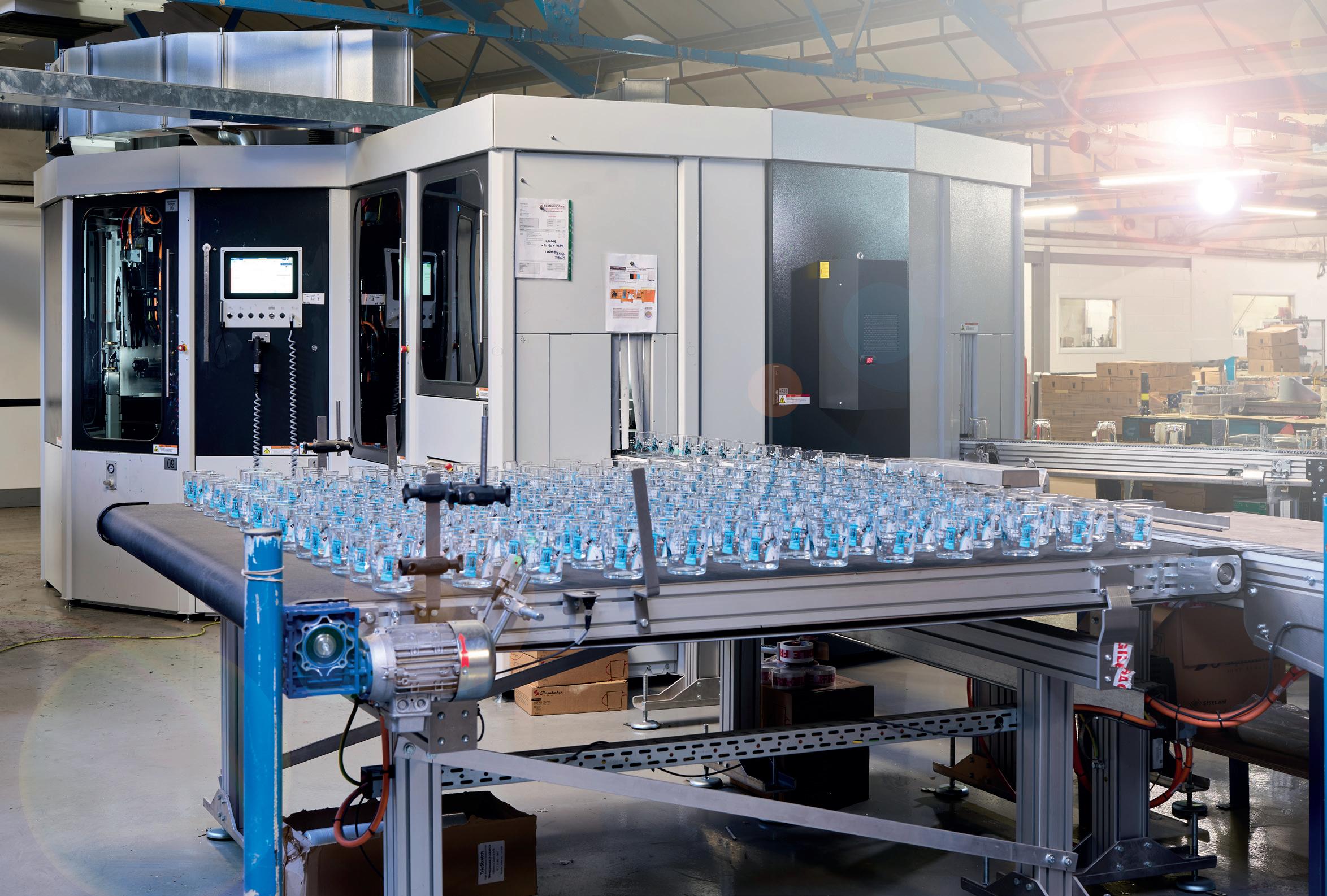
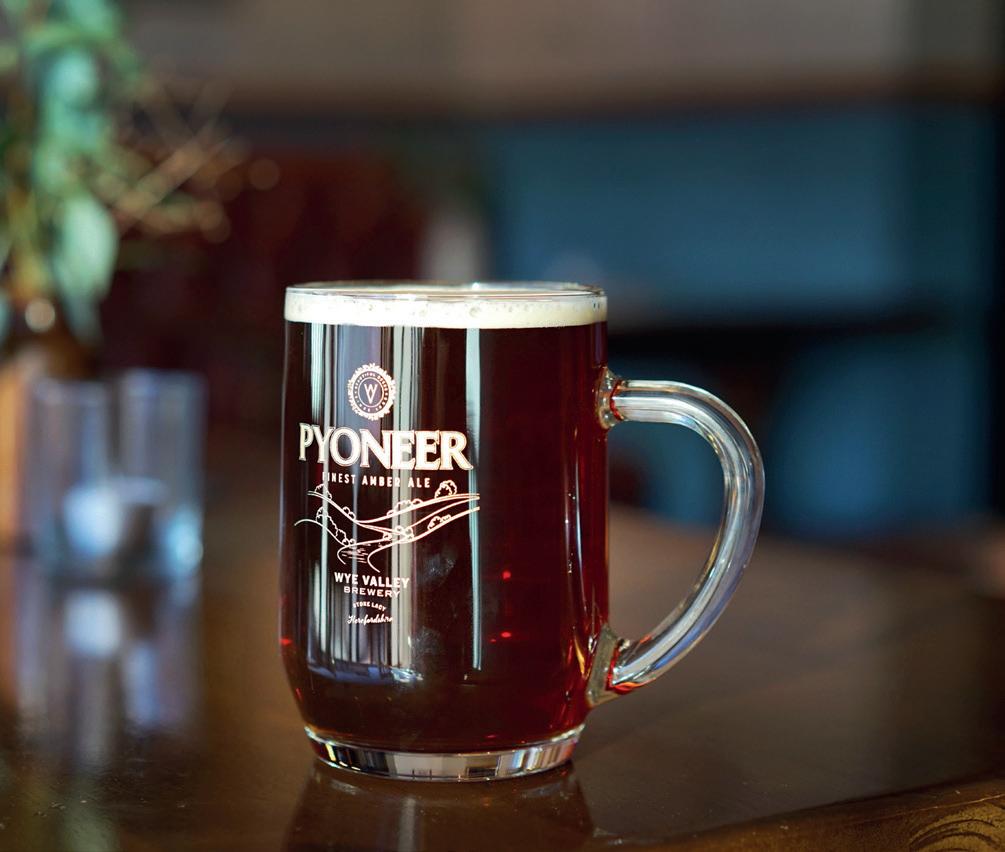
Festival Glass, the renowned family-run screen-printing company, has announced the launch of a groundbreaking new UV printing machine marking a significant £1 million investment in state-of-the-art decorating technology.
This milestone represents the next step in Festival Glass’s commitment to innovation and service excellence. The new 5 colour UV printing system dramatically enhances production efficiency, allowing the company to offer consistent short lead times of just four weeks while increasing capacity on a large scale.
The new machine, incorporating the latest generation of servo motor driver technology, will ensure greater print registration, reduced downtime, increased output and best in class UV paint curing technology.
The investment not only boosts speed and flexibility but also enables Festival Glass to deliver even higher print quality across a wide range of glass shapes and styles, including a variety of new styles new for 2026, a reflection of Festival Glass’ continual drive to stay ahead in a fast-evolving market.
Speaking about the launch, Graham Cheesbrough, Managing Director said:
This investment is more than just a machine; it’s a statement of intent. We’re combining decades of family expertise with the very latest UV printing technology to offer our customers faster, more flexible, and more sustainable solutions than ever before.
With this bold step forward, Festival Glass continues to blend tradition with innovation, reinforcing its position as a leading force in the specialist glass printing industry and a trusted partner to beverage brands nationwide.
Festival Glass has built a proud reputation on craftsmanship, consistency, and customer care. Over the past six years, Festival Glass have installed 3 new UV production lines at its facility in Halifax in West Yorkshire.
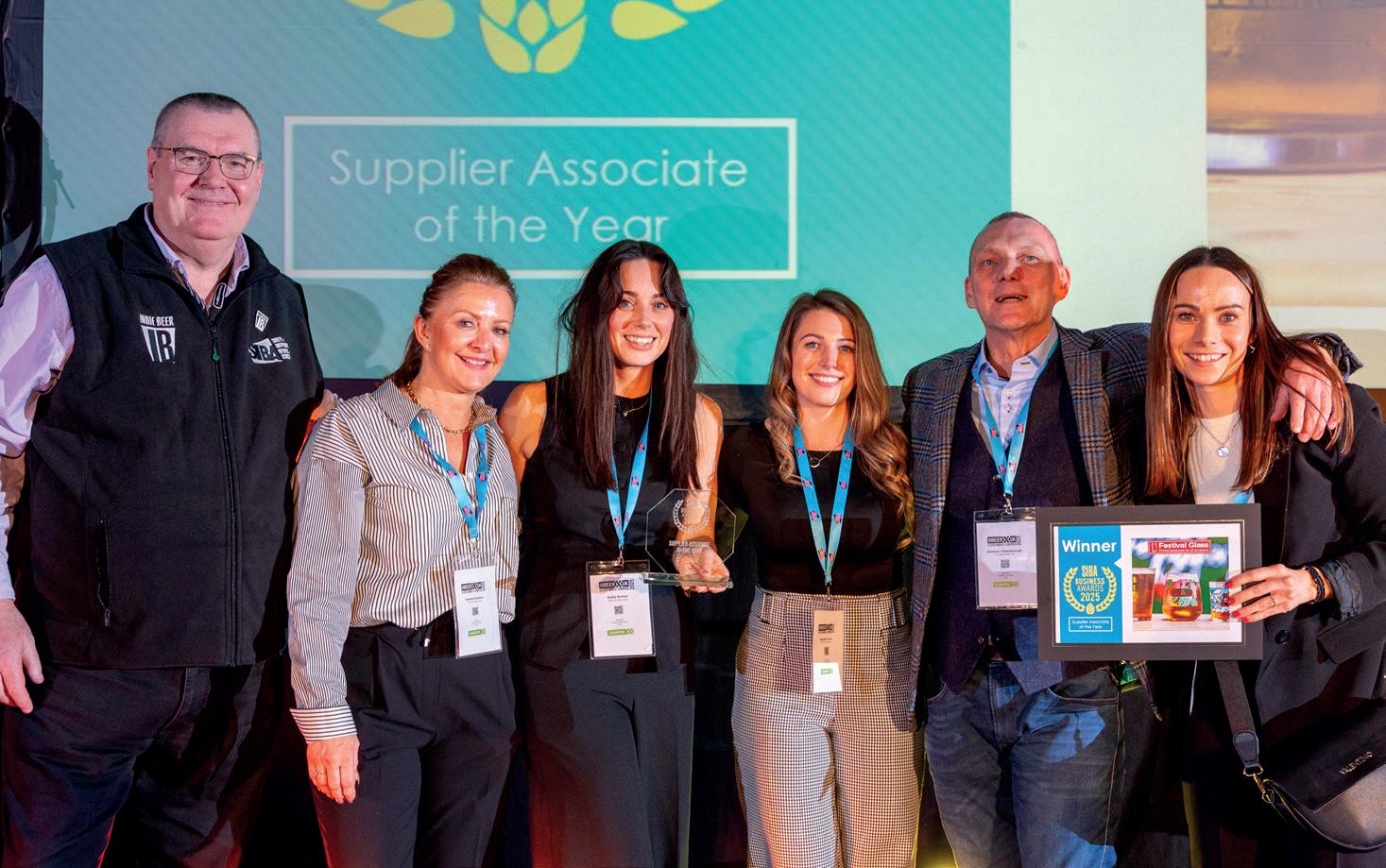
By continually reinvesting profits Festival Glass can focus on supplying all areas of the industry and wider market, from smaller independent brewer to the large multinational and setting new standards within the drinks and hospitality industries.
These efforts have not gone unnoticed, Festival Glass has proudly earned three consecutive SIBA Supplier Associate Awards (2023, 2024, and 2025), underscoring the trust and respect earned amongst independent brewers and beverage brands across the UK.
As fourth-generation glassware screen printers by trade, Festival Glass are a proud Yorkshire based family business. Festival Glass was established in 2002 by Graham & Malcolm who share over 50 years’ experience in the glass decorating industry and a passion for real ale. Recognising the potential of an old converted biscuit factory in the heart of the Pennines, it was decided this would be the perfect starting place for Festival Glass.
Staying true to their name, Festival glass initially specialised in events and beer festivals, supplying many of the CAMRA beer festivals throughout the country, which is still the case today. Twenty-four years later the home of branded glassware, Festival Glass, continues to expand and has welcomed the second generation of family into our team and the diversity of our customer base ranges from micro-breweries, taprooms and regional brewers to large scale macro breweries and everything in between.
Festival Glass have always prided themselves on their flexible and customer needs-based approach to their product offering. Carefully listening to feedback from within the industry to bring high quality glassware to market which delivers both practicality and design.
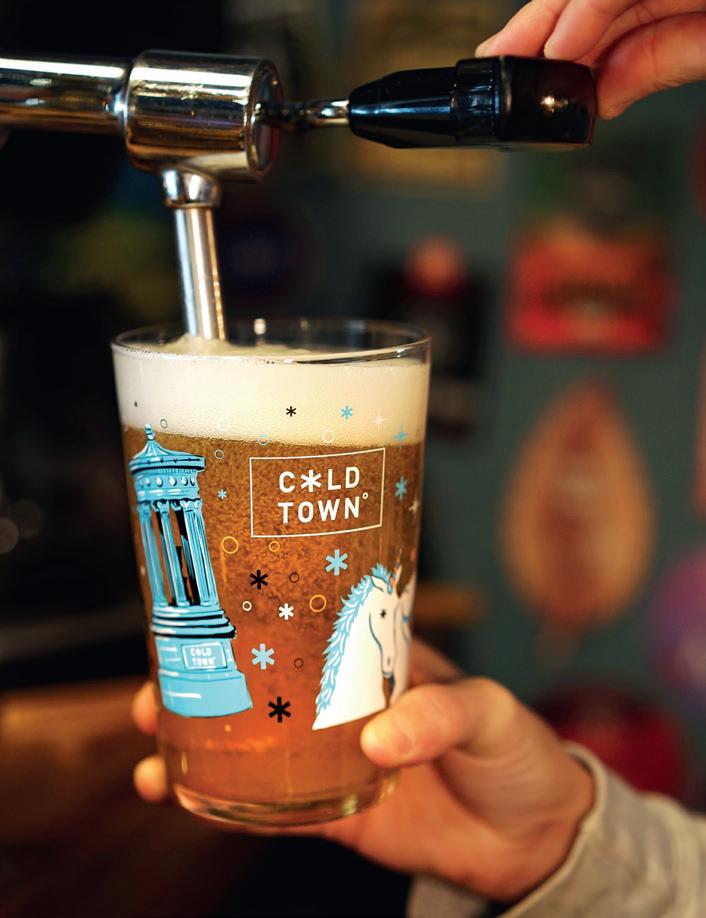
Club - over 1 million sold since launch!
The launch of the 20oz Club (named after the factory’s home on Club Lane) in 2021 has been a standout success, selling over 1 million of this single shape alone since its launch. This momentum has fuelled the company’s innovation pipeline, and behind the scenes the team have been hard at work designing bold, future-focused glassware that fills key gaps in the range, developed with trusted & reputable glassware manufacturers. Festival Glass are excited to unveil many of these new shapes at the upcoming SIBA BeerX Exhibition (18th-19th March) where they will be located on stand 116 at Liverpool Convention Centre, giving customers a first look at the next generation of Festival Glass products.
At Festival Glass, we don’t just decorate glassware, we help bring your brand and creative visions to life. Few things are more rewarding than ordering a pint in the pub & knowing you have decorated the glass it has been served in.
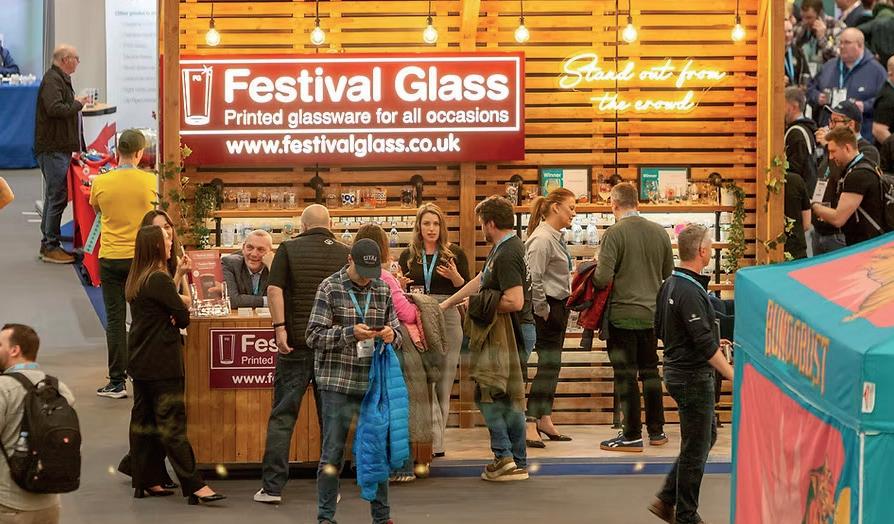
Bottle & Can Non-Alcoholic & Low ABV
S SILVER CATEGORY CHAMPION: Stewart Brewing Scot Free Pale 0.5%
B BRONZE: Ardgour Ales Dol Fodha na Grèine 2.8%
Bottle & Can Pale Ale (4.5% - 5.5%)
S SILVER CATEGORY CHAMPION: Stewart Brewing Hazy IPA 5.0%
B BRONZE: Loch Lomond Brewery Bonnie and Clyde 4.5%
Bottle & Can Session Lager (up to 4.4%)
G GOLD CATEGORY CHAMPION: Wasted Degrees Brewing Pilsner 4.2%
Bottle & Can Amber, Brown & Red Ale (up to 6.4%)
G GOLD CATEGORY CHAMPION: Loch Leven Brewery King Slayer 5.2%
S SILVER: Fyne Ales Highlander 4.8%
S SILVER: Howe Beer Project Squirrel! 80/- 5.0%
S SILVER: Wasted Degrees Brewing Amber Rye 5.0%
B BRONZE: Arran Brewery Arran Dark 4.3%
Most of the Regional Heats for the SIBA Bottle & Can Independent Beer Awards are now judged online via Zoom, using the UK’s most experienced beer judges, beer sommeliers and master brewers. This system takes the pressure off the in-person regional competitions, which can now focus on cask and keg, and ensures the very best quality judging for our awards.
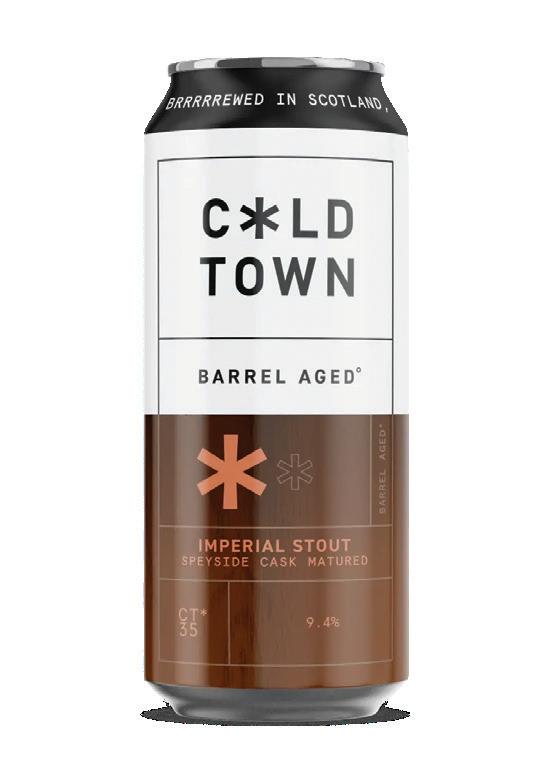
Bottle & Can Speciality & Flavoured Beer
G GOLD CATEGORY CHAMPION: Cold Town Beer Imperial Stout Speyside Cask Matured 10.2%
G GOLD: Innis & Gunn Caribbean Rum Cask 6.8%
S SILVER: Williams Bros Brewing Co Orange Ginger 3.4%
B BRONZE: Orkney Brewery Dark Island Reserve 10.0%
Bottle & Can Continental Style Beer
S SILVER CATEGORY CHAMPION: Arran Brewery Arran Blonde 5.0%
B BRONZE: Howe Beer Project Le Coureur de Cochons 5.4%
Bottle & Can Sour & Wild Ale
G GOLD CATEGORY CHAMPION: Origins Brewing Nàdar Blackcurrant 4.4%
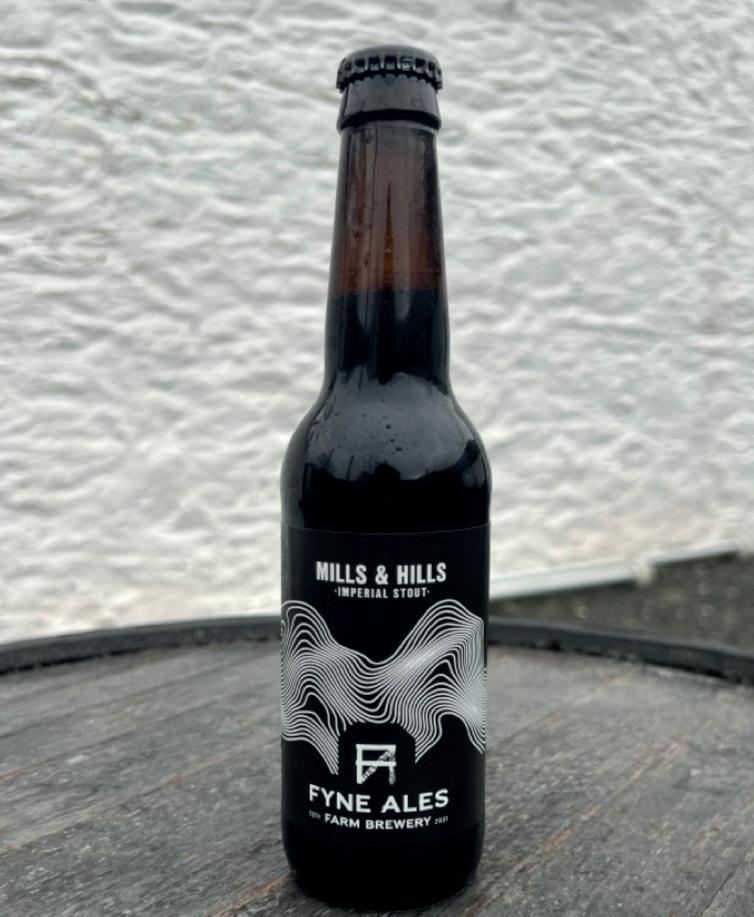
Bottle & Can Stout & Porter (6.4% and under)
G GOLD CATEGORY CHAMPION: Lerwick Brewery Tushkar 5.5%
B BRONZE: Broughton Ales Stout Jock 4.8%
B BRONZE: Cairngorm Brewery Company Black Gold 4.4%
B BRONZE: Loch Lomond Brewery Silkie Stout 5.0%
& Can IPA (5.6% to 7.4%) S SILVER CATEGORY CHAMPION: Cross Borders Brewing Ltd India Pale Ale 6.0%
Bottle & Can Imperial & Strong Ale (6.5% and over)
G GOLD CATEGORY CHAMPION: Fyne Ales Mills & Hills 9.5%
G GOLD: Broughton Ales Old Jock Scotch Ale 6.7%
S SILVER: Innis & Gunn Vanishing Point 09 11.0%
Bottle & Can British Ales (up to 6.4%)
G GOLD CATEGORY CHAMPION: Stewart Brewing Edinburgh Gold 4.8%
Bottle & Can Non-Alcoholic & Low Abv
G GOLD CATEGORY CHAMPION: Harrogate Brewing Co Baby Iris 0.5%
S SILVER: Hambleton Brewery Point 5 0.5%
Bottle & Can Pale Ale (4.5% to 5.5%)
G GOLD CATEGORY CHAMPION: Northern Monk Brew Co Faith 5.0%
S SILVER: Brew York Coney 4.5%
S SILVER: Ossett Brewery Excelsius 5.0%
S SILVER: SALT Brewery SERGE 4.5%
B BRONZE: First & Last Brewery Chime 5.2%
Bottle & Can Session Lager (up to 4.4%)
G GOLD CATEGORY CHAMPION: Ossett Brewery Hell Rat 4.0%
B BRONZE: Chantry Brewery Indra 4.2%
Bottle & Can Premium Lager (4.5% to 6.4%)
S SILVER CATEGORY CHAMPION: Hambleton Brewery GFL 5.2%
B BRONZE: Rudgate Brewery Pilsnor 4.7%
Bottle & Can IPA (5.6% to 7.4%)
G GOLD CATEGORY CHAMPION: Brew York Big Eagle 6.4%
G GOLD: Northern Monk Brew Co Heathen 7.2%
S SILVER:Abbeydale Brewery Ltd Voyager 5.6%
B BRONZE: Bayonet Brewing H-Hour 004 6.8%
B BRONZE: Brass Castle Brewery Sunshine 6.0%
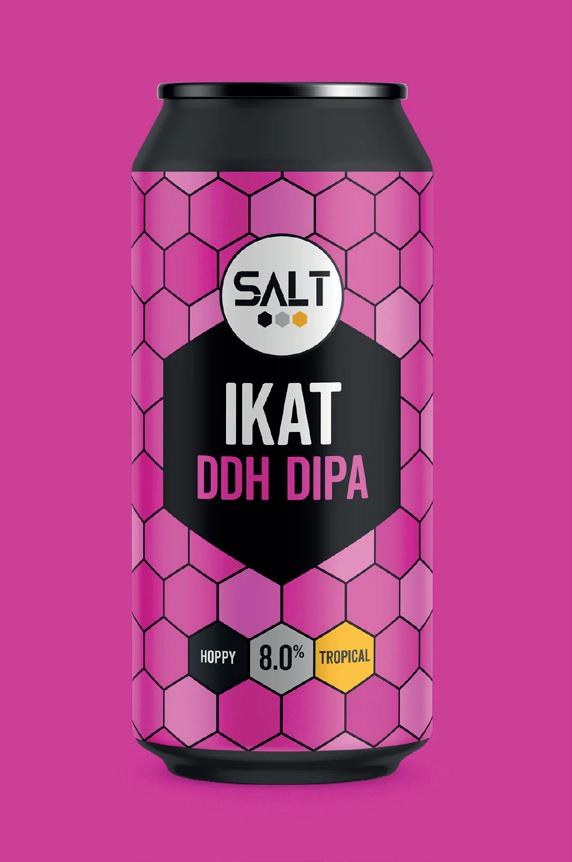
Bottle & Can Amber, Brown & Red Ale (up to 6.4%)
G GOLD CATEGORY CHAMPION: Daleside Brewery Monkey Wrench 5.3%
S SILVER: Three Brothers Ruby Revolution 4.6%
Bottle & Can British Ales (up to 6.4%)
G GOLD CATEGORY CHAMPION: Acorn Brewery Barnsley Bitter 3.8%
G GOLD: Great Newsome Brewery Frothingham Best 4.3%
Bottle & Can Speciality & Flavoured Beer
G GOLD CATEGORY CHAMPION: Brew York Juice Forsyth 5.0%
S SILVER: Great Newsome Brewery Liquorice Lads Stout 4.3%
B BRONZE: Daleside Brewery Morocco Ale 5.5%
Bottle & Can Continental Style Beer
S SILVER CATEGORY CHAMPION: First & Last Brewery Spruce Saison 4.6%
B BRONZE: Twice Brewed Juno Black 4.7%
Bottle & Can Session Pale Ale (up to 4.4%)
G GOLD CATEGORY CHAMPION: Bayonet Brewing Delta Lima Six 4.0% S SILVER: Rooster's Brewing Co. EasyGoing Assassin 4.3%
B BRONZE: Ossett Brewery White Rat 4.0%
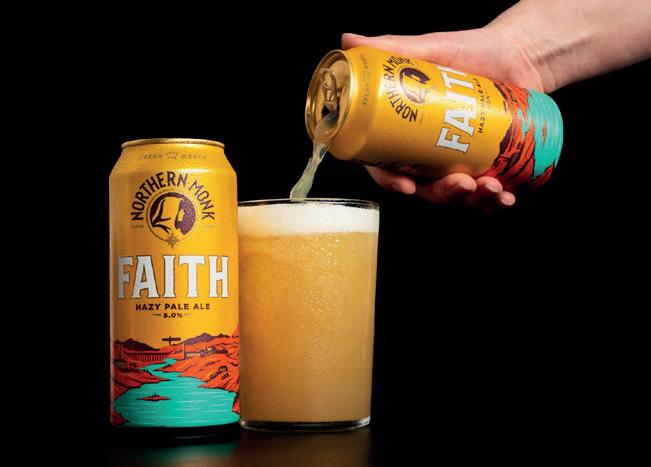
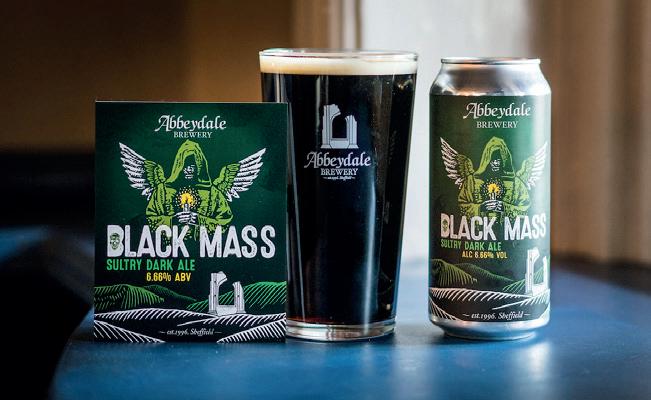
Bottle & Can Stout & Porter (6.4% and under)
G GOLD CATEGORY CHAMPION: Acorn Brewery Gorlovka Stout 6.0%
S SILVER: Chantry Brewery Rebel 6.1%
B BRONZE: Triple Point Brewing Astral 4.2%
Bottle & Can Imperial & Strong Ale (6.5% and over)
G GOLD CATEGORY CHAMPION: Harrogate Brewing Co Kursaal Stout 8.4%
Bottle & Can Speciality IPA
G GOLD CATEGORY CHAMPION: Abbeydale Brewery Ltd Black Mass 6.7%
B BRONZE: Rooster's Brewing Co. Mango Hazy Assassin 5.7%
Bottle & Can Double & Triple IPA (7.5% and over)
G GOLD CATEGORY CHAMPION: SALT Brewery IKAT 8.0%
S SILVER: Bayonet Brewing ENDEX 8.0%
Bottle & Can Non-Alcoholic & Low ABV
G GOLD CATEGORY CHAMPION: Farm Yard Brew Co Float ON 0.5%
S SILVER: Bowness Bay Brewing Swan Free 0.5%
Bottle & Can Pale Ale (4.5% to 5.5%)
S SILVER CATEGORY CHAMPION: Wild Boar Brewery Hog's 54 5.5%
B BRONZE: Moorhouse's Brewery TA Squawk MALLARD 4.5%
Bottle & Can Session Lager (up to 4.4%)
G GOLD CATEGORY CHAMPION: Neighbourhood Brew Co Damn Good Lager 4.0%
Bottle & Can Premium Lager (4.5% to 6.4%)
G GOLD CATEGORY CHAMPION: Crooked River Brewing Co Ltd Gluten Free Helles Lager 4.5%
S SILVER: Weetwood Ales Limited Vienna Lager 4.8%
Bottle & Can IPA (5.6% to 7.4%)
S SILVER CATEGORY CHAMPION: Vocation Brewery Love & Hate 7.2%
B BRONZE: Crooked River Brewing Co Ltd West Coast IPA 5.6%
Bottle & Can Sour & Wild Ale
S SILVER CATEGORY CHAMPION: Neighbourhood Brew Co Far From Home 4.2%
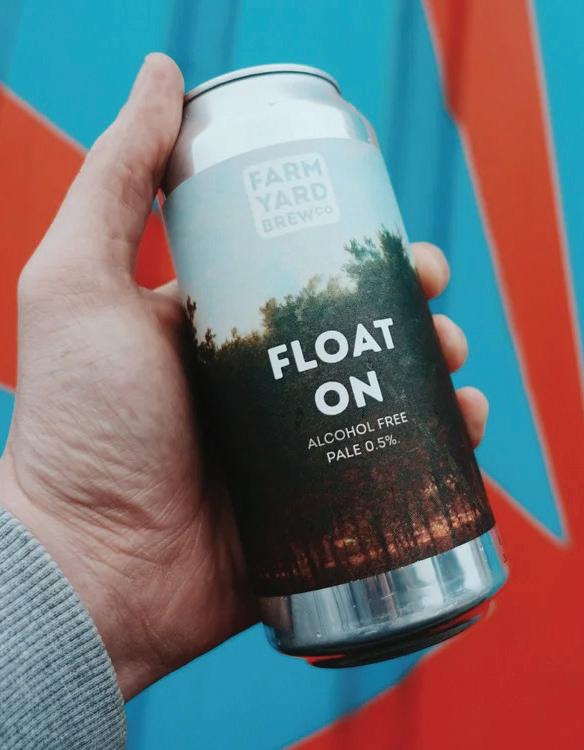
Bottle & Can Amber, Brown & Red Ale (up to 6.4%)
G GOLD CATEGORY CHAMPION: Jennings Brewery Sneck Lifter 5.1%
S SILVER: Bowness Bay Brewing Raven Red 4.2%
S SILVER: Keswick Brewing Co Ltd Dark Hose 6.0%
B BRONZE: Southport Brewery Dark Night 3.9%
Bottle & Can Speciality & Flavoured Beer
G GOLD CATEGORY CHAMPION: Bowland Brewery Bowland Bumble 4.0%
S SILVER: RedWillow Brewery Ltd Breakfast Stout 5.6%
S SILVER: Bank Top Brewery Port O'Call 5.0%
B BRONZE: Vocation Brewery Naughty & Nice White Chocolate & Raspberry 6.6%
B BRONZE: Colbier Brew Co. Pansori 4.0%
Bottle & Can Session Pale Ale (up to 4.4%)
G GOLD CATEGORY CHAMPION: Crooked River Brewing Co Ltd Pacific Ale 4.2%
B BRONZE: Neighbourhood Brew Co High Dive 4.0%
B BRONZE: Wild Boar Brewery Mad Pig 4.0%
B BRONZE: Spitting Feathers Brewery Thirst Quencher 3.9%
B BRONZE: HUSH Brewing Co. Forgot You Were here 4.4%
Bottle & Can Stout & Porter (6.4% and under)
G GOLD CATEGORY CHAMPION: Bowland Brewery Bowland Black 4.1%
Bottle & Can British Ales (up to 6.4%)
G GOLD CATEGORY CHAMPION: Jennings Brewery Cumberland Ale 4.0%
G GOLD: Weetwood Ales Limited Old Dog 4.5%
B BRONZE: Colbier Brew Co. Molto 5.2%
Bottle & Can Imperial & Strong Ale (6.5% and over)
S SILVER CATEGORY CHAMPION: Gan Yam Brewery TAR 7.0%
Bottle & Can Speciality IPA
G GOLD CATEGORY CHAMPION: Marble Brewery Earl Grey IPA 6.8%
Bottle & Can Non-Alcoholic & Low ABV
G GOLD CATEGORY CHAMPION: Adnams Ghost Ship Alcohol Free Can 0.5%
B BRONZE: Elgoods Brewery Apple Wheat 2.4%
Bottle & Can Pale Ale (4.5% to 5.5%)
S SILVER CATEGORY CHAMPION: Baker's Dozen Brewing Co. Undertow 4.8%
B BRONZE: Wylde Sky Brewing Ltd Cambridge Hazy Pale 4.6%
Bottle & Can Session Lager (up to 4.4%)
G GOLD CATEGORY CHAMPION: Brewsters Brewery Helles 4.0%
Bottle & Can Premium Lager (4.5% to 6.4%)
G GOLD CATEGORY CHAMPION: Brewpoint Supernova 4.6%
B BRONZE: Norfolk Brewhouse Moon Gazer Hedera 4.5%
B BRONZE: Bishop Nick Ltd Latimer Craft Lager 4.8%
Bottle & Can Amber, Brown & Red Ale (up to 6.4%)
G GOLD CATEGORY CHAMPION: Leigh on Sea Old Leigh Ale 5.7%
G GOLD: 8 Sail Brewery Boston Brown 4.5%
S SILVER: Mauldons Brewery Suffolk Pride 4.8%
B BRONZE: Panther Brewery Beast of the East 5.5%
Bottle & Can British Ales (up to 6.4%)
G GOLD CATEGORY CHAMPION: Brentwood Brewing Company Lumberjack 5.2%
S SILVER: Artefact Brewing Ltd Finally an ESB 5.6%
Bottle & Can Non-Alcoholic & Low ABV
G GOLD CATEGORY CHAMPION: Stroud Brewery Easy Peasy 2.6%
Bottle & Can Pale Ale (4.5% to 5.5%)
G GOLD CATEGORY CHAMPION: Dancing Duck Brewery Abduction 5.5%
S SILVER: Salopian Paper planes 4.6%
S SILVER: Blue Monkey Brewery Californian IPA 5.5%
B BRONZE: Brew 61 Hazy Bale Ale 5.0%
B BRONZE: Gloucester Brewery NEIPA 5.2%
B BRONZE: Birmingham Brewing Company Hazy Brummie 4.5%
Bottle & Can Session Lager (up to 4.4%)
G GOLD CATEGORY CHAMPION: Braybrooke Beer Co Helles 4.2%
G GOLD: Attic Brew Co. Forward 4.2%
S SILVER: Hobsons Brewery Zephyr Lager 4.3%
S SILVER: Thornbridge Brewery Lukas 4.2%
B BRONZE: Stroud Brewery Light Organic Lager 4.0%
B BRONZE: Rebellion Beer Co. Ltd. Rebellion Lager 4.4% Bottle & Can Premium Lager (4.5% to 6.4%)
G GOLD CATEGORY CHAMPION: Braybrooke Beer Co Pilsner 4.5% B BRONZE: Green Duck Beer Co Bostin' Lager 4.6%
& Can IPA (5.6% to 7.4%)
Bottle & Can Amber, Brown & Red Ale (up to 6.4%)
G GOLD CATEGORY CHAMPION: Nottingham Brewery Legend 4.0%
S SILVER: Chapel en le Frith Craft Brewing Leningrad 5.0%
B BRONZE: Brew 61 BDA (Bromsgrove Dark Ale) 4.0%
B BRONZE: Titanic Brewery Ltd Captain Smiths 5.2%
Bottle & Can Speciality & Flavoured Beer
G GOLD CATEGORY CHAMPION: Blue Monkey Brewery Cinder Toffee 5.0%
S SILVER: Alter Ego Brewing Co Is Anyone There? 5.0%
Bottle & Can Continental Style Beer
S SILVER CATEGORY CHAMPION: Braybrooke
Bottle & Can Stout & Porter (6.4% and under)
G GOLD CATEGORY CHAMPION: Dancing Duck Brewery Dark Drake 4.5%
G GOLD: Loose Cannon Brewery Robust British Porter 5.0%
S
G
S SILVER: Bewdley Brewery TA Wild River Brew Co Sabrina 4.0%
S SILVER: Chapel en le Frith Craft Brewing Galaxy 4.2%
S SILVER: The Hop Shed Sebright 3.8%
B BRONZE: Teme Valley Brewery Talbot Blonde 4.4%
B BRONZE: Green Duck Beer Co Remedy 4.0%
B BRONZE: Nottingham Brewery EPA 4.2%
S SILVER: Teme Valley Brewery Wotever Next? 5.0%
B BRONZE: Hobsons Brewery Town Crier 4.4%
B BRONZE: Loose Cannon Brewery Abingdon Bridge 4.1%
G GOLD: Mount Saint Bernard Trappist Brewery Tynt Meadow 7.4%
S SILVER CATEGORY CHAMPION: The Hop Shed Hoptical Illusion 4.0%
B BRONZE: Twisted Tree Brewery The Bark Side 6.0%
G
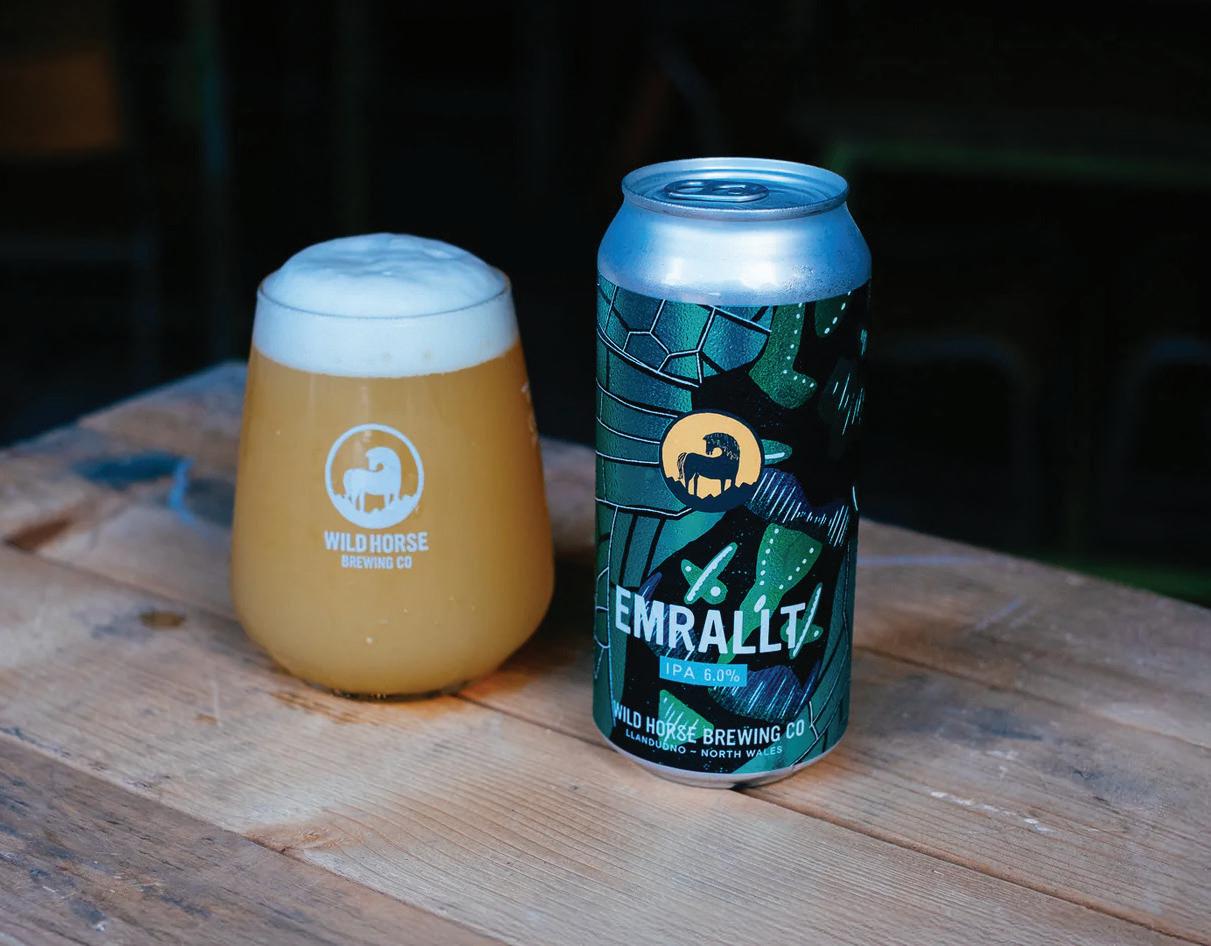
Bottle & Can Continental Style Beer
G GOLD CATEGORY CHAMPION: Dog's Window Play dead 9.4%
B BRONZE: Geipel Brewing Hefeweizen 5.2%
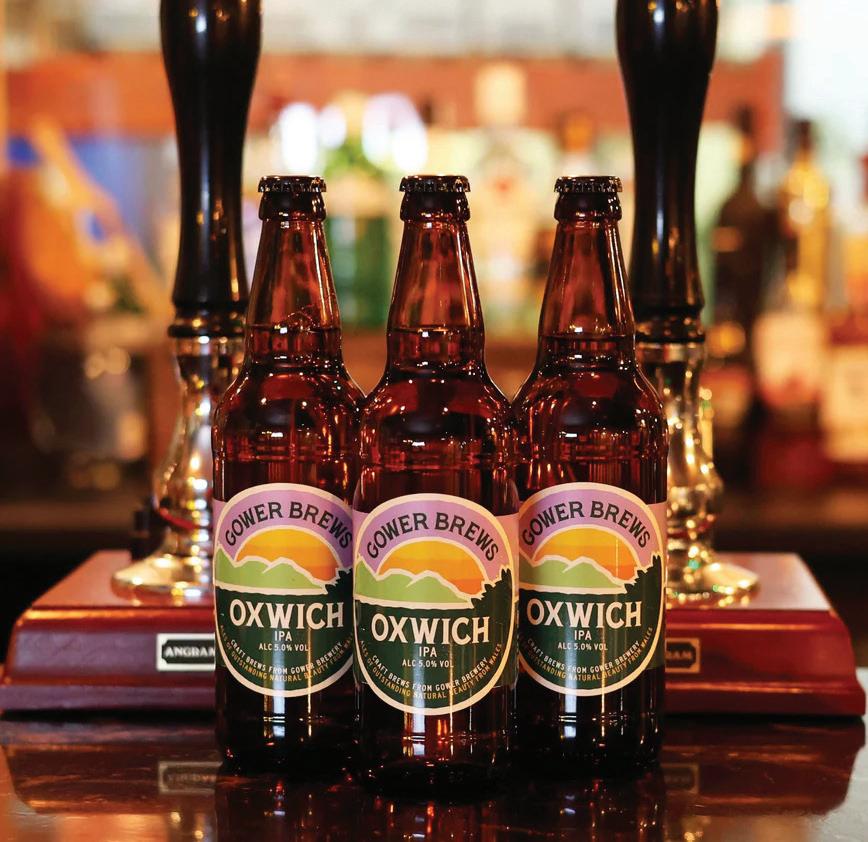
Bottle & Can Non-Alcoholic & Low ABV
G GOLD CATEGORY CHAMPION: Black Tar Brewing Co. Siândy Haze 2.6%
Bottle & Can Pale Ale (4.5% to 5.5%)
G GOLD CATEGORY CHAMPION: Dog's Window Silent whistle 5.4%
S SILVER: Wild Horse Cadence 4.5%
B BRONZE: Gower Brewery Co LTD Gower Gold 4.5%
Bottle & Can Premium Lager (4.5% to 6.4%)
G GOLD CATEGORY CHAMPION: Zerodegrees Cardiff The Bohemian Czech Pilsner 4.8%
Bottle & Can Amber, Brown & Red Ale (up to 6.4%)
G GOLD CATEGORY CHAMPION: Geipel Brewing Golden Gate 5.0%
B BRONZE: Purple Moose Dark Side of the Moose 4.6%
Bottle & Can Session Pale Ale (up to 4.4%)
G GOLD CATEGORY CHAMPION: Bluestone Brewing Company Al Fresco 4.3%
B BRONZE: Zerodegrees Cardiff Time Warp 4.3%
B BRONZE: Wild Horse Nokota 3.8%
Bottle & Can IPA (5.6% to 7.4%)
G GOLD CATEGORY CHAMPION: Wild Horse Emrallt 6.0%
S SILVER: Purple Moose Navigator 6.2%
S SILVER: Dog's Window 24 in dog years 7.4%
Bottle & Can British Ales (up to 6.4%)
S SILVER CATEGORY CHAMPION: Gower Brewery Co LTD Oxwich 5.0%
Bottle & Can Imperial & Strong Ale (6.5% and over)
S SILVER CATEGORY CHAMPION: Geipel Brewing Bock 6.5%
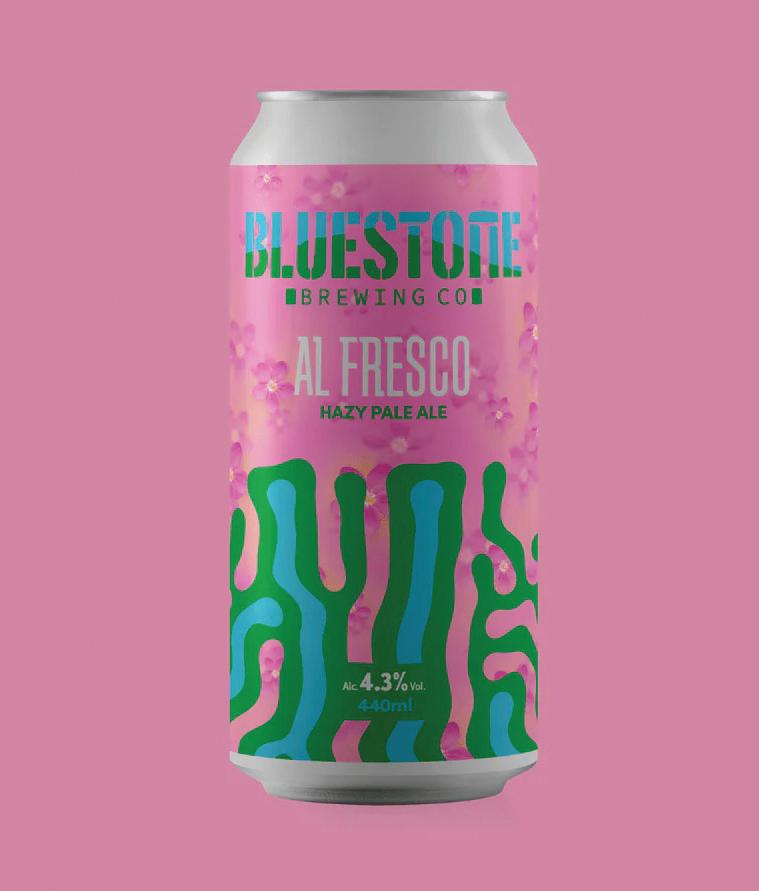
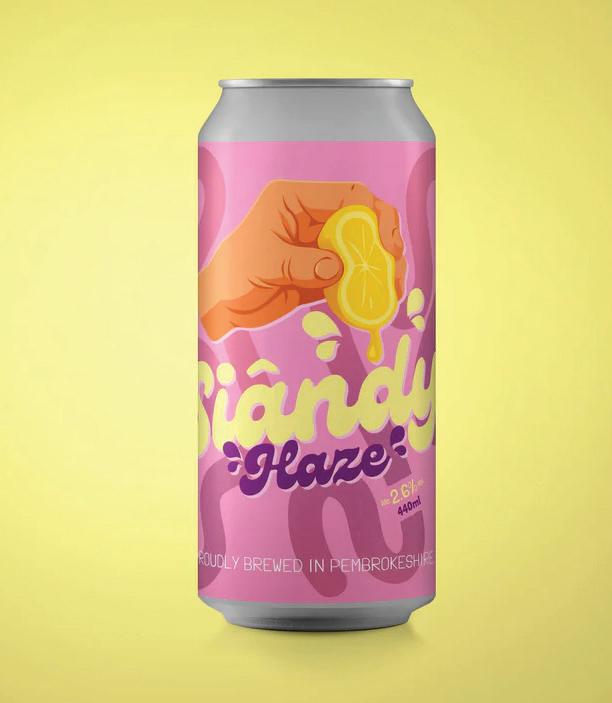
Bottle & Can Amber, Brown & Red Ale (up to 6.4%)
G GOLD CATEGORY CHAMPION: Elusive Brewing Level Up 5.0%
Bottle & Can British Ales (up to 6.4%)
G GOLD CATEGORY CHAMPION: Bowman Ales Ltd Meon Valley Bitter 3.9%
Bottle & Can Non-Alcoholic & Low ABV
G GOLD CATEGORY CHAMPION: Firebird Brewing Company Table Manners 2.8%
B BRONZE: Nirvana Brewery Nirvana Pils 0.5%
Bottle & Can Pale Ale (4.5% to 5.5%)
G GOLD CATEGORY CHAMPION: Chislet Brewery Marley Lane 4.8%
S SILVER: Double-Barrelled Parka 4.5%
S SILVER: Signature Brew Haze Machine 4.8%
S SILVER: Loud Shirt Brewing Hazed & Confused 4.5%
B BRONZE: Dead Duck Brewery Colt Pixie 4.5%
B BRONZE: Neckstamper Brewing Bluffer 5.0%
Bottle & Can Session Lager (up to 4.4%)
S SILVER CATEGORY CHAMPION: Signature Brew Studio Lager 4.0%
Bottle & Can Premium Lager (4.5% to 6.4%)
G GOLD CATEGORY CHAMPION: East London Brewing Co. East End Lager 4.5%
G GOLD: Pillars Brewery Pillars Helles 4.8%
G GOLD: Hackney Church Brew Co Würst Behaviour 5.9%
G GOLD: Orbit Beers Nico Köln Lager 4.8%
S SILVER: Double-Barrelled Ding 4.9%
S SILVER: Firebird Brewing Company Bohemia Pilsner 4.8%
S SILVER: Triple fff Brewery Limited Jagged Little Pilsner 5.0%
B BRONZE: Steam Town Brew Co Disco Fluff 4.8%
B BRONZE: Burning Sky Brewery Luppoleto PIlsner 4.6%
G GOLD: Pilgrim Brewery (Reigate) Limited Progress 4.0%
S SILVER: Bexley Brewery Bexley’s Own Beer 4.2%
B BRONZE: East London Brewing Co. Nightwatchman 4.5%
Bottle & Can Speciality & Flavoured Beer
G GOLD CATEGORY CHAMPION: Gun Brewery Base Ejection 4.7%
Bottle & Can Continental Style Beer
G GOLD CATEGORY CHAMPION: Vibrant Forest Brewery Farmhouse 5.0%
B BRONZE: Pillars Brewery Pillars Festbier 6.2%
Bottle & Can Sour & Wild Ale
G GOLD CATEGORY CHAMPION: Burning Sky Brewery Petite 3.4%
S SILVER: Hackney Church Brew Co Gazpacho Gose 5.0%
B BRONZE: Loud Shirt Brewing Popsicle - Mango Pineapple Coconut Sour 4.6%
Bottle & Can Session Pale Ale (up to 4.4%)
G GOLD CATEGORY CHAMPION: Long Man Brewery Long Man Pale Ale 4.2%
G GOLD: Loud Shirt Brewing Silhouette 4.1%
G GOLD: Gun Brewery How's The Serenity? 4.4%
G GOLD: London Beer Lab Ltd QED Session Pale 4.0%
S SILVER: Vibrant Forest Brewery Evoke 4.2%
S SILVER: Orbit Beers Ivo Pale Ale 4.2%
S SILVER: Lost Pier Brewing Beach Session IPA 4.0%
B BRONZE: The Five Points Brewing Company Five Points Gold 3.4%
B BRONZE: Neckstamper Brewing Swipes 2.8%
B BRONZE: Tap Social Movement Home and Dry 4.2%
B BRONZE: Crafty Brewing Crafty One 3.9%
B Signature Brew Roadie 4.3%
Bottle & Can Stout & Porter (6.4% and under)
G GOLD CATEGORY CHAMPION: Burning Sky Brewery Robust Porter 5.8%
S SILVER: Bowman Ales Ltd Black Drop 4.6%
S SILVER: Tap Social Movement Inside Out 5.5%
B BRONZE: Ramsgate Brewery GADDS' Black Pearl Oyster Stout 6.2%
B BRONZE: The Five Points Brewing Company Railway Porter 4.8%
B BRONZE: Pilgrim Brewery (Reigate) Limited Market Porter 6.2%
Bottle & Can IPA (5.6% to 7.4%)
G GOLD CATEGORY CHAMPION: Indie Rabble Capybara Collage 6.4%
S SILVER: Double-Barrelled Kitchen Disco 5.8%
S SILVER: Hackney Church Brew Co Aestas 6.4%
B BRONZE: Ramsgate Brewery Pedding Lane IPA 6.5%
Bottle & Can Imperial & Strong Ale (6.5% and over)
G GOLD CATEGORY CHAMPION: Steam Town Brew Co Imperial Raise 10.0%
S SILVER: Windsor and Eton Brewery Scumbag Maggot 8.7%
B BRONZE: Crafty Brewing TA Ridgeway Brewing Foreign Export Stout 8.0%
Bottle & Can Imperial & Strong Ale (6.5% and over)
G GOLD CATEGORY CHAMPION: Lost Pier Brewing Fruit Machine NEIPA 5.5%
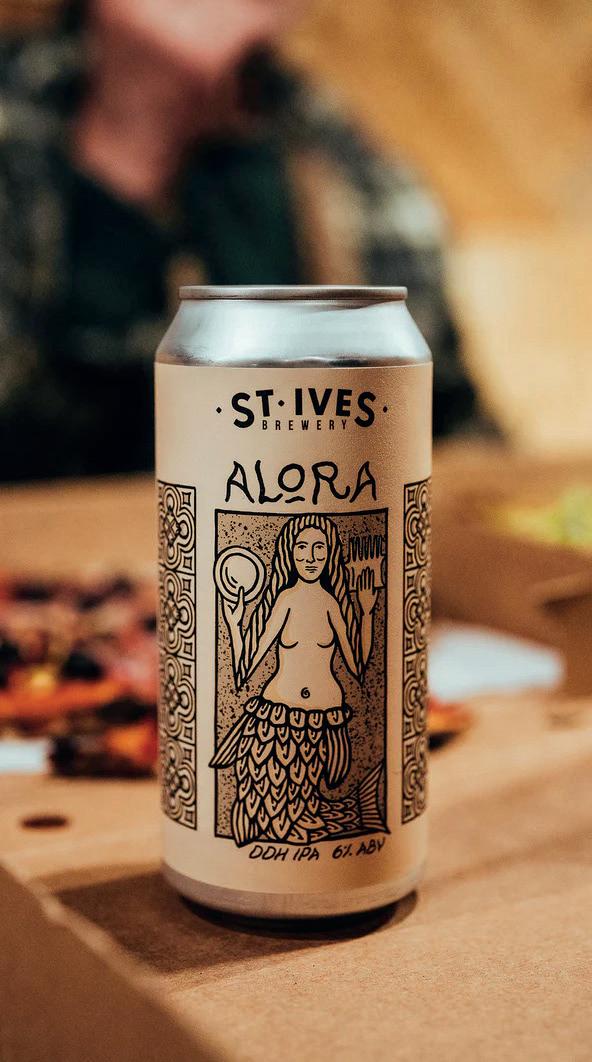
Bottle & Can Non-Alcoholic & Low ABV
G GOLD CATEGORY CHAMPION: Powderkeg Green Light 0.5%
Bottle & Can Pale Ale (4.5% to 5.5%)
G GOLD CATEGORY CHAMPION: Stonehenge Ales Danish Dynamite 5.0%
Bottle & Can Session Lager (up to 4.4%)
G GOLD CATEGORY CHAMPION: Powderkeg Harmony 4.2%
G GOLD: Moor Lager 4.0%
B BRONZE: Hop Union Brewery Two Steppin 4.4%
B BRONZE: Yonder Brewing Helles 4.0%
Bottle & Can Premium Lager (4.5% to 6.4%)
G GOLD CATEGORY CHAMPION: Mason Brewing Co Alpenglow 5.0%
B BRONZE: Zerodegrees The Bohemian 4.8%
Bottle & Can IPA (5.6% to 7.4%)
S SILVER CATEGORY CHAMPION: St Ives Brewery Alora 6.0%
B BRONZE: Cottage Beer Project Hit for Six 6.0%
Bottle & Can Amber, Brown & Red Ale (up to 6.4%)
G GOLD CATEGORY CHAMPION: Kettlesmith Brewing Company Redwood 5.6%
S SILVER: Otter Brewery Ale 4.5%
S SILVER: Stonehenge Ales Great Bustard 4.8%
Bottle & Can Sour & Wild Ale
S SILVER CATEGORY CHAMPION: Yonder Brewing Raspberry Gose 4.0%
Bottle & Can Session Pale Ale (up to 4.4%)
G GOLD CATEGORY CHAMPION: Mason Brewing Co Love Letter 4.4%
B BRONZE: Zerodegrees Time Warp 4.3%
B BRONZE: Powderkeg Hops & Dreams 3.4%
Bottle & Can Stout & Porter (6.4% and under)
G GOLD CATEGORY CHAMPION: Palmers Brewery Tally Ho! 5.5%
B BRONZE: Abbey Ales Bath Stout 5.3%
B BRONZE: Salcombe Brewery Co. Island Street Porter 5.9%
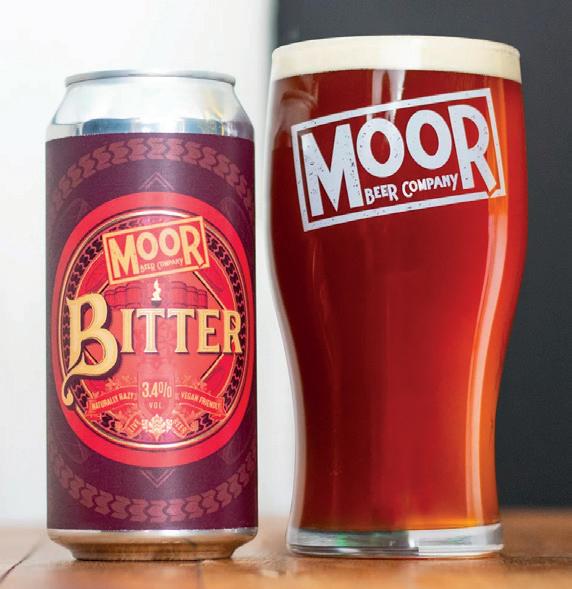
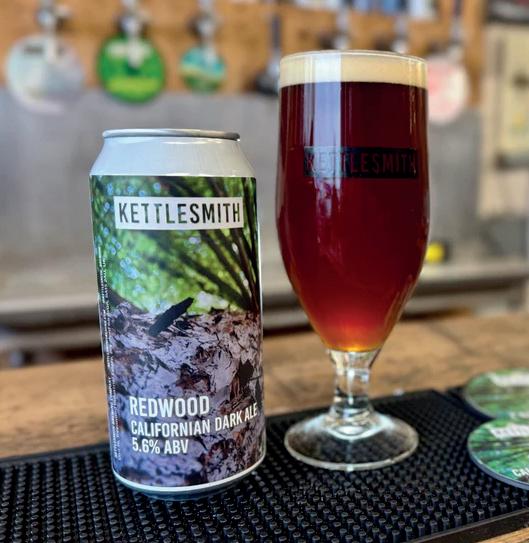
Bottle & Can British Ales (up to 6.4%)
G GOLD CATEGORY CHAMPION: Moor Bitter 3.4%
G GOLD: Stonehenge Ales Heel Stone 4.3%
G GOLD: Otter Brewery HEAD 5.8%
S SILVER: Salcombe Brewery Co. Shingle Bay 4.2%
B BRONZE: Hanlons Brewery Firefly Bitter 3.7%
B BRONZE: Exeter Brewery EX4 (West country IPA) 4.8%
Bottle & Can Imperial & Strong Ale (6.5% and over)
G GOLD CATEGORY CHAMPION: Moor Old Freddy Walker 7.3%
Bottle & Can Speciality IPA
S SILVER CATEGORY CHAMPION: Cottage Beer Project Panther 5.5%
Bottle & Can Double & Triple IPA (7.5% and over)
S SILVER CATEGORY CHAMPION: St Ives Brewery Destinaton Dia 8.0%
Bottle & Can Speciality & Flavoured Beer
S SILVER CATEGORY CHAMPION: Mason Brewing Co Lights Out 8.0%
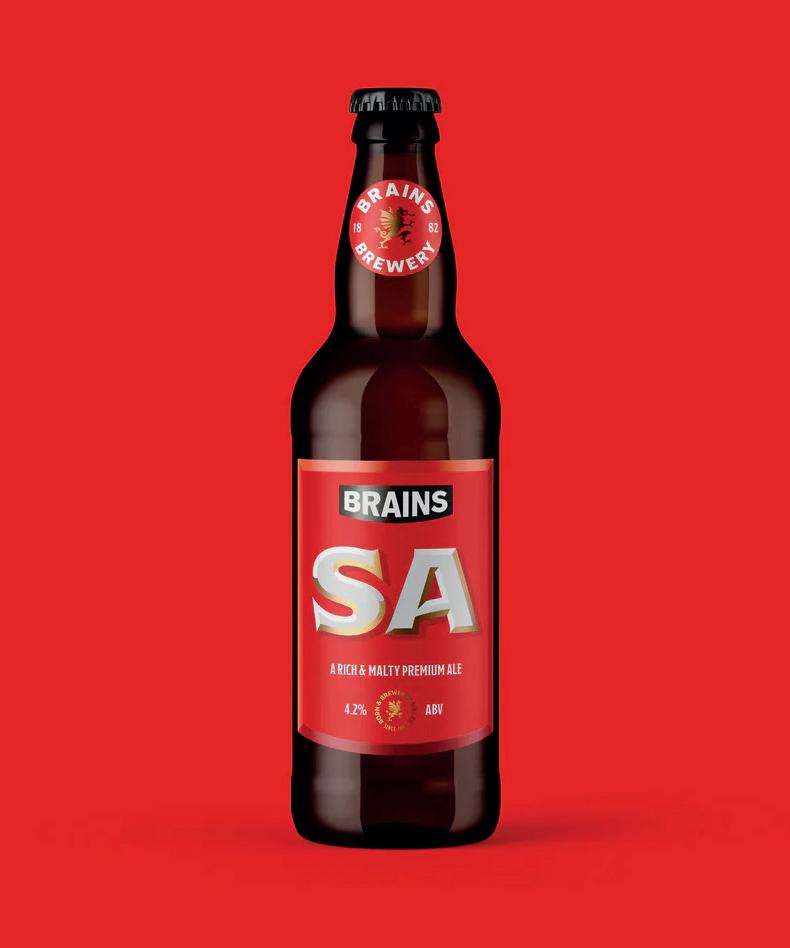
Brains Brewery has announced the launch of its rebrand, introducing a brand-new logo, a redesigned website, and striking new bottle coverings arriving on supermarket shelves nationwide.
The rebrand, which is the company’s first in seven years, delivers a visual refresh that feels both contemporary and deeply rooted in tradition. It honours Brains’ rich heritage while embracing the tastes, expectations, and experiences of modern audiences.
As part of the transformation, Brains partnered with leading Cardiff-based design studio Toward, whose creative direction helped shape a look and feel that celebrates the brewery’s legacy while elevating its brand for a new generation of drinkers.
This is the first phase of the rebrand with more to showcase over the next few months.
Founded in 1882 by Samuel Arthur Brain, SA Brain has remained a symbol of pride and passion in Welsh brewing for over 140 years.
Nick Payne, CEO of Brains, said: “The new rebrand marks a significant milestone for Brains. We wanted to honour the craftsmanship and heritage that have defined us for more than a century, while presenting a bold, modern identity that speaks to today’s drinkers. “We’re incredibly excited to share this new look and new website - it reflects who we are, where we’ve come from, and the future we’re building.”
Visit www.sabrain.com to see more.
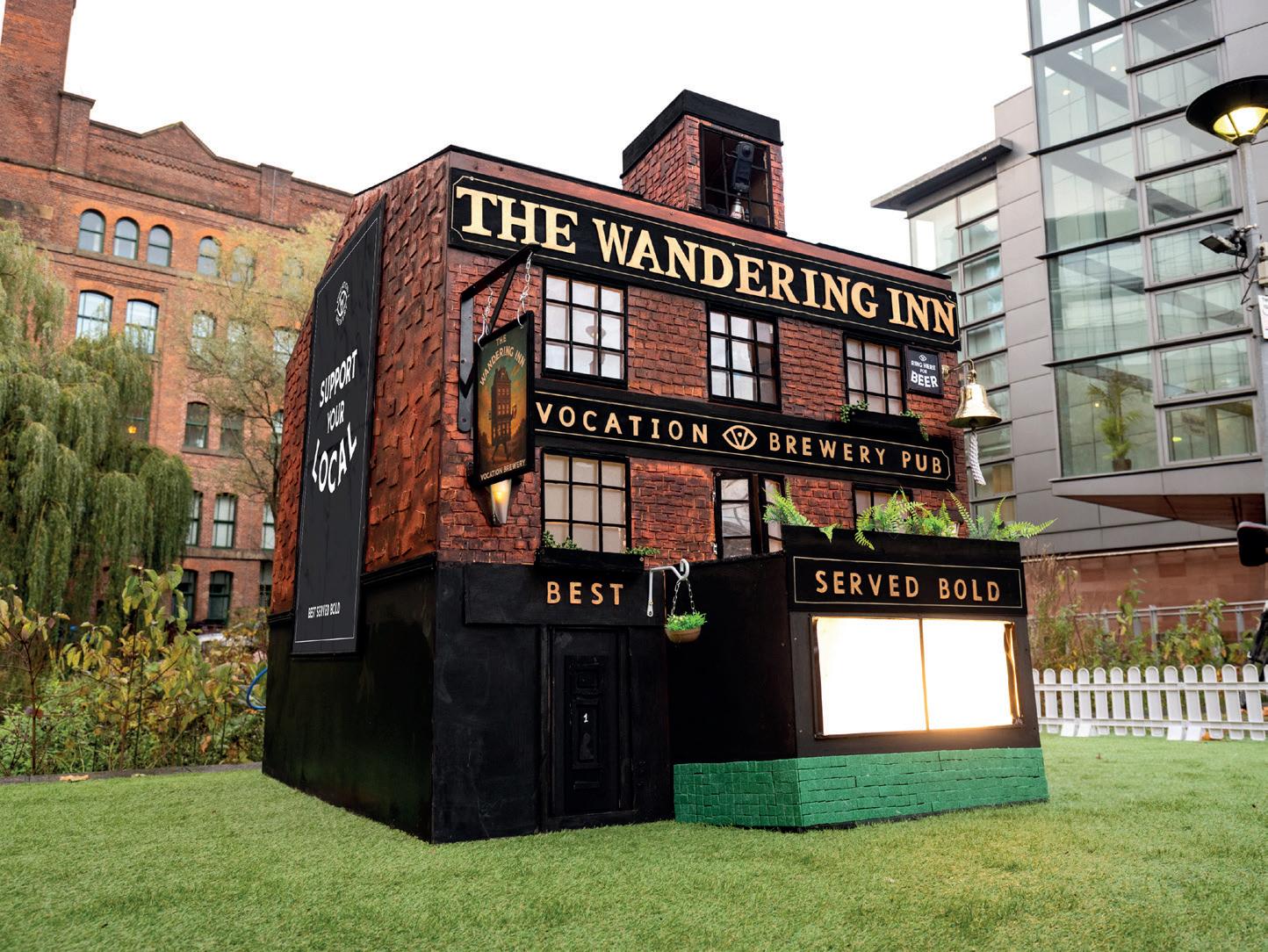
The classic British pub has been given a miniature makeover, as Vocation Brewery launches The Wandering Inn – a pint-sized travelling tavern designed to celebrate Britain’s love of bold and flavourful brews, while also rallying support for local pubs under pressure.
Standing 5’ 5” tall, the functional pub popped up in Manchester, serving its distinctive pints to passers-by. The mobile pint-sized pub marks the start of a journey, bringing the best of independent British brewing to locations nationwide.
The launch coincides with the release of Vocation Brewery’s Beer Census, a major study of 2,000 adults that reveals changes in how, when and why we drink. Among its standout findings, the study revealed that 74% of Brits feel major brewers are overrepresented in pubs, with 79% agreeing that a wide range of beers on tap would make them visit their local more often.
Nearly 70% of drinkers say they have discovered a new favourite beer or style in the past 12 months, with more than eight in ten (81%) saying they would pay slightly more for a pint if pubs offered more variety on the taps.
Elsewhere, the beer audit discovered that despite the rise of hybrid working and ‘Thirsty Thursdays’, Friday remains the biggest day for a post-work pint. With over half (54%) saying flexible working hasn’t changed their pub routine, the classic Friday night pint remains in top spot.
On average, Brits now visit the pub just 4.1 days a month – a stark reminder of the challenges facing the hospitality sector. More than one in five (21%) say they are drinking less, which grows to almost a quarter (24%) among 18-24-year-olds.
A growing number of drinkers say the big-brand experience feels tired, with 30% of drinkers saying mainstream lines are predictable and uninspiring. Nearly 44% of 25-34 year olds say they’d visit pubs more often if they could try new and distinctive brews, suggesting that curiosity and discovery are now important influencers in the choice of the modern pint.
Gail Lumsden, Chair & CEO at Vocation Brewery, said: “The findings show Britain’s beer lovers want more choice, more flavour, more adventure – and so do we. Beer should be an experience – something that engages you, stays with you, and invites you back. At Vocation, we’ve always believed in bold flavour, and it’s great to see drinkers calling for more discovery and excitement.”
As one of the UK’s most successful independent breweries, Vocation is using its new mobile pint-sized pub, The Wandering Inn, to bring the spirit of discovery to various locations across the country – starting this winter and continuing throughout next year. The pint-sized pub made its debut in Manchester this month, serving bold pours to delighted passers-by captured in a short video that ends with a call to ‘support your local’.
Read more about Vocation in our Business Profile on pages 40-47.
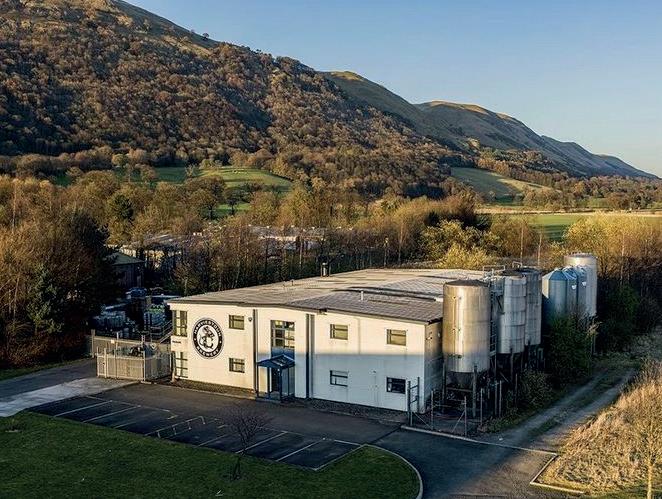
Founded in 1983, Harviestoun Brewery has spent 40 years brewing beers that balance character, consistency and approachability. Based in Alva at the foot of the Ochil Hills, the independent Scottish brewery continues to produce quality-led beers that resonate with both longstanding customers and new audiences discovering the brand.
Harviestoun is best known for its flagship beers, Bitter & Twisted and Schiehallion, both of which have become fixtures in pubs across the UK. Bitter & Twisted, a golden ale with expressive hop character and a clean finish, remains a showcase for balance and drinkability, while Schiehallion, brewed as a crisp lager, reflects the brewery’s long-standing commitment to brewing classic styles with care and precision. These beers continue to anchor the range and demonstrate the value of consistency over trend-driven brewing.
The brewery remains actively involved in the wider beer community and regularly takes part in beer festivals across the UK. These events provide an opportunity to celebrate traditional styles, engage directly with drinkers, and support festivals that play an important role in maintaining Britain’s pub and beer culture. The brewery looks forward to continuing our involvement in festivals and expanding its presence at events in the years ahead.
Alongside festivals, Harviestoun continues to support the on-trade through tap takeovers in pubs and bars; working closely with licensees to showcase its beers. Closer to home, it has been hosting pop-up taproom events at the brewery, welcoming local residents and visitors to enjoy Harviestoun beers alongside a rotating selection of street food vendors. These events reflect a modern continuation of the historic relationship between breweries and their local communities.
Investment in the future of the business remains ongoing, with the recent development of a new warehouse providing improved storage and operational efficiency to support growing demand. Sustainability continues to be a key focus, with 80% of malt sourced locally and spent grain returned to a nearby farm for use as cattle feed.
Find out more at www.harviestoun.com
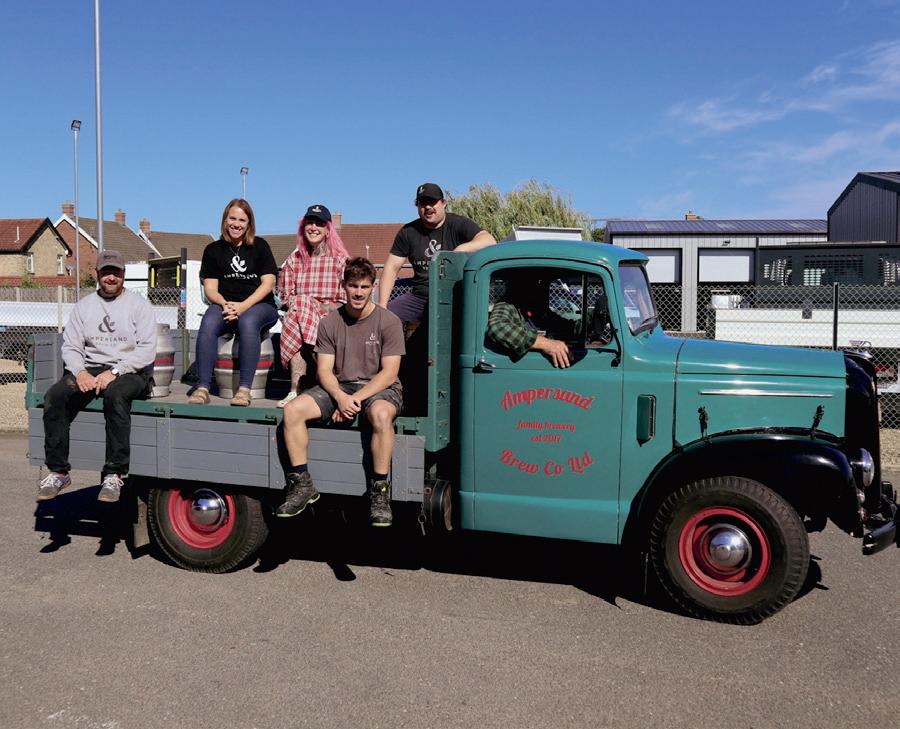
Ampersand Brew Co in Norfolk has welcomed new tanks that increase capacity by almost a third.
One 40HL tank and 2 x 20HL tanks arrived on site in January, thanks to a South Norfolk Council Business Development Grant.
The brewery has also welcomed a new apprentice, Rob, to the team - he began his HIT Brewers Apprenticeship in November and is already a huge asset to the team.
New tanks and new hands will enable Ampersand to keep up with demand and brew even more great beer throughout 2026. It's also meant the brewery can start trialling alcohol free brews, too - so watch this space!
Ampersand recently joined Beer Flex and will have its core cask beers, Bitter & Bidon, available constantly with seasonals popping up alongside them - including a rotating Cask Classics range. Feedback so far from pubs who have ordered has been excellent and Ampersand is excited for its beer to reach new corners of East Anglia with the help of the Beer Flex portal.
Find out more at www.ampersandbrew.co
Hexhamshire Brewery has doubled the size of its brewhouse from five to 10 barrels, thanks to a significant reduction in the cost of installing three-phase power and the timely availability of second-hand brewing equipment.
When the brewery relocated to its current site behind the Dipton Mill Inn a decade ago, Northern Powergrid quoted more than £20,000 for the threephase power connection - a cost owner Janet Brooker described at the time as unaffordable. The investment will also include the installation of new solar panels made possible by a grant from BEST Grant (Business Energy Saving Team).
The recent upgrade now allows Hexhamshire Brewery to increase production to meet growing demand. The brewery supplies cask ales to its own pub, the Dipton Mill Inn, as well as to numerous pubs across Northumberland, alongside an expanding bottled beer trade. Find out more at www.hexhamshire.co.uk


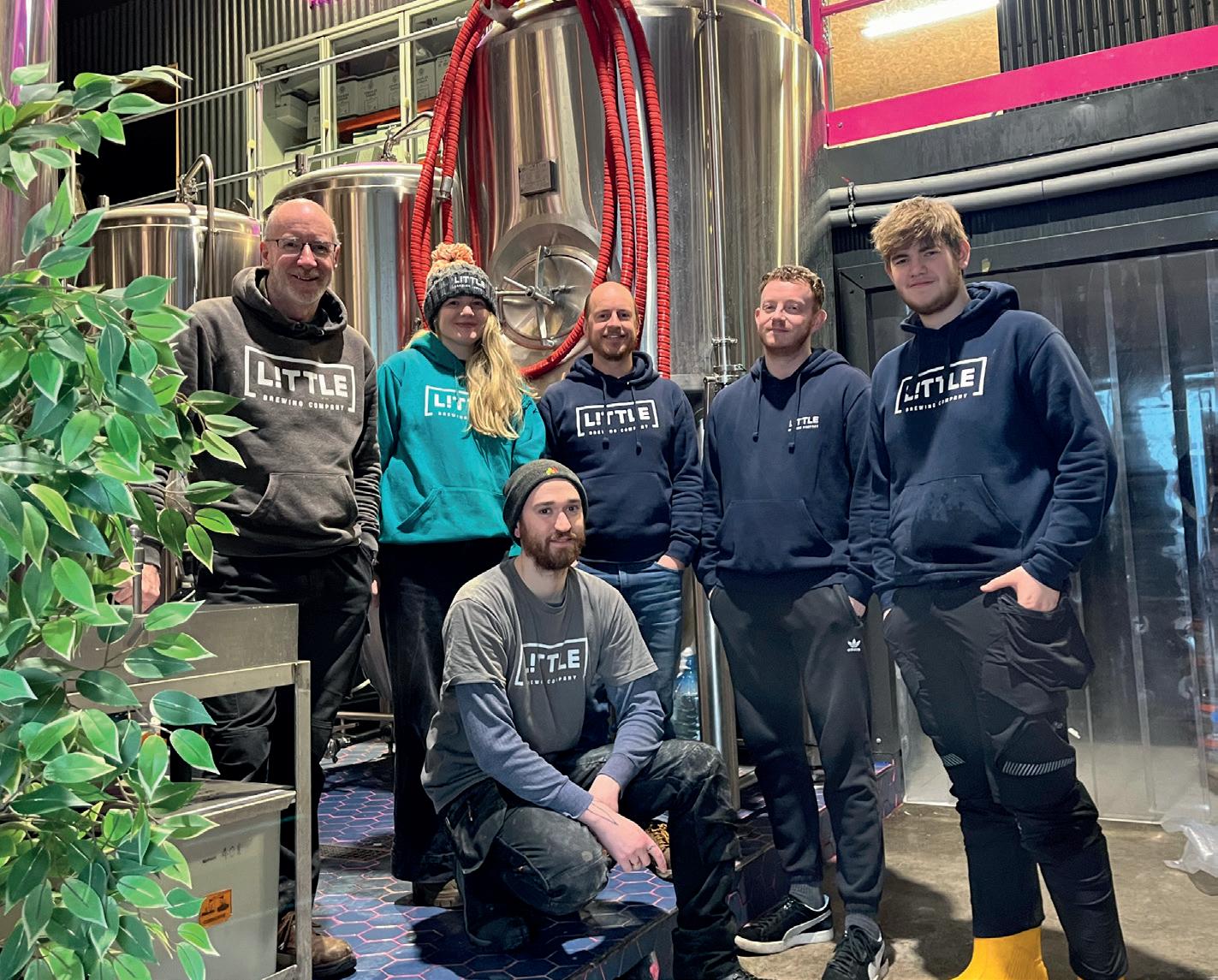
As Little Brewing Co in Derby looks ahead in 2026, the team is doing so with a real sense of excitement and momentum.
The past year has marked a significant step forward for the brewery, not least with its move to a brand-new site that has transformed the brewing capabilities. With the space, equipment and infrastructure now in place, it has increased potential brewing capacity to 4,000 hectolitres per annum - a milestone that reflects where the business is heading.
That move has already begun to pay dividends. Little Brewing Co has continued to grow at more than 30% year on year, a trajectory that gives the team confidence not just in its beers, but in the direction of the business as a whole.
Growth hasn’t been accidental; it’s come from careful investment, consistency, and a refusal to compromise on quality at a time when many pressures push breweries in the opposite direction, something that is evident in its recent success at the regional Indie Beer awards, and the team are looking forward to another year with beers being judged for the National awards at BeerX in March.
The brewery taproom, The Tiny Tap, has not been without its challenges. Changes enforced by Derby City Council, particularly around new charges for food vendors, have made it harder to offer food on a weekly basis - something that is important to the taproom experience. While this has undoubtedly been frustrating, the team is already working on plans to bring something in-house to mitigate the issue and regain a sense of regularity and resilience. As ever, adaptation is key.
People remain at the heart of what the brewery does, and Little Brewing Co has recently taken on an apprentice brewer. They are the third apprentice the brewery has put through the hugely respected brewing course run by HIT Training in partnership with Nottingham University, under the stewardship of Rod White. The success of previous apprentices speaks volumes about the value of proper training, mentoring and investment in the next generation of brewers - something the industry can only benefit from in the long term.
There’s no denying that challenges lie ahead. Brewing isn’t getting cheaper, margins remain tight, and the broader economic pressures show little sign of easing. But alongside those challenges, the team senses a shift. Drinkers are increasingly alert to value, quality and authenticity. There’s a growing appreciation for beer that isn’t quietly watered down to 3.4% while hoping no one notices. That renewed respect for flavour, strength and substance gives the team genuine optimism.
2026 feels less like an unknown and more like an opportunity. With increased capacity, a growing team, and a clear sense of purpose, Little Brewing Co is looking forward to what comes next — realistic about the challenges, but confident in the direction of travel.
Find out more at www.littlebrewing.co.uk
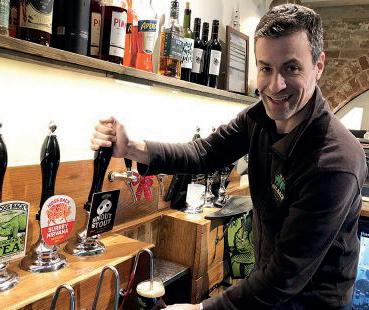
“No
Throughout January, Surrey-based Hogs Back Brewery supported its tap customers by cutting the 20% VAT charge on all drinks.
The “No VAT in the Tap” promotion at the brewery in Tongham, near Farnham, meant visitors got 20% off the usual price of drinks, with Hogs Back absorbing the tax. The offer extended beyond Hogs Back’s own beer to the full range on the bar, including soft and hot drinks.
A pint of cask ale, including Hogs Back’s flagship Tongham TEA (Traditional English Ale) and Surrey Nirvana Session IPA, was just £4 a pint. Keg beers including Hogstar Lager, Hog IPA and Hazy Hog Cider were just £4.66 a pint.
Hogs Back managing director Miles Chesterman said: “Consumers are used to January sales, and this year the Brewery Tap was no exception. The additional point behind the offer is to support beleaguered British pubs that are the lynchpin of many communities. Pubs just about survived Covid, but are now buckling as a result of over-taxation, with a range of increased taxes - and VAT adding more tax to the taxes. We have to try to get the message across to the Chancellor Rachel Reeves that we need long term help, not more tax.”
Hogs Back executive chairman Rupert Thompson added: “Pubs and the wider hospitality sector have been hit by wave after wave of tax increases, which it simply cannot bear any longer. Unexpected business rate increases are a massive new blow on top of soaring employment taxes and new packaging taxes. With VAT a huge burden for the sector, over-taxation is closing pubs every week and a return to a 12.5% VAT rate on food and drink in pubs would dramatically boost our bottom lines. We need another brave initiative like ‘Eat Out To Help Out.’”
For more information go to www.hogsback.co.uk

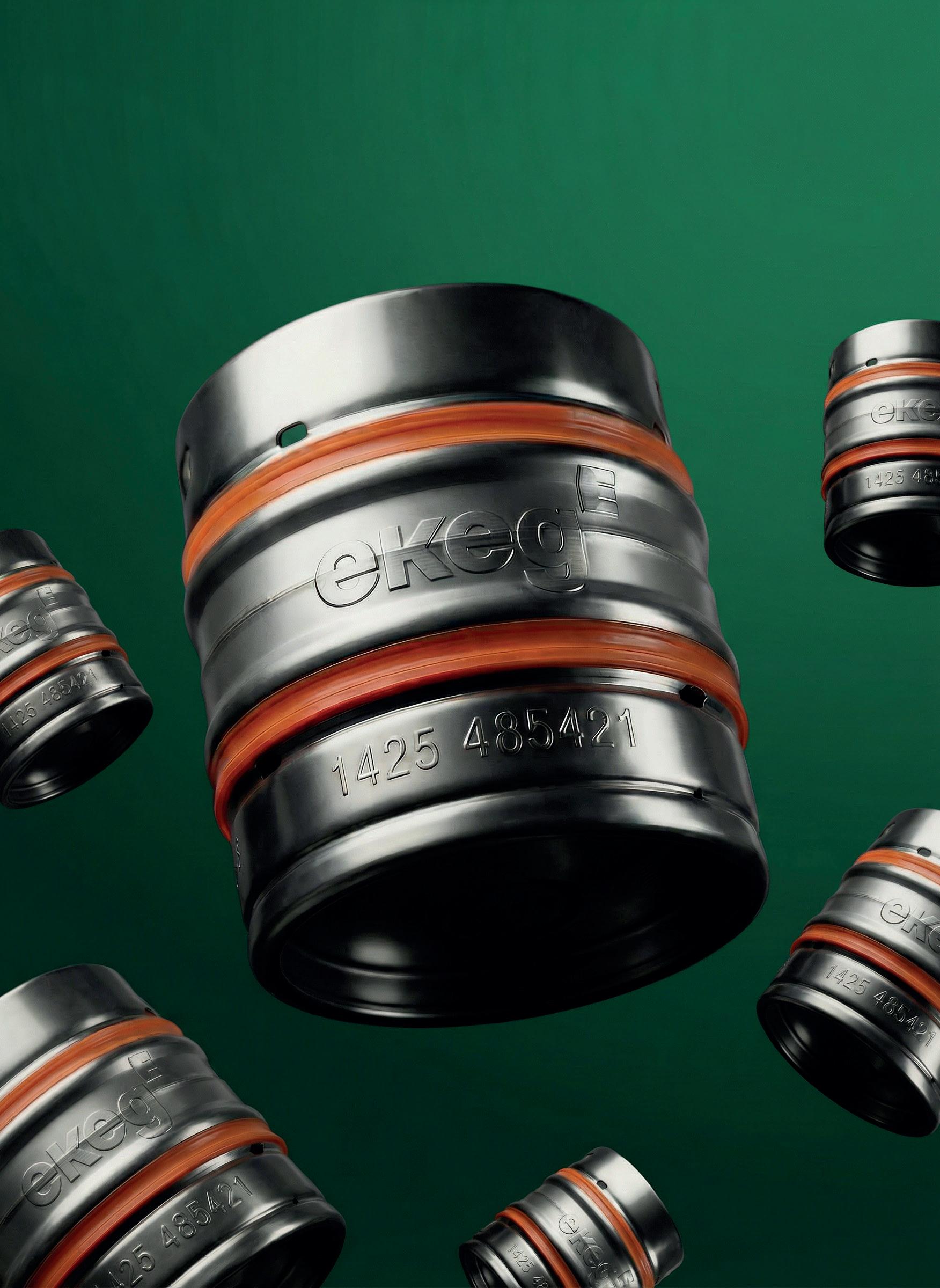
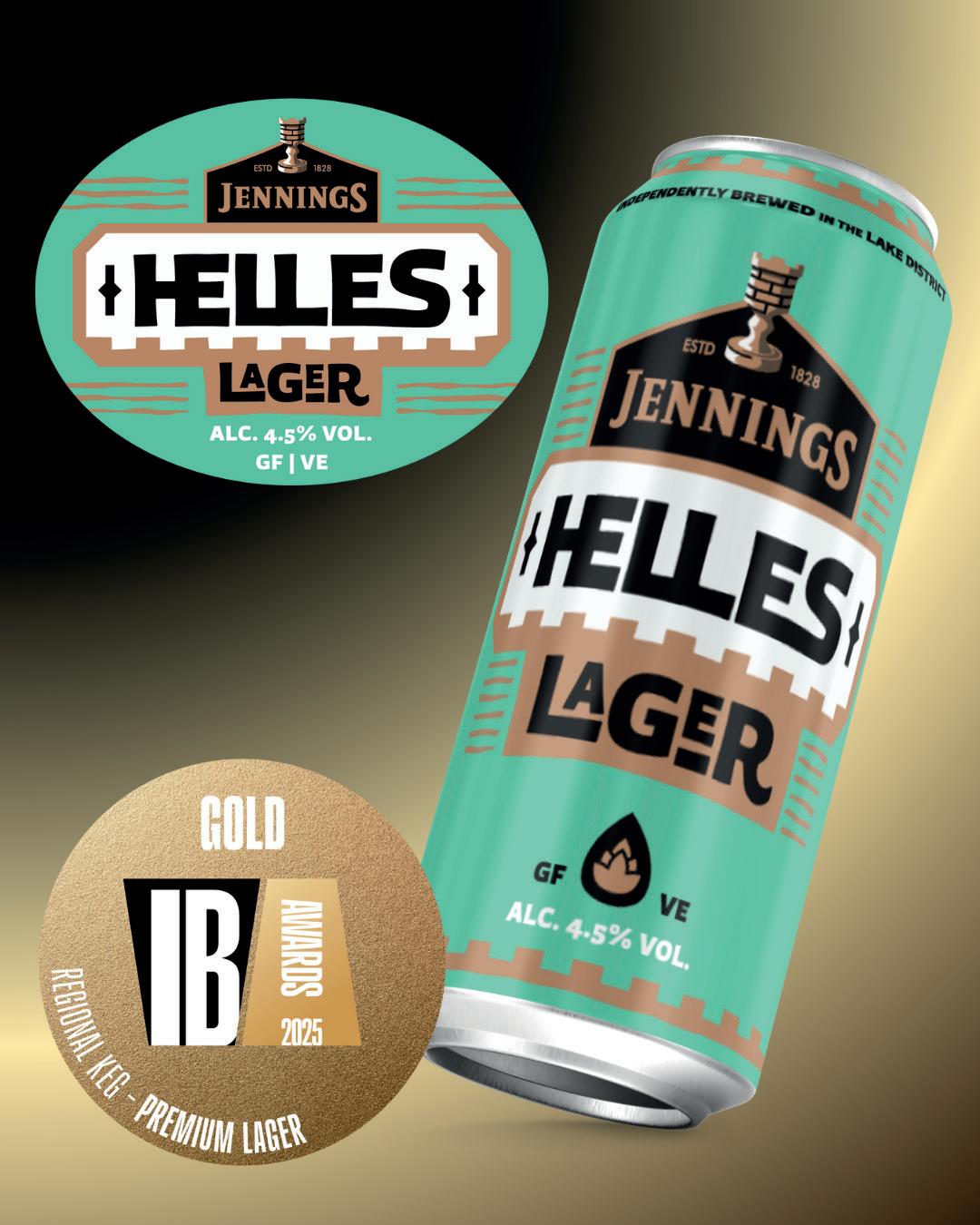
Jennings Brewery has been brewing traditional ales for almost 200 years, but 2025 saw something that had never been done by Jennings before - its first ever lager. One that is here to stay and is a great addition to the core range.
Whilst the brewing of Jennings traditional ales continues, this lager marks a fresh chapter, one that recognises the global beer community and the tastes of visitors from near and far.
When German miners came to work the fells around the brewery in the 1500s, they left their mark, most famously with the Cumberland sausage – the region’s take on a Bratwurst. Helles is a delicious new chapter in this Cumbria x Bavaria connection.
A natural, unfiltered Helles lager. Gluten Free and Vegan Friendly. Crisp, refreshing and downright delicious. 4.0% ABV.
Back in October 2025, The Helles won the SIBA award for North West Indie Beer Awards, Keg premium lager – Category champion.
“It is amazing to have won this award and for the first ever Jennings lager to be recognised as best Keg premium lager in the North West. The lager has also been very popular in our taproom and in other local pubs and venues. Here’s to a new chapter for Jennings and I am very proud to be part of it!” said Buster Grant, Jennings Head Brewer. And the good news continues, January saw the Jennings Helles lager in 440ml cans available in the taproom and other retailers and for Nationwide distribution via the online shop.
Find out more at www.jenningsbrewery.co.uk
Low & No Brewer, Drop Bear Beer Co has completed a significant upgrade to its brewing operations with the installation of a new brewhouse and additional fermentation vessels, increasing total production capacity by seven times in response to sustained growth in demand.
The investment follows a strong period for the brewery, which has seen increasing volumes driven by major UK listings, award recognition, and growing international interest in the brand. The expanded brewhouse and new fermentation vessels (FVs) provide the scale and flexibility required to support both existing customers and future growth across multiple markets.
The new brewhouse enables the brewer to produce larger batch sizes while maintaining consistency and quality, and the additional FVs allow for improved production scheduling and increased throughput across Drop Bear’s growing range of core beers. Brewing commenced in January on the new system, with increased volumes now coming online.
Founder and Managing Director Sarah Drummond said the expansion was a strategic step for the business: “Over the past few years we’ve seen demand grow across the on-trade, off-trade, and export markets, alongside recognition through industry awards. This investment allows us to meet that demand with confidence while protecting the quality and flavour profiles that define Drop Bear.”
Drop Bear Beer Co has secured several major retail and wholesale listings and grown their national presence. Alongside domestic growth, exports have become an increasingly important part of the business, with Drop Bear now reaching customers in multiple international markets.
The new equipment also delivers efficiency gains across the brewing process, supporting more sustainable operations and faster turnaround times. Increased capacity provides the headroom needed for innovation, and further expansion into new channels at home and abroad.
With its upgraded brewhouse now fully operational, Drop Bear Beer Co is well positioned to build on recent momentum and continue scaling sustainably as demand for its 0.5% ABV beers continues to grow.
Find out more at www.dropbearbeers.com









































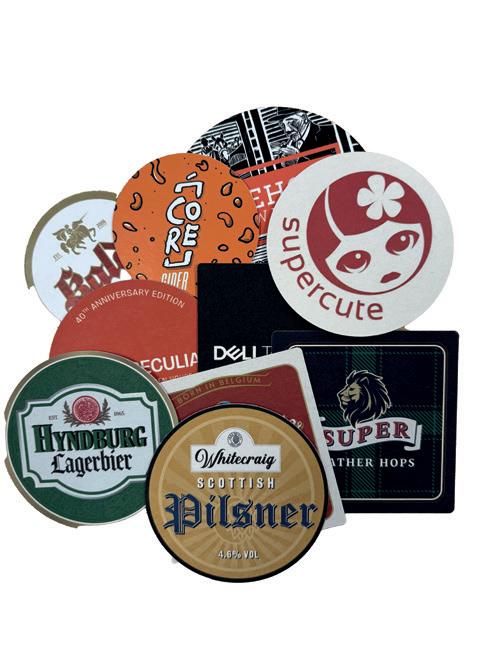





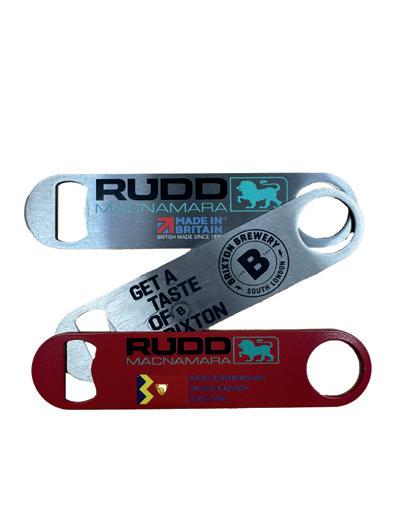








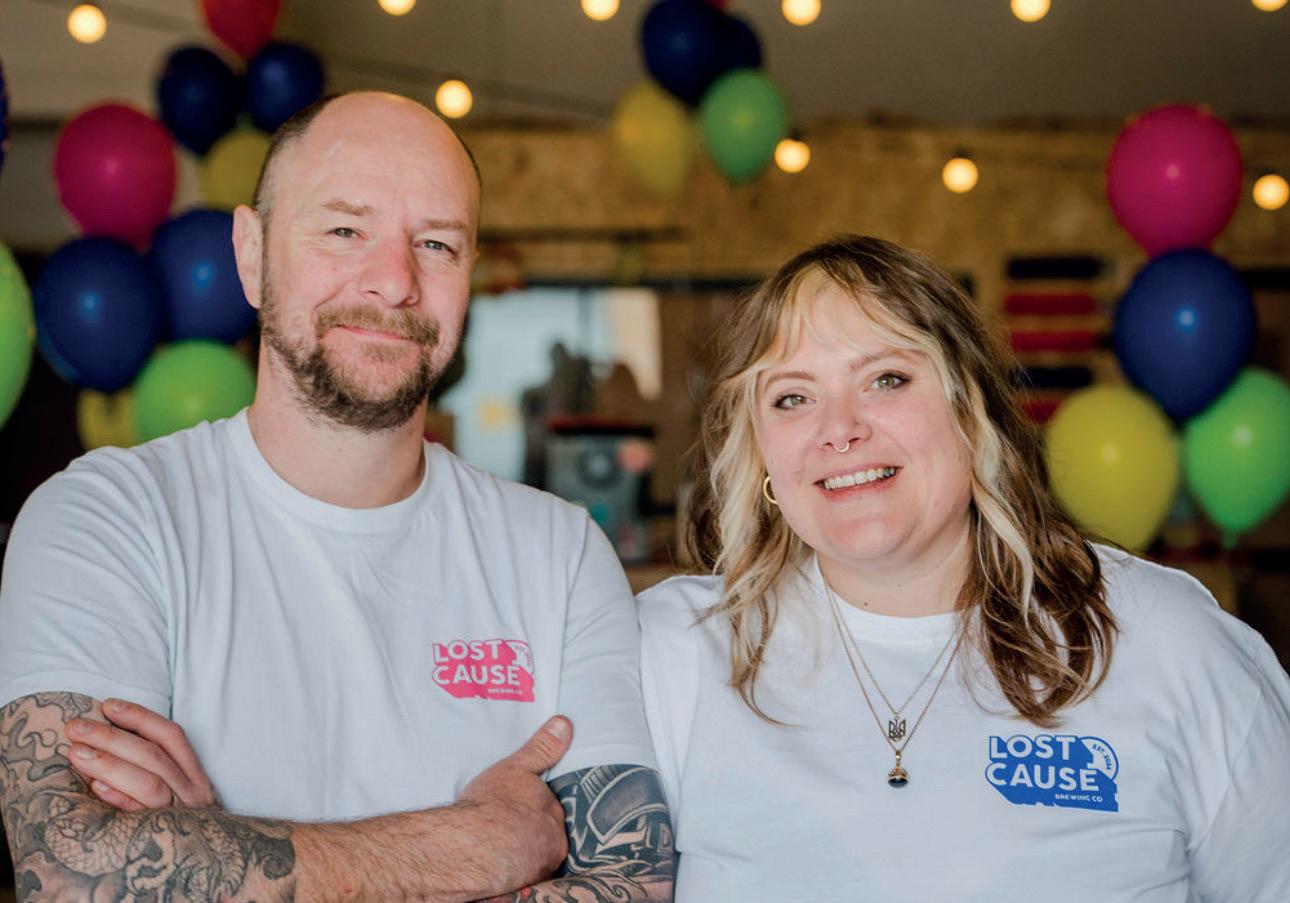
At the time of writing, in early January 2026, Lost Cause Brewing Co was poised to commence in-house brewing at its new production site in Wakefield, located a stones throw away from Wakefield Kirkgate train station.
For the young brewery, the move represents a significant operational milestone and the culmination of nearly 15 years of dreaming and two years of building the brand in a somewhat turbulent market.
Lost Cause Brewing was founded by industry veterans Colin and Vik Stronge and began trading in April 2024 as a contract and cuckoo brewer. From the outset, the intention was always to bring production in-house once the brand, demand, and finances allowed. The Wakefield site now provides the infrastructure to do exactly that, giving the duo full control over brewing schedules, quality, and future development, and is an exciting next step in the brewery's timeline.
The transition has been made possible following a successful crowdfunding campaign in spring 2025, which attracted strong backing from customers, trade partners, and the wider local community. For Lost Cause, the campaign was as much a vote of confidence as it was a funding mechanism, demonstrating belief in the brewery’s vision at a time when many businesses across the sector have been forced to pause or scale back.
Industry recognition has accompanied this period of growth. In March 2025, Lost Cause Brewing was nominated for Concept Design at the SIBA Business Awards, reflecting the strength of its brand and visual identity. Later, in September 2025, the brewery was named as Brewery of the Year at the Brewers’ Choice Awards, a peer-voted accolade that carried particular significance for a business still in its early stages. Vik was also nominated for Women in Beer, Beer Creative of the Year, recognising the creative leadership behind the brand and the stand out nature of the design.
With production now poised, ready to begin imminently, the Wakefield site also sets the foundations for Lost Cause Brewing’s next phase. A new permanent taproom is planned to open in spring 2026, designed as a welcoming, community-focused space that complements the brewery’s production operation and supports sustainable growth within their locality. While the wider brewing landscape remains challenging, Lost Cause Brewing enters 2026 with cautious optimism. Brewing is ready to begin, the business is backed by a committed community, and the focus remains on building something resilient and meaningful. In difficult times, community, shared purpose, and well-made modern beer remain central to Lost Cause’s approach and to what comes next.
Find out more at www.lostcausebrewing.co.uk
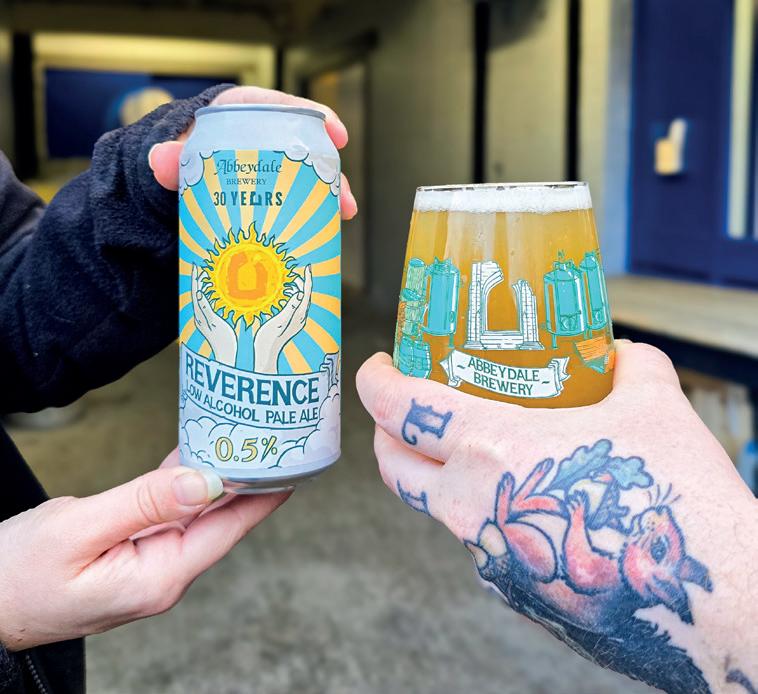
Sheffield based Abbeydale Brewery, the UK’s first 100% employee-owned brewery, has announced the launch of Reverence - their first low alcohol offering. A 0.5% pale ale, the beer is designed to be low in alcohol, but full of flavour, without sacrifice. Loosely inspired by Heathen, Abbeydale Brewery’s popular American Pale Ale, Reverence is hopped using Mosaic for refreshing tropical flavours and notes of zesty grapefruit. As with the rest of their releases, Reverence is also brewed to be gluten free. This news comes right as the brewery – the current holders of the title of Employer of the Year from SIBA - begins to celebrate its 30th anniversary year. With the “no and low” category showing huge growth, Abbeydale Brewery believes it has become more important than ever to invest and innovate to ensure they’re offering something to all its customers. Having introduced Sparkling Hop Water as an alcohol free option in 2024, the release of Reverence expands upon this and fills an identified gap within their extensive range.
Brewer and Quality Manager Christie McIntosh, who also sits on the board as Abbeydale’s Employee Representative, said: “The release of Reverence is the culmination of many months of hard work, extensive research, and meticulous lab analysis, coupled with being able to take advantage of an array of technological advancements in the wider field. Our ethos is to make sure we’re offering the same experience to all those choosing to drink our products, and we believe that the final result is something that looks like beer, tastes like beer, is brewed like any other beer… and simply is a proper beer, for beer lovers, but with just a tiny fraction of the booze.”
Reverence is available in 440ml cans from Abbeydale Brewery directly and via independent retailers.
Find out more at www.abbeydalebrewery.co.uk
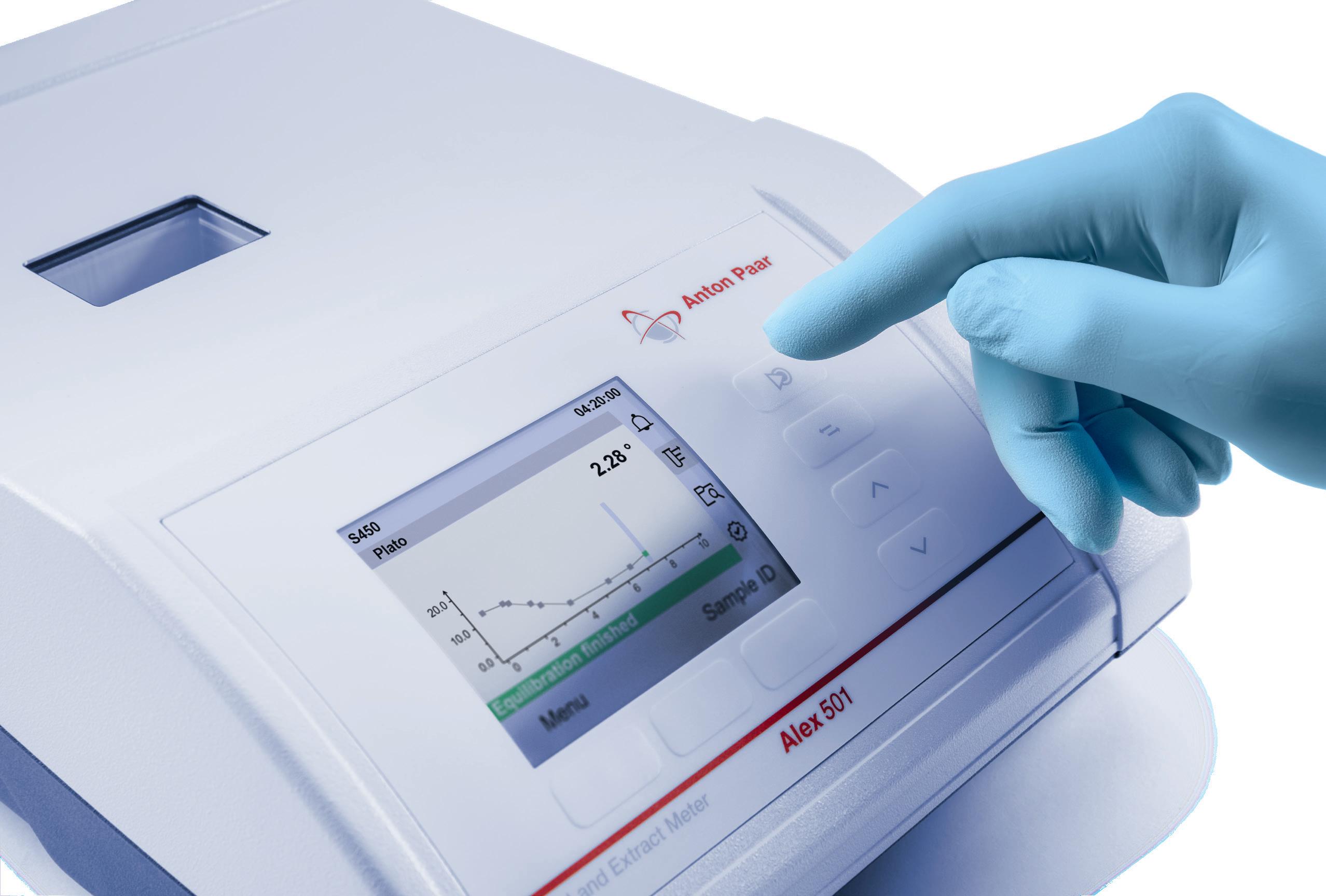
Twenty years ago, Saltaire Brewery set out with a simple ambition: to brew great beer that people genuinely wanted to drink, rooted in Yorkshire character and made with care. In 2026, as it celebrates its 20th anniversary, the team is proud to raise a glass to how far the brewery has come, and invite drinkers to be part of what comes next.
From the very start, Saltaire has been about place and people - brewing in the heart of Saltaire, a UNESCO World Heritage village known for its spirit of industry, innovation and community. That influence can still be tasted in every pint brewed today. Its early success was built on beers that balanced flavour with drinkability. Blonde and Cascade quickly became favourites, earning their place on bars across Yorkshire and beyond. Beers that people return to again and again, dependable, characterful and proudly Northern. This commitment to quality and consistency remains at the heart of Saltaire Brewery, and it’s why the core
range continues to be such a strong part of its story.
Of course, the beer world has changed enormously over the past two decades, and Saltaire has enjoyed changing with it. Alongside much-loved classics, Saltaire has continued to explore new styles, seasonal specials and collaborations. Always guided by flavour and balance rather than passing trends. Whether it’s a fresh, hop-forward pale, a rich stout, or a limited-release collaboration, every beer is brewed to be enjoyed and shared.
Saltaire’s 20th anniversary year is a celebration of all of this. Throughout 2026, the team will be marking the milestone with special releases, events and collaborations designed to give drinkers something genuinely worth raising a glass to. Highlights include a dedicated anniversary IPA, alongside seasonal favourites, Yorkshireinspired beers and collaborations that reflect both heritage and curiosity.
For pubs, bars and drinkers alike, this anniversary year is a chance to reconnect with what Saltaire Brewery does best: beers that
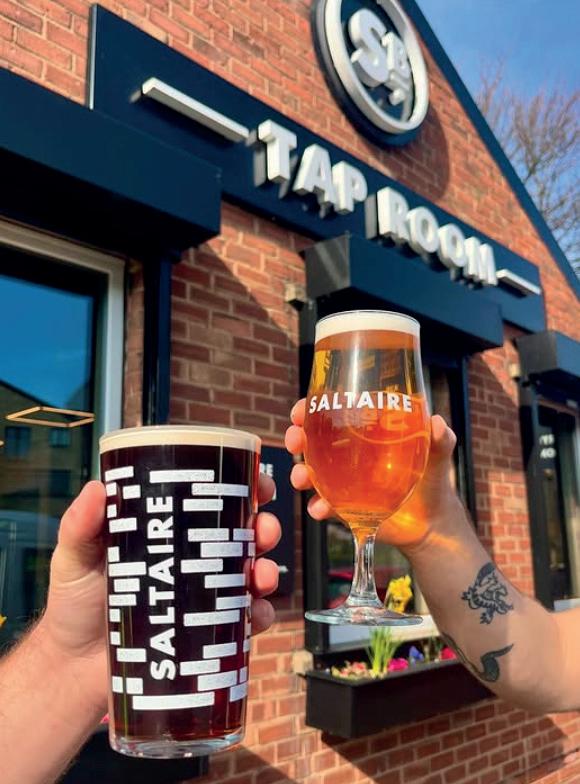
are easy to love, exciting to explore and made to be enjoyed in good company. Whether it’s revisiting a familiar favourite or discovering something new, there’s never been a better time to have Saltaire on the bar.
Ultimately, reaching 20 years is about more than beer.
It’s about the people who brew it, sell it, pour it and drink it.
The team would like to say to everyone who’s supported Saltaire Brewery along the way, thank you!
Find out more at www.saltairebrewery.com
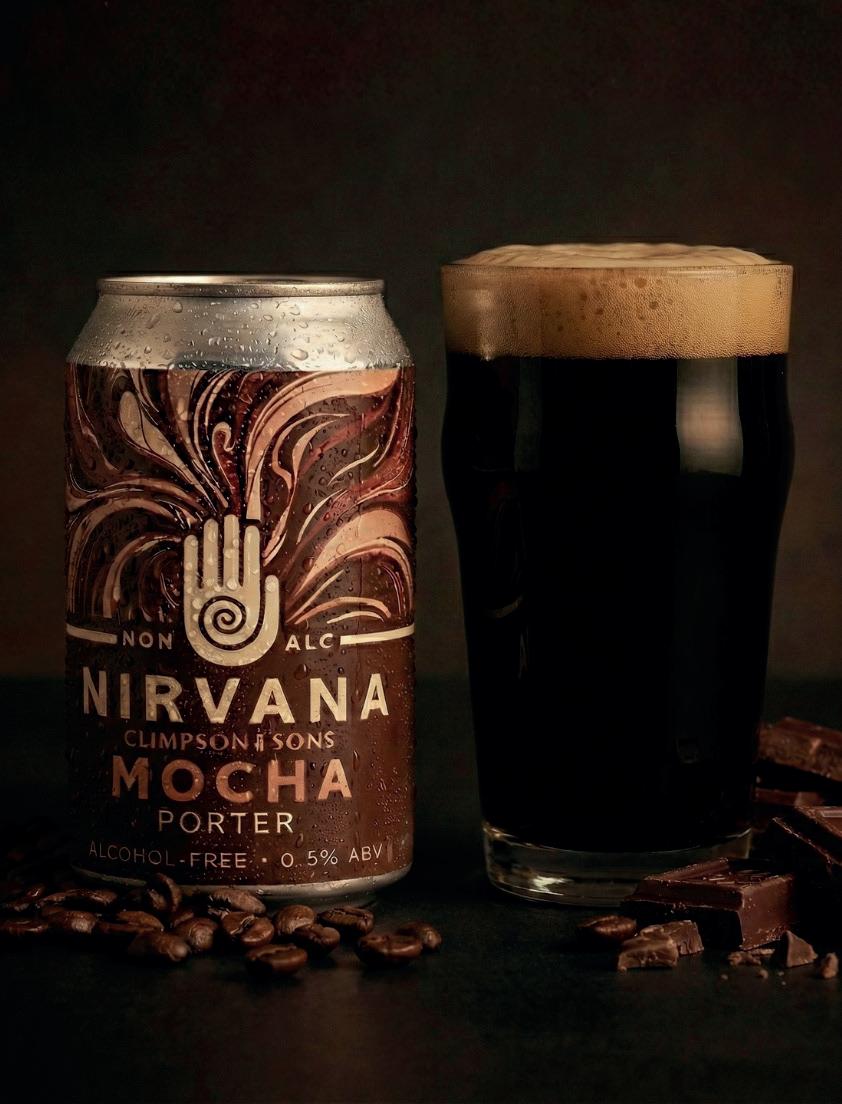
Nirvana, the alcohol-free pioneer, is celebrating a decade of brewing in 2026.
Now with an established line-up of seven core beers covering the most popular styles, its 10th anniversary year will also see it launch some very special limited-edition brews.
First up in January was Mocha Porter, a collaboration with East London coffee specialists, Climpson & Sons.
The beer (0.5% ABV) features the firm’s premium ‘Midnight Oil’ coffee concentrate, which is made using sustainably-grown Brazilian coffee beans and an innovative flashbrewing technique. This method, unlike cold brewing, captures the full spectrum of flavours from coffee beans and creates a finish with depth and clarity that’s akin to the finest espresso.
The coffee concentrate is complemented with
cacao nibs, plus a combination of barley, oat and wheat to layer on even greater depth.
Mocha Porter - available in 330ml cans - is described as a “Rich, smooth and complex beer carrying flavours of coffee, chocolate and roasted hazelnut.”
The coffee beans used in Climpson & Sons’ concentrate are sourced from Brazil’s ‘Daterra’, a globally-recognised leader in sustainability and the world’s first B-Corp certified farm, plus the first to achieve Rainforest Alliance ‘Level A’ status.
James Rabagliati, Nirvana’s Head Brewer, said: “January’s the month for hunkering down with darker, more complex, beers and this hits the spot – especially for anyone doing Dry January or limiting their alcohol intake. It’s a deeply satisfying brew – layers of rich flavours combining in an indulgent fashion.”
Find out more at www.nirvanabrewery.com


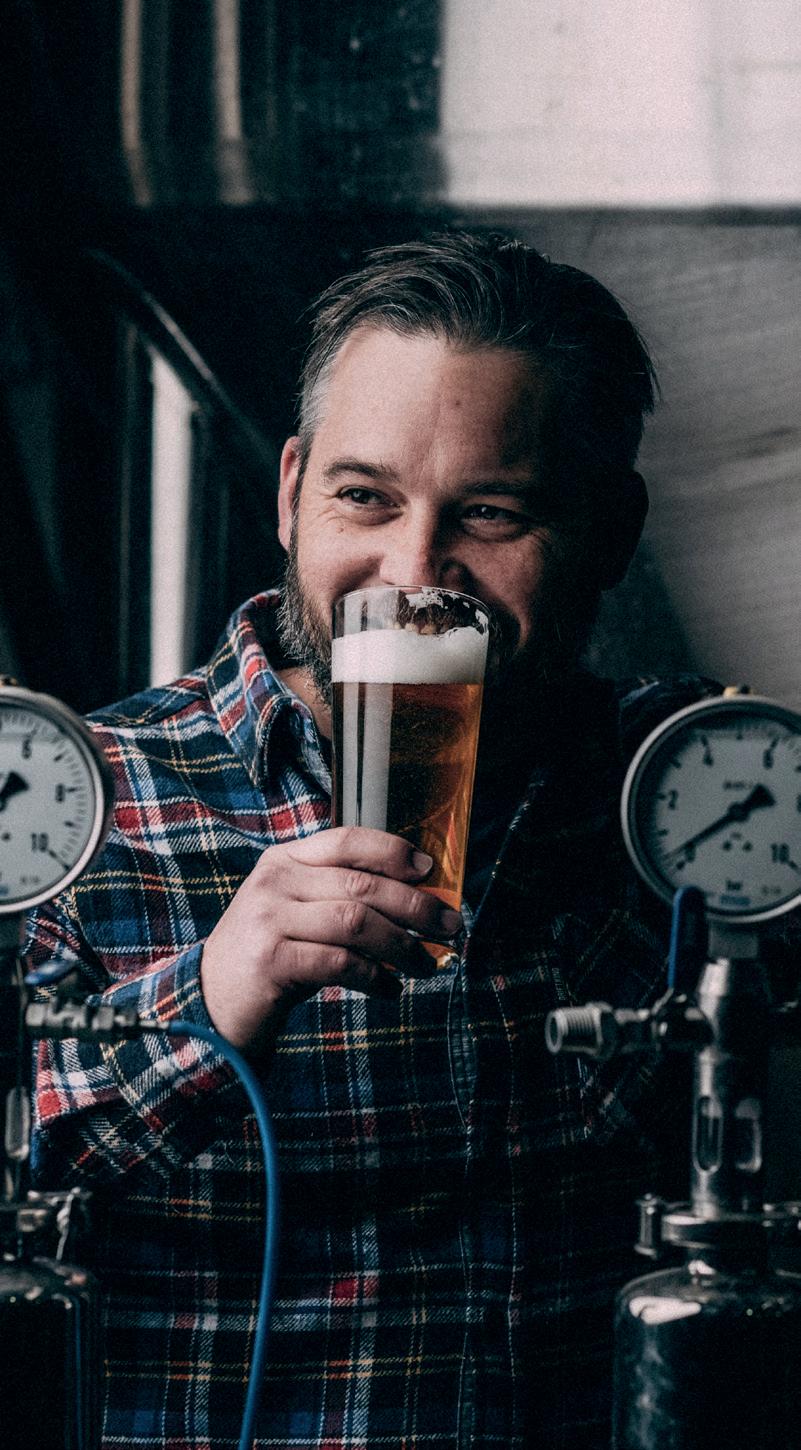
Devon brewery Powderkeg has expanded its contract brewing service, adding new capacity and enhanced services for start-up and established brewers.
The newly-christened ‘Zymoko Brewing’ is SALSA-Plus Beer-Accredited and now offers a total of 40,000L fermentation capacity alongside in-house canning and kegging.
Powderkeg has been successfully contract brewing ever since it first opened its doors in 2014, producing beers for numerous brands alongside its own range. 2025 saw demand outstrip supply and now more space has been made available for the service.
Zymoko will also enhance its new product development service which has already nurtured numerous start-up brewing businesses from initial concept through to commercial and critical success.
To date, the service has partnered with brewing businesses of all shapes and sizes: traditional regional breweries modernising their range; dedicated ghost brewers that need a regular, reliable supplier with dedicated volumes; and hospitality groups and farm shops requiring own-brand products.
MD John Magill said: “Zymoko is named for the science of fermentation, but we know that brewing is also an art. No two businesses’ requirements are ever the same and we always look to reflect our customers’ specific needs and tastes. We offer flexibility, openmindedness and creative solutions. Every brew is seen as a collaboration and your success is our success.”
With fresh capacity now available, the brewery is currently open to new enquiries. Whether you’re new to the industry, or established and looking to increase production, if you need help developing a new product or are seeking consistent, quality supply of an existing beer, Zymoko has the expertise you’re after.
The new website can be found at www.zymoko.co.uk
‘We’re all in this together and we will survive’ was the shared feeling of over 40 pub and hospitality owners from across the Stroud district in Gloucestershire at an urgent meeting in December to discuss how to collectively respond to the Government’s Autumn Budget.
“I was delighted at the real sense of solidarity which emerged from us all getting together,” said Greg Pilley, MD of Stroud Brewery who organised and hosted the event. “So many great ideas came out of the meeting, and people went away feeling supported and ready to work together to survive. This meeting was the first step in building a resilient sector which protects itself from future Budget and financial shocks. I’m keen for us to direct our joint purchasing power into local suppliers and keep money in Stroud so it doesn’t disappear out of the area or even out of the country.”
Despite sacrificing precious opening hours to attend, the mood was one of positive solidarity. Attendees discussed a range of ideas, including:
• Establishing a purchasing co-operative to leverage collective buying power.
• Creating a staff-sharing network to cover shortages.
• Developing joint campaigns to promote pubs' vital role in their communities.
• Organising ‘support your pub’ events and a joint working 'hub'.
This collaborative spirit marks a determined effort by local businesses to build a resilient sector independent of government support.
Wes Birch, landlord of The Ship Inn in Brimscombe, felt upbeat about what came out of the meeting, saying: “Everyone knows the negative facts and the doom and gloom but we’ve come together today and started to create a great plan for how to survive. We’re a strong community and I know we can find the solutions together.”
Find out more at www.stroudbrewery.com


From festivals to football stadiums, Just Peel delivers branded paper cups that combine sustainability, style, and speed, helping the UK events industry reduce plastic reliance with every pour.
Across the UK, demand for sustainable alternatives to single-use plastic is growing fast, and Just Peel is stepping up to meet it. The firm’s UK-made branded paper cups are home compostable, recyclable in standard waste-paper streams and are PFAS-free, giving events and venues a practical and sustainable choice without compromising on quality or style.
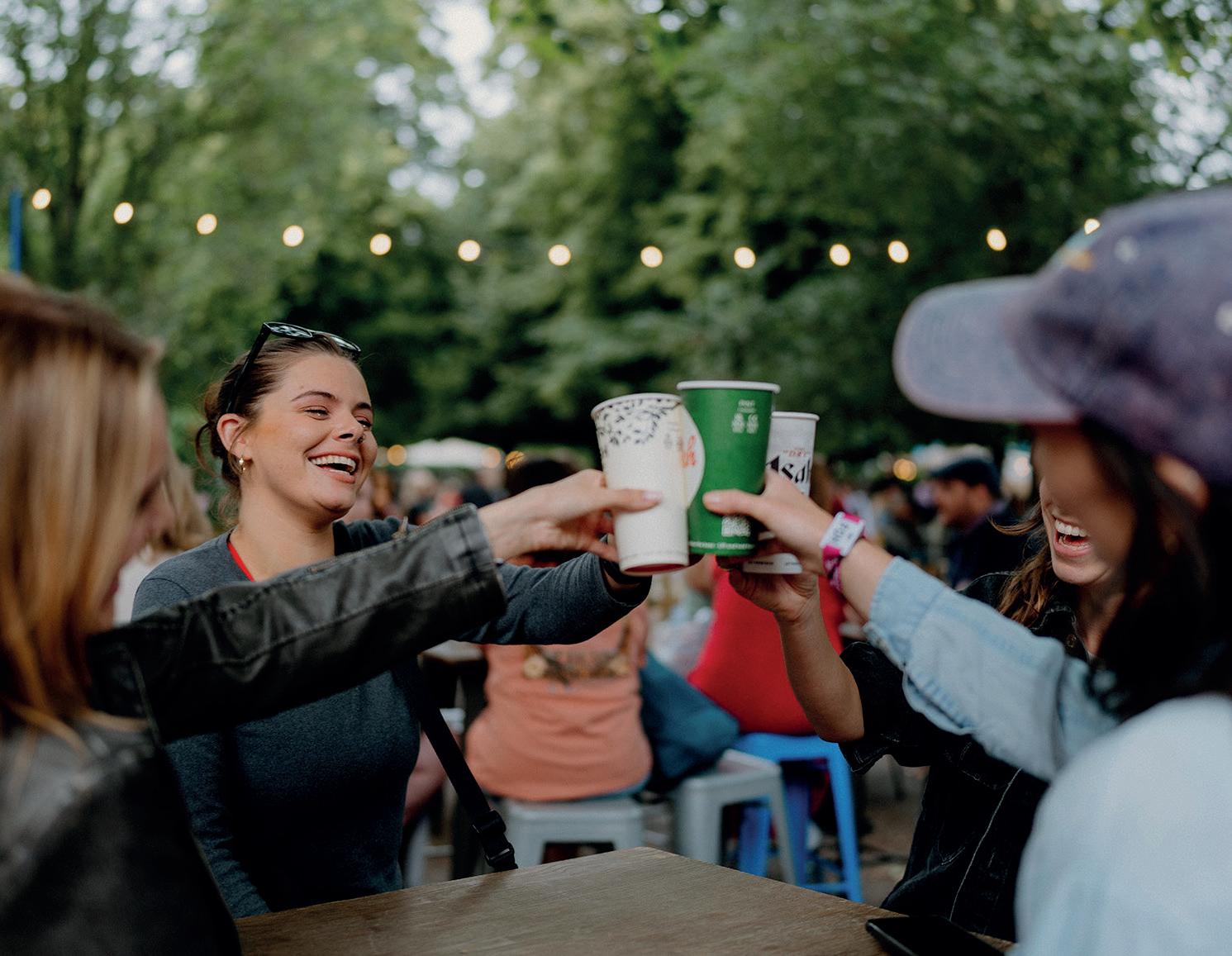
As the UK’s largest supplier of CE-marked Pint and Half Pint paper cups, Just Peel brings together impactful branding and certified eco credentials to help customers serve drinks with confidence and conscience. Every cup is designed to deliver that bold look and reliable performance that event organisers and drinks brands across the country have come to depend on.

UB Plastics’ Andy Cox looks at what the company is doing to make its products as sustainable as possible… Plastic pollution is a global crisis, not only does it contaminate the oceans, but it’s also harmful to wildlife and humans. Over production and single usage is a major contributor along with poor recycling rates.
There is a great deal of plastic in the brewery market sector - shives, keystones, keg caps, hard pegs, TPE, LLDPE, EVA, Polypropylene to name a few. UB Plastics produces circa 50.000,000 caps per year out of reprocessed and virgin polypropylene; we regrind our own scrap and put back into keg cap production.
ROTARY FILLING PAIRED WITH ROTARY SEAMING ALLOWS A SMOOTH, CONTINUOUS MOTION TRANSITION FROM FILLING TO SEAMING, ELIMINATING UNNECESSARY AGITATION AND CO₂ Loss
MECHANICALLY-SYNCHRONIZED LID APPLICATION ENSURES CONSISTENT AND REPEATABLE DOUBLE SEAM INTEGRITY
SMOOTHER OPERATION IMPROVES CAN HANDLING AND LOWERS THE RISK OF CAN DAMAGE
NOW AVAILABLE IN 12/3, 16/4, AND 24/4 FILL HEAD/SEAMER SPINDLE CONFIGURATIONS FOR SPEEDS UP TO 250 CPM!
Stand 128 at BeerX Liverpool Call (Droitwich): +44 (0) 1905 771882
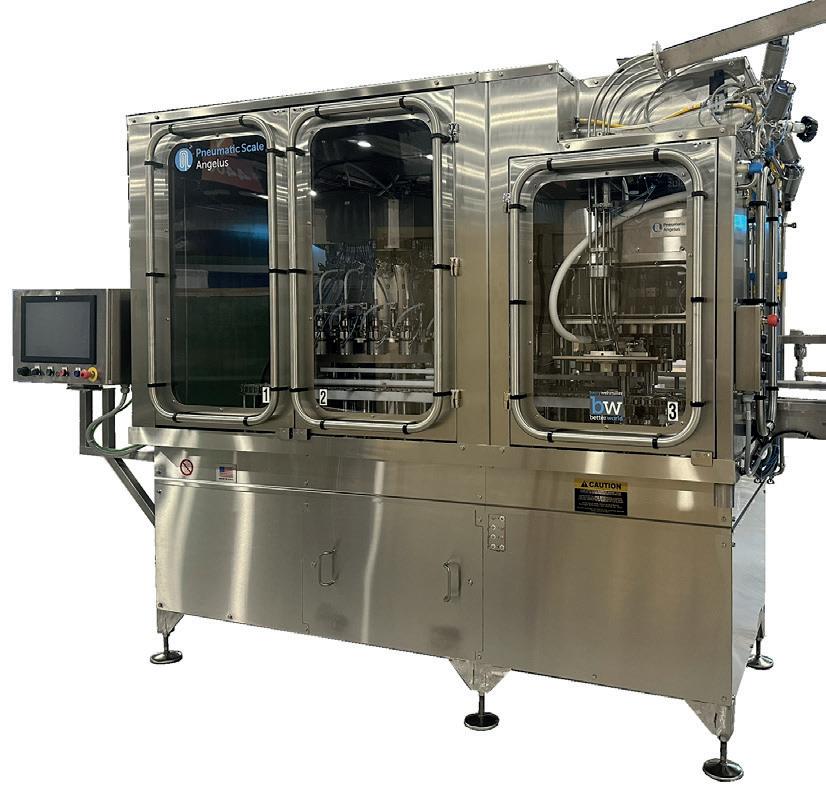
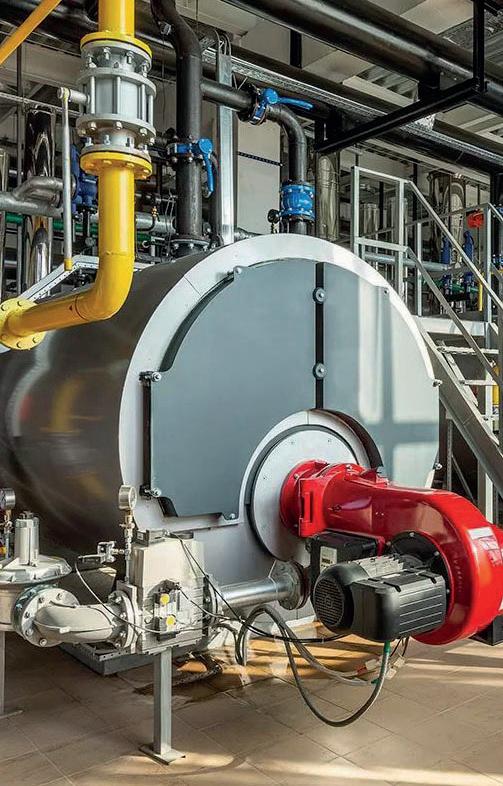


CFB Boilers is a 130-year-old steam boiler company that is registered to ISO9001:2015 and offers a complete range of specialist steam products and services from steam, electric, hot-water boilers and ancillaries to fully customised plant room design and installation.
We manufacture our flagship range of boilers onsite.
We also offer service, maintenance and 24/7 repairs and parts service.
We pride ourselves on delivering exemplary customer service, fast quotation response, quick order turnarounds, and competitive pricing as standard.
T: 01255 224500 E: sales@steamboilers.co.uk www.steamboilers.co.uk
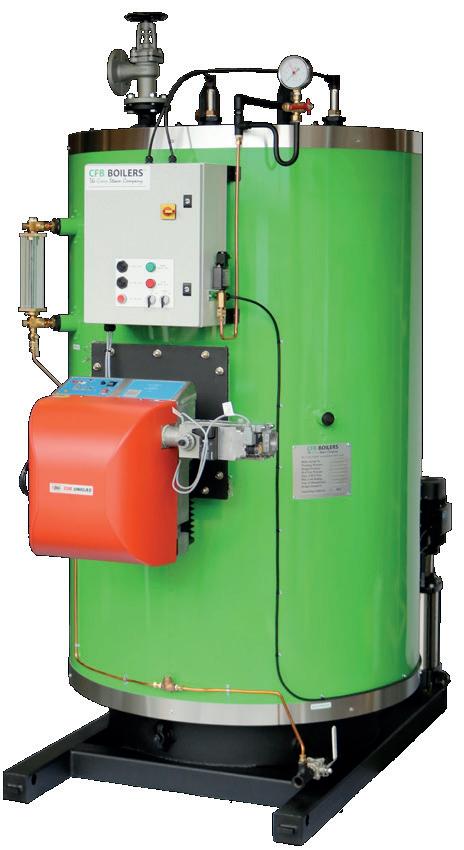
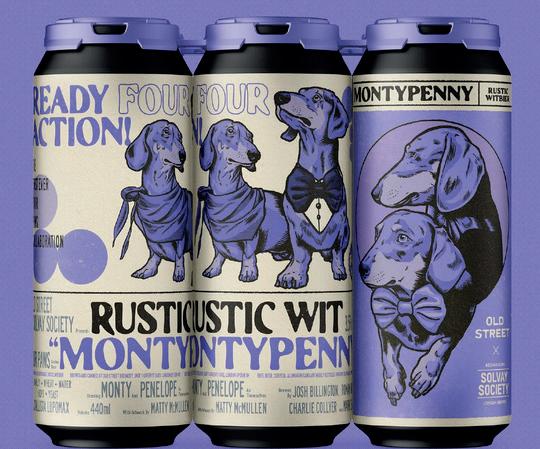
The Brand Weaver Collective has launched, offering independent UK breweries access to a small, hand-picked team of beer-obsessed brand, design and marketing specialists dedicated to helping beer businesses stand out in a crowded and competitive market.
This is a team made up of experts who have worked with a leading UK breweries including Northern Monk, Salt, Ossett Brewery, Pillars Brewery, Brewgooder, Two Flints, Brains and Vale Brewery. A belief rooted in Independence
Independent brewers and small beer operators bring character, community value and innovation to the UK beer scene. The Brand Weaver Collective’s mission is to even the playing field for independent breweries by offering strategy, creative and marketing support tailored to the way today’s indie beer businesses actually operate.
The Collective is built specifically around the needs of independent breweries, bringing together strategy, creative and marketing support in one place to help you grow. With streamlined processes and keen knowledge of day-to-day life at a brewery. Avoiding the corporate cost or unnecessary complexity.
This is a group of marketers with real-life experience shaping a nuanced understanding of both the craft beer world and the commercial pressures facing indie brewers.
Who’s behind the Collective?
The launch roster includes seasoned beer branding and marketing specialists with deep experience in turning independent beer brands into standout market presences:
Tim ‘The Brand’ Weaver - Tim has spent more than 20 years in branding, strategy, and design, helping breweries like Vale, Wilful, and Brains turn good beer into great brands.
Harrie Kelly - Harrie’s background spans brand strategy, marketing, and community engagement, and she’s spent her career helping breweries like Northern Monk, SALT, and Ossett find their voice and connect with people who matter.
Matty McMullen - Matty is a brand strategist and designer who goes way beyond creating logos. He works with ambitious founders to build full
brand worlds that feel clear, confident, and commercially strong.
Jack Coomber - Jack has more than 10 years in FMCG marketing experience and specialises in blending strategy with proper hands-on delivery. He connects big picture thinking with real paying punters, from first awareness to loyal repeat buyers.
Combined, the team has made some immense achievements with breweries over the years:
• Securing major supermarket listings
• Fuelling a 182% increase in online sales
• Achieving consistent 30-35% year-on-year growth
• Winning Brewery Rebrand of the Year award
• Delivery of a £750K crowdfunding campaign
In this highly competitive landscape, simply launching a quality beer isn’t enough anymore. Each release needs a reason to stand out. Each brand needs to tell its own story. And this is what the Brand Weaver Collective is looking to help with. Getting under the bonnet (or mash tun) of a business and bringing a fresh perspective to its marketing activity. From brand strategy and identity design to market activation and digital growth campaigns, the Collective supports breweries at every stage of their journey: whether launching a new beer, refreshing a core brand, or growing distribution into pubs and retail. Flexible ‘pick & play’ packages let breweries choose exactly what they need, without unnecessary extras.
Tim Weaver, Founder of the Collective, said: "Breweries are full of stories waiting to be told. Great beer is like a great album. You can have an amazing range of tracks, but it only becomes something unforgettable when there is a story that pulls people in. That is why the Brand Weaver Collective exists. A team of people who are unapologetically passionate about the beer industry, who understand what makes a brewery special, and who know how to communicate it in a way that creates real impact. This is the work I love, and the collective lets us bring all of that talent together to help breweries grow in the way they deserve."
For more information visit www.thebrandweavercollective.com or email tim@thebrandweaver.co.uk.

Arlington’s revolutionary 1000L containers, coupled with Sterile Airless inner liners, have swiftly emerged as the gold standard for maintaining hygiene and preserving beer quality during transportation from Brewery to Bottling / Canning. Offering a cost-effective solution, these transport tanks ensure zero contamination and eradicate the risk of Dissolved Oxygen exposure, safeguarding the integrity of your precious brew throughout its journey.
But Arlington doesn’t stop there. In an ongoing quest to enhance beer quality, we’ve introduced innovative solutions to further minimize oxygen exposure during the filling process. Our cutting-edge “Air Bleed Valve” empowers brewers to expel all air from their filling hoses, ensuring a seamless flow of beer right up to the valve on the liner. By eliminating any residual air in pipes or fittings, this breakthrough significantly reduces the risk of oxygen ingress during filling, yielding exceptional outcomes for brewers and canners alike.
Bid Farewell to Oxygen Contamination with Arlington www.arlingtonpackaging.com
For those venturing to send their beer on extended journeys or planning for prolonged storage periods, Arlington presents an additional layer of protection with our High Oxygen Barrier and UV Barrier Liners (Metalized Foil Liners). These premium liners feature the highest oxygen barrier film available in the market today, guaranteeing unparalleled preservation of your brew’s freshness and flavour integrity.
What’s more, Arlington Containers and liners are readily available in stock, with same-day dispatch and no minimum order quantities required. Whether you’re transporting 500L or 20,000L+, our efficient logistics ensure prompt delivery, minimizing downtime and maximizing efficiency for your operations.
When it comes to moving your brew, don’t settle for compromises. Choose Arlington, the industry’s trusted partner, dedicated to preserving the purity and quality of your beer every step of the way.
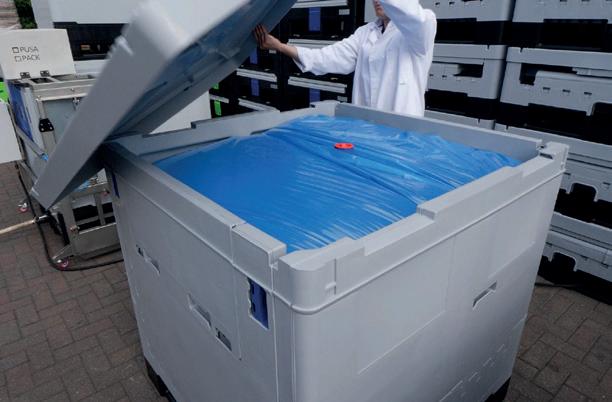
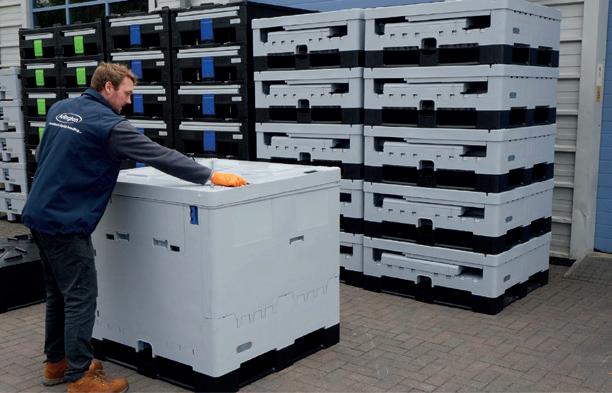
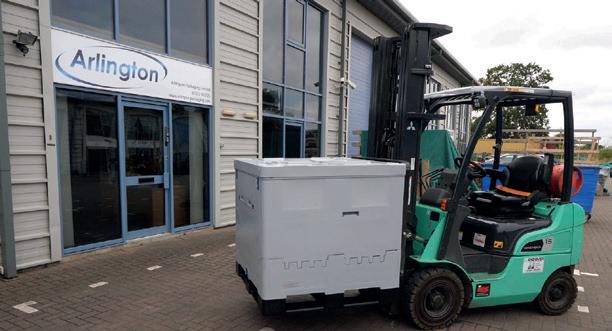

Andy Coombs, Director of Stainless Steel Products (SSP), looks at some of the challenges around choosing the right tanks for your brewery…
Independent breweries continue to face pressure from rising costs, tighter margins, and the need to remain flexible as consumer tastes evolve. Against this backdrop, investment decisions around core equipment, particularly additional tank capacity, are under closer scrutiny than ever.
At Stainless Steel Products (SSP), we work closely with UK breweries to supply high-quality stainless steel tanks built for longevity, performance, and the realities of modern brewing operations. As the UK sales partner for a specialist European manufacturer, SSP provides bespoke tank solutions designed around each brewery’s space, processes, and production goals, rather than forcing brewers to adapt to standardised equipment. Every tank is made by skilled fabricators using specialised equipment. They are not mass produced, and this approach ensures consistently high weld quality throughout.
One trend we are seeing is growing demand for custom-built tanks that maximise efficiency without unnecessary complexity. Importantly, this does not mean over-engineering or added cost. Thoughtful, breweryspecific design often removes compromises found in off-the-shelf tanks, helping brewers make better use of space, streamline workflows, and avoid paying for features they do not need. Brewers are increasingly looking for tanks that integrate seamlessly into existing brewhouses, allow for future expansion, and support consistent product quality batch after batch.
Attention to weld quality, internal finishes, insulation, and cleaning access all plays a crucial role in long-term performance. Cutting corners in these areas can lead to operational inefficiencies and earlier reinvestment in replacement tanks, increasing costs over time.
There is also renewed interest in long-term value over short-term savings. While off-the-shelf tanks can appear convenient initially, many brewers are recognising the operational and maintenance benefits of well-engineered stainless steel equipment designed to last for decades rather than years.
SSP supports breweries throughout the entire process, from initial design discussions through to delivery, ensuring tank specifications reflect how the brewery actually operates day to day. Brewers can work in ways that suit their processes, rather than being constrained by the limitations of standardised equipment. This collaborative approach helps brewers make informed decisions that support consistency, efficiency, and scalability.
SSP is exhibiting at BeerX in Liverpool this March, where the team will be discussing how tailored tank design can support breweries at every stage of growth. Visitors are welcome to stop by and explore practical solutions for both current and future brewing needs. Find out more at www.stainlesssteelproducts.co.uk
celebrates its 30 year anniversary
Liquid Solutions was founded 30 years ago as a one-man-band with headquarters in a rusty caravan parked in a neighbour’s field.
The small pack craft beer ‘revolution’ was in its infancy in 1996, so the grand idea was to offer a mobile bottling service so breweries had product to test market without investing in equipment or transporting their beer to the small number of contract bottlers available at the time. Sales of the demo-ed equipment would surely follow once producers had confidence their bottled best bitter could sell.
So, day job as winemaker/brewery was jacked in, life savings were splurged on sundry items of bottling kit, bundled into the back of a home-made trailer and the journey began. Or to be more precise, hundreds of journeys, clocking up 30,000 miles per year and many more 5-to-9 working days then the 9-to-5 variety.
With a background as part technologist, part microbiologist, the founder promoted hygienic methods, using a portable steam boiler for sanitising equipment, sterile bottle rinsing, and membrane filtration for the product. Attention to detail and focus on customer needs was, and still is, the company philosophy. Problem was, doing a good job at a fair price meant customers kept booking more bottling sessions and postponing equipment purchase.
Sensing that physical and mental burn-out was only a matter of time, the mobile bottling service was gradually wound down and the company moved towards sales of equipment via partnerships formed with UK and European manufacturers, while also running a brewery in-house and contract bottling service. Still many 5 to 9 days, but more air miles than motorway. ‘Headquarters’ developed from a spare room in the house plus a garage, then to a portacabin and farm barn.
Nowadays, with the vast increase in small pack sales of craft beer and many other liquids, we focus on sales of equipment and consumables both UK made and imported from across the globe, holding large stocks of bottling and filtration equipment plus sundries like hoses, pumps, stainless fittings, filter cartridges and spare parts.
The ‘hard yards’ put in on the mobile bottling and production lines have proved invaluable experience for the team who can see things from a producer’s perspective, but they do now have more 9-to-5 working hours, and as a team of six now spend them in a fairly comfortable and spacious industrial unit: happy days!
Find out more at www.liquidsolutions.co.uk
Close Brothers Beverage Finance offers advice on how to access funding through the GGS…
Independent breweries are built on craft, community and capital.
From canning lines and kegging systems to fermenters, lab equipment and energy-efficient chillers, substantial investment is required before a single pint is poured.
Running a brewery or distillery goes beyond crafting great products. It’s also about managing working capital, investing in equipment, and planning for the future.
When thinking about funding options, one route to consider is government-backed finance using the Growth Guarantee Scheme (GGS), designed to help viable UK SMEs access the funds they need to invest and grow.
What is the Growth Guarantee Scheme?
The Growth Guarantee Scheme (launched July 2024) is designed to support access to finance for smaller UK businesses as they look to invest and grow.
It supports a range of products, including term loans, overdrafts, asset finance, invoice finance and asset-based lending. It can be used alongside equipment finance, for example, to improve the terms on offer to borrowers.
Key features include:
• Minimum loans from £1,000
• Up to £2 million loans available per business group (up to £1 million in Northern Ireland)
• Terms of up to 6 years for loans taken out with asset finance
“Think of GGS as a way to improve the terms on offer, it’s still
commercial lending, but the government guarantee helps lenders support viable breweries that may otherwise struggle to access finance,” said Ross Mair, Managing Director, Close Brothers Beverage Finance.
How can GGS support breweries?
GGS can sit alongside equipment finance to make investment more manageable and predictable, helping to fund:
• Expansion projects
• New product lines
• Equipment upgrades
• Sustainability improvements
As Ross explained, combining facilities can be effective:
“We’re seeing breweries blend asset finance for kit with GGS-backed facilities for working capital. That combination can fund a new canning line and give headroom for raw materials and packaging, without over-stretching cashflow.”
He adds that the same approach can accelerate sustainability plans:
“Using funding like this for sustainability is where many independents can win twice, cutting energy bills and building brand value. If the investment case stacks up, GGS can help get those projects moving.”
Because GGS supports lenders with a government guarantee, viable breweries that might otherwise struggle to secure funding can find it easier to access finance and plan with confidence, often with more flexible terms when combined with equipment finance.
Find out more at www.closebeveragefinance.co.uk
Enterprise Tondelli is now able to supply combined bottle and can fillers. The Matrix Srl monobloc machine utilises a rotary rinser with special grippers for both cans and bottle cleaning. After rinsing containers are transferred via starwheels for positive transfer onto the filler.
Filling of either container is by flow meter filling valves for very accurate volume filling. This very flexible technology means that we precisely control the filling phases from the operator touch screen allowing a wide range of recipes to be used. For beer filling for instance this allows greater control of the CO2 flushing for cans or pre-evacuation, filling and snifting process to create a dense foam for reduction of tpo.
A central filling bowl reduces product losses and is more hygienic due to its shape and also CIP spray ball for cleaning. Using electro pneumatic filling valves means much lower maintenance
due to fewer moving parts and also more controllable for the different products.
Change over from bottles to cans is very simple and the geometry looks very much like a conventional monobloc with starwheels for full access to the machine. They are ideal for small/ medium size breweries with a recent installation in a French brewery of a 32/32/8/1 handling 330 ml cans and 500 ml glass bottles.
If you need only one container type then the company supplies fillers from 1,500 to 80,000 container per hour. For slower speeds Enterprise supplies a range of fillers from 6 valves upwards with traditional mechanical filling valves that are easy to work with. Recent projects include a 9/8/1 for beer filling at 1,500 bph.
For medium to high speeds Enterprise also supplies a range of electropneumatic filling valves machines with a number of very important benefits for the end user.
An innovative feature of the flow meter can
filler is also the facility for automatic CIP cups making cleaning much quicker and safer. At the touch of a button the CIP cups are inserted. When using level filling Enterprise can also use externally adjustable vent tubes to change the fill level in real time thus reducing parts and increasing hygiene.
Other machine features include adjustable starwheels for lines requiring to fill many different diameters of bottles. When using level filling Enterprise can also use externally adjustable vent tubes to change the fill level in real time for different containers thus reducing parts and increasing hygiene.
Enterprise Tondelli has been supplying bottle and can fillers for more than 48 years in over 45 countries from 6 filling valve to 140 filling valves on rotary carousels.
Find out more at www.enterprisetondelli.co.uk


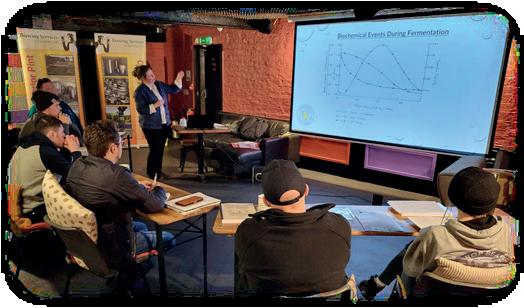

Rob Smith, Hayley Young & David Smith Office Telephone: 01904 233418 enquiries@brewingservices.co.uk www.brewingservices.co.uk































































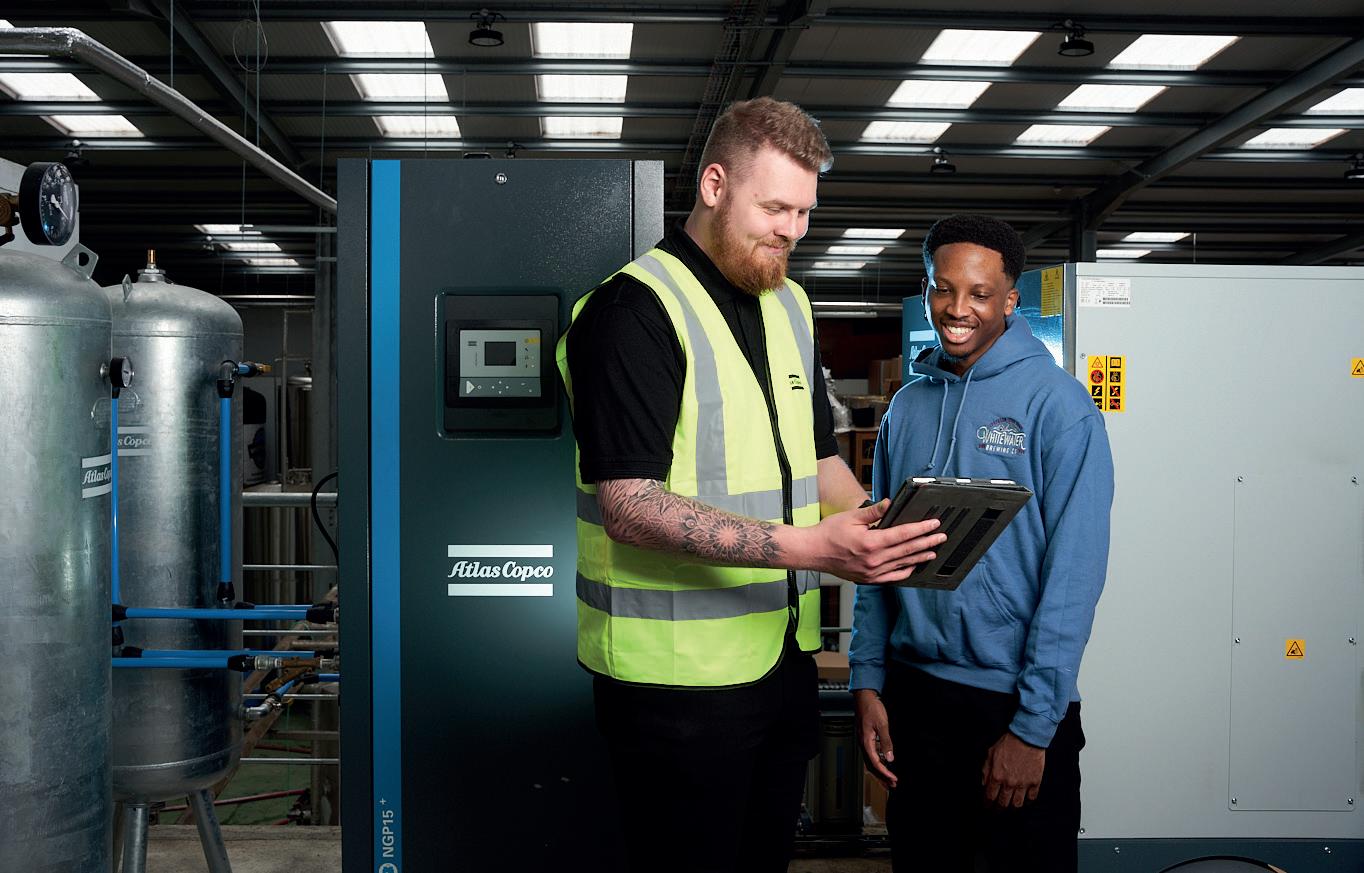
Supplier Viewpoint
Andrew Butler, Atlas Copco’s Business Development Manager for Industrial Gases, explains how breweries can cut costs with CO2 recovery systems. He also sums up the company’s products that meet breweries’ needs for product quality, compliance, energy savings and reduced environmental impact.
Atlas Copco’s CO₂ recovery system enables breweries to capture and reuse carbon dioxide produced during fermentation. By reclaiming carbon that would otherwise be lost, breweries can reduce environmental impact and cut expenses for external CO₂ supplies. This approach enables breweries to sustain and even exceed their own carbon dioxide needs. Crucially, the payback period of a CO₂ compressor is often around two years, yielding a swift return on investment for other improvements.
For breweries facing CO₂ supply issues, nitrogen gas is a cheaper and more readily available alternative for at least two-thirds of brewing applications. Systems like Atlas Copco’s on-site nitrogen generators produce nitrogen on demand, and at the required purity, essential for flushing, purging, and pressurising. By limiting reliance on external nitrogen cylinder deliveries, breweries gain control over gas availability and purity. This approach lowers costs, reduces environmental impact, removes certain safety and logistics concerns, and keeps vital processes uninterrupted.
Compressed air, nitrogen, process filtration and chillers
Alongside CO₂ recovery, Atlas Copco offers various compressed air solutions which comply with ISO 8573-1 norms. Oil-free compressors are recommended for sensitive processes like aeration, bottling, and kegging, where contamination risks must be avoided in order to safeguard the beer’s taste, aroma and foam. Oil-injected compressors with the proper air treatment are also available for applications such as controlling valves and actuators in packaging or labelling machinery and for feeding nitrogen generators.
Atlas Copco also provides process filtration solutions, covering raw material input to the final product. These filters maintain clarity and consistency by removing solids, yeast, and unwanted particles and safeguard flavour, appearance, and shelf life. Implementing the right beer filtration technology at each stage helps breweries achieve reliable product quality, ensure microbial stability and meet regulatory compliance.
Finally, Atlas Copco’s energy-efficient process cooling chillers help brewers maintain stable temperatures within brewing equipment during the brewing process, preserving a consistent flavour and quality of the beer.
Recent years have shown how reliant breweries often are on external CO₂ supplies, creating challenges when costs surge or supply lines falter. Many breweries are therefore substituting carbon dioxide with nitrogen in many brewing applications to ensure production stability and reduce long-term overheads. At the same time, there is continued emphasis on meeting exacting standards for product purity. Brewers increasingly favour energy-efficient systems and certified, sustainable production methods. Atlas Copco’s advanced filtration options, energy-efficient compressed air and process cooling technologies help address these needs, maintaining beer quality while lowering environmental impact.
Rising CO₂ prices, supply chain volatility, and net zero ambitions are pushing breweries to explore on-site gas generation solutions. Energy efficiency continues to be important, as does consistent compliance with evolving food safety regulations. Investing in modern compressor and nitrogen generation systems that deliver precise control, as well as in effective process filtration, can help breweries stay ahead of these changes.
Whitewater Brewery in Northern Ireland was founded in 1996, where it started on a family farm using traditional methods to create a range of award-winning ales, lagers, and stouts. Over time, the brewery expanded from 800-litre brews to producing 6,500-litre batches and bottling ten different beers on-site. This growth was supported by an Atlas Copco energy-efficient compressed air system, which helped streamline production.
More recently, the brewery installed an Atlas Copco on-site nitrogen generation system, comprising a GA 7 VSD+ FF rotary screw compressor and an NGP15+ nitrogen generator. The system delivers a dependable supply of 99.5% pure nitrogen using pressure swing adsorption (PSA) technology, which captures oxygen molecules on a carbon molecular sieve, allowing only nitrogen to flow through. By generating their own nitrogen rather than relying on delivered bulk supplies, Whitewater Brewery has reduced dependence on external gas deliveries and mitigated fluctuations in supply or price.
An important benefit is the reduced need for carbon dioxide. Previously, Whitewater purchased one tonne of CO₂ weekly, at times costing over £1,000 per delivery. Thanks to the nitrogen installation, that dropped to one delivery every five weeks, saving around £35,000 a year. Meanwhile, nitrogen serves as a medium for flushing tanks, transferring beer between vessels, and creating the characteristic “smooth pour” of nitrogenated stouts.
With this robust, sustainable gas solution in place, Whitewater Brewery manages production more efficiently while maintaining the high quality and distinctive character of its beers.
Find out more at www.atlascopco.com
BrewMan
James Gardner sales@premiersystems.com
Breww Ltd
Max Andrew max@breww.com
Charles Faram
Charlie Gorham CharlieGorham@charlesfaram.co.uk
Close Brothers
Beverage Finance
Antonietta Miller antoniette.miller@closebrothers.com
Crisp Malting Group
Colin Johnston colin.johnston@crispmalt.com
Croxsons
Tim Croxson Tim.croxson@croxsons.com
ekeg
Becki Mason rebecca.mason@ekeg.co.uk
Festival Glass
Kelsey Cheesbrough Kelsey@festivalglass.co.uk
Kegstar
James Bleakley jamesb@kegstar.com
Loughran Brewers
Select
Digby Fullam marketing@malt.ie
Murphy & Son

Anton Paar Ltd
Tertia Rimell tertia.rimell@anton-paar.com

Colorscan Imaging Products
Nigel Forster nigel@colorscan.biz
GEA UK Beverley Beckley-Lines Beverley.Beckleylines@gea.com

Pneumatic Scale Angelus
Tom Bowdige tom.bowdige@bwpackagingsystems.com
Rankin
Brothers & Sons
Jim Rankin jim@rankincork.co.uk
Rastal GmbH & Co KG
Timo Leukel timo.leukel@rastal.com
Glassware Branding
Richard Ross richard.ross@cnc-group.co.uk
IGC Engineering Ltd
Chris Hamlett chrishamlettigc@onetel.com
Hannah Waterfield christina.crook@murphyandson.co.uk
Napthens LLP
James Allison James.Allison@napthens.co.uk
Thomas Fawcett & Sons
Mungo Fawcett mfawcett@fawcett-maltsters.co.uk
UB Plastics
Andrew Cox CoxAndrew@ubplastics.co.uk
Willis Publicity
Carl Andrews Carl@willispublicity.co.uk

Lallemand Brewing
Andrew Paterson apaterson@lallemand.com
Lemon Top Creative
Andy Mogg hello@lemontopcreative.com

Muntons PLC
Vanessa Makings vanessa.makings@muntons.com
Signature Resin Floors
Donna Clayton donna@signatureresinfloors.co.uk
Simpsons Malt
Martin Inglis martininglis@simpsonsmalt.co.uk
Vale Labels Ltd
Matt Riches mattr@valelabels.co.uk
Wine Box Company
Marketing Team marketing@wbc.co.uk
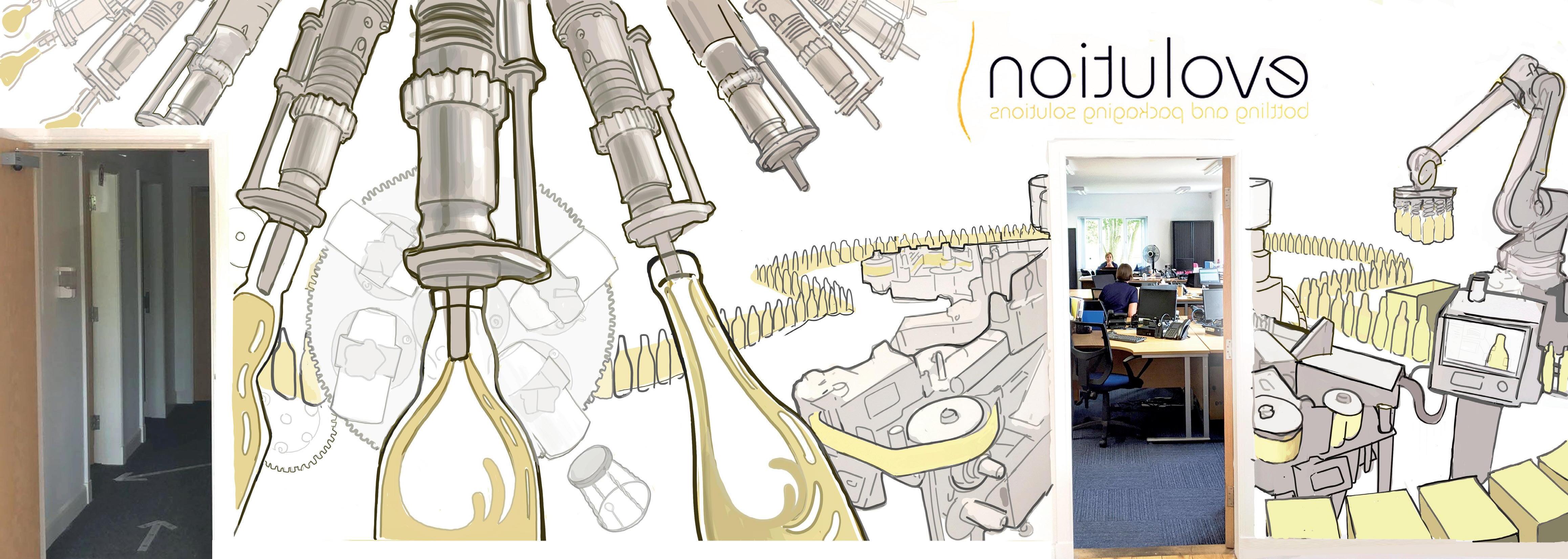
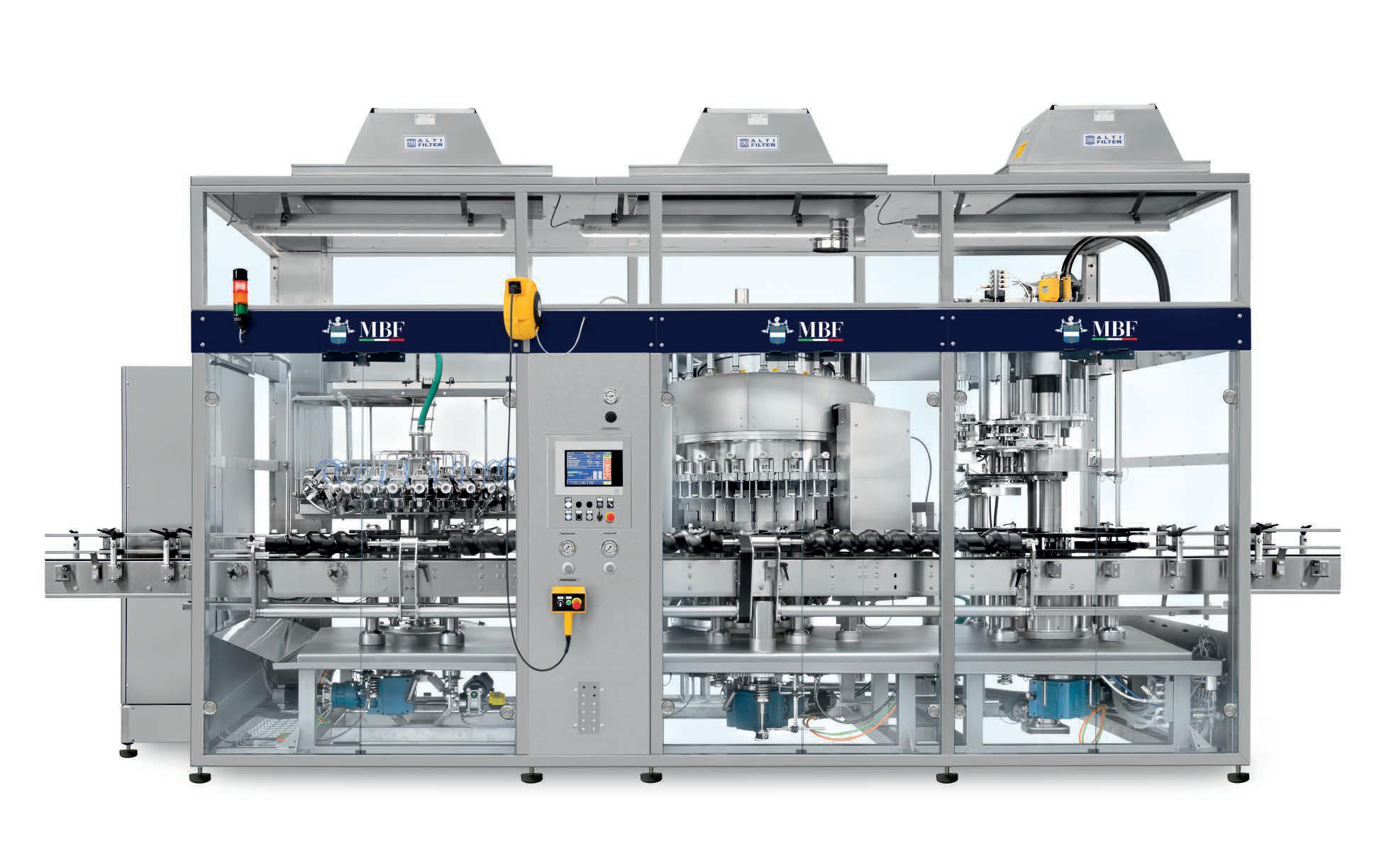
SIBA Head Office: 01765 640441
Andy Slee
Chief Executive andy.slee@siba.co.uk
Rachel Harriott
Head of Membership Services rachel.harriott@siba.co.uk
Neil Walker
Head of Comms & Marketing neil.walker@siba.co.uk
Barry Watts
Head of Public Affairs & Policy barry.watts@siba.co.uk
Elle Spencer-Blanchard
Membership Services Administrator elle.spencerblanchard@siba.co.uk
Emma Guneyogullari
Membership Services Assistant emma.guneyogullari@siba.co.uk
Megan Brecken
Events & Marketing Officer megan.brecken@siba.co.uk
Forbes Coleman
Business Development Executive forbes.coleman@siba.co.uk
All General Enquiries contact office@siba.co.uk
Existing members wishing to contact your regional representatives can use the relevant regional e-mail addresses listed below. For individuals, just type firstname.lastname@siba.co.uk
Chairman of SIBA Anthony Hughes
Vice-Chairman of SIBA Alex Balchin
East
Richard Naisby Milton Brewery
Chair Matthew Ashford Oakham Ales Ltd
Tom Foddy Wells & Co
Midlands & West
Chair Anneli Baxter Loose Cannon Brewing Co Ltd
Anthony Hughes Lincoln Green Brewing Co Ltd (Chair of the Board)
Sam Back Attic Brew Co
Libby Elswood Goffs Brewery
North East
Chair Joe Joyce Harrogate Brewing Ian Fozard Rooster’s Brewery Ltd
Alex Balchin Wold Top Brewery (Vice-Chair of the Board)
North West
Chair Paul Jones Cloudwater Brew Co
Ben Croston Fuzzy Duck Brewery
John Morrisey Vocation Brewery
Northern Ireland
Chair William Mayne Bullhouse Brewing Co
Chris Morris Modest Beer Brewing Co
Scotland
Chair Ian McGrath Beath Brewing
Jamie Delap Fyne Ales
Conall Low Wasted Degrees Brewing
South East
Chair Andy Parker Elusive Brewing Ltd
Kate Hyde Hand Brew Co
Dave Hayward Indie Rabble Brew Co
South West
Chair Paul Arrowsmith Isca Ales Ltd
Alan Collyer The Exeter Brewery
Paul Dimond Branscombe Vale Brewery
Wales
Philip Thomas Bragdy Twt Lol Brewery
Sara Webber S A Brain & Co
Dr Malcolm Herbert Core of the Poodle