

0. Forewords
1. Executive Summary
2. An Overview of E.ON and its Purpose –making new energy work. Affordable, sustainable, for everyone
3. Mapping E.ON’s Activity Against the Purpose Goals
4. Analysis
5. Commitments




0. Forewords
1. Executive Summary
2. An Overview of E.ON and its Purpose –making new energy work. Affordable, sustainable, for everyone
3. Mapping E.ON’s Activity Against the Purpose Goals
4. Analysis
5. Commitments
Rt Hon Justine Greening, Chair of The Purpose Coalition
The UK is at a defining point in its clean energy transition. The challenge is no longer only whether we can build a cleaner energy system, but whether we can build one that works for everyone.
Energy sits at the heart of opportunity. It shapes the cost of living for families, the resilience of communities, the success of businesses and the future prospects of young people entering a changing economy. As the UK accelerates towards clean power, affordability and inclusion must be treated as central tests of success, not secondary considerations. The Government’s Clean Power 2030 plan recognises the need to maintain secure, resilient and affordable energy, create new industries and investment, and protect the environment.
That is why E.ON’s work matters. This report shows an organisation moving beyond traditional energy supply to thinking deeply about the role it plays in breaking down barriers to opportunity. Through support for vulnerable customers, investment in flexible energy, home batteries, local energy systems, greener homes, green skills development, job creation and community partnerships, E.ON is demonstrating how the clean energy transition can also be a social mobility transition.
Across the Purpose Coalition, we see that the most impactful organisations are those that connect national challenges with practical delivery in people’s everyday lives. E.ON’s work does exactly that. It links affordability with sustainability, customer support with innovation, and clean energy with greater national and community resilience.
This report also highlights the importance of partnership. No single organisation can deliver a fair energy transition alone. It will require businesses, Government, Local Authorities, schools, housing providers, community organisations and customers to work together. E.ON’s strategic partnerships across places such as Glasgow and Coventry, as well as those with private sector customers, show how national ambition can be translated into local impact.
The next phase of the UK’s energy transition must be judged not only by emissions reduced, but by bills lowered, homes improved, high-quality jobs created, future skills developed and communities strengthened. E.ON’s purpose, to make new energy work for everyone, is therefore not just a corporate statement. It is a practical challenge and a vital contribution to Britain’s future.
This report also marks our third Impact Report with E.ON UK, demonstrating that this work is not a one-off commitment, but a sustained and evolving approach to social impact. Across each report, we have seen E.ON deepen its focus on affordability, sustainability and opportunity to embed these priorities more firmly within its core business. Crucially, the recommendations and commitments set out in previous reports have helped to guide and shape E.ON’s approach, focusing action on where it can make the greatest practical difference for customers, colleagues and communities. That consistency matters. It demonstrates that breaking down barriers to opportunity is not a short-term initiative, but a long-term commitment. As this report shows, E.ON continues to raise its ambition, and in doing so, is helping to set the standard for how businesses can drive social mobility alongside commercial success.

Chris Norbury Chief Executive Officer of E.ON UK
E.ON’s purpose is to make new energy work for everyone. In 2026, that purpose has never felt more important.
The UK energy system is changing at pace. Clean power, smarter homes, electric vehicles, heat pumps, batteries and flexible energy are no longer distant ideas. They are becoming part of how people live, how communities operate and how businesses plan for the future. But this transition will only succeed if it is affordable, inclusive and trusted.
That is the central theme of this report. For E.ON, the clean energy transition is not simply about technology. It is about people. It is about helping customers reduce bills, supporting those in vulnerable circumstances, giving households greater control over their energy, and ensuring that the benefits of cleaner energy are shared as widely as possible. It is also about building a more resilient energy future for the UK - one that is less exposed to global volatility and better able to support communities, businesses and households through secure, home-grown clean energy. By investing in local energy systems, flexibility, batteries and renewable technologies, E.ON is helping to create an energy system that is not only cleaner and more affordable, but more resilient and reliable for the long term.
This report builds on our previous work with The Purpose Coalition, including the 2024 report People, Power and Purpose and the 2025 report Place, Partners, Progress.
Over the past year, we have continued to scale our support for customers who need it most. Through E.ON Next, we have provided significant targeted assistance to vulnerable customers, including debt relief, grants, repayment support and help replacing inefficient electrical appliances. We have also strengthened our partnerships with organisations such as Mind, Macmillan Cancer Support, National Energy Action, The Wise Group and Citizens Advice CEDA service, recognising that energy affordability is often connected to wider challenges around health, income and housing.
At the same time, we are focused on long-term solutions. Flexibility, smart tariffs, home batteries, solar, local energy systems and better designed homes all have the potential to reduce bills in a more lasting way, but also to strengthen the resilience and security of the UK’s energy system. These technologies, which enable more energy to be generated, stored and managed closer to where it is used, can help reduce pressure on the grid, improve reliability and support a more secure, home-grown energy future.
Across the report, examples from our work with households, developers, schools, Local Authorities and community partners show how this purpose is being translated into practice. From lower-bill homes and battery trials to local energy systems and community solar, including the work at St Luke’s School in Newham, these initiatives demonstrate how clean energy can deliver practical benefits for families, public services and local communities.
We are also investing in people. The transition to clean energy will create new jobs, new skills and new opportunities, but only if businesses act deliberately to open up access.
Through apprenticeships, future skills programmes, inclusive recruitment, colleague networks, public sector social value partnerships and community investment, we are working to ensure that more people can see a future for themselves in the energy sector.
This commitment to creating an inclusive, purpose-driven workplace was recognised this year when E.ON was named one of the UK’s Best Places to Work by The Sunday Times, as well as being Highly Commended in the Best Places to Work for Women category. The recognition reflects the culture our colleagues help shape every day, one built around wellbeing, belonging, flexibility and opportunity for all.
This report builds on our previous work with The Purpose Coalition, including the 2024 report People, Power and Purpose and the 2025 report Place, Partners, Progress. In 2026, the focus is clear: moving from progress to practical transformation at scale. The affordability challenge remains real, even as the price cap has fallen for the April to June 2026 period, with typical annual dual-fuel costs still significant for many households.
Our responsibility is to help customers and communities navigate that reality while building the cleaner, more resilient energy system Britain needs.
I am proud of the work set out in this report, and grateful to our colleagues, partners and customers who make it possible. The transition ahead will require ambition, innovation and collaboration. Most importantly, it will require a relentless focus on making sure new energy works for everyone.
The E.ON Impact Report 2026, delivered in partnership with The Purpose Coalition, sets out how E.ON, one of the UK’s largest energy providers, is embedding social impact within its core business strategy while supporting the transition to a cleaner, more affordable, more resilient and more inclusive energy system rooted increasingly in home-grown energy solutions. Building on the previous E.ON and Purpose Coalition report published in 2025, this report highlights the progress made over the past year and demonstrates how E.ON is continuing to scale its impact through innovation, partnerships and targeted interventions.
Framed against the Purpose Goals - a UKfocused framework addressing key barriers to opportunity - the report examines how E.ON’s activities contribute to breaking down structural challenges across affordability, sustainability and access to opportunity. These goals provide a lens through which E.ON’s role extends beyond energy supply, positioning the company as an enabler of economic participation, social mobility and environmental progress.
A central theme of the report is affordability. As the energy system evolves, E.ON is working to ensure that the benefits of the clean energy transition are shared widely. This includes significant direct support for vulnerable customers, with tailored services, financial assistance and partnerships designed to address complex needs such as fuel poverty, health challenges and financial hardship.
Alongside this, the company is investing in longterm structural solutions, including flexibility, smart technologies and battery storage, that can reduce bills sustainably while improving system efficiency.
The report also highlights E.ON’s leadership in scaling low-carbon technologies and building sustainable communities. By integrating solutions such as solar energy, battery storage and smart energy systems into homes and local areas, E.ON is helping to reduce emissions while lowering costs for customers. Its place-based approach, working closely with Local Authorities, schools and community organisations, demonstrates how sustainability can be embedded within everyday life and aligned with local priorities.
Equally important is E.ON’s focus on ensuring that the transition to clean energy creates opportunity for all. Through apprenticeships, skills development, inclusive recruitment and community investment, the company is supporting individuals to access and progress in the future energy workforce. Its partnerships with public sector organisations, charities and community groups further extend this impact, addressing wider social challenges while strengthening local resilience.
Overall, this report presents a model of impact where commercial activity and social value are closely aligned. It demonstrates that by combining innovation with a strong customer focus, E.ON is helping to build a fairer and more inclusive society.
Through apprenticeships, skills development, inclusive recruitment and community investment, the company is supporting individuals to access and progress in the future energy workforce.
The Purpose Coalition measures organisations against a set of sector-relevant social impact criteria. The Purpose Goals outline 15 interconnected impact barriers to opportunity. By drawing on expertise provided by academia and business, the goals are designed to specifically address some of the unique challenges facing the UK.
The Coalition’s cross-party work brings together the UK’s most innovative leaders, Parliamentarians and organisations to improve, share best practice, and develop solutions for improving the role that organisations can play for their customers, colleagues and communities by breaking down barriers to opportunity.
The Purpose Coalition is chaired by Rt Hon Justine Greening, the UK’s former Secretary of State for Education, Transport and International Development.
The Goals were designed following Justine’s experience as Secretary of State for International Development, leading the UK’s delegation to the convention of the United Nations (UN) that established the 2015 UN Sustainable Development Goals (SDGs). The Purpose Goals apply the SDGs in a UK context.
The SDGs as interlinked goals emphasised the interdependent environmental, social, and economic aspects of development and centralised the role of sustainability. At the time, Justine recognised how transformative a common set of accessible but ambitious goals could be in galvanising action to effect change. After leaving Government in 2019, Justine established the Purpose Coalition and Social Mobility Pledge with the intention of galvanising UK economic and social actors to improve social mobility in the UK.
The Purpose Goals focus on key life stages and highlight the main issues that need to be resolved to break down barriers to opportunity in the UK. The Goals are intended to guide ambition, provoke action, and measure progress.

2.1.
E.ON is one of Europe’s largest energy companies, with a significant presence in the United Kingdom through E.ON UK. In the UK, E.ON supplies electricity and gas to millions of residential, business and public sector customers, while also delivering a growing portfolio of energy services focused on efficiency, flexibility and low-carbon technologies.
E.ON UK operates across a broad range of activities within the energy system. These include energy supply; the installation, operation and maintenance of district heating systems and smart energy solutions for homes and businesses. Following the acquisition of npower’s customer base in 2019, E.ON strengthened its position as one of the UK’s leading retail energy providers, significantly expanding its customer reach and operational scale.

The company’s role within the UK energy market extends beyond supply. E.ON is actively involved in supporting the transition towards a more decarbonised energy system. This includes investment in renewable energy integration and smart metering technologies that enable customers to better understand and control their energy usage. Through these activities, E.ON contributes to the modernisation of the UK’s energy infrastructure and the delivery of national climate targets.
E.ON’s operations are supported by a substantial workforce and a network of partners and suppliers, contributing to employment and economic activity across the UK. The organisation also works closely with Local Authorities, housing associations and community groups to deliver energy solutions tailored to different customer needs. This collaborative approach enables E.ON to operate at both national scale and local level, supporting diverse communities with varying energy challenges.
In recent years, E.ON has increasingly positioned itself as a provider of integrated energy solutions rather than a traditional utility. Its focus has shifted towards helping customers reduce energy consumption, lower costs and transition to cleaner energy sources. This strategic direction reflects broader changes within the energy sector, as companies adapt to technological advancements and evolving customer expectations.
2.2. E.ON’s Purpose – making new energy work. Affordable, sustainable, for everyone.
E.ON’s purpose centres on leading the transition to a cleaner, more affordable and more inclusive energy system. The company aims to enable individuals, businesses and communities to access reliable, resilient and increasingly home-grown energy while reducing environmental impact and supporting the UK’s journey to reduce carbon emissions, complementing climate action with preservation of biodiverse ecosystems and the efficient use of our resources to create longlasting value for societies. In this context, E.ON’s commercial activities are closely aligned with wider societal priorities, including climate action, energy affordability and social equity.
Access to affordable energy is a fundamental aspect of modern life, influencing health, wellbeing and economic participation. E.ON plays a key role in addressing issues such as fuel poverty by providing support schemes, energy efficiency advice and tailored support systems designed to provide both immediate assistance and longer-term solutions.
Through partnerships with Local Authorities and social housing providers, the company works to improve the energy performance of homes, helping to reduce costs and enhance living conditions for those most at risk.
A central component of E.ON’s purpose is decarbonisation. The company is committed to supporting the transition away from fossil fuels by promoting renewable electricity and the adoption of smart energy technologies.
Initiatives such as the rollout of EV charging infrastructure and heat pumps enable customers to reduce their carbon footprint while maintaining control over their energy use.In doing so, E.ON contributes to broader environmental goals while
creating new opportunities for innovation and
growth.
E.ON also places importance on empowering customers through information and technology. By providing data insights and digital tools such as smart meters, the company enables individuals and organisations to make informed decisions about their energy consumption. This shift towards customer-centric services reflects a wider transformation in the energy sector, where engagement and behavioural change are increasingly important in achieving sustainability outcomes.
Responsible business practices underpin E.ON’s purpose. This includes investment in workforce development, health and safety and diversity and inclusion, as well as maintaining high standards of governance and transparency. As a major employer and service provider, E.ON contributes to skills development within the energy sector, supporting both current operations and the future energy workforce.
Through its combined focus on affordability, sustainability and innovation, E.ON demonstrates how a large-scale energy provider can deliver social impact alongside commercial performance. Its activities highlight the critical role of energy companies in shaping a more resilient, lowercarbon and energy-secure society, particularly during a period of significant transition within the UK energy system.

E.ON’s purpose is clear: to make new energy work for everyone. At the heart of this ambition sits a simple but critical challenge - ensuring that the transition to clean energy is affordable for all customers, not just those able to invest in new technologies. As the UK energy system evolves, affordability is no longer a secondary consideration; it is the foundation upon which a fair and inclusive energy transition must be built.
E.ON’s approach reflects a shift in thinking across the sector. Rather than viewing sustainability and affordability as competing priorities, the company is working to demonstrate that they can, and must, go hand in hand. Clean energy solutions are increasingly being designed not only to reduce carbon emissions but to lower bills and provide greater control for customers over how they use energy.
E.ON is addressing affordability at multiple levels: supporting vulnerable customers, deploying new technologies such as flexibility and batteries, embedding low-cost energy into homes and communities and rethinking how the energy system itself can deliver better value.
3.1.1
A central pillar of E.ON’s affordability work is its focus on customers in vulnerable circumstances. Around 40% of E.ON’s residential customer base - approximately two million people - are registered on the Priority Services Register, with around one million classified as high-risk vulnerable. Many of these customers face complex challenges, including long-term health conditions and significant levels of debt.
Recognising the scale and complexity of need, E.ON has developed tailored support systems designed to provide both immediate assistance and longer-term solutions. Customers identified as highly vulnerable are automatically routed to specially trained teams who are equipped to handle sensitive situations and provide empathetic, personalised support.
E.ON Next has provided more than £200 million in targeted support to vulnerable customers over the past three years, including approximately £75 million in the last year alone. This reflects the scale of need among customers facing financial hardship, health challenges and energy debt, and demonstrates the company’s commitment to providing both immediate relief and longer-term support.
Support is delivered through a combination of financial assistance, including debt relief, grants and support credit for prepayment customers, alongside flexible repayment plans tailored to individual affordability. The E.ON Next Energy Fund plays a central role, offering direct financial support, debt write-off and the replacement of inefficient or broken household appliances such as cookers, fridges and washing machines.
A key innovation in this area is the introduction of Next Care, an in-house tool launched in 2025.
Next Care enables E.ON to build a more complete understanding of a customer’s circumstances through a ‘tell us once’ approach. Rather than requiring customers to repeatedly explain their situation, the tool captures relevant information and uses it to guide future interactions. This improves the customer experience and allows E.ON to tailor support more effectively, from payment plans to referrals for external assistance.
E.ON has also strengthened its partnerships with specialist organisations such as Mind, Macmillan Cancer Support, National Energy Action, Citizens Advice CEDA service and the Wise Group. Furthermore, E.ON is signed up to the EUK Vulnerability Commitment and has a Vulnerable Champion sat on the EUK Vulnerability Commitment board in 2026. These partnerships enable a more holistic approach to support, recognising that energy affordability is often closely linked to wider issues such as health, income and housing.
In late 2025, E.ON partnered with Lightning Reach, a digital platform that connects customers to financial support schemes. Through a simple, accessible assessment, customers can identify benefits, grants and other forms of assistance they may be entitled to. Since its launch, the initiative has already helped deliver significant financial support to customers, demonstrating the value of integrating energy services with broader social support systems.
E.ON has also rethought how it communicates with customers in debt or distress. Working with the Money and Mental Health Policy Institute, the company has redesigned its debt communications to make them more accessible, changing tone, language and even visual design to improve engagement and reduce anxiety.
Together, these initiatives reflect a shift from reactive support to proactive, personalised care, helping ensure that those most in need are not left behind in the energy transition.

Beyond direct support, E.ON is investing heavily in energy flexibility as a long-term solution to affordability. Flexibility refers to the ability to adjust when and how energy is used, enabling customers to take advantage of cheaper, greener electricity when it is available.
Over the past two years, flexibility has moved from a niche concept to a central pillar of E.ON’s strategy. This shift reflects a growing recognition across the energy sector that flexibility will be essential to building a more resilient energy system, capable of managing higher levels of renewable power while maintaining reliability and affordability for customers. Technologies such as smart tariffs, connected devices and automated energy management systems are enabling customers to shift their energy usage without needing to actively manage it themselves.
Partnerships with organisations such as KrakenFlex are already helping customersparticularly electric vehicle owners - reduce their energy costs by optimising when they charge. The ResidentialFlex platform, an advanced flexible demand management system that uses AI and real-time data on electricity prices and grid demand to automatically shift energy use to the cheapest times of day, means that E.ON customers can benefit from lower-cost electricity without needing to actively manage their usage.
Similarly, E.ON’s collaboration with Amber Electric (the technology partner behind Next Optimise) is exploring how customers with solar panels and batteries can save money and generate value from their energy usage. Through this partnership, customers can access real-time electricity prices rather than fixed tariffs, allowing them to use, store or export energy at the most cost-effective times. Amber’s platform provides tools and insights to optimise energy use around fluctuations in renewable generation - for example, using electricity when supply is high and prices are low, or exporting stored energy when prices risemeaning households can potentially earn value from their energy usage.
Looking ahead, E.ON is developing a new generation of flexibility solutions designed to be accessible to a much wider audience. The ambition is to open up these benefits to more than 10 million people across the UK, including those without access to electric vehicles or solar panels. These solutions will incorporate data analysis to provide personalised recommendations, helping customers understand how to reduce their bills based on their individual energy consumption patterns.
Crucially, these systems are being designed to work in the background, removing complexity and making participation as simple as possible. This ‘fit and forget’ approach ensures that affordability benefits are not limited to the most engaged or technologically confident customers, but are available to everyone.
Batteries are emerging as one of the most powerful tools for improving affordability, both at the household level and across the wider energy system. By storing electricity when it is cheap and using it when prices are higher, batteries can significantly reduce energy bills for individual customers. In Coventry, E.ON has already seen how battery storage, when combined with time-of-use tariffs, can lower energy bills by £250 a year on average.
E.ON is actively exploring how to scale battery technology for households most at risk of energy poverty. In partnership with Glasgow City Council and the Wise Group, the company is targeting support towards families facing acute affordability pressures as part of Glasgow’s Child Poverty programme.
Building on E.ON’s successful Coventry battery trial, the Glasgow project combines tailored family support with practical energy interventions, including free home battery systems, energy efficiency upgrades and debt relief. Through access to battery storage, households can store energy when it is cheaper and use it at more expensive times, helping to lower bills while gaining greater control over their energy use.
It is estimated that families could reduce electricity bills by up to 30% through batteries alone, demonstrating how clean energy technology can be directly linked to tackling child poverty and improving household stability. The project also highlights the importance of partnership, with energy interventions working alongside wider support for families.
At a system level, batteries also offer a more cost-effective alternative to traditional grid infrastructure upgrades. Projects with partners such as Northern Powergrid are demonstrating how distributed battery storage can reduce the need for expensive network reinforcement. Through this partnership, E.ON Next and Northern Powergrid provided a number of homes with fully funded home batteries and insulation, helping households lower their bills while also reducing strain on the local electricity network. These savings ultimately benefit all customers by lowering the overall cost of maintaining and upgrading the energy system.

This dual benefit - reducing bills for individuals while lowering system costs and improving resilience across the grid - positions batteries as a critical component of a fair, secure and sustainable energy transition. E.ON’s work in this area highlights the importance of aligning technological innovation with social outcomes.
E.ON’s wider thought leadership reinforces the role of batteries as both a social and system-level solution. Evidence from its Battery Boost approach shows that deploying batteries in social housing at scale could deliver direct bill savings of around £480 per household per year, while also addressing wider system challenges such as grid capacity constraints.
This model represents a shift from short-term financial support towards structural solutions that reduce costs over time. By combining flexibility markets with targeted deployment in fuel-poor households, batteries can provide immediate bill relief while contributing to a more efficient and lower-cost energy system overall. This reflects a broader shift in thinking: rather than relying on short-term government interventions such as large-scale subsidy schemes, there is growing recognition that investment in technologies like home batteries can deliver sustained cost savings and system-wide benefits over time.
Another key strand of E.ON’s affordability strategy is embedding low-cost energy solutions directly into homes, particularly in the new-build sector. Through initiatives such as Lower Bills, Built In, E.ON is working with developers to integrate solar panels, batteries and smart energy systems into properties from the outset.

At Avalon Grove in Worcestershire, delivered in partnership with Cotswold Oak Homes, E.ON’s Lower Bills, Built In model shows how clean energy can be designed into homes from the start. Each property includes rooftop solar panels, a home battery and a central Home Energy Management System, all connected through the E.ON Home app.
The system automatically manages when energy is generated, stored and used, helping households maximise their own renewable energy and reduce exposure to fluctuating energy prices. By embedding these technologies at the point of construction, the model reduces the need for costly retrofits and helps residents benefit from lower bills from day one.
In some cases, these solutions can reduce energy costs by up to half, while also providing greater certainty
through predictable monthly payments. The model demonstrates how affordability can be treated as a design principle, rather than an afterthought, and how developers, energy providers and customers can share in the value created by cleaner, smarter homes.
E.ON is also exploring innovative financing models to remove upfront costs, making these technologies accessible to a wider range of customers. The ambition is to ensure that the benefits of clean energy are not limited to those who can afford to invest in them independently.
Looking ahead, there is significant potential to expand these models to housing associations and social housing, ensuring that affordability gains are shared more broadly. The Future Homes Standard provides a further opportunity to scale these solutions, embedding energy efficiency and affordability into the next generation of housing across the UK.
E.ON is also exploring innovative financing models to remove upfront costs, making these technologies accessible to a wider range of customers. The ambition is to ensure that the benefits of clean energy are not limited to those who can afford to invest in them independently.
Affordability and resilience are shaped not only by individual households, but also by how energy is generated, stored and distributed within communities. E.ON is increasingly focusing on local energy systems to reduce costs and improve resilience.

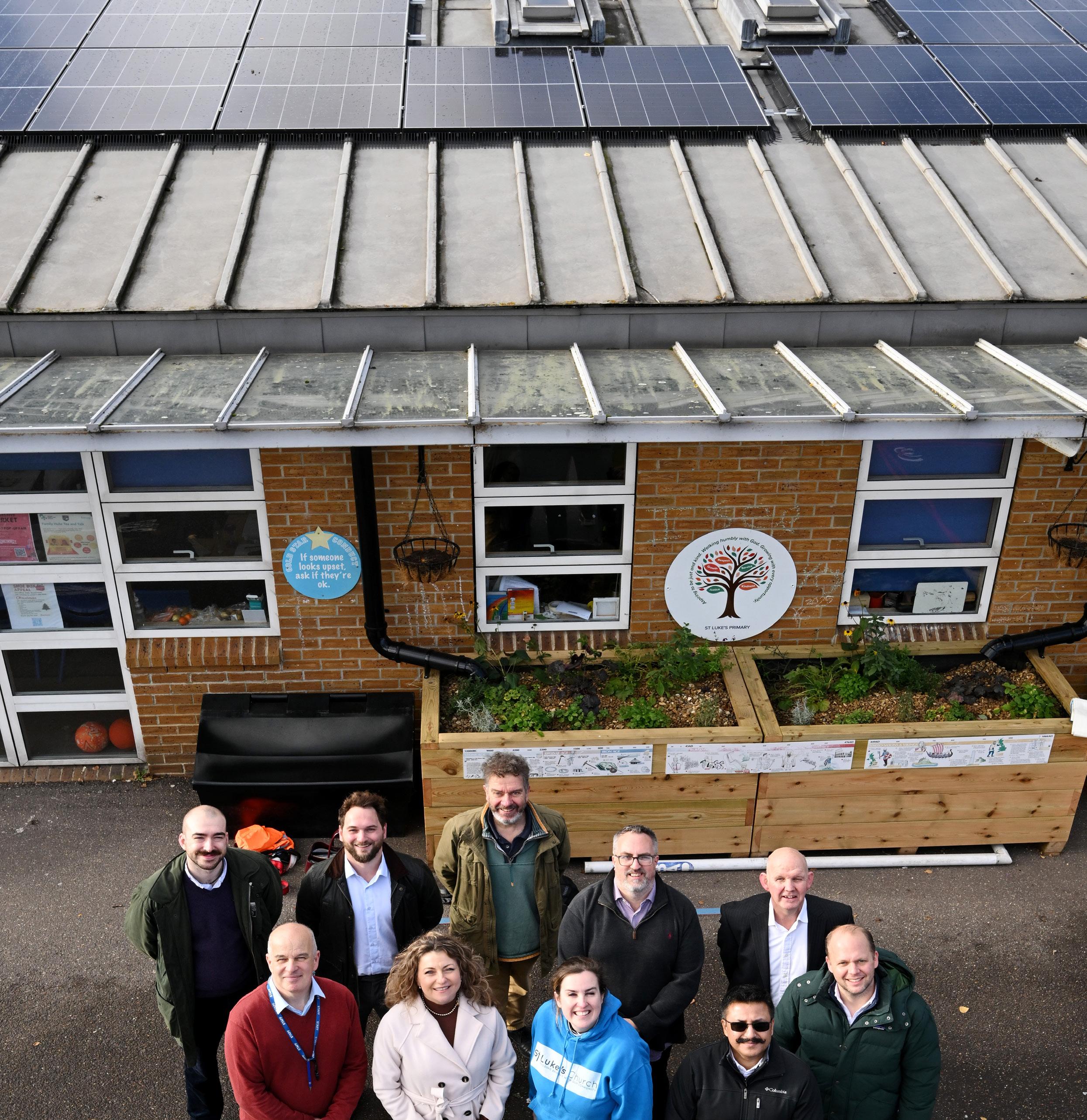
The solar project at St Luke’s School in Newham shows how local generation can benefit both public institutions and nearby residents. By installing solar panels, E.ON has helped reduce the school’s energy costs, freeing resources for education.
The model provides discounted electricity to the school while reducing reliance on grid power. Surplus energy generated outside school hours can also be supplied to local customers at lower prices, demonstrating how schools and public buildings could operate as local energy hubs.
The project highlights a broader opportunity to use trusted community assets to make the clean energy transition more practical and locally beneficial.
Initiatives such as Symphony are exploring how local energy marketplaces can connect generators and consumers. These models use energy closer to where it is produced to reduce reliance on the National Grid and lower transmission costs.
Local marketplaces also allow communities to retain more of the value created by renewable assets. In practice, electricity from local solar installations could power nearby homes, businesses and public buildings, creating a more transparent, place-based energy system.
E.ON is advocating policy changes to support this approach, including waiving certain distribution fees for locally consumed energy. At scale, these reforms could unlock significant savings and support local economic development.

E.ON’s approach reflects a broader shift in the role of energy companies. Rather than simply supplying energy, the company is helping reshape the system to be more flexible, resilient and responsive to customer needs. Greater reliance on locally generated energy can also strengthen the UK energy system by reducing dependence on centralised generation.
From targeted support for vulnerable households to investments in flexibility, batteries and local energy systems, E.ON is addressing affordability at every level. These efforts aim to ensure the benefits of the clean energy transition are shared widely.
As the UK moves towards a cleaner energy system, affordability will remain a key test of success. E.ON’s work shows that innovation, partnership and customer focus can help build a sustainable energy system that is accessible to all.
E.ON’s approach to sustainability is grounded in a deliberate shift in language and mindset, from abstract net zero targets to the more tangible and immediate concept of a clean energy transition, complemented by biodiversity and mindful resource usage. This framing reflects a focus on delivery, with energy systems, infrastructure and communities being transformed in real time to be cleaner, more resilient and better equipped to support long-term energy security.
Rather than positioning sustainability as a distant environmental goal, E.ON is embedding it within everyday experiences: how homes are built, how communities are powered and how customers interact with energy. This approach recognises that for sustainability to succeed, it must be accessible and beneficial to people’s lives today, lowering bills and supporting economic opportunity, instead of solely reducing emissions.
A key theme emerging from E.ON’s work is that sustainability cannot be separated from affordability. Clean energy solutions are increasingly designed to deliver both outcomes simultaneously. By aligning environmental and economic benefits, E.ON is working to ensure that the transition to clean energy gains public trust and can be scaled across all segments of society.
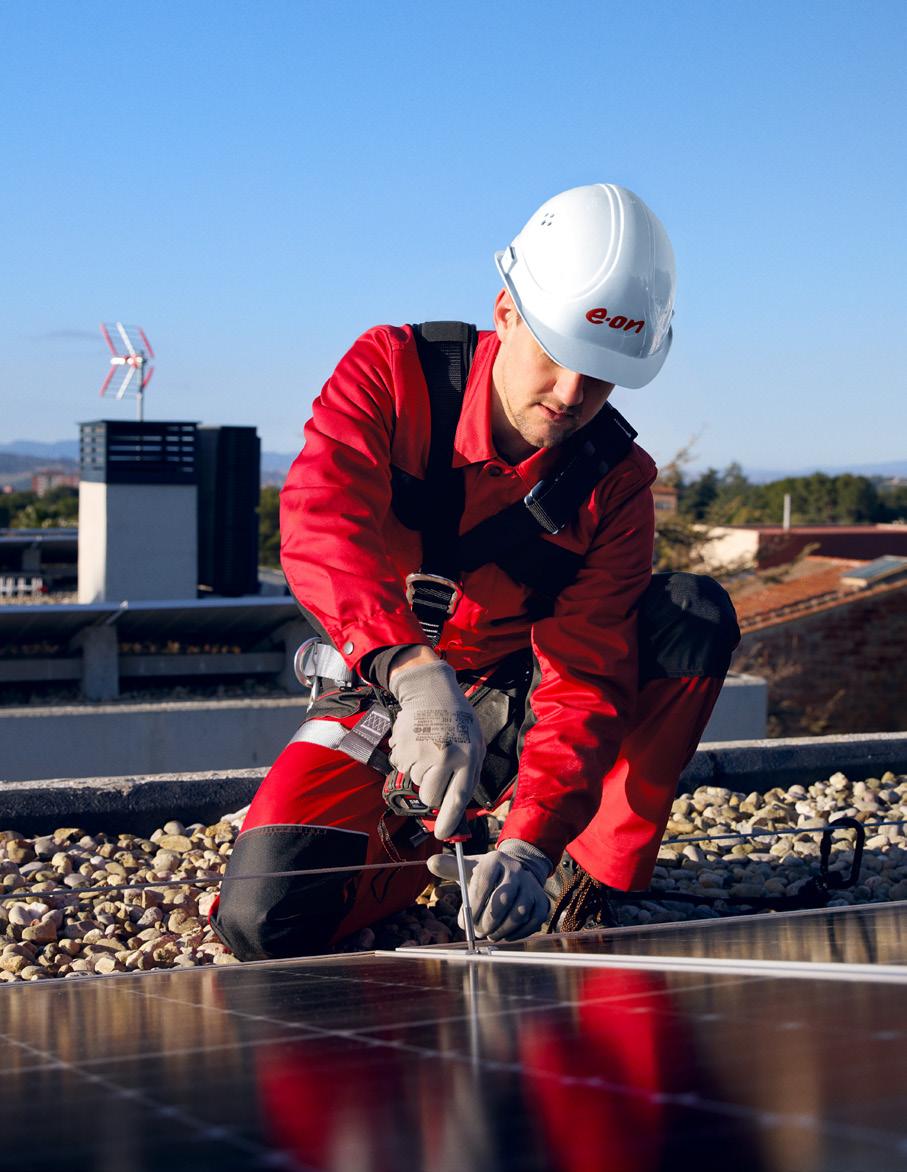
Central to E.ON’s sustainability strategy is the deployment of low-carbon technologies at scale. Solar panels, battery storage, electric vehicle charging, heat pumps and smart energy systems are no longer niche solutions; they are becoming the building blocks of a modern energy system.
E.ON is already one of the largest installers of solar panels in new-build developments across the UK, demonstrating its commitment to integrating renewable energy into everyday infrastructure. By embedding solar generation directly into homes and communities, the company is helping to reduce reliance on fossil fuels while enabling customers to generate their own clean electricity.
A key theme emerging from E.ON’s work is that sustainability cannot be separated from affordability.
Battery storage plays a critical complementary role. As renewable energy sources such as solar and wind are inherently variable, batteries provide a way to store excess energy and use it when demand is higher. This improves the efficiency of the system while enabling a higher share of renewable energy to be integrated into the grid.
E.ON is developing propositions such as Next Gen Home to make low-carbon living simpler and more accessible for households. The model brings multiple technologies into a single all-inclusive package, including solar panels, batteries, heat pumps, EV chargers and a home energy management system.
Rather than requiring customers to purchase, install and manage each technology separately, Next Gen Home is designed to bundle installation, maintenance and energy use into a single monthly payment. This helps remove one of the key barriers to adoption: the upfront investment needed to access cleaner energy technologies.
By simplifying the customer journey, the model supports wider participation in the clean energy transition. It also demonstrates how sustainability, affordability and convenience can be brought together in a practical household proposition.
These technologies are increasingly being connected and optimised through digital platforms. Smart systems can automatically adjust energy use based on supply and demand, ensuring that clean energy is used when it is most available. This integration of digital and physical infrastructure is essential for scaling sustainability in a way that is both efficient and user-friendly.

3.2.2 Building greener homes and communities
The transition to clean energy is closely tied to the built environment. Homes account for a significant proportion of energy consumption, and how they are designed and powered has a major impact on both emissions and costs.
E.ON is working with developers to integrate low-carbon technologies into new homes
from the outset. Initiatives such as Lower Bills, Built In demonstrate how solar panels, batteries and smart systems can be incorporated into housing developments to deliver both sustainability and affordability. These homes are designed to be energy-efficient, low-carbon and cost-effective, providing a model for future housing across the UK.
The introduction of the Future Homes Standard is expected to accelerate this shift, setting new benchmarks for energy performance and carbon emissions in residential construction. E.ON sees this as an opportunity to scale its solutions and work more closely with developers to deliver homes that are fit for a clean energy future.
E.ON is also exploring how to strengthen the commercial viability of low-carbon housing solutions in line with the Future Homes Standard. While customer demand for energy-efficient homes remains high, uptake among developers has been constrained by concerns around increased upfront costs. In response, E.ON is developing new propositions that aim to reduce these barriers, including more modular approaches to technology deployment and innovative financing models. These could include mechanisms where developers share in the long-term value generated by embedded energy assets, helping to offset initial costs while aligning incentives across the housing value chain.
Beyond individual homes, E.ON is exploring the potential of microgrids - localised energy systems that can operate independently or in conjunction with the National Grid. Microgrids enable communities to generate, store and use their own energy, reducing reliance on centralised infrastructure and improving resilience. They also offer a pathway to unlocking new housing developments by alleviating constraints on the existing grid.
By focusing on both individual properties and wider developments, E.ON is contributing to the creation of sustainable places, where energy systems are integrated and aligned with the needs of communities.
A defining feature of E.ON’s sustainability work is its emphasis on place-based solutions. Rather than viewing energy as a purely national system, the company is increasingly focusing on how energy can be generated, distributed and consumed at a local level.
Projects such as Symphony are exploring the concept of local energy systems, where local generators, such as solar installations, are connected directly with local consumers. This approach reduces the need for longdistance transmission, lowering system costs and enabling communities to retain more of the value generated by their energy.
Local energy marketplaces represent a significant innovation in this space. By allowing consumers and businesses to buy energy produced within their own community, these systems can offer lower prices and greater transparency. They also create opportunities for new business models and community-led initiatives.
E.ON is working with partners such as LCP Delta to better understand where these opportunities are most viable, particularly in areas where the grid is becoming constrained. By identifying these hotspots, the company can target investment and innovation where it will have the greatest impact.
This place-based approach marks a shift from a centralised, one-size-fits-all energy system to a more distributed and flexible model, where local solutions play a key role in delivering sustainability.


E.ON is working with partners such as LCP Delta to better understand where these opportunities are most viable, particularly in areas where the grid is becoming constrained.
3.2.4 Sustainable communities through partnerships
Delivering sustainable communities requires collaboration across sectors. E.ON is working closely with public sector partners, including Local Authorities, schools and community organisations, to develop solutions that address both environmental and social challenges.
One example is the community solar project at St Luke’s School in Newham. By installing solar panels on the school, E.ON has helped reduce its energy costs while also contributing to the local clean energy supply. Surplus energy can be shared with nearby customers, creating a model that benefits both the institution and the wider community.
More broadly, E.ON’s partnerships with councils, such as those in Coventry and Glasgow, demonstrate how energy interventions can be integrated into wider strategies for tackling issues such as poverty, health and economic development. Aligning energy solutions with local priorities through these partnerships ensures that sustainability initiatives deliver tangible benefits for communities.
Public sector customers also play a key role in scaling sustainability through education and engagement. E.ON has delivered hundreds of workshops in schools in the last year, helping young people understand energy, sustainability and the role they can play in the transition. Through its partnership with LASER - one of E.ON’s largest public sector customers - E.ON has developed one of its most advanced education programmes, supporting initiatives such as primary school workshops focused on energy generation, sustainability and STEM learning. In these sessions, pupils take part in hands-on activities such as building and racing chargeable model cars, helping them understand concepts like electricity, batteries and energy use in a practical and engaging way. These initiatives raise awareness and build the skills and knowledge needed for the future workforce.
Through these collaborations, E.ON is helping to embed sustainability within the fabric of communities, ensuring that it is not seen as a standalone issue but as part of a broader agenda for social and economic wellbeing.


Sport provides a powerful platform for engaging communities and demonstrating the practical benefits of sustainability.

E.ON’s Greener Game initiative supports grassroots sports clubs to reduce their carbon footprint while also lowering their energy costs. Many local sports clubs face significant financial pressures, with energy bills representing a major expense. By providing energy audits, solar installations and other efficiency measures, E.ON is helping clubs reduce these costs and reinvest savings into their facilities and programmes.
Through the initiative, clubs receive tailored energy assessments to identify where they can reduce consumption and integrate technologies such as solar panels, battery storage and heat pumps. This supports a shift towards more self-sufficient energy systems at a local level, while reducing reliance on grid electricity and exposure to volatile energy prices.
The initiative also highlights the cumulative impact of small-scale energy improvements across thousands of community sites. Distributed assets such as clubhouses, pitches and local sports facilities can contribute to wider system efficiency and decarbonisation when improvements are delivered at scale.
This work has a wider social impact. Lower costs can lead to increased participation, improved facilities and stronger community engagement. By connecting sustainability with community activities such as sport, E.ON is making the energy transition more visible and relatable. It demonstrates that sustainability is not just about infrastructure, but about enhancing everyday experiences and opportunities.
E.ON’s strategy positions the clean energy transition as a driver of economic renewal. The upcoming Reindustrial Revolution campaign aims to highlight the potential for clean energy to revitalise cities, create jobs and support new industries.
Historically, the Industrial Revolution transformed the UK’s economy and landscapes. Today, the transition to clean energy presents a similar opportunity to reshape how cities function, improving air quality, reducing emissions and creating more sustainable urban environments.
Emerging areas such as energy parks and data centre infrastructure further illustrate this potential. By investing in modern energy systems, E.ON is contributing to the development of new economic hubs that are both low-carbon and future-ready.
This perspective reframes sustainability as an opportunity, emphasising that the transition to clean energy can drive growth and innovation, while also delivering environmental benefits.
E.ON’s approach to sustainability is defined by its focus on practical outcomes. The company is embedding sustainability within the systems and structures that shape everyday lifehomes, communities, infrastructure and local economies.
Across its work, several key themes emerge: the importance of scaling low-carbon technologies, the value of place-based solutions, the role of partnerships and the need to align environmental goals with economic and social benefits. By bringing these elements together, E.ON is helping to create a model of sustainability that is both effective and inclusive.
Ultimately, the success of the clean energy transition will depend on its ability to deliver real value to people and communities. E.ON’s work demonstrates that sustainability can lower costs and strengthen local economies, ensuring that the transition is environmentally necessary as well as socially and economically beneficial.
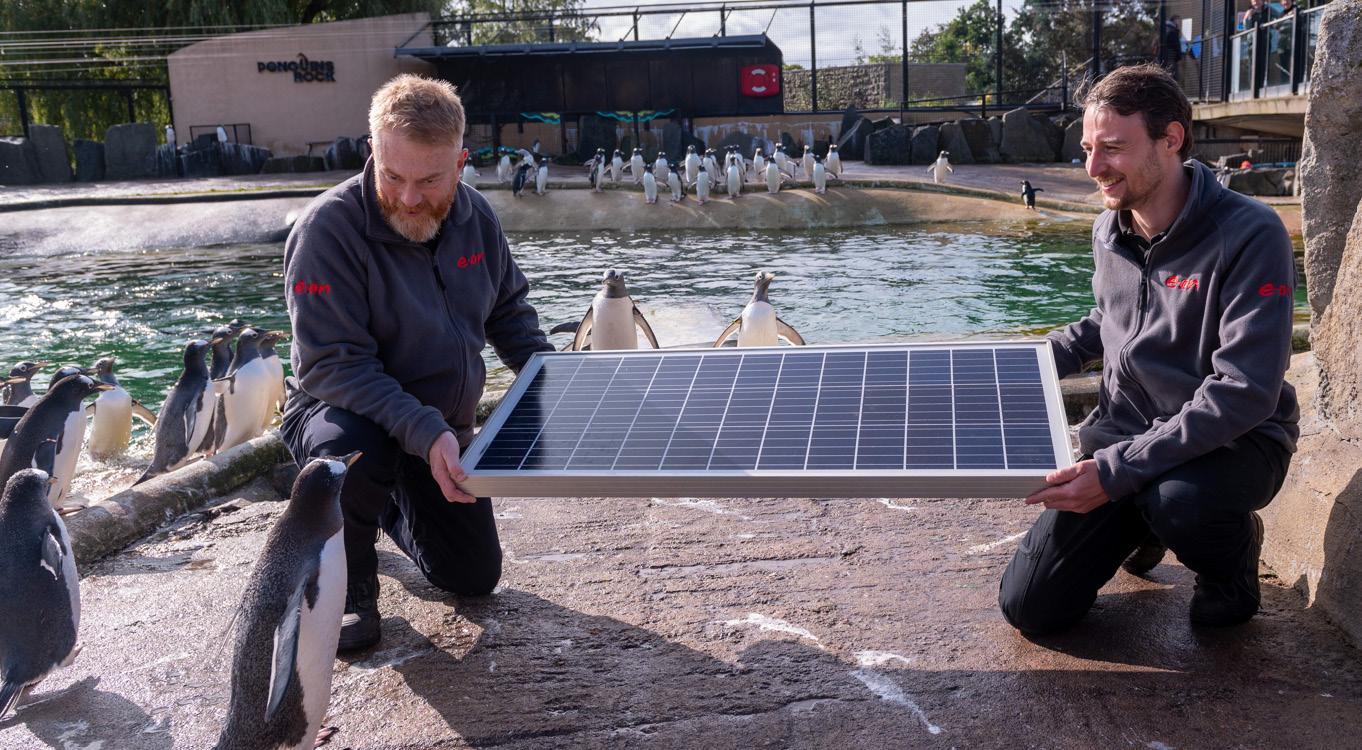

For E.ON, making new energy work is not only about technology, infrastructure or cleaner power. It is also about people. The transition to clean energy will only succeed if it is inclusive: if customers can access support, if communities can share in the benefits and if colleagues are equipped with the skills and opportunities to shape the future of the energy sector.
This is why the theme of ‘For Everyone’ is central to E.ON’s social impact work. It brings together the company’s responsibilities as an employer, a major energy provider and a community stakeholder. Across these roles, E.ON is working to ensure that the clean energy transition does not widen existing inequalities, but instead becomes a route to opportunity.
The company’s work in this area is broad. It includes apprenticeships and future skills programmes, employee networks, targeted recruitment, school engagement, community investment, public sector social value partnerships and grassroots sport. These diverse activities are connected by a shared purpose: helping people and places benefit from the transition to clean energy.
E.ON is building a more inclusive workforce, supporting colleagues to progress, opening up access to careers and investing in the communities it serves, while embedding social value through partnerships and place-based action.
3.3.1. Building skills for the future energy workforce
The transition to clean energy will require a workforce with new capabilities. Technical skills in low-carbon technologies, digital systems, data, engineering and customer support will all be essential. E.ON recognises that building this workforce is both a business need and a social impact opportunity.
Apprenticeships are a key part of this approach. They offer young people and career changers a route into skilled employment without the financial burden of traditional higher education. Degree apprenticeships, in particular, provide a pathway into professional roles while allowing individuals to gain real experience across the business. Since 2018, more than 1,300 colleagues have taken part in over 90 apprenticeship programmes.
E.ON’s degree apprenticeship model is designed to expose participants to different parts of the company, helping them understand the breadth of the energy sector and develop adaptable skills. Rotational placements allow apprentices to build technical understanding while also gaining insight into customer service, strategy, innovation and operational delivery. This creates more rounded employees and gives apprentices a stronger foundation for long-term progression.
The diversity of E.ON’s apprenticeship intake is also important. By creating accessible entry routes into the energy sector, the company can help broaden participation in green careers and ensure that the workforce leading the transition better reflects the communities it serves. Apprenticeships therefore sit at the intersection of skills, social mobility and sustainability.
Apprenticeships therefore sit at the intersection of skills, social mobility and sustainability.
Green skills are especially important. As E.ON expands work in areas such as solar, batteries, heating, flexibility and energy infrastructure, it will need people who can design and install these technologies. The link between E.ON’s business strategy and its skills strategy is clear: creating a fair clean energy transition requires investment not only in technology, but in the people who will deliver it.
E.ON is also extending its skills pipeline through the New Energy Academy, a free education programme designed to inspire young people to explore green careers and develop the skills needed for a more sustainable future. Developed with teachers, the Academy provides curriculumlinked classroom resources, including films, PowerPoints, activities and worksheets for lessons, assemblies, form time and enrichment days. Its resources connect sustainability, employability and real-world careers, helping pupils understand the breadth of future opportunities in the green economy, from engineering and data science to AI, digital, project management and marketing. This support for teachers as well as students allows the New Energy Academy to strengthen E.ON’s role in building awareness, confidence and aspiration around clean energy careers before young people enter the workforce. This complements E.ON’s apprenticeship and early careers activity, helping create a clearer pathway from school engagement to skilled employment in the future energy sector.
E.ON is also thinking beyond current skills needs to anticipate how work will change in the future. Its Future Skills Framework has been developed to help leaders and colleagues move away from a narrow, linear view of career development and towards a more dynamic model based on adaptability.
This is significant because the energy sector is changing quickly. Roles are evolving, technologies are becoming more connected and digital capability is increasingly important across almost every part of the organisation. E.ON’s framework helps shift development conversations towards long-term workforce planning, asking not only what skills people need now, but what they will need in the future.
AI and automation are a particular focus. E.ON has launched new apprenticeship programmes linked to AI and automation, with further AI learning planned. This reflects a proactive approach to inclusion: rather than waiting for new technologies to create barriers, E.ON is working to ensure colleagues can build confidence and capability early.


The company is also using its five internal development networks to widen access to these opportunities. More than half of colleagues are members of a development network, making them a powerful route for engagement. These networks allow E.ON to reach people across the organisation, share learning opportunities and understand where colleagues may need additional support.
There is a strong inclusion dimension to this work. E.ON has recognised, for example, that AI may become a barrier for some groups if confidence and access are unevenly distributed. Through networks such as Fast Forward, which supports women’s progression, the company is looking at how future skills programmes can help colleagues feel prepared for change rather than excluded by it.
3.3.3 Inclusion, belonging and employee networks
Inclusion at E.ON is not treated as a standalone initiative. It is part of how the company seeks to build a workforce capable of delivering its wider purpose. Employee networks play a central role in this, creating communities of support and learning across the organisation.
These networks are colleague-led but supported at senior level, with board members and senior leaders acting as advocates. This balance is important, ensuring that networks remain authentic and rooted in colleague experience, while also giving them visibility and influence within the business.
E.ON’s latest inclusion report, Powering Belonging, published in 2025, reinforces this approach by positioning inclusion as fundamental to both a fair energy system and a resilient business. The report sets out how E.ON is using data, colleague feedback, networks, policies and partnerships to deepen its understanding of belonging and turn insight into practical action. It also links inclusion directly to the clean energy transition, recognising that colleagues who feel seen, heard and valued are better able to deliver trusted services and solutions for customers.
The report highlights tangible progress, including growing colleague networks, support for 1,300 apprentices across more than 90 programmes since 2018, enhanced parental leave, support for carers and adjustments for colleagues with non-visible disabilities. E.ON’s continued recognition in the Inclusive Top 50 UK Employers List, where it placed sixth in 2025/26, provides further external validation of its organisation-wide commitment to inclusion and belonging.
E.ON’s inclusion activity spans a wide range of areas, with more than 4,500 colleagues actively involved across nine inclusion networks. The company has an active Women in Leadership programme, supporting female colleagues to progress and build fulfilling careers. It also partners with the Women’s Utility Network (WUN), reflecting the importance of improving gender representation and progression across the wider utilities sector. This partnership has now been in place for nearly three years, deepening its role in supporting women to join, stay and thrive in the utilities sector. As part of this partnership, E.ON has worked with WUN to help develop its Speak Up campaign, including shaping practical resources and contributing speakers for a webinar. This reflects E.ON’s commitment to influencing wider sector culture by helping create safer, more open environments where women feel able to raise issues and progress in their careers.
Case Study: Carol – Supporting colleagues through a culture of speaking up
Carol’s story highlights the real-life impact of E.ON’s inclusion and support frameworks. Having experienced domestic abuse, Carol has spoken about how the company’s Fast Forward network played a pivotal role in helping her rebuild confidence, feel supported and progress in her career. The network provided professional development opportunities and a safe and supportive community, demonstrating how employee-led initiatives can have a profound personal impact beyond the workplace.
E.ON’s approach to colleague wellbeing is underpinned by formal policies and practical tools. The company has a dedicated domestic abuse policy in place, alongside a conversation guide for managers to help them recognise signs of abuse and respond appropriately.

The company has taken action on ethnicity through its partnership with Investing in Ethnicity. E.ON has reported its ethnicity pay gap for several years, but recognises that reporting alone is not enough. The partnership is intended to help the company better understand data, belonging and lived experience, and to turn insight into practical action.
Health, wellbeing and life-stage support are also part of E.ON’s inclusion agenda. The company is Menopause Friendly accredited and has developed insight through colleague surveys to inform its menopause action plan. This accreditation recognises E.ON’s commitment to creating a supportive and inclusive workplace for colleagues experiencing menopause, including providing tailored guidance for managers, access to resources and training and fostering open conversations to reduce stigma. E.ON has also introduced practical support measures such as flexible working options and adjustments to working
This ensures that support is not left to chance, but embedded within management practice and organisational culture.
This sits within a broader ‘Speak Up’ culture at E.ON, designed to encourage colleagues to look out for one another and raise concerns where something may not be right, whether related to personal wellbeing, bullying or wider compliance issues. As part of this work, E.ON has developed targeted campaigns and engagement activity to build awareness and confidence across the workforce.
To strengthen this culture, E.ON has hosted high-profile speakers and learning events, which have helped colleagues better understand the importance of speaking up, recognising risk and challenging unacceptable behaviour. The programme continues through ongoing communications and engagement activity, supported at senior level.
environments where needed, helping colleagues to remain in and progress within their roles.
The company has also partnered with Fertility Matters at Work and signed up to the Fertility Pledge, demonstrating a commitment to supporting colleagues through experiences that can often be overlooked in workplace policy. E.ON has taken an active role in shaping wider workplace practice, contributing to the launch of a national workplace guide on fertility and family-friendly policies. This includes sharing its own approach, which is informed by colleague experience and supported by policies such as flexible working, manager training and peerled networks like the Fertility Forum. The company’s involvement highlights the growing importance of fertility support in the workplace, with research showing that one in six people experience challenges building a family, and reflects E.ON’s wider aim to normalise conversations, reduce stigma and create a more open and supportive working environment.
Family-friendly working is also an important part of E.ON’s inclusion agenda. E.ON’s approach is rooted in flexibility, empathy and inclusion, recognising that colleagues’ family lives and caring responsibilities take many forms. Its policies go beyond statutory requirements, with enhanced parental leave and flexible working options designed to help colleagues balance career progression with family responsibilities. E.ON has also been recognised among the UK’s Top 30 Employers for Working Families, reflecting the way flexible and family-friendly working is embedded in its culture, policies and day-to-day employee experience.
Through its involvement in Parenting Out Loud and its support for Equal Parenting Week, E.ON is helping to challenge outdated assumptions about caregiving and parenting at work. This includes supporting fathers, non-birthing parents, adoptive parents, same-sex parents and carers to take an active role in family life, while continuing to progress in their careers. By normalising flexible working and encouraging open conversations about family responsibilities, E.ON is helping to create a workplace where colleagues do not have to choose between being present for their families and building fulfilling careers.
Disability inclusion is another focus. E.ON’s OffCentre immersive experience helps colleagues better understand non-visible disability and the barriers that people may face. The experience goes beyond traditional awareness training, using immersive, sensory-based simulations to help colleagues step into the day-to-day realities of living with visible and invisible conditions such as chronic pain, fatigue or neurological challenges. These simulations are combined with real-life stories from E.ON colleagues living with disabilities, helping to build deeper empathy and understanding across the workforce.
Alongside this, religious events, cultural celebration days and other inclusion activities help foster a workplace where difference is recognised and valued.
Together, these initiatives contribute to a culture of belonging. For E.ON, this matters because an inclusive workforce is better equipped to understand and serve a diverse customer base.
E.ON’s ‘For Everyone’ approach extends beyond existing colleagues to people who may not yet see a place for themselves in the energy sector. Opening access to careers is a key part of the company’s social impact work.
The company is reviewing and reshaping its approach to work experience, drawing on learning from the Purpose Coalition’s Purpose Lab. Through engagement with students, E.ON recognised that traditional work experience models may not always be inclusive or accessible. As a result, it is exploring a broader approach based on employer encounters, giving more young people meaningful exposure to the world of work.
This matters because early experiences can shape career aspirations. Young people often make decisions about future pathways before they fully understand the range of opportunities available. E.ON is therefore also engaging parents and teachers, recognising the influence they have on young people’s career choices. Experience days for parents and teachers are designed to help them understand apprenticeships, green careers and the changing energy sector, so they can have better-informed conversations with young people.
Targeted recruitment is another important element. Within npower Business Solutions (nBS), deliberate work has been undertaken to recruit people who may otherwise have faced barriers to employment. Around 30 people were recruited through this approach, including 10 from routes where individuals had faced particular challenges entering the workplace. This kind of recruitment activity demonstrates how E.ON can use its role as an employer to create opportunity for people who might otherwise be excluded from skilled work.
E.ON’s social impact work is also delivered through direct community investment. The npower Business Solutions (nBS) Foundation is a major part of this approach. The Foundation supports charities, community groups and not-for-profit organisations in places connected to E.ON’s operations.
The Foundation is designed to support economic and employment opportunities, while also responding to practical community needs. One example is its support for Zarach, a Leeds-based charity focused on tackling bed poverty. The issue is simple but deeply significant: children who do not have a bed of their own may struggle to sleep, learn and thrive. By supporting organisations like Zarach, E.ON is helping address barriers that affect children’s wellbeing and educational outcomes.
The Foundation gives E.ON colleagues a route to connect with community impact. There is a clear intention to align colleague volunteering with projects supported by the Foundation, creating deeper and more sustained relationships rather than one-off acts of giving. This helps build pride among colleagues and strengthens E.ON’s connection to the communities in which it operates.
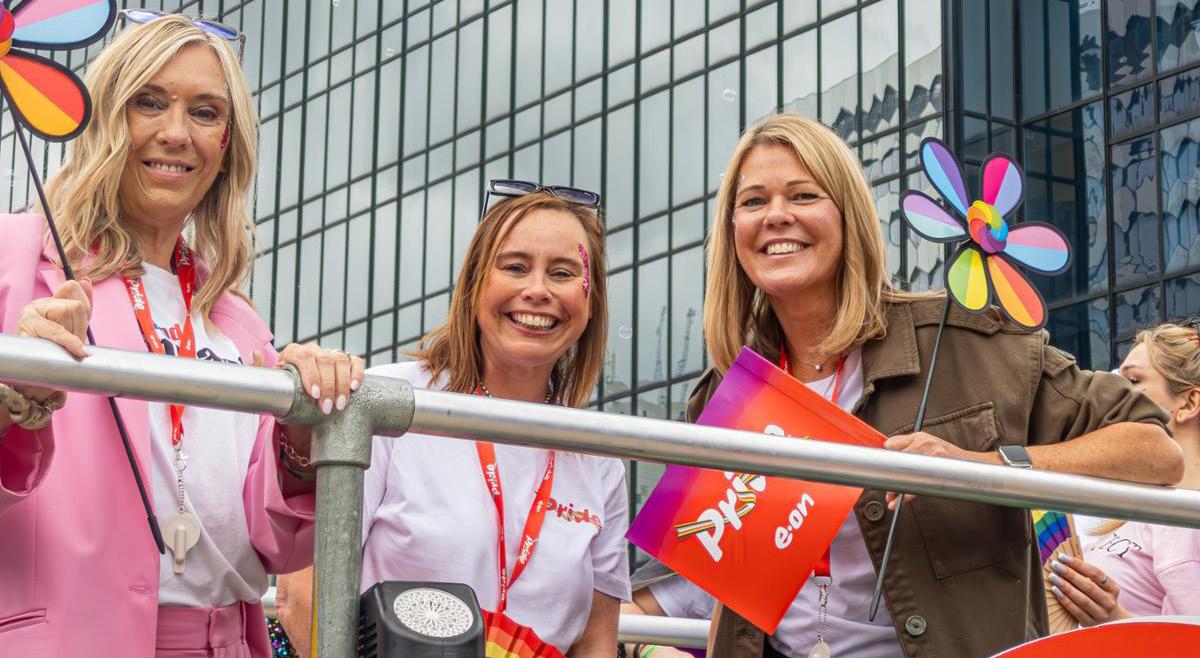
Community support also includes local inclusion and civic activity. For example, npower Business Solutions (nBS) sponsored Solihull Pride in 2025 and plans to continue that support in 2026, reflecting a broader commitment to visible inclusion, local partnership and community belonging.
E.ON’s commitment to wellbeing extends beyond its workforce into wider community impact through its partnership with national mental health charity Mind. Over the past four years, Mind and E.ON colleagues have together raised more than £500,000 to support Mind’s services, reflecting both the scale of employee engagement and the importance of mental health as a social priority.
The partnership also reflects a wider recognition that mental health is closely linked to issues such as financial stress, fuel poverty and life circumstances - all of which are central to E.ON’s customer base. By combining fundraising, awareness and internal wellbeing initiatives, E.ON is helping to ensure that both colleagues and customers are better supported.


Alongside financial support, colleague volunteering has helped strengthen the organisation’s capacity.
E.ON’s work with public sector customers is another major route for delivering social value. These relationships provide opportunities to understand local priorities and work with partners to address them.
In Coventry, npower Business Solutions (nBS) has delivered education workshops and around 140 hours of volunteering focused on local social challenges. This has included support for organisations such as Clothing Coventry, which provides clothing and school uniforms, and Kings Hill Nurseries, which supports people with physical and mental additional needs to develop skills and confidence.

Clothing Coventry is the city’s only dedicated clothing bank, supporting families by providing essential items such as school uniforms with dignity and at no cost. Backed by nearly £40,000 in funding from the npower Business Solutions (nBS) Foundation, the organisation has been able to expand its reach and support thousands of children across the city, helping to relieve the financial pressure of school uniform costs, which can exceed £400 per child.
This support from nBS has enabled Clothing Coventry to scale its uniform programme further, including hosting distribution events and increasing awareness of the support available to families. By reusing and redistributing clothing, the initiative also contributes to sustainability by reducing waste and promoting circular use of resources. Alongside financial support, colleague volunteering has helped strengthen the organisation’s capacity, demonstrating how public sector partnerships can combine funding, skills and local engagement to deliver practical support within communities.
LASER, one of E.ON’s largest public sector customers, provides a strong example of how social impact can be structured at scale. With around 180 public sector authorities involved, LASER has worked with E.ON to develop a sophisticated social impact offer, including a dedicated working group and a social value fund.
This funding has supported education workshops in primary schools, particularly around sustainability, energy generation and STEM skills. Pupils take part in practical activities such as building chargeable cars and racing them, helping them understand energy and batteries in an engaging way. These workshops encourage interest in science and technology from an early age, helping to build the pipeline of future talent.
nBS delivered more than 100 education workshops for public sector customers in 2025, as well as funding sustainable and ecological projects in schools, including vegetable gardens, air quality monitors and energy-saving measures. Beyond education, feedback from Local Authorities has shaped support for food banks, warm banks, children’s charities, hospices and other community organisations.
Increasingly, E.ON is moving from donation-based activity to more interactive community days. These events bring together Local Authorities, charities and support organisations, offering residents energy advice, efficiency products such as LED bulbs and draught excluder tape, and signposting to grants and wider support. Partners such as Mind, National Energy Action, Citizens Advice, food banks and social supermarkets help create a more joined-up offer for residents.

Sport is an important part of E.ON’s social impact work because it connects community wellbeing, inclusion and sustainability. Through initiatives such as Women in Sport, Kids in Sport and The Greener Game, E.ON is showing how energy and participation can be linked.
The Greener Game initiative focuses on helping grassroots clubs reduce energy costs and decarbonise. This has direct social impact. Many clubs operate on tight budgets, and high energy bills can limit what they are able to offer. By helping clubs become more energy efficient, E.ON enables them to reinvest savings into facilities, coaching, participation and community activity.
This sustainability work connects naturally to inclusion. Grassroots sport often provides a place where people build confidence, friendships and life skills. E.ON’s work on women and girls’ participation recognises that barriers to sport can also reflect wider social barriers. When women and young people are supported to take part, the benefits can extend beyond physical activity into confidence, teamwork, leadership and future employability.
The Greener Game initiative focuses on helping grassroots clubs reduce energy costs and decarbonise.
E.ON’s Women in Sport programme is focused on understanding and addressing the barriers that prevent women and girls from participating in sport. Central to this is the Powering Performance survey, launched at Wembley Stadium in 2025, which brought together more than 150 leaders from sport, media and business to begin a nationwide listening exercise. The survey aims to capture the lived experiences of women and girls across all levels of sport to better understand where barriers exist and how they can be addressed.
Sport has a unique role to play in E.ON’s wider mission to make new energy work for everyone. It supports physical health and wellbeing, but also helps develop confidence, resilience, teamwork and leadership - skills that are highly valued in the workforce. For women and girls, greater access to sport can therefore support not only participation and wellbeing, but also future employability and progression.
Yet too many women and girls still face barriers to taking part. These barriers mirror wider inequalities seen across society and the workplace, including in sectors such as energy where women remain underrepresented. By identifying and addressing these challenges, E.ON is using its platform to support more inclusive environments, widen participation and connect sport with broader opportunities, including skills development, leadership and career pathways.
Through partnerships across sport, including football, netball and motorsport, the programme also links participation with broader themes such as sustainability and innovation, demonstrating how sport can act as a gateway into sectors like clean energy.

The link to E.ON’s wider purpose is clear. Supporting sport is part of helping community institutions become more affordable and sustainable. When clubs save money and reduce emissions, they are better able to serve their communities.

E.ON demonstrates that social impact is central to whether the transition to clean energy succeeds. A cleaner energy system will only be sustainable if people can access its benefits and participate in its opportunities.
Across workforce development, inclusion, community investment, public sector partnerships and grassroots sport, E.ON is helping colleagues build future skills, supporting underrepresented groups, opening pathways into employment, investing in communities and using partnerships to respond to local needs.
What connects these activities is a belief that the transition to clean energy should create opportunity. This is the essence of making new energy work for everyone: ensuring that the benefits of change are shared across customers, colleagues, communities and partners.
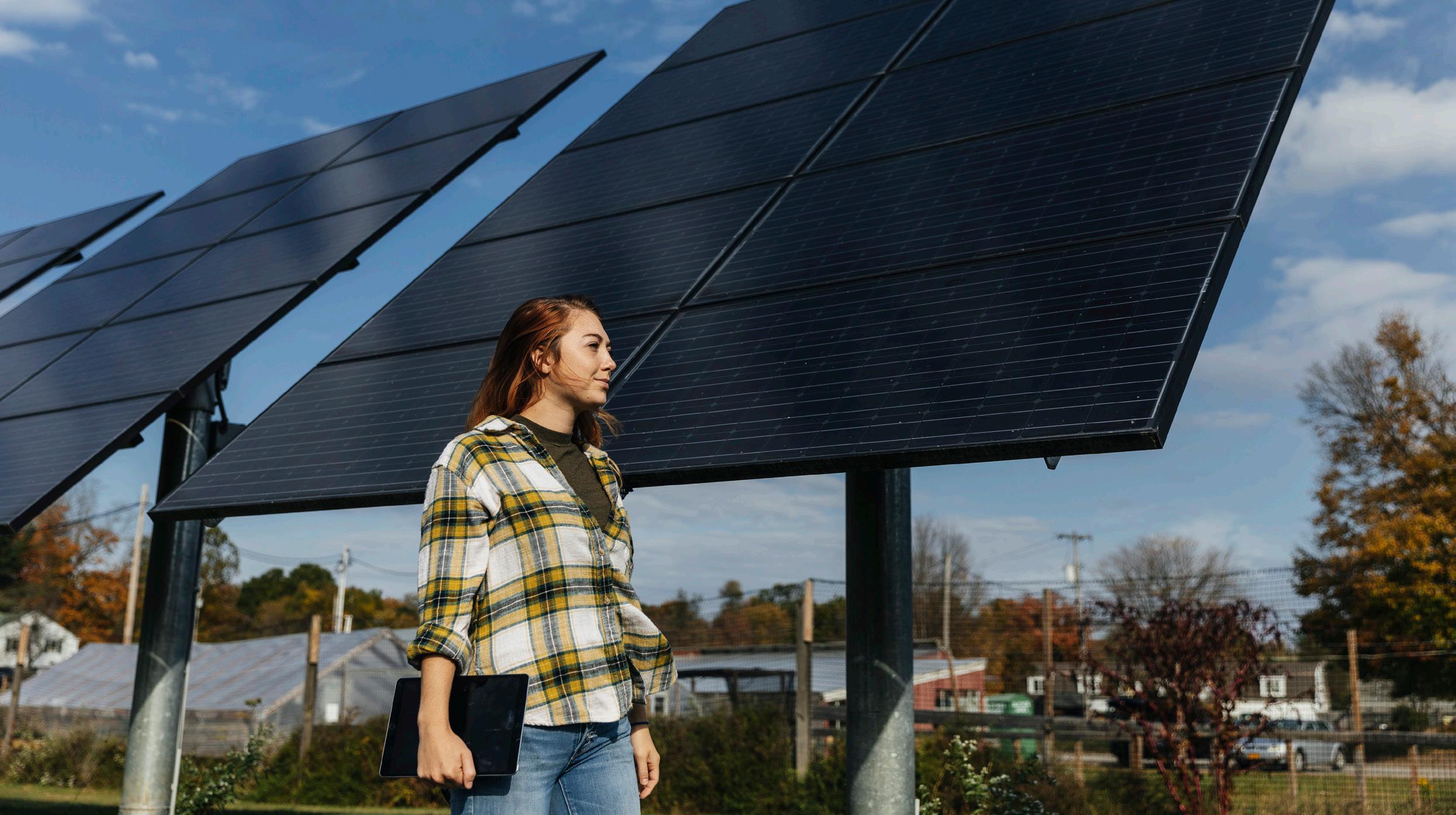
E.ON’s impact in 2026 is defined by a clearer alignment between its commercial strategy and its social impact delivery. Across the three areas of: Affordable, sustainable and for everyone, the company is demonstrating how the clean energy transition can be translated into practical outcomes for customers, communities and colleagues.
E.ON’s approach to affordability reflects a shift from reactive support to system-level intervention.
The scale of support provided to vulnerable customers remains significant, with targeted financial assistance, specialist teams and partnerships forming a comprehensive response to immediate need. What is notable is the increasing sophistication of this model. Tools such as Next Care, alongside partnerships with organisations including Mind, Macmillan Cancer Support, National Energy Action, Citizens Advice and The Wise Group, indicate a move towards more personalised, joined-up support that reflects the complexity of customer circumstances.
However, the most important development is the extent to which affordability is now being designed into E.ON’s core propositions.
Flexibility, smart tariffs and automated energy management are moving from innovation to delivery. Increasingly, these technologies are being recognised as essential components of a more resilient and secure energy system capable of supporting higher levels of renewable generation. These solutions remove the need for active customer engagement while enabling access to lower-cost energy, widening participation beyond early adopters.
The case studies in this report show how this shift is being delivered in practice. Glasgow demonstrates how batteries can be targeted at families most at risk of energy poverty. Lower Bills, Built In shows how affordability can be embedded into new homes from the point of construction. St Luke’s School and Symphony illustrate how local energy models can reduce costs for public institutions and communities.
Taken together, E.ON’s affordability activity shows a clear trajectory. The focus is shifting from shortterm mitigation of high costs towards longer-term reduction of those costs through system design, technology and place-based delivery.
E.ON’s sustainability activity is characterised by a focus on delivery at scale and relevance at local level.
The company’s approach is notable for its integration of technologies. Solar, batteries, EV infrastructure, heat pumps and smart systems are being deployed not as standalone solutions, but as part of a connected energy ecosystem. This reflects an understanding that the clean energy transition will depend on how effectively these technologies work together in practice.
The built environment is a key area of progress. Through its work with developers and propositions such as Next Gen Home, E.ON is helping to embed low-carbon infrastructure into new housing and make it easier for customers to adopt cleaner technologies. This approach links emissions reduction with affordability and customer experience, strengthening the case for clean energy as a practical solution rather than an abstract goal.
E.ON’s emphasis on place is also a defining feature. Projects such as Symphony and its wider work on local energy systems show how energy can be generated and consumed closer to source, reducing system costs and improving resilience. These models have the potential to reshape how communities engage with energy, particularly in areas where grid constraints or cost pressures are most acute.
The Greener Game initiative provides a further example of how sustainability can be embedded in community infrastructure. By focusing on grassroots sport, E.ON is linking decarbonisation with participation, cost reduction and local resilience.
Overall, E.ON’s sustainability work is strongest where it combines environmental outcomes with practical benefits. The integration of affordability, place and partnership ensures that sustainability is not treated as a separate agenda, but as part of a broader model of community and economic development.
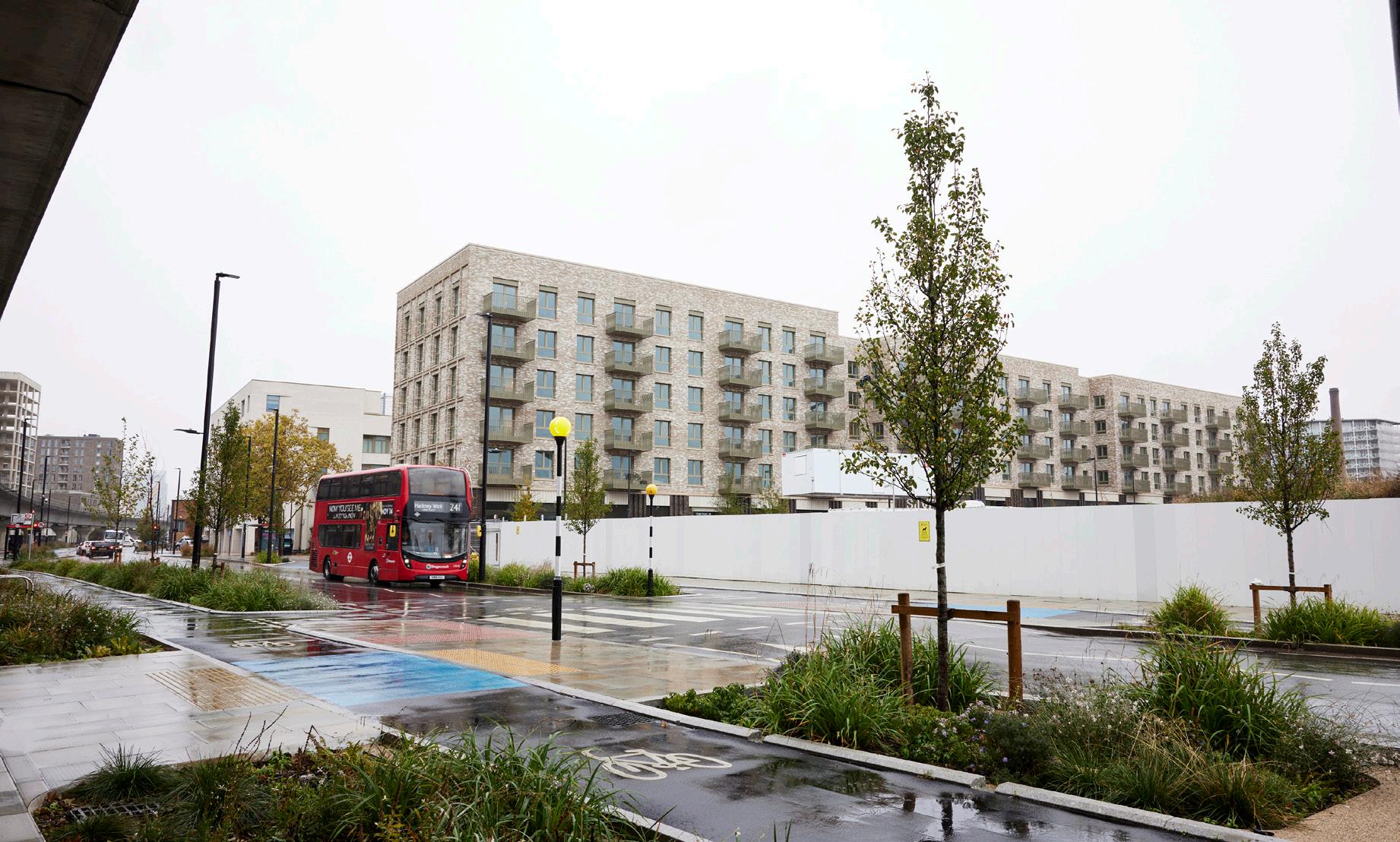

The For Everyone focus demonstrates how E.ON is approaching the clean energy transition as a people-led transformation.
Workforce development is a central component. Apprenticeships, degree pathways and rotational programmes provide clear routes into the energy sector, supporting both current operational needs and future capability. The diversity of these pathways is important in widening access to green careers and supporting social mobility.
E.ON’s Future Skills Framework and its focus on AI and automation indicate a forward-looking approach to workforce development. By positioning future skills as a core part of inclusion, the company is recognising the risk that technological change can create new barriers if not managed proactively.
Inclusion and belonging are increasingly embedded within the organisation. Employee networks, leadership programmes and partnerships such as those with the Women’s Utility Network and Investing in Ethnicity demonstrate a structured approach to improving representation and progression. The breadth of activity, spanning gender, ethnicity, disability, health and life-stage support, reflects a holistic view of inclusion.
This is reinforced by E.ON’s family-friendly working approach, including enhanced parental leave, flexible working and support for equal parenting, which helps ensure inclusion is reflected not only in formal networks and policies, but in the everyday realities of colleagues balancing work, care and family life.
Importantly, this activity is connected to E.ON’s wider purpose. A more inclusive workforce is better equipped to understand and serve a diverse customer base, particularly in an area as fundamental as energy.
E.ON’s work to open access to careers extends beyond its existing workforce. Its evolving approach to work experience, employer encounters and engagement with parents and teachers reflects an understanding that early exposure is critical in shaping career aspirations. Targeted recruitment activity within npower Business Solutions (nBS) further demonstrates how the company can create opportunities for those facing barriers to employment.
Community investment reinforces this focus. Through the nBS Foundation, public sector partnerships and local initiatives, E.ON is
supporting organisations that address practical challenges, from uniform poverty to mental health and access to education. The most effective examples combine funding, colleague engagement and local partnership to deliver tangible outcomes.
Across this focus area, E.ON’s activity reflects a consistent focus on widening participation. The clean energy transition is positioned not only as a technological shift, but as an opportunity to create more inclusive pathways into work, skills and community life.
Overall, E.ON’s approach demonstrates a system-wide model of impact, where social value is embedded within core business activity. This positions the company as a participant in the clean energy transition, as well as an active driver of a more inclusive, affordable and sustainable energy future.
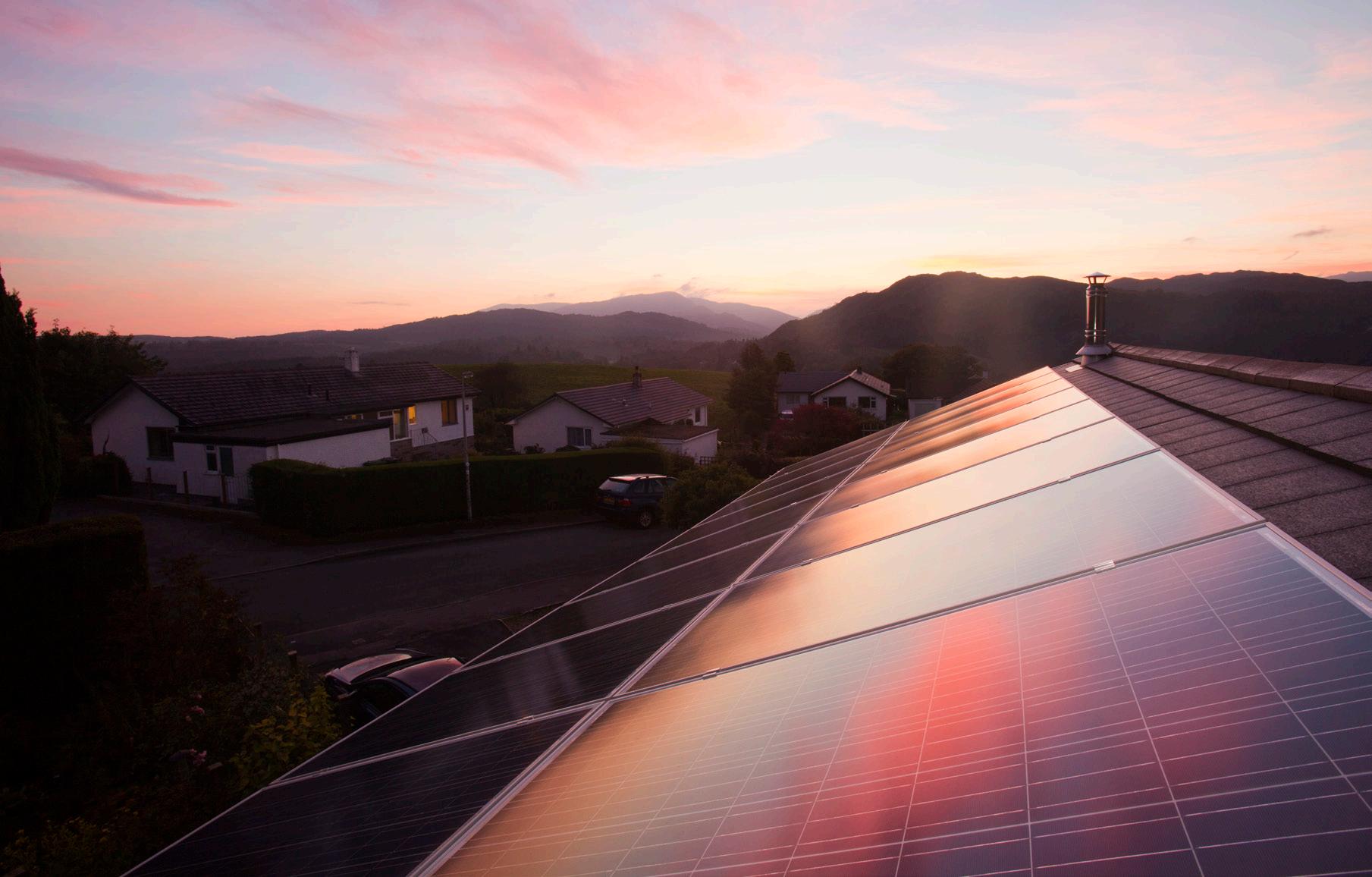
E.ON’s purpose, to make new energy work for everyone, positions the company at the centre of one of the UK’s most important national transitions. As the energy system evolves, the challenge is no longer simply how to decarbonise, but how to ensure that affordability, resilience and opportunity are embedded within that transition.
Across this report, E.ON demonstrates how its work already connects these priorities in practice: supporting customers in vulnerable circumstances, scaling flexibility and battery solutions, embedding clean energy into homes and communities, investing in skills and creating more inclusive pathways into the future energy workforce.
The next stage of this work presents an opportunity to move from successful individual programmes towards more scalable, systemlevel approaches that can shape the wider energy sector. In particular, E.ON is well placed to demonstrate how affordability, sustainability and opportunity can be delivered together through long-term investment, place-based partnerships and innovation in housing, infrastructure and workforce development.
The following commitments outline how E.ON can build on its existing activity to strengthen its leadership in delivering a cleaner, more affordable and more inclusive energy future.

E.ON is already demonstrating through initiatives in Glasgow, Coventry and Newham how place-based energy partnerships can reduce bills, improve resilience and support communities facing the greatest affordability pressures. The next step is to scale these approaches so that more Local Authorities and communities can benefit from integrated energy solutions tailored to local needs.
To support this ambition, E.ON should continue to expand its place-based partnerships with Local Authorities, housing providers and community organisations, helping partners access existing funding streams, improve datasharing approaches and identify where targeted interventions can have the greatest impact. By building on models already developed in Glasgow and Coventry, E.ON can create scalable frameworks that can be adapted and replicated across different regions of the UK.
Alongside this, E.ON should continue exploring the role of residential batteries as a long-term affordability solution. Building on existing battery trials and flexibility programmes, the company can assess how greater direct investment in residential battery deployment could help deliver sustained bill reductions for households while also improving wider system resilience.

This reflects a broader shift in thinking around affordability. Short-term crisis interventions can provide immediate relief, but long-term structural investment in technologies such as batteries, flexibility and local energy systems has the potential to deliver enduring cost savings for customers while generating wider value for the energy system itself. E.ON should continue to work with partners across industry and Government to explore how these approaches can support a more sustainable long-term model for reducing energy costs.
E.ON should continue to work with partners across industry and Government to explore how these approaches can support a more sustainable long-term model for reducing energy costs.
As part of this work, E.ON could also explore how lessons from residential affordability programmes could inform future support models for small and medium enterprises (SMEs), particularly those operating in leased premises where barriers to energy investment can be more complex.
Through these commitments, E.ON can demonstrate how place-based delivery, infrastructure investment and partnership working can help create a more affordable and resilient energy system for communities across Britain.
E.ON’s work on integrated low-carbon homes demonstrates how affordability and sustainability can increasingly be designed into the built environment from the outset. As the Future Homes Standard approaches, there is a significant opportunity to accelerate the delivery of lower-cost homes across the UK.
To support this transition, E.ON should continue developing new propositions designed to make Future Homes Standard delivery more commercially viable and scalable for developers. This could include exploring more modular approaches to low-carbon technologies, alongside innovative financing and partnership models that reduce upfront cost pressures while allowing developers to share in the long-term value created by embedded energy assets.
This work reflects growing evidence that customers increasingly expect homes to be energy-efficient. By combining technologies such as solar panels, batteries, heat pumps and home energy management systems into more integrated propositions, E.ON can help make sustainable homes more accessible at scale.
Alongside developing commercially viable delivery models, E.ON should also continue engaging with Government, regulators and industry partners to support implementation of the Future Homes Standard in a way that delivers maximum long-term benefit for households. This includes advocating for policy and regulatory frameworks that encourage high-quality, genuinely sustainable outcomes across new housing, while helping ensure the full potential of low-carbon technologies and energy efficiency measures is realised in practice.
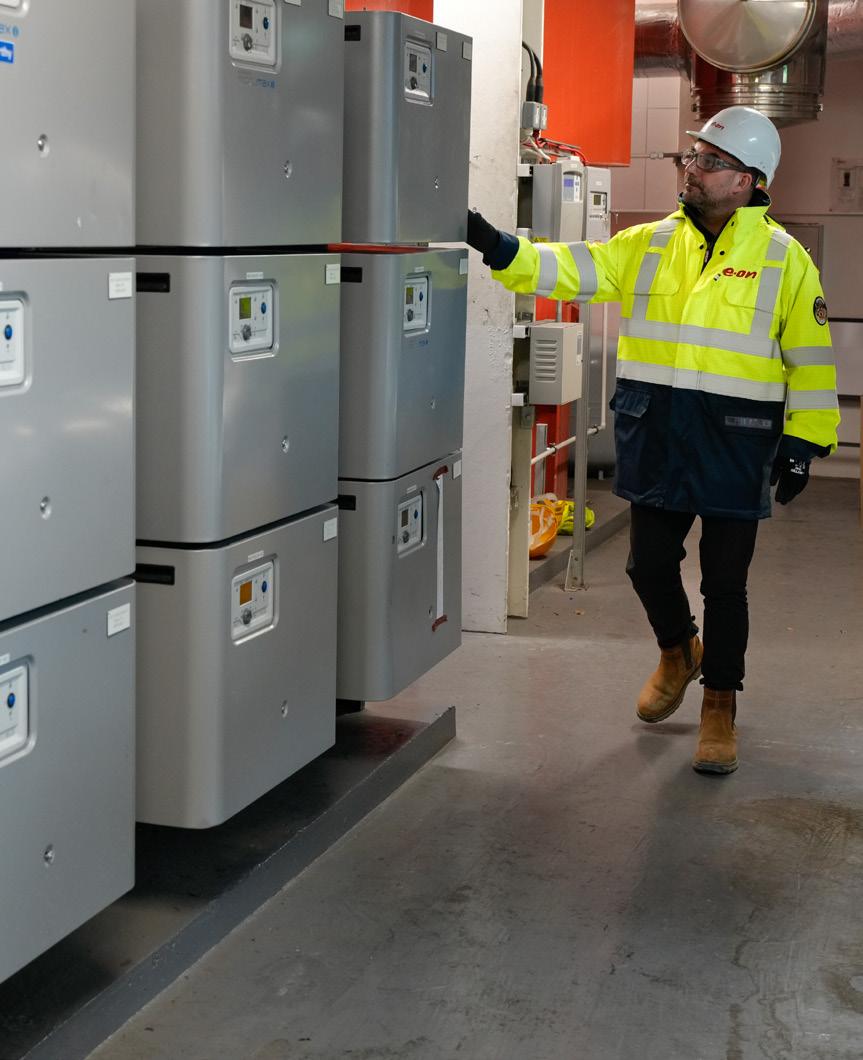
Alongside its work with developers, E.ON should continue to explore how local energy systems, microgrids and place-based infrastructure can support sustainable communities more broadly. This could include examining how energy generation, storage and flexibility can be embedded across neighbourhoods and developments to reduce strain on the grid, lower costs and improve resilience.
E.ON could also continue to use partnerships with Local Authorities, public sector organisations and community institutions to demonstrate how sustainable infrastructure can deliver wider social and economic value. Through projects such as community solar, local energy marketplaces and grassroots decarbonisation initiatives, the company is well placed to show how sustainability can be made visible, practical and locally beneficial.
Together, these commitments would position E.ON to help shape the next generation of sustainable communities, where clean energy, affordability and resilience are embedded within homes and places.
The transition to clean energy will only succeed if it creates opportunity alongside change. E.ON’s work across apprenticeships, future skills, inclusion and community partnerships demonstrates how the energy transition can become a driver of social mobility and inclusive growth.
Building on this work, E.ON should continue strengthening pathways into green careers through apprenticeships, early careers programmes, school engagement and future skills initiatives. Particular focus could be placed on ensuring that emerging areas such as AI and low-carbon technologies remain accessible to colleagues and future entrants from all backgrounds.
E.ON should also continue embedding inclusion and belonging across the organisation through colleague networks, leadership development, family-friendly working and partnerships that support underrepresented groups.
This will help ensure that the workforce shaping the future energy system reflects the diversity of the communities it serves.
Alongside workforce development, E.ON should continue expanding its place-based social value partnerships with Local Authorities, schools, charities and public sector customers. Through initiatives linked to education, employability, grassroots sport, mental health and community resilience, the company can strengthen local opportunity pipelines and widen access to support and progression.
As the clean energy economy grows, E.ON is well positioned to demonstrate how social value can be embedded within commercial delivery, ensuring that investment in infrastructure, housing and energy systems also creates long-term opportunity for people and communities.
Through these commitments, E.ON will continue working to ensure that the transition to clean energy is not only cleaner and more resilient, but fairer and more inclusive for everyone.