


Intro 3
What is Social Ecology and Key Terms 4-5
ItAG Kick Off 6-7
Reflection and Prompts 8-9
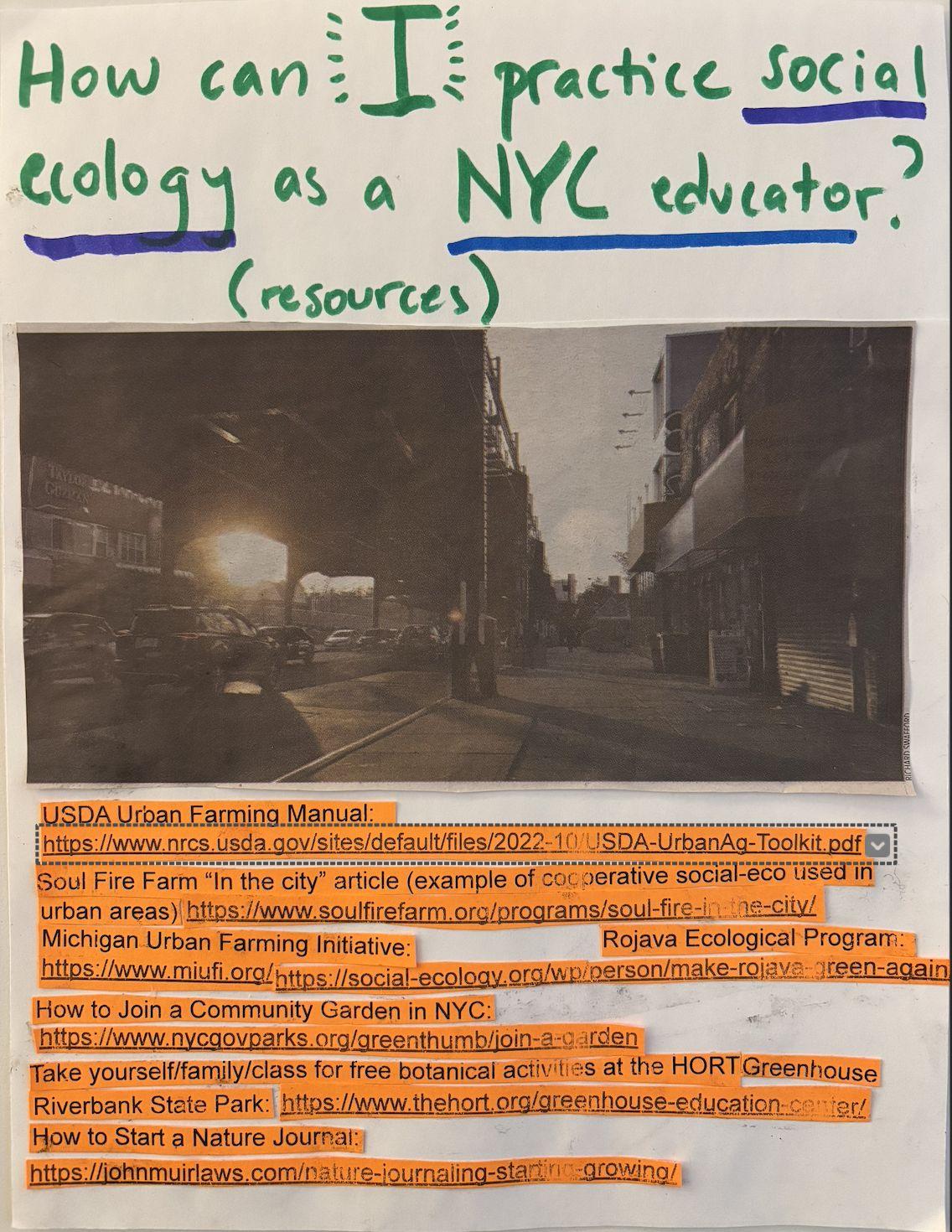
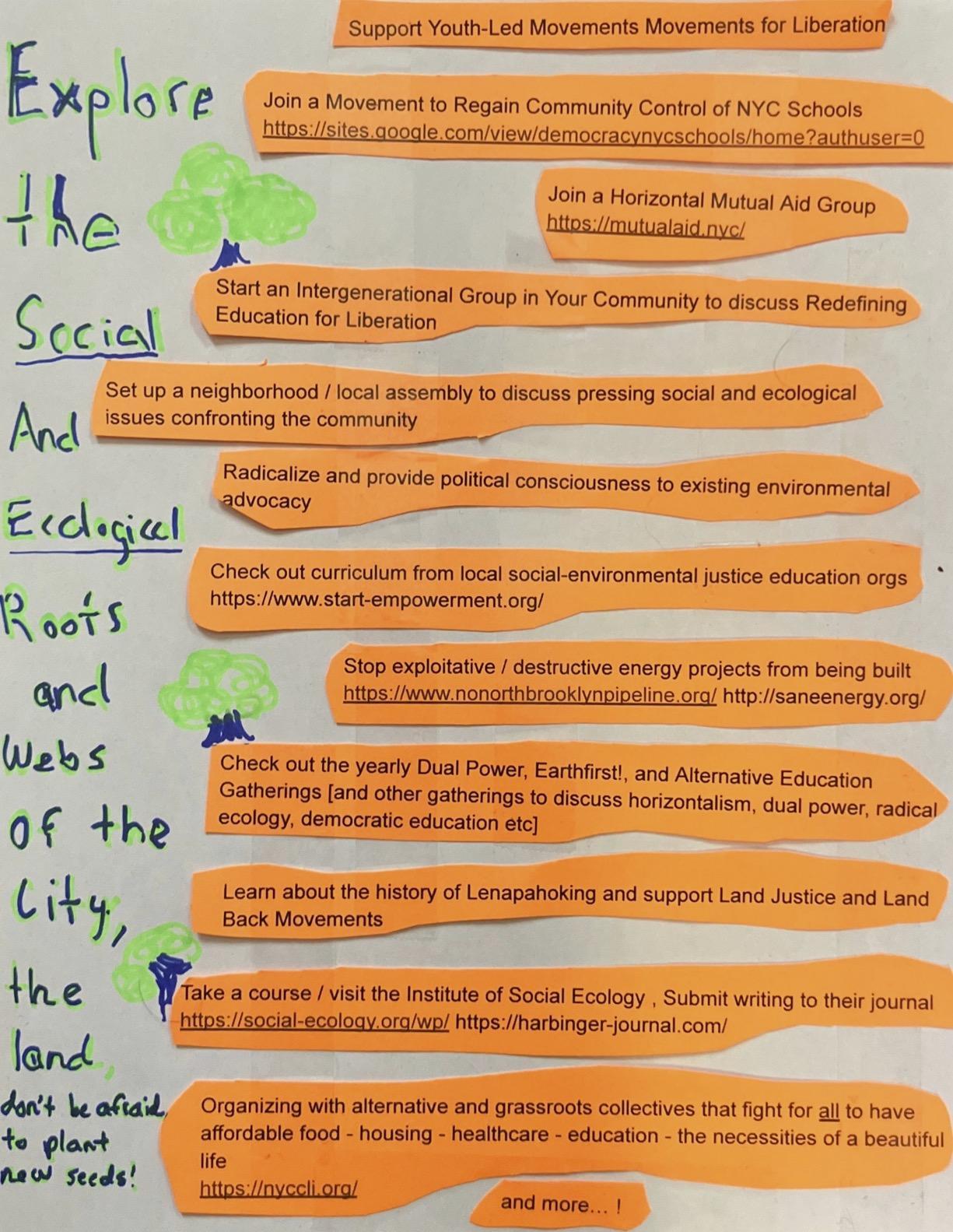
How Can I practice Social Ecology? 10-11
Bibliography 12-17
Quotes andArt 18-28
Contributors and Contact 28
Intro 3
What is Social Ecology and Key Terms 4-5
ItAG Kick Off 6-7
Reflection and Prompts 8-9
How Can I practice Social Ecology? 10-11
Bibliography 12-17
Quotes andArt 18-28
Contributors and Contact 28
It’s March 2025, and we’re wrapping up the 20th round of what New York Collective of Radical Educator [NYCoRE] calls ItAG season. ItAGs are Inquiry to Action Groups, which are 6 week long study groups held in the Spring on a topic related to education and social justice, with the goal that after the group inquires into a topic they follow with an action, It’s also the second month into a new presidential administration set on accelerating fascism, fear, war, climate crisis, deportations, and repression of any dissent. As mainstream institutions will never truly confront the levers of power, the people are once again the ones to build and explore alternatives to a world of joyless domination.
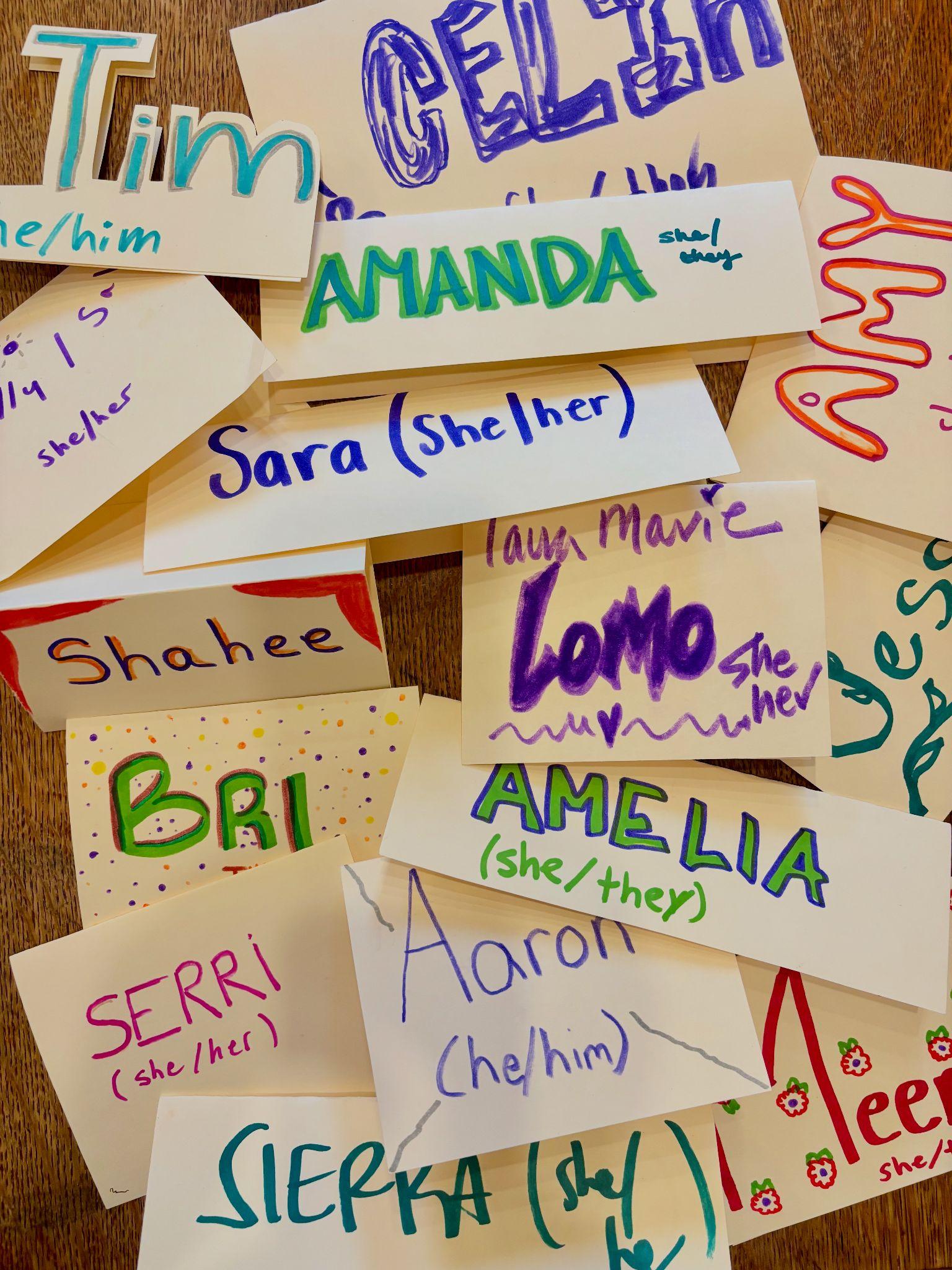
Our group focus was on “Social Ecology in NYC Schools”, connecting the democratic and ecological ideals of Social Ecology within the context of the largest school system in one of the world’s most densely populated cities. The group of 20 who participated in the group were from an array of backgrounds and professions - school-teachers, farmers, outdoor educators, sex & health educators, poets & artists, food justice workers, urban planners, graduate students, professors, gardeners, engineers, horticultural therapists, and many more interests and tendencies than we were able to get to know about each other in just a six session study group.
This diversity of interests and perspectives enhanced our conversations about social ecology and direct democracy in the broader educational context. As we came to study in the group, a world domination and hierarchy must be supplanted by a world of diversity and cooperative ethics if human and nonhuman life is to live and thrive for generations to come.
We came to a consensus for our action to be to create a zine that provides an introduction to educators and their communities on the principles of Social Ecology. We chose the medium because we believed a zine reflected the very concepts that we attempted to explore in our ItAG. Zines’ history as anti-authoritarian and anti-capitalist form of expression, where community formed and connected by making, reading, and trading zines is as important as the final product, connected to the horizontal and democratic practices of Social Ecology. We were also inspired by our host location - Interference Archive - a radical archive and library of social movements in Brooklyn. We chose the topic because we are excited to share our inquiry into Social Ecology with others and offer ways in which some of these ideas can be explored - knowing that each person and community will do what best serves their context.
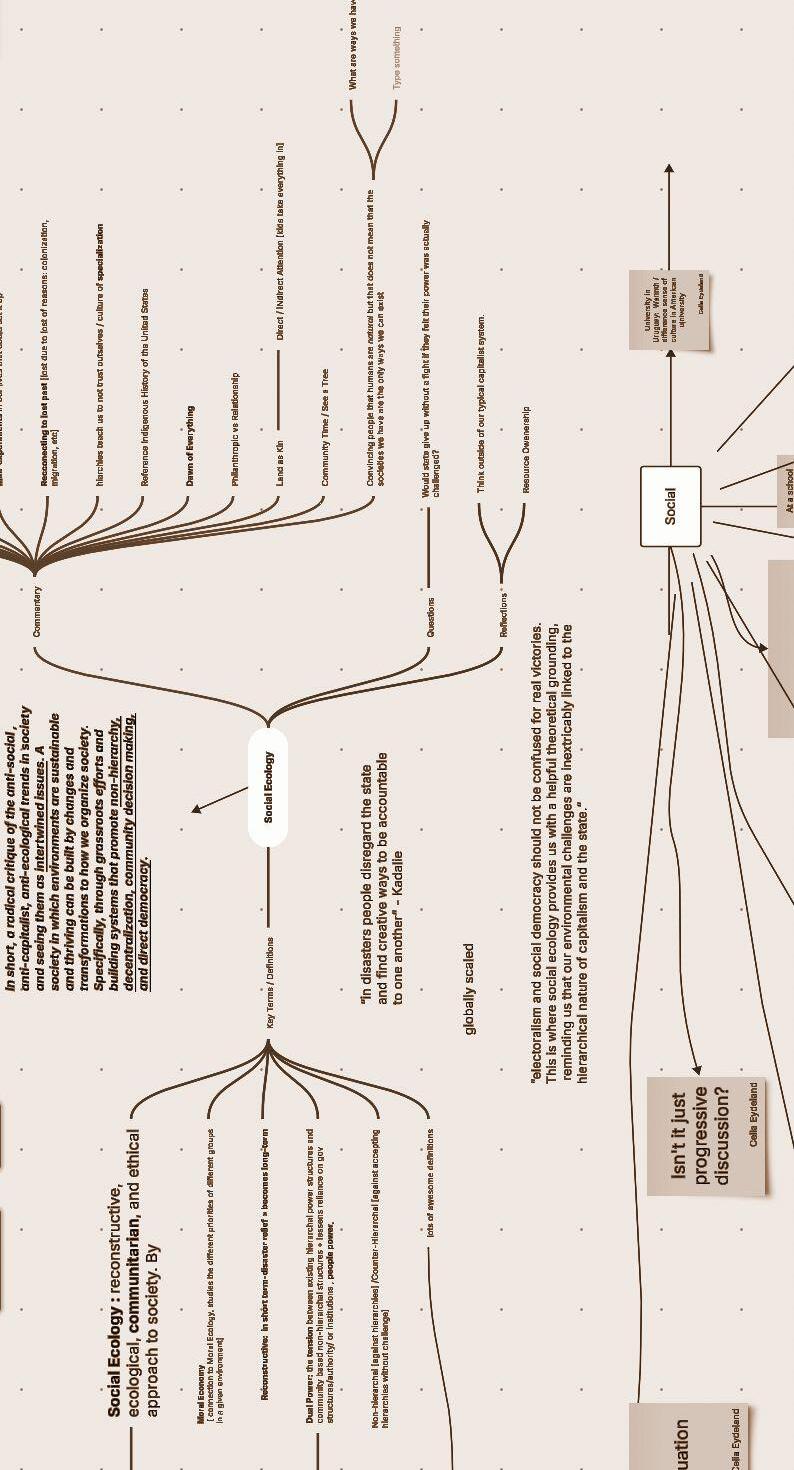
Fundamentally, Social Ecology explores the intersection of society and ecology, studying humans as part of the environment around them. As our ItAG studied different interpretations and applications of this thinking, we came to appreciate how your definition of Social Ecology depends on your context, your goals, and your relationship to your environment. In that spirit, we present a living definition of social ecology with where you can choose what feels right for you and plenty of space to annotate as your own definition of social ecology evolves!
critiques anti-social and anti-ecological trends in society
Social Ecology resists the capitalist, hierarchical structures that divide us
builds a world of sustainable, harmonious abundance learning from historical, localized, and indigenous wisdom and practices by helping people connect with and steward their local environment
drawing inspiration from ecology to affirm direct democracy, diversity, and mutualism
Though different people’s definitions of social ecology branch as they put it into practice, there are fundamental concepts which we have rooted our working definition in.
Critique of the Human / Nature
Divide
social ecology does not see the human as separate from their environment. It encourages the creation and re-emergence of practices that do not extricate nature from humans. It is an unlearning of the ills of capitalism with its alienation and atomization of our world and lives.
Non-Hierarchy an organizational structure that lacks a traditional top-down, coercive authority structure.
Dual Power
the idea that people organize to carve out space for self-governance and create the “pre-conditions for revolution”. Building People Power. Alternative grassroots and democratic services and institutions will reduce reliance on the State and ultimately substitute the failing State.
Horizontal decision making a style of decision making where people in a group share power and make decisions together
Direct Democracy a form of government in which people directly participate in decision-making processes, rather than electing representatives to do so on their behalf
Interdependence the idea of mutual dependence, where different entities rely on the other for survival and functioning, each playing a role. an ecological society rejects capitalism’s violence and grow-or-die logic and supports values of interdependence and mutuality
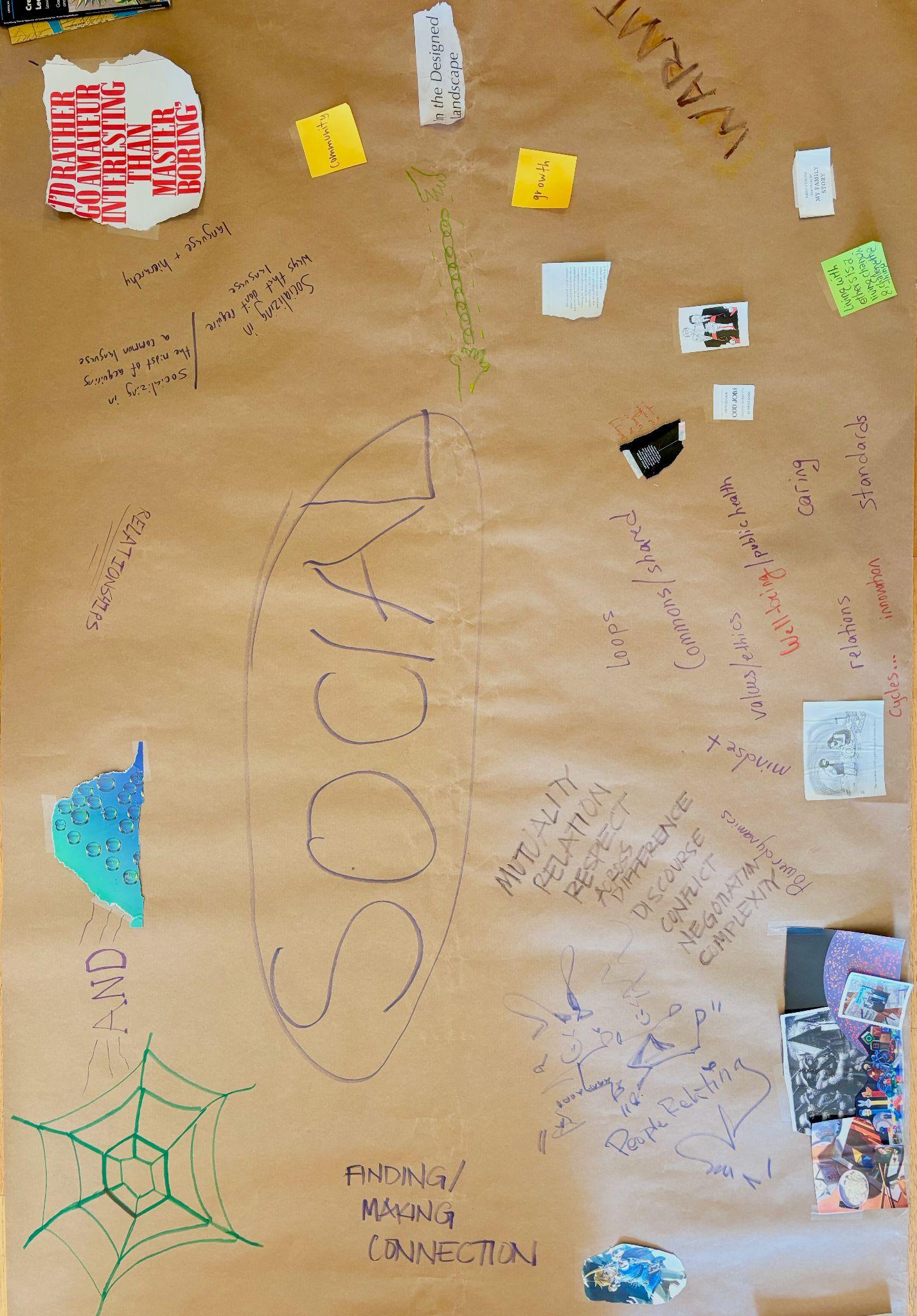
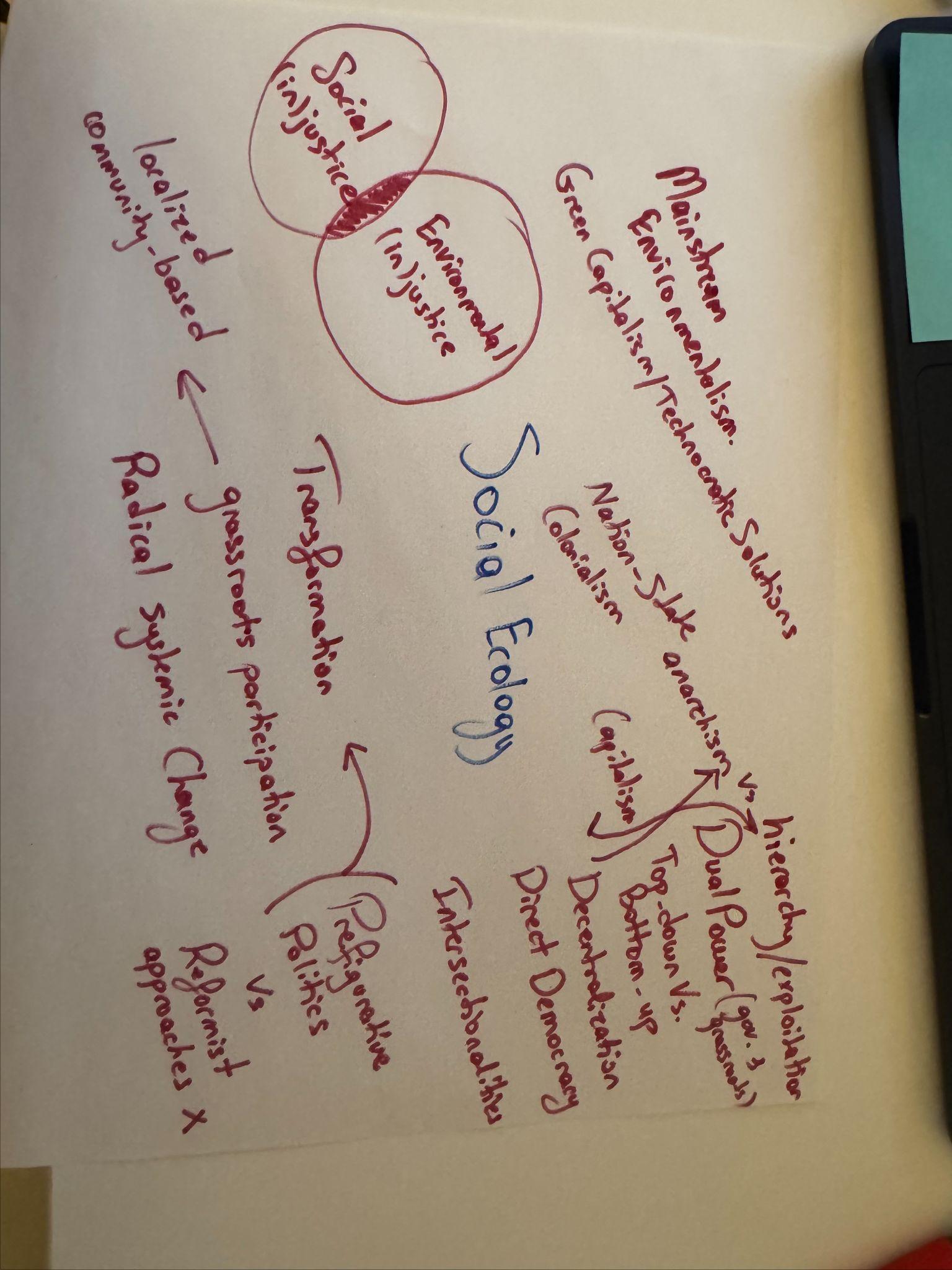
During our first meeting, we brainstormed and collaged together about what the words ‘social’ and ‘ecology’ meant to us…
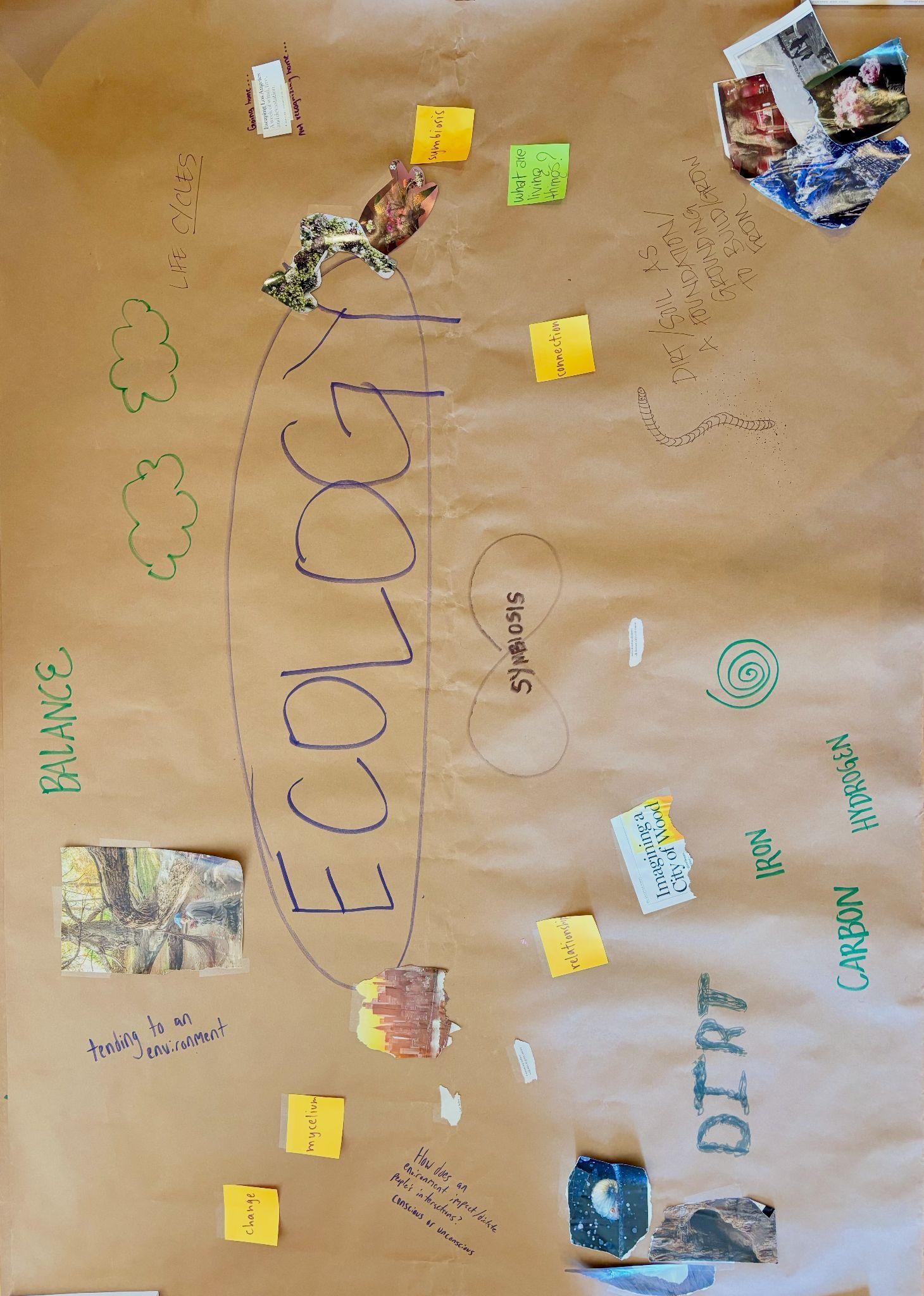
…what we found was that the words had more in common than not…
Balance
Symbiosis
Relationships
Connection
Mutuality
Loops
Care
Observational and Descriptive
What are the most common natural elements (for example, trees, rivers, parks, animals) in your immediate surroundings?
Connections and Patterns: Interconnections between the social and the ecological
How do social relationships (friendships, family structures, community bonds) shape the way people engage with nature in your area?
Analysis Systems and Power Dynamics: structural and systemic dimensions, deliberative democracy
How do dominant narratives about “progress” and “development” influence ecological decision-making?
What kinds of social gatherings or interactions are common in your neighborhood? Where do they happen?
How do people in your community interact with nature? (for example, gardening, littering, preserving, neglecting?)
What kinds of businesses, institutions, and organizations are most visible in your community? Who do they serve?
Who are the groups or individuals actively working to protect or improve the environment in your area? What challenges do they face?
How have historical events (colonization, urban development, industrialization) shaped the current social-ecological landscape of your community? S O C I A
How do economic inequalities or privileges affect people’s access to clean water, food, and green spaces in your community?
What are examples of environmental racism or injustice that exist in your region? Who is most affected?
Who has the most decision-making power over environmental issues in your community (government officials, corporations, activists, everyday people)?
What types of relationships exist between humans and non-human species in your community?Are they mutually beneficial or exploitative?
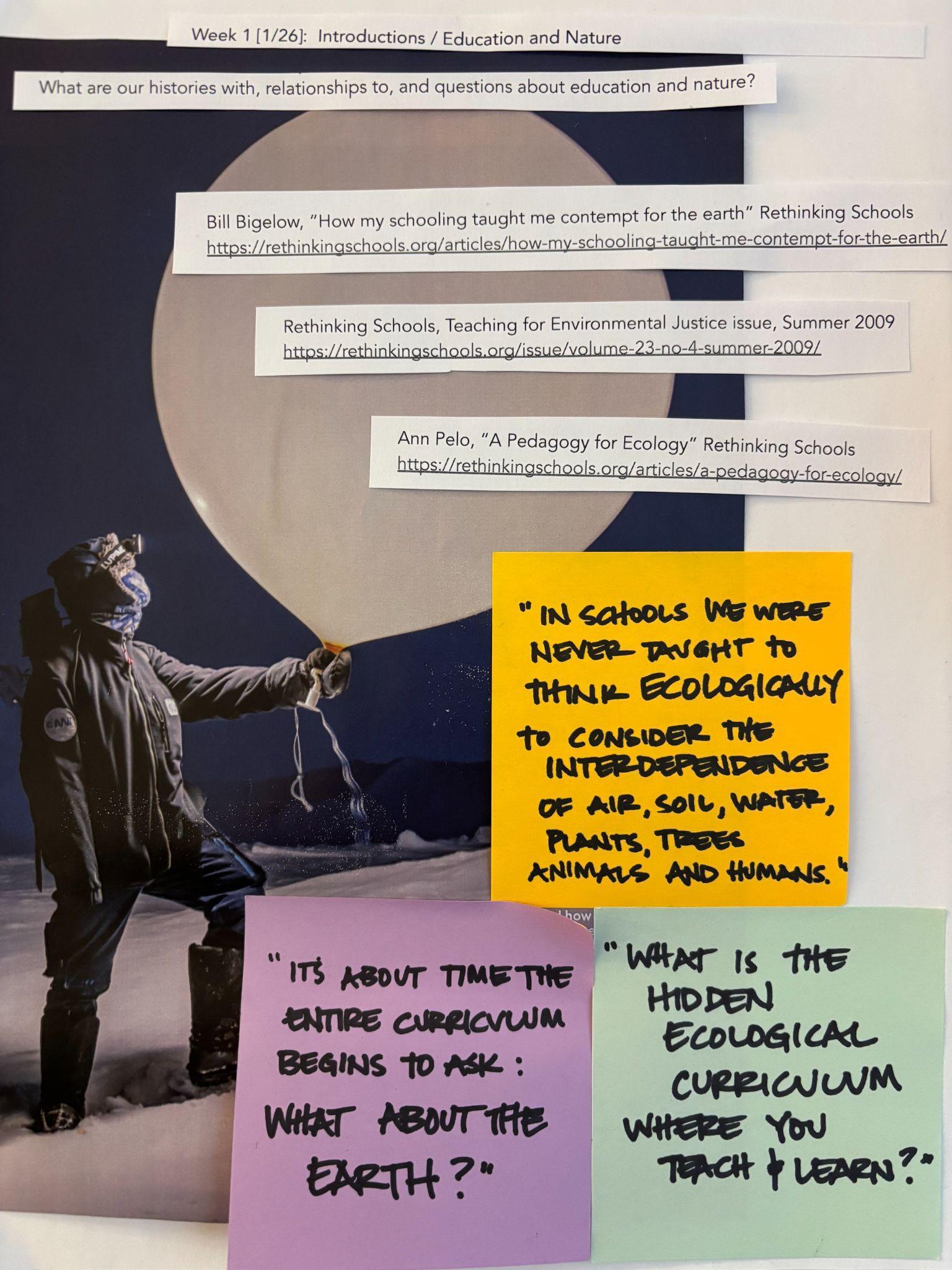
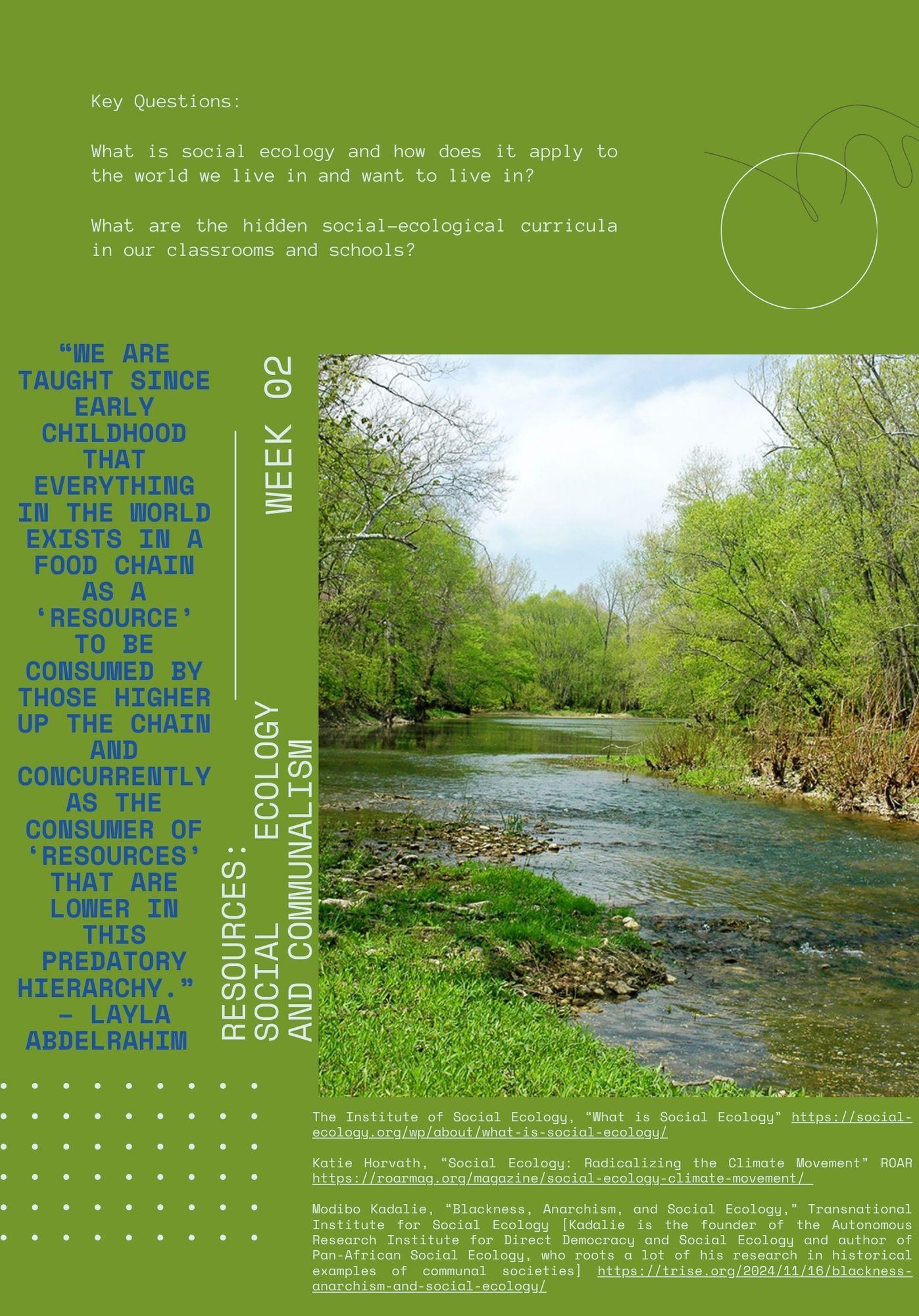
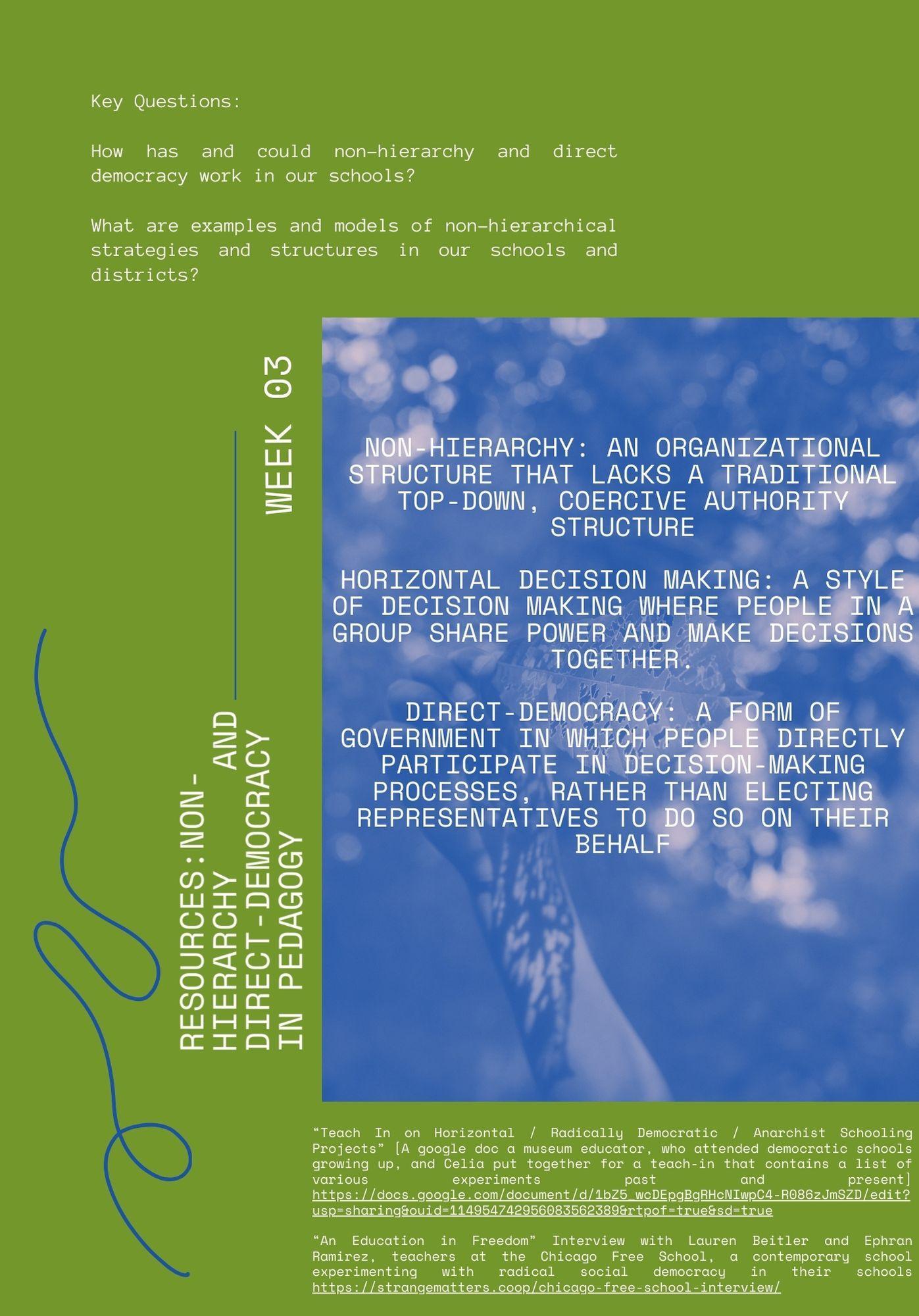
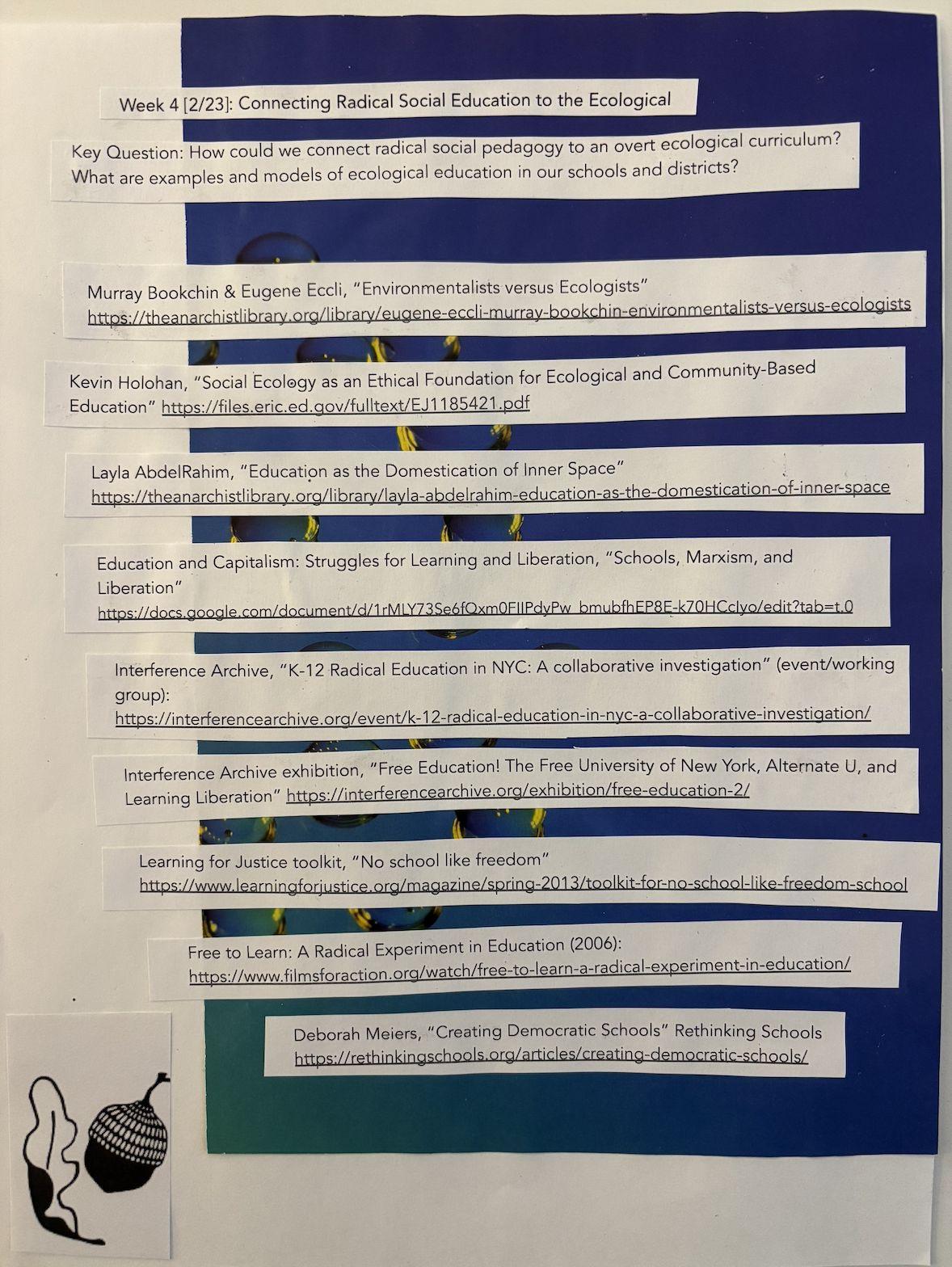
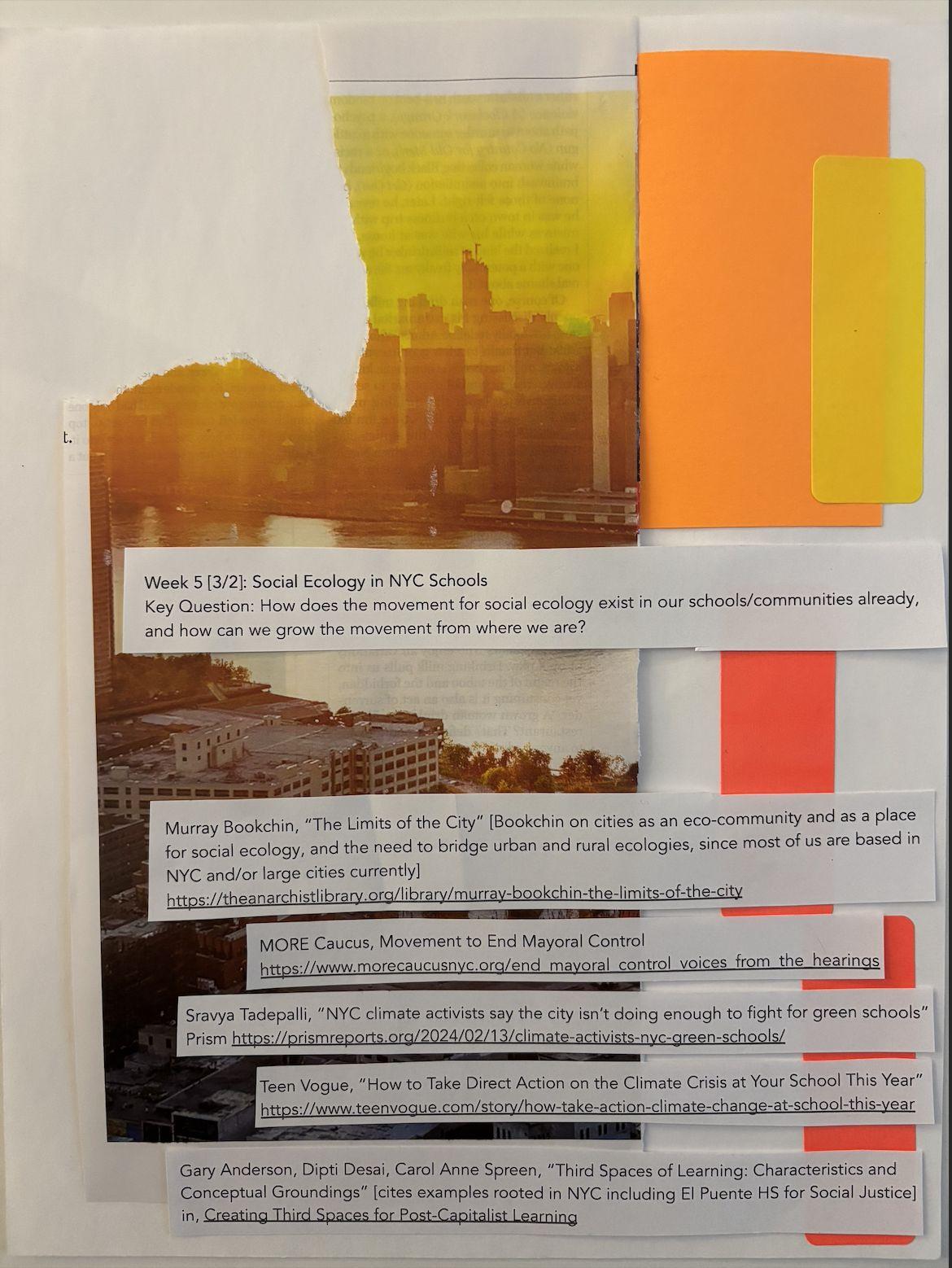
Bibliography / Weekly Reading from our Inquiry

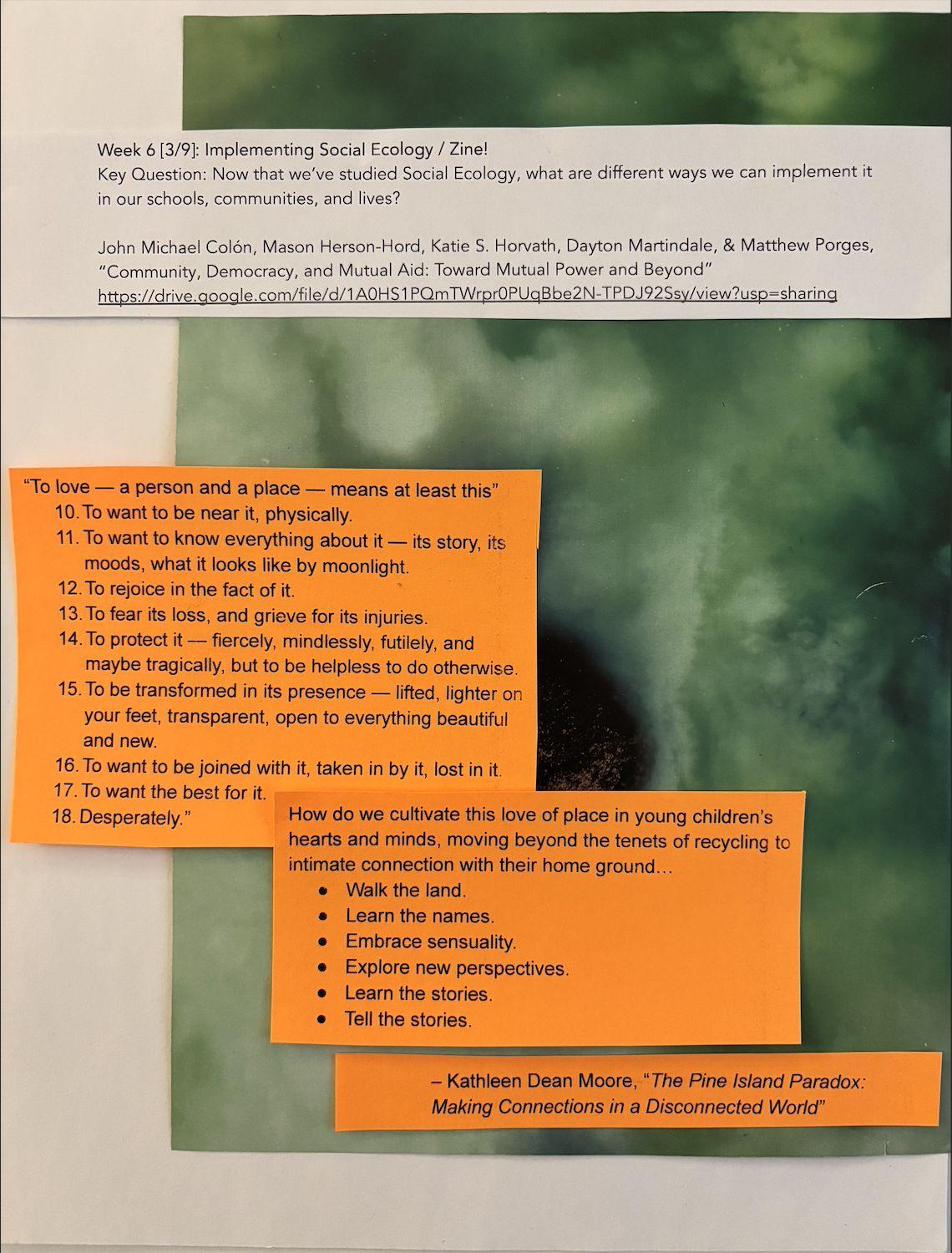
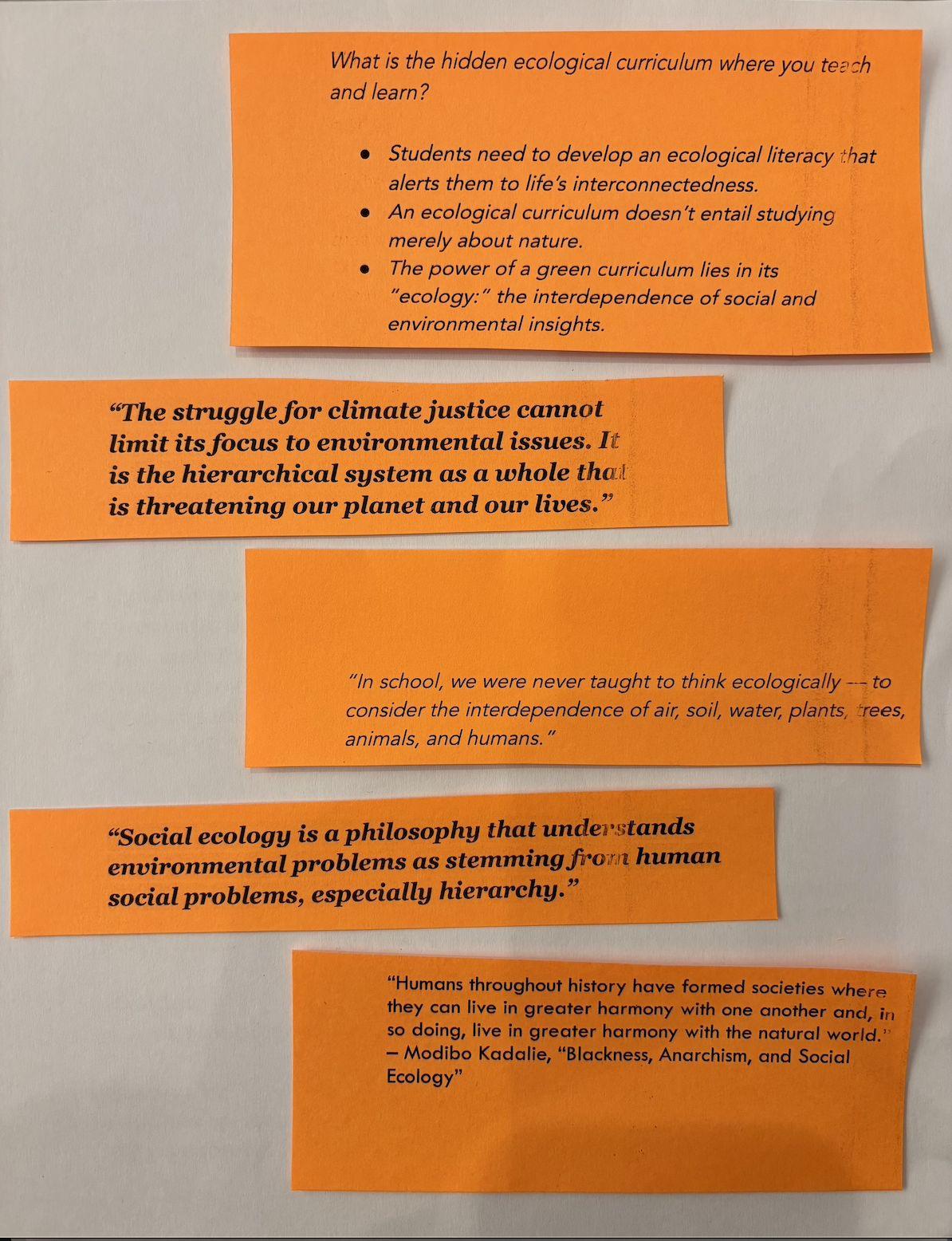
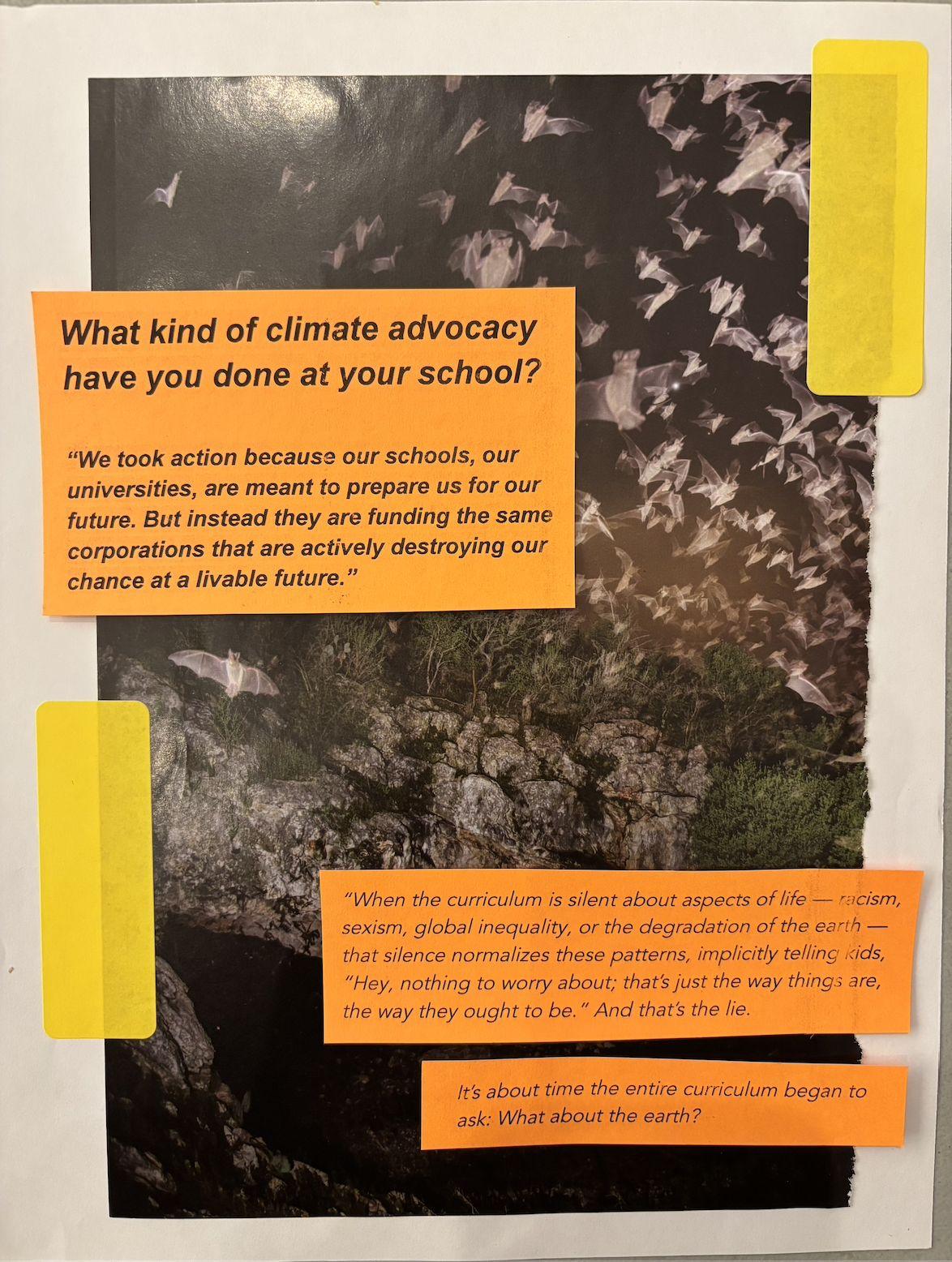
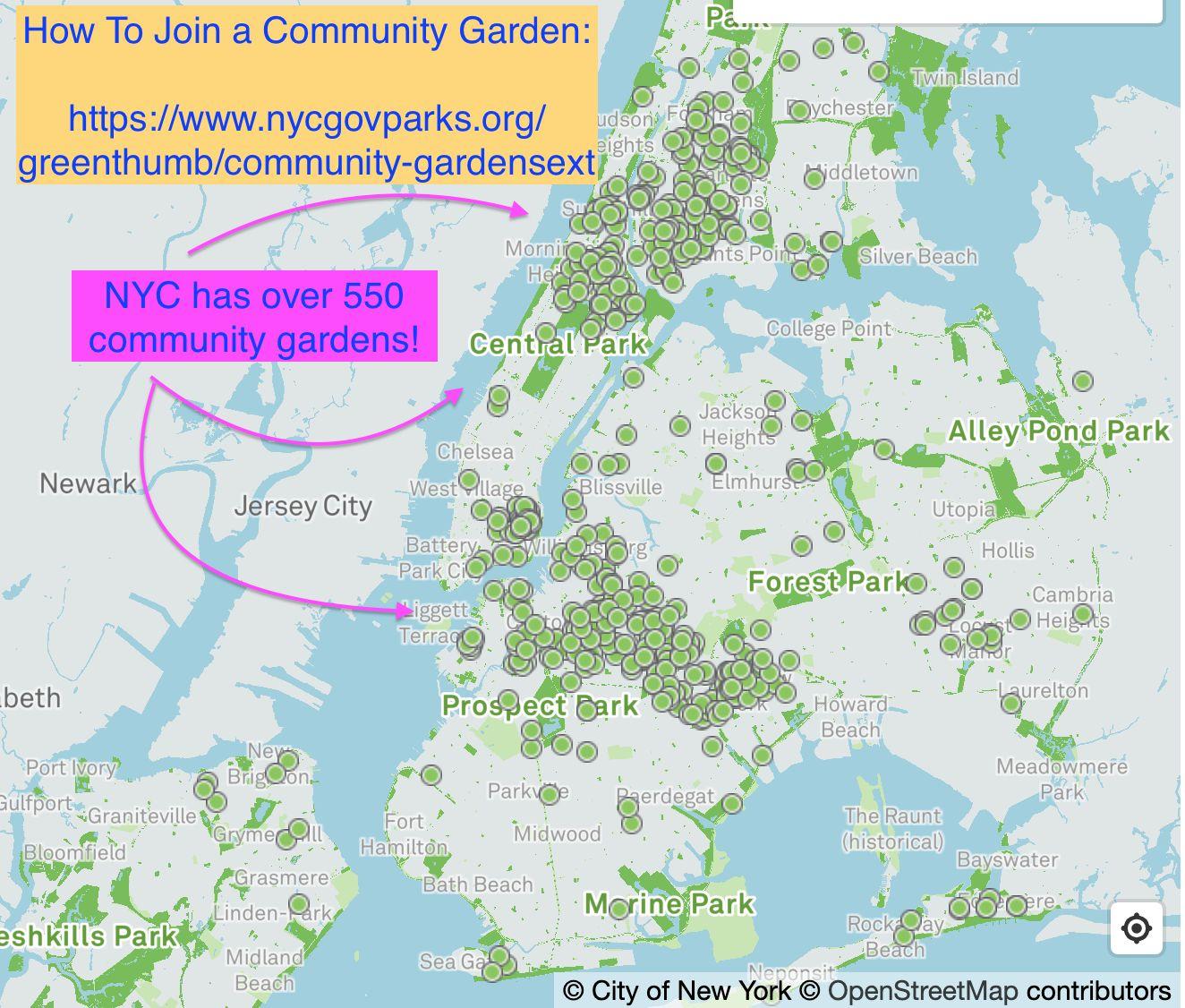
Individual and Collective
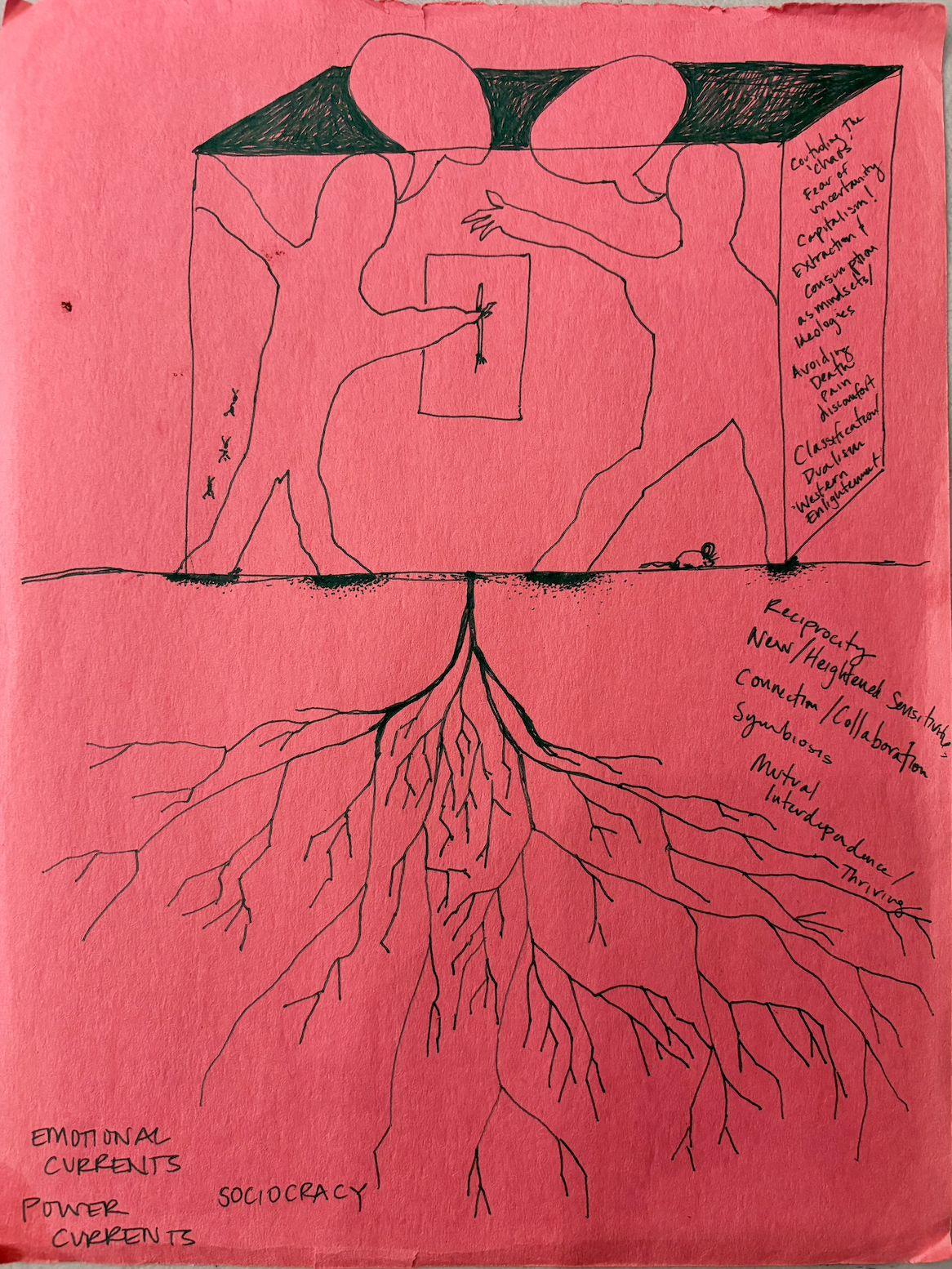
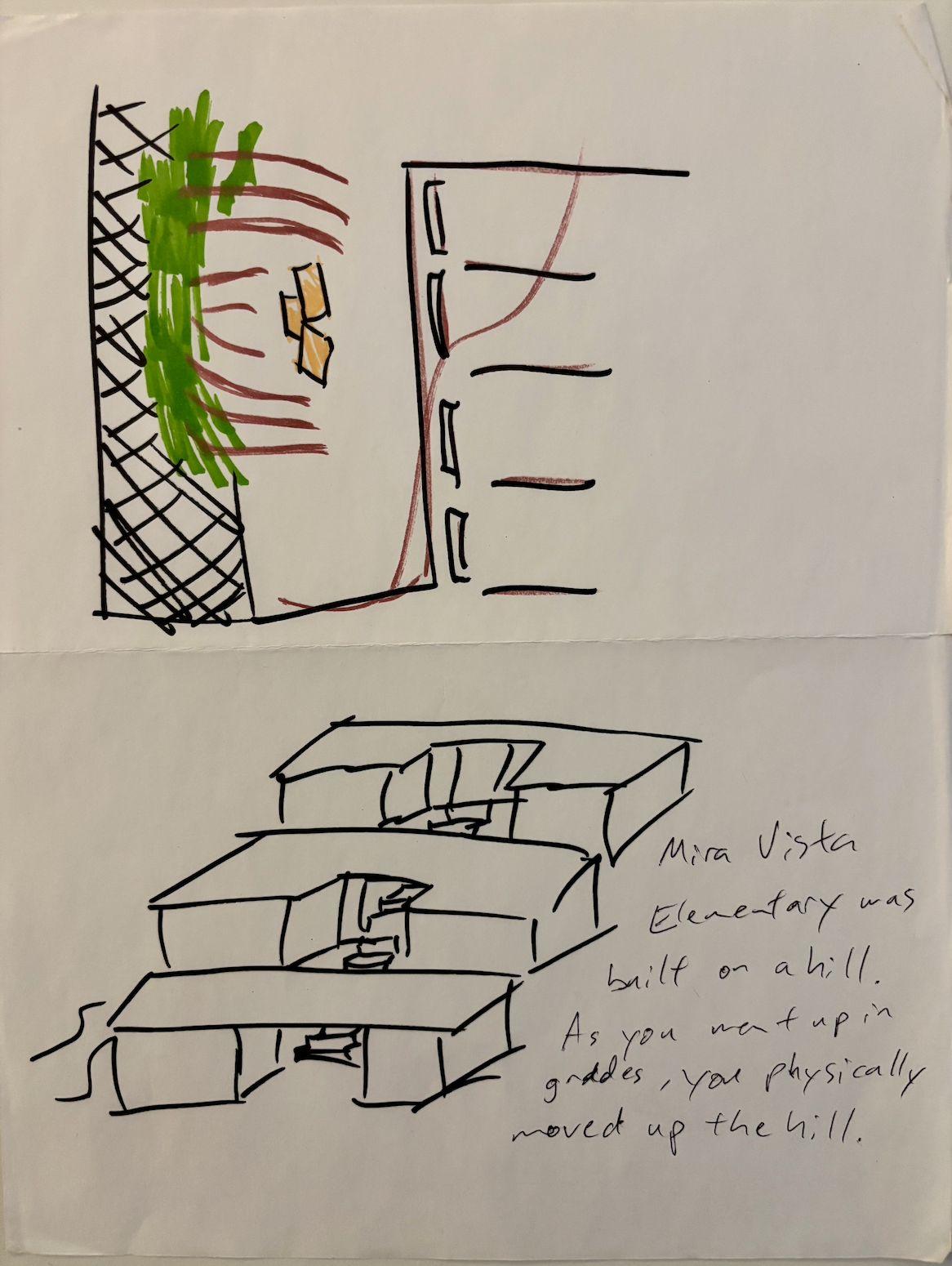
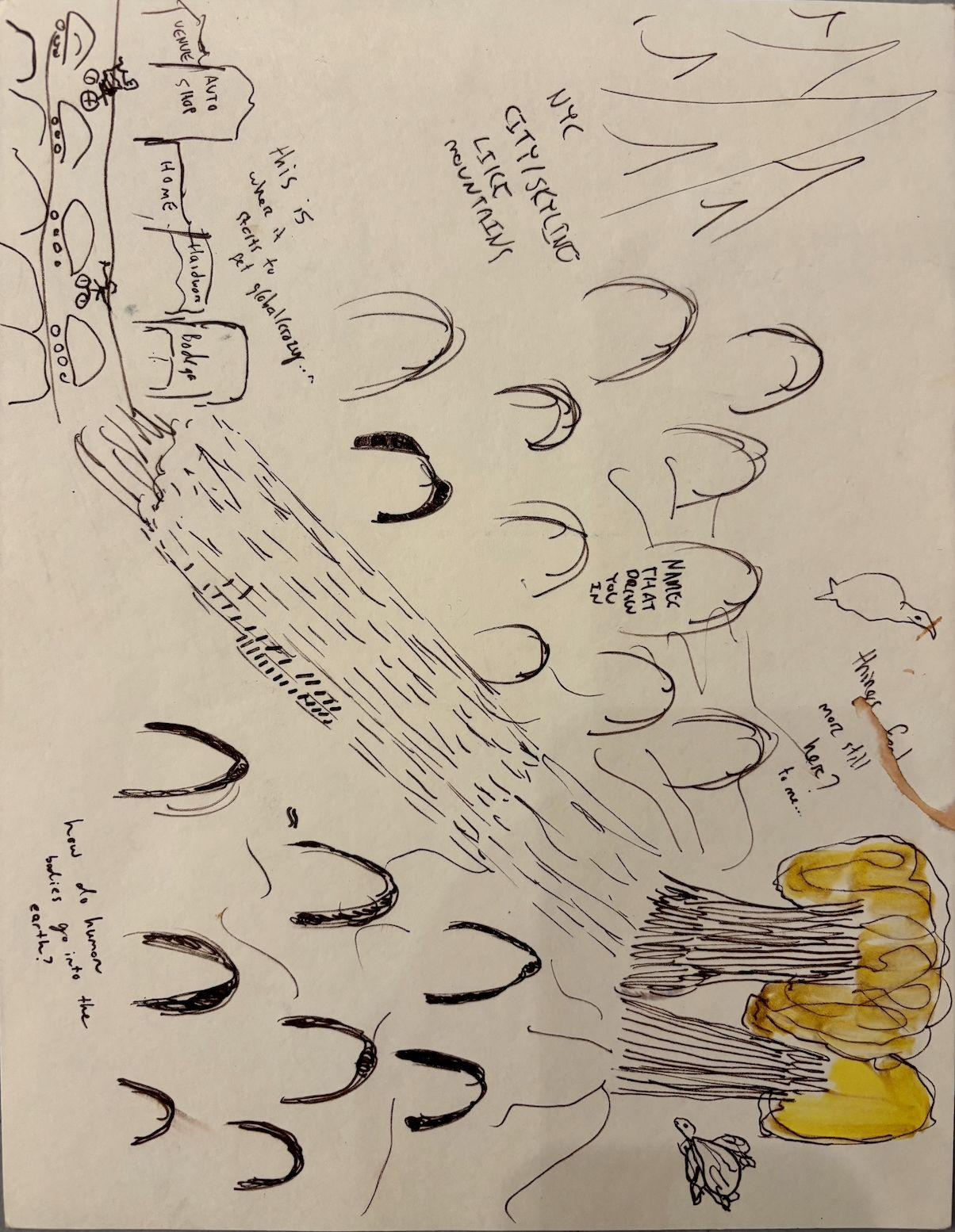
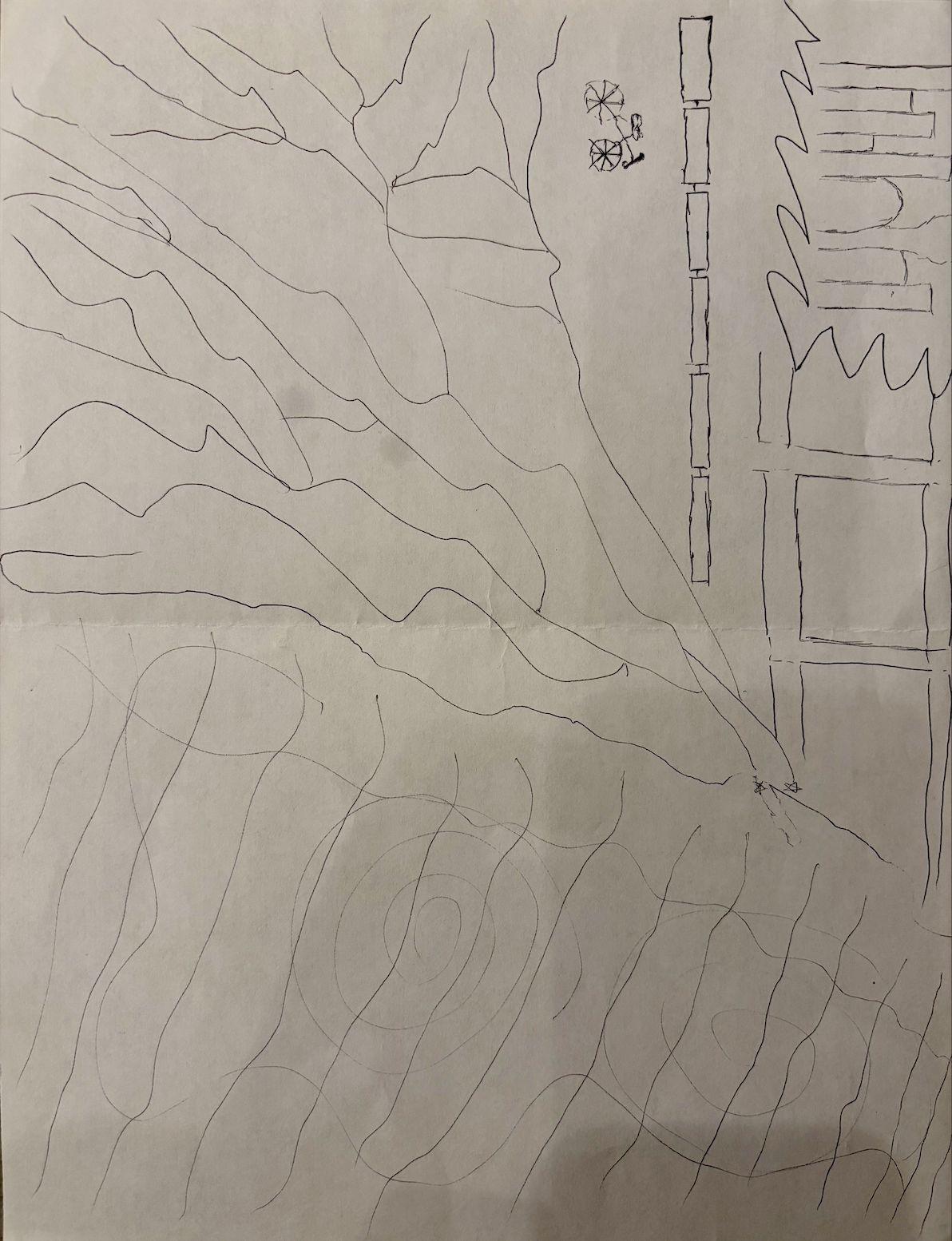
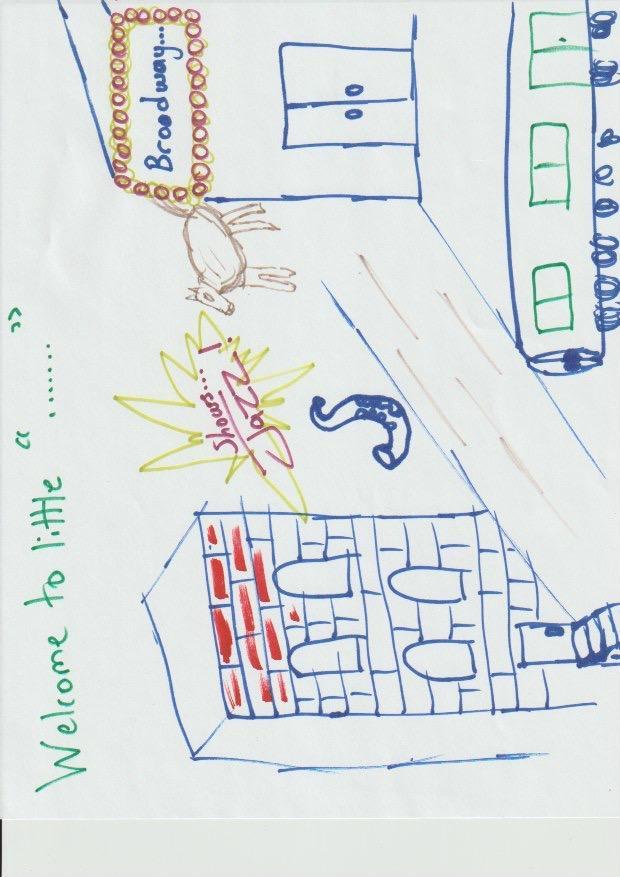
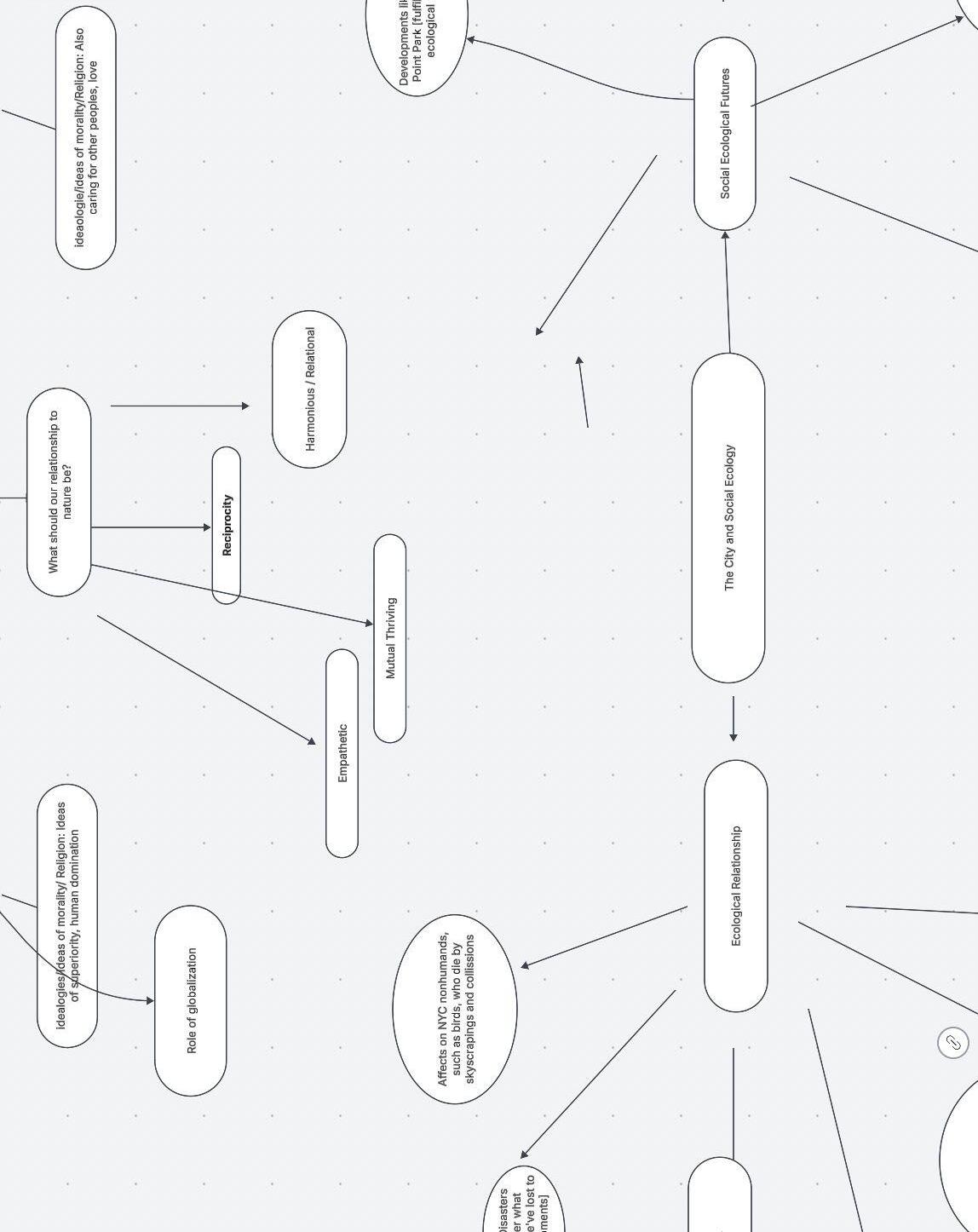
Art Mapping from our Inquiry