Bryce Canyon Stargazing Offers Guided Astronomy Experiences Just Outside Bryce Canyon National Park
by Jaynie Connor
allowing visitors to discover some of the darkest night skies globally. Led by expert guides equipped with high-powered telescopes, the company offers immersive stargazing tours that blend science, storytelling, and stunning views of the cosmos in southern Utah’s celebrated International Dark Sky region.
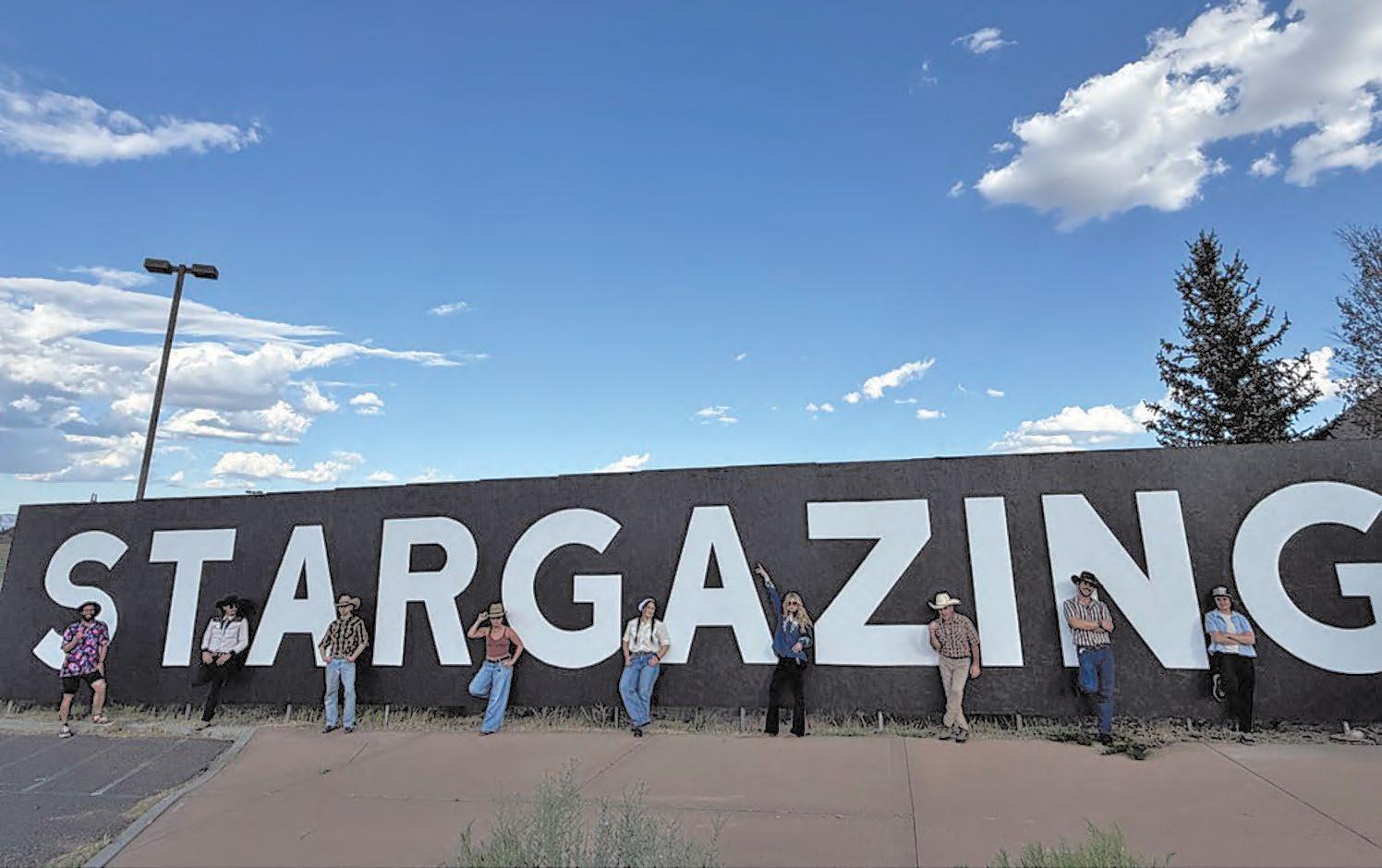
BRYCE - An engaging new venture is becoming increasingly popular as an experiential tourism activity in Garfield County. Bryce Canyon Stargazing presents guided astronomy experiences just outside Bryce Canyon National Park, allowing visitors to discover
SALT LAKE CITYThe Utah Division of Outdoor Recreation, Department of Natural Resources Law Enforcement Division and Utah's Office of the Medical Examiner are urging all boaters and water recreationists to wear a life jacket and practice safe behaviors around the water following an increase in drowning fa-
talities across the state this year. According to state officials, at least eight people have died in openwater drowning incidents in Utah in 2026; seven of them were not wearing a life jacket, highlighting the continued importance of Life Jackets Cont'd on B2
some of the darkest night skies globally.
Led by expert guides equipped with high-powered telescopes, the company offers immersive stargazing tours that blend science, storytelling, and stunning views of the cosmos in southern Utah’s celebrated
Boulder-Based Event Will Honor Lions Killed Under Utah’s WRI-7707 Predator-Removal Project
BOULDER - Community members in southern Utah will gather August 11–14, 2026, for a Vigil Walk and Ceremony on Behalf of Our Cougar Kin, a four-day event honoring mountain lions killed under Utah’s predator-removal policies.
The event is independently organized and led by the Boulder-based Cougar Wildlands Initiative. Participants will have an opportunity to walk together, bear witness to the loss of mountain lions in the region, and reflect on the ecological and cultural importance
Vigil Walk/Ceremony Cont'd on A6
International Dark Sky region.
While Bryce Canyon National Park attracts millions of visitors annually with its breathtaking overlooks and hiking trails, businesses such as Bryce Canyon Stargazing are enhancing tourism after dark.
These nighttime experiences motivate guests to extend their stay, benefiting local accommodations, while also providing an extra attraction beyond the park's typical daytime offerings.
GARFIELD CO.Garfield County Commissioners said the lessons of the Cottonwood Fire served as a reminder of the need for active forest management, with Commissioner Taylor urging continued thinning projects and other efforts to reduce the risk of catastrophic wildfire. During the July 27 Garfield County Commission meeting, Taylor said a recent tour of the Cottonwood Fire burn area with members of Utah's congressional delegation showed firsthand the destruction left behind. "It was just devastating," he said. "We should never allow this to happen in our area."
Chairman Leland Pollock said the county is close to signing a Good Neighbor Authority agreement with the U.S. Forest Service that would allow
Entrada Institute Hosts the V. Douglas Snow Collegiate Arts Mentorship Program, August 4–9
TORREY - The V. Douglas Snow Collegiate Arts Mentorship Program at the Entrada Institute was created by his family to honor Doug Snow (19272009), University of Utah professor and artist. It is an annual competition for
senior undergraduate or graduate Utah art students in fine art/studio art, whose work emphasizes painting and drawing. The student applicants submit at least three previous works, provide a letter of reference from a professor in their department, and describe their interest in pursuing a future as a professional artist. Each student receives a $500 stipend, spends five nights at the Mentorship Program Cont'd on B2
Courtesy Entrada Institute Artwork by Yuliky Dart,
of three artists chosen for this year's V. Douglas Snow Collegiate Arts Mentorship Program at the Entrada Institute.
Courtesy Hailey Stapley
Researcher Says
Traditional treatments like thinning and prescribed burns may no longer work in the era of intense, fast-moving megafires
UTAH - Trump administration officials and members of Congress walked along the burn scar from Utah’s devastating Cottonwood Fire in late July and saw the damage from the rain and flood that followed.
If the forest had been thinned, with “a lot fewer trees per acre, and maybe even some controlled burns to take the underbrush out, there’s just not the fuel there when these fires start to make them catastrophic fires,” Rep. Bruce Westerman told FOX 13 News. The Arkansas Republican chairs the House Natural Resources Committee.
But these traditional fire prevention methods may no longer work, one researcher cautions, with a changing climate that makes hot, dry weather increasingly the norm.
“Weather and climate override the effects of fuels in determining what happens in forested landscapes,” said Dominik Kulakowski, a professor of geography at Clark University in Massachusetts whose research focuses on climate and mountain ecosystems.
“The implication of that,” he said, “is that we’re losing our ability to manage forest fires.”
Larissa Yocom, a professor of fire ecology at Utah State University, agrees that today’s extreme wildfires defy the usual approaches to prevention—but she doesn’t think they are the West’s “new normal—yet.”
Fuels like dry shrubs and stressed trees are a secondary factor that contributes to wildfires, and they are what most forestry treatments have focused on—like cutting fire breaks, creating defensible spaces around homes, thinning forests and scheduling prescribed burns.
Yet hot, fast fires can jump interstate highways and blow past fire breaks hundreds of yards wide, Kulakowski said.
“We’ve seen examples that embers from these dangerous megafires can travel...about a mile,” the professor said. “What we can do to protect ourselves
by Leia Larsen | Salt Lake Tribune
is becoming increasingly difficult.” The country’s most expensive, deadly and destructive fires in recent decades were extremely fast moving. Utah’s own Cottonwood Fire exploded by 20,000 acres overnight as firefighters evacuated homes and struggled to keep the blaze contained.
As long as the trend of warmer and drier weather conditions continue, so will the megafires. And as extremely hot and large fires increase, the ability for forest to regenerate also decreases, Kulakowski said.
“The soil is being sterilized,” Kulakowski said. “There are fewer surviving trees.”
Fewer trees mean fewer seeds to help forests regrow. In some cases, the types of forests that do resprout may look different—aspens may dominate up where conifers once thrived, for example. But in parts of the West, Kulakowski said, it appears no forest vegetation is regrowing at all.
“In which case we’re talking about ecosystem collapse,” he said. “We’re talking about forests disappearing from parts of the landscape.”
Time for a new approach?
But fire experts in Utah say traditional fire treatment methods still work and should be deployed across forests.
“We have a lot of examples where managing fuel is still beneficial and makes a difference,” said
Yocom, the USU fire ecology professor.
A bipartisan group of lawmakers in Western states, including Sen. John Curtis, R-Utah and Sen. John Hickenlooper, D-Colorado, have sponsored the “Fix Our Forests Act” after spending months negotiating the best ways to manage woodlands and prevent catastrophic wildfire.
The bill creates “fireshed management areas”— fire-prone lands that pose the biggest risk to communities—where federal agencies would streamline and speed up fuel treatments. It has yet to receive a full vote in the Senate.
Yocom acknowledged, however, that there is little resource and forestry managers could have done to prevent some of the large wildfires that have burned across Utah this season.
“In the most extreme conditions, those on-theground factors get overwhelmed,” she said. “But I don’t think that is our new normal — yet.”
In the aftermath of the Cottonwood Fire, Yocom found stands of aspen and young, green trees that didn’t burn, she said.
If forestry managers allowed fires to burn in shoulder seasons, during cooler weather and milder conditions, wildfire might be less intense and have different affects on forests, Yocom said.
“It’s not pre-ordained that we are stuck with this kind of fire,” Yocom said.
“The only type of fire we’re ‘allowing’ to happen right now are the ones that are burning in the conditions where we literally can’t do anything about it.”
An ecosystem imbalance
The Trump administration issued a directive this year calling on federal agencies to aggressively suppress all fires—including the smaller, milder ones that forests evolved with and may keep them healthy.
“We have an imbalance within our natural environments because basically, almost every ecosystem within Utah has developed out of an adaptation of fire,” said Bradley Washa, a firefighter and professor of wildland resources for USU, “and we have removed that fire from those ecosystems.”
A warming climate is impacting Western forests, Washa said, but it’s difficult to pin any single fire event to climate change.
And through his work on the ground, he continues to see how small things— like removing a firewood pile or clearing overgrown brush—can make the difference between a home surviving a wildfire or burning to the ground.
Still, “some of our fuel treatments and defensible space concepts are designed for your average fire,” Washa acknowledged, “not these extreme events.”
This article was originally published on www. sltrib.com on July 28, 2026.
Courtesy Garfield County
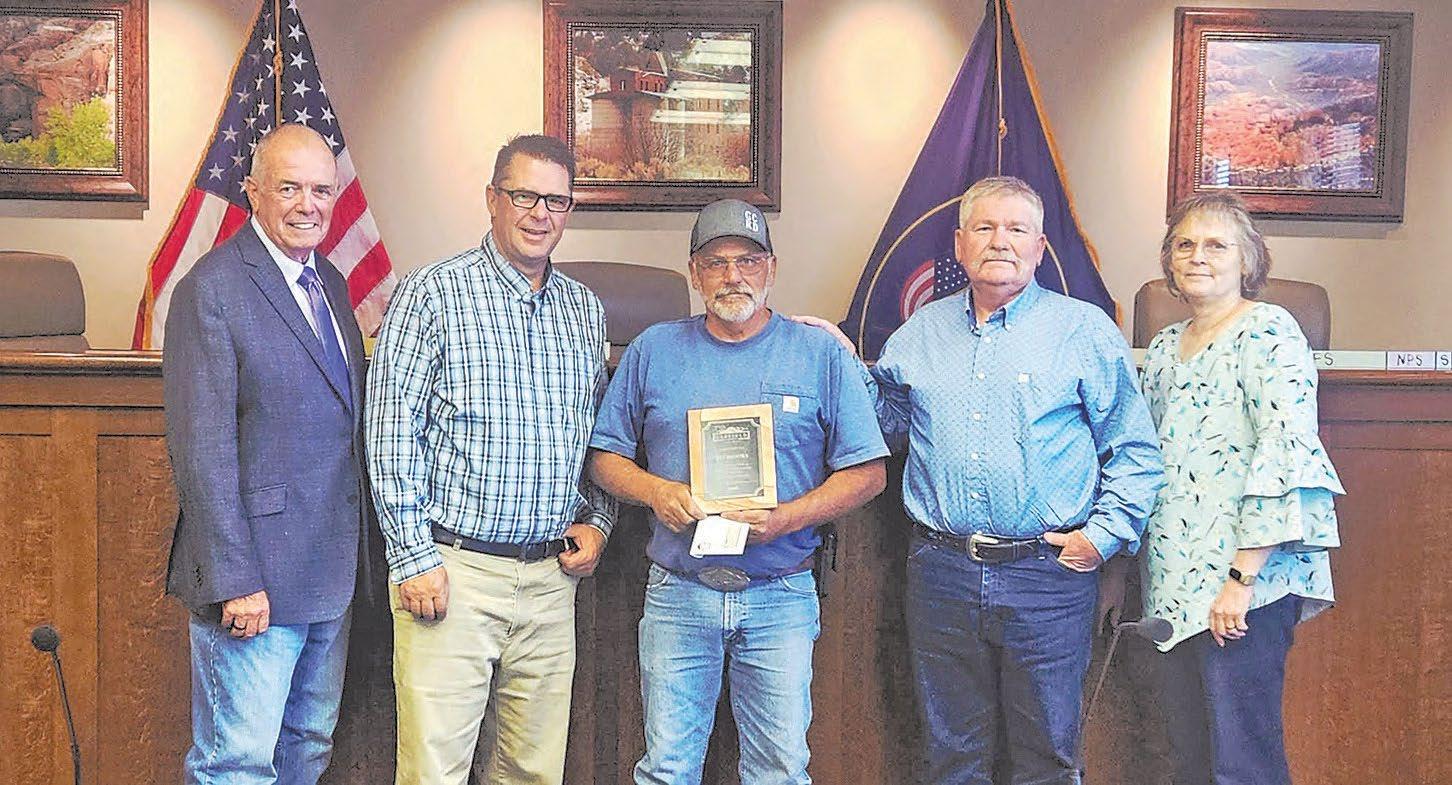
GARFIELD CO. - The Garfield County Commission recognized Jay Brooks with the road department on July 27. Brooks is headed into retirement after 32 years of service to Garfield County. "Thank you, Jay; enjoy
said Garfield County representatives on a Facebook post. —Garfield County
This story is made possible through a partnership between The Salt Lake Tribune and Grist, a nonprofit environmental media organization.
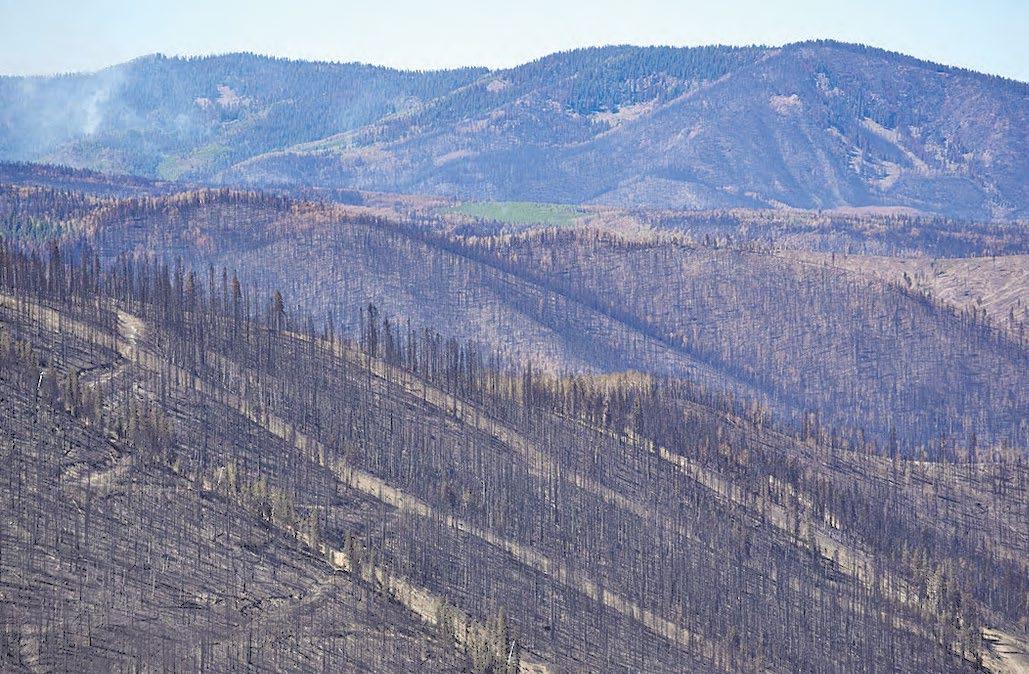
Francisco Kjolseth | The Salt Lake Tribune
A tour of Eagle Point Resort, one of the smallest ski and snowboard areas in Utah, reveals what remains for one of the first areas to fall victim to the Cottonwood Fire in late June, pictured Thursday, July 9, 2026.