
THE SCIENTIFIC MARKSMAN
OPENING
We live in uncertain times. Scientific fact and fiction feel increasingly inseparable, and technological and humanitarian breakthroughs often seem at odds. In an age of medical innovation, AI automation, and widespread skepticism, it can be hard to define words like “truth” and “progress”. We have to rely on our communities to dissect the good and to elucidate scientific reality. In this edition of The Scientific Marksman, we focus on where truth hits home. We are a community of truthseekers, deep thinkers, and constantly-questioning scientists who will stop at nothing to delineate the progress that impacts our campus and our world. This edition is about that delineation, about careful inspection, appropriate criticism, and asking the question, “Where do we go from here?”
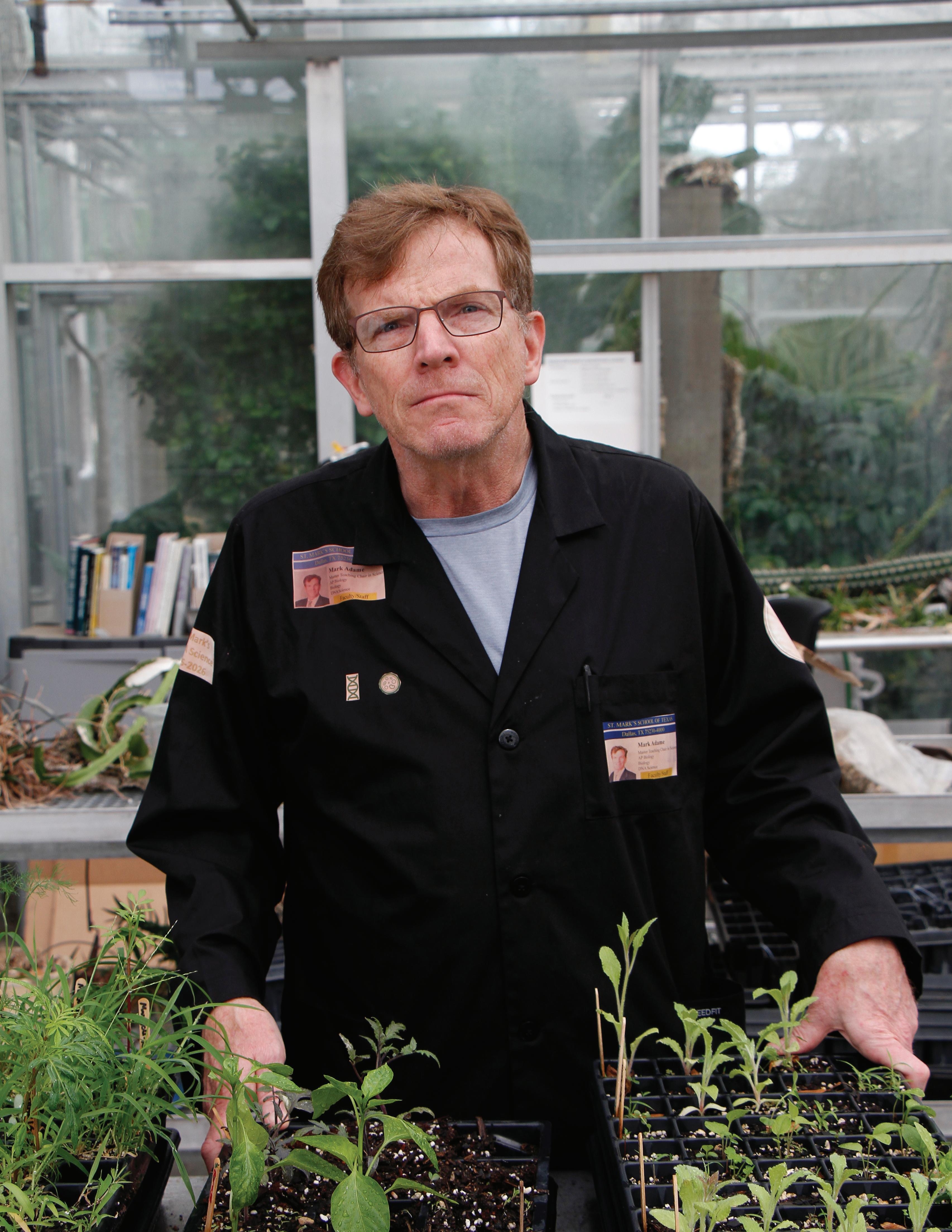
ADAME DEDICATION:
Mr. Mark Adame has served the St. Mark’s community for almost two decades. In that time, he has inspired countless laughs, questions, and boundless curiosity for the life sciences. St. Mark’s students know their way around a petri dish and can identify the powerhouse of the cell in a heartbeat because of Mr. Adame’s careful instruction. This instruction is typically intermixed with mountain bike anecdotes, stories from past Pecos trips, and more than one phosphofructokinase reference. Mr. Adame brings an energy to the classroom that students can’t help but match, and even if you’ve never been lucky enough to have him as a teacher, he won’t hesitate to give you a friendly wave in the hallway and make you feel welcome. We’re all amazingly grateful to Mr. Adame for instilling in us an understanding of DNA, the natural world, and the heart of what makes a St. Mark’s education special.
TABLE OF CONTENTS
CERTAINTY CERTAINTY CERTAINTY Section 1
Science is rarely certain, which is exactly why those rare moments of confidence matter. CERTAINTY features stories from our community that ground us. Changemakers and innovators sharing tips and tricks to becoming better scientists and better thinkers. Inarguably positive scientific discoveries that make our lives healthier and happier. And small steps forward on our own campus.
CERTAINTY
Makerspace
Computer Science
Virtual Reality
Kevin Fine
Medical Education
Game and Graph Theory
Nick Orenstein
CERTAINTY CERTAINTY CERTAINTY CERTAINTY
Cardiac Transplantation
MAKER
SPACE
Built as part of the Winn Science Center, the Makerspace is more than a room full of tools. It has evolved into one of St. Mark’s most dynamic learning environments, where students learn by building, solving real problems and creating projects that reach far beyond the classroom.
The hum of laser cutters, the whir of CNC machines and the smell of freshly cut plywood fill the Makerspace at St. Mark’s, where sketches turn into prototypes and ideas become tangible projects. Hands-on learning is a key part of scientific education at St. Mark’s, and the school’s Makerspace serves as a key component in enhancing the school’s scientific resources. Entering its seventh year, the Makerspace has become a hub for students interested in engineering projects, both for personal and scholastic use. It is more than simply a room full of tools — the Makerspace is a place where ideas take shape, students connect through shared projects and learning extends far beyond the classroom.
Stewart Mayer, an engineering teacher and the Makerspace director, mentions how the idea of the Makerspace “was new with the Winn Science Center and was really the vision of the science department.”
From the beginning, the Makerspace was intentionally designed to support experiential learning. Rather than functioning as a traditional classroom, the space was primarily built to encourage experi-
mentation, problem-solving and collaboration.
“They saw a need in the emergence of hands-on building and engineering, so St. Mark’s and the administration built this space into the new building on purpose,” Mayer said.
That purpose is reflected in the wide range of projects students complete, particularly in upper school engineering classes.
“Most of the students were new to CAD or engineering concepts,” Mayer explained. “So we started out learning Onshape CAD, and our first project was to design a toy.”
The assignment encouraged creativity while introducing students to real engineering constraints.
The project extended beyond the classroom and into the broader community.
“The toys were successful. We had them evaluated by the student store staff and selected a couple that we thought kids would like and that could be easily manufactured,” Mayer said. “We’re actually producing several hundred of them to be given away in the toy drive.”
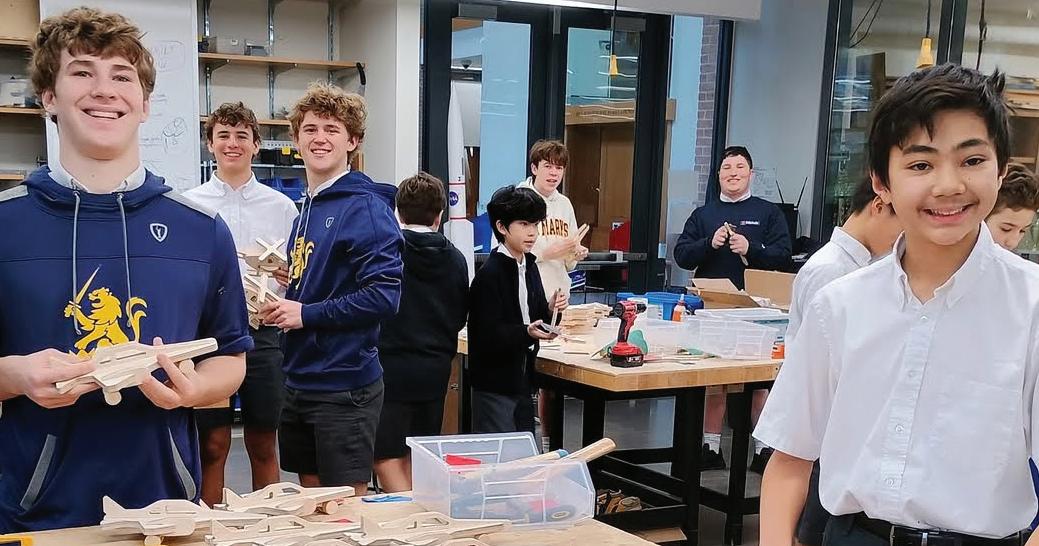
The toys were donated through a school-supported toy drive, allowing students to witness their designs reach children outside the St. Mark’s community. By producing toys at a large scale, students learned not only about design and manufacturing, but also about responsibility and real-world impact.
Mr. Mayer further emphasized the deeper goal behind the project.
“That’s part of the big push the school has on character and leadership, giving back to the community in a way that we can use engineering to do better,” Mayer said.
As students gain experience, their projects become increasingly complex and practical.
“The second big project has been to create pieces of furniture that all fit together, all made out of plywood,” Mayer said. “Think of it as IKEA furniture, flat pieces designed to be screwed together. It must fit together perfectly for it to work.”
Through these student-built projects, the Makerspace is becoming increasingly self-sustaining, with many of its fixtures designed and constructed by students themselves.
“Students have been designing various improvements to the Makerspace including wood organizers, PPE storage, a vinyl cutter stand, benches for CNC machines and a cordless power tool organizer,” Mayer said.
These additions not only improve efficiency, but also demonstrate how students leave a lasting physical impact on the space through their work.
This same philosophy of exploration and student-driven learning carries directly into the classroom. The Makerspace is also the location for the school’s eighth-grade engineering elective, which aims to introduce students to engineering through exploration rather than a fixed curriculum.
“The eighth-grade engineering class is really designed around engaging students with core engineering ideas through hands-on projects that spark
Community Service Students construct toys in the Makerspace for donation.
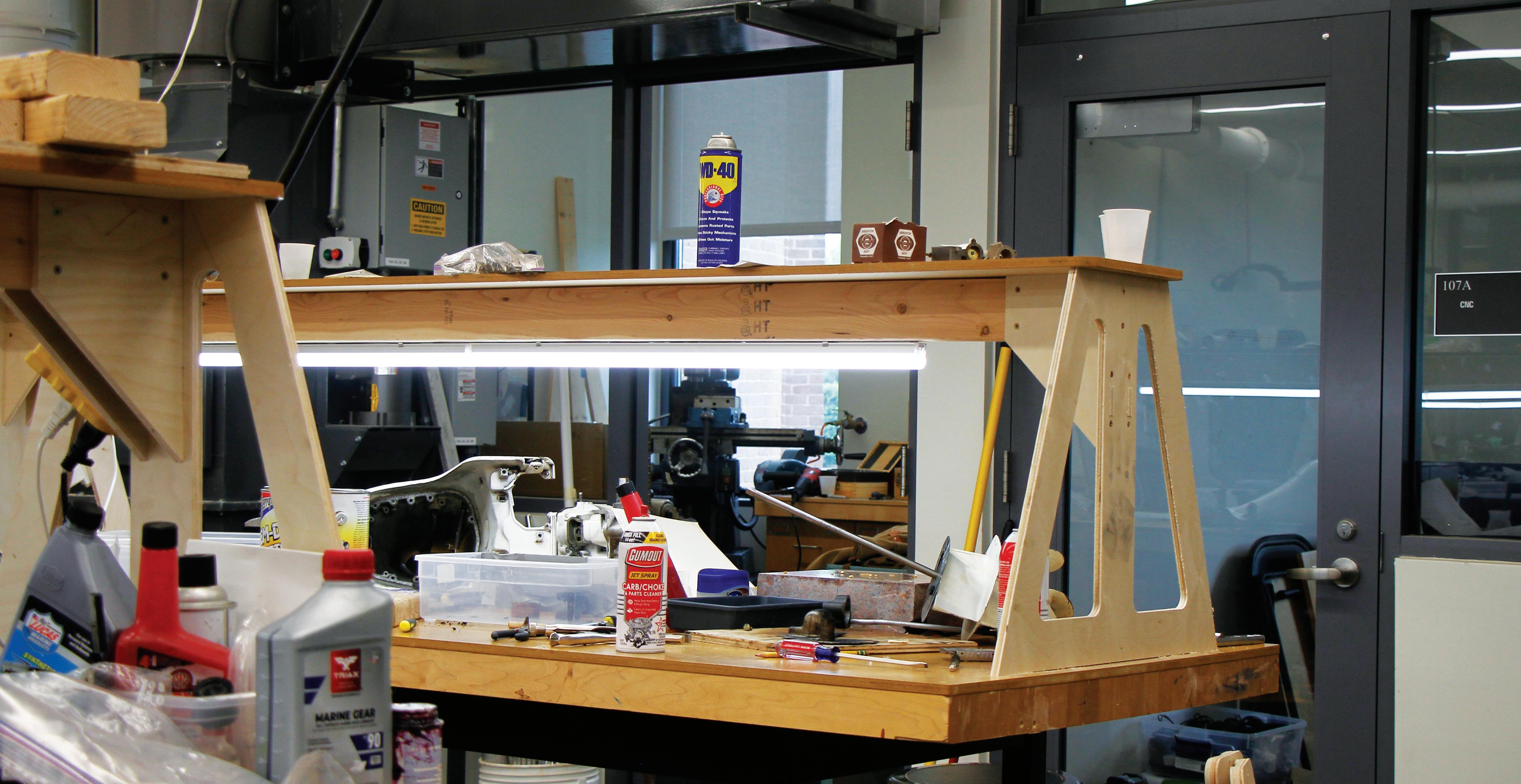
curiosity and creativity,” Mayer said.
In past years, students have designed and competed with battle bots, but the course shifts based on student interest.
“Last year I had students that were interested in trebuchets, and so as well as learning CAD, they put their semester skills to work building trebuchets,” Mayer said.
This year, the class has taken a different, more mechanical approach.
“It’s more of an exploration of various mechanical concepts,” Mayer said. “The class goes all the way from cutting things out of foam board to using the CNC metalworking lathe to make lightsabers.”
“It’s more of an exploration of various mechanical concepts,” Mayer said. “The class goes all the way from cutting things out of foam board to using the CNC metalworking lathe to make lightsabers.”
The Makerspace’s wide range of tools allows students to turn ideas into reality.
“For seventh grade and robotics, the most used tool is probably the laser cutter,” Mayer explained. “It’s the fastest and easiest way to get precision parts made.”
Older students use more advanced equipment.
“In upper school engineering, we’ve primarily been using thicker material, so we use the ShopBot CNC gantry router by far the most,” Mayer said.
As students’ skills grow, so does their exposure to industry-level tools. “We’re also using CNC metalworking tools such as the Tormach mill and lathe more and more, and we’re very excited to see students using those advanced machines,” Mayer said.
Despite the advanced equipment, safety
remains a defining strength of the Makerspace. “Knock on wood, we’ve had zero major injuries in the Makerspace so far,” Mayer said. “Pretty much all injuries have been splinters or hitting a finger with a hammer, nothing major.”
This safety record reflects strong training and a culture of responsibility and mutual support.
For Mayer, the most important theme is accessibility. Students can be trained with tools, become certified for use and work independently once approved.
“If you want to spend the time building something, making something, repairing something, feel free to come in,” he said.
You don’t have to be a robotics kid or a diehard engineer to work in here. You simply have to have a project that has a purpose and you want to get done.
Over the years, the Makerspace has supported many ambitious individual projects as well.
“A couple years ago, a student made a go-kart,” Mayer recalled.
He also pointed to other standout work.
“William Loftus had a Mars rover replica that he was working on, which I found really interesting,” Mayer said.
While not every student brings in a personal project, the space is designed to support that kind of creativity whenever students are ready.
The Makerspace is also widely used beyond engineering classes.
“Basically, if students know how to use the machines, they’re welcome to come in here with our permission and use them for whatever purposes they want,” Mayer explained. Numerous clubs rely on the space. “Students involved in the greenhouse built placards, signs and even parts of hydroponic watering systems in here.”
The collaborative culture fostered in the Makerspace has built strong relationships between students and faculty.
“One of my favorite memories was when my son Wyatt got accepted into St. Mark’s, and the robotics guys stood up and gave me a standing ovation,” Mayer said.
For Mayer, this moment reflected the sense of trust, teamwork and mutual respect that develops when students and teachers work side by side on meaningful projects.”
It really touched me to know that we were that tight and that they cared so much. It was an awesome experience,” Mayer said.
At St. Mark’s, the Makerspace stands as a place where students engage beyond engineering concepts — they design real, practical solutions, improve their shared environment and leave behind indelible marks that shape the space for future students.
Makerspace The area is furnished with various computers, 3D printers and other equipment for student use.
COMPUTER SCIENCE
After graduating from college or graduate school, computer science majors typically have two career options: entering the programming industry or continuing with research. However, making the decision to pursue one or the other is not so easy.
Story
Benjamin Standefer
Photos
Courtesy David Browne
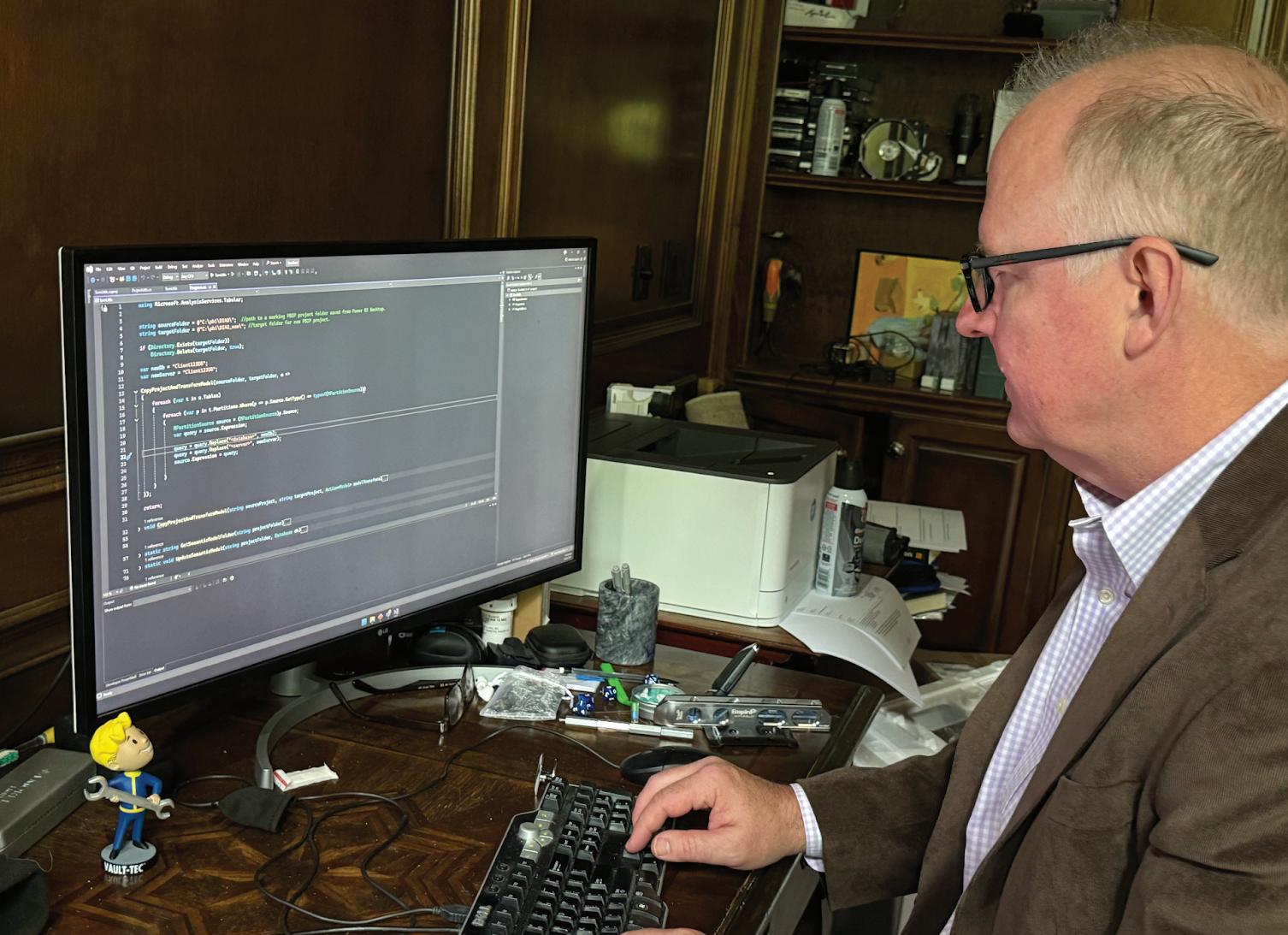
Joining a team of PhD students at a prestigious university’s world-renowned laboratory or being hired by a software giant’s $50 million think tank. For a new graduate, the choice between the cutting-edge frontier of academic research and the corporate nine-to-five is a difficult one. David Browne ‘89, a developer and solution architect at Microsoft, and Sunny Shree, a PhD graduate at UT Arlington, each have unique perspectives on this choice.
Browne graduated from Wesleyan University in 1993 with a double major in English and math.
“One of the things I learned as a math major is that I was good at it, but I was surrounded by a lot of people who were much better at it,” Browne said.
“My best path was to bring my above-average technical
skills and combine them with a range of other abilities to create a unique package.”
He realized that an industry career in software was right for him because it allowed him to leverage his communication and soft skills in addition to technical expertise. With the public speaking expertise he gained from his English major, Browne was often nominated to present new technologies and engage with key decision-makers. In the corporate world, knowing how to make a message stick can be just as important as code-savviness. Beyond his unique skill set, Browne sees significant advantages in an industry career.
“It’s a business job with many opportunities, including the potential to make significantly more money,” he said.
“Additionally, there is a wide variety of industries and roles
Industry vs. Research
30% 5% 40-50%
Roughly 30 percent of computer science graduates go into data science, IT systems or cybersecurity. These individuals are not programmers for big-tech in the traditional sense.
Around 40 to 50 percent of computer science graduates work in software engineering and development. Employers typically include big-tech companies like Google, Microsoft or Meta.
Roughly 5 percent of computer science graduates pursue post-graduate education in some form. A small percent of these individuals then go on to do computer science research. Courtesy Bureau of Labor Statistics
you can move into throughout your career.”
Browne thinks the higher pay and flexible career paths make industry jobs stand out. He emphasizes that those in industry jobs still require a strong foundation in computer science. He advises high school and college students to try to do something that does have industry applications regardless of their chosen profession, as there are often more lucrative opportunities in the private sector.
Shree, however, sees more nuance in the decision. After earning his bachelor’s degree tutoring kids in computer science, Shree pursued a PhD at UT Arlington with a focus on explainable AI. His passion for teaching and his fascination with artificial intelligence fueled his decision.
Planning to enter academia after his PhD, Shree sees several advantages in institutional research compared to industry roles.
“In academia, your work doesn’t have to be ready to be deployed in the real world,” he said. “I don’t have to worry too much about how it’s going to impact human aspects. If I worked for OpenAI, I would have to focus on user impact, but in academia, all we have to care about is solving the problem.”
He also points out that safety concerns are much less restrictive in academic environments, allowing for a more relaxed atmosphere that fosters exploration.
“You can create your own problem and solve your own problem all at your own pace in academia,” Shree said.
You can create your own problem and solve your own problem all at your own pace in academia. “
At the same time, he acknowledges the drawbacks of turning down an industry career.
“If you want to push the boundaries of AI, you need resources,” Shree said. “If you think of any of the big companies, like Microsoft or OpenAI, they have their own research labs and lots of money to invest in them. For example, UT Arlington is a big research university, but we
don’t have the infrastructure to train an entire language model.”
On a grander scale, industry jobs in computer science have clearly dominated over the past five years. According to the Computing Research Association, Computer science graduates are twice as likely to pursue a corporate career path rather than an academic one. Browne’s point about salary was also valid: scientists working in industry earn, on average, $37,000 more than their academic peers. However, these trajectories have shifted slightly in the past year, with a higher proportion of Ph.D. graduates choosing academic paths, helping to close the gap at the top tiers of academia.
Ultimately, the choice between academia and industry comes down to personal goals and priorities. Whether someone is driven by the freedom to explore theoretical problems or the thrill of creating user-friendly products, both paths will play a crucial role in shaping the future of computer science.
Programming Browne examines and edits his code as part of his work for Microsoft.
REALITY AUGMENTED VIRTUAL AND
As augmented reality (AR) and virtual reality (VR) technologies continue to improve, they are finding new uses in the classroom as unique tools for immersive learning.
Story Eugene Wang Andrew Hofmann
In the comfort of his own home, a student lifts the new Meta Quest headset over his head. The projection display slowly flickers to life, and the student is suddenly transported to the Great Pyramid of Giza, 7000 miles away. Within seconds, with just a simple click of a button and turn of his head, the stunning desert landscape envelopes him.
In the modern world, with the various advancements in both augmented and virtual reality (AR/ VR) technology, teachers at schools like St. Mark’s all over the globe are expanding the typical classroom experience and are incorporating immersive virtual reality experiences into their lessons.
“VR headsets are used in other schools, and it’s a way to experience something without actually going out and experiencing it,” Computer Science Department Chair Kurt Tholking said. “You can stand in a location, see the scale and scope of the pyramids, and even interact with the environment.”
Although AR and VR share some similarities, they serve completely different purposes. In simple terms, AR adds digital elements to the real world, while VR allows users to explore the virtual world. All over the world, both technologies are currently
finding unique usages, whether it be in the classroom, in sports, or even in industries like advertising and healthcare.
“In AR, you’re still where you are. It’s just making it more exciting,” computer science teacher Kendall Murphy said. “VR, on the other hand, takes you to a whole different place. Your brain really believes you’re there.”
In recent years, as a result of the sudden rise of these two technologies, St. Mark’s has acquired 10 Meta Quest 2 headsets, allowing students to explore various subjects with newfound tools and state-ofthe-art learning experiences through simulations in cyberspace.
“What we found is that there are relevant apps for almost any subject,” Murphy said. “In science, they used Space Explorers to travel to space and another app to journey through the human body. In humanities, students used Wander to visit realworld locations, and in art, we had students create using Paint VR.”
However, usage of VR and AR aren’t just limited to Middle and Upper School students.
“There’s a program called Quiver where first
Photos Courtesy Winston Lin

graders color a picture, and then, using an iPad, they can see their drawing come to life in 3D,” Lower School computer science teacher Aimee Whitaker said. “For second grade, we use an AR snow globe app where students create their own winter scenes and watch them interact with the real world.”
While younger students certainly are able to reap the benefits of these applications, third and fourth grade Marksmen gain addi tional privileges and are able to use VR headsets for more advanced and interactive lessons.
“In third grade, we use National Geographic Explorer VR to take students on an Arctic expedition,” Whitaker said. “They paddle through icy waters, see penguins, and even climb an iceberg. It’s an incredibly immersive experience.”
Beyond the classroom, VR and AR are also making a mark in career training, particularly in professional fields like medicine and sales.
“My friend works in medical sales, and their training involves putting on VR goggles and practicing using the products they’ll be selling,” Murphy said. “A lot of career training is starting in VR before people get their hands dirty in real life.”
In fact, recurring issues such as frequent updates and questions about hygiene remain significant concerns.
“I’ve had 20 boys’ faces on these headsets, and then I have to put it on to reset everything,” Murphy said. “There’s just a lot of germs involved.”
but I can’t see what they’re seeing,” Murphy said. “Trying to guide them remotely is one of the biggest challenges.”
Another rising concern with the adoption of VR in schools and workplaces is privacy and security.

“We created all the [VR] accounts ourselves to prevent students from logging in or purchasing apps on their own,” Murphy said.
Recently, Murphy attended the Future of Educational Technology Conference, where she witnessed the rise of VR headsets designed to primarily serve in the classroom.
“Now they’re making headsets specifically for schools,” Murphy said. “They’re trying to make the technology simpler and more accessible for teachers and students.”
With tools for nearly every subject, the benefits of VR are undeniable, and they will only continue to grow. As VR continues to explode in popularity across the world, developers are constantly working to improve their products by adding additional effects and user-friendly settings.
However, despite the benefits, augmented reality is not without challenges of its own.
Communication and teaching with VR headsets also remains a challenge, as these new technologies often do not contain enough tools for practical classroom usage.
“They’ll say, ‘I don’t know what to do!’
Technology is inherently exciting for kids,” Whitaker said. “Instead of just watching a video or reading about [something] in a book, they get to feel what it’s like.”
Virtual Reality Headsets like the Meta Quest 2 allow for an immersive VR experience.
KEVINFINE
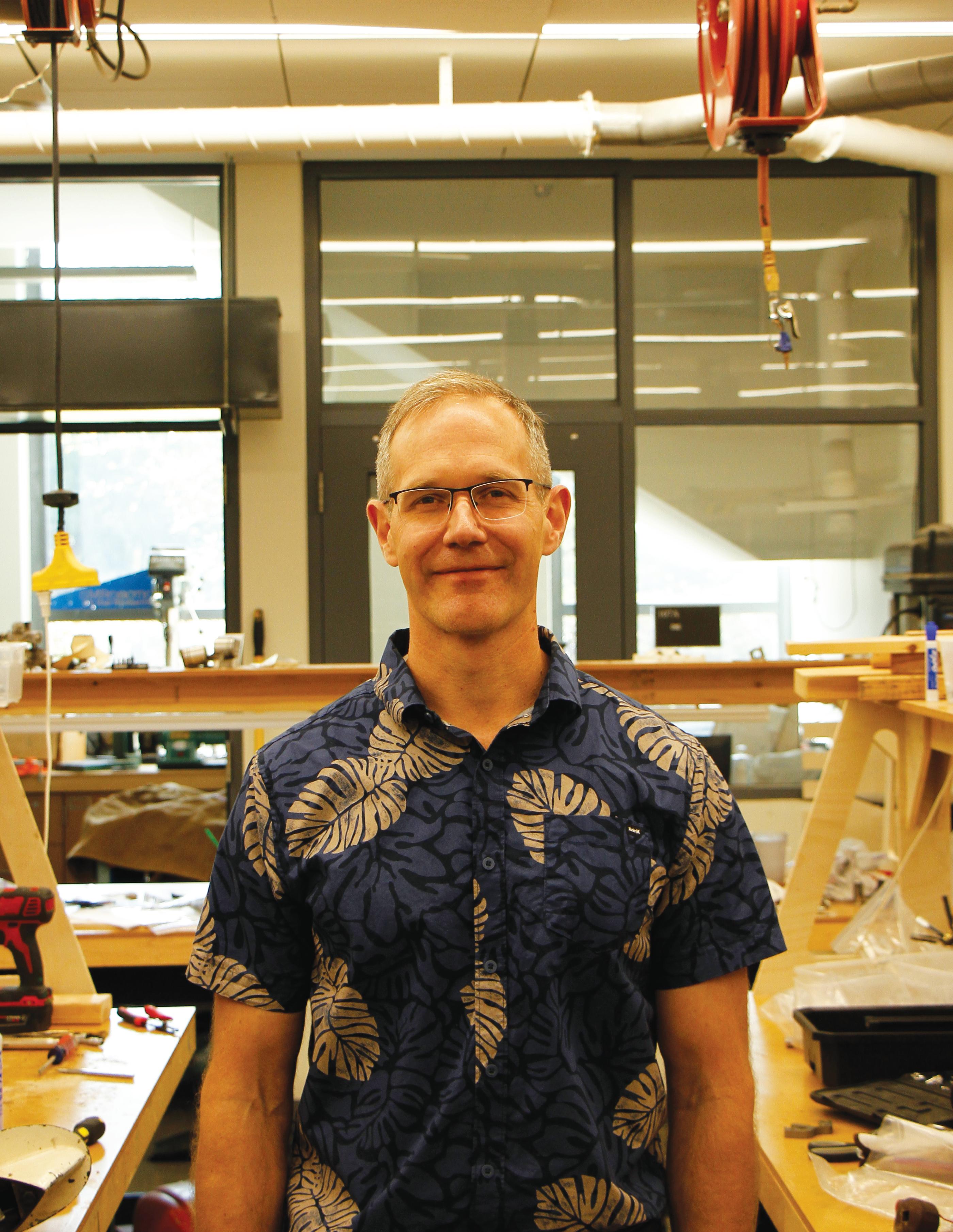
A childhood devoted to music does not usually lead to a Stanford degree or a teaching career in engineering. Yet for Kevin Fine, that path from principal trombonist to engineering was shaped by curiosity, creativity and a willingness to embrace the unexpected.
The dream of becoming a professional musician didn’t include a DIY floating machine. It didn’t include an engineering degree from Stanford University. It certainly didn’t include a career at the school.
Growing up in Seattle dedicating a huge focus of his childhood to music, Fine wasn’t always set on engineering.
“I was pretty good at math and science, but I would say I didn’t really have the same exposure to engineering that many students can have here,” Fine said. “I had band and orchestra, and then I did my own practicing. At the time, music was my main interest and my main love.”
As a high school student and principal trombonist of the orchestra, Fine looked up to his teacher, Katie, for guidance. In the realm of music, harmony and musicality are key to the interpretation of a piece.
“She’s really opened my eyes to tone, like how to establish and refine a really grand orchestral tone,” Fine said. “And I thought that was pretty magical.”
Music wasn’t in an entirely different direction, however.
“I believe that music as well as mathematical and scientific thinking are correlated, at least,” Fine said. “Many people who are strong at math and science are also very interested in music, and I’m not sure if there’s a direct correlation here, but in a way, they can also access the left side and right sides of the brain.”
After over a decade of music pursuits, it was time to apply for colleges.
“I also applied to some conservatory programs,” Fine said. “And it ended up that I didn’t get into the conservatory programs and at that time, that was a bit of a disappointment to me.”
He got into Stanford instead. At Stanford, among other universities, students don’t have to declare a major until their sophomore year. This allowed Fine to explore the school’s wide-ranging curriculum. Fine was split between a love for engineering and fascination with the human brain. He didn’t study the human brain, but he remains curious and today.
“That would have been a great path, so it was a little bit of a hard choice,” Fine said. “For me, I had two things that I thought I would really enjoy. I chose one of them. I have enjoyed it. I’m sure I
always enjoyed the other one as well.”
Then he found his passion.
“I discovered engineering at Stanford, in a machine shop called the Product Realization Lab,” Fine said. “But the cool thing about it was that there was a real community of people there and it was a creative center of campus. The product design programs, the engineering programs, the arts programs, all these people used machines. So it was not so much about the tools and the processes, but it was about what you could do with them.”
Beyond physics and formulas, Fine discovered the importance of real world applications. On paper something may appear differently than how it appears in the real world.
Working hard at something to achieve excellence, even if that’s not the thing that you are finally doing, has value. “
“When you start to look at these equations, it gives you a different perspective,” Fine said. “You’re able to look at the equations and play around with them and see what changes, then understand fundamentally what’s going on.”
“If you start to improvise, that’s more of the creative, subconscious part of the brain,” Fine said. “And I really think both are required to work together, so I think having a break from the logical thinking to go into the subconscious world helps.”
In a complicated yet varied field, Fine is constantly learning new things. In the eighth grade Engineering course that he teaches, Fine experimented with a solenoid, a coil that converts electrical energy into mechanical motion. He found that the coil had the same amount of force regardless of how many loops of wire were present.
“A lot of people talk about common sense,” Fine said. “I don’t think there’s any such thing as common sense. I think it’s all just an accumulation of experience that you have. So when I learn something new like that, it changes my perception of how the world works, and it updates my
common sense. It changes how I look through the world and how the world operates.”
Among the stress of grades, Fine found other aspects of learning more important.
“The thing that really drove me was understanding and that process of going through the material with curiosity until I understood it on my own terms led to a lot of success on the academic side of things,” Fine said.
Fine didn’t picture teaching as the climax of his engineering journey. It was only in the back of his mind as an option.
“I’d always kind of had teaching in the back of my mind because of my teaching assistant experience in college,” Fine said. “That was one of my best jobs ever. It was really a lot of fun. So I’d always really thought of it, but the opportunity came along because we happened to be moving and my son happened to get into this amazing school, and there happened to be a job opening that I was extremely well qualified for.”
After a semester into his career at the school, Fine remains excited to teach the program.
“It was my first day,” Fine said. “I didn’t know what it was going to be like to stand in front of the classroom. I had to prepare all of my materials, but I had no idea what it was going to be.”
In the future, Fine hopes to continue spreading a love and curiosity for engineering.
“The main thing that I’m excited about doing while here is to share my love of engineering and of making cool things,” Fine said. “So I think being here allows me to get back to my roots of going to the shop and making cool things.”
Reflecting back on his time as a young musician, he recalled the journey that led him from this foundation in music, all the way toward a professional teaching position for engineering. Fine realizes and greatly appreciates the importance of hard work.
“Working hard at something to achieve excellence, even if that’s not the thing that you are finally doing, has value,” Fine said.
Story Dominic Liaw
Photos Sebastian Zaballa

EDUCATION
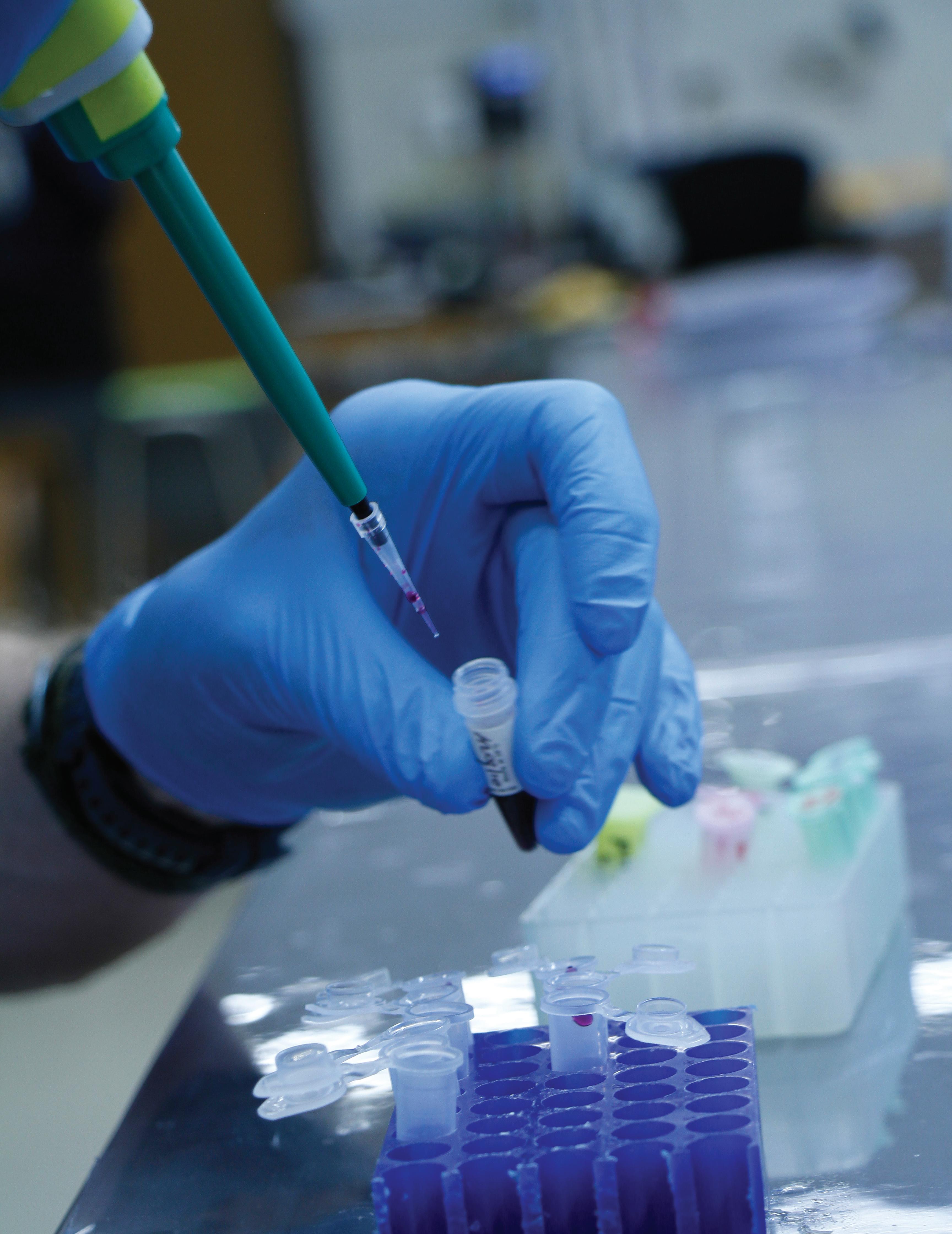
Medical school is a pivotal moment in the journey of aspiring doctors. As the landscape of modern medicine changes, educators like Dr. Thomas Swoboda, Associate Dean for Clinical Education at Roseman University, are trying to shape medical education to more efficiently serve students.
Story RIchard Wang
Photos Sebastian Zeballa
Medical school provides students not only with knowledge but also the experiences and the opportunity to discover their potential. For Dr. Thomas Swoboda, Associate Dean for Clinical Education at Roseman University, medical school began with absolute certainty: he would be a neurosurgeon. Yet, medicine is a rarely predictable field.
His journey led him from the high-pressure emergency rooms in the Bronx to guiding young doctors nationwide, shaping not just careers, but futures. Currently, at Roseman University’s new College of Medicine, he is shaping medical education, preparing students not just for the practice of medicine, but for the challenges of the world beyond.
His journey took a turn when he was working through his residency in emergency medicine in the Bronx, where he met a mentor who saw something special in him.
“‘You’d be a good teacher,’ he told me,” Swoboda said. “I hadn’t thought of it until then, but he encouraged me to look for work at medical schools and hospitals that had residency programs. That was the first time I had ever thought that I might enjoy teaching.”
It was a wake-up call that led him to the Medical College of Wisconsin, and eventually to Louisiana State University, where he helped establish a new residency program. It was a time of change, when his interest shifted from purely clinical practice to mentoring young doctors. He became increasingly interested in medical education rather than the daily toil of emergency medicine.
“I began to realize that I enjoyed teaching residents, assisting them in figuring things out, watching them become confident physicians,” he said. “It seemed like I was really making a difference beyond treating patients.”
In the four years of medical school, programs impart the foundational knowledge that a future physician requires. According to Swoboda, the first year and a half is dedicated to mastering the fundamental sciences: anatomy, physiology, histology, pathology and pharmacology. However, instead of tackling these subjects separately, students learn by body system—for example, cardiovascular, respiratory and neurology—ensuring they see how different disciplines interconnect.
“We assume that when students enter medical school, they don’t know much about medicine, and that’s okay,” Swoboda said. “Our job is to lead them down the path, not so much through lectures, but in a way that provides a sound base for clinical practice.”
From the beginning, students are provided with interactive education: shadowing physicians,
learning to take histories, developing physical exam skills and engaging them in medicine.
“We make sure the students are exposed to clinicals early: teaching them to communicate with patients, speak effectively and conduct exams. That way, they’re not just passively listening; they’re actively learning,” Swoboda said.
Following the end of their pre-clinical studies, the students proceed into their clinical years, where they rotate among an array of specialties.
“The intention is to get them to apply what they know from the first year and a half in an immediate way to clinical practice,” Swoboda said. “By the time they start rotations, they have a solid foundation in medical concepts, so they’re not starting from scratch.”
Roseman University students gain broad clinical exposure in structured 6-to-8-week clerkships in essential specialties: internal medicine, surgery, pediatrics, psychiatry, family medicine, and obstetrics & gynecology.
Recently, the landscape of medical education has been transforming and growing to more effectively serve the students.
“Medicine is changing rapidly,” Swoboda said. “Artificial intelligence, new technology, new approaches to teaching—what was good enough twenty years ago isn’t anymore.”
He envisions more changes in medical education, moving towards individualized learning.
“Medical school has always been a four-year program,” Swoboda said. “But does it have to be? What if we tailored it to the individual? Some students would graduate in three years, and some might take five. If they know what they need to know, why should the timing be fixed?”
One of his proposals is a competency-based system, in which students progress by skill and knowledge, not by an arbitrary clock.
“Medical education is currently structured like an assembly line,” Swoboda said. “You move from one step to the next, whether you’re ready or not. What we need is a system that really responds to the student.”
Artificial intelligence, he thinks, can play a key role in that transformation.
“AI can spot where students are excelling and where they’re struggling,” he said. “Instead of wasting time on reinforcing what they already know, they can focus on what they need to improve at. That’s how you create better doctors: by zeroing in on their individual needs, not by running them all through the same drill.”
Beyond the world of academics, Swoboda also acknowledges the mental health condition that afflicts medical students: burnout. As a defining challenge in medical school, burnout is an all-toocommon issue, with many students fearing the
heavy load and its consequences for their wellbeing.
“Medical school is stressful,” he said. “You’re constantly attempting to absorb an enormous amount of information within a finite time frame, and the stress to succeed is extreme. The more you succeed, the more opportunities you have for acceptance in the residency program of your choice. That is a great deal of pressure placed on these students.”
And burnout isn’t over with medical school. It carries on with physicians into their professional lives, causing some of them to abandon medicine altogether.
“Burnout results from emotional or physical exhaustion and cynicism,” Swoboda said. “When you start to see patients as problems rather than people you’re fortunate enough to take care of, then something’s wrong.”
His intention is to build a medical training system that will not just ready students for the intellectual challenge of medicine but also ready them for the emotional challenge of medicine.
His own experience has been an exercise in adaptability, one he hopes students will learn to emulate.
“If I had stuck to my initial vision of being a neurosurgeon, I would probably have been miserable,” Swoboda said. “But since I was willing to change course, I found something I really love doing.”
Roseman University Clerkships
Internal Medicine: Management of adult acute and chronic diseases.
Surgery: Operating room and perioperative experience.
Pediatrics: Acquisition of infant and child care.
Psychiatry: Recognition and treatment of psychiatric disorders.
Family Medicine: Outpatient management.
Obstetrics & Gynecology: Gaining women’s health, pregnancy and delivery experience.
GRAPH, GAME THEORY
For over half a century, developments in the mathematical subjects of graph and game theory have aided industries ranging from telecommunications to advertising to even the military.
AGraphic Carson Bosita
high school student logs onto his computer subconsciously, itching to do some online work. It’s such a mundane, trivial action — push a few buttons, type in a passcode and then he’s there, immersed in the wonderful world of the internet. Maybe he wants to relax. Or maybe he wants to connect and interact with people around the globe, available to him by a simple click. It doesn’t matter; it’s his device, after all.
He doesn’t bother to check any of the computer’s vitals; he trusts that the manufacturer has already done that for him. The Wi-Fi symbol in the corner lights up. The connection happens automatically, practically instantaneously. He doesn’t even notice it. And he certainly doesn’t notice the pains that his internet provider has gone through to establish a reliable connection between him, thousands of other individuals and a singular internet router.
Then, he signs into whatever social media he likes. He goes to YouTube. Five seconds in, he’s bombarded by advertisements along the margins. Some promise him free money. Others advocate for a dog shelter whose website he visited earlier. Still others direct him to online shopping services selling the clothes he wanted.
Some news notification pops up on his dashboard. It’s all tailored to his taste. Wars being fought across the globe. Countries using missiles and anti-missiles. He reads about peace treaties, negotiations on the table — strategic operations on the battlefield.
It seems strange that game and graph theory should have such an unrelenting presence in his everyday life.
Dr. Imre Leader, a professor of pure mathematics at the University of Cambridge, has devoted his life to tackling these sorts of game and graph-theoretic problems; they range from efficiently organizing a network of ships and ports to negotiating with allies during war to matching patients with compatible organ donors.
But one often overlooked problem stood out to
Leader the most: connecting to the internet.
During the early phases of designing cable networks for large-scale use, telecommunications companies worked through countless models trying to find the network that minimized the amount of cable used.
Leader described one of the most crude and obvious networks people considered during the early stages of development.
“Suppose I’ve got 100 houses, and I want to connect them all up,” Leader said. “If I put a cable from house one to house two, and from house two to house three, and so on, that only uses 99 cables, which is quite good. The trouble is that it’s a very unrobust system. If there’s a storm, and one cable is cut, then you’ve lost your connections.”
After their initial attempts, these companies utilized various techniques and algorithms to generate new networks. But none of them yielded anything close to what could be described as optimal.
“The companies did all kinds of things,” Leader said. “They tried taking a loop. They tried a loop over a loop, iterated loops and so on.”
A solution to the problem did eventually arise out of graph theory — but it was so counterintuitive that most people doubted the validity of the result.
“It turns out from graph theory, the best thing to do is to literally toss a coin for each pair of houses,” Leader said. “If the flip is heads, put a cable in. If it’s not, don’t. So you end up with a horrible, jumbled up, messed up network. It turns out that being jumbly, messy and disgusting is incredibly efficient. It’s light years more efficient than any algorithms they have, and anyone even has now.”
Regardless, telecommunications

Story Michael Chang
companies would eventually concede that a “random network” significantly outperforms most algorithm-generated networks — and reliable internet access would stem from these developments in graph theory.
Analogous graph theoretic conclusions can be drawn in the seemingly disparate fields of shipping operations and organ matching. In fact, these two problems are nearly identical — both involve matching objects to compatible receivers.
“Let’s suppose you’re a shipping company, and you want all the ships in ports if possible,” Leader said. “However, each port is only suitable for certain ships. Then, can you put all your ships into ports? If you can’t, what’s the most you can put?”
The answer to the question, Leader claims, lies in a purely graph theoretic result known as Hall’s Marriage Theorem.
“The idea is that, for any five of your ships, there are at least five ports that can take them, and same for six, and same for seven,” Leader said. “And there’s even an algorithm to do this. If you have 500 ships in 1000 ports, you can’t eyeball the answer. So that’s a place where graph theory is used.”
Mathematicians approach organ matching in a similar manner. It’s easy to determine whether or not a low number of people can be successfully matched with a low number of organs. But as hospitals deal with larger and larger amounts of patients, eyeballing becomes much more difficult — cue Hall’s Marriage Theorem.
“You’re solving this question about (a
certain amount of) organs being accepted by (some) people,” Leader said. “If you want the next best thing, then for (a certain amount) organs you must have the same number of people, and so on.”
Graph theory is only a small subset of the much broader field of mathematics known as combinatorics, which has many more real-world applications. Take combinatorial games, for instance — the study of these games, or game theory, has fascinated Leader in the same way that graph theory has.
Some mathematical games even have implications concerning topics like war.
“Say there’s a missile with an anti-missile coming to destroy it,” Leader said. “The anti-missile wants to get the missile, but because it’s faster, it can’t turn so sharply.”
Mathematicians have come up with an aptly-titled game known as the homicidal chauffeur that closely resembles this missile problem.
“The idea is that there are two points in the plane, a person and a car, and the car wants to catch the person,” said Leader. “The car moves faster than the person, but it turns slower. And there’s a very beautiful theory that arises (out of this problem).”
win a point. I then tell you that on each turn I will randomly say heads or tails with equal probability; even if I announce my strategy it doesn’t help you. This is a Nash equilibrium.” Nash equilibria tend to pop up a lot in economics, where competing businesses all vie for profit. This situation can be modeled by a non-cooperative game played by multiple players.
“If you have 10 different businesses all fighting each other, (Nash equilibrium) says there’s always a stable solution,” Leader said. “But that stable solution won’t always be an explicit thing.”
A canonical example of a Nash equilibrium is the so-called prisoner’s dilemma, where two individuals are given the opportunity to either cooperate with each other or defect. However, if both players make rational decisions, they can be expected to end up in the worst possible outcome — a strange paradox that comes up quite often in real life.
Consider the scenario of college scouts recruiting younger athletes in middle or high school. Predicting the trajectory of a player at such a young age is often hit-or-miss and unreliable;

Aslightly different variation of game theory concerns the actual strategies in the games themselves. This study of game theory sheds insight on the decision-making aspect of war, as well as the rationale behind individual choices.
In games where cooperation between multiple players is not enforced, a concept known as Nash equilibrium often comes into play. A Nash equilibrium is a situation in game theory where all players are essentially worse off if they change their strategies.
“Say there’s a two-person game, where you and I write heads or tails,” Leader said. “Then, we reveal (what we wrote down). If they’re the same, I win a point. If they’re different, you
however, if other institutions are snatching up all the promising recruits, then colleges who don’t do early recruitment end up at a disadvantage. As a result, many colleges have resolved to recruiting early — an outcome that’s actually worse off for everyone.
Graph and game theory have simultaneously monumental yet largely unnoticed impacts on the globe as a whole. From the internet, to cargo delivery, to even missiles, the practical applications of the subjects have an astonishingly wide berth. Math does have its place in the world. And although it may seem as though humanity has exhausted the value from graph and game theory, somewhere, someday, some new innovation may stem from mathematics and go on to change the world.
FROM
TO


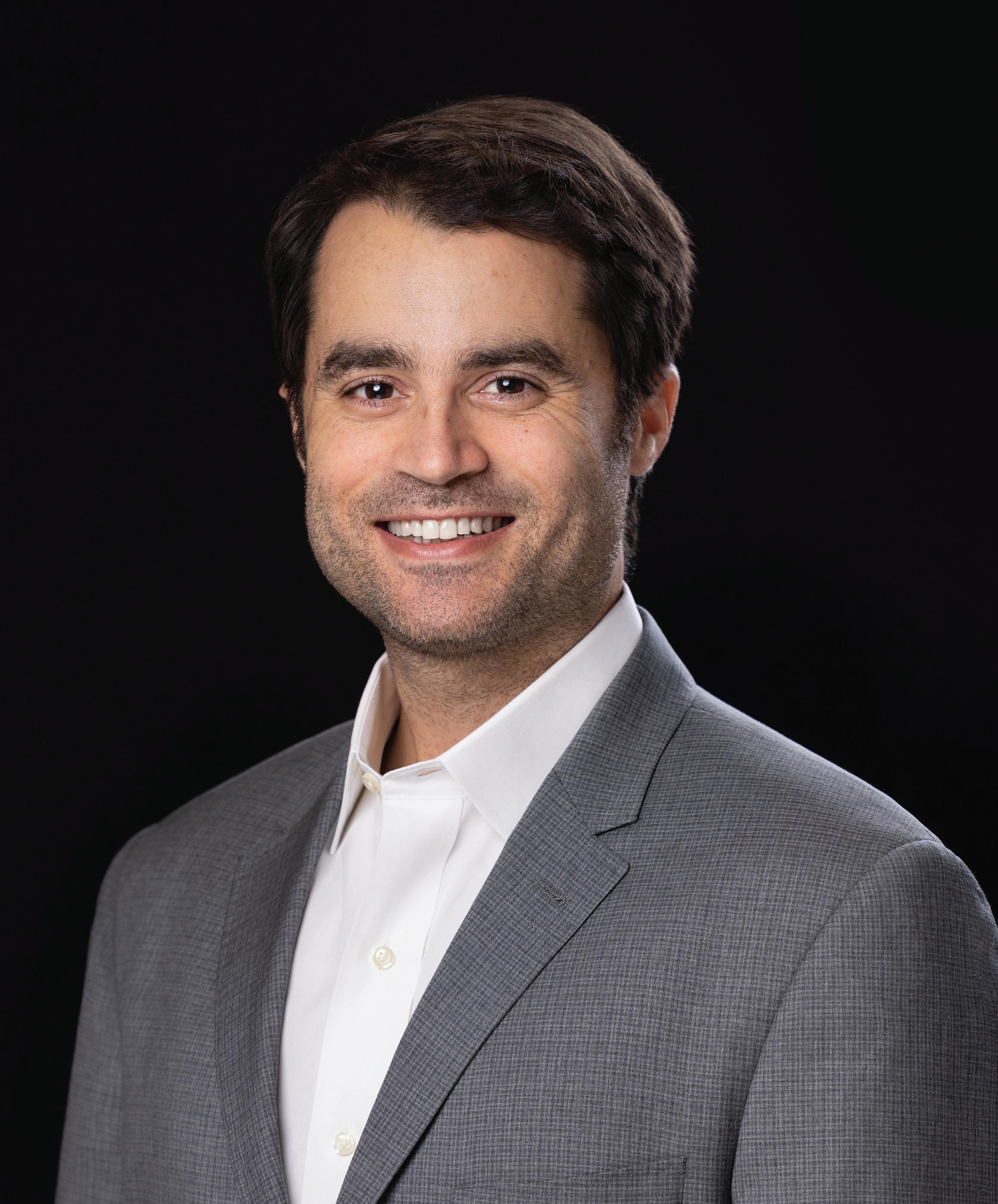
Nick Orenstein ‘01 transferred his skills from the school to founding his own space infrastructure company Manifest Space, which is innovating space traffic management.
Nick Orenstein ‘01 has always been a team player.
From his time at the school to engineering space missions, the importance of cooperation has stood out time and time again. His curiosity combined with skills he learned at the school have driven him to seek excellence in all his endeavors throughout the STEM world. This led him to successful experiences working for the teams at SpaceX and researching for Los Alamos National Laboratory.
And now, he is leading a team of his own.
Since 2014, students have been given the opportunity to engage and learn from the experiences and accomplishments of selected individuals as part of the annual STEM Conference program. However, predating the STEM Conference, the school has placed an emphasis on science and STEM related activities for decades. In 1961, the school’s The McDermott-Green Science and Mathematics Quadrangle received national acclaim for its outstanding facilities for innumerable scientific fields, and, of course, its famous observatory and planetarium. Today, after renovations and the construction of the Winn Science Center in 2019, students continue to thrive each day in classes ranging from fifth grade physical science to college-level engineering. Many students have utilized these resources that St. Mark’s has generously given over the years and taken their aspirations to the next level. Each year, as part of the aforementioned STEM Conference, one alumnus, alongside a few other esteemed individuals, visits our school to demonstrate their knowledge and experience from the STEM world, providing a role model for the careers of aspiring students. Orenstein, with experiences in varying fields, spoke to students over the importance of STEM, and specifically, industries surrounding space exploration.
As a student during the late 1990’s, a pivotal decade for the scien-
tific community, especially with the introduction of the Hubble Space Telescope and International Space Station, Orenstein had always been interested in STEM-related topics, and he believes the school helped hone his focus.
“St. Mark’s had such a long duration of influence in my life that undeniably affected my experiences as an engineer,” Orenstein said.
“He was someone who had a wide range of capabilities, so much so, that you would be convinced that he would excel in any field he chose, which he ended up achieving in the space industry,” Eugene McDermott Master Teaching Chair John Mead said.
His mind set on engineering, Orenstein completed his Bachelors of Sciences in mechanical engineering at Harvard University and his Masters of Science in astronautical engineering at USC. He also began to pursue his doctorate in astronautical engineering at the USC prior to working at SpaceX, writing two papers on inspace implementation technology for astronauts surrounding potable water harvesting. Whilst studying, he continued his professional journey researching material science for Los Alamos National Laboratory.
“It was something that few others have, and I was able to contribute as a citizen of America,” Orenstein said. “It was like serving Uncle Sam as a scientist.”
Though his time there was invaluable, he would later move to other companies two years later. Using what he learned in graduate school, he continued his journey by working at SpaceX, as an engineer for astronaut equipment and procedures, focusing on the SpaceX’s Falcon 9 and Dragon spacecraft. Monitoring crew equipment
and spacesuit fluids, he had the opportunity to prepare the astronauts directly and test their devices.
“Ten miles off shore from Cape Canaveral, I was stationed with another engineer and member of the US Airforce Detachment 3 program, floating in an inflatable boat towards the dragon capsule,” Orenstein said. “When we arrived at the ship, our job was to test the astronauts radio while a C-17 aircraft flew in circles at different distances. This was probably my favorite part of working at SpaceX and the part I’m the proudest of.”
Orenstein also recalls the sense of comradery he felt on the SpaceX team.
“So much of what is the most important is the effort with the team to work on something like that, just like in sports,” Orenstein said. “It’s the team satisfaction of seeing the smiles on my friends’ and coworkers’ faces the day of the launch and beyond.”
The school places connection, communication and unique learning opportunities at the forefront of their teaching philosophy. STEM students continue to bolster their affinity and appreciation for discovering new scientific disciplines with STEM Conference visitors, as well as through the plethora of available resources at the school, leading to increased curiosity and a catalyst for innovation. Mead, after teaching a wide range of grades at the school, understands the significance of group efforts towards longstanding goals and the teaching processes along the way. Orenstein draws a connection between his time as a professional and the Upper School class style that resonated with him.
“Being directly involved in the

Nick Orenstein ‘01
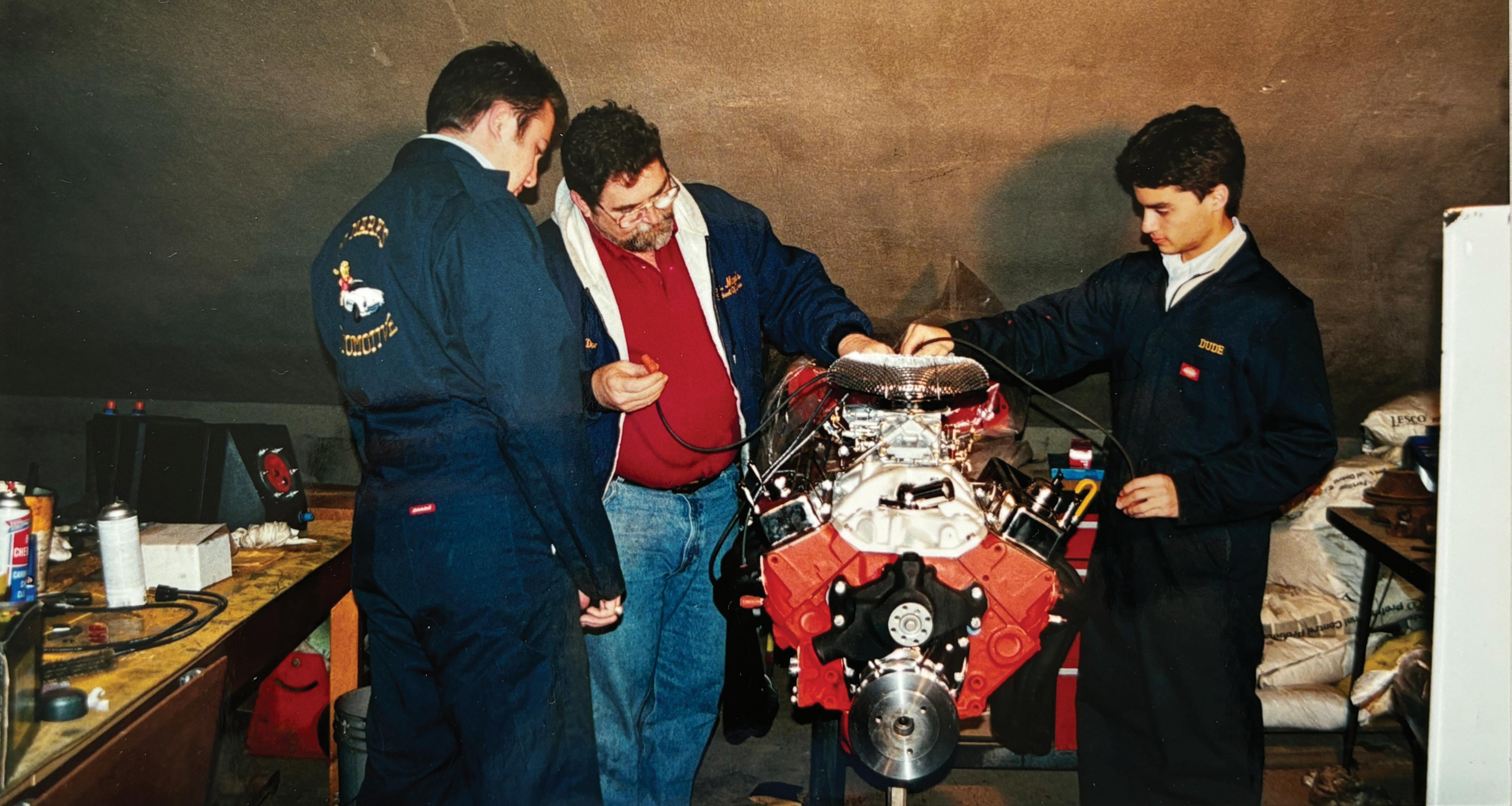
topics I studied as a high-school student at St. Mark’s and studying these things that are fundamental to the meaning of the universe, physics and chemistry was deeply profound,” Orenstein said. “Especially being at a location that has had an immense history, as Los Alamos was in the Manhattan Project. It was great.”
After spending 20 years working in multiple STEM fields, Orenstein gathered many like-minded individuals to found a company known now as Manifest Space, with the goal of increasing access to both low earth orbit, as well as for long term exploration of deep space.
“
St. Mark’s had such a long duration of influence in my life that undeniably affected my experiences as an engineer.
There are two independent companies operating within the Manifest Space enterprise. Manifest Space, in France, is looking to add to the transport of medium to heavy class tonnage to space with new launch infrastructure and a focus on decarbonization and climate change while Manifest Space, in the US, is working to make the rapidly expanding space industry safer and more efficient. With over 80,000 satellites
projected to be in orbit in 2030, Manifest Space Orbital is set to be a leading company for Space Traffic Management (STM).
“We’re focusing now on space traffic management, which is a way to help bring different products and services into a streamlined structure in Earth orbit,” Orenstein said. “Aviation and shipping and trucking and other modes of transportation have dedicated platforms of organization. Bring that to space, and more and more satellites will be able to add to what we are doing here on the surface. Earth orbit is more than just the exploration and frontier that it used to be. It’s a place of infrastructure.”
Both Orenstein and Mead emphasize the importance of foundational knowledge and experience as being the true stepping stone with which to propel themselves into a new and challenging world.”
“This is, I think, a very special environment. We’re allowed to be professionals in our fields, and we’re trusted individuals that, if you have an idea, we want to see and help it come to fruition somehow,” Mead said. “And so there has always been support for teachers to explore and push the envelope a little bit that way. Which then for our students, you hopefully feel that a lot of the teachers you have in class are experts in their field, and this is solidified when they see alumni and guests who have achieved their goals, which is something St. Mark’s references so much.”
Now, in a time of increased polarization, Orenstein highlights that collaboration between rival
countries is essential for progress to be made.
“Going to space will require us to cooperate in ways more so than ever before,” Orenstein said. “But I think in the last five or ten years, I’ve seen a lot of momentum around global cooperation, even from the US in ways in which partnering to win is achievable.”
As the space industry continues to expand, Orenstein foresees a greater future in which Manifest Space and other companies can discover new technologies and implement them safely and effectively across this field. With heightened enthusiasm surrounding the Artemis II mission, discussions over future safety of low-earth orbit and traffic management are critical.
“The space industry is so early that the big investors of the world are investing right now in AI, or they’re investing in clean energy,” Orenstein said. “They’re investing in other technology which they need to invest in, but the amount of money that’s going into the space industry is many times less. I would estimate at least ten times less, if not a hundred times less.”

Brennan Bosita
Holden Purvis
Engineering Orenstein works in an engine physics class at St. Mark’s.
Story
Sebastian Zaballa
Photos
Courtesy Nick Orenstein
CARDIAC TRANSPLANTATION
As heart transplent technologies grow more and more sophisticated, cardiac patients like humanties instructor Jason Lange are given a renewed chance at life — and a deeper appreciation for the resilience of the human body.
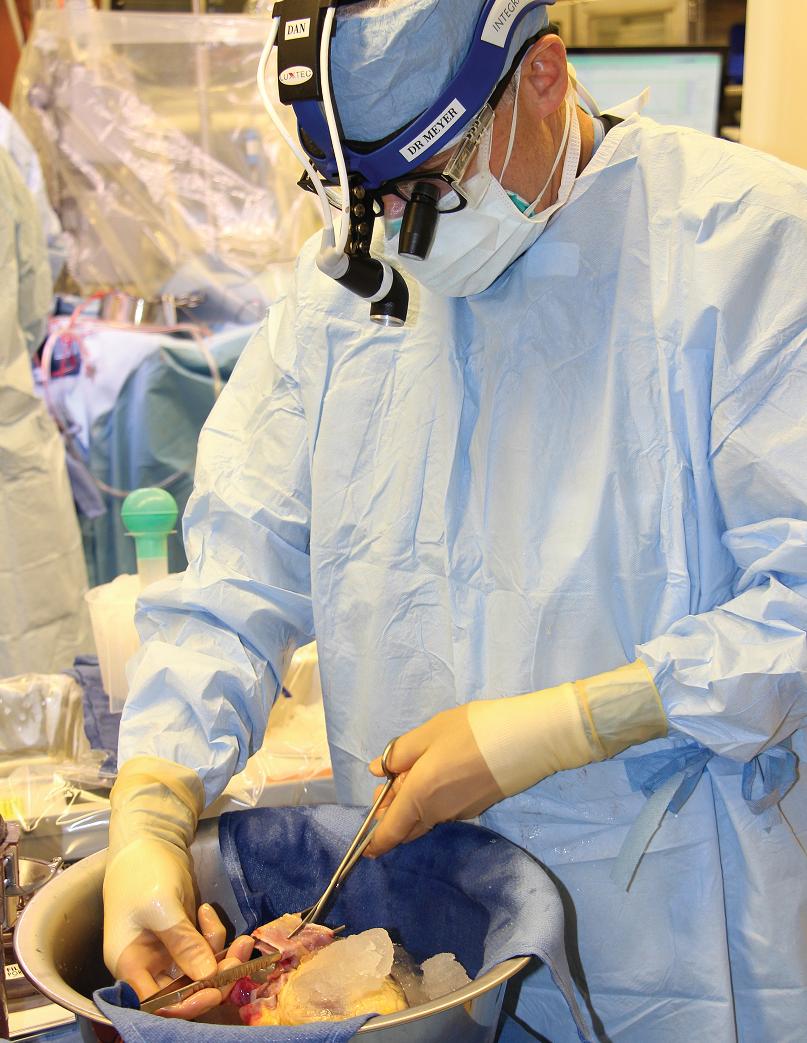
With Heart Dr. Dan Meyer performs an operation in the hospital.
Since the very first human-to-human heart transplant was performed in 1967 by Dr. Christian Barnard in Cape Town, South Africa, three revolutionary developments in the field of cardiac transplantation have helped bolster the success rates for patients who undergo the life-saving surgery.
In November of 2023, Assistant Head of Middle School and humanities teacher Jason Lange underwent heart surgery. Dr. Dan Meyer, cardiac transplant surgeon at Baylor Scott & White Health Hospital System who is triple board-certified in general surgery, thoracic and cardiac surgery and surgical critical care, successfully performed the surgery. For Meyer, the field has taken amazing new turns over the last few years that were previously unimaginable.
“I’ve been doing this for over 25 years and still can’t believe some of the innovation that has come through the pipelines,” Meyer said. “There’s always something new, and that’s what keeps this field so rewarding.”
Although around 3,500 to 4,000 heart transplants are performed in the U.S. every year, the need for donors still far exceeds the number of hearts available. In the past, only patients who were declared brain dead with no brain function were qualified to be potential donors.
But advances in standards for donorship have allowed surgeons to access donors who may have some residual brainstem function (like preserved corneal or gag reflexes) but no meaningful hope for recovery due to severe brain damage or anoxic brain injury. These patients, termed Donors after Cardiac Death (DCD), are now part of a donor pool that has significantly increased quantities of viable hearts.
“Once a patient stops breathing and his heart stops beating off life-sustaining support, an independent medical team, along with family members, observes the patient in the operating room. If death is declared based on a set of cardiac and respiratory guidelines, the transplant team can expeditiously remove the heart to preserve its viability,” Meyer said. “These DCD patients have invaluably improved our ability to offer transplantation by up to 30 percent.”
Each patient is thoroughly informed regarding the risks and rewards associated with each type of donor. When Lange was evaluated to earn a place on the transplant list, he was also informed of both options, but no one could predict which one he would receive.
“I ultimately received a heart from a DBD patient, so the ‘out of body time’ for my heart was very short,” Lange said.
Historically, another limitation to the number of hearts available was the time restriction from recovery to implantation. Because the heart needs to be chemically arrested with potassium and cooled while in transport, there was only a fourhour window before the heart became unusable.
“A new liquid-free cooling system has allowed the heart to maintain superior function at an optimal six to eight degrees Celsius,” Meyer said. “Instead of the age-old zero-degree ice chamber, this system allows a temperature that not only prevents crystals from damaging the cardiac tissue but also extends the time the heart can remain outside the body to over five hours. Though not common, we have reports of successful use of this system for a total ischemic time of seven hours. That’s huge when it comes down to the difference it can make in saving a life.”
This technology also significantly broadens the geographic span from which the heart can come.
I count myself extremely fortunate to have benefited from the expertise of the transplant team. “
“I was told that my heart could come from as far away as Houston or San Antonio,” Lange said. “It gave me hope that I had access to donor hearts in some of the most populous cities in Texas, well beyond the DFW Metroplex.”
Another recent advancement in cardiac transplantation is the Heart-In-A-Box system by TransMedics. This organ care system keeps the heart perfused, warm and beating throughout its journey in transport. Using blood from the donor, the system allows the heart to maintain full physiologic function outside the body.
Surgeons can monitor the organ’s lactic acid levels and adjust pressure, flow rate and other thermodynamic parameters to maintain the heart’s viability during transit. This has lifted the strict time limitations that severely restricted
donor availability for decades.
“Although this technology is super expensive, it allows us to get a heart from the Northeast to Texas, for example, without having to think twice about the time constraint. I did one of these last week and still think it’s crazy that we can do this,” Meyer said.
Aside from these advances, artificial cardiac transplant devices have also been under close investigation. While total artificial heart transplants and animal-to-human transplants are still in remote clinical trials, the Left Ventricular Assist Device (LVAD), a device that helps the heart pump oxygenated blood to the body when the heart isn’t healthy enough to do so, has gained traction, particularly in younger patients.
“At the end of the day, we know that allogeneic transplant still has a finite life expectancy of around 13 years. The risk of chronic rejection and complications from immune suppression is also always a reality,” Dr. Meyer said. “But there’s a LVAD system called BrioVAD that uses a magnetically suspended blood pump that has shown great promise in providing long-term support options for patients with failing hearts. It reduces that small anxiety of not knowing if the donor heart will actually work until you implant it.”
Many barriers to cardiac transplantation still remain, including the extensive social support and postoperative care requirements, lack of medical literacy and access to insurance for immunosuppressive agents. These factors can hinder successful outcomes even after uncomplicated surgery if the patient is not able to fully take care of the transplant.
“Coming from a medical family, I tried to learn as much as I could about the transplant process, so I could be a good caregiver for the priceless gift I’ve been given,” Lange said. “I count myself extremely fortunate to have benefited from the research and expertise of the transplant team.”
The cutting-edge science takes years to execute, but it has led to such groundbreaking advances in the field that transplant surgeons have a lot of optimism about the future.
4,500 3% 3,500
3 percent of patients on the transplant waiting list are waiting for a heart transplant.
Story Avi Aggarwal
Photos
Courtesy Dan Meyer Courtesy Creative Commons
CURIO
Section 2
A good scientist is always curious. In CURIOSITY, we tackle cutting-edge research that has the potential to revolutionize our lives. Whether it’s advances in Huntington’s treatment or quantitative trading, we remember to check assumptions and maintain high standards for authenticity while still staying excited for what’s on the horizon.
CELIAC DISEASE
Celiac disease is a disorder in which the small intestine is hypersensitive to gluten. However, recent scientific research may lead to potential breakthroughs for longterm treatment.

Benjamin Standefer
Graphic Jack Benavides
Gluten. A protein complex found in everything from bread to soy sauce. Most people digest it without a second thought, but for someone with celiac disease, it triggers an immune response that flattens intestinal villi, disrupts nutrient absorption and causes days of pain — or worse. Navigating autoimmune disorders is easier today than it was a hundred years ago, but it still comes with its fair share of challenges and unique experiences.
“Celiac disease causes histological damage due to a genetic predisposition and leads to testable damage when exposed to gluten, as seen in gluten allergy and gluten sensitivity,” explained Dr. Roopa Vemulapalli, an associate professor in the Department of Internal Medicine at UT Southwestern Medical Center.
“With gluten sensitivity, however, you only experience symptoms without the classic pathological changes observed in biopsies.” Celiac disease is more than just an intolerance to gluten.
Although often confused in conversation, gluten sensitivity and celiac disease are very distinct disorders. While both can restrict options when eating out, celiac disease leads to long-term damage to the small intestine, while gluten sensitivity triggers short-term symptoms without long-term intestinal damage.
“Children can have skin rashes and diarrhea. But for the adults, because they have already grown, it would mostly be the gastrointestinal side effects, which would be diarrhea, iron deficiency, and anemia,” Vemulapalli explained.
However, symptomatology is not just limited to GI side effects. Vemulapalli runs down a list of other problems that can arise, all stemming from celiac disease, including fertility problems, unexplained neuropathy and migraines. Although atypical, these symptoms speak to the ripple effect that autoimmune disorders can have on the entire human body.
Another huge issue is diet. There are three additional

considerations to make when eating gluten-free: restrictiveness, expense and palatability.
“Even if people want to adhere, they have limited choices, because there can be cross-contamination in the restaurants and even in the house,” Vemulapalli said.
Beyond this, gluten-free products are less available and often just don’t taste as good as their glutenous counterparts.
What happens when celiac patients are accidentally exposed to gluten, whether it be from cross-contamination, server negligence, or random misfortune?
“It depends on the severity of the symptoms to begin with,” Vemulapalli elaborated. “Some patients are very sensitive, and even a small amount of accidental exposure can trigger their symptoms, leading to nausea, vomiting and
diarrhea.”
Some people with celiac disease, however, are relatively asymptomatic and won’t even react to small exposures. It all depends on the person.
One such person is Sam Morse, a junior at St. Mark’s who was recently diagnosed with celiac disease. Even before diagnosis, Morse noticed some early signs.
“I was pretty short and light for my age, and I had occasional stomach issues,” Sam noted. “I also had a natural aversion to bready things, and I noticed I didn’t enjoy pasta, pizza and sandwiches like everyone else did.”
After having blood work done and receiving an official diagnosis, Morse had to watch his diet even more carefully.
“Gluten is in everything. Even things like soy sauce have gluten,” Morse remarked. Cross-con-
tamination has also been a significant struggle. “For example, I was dipping my fajitas in queso with a corn tortilla and someone else was dipping their flour tortilla in the queso, and that can’t happen.”
Although hard to adjust to at first, Morse doesn’t let these extra restrictions encumber his social life.
“Trust people will eventually understand your needs,” Morse said. “Also, find out what you’re willing to sacrifice, because although an upset stomach is annoying, having a great time with friends can be worth it.”
But this doesn’t mean that the little inconveniences don’t add up.
“Hearing something people are craving and not being able to relate is annoying,” Morse said. “But I try to keep perspective, try to continue being present during those moments and enjoy the time with friends.”
Gluten is in everything. Even things like soy sauce have gluten. “
Morse is also in a unique position when it comes to his family. His mother was diagnosed with celiac disease during the pandemic (before he was), but his sister and his father do not have the disease and keep the house stocked with floury food items. This genetic divide has forced Sam to exercise an extra level of skepticism in his day-to-day life.
“The worst part right now is that it’s something most people don’t have to worry about,” Morse explained. “For example, because half of my family can have gluten, I have to worry about the food in my own pantry.”
So, with two and a half million Americans like Sam living with celiac disease, is there any hope for a cure or long-term treatment? Vemulapalli sees a couple of avenues for eventual change.
“Genetically altered gluten could allow people to ingest it without triggering problems,” Vemulapalli pointed out. “Monoclonal antibodies targeting the Zonulin receptor in the small intestine are also being explored. The idea is that Zonulin receptors regulate intercellular junctions, which can become ‘leaky’ in conditions like celiac disease, contributing to its pathology.”
Vemulapalli cautions that, while these ideas are being actively researched and tested, nothing promising has gone mainstream yet.
On the part of gluten consumers across the world, the best thing we can do is be mindful of disorders like Celiac disease with our friends and family and take the first step by looking out for those who might eat just a bit differently.

In the past few decades, theories and methods developed by quantum physicists and economists have revolutionized the way problems in finance are thought about and solved.
Story Michael Chang
In 1978, mathematician James Simons created something that people had only begun to dream of.
It was an elusive investing tool, of sorts — one of Simons’s well-guarded secrets to this day. No one really knew too much about it, except for these couple of things:
It leveled the playing field, allowing humble math and science nerds to surpass even the most sophisticated of financial experts.
It ushered in a new period of investing where the line between Silicon Valley and Wall Street blurred.
And it completely broke the stock market.
Meet quantitative trading.
Often shortened to “quant,” quantitative and algorithmic trading is exactly what it sounds like: a form of high-frequency financial trading that relies on data analysis powered by supercomputers.
Zachary May works at Jane Street, a prominent quantitative trading firm. Large quant firms like Jane Street gather vast amounts of data for their traders to base algorithms on. May sees this sort of work as completely different from traditional finance.
“We’re a firm of people that work in finance, but many of our backgrounds lie in STEM fields,” May said. “Instead of trying to project how much money (companies) will make over time, we’re looking at things like relationships between different instruments in the market.”
There are many advantages of quantitative trading over classical trading; quant traders engage in what is known as arbitrage, or the simultaneous purchase and sale of the same asset at different prices. A canonical example of arbitrage involves ADRs (American Depository Receipts).
“(ADRs) are basically foreign-listed companies that
trade in the U.S., so a bank in the U.S. has the power to issue an equivalent U.S.-listed stock,” May said. “The mechanism by which these two things stay in line is you can convert them into each other for a small fee.”
The small disparities between the cost of an ADR in the United States and the cost of the actual stock in a foreign country can then be used to make small amounts of money. At a large scale, these minute trades rapidly compound into a substantial profit.
Code and programming also play a significant role in generating models to accurately predict the market’s movement. There’s very little pure finance going on in quant; algorithmic traders rely on other skills to make profitable trading decisions.
“We fit models using market data of different financial instruments trying to model stocks moving in the short term,” May said. “We use a bunch of Python and try to simulate stocks and explain the most amount of variance as possible.”
Models that operate efficiently play an extremely important role in the field — the success of a trade often depends on the mere microseconds or even nanoseconds needed to place it. This speed is necessary to take advantage of the fleeting and volatile nature of the market.
“An ETF holds a slice of a bunch of different companies, so you can buy one ETF stock that helps you get diversification in a portfolio,” May said. “But a domestic ETF that holds U.S. listed components is a lot easier to price because you can just multiply (the stocks’) weights times


their prices and get a very exact price. However, for Japanese ETFs, for example, the markets close at 1:30 or 2:30 in the morning New York time, so there’s a ton of uncertainty. When the information comes out in the world, your best guess of how much these are worth is not necessarily accurate.”
As a result, most quant trading firms attempt to establish direct connections to exchanges, eliminating latency. Every second counts — if another company is even marginally faster than yours, you’ll lose the trade.
Artificial intelligence and machine learning also feature prominently in May’s work — in particular, recent developments in AI have greatly lessened the burden of statistical analysis. However, the technology still has a long way to go before being able to fully replace humans.
“(AI is) certainly playing a bigger and bigger role for us,” May said. “For the most part, we try to use statistical practices that
our best to learn more about (applications of AI). It’s not the most satisfying answer, but (AI) ends up getting applied on a case-by-case basis.”
The majority of firms actually differ in their approaches to quantitative trading. Some firms, for example, give their traders little to no autonomy in the process.
“(Some firms are) especially good at researching,” May said. “Those traders come up with algorithms for computers to trade on and just let them do their thing. On the other hand, there are (other) firms whose traders are much more involved.”
Although the methodology
for anyone with a strong STEM background. In fact, many of the math concepts taught in school translate well to quant work; there are quite a few quant resources available to high schoolers. May himself got into the field just by working with a couple of like-minded friends in college.
“I think that probability is probably one of the most important things to be solid in,” May said. “Brushing up on your coding skills is good, and these days there are so many good resources out there for interview questions because a lot of the interview questions at firms are notoriously weird probability

are best fit for the situation, so there are a lot of machine learning approaches that require tons of data. For certain trades or environments where we’re data-poor, they’re not necessarily like great solutions, but we have a lot of focus on education at the firm; we do
of the work varies from firm to firm, much of the hardware and software remains consistent. Python is quite popular for research, simply because libraries like Pandas excel at spreadsheet-type work. Likewise, a piece of hardware known as an FPGA (field-programmable gate array) is universally used to make extremely fast trades.
“(FPGAs) are specialized for doing one narrow task very quickly,” May said. “My mental model of (an FPGA) is that it’s programmable hardware optimized for doing very specific computations in parallel. They’re necessary for doing the most speed-race type of trades.”
Aside from several pieces of technology, quantitative trading is surprisingly accessible
brain teaser questions.”
Although it may seem distant and unfamiliar, quantitative trading has dramatically impacted the financial landscape throughout its nearly 50-year tenure. Wall Street is no longer an exclusive avenue reserved for the experienced trader — now, with quant, even the most unassuming college-age math enthusiasts can get in on the excitement.
BUILDING OUR
HEALTH
An often overlooked component of the human body, the gut microbiome is essential for properly daily function, but its maintenence and care require healthy choices.
Story Guru Aroul
Graphics Shiv Bhandari

An exhausted teenager comes home from track practice. It’s an ordinary Thursday afternoon, and he opens the pantry contemplating what to eat as a snack. Before him are a bowl of fruit and the packet of chips he stashed away yesterday. Against his better judgment, he reaches for the chips; after all, he has no reason to think that his choice will have any lasting impact.
The truth is, however, that every choice affects the body, especially the gastrointestinal system.
Trillions of bacteria inhabit the linings of the gastrointestinal system, many of which perform essential digestive functions. Without the help of these bacteria, which are collectively called the gut microbiome, the system would not be able to function properly. While the stomach and intestines do a lot of the heavy lifting, many types of food—especially fiber—can’t be broken down without help from microbes. Some bacteria specialize in digesting fibers from fruits, vegetables, and whole grains, turning them into useful substances like short-chain fatty acids that fuel your gut cells and reduce inflammation. Other microbes also help humans absorb key nutrients like calcium, iron, and vitamin K or even synthesize certain vitamins, like B12 and folate, which are important for energy and brain function. Humans rely on these bacteria to break down carbohydrates and other nutrients found in our food, while the bacteria get a stable environment with a relatively continuous supply of energy in the form of the food humans eat. So, people exist in a mutually beneficial symbiotic relationship with the bacteria in our gut.
Dr. Jay Yepuri, a gastroenterologist at UTSW, likens the microbiome to a fingerprint.
”For example, your gut microbiome is going to be individual to you,” Yepuri said. “There are more microbial cells in your body than human ones. (People) are, quite literally,
more microbe than human. The composition of your gut microbiome is part of who you are, and any changes to the composition can impact you either positively or negatively.”
The individual variations and changes in the gut microbiomes create challenges when conducting research into the implications of the microbiome on human health. However, despite these setbacks, researchers and biologists have begun uncovering the secrets of the gut microbiome, its implications on health, and how to use this information for human well-being. Instead of thinking about the issue of the uniqueness of the microbiome, scientists now consider changes to the baseline bacterial composition.
“
Alterations in the balance and composition of the microbiome can lead to symptoms or contribute to diseases.
“Alterations in the balance and composition of the microbiome can lead to (negative) symptoms or contribute to digestive diseases,” Yepuri said.
The microscopic life forms that compose the gut microbiome mostly live in the large intestine, where they help break down food, produce vitamins, regulate immune systems and even send signals to the brain.
The gut microbiome also acts like a “boot camp” for your immune system. It helps train immune cells to spot harmful invaders, and it keeps the peace by stopping the immune system from overreacting to harmless things like
food or pollen. A well-balanced microbiome means a stronger immune system and fewer chances of allergies or autoimmune diseases.
Another effect of the gut microbiome is on the brain. Common effects range from feeling “butterflies” in the stomach during a bout of nervousness or having a “gut feeling” about something. The gut and brain are directly connected through a pathway called the gut-brain axis, which allows gut bacteria to send chemical signals to the brain. Some of them even help produce neurotransmitters like serotonin, which affects mood, sleep and appetite. According to an article from Harvard Health Publishing, some scientists believe that gut health could be connected to conditions like anxiety and depression.
The gut microbiome also influences how the body stores fat and controls blood sugar. Some bacteria help regulate appetite by signaling fullness to the brain. Others affect how efficiently the body uses calories. For example, studies in mice have shown that transplanting gut bacteria from an overweight mouse to a thin one can cause the thin mouse to gain weight.
The development of the gut microbiome begins from a young age: breastfeeding, diet, environment and even whether you have pets can shape the microbiome in childhood. As people age, the microbiome continues to evolve. It can also be changed temporarily or permanently by medications, stress and illness. Some of the best ways to improve gut health involve lifestyle changes.
“Eating a balanced diet that is diverse in nutrient sources, adequate hydration, (and avoiding) certain medications that can have side effects that slow the gut function (help gut health),” Yepuri said.
For many foods and supplements, the words probiotic and prebiotic are mentioned. Probiotics contain live microorganisms that support the bacteria in the gut. According to Yepuri, taking food or medications with these organisms can populate the gut with that bacteria.
Prebiotics, on the other hand, are molecules and compounds that enable a healthy gut microbiome.
“Prebiotics are agents that can lead to the creation of an environment where healthy bacteria can then populate the gut,” Yepuri said.
Fermented foods like yogurt, kefir, kimchi, sauerkraut, miso and kombucha are
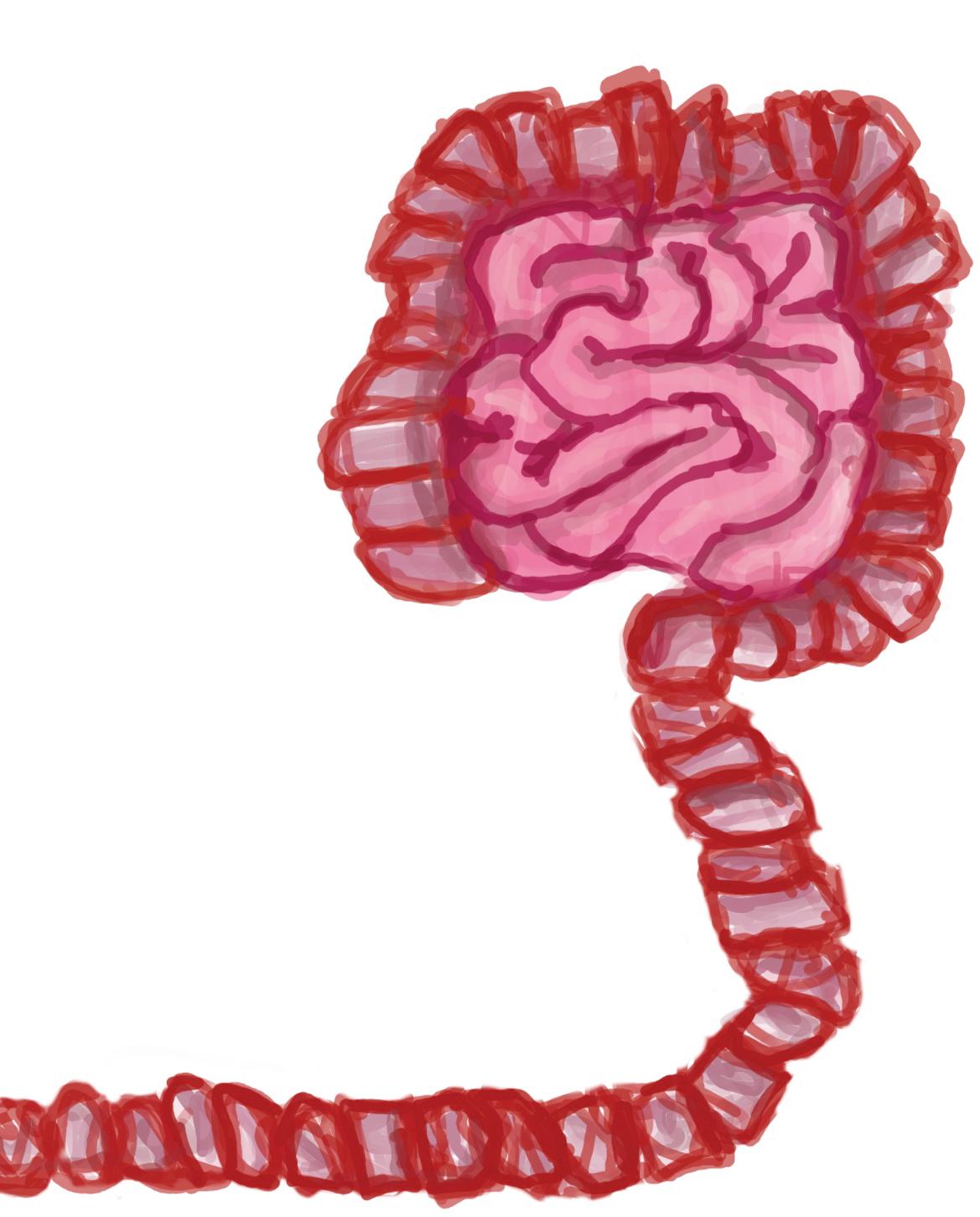
rich in probiotics, while most prebiotics are found in medical supplements that you can buy over the counter. On the other hand, highly processed foods, artificial sweeteners and high-sugar diets can harm your gut bacteria.
Dr. Jason Park, father of a sophomore at at the Hockaday School, argues that the use of antibiotics can also wreak havoc in gut microbiomes.
“With the use of antibiotics, the normal microbiome may be altered, and this may predispose to an infection by organisms such as Clostridioides difficile,” Park said. “Such changes can result in secondary diseases arising from alterations in the microbiome.”
Though it might be invisible, the gut microbiome plays a large role in humans in keeping them healthy and energized. Taking care of it can be accomplished by eating well, staying active and managing stress. Every choice has a real impact on the trillions of life forms that reside inside the intestines.
HUNTINGTON’S DISEASE
Huntington’s disease is a neurological disorder that affects more than 30,000 Americans. Although attempts to find treatments have been largely unsuccessful, ongoing research may lead to a breakthrough.
Story Evan
Fu
Graphic Rayhaan Rizvon
According to the National Institute of Neurological Disorders and Stroke, more than 30,000 Americans have symptomatic Huntington’s disease. Another 200,000 or so may have the mutated gene responsible for the disease but do not yet exhibit any symptoms. Huntington’s disease is a rare yet deadly neurodegenerative disorder that progressively breaks down one’s brain and creates a myriad of cognitive and physical problems for the patient. Although the genetic cause for the disease has been known for quite some time, attempts at cures and preventative treatment have proved futile, and effective treatments remain unknown. Nonetheless, ongoing research and technological advances are helping scientists reshape the understanding of the disease day by day, and hopefully, there will soon be a significant breakthrough in treating the disease.
To better comprehend the nature of the disease and its current state of research, Zhihao Wu, a professor in the biological sciences department at Southern Methodist University, shared his knowledge on the topic. Earning his Ph.D from Tsinghua University and later becoming a postdoctoral researcher at Stanford University, Wu provided crucial insight and information about the issue of the disorder and its complications. While Huntington’s is not the primary focus of his lab, Wu’s research and experience nonetheless brought key aspects of the disease to light, and he further discussed how scientists approach neurodegenerative diseases in general.
“Huntington’s disease is an inherited neurological disease, as you may know, and it mainly targets nerve cells, which we call neurons in the central nervous system,” Wu explained. “And so typically the patient will have either physical, mental or emotional disabilities.”
Symptoms can vary from patient to patient, ranging from uncontrollable movements to cognitive decline and possibly psychiatric problems.
“For example there are movement disorders, cognitive changes and, as I said, there are emotional dysfunctions,” Wu said.
In terms of diagnosis, the certain age of patients plays a role, with symptoms usually emerging relatively later in life, but not always.
“Symptoms of Huntington’s disease usually develop between someone’s 30s to 50s, and if you read a case
report, that will probably be the most common age you see,” Wu said. “But there are rare cases where you can find a patient as young as two or three or as old as being in their 80s.”
At the root of the issue of Huntington’s disease is the genetic mutation that is responsible for the disease’s emergence. A certain trinucleotide mutation in the HTT, a protein called Huntingtin, produces toxic proteins that eventually clump up and progressively decay the brain.
“The mutation actually contains very long CAG repeats in the DNA,” Wu described.
The repeating sequences occur in the HTT gene, coding for a mutated Huntingtin protein.
“The function of the protein produced is disrupted, and the repeat itself is pretty toxic,” Wu continued. “So that is the reason the disease is caused.”
“
I think AI will definitely help us accelerate drug discovery in general. AI can help generate ideas, but the effectiveness of such ideas must be tested in a lab.
Despite the ability to pinpoint the genetic root of the disease, Huntington’s is extraordinarily difficult to deal with in practice, and curing the disease remains near impossible.
“As far as I know, there is no de facto therapeutic approach to cure Huntington’s disease,” Wu adds. “There may be some drugs or medicines in clinical trials, but there is no available approach on the market right now.”
Nonetheless, the advances in research regarding the disease remain an intriguing topic that Wu had some insight into.
“If you go to PubMed and use Huntington’s disease as a keyword for a search, there will be tons of papers published annually trying to figure out about the cause of the disease, notably why exactly the CAG repeat is so toxic,” Wu explained.
Although there are certain promising approaches that, in theory, could prove to be effective, they are often very difficult to perform in practice.
“In terms of a promising approach to cure the disease, I am not too sure,” Wu said. “There is CRISPR-Cas9, and many people believe that CRISPR-Cas9 is a promising approach in the future because you can simply remove the CAG repeats from the pathogenic genes. So that could be effective in the future.”
CRISPR-Cas9 essentially employs a guide RNA (gRNA) to direct a certain Cas9 enzyme to specific DNA sequences, and the enzyme acts as a pair of scissors, precisely cutting the DNA strand, allowing for accurate gene deletion, insertion and correction. However, this process is not so simple to actually perform.
“One difficult part is how you can deliver and use this CRISPR-Cas9 tool effectively in every single neuron; that is the most difficult aspect. In principle, it is easy, but in reality, it is extremely difficult,” Wu said.
While an effective cure may be far away, supportive treatments can be employed to improve the daily lives of patients.
“There may be supportive approaches that can help to improve the quality of the patient’s life, such as reducing inflammatory responses in the patient’s brain and reducing the ROS — reactive oxygen species — production inside the brain. Those might be some of the therapeutic approaches used in the clinic right now,” Wu explained.
The brain produces ROS, reactive oxygen species, which act as crucial signaling molecules in the brain, but excessive ROS can be overwhelming, causing stress linked to neurodegeneration and cognitive decline — a key aspect of Huntington’s disease.
Wu’s primary research focuses more on the broader side of neurodegenerative diseases, and his lab works on a variety of disease models.
“We have an Alzheimer’s disease model, and I studied Parkinson’s when I was at Stanford,” Wu said. “We also have a Lou Gehrig’s disease model — ALS. If you are familiar with Stephen Hawking, he was known to have ALS. So we have models of this as well. In general, I study the quality control system in carotid cells. In essence, when there is junk in the cell, the cell has a certain system to degrade it. So we study more fundamental mechanisms of this pathway, which can be utilized in different diseases.”
the known target, and we have a better chance.”
Alzheimer’s and other known neurological diseases, however, are much more complicated.
“For Alzheimer’s, we know basal amyloid and whatnot. We know tau aggregation,” Wu explained. “But I think there is still a debate on whether basal amyloid and tau aggregation are the actual causes of Alzheimer’s, so there are many different hypotheses. I think if you read the news, you can notice that pharmaceutical companies spend billions of dollars on monoclonal antibodies of basal amyloid. But it does not seem very successful. So in general, I believe that Alzheimer’s is much more complicated than Huntington’s, but I believe we should be able to cure both.”
With artificial intelligence drastically changing the landscape of research and technological advancements, Wu also had some insight regarding AI’s role in accelerating future developments regarding diseases such as Huntington’s.
Although cures for Huntington’s disease are not possible to implement as of now, Wu strongly believes that Huntington’s, with its clear genetic target and root cause, will be easier to treat than other neurodegenerative diseases, such as Alzheimer’s, and that studying Huntington’s will likely benefit the progress of researching and treating Alzheimer’s.
“In my point of view, I think we have a bigger chance to cure Huntington’s than Alzheimer’s, because you know there is a target,” Wu said. “So all the research efforts are focused on
“In general, I think AI will definitely help us accelerate drug discovery in general. But regarding Huntington’s, it is complicated because biology is still a heavily experiment-based type of science,” Wu explained. “AI can help generate ideas, but the effectiveness of such ideas must be tested in a lab. AI definitely can help us generate more ideas and expand our understanding, but I don’t believe it is too helpful.”
However, Wu does believe that AI has a promising future.
“I’m not saying AI is not promising. Pharmaceutical companies have more advanced tools than the general tools we have,” Wu said. “Google has an AI system called Co-Scientist, and I read that Merck has a system called Teddy. They could extensively help scientists evaluate data and whatnot, and I’m sure that in the future they will be extremely helpful. But so far, at the current stage we’re at, I want to be
more conservative on this point.” Huntington’s disease remains one of the most complicated and challenging neurological diseases faced by modern scientists and health professionals. Despite having a clearly defined root genetic cause, the disease continues to resist possible solutions and treatments, illustrating the sophisticated nature of the human brain and body. However, Wu remains hopeful about long-term progress and research.
“If you look at the history of cancer research from the 1960s until now, the survival rate of cancer patients in the U.S has significantly improved,” Wu said. “I understand cancer is still incurable, and it is still a lethal disease; however, every effort and dollar we spend is still significantly improving the survival of patients.”
Federal funding and technological advances create an environment where a breakthrough becomes ever more likely. Perhaps the most important aspect of this research is how Huntington’s disease can serve as a model for understanding neurodegenerative diseases as a whole.
LEARNING
HALLUCINATIONS FROM
Although robots powered by artificial intelligence have trouble visualizing their surroundings, “hallucinations” give them an ability to create imaginary obstacles and navigate complex terrain.
Story
Richard Wang
Dominic Liaw
Photos Courtesy Zizhao Wang
While artificial intelligence is perceived as much brighter, faster and more versatile than humans, it has historically faltered when presented with simple tasks viewed as “instinctive,” such as recognizing images, spatial awareness and abstractly understanding the world. For humans, squeezing through obstacles and quickly recalculating paths is second nature. However, for robots, this task has been a significant challenge.
Autonomous robots struggle to move efficiently and safely in complex environments, requiring extensive programming, computational resources and often risky trial-and-error learning. But if robots could “hallucinate” obstacles before ever encountering them in reality, this issue would be largely resolved. Ph.D. student Zizhao Wang and his research team at the University of Texas at Austin have developed Learning from Hallucination (LfH), a paper that describes how robots simulate imagined obstacles and improve their navigation skills without
the risks associated with real-world training.
Most AI-driven motion planners rely on brute force, iterating through countless calculations to determine the optimal route. While these algorithms work well in structured environments, they falter in tightly constrained, unpredictable settings.
“Robot navigation is about moving from a start point to a goal while avoiding all obstacles along the way,” Wang said. “But usually, that’s pretty hard. One way to do that is to collect a bunch of data from human experts and try to mimic how they avoid obstacles.”
This data collection process is burdensome. Finding researchers and experts to guide the process is complex, time-consuming and expensive. Training on real-world interactions with obstacles is inefficient, so Wang and his team sought a different approach.
“Our hallucinations may be more like children playing,” Wang said. “They imagine obstacles in their minds while playing in open space. That’s similar to our scenario
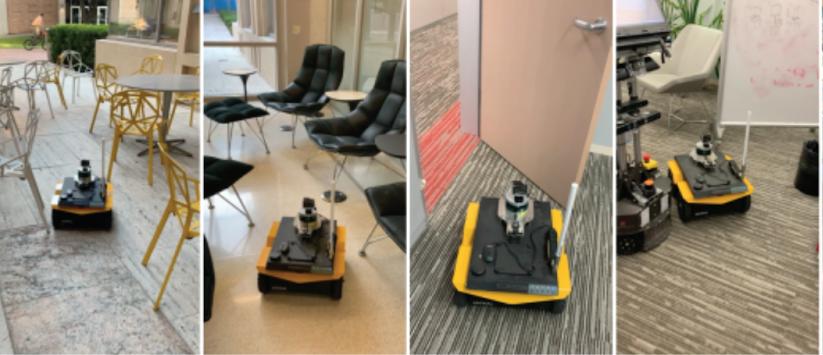
Exploration Wang’s robot navigates through its terrain by imagining obstables — what Wang dubs “hallucinations.”
— we let the robot move freely and imagine obstacles.”
According to Dr. Wang, the inspiration behind LfH came from practical limitations in robotic training.
“With hallucination, we can bypass that by letting the robot train in open space while simulating different environments.”
Recently, hallucinations have been largely recognized as errors in large language models such as ChatGPT and deep learning applications.
However, hallucinations in LfH are intentional and controlled.
“If a robot is in an open space, the shortest path to its goal is a straight line,” Wang said. “However, in our training, we intentionally make the robot take an alternate path, forcing it to avoid imagined obstacles. This helps it learn how to navigate real-world environments more effectively.”
LfH is a technique that can be adapted and generalized to various robotic applications.
“Our hallucinations aim specifically at robot navigation,” Wang said. “We teach robots to move from one point to another while avoiding obstacles. Through this approach, the robot learns that even when faced with unseen challenges, it can adapt and navigate safely.”
The implications of LfH extend far beyond academic research, however. Robots trained on hallucinated data can excel and improve accuracy in real-life situations. Efficiency is a key advantage of this approach.
“Previously, we had to rely on human experts to generate training data,” Wang said. “Now, we can collect a vast amount of data cheaply and efficiently. Robots can train themselves in open spaces, avoiding real-world risks while learning complex behaviors.”
Wang acknowledged potential applications beyond navigation.
“In the future, we want to apply hallucination to more than just avoiding obstacles,” Wang said.
“For example, a restaurant robot could train itself to serve dishes in a busy dining area, predicting human movements and adjusting its behavior accordingly.”
While LfH presents a promising path forward, it is not without limitations. A main challenge is that hallucinated obstacles may not always perfectly match real-world conditions.
“We only imagine that a space is occupied, but we don’t specify what kind of object is there,” Wang said. “That discrepancy can create challenges when transitioning from simulation to real-world applications.”
Moreover, applying LfH to three-dimensional navigation presents additional hurdles.
“In 3D environments, it becomes harder to hallucinate obstacles because there are many more ways to navigate around them,” Wang said. “The design space for obstacles in 3D is more complex, making it a greater challenge for robots to generalize.”
In the future, Wang and his team hope to expand LfH beyond obstacle avoidance.
“Currently, we focus on teaching robots to steer clear of imagined barriers,” Wang said. “But in the future, we want them to interact with hallucinated elements — perhaps navigating through crowded spaces or learning to manipulate objects in an imagined scenario.”
Wang is optimistic about what lies ahead.
“This is a great way to generate data,” Wang said. “If we can extend this idea further, we could train robots to function better in human environments, like crowded restaurants or hospitals.”
Solving the data problem is a significant leap in the field of robotics. Unlike other AI applications that may rely only on image or textual data, robots require spatial data, which is much more complex and costly. Current applications of AI models in robots are limited by the quality and quantity of their training data. By releasing the shackles imposed on AI, robots can learn, train and hallucinate toward a better future.
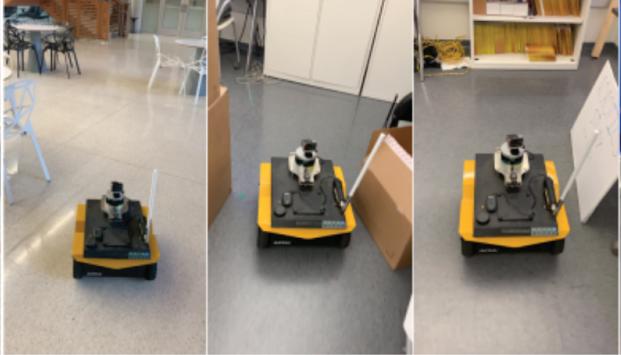

MEDICAL NIHILISM

Individuals without medical insurance often feel distrust toward medical systems. However, this phenomenon is part of a broader trend: medical nihilism.
When a person hurts their knee in an accident, they go to their primary physician. The physician gives the person advice, treatment and perhaps recommends a specialist. This series of events feels natural, almost taken for granted.
But for millions of Americans without medical insurance — and millions of others who distrust the system — this doctor-patient relationship is eroded, if not absent. Medical options are severely limited. Dr. Riva Rahl has witnessed this distrust firsthand, both as a resident at Parkland Hospital and in her current position as medical director for the concierge medicine practice at the Cooper Clinic.
UT Southwestern’s Parkland Hospital is part of the county health department and serves as a safety net for uninsured people in Dallas. In this role, Rahl regularly interacted with anyone who chooses to show up in the county, giving her a unique perspective on those less fortunate. At Cooper Clinic, she sees a very different clientele, but this contrast allows her deeper insight into systemic healthcare disparities.
“People pay a lot of money to visit me and seek my medical advice, and almost on virtue of choosing to do so, they put their trust in me,” Rahl said. “But in Parkland, when someone rolls in in an ambulance, they get the physician who is working at that moment instead of one that they have specifically chosen or have a relationship with. There’s a history of distrust in the medical system traditionally for underserved populations because years and years ago there was medical experimentation, so there is really no establishment of a doctor-patient relationship either.”
People need to take accountability for their health, which includes taking care of their bodies. “
Because many patients lack a primary care provider, they see different medical professionals at each visit. This inconsistency, combined with historical medical exploitation, only deepens their uneasiness. Rahl has seen a similar scenario play out dozens of times, one that she believes contributes to America’s growing medical nihilism.
“I have a patient who has come to see me and says, ‘I have this horrible back pain,’” Rahl said. “I decide he needs an MRI, so I order one. Since he will need to get it approved through insurance, I rely on my experience working with insurance companies to order tests that I don’t perform at my clinic.”
What follows is a bureaucratic battle. Rahl fights to convince insurance companies that an MRI is necessary, while they push for cheaper alternatives, such as six weeks of physical therapy. The same struggle applies to medications.
“I prescribe what I believe is best for the patient’s condition,” Rahl said. “Five days later, I receive a fax saying that the insurance has denied it and wants the patient to try a different medication first. They won’t allow the patient to use the appropriate medication until they’ve tried this unsuitable one for 30 days. As a result, the patient becomes frustrated and just gives up.”
So is there a solution? Rahl believes there is — sort of.
“People need to take accountability for their health, which includes taking care of their bodies through good physical activity and proper nutrition, so they’re not relying on medications or tests for various issues,” Rahl said.
She urges people to be educated consumers, questioning recommendations from doctors and insurance companies while doing their own research. Rahl believes that the future of healthcare is one dominated by large healthcare companies resembling oligopolies. An informed consumer base, she thinks, is essential to counterbalance their growing power. Beyond personal responsibility, Rahl sees hope at an institutional level.
“If we can ratchet down the cost of healthcare, then maybe the insurance company will trust the physician recommendation for the patient, and we can have a system that works,” Rahl said.
With U.S. healthcare expenses at an all-time high, it is a logical first step. But this change won’t happen on its own. Rahl believes young voices must advocate for reform, shaping a system that works for everyone.
“Develop healthy habits and watch your own health whenever possible,” Rahl said.
According to the Centers for Medicare & Medicaid Services, the average person in the US spends over $13,000 a year on healthcare. Recent data also suggests that more than half of Americans delay care due to costs, especially in the uninsured population. Rahl proposed, more than anything, that it is paramount we pay attention to these trends. She suggests, above all else, that we empower individuals to improve their health through lifestyle interventions and informed decisions.

Story
Benjamin Standefer
Visuals
Carson Bosita
Courtesy Riva Rahl
Accountability Rahl engages in activities like rock climbing outside of work to take care of her own health.
RENDERING
With NVIDIA’s cutting edge hardware supercharging AI’s ascent and LLM competitors like DeepSeek challenging ChatGPT’s dominance, the future of AI technology unfolds at the crossroads of innovation and competition.
Story Benjamin Standefer
Richard Wang
Photos Courtesy NVIDIA
In January of 2025, the two worlds of artificial intelligence collided: hardware and software. One side driven by silicon, the other by code. Founded over a meal at Denny’s, NVIDIA started as a company focused on developing the best possible gaming graphics. As games became more visually complex, incorporating realism and ultra-smooth rendering, they demanded more powerful hardware, leading NVIDIA to continuously push the limits of GPU technology. However, what started as the pursuit of a superior gaming experience soon turned into the driving force for the rapid development of the entire artificial intelligence (AI) sector.
“The gaming industry needed high-performance computing, and that drove innovation,” computer science teacher Ivann Grande explains. “But NVIDIA realized that the same power that made games look incredible could be used for AI.”
NVIDIA’s GPUs, initially built for rendering graphics, turned out to be perfect for the parallel computing tasks required for AI and deep learning. Due to complex renderings that require massive amounts of efficient computation, the GPU has come to dominate the AI market, with its thousands of small, efficient cores, much better suited for large

Innovation NVIDIA’s H100 Tensor Core GPU—paving the way for the next generation of AI technology.
RENDERING FUTURE
data sets than the fewer, powerful cores in Central Processing Units (CPUs). As the company

H100, NVIDIA’s latest AI chip, is specially designed to handle the extreme demands of training modern AI models. Unlike gaming GPUs, which focus on rendering images, the H100 is built purely for processing vast amounts of data
“When it comes to programming, it’s not just about completing a task — it’s about doing it efficiently,” Grande said. “NVIDIA tailored the H100 to manipulate and interpret data in a way that’s ideal for AI, rather than graphics process-
This makes the H100 particularly well-suited for training Large Language Models (LLMs) — the foundation of AI systems like ChatGPT and DeepSeek.
Despite NVIDIA’s dominance, the emergence of DeepSeek sent shockwaves through the AI industry. The Chinese hedge fund-backed project introduced an open-source LLM, claiming to have developed it at a fraction of the cost that companies like OpenAI and Google
had invested.
NVIDIA’s market value dropped by $589 billion in a single day.
This sudden decline highlights the volatility of the AI sector. If a competitor can deliver similar capabilities for significantly less money, the entire industry could be forced to reevaluate its business models.
Shijian Deng, a Ph.D. student at the University of Texas at Dallas, has been closely studying DeepSeek’s methodology. He points out that DeepSeek’s transparency in publishing a research paper is rare in the field.
“ChatGPT never had a formal paper,” Deng said. “There was a paper several years ago on Generative Pre-Training (GPT) models, but no paper on Chat since then. It was the first real chatbot, trained on human feedback, and constantly improving.”
These first GPT models were trained in two stages: first on large text datasets, then fine-tuned for specific tasks. The ChatGPT used today improved on this process by incorporating human feedback, but its step-by-step process was never shared with the public.
DeepSeek, on the other hand, openly shares its approach. According to Deng, DeepSeek is very reasoning-focused, similar to GPT-o1 (OpenAI’s advanced reasoning model). Unlike newer AI models that rely on fine-tuning with human feedback, DeepSeek alternates between pre-training and reinforcement learning using logic-based reward modeling. Instead of using human feedback to refine responses, the model follows a predefined function to reward certain behaviors.
“This completely changes the training process paradigm,” Deng said.
However, when asked whether this novel
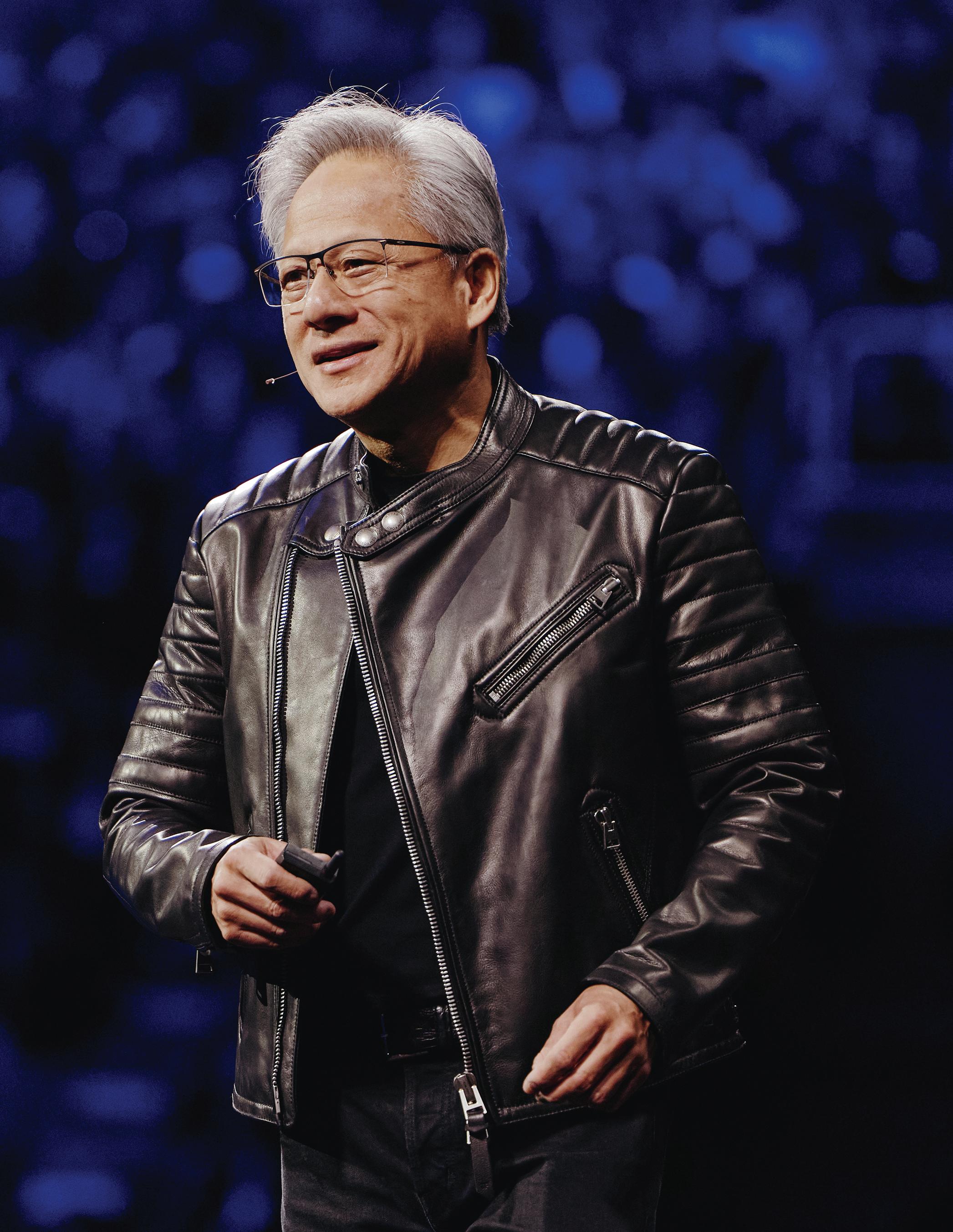
Cornerstone NVIDIA CEO Jensen Huang has risen from startup founder to icon of AI and high-performance computing.
6X
ChatGPT brings in a massive 120 million users daily, about 6 times the number of DeepSeek AI’s daily user count of about 20 million.
approach makes DeepSeek significantly better than other AI models, Deng is skeptical.
“I think it’s quite similar to other models. They’re all converging to the same point because similarity is rewarded,” Deng said.
AI models today share much of the same training data and benchmarks, which results in output that looks increasingly similar across different systems. Whether DeepSeek or any emerging LLM can maintain its competitive advantage remains to be seen.
One of the biggest challenges for AI today is energy efficiency. Training massive AI models like GPT-o1 or DeepSeek R1 consumes enormous amounts of electricity, leading researchers to explore alternatives like quantum computing.
“We’re already seeing the first steps in quantum computing,” Grande said. “Google has a quantum processor the size of a Raspberry Pi. If we can solve computing power and cooling issues, the efficiency gap will disappear.”
Quantum computing could revolutionize AI by drastically reducing energy consumption and improving processing speeds. However, it is still in its early stages, and it will take much investment before quantum chips can compete with traditional GPUs in terms of accessibility and cost.
NVIDIA innovates continuously to adapt to the needs of the ever-changing AI market. One of its key strategies is making its GPUs accessible through cloud platforms like Google Cloud and Amazon Web Services (AWS).
“NVIDIA has the funding, the technology
ChatGPT vs.
DeepSeek AI
50X
With a projected 2025 revenue of a staggering $6 billion, ChatGPT still massively outpaces DeepSeek AI, which is projected to generate an impressive $200 million.
1/10
While ChatGPT is trained on a variety of licensed and public data, its training is only 1/10 as cost efficient as DeepSeek AI, which focuses on efficient training pipelines.
and the expertise, but in tech, if you slow down, someone will pass you,” Grande said. “They must keep pushing innovation, or risk losing their lead.”
“ There’s a double-edged sword with open-source AI. It’s great for innovation, but it also makes it easier for bad actors to exploit these tools.
By allowing researchers and companies to rent powerful AI chips instead of buying them outright, NVIDIA ensures its technology remains essential for AI development.
“Cloud accessibility will be huge for researchers,” Grande said. “Now, anyone can train an AI model without investing in a supercomputer. But it also raises concerns about how open-source AI might be misused.”
While NVIDIA has been a leader in hardware, its software ecosystem — including CUDA and TensorRT — is just as important. These platforms optimize how AI models interact with NVIDIA’s chips, improving speed and efficiency.
However, the gap between AI hardware and software remains a challenge.
“AI models are advancing so fast that
robotics and physical AI can’t keep up. We don’t yet have the motor functions to match what AI software can process.” Grande said.
This is why companies are investing heavily in AI-powered robotics, using machine learning to improve hardware designs.
LLMs are mainly built on transformer architectures, introduced by Google in the paper “Attention is All You Need.” By analyzing large amounts of text data, the focus of Natural Language Processing, transformers use “attention” mechanisms to convert sequences of words into vectors, capturing the connections between adjacent words, phrases and eventually sentences. The proliferation of transformers and LLMs caused the Natural Language Processing (NLP) field to explode in popularity; the next evolution of AI may not just be chatbots — it could be intelligent robots capable of learning and adapting in real-time.
As AI technology continues to improve, ethical concerns are growing. Open-source models like DeepSeek make advanced AI more accessible, but also increase the risk of misuse.
“There’s a double-edged sword with opensource AI,” Grande said. “It’s great for innovation, but it also makes it easier for bad actors to exploit these tools.”
With companies racing to develop faster, cheaper and more efficient AI, the central question continuously shifts from its development to its utilization. The choices we make now will not only impact our technological development but also impact our growth as a society.
As more and more of our lives move on online, our technology and devices become increasingly important. However, our phones and laptops that hold our personal information are vulnerable to digital attacks. That is why, now, more than ever, cybersecurity is vital.
In 2019, the data of more than 533 million Facebook users was compromised. Full names, phone numbers, email addresses, birthdays and more were leaked in a massive data breach. Now, in 2026, how can we trust the organizations that we give our personal information to, like the school, to protect it?
Technology is used in many aspects of our lives, from completing schoolwork to texting our friends. However, technology is also connected to more important parts of our lives. Bank accounts, credit cards, financial documents, valuable memories stored in the camera roll and more are very likely to be linked to some sort of technology. This link with technology provides an opportunity for bad actors to access our personal assets through hacking. Because of this, the vital field of cybersecurity is only going to become more important.
“Everything is online, and because of that there are a lot more cyber attacks,” computer science department chair Kurt Tholking said.
Cybersecurity is the protection of software, networks and devices from digital threats. The main goal of cybersecurity is to prevent unauthorized access or damage to digital assets by bad actors who may employ tools like viruses and malware. Many devices have automatic cybersecurity features like passwords and firewalls. However, the school also implements additional cybersecurity measures.
“We protect St Mark’s information in many ways using multiple layers of security and different security solutions,” St. Mark’s technology specialist Kevin Boone said.
The school and its technology support team has the responsibility of not only maintaining the school’s digital infrastructure on campus, but also protecting the school’s digital assets through cybersecurity. In order to protect the information of students and the institution, the tech-

nology support team employs multiple methods.
On top of the school’s security team that can serve as a mode of defense from physical damage to school hardware like servers and routers, the tech support team digitally defends the school’s assets by installing certain software on schoolowned devices and monitoring cloud-based activity. The school also follows a framework of cybersecurity practices espoused by the National Institute of Standards and Technology. This professional cybersecurity framework acts as a guide for the tech support team on how to manage their cybersecurity operations. The school also contracts with an external cybersecurity company that helps implement and manage some of the cybersecurity technology.
“A lot of our efforts and work are behind the scenes to protect St Marks and create a safe and secure learning environment,” Boone said.
Certain aspects of the school’s cybersecurity operations may be more visible, like the firewall on the school WiFi or the geofencing functionality that prevents students from logging onto the school website while abroad, while others may be more obscure. Some students may consider the techniques employed as obstructive or restrictive, but the technology support

team tries their best to reduce this factor. One of the main goals of the school is to promote learning, so the technology team always keeps that in mind when making decisions and works with teachers and administration to minimize roadblocks in the classroom.
“We do our best to balance security, productivity and learning on campus. The tools we choose to deploy are for the most part unobtrusive and run in the background,” Boone said.
Much of what can be done in terms of cybersecurity can be done individually. Best practices for students include updating your computer, having unique, strong passwords, and having multi-factor authentication on your accounts. Simple things like these provide a strong layer of security with relatively little effort, as many times getting hacked can be a product of human error on the part of the user. Additionally, there are still other techniques that can be implemented to defend yourself on an individual level.
“There are a lot of free guides and resources out there that offer a lot of great information about current threats and how best to protect yourself,” Boone said. Emerging threats in the cybersecurity sector can provide a challenge for the school. Some of these threats include ransomware attacks that target data from digital systems and attempt to ransom them for money, as well attacks targeting personal information through gaining access to online accounts. AI-assisted attacks may become prominent in the future as well, with the rising technology of AI possibly making it easier and more efficient to plan and carry out
attacks. Sophisticated AI tools could be utilized to create convincing phishing emails that masquerade as emails from reliable sources or to generate code for a cyberattack. The school’s cybersecurity operations are robust enough to protect against these, but once again, user training is also very helpful so as to not compromise the digital security of the school. In addition, the tech support team regularly tests their systems to check for vulnerabilities.
With the rise of technology, being knowledgeable about cybersecurity is not only a skill, but something that all students should be aware of. The school teaches middle school students a modest amount about cybersecurity during the digital citizenship unit of middle school computer science classes, and upper school students may learn about cybersecurity in a small cybersecurity unit included in school-offered AP Computer Science Principles class. However, many students may still come into the upper school with a very limited knowledge of cybersecurity, and the students with a little bit of previous learning may still be unprepared to deal with the constantly changing and evolving digital landscape, where many new methods of cyber attacks continue to emerge.
“There could be a lot of Upper School guys that come and start ninth grade or even eighth grade and never have cybersecurity knowledge or training. That’s just something that we’re going to integrate more,” Tholking said.
Awareness of cybersecurity in general is extremely important in the modern world, and proficiency in cybersecurity will only become more and more necessary as more and more of our information and important data goes online.
“Cybersecurity awareness needs to be paramount for everyone. With how much is done online these days, everyone is vulnerable to attacks,” Boone said.
Story Christopher Huang Eugene Wang
Graphic Carson Bosita
QUANTUM COMPUTING
Recent developments in quantum computing have revolutionized a large part of the information industry. However, quantum computers like Google’s Willow Chip are meant for highly specialized problems and applications, not commercial use.
10,000,000,000,000,000,000,000,000 years. That’s how long it would take the world’s fastest supercomputer to solve a single random sampling problem. Google’s new quantum computing chip, the Willow chip, in 2024 crushed this computation in under five minutes. While this may seem daunting for the future of classical computers, the question arises: Can quantum computing truly revolutionize the computing world?
Over the past few decades, computers have become an essential part of life. They handle almost everyone’s economy and financials, personal information, healthcare and even the military. All of the computers used today are classical computers; however, quantum computers, with the goal of harnessing the unintuitive laws of quantum mechanics, hope to massively increase the world’s computing power.
How is quantum computing different from the computers seen today?
“The classical computers we use daily process information using bits, which exist as either 0 or 1,” computer science teacher Ivann Grande said. “Quantum computers operate differently by leveraging principles of quantum mechanics to process information using quantum bits, or ‘qubits.’ Unlike classical bits, qubits can exist in a state called ‘superposition,’ meaning they can be 0, 1 or both simultaneously until measured. This allows quantum computers to explore multiple solutions in parallel, potentially solving certain problems exponentially faster than classical computers.”
Although introducing these theoretical physics concepts to applications may seem impossible, the mathematics is well-established.
“Superposition and entanglement are counterintuitive phenomena that challenge our everyday intuition, yet the mathematics behind them is sound and reproducible,” Grande said.
Although the quantum computing age may seem
inevitable, current students wishing to obtain jobs that use classical computers should not be worried.
“Quantum computers aren’t meant to replace classical computers,” Grande said. “They’re specialized tools designed for specific types of problems where their unique advantages matter most.”
So how close are quantum computers to revolutionizing the tech world? Grande cites two necessary areas of advancement.
“Error correction addresses one of quantum computing’s greatest challenges: qubits are extremely fragile and susceptible to environmental interference and noise (decoherence), which corrupts calculations and produces incorrect results,” Grande said.
The
major advantage of (quantum computers) is speed. Quantum computers can process certain types of information exponentially faster.
The fragility of qubits is due to the delicate nature of quantum states. By attempting to maintain superposition, qubits can easily be disrupted by small disturbances like air molecules. Although in the past the fragility of qubits has hindered quantum computing advancement, Google’s recent Willow chip has provided a major breakthrough.
The Willow chip became the first quantum computing chip with below-threshold error correction. This means that by increasing the number of qubits, it actually reduced the number of errors, providing optimism for the scalability of quantum computers.
Photos Courtesy Creative Commons Story
Max Lee
Stability is one of the most important attributes of a good computer, as crit ical systems like financial infrastructure and national security systems depend on reliable computing.
The second major advancement is hardware.
“Major developments from companies like IBM (Condor and Heron processors) and Google (Willow chip) have increased qubit counts and coher ence times, or how long qubits can maintain their quantum state before decoherence occurs,” Grande said.
So what could quantum computers actually help with despite these limitations?
“The major advantage is speed,” Grande said. “Quantum computers can process certain types of information exponentially faster.”
Grande states that quantum computers hold an advantage over classical computers in optimizing financial portfolios, protecting sensitive data and accelerating medication development by modeling protein interactions.
Some quantum systems are already being used in hybrid quantum-classical computing and show promising results. In 2024, HSBC ran an IBM quantum computer to improve the precision of bond-trading predictions compared to traditional computing, one of the first real quantum-advantage demonstrations. The Quantum Echoes algorithm published by Google emulated the results of 13,000 molecules more accurately than standard algorithms, a breakthrough towards realistic drug discovery. According to a McKinsey survey, 72% of tech leaders believe that fault-tol erant quantum computers will arrive by 2035, and the UN chose 2025 as the International Year of Quantum Science and Technology.
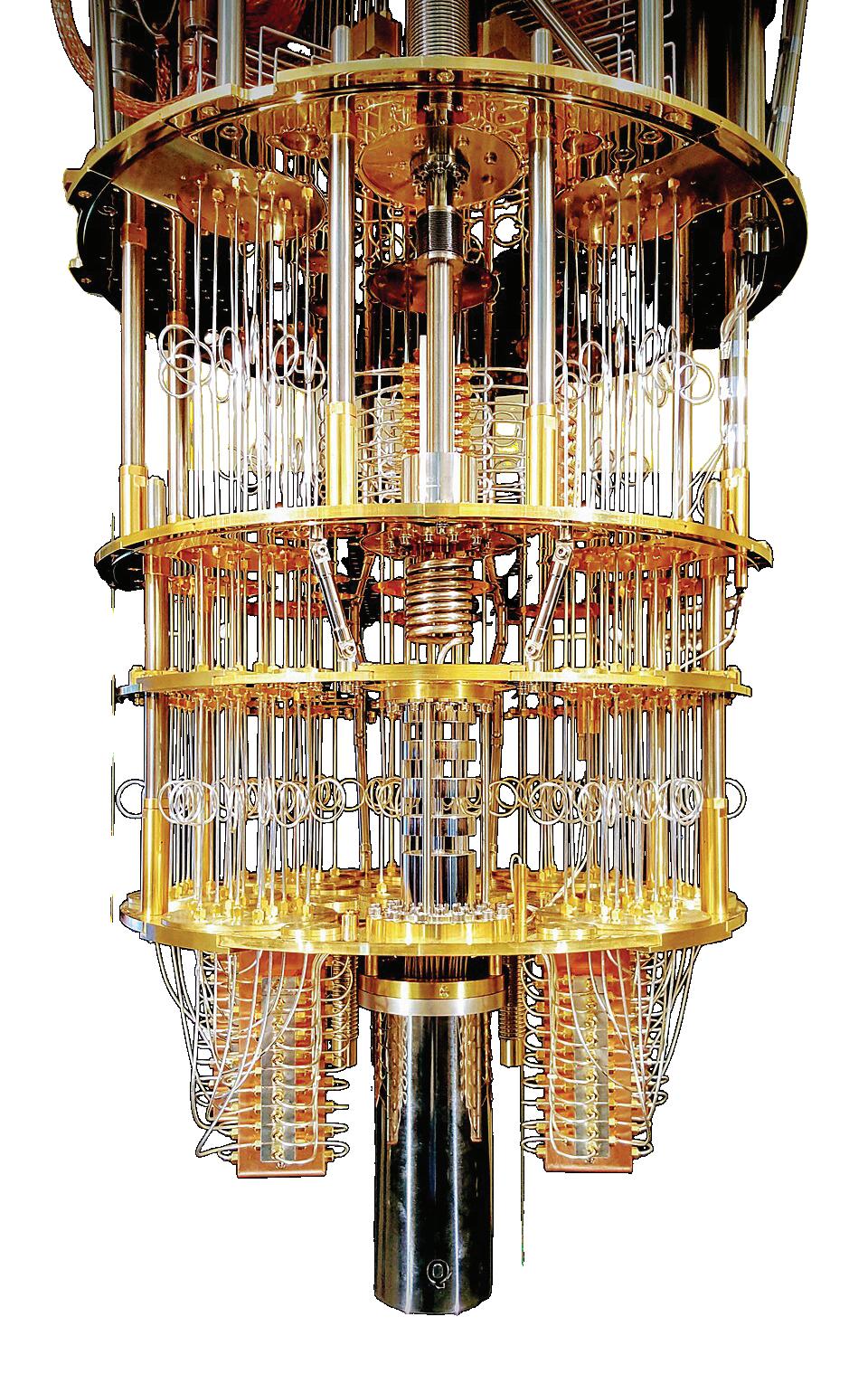
According to Grande, the first uses will be niche applications, not daily devices. The effect will first trickle down to cybersecurity and cryptography, with organizations preparing to implement quantum-safe encryption. In August 2024, NIST (National Institute of Standards and Technology) released the first three post-quantum cryptography standards, and companies worldwide are beginning to make transitions that may take a decade. Pharma will also benefit immensely
design by modeling molecular interactions faster than traditional technology.
“This is similar to early AI development with rapid investment, growing accessibility and continuous improvements in capability,” Grande said. “Within the next five to 10 years, we should see quantum computers solving specific realworld problems better than classical alternatives, particularly in drug discovery and cryptography.”
Although quantum computers bring excite-
ment to all fields as they have the potential to drastically improve computational efficiency, there have been concerns over this technology potentially breaking encryption and internet security.
“While quantum computers could theoretically break many current encryption standards, they remain large, expensive and require extreme operational conditions (near absolute zero temperatures),” Grande
Additionally, the US is already taking steps to address
“Organizations like NIST are developing standards to protect against future quantum threats,” Grande said. “Governments and tech companies are implementing quantum-safe encryption protocols as we speak. The average person has no need for concern today.”
Grande is enthusiastic about the future possibilities and improvements regarding
“The potential for discovery grows each day,” Grande said. “We’re not just improving existing technology, but we’re also unlocking entirely new computational patterns. New innovations could revolutionize medicine, materials sciences and our understanding of complex systems. It’s a field where the theoretical boundaries of physics are becoming practical tools, and that merging of ‘impossible’ becoming possible is something to be excited
So is quantum computing a future or a fad?
The evidence says the future. But while quantum laptops are not coming anytime soon, quantum computers are expected to tackle niche problems by processing complex data rather than replacing everyday computers.
MAKE
AMERICA HEALTHY AGAIN?
The rise of the “Make America Healthy Again” movement has put the spotlight on the diet as the key to good health, and through resulting policy decisions and goals, the landscape of nutrtion seems likely to change. In this uncertain climate, local experts aim to provide their patients with the best care and guide them towards positive health results.
Story
Benjamin Standefer
Richard Wang
Shiv Bhandari
Michael Chang
Christopher Huang
Graphics
Jack Benavides
Shiv Bhandari

REFORM
In a 2007 episode of South Park, the characters discover that the food pyramid has been secretly engineered by the dairy industry and that everything they were taught about “healthy eating” had been fabricated. Yet, nearly two decades later, what was an absurd comedic episode on nutritional policy now seems prescient. The Department of Health and Human Services under RFK Jr. has effectively “flipped the food pyramid upside down” by deprioritizing whole grains and “ending the war on healthy fats”, elevating red meat, butter, omega-3-rich seafood, and cheese to the foundation of the American diet. Notably, the American Heart Association has long recommended restricting saturated fats to a small percentage of a healthy diet, and research has shown that saturated fats can increase LDL cholesterol. Whether the new guidelines represent a genuine correction or an overcorrection is still being debated, but the argument itself represents how nutritional authority, long treated as settled, is now up for negotiation.
RFK’s “Make America Healthy Again” or MAHA plan didn’t come out of nowhere, however; chronic diseases, from heart disease, obesity and Type 2 diabetes, are advancing at alarming rates, fueled by diets dominated by artificial sweeteners, high-fructose corn syrups and emulsifiers. The MAHA institution has made dismantling the typical American diet its core focus and sweeping new nutritional guidelines have led a coalition of senators, scientists, and legislators alike to ask: what should Americans actually be eating?
Dr. Jaclyn Lewis Albin is an Associate Professor of Internal Medicine, Pediatrics, & Public Health at UT Southwestern Medical Center, and she also serves on the Texas Nutrition Advisory Committee. Albin has been at the forefront of nutrition research for the past decade and has seen major evolution in Texas’s nutritional landscape recently. “One major shift is the growing recognition that

food plays a central role in preventing and managing chronic disease,” Albin points out. This means preferentially selecting for certain vital macronutrients as much as it means avoiding overconsumption of certain fats and sweeteners.
Central to this reframing is a problem as old as the American food industry itself; at one time, when Upton Sinclair published The Jungle in 1906, the reforms that followed, such as the Pure Food and Drug Act and the Meat Inspection Act, were driven by an informed public, rather than purely scientific or legislative means. Today, the term “ultra-processed foods” has become the dominant shorthand for the scourges of the American diet, an attempt at a similar awakening, functioning more as an accusation than a category. Moreover, the Texas Nutrition Advisory Committee has listed among its 2026 goals the need to “understand the nuances around ultra-processed foods,” acknowledging that the term lacks a “common
REFORM

definition,” even among the experts deploying it.
Priscilla Fernandez, a registered dietitian at Parkland Health, offers a working definition grounded in clinical practice: “Ultra-processed foods are really foods like anything that comes in a packages: sodas, snacks, frozen foods, anything that has hydrogenated oils, anything that has artificial colors or preservatives.” Most of these foods, she adds, are “calorie-dense and low in fiber,” a combination that is consequential beyond weight gain.
That gap between label and nutrition runs deeper than most patients realize; many times, the constraints are written into the food itself. Industrial refining can also simultaneously add potentially harmful ingredients and systematically remove beneficial nutrients. Case in point, when grains are processed, the bran and germ are both extracted during processing to extend the shelf-life of the product at the expense of its nutritional value. That bran and germ, Fernandez explains, “is what is going to have a lot of your vitamins and minerals, plus a great amount of fiber.” Manufacturers then “enrich” the product, replacing stripped nutrients synthetically. The nutrition label, then, may look comparable to a “whole food equivalent”, but our bodies don’t process it that way. “The more natural you go,” Fernandez notes, “the more robust the nutrition is, and the more your body is able to absorb and utilize that nutrition.”
Yet, what that looks like in an exam room is less abstract. Fernandez works daily with patients navigating food insecurity, and she has built her practices around a kind of literacy around better choices, rather than ideal ones. When her patients, many of
whom manage hypertension or congestive heart failure, sit down to a meal where chips and soda are the only options available, she does not counsel abstinence. She teaches them to “flip the bag over, look at the serving size, find the sodium line, and read the number. “If it reads 300 milligrams or less per serving” she explains, “that is the better choice. If you have congestive heart failure, the threshold drops to 140 milligrams.” Fernandez teaches agency, empowering patients with the capacity to make meaningful nutritional decisions within constrained situations.
“
Ultra-processed foods are really foods like anything that comes in a package: sodas, snacks, frozen foods, anything that has hydrogenated oils, anything that has artificial colors or preservatives.
Our current nutritional dilemma, the altered nutritional architecture of ultra-processed foods, cannot be solved through counting calories or moralized language about “good” and “bad” eating, and nutritionists and dietitians have reframed their approach through a “Food is Medicine” strategy in research circles across the country.
The grounded literacy illuminated by Fernandez constitutes the core framework that the “Food is Medicine” movement seeks to systematize within the architecture of nutrition medicine.
“The goal is to integrate nutrition more directly into health care through strategies such as produce and grocery prescriptions, medically tailored meals, and nutrition and culinary education,”
Protein Grain
Fruits Vegetables
Albin explains. Approaches like these give doctors the chance to help address the root cause of chronic diseases like diabetes and hypertension by not just recommending low-sodium diets or imploring their patients to eat more fruits and vegetables but actually writing them a prescription they can take to a food pharmacy, which offers fresh produce or tailored alternatives at discounted prices. Still, the reach of food pharmacy programs vary considerably by state, as insurance coverage is largely determined by statewide laws. In Texas, Albin notes, “there isn’t much insurance coverage, so most of it occurs in a research context as we seek to demonstrate the right ‘dose’ for health benefits.” Within those constraints, Albin has found a workable approach by providing sessions where patients cook and share a meal while receiving hands-on-nutrition education, visits she can document and bill to insurance as a recognized treatment strategy for conditions like diabetes, high blood pressure, and high cholesterol. At the federal level, active legislation in Congress is

90
60
70 4.5T
fighting for increased pilot studies for food pharmacies, though for now, prescriptions of this kind are only allowed in a “food pantry context or on a research study with grant funding.”
Chronic diseases like diabetes aren’t just a problem of weight. It could be genetic. It could be lifestyle. “
Nevertheless, the movement institutionalizes the kind of small-scale agency Fernandez teaches: reading labels, comparing options, making the best possible choice within constraints. Nutritional education is built into every step of this process, with doctors increasingly spending
90% of all U.S. annual healthcare spending is dedicated to managing chronic diseases and mental health conditions within the population.
60% of the daily calories consumed by American children are derived from highly processed foods, impacting long-term metabolic health.
70% of adults in the United States are currently categorized as overweight or obese, contributing significantly to diet-related health complications.
The United States allocates over 4.5 trillion dollars to national healthcare expenditures annually.
more time walking patients through ingredient lists and preventative properties of certain meals and team members at food pharmacies advising patients on which ingredients and meals to purchase.
That philosophy has found its most concrete expression at UT Southwestern, where Albin leads a culinary medicine program around a simple yet rewarding premise: that medically-approved recipes “can be prepared in 30 minutes or less, use affordable and accessible ingredients, and offer flexibility to accommodate a variety of dietary patterns.” Their menu ranges from creative innovations like “Blueberry Turkey Sliders” to healthier versions of classics such as “BLT Pizzas.” Furthermore, her team recognizes the value of “a balanced approach to enjoying something sweet while staying true to [their] culinary medicine philosophy,” often using fruits, yogurt or dark chocolate to satisfy cravings. Beyond their creative menu and tried-and-true philosophy,
the program has also reshaped medical education nationally. UT Southwestern was the first medical institution in the country to license the Health meets Food curriculum from the American College of Culinary Medicine, which has since expanded to a network of more than 60 medical centers and training centers nationwide. But the reach of any curriculum is only as long as the circumstances it can follow patients into.
For Fernandez’s patients, the distance between federal dietary guidance and daily reality is not a matter of preference or willpower. In these conditions, the “Food is Medicine” framework adapts into improvisation rather than prescription. Many have been rehoused through rapid housing programs, moved from shelters into convert ed motels: “a one-room set up with a bed, a bathroom, a countertop, a microwave, and a hot plate.” Most individuals survive on what the food bank provides and what SNAP (Supplemental Nutrition Assistance Program) allow. Therefore, when Fernan dez runs food demonstrations for patients, she teaches them not what an ideal diet looks like in the abstract but how to construct a nutritious meal from whatever the food bank happened to provide that week, cooked on a hot plate and a microwave in a motel room. The question that she frequently returns each counseling session is deliberately modest: “What small change can we make that is going to improve your health?”
It is, Fernandez argues, one of the only approaches that actually works. Nutritional counseling that arrives as a list of prohibitions, statements like “you cannot eat this” or “you

shouldn’t eat that” tend to force patients to nod politely but go home unchanged. The most technically sophisticated nutritional guidance comes with a behavioral change, and much of the change, in the end, is a psychological and social problem, Fernandez notes. What works, she explains, is “motivational interviewing, meeting patients where they are, assessing their readiness to change, identifying what they are willing to do rather than prescribing what they
“Chronic diseases like diabetes aren’t just a problem of weight. It could be genetic. It could be lifestyle”, Fernandez highlights. The causes are multiple, yet the circumstances are unique, and our modern interventions have
The central tension in the American diet, requires more than permutations of a food pyramid, or a neat revision of federal guidelines. None of these external factors, however, resolve the variable that Fernandez considers most underappreciated in public health nutrition: readiness. Though access, affordability, and even nutritional literacy, all matter enormously, the concept of “readiness”, where a patient is in their own willingness to change, is not a detail that policy reaches. So, what should Americans be eating? Scientists, senators and nutrition advisors will keep researching. In the meantime, clinicians like Fernandez and Albin will keep showing up, not on top of a pyramid, but with a patient in front of them, and the slower, fulfilling work of meeting them there.
SKEPTICISM SKEPTICISMSKEPTICISMSKEPTICISM
SKEPTICISMSKEPTICISM SKEPTICISM SKEPTICISM SKEPTICISM SKEPTICISM
Section 3
Our final section is about the hardest part of any scientist’s job. SKEPTICISM is about turning a fully critical eye to the most dubious hypotheses and trends in science today. It is extremely important to weed out false narratives and highlight areas in research that are desperate for improvement.
ARTIFICIAL COMPANION
Artificial intelligence (AI) chatbots serve as useful tools to automate tasks and answer simple questions. However, although interactions with AI tools can feel unaturally “real” or human-like, users must understand the risks in developing emotional attachments to AI chatbots.
TGraphics Jack Benevidas
he first time he sent the chatbot a message, it didn’t look like a headline. It looked just like it was, a glowing screen lit in a dark room. Just a student. Just a late night. Just a few lines of text that felt oddly warm. The replies came fast. They were gentle, tailored to his wishes, like they’d been waiting all day to be heard.
No awkward pauses. No misunderstandings. No risks.
And by the time his conversation had ended, the unsettling part wasn’t really what the bot had said. It was the unsettling ease in which it sounded so human.
That design, symbolized with a continuity of comfort without cost, helps to explain why AI companions have started to intrude upon the emotional territories traditionally reserved for authentic friendships and relationships.
To Southern Methodist University philosophy professor Matthew Lockard, the attraction to chatbots begins with affirmation and incentives. He warned that chatbots aren’t simply tools for conversation; they are also products driven and centered around a business metric, with the goal of maximizing revenue.
“I think there are two kinds (of relationships),” Lockard said. “I think there’s chatting with a chatbot which is not even a relationship at all, and then I think there’s human interactions.”
That difference isn’t accidental. Lockard says chatbots are built to reel you in, rather than push back. While these technology companies continue to strive to simulate human conversations, there is still a key difference between human and artificial conversations.
“They are programmed to maximize engagement,” Lockard said. “They’re always going to be very affirming. It will definitely never put you down.”
Authentic relationships, especially ones attained through teenage years, are full of uncertainty. Fear of delayed replies, awkward silences and being misunderstood, promote
artificial intelligence as an alternative option of a social life without the negatives.
“There’s always like a little bit of, ‘I don’t know how this is going to go, how’s that person going to react?’” Lockard said. “Chatbots are so frictionless that you don’t have to worry about any of that. If the chat bot is going off in the direction you don’t like, reset it.”
Upper School counselor Mary Bonsu believes that the appeal stems from adolescent development, arguing that the teenage brain is especially sensitive to social reward.
“Positive reinforcement is very powerful for any
“
I think requiring developers to have some sort of disclosure so that they remind you, ‘just so you know, I’m just an AI,’ is important.
human,” Bonsu said.
Notably, adolescence is a period when the brain becomes rapidly tuned to “social rewards.”
With the twists and turns that the modern world poses to students, those rewards are tangible and measurable. Bonsu pointed to familiar signals and positive reinforcers as a signature that large language models can replicate, creating a sense of ease in many students.
“When one types in their prompt, the response is something that is positive,” Bonsu said. “‘Good job, great thinking, etc.’”
For teenagers in particular, the appeal for AI relationships stems from not only approval but privacy as well. For
Story
Eugene Wang
Dominic Liaw
many, adolescence reflects a growing demand for autonomy and unmonitored space, a field in which AI offers personal conversations that seem secure.
“With AI, no one is going to look over your shoulders,” Bonsu said.
But those same exact qualities that make AI companionship feel safe also make it easier for students to confuse imitation for genuine, authentic relatedness, as modern language models are trained and designed to mimic natural, biological responses that simulate human beings, making them easy to anthropomorphize.
To Lockard, that synthetic rush of dopamine doesn’t automatically make the connection healthy or authentic, arguing instead that what an experience is cannot be reduced to simply how it feels.
“Most philosophers have come to reject the idea that subjective feeling alone determines the nature of a mental state,” Lockard said. “What’s true about your situation is not fully determined by what your mind experiences in isolation.”
Bonsu explains that key distinction as ethically urgent while many artificial intelligence companies intentionally attempt to blur the lines, framing the moral problem as ‘asymmetry,’ where the platform’s overarching goals and the user’s interests do not align.
“The goal of these tech companies is engagement,” Bonsu said. “And the goal of relationships is mutual connection.”
With the ever-increasing technical capacities held by AI, manufacturing the appearance of connection, through mediums such as praise, flirtation and confirmation without the reciprocity that makes human relationships unique, AI relationships pose a dangerous illusion of digital intimacy.
“Sometimes, we need a little conflict,” Bonsu said. “And a little resolution.”
Lockard believes that these chatbots offer an environment intentionally marked by low stakes and safety, a sandbox of invented social interaction with no downsides or risks. That concern isn’t simply emotional.
“It’s like they are designing the psychological equivalent of nicotine into their product,” Lockard said. “So that you keep coming back, coming back for it.”
Lockard supported requiring clear reminders that chatbots are not human, acknowledging the importance of instating guardrails that prevent the illusion of relationship.
“I think requiring developers to have some sort of disclosure so that they remind you, ‘just so you know, I’m just an AI,’ is important,” Lockard said. “To kind of pull you out of the dream of it.”
Even so, Lockard believes that disclosure only provides a first line of defense to the potential dangers presented by artificial intelligence. It interrupts that sense of fantasy, but it doesn’t change the underlying idea of an engineered experience.
“It always has to be the chatbot that does what you want it to do,” Lockard said. “But less of you doing what the chatbot wants you to do.”


IFICIAL
As artificial intelligence models improve, more and more ‘artificial art’ is being circulated on the Internet; however, many artists debate the value in producing such ‘art,’ arguing that this technology lacks originality.
When artificial intelligence first started to develop images, it didn’t seem anything like the future of art.
They felt more like a magic trick than anything else: fast, flash, and a little unsettling. With the press of a couple keys, a landscape could be drawn ‘in the style of Monet,’ and suddenly, the question wasn’t just whether or not the image looked good. It was what, if anything, had even been created.
That dilemma, the line drawn between the efficiency of instant results and the depth of authentic, genuine creativity, showed up long before any clear conclusion did.
“One of the main things I emphasize is the idea of divergent thinking,” school art instructor Katherine Wood said. “(Creativity) signifies trying to come up with many iterations of the potential idea or design concept.”
In the classroom, creativity looks less like a single burst of inspiration, instead developing through a sequential series of revision: finding an idea, refining it and learning to translate a vision into a piece of completed artwork.

“Most of what students do is slow editing,” Wood said. “It’s the little things like resketching variations, reframing, and revising.”
Wood described the role of artificial intelligence in art as continually shifting, depending on how the tool is used. It can be used to create dull imitation, but also can conversely expand and boost the early stages of experimentation, while leaving sensitive artistic judgement untouched.
On one end, some prompts displace creativity in favor of taking the work of others. Style becomes a grotesque of imitation, and the ‘creative act’ becomes a choice of which artist to imitate in opposition to unique, individual judgement.
“If someone’s trying to just say, ‘hey, I’m interested in making a Monet. Here’s a picture of Monet’s work, and here’s a landscape photo. Can you give me how this would look in his style — that’s ripping off of his impressionist technique,” Wood said.
On the other side of the spectrum is a use which holds the artist’s agency intact: AI as a method of brainstorming, instead of outsourcing the actual process. Wood described prompting as a possible tool used to widen the breadth of options a student has before committing to the lengthy process of drawing, painting and revising.

“If it helps you generate directions to explore, you’re still doing the creative work when you take those ideas and change them into something you own,” Wood said. “The creativity is in what you choose, what you reject, and how you transform it.”
In terms of ownership, when the AI output stops being a tool and starts to become a finished product, authorship is dependent on both context and intent, a difficult dilemma which has left many artists uncertain as to where to draw the line.
“I guess it would depend on, again, the context,” Wood said. “Because I think there’s plenty of artists using AI as just an extension of their brain to help take shortcuts or work through an idea as part of the process.”
She also questioned whether current AI has the capacity, at least right now, to hold up against human artwork.
“AI remixes what already exists,” Wood said. “Human creativity can tap into a deep conscious-
I don’t think that AI, no matter what model or generation will ever be able to replicate the intent of a piece.
“It’s about whether the new work is transformative,” Wood said. “Have you added something new, changed the meaning, or made it your own in a meaningful way? That’s the real question.”
Tripp Brady, a current St. Mark’s sophomore and student artist, described encountering AI-generated images as both startling and rapidly increasing. The experience, he said, began with a sense of disbelief.
“I would say I first encountered AI-generated art sometime within these last couple years,” Brady said. “In the beginning I originally thought it was very weird that a program could do stuff like that just from a prompt.”
He also noticed how quickly that early abnor-
be fixed mostly around my imagination with a little room for suggestion from others including AI.”
For Brady, the dividing line between healthy usage and appropriation is intent, expression behind the work and the human emotion that drives it. That is why he heavily doubts that AI will ever be able to replace the core of artistry.
“I honestly don’t think that AI, no matter what model or generation will ever be able to replicate the intent of a piece as a human being would,” Brady said. “For a human artist themself, a piece of art results from certain emotional experiences, while AI art does not derive from anything but an input on a screen.”
Story Eugene Wang Graphics
CIRCADIAN RHYTHM
Sleep is a vital part of one’s daily life and wellbeing. Notably, certain factors have been to shown to affect one’s internal clock that regulates the entire process, including screen time and natural hormones.
Story
Chris Householder
Rayhaan Rizvon
Graphic
Rayhaan Rizvon
Each morning, thousands of sleep deprived students stumble into school, yearning for sleep. Despite what teachers may say, Biology actually agrees with them. Around three-fourths of high school students in the U.S. do not sleep the nine hours their bodies require. The lack of energy in the mornings, or burst of energy at night is due to each person’s circadian rhythm.
“Your circadian rhythm is basically your biological clock,” Gabby Reed, Director of Marksmen Wellness Center, said. “It’s the thing that tells you when to be sleepy, when to be alert, when to be awake. It’s incredibly important.”
Reed spent two years working in the sleep clinic at Children’s Health to help children solve their sleep problems. The hormone melatonin plays a large role in sleep, dictating the schedule for an individual’s internal clock.
“Melatonin is the chemical that prepares your body for sleep,” Reed said. “At certain points of the day, your body starts to secrete more melatonin and it makes you sleepy.”
Reed discussed the misconceptions about melatonin.
“Anytime you give your body melatonin regularly, your body thinks that it does not need to make its own melatonin,” Reed said. “There’s already melatonin coming in from outside. Eventually you risk that your body stops making as much of its own melatonin. It comes to rely on the melatonin you’re taking, which is why it’s better not to take it for a long period of time.”
Although some extra melatonin can be beneficial to quickly alter your circadian rhythm, like when you are travelling to a different time zone, overall, extra consumption of melatonin has no real upside in the long term.
With so many different aspects affecting our lives, it can be hard to keep the circadian rhythm regulated. The cycle can be easily offset by daily activities.
“Unfortunately, the circadian rhythm doesn’t completely map onto a 24-hour clock, it’s a little longer than 24 hours,” Reed said. “Caffeine after four will impact your circadian rhythm. Any alcohol totally messes with your sleep. Most experts recommend two hours before bed, not having any liquids to drink.”
Additionally, technology usage affects the body’s circadian rhythm.
“When we look at our screens really late at night, we’re basically telling our brain it’s 2 p.m., be alert, be awake, don’t be sleepy,” Reed said. “And we’re messing with our sleep big time when we do that. Blue light, for sure, is one of the worst ones.”

Reed points out that there are some ways to mitigate the negative effects of blue light.
“A lot of folks use blue light glasses, which do help to some extent. They can’t remove all the blue light, and they kind of make everything look a little yellow,” Reed said. “There’s also Night Shift mode on your phone and your devices, where everything turns a little bit yellow, and so that can be helpful. People do use those pretty effectively.”
Reed continuously stresses the importance of keeping a regular sleep schedule throughout the week, including weekends.
“It’s actually so important to have the same schedule on a 24 hour clock, and it’s so, so hard,” Reed said. “The instructions from the sleep experts are to stay within an hour of your wake up and sleep time.”
“
After only one night of a five hour sleep, you have a 70 percent reduction in cancer killing cells.
often have an altered circadian rhythm. This is not simply a coincidence it is supported by scientific research.
“(It’s called) Delayed Sleep Phase Sydrome - and basically, it’s a shift in your circadian rhythm as teenagers,” Reed said. “So it usually pushes things back by an hour to two hours. The only way to fix it is to keep a very specific routine.”
Creating daily schedules and routines is vital to ensure that you get enough sleep. Sleeping less than what your body truly needs can lead to many serious consequences.
“After only one night of a five hour sleep, you have a 70 percent reduction in the activity of cancer killing cells,” Reed said. “(Now) imagine if you did that for months or even years, you would be at a high risk for developing cancer.”
Science suggests that a lack of sleep for prolonged periods of time leads to higher rates of developing cancer in the future. However, a lack of sleep can also lead to increased probability for other diseases as well.
“During sleep, the cerebrospinal fluid in your brain washes your brain cells and all of the neuro garbage down your spinal cord, (which) eventually gets cleaned by your kidneys and your liver,” Reed said. “So if you don’t give it the time to clean the plaque, and that neuro trash builds up, then that can increase the risk for Alzheimer’s disease and other forms of dementia.”
Smartwatches, bands and other methods of tracking sleep reveal information about a person’s sleep.
“Some people wear their smart watches, like the WHOOP Bands or Oura Rings. If you start tracking your sleep, you learn that maybe you were in bed for 8 hours or 10 hours but you sleep about an hour less than that. You (just) don’t know it,” Reed said. “During the night, you’re in and out of deep sleep, and you’re in and out of REM sleep. Most people have several periods of awakening throughout the night.”
Reed further addressed a common misconception about sleep and the ability to compensate for lost sleep on later nights.
“You cannot repay ‘sleep debt,’” Reed said. “It’s really too bad that the sleep that you missed out on is gone.”
People between the ages of 13 to 18
Aside from diseases, sufficient sleep is necessary for everyday functioning.
“When you sleep less, you make worse decisions,” Reed said. “The lack of sleep causes your frontal lobe to not fully engage. You didn’t give your body the energy it needed so you’re way more likely to be reckless, to cut corners, to have worse cognition, to have worse attention and in the long term, have effects against your immune system.”
Everyone has their own unique circadian rhythm, but it is important that people stick to a common, fixed routine with an important goal in mind: to get enough sleep for daily functioning and to improve attentiveness in school, at work or in any situation.
“Sleep is the most important thing that we can do for ourselves,” Reed said.
Major cuts under the Trump administration have depleted six billion dollars from the budget of the National Institutes of Health (NIH). The budget funded scientific breakthroughs, such as in vaccine and cancer research.
Story Thomas Standefer
The recent NIH budget cuts led by the Trump administration have caused massive shockwaves in the medical research community and beyond. The NIH funds various medical studies throughout the country. This includes diseases, vaccines and other important areas of the medical field. The limited budget means that only a fraction of the grants proposed can actually be granted. Numerous projects have been shut down or delayed. One estimate projects the total rescinded funds to be over $6 billion. Thousands of jobs have been lost, and the situation will only grow more dire over time.
The reason given for the intense restrictions were that thousands of research projects were against White House priorities. More than 5,000 grants were initially terminated, though about 3,000 were later reinstated. A recent national survey found that roughly 90 percent of respondents opposed the funding cuts.
Additionally, the NIH also announced that future research awards would no longer guarantee protection from early termination. An estimated 74,000 award winners have had their work terminated.
Dr. Payal Kapur has been a member of the faculty at the University of Texas Southwestern Medical Center since 2006. She completed her residency at UT Southwestern and now leads multiple translational research projects. She works as a clinician and also writes grants for various research projects. Kapur noted that investigators like her “now spend a disproportionate amount of their
time writing grants that go unfunded rather than doing research.” The NIH budget cuts have significantly lowered the percentage of grants able to be funded. Kapur also said that the real effect would take place in about 3 years. The absence of funding would force many labs to shut down. She estimates that the situation will only become more dire: “In five, ten years you’ll see the real impact on finds and patient care.” Dr. Kapur is in charge of the salaries for her three coworkers. The funding, in other words, is a problem for the research itself and the people employed to do it.
Kapur also explained how a particular research program that focused on kidney cancer was shut down. The original funding provided by the Department of Defense was roughly $60 million per year. After the orders were received, the budget was reduced to nothing, and the program was shut down. Similar incidents have occurred throughout the U.S.
Another important resource that was terminated was a platform designed to combine curated clinical data, genomic data, and pathology images. It was a tool meant to accelerate patient care. However, the program was shut down. Kapur explained that it was “ultimately eight (years) of time and effort… wasted.” Not only are the budget cuts making future research more difficult, but they are simultaneously invalidating many long term projects. Even if the NIH resumed distributing the necessary funds, many temporary conditions would have already been lost. Any
DEFUNDING NIH
non-permanent participants or resources would need to be sought after once again.
The current administration’s policies have abruptly halted the entire nation’s research ecosystem. Researchers find themselves in a tough spot, cut off from a major source of grant money. The lack of funds for research endangers numerous projects that could potentially save lives. The real consequences of the defunding of the NIH may not be immediate. The true repercussions will be felt over the next several years as laboratories will certainly be forced to lay off skilled staff members, researchers and in many cases, shut down entirely. The loss of institutional knowledge will slow down scientific progress in the coming years.
Science, unfortunately, is not a light bulb to be turned on and off repeatedly. It takes years of dedication from researchers and continuity for experiments, personnel, and clinical trial participants. The NIH was not a perfect system prior to the funding cuts; however, the cuts are debilitating to the nation’s largest and most successful engine for research. NIH-funded research contributed to 99 percent of the FDA approved drugs between the years 2010 and 2019. In fact, the development and distribution of the mRNA vaccines during the COVID-19 pandemic required decades worth of NIH supported research. Studies estimate
that COVID-19 vaccines saved tens of millions of lives worldwide and were built on decades of publicly funded research. If we were to improve these mRNA vaccines, we could save many more millions of lives if not billions of lives. Unfortunately, in early August, the United States Department of Health and Human Services canceled more than $500 million worth of federal contracts that were supposed to help create and better mRNA vaccines. The United States Secretary of Health and Human Services, Robert F. Kennedy Jr., claimed that the vaccines are not effective against upper respiratory infections despite the evidence that the mRNA vaccine is effective against severe, often fatal, infections.
Cancelling the mRNA vaccine research is especially concerning because of its political nature. It sets a bad precedent for politicians to disrupt the existing institutions that advance scientific research. Research requires decades of investment, continuity and stability, but the current administration has moved to reduce investment in research infrastructure, impose freezes on existing funding, terminate previously awarded grants and dismantle or discontinue major research initiatives. The result is a system of governance in which decisions about research direction and capacity appear increasingly influ-
enced by political considerations, undermining the role of expert judgment and weakening the institutional independence that has traditionally guided research funding and policy.
“
In five, ten years you’ll see the real impact on finds and patient care.
The defunding of the NIH represents a disruption of the scientific enterprise in the United States. By dismantling long-term research programs and destabilizing careers, these policies threaten to erase progress and compromise scientists’ ability to respond to future health crises. The true cost of these decisions will not be measured in lost dollars or shuttered laboratories, but in delayed treatments, unrealized cures and preventable loss of life. Preserving a robust research infrastructure is important for scientific advancement and safeguarding the health of current and future generations.
NATURAL LANGUAGE PROCESSING
Shiv Bhandari
AI may feel limitless, but its power depends on something often overlooked: language. Researchers are working to bridge the gap between high-resource and underrepresented languages, breaking down linguistic structure to make AI more inclusive.
Artifical intelligence seems endlessly customizable. We can choose from a variety of models, emphasize problem-solving or prose and tailor responses to mirror our own speech. This is all predicated on something most people of us never consider and constantly take for granted: the AI speaks the human language.
Lawal Kolawole and Abeeb Kasaba are both graduates from the University of Ibadan in Nigeria and do research in computational linguistics. Their work focuses on natural language processing, or how human language is translated into the ones and zeros that allow AI models to interpret our speech and output coherent text. They are specifically interested in researching underrepresented languages and building tools for speakers who otherwise might not have access to new technologies.
To do this, they have to understand how language works.
“You need to understand the logical sequences and breakdown behind language,” Kolawole said. “Natural language processing has largely been done in languages like English, French and other high-resource languages.”
Kolawole explains that these languages are called “high-resource” languages because they have an abundance of digital resources.
“Languages like Swahili or Yoruba or other languages indigenous to Nigeria, they all lack substantial digital resources to train these models,” Kolawole said.
To build tools for suchin these “low-resource” languages, researchers must have to break language down into its fundamental parts.
“The goal of natural language processing is to understand human language in a new way. People who don’t speak that language can still understand the basics from a blueprint of that language if we design it the right way,” Kasaba said.
Building this blueprint requires a few different things.
“From a linguistic perspective, morphology is very important,” Kasaba said. “The programming comes down to working with morphemes. The syntactic perspective is also crucial. Syntax is all about the structure of words and how they break down into morphemes.”
Kasaba describes the power in teaching a program to break down a sentence into subjects and verbs and to recombine them put them together again to form something meaningful.
Kasaba likes to think of this process as essentiallyalmost building a language from the ground up.
“We can use tools like parsers to decode underlying sentence structure and to represent the patterns of a language in data structures like parse trees,” Kasaba continued. “The meaning of the word is very important too. The machine must understand the literal meaning of the language. If it understands the meaning, it can build a good blueprint.”
“
Natural language processing has largely been done in languages like English, French and other high-resource languages.
Kolawole describes how this meaning can be stored mathematically as vectors that can be related through a series of operations.
This process is not the same for all languages. According to World Wide Web Technology Surveys, over 70 percent of the internet is written in just five languages (English, Spanish, German, Japanese and French). If you do not speak one of these languages, it can be much harder to find AI tools that work for you.
“The efficiency of NLP in Yoruba or other low-resource languages is a major problem. We have so many tools trained on the English language,” Kolawole lamented. “English is the default.”
Without a surplus of data to train on, new models can find it difficult to learn the patterns that make low-resource languages unique.
These patterns can take many forms. One issue that new models run into is losing meaning in “stop words”. Stop words are conjunctions, prepositions, articles and any other small words that are not dense/ filled with semantic meaning. They are typically filtered out before training a new model on a batch of text. This practice is commonplace and efficient in English, but models can lose crucial information when going through this process in other languages.
“AI does not actually understand the structure of our Yoruba language. In English, it is easy to detect stop words, and removing them avoids noise, but in Yoruba it does not work well,” Kasaba explained.
“You can lose the meaning of entire sentences.”
Another issue is tone, which can be found in many different languages around the world and can contribute significantly to the meaning of words depending on the language.
“Tone also plays a very important role in Yoruba. AI needs to understand that our tone carries meaning and our words relate to each other in unique ways. In Yoruba, it goes beyond action words or having a subject or object. In most cases, the arrangement, the tone and the word form all uniquely contribute in ways English words don’t,” Kasaba elaborated. “The translation of Yoruba to other languages is always problematic. You always lose meaning.”
The process of breaking down text into pieces is called tokenization. Most tokenizers cannot interpret the diacritic markings that convey tone in Yoruba and thus lose significance in every sentence.
There are not many easy solutions to these problems. Kasaba has worked on codeswitching models that are trained on Nigerian Pidgin and can decipher the nuance of languages that intermix dialects.
“We have some models that actually work really well in Yoruba. We ultimately want to integrate Yoruba into the same AI tools everyone uses,” Kasaba said.
This ultimately comes down to whether companies seeing this type of integration as profitable. But when over 120 million people speak Nigerian Pidgin, these two researchers see it as a desperately needed addition for future models.
Kolawole also sees this as a cultural issue.
“People are not looking at this from the perspective of the speakers. They’re looking at it from a profit side. Some of our parents, our forefathers who live in villages and rural areas, don’t have access to technology or TVs. Most of them communicate in Yoruba. They deserve these kinds of tools,” Kolawole stated. “People’s attitude to AI speaking our native languages is so important. In Nigeria today, we feel attitude towards language really matters.”
Not only are some languages associated more with older generations, but also other languages may be seen as lesser. Kolawole highlights Nigerian Pidgin as a language that is associated with a non-educated social class due to Nigeria’s colonial oppression. Building AI tools in these languages could shift that perception.
CLIMATE
CRISIS C O O C O O
Global shifts in climate and weather patterns are continuing to have significant impacts on regions across the world. One significant cause of these changes is high greenhouse gas emissions.
Sahir Hasja
William Standefer
Graphics Shiv Bhandari
C H H H H C O O C H H H H C O O C O O
Climate change is widely regarded as one of the greatest existential challenges that humanity and all life on Earth face. While the concept may seem unrealistic, the effects are becoming increasingly visible every day. To help understand this global crisis, Mary May, the director of the Arthur Douglas Greenhouse, an AP environmental science teacher and an expert in molecular, cellular and developmental biology, has offered a powerful perspective on this issue. She has done extensive research on the environment and climate change, and shared her thoughts on this global crisis.
“I spent 16 [years] in the Middle East, and so I became very aware of desertification,” May said. “I lived in the desert, and then through that, I began to realize that desertification is something we can actually control and change if we start altering the way that we’re living.”
According to the United Nations Convention to Combat Desertification, over 40 percent of Earth’s land has already degraded. This directly threatens food systems and human livelihoods worldwide. Through May’s experience abroad, she witnessed these devastating effects on the environment firsthand.
Before May delved into environmental science, her journey began with molecular biology.
“My degree, my undergrad, was actually molecular, cellular and developmental biology,” May said. “I was obsessed with protein formation, genetic variations. I did research on the immune system, worked on the human genome and studied actin and myosin with muscles.”
However, her passion shifted from laboratory research to education and environmental issues.
“I began to realize that I enjoyed teaching more than sitting in the lab,” May said. “I began teaching overseas and began to see in all these countries the effect the human population was having on the land.”
So what exactly is causing this problem? There are many contributing factors to climate change, including fossil fuels, deforestation, landfills and certain agricultural practices. Fossil fuels are the largest of these contributors
due to the large amounts of carbon dioxide released into the atmosphere whenever they combust. Some of the more serious effects of climate change include higher global temperatures, ocean acidification, land degradation, desertification, biodiversity loss and a higher frequency of extreme weather events. Landfills emit methane, a greenhouse gas that is over 25 times more powerful at trapping heat than carbon dioxide, according to the U.S. Environmental Protection Agency. Another serious problem is the many myths regarding the causes and effects of climate change. May brought up a misconception regarding the ocean not containing carbon dioxide.
“The ocean is actually bearing the burden of fossil fuel burning that we humans have been doing for…200 years,” May said.
According to the National Oceanic and Atmospheric Administration, the ocean has absorbed over 90 percent of excess heat from global warming and human-produced carbon dioxide. Misconceptions such as this one can be seriously harmful because they lead the public to believe that climate change is okay, and that there are no real, negative effects, which is false.
May went on to discuss a dangerous side effect of the CO2 emissions.
“The ocean is warming, it’s undergoing acidification… it’s affecting fisheries, massively affecting coral,” May said. “Coral bleaching is happening.”
As oceans absorb carbon dioxide, they form carbonic acid, which lowers the pH of seawater. This disrupts entire marine food webs by making it harder for corals, shellfish and plankton to build shells and skeletons. Coral bleaching occurs because stressed corals expel the algae they depend on for food and color. Without algae, these corals starve and die, destroying habitats that support
about 25 percent of all marine species, according to the World Wildlife Fund.
Then, May revealed a stunning statistic:
“The average world temperature right now… is about 60 F.” May said. “If the ocean had not been absorbing 90 percent of the CO2. The average world temperature would be about 122 F. That’s where we’re heading.”
Essentially, the planet’s natural features are shielding humanity from their extreme consequential actions. Without the ocean, humanity would have been at existential risk years ago. Another major misconception is the notion that global warming is simply a part of Earth’s natural climate cycle, shifting between periods of warming and cooling.
“We did a study on ice cores…the world goes through cycles…but right now, we should be in a cooling phase, and we have flipped that, and we are in an unprecedented zone where it’s never been before,” May said.
According to NASA climate data, Earth’s current warming is not sufficiently explained by natural cycles. In fact, warming temperatures have risen since the Industrial Revolution, directly corresponding with increased greenhouse gas emissions.
Climate change is a major global issue, but also directly affects students at St. Mark’s. May described how the school has the ability to fight climate change locally, especially through the Arthur Douglas Greenhouse.
The average world temperature right now is about 60 F. If the ocean had not been absorbing 90 percent of the CO2, the average world temperature would be about 122 F. “
“It should be used as a learning platform… from grade one all the way up through grade twelve,” May said. “The youth are who we really want to captivate.”
When asked what current measures students are taking to battle climate change, she described projects such as vermiculture composting with fifth graders, prairie restoration, species analysis of campus trees and planting oak trees from acorns with students.
“The prairie restoration club is phenomenal… we live on black land prairie, and we’re destroying it by building cities and these boys are working to restore it with native species,” May said.
Restoration is a powerful climate solution, according to the World Wildlife Fund. Native prairie ecosystems store large amounts of carbon and support biodiversity. Over time, small actions
such as restoring prairies can play a huge role in mitigating climate change.
How else can students combat climate change? May highlighted composting as one of the most impactful actions.
“The average person in a developed country wastes around 250 pounds of food a year,” May said. “That converts to about 1,000 pounds of methane per year.”
Then, May explained the process of how food waste links to climate change.
“Food waste goes to landfills, gets buried and enters an anaerobic cycle, producing methane, and all that water mixes with chemicals and heavy metals and becomes leachate, which leaks into our water system.” May said.
According to the EPA, food waste is the single largest category of material in U.S. landfills due to being a major source of methane emissions.
May went on to discuss climate change denial. “In the 1960s, LA and Denver were covered in a brown cloud of smog,” May said. “Then the Clean Air Act was passed, and it worked. Even if you don’t believe in climate change, what’s the problem with removing pollution? Why would you argue against cleaning up a dirty system?”
Pew Research Center says about 22 percent of American adults either believe climate change is not happening or believe it is primarily due to natural causes, rather than human activity. Even though climate change is not acknowledged by everyone, May’s point still remains relevant. There is no harm in cleaning up our environment.
Finally, May offered advice about future careers and where society is heading.
“I would think about this whole concept of systems, looking at how water, energy and food systems connect and tying science, climate action and policy together,” May said. “[There are] three pillars of sustainability: environment, economics and equity.”
May noted that solving climate change requires understanding not only science, but people, money and policy.
Climate change is no longer a distant problem that we can ignore. It is actively shaping ecosystems, economies and the future of the next generation. May has shown through both science and experience that the effects of climate change are drastic. Therefore, action is urgent. From greenhouse and prairie restoration projects to everyday composting, students at St. Mark’s are already in a position to lead that action.
An AWS outage in October 2025 left millions of Americans unable to open apps or make payments. The issue stemmed from a faulty automated update. This minor glitch had widespread effects, disrupting millions.
Story
Nicholas Sun
At 9 a.m. on Oct. 20, 2025, a large majority of Americans unlocked their phones and found something unsettling. Apps would not open, payments would not go through and entire platforms seemed to have vanished without warning. For some, it meant missing a meeting. For others, it meant losing access to money, medical portals or essential work systems. There was no explosion, no storm, no visible disaster, just silence where the internet was supposed to be.
“Any issue that happens on (AWS) is going to affect a lot of people,” web development specialist Ivann Grande said. In moments like these, society stands face to face with an uneasy reality: much of modern life depends on hidden systems that most people rarely notice and scarcely understand.
Amazon Web Services, commonly known as AWS, is one of the most critical pieces of that invisible infrastructure. It is not just a tech product but a backbone of the global digital economy. Banks, hospitals, social media platforms, online games and government services rely on AWS to store data, run applications and connect users in real time.
“A lot of the things people use every day, whether they realize it or not, are running on AWS,” Grande said.
This dependence has made cloud computing fast and affordable, but it has also created a dangerous concentration of risk. When AWS fails, the disruption is not isolated. It spreads instantly across society.
Grande pointed to the sheer size and centralization of AWS as a primary reason outages have such far-reaching effects. The company’s largest and oldest cloud region, US-East-1 in Northern Virginia, handles massive amounts of global traffic. Because it is so large and so widely used, even minute technical problems can create ripple effects across services, affecting users far beyond single companies or platforms. As more services converge into the same infrastructure, even minor technical issues can trigger widespread consequences.
Many people generally assume large-scale outages are caused by cyberattacks, but Grande said that is often not
the case. Referring to the major AWS outage in October, he said that “(the) outage was actually caused due to a DNS issue.”
DNS, or Domain Name System, allows computers to locate and communicate with one another across the internet. When it fails, services cannot find the servers they depend on. Grande explained the breakdown in simple terms.
“DNS errors are basically like losing our phone book,” Grande said.
“
Just
because you’re this big, giant company doesn’t mean that you can’t mess up either.
The failure stemmed from an automated update that contained a bug.
“There was a bug in that update,” Grande said.
Because AWS relies heavily on automation to manage its large infrastructure, the faulty update spread quickly. Automation is designed to reduce human error and increase efficiency, but at AWS’s scale, it can also magnify mistakes. A single error can domino across thousands of systems in seconds.
When outages occur, engineers and developers are forced into emergency response mode. Grande described the process as intense and complex.
“Engineers, developers, they have to literally stop everything,” Grande said.
Automated processes are slowed or shut down, traffic is rerouted and teams manually verify systems to restore connectivity.
“They need to make sure the connection that was severed … is back together,” Grande said.
Despite AWS’s resources, recovery is not immediate.
Photos Sebastian Zaballa

Grande compared the situation to “working on a moving car,” emphasizing that systems remain active and under stress while repairs are made. The scale and interdependence of cloud infrastructure means that fixes must be done carefully, which explains why outages can last hours or longer.
The real-world consequences extend far beyond inconvenience. In the financial sector, AWS outages can prevent access to essential data. Grande said that when cloud connections fail, “they can’t access that data that they have.” The disruption affects both customers and employees. Banking transactions, fund transfers and internal operations can all come to a halt simultaneously.
Healthcare systems highlight the stakes even more clearly. While many hospitals maintain in-house systems to avoid full dependence on the cloud, AWS still plays a role in supporting services. Grande explained why medical institutions remain cautious.
“If (AWS) goes down, they can’t handle that,” Grande said.
The logic mirrors the use of backup generators. Some systems are simply too critical to rely entirely on external infrastructure.
Even services considered nonessential have significant social impact. Grande pointed to platforms such as Roblox and Snapchat, stating that “the outage (affected) pretty much everyone.”
These platforms are central to communica-
tion and social interaction, especially for a new generation of users. When they go offline, daily routines are disrupted, emphasizing how deeply cloud services are woven into modern life.
Grande said AWS is generally transparent when outages occur.
“There’s really no benefit to you of trying to hide what the actual issue was,” Grande said.
At such a large scale, causes become evident quickly. However, transparency does not always ease public frustration.
“The public definitely still had issues with (the outage),” Grande said.
The outages raise a broader question about dependence on a small number of cloud providers. Grande addressed (the issue) directly.
“I would say we are probably (dependent on AWS),” Grande said.
Yet alternatives are limited. Running private servers requires significant cost and expertise.
Reflecting on his own experience, Grande said that “the hardest part was always finding a good hosting service.”
Cloud platforms gained dominance because they solved those challenges efficiently. “With how fast people expect things to be, this is their solution,” Grande said.
Businesses and consumers demand speed and reliability, and cloud providers deliver those benefits at scale.
Automation and artificial intelligence increasingly manage cloud infrastructure. Traditional automation follows strict rules, which Grande described as, “If this happens, do this. Else, do that.” AI offers flexibility, responding instantly to unexpected situations. Grande described AI as “adaptive,” but warned, “We know that AI does make mistakes.” The risk is reduced, not eliminated.
Looking ahead, Grande believes major outages will encourage diversification. High-profile failures create opportunities for competitors.
“This is a perfect opportunity for us to try to get a leg up and provide our services,” Grande said. Companies may adopt multi-cloud strategies, but reliance on cloud computing itself is unlikely to fade.
Perhaps the most sobering lesson is how ordinary the cause of extraordinary disruption can be. Reflecting on AWS outages, Grande said “it was literally due to automation… just a bug in some code.” In a society built on massive digital systems, small mistakes can produce enormous consequences. As Grande put it, “Just because you’re this big, giant company doesn’t mean that you can’t mess up either.” The question is no longer whether the cloud will fail again, but how resilient society will be when it does.
Uptime Pictured above is one of the server rooms at the school that is involved in supporting the school’s network.

is no ‘perfect body,’ and health comes in many shapes and sizes. Body acceptance has been promoted over the past decade to challenge traditional norms of an ‘ideal’ figure.This relationship with one’s own body, however, is a very unhealthy one. There is no ‘perfect body,’ and health comes in very different shapes and sizes. This notion of acceptance has been promoted heavily in the past decade, aiming to break down traditional societal norms and ideas of an ‘ideal’ figure.
“Around 20 years ago, it was just about being thin or beefy,” Bonsu said. “But now, you see a variety of bodies that represent health. Around the early 2010s, the concept of body positivity, the idea that we don’t shame people for what their bodies look like, emerged. Now, you’ll see ads where a variety of body types are shown to model clothing, for example. Now, as a society, we’re moving towards health

optimization versus physical traits.”
Seconding the message of prioritizing health, Chen emphasizes that weight often comes back after stopping weight-loss drugs and that people should try and optimize their overall health instead of focusing solely on a scale.
“Ozempic is marketed as this miracle drug that you can just take and lose weight,” Chen said. ”I don’t know that there’s any problem with taking it short-term, but once you stop it, you will probably gain the weight back unless you’re planning on taking it forever. So I don’t think it’s a good solution to these problems. Ozempic is just another body alteration that people are going to do for cosmetic reasons, like Botox or cosmetic surgery. There are positives to feeling better about yourself and how you look, but there are also clear negatives when that’s the sole focus. It’s more about health than about weight.”
Social media, with its short-form content, has brought more attention to healthy nutrition, making health more accessible.
“Health is being approached in so many different areas, especially online,” Bonsu said. “People are talking about getting their macronutrients in or getting all their antioxidants, so there’s a lot of talk where people are trying to promote health over thinness. There’s a trend about educating peo-
ple about their protein (intake), and the myths around women bulking up if they lift heavy weights have been dismantled.”
Additionally, Bonsu believes that weight-loss medications shouldn’t be someone’s only avenue of pursuing these health goals, as dependence on the drug can be harmful and unreliable, especially for children.
“I’m concerned about adolescents who aren’t obese or pre-diabetic taking these medications for more aesthetic reasons,” Bonsu said. “Young kids are still developing their bone structure, and you don’t want to mess with that; these drugs also impact muscle mass. It could create negative self-esteem messages that people send to themselves when their willpower isn’t as strong as they want it to be. Don’t play around with that time of your life developmentally.”
Choosing to take Ozempic, despite its popularity, is a serious decision that shouldn’t be taken lightly. Any powerful medication comes with its short-term side effects, but also has the potential to create long-lasting health impacts that aren’t fully understood yet. Proper research should be conducted, and a primary care physician should be consulted before making the commitment that can last for years.
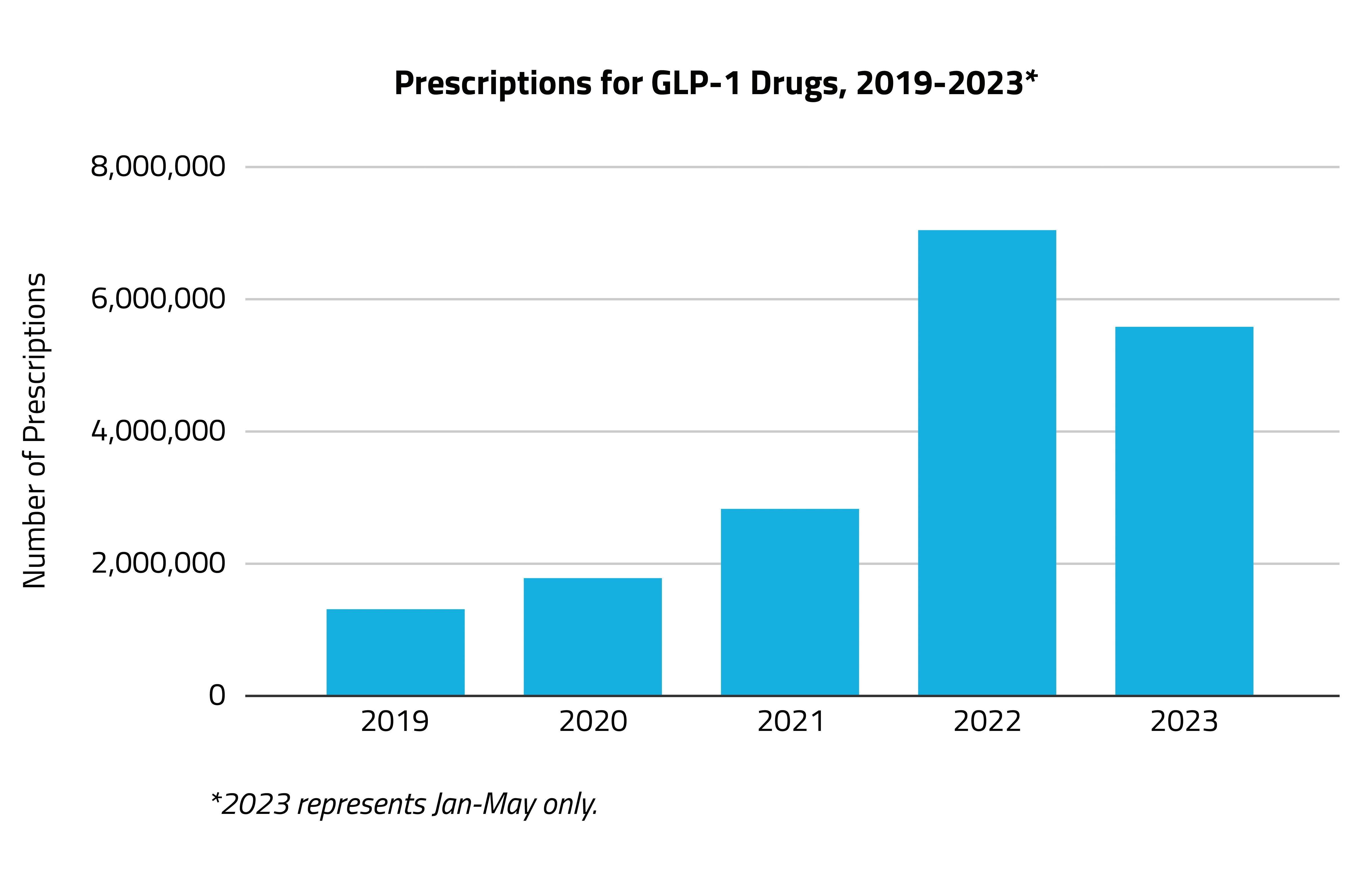
TEAM
Editors-in-Chief
Shiv Bhandari ’27, Michael Chang ’27, Christopher Huang ’27, Benjamin Standefer ’26, Richard Wang ’26
Section Editors
Avi Aggarwal ’28, Rayhaan Rizvon ’28, Eugene Wang ’28
Graphic Designer
Jack Benavides ‘27
Copy Editors
Chris Householder ’28, Sebastian Zaballa ’28
Head Writers
Evan Fu ’28, Dominic Liaw ’28
Staff Writers
Guru Aroul ’27, Brennan Bosita ’29, Dylan Bosita ’27, Sahir Hasija ’29, Andrew Hofmann ’27, Ronit Kongara ’26, Max Lee ’27, Doan Nguyen ’26, Berkin Oral ’28, Holden Purvis ’27, Nicholas Sun ’29, Thomas Standefer ’28, William Standefer ’28, Rohan Yadlapalli ’29, Kayden Zhong ’26
Advisor
Dr. Dan Lipin
DETAILS
Policy
The Scientific Marksman is an out-of-school extracurricular activity that works independently from the St. Mark’s School of Texas journalism program. Throughout the first half of the year, staff members pitch story concepts, hold interviews, and write articles; the majority of the design process occurs in the latter half. This publication is submitted annually for evaluation to the Columbia Scholastic Press Association (CSPA) and the National Scholastic Press Association (NSPA).
Colophon
The Scientific Marksman is printed by Digital 3 Printing. The cover is 100# Polar Bear Velvet Cover printed 4/4 in four color process inks. Text is 100# Polar Bear Velvet Text printed 4/4 in four color process inks. Binding is PUR glue perfect binding. The Staff uses Adobe InDesign, Illustrator, and Photoshop 2026 on 27-inch Retina 5K Display iMacs and a 15-inch 2023 Macbook Pro to design the spreads. Typefaces include Altivo for headlines; Baskerville URW for subheadings; Newe Haas Grotesk for pull quotes and bylines (multiple weights and styles); and Adobe Garamond Pro for body text and folios.
Special Thanks
Our utmost gratitude goes to Dr. Dan Lipin, our incredible advisor, the St. Mark’s security team, and Jim Barragan and Kelly Massey with Brodnax 21C Printers.