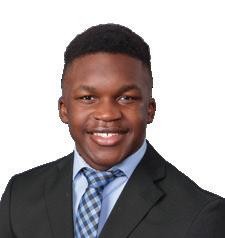
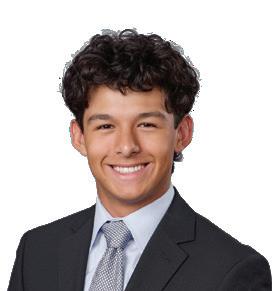
“They asked me why I don’t speak Spanish, and it made me feel like I don’t belong or I did something wrong.”
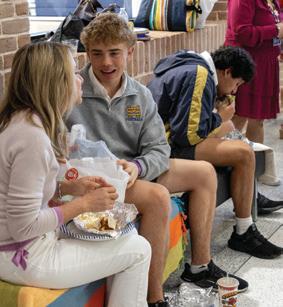
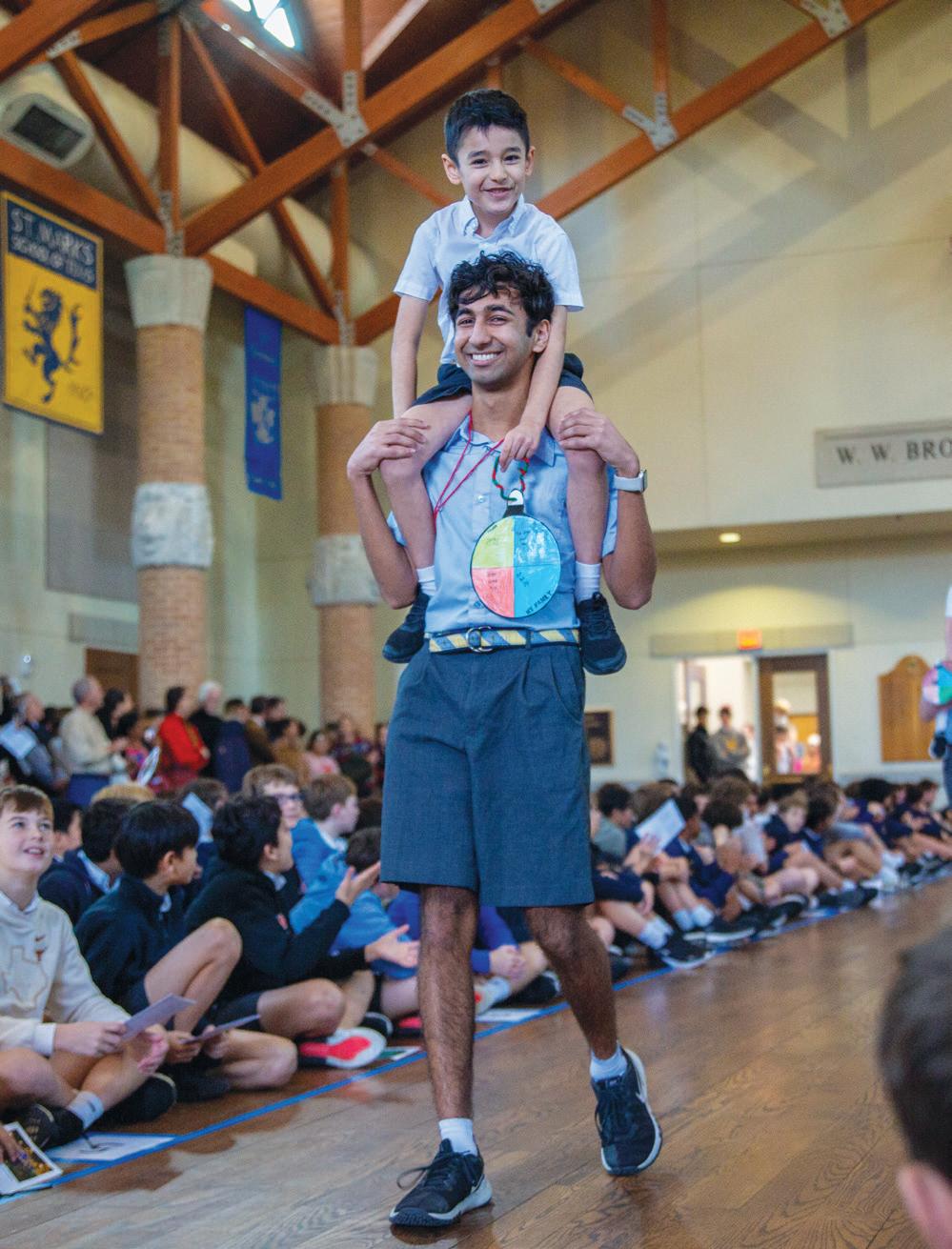
Mother-son events foster connection
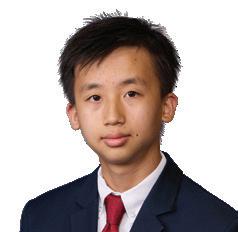
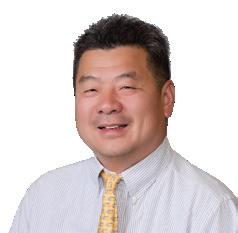
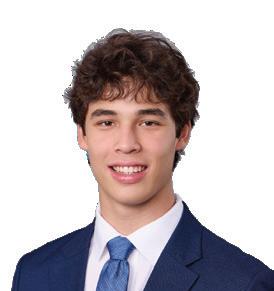
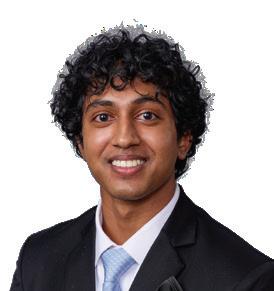
By Dominic Liaw and Trevor Hsu
27
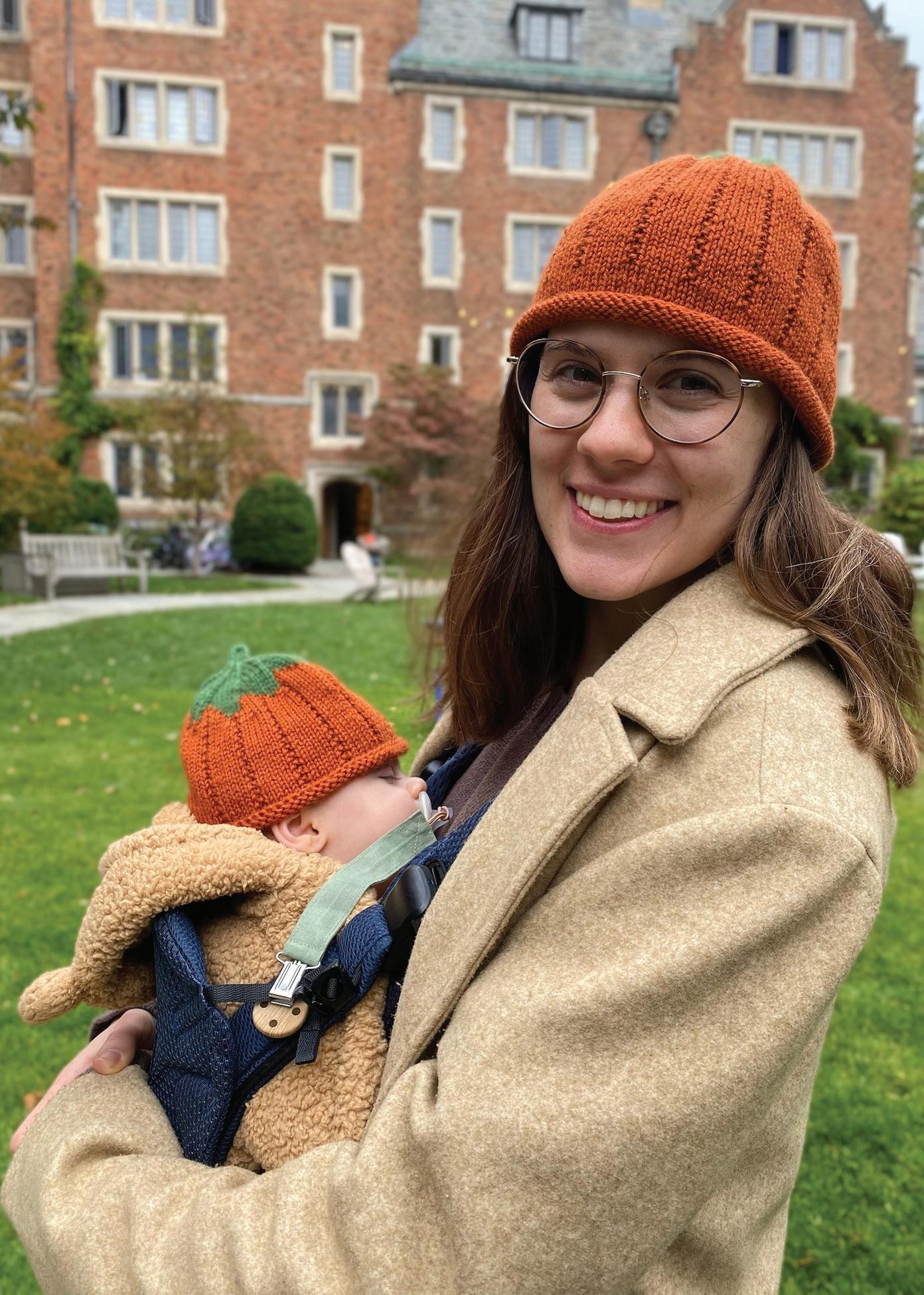
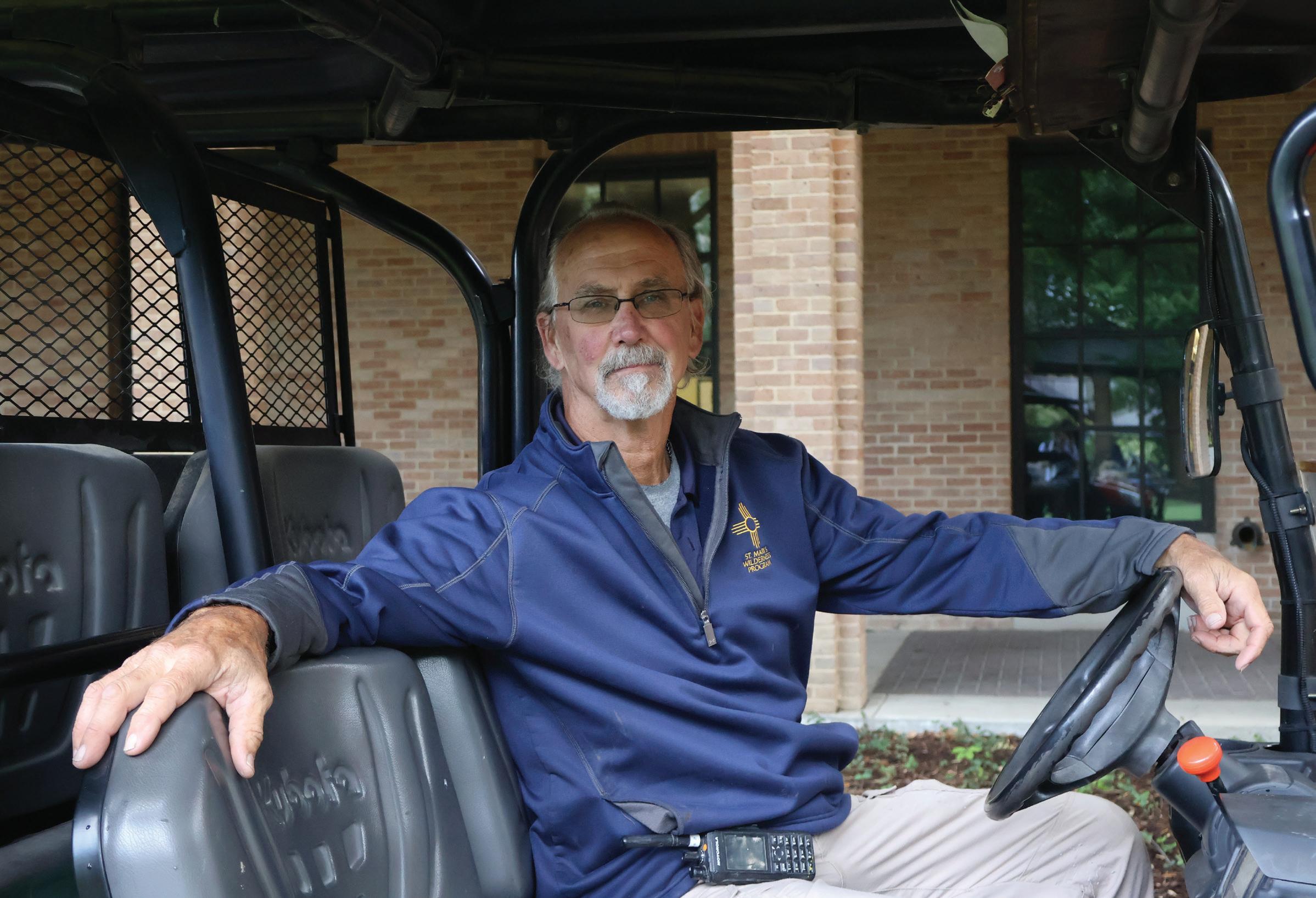
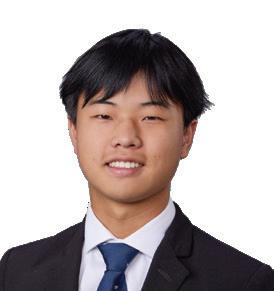
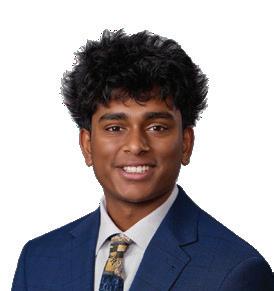
Groundskeeper retiring after 33 years By Jacob Gail and Elliot Stone
Friday, May 15, 2026
Volume 72, Issue 7
St. Mark’s School of Texas Dallas, Texas
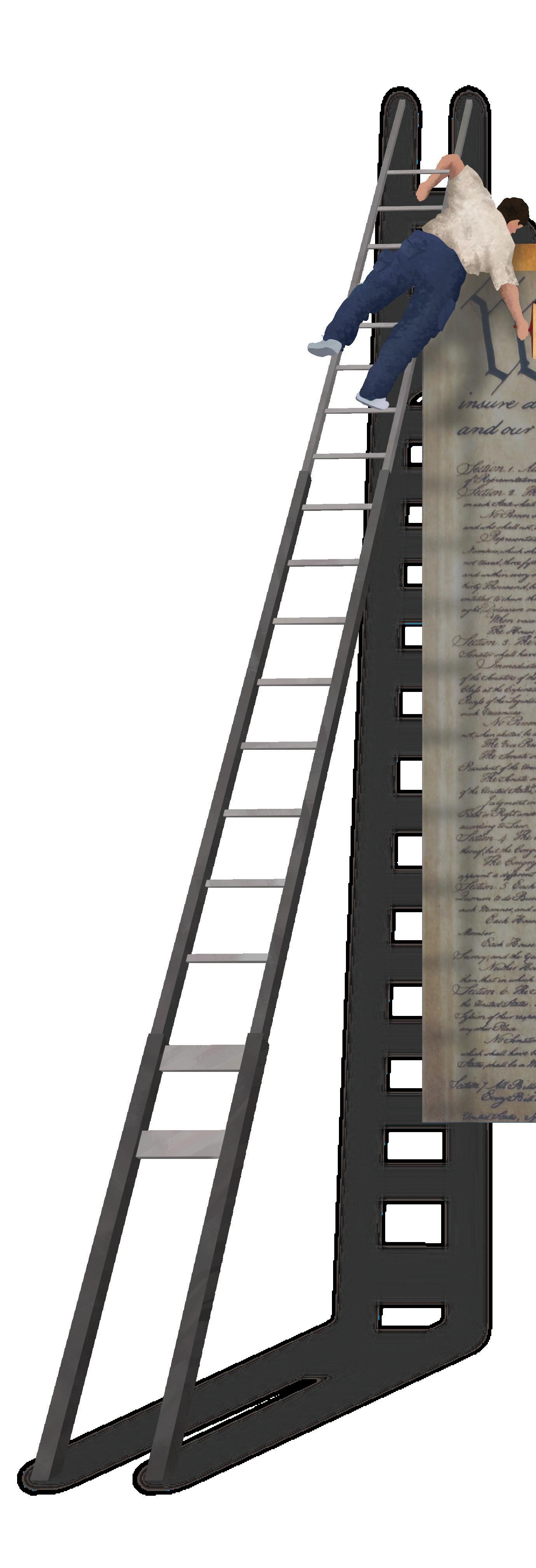
RESPONSIBLE REPUBLIC
As the American Experiment nears its 250th anniversary, its survival depends more than ever on its citizens taking responsibility in democracy. But for millions of Americans, the role of “citizen” has changed due to polarization.
See coverage, Pages 16-17.
Nate Saenz, Sophomore
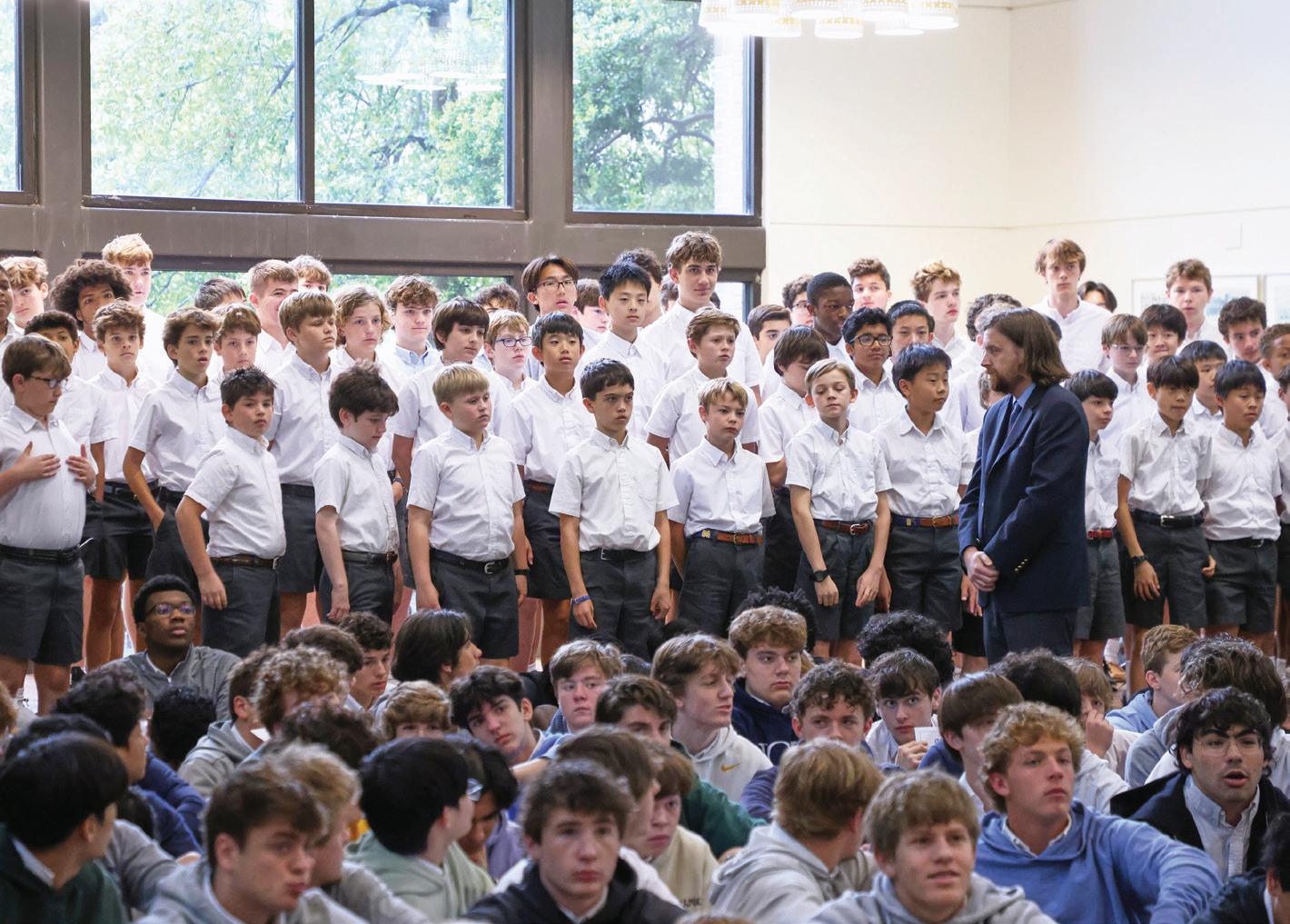
Coming of age
In the movies, coming of age is a cinematic event. There’s usually a beat drop, a sudden epiphany — one singular moment where the protagonist realizes they’re ready for the next chapter.
In reality, it’s a slow, internal progression. It’s the kind of marginal change you’ll miss if you don’t look for it.
So far, no milestone has ever sparked any life-changing transformation.
I thought it might be the first phone, the first credit card swipe, finally sitting behind the wheel of a car, but after the first few days, the novelty of the “new journey” always fades. Nothing fundamentally shifts.
Maturity doesn’t have a specific start date. It just seeps in…slowly but surely, only visible when I actually take the time to look back.
When I do, I realize the person I was and the person I am wouldn’t recognize each other.
I see it most clearly in my relationship with my dad. We’re both impatient people. That’s not something that will really change. What has, though, is the way we navigate conflict.
Three or four years ago, we were both quick to overreact, sparking unnecessary conflicts and adding fuel to every fire. Today, while it’d be wrong to say I’m perfect, I’m more careful, more thoughtful with words. I’ve found I’m capable, at least sometimes, of de-escalating an argument rather than trying to win it.
He’s told me he’s proud to see me grow, see me mature, see me move closer and closer to adulthood. If you asked him, I think he’d say we’ve both grown — together. I’d say the same.
So yes, I can safely say my identity has evolved, even if I’ve missed the exact moments where the shifts occurred.
Now, I’ve realized I’m writing my own coming of age story, and I’m currently stuck in the middle — at the crossroads of holding on to the final years of childhood while reaching for the next step.
Longing for respect, but clinging to a world without responsibilities.
Old enough to be proud of my achievements, but too young to feel like I’ve really accomplished anything “meaningful” yet.
Thankfully — as impatient as I am — I understand this isn’t a story I need to rush to finish.
The fact that I’ll legally be an adult in just over a year — it excites me. It’s freeing, in a way, but at the same time — terrifying.
I’m not entirely ready to let go of childhood yet. I know I’m not. But I know I’m growing. I know that in a year, I’ll be a different person. A person who’s ready to accept the title of adult
I’ve spent a lot of time imagining that becoming a “legal adult” will feel like a sudden, heavy shift, but I suspect it will be just like every other milestone so far — not as dramatic as I once envisioned. Do I want to be a kid or an adult? My answer changes every day. Until I eventually have to make a complete transition, I know I won’t have a consistent response.
What I do know is that my “second” coming of age story might not happen for another five years. Or 10. Or 20.
But I know my first is already underway.
I’m writing it right now.
The best hacky sack brands to end the year
With the game surging in popularity, here are four of the best options to carry you through the final weeks of the school year and straight into summer.
The original heritage brand Classic knited crochet pattern
Instantly recognizable aesthetic Filled with large plastic beads
Authentic vintage from the 90s Bouncy and great for big groups
Eight-panel synthetic suede
Easy to stall and incredibly soft
Filled with specific grades of sand
Extremely floppy with a dead drop
Highly versatile for casual play
The go-to choice for beginners
Precision-cut 32-panel geometry
Sand-filled for a soft, stable touch
Optimized for stalling and control
High-grip Amara suede
Rapid break-in period
A perfect step up for intermediate players
Handcrafted by artisans internationally 32-panel refined synthetic suede
Filled with high-density stainless steel
Exceptional for technical freestyle
Demanding precision and footwork
Ideal for competitive-level play
Here are a few of the stories posted monthly on
For these web exclusive stories and more website content, visit smremarker.com and @remarkernewspaper on Instagram.
make
PAGE 4
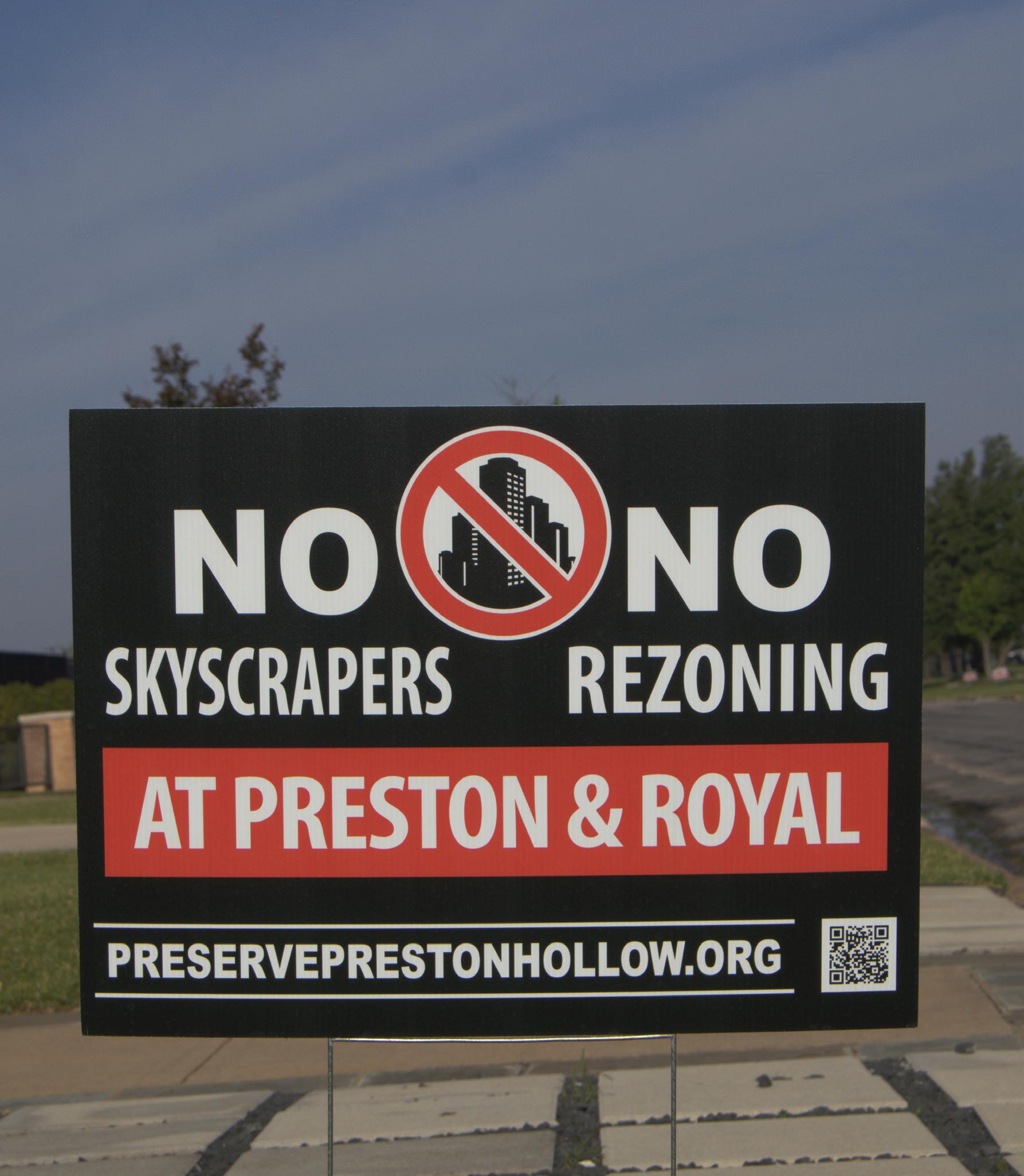
Community protests new building developments
A rezoning proposal at Preston & Royal Lane has lead to rallies in nearby neighborhoods.
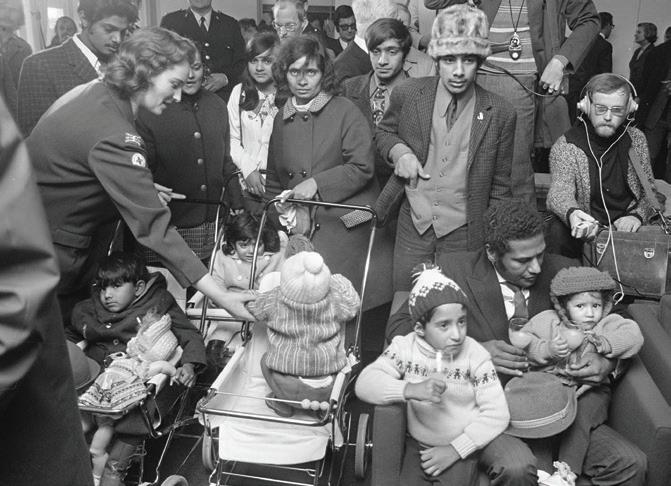
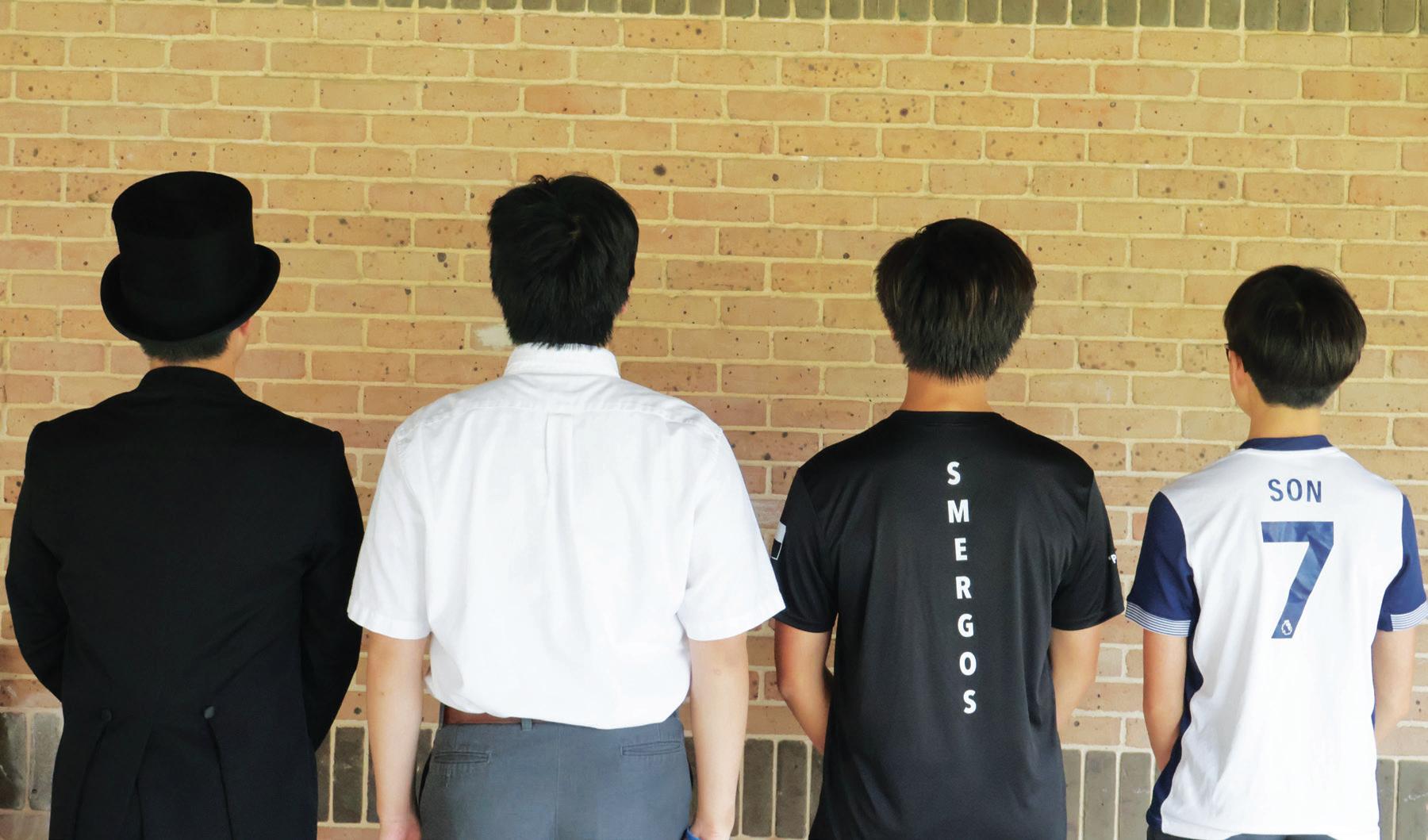
As families immigrate to the U.S., oftentime the first part of their culture that they lose is their language.
Leadership transforms dreams into passion
Building a foundation on leadership and responsibility turns one’s dreams into passion, opening new opportunities in various areas of life.
By Nolan Driesse
Musician, pro-athlete, actor.
Most people have similar childhood ambitions, setting their sights on the career of their choice and envisioning themselves living out their dream.
Then, throughout people’s teenage and adolescent years, reality might have reshaped those dreams and the same kid who dreamed of being a pro-athlete, quickly found himself sitting behind a desk, wondering how he got there.
Seeing a dream come to fruition is highly unlikely. According to a Perkbox Insights survey, only 4 percent of adults are successful in turning their dream job into a reality.
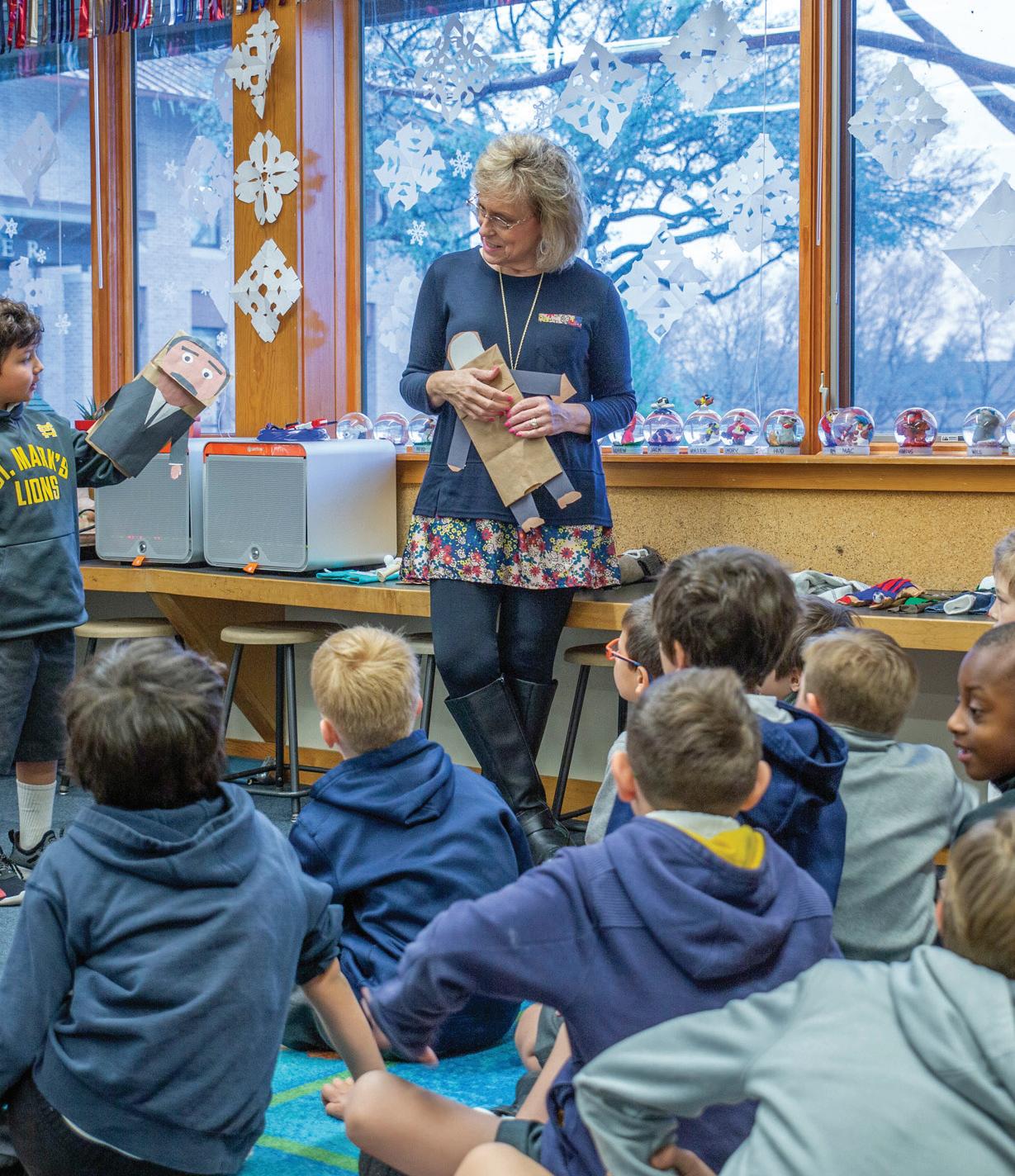
In Teri Broom’s first-grade class, she hears her students talking about their dreams that vary from becoming a Dallas Stars player to being an astronaut. While the things we say as kids may have no sense of direction or aren’t taken seriously, everyone has the right to dream, no matter how big or small.
“It’s good to not squash their dreams, but it’s important to also give them other options because you can have a lot of dreams,” Broom said.
Keeping young kids’ ambitions alive is of utmost importance, because without dreams, motivation begins to disappear. Societal expectations, concerns for their futures and a want for stability often cause people to shift away from their dreams.
People often are driven to be responsible and settle for a reliable paycheck instead of taking a risk and doing something they once dreamed of.
Malcolm K. and Minda Brachman Master Teaching Chair Dr. Martin Stegemoeller argues that providing for one’s family, even if it comes at the cost of a dream, is a selfless and virtuous lifestyle.
“A number of St. Mark’s graduates realize that the meaning in their life will be connected to their family, church, friends or civic engagements,” Stegemoeller said. “To them, there is no dream. The vision lies in the upper middle class, and hoping they have a loving relationship with their spouse and their kids.”
He doesn’t say this as a criticism. He says it as a defense.
There’s a certain virtue, he argues, in providing for a family at a high level, being a good employee and leader, doing hard work without needing it to be glamorous. Tunnel vision on a single passion, he says, closes more
doors than it opens.
He presents thought experiment to make his point. Imagine two boys. One is passionate about leadership – learning to be responsible and take his duties seriously, developing the habits that make people want to follow him. The other is passionate about chemistry and pours himself into it completely…
“Fast forward 40 years,” Stegemoeller said. “The boy who owned responsibility is likely thriving at a higher level than the boy invested in chemistry.”
While focusing on leadership and responsibility ultimately lead to a wider array of career paths, Stegemoeller admits that passion isn’t worthless. However, passion without discipline is.
“Prioritize being a leader of character. Make that a passion,” Stegemoeller said. “Then, say you have a passion for history, late at night when your homework is done is when you have a deep conversation with AI to gain more knowledge. Do that for an hour a day and you will know a lot of history.”
He points to the physicist Richard Feynman, who was constantly asked how it felt to be born a genius. Feynman responded by telling people that he wasn’t born a genius. But if you studied the way he studied, you would know what he knew.
Gas prices continue to rise amidst war in Iran
By Lucas Pei
With gas prices on the rise, they are reshaping how student drivers think about driving, turning routine driving into a constant calculation of cost and necessity.
For sophomore Berkin Oral, who began driving four months ago, filling up his tank has already become a noticeable expense.
“I don’t drive much other than to school and back, so I fill it once every two weeks,” Oral said.“However, it costs about $60 every time I fill it up. That’s like $120 a month and $1,500 a year.”
Even though his parents help cover the cost, Oral said he still pays attention to how often he is on the road. That awareness has changed his habits behind the wheel. Instead of driving without a plan, he said he tries to cut back on unnecessary trips.
“I try to drive more efficiently,”
Oral said. “My parents tell me, don’t drive when you don’t have to. If I’m going somewhere like a restaurant and something’s closer, then always go there instead of somewhere further away.”
Oral also pointed to possible community responses, even if large-
scale changes are limited.
“We most likely can’t do bus service, but we could encourage people to carpool more, or like people who live close to walk or bike,” Oral said.
For junior Asher Ridzinski, who got his license a year ago, the impact of rising gas prices came from a shift in understanding rather than habit at first. Before driving regularly, he mentioned how he did not realize how quickly the cost adds up.
“I used to just drive by the road signs and see that the price was $3 or so,” Ridzinski said. “I was like, ‘that’s not expensive,’ I didn’t really
PAGE 6
Idolatry in politics distorts reality
With an ongoing polarization between both Democratic and Republican parties, idolization of politicans has increased.
Conversation Starters
Interesting news headlines from the month that sparked conversation
THIRD ASSASSINATION ATTEMPT ON PRESIDENT
On April 25, President Donald Trump was the target of a third assassination attempt during the White House Correspondents Association dinner. The suspect’s name is Cole Thomas Allen, a 31-year-old high school tutor from California.
SUCCESSFUL ARTEMIS II MISSION
On April 10, the Artemis II mission concluded with a successful splashdown, marking the first crewed lunar flyby in over 50 years.
IRAN CONFLICT
On May 4, the two week ceasefire between Iran and the U.S. ended due to multiple Iranian missile and drone attacks on the United Arab Emirates and the U.S. destruction of multiple boats on the
5 MINUTES WITH Corindo Martin
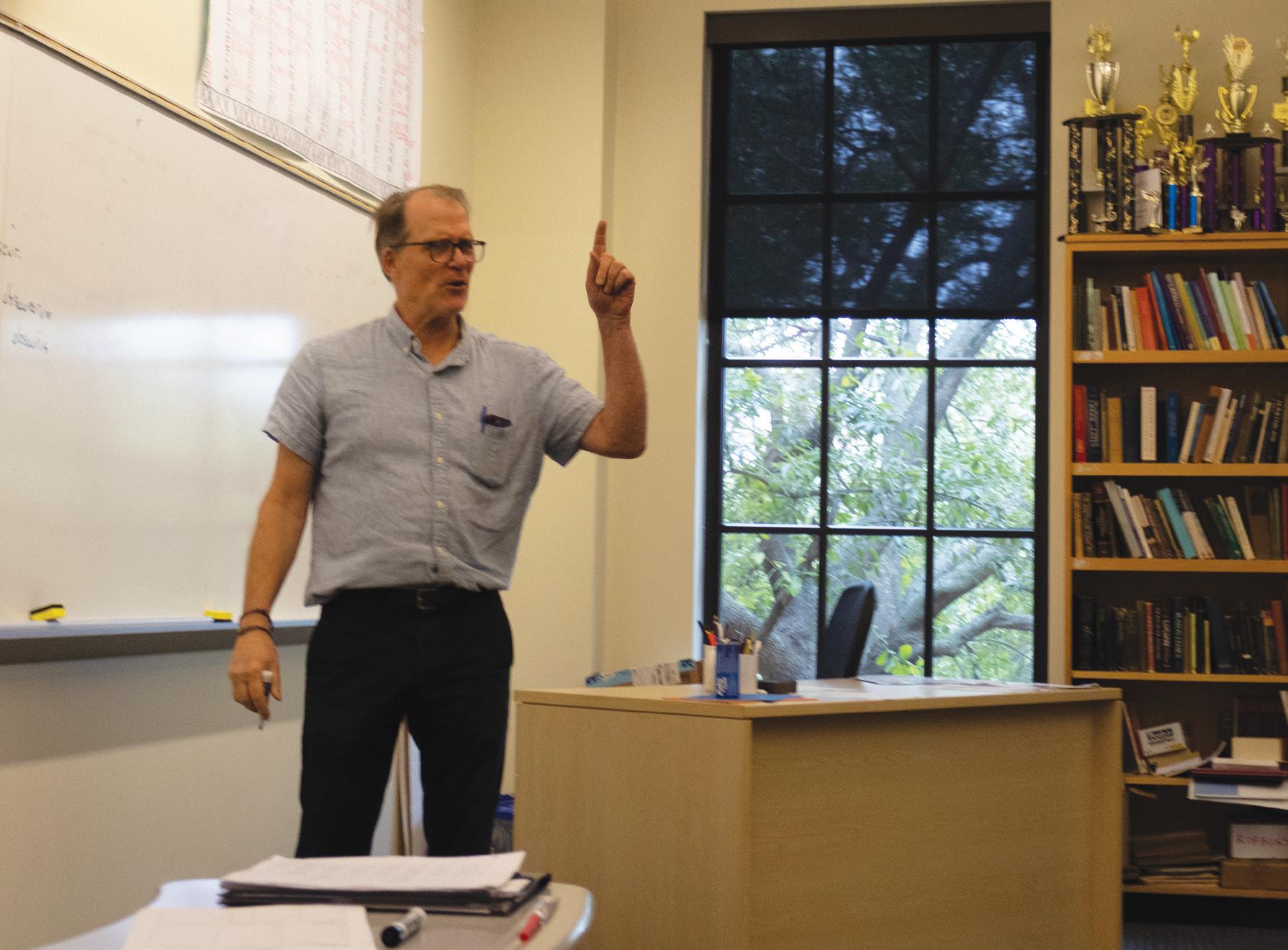
“Some of the best friends I have are my former students... It’s rewarding to have had the opportunity to see all that happen, especially when you started with them very young.”
“While I want my players prepared to play on a knife’s edge, if we’re really good, the night before we were sharpening the blade. So rather than having to play on a knife’s edge, I want to be the team that was up the night before sharpening the blade.”
“Whether it’s on a Pecos trip, whether it’s on the soccer field, whether it’s the math team traveling to Boston for a major tournament, every boy has his area where he can really shine and excel and do what he does that you may not notice if you just have them in the class.”
know how much it actually cost to fill up a tank. It’s not just $3, it’s $3 multiplied by however many gallons are in your tank.”
That realization has changed how he views everyday spending.
“I think it’s bad that gas is really expensive, since I can spend that money on other things,” Ridzinski said. “I can go to a gas station and buy a bunch of candy, or I can buy a meal for my family for the price of gas.”
To offset costs, Ridzinski occasionally carpools when traveling to volunteer events, helping split the expense of driving. While small,
those adjustments reflect a broader pattern among student drivers who are becoming more aware of how quickly fuel costs accumulate.
“I carpool with my friend Collin Ku when we go downtown every other Thursday to volunteer,” Ridzinski said. “By driving him, we can save gas.”
As prices remain high, students are adapting in small but noticeable ways: driving less, planning trips more carefully and sharing rides when possible.
Graphic by Kiran Parikh
An abandoned childhood dream lands what could have been an astronaut at an ordinary desk job.
Strait of Hormuz.
Corindo Martin Mathematics Dept. Faculty
Recent rezoning proposal concerns locals
A new skyscraper being built in the Preston Hollow area, an office building and resedential area, have sparked controversy over it’s location and it’s size.
By Nolan Driesse
NO SKYSCRAPERS, NO REZONING AT PRESTON & ROYAL.
Anyone driving through the neighborhood surrounding Preston Royal would likely see signs on most streets, protesting a recent proposal in the area.
Four problematic buildings were included in the proposal by Burk Interests and Greenway Investment Co.: two large towers, an office building and a low-rise edge development. While this may not seem like a big issue, people in the neighborhood surrounding the area have been adamantly fighting back against the $800 million plan.
In an effort to try assuaging the concerns of the irritated civilians, the firms announced the condo and hotel’s maximum height will drop from 28 stories to 25 stories — a total of 26 feet. The luxury apartment’s height will also drop 25 feet down to a total of 250 feet. The developers hope that lowering the height of the tallest buildings will more likely put families living nearby at ease.
While a 20 foot difference in height may seem like a petty change, former Marksman John Sayah ’80 explains why the height of the buildings is such a big concern.
“The two things I hear about the skyscraper is that it wouldn’t fit in, so it would be a little bit of a potential eyesore, and then some of the neighborhoods around there may not get the sun they usually receive,” Sayah said. “The view may become more claustrophobic and start making the area feel like downtown in Suburbia.”
None of the buildings currently in the Preston Road and Royal Lane intersection are close to as tall as the four newly-proposed buildings would be. The construction plan covers a total of seven acres, and less than 30 percent of the buildings that would be put up will exceed 54 feet in height.
The people’s petitions against the problematic proposal have
gained up a total of 2,600 signatures against the firms. The greatest concern amongst students, parents, and anyone who lives relatively close to Preston and Royal is the glaringly obvious obstacle: traffic. With cars backed up into the street during dropoff and pickup time. Traffic for students and parents is already terrible. The addition of tons of construction would do nothing but harm people who live or commute nearby.
Sophomore Avi Aggarwal lives within walking distance of the school. He is certain that worsening traffic would be harmful to the area.
I don’t know if there’s that much available property around to rezone. I’m concerned about what’s right for each space.
John Sayah ’80
Parent
“Getting to school could become slower and more stressful, especially for students who already commute from farther parts of Dallas,” Aggarwal said. “I also think it could change the atmosphere around St. Mark’s, because right now Preston Hollow still feels quieter and more residential compared to Uptown or Downtown Dallas, and the addition of a 25-story or 28-story tower right near campus would dramatically change the skyline and make the area feel much more urban.”
Providing potential distractions during and after school, the largescale amount of construction that would need to take place to rezone
Friendships, shared interests drive club participation
By Joaquín Mayo Mejía
Every September, students pack into Spencer Gym for the club fair. They walk onto the wooden floor and either search for clubs related to their interests and passions or just look around at what their friends are doing. Dozens of eager club leaders and hundreds of glazed donuts await them.
Junior Christian Duarte leads three community service clubs: Teens United, PELOTA and T-Tag. Teens United packages goods and spends time with underprivileged kids. PELOTA raises money to purchase equipment for sports programs in underserved communities.
T-Tag takes him somewhere different entirely.
“We go to retirement homes and
help the elderly with their technology issues,” Duarte said.
Upper School history teacher and head of the Upper School Student Council Michele Santosuosso. , Santosuosso knows the importance of supporting students in their unique fascinations. She helps students foment these passions with energy and enthusiasm.
“I feel like the clubs are something that (students) are super passionate about, and then obviously I’m super passionate about,” Santosuosso said. “It’s a different type of excitement other than that in the classroom.”
Although clubs can spark student’s passions, Duarte has noticed a trend in the appeal to certain clubs. He has noticed that the allure of clubs isn’t only because of what they bring to the table, but also
who they bring. Duarte claims that students are heavily influenced by their friends when choosing clubs, and Duarte himself has experienced this with PELOTA. However, Duarte doesn’t view this as a problem, for he believes that encouragement from friends can push others to try new things.
“I definitely think the ‘best friend’ is a giant factor of what most people think, but I don’t think that’s a bad thing. Maybe you can find a mix of it regarding PELOTA. I am a huge fan of community service and helping in relation to soccer, but at the same time, I was also introduced to this because of one of my friends,” Duarte said. “I think it’s a good thing that students are joining clubs that their friends are joining because it pushes them outside of the box that they would be part of.”
seven acres concerns Aggarwal the most.
“There’s also the concern about construction itself. These projects take years. That will mean constant road work, noise, trucks, lane closures, and distractions during the school day or athletic events,” Aggarwal said.
Since St. Mark’s already experienced major disruption after the 2019 tornado, some nearby residents are especially sensitive about more large-scale construction.
In addition to the stress of traffic, construction and the drastically altered skyline appear to be the front-runners of all the rallies, some people may not appreciate the guaranteed influx of tourists or businessmen that will arise once the area is done rezoning.
However Sayah looks at this potential congestion of workers, visitors and businessmen in a positive light.
“I think in a positive way, more restaurants, hotels and people want to come and stay who are either participating at the school or visiting the kids at the school,” Sayah said. “I think it will be a nice place for people to go eat and do things before games and events. So, I think it could actually have a positive impact on the school too.”
Most of the people aware of this possible change aren’t aware of the fact that, Sayah says, that there will still be traffic even if the proposal isn’t passed. Based on the current zoning, the number of apartment complexes would still cause the same amount of traffic.
He prefers to take a neutral approach to the situation — not protesting about the proposal, but not buying in completely either.
While the more popular insight seems to be focusing on the concerns of rising traffic for commuters and students, the constant distraction of construction, or the abnormal height of the buildings, some people develop an optimistic view on the situation.
“They did a study that, there would be less traffic than if they had the apartments that are zoned for that area. So my position would be that I think it would be cool to have a nice development in Preston Royal,” Sayah said. “I would love for it not to be as high as it is. I don’t know that it’s fair to keep it as low as the current zoning is. I would like to hope that there’s a compromise that could end up being a win-win.”
All we can do is wait.
Duarte finds that this issue has some advantages to it, but he has also seen how students can limit themselves by picking where their friends go instead of choosing based on personal interest. Duarte understands the difficulty of feeling uncomfortable and alone in new places, but he believes that prioritizing comfortability over authenticity can restrict students from experiencing something special.
“There’s definitely restrictions because it is hard to be an outsider in places that are new.” Duarte said, “It’s hard to go to places by yourself. Everyone’s different, so I think you are losing some experiences by just following what your friends are doing.”
Santosuosso, who is currently a sponsor of six clubs, has loftily experienced the significant growth
of one of her clubs. The club started out as a homogenous union of friends, but it has now evolved into a diverse and interactive community because of the leaders’ inclusion and leadership.
“We have a conspiracy theory club and at the 1st couple meetings it was just the guys who started it and now I’m so proud because it’s really fun. I mean guys from every level show up,” Santosuosso said. “The three juniors that started it have blown my mind with being supportive and inclusive. So at the first club meeting [the juniors] presented a conspiracy, and the next one was a sophomore, the next one was a freshman.”
Photo by Emiliano Mayo Mejía
Anti-skyscraper signs line the streets of Preston Hollow, the neighborhood rallying around the cause.
Families wrestle with loss of culture
Often, immigrating can provide better opportunities for families, but can come at the costly expense of their cultures and identity.
By Emiliano and Joaquín Mayo Mejía
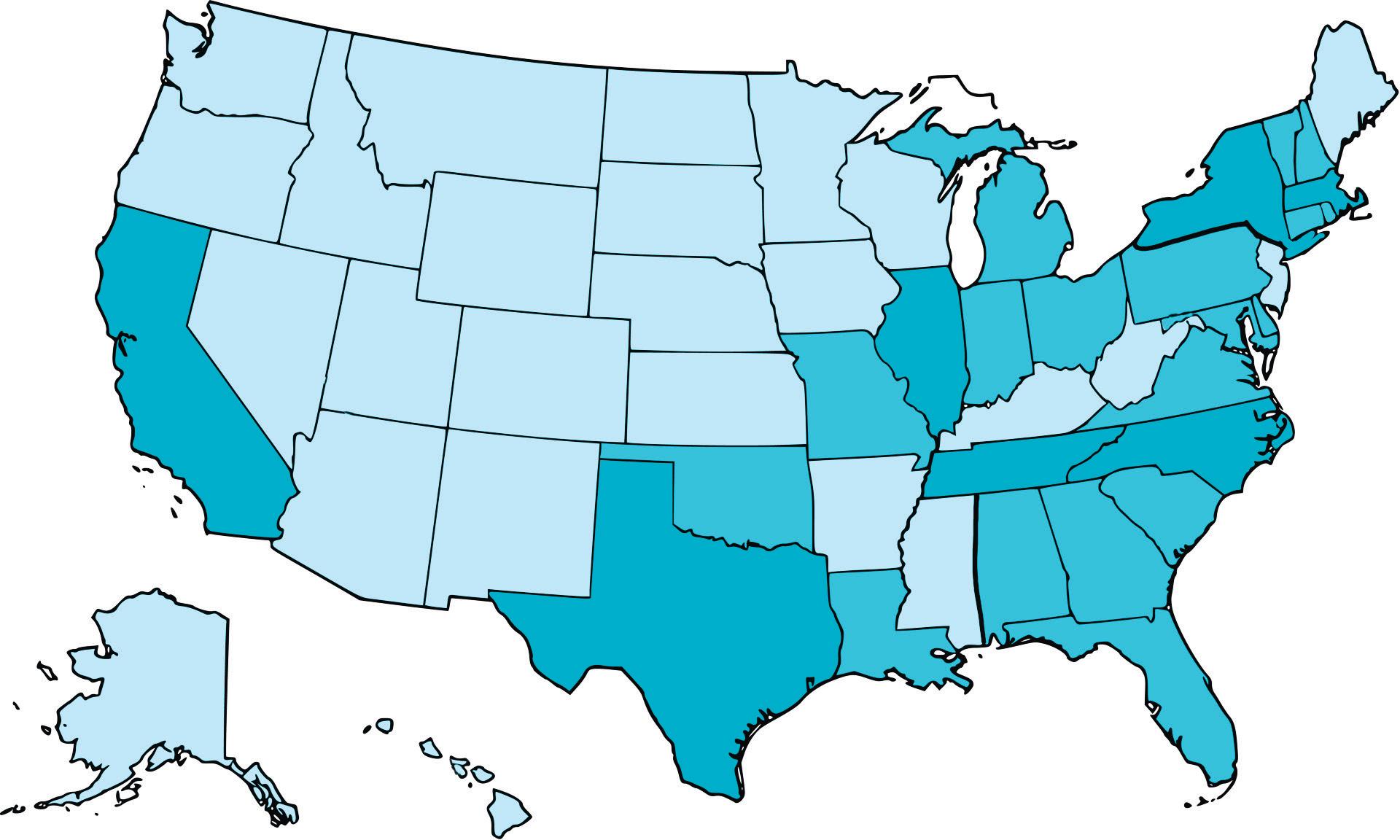
138 million.
According to the Gallup’s World Poll, that is the number of people who wanted to move to the U.S. in 2023.
Many of them brought their children and grandchildren, chasing an opportunity commonly known as the “American dream.” Alongside their families, those 138 million carried something else: their history, their languages and their cultures, all packed into those seemingly endless voyages toward a promised land.
But the passing of generations not only weakens the bonds to the family’s home country; it weakens their culture and identity too.
With time, traditions get lost and native languages are forgotten as new generations undergo what the Oxford Dictionary calls Americanization: the gradual adoption of U.S. culture at the expense of their own.
Although moving to the U.S. ends up benefiting millions of immigrants, it comes at the cost of future generations. According to research published in the Journal Demography, only 12 percent of third-generation Americans, the grandchildren of immigrants, can speak their family’s native language fluently.
That loss of language builds walls between the future generations, their home country and the U.S. A study from the National Library of Medicine found that Americanization can cause children from immigrant families to disconnect from their parents, leaving them without a clear sense of belonging or identity in either culture.
Unlike millions of immigrants, sophomore Leo Vallejo had the privilege to share a strong relationship with his grandmother as a child. By teaching Vallejo and his cousins the importance of relishing their traditions and language, she would help them grow closer to a land they didn’t live in.
“My dad spent a lot of his life coming down to the United States for motor and super cross races, and (my parents) both eventually moved down here in the early 2000s after they got married,” Vallejo said, “My grandma raised me and my cousins a lot, and she made sure we all learned Spanish to an equivalent level to each other.”
Although he hadn’t been born in Mexico, Vallejo believes that his
Culture Statistics
Recent uprise in isolation and disconnection amongst immigrant populations, highlights Americanization and the loss of language it causes.
Listed are statistics from the Pew Research Center, Journal Demography and the Gallup’s World Poll.
I think not being embarrassed of yourself is a good thing, and pride should be a big part about embracing your culture.”
grandmother helped him deepen his connection with his home country, family and culture. He believes that by learning Spanish, he was able to embrace his family’s roots and interact with his family not as a stranger, but as an ordinary person.
“(Knowing your native language) facilitates a lot of things for sure, because a lot of my family is still in Mexico, we go down every summer and I can at least speak with them in in the language that we both speak,” Vallejo said. “My cousins speak English but not very well, (so) I’m glad that I’m able to communicate with them in at least one language.”
For Vallejo, having pride in his background has helped him see the beauty of his culture and motivated him to reconnect with it. He believes that reaching out to reconnect with one’s roots should be something that people should be proud of and not shamed for.
“I think not being embarrassed of yourself is a good thing, and pride should be a big part about embracing your culture,” Vallejo said.
But for freshman Nate Saenz, reconnecting with his Colombian heritage has proven to be more difficult than for Vallejo. Without a figure like Vallejo’s grandma to help lead him back to his roots, Saenz has struggled to involve his heritage in his life.
“I’m not ashamed of my culture, I actually wish I was more deeply involved with it. My culture just
doesn’t really play a big role in my life. I’m kind of disappointed about that but I hope I can grow closer in future years,” Saenz said.
The absence of culture throughout the lives of immigrant children can create a sense of loneliness.
Children who are born in the U.S. when most of their family remains connected to their home country, often find themselves feeling like outsiders in both cultures.
“I feel like I’m sort of in the middle, and I don’t fit in with either of my cultural groups. I feel like I’m not as Colombian as the Colombians, and I’m not as American as the Americans,” Saenz said. “It makes me feel like I don’t fit in anywhere because of that culture divide, and it makes me feel alone.”
Since Saenz’s connection to his Colombian heritage is minimal, he is constantly faced with cultural barriers in uncomfortable situations he can’t escape because they are woven into his daily life.
“In Spanish restaurants, my dad will speak Spanish to the waiter, and then they’ll ask me what I want in Spanish, I’m not able to communicate with them,” Saenz said. “Then they asked me why I don’t speak Spanish, and it makes me feel like I don’t belong or I did something wrong.”
However, junior Ilan Gunawardena believes that truly understanding someone goes beyond sharing a language and culture.
While in Sri Lanka, swimming for the national swimming team,
1 in 8 People who wanted to move to the U.S. in 2023
Gunawardena felt anxious and out of place for not being able to speak Sri Lanka’s national language: Sinhalese. He felt that by participating, he was taking someone’s spot, someone who truly deserved to be there.
“There were these kids that had been there so many years before me, but after the experience and getting to bond so closely with the team in our tail room and mess around before and after the events, it gave me kind of a different perspective,” Gunawardena said. “It’s not just about speaking the language or necessarily belonging to a country. It’s also about connecting with those from the country, whether that be from speaking the language or from just becoming friends with them, spending time with them, learning what they know.”
Being well-rounded is something Vallejo deeply believes in, but more specifically, he believes that culture is a key component of a balanced character. He trusts that everyone should relate to a culture, and that in doing so, people will grow to be more unique and interesting.
“Culture is a huge part of a person’s identity. If you don’t identify with a certain culture, then you’re just a citizen of nowhere, and that just makes you a boring person,” Vallejo said. “I think you have to be well rounded in all aspects of your life, but I think culture is definitely a huge part of that.”
million Of the U.S. population that are immigrants 15.4%
Graphic by Rayhaan Rizvon
Leo Vallejo Sophomore
Voters idolize political figures
By Ben Yi
In an age of so much perceived corruption and widespread distrust of politicians, people have expectations that elected officials can and should solve all their problems.
When people idolize politicians, putting them upon a pedestal and neglecting to hold them accountable for their failures, it often means that those who put them into power suffer first. When people see their politicians as infallible characters who can do no wrong, the consequences for democratic accountability can be severe.
These problems, however, are not exclusive to this era of modern technology and social media.
“I don’t necessarily see (political idolatry) as unique to the moment. I think extremism and the partisan divide is definitely stronger. I don’t think there’s any question that it’s intensified,” Democracy Toolbox CEO, Jeff Dalton said. “You can go back to John F. Kennedy, Ronald Reagan or Barack Obama, and you would see examples of iconic national candidates that take on more of a cult-like status. There have been moments throughout U.S. history where we’ve had this kind of hero worship, or candidates being strongly branded along emotional lines instead of rational lines.”
This issue, however, could stem from within the very nature that is representative democracy. While direct democracy functions by having all citizens voting on laws and policies directly, representative democracy works by electing officials to make those decisions on their behalf.
“We have a hierarchy and therefore we have expectations for leaders, that they are somehow more powerful or more influential than we are,” Dalton said. “I think there’s naturally a tendency to see them a certain way, as coming in and having the power to change things and make things better. People who latch onto the single hero to solve all problems often dismiss criticism of that person. They act like that person is infallible, act like anybody on the other side is nothing but fallible.”
According to the Pew Research Center, only 15 percent of Americans currently believe that elected officials run for office in order to serve the public. On the other hand, 63 percent of Americans believe that they run for personal gain, a stark difference from in 1958, where 70 percent of people believed that the government would always or most of the time,
By The Numbers
do what is right.
“I think that as long as you are being rational and not envisioning the candidate as the Savior, you’re more likely to be rational about your choices,” Dalton said. “Give them credit for where they have been successful, but also hold them accountable for where they have not.”
Across both the Democratic and Republican parties, political idolatry has had a silencing effect on those who question or disagree with one side or those who can very quickly start to feel ostracized by the public because of their personal opinions.
Political consultant companies like Dalton’s have significant effects on how political figures are portrayed. If the end goal goes from serving the general public to the sole purpose of winning elections, idolatry stops being a side effect of politics and actually becomes the strategy itself.
“Good political consultants care more about just winning,” Dalton said. “Good political consultants care about winning but they also want to win with the overall goal being the common good and the health of our civic life, which is completely dependent on some level of honesty and transparency.”
If a politician’s position is elevated to a point where it resembles a superhuman level of status, it could lead to the erosion of the public’s willingness to question or debate with those in power.
“Some voters have been trained to think of their leaders as heroes and therefore expect their leaders to solve every problem, even when their leaders cannot do that,” Dal-
ton said. “I think that sets them up for disappointment, but it also sets them up for a lack of power and agency in their own lives. The government cannot solve every problem.”
While some of the issues with idolatry trace back to how people see the government, blame can also be placed on citizens’ unwillingness to engage in their own communities. Whether that’s failing to participate in elections or neglecting jury duty obligations, the inability to serve their communities causes people to put their hope and faith into distant political figures.
clear and free of potholes? I think there are some core functions of government that we can rightly expect our elected officials to manage.”
Another cause for this problem of political idolatry could come from the very way that campaigns are held. Oftentimes, candidates will make promises during their campaign that they are unable to keep in office. Inevitably, when problems arise that the government is unable to solve, citizens will blame the politician for these issues and when new people come into office, the cycle will continue as they find a new figure to place their trust and blame on.
“The reality is that almost every politician who has run for office in the history of the United States, has made promises that they failed to keep. They get there and they can’t really do all this stuff, but the voters kind of expect them to anyway,” Dalton said.
Jeff Dalton CEO of Democrary Toolbox
“These are imperfect people; your elected officials aren’t going to solve all your problems,” former District Director for Representative Dan Branch Ryan Trimble said. “We can expect it for them to hopefully solve the key issues like is the water going to be running? Am I going to be able to get to work on time? Are the roads going to be
Dalton mostly works in district races where the size of the electorate is less than 100,000 or sometimes even less than 50,000. For these smaller-sized elections, it means that strategies like going door to door are far more realistic and communication between voters and candidates can be a lot more direct.
In recent years, however, with the growing prevalence of social media, some politicians have also turned to different platforms to further grow their brands. With the algorithm constantly feeding users with content they enjoy watching, it has become a massive marketing tool for these big campaigns.
“Your experience is curated to
what you believe,” Trimble said. “I have to check myself, because I’ll be thinking about something and my next three things on Instagram are all about whatever the topic that I’ve clicked on.”
Some argue that the antidote lies in refocusing political energy away from political figures and more towards policy. When candidates prioritize tangible issues instead of distant goals and grand narrative stories, idolatry loses its power.
“Did Representative Branch have a great story? Yes, he had a beautiful family, an attorney that worked hard throughout his career, very successful in his legal practice,” Trimble said. “But for me, it was about providing and looking for solutions to these big issues that impact everybody’s daily lives.”
Ultimately, responsibility for dealing with political idolatry still lies in the hands of citizens. Whether it’s due an uninspiring ballot or the absence of a figure compelling enough to deserve their devotion, nearly half of all eligible voters sit out during every election cycle. For many Americans, their civic participation has become conditional and if continued, could result in further idolatry.
“A healthy relationship with elected officials would be voters proactively doing more research,” Dalton said. “Most candidates do try to educate the public. Most real candidates try to raise money, try to advertise, try to send out information or whatever it is to educate voters, but I think the voters have to take a more active role in caring to learn more.”
Photo/Reuters News Service
Political signs glorifiy President Donald Trump, spreading idolatry throughout the city.
Competition suppresses versatility
Emphasis on being a “jack-of-all-trades” can hinder students from gaining mastery in one field.
Society prioritizes a focus on multiple activites to boost one’s resume, leading students to become a jack-of-all-trades but a master of none.
By Pierce Lee and Pedro Bajon Falcao
The pressures of college admissions and future careers force students to strategically choose activities that will best grab a college’s attention. Some students devote themselves to an activity and try to excel at it while others strive to be well-rounded by participating in as many activities as possible. Even though these approaches help with college admissions, many students end up missing out on a once-in-a-lifetime high school experience.
For Martin Stegemoeller, Malcom K. and Minda Brachman Master Teaching Chair, the issue is not how many activities a student lists on a resume, but whether they actually understood what they have learned. Both the “spike” and the “well-rounded” student can fall into the same trap substance-lacking performance.
“We have kids at St. Mark’s who retain almost nothing of what they learn. We have kids at St. Mark’s who are unbelievably knowledgeable,” Stegemoeller said. “And they both got A’s in their classes. To me, to have a kid who’s great at volleyball, who’s not knowledgeable in math, not knowledgeable in literature, not knowledgeable in science. That’s a tragedy.”
Senior Oliver Geheb believes being well-rounded is promoted, but it’s often misconstrued and leads to students overbooking themselves.
“I know a lot of people who are in a ton of activities, and they have this crazy-looking resume, but they put about 40 percent of their effort into everything they do. So, they look like they’re super well-rounded, but they don’t actually have anything that they can really do or they really try at,” Geheb said. “I would rather somebody focus on doing one thing if they’re gonna do a ton of stuff and do it all poorly.”
To truly reap the benefits of the school’s curriculum, students must be devoted to whatever activity they participate in. Throughout his years at St. Mark’s, Geheb has shifted his mindset on extracurriculars and the devotion he puts into them.
“I definitely went through a phase where I tried all these clubs, and I thought that putting all of that on my resume was gonna help me,” Geheb said. “I had a realization eventually that, it’s better to be 100 percent in on something or just get out of it completely.”
If colleges can’t tell a wellrounded person from a truly knowledgeable person in the grand sphere of the arts and sciences, they’re going to look for ways they can tell people apart.
Martin Stegemoeller
Malcolm
K. and Minda Brachman Master Teaching Chair
Stegemoeller challenges the idea that a student should choose between being well-rounded or specialized. The real goal should not be appearance, but the ability to retain knowledge and depth of understanding.
“The huge crisis of education isn’t spiky versus well-rounded, it’s who actually understands things,” Stegemoeller said. “If you’re on the national physics team, that means you are adept at physics. If you got an A in physics, along with the 50,000 other kids your age, how are they supposed to know?”
The increasing pressure of college admissions can cause students to build a facade of success that doesn’t actually represent who they are.
“I’ll show these colleges I work hard, see things to the end and I can be a champion. That’s what they’re looking for. I think it’s
unfortunate that that’s what (colleges are) looking for, because the person who could be spiking in those ways might not be knowledgeable in a normal study,” Stegemoeller said.
At the school, it’s easy to be involved and there are many opportunities to join various activities. The school is flexible to its students which helps them develop multiple passions.
“There’s no reason why you can’t have it all in the sense of picking areas to be spiky in,” Steg said.“St. Mark’s guys are well-rounded and you will have true, passionate, deep knowledge of key areas of human life that you can keep developing in college.”
Half-hearted involvement in clubs and activities sometimes stems from the competitive pressure of St. Mark’s. Some students succumb to this pressure, but others use this environment to cultivate their own success.
“The way that I’ve chosen to think about it is that St. Mark’s is building a standard of excellence,” Geheb said. “When you’re surrounded by so many excellent people who have so much going on and are so smart, then you become smarter and more excellent because of them.”
Geheb highlights senior Hudson Da Rosa as an excellent example of an authentic and well-rounded student.
“(Hudson) ended up getting into Amherst, which is almost impossible to get into. He didn’t expect to do that, but he did and that’s because he’s just a genuine person that had real things to him, and he had substance to his personality, and that came off in his resume, and helped him get into a better school,” Geheb said.
Geheb acknowledges that it takes time to discover which activities to devote time to.
“You have to try a bunch of stuff to figure out what you like, but then once you figure out what you like after you’ve tried all of these different things, you have to cut the things out that you aren’t going to do,” Geheb said. “When you’re working on that thing, you’re 100 percent working on it, and it’s something that you want to put the work into.”
The cost of missing school
COMMENTARY
Nolan Driesse Issues Editor
Missing one day of school at St. Mark’s can put you a week behind on all your school work. So, you can imagine how hard missing a whole month is.
When an elbow to the top of my head handed me my fifth concussion on Nov. 10, I was already multiple tests, quizzes and assignments behind by the beginning of Thanksgiving break.
The highly anticipated week of family time and relaxation became a week-long study session full of headaches and frustration.
Returning back to school on Dec.1, I was ready to make use of all the studying I had done over the break, eager to return back to basketball and get fully caught up on my schoolwork.
It hadn’t even been three days before a basketball to the face gifted me another concussion on Dec. 3, taking my previous two weeks of missed work and adding three more weeks of missed material.
That night, as I stared at the same math problem for five minutes while dealing with an awful headache, I struggled to accept that I had another concussion. Part of me wanted to push through the headaches for as long as I could, knowing I already had the weight of all that missing work dragging me down.
As I headed downstairs to tell my mom how bad my head hurt, I flipped the light switch off by my desk, accepting the next four months of darkness and leaving my basketball career behind.
The mound of work I was helplessly dreading transformed into something bigger, leaving me staring up at a mountain of meaningless papers and assignments.
I might have been the only kid dreading Christmas break this year. I couldn’t properly engage in the Christmas spirit, celebrate my 16th birthday or relax on our family ski trip while dealing with an insane amount of make-up work.
While friends and family were skiing, I studied for my chemistry test.
While friends played video games, watched movies and relaxed, I struggled to understand math concepts that used to come easily to me.
When I returned to school on Jan. 6, I was faced with a total of ten makeup tests and quizzes to conquer.
And that’s not counting other assignments and current work that I had to keep up with. It may not seem believable when I say I finally finished all my makeup work on March 10, but it seriously took me that long.
There are three pieces of advice I would give to anyone who is behind on their work: meet with teachers as much as you need – they want to help you. Go to the wellness center to get help planning your make-up schedule. Lastly and most importantly: never give up. This is not an easy school, but with enough persistence and patience, anything is possible.
Graphic by Kiran Parikh
Students wrestle with selective honesty
As younger generations challenge traditional authority structures, navigating the line between curiosity and disrespect becomes increasingly important.
By Ben Yi and Rayhaan Rizvon
Early in the morning, a class of chemistry students file in to take their tests. Every student was taught the same curriculum, given the same amount of time to prepare and tested on the same day. Except after the first period test, each subsequent class would have a greater advantage than the class before them.
A teacher had asked his students to write his middle name; an obscure, yet trivial question, worth only one extra point. When it came time to grade the tests, the cheating was obvious. Nearly every test-taker following the first class had gotten the bonus correct – while correct responses were sparse in the first class.
One of the chemistry students, sophomore Holden Montgomery, commented on the situation.
“It was one point,” he said. “And once you hear it, you can’t unhear it.”
For other students, the act didn’t feel dishonest at all. In fact, many felt they were simply helped by their peers.
“It’s essentially hypocrisy. It’s like you have a different standard than you do for yourself than you do for others,” seventh grade humanities teacher Greg Crook said.
While the vast majority of Americans would consider themselves honest, a study from by the University of Alabama at Birmingham suggested that while 75 percent of people are generally honest, approximately 60 percent of adults lie at least once in a 10-minute conversation.
“When you’re younger, you don’t always see the bigger picture. You don’t always see the striving to be your best, but as you get older and you mature, you recognize the importance of trying to be your best,” Crook said. “You can apply a more consistent moral framework to who you are.”
J.J. Connolly Master Teaching Chair Nancy Marmion believes that a strong moral compass is indispensable to guiding students away from poor decisions, especially when those around them are making the wrong choice.
“Sometimes we have to stand up and do what’s right, even if we
think everybody else is doing the wrong thing,” Marmion said. Marmion feels that surrounding oneself with people who have good values can guide students toward making the right choices. Friends who can hold each other accountable are also more likely to steer themselves in the right direction.
“I think that’s where community can come into play,” Marmion said. “Whether it’s your friends or your family, if you are about to make an unwise decision, that’s when a true friend would say, ‘Hey, this isn’t you. Don’t do this.’”
Marmion thinks that in most cases, students make immoral decisions in the moment rather than planning them beforehand. In today’s world of advancing technology, it can be especially enticing to take shortcuts.
“I think it’s really easy when you’re sitting at your computer at 11 o’clock at night, and you’ve got a tool right in front of you that makes it a whole lot easier to cheat than it was when I was a kid,” Marmion said. “There’s an easy way out, and I think it can be very tempting.”
Crook believes that, for stu-
I think integrity is especially important. Self discipline: it’s the importance of working hard and realizing that you’re not always going to get immediate gratification.”
Nancy Marmion
Discipline Council Faculty Chair and J.J. Connolly Master Teaching Chair
dents, pressures can sometimesbecome so great that it becomes extremely difficult to resist the urges to take shortcuts. To Crook, maturity plays a huge role in controlling the impulses that come with so much pressure.
“You feel like you have to do everything and anything to succeed. You’re just feeling the pressure to keep up,” Crook said. “Whether it’s a big brother or sister, you’re supposed to follow in that person’s footsteps, which puts a lot of pressure on you because they have a lot of high expectations for your future.”
If someone has a leadership position, there is typically a higher expectation from their community for that person to be a role model for others, especially from teachers and fellow students. This makes it more of a suprise if that person does something morally wrong.
“All people have a public face and a private face. I think with their public face, they’re always going to try to say the right thing. We all want everyone to see us on that right path, and privately, we might be doing different things,” Crook said. “I do think behind
Passionate leadership provides opportunities
See LEADERSHIP, from Page 3
Stegemoeller believes that going beyond what is expected of you and working harder than the average person is when the extent of true passion is revealed. But sometimes it still doesn’t work out.
Senior Jake DeBoever found that out the hard way by spend-
ing years working towards playing baseball in college. The work was real and the effort was noticeable: the late nights, the morning practices, the games far from home. In the disappointing process of letting that dream go, he found sports analytics — a field that kept him inside the game he’d built his life around, just from a different perspective.
“It sucked when I realized that I wouldn’t be able to continue playing the sport I structured my whole life around,” DeBoever said. “But I knew that I could instead adapt and find a school that would fit all of my needs without playing baseball.”
His story is, in Stegemoeller’s framework, something closer to ideal. The dream shifted, but the
the scenes when a teacher or an adult in general is not present, there are a number of boys who will have the will to stand up and say, ‘No, that’s not what we do. No, that’s not the standard we follow at St Mark’s.’”
Marmion tries to instill the values important to St. Mark’s such as self discipline, a strong work ethic and delayed gratification throughout all of her positions on campus.
“If your values are deeply rooted, it’s harder to cheat,” Marmion said. “I think you have to be willing to listen to that little voice in your head that’s telling you not to do it when there are other voices that are maybe louder that are telling you to do it.”
However, as important as teaching principles may be, Marmion believes that actually using the right principles over time, no matter the scale of the assignment, will help students become their most moral, best selves.
“It’s so important to practice making the right decisions,” Marmion said. “That integrity and character don’t just happen. It’s something you build through practice.”
foundation stayed strong, opening up new opportunities. Every dream is worth pursuing. The building of a foundation centered around leadership, responsibility and discipline doesn’t guarantee success either. There is nothing guaranteed in life, but the stronger the foundation, the harder it is for a person to be knocked down and discouraged.
“Work your hours, develop your passion,” Stegemoeller said.“There is no guarantee that you’re going to be successful. But if you are truly great at your passion, you must have the discipline to value it amidst a group of people who may not value it.”
Graphic by Rayhaan Rizvon
When faced with difficult decisions, people often have to choose between upholding their morals and using the easier path. Oftentimes, people only keep their moral standards intact when it benefits them the most.
ACADEMICS
Dallas ISD bond inspires community growth
The record-breaking $6.2 billion bond could reshape educational service partnerships across Dallas.
School prioritizes early digital literacy foundation
Starting in first grade, the school teaches digital literacy across multiple subjects as the digital age develops.
ReMarker
finishes, at the 5A state championship.
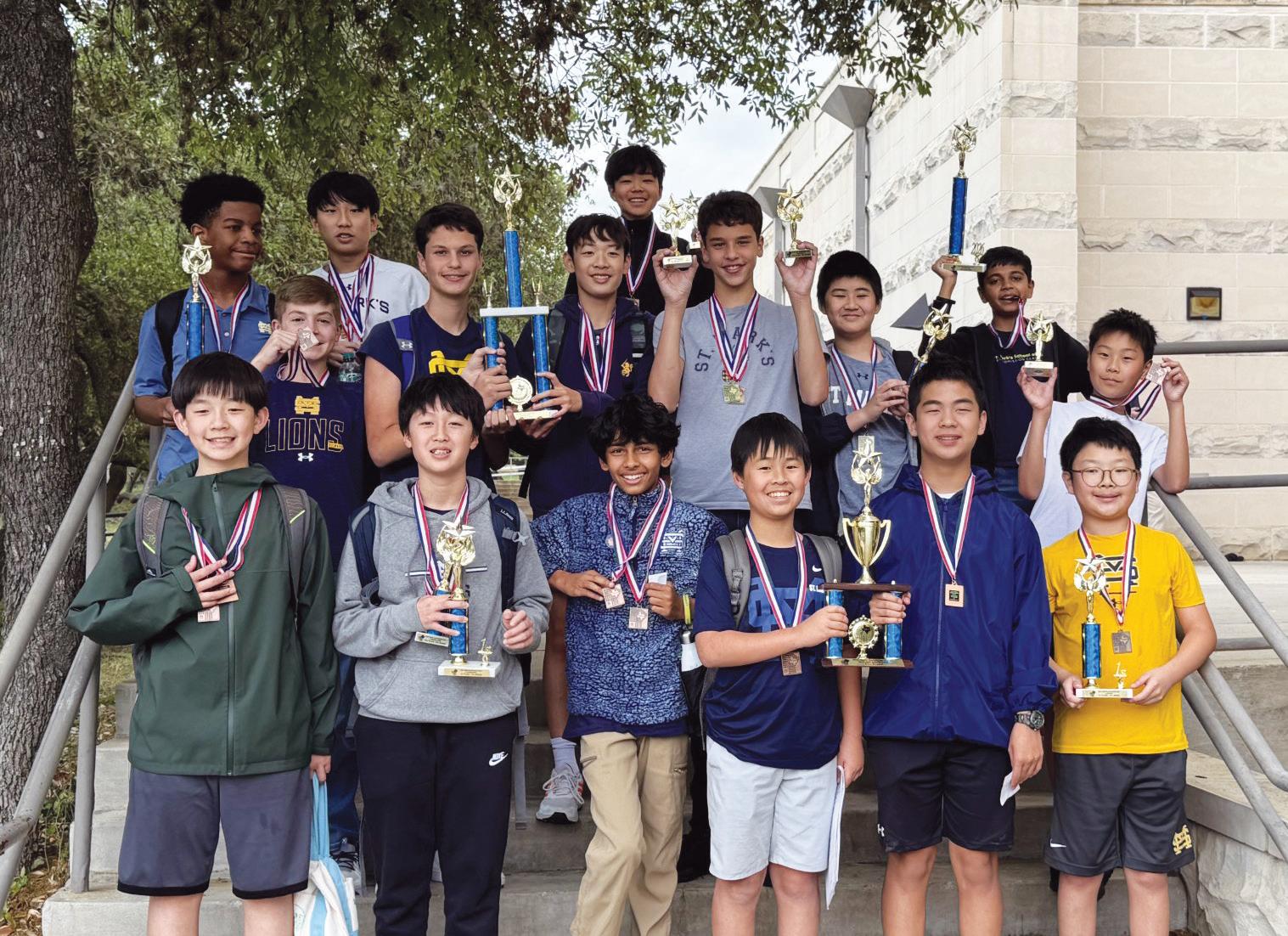
Math team wins state title
Following months of preparation, the Middle School math team placed first in the ‘Mathematics’ section at the TMSCA 5A State Championship, marked by strong individual performances.
By Jay Panta and Joaquin Mayo
Nothing feels quite like first place. Yet, for the Lions’ Middle School math team, the feeling has almost become routine, culminating in a standout performance at the Texas Math and Science Coaches Association (TMSCA) 5A State Championship on April 11-12 in San Antonio, Texas.
Competing against top schools across the state, the boys finished first place in the ‘Mathematics’ team category and fifth overall in sweepstakes, posting a total of
Page Turner
3,448.04 points, with particularly strong showings in Number Sense (794 points), Calculator Applications (749 points) and Mathematics (654.24 points).
The team’s first-place finish in the mathematics section — led by sixth grader Cyrus Kuang, eighth grader Roger Wang, seventh grader Max Cao and eighth grader Dhilan Saluja — stood out as the defining achievement of the weekend; the result reflects not only individual excellence but also a collaborative team effort that carried over from practice into competition.
“We all knew each other before we went to San Antonio, so there were a lot of close friendships,” Wang said. “We were doing practice tests on the bus ride and helping each other.”
The TMSCA competition evaluates students across four categories — Number Sense, Calculator Applications, Mathematics and Science — with team scores determined by the top four performances in each event. Mathematics and Science scores are scaled, while Number Sense remains unadjusted, creating a
“The Bright Sword” Recommended By
Elyse Chevallier: It is an Arthurian story, so it follows a young knight who gets to Camelot right as the Round Table is kind of breaking up. King Arthur has just died, so you have a lot of the other knights of the Round Table. He goes on this adventure with these misfit knights, and they try to save Camelot. And it’s really interesting. It’s got a lot of the best parts of Arthurian literature, the classic elements that people really like about it, the adventure. And if you like King Arthur and Stories by King Arthur, you’ll find things that are familiar to you.
Librarian Elyse Chevallier
TECH WATCH
balanced system where consistency across events is critical for team success.
Within that structure, the team demonstrated both depth and specialization. Kuang led the field with a firstplace finish in mathematics and third place in Number Sense, while Wang placed third in mathematics and 17th in Number Sense. Cao added a fourthplace finish in mathematics, and Saluja contributed top-10 placements in both Number Sense and mathematics.
“It felt really rewarding because I put a lot of work in, so it felt really nice to win,” Kuang said. “For the math section, I knew I was top 20, and when they got to number two and my name still wasn’t called, I knew I was first place. It was really exciting.”
Behind the results lies a practice structure that relies heavily on student initiative. The team meets formally just once a week, placing the responsibility for improvement on individual effort outside scheduled sessions.
See MATH TEAM, Page 11
Wing Delivery establishes hub in DFW
Jake Lewis: The newest technology to captivate DFW is Wing delivery. The product can deliver small items from stores to front doors in an average of 30 minutes using a fleet of drones. These drones can efficiently deliver any Walmart goods under five pounds in total. Through the OpenSky app, the Wing delivery fee is often zero, and no additional tipping is involved. However, through stores such as Walmart, the delivery fee can reach $19.99.
High school grants students higher academic autonomy
Entering high school, students gain flexibility but must independently manage time, workload and academic priorities.
Beyond grades and performance
COMMENTARY
Sebastian Garcia-Toledo Academics Editor
It is not rare for people to want to take the easy way out. Physics and philosophy have demonstrated this through concepts such as the path of least resistance and Occam’s Razor. Besides, it’s basic logic: if there is no incentive, why do more than is expected? Doing more than what the status quo desires of you, in this proposed situation, simply has no use.
This is, in my opinion, why we have grades, finals and concepts like participation. The school, rightly, seeks to curb the seemingly irresistible pull of a blasé mentality towards performance by rewarding those who excel rather than letting them slide by. It puts pressure on those who, for a full school year, have put in the minimum effort to show interest or care in showing they actually can keep the grades they have.
In a perfect academic system, this is exactly as it should be: those who care — and can show that they care — have the reward of not having to worry at the end of the year. In his essay “Compensation”, American writer Ralph Waldo Emerson summed it up best: “Do the thing, and you shall have the power, but they who do not the thing have not the power.”
But, as much as I wish that Emerson’s ideas could just as easily apply to the school, they simply do not.
In the current academic landscape of America, pressure to perform is at an ever-climbing peak, and expectations have only continued to rise. A student now can’t just have good grades or a good SAT score. Even within the school, the classroom situation has been twisted — from getting students to perform to the best of their abilities, to a single-minded focus that a single class has more value than any other the student is enrolled in. As a result, the student is expected to ‘go the extra mile, to surpass expectations, in each of his classes — an expectation that is simply unattainable.
There is a developing disconnect between the classroom and the curriculum. Students begin to care less and develop a ‘just get by’ mentality, not because they do not care, but because the sheer amount of work makes it practically impossible to have intention behind it. This inequality presents itself in the mundane parts of student life, like homework, but that very mundanity is directly caused by the disconnect. It is simply not feasible, for example, for a student to come back home, do an hour of homework for each of his five classes and be expected to do each of those with full commitment.
On the contrary, one could argue that the student’s inability to care stems from their idea of engagement itself being twisted. They do not work with the text or the content in a manner conducive to real learning. Their engagement results from their grade rather than their grade reflecting their engagement. Perhaps the way we look at this concept of ‘caring’ itself needs to be recalibrated in order to truly assess what constitutes an act of disengagement.
So, how do we find the middle ground between the oversaturated student and the inconclusive participation in the classroom? I’ll be honest, I don’t have a straight answer. What I do believe could work, though, is a return to viewing the curriculum as the standard and giving the student the power to determine how much effort they want to put in. Allow their engagement to determine their results, rather than outright performance, and let off the pressure of grades and expectations. Make the experience of learning something that rewards you rather than exhausts you.
Photo by Liz Kraft Marksmen earned a total of 22 placements, including eight top-10
Dallas ISD bond benefits student service projects
As Dallas voters approve a historic $6.2 billion school bond, students and community leaders say the changes could strengthen educational opportunities across the city.
By Jay Panta and Sebastian Garcia-Toledo
Twenty-six new replacement schools.
Hundreds of renovated campuses. Ten thousand students moved out of portable classrooms.
Districtwide technology, security and campus renovations.
New buses, upgraded furniture and repaired athletic facilities.
These are just some of the changes included in Dallas ISD’s historic $6.2 billion bond package, the largest school bond in Texas history. Approved by voters on May 2, the bond will replace aging schools — which are nearly 70 years old, on average — while also modernizing every campus across the district through facility upgrades, safety improvements and expanded student resources.
For many students at the school, who are involved in community service programs throughout Dallas the impact of the bond extends far beyond construction projects. Students who tutor and mentor children in South and West Dallas say the proposal could significantly change the educational environments they encounter through volunteer work.
Sophomore Avi Aggarwal has worked with students through various extracurricular activities, including a Biology Club he started with friends, the Wesley-Rankin Community Center and the Brendan Court summer program. Through those experiences, he has seen firsthand how differences in school resources can shape students’ confidence and engagement.
“One of the biggest things I have learned is how curious and capable these students are when they are given the opportunity,” Aggarwal said. “At the same time, their school environments can vary a lot. Some have strong support systems, while others do not always have access to the same level of resources or enrichment.”
Aggarwal said many students he teaches are eager to participate in hands-on science activities, but lim-
ited classroom resources can sometimes restrict those opportunities.
“Some students have talked about overcrowded classrooms or limited access to updated materials and technology,” Aggarwal said.
“When they are able to actively participate instead of just listen, their engagement changes completely.”
It is not just about buildings, but about whether students feel like they have the same chance to succeed and explore their potential as anyone else.
Avi Aggarwal Sophomore
According to Dallas ISD, the bond includes districtwide technology upgrades and modernized learning spaces. Aggarwal believes those improvements could directly affect how student-led programs operate.
“I definitely notice differences in access to materials and technology
— sometimes, we have to simplify activities because certain tools are not available,” Aggarwal said. “(The bond) allows for more interactive and advanced learning experiences.”
For programs like Aggarwal’s, the bond would mean building on what students are already exposed to instead of filling gaps. Aggarwal explained that, because of resource limitations, volunteers often have to adapt lesson plans around what is realistically available to students.
The bond also aims to renovate these aging school facilities by removing hundreds of portable classrooms throughout Dallas ISD. Aggarwal said those physical improvements could influence students’ attitudes toward learning itself.
“Improvements to school buildings would make a real difference,” Aggarwal said. “When students are in a clean, well-maintained and modern environment, it can change how they feel about learning. It shows that their education is valued, which can increase motivation and pride in their work.”
Community service leaders at St. Mark’s say the school’s partnerships with Dallas organizations will likely continue regardless of the district’s improvements, though the role vol-
unteers play may gradually evolve.
Assistant Director of Community Service Isabel Cisneros said students at the school currently support Dallas ISD students through tutoring programs in subjects like math, reading and science, often through after-school organizations such as Wesley-Rankin and Jubilee Park.
“The biggest needs seem to be in math, science and reading,” Cisneros said.“When our St. Mark’s students tutor these students, they can provide more personalized help, with a smaller tutor-to-student ratio than their current classrooms.”
Even with better-funded schools, Cisneros believes many students will still benefit from after-school mentoring and tutoring opportunities.
“Student volunteers will continue to volunteer at Dallas ISD programs,” Cisneros said. “Having better-resourced schools in Dallas is a step in the right direction, but Dallas ISD students may still need after-school help, which our student volunteers can provide.”
Director of Community Service Jorge Correa believes growing community partnerships could also create greater demand for volunteers at the school.
“There are some instances
during the school year where people recruit more people, so recruiting would have to go up in order to satisfy the demands of how many people can go to different places,” Correa said.
Correa emphasized that many organizations rely heavily on student volunteers and that maintaining those relationships remains important even as schools receive new funding.
“The problem that I see is how to communicate that to our students in terms of a necessity. This is a need,” Correa said.“When somebody emails us or requests some sort of help, it’s because they actually count on that.”
For Aggarwal, the bond’s significance represents more than merely new buildings or upgraded devices. Rather, it represents a larger question: one about educational opportunity throughout Dallas.
“Access to better facilities, updated technology and stronger learning environments can directly affect students’ confidence, engagement and future options.” Aggarwal said. “It is not just about buildings, but about whether students feel like they have the same chance to succeed and explore their potential as anyone else.”
Summer programs offer benefits, raise questions
By Pedro Bajon Falcao
For many high school students, summer break represents something rare: free time. With fewer academic obligations, students often look for ways to strengthen their college applications, and summer programs have become a popular option. These programs, typically hosted by universities or organizations, are designed to expose students to niche academic interests not always available during the school year. However, while they can provide meaningful experiences, they are often expensive and viewed as “pay-to-play,” raising questions about their true value — especially in the
college admissions landscape.
Al G. Hill, Jr. ’63 Director of College Counseling Veronica Pulido said students should begin by thinking more broadly about how they want to use their time rather than focusing immediately on specific programs.
“What I like to tell students is, ‘thinking about your two or three months off, how do you want to spend the time?’” Pulido said.
Pulido recommends that students first account for existing commitments, such as travel or personal obligations, and then consider what interests they want to explore. Summer programs, she said, are just one of many options.
“Whether you’ve done a program
or you did it yourself, it really is the takeaway,” Pulido said. “What was important about the project, the program, the activity — colleges really just (want) to see how have you taken advantage of your time and what has been important to you as an individual to help you grow.”
That exposure can be particularly useful for younger students who may not yet have access to internships or research opportunities. Spending time on a college campus can also help students develop independence and gain a better sense of the academic life they will experience in college. However, Pulido emphasized that summer programs are not a direct pathway to college admission, even at the institutions
that host them.
“There’s no real benefit to getting a student to say, ‘Oh, I did your program,’” Pulido said.
Instead, colleges focus more on how students use their extracurricular time and what they gain from their experiences. This gives the decision to attend a summer enrichment program a lot more nuance for students interested in using their summer wisely. Pulido identified three key factors students should consider before committing to a program.
“I think the family needs to look at time, location and money to see if (a summer program) is something that is going to be worth it,” Pulido said.
For some families, the value lies in academic exploration. For others, it may be the opportunity for a student to live independently or try something new. In either case, Pulido stresses that students should approach summer with intentionality. Alternatives to formal programs can be just as valuable. Students can take community college classes, pursue independent research, read extensively or even reach out to professionals in fields of interest. As summer approaches, students face a choice: pursue structured programs or create their own path. In either case, the most important factor may not be where they go, but how deliberately they choose to spend their time.
Photo by Jake DeBoever
Many classrooms within Dallas ISD are suffering from disrepair and lack of maintenance; this bond assures a future for the learning of students within the district.
School promotes digital literacy growth
Starting in first grade, the school integrates digital literacy across various subjects, emphasizing ethics, communication and critical thinking as the digital age emerges.
By Jay Panta and Chase Kitson
In a world where screens often replace paper and algorithms shape communication, digital literacy has become as fundamental as reading and writing. Once considered a supplementary skill, the ability to effectively and responsibly use technology is now crucial to academic success and future careers — a shift that schools across the country are increasingly prioritizing.
As artificial intelligence, automation and online communication continue to redefine the modern landscape, educators are rethinking what it means to be “literate.” Digital literacy is no longer limited to knowing how to operate a device; it encompasses critical thinking, ethical usage and the ability to commu-
nicate well in digital spaces, including the workforce.
“If you don’t have basic technology skills, you’re going to be way behind, especially now with, as people claim, AI taking over a lot of jobs,” Computer Science Department Chair Kurt Tholking said. “You have to understand not only computers but also using AI or how AI could impact your chosen career profession.”
This growing importance is reflected in how early schools have begun introducing these concepts. On campus, digital literacy education starts in first grade, mirroring the way traditional literacy is taught from a young age. The goal is not just familiarity with devices but a structured understanding of how technology works and how to use it responsibly.
Yet, despite being raised in such a technology-rich environment, students are not inherently equipped with these skills. The assumption that “digital natives” automatically understand technology has shown to be extremely misleading.
“Just because you grew up using technology doesn’t mean you know how to use it properly,” Tholking said. “You can learn how to walk,
but it doesn’t mean you’re doing it the right way.”
As technology evolves, the curriculum must too. The rapid development of artificial intelligence tools has introduced new challenges for educators, who must constantly adapt lessons to remain relevant and effective.
“With the recent changes in AI, we had to make some adjustments (to the curriculum),” Tholking said. “That’s one area where, as AI progresses and changes so rapidly, it’s hard to keep up.”
While technical skills are essential, digital literacy at the school extends into the humanities, where students are taught to think logically, write artfully and engage with digital tools in a meaningful way.
In English classrooms, technology is both a tool and a subject of reflection.
“Digital fluency, for the most part, allows students to write without worrying about the legibility of their handwriting and the speed of their writing,” Trustee Master Teaching Chair in Humanities Lynne Schwartz said.
Even as digital tools enhance efficiency, educators remain cautious about overreliance on technology.
Digital fluency, for the most part, allows students to write without worrying about the legibility of their handwriting and the speed of their writing.
Lynne Schwartz Trustee Master Teaching Chair in Humanities
The convenience of AI-generated content and automated corrections can hinder the development of digital communication skills if used improperly.
“Those few students who do overuse AI are depriving themselves of the opportunity to learn to communicate clearly, effectively and authentically,” Schwartz said.
This balance between leveraging technology and maintaining intellectual independence is a central challenge in today’s classrooms. Teachers aim to ensure that students use digital tools to enhance their thinking rather than to re-
place it.
Beyond writing, foundational skills like typing remain a key focus. The ability to translate thoughts into text becomes particularly useful in timed or high-pressure environments.
“It’s vital for students to learn the keyboard by touch, which speeds up written responses and enables writers to write as fast as they think,” Schwartz said. “This means that writers don’t get an idea and then lose half of it because it’s taken them so long to write it out by hand.”
At the same time, reliance on digital aids, such as Grammarly, has created new gaps that educators are working to address. By occasionally removing these supports, teachers encourage students to internalize the rules of language rather than depend on automated corrections.
Digital literacy also extends beyond academics into professional and social communication. Knowing how to present oneself online — whether through emails, messages, or collaborative platforms — is increasingly important in both college and career settings.
“A lot of digital literacy comes down to conveying yourself professionally: what level of formality to use, what’s appropriate online and those small things can signal whether someone is trustworthy,” senior Benjamin Standefer said.
Standefer, founder of the 501(c)(3) nonprofit Binary Tree, has seen firsthand how access to digital education can vary globally. His organization works to lessen the digital divide by providing technology education to underprivileged communities in developing nations.
“I think it’s really important that everyone’s at the baseline,” Standefer said. “That’s true at (the school), but not true in enough parts of the world. And then comes reaching that ‘next level’ with a basic understanding of programming.”
And as tools like AI become more integrated into everyday life, students must also learn when and how to use them appropriately; the distinction between efficiency and authenticity is only becoming more and more significant.
“People are increasingly using tools like ChatGPT to send emails, so knowing when to auto-generate communication versus when to personalize it can really make a difference,” Standefer said.
Digital literacy at the school reflects a broader shift in education: one that recognizes technology as an integral part of how students learn, think and communicate. As the digital age continues to evolve, so too will the skills required to navigate it, making digital literacy not just a relevant skill but an essential one.
Middle School math team excels at state championship
“Math team is an extracurricular club, so we meet once a week for 30 minutes. . . All the work the boys do is on their own time, evenings and weekends,” club sponsor Lynne Steckler said.
That independence has become a defining feature of the program, encouraging students to take ownership of their preparation and develop habits that extend beyond competition.
“They really just take initiative and do it, because they realize to do well, the work has to get done, and they just figure it out,” Steckler said.
Students approach that preparation in different ways, often tailoring their study methods to fit their
strengths. Some emphasize conceptual understanding, while others focus on repeated practice across the four categories.
“I didn’t really focus on the practices as much as learning new concepts,” Wang said. “I used books and focused on understanding before doing a lot of practice tests.”
Others adopt a broader philosophy, treating all areas of competition as extensions of the same core skill set: Mathematics.
“My philosophy is that all math is the same as all other math, so for practice, I just do math,” Cao said.
“For every competition, I do some practice tests, but not a lot of practicing for that exact test.”
The competition itself demands not only knowledge but also strate-
gy, however. In events like Number Sense and Calculator Applications, scoring rewards speed and accuracy while penalizing incorrect or skipped answers, forcing students to make quick decisions under pressure.
“It’s time-based, so you need strategy… if you don’t know a question, you skip it, do the ones you know first and then come back if you have time,” Wang said.
Beyond individual tactics, the team’s success also reflects leadership. With coaches unable to enter competition rooms, experienced students must guide their peers and maintain focus independently.
“The current eighth graders definitely filled the void and did a great job,” Steckler said. “When needed,
they stepped up as leaders.”
That leadership, combined with strong performances across multiple events, contributed to year-overyear improvement for the program.
“We came in first place in General Math, fifth place in Number Sense and fourth place in Science — we improved in every category from last year, and we had seven fewer guys,” Steckler said.
Even with the team’s success, many competitors remain focused on future growth. For Cao, earning fourth place in Mathematics at the state meet was less an accomplishment and more a benchmark for what comes next.
“It’s honestly not what I expected,” Cao said. “I expected a better placement, but it’s still a good place-
ment, so I have mixed feelings.” Looking ahead, the team’s younger members — many of whom contributed significantly this year, including Cao — will have opportunities to build on their experience and aim for even higher finishes.
“Next year, I want to get state champion,” Cao said.“I need to practice math team on its own more, because just doing math doesn’t mean you’ll do well in every category.”
As the program continues to develop, its combination of individual dedication, peer collaboration and strategic preparation positions it as a consistent contender at the state level.
Photo by Harry Sabogal
Students worldwide who lack fundamental digital literacy skills risk falling behind as technology becomes increasingly central to daily life.
MATH TEAM, from Page 9
Academic autonomy gives students more freedom
As structured systems in earlier grades fade, students gain flexibility in high school but must independently manage their time, workload and academic priorities.
By Sebastian Garcia-Toledo and Trevor Hsu
Growing up may bring more freedom, but it also comes with new responsibilities. The autonomy of high school can be a challenge for many — especially at a school with such an overwhelmingly diverse range of resources that allow students to find and chase their passions.
Students are expected to keep themselves accountable and organized, a task that, despite the best efforts of the Wellness Office, is still a major source of struggle.
In Middle School, students are required to use materials like physical planners and homework binders, as well as study halls to do their academic work.
“They definitely try to take the approach of guiding you along and holding your hand a little bit,” junior Dylan Bosita said. “The planners, the schedule, having class meetings every week, they try to show you by doing it with you in hopes that you build the skills necessary for high school.”
These planners, dubbed Pathfinders, were introduced into the middle school to aid in the organizational development of younger students, and are based on compounded research and professional development, with the central focus being children’s ability to see into the future and to organize themselves.
“A first grader obviously is not going to know what’s going to happen two days from now, necessarily. A fifth grader, maybe a little bit longer, but not much more. And so as your brain develops, your executive function skills build and you’re able to do more.” Director of Academic Success Julie Pechersky said. “We’re trying to develop habits as early as Lower School in terms of executive function, time management, study skills, and so that’s what we’ve incorporated into the planner. By the time they’re in ninth grade, our hope is their skills are a
little bit more developed, and they have identified what works well for them.”
(For) some kids, it’s very easy to manage time… (For) other kids, it’s a struggle. Know that failure may happen, and know that it’s not the end of the world to acknowledge it and not to ignore it.”
Michelle Santosuosso Ninth Grade Class Sponsor
The structures within Lower and Middle School exist to allow students to locate a studying system that works for them, not necessarily to ensure that they adopt the Wellness Office’s suggested strategy. In theory, having the planner as well as the rigid studying scheme in lower grades prepares the student to take advantage of the generous free time in high school and ensures they have the capacity to give themselves direction. However, this is not always the case.
“I think part of it is that it is really hard for a fifth grader, or even younger, to be convinced that it’s necessary.” Pechersky said. “In fifth grade, you may have a study hall and get all your homework done in one day. Or you may feel like, right now, you can study the night before a test and still do great. So they’re still able to ‘wing it’ a little bit, and so they don’t see the value in it. It’s about us convincing them that in building it, we’re building habits here, whether you are truly seeing the value in that process yet.”
While this process of ‘winging it’ can be applied in lower grades, in Upper School, students gain a second free period, granting them more time to focus on the significantly more rigorous academics of high school, but also giving them free time, which they are expected to use to its fullest.
“Being able to use that time instead of a study hall, where you’re forced to sit in one room and do homework, is actually very good for me because at night, I can do my homework at home and get that done, but the time when we’re all on campus is actually very valuable because there are a lot of days where I need to meet with people,” Bosita said. “Because of the free periods, they allow us time where I can meet with teachers on campus while they’re still here. I can meet with other students if I need to, or if I don’t have any of that, then I can do homework here and then have more time at night.”
All of these options become available after the jump from eighth and ninth grade, as with this transition comes more responsibility since students are now expected
Lack of AP exam exposure leads to increased stress
By Trevor Hsu
Advanced Placement (AP) classes are a major part of the American high school experience. Since they are regulated by the College Board, these classes not only offer a max 5.0 GPA instead of the usual 4.0 but also provide college credit.
Achieving a high grade in one of these classes is no small feat, however. The overall increase in workload in these college-level classes can take more time and effort, something that can be a sudden change from previous years.
As college admissions approach, some overschedule themselves, leading to an overall drop in academic performance.
Because of the way the school structures its curriculum, most students start taking AP classes their junior year, a critical period for
grades.
“Junior year is known for being a more difficult year, and there’s more pressure on it because it’s the last full set of grades that go to colleges when students apply,” Associate Director of College Counseling Josh Shandera said.
Within their hectic schedule, Juniors have to balance between course rigor and workload.
“It’s a problem if students are taking on a schedule that they cannot manage,” Shandera said. “That is a problem if you are taking on coursework that is just going to create too much of an overload for you… We want you to take a course schedule that feels like a good balance for you.”
The extra time spent studying and doing classwork can be time consuming, often taking away from the time that would normally be
spent on other classes.
“If a couple of classes are taking away time from other classes, and you start to not do well across the board, then that choice of taking that more difficult class because it ‘looks better’ is actually hurting you,” Shandera said.
The bigger load or coursework can lead to endless nights of studying to the point that it takes up all of a student’s time, leaving no room for relaxation or activities that students may enjoy.
“(AP classes have) basically consumed everything I do,” junior Collin Ku said. “I get home, take a shower, eat a snack and then do my homework, which usually takes an hour and a half. And then, especially now that AP (exams) season is coming up, I study for 30 minutes per subject, which usually takes three or four (hours).”
One option Ku suggests to alleviate this desire to take an excess of AP classes in junior year would be to let freshmen and sophomores take them; however, this solution presents multiple problems that lie within the students themselves as a result of this ‘drive for excellence’ and the competitive nature of the school.
“Part of me says we should let freshmen take APs,” Ku said. “Part of me (also) says that it’s probably a good thing that we don’t because the freshmen will try to overload and then build horrible habits.”
The school’s curriculum is designed specifically to keep students from overworking, allowing them to build good habits before taking difficult classes like AP courses.
“What I hear more often is students trying to add in more courses, which (reserving AP classes to
to plan out their day and manage their time well. These changes, apart from the addition of the second free period, include the removal of required planners and homework binders and after-school sports are no longer mandatory.
“You can take electives. You can choose to take your fine art or not, and all those choices make it to where they really cannot just hold your hand wherever you go,” Bosita said. “I think that natural progression where they go slowly, handsoff, is actually beneficial.”
This freedom to choose classes, use free periods and plan out schedules greatly benefit those who have learned the skills that the Middle School strives to instill in all students. For others, however, it can be challenging if they don’t carry those same mandatory habits.
“(For) some kids, it’s very easy to manage time… (For) other kids, it’s a struggle,” ninth grade class sponsor Michelle Santosuosso said. “Know that failure may happen, and know that it’s not the end of the world to acknowledge it and not to ignore it.”
junior year) is somewhat of an intentional limitation of our course and schedule set design,” Shandera said. “There are only so many spaces available, so students have to be really intentional in what it is that they choose and select to take.”
Freshmen and sophomores might not normally be able to take AP classes, but the on-level courses that the school offers are still rigorous and have plenty of learning to offer.
“I think (flexibility) is a luxury that teachers in independent and private schools are able to take advantage of,” Shandera said. “They are not teaching to a test, much like public schools, and so they have more flexibility with their curriculum.”
Photo by Asher Ridzinski
Director of Academic Success Julie Pechersky helps a student manage his activity-filled schedule.
Lower School tradition has long-lasting effects
Checkpoint Charlie, a first grade tradition at the school, teaches boys habits of responsibility and preparation that continue long after graduation.
By Kiran Parikh and Connor Pauley
On the first day of school, before anyone has learned anyone else’s name, First Grade Teacher Teri Broom lays something out on every desk.
It’s a black-and-white outline of a lion. Nothing special to look at yet — just lines on a page, waiting. Broom tells the boys to color it as neatly as they can, and puts her own example up on the document camera so they know what they’re working toward. They pull out their colored pencils and get to work.
They don’t know what it’s for yet.
By the end of the day, or the next morning at the latest, the lions come back laminated. Attached to each is a small sheet of paper explaining the rules and giving it a name: Checkpoint Charlie. And from that point forward, it goes home with every boy and lives there to hang by the door, at eye level, at the last place a boy passes before he walks out into the world.
The rule is simple: touch it before he leaves, and when he does, to ask himself just one question.
Does he have everything he needs?
Broom has been teaching first grade at the school for two decades. She didn’t invent Checkpoint Charlie — the tradition predates her, and its exact origins have blurred with time — but she has carried it forward with the conviction of someone who has seen it work too many times to doubt it.
“For the boys who actually use it, it really does help,” Broom said.
The need for something like Checkpoint Charlie, she explains, is visible from the first day. The school draws first graders from many different schools, many different homes and, most importantly, many different levels of readiness. Some boys arrive already independent. Others are still being dressed by their parents in the morning. All of them are about to be handed a binder, a homework routine and a set of daily expectations that have no equivalent in kindergarten.
Checkpoint Charlie is not a solution to all of life’s organizational challenges, but it is a starting point
— a physical object that stands in for a habit that hasn’t formed yet, a way of asking a question until the question becomes ingrained.
“It’s really about just creating responsibility in them,” Broom said.
Broom is deliberate about the coloring exercise, about the fact that the boys make it themselves, on the first day, before they know what it means. By the time they understand the rule, the lion is already there to support them.
Hilton Sampson ’25 graduated from the school last spring. He is studying at the University of Texas at Austin, navigating finals and midterms and the general machinery of a life managed without anyone managing it for you.
He still does the checklist.
Not with a lion — he doesn’t have one anymore, hasn’t for years.
It’s not just the physical things you want to remember. It’s planning out in your head your entire day and making sure that you can show up, ready to go at every step along the way.
Hilton Sampson ’25 Former student
But the mental version of it, the habit of standing at the door and running through what he needs before he walks out, stayed. He traces it back, without hesitation, to first grade.
“I remember in first grade we were given those Checkpoint Charlie lions,” Sampson said. “I had it hung up in my garage door, and every day before we would go to school, I would touch it and make sure I had everything I needed.”
Earlier during the spring semester, he had a management information systems final. He was allowed to bring notes — a printed study guide he’d been going over for days. He was heading out the door when the mental checklist caught it. The study guide was still on his desk. He turned around and grabbed it before leaving.
“I think that having that obviously helped me do better on the final,” Sampson said.
For Sampson, the habit was the point, not the study guide. Moving into college, he immediately noticed he seemed more prepared than some of his classmates. Not just with the right materials, but in a broader sense — ready to take on whatever the day required.
“It’s not just the physical things you want to remember,” Sampson said. “It’s planning out in your head your entire day and making sure that you can show up, ready to go at every step along the way. Starting it when you’re young helps prepare you to be responsible and manage your activities wisely.”
He said if he had kids someday, he’d want something like it for them too. To start the habit early, to give it a shape and then let them make it their own.
Broom has seen it work in her own sons. Both went through the school, and the habits followed both of them out. She’s seen the habits in the boys who come back to visit, who still greet her properly, who know how to sit at a table with adults and hold a conversation.
Broom remembers a valedictorian who reflected on Checkpoint Charlie in front of the whole school in 2021. He talked about how being responsible at 6 years old, not just told to be responsible but given a tool and a routine and a reason, compounded and echoed time and again as he approached his senior year.
The lion on the wall is, in that sense, not really just about remembering what’s in the backpack.
It’s about what happens when a boy learns, early enough that it becomes instinct, that the day goes better when you stop at the door and ask yourself if you’re ready; that the small moments of intentionality — a hand on a laminated lion, a pause before the garage — can be the difference between showing up and showing up prepared.
It’s the first step out the door and onto the long journey to independence.
“Even though I don’t have the same physical aspect of it now, the idea of it has kind of stuck with me,” Sampson said.
On the first day of first grade, Broom will put a black-and-white outline of a lion on every desk. Later that day, a boy will sit down for the first time and do his best to scribble within the lines. And by the time that boy is grown, he might not be able to tell you exactly when his habits formed. But he’ll have them.
At a place such as the school — where boys are privileged with the accessibility of some of the best scholastic equipment in the world — the focus of a student is usually centered around grades and time with friends. For most students, the idea of not having access to school supplies is a foreign concept. However, this norm is not the same everywhere. Junior Tex Davison, who has seen impoverished schools in Fiji, knew that he could use his surrounding community to help those students gain access to essential school supplies.
“My family has an Airbnb in Fiji on a remote island; (the school) has an abundance of resources that can be used in the right way,” Davison said. “I thought that I may as well contact a few schools (there) that are pretty remote, (to see) if they were in desperate need of any resources.”
Davison immediately sought out Director of Inclusion, Diversity and Human Resources Dr. Lorre Allen, for her guidance and assistance with his idea: Allen loved it. And from that conversation, Bags and Books was officially created.
“From that moment, Tex started reaching out to the schools in Fiji, and it just blossomed to where we
got books that were no longer needed,” Allen said.
With the addition of Allen to the team, along with Jennifer Scott, Administrative Assistant to the Director of Inclusion, Diversity and Human Resources, the idea of helping out these schools in need was no longer just a remote possibility, but something that could actually change the lives of many.
“Dr. Allen and Ms. Scott really helped me,” Davison said.“This year, we’re doing more schools in the same area, and the middle school community service board is doing an amazing job. They’re raising 2,000 books for this cause.”
Allen also spoke on Davison’s
impact on his community and how the rest of the student body can follow in his footsteps.
“Tex has his own pair of shoes that he will walk in even after he leaves (the school). Every student on this campus has their own ability to create ideas like this that could flourish and change the world,” Allen said.
Davison wants this project to carry on after him and expand with new generations of St. Mark’s students. With recent Middle School book drives and multiple different countries needing supplies for school, Davison plans for his project to expand beyond Fiji and into different countries and continents.
“Thailand and Spain are going to be the next ones over the summer,” Davison said. “Thailand’s really close to my heart because I lived there for a while… Of course, every country is in need of something in some places — everywhere across the world.”
Both Davison and Allen believe that this project was made possible by the resources the unique St. Mark’s community has given to them.
“(The school) is a learning ground, and this is the place for ideas to flourish and become something surreal,” Allen said.
Photo by Asher Ridzinski
Before leaving for school, second grader Charles Radman touches his “Checkpoint Charlie” lion.
PAGE 18
LNew counselor guides students in college admissions
The college counselling office recently hired Hope Allchin, a researcher and former admissions officer.
Outside of school, students adhere to uniform standards that limit their self expression through fashion.
Grandparents shape students’ childhoods
The relationship with a grandparent varies across students: some are tight knit while others are hardly in touch. This results in unique and powerful interactions between them.
By Dominic Liaw and Luke Nguyen
Some kids won’t ever see their grandparents. Maybe because their grandparents have passed away. Maybe because they’re halfway across the globe. For the fortunate kids who can see their grandparents once or twice a year, each visit is exceedingly special.
For a small fraction of kids, those precious moments spent cooking or playing or talking with their grandparents fill each day.
At around 6:30 p.m. on a weekday, sophomore Albert Yan walked to the tennis courts, asking if anyone could give him a ride home. His mother wouldn’t come for another half an hour, he said. While no one could drive him back to his house a solid half hour from the school, this problem never existed a couple years ago.
In the past, Yan lived with his grandparents. His grandfather would drive him to school, to practices and special events. His grandfather’s efforts alleviated a burden on Yan’s parents that could consume
OVERHEARD ON CAMPUS
hours each day.
Living with his grandparents meant so much more than simplified commutes. Yan’s grandfather loved to take him and his friends to a field to practice soccer. He’d watch Yan play tennis matches. Together, Yan’s grandfather taught him a plethora of skills, tightening their special bond.
“I still have this wooden ship that we built together in my room,” Yan said. “He taught me how to mow the lawn, how to trim the edges of the lawn, how to build things for a project at school.”
Yan’s grandmother helped him to raise chickens, an activity that they shared passionately.
“I remember when they first got them, they’re like little chicks,” Yan said. “My grandma taught me how to pick them up and how to care for them.”
Yan’s grandparents were both teachers. Alongside the physical skills Yan learned, his grandparents, he learned the core values that his grandparents believed in.
“You don’t have to be loud to be heard,” Yan recalled. “(My grandfather) was usually quiet when he talked, everybody would listen.”
As Yan’s grandparents grew older with him, the dynamic in their relationship changed. As a little kid, Yan’s grandparents would provide almost anything he wanted. That kind of leniency faded as he grew up and matured. He never felt an intense pressure, but they expected more from him.
“As I grew older, I found them asking me for help for more things,” Yan said. “When I was younger, I would be the one asking them for help.”
Before Yan’s grandfather passed away a couple years ago, he instilled special memories and lessons into his life. His grandfather drove him across the city, he taught him how to craft with wood, and he watched dozens of soccer practices. Above all, he taught Yan lessons in life that Yan still carries today.
Although he might regret not informing his grandparents about important health skills or teaching concepts from school as their strength deteriorated, Yan will always retain the instrumental influence that his grandparents brought to his childhood.Maybe
“You can always learn something from anywhere,” Yan recalled. “You can learn something by observing your surroundings. You can be taught by kids, and grown ups alike.”
Sixth grade student Grant Matthews and his older brother in eighth grade, Reid live with their grandmother, McGee. After her husband was diagnosed with Alzheimer’s seven years ago, McGee moved in with her children and grandchildren.
“I get to be part of their baseball games, and go to church together, and more,” McGee said. I’m more of a part of the family.”
CALENDAR
READING DAY
Students in eighth through 11th grade have a day off, dedicated to studying for finals. May 20
UPPER SCHOOL FINAL ASSEMBLY At 10 a.m., all Upper School students will gather to celebrate the end of the year, receiving awards.
PAGE 21
Kristin Mlakar works behind the scenes
Kristin Mlakar, Director of Operations, is the driving organizational force behind massive campus projects.
Friday, May 15, 2026
Don’t sleep on chapel
It’s another typical Wednesday morning. I rush out of bed, late as usual and quickly put on my uniform, stuffing items into my backpack. I bolt to the car and I fumble with my keys and finally get in. It’s a 45 minute drive and then I have to hastily get to my class.
Maybe I have math or history class in Centennial, or I have to sprint across campus to get to chemistry, still halfasleep. Regardless, when I get there, I’m out of breath and on a good day, not late. After a first period class, where I try my best to not fall asleep, it’s chapel again.
Whether it’s Father Arbogast giving a lesson on “how we ought to live our lives” or the inspirational senior talks, chapel provides me with a break from the monotony of a typical Wednesday. I know other classmates, however, have their grievances with chapel. Maybe because they think it’s boring. Maybe because they think it’s a waste of time. Maybe because they think they’d rather be working on homework or hanging out with friends instead of sitting there. I personally think that those classmates who don’t appreciate the time that has been dedicated to self-thought and reflection, are missing out on potentially life changing advice.
Father Arbogast’s lessons often offer advice to those who are willing to take it. Even if it’s a story of monkeys and mangos or a story about Passover, I think there is always something significant to take away and to apply to my life, even if it’s something as big as being grateful or something as small as forgiving others for their mistakes.
Despite the broken chair in front of me that can’t hold the worship book or how the people who sit next to me sometimes take up too much space, probably falling asleep on my shoulder, I still find solace in the chapel service. It is one of the few things in my life that always stays consistent. I always enter the chapel, listening to whatever Mr. Stroh has to play on the organ.
It always starts off with the same words from the speaker: “This is the day the lord has made,” and then the audience always replies: “Let us rejoice and be glad in it.” It always goes from the sophomore speaker doing the first prayer, followed by the senior, reciting the day’s lesson, to the junior reciting another prayer and finally, the freshman offering a prayer for those in need.
For me, especially with the step-up chapel at the beginning of the year, is a time of remembrance and new beginnings, step-up chapels encourage marksmen to take on the new responsibilities they have been given and take on the opportunity to fill the shoes of those who have come before them. It reminds me that I have people looking up to me but also that I have others to look up to.
Chapel service allows me to be one with my own thoughts. It reminds me to be grateful for the gifts that I have been given and it allows me to experience cultures other than my own. For me, it offers a sense of comfort in the busy and turbulent life of a Marksman.
Dr. Moody Chemistry teacher
Sawyer Goldstein Sophomore Nathan Liu Freshman
Dr. Feng Math teacher
Photo by Sam Morse
A grandfather tightly embraces his son on grandparents day, one of the school’s long running traditions in which students’ grandparents accompany them to school.
College counselor joins school, mentors students
With a passion for helping students tell their stories, Hope Allchin joined the school’s college counseling team.
By Nicholas Huang and Elliot Stone
As a high school student, Hope Allchin was unaware that college counseling was a profession, let alone a career she might pursue. Years later, as a college counselor and admissions officer, Allchin has developed a passion for learning students’ stories and helping them navigate the admissions process.
Allchin loved storytelling ever since high school: as the editor of her school’s newspaper and later a reporter at Yale Daily News, she enjoyed learning new stories and sharing stories to the student body.
“When I was an editor, we would come in five nights a week and put together a 16 page print newspaper every day,” Allchin said.“I think being able to find myself and what I cared about was also something that was really, really special at being part of a newspaper.”
For Allchin, being part of a university’s newspaper was an integral part of her college experience, and through the newspaper, she found a community of friends and family. She wanted to provide students with the same experiences that she had; however, she had never really considered becoming an admissions officer or a college counselor.
“I went to a high school that was a fairly large public high school,” Allchin said. “We had one college counselor for my entire school, which had about 2500 students in it, and so you’re not getting really direct college counsel. I didn’t even really know this was a job in high school in that way, but I do wish I had someone like this right to kind of help shape my path.”
So when Allchin learned about working in college admissions, it seemed like the obvious choice, allowing her to read students’ stories and learn more about them. In addition, she was essentially creating communities just like the one she had so thoroughly enjoyed in college.
“I really just liked being in a space of helping students find that next community,” Allchin said. “For me, college was such a transformative time in my life, and it just brings me a lot of joy to think that I could be helping others find that place that is going to spark something in themselves.”
When Allchin left college, she
eventually found herself as an admissions officer at Washington University in St. Louis, where she read through multitudes of applications. Allchin described it like reading a short story on a person’s life.
“When I was in admissions, I loved reading students’ essays,” Allchin said. “It was such a joy to see that window into students.”
However, she later decided to switch to academia, where she could research the data surrounding college programs and grants.
For example, she studied the statistics covering the Pell Grant, a federal grant that funds undergraduate students. In her dissertation, she also studies the effectiveness of programs supporting Indigenous students.
“There are programs across more than 300 schools in the United States that offer some sort of discounted tuition for Indigenous students who meet certain criteria in order to support their enrollment rates,” Allchin said. “So I was looking at, essentially, do these programs actually work; do we see, in the years after policy adoption, increases in enrollment in the student population.”
After a career in research, Allchin decided to settle down in Dallas, where many of her husband’s relatives lived. And after both working in an admissions office and working as a researcher, she ultimately decided to experience working as a college counselor.
“I miss being on a campus and working so closely with students, and so I decided to look at other opportunities,” Allchin said. “And for me, one of the things I was really interested in was college counseling, because it’s really helping students find their next home, find their path, find what’s exciting to them.”
For Allchin, college counseling offered her the opportunity to mold students’ narratives, to create and tell stories just like she had done years before in her high school and university newspaper.
“I really like storytelling, and I think that’s something that is a surprising part of college counseling,” Allchin said. “In a way, so much of it is about telling students stories, and whether that’s helping you tell your own stories through things like essays, or it’s telling your story through things like a recommendation letter and getting to share that tale.”
During the hiring process, Allchin’s skill set lined up well with the school’s priorities. She was experienced as an admissions officer, and she was also a researcher: her experience preceded her.
“We need someone that is good with people and students
For me, college was such a transformative time in my life, and it just brings me a lot of joy that I could be helping others find that place that is going to spark something in themselves.
Hope Allchin Associate Director of College Counseling
and families, and then we need someone with good experience either on the college admission side or working in an independent school,” Al G. Hill, Jr. ’63 Director of College Counseling Veronica Pulido said. “That was our main focus when looking for candidates. Once we brought (Allchin) onto campus, she felt like we felt like she was a good fit for our school.”
The sense of belonging that Pulido identified was mutual, since Allchin herself enjoyed the community and the environment of the school. And importantly for
Students strengthen relationships with grandparents
See Grandparents, Page 14
McGee says watching her grandchildren grow up has been bittersweet. While they’ve shared seven years of memories and traditions, McGee’s watched a similar story decades prior with her own children. While living in the same house has bonded McGee shares with her grandchildren, it’s the traditions that strengthen those bonds. Whether it’s enjoying Spanish cuisine or playing music, various traditions like those bring them closer
together.
“Traditions that we do that really unite us as a family and as grandchildren and grandparents,” Matthews said. “That’s really special, because some people don’t have the time or just can’t be able to see their grandparents as much.”
“I’m able to compare my children, their parents, (and the) things that they did that are very similar,” McGee said. “Now, I see it through their children, doing the same thing
that their mom and dad did when they were little.”
McGee has been a crucial part of her grandchildren’s childhood. They’ve watched their cousin compete professionally in track. McGee has watched their golf tournaments and choir performances. But she’ll never be another parent.
“The hard part is that I can observe, but understand, that I had to learn “hands off,” McGee said. “It’s mom and dad who set the rules
and stuff. And that was the hardest part, in loving them and respecting them, I had to step back more.”
Instead of the ten hour drive or connecting flights, Grant and Reid Matthews are usually only a couple rooms apart from their grandmother.
“She’s always there to call and she can make you food, or you can just talk to her and stuff. She’s a pretty nice, getaway person to talk to,” Grant Matthews said.
Allchin, she enjoyed being back in a position where she could provide a support system for students.
“(St. Mark’s is) a wonderful community. Visiting here is just amazing to see how creative and curious everyone is here. And so when I was thinking about college counseling, the most fun roles are to work with students who are creative and energized and excited about what their next steps are going to be. And so it seems like a natural fit to get to be a part of (the) community,” Allchin said.
McGee’s relationship with her grandchildren has evolved and will continue to evolve over the years. As each new year brings thousands of memories, Grant and Reid Matthews hope that priceless moments in their childhood never fade away.
“In 20 years, who knows. She might not be here, or hopefully in God, she will be here. But when I look back, I would probably be thankful for the opportunities that I had with her,” Matthews said.
Photo courtesy Matthew Stock
Hope Allchin and her daughter visit Allchin’s residential college, Yale, where she graduated from in 2018.
By
DEMOCRACY DEMANDS MORE THAN PASSIVE BELIEF
Following George W. Bush’s convocation speech, a sentiment of engagement in one’s community spread across campus. Engagment not only in our school, but in our nation.
On the morning of April 21, the Great Hall hushed as Headmaster David Dini approached the podium. Most students assumed it was the standard convocation speech — looking ahead to the last quarter, urging them to finish the year strong.
Then the side door opened, and a crew of personal security ushered the 43rd President of the United States, George W. Bush, through the side doors of the Great Hall.
Met with a standing ovation, Bush’s presence captivated students and faculty as he delivered a speech celebrating the nation’s 250th anniversary. He talked about George Washington. He talked about humility. But one line echoed throughout campus long after he left.
“I will always be honored to carry this title that means more to me than any other — Citizen of the United States,” Bush said.
Not Governor of Texas, Fighter Pilot or even President, but a title that many take for granted: Citizen of the United States. But that title can only mean something if people embrace it.
Amidst the winks and subtle jokes, his underlying message left students reflecting on their responsibilities: as stewards of 10600, as “soldiers fighting in the armies of compassion” and as citizens of the country.
For many, Bush’s speech was not just a celebration, but also a reminder. A reminder that, without consistent engagement, the values that have shaped our country for 250 years can feel overlooked.
Two hundred and fifty years is a long time for an idea to survive. The American republic was founded upon a revolutionary one: that the government derives its power from the people, that citizens are not subjects, and that the whole system depends on ordinary people upholding a social contract.
This social contract ensures an interdependence between the nation and its people. It requires citizens to prioritize the well-being of their communities over personal incentives. Dr. Andrea Hamilton, who teaches U.S. history at the school, put it plainly.
“Citizenship implies being willing to act, not just out of self-interest, but for the good of the whole,” Hamilton said.
But the fragility of the contract, she explained, was the central preoccupation of the founders. They knew their idea could only survive with a virtuous, educated and committed citizenry. A republic, they understood, is only as strong as the people running it. And they rarely lasted.
Bush reiterated that same notion, 250 years later, to a room full of teenagers. The question the speech left hanging in the air was whether that idea still holds. Whether, in 2026, the average American wants to be a citizen or something closer to a spectator.
Eager to exercise their new privileges, Marksmen over 18 hold an optimistic view of their ability to vote. For senior Diego Armendariz, the importance of civic participation has been ingrained in him from a young age.
“My parents have always emphasized voting regardless of your political ideas,” Armendariz said. “Because it’s important to get your voice heard. It’s a feature of our American democracy.”
Armendariz acknowledges that, although one vote may seem insignificant, the collective impact of votes can be substantial. And even though the outcome may not necessarily reflect his personal views, Armendariz recognizes that the act of voting itself upholds the foundational principles that bind the republic together.
“I realize my vote probably doesn’t mean
that much, but I think that’s such a bad mindset to have because the world is made up of individual people,” Armendariz said. “If everybody thought like that, then nobody would vote, and nobody would get their voice heard.”
Similarly, senior and Executive Student Council President Adam Dalrymple believes that active participation in communities is what keeps those communities alive. Dalrymple doesn’t just limit these values of giving back to voting; rather, he continually applies them in a more immediate environment: the school.
“What makes St. Mark’s special is the drive the students have to make an impact,” Dalrymple said. “Whether that be journalism, Student Council, telos or basically any club, students try their very hardest to make an impact, move the school forward and uplift their community.”
However, this desire to make a difference doesn’t come without responsibility. In a world where non-credible sources are available and even promoted, Dalrymple knows how big a role education plays in responsible participation.
“(Education) is a top priority for me,” Dalrymple said.“I need to know what I’m voting for before I actually vote — all the details, the reasoning and understanding both sides of the issue. That’s extremely important.”
Despite their optimism, both seniors can’t help but feel anxious. With their new right to vote, they now feel the weight and tension of political polarization firsthand, and are wary of making a considerate decision.
“I think our country’s situation is pretty awful, including the rhetoric from both sides,” Armendariz said. “It’s become less about actually discussing ideas of how to help our country and more about attacking people who disagree with you.”
Armendariz doesn’t usually encounter this discouraging rhetoric in classroom discussion, but rather on his phone. He notices that when behind a screen, people are provided with an anonymity that makes them feel immune to scrutiny or judgment, only amplifying political boldness and extremes.
Not only does social media allow for shameless expression, but it also separates people into factions — factions of belief that are reinforced and held together through repeated exposure.
People can find communities online where everyone is in unanimous agreement. When exposed to the same opinions over and over again, citizens lack the ability to discuss issues civilly, much less listen to opposing viewpoints.
For young voters who receive information from non-news sources like social media, the opportunity to form beliefs individually wanes quickly. Dr. Jerusha Westbury, who teaches upper school history and AP U.S. Government, warns of the danger of blind faith in information procured from the internet.
“You’re taking what’s
I will always be honored to carry this title that means more to me than any other — Citizen of the United States.”
George W. Bush 43rd President of the United States
Sam Morse, Kiran Parikh and Holden Purvis
Covered with soot and weathered by time, the constitution requires continual maintenance and care from citizens to uphold its values effectively.
words are there. But the people are not there. The people are falling behind. That’s what’s happening in this country.”
Rodriguez’s belief is symbolic of the crisis of trust that has festered over the past several decades — not just a lack of trust for the other party, but in the system itself. According to Hamilton, it’s the result of the sense that the American Dream was no longer feasible.
But that distrust is dangerous, Hamilton says — it’s a line that should not be crossed.
“Once people show that you can get away with not trusting the system, who’s ever going to go back and trust it?” Hamilton said. “I think that the U.S. will continue as a country. It’s just — will it be a democracy in the same way? I think maybe not.”
Yet even as trust erodes, Westbury sees something that hasn’t changed.
“No one wants everybody else’s life to be miserable,” Westbury said. “Almost everybody wants things to be better. They just have different ideas about what’s wrong.”
That distinction of disagreeing on solutions, not intentions, is one that Westbury believes has quietly disappeared from public discourse. She remembers a time when political disagreement felt different — less like a verdict on the other party’s character and more like a debate on the best route to the same destinations.
“Everyone kind of shared the same set of facts. And rather than presenting and arguing about different issues entirely, it was more, ‘How can we solve this?’” Westbury said. “And the solutions were different, but the problem was the same.”
Westbury argues that the reframing is where the work has to start. Not with grand gestures or sweeping policy, but in the simpler and harder act of assuming that the person on the other side of the argument isn’t the enemy.
It doesn’t resolve the polarization. It doesn’t fix the system Rodriguez no longer believes in. But it creates the conditions where civil discourse is possible, the foundation upon which the republic was built.
For Headmaster David Dini, Bush’s visit was both a historic occasion and a confirmation of something the school has always tried to teach.
“The speech aligned with our values and the school’s mission and our devotion to character and leadership development, cultivating positive virtues and habits,” Dini said. “Things like humility and dedication and sacrifice and service. It was an expression of humanity.”
That humanity, Dini believes, is what the school asks of its students every day, in the small, compounding acts of responsibility that define character over time. The school’s history makes that expectation feel heavier, and more real.
coming out of an influencer’s mouth as the gospel,” Westbury said. “That’s concerning.”
This biased form of political discussion not only creates an unhealthy environment but also makes participation seem less appealing, deterring eager voters from their responsibilities. Even so, rather than encourage voter education, social media platforms often feed viewers with videos of similar stances or even clips to the detriment of an opposing view.
“The criticism used to be differences between platforms,” Westbury said. “But now, criticisms have turned to morality — where people view the other party as being fundamentally immoral, as opposed to having a fundamentally different approach to solving economic issues.”
Dalrymple and Westbury believe that the anger incited by social media’s barrage of different ideas is what creates the most polarization. It drives some people to extremes and others — those stuck in the middle — to feel isolated and unrepresented.
Some citizens buy into the online activ-
ism. Others disassociate from politics entirely.
Edwin Rodriguez is an Alto driver in Dallas. He was born in Brooklyn, raised in Williamsburg and is Puerto Rican by heritage. He drove to Dallas to continue raising his child.
Rodriguez has voted once in his life. He was young, he says, and didn’t know how the world worked yet. His community told him a candidate was good for the neighborhood, and went and voted for that person without really knowing why. He has not voted since.
“Sometimes I just think the right to vote — they gave us that right to make it feel like we got the right to vote,” Rodriguez said.“But at the end of the day, I feel like it’s all lies. It’s really what (those in power) want.”
He is not apathetic. Rodriguez wants to believe in the idea of collective power. He wants to believe in community. He wants to believe in the phrase “we the people.” But he thinks that the system’s promises are empty.
“Our country was founded on those exact words,” Rodriguez said. “We the People. The
“At the school, you’re carrying a lot of history with you,” Dini said. “It’s like the pathto-manhood statue. It embeds that sense of daily responsibility in you that’s so important. It’s a privilege — a privilege not many people get to do: be the editor of the paper, serve in a leadership role, be on the faculty or be a student here.”
It is a privilege Armendariz and Dalrymple are beginning to understand the weight of on a wider scale. It is a privilege that Bush, standing before the Great Hall, emphasized most of all.
“(Bush) turned and said, ‘I have confidence in the values of our country. I have confidence in the principles behind what we stand for,” Dini said. “‘And most importantly, I look out at you, and I have confidence that you’re going to engage, you’re going to take up these priorities and carry us forth.’”
Two hundred and fifty years in, the republic is still asking for the same thing it always has — not heroes or presidents or monuments, but for citizens.
Citizens willing to show up, listen and carry it forward.
Graphic by Kiran Parikh
Fashion choices express student individuality
After school ends, students are free to wear whatever they want. While some decide to express themselves through a variety of unique outfits, others simply throw on a school shirt and a pair of plainshorts.
By Luke Nguyen and Pierce Lee
It’s Saturday morning, but campus is still buzzing with life.
Boys come to school for reasons ranging from sports to academics and extracurriculars, free from the strict, dress code that administrators mandate on school days.
But even without dress code enforcement, there is an apparent lack of style. Not because of a lack of capability, but because of a lack of effort.
The school has built a culture around uniformity in more ways than one might notice. Everyone wears shorts every day. Few people pull their socks up beyond their ankles. This culture pervades both the middle school and upper school.
“I think we put less thought (to what we wear) because we just wear the same thing every day on weekdays, so we don’t really think about what we put on, so it may translate to what we wear outside of school,” seventh grader Christian Collins said.
Students may be looser in the way they dress due to the a judgemental free environment at St. Mark’s. At other schools people may dress to impress others or represent themselves. Marksmen aim for comfort and ease rather than appearance.
“I think (it’s a) St. Mark’s thing about our students, (or) maybe just because we’re all boys, or maybe just because we’re all really close,” freshman Ishaan Siddamshetty said. “No matter if you’re in different friend groups, we all really don’t judge each other. I think it’s just the way St. Mark’s kind of molds us is that we learn not to judge people no matter what they wear.”
Siddamshetty believes that uniforms impact dress outside of school, but still thinks uniforms are effective to students.
“I feel like (uniforms) are a pretty good method that St. Mark’s has implemented, “ Siddamshetty said. And also, it kind of states that discipline part having to do the same thing every single day, and getting the same dress, making everybody
on an equal stage.”
Sophomore Adam Zhang suggests that uniforms may actually help students bond with each other.
“You go to St Mark’s and not only is there a level of prestige to that, but also you can feel proud that you are among your friends and among your brothers, and you have something special to say when you grow up,” Zhang said. “You’re like, ‘I used to be part of this really tight knit community, and we used to all wear the same thing.’”
Henry Friedman, a freshman at Highland Park High School, offered an outside perspective on how uniforms shape fashion as individuality.
“I actually think (expression) is really important just because I feel like there’s just a sense of just being happy with the clothes you choose,” Friedman said. “If you really can’t, if you’re just limited to the clothes you’re allowed to wear, you won’t really be able to express yourself. You just can’t really show your true self to anybody surrounding you.”
He believes that clothing can build a group identity or an individual identity.
“Certain clothes could 100% associate you with something in a good way or in a bad way,” Friedman said. “I think just choosing your clothes, 100% individual, will individuate you from a different
Nowadays, people care less about that and more about how good of a person you are and how hard working you are, which is honestly just a fantastic evolutionary part of our society.
Adam Zhang Sophomore
person.” Siddamshetty gives the example of clothes representing someone’s personality.
“I feel like a good example is really vibrant colors, because sometimes I’ll wear mustard yellow shorts, or pink shorts, and some people, if they’re shy, they’ll never wear stuff like that, because they don’t want to express themselves, or they kind of want to keep in their shell,” Siddamshetty said. But people who are extroverted, they love wearing all those vibrant colors.”
Athletics also play a role in the lack of sartorial diversity outside of school. Athletes are likely to be more concerned about the functionality of clothes rather than how they serve to express themselves.
Conveniently, the Student Store sells branded athletic apparel for when students forget to bring their non-uniform clothes. This, in tandem with school pride, leads many to wear lots of school branded clothing.
“I do fencing a lot, so I’ll wear a lot of athletic clothes and a lot of St. Mark’s branded stuff from the student store,” Siddamshetty said. “At the fencing club, whenever I see somebody from St. Mark’s, the majority of the time, they will be wearing some sort of St. Mark’s merchandise.”
For students who wear the school logo outside of school, their clothes carry meaning and represent something more than fashion.
“We’re often told St. Mark’s students are ambassadors of the school, right? And whenever they wear that St. Mark’s clothing, they’re kind of bringing that idea of St. Mark’s around with them,” Siddamshetty said.
Siddamshetty realizes when he wears the school logo, his actions and words add to our school’s reputation.
“Whenever I wear St. Mark’s shirt, there’s always some point during the practice where when I say something, I realize, Oh, this is probably what they think of St. Mark’s students. That does kind of influence the way, not only the way I dress, but also the way I speak, the way I upfold myself whenever I have that logo on,” Siddamshetty said.
Zhang thinks that being at a
school with a uniform strongly influences how individualistic one’s style is. He believes that in contrast to the early 1900s, what people wear doesn’t matter as much anymore.
“Back in the day, they actually had lots of unspoken rules about what you can wear and what you cannot,” Zhang said. “You had to hold yourself to a high standard to be in high society. Nowadays, people care less about that and more about how good of a person you are and how hard working you are, which is honestly just a fantastic evolutionary part of our society.”
In contrast with the 1900s, modern day fashion for most students comes from what they see in the media. Students have started to copy other people’s style rather than creating a style of their own.
“I know a lot of other students have social media, and I know that that’s what influences the way they dress, because they kind of want to imitate the people they see online, and I don’t really agree with that ideology, but I know that’s what differentiates me from a lot of other kids,” Siddamshetty said.
This concept of taking an image or trend from the media and implementing it in your everyday life is often labeled as performative.
“Fashion is very performative,” Zhang said.“I don’t think being performative is bad, but there’s lots of performative people who are very pretentious at the end of the day. If it makes you feel good, you should do it.”
Zhang stresses that fashion has benefits outside of appearance and can help improve the way that one views themselves.
“I think other people get out of fashion a sense of confidence,” Zhang said. “People talk about confidence as much as it should be (talked about). If you wear something nice, I think it makes you feel really confident, and it helps you with your life.”
Zhang feels that fashion should increase confidence and self image. He emphasizes the necessity of putting yourself out there and not being afraid to express yourself.
“I think everyone should strive,” Zhang said. “If you want to get into individual, individualistic wear, you should find something meaningful in wearing something unique.”
Photo by Luke Nguyen
Students opt for different choices of fashion outside of class. Some (left) wear clothes more formal than others (right).
Photo by Luke Nguyen
David Zhao 29’ shops in the student store for St. Mark’s branded apparel. The store offers a wide variety of formal and athletic clothes that display school pride.
Cox, Pigg retire after many years of teaching
After dozens of years at the school, Latin teacher David Cox and second grade teacher Laura Pigg will retire at the end of the 2026 school year.
By Dominic Liaw and Rishik Kapoor
After years of impactful contributions to the school, Latin teacher David Cox and 2nd grade teacher Laura Pigg close a chapter of their careers, leaving a long lasting legacy of hard work and dedication that ripples across the community for decades to come.
While faculty members can still remain connected with the school, on paper, their time working with the school is over. This balance between the excitement of retirement and the departure from the school creates mixed emotions.
“It’s a little bittersweet because I will miss my colleagues and my students, and I’ve enjoyed teaching,” Cox said. “I will miss that, but I’ll get over it. I feel like this is the right time.”
The environment at the school promotes a caring community, part of the reason why leaving the school can feel so hard. People all across the campus, from students and faculty members to parents and siblings, add to a vibrant career that adds so much to a teaching profession.
“The boys, the families, the colleagues — it has a real family feel to it,” Pigg said. “It’s never occurred to me to leave. I’ve loved getting to know the boys, getting to know their parents, conferencing with their parents, and then just working with my colleagues.”
Pigg had always wanted to become a teacher. Her whole life, she chased the career she dreamed of attaining. Decades later, she decided to retire, metaphorically passing a torch to a new generation of teachers.
“My mother talks about how when I was three years old, I used to line my dolls up against the wall and I would be their teacher and talk to them and act like I was teaching them,” Pigg said. “I don’t ever remember not wanting to be
a teacher.”
Throughout his 17 years here, Cox has believed in the importance of the joy of learning. In this regard, fostering an interest in learning beyond the required school work can transform dulllessons into genuine passion.
“I always am sort of proudest when I can see kids say, ‘Wow!’ like those ‘Aha!’ moments,” Cox said.
Above all academic achievements and athletic accomplishments, Pigg hopes students value core virtues like respect as integral parts of their character. As lower school students grow and mature, Pigg hopes that certain qualities never fade away.
“We have a motto that says, ‘If all of the Marksmen were just like me, what kind of school would St. Mark’s be?’” Pigg said. “I would hope that they could take that with them as they go through and even when they graduate.”
After reading “Charlotte’s Web” and “The Lion, The Witch, and the Wardrobe” year after year, Pigg ingrained those traditions into a special part of her life.
“I’m going to miss the literature like that,” Pigg said. “Because I’ve done it for 29 years, it’s going to feel weird not to do that.”
A career in teaching means so much more than grading and teaching. There are aspects to the job that requires teachers to excel above and beyond the curriculum in order to thrive on campus.
“I don’t treat it as like a 9 to 5 thing where I’m like punching it and punching out,” Cox said. “Every day, I do my best to help St. Mark’s students, my students to understand the material, and in the long run, to realize their dreams,” Cox said.
The legacy of a faculty member’s impact on their students and the school extends beyond any one class. There are qualities and virtues that Cox and Pigg among other teachers have instilled to students across campus.
“I hope that I can leave them with a different mindset of thinking things through a little bit,” Pigg said. “They’re still really young, but maybe it’s been integrated enough in them that they can think about that as they go through (school).”
After over a decade of serving the school community, there are a select few moments that retirees remember most fondly. These
moments speak to powerful traditions or celebrations empowered by a tightly knit community.
“I love Christmas time as St. Mark’s, the campus being decorated the way it is and just all the traditions that go on there,” Pigg said. “That’s what I’m going to miss, I think the most.”
The end of a chapter at school doesn’t necessarily mean the end of teaching entirely. The same passion that interested Cox in teaching fuels his desire to continue teaching during retirement. Inspired by a former teacher at the school, Ms. Jenkins, Cox plans on tutoring, possibly without charge.
“I do believe in service,” Cox said. “I want to help out people that need help, and I’m happy to do it.”
Even after over a decade and a half of teaching at the school, Cox still explores questions and curiosities, admitting he’ll never understand everything. And retiring certainly doesn’t close this door to learning.
“There are just endless questions, and you try to find answers to them. But even the answers lead to other questions. And that, to me, is exciting, not daunting. As long as you recognize you’re not going to know everything.”
Future founders club expands business experience
By Pedro Bajon Falcao
The Future Founders Club gives students direct exposure to entrepreneurship by connecting them with business founders and industry professionals. Founded by sophomores Clayton Sacha, Evan Yepuri and Sawyer Goldstein, the club addresses what its leaders describe as a lack of practical business experience available to students at the school.
For them, the idea emerged from noticing that many students were interested in business careers but lacked access to professionals in the field.
“A lot of people are interested in pursuing a job in business,” Sacha said, “but don’t really have a lot of opportunities to hear from actual professionals.”
While several clubs at the school focus on finance and markets, entrepreneurship itself has received far less attention, leaving a noticeable gap in hands-on exposure to building a business.
“There wasn’t anything that actually talked about starting those businesses,” Sacha said, referring to the gap between learning about markets and understanding how companies are built.
To address that gap, the club centers its meetings on guest speakers. Founders and business owners describe how they built companies and what their work involves.
“I think you can learn a lot from hearing from someone (who) day in, day out runs a company and manages employees and manages customer relations. You
can learn a lot about what that job looks like on a day-to-day basis,” Goldstein said.
Attendance has grown steadily, with meetings often drawing larger crowds than expected for a firstyear club, particularly when guest speakers are present. Yepuri said turnout reflects strong interest across campus and speaker events consistently attract the highest participation because students want exposure to real founders and their experiences.
“People are attending and showing interest, they’re asking good questions – not just coming to come, but rather coming to engage,” Yepuri said.
Running the club requires consistent effort outside meetings. Leaders handle outreach, scheduling and communication
with speakers, often through cold emails. Sacha said securing speakers is the most difficult part.
“It’s hard to bring in someone who has enough qualifications that’s willing to sit down for that period of time,” Sacha said.
The club also emphasizes a collaborative culture. Members are encouraged to contribute ideas and help identify potential speakers.
“The goal is to create a community where everyone is engaged and participating rather than a passive audience,” Goldstein said.
Through its programming, the club has also addressed misconceptions about entrepreneurship. Speakers emphasize that success in business is unlikely at a young age without preparation, pushing students to focus instead on edu-
cation, experience and building connections.
“The probability is so low and we don’t have the education yet, (so) it’s worth it to go get an education, get out there, form a network, (and) form connections,” Yepuri said.
A long-term goal is sustainability. The founders want to ensure the club continues beyond their time the school and becomes a lasting part of campus life.
“I think the goal would be that we could eventually pass it down to the next generation of Marksmen who could then carry on the idea from there. A lot of clubs die out after the founders graduate, so I think if it could be continued, it’d show a lot about the club and values in its mission,” Goldstein said.
Photos by Dave Carden and Dillon Kennedy
David Cox teaches a Latin class (top). Laura Pigg teaches a class of second graders as they show their puppets (bottom).
Mother-son events help to bring families closer
While father-son events have ingrained themselves into school traditions, mother-son events bring mothers and their sons closer together, whether that’s through picnics, monotony breakers or other events.
By Dominic Liaw and Trevor Hsu
Father-son breakfasts and coffees only make up a fraction of the events the school hosts for students and their fathers. Year after year, mug after mug, these special events have cemented a legacy in the journey of each student and father.
However, mother-son activities at the school are less common. They naturally don’t share the same activities or traditions, but there’s always been a significant difference.
She’d been asked several times before, but Chantal Gunawardena finally agreed to serve as the junior class grade representative. And it was only then that she first heard about an annual tradition for juniors and their mothers.
“I didn’t even really feel anything was missing until I heard about the Mother Son picnic,” Gunawardena said. “I was like, ‘Oh, how wonderful is that?’”
Before the picnic, Gunawardena had taken part in other, smaller events for the juniors. Normally, they would cap the maximum participants at around 35 to 40 people. The mother son picnic was much different. Upwards of 90 eager parents joined their sons for upper school lunch.
“I’ve been looking forward to this event all year long and talking about it all year long to everybody, and just making sure as many people could come,” Gunawardena said.
While the picnic was initially planned for the amphitheater, heavy rain thwarted the plan. Gunawardena acknowledged that the school could easily have cancelled the event, but administrative efforts allowed the event to take place in the Zierk Athletic Center instead.
“It felt like a little mini vacation, a little getaway, right in the middle of their finals or AP week,” Gunawardena said. “You had the swimming pool on one side, you had the basketball on the other, and we had a desert lobby, and it felt like a little getaway.”
Students brought picnic blankets where they ate their favorite lunches that their mothers packed, surrounded by flowers and decorations. As Mothers’ Day was coming up, the picnic’s timing gave the
students the opportunity to share a “Thank You” gift to their mothers.
I was actually really amazed at some of the boys’ choices they were making. They were so well thought out.
Chantal
Alongside a macaron tower and an ice cream bar, there was a photo booth where mothers and sons could take photos together. The juniors also created bouquets to gift to their mothers. While the bouquets were easy to put together, the unique and rare moment where students got to share a special event with their parents created an unforgettable 45 minutes.
“I was actually really amazed at some of the boys’ choices they were making,” Gunawardena said. “They were so well thought out.”
Gunawardena acknowledges that a huge attendance truly contributed to the atmosphere and success of the picnic. By communicating about the event well in advance, she spread awareness and excitement surrounding the picnic. In the culmination of their efforts, almost every junior and their parent showed up.
“You can organize any event at any time, but it’s choosing that perfect scenario,” Gunawardena said. “The boys are already on campus, and the moms just have to show up, and it was just a beautiful event.”
Many students joined the school early while others came their fresh-
man year. The junior class has always been a tight-knit community, but the mother son picnic brought about a newly strengthened bond with the parents.
“It resonated with a lot of moms who’ve been at this event for their previous children, and I feel that we all had such a wonderful time,” Gunawardena said. “It brought the entire class together, like I have actually never seen at an event before.”
Gunawardena thinks of this picnic as more than just ice cream or bouquets. She thinks of milestones and highlights of childhoods that near their end. The culmination of joy and growth, celebrated as an entire class, is at the doorstep of senior year.
“Junior year is a time when you realize that you’re about to have a senior, and then he’s about to go off to college,” Gunawardena said. “So it’s kind of that moment in time where one chapter is ending, and a new one is starting.”
There may be more father-son events than mother-son events, but Gunawardena maintains that they’re both incredibly important.
“It is a special relationship that you have with your mom, and it should be celebrated in that special way,” Gunawardena said.
Junior class grade representative Hilary Shank views her position as a way to give back to the school that has supported her son, who is her only child at St. Mark’s.
“It just felt like a really great opportunity to get back to the school for all the wonderful things they’ve done for us and our family over the past years,” Shank said.
Shank has also used the time she spends planning events for her son’s class to learn more about her son and how the school is shaping him.
“It has been a wonderful opportunity for me to be able to see my son on campus,” Shank said. “(I) see how much he enjoys St Mark’s and see how much St Mark’s really has made him into the man he’s becoming.”
A large part of this impact that the school has on the students is the sense of a special community.
“St Mark’s does an exceptional job of really celebrating the community of St Mark’s and giving parents an opportunity to not only contribute with volunteering at the school but also being able to have events that involve the class, so that the class can really get to know each other.”
SAGE member nominated for Distinguished Leadership Award
By Osinachi Akudo
For many students on campus, lunchtime is frequently an afterthought. Most boys don’t think about anything past the menu, but the process behind each lunch is way deeper than it seems.
For Senior Food Service Director Brennon Turner, one day of serving lunch comes with months of preparation beforehand. His job includes food budgeting, managing food operations and putting together customized meal plans.
Often, this work goes unnoticed by students and faculty. However, the Golden Leaf award seeks to distinguish members of SAGE who go above and beyond to ensure the nu-
trition of our school. This year, Turner was a finalist.
“The Distinguished Leadership Award is for highlighting people who demonstrate remarkable leadership and judgement, especially in complex situations, which requires effective communication, sound decision making and creative problem solving,” Turner said.
This is the second year that the Golden Leaf award will be given, which is an annual award that contains several different categories for numerous positions, including managers, team members, home office staff and regular employees. All entries are reviewed through an objective process, and anyone can nominate anybody.
“The Golden Leaf Awards is a chance to recognize the people who make SAGE exceptional. With more awards and more winners this year, there are even more opportunities to celebrate colleagues who’ve made a real impact,” Turner said.
SAGE is a food contract company that serves private schools and small universities. It covers a wide range of schools across the country and parts of Canada. Ordering the ingredients for each menu item takes weeks of preparation and collaboration with people inside and outside the school.
“For me, as a food service director, my day to day life is really about planning and preparation. We put together the menus well in advance
by getting with the executive chef and getting with our food distributors. It’s about making sure we have the right ingredients for the menu we put together and making sure we maintain food safety standards,” Turner said.
The SAGE dining hall functions because of the hard work and dedication of people like Turner, who develops menus that meet the needs of everyone on campus.
“We maintain the highest standards of integrity throughout our company, from accounting to purchasing to marketing,” Turner said.
“We never waver from our focus on serving great-tasting, wholesome food.”
The award ceremony took place
on Wednesday, May 6, and while Turner did not win the award, he was still thankful for the opportunity to be recognized for his work.
“While I didn’t win this year, it was truly an honor to be nominated and named a finalist,” Turner said. “I also learned this is only the second year of the Golden Leaf Awards, which made the recognition especially meaningful.”
Turner plans to continue to lead SAGE this year and beyond, continuing to help our community during lunch time.
“I’m just happy to be nominated… somebody thought that I’m doing my job at a high level and they wanted to recognize me for that,” Turner said.
Junior David Dickson and his mother take photos during an annual pinic.
Photo by Dillon Kennedy
Gunawardena Parent
Kristin Mlakar orchestrates campus operations
Behind the scenes, Kristin Mlakar works tirelessly in order to make major events and projects on campus like the Zierk Athletic Center possible.
By Luke Nguyen and Jake Lewis
Kristin Mlakar, Director of Operations, is responsible for more than she’ll take credit for: renovations throughout campus, in places like the Winn Science Center, the Zierk Athletic Center. She plays a vital role in the organization and execution of everything from major construction projects to trash cans and floor mats.
She pursued her master’s in architecture and worked in the field before coming to the school 14 years ago. The skillset required to be an architect conveniently overlapped with her position.
“My background in architecture makes me very organized in planning different projects and carrying them out, knowing the details,” Mlakar said. “I can read plans, I can do AutoCAD, and I can go through all of these things as we’re building and have an extra set of eyes on what’s going on to work with the team.”
AutoCAD is a computer software that professionals use to draft building plans to scale. Mlakar uses it to map out spaces for events: she has plans of the Great Hall and many other spaces.
One of her motivations is seeing how Marksmen use the spaces that she helps create.
“I love this environment,” Mlakar said. “I love getting to see the students and their joy, the middle schoolers sprinting to class every day and the lower schoolers are just so fun too. I love having a passion for bringing spaces for you all and doing things that impact your lives.”
An annual project that she undertakes is planning graduation. Making sure everything is in place for the seniors takes meticulous planning that starts at the beginning of the year. She creates an 11page document.
“It’s a timeline for graduation,” Mlakar said. “(It) outlines everything that needs to be done throughout the year, throughout
each day, each precise time when things need to happen. I share this with our team, and so everyone can see who’s going to help out with what. This is just a great guide to make sure the event happens well.”
While using this timeline, Mlakar develops a dedicated team in order to meticulously create an extraordinary event.
“Graduation is a huge task that’s coming up. We’ve been working on that, and we have a wonderful committee of parents. So the junior moms help plan graduation for the seniors every year. And so there are two moms that are kind of the co chairs for it, and so I work with them, and they help assemble a team of volunteers to help with every little baby thing,” Mlakar said.
Even with the organizational skill and precision she brings to the table, Mlakar avoids taking credit for any large success. She credits those successes to her team.
“I like to be involved, and I like
I love this environment. I love getting to see the students and their joy, the middle schoolers sprinting to class every day and the lower schoolers are just so fun too. I love having a passion for bringing spaces for you all and doing things that impact your lives.
Kristin Mlakar Director of Operations
to help and make everything go off as well, but everybody has a vital role,” Mlakar said.“I hate to say that ‘I did this.’ I never want to come across as if ‘This is here because of me,’ because it’s not. We just have such an amazing team, and there’s so many people that put time and effort into everything that happens here.”
For Mlakar, this collaborative environment at the school has truly sustained her passion throughout her career.
“There are so many (great people),” Mlakar said. “Everybody’s so great that it’s hard to say one person or another. But again, my office is so supportive. I tend to not do as much of the business office stuff as I used to help out with. But they’re really supportive when I need things, or they’ll help out as well.”
Mlakar has a huge effect on nearly every major project involved with the school. She felt a personal connection to the need for a fieldhouse. Due to her fathers career as a high school coach, she
School welcomes alumni back to campus
By Lucas Pei
Every year, St. Mark’s welcomes hundreds of alumni and guests back to campus for Alumni Weekend, a multi-day event built around reunions, traditions and community-wide programming.
Planning for the weekend begins well in advance and requires coordination across the Office of Development and Alumni relations.
“It’s no one person that (plans) it by themselves,” Jack Mallick ‘14, Director of Alumni Relations, said. “19 folks come together and play a really big part in making this weekend happen.”
The structure of alumni weekend saw major changes a few years
ago. Mallick and the Office of Development worked with members of the Lower, Middle and Upper school offices to create a schedule that works seamlessly with all three divisions.
“We just completed year three of this new alumni weekend schedule, which offers a really unique opportunity for each division level to interact with alums and alumni weekend in a unique way,“ he said.
Every year, the planning committee incorporates some changes from the previous year.
“We switch up what speakers we bring in and what themes we want to focus on,” Mallick said. “We try to find things that are going to resonate with the boys at each level.”
Alumni Weekend this year opened with a golf tournament on Thursday, April 23 held this year at Grapevine Golf Course, with a total of 144 alumni participants.
On Friday, guest speakers visited campus and spoke to students. During Lower School chapel, Alan Schoellkopf ‘91, served as a homilist. Middle School assembly featured Christian Hinojosa ‘96, who spoke about character and leadership. During Upper School Assembly, Dan Hunt ‘96, spoke to students about sports leadership and community impact.
On Saturday, the school hosted a family cookout on the quad featuring food trucks, bounce houses and student-led campus tours. Academ-
ic spaces, including the makerspace and planetarium, were also open for demonstrations and shows.
In addition to visiting campus, alumni attended reunions that were spread across the city.
“Saturday night, we hosted 12 reunions across the city of Dallas,” the staff member said, ranging from the Class of 1966 celebrating its 60th reunion to the Class of 2021 marking its fifth. Events gave classmates space to reconnect while returning to familiar parts of their shared history.
Mallick notes how the success of the weekend depends on broad participation across campus.
“It can’t be done without our maintenance team, our security
knew something had to be done to continue field athletics in spite of bad weather.
“I love how that space transformed into this amazing field house, which will be able to be used for so many years, especially with all the rain that we have lately, it’s just a great space to go inside,” Mlakar said.
She is constantly devoted to new projects, including those she understands she may not get recognition for.
“I helped with ISAS, just to make sure all the event spaces and everything were coordinated and all of that with security and buses and all of that,” Mlakar said.
And no matter what project she is working on, she always gives credit to her coworkers.
“I feel like I’m part of a team,” Mlakar said. “I don’t want to take the credit for it. In my mind, if something goes well and it’s going to be successful. I want it to happen without people seeing something that’s wrong.”
team, SAGE and all the student, faculty and staff volunteers that participate throughout the weekend and make this a welcoming place,” he said.“It’s a true community wide effort.”
Mallick also noted that ultimately, alumni weekend is meant to strengthen long-term ties between graduates and the school.
“Our alums invest so much in the school, it’s right for us to invest back in them,” he said. “(St. Mark’s) isn’t a place where you’re done after you graduate. Our goal within the Alumni Association is to give alums every opportunity to interact with the school in a way that they would enjoy.”
Photo by Jenny Creech
Kristin Mlakar poses in front of the Levering Pool. She played a pivotal role in planning the Zierk Athletic Complex.
Coming soon:
MAY 22, 2026
Star Wars: The Mandalorian and Grogu
The film follows the highly successful series, The Mandalorian.
JUNE 12, 2026
You Seem Pretty Sad for a Girl so in Love
Expectations are high for Olivia Rodrigo’s third studio album after her last one in 2023.
The ReMarker
The king of pop comes alive in new film
REVIEW
“Michael” finds the most success when it’s a concert film, and Jaafar Jackson is the king of pop reincarnated. Outside of that, the movie often struggles to find its footing.
The first 45 minutes of the film are about Jackson’s childhood and the formation of the Jackson 5. Colman Domingo plays Joseph Jackson, a ruthless father wanting success for his kids, but more for himself. Domingo’s performance is very strong, and he shines alongside Juliano Krue Valdi, who plays the young Michael Jackson.
Problems really start to become apparent when the film time jumps to 1979, with Jaafar taking Valdi’s place. Jaafar is a better Michael and his performance is incredible, but the biggest problem lies inside Domingo’s character, Joseph Jackson.
Joseph has no motives other than touring, making his whole personality very two-dimensional. He has no real depth, and despite Domingo’s quality performance, the secondary plotline of Michael trying to escape his father is often the most boring part of the movie.
Despite the sheer number of montages of Michael’s success following his first solo album, they are the best part of the movie. Fans are screaming, Jaafar’s on stage, and music is blasting through the theater. It’s these moments when everyone in the theater is tapping their foot or clapping along that make the movie magical.
From a filmmaking aspect, “Michael “is surprisingly strong: it sounds fantastic, it’s lit with lots of depth throughout, and the constantly moving camera during Michael’s performances keeps those scenes really entertaining.
There’s one other big problem, however, and it’s that the movie treats Michael Jackson like a slightly idiosyncratic Jesus. I know the Jackson estate came in and forced reshoots, but Michael is portrayed as a childish, perfect human being.
Given everything we know, it felt disingenuous.
The best way to describe “Michael” is a music video that runs too long. There are some solid scenes outside of the montages, but I found myself feeling bored multiple times. Jaafar Jackson is incredible and truly becomes Michael; and while not having much to work with, Domingo brings a measured performance to Joseph. The film is deeply flawed, but I have to admit to having a lot of fun in the theater and walked out satisfied with the final product.
Other must-watch content:
Parasite
The Korean film, available on Amazon Prime Video and Apple TV, dives deep into the divisions between social classes, using a twisting narrative to keep viewers on their toes. The subversion of genres, beautiful cinematography and universal social commentary gives the movie a timeless quality: it is able to be enjoyed across cultures and generations. While it was released in 2019, it continues and will continue to be enjoyed for years to come.
The Devil Wears Prada 2
The sequel to the widely-acclaimed 2006 comedy-drama, The Devil Wears Prada 2, in theaters now, brings new ideas to beloved characters. Its use of some of the original cast cements it as a nostalgia grab, but a good one.
JULY 10, 2026 Moana
A sea of controversy surrounds the live action release of Moana, starring Catherine Laga’aia and Dwayne “The Rock” Johnson.
22
Friday, May 15, 2026
‘Invincible’ upholds legacy, excellence
For the past five years, the hit animated series “Invincible” has been one of the most consistently popular shows in the world. What began as a unique take on the superhero genre has transformed into a bona fide cultural icon.
Season four is the ultimate testament to the show’s sustained greatness, standing amongst its peers as a paragon of complex character writing and dramatic action.
The show stays true to its comic origins while also taking some bold yet necessary changes which elevate the show beyond the source material.
Arguably the most significant change involves Debbie Grayson, Invincible’s human mother. In the comics her arc was shallow and underdeveloped, but in the show she’s arguably the best character. Instead of hastily rushing her reconciliation with Nolan, the show takes its time with their incredibly complicated relationship.
Despite his efforts to change, Nolan has committed atrocious acts which are nigh impossible to come back from. The fourth season’s emphasized focus on him highlights the difficulty of redemption as a process without undermining its necessity.
Perhaps the biggest positive of this season is the increased focus on the Viltrumites, who are without a doubt the most compelling antagonists in the entire series. This season features an all out war against the terrifying aliens, a war which challenges the protagonists like never before and heightens the stakes to unprecedented levels.
The audience finally learns more about the lore of Viltrum, and after years of hype, Grand Regent Thragg, the empire’s leader, makes his debut. Thragg is an incredible new addition to the cast, as his calm disposition pairs excellently with his terrifying power and ruthlessness.
It wouldn’t be an “Invincible” review if Invincible himself, Mark Grayson, wasn’t mentioned. In this season Mark goes through physical and psychological trauma like never before. For the first time we see a seemingly unbreakable man make moral compromises and decisions in the face of horrifying danger. The series never fails to emphasize his heroic qualities, but this season takes a step back to examine how Mark’s youth and trauma have affected his psyche.
The show is by no means perfect. The animation is a bit spotty at times, and this is an unfortunate weakness for a show as action heavy as this one. Additionally, the season’s first half meanders a bit too much in its side plots, and episode 4 is in contention for the series’ weakest.
Despite its flaws, Invincible season 4 is a testament to the show’s longevity and excellence. From its character writing to its tense conflicts to its immense online presence, Invincible succeeds in a plethora of areas, and it is absolutely here to stay.
Photo Courtesy Lionsgate Films
Jack Wilson Guest Reviewer
REVIEW
Armaan Newaskar Online Assistant Editor
The concept of expecting a certain group of people to act a certain way and always succeed not only affects the people in that minority, but it also harms other groups of people in a community.
ReMarker
Student newspaper of St. Mark’s School of Texas 10600 Preston Road, Dallas, TX 75230
214-346-8000
Editor-in-Chief Sam Morse
Enterprise Editor Holden Purvis
Managing Editors Christopher Huang, Kiran Parikh
Digital Editor-in-Chief Marshall Sudbury
Editorial Director Shiv Bhandari
Deputy Managing Editor Wyatt Auer
Digital Managing Editor Emiliano Mayo
Photo Editors Peter Clark, Asher Ridzinski
Digital Deputy Editors Grayson Kirby, Rishik Kapoor
Focus Editors Michael Chang, Nicholas Huang Rayhaan Rizvon (Assistant)
Section Editors
Issues
Nolan Driesse, Benjamin Yi
Academics
Sebastian Garcia-Toledo, Jay Panta
Life Dominic Liaw, Luke Nguyen
Sports Alex Calder, Wes Jackson
Reviews Editor Emiliano Mayo
Copy Editor Lucas Pei
Digital Assistant Editors Eddie Stehel, Armaan Newaskar, Archer Wilburn
Staff
Osi Akudo, Pedro Bajon Falcao, Jacob Gail, Trevor Hsu, Chase Kitson, Pierce Lee, Jake Lewis, Ben Lobel, Joaquin Mayo, Connor Pauley, Isaiah Scott, Elliott Stone
Adviser
Jenny Dial Creech
Headmaster David Dini
Audience
The ReMarker is intended for the students, faculty, staff and alumni community of St. Mark’s School of Texas. Press run is 3,800 copies, with more than 2,600 of those mailed out to alumni, courtesy of the school’s offices of External Affairs, Development and Alumni divisions.
Opinions and Editorials
Editorials present the views of the Editorial Board and are not necessarily those of the Board of Trustees, administration, faculty or staff. All personal opinion columns, bylined with the writer’s name and photo, represent the views of that writer and only and not necessarily those of the ReMarker, Board of Trustees, administration, faculty or staff.
Final exams have long been a staple of education, serving as a simple way for teachers to measure students’ understanding of a course’s material. However, when they clash with AP tests and other assignments, they can prove to do more harm than good, encouraging poor sleep habits and emphasizing shortterm cramming rather than long-term retention.
See FINALS, Page 25
EDITORIAL
There is no such thing as acceptable racism. Grouping all people of one race, origin or region and placing a blanket statement over them will never work: people are more than just a statistic. Even the elevation of one race over others in a particular category is harmful, and it affects other minorities.
For example, The Model Minority Myth. The idea that Asian Americans are inherently smarter, more hard-working, and successful than other groups. It doesn’t have to be some dramatic declaration of superiority. It can look
With finals counting for up to 20 percent of a student’s grade in certain classes, they create too much unnecessary stress for a poor payoff. See MODEL, Page 24
like expecting the Asian kid to always score the highest on the test. Always be the quiet kid. Have a perfect GPA.
And although it may even seem like a positive thing, just holding people to high standards, it can be dramatically detrimental to the mental health of those being stereotyped and the wellbeing of those around them.
One of the largest contributors to this problem is the categorization of all Asians, whether Indian, Burmese or Thai, as one group. Although Asians have the highest median annual income
in the United States, they also have the highest income gap, with the top ten percent earning over ten times more than the bottom ten percent. This data itself can be misleading. When looking at different groups, such as Cambodian-Americans and Japanese-Americans, we can see a drastic difference in the percentage of Cambodian-Americans living in poverty when compared to Japanese-Americans. But this expectation isn’t just rooted in graphs and over-generalization.
Photo by Dillon Kennedy
Nicole Kidman was right
COMMENTARY
Shiv Bhandari Editorial Director
I recently went to the movies.
At the tail-end of my junior year, when I had AP tests and final exams within the coming 48 hours, I found myself walking into the AMC Northpark 15 at 9:30 p.m. on a Saturday with two of my friends.
As we stood in the surprisingly long line for popcorn, I couldn’t help but feel like I was in some surreal situation. See, I haven’t gone to a movie with anyone in a while, and I haven’t been to one with my friends for years.
But there I was. Overworked and overly aware of the onslaught of tests coming my way.
The right thing to do was to stay at home. Review Pliny’s letters a few more times before going to bed at a respectable time. I thought about ducking under the line and going back home.
But then I saw TruFrus hanging in front of me.
Anyways, $7.50 later, I plopped into the worn leather throne that was seat F22 and silenced my phone. I thought we were a little bit too close to the IMAX screen, but I think there was something nostalgic about having to crane my neck to see anything.
As usual, I was enthralled by the teasers for upcoming movies. We’ve gotta see that one, I remarked after “The Odyssey.” I’ll be there opening night, for “The Mandalorian & Grogu.” My friends nodded in agreement, although I think all of us knew that we wouldn’t.
And then the movie started. Michael was one of the best theater experiences I’ve had. All the songs my dad used to play on the radio when we were driving to school flooded my ears, some for the first time in over five years.
The movie had my attention for the entire two-hour run time, but sometimes I caught myself getting distracted by my surroundings. While Jaafar Jackson twirled and turned and sang his heart out, I looked around at the strangers seated behind me.
Although I really hate to admit it, I was actually proving Nicole Kidman, the woman who has her soliloquy before every AMC movie, right. There was something magical about the theater, something beyond the giant IMAX screen and the killer set list.
When I sat in that theater, I felt like I was a part of something greater. That my upcoming finals didn’t matter. That for these two hours, my AP tests didn’t exist.
It wasn’t even some profound experience. I didn’t hike a mountain or meditate for six hours straight. It was, altogether, one of the most normal, everyday things you can do.
And that’s why I think it was so special to me. Going to the movies reminded me of a more innocent time, when I would have my teeth dyed by a blue raspberry Slurpee before gulping down a whole bucket of overly-buttered popcorn.
And, to some extent, I think it reminded me that that life, that feeling of liberation, was closer than I had thought. That, in reality, I was probably taking everything a little bit too seriously.
If there’s a takeaway in whatever I’m saying, it’s this: go to a movie. In the age of streaming platforms, when it’s way cheaper and way easier to put on Netflix and melt into your couch or scroll on TikTok, going to a movie is never the convenient thing to do.
But I think that, if you do find yourself sitting in the weirdly sticky, off-putting seats at your local theater and spending a few hours of your valuable time with Nicole Kidman and maybe your family and probably around 100 strangers you’ll never meet again, I promise you it’ll be worth it.
Blanket statements on minority groups have no place at the school
MODEL from Page 23
It’s rooted in an even deeper event that stretches back back to World War II and the Japanese Internment camps.
After Japanese-Americans were released from internment camps, they were forced to try and rebuild what they had lost, which, oftentimes, was most of their material possessions. They faced hostility and violence upon their release, but over the 1950s and 60s they recovered, silently reclaiming what they had lost.
The War Relocation Authority (WRA) pushed the idea that Japanese-Americans should, if they were to be proper citizens, undergo this process in silence and not acknowledge the blatant injustices they had faced. And, although there were protests that challenged this model of total passivity, many did choose to recover quietly.
Throughout the 50s and 60s, politicians and the government would begin to praise Asian Americans, but at the expense of AfricanAmericans. By comparing African -Americans who were protesting and campaigning for their Civil Rights to Asian Americans, who, as the media portrayed, simply stayed quiet and worked harder as the “model minority,” AfricanAmericans were now being framed simply as complainers who just needed to put their heads down and work.
This point, of course, is rooted in racist ideas, but it’s also deeply connected to the value placed on the American Dream, which promises, in theory, that hard work will lead to material success and fulfillment. That makes it hard to dispel from our culture.
This framing hasn’t disappeared. When inequity arises around schools or jobs, for example, the idea of the model minority is often subtly referenced. It’s used to argue that systemic barriers and differences don’t exist: that effort is the sole determiner of success. Instead of bringing people together, it divides them and fails to ask the question of why opportunities aren’t evenly distributed. It allows an institution to point to one group and say that the system isn’t flawed, effectively ignoring the circumstances of other groups.
Comparing racism has no place in our society. And, even today, these assumptions can dismiss other groups’ struggles, not just AfricanAmericans.
AP tests have concluded after the the past three weeks. This year, there seemed to be more days with double-APs than usual, which had students test for over six hours.
Wins SPC
The Lions won their seventh SPC title, the first one since 2013, capping off a great season. Unfortunately, they lost in the state quarterfinals to ESD.
Electrical Maintenance Engineer Stefen Glenn recently received the Citizen Hero Award for rescuing a trapped driver from a burning fire. Stefen Glenn
Real respect means seeing other people as individuals. Not a statistic, not simply another member of a group. Be the reason someone feels confident in who they are, not who society wants them to be.
Think about the last time a student joked about how an Asian student whom they’ve met before probably has a high SAT score. Or is going to an Ivy League. On the surface, these remarks may just seem like off-the-cuff statements or jokes that were said with no real thought behind them, but their effects can be strong.
Especially for students, this pressure can be extremely detrimental to their mental health. The expectation to perform doesn’t have to be said outright, although often it is, in order to instill it in one’s mind.
A student who has internalized the expectation of perfection may avoid asking for help, fearing that, if they do, they won’t fit the image of how they should be that society has painted for them. They may dismiss their achievements. Ignore their feelings. But if they fail, they won’t have any support system to fall back upon.
The anxiety of being expected to be perfect silences students when they struggle. High grades or awards become expectations, not successes. What parents or teachers might have thought was encouragement morphs into expectancy.
And Asians who can’t meet those standards, who don’t fit that model minority, might even be rejected. Their parents might hesitate to talk about them during socials with other parents in fear of seeming different. Or perhaps that they’re just not working hard enough.
That should not be the culture of our society, and it certainly shouldn’t be the culture at the school. Students are already under a massive expectation to perform. Adding another layer to that by placing these lofty blanket statements on certain students traps them and quietly looks down upon those outside the socalled “model minority.”
The next time you hear a compliment, notice if it’s an assumption that’s just been beautified by positive language. Ask who that assumption affects and what it means.
The school’s foundation is built on respect. Real respect means seeing other people as individuals. Not a statistic, not simply another member of a group. Be the reason someone feels confident in who they are, not who society wants them to be.
The cultural phenomenon of ‘90s playgrounds has returned. “Sacking” has taken over the quad, and it feels like you can always find a group playing.
Juniors enjoyed a pleasant lunch with their moms, despite the rain moving them into the Zierk.
The former president spoke at the school’s Spring Convocation, shocking the crowd with his surprise appearance.
Extreme weight of final exams creates opposite of intended effects
from Page 23
Final grades should reflect the work a student has put in over the course of a year. Making them dependent on a single day, on a single test, undermines the goal of learning itself. Having final exams worth up to 20 percent, exams that can turn an A into a B with one bad day, is detrimental to students, their learning and their mental health.
Consider a student who’s barely holding on to their A in math. Taking careful time to complete the homework, study for the quizzes and perform well on their unit tests. And then the final rolls around. To keep his grade, he needs to get a mid-to-high B.
The day of the final rolls around. If he’s a junior, he’s already had to take three weeks of finals and AP classes. He’s forgotten all those subjects by now. Short-term cramming was a good enough strategy.
Thankfully, his dog didn’t die the day before. No arguments with his parents. He got some good rest because the road outside his house wasn’t as loud as usual, and he had a good breakfast to eat. There are no outside stressors that could affect his testing.
When he comes out of the test two hours later, he feels fine about it. When he gets home, he collapses on his couch and passes out. The exhaustion of the two weeks has gotten to him. But at least he’s done with it.
When he gets his grade back a week later, it turns out he got two points lower than he needed to keep an A. Now, all the work he put in over the year to get his grade up and the time he spent studying for the final have been in vain.
They wouldn’t be if he had steadily reviewed for the final over the past month. If he had done that, then at least he would be able to retain the information, which is the ultimate goal that final exams are
trying to achieve. But now, he doesn’t retain the information, and he doesn’t get the grade that the past two semesters have shown him he deserves.
The issue lies in the reality of studying. At the end of the year, students are too swamped to have time to steadily review every day for every single subject for the month leading up to a final. In an ideal world, students would have the executive function to manage their time well.
But because the motivation to review comes from a fear of failure, not from a desire to solidify what they’ve learned, students will inevitably try to take shortcuts. Ergo, the problem.
The solution to this? There are a few, some on the student side and some on the administration side.
First, there’s the option of making finals optional if students reach a certain threshold. Students who are well into the A range can’t improve their grade with a final, and worrying about it can impact their scores on other assessments like AP tests.
Second, classes with AP tests can forego having finals at all. The AP test and a class’s final test the exact same material; there’s no need to repeat. To ensure that students stay engaged throughout the course’s end, teachers can assign a major project for students to complete once they’re done with AP tests. That way, students can show their understanding of the year’s work without the threat of losing their grade looming over them.
Third, if classes need to keep their finals, their weight should be lowered. Finals, if deemed necessary, should be opportunities to students to show their growth in areas they’ve struggled with. By making finals worth up to 20 percent in some classes, students’ anxiety shoots through the roof, and, suddenly, the final is transformed into a potentially grade-altering test where students have everything to lose and, unless they’re on the border of two grades, nothing to gain.
But because the motivation to review comes from a fear of failure, not from a desire to solidify what they’ve learned, students will inevitably try to take shortcuts. Ergo, the problem.
Homeschool programs need more oversight
One morning, I awoke to a slew of messages on my baseball group chat. As I groggily scrolled through the texts trying to understand the commotion, I clicked a link to an X post. What I saw horrified me: “Texas homeschool baseball coach is a convicted child predator.”
The process of finals also contributes to an unhealthy culture on campus. Students are encouraged to simply put their heads down and deal with the workload. If a student misses an extended period of school because of a physical sickness, they’re simply out of luck. If a student is struggling with extreme levels of stress that are leading to poor mental health, they have no option but to just ride it out.
This stress is unnecessary. Some college classes do have finals that are sometimes worth even more than 20 percent, but others have a project in place of a final. Basing the school’s finals on what’s done in college is unreasonable, as in both situations, there is little translation to real-world careers. A long-term project is much more applicable to the real world than a three-hour chemistry test that tests students’ ability to cram and take monotonous tests for extended amounts of time.
The question is not whether or not students should be challenged. It’s whether finals are actually a good indicator of students’ aptitude, and if there are better alternatives.
Tommy Whiteman was the head coach of the Texas Home Educators Sports Association (THESA) varsity baseball team, a Christian homeschool team that came to St. Mark’s on March 5 for a regular-season game against the Lions. Whiteman is also convicted of online solicitation of a minor, listed on the Texas Sex Offenders Registry, and was found guilty of domestic violence and assault. He walked onto the school’s campus without THESA informing anyone in the Lions’ baseball program or the St. Mark’s administration of his prior issues.
Homeschool sports programs don’t have to follow the same standards that public and private schools do. In Texas, all public schools and a few charter and private schools are part of the University Interscholastic League (UIL), while most private schools are part of the Texas Association of Private and Patriarchal Schools (TAPPS) or the Southwest Preparatory Conference (SPC). These associations govern school extracurriculars, including athletics, to make sure all teams have an even playing field and that students can compete in safe environments, but THESA, along with most other homeschool teams, operates as its own independent program without oversight.
Whiteman’s history would have disqualified him from coaching any team in one of these organizations, which have strict policies preventing individuals with sex offenses from coaching. THESA, however, was willing to let Whiteman coach and had no overseers to tell them he shouldn’t. In fact, the program was aware of Whiteman’s history, as players and parents had to sign contracts acknowledging Coach Whiteman’s “sin” and how he had been “redeemed” before joining the team.
After Whiteman’s criminal history was found by an online watchdog, he was forced to resign almost a month after he came to the school. THESA has scrubbed all records of Whiteman, and Carroll High School in Southlake launched an internal investigation when documents showed the school verified Whiteman as an approved, off-campus provider for Southlake ISD. John Huffman, the former Southlake mayor who oversaw the baseball program, resigned from his position on the THESA board.
The incident is not the first, as homeschool sports programs have long been accused of a variety of problems, including ineligible players, lack of academic accountability and shoddy organizations, as teams seem to pop up overnight and disappear just as quickly. Earlier this year, a Lions basketball player was punched by a player from the Home School Athletic Association (HSAA).
To be clear, homeschooled athletes are not the issue. These athletes deserve to compete like everyone else. There will be more options for homeschoolers since Texas Senate Bill 401 passed in 2025, which allows homeschoolers to participate in UIL activities by default, rather than the previous “opt-in” system, which was adopted by only 4 percent of districts.
The Lions’ varsity baseball team played six different homeschool programs over seven games this season. This is not unusual for the program, which played five games against homeschool teams in 2025, not including a match-up against THESA that was canceled due to rain.
There is no need for Lions’ teams to play against the homeschool programs. The metroplex is home to hundreds of teams that have to follow similar rules and regulations that we have to.Clearly,some of these programs cannot be trusted to properly vet coaches and players, which poses a risk to Lions’ athletes. To ensure the safety of our players, Lions’ teams need to either make sure that these programs are
or
schedule them
COMMENTARY
Marshall Sudbury Digital Editor-in-Chief
PAGE 31
SLongtime sports field maintenance keeper retires
After over 30 years of service, maintenance technician Don Denman officially steps down.
The rapid rise of hacky sack
COMMENTARY
At first glance, I thought hacky sack was a joke. A one-week pastime for the seniors during their last months on campus.
I was wrong.
I didn’t understand how a loose circle of boys kicking around a stitched ball with dirt inside could become so popular. There are no rules, no scoreboard, no winner, no referees and the list goes on, but I realized that is exactly what makes it so appealing.
During the last quarter of school, students are worn out competing for grades, and competing on the athletic field. Hacky sack gives students an escape. After taking my last Algebra test of the year, I didn’t want to sit down and study. But, I also didn’t want to go play a sport and drain my energy. That’s when I realized that hacky sack is the perfect spring sport.
As a baseball player, I have trouble classifying it as a sport, given that it does not meet the definition of a structured competitive activity requiring physical skill on first glance.
Then, I realized maybe it does. It is a structured activity, as everyone knows exactly how to play. I have experienced firsthand that it does require skill. Lastly, it is very competitive because there are hacky sack rankings that one can climb to be recognized as a respectable player.
While hacky sack is not a traditional sport with structured practices and games, hacky sack has the same pressure to perform, it seemed like.
I’ll admit I was not a fan at first. It seemed like an activity for those who weren’t motivated enough to be doing work, and just wanted to kill time until their next commitment.
While those ideas are still probably true, I realized that it is ok to sometimes prioritize physical activity during the busiest school months of the year.
Maybe it causes me to stay up later because I am less productive, but it never feels like a burden or a waste of my time. I realized that doing nothing is something if you are intentional about it.
For me, most of the things I enjoy, I like to think I am pretty decent at. With hacky sack, that is not the case. While I am definitely getting better, I still can’t do the cool tricks. Instead of that being a reason for me to dislike the sport, it is a reason for me to practice and try to get better.
Originally, I figured that it would be a trend that phased out in a week or two. I can safely say I was wrong. I didn’t realize how it could captivate such a large audience.
The sport has so much more than meets the eye. And, I get it. I was a skepticist at first, but I reccomend hacky sack to anyone who has not tried it out yet. Even if you are not a soccer player. Even if you don’t think you will be any good or like the activity, I encourage you to try because I didn’t think I would like it, and then I did.
While hacky sack is no traditional sport, it is a way to have some fun with friends during the busy finals season.
Even if by the time you read this no one plays anymore, it was fun while it lasted. PAGE 27
Aspiring college athletes look to club sports for development
In order to level up their game, many high school athletes flock to club teams to improve for the upcoming season.
The ReMarker
Single player sports require mental discipline
In sports like tennis and golf, players feel the pressure of knowing every mistake is on them.
Athletes find success after switching sports
While encounter their activity early and stick with it, Luke Laczkowski and Spencer Hopkin have achieved great success in sports they started later in life.
By Wes Jackson and Isaiah Scott
Most athletes find their sport and never turn back. They commit to one game, one skillset, one identity, and grind it out from there. But others find that the longer route, through a different sport entirely, is what separates them from everyone who took the simple path.
For Saint Louis University basketball player Luke Laczkowski, that detour ran through a tennis court. When COVID-19 shut down contact sports in 2020, a middle school Luke Laczkowski needed somewhere to show his competitive energy. At first, tennis was the answer.
“When COVID came around and contact sports started shutting down, I decided to pick up tennis,” Laczkowski said. “I got really into it, and then I switched back to basketball.”
The switch back to basketball happened fast, and in large part because of his family. His freshmen year at St. Marks, Laczkowski learned his older brother, Tate, was playing varsity basketball for
HOT TAKES
the school. The opportunity to share the court with his brother was too good to pass on, but it came with pressure.
“I’ve never played with him before. I knew I had to make varsity,” Laczkowski said. “I went to tryouts and everything, ended up making varsity, and didn’t look back from there.”
What Laczkowski didn’t expect was how much tennis already prepared him. The footwork drills, the on-court movements, and the conditioning. This all translated to basketball the moment he stepped in the gym. But beyond the physical aspects, the mental shift shook him the most. Tennis taught him how to perform under pressure alone, but basketball showed him a different side.
“It’s definitely way better having guys that are there to support you, rather than being solo and isolated on the tennis court alone,” Laczkowski said. “My first year of basketball is probably the most fun I’ve had.”
Still, he gives credit to the solitude of tennis for sharpening something in him team sports don’t always demand. When the game is on the line and something has to be done in a split second, Laczkowski reflects on years of having no one else to rely on.
“When I’m on the basketball court and I’m stressed out, it’s great to have guys,” Laczkowski said. “But you need to be able to do things alone or have some autonomy in decisions. And that really helped
me out.”
His recruitment, like his athletic career, didn’t take a straight line either. College coaches didn’t come calling until the summer before his senior year, which is late in today’s recruiting landscape. His first offer came from the TABC showcase, and things started accelerating.
“Coaches started noticing me really late in my career: my junior year summer,” Laczkowski said. “TABC was my first college offer. I kind of blew up after that.”
Now playing at Saint Louis University, Laczkowski looks back at a bumpy road. Tennis, basketball, a late recruitment. He didn’t see these as detours, but the exact path that made him the player he is.
Just like Laczkowski, graduating senior Spencer Hopkin knows what it means to walk away from something and what it means to come back. After stepping away from football to focus on other sports, Hopkin found his way back to the field just in time for the season that mattered most. The decision to return wasn’t just about football, it was about finishing high school with no regrets.
“I was going into my senior year, and I wanted to make my last year as fun and exciting as possible,” Hopkin said. “I thought I would have regretted it if I didn’t play football.” Hopkin said.
Evan Yepuri
Sophomore
Noah Orme Junior
OKLAHOMA WILL WIN THE COLLEGE FOOTBALL CHAMPIONSHIP NEXT YEAR.
CAM YOUNG IS BETTER THAN SCOTTIE SCHEFFLER.
LAKERS WOULD WIN THE CHIP WITHOUT LEBRON.
We asked around campus for some hot takes. Here are our favorites.
An athlete morphs into various sports to find his path. As some athletes progress through their career, they face the difficult choice to stray away from the sport they knew so well.
Graphic by Rayhaan Rizvon
Will Lamont Sophomore
Alex Calder Sports Editor
Beloved sports groundskeeper retiring
For 33 years, Don Denman has taken care of the Lions playing fields. His retirement will be especially felt for the baseball program where he has saved many games due to his outstandigng work
By Jacob Gail and Elliott Stone
The beautiful infield dirt and natural grass of Arthur P. Ruff Field helps it stand out among many other synthetic turf fields that have taken over high school baseball. The pristine track around Norma and Lamar Hunt family stadium is another beautiful facility that make up the school. However, these facilities do not take care of themselves. A natural grass field is not easy to maintain. Nearly every morning for the past 33 years, Don Denman has spent many long hours meticulously taking care of the athletic fields.
Denman was looking for a job, and did not have much in mind, however a friend reached out to him with an enticing offer.
“A friend told me about this job (at St. Mark’s), I applied and got hired pretty much that day,” Denman said.
When Denman first arrived, he had to take care of multiple natural grass fields, a characteristic that at the time did not stand out, but nowadays sets the school apart from schools with turf baseball fields.
“When I first came here, the athletic fields were natural grass, so I would paint the football field and maintain the fields,” Denman said.
Denman took joy in his daily work, however on special occasions he got to have fun with his work and branch out.
“One of my favorite things we used to do was for homecoming. We used to checkerboard the endzones. That was always a big thing, get the whole crew involved and spend all night doing it,” Denman said.
Although Denman’s job pertained to managing all fields, he took a personal interest in taking care of the baseball field, something he hadn’t done before.
“(Assistant baseball coach) Sam Carpenter helped me a lot,” Denman said. “He gave me a lot of advice, he knew his stuff.”
Although many schools have resorted to a turf baseball field,
our school is one of the few that still have a natural grass field, something Denman takes pride in.
“A lot of schools obviously have turf fields, it’s just that I think the kids really like the natural turf,” Denman said.
The natural grass of Arthur P. Ruff field is a point of pride for not only the maintenance staff, but also the coaches and athletes at the school.
“So many people comment about our field looking so beautiful because almost every other school has moved to turf fields,” Kelly said.
Although Denman knows how special having a natural grass field is, he also knows the struggles that come with it, especially pertaining to weather. This issue became especially prevalent during spring SPC in 2003 when rain storms hit DFW.
“Back years ago, they had SPC playoffs here. Everybody had their fields covered, and we didn’t have a cover for our field, and all the water got on the field,” Denman said. “So I got here in the morning and started (working) on the field. And long story short, we were the only field that was able to play.”
For Denman these moments
are the reasons that he continues to work so hard to give marksmen the perfect field.
“I just take pride in (the field). I want these guys to have the best that I can deliver,” Denman said.
And his work does not go unnoticed. Whether the sun is out, or it is pouring rain, Denman always has the field in pristine condition. Even when it rains during the day, Denman does all he can to have the field ready come afternoon.
“We get to play so many games immediately after rain, whether it had rained heavily the night before or sometimes the morning of, simply because he goes out there, not the mud, into the just unplayable field and fixes it,” baseball coach Dennis Kelly said. ”It’s not an easy task. So, he is key to winning for us to some degree.”
Despite what Denman does for the team, the general public often misses all the behind the scenes work that he does. Due to not observing Denman’s dedication, fans and players may be unaware of how pivotal he is to the team.
“Players may drive by a wet field in the morning and assume (a game) will be rained out. (When
I take pride in (the field). I want these guys to have the best that I can deliver.
Don Denman Baseball field maintenance specialist
the field is ready) they might just say, oh, something happened between 8 a.m. and 3 p.m. that made the game playable,” Kelly said. “However, sometimes all the people see is the final product, chalked lines, playable field, it’s rigged. It’s in beautiful condition. So simply, (Denman’s effort) probably gets overlooked because if you only see the final product.”
As Denman signs off and heads to retirement, he knows that the all-natural field won’t last forever and can’t be sustained, but he sees future changes as improvements rather than downgrades.
“I know some of the coaches are still pushing for synthetic (turf) in some areas, at least around home plate… (the field) needs work every year. And some things, they can’t provide new equipment for,” Denman said.
Despite Denman’s retirement, even to a first year varsity coach, the work Denman puts in on a day to day basis is invaluable.
“He is underappreciated because (his work) is his love, it’s awesome what he does,” Kelly said. “There is no amount of appreciation I can give him that matches his effort.”
Athletes switching sports late reap benefits
Athletes from page 26
St. Mark’s head football coach Harry Flaherty reached out and that pushed Hopkin. The message landed at the right moment for a senior who was making a monumental decision.
“I didn’t go to Coach Flaherty, he kind of randomly came to me,” Hopkin said. “Once I got the email from Coach Flaherty, that’s why I played.” Hopkin said.
Hopkin came into the season with a multi-sport background that stretched from lacrosse, soccer, and basketball. Like Laczkowski, he found that skills learned elsewhere
helped him immensely.
“Playing basketball, staying in shape and being athletic that translated,” Hopkin said. “But football is a lot different where you’re actually hitting someone.” Hopkin said.
For Hopkin the physical adjustment seemed the most challenging. Hopkin arrived at training camp at around 155 pounds after spending the summer running, including completing a marathon. He felt the weight difference on every tackle.
“During summer training, I was like 155 and I felt …behind in weight. I mean, like during the season, every time I made a tackle,
I felt like I was kind of getting knocked back a little bit, because everyone was a little heavier than me, so I felt like I was behind.” Hopkin said.
Although Hopkin had a late start to his high school career he felt as if he picked up the plays quickly. He credits that to his athleticism and his overall understanding of the sport. One could argue that switching and playing many sports helped him evolve into the player he is.
“My position was pretty easy. I was nickel… there were only two things that I didn’t know.... And a part of that is just being an athlete and having instincts. So learning the
plays was pretty easy.” Hopkin said.
For Hopkin, the entire senior season was built on a single promise he made to himself: leave no regrets. And that’s what he did. Looking back, Hopkin believes that is what made the experience mean more to him than it did to his teammates who had played all four years.
“ I think I enjoyed it more than everyone else, because it was my only year… I think I may have enjoyed my senior year less if I played it all four years.” Hopkin said.
As Hopkin reflects on his varsity football experience, his overarching theme remains the same. He firmly believes that every young athlete,
regardless of athletic background or skill level, should take advantage of the opportunity to play a sport in school. The lessons learned, the discipline built, and the memories made on the field go far beyond what most people think.
“If you’re thinking about doing a sport, I think you should do it,” Hopkin said. “You have, like, at least, like, three to four hours a day minimum to work with (after school). You’re not going to regret playing a sport. And if you want to pick up a new sport going into high school, there’s plenty of time to get better and plenty of time to get more athletic.”
Don Denman rides his security golf cart across the quad, a consistent protector and server of our community.
Photo by Asher Ridzinski
Seniors push through torn labrums during season
Despite major injuries, athletes play during the season to improve the team’s chances.
By Jacob Gail and Osinachi Akudo
Most senior athletes know that their senior year will be the last time they will ever get to represent their school again. Many seniors who get injuries will choose to push it off and deal with it after the season, when they no longer need to worry about their sport. For seniors Weston Chance and Hudson Da Rosa, playing in college doesn’t grant them that luxury.
Senior Hudson Da Rosa’s injury occurred during summer baseball while trying to get the attention of college scouts.
“I hit a double into the gap and tried to stretch into a triple, and when I slid into third to try and evade the tag, I landed on my right shoulder, and basically pushed it too far in, and it tore my labrum in what is called an anterior tear,” Da Rosa said.
For Senior Weston Chance, his torn labrum occurred right before the season in a freak accident during practice.
“It was in practice about a week before our first game,” Chance said. “We were inside the field house, and I was running behind the net and dove, landed on my left shoulder, and upon sitting up, realized that it was no longer in the socket.”
Right after Da Rosa’s injury, he did not remember feeling anything out of the ordinary, but after throwing a baseball the next inning, he knew something was up, and went to get an MRI.
“When I got the first MRI, it wasn’t very high quality, and the doctor misread it, and thought that I did not have a tear, so I could just rehab it,” Da Rosa said. “They told me when they thought it wasn’t torn that it would be five to 10 weeks of just building back up to throwing, but as I tried to work through that, I started to realize that my shoulder wasn’t getting better.”
On the other hand, Chance knew right after he fell that something was wrong with his shoulder. He recalls Coach Leneau rushing him to the training room, where they rushed to treat
his injury, and failed to pop the shoulder back in.
“They were unable to get (my shoulder) back inside the training room. So then I went to the ER, and they had to sedate me to get it back in,” Chance said. “For the first 10 days, I was just locking it down and immobilizing it. So I wore a sling for about a week and a half until I went back to see the doctor.”
After a second MRI, Da Rosa found out that he had a torn labrum. His doctors told him that he wouldn’t be one-hundred percent unless he got surgery, but that surgery could have possibly affected his season.
“As soon as we realized it was torn, the consensus was I’m not going to ever be fully back unless I get surgery. So, it was up to me to decide how much I wanted to rehab it, and I did, and I just wasn’t able to throw to the best of my ability, so I focused on hitting,” Da Rosa said.
For Chance, he knew he couldn’t miss the entire season, and opted to rehab for six weeks to minimize the risk of reinjuring his labrum. Chance also took other precautions to protect his shoulder.
“I sat out a total of about six weeks. But it’s something we’re monitoring very closely throughout the season. I’ve been seeing my doctor a lot and might have to take some downtime after the season to let it fully heal,” Chance said. “I’ve been wearing (A sole brace) this whole season, and that helps to prevent another dislocation. It’s definitely difficult to play in the brace because it limits your range of motion, but it makes it hurt less, and it keeps you at a lower risk of re-injuring it.”
For Da Rosa, he couldn’t imagine having to miss his senior season, and he was more than ok taking the risk in hopes of playing a full season.
“I’ve just put too much into it. I couldn’t imagine not playing my senior season, no matter how small the part I was gonna play. The risk of maybe making my tear worse was more than worth it to just finish it out with the season,” Da Rosa said.
Chance understands how a re-injury could put his college career in jeopardy. He also knows how much work he has put into his senior season, and he knows that sitting out the season wouldn’t sit right with him,
As soon as we realized it was torn, the consensus was, I’m not going to ever be fully back unless I get surgery.
Hudson Da Rosa Senior baseball player
even if he didn’t go full speed ahead.
“I worked super hard, super diligently. I did everything they told me,” Chance said. “My mindset was that I want to get out there as soon as I possibly can, but I don’t want to push it to where there’s an elevated risk of reinjury.”
For Da Rosa, getting injured the summer before his senior year could have impacted his chances to play in college, but he was surprised to see that colleges were telling him to get healthy rather than to push himself.
“There was really only one school that I was getting attention from, and they didn’t have a huge problem with the injury.,” Da Rosa said. “They were in support of me playing through my season to the best of my ability and just rehabbing when I got on campus.”
On the other hand, Chance had committed pre-injury, but still saw risks with playing out his high school career.
“I was definitely cautious with coming back, because I didn’t want to reinjure (my shoulder) to where my college career would be in jeopardy.”
Freshman track athlete sets school record for the mile
By Ben Lobel
On Saturday, April 18 at 2 p.m., freshman Nicholas Cho got into his runner’s stance at Awty International School’s Nick Finnegan Meet. Little did he know, just four minutes and 34 seconds later, he would cross the finish line and step into the school’s record books.
The freshman mile record was something that had been on Cho’s mind since the start of the season.
“I was kind of expecting it,” Cho said. “I saw the clock every lap and I knew I was on pace for
low 4:30’s.”
Coach Ryan Hershner motivated Cho during his record-breaking season.
“During this one race I was behind a lot of guys,” Cho said. “And he (Hershner) yelled at me, you can win. And I started sprinting, and I did win my heat, (it) felt pretty good. He has helped me with my mindset and being competitive.”
On the Track and Field team, a winner’s mentality is one of the most important aspects of succeeding for Cho.
“He would rather win than run fast. And I think there’s a
big difference there in track and field,” Hershner said. “There’s kids who would rather be fifth or sixth and run a PR, and there’s kids who want to win. And I think Nicholas is a winner; he would be fine if he never ran a PR again, as long as he continued winning.”
Throughout the season, Cho learned new things about the mentality on the team.
“One of the main takeaways is don’t let a bad start get to my head because in my opening meet, I didn’t run well,” Cho said. “But I learned to not let that get in my head and just move on to the next one.”
Looking forward to the future, Cho hopes to one day become a leader on the Track and Field team.
“I hope that one day in my junior and senior seasons, I can be a captain and a leader on the team,” Cho said.
For Track and Field, the offseason workouts are equally as important as practice during the season, and Hershner believes that Cho will be the leader in organizing the workouts.
“The offseason training is easier and better together, and so the more people you can have at practice, the better it is,” Hersh-
ner said. “That’s where he (Cho) has to come in and show up.”
The unique aspect with Cho is that he has a twin brother, William Cho, and they both have an opportunity to become leaders on the team.
“I think they both know that they’re going to be the centerpieces of this program in the future,” Hershner said.
With Hershner, keeping his athletes motivated is key, and Cho has one of the best mentalities on the team.
“What’s driving him is he knows he can compete at the top,” Hershner said.
Photos courtesy Peter Clark and Weston Chance
Hudson Da Rosa preparing for a pitch (Left). Weston Chance rips a shot against ESD (Right). Da Rosa and Chance have both have sacrificed personal recovery for the good of the team.
Single-player sports call for mental discipline
alone is a daunting challenge for some, sophomore tennis player Bryan Li recognizes the are benefits to this type of environment.
By Alex Calder and Jake Pinnell
In sports like singles tennis and golf, there is no one to blame for mistakes; there are no teammates to lean on when one is having a bad day. It’s just the player, his thoughts and the pressure.
Playing these sports can be challenging, not just physically and technically, but for the mental struggle of isolation. Even with fans and coaches on the sideline, athletes are the only ones who can impact the outcome of a competition.
“You’re out there by yourself,” junior golfer James Hoak said. “You don’t have your teammates with you on the course, so you kind of just have to stay strong. No one’s there to back you up or help you if you hit a bad shot, so you’ve got to have a strong mental game.”
While being out playing a sport
“I think the independence of tennis is both good and bad,” Li said. “Yes, every mistake is on me, and it gets frustrating at times, but there’s a sort of freedom to it as well, knowing that you have total control over your game. It forces you to execute the controllables and make no excuses.”
In order to take some pressure off the isolation, Li focuses on controlling what he can and understanding that the positives and negatives are just a part of the game.
“After losing a tough point, I tell myself to stay positive, acknowledge what went wrong, and move past it,” Li said. “Every point matters, but once it’s over, it’s over; you can’t change the past. I try to stay positive with my thoughts while avoiding bad body language, as it can benefit my opponent. If I lose several points in a row, I just take a few deep breaths and hard reset.”
Playing a varsity sport is definitely competitive; however, many acknowledge that having fun can
reduce a lot of the stress that comes from playing a single-player sport.
After losing a tough point, I tell myself to stay posotive, acknoledge what went wrong and move past it.
Bryan Li Varsity tennis player
“I’ve met some really good friends that I play golf with a lot, and they’ve helped me a lot,” Hoak said. “It just makes it more fun. If you’re not playing well, having a friend out there with you definitely helps you get through it.”
Hoak notices that in golf, while players are still very competitive, they are more supportive of each other’s success than in a more traditional high school sport like football.
“I feel like [the culture] is pretty positive,” Hoak said. “Everyone
sort of roots for each other. You say ‘good shot’ and stuff like that, which is kind of different from other sports. Most sports are more competitive during games, but golf’s a little different in that sense.”
A common part of athletics is going through a slump, where an athlete is not playing at their best. In team sports, a player can rely on their teammates to get back in form, but in golf and tennis, it is important to believe in one’s abilities because no one else can do it for you. When having a bad round, Hoak approaches it differently from many.
“If you’re not playing well, don’t worry about your swing, just try to hit the ball to the target,” Hoak said. “If you get too caught up in swing thoughts, it’s just going to hold you back. You’ve got to try to free yourself and play.”
Hoak tries to focus on the golf ing fundamentals he has built over years the and believes he can still hit some great shots here and there, even on a bad day.
“I didn’t really change anything with my swing,” Hoak said.
“It was just a mental re-centering. I just thought, ‘The front nine is
Golf tournaments take up time during school week
By Connor Pauley
This season, the St. Mark’s golf team competed in some of Dallas’ biggest invitationals and faced several ups and downs. The team dealt with early morning bus rides and late nights of homework while competing in Texas’ biggest invitationals.
The golf athletes have to account for accuracy, team judgement and academic anxiety. Players traveled to invitationals such as: Brookhaven, Hawks Creek, Meadowbrook and the season culminating Southern Preparatory Conference championship.
“SPC is the culmination of everything,” senior Golf captain, Jonathan Lobel, said.
Although the team found success throughout the season, the first day of SPC was especially dif-
ficult, with subpar weather being a major factor.
“The first day, it was raining,” Lobel said. “Towards the end of the day everything was standing water. You have to move your ball every time it landed, just because it would be buried.”
The waterlogged course created challenges that most golfers struggled to overcome.
“We did not play well. Duff, another captain, played well. He shot even par but other than that. The whole team played pretty poorly,” Lobel said.
The team finished third in the SPC Championship, 18 shots behind Kincaid, the winner.
Behind SPC, the All Saints tournament in Austin was the next most important tournament of the season.
“First day we were behind Kin-
caid… We were behind six,” Lobel said.
After falling behind the first day, Duff McKay, an Indiana golf commit, helped close the gap with an amazing second day.
“We came back and played very well,” Lobel said. “We won by 12. Duff set the tournament low… He was 8-under for two days and then Sam was third place.”
One of the biggest challenges for the golf team is not just the athletic demands. In order to be a functional St. Mark’s student, the players need to be able to make up missed class time after long days on the course. Missed class time and early morning bus rides make many empty of energy to finish their tasks.
“You have to miss a day or two for tournaments and when you get back on a tournament day, you re -
ally don’t want to do school work,” Lobel said. “You play a five-hour round of golf and you get home at five, six, or seven o’clock… It’s tough to do that and then focus on schoolwork but you have to do it because you’re already an extra day behind.”
For younger players, tournaments are also opportunities for growth. Vasilis Tsevoukas said his best performance came at the Meadowbrook Golf Course in Fort Worth.
“I shot 82 that day,” Tsevoukas said.
He said his first high school tournament, Brookhaven, as one of his favorites despite his performance.
“Even though I did bad… it was really fun because it was all the schools in the area,” Tsevoukas said.
over. Let’s play as well as I can on the back.”
Li, on the other hand, tends to think about all possible outcomes to prepare himself for the unexpected that can happen during a match.
“It’s helpful to visualize specific pressure points and losses before they actually occur,” Li said. “It might seem a little ironic to think about losing beforehand, but it helps a lot mentally for me. For athletes, it’s easy for thoughts to spiral: if I lose this match, then my ranking will go down, then I can’t get recruited, etc., but the process of visualizing helps me counter that.”
Participating in a single-player sport definitely has its challenges. Still, Hoak and Li have found that, through experience and mental discipline, those sports can be just as rewarding, if not more so, than the more popular team sports.
“Mental toughness can absolutely be trained,” Li said. “It comes with encouraging parents, teammates, and coaches, but most importantly, it’s a skill that’s developed through consistent training and experiencing failure.”
Players spend a majority of their time alone at the driving range. The amount of time a player puts in when no one is watching is often what improves their game the quickest.
“For SPC, I played six days straight just trying to get ready,” Lobel said.
That dedication has helped the team maintain its place among the other Dallas programs.
“In the Dallas area, we have the best golf team that I know of,” Lobel said.
With experienced upperclassmen leading and younger players consistently improving, the golf team used this season’s tournaments to compete and build toward future success.
Solo sports allow athletes to practice mental strength to succeed on and off the field.
Junior James Hoak gets ready to tee off (left). Sophomore Bryan Li hits a forehand (right).
Photos coutesy James Hoak and Harry Sabogal
Athletes participate in club sports to fill offseason
Over the summer, Warren Wier and Trevez McMiller prioritize developing on their club teams in hopes of one day playing at the next level.
By Alex Calder and Isaiah Scott
For most students, summer break means relaxation and a time to catch up on rest, but for high school athletes, it often means more games, more practices and more pressure to perform.
Due to the rise of club sports, what used to be an offseason for aspiring athletes has become a time of fierce competition to see who will get ahead in the recruiting game.
While many athletes enjoy playing the sport, the constant competition does cause them to sacrifice other enjoyable activities, like spending time with family and friends.
“My summer is very busy with lacrosse,” freshman Warren Wier said. “I had the opportunity to go to Spain for two weeks, but I couldn’t because of tournaments. I also can’t always go on family trips, like to the ranch or Florida, because I’m traveling so much. But at the same time, I get to go to different places for lacrosse, so even though I miss some vacations, I kind of get my own travel experience through the sport.”
The recruiting landscape has changed a lot recently, so athletes with goals of playing at the next level often feel that the best way to get noticed is to play on a high-level club team. Most of these teams have big tournaments during the summer that athletes travel all over for.
“My main goal for lacrosse is to play in college,” Wier said.
Along with the logistical struggles of playing a sport during the summer, many athletes get physically worn out. This may not cause immediate injury problems, but the more strain on the body at a young age can lead athletes to feel hurt when not playing.
“(Playing sports) has a toll on my body, especially during the summer, when we have football workouts and conditioning every day, and then the next day I’ll be leaving for a tournament where I’ll be playing three games a day,” Wier said. “So I’d definitely say I’m always sore during the summer. And obviously, with lacrosse, I have physical bruises all over my arms and my legs, which are usually really tired.”
The sacrifices that come with club sports stretch across every sport, no matter the season. Varsity basketball player Trevez McMiller, who spends hours a week on basketball during the summer, feels the physical and mental demands of the game just as much as Wier does.
“Last summer, I spent around 25 hours a week on basketball,” McMiller said.
McMiller started offseason basketball as early as middle school, but his season was halted due to the rising Coronavirus outbreak. Therefore, he did not return to club sports until last year.
“I started playing club basketball back in fifth and sixth grade, before COVID happened, and then since COVID, I hadn’t played until last year. It was my first year back,” McMiller said.
McMiller has played for different teams in his club basketball career, including Southern Assault and Southern Ties.
“In fifth and sixth grade, I played with Southern Assault,
which is Adidas SSB, and now I play with Southern Ties next pro, and I’m playing 17U,” McMiller said.
For McMiller, he credits club basketball as being the bigger factor in his growth as a player, offering playing time that is not always guaranteed during the school season.
“I’d say on my team we have like five to seven players, so I get a lot more playing time than I would with school basketball,” McMiller said. “So it does help me develop a lot more.”
With experience gained through basketball, McMiller has the same goal as fellow marksmen Wier, and that is to play at the next level.
“My goal is to play D1 and then hopefully play in the NBA,” McMiller said.
While no doubt a challenging endeavor, McMiller understands that to play basketball at the next level, he needs to be on a club team that plays in the summer and focuses on his development.
The club sports teams that McMiller and Wier are a part of can be a burden on them sometimes, but
My goal is to play D1 and then hopefully play in the NBA.”
they understand more than anyone that it is just part of the grind and a pivotal step on the journey to playing sports in college and beyond. Along with his education, McMiller aspires to play professionally. For Weir, the goal is a great education.
“Even if it’s Division III, I’d love to play at a good school and use lacrosse as a way to get a good education and enjoy my college experience,” Wier said.
Club sports are key to continue to hone one’s skills, but the school season can prove just as instrumental for an athlete. The difference between the two is often the relationship one has with the players and coaches.
“I think club coaches and St. Mark’s coaches are different in some ways,” Wier said. “At school, our coaches are also part of the administration, so it’s a different relationship. With club, it can feel more casual because that’s the only connection you have with them. But I also like that I get to see my school coaches around campus.”
Trackflation pushes athletes to compete harder
By Ben Lobel
A new problem called “trackflation” has became prominent in the past few years as the St. Mark’s Track and Field team prepares for Southern Preparatory Conference championship. Athletes are simply always improving, and the school, an academically focused institution, must keep up with athletic focused schools, or risk falling behind.
Senior Max Bean, captain of the Track and Field team, has noticed an uptick of talent over the past years.
“Something that a lot of people on the track team talk about is
called trackflation,” Bean said. “It’s pretty much the times it takes to qualify, to win SPC, to get a medal, keeps going up every year.”
With the athletes getting better at other schools, athletes are having to practice and train longer and more often, due to the inflation. This can lead to an unhealthy academic-athletic balance, and for Freshman Bryce Jones-Quaidoo, adjusting to this balance, as well as starting high school, can be challenging at times.
“It’s really about getting your work in whenever the chance presents itself. So after school from 3:30-4:45 p.m. Between athletics...Teachers are loading me
up, and so now I’m having to stay up later at night to get this studying done, compared to the offseason,” Jones-Quaidoo said.
Luckily, coaches at St. Mark’s are aware of the academic challenge our school presents.
“All of my coaches, at the start of the season, said that if you have a really rigorous day, that you can tell them you’re going to miss practice and they’ll be fine.” JonesQuaidoo said.
Jones-Quaidoo has worked on developing a routine to keep his academic-athletic balance in check.
“After I come home, eat, shower, and then work, and repeat days
on end... I also use a planner,” Jones-Quaidoo said.
With everyone running faster, athletes are driven to train more.
“Coach Turek always says, just focus on yourself,” Bean said. “Focus on your performance, you can’t do anything about your competition, but we can change how we train.”
For Jones-Quaidoo, knowing he is close enough to the leaders, is enough motivation to chase greatness.
“Even with trackflation, I’m not horrible at my events.” JonesQuaidoo said “I’m close enough where I want to pursue the best, and I’m far enough to realize that
if I don’t win. I shouldn’t be disappointed in myself. I might not be the best, but I guess I’ll just be me” For the Track and Field team, trackflation has led to a more dedicated team. Sometimes evem better results.
“We had our best meet of the season last season against all the SPC competitions,” Bean said. “It used to be that we were just so far ahead of everybody, and now it’s more of an even playing field, and so it’s definitely a competition every meet. And you have to go into every meet knowing that there’s going to be really good competition from every school.”
Trevez McMiller Varsity basketball player
Freshman Trevez McMiller (left) gets ready to shoot a free throw for his AAU team, Southern Ties. Freshman Warren Wier awaits the ball (right) while playing with his club team, ADVNC. Both of these athletes use these club teams for exposure and extra training.
Photos Courtesy Trevez McMiller and Warren Wier
Rankings groups influence high school sports teams
Websites like 247sports and On3 use subjective measures to rank teams and players that have an effect on the schools varsity athletes.
By Wes Jackson and Jake Lewis
In modern high school sports, the national and state rankings of each individual player have become the most important feature in the eyes of fans. It seems whenever an athlete getting recruited by colleges is mentioned, someone always brings up the player’s rankings. Why is this so common? And what makes rankings so important?
Basketball and golf coach Greg Guiler said the rankings are adding stress to the sports.
“Individual rankings create a ton of pressure for players,” Guiler said. The whole process feels murky at best. Politics can sometimes play a role, as it feels like there is pressure for certain ranking groups to appease certain constituents.”
How are critics expected to rank everyone fairly when some players get significantly more publicity than others? It also raises interest that some once lowly-touted high school recruits, such as Jalen Brunson, have grown to be superstars, while some top-ranked players, such as Zion Williamson, who was expected to be the next LeBron, didn’t quite pan out.
The pressure of rankings doesn’t only affects the athletes involved. The pressure on coaches with their jobs on the line is immense, especially if the boosters for the school are expecting to see a winning team.
“Put yourself in the shoes of the head coach at a D1 program that is in a Power 4 conference… You identify the highest-ranked unsigned players and start to go after them,” Guiler said. “Because if you can get three top-10 players to choose your school, the boosters immediately feel good about the money, and your reputation as an elite recruiter earns you a contract extension or at least gives you higher odds of landing a marquee job if you were to get fired for not winning right away.”
However, if a coach discovers a more beneficial player, but that player isn’t as highly ranked, they are still highly likely to choose the more publicized player.
A key factor of the coaches’ decision-making sits in the risk to their jobs and reputations. Collegiate coaches are only allowed a specific number of scholarships per year.
If a coach took a risk and gave a scholarship to a lower-ranked player, and it did not work out, then that coach would be ridiculed for passing up on an opportunity for a “better” player.
“As a result, a lot of really capable coaches have left the game earlier than they might have (one being Jay Wright, legendary coach of the aforementioned Brunson, who had plenty of age and energy left to keep coaching at a high level).” Guiler said.
This inconvenience to the coaches, caused by the rankings of high school athletes, will continue to drastically change the landscape of collegiate athletics. With more illustrious coaches like Wright choosing to retire and avoid these hassles, the quality of the sports go down, which could lead to a loss of viewership.
Sam Khan, a veteran college football reporter for The Athletic, with over a decade of experience, says college coaches are reluctant to admit the influence of rankings.
“Every college coach would tell you that they don’t put weight on it,” Khan said. “But that’s a lie. They all look at them.”
Still, Khan makes a player distinction between looking and trusting. A lower-ranked player can be recruited patiently, but a fivestar cannot.
“If he’s a four-star or five-star, if he’s a top 100 kid in the country, you have to be aggressive,” Khan said. “Because those recruits, for better or worse, whether the evaluation is right or wrong, the other schools are going to offer them, and the fans are going to want them.”
Behind the rankings, Khan says that the industry has grown more professional over time. The two most notable services, 247Sports and On3, which now owns Rivals. com, employ dedicated evaluators with a good collegiate scouting background. This contrasts with the early days when reporters created obvious conflicts of interest.
“If you had a good relationship with somebody, or you covered a certain program or conference, you might give a little bit more of a favorable evaluation to those young men,” Khan said. “Today, there is a little bit more separation between reporter and scout.”
When it comes to what scouts
Body types and physical traits are always going to reign supreme and carry more weight than pure production.
Sam Khan Veteran college football reporter
actually value, Khan says the answer surprises fans. Rankings are not meant to predict college success. They are meant to project professional potential, which means physical traits almost always outweigh production.
“Body types and physical traits are always going to reign supreme and carry more weight than pure production,” Khan said. “If you’re looking for a tiebreaker between the 6-foot quarterback who threw for 4,000 yards and the 6’4”, 225-pound guy who runs like the wind, there’s going to be a lot of people who lean toward the bigger kid because he’s already built like an NFL quarterback.” That projection-first mentality
Lions travel to Houston to compete in SPC playoffs
By Marshall Sudbury
LACROSSE:
After a 4-1 conference record during the regular season, the Lions’ lacrosse program entered the SPC conference tournament as the top seed in the 4A division. In the semifinals, the Lions cruised to an 18-4 win over the St. John’s Mavericks, controlling the pace the entire game as Mac Saye, Weston Chance and Matthew Wier all tallied three or more goals.
Due to heavy rains and lightning in the Houston area, the championship matchup between the Lions and the Kinkaid Falcons
was delayed by over an hour. After a slow start, the Lions gained momentum from a series of saves by goalkeeper Graham Smith, and a patient offensive approach finally broke through the Falcons defense as the Lions took a 4-3 lead at the end of the first quarter.
The Lions owned the second period, scoring six straight and taking a commanding seven-goal lead into half. Due to another long lightning delay, the two programs agreed that the Falcons would forfeit the rest of the game as the Lions’ lacrosse program won its first SPC championship since 2013.
TENNIS: With an undefeated record, the
Lions’ tennis team entered the SPC tournament as the two seed. In the first round against the Houston Christian Mustangs, the Lions dominated all five matches, winning 60 of 61 games and all ten sets.
The semifinal matchup with the Kinkaid Falcons yielded a similar result, as the Lions won 3-1. Bryan Li dominated the Lion one, winning his sets 6-0 and 6-1. After dropping the opening set, Caden Lim came back to win his match. Aryaman Lahoti and Nathaniel Hochman completed the Lions win with their doubles match win.
The Lions would ultimately fall to the top-seeded St. John’s Mavericks in the championship, three
games to one. Despite the disappointing finish, the Lions finished the year with a record of 12-1, including eight team sweeps and a combined record of 52-7 in individual games.
TRACK AND FIELD: Due to lightning, the SPC track and field championships were condensed to a single day. In the 1600 meter event, William Cho finished with a 4:30.40 to win bronze. Tripp Schoellkopf earned silver in the 400 meter race and bronze in the 200 meter sprint. Riggs Bean’s time of 11.07 was good enough for bronze in the 100 meter dash, while Bryce Jones-Quiadoo also finished third in the 300 meter hurdles.
that coaches have also depends on geography. Players from more prominent states benefit from the reputation of the competition level, while equally talented prospects from less-recognized regions may not receive the same notice.
“A prospect from Texas who plays in 6A Texas high school football against a young man who plays in South Dakota, the Texas kid’s probably gonna get a little bit more deference, because people know what the quality of Texas high school football is,” Khan said.
Ranking will continue to affect the landscape of collegiate athletics for the foreseeable future in controversial ways due to the sporadic and arbitrary nature of the system.
The Lions relay team of Max and Riggs Bean, Schoellkopf and Braden Scott dominated across multiple events. The squad earned silver medals in both the 4x400 meter and 4x100 meter relays, finishing with times of 3:27.81 and 42.98. In the throwing events, Omar Jenkins finished third in both the shot put and discus, and Dillon Kennedy threw his discus
to earn a silver medal. Despite not winning a gold medal, the Lions team had a very strong team performance, finishing with 139 points across 16 events, placing the program third overall in the 4A division.
126’ 4”
Graphic by Rayhaan Rizvon
An aspiring collegiate athlete stares at a billboard of rankings, unable to take his eyes off of it. In an environment reliant on social media to promote oneself, online rankings have an increasing sense of significance.
Former President Bush speaks at Convocation
During Spring Convocation on Tuesday, April 21, the 43rd President of the United States, George W. Bush, addressed the entire school. He stressed the importance of being a good citizen, especially in the context of the upcoming 250th anniversary of the country. 3 1
Photos courtesy Development Office
1, 2, 3. Former President George W. Bush addresses the school at Spring Convocation. 4. Headmaster David Dini speaks during Spring Convocation. 5. Students applaud Former President Bush. 6. The choir prepares to sing.
My name is Michael Jimenez.
COMMENTARY
Michael Jimenez Managing Editor
I can still see the image perfectly in my head. Freshman year I saw two boys in suits with nametags on touring parents around campus. I had to know what they were doing. After some research, I came to find out they were both part of the Lion & Sword Society.
As a young freshman, I wasn’t worried about actually touring people around campus, but the thought of getting to add something like that to my resume seemed rather enticing. So, come sophomore year, I took a shot and decided to apply.
Throughout that year, I did lead some tours here and there, but it wasn’t until my junior year that I realized I had little to no leadership experience on my resume. Determined to make a change, I decided that junior year I would do my best to lead as many tours as possible and hopefully become a Co-President, and that’s exactly what I did. I took every opportunity that I could to take prospective parents around campus to show them what St. Mark’s has to offer.
It was that year that I really began to internalize just how fortunate I was to be here, and how much I loved the school. To see the shock and awe on peoples faces when I walked them into the Winn and as of this year, the Zierk, put things into a whole new perspective for me.
As senior year came around, it started to hit even harder. Knowing that in just a few months, my 12 years at St. Mark’s would come to an end was a hard pill to swallow. As almost everyone who has ever toured with me knows, my favorite question is “what is your favorite part about St. Mark’s”. To that, I would always respond with something along the lines of “the sense of brotherhood that is formed between us”.
While rather cliché, I truly believe that this is what makes our community so special. I’m confident when I say that there are very few schools around the country where you truly know every single person in your graduating class at such a personal level.
It’s not just that either. I’ve formed so many friendships with Marksmen who are both older and younger than me, not just from sports, but from simple daily interactions around campus. For some, the friends that are made in college turn out to be your friends for life, but for me, the brothers I’ve made at St. Mark’s like Rocco, Weston, Jake, Jackson, Beau and Duff will forever be the ones I know I can call whenever, for whatever reason and know they will answer the phone.
As commencement looms around the corner, it’s becoming more real everyday that one day I will wake up and never put on the oxford shirt, gray shorts, belt and sperry’s ever again. I can’t help but feel like as a lifer, it hits just a little bit harder for me.
For almost my entire life, all I have ever known is St. Mark’s. All of the memories I’ve made during my time have truly transformed campus into my second home, and for that, I will forever be indebted to this community.
Letters to the Class of 2026
We asked several teachers to reflect on the class of 2026. Years of instruction and mentorship throughout different grades has left a mark on both teachers and Marksmen alike.
REFLECTION
Dr. GayMarie Vaughan
Victor F. White Master Teaching Chair and Class Sponsor
Clearly, I initially struggled to write a 300-word reflection about the Class of 2026 because where would I even begin to recount the many memories from this year’s senior class? I knew this class would be special when I met so many of you as sophomores — the barely-not-freshmen boys who populated my English 10 classroom back in 2023–2024. Then, suddenly, you became upperclassmen.
On Blue Shirt Day, I watched all of you accept the responsibility of leading the student body. The rings on your fingers and the shirts on your backs became beacons of excellence (shout-out to all our champions on fields, courts, stages, and national exams). The newly elected junior officers stepped into leadership for the
REFLECTION
Shane May
Thomas B. Walker III ’73 Mathematics Department Chair
My dad used to always say, “I am full of useless information.” When asked to share a few words of wisdom with the class of 2026, I thought to myself, “I, too, harbor knowledge that no one really needs to know.” Then I decided this is exactly what I should share: Things no one really needs or wants to know. If you’re intrigued, keep reading. If not, well … on to your next article…
1. Pastor Ainsworth, my pastor at my church growing up, told us, “When I was dating my wife, I used to throw my jacket over a puddle of water so she wouldn’t have to get her shoes wet. After 25 of marriage, I would tell her, “Come on honey, you can jump over that puddle.” The message here is simple don’t let your love for your spouse grow stale. Find creative ways to show you care, and don’t let yourself deteriorate into a cold, crusty curmudgeon.
2. One of the greatest (if not the greatest) hitters of all time, Pete Rose, was coming off consecutive batting titles in 1968 and 1969. His
REFLECTION
Josh Shandera Associate Director of College Counseling
One of the beautiful things about schools is the cycle and rhythm of a school year. We know when the year starts. We know when Spring Break is coming. And we know when it’s time to say goodbye. Bittersweet though it may be, for faculty, it’s also an incredibly proud moment as we graduate another class of students, launching them into their next chapters, knowing that we’ve each had a small part in shaping this group of young men. We’ve reached that point. The 2025 - 2026 school year is ending, and soon we part ways. As I think back and reflect on this class, what struck me most is their presence. The Class
class, and although I didn’t know it then, Andrew Zhang would become someone I would learn to lean on over the next two years. He always showed up — for everyone, every time. Thank you from the bottom of my heart. I seriously don’t know what he will do next year if he isn’t elected to run the freshman class at Johns Hopkins. Sleep, maybe? Well, he needs it.
The Class of 2026 built momentum during McDonald’s Week. Dilan wouldn’t rest until we exceeded every McDonald’s Week fundraising record! (I will also never forget Dilan and Sebastian piling into the back of my car during lunch to run to Beck’s Prime after learning that a restaurant had pulled out at the last minute.) The way they sprang into action for the rest of the class showed their commitment to the school and to helping others in need.
This class did it again with the senior auction. You showed up and delivered. I can’t tell you how many people raved about the class after
dad always came to his home games in Cincinnati, and during one game his dad asked Pete what happened out there in his third at bat? Pete said he was frustrated he didn’t hit it harder, so he moped to first and did not wholeheartedly run out the grounder. His dad said, “Don’t ever embarrass me in our hometown again.” Pete didn’t. He hustled every play like he always had for years, and retained his well-earned nickname, “Charlie Hustle,” throughout his career. The message is obvious: If you are going to do something that would embarrass your friends, your family, or yourself… well… don’t do it. The sad ending here is Pete Rose later gambled on baseball, was banned for life and would have indeed embarrassed his pop had he still been alive to see the news. He forgot the message.
3. Coupons are great but never use a coupon on a first date. Also, if you find out your wife is going to have triplets, ask your hospital if they will match competitor’s coupons. Then, scour the Internet and see if you can find a “buy 2 get 1 free” coupon.
4. My dad used to always tell his boys and later his grandchildren, “Never pass up a chance to be useful.” When a lady would come in
of 2026 was never vying for the spotlight, but they showed up every day in so many ways, for each other and this school community. Being a leader is difficult. Being a quiet leader is even harder. I think that’s a skill set this class demonstrated well.
I have the unusual vantage of walking alongside a class through an exciting, emotional, charged process: college applications. I get to see who these students are, as well as a glimpse of who they hope to become. The range of this class is inspiring. They are gear heads and painters, fencers and water polo players, film kids and choir guys. They coached younger students, chaired events, edited publications, and built things that will outlast their time here. Yes, there are many future finance bros, but they have spirit and soul, and I hope they remember that as they step into their next chapter.
the completed auction event (shoutout to Oliver Geheb’s culinary talent!). Adam and the Super Fan Men also made assemblies fun (and somehow made sure the seniors won every contest?) and brought energy and enthusiasm to every function.
The most meaningful memory, however, was watching this class show up for Weston. Watching you all choke back tears reflected what 10600 is all about: brotherhood — in the good times and the not-so-good times.
Teaching is a funny profession. You invest so much time and energy into building relationships with people you know will leave you at the end of the year, but that’s how it is supposed to be. The good news is that the relationships we have built will last long after graduation because this is St. Mark’s.
Class of 2026, you will all be missed. Ever greater may you rise!
with a handful of groceries, or someone was struggling to open a door, or the dishwasher was ready to be emptied but the kids were sitting around playing Streetfighter on the Nintendo, I can still hear my dad say after a deep, wistful sigh, “You guys all missed your chance.…” My dad’s point was simple: Be on the lookout for ways to be a good human being, because that is what good human beings do. If Grandma asks you to take her car to get the oil changed, and you do it, she is happy. But when you go into the garage on your own accord and check how many miles until the next oil change, then take her car to the shop for care unprompted, … well… it shows her she is special.
5. My Uncle Alan, an elite drummer, often says during drumming lesson sessions, “Sometimes less is more.” The message here? It is the simple things that really matter. Lending a sympathetic ear can be more valuable than a diamond ring.
6. My grandfather used to say, “A good sermon doesn’t have to be very long… and a bad sermon SHOULDN’T be very long….”
With that quote, I will end my note. I’ll let you guys decide if it was a good or bad sermon.
This class had grinders, and it had the very important “glue guys”— the ones who held things together behind the scenes, who stepped up when something fell through, who made sure the work got done without needing recognition for it. And many of them carried real weight along the way: high expectations, family challenges, the pressure of simply figuring out who you are at 17. Most of them handled it with more grace than they realized. What I’ll carry from the Class of 2026 is how genuinely invested they were in each other, willing to do the unglamorous work, and building something together that mattered. Class of 2026, this is not goodbye forever. We will miss you, but now, it is your time to launch. Congratulations on reaching the exciting chapter ahead!
Thank you from the seniors
We asked several students to reflect on the teachers and faculty who have made a profound impact on their time at the school.
REFLECTION
Jackson Barnes Senior Guest Writer
Dear
Dr. Gabby,
The beeping of the hospital monitor had always sent rhythmic shudders down my spine. It had been weeks since my mother was admitted, yet the weight of the situation remained heavy on my shoulders. At the same time, I was adjusting to a new school, a long tedious drive and far from the close social network I once relied on. The stress overwhelmed me, and, for the first time, I was forced to face emotions I could not manage on my own.
When I arrived, I was over-
REFLECTION
J.B. McKinney Senior Guest Writer
To Dr. Chiang,
When I walked into school on the first day of sixth grade, I had no clue what to do with the first major class choice of my life: Chinese or Spanish.
Given that I had been studying Spanish for five years compared to my single year of Chinese and that I live in Texas, a state with many Spanish speakers, the choice might have seemed obvious, but not for me.
That day, I was slightly nervous meeting my Chinese teacher, Dr. Chiang, but she quickly showed me I had no reason to be worried.
REFLECTION
Adam
Dalyrample Student Body President
Dear Mr. Brown,
As I look back on my time at St. Mark’s, I find myself reflecting on the lessons and values that shaped me into the person I am today. With that, one of the most memorable classes which I remember is Sophomore English class. I recall our deep discussions of books like Macbeth, Oedipus, The Great Gats -
REFLECTION
Christian Warner Editor-in-Chief
To Dr. Stegemoeller,
I was lost when I first entered your class in 8th grade. I was that kid who lacked the care and drive to do things the right way; outcomes, to me, were the value in what I do. I remember leaving your class each day, after jokingly making sardonic comments that critiqued even the sim-
whelmed with schedules and responsibilities and an unfamiliar environment. I am not sure what compelled me to step into the counselor’s office that day other than the burden becoming too heavy to carry; however, I knocked on your door, and you opened it with joy and kindness. From that day forward, your door has remained open for me every morning, every lunch and after school. I came in downtrodden, in good moods and sometimes drenched in tears, and, no matter what shape I was in, you welcomed me.
Even years later, you continue to support me, whether it’s by visiting my senior exhibition, your enthusiasm and support regarding my college decision or leaving your door open for conversation. I have always found the Marksmen Well -
Through videos, basic grammar lessons, and fun projects, Dr. Chiang developed in me a passion for Chinese as sixth grade went on.
So, at the end of the year, when my advisor asked me which language I would study for the rest of my time at St. Mark’s, I said Chinese without any hesitation.
In the six years since I made that decision, I have been constantly glad I chose Chinese. From attempting to rap in Chinese to making presentations on different aspects of Chinese culture, Dr. Chiang made learning about Chinese incredibly engaging, and I can confidently say that some of my best memories at St. Mark’s have been in her classes.
Finally, Dr. Chiang helped make the Taiwan trip with my friends in my Chinese class such an unforgettable and eye-opening experience.
When Dr. Chiang first mentioned Chinese speech competitions, I thought I was the wrong person for
by and many more which all circled back to the central theme of the year: character and leadership. The thought and reflectiveness that assignments and discussions brought about helped my classmates and I on our journey to become true Marksmen by pushing us to think more deeply about who we want to become.
Thank you for the time, care and intention that you poured into our growth. I entered your class thinking that English was primarily meant to improve writing and analytical skills; however, you showed me that it is also about understanding ourselves. You taught us how to take time, reflect and engage with
plest explanation or teachings, to the words: “Hang in there, young Christian.” And little by little, I couldn’t hang in there much more. I felt that something needed to change, something to fill my hollow identity. It started with a realization that I had more to give. More to be. More to embody. So as I stumbled through this path of change, I held your words in my head, acted them through my hands and believed them with my heart. I vividly remember how the three modes of the game which is life impacted me. I recall your introduction to Character and Leadership, something I once found pointless as
ness Center and your presence to be a comforting environment.
More than that, it was your compassion and constant enthusiasm that inspired me to keep pushing and involve myself even if it was difficult, something that I’ve carried with me throughout my time at St. Marks, something that has pushed me to do some really incredible things.
When I left behind my friends and my familiar world, you became my constant. You guided me toward the help I needed, and, through your patience and care, you helped me find stability again. Without you, I do not believe I would be where I am today. I will forever be indebted to you.
Thank you, more than words can say,
it as I had absolutely zero public speaking experience; however, she believed in me. After some convincing, I joined a competition. Since then, I have competed in multiple more and have improved my public speaking abilities as a result. So, I am also very appreciative for the many hours Dr. Chiang devoted outside of class to help me prepare for speeches and for her unrelenting encouragement.
I just want to end this by saying: Dr. Chiang, as the teacher who has taught me the longest at St. Mark’s, I am incredibly grateful for your teaching in and out of the classroom.
For the five years you taught me, you helped me develop into the student I am today. I will take my passion for learning Chinese into college and the rest of my life because of you.
Growth, 45 minutes at a time
COMMENTARY
Kevin Ho Managing Editor
A free period at school is either 45 or 70 minutes long. Within one eight-day cycle, I have 660 minutes of spare time. Factoring in cancelled classes and assemblies that ran short, that number is definitely even higher.
Some of these weekly minutes were filled with Mr. May’s AP problems. College essays and supplements. Letters of continued interest. Journalism stories and interviews. Real work, by any reasonable definition a diligent student could conjure up.
Then of course, the other portion was filled with everything else. In some periods, it was Contexto rankings that several others and I would screenshot everyday to keep as memoirs. Other times, it would be participating in more brain-tickling guessing games like “Scrandle” and “More or Less.” Or it was just sitting around a table talking long after everyone had finished their work. By every metric we think educational institutes technically endorse — academic productivity, college preparation, “appropriate use of time” — this is pretty much just waste. Not much to defend against that, at least not on paper. I couldn’t really tell you how guessing the right word in Contexto sharpened my critical thinking.
But here’s the thing about waste that I’ve realized throughout my free periods in Upper School. Waste is a word that requires a metric. By the metric of college admissions, the majority of how I’ve spent my 660 minutes of free periods per week is waste. By the metric of my GPA, it’s waste.
ideas that have continued to stick with us.
Additionally, the rest of the student body and I continue to appreciate your work as the Character and Leadership Director at St. Mark’s. Outside of the classroom, your work around campus continues to impact the entire student body by both sponsoring the annual Literary Festival and enhancing the school’s Character and Leadership goals.
Thank you for a memorable sophomore year and continuing to strengthen our community by helping us build the values that define our school.
I failed to see any application to how it would help me succeed. So as the years went on and I grew out of my cynical immaturity, I found passion and pride in agency, community and living in an honorable way. In your philosophy class, I have only continued to build my life on your teachings. I firmly believe that, because of your class and commitment to educating the aspects of us Marksmen that truly matter, I have grown into a better man.
I can speak for all of us fortunate enough to experience your class; thank you, Dr. Steg. You have changed my life.
Yet by the metric of who I want around in my circle when I’m twenty-five — who is going to be at my table, who I’d traverse a city for, who I’d call when something happens — those 660 minutes are going to be a major component of how I picked them. 45 minutes at a time. Or 70. Usually around the same tables, with the same people.
The achievements up until my senior year fit on my résumé. The scores, grades, awards. But the free periods don’t, even though they probably shaped me more than the lines I’ve placed under an “Activities” section.
That’s what feels kind of strange about graduating.
I’m leaving campus officially in only about a week. People tell me I’ll have tons of free time during college. More open time, more independence. I believe them. But it’s a little different to me. Free periods at St. Mark’s were like a gift the school built into my schedule, entrusted to me. They were two blocks of room for me to balance being someone better in terms of academics or being with someone. I don’t think I’ll remember every assignment I finished during those periods, but I’ll remember who was sitting across from me.
The 660 minute timeframe is about to run out. I plan on spending those minutes to the fullest.
MEMORIES FROM 12 YEARS OF MARKSMEN
Over the past 12 years, the 110 Marksmen brothers of the Class of 2026 have made countless memories, achieved academic excellence, triumphed in athletics and left an impact on both this community and their own lives.
2 3 4 5 6 7 8
Photos courtesy Class of 2026 mothers (3 and 7). Photos courtesy Development Office (1, 2, 4, 5 and 6)
The Class of 2026 first put on the blue shirts last May (1). Ailesh Saddruddin carries his buddy during the Christmas Party (2). Twelve years ago, the first grade class took their first picture together (3). A record 35 seniors were honored as National Merit Semifinalists (4). Seniors move to their new seats during Step-up Chapel (5). The water polo team wins their fourth state championship in a row (6). The first graders pose at their trip to the zoo (7). Seniors cheer at Homecoming pep rally (8).
Favorites from the class of 2026
We polled the senior class to reflect on little things at St. Mark’s that have made their time memorable
The write answer
A staple of Sage that everyone loves. Regardless of the variation, the seniors love it.
Dating back to Lower School, the memory of this specialty remains dear in the hearts of many.
With a topping bar that allows for endless customization, it’s a lunch that many look forward to.
#4 Butter Chicken and Grilled Cheese
Some love it, some don’t. Those who love it, really love it.
#5 Chicken fried steak
Another classic lunch that serves Marksmen well.
#1 5:00 a.m.
With 4 responses, campus looks peaceful at this hour before the sun comes up.
#2 5:30 a.m.
Few people are on campus at this time... Security guards, Coach Dilworth, and various other staff.
#3 6:00 a.m.
Having the most responses, finals week calls for students to squeeze out every minute for work.
#4 6:15 a.m.
Another popular earliest arrival time, the extra time in the morning allows for studying and so much more.
#5 6:30 a.m.
Sports, detentions, almost every other morning event requires an early arrival time like this.
Andrew Zhang Senior Class President REFLECTION
To the Class of 2026,
Hey guys! I first wanted to start by giving a quick shoutout to Christian for all his hard work this year. Being the Editor-in-Chief of the ReMarker is probably the most taxing and demanding job on campus, but this guy is always so serene and smiley and he deserves many kudos.
This time of year is certainly a weird one. As a rather nostalgic person myself, it’s hard not to look back on it all and be sad that it’s all coming to an end so quickly. I think back to my new student orientation the summer before fourth grade, meeting and beating Doan in a game of chess (easily), watching Marshall voice crack on his rendition of “Happy Birthday to You” so that he wouldn’t be chosen for choir, and Kayden finishing the benchmark test half an hour early. I remember
Surging in popularity through a grade-wide server, Minecraft kept camaraderie alive during the ice storm.
Lower, Middle and Upper school each had a Fortnite phase with lasting memories.
Screams from the Senior Lounge tell everything this game means to the class: clips, laughs, banter.
Another Supercell game brought the grade together with a 50-person clan that was active for months.
A favorite in the Senior lounge, this mobile game kept Marksmen engaged and entertained.
#1 3:00 a.m.
This senior section had to be finished somehow...
#2 2:50 a.m.
Someone was burning the midnight oil.
#3 2:30 a.m.
Late night editing, students in the journalism suite. Lasting memories are made at these hours.
#4 2:00 a.m.
Studying or working on projects forces Marksmen to stay later than they usually anticipate.
#5 1:30 a.m.
Late night travels for sporting events sometimes bring Marksmen into the A.M.
playing seven-up with Ian and Ollie at lunch every day, four square during extended day, and, with the rest of the class, watching Winston get in trouble for something silly. It’s truly so hard to believe that was all so long ago.
Honestly, even looking back on the beginning of senior year makes me dejected. Some days, the realization that I’ll never have a late night Jamba juice in California with the water polo guys again or ‘choop’ until 7 p.m. or just sit and talk with all you guys again hits me like a truck. I’m sure it’s a feeling that many, if not all of you are feeling in your own personalized way.
So in the few words that I have, I wanted to tell all 109 of you that I am so, so, so grateful for you, and I am unbelievably blessed to have known you. I know it’s cliche, but you are all truly special and I am proud of every one of you. Whether we were best friends or simple acquaintances, I can confidently say that all of you have touched my life and made my St. Mark’s journey complete. I’ve tried my best to be a friend to all and a supporter for everyone in my eight years here, and I hope it’s a sentiment that you all share.
#1 No Country for Old Men
Read in English 11, the complex dynamic of good and evil, along with strong storytelling, impacts Marksmen.
#2 The Odyssey
Read during English 9, after hundreds of pages and months of discussion, students grow to love this classic.
#3 The Great Gatsby
An essential book to the Character and Leadership initiative in English, students leave captivated and changed.
#4 A Thousand Splendid Suns
Read in the human rights class, the intense details, spurring anger and hopelessness, remind students of the conditions of women across the globe.
#5 Winesburg, Ohio
A collection of tales, this influential piece of American literature teaches students concepts of morality.
#1 Journalism with Mrs. Creech
Across design nights, Work Saturdays and journalism convention trips, students enjoy every second of it.
#2 Philosophy with Dr. Stegemoeller
Taught by a beloved instructor, the vocabulary and curriculum leaves lessons that students carry forward.
#3 Special Operations
With frequent field trips and a characteristic classroom atmosphere, Marksmen hold this class dear.
#4 11th Grade Chinese
Being the last class taught by Dr. Chiang, students cherish her teaching style and the nature of the class.
#5 Freshman Photography
From presentations to brutal pop quizzes, the highs and lows in this class were always enjoyable.
The comforting thing about St. Mark’s is that it always comes full circle. It is a simple fact that we will never truly leave this place. My inspiration was always Aadi Khasgiwala ’23, class president, water polo captain, and the most upstanding character I’ve met. Following in his path laid the foundations for my own St. Mark’s journey. Having Albert in third grade helps give me a little bit of perspective that you all might not see. Jackson, you might not know it, but you’ve become that inspiration for a generation of lower school baseball players. Mateen and Ollie, 8 years ago we watched with bated breath as Marshall boomed his penalty into the top left corner to win us the 4th Grade Soccer Championship. Today, dozens of little Lions will strive to follow in your footsteps. And Josh, I don’t really know why, but I know many of those kids will remember you. So whenever we see each other again, just know that we will always be united as Marksmen. Know that we have left our own, permanent mark on the school and on each other. Know that we will always be here for one another.
COMMENTARY
Christian Warner Editor-in-Chief
There’s a journal in my bedside drawer. If you opened it, you’d see a bunch of scribbled dates and sentences, written in the most disorganized, illegible way. If you read it, you’d probably wind up more confused than before. But it’s my proudest work.
That’s where it all began. Lying in my bed on some sleepless night my sophomore year when the darkness in which I closed my eyes left an unignorable ringing in my ears. I turned to the side and twisted the knob on my lamp three times.
Upon the third click, the darkness vanished, and I grabbed that empty notebook, buried away in the drawer and my mind. There wasn’t a conscious thought in my brain, only an instinct to write.
There’s a soothing feeling that comes with the lead of my pencil streaking a page or my fingers running across the keyboard. It’s an avenue for me to try to reflect and express all that my words can’t.
As I look back on my time here, I think of that little journal and this mission to describe the indescribable. Scarcely can I completely recall a good or bad memory from this place in detail; it’s like a panorama that lost a few frames. And I think it’s meant to be that way.
Days stack upon one another, and that time is not something that feels temporary. Yet now I stand at the end of my time here. I’ve started to wonder what my past seven years at St. Mark’s have amounted to. During Marksmen Ball, I read a letter I wrote to myself back in 8th grade. I paused at the final line.
“Are you proud of yourself?”
If anyone else asked me that question, I probably wouldn’t give it much thought. I’d nod and say yes. But the one person in the world I can’t lie to is myself. Now, what matters to me has changed over the years. So in answering this question, I wrote. As I passed by my old entries, I saw an image of myself finding definition. Each entry exists because of a moment that mattered; each one reflects a distortion of who I am. Yet flipping through the pages, I flipped through time, and I saw myself with increasing clarity.
Every snapshot of my life has a consistent theme: the support of those around me. I’ve watched my mother uproot her life for my uncle’s wellbeing. I have felt my father’s endless support. I have been shaped by teachers, coaches, friends and the people who fill this campus.
There’s a strange truth in the fact that what people notice about you can become part of who you are. The eyes with which I see myself are not entirely my own. After seven years at this school, hundreds of hours in this journalism suite, countless conversations, friendships and memories, I understand that I cannot describe myself without describing my community.
On April 30, 2025, I wrote one line in my notebook that has guided me since:
“Honor your last name.”
I want to do more than that. I want to honor everyone who has served me, so that I may serve them as well. I still cannot fully describe this feeling or why I feel so compelled to answer it. But maybe that is why I write. I write to make sense of what I cannot say. I write to tell the stories of the people who have impacted me. And I write with the hope that those stories might leave even a small impact behind.
For all that you do
The ReMarker staff writes one last message for our adviser, Jenny Creech. Through late nights, missed deadlines and putting up with our unruly behavior, she has been the best teacher we could’ve ever asked for.
Let’s say you’re an intrepid student who has never visited the journalism suite before, but now have good reason to be walking down the right wing of Hoffman, following the room numbers as they tick downwards towards H109, Publications. Maybe you’re a ninth grader on his first day of Upper School, trying to find his way to Beginning Journalism, or a senior picking up the spring supplement for the yearbook.
Either way, you would find yourself before a propped-open door, under a glass window labelled Hersh Journalism Suite. Maybe you stop to consider the four wooden plaques to your right, which list the editors-in-chief of the ReMarker and the Marksmen, all the way back to their first publications in the 1950s; maybe you stop to take a look at the framed picture on the left inside wall, listing out the happenings in the Publications Suite (among which are to “work as a team, learn about ourselves, work passionately, and tell stories that matter”); maybe you halt for a second at the threshold, listening to the sounds of laughter and heated arguments and shouted names asking about deadlines coming from deeper in the office.
Then you step in, and in the first room you look in, the office with the open door on the right, is Jenny. More likely than not, there’s other people in the office, and Jenny’s busy editing a story, finding an SD card for a hapless copy editor, prodding for centerspread ideas with the editors, on the phone with the printers, or just generally being mired in any of the mountain of responsibilities and tasks delegated to the Journalism Program Director. A glance in any direction sparks your curiosity: below the J. J. Watt jersey that hangs behind Jenny’s desk is a charming marker drawing from her son Ben, and on the other side of the room is a shelf stacked with memorabilia and books and papers from her two decades as a sports journalist. Signed
photos from older, now-graduated staffs mingle with national awards for excellence in sports journalism, and press passes from the NFL and the MLB hang opposite pinned guidelines for MLA style.
But even these trinkets, papers, and photos don’t tell the whole story. They tell the story of Jenny the journalist and the director, but not of Jenny as we know her–as somebody consistently present in our lives, as the voice of reason and comfort, as advisor and confidante.
They don’t show the Dirty Chai Latte sitting in the editor’s lounge that Jenny got for you because she knew you stayed up late last night. Or her offer to buy you Korean barbecue after you finish up before a big deadline.
When we go on journalism conferences, she makes sure to plan activities, reserve restaurants, and most impressively, keep a dozen high schoolers in line. We got to look down at the city of Seattle from the Space Needle tower. We stacked plates at Fogo de Chao, eating until we had to crawl back to the hotel. We raced to the top of the Rocky steps in Philadelphia. One of us was feeling nauseous and hurled on the sidewalk of 46th street, and Jenny was the first to grab Pepto-Bismol from a nearby convenience store.
Even during the summer, when most of us are in the ‘sleep, eat, scroll, repeat’ infinite timeloop, her dedication to the staff doesn’t falter. Some of us went to the Columbia Summer Journalism Workshop, where she both instructed and chaperoned us. She took us to watch the skyline from the Brooklyn Bridge at sunset because she wanted us to experience New York the right way.
We definitely don’t say it enough, but thank you Jenny. Thank you for the lectures. Thank you for editing the pages on Work Tuesday. Thanks for keeping it real with us. You made H109 a home, and your office is our favorite room.
The ReMarker Seniors and where will they be in 20 years
Super successful, lives a fulfilling life, was just elected POTUS.
Last seen rushing bouse, allegedly a recent Riverbat graduate.
Dr. P is still in school. He is earning his fifth degree while teaching a class.
Winston does freelance gigs with a side of poker on weeknights.
ThericZhang just beat him in a basketball 1v1.
After graduating in 2 years, he’s been proving new algorithms but oddly fancies alchemy…
Diego owns a Tiktok account where he interviews people on the street.
Chraios coaches fencing in South Korea. I’m not sure why he picked there.
After work, he either choops or hops on brawl. Pushing 40 btw.
The Kongara research center was recently built on campus. You can find his instagram account @MichiganFraternityConsultant. Rohan just faded his 8AM meeting.
Nobody has heard from him in years. #LeftOnRead. Weston has since entered Wall Street where he posts quarterly updates on his Instagram account.
Kevin Ho Managing Editor
Ronit Kongara Head Writer
Tejas Allada Website Managing Editor
Rohan Kakkar Website Editor-in-Chief
William Kozoman Editorials Editor
Weston Chance Assignments Editor
Michael Jimenez Managing Editor
Joshua Goforth Art Director
Winston Lin Photography Editor
Andrew Ye Focus Editor
Kayden Zhong Focus Editor
Diego Armendariz Staff Writer
Mister? It’s Dr. Ho.
Doan Nguyen Enterprise Editor
Christian Warner Editor-in-Chief
Chris Guffey Head Writer
Photo courtesy Christian Warner
The ReMarker seniors pose for a photo during the Spring Break trip
The Staff’s final ReMarks
The seniors were each given 100 words to reflect on their time on the ReMarker. Their positions and the actor who they feel would best play them in a movie about their life are also listed.
Christian Warner
Position: Editor-in-Chief
Actor who’d play them in a movie: Mark Scheibmier
To the staff: I’m really going to miss this. To Jenny, thank you for trusting me and guiding me every step of the way. I don’t even want to think about what an abysmal journalist and editor I would be without your mentorship. To the staff, thank you for standing by me (for the most part) and believing in me. I couldn’t have asked for a better staff. To the future ReMarker staff, good luck; I hope you make the most of your time because this has been the most fun and fulfilling group I have ever been a part of. I am proud of each and every one of you, and I am proud to call myself a member of the ReMarker.
Doan Nguyen
Position: Enterprise Editor
Actor who’d play them in a movie: Ke Huy Quan
To the staff: Why journalism?
Coming off a legendary 89.48% in Scott Gonzalez’s 9th grade English class, I decided that writing was stupid and not for me. But Dawson Yao convinced me that journalism was worth it — that it’s 20% writing and 80% of something that none of us expected, but something that we have all experienced. Like the feeling of seeing your name in print next to a story you’re not proud of. The Pacemaker that comes 10 months too late. Ranking rookies on the whiteboard. Complaining about your co-section editors. Mid-design night chipotle. Re-highlighting the red Academics section pages a dark orange. Spending a 70-minute period in Jenny’s office coming up with a Center story. Spending a 45-minute period in Jenny’s office playing Brawl Stars. Kevin Ho interviewing the expert. The blue light burning your eyes, and you look to your left and Cheesy is scrolling in one hand while grubbing in the other, and you look to your right and Josh and Christian are arguing over the cover photo from three cycles ago, and you look up and see Kozoman’s laser eyes burning, too. To be honest, why not journalism?
Kevin Ho
Position: Managing Editor
Actor who’d play them in a movie: Bruce Lee
To the staff: For the past four years, the journalism suite was where a couple other guys and I would eat lunch every school day (important deadlines). It’s where we’d do homework (scroll reels) after school. It’s also where a dozen of us staff members crammed in the Editor’s Suite and learned about Dr. Viper from SWAT Kats. And at the end of every cycle, we’d grind our way to producing a paper as a group. Christian, Doan, Mike and I (interviewing an expert). Wyatt and Sam (Diego) doing Sports. Chraios showing up on Work Saturday. Jenny sticking with us all the way. That cohesiveness is what made me fall in love with journalism. It’s what made me connect with others more, and that atmosphere will stay with me in the years to come.
Michael Jimenez
Position: Managing Editor
Actor who’d play them in a movie: Tom Welling (specifically in Smallville)
To the staff: As I’m laying in bed writing this two days past when Christian said to turn it in, all of the memories I’ve made throughout my years on staff come flooding back. The late night design night with Hilton and Doan that I will continue to talk about, the time in between the Philly and Nashville trip spent wondering whether or not a certain yearbook staff will be there and so many more design nights spent delegating work and scrolling reels will forever be burned into my memory. I can’t help but think about how fast my three years on staff went by. To Christian, Weston, Doan, Kevin, Rohan, Sendy Tejas, Winston and Dr. P, I truly cannot put into words how grateful I am for being able to work with you all over the years. Jenny, thank you for believing in me and pushing me to be my best even after I continuously turned in assignments late. Maybe one day you guys will all wake up and turn on ESPN and see Cheesy Mike up there.
Rohan Kakkar
Position: Digital Editor-in-Chief
Actor who’d play them in a movie:
Shah Rhuk Khan
To the staff: When I joined the ReMarker three years ago, I thought journalism was just about stories. Looking back, that couldn’t have been further from the truth. My experience as a journalist taught me it’s the people that make the journey, not the stories. It’s spending late nights in the editors suite redesigning the website with Tejas. It’s going to food reviews on Work Saturdays with Chraios. This journey has been the best part of my high school experience and I wouldn’t want it with anyone else. Finally, to Jenny, thank you so much for your support and believing in the web.
William Kozoman
Position: Editorial Director
Actor who’d play them in a movie:
Daniel Day Lewis
To the staff: Four years ago, I remember having no idea what journalism would be like. Going off just arecommendation from Dr. Steg and a bit of faith, I unknowingly leapt into an experience that would end up being one of the most impactful of my life. It’s in the suite that I learned to see the world in a whole new way: through the eyes of others. I learned to write more impactfully, more persuasively, and in a way that, you know, people actually wanted to read. And I’ve gotten the fortunate distinction of getting to really express my own opinions in writing. Whether those opinions were any good? Well, that’s one of the few things where I’ll have to defer others’ opinions. It’s in the suite that I got my first taste of something like a true workplace, collaborating with my peers to produce something real. And though I can’t say I always did my best in that environment, the lessons I’ve learned working in the suite, pitching ideas, and sitting behind an empty Google Doc with a blinking cursor will stay with me for the rest of my life. Journalism has given me some of my most unique experi-
ences at this school, and I’d totally do it all over again if given the chance. To those who will carry the ReMarker forward into the future: learn from my mistakes, experience all the fun I had and more, and remember that your journey here and the impact you will make on this paper will last for years to come.
Weston Chance
Position: Assignments Editor
Actor who’d play them in a movie:
John Mulaney
To the staff: I still remember the Senior Ex that convinced me to give Journalism a try, and I’m very glad that I did. The paper helped me to become a better writer, listener, and storyteller, andit was a privilege to highlight so many interesting people from all different backstories. Jenny, thank you for putting up with all our shenanigans from rowdy bonk games to my lack of InDesign competence. You’ve been a great friend and mentor on campus. Mike, our sports section was class. Wyatt, I trust you’ll carry on my legacy as the next Assignments Editor. Chris, never forget the Irish. And to all my other staff mates, thanks for all the great memories and friendships.
Tejas Allada
Position: Digital Managing Editor
Actor who’d play them in a movie:
Samuel L. Jackson
To the staff: I don’t know how much real “journalism” will follow me throughout the rest of my life. But I do know that watching reels with Kevin Ho and Winston in the j suite or filming food reviews with Chraios and Rohan will. I think that’s what I learned. That I should learn to love what I do but also empathize and enjoy the company of the people I pursue that passion with. I came into journalism hoping to learn how to write and I left meeting some of my best friends for life.
Joshua Goforth
Position: Art Director
Actor who’d play them in a movie: Javier Bardem
To the staff: My brother Zack pretty much chose Journalism for me. I’m glad he did. Ever since he first let me draw for The ReMarker in 8th grade, I’ve become the latest in the “art guy” lineage (shoutout Morgan Chow, Cooper Cole, and whoever my future successor might be), and I’ve gotten to learn what it’s like to practically apply a creative passion. Sometimes that means having a truly horrendous amount of work on my plate, but as I’ve come to realize, the work and late nights pass by like nothing when I’m doing art of any form. This class and these people, put simply, have helped me to see where my passions and sense of purpose truly lie. I’m going to college for journalism, so you can believe me when I say that. Thanks, Zack, and thank you to everyone on staff.
Winston Lin
Position: Photo Editor
Actor who’d play them in a movie: Benicio Del Toro
To the staff: This is the first time I have written anything for the newspaper so it’s a little weird. Even
though I technically haven’t written anything for the paper, and some people like to bring this up constantly, my mom suggesting for me to do journalism was probably one of the luckiest moments in my life. I’ll never forget the devious work nights, Saturdays, Photo quests (freezing to death at the racetrack) and trips (CrashoutTJ’s birth in Seattle). Elevator pranks. Iykyk. I swear the may cover and family one are the best in history. Y’all are cooked without me and josh. Sigma boi with lazers. Don’t let Jackson and Diego in your room. Huge thanks to Jenny for everything.
Kayden Zhong
Position: Focus Editor
Actor who’d play them in a movie: Lee Byung-hun
To the staff: Forty-plus interviews, twenty-one papers and six magazines later, if there’s one thing that I’ve known, it would be this: journalism is people. It’s interviewing, writing and designing notable stories from interesting people, and presenting these as information to the unnamed public, yes. But inextricable from the publications and awards and certainly more extraordinary is the staff, who have been the backdrop against which I’ve lived these past four exhilarating years. These are the people who taught me to cherish life as a thing of beauty, to find joy in connection and to always continuously grow. I owe it all to those who have mentored me, Jenny more than most, and give my best to those I’ve helped. Hold on to your time here like hell: there has been no group of guys that I have loved as much as this one.
Andrew Ye
Position: Focus Editor
Actor who’d play them in a movie:
Ke Huy Quan
To the staff: It’s crazy how fast you go from headline writing exercises and learning AP style in J1 to writing and publishing your final issue of both ReMarker and Focus in April. What’s even crazier is that I still don’t know AP style. I don’t know what motivated me to choose journalism, as it wasn’t even a fine arts credit, but, after four years in this suite, I can confidently say I’d do it all over again. I’ve learned so much these four years. Interviewing. Writing. Communicating. I’ve also learned that some things never change: Focus magazine will always/only come together the week before print. I’m sure the new editors next year will change that and continue creating masterpieces. There’s this quote in The Office: “I wish I knew I was in the good old days before I’ve left them.” In the moment, I’d always complain about needing to write 800+ words on CVIs or needing to email unresponsive sources, but looking back, I only remember the good stuff. So enjoy your time here. Enjoy the work Saturdays. Enjoy the design nights. Enjoy it. ‘Cause eventually, this will all end for you too.
Diego Armendariz
Position: Sports Section Editor Actor who’d play them in a movie: Matt Damon
To the staff: When I think back to my favorite memories at St. Mark’s, the journalism program is in many
of them. There is something so special about this community, so appreciate it and embrace spending time with the guys on staff. I hope I brought a fun attitude to the work, and I hope y’all continue that (I know Wes and Mike will). When you have a light but serious environment, the best work is done, and I think that is why we were so successful this year. Always ask questions to the older guys and to Jenny. I swear most questions people asked me on staff were about scheduling, so I guess I’ll go down as the “guy with the calendar,” but ask questions about anything. I remember staying on campus until 1:40 a.m. on a Thursday for production week as a junior, and I wouldn’t trade nights like those doing pages (that were usually “extended”) because the bonds I made with my fellow seniors and with underclassmen were amazing. These bonds are what make the school special, so foster them in our “home away from home.
Chris Guffey Position: Head Writer
Actor who’d play them in a movie: Pedro Pascal
To the staff: I had a pretty rocky start on the ReMarker. But looking back, I wouldn’t have asked for it any other way (plus or minus a few missteps). Senior year threw me into the deep end- stepping up when guys needed help, taking on responsibility I didn’t always feel ready for, and figuring it out anyway. There were late nights, last-minute edits, and more than a few moments of self-doubt, but it all taught me to thrive in that discomfort. To my fellow seniors, thank you for taking this journey with me. And to Jenny, thank you for believing in me before I fully believed in myself, for the opportunities, and for trusting me with more than I thought I was ready for. So if I could give one piece of advice, I would say never turn down those hard, sometimes optional assignments, because that’s where you see real improvement and learn the most about yourself. And no matter how you started out, always strive to finish strong.
Ronit Kongara
Position: Head Writer
Actor who’d play them in a movie:
Jeremy Allen White
To the staff: Ending eighth grade, I faced a choice: continue playing trumpet in band as I had since fifth grade, or take a risk on Journalism 1. I chose journalism. Four years later, I don’t regret it. Sure, I’m a little sad about my abandoned jazz career, but what I gained here was worth it. Journalism taught me how to talk to people I wouldn’t normally approach, how to ask questions that get actual answers and how to turn information into something readable. The skills mattered, but what I valued most was being part of the staff. Working alongside people who cared about the same project, meeting deadlines together and figuring out how to make stories work. It created a community I didn’t expect. The Remarker gave me something I wouldn’t have found anywhere else, and I’m glad I took the risk.
the next steps
The Class of 2026's time here is wrapping up. They're preparing to head out into the world and open the next chapter of their lives.
Nathan Aldis
Tejas Allada
Diego Armendariz
Beau Babilla
Beau Bacon
Marshall Bagley
Ekaksh Bansal
Jackson Barnes
Max Bean
Riggs Bean
Samuel Blumenthal
Sanjay Bohil
Mason Bosco
Andy Browne
Weston Chance
Nolan Chu
Hudson Da Rosa
Alex Dahlander
Adam Dalyrample
Pranav Danda
Matthew DaSilva
Jake DeBoever
Christian Denis
Whit Edwards
Hugh Feferman
Kian Foshee
Oliver Geheb
Joshua Goforth
Texas A&M
Michigan Boston College CoC Texas UMiami
Texas
Texas A&M Vanderbilt
Vanderbilt
Vanderbilt
Columbia Illinois
Virginia
Williams
Boston College Amherst
Clemson Boston College Texas NYU
Boston College
Georgia Tech
Texas
Indiana Texas CMC
Northwestern
Sebastian Gonzalez
Charlie Grable
Reagan Graeme
Christopher Guffey
Cooper Guiler
Enzo Henry
Benjamin Hernandez
Kevin Ho
Alex Hochman
Nathanial Hochman
Kevin Hong
Spencer Hopkin
Zach Huang
Kazim Hussain
Michael Jimenez
Everett Jin
Rohan Kakkar
Justin Kim
Dilan Koganti
Ronit Kongara
William Kozoman
Elijah Kraus
Aryaman Lahoti
Hewes Lance
Michael Larson
Camp Lemkin
Jack Levy
Andy Li
William & Mary
Winston Lin
Andrew Liu
Matthew Liu
Jonathan Lobel
William Loftus
Nathan Macktinger
Charlie Mapes
Miller Martin
David McAtee
Charles McCoin
Ian McGowan
Duff McKay
J.B. McKinney
Michael Finn McKool
Ariyan Mishra
Ollie Morgan
Mateen Mostafavipour
Beckett Nelson
Spenser New
Doan Nguyen
Matei Oprea
Jackson Ostella
Mason Pedroza
Oliver Perez
Neil Rakheja
Rocco Renda
Peter Rubi
Ailesh Sadruddin
*List subject to change. Waitlist decisions not included. All information was self-reported by students. Key abbreviations: