GREEN BUILDING DIRECTORY



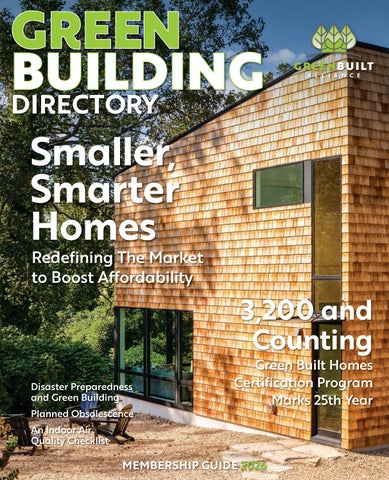
Redefining The Market to Boost Affordability

3,200 and Counting

Disaster Preparedness and Green Building

Planned Obsolescence
An Indoor Air Quality Checklist
Green Built Homes Certification Program Marks 25th Year





















In a culture shaped by speed, convenience, and disposability, the choices we make about our homes can feel overwhelming. Products promise happiness and quick fixes. Trends cycle rapidly. Labels blur. And yet, for most people, building or renovating a home is not about chasing perfection. It is about making thoughtful decisions that align with their values and stand the test of time.
directly, green building professionals and homeowners, while holding the broader community in view through shared values. In doing so, we returned our focus to the programs that define our work, particularly the Green Built Homes certification program and our educational offerings.
This work was about strengthening the foundation. We focused
This year’s Green Building Directory is dedicated to the Asheville-Buncombe Community Land Trust, whose work ensures that homeownership in our region remains permanently affordable for individuals and families who are too often priced out of stable housing.
At Green Built Alliance, we believe green building does not have to be perfect to matter, because better choices, made consistently, add up. This belief sits at the heart of our work and shapes the way we think about homes, communities, and stewardship. For green building to be accessible, it cannot be an all-or-nothing proposition. It is a practice, one grounded in intention, accountability, and care for the long term.
The past year was an important one for Green Built Alliance. 2025 was a year of re-grounding, rebuilding, and restoring trust. It required us to slow down, listen carefully, and correct course. We recommitted to our core mission and to the people we serve most
on clarity, integrity, and relevance, ensuring that our programs truly support our members in living their values as better stewards of the built environment. The work is ongoing, and we are grateful to have a committed board guiding the strategic development of the organization. We also extend sincere thanks to outgoing board
Through a shared commitment to long-term affordability and with grant funding awarded through the American Rescue Plan Act by the City of Asheville, Green Built Alliance has been honored to support ABCLT’s housing efforts by helping ensure that homes purchased and renovated through their program are also energy-efficient, comfortable, and affordable to operate. By pairing permanently affordable housing with lower energy costs and healthier living conditions, this work reflects a core belief we hold at Green Built Alliance: access to energy efficiency and healthy indoor air quality should be a standard, not a privilege.
We are grateful to ABCLT for demonstrating how thoughtful housing models and high-performance building practices can work together to strengthen communities for the long term.
members Joe Archibald of Narwhal Design Build, Kelsey WoodHenry of Terra Futura Farms, and Nick Welch of Rhino Renewables for their time, leadership, and contributions to Green Built Alliance’s foundation.
Looking ahead, 2026 represents value-driven momentum. It is a year of deeper credibility and rigor, with reinvestment in quality assurance, program clarity, and responsible growth. It is a year of expanding access without diluting standards, recognizing that energy efficiency, durability, and healthy homes should be a baseline, not a privilege. And it is a year of bringing homeowners more clearly into the conversation, acknowledging
that many people want their homes to reflect their values, even if they do not use the language of green building to describe them. This directory is designed to support that alignment. It is both a resource and a bridge, connecting homeowners with trusted professionals and intention with action. Within these pages, you will find builders, designers, engineers, consultants, tradespeople, and organizations committed to building better, not because it is trendy, but because it is responsible, practical, and deeply human work.
Whether you are building new, renovating thoughtfully, or simply learning what is possible, we invite you to use this directory as a guide, not a test. Start where you are. Make the next best choice. Over time, those choices add up to homes that are more comfortable, more affordable to operate, and better suited to the people who live in them and to the place we all call home.
To better choices,
Jennifer McLucas Director
of Operations & Sustainability Programs


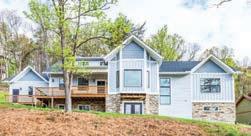
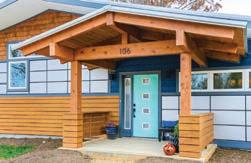
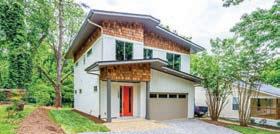
The Green Built Homes program is nearly 25 years old, and since certifying our first home in 2002 under the program’s original name Healthy-Built Homes, we have certified more than 3,200 homes.
But many people still contact the Green Built Alliance to ask: what does it actually mean to have a certified Green Built Home? It’s hard to distill an entire program down into one article, but we get requests fairly often from homeowners, builders, and realtors for a simple, tangible sense of what certification through our program means.
Green Built Homes Certification provides homeowners with thirdparty verification that ensures their homes meet rigorous environmental, energy efficiency, and sustainability standards, enhancing comfort, indoor air quality, durability, and long-term value. It’s proof that the home was built to a higher standard.
This article outlines the features and benefits that distinguish a Green Built Home, translating technical standards into clear, practical value for homeowners.
rater, who is deeply trained in building energy efficiency. Their inspections and field tests go well beyond what is typically addressed by building code and building inspectors.
• The home gets an energy model, predicting its energy use compared to other homes, and updated with field tested data once
work), the bath exhaust fans and kitchen vent fans must be tested and actually vent adequate air to the outside, and the home must show a tested level of radon below the EPA actionable threshold.
• The builders must, at minimum, demonstrate a plan during construction for how to minimize erosion on the site.
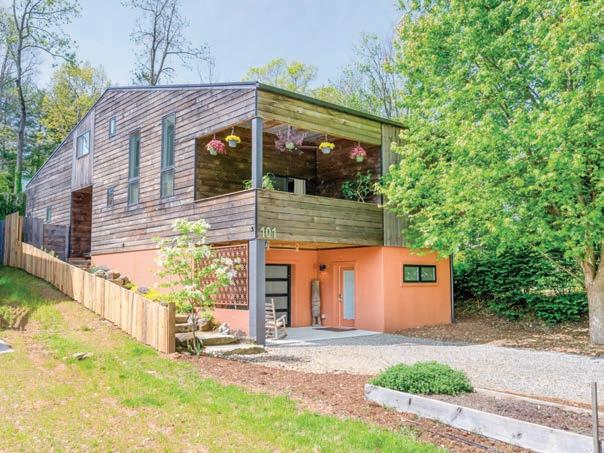
First, Green Built Homes is a tiered certification, meaning that we have some absolute requirements (called prerequisites), and then many additional, optional credits that earn points. A project must get enough points in total to qualify for certification. More points lead to higher levels of certification from Certified all the way up to Platinum. After the prerequisites, projects can choose which credits they want to go for, allowing wide flexibility while still ensuring some key, bedrock principles.
To qualify for Green Built Homes certification, all homes must meet the following prerequisites:
• Green Built Homes are inspected, tested, and their energy use calculated, by a third-party energy professional, called an energy
the home is complete. This energy score stays with the home and can be a quick snapshot of its energy efficiency features for future resale.
• The home must meet minimum insulation levels and have building air tightness features that go beyond current code minimums (often these features allow the builder to qualify for local utility rebates).
• The home must have a wholehouse fresh air ventilation system designed to minimum engineering standards. While not currently required by building code, it is a bedrock design principle for controlling air quality in homes.
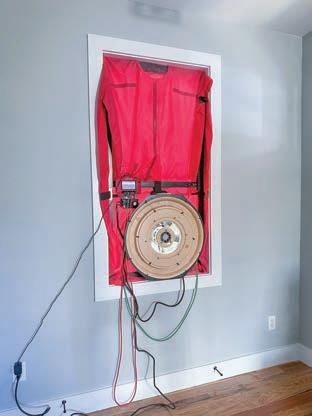
• Key systems of the home are tested in ways that go above and beyond current building code. For example, the home must pass a total air-tightness test (the leakier a home, the more energy it uses), a duct system tightness test (the same is true for duct-
• Any heating and cooling systems must be designed to deliver the right amount of heated and cooled air, without being over or under sized. This provision is important for humidity control in our climate and is technically regulated by code, but often poorly enforced. The Green Built Homes certification program enforces it.
• Any combustion appliances in the home must meet the latest and safest standards to be allowed, and carbon monoxide monitors must be installed. This provision helps govern indoor air quality and includes fireplaces, wood stoves, and pellet stoves. Current code still allows the use of some types of combustion appliances that can cause problematic indoor air quality issues.
After this list of requirements, points are awarded for optional additional green practices throughout multiple categories of
green building. For homeowners, here are some examples of features you might find in a Green Built Home in each category:
• Walk-able, bike-able, and/or located near public transit
• Planning and site implementation to protect trees and natural features during construction
• Innovative storm water controls or drought tolerant landscaping
• Biodiesel or other beneficial alternatives used during heavy equipment phase
• Innovative landscaping and irrigation techniques to reduce outdoor water use
• Rainwater harvesting or grey water reuse systems
• Low-flow or WaterSense labeled fixtures inside the home
• Lower HERS scores get more additional points
• Participation, in addition to our program, in the Energy Star for Homes program (this earns homeowners on Duke Energy a 5% discount on their energy bills) or Zero Energy Ready Home Program
• Even greater increases in insulation levels and innovative building envelope design practices, such as an un-vented spray foamed roof (or a regular vented roof with >R49 levels of insulation), 2×6 walls with R19 or better, exterior insulated sheathing, SIPS, double stud walls, or other innovations
• Exceptional window performance factors
•.Many points are available for incorporating passive solar design strategies such as south facing windows and thermal mass, reduced east/west glass, proper orientation of the home, and shading of south facing windows
• HVAC system technological upgrades such as higher efficiency ratings and two-stage or variable stage equipment
• Geothermal or ductless heating/cooling systems
• Energy Star certified (or even better!) appliances
• High efficiency water heating choices, such as a heat pump water heater
• 100% LED lighting, additional points for controls and energy use monitoring
• Solar-ready steps taken with roof design and pre-wired conduit Solar thermal or solar photovoltaic systems as part of the project
• Electric vehicle charging or bat-
palachian Offsets (a program which raises money to help local nonprofits and schools add solar or energy efficiency upgrades)
• Education and engagement on green built homes program
Any given certified Green Built home will not have all the items in each category, since they are optional for credit and they may not align with a homeowner’s preference. But certified homes must have at least a few points in each category, and the higher the certification level, the more features
The Home Energy Rating System (HERS) Index is a nationally recognized measure of how energy-efficient a home is. The HERS rating system is administered by RESNET, which sets national standards for how homes are tested, rated, and verified. The lower the HERS score, the less energy a home uses for heating, cooling, and everyday operation compared to a typical new home.
• Builder protected and/or cleaned out the duct system prior to use
• Higher levels of filtration
• Advanced fresh air ventilation system design
• Low-emitting building products selected
• All electric homes
Materials
• Material-efficient building designs
• Sustainable and/or natural building materials selected
• Durable exterior construction practices used
• Re-use, recycling, and waste reduction programs in place at the job side
Bonus
• The homeowner is provided with information about home operation, including special green building features such as the fresh air ventilation system
• The carbon associated with the construction is offset through Ap-
Homeowners can always contact GBA for a copy of the final certification checklist for their home. In addition, we offer Net Zero Ready, Net Zero Energy, Net Zero Water, and Regenerative designations for homes with specific exceptional features.
Once the home is complete, the energy rater totals the points and sends the Green Built Homes checklist and supporting documentation to Green Built Alliance. A copy of the Green Built Homes Certificate, electric panel sticker, HERS certificate, and official Green Built Homes checklist detailing which features were verified and how many total points were awarded, is mailed to the builder upon certifying their Green Built Home.
For the TLDR readers, a Green Built Home is tested and verified to meet high standards in quality, sustainability, and performance.
The original version of this article, written by Leigha Dickens, was published on GBA’s website. It has since been edited and updated.
Green Built Homes certification uses HERS as one of several independently verified benchmarks to confirm a home’s energy performance. For homeowners, this means a builder’s efficiency claims are backed by third-party testing and national standards, and not as-
typically means:
• More consistent indoor comfort, with fewer drafts and temperature swings
• Quieter, betterperforming systems that don’t have to work as hard
• Protection against rising energy costs
• Confidence that the home’s performance has been objectively measured and verified
Together, HERS and Green Built Homes certification translate energy performance into everyday benefits homeowners can feel: comfort, predictability, and long-term value while also reducing environmental impact over the life of the home.
BY BOONE GUYTON & JENNIFER MCLUCAS
Building a home is one of the most personal decisions a person can make. It’s where daily life unfolds, where families gather, and where long-term choices about comfort, health, and cost truly add up. It’s also one of the most resource-intensive
use this checklist to construct environmentally friendly, energy efficient homes in North Carolina.
The checklist covers key areas like energy efficiency, water conservation, indoor air quality, durability, and site stewardship. Builders earn points by choosing from hundreds of proven practices, allowing flexibility while
has a minimum point requirement (typically 3-7 points). The more points a home earns, the higher the certification level.
All Green Built Homes meet a strong baseline for energy efficiency, durability, and environmen-
typically invests more in building envelope performance, mechanical efficiency, water conservation, and long-term durability. The result is a home that uses less energy and water year after year, maintains more consistent indoor comfort, and is better prepared for future climate and energy challenges.
Before earning any points, homes must meet 18 mandatory requirements, known as the prerequisites, including:
• Meeting Energy Star standards or equivalent
things we do. From energy and water use to materials and land impact, the way a home is built matters, not just on move-in day, but for decades to come.
The Green Built Homes certification program, administered by Green Built Alliance, was created to help homeowners and builders make those decisions with intention. At the heart of the program is the Green Built Homes Checklist, a comprehensive, point-based rating system used to evaluate and score each certified home. Builders
maintaining rigorous standards. Think of it as both a roadmap and a report card, ensuring every Green Built Home is thoughtfully designed, responsibly constructed and aligned with the values of the people who live in it.
The checklist uses a cumulative point system to determine at which level a home is certified. Homes need a minimum of 65 points total to become certified, and each category of the checklist
tal responsibility. That baseline certification means the home was intentionally designed and verified to perform better than standard construction in areas that matter most: comfort, health, long-term operating costs, and reduced environmental impact.
Higher certification levels, such as Silver, Gold and Platinum, reflect how far beyond that baseline a home goes.
These homes don’t just meet green standards, they deepen them. A Platinum-certified home
• Passing air leakage tests (blower
• Properly sized and sealed heating/cooling systems
• Safe ventilation and carbon monoxide protection
• Radon testing and mitigation
Beyond the prerequisites, the checklist consists of eight categories in which a home must earn a minimum number of points to qualify for certification. While a home must earn a point minimum in each category, homeowners can prioritize the options in each category to best align with their values and what’s important to them.
(5 points minimum)
Managing stormwater runoff
Preserving trees and natural
Preventing erosion
Creating walkable, bikeable communities
Native and pollinator-friendly
Wildlife protection measures (5 points minimum)
Low-flow faucets, showerheads, and toilets
High-efficiency appliances (dishwasher, clothes washer)
c. Rainwater harvesting systems
d. Drought-resistant landscaping
e. Greywater reuse systems
3. Building Envelope (5 points minimum)
a. Superior insulation in walls, floors, ceilings, and foundations
b. High-performance windows and doors
c. Air sealing to prevent drafts and energy loss
d. Energy Star certification or better
7. Bonus (3 points minimum)
Green Built Homes certification levels show how far a home goes beyond standard building practices. The Certified level establishes the baseline. Silver, Gold, and Platinum reflect increasing levels of efficiency, comfort, and long-term value, with Platinum homes delivering the highest performance and lowest lifetime operating costs.
• Certified (65-140 p oints): A well-built home that meets verified green standards and avoids common performance issues. This level establishes a strong foundation for efficiency, comfort, and responsible construction.
• Silver (141-205 points): A home that takes the next step by incorporating additional efficiency and durability measures. Silver homes typically reduce energy and water use beyond the baseline and offer improved comfort and indoor air quality, delivering noticeable dayto-day benefits for homeowners.
• Gold (206-270 points): A highly efficient home with intentional design choices that significantly lower operating costs and improve longterm performance. Gold homes often feature stronger building envelopes, more efficient mechanical systems, and thoughtful material selections that support durability and resilience.
• Platinum (271+ points): The highest level of Green Built Homes certification. Platinum homes represent a deep commitment to performance, with exceptional efficiency, comfort, and durability. These homes are designed to perform far beyond code, minimize environmental impact, and provide the greatest long-term value over the life of the home.
4. Heating & Cooling (5 points minimum)
a. Properly designed and installed HVAC systems
b. High-efficiency equipment
c. Sealed and insulated ductwork
d. Passive solar design strategies
e. Smart thermostats and zoning
4. Appliances, Lighting & Renewables (3 points minimum)
a. Energy Star appliances
b. LED lighting throughout
c. Solar panels or other renewable energy
d. Electric vehicle charging readiness
e. Heat pump water heaters
5. Health & Indoor Air Quality (5 points minimum)
a. Whole-house ventilation systems
b. Low-VOC paints, finishes, and materials
c. High-quality air filtration
d. Garage separation from living spaces
e. Radon-resistant construction
6. Materials (7 points minimum)
a. Smaller, right-sized homes
b. Construction waste recycling
c. Durable, long-lasting materials
d. Sustainably sourced or recycled materials
e. Moisture management and durability features
f. Universal design for accessibility
a. Homeowner education
b. Marketing green building
c. Biophilic design (connecting with nature)
d. Carbon offset programs
e. Kitchen composting and recycling centers
Beyond achieving Certified, Silver, Gold, or Platinum certification, homes can earn additional recognition with a few additional requirements.
• Net Zero Energy Ready: The home is prepared for solar panels, but they are not installed. It achieves very low energy use. This designation requires a HERS score of 55 or lower.
• Net Zero Energy: The home produces as much energy as it uses. This designation requires a HERS score of 15 or lower.
• Net Zero Water: The home captures and reuses 100% of its water needs.
• Regenerative: The highest standard. Regenerative homes actively improve the environment.
If you’re building or buying a Green Built Homes certified home, then you know:
• Your home has been independently tested and verified by a certified third-party energy rater.
• You’ll have better indoor air quality, which means a healthier living environment.
• You’ll have lower utility bills because of the home’s energy and water efficiency.
• Your home will likely have fewer maintenance issues because of its more durable construction.
• When it’s time to sell your home, you’ll likely enjoy a higher resale value and improved marketability
TLDR: What Green Built Homes Checklist Means for
• Not just “eco-friendly marketing” but measurable, verified performance
• Real documentation of what makes the home green
• A roadmap (your final checklist) showing exactly what features your home includes
• Professional oversight throughout construction
• The checklist ensures that the term “Green Built” is a meaningful standard backed by testing, inspection, and accountability, giving homeowners confidence that their home truly delivers on its promises.
Certified: Building
vironmental warming, building green is an important choice. This includes designing homes to the latest energy efficiency standards and ensuring all systems are thirdparty tested and certified.
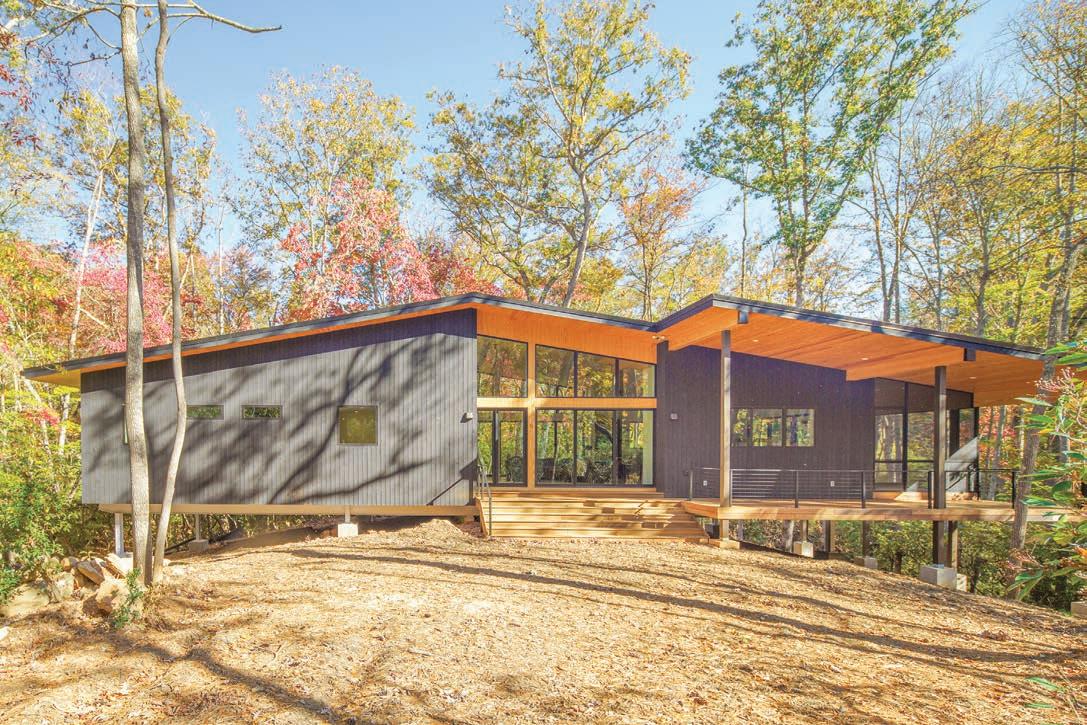
Our Sandy Springs build is a prime example of maintaining fragile ecosystems and embodying the values of sustainability. We were lucky to work with a client who deeply shares our sentiments on intentional design.
site and its unexpected neighbor
The homeowner acquired a raw parcel in the Bent Creek area southeast of Asheville, tucked along the edge of Pisgah National Forest. The site is flanked by two streams and touches a sensitive wetland - the Sandy Bottom Wetland Preserve. This wetland is under the stewardship of nearby UNCA’s “Save Sandy Bottom” initiative. This small wetland is a known habitat for the endangered four-toed salamander Hemidactylium Scutatum. It also happens to shelter an endangered species of turtle.
Knowing the home would border such a unique and special environment, we set a goal of minimal disturbance. We decided the home would integrate and protect the environment it lives within.
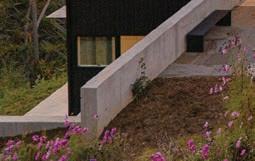
Preserving natural buffers By lifting the home, stream buffers and wetland transitions remain untouched. This “stilts” approach lets us maintain a light footprint in a critically fragile ecosystem. Additionally, we shaped the roof of the home to follow the natural watershedding of the site to minimize disturbance to the wetland in heavy rains.
Flood resilience The elevation shields the home during high-water events. In fact, the house performed very well during Hurricane Helene, and the piers give the homeowner an increased sense of security in flood conditions.
Every building choice was rooted in climate-responsive design. We engaged Vandemusser, our energy consultant, which helps certify green construction, early in the process.
Floor plan The floorplan is elongated along the east-west axis. We rotated and sited the home to face true South with the help of our consultant. This maximizes winter solar gain while at the same time enabling shade in the summer months to help the home remain cool. It also helped reduce

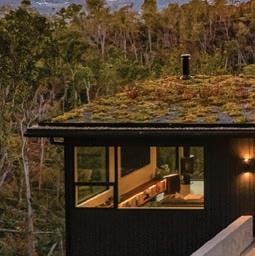
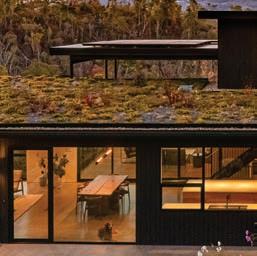
tree removal and elevated the screen porch above the stream. \ The roof of the home is designed with a low, sweeping roof line. This mimics the rally toward the existing streams rather than fighting the landscape’s contours. Deep overhangs also help shield the house during summer sun and keep the interior cool, and retain heat in the winter.
Windows and Doors Openings are strategically placed to frame forested vistas and invite crossventilation throughout the home. Their positioning also helps with passive heating and cooling.
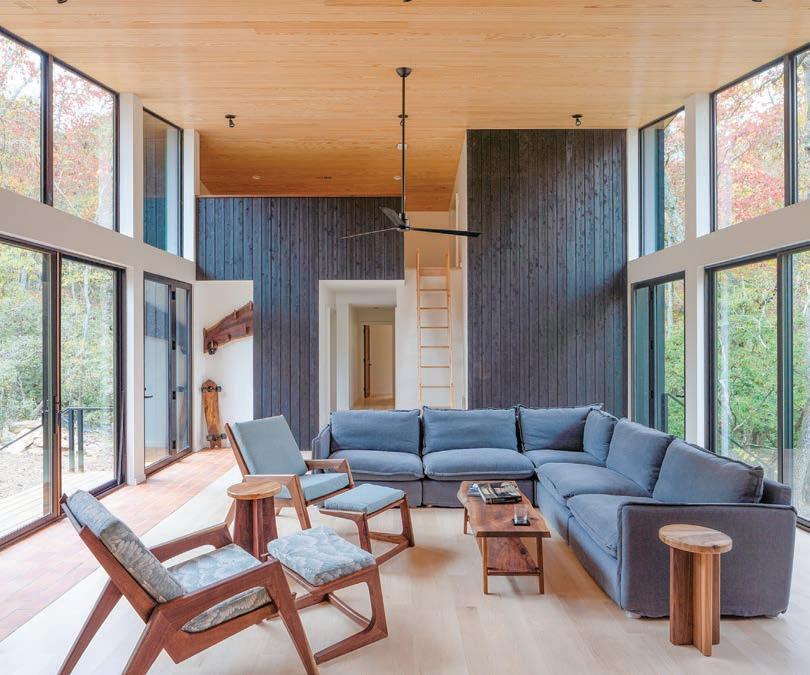
In collaboration with the owner, we rejected “business-as-usual” materials in favor of those that align with our ecological values. Charred hemlock siding We used the traditional Japanese charring method Shou Sugi Ban. This stabilizes and protects the condition of the wood. Notably, it stands up well to Asheville’s humid climate and prevents molding in heavy rains.
R-ZIP insulated sheathing Placed outside the structural studs, this material breaks thermal bridges and helps maintain a continuous thermal envelope.
Natural insulation We used locally sourced wool and TimberBat (shredded bark) in wall cavities. The materials are both breathable, nontoxic, low-VOC, and regionally appropriate.
Local Timber The most common framing material used is spruce-pine-fir from Scandinavia. This material comes with a large carbon footprint in the process of shipping it across the globe. Instead, we used Southern Yellow Pine which is indigenous to Georgia and South Carolina. This helped reduce our transport emissions and at the same to support regional forestry.
We installed mechanical systems designed for efficiency, flexibility, and user control.
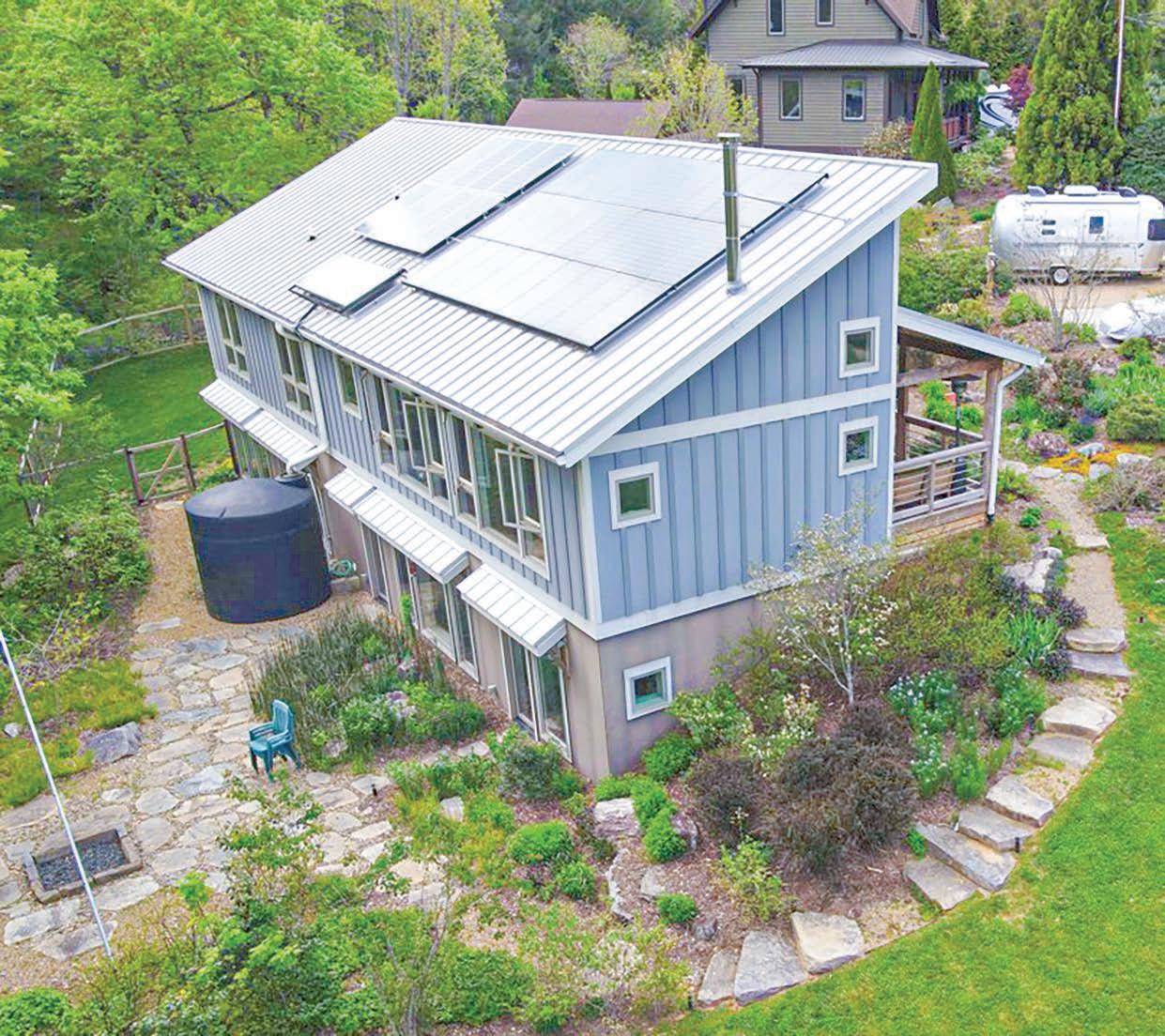
Solar Panels, batteries + EV charger A 12.75 kW solar array of 30 panels powers the home. Tesla Powerwalls store excess energy and feed the home during lowproduction periods. We also installed an integrated EV charger to power the homeowner’s electric car, which helps complete the green ecosystem of the home.
Heat pump with HRV & smart fans This triad ensures consistent comfort, energy recovery ventilation, and balanced airflow.
Smart panels We installed a system that lets the homeowner schedule hot water cycles, set lighting, and manage loads from a smartphone interface to optimize and reduce energy use.
Thanks to these systems, our design achieved a very low HERS
ble scratches on the siding of the home. This issue ceased when the bears went into hibernation. With the presence of the owners, we are hoping it will keep the bears away, and if needed there is an option to spray the siding with a concentrated cayenne liquid to prevent them from damaging the siding. It also was a challenge to shoehorn the home into the site. We decided to cut a very minimal number of trees and to protect root zones. This meant painstakingly bringing
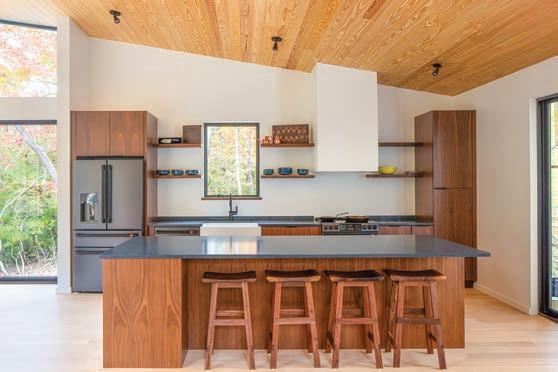
One of the most entertaining and unexpected challenges of the sites came with the Shou Sugi Ban siding. We quickly noticed that bears took a strong liking to its texture and perhaps mistook the siding of the house for a tree. This caused them to use the siding as a material to sharpen their claws, leaving visi-
Additionally, because we wanted every element of the home to respect the site, and to have as minimal of an imprint as possible, the price of the home went up as we refined its environmental features. We were lucky to work with a client who shared our values and wanted to make this financial decision and see the project in its highest element.
When endangered species live next door, it can be a joy to celebrate them and to take green home design to its highest potential. Elevation in this case wasn’t just aesthetic. It can provide climate resilience and a healthy interior by
tems thinking. From home orientation, construction materials, mechanics, and site consideration, all these elements need to be carefully considered to truly build in harmony with the site and the overall environment.
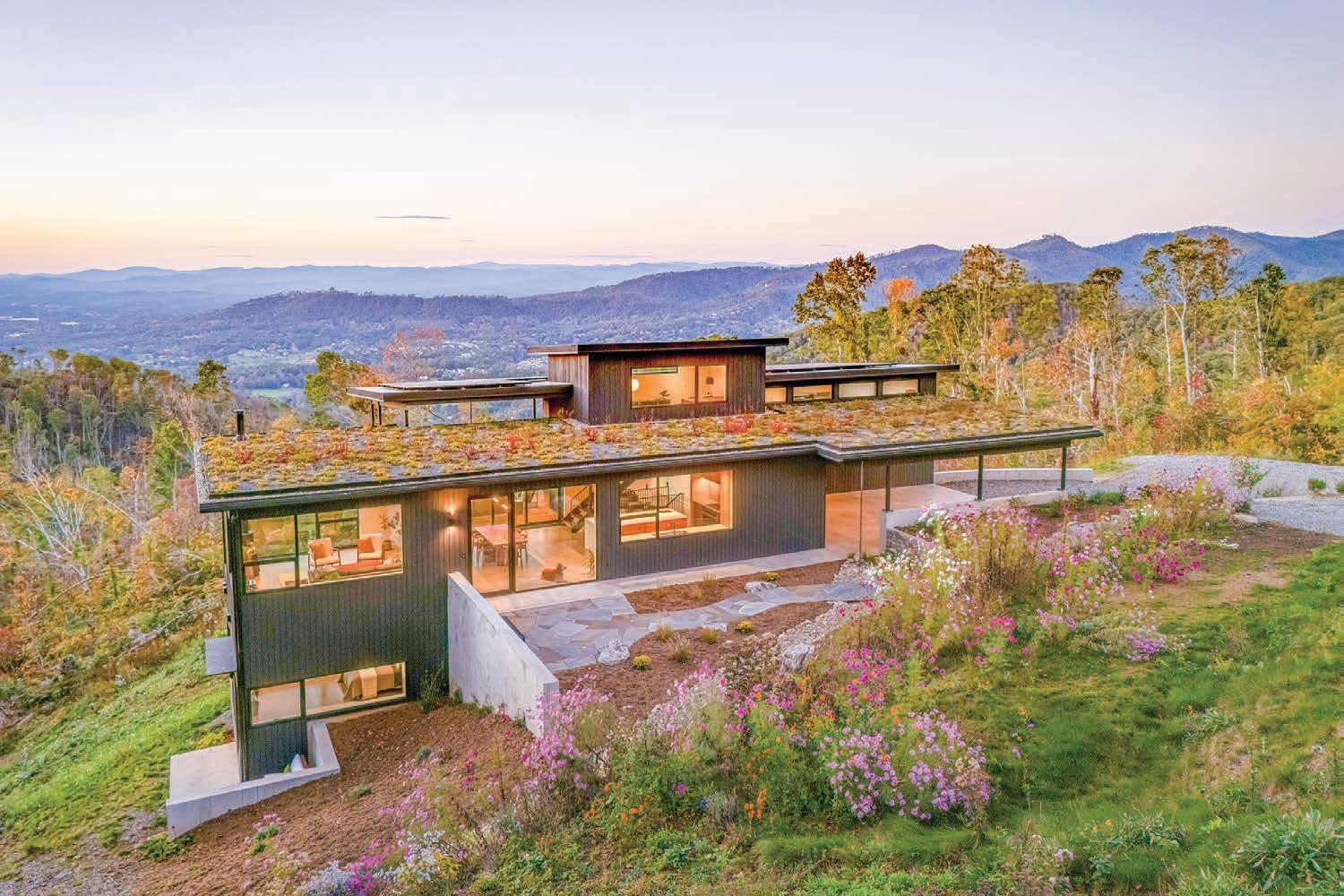
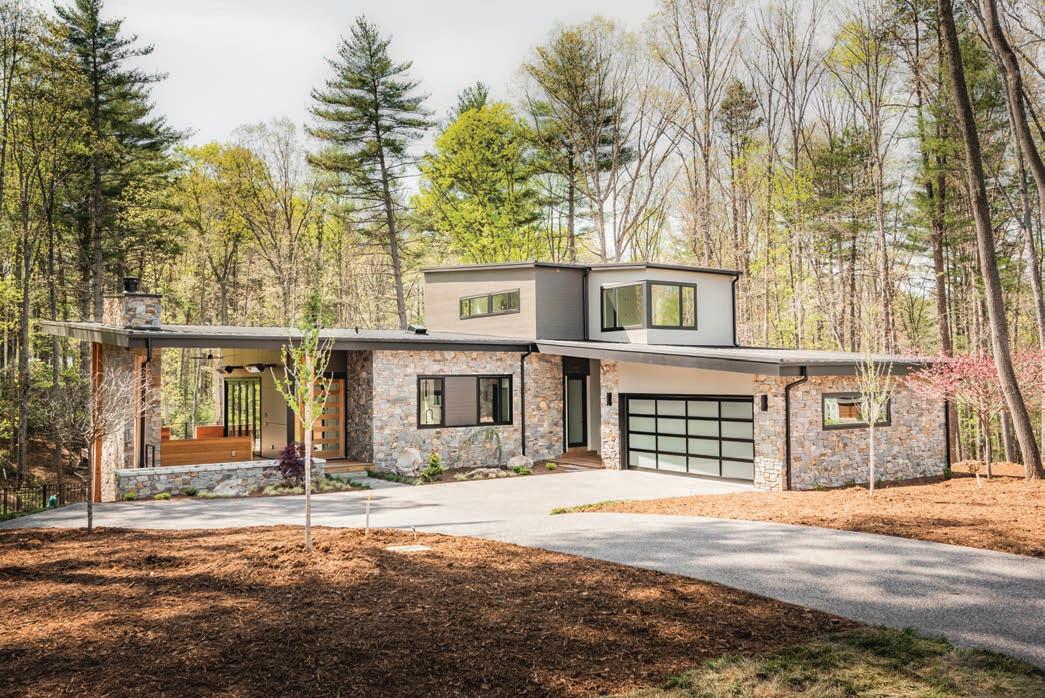
Nsigned residence earned the Best Green Home Award in the 2025 Western North Carolina Parade of Homes, organized by the Builders Association of the Blue Ridge Mountains. Built by Green Built Alliance member Mountain Sun Building and Design, the home stood out not only for its beauty and craftsmanship, but for how intentionally it responds to the environmental realities of building in our region.
Building a home is one of the most personal and impactful decisions a person can make. It’s a place to gather, to rest, to raise families, and to shape daily life for decades to come. It is also, undeniably, one of the most resourceintensive things we do. From materials and transportation to energy use and land disturbance, residential construction carries a
The question many homeowners are asking today is whether that footprint can be meaningfully reduced and even reversed over time.
That question is at the heart of green building, and it’s what inspired the creation of the Best Green Home Award by Green Built Alliance. For more than two decades, Green Built Alliance has worked alongside builders, designers, and homeowners across Western North Carolina to demonstrate that homes can be healthier, more efficient, more durable, and more aligned with the values of the people who live in them.
A Green Built Home begins with intention. It means designing in harmony with the land instead of imposing upon it. It means conserving energy and water, choosing materials carefully, and prioritizing
as environmental health. At its core, green building is about stewardship – of place, of resources, and of future generations.
This year’s Best Green Home takes that philosophy a powerful step further.
At a time when many homeowners are thinking more deeply about climate impact, energy use, and long-term resilience, this home offers a compelling example of how that impact can be responsibly addressed and meaningfully offset over time.
Green Built Platinum, Net Zero Energy and Regenerative certified, this home produces at least as much energy as it uses over the course of a year. Through thoughtful design and high-performance systems, it offsets its operational carbon footprint by generating clean, renewable energy on site.
This home was designed with regenerative principles in mind. Regenerative homes go beyond the idea of doing “less harm.” They are intentionally designed to have a net-positive impact on the natural environment around them. In practice, this can look like producing surplus energy, managing water responsibly on site, restoring ecosystems, supporting biodiversity through native plantings, or incorporating biophilic design elements that strengthen the human connection to nature.
Green Built Alliance’s Regenerative Certification reflects this evolution in thinking. Rather than stopping at efficiency, regenerative design asks a deeper question: How can our homes actively contribute to the health of the land, the community, and the people who live there?
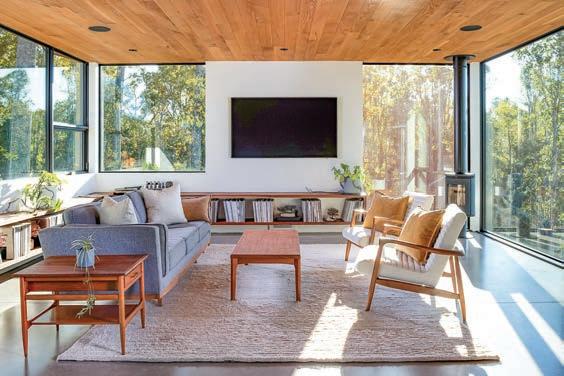
This award-winning home offers a compelling answer.
Every decision, from building orientation to envelope performance to system integration, was approached with both precision and purpose. Waste was minimized. Performance was maximized. The result is not only a beautiful place to live, but one that achieved the highest Green Built Homes score ever recorded at 383 points. That achievement is a testament to what becomes possible when craftsmanship is guided by conscience.
For homeowners considering a green home, this project offers reassurance as much as inspiration. Comfort, durability, and design excellence are enhanced. Lower energy bills, healthier indoor air, and long-term resilience are practical benefits that homeowners experience every day, while the broader environmental benefits quietly compound year after year.
Importantly, this home also acknowledges a reality many people wrestle with: building new will always carry an upfront environ-
mental cost. Regenerative, netzero homes are one of the most effective ways to offset that cost over time, transforming a onetime carbon investment into decades of reduced emissions, cleaner energy, and positive ecological impact.
This year’s Best Green Home was brought to life by Mountain Sun Building and Design, whose work exemplifies the leadership, skill, and forward-thinking approach that Western North Carolina is known for. Their commitment to pushing beyond conventional building standards helps set a new benchmark not just for green homes, but for what responsible building can look like in a changing world.
As more homeowners seek to align their living spaces with their values, projects like this remind us that our homes can be more than shelters. They can be part of the solution. They can give back more than they take. And they can help shape a future where building well also means living well, together with the land that sustains us.
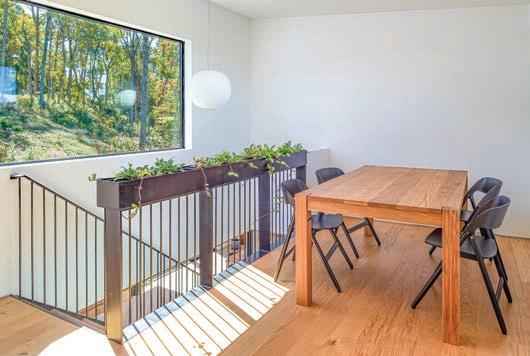
Regenerative homes are designed to give back more than they take. They typically produce more energy than they use, manage water on site, restore natural landscapes, and strengthen the connection between people and nature, moving beyond “less harm” toward a net-positive impact.
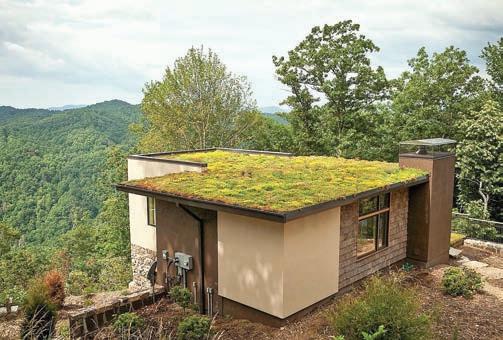
Green building reduces impact. Regenerative building goes further. These homes are designed to actively improve the environment around them through clean energy, healthy materials, thoughtful water use, and site restoration, creating benefits that grow over time.
Regenerative homes don’t just reduce damage. They help repair it. By producing clean energy, supporting healthy ecosystems, and prioritizing human well-being, regenerative design turns a home into part of the solution.
Regenerative homes are designed to live in balance with the land. They produce clean energy, restore natural systems, create healthier spaces for people, and contribute positively to its place, not just its footprint.
Regenerative design reflects a shift in green building from simply reducing harm, which is necessary, to creating homes that actively improve the environment, support human health, and strengthen the ecosystems in the place homeowners call home.
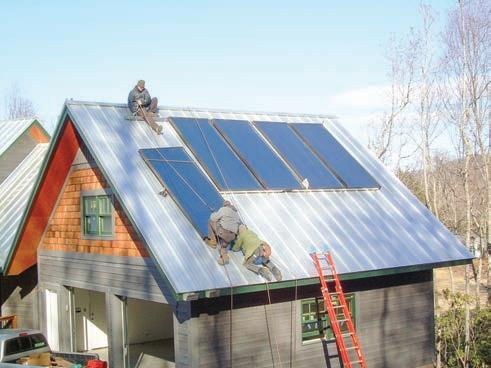
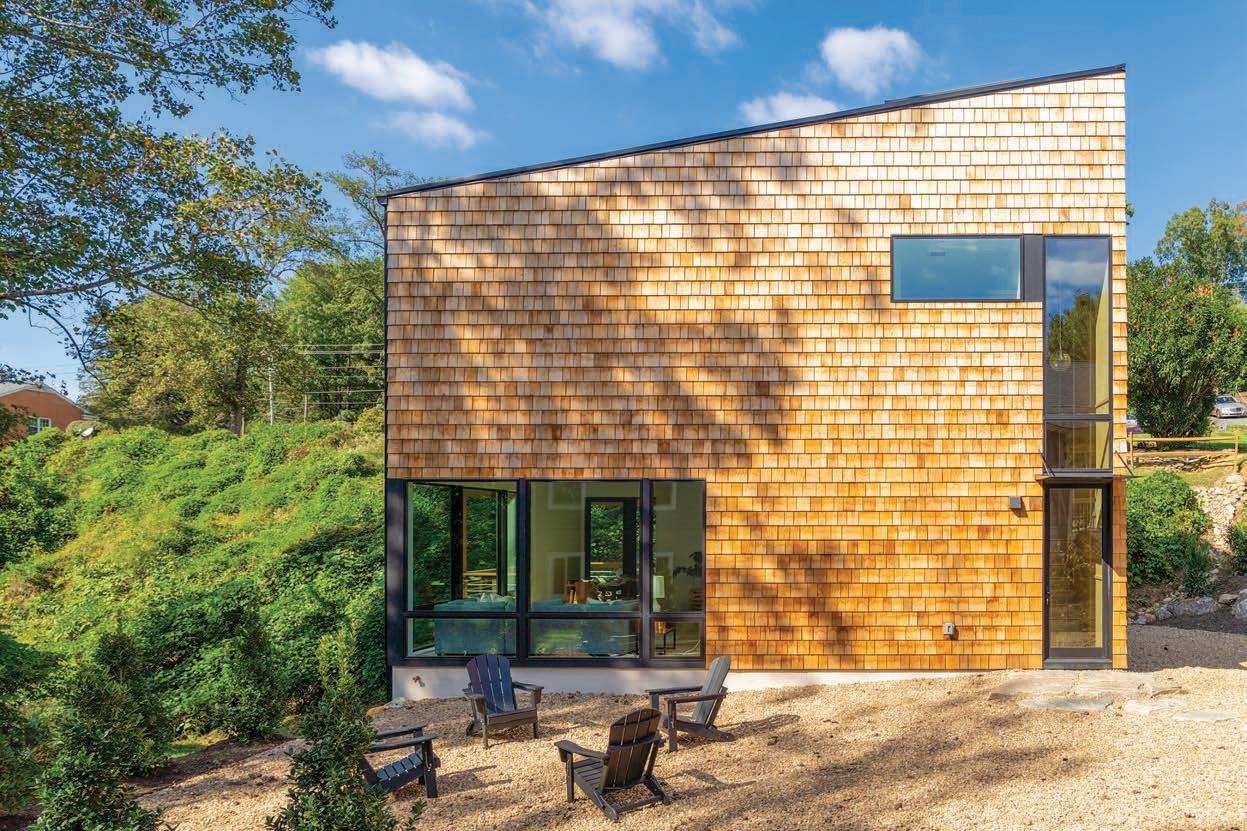
The Green Built Homes Silver + Net Zero
Ready certified residence at Haith, built by Assembly Build, earned Green Built Alliance’s Green Innovation Award at the 2025 Western North Carolina Parade of Homes for demonstrating that high-performance, sustainable homes can be practical, replicable, and within reach. Assembly Build is a member of the Green Built Alliance, and this project reflects a shared commitment to making energy-efficient construction an achievable standard for homeowners.
The Green Innovation Award recognizes creative, real-world solutions that make green building more accessible. Instead of relying on complexity or high-end systems, the home at Haith stands out for its clarity of purpose and disciplined design decisions, proof that innovation often begins with simplicity.
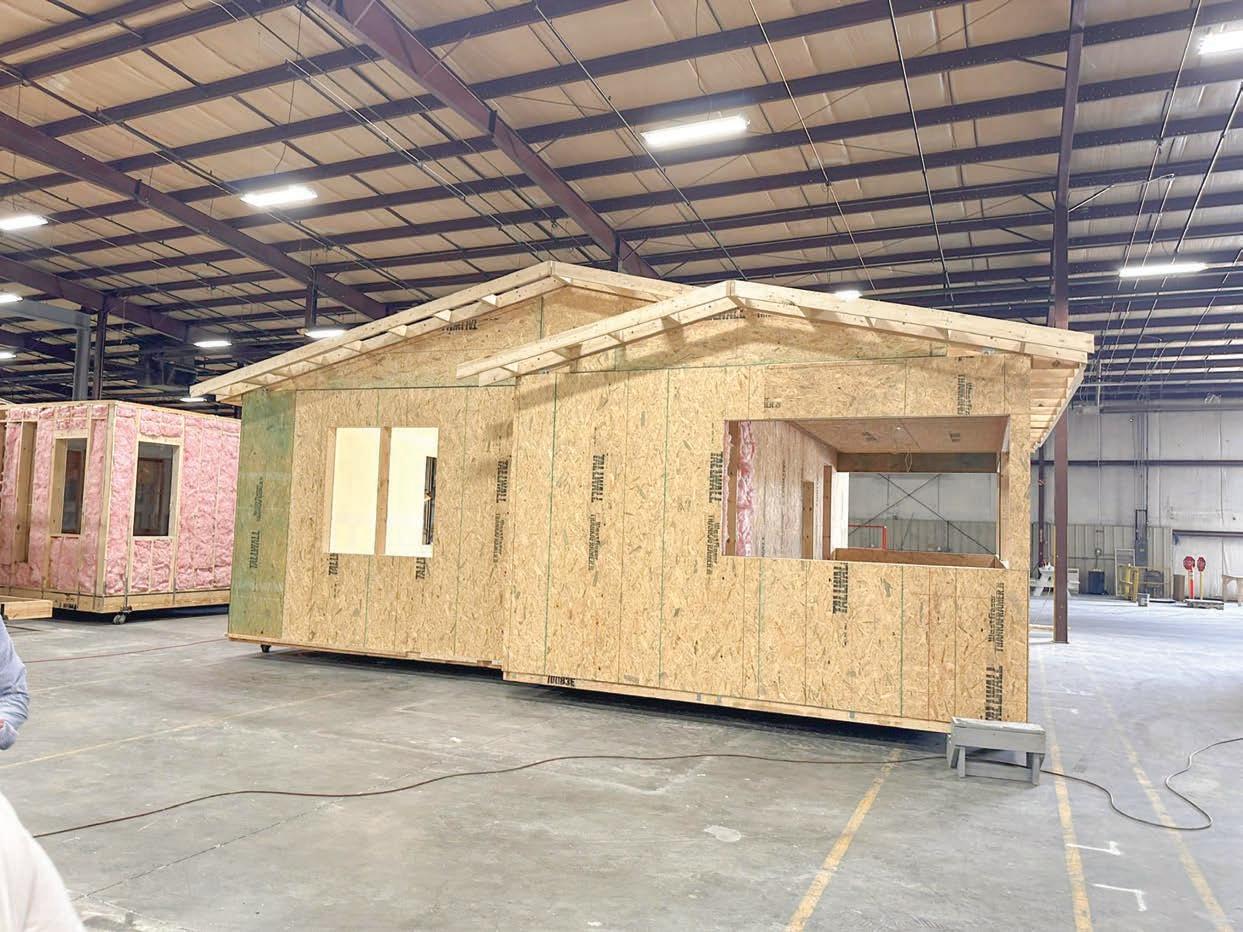
At its core is a straightforward 24-by-32foot rectangular design, chosen to reduce material use and construction complexity. Prefabricated wall panels were installed in a single day, significantly shortening build time while reducing on-site waste. Durable exterior siding was selected to weather naturally and blend into the surrounding landscape, minimizing long-term maintenance and extending the life of the home.
Every element was guided by efficiency and intention. An encapsulated crawlspace, meticulous air sealing, an energy-recovery ventilator (ERV), and Energy Star–rated appliances work together to reduce energy loss and maintain consistent indoor comfort. Materials were selected for durability and longevity, reinforcing the idea that sustainability is as much about how long a home lasts as how it performs when new.
That performance is measurable. The home at Haith achieved the lowest HERS score of any Parade of Homes entry without solar. The Home Energy Rating System (HERS) Index measures how energy-efficient a home is compared to a standard new home, with lower scores indicating better performance. For homeowners, a low HERS score typically means lower monthly energy bills, fewer drafts, more stable indoor temperatures, and reduced energy demand over time.
Achieving this level of efficiency without solar power highlights the strength of the home’s design and construction. Instead of relying on renewable energy to compensate for inefficiencies, this home reduces energy needs at the source: through a high-performance building envelope, efficient systems, and careful detailing. That approach offers long-term value, especially as energy costs continue to rise.
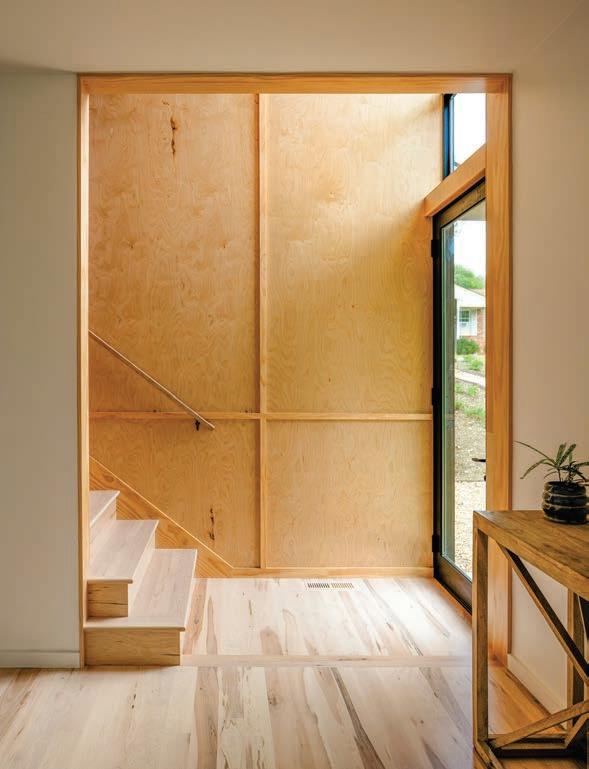
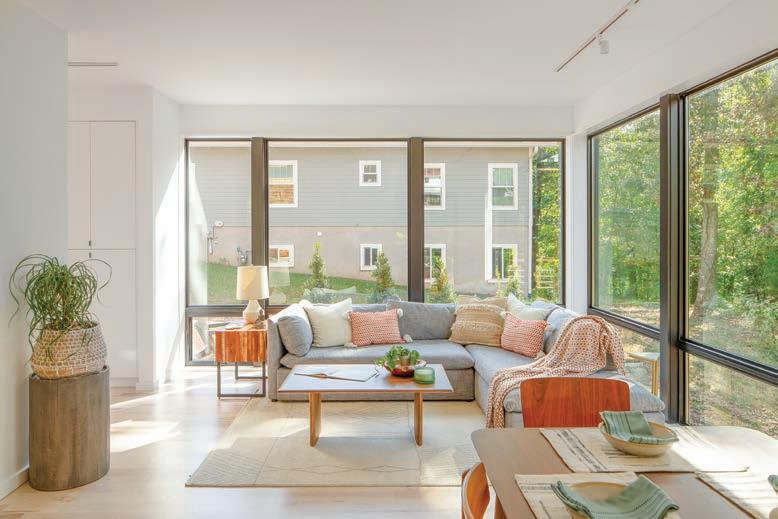
windows and skylights. Lighttoned finishes reflect daylight and create a sense of warmth and calm, reducing the need for artificial lighting while supporting overall well-being.
The Green Innovation Award–winning home at Haith reminds us
that innovation doesn’t have to be flashy. By focusing on simplicity, durability, and performance, this Green Built Homes certified project shows homeowners, builders, and architects that building green can be beautiful, attainable, and smart while also setting a model that can be repeated again and again.


spectrum or scale, and meaningful improvements can happen at many different levels, budgets, and stages of ownership.
Reframe: In practice, green building is about progress, not purity. Better choices, made consistently, add up – whether you are building new, renovating an existing home, or improving one system at a time.
#2 Green homes cost significantly more.
Reality: Some green features involve upfront costs, and many of those features reduce long-term expenses through lower energy use, fewer repairs, and improved durability.
Reframe: Green building is more about where you spend than how much you spend. Prioritizing efficiency, moisture control, and long-lasting materials can reduce operating costs, lower risk, and help avoid expensive problems down the road.
#3 Green building is mostly about solar panels.
Reality: Solar is just one option, and often not the most impactful place to start.
Reframe: The foundation of a green home is how it is built. Insulation, air sealing, ventilation, and moisture management quietly determine how comfortable, healthy, and efficient a home will be long before renewable energy enters the conversation.
#4 Green building is only for new construction.
Reality: Some of the most important green building work happens in existing homes.
Reframe: Thoughtful renovations and targeted energy upgrades can dramatically improve





comfort, indoor air quality, and efficiency, especially in older housing stock. Green building is as much about improving what already exists as it is about building something new.
#5 Green building is complicated and hard to understand.
Reality: Green building does involve technical standards, but homeowners do not need to master them to benefit from them.
Reframe: A good green building professional serves as a translator, turning technical requirements into real-world outcomes, such as fewer drafts, quieter rooms, healthier indoor air, and more predictable energy bills. Homeowners do not need all the answers; they need the right questions.
#6 Certification is just a label.
Reality: Certification provides independent verification and accountability.
Reframe: A certified green home is not only designed to perform better, it is verified to do so. For homeowners, certification offers confidence, clarity, and peace of mind. It’s proof that the home they are investing in meets clear standards and has been evaluated beyond surface-level claims.
Green building offers a practical framework for building and renovating with intention. For homeowners, that often means starting with a conversation about priorities, budget, and values and working
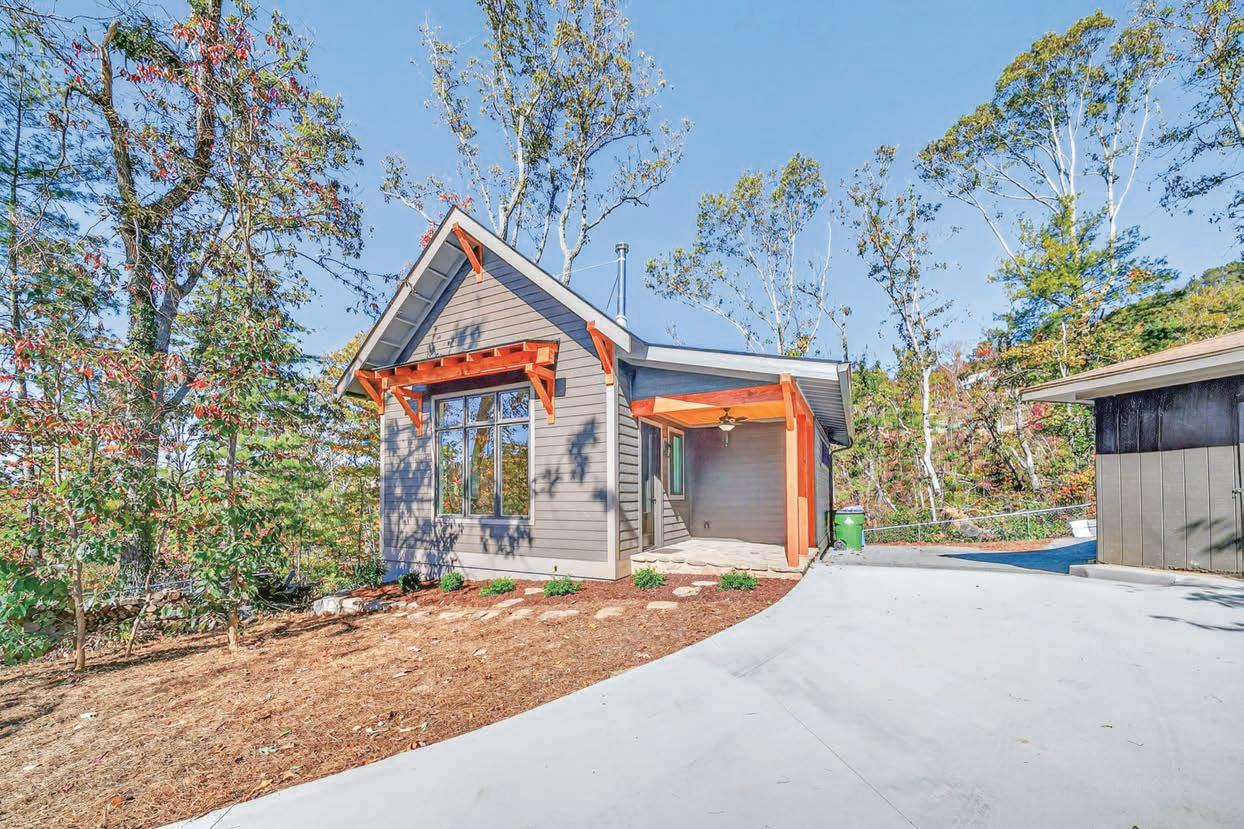
Western North Carolina’s housing future depends on designing smaller, smarter, and more adaptable communities. By combining local zoning progress, resilient building practices, and lessons from the land itself, we can create attainable homes that last for generations.
BY DARREN HENEGAR
Across the country—and especially here in Western North Carolina—the cost of housing has outpaced wages, inflation, and common sense. Median home prices in Asheville hover between $440,000 and $510,000 dep ending on the data set, while rents average about $1,700 a month. Nationally, more than half of U.S. households can’t afford a $300,000 home. The math doesn’t work for working people, and it’s no longer a problem of materials or labor—it’s a problem of structure. Our system rewards scale over efficiency, speculation over stability, and bureaucracy over innovation.
The economic shift now underway only amplifies the problem. As AI keeps reshaping routine office and customer-service work—and automation continues to streamline factory processes—the region still needs abundant workforce housing near the jobs that are growing: health care, education, hospitality, and the skilled trades that can’t be offshored or easily automated.” Employers struggle to recruit because their workers can’t afford to live within
thirty miles. Without accessible workforce housing, local businesses suffer, commutes grow longer, and entire communities lose economic diversity.
Nature has been giving us feedback in real time. Floods, wildfires, and storms like Hurricane Helene have shown how fragile our built environment can be when we ignore the land’s logic. In the mountains, steep slopes, shifting soils, and narrow valleys demand smarter siting and durable materials. Building resilience isn’t just about responding to storms—it’s about using common sense in every decision we make, recognizing that how we design our built environment affects the land and community both upstream and downstream.
Sprawl has been our default setting for decades—pushing homes farther into the hills, cutting deeper into forests, and scattering infrastructure in ways that make everything cost more. Zoning codes written for another era still define what “a house” should be, often limiting where smaller, efficient dwellings can go. Asheville and Buncombe County already have frameworks that support smaller, smarter
development—accessory dwellings, cottage clusters, and rural cluster zoning are all steps in the right direction. But building in Western North Carolina means working with steep slopes, limited infrastructure, and sensitive ecosystems that naturally constrain where and how we can build. Zoning overlays and environmental regulations exist for good reason: to prevent the very erosion, flooding, and habitat loss we’ve seen when growth ignores geography. The challenge isn’t to strip those protections away—it’s to design within them, using creativity and new strategies that respect both the policy intent and the land itself.
These overlapping crises—affordability, land scarcity, zoning rigidity, and climate risk—aren’t isolated failures. They’re symptoms of a system that builds faster than it listens. Yet within the problem lies the path forward: smaller homes, smarter codes, and communities designed around how people actually live, not how policies were once written. The question isn’t whether we can build differently—it’s whether we’ll choose to use the tools we already have. creating communities that reflect actual living
patterns rather than outdated policies.
The opportunity ahead isn’t just
out, stormwater strategy, and shared open space. When regulation rewards creativity rather than
to a sturdier path—one that links materials innovation with smart land use design. Recycled aggre-
and proving that sustainability and livability can coexist. The progress we’ve made didn’t happen by
ing open space. In A Pattern Language, Christopher Alexander described “fingers of density” reaching into nature—walkable hubs surrounded by farmland and forest woven between modest footprints arranged with intention, giving residents access to both neighbors and green space.
For this vision to work, attainability and land use must align. Smaller developers—builders rooted in the region—need permission and pathways to create these cluster communities. Flexible zoning and context-based planning can unlock opportunities on smaller parcels, letting us design with the topography instead of against it. Hillsides, valleys, and stream corridors inform street lay-
tives offered through the HERO program that Duke Energy Progress developed and continues to stimulate our green building practices.
Offsite construction of modular or panelized homes can cut time and waste dramatically. But modular systems aren’t always a fit here. Narrow roads, steep driveways, and tight staging areas often erase those gains. In one regional survey, 62 percent of modular projects faced delivery or installation setbacks compared to just 18 percent of stick-built homes. In the mountains, efficiency depends as much on access and logistics as it does on technology.
While this framework won’t, by itself, solve affordability, it points
momentum, we need policies that reward circular supply chains and long-horizon investment—so growth is matched by the resources that sustain it.
The path forward isn’t just about policies or products—it’s about people. Western North Carolina’s builders, tradespeople, and residents have endured plenty of uncertainty in past years, from economic pressures to natural disasters. Yet, time and again, we’ve adapted, repaired, and rebuilt. That quiet resilience—not just in structures but in spirit—is what keeps these communities alive.
We’ve been working on these issues for decades—refining building science, improving materials,
terial choices, our mission must be to build intentionally maximizing value, minimizing waste, and planning with future generations in mind. The path from scarcity to abundance isn’t paved by sheer volume; it’s forged through thoughtful design, creative problem-solving, and a commitment to resilience. By adapting to changing conditions and focusing on quality over quantity, we can create housing solutions that last and communities that thrive.
Darren Henegar is a general contractor and designer focused on residential construction and innovative small-scale housing in Western North Carolina. Learn more at www.evergreenconstruct.com
BY AMY SMITH
As the world grapples with the twin challenges of climate change and rapid urbanization, the construction industry finds itself at a crossroads. Traditional materials such as concrete and steel have enabled remarkable feats of architecture, but they also carry a significant environmental burden. The manufacture of cement alone accounts for roughly 8% of global carbon dioxide emissions, while steel production contributes about 7%. Against this backdrop, mass timber construction has emerged as one of the most promising pathways toward a more sustainable, carbonconscious built environment.
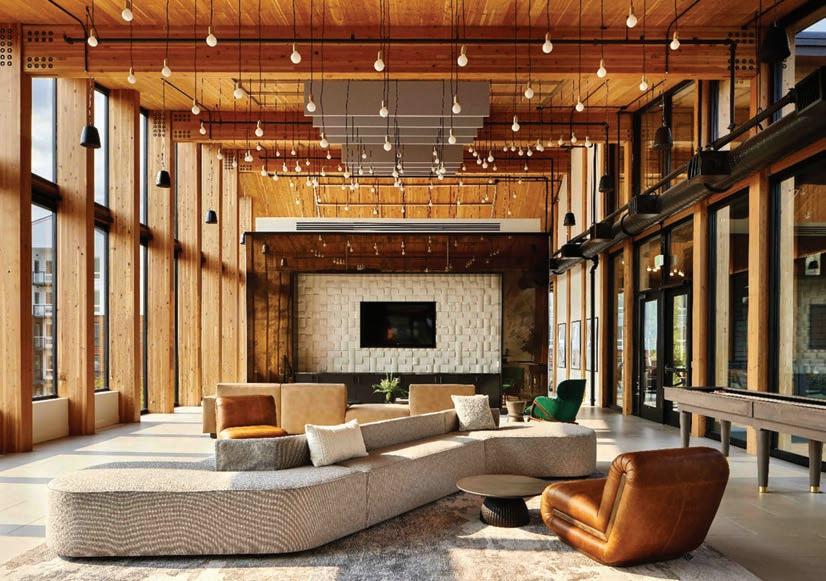
Mass timber is not simply wood in its raw form. It refers to a family of engineered wood products— such as cross-laminated timber (CLT), glue-laminated timber (glulam), nail-laminated timber (NLT), and dowel-laminated timber (DLT)—that combine layers of wood boards with adhesives or fasteners to create large, strong panels and beams. These components can rival or exceed steel and concrete in strength, versatility, and durability, while offering unique environmental and aesthetic advantages.
Perhaps the most compelling benefit of mass timber is its carbon performance. Trees absorb carbon dioxide as they grow, locking that carbon within their fibers. When harvested sustainably and used in long-lived structures, this carbon remains sequestered for decades or even centuries. Every cubic meter of wood stores
roughly one ton of CO2, effectively turning buildings into carbon banks rather than carbon emitters.
Sustainability, however, depends on responsible forest management. Certification systems
and efficiency. Because CLT and glulam panels are prefabricated in controlled factory settings using
ing even a portion of concrete or steel with mass timber can dramatically reduce the embodied carbon—the total greenhouse gas emissions associated with the production of building materials—of a structure. Some mass timber buildings have been shown to achieve net-negative embodied carbon footprints, meaning they store more carbon than is emitted during their construction.
Certification (PEFC) ensure that wood used in mass timber projects comes from forests that are replanted, biodiverse, and managed for long-term ecological health. When sourced this way, mass timber becomes a truly renewable construction material that aligns with global climate goals.
Mass timber construction also excels in terms of speed, precision,
duces noise and dust on-site, and significantly shortens construction schedules—sometimes by as much as 25–50% compared to conventional methods.
For developers, shorter timelines translate into earlier occupancy and lower financing costs. For cities, faster construction means less disruption to surrounding communities. The prefabricated nature of mass timber
also allows for high levels of quality control, as components are cut to millimeter accuracy using computer numerical control (CNC) machines. This precision enables tight tolerances, seamless integration of mechanical systems, and architectural flexibility that supports creative, modern designs.
Contrary to popular misconceptions, mass timber is not a fire hazard. In fact, large timber members perform exceptionally well under fire conditions. When exposed to flames, the outer layer of the wood chars, insulating the inner core and slowing combustion. This predictable charring rate allows engineers to design for fire resistance that meets or exceeds building code requirements. Modern mass timber structures can achieve fire ratings of two hours or more, comparable to concrete and steel.
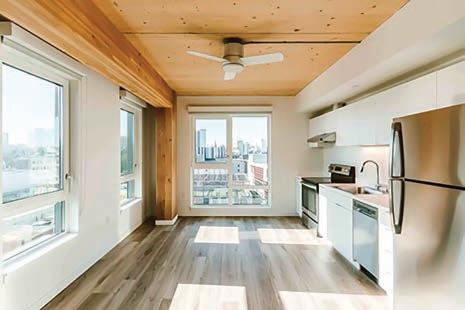
appeal to occupants on a sensory level. Studies in biophilic designa concept emphasizing humans’ innate connection to nature - have shown that exposure to natural materials like wood can reduce stress, improve concentration, and enhance overall satisfaction in workplaces, schools, and homes.
Architecturally, mass timber al-
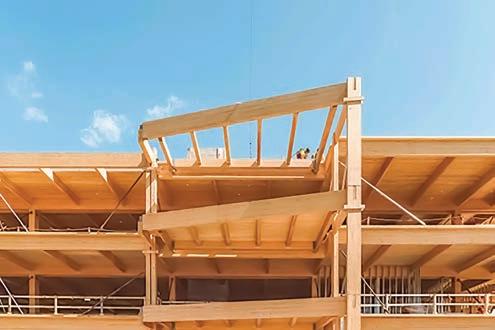
ates jobs in rural communities, and incentivizes sustainable forest management. The rise of domestic mass timber plants in North America, Europe, and Asia has also reduced dependence on imports, strengthening local supply chains and reducing transportation emissions. In 2023, a new mass timber production and engineering facility opened in Greenville, SC, linking our region to the future of sustainable construction.
are increasingly exploring hybrid systems that combine mass timber with concrete or steel only where necessary, for example in foundations or core elements, to balance sustainability with performance. Such hybrid designs can optimize material use and further reduce embodied carbon while maintaining structural integrity.
Additionally, mass timber performs well under seismic loads due to its light weight and ductility. The reduced mass of timber buildings means lower inertial forces during an earthquake, while the flexibility of wood connections allows structures to absorb and dissipate energy effectively. These properties make mass timber a safe and resilient option in regions prone to both fire and seismic activity.
Beyond environmental and structural advantages, mass timber offers intangible benefits that directly affect human well-being. Exposed timber interiors create warm, natural environments that
lows for soaring spans, elegant detailing, and light-filled interiors that showcase the material’s natural grain and color. These aesthetic qualities help buildings feel more inviting and human-centered, an increasingly important consideration in the design of sustainable urban spaces.
As the demand for sustainable materials grows, the mass timber industry supports regional economies, particularly in forest-rich areas like the southeast. Manufacturing CLT or glulam panels adds value to local timber resources, cre-
The potential of mass timber extends beyond individual buildings. When designed for disassembly and reuse, timber components can form the backbone of a circular construction economy. Unlike concrete, which is difficult to recycle, mass timber panels can be repurposed, remilled, or even reinstalled in new structures, extending their life cycle and conserving resources. Urban planners and architects
Mass timber construction represents a paradigm shift in the way we think about building materials and sustainability. It combines carbon storage, renewable sourcing, efficient construction, and humancentered design in a single material platform. By embracing mass timber, cities can grow upward and outward without sacrificing environmental responsibility—or the beauty and comfort of the spaces we inhabit.
As technology, policy, and market demand continue to align, mass timber stands poised to redefine green building in the 21st century - not as a niche alternative, but as a mainstream solution to the global climate challenge.
Amy Smith is a Professor of Science at Purdue University Global and a REALTOR® with CENTURY 21 Connected in Asheville. She is a GREEN certified real estate agent, is LEED AP accredited, and holds an MS in Forest Ecology and Management as well as an MS in Environmental Policy. Amy formerly served as the Chair of the Asheville Urban Forestry Commission and is a current board member for the North Carolina Urban Forest Council.
BY ADRIENNE STONE, WITH ARCISAN, INC.
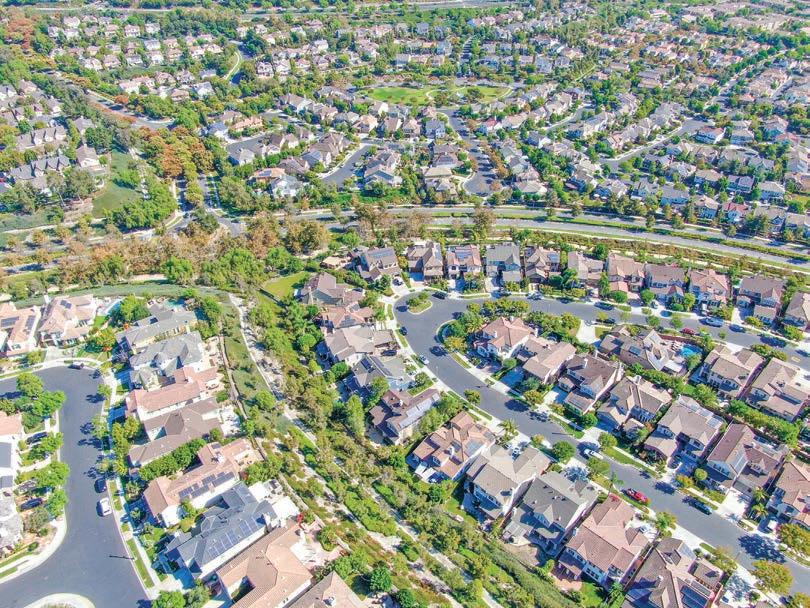
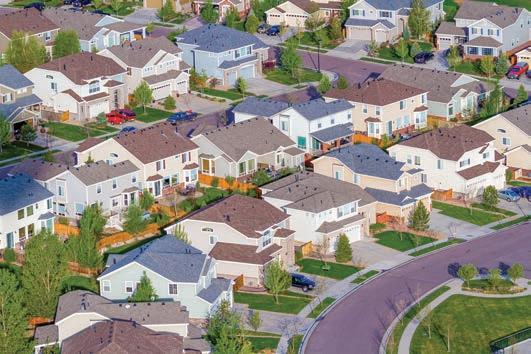
With many potential homebuyers struggling to find available and affordable housing in the South Carolina and North Carolina markets, it’s easy to see why tract home communities have become even more prevalent throughout our towns. Buyers are faced with balancing their needs and wishlist with a limited existing home and new construction inventory. Considering the home’s energy-efficiency and ecological footprint takes a backseat when compared to affordability and location. While our communities need growth in the housing supply, it’s important to make sure that homeowners, builders and community members are motivated to build thoughtfully by understanding the longterm benefits. This proposed housing stock needs to set the bar for shifting Americans’ perspective on the types of homes and communities that are our future. It needs to become a model for an alternative to our current throwaway lifestyle based heavily in consumerism and mass production. Continuing to build large tracts of homes with the “throwaway” mentality will only challenge the resiliency of our communities. With this push to increase supply, it is time to look at ways to advocate for a more in-
formed homebuyer seeking smarter, healthier, more sustainable homes and communities.
struction markets, there already exists a layer of transparency and collaboration that helps the OAC team make informed decisions. Public projects require transparency in bids and cost of the work. Custom residential projects go through detailed pricing exercises and provide many opportunities for collaboration with various trades and licensed professionals. Local governments have incentives in place to encourage developers to provide afford-
sight or encourage a dialogue between homebuyers and developers that other project types do. Further, tract home communities prioritize mass-production of standardized plans that are replicated throughout the neighborhood –with little to no consideration for the site on which they sit, missing out on optimizing solar orientation
ing strategies. The current model for these communities needs to
jectory. We can’t undo what’s been done for decades, but we can work
ture generations. So, how do we motivate builders to build these large neighborhoods in a way that is both economically and ecologically responsible?
Homebuyers are getting more savvy when it comes to the benefits of owning an energy-efficient home. Still, when faced with an increased upfront cost, there is work to be done to understand
the return-on-investment for different energy-efficient decisions and products. Many homebuyers don’t know which questions to ask or understand some of the information when provided.
• Has this home undergone a HERS rating?
• How is this home insulated?
• What are the window performance specs?
• Are there any passive solar strategies incorporated into this home?
• How does this home contribute to my family’s wellness and lower my operating costs?
Unlike other project types, where transparency and collaboration support owner education, the design and sale of tract homes does not facilitate these conversations. Further, while there are both federal tax and electric company rebates available for homeowners, most are for existing homes, excluding homebuyers purchasing new construction. Until further rebates are available for new construction, we need to rely on engaging these homebuyers in conversation to help them understand the direct economic, ecological and wellness benefits of purchasing an energy-efficient home.
Traditionally, these communities played a part in making homeownership, a pillar of the American Dream, attainable. Though the modern ideas about the American Dream are changing, many homebuyers and builders still hang on to these ideals. Builders are seeing an increase in demand for new housing and are looking to fill that need with quick, standardized products that unfortunately exemplifies the throwaway culture. With limited federal and electric company incentives for this housing market, operating cost incentives going to the homeowner, and
pressure to build more square footage at the same price point, it’s an uphill battle for builders. These homes do not prioritize durability or a quality thermal envelope that benefits the homebuyer. With a lack of collaboration between architect, builder/developer, and homebuyer, many of these aspects fall through the cracks. If the incentives for building more energy-efficiently aren’t enough to tip the scales for builders, how do we motivate them to provide more durable, efficient, legacy buildings that can reduce the ecological footprint of these communities?
buyers’ demand can trickle down to the builders. Some considerations include enacting policies that increase the transparency and interaction between homebuyers and builder/developer and providing educational programs, forums, and/or tours that raise homebuyer awareness. All these support the goal of helping potential buyers ask the right questions and encourages them to make more informed decisions. If homebuyers are pushing for more quality and responsibility, then the builder can better understand what they are looking for and justify working toward that goal.
Starting with the homebuyers is key. If we can shift the demand from housing that is just meeting the basic needs of shelter, space, and affordability to housing that provides optimum comfort, health, savings, and a sense of stewardship, then providing this product would make those respective builders stand out in a sea of others who aren’t. If it will mean more money back in homebuyers’ pockets, improved comfort and air quality and feeling good about leaving the world better than we found it, then home-
Thus, the next big challenge is the design of this more efficient and wellness-promoting housing stock. By engaging knowledgeable design professionals and subcontractors, builders can work to meet this new demand for reenvisioned tract home communities. At a local level, requiring developers building tract communities to disclose a comparison of their homes’ features to those of a new standard - say, one that aims for a HERS score of 60 - would allow for them to either start a dialog with the home-
buyers or market their firm as one that is leading the way in building affordable, energy-efficient homes. This new baseline might detail prescriptive goals for insulation values, window specifications, and/or passive heating/cooling strategies, adjusted for their common home size, or simply rely on performing a HERS rating on the homes they build. Demonstrating their commitment to building homes with an emphasis on homeowners’ operating cost and wellness will serve to benefit them as well, in terms of stewardship, community leadership and marking their firm values.
We should be using the resources available to us to share ideas, promote outreach to the community and model our strategy after communities where we can see these values working. While here we’ve focused on the energy-efficiency aspect of these homes, these baseline concepts could extend into other aspects of tract home community design. With state and local government partnering with design professionals, example benchmarks could be created for water efficiency, HVAC and appliances, indoor air quality and materials that seek to exceed current building code standards and address this growing complacency with throwaway culture. If the current guide rails for responsible, healthy and efficient housing aren’t working, we must work to adjust the scales and balance the benefits for both builder and homebuyer of these re-envisioned communities. Changing hearts and minds takes time and effort, but if we make it a priority to leave the world a better place, then we can advance that ideal one community at a time.

Many of us remember our grandparents’ Electrolux vacuum cleaner. It was relatively heavy and retro-looking but it got the job done and it was the last vacuum they ever purchased (decades before we were born). Then think about all the vacuums we have gone through over the last many years. They work well for a short time until some simple fatal flaw shuts them down. Something as simple as a worn out belt or a
split hose means we’re back at the box store making another three- or four-year investment. We go and allow ourselves to be wooed by sleek new designs, knowing they won’t last.
This cycle is termed “planned obsolescence”. The maker knows their product will fail, or need major repairs, long before necessary had they just built it a little better in the first place. We have normalized this same market mechanism
in housing. It’s one of many ways the rich get richer while the poor run in place.
The cost of housing needs to be viewed on a timescale of decades rather than the “sticker price” at purchase. Well-meaning people, including policymakers and advocates for lower income families, often focus only on “sticker price” to the detriment of our entire community. To their credit, so do banks and even builders. The allowed
debt-to-income ratio of a borrower still assumes that borrower is spending hundreds of dollars a month on dirty utilities along with a considerable amount on upkeep. That old standard still holds true for outdated construction practices inappropriate to our current time. The average American moves homes a dozen times in their life. When they do so, the planned obsolescence and deferred maintenance of both the home they sell,

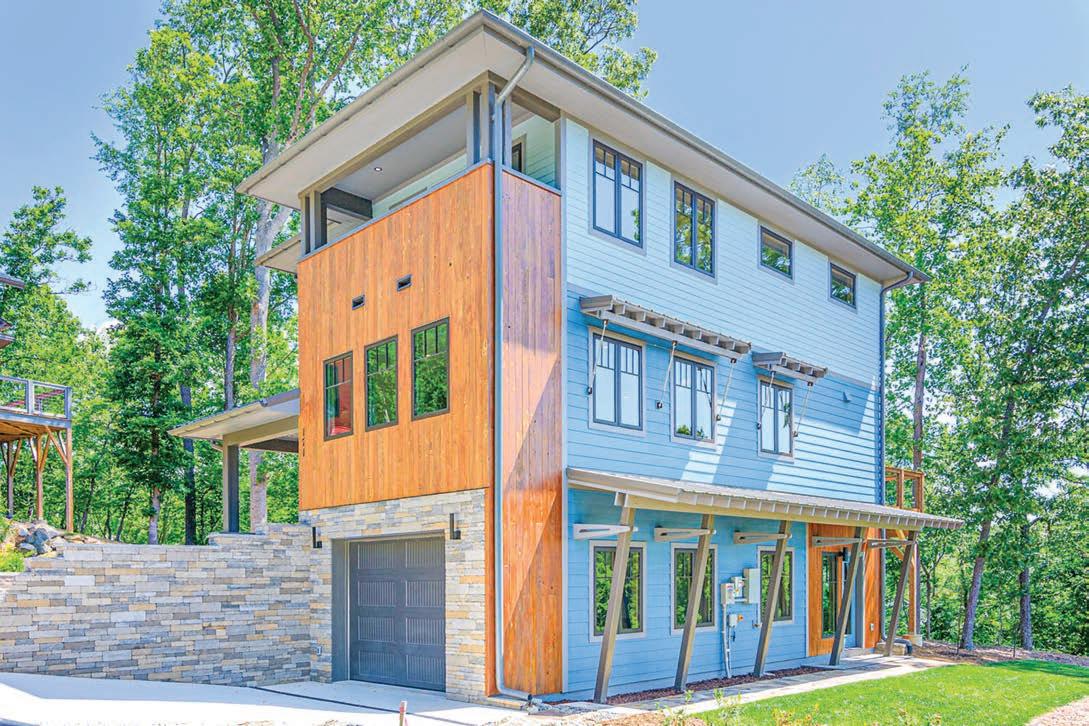
the externalized costs of outdated construction techniques get absorbed by either the buyer or the seller or ignored by both and accepted as part of our built environment. When we trade properly built and maintained homes, those “externalized costs” are far fewer, the home itself is far healthier, quieter, more durable, more comfortable, and requires fewer ongoing “inputs” from us. In other words, more “home” than “house”. It becomes a base from which someone can steadily improve their life, not an ongoing project that consumes their life.
Why don’t we just build the right way? Many builders and policymakers are still hyper-focused on sticker price at purchase rather than whole-house-cost on a reasonable time scale. Often the developer will save a few thousand dollars on the cost of construction that translates directly to many tens-of-thousands of dollars spent over time correcting for the decisions of the developer. Much higher utilities, more frequent replacement of finishes, worn out heating and cooling equipment, etc. And this assumes a consistently good economy where owners keep up with all those tasks. Often the neighborhood simply declines.
My neighbor spends more on utilities in one month than I do in
on sticker price. Beware what you buy. Imagine two people need to spend the winter outdoors. One wears an ankle-length goose-down puffy coat with one of those big Siberian looking hats postal workers used to rock. Meanwhile, the other wears a windbreaker and snack chips. The well-dressed person gets by on some delicious nibbles of healthy protein. The dude in a windbreaker eats truckloads of snack chips bought at a gas station.
This is our current housing situation. Policymakers keep advocating for windbreakers and tennis shoes. Homebuyers feel like they don’t have a choice. Many homebuilders take advantage of the situation with code-minimum construction labeled “affordable” and laugh all the way to the bank. Green Built Alliance works with homebuilders to change this situation. We want beautiful homes that endure and promote, not decay and decline. We want homes that contribute energy to the grid, not burden it with unnecessary loads. Let’s start thinking holistically about our homes. When we make decisions based on the banker’s outdated metrics, the developer’s smoke and mirrors, and our own needs rooted in short term thinking, we set ourselves up for a hamster wheel that only serves utility shareholders, not our
far into the future. He volunteers on the Board of Directors of Green Built Alliance. You can see his work at



hniques. hTeec

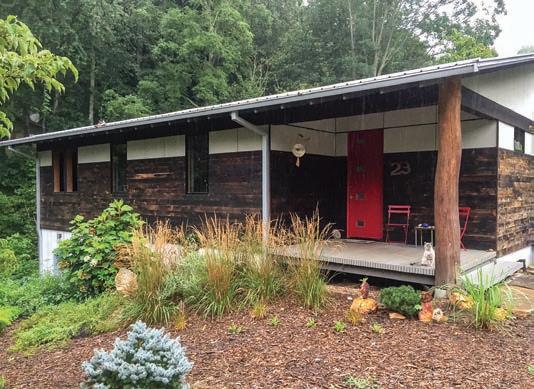


Appropriate, Gree ocusing on Sustain Fo n, nable, r

We live in an energy-intensive world. Homes are filled with devices, systems, and technologies designed to make life more comfortable, connected, and convenient. Heating and cooling run year-round, appliances work quietly in the background, and energy use is woven into daily life so seamlessly that it often fades from view.
Yet, energy costs are rising, power grids are under strain, and the environmental impacts of how we produce and consume energy are becoming harder to ignore.
At its core, energy efficiency is about alignment. It connects comfort with cost, durability with performance, and individual choices with long-term resilience. An energy-efficient home is not one that feels constrained. It is a home that maintains even temperatures, responds predictably to weather, and costs less to operate over time because the building itself is doing more of the work.
Efficiency has become a form of preparedness. Homes that are well insulated, tightly sealed, and properly ventilated are quieter, more comfortable, and better equipped to handle temperature extremes and power disruptions. Through our work with builders and homeowners across Western North Carolina, we have seen how these fundamentals improve performance regardless of size, style, or budget.
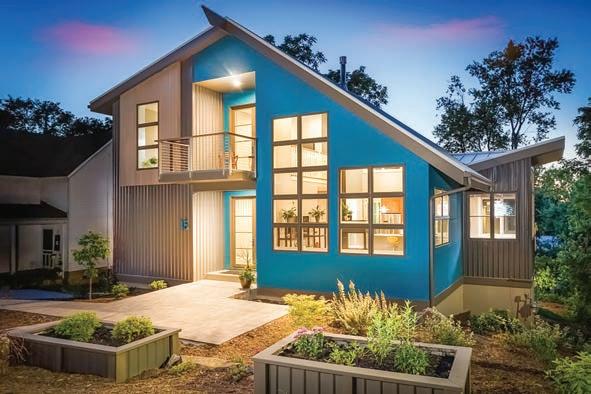
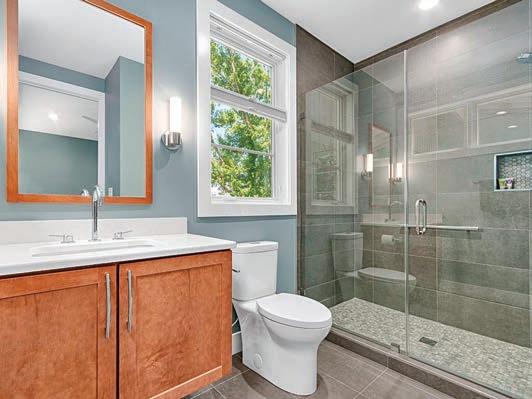
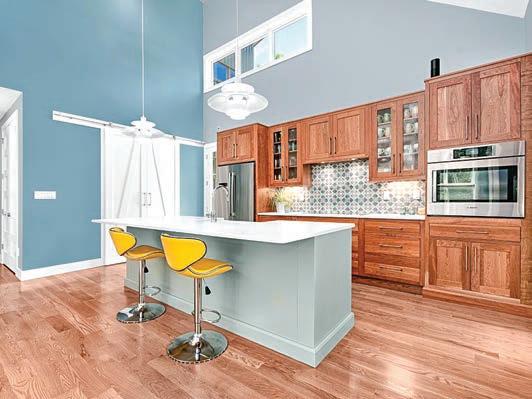
Energy efficiency also plays a critical role in long-term affordability. While energy prices fluctuate, the underlying performance of a home remains largely fixed once it is built or renovated. Homes that lose heat, leak air, or struggle with moisture continue to cost more year after year. By contrast, investments in insulation, air sealing, efficient equipment, and thoughtful design pay dividends over the life of the home.
Importantly, energy efficiency is not a single product or upgrade. It is the result of many interconnected decisions, from how walls are assembled to how systems are sized and balanced. This whole-home approach sits at the center of Green Built Alliance’s education and certification programs, which emphasize performance, durability, and verification over one-off solutions.
While renewable energy often dominates the conversation, it is worth remembering that efficiency is the foundation that makes clean energy more effective. A home that uses less energy overall can meet a greater share of its needs through renewable sources, whether installed on-site or supplied through the grid.
Energy efficiency does not ask homeowners to opt out of modern life. It asks us to design homes that meet modern needs with care, foresight, and responsibility, recognizing comfort, affordability, and stewardship as deeply connected.

BY AMY MUSSER
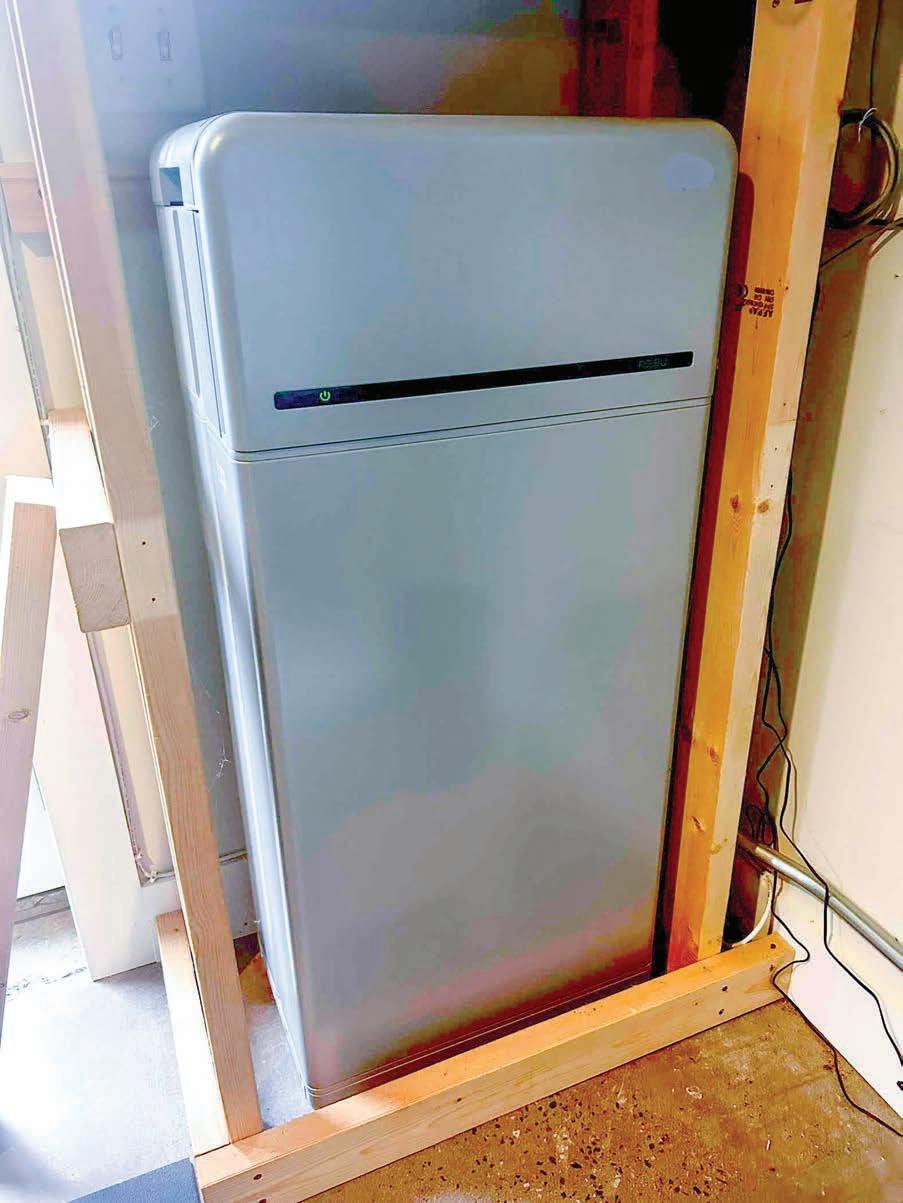
hen we were young and naïve, my husband and I designed our “forever house” to be as green as we could make it. What we didn’t know was that a lot of what we did for the benefit of the planet also came in handy when the unexpected would happen. Flushing toilets with rainwater? Sounded a little over the top until Hurricane Helene hit, and we had the only flushing toilets in the city of Asheville. Super insulated and passive solar? A great way to lower utility bills, but it ended up being a lifesaver when the power went out in the dead of winter, and it still took three days for the house to drop below 65 degrees. Solar panels and batteries? When you still have a functioning refrigerator and you can feed a bunch of your neighbors who aren’t so fortunate, you’re feeling pretty thankful to have backup power.
Green building isn’t exactly the same thing as disaster preparedness, but it’s an important part of it. In our line of work, many clients come in understanding this, but others need a little nudge in that direction. In this article, I’ll share how homeowners can think about disaster preparedness so they can make the best decisions for their
Green building gives you a leg up with regard to natural disasters. First, if you are using less gas, electricity and water, you need less backup. An airtight and well-insulated house can be reasonably and safely heated with a gas direct-vent fireplace or an EPA rated wood stove. Plus, you might enjoy having these amenities at other times. Second, having multiple ways to do things makes your home more resilient. A large rainwater cistern can do more than just water your garden. It can flush your toilets, and in a real pinch, you might even use it for a camper bathroom or outdoor shower.
Here’s a checklist to help homeowners think about what they
I’ve long been warning clients that the longest power outages we tend to experience are due to gulf hurricanes. Those tend to impact entire regions, and power companies can’t respond quickly. Ice storms tend to be much more localized thanks to our elevation, and regional resources can get to us. Asheville’s city water system has also had its hiccups over the years. Internet and data access have increasingly become part of our lives, so you need to consider the critical ways in which you rely on that.
One benefit of solar is that it can replenish itself daily if the sun comes out. But you can also deplete your batteries really quickly if you are using it for heating, air conditioning, or making a lot of hot water. Some people choose not to include these large loads on their battery backup to extend battery usage. One of the green features in our home is a solar thermal water heater that’s backed up with electricity on cloudy days. We’ve chosen to power the pump with our batteries but not the electric backup. During a long-term outage, we’re OK with making hot water only on sunny days, since it extends how long our battery capacity lasts.
Do you need to power a CPAP machine? What sort of tolerance do you have for hot and cold temperatures? Do you need full air conditioning or can you ride it out for a while? If you are thinking of a fireplace or wood stove for backup heating, can you carry wood? Can your spouse? How likely is it that you’ll be able to carry that wood 10 years from now? Sometimes a direct-vent propane fireplace with a small tank is a better plan than a wood stove.
Know the difference between “backup” systems, “everyday” systems, and systems that are both.
You want your “everyday” use equipment to be very healthy, efficient and convenient. You want your “backup” systems to be very safe, durable and maybe they can be less convenient. This can really come into play when you’re considering backup heating. I’d like your everyday heating system to be really efficient, but if it’s on a backup generator, I’m less concerned about the efficiency be-
cause it doesn’t operate that often. Low indoor particulate matter (from combustion, allergens, outdoors) is an everyday concern. Having the minimal possible risk of a carbon monoxide incident or a home fire is a concern for both everyday and backup. This is one reason that I recommend putting backup cooking methods outside. A wood stove with a cooktop may sound ideal, but if it’s going to overheat your house in hurricane season or cause you to choose one with a worse particulate matter rating that gets used at other times, it doesn’t balance all of
your interests. Using rainwater for non-potable uses can require some homeowner interaction. Maybe that’s something you only want to do when the water is out.
Can I benefit from the system otherwise?
Back to that fireplace or wood stove … If you’ll use it year-round, it should have the best indoor air quality rating to support your long-term health. Need an excuse to buy a really nice gas grill for your outdoor living area? This could be it. Solar, obviously, can lower your utility bills and pro-
vide backup power. Indeed, systems that you use regularly are the best disaster preps because you’ll know how to use them and keep them in working order. We had neighbors whose generators ran out of oil, gas and/or propane during the aftermath of Hurricane Helene. We didn’t have that problem with our solar panels because those get used every day.
Hopefully, this has given you some ideas to think about as you plan ways to make your home both greener and more resilient when the unexpected happens!
BY: PAUL CAPUA, FOUNDING ATTORNEY, CAPUA LAW
The first time a general contractor client mentioned, matter-of-fact, that North Carolina law required general contractors to provide a 1-year construction warranty on their work, I was worried. As a construction lawyer who frequently negotiates and drafts construction contracts and warranty clauses for a living, I should know that. How could I have missed it?
contractors to provide a one-year construction warranty for their work. The belief that it does appears to be a common yet understandable misconception. This confusion likely arises because of the implied warranty of workmanlike construction and industry standards. Under North Carolina law, the implied warranty of workmanlike construction as articulated in Hartley v. Ballou exists by operation of law (i.e., is implied) and is not dependent on the existence of a written contract between the parties.
Anxious of what I might find, I did some research, but nothing came up. I asked other attorneys in our office to do the same, and they too found nothing. I moved on, as confident as one can be proving a negative. But then I heard it again from another general contractor, and another. The seeds of doubt were sprouting again when, just the other day, I heard it again: “. . . right, but North Carolina requires me to give a 1-year warranty.” I was in a meeting with a client and, as nonchalant as possible, I asked where she’d heard this. She said all contractors are taught it and that it’s common knowledge. I said I was sure no such requirement exists, and when she glared back skeptically, I did the only honorable thing one can do under the circumstances: I bet her a dollar I was right. Our client politely declined and suggested I write this article instead.
North Carolina law does not require general
That is, the implied warranty can exist whether there is a written agreement in place between the parties or not. But to say that the implied warranty is the same as requiring a warranty or even a one-year warranty is incorrect and contravenes a fundamental principle under North Carolina law that grants parties the freedom to allocate, by contract, risk in a construction project.
Not only is there no one-year warranty requirement, but under North Carolina law, parties to a construction contract are free to eliminate the implied warranty of workmanlike construction altogether. That is, the parties can negotiate and bargain for no warranties whatsoever or craft whatever warranty they choose, which can vary in both scope and duration. For example, in the wake of Hurricane Helene or other disasters, contractors wanting to donate their services or provide them at below market
rates would find this flexibility helpful. I now think I understand why general contractors assume they must provide a construction warranty, and the confusion is wellfounded. The law of contracts, which includes the law of express and implied warranties, is a confusing area of the law to begin with, and legal precedent and statutory requirements have established standards that can make it even more confusing. Cases like Leggette v. Pittman and Allen v. Roberts Constr. Co., Inc. illustrate that building contractor’s warranties often include provisions that any defects arising within a period of one year will be repaired or replaced by the builder at no cost to the owner and require the owner to notify the builder of any nonconformities within one year.
Similarly, Dan King Plumbing Heating & Air Conditioning, LLC v. Harrison notes that in actions for breach of a construction contract, there is an implied warranty that the contractor or builder will use customary standards of skill and care based on the particular industry, location, and timeframe in which construction occurs. Without distinguishing between the type of warranty, I imagine most contractors would say that a oneyear construction warranty is industry standard, perhaps reinforcing the belief among general contractors that they must provide it. And, while that may be true of express warranties, it is certainly not the case for implied warranties, which extend for three years (N.C. Gen. Stat. § 1-52) and possibly beyond. See N.C. Gen. Stat. § 1-50(5)(a).
These cases and standards might make it seem to the general contractor that a construction warranty is required when, in reality, it is not. Instead, it is far better to think of it this way: under North Carolina law, a warranty will be implied by law and industry standards in the absence of a written warranty excluding it.
I’ll bet you a dollar I’m right!
Whether you are a builder or owner, it is important to understand how to negotiate and craft agreements that protect your interests and allocate risk suitable to the needs of your project.
If you are embarking on a construction project and want to learn more about managing risk, schedule an appointment with an attorney well versed in construction law.
This article was published in the Fall 2025 Issue of The North Carolina State Bar Journal.
BY RICK BAYLESS
Hardly a day goes by when we or someone we know complains about artificial intelligence and its impact on our lives. So, when it comes to keeping our homes healthy and improving our air quality, why are we tempted to turn to late night search engine fixes?
There’s no doubt that relying solely on the internet, or its proliferation of artificial intelligence in search, will never “solve” indoor air quality (IAQ) problems. Doing so can lead to expenses rather than solutions. This is particularly true in the temperate rainforest climate of western North Carolina and the southern Appalachians where every single home is unique.
Still making decisions based on AI or an internet search? Here are seven reasons why you won’t cure your WNC home’s indoor air quality issues with just a search engine.
1. IAQ is deeply contextual
A basic search might give you general rules, such as “open a window,” “change the filter,” etc. But a one-size-fits-all web answer cannot address your specific situation. Your home’s layout, the climate, your ventilation system, your occupancy and your habits matter when it comes to indoor air quality. And indoor air quality is not constant.
Are you aware of wet, damp or humid conditions in or around your home? Then walk through your home with a checklist. Determine the places where moisture collects. Ask whether the ventilation is adequate? What appliances or combustion sources are adding to the indoor conditions? When it’s time to address your concerns, it makes sense to tailor solutions to your home.
2. Search results can make ventilation look easy — but it isn’t
Articles on ventilation often say, “just add more outside air.” However, that advice may not hold in regions like Western North Carolina, where homes may be older or climate control is tricky. We battle against heat and humidity in summer, cold and moisture in winter. That means that ventilation in
every home must be balanced with insulation, mechanical systems and moisture control.
To evaluate your home’s mechanical systems, such as its HVAC and exhaust fans, check for “tightness” vs. “breathability.” Then, ask whether the humidity is being managed? Are the exhaust gases vented properly? If the answer is no, then you may need help the internet can’t provide.
3. The internet can’t replace measurement and monitoring
It’s tempting to read “you should test for mold” and think that’s it. But indoor air quality isn’t constant. Without eyes on your home’s functionality and actual data, you’re navigating by guesswork.
Simple monitors for humidity and CO 2 can help you keep an eye on areas of concern, such as damp basements and crawlspaces. These monitors can also help you track changes over time, giving you actionable intel, rather than a vague, AI-generated search result.
vented combustion? Then fix that. Only at that point should you consider filtration, purification, or other supportive strategies.
5. Your home environment is dynamic. Web advice misses the “when” and “what.”
Simply put, what works in summer may not work in winter. Of course, a search engine won’t know the season, your home’s occupancy, or when the next weather shift is coming.
4. Many online “solutions” treat symptoms, not root causes
Search engines will suggest all manner of solutions: air purifiers, filters, scented “fresheners” and more. Too often, these solutions are driven by paid advertising, and not by a desire to improve your home’s indoor air quality or healthiness.
Look at it this way. If the root cause of your home’s IAQ issues includes chronic moisture intrusion, then swapping in a fancy air purifier won’t fix the situation. Sure, it may help a little, but the root cause remains. And so does the problem.
Therefore, it’s crucial to diagnose the root cause first, before you spend a lot of money on solutions you don’t need. Is it poor ventilation? Excess moisture? Un-
During fall and winter, when outside air is limited due to cold weather, then cleaning, vacuuming, getting rid of scented air fresheners, and using hypoallergenic products can make a difference in your indoor air quality. If IAQ is an ongoing concern for you, it could be time to build a seasonal IAQ maintenance plan. Determine what to do in humid months, what to do in heating months, and what changes when windows stay closed longer. Tailor your plan to your home and climate. Again, a professional will be able to help.
6. Some issues demand professional insight. Searches alone can mislead homeowners.
Let’s take, for example, exhaust gases. In your home, improperly vented exhaust gases can build up. When this happens, indoor air quality erodes quickly. A search result may tell you “vent your exhaust gases” but not how to safely inspect a flue, evaluate the draft, address moisture, or verify that no backdrafting is happening.
In a situation like this, it may be time to recognize that you need an expert. It’s likely that a qualified HVAC/combustion specialist, a building scientist, or a healthy home specialist will be able to help. In other words, use the search result to narrow the likely problems. Then, find someone with the expertise to help identify solid solutions.
7. Search engine results can create a “set-and-forget” mindset.
Typing in “how to improve indoor air quality” feels like doing something. But homes are living systems. Whether it’s new furniture off-gassing, changing seasons, new occupants, or severe weather, indoor air quality can be impacted. Plus, in newer, energy efficient, green or smart homes, the construction is “tighter.” This means that IAQ needs to be a factor in building design. The fact is that you need an ongoing relationship with your home.
If you treat IAQ like a one-anddone checklist you found online, you’re bound to run into problems. Instead, why not commit to ongoing awareness? Monitor IAQ periodically, inspect filters and ducts, revisit your ventilation strategy each season and check for new moisture sources. When you form healthy home habits that regularly include IAQ, both you and your home will breathe better.
Search engines are amazing for gathering knowledge. But we all know that when it comes to actually solving indoor air quality issues, they’re only the start of the journey. Here’s how to understand your home’s unique situation: Start with observations: See your home’s patterns on moisture, dust, odors, chilliness, stuffiness, body symptoms, and HVAC run times.
Diagnose root causes, not just symptoms.
Make a plan that respects local conditions. Here in Western North Carolina, humidity and temperature undergo seasonal changes. Use search engine advice as a guide, not a cure.
Bring in professionals as needed, but especially when house, health, mechanical systems, environment, or combustion are involved.
Make IAQ a regular part of your home health routine.
Air quality isn’t constant. With mindful action, awareness, and observation, you can move from ineffective search engine fixes and find the resources and expertise you need to improve your home’s indoor air quality.
Reduce condensation, prevent mold growth, and keep your home warm and breathable with proper system operations.
q Replace HVAC filters before first cold weather use.
q Inspect crawlspaces and basements for dampness or musty smells.
q Run the bath exhaust when showering and the kitchen exhaust when cooking.
q Check that fireplaces, stoves, and furnaces vent properly outdoors.
q The bedroom door should not slam shut when the HVAC system runs.
q See where dust is bypassing your vacuum and HVAC dust filters.
q Use a hygrometer to monitor indoor humidity with a goal of 30 percent in winter and 50 percent in summer.
Control moisture, filter pollen, and prevent microbial growth.
q Open windows strategically on lowpollen, low-dew point days.
q Watch for condensation on windows, HVAC air ducts or water pipes.
q Run dehumidifiers in basements or crawlspaces.
q Clean the HVAC filters and those in your air purifiers bi-monthly.
q Inspect dryer vents and HVAC condensate drains.
q Store paper, fabric, and cardboard off concrete floors.
q Schedule a professional IAQ check before summer humidity sets in.
Maintain awareness and balance in your indoor environment.
q Log humidity and air quality changes each season.
q Choose low-VOC paints and cleaning products.
q Match air purifiers to room size and filter type.
q Eliminate odor sources instead of masking with scents.
q Test smoke and carbon monoxide detectors every six months.
q Check in with an Indoor Environmental Pro (IEP) periodically.
q Inspect attics and crawl spaces after heavy rain for leaks, flood or mold.
Buyer Insights: Families with children, allergy/asthma sufferers, and healthconscious buyers consistently prioritize IAQ.
Qualitative Findings: Buyers want clean, fresh air and mold-free homes. Renters report stress from poor air and lack of control over repairs.
Framing Tip: Position IAQ as “fewer allergies, fewer sick days, better breathing.”














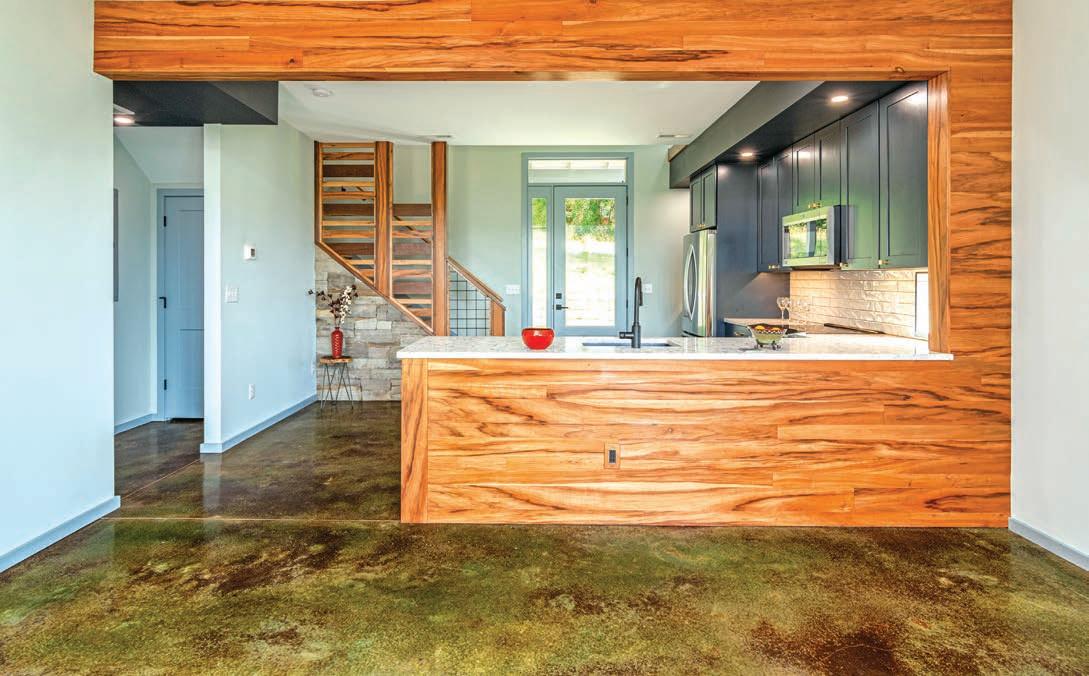







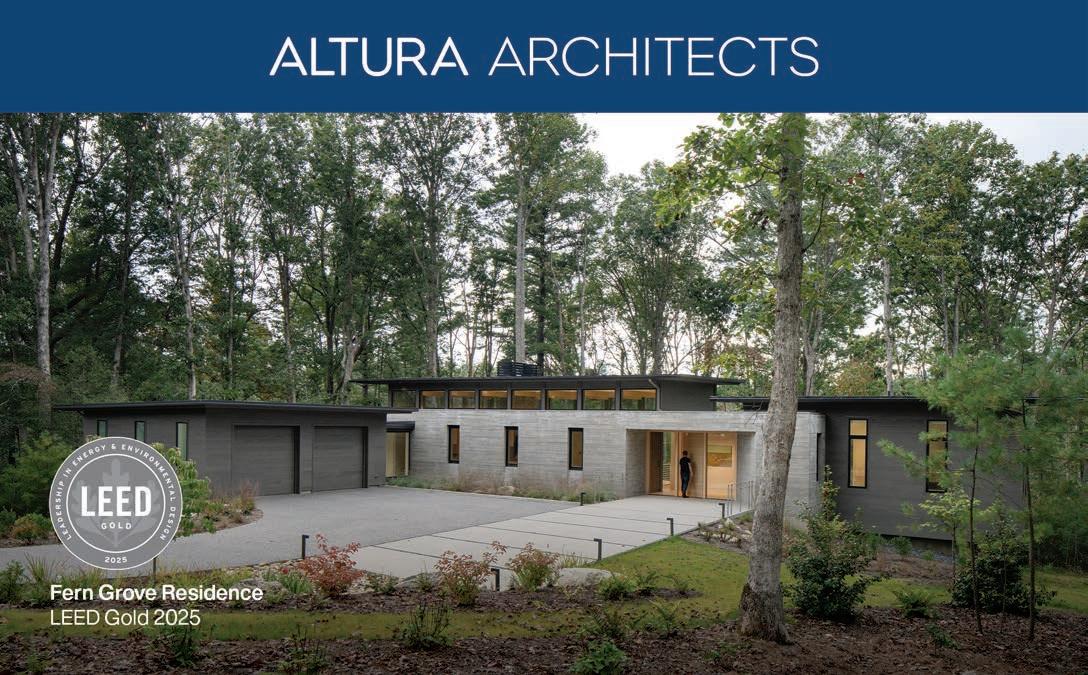

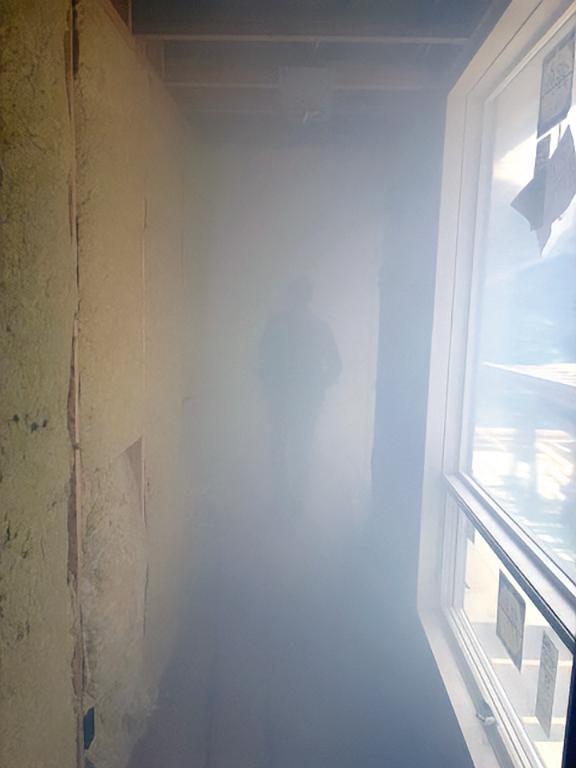
healthy indoor air quality. As part of the Green Built Homes certification program, builders need to verify that a home is airtight with a blower door test when the home is completed, yet blower door testing can also be used to identify air leaks during the construction process to make the home more airtight.
This project used a fog machine during the blower door test so that air leaks are easily visible and can be sealed. A thick fog fills the air
ing the project team to easily see any leaks in the air barrier and patch them.
Blower door testing is most effective while the air barrier is accessible and shouldn't only be used for final verification. It's a tool to be used throughout construction as a way for builders to make the home more airtight. Airtightness is critical for high performance construction and needs to be paired with proper ventilation to create healthy indoor air quality.



een Built Alliance h , Gr 100 Since 2






s to advance sust omeowner and h







een build e gr en th ength , str y ainabilit y par s, industr s, designer



esilient co e r , mor t h suppor
esilientco thealthier
mmnitiesMembershipconnectsorbsinesst et, ing mark



B usiness l isting on t h

ed with builder as work to this and s,tner ovides tangi mission and pr
A nnua l Green Bu ildi ng D i r ofessionals s an d p r o meo w ne r h e Gre












Di scounts on ce r ou g h o i e n ce th r u es-ali g ned au d
s ma o j ect ’ e nin g y our pr en g t h str yi ng Gr e tif














a n d

A n n

ate. e d uce d r e n d s at a r g ing t r eme r Sta y c u ounts on continuing education courses . gyp



ed t o




D is c y. i ng communi t e en b ui ld e gr t h
el ations h ips, s ha Bui ld r ents . t er l y ev ua l an d quar



ow your work and your impact. ible tools to gr ship connects your business mmunities. Member e t a pp ea l . r k t ification whil e cost of ce r Lower t h en Bu il t Homes . i n g p ublica t ee n bu il d s most trusted gr ’ eg io n e r ne of t h e ac h R t i s i ng di scounts . er y li st i ng an d a dv t or e c s t ne r ing pa r e en b ui ld seeking trusted g r y w ease your visi b i l i t Inc r s ite . en Bui l t A ll iance we b - nnec t d es , e ions. - a va l it h





e k now l e d ge, an d stay co ar a ctices , co e nt on best pr r r


The contents of this directory are approved by the Green Built Alliance Board of Directors and are intended for informational purposes only. Green Built Alliance does not endorse or recommend the products or services mentioned herein, and disclaims any and all warranties, express or implied, in any way related to advertisements, events, businesses, organizations or other information presented within the member directory.

Deltec Homes
Vanesssa Osborne
Asheville • 828.253.0483
vosborne@deltechomes.com deltechomes.com
Deltec Homes is an award-winning prefabricated homebuilder. Offering round and modern styles, our homes are best known for energy efficiency, great views, and resilience. We pride ourselves on manufacturing homes sustainably in a facility powered with 100% renewable energy sources.

Evergreen Construct Inc.
Darren Henegar
Leicester • 828.779.4077
evergreenconstructinc@gmail.com
evergreenconstruct.com
Evergreen Construct is a custom home builder in Asheville, NC specializing in high-performance homes, ADUs, and large-scale renovations. We combine sustainable design, energy-efficient construction, and refined craftsmanship to create lasting value. Locally rooted, Energy Star and Green Built NC certified, we build homes for WNC families who value quality.
Green Mountain Builders LLC
Steve Abranyi
Highlands • 828.787.2297
office@greenmountainbuilders.com
greenmountainbuilders.com
Residential Custom Homes, Remodels, Additions
Jade Mountain Builders & Co.
Hans Doellgast
Fairview • 828.216.3948
hans@jademountainbuilders.com
jademountainbuilders.com
Jade Mountain Builders is a team of 39 craftsmen who pride themselves on taking an ecologically sensitive approach to building homes.
MudStrawLove LLC
Steve Kemble Asheville • 828.775.4823
connect@mudstrawlove.com
mudstrawlove.com
Promoting sustainable living through alternative natural building techniques, offering workshops, consultation, and construction services.
River Birch Builders
Pierce Harmon and Griff Gamble Asheville • 828.423.9813
office@riverbirchbuildersnc.com
riverbirchbuildersnc.com
We offer quality and craftsmanship in the building of green and energy-efficient homes. We offer design and build services for fully customized homes, and experience with a range of architectural styles and sizes. From start to finish, we'll work closely

Sage Builders
Doug Keefer
Asheville • 828.713.7208
info@thesagebuilders.com thesagebuilders.com
SAGE uses sustainable, green, and efficient building techniques to create beautifully hand-crafted homes with passive and active solar amenities.

SAW Built LLC
Everett Ponder
Weaverville • 678.200.8619
office@saw-built.com
SAW-built.com
Custom home builder
Steel Root Builders
Bob Koplos
Asheville • 830.832.7610
bob@steelrootbuilders.com
steelrootbuilders.com
Specializing in modern luxury homes, complete renovations, and commercial upfits, we bring expertise and a touch of elegance to every project.

Sure Foot Builders Inc.
Raymond Thompson
Asheville • 828.242.0925
raymond@surefootbuilders.com
surefootbuilders.com
We are a green home building company working in the greater Asheville area. It is our passion to build beautiful and creative homes that add value and comfort to the lives of our owners and community.
The Hobb LLC
Steffi Rausch
thehobbllc@gmail.com
northcarolina.wonderfulstructures.com
The Hobb LLC offers earth-sheltered homes built with Wonderful Structures FRP framing technology that is wind, fire, and mold resistant.
THINK BUILD + design
Travis McKay
Asheville • 828.209.8855
travis@thinkbuilddesign.com thinkbuilddesign.com
Timberframe Horizons LLC
Tom Rouse
Swannanoa • 828.222.2555
tom@timberframehorizons.com
timberframehorizons.com
We are a design build firm that specializes in creating energy-efficient custom artisan homes utilizing timber frame construction.
Concept to Completion Construction Company, LLC
Joseph Oxford Hendersonville • 828.242.1852
C2C.Construction.Co@gmail.com
We are appraisers, Realtor/Brokers, and builders with a keen interest in sustainable, grid-down resilient homes for ourselves and the community.
Alice Dodson Architect, PA Alice Dodson Weaverville • 828.712.9326 alice@alicedodsonarchitect.com AliceDodsonArchitect.com
Integrated and affordable residential architectural design, long-time experience with alternative energy use and various energyefficient, high-performing construction.

Altura Architects, P.A. Asheville • 828.253.1124 info@alturaarchitects.com alturaarchitects.com
Altura Architects was founded in 1985 with a strong sense of stewardship for the environment and our community.

Arcisan, Inc.
Benjamin Settle Greenville • 86 4.607.2428 ben@arcisandesign.com arcisandesign.com
Modern | Biophilic | Architecture. Specializing in custom homes and light commercial projects. New Construction + Renovations

Assembly Architecture + Build
Ross Smith
Asheville • 828.242.3738
ross@assemblyab.com
assemblyab.com
At Assembly we believe a green built home has the potential to improve our quality-of-life and conserve the earth's limited resources.
Legerton Architecture, P.A.
Wendy Legerton Asheville • 828.251.9125
info@legertonarchitecture.com legertonarchitecture.com
Women-led, diverse firm with 30+ years experience creating context-sensitive, sustainable design through careful listening, technical excellence, and community-centered collaboration.

Narwhal Design
Build, PLLC
Joe Archibald Asheville • 828.273.9509
joe@narwhalbuilt.com
narwhalbuilt.com
Narwhal Design | Build specializes in architectural design offering personalized service, quality craftsmanship, and innovative design solutions.
Open Corner, PLLC
Michael Merschat Asheville • 301.233.5260
michael@opencornerarch.com
opencornerarch.com
Stewardship | Modern Architecture. Our designs weave together the story of your land, your home, and your heart.
PLATT
Parker Platt
Brevard • 828.884.2393
hello@platt.us platt.us
Platt is a full-service architecture, landscape architecture, construction, and interior design firm, serving clients throughout the Blue Ridge Mountains.
Red House Architecture
Robert Todd Asheville • 828.231.2851
wrendalondon@gmail.com
byredhouse.com
Red House Architecture's project-expertise ranges from commercial to residential with a focus on restaurants, bars, breweries and retail. Design proud!
Stephens Smith Farrell
Architecture
Stephens Farrell SSF@ashevillearchitect.com
ashevillearchitect.com
The art and science of green building is more important than ever. Green design saves money, energy and health.

Sycamore Builders
Dakota Chapman
Brevard • 828.419.4678
info@sycamorebuilders.com
sycamorebuilders.com
We design and build exceptional homes that embody sustainability, resilience, and refined craftsmanship. Rooted in advanced building science and timeless design, our work elevates everyday livingâ€delivering lasting beauty, superior comfort, and unmatched energy performance.
Virant Design Inc.
Tom Virant
Asheville • 828.231.0092
info@virantdesign.com
virantdesign.com
Wilson Architects Inc.
Calder Wilson Asheville • 828.257.4930
calder@w2arch.com
w2arch.com
We specialize in high quality, well designed, residential and small commercial projects and provide a full range of architectural services.
Wittehaus
Toby Witte Asheville • 704.488.6811
toby@witteha.us
witteha.us
Creative design services and custom consultation for visionary clients - developing modern, sustainable, luxury homes. Guidance through the entire Process.

A Neighborhood Carpenter
Matthew Agrella-Sevila Brevard • 828.577.4554
matthew@aneighborhoodcarpenter.com
aneighborhoodcarpenter.com
A Neighborhood Carpenter is a licensed commercial and residential General Contractor. We are a handmade and hand crafted company specializing in timber framing and unique residential/ commercial projects.
Altitude Builders Inc
Jason Waldrup Fletcher • 828.273.8192
jason@abiasheville.com abiasheville.com
We provide clients with the highest level of service by providing quality construction services at fair and market competitive prices.
Assembly Architecture + Build
Ross Smith
Asheville • 828.242.3738 ross@assemblyab.com assemblyab.com
At Assembly we believe a green built home has the potential to improve our quality-of-life and conserve the earth's limited resources.
Roger Kennerly
Asheville • 828.974.2100 authenticperiodhomes@gmail.com authenticperiodhomes.com
Crafting authentic period homes with meticulous attention to detail and historical accuracy, creating timeless residences of unparalleled quality and craftsmanship.
Balsam Built, LLC
Nick Swann
Black Mountain • 828.778.6425 nick@balsambuilt.com balsambuilt.com
Beach Hensley Homes
Beach Hensley
Asheville • 828.782.3342
beachbuildersinc@gmail.com beachhensleyhomes.com
Beach Hensley Homes provides sensibly crafted, urban-infill homes that are affordable, responsibly built designs with a focus on efficiency and attention to detail. To us, it's bigger than home building. Reach out to learn more.
Bellwether Design-Build
Brad Rice
Asheville • 828.225.5990 brad@bellwetherbuilders.com bellwetherbuilders.com
Trusted builders specializing in custom homes and renovations, focusing on quality, integrity, and personalized service.
BH Wicker LLC
Benjamin Wicker
Asheville • 828.575.4168 bhwickerllc@gmail.com
BH Wickers LLC is an experienced and reliable general contractor assisting with quality constructions and remodels.
Bracken Mountain
Contracting
Rob Skeen
Brevard • 828.589.9646
office@brackenmountaindesignbuild.com
brackenmountainbuilders.com
Dedicated to building high-quality custom homes with integrity, craftsmanship, and attention to detail, exceeding client expectations with personalized service.

Brock Builders, Inc.
Chris Brock
Hendersonville • 828.243.6105
invoices@brockbuildersinc.com
brockbuildersinc.com
We're a team of custom home builders and renovators working in the Asheville and Hendersonville, NC area.
Brown Wulff Homes
Josh Brown Asheville • 828.337.5034
joshmarcbrown@gmail.com
brownwulffhomes.com
Buchanan Construction
Rick Buchanan
Asheville • 828.650.6565
rick@buchananconstruction.com
buchananconstruction.com
A green home is healthier to live in and healthier for our planet. It is our mission to build green homes that bring together the features of an environmentallyfriendly structure, while maintaining the function and design of a custom built, upscale home.

Cardinal Point Construction, Inc.
Dan Clere
Asheville • 828.712.5424
danielclere@gmail.com
cardinalpointconstructioninc.com
Home builders focused on creating environmentally friendly and energy-efficient homes, providing quality construction, and innovative designs that last.
Clawhammer Inc.
Tyler West
Asheville • 828.384.7483
clawhammerincorp@gmail.com
Continuous Improvement
Construction LLC
Duane Honeycutt
Black Mountain • 828.551.7573
cicllc.duane@gmail.com
continuousimprovementco.com
Enhancing sustainability in construction, we deliver eco-friendly building solutions with a focus on efficiency, quality, and innovation for a greener future.
Corner Rock Building Co.
Zachariah Banks
Weaverville • 828.348.1004
zach@cornerrockbuilding.com
cornerrockbuilding.com
Specializing in expert construction services, ensuring quality craftsmanship and personalized attention to detail for exceptional results and client satisfaction.
Deltec Homes
Vanesssa Osborne
Asheville • 828.253.0483
vosborne@deltechomes.com deltechomes.com
Deltec Homes is an award-winning prefabricated homebuilder. Offering round and modern styles, our homes are best known for energy efficiency, great views, and resilience. We pride ourselves on manufacturing homes sustainably in a facility powered with 100% renewable energy sources.
Demos Builders, Inc.
Jim Demos Asheville • 828.777.2395
demosbuilders@gmail.com
Green builder/general contractor with 19 years of expertise in new constructions, renovations, custom homes, remodels & green retrofitting
Earthtone Builders
Greg McGuffey Weaverville • 828.230.4469 earthtonebuilders@gmail.com earthtonebuilders.com
Custom Homes and Green Building of the Highest Quality Since 2003. We are a leading green building company committed to the highest standards in construction quality and sustainable, healthy living.
Equinox Woodworks LLC
Todd Kindberg Burnsville • 828.284.6552 todd@equinoxwoodworks.com equinoxwoodworks.com
Our worker-owned, cooperative designbuild company specializes in energy-efficient, timber frame homes in Yancey County.
Evergreen Construct Inc.
Darren Henegar Leicester • 828.779.4077 evergreenconstructinc@gmail.com evergreenconstruct.com
Evergreen Construct is a custom home builder in Asheville, NC specializing in high-performance homes, ADUs, and large-scale renovations. We combine sustainable design, energy-efficient construction, and refined craftsmanship to create lasting value. Locally rooted, Energy Star and Green Built NC certified, we build homes for WNC families who value quality.
Familia Enterprises LLC
Konstantinos (Gus) Katsigiannis Asheville • 828.712.0300 familiabuilders@gmail.com
FamiliaEnterprisesLLC.com Commercial/residential builders based out of Asheville with over 25 years of experience. Specializing in new construction, renovations, foundations and hardscapes
Geostead
Blox Emslie Alexander • 828.226.5817 geostead.build@gmail.com geostead.build
TIP: Asheville Greenworks offers “Hard 2 Recycle” days throughout the year to recycle items that cannot be included in your curbside pickup and to avoid the landfill.
Going Green Builders LLC
Ryan Jacques Brevard • 828.577.3472
goingreenbuilders@gmail.com goinggreenbuilders.info
Unlimited Commercial and Residential Contractor

Green Light Home Builders LLC
Jon Sloop Asheville • 828.450.2484
jon@greenlightcustomhomes.com greenlightcustomhomes.com
Green Light is a custom home builder based in the mountains of Asheville, NC specializing in modern, new construction and renovations.
Highshoal Construction, LLC
Alex Kramer Marshall • 828.337.3731
alexreidkramer@gmail.com
We build beautiful, high performance and passive solar homes that work with nature to provide lasting comfort and durability.

HomeSource Real Estate & Construction Co., Inc.
Tim Alexander Asheville • 828.252.1022 tim@homesourcebuilders.com homesourcebuilders.com
Fully licensed and insured contractor specializing in custom homes and luxury remodels, providing turnkey service including design and product selection.
Howard Building Science Charles Humphrey Asheville • 336.392.0666 bebopbuildersavl@gmail.com
Jade Mountain Builders & Co. Inc
Hans Doellgast Fairview • 828.216.3948 hans@jademountainbuilders.com jademountainbuilders.com
Jade Mountain Builders is a team of 39 craftsmen who pride themselves on taking an ecologically sensitive approach to building homes.
JAG & Assoc.
Construction, Inc.
Jody Goukas
Asheville • 828.216.0914
info@jaggreen.com jaggreen.com
JAG Construction is a small company specializing in in-town urban spec construction. Our goal is to make healthy, creative, long-lasting houses more available to the general public. We're examining new ways to reduce construction's impact on the environment.
Johnstone Builders, Inc.
Aaron Johnstone
Asheville • 828.545.6066
johnstoneaaron@hotmail.com
With decades of experience, Johnstone Builders, Inc. delivers quality craftsmanship and personalized service, specializing in custom home construction and renovations.
Kaizen Homes
Jonathan Landry
Candler • 828.333.4478
jlandry@khbuilt.com
khbuilt.com
We will build your perfect home simply. Our properties are as unique as our clients because our homes reflect their distinct visions.
Kogi Group LLC
Alfonso Socarras
Arden • 828.775.5901
alfonsosocarras@hotmail.com
Kogi Group LLC specializes in sustainable, eco-conscious building solutions. We prioritize quality service and practices while delivering superior results.
Living Stone
Design + Build
Sean Sullivan
Asheville • 855.720.2435
marketing@livingstoneconstructio n.com
livingstoneconstruction.com
Living Stone Design + Build offers an unparalleled luxury building experience for clients seeking to build custom greenbuilt homes. Our team of architects, designers, and trades use the finest quality materials and cutting-edge building techniques while
LMT Homes
Lauren Tamayo
Asheville • 828.318.3740
lauren@lmthomes.com
lmthomes.com
LMT Homes is a modern builder taking a unique approach. Our form and design follow the functionality in a home.
M.C. Kern Contracting, Inc.
Matt Kern Asheville • 828.231.1252
cazkern@aol.com
Providing comprehensive contracting services, specializing in construction, renovations, and remodeling projects with a focus on quality and client satisfaction.
McHugh Designs
Robert McHugh
Asheville • 828.712.8451
bobbymchugh@bellsouth.net mchughdesigns.com
We strive to make art that you live in. Custom woodwork, in-house design, and attention to detail sets us apart.
McMaster Real Estate Group
Matthew McMaster Asheville • 828.676.4775
office@wncps.com
WNC Property Solutions offers real estate solutions, aiding homeowners facing foreclosure, burdensome properties, or needing to sell quickly with personalized options.
Modern Mountain Builders
Maxwell Deholl
Asheville • 828.484.6213
info@modernmountainbuilders.com modernmountainbuilders.com
Private and public commercial spaces, custom residential homes, renovations, general contracting, design-build services, project management, quality craftsmanship, client-focused solutions

Modernest Homes LLC
Steve Eisenstein
Asheville • 828.620.1483
modernesthomes@gmail.com
Prefab steel frame complete home kits, imported, site built.
Mountain Sound Builders
Corey Black
Arden • 828.275.7229
corey@mountainsoundbuilders.com mountainsoundbuilders.com
We are a custom home builder crafting extraordinary homes, valuing each client relationship, and delivering an accurate, timely build experience.
Mountain Sun Building & Design
Emily Boyd
Asheville • 828.713.0549
emily@mountainsunbuilding.com mountainsunbuilding.com
Design/build crafting net-zero, light-filled homes that capture the beauty of their surroundings with thoughtfully placed openings and durable, natural materials
Multi Construction
Kiril Nikolov
Asheville • 828.424.5061
multiconstruction828@gmail.com
ashevillecustombuilders.com
Luxury Asheville homes built to inspire with extensive experience in planning, managing, and executing high-end residential projects.
Myers Building and Design
Kyle Myers
Asheville • 828.778.8117
kyle@myersbuiltinc.com
Myers Building and Design in Asheville is a trusted general contractor and builder, renowned for custom builds, renovations, and exceptional craftsmanship.
Mystic Builders
Christopher Wilson Asheville • 828.606.6444
cwilson@mystic-builders.com
Mystic Builders in Asheville delivers quality construction services, specializing in custom homes and renovations with superior craftsmanship and attention to detail.
Nicholson and Sun LLC
Donald Nicholson
Asheville • 828.620.3000
nicholsonandsun@gmail.com
nicholsonandsun.com
Using a foundation of science, aptness for innovation, and passion for arresting climate change, we build unique true green homes.
Old North State Building Company INC
James Dose
Black Mountain • 828.623.0009
jamesdose828@gmail.com
oldnorthstatebuildingcompany.com
Custom home designers/builders committed to quality craftsmanship and sustainable practices in North Carolina, licensed for Residential and Commercial.
Osada Construction, LLC
Matt Osada Asheville • 828.606.7890
info@osadaconstruction.com
osadaconstruction.com
Building bespoke homes with attention to detail and client collaboration, delivering exceptional quality and timeless design for lasting enjoyment.
Painted Buckeye B uilders
Patrick Conner
Asheville • 828.215.7368
patrick@paintedbuckeyebuilders.com
paintedbuckeyebuilders.com
Artistic, finish-focused craftsmanship for your next building project. Specializing in historic restorations, comprehensive remodels, and custom homes
phdwnc
Johnny Kucsera
Asheville • 828.782.0286
johnny@phdwnc.com
phdwnc.com
Applying modern science to construction & investments focusing on green and disaster prevention building practices, neuroaesthetic design, social responsible investing
Rare Earth Builders, Inc.
Mark Bondurant
Canton • 828.492.0534
rareearthbldrs@bellsouth.net rareearthbuilders.com
We build high-performing, exceptionally beautiful custom homes while minimizing negative environmental impacts with attention to construction details and client comfort.
Robert Roepnack
Robert Roepnack
Asheville • 828.545.5363
bob@roepnack.com
jcrdesigns.net
Transforming spaces with creativity, functionality, and personalized style, enhancing clients' lifestyles and environments.
RS Motley Construction
Rob Motley
Fairview • 828.776.7470
rsmotleyconstruction@gmail.com robmotleybuilder.com
We distinguish ourselves through communication, honesty, transparency, attention to detail, and building each home as if it were our own.
Sage Builders
Doug Keefer Asheville • 828.713.7208 info@thesagebuilders.com thesagebuilders.com
SAGE uses sustainable, green, and efficient building techniques to create beautifully hand-crafted homes with passive and active solar amenities.
SAW Built LLC
Everett Ponder Weaverville • 678.200.8619 office@saw-built.com SAW-built.com
Custom home builder
Scroggs Construction Services LLC
Nicholas Scroggs Asheville • 828.552.3222 office@scroggsconstruction.com ScroggsConstruction.com
Scroggs Construction Services is a locally owned construction firm that specializes in home remodeling and custom home construction.
Sineath Construction Company
Allyson Sineath Weaverville • 828.645.8518 asineath@sineathconstruction.com SineathConstruction.com
We're committed to offering you a place constructed with care; using quality, sustainable materials with enduring value and timeless appeal.
Solid Rock Builders LLC
Travis Meinch Asheville • 828.712.3280
travis@solidrockbuilders.com solidrockbuilders.com
We focus on providing our customers with a wonderful building experience, and a beautiful efficient custom home.
Solstice Construction Co., Inc.
Aaron Burdett
Saluda • 828.290.9596
aaron@solsticeconstruction.net
solsticeconstruction.net
Crafting custom, efficient homes in Saluda and neighboring areas since 2005, ensuring quality craftsmanship and client satisfaction every step.
Soufl Construction LLC
Matt Soufl Asheville • 828.416.2202
Souflconst@yahoo.com
Building strong homes since 2004
SouthLight Builders
Jamie Shelton Asheville • 828.775.8665
southlightbuilders@gmail.com
southlightbuilders.com
Pioneering green building since 1979, constructing energy-efficient homes. Our turn-key approach ensures quality while keeping construction costs affordable.
Spoke, LLC
Micah Goldfarb Asheville • 828.585.7545
office@spokebuilt.com
Standing Stone Builders, Inc.
David Ulrichs Asheville • 828.713.2771
daveulrichs@gmail.com
standingstonebuilders.com
Offering superior craftsmanship and personalized service for custom home construction and renovation projects, delivering exceptional quality and client satisfaction.
Steel Root Builders
Bob Koplos Asheville • 830.832.7610
bob@steelrootbuilders.com
steelrootbuilders.com
Specializing in modern luxury homes, complete renovations, and commercial upfits, we bring expertise and a touch of elegance to every project.
TIP: Using a programmable thermostat that adjusts the temperature when you’re not home saves you money on your energy bill and uses less energy.
Sundog Homes Asheville • 828.774.5720
info@sundoghomes.com
sundoghomes.com
Sundog Homes is a division of Sundog Development Company LLC, an unlimited general contractor with projects in NC and SC
Sure Foot Builders Inc.
Raymond Thompson
Asheville • 828.242.0925
raymond@surefootbuilders.com
surefootbuilders.com
We are a green home building company working in the greater Asheville area. It is our passion to build beautiful and creative homes that add value and comfort to the lives of our owners and community.
Sycamore Builders
Dakota Chapman
Brevard • 828.419.4678
info@sycamorebuilders.com
sycamorebuilders.com
We design and build exceptional homes that embody sustainability, resilience, and refined craftsmanship. Rooted in advanced building science and timeless design, our work elevates everyday livingâ€delivering lasting beauty, superior comfort, and unmatched energy performance.
Terra Futura
Kelsey Wood-Henry
Asheville • 828.712.8862
kelsey@terrafuturafarm.com
terrafuturafarm.com
Regenerative builders crafting small footprint, non-toxic, energy-efficient homes and small neighborhoods rooted in community, ecological design, and long-term resilience.
THINK BUILD + design
Travis McKay
Asheville • 828.209.8855
travis@thinkbuilddesign.com
thinkbuilddesign.com
Thompson & Brown Custom Builders
Gavin Brown Fletcher • 828.684.7750
ap.tbcustombuilders@gmail.com
tbcustombuilders.com
Crafting custom homes with precision and dedication, ensuring exceptional quality and personalized service for every client at TB Custom Builders.
Timberline Custom Homes, LLC
Mark Montini
Asheville • 828.776.1511
timberlinehomes@att.net
timberlinecustoms.com
Award-winning engineers building with attention to detail and personalized service, ensuring client satisfaction, with over 30 years of experience.
Tyner Construction
Marc Tyner
Burnsville • 828.682.7421
marc@tynerconstruction.com tynerconstruction.com
Delivering high-quality construction services with integrity and professionalism, exceeding client expectations with superior craftsmanship and attention to detail.
Wanoca Builders
Chris Mriscin Asheville • 828.707.0586 chris@wanocabuilders.com wanocabuilders.com
We build meticulously crafted Green and Energy Star homes with customer service that is second to none.
Wells Construction Group
David Wells Asheville • 828.712.2669 dfwells@bellsouth.net
Offering comprehensive construction services, Wells Construction Group specializes in residential and commercial projects, delivering quality craftsmanship and client satisfaction.
Wild Abundance
Natalie Nicklett Asheville • 828.775.7052 bookkeeper.wildabundance@ gmail.com wildabundance.net
Wild Abundance is a permaculture and carpentry school nestled in the mountains of Western North Carolina, just outside Asheville.
WSM Craft
Smith McAulay Asheville • 828.337.1957 smcaulay@wsmcraft.com wsmcraft.com Design Build Custom Homebuilder
Strada Italiano
Carly Reese carly@stradaasheville.com stradaasheville.com
Buchanan Construction
Rick Buchanan Asheville • 828.650.6565 rick@buchananconstruction.com buchananconstruction.com
A green home is healthier to live in and healthier for our planet. It is our mission to build green homes that bring together the features of an environmentallyfriendly structure, while maintaining the function and design of a custom built, upscale home.
Living Stone Design + Build
Sean Sullivan Asheville • 855.720.2435
marketing@livingstoneconstruction.com
livingstoneconstruction.com
Living Stone Design + Build offers an unparalleled luxury building experience for clients seeking to build custom greenbuilt homes. Our team of architects, designers, and trades use the finest quality materials and cutting-edge building techniques while

Capua Law
John Streszoff
Asheville • 828.264.0260
johns@capualaw.com
capualaw.com
Capua Law is a full-service construction, business and litigation law firm serving Western North Carolina with offices in Asheville and Boone.
Greenhem Inc.
Joe Vintnell
Aberdeen • 910.757.0075
joe@greenhemusa.com
greenhemusa.com
Greenhem Inc. delivers cutting-edge green building materials, emphasizing sustainability, energy efficiency, and advanced eco-friendly construction techniques.

Conservation Pros
Harper Robinson
Asheville • 828.713.3346
info@conservationpros.com
conservationpros.com
Energy-efficiency retrofitting firm specializing in insulation, air sealing, crawlspace encapsulation and duct sealing. Serving WNC since 2007.
&
Building for Life, L.L.C.
Stuart Zitin
Asheville • 828.230.1424
stuartzitin@gmail.com
buildingforlifeasheville.com
Licensed NC general contractor since 1996, building 18 new Green Built/Energy Star homes on 4 acres in Oakley, Asheville.
Crazy Hair Construction
Andrew Kucera
Weaverville • 828.215.7618
hardsteelandiron@hotmail.com
Nano Contractor building intentionally energy efficient and high quality homes.
JAG & Assoc.
Construction, Inc.
Jody Goukas
Asheville • 828.216.0914 info@jaggreen.com jaggreen.com
JAG Construction is a small company specializing in in-town urban spec construction. Our goal is to make healthy, creative, long-lasting houses more available to the general public. We're examining new ways to reduce construction's impact on the environment.
Sure Foot Builders Inc.
Raymond Thompson Asheville • 828.242.0925 raymond@surefootbuilders.com surefootbuilders.com
We are a green home building company working in the greater Asheville area. It is our passion to build beautiful and creative homes that add value and comfort to the lives of our owners and community.
Terra Futura
Kelsey Wood-Henry Asheville • 828.712.8862 kelsey@terrafuturafarm.com terrafuturafarm.com
Regenerative builders crafting small footprint, non-toxic, energy-efficient homes and small neighborhoods rooted in community, ecological design, and long-term resilience.

Asheville-Buncombe Technical Community College
Heath Moody Asheville • 828.254.1921 hmoody@abtech.edu abtech.edu
Our programs focus on a variety of teaching techniques, including live projects. Students acquire skills in energy efficiency, renewable-energy technologies, and construction materials and methods associated with high-performance buildings.
Lenoir-Rhyne University
Asheville
Michael Dempsey
Asheville • 828.407.4269
michael.dempsey@lr.edu
lr.edu/asheville
Pursue a master's degree in Sustainability Studies or MBA in Social Entrepreneurship, with tuition discounts for Green Built Alliance members.
NC Sustainable Energy Association
Raleigh • 919.832.7601 info@energync.org energync.org
The leading nonprofit dedicated to creating clean energy jobs, economic opportunities and affordable energy to benefit all of North Carolina.
Rock Steady at Elk Wallow
Carol Corriveau
Burnsville • 828.691.2202 corriveaucottage@gmail.com
Wild Abundance
Natalie Nicklett Asheville • 828.775.7052
bookkeeper.wildabundance@ gmail.com wildabundance.net
Wild Abundance is a permaculture and carpentry school nestled in the mountains of Western North Carolina, just outside Asheville.
Conservation Pros
Harper Robinson Asheville • 828.713.3346
info@conservationpros.com conservationpros.com
Energy-efficiency retrofitting firm specializing in insulation, air sealing, crawlspace encapsulation and duct sealing. Serving WNC since 2007.
Sycamore Builders
Dakota Chapman Brevard • 828.419.4678
info@sycamorebuilders.com
sycamorebuilders.com
We design and build exceptional homes that embody sustainability, resilience, and refined craftsmanship. Rooted in advanced building science and timeless design, our work elevates everyday livingâ€delivering lasting beauty, superior comfort, and unmatched energy performance.

Vandemusser Design
Amy Musser
Asheville • 828.348.4723
amy@vandemusser.com
vandemusser.com
We provide technical consulting and certification services for green residential construction to builders, architects, developers, and homeowners in Western North Carolina and beyond. Our company is run by an architect and engineer with extensive experience.
Appalachian Landslide Consultants, PLLC
Jennifer Bauer
Asheville • 828.209.8642
jennifer@appalachianlandslide.com
appalachianlandslide.com
ALC is a geology consulting firm helping clients with slope stability concerns providing landslide risk assessment and mitigation strategies services in WNC and beyond.
Paper Fox Collective, PLLC
Scott McGehee
Enka • 48 4.883.9583
scott@paperfoxcollective.com paperfoxcollective.comresidentialdesign
Paper Fox Collective offers custom residential designs, focusing on unique solutions that blend creativity with engineering.
U.S. Green Building Council
Melissa Keeney
Washington, D.C. • 202.794.6504 mkeeney@usgbc.org usgbc.org/chapters/usgbc-northcarolina
For more than 25 years, USGBC and its member companies have come together to make our planet stronger, greener and more sustainable. USGBC is a leading worldwide movement that is transforming the building industry through the LEED program.
Deltec Homes
Vanesssa Osborne
Asheville • 828.253.0483 vosborne@deltechomes.com deltechomes.com
Deltec Homes is an award-winning prefabricated homebuilder. Offering round and modern styles, our homes are best known for energy efficiency, great views, and resilience. We pride ourselves on manufacturing homes sustainably in a facility powered with 100% renewable energy sources.
Mountain Marble & Granite, Inc.
Ana Del Longo
Asheville • 828.225.0001
ana@mountainmarble.com mountainmarble.com
Your trusted local stone fabricator, serving for over 28 years. Count on us for all your stone and hard surface needs.

Square Peg Construction Inc.
Leslie Humphrey
Asheville • 828.277.5164
info@squarepeginc.net squarepeginc.net
We work with designers, architects, contractors and clients to translate dreams into artfully crafted environments.
Wow 1 Day Painting
Cedric Merrills
Asheville • 828.702.1690
cedric.merrills@wow1day.com wow1day.com/locations/housepainting-asheville
WOW 1 DAY PAINTING our promise is simple: The quality they expect in a timeline that is unexpected

Balanced Rock Designs
Brad Hutchinson
Fletcher • 828.845.0548
brad@balancedrockdesigns.com balancedrockdesigns.com
Residential Building Design Services for Custom Homes and Renovations, specializing in Distinctive, Energy Efficient, Sustainable and Healthy Homes
Greenhem Inc.
Joe Vintnell
Aberdeen • 910.757.0075
joe@greenhemusa.com greenhemusa.com
Greenhem Inc. delivers cutting-edge green building materials, emphasizing sustainability, energy efficiency, and advanced eco-friendly construction techniques.
Eco-Sense Design
Hunter Dendy
Asheville • 828.337.7946 hunter@ecosensedesign.com ecosensedesign.com
Certifying single family and multi-family projects for Green Built Homes, Energy Star for Homes and Duke/Progress rebates.
“WHEN THE FOREST and the city are functionally indistinguishable, then we know we’ve reached sustainability.”
— Janine Benyus
Vandemusser Design
Amy Musser
Asheville • 828.348.4723
amy@vandemusser.com
vandemusser.com
We provide technical consulting and certification services for green residential construction to builders, architects, developers, and homeowners in Western North Carolina and beyond. Our company is run by an architect and engineer with extensive experience.

The Building Science Detectives
Jonathan Gach
Asheville • 828.222.0334 inspector@thebuildingsciencedetectives.com
thebuildingsciencedetectives.com
Serving builders, architects, developers, and homeowners, help guide clients towards their high-performance, energy-efficient goals for new and existing buildings.
Smoky Mountain Home Inspections
Hugh Alexander Candler • 828.712.6829
halexander@smokymtnhi.com smokymtnhomeinspections.com
Offering New, Existing and Pre-listing Home Inspections, Radon Testing, Water Testing Services throughout All of WNC.
B&R Service, Inc.
Kevin Bauguess Asheville • 828.783.1177
kevin@bandrservice.com bandrservice.com
Building performance based HVAC design, installation, and service. Whole building energy efficiency solutions and diagnostic testing by BPI certified professionals.
Fair Air Heating & Cooling
Vadim Melnic
Asheville • 828.774.8614 service@fairairhc.com fairairhc.com
We offer top-quality HVAC equipment and services, ensuring excellent air quality and providing our customers with peace of mind.
Stickels Service Company, Inc.
Bradley Stickels Swannanoa • 828.417.7186
office@stickelsservice.com stickelsservice.com
Family-run company providing installation and service of heating and air conditioning systems.
A Healthier Home, LLC
Rick Bayless Asheville • 828.243.5192 rickbayless@ahealthierhomenc.com ahealthierhomenc.com
Immune-system challenges, Mold, EMF, Odors, IAQ. Building Biologist. Board-certified Indoor Environmental Consultant. Bringing 30+ years of Home Healthiness investigative expertise.
Blue Ridge Radon Solutions
Tucker Wilson Asheville • 828.252.2212 tucker@blueridgeradonsolutions.com blueridgeradonsolutions.com
Providing radon mitigation solutions for homes and businesses in the Blue Ridge area, ensuring safety and peace of mind.
Green R, Inc.
Debbie Pariseau Asheville • 828.206.9616 Ron@GreenRInc.com
Specializing in ventilation products for energy-efficient homes, offering solutions from whole-house fresh air exchange to spot ventilation and dehumidification.
Precision Restoration Services
Anne Bellizio Weaverville • 828.645.4546 anne@restorewnc.com prs2restore.com
A Full-Service Restoration Company for Water, Fire, or Smoke Damage, Specializing in Mold Remediation
Allard & Roberts Interior Design,Inc
Talli Roberts Asheville • 828.271.4350 talli@allardandroberts.com allardandroberts.com
A boutique residential interior design firm, offering design and project management services, for high end new construction and home renovation projects.
Carrie Moore Interior Design, LLC
Andrew Gibson Asheville • 828.545.8529 andrew@carriemooreid.com carriemooreid.com
We design environments with intentionality and a nature-inspired, warm-modern bias, while also reflecting the values and needs of our clients.
Coleone Design Studio
Nicole Sheahan
Arden • 828.490.7148
nicole@coleonedesignstudio.com coleonedesignstudio.com
Hospitality and residential interior design studio specializing in creating functional, bold and stylistic solutions while protecting people and the planet.
TIP: During summer months, gardens and landscaping can account for 50 to 70 percent of a home’s water usage. Installing a rainwater-harvesting barrel could take care of your watering needs for the summer.
Natureworks Design LLC
Dawn Furk Old Fort • 828.490.5100 natureworksdesign@gmail.com dawnfurk.com
Full-service interior design firm crafting custom homes across the USA, merging feng shui principles with modern livability for well-appointed retreats.
Healing Roots Design
Keri Evjy
Swannanoa • 828.450.1836 keri@healingrootsdesign.com healingrootsdesign.com
We provide full-service regenerative landscape design, installation and Stewardship Maintenance Plans, uplifting land design solutions for people and planet.
V & V Land Management and Resource Recovery LLC
Carolyn Vogler
Del Rio • 828.777.6637
carrie@voglerllc.com voglerllc.com
Designing houses to fit the mountains and the mountain lifestyle, with site grading prioritizing function and beauty
Landscape Architects
BareRoot Designs, PLLC
Jennifer Verprauskus
Weaverville • 980.500.9931
barerootdesignsAVL@gmail.com barerootdesigns.com
Blue Mountain Design Studio, PLLC
Lisa Cutshaw
lcutshaw@bmdsla.com
Providing landscape architectural services with a focus on innovative design, sustainability, and client collaboration, delivering exceptional solutions each project.
Equinox
Environmental
David Tuch Asheville • 828.253.6856
david@equinoxenvironmental.com
equinoxenvironmental.com
Providing environmental consulting services with expertise and dedication, ensuring regulatory compliance and sustainable solutions.
Fusco Land Planning & Design, PLLC
Matthew Fusco
Asheville • 828.243.6604
Matt@FuscoLA.com FuscoLA.com
For over 19 years, our team in Western North Carolina provides landscape architecture, conservation planning, and environmental design services.
K2 Services, Inc.
Kevin McRae
Enka • 828.633.0536
kmcrae@k2irrigation.com
www.k2irrigation.com
K2 Services specializes in landscape associated services such as irrigation, landscape lighting, outdoor speakers, landscape planting, and water features.
Living Roofs, Inc.
Emilio Ancaya
Asheville • 828.252.4449
emilio@livingroofsinc.com livingroofsinc.com
Landscape on structure done right. Delivering confident ease through even the most complex projects in the Southeast since 2006.
Osgood Landscape
Architecture, Inc.
Joel Osgood
Asheville • 828.337.7496
jo@osgoodla.com
osgoodla.com
At OLA, we cherish and are forever grateful for our natural environment and do everything we can to preserve, protect, and enhance it.
Economy Services Inc
Wilson Jones
Asheville • 828.254.0691
erica@economy-services.com economy-services.com
ESI uses reduced risk pest control products in our exterminating services to protect your home, family, pets, and the environment.

NCPD Service Inc
Igor Fabyanchuk
Leicester • 828.333.2862
ncpdplumbing@gmail.com ncpdservice.com
Local family-owned plumbing company specializing in commercial and residential service, replacement, and new construction.
Sundance Power Systems, Inc
James Fisher Weaverville • 828.776.5349 jfisher@sundancepower.com sundancepower.com
Over 3 Decades of Empowering People with Solar! Radiant Heat, Battery Storage & Service Department, too!

Amy Smith at CENTURY 21 Connected
Amy Smith Asheville • 828.333.3235 amy@asmithrealtor.com asmithrealtor.com
With 20+ years in home improvement, Amy Smith offers personalized service in buying/selling homes, backed by environmental expertise and dedication.

Be Realty Home Brokerage
Bobbi Holland Asheville • 828.275.6170
bobbi@berealtyavl.com berealtyavl.com
Personalized, results-driven real estate services for buyers and sellers. NAR Green Designated REALTOR®.
Kathleen Cook at Mosaic Community Lifestyle Realty
Kathleen Cook Asheville • 828.280.6839 kathleen@mymosaicrealty.com mymosaicrealty.comrealestate/age nt/kathleen-cook
A NAR GREEN designee and Building Green certified agent helping residents buy, build, and sell their Green Built Asheville homes.

Love the Green Real Estate Team
Mary Love Asheville • 828.279.6723 mary@lovethegreen.org lovethegreen.org
Love the Green Team is a women/veteran-owned full-service real estate company. Our mission is to create a sustainable world, one home at a time. We provide services to buyers and sellers, and property management services. We are your housing matchmaker.

Mills Coin & Co. Real Estate
Group - Howard Hanna
Beverly-Hanks
Nicolette Baglio
Asheville • 919.601.0945
nicolette.baglio@allentate.com downtownavl.comagents/nicolette-baglio
As one of Asheville's most trusted real estate brands, we provide white-glove, concierge-level service tailored to your unique needs.

Mosaic Community Lifestyle Realty
Mike Figura
Asheville • 828.707.9556
Mike@mymosaicrealty.com mymosaicrealty.com
As the Asheville area's premier locallyowned real estate firm, Mosaic Realty offers impeccable service while upholding our commitment to the community and the environment. Green homes are one of our specialties! Call or email for a free consultation over coffee or tea.

National Land Realty
Pat Snyder
Fairview • 828.761.0841
psnyder@nationalland.com nationalland.com
National Land Realty: Supports clients in buying or selling large land tracts for various purposes, leveraging technology and local expertise for sustainability.
Robin Cape, eXp Realty
Robin Cape Asheville • 828.216.4009
robin@robincape.com robincape.com
40 years of experience in green and regenerative homesteads, climate mitigation, local rules and ordinances, and remodeling.

Asheville Area Habitat for Humanity
Paul Reeves
Asheville • 828.777.0743
preeves@ashevillehabitat.org ashevillehabitat.org
Partnering with families in need to build affordable homes and strengthening communities through homeownership opportunities.

Rhino Renewables Solar & Electric
Jacob Benton
Asheville • 828.417.7060
sales@rhinorenewableswnc.com rhinorenewableswnc.com
Dedicated to education based sales and quality craftsmanship, we are helping local owners transition to solar energy. Charging the Future

Sugar Hollow Solar, Inc
Doug Ager Asheville • 828.776.9161
info@sugarhollowsolar.com sugarhollowsolar.com
Born and raised in Fairview, Sugar Hollow Solar has been helping homeowners, businesses, and nonprofits go solar since 2010. As a B Corp certified company, we offer an array of solutions to reduce our neighbors’ carbon footprints - specializing in design, installation, and maintenance of solar arrays and battery backup.
Sundance Power Systems, Inc
James Fisher Weaverville • 828.776.5349 jfisher@sundancepower.com sundancepower.com
Over 3 Decades of Empowering People with Solar! Radiant Heat, Battery Storage & Service Department, too!

Evergreen Construct Inc.
Darren Henegar Leicester • 828.779.4077 evergreenconstructinc@gmail.com evergreenconstruct.com
Evergreen Construct is a custom home builder in Asheville, NC specializing in high-performance homes, ADUs, and large-scale renovations. We combine sustainable design, energy-efficient construction, and refined craftsmanship to create lasting value. Locally rooted, Energy Star and Green Built NC certified, we build homes for WNC families who value quality.
HomeSource Real Estate & Construction Co., Inc.
Tim Alexander Asheville • 828.252.1022
tim@homesourcebuilders.com
homesourcebuilders.com
Fully licensed and insured contractor specializing in custom homes and luxury remodels, providing turnkey service including design and product selection.
Jade Mountain Builders & Co. Inc
Hans Doellgast Fairview • 828.216.3948
hans@jademountainbuilders.com jademountainbuilders.com
Jade Mountain Builders is a team of 39 craftsmen who pride themselves on taking an ecologically sensitive approach to building homes.
JAG & Assoc. Construction, Inc.
Jody Goukas Asheville • 828.216.0914 info@jaggreen.com jaggreen.com
JAG Construction is a small company specializing in in-town urban spec construction. Our goal is to make healthy, creative, long-lasting houses more available to the general public. We're examining new ways to reduce construction's impact on the environment.
River Birch Builders
Pierce Harmon and Griff Gamble Asheville • 828.423.9813
office@riverbirchbuildersnc.com riverbirchbuildersnc.com
We offer quality and craftsmanship in the building of green and energy-efficient homes. We offer design and build services for fully customized homes, and experience with a range of architectural styles and sizes. From start to finish, we'll work closely
The Hands of Sean Perry Co.
Sean Perry Asheville • 828.258.7272 hosp@seanperryinc.com seanperryinc.com
Balanced Rock Designs
Brad Hutchinson
Fletcher • 828.845.0548
brad@balancedrockdesigns.com
balancedrockdesigns.com
Residential Building Design Services for Custom Homes and Renovations, specializing in Distinctive, Energy Efficient, Sustainable and Healthy Homes
Mountain Sun Building & Design
Emily Boyd
Asheville • 828.713.0549
emily@mountainsunbuilding.com
mountainsunbuilding.com
Design/build crafting net-zero, light-filled homes that capture the beauty of their surroundings with thoughtfully placed openings and durable, natural materials
RoofMaxx
Bill Cummings
Fletcher • 828.878.ROOF
bcummings@roofmaxx.com
roofmaxx.us/spartanburg-sc
Gennett Lumber Company
Philip Gennett
Fletcher • 828.253.3626
pgennett@gennettlumber.com gennettlumber.com
Jennings Builders Supply
Jason Hendrix
Fletcher • 828.376.0200
jhendrix@jbswnc.com jenningswnc.com
Mountain Ridge Building
Supply
Hannah Mullaney
Sylva • 828.736.7970
hannahmullaney@mountainridgecustombuilders.com
mountainridgebuildingsupply.com
Blum Construction
Christine Davis
Asheville • 304.941.2794 christine.snyder4@gmail.com
Cady/Guyton Construction
Boone Guyton and Claudia Cady
Alexander • 828.683.3688 boone.guyton@gmail.com
Chelsey Hett at Energy Savers
Network
Chelsey Hett
chelsey.hett@gmail.com
Duke Energy
Marc Faircloth
marc.faircloth@duke-energy.com duke-energy.com
The Residential New Construction Program helps homebuyers find the best, most energy-efficient and comfortable new homes on the market. Homes are verified by independent, nationally accredited Home Energy Rating System Raters to meet stringent standards.

Energy & Environmental Building Alliance (EEBA)
Aaron Smith 612.325.5719 aaron@eeba.org eeba.org
Our mission is to advance the leading edge of building science knowledge and sustainable business practices in the residential construction community through education, sharing and collaboration.

Home Builders Association of the Blue Ridge Mountains
Megan Carroll Asheville • 828.299.7001 megan@ashevillehba.com bablueridge.com
Integritive
Ruth McMahan wordpress@integritive.com
Integritive combines creative agility and professional expertise, delivering innovative, tailored solutions at any stage of your project.
Pisgah Energy
Evan Becka evan.becka@pisgahenergy.com
Providing comprehensive solar and energy storage design and development services for commercial, municipal and institutional clients across the Southeast.
Green Source Construction Management, Inc
Josh Scala
Black Mountain • 828.337.0284 greensourcebuilder@gmail.com greensourceconstruction.co
Sustainable building solutions with a commitment to environmental stewardship and innovation, transforming visions into eco-friendly, energy-efficient homes.
Nicholson and Sun LLC
Donald Nicholson
Asheville • 828.620.3000
nicholsonandsun@gmail.com nicholsonandsun.com
Using a foundation of science, aptness for innovation, and passion for arresting climate change, we build unique true green homes.
Superior Walls of NC
Bob Bauer
Old Fort • 828.606.8371
bbauer@superiorwallsnc.com superiorwallsnc.com
Premier provider of precast concrete wall systems for durability and energy efficiency in residential and commercial projects.
Mountain Water Systems
John Warren
Asheville • 828-683-5400
mountainwatersystems@gmail.com mtnwatersystems.com
Asheville's Premier Water Filtration Company delivering reliable filtration solutions through expert installation, testing, and dedicated local service.
Architectural Woodcraft
Craig Weis
Old Fort • 828.258.9977
craig@architecturalwoodcraft.com architecturalwoodcraft.com
Whether it's something you design, we design, or even something you've seen in a magazine, we can build it for you.
Narwhal Design Build, PLLC
Joe Archibald
Asheville • 828.273.9509
joe@narwhalbuilt.com
narwhalbuilt.com




















Narwhal Design | Build specializes in architectural design offering personalized service, quality craftsmanship, and innovative design solutions.
SUPPORTING farmers markets, communitysupported agriculture, and buying local greatly reduces carbon emissions needed for transportation of food and other goods.















































A A B senHomeaizK ion tuctrons& C eeRcrouSHome .ncenhem,IeGr .nccisan,Ir erentpardCoorhoNeighb yppluuilding S e ancmorfer5
ingightorLdotua ar .ncion,Ituctronsoint ar apua L CLn,Lare L ignsseckDod uilde + Brutcetchiry s
B ar OR How T LT L aglioeBttoleNic Nicholson and S , sevicerDSNCP n B untainSouM eoneDtivingSL
aannd H , CLn,Lu .ncI ignseuilding & D uild ign + Bs
CL,LtuilWBAS suilderageBS ar & Eleols
SableenewRhino R .nco.,IC e tatsalEe ictrce
eancndbuildAW ignseD + DUILHINKBT CL,LheHobbT ms araFrutuaFr erTe T emstsowerSyePancnduS