For over fifty years, Smokey House Center has been guided by its mission to maintain a working landscape that promotes sustainable agricultural and forestry practices while engaging people in meaningful ways.
BOARD OF DIRECTORS
Reid Bryant, Treasurer
Caitlin Canty
Laura Cronin
Martha Dale
Joseph Orefice
Curtis Rand, Chair
Els Van Woert
Constance West, Secretary
OUR STAFF
Walker Cammack Program Director Shared Leadership Team
Rose Gellman Forest Programs Coordinator
Mara Hearst Finance & Administration Director Shared Leadership Team
Ben Holmes Advisor
Lauren Kelly Youth Education Coordinator
Tripp Whiting Wood Use and Carbon Research Coordinator
Danielle Zimmerman Development & Communications Director Shared Leadership Team
Lewie Zimmerman Property Manager
SMOKEY HOUSE CENTER
www.smokeyhouse.org
802-293-2300
426 Danby Mountain Road Danby, Vermont 05739
Dear Friends,
This past year asked us to move from honoring Smokey House Center’s 50-year legacy to carrying it forward with clarity and purpose. In 2025, across Vermont and beyond, the landscapes we steward—and the nonprofit sector itself—faced shifting funding priorities, climate instability, and increasing pressures and uncertainties. At the same time, the land continued to teach us what resilience looks like in practice.
To us, this looked like:
• The Future Foresters Apprenticeship completing its first season, equipping young adults with practical skills and confidence in land-based careers (pages 4 & 5).
• Collaborations with regional partners strengthened, bringing more than 2,000 people onto the land for hands-on learning in forestry, farming, and stewardship (pages 6 & 7).
• Research plots installed in the new Dorset Peak sugarbush as part of our Climate Adaptive Maple Program (pages 8 & 9).
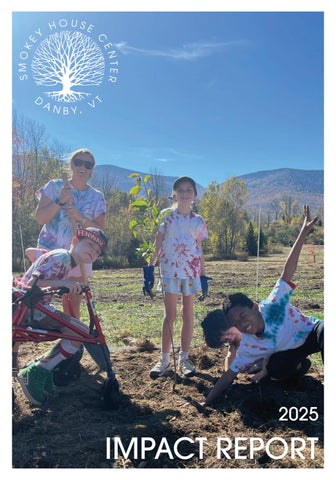
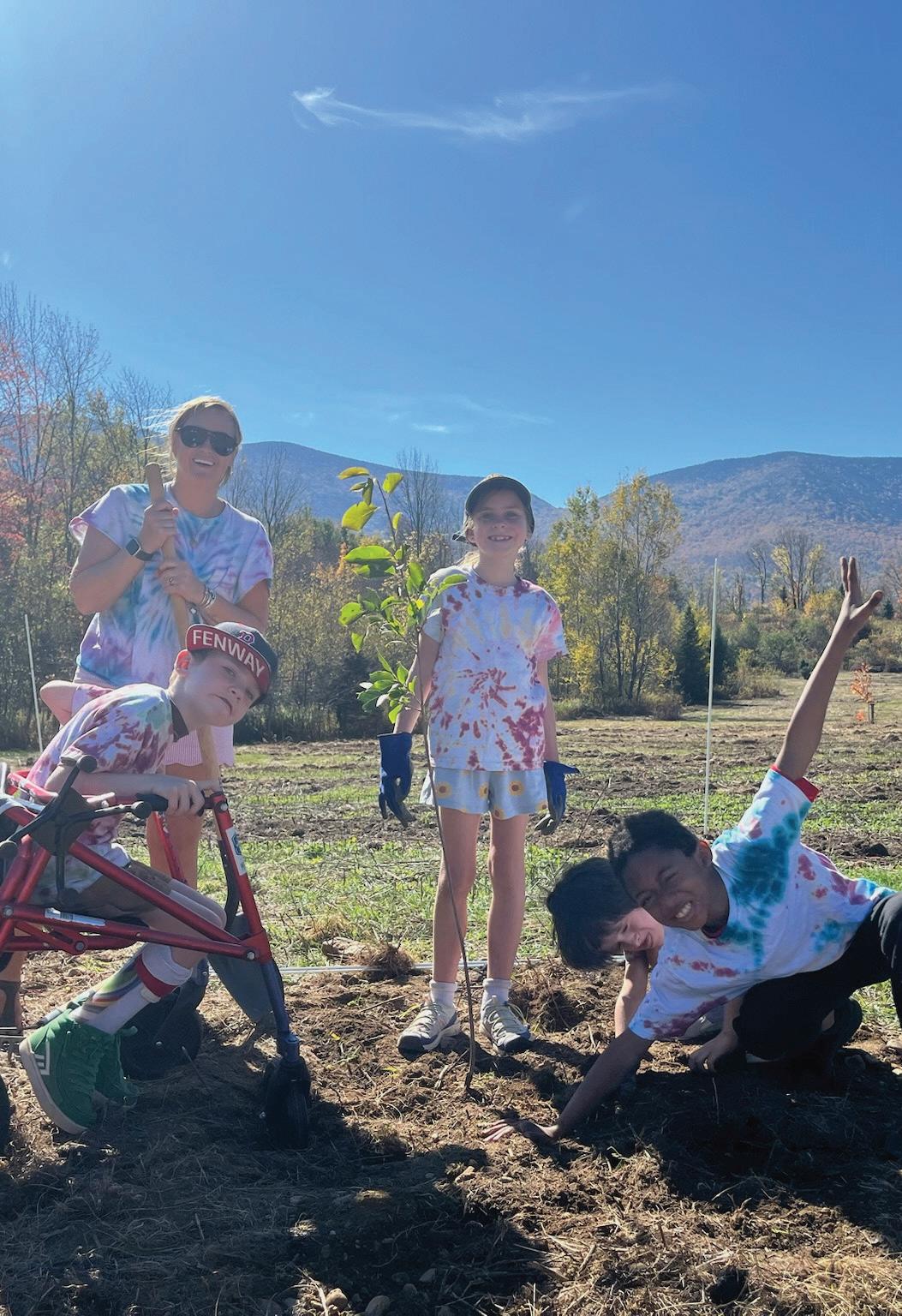
• Students and neighbors planting a new Community U-Pick Orchard that will feed the community while serving as a living classroom for years to come (pages 14 & 15).
Internally, our shared leadership model matured in its first full year, and we expanded staff capacity in forest research, education, and property stewardship. We also laid the groundwork for community science, recreation initiatives, and our upcoming Local Wood Use and Green Building Project.
Smokey House Center remains what it has always been—a place where land, learning, and community intersect—while stepping into the next 50 years. Because of your support, we remained nimble amid federal funding shifts, continuing to move our major projects forward while paying apprentices and interns for their work and sustaining no-cost programs for schools and free community workshops and events.
Thank you for being with us as we grow forward.
With gratitude,
Danielle Zimmerman
Development & Comms Director
Shared Leadership
Team
Mara Hearst Finance & Admin Director
Shared Leadership Team
Walker Cammack Program Director
Shared Leadership Team
THE FUTURE OF FORESTS
Investing in the next generation of land stewards
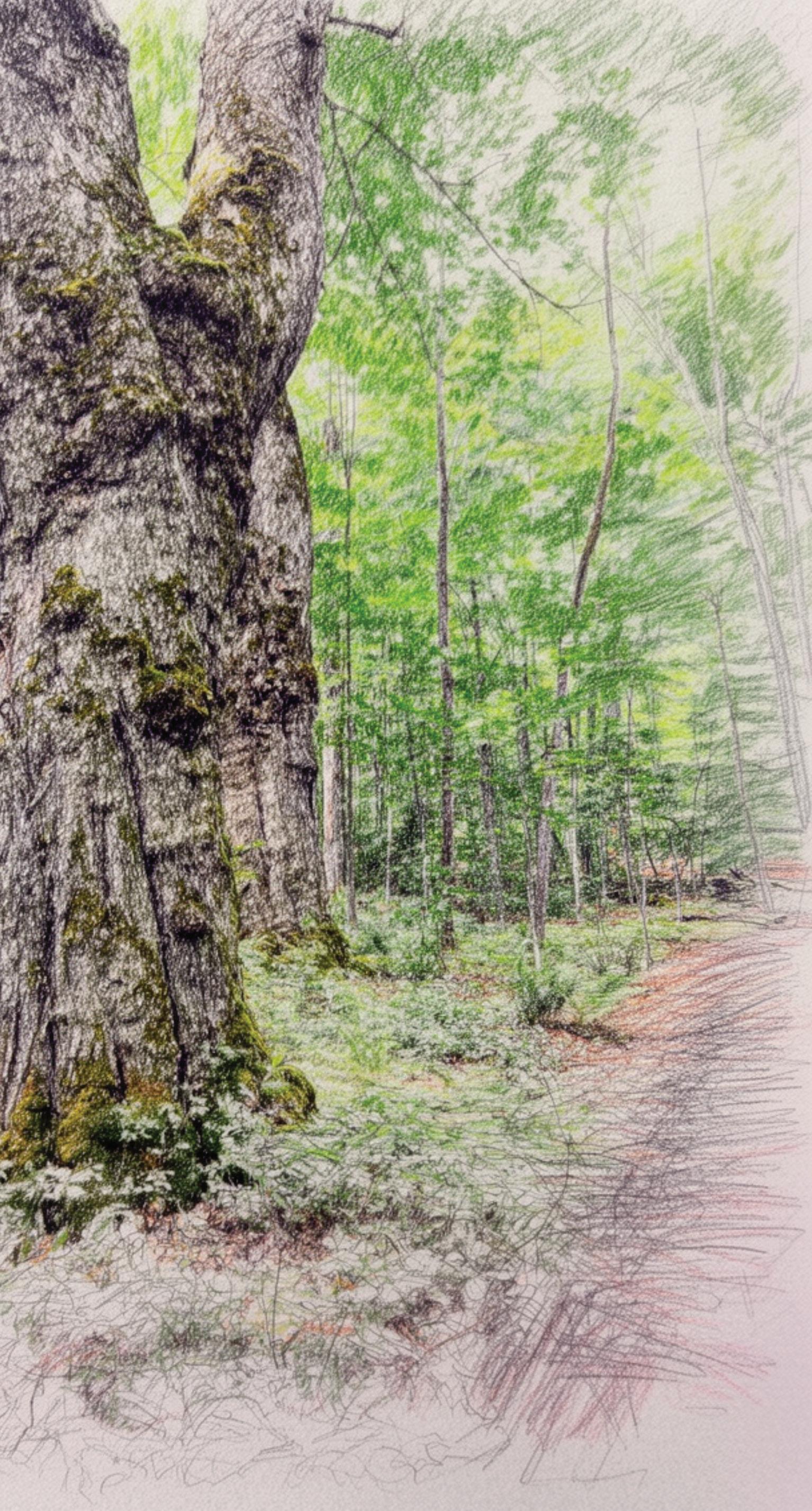
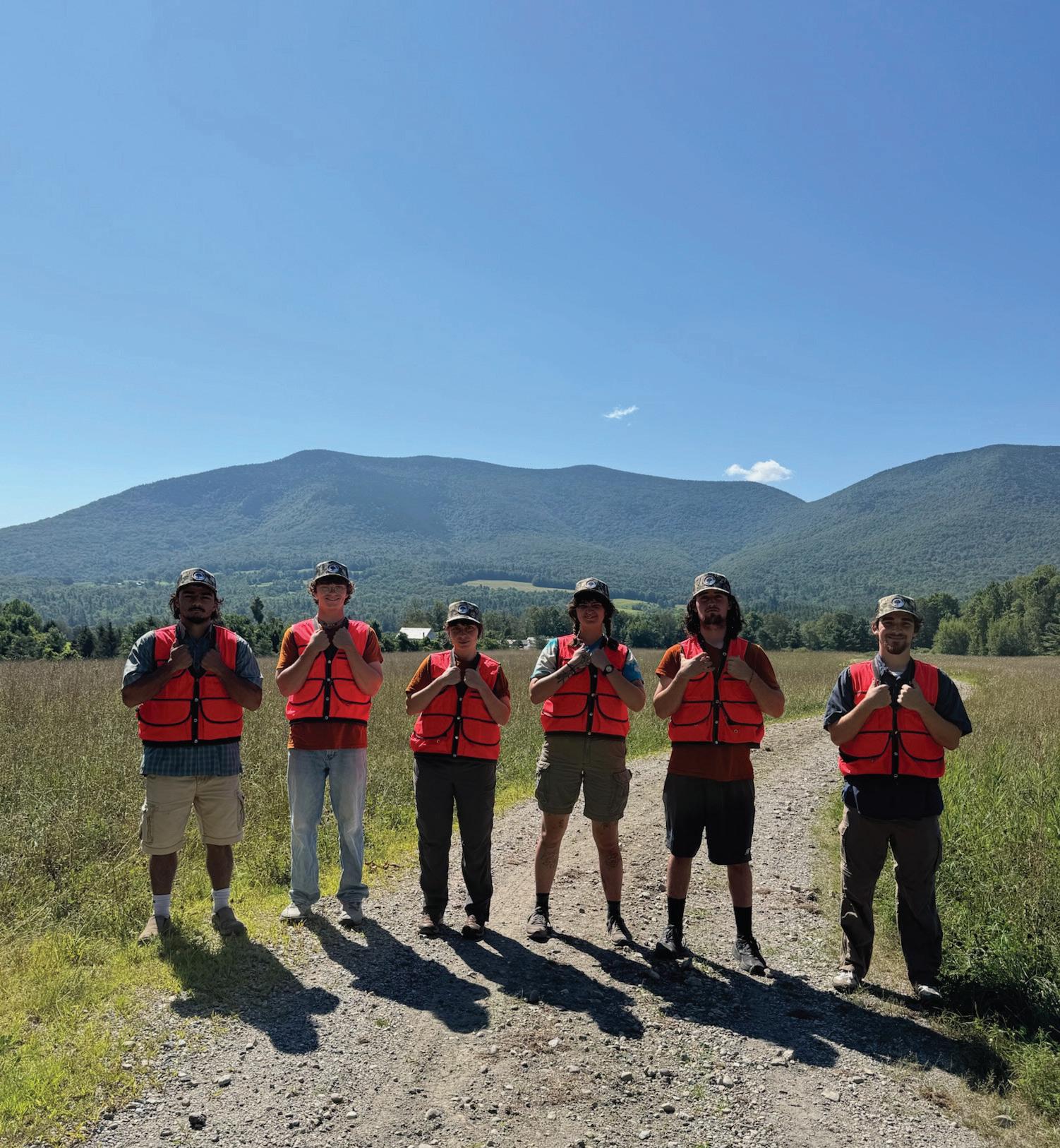
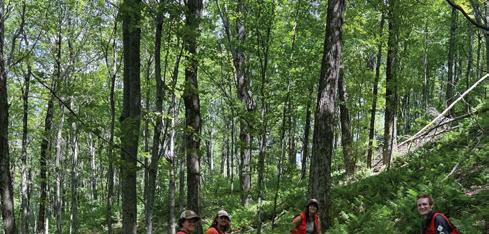
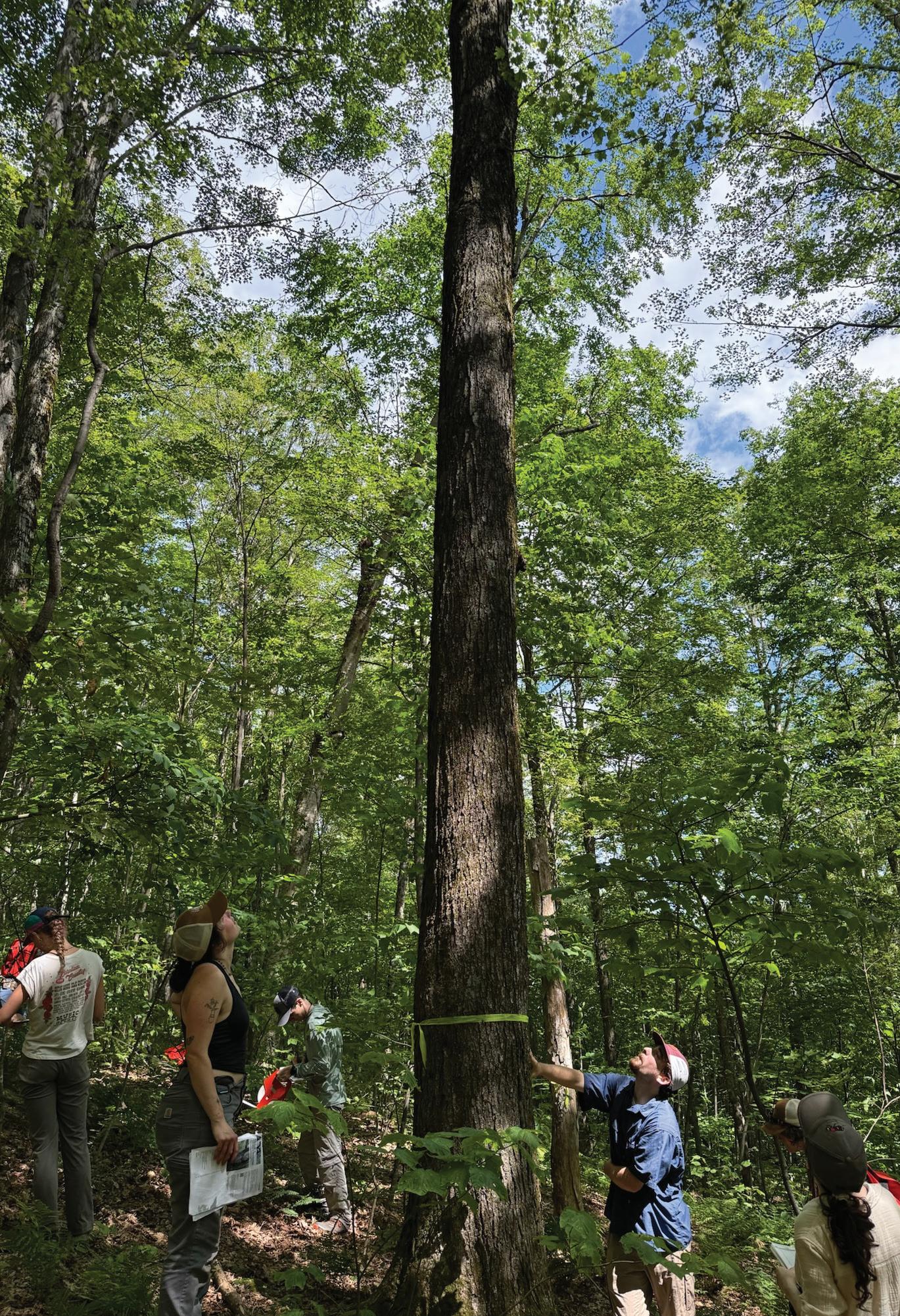
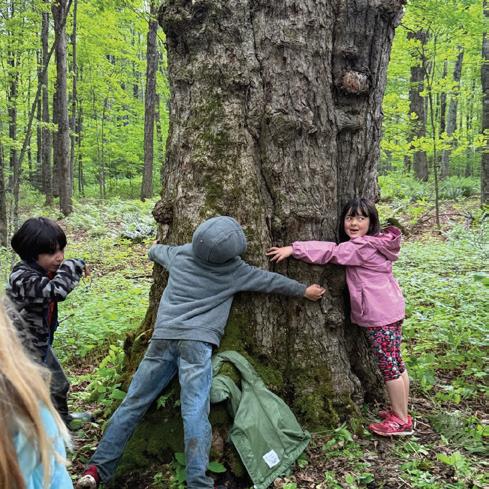
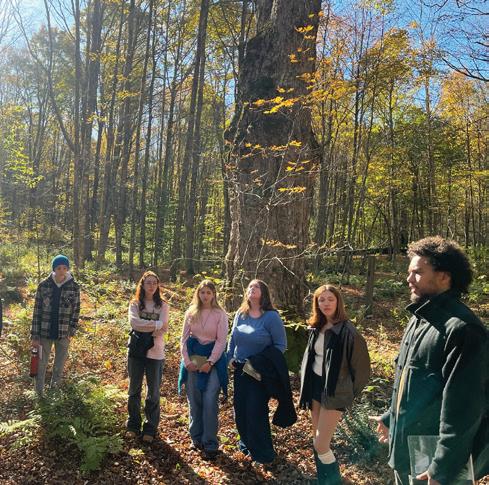
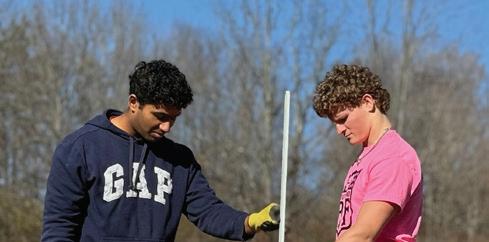
On a humid June morning last summer, six young adults from across the region stood at the base of the Sister Maples—two of the largest maples at Smokey House Center, and perhaps Southern Vermont. We asked them what they could offer this place as they began their 10-week apprenticeship. The deeper question was this: what can you bring not as a visitor, but as a contributor?
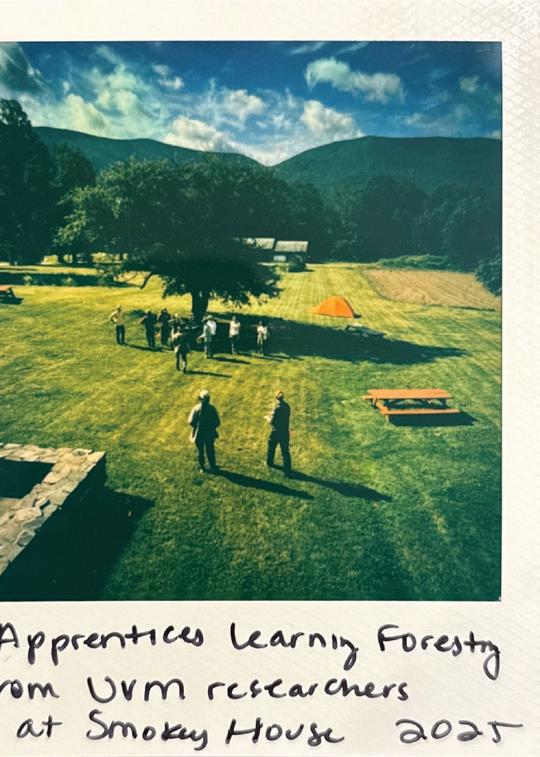
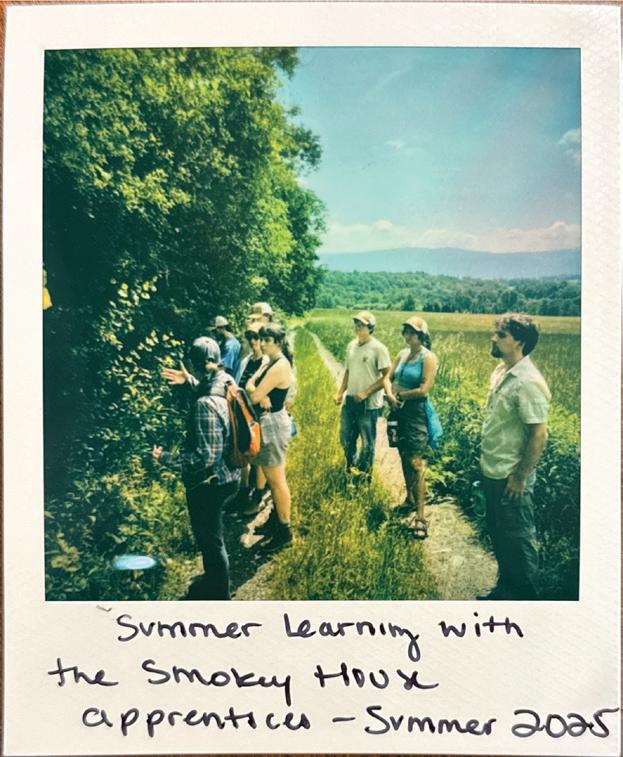
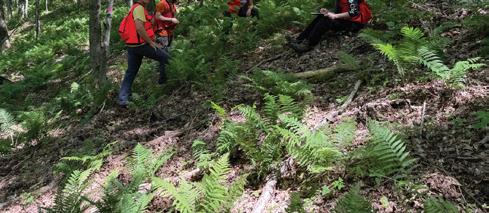
The Future Foresters Apprenticeship launched its first full season in 2025 with a simple premise: the future of our forests depends on the people willing and prepared to care for them. Over the course of the summer, apprentices learned to read the landscape— measuring trees, identifying invasive species, assisting with maple research plots, and supporting forest management planning across Smokey House Center’s 5,000 acres.
This paid, hands-on experience gave each apprentice the opportunity to explore career paths in forestry, land stewardship, and conservation. They met with regional foresters, researchers, and wood products professionals. They saw firsthand how decisions made in a forest ripple outward—to farmers, rural economies, to communities navigating climate change in real time.
But as apprentice Carmen McFadden reflects in their blog (featured later in this report), the apprenticeship was about more than building technical skills and professional networks. It was about connection and belonging. Forests hold stories— of disturbance, adaptation, and resilience—and the apprentices began to see themselves as part of that ongoing narrative.
In a state where warmer winters, invasive pests, and shifting precipitation patterns are reshaping ecosystems, Vermont needs skilled and inspired land stewards. Through the Future Foresters Apprenticeship, Smokey House Center is investing in that future—working to equip the next generation with practical tools, mentorship, and a sense of belonging to the land they will help steward.
The future of forests is not theoretical. It looks like six young people standing beneath the canopy, bringing their ideas, questions, and courage to this work—listening to those who came before them and choosing to stay and push forward.
We are thrilled to welcome six new apprentices this coming summer and to continue growing the future of forests.
The inaugural Future Foresters Apprenticeship cohort. From left to right: Kaumyar Esmael, Aidan Brown, Thea Henry, Carmen McFadden, Peter Herrick, and Dan Simler.
ON THE LAND TOGETHER
Public
programs and community engagement in 2025
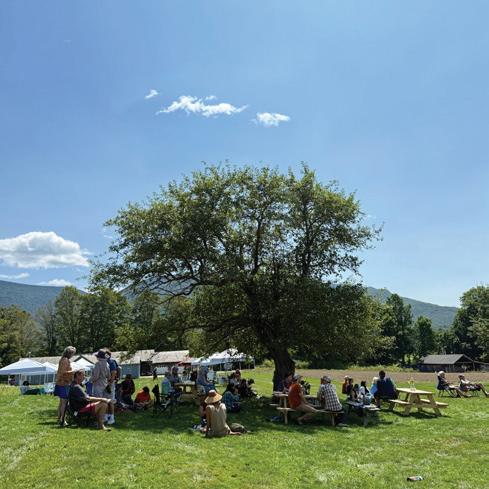
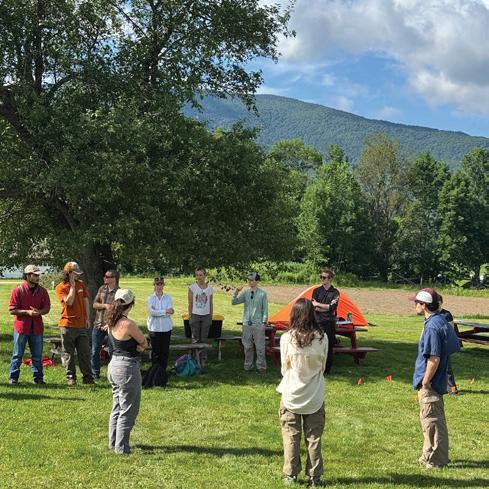
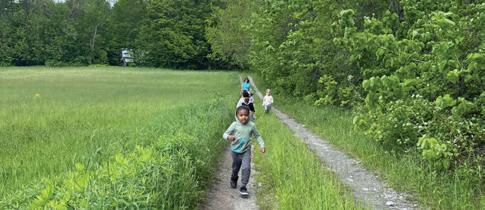
Our public programming continues to reflect what we believe: working lands are not private backdrops but shared classrooms. In 2025, Smokey House Center served as a gathering place for researchers, neighbors, landowners, writers, birders, farmers, foresters, artists, and volunteers. Across seasons, our programs invited people not just to observe working lands, but to participate in them. From early morning bird calls to the hum of chainsaws, Smokey House is a space where research, skill building, and community connection can happen side by side.
Programming Lookback
Forests & Climate in Practice
• Tom Wessels: Reading the Forested Landscape Workshop – Participants learned to interpret stone walls, canopy gaps, and forest succession as living records of human and ecological history.
• Game of Logging Levels 1 & 2 – Professional chainsaw safety certification rooted in responsible forestry management. (Look for more classes offered in 2026!)
• Women-Centered Sugarbush Silviculture – In partnership with Women and our Woodlands and Audubon Vermont participants explored sugar production and forest management.
• Vermont’s Forest Health (with Vermont Department of Forests, Parks, and Recreation) – An interactive walk and talk examining pressing challenges facing Vermont’s forests, including nonnative aggressive insects and diseases.
Biodiversity & Seasonal Discovery
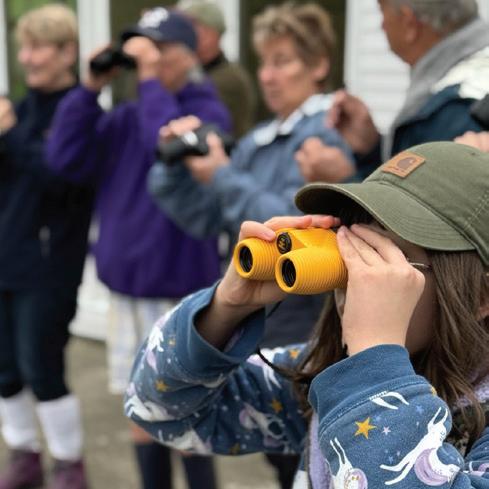
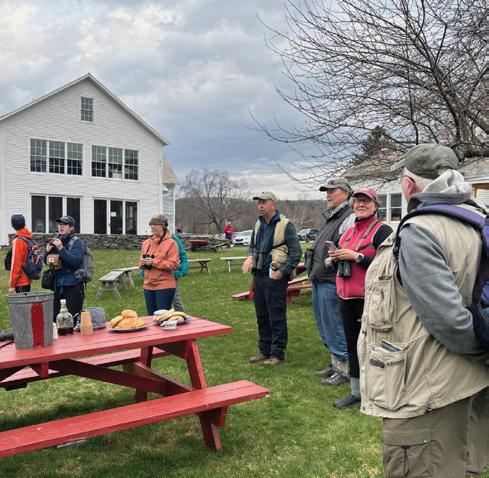
• Bird Walks – From beginner birding to incorporating technology in partnership with Rutland Audubon.
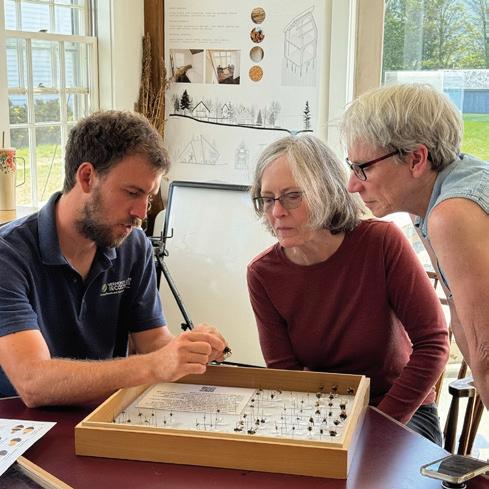
• Native Bees Workshop (with Vermont Center for Ecostudies) – Exploring pollinator health and habitat across the main campus.
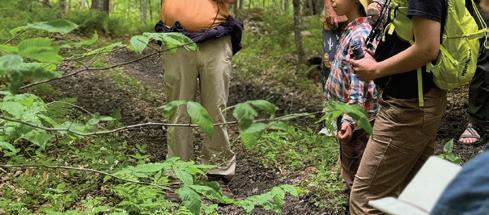
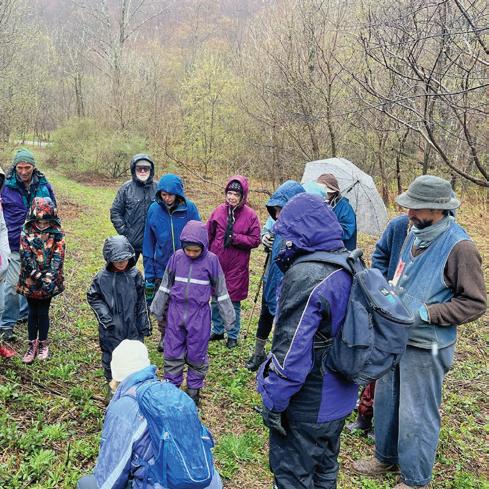
• Spring Ephemerals Walk (with Laura Beltran from Nature Investigations, LLC) – A close look at the forest floor for subtle seasonal changes and spring’s arrival.
Food, Maple & Forest Farming
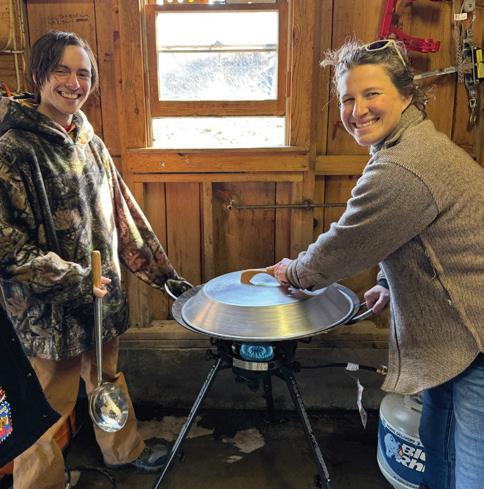
• Maple Open House and Maple Syrup in Vermont Lecture (with GMALL) – Linking tradition, science, and the future of one of Vermont’s most important industries.
• Forest Farming with Botanicals (with NOFA-VT) – Exploring diversified income streams and woodland cultivation.
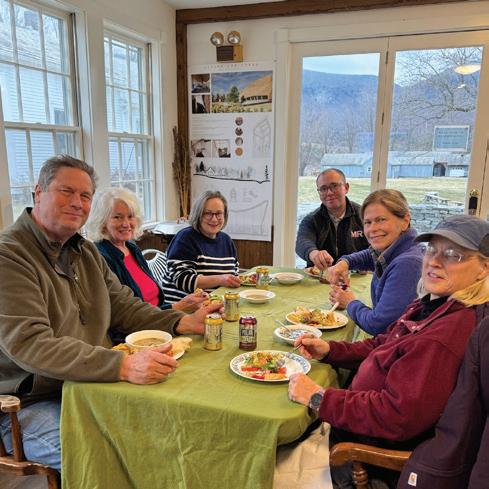
• Community Winter Potluck – Gathering around food, neighbors, and shared stories.
Community & Art
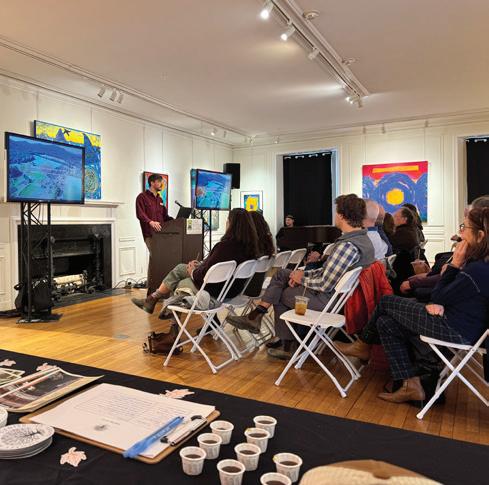
• Storying the Land with Kai Thomas (with Manchester Community Library) – A morning of literature and reflection exploring nature, narrative, and place.
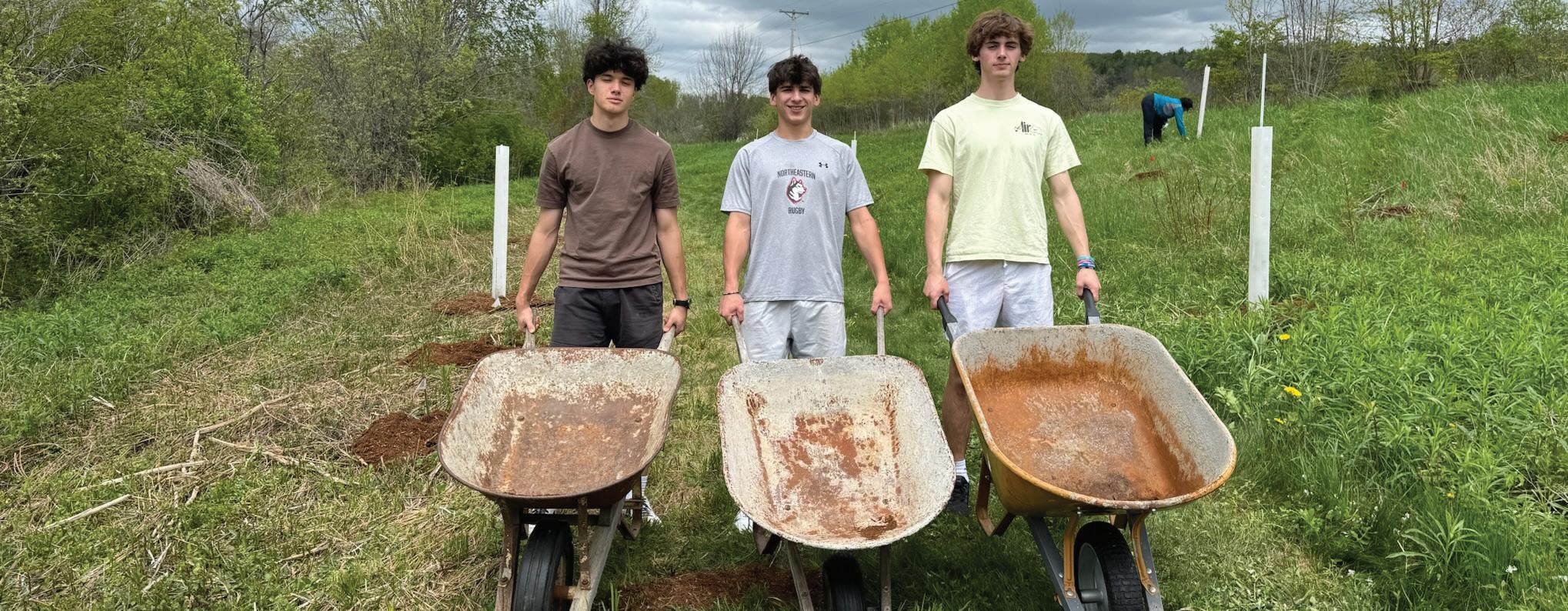
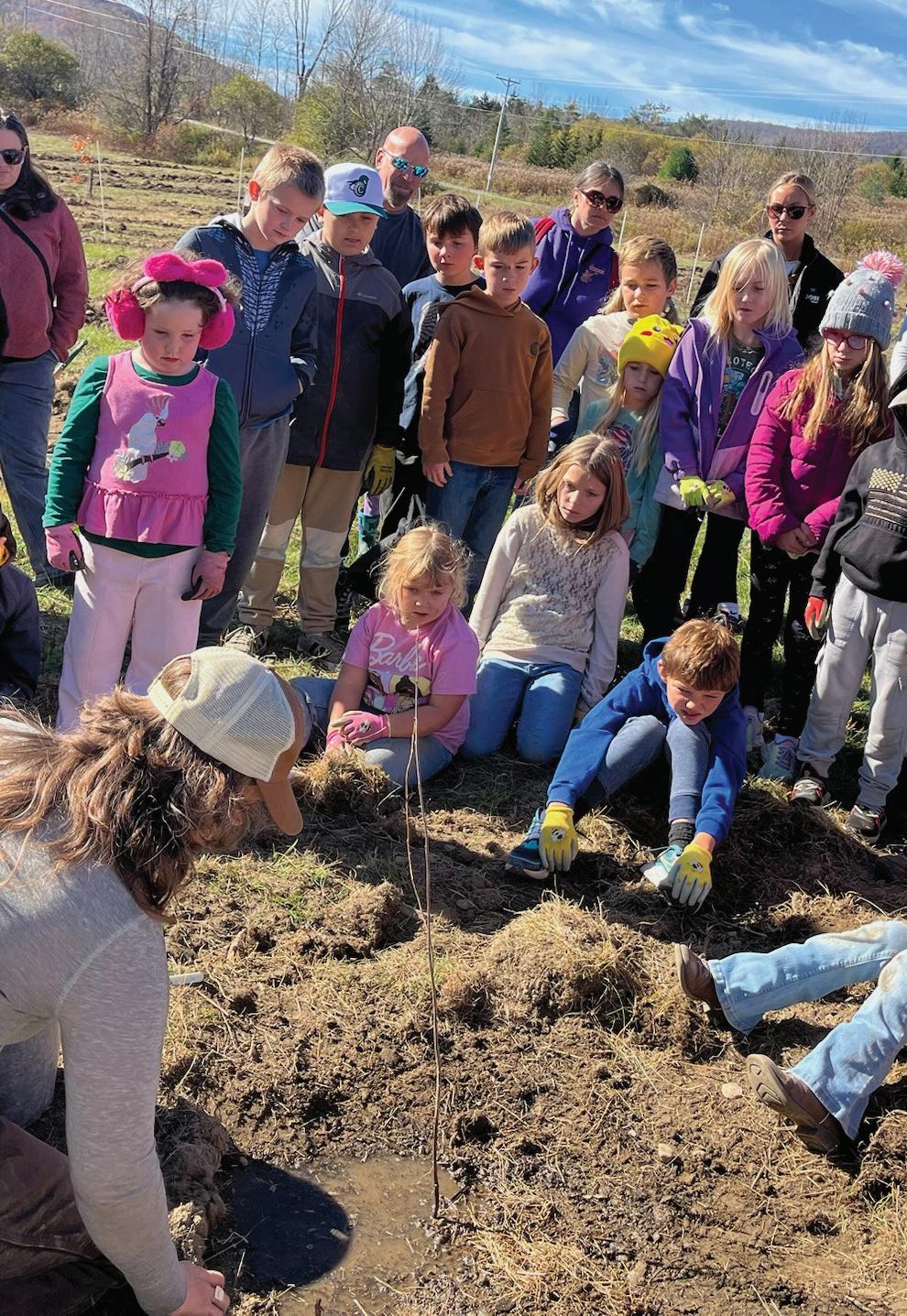
• Fall Community Planting Day – A community workday spent planting hundreds of trees in the new Community U-Pick Orchard.
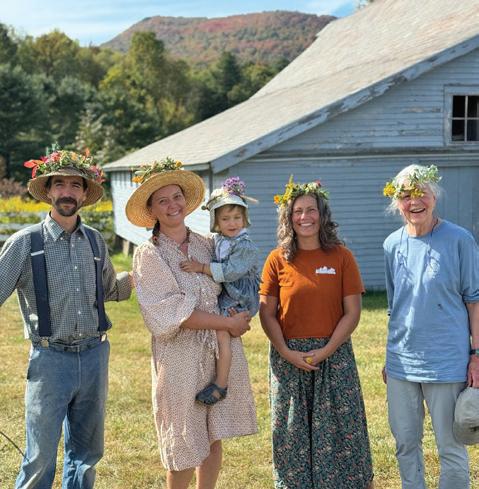
• SunDay Celebration – Kids’ activities, arts and crafts, storytime for little ones, and a community potluck.
• Winter Wonderland Solstice Celebration –Nature ornaments, storytime and a winter walk to honor the season.
2,000+
Total participants in 2025 programming
20+
Public workshops, lectures, and skill-based trainings hosted
15+
Regional partners co-hosted events with
4 Seasonal celebrations and community gatherings
1
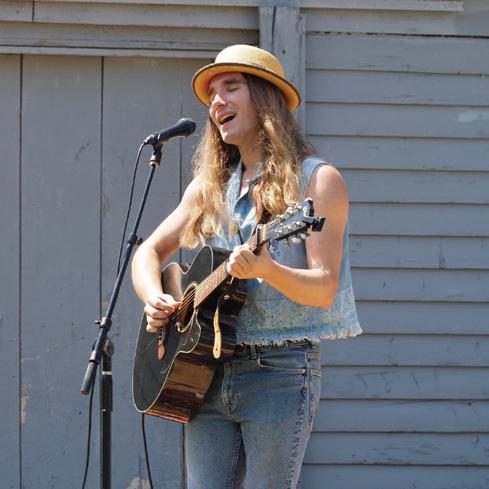
Summer Open House featuring food by RoadRunner and live music by Sawyer Fredericks
ADAPTING THE SUGARBUSH
Researching resilience in Vermont’s Sugarbush
In Vermont, maple syrup is more than a product—it is part of the culture, livelihood, and connection to land. But warmer winters, irregular freeze-thaw cycles, and invasive pests are reshaping the future of the rich northern hardwood forests where sugar maple trees thrive. Having a variety of species, life stages, and sizes of plants can make sugarbushes more resilient in the face of today’s challenges, but there is understandably little interest in cutting productive trees without sufficient research into the economic and ecological effects of such a choice.
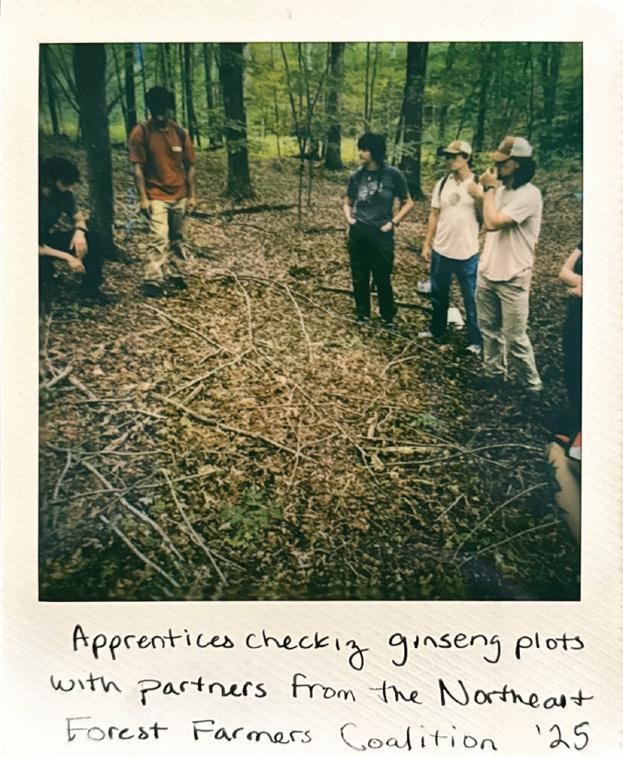
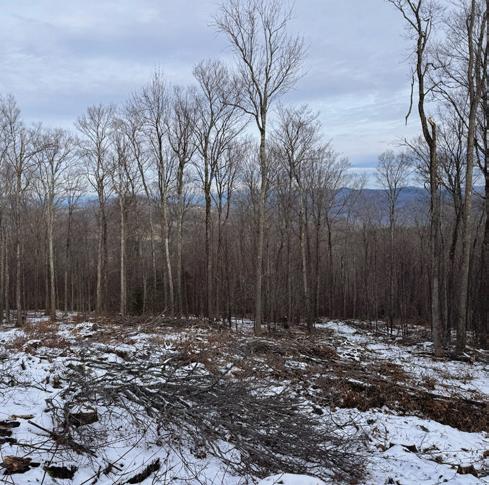
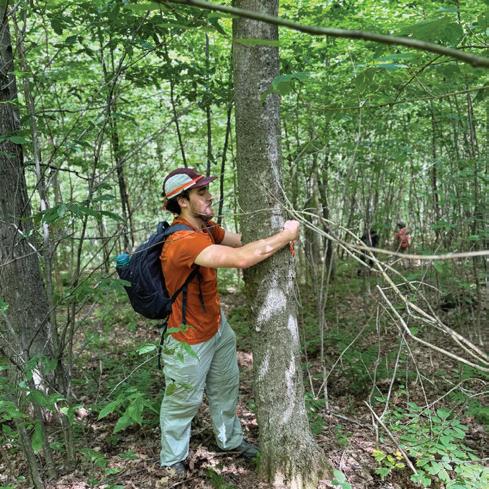
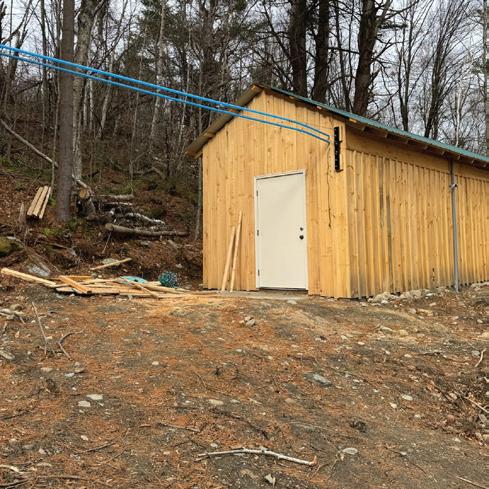
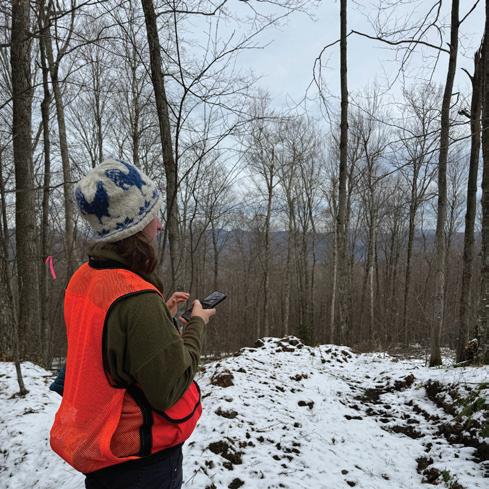
In 2025, Smokey House advanced its Climate Adaptive Maple Program with a research timber harvest designed to trial ways of achieving future resilience targets while accounting for any impacts to sap and sugar yields. Future Forester Apprentices and a returning Maple Research Intern joined staff and regional partners to gather baseline data and mark trees for silvicultural treatments in twelve research blocks within the new Dorset Peak Sugarbush. Starting in 2027, sap volume and sugar yields will be measured independently from each treatment block in a long-term monitoring study. Over time, this data will help answer the question: how can maple producers adapt today to ensure viable sugarbushes for generations to come? Alongside partners including University of Vermont’s Proctor Maple Research Center and Vermont Audubon’s Bird-Friendly Maple program, Smokey House’s research helps inform a broader conversation about the future of maple in a changing climate.
1
new sap house with capacity for 6,000 taps treatment blocks, 4 total treatments, 3 replicates each 12
13
total releasers in the new sap house
174 acres of the new Dorset Peak Sugarbush
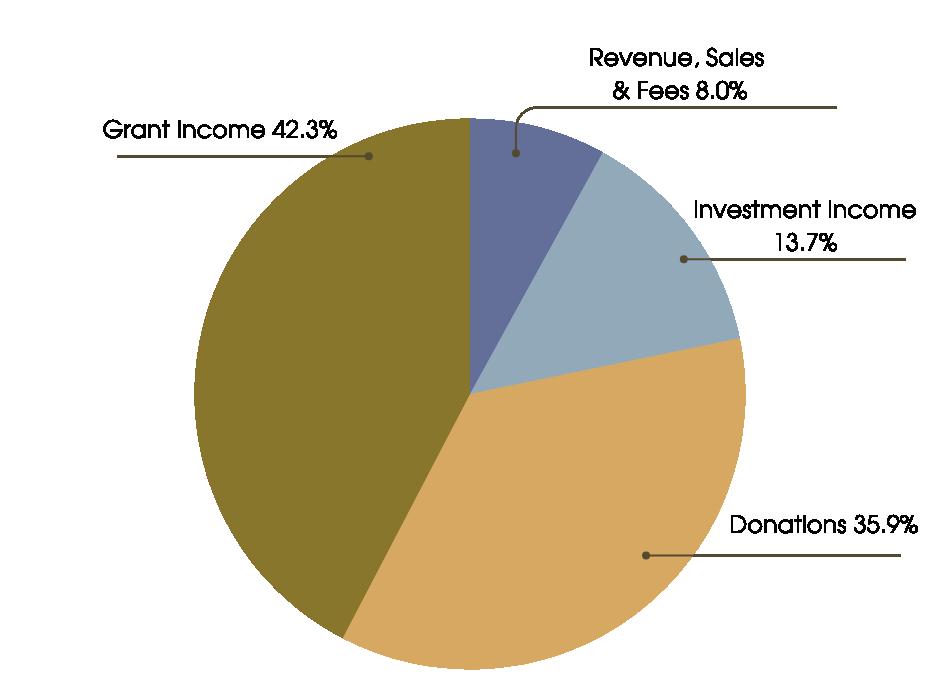
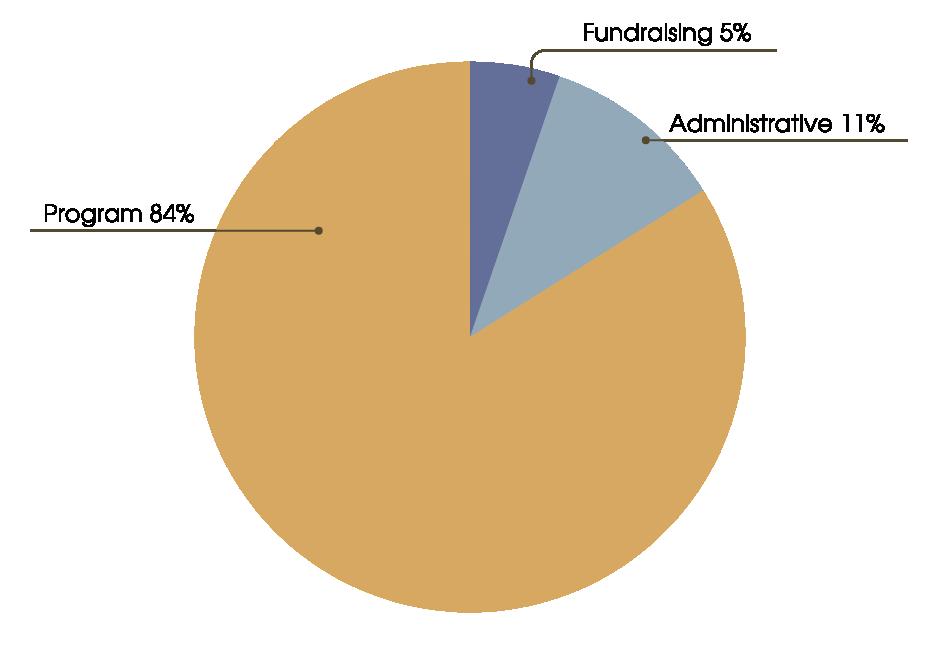
$907,215
$1,019,491
SOURCES OF INCOME EXPENSES
Smokey House Center is a 501(c)(3) organization. Deficit covered by additional investment draw. These are unaudited numbers. A copy of Smokey House Center’s 990 tax form is available upon request by emailing info@smokeyhouse.org.
THANK YOU
And thank you to the many individuals who supported our work in 2025 through donations, volunteering and in-kind gifts.
To the generous support of these foundations & businesses
A Safe Place Self Storage
Alcyon Foundation
Arlington Garden Club
Auctria
Cleveland H. Dodge Foundation
The Collaborative
Cronin Family Fund
David C. King Contractor
Davis Conservation Foundation
EQX Construction Company, Inc.
Green Mountain Power
Green Mountain Girls Association
H.N. Williams
Lawson’s Finest Liquids
Manchester Lions Club
Mary Mitchell Miller Real Estate
McChesney Real Estate Inc.
McClure Foundation
Melinda Gray Ardia Environmental Foundation
Michael White Construction LLC
Northeast Agricultural Education Foundation
Patagonia
Salem Farm Supply
Seattle Foundation
Sissy’s Kitchen LLC
Stewart’s Shops
TD Charitable Foundation
The Allen Family Charitable Fund
The Antheia Fund
The Cunningham-Gardiner Foundation
Magner, Linehan, & Koss Family Foundation
The Monarch Foundation
The Mountain Goat
The Perkins Charitable Foundation
The Right Track Foundation
The Vermont Country Store
Tracking Club of Vermont
Vermont Community Foundation
Vermont Transco LLC
Windham Foundation
As a local outfitter, we value the way Smokey House Center brings people together around land stewardship and outdoor learning. “ ”
The Mountain Goat
POINT OF VIEW
From the Forest: Reflections from being a Future Forester Apprentice
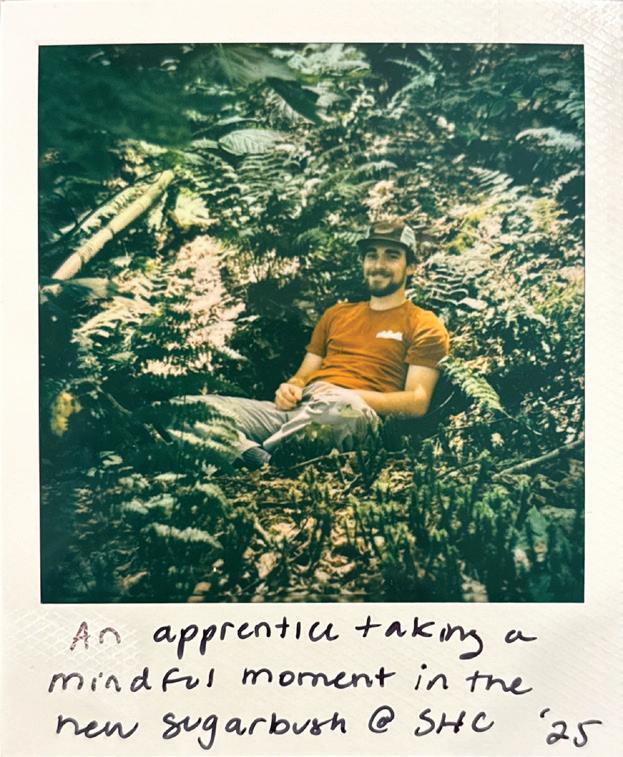
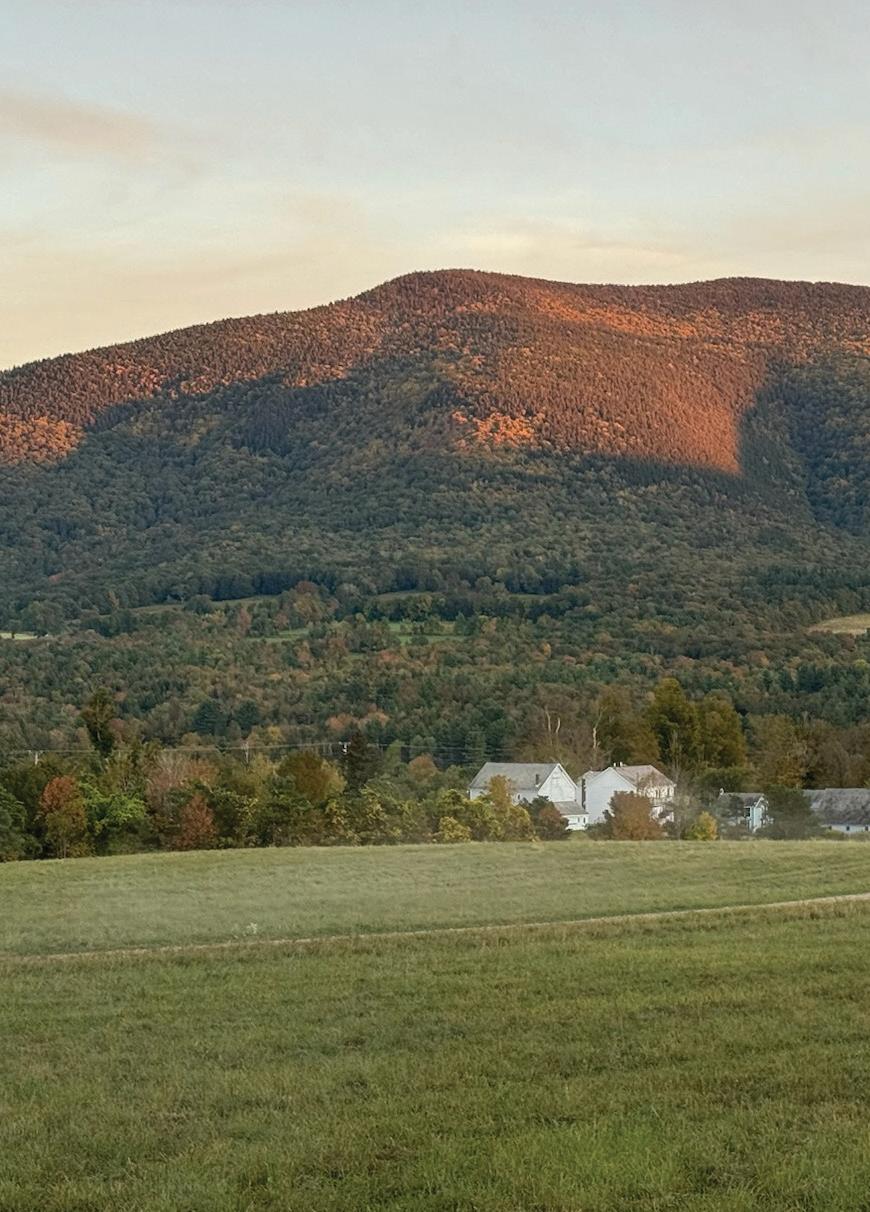
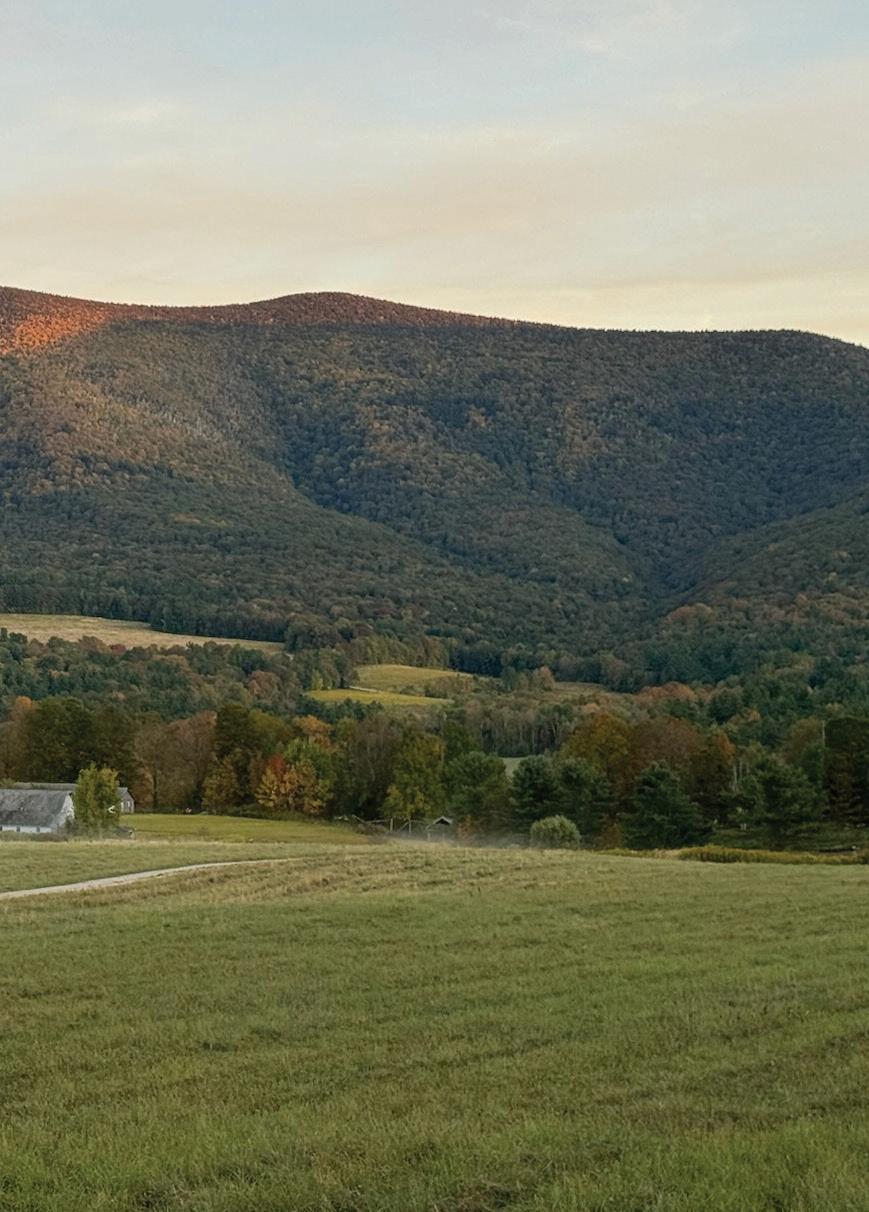
It’s Monday morning and my alarm is going off. I’m not a morning person, but I’m especially tired today. Last night, Earth Sky Time Community Farm hosted a concert and I spent hours dancing barefoot in the mud. I haul myself out of bed, brush my teeth, and get dressed. Today is a tree marking day which means the clothes I wear will get paint on them, so I throw on my ratty flannel and a pair of workpants. On my walk to work I’m greeted by my most favorite view: Dorset Peak, looming three thousand seven hundred and seventy feet tall. Whizzing past is an orange blur - Peter biking to work. I tend to walk on the road to avoid dampening my shoes in the morning dew, but seeing as a steep hike through tall reeds awaits me, I cut my losses and take the grassy path beside the pond. Pu-luck. Pu-luck. Pu-luck. Green frogs call throughout the entire summer season. They’ve become good friends of mine.
The conference barn is the nucleus of our organization. Every weekday at (loosely) eight AM, everyone arrives. Apprentices will group up downstairs and discuss what the day has in store. It’s an ACER day, which means we’ll be devoting our time to the climate adaptive maple harvest set to be cut this fall. Thea, Kaumyar and I go to refill the paint cans while Dan goes to grab the gator. Peter and Aidan collect the tools we’ll need - two DBH tapes, the laser hypsometer, and as much blue flagging as we can stuff in our pockets. We load paint cans, paint guns, tools, backpacks, and the medkit into the bed of the gator. Dan drives the gator over to the bottom of the trail (he loves that thing so much) while the other five of us pile into a car. We park in one of the fields that is leased out to one of Smokey House’s partner farmers, Yoder Farm. I can’t help but admire the rows of gorgeous crops he’s been tending to.
Three hours later we are up in the sugarbush and the typical jungle of brown and green is spotted with orange slashes and vibrant blue flagging. We marked the boundaries of three one-quarter acre gaps. This treatment is called group selection, a silvicultural prescription meant to mimic a medium canopy disturbance. Placing the three groups gave us significant trouble, because three streams intersect the treatment boundaries and streams must be buffered fifty feet from a harvest. Now we’ve figured it out and it’s time for lunch. I packed a veggie wrap, and apple slices with peanut butter. We sit for thirty minutes, talking about how many raccoons we could take in a fight, who would survive a bear attack, and how fast we think Kaumyar can run. During this time, I listen to the birds. There’s a black-throated green warbler (zee zee zo zo zee), an eastern pewee (peeeewee!), a red-eyed vireo (weeeee-Yuh?-weeee-Yoo) and the occasional who cooks for you? from the barred owl.
After lunch, one group stays behind to tally the timber and the other group moves on to delineate more groups. Marking group boundaries proves difficult. The process goes as such: one person runs around flagging edge trees while another follows and takes GPS points of each tree on
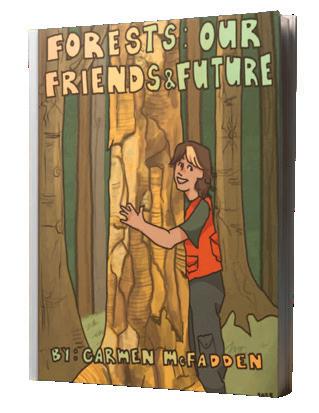
You can find a digital version of the comic, Forests: Our Friends & Future, that Carmen made for their forestry class at UVM by scanning below:
AvenzaMaps. After a couple trees have been tentatively flagged, we use Avenza to calculate how much area we’ve still got to cover. The difficulties arise when Avenza gets confused, and then we have no clue whether the gap we’ve marked is one quarter acre or one tenth of an acre. Once we feel confident enough with our flagging, we use the TreCoder paint gun Steve Handfield lent us, and mark each edge tree with double dots facing in and a plus sign facing out. This goes on and on, accompanied by debates over who would be each Scooby Doo character. When it’s time to go down the mountain, we entertain each other with more silly questions like: If you were walking in the forest and found a man in a jar, would you open it? I like to walk in a zigzag pattern down the steep hill. It hurts my knees less, and it feels like a game.
Pulling into main campus, the six of us resemble a ragtag team of zombie survivalists. Covered in paint specks, reeking of sweat, and bleary-eyed, we’re still excited to tell Walker about the day. Nettle, his mystery mutt, trots up to us and just as quickly trots away disinterested. She’s motivated by Walker’s attention only (unless it’s lunchtime, and then she’s your best friend). We report back our findings of the day: fresh deer scat, bear scratches on a beech, and what might have been a clump of coyote fur.
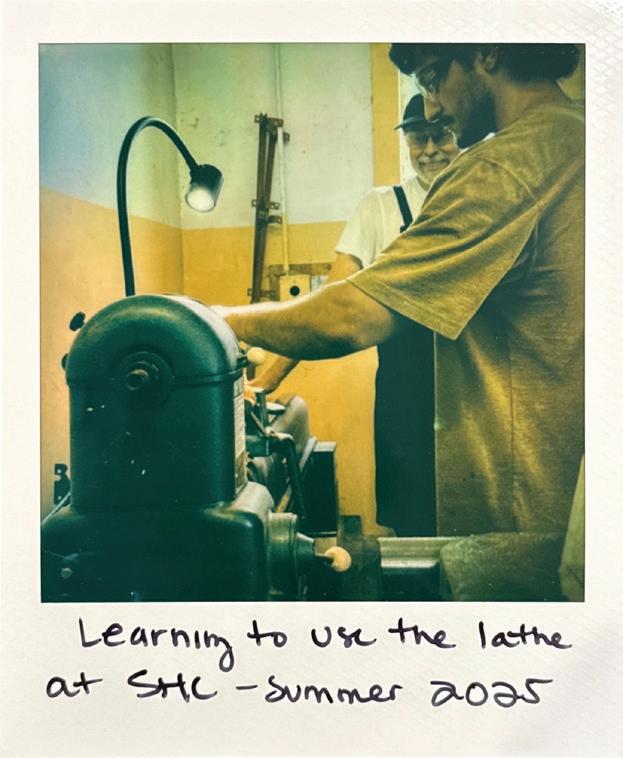
Once we’re set free at four, we all head off to Herrick South, our home for the summer. Peter stays back to play in the woodshop. He’s been making one spoon a day! Next is a baseball bat, he says. Thea and Rose drive off to go swim at Emerald Lake, but my favorite place to cool off is much closer. Aidan and I set off in a brisk jog. Nearly instantly Kaumyar is past us - he is so fast. One mile later, I’m still catching my breath while descending the slippery rocks into the swimming hole. Surrounded by jagged phyllite, the eight foot waterfall cascades into a sparkling basin only accessible by a steep, rocky decline supported by the rope tied to a yellow birch. Kaumyar is already in, thrashing around in what he calls his water workout. I slowly work my way in. The bluefins make their way over to greet me, and I feel them bumping against my feet. Looking up, the eastern hemlock I’ve come to think of as my guardian looms over me.
Then I dive. The water catches me, cradles me, propels me forward. Cool pressure surrounds me on all sides and as I break the surface, I know I am where I’m meant to be. Aidan is making a rock stack behind me. Kaumyar is practicing tricks. When I get home, dinner will be on the table and I will have no qualm in helping clean up.
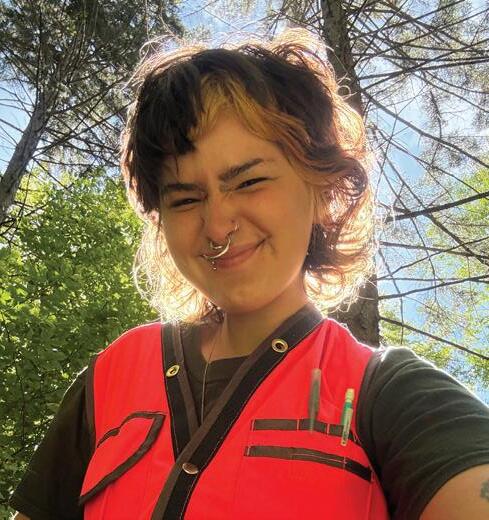
Carmen McFadden 2025 Future Forester Apprentice
LEARNING FROM THE LAND
Youth engagement across seasons and ecosystems
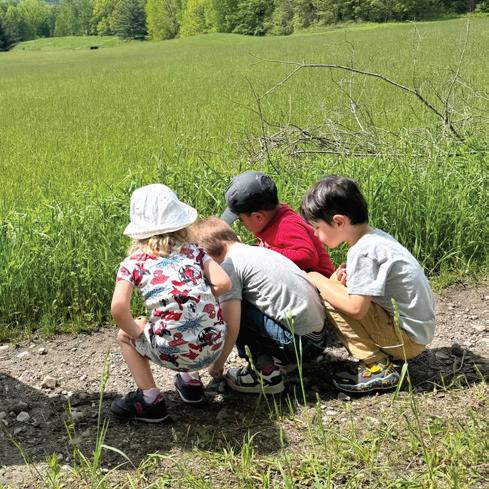
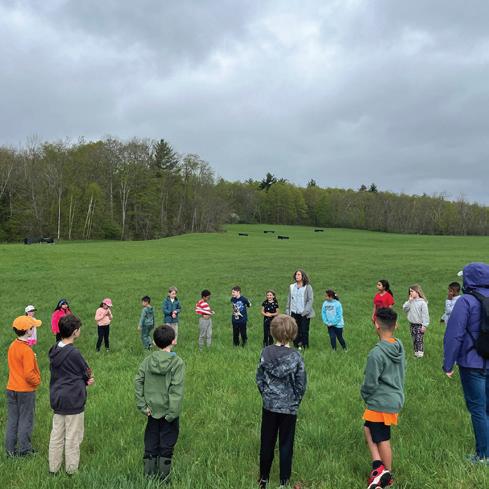
In 2025, young people engaged deeply with the living systems of Smokey House Center.
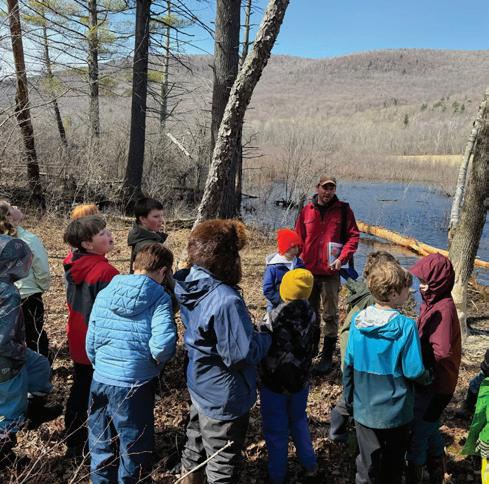
In spring, students explored delicate spring ephemerals, learning how forests awaken and how biodiversity depends on subtle seasonal rhymes. Students also examined beaver habitats, discovering how one species can reshape water, wildlife, and entire ecosystems.
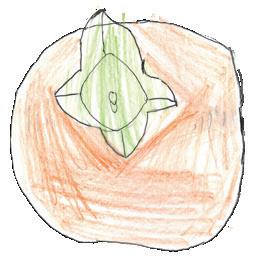
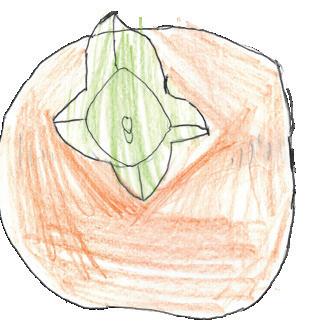
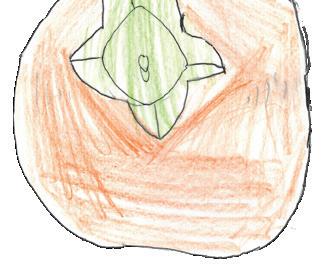
In fall, students planted nearly 300 trees in the new Community U-Pick Orchard including persimmon, asian pear, peach, plum, serviceberry, and hazelnut. Once mature, this new system will contribute to a food network that will nourish families for decades to come. Through a residency with author Kai Thomas, Burr & Burton Academy high school students explore storytelling as a way to connect identity, land, and resilience.
Across forests, wetlands, and orchards, youth plugged in as research partners. In every planted tree, written reflection, and careful observation, they stepped into their roles as stewards of this place.
750
280
students who visited for programming in 2025 trees planted in the new Community U-Pick Orchard
18
number of schools involved with programs
20 students from BBA who participated in author Kai Thomas’s residency writing workship
I have always loved being in nature, but nowadays it is hard for me to set things aside and find time to connect with the land. Through this writing workshop, I experienced again, as if for the first time, the rush of joy, inspiration, and peace that, as a child, I happily wrapped myself up in every day.
Burr
and Burton Academy Student
artwork by students from Floodbrook School
WORKING THE LAND
Partner Farmers at Smokey House Center
Smokey House Center is a conserved landscape – and a working one. Smokey House Partner Farmers steward fields and pastures across the property, demonstrating that agriculture and conservation are not separate pursuits, but deeply connected practices.
Yoder Farm
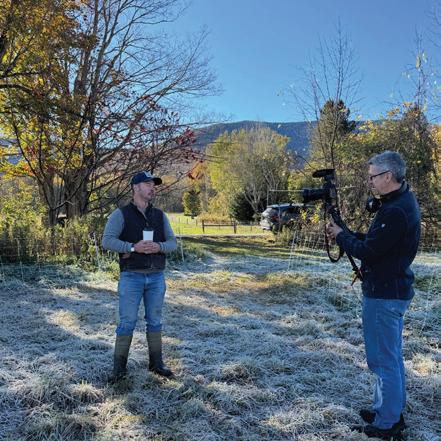
Yoder Farm, led by Rachel and Ryan Yoder and their children Asa and Taurin, continued diversified crop production and meat birds on Smokey House fields, supplying regional markets while maintaining healthy soils and productive farmland. Scan to watch filmmaker Jim Rogalski’s feature on Smokey House Center highlighting Yoder Farm in action:
600 pastured meat chickens raised on organic feed and pasture
60% of sales from vegetables compared to 40% from popcorn, vinegar, and chicken
Dorset Peak Sheep & Cattle Co.
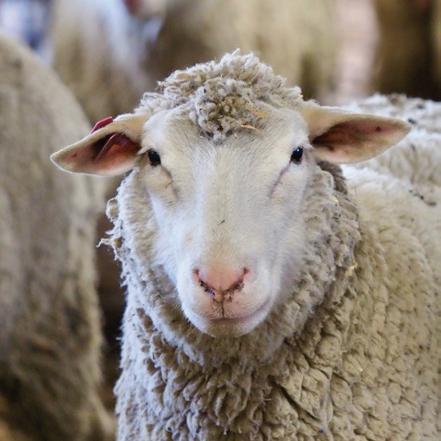
Dorset Peak Sheep & Cattle Co., led by Caleb Smith and his daughter Ava, manage grazing systems that strengthen soil health and pasture resilience. This year, Caleb implemented a custom sheep weighing system to improve flock management and track animal health more effectively. Learn more about the new system by scanning this QR code:
213
acres rotationally grazed
2
new additions: guard dog ‘Una’ and pedigreed ram ‘Brick Top’ arrived in December
Support both farms—and other regional producers—by visiting the Farm Stand at Smokey House Center. You can purchase woolen wear made from Caleb’s flock through his Instagram, @dorsetpeaksheepco.
ACER Access
Allen Street Campus Middle School
Ash Protection Across Waponahkik (APCAW)
Audubon Vermont
Bennington College
Burr and Burton Academy
Burr and Burton Academy Target Program
Currier Memorial Elementary
Dorset Peak Sheep & Cattle Co.
Dorset School
Floodbrook Elementary
Forest Stewards Guild
Forest Strategies, LLC
Gagnon Lumber
Game of Logging
Goodrich Logging
Goodrich Maple Farm
Green Mountain Community School
Intervale Center
Kroka Expeditions
Lewis Maple
Long Trail School
Manchester Elementary Middle School
Maple Street School
Massachusetts Woodlands Institute
Mettawee Community School
Middletown Springs
Mill River Union High School
New Frameworks
Northeast Forest Farmers Coalition
Northeast Woodland Training
Northern Borders Regional Commission
Northshire Day School
NorthWoods Stewardship Center
NOFA-VT
NSF-STRIVE
Old Roots Farm
Parson’s School of Design Healthy
Materials Lab
Poultney Mettowee Natural Resources
Conservation District
Proctor Maple Research Center
Red Fox Community School
Rutland High School
Rutland High School YES Plan Program
Sinuosity
Steve Handfield, CF
Strength Perspective, LLC
Sunderland Elementary
Sustainable Agriculture Research and Education (SARE)
University of Vermont Rubenstein School of Environment and Natural Resources
UVM Extension
Vermont Center for Ecostudies
Vermont Department of Forests, Parks, and Recreation
Vermont Farm to School & Early
Childhood Network
Vermont Green Builders Network
Vermont Land Trust
Vermont Outdoor Recreation Economic Collaborative
Vermont State University
Vermont Sustainable Jobs Fund
Vermont Woodlands Association
Yale School of the Environment
Yoder Farm
An ecotone is a region of transition between two habitats - for example the place where a forest and a field meet - that is more diverse and abundant than either single habitat. Smokey House Center is dedicated to building a community that mirrors the beauty and productivity of an ecotone, where people of all races, ethnic and economic backgrounds, gender identities, sexual orientations, religions, ages, political viewpoints, lived experiences and abilities are encouraged to participate in and impact the organization’s work and decision making. In order to make this possible, Smokey House Center recognizes that it will need to allocate its resources thoughtfully so that everyone involved is able to participate fully and equally in our shared work and enjoy equal access to desirable outcomes.
Upcoming Events
TYPE-IN & DRABBLE WRITING WORKSHOP
Saturday, April 11 1pm-3pm BIRD-FRIENDLY FOREST MANAGEMENT
Saturday, April 18 8am-10am THE EXTRAORDINARY CATERPILLAR MOVIE SCREENING Friday, April 24 6pm-7:30pm ASH CONSERVATION GATHERING Monday, April 27 10am-4pm
WOMEN-CENTERED SPRING EPHEMERALS WALK Tuesday, May 5 5pm-6:30pm GAME OF LOGGING June, October, & November Check the website for dates and times
Check our website for additional events and to register:
www.smokeyhouse.org
802-293-2300 All photos by Smokey House Center staff unless otherwise noted.