
cesar chavez controversy

dhth low cortisol foods




THE SMOKE SIGNAL
VOL. 61, NO. 8
FUSD revises Board Policy to limit cell phone usage
By Mansi Mundada, Aarav Vashisht & Lucas Zhang Sta Writers
FUSD drafted stricter anti-phone regulations on February 25 as part of its compliance with the Phone-Free Schools Act, which Gov. Gavin Newsom signed on Sept. 23, 2024. e newly revised Board Policy 5131.8 now requires student cell phones to be powered o during instructional minutes. In light of the statewide movement to lower mobile device usage in schools, FUSD’s effort aims to curb potential classroom distractions.


e Phone-Free Schools Act requires CA school districts to adopt a policy that signi cantly limits or prohibits the use of smartphones and other personal electronic devices during class time and update that policy every ve years. e bill’s proponents contend that reduced cell phone use can improve students’ academic standing, reduce cyberbullying, and promote more in-person interaction. e CA government approved the policy with the broader goal of supporting student well-being.
FUSD’s previous phone policy only allowed students to use their devices in cases of emergency — if permitted by a teacher or administrator — or if the student’s education program incorporated classroom activities that required device use. However, at MSJ, enforcement of the policy depends heavily on the teacher. Some instructors require students to place their phones in hanging wall organizers during class time, while others permit occasional or regular use. “I cannot both try to deliver content and police phone usage at the same time, so I ask that students try to learn how to take responsibility for their own cell phone usage,” Science Teacher Sarah Mueller said.
In compliance with Assembly Bill (AB) 3216, FUSD’s revised policy requires students to power o



their phones during instructional minutes starting from the 2026-27 school year. Many MSJ educators have expressed their opinions on the disruptive impact of smartphones in their classes. “[Some of my students] walk in, they sit down, and their phone immediately comes out, and they’re on their phone for what seems like the entirety of the class period,” Mueller said. Some teachers have raised concerns about the limitations of the new policy. “We’ve seen a notable decline in social abilities and academic abilities [among students] … and I don’t think the state went far enough. [FUSD] should have adopted policies more in line with Scandinavian countries … [where] textbooks and pencil are the best way to educate,” Science Teacher Lane Melcic said.
In response to the district-wide policy revisions, the MSJ administration has made plans to create a schoolwide cell phone policy and uniform guidelines for consequences the o ce would give to people they nd violating the rule. e sta plan to establish and revise the policy during the next few months, working during the summer to have the rules ready for August. During three dedicated professional devel-

“Sometimes you have to coordinate with your parents to drop o lunch, or you don’t have your clothes for PE, and sometimes you need them to bring projects for you from home that you can’t bring earlier in the day because it’s a hassle to keep it around with you.”
— Sophomore Maansi
Virk
opment days before instruction begins, the administration will communicate the new guidelines with all teachers to make sure they are all on the same page. “But even before that happens, I’m going to develop the plan with the
Students voice concerns on pe curriculum
By Luna Bichon, Joseph Miao & Michael Qin Sta Writers
Concerns among students include insu cient instructional minutes, an unclear rubric for the swim unit, and an inability to do make-up work. For three decades, Coach Peter Vaz led the PE curriculum at MSJ. Followed by his retirement at the end of the rst semester in December 2025, Coach Nels Larsen lled in the role, introducing adaptations to routines. Sophomore Leina Ikeda, alongside PE students, believe the warmups have a ected the ow of the class. With Ikeda assuming the role of liaison between the PE students, coaches and admin, she has been at the forefront of advocating for changes to be made to the structure of PE classes. Since the second semester began, Coach Larsen installed new warmups, including two minutes of jogging, skipping, sidesteps, karaoke, lunges, and other stretches, in addition to the traditional situps and pushups. Ikeda alleges that each day, fewer than 15 minutes out of a 52-minute long period were dedicated to actual physical activities. is signicant reduction in activity time raised concerns over potentially violating CA’s Education Code Section 51222, which mandates high schoolers to attend at least “400 minutes every 10 school days” of physical activity. As a result of the new warmups, there also remains only three to four minutes to change

depart chairs, so it’s going to be a collaborative process,” Principal Amy Perez said.
Some MSJ students have raised concerns about the unintended consequences of limiting student phone access during emergencies, as well as the di culty of enforcing such policies.
“Sometimes you have to coordinate with your parents to drop o lunch, or you don’t have your clothes
“People tend to use their phones during free periods. I’d rather spend time with them, create memories, and have face-toface interactions.”
— Junior Rishabh Rajanikanth
for PE, and sometimes you need them to bring projects for you from home that you can’t bring earlier in the day because it’s a hassle to keep it around with you,” Sophomore Maansi Virk said. Other MSJ students support the phone policy revision in its encouragement of social interaction in classes.
“People tend to use their phones during free periods. I’d rather spend time with them, create memories, and have face-to-face interactions,” Junior Rishabh Rajanikanth said.
As high schools across the county seek to implement phone-free policies, FUSD schools are complying with AB 3216 to ensure productivity in classroom settings and promote emotional well-being. “I think it’s actually something that could be healthy for our student community, especially with a lot of students being unable to stop themselves from using their phones,” Perez said.
Standing on the edge of the glistening pool, a group of sophomores face the pouring rain and wind beating against their skin. ey’re given a choice: enter the water or embark on a 1.5-mile run. is moment of physical discomfort is merely the surface of a deeper, semester-long friction. Recently, a debate between students, faculty, and administrators has boiled down to the systemic structure of the PE curriculum.
in the locker rooms. “I know this semester, especially, a lot of the times, there’s been warm ups for the entire period,” Freshman Anirudh Balaji said.

Meanwhile, the addition of the swim unit sparked concerns from students about the fairness of the swim unit rubric, overly-exertive alternatives, and swimming outdoors in torrential weather. Coaches have o ered an alternative of running 1.5 miles three times a week for students who prefer to opt out of swimming. “I feel like having kids run 1.5 miles instead of swimming is a bit excessive, because there are some [peers] in my class who are
very uncomfortable with swimming, and for them, it is very di cult to run 1.5 miles,” Sophomore Bradley Cai said.
Unlike previous years, where the weekly Advisory period of nearly 50 minutes gave students opportunities to make up missed days by running the mile, injury days or simple absences now leave students without clarity on how to compensate credit. “I’m currently injured … and I can’t run the mile. I feel like they should make the makeup date, like the deadlines later, so I can actually run it … I think they’ve been currently giving me a zero out of 10, which is really impacting my grade,” Freshman Nataly Cheng said.
After helping to resolve issues with attendance for PE students during the ICE walkout protest on February 6, Ikeda assumed the role of liaison between PE students and Coaches and administrators. Recently, Ikeda reportedly brought her points of contention to both Coach Stephanie Randazzo and Principal Amy Perez on April 10 during a lunch meeting. Ikeda claimed through her public Instagram stories to have consolidated months of student complaints and recommendations into addressing warmup durations, the new swim unit, makeup opportunities, and student preference in activities.



organization spotlight: skillsprout To address the high costs of youth sports, Sohum Wadhwani founded SkillSprout, a nonpro t that collects and redistributes sports equipment to underprivileged youth. Starting from unused gear in his own garage, the organization grew through persistent outreach and eventually gained recognition and

While Ikeda’s arguments cited student-led data and e ciency, the stalemate largely stems from a con ict over who has the nal say in the classroom. Perez emphasized that while advocacy is important, MSJ and FUSD already have built-in procedures regarding the matter. “If there are concerns about a class, those concerns need to be addressed directly to the teacher by each student. We don’t have a process for one or a group of students to gather data from the entire student body and present it to a teacher. at’s not the process,” Perez said.
“One of the privileges of being a teacher is that you get to design your curriculum as long as they’re aligned to our CA state content standards ... e amount of time that PE teachers allot for certain activities [is] up to their judgment to determine.” — Principal Amy Perez
Moving forward, Ikeda still aims to encourage students to continue working with coaches to address any issue. “If individual students do come up to [coaches] or email them, … that could be used to determine future steps about how to actually address these concerns,” Ikeda said.

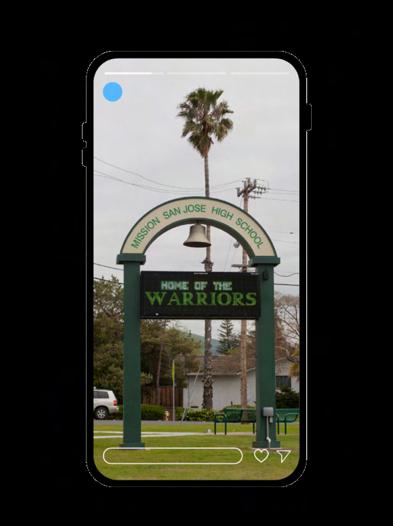
PHOTO BY STAFF
MSJ students gather in the gym quad during a passing period to PE class.
PHOTO COURTESY OF SKILLSPROUT
GRAPHIC BY STAFF WRITER ERIKA LIU, PHOTO BY WIKIMEDIA COMMONS

Compiled by Kanupriya Goyal & Warren Su Sta Writers
Sexual abuse allegations against César Chávez spark debate over legacy
Warning: discussion of sexual abuse.
By Amy Han, Erika Liu, Warren Su & Matthew Zhang Sta Writers

LOCAL
Congress on April 14.
Former US Representative Eric Swalwell has resigned from Congress and suspended his campaign for CA governor following a series of sexual misconduct allegations and ongoing investigations, according to multiple reports. At least one accuser has alleged sexual assault, with the claim now under investigation by the Manhattan District Attorney’s o ce, while additional women have reported inappropriate conduct. Swalwell has denied all allegations, describing them as false and politically motivated. e controversy triggered signi cant political repercussions, including the withdrawal of endorsements from supporters and increasing bipartisan calls for his resignation prior to his departure from o ce. e allegations remain under review and have not yet resulted in criminal charges. ▪
A New York Times investigation published on March 18 revealed that multiple women associated with the United Farm Workers (UFW) union had been allegedly harassed and sexually assaulted by famed civil rights leader César Chávez in the 1960s and 1970s, initiating a widespread reassessment of his legacy. ese women claim the misconduct started when they were minors, a statement supported by UFW meeting recordings, letters, and emails during the investigation. e resultant controversy has prompted a mass reassessment of the way Chávez has been commemorated through physical monuments and school curricula. roughout the Bay Area and broader CA, o cials are working to erase Chávez from local schools, parks, and holidays in accordance with what recent investigations have revealed.
“In any US history classes, [Chávez] always comes up whenever there’s a talk about rights or movements in the sixties.”
— ETHNIC STUDIES
TEACHER CYRIL MACASERO
NATIONAL

In a bid to return humans to the moon, NASA’s Artemis II successfully launched on April 1.
NASA launches successful Artemis II mission in a historic return to the moon
On April 1, astronauts aboard Artemis II embarked on NASA’s frst manned mission to the moon in more than 50 years. Te mission was a historic frst for sending the frst Black man, Victor Glover; woman, Christina Koch; and non-American, Canadian Jeremy Hansen, past low Earth orbit. It also set the record for the farthest that any human has ever gone from Earth at more than 250,000 miles away. During their trip, the astronauts were able to take pictures of both the Moon and Earth, as well as do research that will help with upcoming missions. Te mission itself was part of a larger group of missions, collectively named the Artemis program, to send humans back to the moon and set up a base on its surface. Artemis II astronauts splashed down on April 10, and were safely recovered in the Pacifc Ocean. ▪
typo — should be 62% not 620%
P1: “California Strong” is not Gov. Gavin Newsom’s initiative, it is led by First Partner Jennifer Siebel Newsom
P1: April 3 is a Friday, not a Wednesday
P1: 66% of total operating costs—not total funding—were covered by fare revenue
P1: 1.2 million additional miles would be driven per day without BART
P1: BART’s 2026 Alternative Service Plan proposes a 65-85% cut of its budget to bridge its budget gap; the changes have not been applied yet
P1: 10-15 stations may be a ected, not 10 stations
P1: BART’s projected layo s of 1,200 applies towards all personnel, not just police and maintenence sta Opinion - P7: Pakistan declared war against Afghanistan’s Taliban government on February 27, not February 26
P7: “60,000 Afghan Americans in Fremont alone” is inaccurate — that statistic is for the Bay Area in general, with the largest concentration in Fremont and Hayward Feature - P8: “vividly-decorated,” not “vividly decorated”
P9: Butter Stick Squishy was incorrectly referred to as a NeeDoh rather than the correct brand Squeezy
P9: Anorexia nervosa causes one death every 52 minutes, not 54
A&E - P12: Warner Bros. should be written as such in the article
title P12: BTS/ARIRANG review: “Butter” was nominated at the 2022 Grammys and “Dynamite” was nominated at the 2021 Grammys Sports - P15: Boys Badminton should be Co-ed or just Badminton
— MSJ Badminton is co-ed; Andy is the only boy captain, there are two female captains
P15: MSJ Badminton didn’t have an 18-time NCS Champ streak
— they have won NCS 18 times in total
P18: Joseph
César Chávez has traditionally been honored as a powerful symbol for Latino and immigrant labor rights. rough his work with the UFW, Chávez secured historic rights for his community through nonviolent protest, becoming a seminal gure in
the Chicano Movement of the 1960s and 1970s. is movement was extremely prominent in CA, particularly the Bay Area, which has deep ties to Chávez’s legacy. Over 65 public spaces — streets, schools, and plazas in places like Hayward, Berkeley, and San Francisco — are named after him in the Bay Area alone. Following the allegations, many of these same cities must now work hard to reevaluate Chávez’s legacy, especially as it manifests within physical monuments. O cials in cities like San José have already begun renaming landmarks. At Sonoma State University, murals have been covered and portraits removed; similar actions have taken place in Fresno and San Francisco. Governor Gavin Newsom announced César Chávez Day will be renamed Farmworkers Day, while San Francisco César Chávez Parade organizers have pivoted their parade’s focus to commemorating Dolores Huerta, a close colleague and victim of Chávez. Renaming e orts similarly face many challenges, especially in speed and cost. According to Calmatters, it takes either unanimous support from business owners or a city council to change a street name in San Diego. One candidate for CA state controller, Herb Morgan, con rmed to the New York Post that the cost to enact all of these changes statewide will exceed $10 million. Some proposed changes include renaming sites after Dolores Huerta, reverting to orig-
inal names, or honoring other activists. e Filipino American National Historical Society is one San José-based organization that has advocated renaming César Chávez Park to Delano Manongs Park — a reference to
so it kind of gives us an opportunity to see the other people’s contributions as well,” Ethnic Studies Teacher Cyril Macasero said. e Bay Area’s reassessment of César Chávez re ects ongoing e orts to take sexual misconduct

a pivotal group of Filipino labor leaders — since as early as 2021. Chávez has also heavily in uenced CA’s curriculum, where he is often cited as a hero and moral authority. Following the allegations, educators are working to adjust coursework to reect what is now known. “I teach ethnic studies, and in any US history classes, he always comes up whenever there’s a talk about rights or movements in the sixties. Now, we use it as an opportunity to look at other activists who were part of that movement, and
allegations seriously, regardless of the status or reputation of the historical gures involved. “ e [Chicano] movement … needs to recon gure,” MSJ Spanish Teacher Ferney Varela Sánchez said. Others have emphasized the importance of approaching the Chicano Movement more holistically. “No movement happens because one guy woke up one day and said, ‘Hey, I’ll be a revolutionary.’ It takes thousands of people and hundreds of hours,” Social Studies Teacher Rachel Tevlin said. ▪
Kriti Cultural Club brings a lively Bengali New Year to the Fremont Main Library

By Cecilia Cheng & Abigaile Lei Sta Writer
Brilliant green lights and tranquil piano music illuminated Fremont Main Library as visitors enjoyed a lively celebration of the Bengali New Year through traditional dances, songs, and theatrical performances. Hosted on April 12, the Bongo Torongo celebration was organized by the Kriti Cultural Club (KCC) to spotlight Indian culture across the Bay Area. Pohela Boishakh, also known as the Bengali New Year, is celebrated on April 14 and marks the rst day of the Bengali solar calendar. e holiday centers on renewal and revisiting what it means to be Bengali,
with participants wearing customary clothing, participating in parades, visiting fairs, and enjoying traditional foods. Bongo Torongo brings traditional music, dance, and community gatherings to reinforce a shared cultural heritage in the Bay Area. In their third year of organizing cultural events, KCC continues to introduce free Indian cultural performances to Bay Area venues. Following Vasant Utsav — a Hindu festival marking the beginning of the spring season — Bongo Torongo is the second event organized by the KCC this year. “[Since] we have children who are growing up in [the] US, we want to encourage them to have ties back home [to their] home country, India,” event orga-
nizer Annapurna Chandra said. e event opened with musical performances from the youth singing group Projapoti, whose members blended vocals with instruments, such as the piano and esraj, a South Asian bowed string instrument that plays with deep, melodious sounds. Performances throughout the program included traditional songs, poetry recitations, solo dance pieces, and a theatrical skit read aloud. In the latter portion of the event, performers introduced the historical context behind each presentation before going on stage, adding an educational dimension that allowed younger audiences to connect their cultural background with modern-day in uences.
Many nd that events like Bongo Torongo o er a creative and cultural relief, providing an open space for them to connect with other people and their heritage. “We have so much fun performing together, so that’s the goal for me: meeting new people [and] creating an opportunity for talented people. Sometimes, all they need is a stage and a mic, and also for [their] voice to be
heard,” Chandra said. For performer Nivi Shome, the event was an opportunity for her to stay connected to her personal passions. “ e role that these events play in our community is to keep us close to the things we enjoy … because it’s really easy to lose those things, especially being a junior in high school,” performer Nivi Shome said. Bongo Torongo not only celebrates the Bengali culture but also the passion and love for performance throughout the community. As KCC expands, Chandra plans to incorporate charitable initiatives into future events, increasing both its audience and impact, while creating a sense of community in the Bay Area. “ I’m very happy to announce that, quickly, culture is expanding.” Chandra said. “I’m looking forward to expanding our group into Contra Costa County… culture is a perfect way to bridge that gap.”

Representative Eric Swalwell resigns from Congress following sexual assault allegations
Representative Eric Swalwell, who represented part of Fremont, resigned from
PHOTOS
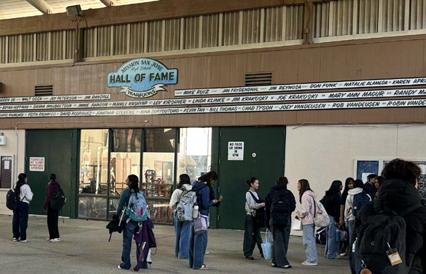
Numerous celebrations have been canceled following sexual assault allegations against civil rights leader César Chávez, including by labor activist Dolores Huerta.
Kriti Cultural Club (KCC) organized performances of traditional dances, songs, and theater at the Fremont Main Library on April 12.
Library of Congress
Indian classical dancers performed at the event.
In airports across the nation, security lines stretch endlessly through packed halls. Travelers shuffle mindlessly forward — some hopeless of making their flight — while others frantically check their phones praying for updated news. The bins roll slower, the conveyor belt chokes, and the lone agent at the end of the line bears the burden of securing America’s skies.
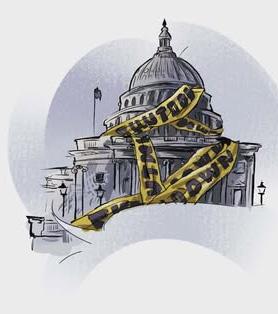
These sights have been common across US airports because Transportation Security Administration (TSA) agents have been absent, with their pay frozen due to a partial government shutdown. Democrats and Republicans have remained deadlocked for more than a month due to controversy over the killings of two Minnesotans, Renée Good and Alex Pretti, by Customs & Border Patrol (CBP). Congress has failed to reach a compromise, and neither side has allowed a Department of Homeland Security (DHS) funding bill to pass.
On February 14, Congress temporarily suspended DHS funding — intended as leverage in demanding reforms for ICE following heightened, uncontrolled ICE activity during Operation Metro Surge in Minneapolis. However, this shutdown has extensively impacted DHS agencies, including the TSA and the Federal Emergency Management Agency, who haven’t been funded for months. Immediately, TSA paychecks froze overnight and more than 780 TSA officers have resigned since the start of the shutdown.
The situation has been extremely exhausting for TSA workers. It’s illegal to strike for federal employees, and TSA jobs have historically been highly stable. During both the current and October-November 43-day shutdowns, unpaid TSA paychecks have reached
Congress takes handouts amidst the self-created DHS shutdowns
By Dhaeshna Booma, Michael Qin & Warren Su Staf Writers
nearly $1 billion in value. However, 61,000 TSA workers continue working. While TSA agents have suffered for more than a month, members of Congress, in stark contrast, are still paid. Representatives earn nearly $200,000 a year, without counting lobbyists’ funding. Ironically, the very politicians who caused this shutdown escape the repercussions.
Republican Congressman Lee Terry of Nebraska told the Omaha World-Herald in 2013 that he “cannot handle” giv- ing up his shutdown-earned paycheck. What congressmen like Terry fail to realize is that thousands of federal employees across the US have their paychecks involuntarily taken away from them. Leveling the ground between lawmakers and the ordinary American ensures no Senator or Congressperson can position themselves above the public.
shutdowns. Recently, in President Donald Trump’s executive order to provide TSA compensation and paychecks, he coined the shutdown as “Democrat-led,” a divisive jab that scapegoats the opposing party, yet Republican senators played an equally detrimental role by blocking Democratled funding bills. The blameseeminglytravels only conveniently away from those holding the authority.
The use of a budgetary crisis to score political points neglects admitting the systemic failures of bipartisan agreements and government shutdowns overall. The government is focused more on how they are perceived, trying to gain the advantage through support by clashing against and diminishing their rival parties, rather than on helping American lives.
However, withholding wages from federal employees, who are required to clock in to provide essential services, holds the American public hostage to partisan disputes. This contradiction — demanding labor while delaying compensation — shows the inherent exploitative nature of government shutdowns. The DHS has funding in its reserves to fund essential federal agencies, including the TSA. However, paychecks resumed only after a month of political leverage and an executive order. Ordinary American citizens, such as TSA agents and those affected by longer waits at airports, should not have their livelihoods threatened in negotiations that do not involve them. These workers did not cause the gridlock, vote against funding bills, and are not participants in this political confrontation. The burden should never fall on those with the least power to affect the outcome.
Congress’ immunity from paycheck cuts requires government accountability during

A potential ballot proposal in Alameda County from labor and advocacy organizations would raise the county’s minimum wage to $30. Tis change would occur by 2030 for larger businesses and 2037 for smaller ones. Supporters believe that this would improve people’s standard of living and mitigate the area’s afordability crisis. However, others argue that the proposal could reduce overall employment and that positive efects may be more minimal than expected due to the limited number of workers the act afects.
“Well, I think negative impacts most likely would just be that a lot of places that usually look to hire people less experienced, like high school students that are willing to pay the minimum wage to work usually like less experienced jobs, would probably be less willing to hire as many students as they have in the past. I think in our area, I would guess it’d be a net positive because most businesses have enough money to a ord paying a $30 minimum wage right now. [In other areas,] I think most likely they’ll be understa ed. I have a lot of friends that work minimum wage right now, for example, tutoring jobs and stu . I think most likely it would help them in the end. I have [worked] before, and it was also minimum wage, so I think I mean in that case, I would be less likely to be hired, because I would need a lot more experience for someone to be willing to pay me $30 an hour. I worked as an intern at [a] lab. I think a lot of the smaller local businesses around here would probably struggle a lot more to pay … minimum wage, so they probably end up being understa ed, or you know not able to meet as many orders as they have before.”
Critics may argue that during government shutdowns, using funding as political leverage is necessary to break gridlock and force compromise on important policy issues.
Government shutdowns must be treated as crises with real human victims, and the first step requires demanding accountability from those in power. Politicians need to face real consequences for choosing shutdowns over worker welfare. They should be pressured to act, with their failures serving as warnings to those they represent. We decide the people who serve in the government. Even students can pressure the government into action by contacting local representatives directly and urging them to co-sponsor bills to address shutdowns, such as the underway Shutdown Fairness Act, which aims to ensure federal workers required to work during shutdowns are paid promptly. By collectively voicing our concerns, we can remind political leaders of whom they serve, ensuring that our government is truly representative and working for the people. ▪
“Job hunting will become even worse because right now, [new] grads are really struggling to nd jobs, and as a result, they’re becoming increasingly more competitive. So because of these higher wages, more people will enter the labor market, and therefore more jobs will become more competitive. I think it would be a net positive because it’s an incentive for more people to come to work, although I feel that this area already has a very high incentive to search for jobs, but hopefully it will result in less unemployment. … I’m looking to come back to the Bay Area and work so that could impact my wages when I start looking for a job. And I’ve already mentioned that job hunting is very competitive, so that might make my chances kind of bad ... For local businesses, like small businesses, it’ll be de nitely di cult for them to pay this higher wage, and it will result in less employees, as well as less product for them, and so they might struggle a bit, especially if it's just a side hustle for them.”

“I think increasing [the] minimum wage as a whole is a good thing for the average worker [or the] average American trying to survive here in the Bay Area ... It might hurt [small family-run businesses] a bit in the short run, but I think in the long run, [an increase in minimum wage] is a good thing. I think it’s a net positive. Because people get paid more, and if you get paid more, you have more money to spend in the economy. If you have more money to spend in the economy, then the economy circulates ... I feel like small businesses would maybe see a little bit of a reduction, like in their workers who chose to work there. I guess business owners would start raising their prices because they start seeing people getting paid more ... So in the long run, they would also make more money. It would just take a bit longer.”
“I feel like there would be an increase in employment. I’ve noticed at companies such as In-N-Out, over the past couple years, there has been a raise in minimum wage to $20 or more, which would help bring more employment and publicity to the employers and the companies themselves. I think that the minimum wage increase is a positive, especially when I am looking for jobs in the next few years ... I am planning on using the additional pay towards commitments such as college savings after nding a job. I think that local businesses will have employees positively a ected, though employers may have thoughts against this change because they would have to spend more money on paying their employees.”
Minimum Wage Increase
THE SMOKE SIGN AL
Mission San Jose High School
Est. 1964
Vol. 61, No. 8 May 1, 2026
www.thesmokesignal.org
41717 Palm Ave. Fremont, CA 94539
510-657-3600, ext. 37074
MISSION STATEMENT The Smoke
meaningful, and engaging information presented through print and digital media.
SCHOOL POPULATION 1878 students
EDITORS-IN-CHIEF Padma Balaji, Alice Zhao
NEWS Jennifer Li, Cham Yu
OPINION Jiazheng Dou, Vikram Mahajan
FEATURE Ariel Duong, Trisha Parikh
CENTERSPREAD Naisha Koppurapu, Ariana Yi
A&E Navya Chitlur, Brittany Lu
SPORTS Michael Qu, Ethan Yan
GRAPHICS Hannah Bi, Emily Zhang
WEB Scarlett Huang, Ekasha Sikka
PUBLICITY/TECH Aaqib Zishan
BUSINESS Gaurasundara Amarnani
CIRCULATION Alex Duan, Abigaile Lei
ADVERTISING Fiona Yang
EVENTS Dhaeshna Booma, Felicity He
WRITERS & PHOTOGRAPHERS
Hamnah Akhtar, Luna Bichon, Jessica Cao, Eleanor Chen, Cecilia Cheng, Kanupriya Goyal, Amber Halvorsen, Amy Han, Kayla Li, Erika Liu, Varun Madhavan, Veer Mahajan, Finnegan McCarthy, Joseph Miao, Mansi Mundada, Saesha Prabhakar, Michael Qin, Kelly Shi, Warren Su, Aarav Vashisht, Megha Vashisht, Prisha Virmani, Leland Yu, Andy Zhang, Lucas Zhang, Matthew Zhang
ADVISER YC Low
The Smoke Signal‘s name originated from traditional forms of long-distance communication and honors cultures around the world, including China, Greece, and Rome.
To advertise in the Smoke Signal, email ads@thesmokesignal.org. Advertising that is included on the pages of, or carried within, the Smoke Signal, is paid advertising, and as such is independent of the news and feature content.
The Smoke Signal’s right to freedom of speech and press is protected by the First Amendment of the US Constitution and California Education Code Section 48907.
To stay updated with our online content, see our Facebook page at www.facebook.com/msjsmokesignal.
All policies on distribution, corrections, and bylines can be found at www.thesmokesignal.org/about. Send letters to the editor at opinion@thesmokesignal.org.

By Janet Guan Opinion Editor
is month, my younger brother left home for the rst time on a threeday-long trip to Anaheim with the Hopkins Advanced Orchestra. e morning we dropped him o , I found myself scrolling through the photo album on my phone to three years ago, when I went on my Anaheim trip with the Hopkins Symphonic Band, just a year older than my brother is now.
e funny thing about younger siblings is that, regardless of how obnoxious or infuriating they can be (I say a ectionately), you can still nd a piece of yourself within them. In my brother, I see a re ection of my past. Part of it are the little things: skimming his class schedules for teachers I once had, catching him complaining about the extracurricular classes I once hated, watching him pack for the school trips I once counted down to. But even more, I see the same goals, fears, interests, and quirks I had at his age — so much so that, in lending him advice, I feel as if I’m speaking to my past self.
Now, as my brother nears the end of seventh grade and the start of his last year in middle school, I’ve started to see less of a re ection and more of a growing individual.
As the older sibling, for years, I’ve played the part of the role model. When we were younger, I was the one who led the games, the one who headed negotiations with our parents, the one who played teacher to help him read, the one who silently passed him tissues when he cried. Yet, as he’s grown older, I’ve found myself playing the role model less and less. Most of our interests have diverged, we don’t
Smoke Signal
talk enough for me to lead a game, and — after he opted for the movies over the books of Harry Potter — I’ve given up on encouraging him to read. And in the quiet hours I spend in my room alone, I think about how far we’ve drifted apart. I think about when he became too old for me to be a role model and when he’ll become too old for me to be a part of his life. e day before my brother left for his orchestra trip, he walked unexpectedly into my room for a book to read — despite being a fantasy-hater who’s read more autobiography and self-help books than Percy Jackson — on his bus ride. Together, we searched through my bookshelf. I o ered him Six of Crows, which he vehemently refused. He picked up a coding book, which I rolled my eyes at. And then I gave him Educated by Tara Westover, a memoir that was autobiographical enough for him and poignant enough for me.
Perhaps the question has never been about distance. As much as in my brother today I see myself, as well as the bumbling ve-year-old who used to follow me around, I know that one day I will inevitably struggle to o er him advice. at one day I will inevitably run out of interests and goals and quirks to measure an amount of me in. But the bond itself, a connection too closely linked to home to even consider a friendship, will always stick. I wonder if my brother enjoyed Educated. e correct answer should be yes, but even if it’s no, the older-sibling part of me will still be proud of that tiny declaration of individuality. ▪
Commodifying Asian identity
“Do you want to get Heytea? Heytea Malatown combo?” Questions that would have seemed absurd for several years now jumpstart an ordinary Tuesday afternoon. As the nearby Kohl’s transforms into an H-mart, the world around us transforms to amplify and commodify an increased Asian American presence. While the rise in Asian American businesses adds to cultural inclusivity, it also represents a complicated shift toward the commercialization of identity, making change both exciting and unfamiliar.
e in ux of Asian chains replacing previously central Fremont landmarks mirror the demographic shift over the past decades. Having housed a 98.3% white population in 1960, Fremont’s neighborhoods have now evolved into an Asian majority. According to the 2020 census, Asian Americans make up 64% of Fremont’s population, a steadily increasing proportion. is coincides with the growing prevalence in Asian businesses, a mark of cultural outgrowth and acceptance. Boba shops, matcha shops, and chains such as Heytea and Mylapore Express have thrived under an increased customer base, setting up shop acrross the city. In a sense, the city’s commercial landscapes feel like a long overdue recognition of the communities that call Fremont home.
e increased Asian landscape opens an invitation encouraging acceptance of cultural identity for many who have downplayed their
culture in the past. According to the Pew Research Center, “about 39% of Asian adults under 30 have hidden their culture, food, religion or clothing from non-Asians.” Seeing familiar foods and languages in everyday spaces creates a sense of community and belonging. For immigrants especially, these spaces carry a deeper comfort in the chance to reconnect with memories of their native countries while building a life in America.
At the same time, the form this visibility takes raises questions. Many of the new additions to Fremont’s landscape are not small, local businesses, but large branded chains.
e new H Mart store coming to Fremont’s Paci c Commons Shopping Mart boasts a more than 100,000 square foot, multilevel CA agship store, making it the chain’s largest outpost in the entire US. is development turns culture into simply an experience, something aestheticized and consumed. What could have been representation turns into commodi cation, where identity is packaged into a set of recognizable trends: milk tea, matcha, minimalist storefronts, and imported goods.
Fremont’s communities have never been static; its identity has always evolved. But older spaces still linger in memory, such as long-standing businesses along places like Niles Boulevard that showcase an earlier version of the city. Even more recent closures such as Toys “R” Us or Cloverleaf Family Bowl were pillars from treasured childhood memories.
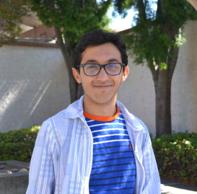
Earlier this month, CA’s gubernatorial election was completely shaken up by credible reports of sexual assault by Congressman Eric Swalwell, then considered a frontrunner. Within just days, Swalwell deservedly su ered a complete political implosion, stepping out of the race and then resigning his seat (meaning the 14th district, including much of Fremont, now also has a special election to ll the vacancy).
Swalwell’s campaign revolved around Twitter “owns” of Donald Trump; it was through social media commentary that Swalwell acquired name recognition more than anything else. And in a state as large as CA, and with a eld of candidates as large as it is this year, name recognition sometimes becomes the be-all-end-all. It’s a damning indictment of our electorate, and of our political system. Deplorable as Trump is, it’s crucial for the governor to o er much more than tirades against him, in the way of policy proposals for CA’s many problems. Swalwell did not — most glaringly failing to o er substantive solutions to the housing crisis — and yet he was long considered a favorite to win the race.
Depending on how one considers it, that was either in spite of or because the eld comprised dozens of candidates and several notable names.
e race was only further complicated by CA’s near-unique electoral system. Typically, Democrats run in the Democratic primary, Republicans in the GOP primary, and the two nominees face o in the general election. But here, all candidates, regardless of party, are on the same primary ballot, and the top two candidates — again,
By Vikram Mahajan Opinion Editor
regardless of party — advance to the general election. In deep-blue CA, this sometimes means two Democrats run against each other in November.
Yet this year, in spite of CA’s Democratic bent, the opposite situation appeared very possible prior to Swalwell’s departure. With several prominent Democrats in the running, and just two Republicans (Chad Bianco and Steve Hilton), the latter two polled in rst and second place, albeit with about 15% of the vote each. In a state where they typically accrue 60-65% of the vote, it was a distinct possibility that the Democrats would be entirely locked out of the general election due to a splintering of the vote. (And if a Democrat were to advance, it seemed likely that it would be Swalwell.)
CA Democratic Party Chair Rusty Hicks accordingly implored lowerpolling candidates to drop out, citing this very scenario. Such is the toptwo system: smaller candidates are either forced out of the race, or they risk “spoiling” the election and forcing a majority-Democrat electorate to choose between two Republicans. at’s not democracy at all.
Indeed, counter to the illusion of partisanship it may create, the top-two primary system instead stunts true democracy and leads to a nal candidate lineup less re ective of the electorate. Whether it’s ranked-choice voting or just simple partisan primaries, it’s crucial that we see a change to the way elections are run in CA, and even as high schoolers, we have a role to play in bringing about that change.

ese places were more than background; they de ned what growing up in Fremont felt like. eir closures feel disorienting for many, as one cultural landscape transforms into another.
e rapid in ux of large, branded businesses and redeveloped commercial spaces also can serve as a form of quiet gentri cation under the guise of cultural growth. Fremont gradually becomes more nancially inaccessible, reshaping who belongs to Fremont’s community. Furthermore, the version of Asian culture that lls the plazas is not always as inclusive as it seems. e highly commercialized nature of the locations leave less room for smaller, less marketable, or less trendy expressions of genuine Asian culture to take root. In this manner, commercialization narrows what culture is allowed to look like in Fremont.
Fremont’s evolving landscape re ects both opportunity and constraint. It fosters belonging and recognition for some while also introducing economic and cultural pressures for others.
e H Mart that will replace Kohl’s will eventually feel like an ordinary and routine place just like the places before it. e true question lies in what the location serves to represent. As each generation builds its own version of Fremont, the goal is not to resist change but to ensure that it gives space for memory, diversity, and for both long-time residents and new communities alike.
By Veer Mahajan & Aarav Vashisht Sta Writers


César Chávez shows how we still fail to hold our heroes accountable
By Hamnah Akhtar, Eleanor Chen, Erika Liu & Veer Mahajan Sta Writers
Content warning: discussion of sexual abuse
This year, César Chávez Day unraveled in confusion and disbelief as credible sexual assault allegations against Chávez himself, co-founder of the United Farm Workers (UFW) and icon of Latino labor rights, came to light. Nonpro ts and parade organizers across the nation found themselves reeling in the wake of the year-long investigation conducted by the New York Times. Four different women had come forward with accounts of rape, sexual assault, and child sexual abuse from the renowned Latino union leader, with some of his victims reportedly being as young as 12 at the time of the assault.
Chávez’s sudden fall from grace has been disorienting. For decades, historians and classrooms alike have celebrated him as a moral authority on peaceful protest and Latino civil rights.
However, what’s crucial to realize is that Chávez cultivated this “hero” image himself. While Latino communities and labor organizers placed him on a pedestal, he also closely controlled his own public perception. Past members of UFW, which Chávez co-founded in 1966 to advocate for farmworkers’ rights and fair wages, described the union as an “unwavering cult of personality” centered on Chávez’s authority, according to the Los Angeles Times. In his later years, Chávez even adopted control techniques from the notorious rehabilitation-center-turned-cult Synanon, using humiliation and vituperation to purge dissenters and ensure complete loyalty.
Frank Bardacke, once a UFW eld worker, attested to the absolute power Chávez monopolized. “He was the organizer, the architect, and the main energy behind that boycott, a hero and a celebrity,” Bardacke said in an interview with Labor Notes. “Everybody wit-
in Latin America called Marianismo: drawing from Catholic in uences, it emphasizes submissiveness and morality from women, especially in the form of selfsacri ce. Sandra Alvarez, Director of Latinx and Latin American Studies at Chapman University, lamented this culture, speci cally as it pertained to Chávez and transparency with sexual abuse. “Unfortunately, society teaches us that women kind of have to be quiet about a lot of stuff to help out the larger group,” Alvarez said to Chapman University’s The Panther Newspaper. These same repressive expectations persistently crop up in statements from Chávez’s own victims. Dolores Huerta, co-founder of the UFW and survivor of Chávez’s sexual abuse, cited a sense of duty in keeping silent. “For the last 60 years, [I] have kept a secret because I believed that exposing the truth would hurt the farmworker movement I have spent my entire life ghting for,” she said to the New York Times. To Huerta, her rape was something that had to be ignored and endured for the sake of her community — a tragic manifestation of the gender roles that tell women their greatest duty is to serve those around them before themselves.
That self-censorship is still the status quo for millions of women globally — it’s why Huerta waited until she was 95 years old to speak honestly about her abuser, and why nearly 80% of sexual assault cases continue to go unreported across the world, according to a 2016 study by the US Department of Justice.
These disturbing allegations do more than reveal the dark side to Chávez’s legacy. They underscore a deeper problem in how society overidealizes political gures in general. Chávez is not the only example of a man whose power and in ated public image undermined accountability. “Heroes” have always been unfairly airbrushed by society, whether it be Martin
bad,” Spanish Teacher Ferney Varela Sánchez said. “His whole philosophy is going to get ruined because of his decisions … Right now, [teachers] can no longer refer to him as a leader.”
Communities must now gure out how to dismantle Chávez’s myths without discrediting the efforts of an entire community. Chávez’s allegations come at a time when US Immigration and Custon Enforcement arrests are ripping immigrant families apart, roving patrols targeting Latino workers are on the rise, and the Trump administration is making efforts to consciously distort and deny Latino history — with federal websites scrubbing explicitly Hispanic-centered content from their archives and cutting funding for Latin American cultural museums. “[The Latino community] is already under attack,” Unity Council Director of Fund Development and Communications Caheri Gutierrez said to The Guardian, speaking on the possible fallout from Chávez’s allegations. “I can already see Trump having a eld day with this.”
The movement that Chávez represented fought for the powerless and dispossessed. It was a movement that secured rights and liberties for communities who were neither wealthy nor white. While leaders are rapidly distancing themselves from Chávez and his Chicano legacy, similarly controversial white historicalgures are enjoying overwhelming leniency. More than 2,000 Confederate statues and monuments are still up across the nation. More than 6,000 locations in the US bear Columbus’s name — one tied to the brutal extermination and enslavement of millions of Taíno people. Even today, we continue to extend greater faith and lenience to people who enjoy social power and in uence. It is disheartening how many institutions move quickly to scrutinize some legacies while continuing to preserve others.

“I am nearly 96 years old, and for the last 60 years, have kept a secret becuase I believed that exposing the truth would hurt the farmworker movement I have spent my entire life
1966. In his later years, Chávez adopted control techniques from the notorious rehabilitation-cen ter-turned-cult Synanon, using humiliation and vituperation to purge dissenters and complete loyalty
Nearly 80% of sexual assault cases con tinue to go unre ported across the world, according a 2016 study by the US Department of Justice.

Read more about César Chávez memorial conversions in the Bay Area on page 2.
Monday







Every demigod has a weakness
By Jessica Cao Sta Writer
Reading Percy Jackson in elementary school, I learned that dyslexia was a sign of demigod status. If words swam before your eyes, it meant that you had the power to control the sea. Struggling to read didn’t matter much when greatness was its explanation.
Back then, I never struggled. I grew into the role of the “smart” kid the way one grows into an oversized coat: eager and performing competence for everyone who looked my way. Demigods were dyslexic. I had assumed, with the arrogance of an overachieving child, that I was a demigod who received powers without paying the price.
en, one day, rst period, in the Hopkins band room, my debt caught up to me. ree measures of solo repertoire — an easy passage that a budding utist dispatches without thinking — became proof of my unique kind of dyslexia. I couldn’t tell where the beat was and how long the pitches were supposed to be. Refusing to stay still, the notes slid across the sta like the currents of an ocean I actually did not have the ability to control. e whole band stopped as I sat there, gripping my ute until my knuckles bleached, failing to count rhythms I should have internalized years ago. I drowned in the disbelieving silence — ttingly, at the same age Percy Jackson was in e Lightning ief
From then on, instead of ful lling my demigod potential, I encountered the sensation of drowning recurringly. I drowned in honor bands, youth orchestra, and rehearsals where I angled my ute away from the person beside me so they couldn’t hear me stumbling over the easiest rhythms. I improved at everything else — cleaner tone, more expression, better audition videos — and stayed mysteriously, humiliatingly bad at the one thing that was supposed to be foundational. Other players at my level read music the way people read words, while I was constantly lost at sea every other measure.
So, I learned to compensate by ear, by rep-

Content warning: discussion of sexual abuse
Too often, victims of abuse feel pressured to stay silent. ey fear the glances or murmurs, gossip or badmouthing from people thought to be friends or family. When I heard the news that César Chávez sexually abused multiple women and girls within the United Farm Workers movement — but, more importantly, the victims’ and Dolores Huerta’s stories of what they experienced — I was mildly surprised, but not entirely shocked. As a Latina survivor of sexual abuse, I am all too familiar with the harsh reality that Latina women face throughout their lifetimes: while it’s not commonly known, especially outside of the Latin American community, Latina women have to confront a rate of sexual victimization and violence (SVV) of up to 84.6% according to a 2019 study published by the American Psychological Association. Comparatively, in the same study, rates of SVV among white and Black women were 82.7% and 82.3% respectively. Yet, despite facing higher rates of SVV than white and Black women, Latina women are often left out of conversations about abuse against women. Multiple factors may lead to these disparities. Colorism and racism can perpetuate poverty and limit opportunities in academics, employment, and safe housing, which are all risk factors for experiencing or committing sexual violence according to the Centers for Disease Control and Prevention. As of the 2024 US Census Bureau O cial
lication, by instinct, by anything that would let me avoid confronting the information I was supposed to be good at interpreting. e worst part of it was not that I was struggling, but that I couldn’t reconcile it with who I thought I was. I had built myself around being capable, around being good. And here I was, consistently unable to do something as basic as accurately gauge how long notes were supposed to be based on their notation. I avoided what I was worst at, and in doing so, guaranteed that I would stay stagnant.
So, I stopped trying to be good.
Not in the sense that I quit and stopped playing, but that I surrendered the need to justify my presence. So what if I was bad? So what if I was, in some sense, a fraud or an embarrassment? ese words themselves, once a burden to bear, began to lose their chokehold on me once I denied them authority over my worth. I found that there was a distinction between being weak and being at ease with weakness: the former condemns, the latter observes. To acknowledge a aw is not to give in to it, but to render it ordinary — something to be worked on rather than something to be scared of.
Freed, if only partially, I began to see that my di culty with rhythm no longer signi ed some inherent de ciency; it simply meant that I needed more time, more patience, and more focus than others. e fear did not vanish, but it loosened its grip just enough for me to keep myself a oat rather than drowning.
Still, my struggle stubbornly persists to this day. It is there in the weekly rehearsals and in the re ex to measure myself against others before I have even played a note. Something as trivial, as embarrassingly mundane, as feeling inadequate had fastened itself to me with conviction. It took me years — not to eradicate it, which would be too clean an ending — but to recognize it for what it is: not a verdict, but a habit of thought, one that can be questioned, resisted, and, on better days, overcome. ▪
Mirabelli
v.
Bonta overrides autonomy
to the editor:
While the new Mirabelli v. Bonta ruling discussed in “Mirabelli v. Bonta: do forced outing policies actually keep students safe?” from the March edition of the Smoke Signal has good intentions regarding the wellbeing of transgender students, the positives overlooked the harsh reality of students in danger by being forcibly outed due to the new policy. ough some students may be accepted and experience better social transitioning outcomes, there are many who could be ridiculed, ostracized, or even abused by their loved ones as a result. Is it worth improving the outcomes for some at the cost of those who possibly could face severe harm and had kept quiet about their identity for good reason? Adults should be able to trust their children and respect their boundaries, rather than override their personal autonomy. ▪
JUNIOR OWENA CHEN
Darker side of blind boxes
to the editor: I really enjoyed the article “Unboxing stories behind the blind box craze” from the March edition of the Smoke Signal. I think the sta writers did a wonderful job of capturing the artistry and emotional relationship behind popular characters like Skullpanda, Hirono, Smiski, and e Monsters that make them so captivating.
However, I also wished the
article could have pointed out the darker side of the “blind box craze” as well. While the article highlights detailed designs and the audience’s devotion to collecting these gurines, such as a one-in-72 chance to receive the Buddy Doggie plush from the Skullpanda: You Found Me! Series, it skims over the gambling marketing tactics that drive blind box sales. As someone who has spent over $300 trying to win a speci c gure, I can say that the excitement when opening a box to nd out “what’s inside” can easily become a compulsive behavior just to soothe anxiety.
All over the world, people are celebrating the gures’ beauty and stories, but rarely does anyone question whether paying $30 for a random gurine is a nancially wise decision, especially for teenagers. e 375% revenue surge by Pop Mart in just 2024 is a key sign not just of its popularity, but also of the highly e ective and exploitative business model it has.
It would be interesting to see an article that interviews school counselors or nancial literacy teachers on how the blind boxes a ect student spending habits and what they think of them. ere’s always going to be that part of me that wants to collect all the gurines I want and keep that joy, but now there’s an additional side that reminds me of all the risks of impulsive spending. ▪
JUNIOR RUBY LUU
Being aware with NourishED
to the editor: I believe that the article “Organization Spotlight: NourishED” from the March edition of the Smoke Signal tackled an import-
We are here to stay and initiate the conversation
How victims of César Chávez are inspiring recognition of abuse perpetrated against Latina women
By Luna Bichon Sta Writer
Poverty Measure, 15% of Hispanic people live in poverty compared to 7.6% of white, non-Hispanic people — almost twice as many — which can lead to Latina women not having the resources or connections to be a part of studies or get medical help.
Despite facing higher rates of sexual violence than white and Black women, Latina women are often left out of conversations about abuse against women.
Another key reason for the under-representation of Latina women in medical literature and conversations about abuse is that SVV, which includes sexual assault, rape, and other forms of nonconsensual sexual touch and acts, is painfully understudied in POC and by extension, Latinos, according to a 2023 paper published in the Journal of Sex Research. Additionally, the paper asserts that societal and cultural stigma may lead to under-reporting and inaccurate reporting on Latino victims of abuse.
In fact, a 2026 paper published in the Violence and Gender journal found Hispanic and Black college students to be less likely to report SVV than white college students. e fact that Hispanic college students are less likely than white college students to report SVV leads to another reason why data about Latina women in SVV literature is understudied and under-reported.
As someone who has survived sexual violence, I am well aware of the di culties that come with speaking
out about your reality. e longstanding familial and societal pressures to be quiet that are only in recent history being reversed, both in Latin America and the US, don’t make the process any easier. Marianismo, for example, is a gender role practiced especially in Mexico, which pushes women to be subservient and docile to men and subscribe to a culture of purity and self-sacri ce, oftentimes by putting family before themselves. Machismo is the male counterpart, which dictates that men should be powerful and self-reliant, but is often associated with toxic or hypermasculinity.
As a transgender Latina woman, I have experienced both sides of these expectations to some extent. Prior to my transition, I was expected to be strong, resilient, and not show or be entirely vocal about my emotions. After I publicly transitioned, which coincided with the time I reported my abuse, I felt somewhat expected to be submissive — to not be vocal about my abuse or bring problems to my family by talking about my abuse — by some of my family members. I feel that this was at least partially in uenced by beginning to identify publicly as female and present femininely.
In reporting my abuse, I wondered whether my family would understand me, whether I would gure out how to pursue help through the legal system, whether or not I would be able to move past my experience, whether I would get justice, and whether I would be able to live as “normal” or happy a life as I could. I fully believe that similar wor-
ant job of bringing attention to a topic that is often overlooked in our community: eating disorders. While many people often relate these disorders with physical changes, this article shows that they usually begin in ways that seem relatively harmless, before developing into something much more serious. is stood out to me because it shows how easily these struggles can go unnoticed, especially by those closest to someone. One aspect I appreciated was the work of the NourishED organization. eir e orts are so important and necessary as they demonstrate how much impact simple actions, like spreading awareness or having conversations can have. e discussion about stigma, particularly within Asian communities in the Bay Area, deeply resonated with me as well because I have seen rsthand through friends and family how these eating disorders can a ect people’s lives and relationships. In many cases, these challenges are simply dismissed and left unacknowledged, only making it harder for individuals to seek help. It is imperative to remember that disorders are not just about one’s appearance, but have great physical and emotional consequences if ignored. Overall, this piece emphasized the importance of being aware and ready to have open conversations. At a school like MSJ, where students often feel pressure to meet high expectations, it is especially important to recognize these issues and create an environment where people feel comfortable asking for help. ▪
SENIOR ANJALI ANNA
Submit a letter to opinion@ thesmokesignal. org or with the QR code.

In cases like that of Chávez’s abuse of Huerta and his other victims, which involve people in power abusing their authority, it can also be scary to feel as if you may be punished, lose respect from friends or family, or not be trusted due to the power di erential. Ana Murguia, one of the victims of Chávez, worried she would be blamed for the abuse Chávez perpetrated. She explained that those who learned about the abuse never questioned the men who perpetrated the abuse, but interrogated the victimized women instead. As she shared with the New York Times, “It was always: ‘Well, what did you do? See what you did.’” However, the victims of Chávez also show that survivors of sexual violence can overcome these fears and gain relief and justice from speaking out.
“I have kept this secret long enough,” Huerta said in her initial statement.
“My silence ends here.”
As someone who has survived sexual violence, I am that come with speaking out about your reality.
ries run through the minds of others who have been grossly victimized. e shame and guilt associated with experiencing sexual violence can additionally make it hard to report to the police and proper authorities. It was extremely hard to speak about my abuse. I remember the fear I had and how long I had kept it bottled up. Reporting my abuse to the police took hours of waiting, and it was very nerve-wracking to feel like I was being interrogated by the police o cers. After the whole ordeal, the police helped me le a restraining order against the relative who perpetrated my abuse. Since then, I’ve had the chance to recuperate and heal, to feel like I have a majority of the weight lifted o my chest. It can be especially di cult for POC to trust the legal system, which in turn can make things even harder to report. For Hispanic people, 33% of the entire Hispanic population in the US are immigrants (approximately 22.7 million people) according to 2024 Pew Research Center Data. Additional data from Pew in 2021 show that only 38% of foreign-born Hispanic people in the US are pro cient in English — making it even harder for Latina immigrants to report any abuse they experience or navigate the English-dominated legal system.

“I have kept this secret long enough,” Huerta said in her initial statement.
To those who read this article, we as a society need to study sexual violence among POC, especially Latino people, more. We should also support victims the best we can, by advocating for them to reach out and to be o ered mental health and life-assistance services, and ght for them to be included more in academic literature, so that they are better represented. More data existing on the experiences of Latina victims of sexual violence will help Latina victims get the proper treatment and help. As long as we stand by victims, we can make it easier for them and, for those of us who have experienced victimization, for each other to heal. ▪

WHO WE ARE
2026
www.asdrp.org
The Aspiring Scholars Directed Research Program (ASDRP) is a 501(c)(3) nonprofit, private research institution in Fremont, CA. ASDRP is the Bay Area's premier precollegiate research & development institution, run by a consortium of highly skilled scientists, engineers, and researchers with years of academic and industry experience who collectively seek to push forward the current frontiers in biology, chemistry, physics, computer science, psychology, medicine, engineering, and more.
We mentor high school students - budding scientists in 9th through 12th grade - who come from every corner of the greater Bay Area, California, and across the United States. We seek student researchers who are passionate, who are unafraid of a steep learning curve, and who want to be involved in real science that has real impact on society
WHAT WE DO
Quite simply, we do research. Our investigators and student researchers strive to make impact in fields ranging from cancer biology, drug discovery, environmental science, and computer-guided drug design to radioastronomy, machine learning, and urban sustainability. As in any other R&D establishment, we publish papers, present work at conferences, and generate intellectual property. Check out some of our latest preprints, publications, and conference proceedings online at https://www.asdrp.org/pubs.
MISSION & VISION
[Scan to read past student work]→

ASDRP is not a class, not a tutoring center, and not a summer camp. We are scientists and engineers who aim to push the frontiers of scientific discovery through rigorous and cutting edge basic & applied research across the life sciences, physical sciences, and engineering, while bringing out the best in the aspiring scientists we mentor.
What kind of research is performed at ASDRP?
Research at ASDRP is divided into three Departments - Biological, Human, and Life Sciences; Chemistry, Biochemistry & Physics; and Computer Science & Engineering. Our scientists are involved in developing novel therapies against cancer, using data science to understand the impact of climate change on society, synthesizing the next generation of antibiotics, developing machine learning platforms for drug discovery, understanding mechanisms of memory acquisition, probing the universe for ultrafast radioburst signals, and much, much more. Read more about our research online at www.asdrp.org/research
Research @ ASDRP at a Glance
→ 31 research faculty members across the biological and chemical sciences, neuroscience, computer science, drug discovery, and applied engineering
→ 250+ ongoing research projects across three departments
→ 78 research grade instruments, including mass spectrometry, nuclear magnetic resonance spectroscopy, and electron microscopy capabilities
→ 15,000 sq. ft. R&D campus divided into 16 unique laboratory spaces

Application Details
Spring 2026
Early Application Deadline: November, 2025
Final Applications Due: December 30, 2025
Summer 2026
Applications Open: October 2025
Early Deadline: February 1, 2026
Final Applications Dues: April 15, 2026
Applications are competitive, and each term, ASDRP receives far more applicants than there are open research positions. Apply online at www.asdrp.org/apply.
Interested in finding out more? RSVP for an informational webinar at www.asdrp.org/rsvp
E-mail: admissions@asdrp.org 46307 Warm Springs Blvd. Fremont, CA 94539
Apply online: Join us at our next open house:



21 Questions

Sta Writers

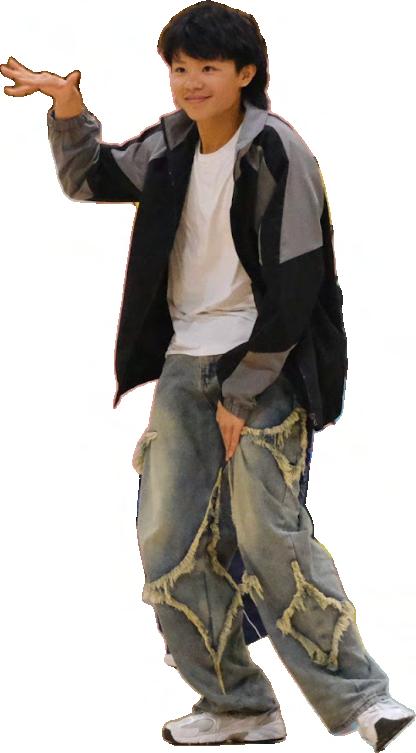
Freshman Angela Lin has modeled for high-end luxury brands, an incredible milestone for someone her age, even recently participating in Milan Fashion Week, one of the world's most prestigious fashion events. Let’s explore how Angela got into modeling, the preparation and dedication it takes to walk for top designers, and how she balances school with the travel that comes with her modeling career. Angela’s story highlights not only her experience on international runways but also an inspiring, unique pathway for MSJ students.


Want to read the FULL 21 Questions w/ Angela Lin’s spotlight? Scan to view this story and similar articles!

What were some initial setbacks you had in your modeling journey?
“It was de nitely the actual walking part because you have to focus a lot on everything in your body.”
What are some of the achievements you’re most proud of?
“My top achievement was de nitely when I went to Italy for the Milan Fashion Week because that’s a pretty big deal. I’ve also [participated in] a lot of competitions in China where I’ve gotten rst place.”
What is an aspect you want to improve on in your modeling portfolio?
“More con dence. Sometimes people tell me ‘ is is so good’ but I’m really harsh on myself, and I think anything I do isn’t good.”
You’re also a dancer; do you think this experience helped you in modeling?
“I used to have bad posture, but dance de nitely helped me. It also helped me because dance is on stage, and it helped me get rid of stage fright.”









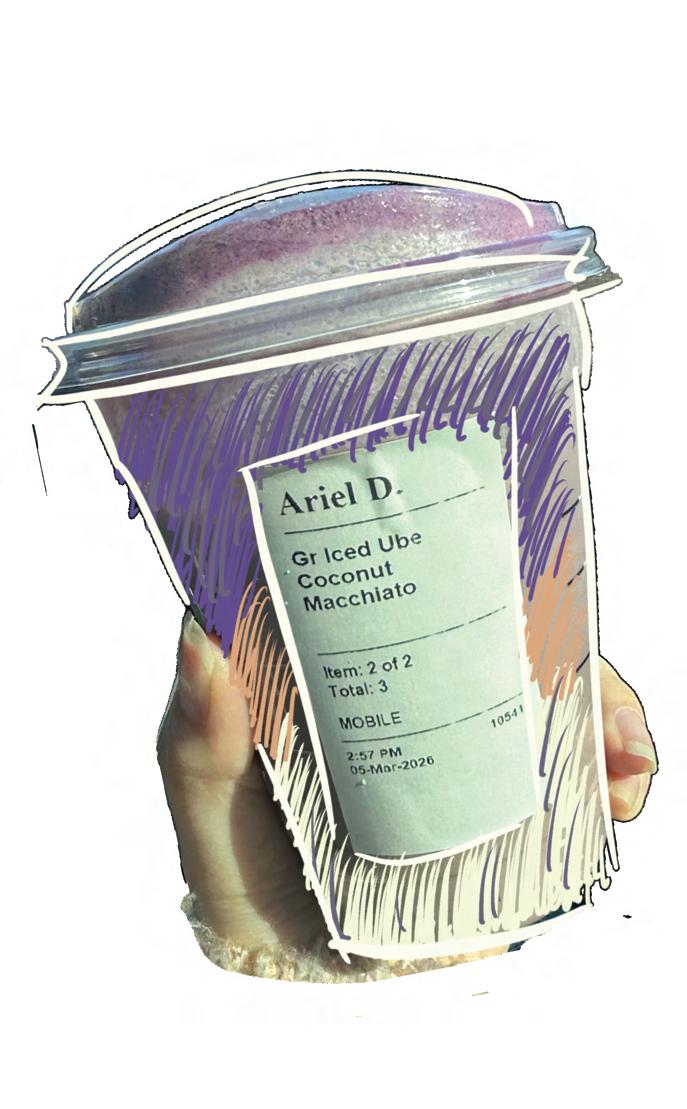
Starbucks doesn’t want its latest concoction of sugary another pink-drink fad. e new kid on the block wants to make a lasting mark on the drink industry with its unique purple look and Filipino roots. However, some say that being on a corporate Starbucks menu in thousands of locations takes away what makes Ube special to the people that avors (and not just a uencer’s “Oob”).

It’s still dark and it's a couple of hours before rst barista can clock in. A brown UPS truck hums into the loading dock at the back of the store and a UPS worker tosses the box into the storage room. He shoves it into an empty slot on a shelf next to the classic vanilla syrup and the caramel ribbon crunch crumbs. I feel strange; it's like I’m in a foreign land. I’m a Filipino earthy yam syrup sitting between all the di erent mixes of high-fructose corn syrup and food coloring. My corporate overlords want to use my respected heritage to maximize my appeal to the masses. I feel like a barcode in this cold, granite storage
e other drinks belong to the vaguely brown-ish co ee family or the neon-bright fruit refreshers. If I was a little less purple, a little less weird, maybe I would t in. Maybe someone would order me.
e bell attached to the door chimes and a middle aged in uencer, Kimberly Kandashing, with a faux fur coat walks into the store. She pulls out her phone with an obnoxiously bright ring camera and orders an “OOB” coconut macchiato with two extra pumps of vanilla syrup. She butchered my name and watered down my cultural identity to just another one of her drink reviews. She makes a disgusted face and says "It's kind of potato-y and kind of, like, muddy?” She rates me a zero out of ten! To her, I’m just a Starbucks experiment gone wrong, ignoring all of my cultural heritage and what makes me important to the Filipino community.
he says, nally pronouncing my name correctly. He takes a sip, and his eyes light up. “Its not the most authentic, and doesn’t taste completely natural, but it still takes me back to my childhood.” He ers his friends a sip and all of them are


Weeks have passed by me, and I’m still just collecting dust on the shelf. drinks, the caramel macchiatos, the matcha lattes are all ying o the shelves as I’m just sitting there, neglected. I think I’m starting to hate who I am. Why can’t I just be another generic western avoring? I feel like a stranger in the cold plastic Starbucks cup.

My box is ripped open and I’m slammed onto the cold granite countertop in the middle of the store. As I see the baristas scurry

A group of exhausted, middle aged Filipino dudes walk into the store after an exhausting dance lesson at the local park. e who walks into the line, Phil, scans around the menu. He sees me on the menu and his eyes light up. “I’ll take the Ube drink,”



Compiled by Fiona Yang & Megha Vashisht
COURTESY
COURTESY PHOTO BY ANGELA LIN. GRAPHICS BY FEATURE EDITOR ARIEL DUONG
by Alex Duan
Sta Writer

































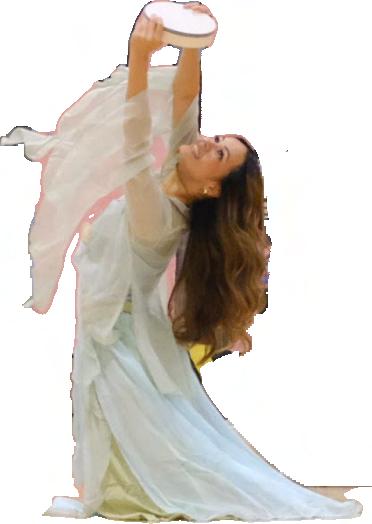


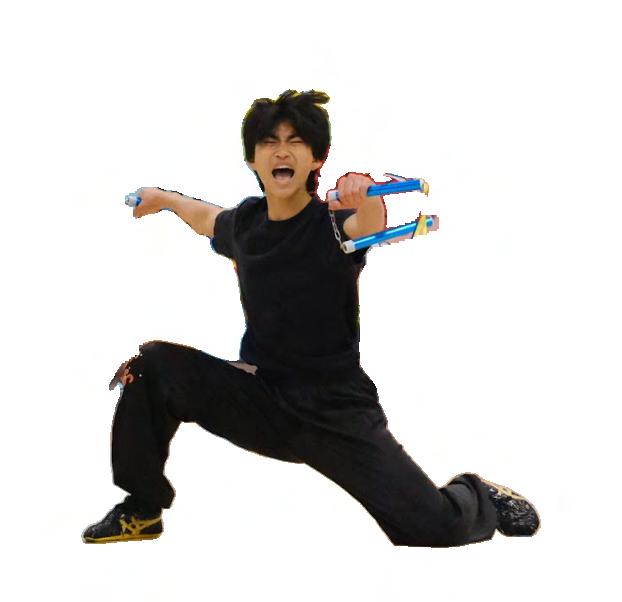


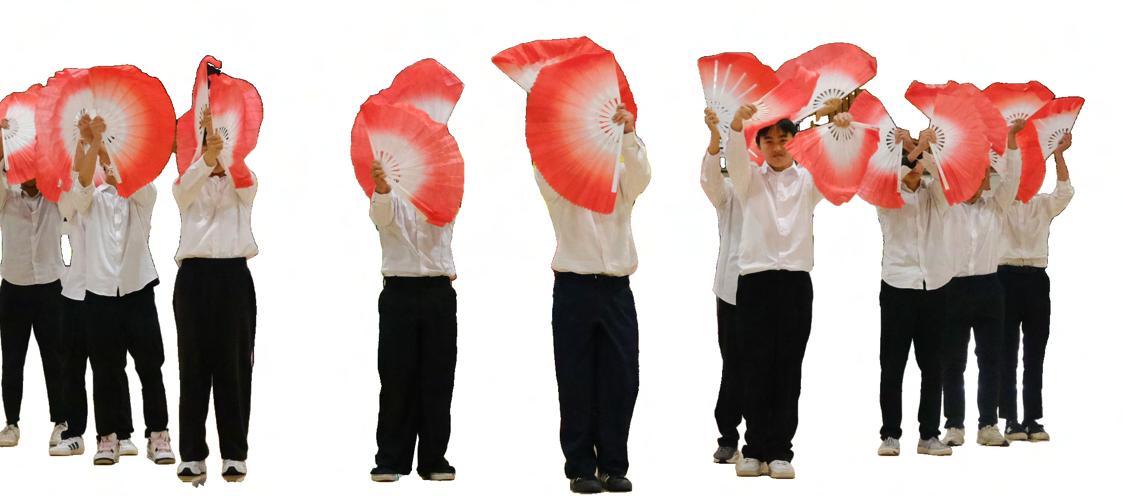



By




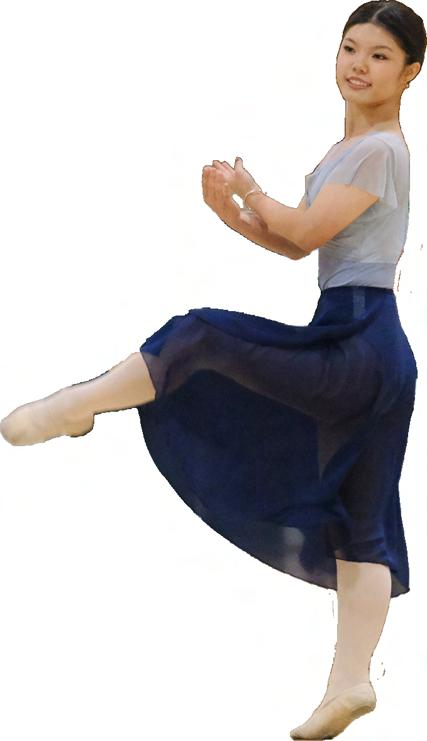








CHInese classical
crepe
Erika Liu, Saesha Prabhakar & Andy Zhang Staff Writers


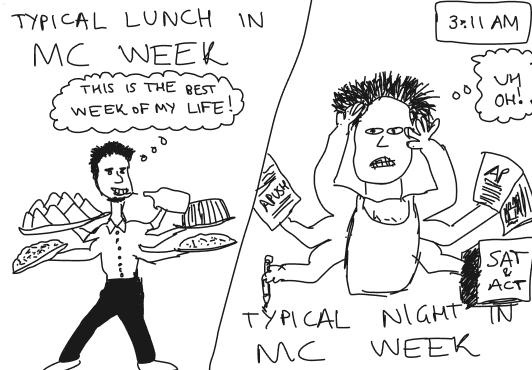
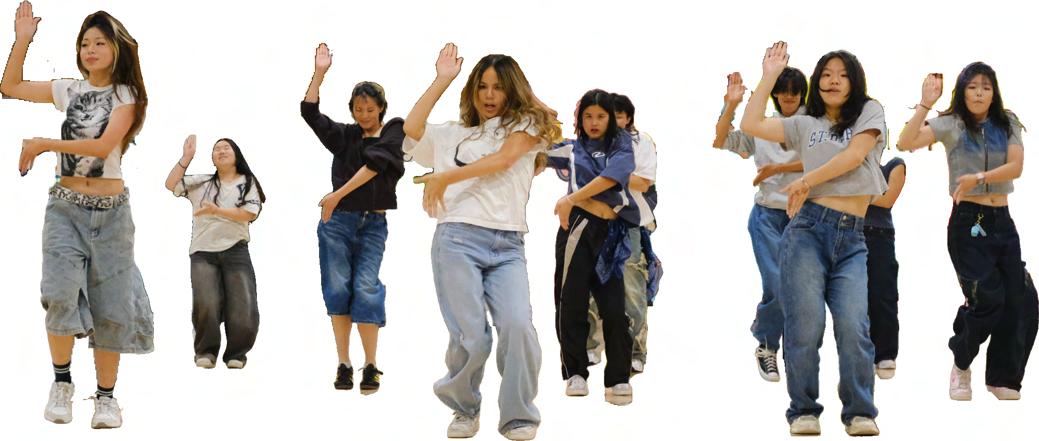
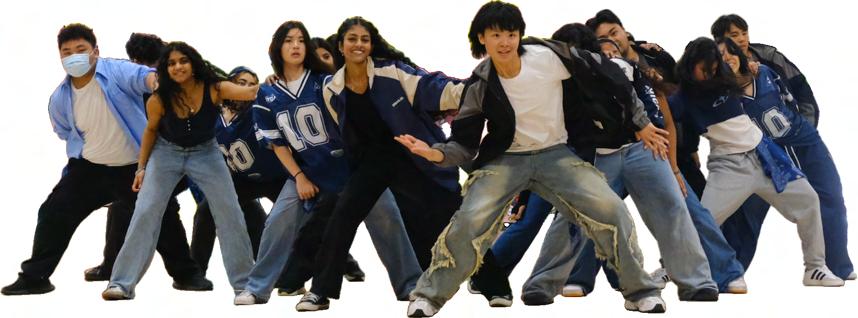
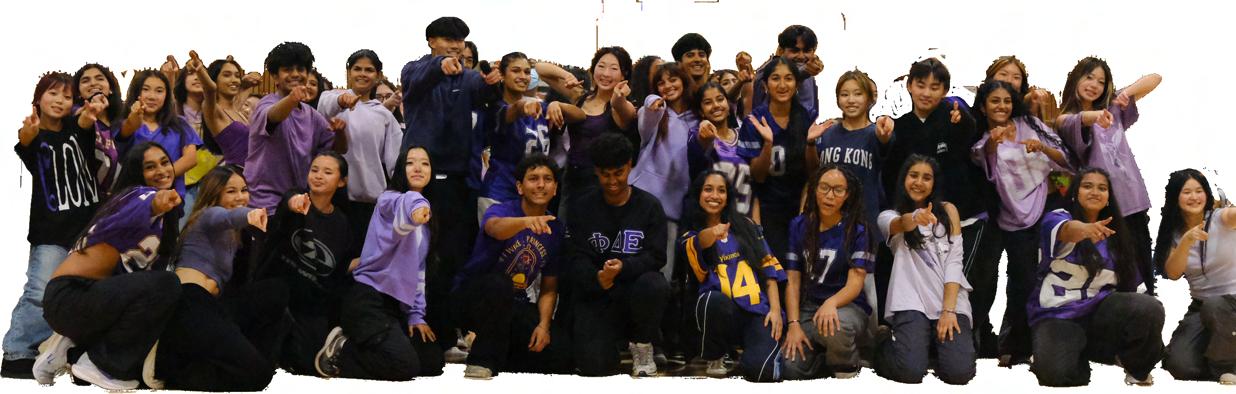
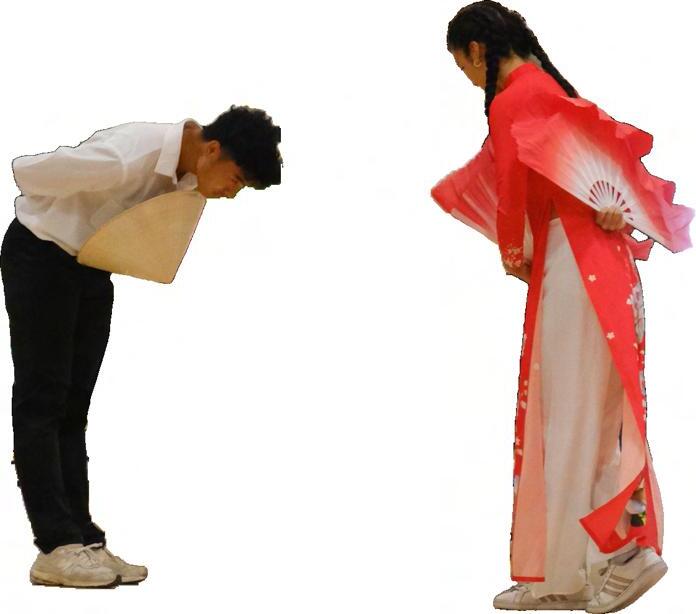
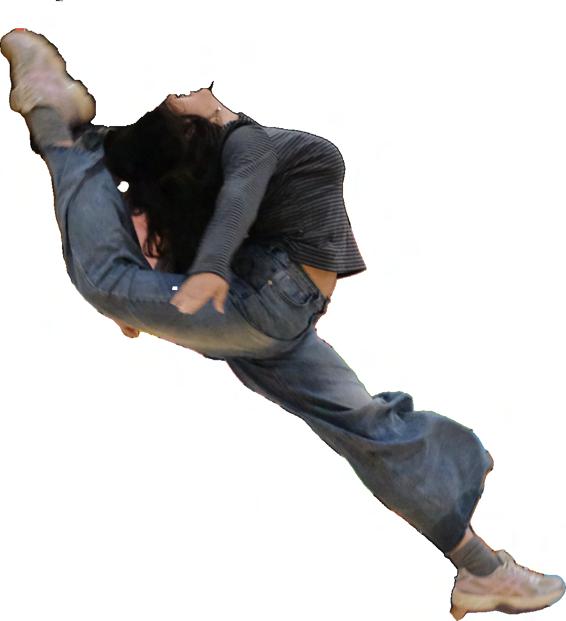
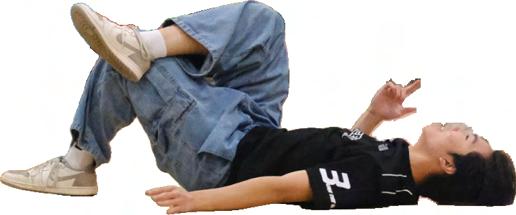
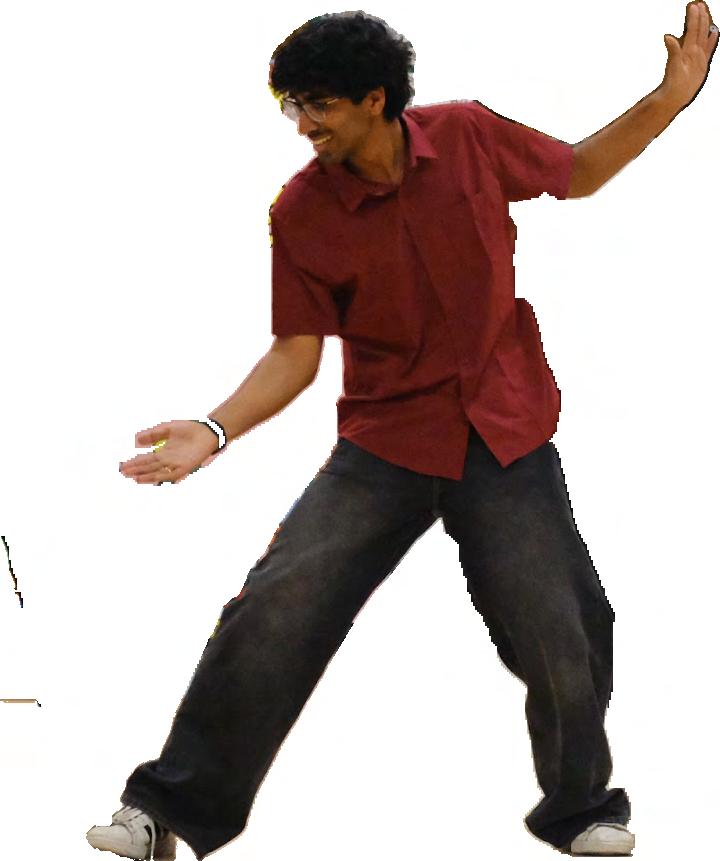
From April 6th to 10th, MSJ recognizes a diverse range of multicultural traditions and foods with MC Week.
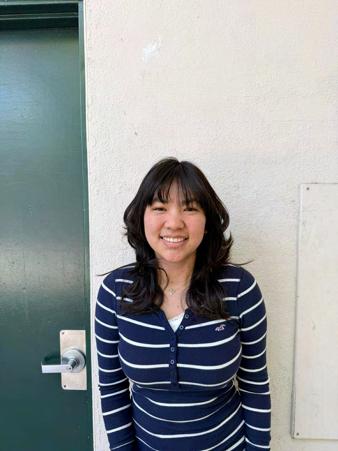
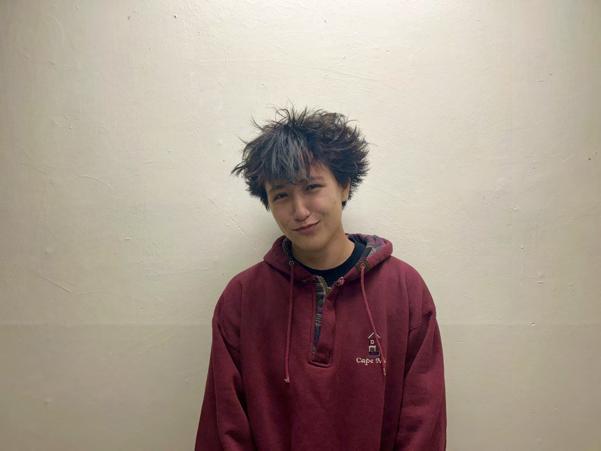
is month, students were asked: “How do you celebrate your culture


By Jessica
Cortisol, a hormone that manages the body’s response to stress, has become the focus of the online body improvement community. While there are many ways to lower cortisol, there’s no better way than through diet, embodied through buying out every grocery store of its blueberries, Greek yogurt, and olive oil. In this DHTH, four Smokies will attempt to defeat the MSJ standard and be stress-free.

to my aunt's house, and she has a bunch of family friends or our grandparents from China actually come over to America, and we have one big dinner together. We try our best to all speak in Mandarin so our grandparents can actually understand what we're saying instead of speaking English. We sort of make a game out of it, so the rst person to who speaks English can't get dessert rst. It's really fun. And honestly, I feel like more families should encourage their children to speak their mother tongue instead of just saying English.” — Megan Chu, 11

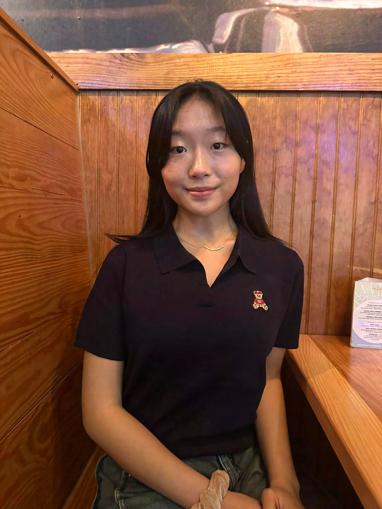
I can’t say much since I need to keep mewing, but know this: I’m about to chef-max my way to ascending this DHTH. Even before the hunter eyes and positive canthal tilt, I was a end for everything fruity and fermented. Chia seeds? In my gut. Kombucha? In my veins. ere is no stress hormone I can’t lower, no in ammation I can’t calm. While my forte is baking and everything sweet, who says desserts can’t also be low cortisol?
My cortisol levels have been way too high recently, which honestly makes me the ideal candidate for this challenge. A good cortisol-lowering food shouldn’t just be “healthy,” it should look good and feel satisfying to eat. I am neither a baker or cook, but I am a professional big-backing foodie and incredibly talented at putting together elite snack combos that ful ll cravings. I’ve already placed multiple dry yougurt recipe in the fridge for testing and it’s clear that I know what will help people chill.

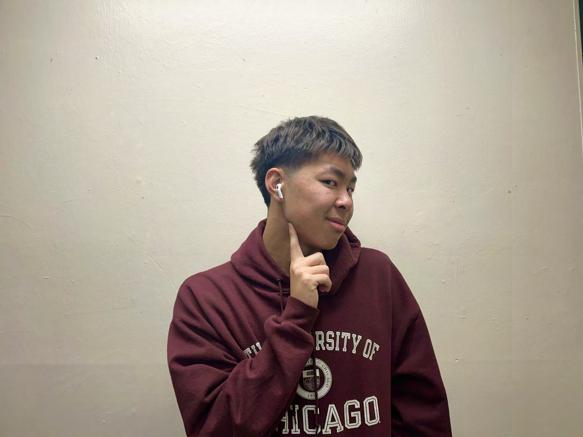



Call me ASU Frat Leader the way I mogged my fellow Smokies into oblivion. With my monk fruit sugar- lled jasmine green tea cake with a lemon Greek yogurt and homemade blueberry jam frosting, there was no jestermaxxing to be seen. I locked in so hard my jawline was both the knife sharpener and the knife that sliced the cake. I am the true DHTH Chad everyone has been waiting for.
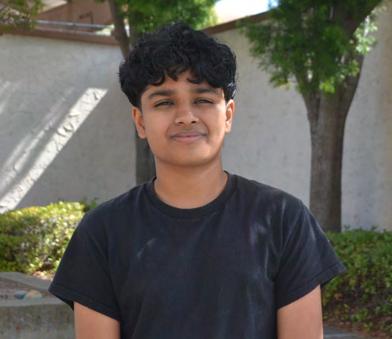
Funny thing, I actually forgot about the deadline and had to scrap the yogurt bowl idea! But how goated am I for clutching second with my frozen fruit and gummy bear bowl? With internet favorite green grapes and zzy frozen vitamin gummies, I like to think I lowered everyone’s cortisol — everyone’s except my own.



festivals, participating in dances and meeting up with family during holy months or holy days of my culture. My culture is really important to me because it allows for time to meet with family, connect with elders or other people outside of my generation, and also lets me learn about how my parents lived and what struggles they went through in their childhood.” — Rohan Manoj, 10

As the reputable low cortisol king, I’m beyond con dent I will framemog these Clavicular-level competitors. While everybody else is jestermaxxing with their high cholesterol foods, I will craft the most delectable matcha desserts that could appease even the most performative of the larp larp larp sahurs. Honestly, even if I don’t win, my cortisol will stay as low as my math grades because low cortisol is my lifestyle.

What went through the judges’ minds needs to be studied. My soft, buttery, aromatic strawberry matcha mu ns were undeniably the second most elegant creations on the table, yet I somehow placed third. When a masterpiece like mine gets robbed this severely, this DieHard TryHard can only be concluded as rigged. At the end of the day, the low cortisol king keeps his composure because I know the real winners were anyone lucky enough to taste my baking.

I may not be the greatest cook. However, as MSJ’s most prominent looksmaxxer, with a Lookism (PSL) rating o the charts, I will de nitely create-maxx the best and lowest cortisol dish of all. With the dish I create, even the most sub-5-maxxed, highest cortisol editor judges will ascend to at least the high mogger tier of Chad. After I mog my competitors in this challenge, hopefully everyone will recognize my importance to the looksmaxxing landscape.
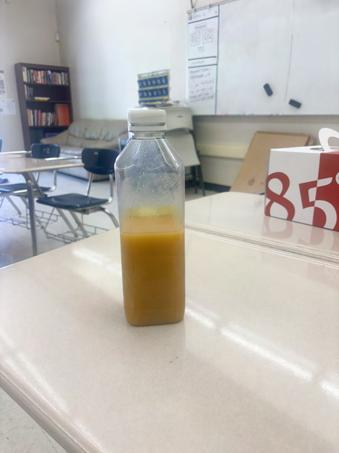
I thought my low cortisol, mog-cock-tail drink was going to mog the competition; Unfortunately, I didn’t realize the ingredients had been fraudmaxxing. It seems as though neither my tasty orange, ginger drink nor my chiseled jawline and curly hair could win me this competition. Regardless, I won’t allow this slip up to spike ank you to my fans for sticking by me no matter the outcome.

Cao, Varun Madhavan, Finn McCarthy & Joseph Miao Sta Writers
Composed by Kayla Li & Leland Yu Sta Writers
Project Hail Mary deserves a big thumbs down (up)
By Abigaile Lei Sta Writer
Realistic, gripping, and extremely hilari ous, Project Hail Mary proves that a be made without following the conventional script of a sci- movie. While most adopt a se rious and determined protagonist, the movie pushes for a more comedic and light-hearted take on the genre. Adapted from the novel of the same name by Andy Weir, Mary blends high-stakes science with deeply human moments, making it feel more relatable to audiences searching for a more upbeat take on humanity and survival in space. Mary is not only a life-or-death scibut also an exploration of humanity and the beauty of companionship in the most unex
A witty, heartfelt sci-f triumph that redefnes what it means to be a hero.


Gosling), a disillusioned high school teacher, waking up from a coma in a sterile, automated rmary with no memory of his name, why he’s there, or who he is. Upon further invesnds the lifeless bodies of the pilot and engineer of the ship, spiraling into a panic. During a series of ashbacks throughout the movie, both the audience and Grace discover his purpose: to save the solar system’s Sun from astrophage — single-celled organ isms that consume energy to breed. As Grace begins to recover his memories bit by bit, he discovers that he is aboard the Hail Mary, a desperate, one-way mission to the Tau Ceti star system 12 light years away to nd a cure to the astrophage infection. He eventually realizes he
alien engineer with the same mission, whom he nicknames “Rocky” (James Ortiz). Bound together by the universal threat of astrophage, the two must overcome a linguistic and biological gap to nd the solution needed to save both of their civilizations.
One of the main points that makes Project Hail Mary so appealing is its representation of the refreshing truth of what it means to be human: hesitant and curious, sarcastic and
an astronaut but as a human with a newfound purpose — forms the backbone of the story’s powerful emotional impact. e emotional dynamic of Ryland Grace’s character is what allows the lm’s technical elements to resonate with the audience more profoundly, as its visual style and performances work together to amplify the emotional weight of his journey. e lm rede nes the sci- genre through outstanding cinematography and the balance between comedy and emotion, both of which raise the story beyond a conventional sci- narrative. e lm’s visual composition captures the isolation of space while also emphasizing the fragile, intimate moments that de ne the journey. Similarly, Gosling’s performance as Grace anchors the lm emotionally, delivering the perfect amount of humor and vulnerability to make Grace feel both relatable and compelling to the audience.
Project Hail Mary delivers more than just a fun watch to kill time, o ering re ection on what it means to really be human. rough Grace’s transformation from a self-preserving, reluctant individual on Earth to someone capable of profound sacri ce, the lm rede nes heroism as something stemming from connection to others, rather than courage alone. Its striking visuals, narrative, and complex scienti
The problem with authentic casting in Hollywood
Controversy surrounds HBO’s The Last of Us Season 3’s decision to cast a cisgender actress in a transgender role.
By Luna Bichon, Amber Halvorsen, & Matthew Zhang Sta Writers
Fans of one of the most successful video game franchises, e Last of Us, were excited to hear it was being adapted into an HBO drama series. e show has released two seasons since January 15, 2023, with the third expected to come out in 2027. However, despite its popularity, controversy has appeared over its casting decisions for season 3 following its announced renewal on April 9, 2025. A cisgender actress is announced to play the character Lev, a transgender boy. While some may dismiss the backlash as an overreaction, this decision re ects a broader issue within the entertainment industry: the misrepresen tation and exclusion of transgen der actors in media. Misrepre sentation and exclusion of transgender actors in lm can strongly enforce existing stereotypes surrounding transgender people and result in social regression, as opposed to progress. is situation is not the only one where cisgender actors have been cast in transgender roles. Since the 1990s, as LGBTQ+ identities have gained visibility, cisgender actors have often been cast in transgender roles. Examples include Hilary Swank in Boys Don’t Cry, Je rey Tambor in Transparent, and Eddie Redmayne in e Danish Girl, all of whom received recognition through winning or nominations for various awards, with Hilary Swank winning a Golden Globe and an Academy Award for Boys Don’t Cry, Eddie Redmayne being nominated for an Academy Award, a Golden Globe, and a Screen Actors Guild (SAG) award for e Danish Girl. In addition, Jeffrey Tambor won two Emmy Awards, a SAG
award and aGolden Globe award for Trans parent
At the same time, openly transgender ac tors have remained underrepresented. It was not until 2025 that Karla Sofía Gascón be came the rst openly transgender performer nominated for an acting Academy Award. In contrast, cisgender actors playing transgen der characters have been frequently awarded: Jared Leto (Dallas Buyers Club) and Hilary Swank (Boys Don’t Cry). Casting cisgender actors in transgender roles can lead to less authentic portrayals. Actors without actual LGBTQ+ identities may rely on stereotypes or exaggeration when portraying LGBTQ+ characters, reinforcing harmful ideas. As a result, representation be comes a performance rather than reality, making it harder for LGBTQ+ audiences to relate.

In the movie 3 Gener ations, Elle Fanning plays a transgender male teen ager, however, her per formance is somewhat stereotypically moody, one-dimensional, and lacks real character develop ment. As a character built o of stereotypes, it inadvertent ly suggests that transgender individuals behave similarly poor ly. 3 Generations is just one example of how lms and TV series trying to represent mar ginalized communities can actually negatively impact youth who are still struggling to nd their identities, if they build their stories o of stereotypes and cast cisgender, heterosexual actors in trans or gay roles. Poor representation in media can lead LGBTQ+ youth to internalize how stereotypes of a certain identity implicate that LGBTQ+ individuals act and look a certain way.

Performers like Laverne Cox, who played
o ered acting opportunities, let alone roles as transgender characters. Additionally, Lev’s identity in e Last of Us is a key part of the storyline. His experiences could be portrayed more accurately through the lens of a trans actor, considering his identity drives the story and isn’t a minor, changeable detail. Casting people outside of the transgender community can lead to a poor portrayal of the characters who are put in stories to create representation.
Representation in media can directly in u ence how people understand each other, and inclusive storytelling requires both diverse characters and inclusive casting. Ultimately, casting transgender actors in transgender roles is not just about accuracy, but about ensuring that transgender performers have the chance to tell their own stories and be represented with authenticity and depth.
Stunning visual scene of space
Ryan Gosling as Ryland Grace
MGM STUDIOS
MGM STUDIOS


THE DRAMA: LOVE, LIES, AND ONE VERY BAD GAME NIGHT
By Kanupriya Goyal Staff Writer
Released on April 3rd, A24’s The Drama, directed by Kristoffer Borgli, splashes on screen with the emotional stability of a glass vase teetering off a ledge. Known for his discomfort-laced satire (Sick of Myself and Dream Scenario), Borgli once again indulges his fascination with social implosions, this time cloaked in the deceptive packaging of a romantic drama. Backed by a modest but effective budget and a high-profle cast, the flm establishes itself as both an exploration of modern relationships and a moral thought experiment, although it often seems more interested in lighting the match than in sparking the fre.
The premise is, at least initially, deceptively conventional. Emma (Zendaya) and Charlie (Robert Pattinson), a seemingly compatible if slightly awkward couple, are mere days away from their wedding. Their relationship is introduced through endearingly clumsy anecdotes and a montage of meet-cutes, such as Charlie working up the nerve to approach Emma at a coffee shop. They are later joined by their comrades Rachel (Alana Haim) and Mike (Mamoudou Athie), who will later serve to function as catalysts for the narrative destruction.
The inciting incident of The Drama unfolds during an evening gathering, when Rachel proposes a game: each person must reveal the worst thing they have ever done. The game begins as a trivial bout of confessions but rapidly escalates into something far more destabilizing. Roughly 20 minutes into the flm, Emma’s revelation of the worst thing she’s ever done detonates the tidy narrative path
GAMEBYTES
By Eleanor Chen Staff Writer
Evil resides within the confnes of this so-called “hospital” — T-virus mutated humans lurk with only faint traces of humanity remaining. Some still scrub dried pools of blood, their fractured memories as a maid guiding their actions. However, for others, only a grotesque monster remains in the place of a once-living human being. This tension between humanity and monstrosity raises the horror and emotional stakes. Resident Evil Requiem is the ninth installment to the 30-year-long running Resident Evil franchise developed and published by Capcom. In its frst week alone, the game sold fve million copies, making it the fastest-selling release in franchise history, and offering audiences a pleasant change of scenery with more humanoid zombies than the brainless ones most are accustomed to.
Set 30 years after Raccoon City’s destruction from Resident Evil 2, the story follows Grace Ashcroft, investigating murders and the string of unspeakable experiments tied to her mother’s death, and Leon S. Kennedy, a fan-favorite playable character whose years of experience across the series clearly shows how far he has come since his rookie days frst thrown into the chaos of the original outbreak. With the game’s dual protagonist system, players are playing two completely different gameplay styles that are equally worthwhile. Grace’s sections focus on stealth, tricky puzzles, scarce resources, and surviving the deadly horrors that loom — every shadow is a foe, so players must stay in the light. Leon is the same as usual, action-packed boss fghts, overpowered weapons, and signature one-liners — all flled with pure, unadulterated adrenaline. If the player’s computer doesn’t give up frst from the sheer demand and space this game commands, the game is pure cinema. The immersive backing track chills players to the bone and the shockingly realistic graphics immerse players into the universe. Resident Evil Requiem perfectly encapsulates the action, horror, and story that endeared its franchise to so many fans in the frst place while incorporating new elements. However tricky it is to balance nostalgia and innovation, the game manages to pull it off effortlessly. ▪
Grade: A


the flm was on, recontextualizing her relationship with Charlie. From this point onward, the flm abandons its romantic pretense and commits fully to psychological unraveling. At the center of this unraveling is Emma, whose characterization paradoxically emerges as both the flm’s greatest strength and its most glaringly mishandled bungle. Zendaya imbues Emma with a palatable sense of internal confict: an individual burdened by guilt, shame, and unresolved trauma. Yet, the narrative conspicuously withholds empathy from her. While the flm acknowledges the mental burden she carries, it consistently frames her “worst thing” through the lens of others’ outrage rather than her own lived experience which plays into the common trope of contextualizing black women’s pain and personhood in relation to others instead of centering their own identity. One of the flm’s central thematic inquiries revolves around the distinction between thought and action. Emma’s “worst thing” exists in a liminal space as it was conceived and planned, but ultimately unexecuted. In contrast and perhaps most ironically, other characters’ transgressions
are objectively the “worst thing” performed, as they had demonstrable real-world repercussions. The flm repeatedly circles this moral conundrum without offering a resolution, leaving the audience to grapple with that uncomfortability: is the capacity for harm equivalent to harm itself?
However, The Drama is most perversely entertaining in its self-awareness and embracement of how unbearable it is. A lot of that rests on the performances. Zendaya plays Emma with this unnerving, yet fracturing composure that keeps slipping just enough to suggest a sense of unease. Meanwhile, Robert Pattinson turns Charlie into something almost pathetically watchable, constantly aloof, and one step behind the emotional chaos he’s in. Together, they have this kind of volatile chemistry that ignites the dynamite of all the heightened tension.
The Drama lives up to its name with all the elegance of a chihuahua at a high-society function. It is funny, agonizing, thought-provoking, and deeply, profoundly frustrating. It’s a flm that asks the big questions, dodges nearly all of them, and leaves the viewer to piece together the moral debris. ▪
Grade: B
2026 Student Faves
Six by Taylor Jenkins Reid — Siya Singh, 11 GAME: Unpacking — Mariam Kooarappall, 9
THE MARIO MOVIE IS LIGHT YEARS FROM A HIT
By Leland Yu Staff Writer
Following The Super Mario Bros. Movie, its sequel, The Super Mario Galaxy Movie, expands the franchise beyond the Mushroom Kingdom and into the vastness of space. Directed by Aaron Horvath and Michael Jelenic, the flm continues its light-hearted, “theme-park ride” approach to animated flmmaking, this time with the entire galaxy as its playground. With the collaboration between Illumination Entertainment and Nintendo Co., Ltd., Horvath and Jelenic create a flm that is visually striking, setting a new benchmark for video game adaptations. Released on April 1, the sequel follows Mario (Chris Pratt), Luigi (Charlie Day), and their companions as they travel through space, where they must stop Bowser Jr. (Benny Safdie) from freeing his father and restoring the Bowser family legacy. Alongside them are Princess Peach (Anya Taylor-Joy) and Bowser (Jack Black). Along the way, they meet Rosalina (Brie Larson) and team up with a new companion: Yoshi (Donald Glover).
Maintaining the same visual standard set by its predecessor, the flm brings the Mario universe to life in a game-accurate world. The flm excels in its intricate animation and action sequences. Its use of vibrant colors and motion creates a sense of constant energy across its immersive environment. From the iconic chime of a power-up to the satisfying thud of a question block, the sound effects feel directly lifted from the original games, rewarding longtime fans while pulling newcomers into the animated world. There are rare moments when the flm earns some laughs, such as when Mario fumbles a greeting with a reunited Princess Peach with a handshake rather than an embrace, creating a small but comedic moment that catches the audience off guard — yet these moments are few and far between.
The flm struggles to match that same level of strength in its storytelling, with forced humor and underde-

veloped characters and relationships. Though its target audience generally gravitates towards children, it often tries too hard to be funny, spending too much time desperately reaching for laughs outside of its rare funny moments. One scene in particular, where Princess Peach and Toad interact with a painfully slow robot behind a counter, feels directly stripped from the beloved sloth scene from Zootopia. It seems that the whole movie is alluding to random works from pop culture, with no intention or purpose. From space battles reminiscent of Star Wars to a T-rex chase straight from Jurassic Park, there are more imitations of other flms than to references to its own video game universe. Further weakening the story is the forced relationship between siblings Rosalina and Princess Peach, with a backstory so abrupt that it leaves audiences more confused than emotionally touched. Rosalina’s sudden entrance and introduction to the flm feels more like a marketing decision than a meaningful addition. Ultimately, The Super Mario Galaxy Movie is a great flm — if you watch with low expectations. Though its colorful animations and faithful sound design make it quite a visual treat, its forced humor and unoriginal storytelling make it a hit — a hit and miss. While it brings the Mario universe to life on a larger scale, it fails to deliver a compelling story that lives up to the legacy of its name. ▪ Grade: C
KITTY SEASON 3 COULD’VE BEEN AN EMAIL


By Felicity He Staff Writer
After more than a year of waiting, XO, Kitty Season 3 picks up right where Season 2 left off, with the sun shining and Kitty Song-Covey (Anna Cathcart) about to embark on a summer of romance and relaxation with the object of her affections, Min Ho (Sang Heon Lee). Kitty is excited; the viewers who are eager for a resolution to Kitty’s love quartet are even more so. With all the drama of Kitty’s love interests, from her frst boyfriend Dae (Choi Min-yeong) to her frst lady love Yuri (Gia Kim), the loaded look Min Ho shoots Kitty in the fnal moments of Season 2 promises audiences a cute, mess-free opening to Season 3. Disappointingly, the show immediately backtracks, brushing everything off as a misunderstanding between Min Ho and Kitty, leaving a bitter taste that lingers through eight episodes’ worth of break-ups and get-togethers. The show seldom gets better. Season 3 has many faults, but among the worst of them are the characters and their development. For a show so focused on romance, the showrunners
do not appear to hold much love for the characters themselves, omitting key traits from some and stunting the development of others. For example, Yuri and Min Ho swap aspirations, originally music and fashion respectively, without any buildup. Minor character inconsistencies aside, none of the characters feel like themselves. Min Ho’s missing snark coupled with Sang Heon Lee’s poor acting, results in a male lead about as interesting as a piece of cardboard. Meanwhile, despite Kitty building a life and discovering herself in Seoul, she falls in love with New York University (NYU), the school her sister Lara Jean (Lana Condor) went to in
To All the Boys I’ve Loved Before, offscreen, and decides to attend. The decision to have Kitty go to NYU feels more like an appeal to nostalgia than a choice that actually made sense for her character. Forget the rest of the cast — although some of them have enjoyable moments, Eunice (Han Bi Ryu) in particular, none of them have enough screentime to develop a meaningful storyline. Most egregious of all is the way XO, Kitty treats its many queer characters. Praveena (Sasha Bhasin), who
was brought onto the show in Season 2 specifcally as another sapphic love interest aside from Yuri for Kitty, has the barest storyline out of any character. She breaks up with Julianna (Regan Aliyah), and then we never see Praveena again, not even at the friend group hangouts — a completely unnecessary decision because Julianna’s arc of getting back together with her two-timing ex, Yuri, is almost as dull as Praveena’s. With these characters completely sidelined, the attempts to give them closure come across as lazy. Q (Anthony Keyvan) suffers a terrible character assassination, completely pivoting from being a calm and mature person healing from being cheated on to committing adultery in Season 3. The toxicity and negativity coming from the queer characters this season are disheartening to see, especially considering the respectful and sweet way that Kitty’s bisexuality was portrayed in prior seasons. Season 3’s poor handling of its queer characters refects a broader problem in the show’s writing, in which events occur in isolation and lack lasting consequences. Each new piece of drama is more ludi-
crous than the last, yet no action has effects that ripple further than one episode, with each situation resolved right after it happens. Even the opening scene of the season, with the misunderstanding between Min Ho and Kitty, fxes itself with the two confessing to each other by the end of the frst episode. This results in no suspense across the season and no climax where everything comes to a head.
Like its predecessors, XO, Kitty Season 3 is brain-rotting and cringe-worthy, but there are areas in which it improves. From a soundtrack that actually matches what is shown onscreen to the adorable montages to outstanding performances from Cathcart, Aliyah, and Ryu, Season 3 actually shows a few positives. Unfortunately, due to its poor characters and fat plot, it achieves what the previous two seasons could never: being boring. With the only thing of value, XO, Kitty contributes — entertainment — removed from the equation, Season 3 is not worth watching. ▪
Grade: F
ALICE: “Poor Grammar” by Roar | ARIANA: “Cry” by Cigarettes After Sex | ARIEL: “A COLD PLAY” by e Kid LAROI | BRITTANY: “forwards beckon rebound” by Adrianne Lenker | CHAM: “Nobody New” by the Marias | EKASHA: “Exit Music (For A Film)” by Radiohead | EMILY: “Lanterns” by Jasmine Sokka | ETHAN: “Careless Whisper” by George Michael | HANNAH: “Punisher” by Phoebe Bridgers | JANET: “making the bed” by Olivia Rodrigo | JENNIFER: “Kim Jung Goon” by Hyperbaiter | MICHAEL: “mirrors demo” by overtonight | NAISHA: “Too Close” by Sir Chloe | NAVYA: “Appointments” by Julien Baker | PADMA: “It’s Only Sex” by Car Seat Headrest | SCARLETT: “Stay Soft” by Mitski| TRISHA: “loml” by Taylor Swift | VIKRAM: “Yeh Fitoor Mera” by Arijit Singh | TR. LOW: “Perfect” by Simple Plan
SkillSprout plants seedlings of success in sports
By Fiona Yang & Aaqib Zishan
Staf Writers
Under a hot, sunny day, a young boy steps up to a dirty plate, his blistered hands gripping a splintered baseball bat. Each at-bat results in a swing and a miss. O ense turns to defense. His glove is too big, with the leather worn and torn as he glances across the eld — other kids wearing shiny helmets and warming up with brand new gear.
Kids like him want to play and improve, but high nancial costs keep many on the sidelines. To address inequalities in sports, Founder Senior Sohum Wadhwani founded SkillSprout, a nonpro t organization dedicated to funding and empowering underprivileged sports teams with the necessary equipment and support.
When Wadhwani began clearing out his old
baseball equipment, he noticed the money he poured into a sport he no longer played. Perfectly usable gear collected dust in his garage as he had no way to get it to people who could bene t from it. After discussing with friends, he began researching ways to donate or recycle his equipment locally — but nding none, he went on to launch SkillSprout. What started as an effort to recycle sports equipment turned into a student-led nonpro t dedicated to making athletics more accessible for youth across the Bay Area. “I think sports are the number one thing that every child wants to do when they’re a kid, but it’s pretty expensive, so it can limit people [when it shouldn’t]. Anyone should be able to play sports if they want to,” Wadhwani said.
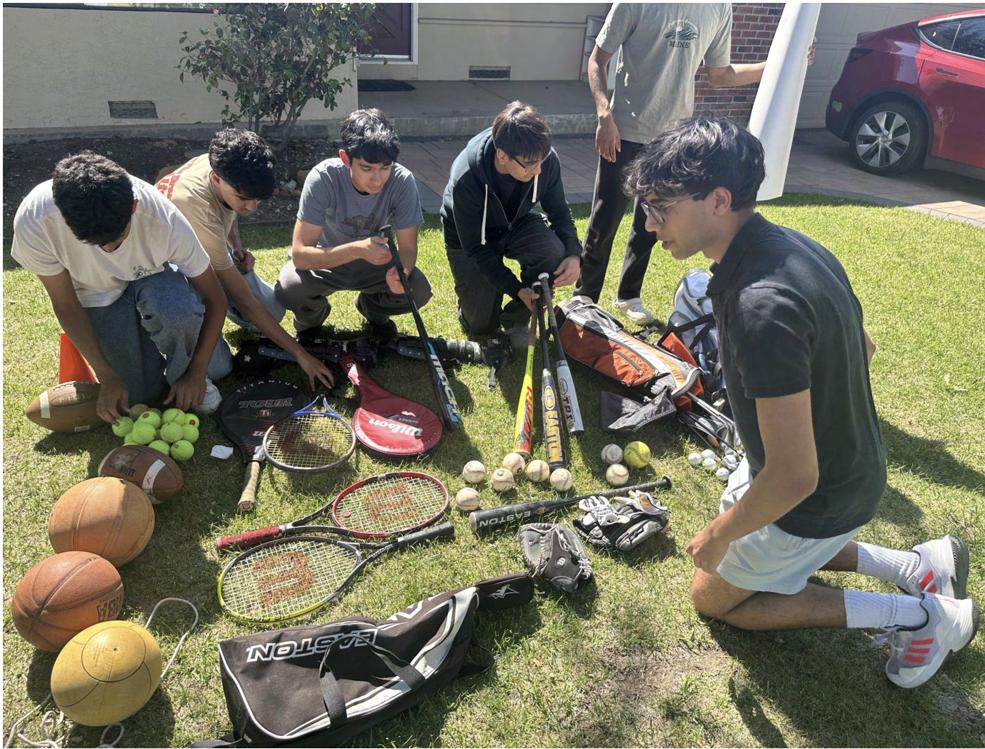

One of the hardest things the organization faced was building trust from the community and proving itself as a viable non-pro t. eir messages in WhatsApp groups were often ignored, so the group spent over a year going door-to-door to spread its mission and request donations. Consistent e orts bore fruit, leading SkillSprout to be featured on local Bay Area news outlets such as KTVU Fox, KRON 4, and the Tri-City Voice. Following the organization’s feature on Fox KTVU, “people started donating equipment every week [with] one or two donations every single day through the website.” With that, the organization created a website, allowing easy access for donors to con-
places we do a lot of ongoing donations with … We gave equipment everywhere from the elementary PE class all the way to their high school baseball team,” Wadhwani said. Since its founding, SkillSprout has reached its fundraising goal of $65,000 worth of donated equipment, partnering with districts and organizations such as the Oakland Uni ed School District, California School of the Deaf, SF Pickleball Club, First Tee SF, and East Palo Alto Tennis & Tutoring. From baseball helmets to tennis rackets to soccer balls, SkillSprout has established itself as a notable non-pro t in the Bay Area. “I think the biggest goal is to eventually grow it statewide, hopefully nationwide …
Ball, bat, and belief: Junior Advaith Dhumal Rao’s cricket story
By Gaura Amarnani & Veer Mahajan
With a cricket bat resting in his hands as he swings, Junior Advaith Dhumal Rao places his shot just between the elders. e ball races along the pitch, breaking the barrier of the boundary. is isn’t the only barrier Rao has broken — he started playing cricket in 2018 at the age of nine, inspired by his father, ultimately becoming the best Under 15 player in the country.
Today, Rao trains for 10 to 20 hours a week as part of his rigorous training schedule. Much like a cricket game, Rao’s story is not a simple one — full of twists, turns, and many challenges, Rao has emerged as a symbol of not only athletic prestige, but a testament to hard work and chasing dreams.
Even in his early years of cricket, Rao developed an interest in playing the game seriously, often competing with players much older and stronger than he was. Unfortunately, in the 2022 and 2023 seasons, Rao was not picked for regional competitions, which added to an already stressful time for him personally. Despite the di culties and doubts he faced, Rao decided to continue with cricket. is ultimately paid o ; just one year later, in 2024, Rao was a top Under 15 performer. As coaches complimented his play and recommended he employ his talent in a professional setting, Rao decided cricket was something he truly wanted to pursue.
Rising to such a level is no easy task. With his rigorous workload, both in school courses and extracurriculars, Rao has many priorities to balance. He notes that, much like any activity, cricket “is just about making sacri ces,”
but he nds these sacri ces fruitful. Exchanging time spent with friends and family for time batting in the nets can be costly to his relationships, but ultimately is just one sacri ce he must make.
Recently, Rao was chosen as the young est member of the semi-professional U21 minor league, though this meant he missed out on study time while working an intense regimen, leading to challenges in his school studies. Today, Rao achieves a healthy balance between all his priorities, succeeding in all areas.
ough growing in popularity and prestige, cricket remains a relatively uncommon sport in the US. De spite this, Rao attributes much of his success to the Bay Area community, where he says there are “a lot of coaches, a lot of good people to play with,” and that he “never really thought of it in a negative way.” At the same time, Rao recognizes and appreciates his teams, — he has always believed humility is a large part of being a good player and person — even re marking that he would “take a bullet for [his team mates] … I think they [would] take one for me.”
ese teammates have motivated him to play the game and supported him at every step, making that one of the experiences he’s most grateful for through out his journey.
Over the course of so many years, Rao has grown not only as a player, but as a person. “You can be good one day and then you can do horrible the next day. So it’s just about staying true to your self. You don’t put others down. Just enjoy the game.”
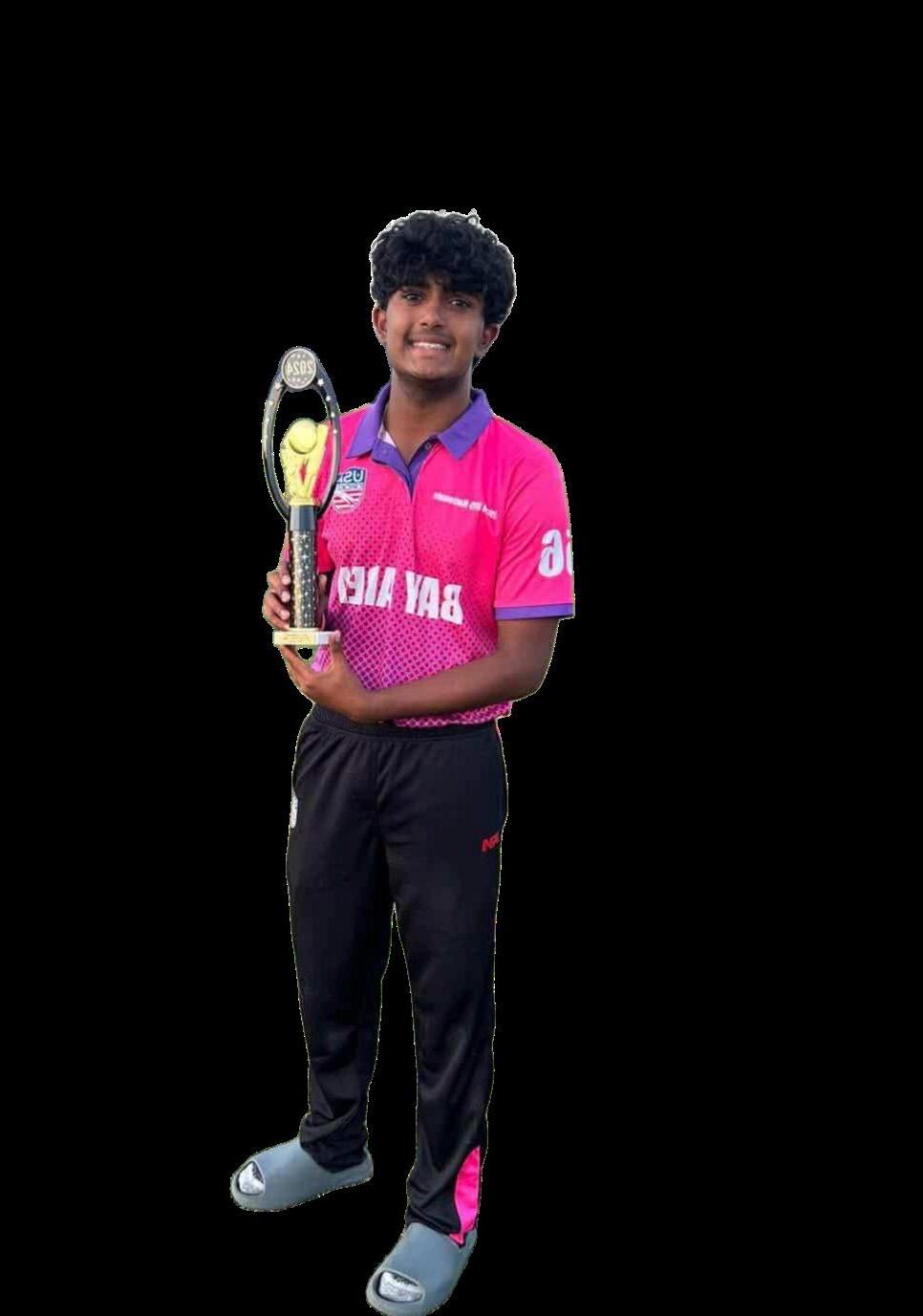
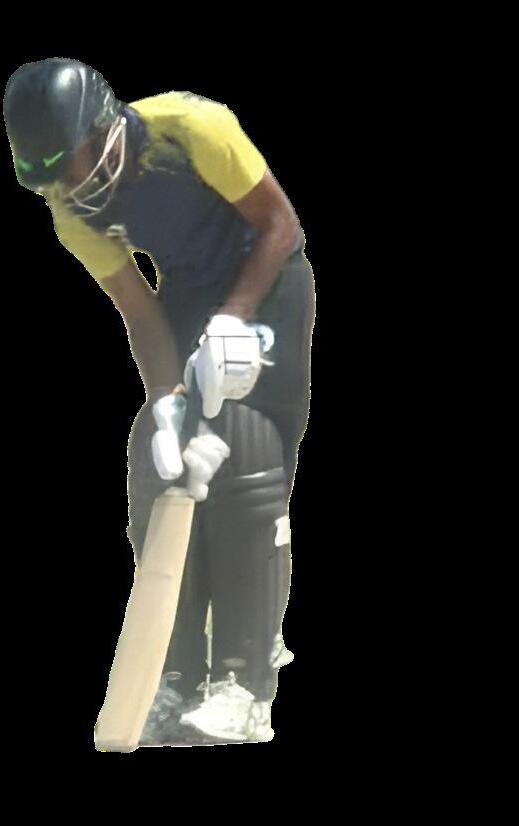

Staf Writers
SKILLSPROUT PARTNERS WITH EPATT, DONATING MORE THAN 70 TENNIS RACKETS
Swim unit returns to MSJ after nearly a decade
By Leland Yu, Andy Zhang & Lucas Zhang Staf Writers
After a seven-year hiatus, the PE swim unit at MSJ has made its return this spring, offcially reintroducing swimming as a part of the mandatory PE curriculum.
The program was called off in 2017, when PE classes discontinued the use of the pool due to maintenance issues and inadequate facilities. The original pool was too shallow for competitive use, causing potential issues for swimmers and water polo players during practices.
In December 2017, the FUSD Board of Education approved an $8.2 million plan to restructure the pool, scheduled to be completed by late 2018. The opening of the deeper, renovated pool was unveiled at a ribbon-cutting ceremony on Mar. 6, 2019, marking the completion of the facility upgrade that was expected to bring the unit back. However, the swim unit was not reintroduced into the PE curriculum due to scheduling and staffng challenges, leaving students dry from aquatic activities for years.
The new pool was designed with its use for water polo in mind, leaving most of the pool seven feet deep — far too deep for most nov-
ice swimmers. For this reason, the MSJ administration and the PE Department worked in unison to fnd a lifeguard to supervise. “The Red Cross was unable to secure a lifeguard, so we got all the teachers Red Cross certifed, which is part of the PE part of the requirements to run a swim unit. [We] told them they need to make it work with two lanes,” Principal Amy Perez said. The two lanes that are being used for this unit are specialized, shallower lanes, allowing them to be used safely with the presence of a certifed lifeguard.
The MSJ administration facilitated efforts to bring back the swim unit in part to comply with CA state requirements for PE to administer an aquatics unit for ninth grade students. The administration and the PE Department plan to have the unit return in the following years and look upon it favorably, noting its potential for inclusion and diversity. “It’s a big change up from what they do in PE, and there are some kids that normally don’t get to participate fully in PE, [but] can for swim, so that’s really positive,” Perez said.
However, some students feel the rollout

has been inconsistent. “I was actually kind of shocked, because the PE teachers promised last year that there would not be a swim unit return,” Varsity Swimmer Sophomore Chengry Hsien said. The curriculum itself has also faced criticism. “For people who do not know how to swim, it’s a valuable initiative. But for people who already do, like myself, it’s not because [the teachers] are just teaching us things that we already know how to do,” Freshman Neha Shastry said.
“For people who do not know how to swim, it’s a valuable initiative.”
— SOPHOMORE CHENGRY HSIEN
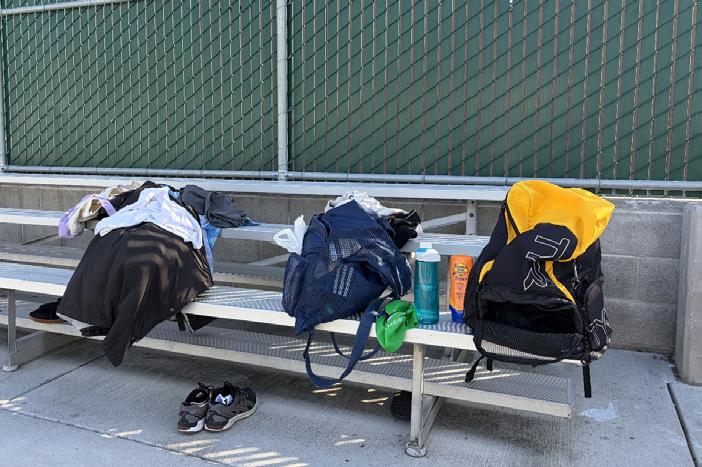
Students have also expressed concerns about the logistics of running sessions in the pool within 52-minute class periods. After accounting for time in the locker room changing clothes and showering, which take about 15 minutes away from the beginning and end of the period, students only have about 20 minutes in the pool for instruction. “That’s less than half [of our PE time] … it’s a little inconvenient because we have limited time to swim, and we also have to shower without wasting time,” Hsien said.

People who have to travel across campus to the gym have also expressed potential problems with the way the department has organized the unit, specifcally pointing to student activities in the locker room. “My ffth period is all the way in the other part of the school. By the time I get here, there is a line in the bathroom to change,” Shastry said.
Despite some critiques, students are excited about learning to swim. “Activities like basketball are good for training yourself, but for swimming if you’re ever stuck in a situation that may demand you to swim, I think it’s a very practical skill to learn,” Sophomore Leina Ikeda said.
As the program continues to develop, both students and staff will be observing the swim unit’s long term sustainability and student impact. “From what I’m hearing, the kids that are actually swimming really enjoy it,” Perez said. ▪
Eric Swalwell’s gubernatorial campaign is over, but rape culture is sadly here to stay
By Erika Liu & Warren Su Staf Writers
Content warning: discussion of sexual abuse.
Few suffer a downfall as sudden and disgraceful as that of former US representative and CA governor candidate Eric Swalwell. Following accusations of sexual assault — made public by a series of credible articles, starting with a lengthy report by the San Francisco Chronicle and corroborated by accounts from victims interviewed by CNN — Swalwell has seen the trajectory of his career take a rapid nosedive. In the span of just three days, the prominent political figure has dropped out of the CA gubernatorial race and resigned from Congress. In the same timeframe, members of the Democratic Party have quickly called for his immediate expulsion from Congress — apparently disgusted by Swalwell’s assaults. His former chief of staff even confirmed in one public statement that Swalwell “rightfully [had] no one working for him anymore.” By all accounts, in the messy and public aftermath of the allegations, Swalwell’s sexual misconduct seems to have been met with swift and satisfactory justice.
“This man lived a double life. He lied to us I was manipulated. I was lied to, and everyone else was too.”
— Sen. Ruben Gallego
Yet, Swalwell’s case goes deeper than that — the politician had built up a problematic reputation when it came to his female subordinates over the course of many years. Only recently has he begun to face any public accountability. The reality of it is that Swalwell, along with many other morally bankrupt politicians to this day, continue to escape re-
sponsibility for even the worst of their actions. It’s the product of an entire community of willing bystanders who willingly let so much pain and suffering go silent and unnoticed.
In the hectic fallout, Democrats — as well as former coworkers and peers of Swalwell — have gone above and beyond to distance themselves from the CA gubernatorial candidate. “This man lived a double life. He lied to us,” Sen. Ruben Gallego, who had previously called himself Swalwell’s “best friend,” said in a press conference on Capitol Hill. “I was manipulated, I was lied to, and everyone else was, too.” Rep. Nancy Pelosi, another one of Swalwell’s closest peers, maintained that she had been completely blindsided by the allegations. “I had [no hints] whatsoever,” Pelosi said.
Before these allegations, Swalwell’s had a blinding, powerful reputation. Swalwell had been a Representative of CA’s 14th Congressional District, representing most of Fremont, for more than 13 years. In 2020, he even ran a short-lived campaign for US president. Dozens of CA congresspeople, including prominent figures such as Gallego, Pelosi, and Sen. Adam Schiff, had endorsed him in his gubernatorial campaign. Swalwell had connections with, and support from, some of the most powerful unions in the state. By all accounts, he appeared to boast a spotless reputation. However, evidence has surfaced that his sexual misconduct may have been known amongst insider political circles for many years. There are public claims on social media suggesting sexually inappropriate behavior from Swalwell dating back to as early as 2020. Still more private claims date back to the beginning of Swalwell’s congressional career in 2013, according to Prospect. Despite
these claims, Swalwell was never investigated.
Charlotte Clymer, a former press secretary for the Washington-based Human Rights Campaign, posted on X following the allegations that Swalwell’s behavior had been an “open secret” in DC for many years. “I heard my first ‘Swalwell hit on me’ anecdote back in 2019; I have heard about half a dozen since,” Clymer said.
Most recently, Michael Trujillo, a longtime political consultant, made explicit statements condemning Swalwell in a post on X in December 2025. “I guess Swalwell can enjoy today but folks know he slept with many of his interns while he was married, sexually harassed others while engaged … Yo [sic] have been fully warned,” Trujillo said. No action was taken in response to any of these statements.
Before recently, Swalwell’s actions have seemingly gone unnoticed. However, it is completely likely that those around him were aware of the dark whisper network surrounding his sexual conduct — and had, at the time, simply chosen the path of least resistance. It shows how the flurry of indignation and empathy by politicians toward Swalwell’s allegations is at least somewhat disingenuous.
Silencing Victims
Political responses to Swalwell’s misconduct have been defined not only by inaction, but also hypocrisy. In an interview with CNN, Elias Dabaie, Swalwell’s attorney, defended Swalwell’s actions through his victims’ responses. “These women … have reached out to the congressman … wishing him nothing but the best,” Dabaie said. Swalwell’s political team has gone even further. Multiple news outlets report that they have issued employee
NDAs and cease-and-desist letters to Swalwell’s accusers on the grounds of defamation. It’s a common theme amongst abusers to use the shame and fear that rape victims feel to discredit them, ignoring accusations and silencing other potential victims.
According to the Brennan Center for Justice, more than 80% of rape cases continue to go unreported globally because of this.
Swalwell’s entire political identity falls apart under not only these allegations, but his response approach. A vehement critic of Trump and his messy scandals, Swalwell has found himself falling down the same path of sexual abuse and heavy-handed legal behavior. His sharp criticisms and accusations toward Trump are now shallow. He didn’t value standing up for women but instead focused on his own political gain. By taking active steps to intimidate and silence the women who have spoken up against him, Swalwell proves that he is no better than the administration he has devoted his entire career to attacking.
Swalwell’s case is part of a greater and more insidious issue within American politics — that of insincerity and a significant lack of accountability. It’s hard to resonate with public congressional responses when privately, people in power have met sexual abuse with nothing but passivity. Through these failures, rape culture has been able to pervade through the highest levels of government.
The great part about democracy is that we decide who leads us. When our leaders fail us, we have the power to hold them accountable. Even as high schoolers, it’s imperative that we extend this same integrity to all individuals, regardless of outward statements and appearances. ▪
Out of the 12 lanes, strictly the furthest two lanes are used for the instructional course.
To store sunscreen and other swim necessities, pool-goers keep their bags on the bleachers overlooking the pool.
Read more about student concerns about PE on page 1.
A bird’s-eye view of the facility. The pool has 11 lanes, with the two furthest to the left being the shallow ends.
Friday, May 1-October Fremont Street Eats
May CoMMunity EvEnts CalEndar
Compiled by Cecilia Cheng, Kanupriya Goyal, Felicity He, Erika Liu, Finn McCarthy, Warren Su & Andy Zhang Sta Writers

1.
Starting May 1 from 5-9 p.m., Fremont Street Eats will be hosting a weekly food truck festival at Fremont’s Downtown Event Center, where they will be providing free ra es, as well as live entertainment. Fremont Street Eats was rst hosted in 2011 and this year marks their 15th anniversary of the event. After Friday, May 1, the event will continue to be hosted every Friday for the next several weeks, until end of October. At the event, the Fremont Chamber of Commerce and the Food Truck Ma a will be o ering many di erent food truck options, with a wide range of culinary options.
Saturday, May 2
Washington High School Car Show

Washington High School’s annual car show returns for its 25th year for another day of community and family fun. Hosted by MVROP at the WHS campus, the show begins at 7 a.m. for seven-and-a-half hours of car and A car show will be held at Washington High School beginning 7 a.m. on May 2.
bike displays, live music, food, and ra e prizes. e event is free to enter and also features a canned food drive to support the local community food banks. In past years, the car show has raised thousands of dollars in supportTri-City Volunteers.
ursday, May 7
Intergenerational Art Contest & Reception

Results for the 2026 Intergenerational Art Contest will be announced at a reception on May 7, at 4-6 p.m. in the Age Well Center at Lake Elizabeth. e contestants, young people and older adults, range in age from 5-21 and 55+. Submissions surrounded the theme of “ is is My Place - e Power of Belonging” and was completed on April 10, drawing attention to the mental health struggles of those age groups.
Friday, May 15-Sunday, May

Niles will celebrate Charlie Chaplin on May 15 through May 17 at the Niles Essanay Silent Film Museum and Edison eater. is annual event is dedicated to Charlie Chaplin, who is famous for working on many silent lms. Chaplin came to work in Fremont for some time in 1915 and lmed lms in Niles. e event will include merchandise, as well as special screenings, a mix of silent lms from other creators, and lms with Chaplin. Since the event is split over multiple days, di erent events will happen on each day. Each day will include lm screenings, and there will also be presentations and train rides over the weekend. e event will showcase the history of silent lms.
Saturday, May 16-Sunday, May 17

Livermore’s Downtown Street Fest, the city’s longest-running celebration of wine and arts, will be held on May 16-17 this year, at 10 a.m.-6 p.m. on Saturday and 10 a.m.-5 p.m. on Sunday. Demonstrating the heart of entertainment and hometown charm in the East Bay, the event will feature 120+ vendors, four local breweries and eight local wineries, as well as a special Kids Zone for attending families. e event will also feature wine-tasting booths, live performances and music from more than 10 bands.

Wednesday, May 20
Paint Nite

Paint Nite aims combine artistic expression with a social atmosphere and will be held on May 20.
A Paint Nite event is set to take place on Wednesday, May 20, from 6:30 to 8:30 p.m. at La Piñata, Fremont. Attendees will create their own painting with step-by-step support from professional instructors for participants of all experience levels. e program is part of Paint Nite’s broader series of creative gatherings, which seek to make art accessible in informal community settings.
Sunday, May 24
Áo Dài Festival 8: Garden of Dreams

Áo Dài Festival 8: Garden of Dreams offers attendees a chance to explore Vietnamese heritage. Scheduled for May 24 at the School of Arts and Culture at the Mexican Heritage Plaza in San José, the event showcases the traditional Vietnamese garment áo dài through designer runway shows and cultural showcases. e festival also includes a multicultural parade and an evening program incorporating music and lights. ▪
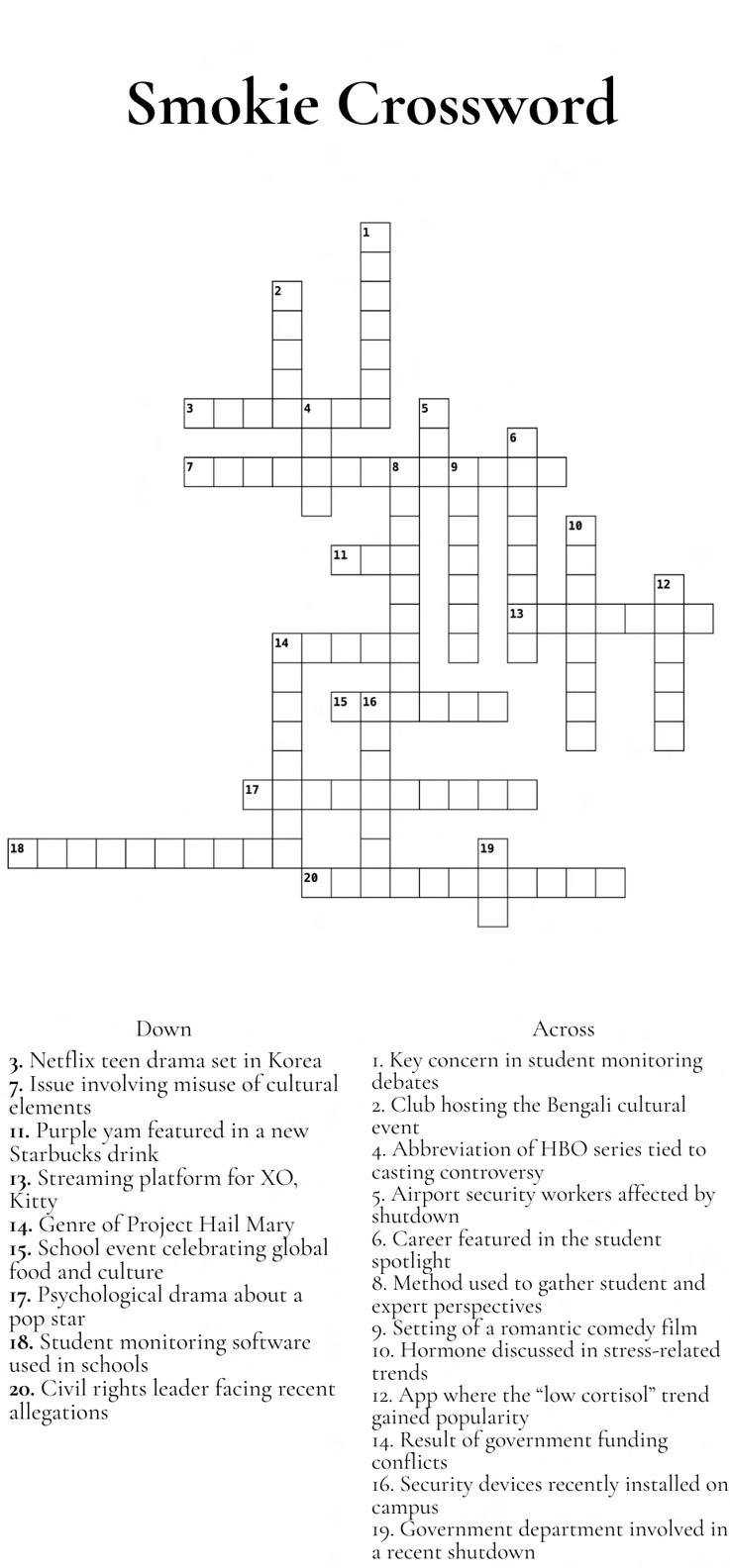
Livermore Downtown Street Fest Wikimedia Commons
A wine and arts festival will be held at Downtown Livermore from May 16 to 17.
Charlie Chaplin Days
17
Niles Essanay Silent Film Museum will celebrate the legacy of Charlie Chaplin between May 15 and 17.
City of Fremont
Fremont Street Eats, an annual food truck festival in Fremont, will be held weekly starting May
The City of Fremont will hold the Intergenerational Art Contest & Reception on May 7.
Commons
City of Fremont
The Áo Dài Festival 8 will showcase traditional Vietnamese garment through fashion and celebrations.

From Plants to Paper: Inside UC Berkeley’s Vibrant Plein Air Art Gathering



By Cecilia Cheng & Megha Vashisht Staff Writers
leading gravel path framed by lush ora welcomed visitors into the UC Berkeley Botanical Garden’s Plein AiR Patrol Blitz art exhibition, hosted by artist Forest Stearns as part of his DRAWEVERYWHERE project. When the event ran from April 8-16, Stearns invited artists from around the Bay Area to illustrate the diverse plants housed den, housing a collection exceeding 10,000 unique plant species, is the venue for its long-standing history as a research base for scientists, engineers, and artists alike. Artists spread across the garden, some perched on benches and others crouched along narrow dirt paths, sketching quietly or comparing work with another person beside them. Nearby, another artist works in silence, occasionally glancing up to study the curve of a branch before returning to their sketch. Following the drawing session, a group gathering invited each artist to the spotlight with a self introduction and share their creative vision.



By Prisha Virmani Staff Writer
Warm, sun-drenched, and effortlessly charming, You, Me & Tuscany feels like a return to a genre that once dominated the big screen. At a time when classic romantic comedies have become increasingly rare in theaters, the flm attempts to revive that familiar magic. While it succeeds in delivering a comforting, nostalgic experience, it ultimately struggles to rise above its predictability.
irected by Kat oiro, the flm follows nna Montgomery (Halle ailey), an aspiring chef stuck in a monotonous routine, as she impulsively fnds herself in the rolling hills of Tuscany. What begins as a spontaneous escape quickly turns into an elaborate fa ade as nna pretends to be the fanc e of a man she barely knows. From there, the story unfolds exactly as expected, introducing Michael osta ( eg -Jean age) as a rival love interest, whose brooding charm and effortless confdence immediately sets the stage for a formulaic yet enjoyable romance. s the camera sweeps across golden vineyards and sunlit villas, Tuscany transforms into an idealized escape. The flm leans heavily into this visual appeal, using it as a backdrop to create a sense of warmth and ease that mirrors the simplicity of the storyline. Much like classic rom-coms, the narrative thrives on coincidental encounters and neatly resolved conficts resembling the fake-fanc e scenario sparked by a case of mistaken identity at a Tuscan villa.
Bailey brings an energetic and likable presence to nna’s character, balancing comedic timing with moments of sincerity. Her performance carries much of the flm’s emotional weight, even when the script offers limited depth. age, on the other hand, embodies the archetype of the effortlessly smoldering romantic lead. While his character lacks complexity, his charismatic onscreen presence and chemistry with ailey make their dynamic engaging, even if it never feels particularly challenging or new. However, where You, Me & Tuscany falters is in its reliance on formula. Every

ol Blitz replaces rigid studio routines with something far more immediate. Artists scattered across winding garden paths, sketchbooks balanced on their knees, pausing to chase shift lters through the leaves. The scent of damp soil and blooming owers linger in the air as conversations spark between attendees comparing different brushstrokes and techniques. “I have been inspired to bring drawing into the garden because we are surrounded by an amazing natural environment and passionate people who love nature,” Stearns said. “I love being here because it's a community of practice and it's ambitious, fun. Every time we do it, I learn some thing. And as an artist, my goal is to always be learning and practicing.”


plot point feels carefully calculated, from the inevitable romantic tension to the conveniently timed resolution. onficts are briefy introduced only to be resolved ust as quickly, leaving little room for characters to form deeper emotional connections. nna’s internal struggle with living authentically and pursuing her own ambitions, though repeatedly emphasized, is never fully explored, making her ourney feel more superfcial than transformative. espite these shortcomings, the flm maintains a certain nostalgic appeal, reminiscent of early 2 s rom-coms that prioritized escapism and charm, with sun-soaked visuals, familiar tropes, and an easy, feelgood romance over complexity. Its lighthearted tone and gentle humor make it a refreshing contrast to the often cynical tone of recent waves of flms that have fooded theaters. There is a sincerity in its simplicity, even if that simplicity limits its impact.
Ultimately, You Me & Tuscany serves as both a tribute to and a reminder of the romantic comedy genre. It captures the aesthetic and structure of classic romcoms but lacks the depth and spontaneity that once made them truly memorable. While it may not redefne the genre, it provides a brief, comforting return to it. ▪ Grade: B-








PHOTOS BY
AURABLOSSOMUP, CLAIRE, EPI, JUJU S COLLECTION, MOMINAH, PHOEBE COTTERELL, PIPER
“[There’s] a lot of amazement at seeing our projection room . . . [The projection room was then resupplied when we turned it back into a theater in 2004 so people seeing all the old equipment is pretty interesting.”
— Niles Essanay Silent Film Museum employee Kathie Tirado
While museums are usually categorized as either large science museums or art museums, there is beauty in what is hidden. Beyond the stereotypical display rooms of European paintings and aquariums, small museums specializing in niche collections dot the Bay Area, each curated with true passion for the pieces.
Nestled among the bustling streets of downtown San Jose, the San Jose Museum of Quilts and Textiles stands out as a small, vibrant building that focuses on fabric design and arts. Founded in 1977 by a group of dedicated local artists, this museum is one of the rst in the U.S. dedicated to quilts and fabric designs. Its layout format consists of a singular loop of connected rooms with art pieces displayed along the walls. Featured works range from intricately stitched traditional quilts with geometric patterns and delicate lacing techniques all the way to unconventional modern ber art using metal threads and synthetic bers. “With quilting and textile work in general having historically [associated] with women or women’s work, displaying them in this elevated form as art pieces is important to acknowl- edge,” museum guide Zachary Fernandez said. The mu- seum’s modest atmosphere allows visitors to appre- ciate each piece in detail along with its cultural and historical signi cance.
“It isn’t perfumes, which I think is important. Most places that are in perfume are about nished products and commerce; they’re about getting you to buy things. Here it goes much further back into culture, into things that were important to people . . . [s]o I feel like these materials are so rich and interesting. Like good ingredients in cooking.”
— Aftel Archive of Curious Scents owner Mandy Aftel

In the historic Niles district of Fremont, the Niles Essanay Silent Film Museum is located near the original Essanay Studios where icons like Charlie Chaplin lmed The Tramp, A Jitney Elopement, and His Night Out. The museum preserves thousands of silent lms alongside vintage cameras, posters, lm strips, and props from the early 20th century. On Saturday nights, the museum offers silent movie screenings with live piano accompaniment in Edison Theater, using most of the same projection equipment as when it was built more than a century ago in 1913. “Most people are just in awe when they rst see the theater,” board member and docent Kathie Tirado said. “It opens up into a full-sized space, and there’s this moment of ‘wow.’” Today, the museum continues to serve as both an archive and an active exhibition space, giving visitors a direct look at how the earliest lms were produced and experienced.
Tucked away in an idyllic neighborhood on the slopes of the Berkeley Hills, the Aftel Museum of Curious Scents is a hidden gem for fragrance connoisseurs. Mandy Aftel founded the museum after researching perfume for a novel she was writing, a process that quickly spiraled into a deep passion for fragrances. From there, the archive grew into a one-of-a-kind collection of everything on natural scents. Lining the walls of the museum are hundreds of concentrated natural essences in glass vials, taxidermied animals used in perfume-making, and antique books on the history and craft of redolence. The alphabetized scents range from sweet tonka bean to spicy frankincense — and from the most common of smells to the more exotic. Outside, in a rose garden, sit three tables full of potent essences, including the expensive oud oil derived from infected Aquilaria trees. “I just feel like the materials and the history speak to so many different nationalities, races, sexualities, and ages … these materials that have been in some aspect of their culture, past, and present,” Aftel said.
Established in 2004, the Lacis Museum of Lace and Textiles serves as both a craft shop and a museum celebrating the beauty of ber arts. The museum features rotating exhibits — currently the Normandy Lace and Mother was the Bride collections — curated based upon the permanent displays of the archives. The Normandy Lace exhibition explores the birth of repurposed lace transformed into patchwork pieces. These items include tablecloths with royal gures, doilies with oral designs, and jean skirts with circular lace mats. The Mother was the Bride exhibition delves into common patterns in wedding dresses, such as veils, trains, and owiness. The wedding dresses, some of which are owned by the museum's staff, helped paint a picture of how the most iconic dresses change across generations. Many pieces of the rotating exhibits are donated to or rented to the Lacis Museum of Laces and Textiles’ permanent displays.
“[Museums are] able to educate a bunch of people on various topics that maybe they don’t have an interest in. But museums make [information] super interactive, and that makes it a lot easier, accessible, and more fun. So it’s great for all ages. “ — Nine Tran, 11
Jessica Cao, Finn McCarthy, & Kelly Shi Staff Writers