By Roshan Annamalai, Dhaeshna Booma, Janet Guan & Emily Zhang Sta Writers
STEM occupations are a prominent component of the job market, increasing from 22% in 2011 to 24% of the US workforce according to a 2021 survey by the National Center for Science and Engineering Statistics. Despite STEM being a rapidly growing sector, there are still significant discrepancies in gender representation. While women make up 48% of the overall workforce, women in the US hold only 28% of STEM jobs. International statistics are similarly skewed, with countries such as Japan and India standing at 16% and 14% respectively.
Collegiate schooling statistics show a clear gender gap in STEM participation. Although women earned 50% of STEM bachelor’s degrees overall in 2023, their contribution is skewed towards social sciences. In 2020, women earned the majority of bachelor’s degrees in psychology, anthropology, and sociology but received less than a quarter of the degrees in engineering, computer science, and physical sciences. The disparities persist past undergraduate education as well: 23% of master’s degrees and 22% of doctorates in engineering were awarded to women that year.
According to Pew Research Center, women are particularly underrepresented in engineering and computer science fields, making up only 25% of computer scientists and 15% of engineers and architects. Meanwhile, they are overrepresent- ed in the medical industry, composing 74% of health- care occupations.
Despite being a heavily STEM-focused school, MSJ still includes a notable gender disparity in STEM participation, notably reflected in the skewed female-to-male ratio of STEM club o cers. Only two out of 12 Academic Challenge o cers/captains are female. Other clubs show similarly low rates, with one out of seven o cers in MSJ Math Club, and one out of six in both MSJ Physics Club and MSJ Computer Science Club. Some clubs, such as MSJ Biology Club, which has five o cers, have no female leadership.
This problem exists among club participants as well. “There are always significantly more boys than girls in club meetings, [e]specially on lecture days, there are only two or three girls at most,” MSJ Physics Club Public Relations O cer Sophomore Jessica Yan said. According to school-wide survey responses, the STEM clubs with the largest gender gaps are MSJ Academic Challenge Club, with 94% of reported members being male, MSJ Computer Science Club at 73%, and 69% of MSJ Physics Club. Some STEM clubs have been working to address this issue. In hopes of reducing the gap, MSJ Math Club hosts “math competitions … [with] an award specifically for the highest scoring non-male,” MSJ Math Club Vice President Junior Je rey Li said.
However, gender ratios in participation in STEM classes and electives di er from those of clubs. While there are four AP courses — namely AP Calculus BC, AP Physics 1, AP Physics C, and AP Computer Science A — that have more male than female enrollment according to the survey, many other classes are evenly split. For example, regarding the path students take for math, approximately 50% of both genders reported taking the double-accelerated pathway. Additionally, some AP courses, such as AP Biology and AP Psychology, have even shown higher female enrollment rates compared to male enrollment rates. “Honestly, my class … I find it to be relatively even, but chemistry is one of those subjects I do find to be a little bit more gender neutral when it comes to interest,” AP Chemistry and Living Earth Teacher Oana Seremeta said.
“I think MSJ being a STEM-oriented school alone is already really encouraging for girls to pursue STEM since there are enough girls interested in it, so it's easier to integrate yourself into the community and simultaneously, this also, like reduces significantly many factors causing the gender gap, such as peer pressure or lack of role models. And since mission provides, like many opportunities specifically for girls, such as clubs or competitions, I think this e ort is enough to encourage girls in STEM.” — MSJ Physics Club Public Relations Sophomore Jessica Yan
Release in theaters on September 6,

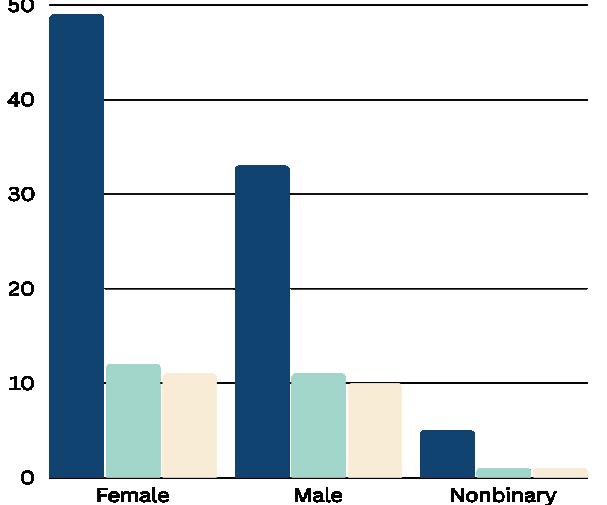
Although the last decade has seen tremendous growth in the STEM industry, the gender gap in STEM persists. To gain insight into the extent of gender gaps in STEM participation at MSJ and contributing factors and solutions, the conducted a school-wide online survey with 133 student responses from October 26 to November 2 and interviewed students and faculty.
Some of the factors perpetuating the gender gap in STEM are social pressure and stereotypes. In a Deakin University study, when 4,807 students from kindergarten to fifth grade were instructed to draw a scientist, only 28 of the illustrated scientists were female, suggesting strong societal associations between STEM occupations and men. These stereotypes have a ected the fields that women enter later in life — a 2019 study conducted by the Fawcett Society states that 70% of its female participants aged 18-34 said that gender stereotypes limited their career choices. These biases also contribute to gender bias and discrimination. 41% of women in the field reported experiencing gender bias during the hiring process. Students have recognized these two factors contributing to a STEM gender gap at MSJ as well, with 48.9% and 33.8% of surveyed students selecting gender stereotypes and gender bias respectively.
Moreover, the most reported reason for the STEM gender gap at MSJ was peer influences or social circles, with 54.9% of surveyed students selecting it. The gap has also been linked to MSJ’s academic culture as a whole. “I think with MSJ, there’s a huge culture centered around competitiveness and what it is to be smart versus less smart than the average … I think this kind of peer pressure really turns away women from STEM, which is a big problem I face personally,” MSJ Academic Challenge Publicity O cer Junior Jasmine Li said.
Limited female representation in STEM has also been considered a significant factor in the gender gap. “In women, [the STEM gender gap is] still not quite understood other than there seems to be some type of role model missing,” Seremeta said. MSJ may reflect this issue, with 22.6% of surveyed students choosing the lack of female role models as a cause of the STEM gender gap at MSJ. “When you don’t have representation in o cer teams as role models, you feel less comfortable being in these spaces,” Li said.
However, some students also observed that some of the STEM gender gap at MSJ may be unrelated to external influences. “There is clearly a higher male population than the female population within my club … There isn’t really an imposement of gender where the guys think that the girls are less capable or anything. It’s just that the population happens to be distributed in such a way,” MSJ Academic Challenge Co-President Senior Fiona Hsu said.
E orts to bridge the gender gap in STEM have gained momentum globally. Corporations and educational institutions have focused on fair hiring, equal opportunities, and anti-bias training to push for gender equity. Schools like MSJ have also begun to take active steps toward inclusivity. Clubs like MSJ Women in STEM (WiSTEM), MSJ Girls Who Code, and MSJ Society of Women Engineers host workshops, mentorship programs, and speaker events to empower young women to pursue careers in STEM, building their confidence, providing resources to advance their technical skills, and o ering accessible STEM opportunities. For instance, MSJ WiSTEM organizes the Envision Research Program to encourage girls to learn about scientific research, while MSJ Girls Who Code provides coding workshops to equip girls with fundamental programming skills and confidence to pursue tech-related careers.
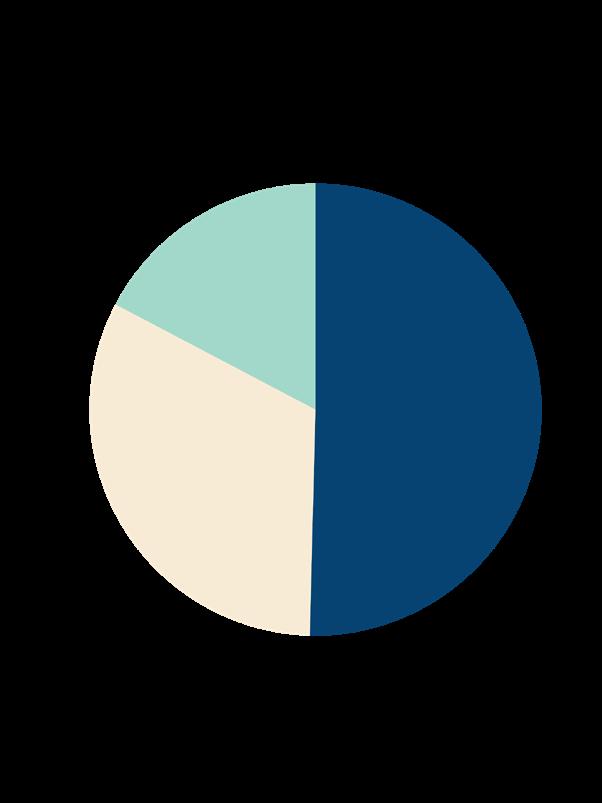
In response to the survey question “Do you believe MSJ is making adequate e orts to close the gender gap in STEM?” 50.4% of students said yes, 32.3% said maybe, and 17.3% said no. This feedback recognizes progress while acknowledging room for improvement. To foster greater inclusivity, some students believe club collaborations could be beneficial. “Right now, clubs are very divided, and if they can work together — like having a woman-focused club work with a STEM club — that could really help these issues,” MSJ Academic Challenge Publicity O cer Junior Jasmine Li said. However, some students believe club e orts alone cannot close the gap. “These things are all about personal interests, and you can’t really impose an interest onto someone simply because of their gender, regardless of if it’s to alleviate this gap or not,” Hsu said.
Beyond MSJ, local initiatives in the Bay Area such as INTEGIRLS, a nonprofit organization that hosts math competitions for middle and high school girls, and SpectreBots, an all-girls FIRST Tech Challenge robotics team led by Captain Junior Shivani Palanikumar, reach out to young girls to foster an early interest in STEM. These programs provide hands-on training and leadership opportunities, helping girls feel confident in their skills. Competitions like the Math Prize for Girls also provide incentives and recognition for female students, motivating them to excel in fields often dominated by men.
Do you plan to pursue a career in STEM in the future?

The Arunay Foundation hosts their third annual Beach Safety and Drowning Prevention Walkathon.
By Scarlett Huang & Kaiwei Parks Staf Writers
At 9 a.m.-12 p.m. on October 27 at the Quarry Lakes Recreational Area, the Arunay Foundation held a fundraising walkathon. In this walkathon, participants donate a set amount to walk either a 5k or 10k distance along a scenic lakeside view. e proceeds of this fundraiser will go towards improving beach safety through installing life rings and general beach safety education.
“We decided that we need to do something and work towards a cause that can save more children,”
EvEnt OrganizEr arati DEsai
e origin of the Arunay Foundation Walkathons begins with the heartbreaking story of Arunay Pruthi. On Jan. 18, 2021, at just 12 years old, Arunay, a student from Fremont, was taken by a sneaker wave on Cowell Ranch State Beach and lost at sea. Following this tragedy, Arunay’s parents, Sharmistha Chakraborty and Tarun Pruthi, and other volunteers started the Arunay Foundation with the ultimate goal of educating others on ocean safety and beach awareness. ey
hold safety talks, as well as contributing life saving buoys for beaches across the CA coast. Today, the Arunay Foundation has grown to more than 400 volunteers and sponsors. e event began at 9 a.m., when more than 300 participants and volunteers gathered at a grass field in Quarry Lakes. Despite the early morning chill, the event site was packed with sponsor and partner booths including BASIS Independent Schools, Washington Hospital Healthcare System, and Boy Scouts of America. e bustling crowds and lively music blasting from the speakers fostered a close sense of community. e atmosphere was overwhelmingly supportive, with event coordinators and volunteers, including Pruthi's parents, walking around to thank and engage with the volunteers. Before the walkathon officially began, several high-ranking politicians and ambassadors stepped up to the podium to speak about the cause, congratulating and thanking the Arunay Foundation on their mission and accomplishments. Notably, a director of constituent services from Congressman Ro Khanna’s office presented the foundation with a certificate of congressional recognition. After the speeches concluded, event coordinator Aarti Desai announced the start of the event, and participants moved over to the starting line.
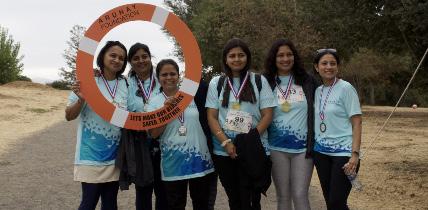

Hundreds of participants lined up in front of the starting line in one large group. As the countdown concluded, children dressed in light blue Arunay Foundation t-shirts and race bibs excitedly raced past the inflated start-line balloon, while families with baby strollers, pet dogs, and more slowly enjoyed the walk behind them. Over the next hour, participants of both the 5k and 10k finished the walkathon. e two winners of the 5k and 10k both received gift baskets, while the remaining participants were given a medal with an image of a life safety ring in the center. After completing their race, participants were encouraged to head back over to the grassy field to explore booths, where they could learn about the foundation’s goals and efforts in beach safety. “ e event itself, although it was a fun thing … they still spent a lot of time educating all the people who showed up there,” MSJ Math and Computer Science Teacher and 5k participant Mugdha Patil said.
As the event came to a close, Anthony Schreider, showed the audience a live-demonstration of CPR on a test dummy and then gave audience members the opportunity to practice CPR on their own dummies. A police officer from the East Bay delivered a short speech concerning important safety tips to
Compiled by Kanupriya Goyal, Shuhan Jin, Vikram Mahajan & Cham Yu News Editor & Staf Writers
remember at the beach. As the event came to a close, an event organizer for the walkathon, Anandita Sharma, thanked attendees for coming. “Our community of Fremont, they've been very supportive,” Sharma said. Sharma added that the communi-
“This was only possible with the help of these volunteers and the community that came together,” arunay’s DaD tarun Pruthi
ty can continue to support the foundation in their cause. “Ways of helping our cause would be to donate, attend our walkathons, talk to your principals that are at your schools or your teachers, and have them contact us for having us come out and do beach safety talks,” Sharma said.
Overall, the Arunay Foundation plans to continue hosting the walkathon event every year, and hopes to make an even bigger impact on the community. “ is was only possible with the help of these volunteers and the community that came together,” Tarun Pruthi said.▪
corrections
for the SEPT. 20, 2024 issue
News P1. The District projected 85%.
News P1. Money amount should have been $6 million (rounded).
News P2. Sophie Choi is the Green Club Secretary.
News P2. Kirstin should be spelled as such. News P2. The Fire Grant was established in 2019. Opinion P5. Tushara should be spelled as such. Feature P7. Landen should be spelled as such. Feature P8. DieHard TryHards should be spelled as such.
CS P9. “Pirates of the Caribbean” is also by Ted Ricketts.
CS P9. “Wind Scene” and “Chrono Trigger” are two diferent songs.
CS P9. “NewJean’s” should be spelled as such.
CS P9. Freshman Kpop did not perform to "OMG" by NewJeans
CS P9. KATSEYE should be spelled as such.
CS P9. LE SSERAFIM should be spelled as such.
CS P10. JAYZ should be spelled as such.
CS P10. Kaylin should be spelled as such.
CS P11. “subject 3” should be spelled as such.
CS P12. Iris was never interviewed for her quote.
CS P12. NSYNC should be spelled as such.
A&E P15. Namya Bhatnayar is a sophomore.
A&E P15. My Neighbor Totoro should be spelled as such.
A&E P15: "BRUISED" by HIIBRYD should be spelled as such.
A&E P15. KayCyy should be spelled as such.
A&E P15. "annie" should be spelled as such.
A&E P15. Shae should be spelled as such.
A&E P15. "didn't mean" by Orchid Mantis, Mei Semones should be spelled as such.
A&E P15. "One Day" By EXES, Jome should be spelled as such.
Sports P17. Pete Vaz should be spelled as such.


On November 5, voters in Alameda County will vote on whether to recall District Attorney Pamela Price, who has faced criticism for her handling of criminal justice amid a county-wide increase in theft and murder. Price has also been criticized by CA Gov. Gavin Newsom for her perceived inaction in the face of increasing criminal activity. The grassroots recall movement successfully collected 123,000 signatures from Alameda County voters in March, which placed the recall initiative on the ballot. Many voters contrast with her 2020 campaign priority to reduce racial inequality in the criminal justice system.

The right-wing Liberal Democratic Party (LDP) of Japan lost its political majority in a Snap election on October 27, experiencing the worst loss for the typically dominant LDP in over 15 years. Viewed as the result of backlash to stagflation and a slush-fund scandal, the elections stripped the LDP of its majority in Japan’s lower legislative house. The LDP went from 259 to 191 seats, meaning that even a coalition with the Komei party would be insufficient in forming a majority. Yet they remain the winners of a plurality of seats, plunging Japanese politics into chaos as Ishiba’s party seeks to find more coalition partners to attain the 233 seats needed for a majority.
The US Department of Justice (DOJ) has filed a significant lawsuit against the state of Virginia for unlawful voter removals from the state’s rolls. According to the DOJ, VA removed thousands of eligible voters within 90 days of the upcoming November elections, violating the National Voter Registration Act. The DOJ contends that these actions disproportionately impact marginalized communities, potentially disenfranchising eligible individuals. VA officials are investigating to prevent voter disenfranchisement and emphasize the importance of voter access and election integrity amidst heightened scrutiny across the nation.
Dance performances, traditional food, and vendors meet in FOG’s Diwali Mela festival
By Kaylin Teo & Lucas Zhang Sta Writers
At 10:30 a.m.-8 p.m. on October 26, the Federation of Indo-Americans of Northern California, a 501(c)3 nonprofit, hosted the Festival of Globe (FOG) Diwali Mela to celebrate Diwali at the India Community Center on Los Coches Street in Milpitas. Celebrating the festival of lights with dance, mithai, rangoli competitions, fashion shows, and booths for trying sweets and painting diyas, the festival welcomed the community to share the joy of celebrating rich Indian cultural traditions.
Diwali, a major cultural event for the Hindu, Sikh, and Jain diaspora, has been widely celebrated in India, Singapore, Malaysia, some US states, and other countries with significant South Asian populations. According to Hindu mythology, Diwali marks the day Lord Rama, a Hindu deity, his wife, and his brother return to their homeland in Ayodhya after defeating the demon king Ravana. Upon return, the villagers light a path with small oil lamps known as diyas for Rama, a tradition that continues to this day. The victory symbolizes the return of hope, joy, and love to the Ayodhya people, which they have marked through dancing and singing traditions. Through publicly available annual celebrations like the Diwali Mela event, the Federation of Indo-Americans of Northern California strives to sustain Indian cultural traditions like Diwali at a local level.
The FOG festival gave Indian Americans the opportunity to engage in traditional celebrations while getting together with friends

and family to appreciate their rich and diverse culture. “India is a very diverse country, and [it seems like] every city has a different culture. [This diversity] needs to be appreciated around the world,” festival attendee Saanvi Nanda said.
“India is a very diverse country, and [it seems like] every city has a diferent culture. [This diversity] needs to be appreciated around the world."
The festival also served as a valuable opportunity for vendors to share their products and love for Diwali with the community. “I started an ice cream company because it was a dream of mine. ... I wanted to bring my own
upbringing [and] culture into it. ... So half of our flavors are American style, and half of them are Indian style,” ice cream vendor Sanket Karamchandani said. From festival home decorations to ice cream, FOG displayed cultural importance and provided small businesses with a platform to sell their goods. As vendors and attendees fostered a festive atmosphere at the parking lot of the India Community Center, the main event began inside the building. There, hundreds of performers of all ages took the stage as part of several dance groups in front of a hall filled with spectators and danced to Bollywood music and other traditional Indian tracks while wearing traditional Diwali clothing. Groups of young children spread joy to the community through well-rehearsed dances to traditional
choreography while dressed in colorful clothing decorated with intricate patterns. The performing adults and event organizers continued to show ongoing support toward FOG’s festivities by choreographing and executing their dance routines, which featured them grouping into spectacular formations and using beautiful props to draw spectators’ attention. These dancers of all ages created an energetic atmosphere in the India Community Center that left the audience cheering as the performances served as a display of Indian culture.
“I started an ice cream company because it was a dream of mine. ... I wanted to bring my own upbringing [and] culture into it. ... So half of our favors are American style, and half of them are Indian style”
After a successful instance of its annual Diwali celebration, FOG has set its sights toward similar events in the future, including its Holi celebration in March and next year’s Diwali celebration. The festival left the community with a lively atmosphere and spectacular performances to reflect on as members of it celebrate Diwali with their friends and families. “This is the first time I’m doing an event like this outdoors. It’s been a great experience, so I would definitely consider coming back,” home decoration vendor Anesha Dalal said. ▪
Political Action Committees
In the month leading up to the November 5 election, Elon Musk's America Political Action Committee (PAC) offered $47 to each registered voter in swing states like Arizona, Michigan, and North Carolina and $100 to each registered voter in Pennsylvania for signing a petition that pledges support to the First and Second Amendments. The PAC also offered a $1 million giveaway to a random signatory every day until the election. Although paying people to vote and to register to vote is illegal, Musk's reward was not explicitly illegal, even though many see it as a loophole as it only allowed registered voters to claim the reward.

“If they violate federal laws, then I don't believe that they are ethically okay. But if it does fall within a legal category, then, yes, it is okay, because it would be influencing people to vote. I think it might make the voters go towards certain political sides, which, at the same time could violate certain laws because of paying people to vote for certain political parties. But for me, personally, I don't think it would raise any issues, but if it violates federal laws, then yes.”
What impact do you think these fnancial incentives had on voters in swing states? Does it raise any legal, ethical, or moral issues for you? Do you think it's important for courts to prevent fnancial incentives for registering to vote in the frst place?
“I don't these payments are ethical, because everyone is entitled to make their own opinion and cast their own ballot in terms of the voting process. What Elon Musk is doing is unethical because he is trying to sway other people to align with his ideologies and beliefs, when they're entitled to make their own decisions. [These financial incentives] could significantly outcome because people would be more inclined to vote for people, they are getting financial incentives [to vote] for. That creates a moral issue, in my mind, because in the United States everyone has a freedom of speech, but what wealthy people are doing is using their money to convince other people to align with their beliefs. So now, this creates a discrepancy, because now certain people's opinions are valued over others. Yes [courts should prevent these financial incentives], because otherwise we won't have accurate outcomes of what the people truly want, and it'll just be a misrepresentation because the people with money will have their opinions heard more than the people without it.”
“I don't know if [the giveaway] violates federal law, but I definitely don't think it's moral. As a person with a lot of power, even if he's not technically part of the campaign, [Elon Musk] shouldn't be able to use his money and influence in order to sway the political landscape [for a particular cause]. [This giveaway] might have an effect on like the vot ing, but I don't think it would sway like voters that much just because the chance is so low, it's kind of like a lottery, essentially. Private [actors] have a lot of power already, so if they were to take part in politics or take political stances, then I think it would have an influence on swing states [politics]. I don't think [that the giveaway is illegal], just because Elon Musk isn't part of Trump's campaign. I just think it's unethical, because [he shouldn't] have the right to give away money [to] influence [politics]. Courts should [still] be able to take action in these scenarios because it's technically bribery.”

“Obviously, more people are going to want to vote because they want the money, I mean, heck, I if I could vote, I probably would vote too, because, you know, I want money. But putting money into the equation is really [messing] up all of the voting, because it makes people who originally might not have an opinion, have to take a stance. Even if 1% of these people who don’t really have a stance on the election are voting for someone, and they have no idea why they’re voting for them, [it] ultimately destroys the entire purpose of the election. I don’t think it is ethically or legally okay because it completely destroys the entire purpose of having an election. We can stop the richer people from incentivizing people to vote through money, [as it] really undermines what our democracy stands for. You’re just making random people who haven’t done their research and who have no idea [who] the candidates are [vote] for whatever name looks good on the ballot.”

Mission San Jose High School
Est. 1964
Vol. 60, No. 3 November 15, 2024
www.thesmokesignal.org
41717 Palm Ave. Fremont, CA 94539
510-657-3600, ext. 37088
MISSION STATEMENT The Smoke Signal’s mission is to represent the voices of the MSJ community and serve the public by providing accurate, meaningful, and engaging information presented through print and digital mediums.
SCHOOL POPULATION 1796 students
EDITORS-IN-CHIEF Kaylee Liu, Callie Yuan
NEWS Shuhan Jin, Catherine Qin
OPINION Padma Balaji, Keerti Koya
FEATURE Tanvi Deshmukh, Trisha Parikh
CENTERSPREAD Naisha Koppurapu, Ashley Pang
A&E Goonja Basu, Brittany Lu
SPORTS Howard Lu, Ethan Yan
GRAPHICS Hannah Bi, Ivy Lu
WEB Sarah Hu, Alice Zhao
PUBLICITY/TECH Fiona Yang
BUSINESS Rajorshi Chatterjee
CIRCULATION Novak Chen, Tushara Devapatla
ADVERTISING Angelina Chen
EVENTS Navya Chitlur
WRITERS & PHOTOGRAPHERS
Roshan Annamalai, Dhaeshna Booma, Rajorshi Chatterjee, Navya Chitlur, Novak Chen, Angelina Chen, Tushara Devapatia, Ariel Duong, Kanupriya Goyal, Janet Guan, Felicity He, Scarlett Huang, Varun Madhavan, Vikram Mahajan, Kaiwei Parks, Michael Qu, Michelle Qu, Ekasha Sikka, Kaylin Teo, Luna Venturo, Prisha Virmani, Fiona Yang, Ariana Yi, Cham Yu, Emily Zhang, Lucas Zhang
PROFESSIONAL DEVELOPMENT TEAM
Gaurasundara Amarnani, Eleanor Chen, Alex Duan, Abigaile Lei, Jennifer Li, Muyang Li, Rishab Shah, Aarav Vashisht, Megha Vashisht, Matthew Zhang, Aaqib Zishan
ADVISER YC Low
To advertise in the Smoke Signal, email ads@thesmokesignal.org. Advertising that is included on the pages of, or carried within, the Smoke Signal, is paid advertising, and as such is independent of the news and feature content.
The Smoke Signal’s right to freedom of speech and press is protected by the First Amendment of the Constitution. To stay updated with our online content, see our Facebook page at www.facebook.com/msjsmokesignal
All policies on distribution, corrections, and bylines can be found at www.thesmokesignal.org/about

By Keerti Koya Opinion Editor
I recently came across an Instagram Reel where a group of girls met Vice President Kamala Harris. With bursts of nervous joy, they asked her a seemingly simple question: “How can I be a good public speaker?”
In response, Harris stopped to give them a well-thought-out and easyto-understand answer. Her response emphasized that e ective public speaking isn’t about appearance or perfection, it’s about sharing something you believe in. e girls enthusiastically nodded and thanked her, who served as a vibrant example of female inspiration. At that moment, Harris did more than just answer a question — she gave those young girls something they could carry with them: a vision of themselves as capable, con dent voices in the world. Regardless of election results, Harris has become an inspiration for countless girls across the country. To see a woman — and especially a woman of color — in such an in uential position gives girls a stronger perspective of their potential in the world.
As a woman in STEM, I frequently nd myself in organizations or courses dominated by men. My Classical Mechanics class at MSJ has nine girls, and in MSJ Quantum Computing, I’m the only female member we’ve had in at least the past three years. Being in many similar environments felt isolating and intimidating, and it wasn’t long before I realized that my passion for these subjects sometimes felt eclipsed. Early on, I remember stepping away from computer science
and math clubs because of the lack of female presence and the subtle feeling that I didn’t belong. It was hard to shake the idea that my presence in the room was an anomaly rather than a normality. Yet in the rare cases where I saw a woman leading the organization, I felt a sense of support and a person to go to when in need of guidance. Seeing women in visible leadership positions, like Harris, reminds me that I am capable of excelling in any eld I choose, regardless of who surrounds me.
As vice president of MSJ Women in STEM, I also witnessed rsthand how a supportive, women-centered space makes a di erence. Beyond just a club, it’s a community that allows young women to explore their interests without feeling out of place or diminished. In this environment, they can focus on their passions and ambitions with con dence, knowing they belong.
Women belong in leadership positions, not only because they bring unique perspectives but because their presence is vital for future generations. Girls deserve to see women in these roles, paving paths and setting examples before them. Harris’ in uence shows us that representation matters — creating a ripple e ect that empowers more women and girls to step forward as leaders. As I continue my journey in STEM, I hope to do the same, inspiring others by breaking barriers and showing what’s possible. Because when a woman leads, she not only nds her place but also sets the path for other girls to follow and nd theirs. ▪
Education is o en referred to as a privilege as well as a pathway to better opportunities and a brighter future. However, its value extends beyond academic achievements; it’s also about appreciating the learning experience and the people guiding us. However, we o en lose sight of this, especially when it comes to respecting our teachers and their time. Walk into any MSJ classroom, and you’re bound to see students scrolling through TikTok, copying their friend’s homework, or playing Brawl Stars. Although it’s di cult to put 100% of our time and e ort into all of our classes, every teacher and classes — regardless of their di culty level — should be treated with the attention and respect they deserve. By getting caught up in the endless pursuit of academic achievement and by valuing our own free time over the instruction of our teachers, we forget to acknowledge that having access to an education is an opportunity that must not be taken for granted.
Although many students at MSJ are frequently overworked, tired, and burned out, this disengagement in classes normalizes a culture of constant disrespect. In classes that are considered less rigorous, students think it is acceptable to have earbuds in during a lecture or browse on their phones, dismissing the teacher entirely. In doing so, we forget that all subjects contribute to a well-rounded education and that there exists a basic need to respect the teachers and sta trying to support us. Instead of nding distractions, we should value
the education and the additional academic resources we’ve been given. Teachers o en provide help outside of class time in the form of o ce hours and scheduled appointments. Similarly, MSJ includes many student-led clubs, such as Writer’s Block, Young Mentors, and STEM Success, which o er free assistance to all students through tutoring and essay editing services. However, these opportunities are o en met with minimal attendance, and many students choose to complain rather than seek out these resources.
Rather than putting in the work for academic achievements, some MSJ students o en turn to an easier alternative: academic dishonesty. Whether it’s copying another’s homework answers or skipping school on the day of a test to get information about it, academic dishonesty has become so prevalent that it has almost become normalized. A study of 70,000 students at more than 24 high schools in the US conducted by Rutgers University professor Don McCabe shows that academically dishonest behaviors don’t just a ect MSJ — 95% of students admitted to participating in some form of cheating, either on a test, plagiarism, or copying homework. By cheating, students not only hinder their own ability to learn for the sake of obtaining a good grade but also inconvenience teachers. In an effort to curb cheating, many educators have created multiple versions of their tests for di erent periods and retakes. Because these tests o en get increasingly more di cult for later periods
Every other summer, my thatha and patti (paternal grandparents) travel 8,000 miles across the world from India to stay with us. Every morning, I’m greeted with homemade dosas and Tamil lter coffee, the house over owing with the comforting sounds of prayer songs and the smell of incense and freshly cooked food. For the summer, I get a glimpse of what my life would have been like in India: the Tamil begins to roll e ortlessly o my tongue instead of in broken, half-English segments and my family’s biyearly temple visits turn biweekly, and our house is always over owing with Indian snacks and sweets.
Although my grandparents’ visit brings me closer to my culture, in many ways, I nd myself feeling more isolated than ever. With every tradition that bridges the 8,000-mile gap between me and India, there are two traditions that push me even further away. My grandparents, like many other Indians, are devoutly religious and staunch traditionalists. Growing up in America, however, I’ve largely abandoned many of the traditions that my grandparents still hold dearly, no longer wearing my hair in a tightly pleated braid and quitting my classical music classes years ago.
Although I’ve learned to embrace my dual Indian and American identity over the years, my Americanization has remained a signi cant point of contention between my grandparents and I. To them, everything about me, from the way I dressed to my religious apathy, represented

and for those who are retaking them, cheating also creates rami cations for the academically honest students who have the misfortune of having a later period or not being able to come to school that day. Academic dishonesty does a disservice for everyone involved — undermining personal growth, their teacher’s e orts, and their peers’ hard work.
Since education is still not accessible to everyone, we should capitalize on the chance to pursue it when it is given. According to UNICEF, in 2021, only 65% of children worldwide attended a secondary school. By virtue of attending secondary school and receiving quality education from dedicated and well-educated teachers, while also having access to extracurricular resources, we are inherently at an advantage, and we must appreciate the opportunities we are given as a result of that privilege. We squander these advantages by disrespecting teachers, playing video games or texting, and not putting in the work for classes we sign up for ourselves. Ultimately, the purpose of attending school is to learn. Deliberately wasting class time through distractions and committing academic dishonesty tells our teachers that we don’t respect them or our own time in the classroom. More importantly, these behaviors cause us to overlook the resources, learning, and education that we are privileged to access. We must recognize our educational privilege and make the most of the opportunities that we are given because of it. ▪
By Padma Balaji Opinion Editor
another ill of American culture. I vividly remember trying to brave the scorching July heat and getting scolded for wearing shorts — “It’s just not proper!” my grandpa said — even though my brother had been wearing shorts all year, or the daily chidings I would get for not wearing my hair up or putting on a bindi.
I began to realize that many of the traditions I’d left behind were deeply rooted in misogyny, dictating everything from the way I was supposed to dress to the things I should spend my time doing. I felt at a crossroads between subscribing to values of modesty and tradition that I considered absurd or rejecting them and losing my cultural ties in the process.
However, I’ve since learned not to treat being Indian as a zero-sum game. Whether I follow no traditions or all of them, I’m still just as Indian. Although it may not seem that way to my grandparents or the judgemental Indian aunties who always have something to say, my cultural identity shouldn’t have to conform to other people’s expectations of it. More than that, I’ve realized that even if I’m stuck between Indian traditionalism and American modernity, it’s not such a bad place to be. Finding my place in between the two is a journey that takes time and something I don’t need to have the answers to immediately. ough I may be perceived as a perpetual outsider no matter where I go, I’ve learned that the only place I truly need to belong is with the people I love the most. ▪
By Luna Venturo & Lucas Zhang Sta Writers

By Rajorshi
“Kamala Harris is for they/them, not you,” the narrator said in an ad for Presidental-elect Donald Trump’s campaign. In this electon cycle, Trump and his supporters have spent more than $21 million on ant-LGBTQ+ campaign ads, which target programs that allow sex changes for transgender prisoners. These ads part of a wider patern of transphobic rhetoric that has become a mainstay of the Trump campaign’s messaging. His campaign promises exemplify this trend, including the pledge to “keep men out of women’s sports,” which refers to transgender women as men, a misleading statement that fuels discriminaton. Trump’s misinformed, anttrans rhetoric not only detracts from more critcal policy issues, but capitalizes of of fear, creatng a culture of hatred that ofen manifests in ant-trans violence.
During the September 10 presidental debate, Trump said that Vice President Kamala Harris “wants to do sex-change operatons on illegal aliens.” This mark is a misleading claim made based on a 2019 American Civil Libertes Union survey that asked presidental candidates whether they supported “comprehensive treatment” for their transiton “including all necessary surgical care,” to which Kamala Harris responded afrmatvely. Much of Trump’s ant-trans advertsement is similarly misleading. While one ad on gender-afrming surgeries in the prison system appears to critque the use of taxpayer dollars on the surface, its messaging is a disguise for casual transphobia. Through language and tone, the ad emphasizes critcism of gender-affrming care for prisoners in partcular, not government-funded healthcare for prisoners. In additon, the ad’s closing statement claims that Kamala Harris, Trump’s politcal opponent, is for “they/them, not [voters],” creatng a misleading dichotomy between supportng LGBTQ+ rights and policies in the interest of voters, neglectng that the two notons can be pursued together.

While Trump seems to critque a policy that was supposedly established during the BidenHarris administraton, it was actually a contnuaton of a Trump administraton policy. According to the Federal Bureau of Prisons in 2018, federal prisons reserved the ability to ofer surgical gender-afrming care, only as a necessity as recommended by doctors and psychiatrists. Gender-affrming care is supported by medical professionals and experts and has been upheld by the Supreme Court under Estelle v. Gamble (1976). While the ad initates atacks on transgender people, a 2022 poll from the Pew Research Center found that 64% of Americans favor more legal protectons for transgender people from discriminaton, exemplifying the dubious politcal efectveness of these atempts beyond their sensatonalism.
Over the course of Trump’s campaign, ant-trans ads have accounted for nearly a third of the total $66 million spent on TV advertsing. This amount is especially tremendous given that LGBTQ+ issues are nowhere near the top politcal priorites for voters. This is according to a 2024 Gallup poll, which found that issues like the economy were far more important to voters than ant-LGBTQ+ policies. The threat that transgender people pose is also vastly overblown, given that they make up just 0.52% of the adult populaton, according to the Williams Insttute.


“I don't believe that [voters] care about this issue because they see a television ad about it. I think the television ad stokes the fre of fear that already exists within the person themselves…to such an extent that they are willing to get up on Electon Day and vote, and this is both for and against [LGBTQ+] rights on both sides.” — History and Government Teacher Keith Kotenbach
Yet the focus on the LGBTQ+ community contnues to persist beyond occasional rhetoric and is refected in Trump's policy agenda as well. His emphasis on such a minor politcal discussion, though relatvely unimportant to voters, is stll politcally advantageous. “In extremely tght races where small shifs mater, divisive social issues can move the needle,” NPR reporter Susan Davis said. Instead of focusing on high-priority issues for voters, Trump’s campaign exploits a vulnerable community for the sake of politcal gain. According to Strong Family Alliance, common myths surrounding transgender people have perpetuated harmful rhetoric, such as the noton that transgender women can prey on children or women by using the bathroom they identfy with. Despite the fact that transgender people have used bathrooms aligned with their gender identty for decades without signifcant complicatons, ant-trans rhetoric contnues to be harmful even if they are not based on actual behavioral paterns of predators. By connectng anttrans sentment to other unrelated issues, such as women’s and children’s safety, ant-trans rhetoric speaks to unfounded biases against the transgender community by justfying it as a fght to keep women and children safe. It emphasizes ant-trans rhetoric that is a method of “speak[ing] to a deepseated bias without speaking the lan- guage of bias,” UC Berkeley Professor of Politcal Science Gabriel Lenz said. Trump’s statements surrounding LGBTQ+ issues have recently increasingly delved into falsehoods, including patently untrue remarks that children are undergoing “operatons” at school without parental permission regarding gender-afrming care. Through the stgmatzaton of transgender people, transphobia has been justfed as protectng women and children, or in the case of these ads, protectng the tax dollars of hard-working Americans. Misinformaton spreads anger and alarm about the LGBTQ+ community to an audience that has underlying biases and fear, preventng them from recognizing the efect on emotons that misinformaton has. It has also been efectve in promotng transphobic sentment — 92% of white evangelicals believe there are only two genders, a six-point uptck from 2021, according to a poll conducted by the Public Religion Research Insttute.
Fundamentally, ant-trans rhetoric is a driving force behind misconceptons of the LGBTQ+ community and resultng ant-trans policies. Between 2022 and 2023, more than 600 pieces of ant-trans legislaton were proposed natonwide. Many of these laws target transgender students. Under them, teachers would be legally compelled to out their students, gender-afrming care would be extremely restricted, and children would be prevented from playing sports that correspond to their gender identty or using bathrooms that correlate to their assigned

“It’s hard enough being queer in America, and it’s hard enough fguring out what that means for your individual identty. It’s hard enough fguring out how to share that, so when there’s added pressures like heightened rhetoric and banning books and harassing people and all of this stuf, it’s emotonally taxing, to say the least. And so I worry about kids that are trying to come to terms with their identty, growing up in the middle of all this.” — English Teacher and GSA Adviser Nina LaRosa

sex. These policies, which claim to protect women and children, in- stead put the lives of those in the LGBTQ+ community at stake. In states with ant-LGBTQ+ legislaton, the suicide atempt rates of transgender and nonbinary youth have increased by as high as 72%, according to a 2024 study published by the Trevor Project. There was also a 300% increase in ant-LGBTQ+ crimes during Pride 2023 compared to the previous year, according to a GLAAD study. Ant-trans rhetoric in politcs that infuences public percepton and policy is the root cause of these issues. “There has been a politcizaton of the agenda of gender justce, to the efect where now around the world there are many countries where you can see it neatly aligned with politcal party platforms,” United Natons Independent Expert Victor Madrigal-Borloz, who specializes in LGBTQ+ protecton against violence and discriminaton, said.
Aggressive ant-trans rhetoric is extremely dangerous to the inclusivity and mental health of the LGBTQ+ community, including students. As young people navigate their identtes, society must foster an environment of diversity and understanding rather than one of division and discriminaton, and politcians should not exploit marginalized groups to score politcal points. Doing so is harmful not just to the LGBTQ+ populaton but to society as a whole, as it detracts from more substantve debate on everyday issues and trivializes the very real issues related to the LGBTQ+ populaton. When politcal leaders target vulnerable communites, they either manufacture or accentuate societal divisions for the sake of short-term politcal gain.
To avoid per- petuatng transphobia, students should be aware of online posts and advertsements that incite emotonal reactons and discriminaton that beneft politcians. Specifcally, misinformaton, which can and is employed by politcal ads, tends to be more likely to evoke emotonal reactons. To curb its spread, students can fact-check the content they are consuming before interactng with posts. People can start by fact-checking informaton from trusted sources rather than taking the words of a politcian at face value. In additon, students can beter advocate against transphobia by joining clubs like MSJ Gender-Sexuality Alliance, which provides a space for students to learn about LGBTQ+ issues. In additon, students can get involved in actvism through clubs like MSJ Bay Area Student Actvists. Above all, students should remember that all their peers at their school deserve a safe environment. No one should be subject to having their life and personal choices being politcized and judged. Students should take steps to ofer support and help make the change the world needs, by building a welcoming environment that doesn’t fall prey to disinformaton, in such a polarized politcal climate.



“There's a lot [of ant-LGBTQ+ rhetoric] stemming from just informaton, misinformaton to misinterpreted claims. Stuf like that that are kind of frightening and very misleading and very misrepresentatve of [LGBTQ+] people as a whole.” — Stephanie Bailey, 12



By Tushara Devapatla, Janet Guan & Varun Madhavan Sta Writers
A class action lawsuit was filed against genetic testing company GEDmatch in August for violating data privacy. The lawsuit alleged that within its website code, the company had embedded a Meta pixel, an advertising tool used by businesses that collects user data from website interactions and transfers it to Meta, implying that the company was privately sharing sensitive genetic information with Meta without users’ consent. Although the lawsuit against GEDmatch is a step in the right direction, the situation represents a fraction of the broader conflict between increased Inter net usage and the moral integrity of online companies. For data privacy violations to be thoroughly minimized, society and the government must collectively monitor companies to gradually rebuild the foundation of trust be tween the Internet and its users.
Recently, data privacy violation cases have become concerningly com mon. According to the data privacy com pany Lokker, more than 80 lawsuits were filed against websites for using Meta pixels to collect video-viewing data without users’ consent in 2023. In response to the recent frequency of data privacy violations, the US federal government now employs a collection of privacy laws each focusing on a subsection of data privacy. For instance, the Electronic Communications Privacy Act prevents the government from wiretapping and surveilling a person’s electronic communications while the Children’s Online Privacy Protection Rule limits data collection on children under 13 years of age. Broader data privacy laws are included in the legislation of 20 states, including CA. In 2018, CA passed
the California Consumer Privacy Act (CCPA), which enumerates user privacy rights, including the requirement for transparency and consent in website data collection and usage with users. Unfortunately, private right of action under the CCPA, which allows users to file lawsuits against companies under certain circumstances, does not apply to violations against the CCPA itself.


When online companies misuse private data, they risk leaking confidential personal information to unintended audienc- es, which can have severe effects on users’ public reputations. In a 2021 case regarding a Catholic priest, the Catholic news website The Pillar acquired data from the dating app Grindr that exposed the priest’s sexual orientation and forced him to leave his position. Regardless of the field an individual works in, reputational damage can significantly harm their career, which affects them not only on a social level but can also lead to prolonged unemployment and subsequent financial difficulty.
“When online companies misuse private data, they risk leaking confdential personal information to unintended audiences, which can have severe efects on users’ public reputations, careers, and even physical well-being.”
Furthermore, an individual’s private data not only details their personal lives but also
medical and genetic data. Exposing an individual’s medical information can make them susceptible to discrimination in society. In a 2018 lawsuit involving health insurance company Aetna, the medical data of almost 12,000 HIV patients was breached. As HIV continues to face a significant amount of stigma in society, Aetna’s negligence could have caused severe reputational damage to many of its clients, demonstrating the critical social need for medical information to be kept private.
A person’s medical information is also taken into great consideration by health insurance companies; if an individual’s private health data is exposed, medical insurance could be issued to them at higher prices or denied altogether. With the influx of illegal data collection cases, new start-ups emerged to supply data privacy protection to consumers. The startup Jumbo charges customers more than $3 a month for its data privacy protection services. The rise of payfor-privacy schemes highlights the recent disintegration of data privacy from an inherent individual right to almost a luxury good. If the current data privacy situation is left to worsen, the idea that data privacy must be purchased will soon become standardized in Internet use. The prioritization of profits over privacy leads to widespread distrust of the Internet as a whole.
“The rise of pay-for-privacy schemes highlights the recent disintegration of data privacy from an inherent individual right to almost a luxury good.”
ing companies accountable for data privacy conduct. While the GEDmatch case demonstrates the power of law enforcement by the people, both US federal and CA state data privacy legislation fail to ensure a complete private right of action, preventing society from exposing all data privacy violations. Without government legislation that allows for a greater private right of action, democratized enforcement cannot be depended upon to uphold data privacy integrity on the Internet.

The US government currently lacks a consistent system for monitoring and hold-
Additionally, to gain a rudimentary understanding of the risks of their Internet use, students must educate themselves on basic Internet security. They can begin by participating in MSJ clubs that focus on cybersecurity and data privacy, such as MSJ Cybersecurity to spread awareness among peers. While standout cases like GEDmatch often garner significant attention, data privacy violations are recurring incidents in modern Internet use. As companies continue to prioritize ethics over profit, collective effort from the government and society is necessary to increase protections in the online environment before greater harm is inflicted upon society. ▪

There is no “should”
By Jennifer Li Professional Development Team Member
e words “clean room” are always the most dreaded on my checklist, and a few days ago I had nally put it o long enough to begrudgingly start. But as I dug through the abyss of laundry and loose items, I unearthed an ancient artifact: my elementary school diary. I ipped open the front page to face a list titled “Who I should be in high school.” I should have awless grades, I should be an Olympic ice skater, I should have certain friendships, and be a part of speci c clubs. Even as a kid, I’d crafted this unspoken checklist of what my life “should” look like. And so I pushed myself along this path of “shoulds,” convinced that if I followed it carefully enough, I’d nd happiness waiting for me at the end. Unfortunately, I was never able to make it to the Olympics, but as I ticked o each item throughout the years, that satisfaction I thought I’d feel was oddly missing. Despite doing everything I thought I “should,” I felt as if I were running on autopilot, a little drained and a little lost. It wasn’t until I took a step back to really think about my goals and values that I realized I’d been letting “should” dictate most of my decisions, rather than following what actually felt right for me.
In fact, I think we all are victims of the fear of the unpredictable. We meticulously craft todo lists, planners, routines, and guidelines for our futures as if our lives can be forecasted like a movie script. We constantly pursue an imposed ideal of success, regarding the unexpected as the unproductive and the imperfect as the unnecessary. is fear looms over us, always threatening
that if we don’t always know our next step, we will never achieve our goals.
But in reality, there are no stage cues, no audience, and de nitely no script for the lives that are each uniquely our own. We are not characters being judged by a dictator of whether each action is good or bad. And there most de nitely is no “should” do. Letting go of “should” means embracing what feels right and being okay with a little unpredictability. It’s about saying yes to things that may not make sense to anyone but you, but that bring you joy and peace in a way the “shoulds” never did. ere’s a certain freedom in acknowledging that we don’t have to follow anyone else’s version of what a good life looks like.
If I could share one lesson I’ve learned in my wise long years as a 16-year-old girl, it would be to try to release yourself from the weight of “should.” Don’t let it trap you into a version of yourself that feels incomplete or inauthentic. Make decisions not because they’re safe, but because they’re yours. ere’s no “should” in the pursuit of happiness — just the things that truly make you come alive.
So that day, I put down the diary and spent the rest of my evening making dumplings with my mother and watching my favorite comfort show. at last blank checkbox never did get checked o , and my room remains a jungle to this day — but that’s how I like it. Because I should not have to sacri ce joy for perfection, I should not have to adhere to someone else’s idea of order, and I de nitely should not have to clean my room. ▪
to say.
The balance between work and family
By Abigaile Lei Professional Development Team Member
Whenever my family tells me we’re visiting my grandparents on the weekend, I don’t rejoice right away. Since my grandparents live about an hour away, it’s a sign that we might spend the day there. I immediately think about the work I haven’t nished yet, what I could be doing instead, and the hours of boring talks about a watered-down school life. I know my sister feels the same way when she exchanges a look with me that says: Aw man, another day eating dim sum and conversing in a language I barely understand. I shake my head at her, hinting to not express these feelings out loud, even though I agree. Nevertheless, pushing past the nauseating car ride, Cantonese to English translations at the table, and endless questions about my academic progress, it’s all about spending time with the ones who love and support us the most. e things that hold me back from enjoying time with my family are justi ed: school, assignments, extracurricular activities, etc. As my workload increases over the years, I feel myself growing more and more used to the feeling of being by myself, spending my only spare hours with my friends and socializing. ere will be days, although few, that I don’t speak to my family at all because I’m at water polo practice or I’m holed up in my room studying for an upcoming test. At the times I have no other choice (dinner, grocery trips, etc.), the constant awareness of my schoolwork being
left un nished or my test that I’m not ready for is like a loud buzzing y in my brain — I couldn’t ignore it if I tried. e unconscious attention I direct towards those thoughts can sway my mood and attention span when spending quality time with my relatives. ere have been many instances where my parents have had to call the day short due to my growing workload from school. I’ve even resorted to bringing my laptop and schoolwork to restaurants so I won’t spend time being unproductive.
Despite my unexplainable amount of work, there are rare days when I’m dragged out of my desk chair to a nostalgic restaurant, or the stu y car to pay respects to my late grandmother. It is during these trips that I disconnect from the stressful situations of school and enjoy the laughter and deep talks with my parents and relatives. I know my grandpa doesn’t have much time left as he reaches his 88th birthday, so I bury the nagging feeling and make the visit worth it.
Even through all these di cult situations at school, I still nd joy when playing badminton with my sister and parents, eating pizza with my grandpa, or buying owers for my late grandmother. Using my household for reference, I don’t believe that family is appreciated enough by any of us. After all, family is, and always will be my support beam not just until college, but also throughout life. ▪

•
•
• 1 sessions, 3 hours each
• Includes 2 full-length practice exams
• Includes 4 months of Exam Club & Group Tutorials
By Ariel Duong, Ariana Yi, Emily Zhang & Lucas Zhang Sta Writers
is a popular dance video game that challenges players’ coordination and rhythm. With a vast library of classic and modern has become a go-to multiplayer party game for people of all skill levels. In this DieHard TryHards Just Dance matches, blending their past experiences with fresh tactics to twirl their way to victory.
family had during the coronavirus pandemic. I started training diligently to score high in dance-o s through sequences of perfectly-linked moves, but my younger brother proved to be pretty serious competition. Although I haven’t played in two years, I have polished my dance moves as a member of my class’s Bollywood airband, so I should not have lost much skill over the years. Approaching this DieHard TryHards competition, I’m con dent my experience will allow me to just dance toward my rst win.

Heading into my rst DieHard TryHards competition ever, I’d be lying if I said I was brimming with con dence. While I did dabble in ballet during elementary school and early middle school, my exibility and skills feel like a distant memory. Still, there’s a silver lining: Just Dance was my saving grace during quarantine, bringing hours of joyful chaos to my family. at is, until the unfortunate event of our game console’s breakdown, ending our living room dance-o s. Now, through this competition, I hope to relive those nostalgic memories and experience the joy it once brought me. I might not walk away with the crown, but if I can whip out a few decent moves, I’ll call it a win.

After hearing that my fellow competitors had done extra practice over the weekend before the , I honestly thought I no longer had a chance of winning against them. My initial performance in a lively routine set to “Hips Don’t Lie” by Shakira was not exactly great, and the four of us were evenly matched after the second round. However, at this point, it was still a close competition to be decided by the nal round. I was able to seamlessly replicate the spins and swift moves in the game’s preset choreography to dominate the competition. While reliving my childhood experiences, I was able to nally claim my well-deserved Hard TryHards competition for the
With eight years of ballet and hip-hop training under my belt, I can con way around a beat. Playing family reunions has allowed me to gain exten sive experience with this game, although I still somehow seem to lose every time. What can I say — the game simply refuses to accept the mastery of my moves. In this competition, I’m here to claim redemption, and I won’t leave until my dance avatar and I are standing tri umphant. Wait, what’s that noise? I think it’s the sweet sound of victory on my playlist.
Unfortunately, my rather nonexistent expecta tions proved spot-on as I tragically placed in the latter half of the leaderboard. But honestly, I’m pretty proud of how it all played out. gave me the full DieHard TryHards experience: victories, defeats, and everything in between. From the devastating moves I whipped out during “Watch Me (Whip / Nae Nae)” by Silentó to the surprisingly decent score I managed to get during “Shut Up and Dance” by WALK THE MOON, it was truly a wonderful rollercoaster of emotions. Rankings aside, I walked away from this challenge fully satis ed — and already eyeing my next shot at redemption in the next competition.
1 2 3 4
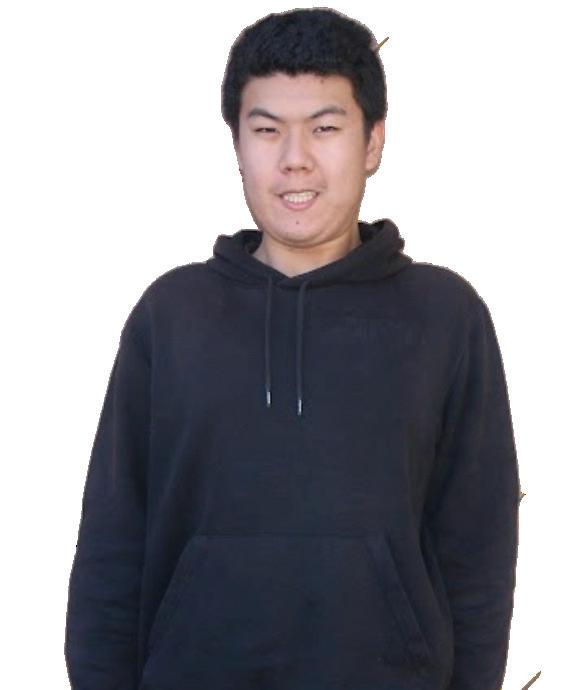

Well, it turns out my years of dance training didn’t translate as seamlessly to the demanding game of dence and skills didn’t redeem me from my unfortunate family reunion legacy that I had hoped to leave behind. My strong start with a rstplace win on the opening song naturally dence a little too much, with my optimistic expectations crashing down as I landnal dance to “Shut Up and Dance” by WALK THE MOON. In the end, it seems this competition only had one lesson for me: less talk, more practice.

Despite entering this competition with no dance experience and zero uidity in my motions, I am still 100% con dent that my passion for Just Dance will overcome my inability to just … dance. After years of dancing to Just Dance hits by artists ranging from Lady Gaga to Kesha, I have no doubt that the rhythm will eventually nd me. If you aren’t convinced by my passion yet, you can check out my proli c o ers from dance shows such as So You ink You Can Dance, Dancing with the Stars, and Dance Moms, all paying tribute to my credibility as a professional Just Dance-r. Abby Lee Miller called to say, “Going three for three, once again, Ariel’s on the top of the dance pyramid.”
Although my plans to achieve victory were foiled by the game’s inability to detect greatness and superiority, placing fourth was better than I expected. It may be a possibility that I overhyped my dancing skills before entering this competition, but this small hiccup in my illustrious career pales in comparison to the vast achievements that I’ve been famed for. Additionally, competing against the nest dancers at MSJ has been an honor. Preparing with Lucas, partnering with Emily, and copying Ariana’s footwork has blessed me with gratitude and newfound knowledge on how to dance on the beat instead of chasing it. While it may not have been my best performance, at least there is something I can look forward to improving.
OCTOBER
The
de los Muertos is dedicated to the remembrance of pets that have passed away. On this day, families create special ofrendas adorned with their pets’ favorite toys and treats to honor and relive the special moments they shared together.
OCTOBER 31
This day marks the eve of All Saints’ Day, which is believed to be the day the gates of the Underworld open. Before night falls, families first prepare for the spirits of lost children to arrive. The atmosphere is full of anticipation and a sense of reverence, as families ensure that the ofrendas are prepared to welcome their lost loved ones for a brief visit.
OCTOBER 28-31
In the days leading up to Día de los Muertos, families clean and decorate the gravesites of their loved ones. They begin by creating elaborate ofrendas decorated with photos, candles, and mementos. Families also bake pan de muerto to share amongst themselves and gather marigolds to prepare for rituals that honor those who have passed away.
“Every country celebrates the Day of the Dead in a different way … for instance, we go to the cemetery and we talk about [our] daily life to our families. We also talk about legends about the Day of the Dead, and mysterious things that happened that day. So, the oral tradition is very important, and each country has its own unique oral story.” — Spanish Teacher Daniris Harris
NOVEMBER 2
This is the main day of celebration as families honor adult ancestors. During the celebration, families enjoy food and music while recounting the life of their loved ones. Ofrendas are adorned with items that the deceased enjoyed while they were alive, creating connections between the dead and the living.
NOVEMBER 1
This day is dedicated to honoring the innocence and joy of deceased children, also known as Angelitos (Angels). Families create special ofrendas and offer toys, sweets, or other cherished items that brought happiness to the children during their lives.
Día de los Muertos, or Day of the Dead, is
“It’s become a whole big thing to take pictures with your friends. One day, when you’re older you might have to put your picture on your altar. think it’s really cute because everything is digital now, so having these pictures would be cute.” — Vanessa Zamora, 10
NOVEMBER 3-7
The week following Día de los Muertos, families visit cemeteries and reflect on the memories and stories of their departed loved ones. Throughout this week, art exhibitions and public displays inspired by the festival are set up throughout communities, inviting everyone to celebrate together.
NOVEMBERDECEMBER Celebrations for the Day of the Dead continue through December, featuring festivals, parades, vibrant costumes, classic Mexican music, and public ofrendas of well-known figures. These final events symbolize the endurance of culture and community with continuity.
“El Día de los Muertos is a special celebration, and it differs in the sense that it brings two worlds together. It brings the pre Hispanic tradition with the Spanish Catholic religion. It's syncretism. It's a mixture of two different cultures coming together and mixing, intermingling, and creating a beautiful representation of life and death.” — Spanish Teacher Leticia Magaña
“There's so many parts of Día de los Muertos that everyone can get involved in, and you don't even have to be part of the actual Spanish culture. For example, the altars that the Spanish students made are pretty authentic and are a really cool way to recognize all the icons who are considered colloquial heroes in the Spanish culture.”
— Varchas Kukreja, 12
René Yañez, born in Mexico, immigrated to San Francisco at age 12. After studying at the California College of the Arts and the San Francisco Art Institute, he co-founded Galería de la Raza in 1970, establishing it as a venue for Chicano art and promoting cultural pride. In 1973, Yañez popularized Día de los Muertos in San Francisco, creating altars and expanding celebrations to venues like the Yerba Buena Center for the Arts. Since his passing in 2018, the Galería de la Raza continues to support Chicano artists to this day.
“On November 2, that's the last day that the dead can be with their families, so all the families go to the cemetery and clean their tombstones, and play games with other family members, and it’s just a time for remembrance. What's interesting is they actually stay the night there so it’s not really grieving the person, it’s celebrating the life that they had.” — Roland Lee, 11
The AP Spanish Language and Culture course builds on the skills developed in previous Spanish levels, guiding students to develop advanced proficiency in expressing and defending complex narratives both in writing and conversationally. The course heavily focuses on Spanish-speaking
SPANISH 1-4 COURSES
CALVERA CATRINA (ELEGANT SKULL)
In ancient Aztec mythology, Mictecacihuatl is considered to be the goddess of the dead and ruler of the underworld. Mictecacihuatl is often depicted as having a flayed body and an agape, skeletal jaw. The Aztecs sought to appease this goddess by burying the deceased with offerings of food and objects. Over time, these customs transformed into modern-day Día de los Muertos celebrations. For example, calaveras, or skeletons, were primarily based on the appearance of Mictecacihuatl.

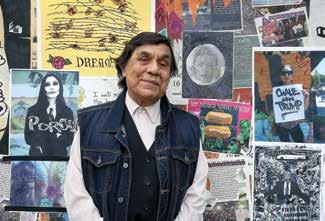
Diego Rivera, a prominent Latin American painter, is celebrated for his murals that blend art with cultural and social commentary. Born on Dec. 8, 1886, in Mexico, Rivera began studying art at a young age and found work in painting murals on the walls of art institutions and government buildings, where he developed his signature style. Rivera’s murals, Dreams of a Sunday Afternoon in Alameda Park, The Offering, and Day of the Dead-City Fiesta depict different aspects of the holiday, including iconic figures such as La Catrina, ofrendas, and performances.
PAN DE MUERTO (BREAD OF THE DEAD)
A cherished Mexican bread, Pan de Muerto is baked with a distinct, round shape, and decorated with bone-like dough pieces to symbolize the deceased. Each region of Mexico crafts unique variations, adding different fillings like flavored cream or toppings like pink sugar or sesame seeds. Its circular form represents the endless cycle of life and death, with the small dough “bones” honoring the departed. During Día de los Muertos, Pan de Muerto is placed on ofrendas as an offering for spirits returning to visit their families. Serving both as a tasty treat and way of honoring departed family,
China:
anksgiving in the US is held on the fourth ursday of November. anksgiving originates from November of 1621, when the Pilgrims and the Wampanoag people celebrated the autumn harvest with a feast that included food like deer, corn, and mussels. Today, anksgiving is usually celebrated with a gathering of extended family or friends for dinner consisting of a roasted turkey as the main dish and several sides such as mashed potatoes or cranberry sauce. Common celebratory activities on anksgiving include watching football or anksgiving parades — with more than twenty-eight million people viewing it via television, the annual Macy’s anksgiving Day Parade in New York City is one of the most famous anksgiving parades in the US.

e Mid-Autumn Festival is celebrated on the eight month and 15th day of the Chinese lunar calendar, which usually falls between mid-September and early October. Its origins stem from more than 3000 years ago in the Zhou Dynasty. Because the festival places heavy emphasis on the moon, the myth of Chang’e, the goddess of the moon, is heavily associated with this holiday. e Mid-Autumn Festival is usually celebrated with a family reunion in which families gather at night to observe the full moon. Other activities on this day include eating mooncakes, a dense and sweet round pastry, and making and hanging paper lanterns.
Also known as Hangawi, Chuseok is a Korean harvest festival. According to popular belief, the festival originated as a weaving competition more than two millennia ago. Its roots lie in worshiping the spirits of ancestors during the harvest season, hailing back to Korea’s agrarian roots. Koreans often travel to their hometowns to visit their ancestors’ graves, clean the graves, and perform other ceremonies to pay respect. Modern celebrations include competitions such as for martial arts, archery, and dancing. Festivities are usually accompanied by an assortment of traditional cuisine made from freshly harvested produce, such as songpyeon (rice cakes), galbi-jjim (braised ribs), and drinks like baekse-ju (rice wine) and soju (alcoholic drink).





By Roshan Annamalai & Michael Qu Sta Writers


With the holiday season imminent, families across the country are preparing for anksgiving festivities. However, every autumn, people across the world observe a variety of other seasonal festivals to celebrate the harvest. In this article, the Smoke Signal explored ve di erent holidays and interviewed students and sta to spotlight their diverse experiences.



Sukkot is a week-long holiday observed by Jews across the world, starting on the 15th day of Tishrei in the Hebrew calendar, which is usually between September and October. Like others, it emerged as a harvest festival and was later linked to religious scripture. e Torah, the sacred text of Judaism, details it as a pilgrimage festival to celebrate the Exodus, the legend of the Israelites’ escape from slavery in Egypt. Celebrants often build the namesake sukkah, a temporary wooden hut, in which they eat meals, sleep, and perform rituals during the festival. Symbols of harvest such as hadass (myrtle tree branch), aravah (willow tree branch), etrog (citrus fruit), and lulav (frond of a date palm tree) are blessed and waved around to thank God. Traditional foods such as challah (braided bread) and stu ed foods made out of fresh produce, meat, and grains are also customary, representing plentiful harvest.
Erntedankfest is a staple of German culture. It began as small-scale celebrations in rural Christian communities across Europe to thank God for the autumn harvest. Now, people celebrate it on the rst Sunday of October in urban communities across Germany, Switzerland, and Austria. Erntedankfest traditions are exuberant and colorful, emphasizing the importance of wheat and other locally harvested produce. Common practices include wearing wreaths of wheat, decorating altars with produce and wheat crowns, and fashioning gures from sheaths of grain. e highlight of Erntedankfest is the harvest parades, which feature lively performances and church services. e festival season is one of gratitude and kindness, which communities demonstrate by distributing baskets of bread and produce to the underserved.
“[Celebrating the Mid-Autumn Festival] developed my cultural and religious beliefs because it integrated me more into Chinese culture … I haven't been to China personally, but once I do go there, it's just a little bit more of Chinese culture that I'm going to need to know.” — Kayden Jiang, 10
“One unique tradition [for anksgiving] is that instead of using a turkey and eating it like a normal turkey, we wrap it up in spring rolls with cucumber and like a sweet sauce that is basically emulating Beijing duck … it's like our take on anksgiving.” — Dora Gao, 12
“Other than family, I think the most important thing about anksgiving is that what it's meant to be is … essentially [giving thanks] to God. … You can see presidents from Washington to Abraham Lincoln and other presidents have issued proclamations on that day saying this is a day we're going to give thanks to God for all of the blessings we have, our nancial prosperity, our health, our protection from enemies e more I study anksgiving and what it means to America, it makes me realize that that's really what it's about. Regardless of how you celebrate it, regardless of the food you eat, regardless of even the people you're with, it's really just a time to be thankful.” —
By Scarlett Huang Sta Writer
November 1 and 2 mark Día de Los Muertos, or the Day of the Dead, a Mexican holiday where families welcome back the spirits of their late loved ones for a reunion lled with food, drink, and festivities. Central to this tradition are calaveras, decorative sugar skulls often placed on ofrendas, or altars, in memory of the deceased. Based in indigenous beliefs of life, death, and rebirth, these skulls have become an integral symbol of Día de Los Muertos. Join one calavera as it explores its cultural niche, discovering that Día de Los Muertos is a celebration of life, rather than a mourning of death.
I just went through the most traumatizing experience ever known to calavera-kind: being made. I shudder just thinking about the discomfort of the goopy sugar and freezing mold. But now that that’s over, I look dazzling! Ten out of ten would recommend this frosting eyeshadow — it really does wonders for your complexion. Admiring my full beat, I’m suddenly yanked o the table. WHERE AM I BEING TAKEN? Oh, the ofrenda. I guess that’s where I’m supposed to go anyway — ugh, so anticlimactic. It turns out this place is pretty bougie; there’s even picture-people to keep me company — two grandparents and a little girl who all look so happy.


1, 2024 @ 7 A.M.
Today is my special time to shine. I’d been planning to get a head start, but the villainous early-risers in this household got the best of me. I was woken up at the criminal hour of 5 a.m. by a loud clatter of pots and pans. I peer into the kitchen and spot a formidable ock of tías gathered in the small kitchen, sharing the latest juicy gossip. ey were preparing what looked like a feast for the gods — a village’s worth of tamales, moles, and pan de muerto — so much that even wooden kitchen table was shaking. I felt quite sorry for it, from one inanimate object to another.
By mid-morning, family and friends were streaming in, all stu ed into the tiny house. Clearly, nobody was minding my personal space — not one even person heard my mu ed cries for help as I got lodged between two gangly elbows. Oddly enough, everyone who entered dropped by the ofrenda. eir eyes would glitter fondly as they placed little trinkets by the picture of the young girl. ese trinkets were strange, seemingly random objects like balloons, toy trains, and hand-sewn dolls. After an hour of all this, why could nobody manage to place a large platter of tamales in front of me? I was feeling quite neglected.
1, 2024 @ 3 P.M.
e horde of people milling around the house earlier marched outside,nally leaving the house peaceful. Or so I thought, until the unnecessarily loud marching band stomped around the street, disrupting my afternoon beauty
nap. Looking out the window, I caught sight of a spectacle to behold. In an elaborate parade, several women wore traditional Mexican ranchera dresses, whipping their owy skirts around in an expressive frenzy of the Jarabe. But still, I am perfectly happy being here all alone. With nobody to dance or sing with. Alright, maybe I do wish, just a little, that I was part of the festivities.
1, 2024 @ 11 P.M.
e sky outside darkened as the ongoing celebrations slowed to a trickle of sleepy dancers and musicians. Listening to conversations all day long, I’ve learned that this house belongs to Maria, and the picture-people are her family. Maria soon returned to place more food on the ofren da, moments before she almost KILLED me. Lighting three candles around me, I cringed to turn away from these melt ing weapons of death as Maria made her escape into the bedroom. But wait, I hear giggling outside the door, with three dark shadows on the door step. All of a sudden, everything turns black — AHHHH! — and I pass out.
ofrenda in a game of tag. As one girl came dangerously close, almost knocking over the table, she looked strangely familiar. She took bites of the food Maria laid out when the realization struck me. A spitting image of the smiling young girl in the picture frame — the spirits of the beloved dead had come to visit.
NOV. 2, 2024 @ 2A.M. NOV. 2, 2024 @ 8 A.M.
Alright, I was exaggerating. Brave calaveras of my caliber do not actually scream or faint. e candles simply went out at an inopportune moment, causing a slight scare. I realize that the three
Falling asleep in the early morning, Inally got a few precious hours of sleep after the spirits left. I awoke with a splitting headache. Or full-body ache, I suppose, because I am just a skull after all. Maria had returned crouching down in front of me, noticing that the picture frames were slightly crooked. I knew it! ose little twerps had messed with the ofrenda. Maria straightened the picture and placed an aromatic plate of tres leches cake in front. She smiled gently and said, “Ay mi hija, you’ve always been a wild one.”
scare. I realize that the three gures were little children, sneaking into the house at night up to no good. Upholding my responsibility to keep this house safe, I opened my mouth to scare them o with my fearsome presence. Nothing came out. Right. I’m an inanimate object. e girls just giggled, running circles around the
By Fiona Yang Sta Writer



Senior Allie Tong has been perfecting her nail art since 2018. After an incident at the salon when the artist drew a misshapen her nail, Tong began learning how to design nails. What started as an interest soon evolved into a business as Tong taught herself to paint intricate designs on her own nails, honing her skills with dedicated practice. Inspired by YouTube and TikTok tutorials and encouraged by her mother, Tong launched her own nail business in December 2022, transforming a hobby a ourishing business that re ects her creativity.
Vivienne Westwood inspired set, using signature Vivienne Westwood charms in shimmering silver colors to enhance a deep red polish base.
business occurred during Homecoming week, when she played a role in two clients’ Homecoming proposals.

Tong showcases her artwork on her Instagram page @allies_nails_, where she shares posts of nail sets done on herself and for clients. Her small business features a diverse range of nail designs, from simple and delicate to elaborately detailed. Tong specializes in 3D and Asian styles, using charms with precise placements to create intricate and sleek designs. One example of such design is her
Tong’s favorite part about o ering nail services is the satisfaction after completing a client’s nail set, especially for designs that incorporate complex details. Taking time to appreciate her own artwork provides her with a sense of achievement. “I like seeing [the end product] and knowing I worked really hard on it, and it looks really good,” Tong said. Additionally, Tong believes that nail art requires a sophisticated level of attention-to-detail and a ective analysis of the nail’s overall harmony, seeing room for growth from designs on herself and on clients. She takes each set as an opportunity to hone her skills and grow as a more cient and precise nail artist. ning her craft, Tong’s business allows her to cultivate meaningful connections with her clients, enhancing the joy she derives from her art. One of Tong’s most cherished memories from her nail

However, Tong has faced her share of challenges alongside her successes. One of the greatest obstacles at the start of her journey was ine ciency, often spending up to three hours on a single client. Yet, through consistent practice and dedication, she experienced vast improvement, spending an average of two and a half hours per client. Another area of growth for Tong has been her con dence in meeting new people and sustaining conversations. “What I struggled with was holding up a conversation for [three hours] long so I would get nervous about meeting new people, but it’s gotten better,” Tong said.
As the Varsity Girls Volleyball Co-Captain, Tong balances her nail business with both athletics and sports. From her experiences leading her volleyball team, Tong gained invaluable lessons about responsibility, such as organizing team practices and interacting with individuals of diverse personalities. ese skills have translated into her business as well, enhancing her ability to manage client relationships and run her practice e ectively. For Tong, maintaining her passion for nail art along with her other commitments requires making necessary compromises. “During peak season, like Homecoming and prom, I just stay up late. I’ll
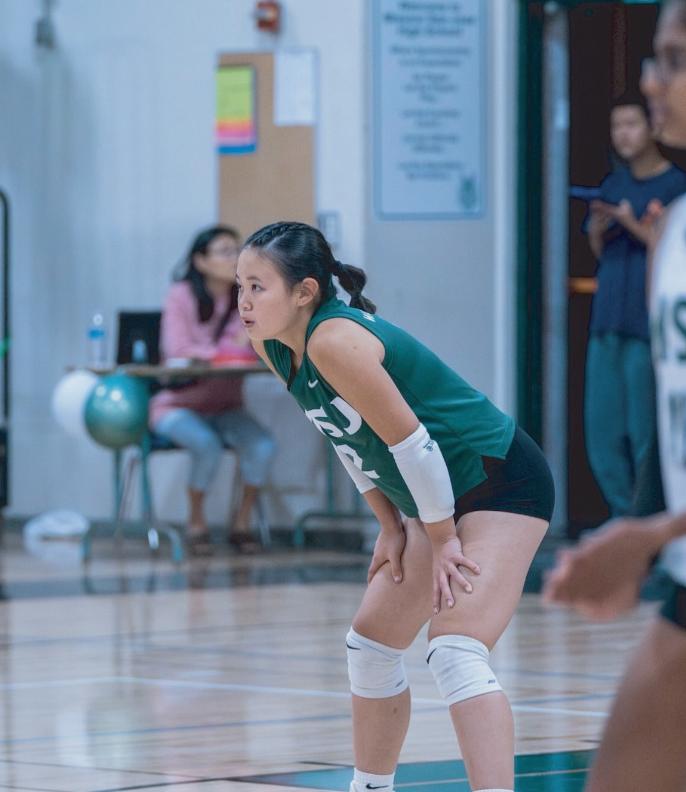
“For now, I’m just hoping [my business] keeps it up … I just hope it continues.”

— Senior Allie Tong
do nails right after I get home from practice or from school and then I’ll do homework,” Tong said. But most of all, Tong’s business has expanded her character and personality. “[My business] has helped me be more social and extroverted when I'm put into unfamiliar situations and has helped me learn to control my spendings and manage my time,” Tong said. In the future, Tong hopes to continue running her business consistently and bring it with her to college dorms. “For now, I’m just hoping [my business] keeps it up … I just hope it continues,” Tong said.

The Aspiring Scholars Directed Research Program (ASDRP) is a 501(c)(3) nonprofit, private research institution in Fremont, California.
ASDRP is the Bay Area's premier precollegiate research & development institution, run by a consortium of highly skilled scientists, engineers, and researchers with years of academic and industry experience who collectively seek to push forward the current frontiers in biology, chemistry, physics, computer science, psychology, medicine, engineering, and more.
We mentor high school students - budding scientists in 9th through 12th grade - who come from every corner of the greater Bay Area, California, and across the United States. We seek student researchers who are passionate, who are unafraid of a steep learning curve, and who want to be involved in real science that has real impact on society.
Quite simply, we do research. Our investigators and student researchers strive to make impact in fields ranging from cancer biology, drug discovery, environmental science, and computer-guided drug design to radioastronomy, machine learning, and urban sustainability.
As in any other R&D establishment, we publish papers, present work at conferences, and generate intellectual property. Check out some of our latest preprints, publications, and conference proceedings online.
ASDRP is not a class, not a tutoring center, and not a summer camp. We are scientists and engineers who aim to push the frontiers of scientific discovery through rigorous and cutting edge basic & applied research across the life sciences, physical sciences, and engineering, while bringing out the best in the aspiring scientists we mentor.
External queries: admissions@asdrp.org
Administrative services: asdrp.admin@asdrp.org
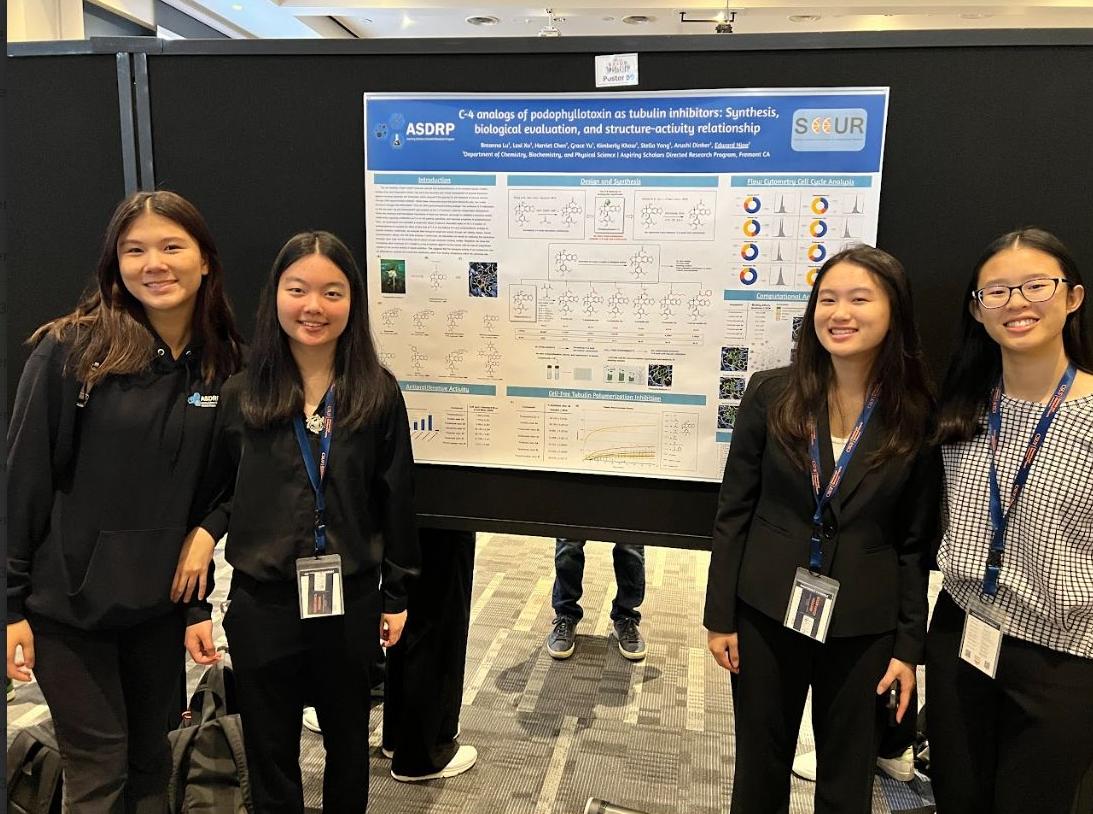
Spring 2025
Early Application Deadline: November 15, 2024
Final Applications Due: December 30, 2024 @ 11:59 PM PST
Summer 2025
Early Application Deadline: February 1, 2025
Final Applications Due: April 15, 2025 @ 11:59 PM PST
Applications are competitive, and each term, ASDRP receives far more applicants than there are open research positions. Apply online at www.asdrp.org/apply.
Interested in finding out more?
RSVP for an informational webinar at www.asdrp.org/rsvp.
E-mail: admissions@asdrp.org 46309 Warm Springs Blvd. Fremont, CA 94539

By Luna Venturo Staf Writer
Released October 28th, Tyler, e Creator’s eighth album, CHROMAKOPIA is a deep and personal cut into his life and struggles. roughout the album, songs accompanied by bold and heavy instrumentals, highlight Tyler, e Creator’s struggles and reveal a new, more self-critical perspective of himself.
Starting with “St. Chroma (feat. Daniel Caesar),” a soulful and condent track with echoing vocals, creative melodies, and beats, Tyler, e Creator creates a composition that while initially reminiscent of his more recent style, transforms into a reimagination of some of his earlier sounds with heavier vocal cadence, melodies, and bass, now more rened. is style is typical for a lot of the album, with Tyler, e Creator meshing his past sounds into a fusion that is ever-changing and beautifully inconsistent. It is similar to how he describes his recent life experiences throughout the album, having songs of varying happiness and con dence.
Mixing lighter and heavier sounds, the album captures a back and forth with Tyler, e Creator’s mind — unstable yet strung together in beautiful harmonies. While CHROMAKOPIA doesn’t go into as much detail into his inner con ict, like his early albums, such as Bastard and Wolf, it still feels unexpectedly authentic and like a new era for Ty-
By Navya Chitlur Staf Writer
Following the storyline of an AI robot whose creator recently passed away, the single-player game Re nd Self: e Personality Test Game, developed by indie game developer Lizardry, follows the robot’s journey of self-discovery and healing, setting the scene with cozy brown-tinted vintage colors and soft music. e player controls the robot as it explores a map that spans across a small town, altars, and other locations, with no set storyline or required action. e gameplay ends after an hour or until the robot’s “heart” lls up through the actions they take, whether they choose to order food, talk to store owners or pedestrians, play minigames, or more. At the end of the round, the game analyzes every decision the player makes throughout the hour to determine the player’s personality based on factors such as patience, ambition, and curiosity. Re nd Self demonstrates extreme attention to little details, noting the time it took to make miniscule decisions, such as how many owers the player picked or how many seconds they sat on a bench. It then lists the three most prominent personality types of the player and their descriptions, such as “sage,” or “leader,” along with two hidden personality traits, should the player choose to replay the game. With its wholesome storyline and dialogue, paired with aesthetically-pleasing graphics, Re nd Self: e Personality Test Game allows players to discover themselves through a cozy, relaxing game. ▪
Grade: A+


ler, e Creator. is is undoubtedly apparent on tracks such as “Hey Jane” which is unusually self-reproving. In “Hey Jane,” Tyler, e Creator says, “How could I be reckless? is ain’t my lifestyl e/ Never had no scare in my life ‘til now / Ain’t in the space to raise no goddamn child.” He apologizes, calling himself reckless and later even raps from the perspective of his partner, who divulges their worries about motherhood. is approach to lyricism is fresh for Tyler, e Creator, and highlights his maturity, ruminating on how his actions a ect others. Additionally, it allows him to be honest about his insecurities, making the music all the more poignant.
At times, there are oddities in some musical choices that feel slightly out of place, like some track transitions feeling a little abrupt and disorienting. An example of this is the emotionally heavy antepenultimate track, “Like Him (feat. Lola Young),” with light melodic piano, soft synths and layered vocals that create an extraordinarily grand and solemn sound. e sublime “Like
Him (feat. Lola Young)” is followed by “Balloon (feat. Doechii),” a somewhat upbeat and silly track, whose position as the album’s penultimate song somewhat detracts from the album’s ending and doesn’t allow for the listener to process the beautiful, calm and mourning sounds of “Like Him.” However it’s not often at all this happens, and it doesn’t take too much away from the overall album listening experience.
CHROMAKOPIA is a departure from Tyler, e Creator’s norm, and marks a more experimental period in Tyler’s music. While some fans may be disappointed in its di erences thematically or musically from his past works, it is a well-planned and amazing listening experience. Paired along with the harmonious vocals and great beats, Tyler’s meditations on his life and actions make for a truly heart wrenching experience.
CHROMAKOPIA is a very sincere and moving piece of art that has stuck and resonates with many people.
Grade: A
By Michelle Qu Staf Writer
What A Relief, released on October 25 by Katie Gavin, is her rst solo album. Gavin is mostly known from MUNA, the indie-pop band where she is a songwriter and lead vocalist. e acoustic indie-pop album delves into Gavin’s personal life and her experiences with loving and being loved. According to Gavin, What A Relief has been seven years in the making, originating as a collection of single tracks for MUNA before the project grew into its own right. e album focuses on themes of gray areas in relationships, whether romantic or familial, and the recovery and self-growth following failed relationships. e album opens with “I Want It All,” a beautiful and tender acoustic track. e gentleness of the guitar contrasts with ercely intense lyrics such as “I want you to judge me like the second coming / And I want it all, all the time / I want it all / I’m gonna lose my mind,” creating a deeply intimate atmosphere that re ects the passion of loving someone. “Sanitized” is the most tonally unique and intriguing track on the album, taking on a contemporary tone with a hypnotic piano loop that draws the listener into the song. Notably, the gentle guitar backing prominent in most of this album takes on more of a background role to other instruments, such as the drum set and bass in “Sanitized,” giving the track a fresh atmosphere. e slightly dissonant piano loop throughout the track as well as the discordant instrumental break near the end tie in well with the theme of rebelling against the notion of needing to make oneself palatable, or to ‘sanitize’ oneself in a relationship. ough a pre-released single, and as such, intended to showcase the highlights of the album, “Casual Drug Use” is one of Gavin’s weakest songs on the record. Despite Gavin’s

impressive vocals on the verses, the monotone chorus leads to a forgettable experience for the listener and lacks the melodic charm of her other songs. e instrumental background, usually one of the big strengths in this album, is particularly dull in “Casual Drug Use,” and the lack of creativity with the instrumentals causes the background to sound like every other generic pop song. e songs in What A Relief can be bland at times, and same sound like they were added to ll time rather than contribute to the meaning of the album. is is especially noticeable in “Casual Drug Use,” but other songs like “Sketches” don’t particularly add much to the album in terms of lyrics or sound. “Inconsolable,” though possessing a catchy melody and chorus, also feels like it drags on much longer than it should have. However, the musicality of the album in its other tracks is fantastic, and often can be its strongest quality. Gavin seamlessly blends instruments like piano and guitar into a harmonious sound. Another stand-out aspect of the album are the ddle solos, which Gavin played herself.
ough What A Relief occasionally struggles with the varying quality of its tracks, the album overall is quite clear in conveying itself and its ideas. e beautiful instrumentals are a highlight of the album, and What a Relief stands as a strong rst solo album. ▪
Grade: B

By Cham Yu Staf Writer
Contemplative and suspenseful, director Edward Berger’s Conclave is another captivating entry into his extensive lmmaking repertoire.
e award-winning All Quiet on the Western Front director, known for his adept use of smooth camerawork and lighting, adapted Robert Harris’ original novel of the same name. e lm is set immediately after the Pope’s death (Bruno Novelli), prompting Cardinal Lawrence (Ralph Fiennes) to organize a papal conclave, a body of cardinals that will elect the next Pope in isolation. In all, Conclave is a thought-provoking lm with a distinctive storyline catalyzed by the idiosyncratic performance of its actors.
With the inclusion of political drama in an otherwise inconspicuous ceremony, writer Peter Straughan crafts a widely acclaimed storyline that challenges sacrosanct
Catholic practices. As the cardinals are sequestered into the papal conclave, four major candidates for the papacy emerge: the atavistic Cardinal Tadesco (Sergio Castellitto), the socially conservative Cardinal Adeyemi (Lucian Msamati) from Nigeria, the liberal Cardinal Bellini (Stanley Tucci), and the conservative Cardinal Tremblay (John Lithgow). e election soon turns into a cesspool of scandals while unity seems to disintegrate as ideological factions begin to form, alluding to division in politics and religion. e heated political debate is further exempli ed by Ralph Fiennes’ deft performance, whose gestures and expressions illustrated his frustration with his peers. e cast’s performance contributed to the solemn and contentious atmosphere in the papal complex, juxtaposed with its liveliness as the conclave ends. Notably, Conclave also attempts to address the in uence of racism in mainstream politics, characterized by the xenophobic tropes
utilized by Tadesco. rough the invigorating performance of its cast, the lm demonstrates themes of loyalty and ambition, such as Lawrence’s persistent but ambivalent position on his papal candidacy despite his support for another.
Viewers will immediately recognize the lm’s re ned symbolism and mood. However, its monotonous lighting minimizes visual diversity, although the literal layer of shadow cast upon the cardinals symbolizes the opaqueness of the election. With the entire lm playing out within an isolated compound, the dark atmosphere of scenes often makes it hard to discern the identity of the characters, who all wear traditional Catholic dress. e lack of action throughout the lm also facilitates the use of smooth camerawork, which has crafted memorable scenes that convey the lm’s contemplative tone. In terms of presentation, the costume and set designs are well-crafted and re ect a solemn atmosphere.
However, the prodigal use of repetitive sounds hampers the lm’s expression of emotion, which lacks distinct themes for each scene. Despite this drawback, the deft use of silence consistently facilitates the suspenseful and often mesmerizing mood of the lm, where quietness is a means of emphasis.
With meaningful social commentary and brilliantly re ned presentation, Edward Berger’s Conclave is a timely critique of Catholic ideological division while providing a riveting account of political drama. Although its camerawork and set lighting could see improvement in clarity, both factors contribute to the themes of the lm that emphasize the muddling nature of the conclave. Considering its excellent plot and cast performance, Conclave is a thought-provoking experience that deserves a comprehensive viewing. ▪
Grade: A

By Dhaeshna Booma & Novak Chen Sta Writers


For MSJ Syncopasians, commonly known as Syncos, love for music and camaraderie goes beyond ordinary school gatherings. Established in 2008, Syncos is MSJ’s ocial a cappella group, showcasing impressive vocal harmonies and dynamic performances at campus events and assemblies. With its select team of 10 dedicated vocalists chosen through auditions at the beginning of each school year, Syncos has cultivated an intimate and closely-knit community in which students can experience both the challenges and rewards of a cappella singing together.

“I think a lot of singing groups or dance groups have more outreach, but I think Syncos is a lot more personal. The people that we have are very closely connected to each other ... we’re all like family, everybody can support each other in meaningful ways.”
— JUNIOR NISHITA DESHPANDE
e strong club bond is partly due to the unique nature of a cappella itself, which requires high levels of synchronization and precision as it relies entirely on vocal strength without any instrumental backup.

“You don’t have a reference note for any part of [a
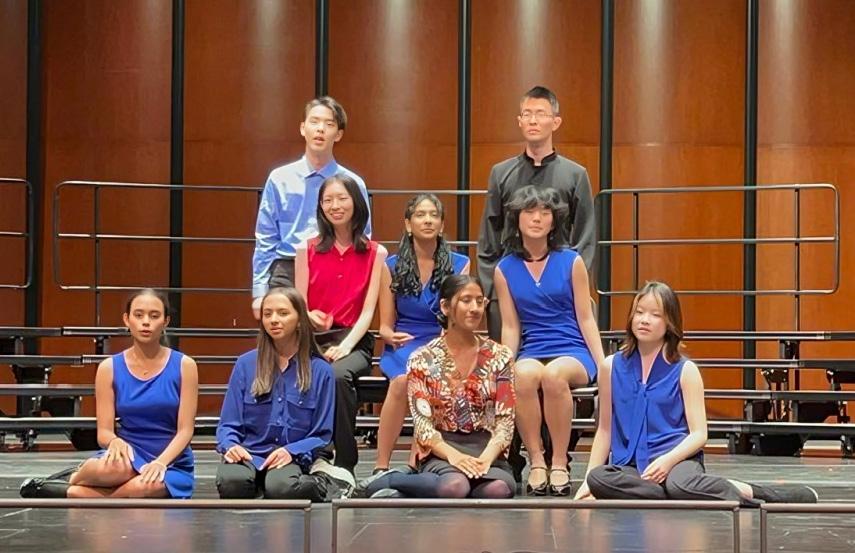
capella]. ere’s no piano backtrack or instruments. It’s just you and the people around you singing,” Junior Co-Leader Nishita Deshpande said. is dedication to purely vocal music unites the group as they work together to achieve harmony. e people that we have [in Syncos] are very closely connected to each other. Even if they’re not at the beginning of the year, by the end, we’re all like family. It’s like everybody can support each other in meaningful ways,” Deshpande said.
Despite the selective audition process, many new members join Syncos without prior experience speci cally in a cappella. e auditions prioritize vocal and musical talent, adaptability, and an interest in vocal per-

formance over a cappella background.


Choral Concert at MSJ, where they’ll showcase songs like Fugees’ “Killing Me Softly With His Song” and Lady Gaga and Bruno Mars’ “Die With A Smile.” “ e feeling that you get when you perform with ten other people, and everybody’s in tune with each other and just present in the moment, is incomparable,” Deshpande is collective presence and unity make each concert an eagerly awaited experience for the MSJ community.
As Syncos members look to future performances, they are excited to keep honing their craft and building on the group’s legacy. “I’m pretty proud of what we have done so far and would love to see future development and improvement. ere’s a lot of potential for Syncos overall,” Deshpande said. With every practice and performance, the Syncopasians continue to bring harmony, passion, and dedication to the heart of MSJ.
“Most members don’t have experience in a cappella since most middle schools don’t have much a cappella exposure.”
— JUNIOR NISHITA DESHPANDE

But whether they’re seasoned vocalists or exploring a cappella for the rst time, members quickly adapt, gaining unique skills through hours of practice and extensive rehearsals every weekend. With each performance, Syncos’ passion shines through. ey are currently preparing for the Winter
By Angelina Chen, Tushara Devapatla & Kanupriya Goyal Sta Writers
On October 16, singer Liam Payne died. His sudden passing plunged fans into mourning, but also prompted questions about the more concerning aspects of his life: he allegedly abused author Maya Henry in their past relationship. Beneath the ood of grief lies a darker narrative regarding Payne’s life — one that many fans are willing to overlook. Grief is a natural response, but when it becomes a means to dismiss abusive behaviors of those being mourned, one risks becoming desensitized to death. It’s important to nd the balance between respecting and understanding the tragedy of death and making sure to not use this moment as a way to absolve an inuential gure’s past actions.
Liam Payne’s legacy should be remembered in all its facets — the good, the bad, and the ugly. e strong parasocial relationships between celebrities and their fan bases has perpetuated a disregard for privacy surrounding death and grief. After Payne’s death, many individuals on platforms such as X theorized reasons for his fall, going as far as reviewing private CCTV footage. ese types of invasive and all-consuming relationships between fans and celebrities
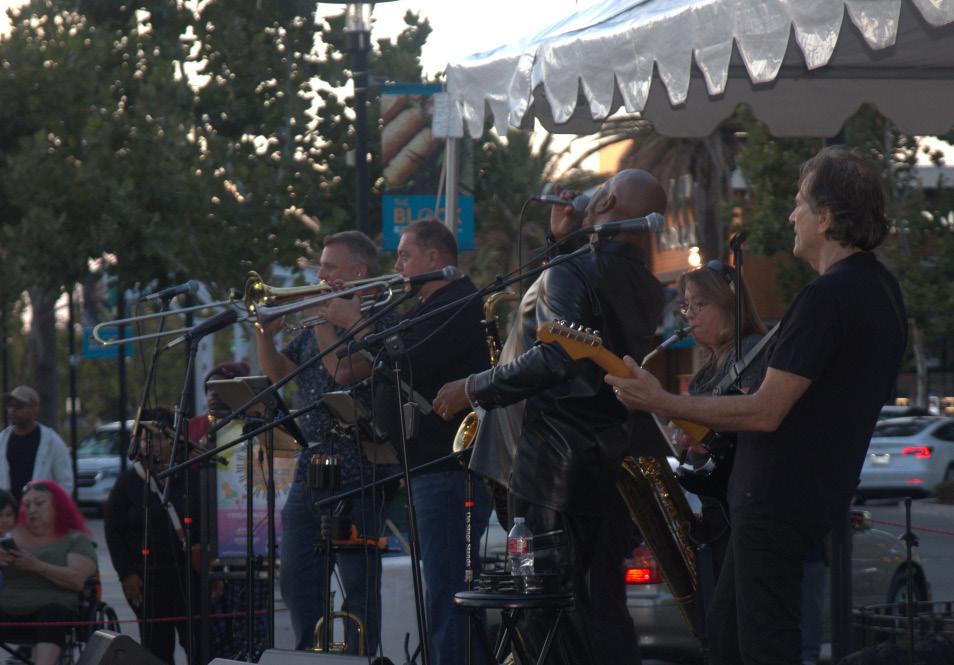

are incredibly harmful, not only to the celebrities, but also the fans as it can delve into obsessive and compulsive behavior.
is can lead to a lack of privacy within a celebrity’s own life and also a blurring of lines on what is considered reasonable for a fan to do.
After his death, one main controversy that sprung up was his past issues such as his past alcohol and substance abuse and his alleged domestic violence. Despite Payne’s con icts, some fans chose to romanticize aspects of his life, including his open battle with alcohol and substance abuse, ignoring his harmful behavior. Although death is an incredibly sensitive matter, it does not warrant the extreme lengths many have gone to, such as idolizing his legacy to the level of a deity, while completely disregarding his alleged physical and emotional torment of Maya Henry. Payne’s abuse included frighten-
ingly volatile behavior such as online harassment, allegedly forcing Henry to get an abortion, and even allegedly chasing her around the house with an ax. After Payne’s death, a slew of vile accusations and insults ooded Henry’s social media accounts. “Liam Payne is dead because of you,” one Instagram user said. “It was all your fault,” another user said. Henry’s attempt to speak out about her toxic relationship with Payne and the vicious response she received depicts how eager fans are to support him to no end. Most fans do not know Payne personally, therefore accusing and being infuriated at an individual speaking out about her own personal experience is incredibly insensitive.
On the other hand, some reactions to Payne’s passing were callous. According to Pink News , anonymous users took the opportunity to mock Payne, making jokes about his death in poor taste and inundat-
ing the hotel that Payne’s body was found in with fake Google reviews. ese reactions highlight a collective societal phenomenon. When ridicule overshadows the tragedy of death, one ventures into a form of insensitivity: trivializing loss to the extent of removing a person’s humanity.
When grieving someone who made a lasting impact, it’s important to understand that their passing, however tragic, shouldn’t absolve them from accountability. Compassion for someone’s struggles or the grief of their passing shouldn’t blur the harm they have caused. When fans romanticize a late public gure, they risk erasing their more unsavory and troubling actions — actions that a ected real people, often leaving them with lasting trauma. Acknowledging someone’s complexity is key to honoring their humanity without sanitizing their past: celebrities aren’t untouchable icons; they’re human beings, awed and capable of both kindness and harm.
“Holding onto that nuance, especially in moments of grief is a reminder that remembrance doesn’t have to mean erasure, especially in cases of abuse and harassment .”
Students should respect the tragedy of death itself, while also not using it as an excuse to disregard someone’s past actions. In the face of death, students can seek support through local and national resources: MSJ Peer Resource and the Wellness Center are two on-campus communities that students can join to focus on mental health wellness. Grief counseling resources are also available at the Care Solace, which partners with FUSD, along with other community organizations — like the Dougy Center, which specializes in support of teens dealing with loss.
By Navya Chitlur, Michael Qu & Kaylin Teo Staf Writers
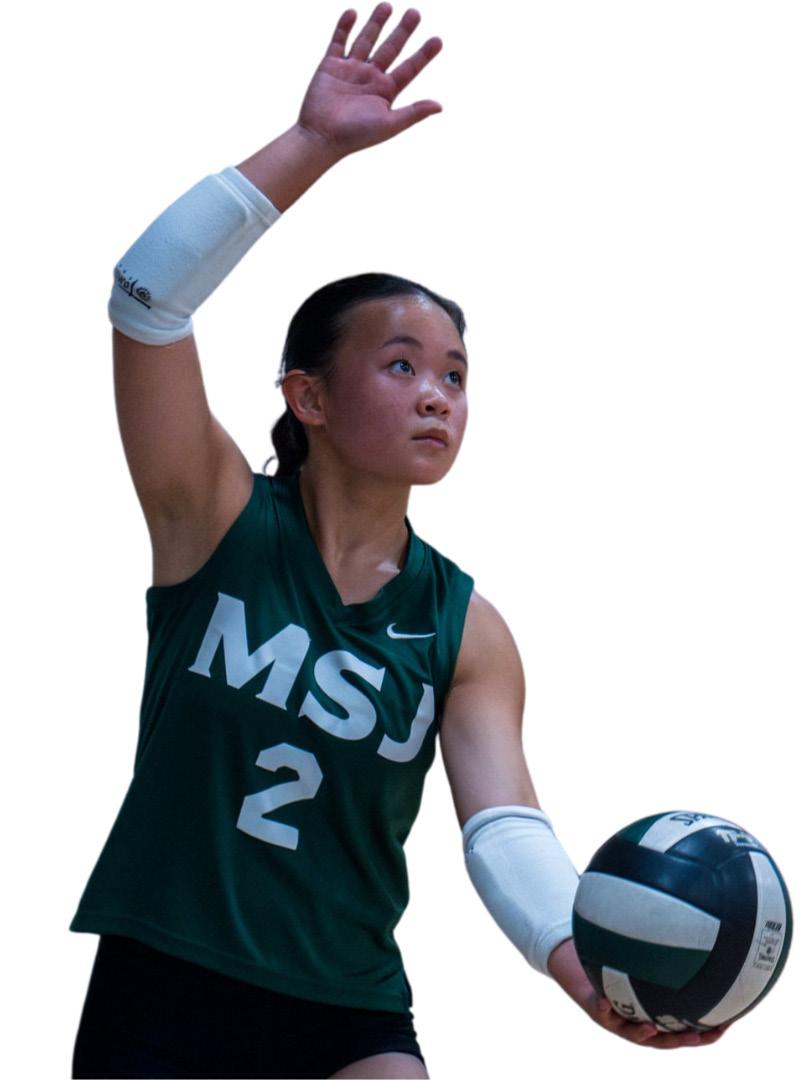
This season, Girls Volleyball showcased impressive growth and resilience, advancing to the NCS Championships and placing 13th overall. “Our team’s chemistry has grown immensely since the beginning of the season. We’ve become more in sync with each other, which has made a huge diference in our playing,” Girls Volleyball Co-Captain Senior Melissa Jin said. A crucial league match against Irvington High School served as a major season highlight, where the team made an incredible comeback by overcoming a 1724 defcit to win 27-25. The team also gave a strong performance at the regional Cougar Challenge, taking frst place in the tournament. As the team looks ahead, they aim to build on their successes and maintain their momentum into the next season.
“We already made history with two back-to-back 20-plus win seasons, so we just want to continue to make history as we go and have fun,” Girls Volleyball Coach Matthew Walker said.
Boys Water Polo ended the season placing fourth in the league, racking up 11 victories and 15 losses overall. Primarily composed of juniors, the team showed marked improvement with players stepping up both ofensively and defensively. Among the blossoming tal ents, Varsity Starter Junior Ryan Kumar was a key component in the team’s performance, playing strong defense and scoring as many as eight goals in a single game. Alongside their individ ual strengths, the team’s collective high spirits and morale helped push them through many challenging games. “In the frst game against American High School, our energy was insanely high. Every goal that we scored felt like we scored as a team,” Boys Water Polo Co-Captain Junior Scient Chen said. Looking ahead, Boys Water Polo plans to build on this foundation for greater success, encour aging members to play water polo during the of-season and continue developing their skills and teamwork. “We were a whole new team this season. Our goal for next season is to be one of the top teams in our division and be a contender for the league championships,” Boys Water Polo Coach Amy Tolbertson said.
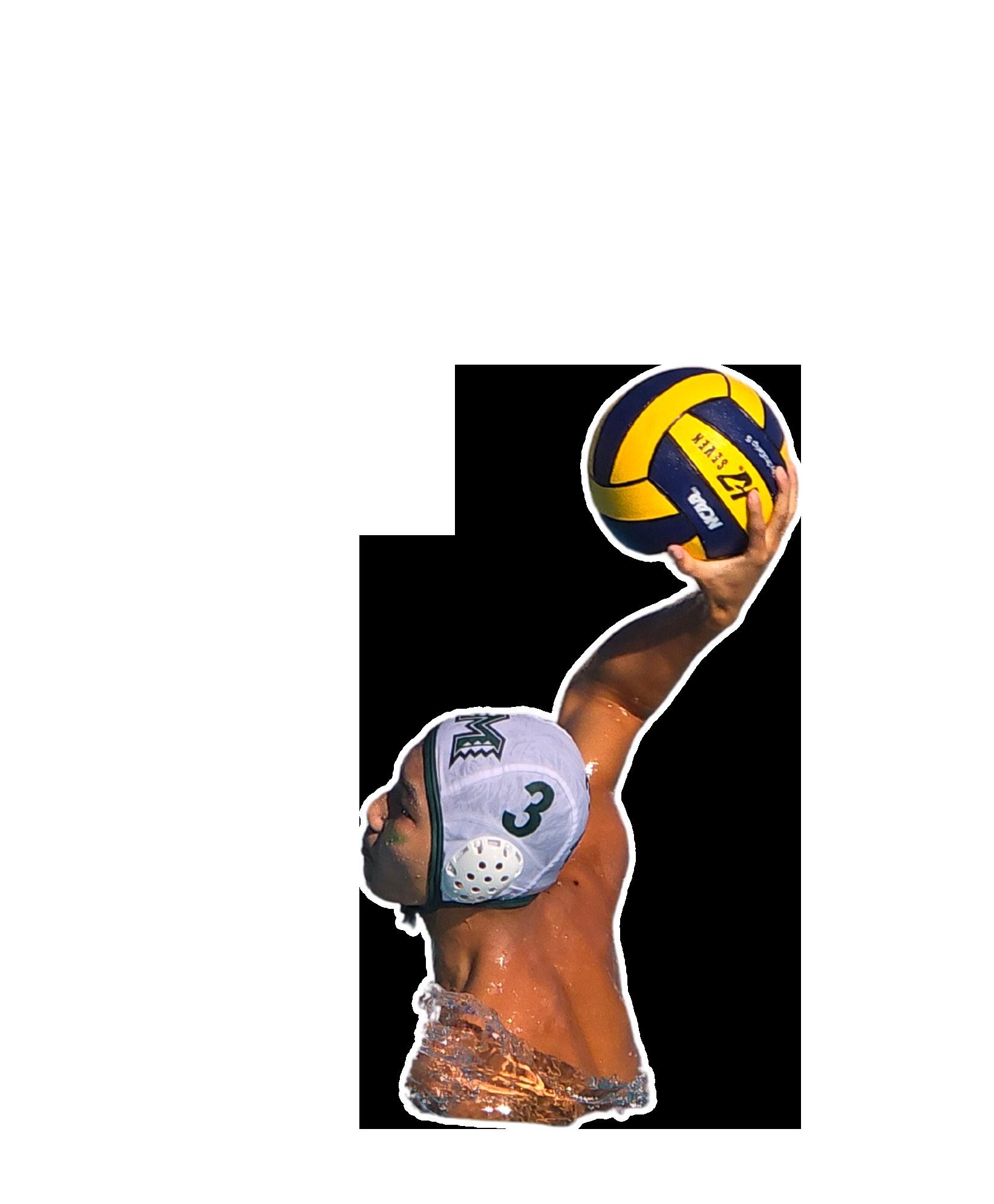
Despite nine seniors graduating last season, Girls Tennis was able to secure a 13-1 record, scoring numerous wins, including against their rival, American High School. To make up for the 10 graduated players, many freshmen stepped in to fll in the vacant slots, altering the team’s chemistry. Despite being a newer team, they were all able to win all of their matches throughout the season. “At the beginning, [we] didn’t know each other, but … we had lots of bonding events. … Now we’re much closer, and I can expect that to continue next year,” Girls Tennis Captain Senior Samhita Bathina said. As the team prepares to compete in the postseason, they’ve set goals to surpass the second round of the NCS Championships and compete in the semifnals for the frst time in four years. In preparation, “[The team is] playing well, so it’s good to have some time of and mentally recover … [while also] being smart about warming up, fnding your rhythm, and being confdent,” Girls Tennis Coach Paul Nissler said.

Despite facing a 6-8 loss at MVAL Championships against Moreau Catholic High School, Girls Water Polo pushed past barriers and soared above expectations, fnishing the season with a 12-13 record, winning tournaments they hadn’t fared well in previously, such as the Watsonville Tournament. After 13 seniors graduated in 2023, the team had to build themselves up from the ground, with many new players flling vacant slots. “Everyone improved [over the season] … [by] getting accustomed to the mentality and understanding that they’re a main [player] ... and knowing they have to take responsibility,” Girls Water Polo Coach Ryan Tang said. With a smaller team, the players followed a stricter conditioning regi- men with focus on building endurance. Through - out the season, the team grew in terms of chemistry and communication, both in and out of the pool. “[The] team has one of the most positive en- vironments I’ve seen in sports. We’ve created a positive and tight-knit community between all the players and our coach,” Varsity Girls Water Polo Co-Captain Senior Mei Wan said.

Girls and Boys Cross Country qualifed once again for the NCS Championships in spite of having forfeited MVAL #2 due to heat advisory, injuries, and challenges with solidifying their roster. This year, the team put together two young, promising Varsity lineups featuring two all-league selections representing the top 10 runners in their individual divisions. The Boys Frosh/Soph level, led by Sophomores Kevin Hwang and Ahaan Sood, found tremen dous success, placing frst overall at every MVAL center meet. Looking forward, Boys and Girls Cross Country Head Coach Brian Singleton aims to incorporate Varsity ath letes with other levels, making the most of their insights, in hopes to foster growth and community throughout.
“I would like to … intermix diferent groups … just to have that rub of,” Singleton said. His goal is to lead MVALs in all divisions for future seasons. Leading MSJ this year, Boys Co-Captain Junior Andrew Li rose to set high standards for the team, now sitting ffth all time for the two and three mile distances. Many individuals too achieved impressive improvements. “I believe that at the beginning of the season, almost everyone returning had hit a [new] personal record. They [now] have something to look forward to for the upcoming years,” Boys Co-Captain Senior Joey Mendoza said.

Girls Golf faced a challenging start to their having to adjust to a younger team and a new coach, but they quickly found their stride. Through countless practic es and team bonding sessions, the team pulled themselves together and dominated the felds. Four athletes received allleague awards, capping of a season flled with hard-earned victories and personal achievements. Among standout golfers was Junior Aanya Patel, who rose from a backup Varsity po sition last season to a consistent starter, showing drastic im provement. “I feel that she put in hard work to improve and the results were very apparent,” Girls Golf Co-Captain Senior Michelle Woo said. The MVAL Championships were especial ly memorable, with Girls Golf fnishing frst with a 9-1 record, reinforcing their reputation as a formidable force in the league. “Our team has grown since the beginning of the season. We were not sure if we were going to win, but everyone played well and we ended up winning by over 30 strokes,” Woo said.


ACROSS
1. During _ _ _ _ _ _ , celebrants often build a temporary wooden hut in which they eat meals, sleep, and perform rituals during the festival.
2. Senior Allie Tong launched her own nail business in _ _ _ _ _ _ _ _ 2022.
5. Snycos will showcase songs like “Killing Me Softly with His Song” by _ _ _ _ _ _ at the Winter Choral Concert at MSJ.
6. The Arunay Foundation educates others on ocean safety and _ _ _ _ _ awareness.
7. Girls Soccer Team Coach Terry _ _ _ _ _ _ _ has three decades of experience and values a balanced approach towards training.
8. Girls Golf fnished _ _ _ _ _ in the MVAL Championships.
DOWN
1. “_ _ _ _ _ _ _ _ _”, a song from Katie Gavin’s new album, takes on a contemporary tone with a hypnotic piano loop.
3. _ _ _ _ _ _ _ _ _ _ _ is a boba shop in Milpitas that also ofers imported tea.
4. In 2018, CA passed the California Consumer Privacy Act (CCPA), which _ _ _ _ _ _ _ _ _ _ user privacy rights.

Track & Field Co-Captain Senior Natalie Tran demonstrates her athletic talent through her balance of two sports, track and taekwondo. Having participated in taekwondo for around 12 years and track for almost four, these sports have become a large part of Tran’s life.
Tran began taekwondo at six years old after hearing her friends’ positive experiences. She quickly fell in love with the sport, especially the aspect of fne-tuning her techniques. Before the coronavirus pandemic, Tran competed in high-level taekwondo tournaments locally and even earned third place at the President’s Cup, an international taekwondo competition. Eventually, she shifted to teaching kids taekwondo at her dojang, or taekwondo training hall. Meanwhile, Tran took up track in her freshman year, inspired by her mother who used to be a track athlete. Tran realized that her background in taekwondo aided her track performance as she was able to better control her core during jumps. While lifting weights in


By Felicity He & Varun Madhavan
Staf Writers
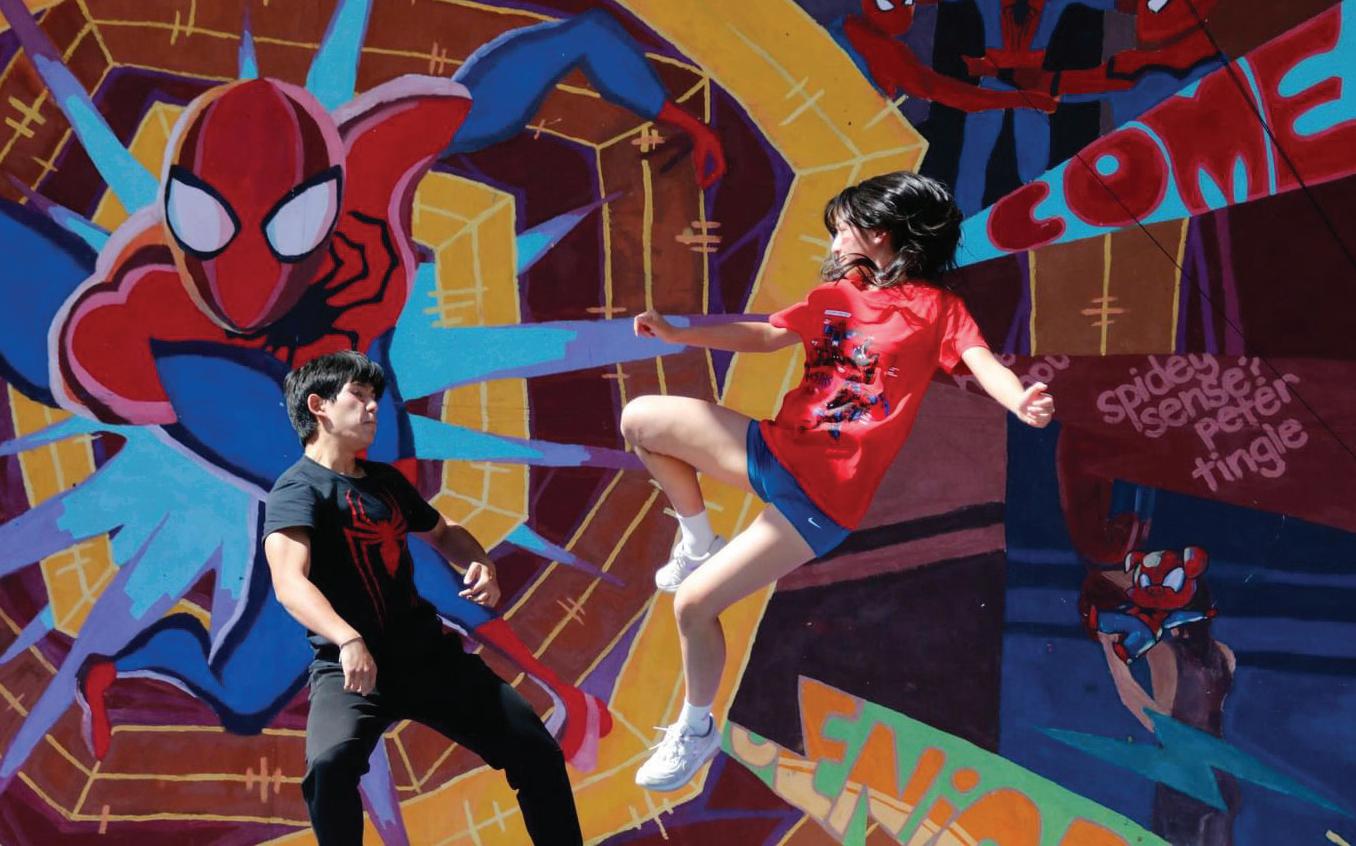
in
track unlocked more power in her kicks and punches, her habit of nitpicking the details of her techniques in taekwondo also carried over to track, where she would take videos to monitor her progress and correct any mistakes as part of her training process.
Balancing two physically taxing sports is no easy feat. Although she is extremely committed to both sports, during track season, she takes a break from taekwondo. “It takes too much of a toll on my body to be doing both sports at the same time, so unfortunately I do have to stop between January and May,” Tran said. During the rest of the year, taekwondo practice fuels her motivation to fnish her schoolwork. By separating her sports participation throughout the year, she is able to balance her athletics, academics, and social life.
Throughout her years of teaching kids at her dojang and helping others as track cap-
tain, she has learned several crucial lessons. Tran started to grasp the importance of patience, wspecially when helping others. “You have to stay really positive. Obviously, [other students and teammates] are not going to get things on the frst try, and sometimes you’re gonna get frustrated as well, you just have to push through it and realize that it’s their frst time learning things,” Tran said. As track is a sport with a lot of newcomers each year, Tran implements these methods of patience to best help her teammates. Additionally, she learned
“Even if you’re working really hard, you’re going to plateau at a certain point and it’s really hard to push past. You have to do a little more extra stuf to push past your plateau and get even better” — NATALIE TRAN, 12

the signifcance of confdence. Confdence not only infuences the perception teammates and coaches have of an athlete but also an athlete’s perception of themselves. This is crucial as it affects an athlete’s performance in races and tournaments alike. However, Tran also recognizes that progress isn’t linear. “Even if you’re working really hard, you’re going to plateau at a certain point and it’s really hard to push past. You have to do a little more extra stuff to push past your plateau and get even better,” Tran said.
Tran carries momentum to future endeavors by keeping a positive mindset. She hopes to continue taekwondo through college if there is a school team or intramural club. As for track, she will pursue it as a secondary sport if her college has a Division III track team. “It’s not the end of the world if I don’t perform well, there’s always going to be other chances for me to do better and practice more,” Tran said. ▪
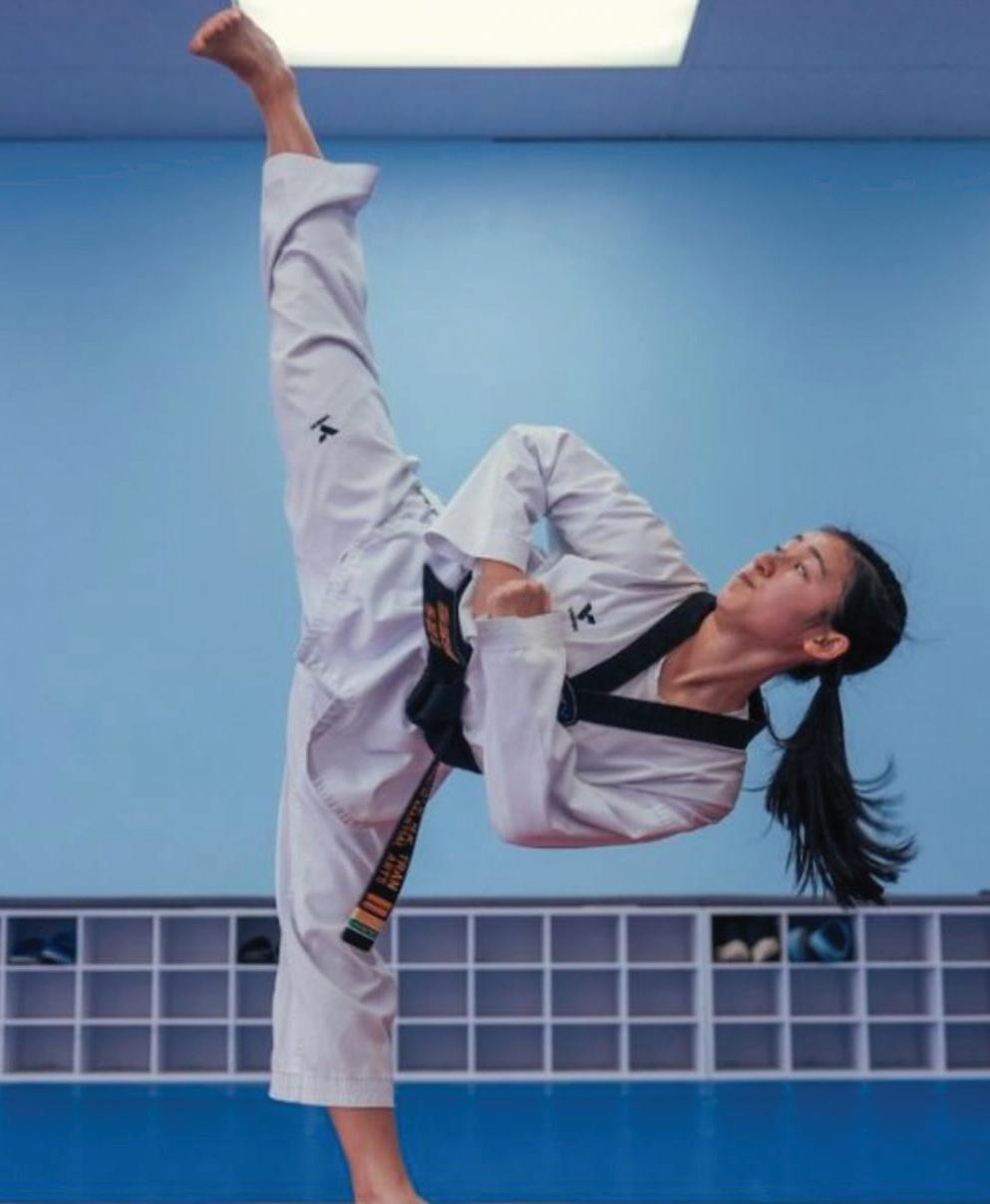
By Kanupriya Goyal & Ekasha Sikka Staf Writers
After an unsteady start last season due to the adjustment period with their new coach, Alyssa Hashimoto, Girls Basketball has actively worked to enhance their chemistry. “We’ve been having preseason workouts like conditioning and open gyms for the past month. Hopefully, the people that have been coming can push each other on the court to go harder, so that we can be a really good team,” Girls Basketball Co-Captain Junior Stephanie Yu said, emphasizing a rigorous regimen of conditioning and skills practice. “Team bonding of the court can obviously help us on the court,” Yu said, stressing the importance of cohesion. Yu also commented on the difculties of being a student athlete. “Obviously there’s just going to be a lot of schoolwork and extracurriculars to balance out with basketball. So that might be a challenge,” Yu said. However, she believes that the blend of experienced and newer players will establish a robust foundation for success.
The Girls Soccer team is ready to kick of an exciting season, embracing a philosophy centered on enjoyment and growth. “We’re hoping to … make it more fun this year,” Varsity Co-Captain Senior Isabella Cleary said, sharing her vision. With returning players committed to teamwork, the focus is on refning their ofensive strategies while maintaining a solid defense. Coach Terry Dalziel, with three decades of experience, reiterated the signifcance of a balanced approach. “By giving [the players] a day of in between, that kind of gives you time to relax, catch up on things,” Dalziel said. He aims to mentor the younger players, gradually shaping them into formidable competitors. Both Cleary and Dalziel look forward to a season flled with skill development and strong team bonds.
Boys Wrestling is entering the season with a focus on growth and skill-building in the long term. Coach Freddy Saldaña plans to prioritize the team’s perseverance and dedication over immediate wins through consistent, deliberate practice. “We’re going to limit competition this year, and focus on development over competition,” Saldaña said. This year’s results are looking hopeful, as several athletes have been wrestling in the ofseason with MSJ Teacher and Milpitas High School’s Head Wrestling Coach Roberto Clemente. Additionally, the team has confdence in its camaraderie, as “the kids seem to like each other,” Saldaña said. With a season-long focus on deliberate practice, the team anticipates gradual but meaningful improvement as it prepares for upcoming league matches.
Returning from a tough 1-15 record last season, Varsity Boys Soccer is looking to turn the tide with a fresh approach under new coach Albaraa Hassani, an MSJ Class of 2020 alumnus. Hassani plans to create a stronger, more resilient team culture that uses challenges as motivation, replacing a fxed mindset that can hinder growth. “A lot of the teams, when they don’t succeed, it kind of snowballs into the next season of, ‘Oh, we’re bad. We’re going to stay bad,’” Hassani said. With a focus on hard work and accountability, he plans to motivate and inspire efort among the athletes, aiming to qualify for NCS. “If everyone puts in the efort, the results will come,” Hassani said. The team is hopeful that this shift in mindset and preparation will lead to a season of growth and success.
As winter approaches, the Girls Wrestling team is gearing up to tackle the upcoming season with tenacity. Under the guidance of Coach Robert Nishiyama, the team is dedicated to laying a strong foundation. “We’re looking to establish continuity and improve our conditioning,” Nishiyama said, acknowledging the obstacles faced last year and the need for a fresh approach. Varsity Co-Captain Senior Sanika Vaishampayan, managing her recovery from an arm injury, remains a source of inspiration for her teammates. “I’m defnitely gonna come back as a team manager if I can’t wrestle,” she said, displaying her commitment beyond the mat. Her excitement is palpable, especially with a wave of enthusiastic freshmen joining. “I think we’re going to look at a pretty good year — a lot of freshmen want to join,” she said. With challenges ahead, both Nishiyama and Vaishampayan are committed to fostering a season characterized by learning, resilience, and teamwork.
After fnishing with an 11-12 record overall last year, Varsity Boys Basketball is preparing for a challenging but hopeful season under the guidance of their new coach, Mike Kenney. With many new players on the roster, the team plans to focus on building their spirit and cohesion, aiming to compete strongly in league games. “We can all play individually, but we need to learn how to play together,” Co-Captain Senior Darsh Jayaram said. Despite the loss of several key athletes, Jayaram is optimistic about Kenney’s emphasis on teamwork. “I think this season is going to be a lot harder, but since we learned from [the captains] last year, and we also have a new coach, I think we could be as good,” Jayaram said.
At 5-6:30 p.m. on November 2, the non-pro t organization San Francisco Neon hosted its seasonal Chinatown Neon Walking Tour. Advocating to preserve historic neon signs and raise awareness for neon appreciation, San Francisco Neon co-founder Al Barna led attendees along the streets of Chinatown for the organization’s second tour of the fall 2024 season. The walk explored hidden gems of Chinatown’s forgotten neon signs, welcoming enthusiasts and new hobbyists alike.
By Ariel Duong & Fiona Yang Staff Writers
Guided by Barna, fervent attendees toured a vibrant exhibit of colorful neon signs starting at the picturesque Young Men’s Christian Association (YMCA) building along Sacramento Street. Barna rst gave historical insight into the YMCA sign’s origins and then the extensive types of electrical neon lighting techniques used within the mechanics of the sign, such as the combination of neon gas and noble gases that produced its signature glow. Surrounded by more than 60-year-old architecture, guests learned about the history of the building, such as Golden Star Radio’s signi cance as the rst Mandarin broadcasting radio in North America and its broadcasts of translations of President Franklin D. Roosevelt’s Fireside Chats. Scattered across the streets of Chinatown were remnants of neon history — the Republic Hotel, Anime Pop (formerly known as Kaye’s Footwear), and the Li Po Cocktail Lounge.
The tour gave attendees a glimpse into Chinatown’s rich cultural history, introducing the fading art of neon to guests. “It was an opportunity to learn a little bit about the neighborhood and also check out some really cool neon,” attendee Allison Kozak said.
As for the organization, San Francisco Neon hopes to continue its work, illuminating a new world of neon for those unfamiliar with the art. “[Our goals are to] continue what we’re doing, and what we really try to do is create an interest in the younger generations so that this doesn’t become a lost art form … it’s rewarding work,” Barna said. ▪



By Ekasha Sikka, Felicity He & Novak Chen
Sta Writers
Only a short 15-minute drive from MSJ, Ten Ren Tea Co is a boba shop in Milpitas that also offers imported tea from East Asia. Part of a larger chain that originated in Taiwan over seventy years ago, the store sells a variety of traditional herbal and oral tea blends. Golden containers that store their tea are found in rows on the shelves. In addition to tea and boba, the store also sells decorations and trinkets for tea ceremonies. Some of their most popular items include Pu-Erh tea and Dragon Well teas. With tea sourced from the high mountains of Taiwan, owner Peggy Lee believes in selling only the highest quality tea to her customers. “Our tea is very healthy, it’s very good for your body, and we want our customers to be healthy,” Lee said.
Tucked in the charming Niles district of Fremont, Tyme for Tea & Co. is a family-owned tea and antiques shop. The store offers a Victorian high-tea experience, as well as caffeinated and herbal tea blends and antique tea sets, which are displayed on decorated shelves. The shop is personal to many members of the community. “We have mothers and daughters who have come when they were little and now they have kids of their own, and they bring them,” co-owner Rita Elizarrey said. The full Victorian tea service is a rarity in the area, but Tyme for Tea & Co. proudly preserves this unique offering, allowing customers to explore herbal and oral teas as they enjoy the multi-course high-tea experience. Staff favorites include the fragrant Blackberry Sage Tea and Tyme for Tea, a kiwi-strawberry blend.
101 Tea Plantation, a cozy tea shop in Fremont, offers an array of authentic, imported tea blends, ranging from traditional teas like green and oolong to herbal and oral teas. With more than 27 years in business, the shop is known for its award-winning black tea, which placed third in the 2014 North American Tea Championships and was voted Buyer’s Choice. Some of their most popular offerings include the aromatic Organic Golden Red Tea, blends of green tea with jasmine petals, and their renowned Taiwanese High Mountain teas, made up of tea leaves handpicked and sourced from plantations in the mountains of Taiwan.
“[The Taiwanese High Mountain Oolong is kind of the best seller in our store,” employee Nell Peng said.

Nestled in the heart of San Francisco’s iconic Pier 39 is The Spice & Tea Exchange. The shop offers spice, salt, sugar, and tea blends, all carefully handmade inside the establishment. The blends use organic ingredients sourced from across the world, such as high-quality lavender from France. The shop divides its interior into sections of different kinds of tea or spices. Stored in glass jars, samples of each product can be opened and smelled for a preview. The wooden shelves and handwritten signs foster a homey and rustic vibe, tting perfectly with the shop’s cozy location. Aside from standard spice and tea products, The Spice & Tea Exchange also sells candles and infused honey. “Since our blends are handmade, no one else has them, but another thing that only we have are our candles which are actually made from the tea brew, so it’s organically scented. I think that’s pretty unique,” owner Blair Woodman - cy said.


“I really like Earl grey tea with sugar packets. It’s not too bitter and it tastes sweet too. I just use the tea my mom has. When I drink tea, it cures my cold and brings me warmth in the winter, and it reminds me of home every time I drink it. It also reminds me of my culture too since tea is a big part of it, like chai.” — Soumya Chavarkar, 10
“My favorite tea is Masala Chai, like the one that my mom makes, because she always makes it with a lot of love. And it also brings people together, Every time we have people over we always use it as a reason to drink tea. It always brings joy to my heart when I smell the tea my mom’s making or my ad’s making, and it’s just made with absolute love and care.” — Ananth Bati, 10

“My favorite spice is kashmiri red chili powder, especially because it comes from India, which is where I come from. And I’ve grown up with kashmiri red chili powder, and I’ve grown accustomed to the taste, and it’s extremely versatile. You can use it in any cuisine, any dish, and it will not taste bad.” — Praneil Bhashyakarla, 10