
APRIL 2026
ISSUE 25
KINGS START WARS; CHRISTIANS STOP THEM
THE MYTH OF REDEMPTIVE VIOLENCE
MARK TWAIN’S THE WAR PRAYER
POETRY: ESSENTIALS
JOHN PERKINS’ LEGACY OF RECONCILIATION





APRIL 2026
ISSUE 25
THE MYTH OF REDEMPTIVE VIOLENCE
MARK TWAIN’S THE WAR PRAYER
POETRY: ESSENTIALS
JOHN PERKINS’ LEGACY OF RECONCILIATION
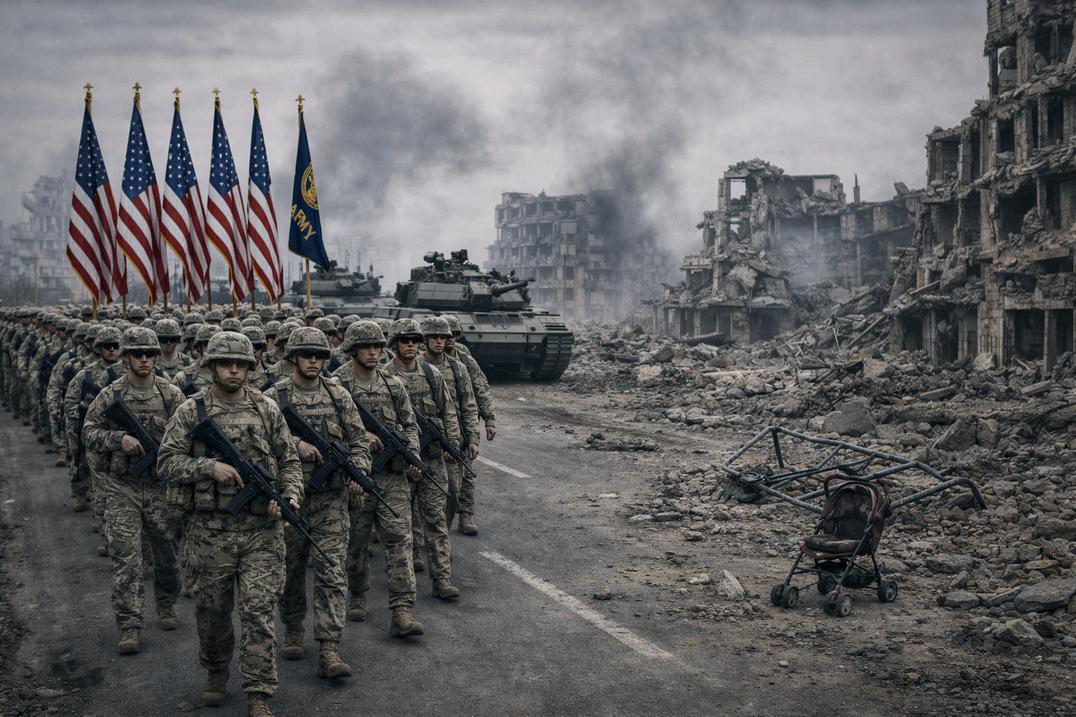
The War Prayer (1905) is Mark Twain's searing antiwar parable, in which a mysterious stranger reveals the unspoken horror beneath a congregation's patriotic prayer for victory. Twain withheld it from publication during his lifetime, saying: "Only dead men can tell the truth in this world "
It was a time of great and exalting excitement The country was up in arms, the war was on, in every breast burned the holy fire of patriotism; the drums were beating, the bands playing, the toy pistols popping, the bunched firecrackers hissing and sputtering; on every hand and far down the receding and fading spreads of roofs and balconies a fluttering wilderness of flags flashed in the sun; daily the young volunteers marched down the wide avenue gay and fine in their new uniforms, the proud fathers and mothers and sisters and sweethearts cheering them with voices choked with happy emotion as they swung by; nightly the packed mass meetings listened, panting, to patriot oratory which stirred the deepest deeps of their hearts and which they interrupted at briefest intervals with cyclones of applause, the tears running down their cheeks the while; in the churches the pastors preached devotion to flag and country and invoked the God of Battles, beseeching His aid in our good cause in outpouring of fervid eloquence which moved every listener.
It was indeed a glad and gracious time, and the half dozen rash spirits that ventured to disapprove of the war and cast a doubt upon its righteousness straightway got such a stern and angry warning that for their personal safety's sake they quickly shrank out of sight and offended no more in that way.
The half dozen rash spirits that ventured to disapprove of the war and cast a doubt upon its righteousness straightway got such a stern and angry warning that for their personal safety's sake they quickly shrank out of sight and offended no more in that way.
Sunday morning came-next day the battalions would leave for the front; the church was filled; the volunteers were there, their faces alight with material dreams-visions of a stern
advance, the gathering momentum, the rushing charge, the flashing sabers, the flight of the foe, the tumult, the enveloping smoke, the fierce pursuit, the surrender!-then home from the war, bronzed heroes, welcomed, adored, submerged in golden seas of glory! With the volunteers sat their dear ones, proud, happy, and envied by the neighbors and friends who had no sons and brothers to send forth to the field of honor, there to win for the flag or, failing, die the noblest of noble deaths. The service proceeded; a war chapter from the Old Testament was read; the first prayer was said; it was followed by an organ burst that shook the building, and with one impulse the house rose, with glowing eyes and beating hearts, and poured out that tremendous invocation -- "God the all-terrible! Thou who ordainest, Thunder thy clarion and lightning thy sword!"
unnaturally pale, pale even to ghastliness. With all eyes following him and wondering, he made his silent way; without pausing, he ascended to the preacher's side and stood there, waiting. With shut lids the preacher, unconscious of his presence, continued his moving prayer, and at last finished it with the words, uttered in fervent appeal, "Bless our arms, grant us the victory, O Lord our God, Father and Protector of our land and flag!"
The stranger touched his arm, motioned him to step aside which the startled minister did and took his place During some moments he surveyed the spellbound audience with solemn eyes in which burned an uncanny light; then in a deep voice he said
If you beseech a blessing upon yourself, beware! lest without intent you invoke a curse upon a neighbor at the same time.
Then came the "long" prayer None could remember the like of it for passionate pleading and moving and beautiful language The burden of its supplication was that an ever--merciful and benignant Father of us all would watch over our noble young soldiers and aid, comfort, and encourage them in their patriotic work; bless them, shield them in His mighty hand, make them strong and confident, invincible in the bloody onset; help them to crush the foe, grant to them and to their flag and country imperishable honor and glory -
An aged stranger entered and moved with slow and noiseless step up the main aisle, his eyes fixed upon the minister, his long body clothed in a robe that reached to his feet, his head bare, his white hair descending in a frothy cataract to his shoulders, his seamy face

"I come from the Throne-bearing a message from Almighty God!" The words smote the house with a shock; if the stranger perceived it he gave no attention. "He has heard the prayer of His servant your shepherd and grant it if such shall be your desire after I, His messenger, shall have explained to you its import-that is to say, its full import. For it is like unto many of the prayers of men, in that it asks for more than he who utters it is aware of-except he pause and think "God's servant and yours has prayed his prayer. Has he paused and taken thought? Is it one prayer? No, it is two- one uttered, the other not Both have reached the ear of His Who hearth all supplications, the spoken and the unspoken. Ponder this-keep it in mind If you beseech a blessing upon yourself, beware! lest without intent you invoke a curse upon a neighbor at the same time. If you pray for the blessing of rain upon your crop which needs it, by that act you are possibly praying for a curse upon some neighbor's crop which may not need rain and can be injured by it "You have heard your servant's prayer-the uttered part of it I am commissioned by God to put into words the other part of it-that part which the pastor, and also you in your hearts, fervently prayed silently And ignorantly and unthinkingly? God grant that it was so! You heard these words: 'Grant us the victory, O Lord our God!' That is sufficient The whole of the uttered prayer is compact into those pregnant words. Elaborations were not necessary When you have prayed for victory you have prayed for many unmentioned results which follow victory-must follow it, cannot help but follow it. Upon the listening spirit of God the Father fell also the unspoken part of the prayer He commandeth me to put it into words Listen!
"O Lord our Father, our young patriots, idols of our hearts, go forth to battle-be Thou near them! With them, in spirit, we also go forth from the sweet peace of our beloved firesides to smite the foe. O Lord our God, help us to tear their soldiers to bloody shreds with our shells; help us to cover their smiling fields with the pale forms of their patriot dead; help us to drown the thunder of the guns with the shrieks of their wounded, writhing in pain; help us to lay waste their humble homes with a hurricane of fire; help us to wring the hearts of their unoffending widows with unavailing grief; help us to turn them out roofless with their little children to wander unfriended the wastes of their desolated land in rags and hunger and thirst, sports of the sun flames of summer and the icy winds of winter, broken in spirit, worn with travail, imploring Thee for the refuge of the grave and denied it-for our sakes who adore Thee, Lord, blast their hopes, blight their lives, protract their bitter pilgrimage, make heavy their steps, water their way with their tears, stain the white snow with the blood of their wounded feet! We ask it, in the spirit of love, of Him Who is the Source of Love, and Who is ever-faithful refuge and friend of all that are sore beset and seek His aid with humble and contrite hearts. Amen.
(After a pause)
"Ye have prayed it; if ye still desire it, speak! The messenger of the Most High waits."
It was believed afterward that the man was a lunatic, because there was no sense in what he said.
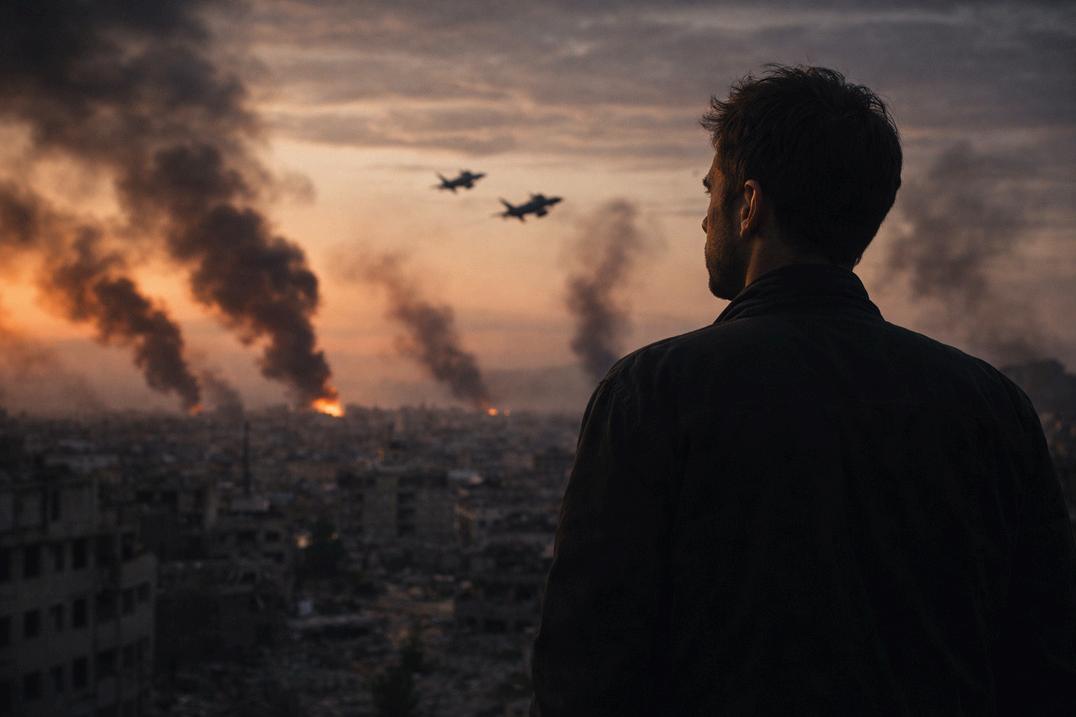
After I saw that President Donald Trump had ordered attacks on Iran, I thought about the passage in 1 Samuel in which the Israelite elders get fed up with being run by a series of judges and ask for a king The prophet Samuel, after praying over the matter, urges them to rethink the request, reciting a laundry list of all the things a king will do to the people. First among them: “He will take your sons and make them serve with his chariots and horses, and they will run in front of his chariots. Some he will assign to be commanders of thousands and commanders of fifties, and others to plow his ground and reap his harvest, and still others to make weapons of war and equipment for his chariots” (8:11-12). In short: Kings start wars
Samuel ends his speech with a grim prediction: “When that day comes, you will cry out for relief from the king you have chosen, but the Lord will not answer you in that day” (8:18)
Now, the United States famously has no kings But don’t tell Trump that When asked by The New York Times whether there were any limitations on his powers, Trump responded: “Yeah, there is one thing. My own morality. My own mind It’s the only thing that can stop me ” This is not Trumpian bluster: His administration has ignored the courts, the Constitution, and international law at every turn When the Supreme Court told him his tariffs were illegal, Trump just ordered new ones. When the Constitution told him his deportations were
illegal, Trump simply ignored it. And when the law mandates that war must be approved by Congress, Trump decided that the separation of powers is for woke libs and started a war anyway If this isn’t the behavior of a self-styled king, what would a king look like?
So the United States has a king. And while kings start wars, they rarely die in them. As Samuel pointed out to Israel’s elders, the dying is usually done by sons and daughters. Trump himself pointed this out on Friday evening, in a video announcing his strikes on Iran “The lives of courageous American heroes may be lost and we may have casualties,” he said. “That often happens in war.” He said nothing of the casualties that might be inflicted on people of other nations, including the people of Iran, whom he warned to “stay home” because “It’s very dangerous outside Bombs will be dropping everywhere ”
If this isn’t the behavior of a self-styled king, what would a king look like?
He’s right And while Trump may claim that his strikes are intended to “defend the American people by eliminating imminent
threats from the Iranian regime,” nobody really believes that. During his first term in office, Trump ended a treaty with Iran that limited its nuclear abilities; last summer, he bombed its nuclear facilities. Americans were not in danger of the Iranian military until Trump started a war with it and, in any case, war is not effective at eliminating imminent threats. You can look at the last 30 years of U S military activity in the Middle East if you need proof, but you don’t need to be a dedicated student of war to see this: War kills people. That’s what it does. War kills and maims and rapes and, over the whole course of history, has proven to be far more effective at creating orphans and widows than in delivering justice and peace
This is the basic argument of Christian nonviolence, a tree with branches across millennia, rooted in Jesus' blessings for peacemakers and instructions in Matthew 5 to turn the other cheek and love thy enemies (not to mention that Old Testament classic: Thou shalt not kill) Of course, it is here that people start accusing nonviolent Christians of being doe-eyed hippies who’ve lost touch with reality: “Turn the other cheek” sounds nice, sure, but it’s not realistic From there, they start offering all sorts of soul-coarsening platitudes about all the good things violence can do. As self-styled “Secretary of War” Pete Hegseth said at the National Prayer Breakfast, “The warrior who is willing to lay down his life for his unit, his country, and his Creator, that warrior finds eternal life ”
Hegseth continued: “To preserve the soul of America, we must continue to wield not just the physical sword but the sword of truth.”
But something important gets lost in these celebrations of redemptive violence It’s not the nonviolent who’ve lost touch with reality; it’s the warmongers They’re the ones trying to convince us that war is actually good at bringing about peace and justice. They’re the ones trying to insist, despite all historical evidence to the contrary, that death can be a net gain for life, and the slaughter of innocents is acceptable collateral for us to “preserve the soul of America,” whatever that means This logic is more delusional than any adherent to
nonviolence could ever be. As the 19th-century “prince of preachers” Charles Spurgeon said:
What pride flushes the patriot’s cheek when he remembers that his nation can murder faster than any other people. Ah, foolish generation, ye are groping in the flames of hell to find your heaven, raking amid blood and bones for the foul thing which ye call glory. Killing is not the path to prosperity; huge armaments are a curse to the nation itself as well as to its neighbours
Spurgeon’s alternative was less the absence of violence than the presence of compassion, arguing that: “The Church of Christ is continually represented under the figure of an army; yet its Captain is the Prince of Peace; its object is the establishment of peace, and its soldiers are men of a peaceful disposition. The spirit of war is at the extremely opposite point to the spirit of the gospel.”
Rev. Martin Luther King Jr. agreed with Spurgeon and regularly invoked the inspiration he took from Gandhi in his own nonviolent work “Gandhi resisted evil with as much vigor and power as the violent resister,” King said. “But true pacifism is not unrealistic submission to evil power. It is rather a courageous confrontation of evil by the power of love.”
And I do think our nation is going to need some Christians willing to risk that courageous confrontation of evil. We got the king we asked for, and now we get the wars that always come along with such demands But despite this horribly predictable series of events, we are not helpless or powerless. The way of Christian nonviolence teaches us that Jesus’ calls to peace can be most radical and forceful during points of armed conflict. We’ve seen recent examples in places like Minneapolis and Chicago, where citizens have risked their safety and their very lives to oppose this violent regime. Now it’s time for the rest of us to follow that example and tell the self-styled king no to this war.
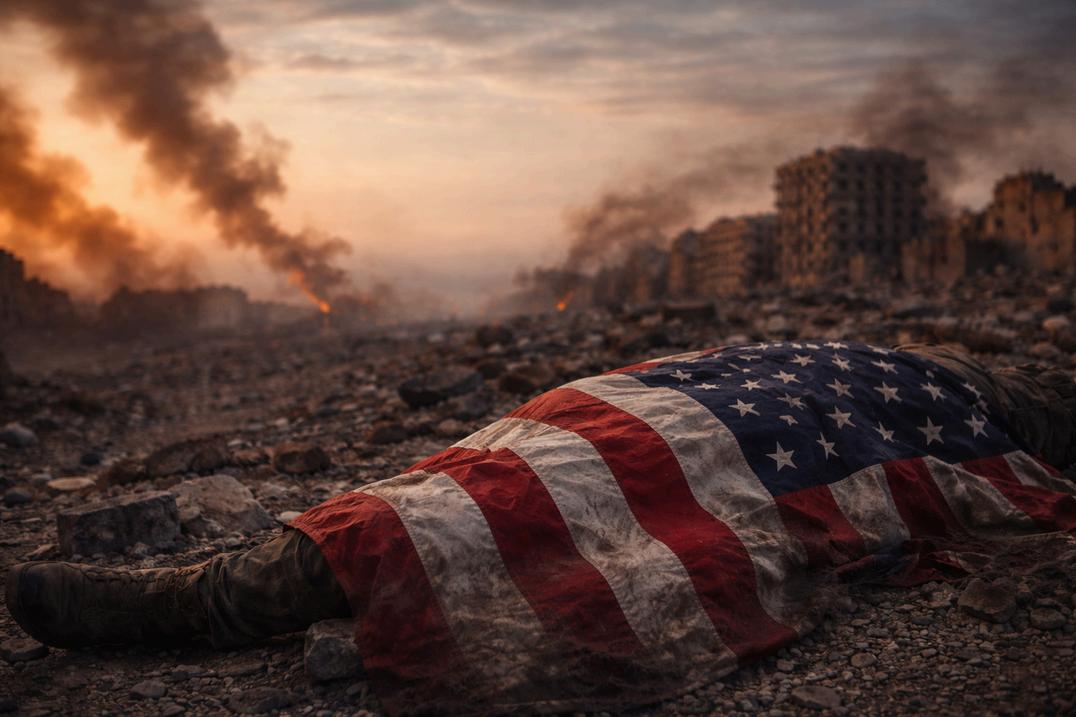
There is no flag large enough to cover the shame of killing innocent people.
It is time for women to make their voices heard Their silence on the subject of war and peace is deafening.
Helen Thomas
To be called “woke” in a world that sleeps through suffering is no insult it is the Gospel Woke means awakened by compassion Guided by truth. Humbled by grace Committed to justice not just for some, but for all.
Pope Leo XIV
Terrorism is the war of the poor, and war is the terrorism of the rich.
Peter Ustinov
You can no more win a war than you can win an earthquake Congresswoman Jeannette Rankin VICTORIOUS?
Jesus liberates Christian nationalism controls Jesus saves. Christian nationalism kills Jesus started a universal movement based on mutual love. Christian nationalism is a sectarian movement based on mutual hate.
In war, truth is the first casualty. Aeschylus PROLOGUE
There’s no honorable way to kill, no gentle way to destroy. There is nothing good in war. Except its ending. Abraham Lincoln NO GOOD
Martin Luther King Jr ERRANT
James Talerico
We have guided missiles and misguided men

If I were fierce, and bald, and short of breath, I’d live with scarlet Majors at the Base, And speed glum heroes up the line to death. You’d see me with my puffy petulant face, Guzzling and gulping at the best hotel, Reading the Roll of Honor. “Poor young chap,” I’d say “I used to know his father well; Yes, we’ve lost heavily in this last scrap ” And when the war is done and youth stone dead, I’d toddle safely home and die in bed.

My friend and colleague Mark Robison and I used to teach a college course called Critiquing Film During the semester, students learned the language of film by examining themes such as sound, cinematography, mise en scène, violence, animation, storyboarding, documentary, character development, and film reviews. During a typical three-hour class on Wednesday night, the class viewed and analyzed 10-12 film clips
For the violence portion, we always showed a clip from the film Witness, in which a Philadelphia detective, John Book, is hiding out in an Amish community The best way for Book to stay safe is to lay low, yet when his Amish friends who are sheltering him are being bullied mercilessly by a local tough guy, and the Amish are nonviolently taking it on the chin (literally), Book steps slowly out of his buggy. Along with everyone else in class, I was thinking, Let justice be served up with gusto Kick his gluteus maximus and his gluteus minimus, too. It shocked me how much I wanted to see violence right then Of course, the vast, profitable movie industry of violent retribution taps into that primal yearning.
We also provided a handout titled, “Things You Would Never Know Without the Movies ” Here are a few samples related to gratuitous and unrealistic movie violence.
“Action heroes never face charges for manslaughter or criminal damage despite laying entire cities to waste by their actions ”
“One man shooting at 20 men has a better chance of killing them than 20 men firing at one man ”
“All bombs are fitted with electronic timing devices with large red readouts so you know exactly when they’re going to go off ”
“A man will show no pain while taking the most ferocious beating but will wince when a woman tries to clean his wounds ”
Now, to some serious questions
Action heroes are laying waste to our consciences.
Consider every “action” movie, from Batman to Black Panther, from Robin Hood to Avatar, from Top Gun to Gladiator. Why does “action” have to mean violence?
I was in a room filled with Adventist pastors who convulsed with laughter when Indiana Jones casually shoots a man to death in a marketplace When is violence funny?
When film censors give a PG-13 rating for graphic violence and an R rating for graphic sex, they are essentially saying people would rather
see a breast cut off than a breast kissed. I’m not recommending showing either, yet how much do we uncritically accept violence?
More to the point, Why is the noncombatant Seventh-day Adventist Church so against the war machine and the myth of redemptive violence?
The “myth of redemptive violence” is an archetypal plot in literature In imperial cultures, creating and maintaining an empire requires that many people be conquered. Walter Wink, who coined the term, defines this myth as “the belief that violence saves, that war brings peace, that might makes right.” He adds that the myth “is characterized by unjust economic relations, oppressive political relations, biased race relations, patriarchal gender relations, hierarchical power relations, and the use of violence to maintain them all.” Quite the list of dirty laundry
The “war to end all wars” led to other conflicts.
Is this God’s desire? King David reveals, “God said to me, ‘You shall not build a house [the Temple] for my name, for you are a warrior and have shed blood’” (1 Chron. 28:3). Jesus says, “Put your sword away For whoever lives by the sword shall die by the sword” (Matthew 26:52), and “Do not resist an evildoer. But if anyone strikes you on the right cheek, turn the other also” (Matt 5:39), and “Love your enemies, and pray for those who persecute you” (Matt. 5:44).
James states, “But the wisdom from above is first pure, then peaceable, gentle, willing to yield, full of mercy and good fruits, without a trace of partiality or hypocrisy” (James 3:17).
In his classic short story “The War Prayer,” Mark Twain dismantles the idea that war is ever one-sided patriotism. On a practical level, U.S. President and World War II General Dwight D. Eisenhower, who knew as much as anyone on earth about national defense, fumes:
“Every gun that is made, every warship launched, every rocket fired signifies, in the final sense, a theft from those who hunger and are not fed, those who are cold and are not clothed. This world in arms is not spending money alone. It is spending the sweat of its laborers, the genius of its scientists, the hopes of its children
“The cost of one modern heavy bomber is this:
A modern brick school in more than 30 cities.
Two electric power plants, each serving a town of 60,000 population
Two fine, fully equipped hospitals. Some 50 miles of concrete highway
“We pay for a single fighter plane with a half million bushels of wheat. We pay for a single destroyer with new homes that could have housed more than 8,000 people This is not a way of life at all, in any true sense.”
This military-industrial complex, uniting military manufacturing with business contractors accompanied by a reflexive turn to weapons for solutions, is, as Eisenhower maintains, “spending the hopes of our children.” You see, when the war in Afghanistan cost $300 million a day for 20 years, it was all borrowed money, exploding our federal deficit. [Added note: The U S is spending daily on the war in Iran at least three times that amount ] If time lasts long enough, our children and grandchildren will be the ones paying for it Please let that sink in And this isn’t a partisan issue; it’s not about Republicans and Democrats and Independents. Nearly everybody in Congress votes instinctively for all military increases, including the latest annual budget of $855 billion every year more than the next 15 nations combined spend on “defense ” Plus, unlike with Social Security, U S citizens are not paying into those coffers all our working lives.
As a culture we are battling what Jesus battled during His life on earth: the myth that violence will result in efficacious, long-term benefits. But despite what politics and entertainment in speeches, movies, “news,” podcasts, and shows often sell, violence is
not a salutary long-term solution. World War I, advertised as “the war to end all wars,” led to World War II, which led to other conflicts My dad was a WWII veteran and voted consistently against future military engagements. My friend
Richard served in combat in Vietnam. Students of mine at Union served in both Iraq and Afghanistan A question they asked one everybody should ask is, “What was it all for?”
As compiled and documented by historian William Blum, here is a list of the countries in which the United States military, funded by Congress, has been active since the end of World War II until 2021 (Note: Since as recently as 2025, add Somalia, Iraq, Yemen, Caribbean waters, Nigeria, Syria, Venezuela, and Iran.)
China 1945-46
Korea 1950-53
China 1950-53
Guatemala 1954
Indonesia 1958
Cuba 1959-60
Guatemala 1960
Vietnam 1961-73

Congo 1964
Laos 1964-73
Peru 1965
Guatemala 1967-69
Cambodia 1969-70
El Salvador 1980
Nicaragua 1980
Grenada 1983
Libya 1986
Panama 1989
Iraq 1991-99
Sudan 1998
Afghanistan 1998
Yugoslavia 1999
Afghanistan 2001-21
Iraq 2003-11
In how many of these instances did a democratic government, respectful of human rights and voters’ choices, occur as a direct result of U S military intervention?
Choose one of the following:
A 0
B. Zero
C. None
D Not a one
E Whole number between -1 and +1
Roman Emperor Constantine converted to Christianity circa 313 and stopped official Roman Empire persecutions of Christians However, around the same time, he placed crosses on the shields of Roman soldiers, baptizing a culture of violence Renowned psychologist Abraham Maslow notes, “If you only have a hammer, you tend to see every problem as a nail.” Whether by fists or words or knives or bombs or guns, the myth of redemptive violence remains
How can we counter this violence? Economic boycotts voluntarily refraining from purchasing or investing in something to exert monetary
pressure are often effective because money is the point where power begins to care Sometimes we do not have good options for protest. I am already against the next war, whether in Iran or Venezuela or North Korea or Greenland The second U S invasion of Iraq was the biggest U.S. foreign policy and humanitarian catastrophe of the past 50 years since the Vietnam War, which was a monumental mistake Countering injustice is a Christian duty and often a difficult pursuit. In addition to Adventist Peace Fellowship and JustLove Collective, I support organizations such as Win Without War and
About now, readers may be thinking, Except through warfare, how else would tyrants such as Hitler have been stopped? That’s a good question. Here’s another one: How did Hitler get his platform boost? At the risk of being simplistic here, students of history recognize that Adolf Hitler was largely reacting to the hyperinflation of Weimar Germany a wheelbarrow filled with cash paid for “one loaf of bread” and resentments brought on by onerous war
reparations and crushing debt. All of which were instigated by World War I Violence begets violence
U.S. President Franklin Delano Roosevelt declares, “I have seen war. I have seen war on land and sea I have seen blood running from the wounded. I have seen men coughing out their gassed lungs. I have seen the dead in the mud. I have seen cities destroyed I have seen 200 limping, exhausted men come out of line the survivors of a regiment of 1,000 that went forward 48 hours before. I have seen children starving I have seen the agony of mothers and wives. I hate war.”
Many people think we should fight like hell against evil, but I believe we should fight like Heaven The peaceful Way of Jesus is more winsome and reconciling and durable.
Life is complicated. Naturally, many places in our broken world need heroic peacekeepers such as military personnel and law enforcement officers. May God bless them with health, discernment, and loving courage There are also journalists such as Jamal Khashoggi, whose final column October 3, 2018 in the Washington Post decried political repression in the Middle East and the failures of the Arab Spring While traveling to Turkey to be married, he was tortured and murdered inside the Saudi Arabian Consulate in Istanbul His final column was entitled, “What the Arab world needs most is free expression.” He is a hero as much as any military casualty.
Yolanda and I visited the Newseum, which housed the Journalists Memorial, a glass sculpture listing the names of journalists from around the world killed in the line of duty The Newseum closed in 2019 Now, the Fallen Journalists Memorial Foundation is seeking to erect a new memorial on the National Mall to honor journalists who peacefully gave their lives for freedom.
“I have seen the dead in the mud.”
Wouldn’t it be wonderful to have an actual U S Department of Peace that spends oh, onetenth of what we spend on our military? For example, imagine instead of sending 50,000 troops to Afghanistan in the late stages, the U S had sent 5,000 civil servants highway engineers, agriculture specialists, and social workers to bring long-term healing and hope? Would most Afghans have welcomed that influx? Would the world have applauded that approach? Would the inevitable martyrs, killed by the Taliban, have elicited outrage and renewed commitments to safeguard for decades free education for girls and women? We will never know
Some myths are extremely hard to . . . get rid of, particularly when promoted every minute with seemingly unlimited resources. Action heroes are laying waste to our consciences. In the end, however, the truth remains “For we did not follow cleverly devised myths when we made known to you the power and coming of our Lord Jesus Christ” (2 Pet. 1:16, ESV). Let us fight like Heaven against the insidious myth of redemptive violence.

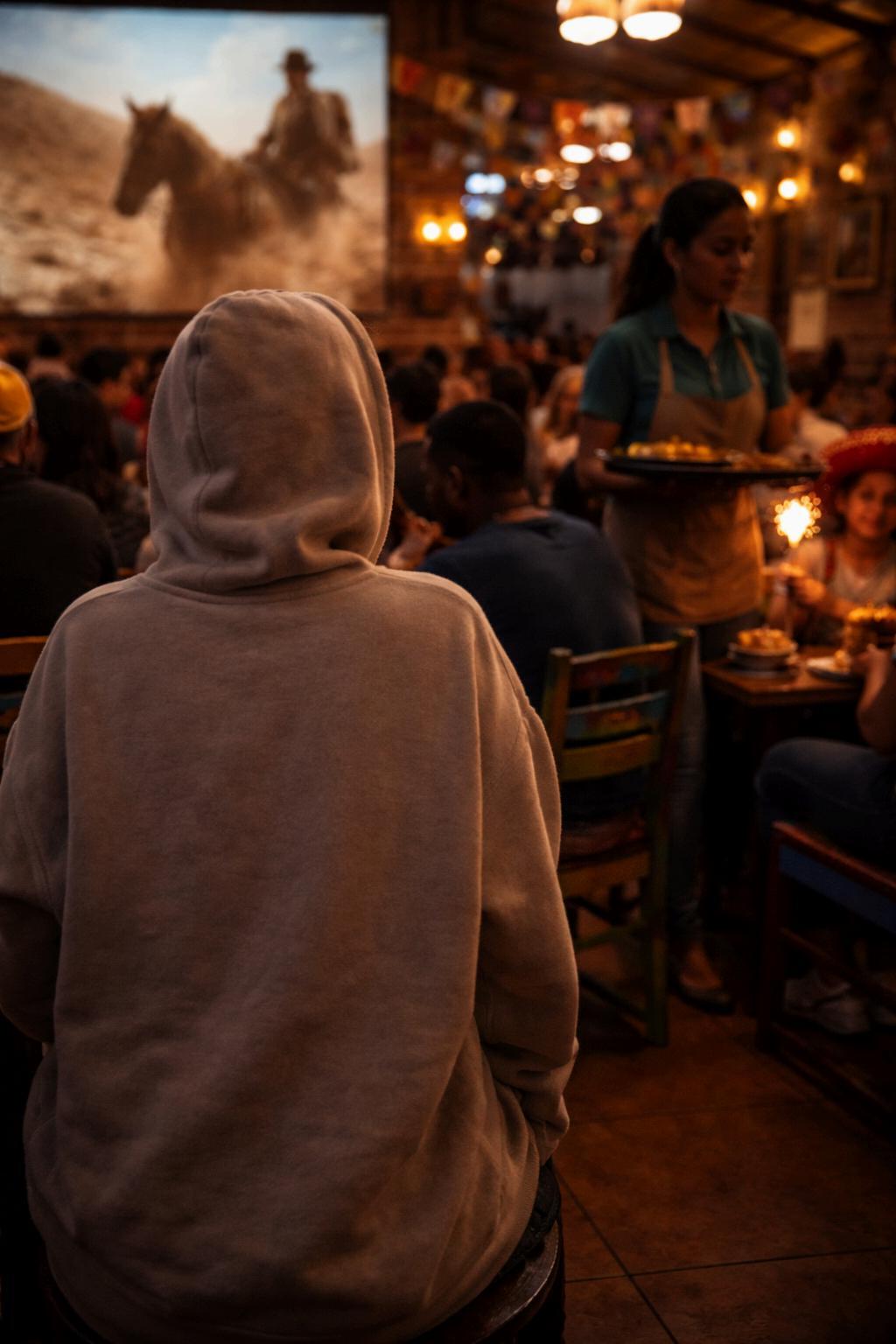
In this humming, jumping Tex-Mex restaurant, the staff all know me by sight
I order the same thing every time, although I always listen to the specials of the day pronounced in all sincerity by a young woman who has recently arrived in this country after a long and arduous journey from her home
At a nearby table, crowded with a family and a half, they are celebrating a birthday: sparklers and a big hat, the child blushing.
How lucky I am to live in this age, to hear the soft syllables of a Romance language to my right, and to my left the lilt and lift of a Jamaican voice, while overhead a projector throws a gripping drama on the far wall involving men with guns, a woman who weeps, horses and dry hills, other men curdled by greed and lust the history of the human race playing out as we eat: love and war, doubt and spite, good food, joy of family, noise of life
Some time between the enchiladas and the flan I notice the girl in the hoodie that reads “Essentials” across the back and under that, in smaller type, “Fear of God ” Is it praise? worship? a warning?
Or is it what is left after the dross has been burned away, the grime and loss of this questionable age, the open-eyed confession that we are, all of us, aliens and strangers finding our family finally in spite of fear?
Pulse is the monthly digital magazine of JustLove Collective.
This month’s issue of Pulse is sponsored by Renewed Heart Ministries and Herb Montgomery. (Thank you.)
Designed by Jeffers Media.
Unless indicated otherwise all Bible references are from the New Revised Standard Version

Is professor emeritus at Union Adventist University where he taught English and communication courses, including Conflict and Peacemaking and Critiquing Film He has also served as academy teacher, editor of Insight magazine, author of many books and articles, and pastor of two small churches
Is book editor at Signs Publishing, based near Melbourne, Australia He is author of 21 books, including Thinking Faith and Do Not Be Afraid (the devotional book for 2025), published by Pacific Press in North America
Is retired after a career in higher education teaching literature and rhetoric. He lives in Burtonsville, Maryland.
Is a circulation/reference associate at Union Adventist University's library in Lincoln, Nebraska. She is happily married to Jeremy. Their two children are encouraged to read banned books.
When Jesus returned to his home town of Nazareth after His baptism, He gave His first recorded public sermon He had already earned a reputation as a synagogue speaker who “was praised by everyone” (Luke 4:15), so it is likely His family, friends and community were waiting for His return with great anticipation. And He took the opportunity to make a dramatic announcement
Whether it was the reading for the day or a passage that Jesus specifically sought out, He read from the scroll of Isaiah, using language drawn from the Hebrew tradition of Jubilee as part of the Sabbath-shaped life that God had designed for them. He announced good news to the poor, freedom for the captive, liberation for the oppressed and healing for the blind. These were specific things He would enact in His practical ministry (see Luke 7:22), but He was also using language that His boyhood neighbours and family members gathered that Sabbath recognised He was announcing that the great Jubilee had come, wrongs would be set right, liberation was on its way and the Messiah had come.
There was probably an expectant hush as Jesus rolled up the scroll, return it to the synagogue attendant and sat down. “The
Scripture you’ve just heard has been fulfilled this very day!” He said (Luke 4:21)
The congregation was buzzing They recognised the remarkable proclamation He was making and from a local boy, no less They were ready to stand and cheer
But Jesus’ sermon brief though the record of it is was not finished. Jesus did not seem to trust their enthusiasm and as He continued, the crowd turned.
Remarkably, Jesus’ announcement of Jubilee and Messiah was overshadowed by their anger at His inclusion of the foreigner and the stranger in this moment of national triumph.
In effect, He told them that this liberation, healing and redemption was not exclusively for them. Drawing on two stories from the Hebrew scriptures the widow of Zarephath and the healing of Naaman (see Luke 4:25–27) He pointed out that God’s plans and actions often included and welcomed those outside the stories, people and promises that they assumed.
Again, the people heard what Jesus was
saying. They were so angry that they mobbed him and dragged him to the nearby hilltop, trying to throw Him over the cliff (see verses 28, 29)
That was quite a Sabbath, a sermon the people of Nazareth would not soon forget. But remarkably, Jesus’ announcement of Jubilee and Messiah was overshadowed by their anger at His inclusion of the foreigner and the stranger in this moment of national triumph Unfathomably, the jubilant proclamation that God was with them and for them “that the time of the Lord’s favour has come” (Luke 4:19) was eclipsed by their discomfort, even anger, that God was also concerned for the strangers and foreigners.
Pulling these biblical threads together and others that could be woven in those who seek to remember the Sabbath must also remember “any foreigners living among you.”
But these outsiders were there all along Yes this Sabbath-shape was embedded in creation as a pattern for all humanity, but the Sabbath commandment itself made it explicit As the most detailed of the commandments given to Moses, the fourth commandment directed thos who would “remember” to also remember and share its benefits with “any foreigners living among you” (Exodus 20:10). In short, Sabbath keepers will be those who look out for and include the strangers and the foreigners
It was a pattern that would be repeated in another passage from the prophet Isaiah. While affirming the importance of honouring the laws of God and drawing the people back to celebrating Sabbath, the prophet pointed the people to the “kind of fasting” that God would like to see (see Isaiah 58:6–10): to set free thos who are wrongly imprisoned, “let the oppressed go free and remove the chains that bind people Feed the hungry and help those in trouble ”
Like the commandment, both this ancient
Hebrew prophet and various commentators on his proclamation link concern for those most in need of help and liberation with attention to the Sabbath. This is one reason it has been suggested that Isaiah 58 might be the Bible passage most referenced in the writings of Ellen White She pointed out that “the prophet is addressing Sabbath keepers, not sinners, not unbelievers, but those who make great pretensions to godliness It is not the abundance of your meetings that God accepts. It is not the numerous prayers, but the rightdoing, doing the right thing and at the right time It is to be less self-caring and more benevolent. Our souls must expand. . . . With the work of advocating the commandments of God and repairing the breach that has been made in the law of God, we are to mingle compassion for suffering humanity” (Welfare Ministry, pages 28, 32)


Pulling these biblical threads together and others that could be woven in those who seek to remember the Sabbath must also remember “any foreigners living among you.” Sabbath keeping should not be a religious observance “to please yourselves” (Isaiah 58:3) compare, not “pursu[ing] your own interests on that day” in verse 13. Rather, the kind of religious observance God is most interested in and honoured by is that described by Isaiah’s urgent call to justice, liberation and generosity (verses 6–10).
We live in a time when the foreigners living among us and even those who are not particularly foreign, but who look different, worship differently or speak differently are being targeting by populist politics, antiimmigration protest movements, and specific government policies in different nations around the world. But there is a special imperative on those who seek to worship God and remember the Sabbath to respond differently: to speak up, stand up and act on behalf of those who perhaps even the majority in some nations are seeking to attack and exclude
The biblical call to “do justice” was never merely about noble sentiments, good intentions or nice sermons Rather, “our souls must expand.” The experience of Jesus that morning in Nazareth shows that taking this call seriously will confront people’s power, position, policies and prejudices even those of our family, friends, fellow citizens and political leaders. That might well make people angry It put Jesus’ life in danger right at the beginning of His ministry even among His hometown crowd.
But in our world today, this might be one of the ways that we can best demonstrate as Jesus would put it in another Sabbath-day confrontation that “the Sabbath was made to meet the needs of people, and not people to meet the requirements of the Sabbath” (Mark 2:27). Including the foreigners living among us.

UnStuck: Helping Teens and Young Adults Flourish in an Age of Anxiety Kate O’Brien Sheldon Press, 2025
“I don’t want kids I’m going to have dogs and lizards ”
I refuse to do the wizened older woman thing in which I smirk and tell my daughter, “Oh, you say that now, but just wait and you’ll change your tune!” Because maybe she won’t. Perhaps she won’t settle into married life, perhaps she will Maybe she’ll have kids, maybe she won’t It’s up to me to love her all the time, no matter what, just as I’ve promised since the moment I witnessed the two pink lines And, given the current state of the world, who am I to insist that anyone conceive new life under regimes of cruelty? So I nod and give her hand a squeeze She does not owe me grandchildren, and I will be overjoyed with granddogs and grandlizards, I’ve assured her that. After all, she turns eight this month She can dream as big as she wants to
My daughter’s comments frequently remind me that it’s not easy being a kid right now. Upon learning about the recent Tomahawk cruise missile that the United States used to murder children in Iran, she asked me when Iran would bomb her school and if they would wait until all the kids were gone She and her classmates dutifully rehearse their deaths in regular active shooter drills, usually after reciting the Pledge of Allegiance Totally normal

UnStuck: Helping Teens and Young Adults Flourish in an Age of Anxiety and What You Can Do To Help is a collection of essays for anybody who cares for a refreshing tonic of relevance for our kids And yes, they’re all our kids. While the book is meant to help parents and educators encourage teens to stay motivated for school, I’m taking a big step back and asking, What if our world leaders applied these concepts?
My daughter’s comments frequently remind me that it’s not easy being a kid right now.
Ancient wisdom in the ideas of interconnectedness, kinship, self-awareness, and community are pulled together and applied to a modern world full of distraction
My favorite concept presented is that of The Children’s Fire: Long ago, the elders of the people gathered in a circle to discuss how to
lead their community. There is no standing precedent or policy, so they decide that they must first set their moral compass They decide that their most valuable asset as a people is their children. Therefore, they must make no law, decision, tradition, or decree without carefully considering whether or not this would in any way harm the children. To symbolize their mission, they build a fire in the middle of their circle and name it The Children’s Fire as a constant reminder of their most precious priority.
What might change in our world if The Children’s Fire were applied on a global scale? Funded schools, incredible libraries, snacks for days, healthcare, peace. We can dream as big as we want to.



Dr Janice DeWhyte talks with Dilys and Nathan about the Hebrew prophets, their passion for justice and what it means for us today. And there’s homework!
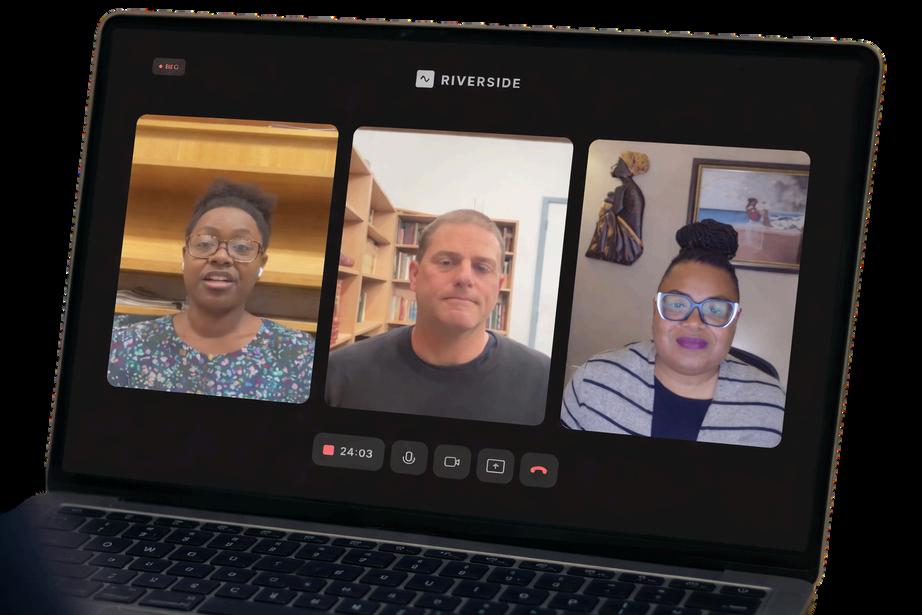



In a world crying out for both justice and love, the JustCoz Podcast explores what happens when these powerful forces combine with faith to create meaningful change
Rooted in the Adventist tradition and guided by the prophetic call of Micah 6:8, this podcast takes listeners on a journey through compelling stories of faith-based activism, biblical justice, and Christcentered community building Each episode features honest conversations with movement leaders, grassroots activists, theologians, artists, and everyday change-makers who are living out their commitment to “do justice, love mercy, and walk humbly with God ”
From the historical justice work of Adventist pioneers to contemporary movements addressing today’s most pressing challenges, we explore how faith communities can be powerful agents of transformation You’ll hear stories of courage, creativity, and hope that will inspire your own journey toward meaningful action.
Each episode concludes with practical steps and resources to help you connect with others and begin making a difference right where you are.
Join us as we discover together how justice plus love can transform not only our communities but also our own hearts and lives. Because when justice and love meet, something truly divine happens.
April 4 Prophetic Voices: From Hebrew Prophets to Modern Activism
April 18 Adventist Pioneers as Social Reformers
May 2 The Silent Church Speaks
May 16 Global Voices: Justice Stories from Around the World
May 30 Young Adult Voices: Justice in a New Generation
June 13 Walking Humbly: Justice and Spiritual Formation (Season Finale)
Find JustCoz wherever you listen to podcasts.



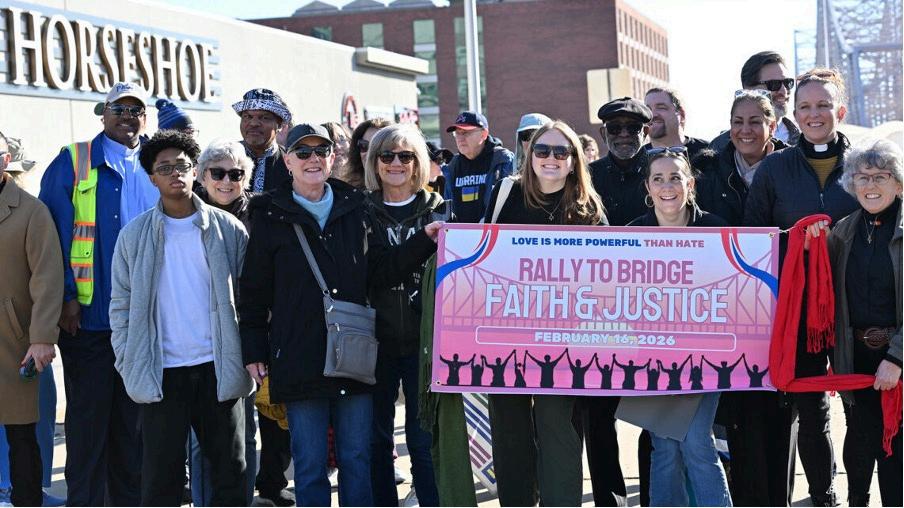
Many have heard of “Bloody Sunday,” March 7, 1965, when hundreds marched with Dr Martin Luther King Jr. across the Edmund Pettus Bridge in Selma, Alabama, calling for justice and equal rights
On February 16, 2026, another bridge became the setting for a powerful moment of unity
More than 550 community members and faith leaders from across the St. Louis metropolitan area gathered for the “Rally to Bridge Faith and Justice ” Together, they marched across the Martin Luther King Bridge, which connects St. Louis, Missouri, and East St. Louis, Illinois, spanning the Mississippi River
While Dr King was not physically present, his legacy was evident. Unlike the Edmund Pettus Bridge named after a Confederate general associated with the Ku Klux Klan the bridge in St. Louis bears the name of Dr King, a minister who devoted his life to faith, justice, and equality The march reflected those same values, bringing together people of different ethnic backgrounds, ages, and faith traditions.
Central States Conference assistant to the president for the Eastern Federation, Pastor Trevor Barnes Jr., and Pastor B.T. Rice, a longtime Seventh-day Adventist pastor in St. Louis and respected community faith leader, were actively involved in planning the peaceful demonstration. Known for decades of ministry and community service, Rice has worked closely with church and civic leaders to support spiritual outreach and community advocacy across the region.
“It’s wonderful to see Adventists present at
this important rally,” said Barnes
“As Adventists, we believe a time of trouble is coming in the future, but many people are experiencing a time of trouble right now. We cannot focus only on ourselves Loving our neighbors means we are morally bound to stand with those who are struggling. If we hope others will support us in our time of need, we must also be willing to support them in theirs After all, what we do for the least of these, we do for Jesus.”
The day carried a sober tone as participants united in prayer, responding to the ongoing immigration crisis and the impact of policies affecting families seeking safety and opportunity. For many, the march was both a public witness and a spiritual appeal asking God to guide leaders and bring justice.
Members of St. Louis Adventist Ministries (SLAM) were also present, standing alongside their community and church leaders. Their presence reflected the ongoing commitment of the Seventh-day Adventist Church in St Louis, along with the Central States Conference, to stand with their communities in prayer, compassion, and a call for justice rooted in faith
As voices lifted in prayer and footsteps crossed the bridge together, the message was clear: faith continues to call people to stand for justice, unity, and hope

John Perkins, a pioneering Civil Rights activist and Baptist leader who devoted his life to racial reconciliation and justice, died on March 13, 2026. He was 95.
Born in rural Mississippi during the height of Jim Crow, Perkins’ early life was marked by hardship: His mother died when he was an infant, and his older brother, a Black World War II veteran, was shot and killed by a police officer After leaving Mississippi for California as a young man, Perkins converted to Christianity and returned to his home state, where he began organizing for civil rights and community renewal.
Back in Mississippi, Perkins became deeply involved in grassroots organizing, helping lead voter registration efforts and economic boycotts aimed at challenging segregation and expanding economic opportunity for Black communities In 1970, while attempting to bail out student protesters, he was arrested and brutally beaten by law enforcement in a Mississippi jail In his book Count it All Joy: The Ridiculous Paradox of Suffering, Perkins would describe the experience as a turning point in his faith, saying he felt called to forgive his attackers This conviction would shape the rest of his ministry and public witness.
In the ensuing decades, Perkins became one of the most influential voices connecting evangelical Christianity to racial justice He cofounded the Christian Community Development Association in 1989 and through it, crafted the
influential framework that he called the “three R’s”: relocation, redistribution, and reconciliation As he told Sojourners in a 1975 interview, “Jesus didn’t just say ‘repent,’ but followed it up with the promise that ‘the kingdom of heaven is at hand ’ I think God calls us to something better and more healthy than the systems that are presently operating.”
Through decades of writing, teaching, and mentoring, Perkins challenged American Christians— particularly evangelicals to confront racism, pursue economic justice, and build multiracial churches rooted in the communities they serve.
Through decades of writing, teaching, and mentoring, Perkins challenged American Christians particularly evangelicals to confront racism, pursue economic justice, and build multiracial churches rooted in the communities they serve Perkins’ legacy was not only his activism but his insistence that the pursuit of justice must be inseparable from
The best way to honor Perkins’ legacy is take up the work of peace and justice in your own community. As we celebrate his life, here are some quotes to inspire, challenge, and motivate you to finish the job he started
“I am all for churches being a part of the nonviolent marches and protests that have happened in the wake of violent killings, but these protests happen only after a tragic event has taken place I want the church to be what prevents these acts from ever happening. I want the church to be the community that is so dedicated to loving our neighbors, to caring for the poor and neglected, and to living out true reconciliation that these killings do not even take place ”
From Dream with Me: Race, Love, and the Struggle We Must Win
“God has always wanted the vulnerable in society to be cared for He never intended for them to languish in poverty, abuse, slavery, homelessness, or other types of devastation. When we care for individuals who are trapped in these ways when we show them love and help them move toward freedom and wholeness we participate in bringing a little part of God's Kingdom back into alignment with His greater plan We do justice and God smiles.”
From Dream with Me: Race, Love, and the Struggle We Must Win
“But most people rebel against the concept of reparations White people who don’t understand the depths of racism in terms of ownership don’t realize that they feel like they own the country and their futures Many feel subconsciously they own Black people and so have a hard time feeling any debt to them People who are a little more liberal want to say that Blacks and whites are ‘the same; after all, we’re all human.’ Well, that’s OK to a point, but the problem is that these whites, when they say Blacks are the same also assume that Blacks have had the same
opportunities, the same equality that they themselves have been guaranteed, and in doing this they neglect any difference in background and culture and deny any responsibility for the sins committed against the bodies and minds of Black people in this country When most people give, they want to feel like it’s Christmas. They want to have the joy of giving and still enjoy the privileges of being white and the warm living room comforts of this society. Folks never want to think that there might be something wrong with the system which gave them their wealth.”
From “An Interview with John Perkins”
“What disturbs me most is that civilized, evangelical leaders hold much of the power and control in our nation and in our world. Yet our evangelical leadership is not creative or compassionate enough to deal with the truths that burst in upon us every day the economic/social truths of race hatred, energy crisis, crime, hunger, and poverty in light of the healing mandate of the scriptures.”
From “Stoning the Prophets”
“We are moving through the world too fast with a gospel that is too easy We have been over-efficient and ineffective. The false dichotomies we have made in our theology have taken the power out of the gospel We have offered people a formula, our formula, rather than new life. We have said that the gospel is the death, burial and resurrection of Jesus without adding that it is also God's visible love meeting human need in history through people filled with his spirit.”
From “The Reconciled Community in a World at War”
“Jesus got specific in some of the terms of the surrender by telling the rich young ruler to follow him, but first to mobilize all of his resources and give them to the poor. John the Baptist pointed the multitudes to the Christ, but first gave them explicit economic instructions. These admonitions
make demands upon rich and poor alike: even one who has just two coats or some food is commanded to share What does this mean? To me it means that the way we use our resources is related to our salvation.”
From “Rich Man, Poor Man”
“European-Protestant theology in today's church has tended to emphasize salvation to the minimization of commitment. As a result, we do not have a body of faith sufficient to bring about the kind of conversion that develops commitment to Christ. What we have is simply a gospel that saves people individually and prepares them for heaven ”
From “Commitment and Responsibility”
“Individualism in our society, as I look at it today, is the greatest threat to an understanding of the church and the meaning of being a Christian. Yet, the unique contribution of America in the history of humankind has been the perfection of individualism. The result is a generation of Christians trying to find ‘God's will for my life’ rather than God's will period ”
From “Individualism: Antithetical to Community”
“What we need is a change created by Jesus Christ in our institutional behavior equal to the change that can occur in the life of an individual. Jesus offers himself in his church as the corporate model through which we can live out creative alternatives that can break the cycles of wealth and poverty which oppress people.”
From “Relocation, Reconciliation, and Redistribution”
“Almost without exception, when it comes down to a confrontation between racism and Christian conviction in white people, racism wins out ”
From “A Strategy for Change"






$68,000 GOAL
$37,251 RAISED
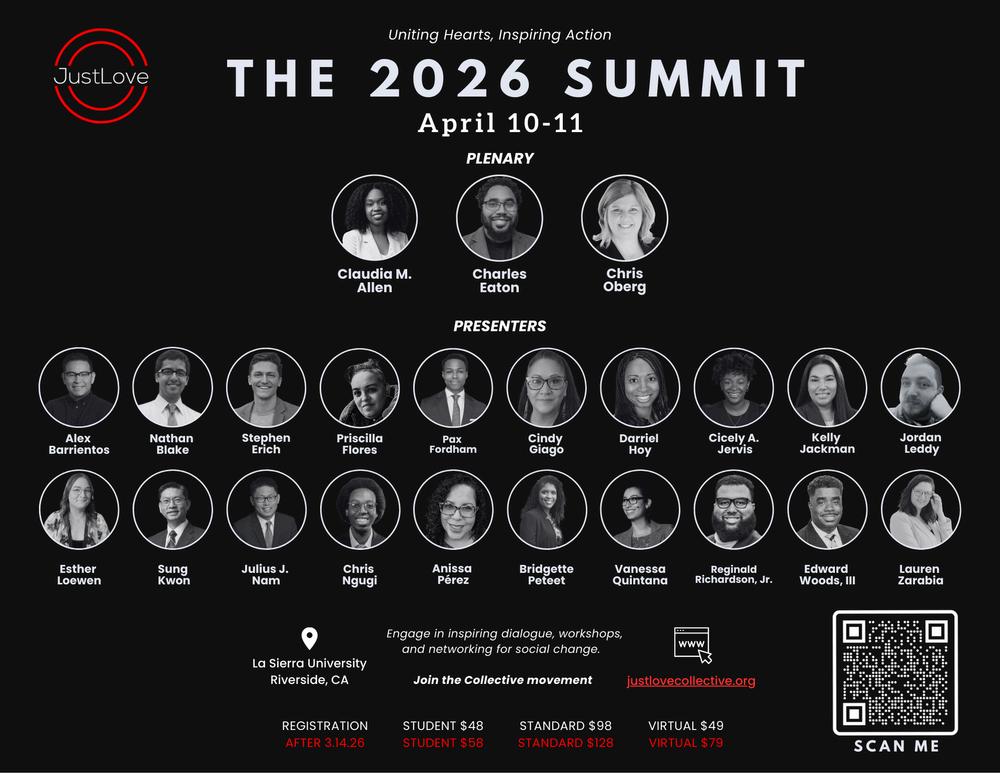
We are particularly grateful for every contribution to JustLove Collective. Donations are tax-deductible. Though we are a global movement of volunteers, we do need to pay for expenses related to this magazine and to the Summit For more information, please see our website at justlovecollective org
$500
$10,000


. . ”
“Not merely a theological theory—a practical roadmap for living in faithful solidarity with those around us.”
Dilys Brooks, campus chaplain at Loma Linda University
“Blake continues to sprint in his lifetime marathon to call Adventists to embrace fully the radical way of Jesus.”
Carmen Lau, Adventist Forum Board Chair
“This is THE book for our time, to make tangible how our faith becomes lifegiving in the real world.”
Karah Thompson, Co-Executive Director of Adventist Peace Fellowship
“Chris Blake not only walks the talk, he writes about it in sui generis style.”
Alexander Carpenter, Executive Director and Editor-in-Chief, SPECTRUM
“This book is a movement toward restoring the world God envisions.”
Moe Stiles, pastor/chaplain, Crosswalk Melbourne

Using ten “piercing and profound strands,” Imagine Life presents openings for going beyond the commonplace to live today as New Earth people.

Buckle up for the journey.
All profits from this book go toward JustLove Collective

A House on Fire: This Adventist Peace Fellowship podcast series is based on the excellent book on race and racism
Red Letter Christian Podcast: Christian commentary on the way of Jesus in the world today
Adventist Voices: Weekly podcast and companion to Spectrum designed to foster community through conversation
Adventist Pilgrimage: A lively monthly podcast focusing on the academic side of Adventist history
The Social Jesus Podcast talks about the intersection of Jesus, faith, and social justice today
Just Liberty: A fresh, balanced take on religious liberty where justice and liberty meet
Find Your Notes – And Your Playlist

JustLove Notes is your go-to Substack space for focusing change and amplifying voices at the intersection of justice, human rights, and community advocacy Now, each edition delivers in-depth articles, thought-provoking perspectives, and actionable insights designed to inspire and mobilize whether you’re a seasoned activist or just beginning your journey
Our mission is to foster dialogue and collaboration through curated reading lists, faith-in-action spotlights, Music for the Journey playlists, and updates on events that matter. Together, we are working to unlock the potential for a fairer, more just world creating change one edition at a time Recent editions have explored the cry for justice in a broken world (Is There Justice in the World?), the sacred connection between mental health and faithful advocacy (The Sacred Intersection: Mental Health, Faith, and Justice), lament as a form of holy resistance (Makes Me Wanna Holla!), and neighborlove as the foundation of justice work (Go and Do Likewise).
There is something here for every season of your journey whether you need a book to open, a prayer to lean into, or a song to carry you through. Subscribe free and join the community that is creating change, one word at a time