11 minute read
Checking the tape on Ole Miss’ new defensive coordinator Pete Golding Monthly music recs from Rebel

Radio
“Sun for Someone” by Oscar Jerome
Advertisement
“Dirt and Grime” by Father’s Children
“Inside” out by River Tiber
OWEN PUSTELL thedmsports@gmail.com
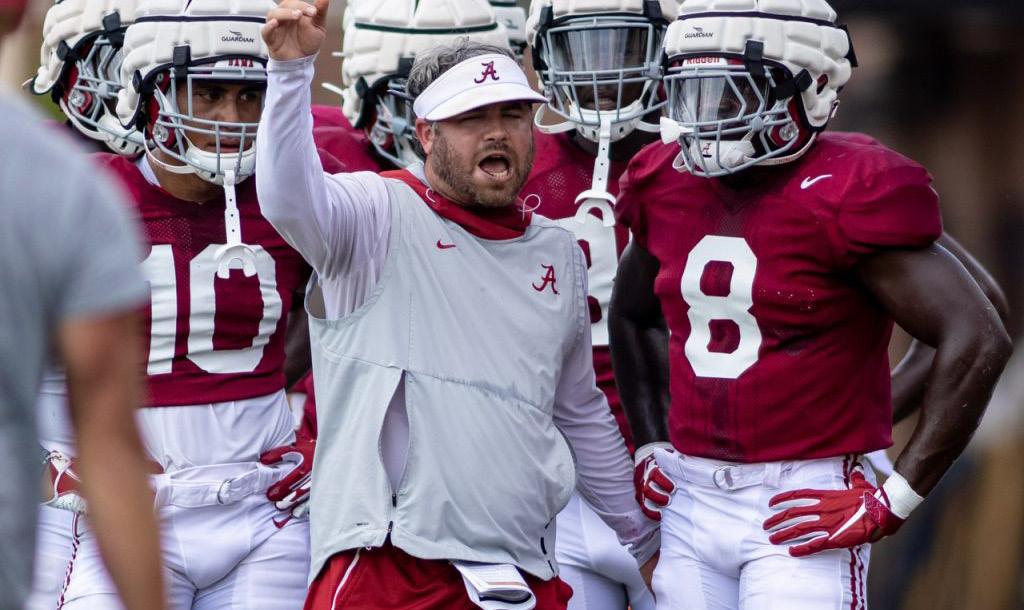
After a disappointing defensive effort in 2022, the Rebels overhauled their defensive staff, hiring a new defensive coordinator from Alabama.
Pete Golding has been a defensive coordinator since 2016, spending two seasons at University of Texas San Antonio before joining Nick Saban at Alabama for four seasons, winning a national title with the team in 2020.
Base
Last year, Alabama’s base personnel was a 4-25 (or “nickel”) defense.
The defensive line consisted of a 3-tech, a 0-tech and two EDGE defenders (one is constantly in a twopoint stance and the other alternates between threeand two-point stances.)
The Crimson Tide played two linebackers who would split outside the tackles in order to match with running backs or tight ends in coverage. Both boundary cornerbacks used a lot of press coverage, but also did a fair amount of off-man.
They used two safeties who appeared in two-high and one-high shells depending on the offensive personnel. They also used a nickel back to cover slot receivers,to blitz and to be a force player on runs.
From this personnel, Golding ran a lot of man coverage and was not afraid to put his CBs in press. Alabama also brought a lot of five-man pressures (usually blitzing a linebacker) and ran mostly cover-one man on the back end, but mixed in some cover-three, as well.
Strengths
This scheme puts a lot of emphasis on physicality on the boundary.
Ole Miss has taken a trio of longer cornerbacks in the transfer portal, so expect to see them use their length to disrupt routes at the line of scrimmage and play physical coverage down field. If the secondary can play disruptive football and not let timing routes develop properly, opponents will find it very difficult to generate a strong passing attack.
Playing man coverage allows the defensive line to get in a lot of good pass rushing situations, especially on fiveman pressures. Alabama was lucky enough to have linebacker Will Anderson last season, and while UM may not have that level of talent, there will be no issues if the defensive line can collapse the pocket and force throws.
Weaknesses
The emphasis on individual matchups certainly has pros and cons.
When it works, this defense will be impossible to move the ball against, but all it takes is one false step from a cornerback and there is usually no help to cover up the mistake.
In the run game, linebackers need to be very active in getting to the ball. There are a lot of situations in spread formations where the offense has a numbers advantage in the box and there is just one LB to fill just about every gap.
Having an interior defensive line that can eat up blocks is crucial to the success of the LB, otherwise it will be up to the safeties to stop a touchdown. The biggest exposable flaw in this defense that I saw is the isolated cornerback in 3x1 formations.
LSU worked this a lot by splitting three receivers to the boundary and isolating the best route runner against a single cornerback with about half the field to work with. That is a situation that makes it almost impossible for the CB to win, and expect that to be used in crucial conversion situations.
What to expect
Based on the player acquisitions made in the offseason, Golding likely will run this same defense at Ole Miss next season. Starters should be as follows:
CB: Deantre Prince, DeShawn Gaddie
S: Isheem Young, Trey Washington
NB: Ladarius Tennison
LB: Khari Coleman, Monty Montgomery
EDGE: Jared Ivey, Cedric Johnson
IDL: J.J. Pegues, Zxavian Harris
Gaddie is at the spot with the most competition, but his fluidity likely will impress the staff.
Overall, this unit may not have the star power of Alabama, but the talent and scheme are there to field a much more competent squad than we saw last season.
Coleman will be the X-factor of this defense. His speed and playmaking ability is unique to the roster, but he needs to be able to shed lineman climbing to the second level.
Coleman is also the best chance the Rebels have at stopping dual threat quarterbacks, and completing his game could give Ole Miss the upper hand against the best in the SEC West.
“Hey!” By Jay
“OMG” by New Jeans
“Science Class” by Westside Gunn
“It Never Rains in Southern California” by Albert Hammond
“Once in a Lifetime” by talking heads
“Weird Fishes/Arpeggi” by Radiohead
“ON POINT” by LUCKI
“SICK, NERVOUS, & BROKE!” by JPEGMAFIA
With the start of a new semester, we welcome back the challenges and assignments that we said goodbye to over the holiday break.
These challenges and assignments will of course be remedied with traditional resources such as textbooks, quizlets, sparknotes, etc.
They will also have to face an ever adapting and clever student population whose procrastination knows no bounds.
This boundless procrastination enables students to not only exhibit astronomical amounts of focus and energy mere hours before due dates, but also pushes students to find new and better resources to leap over the hurdles of classwork and homework.
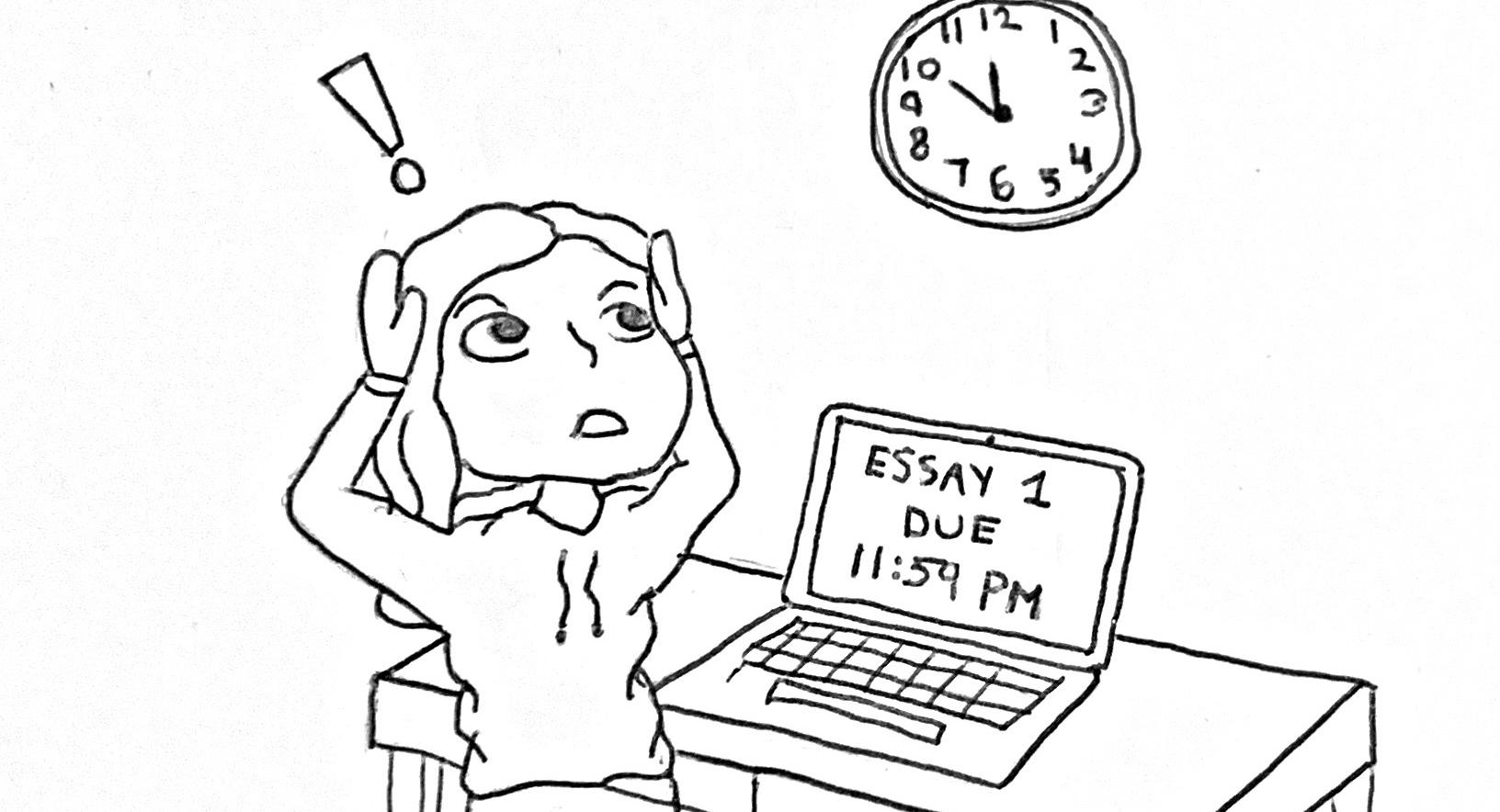
One such emerging resource is ChatGPT and other artificial intelligence tools that have the ability to write essays and in some cases avoid plagiarism algorithms.
ChatGPT is “a ‘language machine’ that uses statistics, reinforcement learning and supervised learning to index words, phrases and sentences,” according to industry professional Josh Bersin. In simpler terms, ChatGPT has the ability to write and answer questions as well as refine answers which means essays that once took an entire night of cramming and a case of Red Bull will now take mere minutes.
The question now becomes: How will this affect college assignments? More specifically, how will this affect my GPA and conversations with my mother about my grades?
The Oxford English dictionary defines plagiarism as “the practice of taking someone else’s work or ideas and passing them off as one’s own,” but would work produced using AI be considered someone else’s if I gave the AI software the instructions?
Lane Kiffin and I both played a combined 0 downs this season for the Ole Miss football team, but his record for the year was a middling 8-5 while mine was still 0-0 simply because he gave instructions.
If I were to “coach” AI to mimic my writing style and answer prompts in a way that I would, who is to say that the work produced is not an accurate represen- tation of my ideas and thoughts?
When I read the traditional definition of plagiarism, it seems that to plagiarize, there must first be something to copy. When you first open ChatGPT, there is not already an essay readily available specifically answering my prompt. So, who is to say that you plagiarized, and who exactly did you plagiarize?
While currently, there is major pushback concerning ChatGPT, let’s not pretend that it is the first of its kind. When writing essays, we already have access to many sophisticated and helpful AIs, such as spell check, autocorrect, Grammarly and even autocomplete. Each of these programs significantly improves writing ability and none of them are considered unfair, cheating or plagiarism.
To be for real, ChatGPT and its fellow essay bots are simply the scientific calculators of writing in a world that is still obsessed with four-function calculators.
Jaylin Jones is a senior real estate major from Lucedale, Miss
Classifieds Information

The DEADLINE to place, correct or cancel an ad is 12 p.m. one business day in advance. The Daily Mississippian is published on Thursdays during the academic school year.
Classified ads must be prepaid. All major credit cards accepted. No refunds on classified ads once published.
The DM reserves the right to refuse ads that appear to offer unrealistic or questionable products or services.
Now Hiring Drivers
Africa’s most populous city;
18-
24-
32-
33-
37-
39-
40-
43-
50-
Drops;
Citrus hybrids;
Game pieces;
More tender;
Retract;
Wild sheep of Asia;
Kingdom;
SOLUTION
61- Washington bill; 62- Blow one’s top;
Rocky debris; 64- Pitch; 65- Eats to a plan; 66- ___ Perot;
DOWN
1- Brillo rival;
2- Med. care option;
3- Televise;
4- Hwy.;
5- Begin, e.g.;
6- Soft and comfortable;
7- Turkish titles;
8- Green around the gills;
9- Mus. slow-up;
10- Small bone;
11- Capital of Jordan;
12- Distributed cards;
13- Blue dye source;
21- Where ___?;

23- Title;
Pick up;
Join together;
Intellectual;
Adjust again;
Sharp;
___ de deux (ballet dance);
Nostrils;
Creamy white;
24- Oohed and ___;
25- El Greco’s birthplace;
26- Choreographer de Mille;
27- ___ es Salaam, Tanzania;
28- Aired again;
29- Bridge seat;
31- Radioactive gas;
33- Pixie;
41-
Brio;
Ruled;
Equality is a hefty topic of conversation in the world, with leaders and activists constantly discussing how we can go about increasing equality in politics, education, health, etc. What is often missing from this conversation, however, is what equality really means. Equality is defined as the state of being equal, particularly in status, rights and opportunities.
Achieving equality is a difficult road, and leaders have a habit of cutting corners to create blanket statements of equal access when this does not often equate with equal opportunity. Citizens on all party sides have a habit of believing what they hear, even if not backed by research or facts, and it is the job of politicians to educate rather than justify outdated practices by creating anger amongst their constituents. The conversation is in desperate need of changing, specifically towards equity.
Equity is similar to equality but different in that it adjusts for fairness. You can think of it as leveling the playing field. If three different people of different heights are all standing behind a fence trying to watch a baseball game, one may be able to see over it on their own, one may need a small stool, and one may need a much larger stool to be able to have the same view.
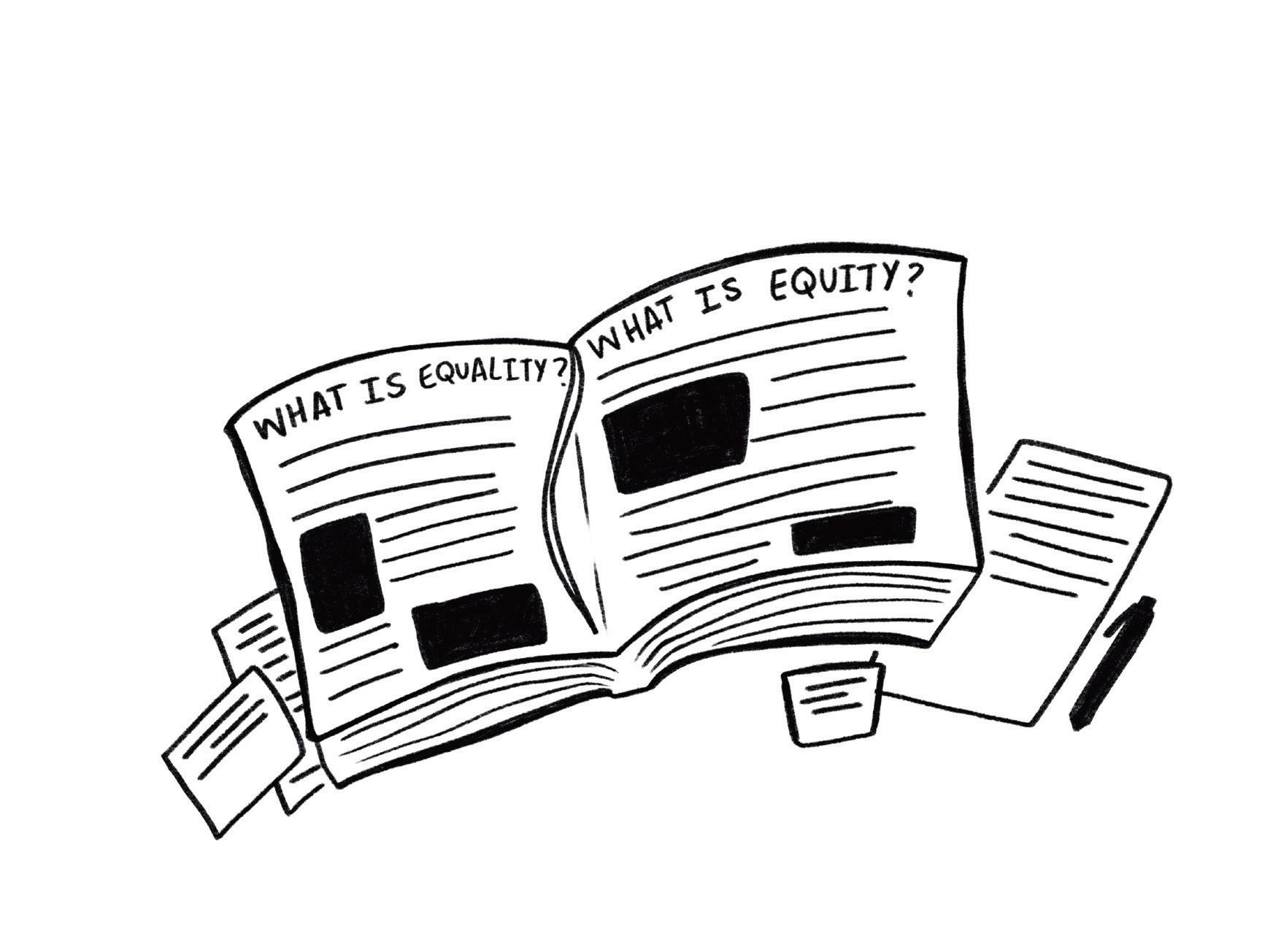
What this means is that different people need differ ent things to be able to achieve the same end goal. To reach a truly equal opportunity landscape, we need to create equitable opportunities for different groups within society.
In Mississippi, groups like the American Civil Liberties Union are working toward creating an equitable future by enacting campaigns and legislation that challenge the embedded power imbalances in the state. This battle is difficult, especially in a conservative state with a history of not acknowledging the inherent disparity between citizens of different races, ethnicities, gen- der identities and sexualities. Basic facets of society like education and public health are affected deeply by the lack of equity between groups and while working for equality in these spheres is admirable, it is not enough. One of the most prominent steps forward in the education sector in regards to equity was affirmative action, a set of policies within universities across America that ensured adequate representation of minority groups.
This year, affirmative action is being brought before the Supreme Court with the possibility of being eliminated altogether, which would lead to the com- pounding of lingering racial inequities in all of society, not just education. Considering the Supreme Court only hears cases when the social climate calls for answers, this case is already proof that all too many citizens do not understand the institutional practices that continue to promote racism and other prejudices to this day.
Take, for example, pay in the workforce. Studies show that while companies often have equal pay for the same jobs, white employees tend to hold the highest-paying jobs, which is not an equitable workforce.
Pay equity employs a more complex approach to study these problems in efforts to determine where systemic issues could be affecting pay gaps. Subconscious bias and discrimination affect all aspects of the workforce, from hiring to pay to promotional timelines. These biases affect all sorts of underrepresented groups, with prejudices extending based on gender, sexuality and even age.
Making steps to create equitable environments means a lot of hard work, from everyone. People need to take the time to examine themselves for where their own biases exist and work toward correcting outdated and discriminatory perceptions and practices.
Giving people the exact same resources may seem at first glance like a beneficial practice, but real change comes when we start tailoring the resources we give to people’s individual circumstances and needs.
Despite popular opinion, fairness is not determined by ensuring you have the same things as everyone else; it is determined by ensuring everyone has the things they need to reach the same finish line as everyone else. And — heads up — if you think that is unfair to you, it is because you already have the resources you need. Fighting for fairness is fighting for equity, for everyone, not just those who already have it.
Liv Briley is a junior integrated marketing and communications major from Lemont, Ill.
Shouts of joy are heard while sorority and fraternity members stroll with pride. Happiness is spread across the face of all who crossed their line; a symbol of unity, family and joy in their blackness.
But my mind can’t help but think of how my blackness shouldn’t be on a schedule.
A scheduled time to enjoy my culture is a joke. An ideal day to walk into spaces where my culture is uplifted should be every day, not just on Thursdays from 12:15 p.m. to 1 p.m.
Each day is spent attempting to make the university more diverse and respecting, but the work is never complete. Sit back and think of a space on campus for Latin, Native American, Asian, African and Caribbean, and African American students to unload, enjoy their culture and see familiar faces.
Events are only put into action when a small group of students bears the load and responsibilities to ensure they are represented, and it shouldn’t be this way.
Union Unplugged, a 45-minute time slot where you see Black Greek students strolling or maybe a fashion show from the Black Fashion Society, is one of the only dedicated times when African American students can see familiar faces and enjoy each other.
You hear, “I didn’t even know this school had this many Black people,” from freshmen and other students as they see everyone come out. After the alloted 45 minutes, that sense of community and pride is proven to be ever so fleeting, like prematurely dismissing a class on togetherness and identity.
Why?
Because you wouldn’t want to disrupt students from class, would you? You wouldn’t want to impose your culture on anyone else, would you?
Integration week was a time to uplift African American students and the trailblazers that came before. After it was over, everything went back to normal. Regularly scheduled pro- gramming. No questions were asked as everyone ended the events to highlight Black excellence. A general disinterest could be seen across the face of many students when the significance was mentioned in class.
Why?
Because my blackness is put on a schedule. There is a time and place to celebrate my roots and acknowledge my hardships. And as society tells it, I should be grateful for the amount of time I receive.
But this is about more than African American students. This is about the Latino community, Asian community, African and Caribbean community, Native American community, LGBTQ community and other religious communitiesthataren’tChristianity.
Anyone who lacks characteristics that aren’t seen as often in spaces such as Ole Miss are often forgotten and their culture, beliefs and ideas are placed on a schedule — a schedule that comes around ever so often and the time is expected to be appreciat- ed because it is seen as an honor.
I’ve been told that if I want the Black experience I should go to a Historically Black College or University. But there shouldn’t be a space that isn’t touched by every race, ethnicity, religion and culture.
I refuse to be held to one space, one idea and one way of life. America was established as the melting pot, so where is the combination of ideas, beliefs and cultures? It exists in pockets here and there. The further you traverse, the more homogenous the pot becomes.
Everything that isn’t accepted by society is labeled as incorrect, illiterate, ignorant and placed on a stopwatch when it is acknowledged. It’s time to replace the separation with unity… or at least acknowledgment.
The change begins when everyone is tired. I don’t know about anyone else, but I sure am.
Bre’Anna Coleman is a sophomore political science major from Drew, Miss.