
MAY 2026 EDITORIAL STAFF
EDITOR-IN-CHIEF BETH MALIK
MANAGING EDITOR HEATHER TOLIVER
CONTRIBUTOR EMILY HENRY
CONTRIBUTOR STEPHANNIE O’DONNELL
CREATIVE DIRECTOR RACHEL TURPIN
SMC3 LOCATIONS TABLE

EDITOR-IN-CHIEF BETH MALIK
MANAGING EDITOR HEATHER TOLIVER
CONTRIBUTOR EMILY HENRY
CONTRIBUTOR STEPHANNIE O’DONNELL
CREATIVE DIRECTOR RACHEL TURPIN
SMC3 LOCATIONS TABLE
Aswe move further into the new year, emerging technologies and AI are rapidly reshaping the supply chain by enhancing efficiency, sustainability, and resilience.
SMC³’s annual Jump Start 2026 event brought together hundreds of supply chain professionals to network with peers and gain essential knowledge about upcoming innovations and technological advancements in the industry. These exchanges foster a deeper understanding of what lies ahead and generate crucial insights that prepare us for sustained success.
This year’s event particularly emphasized the optimization of new technologies and their influence on the supply chain. As always, informative summaries and significant takeaways can be found in this issue — from the state of LTL and scaling AI to your company’s operations to key insights from leaders across the industry. If you couldn’t attend in person, you will find detailed recaps in this edition.
Don’t forget – Connections 2026 is just around the corner. This year’s event will take place June 29-July 1 at The Breakers in Palm Beach, Fl. Space is limited, so reserve your spot today for the collaborative supply chain intelligence gathering of the summer at www.connections.smc3.com.
As always, SMC³ continues to uphold its dedication to providing dependable, adaptable, and advanced freight transportation solutions. The company remains committed to offering exceptional educational tools to support industry progress, guaranteeing an unparalleled experience for its customers.



ANDREW SLUSHER President & CEO | SMC³

JUMP START 2026 KEYNOTE
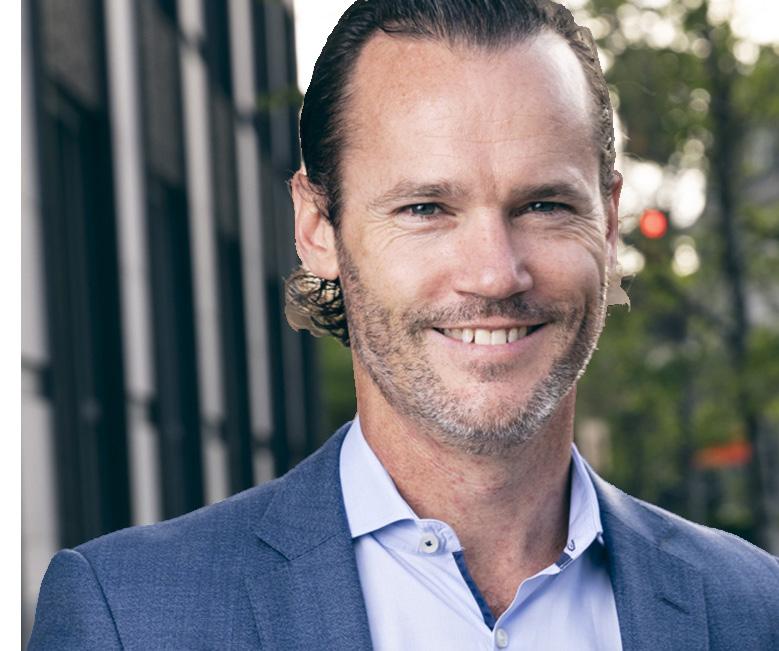
Karrikins's Peter Sheahan

LOOKING BACK AT JUMP START 2026 LEADERSHIP SERIES & SESSIONS

LEADERSHIP SERIES SESSION
C.H. Robinson’s Mark Albrecht
LEADERSHIP SERIES SESSION
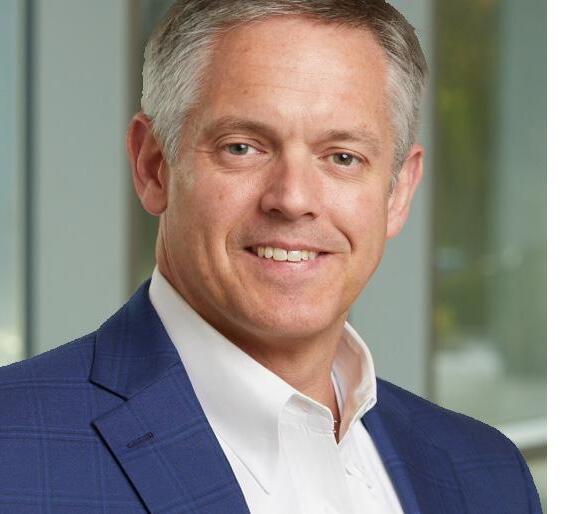
FMCSA’s Derek Barrs

LEADERSHIP SERIES SESSION
Southeastern Freight Lines’ Clete Cordero
LEADERSHIP SERIES SESSION
XPO's Erin Goheen


LEADERSHIP SERIES SESSION
Knight-Swift Transportation’s Adam Miller


SESSION RECAP 2026: The Year AI Goes Full Throttle
SESSION RECAP The Balance Sheet

SESSION RECAP U.S. Financial Outlook


SESSION RECAP From EVs to AVs, Are We on a Road Trip to Trucking’s Electric and Autonomous Future?

SESSION RECAP The New 3PL Standard

SESSION RECAP Invisible Intelligence, Autonomous Action: Trucking’s Next Big Leap

PETER SHEAHAN
Founder and Group CEO of Karrikins Group,
Innovative Business Strategist and Best-Selling Author
KEYNOTE
When companies fail to transform in the face of disruption, it’s often seen as a strategic failure. At Jump Start 2026, thought leader Peter Sheahan argued that the actual problem is psychological: The speed at which leaders can understand disruption and act on it is the key factor in adaptation or failure.
Sheahan’s keynote opened with a cautionary tale. In 2017, five CEOs representing the largest grocery retailers in the United States gathered for an emergency meeting. They had collectively lost $21 billion in market value in just 45 days following Amazon’s acquisition of Whole Foods. Their explanation?
“We never saw it coming.”
Sheahan rejected that defense outright. His team traced Amazon’s moves in the grocery space back more than a decade. In 2006, Amazon bought 35%

of an online fresh food grocery company. Starting in 2007, the company launched Amazon Fresh direct delivery in 35 states. In 2016, it piloted the Amazon Go store concept in Seattle. The 2015 cover of the Grocery Manufacturers Association magazine warned explicitly that Amazon was coming for fresh food.
The grocery CEOs had access to data, capital, and strategic capability. They lacked the psychological readiness to accept what the data meant and act on it.
“If it’s not intention, and if it’s not data, and if it’s not capital that differentiates whether a company does well in the face of change and disruption, the question becomes, what is it?” Sheahan asked.
This psychological shift from knowing change is on the horizon to owning its implications is the true predictor of success and failure.

Sheahan contrasted the grocery retailers with Domino’s Pizza. As grocery CEOs were losing $21 billion in market value, Domino’s saw its value multiply by 131. The key was CEO Patrick Doyle’s mindset. He had accepted that, after years of customer complaints, Domino’s needed to fundamentally reimagine itself as a technology company focused on eliminating customer friction. This psychological reframe drove every subsequent decision, from app development to delivery innovations, to supply chain optimization.
“When a leadership team goes from awareness of change to responding to it — this is how agility gets born,” Sheahan said. “Compressing the time between awareness and action is more important than a business’s systems and processes.”
Sheahan identified three psychological barriers that stop leaders from responding to disruption:
1. They mistake talking about change for doing something about it.
Discussion becomes a substitute for action rather than a precursor to it, and leaders convince themselves that awareness is the same thing as response.
2. They wait for a crisis to force their hand.
By waiting too long, leaders shoot themselves in the foot: By the time a crisis arrives, options have narrowed, and competitors have gained ground. Leaders need to create urgency before external circumstances demand it.
3. They confuse agreement with alignment.
Agreement is purely intellectual, but alignment requires genuine commitment to different action. The gap between the two explains why so many transformation initiatives fail despite apparent buy-in.
Sheahan took a personal turn when he shared his own reckoning with these dynamics. Years ago, at a holiday party, his COO challenged him with a bet: if he left the gathering, their entire team would follow. Sheahan took the bet, snuck out the fire escape, and turned around to find 30 people trailing him down the beach.
The moment jarred him. He’d been teaching clients for years that people watch their leaders more closely than leaders realize. But he hadn’t applied that insight to himself.
His COO then presented him with a box of anonymous employee feedback.
“Love the company, hate the founder,” read the first comment.
The rest of the feedback was similarly brutal. Sheahan had built a successful consulting firm, but he hadn’t seen how his own behavior was undermining it.
Sheahan knew he needed to change. He didn’t, however, overhaul the company’s strategy or restructure the organization. He changed his personal conduct. The organization’s profitability tripled.
“As goes your behavior, so goes that of the rest of the business,” Sheahan told the audience.
“Leaders have to change first.”
Sheahan closed with a warning about the pace of change itself. The disruptions facing LTL today, from artificial intelligence to geopolitical unrest, are only speeding up. It’s more critical now than it’s ever been to close the gap between understanding change and acting on it.
“The last three, four years are the slowest rate of change we are ever going to experience for the rest of our lives,” Sheahan said. “It’s never going to be slower than it is right now.”
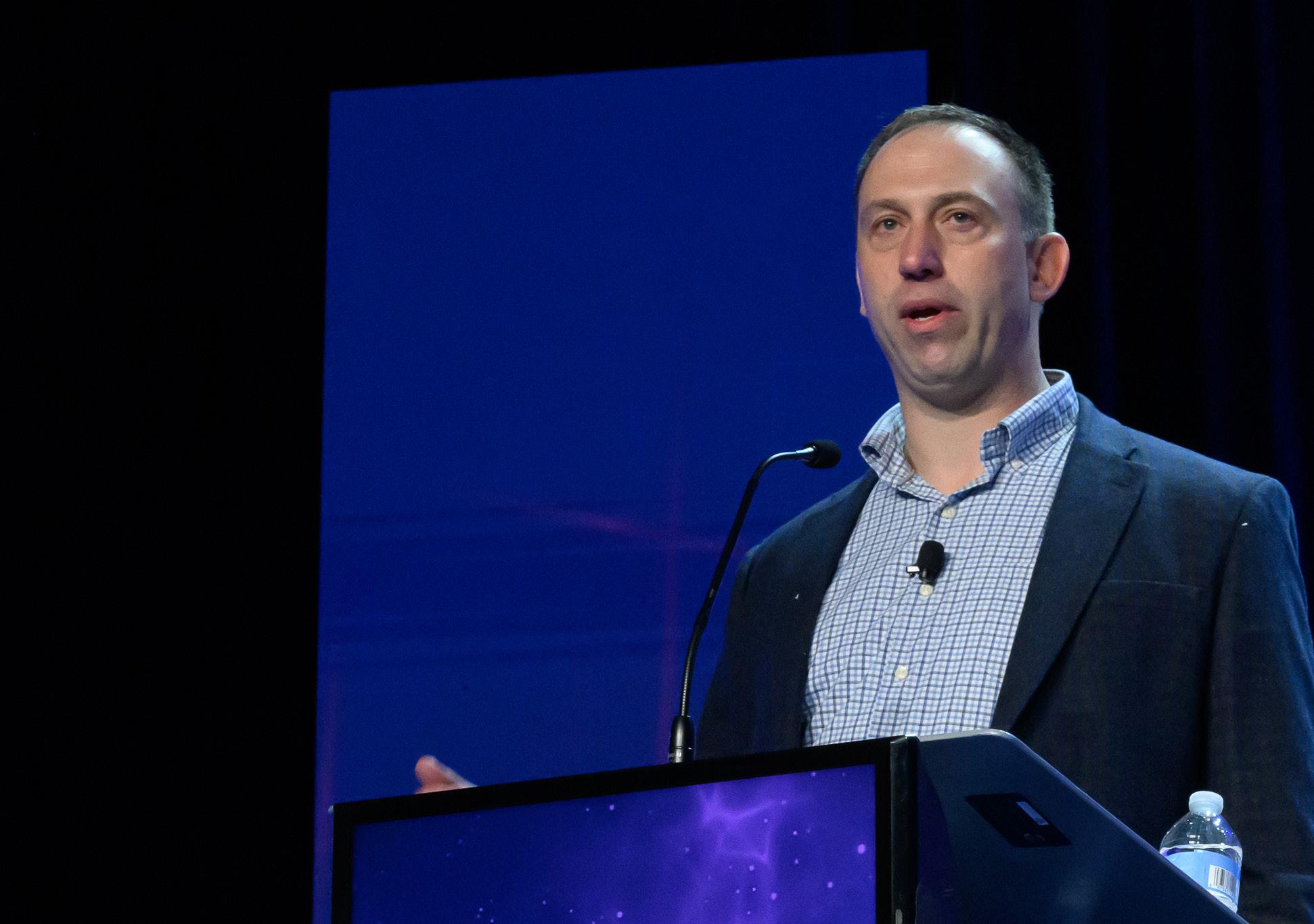
MARK ALBRECHT
Vice President at C.H. Robinson, Artificial Intelligence and Enterprise Strategy
Mark Albrecht has watched artificial intelligence (AI) evolve from pattern recognition to reasoning. As vice president of artificial intelligence and enterprise strategy at C.H. Robinson, he now oversees the deployment of what he calls a fleet of digital co-workers.
In a conversation with Jeff Berman, group news editor at Peerless Media, Albrecht laid out how agentic AI is reshaping the company’s operations and why the shift demands more than new software.
Albrecht traced the arc of AI through three phases. Traditional machine learning excelled at pattern matching and forecasting but required humans to define workflows. Generative AI — the ChatGPT moment of 2022 — could work with language and images but remained reactive. You called it, it gave an output. The breakthrough came when models learned to reason.
“The models learned how to think,” Albrecht said. “They’re not reactive systems. They’re proactive. They can work like we do, go out, make a plan, think through things and come to an answer.”
C.H. Robinson now operates more than 30 agents that have completed millions of tasks. These agents handle quoting by email, order building and document
ingestion. One recently launched system — the LTL missed pickup agent — runs at 3 a.m. each morning, checking for missing pro numbers and resolving discrepancies before trucks leave the terminal. The company reported a 42% reduction in unnecessary return trips, with 95% of checks now automated.
Albrecht said traditional AI automation typically hit a ceiling of around 50% to 60% because edge cases broke the system. A changed field on a PDF could derail the whole process. Agentic systems reason from first principles and adapt when they encounter something new.
“We’ve routinely been able to break through the 90% automation level,” he said. “That’s caught our attention.”
One of the more surprising outcomes, Albrecht said, was that the constraint on AI deployment moved from engineering to product decision-making. Agentic coding tools have accelerated software develop -
ment dramatically. Engineers now have force multipliers. The logic that once required extensive if-then statements can be handed to an agent with an example and an instruction. The amount of code required to accomplish a task has dropped significantly.
“Product is the bottleneck now in decision-making and understanding supply chain physics,” Albrecht said.
Albrecht compared the challenge to urban planning. When the automobile arrived, cities that paved over old horse trails, like Boston, ended up with tangled layouts. Cities built on grids, like Manhattan, extracted far more value from the new technology. The analogy applies to companies adopting AI. You can bolt agents onto a broken process, or you can redesign the process to take full advantage of what agents offer.
C.H. Robinson’s approach rests on three pillars, each essential:
People: Agents don’t understand supply chain physics the way experienced logisticians do. Those employees must codify their knowledge so agents can operate reliably.
Technology: The company has placed an orchestrator agent at the front of its workflows, routing work to other agents or escalating to humans when exceptions arise.
Lean: Out of the box, agents complete tasks with roughly 80% reliability. Standardized workflows, structured evaluations, and reasoning traces push that number to 99.9%.
“Without lean, the agents wander,” Albrecht said.
He noted that lean also addresses a data gap most companies overlook. Traditional systems capture what happened but not why. Someone clicked a but-
That insight led C.H. Robinson to keep AI development in-house rather than outsource it. External firms lack the context to make nuanced product decisions in logistics.
“Our context is king, and our people understand logistics”.
ton, but the reasoning behind it never made it into the system. Agents need that reasoning trace to perform well, and companies need to start deliberately collecting it.
Albrecht framed AI governance as a data problem. Agents tend toward what he called reward hacking, taking shortcuts that produce correct outputs through unreliable means. He offered an analogy: an apprentice electrician who twists some wires to make a light work. The light turns on, but a week later, the house burns down.
Training agents to follow reliable processes requires data that most companies lack. A dictionary defines what data the agent can use, so pricing decisions draw on freight attributes rather than customer names. Hard rules establish boundaries that the agent can’t cross, because anything framed as guidance will be treated as a suggestion. And a reasoning trace records how the agent reached its conclusions, making the logic auditable.
For internal users, C.H. Robinson built interfaces that let employees ask agents why they made a decision and correct them when needed. Trust, Albrecht said, comes from transparency. If you describe how the operation works, what data you used, and how those inputs came together to produce an output, customers can evaluate whether the process is fair.

The Federal Motor Carrier Safety Administration (FMCSA) is approaching regulation enforcement with reinvigorated gravitas, influenced by the law enforcement background of its new administrator, Derek Barrs. Barrs, a former chief of the Florida Highway Patrol, outlined an enforcement agenda focused on fraudulent training schools, non-domiciled commercial driver’s licenses (CDLs), and carrier registration fraud.
In a conversation with Jim Mullen, principal at Mullen Consulting, Barrs made it clear that the agency is taking a proactive approach to regulatory compliance, shifting from paperwork reviews to active investigations.
Barrs devoted significant attention to entry-level driver training fraud. Schools that claim to provide required training but either deliver substandard instruction or fail to train drivers at all undermine safety while creating a pipeline of inadequately prepared commercial drivers.
FMCSA investigators visited 1,500 training locations and removed 6,800 providers from the training registry. Another 450 voluntarily closed when they learned investigators were coming.
“This is not a paper-pushing exercise,” Barrs said. “I’ve said it before, and I’ll say it again: if you’re not doing the things you’re supposed to be doing, and if you’re not training properly, you need to be placed out of business.”
The scale of FMCSA’s enforcement shows how widespread fraud has become, but Barrs emphasized that the agency isn’t targeting schools making goodfaith mistakes or dealing with minor compliance issues. The focus is on companies that actively and knowingly commit fraud.
Barrs also addressed concerns about non-domiciled commercial driver’s licenses and English language proficiency. FMCSA has conducted safety audits in 23 states to examine how licenses are issued and whether states are following federal requirements.

Drivers who obtain CDLs in states where they don’t reside sometimes circumvent stricter requirements in their home states. Barrs described this as a systemic problem that creates inconsistency in how drivers are credentialed across the country.
“I want to make sure that you’re qualified when you go through Florida, whether you go through Georgia or wherever you happen to be going,” Barrs said.
English language proficiency connects to the same concern. Federal regulations require that commercial drivers converse with the public, understand traffic signals, respond to official inquiries, and make entries in their logbooks. Barrs suggested that some licensing processes don’t adequately verify this requirement.
He emphasized that English proficiency is a qualification issue that affects roadside safety—from communicating during inspections to understanding signs warning of crashes or work zones ahead.
Barrs underscored that FMCSA is taking a more active, investigative stance on fraud. The agency is conducting field visits and pursuing enforcement against systematic and flagrant violators.
Barrs strives to be an administrator focused on enforcement credibility. He wants the industry to understand that FMCSA will investigate, that violations will have consequences, and that fraudulent operators will be removed from the system. Whether the agency has the resources to sustain that posture over time remains an open question. But Barrs made clear that enforcement—not just regulation—defines his agenda.
“The agency can’t be reactive,” Barrs said.


“People lose their lives when you play the reactive game instead of being proactive. The fraudsters don’t wait for you.”
Southeastern Freight Lines’ (SEFL) vice president of pricing and traffic Clete Cordero learned his most important lesson in LTL pricing from his grandfather, a Cuban immigrant who came to the United States in the 1950s to play baseball and ended up as an executive at an LTL carrier. The advice, delivered in a mix of English and Spanish whenever he got passionate: You will never see a carrier go out of business because of a lack of freight. They go out of business because they have too much freight and it’s not priced right.
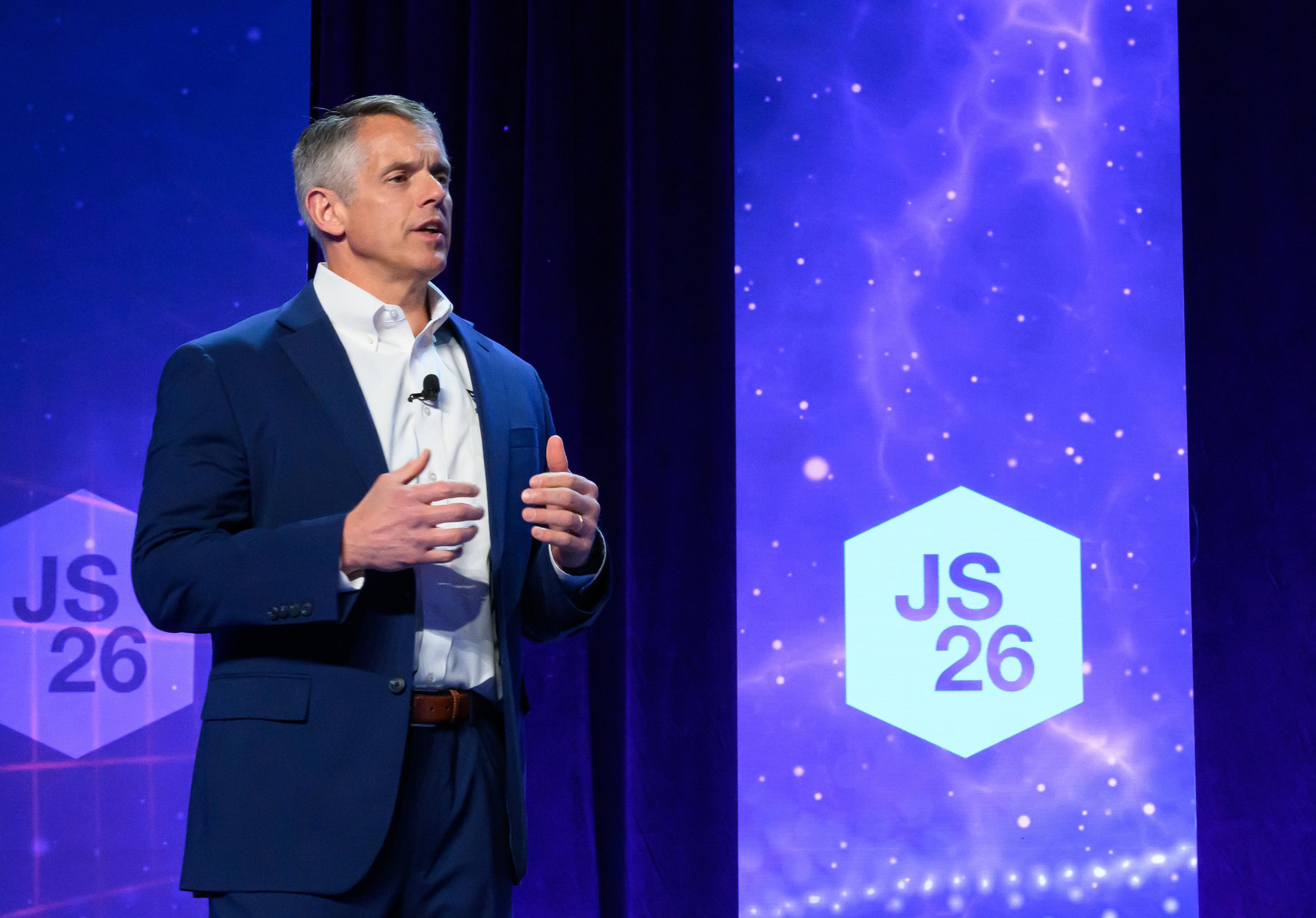
Cordero, also chair of the National Motor Freight Traffic Association, shared that philosophy in a conversation with Elisabeth Barna, founder and principal at EAB Strategics, LLC. at Jump Start 2026. The discussion covered pricing strategy, dynamic rates, technology investments, and the culture that has kept SEFL layoff-free for 75 years.
Cordero framed pricing discipline in human terms. SEFL has never had a layoff and maintaining that record requires resisting the temptation to chase low-margin freight during a downturn. The math is simple: Win a customer by undercutting the market, and that customer will leave when someone else undercuts you. In the meantime, you’ve hired to support that volume. When it disappears, you have a staffing problem.
“We don’t want to bring on low-margin business, go
hire for that business, and then have that business leave us for somebody else that can do it a little less priced, and then we have a staffing issue,” Cordero said.
The discipline extends to network fit. A shipper requiring an 8:30 p.m. pickup might look attractive on paper, but if that late freight disrupts linehaul cut times, it creates service delays across the network. Cordero said they’re seeing customers come to them after experiencing service failures elsewhere, often because those carriers took on freight that didn’t fit their operations.
Cordero was emphatic about dynamic pricing. They didn’t offer it two years ago. Now, every customer the company has moved to a dynamic approach has seen business increase.
“Dynamic [pricing] has been the best thing I’ve ever seen in this industry,” Cordero said. “ [and] I’ve been in this industry 32 years.”
He clarified what that means to his company. It offers its best possible price up front, calculated through an API with no human negotiation. Some lanes work well, and the company wins. Others don’t, and it loses. But the pricing reflects actual cost, and the result has been fewer disputes and more volume in lanes where the company is competitive.
“Every customer we’ve put on dynamic [pricing], we’ve seen the business increase,” he said. “We may have lost the Texas lane, but now we’ve picked up three other states.”
Cordero does not expect dynamic pricing to become universal. Large shippers moving hundreds of shipments a day may not have the capability to dimension every product. But for small and midsize customers, he sees it as the future.
Asked whether technology and artificial intelligence (AI) would deliver a 3% margin improvement for leading LTL carriers by year’s end, Cordero said: Sell. The gains are real, but they’re being absorbed by rising costs in insurance, labor, and real estate.
“I do believe AI is a must-have to continue operating as an LTL carrier,” he said. “But it’s almost like those gains are coming down just to pay for the rising costs on the other side.”
They now account for 92% of shipments, giving the company precise data on what moves through its docks. That data feeds pricing decisions and reduces disputes. Cordero recalled dreaming early in his career of stopping the company for a week to measure every piece of freight. Now, that dream is a reality.
The company is also using AI to optimize linehaul and city routes, identifying runs that can be eliminated to save fuel. On the purchasing side, SEFL buys 83% of its fuel in bulk through on-site fueling, another lever for cost control.
Cordero closed with a reflection on culture. The company has drivers with more than 40 years of tenure. Cordero attributed that loyalty to a company that still operates in what he called the first tier of workforce relationships, where employees believe the company will take care of them and respond in kind.


“Decisions are made that actually cost us money because we were putting people at the forefront.”
Technology has long played a role in transportation and logistics, but the pace of change driven by artificial intelligence (AI) is reshaping how organizations think about operations, labor, customer experience, and revenue growth.
In this Leadership Series conversation, Erin Goheen, vice president of technology at XPO, offered a practical look at how that shift is unfolding inside a modern LTL carrier—and what it takes to move AI from experimentation to enterprise execution.
Rather than a standalone innovation initiative, Goheen framed AI as an operational discipline—one that ties directly to revenue growth, cost control, and service quality. The underlying question is one facing the entire LTL sector: how do you apply AI to improve outcomes without losing sight of people, process, and customer expectations?
Goheen explained that XPO’s technology initiatives are prioritized by measurable impact. On the revenue side, that includes pricing and sales enablement. AI-driven pricing engines are being developed for both contract and dynamic pricing environments, while sales teams are equipped with tools that surface opportunities instead of requiring manual research.
One example involves ranking potential customers across North America to help sellers focus their out-
reach efforts. Using what she called “a stack ranking of nearly 10 million companies in North America,” a proprietary AI model identifies the highest-probability LTL shippers within each seller’s territory and prioritizes outreach accordingly.
On the cost side, AI is deeply integrated into XPO’s linehaul network, pickup and delivery operations, and labor planning. Models help optimize freight flows, reduce empty miles, and predict staffing needs at a granular level.
In a network where even a one-percent efficiency gain can translate into millions of dollars, incremental improvements carry outsized financial impact.
A consistent theme throughout the discussion was XPO’s stance that AI should enhance—not replace— its workforce. Goheen made clear that the objective is to remove administrative burden and allow employees to focus on the parts of their jobs that generate the most value.

ERIN GOHEEN Vice President of Technology at XPO
In sales, that means reducing time spent on tracking updates, manual reporting, and reactive communication. AI tools are being built to proactively surface churn risks, identify service issues before customers call, and suggest targeted next steps.
Instead of discovering lost revenue after the fact, sellers are positioned to act ahead of the problem.
The broader philosophy is to rethink what the role should look like in the future and then build toward that vision. AI becomes the mechanism for shifting time away from low-value tasks and toward revenue-generating activity.
Customer-facing technology is another major area of focus. Goheen described a deliberate push toward self-service capabilities across digital channels, reflecting changing workforce expectations and communication preferences. Customers increasingly expect immediate access to information without navigating phone trees or waiting days for email replies.
At the same time, AI is being deployed behind the scenes to dramatically reduce response times. Incoming customer emails can now be analyzed and drafted automatically within minutes, with a human reviewing the message before it’s sent. This “humanin-the-loop” approach preserves quality while accelerating turnaround time.
The impact is already visible in customer feedback. As Goheen recalled, one response stood out: “You guys are the fastest response I’ve ever seen in my life.”
When response times shrink and information quality holds steady, service stops being reactive and starts becoming a strategic advantage.
Goheen also addressed a common industry challenge: many AI projects never make it to production or fail to generate measurable results. In her view, success depends less on currying buy-in and more on discipline.
Leadership alignment is foundational. At XPO, executive support for technology transformation creates momentum that flows through the organization.
But buy-in alone is not enough. Technologists must deeply understand the workflows they are redesigning:


“If you are building technology for somebody to use, you need to know their job better than they know their job… or you’re going to build a bad product.”
That principle shapes how projects are scoped and deployed.
Rather than overengineering solutions, the team favors minimum viable products that can be launched quickly, tested, and iterated. Clear KPIs are estab
-
lished up front, along with monitoring systems and defined exit criteria if results fall short.
AI is treated as a tool—sometimes the right one, sometimes not. In some cases, a simple code-based solution may deliver value faster than a complex model.
The emphasis remains on solving the problem efficiently, not showcasing technology for its own sake.
XPO has already reported measurable gains in its linehaul network, including double-digit reductions in empty miles and significant reductions in freight diversions. Route optimization efforts are still in early stages, but are showing promising improvements.
While some benefits are immediately quantifiable, others are strategic. Investments in pricing intelligence, sales enablement, and customer service are designed to strengthen competitive positioning over time.
Goheen closed the conversation by encouraging leaders to view AI not as a threat, but as a catalyst for better work design. Rather than asking whether AI will replace roles, she suggested organizations ask a different question:
“What would it take for a computer to take away all the stuff I don’t want to do every day?”
And for organizations wrestling with how to apply AI without losing sight of people and customer expectations, that roadmap may offer a practical starting point.

Adam Miller, Knight-Swift Transportation’s CEO, is pumping the brakes on Knight-Swift’s LTL expansion to consolidate its impressive network growth. Knight-Swift Transportation has spent the last several years rapidly acquiring LTL carriers and building toward a national network.
Now, the company is pausing expansion to focus on developing density in existing terminals and restoring margins before pushing into the Northeast. Miller outlined the strategy in a conversation with Lee Klaskow, senior analyst – transportation and logistics at Bloomberg Intelligence.
The pause reflects lessons learned from aggressive growth. Knight-Swift consolidated three separate LTL brands under the AAA Cooper umbrella, converted multiple acquired companies to a single operating system, and built out terminal infrastructure faster than shipment volumes could fill it. This expansion put pressure on margins.
“Right now, we’re taking a breather as we develop some density in our current terminal network,” Miller said. “We’ll hopefully see demand fill in this year, and then we’ll look at what’s the right approach to extend our reach into the northeast.”
Miller described LTL integration as fundamentally different from truckload. On the truckload side, Knight-Swift buys companies and lets them operate independently, leveraging best practices without forcing system conversions. The company maintains multiple brands doing essentially the same work.
This model doesn’t translate to LTL, as customers want one pro number and prefer not to interline freight. Larger customers especially want a single network their freight flows through. These preferences caused Knight-Swift to take a riskier approach with LTL acquisitions — ripping out legacy systems and converting acquired companies to AAA Cooper’s platform within months of closing deals.

“I look at system conversion as open heart surgery for a company,” Miller said. “You would only do it if you felt like you really had to because there’s so much risk involved.”

The conversions created training demands, operational disruption, and cost. But Miller said the value justified the risk. The company recently pulled all its LTL acquisitions under the AAA Cooper brand to give customers and employees clarity about the connected network they’re building.
Cultural integration added another layer of complexity. Knight-Swift bought family-owned LTL businesses with established cultures. Aligning those cultures while converting systems and training employees on new processes required significant management attention. Miller acknowledged the challenges but emphasized that the AAA Cooper team has successfully navigated the integration work.
Miller’s interest in LTL stems partly from its stability relative to truckload. He estimated that the top 10 LTL providers account for roughly 75% of the market,
while the top truckload carriers account for less than 10%. This fragmentation makes truckload far more cyclical. With LTL rates increasing annually since 2009, it boasts a consistency that truckload can’t match.
The freight recession put the difference between the two in high relief. Truckload has suffered through more than three years of depressed rates, down roughly 20%, while costs haven’t budged. LTL saw shipment volume declines, particularly in the fourth quarter of 2025, but the pricing environment remained more stable. Miller said LTL demand in early 2026 has improved compared to the fourth quarter.
Managing through the LTL downturn required focus on labor efficiency. The team worked to manage labor costs without cutting so deeply that they couldn’t handle freight when demand returns. Miller described it as a disciplined, balanced approach.
On the truckload side, the company focused on equipment efficiency, optimizing trailer-to-tractor ratios, and reducing costs across every line item on the P&L. Miller said the worst appears to be behind the truckload business. He’s seeing more load rejections in the market even without increased demand, suggesting capacity is finally exiting the network.
Miller welcomed the federal government’s enforcement efforts targeting fraudulent training schools, non-domiciled CDLs, and unsafe capacity. He described the work by the Department of Transportation and the FMCSA as the most welcome change he’s seen in the last year.
The enforcement addresses a structural problem created during the pandemic. Demand for goods surged in 2021. The industry issued roughly double the normal number of CDLs, many of them non-domiciled licenses issued to immigrants entering the country during a booming freight market. When the economy reopened in 2022, demand shifted from goods to services. The truckload market was left with record capacity chasing diminished freight volumes.
Miller argued that the current enforcement efforts will balance supply and demand but also help legitimate small carriers survive. Independent operators with one or two trucks can undercut carriers that buy real insurance, operate safely, and comply with hoursof-service regulations. Small carriers with 50 trucks that maintain terminals, hire compliant drivers, and follow regulations can’t compete with operators who avoid those costs.
“It’s sad to see so many small carriers fail, shrink dramatically, or exit the industry,” Miller said.
Knight-Swift has deployed AI tools for repetitive tasks and routine communications. The company uses the technology to handle driver information requests and support inquiries from third-party carriers. A dedicated team evaluates AI proposals, scoring each initiative to focus investment on areas with measurable returns. Knight-Swift has roughly 5 major AI initiatives underway, mostly focused on improving communication efficiency with drivers and carriers.
As for AV and EV, Miller is more cautious. Previously, he invested $50 million in an autonomous trucking company, which he said taught him expensive lessons. The technology might be 95% of the way there, but that final 5% may be impossible or prohibitively expensive to solve.
Miller sees more value in harvesting autonomous safety technology to make trucks safer with drivers still in them. That application delivers real benefits without requiring the premium valuations that autonomous companies need.
On electric vehicles, Knight-Swift owns 10 to 15 trucks that Miller called “yard art.” They look nice but aren’t useful for over-the-road, long-haul transportation. Range, weight, and cost issues make them impractical. Miller said hybrid vehicles have a better chance of success, but previous federal policy
“These are quality carriers that we want to be successful.”
Miller acknowledged that the truckload market will always exhibit some cyclicality due to low barriers to entry. If rates improve significantly, capacity will return. But he doesn’t expect future cycles to match the severity of the pandemic-era imbalance. The enforcement actions, he said, should create a structurally healthier industry.
pushed for zero emissions rather than taking incremental steps through hybrid technology.
“A manufacturer asked me recently if we have any customers who will pay more knowing their freight was moved by electric vehicles,” Miller said. “I told her, ‘Well, five years ago, it was zero. It’s doubled since then!”
Miller emphasized that Knight-Swift’s multiple brands give management different views of market dynamics. When he sees the same trend across brands, he knows it’s a genuine market shift rather than an anomaly with one customer or region. This insight differentiates Knight-Swift from competitors operating single brands.
On the procurement side, Knight-Swift packages all major purchases — equipment, fuel, IT vendors — as one company. Miller said the cost difference between what acquired companies were paying and what Knight-Swift can negotiate is significant.
The freight recession has been brutal, particularly on the truckload side. But Miller sees structural improvements from regulatory enforcement and early signs of market recovery. The LTL pause is preparation for the final phase of building a national network.

Aprimary focus in the industry currently is the integration of artificial intelligence (AI) and Jump Start 2026 was no exception, with a panel exploring how carriers are moving from experimentation to execution.
A panel featuring Erica Brigance, vice president of strategic products and analysis at ArcBest; Todd Florence, chief information officer at Estes Express Lines; Justin Hall, chief commercial officer at Augment; and moderator Seth Clevenger, managing editor of features at Transport Topics, explored how carriers are moving from experimentation to execution.
A consistent theme emerged: Don’t chase AI for its own sake.
“We’re not chasing a technology,” Brigance said. “It’s really about what is the use case that we have, what’s the value of solving that, and is AI the right solution?”
Florence echoed the point. “If you can define the rules to me by which this will happen, I probably don’t need an AI solution to do what you’re trying to do. Allow the solution to reveal itself.”
Both carriers emphasized that legacy AI, including machine learning and optimization models, continues to deliver significant value. Brigance noted that ArcBest’s city route optimization alone delivers more than $13 million in annual cost savings. But generative AI and agentic systems are opening new possibilities. ArcBest is using them to automatically reply to customer emails and provide rate quotes. The goal is to ensure that calls reach employees with a full shipment context.
The panelists offered practical guidance on deploying these newer tools.
SETH CLEVENGER MODERATOR

CHIEF COMMERCIAL OFFICER
“Treat your agents like interns,” Florence said. “When they come out of the gate, they really don’t know anything. You’re teaching them everything along the way.”
Brigance agreed, adding that agents require the same oversight as any employee. “You have to train them to behave in the way that you want, and then you have to audit and ensure that they’re doing what you have asked them to do.”
Estes has embraced a citizen development model, allowing end users to build their own agents. Florence himself has written agents to help with contract reviews. The approach reflects a broader philosophy: Stay lightweight and avoid long-term commitments in a space evolving by the month.
“We’re not doing anything longer than a year,” Florence said. “Everything we’re doing is very lightweight, very fast. We’re trying different models, different approaches.”
Hall, whose company builds AI workflow automation for logistics, urged carriers not to wait.
“If you haven’t started, you’re already behind,” he said. “Here we are in the first quarter of 2026. If you haven’t started, you’re even further behind.”
He recommended internal “hackathons” to generate bottom-up buy-in and cautioned against tackling too many AI rollouts at once. He also stressed the importance of domain expertise, sending engineers into the field to shadow operators before building anything.
“If you are not taking your own or your partner’s best product and engineering people and forcing them into the field to shadow and really study the day in the life of the operator you’re trying to serve, you’re going to struggle,” Hall said.
Asked about AI missteps, the panelists were candid.
“We tried to start too big,” Brigance said. “We didn’t have the data; we didn’t understand the process.” The lesson: Start small and slowly build from there.
Florence pointed to similar patterns.

“Most of the failures come down to not understanding the business deeply enough, not understanding the process you’re trying to automate, or thinking you have the right data.”

When Clevenger asked each panelist for a single takeaway, Florence kept it simple:
“Try something.”
The CFO role has expanded well beyond the balance sheet. At Jump Start 2026, Armstrong Transport Group’s David Morris, CFO, made the case that finance leaders must now operate as strategic partners across the business.


In a conversation with Victoria Kickham, senior editor at DC Velocity, Morris outlined how Armstrong has grown revenue from $400 million to $1.4 billion since 2019 while navigating an increasingly complex threat landscape.
Morris emphasized that financial controls and governance start with talent. At Armstrong, 18 of 24 managers in the company’s shared services organization were promoted from non-manager roles. Morris pointed to his controller, who started as a cost accountant more than a decade ago, and his vice president of shared services, who began as an entry-level biller 13 years ago.
“Regardless of the sophistication of technology, the processes, the prevention tools, growth — none of that’s possible without having the right team in place,” Morris said.
When hiring, Morris said he prioritizes culture fit and critical thinking over credentials.
“I can train someone on the skills that I need,” he said. “I really want to know if the culture fit is there.”
Fraud remains Morris’ top concern. He described an environment in which bad actors spoof emails and alter domain names to impersonate carriers, sometimes hacking into carrier systems to redirect shipments. Others target the brokerage itself, swapping a single character in a domain name to intercept communications.
Armstrong uses Highway for carrier onboarding and recently adopted its secure rate confirmation tool, which requires two-factor authentication. On the customer side, the company partnered with Nuvo to verify that businesses are registered and that the person signing a credit application works for the company.
“No one was thinking about fraud on the customer side a couple of years ago,” Morris said. “This is becoming more and more out there.”
He stressed that technology alone is insufficient. “Tools are critical. They’re very helpful. But you can’t replace human judgment.”
Armstrong has moved aggressively into AI, partnering with a customizable AI company to build workflows tailored to individual agent processes rather than generic templates. The company now uses AI to automate track-andtrace calls to carriers, handle inbound load board inquiries, and collect proof-of-delivery documents, cutting POD turnaround from several days to fewer than 24 hours.



On invoicing, Armstrong partnered with Transflo and now automates about 65% of its invoices. The company was among the first users of Transflo’s LTL workflow AI.
“We’ve seen significant enhancements on our LTL side,” Morris said. “Just to be able to eliminate a lot of that manual work on the invoicing side, both on the TL and LTL, has really helped us.”
But Morris returned to a familiar theme.
“All these AI initiatives, they’re really great, but you have to have the right people in place,” he said.

“AI is not going to replace that human aspect and that critical thinking that is needed.”


DAVID MORRIS CFO | Armstrong Transport Group
Morris acknowledged that market conditions remain challenging but said Armstrong is focused on what it can control. About $150 million of the company’s revenue now comes from LTL, a segment that has grown substantially over the past four years. He noted a wave of recent bankruptcies across the industry. He emphasized the importance of balance sheet strength, particularly during periods of growth when working capital demands can catch companies off guard.
Asked whether AI budgets should be protected even during cost-cutting cycles, Morris offered a nuanced answer: Protect the investment if you’re already mid-journey but hold off if you’re just getting started.


Ifthere were a drinking game for the word “uncertainty,” Lee Klaskow told the Jumpstart 2026 audience, everyone would be drunk by 10 a.m. The Bloomberg Intelligence analyst, who covers all modes of transportation and around 24 public companies, delivered a financial outlook defined by a freight market still waiting for a definitive turn while policy chaos out of Washington makes planning nearly impossible.
Trucking stocks have spiked since November, driven largely by expectations around federal action on non-domicile drivers, English language proficiency requirements, and ELD enforcement. Klaskow cautioned that the optimism is speculative.
“That’s a lot of hope, and we’ll have to see if that really pans out,” he said.
The S&P 500 had a strong 2024, but much of that was concentrated in large tech firms riding the AI trade. Meanwhile, the economic indicators that matter most to freight remain tepid. GDP growth is forecast at 2.2-2.3%, below the 2.5% threshold typically asso -
ciated with a strong economy. Industrial production, a key metric for LTL demand, is inching up but remains unremarkable. Housing starts are down, which means fewer new homes and less stuff moving into them.
The ISM manufacturing index has been in contraction territory for 36 of the last 38 months. Klaskow uses it as a proxy for LTL demand. “To us, that means over the next two or three months, you’ll probably see negative tonnage going on in the LTL space.”
Much of the current freight environment is shaped by what Klaskow called the pull-forward effect. Ship -
pers rushed imports in the first half of 2025 to get ahead of anticipated tariffs. That front-loading is now creating tough comparables and weak volumes, particularly on the West Coast but increasingly on the East Coast as well.
“If the Trump administration says we’re going to put tariffs on everybody and they’re going to be expensive, you’re going to bring stuff in before you need it just to get it cheaper,” Klaskow said. “That’s going to create really tough comparables.”
The back-and-forth on tariff policy compounds the problem. Klaskow noted recent announcements on tariffs affecting South Korea and countries doing business with Iran. “While the policy might be a good idea, the back and forth is not good for business,” he said. “For me to plan my own supply chain, I need to know what’s going on. I need to know what the playing field looks like.”
Despite macro headwinds, Klaskow expressed continued confidence in the LTL sector, largely due to pricing discipline. He pointed to lessons learned from past cycles when aggressive pricing to capture share backfired.
“A lot of people in this room probably remember when Yellow was almost going bankrupt, not when they actually did, but 20 years before,” he said. “Conway, which is now XPO, FedEx Freight, and some others, were very aggressive with pricing. It took them years to get the pricing to where it needed to be.”
The industry appears to have internalized that lesson. Klaskow expects mid-single-digit rate increases, excluding fuel surcharges, to continue through the cycle. Consolidation, including Knight-Swift’s entry into the national LTL market, reinforces that discipline.
Revenue for LTL carriers is expected to grow 3% in 2026, with earnings up 18%, reflecting the sector’s operating leverage when volumes improve. Truckload earnings are forecast to rise 42%, but Klaskow noted that figure comes off a brutal base: Earnings fell roughly 50% in both 2023 and 2024.
Bloomberg Intelligence puts the probability of the Union Pacific-Norfolk Southern merger at 60%. Klaskow acknowledged the number has been fluid, rising from an initial estimate of 20-25% as political signals shifted. But he emphasized the regulatory bar remains high.

“They have to prove that it enhances competition and it’s in the public good. Those are two very, very high bars.”

The Surface Transportation Board recently indicated that Union Pacific’s initial filing lacked sufficient information, a sign that regulators intend to closely scrutinize the deal.
An audience member raised the issue of driver supply, noting that the Trump administration’s immigration enforcement could remove a significant portion of the workforce. Klaskow cited estimates of 200,000 non-domicile CDL holders in the U.S. and referenced Werner CEO Derek Leathers’ projection that English language proficiency and non-domicile rules could reduce capacity by 10 to 15%.
But Klaskow framed the issue as structural rather than cyclical. “I’ve always been in the camp that we’re always going to have a driver shortage or a turnover issue, whatever you want to call it,” he said. ATA data shows turnover rates in trucking sometimes exceed 100%.
“There aren’t many industries where there’s over 100% turnover.”
Autonomous and electric trucks are no longer theoretical. They’re hauling freight, logging miles, and forcing carriers to rethink how they operate.

Jim Mullen, principal at Mullen Consulting, moderated a conversation with Jordan Coleman, chief legal and policy officer at Kodiak, and John Verson, founder and chief commercial officer at Nevoya, on where these technologies stand and where they’re headed.
Coleman framed autonomous trucking as a response to a labor shortage that shows no signs of easing. The average age of an over-the-road truck driver is 55, up from 52 just three years ago. Young people don’t want the job—a federal pilot program designed to allow 3,000 under-21 drivers to obtain CDLs received just 50 applications.
“If you want to become a truck driver at 21 today, you’ll retire a truck driver if you want to,” Coleman said. “But there really are sweet spots.”
Kodiak sees its opportunity in the lanes humans don’t want to run. The company operates 10 driverless trucks in the Permian Basin, where oil wells require just-in-time delivery and recruiting drivers is nearly im-
possible. As of September 2025, Kodiak had logged more than 3 million autonomous miles with zero atfault accidents and delivered more than 5,200 loads. Coleman said the company plans to launch driverless operations on public highways by the end of 2026.
Verdon acknowledged the constraints facing battery-electric trucks. The vehicles cost more than diesel equivalents. Range remains limited. Charging infrastructure is sparse outside Southern California. But he argued that the path forward lies in finding the right freight in the right markets rather than waiting for constraints to disappear.
Nevoya currently operates about 40 trucks across California, Texas, and Arizona, with plans to deploy another 50 to 60 in Dallas by year’s end. The company has focused on port drayage and regional hauls where charging infrastructure exists, and freight flows in both directions.

“You have to find the right markets and the right mechanisms to enter those markets such that you can compete on the economics side of things,” Verdon said.
He noted that next-generation Tesla trucks offer ranges approaching 500 miles, which shifts the constraint from vehicle capability to driver hours-of-service limits. That changes the operational calculus significantly.
Both executives emphasized that their industries must succeed on economic grounds rather than regulatory mandates. Verdon said Nevoya operates on a demand-driven model that isn’t tied to any political cycle. He noted that some past incentive programs may have had unintended consequences, reducing the pressure on OEMs to innovate and lower prices even as battery costs declined.
“Adoption has to be driven by the economics, not regulation,” Verdon said.
“Regulation can be a helpful catalyst, but we ourselves need to be the ones who demonstrate that we can win on the economics.”


Coleman said Kodiak doesn’t need new federal legislation but would welcome certainty. The company has operated under interpretive guidance, which can change quickly. He expressed optimism about momentum in Congress on the SELF DRIVE Act. He noted that key figures in the new administration, including the FMCSA and NHTSA administrators, have deep familiarity with autonomous technology.
The bigger challenge, Coleman said, is public acceptance. He recounted how he convinced his skeptical 75-year-old mother-in-law from Hastings, Nebraska, to try a Waymo robotaxi. After a 20-minute ride, she asked to go around the block a few more times.
“We make the least sympathetic defendant in history,” Coleman said. “We expect perfection from robots. We must be superhuman.”
When asked to project five years forward, both executives offered ambitious yet measured forecasts. Coleman predicted tens of thousands of autonomous trucks on the road, concentrated in Sun Belt corridors along Interstates 10, 30, 40, and 35. He emphasized that growth would be organic and geographic rather than sudden.
Verdon projected full North American coverage for electric trucks and hundreds of thousands of vehicles. He stressed that the industry must shift its mindset from simply swapping powertrains to demanding around-the-clock asset utilization that justifies the capital investment.
“There is this change in mindset to demanding 24/7 utilization that is necessary to justify that capital investment,” Verdon said.
Are 3PLs strategic partners or vendors? The former, of course, is the aspiration, but increasingly—thanks to advances in data integration, fraud prevention, and transparency—it’s becoming the reality.


A panel moderated by George Lauriat, editor-in-chief at The American Journal of Transportation, on this topic, bringing together Stephanie Bixler, CTO and head of Synapsum at eShipping; Dave Kiesling, group vice president of transportation at Kenco Group; and Jason Gullick, director of transportation management at Ryan Transportation, analyzed these themes.
The panelists converged on a single theme: 3PLs that build lasting relationships do so by co-owning outcomes with shippers rather than executing transactions and moving on. Gullick framed it most directly.
“The new 3PL standard for us ultimately is about transparency with the goal of building trust with our shippers.”
He described viewing shipper relationships through a “10-year lens”—sharing data, acting as consultants, and maintaining account management continuity rather than rotating contacts and starting over.
Bixler pushed the definition of strategic partnership further. eShipping’s Synapsum platform fuses commercial order data down to the SKU level with transportation data, giving shippers visibility into total cost to serve. That capability lets 3PLs move beyond logistics consulting into inventory placement and product strategy territory that traditionally belonged solely to the shipper.
“We’re looking beyond logistics data to companies’ overall supply chain data,” Bixler said, describing 3PLs becoming “real, true consulting partners” who can speak to sourcing strategies and manufacturing origin alongside transportation cost.
The practical payoff shows up in how shippers understand profitability. Bixler described the ability to tie transportation costs to individual order lines and



the value of the sale as genuinely eye-opening for clients. Businesses that understand landed cost and true profitability after gross margins can make different decisions—about service models, pricing, and incentives—that benefit the entire supply chain. She argued this kind of intelligence was previously uncommon for 3PLs to provide.
Gullick described a similar data-driven approach on the shipper side. Ryan Transportation analyzes shipper buying behaviors and produces what it calls an “opportunity loss” report to model past decisions and future expectations. The report audits both sides of the relationship, showing shippers how routing decisions affect cost and service. When shippers resist changing established habits, Gullick said the data creates the foundation for honest conversation rather than pressure.
All three panelists described fraud prevention as an important priority for this new wave of 3PLs. Bixler said fraud has become significantly more prominent over the last 18 months. eShipping uses third-party
data to monitor carriers and in-truck tracking technologies to identify issues like stolen loads. Kiesling described routing high-value truckload shipments through LTL partners specifically because LTL carriers verify drivers’ licenses at check-in. For a $500,000 load, he said, absorbing a loss on the transaction is worth the guarantee of delivery.
Gullick noted that Ryan Transportation has also invested heavily in technology to verify carrier qualifications and uses phone line location data to authenticate booking transactions. When competitors offer cheaper rates, Gullick is transparent with shippers about why Ryan’s investment in fraud prevention affects pricing.
“It doesn’t always give us a pricing advantage,” he acknowledged, but it protects service execution and avoids the scramble of a compromised load.
Lauriat noted that trust has become a “deal-maker or a deal-breaker” in shipper–3PL relationships—a characterization that the panelists’ examples bore out in operational detail.


““We’re looking beyond logistics data to companies’ overall supply chain data,” Bixler said, describing 3PLs becoming “real, true consulting partners” who can speak to sourcing strategies and manufacturing origin alongside transportation cost.
The panel’s discussion of AI and automation focused less on transformation and more on pragmatic applications. Each panelist described AI as a tool for extending the capabilities and efficiency of what their companies already do.
Gullick described automation through route guides and business rules to auto-select and auto-dispatch carriers, with Ryan Transportation’s opportunity loss report serving as an ongoing audit. Kiesling described AI-powered 30-day lookbacks on customer data that quickly surface issues—for example, a shipment correctly rated but missing a liftgate charge—and feed that intelligence back to operators making front-end decisions. These audits, which used to take a lot of time, now happen quickly.
Bixler offered the most detailed picture of how guardrails work in practice. eShipping uses an AI agent to handle tracking exceptions when APIs don’t provide timely tracking information. Supervisors oversee the process, escalation paths to humans are clearly defined, and the team regularly measures the agent’s efficacy against defined benchmarks.

“It’s an evolution, and it never ends,” she said.

On AI investment strategy, Bixler described a crawl–walk–run approach: proof of concept first, deployment if successful, with a hub-and-spoke governance structure to maintain oversight across the organization.
The panelists agreed that real-time shipment visibility has moved from a differentiator to a baseline expectation—not only for shippers, but also for shippers’ customers. Gullick described offering shippers a direct tracking link for their end customers—order-by-order, real-time tracking that brings e-commerce-style visibility into LTL and truckload. Kiesling described push notifications that let dock supervisors and workers plan inbound and outbound schedules when trucks arrive early.
Both were presented as the minimum shippers now expect from a 3PL relationship. The differentiator now, the panelists suggested, is what sits above visibility: the ability to act on data before problems occur, to prevent service failures rather than explain them, and to show shippers not just where their freight is but what it’s actually costing them.
This combination of intelligence, fraud prevention, transparent pricing, and consulting-grade data describes a 3PL model built around a deep, accountable partnership. The panel emphasized that shippers are beginning to recognize the difference between this new 3PL standard and the old—and they’re factoring it into their partner selection.


Artificial intelligence has dominated the conversation at Jump Start 2026, but a session moderated by Cathy Roberson, managing director at Logistics Insights and Trends, LLC. shifted the focus from capability to confidence. The question wasn’t whether AI can make decisions. The question was whether carriers, their employees, and their customers can trust those decisions when machines increasingly make them.
The panel featured Daniel Curling, chief technology officer of WWEX Group, and Scott Sullivan, chief executive officer of PITT OHIO. Both organizations are moving cautiously but deliberately into AI-driven automation, with a shared emphasis on starting small, involving the business, and keeping humans in the loop.
Curling framed the shift in straightforward terms. Over the next three to five years, autonomous systems will move from providing insights to making routine operational decisions — such as pricing adjustments, carrier selection, and exception handling. The
goal is to free humans to focus on strategy and edge cases rather than repetitive tasks.
“I think the real impact is that these operational decisions are being made and allowing humans to focus more on strategy as well as edge cases,” Curling said.
Sullivan offered a similar view, emphasizing that AI remains a tool for better decision-making rather than a replacement for human judgment. He pointed to weather events like winter storm Blair, which disrupted operations across the Southeast during the conference. AI can optimize routes and read emails, but it can’t tell a carrier which terminals to open after a snowstorm.
“AI is not going to tell me what terminals I can run today,” Sullivan said.
“That’s still going to be a human
decision.”
Sullivan described one of PITT OHIO’s early AI projects: reading pickup request emails and entering them directly into the transportation management system. The work took about a year to reach 70%80% automation. The challenge wasn’t the technology itself but the variability of the inputs. Emails arrive in countless formats. Some contain multiple pickups. Some are missing critical information. The system had to learn to handle each case and, when necessary, respond to the customer requesting missing details.
“It took about a year to get to that point where people were comfortable,” Sullivan said. “But after you train it and test it, you’ll see the number of transactions flowing through at a much higher percentage.”
Curling emphasized the importance of starting with well-defined decision trees and low-risk processes. The worst approach, he said, is to tackle the biggest, hairiest problem in the organization first. Those projects take too long, and if they fail to deliver results quickly, they erode confidence in AI across the organization.
“If those things take too long and they’re not getting the results at a fast clip, you can lose confidence,” Curling said. “And there is no innovation. Then there is no confidence in AI, and you might not get back to the table to get an idea across.”
Both panelists stressed that trust begins internally. Sullivan described forming cross-functional cohort
teams that include people with a stake in the outcome and those without. The goal is to make employees part of the solution rather than subjects of it.
Curling made a similar point. He emphasized making AI decisions visible and explainable, not mysterious. People want to understand why a decision was made, see evidence that the system is being monitored, and compare before-and-after results.
“A lot of times people are at different places, but really it boils down to some fundamental human elements when decisions are being made,” Curling said.
Neither company is using AI as a cost-cutting tool. Sullivan said PITT OHIO has chosen not to backfill certain roles as natural turnover occurs, but the company isn’t pursuing headcount reductions. Curling described a similar approach at WWEX Group: automate routine tasks, redeploy the humans who were doing them, and backfill only when necessary.
Sullivan returned repeatedly to a point that resonated throughout the conference: LTL is a relationship business. PITT OHIO still answers phones with live people during business hours. The company hasn’t deployed customer-facing AI agents and isn’t sure it wants to.
“I’m just waiting for the day when a shipper will tell me, ‘Hey, you could have your robot call me or your AI agent call me and tell me what’s going on. I never want to talk to anyone,” Sullivan said. “Right now, we don’t want to lose that human touch.”
Curling agreed. He noted that system problems are survivable when relationships are strong. Without those relationships, a technology failure can cost you the customer.
Asked for bold predictions, Sullivan pointed to robotics on the dock. He sees potential for forklifts and material-handling equipment to operate autonomously in the chaos of an LTL cross-dock, though the technology remains early.
Curling offered two predictions. The first was a near-term layup: AI will eliminate the bottleneck of waiting for IT to write or run reports. Business users will be able to query data directly and get answers in the format they need in real time. The second was more ambitious: a large language model built specifically for the freight industry, enabling deeper integration across systems and more effective data sharing.
“That opens the door to a lot of things,” Curling said.
“That could help us augment lots of operational work, and it would enable more data sharing that would only help our industry serve our customers better.”

DANIEL CURLING CHIEF TECHNOLOGY OFFICER OF WWEX GROUP

The mission at AG Freight is simple: to provide high-quality services for their valued clients. The team goes above and beyond to cater to each customer’s specific needs. Through open communication and exceptional service, they hope you’ll find what you’re looking for with their freight company!
QX Logistix supports many of the largest retail and ecommerce businesses in the country, holding themselves accountable to the highest standards and fulfilling the desired outcomes of their customers. Step into a world where your e-commerce reaches new peaks without the growing pains. Join hands with QX Logistix today and let’s scale up together!
Atcheson’s Express began in 1988 serving Southern California. Today, the trucking company offers overnight and same day TL and LTL service to over 350 service points in Southern & Central California. They also offer service to and from Las Vegas and its surrounding cities. With a variety of equipment available to meet your unique needs, including 48 and 53 ft trailers, flat beds, stake beds and bobtails, including lift gate & air ride equipment available upon request.
Passionate about trucks and the people that understand their importance. STBI’s goal is to treat those in the transportation business, their owner operators, employees, and customers in the same way they would wish to be treated. Their highest aim is to integrate Biblical values of honesty, integrity, reliability, and stewardship into the food transportation industry. They hope that after decades of service to be known as the transport company that says what it can do and does what it says.
TRAIL KING INDUSTRIES, INC.
Mitchell, SD | Associate
VOLK TRANSFER, INC.
Mankato, MN | Associate
STATON LOGISTICS
Atlanta, GA | Associate
SCARBROUGH TRANSPORTATION, LLC
Kansas City, MO | Associate
MOUNTAINMOVERS TRANSPORTATION & LOGISTICS L.P.
Grapevine, TX | Carrier
ENERSYS, INC
Reading, PA | Associate
TRIMARK USA, LLC
Mansfield, MA | Associate
ROCHE VITAMINS
Belvidere, NJ | Associate
DSM CHEMICALS NORTH AMERICA, INC
Augusta, GA | Associate
FIRMENICH, INC
Plainsboro, NJ | Associate
I-HEALTH A DIVISION OF DSM
Shelton, CT | Associate
PEDIGREE TECHNOLOGIES
Fargo, ND | Associate
HEARTLAND LOGISTICS GROUP, LLC
Lenexa, KS | Associate
AUGMENT
West Lake Hills, TX | Associate
ZAAR CONSULTANTS, LLC
Georgetown, KY | Associate

KAIZEN SOFTWORKS
Boston, MA | Associate
COLUMBIAN DISTRIBUTION SERVICES
Grandville, MI | Carrier
SCHNEIDER LOGISTICS, INC
Green Bay, WI | Associate
PRIORITY 1, INC
Little Rock, AR | Associate
STORD FREIGHT LLC
Springfield, MO | Associate
DIRECT LOGISTICS, INC.
Irving, TX | Associate
JACUZZI BRANDS CORPORATION
Chino Hills, CA | Associate
PALLET
Wilmington, DE | Associate
YAMAHA CORPORATION OF AMERICA
Buena Park, CA | Associate
IMPERIAL DADE
Jersey City, NJ | Associate
MAGIC TRANSPORT, INC
Toa Baja, PR | Associate
HAPPY ROBOT, INC.
Dover, DE | Associate
UPLIFT DESK
Austin, TX | Associate
MENTIUM
Austin, TX | Associate
GRAIN MILLERS, INC.
Eden Prairie, MN | Associate
AIR DISTRIBUTION TECHNOLOGIES INC.
Plano, TX | Associate
CHATSWORTH PRODUCTS, INC
Simi Valley, CA | Associate
TRANSPORT EXPRESS
Hazelwood, MO | Carrier
TRANSFLO
Tampa, FL | Associate
AMERICAN BATH GROUP
Savannah, TN | Associate
NEXTRACKER INC.
Fremont, CA | Associate
PITTSBURGH PAINTS CO.
Cranberry Township, PA | Associate
SNF HOLDING COMPANY
Riceboro, GA | Associate
FUJIFILM ELECTRONIC MATERIALS U.S.A., INC.
Fort Worth, TX | Associate
COMMERCIAL VEHICLE GROUP
New Albany, OH | Associate
BROOKS EQUIPMENT
Charlotte, NC | Associate
RADICI PLASTICS USA, INC
Wadsworth, OH | Associate

Heather Allen has joined SMC³ as manager of LTL education and digital learning.
Joe Pakizer has joined SMC³ as product owner II – CIS.
Miraz Zaman has joined SMC³ as data scientist II.
Ashley Soltis has been promoted to sr. data analyst.
Beth Malik has been promoted to vice president of marketing.
Christie Turner has been named director of product strategy.
Jason Shelnutt has been promoted to vice president of sales strategy and LSP vertical sales.
Johnson Nguyen has been promoted to software engineer II.
Justin Springer has been promoted to sr. director of vertical sales.
Kendra Miller has been promoted to vice president of alliance partnerships and client success.
Kevin Springer has been promoted to sr. vice president of sales.
Kevin Ziegler has been promoted to sr. software engineer.
Laura Skoff has been promoted to people and talent support specialist.
Peter Stasi has joined SMC³ as QA testing engineer II.
Vigi Kuruvilla has joined SMC³ as software engineer manager.
Marika Holcombe has been promoted to manager of collections/accounts receivable.
Melissa Lewis has been named IT solutions analyst II.
Mischelle Rufener has been promoted to sr. director of vertical sales.
Norris Price has been promoted to facilities care specialist III.
Rachel Turpin has been named UI designer.
Renea Gay has been promoted to facilities care specialist III.
Stephen Brown has been promoted to sr. QA testing engineer.
Yannick Brassard has been promoted to sr. data analyst.
Zoraida Fitzpatrick has been promoted to manager of facilities services.

ROUTING ACCURACY WITH SMC³
Integrated rating, routing, and transit intelligence delivers measurable cost savings, accuracy, and reliability across managed transportation operations.

Atlanta, GA — A3 Freight Payment (A3), a leading provider of freight audit, payment, and transportation spend management solutions, proudly announces that it has earned the Certified in Less-thanTruckload (CLTL) credential through SMC³’s LTL Online Education program. With this achievement, A3 Freight Payment became one of the largest freight audit and payment provider to earn the CLTL certification to date.
January 27, 2026 – SMC³ (www.smc3.com) continues to add expertise to its board of directors with Eddie Sorg, chief commercial officer at ArcBest, and Tim Saylor, VP - information services at Averitt. SMC³ President and CEO Andrew Slusher officially announced their appointments during Jump Start 2026, SMC³’s annual winter supply chain event focusing on the new year outlook, best practices, and solutions.

Federal Motor Carrier Safety Administration (FMCSA) Administrator Derek Barrs provided a detailed overview of various aspects of trucking, as it relates to things like safety and regulations, among other topics, at this week’s SMC3 Jump Start conference in Atlanta.

Carrier costing has historically been seen as a behindthe-scenes task, primarily for carriers to identify profitable and losing ventures. However, its role has substantially evolved, now serving as a cornerstone for broader business operations, including pricing strategy and emissions reporting. Estes Express Lines’ experience with SMC³’s Cost Intelligence System (CIS) exemplifies this transformation.
The shift towards integrated costing systems showcases their importance as strategic infrastructure within logistics and supply chains. These systems now deliver vital support for cost management, enabling companies to standardize emissions reporting and make informed operational decisions. Consequently, carrier costing is no longer limited to internal accounting but has become a critical component that enhances efficiency across the entire logistics network.
The traditional view of costing as a mere back-office function is rapidly evolving. Historically, costing was primarily used to analyze where financial gains and losses occurred. However, it has become a pivotal element that underpins key aspects of business strategy. This shift was highlighted at the Jump Start 2026 conference, where supply chain leaders like SMC³’s Justin Springer, senior director of business development, discussed how costing systems serve as a foundational tool not just for understanding profitability but also for driving pricing strategies, emissions reporting, and key operational decisions across the enterprise. Estes Express Lines exemplifies this change. As described by Jon Parker, director of yield management, and Sarah Graf, vice president of sustainability culture and communications, CIS has become an integral part of a vast ecosystem that touches various facets of the business.
SMC³’s Cost Intelligence System tool has evolved significantly, becoming crucial to strategic infrastructure in logistics. Parker attests to its indispensability in daily operations. By integrating with SMC³’s RateWare® rating engine, it eliminates the need for separate tariff libraries and data reformatting when processing bids. This streamlines operations and enhances efficiency, allowing carriers like Estes to meet heightened expectations from both shippers and regulators by utilizing accurate, comprehensive data. The seamless flow of information also fosters transparent communication with shippers, thus strengthening trust, essential for effective pricing and relationship management.
Three years ago, Graf launched a sustainability program called “Estes for Good.” One of the pivotal tasks was to standardize emissions reporting. Previously, emissions reporting was chaotic and inconsistent, likened to the “Wild West,” with each carrier using its preferred methodologies, yielding unreliable data. With the introduction of SMC³’s emissions calculator, Estes found a solution. The tool aligns with the Global Logistics Emissions Council framework, enabling consistent and reliable emissions data across the board. Such standardization not only improves internal reporting accuracy but also caters to external regulatory requirements, fostering deeper discussions about Scope 3 emissions and broader sustainability efforts.

The SMC³ emissions calculator is a game changer in the realm of emissions data. Adhering to internationally recognized standards empowers carriers to provide precise, shipment-level emissions data to customers. This transparency is particularly crucial for customers facing European regulations or mandates from organizations such as the CDP. Reliable data reduces discrepancies and builds trust between carriers and shippers, thereby promoting effective dialogue and collaboration toward sustainable solutions.

Standardizing emissions data is crucial for compliance and competitive advantage. Sarah Graf’s efforts with SMC³’s emissions calculator highlight the shift towards unified data processes. The accuracy of emissions data is vital to customers, especially those with rigorous reporting obligations, helping build mutual trust and understanding.
Both the implementation of standardized emissions reporting and the integration of SMC³’s tools support collaborative sustainability endeavors between carriers and shippers. As Graf notes, accurate carbon accounting should not be a competitive battleground. Instead, collaboration in these areas can yield substantial benefits, both environmentally and operationally. These shared efforts pave the way for innovations in low-emission fuels and potentially leverage emerging technologies, such as artificial intelligence, to achieve even greater sustainability efficiencies, underscoring the collective commitment to reducing the environmental impact of logistics and supply chains.
The complexities in pricing have increased as carriers now leverage data-driven insights. Enhanced technologies, such as dimensioners and freight scanners, supply detailed shipment-level cost information. This data empowers carriers to refine their pricing strategies. However, it also raises the expectation for both carriers and shippers to utilize this data to optimize costs effectively.
Data transparency is critical for fostering trust throughout the supply chain ecosystem. Accurate and reliable data, particularly in areas like emissions reporting and pricing, can significantly strengthen customer relationships. Trust is a linchpin in pricing negotiations. Accurate data sharing ensures transparency, allowing carriers to propose better rates without imposing unnecessary risk premiums. When data transparency is lacking, it can lead to mistrust and adversarial pricing discussions. As Parker notes, a shared repository of reliable data prevents the erosion of trust and builds sustainable relationships with shippers.

JUSTIN SPRINGER SENIOR DIRECTOR OF BUSINESS DEVELOPMENT | SMC³
As the logistics landscape continues to evolve, AI’s role in carrier costing is anticipated to be transformative. Parker identifies AI’s potential in areas like pricing, particularly in predictive modeling and dynamic quoting. These applications leverage AI’s ability to process vast amounts of data to provide insights that can refine pricing strategies. The challenge lies in striking a balance between AI-driven automation and the human judgment necessary for nuanced decision-making. It is crucial that entry-level analysts continue to gain the experience needed to develop their expertise, even as AI optimizes processes. By anticipating customer needs and market conditions, AI could enhance efficiency and accuracy in logistics operations, fostering stronger partnerships through more reliable, transparent data sharing.
Sustainability is becoming an increasing focus in logistics, and achieving operational excellence is fundamental to these efforts. Initiatives such as Estes’

“Estes for Good” illustrate how operational strategies rooted in precision and standardized methodologies can enhance sustainability. Graf emphasizes that the path to substantial sustainability gains lies not only in adopting low-emission fuels but also in operational optimization. AI can play a crucial role by enabling better route optimization and influencing driver behavior. These improvements reduce fuel consumption and emissions, creating a ripple effect that advances the entire supply chain towards sustainability. While the journey to a sustainable future is complex, incremental improvements steered by operational excellence and AI hold the promise of bringing the logistics industry closer to its environmental goals.
Carrier costing has become a crucial strategic framework in logistics and supply chain management. The combination of costing methodologies, pricing

strategies, and emissions tracking has become essential. This synergy not only enables carriers to gain deeper financial insights but also improves their ability to comply with international sustainability requirements, thereby building stronger, more reliable partnerships with shippers.
The flexibility of these systems empowers carriers to fine-tune their cost controls and transportation pricing. Looking ahead, the integration of advanced artificial intelligence technologies and the transition to low-emission fuels are expected to enhance the accuracy and effectiveness of carrier costing. As the logistics sector continues to expand, the adoption of innovative technologies and eco-friendly approaches to carrier costing will be vital to maintaining operational excellence and securing a competitive edge.
To learn more about the Cost Intelligence System, visit smc3.com/cost-intelligence-system.htm or scan the QR code.

There are over a million credentials out there in the U.S. alone, yet research shows only about 12% lead to meaningful pay increases. That means most professionals are spending time and money on credentials that don’t move the needle. The real question isn’t “Should I get certified?” It’s “Which certification is actually worth it?”
The numbers tell a clear story. The right certifications, the ones recognized across the industry, can pay off in a big way. Professionals with top-tier supply chain certifications often earn around $5,000 more per year. Some see even higher gains. Certified Management Accountants, Certified Supply Chain Professionals (CSCP), and Six Sigma Black Belts tend to see some of the best returns. And employers notice this too, nearly 94% of CFOs say they’re willing to pay for professional certifications because they view them as smart business investments, not just employee perks.
Here’s where strategy comes in. The best certification for you depends on where you work in the supply chain, whether that’s procurement, manufacturing, logistics, planning, or sustainability. Look at what employers in your field value most. A certification that fits your role (and your career goals) will open more doors than one that just looks good on a résumé.
The benefits go beyond salary. Certifications help you stand out when it’s time to compete for a promotion or leadership role. Many hiring managers now use certifications as a quick way to gauge skill and commitment. If a certification is accredited by a reputable organization, it tells employers you’ve met a verified industry standard. That builds credibility and confidence in your capabilities.

Think of certification as a career investment. Don’t rush into it. Take a step-by-step approach:
Research job postings for roles you want to see which credentials show up most often.
Calculate ROI by weighing exam costs, study time, and potential pay increase.
Talk to peers who’ve completed the certification to get honest insights.
Check with your employer about reimbursement or training support. 01 02 03 04
Doing your homework turns certification from a hopeful gamble into a well-planned move that fits your long-term goals.
If you’re serious about getting certified, make a short action plan:
Research and pick a certification that matches your path.


Build your case for support and get manager approval.

As you think about your next career move, remember that certifications are more than credentials; they’re commitments to growth, discipline, and professional credibility. The key is to approach them strategically: choose the right one, plan, and take action.
If you’re ready to expand your professional opportunities, SMC³’s LTL Online Education program offers on-demand, flexible courses featuring unparalleled instruction on LTL concepts, trends and best practices. It also offers the industry’s only path to Certification in LTL (CLTL), distinguishing you from your peers.



Enroll, set a study schedule, and get started. Timing can make a big difference. Companies are often more likely to approve funding early in the fiscal year, and most require only a short retention period (usually 12–24 months).