Climate and Smart Growth
Climate & Smart Growth
Quick Facts
Transportation is the largest source of greenhouse gas (GHG) emissions in the Washington, DC region, as well as statewide in VA and MD, and most of it comes from cars and trucks. Buildings and data centers are the next largest sources.
Most local governments in the DC region have adopted targets to reduce GHG emissions by 50% by 2030 (compared to 2005 levels) and reach net zero emissions by 2050.
Under the Visualize 2050 transportation plan, climate pollution will decline far too slowly to meet 2030 and 2050 GHG targets. The plan invests well over $20B to expand highways versus $16B to expand transit.
A typical highway expansion project (e.g., adding 1 lane in each direction on 10 miles of interstate) will generate 113 to 169 million additional miles of driving per year and cumulatively 0.8 to 1.5 million metric tons of CO2 through 2050.
Overview

Walkable, transit-friendly, housing-rich, mixed-use communities are critical to addressing the climate crisis. Smart growth significantly reduces greenhouse gas emissions (from both transportation and buildings) compared to low-density sprawl, while also fostering resilience from flooding and heat – protecting our forests and farms and reducing asphalt
How does sprawl exacerbate climate change?
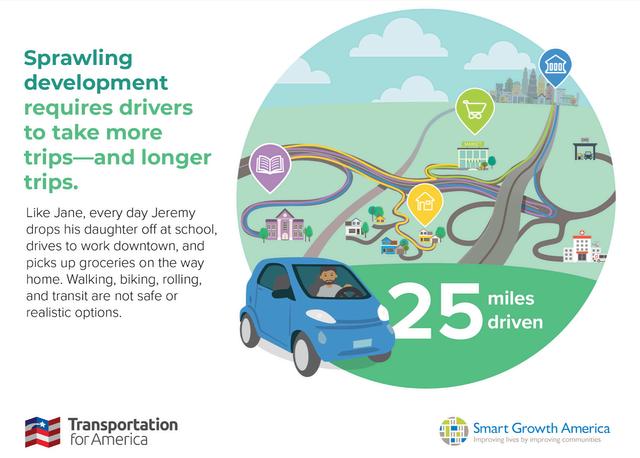
Sprawl (low-density, scattered and auto-dependent development patterns) results in communities that consume exceptionally high amounts of energy and land These communities lack more convenient, affordable and sustainable transportation and housing options, forcing long car trips for most daily needs and limiting more energy-efficient building types
How does highway expansion worsen GHG emissions?
Expanding highways and widening arterials cause more driving and pollution over time, while not solving congestion This wellestablished phenomenon is referred to as induced demand Any reduction in congestion and vehicle idling is short-lived, and the bigger highway fills back up with traffic in five to ten years, except that now there are more cars and more vehicle miles traveled (VMT). The National Center for Sustainable Transportation has concluded that the increases in GHG emissions attributable to highway capacity expansion are substantial.
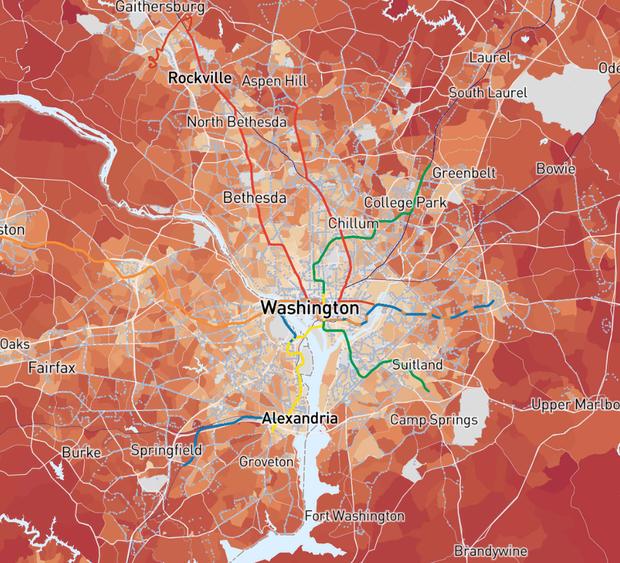
Electric vehicles (EVs) are essential for climate progress but not enough Even with a rapid transition to EVs and a clean electricity grid, U.S. metro areas must still reduce per capita passenger car VMT in the range of 20% to 30% to meet adopted GHG reduction targets.
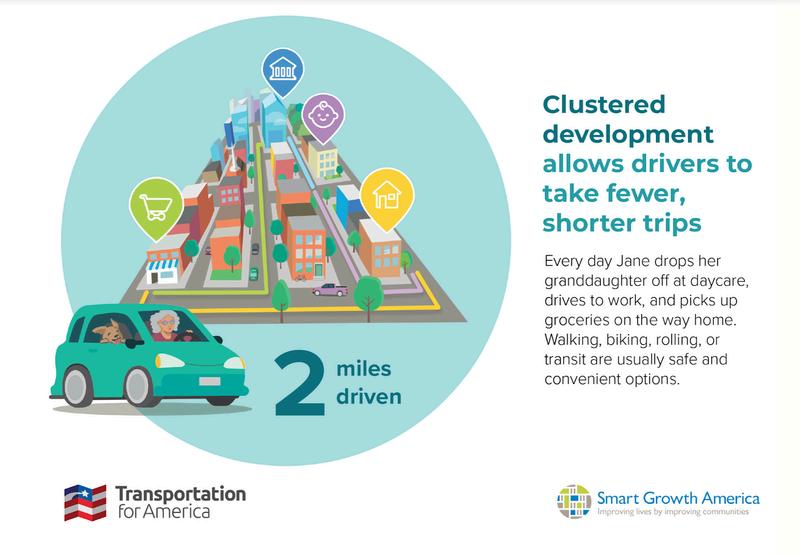
Households in walkable, mixed-use, transitfriendly suburban neighborhoods drive on average half as much and save $10,000 per year on transportation compared to households in sprawling outer suburban areas.
Achieving the DC region’s adopted housing targets (meeting demand within the region rather than sprawling outside, locating 75% of new homes within walkable activity centers or near transit stations) is part of its climate action plan. This strategy would also reduce delay from congestion by a whopping 20%, far more than highway improvements.
Why is smart growth important?
Smart growth areas facilitate shorter trips and more trips by cleaner modes. They also allow a range of traditional building types (storefronts, townhomes, garden apartments, and mid/high-rises) that consume less energy than a community with all stand-alone buildings for every individual home or business. Smart growth also saves significant land area to absorb carbon, provide cooling green space, control stormwater, and provide natural habitat and public open space