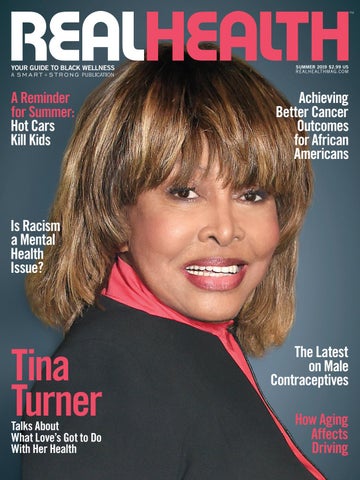
YOUR GUIDE TO BLACK WELLNESS
A Reminder for Summer: Hot Cars Kill Kids
SUMMER 2019 $2.99 US REALHEALTHMAG.COM
Achieving Better Cancer Outcomes for African Americans
Is Racism a Mental Health Issue?
Tina Turner Talks About What Love’s Got to Do With Her Health
The Latest on Male Contraceptives How Aging Affects Driving
IMPORTANT FACTS FOR BIKTARVY®
This is only a brief summary of important information about BIKTARVY and does not replace talking to your healthcare provider about your condition and your treatment.
(bik-TAR-vee)
MOST IMPORTANT INFORMATION ABOUT BIKTARVY
POSSIBLE SIDE EFFECTS OF BIKTARVY
BIKTARVY may cause serious side effects, including:
BIKTARVY may cause serious side effects, including: } Those in the “Most Important Information About BIKTARVY” section. } Changes in your immune system. Your immune system may get stronger and begin to fight infections. Tell your healthcare provider if you have any new symptoms after you start taking BIKTARVY. } Kidney problems, including kidney failure. Your healthcare provider should do blood and urine tests to check your kidneys. If you develop new or worse kidney problems, they may tell you to stop taking BIKTARVY. } Too much lactic acid in your blood (lactic acidosis), which is a serious but rare medical emergency that can lead to death. Tell your healthcare provider right away if you get these symptoms: weakness or being more tired than usual, unusual muscle pain, being short of breath or fast breathing, stomach pain with nausea and vomiting, cold or blue hands and feet, feel dizzy or lightheaded, or a fast or abnormal heartbeat. } Severe liver problems, which in rare cases can lead to death. Tell your healthcare provider right away if you get these symptoms: skin or the white part of your eyes turns yellow, dark “tea-colored” urine, light-colored stools, loss of appetite for several days or longer, nausea, or stomach-area pain. } The most common side effects of BIKTARVY in clinical studies were diarrhea (6%), nausea (6%), and headache (5%).
} Worsening of Hepatitis B (HBV) infection. If you
have both HIV-1 and HBV, your HBV may suddenly get worse if you stop taking BIKTARVY. Do not stop taking BIKTARVY without first talking to your healthcare provider, as they will need to check your health regularly for several months.
ABOUT BIKTARVY BIKTARVY is a complete, 1-pill, once-a-day prescription medicine used to treat HIV-1 in adults. It can either be used in people who have never taken HIV-1 medicines before, or people who are replacing their current HIV-1 medicines and whose healthcare provider determines they meet certain requirements. BIKTARVY does not cure HIV-1 or AIDS. HIV-1 is the virus that causes AIDS. Do NOT take BIKTARVY if you also take a medicine that contains: } dofetilide } rifampin } any other medicines to treat HIV-1
BEFORE TAKING BIKTARVY Tell your healthcare provider if you: } Have or have had any kidney or liver problems,
These are not all the possible side effects of BIKTARVY. Tell your healthcare provider right away if you have any new symptoms while taking BIKTARVY.
including hepatitis infection. } Have any other health problems. } Are pregnant or plan to become pregnant. It is not known if BIKTARVY can harm your unborn baby. Tell your healthcare provider if you become pregnant while taking BIKTARVY. } Are breastfeeding (nursing) or plan to breastfeed. Do not breastfeed. HIV-1 can be passed to the baby in breast milk.
You are encouraged to report negative side effects of prescription drugs to the FDA. Visit www.FDA.gov/medwatch, or call 1-800-FDA-1088.
Your healthcare provider will need to do tests to monitor your health before and during treatment with BIKTARVY.
HOW TO TAKE BIKTARVY
Tell your healthcare provider about all the medicines you take:
Take BIKTARVY 1 time each day with or without food.
} Keep a list that includes all prescription and over-the-
counter medicines, antacids, laxatives, vitamins, and herbal supplements, and show it to your healthcare provider and pharmacist.
} BIKTARVY and other medicines may affect each other.
Ask your healthcare provider and pharmacist about medicines that interact with BIKTARVY, and ask if it is safe to take BIKTARVY with all your other medicines.
Get HIV support by downloading a free app at
MyDailyCharge.com
GET MORE INFORMATION } This is only a brief summary of important information
about BIKTARVY. Talk to your healthcare provider or pharmacist to learn more.
} Go to BIKTARVY.com or call 1-800-GILEAD-5. } If you need help paying for your medicine,
visit BIKTARVY.com for program information.
BIKTARVY, the BIKTARVY Logo, DAILY CHARGE, the DAILY CHARGE Logo, KEEP ASPIRING, LOVE WHAT’S INSIDE, GILEAD, and the GILEAD Logo are trademarks of Gilead Sciences, Inc., or its related companies. Version date: December 2018 © 2019 Gilead Sciences, Inc. All rights reserved. BVYC0102 01/19
PZA511319.pgs 05.10.2019 14:27
ESA
KEEP ASPIRING.
Because HIV doesn’t change who you are. BIKTARVY® is a complete, 1-pill, once-a-day prescription medicine used to treat HIV-1 in certain adults. BIKTARVY does not cure HIV-1 or AIDS.
Ask your healthcare provider if BIKTARVY is right for you. To learn more, visit BIKTARVY.com.
Please see Important Facts about BIKTARVY, including important warnings, on the previous page and visit BIKTARVY.com.
PZA511316.pgs 05.10.2019 13:36
ESA
CONTENTS
this month on REALHEALTHMAG.COM Taraji Talks Psychology
The Empire star discloses that she suffers from anxiety and depression. Here’s how she copes with these mental health issues.
Health Basics A—Z
Want to lose weight, exercise smart, eat right, find good health care, sleep better or just get healthy? For tips, click on “Health Basics A–Z” on the realhealthmag.com home page.
COVER: GETTY IMAGES/DAVE BENETT; (HENSON) TINSELTOWN/SHUTTERSTOCK.COM; (PINNACE) COURTESY JEANETTE L. PINNACE; ALL OTHERS: ISTOCK (MODELS USED FOR ILLUSTRATIVE PURPOSES ONLY)
Blacks and Lou Gehrig’s Disease
Many African Americans with this progressive nerve disorder opt for a special surgery that only 2% of Americans choose as an intervention for the condition.
Painful Conversations A new tool uses artificial intelligence to distinguish between the voices of folks with and without PTSD, a mental health issue.
Digital Real Health
Read Real Health magazine online exactly as it appears in print. Go to realhealthmag.com/ digital to view the current issue and the entire Smart + Strong digital library.
6
12
11
14 COVER STORY
3 editor’s letter
love is the message
Simplifying your life can help you focus on what matters most.
When singer Tina Turner’s health faltered, her devoted spouse helped rekindle hope.
5 buzz Senior motorists are becoming a growing concern; microbes matter; busting HIV myths; poor sleep can affect mental health; hot cars kill kids; treating inmates with hep C
18 it’s snack time Mini-meals can add a variety of nutrients to the diet.
22 closing the gap
10 fitness
Achieving better cancer outcomes for African Americans
The perks of exercise are just as good for the mind as they are for the body; exercise your feet
26 menopause and
heart disease
11 nutrition
This life change raises certain risk factors for cardiovascular illness.
Eat iron-rich foods; say no to diet drinks; off-limit foods for babies
30 thoughts
12 sex Update on male birth control; how to handle an insecure husband
Is racism a mental disorder?, overcoming adversity; expert advice for dealing with racism
REAL HEALTH Question of the Month How do you feel about women taking bioidentical hormones to relieve menopausal symptoms?
This is a personal decision for each individual. I believe that menopause isn’t a disease that needs to be treated. But a woman must take steps to stay healthy. I know that exercise, diet and strength training can help alleviate symptoms. —Jeanette L. Pinnace, writer and voice actor
reach out & click! At realhealthmag.com, you can read more articles; access exclusive, online-only special reports; and subscribe ($9.97 for four quarterly issues; or call 212.242.2163). Plus, sign up for the Real Health email newsletter to get the latest news on issues relating to Black health!
EDITOR’S LETTER
Essential for Happiness
EDITOR-IN-CHIEF
Kate Ferguson MANAGING EDITOR
Jennifer Morton DEPUTY EDITOR
Just simplify things.
Trent Straube SCIENCE EDITOR
fter experiencing two months of nonstop stress, I took a few days to reflect on the complications in my life. The problem was clear: Too much was happening all at once. My life felt out of control. I needed to recover my equilibrium, live more simply and attend to my mental and physical health. The first thing I did was very easy. After taking inventory, I threw out or gave away a whole lot of stuff I didn’t use, want or need. Eventually, my home lost that cluttered, claustrophobic feeling that contributes to a sense of being crowded in. As my living space emptied, my spirits soared. I felt light and airy. Next, I took stock of my relationships. Toxic people in my life were draining and exhausting me. One big problem was that I tended to stay too long in partnerships. These were unions that I would invest in heavily—in terms of time, emotion and money. I always found it difficult to exit situations without feeling as if I’d failed. But no longer. My breaking point came in the form of a betrayal I couldn’t ignore
A
Liz Highleyman COPY CHIEF
Joe Mejía ASSISTANT EDITOR
Alicia Green ART DIRECTOR
Mark Robinson ART PRODUCTION MANAGER
Michael Halliday ADVISORY BOARD
Goulda Downer, PhD, RD, CNS; Lovell Harris, MD; Dorothy Horton, PsyD; Jeanette L. Pinnace, DPM; Lee SaintMartin, MS, IIPA, CN, ND; Yuan Wan; Terrie M. Williams FEEDBACK
Real Health, 212 West 35th Street, 8th Floor, New York, NY 10001, or email info@realhealthmag.com
SMART + STRONG PRESIDENT AND COO
Ian E. Anderson EDITORIAL DIRECTOR
Oriol R. Gutierrez Jr. EXECUTIVE EDITOR
Bob Barnett CHIEF TECHNOLOGY OFFICER
Christian Evans VICE PRESIDENT, INTEGRATED SALES
Diane Anderson INTEGRATED ADVERTISING MANAGER
Jonathan Gaskell INTEGRATED ADVERTISING COORDINATOR
Caroline Rabiecki SALES OFFICE
212-938-2051 sales@realhealthmag.com BULK SUBSCRIPTIONS
order.realhealthmag.com or subs@realhealthmag.com
CDM PUBLISHING LLC CHIEF EXECUTIVE OFFICER
Jeremy Grayzel CONTROLLER
Joel Kaplan
Here’s to your health, JOAN LOBIS BROWN
Issue No. 58. Copyright © 2019 CDM Publishing LLC. All rights reserved. No part of this publication may be reproduced, stored in any retrieval system or trans mitted, in any form by any means, electronic, mechanical, photocopying, recording or otherwise, without the prior written permission of the publisher. Smart + Strong® and Real HealthTM are trademarks of CDM Publishing, LLC.
or forgive. I had to remember a promise I’d made to myself years ago to put myself first and take care of me. At one point, my problem felt unsolvable. I recoiled from the thought of the emotional upheaval and disruptions to come before I could return to a simpler life. Each day became more difficult to manage. A deep unhappiness overwhelmed me. Dark thoughts cast black shadows on possible solutions. Then, a single moment of clarity helped to change my outlook. I’d made every effort to make my relationship work and given it my all. Why was I hesitating? After thinking hard about everything that had happened, I was satisfied with myself and my actions. In a nutshell, it was time to move on. I needed to heal. Several months have passed, and my life is slowly getting back to normal. I come and go as I please and don’t have to worry about coming home to a wall of negative energy. I’ve reclaimed my freedom and have new hope for the future. In addition, I’ve proved that I love myself enough to reject making someone else feel good by making myself miserable. Although this is a small victory, I am achieving many more each day. Now I know even more about myself because spending time alone has allowed me to consider who I am and what I want from life. I’m living modestly and taking time to enjoy each and every day I’m alive. I also spend much more time reflecting on my spirituality. This allows me to stay true to the values I respect and focus on life’s simple pleasures. I’ve worked hard to reclaim my serenity and look forward to just living life with purpose, peace and joy.
Kate Ferguson, Editor-in-Chief katef@realhealthmag.com
realhealthmag.com
I
SU MM ER 2 019 RE AL H E ALTH 3
Shots aren’t just for kids.
Vaccines for adults can prevent serious diseases and even death. Ask your doctor about what immunizations you need. Because staying healthy at any age isn’t kid stuff. Vaccines can prevent Influenza (flu), shingles, diphtheria/tetanus, pertussis, and pneumococcal diseases.
CS213468-A
http://www.cdc.gov/vaccines/adults
PZA511258.pgs 05.09.2019 14:35
ESA
BUZZ
Driving Mr. and Ms. Daisy
BOTH IMAGES: ISTOCK
As the U.S. population ages, senior motorists become a growing concern. AN INCREASING NUMBER OF DRIVERS ARE age 70 and older, according to the Insurance Institute for Highway Safety and the Highway Loss Data Institute. Many are aging baby boomers who are keeping their licenses longer. But along with aging come impairments that may affect an individual’s ability to operate motor vehicles. Findings show that health issues are the primary cause of higher crash rates among older drivers. As folks age, their vision, memory and attention tend to decline. What’s more, their motor function may fall victim to the painful effects of arthritis on joints and muscles, which can make it difficult to turn a steering wheel quickly, brake safely or look backward when necessary. In addition, many elderly motorists use medications that can interfere with their ability to drive, according to results from the American Automobile Association (AAA) Longitudinal Research on Aging Drivers. Scientists designed this major study to gather information on the medical, behavioral, environmental and technological factors that influence older adults’ driving. Data collected from sites in five different U.S. cities found that elderly motorists commonly used medications that can
impair driving ability and boost the risk of crashes, side effects that were known to less than one third of seniors. Other investigations focused on drivers living with dementia, a condition that diminishes cognitive abilities and occurs in almost 5 million people older than age 65. Ultimately, the illness necessitates that affected individuals stop driving. This is because “at some point in the progression of the disease, driving performance errors will present a safety risk to both the individual and the public,” explain experts from the Alzheimer’s Association (AA). According to AAA research, drivers suffering from dementia may get lost while traveling, turn and signal incorrectly, change lanes improperly and suffer from reduced understanding of traffic signs and patterns. But although the AA believes that driving privileges must be revoked when individuals pose a serious risk to themselves or others, the group contends that on its own a diagnosis of Alzheimer’s disease is never sufficient reason to confiscate some- Are senior drivers one’s car keys. a threat Instead, the AA sug- to road gests that families plan safety? for when loved ones may
no longer be able to drive and include them in the decision-making process. Additionally, insurers have teamed with state and local governments and other groups, such as the American Association of Retired Persons and AAA, to develop programs to address these issues, reports the Insurance Information Institute. Now, many states try to assess and regulate older drivers’ operation of motor vehicles. For instance, rules require that individuals renew their licenses more frequently, retake road tests and provide confirmation from doctors that folks are capable of driving safely. The national transportation research group TRIP reports that 90% of older folks travel via private vehicles, and 80% live in suburban and rural areas that require that they drive. These are some reasons why developments in self-driving autos and connected vehicles (for example, cars, buses, trucks and trains that can communicate with smartphones and other devices) are so highly anticipated, suggests TRIP. Undoubtedly, these conveyances will help countless elderly men and women stay independent and mobile longer, great benefits for both seniors and their loved ones. —Kate Ferguson
realhealthmag.com
I
SU MM ER 2 019 RE AL H E ALTH 5
BUZZ
Busting HIV Myths
Microbes Matter
The effects of probiotics on HIV treatment MANY FOLKS WITH HIV—INCLUDING those on antiretroviral (ARV) treatment— frequently experience disorders in their gastrointestinal tract, a prime location for viral replication. Consequently, scientists continue to study how probiotics can help regulate the bacterial imbalances in the gut that can cause such health problems. Previous findings have shown that high-quality probiotic supplements can help to relieve the diarrhea and nausea that affect some people with HIV. In addition, some of these products were shown to support bacterial balance and reduce inflammation in the gut, a side effect of the virus and ARVs. But these good microorganisms aren’t all equally effective, explain researchers. Their benefits seem to depend on the strain of bacteria involved as well as how each person responds to the microbes. For instance, results from a recent
study show that while some people’s guts welcome the miocroorganisms, others expel them. “Probiotics should not be universally given as a ‘one-size-fits-all’ supplement,” cautions one expert. “Instead, they could be tailored to the needs of each individual.” Researcher Stuart D. Federman, PharmD, the medical science liaison at Bristol-Meyers Squibb, says it’s key for people with HIV to track their nutritional intake and to keep their digestive tract healthy. “The best way to do this is to increase the natural gut flora through probiotics,” he suggests. But more investigations are needed to provide a clear understanding of how probiotics work to alleviate intestinal inflammation, normalize mucosal function in the gut and regulate allergic reactions for those living with the virus. —Kate Ferguson
THE ESTIMATED NUMBER OF PEOPLE WITH HIV IN THE UNITED STATES IN 2016, THE MOST RECENT YEAR FOR WHICH THIS INFORMATION IS AVAILABLE Source: Centers for Disease Control and Prevention
6 R E A L HEA LTH S U MME R 20 19
I
realhealthmag.com
Just as there is no cure for HIV, there seems to be no cure for the persistence of certain myths about the virus. This means some folks still think they don’t need to get tested, that a diagnosis equals death or that having HIV means one’s sex life is over. It’s frustrating, given the awareness efforts of activists and health officials in the 30-plus years since HIV was first identified. First things first. No matter one’s level of perceived risk, the Centers for Disease Control and Prevention recommends that everyone between ages 13 and 64 get tested for HIV at least once as part of routine health care. Those with specific risk factors, including men who have sex with men and people who inject drugs, should get tested once each year. Second, since 1996, effective antiretroviral treatment for the virus has helped people with HIV live longer and better lives. What’s more, the newer drugs for the virus require taking fewer pills and have fewer side effects than the first-generation meds. Even better: Studies show that the earlier that folks initiate treatment, the better their health outcomes. Finally, recent science has proved that people with HIV who have undetectable levels of the virus thanks to treatment cannot pass on the virus sexually. This concept is known as undetectable equals untransmittable, or U=U. So don’t avoid getting tested, and remind people you know that doing so is not only good for their health but also that of their sex partners. — Joe Mejía
BOTH IMAGES: ISTOCK (MODELS USED FOR ILLUSTRATIVE PURPOSES ONLY)
Science = life
BUZZ
Hot Weather Warning Check your car for kids.
Slumber Sessions
Poor-quality zzz’s can affect your mental health. NOT SLEEPING OR HAVING ONE’S REST disrupted can wreak havoc on the brain’s chemistry, which, in turn, can negatively affect a person’s ability to think and regulate emotions. Although doctors don’t fully understand the role the brain plays with regard to sleep and mental health, findings suggest that getting plenty of shut-eye supports mental and emotional resilience. Conversely, chronic bouts of sleeplessness may boost a person’s risk of developing a psychiatric disorder or aggravate existing mental health issues, such as depression, bipolar disorder, anxiety or attention-
deficit hyperactivity disorder. The good news is that treatments for insomnia are effective for folks with or without mental illnesses. These therapies include lifestyle changes that help individuals fall asleep, such as ditching alcohol and nicotine, adhering to a regular sleep-and-wake schedule, practicing calming techniques (e.g., deep breathing exercises and muscle relaxation) and cultivating positive thoughts, which can help folks snooze peacefully through the night. But if these methods don’t work, folks ought to consult with their doctors about prescription meds for sleep. —KF
THE PERCENTAGE OF KIDS WHO DIED OF HEATSTROKE FROM 1998 THROUGH 2018 WHOSE CAREGIVERS FORGOT THEM INSIDE VEHICLES ALL IMAGES: ISTOCK (MODELS USED FOR ILLUSTRATIVE PURPOSES ONLY)
Source: Department of Meteorology and Climate Science
Last year, in Moraga, a town in the San Francisco Bay Area, a 19-month old toddler was accidentally left in a parked car for several hours by a family member. The child died of heatstroke caused by the nearly 130-degree temperature inside the vehicle, according to news reports. Research shows that the amount of time a youngster spends in excessive heat can raise his or her temperature to above normal and trigger hyperthermia, a life-threatening condition that may result in organ failure and death if left untreated. Although many people may not understand how someone may forget a child in a hot car, “the human brain is flawed,” says David M. Diamond, PhD, a neuroscientist and professor of psychology at the University of South Florida, and a noted expert on memory. Diamond says that while driving, an adult’s brain may switch into an auto-pilot mode that doesn’t include the child. “It actually happened to me,” he reveals. “I was very fortunate that my wife was there to remind me that the child was there. I never would have thought that I could have left a child in a car.” Diamond says the first step to help prevent children from dying of heatstroke in vehicles is for parents to accept that this tragedy could happen to anyone. Additionally, leaving an important item, like a purse or a phone, in the backseat could help remind caregivers that a child is strapped in there. —KF
First Test, Then Cure Treating inmates with hep C before they leave prison is key to ending this epidemic in America. Currently, U.S. correctional facilities screen prisoners for hepatitis C virus (HCV) if inmates ask, are classified as being at risk of contracting the virus, if they consent, don’t explicitly decline, or if testing is mandatory for everyone. But should prisoners test positive for hep C under any of these policies, many institutions won’t pay for the expensive treatments that can cure this
blood-borne liver infection, which can lead to severe liver disease. This is in violation of the right to adequate medical care guaranteed by the U.S. Constitution’s 8th Amendment. However, recent class-action lawsuits have pressed federal judges to mandate that jails treat prisoners for hep C on a timeline, which would gradually cure thousands of inmates of the virus. —KF
realhealthmag.com
I
SU MM ER 2 019 RE AL H E ALTH 7
FITNESS
Exercise Those Tootsies Easy ways to put your best foot forward
Just 10 minutes of daily activity can temporarily improve cognitive function. THE MENTAL PERKS OF EXERCISE ARE AS GOOD AS THE BENEFITS FOR YOUR BODY. For one, exercise can help to improve memory and thinking. Physical activities reduce insulin resistance and inflammation and stimulate the release of growth factors, chemicals in the brain known to affect the health of brain cells and the development of new blood vessels in this organ. In addition, movement boosts our heart rate and pumps more oxygen into our heads. Exercise also improves mood and sleep and reduces stress and anxiety, emotions that can negatively affect cognition. According to experts, just 150 minutes each week of moderate-intensity exercise, such as swimming, walking or even intensely mopping the floor, could lead to a boost in cognitive function. In addition, adults ages 70 and older who have engaged in regular exercise for decades may be as fit as individuals in their 40s. Simply walking for 30 to 45 minutes daily is enough to reap benefits for the brain that can fight off Alzheimer’s disease. —Alicia Green
THE ESTIMATED NUMBER OF MILES THE AVERAGE PERSON WILL WALK IN A LIFETIME Source: Foot.com
1 0 RE A L H EALT H S U MME R 2 01 9
I
realhealthmag.com
BOTH IMAGES: ISTOCK (MODELS USED FOR ILLUSTRATIVE PURPOSES ONLY)
Move More!
The feet are an important part of our bodies. This body part helps us walk, run and perform many other activities. What’s more, just two bones in each foot are responsible for supporting most of our body weight, which is why it’s important to keep the feet strong and healthy. Need to improve foot flexibility and mobility? Start by sitting up straight in a chair, with your feet flat on the floor. Next, bring the left foot to rest on the right thigh and use your fingers to gently stretch the big toe up, down and to the side for 5 seconds. Do 10 repetitions before you switch to the next foot. If you love being active outdoors, try walking barefoot on sand for as long as possible to strengthen your feet. Increase distance slowly to avoid overexerting the muscles. Such exercises can help reduce pain and discomfort as well as minimize injury. —AG
NUTRITION
Ladies, Say No to Diet Beverages Why these alternatives to sugary drinks are so bad, especially for women
Eat Iron-Rich Foods
How to pump up those red blood cells
ALL IMAGES: ISTOCK
ABOUT 10 MILLION PEOPLE IN THE United States are iron deficient, and half this number have been diagnosed with anemia, a resulting health condition. In addition, African Americans, along with women of reproductive age (including those who are pregnant), children and the elderly are at higher risk of developing this illness. Often, the treatment for insufficient iron is a no-brainer: Eat more foods naturally rich in this essential mineral, such as red meat, pork, poultry, seafood, beans, leafy greens and dried fruit, or foods fortified with iron, such as certain cereals, breads, pastas and peas. To help the body absorb iron,
folks should up their intake of foods containing vitamin C. (Be aware, too, that foods such as dairy products, eggs, coffee, cocoa and some nuts and seeds can inhibit iron absorption.) Doctors may also recommend overthe-counter iron supplements. Be sure to follow your physician’s advice about the correct dosage, form and best practices for ingesting these supplements. Then have your iron levels reassessed via blood work, and pursue any follow-up treatment needed. —Kate Ferguson
Off-Limit Foods These eats are no good for babies. As a general guideline, doctors recommend that mothers who are breast-feeding wait until their children are 6 months old before offering them solid fare. But many foods aren’t well suited for infants, even at that age. According to the experts, avoid feeding young kids small, hard foods that are difficult to chew, such as grapes, raisins and nuts, honey (or dishes made with the sweet, sticky stuff), cow’s milk, fruit juice, refined grains, sugary treats, smoked and cured meats, fish high in mercury, and allergenic foods, such as peanuts, wheat and other edibles. —KF
Recent findings published in the journal Stroke show that artificially sweetened soft drinks may increase older women’s risk of stroke, heart attack and early death, especially those who are obese or African American—even if they have no history of heart disease or diabetes. For the study, scientists followed almost 82,000 postmenopausal women between ages 50 and 79 who drank diet beverages and were enrolled in the Women’s Health Initiative trial from 1993 through 1998. Researchers found that those who consumed two or more diet drinks per week saw their overall risk of stroke increase by 23% compared with those who drank these refreshments less than once each week. Women who imbibed excessive amounts of these soft drinks faced a 31% higher risk for stroke caused by blocked arteries, a 29% increase in their risk for heart disease and a 16% increased risk of premature death from any cause. Lona Sandon, PhD, RDN, an assistant professor in the department of clinical nutrition at the University of Texas Southwestern Medical Center in Dallas, commented that women who replace healthier drinks, such as milk or 100% fruit or vegetable juice, with artificially sweetened alternatives miss out on heart—KF healthy nutrients.
THE NUMBER OF CHILDREN TAKEN TO THE ER EACH YEAR FOR INJURIES AS A RESULT OF CHOKING ON FOOD Source: New York State Department of Health
realhealthmag.com
I
SU MM E R 2 01 9 RE A L H EA LT H 11
SEX
Ask Doctor Dee Dorothy Horton, PsyD, answers your questions.
Male Birth Control Update The study of a contraceptive gel for men is ongoing. LAST YEAR, RESEARCHERS AT THE National Institutes of Health launched a Phase IIb clinical trial to investigate the male contraceptive gel NES/T, which combines segesterone acetate (Nestorone), a progestin hormone used for female birth control, with the male hormone testosterone. NES/T is a reversible contraceptive designed to be absorbed through the skin on men’s upper arms and shoulders. The female hormone in the gel blocks the production of testosterone and lowers or stops sperm production in the testes while the male hormone in the product supports a man’s normal sex drive and other testosterone-dependent functions. Scientists enrolled about 420 couples into the study. Male volunteers were given the gel daily for four to 12 weeks to see how well they tolerated NES/T and whether they experienced
any unacceptable side effects. If sperm levels didn’t decline, researchers requested that men continue to apply the gel for up to 16 weeks to achieve this goal. Next, participants are slated to enter the trial’s efficacy phase, scheduled to last 52 weeks. During this time, couples will be asked to use the gel as their only birth control method so that scientists can determine NES/T’s ability to prevent pregnancy. (Men will remain in the study for an additional six months for researchers to check for any long-term effects.) The study is expected to be completed in September 2021. “Expanding male contraceptive options could help make family planning more of a shared responsibility between women and men,” says Régine Sitruk-Ware, MD, the codirector of the trial. —Kate Ferguson
THE PERCENTAGE EFFECTIVENESS OF A VASECTOMY AS BIRTH CONTROL FOR MEN Source: Planned Parenthood
1 2 RE A L H EALT H S U MME R 2 01 9
I
realhealthmag.com
Dealing with an insecure husband is never easy, as this problem can harm one’s emotional health and well-being and destroy a relationship. First, closely examine any part you may unwittingly play in triggering your mate’s anxieties. Be aware of things you say or do that may erode your husband’s self-confidence or fuel his fears. If your partner voices unwarranted suspicions, let him know how disappointed you feel when he questions or challenges your love, loyalty and faithfulness without just cause. The fact that how he behaves affects you deeply may force him to realize that his neediness may end up pushing you away. In addition, determine which of your husband’s insecurities are too toxic and disruptive. For example, you may decide to overlook the small issues and tackle only those you can’t ignore. When your mate’s behavior crosses the line and places unreasonable expectations on you, stand your ground. Choose a time when both of you can discuss these issues rationally. Be brutally honest with yourself about whether your husband is likely to change. Is he willing to seek help to address the problem? If so, offer to accompany him to counseling. But if your partner is unwilling to admit that his behavior is creating a rift in your relationship, be prepared to move on.
(GEL) ISTOCK, (HORTON) COURTESY OF DOROTHY HORTON, PSYD
How do I handle my insecure husband?
Living with a lung disease can be easier.
“I value the fellowship, education and support this group offers.” — Better Breathers Club member
American Lung Association Better Breathers Clubs are welcoming support groups offered at no charge for individuals living with lung disease – such as COPD, pulmonary fibrosis and lung cancer, and their caregivers. Led by a trained facilitator, learn better ways to cope with your diagnosis and live life to the fullest with chronic lung disease during these regularly scheduled educational programs. Plus, it’s fun and enriching to connect with others. Find a Better Breathers Club near you at Lung.org/better-breathers or by calling 1-800-LUNGUSA.
Lung HelpLine 1-800-LUNGUSA | Lung.org/better-breathers
RHA507382.pgs 02.06.2019 15:39
ESA
LOVE IS THE MESSAGE WHEN TINA TURNER’S HEALTH FALTERED, HER DEVOTED SPOUSE HELPED REKINDLE HOPE. By Kate Ferguson
1 4 RE A L H EALT H S U MME R 2 01 9
I
realhealthmag.com
Tina Turner enjoys a drive near Switzerland’s Lake Zurich in 2008. It’s one of her husband’s favorite photos.
Bach remained steadfast, however, and Turner accepted his gift, daring to hope. A colonoscopy showed that she was cancer-free, so Turner underwent a kidney transplant. The surgery took place on April 7, 2017. Afterward, Turner needed drug treatments to stop her body from rejecting the new kidney. Toward the end of that year, she felt a little more energetic but was still far from being fully recovered. Nevertheless, Turner helped develop a musical based on her life. At first, she was reluctant to work on the project. But ultimately, she collaborated with the show’s producers and even participated in the search for an actress to play her.
show, titled Tina: The Tina Turner Musical, in London and was moved when theatergoers applauded her. After watching her life story unfold onstage, Turner, reflecting on her life experiences, recalled the Buddhist expression “It is possible to turn poison into medicine.” Turner converted to Buddhism in 1973 and credits the religion with guiding her through the hardest times in her life. She chants regularly, a Buddhist practice that allows Turner to tap into her spirituality and helps her negotiate challenging situations. Recently, the star spoke to Real Health about her changing perspective on life through the years.
Left: Tina on her way to the hospital for dialysis in 2017. Several days each week a machine took over her kidney functions. Though she hated visiting the clinic, she says she got used to going and the nurses liked her. Center: Tina and her husband, Erwin Bach, in Los Angeles in 1986. The photo is their first together as a couple. Right: Tina and Erwin on their wedding day, July 4, 2013, at the Chateau Algonquin, their estate overlooking Lake Zurich.
and she signed up to be a member of an assisted-suicide program. But, as her best-selling memoir, My Love Story—published last year—details, Bach stepped up and donated a kidney to his wife. At first, Turner was reluctant. “He was a young man,” she writes. “Why should he take such a risk to give me, an older woman, a few extra years? He knew he could survive with one kidney. But what if something happened to him? What if he had a problem with his kidney someday?” 1 6 RE A L H EALT H S U MME R 2 01 9
I
Bach kept Turner busy and motivated her to stay active. He had introduced her to people who wanted to turn her life into a musical on the stage and also interested her in doing a second memoir and a documentary. Despite having to continue treatments to control the aftereffects of the transplant, Turner attended the press event that launched the musical. There, she performed with Adrienne Warren, the actress chosen for the role. Six months later, Turner sat in the audience at the official opening of the
realhealthmag.com
Is your outlook on health and wellness different now that you’re older?
When I was younger, I thought that I would live forever. I definitely took my health for granted. I didn’t ask many questions because I didn’t know what questions to ask. I think most people are uninformed about their bodies until they have a medical crisis. I knew I had high blood pressure because it ran in my family. But I never understood the potential consequences until it was too late. I’m much more knowledgeable today.
ALL PHOTOS: COURTESY OF LOOPING STUDIOS FROM TINA TURNER’S PERSONAL COLLECTION
MORE THAN 20 YEARS AGO, TINA Turner appeared on Larry King Live to promote her Wildest Dreams Tour, in support of her studio album of the same name. At the time, the legendary entertainer was 57 and enjoying a hugely successful career as a rock star as well as a thriving relationship with her partner, Erwin Bach. Seventeen years later, in 2013, she married Bach, who by then had been her companion for nearly 30 years. Shortly after that, her health problems began. Turner suffered a stroke, followed by kidney failure and vertigo. In 2016, doctors diagnosed her with intestinal cancer. The treatment involved the removal of part of her intestines. Then, her kidney problems worsened,
Unfortunately, that information was hard-won. I came close to death before I became educated about my kidneys and everything else that was happening to me. As a result of everything that you experienced in your life, what did you learn about the connection between your mind and body?
The connection is so important. When I first started practicing Buddhism, I learned that inner peace leads to strength and contentment in every aspect of life. Chanting “Nam-myohorenge-kyo” always makes me feel better and helps me to think more clearly. We should pay equal attention to developing our minds and our bodies. My life is a constant quest for enlightenment. Can you describe a moment when you felt sure you’d regain your health?
When my husband offered me the gift of his kidney, I knew that the universe was taking care of me. I tried to talk him out of it because I was so concerned about his well-being, but he convinced me that he was thinking about our future together, and that gave me a resurgence of hope that I hadn’t felt for a long, long time. What does the Buddhist notion of “changing poison into medicine” mean to you?
There have been so many times in my life when everything seemed bleak. When I finally left Ike [Turner, the singer’s first husband], I wasn’t sure if I would work again or if I would be able to support myself and my family. But good came out of bad with a success I never imagined. Even my near-death experience with kidney failure and the resulting transplant had a bright side. Erwin and I are closer now than we’ve ever been before. How does being in a loving relationship affect your physical and mental health?
What’s love got to do with it? Everything! My relationship with Erwin helps me to grow and flourish. When I met him—and it really was love at first sight—I realized what was missing from my life, even though I had resigned myself to living without love. We’re true partners, during good times
and bad, and, after all these years together, we still make each other laugh! I think that’s the real secret to a wonderful relationship. During the multiple health problems you faced, what was your lowest moment?
When my kidneys were failing, I turned to alternative medicine, hoping for a quick fix. I’d had success with alternative medicine in the past, but my condition was too serious to start experimenting with a different form of treatment. My decision caused irreparable harm, and I felt terrible about that. But “poison” turned into medicine when Erwin offered me his kidney, and I started looking at life in a positive way again. What did those bad health experiences teach you about yourself?
[That] I’ll go on—which is another way of saying I’m a survivor. I’m strong, and I can withstand a lot. Although I also learned that I’m a realist. If it was time for me to die, I could accept that too. How does it make you feel when you think about the people you’ve inspired to leave abusive relationships with your story?
I’m always moved to hear that my story has helped someone else in a difficult situation. Whenever Oprah [Winfrey] interviews me, she asks about my experiences with Ike because we both know how important it is to teach other women that they can walk away from destructive relationships and start a new life.
TINA TURNER: A ROCK ’N’ ROLL ICON SOME FACTS ABOUT THIS LEGENDARY ENTERTAINER: ■
She has sold 200 million records and is one of the best-selling artists of all time.
■
Her career spans more than 60 years.
■
She has won 12 Grammy Awards (eight competitive, three of her recordings have won honors in the Grammy Hall of Fame and one Grammy Lifetime Achievement Award).
■
She has sold more concert tickets than any other solo music performer in history.
■
“What’s Love Got to Do With It” is her biggest hit, but she didn’t like the song when she initially heard it.
■
She is a big fan of horror and suspense stories.
■
Jackie Kennedy is her role model. (She once met the former first lady after spotting her in a hotel lobby.)
■
She has been a practicing Buddhist for 46 years.
■
A segment of State Route 19 in Haywood County, Tennessee, is named the Tina Turner Highway.
■
In 1986, she won the NAACP Image Award for Outstanding Actress in a Motion Picture for her role as Aunty Entity in the sci-fi film Mad Max Beyond Thunderdome.
■
She is often referred to as the “Queen of Rock ’n’ Roll.”
■
She had two biological children—both sons—one with musician Raymond Hill and one with Ike Turner. She also adopted two of Ike’s sons.
■
In 2013, she relinquished her U.S. citizenship and became a citizen of Switzerland.
What have you found to be the biggest differences between how people in the United States and those in other countries you’re acquainted with approach health, happiness and life?
I don’t know what the exact reasons are, but in my experience, it seems easier to be healthy and happy in Switzerland. The air is so clean that the simple act of breathing feels refreshing. Courtesy always comes first, which makes life very pleasant. Rules are rules, so people behave well. And everyone is punctual. I arrived “fashionably” late to a function when I first moved here. I will never make that mistake again! ■
realhealthmag.com
I
SU MM E R 2 01 9 RE A L H EA LT H 17
IT’S SNACK TIME IF CHOSEN WISELY, THESE MINI-MEALS CAN ADD A VARIETY OF NUTRIENTS TO YOUR DIET. By Gerrie E. Summers
According to the American Heart
Association, snacking isn’t bad as long as people do it in moderation and people make healthy choices. Snacks can be tasty as well as nutritious, so there’s no need to feel guilty about crunching and munching between main meals. “I don’t think the term ‘snack food’
be full of sugar and other ingredients that make them high in calories and may be harmful to your body. Fortunately, however, snack foods that are tasty and good for you are trending in a big way. “It’s amazing how there is an evolution taking place that demands alternatives to the candy bars and fast food hamburgers,” says Mary Kosir, CEO and cofounder of WholeMe, manufacturers of grain-free, whole-food snacks. “I actually find bags of nuts, bottles of water, cut-up fruit and Greek yogurt readily available in airports and convenience stores.” Still, be sure that you’re actually hungry. Sometimes we turn to junk foods out of boredom, fatigue or stress—not real hunger. Before reaching for anything, try taking a leisurely 10to 15-minute walk. If that doesn’t work or a walk isn’t feasible, think
are nuts or nut butters—preferably unsalted and without sugar. These foods contain fiber, which helps to improve cardiovascular health, and vitamin E, which protects cells and boosts the immune system. Another good pick is chickpeas, which are high in protein, fiber, iron, vitamin B and magnesium. (Try these legumes dried or roasted, or puree them to make hummus to use as a dip with crunchy raw carrots, zucchini or bell pepper sticks.) Other selections include canned
tuna, which contains omega-3 fatty acids that protect against cardiovascular disease. (Just don’t consume this fish too frequently, as it contains mercury.) Boiled eggs (choose freerange ones, and, yes, eat the yolk) are a good source of vitamin D. Calcium-rich Greek yogurt supports bone
has to mean that they are unhealthy,” says Amy Lacey, author of Cali’flour Kitchen: 125 Cauliflower-Based Recipes for the Carbs You Crave and cofounder and CEO of Cali’flour Foods. “I think there is a major educational opportunity here to teach people that you can stay full and feed your cravings in a healthy way.” In fact, snacking can be a smart thing to do. For example, eating between meals boosts your energy and reduces the likelihood that you’ll overeat at mealtimes. But before you gleefully grab a treat, remember that you must be careful about which foods you choose, especially when it comes to those conveniently packaged products manufacturers label as “healthy.” Some foods marketed as being beneficial to you, such as granola and protein bars, may 2 0 RE A L H EALT H S U MME R 2 01 9
I
hard about what foods you decide to put into your mouth. In addition, take time to eat your snack—just as you would (or should) during a main meal—and avoid doing so while working or watching TV. Such mindless eating can contribute to overeating. If you are on a strict diet or are not
eating the right foods during regular meals, hunger pangs may drive you to make poor choices. Therefore, think of snacks as nutrient-rich, single-serving mini-meals. Also realize that you don’t have to eat a lot to stay satiated between meals. In general, choose foods with protein, especially those made from plantbased protein as they help to keep you feeling full. Some great choices in this category
realhealthmag.com
health and contains vitamin B-12, which is good for blood cells and nerves. Seeds, such as pumpkin and sunflower, boast protein, beneficial oils, minerals and vitamins. For those times when you’re unable to plan ahead, reach for healthy and convenient prepackaged snacks that are low in salt, sugar and saturated and trans fats. What’s more, you don’t have to sacrifice favorite snacks or flavor when choosing a clean, or whole-food, substitute. “For example, you can still have dips as a snack!” says Lacey. “But instead of dipping corn chips, use our cauliflower crackers.” Cauliflower, in particular, has become a popular ingredient for making low-calorie, low-carb substitutes for foods such as rice, pizza crusts and mashed potatoes. “Cauliflower is such a versatile vege-
PREVIOUS PAGES: ISTOCK
HEALTHY SNACKS EATEN IN SMALL AMOUNTS AT THE RIGHT TIME CAN KEEP BLOOD SUGAR STABLE AND BOOST ENERGY.
table. It’s healthy for you, and it really takes on the flavor that is being added to it,” Lacey continues. “It makes sense that people would want to turn it into all of their favorite snacks to have a low-carb alternative. We tried so many vegetables, including broccoli and zucchini, before figuring out cauliflower was the best one for pizza crust. We quickly learned that we could easily change things up, experiment with other flavors and create other healthy snack options.” Lacey, who is living with lupus, a chronic autoimmune disease that triggers inflammation, began her food journey as a way to find help for her condition. “I was on a mission to find non-inflammatory alternatives to all of my favorite foods,” she says. To help her husband manage his type 1 diabetes and sugar intake, as well as change to a clean eating plan for her family, Kosir says she became a scientist at home. “I experimented with using nut flours as a substitute for regular white flour and replacing cane sugar with honey and unsweetened coconut as well as using more natural extracts, like vanilla and almond,” she says. “What I found was a powerful, clean alternative to some of the sugary snacks I used to eat!” Kosir’s secret to creating tasty meals
is to reach for condiments. “I always think that foods need to be well seasoned, so adding spice, natural extracts and texture to foods usually does an amazing job packing dishes with powerful flavor so we don’t feel like we are giving anything up,” she says. “But this does require some thought and meal prep, so setting aside a bit of time for this is always critical,” she advises. “My tips for better snacking include buying cut-up fruits and vegetables, which saves lots of time. I also make my own trail mix with nuts, bits of chocolate and real coconut and scour the local co-ops to look for new brands that make healthy eating easier.” Lacey finds the foods she loves and learns to eat them in a healthier way. “Dieting doesn’t work when you’re expected to go cold turkey on your favorite items,” she says. “For example, I
love chips and salsa or guacamole. Both salsa and guacamole are good for you. So instead of using corn chips, use our cauliflower crackers as a low-carb alternative that still gives you a good crunch! I love eating cheeseburgers too, so now I make a cheeseburger-style pizza on one of our crusts. I love nachos and Buffalo chicken, so we’ve created healthy recipes for these as well.” Both women agree that preparation is key. Lacey fixes healthy snacks and makes them portable. She dices veggies and puts them, and other healthy foods, into containers that she can grab and go. This renders obsolete those visits to vending machines— which are usually conveniently near cash registers—and grocery stores for snacks when hunger strikes. But hunger pangs don’t just occur
during the day. Cravings can strike at night and may interfere with getting quality sleep when your stomach starts to rumble. But even then, some latenight snacks can help you get to sleep without totally ruining your diet. One solution, experts suggest, is to eat half of a turkey sandwich on whole wheat bread. (The tryptophan in turkey makes you sleepy, and whole grains digest more slowly.) Also ponder the following options: Spread a nut butter, such as peanut, cashew or almond butter, on whole wheat toast. (Nut butter raises serotonin levels to help you relax and get to sleep.) Choose popcorn. (It has whole grain and fiber). Reach for a banana. (The fruit contains some tryptophan and magnesium.) Grab a handful of almonds. (Nuts have magnesium and tryptophan, which can improve serotonin levels and balance blood sugar levels to help you wind down and sleep.) Spoon plain Greek yogurt into a bowl. (Add cherries or pomegranate seeds, which contain melatonin.) Finally, tangy hummus, which is made from chickpeas, has tryptophan and folate, which can help regulate sleep, and vitamin B6, which can help regulate the body’s circadian rhythm— the internal clock that controls when we go to sleep and awaken. ■
Healthy Habits Snacking can be a good thing!
Eating between meals can be part of a healthy eating plan, says John Gilmer, PhD, vice president of research and development for Active Iron, makers of an iron supplement. But folks should observe the following rules: Have a snack about two hours before a main meal. “It won’t impact your dinner plans but will sustain you so that you don’t overeat later,” Gilmer says. Practice strategic snacking. “It’s also OK to add a snack to your day if you know that you will not be able to have a meal when your body is typically expecting one,” Gilmer suggests. For example, if you have a morning meeting that might overlap with lunchtime, eat something healthy beforehand. Snack only when you are hungry; not because it’s in your routine. “Don’t eat because it’s what you always do,” Gilmer advises. Before workouts. “Having something to eat an hour before you exercise can help to ensure that you don’t lose all your energy during your workout,” Gilmer suggests. Additionally, a healthy snack after being active can also prevent you from overeating later and replenish the energy stores your body needs to function well. Reach for portable snacks. Try a handful of mixed nuts, cheese or low-fat yogurt (with fresh fruit mixed in), veggies, heart-healthy hummus, grapes, berries, bananas, whole grain crackers or pretzels, and smoothies with yogurt and fruit.
realhealthmag.com
I
SU MM E R 2 01 9 RE A L H EA LT H 21
CLOSING THE
GAP
RESEARCHERS BELIEVE SPECIALLY DESIGNED CANCER CARE PROGRAMS COULD PREVENT BLACK PATIENTS FROM BEING LOST TO CARE. By Jeanette L. Pinnace
realhealthmag.com
I
SU MM E R 2 01 9 RE A L H EA LT H 23
Cykert chose to study non-smallcell lung cancer, the most common form of the disease and a notorious killer that claims a disproportionate number of African-American lives. “If a patient isn’t treated for lung cancer, then—even if it’s early-stage lung cancer—about a third of those patients die within a year, and everyone dies within four years,” he says. “So people better have a really good reason not to get treated.” PREVIOUS STUDIES ON BLACK-WHITE
bias accounted only for insurance status, age, comorbidities (illnesses that occur with other conditions) and income in their data, says Cykert. “Even with all those factors controlled for, Black patients were still getting less treatment than white patients,” Cykert says.
“That kind of bothered me. I really wanted to get at some of the true components of why there were still racial differences despite controlling all those other things.” According to the annual National Healthcare Quality and Disparities Reports, persistent racial and ethnic disparities may be the result of various factors, including unequal systems of health care between states, medical providers and clinicians. None of these factors bode well for the health outcomes of minorities. In health care settings, implicit bias occurs when medical professionals make judgments and decisions based on stereotypical beliefs they’ve internalized about their patients. “Implicit bias exists, and it’s something that we all have to be aware of in our decision-
ALL CANCER PATIENTS SEEM TO BENEFIT FROM INTERVENTIONS THAT COUPLE HEALTH SYSTEM ALERTS WITH RESPONSIVE, VIGILANT MEDICAL PROVIDERS. 2 4 RE A L H EALT H S U MME R 2 01 9
I
realhealthmag.com
making when we’re taking care of patients who aren’t necessarily like us,” Cykert says. For his study, Cykert and his research team enrolled almost 300 Black and white patients ages 18 to 85 with early-stage breast or lung cancer in an intervention program. Patients were recruited at two cancer centers between April 2013 and March 2015. The scientists organized a registry from electronic health records that delivered alerts about appointments missed, recommended tests and surgeries not completed, and radiation and chemotherapy treatments not received for each person. Nurse navigators trained in standard health care procedures were assigned to half the patients in the intervention group. Another group of nurse navigators who had attended racial sensitivity training supervised the other half of participants. WHEN THE SYSTEM FLAGGED NURSES
about patients experiencing different issues with their therapy plans, these navigators would redirect them to care. For example, some patients feared the cost of cancer care so much that they dropped out of treatment. “That’s when the real-time registry basically tells the care team that the patient disappeared and needs to be reengaged,” Cykert says. “Then the navigator is prepared to deal with the patient on financial issues and figure out ways through the system so that person’s cancer care is covered.” Sometimes, care providers failed
PREVIOUS PAGES, BOTH IMAGES: ISTOCK (MODELS USED FOR ILLUSTRATIVE PURPOSES ONLY)
When African Americans receive bad treatment from the staff at a doctor’s office, they are often unsure whether it’s because the staff is uncaring or racist. But conscious or unconscious biases against people of color can help to drive disparities in care that result in worse outcomes for minorities. Experts have been aware of this problem for 20 to 30 years, according to Samuel Cykert, MD, a professor of medicine at the University of North Carolina Chapel Hill School of Medicine, which is why he decided to team with the Greensboro Health Disparities Collaborative to conduct research on how to ensure Black patients are given the same quality care as their white counterparts.
to initiate or intensify therapy when indicated. “For these kinds of situations, the real-time registry also had programmed warnings about missed milestones of care so that these issues could be addressed through enhanced awareness of the clinical team,” Cykert says. When nurse navigators used the intervention tools that identified patients who needed assistance to complete their treatment regimens, both groups performed equally well. IN ADDITION TO THE NURSE NAVIGATORS,
the study also included physician champions, local oncologists who acted as liaisons between patients’ doctors and their nurse navigators to address conflicts that affected care. “Obviously, when you have a doctor dealing with a nurse, sometimes you run into issues of authority and power,” Cykert explains. “But by having the physician champion on board, the nurse navigator had the support to go ahead and bring those issues forward without any kind of negative thought.” When the study ended, results showed that almost 89% of Black patients participating in the intervention completed treatment compared with African Americans in two control groups. Just 80% of those in one group finished their cancer therapy, and only about 83% of those in the second set of patients with Stage I or II breast and lung cancer completed treatment. Realistically, eliminating or minimizing bias in health care begins with the training doctors receive in school. “Although medical schools are doing a much better job telling students about health disparities, especially in early courses and when people are doing classroom work, they aren’t as good at pointing it out during the years when students are doing their clinical rotations,” Cykert says. “I think there really has to be some faculty development where the teachers are also aware of implicit bias and pointing it out where it might be occurring.” ESTABLISHED ORGANIZATIONS SUCH AS
the American Medical Association and others are encouraging physicians to consider how they can address the
problem in their own practices. Some medical institutions offer doctors a health disparities tool kit that features interviews with both health providers and patients as well as information on, for example, cultural competency and literacy to help physicians work alongside other medical professionals and patients to end racial and ethnic disparities. Cykert’s goal is to eventually launch racially and culturally sensitive intervention programs in cancer care systems around the country. He believes the first step is to convince health systems to conduct assessments to determine whether patients of color are receiving the same care as white patients. “As doctors, we tend to be idealistic, and we assume that we are blind to issues of color,” he says. “But even though we are idealistic, we have to understand that, historically, institutions don’t work as well for Black patients, who are starting from a point that’s behind white patients.” Cykert says that because cancer care centers often don’t break down their data according to race, these institutions are largely unaware of potential inequities. In addition, their electronic health record systems aren’t programmed to provide information that could help follow patients closely enough to keep them from slipping out of treatment. “You have to know what you want to program and spend the money because electronic health records are generally primitive,” he observes. CYKERT IS OPTIMISTIC THAT CANCER
centers will implement these types of strategies as long as they’re supported by grants. “Most of the centers that have participated are now taking active steps to build our registry into their systems,” he says. “There hasn’t been any overt resistance to doing this kind of work,” Cykert continues. He explains that, despite competing priorities and interests in health care at this moment in time, providers are putting effective cancer intervention programs such as the one that was the focus of his study at the top of their list of things they need to do to optimize care. ■
Some Good Advice If you don’t smoke, don’t start. According to the American Cancer Society, an estimated 25,390 cases of lung cancer are expected to be newly diagnosed among Black people in 2019. The illness is the leading cause of cancer death among AfricanAmerican men and women, and most individuals first learn they have the disease at more advanced stages, when survival rates are much lower. Lung cancer is most often caused by smoking. If you smoke around family members, they can also develop lung cancer from secondhand smoke. But the good news is that your risk for lung cancer decreases when you quit smoking, no matter how long you’ve smoked. If caught in its early stages, lung cancer can often be treated or even cured with surgery and medications. This is why screening is extremely beneficial. Preliminary examinations for lung cancer may include chest X-rays and saliva tests. These exams help folks to avoid more invasive tests, such as biopsies. A screening technology called low-dose computerized tomography (CT) may benefit those who are at high risk for lung cancer. Experts recommend annual CT screening for people ages 55 to 80 who are current or former heavy smokers. Many African Americans are unaware of CT scans, but public health nurses can play a key role in increasing community awareness about this effective method of screening. —JLP
realhealthmag.com
I
SU MM E R 2 01 9 RE A L H EA LT H 25
MENOPAUSE AND HEART DISEASE
HEART DISEASE RISK RISES FOR EVERYONE AS THEY AGE, BUT FOR WOMEN, SYMPTOMS CAN BECOME MORE EVIDENT AFTER THE ONSET OF MENOPAUSE. RH EXAMINES THIS CONNECTION.
By Kate Ferguson
GET SMART TWELVE YEARS AFTER HER MOM DIED OF CONGESTIVE HEART FAILURE at age 80, Heather Davis (not her real name) experienced menopause. As the vivacious, active African-American woman celebrated her 54th birthday, she worried about the effect menopause might have on her genetic predisposition to heart disease. This life change raises certain risk factors for cardiovascular illnesses, and Davis was concerned. Experts agree that women should be cognizant of their health during menopause, as females face an overall increase in heart attacks about 10 years after they stop menstruating for good. During menopause women undergo a decline in estrogen, a female hormone that helps to relax blood vessels to facilitate blood flow. When estrogen levels drop, blood vessels can stiffen and lose their flexibility. In addition, when women don’t produce enough estrogen, levels of LDL, or bad cholesterol, can increase while quantities of HDL, the good cholesterol, decrease. The imbalance can cause fat and cholesterol in the arteries to build up, which contributes to the risk for heart attack and stroke. But additional changes that occur during menopause, such as an elevation in blood pressure and increases in triglycerides (a type of fat in the blood), may also boost women’s risk for heart disease. To counter these problems, doctors advise individuals to embrace a healthy lifestyle, which means they should maintain an appropriate body weight, exercise throughout the week, eat well, avoid or quit smoking, and treat and control any medical conditions. “I think going through menopause is one of the most challenging things,” says Suzanne Steinbaum, DO, a spokesperson for the American Heart Association. “One of the things I often say to women is, ‘Train for menopause like you’re training for a marathon because you’re in it for the long haul.’ “It’s not about the quick fix on Monday, Tuesday and Wednesday,” she continues. “It’s about making lifestyle changes during menopause that are sustainable because it’s going to go on for a while. What I say to women is: Don’t give up, don’t get frustrated and just keep going.” This is exactly what Davis did. Every morning she gets up at 6:30 and meets her sister, Bernice, who is almost 16 years older, at a local high school track. They walk for about an hour and then go home to eat a healthy breakfast that they take turns preparing. “We’ve been able to control our weight and manage the aches and pains that come and go with age,” Davis says. “Neither she nor I are on any prescription medications for heart problems, or any health issues, and we definitely want to keep it that way.” Unlike their mother, who smoked from age 19 to 59, the sisters never puffed on cigarettes. “My mother developed an enlarged heart from years and years of hard work,” Davis says. “That period of time she was a smoker certainly didn’t help to keep her heart healthy. Nowadays, people know much more about how certain habits and behaviors can ruin their health. My mom could have probably lived for many more years if she’d never started smoking.” The 40 years that Davis’s mother smoked cigarettes coincides with her entering the age range during which women become more likely to develop metabolic syndrome. This collection of risk factors for heart disease, stroke and diabetes may rise rapidly in the years prior to menopause, according to findings. “I guess you can say that’s why we ladies of a certain age just keep it moving,” says Davis with a brief, low laugh that ends in a wistful smile. ■ 2 8 RE A L H EALT H S U MME R 2 01 9
I
realhealthmag.com
Jennifer H. Mieres, MD, FACC, and Stacey E. Rosen, MD, FACC, are leading cardiologists, each with 25 years of experience in medicine. The two wrote the book Heart Smart for Women: Six S.T.E.P.S. in Six Weeks to HeartHealthy Living to help women create an action plan to boost their heart health. “This can be anything from choosing to move every day to decreasing the amount of unhealthy fats in your daily diet,” they say. “Any type of daily exercise, combined with small but meaningful changes in your daily food choices, can have a tremendous impact on your health.” In addition, Mieres and Rosen urge women to learn their family history and consider their chances of developing heart disease. “Some risk factors can be controlled, such as blood pressure, smoking, cholesterol and a lack of regular activity,” they advise, adding, “even though you can’t control factors such as age, gender and family.” What’s more, the cardiologists tell women they should know their levels of total cholesterol, HDL and LDL cholesterol, blood pressure, blood sugar, body mass index (a ratio of height to weight) and waist circumference, since these numbers alert individuals about the state of their health. The doctors’ complete six-week plan prompts women to assess their personal risk factors, offers clear step-by-step instructions on how to begin or advance an exercise regimen, helps women choose heart-healthy foods to eat—at home and when dining out—and suggests ways to form and maintain a strong partnership with their physicians to improve the health of their heart. —KF
PREVIOUS PAGES: ISTOCK (MODELS USED FOR ILLUSTRATIVE PURPOSES ONLY)
Make these changes and help your heart.
Munk Pack Protein Cookie (available in Snickerdoodle, Peanut Butter Chocolate Chip, Double Dark Chocolate, Coconut White Chip Macadamia and Oatmeal Raisin Spice, 12-pack, $23.99) Treat yourself to these delicious, satisfying cookies; they’re glutenand dairy-free and packed with 18 grams of protein. munkpack.com
Heavenly Body Radiance Salt Scrub (10.5 oz., $30) This delicately fragranced, mineral-rich scrub is an exfoliator that also imparts moisture to the skin, thanks to a combo of sweet almond oil and coconut oil. mioskincare.co.uk.com
Stuff We Love A ROUNDUP OF THE LATEST MUST-HAVE FINDS FOR HAIR, SKIN, HEALTH, BEAUTY AND MORE. THESE PRODUCTS ARE WORTH EVERY CENT.
WholeMe Grain-Free Clusters (available in Almond Coconut, Lemon Berry Chia, Cinnamon Banana Chip and Salted Peanut Chocolate, 8 oz. package, from $7.73 to $8.79) Made of nuts, seeds and natural sweeteners, this soft-baked granola provides a dose of healthy fats and makes a great snack, cereal or versatile topping on foods. wholeme.com
Foria Basics Suppositories (8 suppositories, $72) These medications were formulated to relieve menstrual, pelvic, sexrelated and lower back pain; formulated with broad-spectrum CBD and pure organic cocoa butter. foriawellness.com
Zyflamend Whole Body by New Chapter (available in 30-, 60-, 120- and 180-count bottles, $21.80, $35.06, $56.90 and $78.74, respectively) This blended herbal supplement was formulated to promote a healthy inflammation response in the body and provide pain relief and support for healthy joints. newchapter.com
Osmosis Colour Mineral Cosmetics Lip Intensive Lipsticks (6 shades, $24 each) The rich pigments in this line of vegan liquid lipsticks offer a long-lasting, high-shine finish while vitamin E and castor seed oils condition, hydrate and protect lips. amazon.com
realhealthmag.com
I
SU MM E R 2 01 9 RE A L H EA LT H 29
THOUGHTS
A Kid From Guyana He grew up in poverty but was later honored as a “rock star of science” by GQ magazine.
Is racism a mental disorder? LATE LAST YEAR, HARVARD LAW SCHOOL HOSTED A TWO-DAY CONFERENCE with panelists from academic and community organizations. The education professionals and public health advocates in attendance cited data that fueled discussions about race, racism and mental health in the United States. The event was in keeping with the Ivy League institution’s tradition of tackling such issues, as reflected in an editorial written nearly 20 years ago by Alvin F. Poussaint, MD, a renowned professor of psychiatry at Harvard Medical School. His essay in response to the question “Is extreme racism a mental illness?” was published in the Western Journal of Medicine. In the provocative opinion piece, Poussaint recounts his treatment of patients who transferred their own unacceptable behaviors and fears onto ethnic minorities, blaming them for social problems. “Their strong racist feelings, which were tied to fixed belief systems impervious to reality checks, were symptoms of serious mental dysfunction,” he contends. “When these patients became more aware of their own problems, they grew less paranoid—and less prejudiced.” Today, a growing body of research confirms the harmful effects of racism on the mental health of individuals and society at large, and experts increasingly agree that this problem should be treated as a psychological disorder. Like Poussaint, some believe that doing so may help stop the progression of racial bias from mere negative thinking to the perpetration of violence against members of the groups against whom society discriminates. —Kate Ferguson
Experts Say Some ways to deal with the stress, anxiety and overall emotional toll racism can take 3 0 RE A L H EALT H S U MME R 2 01 9
I
Acknowledge your emotions. Accept that your feelings in response to racist language and actions are valid, and don’t suppress your emotions. Talk to a trusted family member or friend about how racism affects you, or jot down your thoughts in a journal.
realhealthmag.com
Don’t internalize the negative messages racism sends. Realize that this systemic oppression creates barriers unrelated to your value as a person. Surround yourself with people who know your worth, and celebrate the achievements that make you proud.
Control what you can. Racism sparks frustration and anxiety because we’re unable to govern the conduct of others. Focus on responding to racist ideas and behavior in positive ways that are meaningful to you and that support your values and efforts to be your best self. —KF
ISTOCK (MODEL USED FOR ILLUSTRATIVE PURPOSES ONLY)
New Perspectives on Health
A series of revelations prompted Frank L. Douglas, MD, PhD, to embrace a life of service to others. In his book, Defining Moments of a Free Man from a Black Stream, the scientist examines key events that helped to guide him into advocacy. Douglas says his mother was a huge influence in his life. She impressed on him the need to give back when one is gifted and that doing the right thing is its own reward. In the 1960s, Douglas left his native Guyana to attend college in the United States on a Fulbright scholarship. He faced discrimination but persevered and became a pharmaceutical researcher who helped develop more than 20 drugs to treat diseases such as tuberculosis, arthritis, diabetes, seizures, cancer and pulmonary embolism. He always chose to do what he felt was right for him, even if that meant sacrificing prestige and money at that moment. “I’ve always focused on the process not the outcome,” says the lauded professional. —KF
STAND UP FOR US ALL Clinical trials bring us closer to the day when all cancer patients can become survivors. Clinical trials are an essential path to progress and the brightest torch researchers have to light their way to better treatments. That’s because clinical trials allow researchers to test cutting-edge and potentially life-saving treatments while giving participants access to the best options available. If you’re interested in exploring new treatment options that may also light the path to better treatments for other patients, a clinical trial may be the right option for you. Speak with your doctor and visit StandUpToCancer.org/ClinicalTrials to learn more.
Sonequa Martin-Green, SU2C Ambassador Photo Credit: Matt Sayles Stand Up To Cancer is a division of the Entertainment Industry Foundation, a 501(c)(3) charitable organization.
PZA511227.pgs 05.08.2019 16:54
ESA