YOUR GUIDE TO BLACK WELLNESS
A Vaccine Stops the Most Common STI in the World Can Science Find a Cure for Alzheimer’s?
WINTER 2018 $2.99 US REALHEALTHMAG.COM
All About the Keto Diet Breast Cancer and the Promise of Precision Medicine
Music Mogul
Deadly Flavoring Agents in E-Cigarettes
Damon Dash
On How Diabetes Made Him Smarter and Stronger
What is BIKTARVY®? BIKTARVY is a complete, 1-pill, once-a-day prescription medicine used to treat HIV-1 in adults. It can either be used in people who have never taken HIV-1 medicines before, or people who are replacing their current HIV-1 medicines and whose healthcare provider determines they meet certain requirements. BIKTARVY does not cure HIV-1 or AIDS. HIV-1 is the virus that causes AIDS.
IMPORTANT SAFETY INFORMATION
What is the most important information I should know about BIKTARVY? BIKTARVY may cause serious side effects: } Worsening of hepatitis B (HBV) infection. If you have both HIV-1 and HBV and stop taking BIKTARVY, your HBV may suddenly get worse. Do not stop taking BIKTARVY without first talking to your healthcare provider, as they will need to monitor your health.
Who should not take BIKTARVY? Do not take BIKTARVY if you take: } dofetilide } rifampin } any other medicines to treat HIV-1
What are the other possible side effects of BIKTARVY? Serious side effects of BIKTARVY may also include: } Changes in your immune system. Your immune system may get stronger and begin to fight infections. Tell your healthcare provider if you have any new symptoms after you start taking BIKTARVY. } Kidney problems, including kidney failure. Your healthcare provider should do blood and urine tests to check your kidneys. If you develop new or worse kidney problems, they may tell you to stop taking BIKTARVY. } Too much lactic acid in your blood (lactic acidosis), which is a serious but rare medical emergency that can lead to death.
Tell your healthcare provider right away if you get these symptoms: weakness or being more tired than usual, unusual muscle pain, being short of breath or fast breathing, stomach pain with nausea and vomiting, cold or blue hands and feet, feel dizzy or lightheaded, or a fast or abnormal heartbeat. } Severe liver problems, which in rare cases can lead to death. Tell your healthcare provider right away if you get these symptoms: skin or the white part of your eyes turns yellow, dark “tea-colored” urine, light-colored stools, loss of appetite for several days or longer, nausea, or stomach-area pain. The most common side effects of BIKTARVY in clinical studies were diarrhea (6%), nausea (5%), and headache (5%). Tell your healthcare provider if you have any side effects that bother you or don’t go away.
What should I tell my healthcare provider before taking BIKTARVY? } All your health problems. Be sure to tell your healthcare provider if you have or have had any kidney or liver problems, including hepatitis virus infection. } All the medicines you take, including prescription and over-the-counter medicines, antacids, laxatives, vitamins, and herbal supplements. BIKTARVY and other medicines may affect each other. Keep a list of all your medicines and show it to your healthcare provider and pharmacist, and ask if it is safe to take BIKTARVY with all of your other medicines. } If you are pregnant or plan to become pregnant. It is not known if BIKTARVY can harm your unborn baby. Tell your healthcare provider if you become pregnant while taking BIKTARVY. } If you are breastfeeding (nursing) or plan to breastfeed. Do not breastfeed. HIV-1 can be passed to the baby in breast milk. You are encouraged to report negative side effects of prescription drugs to the FDA. Visit www.fda.gov/medwatch, or call 1-800-FDA-1088.
Ask your healthcare provider if BIKTARVY is right for you.
Please see Important Facts about BIKTARVY, including important warnings, on the following page.
RHA501945A.pgs 11.05.2018 10:08
ESA
Get HIV support by downloading a free app at MyDailyCharge.com
KEEP ASPIRING.
Because HIV doesn’t change who you are. BIKTARVY is a 1-pill, once-a-day complete HIV-1 treatment for adults who are either new to treatment or whose healthcare provider determines they can replace their current HIV-1 medicines with BIKTARVY.
BIKTARVY does not cure HIV-1 or AIDS. BIKTARVY.COM
RHA501945B.pgs 11.05.2018 10:08
ESA
IMPORTANT FACTS This is only a brief summary of important information about BIKTARVY® and does not replace talking to your healthcare provider about your condition and your treatment.
(bik-TAR-vee) MOST IMPORTANT INFORMATION ABOUT BIKTARVY BIKTARVY may cause serious side effects, including: • Worsening of hepatitis B (HBV) infection. If you have both HIV-1 and HBV, your HBV may suddenly get worse if you stop taking BIKTARVY. Do not stop taking BIKTARVY without first talking to your healthcare provider, as they will need to check your health regularly for several months.
ABOUT BIKTARVY BIKTARVY is a complete, 1-pill, once-a-day prescription medicine used to treat HIV-1 in adults. It can either be used in people who have never taken HIV-1 medicines before, or people who are replacing their current HIV-1 medicines and whose healthcare provider determines they meet certain requirements. BIKTARVY does not cure HIV-1 or AIDS. HIV-1 is the virus that causes AIDS. Do NOT take BIKTARVY if you also take a medicine that contains: • dofetilide • rifampin • any other medicines to treat HIV-1
BEFORE TAKING BIKTARVY Tell your healthcare provider all your medical conditions, including if you: • Have or have had any kidney or liver problems, including hepatitis infection. • Are pregnant or plan to become pregnant. • Are breastfeeding (nursing) or plan to breastfeed. Do not breastfeed if you have HIV-1 because of the risk of passing HIV-1 to your baby. Tell your healthcare provider about all the medicines you take: • Keep a list that includes all prescription and over-thecounter medicines, antacids, laxatives, vitamins, and herbal supplements, and show it to your healthcare provider and pharmacist. • Ask your healthcare provider or pharmacist about medicines that interact with BIKTARVY.
POSSIBLE SIDE EFFECTS OF BIKTARVY BIKTARVY can cause serious side effects, including: • Those in the “Most Important Information About BIKTARVY” section. • Changes in your immune system. • New or worse kidney problems, including kidney failure. • Too much lactic acid in your blood (lactic acidosis), which is a serious but rare medical emergency that can lead to death. Tell your healthcare provider right away if you get these symptoms: weakness or being more tired than usual, unusual muscle pain, being short of breath or fast breathing, stomach pain with nausea and vomiting, cold or blue hands and feet, feel dizzy or lightheaded, or a fast or abnormal heartbeat. • Severe liver problems, which in rare cases can lead to death. Tell your healthcare provider right away if you get these symptoms: skin or the white part of your eyes turns yellow, dark “tea-colored” urine, light-colored stools, loss of appetite for several days or longer, nausea, or stomach-area pain. • The most common side effects of BIKTARVY in clinical studies were diarrhea (6%), nausea (5%), and headache (5%). These are not all the possible side effects of BIKTARVY. Tell your healthcare provider right away if you have any new symptoms while taking BIKTARVY. Your healthcare provider will need to do tests to monitor your health before and during treatment with BIKTARVY.
HOW TO TAKE BIKTARVY Take BIKTARVY 1 time each day with or without food.
GET MORE INFORMATION • This is only a brief summary of important information about BIKTARVY. Talk to your healthcare provider or pharmacist to learn more. • Go to BIKTARVY.com or call 1-800-GILEAD-5. • If you need help paying for your medicine, visit BIKTARVY.com for program information.
BIKTARVY, the BIKTARVY Logo, DAILY CHARGE, the DAILY CHARGE Logo, LOVE WHAT’S INSIDE, GILEAD, and the GILEAD Logo are trademarks of Gilead Sciences, Inc., or its related companies. Version date: February 2018 © 2018 Gilead Sciences, Inc. All rights reserved. BVYC0047 06/18
RHA501945C.pgs 11.05.2018 10:08
ESA
CONTENTS
this month on REALHEALTHMAG.COM State of Mind
Chi-Town’s Chance the Rapper pledges $1 million to help support organizations that provide key mental health services in his hometown.
(COVER) COURTESY DASH DIABETES NETWORK; (PREP, LUNG X-RAY, DRAGONFRUIT AND CHILD) ISTOCK; (TEENS) THINKSTOCK; (PINNACE) COURTESY OF JEANETTE PINNACE; (CHANCE THE RAPPER) SHUTTERSTOCK.COM/KATHY HUTCHINS. (ALL MODELS USED FOR ILLUSTRATIVE PURPOSES ONLY)
Health Basics A—Z
7 5
7
Really, Girls Won’t Go Wild
13
Polio-Like Virus Stirs Fear
Recently, health officials probed 87 possible cases of a paralyzing condition caused by a viral infection targeting the spinal cord that mostly strikes kids.
Digital Real Health
Read Real Health magazine online exactly as it appears in print. Go to realhealthmag.com/ digital to view the current issue and the entire Smart + Strong digital library.
16 COVER STORY
vital calculations
When certain illnesses run in our family, can we overcome heredity?
Want to lose weight, exercise smart, eat right, find good health care, sleep better or just get healthy? For tips, click on “Health Basics A–Z” on the realhealthmag.com home page.
Findings from a recent study show that parents should not worry that the HPV vaccine will lead to risky sexual behaviors in adolescent girls.
editor’s letter
15
8
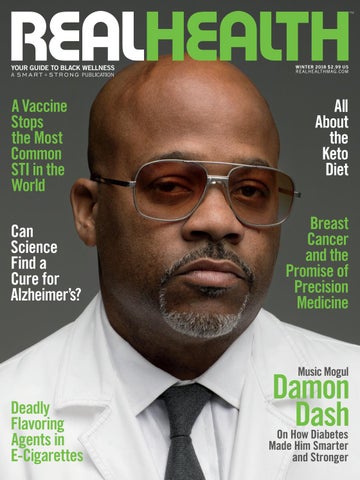
How inhalable insulin helped music mogul Damon Dash control his type 1 diabetes
buzz
Alzheimer’s disease; stopping HIV criminalization; get PrEP without insurance; flavoring agents in e-cigarettes; nonsmokers and lung cancer; hepatitis testing
22
A look at the science behind this popular weight-loss regimen
sex
26
fitness
29
nutrition
30
product roundup
Must-have finds for hair, skin, health, beauty and more; cool gifts to stuff holiday stockings
Why exercise can be good for cancer survivors; the amazing overall health benefits of physical activity
15
a cancer survivor
Dara Richardson-Heron, MD, won her battle with breast cancer; now she’s helping research efforts.
One vaccine protects against nine types of HPV and several scary cancers; what is sexual addiction?
14
the keto diet
Forget using chemicals to preserve food; exotic fruits; edible insects
thoughts
Shed that victim mentality and stop feeling powerless; how to go from poor me to empowered
Real Health Question of the Month
How do you feel about participating in clinical trials given the history of past abuses experienced by Black people?
I can’t discount or be naive about the possibility that people of color might be exploited in scientific experiments. But I also realize that as a group, we need to be included in clinical trials to reap the benefits that they offer. —Jeanette L. Pinnace, contributing writer
reach out & click!
At realhealthmag.com, you can read more articles; access exclusive, online-only special reports; and subscribe ($9.97 for four quarterly issues; or call 212.242.2163). Plus, sign up for the Real Health email newsletter to get the latest news on issues relating to Black health!
RHA489774.indd 1
4/20/18 12:45 PM
CAN15703-00_HouseAd.pgs 12.20.2017 13:18
EDITOR’S LETTER
The Heredity Factor
EDITOR-IN-CHIEF
Kate Ferguson-Watson MANAGING EDITOR
Jennifer Morton
hen my mother died of congestive heart failure, she had already begun to show signs of dementia. As I watched helplessly, this strong, vibrant woman slipped into a stony silence broken only by monosyllabic responses to my questions, which she delivered in a flat, lifeless raspy voice that sounded nothing like her. The days of sharing funny motherdaughter chats about life and engaging in lively debates about happenings in the world were gone. Where once she’d seemed alive and interested in everything around her, now she stared straight ahead, hardly blinking. She no longer responded to any stimulation other than the cotton balls saturated in rosewater and glycerin that I stroked on her face each morning. She’d close her eyes and take a deep breath to inhale the sweet fragrance of the facial toner. Her lips would curve into a tentative smile that was followed by a soft sigh of happiness. Those special moments when she looked like the mother I had always known were all too brief. Soon, the
W
DEPUTY EDITOR
Trent Straube COPY CHIEF
Joe Mejía
EDITORIAL ASSISTANT
Alicia Green
ART DIRECTOR
Mark Robinson ART PRODUCTION MANAGER
Michael Halliday ADVISORY BOARD
Goulda Downer, PhD, RD, CNS; Lovell Harris, MD; Dorothy Horton, PsyD; Jeanette L. Pinnace, DPM; Lee SaintMartin, MS, IIPA, CN, ND; Yuan Wan; Terrie M. Williams FEEDBACK
Real Health, 212 West 35th Street, 8th Floor, New York, NY 10001, or email info@realhealthmag.com
SMART + STRONG PRESIDENT AND COO
Ian E. Anderson
EDITORIAL DIRECTOR
Oriol R. Gutierrez Jr. CHIEF TECHNOLOGY OFFICER
Christian Evans
VICE PRESIDENT, INTEGRATED SALES
Diane Anderson
INTEGRATED ADVERTISING MANAGER
Jonathan Gaskell
INTEGRATED ADVERTISING COORDINATORS
Caroline Rabiecki, Greg Rabiecki SALES OFFICE
212-938-2051 sales@realhealthmag.com BULK SUBSCRIPTIONS
order.realhealthmag.com or subs@realhealthmag.com
CDM PUBLISHING LLC
vacant stare would return and she’d be transformed once again into a stranger. Years later, as the early symptoms of arthritis robbed my knees of elasticity and stole the bounce from my steps, I wondered about my own health. Would I be able to escape the illnesses lurking in my family’s genes? For answers, I turned to the internet. According to my research, if a strong family history puts you at a higher risk for particular genetic mutations, the likelihood that you’ll develop related illnesses is significant. But biology doesn’t also destine us to acquire certain diseases. The level of risk depends on specific types of gene mutations and whether the environment or behavior factors into a particular disease’s development. My research also helped to put heredity into perspective. Instead of looking at illnesses that run in our families as foregone conclusions that will inevitably strike us down, why not think of our family’s medical history as an opportunity to become proactive about our health? Use the information to calculate your risk for certain diseases and get screened and begin treatment early as part of a personal prevention program. In addition, knowing your family’s history of disease can help you determine whether to get genetic tests for hereditary conditions and learn whether you might pass on an illness to your kids. I think this is a much better way to approach the issue of biological risk.
CHIEF EXECUTIVE OFFICER
Jeremy Grayzel CONTROLLER
Here’s to your health,
Joel Kaplan
Kate Ferguson-Watson, Editor-in-Chief katef@realhealthmag.com JOAN LOBIS BROWN
Issue No. 56. Copyright © 2018 CDM Publishing LLC. All rights reserved. No part of this publication may be reproduced, stored in any retrieval system or transmitted, in any form by any means, electronic, mechanical, photocopying, recording or otherwise, without the prior written permission of the publisher. Smart + Strong® and Real HealthTM are trademarks of CDM Publishing, LLC.
realhealthmag.com
I
WI N TER 2 018 RE AL HE A LTH 5
RHA501944.pgs 11.05.2018 13:51
ESA
BUZZ
Aging Concerns Can loads more research dollars stop Alzheimer’s disease by 2025? THE SEARCH FOR CLUES TO HALT THE development of amyloid plaques involved in Alzheimer’s disease (AD) has led scientists to examine everything from transparent worms that have been described as “cute,” “rad,” “powerful,” “fantastic” and “far-out” to viruses that may trigger this dementia. An irreversible, progressive brain disorder, AD slowly destroys cognition and extinguishes the light in the eyes of the
estimated 5.7 million Americans living with the condition—that’s not to mention its impact on families. Although many illnesses desperately need research and drug development dollars, a certain urgency drives Alzheimer’s funding in particular. This is because it costs more to care for those suffering from AD, sometimes called “the most expensive disease in America,” than to care for those with heart disease and cancer, according to the Alzheimer’s Association. After a string of failed attempts to develop effective drugs to treat AD, funding dried up. But recently, fund-
(HANDS AND BOW) ISTOCK
Remember: Caring for people with Alzheimer’s costs more.
ing—partially fueled by the National Institutes of Health’s (NIH) commitment to finding a cure for the illness by 2025—has surged. Perhaps the windfall is connected to the reality that baby boomers are aging into a medical system that’s already strained and stressed. (According to the 2018 Alzheimer’s Facts and Figures Report, Medicare and Medicaid paid for $186 billion of the estimated $277 billion associated with AD costs to Americans.) On top of all of this, factor in the expenditures shouldered by those caring for loved ones with Alzheimer’s and the huge toll caregiving takes on the health and productivity of people who are still toiling in the workforce. In addition, AD has become more visible as families affected by the illness speak out and advocates roll out smarter campaigns to boost awareness. “Alzheimer’s disease is a worthy and complex foe,” said Francis Collins, MD, PhD, the director of the NIH, at a summit held earlier this year. “Yet science’s armament is growing daily, and we know so much more.” AD is influenced by a host of factors, including genetic variations and unique risks for onset related to age, family history and cardiovascular conditions. What’s more, scientists have been thinking out of the box and chasing novel ideas, such as the effect of gut bacteria and plaque-busting antibodies on brain health. Meanwhile, researchers conduct large-scale studies of the human genome to hunt for biological drivers of Alzheimer’s disease, new parts of the brain to investigate and how differences in individuals may cause Alzheimer’s and help or hurt their treatments. While many welcome the financial support, some experts worry. They’re convinced that if scientists don’t meet their stated goal, AD research will be considered a very expensive and dismal failure. —Kate Ferguson-Watson
realhealthmag.com
I
WI N TER 2 018 RE AL HE A LTH 7
BUZZ
A Way to Pay for PrEP Pre-exposure prophylaxis for those who have no health insurance
State legislation that criminalizes people living with HIV drives stigma. DESPITE ADVANCES IN HIV SCIENCE THAT have expanded the definition of safer sex beyond the use of condoms, outdated laws still prosecute people living with HIV for failing to disclose their status to partners before sex—regardless of whether the virus has been transmitted. According to the Centers for Disease Control and Prevention, 24 states have statutes that criminalize nondisclosure of one’s HIV status. Such laws were enacted when little was known about how HIV was spread and do not reflect the fact that an HIV-positive individual with an undetectable viral load poses effectively zero risk of transmitting the virus to a sex partner. Nor do these laws take into account the fact that the daily pill Truvada as pre-exposure prophylaxis (PrEP) reduces the risk of contracting HIV by 99 percent among men and at least 90 percent among women. In addition, individuals who might have been exposed to the virus can take post-exposure prophylaxis (PEP) after sex to prevent infection. Edwin Bernard, of the HIV Justice Network, has reported that between 2015 and June 2018, 143 U.S. residents were prosecuted under HIV criminalization laws, rendering the United States the leader in such prosecutions. Proponents of HIV-specific legislation maintain that these laws deter individuals 8 R E A L HEA LTH W INT E R 2018
I
from exposing others to risk, despite a lack of conclusive evidence to back such claims. Advocates, meanwhile, point out that these laws not only fail to avert certain behaviors but also further stigmatize already marginalized communities and discourage folks from getting tested for HIV. After all, if one doesn’t know his or her HIV status, one can’t be held to account for nondisclosure. The good news is that the anti–HIV criminalization movement is gaining momentum. In addition to Bernard’s HIV Justice Network, groups such as The Center for HIV Law & Policy and the Sero Project, among many others, are raising awareness of the issue and have signed the “Expert Consensus Statement on the Science of HIV in the Context of Criminal Law” to urge governments worldwide to consider the latest research findings when enforcing HIV nondisclosure laws. Science has evolved; now legislation must do the same. —Joe Mejía
realhealthmag.com
THE NUMBER OF STATES THAT CRIMINALIZE BEHAVIOR THAT POSES A LOW OR NEGLIGIBLE RISK OF TRANSMITTING HIV Source: Centers for Disease Control and Prevention
BOTH IMAGES: ISTOCK
Unlawful Acts
Many uninsured people who want to use pre-exposure prophylaxis (PrEP) may wonder how they’ll be able to pay for this daily pill that prevents HIV infection. That said, the cost of necessary clinic visits and tests required prior to being approved to use PrEP may be covered by a number of available resources. For example, the pharmaceutical company Gilead Sciences, which manufactures PrEP, offers a patient medication assistance program (MAP) called Advancing Acccess to qualified adults in the United States who need help paying for Truvada as PrEP. Eligibility requirements for the program stipulate that individuals must be 18 or older and uninsured—or have had payment declined by their insurance carrier—reside in the United States, and have a family income that qualifies them to get the drug at low or no cost. Recently, Gilead’s MAP made it easier for those who are eligible to enroll and remain in the program for 12 months instead of six. —Kate Ferguson-Watson
BUZZ
Nonsmoking Cancer Risks Up to 20 percent of those who die of lung cancer have never puffed on cigarettes.
Toxic Fumes Vaporized chemical flavoring agents in electronic cigarettes raise concerns. USING E-CIGARETTES, OR VAPING, IS CONSIDERED A HEALTHIER ALTERNATIVE TO smoking tobacco, but credible evidence suggests that these battery-operated devices have harmful and unknown effects. According to the American Lung Association, using flavored e-cigs can cause a rare, life-threatening and irreversible lung condition called bronchiolitis obliterans. Also known as “popcorn lung,” the disorder causes inflammation in the smallest airways in the lungs that leads to scarring and narrowing of both the lung’s airways and tissues. Symptoms include a dry cough, wheezing, shortness of breath and unexplained fatigue that leads to difficulty breathing. The word popcorn alludes to the organic chemical compound diacetyl, which was once commonly used to give foods, like popcorn, a buttery flavor. (Once popcorn makers learned of diacetyl’s dangerous effects, they ceased using it.) Recent findings showed that 39 out of 51 flavored e-cigarettes tested contained diacetyl and that the chemical is found primarily in strongly flavored varieties, including vanilla, caramel and coconut. Although popcorn lung is incurable, its symptoms can be managed or even reduced. But why court problems? Just avoid vaping altogether. —Alicia Green
Although lung cancer is most associated with smoking, the American Cancer Society notes that other factors can increase an individual’s risk for lung cancer. Radon is the leading cause of lung cancer in nonsmokers. This colorless, odorless radioactive gas is given off by soil or rock and may be present in homes and other buildings. In addition, breathing secondhand smoke increases a nonsmoker’s risk of developing lung cancer by 20 to 30 percent. (This harmful type of exposure is responsible for 7,300 lung cancer deaths among nonsmoking adults each year, according to the Centers for Disease Control and Prevention.) Finally, carcinogens, or cancer-causing agents, such as asbestos and diesel exhaust, in certain workplaces may also raise one’s risk for lung cancer. So what should you do? Avoid secondhand smoke, and test your home for radon to lower the chance you’ll develop cancer of the lungs. —AG
THE ESTIMATED NUMBER OF NEW LUNG CANCER DIAGNOSES IN THE UNITED STATES IN 2018 Source: American Cancer Society
ALL IMAGES: ISTOCK
Detecting Hepatitis New technology and innovative approaches may speed diagnosis of this liver virus.
A total of 328 million people are living with chronic hepatitis B virus (HBV) and hepatitis C virus (HCV) worldwide. Yet most people with these serious forms of viral hepatitis are unaware they are infected, which can lead to serious liver complications, including organ failure, cancer and scarring. This is why scientists are exploring a variety of ways to improve access to hepatitis testing. For example, alternative sampling methods, such as technology that evaluates saliva and dried blood spots, could increase testing and linkage to care as well as reach key target
populations affected by hepatitis. Self-tests and combined rapid diagnostic exams for diseases such as HBV, HCV and HIV also have the potential to improve screening for these illnesses, increase awareness and reduce related stigma in marginalized communities. In the future, clinicians may also use mobile devices to test patients for hepatitis infection. What’s more, testing and linking folks to care in a variety of nonmedical, community-based services settings could greatly reduce the large burden of undiagnosed hepatitis infection across the globe. —AG
realhealthmag.com
I
WI N TER 2 018 RE AL HE A LTH 9
YOU MATTER AND SO DOES YOUR HEALTH
That’s why starting and staying on HIV-1 treatment is so important.
WHAT IS DESCOVY®?
DESCOVY is a prescription medicine that is used together with other HIV-1 medicines to treat HIV-1 in people who weigh at least 77 lbs (35kg). DESCOVY is not for use to help reduce the risk of getting HIV-1 infection. DESCOVY combines 2 medicines into 1 pill taken once a day. Because DESCOVY by itself is not a complete treatment for HIV-1, it must be used together with other HIV-1 medicines.
DESCOVY does not cure HIV-1 infection or AIDS. To control HIV-1 infection and decrease HIV-related illnesses, you must keep taking DESCOVY. Ask your healthcare provider if you have questions about how to reduce the risk of passing HIV-1 to others. Always practice safer sex and use condoms to lower the chance of sexual contact with body fluids. Never reuse or share needles or other items that have body fluids on them.
IMPORTANT SAFETY INFORMATION
What is the most important information I should know about DESCOVY? DESCOVY may cause serious side effects: • Worsening of hepatitis B (HBV) infection. DESCOVY is not approved to treat HBV. If you have both HIV-1 and HBV and stop taking DESCOVY, your HBV may suddenly get worse. Do not stop taking DESCOVY without first talking to your healthcare provider, as they will need to monitor your health. What are the other possible side effects of DESCOVY? Serious side effects of DESCOVY may also include: • Changes in your immune system. Your immune system may get stronger and begin to fight infections. Tell your healthcare provider if you have any new symptoms after you start taking DESCOVY. • Kidney problems, including kidney failure. Your healthcare provider should do blood and urine tests to check your kidneys. Your healthcare provider may tell you to stop taking DESCOVY if you develop new or worse kidney problems. • Too much lactic acid in your blood (lactic acidosis), which is a serious but rare medical emergency that
can lead to death. Tell your healthcare provider right away if you get these symptoms: weakness or being more tired than usual, unusual muscle pain, being short of breath or fast breathing, stomach pain with nausea and vomiting, cold or blue hands and feet, feel dizzy or lightheaded, or a fast or abnormal heartbeat. • Severe liver problems, which in rare cases can lead to death. Tell your healthcare provider right away if you get these symptoms: skin or the white part of your eyes turns yellow, dark “tea-colored” urine, light-colored stools, loss of appetite for several days or longer, nausea, or stomach-area pain. The most common side effect of DESCOVY is nausea. Tell your healthcare provider if you have any side effects that bother you or don’t go away. What should I tell my healthcare provider before taking DESCOVY? • All your health problems. Be sure to tell your healthcare provider if you have or have had any kidney or liver problems, including hepatitis virus infection. • All the medicines you take, including prescription and over-the-counter medicines, vitamins, and herbal supplements. Other medicines may affect how DESCOVY works. Keep a list of all your medicines and show it to your healthcare provider and pharmacist. Ask your healthcare provider if it is safe to take DESCOVY with all of your other medicines. • If you are pregnant or plan to become pregnant. It is not known if DESCOVY can harm your unborn baby. Tell your healthcare provider if you become pregnant while taking DESCOVY. • If you are breastfeeding (nursing) or plan to breastfeed. Do not breastfeed. HIV-1 can be passed to the baby in breast milk. You are encouraged to report negative side effects of prescription drugs to the FDA. Visit www.fda.gov/medwatch, or call 1-800-FDA-1088. Please see Important Facts about DESCOVY, including important warnings, on the following page.
Ask your healthcare provider if an HIV-1 treatment that contains DESCOVY® is right for you.
DVYC0085_A_7-875x10-5_RealHealth_Jardon_r1v1jl.indd Custom V 2 RHA497275A.indd 1
8/10/18 2:51 PM
RHA497275B.indd 1
7/31/18 1:29 PM 8/10/18 2:51 PM
IMPORTANT FACTS
This is only a brief summary of important information about DESCOVY and does not replace talking to your healthcare provider about your condition and your treatment. ®
(des-KOH-vee) MOST IMPORTANT INFORMATION ABOUT DESCOVY
POSSIBLE SIDE EFFECTS OF DESCOVY
DESCOVY may cause serious side effects, including: • Worsening of hepatitis B (HBV) infection. DESCOVY is not approved to treat HBV. If you have both HIV-1 and HBV, your HBV may suddenly get worse if you stop taking DESCOVY. Do not stop taking DESCOVY without first talking to your healthcare provider, as they will need to check your health regularly for several months.
DESCOVY can cause serious side effects, including: • Those in the “Most Important Information About DESCOVY” section. • Changes in your immune system. • New or worse kidney problems, including kidney failure. • Too much lactic acid in your blood (lactic acidosis), which is a serious but rare medical emergency that can lead to death. Tell your healthcare provider right away if you get these symptoms: weakness or being more tired than usual, unusual muscle pain, being short of breath or fast breathing, stomach pain with nausea and vomiting, cold or blue hands and feet, feel dizzy or lightheaded, or a fast or abnormal heartbeat. • Severe liver problems, which in rare cases can lead to death. Tell your healthcare provider right away if you get these symptoms: skin or the white part of your eyes turns yellow, dark “tea-colored” urine, light-colored stools, loss of appetite for several days or longer, nausea, or stomach-area pain. The most common side effect of DESCOVY is nausea. These are not all the possible side effects of DESCOVY. Tell your healthcare provider right away if you have any new symptoms while taking DESCOVY. Your healthcare provider will need to do tests to monitor your health before and during treatment with DESCOVY.
ABOUT DESCOVY • DESCOVY is a prescription medicine that is used together with other HIV-1 medicines to treat HIV-1 in people who weigh at least 77 lbs (35kg). DESCOVY is not for use to help reduce the risk of getting HIV-1 infection. • DESCOVY does not cure HIV-1 or AIDS. Ask your healthcare provider about how to prevent passing HIV-1 to others.
BEFORE TAKING DESCOVY Tell your healthcare provider if you: • Have or had any kidney or liver problems, including hepatitis infection. • Have any other medical condition. • Are pregnant or plan to become pregnant. • Are breastfeeding (nursing) or plan to breastfeed. Do not breastfeed if you have HIV-1 because of the risk of passing HIV-1 to your baby. Tell your healthcare provider about all the medicines you take: • Keep a list that includes all prescription and over-the-counter medicines, vitamins, and herbal supplements, and show it to your healthcare provider and pharmacist. • Ask your healthcare provider or pharmacist about medicines that should not be taken with DESCOVY.
GET MORE INFORMATION • This is only a brief summary of important information about DESCOVY. Talk to your healthcare provider or pharmacist to learn more. • Go to DESCOVY.com or call 1-800-GILEAD-5 • If you need help paying for your medicine, visit DESCOVY.com for program information.
HOW TO TAKE DESCOVY • DESCOVY is a one pill, once a day HIV-1 medicine that is taken with other HIV-1 medicines. • Take DESCOVY with or without food.
DESCOVY, the DESCOVY Logo, LOVE WHAT’S INSIDE, GILEAD, and the GILEAD Logo are trademarks of Gilead Sciences, Inc., or its related companies. All other marks referenced herein are the property of their respective owners. Version date: September 2017 © 2017 Gilead Sciences, Inc. All rights reserved. DVYC0085 11/17
DVYC0085_A_7-875x10-5_RealHealth_Jardon_r1v1jl.indd 4 RHA497275C.indd 1
7/31/18 1:29 PM 8/10/18 2:52 PM
SEX
Ask Doctor Dee
Sexual Health Support
Dorothy Horton, PsyD, answers your questions.
(VACCINE) ISTOCK; (HORTON) COURTESY OF DOROTHY HORTON, PSYD
Did you know there’s a preventive vaccine for the world’s most common STI? ONE WOMAN SAID SHE FELT ASHAMED and disgusted with herself after she tested positive for a high-risk strain of human papillomavirus (HPV). But this sexually transmitted infection (STI) can affect anyone who has ever had a sexual encounter, explains the American Sexual Health Association. In addition, because it may take years for symptoms to develop, it can be difficult to determine when the infection was acquired. Nearly all cases of cervical cancer can be attributed to infection with the HPV strains 16 and 18, which also cause precancerous cervical lesions. Because Pap test results may be deceptive, doctors advise that women get both a Pap test and an HPV exam, which determines the presence of any cancerous cells in the cervix. Both exams can be done at a single doctor’s visit. (In men, HPV can lower the quality of semen and cause infertility.) The good news is that in 2014 the Food and Drug Administration approved Gardasil 9, a vaccine that protects against nine types of HPV, including 16 and 18, and those that cause cancer of the anus, vulva, vagina and penis as well as genital warts, among other conditions.
What constitutes sexual addiction versus having a high libido?
This is why the Centers for Disease Control and Prevention recommends that all boys and girls get vaccinated at ages 11 or 12. Catch-up vaccines are recommended for males through age 21 and females through age 26 if they didn’t get vaccinated when they were younger. And here’s some information for older adults: The FDA recently expanded its approval of the vaccine for adults ages 27 through 45. —Kate Ferguson-Watson
THE NUMBER OF PEOPLE IN THE UNITED STATES ESTIMATED TO HAVE HPV Source: American Sexual Health Association
Sometimes it is definitely a challenge to distinguish between a high sex drive and the compulsive sexual behaviors that can cause chaos and confusion in an individual’s life. In general, sexual addiction is characterized by a lack of control over carnal desires and an obsessive focus on sex that results in continued bad decision-making, which can cause significant harm to oneself or others. These behaviors include acting out risky or illegal fantasies, a preoccupation with pornography, compulsive masturbation, exhibitionism and voyeurism. Essentially, what differentiates sexual addiction from having a high sex drive is when any of these behaviors become disruptive enough to negatively affect someone’s day-to-day functioning. These actions also become problematic if they must grow in frequency and intensity for the achievement of sexual satisfaction, trigger feelings of guilt or shame, or generate unpleasant withdrawal symptoms if stopped. A qualified psychiatrist can distinguish between the two possibilities, however, and suggest possible treatments for the mental condition. Therapy options include self-help organizations that offer 12-step programs to help individuals manage the disorder, care at residential treatment facilities, cognitive behavioral therapy and prescription meds to calm inappropriate sexual urges.
realhealthmag.com
I
WI N TER 2 018 RE AL H EA LT H 1 3
FITNESS
Surviving Cancer
The Exercise Prescription Engage in physical activity daily. DESPITE HOW STRONGLY EXERCISE IS PROMOTED AS “GOOD FOR YOU,” AN estimated 82.4 million Americans remain inactive, according to the 2018 Physical Activity Council Participation Report, an annual summary of findings about the effect of exercise on the health of Americans. Some scientists, such as Mark Tarnopolsky, MD, PhD, a professor at McMaster University, in Hamilton, Ontario, who treats children with genetic diseases, have focused on proving that the benefits of physical activity are real, measurable and quick. “The most effective therapy available to my patients right now is exercise,” he told Time magazine. Last year, researchers published a review in the medical journal Current Opinion in Cardiology that demonstrated marked health benefits were achievable with even small amounts of physical activity. Studies show exercise can help even those who were previously advised not to work out because they are ill. Research has found that becoming or remaining active can be effective therapy for people with various chronic conditions, such as stroke and muscular dystrophy. In addition, working out can alleviate depression, improve memory and accelerate learning. What’s more, additional findings show that just moving about—even for short periods each week—boosts skin health, slows aging and may increase life span by up to five years. Maybe that’s why many experts feel exercise is the best medicine of all. —Alicia Green
THE NUMBER OF MINUTES PER WEEK OF VIGOROUS- OR MODERATE-INTENSITY EXERCISE RECOMMENDED TO REDUCE CANCER RISK Source: American Cancer Society
1 4 RE A L H EALT H W INT E R 2018
I
realhealthmag.com
Years ago, many doctors would tell cancer patients to rest and cut back on physical activity. But today, physicians are increasingly advising individuals to exercise regularly—before, during and after treatment—if safe for them to do so. Studies show that physical activity can reduce the risk of death in cancer survivors. In addition, staying active can help improve self-esteem, balance and overall quality of life while simultaneously lowering the risk of developing additional health conditions. The American Cancer Society (ACS) recommends that patients engage in light to moderate exercise to help reduce fatigue, a common side effect of cancer treatment. Of course, if you’re being treated for cancer, you should consult your doctor before beginning any type of exercise program. For some, treatment can affect the lungs and heart, so it’s important to know about and observe any limitations. Additionally, exercise regimens should be tailored to an individual’s personal interests and needs. The ACS advises patients to work with a specialist for the best and safest results from training. —AG
BOTH IMAGES: ISTOCK (MODEL USED FOR ILLUSTRATIVE PURPOSES ONLY)
Is it safe for patients to exercise during therapy?
NUTRITION
Creepy Crawler Hash EATING INSECTS MIGHT HELP IMPROVE GASTROINTESTINAL HEALTH.
Well Preserved: The Future of Fresh Is Here Researchers study new ways of keeping foods safe to eat. THE FOOD AND DRUG ADMINISTRATION regulates the amount of artificial preservatives generally recognized as safe to include in food products in order to slow spoilage caused by mold, air, bacteria, fungi or yeast; maintain food quality; and help control contamination that can cause foodborne illness. But better ways of protecting foods may soon render the use of these sometimes worrisome additives unnecessary. For example, study findings published in the journal Food Chemistry report that scientists recently produced an effective preservative made from flavonoids, compounds found naturally in fruits and vegetables. “This organic food preservative is derived from plants and produced
from food-grade microbes, which means that it is 100 percent natural,” says William Chen, a professor of food science and technology at Nanyang Technological University in Singapore and the study’s leader. “It is also more effective than artificial preservatives and does not require any further processing to keep food fresh.” In addition, scientists are perfecting high-pressure processing, a method that uses water pressure instead of heat or chemicals to inactivate organisms that cause spoilage in order to extend the shelf life of food products. Emerging technologies that employ ultrasound or pulsed light to preserve foods are also being developed. —Kate Ferguson-Watson
Valerie Stull, a postdoctoral researcher at the University of Wisconsin-Madison Global Health Institute, was 12 when she ate fried ants during a trip to Central America with her parents. Today, her research goal is to promote insects as a mainstream meal. Recent findings from a small clinical trial that Stull led were published in the journal Scientific Reports. They show that the fibers in crickets (pictured below)— which are high in protein—may help support the growth of good bacteria in the gut and reduce inflammation in the body.
“There is a lot of interest right now in edible insects,” Stull says. “They are gaining traction in Europe and in the United States as a sustainable, environmentally friendly protein source compared to traditional livestock.” —KFW
Exotic Fruits
ALL IMAGES: ISTOCK
Forget apples and oranges; reach for produce from faraway lands instead. Stroll through almost any sizable supermarket and you’ll likely walk right past a host of strange-looking fruits from all over the world. But many of these foodstuffs are worth sampling for their significant amounts of vitamin C, fiber and antioxidants. Fruits such as cherimoyas, horned melons, jackfruit, dragonfruit (pictured left), longan, rambutan and durian can be rinsed, peeled and eaten fresh. Meanwhile, other exotic fruits can be savored in different ways. For example, toss ripened sapodilla—a sweet, fleshy tropical fruit—into smoothies, salads, sauces, syrups, pies and batter for pancakes or muffins, suggests Wendy Reinhardt Kapsak, MS, RDN, the CEO of the Produce for Better Health Foundation. A recent surge in folks going vegetarian has resulted in increased consumer interest in and demand for unusual produce. This means that a larger variety of these foreign fruits will be yours for the tasting during all seasons of the year. —KFW
THE ESTIMATED NUMBER OF PEOPLE WHO EAT INSECTS AS PART OF THEIR DIET Source: Food and Agriculture Organization of the United Nations Forestry Paper
realhealthmag.com
I
WI N TER 2 018 RE AL H EA LT H 1 5
VITAL CALCULATIONS MUSIC MOGUL DAMON DASH FOUND WELLNESS AFTER FINALLY GETTING HIS TYPE 1 DIABETES UNDER CONTROL. By Kate Ferguson-Watson
MANY PEOPLE KNOW DAMON DASH BEST AS THE COFOUNDER—
along with Jay-Z—of Roc-A-Fella Records. But fewer folks may know that Dash learned he had type 1 diabetes as a teenager and thought he wouldn’t make it to adulthood. “I was urinating a lot and had lost 40 to 50 pounds and was really tired. I felt terrible,” he says. “I just didn’t want to feel like that anymore. I thought I had something else, something that was not curable or livable. I thought I was dying. There were rumors about me. At 16, I was having sex, so girls were getting themselves tested and this type of stuff. I was scared to go to the doctor.” Although type 1 diabetes is also known as juvenile diabetes, individuals can develop this blood sugar disorder at any age. In addition, more adults than kids suffer from the condition, according to the American Diabetes Association. But it can be months or years before enough beta cells are destroyed to cause noticeable symptoms. Located in the pancreas, beta cells produce and secrete 1 6 RE A L H EALT H W INT E R 2018
I
realhealthmag.com
insulin, the hormone that regulates blood sugar levels. In people with type 1 diabetes, the immune system attacks or destroys these cells, which prevents the body from producing sufficient amounts of the hormone. To manage the illness, Dash injected insulin, using syringes he toted around in his pockets. Unlike the estimated 30 to 50 percent of diabetes patients who fear pain from injections, Dash didn’t suffer from needle phobia. “When I finally went to the doctor, he told me I was diabetic, and I was extremely happy, so the needle was like nothing for me in order to be able to feel better,” he says. But Dash was aware of the perception of hypodermic needles as a tool for “dope fiends,” which may cause folks living with diabetes to feel embarrassed about the condition—but that wasn’t the case for him. “I’m proud of my diabetes because I feel like it defines you to be able to deal with something when God deals you those cards that are kind of tough,” he says. “I perceive diabetes
Seated on the set of the Dash Diabetes Network, Damon Dash plans to grow his website into a 24-hour channel on diabetes.
(POGUE) DUSTIN FENSTERMACHER; (CHILDREN) COURTESY OF ERIC POGUE
.
realhealthmag.com
I
WI N TER 2 018 RE AL H EA LT H 1 7
AMAZINGLY, MANY PEOPLE WITH DIABETES STILL AREN’T AWARE THAT INHALABLE INSULIN EXISTS. as something that defines me. I think it shows a lot of character and makes me a little cooler because I’m living life and dealing with something that most don’t, and I’m doing it well.” Properly managing one’s diabetes— 1 8 RE A L H EALT H W INT E R 2018
I
whether it’s type 1 or 2—is key to maintaining good health and steering clear of other medical problems. This means controlling blood sugar levels with the correct doses of insulin. “It’s really important that the level stay within a normal range as much of the time as possible because if not, then, over time, that can lead to some of the complications associated with having diabetes,” explains David Cavan, MD, a leading diabetes doctor based in London. SUCH COMPLICATIONS INCLUDE DAMAGE
to small and large blood vessels and an increased risk for heart attacks and strokes. In addition, the illness is a leading cause of blindness, kidney failure and lower-limb amputations. But administering insulin correctly isn’t the only way to control diabetes. Individuals must monitor what they eat and track their intake of carbohydrates. Doctors teach patients how to give themselves insulin injections, use an insulin pump and draw blood to test their glucose levels. (Typically, blood sugar is checked several times each day—before meals, at bedtime, before exercising—because levels vary
realhealthmag.com
throughout the day.) “This is a challenge because we teach patients how to adjust their insulin levels based on the carbohydrate content of their food,” says Tom Donner, MD, director of the Diabetes Center at the Johns Hopkins University School of Medicine in Baltimore. Dash’s main concern was getting his A1C number (a measure of average blood sugar over the previous two to three months) down from a 10 to a 7, the goal of anyone seriously trying to keep his or her diabetes in check. Normal blood glucose levels eluded Dash for years, until he finally made a decision that improved the quality of his life as a type 1 diabetic. Dash credits his “wifey for lifey,” Raquel (“Rocky”), with helping him implement the lifestyle changes needed to achieve his A1C target. “Rocky presents me with only the right options,” Dash says. “Whether it’s food or whatever—she makes sure I go to the doctor; she makes sure all my stuff is right. That’s what really became my savior; that’s what really filtered into my consciousness and the actions that go along with thinking about the best way to manage diabetes.”
(THIS PAGE AND PREVIOUS PAGE) COURTESY DASH DIABETES NETWORK
Inhalable insulin helped Damon Dash to better manage his type 1 diabetes with fewer injections each day.
“Diabetes is a slow killer, so when you’re not paying attention to it, you’re not feeling any pain in the moment until later,” he says. “It was me visualizing my future without fingers and not being able to have an erection. I thought, I’m not doing that; I’m going to take care of myself. So any time I got the opportunity, I did.” When Dash and his wife moved to Los Angeles, Dash immediately checked in with a doctor and asked about any innovations in diabetes care. That’s when he learned about Afrezza, a powdered form of insulin that’s used with an inhaler. He was delighted to hear that he wouldn’t need as many injections and wondered why he’d never heard about the medication. When Dash used the product and posted a picture of himself on Instagram, the current CEO of the company, Mike Castagna, called him. “He got in touch with me and showed me how to use it right,” Dash says. “I thought, How come nobody knows about this? But then, I said to myself, ‘Damn, I like to discover things first anyway!’” Inhalable insulin isn’t new. Researchers began working on this form of the hormone during the 1920s, and in the 21st century, improvements in technology helped perfect the drug and a device for delivery. Then in 2006, the Food and Drug Administration (FDA) approved Exubera, an inhalable insulin that’s since been discontinued. Afrezza received FDA approval in 2014, but the medication has failed to gain a solid foothold in the medical marketplace and still isn’t widely known or used. THE LOW UPTAKE OF AFREZZA IS DUE IN
part to the fact that people with type 1 diabetes still must inject long-acting insulin. Although the med reduces the total number of daily necessary injections by lowering blood sugar at mealtimes, it doesn’t completely eliminate the need for self-injection (except among patients who require insulin only when they’re going to eat). Besides cutting back on his number of shots, Dash reaped other benefits. “You don’t get keloids—which cause your skin to get hard and develop lumps —because you’re not poking yourself
in the same place,” he says. “I didn’t even know I could feel better. Now, my energy is on a whole other level.” LAST YEAR, TO EDUCATE PEOPLE ABOUT
diabetes, Dash launched a website, the Dash Diabetes Network (DDN), which he eventually plans to build into a 24-hour cable channel. “The first thing that was important to me was for the site to be informative; the next focus will be on more lifestyle-oriented stuff, with a lot of health content,” he says. “Raquel will do all the cooking segments because we recently went vegan, and there’ll be a lot of workouts and yoga. It’s very im-
portant for a diabetic to work out. I work out and Rocky works out, so people may prefer to see Rocky more. “A lot of stuff will revolve around art, and we’re going to do an animated show on UFOs because I really do believe that we can’t be the only people in this universe,” he continues. In alignment with the mission of DDN, Dash is focused on educating people about diabetes. “Be confident, and think about your future when it comes to diabetes,” he says. “It’s not a now thing; it’s a later thing, so just live a healthy lifestyle and it will work out. “Never be ashamed of your diabetes,” he adds. “Embrace it!” ■
DIABETES CARE AND CONTROL A quick look at new devices and therapies in development There have been a number of advancements in diabetes management since the discovery of insulin. Here are a few of the more notable innovations that are either already making the lives of those with this blood sugar disorder easier or promise to help individuals achieve glycemic control down the road. Insulin pens have been a godsend for those with diabetes since 1985, when the first such device became available. As technology progresses, these pens will become increasingly more sophisticated, and the functionality of the tool will expand to store data beyond the date, time and doses of insulin someone takes. Next-generation gadgets will perform a variety of tasks, including logging insulin dosages by amount and type and reminding users to take the correct portion at the right time. In addition, companion apps will help the pen track the last insulin injection, quantity of the medication taken and the amount remaining; produce reports for individuals to share with their health care providers; and allow medical professionals to access patients’ data via a web portal. What’s more, pharmaceutical companies are spending millions on the research and development of a “smart insulin” that would sense when blood sugar becomes elevated and then act to stabilize levels. Scientists are also studying the use of the BCG vaccine to normalize the blood sugar of patients with longstanding type 1 diabetes. The vaccine, which has been used for almost a century to prevent tuberculosis, is now the focus of a Phase II study approved by the Food and Drug Administration to investigate this new indication. Finally, diabetes doctors are eyeing stem cell therapy, which may be able to regenerate beta cells in those with type 1 diabetes and also be useful in the treatment of type 2 diabetes. —KFW
realhealthmag.com
I
WI N TER 2 018 RE AL H EA LT H 1 9
CHOOSE THE RIGHT
STUFF
EXPERTS SAY FUELING UP WITH HEALTHY FATS CAN HELP FOLKS PARE OFF THE POUNDS. By Gerrie E. Summers
Getting Started on Keto To enter a state of ketosis, net carbs—the amount of carbs left after you subtract fiber—must be limited to about 30 grams per day. For some, sticking with this carb count each day won’t be easy. (One small apple contains about 25g of carbs.) This means cutting out grains—including whole grains— most starchy vegetables, most fruit (you can still have small amounts of berries, avocado and tomatoes; just stick with one cup or less each day to make sure they don’t put you
over the limit), legumes and beans, added sugar of any kind, desserts, sweetened dairy products, soda, juices and other sweetened drinks. In addition, limit wine and alcoholic beverages or avoid entirely). Tips • Increase your fat intake—especially from foods such as coconut or olive oil, MCT oil, butter, ghee, eggs, fish and fatty cuts of meat. • Instead of having rice or quinoa, try a low-carb substitute like cauliflower rice. • Add plenty of non-starchy vegetables for essential vitamins and minerals, fiber and antioxidants. Green leafy veggies like kale, broccoli, cauliflower, celery and asparagus and fresh herbs like parsley and cilantro are some good choices. • Sea vegetables, most nuts and seeds are also beneficial. • Eat alkalizing foods, and do not consume too many processed or acidic foods. “When you eat too many acidic foods in proportion to alkalizing foods, the pH of your urine and saliva becomes overly acidic, which can contribute to low-grade acidosis and depletion of essential minerals,” warns Axe. • Replace noodles with spiraled zucchini or another veggie. • Trade breads made with wheat for those made with almond or coconut flour. Keto Diet Side Effects While transitioning into ketosis, it’s common to experience temporary side effects, nicknamed “keto flu,” which usually strike within the first week of starting the diet, “as your body transitions through some major metabolic changes,” says Axe. “During this time, you’ll be urinating more often [putting you at risk for dehydration] and might feel weak, exhausted or irritable or deal with headaches, body aches, brain fog or constipation,” he continues. “These symptoms should subside within a week or two, so be patient and do your best to stay hydrated and eat nutrient-dense foods. Even when you do enter ketosis, you might feel a bit off for a week or two as your body adjusts.” Axe stresses that on keto, healthy fats should be the primary source of calories. “Veggies should make an appearance at just about every meal, since they provide electrolytes, such as magnesium and potassium, that can help to fight keto side effects,” he advises. If you experience constant hunger and cravings on the keto diet, chances are you’ll need to eat more high-quality fat and make sure you’re consuming enough calories. If you’re struggling with cravings for sweets, Axe suggests making smoothies with vanilla or chocolate keto powders,
TIP: THE BEST WAY TO TRY THE KETO DIET IS TO GRADUALLY CUT BACK ON CERTAIN FOODS. 2 4 RE A L H EALT H W INT E R 2018
I
realhealthmag.com
PREVIOUS PAGES: ISTOCK
f you follow Halle Berry’s Instagram feed and admire her toned physique and youthful appearance at age 52, you may be considering the ketogenic, or keto, diet. The actress shares that this trending diet has helped her manage her type 2 diabetes, slowed down her aging process, improved her skin, controlled her appetite while boosting her energy and strengthened her physical endurance and mental acuity. Wow! And she’s not the only celebrity touting this high-fat, low-carb diet that some say helps folks lose weight—fast. But before you dive in, note that Berry was following the keto diet long before it gained popularity, and she treats it as a way of life, not a diet; as such, this strict eating plan isn’t for everyone. So what is the keto diet and how does it work? “The ketogenic diet is the only diet that puts your body into the metabolic state of ketosis,” says chiropractor Josh Axe, DNM, CNS, cofounder of the health and wellness websites DrAxe.com and AncientNutrition.com, “which is what allows you to burn fat for energy [in the form of ketones] rather than glucose [from carbohydrates]. The presence of ketones in your blood actually changes the way your brain and cells work.” When the consumption of sugar (glucose) from carbohydrates is drastically reduced, the body must use an alternative source of fuel—in this case, fat. The keto diet is different from other diets in that it’s a very low-carb diet that stresses eating foods high in healthy fats and only moderate amounts of protein. “This is a key distinction between keto and a diet like the Atkins diet, because consuming too much protein can interfere with ketosis. “When following the keto diet correctly you consume 75 percent or more of your daily calories from fat, about 20 percent or less from protein and just 5 to 10 percent from carbs,” says Axe, who is a doctor of natural medicine. (His book, the Keto Diet, is scheduled for release in February 2019.)
coconut or almond milk, stevia extract, cinnamon, vanilla extract, cocoa powder and chilled coffee or espresso. “All of these can help satisfy cravings and make recipes seem sweeter without adding any actual sugar,” he says. In addition, drink lots of water. Electrolytes are depleted on a ketogenic diet because the body excretes more water. “Drinking lots of water, adding extra sea salt to your food and taking a magnesium supplement before bed can also help to offset symptoms like weakness, aches or constipation,” Axe says. “You’ll also want to limit the stress you put on your body by sticking to light to moderate exercise and prioritizing getting enough rest and sleep.” How Long Should You Stay on Keto? “The ketogenic diet can be followed short term [for several months] or longer term [for many months or even years] if it’s done in a cyclical pattern,” Axe says. “Most people will likely have the best success if they follow the diet ‘strictly’ for a shorter period initially and then practice cyclical ketosis [alternating periods on and off the diet].” Warnings “The keto diet has many benefits to offer, but it’s not a good option for everyone,” Axe says. This means pregnant or nursing women, people who are underweight and those who have trouble digesting fat or have an eating disorder or a history of gallbladder, liver or kidney disease. “If you’ve had your gallbladder removed or know that fat is difficult for you to digest, don’t start the diet without discussing with your doctor first,” Axe suggests. “Additionally, due to the effects that the ketogenic diet has on weight loss and hormones, it can mean that diabetes, blood pressure or cholesterol medication dosages need to be adjusted,” he says. Other drawbacks of the keto diet that some experts cite include diminished athletic performance and a decrease in the consumption of fruits and vegetables. In addition, not enough is known about the diet’s long-term effects on individuals. Currently, it’s not yet clear how the keto diet may impact health markers, such as cholesterol or blood glucose, notes Axe. This is why he recommends that adults stay on the diet for one to six months, depending on the person. “You might choose to follow the diet for longer if you’re working with a doctor, but don’t attempt to stay in ketosis indefinitely otherwise,” he says. In addition, avoid nutritional deficiencies by supplementing your diet with a quality food-based multivitamin with minerals and omega-3 fatty acids. “If you feel depleted of energy and like you’re under a lot of stress, adaptogenic herbs, such as ashwagandha can also be helpful,” Axe suggests. “Exogenous ketones are another option that can help you feel your best on the keto diet by giving you an outside source of ketones that boost your levels of these organic compounds quickly,” he adds. Don’t jump headfirst into ketosis. Instead, gradually cut
back on processed foods and added sugars, then cut back on carbs like grains and starchy veggies, all while simultaneously increasing fat intake, Axe advises. In addition, it’s easier for beginners to switch to a keto diet if they track their food and note the intake of proteins, carbs and fats. This ensures that the diet is being followed correctly so folks are more likely to enter the fat-burning state of ketosis. Keep a log, and read food labels carefully so you’re always aware of what’s in the food you’re eating too. ■
Possible Health Benefits of Keto
Illnesses this high-fat, low-carb, moderate-protein diet may target Diabetes The burning of fat while on the keto diet is thought to control the release of insulin, which normalizes blood sugar levels and helps reverse insulin resistance, which factors in the development of diabetes. Heart Disease The keto diet may help lower cardiovascular risk factors by reducing high cholesterol and decreasing levels of triglycerides and blood glucose. Cancer Studies suggest that the keto diet may starve cancer cells by eliminating excess refined sugar and processed carbs. Neurological Disorders When glucose is eliminated or drastically reduced, the body makes ketones for fuel. This change might possibly reverse neurological and cognitive impairment. The ketogenic diet was initially used to treat epilepsy. Ketones
realhealthmag.com
and decanoic acid (a saturated fatty acid produced by the diet) may help minimize seizures. In addition, the keto diet may defend against Alzheimer’s and Parkinson’s diseases, autism, multiple sclerosis, brain cancer and migraine headaches. What’s more, the keto diet appears to correct abnormalities in cellular energy usage, a common characteristic found in neurological disorders, one reason why researchers think the diet might help to normalize certain symptoms of schizophrenia. Stroke Keto diet supporters believe the use of saturated fat in the regimen provides more protection against this cardiovascular disease because it eliminates processed meats and foods with trans fats that cause the inflammation that can lead to stroke, heart disease and other chronic diseases. —GES
I
WI N TER 2 018 RE AL H EA LT H 2 5
TAILORED TO FIT DARA RICHARDSON-HERON, A DOCTOR AND BREAST CANCER SURVIVOR, WORKS WITH THE ALL OF US RESEARCH PROGRAM, WHICH AIMS TO CUSTOMIZE MEDICAL TREATMENT FOR INDIVIDUALS. By Jeanette L. Pinnace
realhealthmag.com
I
WI N TER 2 018 RE AL H EA LT H 2 7
2 8 RE A L H EALT H W INT E R 2018
I
realhealthmag.com
MORE ABOUT “ALL OF US” THIS RESEARCH PROGRAM AIMS TO IMPROVE HEALTH AND TREAT DISEASE WITH INDIVIDUALIZED CARE. As part of the Precision Medicine Initiative conducted by the National Institutes of Health, the data collected from participants in the All of Us Research Program will provide a national resource for research studies spanning a wide variety of health conditions. To reach participants, All of Us has partnered with many organizations to forge strong connections to communities of color. (More than 75 percent of participants are from underrepresented populations.) “Essentially, these organizations are increasing awareness and excitement in our programs,” says Dara Richardson-Heron, MD, the chief engagement officer and scientific executive for All of Us. You might see them showcasing our program at their national conventions, or they might be tabling at workshops or hosting round tables and be including information about our program in their social media channels.” Richardson-Heron says the collected data are being strictly safeguarded to ensure privacy and security for individuals’ information. In addition, the program is making concerted efforts to address the distrust many people of color may have toward medical research and acknowledging the documented abuses of science experiments that took place years ago, such as the Tuskegee Study of Untreated Syphilis among Black men. Says Richardson-Heron, “At the All of Us Research Program, we truly want everyone to be part of the research so that everyone can benefit from the medical advances and cures.” —JLP
PREVIOUS PAGES: ISTOCK (MODEL USED FOR ILLUSTRATIVE PURPOSES)
ON A RAINY DAY MORE THAN 20 years ago, Dara Richardson-Heron, MD, learned that she had breast cancer at age 34. Although she was a physician, she was devastated by the news. Prior to her diagnosis, she had noticed a lump in her breast after doing a self-exam. While she wasn’t initially worried, she knew that the lump should be evaluated, so she scheduled an appointment with her physician. During her physical exam, she mentioned what she’d felt to her doctor, and he agreed that an evaluation should be done. But he told her that he doubted there was anything to be concerned about because she was so young. Richardson-Heron’s mother, however, had been diagnosed with breast cancer 10 years earlier. Because of this history and her medical training, she insisted on getting further tests. Consequently, her doctor agreed to give her a referral for a mammogram. “Sometimes women—in particular, women of color—are not taken as seriously as we should be when we go to the doctor,” she says. “I always tell women that if you don’t get the response you feel is appropriate when you present your health concerns to your physician or caregiver, it’s very important to move on to someone else.” After the mammogram, she was even more certain something was wrong. Richardson-Heron reached out to a former professor of hers, an oncologist at New York University Medical School, who evaluated her case and subsequently managed her treatment. “I was diagnosed with breast cancer a month after my wedding,” she says. “The experience was unbelievably surreal, devastating and life-altering.”
Richardson-Heron recalls that at that time much of the literature indicated that the chances of surviving five years were slim for individuals under age 35 who were diagnosed with invasive breast cancer. “I was scared that I was going to die,” she says. “I knew that I would almost certainly need chemotherapy because that was the treatment of the day. But I had seen many patients die from the side effects of chemotherapy, not necessarily from the disease, and that was pretty scary.” Today, because of research efforts, doctors now have an arsenal of treatments to choose from based on the type of tumor a woman has. Currently, Richardson-Heron is the chief engagement officer and scientific executive for the All of Us Research Program, an initiative created by the National Institutes of Health to help advance individualized medical care. The goal of this historic effort is to collect data from 1 million or more people living in the United States and use the information to study how people’s lifestyles, environments and biological makeup influence health and disease. “The more information and data that we gather, the more we’ll know about what makes people unique, which we hope, in turn, will pave the way for more customized preventive health approaches and medical breakthroughs,” she says. Richardson-Heron hopes more personalized and effective treatments will become available because of enhanced participation in clinical studies by different people, particularly those who have historically been underrepresented in biomedical research. The program also aims to make data broadly accessible to diverse groups of scientists. “Many women, including me, are alive today because of research that has been done to enhance treatment effectiveness and decrease side effects. Breast cancer changed my life immensely. And while I wouldn’t ever want to experience it again, I can say without equivocation that the experience made me a much better person, physician and leader and also helped me to focus more clearly on what’s really important in life.” ■
1
Nanogen Keratin Hair Fibres (30 g, $39.99) Natural fibers— available in 10 shades—won’t stain skin or clothing. Use to add volume and thickness to thin, fine hair. Root Boost Hair Thickening Spray (3.4 fl. oz., $14.99) Lift roots, thicken strands, nourish and protect the scalp with this versatile spray. amazon.com
BSN Syntha-6 Cold Stone Creamery Ultra-Premium Protein Powder (.93 lb., $13.99) These yummy ice cream–flavored protein powders are available in Birthday Cake Remix, Germanchokolatekake and Mint Mint Chocolate Chocolate Chip and feature 22 grams of protein, 14 to 15 grams of carbohydrates, 6 grams of fat and just 200 calories. gobsn.com
Stuff We Love A ROUNDUP OF THE LATEST MUST-HAVE FINDS FOR HAIR, SKIN, HEALTH, BEAUTY AND MORE. THESE PRODUCTS ARE WORTH EVERY CENT.
Floral Elixirs (Floral Cocktail Kits, $29; Elixirs, 8.5 oz., $15) Use these handcrafted all-natural syrups made from real flowers and botanicals to whip up tasty, beautifully balanced floral cocktails and sodas. drinkyourflowers.com
D.A.D. 2 (Defense Alert Device, 4.6 oz., $129.99) This unique lightweight gadget is a lifesaving device that fits in the palm of your hand and uses a spray to temporarily impair a would-be attacker. Bluetooth technology communicates with the D.A.D. app to send an alert that you’re in danger to friends and family on your D.A.D. contact list. tigerlight.net
2 3
4
Stocking Stuffers 1. Oilogic Essential Oil Care roll-ons for adults and kids use 100 percent natural blends of essential oils to treat colds, headaches, rest and sleep issues, allergies and other everyday problems. 3 fl. oz., $9.99, oilogiccare.com 2. The Casio Pro Trek Smart Outdoor Watch (WSD-F20ABU) is powered by the Wear OS Google operating system, equipped with low-power GPS, an altimeter, barometer and compass; it can also access popular outdoors and sports apps. $399, casio.com 3. White Sands Orchids Oil is a topical moisturizing hair treatment formulated from the petals of 62 varieties of orchid flowers that transforms frizzy locks into moist, soft, shiny tresses. 3.3 fl. oz., $26, whitesandsproducts.com 4. Lazarus Naturals CBD Balms are used to promote restful sleep, support cartilage and joint function, relieve occasional nausea and enhance relaxation, among other wellness pursuits. Available in Cedar Citrus, Lavender and Soothing Mint, 0.5 oz., $15; 2 oz., $50, lazarusnaturals.com
THOUGHTS
Control Your Life From poor me to empowered woman
No More Pity Parties How to steer clear of the victim mentality
After years of wanting to carve out enough time to work on a novel, I’d almost given up on the project that was my heart’s desire. At work, I was overloaded. I was unable to write for even one hour each day. I railed at the injustice of needing to put in overtime at the office just to meet the mounting duties of my job. I’d been hired to shoulder a specific set of responsibilities that, during my tenure at the company, had increased exponentially. As time passed, I grew angrier and more resentful that I had so much work to do. Then a little voice inside me suggested I stop grousing and take action. I wrote up a plan, approached my boss and showed him how much I could get done if he allowed me to hire interns. Now with the help I need at work, I can leave the office on schedule so I can get home and still have enough time to write. I should have thought to speak up sooner! —As told to Kate Ferguson-Watson
WHEN FOLKS FEEL THEY HAVE NO CONTROL OVER THEIR LIVES, IT becomes easy for them to avoid taking responsibility for anything that goes wrong. Maybe this is your mindset, or maybe you know someone who thinks this way. But whatever the case may be, no one should succumb to this paralyzing negative way of thinking. Everyone experiences times when nothing seems to go right. But feeling sorry for yourself and laying blame won’t help dissolve your problems. That’s why it’s key to take responsibility in order to get through these down periods. “Determine what you want and what’s important to you,” suggests Nancy Colier, LCSW, a psychotherapist and author of several self-help books. “Name it, and do what you need to do to make it happen—for yourself.” Alternatively, if it’s friends or family members who are wallowing in extended bouts of self-pity, the biggest challenge for us may be how to deal with these loved ones. Individuals who assume the role of a victim can be a drain on our emotions and overwhelm us with their neediness. Therefore, don’t feel overwhelmed and pressured to fix whatever ails These actions can help you resist the urge to feel powerless them because chances are you’ll and victimized by circumstances: never be able to do enough to achieve that goal, experts warn. are. Be prepared to take action to Just say no. Often, just listening to relatives and achieve your goals. If there’s something you don’t want acquaintances talk about their problems to do, don’t do it. You are allowed to may be enough. meet your own needs without feeling Put your situation in perspective. And if you’re the one who’s feeling guilty about putting yourself first. Life is full of ups and downs for like a victim? everyone, and you can always be “Shift your attention from what worse off, so cultivate appreciation Take charge of your life. you’re missing to what you have,” for what you’ve got. —KFW Only you know what your desires Colier suggests. —Kate Ferguson-Watson 3 0 RE A L H EALT H W INT E R 2018
I
realhealthmag.com
ISTOCK (MODEL USED FOR ILLUSTRATIVE PURPOSES ONLY)
Experts Say
DEAR HIV, ’ WE DIDN T GIVE UP. XOXO, SCIENCE There is no cure, but science is still in the battle against HIV. Today’s HIV treatments may help you get to undetectable. That means the amount of virus is so low it can’t be measured in lab tests. Ask your healthcare provider about HIV and treatment options.
Learn about an HIV-1 treatment option at
XOXOSCIENCE.COM
TM
XOXOSCIENCE.COM, GILEAD, and the GILEAD Logo are trademarks of Gilead Sciences, Inc., or its related companies. © 2018 Gilead Sciences, Inc. All rights reserved. UNBC5531 05/18
RHA501947.pgs 11.05.2018 10:10
ESA