Supplement to Real Health magazine
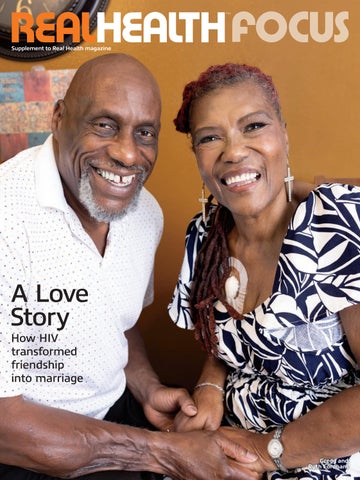
A Love Story How HIV transformed friendship into marriage
Gregg and Ruth Fordham
RH_FOCUS_Wnt_26_COVER.indd 1
10/16/26 10:40 AM
CONTENTS exclusively on
REALHEALTHMAG.COM #HIV HIV affects the Black community disproportionately. If you’re living with the virus or seeking to prevent HIV, go to realhealthmag.com/tag/hiv for all the latest updates.
Health Basics A–Z Want to lose weight, exercise smart, eat right, find good health care, sleep better or just get healthy? For tips, click on “Health Basics A–Z” on the realhealthmag.com home page.
Find healthier recipes for your favorite foods. Go to realhealthmag.com/ tag/recipe for delicious alternatives.
Digital Real Health Read Real Health magazine online exactly as it appears in print. Go to realhealthmag.com/digital to view the entire Smart + Strong digital library.
Gregg and Ruth Fordham
3 BUZZ
The Normal Anomaly Initiative promotes HIV education; four generations of Black Southerners discuss HIV; HIV awareness for immigrants
8 BASICS
10
African Americans and HIV
9 NUTRITION
Nourish bowl; get active outdoors
6 CARE & TREATMENT 10 FEATURE Lean people with HIV can have fatty liver; shifting care for older adults with HIV; how HIV affects aging eyes
Gregg and Ruth Fordham forged a love story amid lives challenged by HIV, physical disability and cancer.
REACH OUT & CLICK! At realhealthmag.com, you can read more articles and access exclusive, online-only special reports. Plus, sign up for the Real Health email newsletter to get the latest news on issues relating to Black health!
Published by Smart + Strong, publishers of Real Health and RealHealthMag.com. Copyright © 2026 CDM Publishing, LLC. All rights reserved. No part of this publication may be reproduced, stored or transmitted, in any form by any means, electronic, mechanical, photocopying, recording or otherwise, without the written permission of the publisher. Smart + Strong® and Real Health® are registered trademarks of CDM Publishing, LLC. Send feedback to website@realhealthmag.com or Real Health Focus c/o Smart + Strong, 157 Columbus Avenue, Suite 525, New York, NY 10023. Tel: 212-242-2163.
2 R E A L H E A LT H F O C U S W I N T E R 2 0 2 6
RH_FOCUS_Wnt_26_p2_TOC.indd 2
EDITORIAL Managing Editor: Jennifer Morton Deputy Editor: Trent Straube Science Editor: Liz Highleyman Copy Chief: Joe Mejía Art Director: Doriot Kim Production Manager: Michael Halliday
SMART + STRONG President: Ian E. Anderson Editorial Director: Oriol R. Gutierrez Jr. Vice President, Integrated Sales: Diane Anderson Integrated Advertising Manager: Jonathan Gaskell
Real Health Focus is an educational series on specific health topics. The editorial content is independently produced by Smart + Strong.
COVER AND THIS PAGE: (FORDHAMS) EXPOSED MOXIE PHOTOGRAPHY, STYLING BY HOUSE OF NATALIAH MAKEUP ARTISTRY; (COUPLE AND MEDITATION) ISTOCK; (FOOD) SHUTTERSTOCK.COM/RUTH KAY
Eat Healthy, Eat Well
I realhealthmag.com
10/16/26 10:46 AM
BUZZ
Project Liberate Expands HIV Programs
COURTESY OF NORMALANOMALY.ORG
The Normal Anomaly Initiative promotes HIV education. THE NORMAL ANOMALY INITIATIVE, A HOUSTON-BASED BLACK AND LGBTQ nonprofit that empowers and advocates for queer and marginalized communities, is expanding its leadership and health-access program, Project Liberate. The six-month leadership and entrepreneurial program focuses on business development, health equity, peer support and storytelling. Such community-centered programs can help reduce cultural and structural barriers to HIV testing, prevention and treatment. This year, Project Liberate is expanding to new cities throughout the South. “Project Liberate isn’t only about changing communities,” said Normal Anomaly Initiative founder and executive director Ian L. Haddock in a press release. “It’s about changing ourselves while changing our communiParticipants of Project ties. Every retreat builds toward that transformation. It is our hope that Liberate Liberators will have access to the tools necessary to lead boldly, build solutions, find community and, most importantly, thrive.” Project Liberate started accepting applications in September; the first retreat in this cycle takes place in November. Since its start in 2021, Project Liberate has helped launch nearly 100 socially impactful Black- or queer-owned nonprofits and businesses. Project Liberate is designed to equip Black queer leaders and social entrepreneurs with the leadership development, entrepreneurship, coalition-building and community-action skills necessary to strengthen health access in their communities. The South remains the epicenter of the HIV epidemic in the United States. Nearly half of all people living with HIV reside in the South, and more than half of new diagnoses nationwide occur in the region. Throughout the United States, Black people bear the greatest HIV burden. While African Americans make up just 14% of the U.S. population, they accounted for 39% of all new HIV diagnoses in 2024 (15,128 out of a national total of 38,793 new cases), according to data from the Centers for Disease Control and Prevention (CDC). This proportion has remained roughly stable over the past five years. Compared with white people, Black people are about eight times more likely to
be diagnosed with HIV. Of the estimated 1.2 million Americans living with HIV, around 40% are Black. In 2024, 65% of the nearly 39,000 people newly diagnosed with HIV were gay and bi men, according to the CDC; overall, men accounted for 80% of diagnoses that year. This differs from the global picture, as women and girls accounted for just over half of all people living with HIV and 45% of those newly diagnosed with HIV worldwide in 2024, according to UNAIDS. Expanding education and access to HIV prevention, testing and treatment is crucial for addressing health disparities across the South. Project Liberate invests in community leaders who can boost awareness and access to resources, including HIV testing, pre-exposure prophylaxis (PrEP) and viral suppression. PrEP reduces the risk of HIV acquisition via sex by around 99% if used consistently. To date, the Food and Drug Administration has approved four forms of PrEP: Truvada and Descovy are daily pills; Apretude is a shot given every two months; and Yeztugo is a twice-yearly injectable that is highly effective in women, gay men and gender-diverse populations. Due to insufficient evidence, Descovy is not yet indicated as PrEP for cisgender women and trans men. Generic versions of Truvada are available. About 13% of people with HIV in the United States don’t know they have the virus. What’s more, nearly 40% of new HIV cases are transmitted by people who don’t know they are positive. People with HIV who achieve and maintain viral suppression experience slower disease progression, enjoy better overall health and are less likely to develop opportunistic illnesses. What’s more, people with an undetectable viral load don’t transmit HIV to others through sex. This is known as treatment as prevention, or Undetectable Equals Untransmittable (U=U). This year, Project Liberate will host three retreats focused on leadership development, health access and group economics. —Eva Lorenz
realhealthmag.com I W I N T E R 2 0 2 6 R E A L H E A LT H F O C U S 3
RH_FOCUS_Wnt_26_p3-4-5-BUZZ.indd 3
10/16/26 10:4 AM
BUZZ
The 2026 HIV Stigma Report
are not even talking about HIV.” And when they do, the language being used to discuss people living with HIV is often stigmatizing. “Because of the language around HIV
“I HEAR PEOPLE THINKING THAT HIV IS OVER.” 4 R E A L H E A LT H F O C U S W I N T E R 2 0 2 6
RH_FOCUS_Wnt_26_p3-4-5-BUZZ.indd 4
being related to people who are queer, people think it doesn’t affect them, and that’s where it becomes dangerous,” said Regan, 27. “It’s not talked about because we treat queerness within our community as if it’s invisible or has to do with someone else, when, in fact, it should concern everybody. People concern themselves with certain STIs [sexually transmitted infections], but we don’t consider our [HIV] health because there is a stigma behind it.” Over 40 years after the start of the HIV crisis, the baby boomers in the room still had visceral reactions regarding the stigma-fueled shame
I realhealthmag.com
10/16/26 10:4 AM
FACEBOOK/NAIRHHA
ON AUGUST 20, GLAAD, THE WORLD’S largest LGBTQ media advocacy organization, released its sixth annual HIV Stigma Report in partnership with Gilead Sciences. Like previous years, the report measures public attitudes, barriers and progress toward achieving the eradication of HIV stigma, which continues to impede access to testing, care and lifesaving treatment for people susceptible to and living with HIV. A key finding included in the report illustrates an increasingly growing HIV knowledge gap among Generation Z, the most out generation in history; indeed, only 31% of Gen Zers feel knowledgeable about HIV, compared with 60% of Gen Xers. This stark divide is why four generations of Black Southerners—baby boomers, Gen Xers, millennials and Gen Zers—came together to discuss a topic still considered taboo in the South, despite it being a region where HIV remains a major concern. The intergenerational discussion, organized by GLAAD and held at ArtsXchange, a Black cultural community hub in East Point, Participants at Georgia, revealed some of the a discussion organized faces and stories behind by GLAAD GLAAD’s data. The conversation showed why talking about HIV still matters and why the absence of holistic sexual health education endangers future generations. “The education I received from school and anywhere else has either not been accurate or consistent,” said Marisa, 15, the daughter of prominent HIV advocate Masonia Traylor, who was also in attendance. “The only reason I feel safe about my sexual health is because my mother has taught me how to be,” she added. “But the education provided by others has not given me the insight that I need to know.” Malcolm, 68, has been living with HIV for 30 years; he tells GLAAD that he is conflicted over the lack of awareness among Gen Zers regarding HIV. “I hear stigma, right? But yet I hear people thinking that HIV is over,” he said. “It’s interesting to me that young people
(REPORT COVER) COURTESY OF GLAAD; (GROUP) COURTESY OF GLAAD/JERRELL HARDNETT
Four generations of Black Southerners came together to discuss the virus.
FACEBOOK/NAIRHHA
experienced by people living with HIV and the neglect by relatives who abandoned them as a result of their HIV status at the height of the epidemic. “I watched so many people die from shame,” said Darlene Hudson, an Arkansas native, longtime Atlanta LGBTQ advocate and cofounder of the Southern Unity Movement. “It was devastating. I’m thinking about a church in particular in Arkansas—the whole tenor section vanished. Those were some of my early experiences. But I’m taken aback that the continuation and urgency around education is still not happening.” BREAKING HIV SILOS One facet of sexual health education and HIV prevention Gen Z attendees felt their peers lacked knowledge about was pre-exposure prophylaxis, or PrEP, the once-a-day pill or twice-a-year injectable prescribed to HIV-negative people to prevent contracting the virus. Maille, 20, a sexual health educator, explained the benefits of PrEP and other drugs prescribed to prevent HIV and other STIs, but with a caveat. “I would not know that information unless I worked within the sexual health field and had a desire to pursue that dream further,” Maille said. “If I were one of my peers that didn’t know me, I would have no clue.” Jai The Gentleman, 40, host of the Dear Black Gay Men podcast, told GLAAD that his experience regarding HIV has been completely different from many of the people in the room. “There is not a gay space that you can exist in where HIV is not front and center,” he said. “HIV is so ubiquitous in our culture, not just disease but conversations about it. I was of the generation that came of age when PrEP became widely available, when HIV meds went from multiple pills a day to one pill a day, where undetectable did become untransmittable. It’s a ‘yes-and’ problem we’re dealing with. But for us, HIV is very much so sitting right in the chair next to me, and I have to deal with it every single day of my life if I want to have any sexual activity,” he added. Information is everywhere; understanding is not. HIV stigma is not static. It evolves alongside the systems that shape how people receive information, form opinions and make decisions about their health. Information moves faster than ever but not always more clearly. Biomedical advancements have transformed what is possible in HIV prevention and treatment, but public understanding has not kept pace. “We have to start breaking these silos and having these conversations with those who are in power to understand what we can do to start supporting and pouring back into the community,” said Jerrell Hardnett, associate director of education and advocacy at GLAAD and the author of the latest HIV Stigma Report. Hardnett has been living with HIV for over a decade. “I am living a full and robust life,” Hardnett said. “I want people to understand and see stories of it and not stories from the ’70s and ’80s. I want us to actually have conversations [as people living with HIV] about what it looks like for me to be in conversation with family. What does it look like for me to have intimacy?” “Storytellers, journalists, technology platforms, digital creators, podcasters, advocates and public health institutions all have a role to play in shaping a more informed and compassionate future,” said Sarah Kate Ellis, president and CEO of GLAAD, in a letter included in the HIV Stigma Report. “Ending HIV stigma is possible. But it will require all of us to choose truth over misinformation, visibility over silence and empathy over fear. If we do, we can help build a future where HIV transmission ends and anyone living with HIV can live openly, safely and free from stigma,” wrote Ellis. —Darian Aaron, GLAAD’s senior director of local news for the U.S. South
“Speak Up Today!” for HIV and Hepatitis This awareness day spotlights immigrants and refugees. September 9 marked National African Immigrant and Refugee HIV/AIDS and Hepatitis Awareness (NAIRHHA) Day 2026. This year’s theme was “Speak up today! Stand strong against HIV and hepatitis B.” “HIV rates are six times higher among African immigrants in the United States than in the general U.S. population and are nearly twice those of U.S.-born Black individuals,” according to NAIRHHADay.org. What’s more, “African immigrants face the highest average chronic hepatitis B rates in the country, with approximately 10% of these communities living with hepatitis B.” The awareness day was launched by advocates in Massachusetts, New York and Washington, DC, and is led by the Hepatitis B Foundation, the Africans for Improved Access program at the Multicultural AIDS Coalition and the Coalition Against Hepatitis for People of African Origin. The day, according to NAIRHHADay.org, aims “to bring both national and local attention to the highly prevalent health issues of HIV/AIDS and viral hepatitis in the African immigrant
and refugee Infographic population promoting the 2026 in the United NAIRHHA Day States in a way that is culturally and linguistically appropriate.” NAIRHHA Day provides a way for organizations, communities, families and individuals to: • Raise awareness about HIV/AIDS and viral hepatitis to eliminate stigma; • Learn about ways to protect against HIV, viral hepatitis and other related diseases; • Take control by encouraging screenings and treatment, including viral hepatitis vaccination; • Advocate for policies and practices that promote healthy African immigrant communities, families and individuals. This year’s observance included a virtual celebration called Twefeeko 2026. (Twefeeko is a Luganda word that means “let us take care of ourselves.”) The event showcased inspiring conversations, performances and music. NAIRHHA Day takes place in September because that month is National African Immigrant Month in the United States. —Trent Straube
realhealthmag.com I W I N T E R 2 0 2 6 R E A L H E A LT H F O C U S 5
RH_FOCUS_Wnt_26_p3-4-5-BUZZ.indd 5
10/16/26 10:4 AM
CARE & TREATMENT Lean People With HIV Can Have Fatty Liver
6 R E A L H E A LT H F O C U S W I N T E R 2 0 2 6
RH_FOCUS_Wnt_26_p6-7_CARE-TREAT.indd 6
with SLD by BMI category. This analysis used clinical data collected at a large HIV clinic in central London between 2019 and 2025. SLD was determined using transient elastography, or FibroScan, a noninvasive ultrasound imaging method that estimates both steatosis and fibrosis. Participants with a BMI below 25 were classified as having lean SLD. A BMI of 25 is the traditional threshold for overweight, while 30 is the cutoff for obesity. The researchers also collected data on liver disease biomarkers, HIV-related factors and cardiometabolic health. Among 391 people with HIV and fatty liver disease, 57 (15%) were classified as having lean SLD. Compared with people whose BMI was 25 or higher, lean people with SLD were older (median 58 versus 54 years) and had a more favorable cardiometabolic profile. Nonetheless, lean and non-lean people with SLD had similar markers of liver disease severity, including liver fibrosis scores. “Although lean participants appeared metabolically healthier and had slightly less hepatic fat accumulation, we found no evidence that they had a lower burden of clinically relevant liver disease,” Bascombe said. Of note, hepatitis B coinfection was more common among lean people with SLD in a single-factor analysis. In fact, people with lean SLD were more than twice as likely to have hepatitis B than those with overweight or obesity (19% versus 8%). Lean SLD was most strongly associated with a history of lipodystrophy, or abnormal body fat distribution. While 11% of people with lean SLD had ever had lipodystrophy, this fell to just 2% among those with overweight or obesity. Once a hallmark of HIV, people with lipodystrophy may have excess abdominal fat along with fat loss in the face and
limbs. Although its causes are not fully understood, some early antiretroviral drugs—such as AZT and early protease inhibitors—were linked to either lipoatrophy or mixed fat gain and loss. Lean SLD was associated with use of tenofovir alafenamide (a component of several combination pills). “Collectively, these findings raise the possibility that lean SLD may not simply represent obesity-driven disease occurring at a lower BMI but instead may arise through different pathways leading to SLD in people with HIV, including altered fat distribution, adipose dysfunction or potentially mitochondrial mechanisms,” the researchers suggested. These findings show that screening strategies based on BMI and metabolic factors may miss a subgroup of people at risk for fatty liver disease. This has implications for clinical management, including prescribing of GLP-1 weightloss medications. One of these, Wegovy (semaglutide), was approved in 2025 for the treatment of metabolic dysfunctionassociated steatohepatitis (MASH), the advanced stage of MASLD. Recognizing this discrepancy, the field is moving away from reliance on BMI alone and toward including body composition measures, such as waist circumference, waist-to-height ratio, body roundness index and body fat percentage. —Liz Highleyman
GETTY IMAGES/RASI BHADRAMANI
LEAN PEOPLE WHO ARE CLASSIFIED as normal weight according to body mass index (BMI) may still develop fatty liver disease and its complications— and those with HIV may be at higher risk—according to study findings presented at the 26th International AIDS Conference in Rio de Janeiro. “Normal BMI does not exclude clinically relevant liver disease in HIV,” said presenter Florence Bascombe, RN, a senior research nurse at University College London. “Reliance on body size alone may miss people at risk, highlighting the need for better phenotyping and more nuanced metabolic assessment in HIV care.” Steatotic liver disease (SLD) is the recently adopted name for fat accumulation in the liver. It includes metabolic dysfunction-associated steatotic liver disease (MASLD), alcohol-related liver disease and liver disease attributable to both metabolic factors and alcohol. The new terminology recognizes that SLD is a metabolic condition. Over time, the buildup of fat in the liver (hepatic steatosis) can lead to fibrosis, cirrhosis and liver cancer. Some research finds that lean people with SLD are at greater risk for these complications as well as higher mortality, despite fewer metabolic abnormalities. Now that hepatitis B can be prevented with a vaccine and hepatitis C can be cured with direct-acting antiviral therapy, SLD is responsible for a growing share of advanced liver disease worldwide. Fatty liver disease is often associated with obesity, but not always. Studies of the general population find that around 10% of people with normal or low body weight may have SLD, and research suggests this may rise to 25% among people living with HIV. Focusing on BMI alone can underestimate the prevalence of fatty liver disease in lean people with or without HIV. To learn more about fatty liver disease in people with HIV, Bascombe and colleagues compared clinical characteristics of HIV-positive people
(HANDS) GETTY IMAGES/KATE_SEPT2004; (EYES) GETTY IMAGES/CESAR GALLARDO
Relying on body mass index alone may not be adequate.
I realhealthmag.com
10/16/26 10:
AM
Shift in Care for Older Adults With HIV Expanding care beyond essential antiretroviral therapy is key. A new report by a group of HIV researchers in the journal Lancet HIV recommends that health systems caring for older individuals with HIV should move beyond the standard antiretroviral therapy to a more comprehensive healthy-aging approach. The report was led by researchers at the Johns Hopkins Bloomberg School of Public Health and Yale School of Medicine, with colleagues at more than 40 institutions and nine persons living with HIV. While most new HIV cases are among young people, the number of individuals living with HIV worldwide is increasing and getting older: Nearly a third of people with HIV were over 50 in 2025, and half will be over 50 by the year 2040. In their report, commissioned by the editors of the journal Lancet HIV, the authors recommend a broad set
of health-system changes to manage the distinct challenges involved in HIV prevention and screening, treatment and long-term care in this older population. Recommendations include monitoring physiological age and functional declines, minimizing the multi-pharmaceutical use common among older adults and promoting mental health and a healthy lifestyle—all while maintaining adherence to antiretroviral therapy. The report, published online July 27
in Lancet HIV, was delivered in a presentation July 28 at the AIDS 2026 conference in Rio de Janeiro. Standard care centers on antiretroviral drug therapy (ART), which prevents progression to AIDS. ART must be taken indefinitely. Its availability has meant that people can live a near-normal lifespan. Older people with HIV face added challenges, including stigma that can complicate medical care for existing infections and screening for new HIV infections. For those who have been living with HIV for a long time, the cumulative adverse effects of older ART treatments plus chronic immune activation due to HIV infection typically have accelerated the aging process, effectively bringing forward the chronic ailments seen in older patients. —Johns Hopkins Bloomberg School of Public Health
How HIV Affects Aging Eyes
(HANDS) GETTY IMAGES/KATE_SEPT2004; (EYES) GETTY IMAGES/CESAR GALLARDO
Some adults have a higher prevalence of dry eyes. Older adults with well-controlled HIV may have a higher prevalence of certain eye conditions, particularly dry eye, compared to similar adults without HIV, according to a novel study led by a University of Colorado Anschutz Department of Ophthalmology faculty member. The study is the first to comprehensively describe eye health in adults ages 60 and older who are living with durably suppressed HIV (meaning a person’s viral load is low and they cannot sexually transmit HIV to others) compared to similarly aged adults who do not have HIV, explains Alison Abraham, PhD, MS, MHS, the lead author. The research, known as the HIV Vision Study, is a supplemental study of an ongoing national collaborative research effort through the National Institutes of Health to understand and reduce the impact of chronic health conditions that
affect people living with HIV. Researchers compared 74 older adults living with HIV to 65 patients without HIV. Between 2021 and 2023, each participant completed a series of vision and eye-related evaluations at the Johns Hopkins Wilmer Eye Institute in Maryland. “Overall, adults aging with HIV who are well-treated are doing fairly well in many ways, including their vision,” Abraham says. “The big surprise for us was the dry eye data.” Abraham was shocked at how common dry eye was in both groups. Roughly 63% of people living with HIV and 51% of people without HIV had clinical signs of dry eye disease. She notes that moderateto-severe tear insufficiency was almost identical between groups: 34% versus 33%. The larger difference in the composite measure of dry eye appeared partly related to other signs, including
meibomian gland dysfunction (20% versus 8%). “That isn’t at all what we expected,” Abraham says. “The findings raise the possibility that HIV or HIV-associated factors may contribute to dry eye, but larger studies are needed to determine what might be behind the observation.” It is unknown why this happens, but Abraham suspects persistent immune activation and inflammation associated with chronic HIV infection may play a role. —Taylor Shaw, University of Colorado
realhealthmag.com I W I N T E R 2 0 2 6 R E A L H E A LT H F O C U S 7
RH_FOCUS_Wnt_26_p6-7_CARE-TREAT.indd 7
10/16/26 10:
AM
African Americans and HIV Black people, especially in the South, are disproportionately affected by HIV. THROUGHOUT THE UNITED STATES, Black people bear the greatest burden of HIV. While African Americans make up about 14% of the U.S. population, they accounted for 39% of all new HIV diagnoses in 2024, with more than 15,000 new cases, according to the Centers for Disease Control and Prevention (CDC). This proportion has remained roughly stable over the past five years. Compared with white people, Black people are about eight times more likely to be diagnosed with HIV. Of the estimated 1.2 million Americans living with HIV, around 40% are Black. Black men accounted for nearly half of new HIV diagnoses among young gay, bisexual and other men who have sex with men (ages 13 to 24 in 2023), though Latinos accounted for a higher proportion among those older than 24. The highest number of new cases is among Black gay men in the South. Black women make up over half of all new HIV diagnoses among women—12
8 R E A L H E A LT H F O C U S W I N T E R 2 0 2 6
RH_FOCUS_Wnt_26_p8-9_BASICS_NUT.indd 8
times higher than the diagnosis rate for white women. Although data for transgender people are limited, Black trans women have disproportionately high HIV prevalence. Only 63 children were diagnosed with HIV in 2024, but 52% of them were Black. Just over a quarter of cases among Black men and women are attributable to injection drug use. Despite having a higher rate of HIV acquisition, Black people in the United States are substantially less likely than their white peers to use pre-exposure prophylaxis (PrEP), which reduces the risk of acquiring the virus by around 99%. Along with using condoms and not sharing drug injection equipment, PrEP is a highly effective tool for preventing HIV. Experts are hopeful that the recent approval of twice-yearly injectable PrEP (lenacapavir, or Yeztugo) will help close the gap. Advances in antiretroviral therapy have benefited all people living with HIV. Since the advent of effective
treatment, HIV-related mortality has declined dramatically—indeed, it is no longer among the top 10 leading causes of death for Black men or women—but African Americans still account for around 40% of HIV-related deaths. Antiretrovirals do not work differently in people of different racial/ethnic groups, and treatment guidelines are the same. But access is key, and Black people are less likely than white people to receive HIV care and treatment. Nearly 90% of African Americans living with HIV have been tested and know their status—about the same as the HIV population overall, according to the CDC. HIV testing is important because people who know their status can start treatment, which halts disease progression and prevents HIV transmission via sex if viral load is suppressed. In 2024, 81% of Black people diagnosed with HIV were linked to care within one month, and 68% achieved viral suppression within six months, narrowing the gap with other racial/ethnic groups. Beyond HIV, African Americans are at greater risk for other health conditions that can complicate HIV care, including high blood pressure, heart disease, kidney disease, type 2 diabetes, hepatitis C and sexually transmitted infections. Higher rates of poverty, homelessness and incarceration, lower health insurance coverage and limited access to high-quality healthcare, especially in rural areas, all contribute to the disproportionate burden of HIV in Black communities. Racism, homophobia, stigma and distrust of the healthcare system can leave African Americans less likely to seek out HIV prevention, testing and care, but many AIDS organizations offer services specifically tailored to the needs of Black people at risk for or living with HIV. —Liz Highleyman
GETTY IMAGES/DRAZEN ZIGIC (MODELS USED FOR ILLUSTRATIVE PURPOSES ONLY)
BASICS
I realhealthmag.com
10/16/26 11:00 AM
NUTRITION & FITNESS
Nourish Bowl
PLACES TO BE PHYSICALLY ACTIVE
Try this recipe or build your own. Grain bowls are endlessly adaptable and perfect for using up leftovers. This nourish bowl is a nutritionally complete meal that’s rich in protein from the combo of brown rice and chickpeas (also known as garbanzo beans) and phytonutrients thanks to the colorful veggies.
Ingredients 1½ cups quinoa, cooked and cooled 3 medium sweet potatoes 2 tablespoons olive oil ¼ teaspoon salt ¼ teaspoon pepper 1 can chickpeas, drained and rinsed 2 medium beets, peeled and grated 2 large apples, cored and diced 6 cups arugula or baby spinach ½ cup raw walnuts
For the Tahini Dressing: ¼ cup tahini 2 tablespoons olive oil 1 tablespoon maple syrup 2 teaspoons Dijon mustard 1 tablespoon apple cider vinegar 2 tablespoons lemon juice 4 tablespoons water, or more as needed ¼ teaspoon salt, or to taste ¼ teaspoon pepper, or to taste
DIRECTIONS 1. Preheat oven to 375°F. Line a baking sheet with parchment paper.
(NOURISH BOWL) COURTESY OF COOK FOR YOUR LIFE
GETTY IMAGES/DRAZEN ZIGIC (MODELS USED FOR ILLUSTRATIVE PURPOSES ONLY)
SERVINGS: 4 / INGREDIENTS: 19
2. Wash and peel the sweet potatoes and cut into 1-inch cubes. Mix with olive oil, salt, pepper and toss to coat. Bake for 30 to 40 minutes or until tender. Remove from oven and let cool. 3. Combine ingredients for the tahini dressing in a mixing bowl and whisk or blend. Gradually pour in water while blending until the mixture reaches a creamy and pourable consistency. 4. To assemble individual bowls, add quinoa, sweet potatoes, chickpeas, beets, apples, arugula or baby spinach and top with walnuts. Drizzle with tahini dressing and serve. NUTRITION FACTS (per serving) Calories: 519; fat: 29 g; saturated fat: 17 g; polyunsaturated fat: 2 g; monounsaturated fat: 8 g; carbohydrates: 61 g; sugar: 38 g; fiber: 9 g; protein: 11 g; sodium: 163 mg
© 2026 Fred Hutchinson Cancer Research Center, a 501(c)(3) nonprofit organization. Used with permission.
If you’re looking for fun ways to mix up your physical activity routine, check out these options. Free apps • AllTrails: Search by city, park or trail name. • ParkPassport: Search for local, state and national parks and recreation areas. • TrailLink: Find trails for walking, hiking, running, skating and biking by city, state, ZIP code or trail name. Websites • FindYourPark.com: Explore national parks, recreation areas and historic sites. • Recreation.gov: Search for recreation activities at outdoor and cultural destinations. More Search online using terms like “walking groups near me,” “dance classes near me” or “roller skating rinks near me.” You can also get information about programs from your local parks and recreation department. Adapted from: Physical Activity Basics, CDC.gov
realhealthmag.com I W I N T E R 2 0 2 6 R E A L H E A LT H F O C U S 9
RH_FOCUS_Wnt_26_p8-9_BASICS_NUT.indd 9
10/16/26 11:00 AM
RH_FOCUS_Wnt_26_p10-13_ FEATURE.indd 10
10/16/26 10:44 AM
AMID LIVES CHALLENGED BY HIV, PHYSICAL DISABILITY AND CANCER, GREGG AND RUTH FORDHAM FORGED A LOVE STORY. BY TIM MURPHY PHOTOGRAPHY BY EXPOSED MOXIE PHOTOGRAPHY
STYLING BY HOUSE OF NATALIAH MAKEUP ARTISTRY
P
ERHAPS NOBODY SAW it coming, least of all Gregg and Ruth Fordham themselves. But in 2003, when Gregg was mourning the death of his partner—a man named Chris— Ruth, who had been close friends with the couple through the Norfolk, Virginia, HIV community, was right there beside Gregg at the funeral. That night, after everyone else had gone home, Gregg turned to Ruth and asked, “Would you stay with me a little?” As Ruth recalls it, “I said OK, and we hugged and embraced. And then we started feeling a different kind of connection. I’ll never forget it. We just lay there in bed, fully clothed, but it was different.” And so began the romantic bond between Gregg and Ruth that led them to get married two years later and embark on a life together. Their journey has included not only navigating the loss of both his legs and her incurable cancer but also their work supporting others living with HIV in southeastern Virginia. “I’m married to my best friend,” says Ruth, 68, of Gregg, 66. “He calls me a cougar because I’m two years older than him,” she jokes, and he laughs. The story of how they met is a story of how two entirely separate lives were brought together by HIV. Although in most cases these days, HIV can be easily controlled with medications, a diagnosis was generally considered a death sentence back when Ruth and Gregg tested positive for the virus in the 1980s. RUTH GREW UP IN NORFOLK as well as in New York City’s Harlem, where she returned when she was 18 to escape family dysfunction. There, she started injecting heroin. By the mid-’80s, it was common for someone in her circle of heroin users to say, “Did you hear that so-and-so died last night?” Gregg The killer in question was AIDS, which was ravaging not only the and Ruth city’s gay men but also its injection drug users. Fordham realhealthmag.com I W I N T E R 2 0 2 6 R E A L H E A LT H F O C U S 1 1
RH_FOCUS_Wnt_26_p10-13_ FEATURE.indd 11
10/16/26 10:44 AM
Despite whispers about who had died, Ruth recalls that none of her friends really talked about HIV in a way that might have led them to take preventive measures. Meanwhile, she says, “We were getting smaller and smaller,” referring to the wasting that is common when asymptomatic but untreated HIV slowly advances to symptomatic, deadly AIDS. In 1988, Ruth tested positive for HIV. “They called me in and told me I had two more years to live,” she says, “then they gave me two condoms and told me not to have sex without them.” Her reaction? “I thought, OK, since I’m going to die, I might as well just keep getting high.” So she did. But eventually, she called her mother and returned to Virginia. Once she did, Ruth became determined to live, inspired, she says, by the fact that “my mother was praying for me. That’s why I believe in prayer and that God is real.” Additionally, the son she had given birth to as a teen had kids of his own as a teen, and, at 30, she wanted to be a better grandmother to them than she had been a mother to her son. It was now the early ’90s. “I wanted to get back to life and to reality,” she says. She got off heroin partly by entering a methadone program to manage her addiction and then joined a church, where, she says, “I gave my life to the Lord.” She also started volunteering at Tidewater AIDS Crisis Task Force, going out into the community and talking to people about living with HIV. “I wanted them to know it’s not a death sentence,” she says, so that other folks would get tested and, if they tested positive, enter care and take measures such as using condoms to keep others HIV negative. A CHILD OF A MILITARY FAMILY, Gregg Fordham spent a chunk of his youth at a U.S. base in Japan (he would sometimes breakdance for money on the streets of Tokyo). Gregg eventually came of age and wound up in Virginia, where a woman he was dating asked him to get tested for HIV before they had sex because she had heard that he slept around. “I made every excuse known to man why I couldn’t get tested,” says Gregg, who at the time was working at a bakery during the day and a warehouse at night. Finally, though, he did and found out he was HIV positive. “Immediately, my brain went to ‘How long have I got to live?’” he recalls. The counselor who diagnosed him said, “I can’t tell you. You could be hit by a bus tomorrow.” But, with the crack epidemic in full swing in Virginia, “I decided I was going to go out with a bang and pretty much smoke my way out of life,” he says. “I got high every day that had a ‘y’ at the end of it. I was the guy who would steal your wallet” for money to buy crack “and then help you look for it.” But one night, Gregg says, he caught a look at himself, gaunt and emaciated, in the mirrored window at a 7-Eleven.
“I was like, Who is that that dude?” He called the one friend he hadn’t alienated and asked him for $28 so that he could enter a detox facility. That’s where staff found that he had a 104-degree fever and instantly admitted him, a veteran, to a Veterans Administration hospital. After stabilizing for two weeks at the VA hospital, Gregg went to a drug-treatment center for 30 days and then, to reinforce his sobriety, to another one for six months. After that, clean and stable, he started volunteering at Tidewater, where a staffer named Irma Hinkle urged him to apply for a job, which he got. THAT SET THE STAGE for a consequential meeting. Hinkle assigned Gregg and Ruth to go speak about living with HIV at a nearby women’s prison. Sometime after their speaking engagement, the two ended up leading a regular HIV support and education group at the prison. “The group started looking at us as a couple,” recalls Ruth, who was single at the time. But Gregg was actually involved with Chris, who was also living with HIV. Gregg and Ruth continued leading HIV awareness and information events in the community and became increasingly close. “We were always just hanging,” says Gregg. By this point, it was the late ’90s. Effective HIV medication had emerged, and both of them were on it, their virus tamped down to levels undetectable on blood draws, which renders folks with the virus unable to transmit HIV sexually. Then, shortly after 9/11, something awful happened: Gregg was in a car accident and lost both his legs. He was hospitalized and in rehab until February. His buddy Ruth visited him regularly. Life in a wheelchair “became who I was, so I had to embrace it,” he recalls. He learned to drive with hand controls and joined a local wheelchair basketball group. Then, in 2003, tragedy struck again: Gregg’s beloved partner, Chris, who had been on dialysis, died of congestive heart failure. Devastated, Gregg called Ruth for help with the funeral arrangements, which led to that fateful evening when Gregg asked Ruth to stay the night. At first, they dated chastely—to the movies or out to eat. Finally, they became physical. “I knew there’d never be a replacement for Chris,” says Gregg, “but Ruth and I had a lot in common.” In all relationships, he says, “the sex is going to fade, and you’re going to need a companion, and I saw all that in Ruth.” AS FOR RUTH, she calls Gregg “my friend who’d been there for me. He’s kind. We laugh together.” Says Gregg, “I love Ruth’s heart. She always roots for the underdog. I loved the way she smiled and called my name.” Ruth says, “I think we were meant to be.”
“I LOVE RUTH’S HEART. I THINK WE WERE MEANT TO BE.” 12 R E A L H E A LT H F O C U S W I N T E R 2 0 2 6
RH_FOCUS_Wnt_26_p10-13_ FEATURE.indd 12
I realhealthmag.com
10/16/26 10:44 AM
is defunct. Its HIV services have largely been picked up by Life Center, which also serves as the regional LGBTQ community hub.
The key to The two married, bought a home together and took in Ruth’s mom, who lived with them their longtime happiness? for eight years before she died. Listening, says Gregg. Then, in 2015, while working on staff at Norfolk’s LGBT Life Center, which provides services for people living with or at risk for HIV regardless of sexual orientation or gender identity, Ruth began to experience extreme fatigue. A subsequent round of doctor visits and tests revealed that she had multiple myeloma, an incurable but highly treatable blood cancer. She’s been on chemotherapy ever since. She hates the side effects. “A lot of headaches and backaches,” she says. The cancer also attacked her kidneys, which gave rise to renal failure; at this point, however, she has chosen not to undergo dialysis. “I don’t have the energy or strength right now,” she says. “Most days are a challenge to get up and participate in things. But I’m a woman of faith, and I believe God is my healer and that he’s keeping me.” Gregg and Ruth have retired from their full-time jobs in HIV services, but they each still lead a regular group at Life Center for people living with HIV—Gregg’s is for anyone who identifies as a man, and Ruth’s is for those who identify as women. Gregg also hosts short retreats for men living with HIV. Tidewater, where they began their post-diagnosis lives and met,
ON A TYPICAL DAY NOW, Gregg gets up early, fixes Ruth breakfast and heads to the local rec center to play wheelchair basketball. He also waterskies and surfs with special disability groups. As for Ruth, she says many of her days are filled with medical appointments. On Sundays, when Ruth is up to it, they attend a church that has long been welcoming to them as folks living openly with HIV. As a retiree, says Ruth, “I’m grateful now that when I’m tired, I can rest.” Ruth’s 26-year-old grandson lives with her and Gregg intermittently, but mainly, they say, they don’t have much family support in the area. Instead, they say, they derive a lot of support from Life Center, noting that its director for the past 25 years, Stacie Walls, is especially good to them. “They’re always there for us,” says Ruth, including with food from the agency’s pantry. Both Gregg and Ruth say retirement has forced them to tighten their belts. “We don’t have any money left after the essentials,” Gregg says. Yet they continue to have each other. “Gregg may get the brunt of it on my bad days, just as I take the brunt of it on his bad days,” says Ruth. Otherwise, they content themselves with small pleasures, like, after Ruth’s chemo visits, going to seafood restaurants or to Olive Garden for soup and salad. “For me, just riding in the car with Ruth or sitting by the boat launch with her is fun,” says Gregg. “Just being together.” They also love going to see stand-up comics, especially Michael Colyar. Gregg says the key to their longtime happiness is listening. “I listen to what she says, even though I might not act on it right away,” says Gregg. “The love is always there, but if you don’t listen, you miss half of it.” Ruth says she doesn’t mind playing a traditional wifely role. She doesn’t care if some people find that backward-sounding “because it works for us. He’s not trying to belittle me, but he likes his man power, so I let him have it.” How does Gregg see it? “I think it’s more of a partnership,” he says. “I might have my idea of how to do things, but I don’t have blinders on, and I know I need to communicate.” “He’s my best friend,” Ruth says again. “He has my heart, and I have his. I don’t think it can get any better.” ■ realhealthmag.com I W I N T E R 2 0 2 6 R E A L H E A LT H F O C U S 1 3
RH_FOCUS_Wnt_26_p10-13_ FEATURE.indd 13
10/16/26 10:44 AM
$ QRQ SURƓW RUJDQL]DWLRQ IRXQGHG LQ 7KH :HOO 3URMHFW XQDSRORJHWLFDOO\ IRFXVHV RQ WKH XQLTXH LQWHUVHFWLRQDO QHHGV RI ZRPHQ OLYLQJ ZLWK DQG YXOQHUDEOH WR +,9 DFURVV WKH JHQGHU VSHFWUXP
CHANGING THE COURSE of the HIV epidemic…
one woman at a time Access our resources at www.thewellproject.org
EDUCATION & INFORMATION
COMMUNITY SUPPORT
Learn More! thewellprojecthiv
PZA_FullPage_Template.indd 1
thewellprojecthiv
ADVOCACY & LEADERSHIP
COLLABORATIVE ENGAGEMENT
e
WOMEN-FOCUSED HIV RESEARCH
Stay Connected! thewellproject
thewellprojecthiv
thewellprojecthiv
PZA556116.pgs 07.02.2025 7/2/25 11:5112:51 ESA