
digital tools
visits and authors
Mahmoud Abdelrhany, Maram Al Rafaei, Khodeir Alborsaedy, Manuel Álvarez Diestro, Toka Asal, Mohamed Ashraf, Amr Bakr, Abdelrahman Barakat, Kathryn Best, Jochen Braun, Lena Buhl, Cairo Art Book Fair, Cairopolitan, Divaz of Arabia, Alaa El Hadidy, Shahd El Sabbagh, Nour El Safoury, Hend Elbalouty, Aly S. Elsayed, Nada Ezzeldin, Eman Fikri, Amanda Galal, Ibrahim Hamdi, Mahmoud Hamdy, Ahmad Hammoud, Negmedine Khaled, Markus Lange, Farah lbrahim, Mada Masr, Raghda Moataz, Moshtarak Studios, Haytham Nawar, ntsal, Celine Raffy, Rare Books and Special Collections Library, Rizo Masr, Bahia Shehab, Habiba Sirag, Manuel von Gebhardi, Tobias Wenig, Nora Zeid
And thanks to the more than 500 people who responded to our call for entries, a selection of their work is presented in this issue starting on page 47.
type & typography graphics illustration 3d motion image publishing web playground work surroundings handle type
TOOLSPACE
Jan Middendorp, LettError
In the mid-Eighties there was hardly a computer to be seen at the Royal Academy. Working by hand was the norm. That was pleasant because you learnt to deal with letters and words in a very direct and physical way. Typography under Gerrit Noordzij was in the first place writing and seeing how forms arise on paper. There were computers, but their place was at home. JvR (Just van Rossum) and EvB (Erik van Blokland), later LettError, were already messing around with computers at secondary school, just as a decade earlier whizz kids with a technical bent soldered their own amplifiers and radios. When typography entered their lives and they got to know one another, the question was not whether a computer might be a legitimate tool for that profession, but what the best way to use it would be. Why? came later, and it was asked by others. After all, typography is a discipline full of traditions and conventions, and few typographers are in the front ranks when it comes to welcoming new technology. From the moment that LettError went public with ideas that were mainly intended to be playful but were often interpreted by colleagues as a provocation, there was a call for justification: a method behind the madness. There is no longer any need to explain why computers can be useful for typography; hardly anyone does it without them. But the next step, that the typographers themselves influence the operation of the computer, is too much for most of them. Still, it is a natural choice for designers who do not want to be slaves to their digital tools.
Toolspace
In itself a computer is not a tool but a tool-kit, a box you put functions in as you choose. All kinds of instruments that used to litter up workshops and offices now have a place on the hard disk: marker and drawing board, scissors, paste, trash can, ledger, typewriter, calculator, fax and telephone. Some of those instruments are already in the computer when you buy it in the form of system or standard software; others are added by buying extra programs. Can you compare a program with a tool? Not completely. In the case of a physical tool, like a paintbrush or a hammer, it is pretty clear what kind of tasks it is more or less suitable for. Like computers, those objects (to borrow a term from Marshall McLuhan) are an extension or expansion of the human body, but their scope is usually limited to a single function. For example, they are highly suitable for spreading chemicals on a surface or hammering a piece of metal without hurting your hands. The case is more complicated when it comes to a computer program. A program has more potential than a hammer, it is more complex to use, and it comes with hefty instruction manuals to guide the user through all the functions. After weeks or months of intensive use, a program can still surprise you with undiscovered functions. The learning period is a long voyage of discovery through what you can call the software world of tools.
But no matter how overwhelming a program may be when you are first introduced to it, its capacity is finite. Software is a commercial mass product, so it is not made for individuals but for a target group with hypothetical wishes and demands. If in practice that target group turns out to have unfulfilled desires extra functions are added with an upgrade, but only if there is enough interest. You can do everything with a program as long as there are enough people who want to do the same thing. None of this raises any problems for the average user, who usually does not demand more of the computer than it is capable of doing, and in fact finds reassurance in its limited capacity. That should not be the case for users in a creative profession. It is precisely the task of designers (graphic, industrial or whatever) to discover new possibilities. In their case the use of a computer is perhaps more of a handicap than an advantage. If you walk through the real world with a pencil behind your ear, you will find the inspiration for new ideas in that world. If you sit in front of the monitor all the time, you will draw your ideas more and more from the computer. In the past you were successful if you could make what was in your mind’s eye with your own hands. Now there is a danger that designers will only function properly if their creativity does not exceed the potential of their computer: if the world of ideas fits inside the world of tools. Of course, in the long run this leads to a monotonous computer-driven uniformity. Once an alert designer has become familiar with the software, it is to be hoped that questions will arise which the software is incapable of solving. This can be frustrating. You think of an image or a solution that requires a specific combination of functions, and then it turns out not to exist. Or you want to repeat an action a large number of times, while the program does not offer any way of doing it automatically. The tool-horizon comes into view. Should you begin to have doubts about yourself as a designer? On the contrary. It simply means that the people who devised the program did not take your idea into account, so it is a relatively new idea. And it is no bad thing for a designer to have new ideas. All the same, good advice is a rare commodity when you run up against the limits of the tool-kit in the middle of the thinking process. Should designers slow down and adjust their ideas to what the computer can handle? As we know, to design is to make images within given limitations. But not all limitations are the same. Limitations and demands imposed by a client are easier to accept than the arbitrary limitations of your digital tools.
Honing
003
Artisans of the past—the predecessors of our designers’ guild—were rarely satisfied with tools as they found them in the shop. They always had the tendency to personalize their tools, to appropriate them by honing them, converting them or expanding them. The more specialized the work, the greater the demand for customized or individually made instruments. For instance, letter-cutters in the past thought up methods of working faster and more meticulously, and to that end they designed not only new fonts, but also counterpunches and other new tools. It must be possible to do something similar with software. After all, programming graphic programs is much too important to leave to programmers.
TYPE & TYPO GRAPHY
Tools have always dictated the limits of our craft. When desktop publishing took off at the turn of the millennium, it broke the gates open—suddenly, font design wasn’t just for specialists anymore. It became a playground where anyone could experiment with letterforms. We moved beyond simple drawing and into the world of logic, scripts, and systems. Then came variable fonts, giving type the ability to breathe and stretch across different weights and widths.
Today, the line between designing a font and using one has blurred. Whether we’re building a letterform from scratch or seeing how it behaves in a responsive interface, we’re constantly balancing the past and the future. The soul of the letterpress is still there, but today’s tools allow type to react, grow, and move with data. We aren’t just picking fonts anymore; we’re teaching letters how to live.
Text edit finalized with gemini.google.com
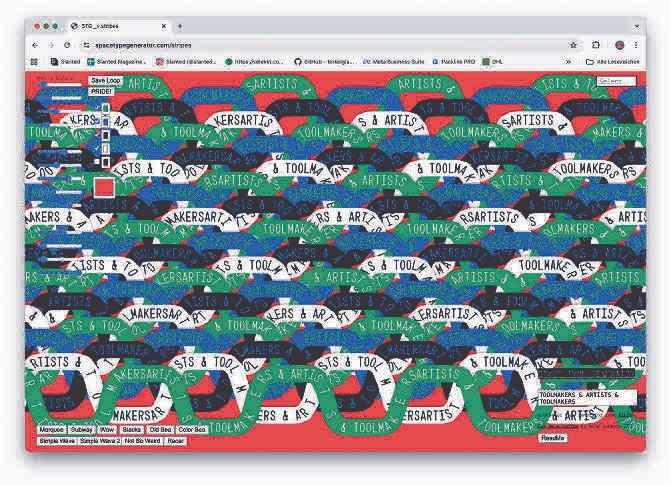
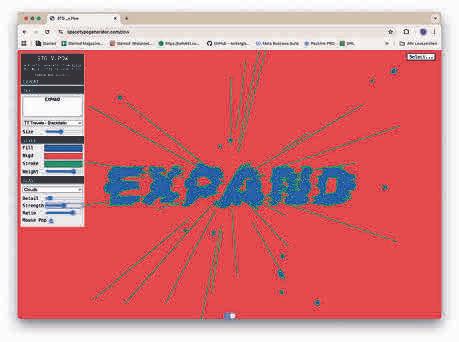
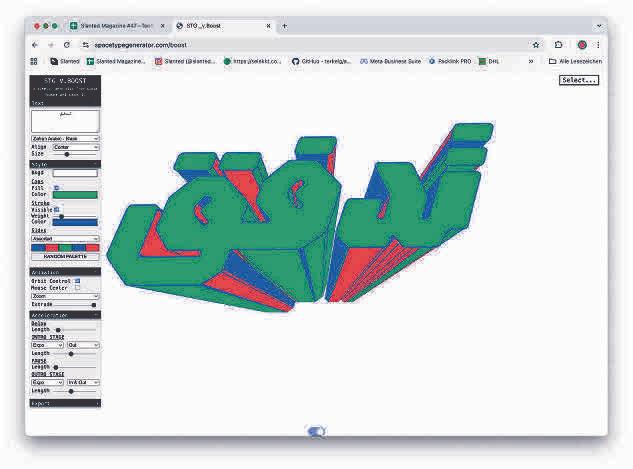
TWISTED TYPE TOOL DISMAL DNA FONT TOUCH ME
A generative tool exploring twisted letter shapes. It can be used to create funky animations and simply play with letters in motion.
nahuel gerth (deu) — free webtool — [p5.js] 2 filters, 5 sliders — nahuelgerth.de/tools/ twisted-type-tool
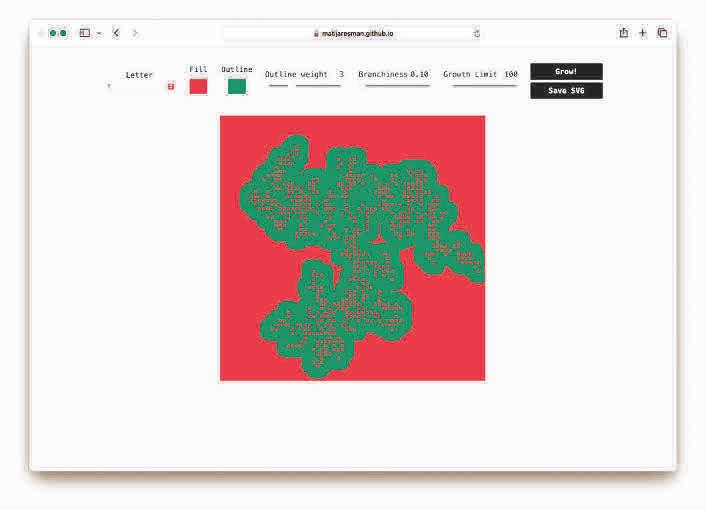
Dismal is a web-based tool that creates letters using the Diffusion-Limited Aggregation algorithm. Users select a letter, and initial points define its shape. Random particles move and stick near these points, gradually forming the letter with natural branching. matija resman (deu) — free webtool — 3 sliders output: svg — matijaresman.github.io/dismal
TOUCH ME is a tool to destroy and reshape type with no undo. With glitchy tools and multiple fonts, you pull, twist, and stretch letters. Export your distorted result, a personal typographic mutation shaped by touch. laura ketting (nld) — free webtool 4 brushes, 3 filters — output: png lauraketting.nl/touch-me
DNA is a shader-driven type system generating letters from a dot grid based on point distance. It was designed to recreate the texture of DNA as depicted in science books.
yewon jang (kor) — free webtool — output: jpeg ywtypoexp.vercel.app/dna.html
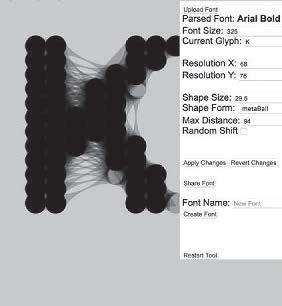
A parametric type design application that generates new glyph sets from existing fonts by parsing font files, rasterizing characters, and modifying their shape through adjustable parameters.
lùan palma (che) — free webtool — [css, html, javascript, opentype.js, p5.js, paper.js]
3 filters, 7 sliders — output: otf, svg, zip atery.artikulierung.ch/121_tool
DOTS
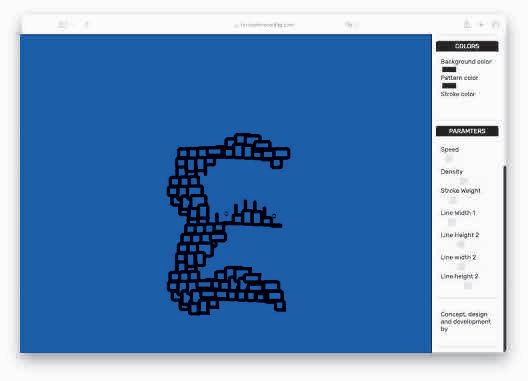
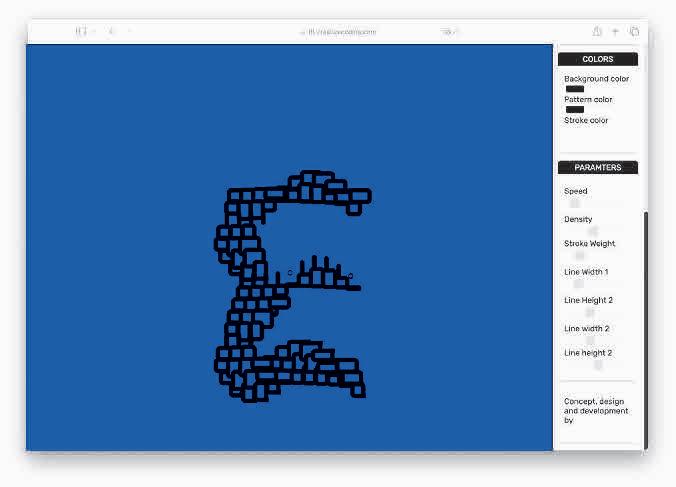
Type Morpher is a generative design system that creates motion textures from type contours. The system uses two layers: a back layer that loads a type character and a front layer that displays a grid of shapes mapped to the character.
esteban barco (deu) — free webtool — [p5.js] input: otf, ttf — 7 filters, 7 sliders tll-creativecoding.com/type-morpher.html
LIVING PATH
A grid-based type tool for creating alphabets in the style of Armin Hofmann’s Fluid Matrix, using connected circles to form modular, geometric, and flowing letters. jahn koutrios (che) — free webtool — [vs code]
3 brushes — output: otf, svg dots.jahnkoutrios.ch
Desktop software allowing you to generate alternate fonts, to expand any font family. There are a dozen different algorithms, all of which can be parameterized using sliders. All these modifications are then applied on each glyph. The result is a font file with the same ligatures and kerning as the original font. ivan murit (fra) — paid desktop app — [python] input: otf, ttf — output: otf — livingpath.fr
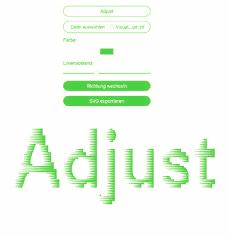
Trygon lets you transform any font using the visual logic of Trigon Grotesk. You can upload your own fonts and have them reinterpreted through a system of triangles, creating unique geometric variations of each letter.
luca marie julien (deu) — free webtool — [chatgpt, css, html, javascript] — input: ttf — 2 filters, 1 slider — output: svg — trygontype.com


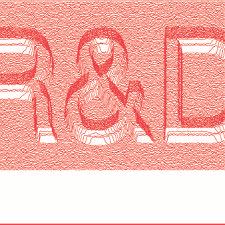
OUTLINE FONT PERWOLF
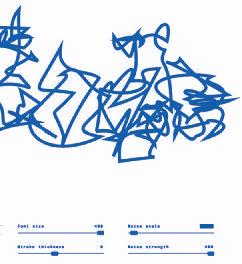
Perwolf applies Perlin noise to any imported font, creating unique, randomized letterforms. Users can adjust the noise intensity and scale, producing results that range from subtly distorted shapes to highly abstract, expressive letters.
matija resman (deu) — free webtool — [opentype. js, p5.js, p5.js-svg] — input: otf — 4 sliders output: svg — matijaresman.github.io/perwolf
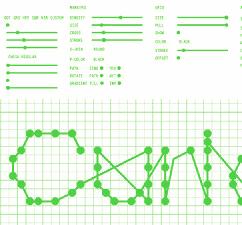
Unknown Letters takes the style of Joy Division’s Unknown Pleasures album cover art—a stacked plot of radio waves from a pulsar—and creates line-based typography for pencil plotters. The tool translates letters into horizontal Bezier curves and the plotter’s pencils are drawing them on paper. A set of sliders enables a lot of variations in font size, line height, depth, blur, and noise.
michael zöllner (deu) — free webtool — [p5.js]
3 filters, 5 sliders — output: svg unknownletters.m05.de
This tool traces markers along the outlines of an SVG typeface, turning them into a digital, animatable brush. jahn koutrios (che) — free webtool — input: svg, json — 7 filters, 23 sliders — output: svg, json outline.jahnkoutrios.ch
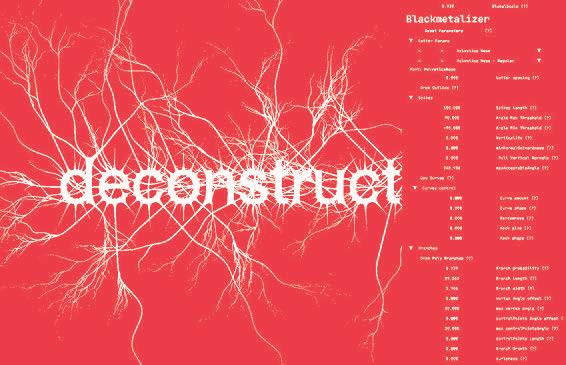
An interactive generative Black Metal logo generator. Create your own unreadable Black Metal logo. Twist words into pure visual chaos. roy macdonald (chl) — paid desktop app — [openframeworks] — 17 sliders — output: svg blackmetalizer.app
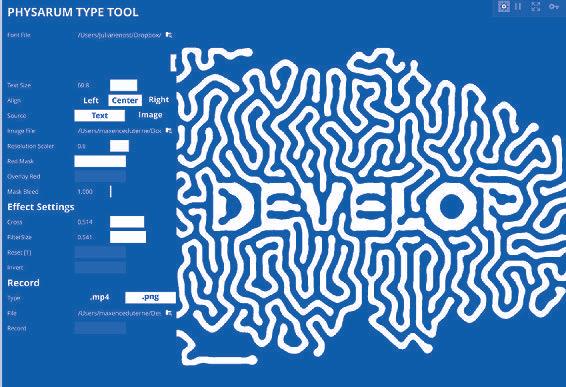
A tool to apply a custom growth simulation to type and images. It is part of a research project on Physarum polycephalum—popularly known as “the blob”—exploring how organic growth patterns can influence visual forms.
maxence duterne (bel) — free desktop app — [touchdesigner, touchplayer] — 2 filters, 3 sliders — output: mp4, png — maxenceduterne.com/physarumtype
PHYSARIUM TYPE
GRID TYPE
GridType is an online type tool. It is inspired by historical grid-based type design with stencils, such as the Plaque Découpée Universelle. Choose from different grids—some geometric, others with technological or historical references—and adjust rows or complexity. Then draw your letters within the grid, and export it as a font!
katharina nejdl (nld) — free webtool — [opentype.js] — input: gridtype — 10 filters, 5 sliders output: gridtype, otf, svg — grid-type.com
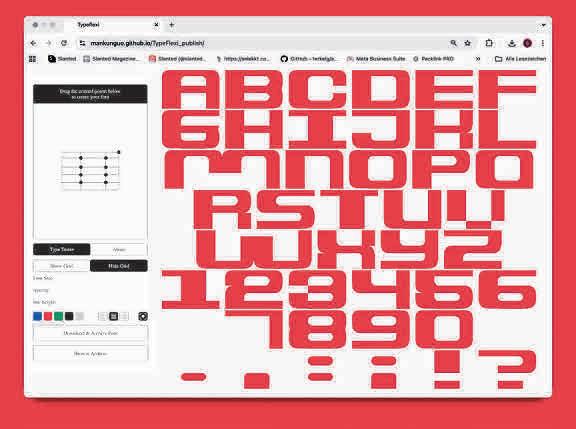
TypeFlexi is a web-based generative type design tool that lets users create infinite font variations by dragging nine points on a modular grid. The resulting typefaces can be exported for reuse or anonymously uploaded to a shared online archive, making it easy to explore, share, and experiment with new typographic forms. mankun guo (usa) — free webtool — [css, html, javascript, node.js, vite] — 5 filters, 3 sliders mankunguo.github.io/TypeFlexi_publish
GRAPHICS
In traditional graphic design software, a blank canvas often feels more like a constraint than a space of possibility. The precise grids and rigid toolsets that facilitate technical execution can simultaneously inhibit creative intuition and exploratory risk-taking. This tension between control and creativity has long been acknowledged by design pioneers such as Paul Rand, who emphasized the importance of balancing structure with expressive freedom. Exploration of patterns, contrasts, textures, and generative systems is often limited within these conventional frameworks. By contrast, bespoke and modular tools offer alternative avenues for visual experimentation. Through scripting languages, modular frameworks, and interactive environments, designers can iteratively test, mutate, and expand visual ideas in ways that echo the experimental ethos championed by Bauhaus figures like Josef Albers, who celebrated the dynamic interplay of color and form through systematic variation.
Platforms such as p5.js and Processing democratize this approach by inviting visual learners and designers to engage directly with code as a creative medium. The rise of AI-assisted “vibe coding” tools further accelerates this process, enabling real-time generation and iteration of forms that transform experimentation into an embodied, exploratory practice. Such tools resonate with the generative methodologies advanced by artists like Vera Molnár, who used early computer algorithms to push the boundaries of visual composition.
The open-source culture on platforms like GitHub fosters a collaborative ecosystem where workflows can be shared, remixed, and adapted—echoing the spirit of historical design collectives. These innovative methodologies empower graphics to behave in ways that transcend static design, responding dynamically to inputs, randomness, or simple rules. This responsiveness creates fertile ground for emergent ideas and combinations that would be prohibitively tedious to realize manually. Independent tools often target specific experimental domains, from procedural logic to kinetic behavior, thereby equipping designers with means to explore visual phenomena that conventional software rarely supports.
In sum, these evolving practices reflect a shift towards a more fluid, experimental paradigm in graphic design—one that honors both the rigor of tradition and the freedom of innovation.
Text edit finalized with quillbot.com
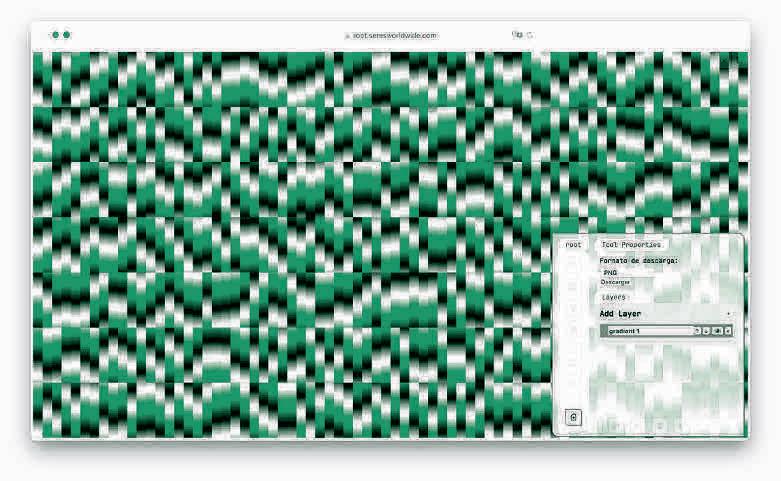
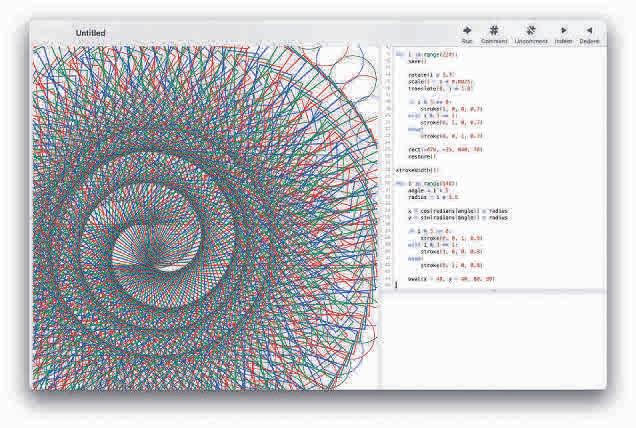
AVOCADO IBUPROFEN PAINT
Brutal browser-based paint program made by and tuned to the aesthetic of the Instagram account @avocado_ibuprofen. avocado ibuprofen (fin) — free webtool — [vibecoding] — input: jpeg, png — 21 brushes, 1 slider output: png — nightphilosophy.github.io/avocado
GR1D is a digital drawing tool, built in p5.js to make playing with grids feel intuitive and alive. GR1D blends structure and spontaneity, inviting designers to sketch, explore, and build patterns freely. GR1D was open-sourced on GitHub and later developed into a Figma plugin. ziang zhou (usa) — free webtool — [p5.js] — output: png, svg — ziangzhou.com/tool.html
Redundancy is a generative interactive visual tool controlled through sliders and widgets. Created images can be saved and reused freely. The tool was developed in 2024 during the Generative Tool Making course at the Basel Academy of Art and Design FHNW under the guidance of Ted Davis. aiste who (che) — free webtool — 2 filters, 3 sliders — output: png — redunddancy.aistewho.com
Design is the invisible made visible. 3D artists enter a space that is simultaneously imagined and governed by systems The practice of 3D art includes disciplines such as modeling, animation, environmental design, simulation, and immersive experiences. It ranges from abstract forms to fully
Artists increasingly rely on dynamic sources of spatial information to structure their works. Google Street View, for example, becomes more than just a reference: it offers a walkable, interactive environment that influences composition, scale, and movement. It is not just important what we see, but
Even the choice of software or hardware shapes the possibilities of the work: different rendering engines, plugins, or VR interfaces offer distinct interactions, constraints, and affordances.
When exploring immersive environments or data-driven modeling, 3D art encourages experimentation across the entire spectrum of digital creation. It inspires artists to consider how tools influence imagination, how systems can expand or limit creative freedom, and how the boundaries between reality and virtuality can be negotiated, questioned, or even transcended.
Text edit finalized with canva.com
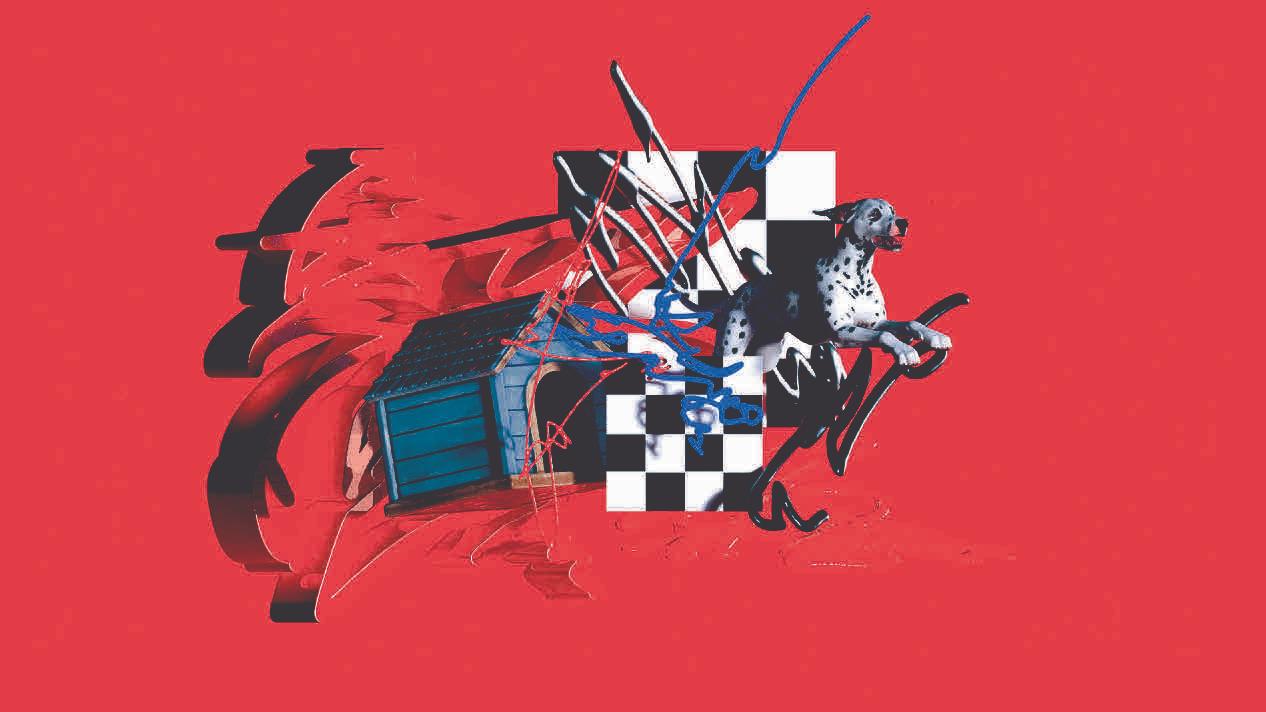
Womp is a 3D creation software built by artists and engineers who experienced the uphill learning curve of 3D and set out to build something intuitive and easy to use for anyone. Womp runs on any device. Lifting the heavyweight off your computer’s shoulders. If it can run Netflix, it can run Womp! womp (usa) — freemium webtool — input: obj, sti, ply, jpg, svg — output: obj, stl, ply, gltf, glb, usd, fbx, dae, x3d — womp.com
artowrk by anton kutschumow
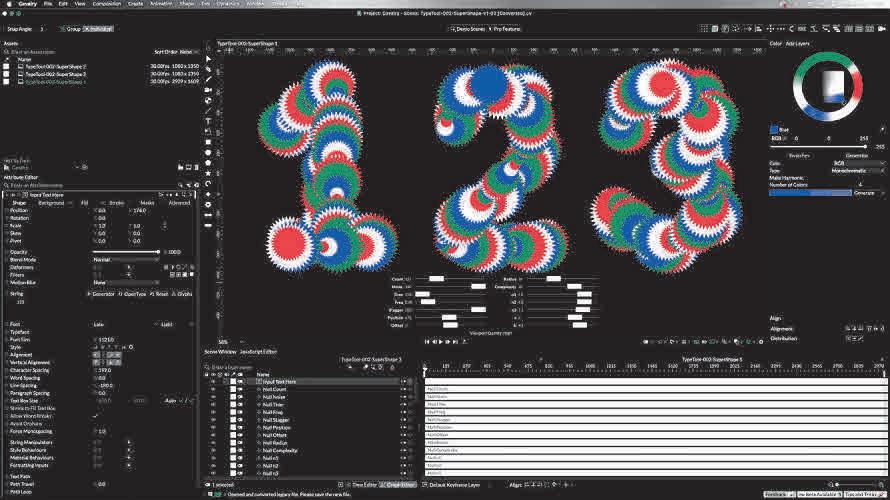
CAVALRY
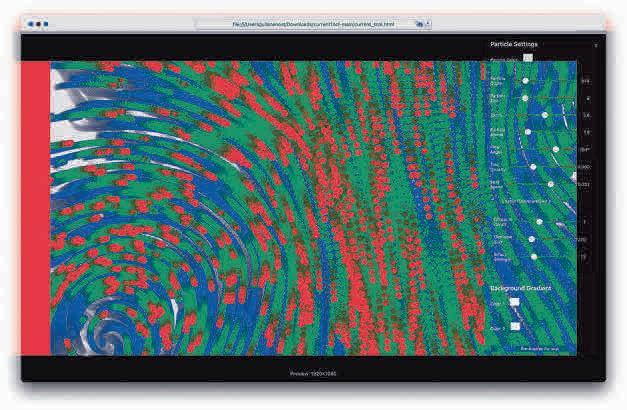
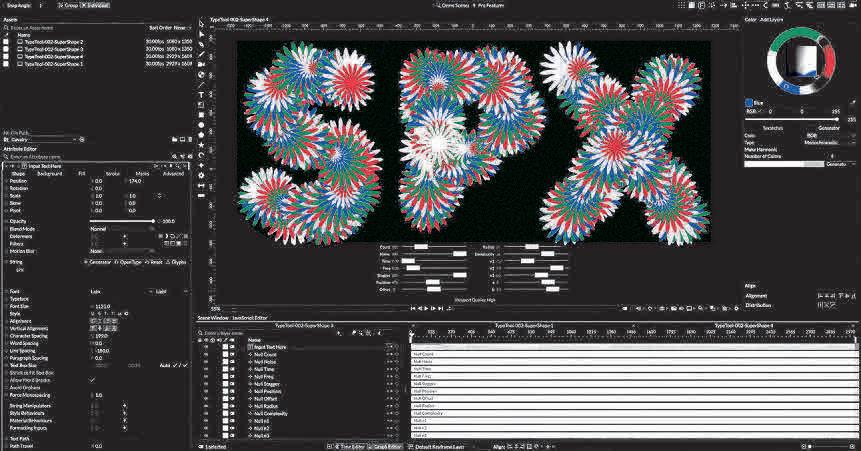
A browser-based tool for creating animated particle graphics. Users can adjust particle behavior and movement in real time, making it easy to experiment with generative motion. paul steinmann (deu) — free webtool — [html] — input: jpeg, png — 12 sliders — output: mp4, webm — github.com/paulsteinmann/currenttool
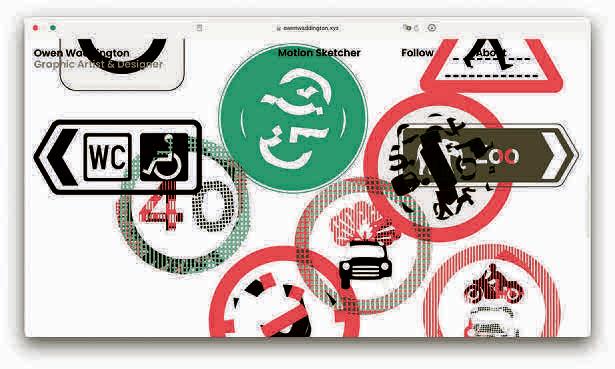
TOOL MOTION SKETCHER
Motion Sketcher is an open, accessible motion-based tool for collaboration and experimentation. It lets users explore, layer, and remix assets from personal and shared graphic libraries to create new motion compositions, encouraging playful experimentation and dynamic, engaging animations. owen waddington (gbr) — free webtool — [readymag] owenwaddington.xyz/motionsketcher 093
IMAGE
Digital image-making has evolved beyond the conventional practices of capturing and editing photographs. Contemporary methodologies frequently integrate photography, scanned materials, generative algorithms, and artificial intelligence-driven manipulation, facilitating the exploration of texture, color, and composition in ways unattainable by traditional cameras. Computational processes continue to operate at the level of the pixel, but now serve to analyze and restructure visual data—aggregating clusters, accentuating specific regions, or applying transformations that fundamentally alter the perceptual reading of an image. Techniques such as bitmapping, rasterization, and algorithmic modifications may be employed to impart texture to photographs, optimize images for subsequent processing, or elucidate latent structures embedded within the visual field.
Experimental tools let designers explore these processes, introducing controlled randomness, patterns, or procedural effects that extend the visual vocabulary of digital imagery.
Text edit finalized with grammarly.com
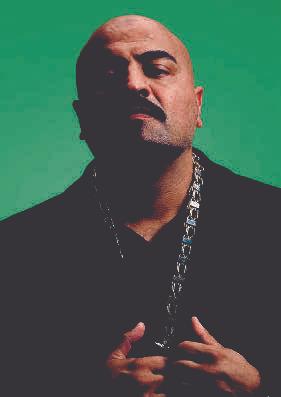
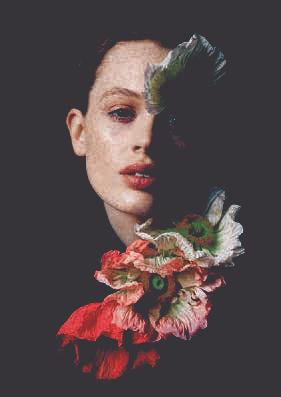
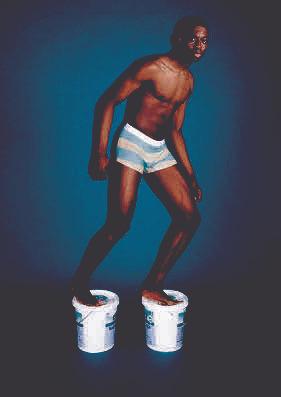
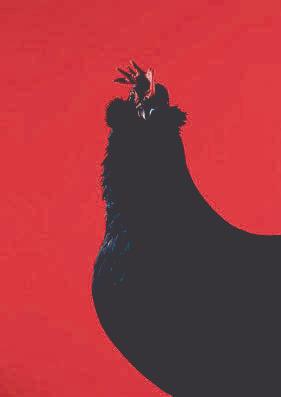
MARKUS BURKE
Markus Burke (*1978) is an internationally active photographer specializing in narrative portrait and object photography. Alongside collaborations with magazines and cultural institutions, he produces independent series regularly exhibited in contemporary photography contexts. For our project, he entrusted us with four carefully selected images from different settings to explore and reinterpret through our tools.. [xatar] — [vatter fashion] — [studio163] — [greenpeace] 095
TEXTURING
TexTuring applies reaction-diffusion patterns to images, creating organic dithering shapes that respond to the image’s details—neither fully even nor fully random.
ivan murit (fra) — paid software — input: jpeg, png — 3 sliders — output: gif, pdf, png, svg ivan-murit.fr/project.php?w=texturing
EDIT & MODIFY
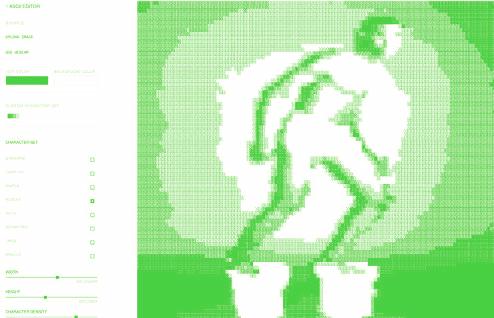
A focused image-editing experience for creating custom ASCII and dithering art. In addition to the browser-based tool, E:M was also developed for iPhone as a free, minimalist editing app, allowing users to generate and refine text-based visuals on the go with simple, intuitive controls.
james wrigley (gbr) — free webtool — input: jpeg, png, webcam — 2 filters, 15 sliders output: jpeg, png, txt — editandmodify.xyz
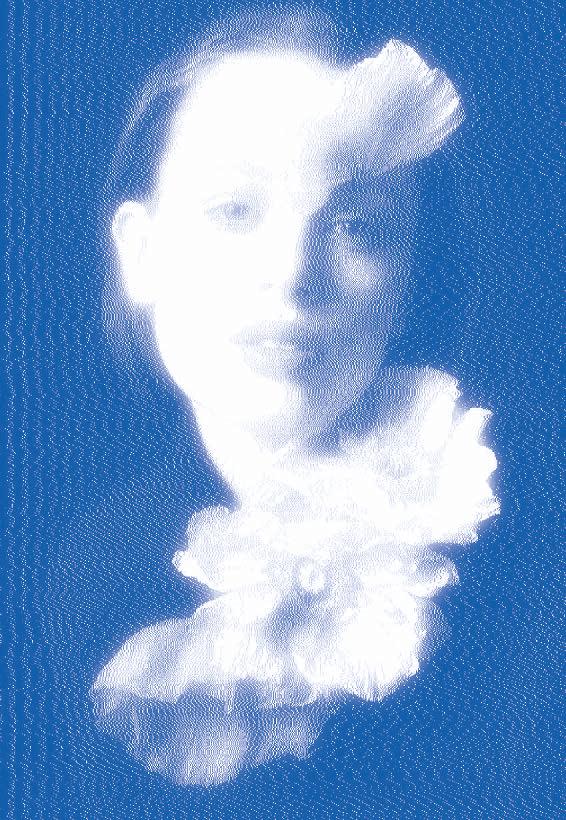
Dither Boy is an all-in-one software for authentic retro image and video dithering, letting users recreate classic pixelated aesthetics with control over patterns, resolution, and color for both images and motion content.
studio aaa (gbr) — paid software — input: jpeg, mp4, png, webm — 50 filters, 10+ sliders output: jpeg, mp4, png, svg, webm — studioaaa.com/product/dither-boy
PLAY GROUND
Some tools are not meant to get a job done. They are meant to help us explore and try things. We use them to ask questions like what happens if we do something or change something. When we use these tools it is like we are thinking out loud. Each thing we try gives us ideas. These tools are not things we use. They help us think and come up with ideas. They show us what we can do if we try something. A place where we can try anything is like a playground. We can do what we want without having to finish anything. Other tools have rules. That can be fun too. It is like a game. When we use these tools it is like we are creating something by using them. Playground tools are not just, for making things. They help us learn how to make things and how rules can help us think. They teach us ways to think and imagine. They remind us that it is okay to try things and see what happens. We do not always have to finish something to make it worthwhile. Sometimes just trying is the part.
Text edit finalized with zerogpt.com
HANDLE TYPE
Tools for type design and font management shape not only how letterforms are produced, but also how designers navigate ever-growing libraries of fonts. Today, designers typically use two distinct but complementary environments: one for drawing and developing fonts, and another for managing and accessing them efficiently across projects. This split reflects the reality that creating typefaces and organizing them are interconnected but require different mindsets and tools. When it comes to designing typefaces, many designers rely on Glyphs. This software offers a focused space for drawing, spacing, and developing whole font families, while also handling the technical aspects needed for modern type design. Using Glyphs helps designers see how letterforms function as part of a broader system, not just as standalone shapes. The ability to develop characters in different scripts, weights, or styles makes the connections between forms more apparent—and for many, this process fundamentally changes how they draw and think about letterforms. Alongside the design of fonts, the practical task of organizing them has become equally important. Tools such as FontBase address this need by providing a fast and visually oriented font management system. FontBase enables designers to preview, activate, and organize extensive collections of typefaces without requiring permanent installation. In workflows that involve extensive typographic libraries, such tools play a crucial role in maintaining clarity and accessibility throughout the design process.
Text edit finalized with grammarly.com
GLYPHS AND THE EVOLVING PRACTICE OF
MULTISCRIPT AND VARIABLE
TYPE DESIGN
Perspectives from Azza Alameddine, Amélie Bonet with Sol Matas, and Marianna Paszkowska, collected during interviews in Feb 2026 by Lars Harmsen, Slanted Publishers.
In recent years, digital font production has undergone a profound transformation driven by specialized software. One of the most influential tools in this shift is Glyphs, a professional type design application used worldwide to create, edit, and engineer fonts across multiple writing systems. Its growing relevance reflects a central tension in contemporary typography: while automation, scripting, and variable font technologies drastically expand technical possibilities, designers are simultaneously confronted with the responsibility to preserve cultural specificity, design integrity, and critical authorship within increasingly automated workflows. The three interviews with Azza Alameddine, Amélie Bonet and Sol Matas, and Marianna Paszkowska reveal how this tension is negotiated in everyday professional practice rather than in abstract theory.
From Technical Barrier to Creative Enabler
Across all three conversations, a recurring theme is the transition from technical struggle to creative focus. Arabic type designer Azza Alameddine describes her education at the University of Reading as the “last year of FontLab,” a period characterized by opaque interfaces and labor-intensive technical setups. When asked about programming Arabic OpenType features, she recalls that a single tutorial “took days” to implement and felt almost unreadable at the time. The difficulty was not limited to design decisions but extended to engineering knowledge that was scarcely documented and highly fragmented. In contrast, Glyphs introduced a level of automation that fundamentally shifted her workflow. “Now it’s just one click and everything works,” she explains. The importance of this statement lies less in convenience than in the
REDISCOVERING TYPE: WHY FONTBASE FEELS DIFFERENT
Text: Lars Harmsen, Slanted Publishers
Font management has rarely been a love story. For most designers, it has long been a necessary utility—something to keep chaos at bay, not something that actively fuels creativity. Over the years, different generations of software promised structure and control. What they rarely delivered was pleasure, intuition, or genuine discovery.
Antonin, the video artist, motion designer and art director behind antonin.work, knows this evolution firsthand. With more than twenty years of experience working across museums, cinema, humanitarian organizations and fashion, and a practice deeply rooted in typography and typographic animation, his relationship to type is both professional and personal. His current research into animated letterforms—particularly using Cavalry—demands precision, flexibility and speed.
Asked about earlier font managers, he is direct: “I’ve always found that font managers lacked ergonomics and consistency, particularly when one isn’t perfectly organized.” The problem, in other words, was never access. It was friction. Like many seasoned designers, Antonin has accumulated a vast personal library—tens of thousands of fonts gathered over decades. “Like everyone else, I imagine, I own 40,000 fonts but invariably use only the same 10,” he says with a certain irony. The abundance of choice often results in creative repetition. Not because alternatives do not exist, but because they are too deeply buried.
What changed with FontBase was not simply the interface, though he notes that “the software is aesthetically refined, which significantly enhances the user experience.” It was the way the tool reframed search and experimentation. “FontBase offers two decisive advantages for me,” Antonin explains. “The ability to preview variable fonts directly within the software, and its ‘Super Search’ tool, which I’ve become completely dependent on.” Variable fonts, with their adjustable axes and fluid weights, are central to contemporary typographic practice—particularly in motion design. Being able to test these variations instantly, without leaving the manager, removes an entire layer of interruption.
But it is SuperSearch that truly alters behavior. Instead of relying on naming conventions or carefully curated collections, Antonin can search visually—
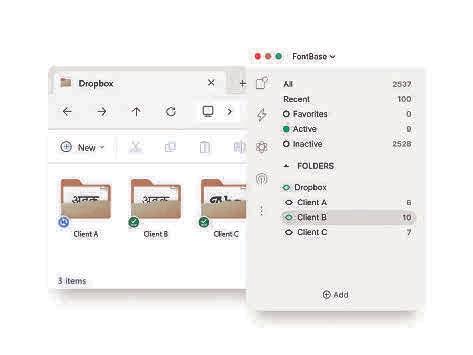
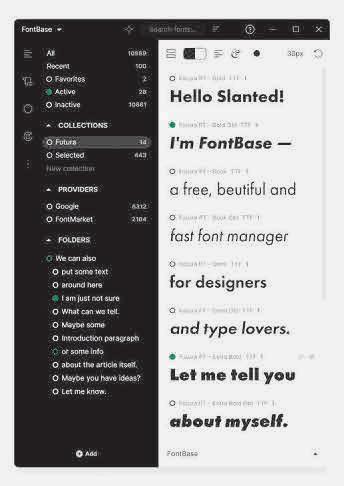
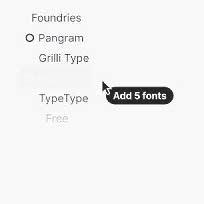
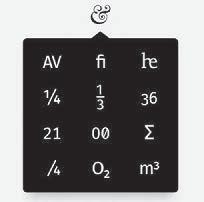
by weight, width, proportion or contrast. “It allows me to instantly search for all condensed variants, for example, without having to create a dedicated collection,” he says. More importantly, “it enables me to preview typographic pairings without opening third-party software.” The effect is subtle yet profound. “Since I’ve been using this search function, I’ve been rediscovering typefaces I hadn’t revisited in years, even decades.” The manager becomes less of an archive and more of a living studio table—a place where forgotten tools resurface and new combinations emerge organically.
This shift from administration to exploration continues in FontBase’s Playground feature. While the software can simulate webpage typography and export CSS, Antonin’s interest lies elsewhere. “I mainly use it to see how two typefaces can work together, without having to switch to another software. The code part interests me very little.” What matters is the immediacy of visual testing—the ability to evaluate relationships between letterforms in real time.
Even the Discover section, which highlights releases from smaller independent foundries, resonates with him—albeit unexpectedly. “To be honest, I’m discovering this feature thanks to this interview! I find the idea truly brilliant.” In an industry where visibility can determine survival, integrating discovery directly into a daily workflow subtly supports the broader typographic ecosystem.
Interestingly, Antonin’s loyalty did not begin with a subscription. “It was the free version that won me over for more than a year,” he recalls. Only later did he move to the Pro version. “If you’re only looking for a good font manager and don’t need the other options, it’s an excellent software in its free version.” That accessibility reflects the software’s larger philosophy. FontBase does not attempt to overwhelm with complexity. Instead, it reduces resistance— between idea and execution, between archive and experiment, between possession and rediscovery. For a designer whose practice revolves around the movement and transformation of letterforms, that reduction of friction is not a minor detail. It is what allows typography to remain alive.
Font management may never become romantic. But in the hands of the right tool, it can become something close to inspiring.
DEEP DIVE
Here’s where you’ll find work from people across our community—each piece showing off a different style, process, or technical trick.
These aren’t just solo acts. Every project grows out of its environment. The software artists use, the quirks and limits of certain platforms, and the resources they have on hand—all of it leaves a mark on how the work comes together. Today’s creative and design practices live and breathe inside these tech-driven settings.
That’s why you’ll see each artist or designer listing the tools and software behind their piece. This isn’t just about technical specs; it helps you see how these projects fit into the bigger system that shapes what’s possible. Or, as Marshall McLuhan put it: we shape our tools, and then our tools shape us.
Big thanks to everyone who shared their work and made this collection happen.
Text edit finalized with notegpt.io/bypass-ai
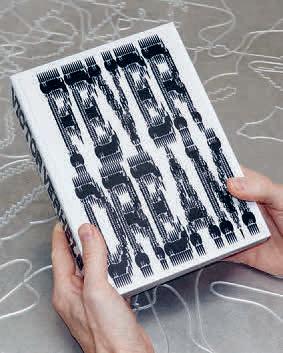
fever dream — 2025, belgium / italy — [fogra59, indesign, illustrator, wonder, robofont, krea] — corbin mahieu, lennart van den bossche, victor verhelst
This self-published portfolio showcases five years of work by artist Victor Verhelst. Printed on a brand-new Fedrigoni papers using the innovative FOGRA59 standard on the Konica Minolta KM1, the book achieves an almost Pantone-level richness across nearly 500 pages. The cover features a variable font designed by Ilya Koers. Every back cover is a unique artwork.
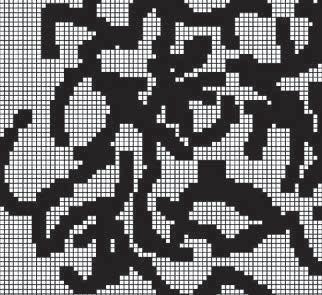
pexi pexi — 2025, greece — [p5.js, custom tool] anastasia melandinou
Pexi Pexi explores the pixel as a mutable unit within an interactive grid. Through variable parameters, the system produces continuously shifting visual constellations, positioning drawing as an open-ended and generative process.
ausraster — 2024, germany — [glyphs, adobe illustrator christin großmann, hans noffke
This typeface is based on a grid that is rotated 90 degrees for each letter variant. Every letter has four different variants. In total, the set includes around 500 glyphs. To ensure a natural flow of letters, the variants are randomly rotated while typing.
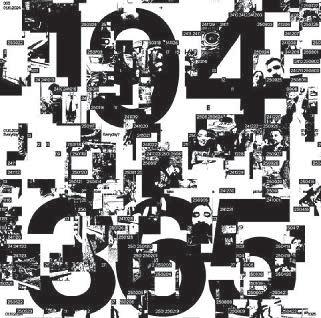
194/365 — 2025, italy — [365 days] — giuseppe laezza 194/365 explores our relationship with everyday photography and the instinctive act of documenting life. Absences between images become part of the story, shaping a fragmented map of memory. The poster, created for “Visual Folder,” is generated with a custom tool that “draws” using photographs as marks.
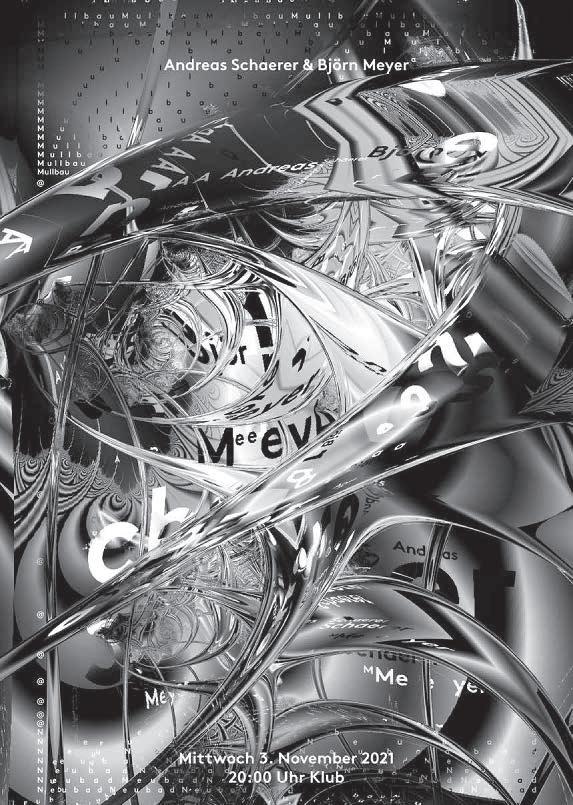
mullbau @neubad: andreas schaerer & björn meyer — 2021, switzerland [illustrator, photoshop, visions of chaos] — yves krähenbühl
Andreas Schaerer & Björn Meyer describe their music as “two well-traveled sound shamans reflecting on retreating into a primal intuitive space.” The intersecting fractal world takes on the spirit of the statement and creates a corresponding visual universe. The Mandelbrot forms are well iterated, remixed and fine tuned in Visions of Chaos, to create the bespoke “transcendent” universe.
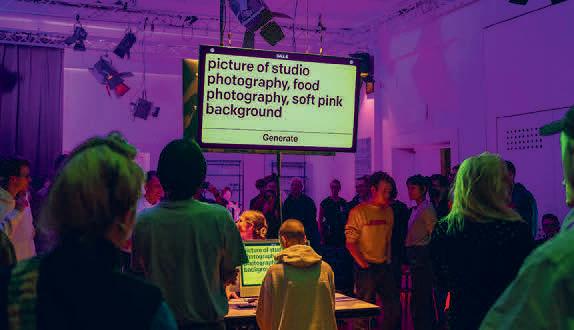
prompt battle — 2022, germany — [dall·e 2, stable diffusion, midjourney, craiyon] — promptbattle.com florian a. schmidt, sebastian schmieg, lina schwarzenberg, ella zickerick, emily krause, robert hellwig, bernadette geiger, levi a. stein
Do you have what it takes to become a Prompt Engineer? Based on the rap battle format, Prompt Battle is a live game show where people compete against each other by solving challenges with text-to-image software. Show off your prompt skills and maybe the audience will choose you as the winner who elicited the most surprising, disturbing or beautiful images from the latent space.
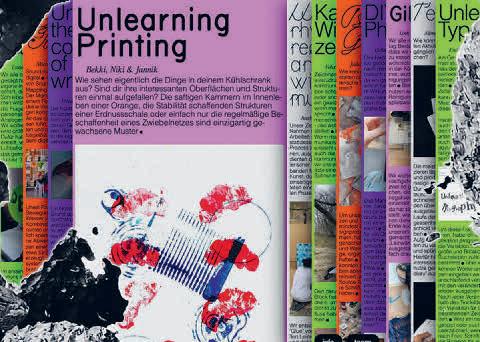
unlearn tools — 2024, germany — [css, html] — design-disrupted.com/unlearntools joanna dauner, lina schwarzenberg
Unlearn Tools was a week-long workshop in which design students at HTW Dresden were encouraged to critically examine their relationship with tools and, based on these reflections, develop innovative and personal design workflows and tools. The workshop emphasized experimentation, material exploration, and questioning conventional design processes. The website serves as an archive of the “unlearned” tools and as a source of inspiration for others to recreate or experiment with them.
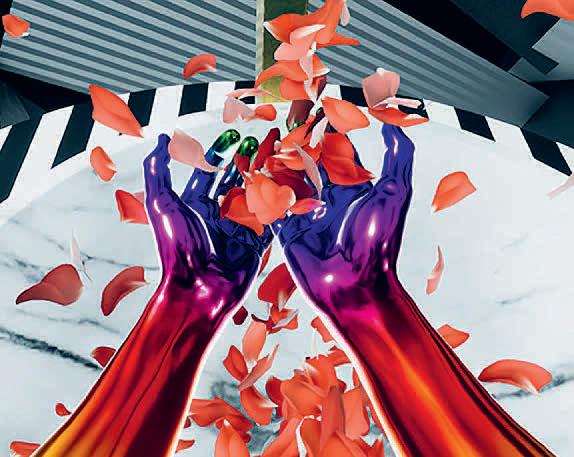
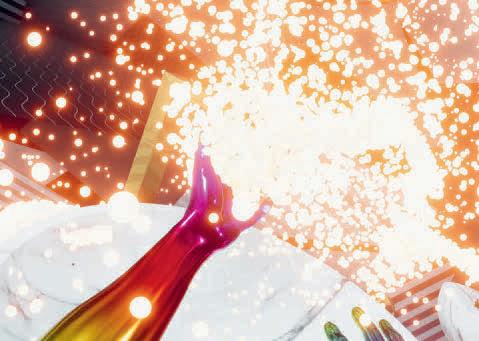
is memory data? — germany, 2019 — ismemorydata.com elastique, meiré und meiré
How can new technologies change, enrich or even replace the encounter with the element of water? The installation invites users to discover water as an interface—between human and technology, between physical and virtual experience. “‘Is memory data?’ alludes to fundamental questions: Can a virtual experience potentially trigger the same reaction in us as an actual, physical experience? And if that were the case, does it still matter whether we have experiences in reality or in the virtual world?”— Mike Meiré
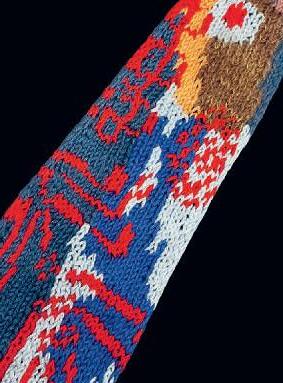
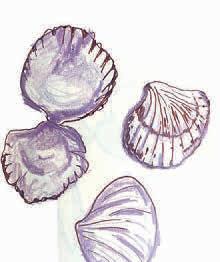
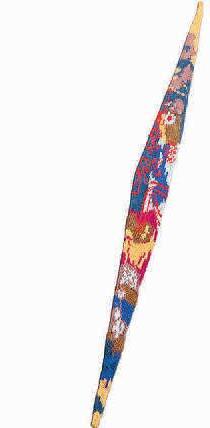
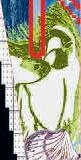
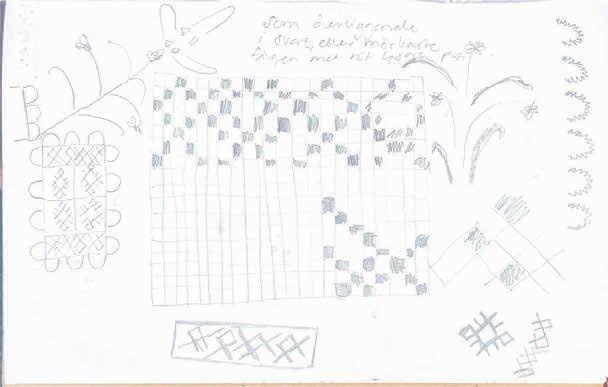
lost trinkets of summer — 2025, netherlands — [illustrator, stitchfiddle.com] — sara nygård Through these scarfs, Sara Nygård explores imagery and knitting to process memories from moments in time. In “Lost Trinkets of Summer,” the design comes from collaged imagery that through pixelation becomes obfuscated. The collage is made up by collected summer moments that never became. And while the details of its original composition are lost, the scarfs still carry the warmth of summer for its carrier.
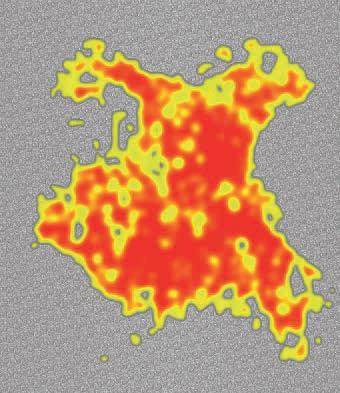
the floor is lava — 2025, ukraine — [lava generator] volodymyr khomenko Lava Generator is a generative tool that transforms text into organic, morphing structures. Created for the exhibition The Floor is Lava, it explores the tension between control and chaos— when reality cracks under pressure and erupts in fluid, unpredictable forms. The tool was used to generate visual material for the show’s posters, reflecting playfulness, excess, and eruption.
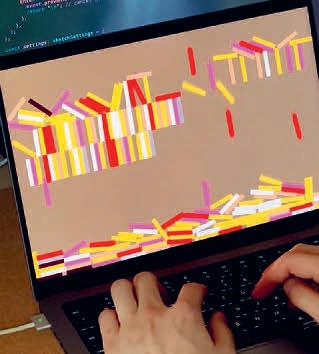
writer’s block — ongoing, south korea — [ssam.js] dae in chung
Everything you type is displayed as literal blocks and they all fall down after a few seconds. No one, including you, can read, censor or criticize your writing anymore. Write anything you want.
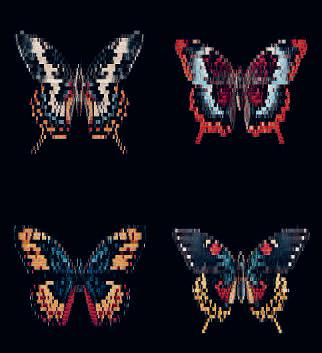
butterfly gradient — 2025, switzerland [raster gradient tool v5] — noah houriet
The selfmade Gradient Tool transforms images into graphics made of color gradients. Users can set the size of the rectangles in which the lightest and darkest colors are detected and connected by a gradient. The direction of the gradient can also be chosen. Larger rectangles result in less accurate images. The tool is written in JavaScript, designed as a web application, and still in development.
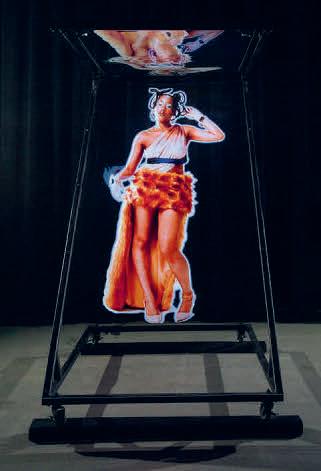
opulent rebel — 2026, usa — [55" television, after effects, lightroom, photoshop, premiere pro] — arshaelia palmer
The project employs an integrated set of digital tools to construct and present the Opulent Rebel experience. Using a 55-inch display televisions and media player’s, the designer transforms a physical space into an immersive holographic environment.
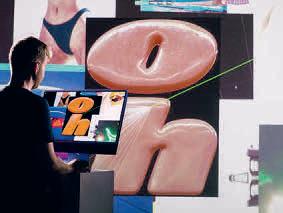
pathways — ongoing, switzerland — [are.na api, three.js] amaury hamon
Pathways is a 3D web tool for exploring networked media through poetic, non-linear wanderings. By tracing and sharing desire lines via the are.na API—or forking others’—users may find in a contemplative landscape where intuition and serendipity guide discovery. Each path becomes a shared narrative of collective knowledge, fostering open access, shared authorship, and interconnected creativity beyond algorithmic feeds.
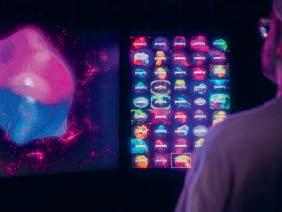
denorm — 2025, germany — [touchdesigner] felix gutendorf, mowgli, ben rose
The core idea of denorm [ ] relates to the discrepancy between the concept of standardized speech and the actual way people speak. In our understanding, it is far from reality to assume that an allegedly correct or standardized form of speaking sets a real benchmark. In an interactive exhibition, we aim to visually represent linguistic individuality. Therefore, we create a space for reflection, far from labels such as right or wrong, and celebrate all ways of speaking.
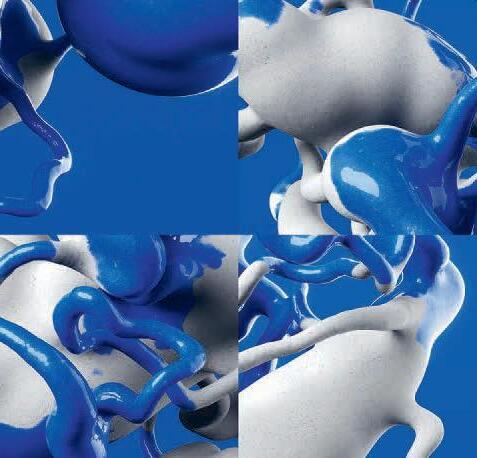
pseudorandom — 2025, germany — [after effects, houdini, redshift] — ole bornitz
The project visualizes password complexity as 3D shapes. It represents the concept of encryption by reordering the image to create a grid with no additional elements. The motion is driven by the path of the password on the keyboard. The rotation reflects the idea of the two-way handshake: the password remains the same, but changes its appearance. A flexible brand tool ensures consistency across all formats and lengths without repetition.
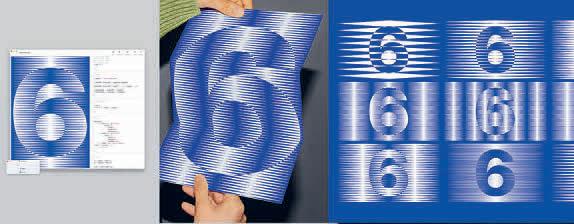
6. design campus bayern — 2024, germany — [drawbot 3.1x, p5.js]
kai bergmann, daniel rothaug
The dynamic key visual for the 6th Design Campus Bayern network meeting features a sequential morphological transformation of flat blue-and-white diamonds that shift color within the “6,” creating an Op Art effect through increasing pattern density – the number becomes an image but remains legible. It demonstrates morphological design: the shape changes not by altering the base form, but by systematic superimposition of a denser pattern. It can be modified via parameterized, generative scripts.
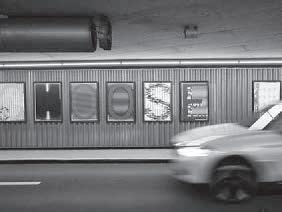
3sec.gallery — 2025, belgium — [3 sec graphic] studio studio
50 posters in 3 seconds. The 3sec.gallery is a unique drive-by gallery located at the Chassé Parking entrance in Breda. For their poster series at 3sec.gallery, Studio Studio played with two reading speeds and two viewing distances: one for drivers passing by, another for pedestrians who stop and look. Each poster features a letter from the sentence “We choose light open near paths to build and give today now.”
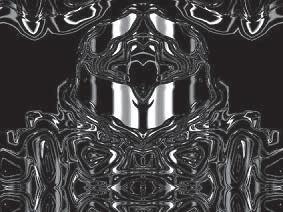
from sound to form — 2025, switzerland [ableton, touchdesigner] — meriton ajdini
From sound to form is a creative form generator for the music label “NichtsNeues”. The generator is a procedural visual system, composed of an extensive network of interconnected operators. It uses three sound inputs as the foundation for visual form generation. The resulting shapes can be further manipulated through a range of parameters, all controlled via a MIDI interface.
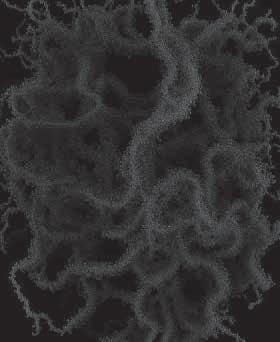
generative organica — ongoing, united kingdom [comfy- ui] — mengzhi he
The artist extends his exploration of “Digital Organic,” merging artificial biological laws with AI-driven creation. Inspired by Andy Lomas’s morphogenetic systems, he develops an artist-trained diffusion model based on the open-source SD3.5 Large.
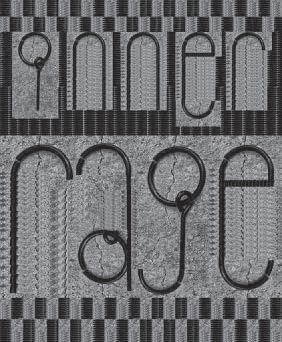
inner rage — ongoing, serbia — [photoshop marquee tool] anđela radojičić
Anđela Radojičić uses the classic Photoshop tools such as cutting and pasting of found objects and image details to create unusual typographic compositions, that are still legible. She plays with different messages unique to the objects she uses as much as their shapes.
Frederic Gmeiner (USA), Lauren Lee McCarthy (USA), Kiel Danger Mutschelknaus (USA), DIA Studio—Mitch Paone (FRA) Studio, Feixen—Felix Pfäffli (CHE), Tim Rodenbröker (DEU), NODE Forum—Alexander Roidl, Jeanne Vogt (DEU), intra—Stefany Uzoh (GBR), Just van Rossum (NLD) and Lena Weber (DEU)
Frederic Gmeiner
I’m an interaction designer, coder, and researcher building computational tools and interfaces that augment people’s thinking, learning, and making in creative and analytical tasks.
Lauren Lee McCarthy
I’m an artist, software developer, and educator. I work across a range of media include performance, software, installation, and film. I am captivated by the ways we are taught to interact with algorithms, and how this shapes the way we interact with each other. Central to my work is a critique of the technical and social systems we’re building around ourselves. What are the rules, what happens when we introduce glitches?
I create performances inviting viewers to engage. To remote control my dates. To be followed. To welcome me in as their human smart home. In these interactions, there is a reciprocal risk taking and vulnerability, as performer and audience are both challenged to relinquish control, both implicated. In these encounters, there is space to form our own about the systems that govern our lives. Situated in everyday life, my projects have real life consequences. We’re reminded of an urgent need to find a sense of agency.
Kiel Danger Mutschelknaus
My name is Kiel D. Mutschelknaus. I’m a generative and motion maker. My work primarily revolves around coding my own tools to create in a bespoke environment for each project.
Mitch Paone
Hi, I’m Mitch Paone, Partner and Creative Director of DIA Studio, based in Chamonix, France (and sometimes New York City). The studio is run in collaboration with my partner, Meg Donohoe. In my terms, my practice encompasses all of those roles to some degree. I’m interested in systems that require conceptual logic and deep thinking to develop. Naturally, these ideas need to come to fruition in some way. I believe you need to occupy all these territories because it gives you a comprehensive understanding of the creative process, where tools, whether built individually or collaboratively, are central.
Felix Pfäffli
I am Felix Pfäffli. Graphic designer.
Tim Rodenbröker
Hey, thanks for inviting me to this interview. My name is Tim and I explore, practice and teach creative coding. I run a global online learning platform
for this subject and until today thousands of people have used my courses in their own learning journeys. Most of my students are related to the wide field of Design. Building custom tools is a focal point of my work and my teaching.
NODE Forum
Alexander Roidl: We are Alexander Roidl and Jeanne Charlotte Vogt, and we are—amongst other things—part of NODE Verein zur Förderung digitaler Kultur e.V. As a non-profit organization, we are interested in creating spaces for critical discourse on digital technologies and artistic practices dealing with technology. Therefore, digital tools are an essential part of our practice. As a matter of fact, NODE started as an initiative because of a self-made tool called vvvv and people interested in sharing knowledge, hacks, and ways of working with that tool.
For me, in my own practice, I am also very interested in tools and how they relate to design and creative practices.
Jeanne Charlotte Vogt: I am really bad at taking care of my tools. I am really messy when it comes to organizing anything that is supposed to help organize my work or choosing the right tools for a task—let alone just reading the manual … I am just terribly impatient. But I love to observe when people are good at this. There is an artist duo in our community who are geniuses in this field. Kati Hyyppä and Niklas Roy. They’re practicing the organization of tool boxes as a form of art.
Stefany Uzoh
My name is intra, a 3Dx artist. The “x” stands to define the plethora of disciplines that fall under the practice of an individual working in the medium of 3D visualization.
Just van Rossum
My name is Just van Rossum, trained as a (typo) graphic designer, practiced as type designer, eased into coding via personal interest, accellerated by necessity. I’ve been tinkering with writing software since my teenage years.
Lena Weber
Hello, I’m Lena and I’m a designer most fascinated by systems, digital aesthetics and the inbetweenness of things. I’m a theory-enthusiast as well. Thank you for having me!
If you prompt a few times, generate and then call it a day the result is probably not going to be great. Same goes for any other tool, just use one and be done: Not great.
Endless systems—like code—that are able to do anything!!! can overwhelm the creative mind to value technical complexity over design decision.
Something being coded—or generated— doesn’t make it good. Coding—and AI—can be a (small) part of a process.
Frederic Gmeiner
In my view, an interface doesn’t really hide its politics; it often exposes them. In other words, the mental model or the organizational structure of the people who made the tool is usually baked right into it (e. g., Conway’s law and Don Norman). For instance, a tool might guide you through a design workflow in a linear way because that’s how its creators imagined the process, even if in reality your work is more iterative or non-linear. You kind of see the toolmaker’s mindset right there in the interface.
Where I see real potential is in making software and interfaces more malleable, especially with generative AI. That means letting people without coding experience shape their own tools to fit their unique workflows. It opens the possibility of more adaptive interfaces that reflect the user’s way of working rather than imposing a fixed structure.
Lauren Lee McCarthy
I think a good designer can find the friction and possibilities for invention. This is the work of art making—to question, to complicate, to reveal the underlying tensions. There is always the option to defer to automation. It is the choice of the user whether and when to do this.
Kiel Danger Mutschelknaus
I suppose tools with an emphasis on templates and presets become really manipulative. Once an established set of choices has been applied to your project, it becomes hard to see new and novel paths. They can definitely help things look good but not always interesting.
Mitch Paone
For me, the politics of an interface do not reside in the software itself. They live in the historical design lineages that guide how we see and work.
Most digital interfaces inherit their logic from European modernism, which became the default for clarity, order, and universality. That tradition was never neutral. It shaped our assumptions about what good or intuitive design looks like. That history cannot be undone because it formed the foundation of the field.
The real political impact shows up in the choices designers make. The fonts we choose, the visual systems we rely on, and the styles we adopt all carry cultural histories. When designers are not fluent in those histories, they may reproduce aesthetics without understanding their origins or the intended meanings they convey. This is where harm happens. A typeface or layout is not just a technical choice; it carries a worldview.
The interface hides this by presenting its visual language as natural. It makes a particular European lineage feel universal. The tool allows me not to see the cultural origins behind what seems obvious. Without historical awareness, it becomes easy to replicate systems that were developed in one context and treat them as universal.
What these tools conceal is the long cultural and aesthetic lineage embedded in their defaults. The politics are the politics of design history, shaping the possibilities we choose without realizing it.
Felix Pfäffli
I think I do not fully understand the question. But when I think of interfaces and politics, I immediately think of the endless bookkeeping that has nested itself in all corners of our society. I am an opponent of all digital tools that supposedly are meant to make processes smoother and in the end only mean that we sit endlessly in front of screens, fill out forms and press buttons, so that later someone can look at an unnecessarily detailed statistic about various unimportant points in the bookkeeping system of some authority.
I am sure that our generation is wasting billions of hours of valuable time because of the general belief that digitization automatically optimizes processes. Unfortunately the opposite is often the case because important structural decisions are made by people without knowledge of the subject matter.
Tim Rodenbröker
Compared to proprietary and commercial design software, both the raw code and open source tools are honest, open and sometimes ugly. But this ugliness also brings something beautiful into the mix: There are interesting connections of the open source world with ancient philosophy: The old masters lived in rejection of fame, of loudness, of false recognition and (mostly) wealth. They strived to embody courage, transparency
and integrity. And they lived for their communities, not just for their own well-being. The best of them were unshakable and incorruptible.
Proprietary software (and hardware) is often the opposite, especially when it is embedded in a highly competitive environment. It’s intransparent and often pervaded by so-called dark patterns (unethical design decisions that tricks users into doing things that go against their interests). You asked what these tools are hiding from us. I would rephrase the question: To what extent are these tools tricking us?
What I love about open source tools is that they simply give us the cold shoulder and don’t lure us in with false promises and sweets. That’s how even a crudely designed interface can warm your heart. I prefer honesty over beauty.
NODE Forum
Alexander: The way interfaces look today is indeed a bit monotonous and it is quite clear that they work within a system that supports specific views and values. Therefore, I like websites, where you can just click inspect and see the structure underneath—I wish there could be more interfaces like that.
Stefany Uzoh
If interfaces were a political alignment they would be a liberal. They all share this sterile, inoffensive design language, devoid of any agenda or malice. To create the perfect sense of ease for the user to depart with their hard earned cash.
Use this service and everything will be fine. The world is on fire right now but there’s an app for that.
Just van Rossum
Not sure I understand the question.
Lena Weber
The many decisions that have been premade by someone else, sometimes that’s great other times not so much. Tools can also hide complex algorithms, saving and selling data and the resources they need to function.
Frederic Gmeiner
I think the essential core isn’t just about “learning to code” as some kind of universal measure of design competence. Instead, it’s really about computational thinking and about formalizing (complex) processes in a structured way. Coding
is just one means to that end. It’s similar to claiming that a good graphic designer simply needs to know how to use tools like Illustrator or Photoshop. Yes, coding is a currently useful technique for writing computer programs, but the real skill lies in structuring information and processes so we can employ computation to accomplish something. Thus, just as someone designing for printed media needs to understand print processes in detail, someone designing for interactive systems should understand the underlying computational mechanisms. So really, it’s the systems thinking and problem decomposition that matter most, and coding is just one piece of that puzzle.
Lauren Lee McCarthy
Design competence has become more accessible as tools have automated much of the work that was once performed by designers. The question is how we continue to push beyond the defaults and expand our ideas of what design can mean and be.
Kiel Danger Mutschelknaus
I don’t think so. No-code platforms will continue to be prevalent and helpful. AI / LLMs will continue to help us use code without the barrier of actually learning (regardless of how dangerous that is …). I mentioned before that coding may become “how it’s done” when it comes to design, and I still think that, but I that can also mean code becomes so accessible that “learning to code” isn’t the massive hurdle it appears to be.
Mitch Paone
I do not see code as dogma, and I do not believe designers need to treat it as a compulsory skill. What matters is not memorizing syntax but understanding system logic: structure, sequence, constraints, and behavior. You can understand all of that without needing to become a deep programmer. With AI handling more technical execution, the value for designers lies in shaping the system, not typing the code.
For me, code is not a tool in the traditional sense. It is a language from which tools are made. That makes it extremely empowering. It lets you define the logic instead of inheriting it. You build the instrument rather than merely playing it.
This parallels the history of music. Instruments evolved from organs to harpsichords to pianos to synthesizers to digital hardware. Each shift required less physical technique, yet the expressive potential remained. Creativity did not disappear; it moved into a different part of the process. Code functions similarly.
Understanding code, even conceptually, allows you to step outside monolithic software ecosystems like Adobe or Figma. Those platforms define workflows and defaults. Thinking in
Pointillist stochaster-apps.com/ pointillist.html
Push [101] push.constraint.systems
RasterGradient [105] gr.noahhouriet.ch
RGB Dixer ziangzhou.com/tool.html
Riso Tool [096] waterlike.tools/risotool
Sift sift.constraint.systems
smol GLB smolglb.com
Spiral muffinman.io/ vertigo/#spiral
Stable Diffusion [160] stability.ai/stable-image
Stamp [100] stamp.constraint.systems
Stochaster stochaster-apps.com/ stochaster.html
Texturing [106] ivan-murit.fr/ project.php?w=texturing
This Person Does Not Exist thispersondoesnotexist. com
Tooooools tooooools.app
Tri [101] tri.constraint.systems
Vector Halftone Maker halftone.xoihazard.com
Vertigo muffinman.io/vertigo
Vintone doronsupply.com/ product/vintone
PUBLISHING TOOLS
Biblio-Graph Publish [113] biblio-graph.org/public
Bindery bindery.info
BookDresser [113] bookdresser.de
Bookletize.js jywarren.github.io/ bookletize.js
Chattypub chatty-pub. hackersanddesigners.nl
Color Library [112] colorlibrary.ch
Composer github.com/caizoryan/ menu-project
crayon jackomix.neocities.org/ crayon
Electric Zine Maker [111] unicornycopia.com/ezm
GuideGuide guideguide.me
issuu issuu.com
Layout Department [110] layoutdepartment.com
Layout Grid Calculator layoutgridcalculator.com
Make PDF’s Look scanned scanyourpdf.com
Newspaper generator github.com/ hackersanddesigners/ NDSMpaper
Overleaf overleaf.com
paged.js [111] pagedjs.org
PDF Snake pdfsnake.com
Print Assistant print-assistant.de/tools/ prepress
Print Simulator [110] risottostudio.com/ print-simulator-ink-shift
print.are.na [109] print.are.na
Rarebit rarebit.neocities.org
riiso riso.lfesp.me
risoAtHome github.com/jywarren/ risoAtHome
Scribus scribus.net
Spectrolite [112, 156] spectrolite.app
UNFAM unfam.raphaelbastide.com
Weasyprint weasyprint.org
wkhtmltopdf wkhtmltopdf.org/index. html
Zine Arranger nashhigh.itch.io/ zinearranger
WEB TOOLS
8bitworkshop 8bitworkshop.com
98.css
jdan.github.io/98.css
Accessibility Checker accessibilitychecker.org
Animejs animejs.com
BIG-ASS MESSAGE bigassmessage.com
Binder [115] thisisourwork.net/binder cargo.site cargo.site
codecademy codecademy.com
Codejet codejet.ai
CodePen codepen.io
Control [117] cntrl.site
Disruptive Harmony disruptiveharmony.online
DokuWiki dokuwiki.org/dokuwiki
Domino kool.tools/domino
Eleventy 11ty.dev
Etherpad [119] etherpad.org
Etherport [119] etherport.org
Every Screen Ranked lascarid.es/screenres. html
Figma figma.com
Fonts Ninja [118] fonts.ninja
Framer framer.com
Fronty fronty.com
GlooMaps gloomaps.com
GSAP Animation Tools gsap.com
HOTGLUE hotglue.me
neumorphism.io neumorphism.io
“i” [118] project-i.io
Javascript Effects mf2fm.com/rv
kumu.io [118] kumu.io
Lovable lovable.dev
Nest [117] nest.constraint.systems
Netlify netlify.com
Octopus octopus.do
Pagegrid [116] page-grid.com
Penpot penpot.app
Ravel ravel.neocities.org
Readymag [115] readymag.com
RealFaviconGenerator realfavicongenerator.net
Sketch sketch.com
slideframe getslideframe.com
Temper [116] temper.one
Text Color Fader patorjk.com/textcolor-fader
Tiny Helpers tiny-helpers.dev
Unfolding the Box Model rupl.github.io/unfold
Vanta.js vantajs.com
Website Carbon Calculator websitecarbon.com xhbtr xhbtr.com
PLAYGROUND TOOLS
2BitCharacters 0x72.itch.io/ 2bitcharactergenerator
ASCII Face Maker adelfaure.net/tools/ ascii_facemaker
Bare-Bones Diffusion madebyoll.in/posts/ dino_diffusion
BodyArtLab [123] nahuelgerth.de/tools/ body-picker
Collage collage.constraint. systems
Compositor [122] compositor.site
Cut Place Stack [123] mankunguo.github.io/ Cut-Place-Stack
Decker [124] internet-janitor.itch.io/ decker
draw your mind github.com/414design/ it_worked_right_away_ with_chatgpt
Emoji Kitchen emojikitchen.dev
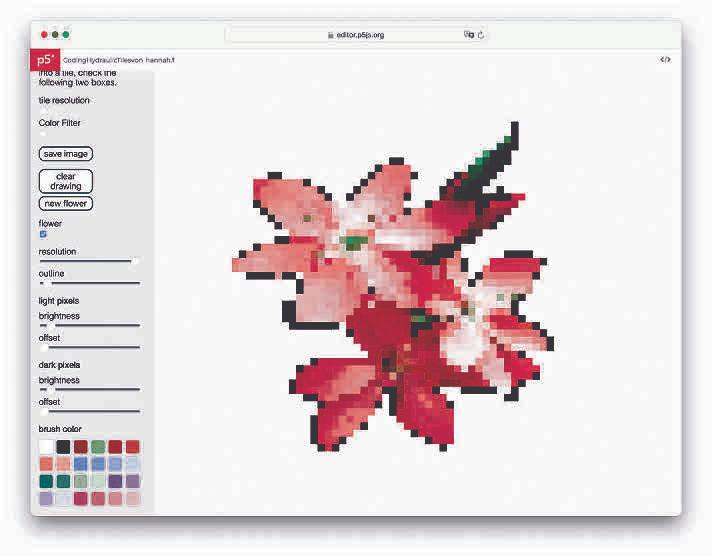
Faux Floral [121] hannahfriedrich.info
fouuund.it [127] fouuund.it
Gesammelte Wörter gesammeltewoerter.ch
Haaven haaven.com/en/ cluster-tool
Heavyweight [127] heavyweight.cc
Interesting Internet fuse.kiwi
ISBN Visualization phiresky.github.io/ isbn-visualization/?
JazzKeys jazzkeys.plan8.co
Jobface [126] nicibud.github.io/ JOBFACE
Kid Pix [156] kidpix.app
Laniakea laniakea.fathom.info
Mapgen4 redblobgames.com/ maps/mapgen4
Moon Cycles [125] design.lindarebeiz.com/ moon-cycle-generator
Oblique Strategies itissimplyamatterofwork. com
p5.plotter [124] tools.gubernat.org/plotter
Papercutting Art papercutting.art
Per(l)mutare ad absurdum [122] perlmutare.net
POLISphone [126] filipelopes.net/polisphone
Random Face Generator editor.p5js.org/antonia_ rib/full/xIpSwOVwc
Randominator github.com/414design/ it_worked_right_away_ with_chatgpt
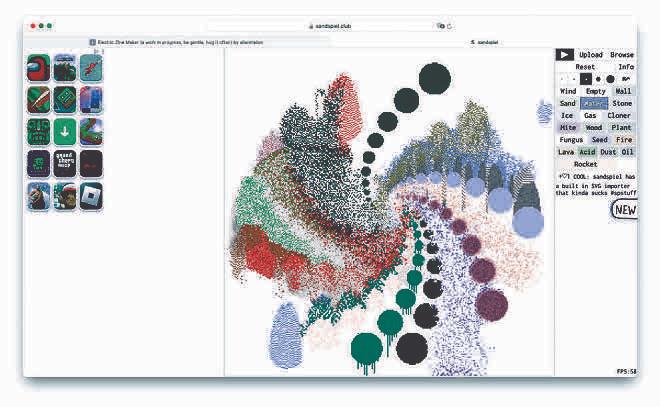
Sandspiel [121] sandspiel.club
Spintronics Simulator simulator.spintronics.com
Surveillance Filter surveillance-filter.vercel. app
Texture Town textures.neocities.org
Vel-o-mat [126] velomat.alles-negativ.ch
wareware wareware.rip
Wow Emoji wowemoji.dev
wrasse.pw/icons wrasse.pw/joel/icons
WORK SURROUNDINGS
addo.art [130] addo.art
Arc arc.net
Are.na [131] are.na
Art CV art-cv.com
BDG Kalkulator [135] kalkulator.bdg.de
Beacon digitalbeacon.co Bluesky bsky.app
Bonsai hellobonsai.com
BrandCloud [135] brandcloud.pro
Check Poster Visibility [132] graffik.de/design/tools/ apparent_size_of_a_ poster_in_the_distance
ClearVPN clearvpn.com/de
Clock-Out [134] github.com/ kylemcdonald/clockout Cosmos cosmos.so
Cushion cushionapp.com
Dia diabrowser.com
Dynamic Dummy Image Generator dummyimage.com ezgif.com ezgif.com
Feminist Search Tools feministsearchtools.nl
Figma Slides figma.com/slides
Font Awesome fontawesome.com
Font Overview workshop.massdriver.com/overview Fontdue fontdue.com
Gemini 2 macpaw.com/gemini
Glossary raycast.com/javierarce/ glossary
Homebrew brew.sh iLovePDF ilovepdf.com
Image Extractor extract.pics
Image Scrubber [133] everestpipkin.github.io/ image-scrubber
imagekit.io imagekit.io
Invoice Generator invoicesimple.com/ invoice-generator
justwrite justwrite.page
Kittl kittl.com
Ludus ludus.one
Mastodon mastodon.social
Mousecape github.com/ alexzielenski/ Mousecape
NitroQR nitroqr.com
Notion notion.com
Numi numi.app
Obsidian obsidian.md
OpenCore Legacy Patcher dortania.github.io/ OpenCore-Legacy-Patcher
OpenStreetMap openstreetmap.org
Organic Maps organicmaps.app
P5 Timemachine [130] p5tm.net
Packlink packlink.com
PairDrop pairdrop.net
Grace Manning [096] @graceis.online graceis.online
Mario De Meyer [092] @mariodemeyer dm2graphics.com
Andreas Maschke [091] blog.overwhale.com
Sol Matas [137 ff.] @solmatas bio.site/solmatas
Théo Mathieu [148] @tm_visual_ theomathieu.ch
Maximage [112] maximage.biz
Lauren Lee McCarthy [176 ff.] @laurenleemack get-lauren.net
Kyle McDonald [134] @kcimc kylemcdonald.net
Meiré und Meiré [161] @meireundmeire meireundmeire.com
Anastasia Melandinou [146] @_melandin melandin.com
Veronica Melissari [163] @meronicavelissari
Oleksandra Miakisheva [063] @sasha_miar
Jan Middendorp [001 ff.] jan-middendorp.com
Chris Miller [224] chrismiller.xyz
Achim Mohné [008 ff.] @achimmohne achimmohné.net
Gianluca Monaco [087] @gianlucamonacou gianlucamonaco.com
Fabian Morón Zirfas [041] fabianmoronzirfas.me
Mowgli [169] @mowgli_851 mowgli851.com
Lloyd Mst [173] @lloydmst lloyd-mst.com
Maike Müller [155] @maikemuellerdesign
Jasmin Isabella Müller [174] @jazzi.indd
Marco Müller [032] marco-mueller.com
Ivan Murit [021, 106] @ivan.murit ivan-murit.fr
Kiel Danger Mutschelknaus [017] @kiel.d.m kielm.com
Katharina Nejdl [028] @katharinanejdl katharinanejdl.com
Neomatter [081] @neomatter.xyz neomatter.xyz
Inês Nepomuceno [042] @ines_nepomuceno_design inesnepomuceno.pt
Nervous System [078] @nervous.system n-e-r-v-o-u-s.com
Lars Neth [084] @slender4fun
Henry Nguyen [166] @qhenrydesign
Hans Noffke [146] @hansnoffke hansnoffke.de
Tereza Nováková [159] @terez.novak tereznovak.xyz
Sara Nygård [168] @snyg_aard
OMAi [075] @tagtoolcrew omai.at
Open-source Publishing [119] osp.kitchen
Laila Paim [069] @killalaila
Lùan Palma [021, 084] @artikulierung luanpalma.ch
Arshaelia Palmer [169] @cre8tive.sh4e
Angela Park [047] @there4_go seryoungpark.com
Marianna Paszkowska [137 ff.] @mariannapaszkowska mariannapaszkowska.com
Jonas Pelzer [116] @jonas.vol2 jonaspelzer.com
Irina Pereira [061] @irina___pereira
Ágnes Petrucz [164] @petrucz.agnes
Peyer Cover [113] @peyercover peyer-cover.com
Everest Pipkin [133] @everestpipkin everest-pipkin.com
Fabian Pitzer [165] @pitzer.xyz pitzer.xyz
Jan Ploch [116] @jan_ploch janploch.de
Polycam [085] @polycam3d poly.cam
Léna Le Pommelet [039] @lenalepommelet
Felix Rabe [046] @felixrabe.de felixrabe.de
Anđela Radojičić [171] @andj.ama
Amyra Radwan [122] @amyra_radwan amyra-radwan.com
Jan-Henning Raff [132] @j__________r___ graffik.de
Readymag [115] @readymag readymag.com
Colin Reid [069] @colinreid.me colinreid.me
Alexis Reigel [032] koffeinfrei.org
Niklas Reiprich [045] @niklasreiprich reiprich.com
Matija Resman [020, 026] @lo_soba
Retry [051] @retry.studio retry.studio
Risotto Studio [110] @risottostudio risottostudio.com
Tim Rodenbröker [174, 176 ff.]
@tim_rodenbroeker timrodenbroeker.de
Alexander Roidl [173] @alexanderroidl alexroidl.de
Elliot Romano [035] @e_romno romano.work
Ben Rose [169] @ronbese_ ronbese.com
Daniel Rothaug [170] @werkschau_augsburg designcampus.tha.de
Timo Rychert [041] timorychert.com
Scene Group [092] @cavalry.app cavalry.scenegroup.co
Florian A. Schmidt [160] florianalexanderschmidt. de
Sebastian Schmieg [150, 160] @sebastianschmieg sebastianschmieg.com
Jorne Scholiers [090, 162] @byjorne jornescholiers.cargo.site
Niklas Schönemann [111] @nickseknick nschoenemann.de
Schultzschultz [030, 046, 073, 075] @schultzschultzgrafik schultzschultz.com
Lina Schwarzenberg [150, 160] @solvem.probler linaschwarzenberg.com
Christoph Seibel [041] @christoph_sbl
Mindy Seu [109] @mindyseu mindyseu.com
Sharp Type [039, 201] @sharp_type sharptype.co
Akash Sheshadri [175] @akash.sh.sh alternativeverything. cargo.site
Jiwoong Shinn [074] @shinnjiwoong
Maryna Shtanko [152] @marynashtanko marynashtanko.com
Radek Sidun [041] @radeksidun
Dina Silanteva [088] @dinasilanteva ddina.com
Karl Sims [055] karlsims.com
Ross Sokolovski [117] @control_tool designerthatreads.com
Difei Song [054] @song_difei difeisong.cargo.site
Sonic Liberation Devices [162] @sonicliberationdevices sonicliberationdevices .com
Specht Studio [153] @spechtstudio spechtstudio.com
Martin Spet [166] @_martin_the
Lily Star Hardy [163] @lilystarhardy
Levi A. Stein [160] @content_consumer_xy
Paul Steinmann [093] paulsteinmann.com
Fabian Stenzel [044] @hellofabianstenzel fabianstenzel.com
Nina Stössinger [039] @ninastoessinger
Alix Stria [119] @alix.stria alixstria.com
Studio AAA [107] @albumartarchive studioaaa.com
Studio Afterimage [074, 159] @afterimage.cc afterimage.cc
Studio Dumbar/DEPT [173] @studiodumbar studiodumbar.com
Studio Feixen [176 ff.] @studiofeixen studiofeixen.ch
Studio Innate [078] @studioinnate shop.studioinnate.com
Studio Pandan [158, 159, 163] @studiopandan pandan.co
Studio Pointer [081] @pointer_studio pointer.click
Studio Studio [034, 171] @studiostudio.be studiostudio.be
Yoana Tacheva [053] @yo.chita yochita.com
Lucija Tadić [035] @_ija_luc
Siiri Tännler [067] @siiritaennler siiritaennler.ch
Julien Taquet [111] julientaq.fr
Tátil Design [044] @tatil_design site.tatil.com.br
Hannah Thiel [154] @ha.thiel
This is our work [115] thisisourwork.net
My-Lan Thuong [039] @mylanthuong
Nicolas Tilly [050] @nicolastilly nicolastilly.fr
Kateryna Tovstyha [163] @kateryna_tovstyha
Tibor Udvari [083] tiborudvari.com
Janek Valenteijn [166] @janek.val
Clement Valla [115] clementvalla.com
Erik van Blokland [002f., 049] @letterror letterror.com
Bas van Brandwijk [019]
@bas.vanbrandwijk basvanbrandwijk.com
Vera van de Seyp [024] @veravandeseyp veravandeseyp.com
Lennart van den Bossche [146]
Mike van der Sanden [019, 045, 158] @mikevdsanden mikevandersanden.com
Ana Maria van Dierendonck [049] @seresworldwide seresworldwide.com
Just van Rossum [038, 049, 176 ff.] @justvanrossum
Variable.io [064] @variable_io
Marte Verhaegen [039] @marteverhaegen
Victor Verhelst [146, 156] @verhelstvictor trippyvegas.com
Esteban Vernet [057] @estebanver_net estebanver.net
Stephen Vincent [059]
Jeanne Charlotte Vogt [176 ff.] @jeannecv jeannevogt.de
Owen Waddington [093] @owen.waddington owenwaddington.xyz
Xian Wang [031, 154] @illewikk wangxian.work
Antonin Waterkeyn [142 ff.] @antoin.work
Lena Weber [001, 056, 149, 176 ff.] @lenaweber404 lenaweber.com
Wedzicka [157] @wedzicka_com wedzicka.com
Emilia Weinzierl [154] @emilia.weinzierl
Jake Welch [018, 058, 098, 099] @jake___welch jakewelch.design
Daniel Wenzel [033] @wnzldnl wenzeldaniel.com
When It Changed Inc. [131]
Aiste Who [071] @aiste_who aistewho.com
Olivier Wick [083] @076_olivier
Shelby Wilson [079] shelby.cool
Jak Woda [096] @quasiaqua
Hubert Wojniak [122] @hubertwojniak hubertwojniak-portfolio. cargo.site
Womp [077] @womp3d womp.com
Aaron Woo [047]
James Wrigley [042, 106] @ideaindex.xyz
Yacht [046] @teamyacht teamyacht.com
Zeynep Yeşilmaden [164] @zeynepyesilmadenc
Emir Can Yilmaz [132] @xcyvc
Michaela Zdeňková [163] @mesicnice
Ludwig Zeller [041] ludwigzeller.net
Jannik Zernke [025] @nurgutearbeit
Ziang Zhou [062, 071] ziangzhou.com
Florian Zia [024] florianzia.com
Ella Zickerick [160] ellazickerick.de
Michael Zöllner [026, 172] michaelzoellner.de
Marco Zollinger [224]
SLANTED MAGAZINE
TYPOGRAPHY & DESIGN CULTURE
SPRING / SUMMER 2026
47 DIGITAL TOOLS
PUBLISHER
Slanted Publishers UG (haftungsbeschränkt)
Nördliche Uferstraße 4–6 76189 Karlsruhe
Germany
T +49 (0) 721 85 14 82 68 magazine@slanted.de slanted.de
TEAM
Editor in Chief (V.i.S.d.P.)
Lars Harmsen
Co-Editor
Jacob Tessmann
Managing Editor
Julia Kahl
Creative Direction
Lars Harmsen
Graphic Design
Jacob Tessmann
Final Design
Franziska Müller, Jacob Tessmann, Julia Kahl
SLANTED WEBLOG
Editor in Chief (V.i.S.d.P.)
Julia Kahl
Editors slanted.de/editors
VIDEO
Video Interviews slanted.de/videos
ISBN: 978-3-948440-96-1 ISSN 1867-6510
Copyright © Slanted Publishers, 2026
All rights reserved.
PRODUCTION
Printing Inside
Stober Medien GmbH
Eggenstein / Germany stober-medien.de
Printing & Embossing Cover
UV-offset by Gallery Print Berlin / Germany gallery-print.de
Bookbinding
Buchbinderei Spinner Ottersweier / Germany josef-spinner.de
Cardboard Cover
EFALIN 108 high white fine linen 280 g / sm
Paper Inside Visual Part
ZETA diamond extra smooth 120 g / sm
IBO TWO 80 g / sm Manufactured by Reflex Düren / Germany reflex-paper.com
Spot Colors
HKS 13 N, HKS 243N, Pantone 802U
Fonts
Visual, 2023
Design: Jan Novák Label: AllCaps / allcapstype.com
Suisse Int’l , 2011
Design: Swiss Typefaces Design Team Label: Swiss Typefaces / swisstypefaces.com
DISCLAIMER
The publisher assumes no liability for the accuracy or completeness of the information provided. All materials are believed to be free of third-party rights; if you believe your rights have been infringed, please contact the publisher.
No part of this publication may be reproduced or distributed without prior written permission. While every effort is made to credit sources correctly, errors may occur.
The publisher assumes no liability for unsolicited submissions. Opinions expressed in signed articles are those of the authors and do not necessarily reflect the views of the publisher or editor.
The German National Library lists this publication in the German National Bibliography; detailed bibliographic data is available on the Internet at dnb.de.
SUBSCRIPTIONS
Subscribe to Slanted Magazine and support what we do. Magazines via subscriptions are at a reduced rate and get shipped directly at release, for free within Germany.
Magdalena Barszczak (distribution manager) subscribe@slanted.de, T +49 (0) 721 85148268 slanted.de/subscription
Frequency 2 × p. a. (Spring / Summer, Autumn / Winter)
2-Issues-Subscription
€ 44.– + shipping
4-Issues-Subscription € 88.– + shipping
Student Subscription
2 issues for € 41.– + shipping
Gift Subscription
2 issues wrapped as present for € 46.– + shipping
2-Issues-Subscritpion + related Special Editions
2 issues + 2 special editions for € 64.– + shipping
4-Issues-Subscritpion + related Special Editions
4 issues + 4 special editions + free issue for € 128.– + shipping
SALES AND DISTRIBUTION
Slanted Magazine can be purchased online, in selected bookstores, concept stores, and galleries worldwide. If you own a shop and would like to stock Slanted Magazine or other publications from us, please get in touch:
Contact / Distribution DE
Magdalena Barszczak distribution@slanted.de, T +49 (0) 721 85148268
Distribution UK Public Knowledge Books publicknowledgebooks.com
Distribution US Small Changes / smallchanges.com
Distribution EU & WORLD Idea Books / ideabooks.nl Slanted Shop slanted.de/shop
Retail & Distribution slanted.de/distribution
ADVERTISING
We offer a wide range of advertising possibilities online and in print. For advertising inquiries please get in touch with:
Klementyna Sęga (advertising manager / sales) klementyna.sega@slanted.de slanted.de/publisher/advertising
AWARDS (SELECTION)
ADC of Europe, ADC Germany, Annual Multimedia, Berliner Type, DDC, Designpreis der BRD, European Design Awards, Faces of Design Awards, iF communication design award, German Design Award, Laus Awards, Lead Awards (Weblog of the Year & Visual Leader),red dot communication design awards, Type Directors Club NY, Tokyo Type Directors Club, Werkbund Label
ACKNOWLEDGEMENT
We would like to sincerely thank everyone who took part in our call for entries. Your enthusiasm, commitment, and creative energy made this issue possible. A special thank-you goes to all the toolmakers—without your ingenuity and dedication, an edition like this simply could not have come to life.
Right after this, we want to express our deepest and most heartfelt gratitude to Jacob Tessmann. Jacob, this issue bears your signature in every possible way. You shaped it with extraordinary sensitivity, intellectual depth, and an incredible sense for nuance and detail. What you have created is bold, layered, thoughtful, and truly one of a kind. Your vision, persistence, and uncompromising dedication turned this edition into something exceptional. This is your issue—through and through.
Our gratitude also extends to our advertising partners. Through your support and placements, you actively contribute to making such an ambitious and high-quality production achievable.
We warmly thank our paper sponsor, Reflex Paper— especially Heiko Duhr and Mark Land. We truly love your outstanding fine papers and were delighted to use IBO TWO so extensively throughout this issue.
A heartfelt thank-you to the team at Color Library. Thanks to your remarkable tool, the images in this magazine shine vibrantly in spot colors, adding an exciting visual dimension to every page.
We are deeply grateful to our long-standing printing partner, Stober Medien, for the beautiful production of this magazine—especially Marcus Grunvinck and the entire team for their outstanding work and precision. This issue’s cover was produced by the fantastic team of Gallery Print. Thank you, Armin Akbarzadeh Gharib and André Dural for allowing us to push boundaries and explore new possibilities together.
In collaboration with Metapaper, Gallery Print also produced the Special Edition: an exclusive artwork set, elaborately refined and crafted with exceptional attention to detail. A true must-have! Available exclusively online in the Slanted Shop: slanted.de/product/ special-edition-digital-tools
Finally, our sincere thanks to all interview partners and authors who shared their thoughts and perspectives with us during such an exciting and challenging time. Your openness and insight give this issue its depth and relevance.
Tools are never neutral. Not software. Not AI.
There is so much to see that your eyes burn and your breath falters.
In 2020, as Cairo slowed under lockdown, something unexpected filled the sky: tayarat —kites crafted from plastic scraps and bamboo, painted in football colors, national flags, or glowing with LED lights. In isolation, they became emblems of joy and creative freedom. Before long, authorities banned them, citing accidents and security concerns.
Our friend Markus Lange, who lived in Cairo for six years while teaching at the German University, documented this moment (see Special Edition and pp. 108–110). During our three visits (2019, 2023, 2025), he opened the city to us. One evening, he led us up a pigeon tower in the City of the Dead. As the sun set and hundreds of birds circled above, tea was served—and the idea for this issue was born.
Every tool carries the values, blind spots, and power structures of those who build it. Even computers—sold as universal machines—are culturally biased objects. They reduce reality to what they can process. Limits are framed as flaws. Yet limits produce difference. Constraints generate aesthetics. Boundaries force invention. The fantasy of infinite capability is not creative freedom. It is standardization. Design has lived in permanent disruption for over forty years. Professions vanish, new ones emerge, workflows mutate. Every new technology is announced as the final blow. As Tim Rodenbröker notes (→ p. 179), the panic isn’t new. Only the concentration of power is. Monopolized technology, largely controlled from the US and China, now dictates how we work, communicate, design, and think.
When we returned in spring 2025 for research, we found a design scene alive with energy. Independent studios, collectives, platforms, conferences, and workshops now shape a landscape once dominated by global agencies. Their language is experimental, their themes urgent, their attitude unmistakably confident.
Consider Adobe. Founded in 1982 in Los Altos, it set industry standards with Photoshop, Illustrator, InDesign, Premiere, After Effects, and the PDF. With a market valuation exceeding 200 billion USD, it doesn’t just make tools—it defines what “professional” means: standards became dependency, ownership became subscription, prices rise at will. Competitors disappear: FreeHand—once beloved—was absorbed along with Flash and Dreamweaver. Figma came. Collaboration over authorship. Browser over desktop. Teamplay over lone geniuses. UI and UX design didn’t evolve—it jumped platforms. Adobe tried to buy it for around 20 billion USD. Regulators intervened. For once, friction worked.
At the same time, Canva trains millions to design without ever learning design tools. Templates replace process. Speed replaces understanding. The result is not democratization—it’s dependency at scale.
Cairo, of course, is always more than one story. At Jazz Club Cairo we stumbled into a set by Abo Sahar (Ashraf Abu Zeid), a musician from El Minya and creator of Trobby—a raw fusion of electro-shaabi, trap, Sufi, and folk. His first instrument is nothing more than a computer keyboard. “I grew up without electricity, internet, or instruments,” he says, “and I managed to make sound out of anything.” Today he tours abroad, yet stays rooted in his village. This spirit—creating something out of almost nothing—recalls an older question: how, thousands of years ago, were the pyramids raised from the desert? The Step Pyramid of Saqqara, built around 2700 BCE, is considered the world’s first monumental stone structure. It represents transition: from individual to collective memory, from craft to architecture, from earthly life to eternity. Egypt itself remains in transition, balancing past and present, tradition and change—from Old Cairo to the New Administrative Capital. This issue is not a comprehensive analysis. It is a fragment, an approach, and an invitation to look closer.
Beneath the monopolies, something else is growing: a dense undergrowth of small, strange, radical tools. Built by individuals. For specific needs. Often inefficient. Often useless. Playful. Fast. Software slips out of massmarket logic and becomes personal again. Robin Sloan writes in *Bless the Toolmakers* (2011): “I don’t think about Steve Jobs when I’m using my MacBook. I don’t think about Thomas Knoll when I’m using Photoshop. I don’t think about the sublime inventor of the kitchen table when I sit here at mine.”
Good tools disappear. Power doesn’t. Yet we rarely question growth itself—faster tools, bigger platforms, smarter automation. We call it progress because it feels good. Meanwhile, hardware is discarded, energy is burned, and lifespan is treated as an inconvenience rather than a responsibility. Tools don’t just serve us. They shape us. They define what is possible, what is visible, what is worth doing. And if we’re honest, this is why we keep building them: we don’t just want to solve problems. We want to impose ourselves.
This issue of Slanted Magazine goes along with additional video interviews which have been conducted in February 2025 by the Slanted team in Cairo.
All Slanted Magazines are accompanied by video interviews—with the exception of this issue. Have a look at the interviews from Amsterdam to Tokyo … Enjoy!
To watch the videos, please scan the QR code, or visit slanted.de/cairo
To watch the videos, please scan the QR code, or visit slanted.de/videos