Everything is political, and “politics” is a dirty word.
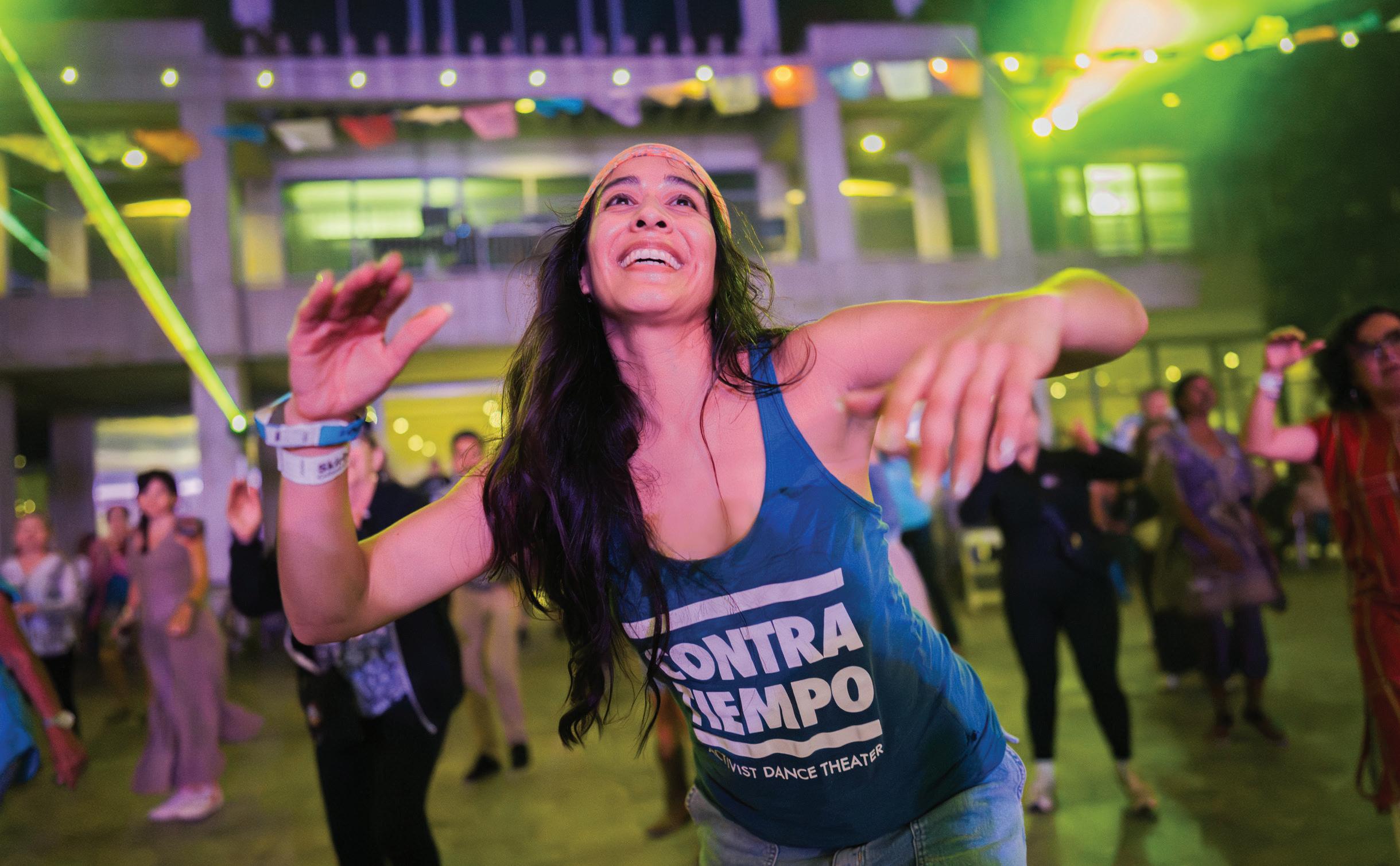
Yet last fall the Skirball brought the height of public life into its main lobby, testing a theory that you can be political without being alienating and instead bring joy, pride, and connection to people of diverse political views.
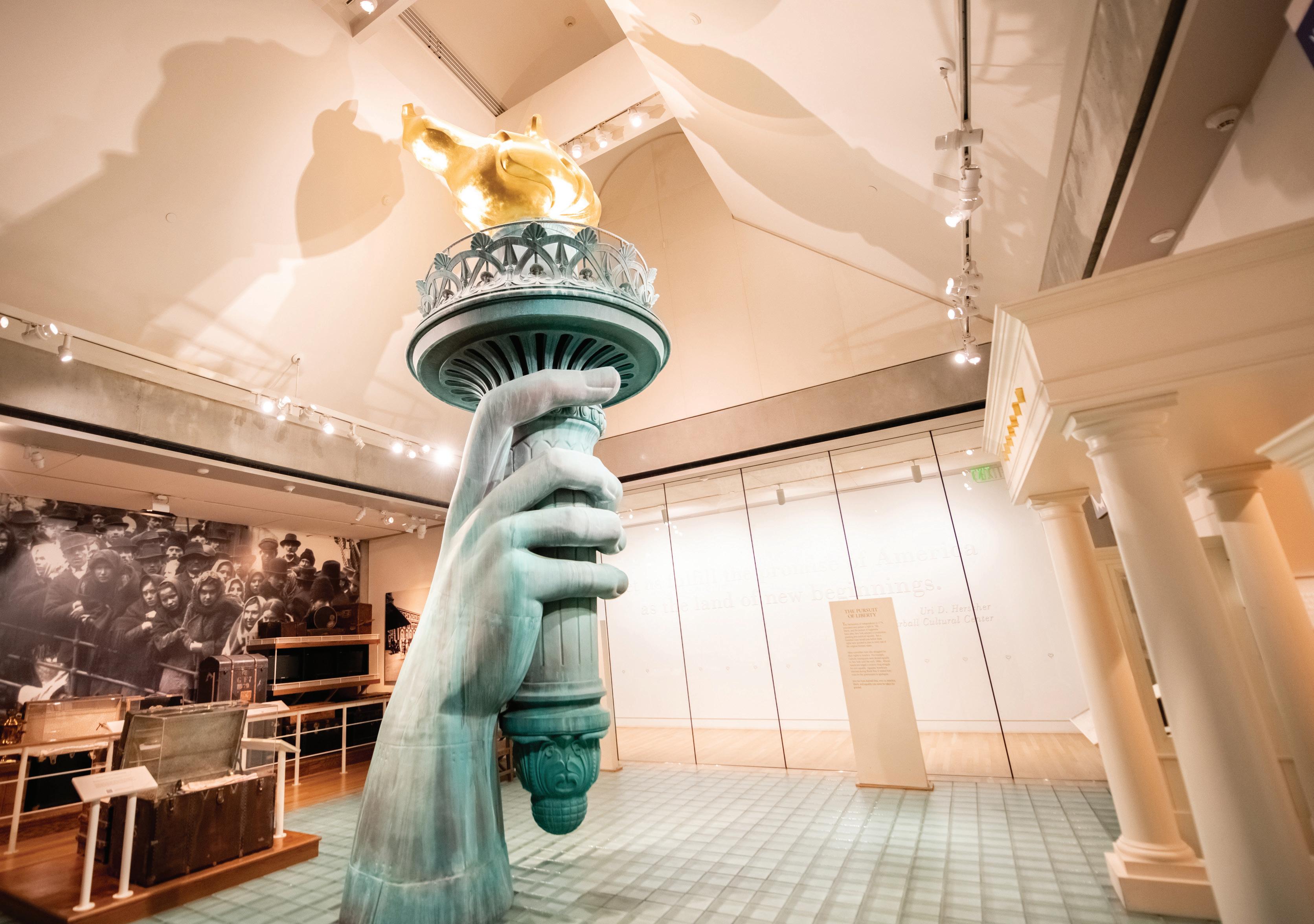
I refer to the installation of Zachary Oxman’s Hanukkah lamp. Commissioned by Vice President Kamala Harris and Second Gentleman Doug Emhoff after the October 7, 2023, Hamas attacks on Israel, In Celebration of Light and Liberty evokes a pomegranate tree. Its copper leaves are made of salvaged material from Ellis Island.
The piece is inherently political. Commissioned by a politician. Responding to terrorism. Referencing immigration. I was cautioned that this artwork guaranteed controversy.
The Skirball strives to be a place where every visitor feels equally welcome and accepted. Periods of increasing division, isolation, antisemitism, misunderstanding, and othering make this harder and all the more valuable. Our mission is not to welcome the homogeneous. Our Jewish value is in welcoming the stranger. Our Jewish tradition— born of the Houses of Hillel and Shammai—is to embrace vigorous debate without compromising mutual respect.
Oxman’s menorah illuminated shared values more powerful than politics. Beauty can pause argument. The piece is exquisite. Gleaming branches, graceful proportions, burnished leaves. Simultaneously a familiar ritual object and a stunning artwork.
So, too, can shared pride in historic achievement quiet the fiercest disagreement. An exceptional Jewish American artist crafted this object. A Hanukkah lamp fit for the Vice President’s Resi-
dence—indeed it was the first ever displayed there—an artifact of the first interfaith couple and the first Jewish American in that house.
All through the holiday season visitors marveled at this work of art, this monument to Jewish tradition. I receive visitor feedback about everything from typos to traffic, but not one critical note about this installation. A reminder that everything may be political, but when the story comes down from abstract policy to a real, specific example before your very eyes, we usually all seem to see the same thing.
This issue of Oasis celebrates an astonishing diversity of cultural connections. The throughline: the Skirball is that one place where all communities and generations come to experience Jewish culture and see it all together. How good and pleasant it is to be in community with you.
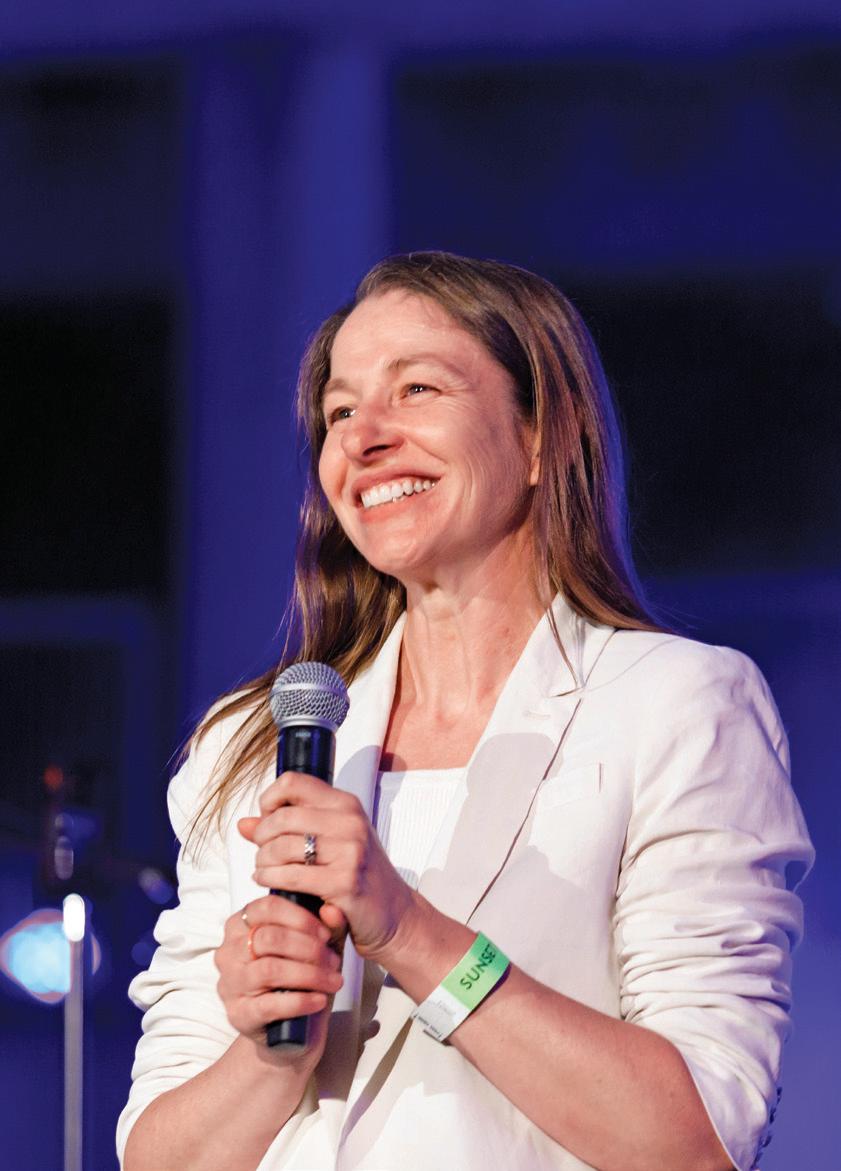
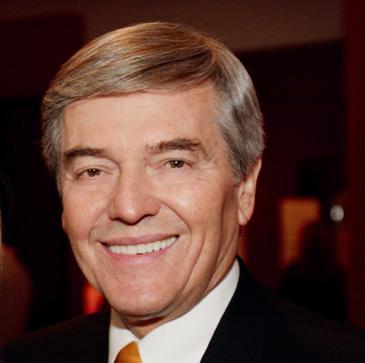
President and CEO Skirball Cultural Center
Juan Posada
OUR OASIS
The series of interconnected pavilions, courtyards, and gardens that comprise the Skirball's 15-acre campus is more than glass, stainless steel, white concrete, pink granite, and tree-lined pathways. It is an oasis in the heart of bustling Los Angeles, a refuge from the chaos of the world, and a place of welcome for people of all backgrounds to engage with Jewish heritage and American democratic ideals.
Stunning architecture and picturesque landscapes designed by world-renowned architect Moshe Safdie echo ancient traditions and Southern California environs to create an unforgettable backdrop for educational, cultural, civic, and lifecycle experiences, ranging from exhibitions, performances, school programs, and adult education to seminars, conferences, weddings, and birthday celebrations that advance the Skirball's mission of fostering community, learning, and justice.
ROOTS AND RENEWAL HONORING NATURE AMID DEVASTATION
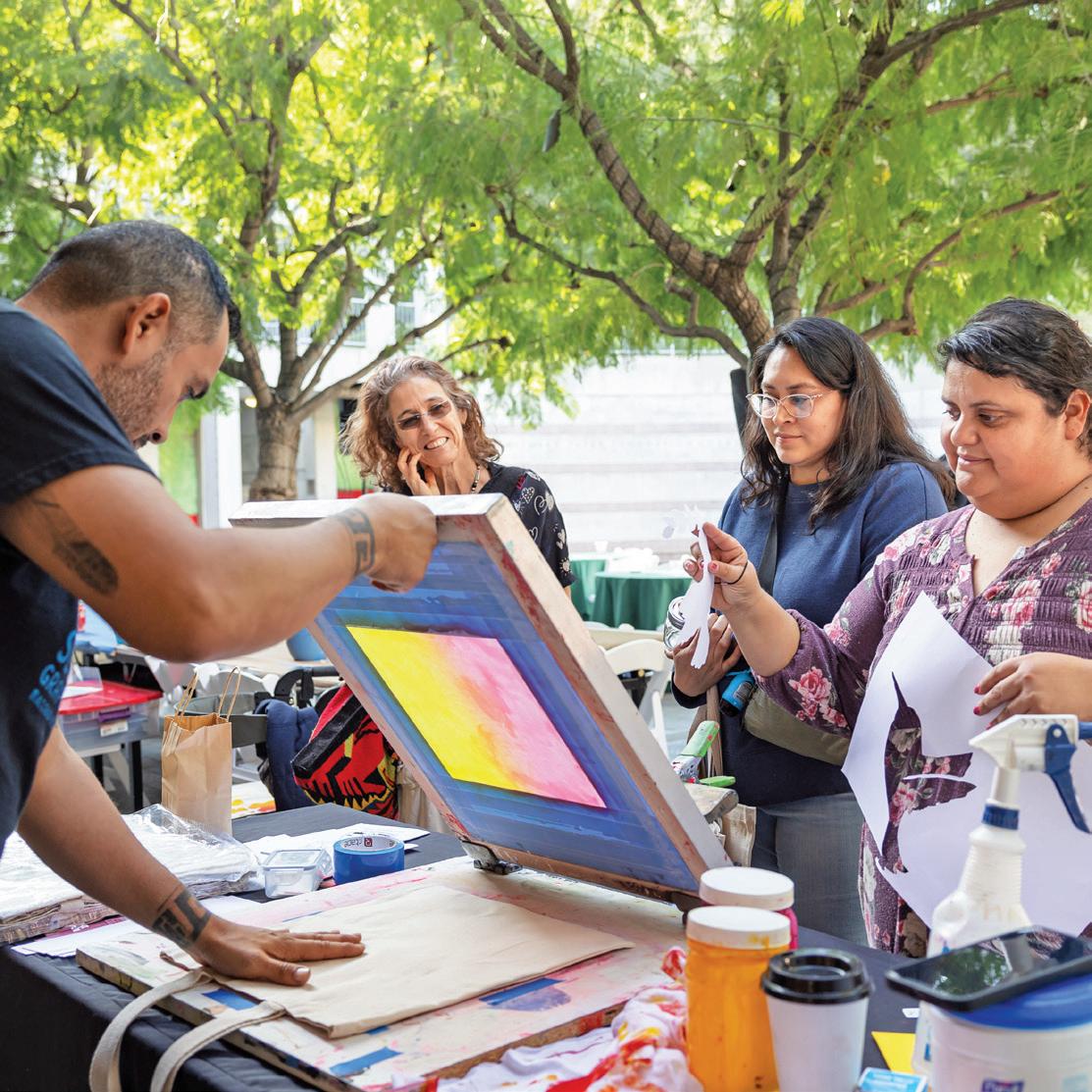
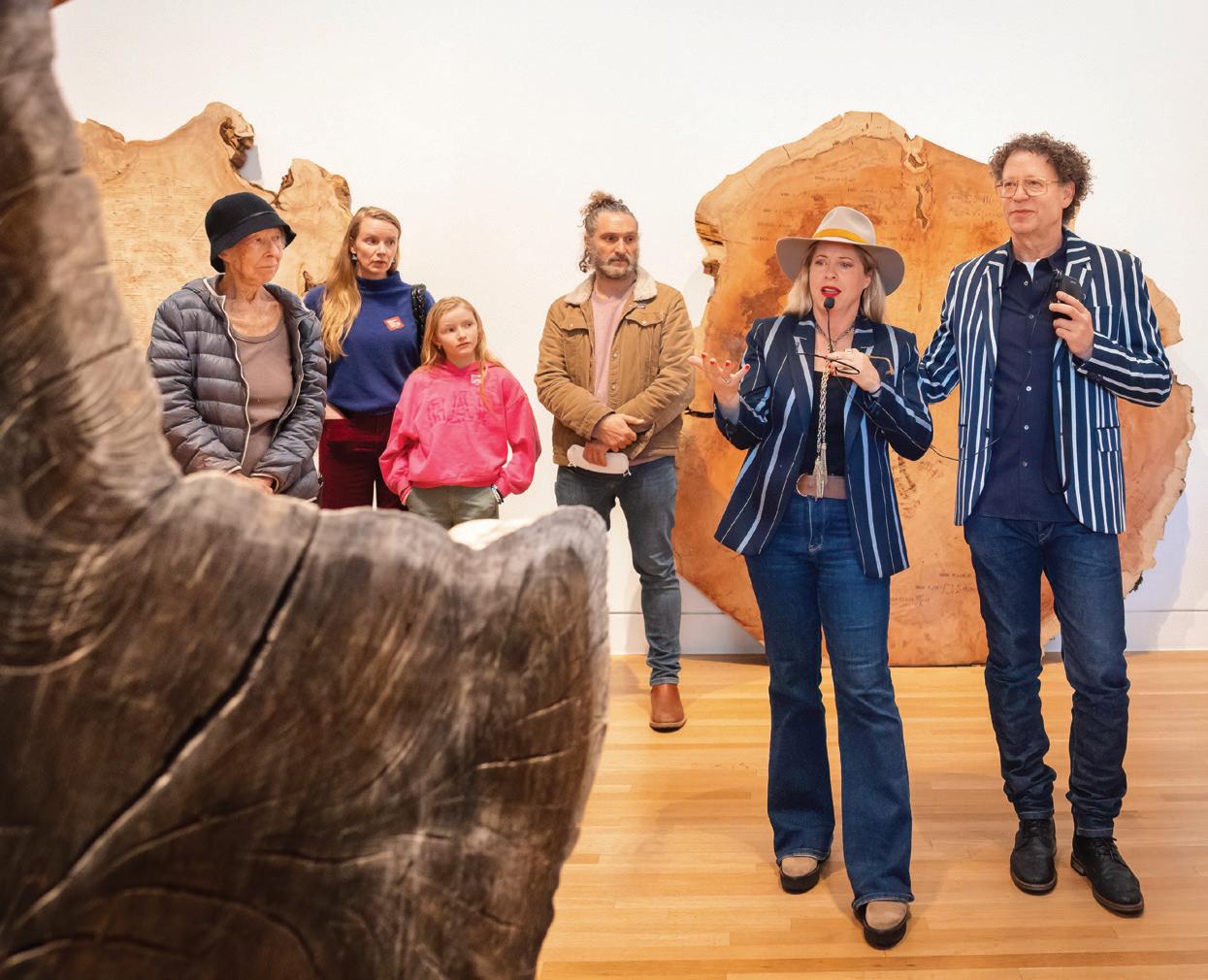
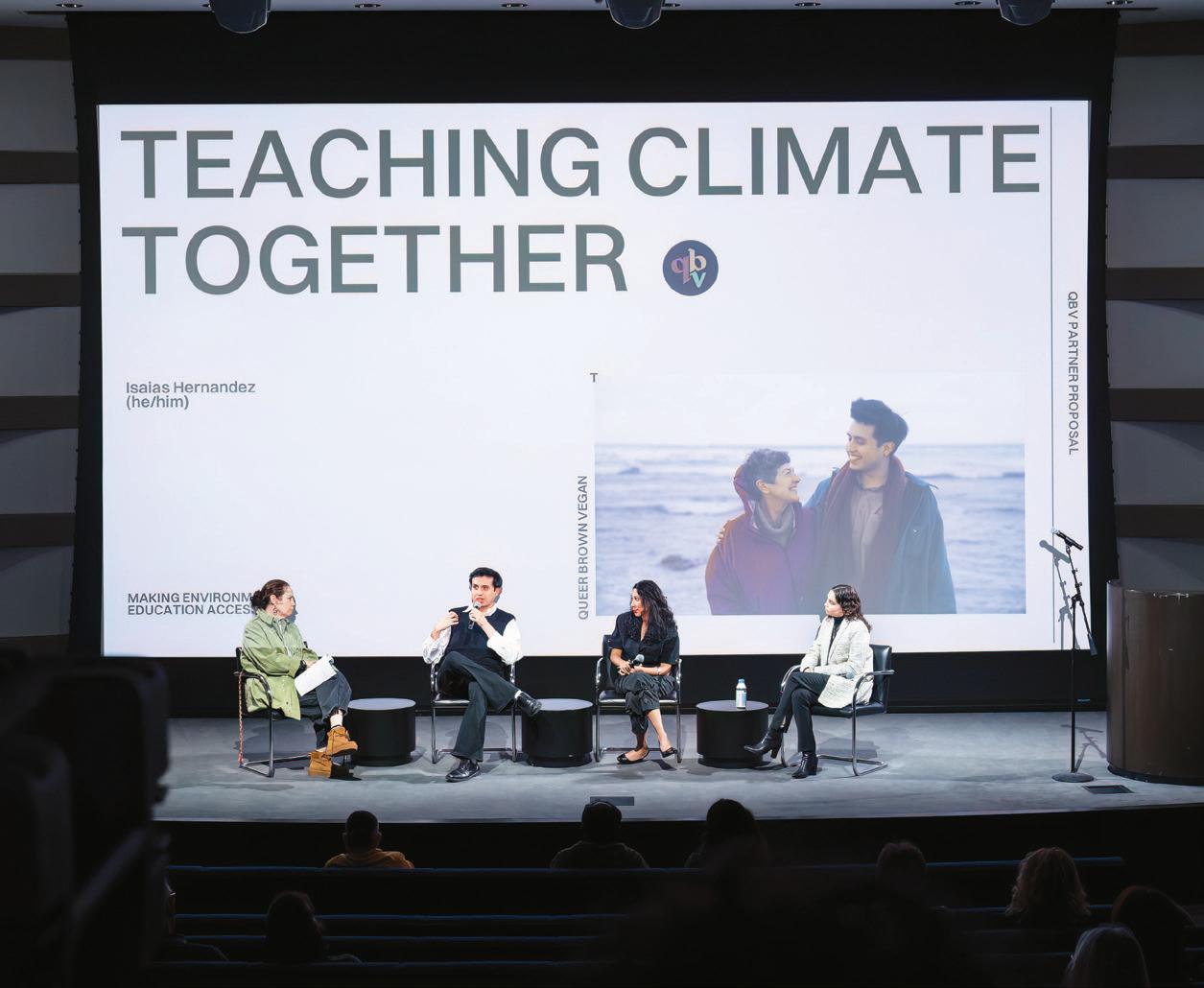
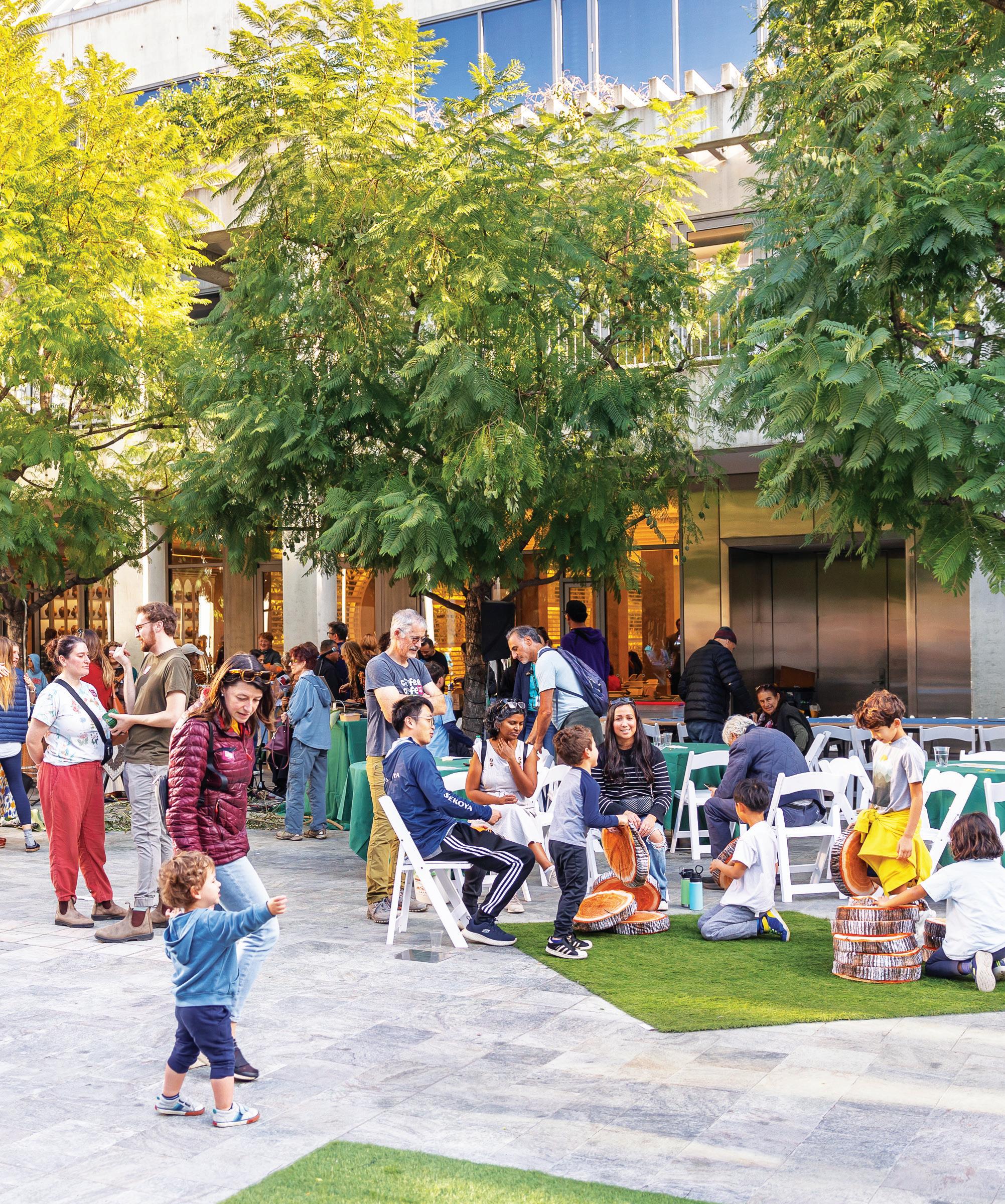
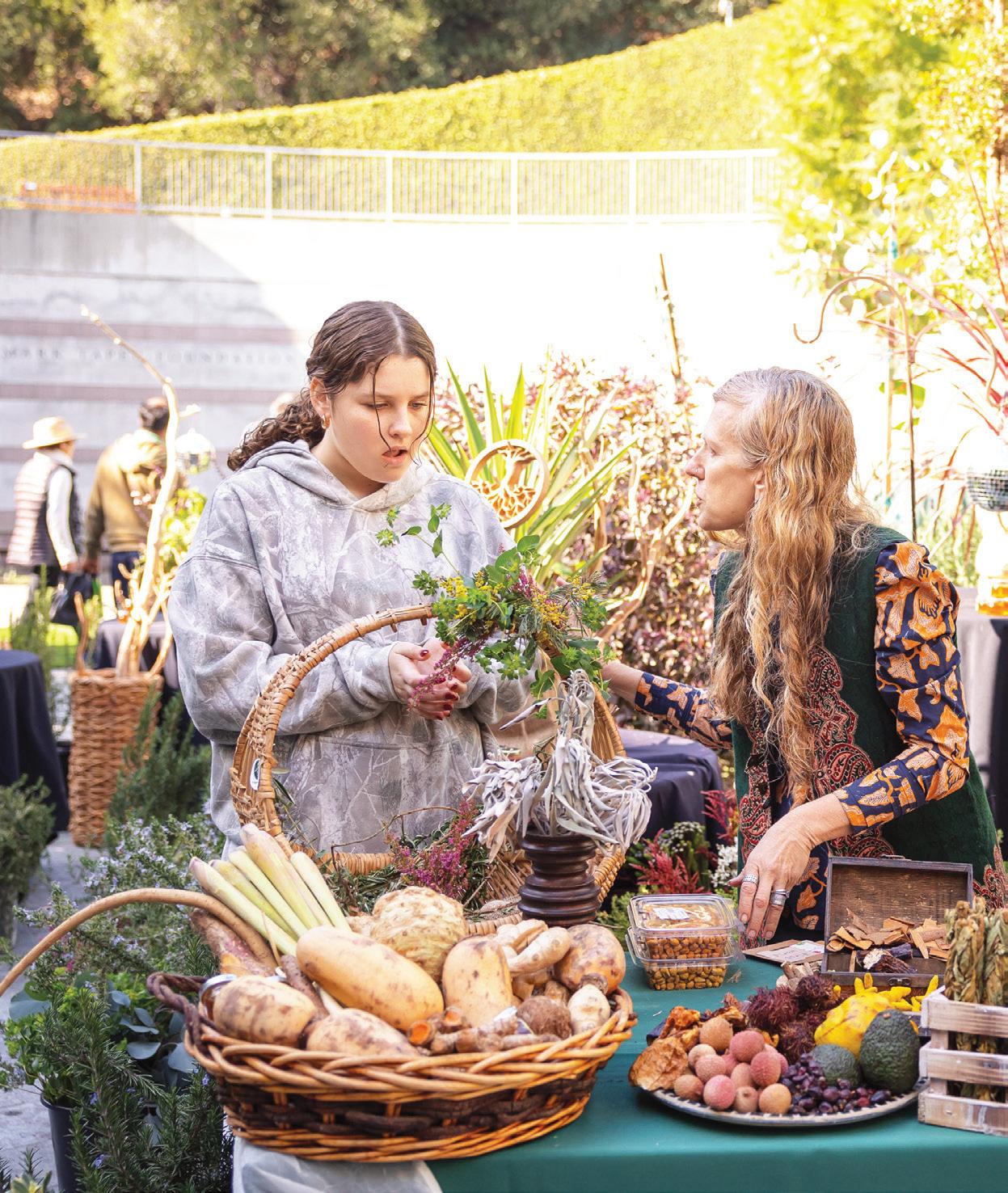
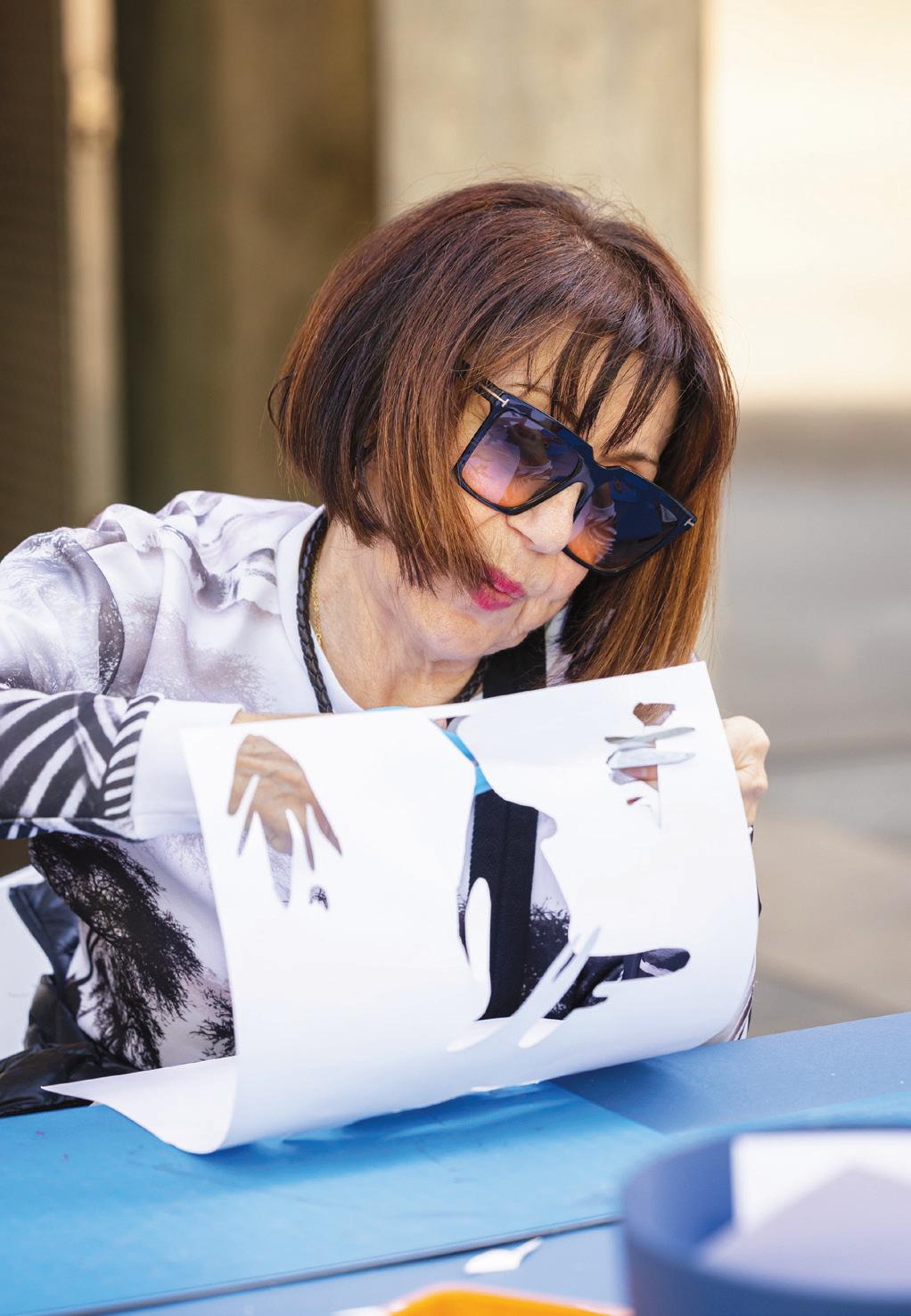
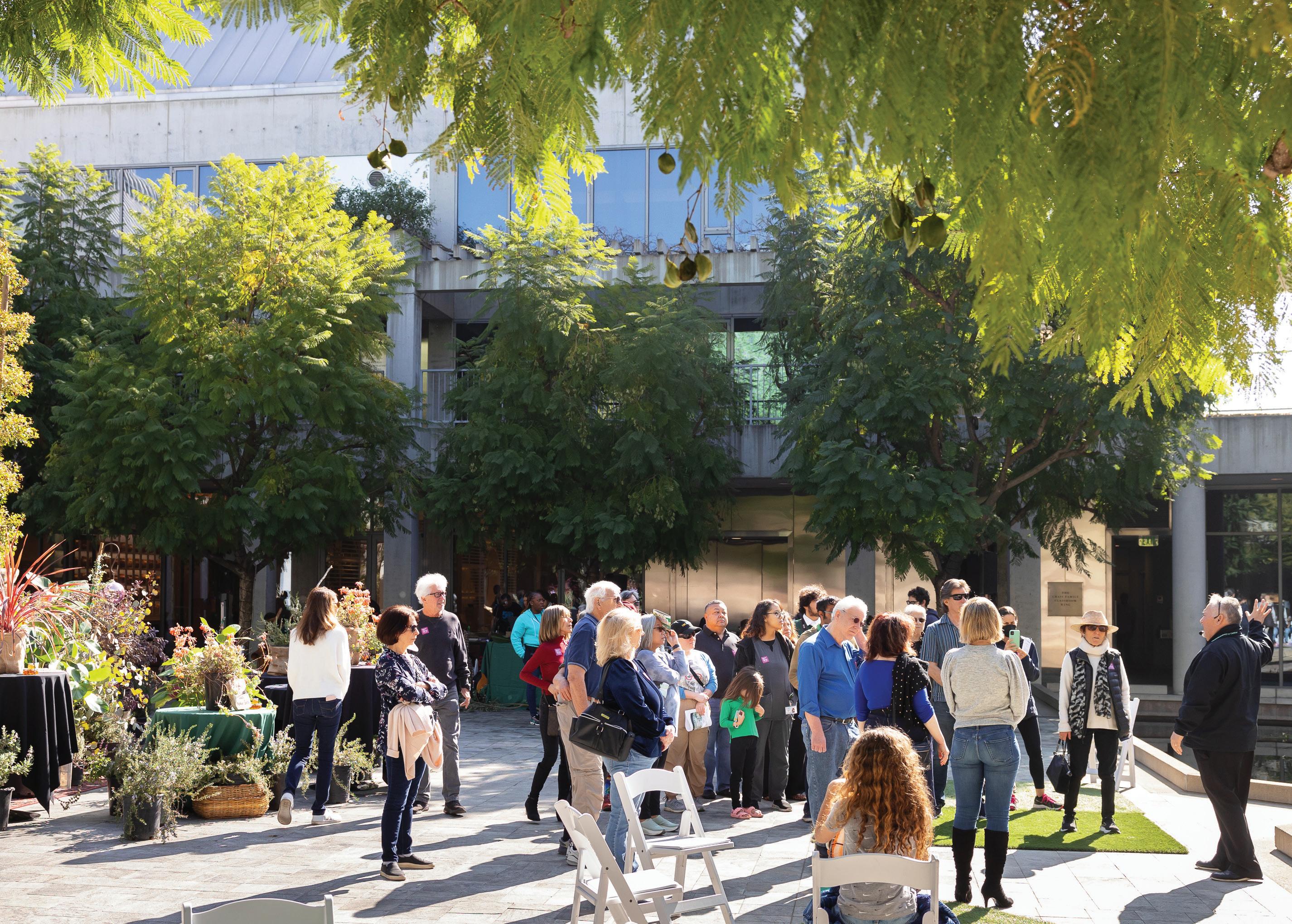
For the first on-campus event following the deadly wildfires of January 2025, the Skirball welcomed more than a thousand visitors back for a free day of gratitude, healing, learning, and community in recognition of the Jewish New Year of the Trees with artist-led talks, a curated Tu B’Shevat experience, food samples, guided campus walks, panel discussions, art making, and more.
Above: Tote Bag Screen Printing Workshop with Self Help Graphics.
Bottom right: Repair Through Intersectional Climate Activism panel.
Top right: Exhibition artists Tiffany Shlain and Ken Goldberg lead a gallery tour of Ancient Wisdom.
Friends and families unwind in Taper
Courtyard.
Tu B’Shevat, known as the New Year of the Trees, is a Jewish holiday when we celebrate nature waking up from its winter nap. Before it was considered a festival recognizing one of four “new years” throughout the Jewish calendar, Tu B’Shevat was used by ancient Jewish farmers as a marker for a tree’s birthday to know when fruit was ready to be eaten. Traditionally, as we renew our commitment to the planet, people eat fruits that grow in Israel, like figs, dates, pomegranates, olives, and grapes. Perhaps most importantly, Tu B’Shevat reminds us that we’re all rooted together, and just like trees, we grow stronger when we care for the earth—and each other. After weeks of being disconnected and ill at ease, this day allowed us the opportunity to reflect gratitude for all we have to share.
SMGPh otography
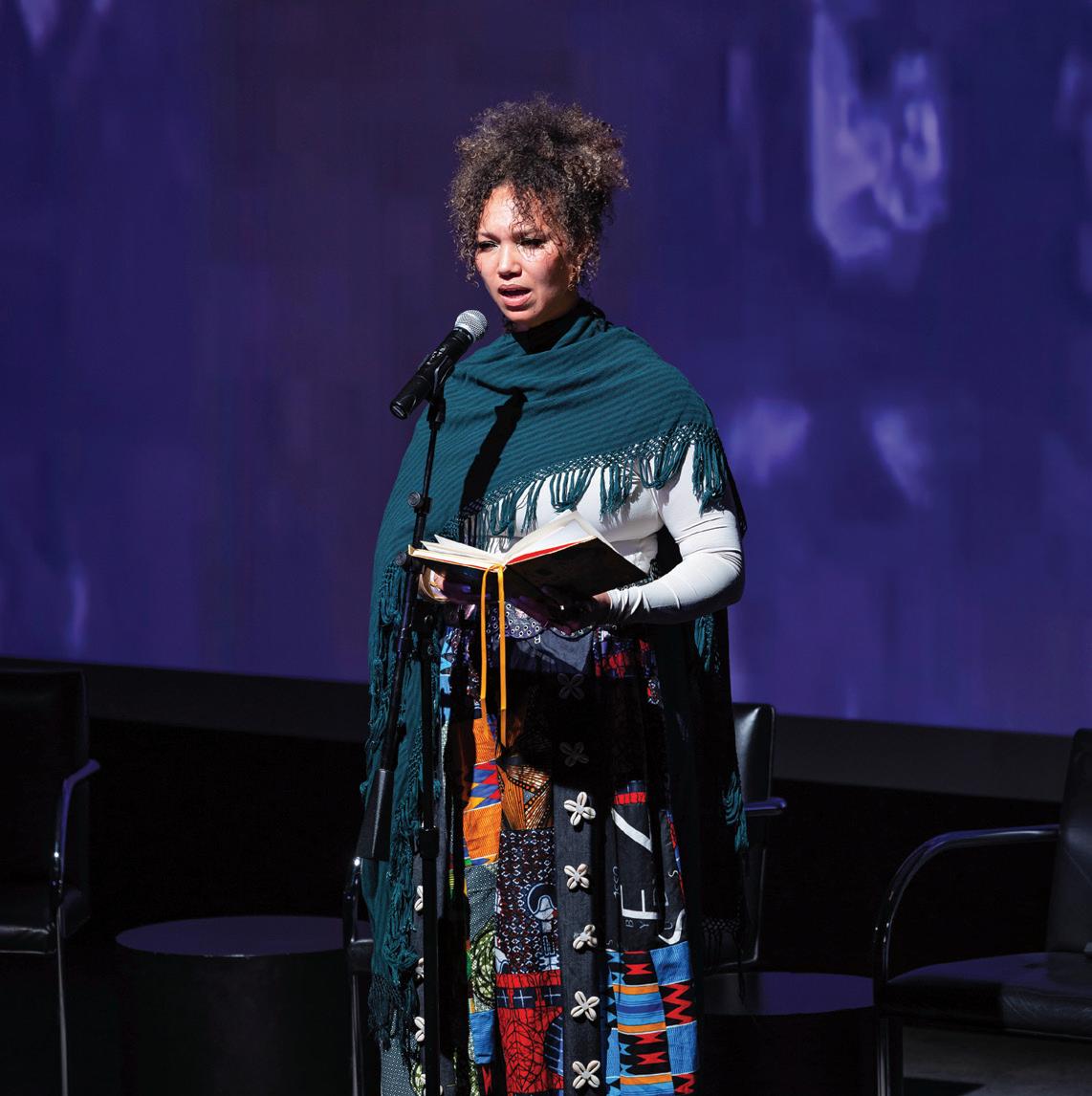
Interdisciplinary artist Shelley Bruce addresses the crowd.
Enjoying the bounty of locally sourced and sustainably harvested fruits, nuts, seeds, herbs, and juices.
Making crafts in the Courtyard.
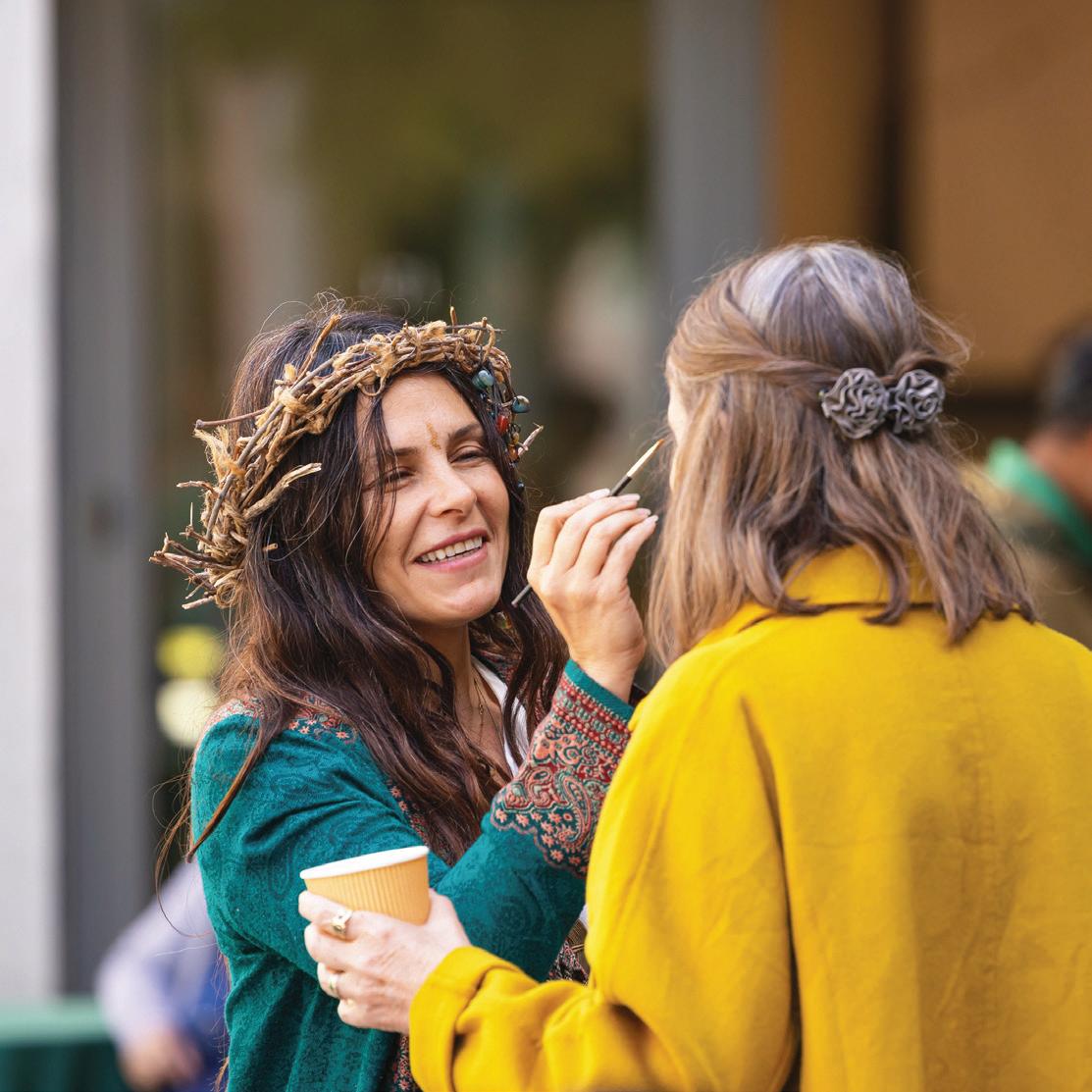
Above: Face painting in the Courtyard.
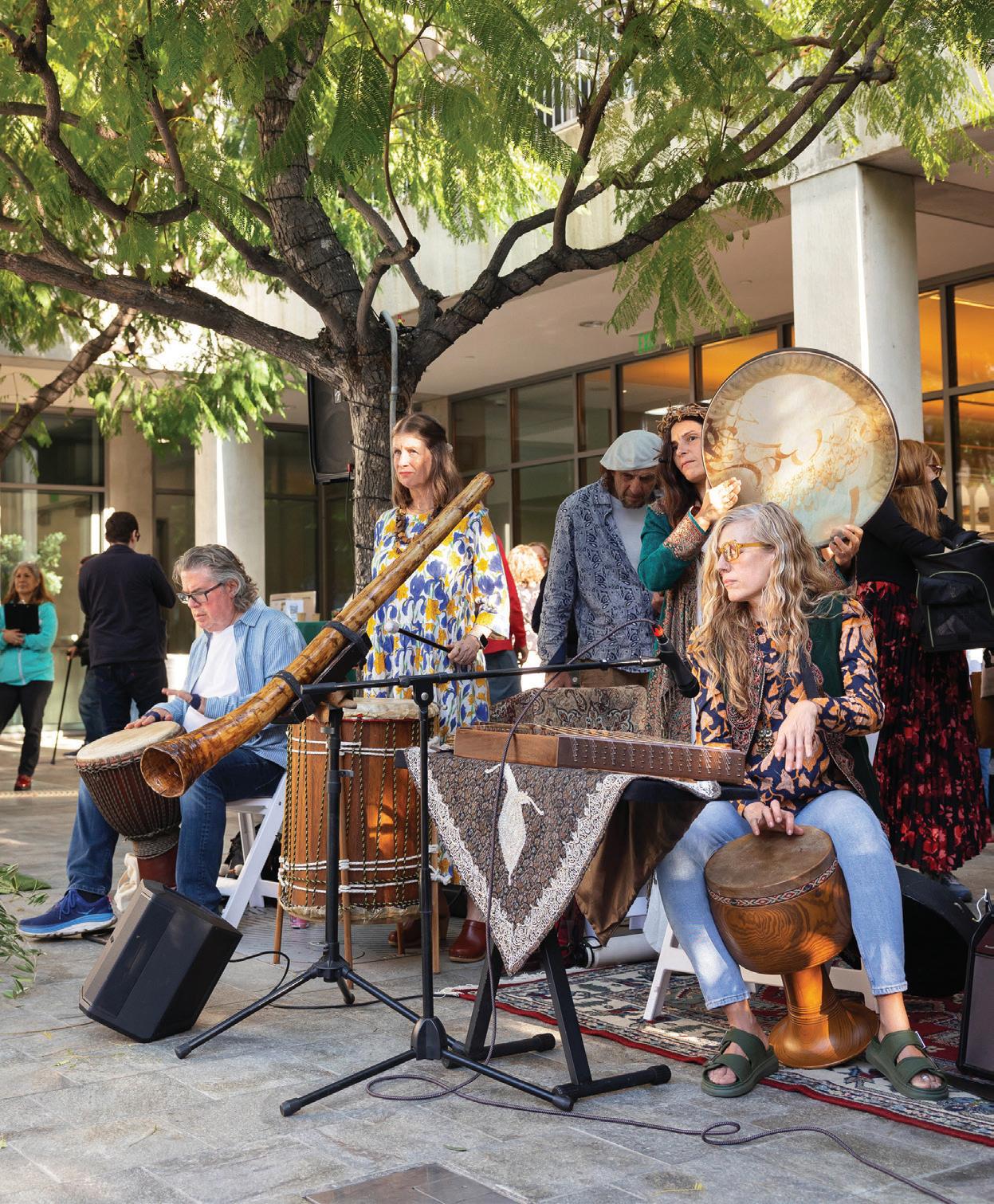
Right: Musicians help set the mood for an inspiring afternoon.
Attendees gather for an Arbor Tour of the Skirball campus.
GATHER
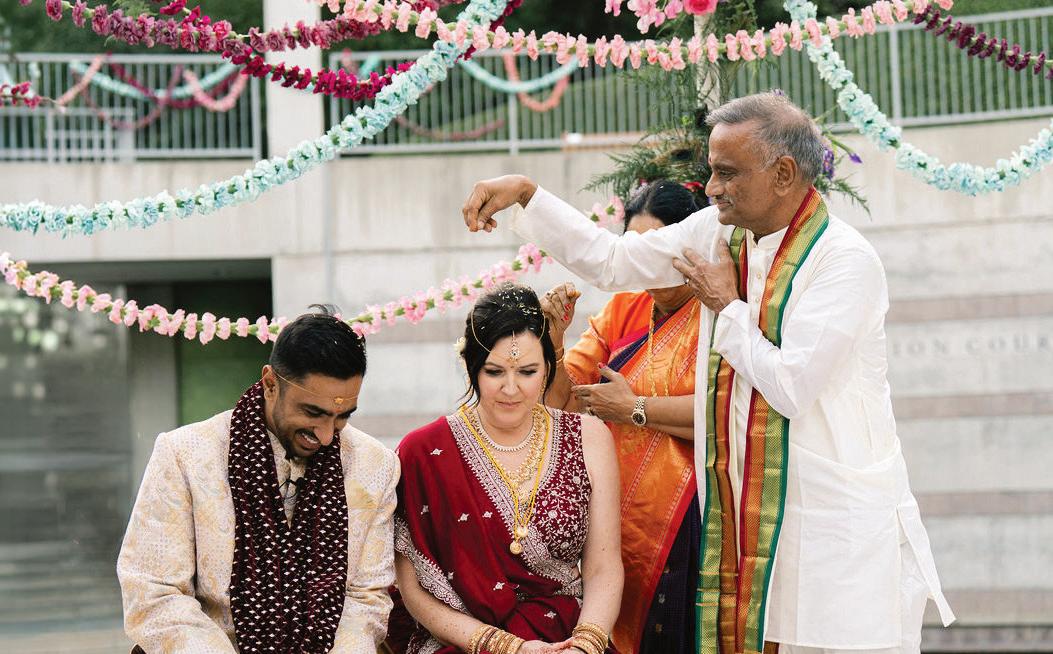
Community events at the Skirball Cultural Center serve as a gateway through which guests experience our mission in a deeply personal and communal way. Through meetings, mitzvahs, weddings, cultural celebrations, and holiday gatherings, the Skirball becomes home for their connections, dialogues, and memory making.
At its core, hospitality is a central value in Jewish tradition. Welcoming guests, honoring milestones, and creating a sense of belonging reflect the Jewish principles of hachnasat orchim (welcoming the stranger), community responsibility, and the sanctity of gathering together. Whether we are hosting a family celebrating a rite of passage or an organization convening for learning and collaboration, the Skirball upholds these values by ensuring every guest feels respected, supported, and seen.
Events held at the Skirball encourage dialogue, civic engagement, and the exchange of ideas—fundamental components of a healthy democracy. By hosting nonprofit organizations, educational institutions, cultural groups, and private celebrations, we help foster environments rooted in openness, mutual understanding, and shared civic values.
2025 Event Highlights
March 2, 2025–St. Vincent de Paul Annual Meeting featuring a beautiful Mass service
March 5, 2025–NewGround Trailblazer Forum and Iftar to strengthen Muslim-Jewish relations
April 8, 2025–Challah & Soul Soulful Seder Workshop to honor and celebrate Black and Jewish culture through food and storytelling
April 17, 2025–LA Family Housing (LAFH) Awards to honor resilience and recovery in Los Angeles
May 1, 2025–A Place Called Home’s GirlPower! Luncheon to honor inspiring women making a difference in their industries and the world
May 7, 2025–Jewish Family Services of Los Angeles Gala to benefit the significant work of one of Los Angeles’ most respected social service agencies
May 16, 2025–Coro Southern California’s Women in Leadership Luncheon for women’s leadership to learn, connect with one another, and find opportunities for collaboration
June 11, 2025–Los Angeles Urban League’s Whitney M. Young Jr. Awards & Celebration to celebrate individuals committed to equity, justice, and economic empowerment
September 17, 2025–California Women's Law Center’s Pursuit of Justice Awards celebrating visionary leaders advancing gender equity and justice
September 24, 2025–Go Inside America’s Test Kitchen with Julia and Bridget featuring the opportunity to join beloved chefs and TV hosts for a 90-minute deep dive into the heart of the PBS show
September 26, 2025–Step Up’s Inspiration Awards celebrating women and girls who inspire others to pursue their unique dreams of success
October 10, 2025–LAUSD Board District 4 Parent Leader Breakfast honoring school parents for their partnership and a panel on planning school beautification events
October 25, 2025–Breakthrough T1D Los Angeles Gala to advance their mission: to prevent, treat, and ultimately cure type 1 diabetes
November 8, 2025–House of Hope Gala to provide compassion and support to grieving children, teens, and adults
November 16, 2025–LA County Emergency Preparedness Fair bringing together first responders, County and City public safety organizations, utilities, nonprofits, and residents to learn, connect, and get equipped
November 18, 2025–Feminist Majority Foundation Global Women’s Rights Awards and Gala to honor resisters in culture, media, and law
November 20, 2025–Radical Bravery at the End of Life: End Well 2025 on the courage to show up for one another, even when it's uncomfortable, uncertain, or heartbreaking
A POWERFUL PLACE FOR WOMEN
This year, the Skirball was the gathering place for events and organizations celebrating women and girls. The following testimonials are just a few examples of the moments that strengthen community, honor tradition, and reflect the enduring connection between Jewish values and American public life.
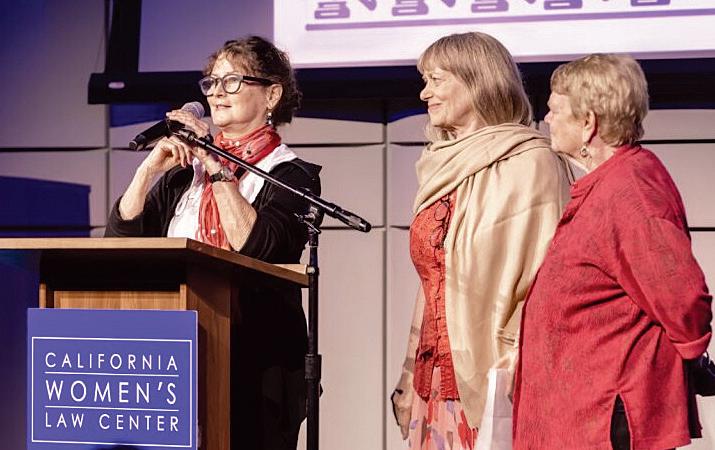
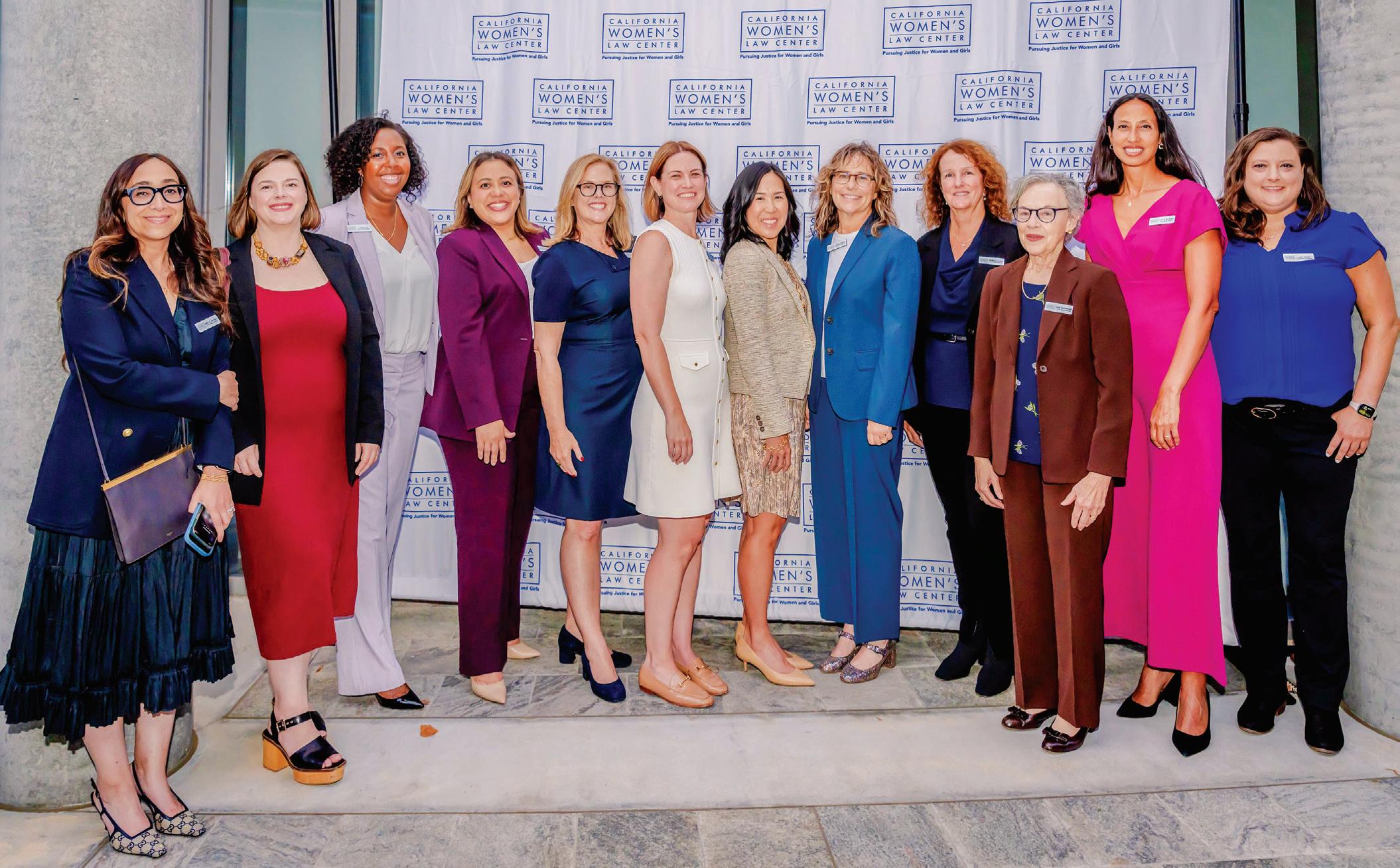
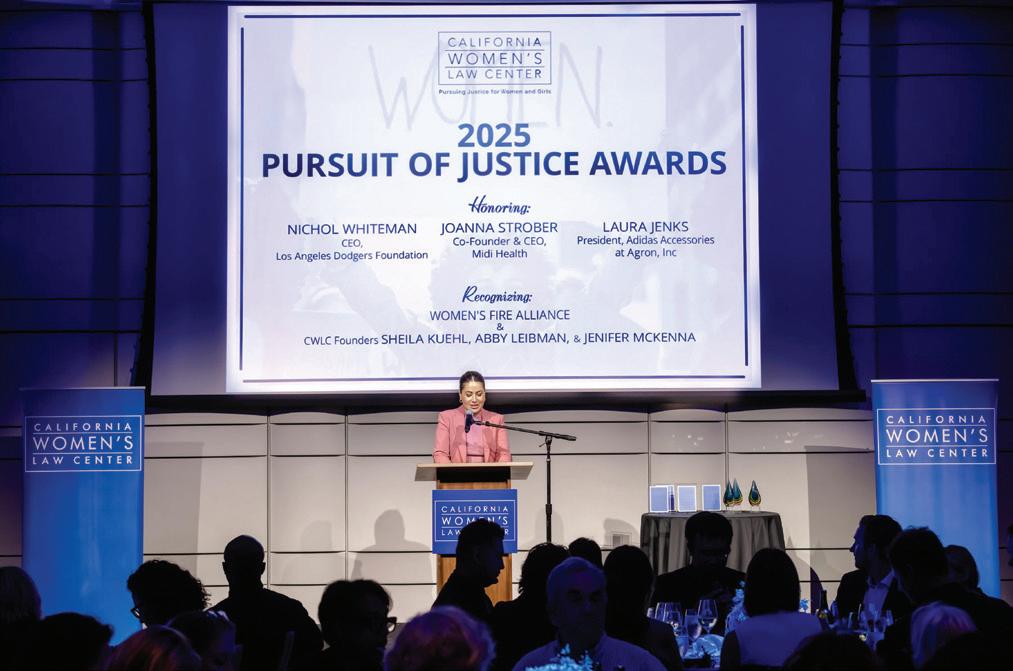
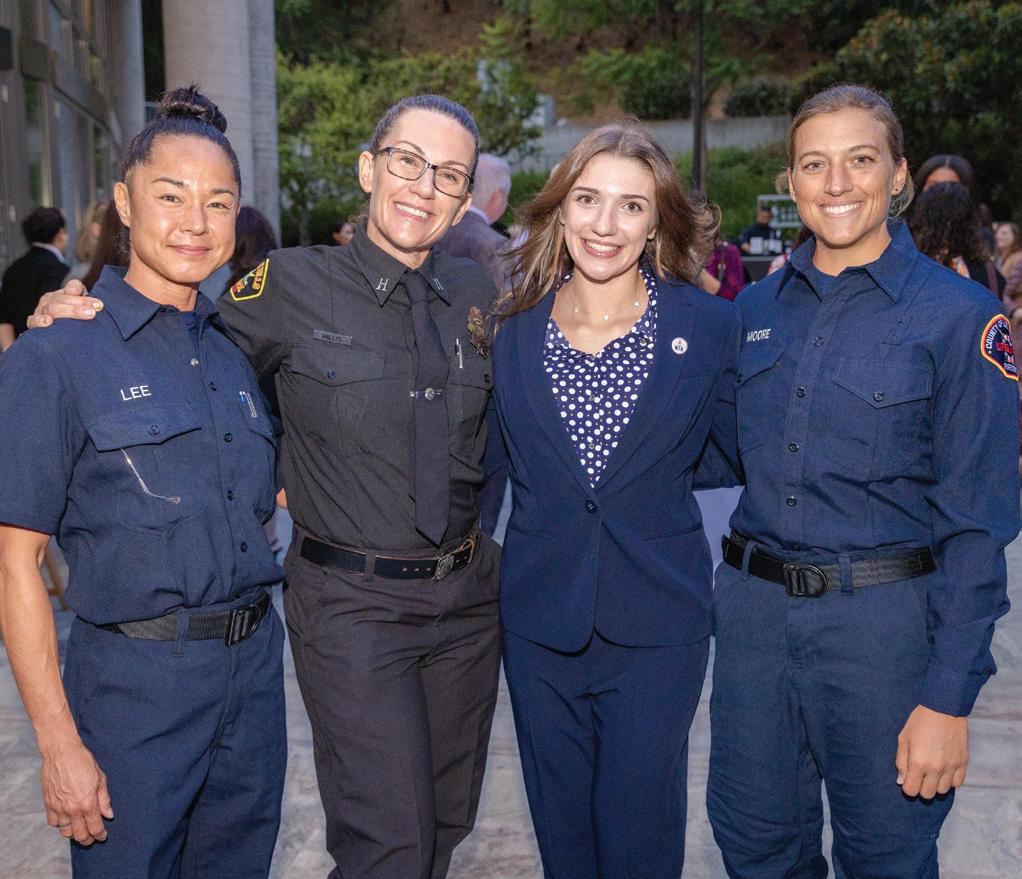
In September of 2025, the California Women’s Law Center held our annual Pursuit of Justice Awards event at the Skirball where we recognized the Women’s Fire Alliance and CWLC’s three founders: Sheila Kuehl, Abby Leibman, and Jenifer McKenna. Together, our founders created the first law center in California dedicated solely to addressing the comprehensive and unique legal needs of women and girls. We also honored three outstanding leaders in our community: Nicole Whiteman, CEO of the Los Angeles Dodgers Foundation; Laura Jenks, President at Adidas Accessories at Agron, Inc.; and Joanna Strober, Co-Founder and CEO at Midi Health.
We remain grateful for our supporters and allies whose assistance allows CWLC to advance our efforts pursuing justice and building a more equitable future for all.
The California Women’s Law Center was excited to host our event at the Skirball. Our organizations share key values: building community, equity, and a just society. For decades, CWLC has been an advocate for gender equality throughout California and beyond, working with allies to protect, secure, and advance the comprehensive civil rights of women and girls.
—Tiffany Siart, Executive Director, CWLC
Participants attend the CWLC's Pursuit of Justice Awards.
Courtesy of California Women's Law Center
Courtesy of California Women's Law Center
Courtesy of California Women's Law Center
GIRL SCOUTS OF GREATER LOS ANGELES
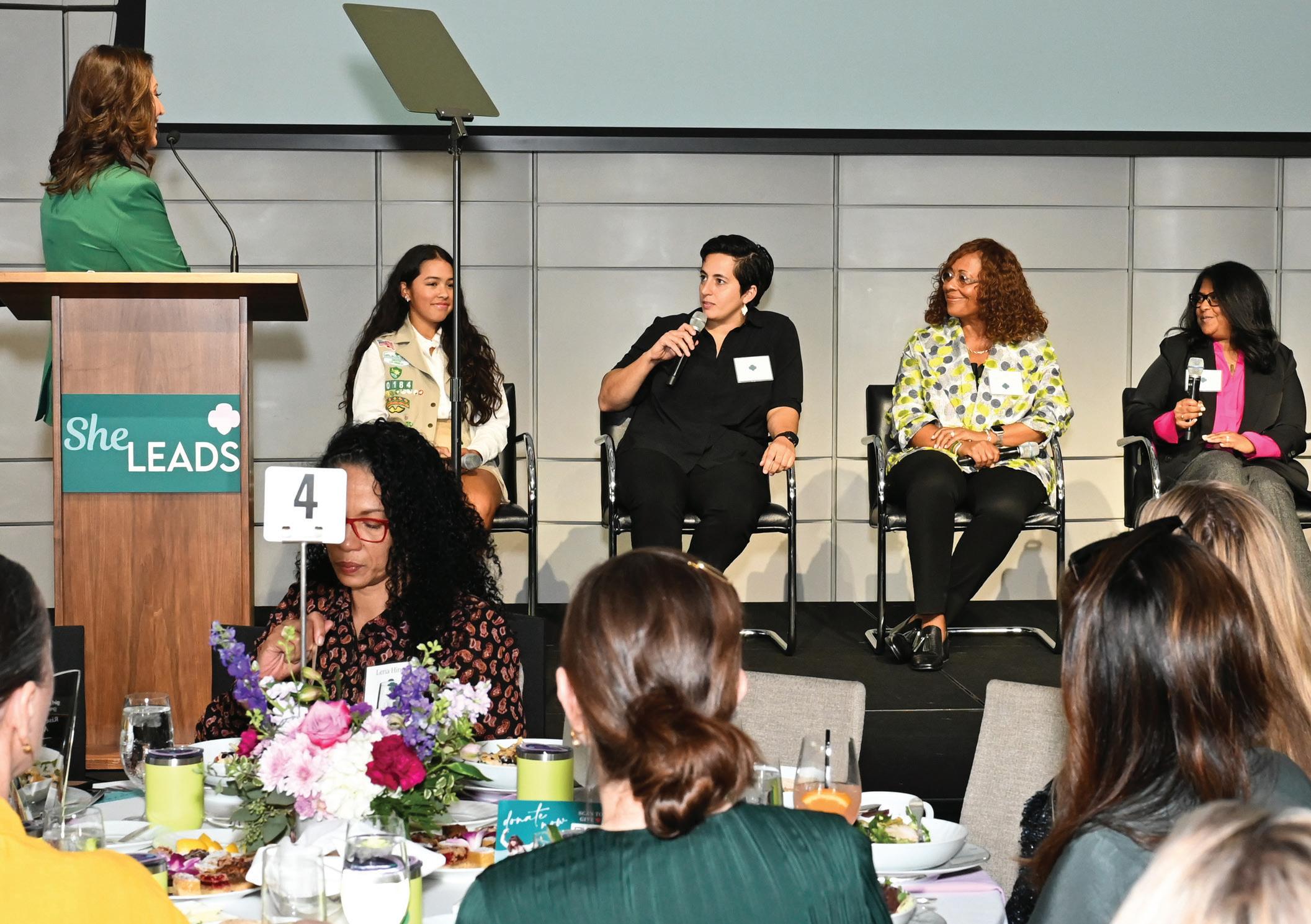
She Leads is Girl Scouts of Greater Los Angeles’ signature annual event celebrating leadership her way and shining a spotlight on today’s young changemakers and those who champion them. More than a luncheon fundraiser, we created a dynamic space for networking and real inspiration. Two hundred sixty guests enjoyed a multi-generational panel discussion about expanding the definition of leadership—connecting with women who are driving innovation in their industries and girls who are blazing trails in their communities. The Skirball’s sunlit ballroom and a taste of the brand-new Girl Scout Cookie helped set the tone—bright, optimistic, lively—for an afternoon of mingling and activations that highlight what Girl Scouting in Los Angeles today is all about.
The Skirball's mission aligns with Girl Scouts’ values of community, social responsibility, and serving families. By promoting human connection and a more
Top: A panel discussion for She Leads.
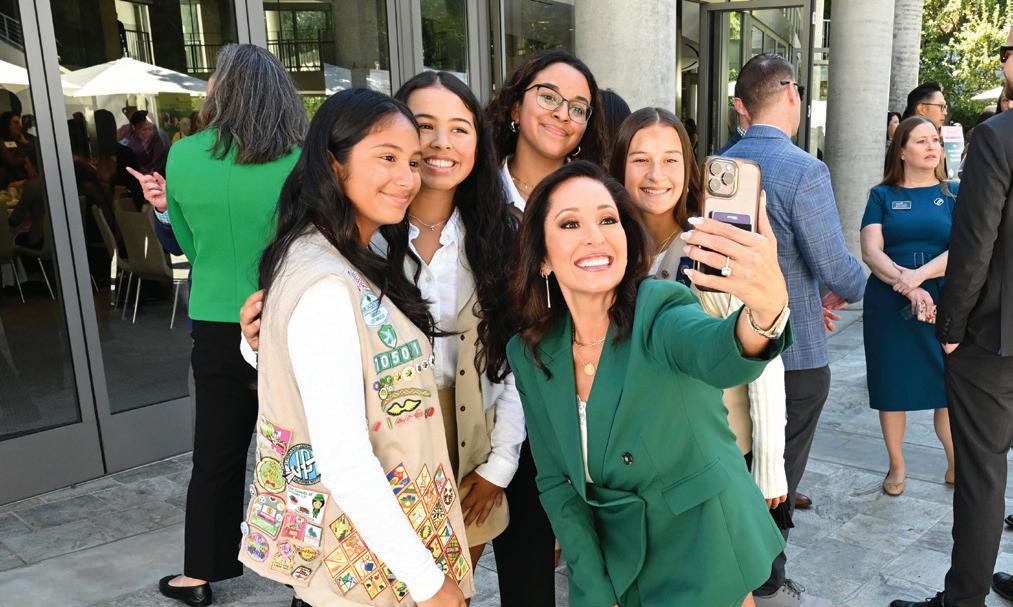
Bottom left: NBC4 “Today in LA” morning anchor Lynette Romero, event MC, takes a selfie with Girl Scouts.
Bottom right: GSGLA CEO Theresa Edy Kiene
All images featured on this page are courtesy of Girl Scouts of Greater Los Angeles.
just society, the Skirball reflects Girl Scouts’ commitment to lifting up girls so they grow the confidence to unleash their full potential as empathetic leaders who advocate for fairness and equality.
Today’s girls face unprecedented challenges. The funds we raised at She Leads reflect our shared commitment to achieving our vision of a world where girls are confident, understand their worth, and have access to career development and exceptional opportunities to build meaningful connections with mentors throughout LA’s industries. We were thrilled to partner with the Skirball to bring this event to life.
—Theresa Edy Kiene, GSGLA Chief Executive Officer
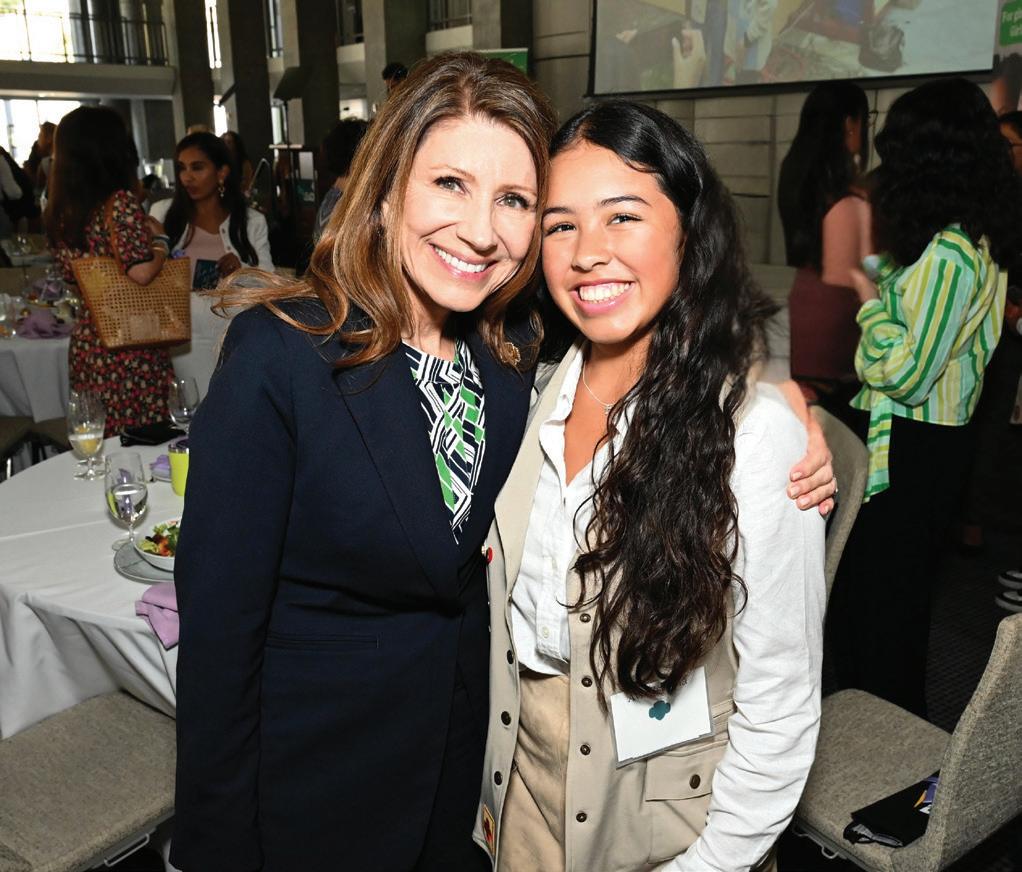
(left) poses with a Girl Scout.
MOUNT SAINT MARY'S UNIVERSITY
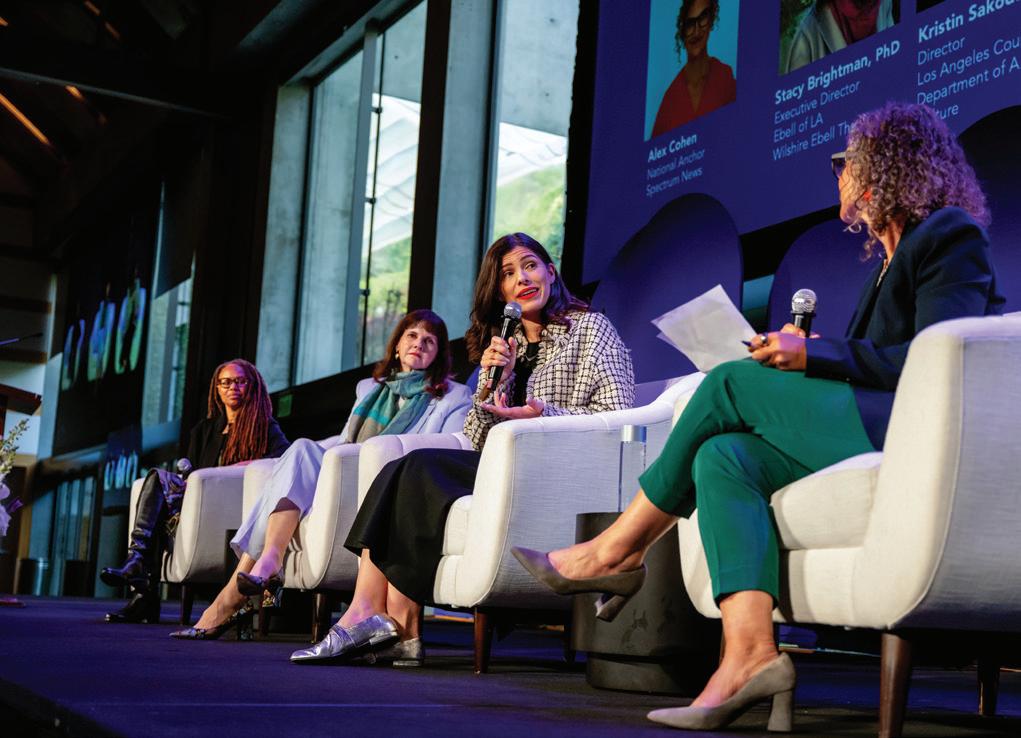
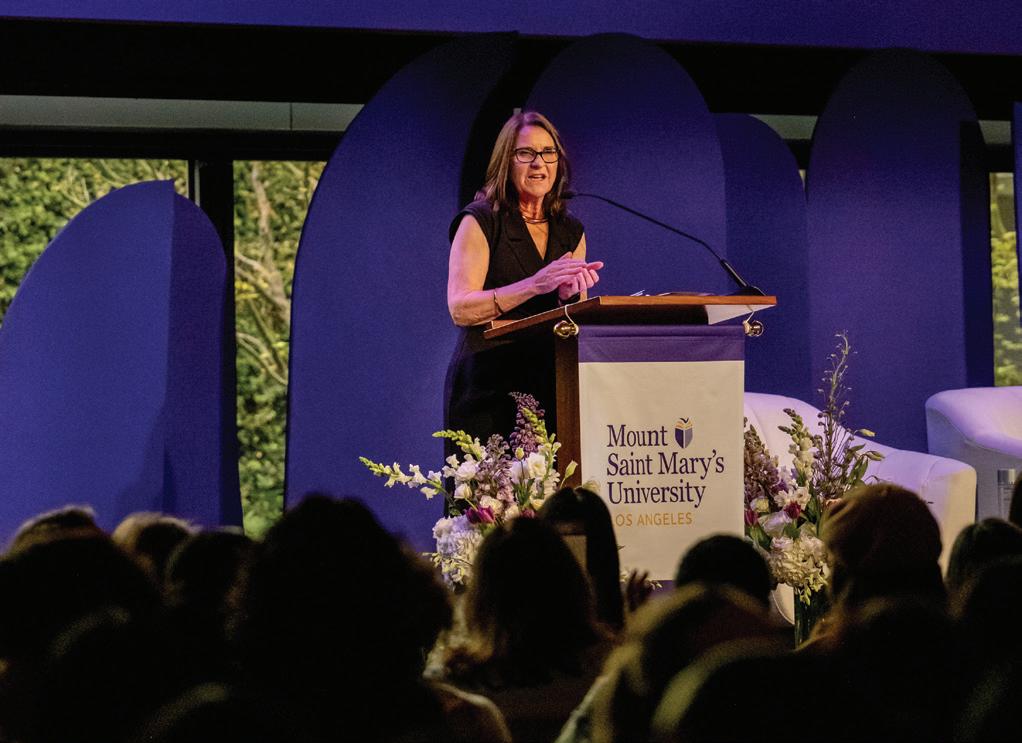
Mount Saint Mary's University unveiled the 14th edition of the Report on the Status of Women and Girls in California™ to a full-capacity audience at the Skirball on March 28, 2025.
Since its inaugural release in 2012, the Report has become the most comprehensive source of research and data on issues impacting the 20 million women and girls who call California home. A trusted resource for elected officials, corporate and nonprofit leaders, and engaged citizens, its findings have helped inform public policy, funding priorities, and cross-sector solutions across the state.
Each year, Mount Saint Mary's convenes more than 500 thought leaders at the Skirball for the public release of the Report—an energizing gathering that transforms data into meaningful conversation and collective action. Past speakers have included Los Angeles County Supervisor Holly J. Mitchell; Frédérique Irwin, President and CEO of the National Women's History Museum; and California's First Partner Jennifer Siebel Newsom.
On March 27, 2026, the University will return to the Skirball to unveil the 15th edition, "Shift: Building a Future That Works for Women." This year's Report examines the jobs, skills, and industries shaping the future of work, exploring how women and girls can be prepared to lead, innovate, and thrive in a rapidly evolving economy.
Since 2015, the Skirball has hosted the public release of the Report, reflecting a strong and enduring partnership rooted in shared values of civic engagement, cultural dialogue, and community connection. Hosting the Report at the Skirball underscores this partnership and a shared commitment to supporting women and girls and building a stronger future for California.
—Ann McElaney-Johnson, PhD, Mount Saint Mary's University President
All images featured on this page are courtesy of Mount Saint Mary's University.
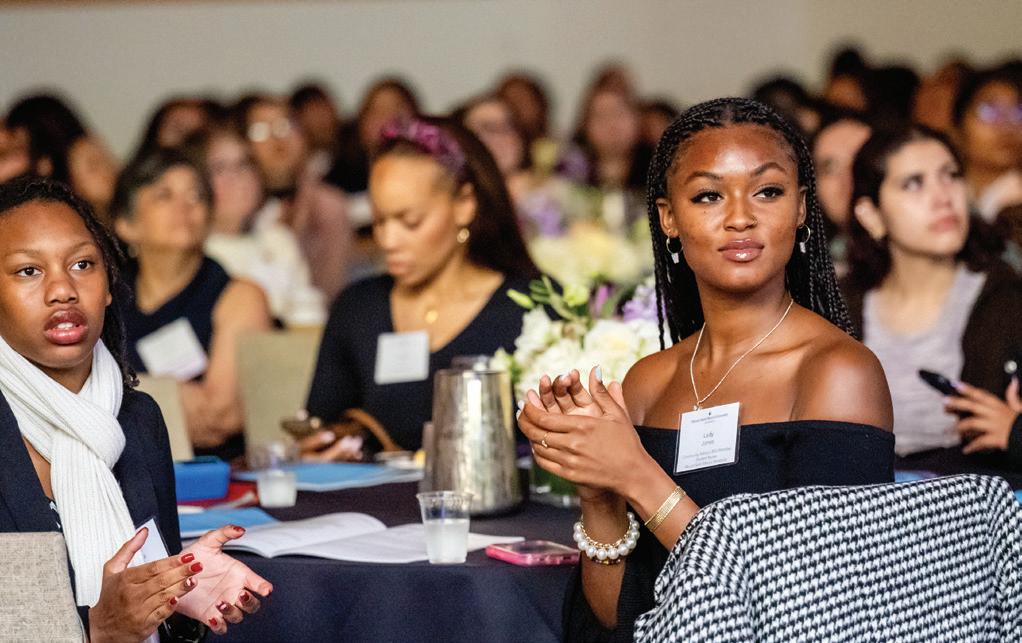
Top to bottom: Participants attend the 2025 Report on the Status of Women and Girls in California™ event.
SHOWCASE
The Skirball's Museum presents exhibitions that tell Jewish and American stories—whether focused on fine art, popular culture, or cultural history—that advance the Center’s mission. It also stewards one of the world’s largest Jewish museum collections: over 30,000 objects that reflect Jewish experiences throughout history and across the diaspora. Through spotlighting objects in our collection and on loan, harnessing the power of media, and providing opportunities for visitors to share their own stories, the Skirball's temporary exhibitions and core galleries offer a diverse array of narratives that emphasize both the vibrancy and the complexity of Jewish life and culture within the context of American society.
In
2025, the Skirball welcomed 80,000 visitors to the Museum.
2025 Featured Exhibitions
Ancient Wisdom for a Future Ecology: Trees, Time, and Technology
This original Skirball exhibition was a part of Getty’s PST ART initiative, which featured more than 70 exhibitions across Southern California.
Away in the Catskills: Summers, Sour Cream, and Dirty Dancing
The exhibition invited visitors to participate by sharing their own summer memories on postcards in-gallery.
Diane von Furstenberg: Woman Before Fashion
Diane personally helped style several of the mannequins in-gallery, pushing up garment sleeves, tucking, and untucking shirts to give each silhouette the DVF look.
Draw Them In, Paint Them Out: Trenton Doyle Hancock Confronts Philip Guston
Philip Guston went to high school in Los Angeles and was expelled for drawing satirical flyers.
Glass Sukkah: This Home Is Not a House Artist Therman Statom connected the holiday’s themes to his own experience as a Black American artist, activist, and educator.
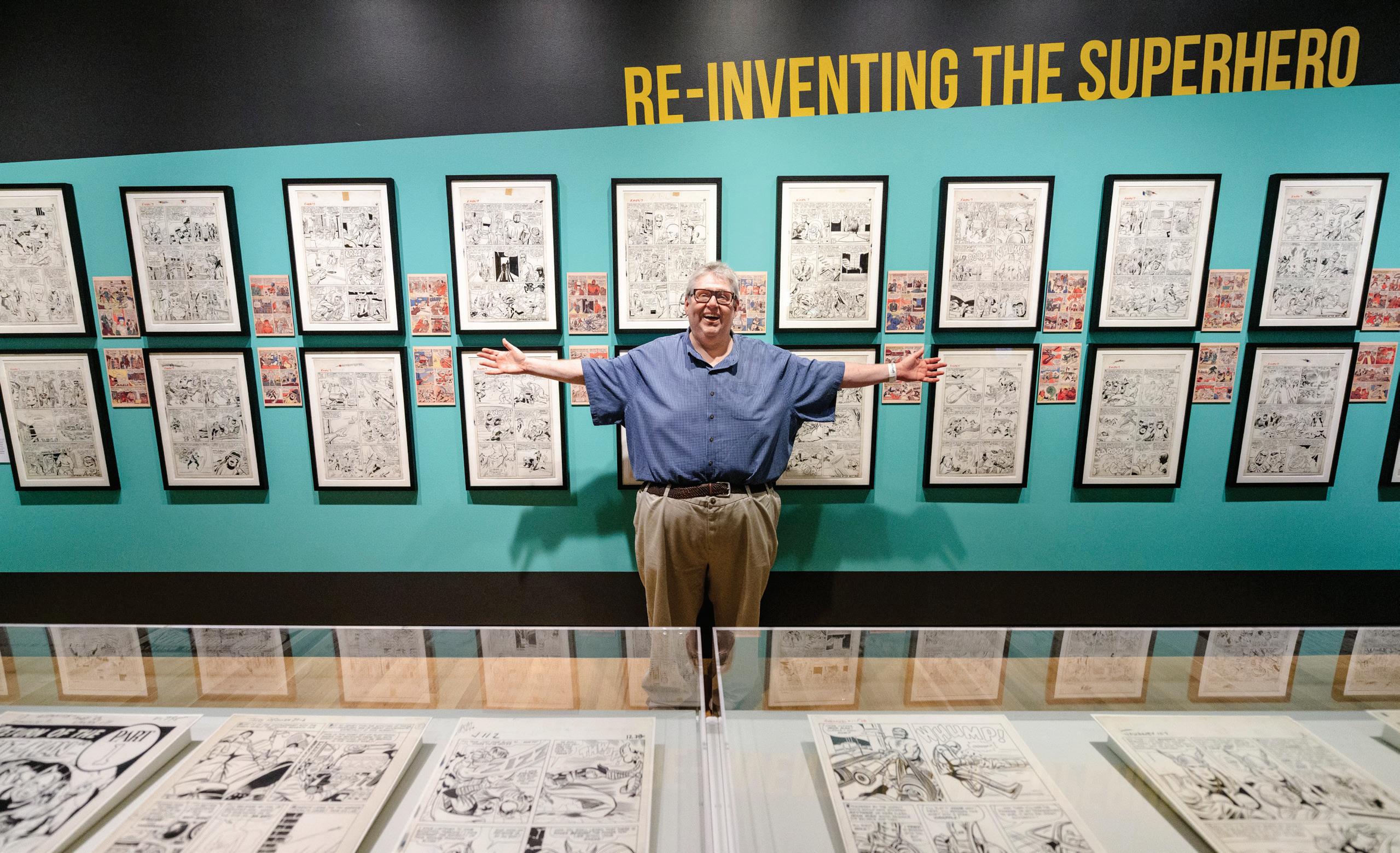
Jack Kirby: Heroes and Humanity
Captain America Comics #1, with Kirby's iconic cover showing the hero punching Adolf Hitler, was published a full year before the United States entered World War II and sold more than one million copies.
Later in Life: Adult B'nai Mitzvah
The Skirball acquired the Later in Life video installation (including as a single channel video) for the permanent collection.
On the National Language: The Poetry of America’s Endangered Tongues
An immersive audio component allowed visitors to hear participants speak their chosen words in their own voices.
TORN Project by Susan Lerner
The Skirball acquired all thirty-six collages on display in TORN Project for the permanent collection.
Ongoing Exhibitions
Common Ground
Noah’s Ark at the Skirball Visions and Values: Jewish Life from Antiquity to America
BELONGING, LONGING, JOY, AND LOSS AWAY IN THE CATSKILLS
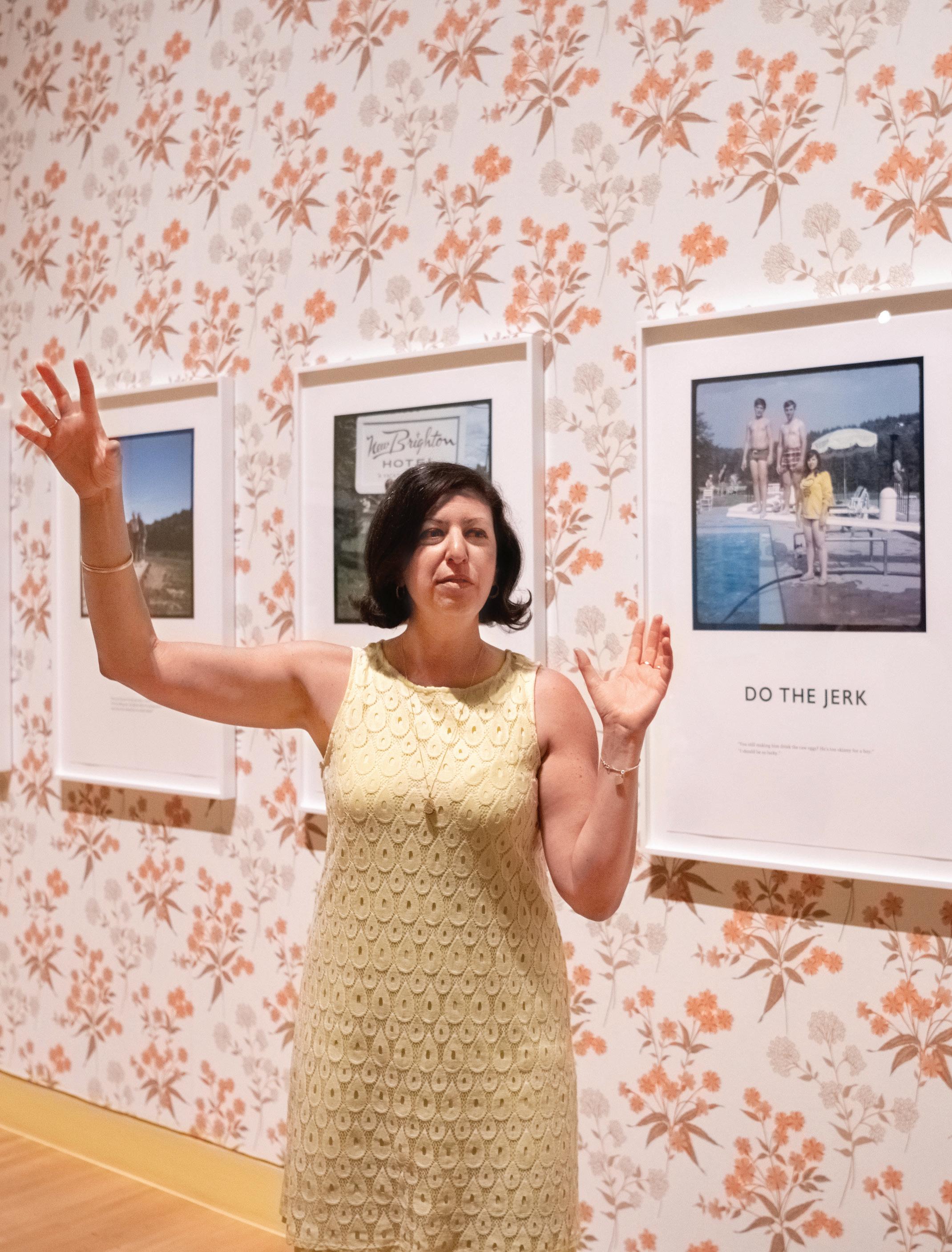
In summer 2025, Away in the Catskills: Summers, Sour Cream, and Dirty Dancing by Los Angeles artist Marisa J. Futernick explored inherited and imagined memories of Jewish resorts in New York’s Catskill Mountains.
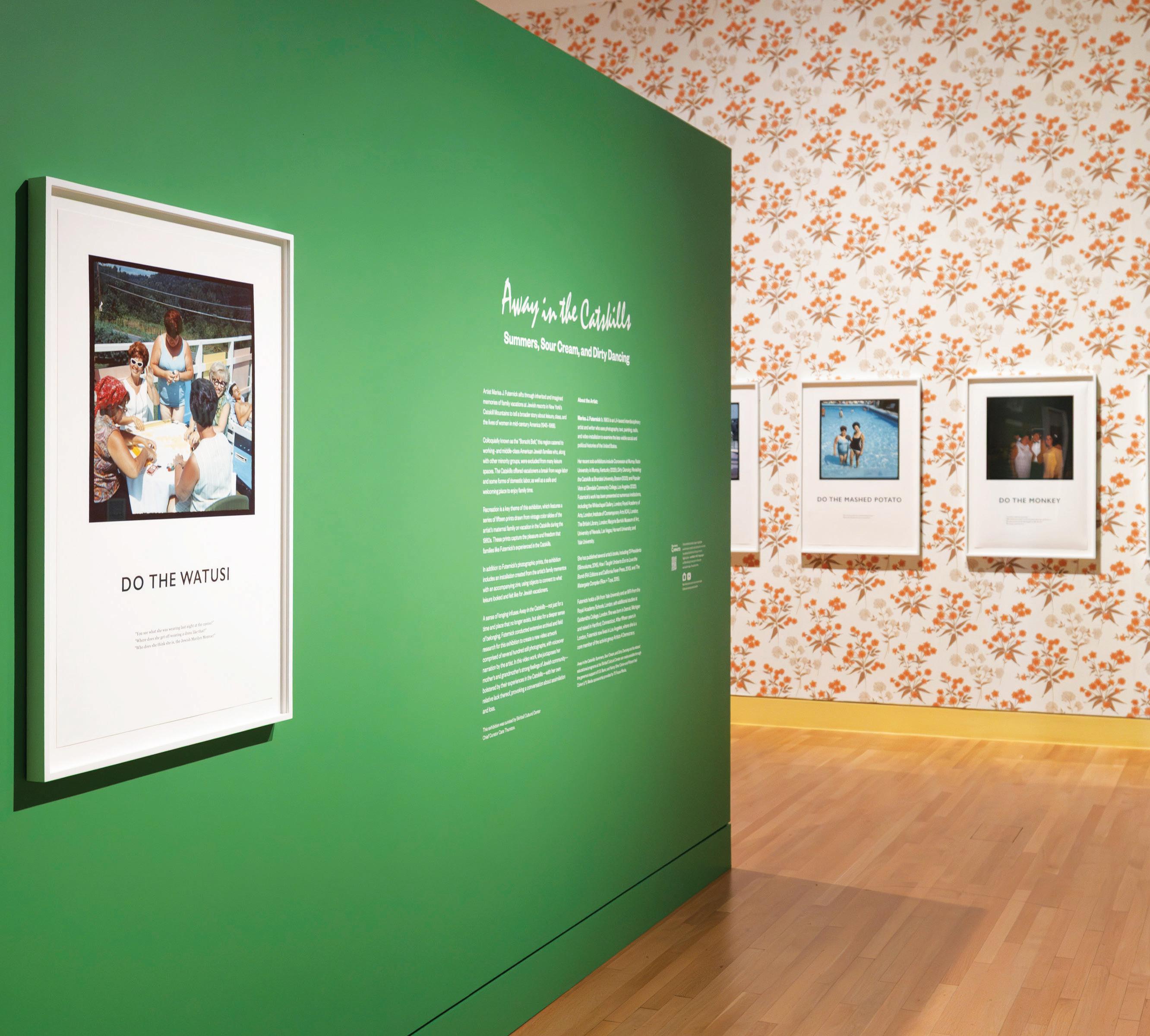
Bright and colorful, Do the Watusi depicts a 1960s image of Futernick’s grandmother and friends at a table, playing Mah Jongg, at a Jewish resort in the Catskills.
The women wear sleeveless shirts and bathing suits. They smile. Underneath the photograph is text of a conversation invented by Futernick:
“You see what she was wearing last night at the casino?” “Where does she get off wearing a dress like that?” “What does she think she is, the Jewish Marilyn Monroe?”
Behind these funny lines and the photograph’s smiles and saturated colors is a heavier thread exploring memory, grief, longing, American Jewish identity, and Jewish womanhood. The exhibition invites visitors in with Dirty Dancing—fifteen prints, including Do the Watusi, that hang on grass green and butter yellow walls, and vintage wallpaper—gleaned from archival color slides of Futernick’s mother’s family on vacation in 1967 and 1968 in the Catskills. Futernick’s images trace the family’s stays in rural bungalows to upscale resorts in the area, known in the mid-twentieth century as the Jewish “Borscht Belt.” Each print is paired with real and imagined text and dialogue, mixing Yiddish and Jewish stereotypes with humor and gossip.
“This is a story about Jewish American joy, but it's also about assimilation and loss, and that tension is really interesting,” says Skirball Chief Curator Cate Thurston, who organized the show. “Our community has loved this show. Everyone has a Catskills connection, even in Los Angeles. ‘Oh, my uncle owned a hotel.’ ‘I
worked at that hotel.’ This show has allowed us to tell a more personal story that resonated with our visitors.”
Raised in Connecticut, and based in LA, Futernick articulates the intersection of Jewish identity and loss. Her mother died in 2020, and her grandmother—her mother’s mother—passed away more than twenty years ago.
“My mom spent her summers in a bungalow colony, and we all went—three generations—when I was a child one year. My grandmother complained that there were not enough bagels. I wish Bubbie could have met my daughter—they both love bagels. Thanks for making art and a place where I can feel my family.”
visitor postcard
“I am Jewish, but I didn't grow up knowing anyone who was Jewish other than my own family,” says Futernick. “My parents were from Brooklyn and grew up around a lot of Jewish people. It wasn’t until I started working on Away in the Catskills that I had an opportunity to go to the Catskills, for the first time, to do research on its history and other themes I wanted to explore.”
The exhibition, Futernick’s first solo one in a U.S. museum, includes two new 2025 works by the artist—a mixed media sculptural installation and accompanying zine, and a video work. The sculptural installation Bam, Crack, Rock, Pop reminds one of a bedside table
Lindsey
Best
Artist Marisa J. Futernick leads a tour through her Skirball exhibition.
in a summer resort, with instant photographs, Andes chocolate mint wrappers, and personal objects (e.g. a vinyl record, slide viewer hotel souvenirs, Mah Jongg tiles, and a handbook of home making activities that her late grandmother grew up with) strewn across a plywood desktop.
Futernick’s new video piece I Never Learned to Play Mah Jongg is a tapestry of vintage family photographs and new photographs in the Catskills by Futernick, with her voiceover narration reflecting on real and imagined memories—a search for connection with her late mother and grandmother. The title of the piece stems from a promise that her grandmother made to teach her Mah Jongg, but her grandmother died before that could happen.
“In the video, I think about not just being influenced by these generations of women before me, but physically manifesting them,” she says. “Shooting all the photographs, I tried to imagine my mother and my grandmother in those places.”
“As if the Pines, Nevele, and Fallsview didn’t have enough food, Aunt Ruth still brought up food during Passover.
I’m still laughing when I think of my sister Marsha getting out of the car on our arrival. She immediately dropped the jar of horseradish in the parking lot. It’s probably still stained red.”
visitor postcard
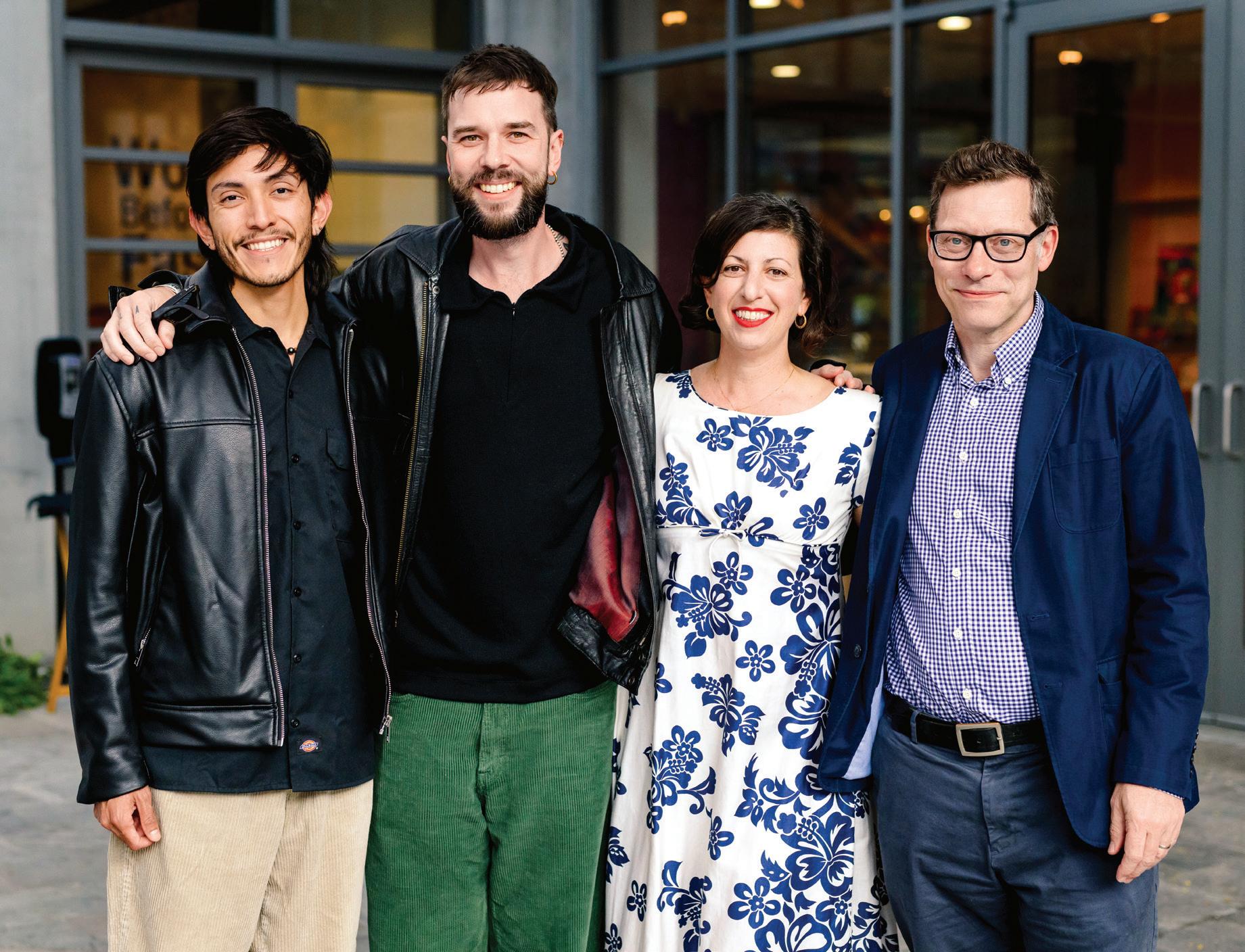
Artist Marisa J. Futernick (second from right) mingles with guests on Opening Night. Next Exit Photography
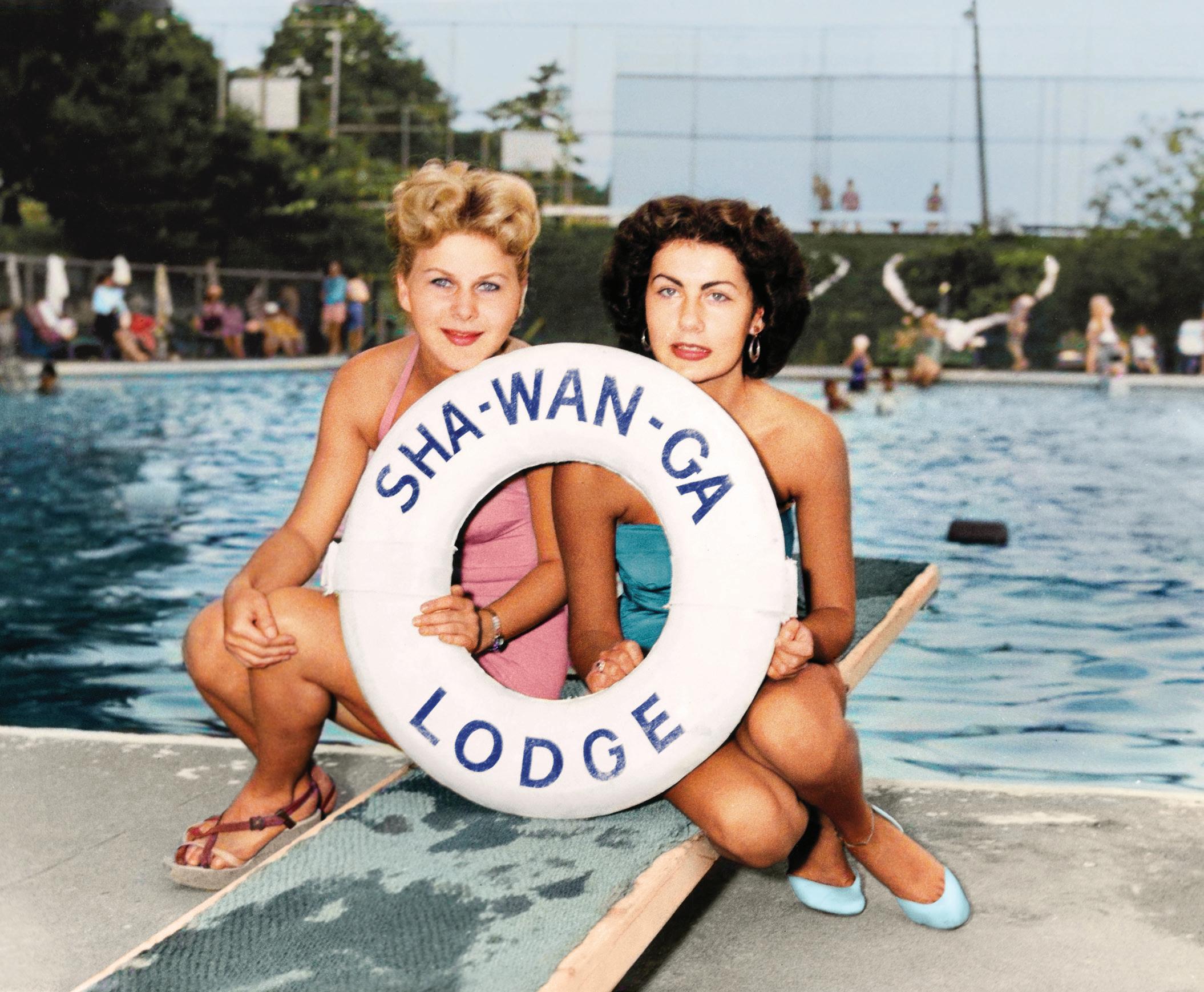
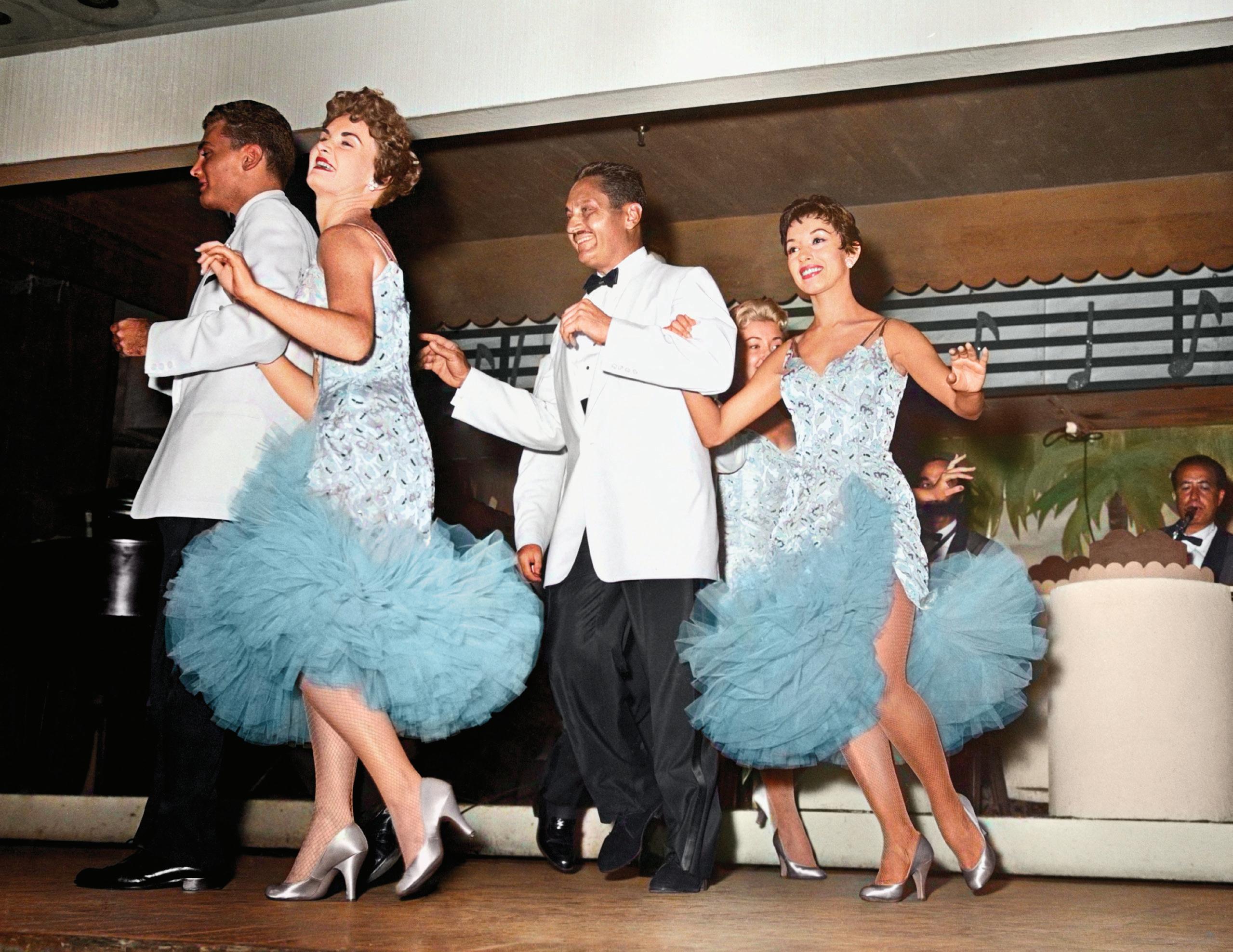
A summertime gathering place of workingclass and middle-class Jews, the Catskills “Borscht Belt” was popular during the ’40s to ’60s, amid a time of steeped anti-Jewish bigotry. The exhibition includes an annotated map of the area featuring Jewish resorts and hotels, based on Futernick’s research. The map also highlights hotels catering to Black and LGBTQ+ vacationers. All represented a new American dichotomy: the first generation of their kind to be able to afford to vacation in the summer but still segregated and excluded from the summer destinations of white, Christian Americans.
“We wanted to point out that the Catskills wasn’t just a Jewish leisure community, but also a leisure com-
munity for marginalized communities who weren't welcome in other leisure spaces,” says Thurston.
The exhibition’s title is a mix of references. The “Borscht Belt” was also known as the “Sour Cream Sierras,” says Futernick, with the Ashkenazi Jewish dairy food served everywhere (Mel Brooks's first job was as a sour cream busboy in the Catskills, says Thurston). Dirty Dancing references the 1987 film set at a Catskills resort in the ’60s. Each of Futernick’s fifteen prints—such as Do the Hully Gully, Do the Swim—refer to ’60s dance crazes.
The exhibition closes with a question for the visitor, asking them to share their own favorite vacation story on a postcard featuring new Catskills photographs by Futernick.
Still from The Catskills (2024) documentary.
"Jefferson, NY, 1976–1985... As a Black family in the area, we may have been a shock to the system, but our neighbors never made us feel unwanted. Great time, great place!"
visitor postcard
“It’s been meaningful to see how deeply so many visitors have connected with the work,” says the artist. Adds Thurston, “Whether or not you're Jewish,
these images speak to your family story. They allow you to think, ‘What’s the same? What’s different? What does my family look like?’”
Solvej Schou is an award-winning writer, editor, and communications specialist who previously served as ArtCenter College of Design’s staff senior writer in Marketing and Communications. Her work has been featured in The Associated Press, Entertainment Weekly, The New York Times, and Los Angeles Times, among other outlets.
Installation view of Away in the Catskills in the Hurd Gallery.
“We spent two weeks at The Concord from 1955 to 1960. We had a country home in New Paltz. When we took Route 17 to get there, we would stop at the Red Apple Rest.
BEST YEARS OF MY LIFE!”
visitor postcard
Still from The Catskills (2024) documentary.
MAKING A HOME FOR OBJECTS THAT TELL OUR STORIES
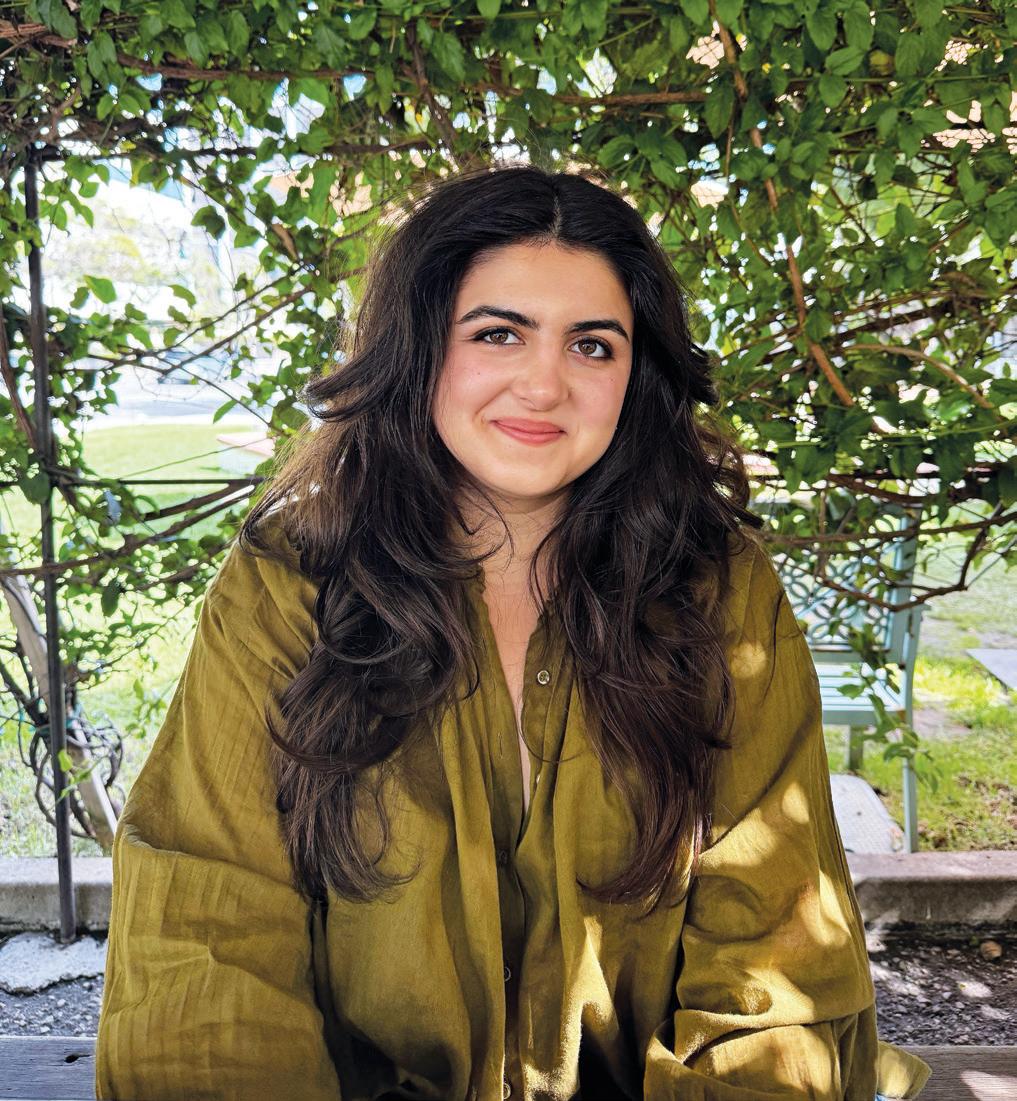
We caught up with Sophie Levy, the Skirball's Nazarian Research Fellow in Persian Jewish Art, Culture, and History, whose work will help cultivate relationships with the wider Iranian Jewish community. This partnership with the Younes & Soraya Nazarian Family Foundation deepens our connection to Jewish identity, the diaspora, and local communities that surround the Skirball.
Can you speak to the importance of integrating Persian Jewish voices into an LA-based, Jewish American cultural center like the Skirball?
We are nearing fifty years since the Iranian Revolution in 1979 and the largest wave of Persian Jewish immigration to Los Angeles, and I think the Skirball and the Nazarian Family Foundation are both recognizing this as an opportune moment in two ways. First, now is a great time to think more deeply about all the meaning and memory couched within the story of Persian Jews building new lives in this city, and to begin exploring how cultural institutions can reflect that on a content level. Second, now is also a perfect time to ask how we can reshape the ways that local cultural institutions relate to the members of this community themselves. Persian Jews, alongside Soviet Jews, are some of the most recent Jewish immigrants to LA, and there are profound connections waiting to be made with them both narratively and socially. Persian Jews have forged impressive ties to local institutions—from synagogues to businesses, charities, universities, and hospitals—but less so with cultural institutions and museums. Now is also a good time to ask why that is.
My role as the Nazarian Research Fellow feels like a very direct and concerted effort to begin closing that gap, which makes sense because this initiative fits perfectly with the Skirball’s aims to build togetherness, honor pluralism, and increasingly, to root its projects in the stories of local communities. I think it’s great for Per-
sian Jews to see ourselves not only as a self-contained community, but also as an interwoven part of our city and its institutional landscape. More broadly, I also think that understanding Persian Jewish experiences has become essential to understanding immigrant communities and Jewish life in Los Angeles overall. I say this less in an ethnographic sense, and not to just point out diversity as such, but also to say that there is so much depth here—so much to think about when it comes to belonging, rootedness, exile, and the continuities and ruptures of culture over time. Persian Jews already come from a very complex and particular relationship with belonging in Iran, and creating a new home in another city after thousands of years of continuous life in Iran is a difficult but incredible story whose beginning we are just starting to unpack.
Can you tell us what kinds of Persian Jewish objects are you researching?
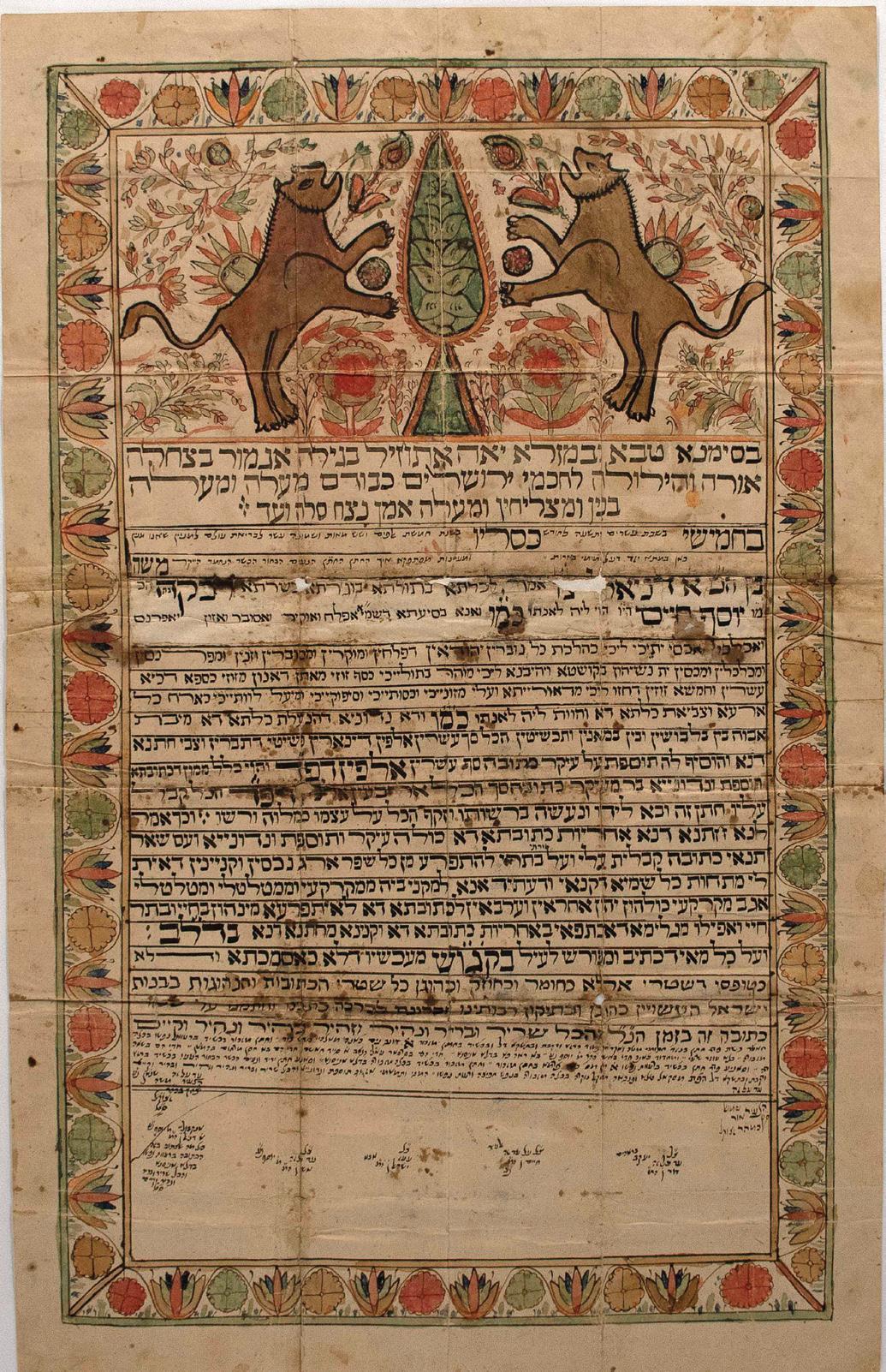
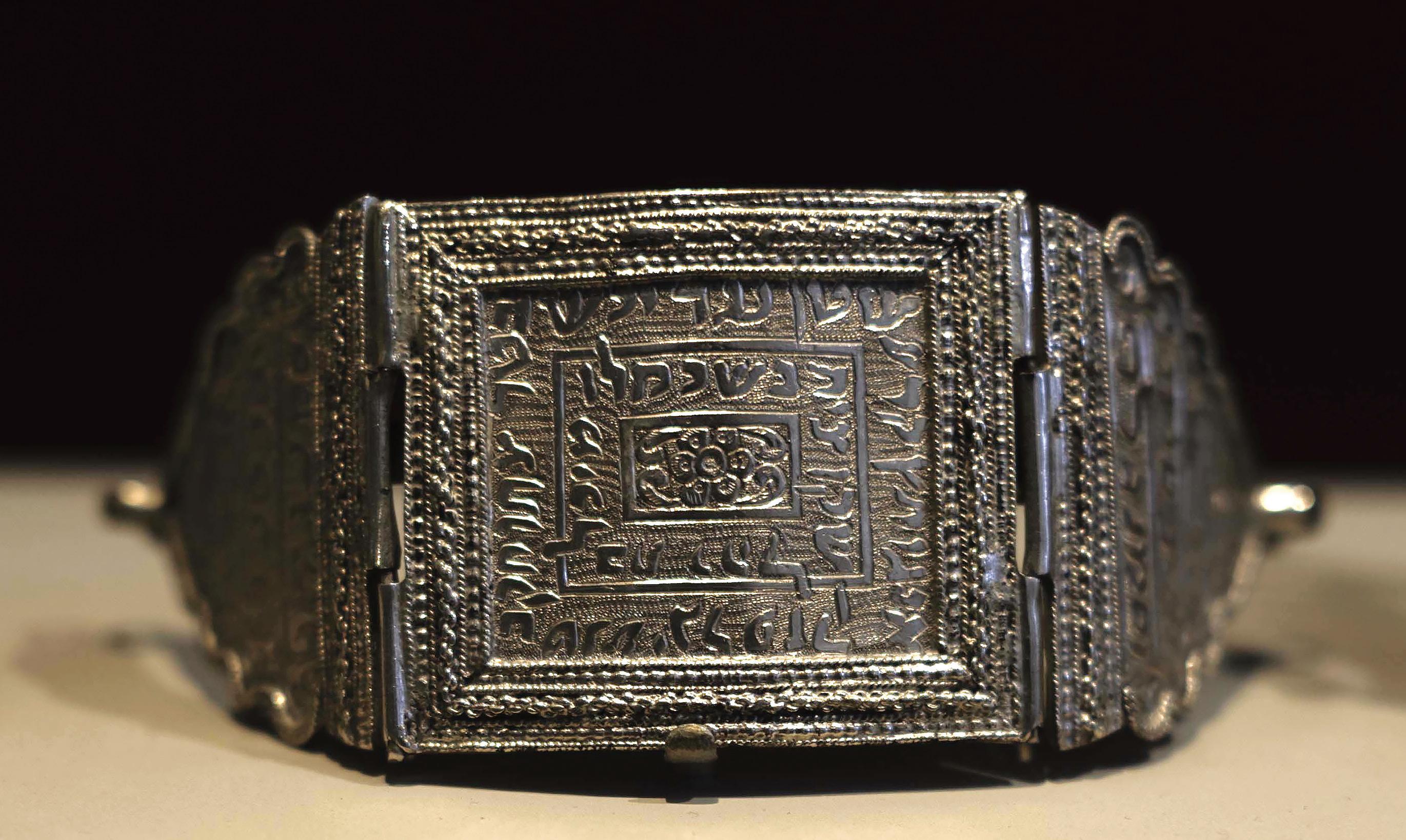
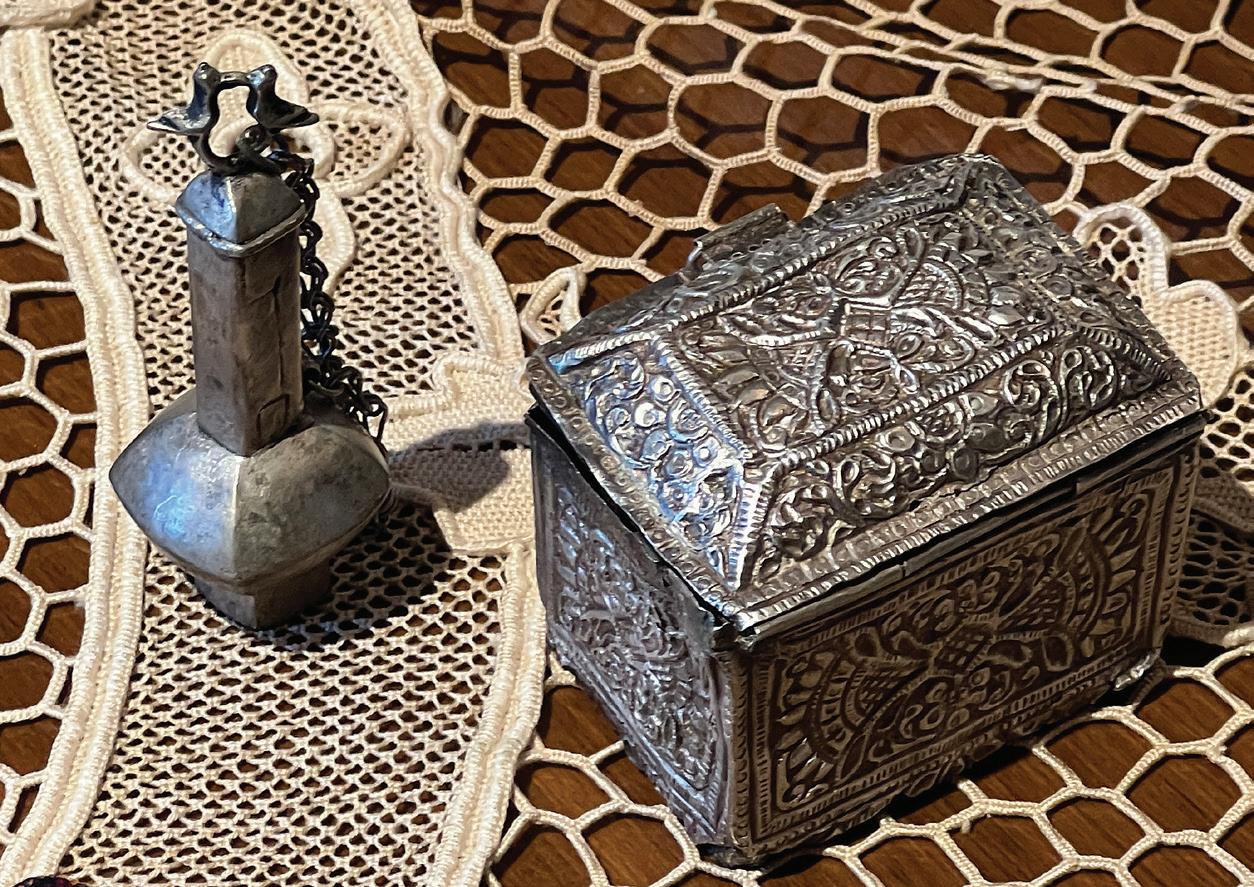
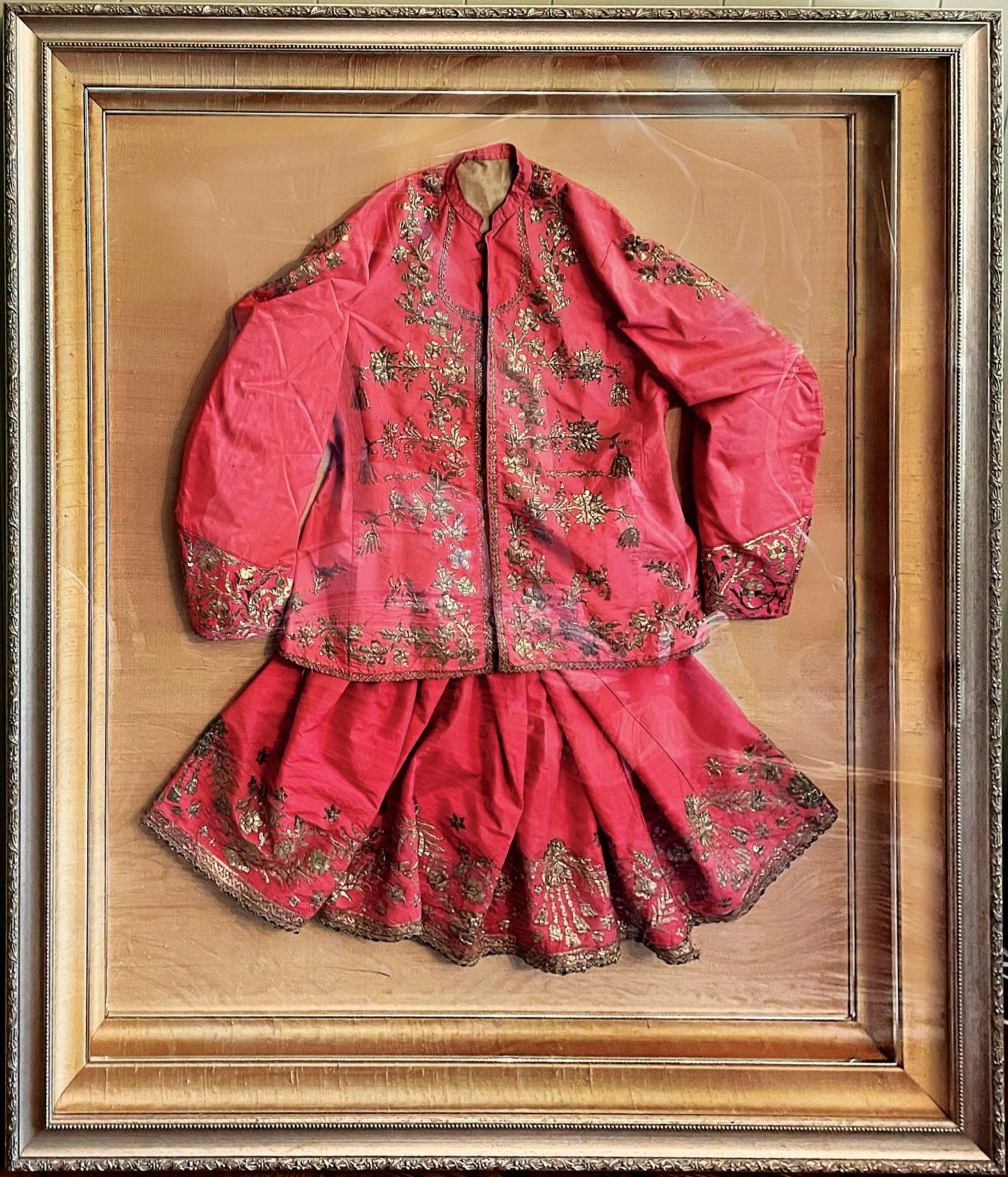
It’s exciting that my research builds on the precedent set by the Skirball’s collection, which ranges across a very wide array of object types, from ritual items to textiles, ephemera, fine art, and more. Each type can shed light on a distinct facet of Jewish culture and experience, and different walks of life within the community also tend to be preserved in material culture in distinct ways depending on the time period. For instance, some of the only ways that women show up in the record of Persian Jewish material culture before the twentieth century are through metal amulets (for
spiritual protection during childbirth, as an example) and marital belongings like ketubot (marriage contracts) or wedding outfits and accessories.
Like the Skirball’s collection, my research also spans a wide chronological scope—although it leans toward the nineteenth century to the present. In part, this is because there’s a relative scarcity of earlier objects of certain types. It’s also because there’s a priority for the stories we tell to connect not only to the community's important ancient origins but also to the lives of Persian Jews now and in recent memory. All of this means that objects of interest are found in a variety of places—private collections, auction houses, museums and libraries (since loans from other institutions for potential future exhibitions are always a possibility)—so I learn about them in all sorts of ways: through reading books, combing through online databases, visiting family homes, meeting with community heritage organizations, and consulting with scholars and curators.
What are some of the different ways that the Nazarian Research Fellowship aims to set the stage for increased engagement with Persian Jewish culture at the Skirball? Looking ahead to 2029, I'm working with my supervisors to develop proposals for a possible temporary exhibition marking the fiftieth anniversary of the Islamic Revolution in Iran. A temporary exhibition would allow for a targeted look at some of the most significant and compelling currents that have shaped Persian Jewish life, history, and culture. Doing that conceptual work in tandem with the object research has been really thought-provoking and challenging in a good way. It involves synthesizing all these insights from diverse sources, and bringing out what feels deepest and most true across the board. I also appreciate how collaborative and polyphonic this process is. The seeds of the content may come from my research, but exhibition development is also about trying to harmonize the voices of the Persian Jewish community, the institutional
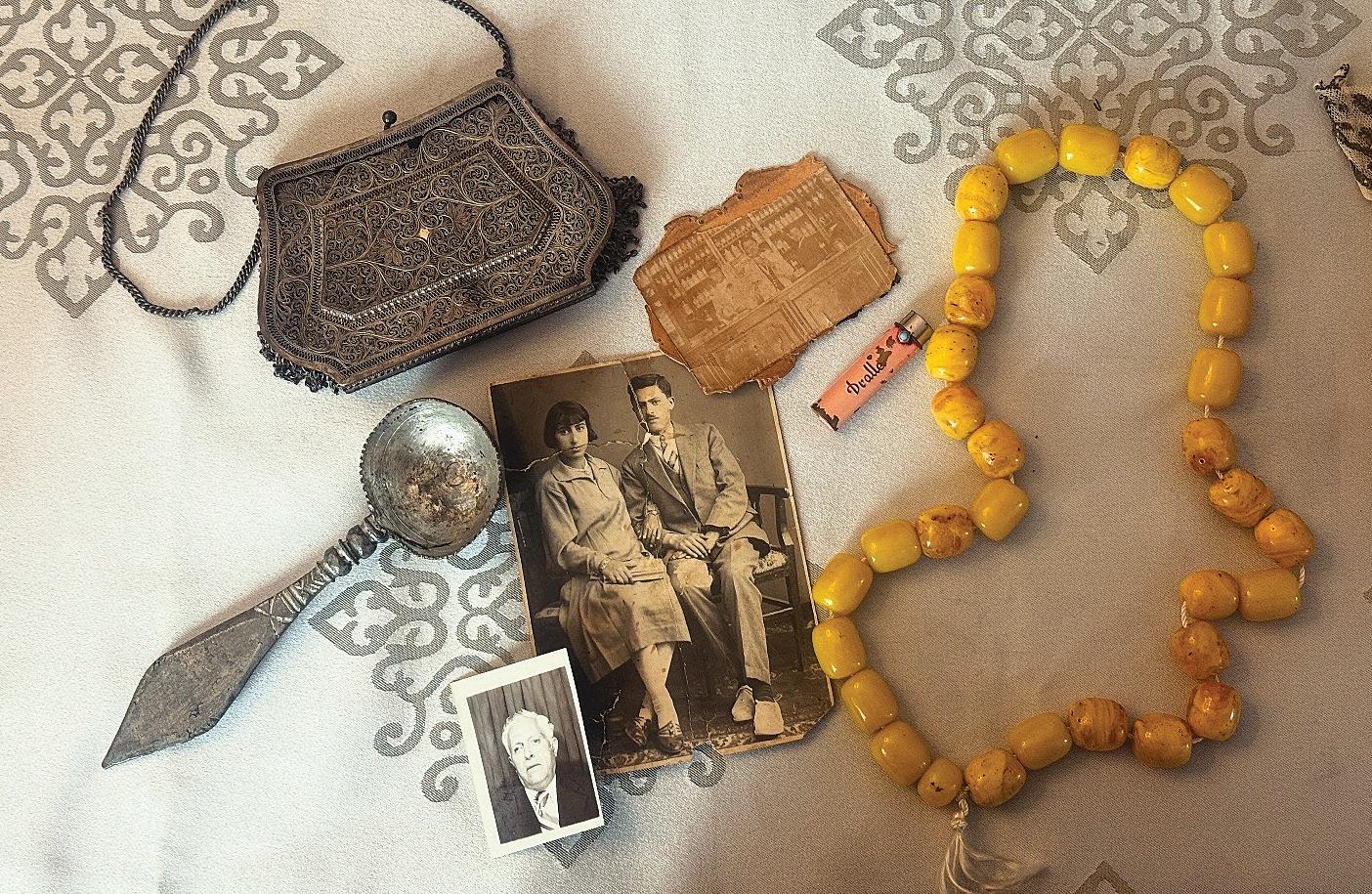
Domestic objects belonging to Khanbaba Soufer (1901–1998) and Bahareh Azizi Soufer (1913–2010), Sophie Levy’s great-greatgrandparents. Photo courtesy of Farah Mokhtarzadeh.
Left: Ketubah – SCC 1980.19.1. Yazd, 1857. Ink and watercolor on paper. Elsie Gang Harris Fund.
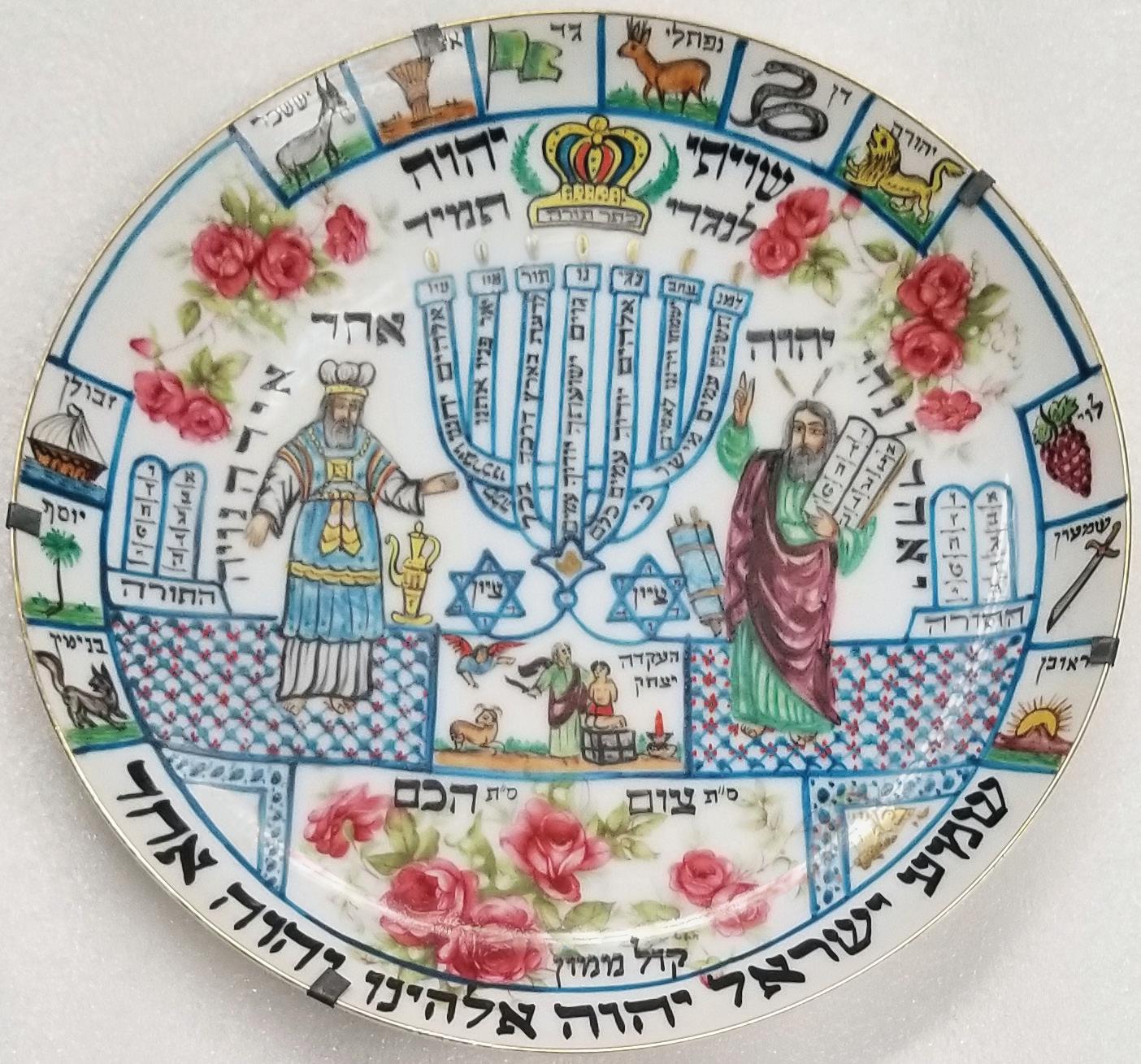
Above: Shiviti plate – SCC 2024.1.1. Isfahan, mid-20th century. Pigments on porcelain. Gift of Rashel Rokni in honor of her parents and their families, Mohebban and Zargaroff.
Bottom: Childbirth amulet – SCC 2012.213.1. Iran, late 19th–early 20th century. Silver repoussé and chasing.
values of the Skirball, feedback from our curatorial team, the vision of the Nazarian Family Foundation, and an eye toward what could resonate with the Skirball’s audiences down the line.
What has the Nazarian Research Fellowship meant to you?
I’m extremely grateful to the Nazarian Family Foundation and the Skirball for devoting resources to this initiative and for creating this role. When I first read about this fellowship, I did a double take, because it’s so rare to be able to zero in on Persian Jewish culture and history as the full scope of a research role. The fact that this fellowship is structured over the course of two years—and that it builds in real time and attention toward tailored object research, community outreach, and more overarching conceptual work—makes it possible for future outputs to be rooted in real depth and scholarly rigor, and for it to be more than a surface-level gesture at representation.
On a personal level, I’ve also deeply appreciated the chance to work closely with the colleagues and supervisors I have at the Skirball, especially Alissa Schapiro, our Curator and Collections Specialist and Sheri Bernstein, our Museum Director. It’s been gratifying to make small but consequential changes alongside them, like updating the museum’s database records on the collection’s Persian Jewish holdings and bulking up institutional knowledge by compiling a library of essential texts for internal use. I’ve gotten to bring together my backgrounds in Jewish historical research and art history in such a fulfilling way, and I’ve been able to work within and help cultivate a web of incredible artists, scholars, and art world professionals. This fellowship has also given me the chance to relate to my community in new and profound ways, and to introduce the Skirball to new audiences. I’ve connected with other Persian Jews across different generations, people with origins in different regions of Iran, and people living not just in Los Angeles but across the Persian Jewish diaspora worldwide. The research itself—all the insights I reach and questions I have about objects, texts, families, memories, and cultural changes the community has undergone over time—becomes my point of con-
nection with them. It shows in real time that this work matters both institutionally and communally.
What role does community engagement play in your work and what is its importance with respect to the Nazarian initiative?
I think it’s absolutely central and essential to this initiative, and it ends up being a large part of my role, too. This is a living, evolving community with incredible
Dowry items: SCC 2026. 1.2–3 (kohl flask and sefidab container) belonging to Monavar Hazan. Hamedan, c. 1915. Silver repoussé and chasing. Gift of Nadereh Raouf Hariri, Avid Hariri Shooshani, and the Hazan Family.
Sophie Levy, Nazarian Research Fellow in Persian Jewish Art, Culture, and History at the Skirball Cultural Center.
internal diversity but also these very strong, far-reaching bonds. Every month I learn that the Persian Jewish world is an even more interconnected ecosystem than I’d thought. So I hope this initiative can honor and reflect that, because even some of the oldest objects and ideas we’re working with aren’t inert or detached from the community as it is today; they often have deep connections with the ongoing lives of families here and throughout the Iranian Jewish diaspora. I’ve found that the most effective way to learn about new objects, stories, and contacts is to nurture relationships with people who belong to this community together with more conventional research methods. When the Skirball engages directly with the community, it means that whatever we create won’t just be an external description of its story, but will actually grow out of the voices and memories of Persian Jews themselves—undergirded and supported by the Skirball’s values, the research, and the guidance of my colleagues and supervisors.
For my part, I hope I can act less as an outside observer and more as a scholarly bridge-builder between the community and the Skirball, where the objects, the research, and the stories themselves are the bricks. I hope that Persian Jews won’t only see ourselves represented at the Skirball, but will increasingly be able to see the Skirball as a home, a place to learn more about our own history and contemporary culture alongside others, and a place to think in new ways about these stories in relation to other Jewish communities locally and globally.
Did You Know...
Despite a profound imprint on Jewish religious, cultural, and intellectual history, the Jews of Iran have remained remarkably overlooked in global Jewish Studies scholarship and museum collections.
The Jews of Iran have remained—without interruption—the largest community of Jews in the Middle East outside the Land of Israel since their liberation from Babylonian captivity on the 29th of October, 539 BCE by Cyrus the Great.
The Hebrew Bible was edited and canonized under the supervision of Ezra the Scribe, a Jewish Iranian figure of the Achaemenid court.
Numerous foundations of Halacha —the collective body of Jewish religious law and practice—were shaped through the daily, legal, and theological interactions of Iranian Jews with Zoroastrianism, the state religion of Iran for more than a millennium.
The earliest formation of the Talmud also unfolded in this same cultural orbit: the Babylonian Talmud was compiled in Sasanian Persia.
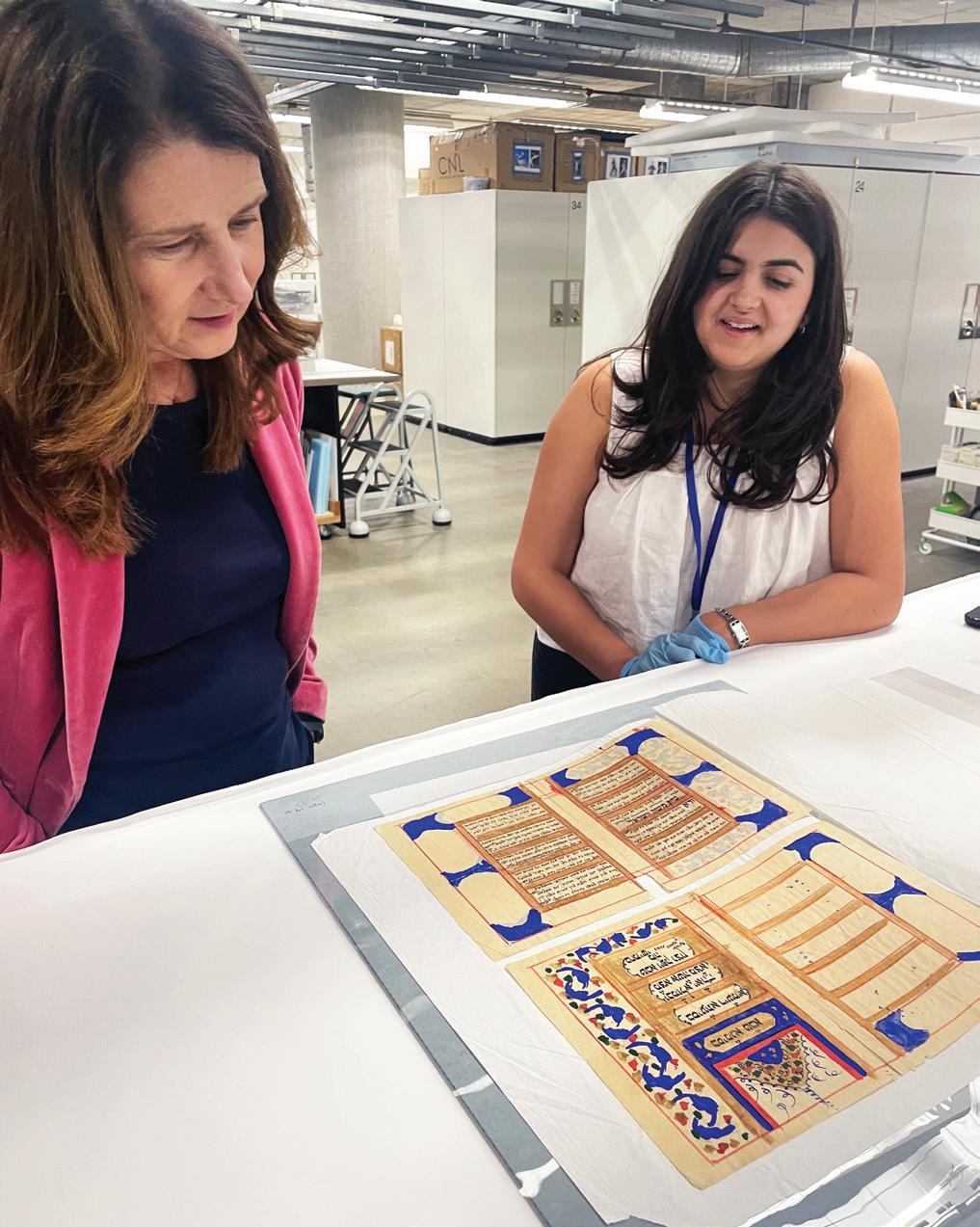
Skirball Museum Director Sheri Bernstein (left) and Nazarian Research Fellow Sophie Levy (right) observe a book-form ketubah. Tehran, 1926. SCC 1980.19.6. Member Purchase Fund.
Wedding ensemble: SCC 2026.1.1. Wedding outfit belonging to Monavar Hazan (1901–1984). Hamedan, c. 1915. Satin with silver thread embroidery. Gift of Nadereh Raouf Hariri, Avid Hariri Shooshani, and the Hazan Family.
ENGAGE
The Skirball presents live performances across artistic disciplines that center narratives rooted in the Jewish American experience. Music, theater, dance, film, and literature offer new invitations to evergreen discourses on immigration and assimilation, civil rights and fair treatment, pluralism, and American life.
For those with the appetite for more, ongoing classes in applied arts, book discussion groups, lecture series, and other deeper engagement opportunities fill the calendar. This range of public offerings is designed to foster inclusion and community, bring museum exhibitions to life, highlight cultural heritage, offer lifelong learning, and invite our community to actively participate in civic opportunities, offering hope and discovery.
In an era of increasing isolation, the Skirball is building connection and community. In 2025, over 12,000 people attended 33 performances and screenings, and more than 750 people subscribed to classes, book groups, and lifelong learning courses.
2025 Program Highlights
Holding Onto Humanity: Israelis and Palestinians for Peace
This special conversation brought together Israeli and Palestinian members of The Parents Circle-Families Forum, a group of bereaved families who chose reconciliation over revenge even after having paid the highest price to the conflict (and after) the events of October 7.
Skirball Puppet Festival
Puppets of all shapes and sizes brought wonder and merriment to guests of all ages at this annual fan-favorite event.
Late Night! Dirty Dancing
The Santa Monica Mountains transformed into the Catskills with food trucks, dance lessons, late-night access to our exhibitions, and a screening of the classic film Dirty Dancing.
Camp: A Conversation with Michael Eisner
The legendary former Walt Disney Company chairman and CEO Michael Eisner discussed his book on summer camp and the indispensable lessons he learned there that continue to influence him today.
Sunset Concerts
Our popular summertime music series returned for its 28th season with eight brilliant artists who reflect what is happening in music right now.
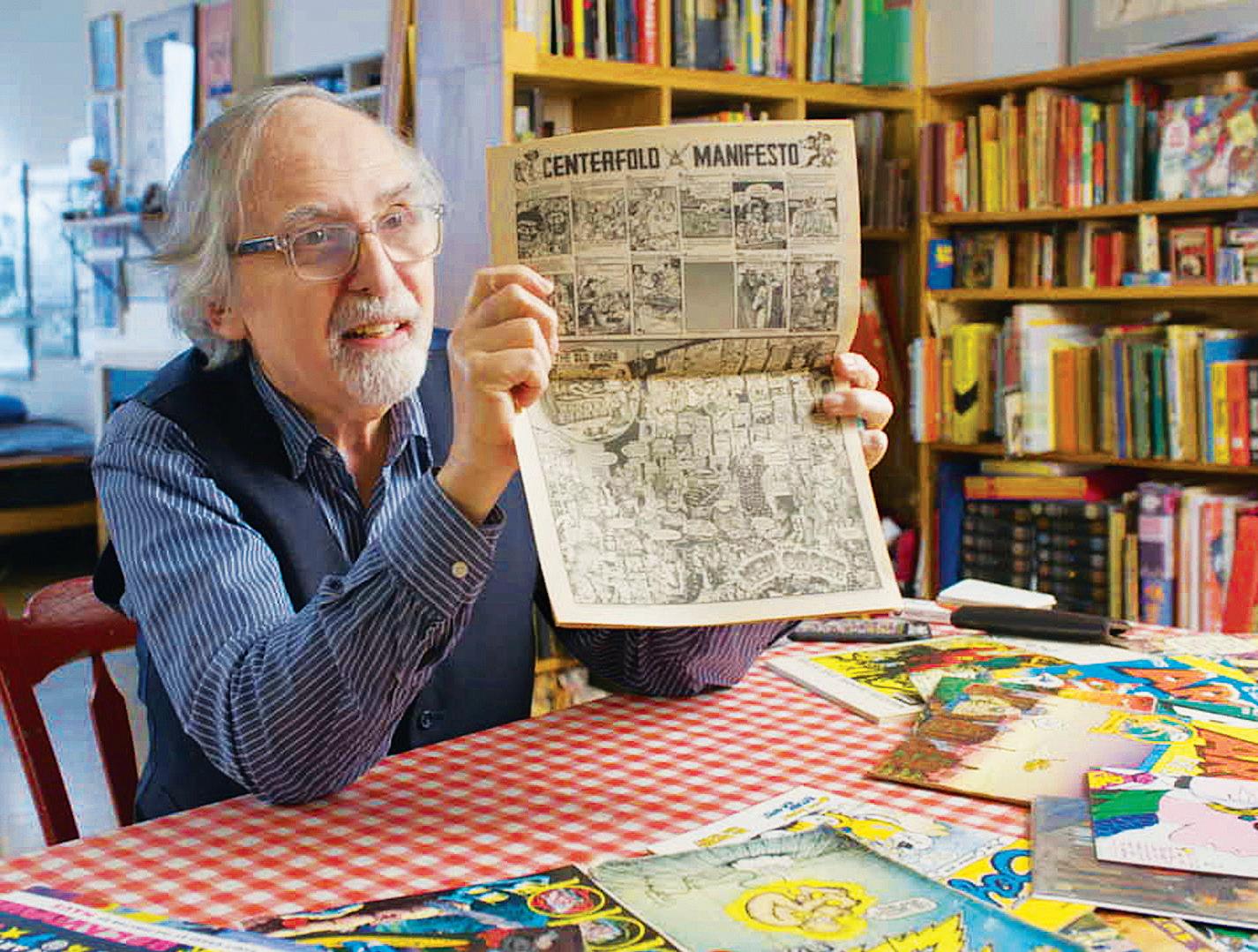
Art Spiegelman: Disaster Is My Muse
A documentary screening which highlighted the legendary cartoonist and editor’s irreverent life and work, including his extraordinary partnership with wife Françoise Mouly.
Zona Libre: A Musical Celebration of Latino LA
Los Angeles’ deep ties to Mexico and Central America were honored with communitybuilding activities and live music, presented in tandem with Grand Performances and Zócalo Public Square.
Dinner Party Animal: Recipes to Make Every Day a Celebration
An all-star lineup of guests rounded out this highly entertaining afternoon of delicious recipes and inventive menus for every mood, occasion, and possible guest list.
Russ & Daughters: 100 Years of Appetizing
The fourth-generation owners of the legendary NYC appetizing joint joined the Skirball and Writers Bloc to discuss their new book on its history, tradition, and culture.
Hanukkah Festival
The first night of Hanukkah was filled with joy through live music, art making, and our signature community candle lighting ceremony.
A YEAR OF YES BRIDGING HISTORIES
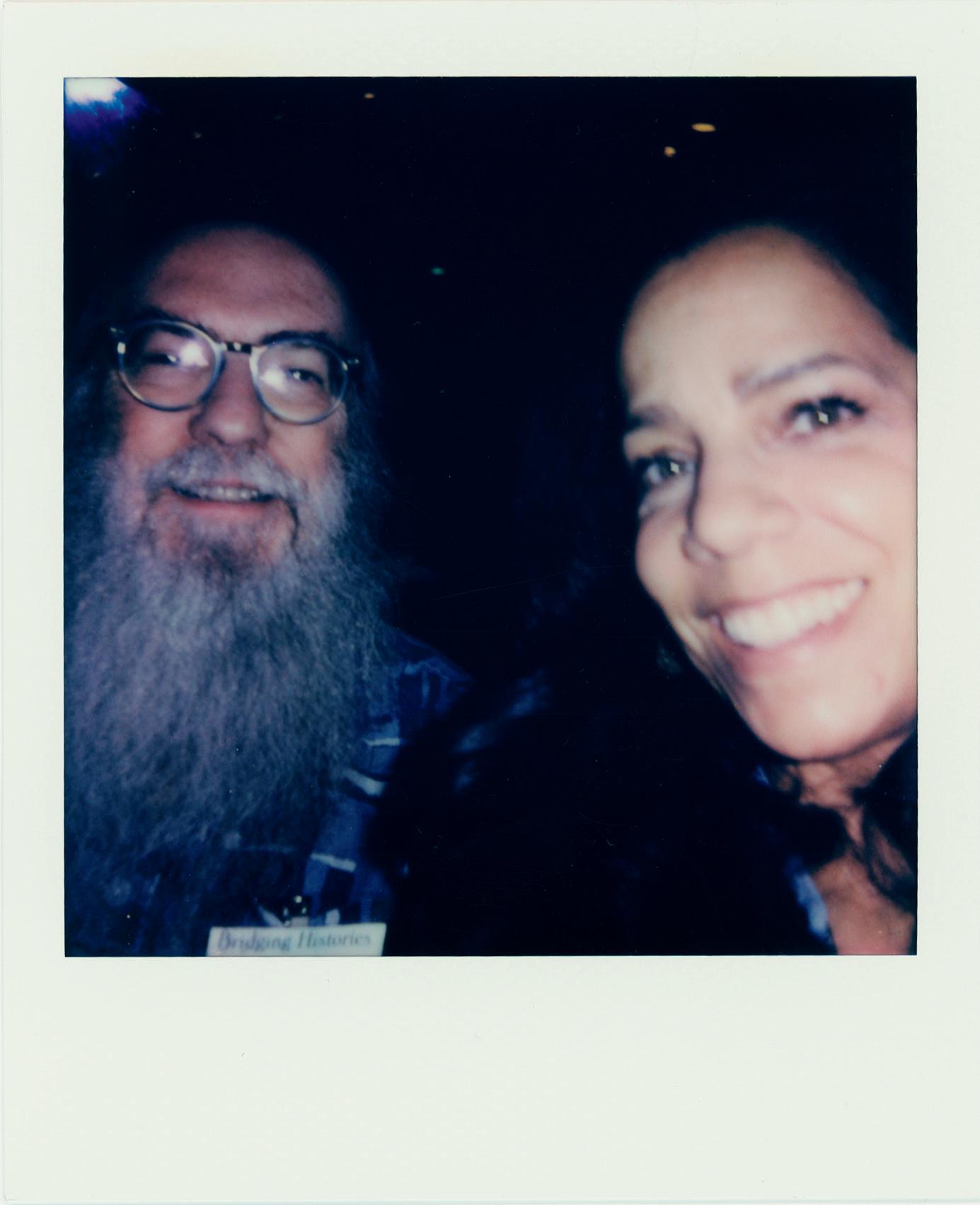
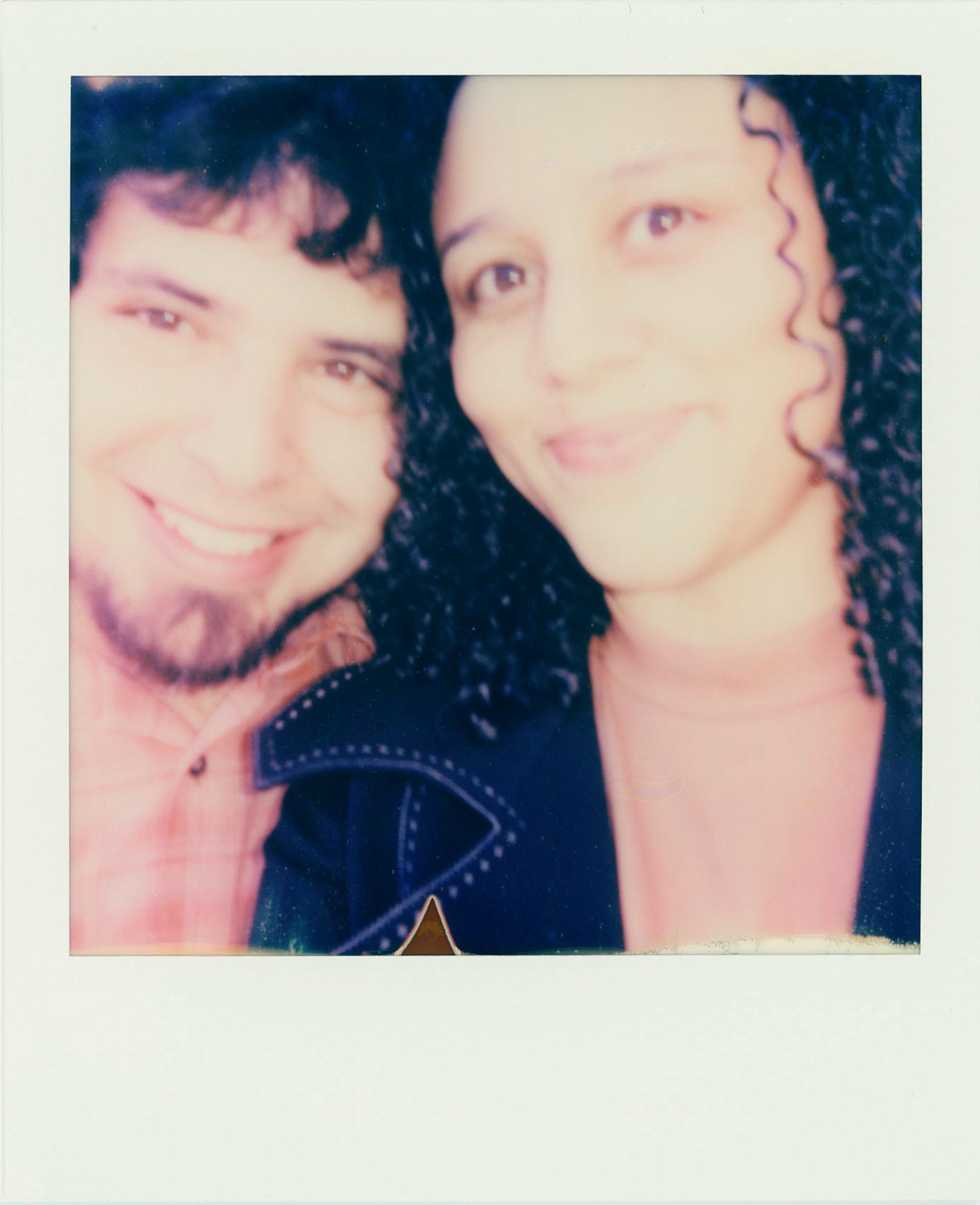
For over a year, AfroLA’s Dana Amihere participated in the Skirball’s “Bridging Histories” program. Created in collaboration with social scientist Dr. Avriel Epps and artist Patrisse Cullors, the project brought members of Los Angeles’ Black and Jewish communities together for monthly dinners, discussion, and shared experience following the October 7 attacks and during the war in Gaza.
I identify as Black American. And even though my nonprofit newsroom AfroLA primarily centers Black communities in its reporting, we highlight and celebrate intersectionalities with other communities. Being Black isn’t a monolith, especially in multicultural Los Angeles.
I was one of about fifty people asked to join Bridging Histories (BH). Our ranks waned somewhat over time, but our core group strengthened. I was the only journalist in a diverse sea of community advocates, activists, scholars, teachers; people who worked for municipal government, and religious and secular community foundations, and faith leaders. They identified as Black, Jewish, or both—ethnically, culturally, religiously.
Growing up Catholic and attending Mass every Sunday, I have internalized the significance and symbolism inherent in “breaking bread” with others.
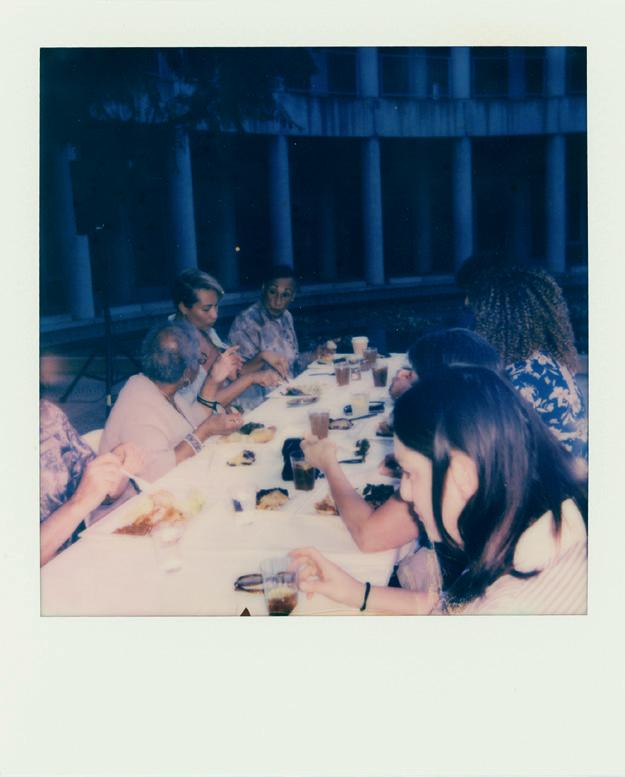
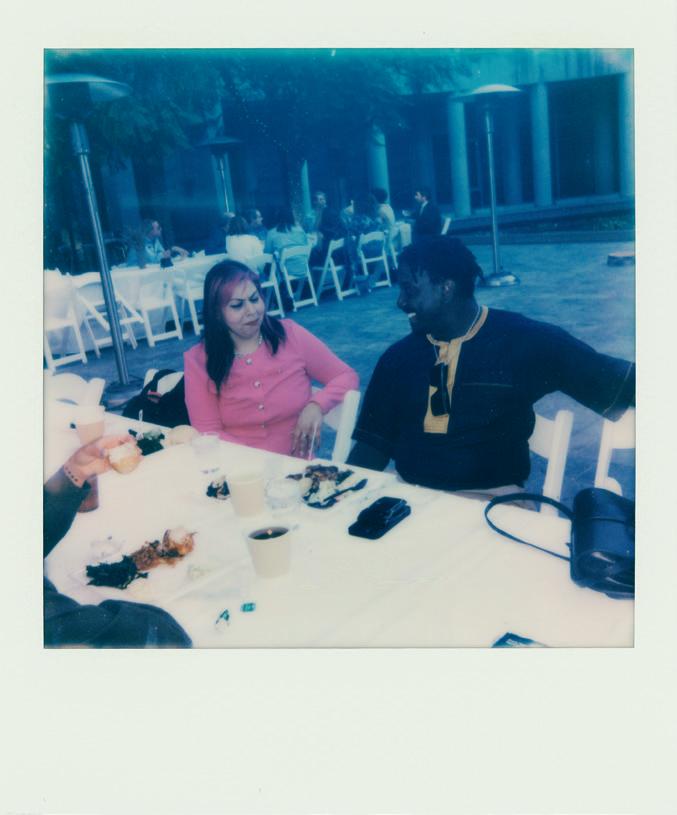
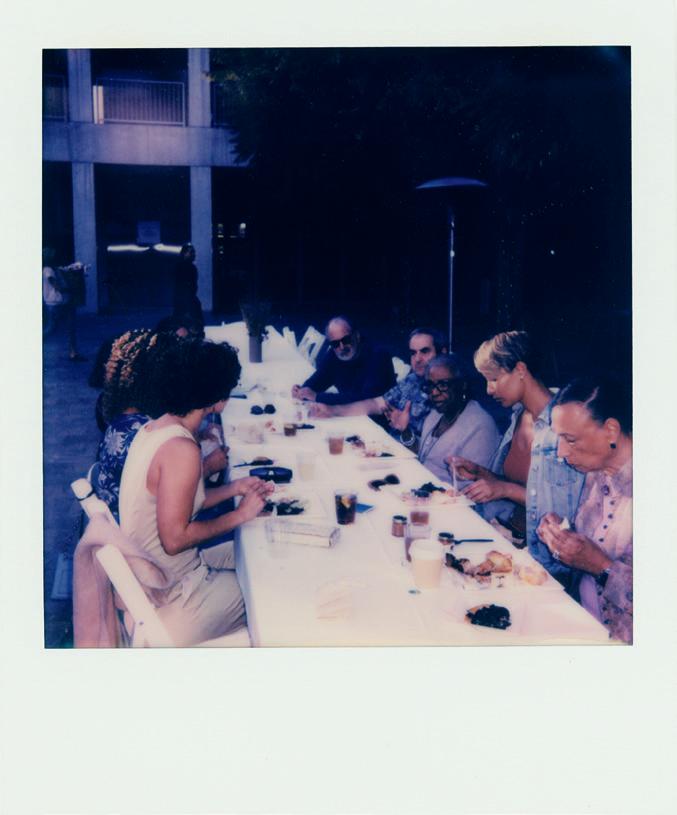
We met for Sunday Suppers from April 2024 through April 2025. We were assigned to small groups to discuss readings and complete activities, but we started every session eating together. Intentionality was my first impression of this uncertain experience I had agreed to be a part of. The food was catered to needs: kosher, vegan and veggie, and what I call cross-cultural “remixes.” All meals included crossovers between traditional Jewish dishes remixed with elements or ingredients found in
African cooking and Southern dishes. Black bean soup, crispy fish with remoulade, jollof rice of my Ghanaian heritage, red velvet cake from the Black Belt I was raised in. They made my heart (and stomach) happy.
One of the most profound experiences was the night our meal was served on artisanal earthenware from the Skirball’s Common Ground collection; fifty-six sets of ceramic plates, bowls, and cups using combined materials from every U.S. territory, to make a single, fully integrated, new material, erasing the borders of statehood and reimagining the country as a single, unified place. The search for a single, unified place in a postOctober 7 world was my North Star.
I would not say I came into BH with a solid foundation of Judaism, but I knew more than nothing. I took religious studies classes in college, but I have never studied Judaism. I had a half semester course on the Holocaust when I was in 11th grade. The popular teen drama I watched in high school, The O.C., introduced me to Chrismukkah.
As an adult, I picked up more bits and pieces. I was invited to a traditional Passover Seder by a journalism peer a few years into living in LA. While crammed into an apartment with thirty-some other guests, I learned that I did not care for matzo ball soup, but the prayers read from the Haggadah were entrancingly beautiful.
As I learned more from BH cohort mates and research that was spurred by conversations with them, my understanding of Jewishness as a cultural heritage, a religious choice, or an ethnic identity deepened. It also opened me up to rip to pieces things I thought I knew and put them back together.
But what happens when Blackness is confronted by the white supremacy and white nationalism woven into the fabric of our country? Blacks entering so-called white spaces have fought to merely exist in them and have been met with violence from oppressors. But so have Jews.
In our first BH small group conversation, we discussed Eric Ward’s seminal essay “Skin in the Game: How Antisemitism Animates White Nationalism.” My entire group was made up of white-presenting men and women. I read, I listened, I observed. I wanted to hear how they reacted to a Black man’s explanation or the connection between anti-Black hate, white supremacy, and antisemitism. What I have often contended with in conversations about Black oppression is the “Trauma Olympics.”
“My people were more oppressed than yours.” “But…slavery.”
Transatlantic slavery is a trump card weaponized to shut down any argument.
In a post-October 7 world, at a table full of Jews, that conversation pivoted to center Jews, the Holocaust,
and the current state of Israel. That was not a conversation I wanted to have on this so far pleasant evening. Yet, I had said yes to engaging in this experience, not merely observing it.
Before BH, I thought of the 21-year-old white nationalists and Proud Boys marching through Charlottesville with tiki torches. I have come to understand through research by the Jews of Color Initiative (JOCI) and others that people who are both Jewish and Black are dually impacted by racism and antisemitism.
In my response to the group, I thought back to more research from JOCI. One article I came across had described a Black Jewish woman’s experience after 2018’s Tree of Life synagogue shooting that left eleven people dead. Her shul had contracted armed guards to stand in the back, guarding the doors. This woman was conflicted. While she knew it was for protection, her Black body felt threatened. (I found similar accounts from other Black Jews.) Rightfully so. We continue to Say Their Names. Police with guns, unconscious biases, any sudden movements or perceived “threats to their life” can end tragically. DWB, Driving While Black, is a paralyzing experience we teach our children to survive.
What happens when you feel unsafe in your own religious community? Your sacred spaces feel off limits because you feel out of place. Black Jews, enmeshed in white-dominated Jewish spaces are torn between finding a comfortable niche and trying to build one of their own.
More than the injustices Blacks and Jews have survived, I more clearly see what unites these communities: Discrimination. Occupation. Revolution. Liberation. Forgiveness. Family. Food. Heritage. Community.
A bridge is a way over, but it’s also a way through— and ultimately, a way forward. BH gave me a sense of unity, communion with places I knew, people I didn’t (yet), and culture I would come to understand more clearly.
Dana Amihere is a designer, developer, and data journalist. She’s the founder and executive director of AfroLA, a nonprofit newsroom covering Los Angeles through the lens of the Black community. She’s committed to solutions reporting that centers on racial and social justice, especially through data-driven storytelling. She has taught data journalism and interaction design for nearly a decade, including positions with University of Southern California, and most recently, University of California, Berkeley's Graduate School of Journalism.
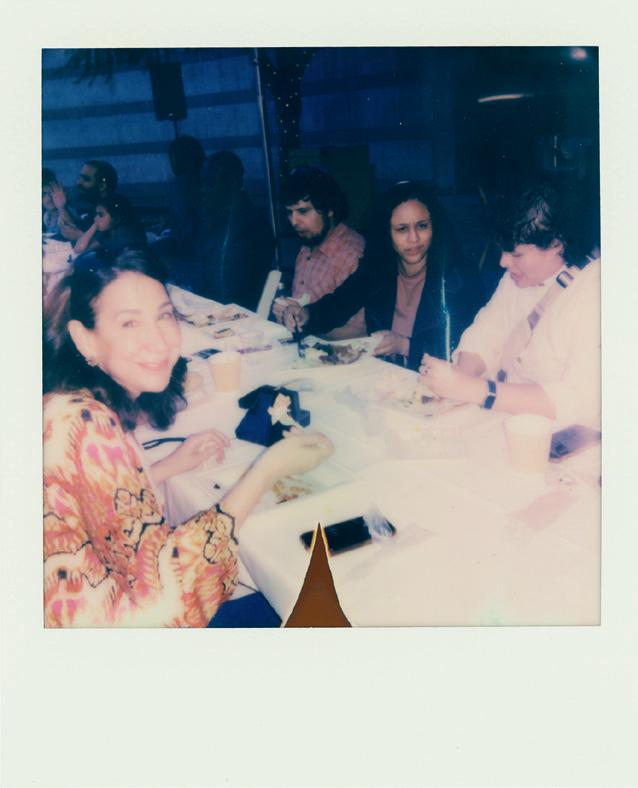
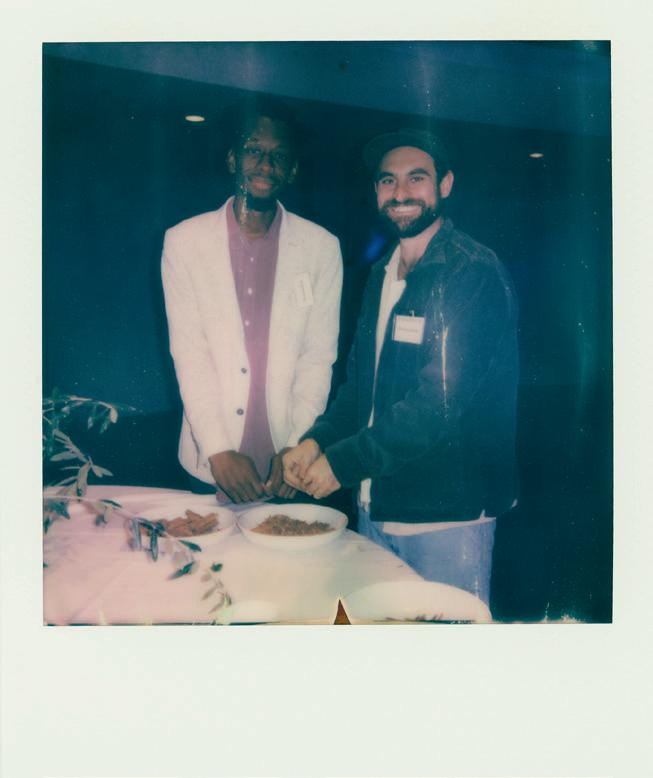
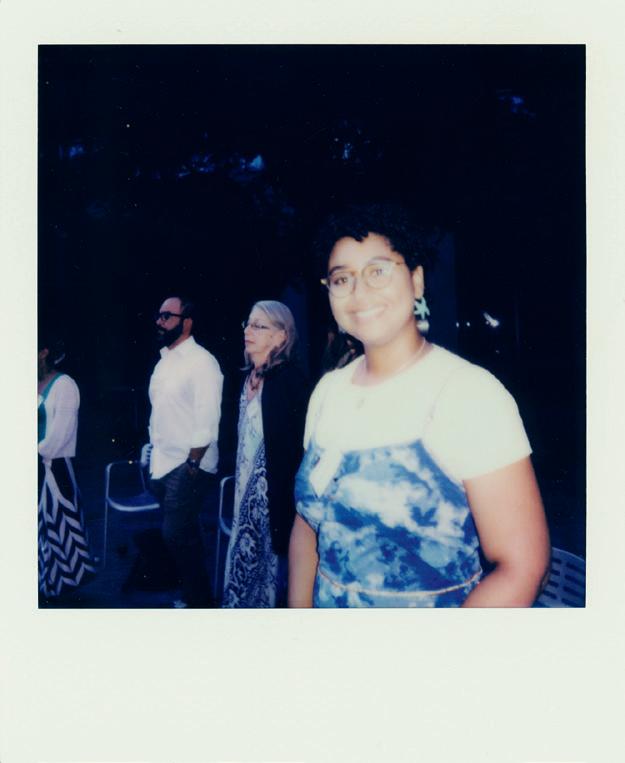
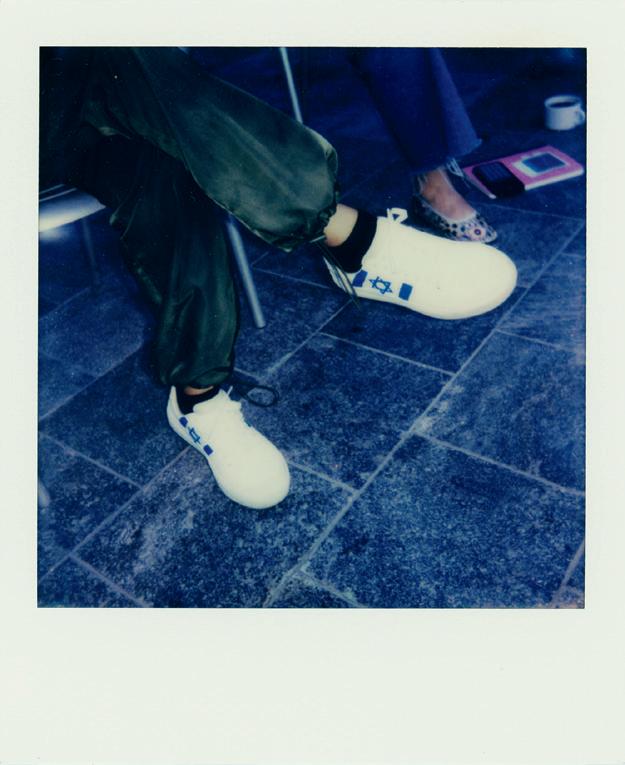
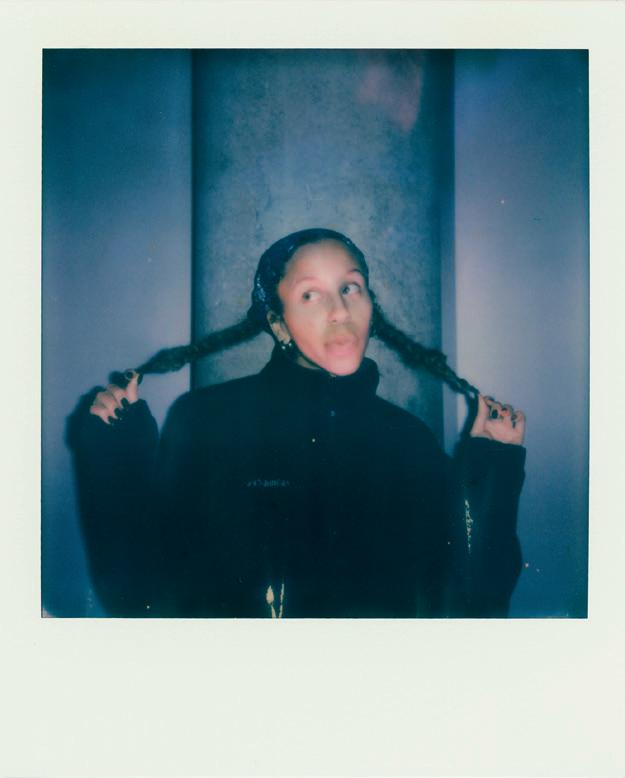
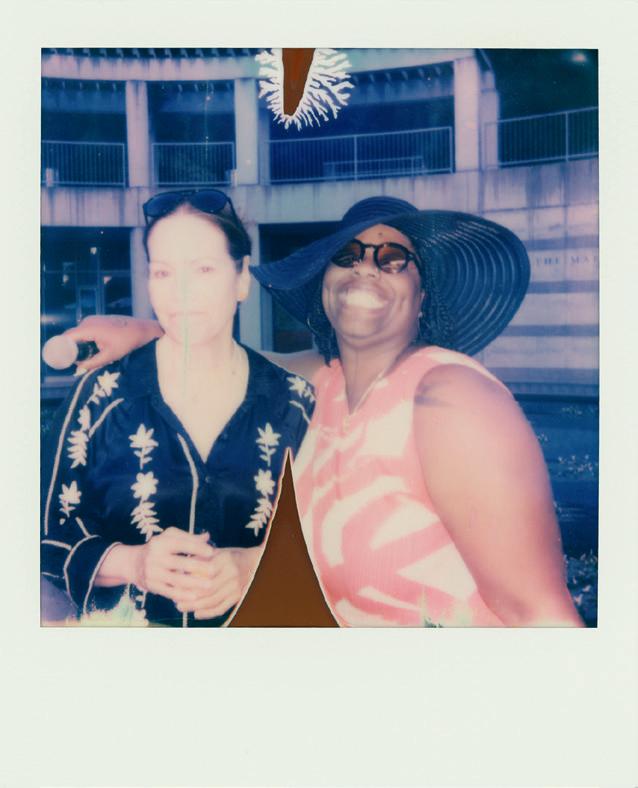
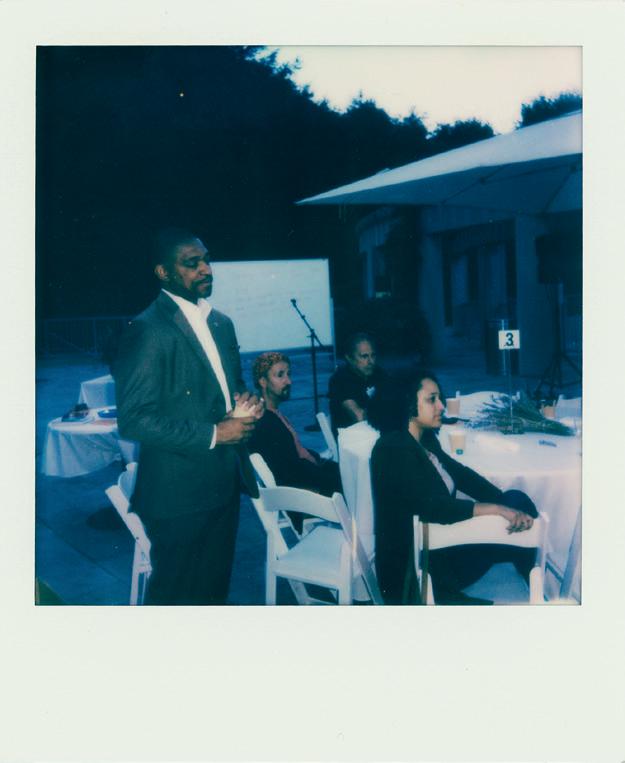
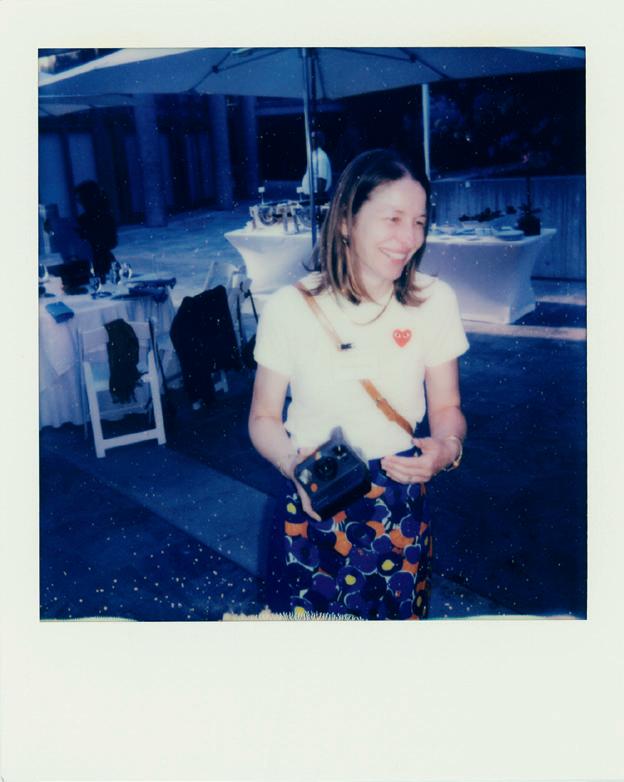
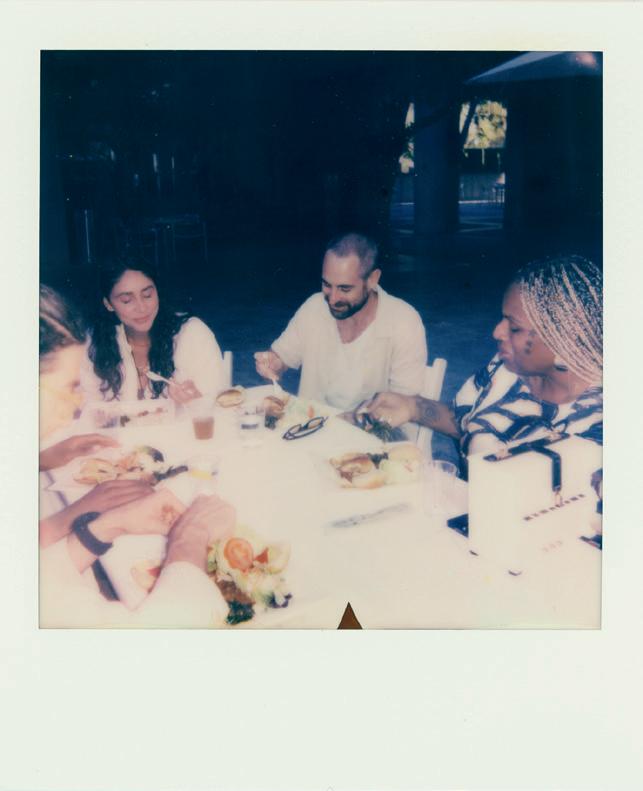
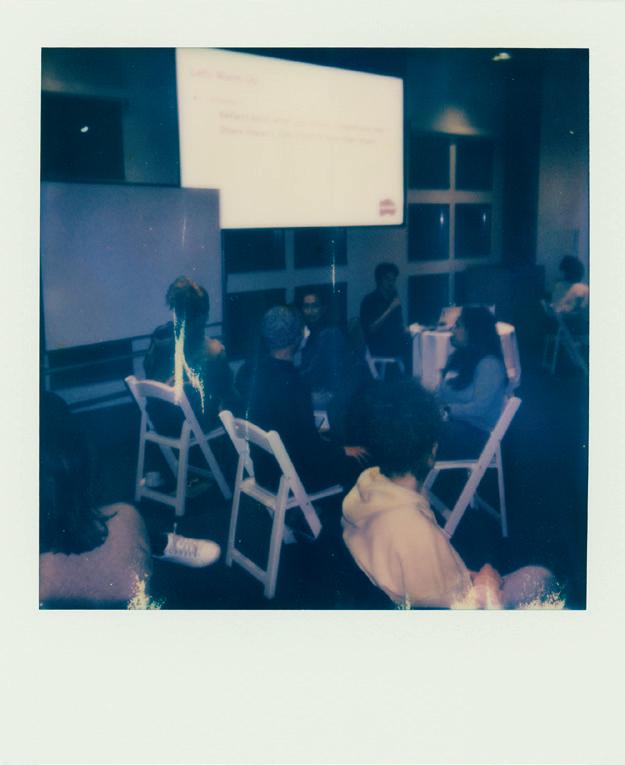
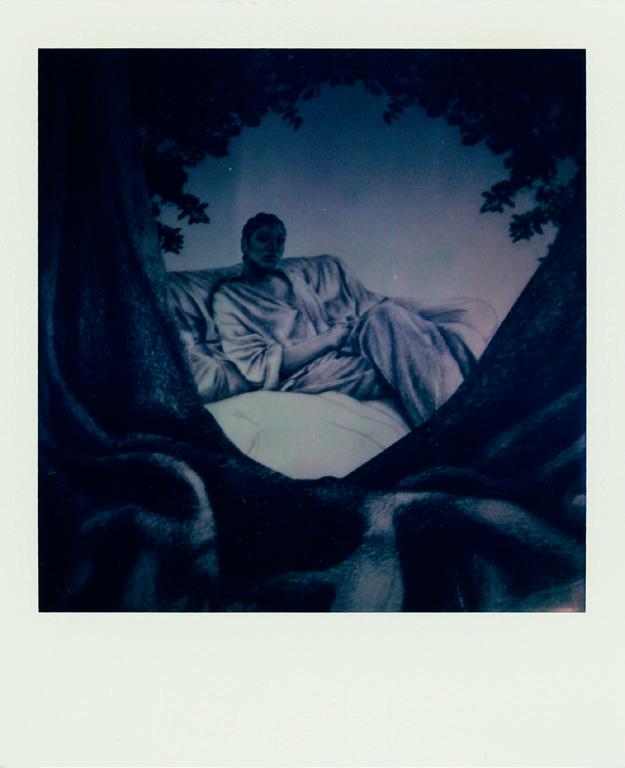
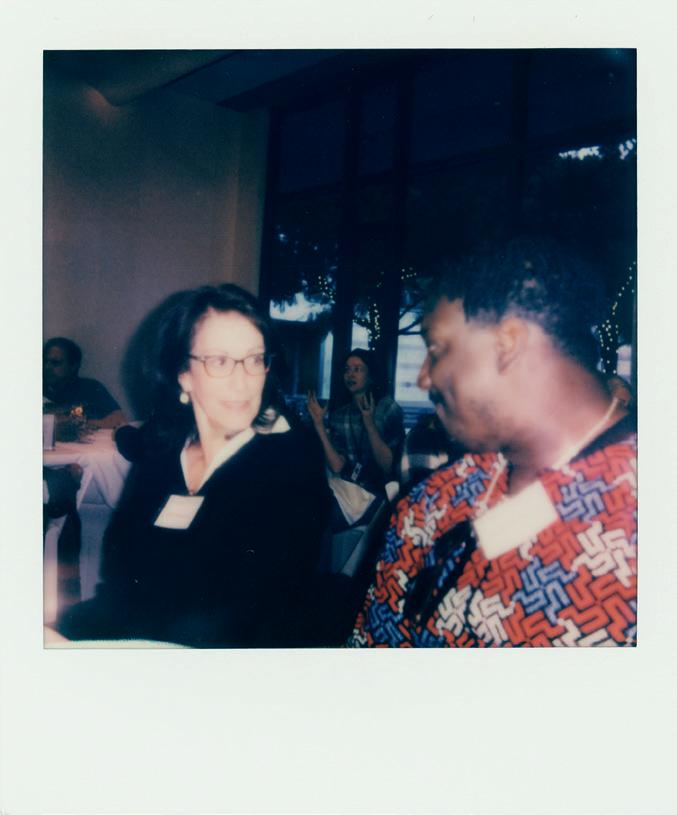
Participants were encouraged to take their own photos with Polaroid cameras provided by the Skirball.
“ONE ESSAY, ONE STUDENT, ONE HERO AT
A TIME
”
Established in the memory of the Skirball’s founding chairman, Howard I. Friedman, the annual Friedman Prize invites graduate students from across the U.S. and beyond to submit essays offering perspectives on American Jewish experience to encourage scholarship and dialogue in these areas. In anticipation of the Skirball’s original exhibition Jack Kirby: Heroes and Humanity, this year’s prompt invited scholarship on connections to popular culture.
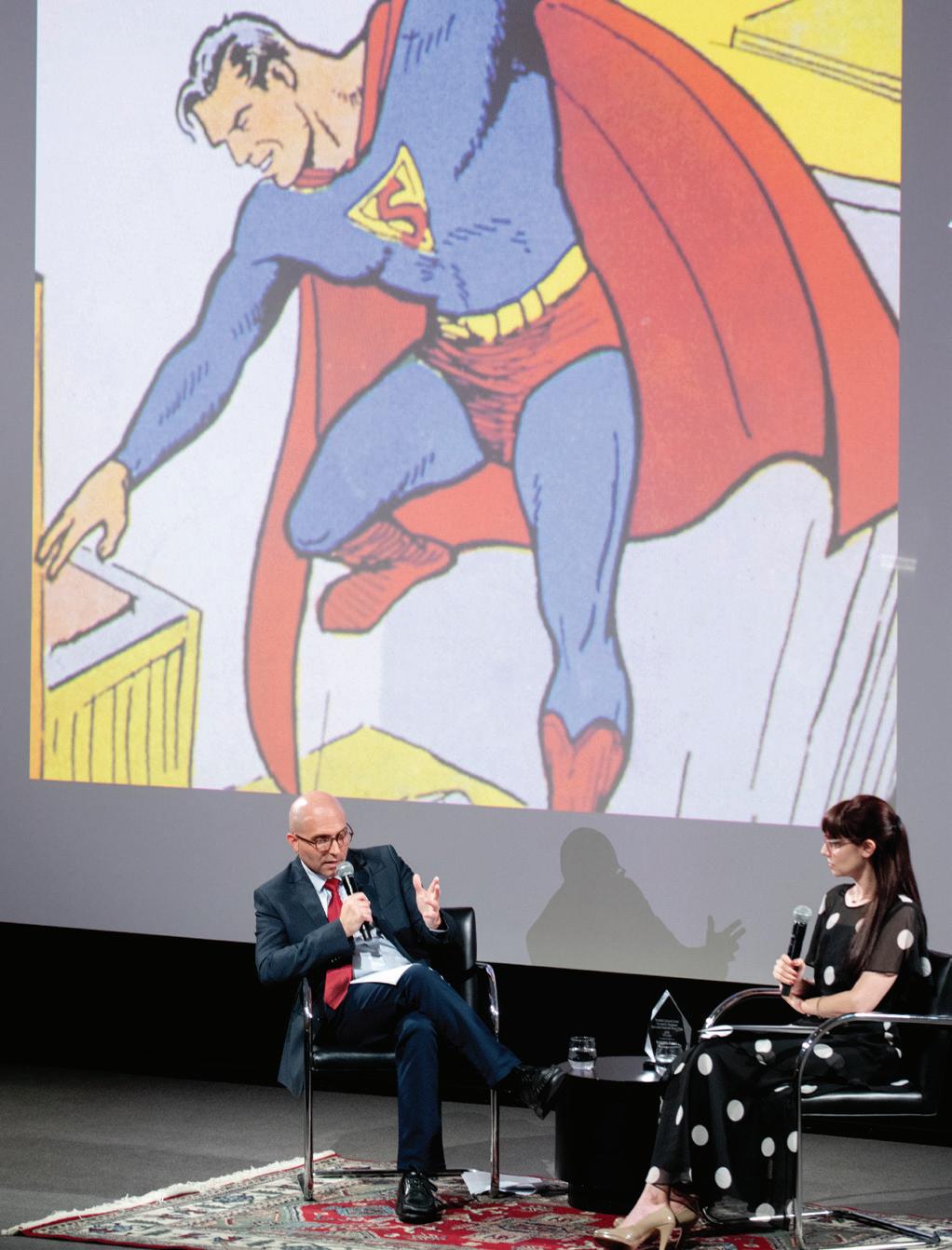
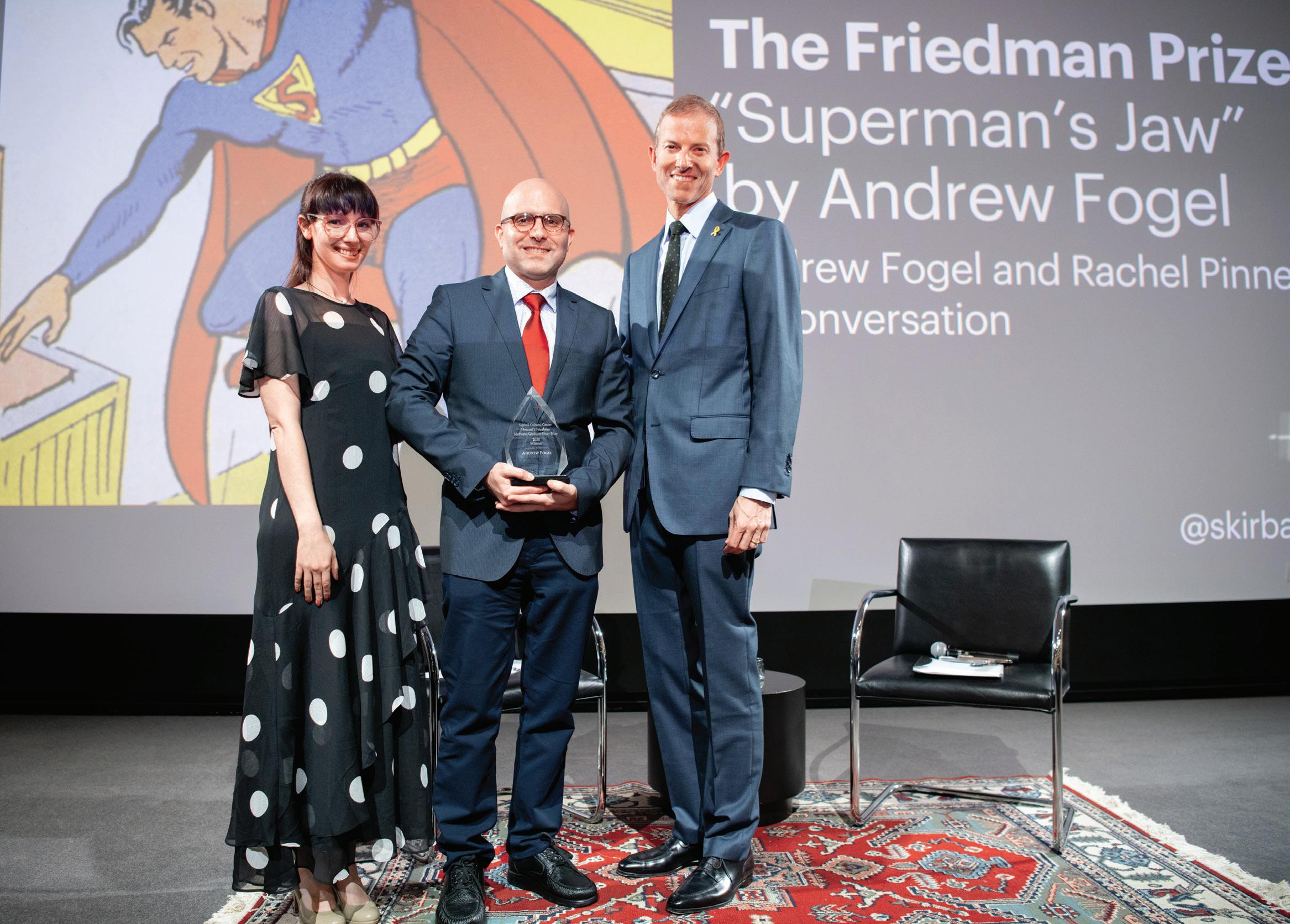
Each year, the presentation of the Friedman Prize offers a chance to celebrate an emerging scholar and to pause and reflect on the power of storytelling, the resilience of culture, and the enduring impact of Jewish values. The 2024–2025 Friedman Prize was awarded to the essay “Superman’s Jaw,” by Andrew Fogel, PhD, a historian of popular culture whose research and writing
explores the place of superheroes in the everyday world and the power they hold over the American imagination for both kids and adults.
Dr. Fogel’s essay and the Kirby exhibition reveal artists whose works invite us to consider how mythmaking, morality, and imagination come together to reflect the very best of what it means to be human. These were Jewish men—first-generation Americans—who transformed the pages of comic books into platforms for ethical vision. They gave us heroes who stood up to tyranny, fought for justice, and wrestled with dual identities. In many ways, these characters—Superman, Captain America, the X-Men—reflected their creators’ lived experience: immigrants and outsiders navigating an often-hostile world, yearning not only for safety, but for purpose. For belonging. For justice. These fictional heroes may have worn capes or carried shields, but their values—truth, justice, courage, and compassion—are grounded in the very real moral foundations of Jewish tradition. And they remind us, quite powerfully, of Howard I. Friedman.
Howard didn’t draw superheroes. He was one. He didn’t create characters that stood up to injustice— he stood up to it himself. As a young student at the University of Oklahoma, Howard led campus protests when Ada Lois Sipuel Fisher was denied admission to law school because of the color of her skin. His words— “Those who say we can have equality under separate
schools are blind”—were as clear-eyed and courageous as anything found in a comic panel. He was not bulletproof, but his integrity was unshakable. He didn’t have super-strength, but he carried the weight of justice on his shoulders. His legacy—his moral clarity, his unrelenting sense of responsibility to others—is a living example of the very ideals that gave rise to the comic book heroes we celebrate today.
Howard believed in the power of ideas. He believed in the Jewish people. He believed in American democracy. He believed in education, in cultural life, and in building a world where difference is not merely tolerated—but celebrated. And in his own words, he believed in the Skirball as a place that tells the story of the Jewish American experience.
We are proud to carry that story forward—one essay, one student, one hero at a time.
Opposite page: Dr. Andrew Fogel in conversation with Rachel
Scan the QR code to read Dr. Fogel’s winning essay in its entirety.
Above: Dr. Andrew Fogel (center) holds his Friedman Prize in between comics writer and editor Rachel Pinnelas (left) and Rabbiin-Residence Beau Shapiro (right).
Pinnelas.
Lindsey
Best
ESSENTIAL STORYTELLING
AMID RISING CENSORSHIP
On September 7, 2025, in front of a sold-out Magnin Auditorium crowd, the Skirball, Jewish Story Partners, and Holocaust Museum LA screened the documentary Art Spiegelman: Disaster Is My Muse.
Still from Art Spiegelman: Disaster Is My Muse (2024).
Art Spiegelman: Disaster Is My Muse explores the life and career of cartoonist Art Spiegelman and the creation and impact of his Pulitzer Prize–winning graphic novel Maus , a deeply personal work, presented as a conversation between the author and his father about his parents’ experience as Polish Jews during the Holocaust.
Introducing the program alongside the Skirball’s season celebrating Jewish American comic creatives, Skirball President and CEO Jessie Kornberg said, “We present these stories to try to pull a universal thread of Jewish culture through the diversity of Jewish identity, history, and American experience.” Following the screening, Kornberg was joined on stage by filmmakers Molly Bernstein and Philip Dolan.
“The more we learned about Art Spiegelman during the making of this film, the more complex our story became,” said Bernstein and Dolan. “Anyone who hears Art talk realizes that he speaks the language of comics. Comics were his introduction to the world, his escape from his traumatized household, and eventually they became his own creative vocabulary.”
Bernstein humorously noted that despite Spiegelman often being called the father of the graphic novel, “he’ll be the first to tell you…he usually demands a paternity test and claims that he’s not actually the father.” For Spiegelman, “comics were a window into his world of the United States, as a way of him having something his parents didn‘t have,” said Dolin. “He says that he literally saw a Batman comic at someone‘s house when he was about four and said, ‘I must learn how to read so that I can read this comic.’”
Today, Spiegelman’s most famous work, Maus, has been banned for commercial sale and educational instruction by state governments in Tennessee, Missouri, and Iowa. Spiegelman has become a leading voice defender of free expression in response. Dolin elaborated that “in terms of censorship, the thing that stands out about Art is he is uncompromising, and we did get that sense that he says what he wants, and he has the power to do what he wants.”
Dolin shared that recently Spiegelman was asked to write an introduction to a collection of old Marvel comics, which featured one of the heroes fighting the
Red Skull. In the introduction Spiegelman wrote, “…today we‘re fighting the Orange Skull.” Marvel objected to the comment asking to remove it and refrain from political speech. Spiegelman responded with a legendary story from Marvel’s own history and featured in the Skirball’s Jack Kirby exhibition: the cover of Captain America Comics #1 depicted the new hero punching Hitler in the face— highly controversial at the time, resulting in death threats for Jack Kirby and his partner. “Marvel has always been political. And popular culture is political,” Dolin quoted Spiegelman as saying. Spiegelman’s steadfast insistence prevailed; Marvel published his introduction along with an additional editorial on the censorship attempt and publication decision.
Kornberg asked Bernstein if experiencing Spiegelman’s persistence and resistance personally impacted her own views and conduct. Bernstein explained how their film itself became a subject of censorship too, when the initial distribution cut a ninety-second scene that included footage critical of President Donald Trump. Spiegelman and the filmmakers were able to preserve their creative freedom, releasing the full film in subsequent distributions. “Definitely, and for us specifically, being able to own your own work is enormously beneficial in terms of that freedom. Even though the PBS version does have ninety seconds of Trump content that was censored by national PBS, every place else it shows and streams is our version…. So, in this case, I think all of us and Art agreed it was worth having it shown without that part, you know, as opposed to pulling it. But I think the reason we could feel that way was because we knew it would have a much bigger life beyond PBS.”
Ultimately, the Skirball program was part of that bigger life, Spiegelman’s story, and the enduring influence of popular expression in civil society. Comics are too often dismissed as a lesser art, but they are an undeniable force for connection in American culture. As Jewish Story Partners Executive Director Roberta Grossman aptly stated, this “storytelling is not just nice, I think it’s essential.”
ILLUMINATE
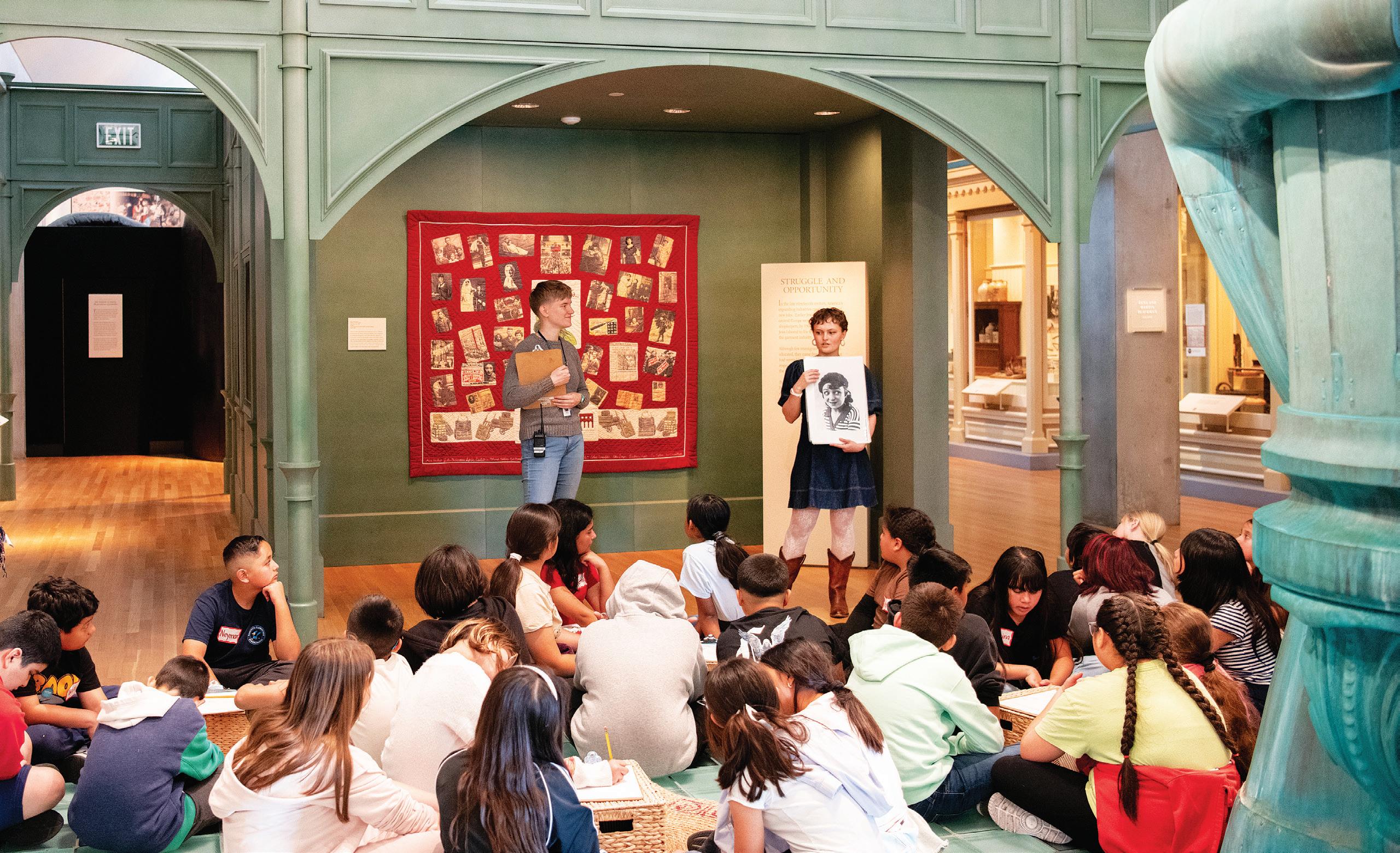
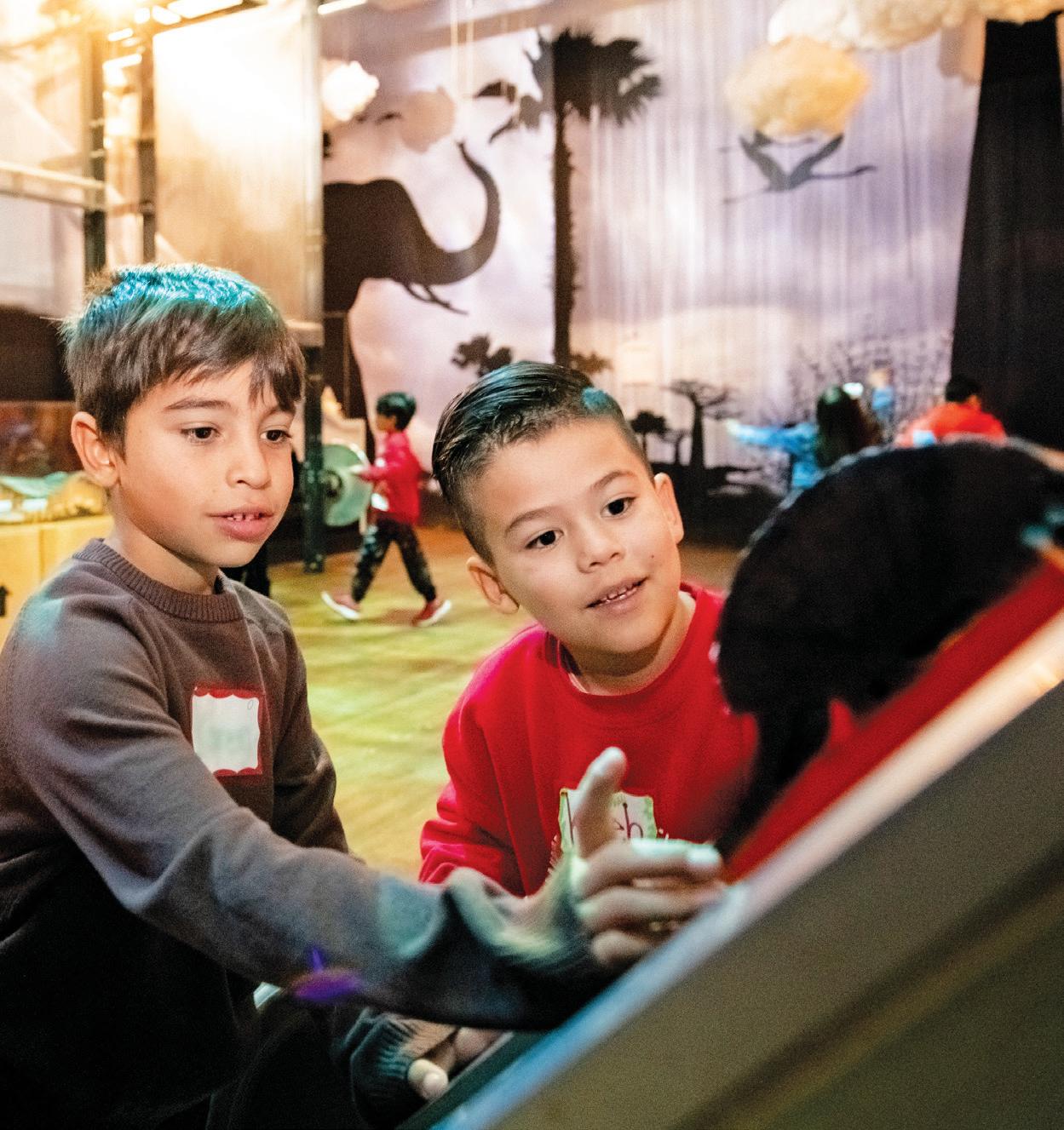
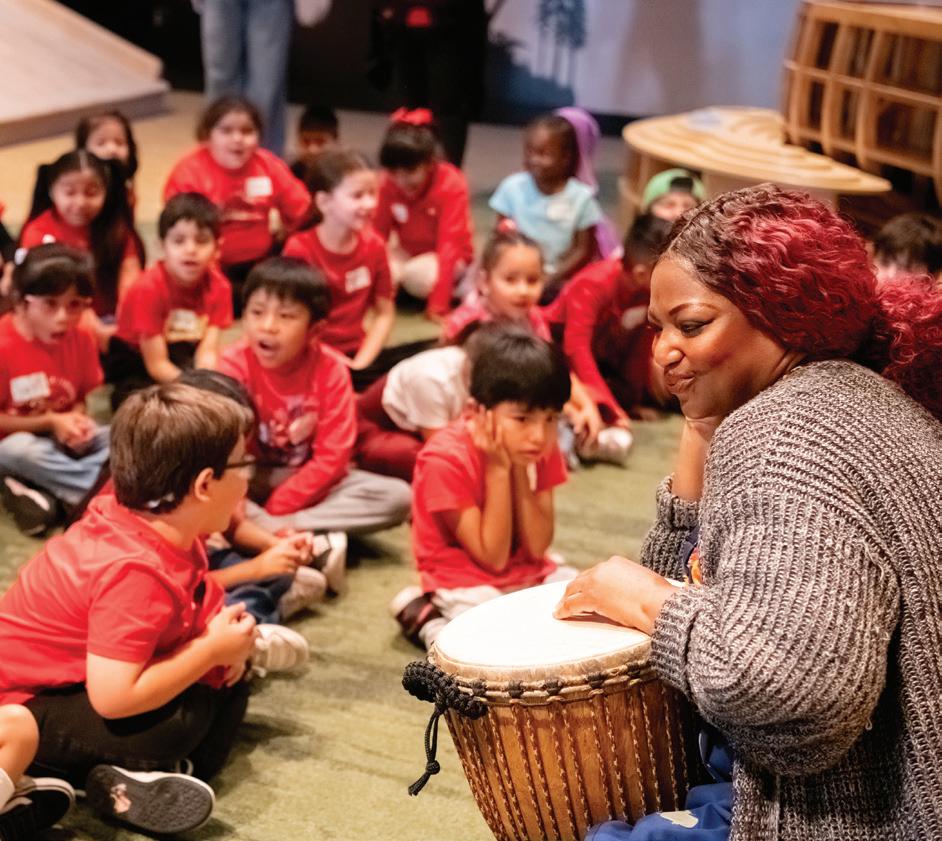
The Roslyn and Abner Goldstine School Programs always begin with welcome and storytelling. We tell stories as an invitation for our youngest visitors to learn more about Jewish culture and identity and make connections to their own cultures and identities through discovery, wonder, and interactive hands-on learning via music, movement, and artmaking.
Long after their participation in educator-led tours of our exhibitions, multiweek residencies at schools, teacher professional development workshops, free online lessons and videos, and of course intergenerational family experiences aboard the award-winning Noah's Ark exhibition and in the Art Studio, Archaeology Dig, or the new Bloom Garden, visitors recall the magic of their experience and discover we are part of something larger than ourselves.
But our work is more than just fun. In a time of rising antisemitism, we are giving the youngest members of our community (and their grown-ups) a positive experience in a Jewish place. Jewish kids and families can feel safe and comfortable. Visitors from all walks of life can find those points of connection and understanding so they don't perpetuate the othering of Jewish people. This is serious work but done intentionally with compassion and care to foster human connections.
2024–2025 Roslyn and Abner Goldstine School Programs Highlights
30,000 students and teachers served
126 school partners in 11 districts
80% of students came from public schools
80% of schools received both bus scholarships & fee waivers
70% of participating students came from Title I schools
143 teachers trained through professional development workshops which strengthened cultural proficiency, built restorative practices, addressed hate and bias, enhanced leadership development, and built community
IDENTITIES AND IDEALS
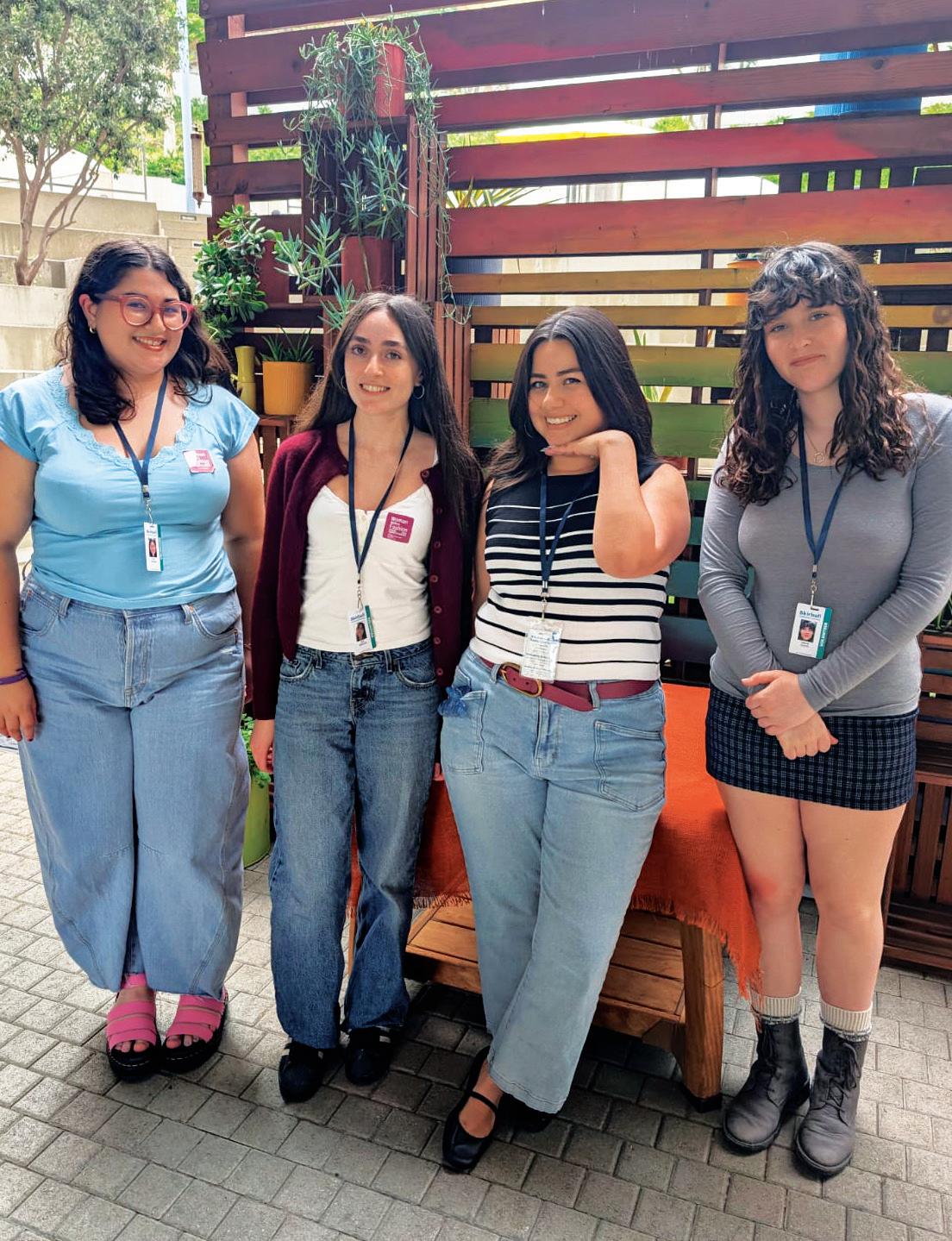
The Skirball's Teen Advisory Committee provides a small group of Los Angeles high schoolers with opportunities to connect with the exhibitions, programs, and the mission of the Skirball in a deeper way, while giving Skirball educators the opportunity to learn with and from them. We caught up with Teen Advisory Committee members on how the committee has affected their lives.
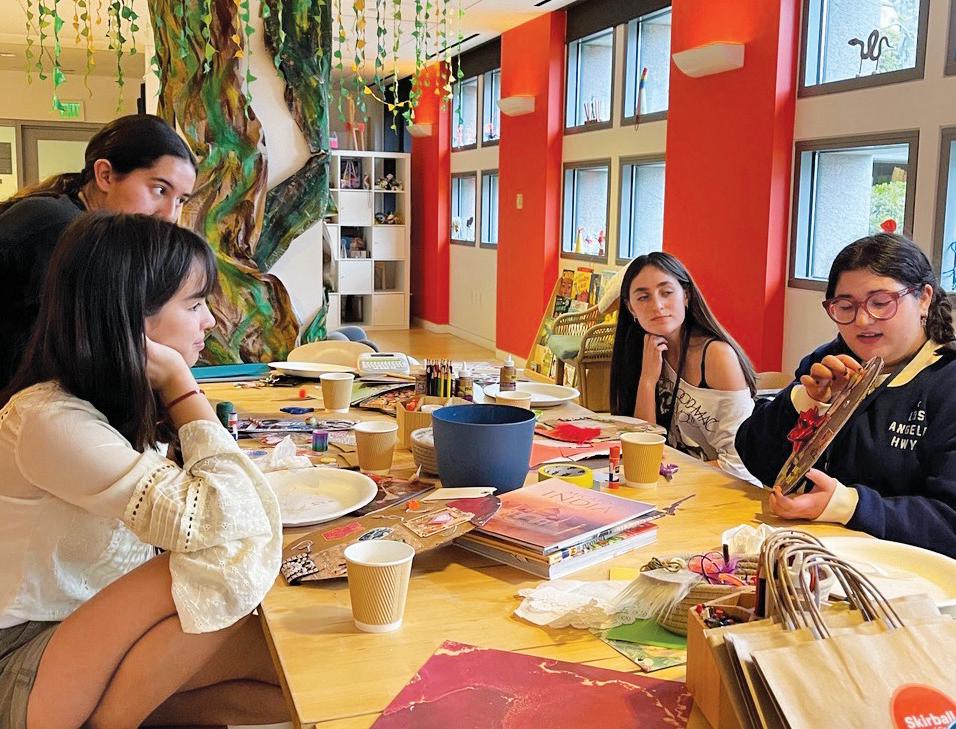
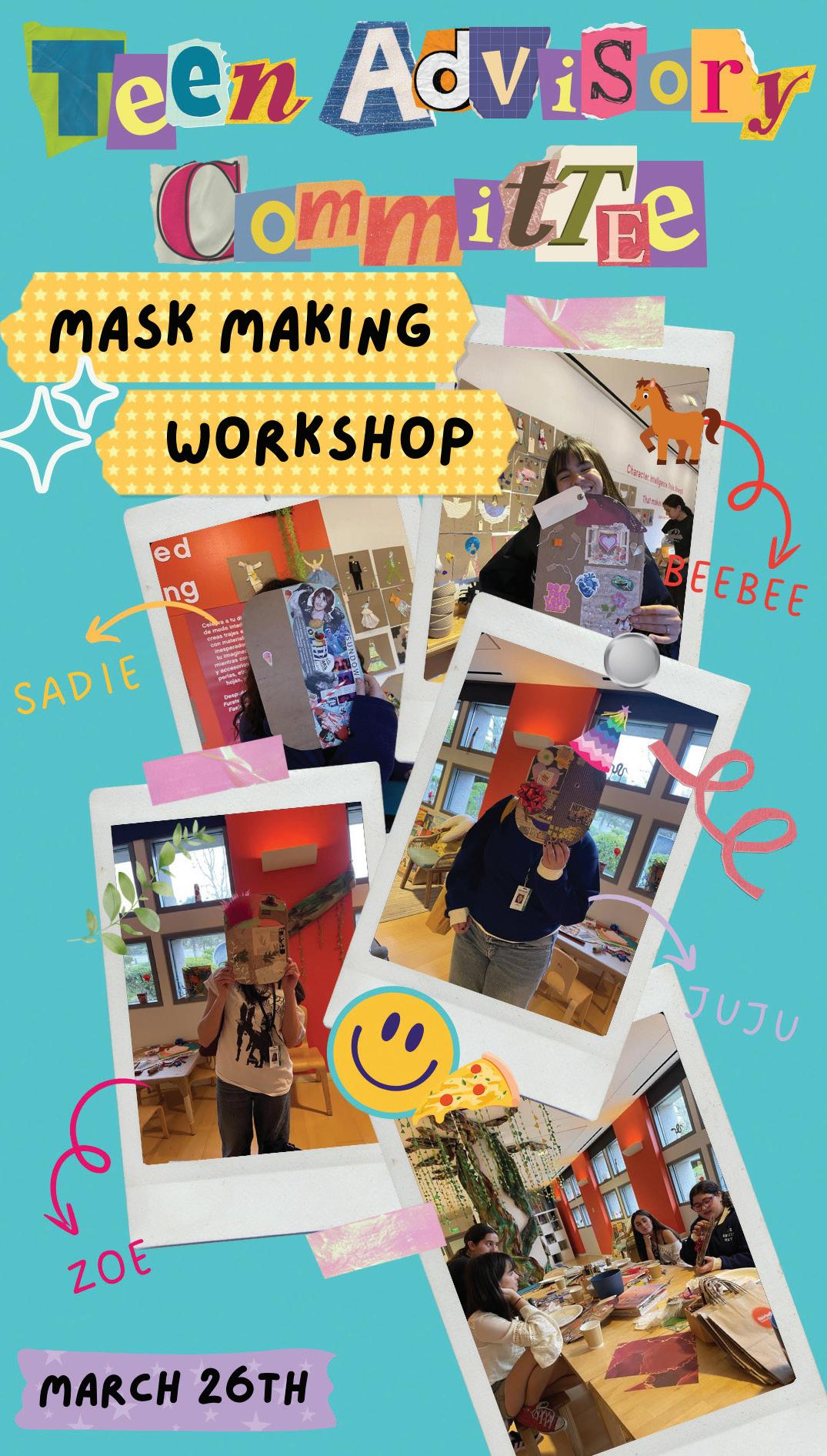
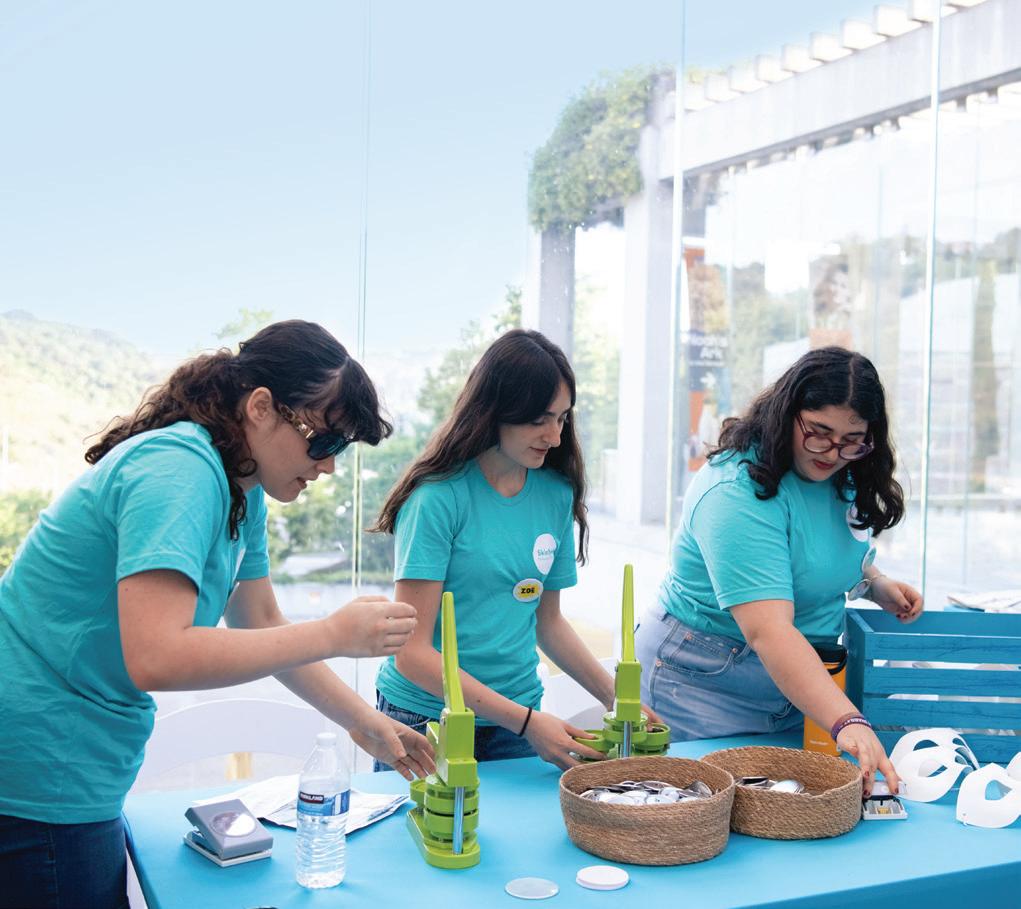
Left to right: Former member Beebe Perez, her sister, and current committee members Zoë Rinsler and Juju Gordin take part in a movement and mask making workshop on March 26, 2025.
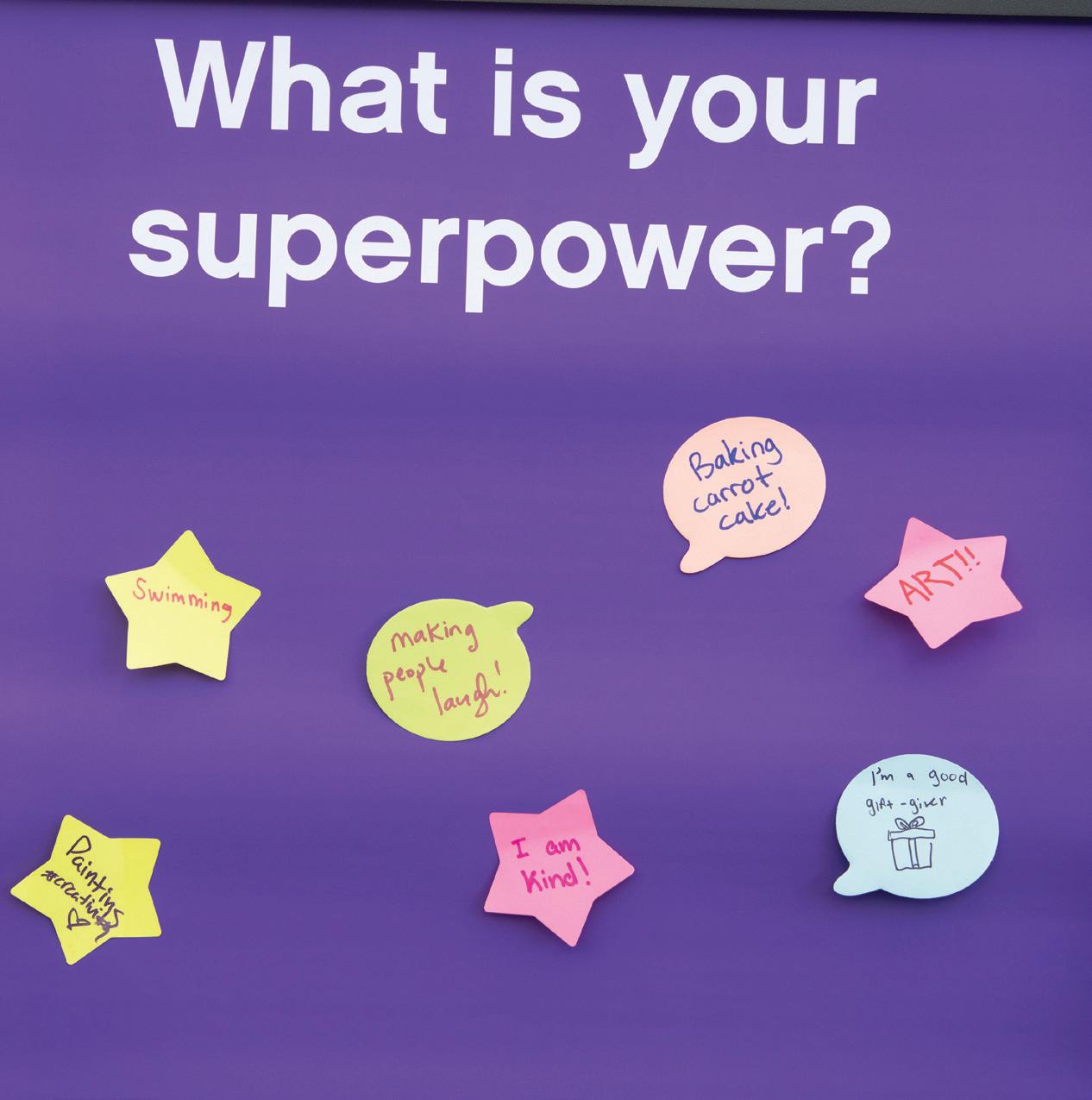
The TAC worked in collaboration to design and facilitate a special teen activation at "Late Night!" that included superhero mask making, superhero logo button making, a photobooth, music curated by the teens, and more.
Why did the Skirball Teen Advisory Committee appeal to you?
ZOË RINSLER (Grade 11, Geffen Academy at UCLA): I identify as Jewish and grew up coming to the Skirball. As a kid, I frequented Noah’s Ark and started exploring more exhibits as I got older. I even celebrated my bat mitzvah here. The Skirball appealed to me as it was a space I was familiar with that celebrated my culture and taught me about others. I was interested to get to know it on a deeper and more behind-the-scenes level.
JUJU GORDIN (Grade 12, Girls Academic Leadership Academy): I was raised in a Jewish family that instilled strong Jewish values of community, storytelling, and
curiosity—and many of those lessons were tied to the Skirball. I have vivid memories of running around Noah’s Ark with my younger sister.
The Skirball resonates with me because it celebrates Jewish life, storytelling, and heritage while also making room for other cultures and voices. It’s a Jewish museum but it’s also a welcoming, inclusive place where anyone can feel at home. I love that I can bring any friend to the Skirball, regardless of their religion, and know that we will both have a good time and leave learning something new.
The Skirball also represents connection for me, especially with my family. A quiet Sunday can turn into a spontaneous visit with my mom and grandma—the three of us are loyal Skirball fans and we always find something meaningful to share in the exhibitions.
That’s what I look for in a museum: a place that preserves culture, invites conversation, and brings people closer. Whether through childhood memories or new experiences, the Skirball continues to be that place for me, and that’s why I keep coming back!
SADIE DAVIS (Grade 12, Los Angeles County High School for the Arts): I identify as kind-of-Jewish. I’m one quarter Jewish, but I feel reasonably connected with that side of my culture because we celebrate the holidays and go to services frequently. As a kid, I often visited the Skirball when my Jewish grandfather would come to visit. I have fond memories of the exhibits, so when I saw the Teen Advisory Committee, I was very interested. Likewise, I am very intrigued by museum programming (I’m also on the Teen Board of the Academy Museum), so I thought it would be a great opportunity to explore that as well.
How have your experiences at the Skirball influenced your lives?
ZR: Through my experience as a member of the Teen Advisory Committee at the Skirball, I learned that I may be interested in continuing to work in museums in the future. I’ve been able to meet many members of the staff who’ve expanded my horizons and made me aware of careers I never knew existed.
JG: I didn’t really know what to expect when I signed up for the TAC. I knew I liked the Skirball, and I knew I was excited for a new opportunity, but I could never have expected how much it would change my life and my future.
After my first year with the Skirball, my perspective has broadened, and I’m drawn to a future in museums. I’m not sure yet whether I want to be a curator or conservator, or something else entirely, but I’m excited to explore the possibilities. The idea of working in a museum inspires me, and I wouldn’t have come to that conclusion without my experiences at the Skirball.
SD: Being a part of the Teen Advisory Committee has influenced me because I’ve learned a lot about hard work, how to effectively brainstorm, plan, and execute events, and have found an invaluable community with my fellow Committee members.
What aspects of the Skirball’s mission do you hold most dearly?
ZR: The aspect of the Skirball’s mission I hold most dearly is welcoming the stranger. This value resonates with me deeply because as a Jew, I feel a responsibility to be as welcoming and compassionate as possible to those who are different. This value also encompasses treating everyone with equal respect. I feel that the Skirball highlights this by recognizing artists of different backgrounds and inviting everyone to learn and experience culture inside its campus.
JG: The part of the Skirball’s mission that I hold most dearly is community building. Community is something many people long for but don’t always find, which is why I feel so lucky to have found it at the Skirball. I still remember the very first day of the Teen Advisory Committee and meeting all the other incredible teens and instantly feeling at home. I realized that these weren’t just people I was doing a program with; they were my friends.
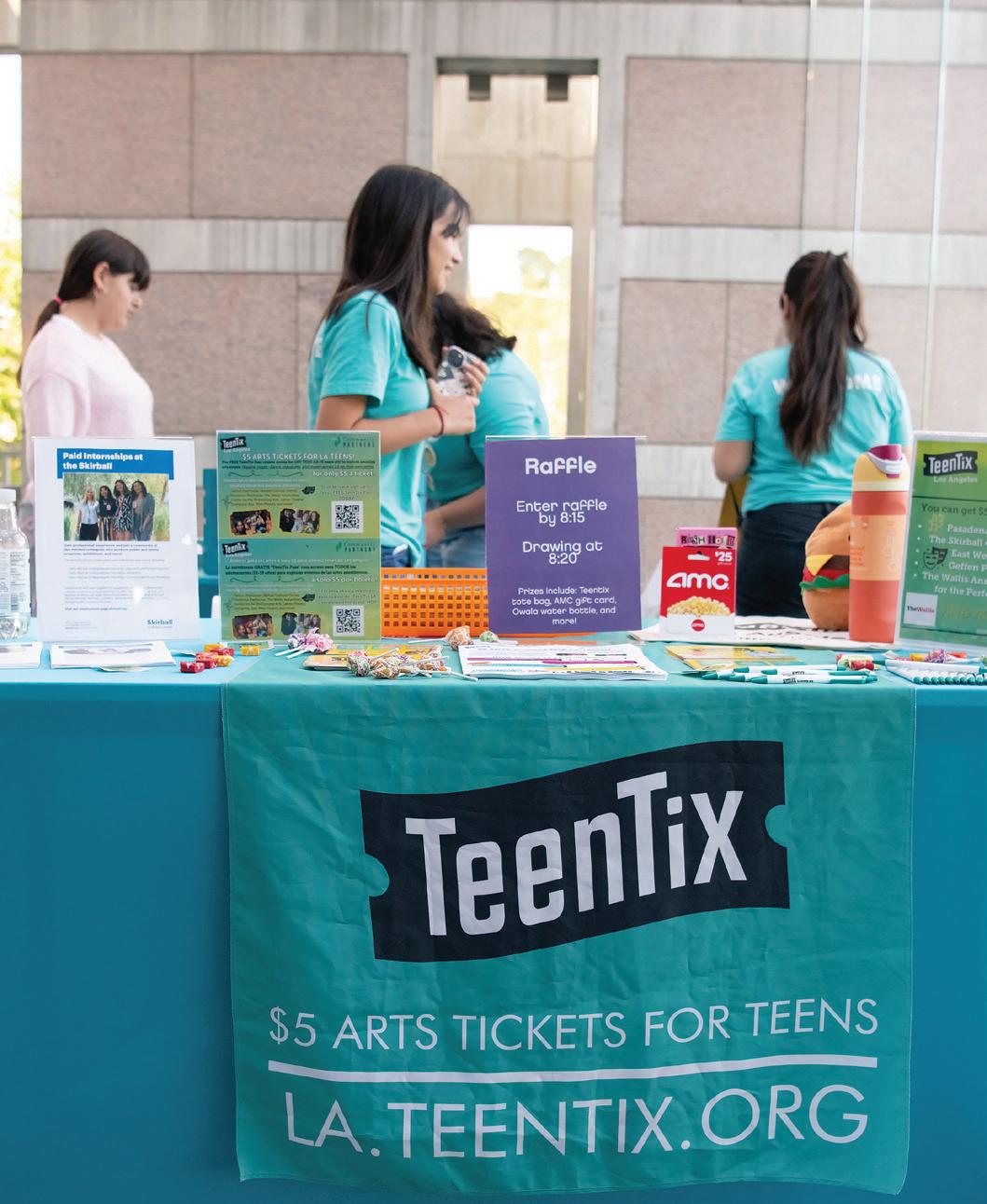
What makes the Skirball special is that it doesn’t just talk about community, it actively builds it and trusts teens do the same. Through the Teen Advisory Committee, I’ve had the opportunity to help create connections for others. Last year, I was also a TeenTix LA intern, working with five other teens to write newsletters and create social media posts that helped make the arts more accessible at only $5 a ticket.
Near the end of both programs, my two worlds collided when TAC began planning a joint event with TeenTix interns. I was so excited that I got to be a part of both teams and help bridge the groups together. We settled on a few crafting activities inspired by the Jack Kirby exhibition and worked together to make the event a huge success. Looking back, it was successful, not just because people showed up, but because teens from different backgrounds laughed, learned, and connected.
That moment perfectly reflects what I love about the Skirball’s mission: it brings people together through art, culture, and shared experience. It doesn’t matter where you come from, there’s always room for you. That commitment to belonging is why the Skirball feels like home to me, and why I’m proud to help carry that mission forward.
SD: I really resonate with how the Skirball values inclusivity when it comes to Jewish culture. Being only part Jewish, I’ve often struggled to feel accepted in traditionally Jewish spaces, so it means a lot to have a cultural center like the Skirball which emphasizes welcoming people of all sorts of different backgrounds. I also hold dearly the Skirball’s focus on social justice and community, as both of those are some of my core values.
Left to right: Sadie, Zoë, and Juju were inaugural members of TAC's pilot cohort and have all rejoined us for their second year.
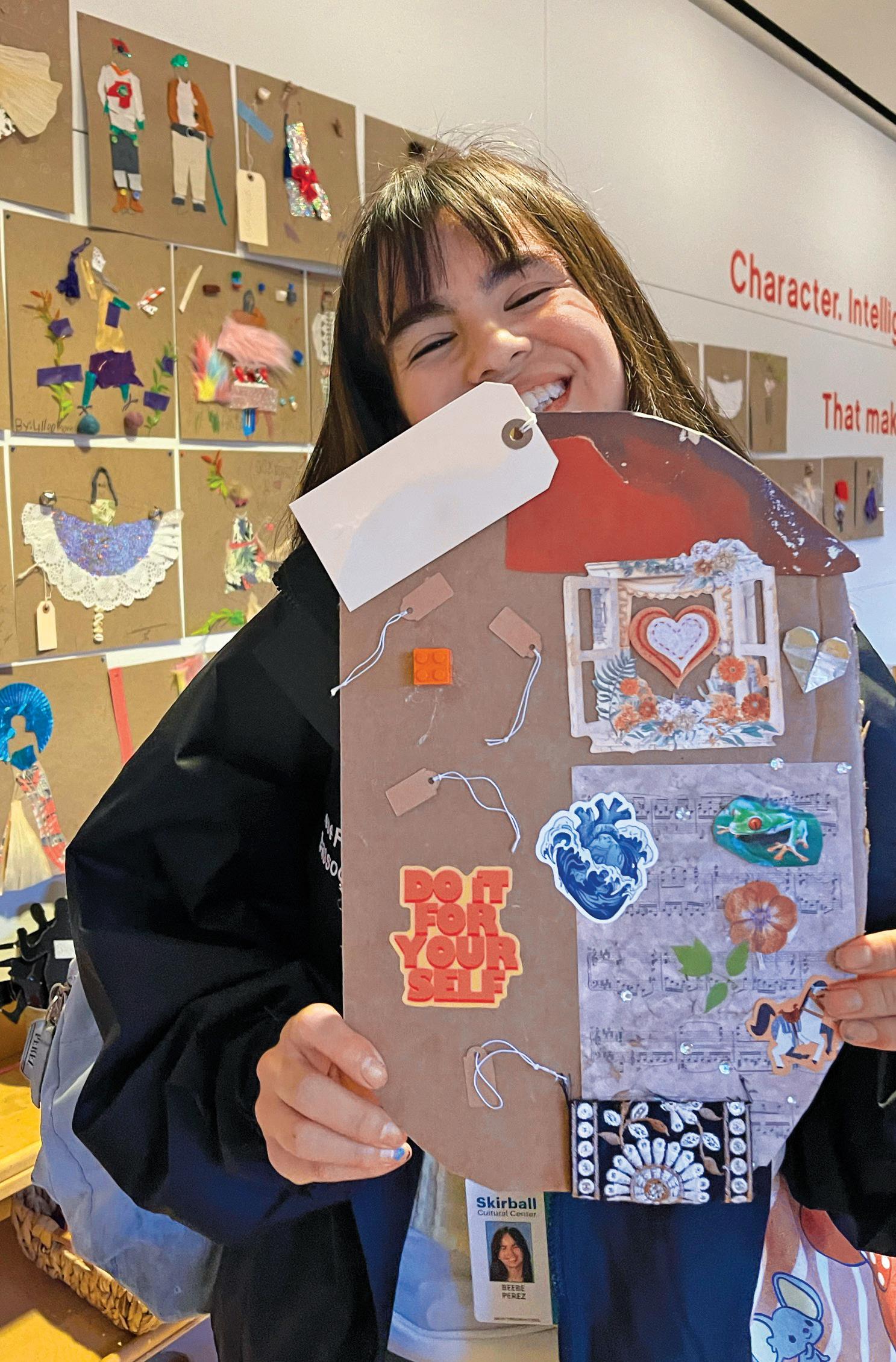
Above, clockwise from left: Skirball Youth Programs Coordinator Sahara Zamudio (second from right) poses with TAC members. Art project on display. TeenTix table at "Late Night!" event. Inspiration board.
A NEW CHAPTER IN THE NOAH’S ARK AT THE SKIRBALL STORY
In December 2025, the award-winning, family-friendly destination reopened with even more discovery, wonder, and hands-on learning aboard an expanded interactive and inclusive destination.
Inspired by the biblical flood story—and hundreds of flood stories from around the world—Noah’s Ark at the Skirball attracts more than 50,000 visitors and students every year who learn about the story’s universal themes of resilience and second chances that resonate across all generations and communities.
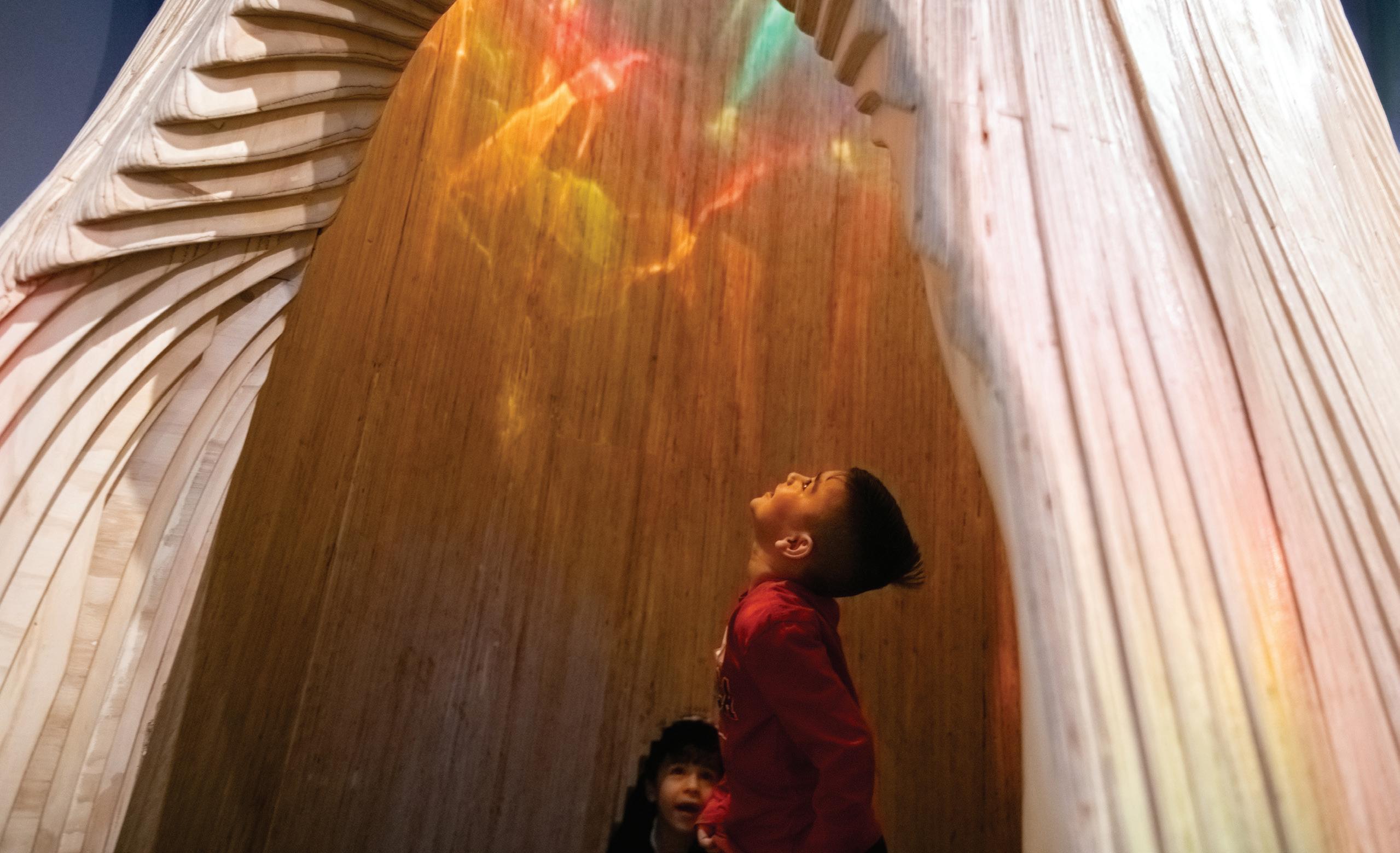
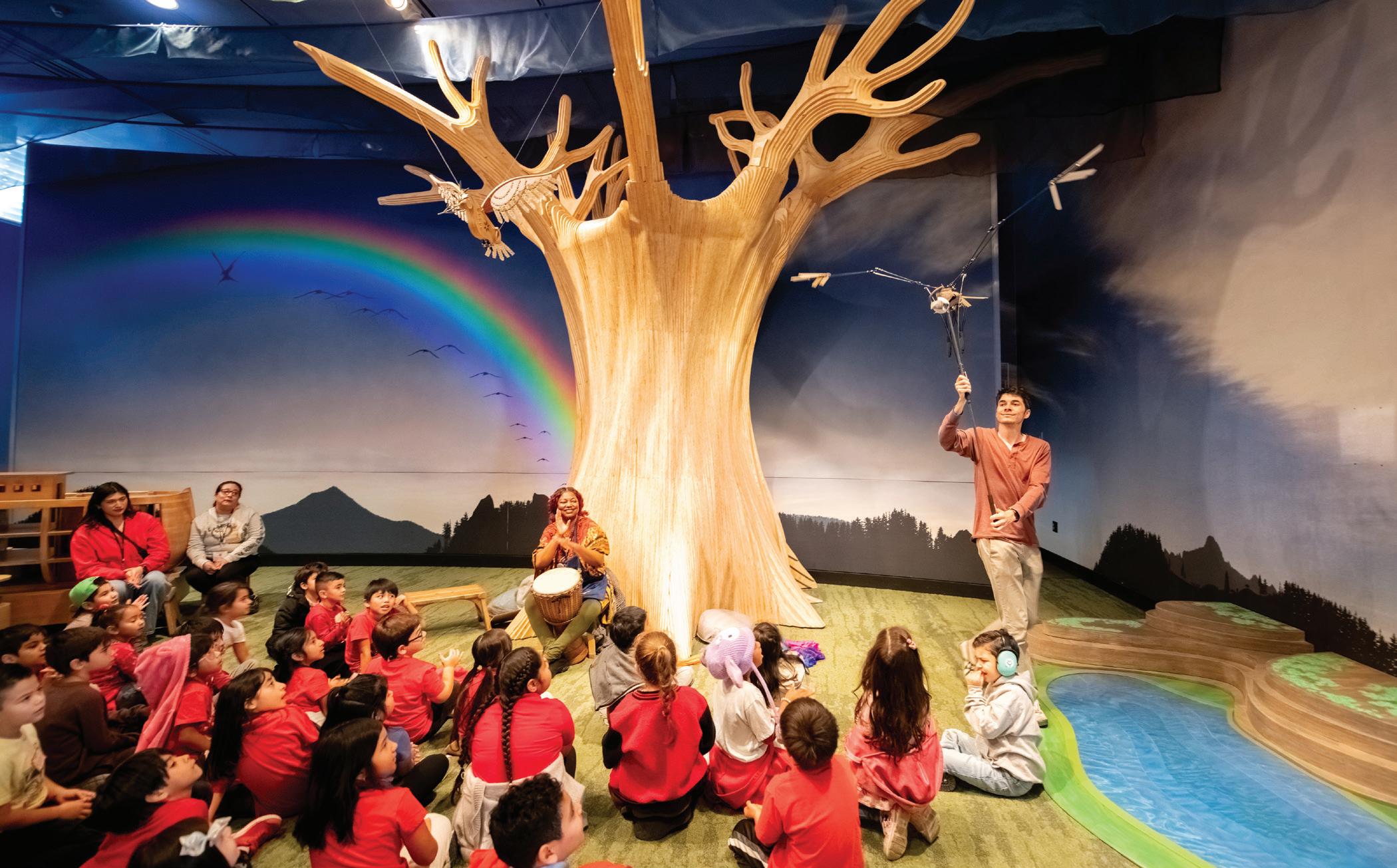
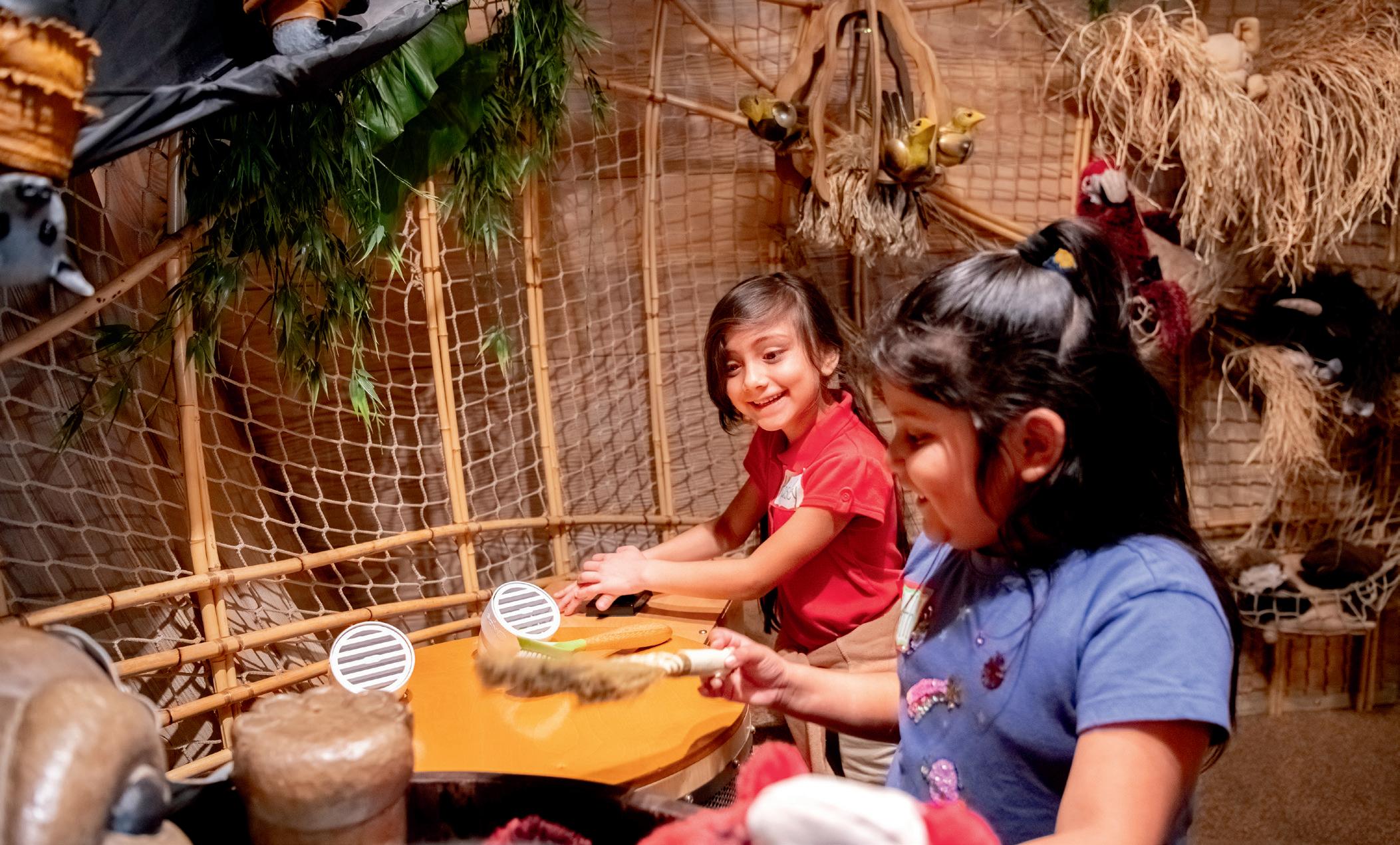
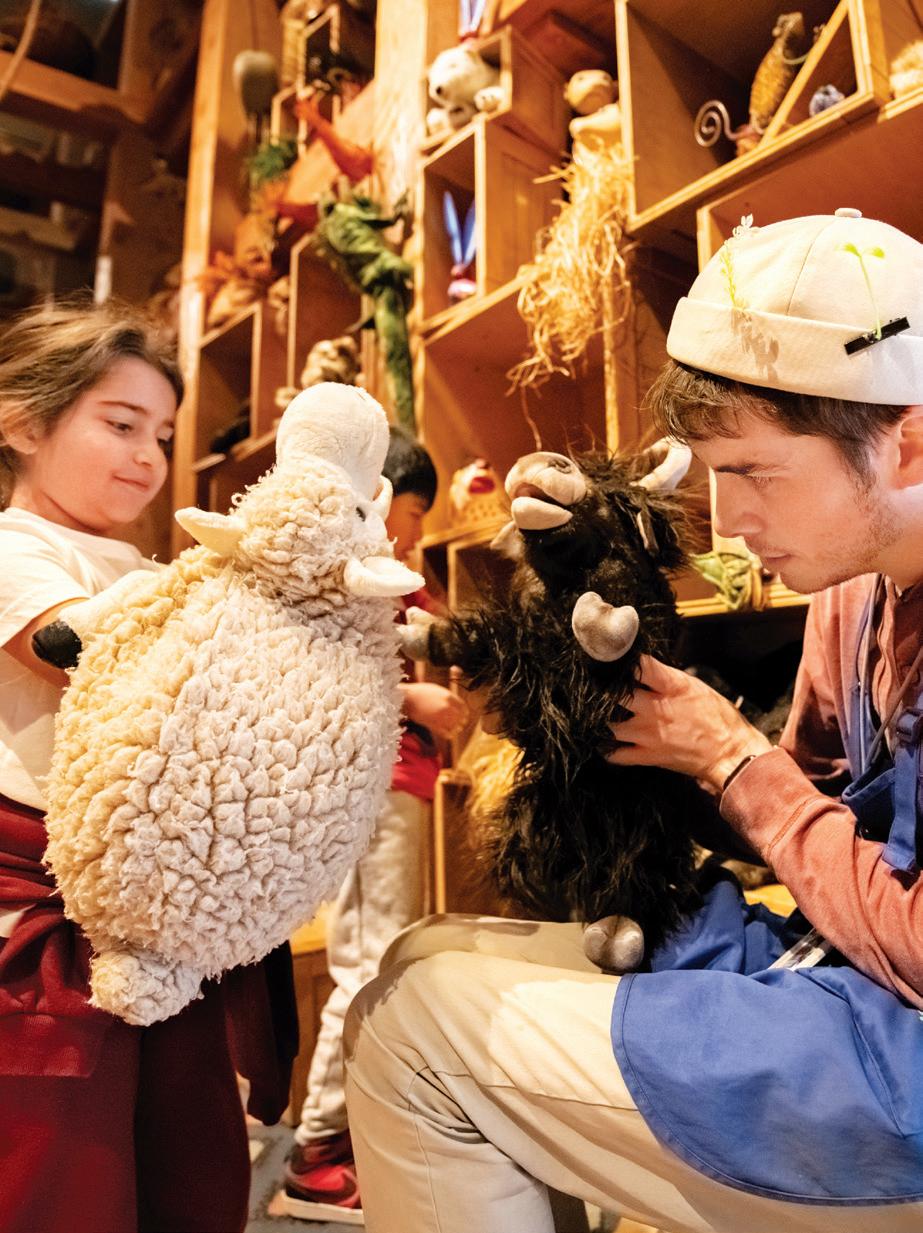
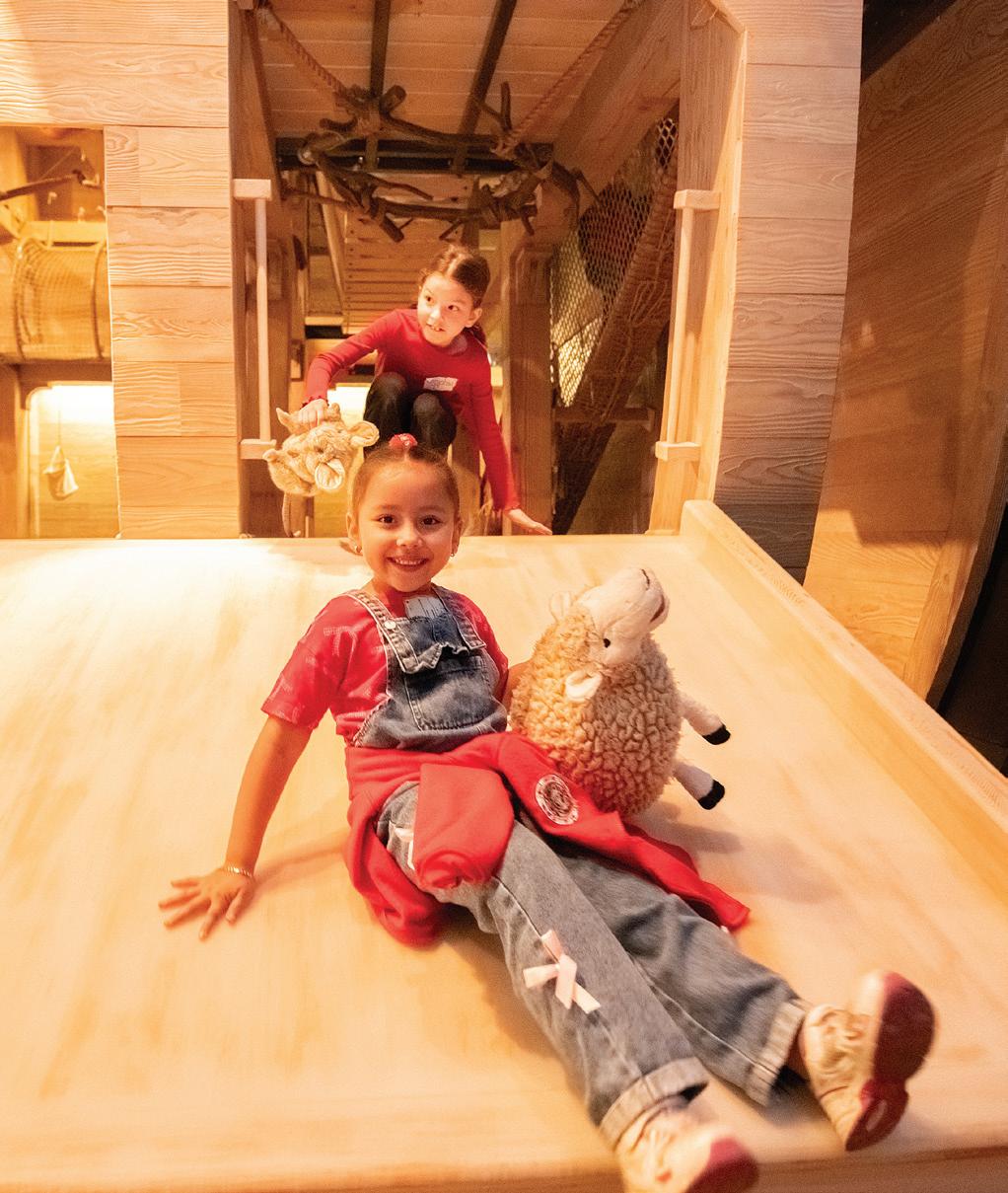
Now, new and returning visitors experience enhanced gallery spaces, including immersive lighting and brand-new interactive experiences like a giant olive tree, slides to help little ones disembark from the Ark, a planting area, and a watering hole where the Skirball’s whimsical and handcrafted animal puppets can roam.
Skirball storytellers and puppeteers vividly bring flood stories to life in the updated Rainbow Gallery in Noah's Ark.
Lindsey Best
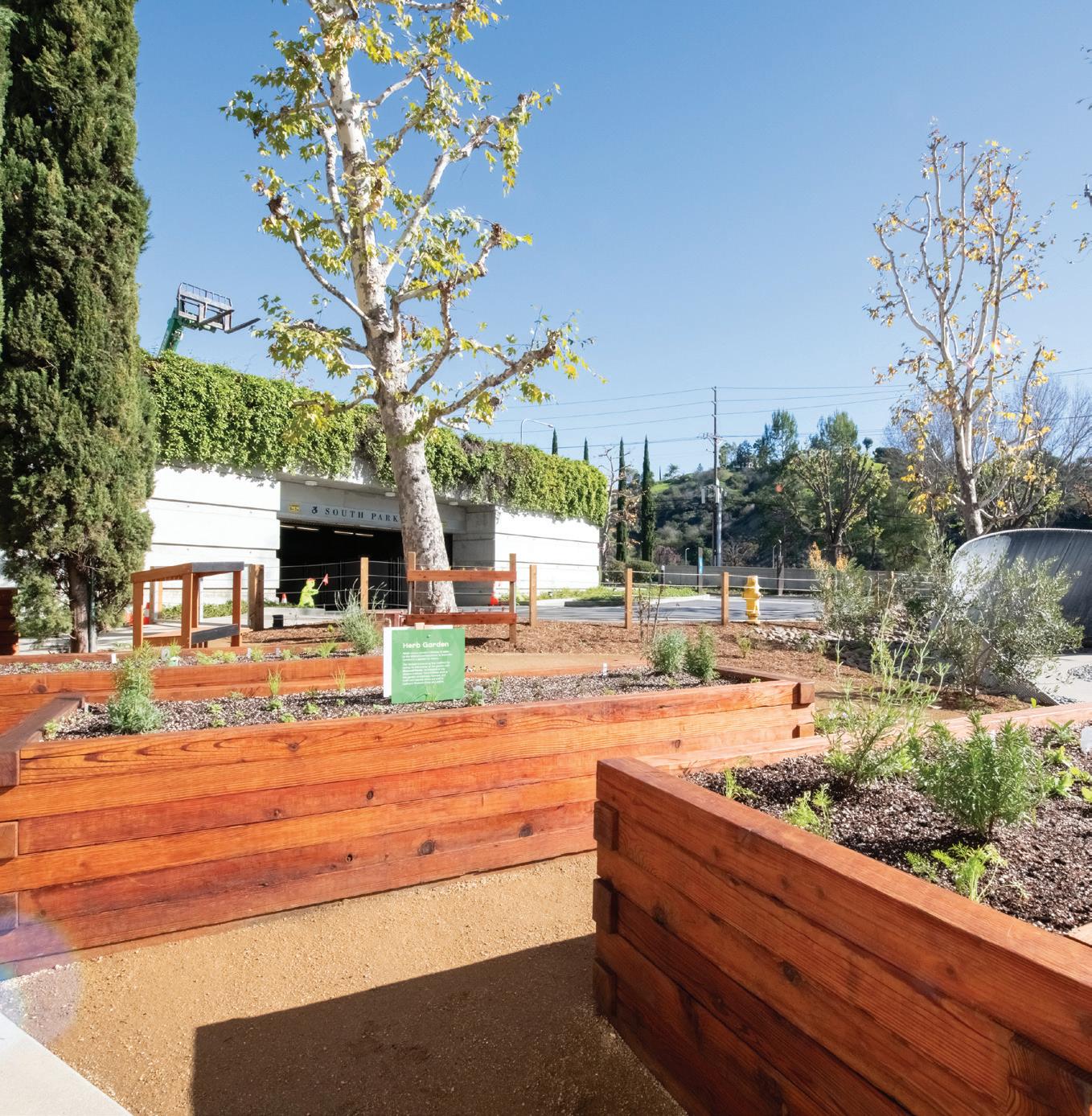
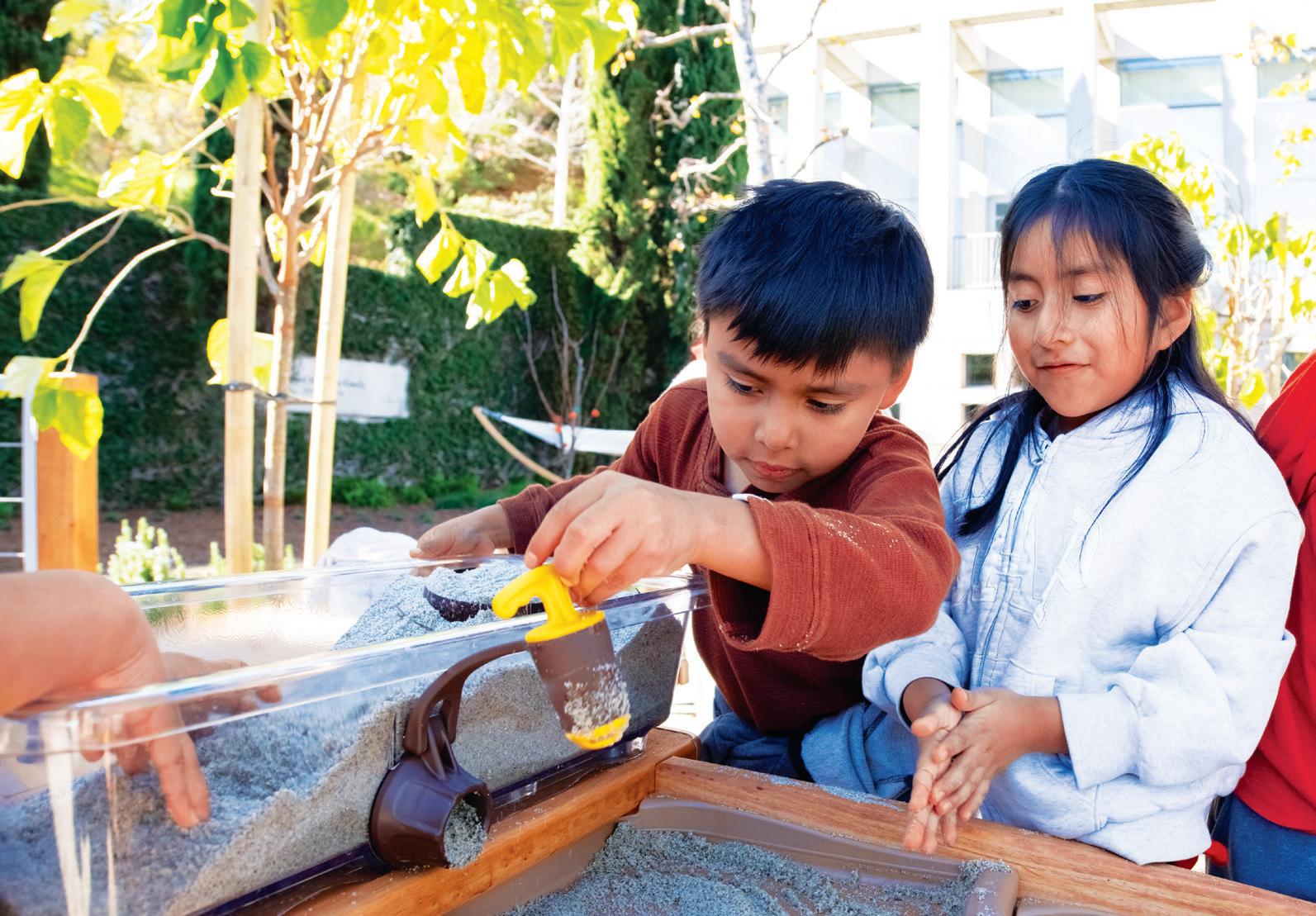
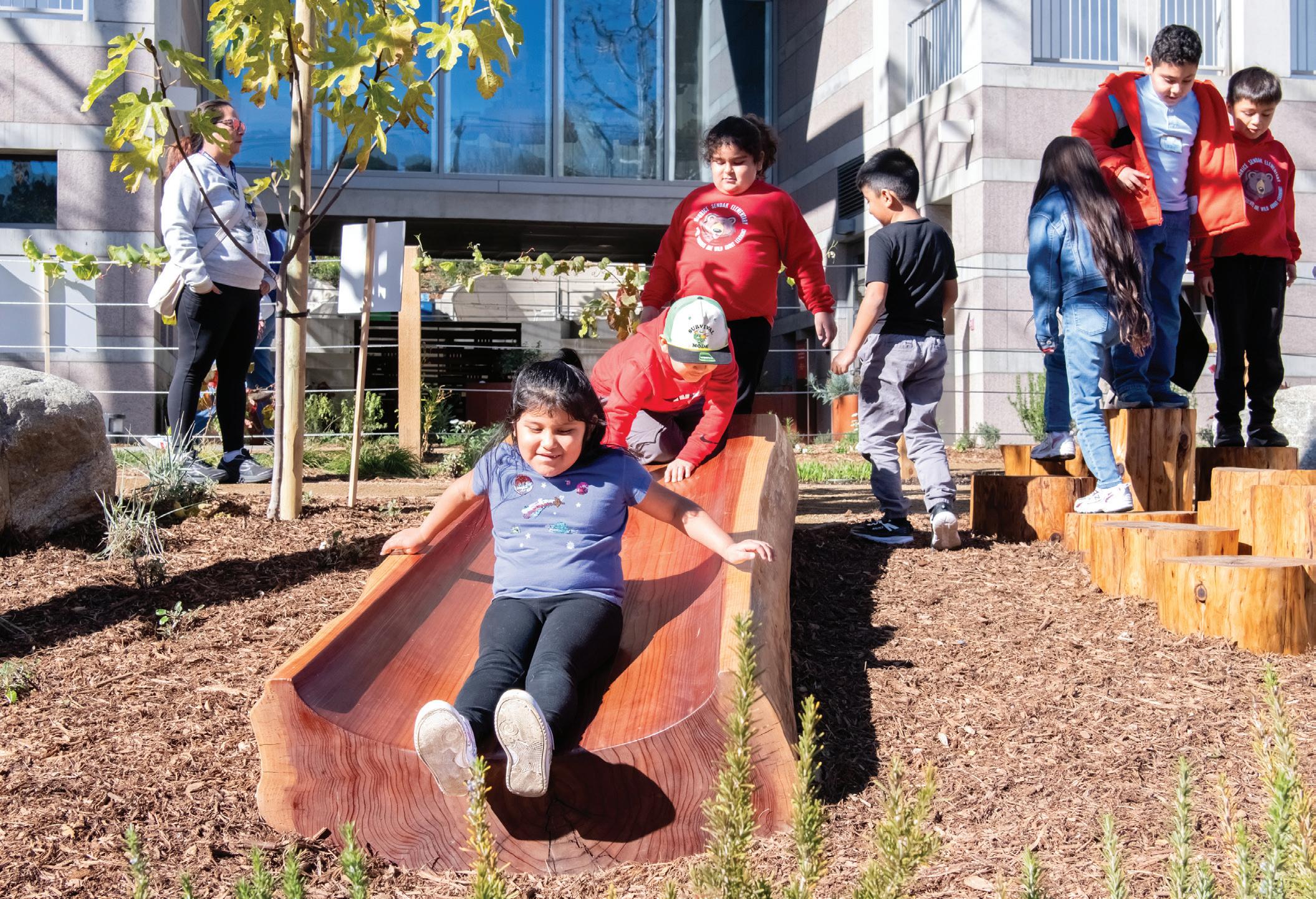
The story continues as visitors venture outside of Noah’s Ark into the new Bloom Garden. Inspired by the Jewish values of renewal, connection, and caring for the earth, this updated outdoor space invites nature-based play and exploration for all ages with picnic areas, sensory garden paths, a stream to splash in and a rowboat that has run aground on a sandy shore for imaginative play, and much more.
“Noah’s Ark has always been a place where kids come to play, imagine, and make friends,” said Nina Silver, Director of Noah’s Ark and Family Programs at the Skirball. “By adding new ways to move and play inside Noah’s rainbow gallery, plus our new learning garden where families can explore and enjoy nature together, it feels like the next chapter in our Noah’s Ark story: caring for the earth—a core Jewish value—and getting a fresh start after the flood.”
The Skirball’s team of museum educators and early childhood specialists are developing self-guided and educator-led curriculum for school tours and the general public.
Caring for the animals in Noah's Ark is all about teamwork.
Sending creatures big and small, two by two, into the ark.
Lindsey
Best
LindseyBest
Sharing in a timeless story.
The raised beds of the pe’ah garden highlight the Jewish values embedded in its design.
Right: Water and sand play invite children to learn about sustainability and the importance of caring for the earth and one another.
Above: Mingling with cuddly companions.
LindseyBest
LindseyBest
LindseyBest
Lindsey Best
Additionally, the Skirball collaborated with several creative partners to develop this new chapter in the Noah's Ark story, including:
Olson Kundig—Original architects of Noah’s Ark at the Skirball led by Alan Maskin Gizmo—Fabricators and installers, bringing Olson Kundig’s concepts to life
Farmer D—Principal and founder Daron Joffe joined by landscape architect Alli Wilson designing and building the new Bloom Garden
Shemesh Farms—A local, nonprofit farm focused on sustainable agriculture, education, community engagement, and inclusive workforce training Getty—Providing support through the Getty Global Art & Sustainability Fellowship initiative
Living Willow Farm—Howard Peller’s sculptural willow trees and branches forming a playful tunnel and hut
Luminesce Lab—Lighting designers working at the intersection of new materials, installations, and architecture
Imaginative play structures invoke the imagery of the flood story’s conclusion.
A new indoor slide provides a smooth entrance into the Rainbow Gallery.
Lindsey Best
Lindsey Best
2701 N. Sepulveda Blvd.
Los Angeles, CA 90049
(310) 440-4500
skirball.org
IN MEMORIAM
Dennis Holt and Wilma Friedman
This past year the Skirball lost two founding pioneers. Dennis Holt served as a trustee and honorary trustee for more than twenty years. Among many gifts, Dennis conceived of the Skirball’s first marketing campaign, introducing the new cultural center to Los Angeles as a place of celebration for all. Wilma Friedman founded the Skirball’s Volunteers Council, training the first eighty volunteers and recruiting another two hundred members over the next two decades. Already we miss their wisdom and care. Forever we honor their memories.