










Publisher Rebecca Poynter
Editor Brian Kelly
Advertising Contact us: Amanda Bequette abequette@kvnews.com
Brandon Mattesich bmattesich@kvnews.com
Sabrina Nutt snutt@kvnews.com
Ag Journal 401 N. Main Street Ellensburg, WA 98926
509-925-1414
Publisher Rebecca Poynter
Editor Brian Kelly
Advertising Contact us: Amanda Bequette abequette@kvnews.com
Brandon Mattesich bmattesich@kvnews.com
Sabrina Nutt snutt@kvnews.com
Ag Journal 401 N. Main Street Ellensburg, WA 98926
509-925-1414
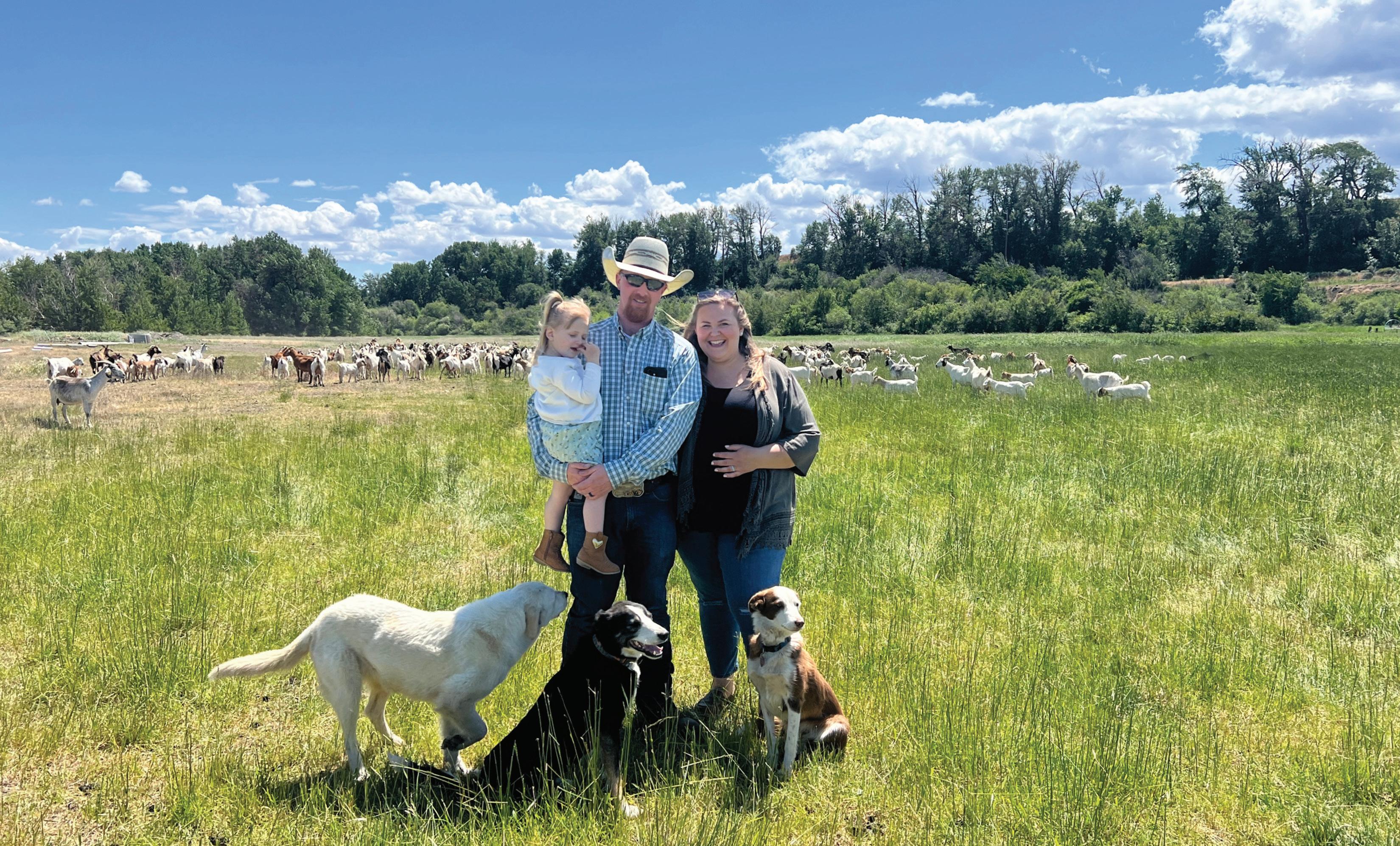
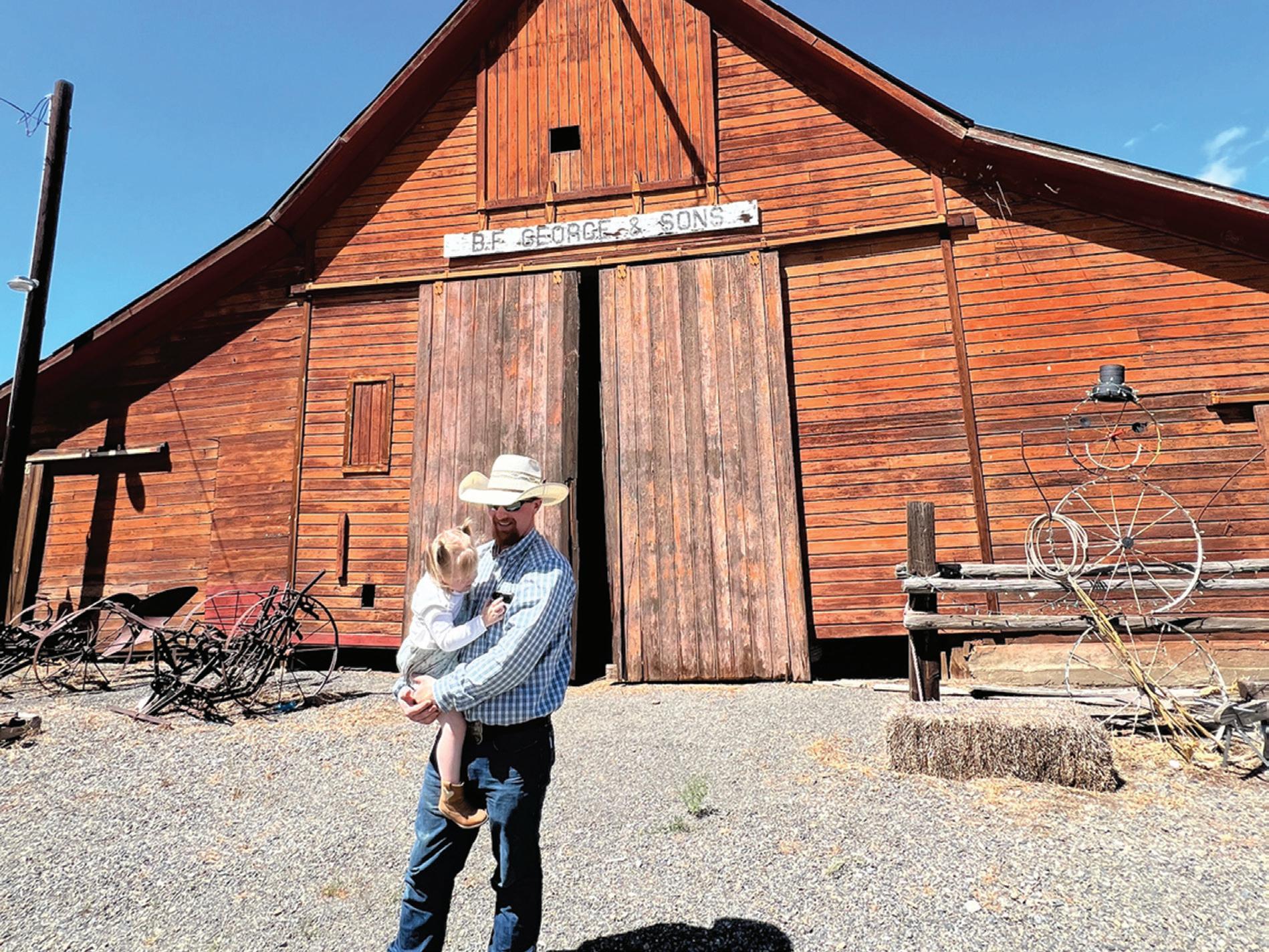
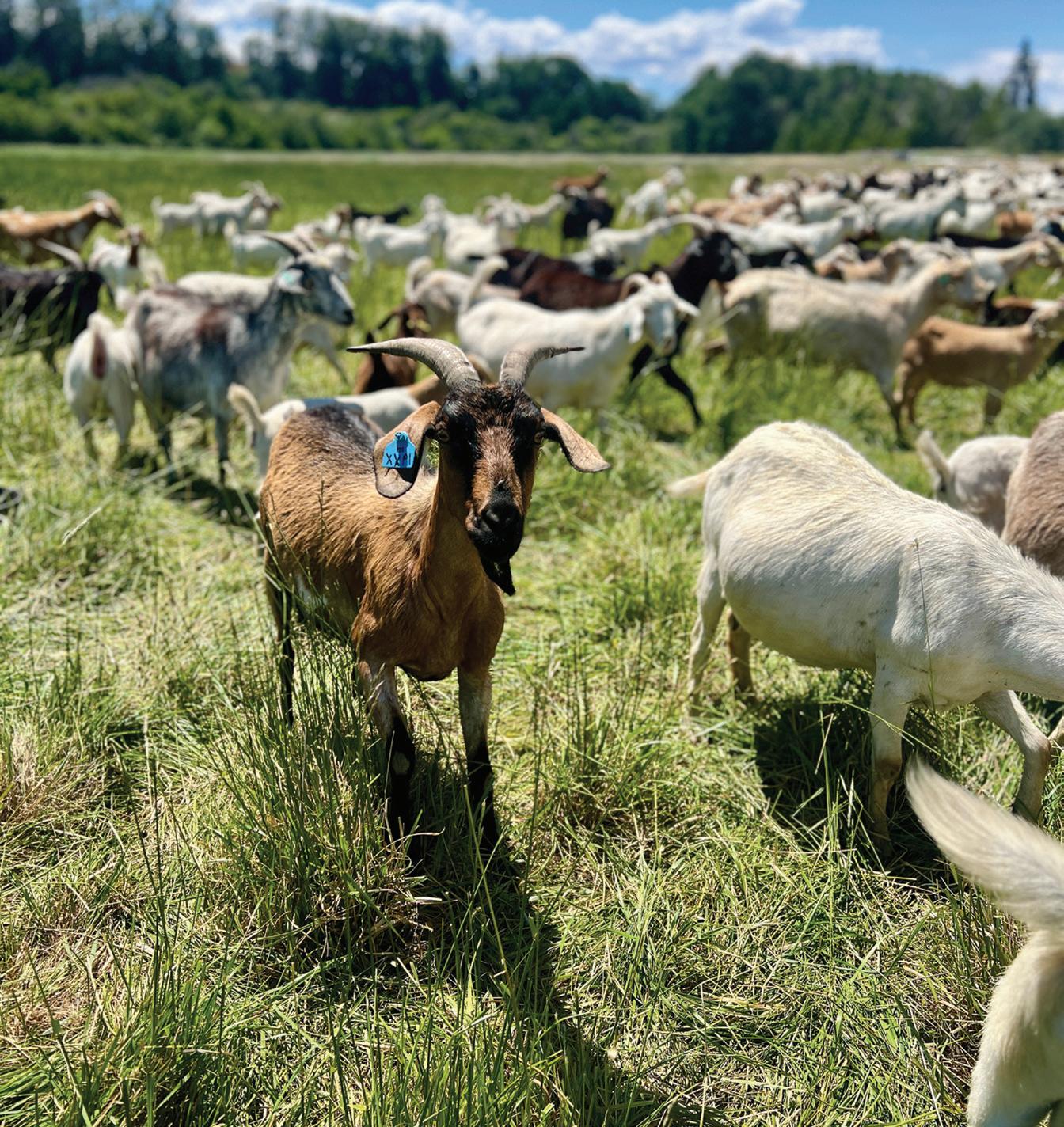
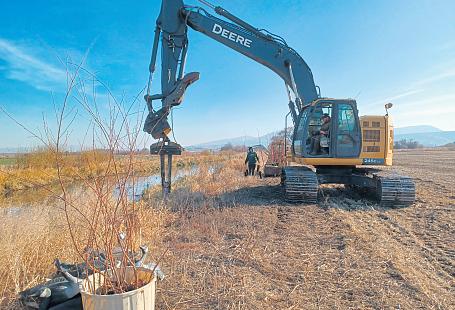
Rooted in Thorp, Bar O Bar Livestock is a family operation built on generations of agricultural knowledge and a genuine love for the land. Run by Ethan and Faith George, the operation raises meat goats and offers contract grazing services, a
farily new concept which is reshaping how landowners and conservation organizations think about vegetation management.
Ethan’s family purchased the land in 1928, and he holds a degree in animal science and range management that
he’s put to work every step of the way. When drought years began cutting into hay production income, Ethan and Faith looked at what they already had — a growing herd of goats — and saw an opportunity. Faith listed the business online almost as an experiment. The inquiries came back faster than expected, and Bar O Bar’s contract grazing operation has been growing ever since.
Their two largest customer types reflect a broader conservation mission: agencies and landowners working to restore native plant communities by eliminating invasive species, and those focused on reducing wildfire fuel loads.
One of their most notable partnerships is with The Nature Conservancy on an eight-acre site that had gone untouched since 1960 with

vegetation grown to eight feet or higher. Bar O Bar brought in close to 500 goats for an initial 10-day treatment, earned a return invitation, and now manages grazing the site seasonally, strategically splitting grazing days between spring and fall to maximize
impact within the organization’s budget. What makes the goats so effective goes beyond appetite. As browsers by nature, they seek out broadleaf plants, shrubs and woody growth before turning to grass — making them remarkably well-suited for targeted vegetation work. They also graze with surprising strategy, timing their return to certain plants precisely when the stressed plant surges sugars to recover. It’s a level of ecological intelligence that consistently surprises clients.
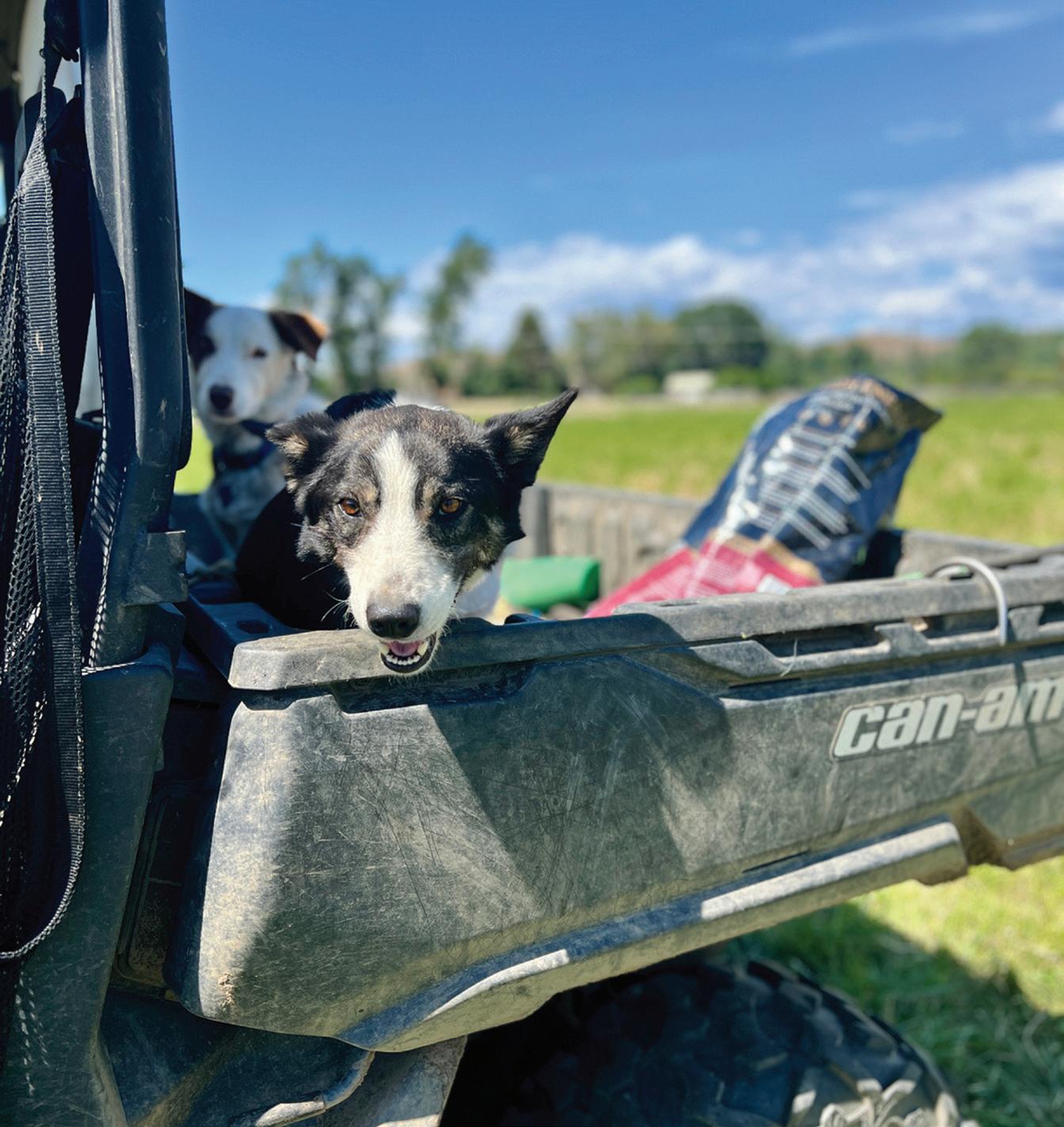
None of this works without the right help — and that means two kinds of dogs. Border Collies Hank and Annie move the herd on command, through training, instinct and focus. The livestock guardian dogs have a different role: they live with the goats full-time, protecting them from predators around the clock. Marley, their 13-year-old guardian, has been with the herd for nine years and, as Faith puts it, “thinks she’s a goat.” It’s a reminder that a working operation like this runs on many moving parts — family, knowledge, animals, and trust built over years.
On the farm, the meat side of the operation runs alongside the grazing work. Kids are born in January and marketed in the fall, primarily
See DISCOVERY on page 11


BY ANNA ROSE | Staff Writer
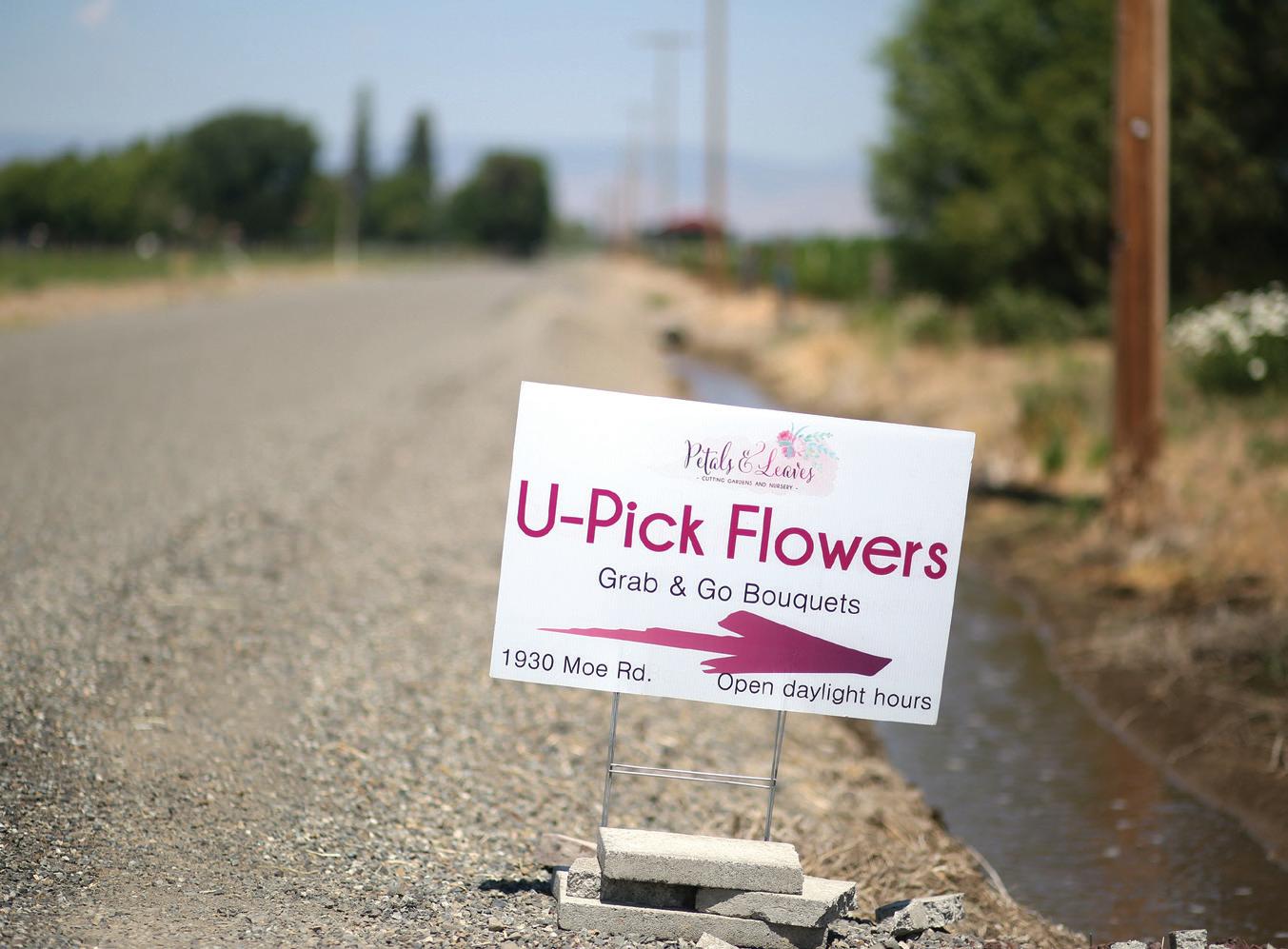
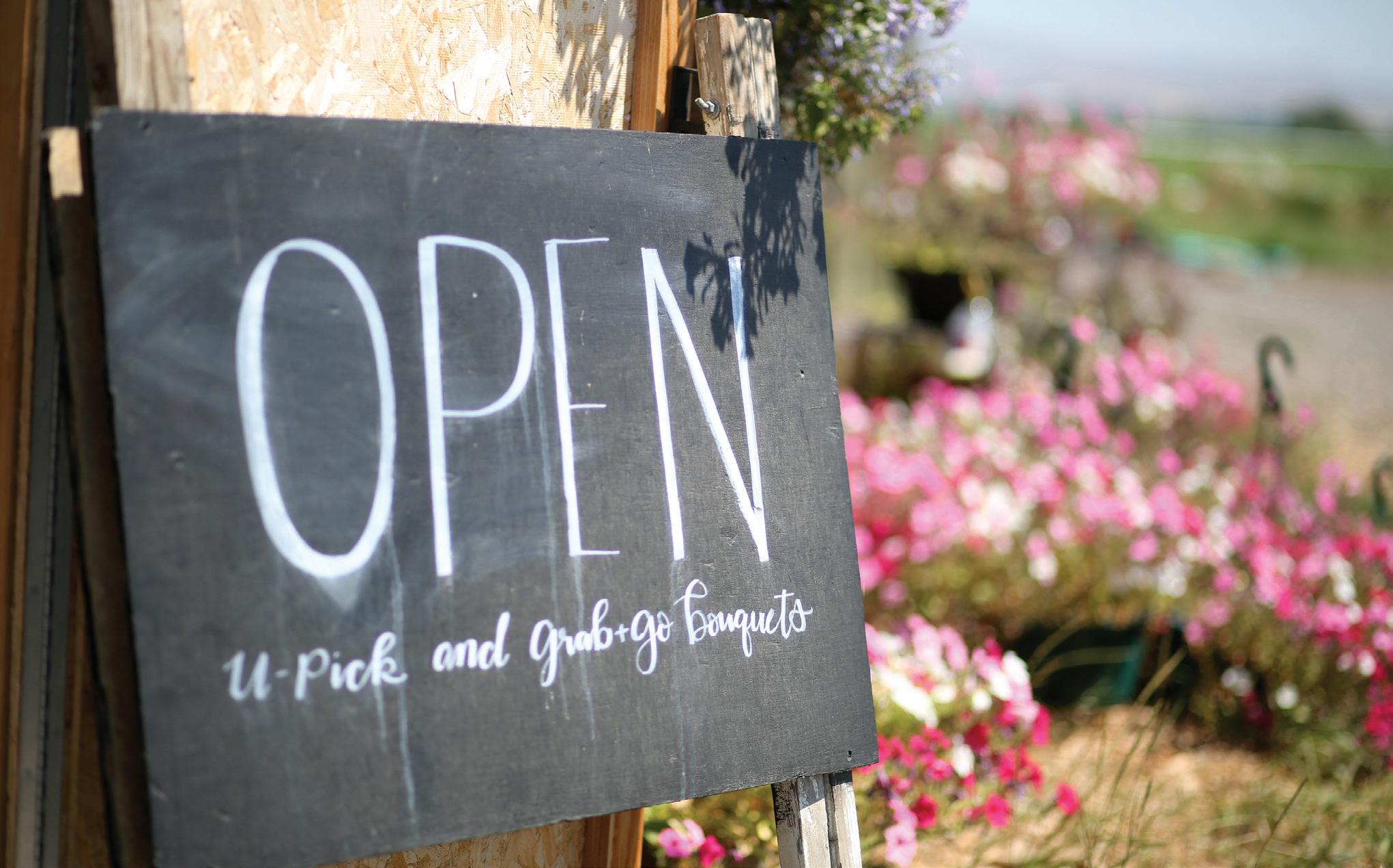
For farmers looking to earn extra income through direct sales, a roadside farm stand can be an attractive option — but it is not as simple as putting produce by the road and hanging up a sign.
Agritourism has become a growing source of income for American farmers.
In 2022, U.S. farms and ranches generated $1.26 billion in income from agritourism services, an increase of 12.4 percent from 2017, according to the U.S. Department of Agriculture.
As more consumers seek locally grown food and rural experiences, Kittitas County is helping local producers explore opportunities to expand farm stands and other on-farm attractions.
As the agritourism advisor to the Kittitas County Chamber of Commerce, Hilary Jensen periodically leads workshops on the ins and outs of owning and operating a farm stand, from regulations and product requirements to marketing and customer outreach.
Under county regulations, a farm stand is defined as a temporary, seasonal business that primarily sells fresh agricultural products grown either on
the farm or elsewhere.
Farm stands may also offer a limited selection of prepackaged food products and nonfood items, along with enhanced agricultural sales. The stands are intended to operate during the local harvest season and, when selling products grown on-site, must be located within 45 feet of the centerline of a public road or highway.
For producers interested in adding homemade goods to their offerings, Washington state’s Cottage Food Law allows residents to prepare and sell certain low-risk, nonperishable foods from their primary home kitchen with a permit from the Washington State Department of Agriculture.
The permit application costs $355, is valid for two years and typically takes six to eight weeks to process. Cottage food producers may sell only directly to consumers — not wholesale — and are limited to 50 approved products, with annual gross sales capped at $35,000.
Approved cottage food products include baked goods such as breads, rolls, muffins, cakes, cookies, pastries, crackers and pies that do not require refrigeration, along with cereals, granola, trail mixes, nuts, snack mixes, tortillas, donuts and similar baked products.
Homemade candies, chocolates, fudge, caramels, brittles and taffy are also allowed, as are jams, jellies, preserves and fruit butters.
Vendors may also package dried

herbs, teas, seasoning blends, bread mixes, soup mixes and dip mixes made from approved ingredients, and roast small batches of coffee beans using noncommercial countertop equipment.
However, the list of prohibited products is extensive. Farm stands cannot sell fresh or dried meat, poultry or fish products; canned fruits and vegetables, salsas, pickles and other home-canned foods; dairy products such as cheese and yogurt; cut fresh fruits and vegetables; fresh juices; beverages; barbecue sauces, ketchup and mustard; garlic-in-oil mixtures; raw seed sprouts; focaccia-style breads topped with vegetables or cheese; baked goods requiring refrigeration, including cream pies, custard desserts and pastries with cream cheese or fresh fruit fillings; ice products; or foods not intended for human consumption, such as pet treats.
Beyond meeting regulations, Jensen said prospective farm stand operators should think carefully about the practical side of running the business.
Keep in mind accessibility, parking, visibility from the road, signage, neighbors, personal space, cold storage
and cash boxes, Jensen says, as well as whether a stand should be portable or permanent.
There are advantages to both options. A permanent farm stand offers greater security and consistency, while a portable stand allows for easier transportation, loading at the source and opportunities for expansion.
Marketing is another key piece of a successful farm stand. Creating a recognizable farm stand name, using Facebook and Instagram to promote products, posting regularly on community social media pages, claiming a Google Business listing, installing visible signs and flags, partnering with neighboring businesses, advertising at complementary local shops, distributing posters and donating products to community events can all help attract customers.
Because the Kittitas County Chamber of Commerce recognizes local farm stands as part of its agritourism efforts, Jensen also encourages operators to join the chamber to increase visibility and connect with the community.

The Kittitas County Chamber of Commerce sponsored an electric farm vehicle/equipment day in June, at Jensen Farms.
The E-Farms program tests electric farming equipment, compares it to traditional combustion models, and works to reduce barriers to electrifying working lands. We lend electric tractors, pickup trucks, UTVs, and more to farmers, ranchers, and other users at no cost. In turn, we collect feedback on benefits and limitations, comparability to non-electric equipment, and consumer preferences. If you’re interested in attending an event, or exploring electric, visit efarmsamerica.org
We’ve had a lot of folks ask about our Farmstand Workshops, so we’re hosting one more for the year, July 22 from 5:30 to 7:00, at the Business Development Center in Cle Elum.
Learn about WSDA Cottage Law permits, prohibited items, farmstand codes, marketing, insurance considerations, general small business resources and more. This is a great place to start for home gardeners wanting to sell their bounty, small farms and ranches wanting to sell straight off the farm and homebakers/makers wanting to take things to the next level.
Get all of the details and register at bit.ly/4fqP4bz


This salad is quick, simple and doesn’t require grilling your peaches, like many summer salad recipes do.
Salad
4 cups
1 cup
2 ¼ cup
½ cup
¼ cup
Dressing
3 Tbs
1 Tbs
1 Tbs
1 tsp
Mixed greens
Fresh blueberries
Medium peaches, sliced
Red onion, thinly sliced
Feta or goat cheese
Pecans/walnuts (opt.)
Mix your greens, blueberries, red onions, peach slices, cheese and nuts, if you’re using them, in a large bowl. Whisk together your dressing ingredients and drizzle over your salad. Serve immediately.
Tips for storing peaches:
If they're still firm
Leave them at room temperature, stem side down
Keep them out of direct sunlight
They typically ripen in 1 to 4 days

Olive oil
Honey
Balsamic vinegar
Dijon mustard
Salt & pepper to taste
Adapted from: Plateful Stories
Want to speed up ripening?
Place them in a paper bag
Add a banana or apple to the bag if you want to speed things up even more
Once they're ripe
Refrigerate them in the crisper drawer
They'll usually stay at their best for 3 to 5 days
Refrigeration can slightly dull their flavor, so take them out 30 to 60 minutes before eating to let them warm up a bit
BY DEVANEE LOPEZ | Staff Writer
The Kittitas County 4-H Jr. Horse Fair is getting ready to gallop as clubs prepare for their annual event.
“This year has been a meaningful reminder of how deeply 4-H is connected to our community and how much our youth, volunteers and families contribute to Kittitas County,”
said 4-H program manager Amy Alder.
The program consists of 18 active clubs with 430 members in total and 90 volunteers helping make the event possible.
The four clubs in Kittitas County are Bits & Buckles (Ellensburg); Gallop & Graze (Cle Elum); Stirrups & Irons (Ellensburg) and Trailblazers (Ellensburg).
Their project enrollments include 61 horses, 50 swine and 45 sheep.
About 50 kids will be involved in the fair with three age groups; juniors 8-10, intermediate 11-14 and seniors 14-18.
“Beyond the numbers, the impact of 4-H is best reflected in the experiences of our youth,” Alder said.
A past 4-H member shared: “When I first joined 4-H, I was very shy and nervous about speaking in front of others. Over the years, I found a welcoming community that helped me grow into a more confident and outgoing person. I’ve built friendships, learned life skills, and gained experiences that will stay with me long after 4-H.”
“Stories like this reflect the heart

DISCOVERY from page 5
to ethnic community buyers who purchase for holidays and year-round consumption. Ethan is quick to note that goat is the most widely consumed red meat in the world — a fact that surprises most Americans.
Looking ahead, Ethan and Faith are focused on scaling up — taking on more conservation projects and eventually
bringing on help so the operation can grow. With deep roots and a herd that earns its keep twice over, Bar O Bar is one to watch.
Reach out through their website to inquire about contract grazing services for properties one acre and larger across Washington state: www. barobarlivestock.com. Follow on social media to see what’s next for this family: @barobar_livestock.


FAIR from page 10
of 4-H youth gaining confidence, developing life skills, and building meaningful connections through handson learning and mentorship,” Alder said.
The Kittitas County 4-H Jr. Horse Fair will take place from Aug. 20 to Aug. 23.
Organizers are hoping for a good turnout this year.
“It makes it hard for kids to get representation when the community doesn’t know about it,” said Pauline Clyburn, who also works the 4-H fair.
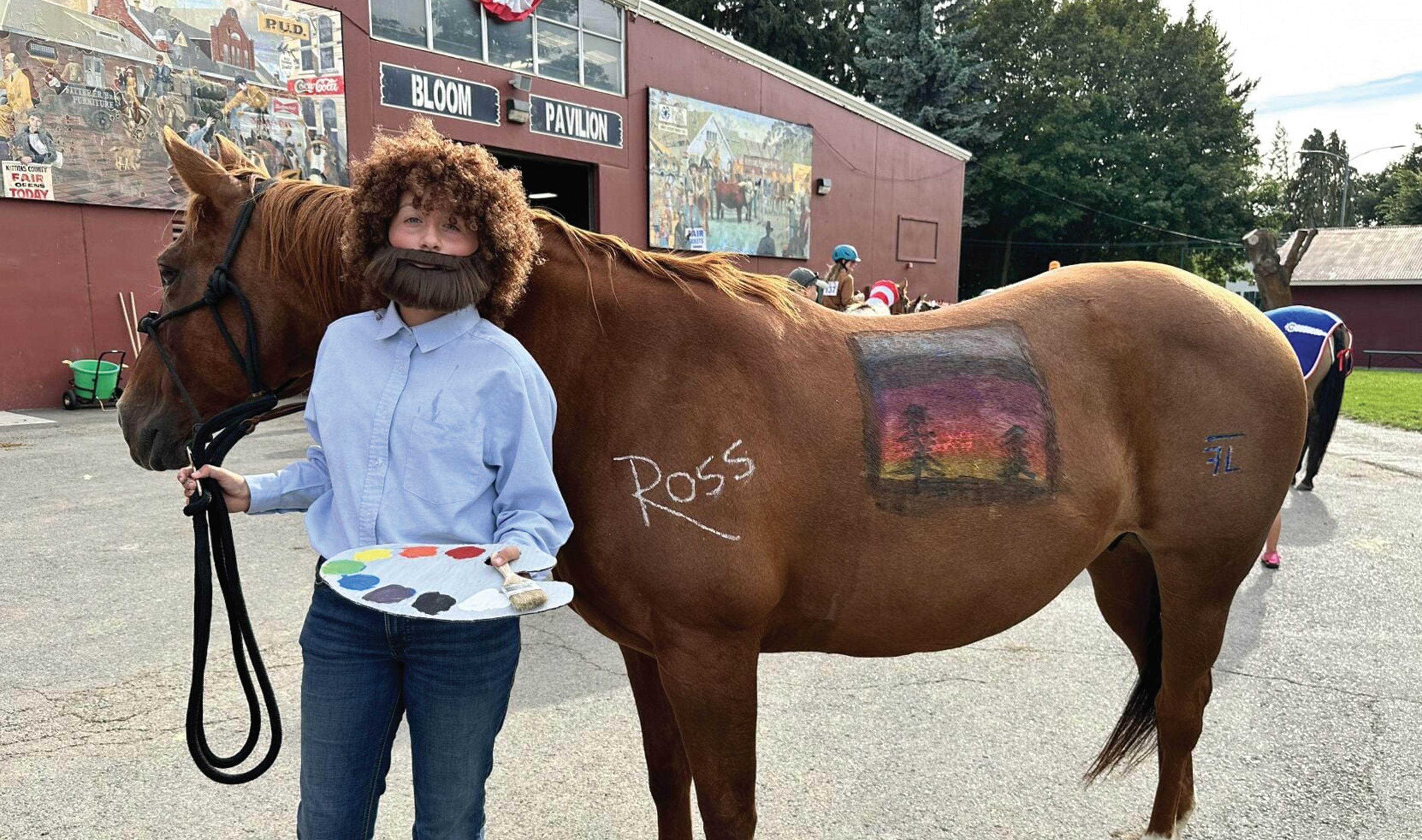
One of the most popular days is Saturday, when horses and their owners get to dress up for the costume class event.
4-H was originally introduced into Kittitas County in 1902 with the first club originating in 1928 after the development of the fairgrounds.















BY ANNA ROSE | Staff Writer
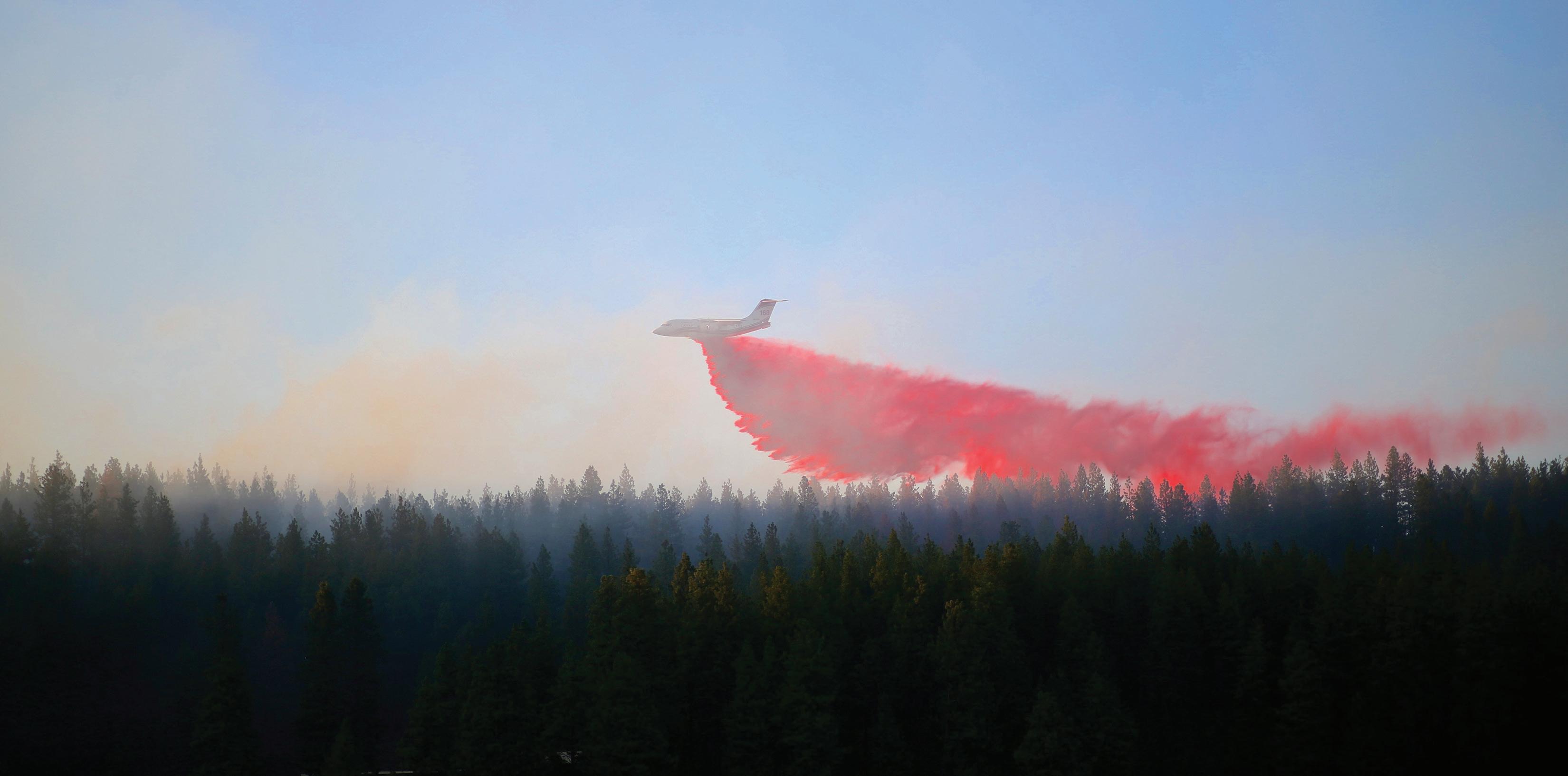
Wildfire danger continues to increase across the western United States, making preparation more important than ever for homeowners, particularly those living in rural communities.
According to the Washington State Department of Ecology, the number of large wildfires doubled between 1984 and 2015. Scientists attribute the increase to a combination of earlier snowmelt, rising temperatures, drier summers and more frequent drought conditions.
For rural property owners, the greatest risks are often preventable.
Cle Elum Fire Chief Ed Mills said one of the most common hazards firefighters encounter is poorly maintained property.
“There’s a lot there,” he said, that can provide extra fuel for fire if not properly maintained.
Overgrown vegetation, accumulated debris and buildings that have not been properly maintained can all contribute to the rapid spread of wildfire.
Emergency officials emphasize that protecting lives should always come
before protecting property. If a wildfire threatens a home and evacuation is recommended, everyone who is not essential to defending the property should leave immediately, along with pets.
Families are encouraged to establish a designated meeting place, identify multiple evacuation routes in advance and notify a friend or relative of their evacuation plans.
Before leaving, homeowners should take steps to improve the safety of their property. Vehicles should be parked inside the garage facing outward with windows rolled up. Important documents, valuables and irreplaceable keepsakes should be placed inside the vehicle. Garage doors should be closed but left unlocked, and automatic garage door openers disconnected so firefighters can open the door manually if necessary.
Outdoor combustible items, including patio furniture, should be moved inside the home or garage.

Propane tanks and natural gas supplies should also be shut off before evacuating.
For those who remain behind to defend their property, personal safety
See FIRE on page 15

VSPisanon-regulatory,incentive-based approachtoprotectingcriticalareason agriculturallands,whilemaintainingagricultural viability.
CriticalProtectionAreas:
•Wetlands
•FrequentlyFloodedAreas
•CriticalAquiferRechargeAreas
•GeologicallyHazardousAreas
•FishandWildlifehabitatconservationareas
HowtoGetInvolved:
•ShareStewardshippracticesimplementedonyourland withtheVSPCoordinator
•Evaluateadditionalconservationopportunitieson yourland
•Implementstewardshippracticesthatfityouroperation
VSPCoordinator:AnnaLael – 509-925-3352ext.7,anna.lael@kccd.net
Workingtogether,farmersandrancherscandemonstratethatcurrentlandstewardshipprovidesbothprotectionand enhancementofcriticalareaswithouttheneedforadditionalregulatorycontrols.ContactKCCDforinformationabout availabletechnicalandfinancialassistance(funding)forstewardshippracticeimplementation.
RegularBoardMeetings
2ndThursdayEveryMonth (7AMApr-Oct;1PMNov-March)
BoardofSupervisors:
ToLearnMoreaboutKCCDandourPrograms, VisitUsIn-PersonorOnlinewww.kccd.net
•MarkMoore•LynnBrown•JeffBrunson
• Mark Moore • Matt Eslinger • Jeff Brunson
•BillBoyum•MattEslinger
• Bill Boyum • Brian Cortese
AnnaLael–DistrictManager 2211WDolarwayRoadSuite4,Ellensburg,WA98926 509-925-3352Ext7
BY ANNA ROSE | Staff Writer
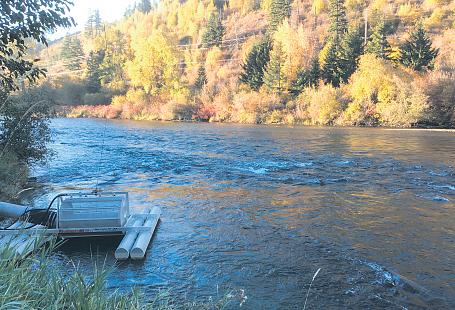
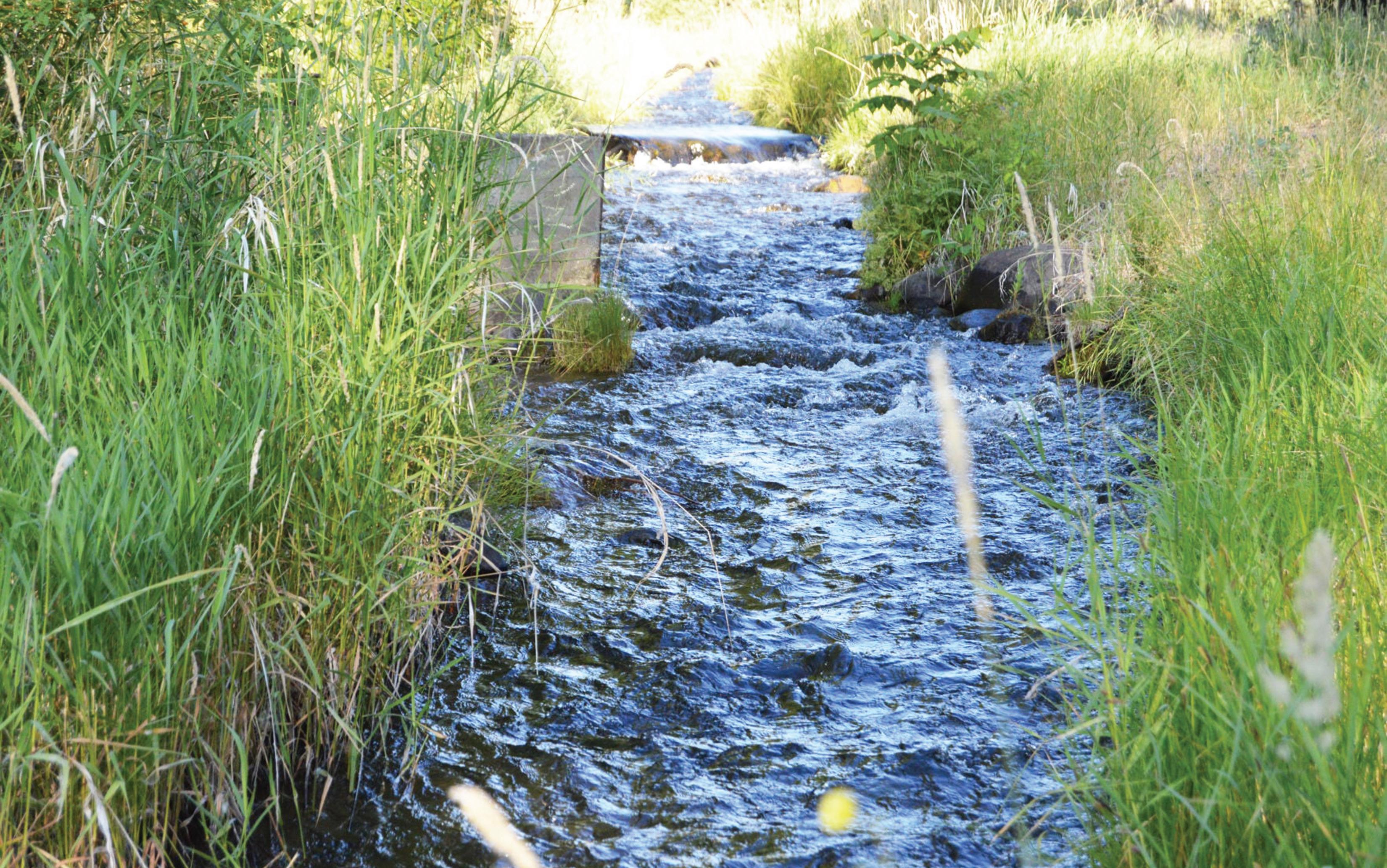
For more than a century, one question has shaped the lives of generations living in Kittitas County: Who has the right to use the water that flows through the valley?
The answer can be found in the history books — when a water right was established, how the water has been used, and how courts, tribes, state agencies and communities have balanced competing demands for a
limited resource.
Long before irrigation canals crossed the landscape, the Yakama people and other Indigenous communities relied on the rivers and streams of the region for fishing, travel, gathering and cultural practices. The Yakama Nation’s reserved water rights, recognized through treaties and later legal decisions, remain an important part of water management throughout the Yakima River Basin, particularly where fisheries, habitat and water availability intersect. The U.S. Supreme Court’s decision in United States v. Winans of 1905, as well as in later federal proceedings, affirmed that treaty rights include protection
of resources necessary to support traditional fishing practices.
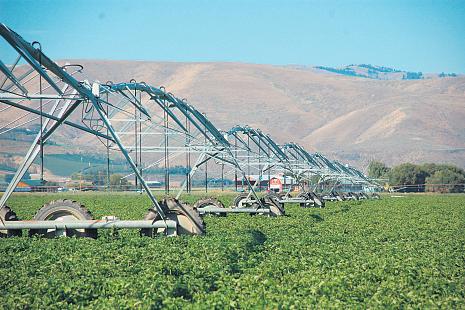
When Euro-American settlers arrived in the Kittitas Valley in the mid-1800s, they encountered a landscape where successful farming depended on moving water. Rainfall was often insufficient for reliable agriculture, and early settlers constructed private ditches and diversions to support livestock and crops.
According to the U.S. Bureau of Reclamation, irrigation development expanded rapidly throughout the Yakima Basin during the late 19th
See WATER on page 15
century.
Washington state’s water system developed around the doctrine of prior appropriation, colloquialized as “first in time, first in right.” Under this system, the earliest valid water users generally have priority over later users when supplies are limited.
The Washington State Department of Ecology notes that a water right is not ownership of the water itself; it is a legal authorization to use a specific amount of water for a beneficial purpose, such as irrigation, domestic use or municipal supply.
That priority system created the terms “senior water rights” and “junior water rights”. A senior right is one with an earlier priority date, meaning
14 FIRE from page 12
is essential. Officials recommend wearing only cotton or wool clothing, including long pants, a long-sleeved shirt or jacket, sturdy boots and gloves. Protective goggles, a face covering or handkerchief, and plenty of drinking water should also be readily available. Preparing the home itself can help reduce the likelihood of ignition from wind-driven embers. Homeowners should close all windows, doors and exterior vents, along with interior doors. Fire-resistant shutters or drapes should be closed if available, while lightweight curtains and other combustible materials should be moved away from windows. Homes with pre-cut plywood coverings should install them over windows and glass doors. Officials also recommend turning off pilot lights and opening fireplace dampers while leaving the screen securely in place to help prevent sparks from entering the home.
Simple preparations can also make it easier for firefighters to protect the property. A ladder should be placed against the house to provide roof access, and garden hoses should be connected with spray nozzles attached. Keeping soaked towels, rags or small rugs nearby
it generally has a stronger claim during shortages. A junior right is established later and, while still legally valid, may be reduced or shut off when there is not enough water to satisfy all users. Seniority does not mean a user owns the river, has unlimited water, or is more important than other users. It determines the order in which competing rights are served during times of scarcity.
In Kittitas County, that hierarchy developed over generations. Some agricultural water rights date back to the 19th century, while later permits, groundwater uses and residential developments entered the system with newer priority dates. The result is a valley where two neighboring properties may have very different legal standing during a drought,
can help extinguish small spot fires caused by embers.
Residents are encouraged to store as much water as possible before a wildfire arrives. Bathtubs, sinks, buckets and garbage cans can all be filled, and water heaters and toilet tanks may provide additional emergency water if needed.
Inside the home, overstuffed furniture such as couches and easy chairs should be moved toward the center of rooms and away from windows where radiant heat could ignite them. Leaving lights on throughout the house can also improve visibility for firefighters working in smoky conditions.
Homes with wood shake or shingle roofs require additional attention. Keeping the roof moist can reduce the chance of ignition, and if water pressure is sufficient, a lawn sprinkler may be placed on the roof. However, officials advise waiting until burning embers begin to fall before turning it on. Throughout the wildfire threat, anyone remaining at the property should continuously monitor the roof and attic for embers, smoke or signs of fire. Detecting a small ignition early can prevent a devastating loss.
depending on when their water rights were established.
The Kittitas Reclamation District, which operates part of the federal Yakima Project irrigation system, traces its history to those early efforts to create dependable agricultural water supplies.
A major transformation came in 1905, when the federal government entered the Yakima Basin through the U.S. Reclamation Service, now the Bureau of Reclamation. The agency established the Yakima Project, a large-scale effort to store, manage and distribute water throughout the basin. The federal government’s May 10, 1905 filing date became one of the most important markers in Yakima Basin water history because priority dates established after that point are
often measured against earlier claims.
The Kittitas Division of the Yakima Project, constructed between 1926 and 1934, brought federal irrigation water to thousands of acres in the valley. The project helped establish agriculture as a foundation of Kittitas County’s economy while also adding another layer to the basin’s already complex network of water claims.
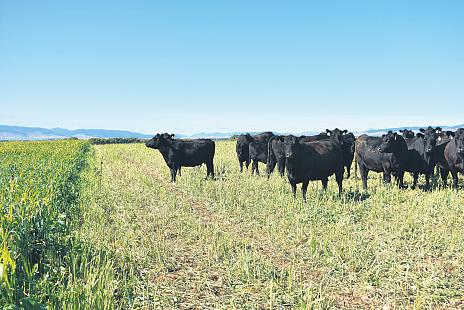
Today, the valley’s water system includes many competing interests: farmers and irrigation districts holding some of the oldest and largest water rights; the Yakama Nation protecting treaty-reserved interests and fisheries; cities planning for future growth; rural residents relying on groundwater wells; and newer water right-holders whose claims may be more vulnerable during shortages.
Does your home make the grade?
Answer TRUE or FALSE to each statement:
• I have a minimum 30-foot non-combustible area around my home.
• My landscaping includes fire-resistant plant varieties.
• I have evaluated my wood shake roof for treatment or replacement.
• Overcrowded or weakened trees have been thinned or removed, and low-hanging branches have been pruned.
• Grass and weeds are consistently cut.
• My woodpile and leftover building materials are stored at least 30 feet from my house.
• Needles, leaves and other debris have been cleared from my roof and deck.
• Street signs and my home’s address are clearly visible from the road.
• I have an emergency wildfire checklist and know to monitor local news and emergency alerts for up-to-date information.
Wildfire planning should also include animals.
Pet owners should locate pets early and keep them nearby so they can be loaded quickly if evacuation becomes necessary. Livestock owners are encouraged to identify animals with a grease pen or marker if they do not already have permanent identification, such as a brand. Officials also recommend preparing trailers and considering relocating livestock to a safe location before conditions worsen.
Understanding evacuation notices can help residents respond quickly
when wildfire threatens.
Level 1 – Ready: Stay aware of fire conditions in your area and prepare to leave with family members, pets and livestock. Evacuation is voluntary.
Level 2 – Set: Significant danger exists. Be prepared to leave at a moment’s notice or evacuate voluntarily. Officials recommend relocating anyone with special needs or limited mobility as soon as possible.
Level 3 – Go: Conditions present an immediate threat to life and safety. Leave immediately. Additional warnings may not be issued.