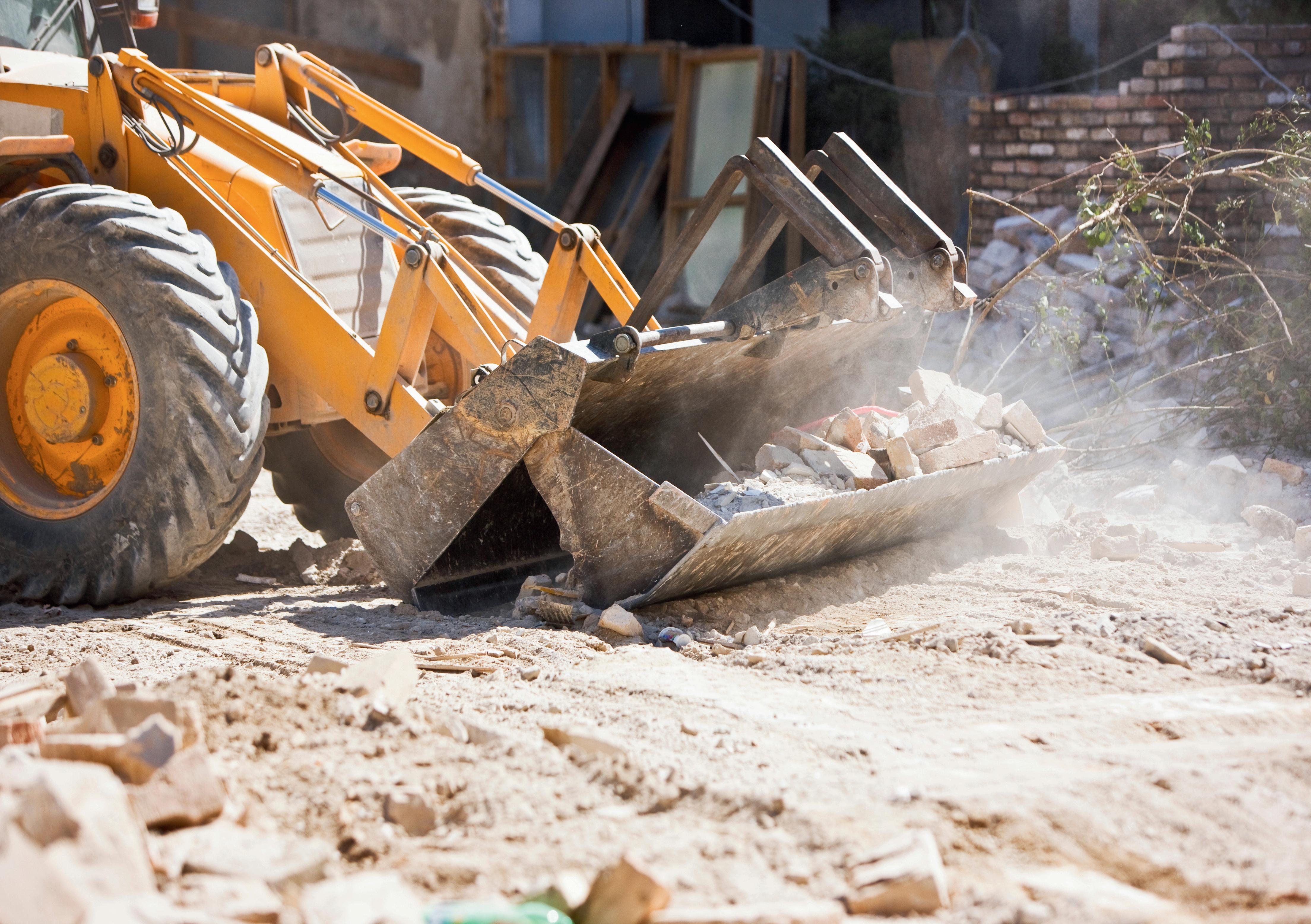
Dig with care. Whenever you hand dig near buried utility lines, take care to prevent damage:
• Use a rounded or blunt-edged shovel. Sharp tools like pickaxes, mattocks, pry bars or pointed spades may gouge or puncture lines.
• Begin digging off to the side of the marked utility line. Use a gentle, prying motion to break away soil as you approach the utility laterally.
• Proceed cautiously. Don’t assume the marks are accurate or that the utility depth is predictable.
• Never pry against a utility line to remove soil. Don’t stab at the soil or stomp on the shovel with both feet.
• Dig until you find the actual line, not just a tracer wire or warning tape.
Submit a ticket to have underground utility lines marked at: DigSafeWA.com
INTERIOR CHOICES change with the times
BY LESLIE KELLY
If you want to know what’s in style, just ask Renee Fyall.
Fyall is an interior designer and a licensed contractor. Her company, D. Marie Interiors, has an office in downtown Ellensburg but she works throughout Kittitas County.
“I do both new homes and remodels,” she said. “But the bulk of my work is in homes that are being remodeled.”
After working for another company for nine years, Fyall started her business in 2007. Her specialty is in redoing kitchens and bathrooms.
“People are putting their money into their existing homes rather than building or buying a new home,” Fyall said. “They are creating the space they need.”
Whether it’s making the living room larger or updating the kitchen,
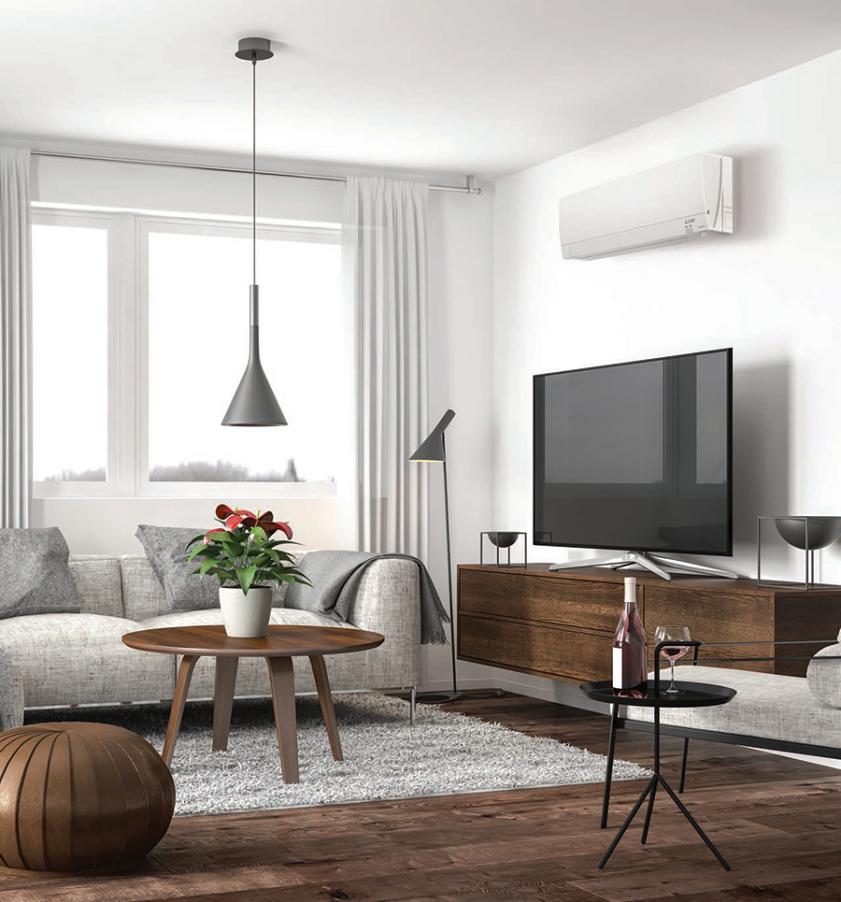
EnergyEfficient HVAC For Your Home
homeowners are staying put.
“We see a lot of retired people and aging homeowners making design changes so that they can stay in their homes and age in place,” Fyall said. “They are making things easier for their physical limitations.”
An example of that is taking out the
bathtub and adding a walk-in shower.
“They are adding grab bars and a bench, sometimes a fold-down bench so they can sit and shower,” she said. “Another change is adding a ‘right height’ toilet. So many people have lower toilets that aren’t easy for older people to get on and off of.”
Recently she had a call from a previous client who was considering a walk-in shower and had called a national company for an estimate. The estimate came in at $20,000.
“She told me if she was going to spend $20,000, she was going to pay a designer and get a more professional look.”
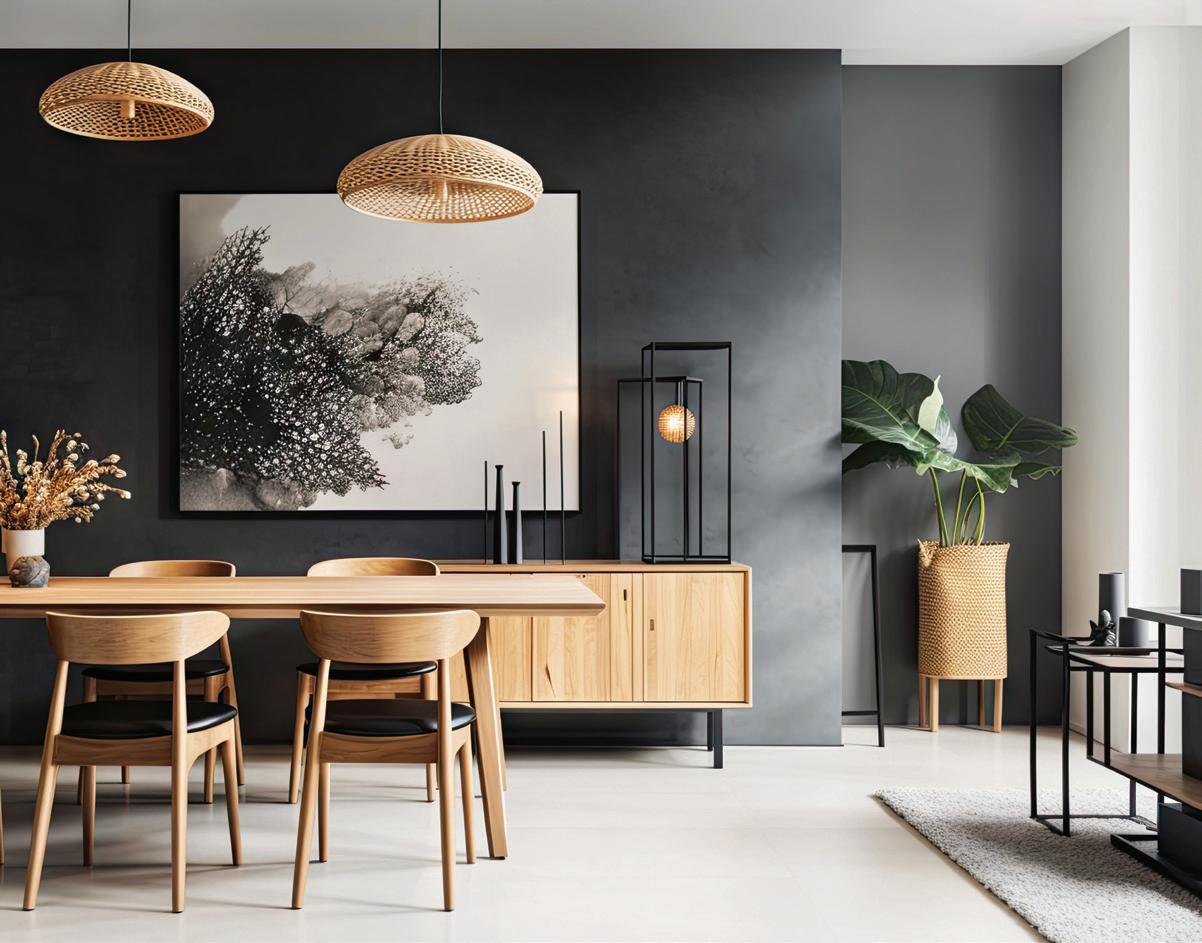
When it comes to kitchens, Fyall said homeowners are wanting natural woods.
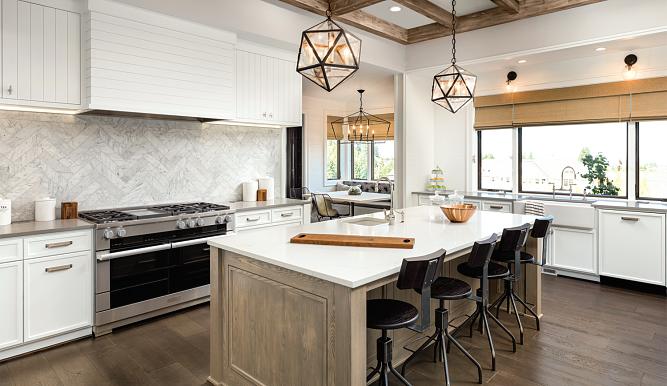
“For quite some time, people wanted white cabinets,” she said. “That was all the rage. But today the trend is natural woods — white ash, light maple, and walnut.”
Paint colors are on the “brown side” of white instead of the gray. A popular color is alabaster, an off-white.
“The more brown side of white is softer and warmer, compared to the grays,” she said. “Everything is going toward creating a warm environment.”
Homeowners are making changes to the kitchen, to have the space they want. It may be an enlarging the center butcher block or making more space around the
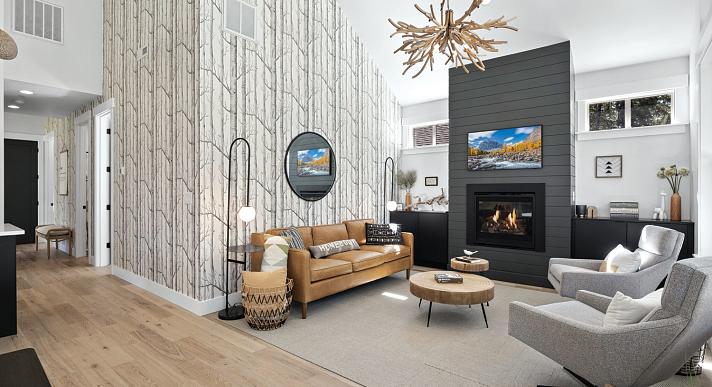
When adding walls or cabinets, the popular choice is Scandinavian style, with simple, natural straight lines.
And something old is new again.
“Wallpaper is very popular lately,” she said. “In the kitchen or bathroom or pretty much anywhere in the home.”
She also owns a wallpaper company. Homeowners can order wallpaper online, but many prefer sitting down with her and going through wallpaper books.
“Believe it or not, wallpaper books still exist,” Fyall said. “I keep some in my shop and clients can take samples home.”
CONTINUED ON NEXT PAGE
Wallpaper has significantly changed, she said. Current wallpaper and rolls that are pre-pasted, are strippable.
“If the wall is primed correctly and the paper installed correctly, you can spray water on it, and it will come off.
“Some (clients) ask about the moisture in the bathroom,” she said. “If you ventilate the bathroom, you have no problem. It takes quite a bit of water for it to come off.”
She steers homeowners away from peel-and-stick wallpaper saying it’s finicky.
Popular papers are textured, such as a linen or weave. But she said some homeowners choose printed patterns.
“It’s all over the place,” Fyall said, One of the things homeowners often do is add too many different colors, or textures.
“My rule is you get one ‘busy,’” she said. “Add some interest on the counter tops or the backsplash. But you can’t have more than one because it just doesn’t look good. It’s too busy.”
And, she said, make sure wallpapers go with the style of the house.
“I’ve worked in homes in Suncadia and the Tumble Creek area where the style of the home was a woodsy lodge. Using a paper with antlers, or brick or faux leather works there.
“But the style of new homes there is changing to something more modern. The wallpaper that works there is warmer colors, off-whites, or geometric prints.”
Fyall said business is good and clients don’t seem to be worried about spending money on their homes.
“I have yet to have anybody say that they are worried about the economy. Personally, I’m busy so homeowners are still updating their homes.”
In most cases they have already secured a home equity loan or have the cash savings to do the project, she said. But Fyall expects that the economy will play a role later in the year.
“It’s a very real possibility,” she said. “With everything that’s going on, it will be a concern in 2025.”
Rusty Henrichsen Owner
house-plans@hotmail com www.hdesignllc.com
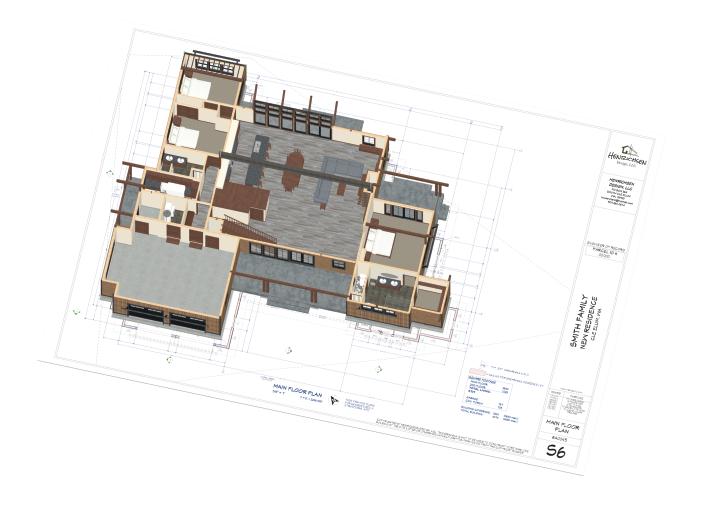
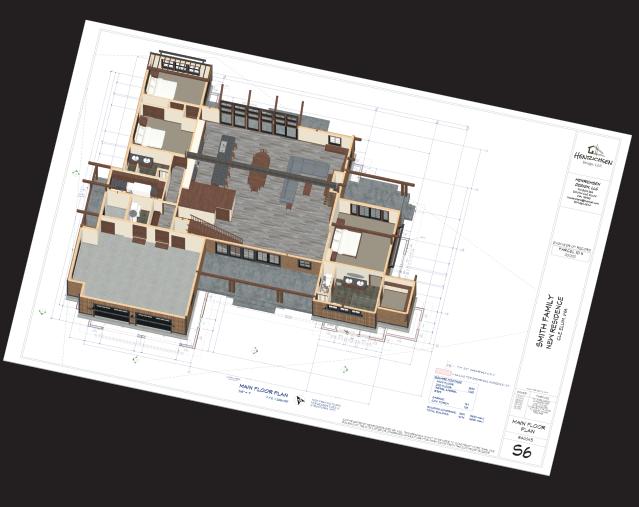
From your ideas to permit ready plans. We turn your dreams into your home. Call today for a free consultation. 509-260-0614
AREA CONTRACTORS see business slow
With interest rates remaining high, local builders say construction has slowed, but there is building going on.
BY LESLIE KELLY
“With higher interest rates, people are more apt to remodel and stay in their homes,” said Tim Melton, owner of Central Washington Properties Restoration, an Ellensburg-based construction company.
Although Melton builds new homes and is a Realtor, he says most of his current business is remodeling existing homes.
“Homeowners want more space (for their families) to live in,” Melton said. “They’re expanding living rooms and kitchens.”
Remodeling allows families to stay in their homes, and not have to move, which is the goal of adding more space, he said.
“And remodeling a home is faster than building a new one.”
Melton has had the company for 15 years. Recently he’s seen business slow.
“We’re slower right now than we’ve ever been,” he said. “And usually, we are busy in winter.”
“Another thing is that I’m getting calls from subcontractors wanting to know if I have any work for them,” he said.
He generally employs 10 to 12 workers, but right now he only has work for
One sign that building and remodeling is slow is that a contractor can get a permit in about three weeks. The usual time is four to six months.
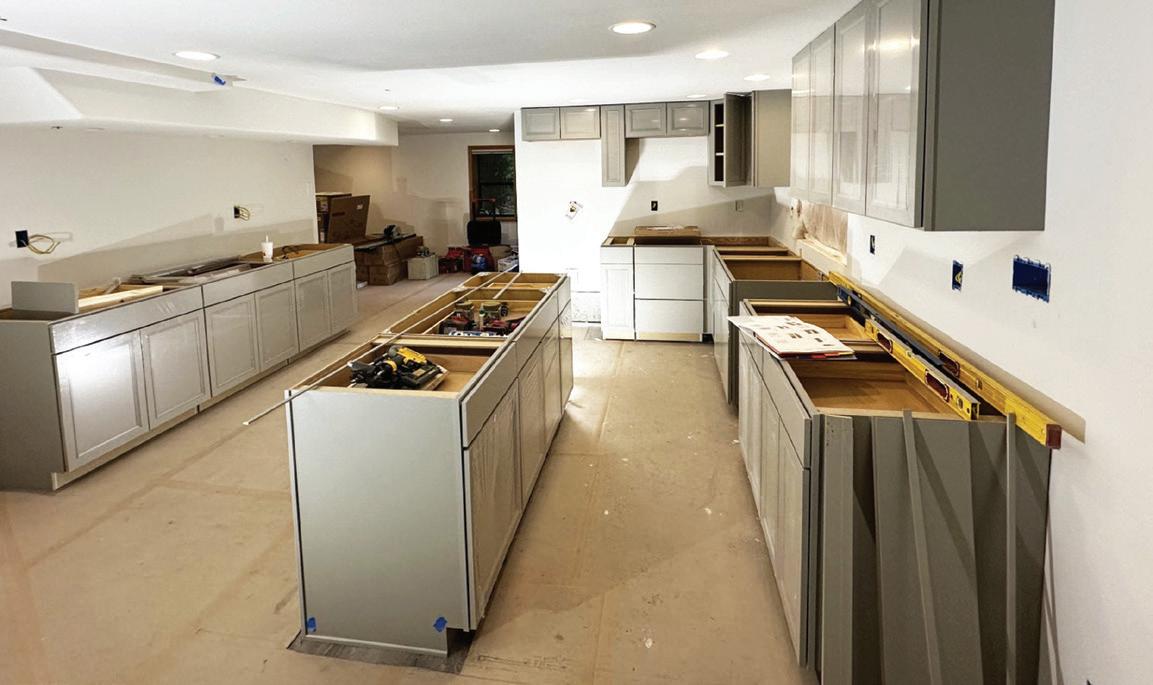
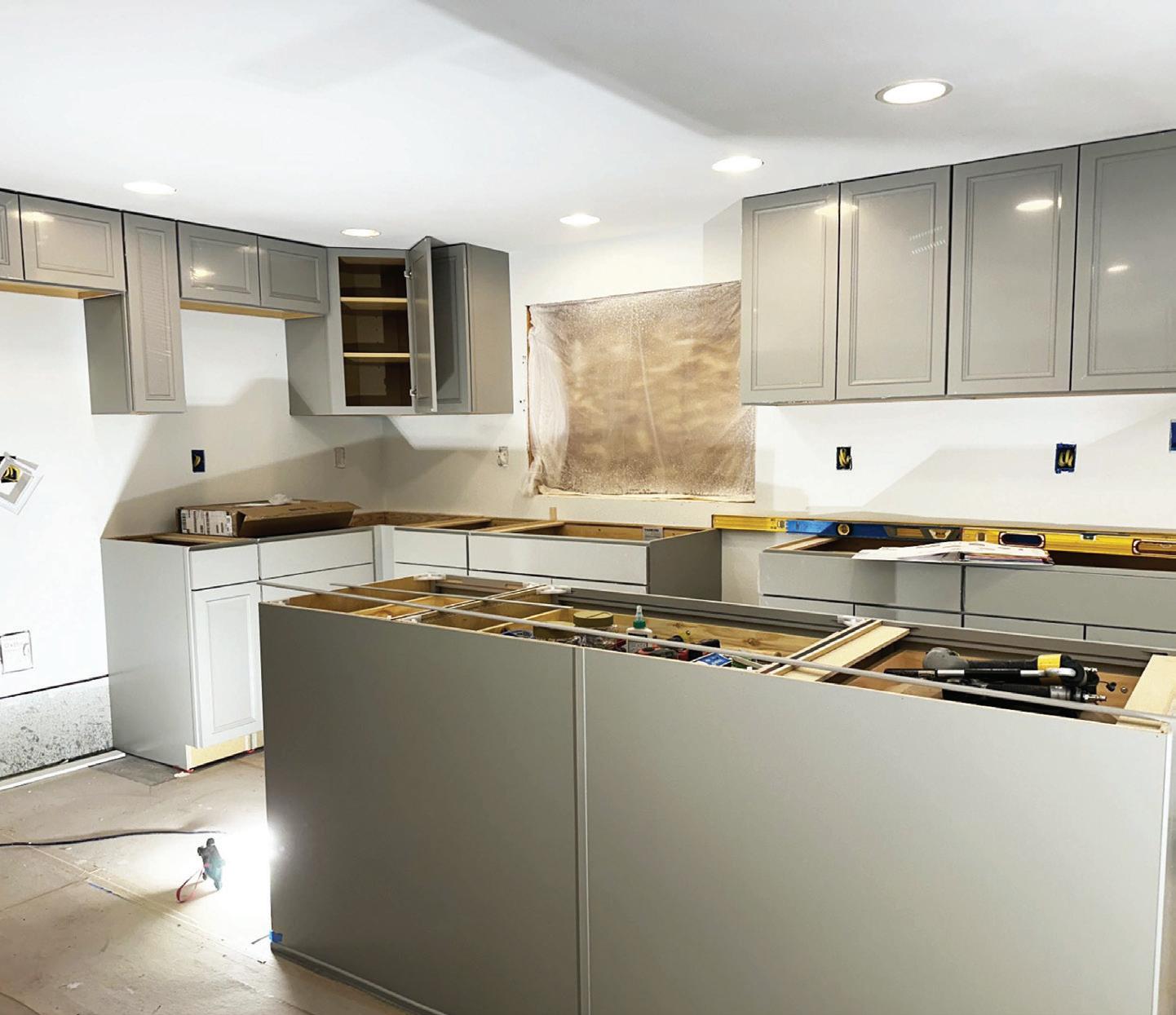
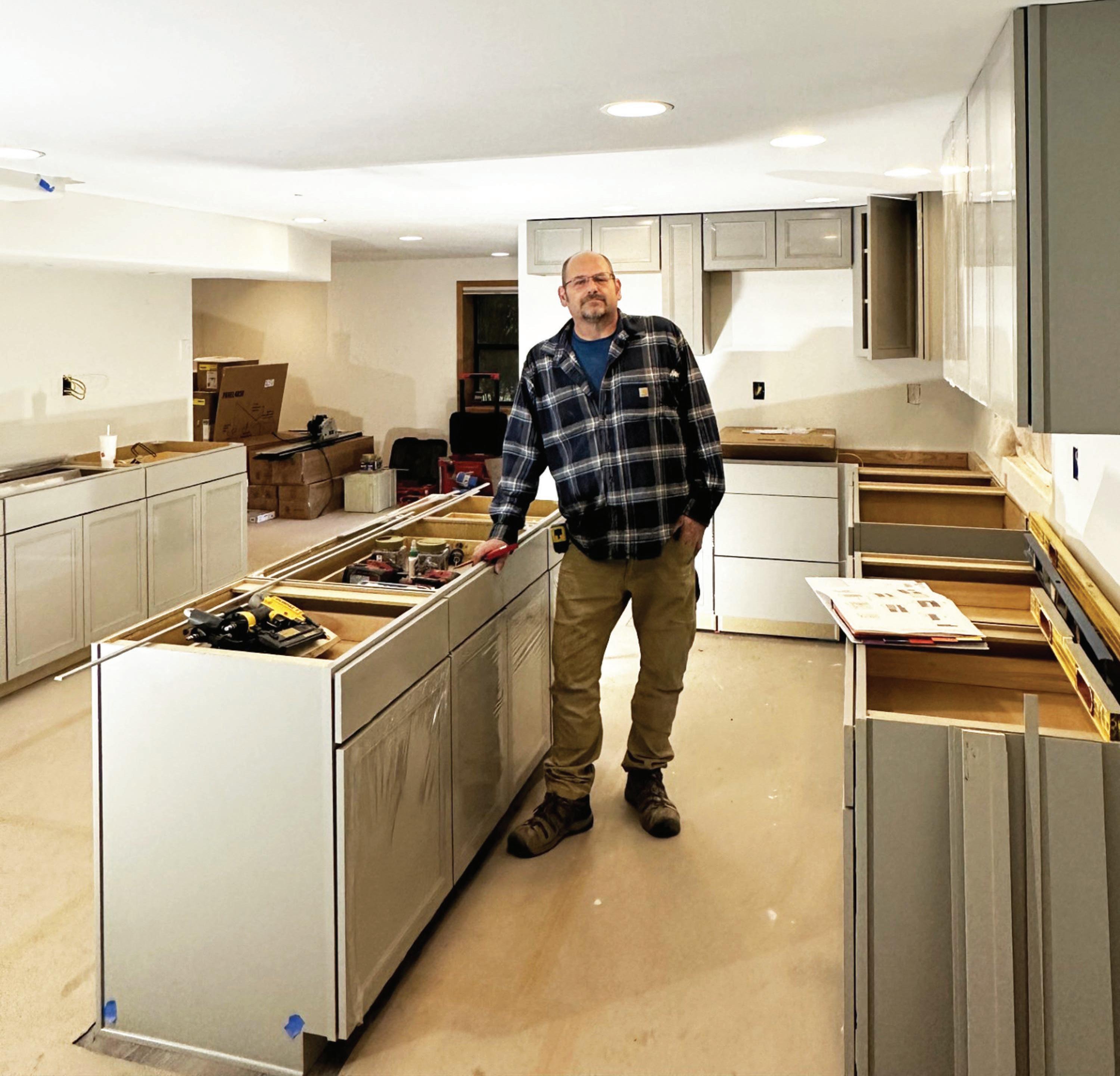
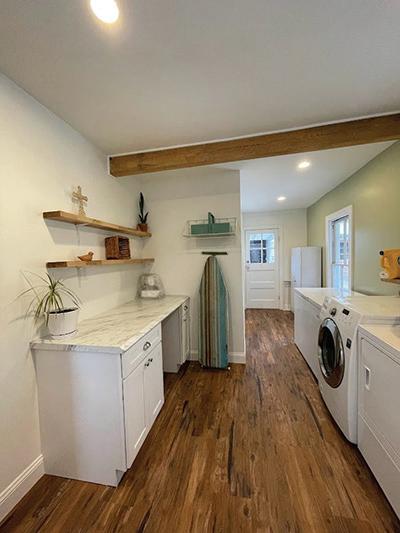
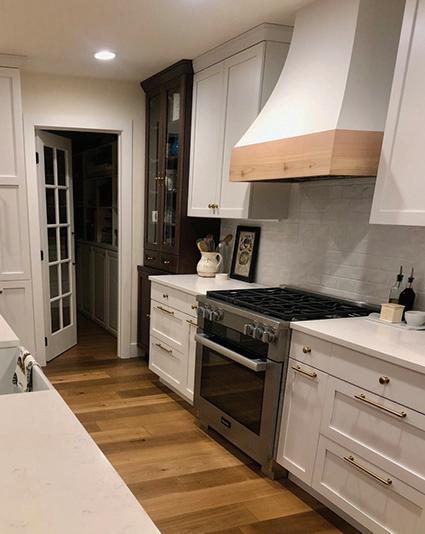
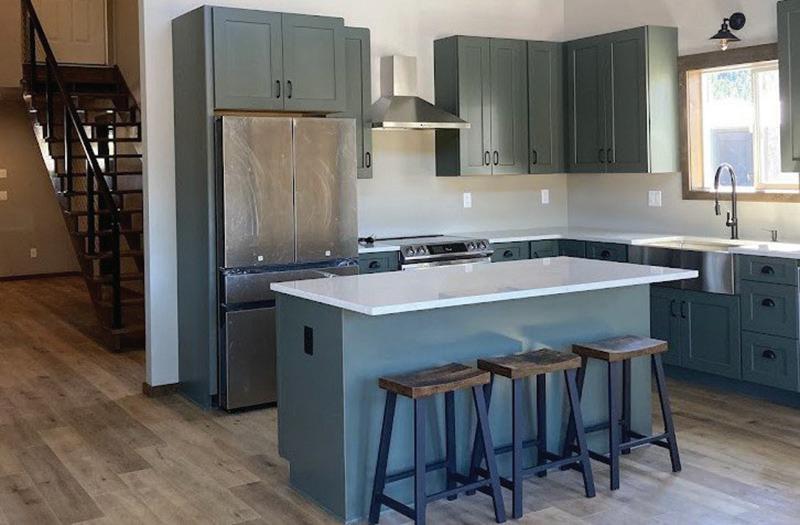
A recent interior project being completed by David Kramer.
himself and four others.
Melton got his start in the business after he earned a residential electrician’s license. From there, he expanded his knowledge in many of the areas needed to build or remodel homes.
Because the lending industry had overextended itself at the time, Melton was able to get work renovating foreclosed homes.
“When the markets got better, I was able to get more business from individual clients,” he said.
Today he employs specialist in all areas, including cabinet makers, windows, framers and flooring experts. His company does residential and commercial work.
“We do everything,” he said. “We work for everybody.”
And, just what gets built usually depends on a client’s budget.
“People are still wanting the big, huge homes,” Melton said. “But tract homes are the bread-and-butter.”
The kitchen remodel included new cabinetry. PHOTOS COURTESY OF DAVID KRAMER
Tract homes are those that are similar to each other and are built in new neighborhoods.
David Kramer, a builder, agrees.
“Tract homes are often built as affordable homes,” Kramer said. “But the style of homes depends on what the person wants to spend. Bottom line is — it all comes down to their budget.”
Kramer is the owner of PNW Custom
Interiors and Remodeling. The company has been working throughout the Northwest for the past two years. Its specialties are remodeling kitchens, baths and creating outdoor living areas.
There’s also a call for “tiny homes” which are used as affordable homes.
“They can be done fairly inexpensively and quickly,” Kramer said. “Some retirees like them because they travel and aren’t home year-round. They don’t need a big house.”
But, he said, people must be careful because there are codes in some areas that require building a house with at least three or four bedrooms.
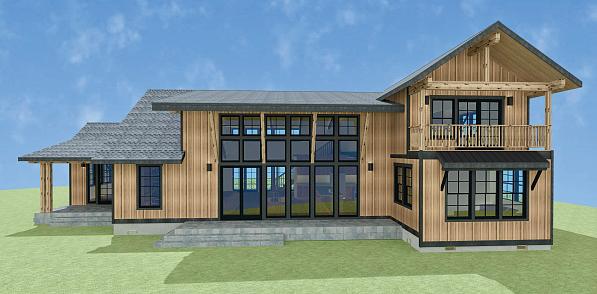
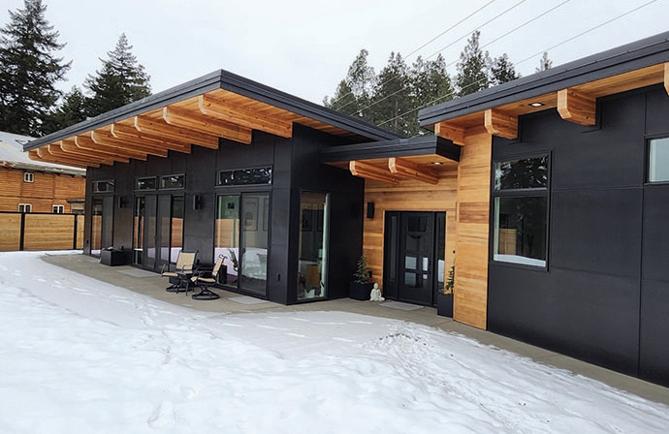
Both contractors said that those who want new homes choose the modern European or Pacific Northwest style.
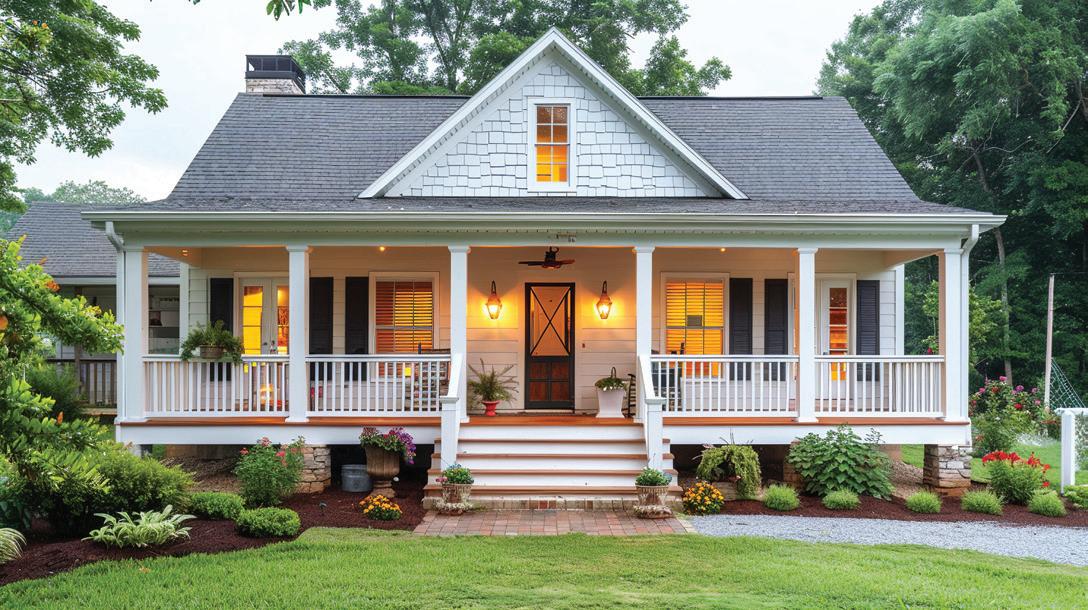
“There’s still some who want ranch
David Kramer poses for a photo at the project.
PHOTO COURTESY OF DAVID KRAMER
style,” Melton said. “But those who can afford to, want to build new styles with the modern appeal. They want to impress the people who come over to the east from Seattle to buy a home.”
On average, it takes six to eight months to build the new average-sized home. Popular areas for larger new homes are Suncadia and Tumble Creek.
Lots of the remodel projects Melton gets are homes used as vacation rentals, he said.
“I learned that these vacation rentals are being used by construction workers who are in the area on jobs,” he said. “That’s why so many are remodeled.”
Contractors are worried about tariffs and what they will do to prices of lumber.
home costs, only time will tell.”
“Building material costs are going to go up,” Kramer said. “How it will affect
Melton said in past times when prices have gone up, some companies, including his, take less profit to stay in business.
“People are hungry and want to have a job,” he said. “Employees will take less pay, and owners will take less profit, just to stay in business and keep their jobs.”
HOW COMBINATION APPLIANCES
Can Transform Your Kitchen
Combination appliances are revolutionizing modern kitchens, offering a blend of functionality, efficiency and convenience that is transforming cooking and meal preparation.
STATEPOINT NEWS
“The appeal of combination appliances lies in their ability to streamline kitchen operations, save valuable space, and provide a diverse range of cooking options without the need for separate appliances,” says Peter Weedfald, senior vice president of sales and marketing for Sharp Home
Electronics Company of America.
Whether you’re a seasoned chef or a busy parent looking to simplify meal preparation, combination appliances can offer a compelling solution that merges convenience with culinary excellence. Here’s how:
SPACE-SAVING EFFICIENCY
One of the primary advantages of combination appliances is their ability to save valuable kitchen space. In an era where kitchen real estate is often at a premium, especially in urban environments, these multifunctional units can create a more organized kitchen layout, while still delivering quality cooking.
SMART FEATURES
Many combination appliances come
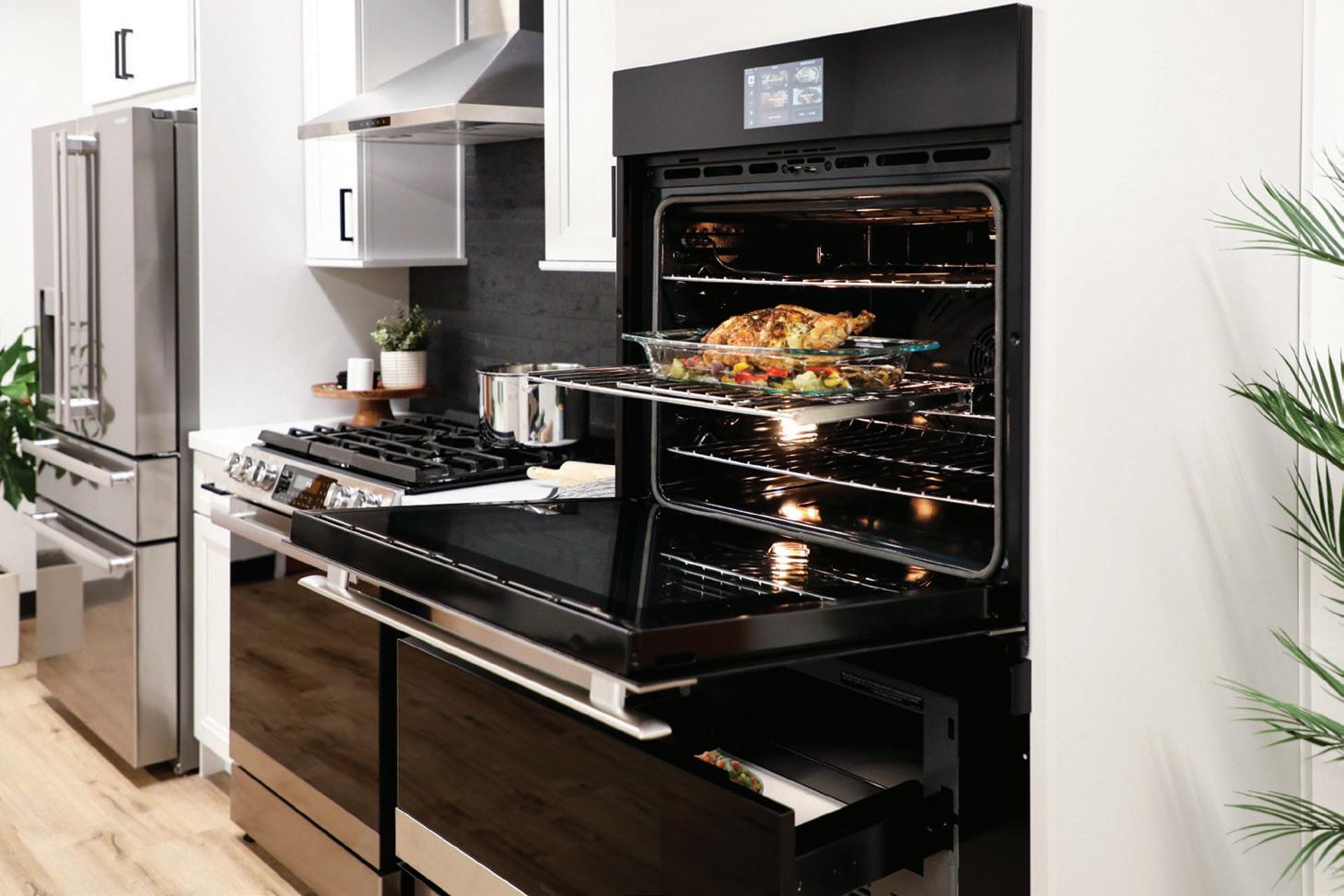
equipped with smart features that enhance the cooking experience. The Sharp Smart Convection Wall Oven with Microwave Drawer Oven, for example, combines two appliances into one beautiful and convenient cooking center. The simple-to-use, full-color touchscreen control panel seamlessly manages both ovens. It Works with Alexa for hands-free cooking and features over 150 Alexa Voice Commands that provide intuitive operation and access to various cooking modes for both the oven and microwave drawer (Amazon Echo device not included). These smart features can make cooking more accessible and enjoyable for users of all skill levels. Got your hands full in the kitchen? Just say, “Alexa, open
the microwave,” and watch the magic happen!
STREAMLINED SELECTION PROCESS
One challenge in kitchen shopping is navigating the number of choices. Combination kitchen appliances can streamline this process by reducing the need to research and compare multiple individual products, simplifying decision-making, and allowing you to focus on what truly matters—designing a functional and stylish kitchen.
MODERN DESIGN
Combination appliances often feature sleek, modern designs that elevate the aesthetic of any kitchen. The integrated look of appliances like the Smart Radiant Rangetop with Microwave Drawer Oven contributes to a cohesive and sophisticated kitchen environment, appealing to both homeowners and interior design enthusiasts. When planning your kitchen, these combination appliances seamlessly fit into a single cutout.
Combination appliances like the
Sharp SWB3085HS and STR3065HS offer several benefits, from space-saving efficiency to simple selection and smart features. As kitchens continue to evolve, these multifunctional appliances are becoming increasingly popular with homeowners looking to maximize functionality without sacrificing style or space.
To learn more about how combination appliances can transform your kitchen, visit https://shop.sharpusa.com/products/ combi/.
With their innovative features and sleek designs, combination appliances can help make your life simply better while elevating your cooking experience.
IS WOOD PELLET HEATING Right for Your Home?
Wood pellet heating is growing in popularity as more people discover its cost-saving, environmental and efficiency benefits. To understand exactly what wood pellet heating is and whether it’s the right fit for your home, consider these answers to commonly asked questions.
STATEPOINT NEWS
What is wood pellet heating?
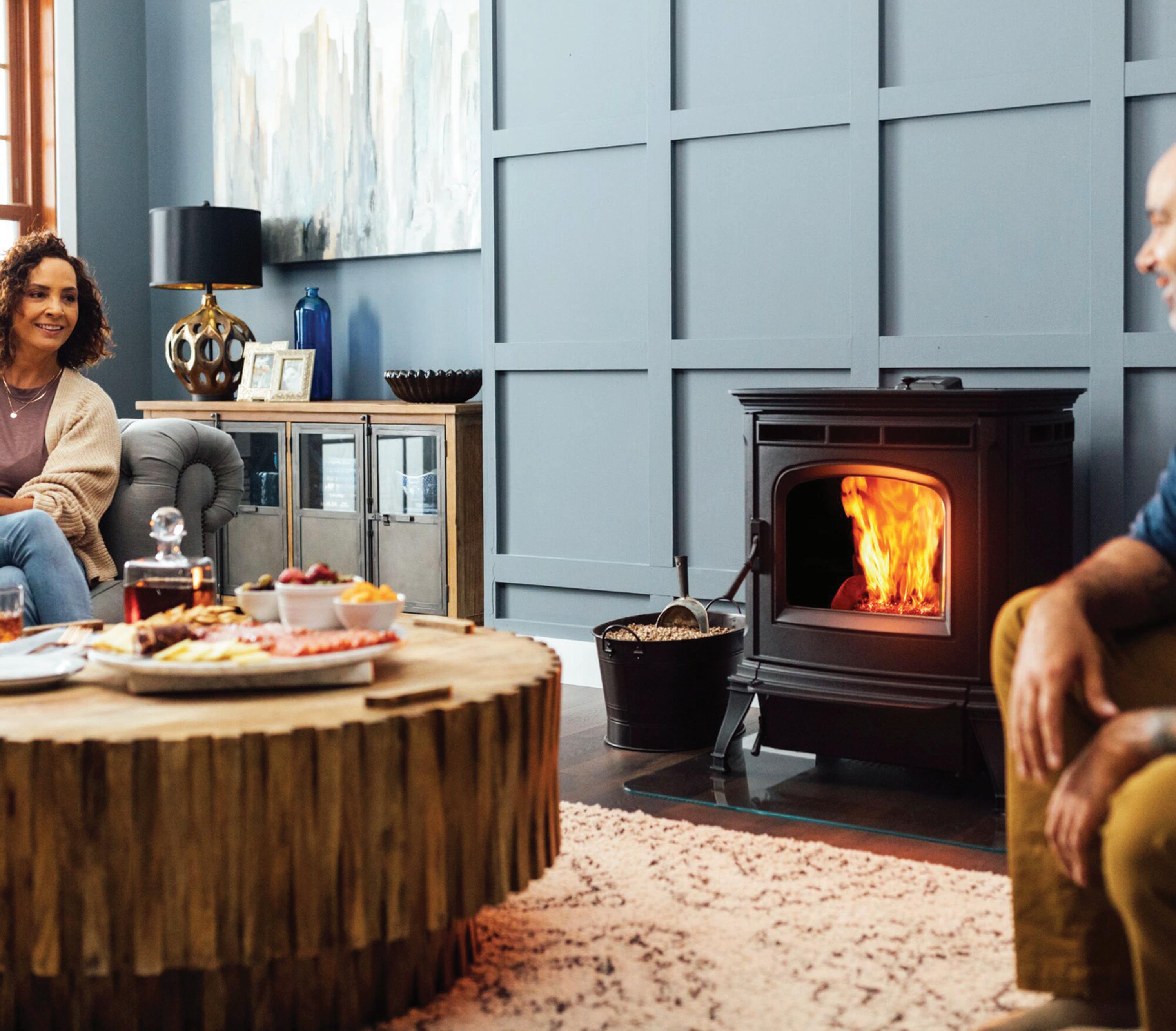
Wood pellet heating is a method of warming homes and buildings using small, compressed wood pellets as fuel. Compared to other heating methods, it’s an affordable, efficient, and environmentally friendly option. How energy efficient is pellet heating? Due to the low-moisture content of wood pellets and the advanced combustion systems of modern wood pellet stoves, pellet heating can help lower bills and improve energy efficiency. In fact, it’s
possible to convert almost 100% of the pellets to heat energy with very little waste. How does the cost of wood pellet heating compare to other heating types? Installing pellet heating stoves is generally more affordable than other heating fuel sources. You’ll also likely spend less or the same on fuel costs and may become eligible for tax credits. And because fossil fuels and other energy sources are more subject to market price swings, heating with wood pellets can help you predict your winter budget more accurately.
Is pellet heating good for the planet? In addition to being energy efficient, wood pellet heating is also a solid choice for eco-conscious
households because the pellets are a renewable resource made primarily from recycled or upcycled materials that may otherwise end up in a landfill. Is pellet heating convenient? Readyto-use wood pellets are found in most gardening and home improvement retailers. You can also arrange for home delivery. Wood pellets can be used in many types of appliances, including stoves, furnaces, fireplace inserts and boilers, making this a versatile heating method. An added bonus is that they are easy to store and take up less room than traditional cord wood. Modern wood pellet stoves auto light, auto feed and can be controlled by a thermostat, remote or smartphone app, providing the conveniences of modern heating, with the ambiance, warmth and beauty of wood-fired heat.
What factors should I consider when choosing an appliance?
Consider where you’ll place it in your home to ensure you have enough room. You should also factor in the size of the space you’re heating and your aesthetic needs. Lastly, look for an easy-toclean appliance that will minimize ash production.
When buying pellets, what should I consider? Seek out high-quality pellets that light easily and burn efficiently. Check out the product’s British Thermal Unit (BTU) rating, which indicates its energy output. The
higher the BTUs, the hotter the pellets will burn. You should also buy pellets that maintain an ash content below 1% of the total pellet weight. And check to make sure the pellet manufacturer is certified by the Pellet Fuels Institute.
“Switching to wood pellet heat offers numerous advantages, from energy efficiency and cost savings to environmental sustainability and ease of use. Consumers can enjoy the beauty and warmth of wood heat with the ease and control of a modern heating
system,” says Jonah Levine, director of heating for Lignetics Group, a pioneer in transforming wood waste into premium, environmentally friendly, 100% natural products for more than three decades.
To learn more about wood pellet heating, check out the educational resources found at pelletheat.com.
Spring may be here, but home heating should be top of mind. If you’re considering wood pellet heating, plan now so you’ll be ready for next winter.
DOOR DESIGN TIPS to Enhance Your Home’s Beauty and Value
STATEPOINT NEWS
When choosing doors for your home, remember that careful selections can improve not only your home’s beauty and value, but also your quality of life. Here are a few door types to consider, along with their benefits:
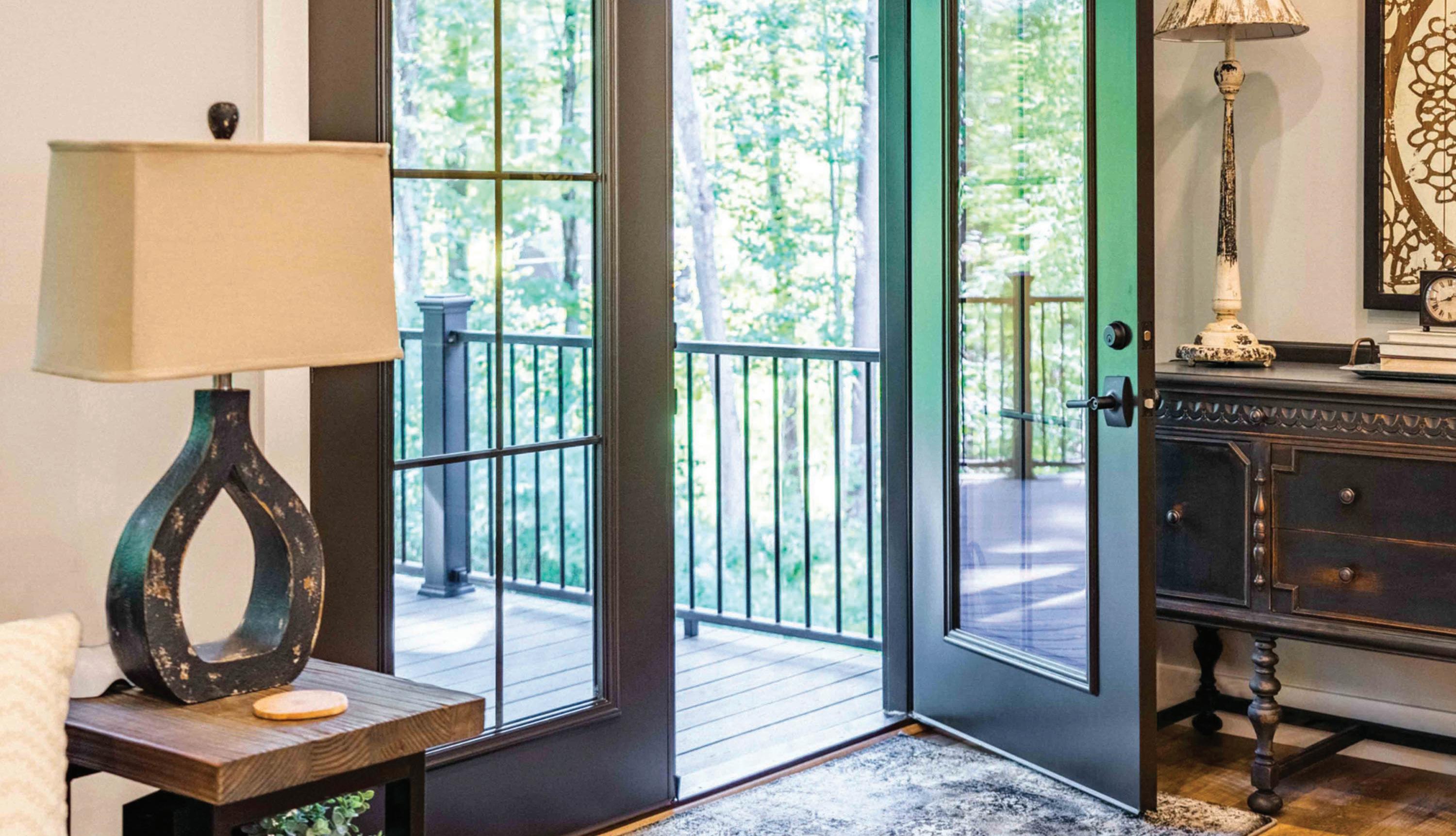
Elevate with exterior French doors: French doors double the design impact, and elevate the front entryway and curb appeal of any home. Manufacturers like ProVia offer customizations on every element of French doors so you can make a truly unique statement. Start by choosing from various styles, materials and finishes. Then, consider the addition of sidelites, transoms and decorative or privacy glass. Given how many factors you have control over, it’s helpful to use a design tool to configure the door of your dreams. Visit provia.com/design-center to get started. Rest assured, no matter what your end results look like, there are a few factors you won’t have to worry about with ProVia doors: durability
and energy efficiency. Virtually every possible combination of door style, glass, sidelite and transom is built to last a lifetime and is ENERGY STAR certified.
Protect with storm doors: Storm doors provide doors and homes with an extra layer of protection from moisture, heat, wind, rain and other elements. Everyone has different requirements though. Fortunately, storm doors can be individually customized to meet your practical and aesthetic needs. Depending on where you live, factors like the thickness and construction of the storm door can make a big difference in its performance. You’ll also want to investigate your glass and screen options for added fresh air circulation in your home. While storm doors are often thought about more in terms of their functionality, it’s important to keep in mind that varying hardware options, styles and paint finishes allow you to seamlessly blend yours in with the aesthetic of your home.
Bring the outside in with sliding glass patio doors: Want to bathe your home interiors with light and the beauty of your natural surroundings? One of the most effective, low-maintenance ways to do just that is with vinyl sliding glass patio doors. Those from ProVia are tested against the most stringent industry standards for air and water infiltration, wind load resistance, ease of operation and more. This means you’ll have lower heating and cooling costs and increased comfort all while offering your household full, unparalleled views of your outdoor spaces. Customization options, such as the materials and colors of the interior frame and the type of glass you choose, can help you tailor the look and functionality of your sliding glass doors.
For more design tips, visit provia.com. For a true return on your home improvement project, consider how a door replacement can elevate your home’s style while protecting it from the elements.
How to pick the RIGHT PLANTS for your location
STATEPOINT
When planning your yard or garden, you likely focus on the what and the where. After all, a beautiful plant in a prime location enhances curb appeal and even bragging rights.
You may pay less attention though to understanding how your location, or plant hardiness zone, impacts your garden’s success. To help ensure your plants don’t just survive, but thrive, the experts at lawn care equipment manufacturer Exmark are sharing the following insights about plant hardiness:
What is Plant Hardiness?
Plant hardiness is the secret sauce of any healthy outdoor space. Plant hardiness is the ability of a plant to survive adverse growing conditions such as drought, flooding, heat and cold. Have you ever watched with frustration as a late-season
temperature dip leaves your beautiful buds with a serious case of frostbite? Plant hardiness zones were developed to help landscapers, gardeners and lawn care enthusiasts avoid this heartache.
American farming contributes billions of dollars to the gross national product annually, which is one reason why the USDA has long monitored weather data. If determining when the average final frost may occur for every region in the country is worth billions, what could that same knowledge mean for your garden? Well, choosing plants with hardiness levels appropriate to specific planting zones gives you the best chance of cultivating healthy, beautiful plants.
What is My Growing Zone?
The United States is divided into 13 zones. Zones 1-6 being the coldest, and 7-13 the warmest. Zone 1 averages -60 degrees F while zone 13 never drops below 70 degrees F. A general guideline is to plant anything designated for your zone or
CONTINUED ON NEXT PAGE
lower, but never higher. Know what zone you live in and make a point of checking the tag on the back of the plant or seed pack before planting.
Perennials Versus Annuals
There’s a reason you see palm trees in Sarasota, Florida, not Saginaw, Michigan. When it comes to perennials, it’s not about when the first frost is, but how cold it gets, and whether that plant can survive and thrive through winter.
Plant hardiness zones are less important however when it comes to annuals. Because these plants are only meant to last one growing season; waiting until after the average first frost date will save you from having to re-plant. Know that even if your plant survives the frost, it may never match the photo you saw advertised at the nursery.
Planting Zone Rule of Thumb
Plant hardiness zone maps are, well, all over the map. Consider the number assigned to your zip code as a starting point. You may live right at the break
between one zone and the other. When in doubt, guess too low, rather than too high.
In the South, the heat stress a plant not made for the conditions. Your particular geography can also affect your hardiness zone, like if you live on a hill or in a valley. For more insights, check out the USDA Plant Hardiness Zone Map, and watch “Find Your Plant Hardiness Zone,” an episode of “Backyard Smart,” an original series from lawn care equipment manufacturer, Exmark. To watch the video, visit Backyard Life, which is part of a unique multimedia destination with a focus on helping homeowners
improve their outdoor living spaces. There you can also download additional tips and view other Exmark Original Series videos. Understanding what plants will thrive in your climate is essential to a healthy landscape. Fortunately, free resources abound to help you plant successfully.
Contact us today to learn how we can transform your
6 LUXURY DESIGN FEATURES to
Watch for in 2025 Custom Homes
Looking ahead to 2025, luxury custom homes are pushing the boundaries of design, offering innovative elements that blend functionality with high-end aesthetics. From cutting-edge technology to timeless materials, these features are setting the standard for what’s next in luxury living. Here’s what to expect as you explore the homes of tomorrow.
1. Smart Glass: The Future of Privacy and Elegance
Imagine having complete control over your privacy with just the touch of a button. Smart glass, also known as switchable or privacy glass, transitions from clear to opaque instantly, eliminating the need for traditional window treatments.
Benefits you’ll love:
• Instant privacy control via smartphone integration that’s ideal for bathrooms, room dividers and other areas
• Flexibility between views and privacy in areas such as the primary suite
• UV protection while allowing in natural light
• Solar heat control for energy efficiency
• A sleek, minimalist aesthetic with no curtains or blinds
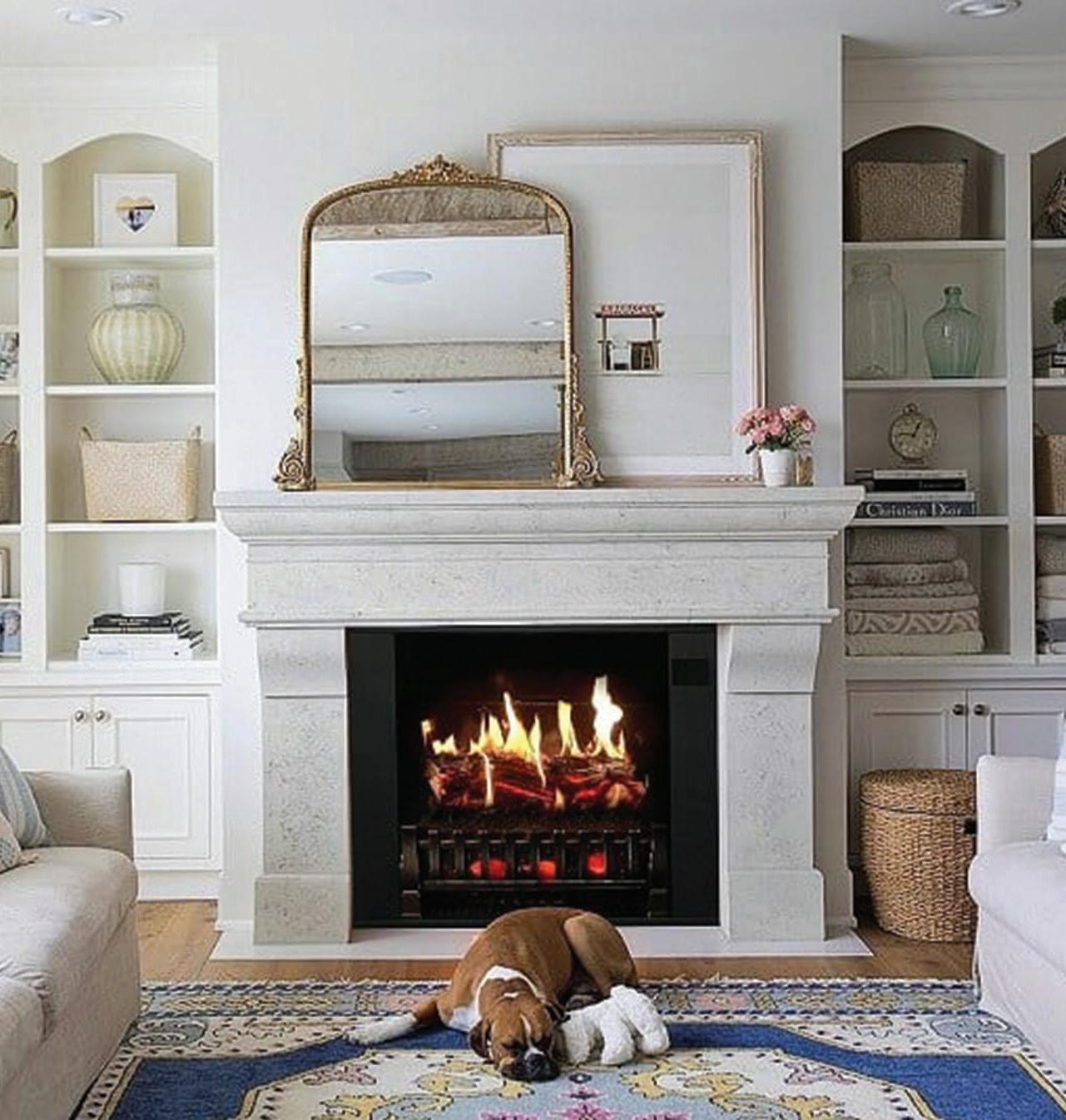
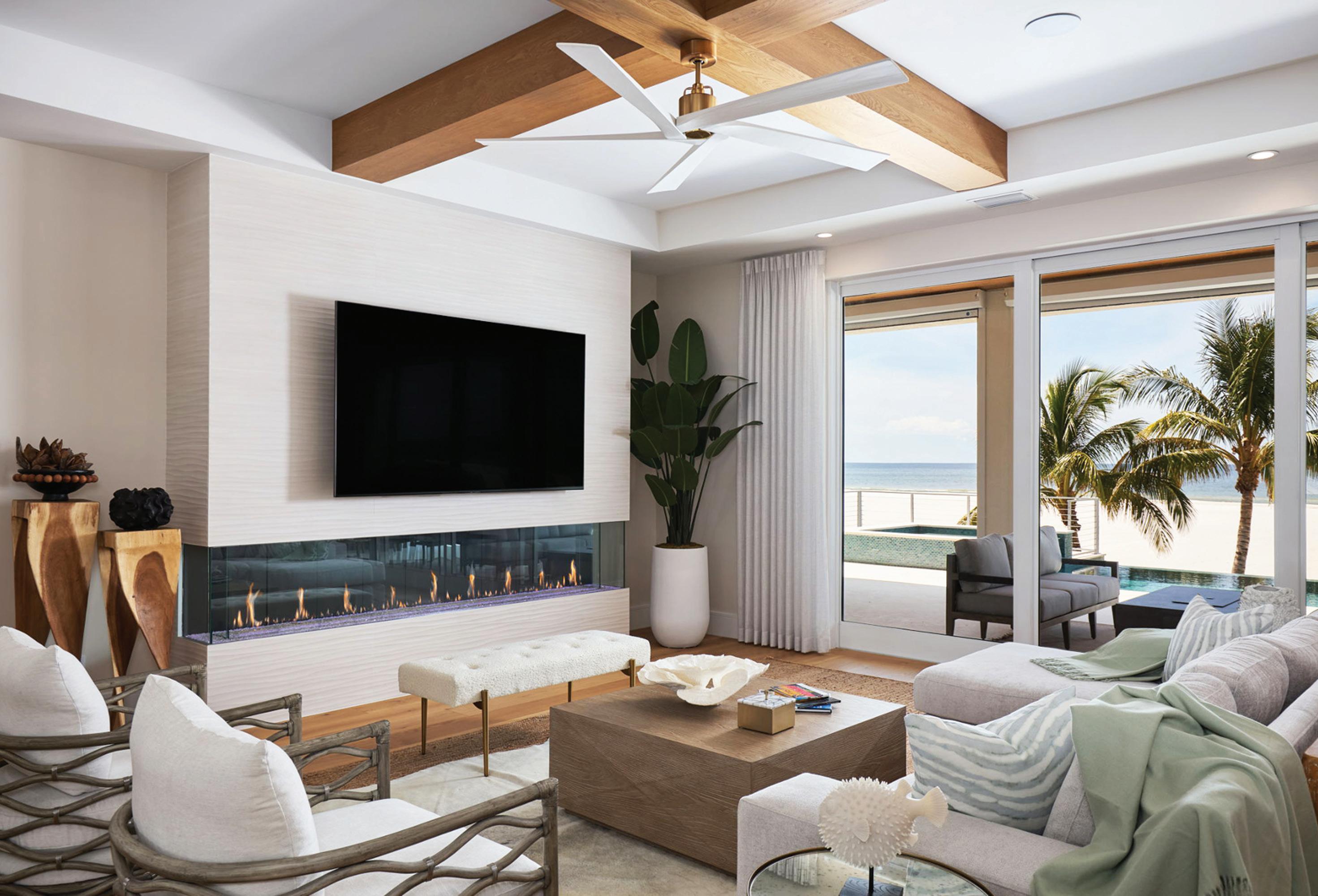
2. Revolutionary Virtual Linear Fireplaces: Where Art Meets Warmth
The fireplace is no longer just for warmth—it’s a centerpiece. Virtual built-in linear electric fireplaces with LED technology are redefining how these features function. They combine
custom design with energy efficiency, creating stunning focal points such as:
• Customizable flame colors and patterns
• No maintenance or ventilation needed
• Energy-efficient heating when desired
• Safe-to-touch technology
• Practicability for all climates, with a no-heat option
3. Architectural Water Features: A Bold Focal Point for Your Home’s Entrance
Water features are a striking hallmark of luxury design, transforming an entrance into a sensory experience.
Imagine a dramatic twoor three-story water wall, where the soothing sound of cascading water sets the tone for the entire home and:
• Creates a stunning first impression
• Adds tranquility and elegance with flowing water
• Enhances beauty with LED lighting
• Functions as a living work of art
• Increases home value with a sense of exclusivity
4. Hurricane-Rated Pocket Doors: Seamless Indoor-Outdoor Living
For truly seamless living, hurricane-rated sliding pocket doors are a must. These engineering marvels connect
your indoor and outdoor spaces, offering:
• Expansive openings for entertaining
• Hurricane protection without compromising design
• Smooth, quiet operation
• Added real estate value
• Energy efficiency
These doors transform how you experience indooroutdoor living, and are a must-have in areas prone to wicked weather.
5. Statement Skylights: Bringing the Sky Indoors
Natural light and large statement skylights are the perfect way to bring the sky inside, providing:
• Energy-saving natural light
• Unique architectural interest
• Opportunities for stargazing
• Increased perceived space
6. Gilded Perfection: Gold and Brass Accents
The kitchen is often considered the heart of the home, and adding gold and brass accents can add:
• Timeless elegance
• Warm metallic reflections
• Custom personality
“While touring luxury custom home projects of our partners set for completion in 2025, I had the opportunity to meet with industry leaders redefining
the standard of living—like HLevel Architecture, Wright Jenkins Home Design, and interior design firms such as Design and Company and Leili Design Studio. Working alongside them, we’ve seen firsthand how their innovative designs are pushing the boundaries of what’s possible,” says Jennifer Kis, regional and brand marketing manager at Alair Homes.
For more 2025 luxury custom home trends, visit www.alairflorida.com.
From smart glass to interior waterfalls, these features are leading the way in luxury custom homes and setting the stage for the next era of sophisticated living.
PROFESSIONALS SAY stay with the style of the home
BY LESLIE KELLY
Just how does all this work? And why hire a professional?
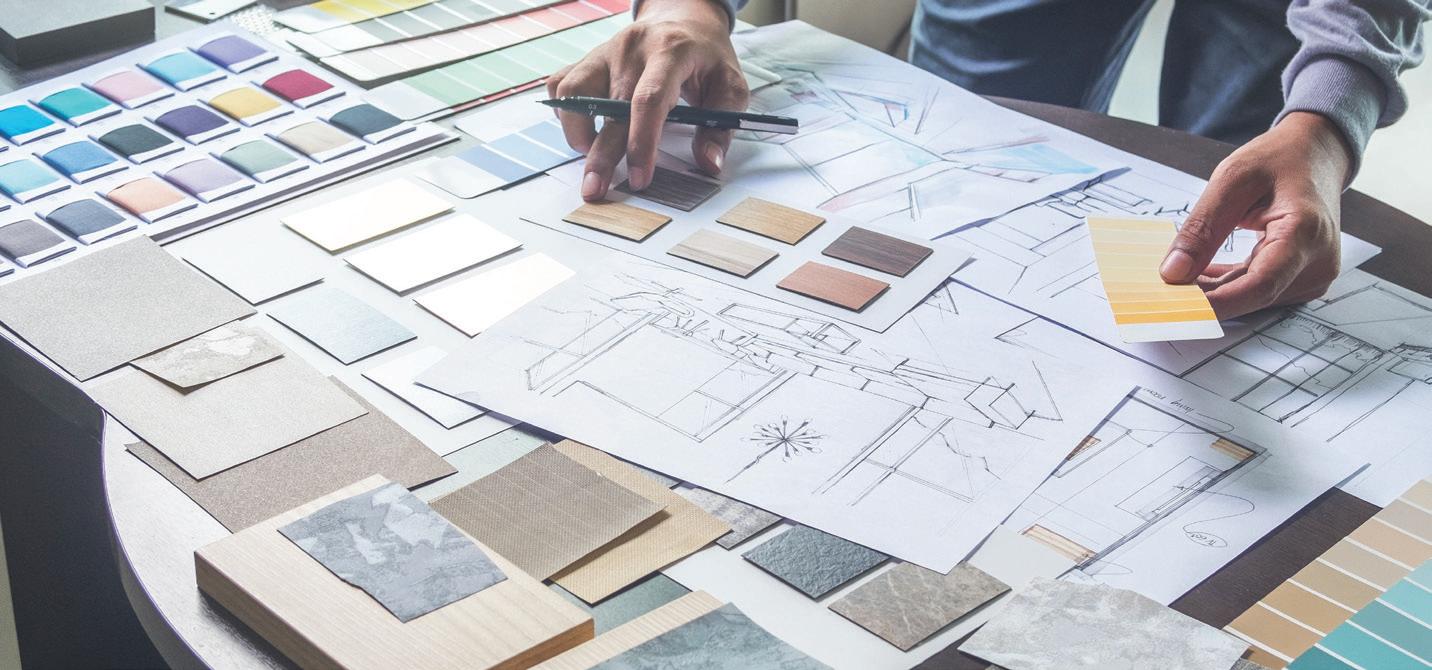
According to Renee Fyall, owner of D. Marie Interiors, the process begins with her meeting with prospective clients in their homes.
“I like to see what the home looks like in-person,” she said. “And we talk about what works and what doesn’t.”
She listens to the homeowners’ ideas and measures the area to be redone.
“Anything we do has to stay with the style of the house,” she said. “And we talk about future plans they may have.”
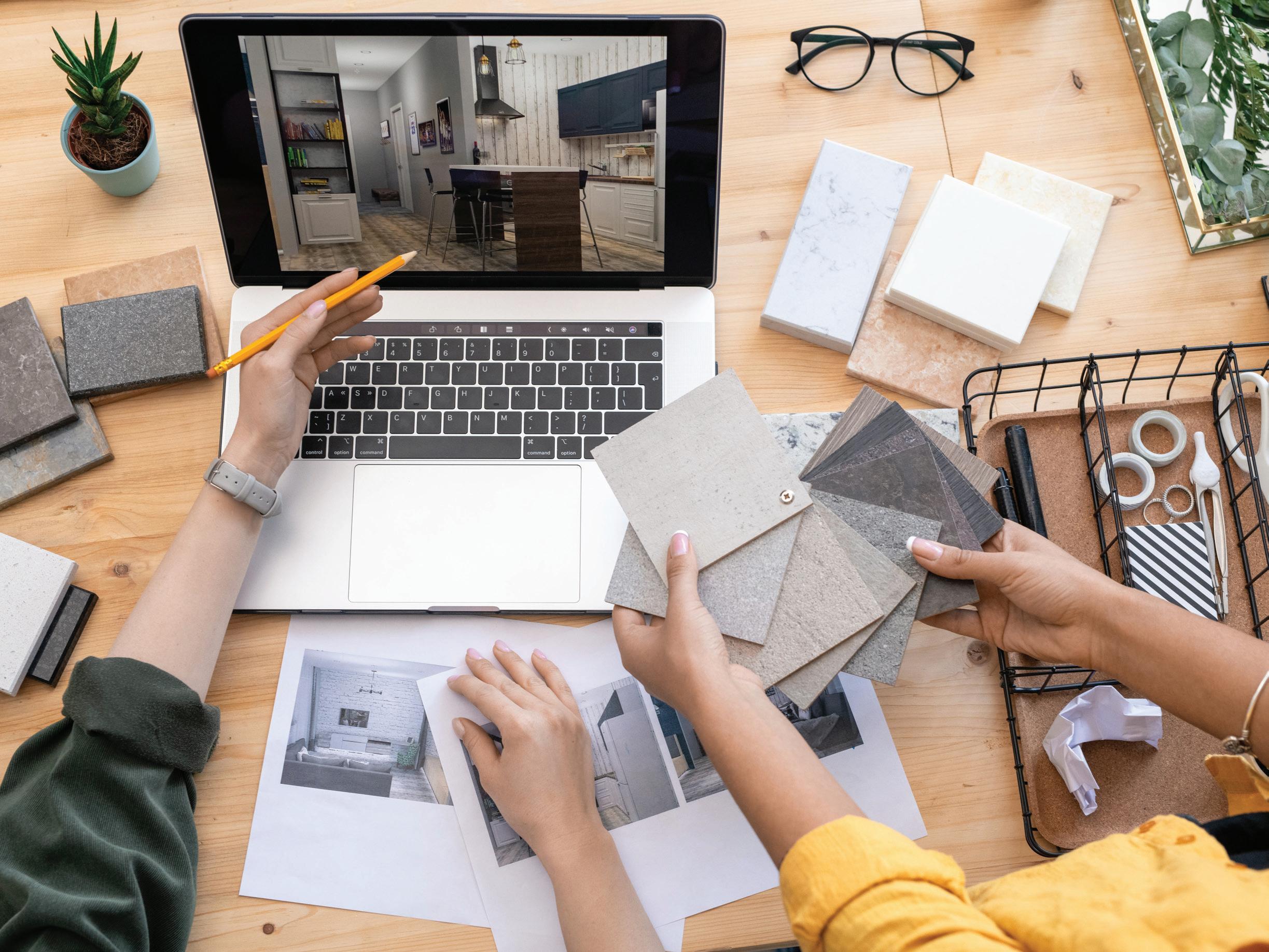
Then she returns to her office to make a conceptual 3D design of the project. She has her subcontractor look at the plan and estimate costs.
Once she has all the costs, and has
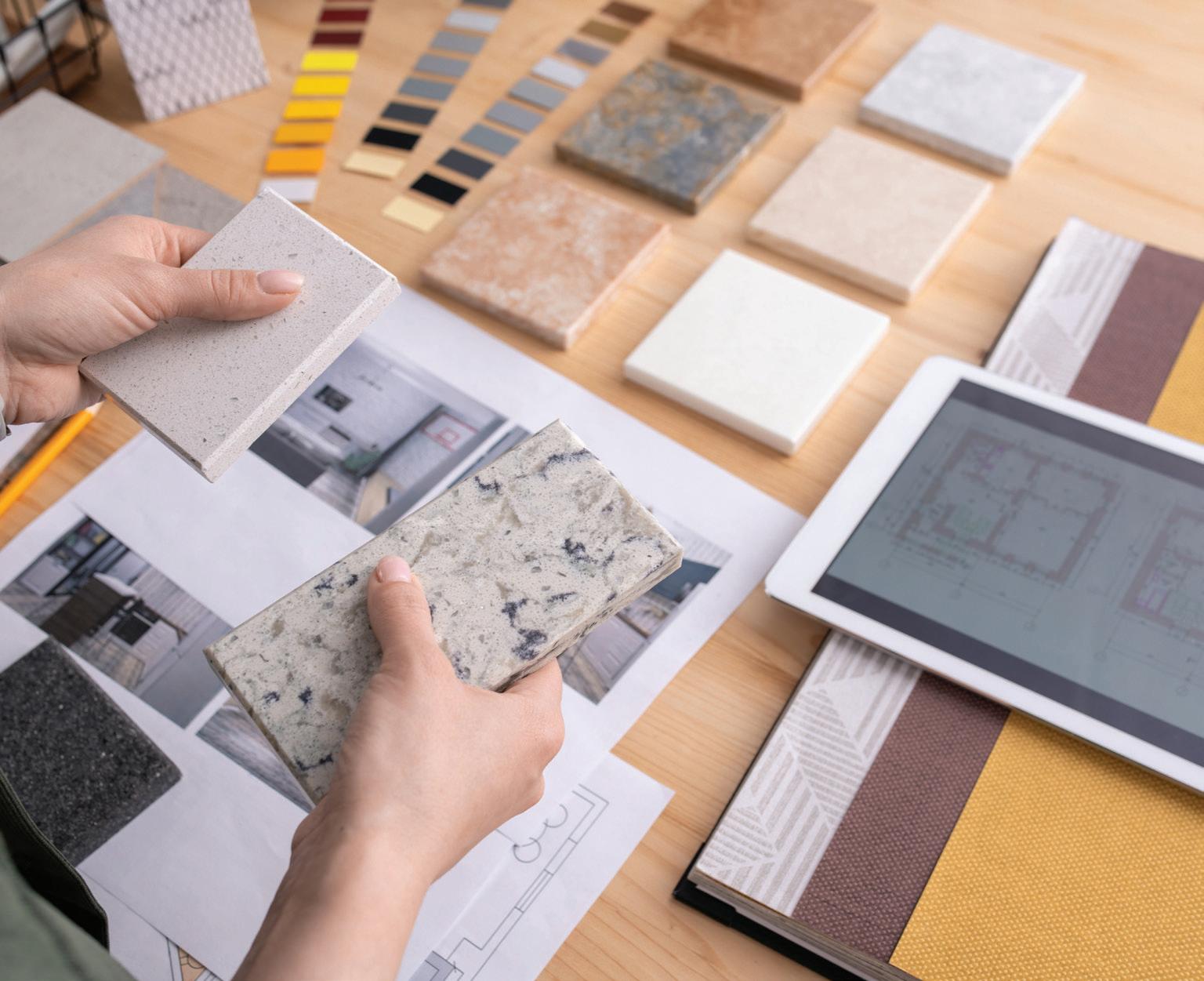
picked out samples of paint colors, wallpaper, and tile, the homeowner meets with her to make choices.
If needed, Fyall gets permits.
“If you are just taking out old cabinets and putting in new ones, you don’t need a permit,” she said. “But if the work is significant, and includes electrical work and plumbing, then permits are needed.”
Average kitchen remodels take from six to eight weeks to complete.
And why should homeowners work with
professional interior designers?
“The average person walks into a paint store and sees thousands of choices,” Fyall said.
“They get overwhelmed. I help people through the process and that eliminates the stress of making those decisions.”
Why work with someone local?
“We are right here and have the ability to answer homeowners’ questions in person,” she said. “Staying local and shopping local keeps the money in the community and that benefits everyone.”
Fyall’s office and showroom are inside Collective Interiors in downtown Ellensburg. She shares space with two other designers.
“It’s awesome to be downtown,” she said. “Supporting the community and being a part of the Downtown Association is something that is important to me.”