









ANNA TALLARICO
Special to the Daily Record
Ashtyn Harris got her start fly fishing at 19 years old, thanks to her uncle.
It was immediately an uphill battle, and it took a solo trip to the Saint Joe River to catch her first good-size trout on her own to get hooked — literally.
For Shannon Mahre, it was a friend at Red’s Fly Shop who encouraged her to give it a try.
“Fly fishing brings something to my life that nothing else does — it slows me down, allows me to reset and keeps me grounded in nature and in the river,” Mahre said.
The two guides met three years ago at Red’s, when Mahre was teaching a women’s intro to fly fishing course.
“Nether of our husbands fish, so we ended up becoming each other’s fishing ‘buddy’ (we call each other our ‘fishing wife’) and we became very good friends,” she recalled.
They bonded over a shared passion to encourage “ladies to get out on the water,” Harris said. She admired what Mahre does with her company Girls with Grit, which offers a broad range of outdoor, adventure-based education opportunities for women, including fly fishing.
“It’s easy to be on the same page,” Harris said of their friendship.
Intimidation often holds women back from trying new things, especially if that “new thing” is traditionally a maledominated activity.
“It can be very intimidating to walk into a room or river full of guys and feel safe enough to be vulnerable, which is what it takes to learn any sport or skill,” Mahre said.
“Some guys are great at helping women feel comfortable, and therefore can be wonderful instructors and guides for women,” she continued, “but that is not always a 100% guarantee when you sign up for a coed clinic.”



Mahre and Harris offer women’s clinics and trips on the Naches, Yakima and Cle Elum rivers with a guarantee that there are “no dumb questions, that we are all on our individual journey to learn and grow and what we are all there to cheer each other on, not compare ourselves to one another.”
Harris approaches teaching someone who has never fly fished before with “excitement and encouragement.”
“This sport is not as hard as people think and they can do it on their own,” she said.
You don’t need thousands of dollars’ worth of gear, either.
“Fly fishing is what you make it,” she said.
For Harris, it’s an escape, and a way to express her love of the outdoors.
“I love taking my dog out with me and just wandering through the water,” she said.
Mahre and Harris worked with Red’s to help create the women’s program
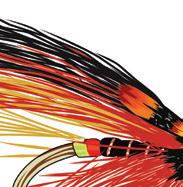

alongside Girls with Grit.

“Coaching and guiding together allows us to bring each our superpowers to the table, and thus create the perfect experience for our clients,” Mahre said.
Since then, there’s been a notable uptick in local women interested in learning how to fly fish.
“I believe we have done a much better job of creating a more welcoming environment for women to learn and be a part of this really cool sport,” Harris said.
This rings true not only in Kittitas County, but statewide.
“There are so many amazing women and organizations that are dedicated to getting women into fishing and helping to create a community around them that fuels growth and inspiration,” Mahre said. “The more that we continue to work together and raise each other up, the more women we’ll continue to see in our industry and loving fly fishing just as much as we do.”

Special to the Daily Record
At the border of Kittitas and King counties, The Summit at Snoqualmie offers a wonderland for skiers, snowboarders and winter enthusiasts of all kinds.
There are five unique base areas: Summit West, Summit Central, Silver Fir, Hyak and Alpental, each with their own offerings.
As of last season, parking is no longer free, but it comes with a season pass, purchasable on the Summit at Snoqualmie website.
If parking fills up at one base, no problem — shuttles run regularly between all five.
Beginners can take lessons at any base area, but most commonly at Summit Central or Summit West.
Equipment rentals are at any base area or at evo Snoqualmie Pass, located right off Highway 906.
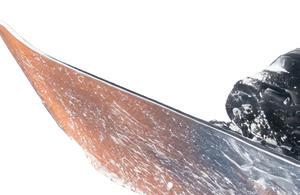
It’s nicknamed “Seattle’s Home Mountain” (the whole summit is named this, actually) for a reason. It’s the closest and most accessible from the West Side, and also the easiest terrain overall,










making it the best place for beginners.
It’s also the nearest base area to other Snoqualmie Pass amenities, such as Laconia Market & Cafe, Commonwealth, Summit Pancake House, Lee’s Grocery and the Chevron gas station, to name a few.

Perhaps best of all, the Summit West parking lot rarely fills up all the way, even on the busiest weekend.
provides on-the-ground entertainment for those riding the lift all the way up.
As the most popular hill, the infrastructure at Summit Central is built for biggest load capacity — it can take the most people up the mountain the fastest, thanks to its two high-speed detachable chairlifts: Central Express and Silver Fir Express.
Central is also home to Central Park, featuring medium to large jumps and jibs for daring tricksters. It is accessed via Central Express, and as a bonus,
Across the street, the Summit Tubing Park offers a fun, familyfriendly alternative to skiing, with more than 18 tubing lanes and a covered conveyor lift.
Though technically part of Summit Central, this base area has plenty of its own charm.
Beginners take heed; the steeper terrain is for the more adventurous intermediate snow-goer.
Silver Fir is also home to the bike park in the snow-free months, and the big berms built in the summer can make for some significantly sized moguls in the winter.

The top of the hill offers a great view of the Pass, particularly Keechelus Lake.
The eastern-most base area is also the most laid-back. It’s got all the terrain, but at a less steep angle than Alpental. And perhaps because it is furthest from Seattle, it gets

the least traffic, so it’s the place to go to skip the endless lift lines.
For an even more remote vibe, ski the back side of the mountain. The Hidden Valley Chairlift operates there, and the Rampart Chairlift starts a bit further north.
You can ski from all the way from Hyak to Summit West thanks to the Inter-Summit 90 crossovers.
If you’re looking for the most iconic Snoqualmie Pass terrain, Alpental is it. It tends to get better snow due to higher elevation, and there’s a lot of backcountry available for the more experienced skiers.
On “bluebird days,” you can get almost-360 views, including a commanding view of Mount Rainer, from the top of the brand-new Doppelmayr Triple Chairlift.
The old Chair 2 lifts were in service for almost 60 years. Over the summer, they were auctioned off over the summer for thousands of dollars each.
(If you drove over the Pass in the summer, you might have seen helicopters pouring concrete.)
The Eidelweiss Chairlift was also upgraded to a triple.
If you’re planning to ski here, arrive early — parking fills up fast.











Special to the Daily Record
Sometimes, the most “wonderful time of the year” just isn’t.
Andrea Baker, a licensed counseling and holistic health professional and owner of New Dimensions Alchemy in Roslyn, offers practical advice for when the holiday season starts to lose its luster.
QWhat are some of the most common mental health challenges you see people struggling with during the holiday season?
Holidays can evoke a wide range of emotions for many people, for various reasons. They are often portrayed as joyful times in our media and traditions, but for many individuals, the reality is that holidays can be challenging because of their histories and personal experiences.
More often than not, we see an increase in anxiety and depression-related symptoms. Many of us experience rising anticipatory anxiety as we get closer to travel and large gatherings. We worry about what might happen, what could go wrong, who will say or do something we find hard to process, safety concerns, the stress of traveling, and managing expectations. This can also overwhelm us and cause us to shut down.
QFor people heading home to difficult family situations, what are some ways to prepare emotionally and set boundaries?
Boundaries are often misunderstood, so I love to think of boundaries as “ways we care for and honor ourselves and our limits.” They are less about what others do and more about what we do! We can anticipate situations and ways our boundaries are violated by others’ behaviors and prepare how we will respond.
For example, if we know that our family sometimes disintegrates into arguments, we can decide ahead of time to remove ourselves and go outside to take a breather or leave a gathering altogether if that protects our peace.
The key to developing healthy boundaries is being honest with yourself about areas of your life and situations that push you beyond your limits and preparing to take care of those limits. For instance, while I love seeing my family during the holidays, I don’t always love traveling over two mountain passes and dealing with holiday traffic. If it has snowed a lot, my family knows I will likely choose to stay closer to home, where
I experience less stress, so that I can enjoy my time off.
QWhat’s the difference between just feeling a bit “bleh” in the winter and experiencing Seasonal Affective Disorder (SAD)? And what are some small things people affected with SAD can do to help ease symptoms?
The causes of SAD aren’t well understood, but the theory is that changes in sunlight exposure and increased darkness affect our production of key hormones and neurotransmitters like serotonin and melatonin. The difference between “bleh” and SAD is that SAD resembles major depression more, making it harder to push through and shake off than a simple “meh” mood in the morning.
In Washington, generally, we benefit from certain lifestyle choices due to our lack of sunlight. My first recommendation is to get as much sun exposure as possible, avoid wearing sunglasses whenever possible, and get light first thing in the morning. It’s welldocumented that our melatonin production is affected by morning sunlight; about 10 minutes outside sets the circadian rhythm for melatonin production. (It’s not about when we go to bed but when we wake up!)
Personally, I wake up very early, so I use a Happy Light to ensure I get enough lumens for my body to produce sufficient serotonin. Additionally, spending time with close friends in enjoyable social settings, engaging in regular exercise, and practicing stress management techniques are all important. Yoga Nidra is my favorite stressrelief practice, which involves guided meditation to help regulate breathing and calm the nervous system. There are hundreds available for free on YouTube!
Other factors that influence our serotonin production include eating foods that provide its building blocks, such as those high in tryptophan — turkey, chicken, eggs, tofu, nuts and seeds. Foods rich in melatonin include tart cherries, pineapple, goji berries, nuts, fish, eggs, milk, mushrooms and oats. Additionally, with your healthcare professional’s advice, vitamin D3 + K2 can greatly support our ability to process calcium, which is vital for many bodily functions.
QWhat’s your advice for people who feel overwhelmed by holiday travel, especially college students?
There is no better way to regulate your body than by pairing breath work with
realistic and supportive thoughts. One of my mantras is “your mind follows your body, and your body follows your breath.”
When we think stressful thoughts or face stress-inducing situations, our body has a system designed to support us. It works wonderfully during life-threatening events, and it can be a real challenge when dealing with traffic or at the airport, where we need all our faculties for effective problem-solving. Changing how we breathe to focus on calming the nervous system, while ensuring the story we tell ourselves about the situation is accurate and helpful, is essential. When we breathe, our inhale is like pressing the gas pedal for our nervous system, saying “go,” and our exhale is like applying the brake, signaling to slow down and acting as a safety messenger.
Try focusing on extending the exhale, making it as long and slow as possible. Couple that with thoughts such as “things will work out fine,” or “all problems have solutions.”
Many people find that just a few moments of long, controlled exhales soften their body and allow all their faculties (critical thinking,
problem solving, behavior inhibition, and so on) to return to normal functioning.
QFor those spending the holidays alone, what are some ways to create a sense of meaning or connection during the season?
Many of us feel lonely or are separated from friends and family during the holidays for various reasons. It is essential to build connections and have a plan in place in advance to avoid the holiday blues. Usually, there are many ways to connect with locals and businesses, which we can find through the chamber of commerce or downtown associations.
The most meaningful way to create connection and purpose is by giving back, such as volunteering at the local food bank or finding others in similar situations to host a holiday potluck, or for a craft or gaming night.
We often keep an open-door policy during the holidays and invite friends we know are far from their families for a fire and some food. Those moments become some of my favorite memories.

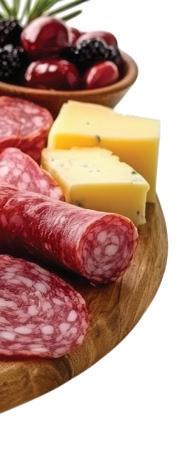
Nestled in the charming alpine village of Leavenworth, Washington, CURED is more than just a shop—it’s a celebration of time-honored traditions, family heritage, and the fine art of charcuterie. Specializing in small-batch, handcrafted cured meats, CURED offers everything needed to create an unforgettable charcuterie board, whether you’re hosting a dinner party or packing provisions for your next mountain trek. At CURED, you’ll find a thoughtfully curated selection of artisan meats, cheeses, and gourmet accompaniments, all chosen for their quality, flavor, and integrity. From ready-to-enjoy grazing boxes to expertly paired charcuterie sets, everything we offer is designed to elevate your snacking or entertaining experience. Each item reflects our passion for natural, flavorful, and
responsibly sourced food.
Behind every slice of our charcuterie is a deep-rooted story—heritage livestock raised with care, family recipes handed down for generations, and traditional curing methods that deliver bold, unforgettable flavor. Our cheeses are equally special—carefully selected to complement our meats and tell their own story of craftsmanship and quality.
The heart of CURED lies in our family’s history. Our roots in ranching and regenerative farming go back generations. We’ve built our business around a mission to raise animals the right way—sustainably, ethically, and naturally. Our USDA-approved “Earth Positive Provisions” label represents this commitment. By nurturing our land and livestock through circular life-cycle practices, we produce meats that are not



only healthier but have a positive impact on the environment.
Unlike mass-produced charcuterie, our offerings are truly local, small batch, and handcrafted. We’re proud to provide our community with a unique product— clean, honest food with heritage at its core. Customers often tell us how thankful they are to have a local source for premium cured meats and cheeses. It’s this direct connection with our customers that inspires us every day.
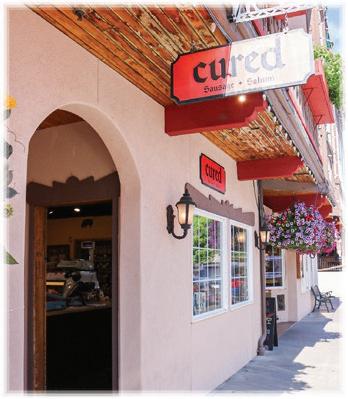
CURED is located on Front Street in Leavenworth, among a delightful mix of boutiques and eateries. Our shoppe’s
warm, inviting atmosphere reflects the spirit of our family and the hospitality of our ranch. We are family-owned and operated, and it brings us true joy to extend our table to yours through our products.
Whether you’re new to charcuterie or a seasoned connoisseur, we invite you to experience the difference at CURED. And if you’re curious about where your food comes from, we’d love to welcome you for a tour or one of our ranch gatherings—just reach out to Mrs. Bonnie Toland at (509) 856-5272 or bonnie@curedbycarnevita.com.
CURED is more than a charcuterie shoppe—it’s a taste of tradition, a story of stewardship, and a place where every product reflects the love and care of generations.


Located in the heart of Ellensburg, Washington, Kittitas Valley Healthcare (KVH) has been a cornerstone of community wellness for more than six decades. Established in 1964, KVH began as a grassroots effort by local residents and healthcare professionals who recognized the urgent need for a modern, state-compliant hospital in the valley. At the time, two outdated facilities—Ellensburg General and Valley General—were unable to meet the growing medical needs of the region. The community rallied together, passing a levy in 1962 that paved the way for the construction of a new hospital. On December 29, 1964, Kittitas Valley Community Hospital opened its doors to patients for the first time.
Since then, KVH has expanded significantly in both scope and services, evolving into a comprehensive health system that now includes multiple

clinics, specialty services, and an Urgent Care clinic in Cle Elum that operates 365 days a year. Reflecting its growth and broader mission, the organization changed its name to Kittitas Valley Healthcare in 2013. In 2024, KVH proudly celebrated its 60th anniversary, a testament to its enduring commitment to the community.
Today, under the leadership of CEO Jason Adler, KVH operates with a clear mission: To be a community-focused health system providing outstanding, personalized care to improve the lives of individuals and families. This mission is guided by core values of respect, quality, service, transparency, and collaboration. What truly sets KVH apart is its governance model—a public hospital district governed by an elected five-member board of commissioners. Every dollar earned is reinvested into enhancing healthcare services for the

local community, ensuring sustainable, high-quality care for generations to come.
Beyond its hospital walls, KVH places strong emphasis on community integration. A unique example of this is the Medical Arts Center on Jackson Avenue, where the organization commissioned local artists to create pieces for each clinic space. This artistic initiative celebrates the region’s culture and creativity while reinforcing the idea that health and community are deeply interconnected.
Many are surprised to learn that KVH is more than just a hospital. It offers a full spectrum of healthcare services, including primary and specialty care clinics, surgical services, and long-term care options. The Cle Elum Urgent Care facility is particularly notable for its yearround availability, offering residents
access to non-emergent care even on holidays and weekends.
Over the years, KVH has continued to find meaningful ways to honor its roots and look forward to the future. In 2014, a time capsule was buried on the hospital grounds to commemorate 50 years of service—a symbol of its past and ongoing commitment to community health.
As it continues to grow and innovate, Kittitas Valley Healthcare remains true to its slogan: Your Home for Health. With deep community roots, a patientcentered approach, and a dedication to excellence, KVH stands as a trusted healthcare partner for residents of Kittitas County and beyond.
For more information, visit kvhealthcare.org or call 509-962-9841. KVH is located at 603 S. Chestnut St, Ellensburg, WA 98926.