












By CHASE DEVORE for the DAILY RECORD
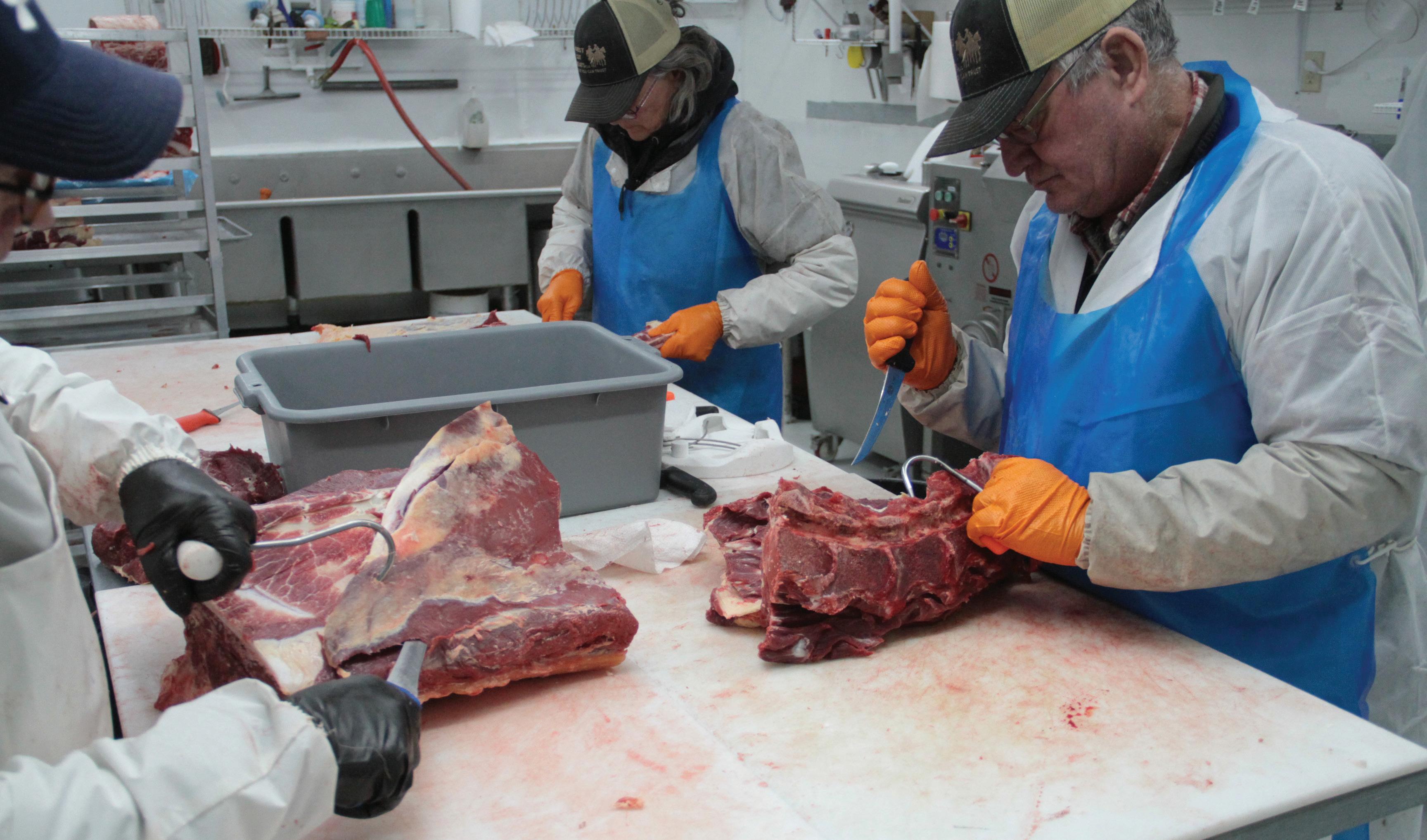
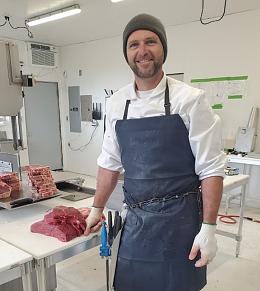
Honest Cuts Meats, located off Vantage Highway in Ellensburg, is Kittitas County’s most tenured wild game processor. The Honest Cuts founders and operators, Scott and Kay Shelton, have been serving the county since 2014 in all things wild and domestic animal processing.
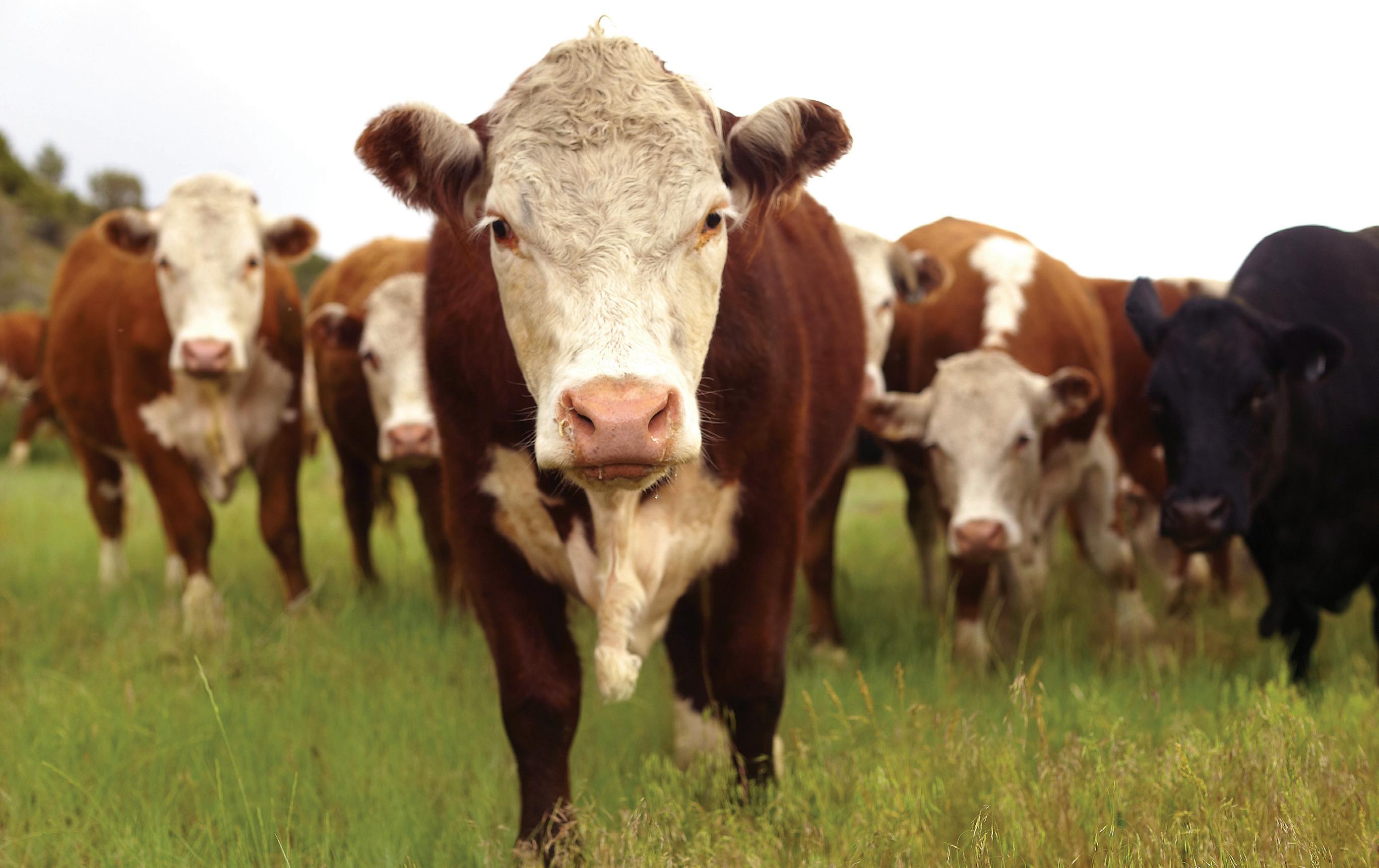
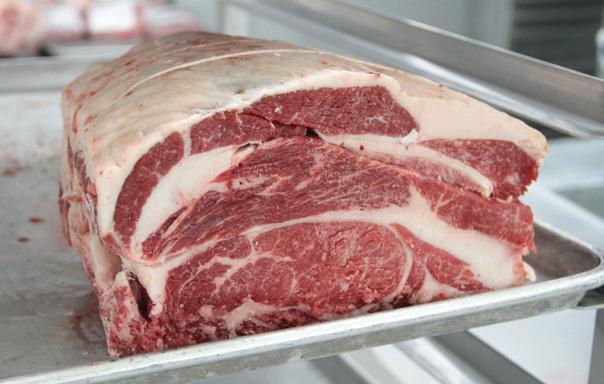
Honest Cuts also sells locker beef that’s raised and processed on Shelton property as well as a variety of retail and commercial product. All beef is grass-fed and grain or grass-finished.
“[Customers] know when they come here they’re getting grass-fed, no hormones, no shots, no nothing,” said Scott Shelton.
In 2023, the Honest Cuts crew of
seven processed 249 domestic and 168 wild animals, more than 156,000 pounds of ground beef, approximately 4,800 pounds of chuck sticks ground jerky, and 6,000 pounds of summer sausage — their best seller.
Honest Cuts provides year-round processing, its busiest time of year stems between early September through January — hunting season.
meat-production experience.
Scott Shelton started working at the Shaake Packing Company at the age of 19, where he was first introduced to commercial cutting.
The Sheltons are both born and raised in Kittitas County and started cutting meat at the age of 11 and 12 years old, respectively. Together, they have 30 years of full-time professional butchering, specialty charcuterie, and
After a ninemonth span at Shaake, he enrolled in Washington State University’s Animal Science program, where he learned the ins-and-outs of processing and charcuterie practice.
The Sheltons built the Honest Cuts shop in 2011 with the intention of processing meat as a hobby; cutting for friends and family. All while building the shop, the finishing touches were being made on
the homemade Shelton summer sausage recipe — a recipe 25 years in the making.
“Our daughter said, ‘Well, you outta open a shop and start selling this stuff!’” Shelton said of his perfected summer sausage.
“It was enough to give us the idea that we knew we wanted to do it,” he added.
Honest Cuts made the decision to be state inspected and started cutting commercially in 2014.
The Sheltons have since sold thousands of pounds of jalapeño/cheddar and jalapeño/pineapple brats as well as jalapeño summer sausage.
Honest Cuts meats is actively finalizing the process set by the U.S. Department of Agriculture to be fully certified come mid-February.
By LAURA JEAN SCHNEIDER for the DAILY RECORD
Trapped in an insecticide-induced paralysis for two hours, farmer Greg Lutovsky made a deal with God: If he recovered he’d never use chemicals on his crops again.
That was 27 years ago, and he’s kept his end of the bargain, turning Irish Eyes Garden Seeds into an all-organic operation ever since.
Lutovsky reflected on his business — and his promise — from his home in Cle Elum in mid-January.
“We haven’t worked all week,” he admitted, with 30 inches of snow on the ground blocking the way to his Ellensburg acreage off Robinson Canyon Road.
“Our van’s almost covered, you can hardly see it,” he said.
Lutovsky also farms 60 acres near the old Teanaway townsite, sowing garlic and potatoes, the crops he built his company on. Irish Eyes, he said, controls more certified organic acres in Kittitas County than all of the other organic growers in the county combined.
“The beginning of January is usually pretty busy,” Lutovsky said, and spring garlic orders were already on their way to larger companies such as Garden’s Alive, Burpee and Baker Creek Heirloom Seed.

Garlic put Irish Eyes on the map in the first place. After liquidating a landscaping business, Lutovsky latched on to a Seattle Times article on growing garlic and began researching varieties.
“I started gathering different types of clones and propagating them up and selling them at various farmers markets,” he said.
Then, Irish Eyes went big time when Renee Shepherd of Renee’s Garden, a selfdescribed garden-to-table seed company, placed the first large order: 20,000 halfpound packages of garlic.
“She’s the one who kinda vaulted us,” Lutovsky said. Soon, other big-name seed companies followed suit.
“Before we knew it, we needed to move out of Orting,” he said. The weather was not ideal for growing garlic or potatoes, and the growing population meant land prices were on the rise.
had gone into full paralysis. He climbed into his pickup and turned it on before everything went.
“We settled on Ellensburg,” Lutovsky said.
Four employees moved, too.
“We planted our first garlic crop in Ellensburg in 1996,” he recalled.
Up until that point, he’d farmed conventionally. Pretty much everyone did, then.
But later that year, as Lutovsky hand-sprayed a few rows of potatoes with insecticide, he got caught in the overspray and within minutes,
A promise to go organic
“I sat there for two hours, paralyzed, talking to Jesus,” Lutovsky said. “I told him I wasn’t spraying any more chemicals if he got me out of this.”
“We transitioned to organic in ’97, at the end of the year,” Lutovsky said, stating that Irish Eyes was one of the first thousand farms to get organic certification in the state of Washington.
He was definitely an outlier.
“It was pretty much just hippies,” he said.
Clean-cut, with a handful of employees, Lutovsky stuck out from the back-to-the-lander crowd that first latched onto organic Ag.
“I didn’t really fit into the crowd,” he recalled.
Folks saw him as a corporate company getting into organics: He just believed in healthy food. (“Corporate grocery
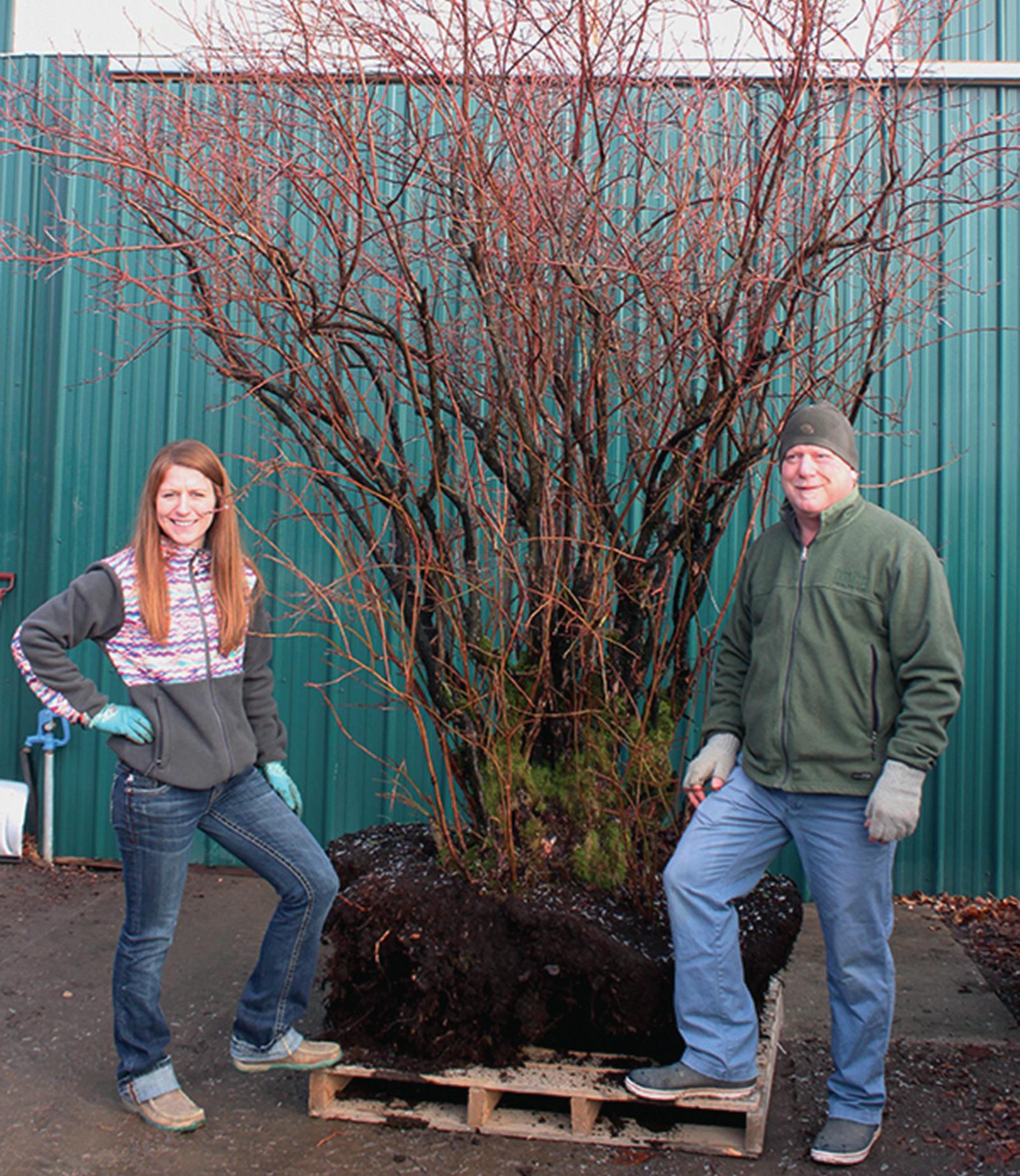
Greg Lutovsky and Alexa Blanken
is pretty much poisoning the world for profit,” he said.)
“We kinda popularized the garlics for the seed companies,” Lutovsky said.
Then, he focused on what he called “oddball potatoes,” including fingerlings.
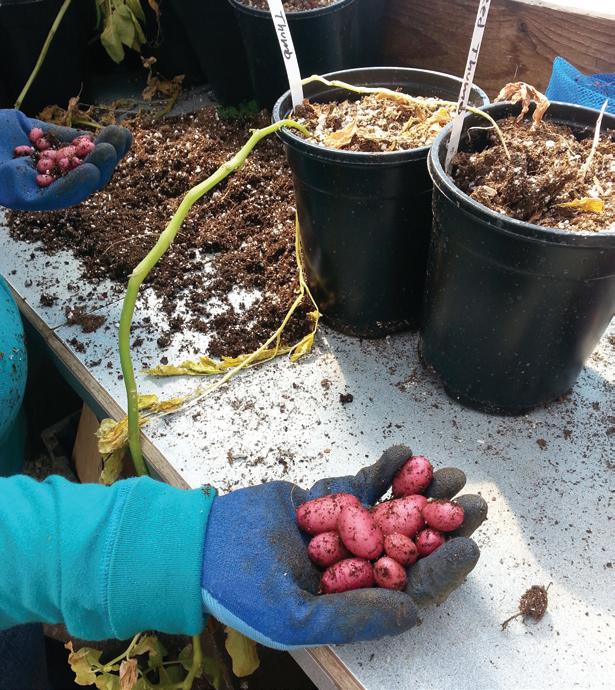
Sold direct to high-end produce markets in foodie-forward urban centers such as Los Angeles, Chicago and Denver, the petite digits brought $6 per pound when humble russets fetched just 6 cents for the same weight.
“They really caught fire with the chefs,” he mused.
But after neighboring farmers saw the high returns and planted scads of their own cash crop, prices plummeted and Irish Eyes pivoted to focus on seed potatoes, sending samples along with garlic orders to gather interest.
“Seed potato production is very different,” Lutovsky said, than other propagation done by Irish Eyes.
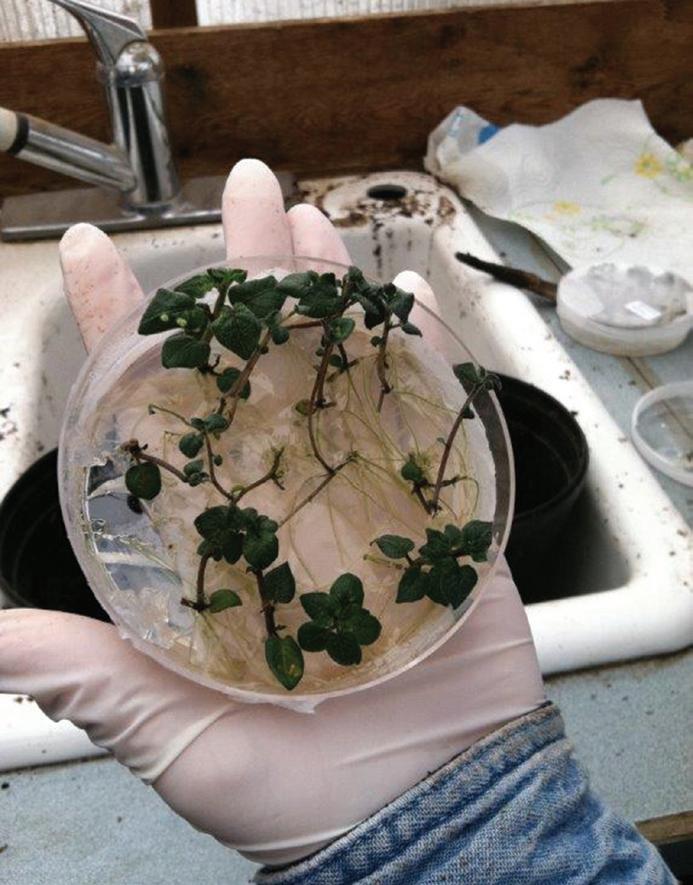
“We have potato plants in petri dishes and test tubes,” he said.
The tiny plants grow in a secured greenhouse with double doors and a virtually insect-free environment, referred to as first generation prenuclear potatoes because they have never touched soil.
Instead, the tiny plants spring to life in an organic growing material made from compost from a Kittitas County compost site, biochar and other materials.
“We are the only ones who are doing this organically,” Lutovsky said.
“We are the only ones who do it from tissue culture organically and direct to customer,” he added, in the nation.
“We want to get the most vigorous potatoes to our customers,” he said, before they start trying to grow ones from the supermarket, many of which are treated specifically to inhibit reproduction.
“We sell potatoes to a lot of market growers,” he explained, stating that often these folks who grow on a smaller scale sell at farmers markets.
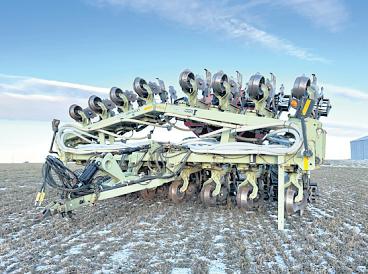
And along with working on smaller acreage comes the challenge of finding equipment that works to scale. Lutovsky
imported farm equipment from Europe capable of planting a row at a time, which made sense for the small-scale farmer who couldn’t make use of tractors that needed a football field-sized area to turn around, he said.
Meanwhile, the Irish Eyes catalogue continued to grow.
“We just kept adding things as people asked,” Lutovsky said.
In 1999, he
acquired Garden City Seed, in Montana, and added dry and wet (melons, squash, etc.) seeds to the list of offerings.
The family-based business has gathered attention from a slew of outlets. In 2009, Lutovsky’s family provided some of the seeds used in Michelle Obama’s White House garden. Irish Eyes was featured on the covers of Onion World, Spudman, Vegetable World, Potato World, and featured in the Seattle Times, among other publications, while Lutovsky’s daughters Alexa Blanken (his current business manager) and Sara Hunter were featured on the cover of The New Pioneer in 2022.
“We specialize in very short season seeds,” he added. “Our little inroad has been short seasons for crappy climates.”
“If you pick the right seed for the right area, [you] can have success.”
“I didn’t get here by being successful all the time, I got here by failing,” Lutovsky said.
He’s dealt with the sale of his business falling through an hour before the paperwork was to be signed in 2019, and the impact of COVID that first crippled,
then oddly sustained Irish Eyes.
“COVID really kinda crushed us,” he said.
Employees dwindled to two: Lutovsky and his daughter Alexa.
But they were in the perfect position to act when the big seed companies had to shut down their websites as the gardening craze hit quarantined buyers.
Irish Eyes still had seeds to sell.
“Our website blew up,” Lutovsky said. They didn’t finish filling May’s seed orders until July.
“That helped us stay in business during COVID,” he said.
Then a large garlic order from Burpee helped them through to the following spring.
“We’re back to eight employees and doing what we’ve done since 1989,” he said.
He has no intention of slowing down, and intends to keep going.
“I just turned 60 last June,” he added. And so, how long?
“Oh, probably ’til I drop off a tractor and get disced in,” he said with a laugh.
As the world population grows, the role of the agricultural sector will become even more prominent. There should be significant demand for agricultural professionals capable of meeting the challenges facing the world as it confronts climate change and food shortages. That makes now a perfect time for students to explore potential career paths in the agricultural sector.
Agricultural engineer: Agricultural engineers employ engineering principles to solve issues related to agricultural production. An agricultural engineer may design facilities or machinery or develop solutions to address problems related to irrigation and soil conservation, among other projects. Students interested in a career as an agricultural engineer can expect to study mathematics, physics, chemistry, computer engineering, and, of course, engineering analysis and design as they pursue their degrees.
• Agronomist: Agronomists work with
crops and soil management and may work as analysts, environmentalists or forecasters. Agronomists may be tasked with analyzing soil structure and chemistry and study how water is moving within soil. Students will study agriculture, biology, chemistry, and physics en route to earning a degree that will help them become an agronomist. Mathematics also will be part of their studies, and statistics courses will be part of those studies.
• Biochemist: Biochemists study the chemical and physical principles of living things and biological processes. Within the agricultural sector, biochemists will contribute to the development of agricultural products, including those that will serve a medicinal function. Biochemistry, chemistry, biology, calculus, and physics will be part of students’ courseload as they pursue degrees that prepare them for a career as a biochemist.
• Climatologist: Climatologists will figure prominently in the agricultural sector as the effects of climate change



manifest themselves more readily over the next several decades. Climatologists study climate change, variability and the biosphere. Climatologists offer insight about the effects of climate change on the growth and development of agricultural products, including fruits, grains and vegetables. The natural sciences feature prominently in climatologists’ educations, and students also will study meteorology as part of their coursework.
• Food scientist: Food scientists study chemistry, biochemistry, microbiology, and engineering so they can assist in the development of new food products. Food scientists may manage processing plants and some serve as researchers in an effort to solve problems related to food production.
• Plant pathologist: Plant pathologists specialize in analyzing issues related

to plant diseases. Research features prominently in plant pathologists’ work, and many work in university settings. Some plant pathologists work for companies attempting to develop pestresistant plants. Advanced degrees are necessary to work as a plant pathologist, and students will study mycology, bacteriology, virology, and physiology, among other subjects, as they pursue their degrees.
The agricultural sector employs millions of people across the globe. Many of those people do interesting work as they attempt to address issues facing the agricultural sector.
The demand for food is directly related to population growth. By 2050, food needs are expected to double, according to a study published in the journal Agricultural Economics. That puts increasing pressure on the agricultural sector to meet growing demand. However, many experts think the industry will fall short.
In addition to increased food demand, consumer habits, technology, and policies continue to force the agricultural industry to evolve. Indeed, the agricultural sector may look very different in the future.
Social media has transformed many industries, and it can do the same for agriculture. Farming supply chains can communicate with one another by
getting feedback from customers in realtime through social media. However, agricultural operations will have to devote teams to managing social media presence, especially since misinformation is so widespread on social media.
Apart from social media, local farmers may increase their efforts to utilize mobile apps and direct-to-consumer purchasing options. The global pandemic helped businesses reimagine takeout and curbside shopping. Local farms may want to market to the home-shopping community, providing ways to deliver produce, fresh meat and poultry, and other items directly to customers’ homes.
The future may feature a significant shift in the way farms source their ingredients. Regeneration International says that

regenerative agriculture can be the future. This describes farming and grazing practices that may help reverse climate change by rebuilding soil organic matter and restoring degraded soil biodiversity. Some insist that farmers who utilize regenerative agriculture produce food that is more sustainable and healthy. This is something eco- and healthconscious consumers can stand behind.
There’s a good chance that technology will continue to play important and growing roles in farming operations. New agricultural technologies can collect data on soil and plant health and produce results in real-time. Precision farming
technology can be developed to deliver integrated solutions no matter the size of the operation.
Farmers may give more thought to sustainable products. Crops like hemp and cannabis are being utilized in new and innovative ways, and they’re only the start as consumers have expanded their views on plant-based foods and products.
While there’s no way to see into the future, individuals can anticipate changes that could be in store for the agricultural sector in the decades ahead.


By JAKE MCNEAL for the DAILY RECORD
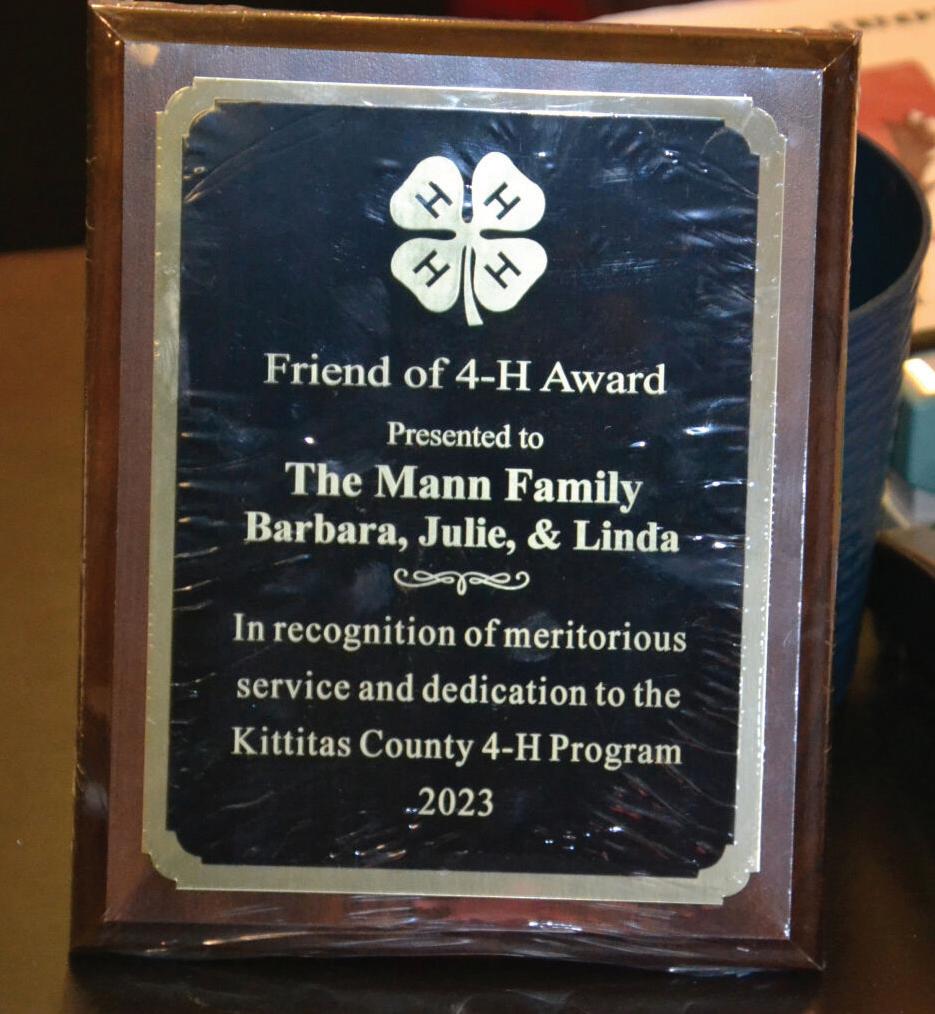
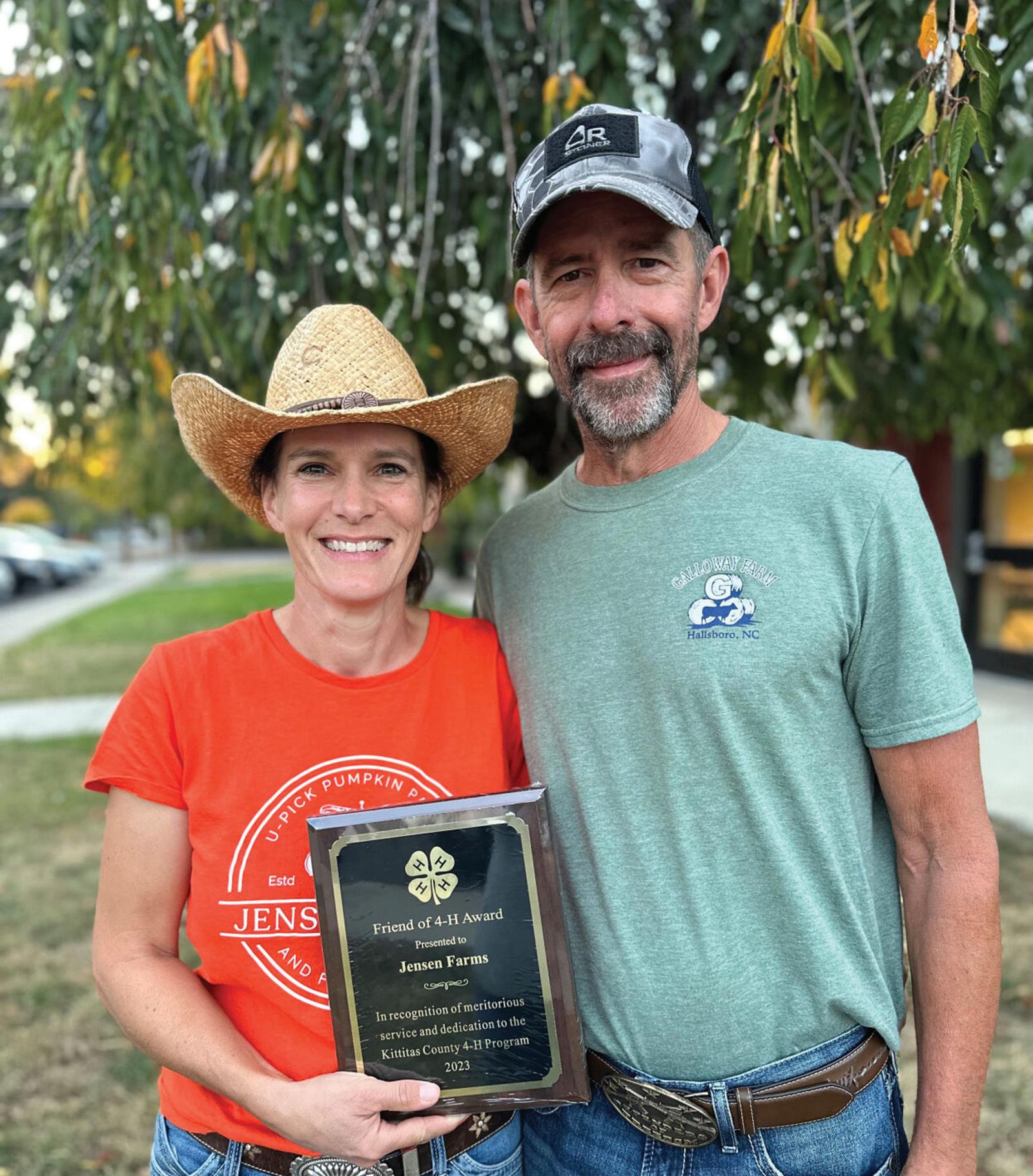
With 2023 in the record books, Kittitas County hails its newest Friends of 4-H and Outstanding 4-H Leader. Barbara, Julie and Linda Mann, Jensen Farms and Pauline Clyburn are the latest such honorees “in recognition of meritorious service and dedication to the Kittitas County 4-H program.”
Andrea Morse, the Washington State University Kittitas County Extension office manager, said the 4-H Council accepts individual, business and leader nominees through July 1. The council votes, and winners are declared in October’s end-of-year banquet.
award’s inception in 2003.
Clyburn, whose daughter Chloe belongs to On Target Shooting Sports and has competed at 4-H Shooting Sports National Championships in Grand Island, Neb., has inspired youths for 11 years.
“It’s nice to be recognized because I spend a lot of time here and I like to see the kids grow up and achieve things, and get less shy as they show off their animal or skill,”
Pauline Clyburn said. “People don’t understand the hard work it takes.”
This time, she’s the one held in high regard.
The Friend of 4-H awards began in 1997 before the Outstanding 4-H Leader
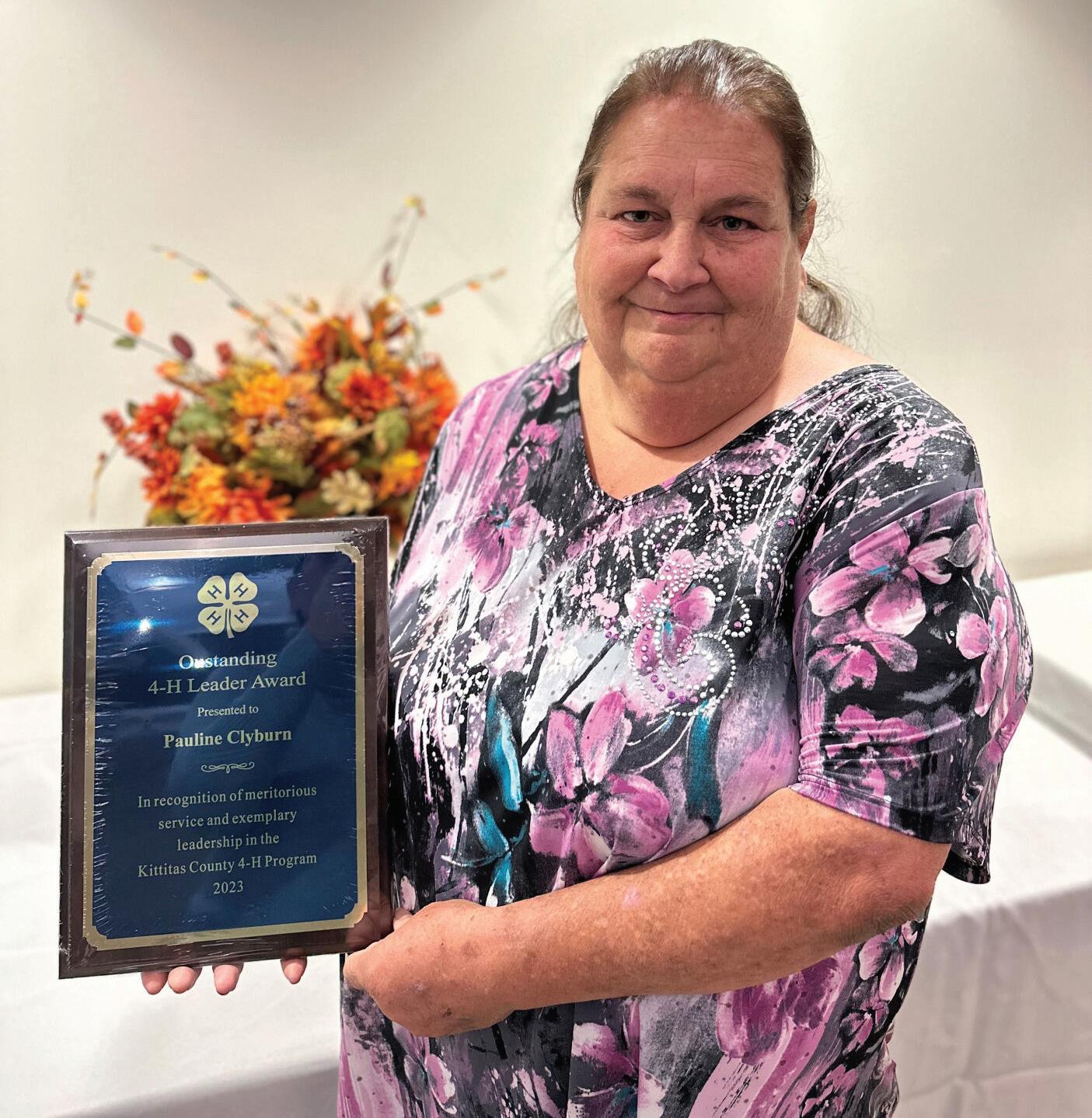
On Kittitas County 4-H’s Facebook page, the praise is persuasive: “Pauline is always willing to step in and help, looking for ways to improve the project, training to be a certified leader, and showing up for all practices. She reviews record books for the club, keeps track of member demonstrations and helps all fair committee members when needed.”
“She is also active in the dog project, and helped get the cat project started in the county program this past year,” it continued. “Pauline looks for the best in each member and encourages learning while holding each member responsible.”
The Manns have decades of excellence
in the field.
“Barbara, Julie and Linda have been selected for their continuous support of the county 4-H program since 1980, when Barbara was a leader,” the decree explained. “Her club combined with Sharon Parker’s club to become the Merry Mixups. In 1985, the club was named 4-H Club of the Month.”
“Julie and Linda were active members in food and clothing projects for nine years each,” it added. “Their father was the original organizer of the 4-H concession booth.”
“Julie and Linda helped at the fair with exhibits, displays, decorating and working in the concession booth.”
The Manns also make annual
contributions to home economics awards. Jensen Farms, run by Hilary and John Jensen, is an agricultural pillar.
Kittitas County 4-H notes that Hilary Jensen has been a huge supporter of the organization for many years, allowing 4-H groups to use their facilities for outdoor meetings, and has supported clubs financially through kettle corn sale fundraisers.
Their support also extends through the purchase of 4-H animals at the livestock sale, and the couple has helped many teens during pumpkin planting, harvesting and sales. That dedication has given many young people a positive, reallife experience.

The agricultural workforce is shrinking, and has been for some time. The American Farm Bureau Federation estimates there are roughly 2.4 million farm jobs that need to be filled annually, but there has been a drastic decline in workers each year.
There are a number of reasons for the shortages. The AFBF says more than 73 percent of farm workers are immigrants from South America and Mexico. While the United States H2-A visa program, which allows employers who meet specific requirements to bring foreign laborers in for temporary work, has increased the number of accepted applications for immigrants to 250,000, this number is still just a drop in the bucket in terms of labor needs.
Another factor is a career in agriculture isn’t always easy or lucrative. According to the U.S Department of Agriculture, for every dollar spent on food, a farmer receives only 7.6 cents.
Declining interest in the field has also affected the number of farm workers. As more farm operators reach retirement age, fewer young farmers are replacing them due to volatile pricing, high real estate and land costs, steep initial machinery investment costs, and other factors. The physical demand of the industry also takes its toll. So what does this mean for the agricultural industry?
Many with knowledge of the industry indicate sweeping changes are warranted.
the project director for the National Association of Agricultural Educators Teach Ag campaign, has said that a lack of agricultural education is contributing to the problem. Increasing the availability of ag education courses across the country could build interest in the industry. Connecting students to internships or mentors may help, too.
Another option is to rally for greater economic opportunities in agriculture. The ag industry in general needs to find ways to make the economic benefits more competitive to other industries, and improve the working conditions and job flexibility. Agricultural industries currently average only 60 percent of what other industries offer in salaries. Farm wages have been rising due to the H-2A program, which requires farm worker pay to be higher than the state/ federal minimum wage. More change is needed, but this may have to come at the federal level or be sparked by efforts on the part of agricultural advocacy groups.
Additional strategies farm operators can employ to combat shortages are: scaling back farm operations; integrating ag technology to reduce labor burdens; pivoting to crops that require fewer laborers; leasing portions of land to have extra money; employing temporary guest workers; and moving operations abroad.
Worker shortages continue to be problematic for the agricultural industry. A greater focus on remedying the issue is needed on a grand scale.









Metro Creative Services
The world faces many unique challenges in the decades to come, including a rapidly expanding global population. The United Nations estimates that the global population will reach 9.71 billion in 2050. That’s an increase of more than 1.7 billion people between 2023 and 2050.
Food security is among the more significant challenges the world will face as the population increases. The United States Agency for International Development notes that food security means all individuals, regardless of their physical or economic circumstances, have access to sufficient food to meet the dietary needs for a productive, healthy life. Food security is a more significant issue than people may recognize, even in first world, fully developed countries. For example, the United States Department of Agriculture’s Economic Research Service indicates that slightly more than
10 percent of U.S. households were food insecure at some point during 2021. In fact, estimates suggest more than 800 million people across the globe go to bed hungry every night, which underscores the seriousness of the issue.
Food security and the agricultural industry are inextricably linked. The USAID indicates that most of the people who go to bed hungry at night are smallholder farmers who depend on agriculture to make a living and feed



themselves and their families. Supporting efforts to strengthen the agricultural industry can help to combat food security, as the USAID reports that growth within that sector has been found to be at least twice as effective at reducing poverty as growth in other sectors. Much of that can be traced to the disproportionate percentage of poor people who live in rural rather than urban areas. For example, the USAID reports that 75 percent of poor people in developing nations live in rural areas. But the poverty rate is higher in rural areas than urban areas in the United States as well. Data from the 2019 American
Community Survey indicates the poverty rate in rural areas was 15.4 percent in 2019 compared to 11.9 percent in urban areas. Though recent data regarding rural poverty rates in Canada is unavailable, a 2013 discussion paper on the topic from the Government of Canada noted that the country’s rural residents earned less and had lower levels of education than residents in urban areas, suggesting that poverty is likely more prevalent in the Canadian countryside than in the country’s cities.
Though food security poses a significant global challenge, lack of access to healthy foods is preventable. Individuals in rural and urban communities can voice their support for efforts to strengthen the agricultural sector. A thriving agricultural sector can ensure fewer people go to bed hungry each night and bolster the economies of rural communities that are disproportionately affected by poverty.




VSP is a non-regulatory, incentive-based approach to protecting critical areas on agricultural lands, while maintaining agricultural viability.
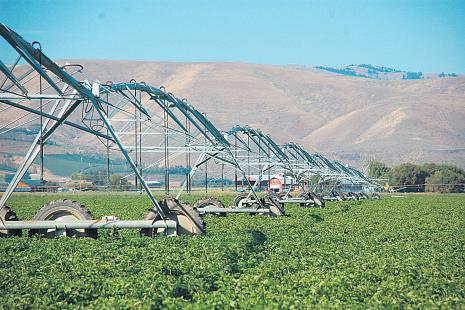
Critical Protection Areas:
• Wetlands
• Frequently Flooded Areas
• Critical Aquifer Recharge Areas
• Geologically Hazardous Areas
• Fish and Wildlife habitat conservation areas
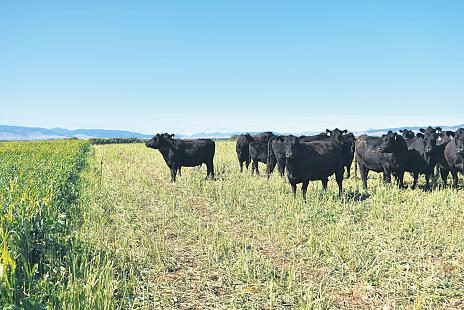
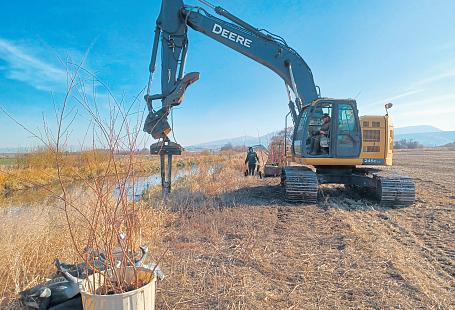
How to Get Involved:
• Share Stewardship practices implemented on your land with the VSP Coordinator
• Evaluate additional conservation opportunities on your land
• Implement stewardship practices that fit your operation
Working together, farmers and ranchers can demonstrate that current land stewardship provides both protection and enhancement of critical areas without the need for additional regulatory controls. Contact KCCD for information about available technical and financial assistance (funding) for stewardship practice implementation. VSP Coordin a t or: A nn a Lael – 50 9- 92 5- 33 52 ext . 7, ann a.lael@kccd.ne t
Regula r Boa rd Mee tings
2nd Thur sd ay Every Month (7A M A pr-Oct; 1PM Nov-March)
Board of Supervisors:
• Mark Moore • Lynn Brown • Jeff Brunson
• Bill Boyum • Matt Eslinger
$704M INCREASED TO $950M 2012-2017
IN AGRITOURISM REVENUE IN THE UNITED STATES. ACCORDING TO A 2019 STUDY.
Agritourism operations are becoming an important part of agriculture, increasing revenue on traditional farms and bridging the gap between rural and urban families. bed and breakfast histsorical exhibits farm to table dinners local farm tours
EXAMPLES OF AGRITOURISM:
field trips to farm u-pick farm farmstands horseback riding festivals workshops farm stays bird-watching

Food tourism, spurred on by the #foodies trend on social media, has been on the rise with those advertising and showcasing the work of local restaurants and food i d t i

Creates an opportunity to educate visitors on history and modern practices of farming. It diversifies farm revenue, and so much more!
In 2017, American farms and ranches generated nearly $950 million in agritourism revenue (USDA Census)
Trends such as, “Farm to Table,” favor in small batch production, food tourism, and seeking “unplugged,” family time are continuing to grow agritourism.
Many people seeking agritourism come from nearby urban areas and are known as, “day-trippers.” Most are families, seniors, and children’s groups.
AGR.WA.GOV
USDA.GOV
KITTITASCOUNTYCHAMBER.COM



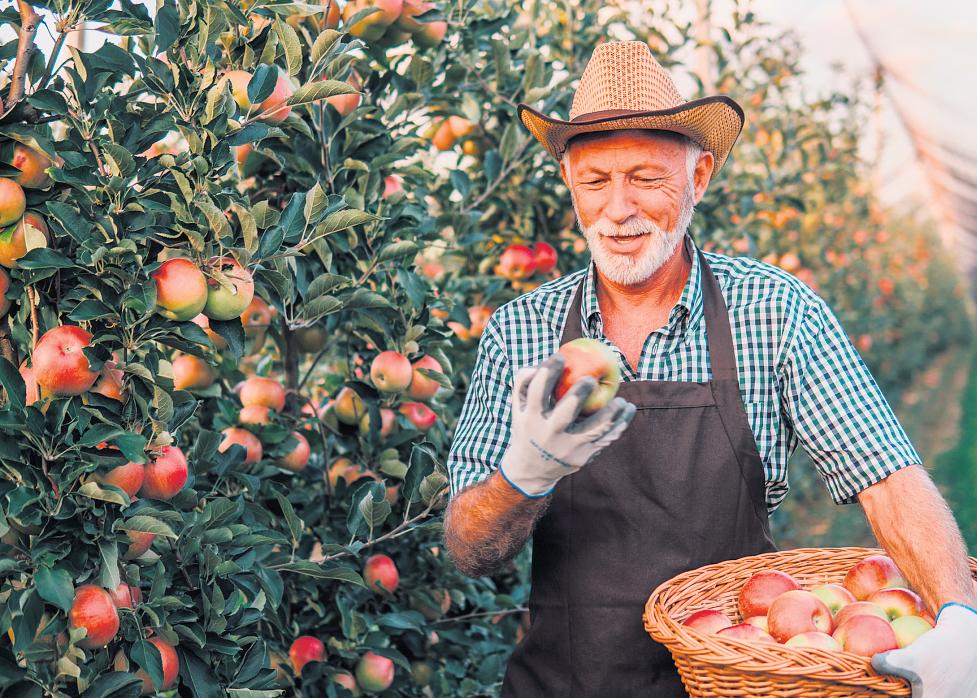
Less than 20% of Washingtonians live in rural areas and fewer than 2% live on farms. Which is why Agritourism is more important than ever.
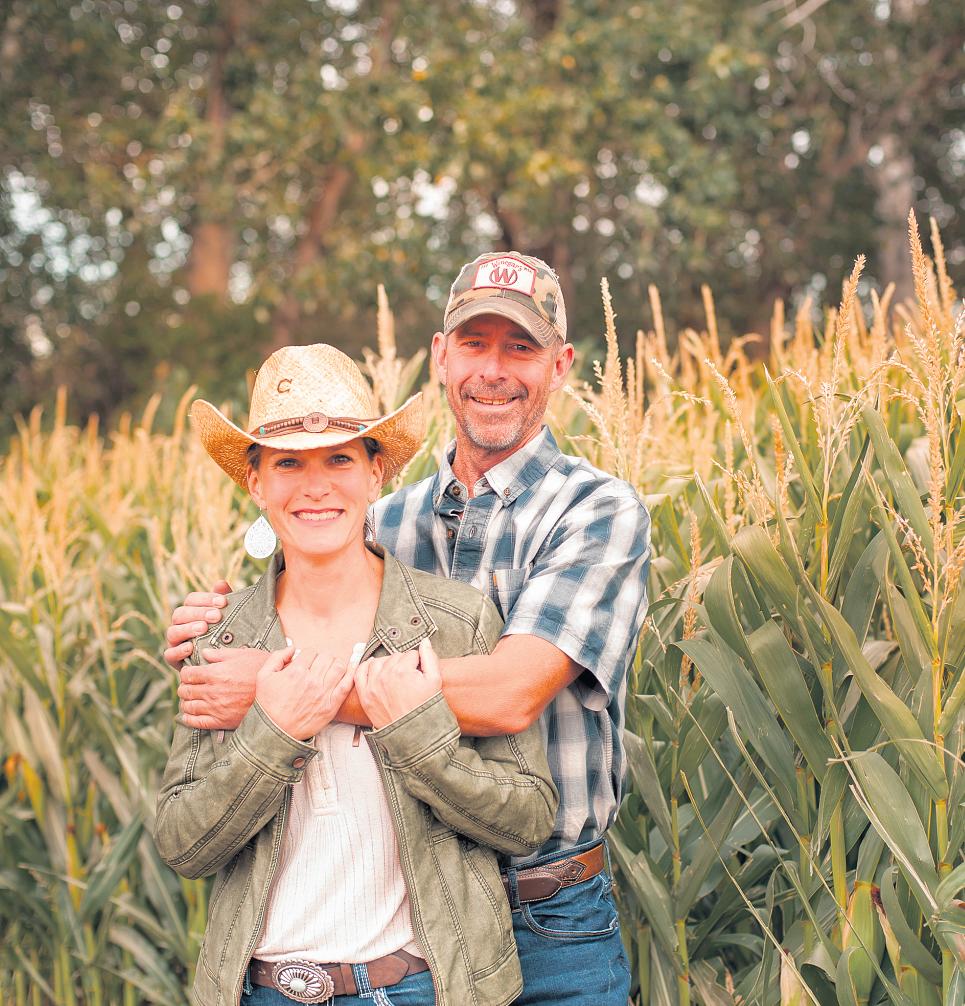
“I like to say that I went from "corporate to coveralls,” making the jump into farming in 2012. As a firstgeneration farmer, I started a u-pick pumpkin patch in my front yard, serving concessions off my porch. Now known as Jensen Farms, we are a multi-season farm, with a pumpkin patch at its heart. In the offseason, I champion agritourism at the state and local levels. Having successfully brought agritourism liability legislation to Olympia, through Senate Bill 5808, I've now partnered with the Kittitas County Chamber of Commerce as an Agritourism Consultant to improve the agritourism landscape throughout Kittitas County.”
Scan the QR code to connect with Hilary: