

BY RACQUEL MUNCY Skagit Valley Herald
FarmHQ, an agricultural technology company started by two Skagit County brothers, continues to expand its technology to help farmers monitor water usage while irrigating.
Connor and David Wallace grew up on a potato farm in Bow. David Wallace was a data scientist for Amazon before quitting his job to go back to the family farm. Conner Wallace spent
Utility District, two Skagit County dike and drainage districts and Skagit Valley Farm.
“So far, the agreement has been an enormous step in continuing to keep agriculture sustainable in Skagit County,” Drainage and Irrigation District 15 Commissioner Riley Jungquist said in a news release.
Having access to an uninterrupted water supply also comes with a high degree of accountability, which is where FarmHQ comes in.
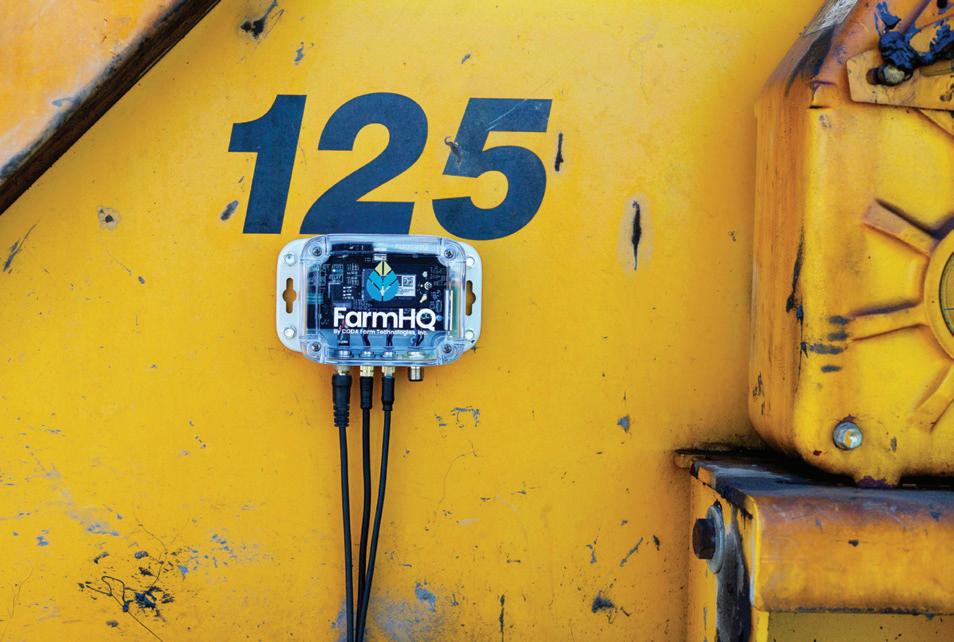
JACQUELINE ALLISON / SKAGIT VALLEY HERALD
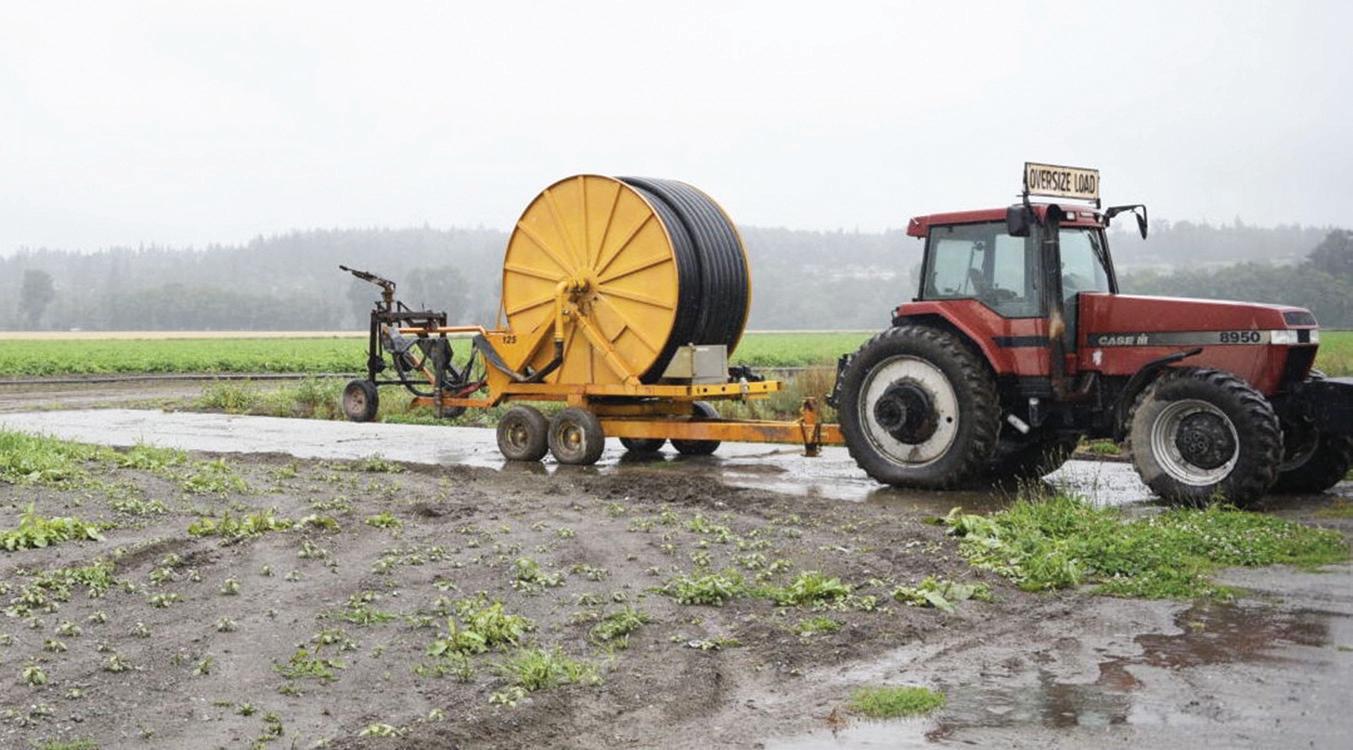
CODA Farm Technologies’ FarmHQ device mounts to farmers’ irrigation reels. When an irrigation reel stops retracting, the device sends a signal to a second device on a water pump to shut it down, helping prevent crop damage and water waste.
six years working as a web and software developer in Silicon Valley.
In 2019, after their father told them about a problem with irrigation equipment that led to damaged crops and wasted water, the brothers used their experience to create CODA Farm Technologies and invented FarmHQ.
FarmHQ is a small cellularconnected device that attaches to the existing irrigation equipment.
The technology has proven to be especially beneficial this summer as some farmers have better access to water thanks to water rights transfer agreements between the Skagit Public
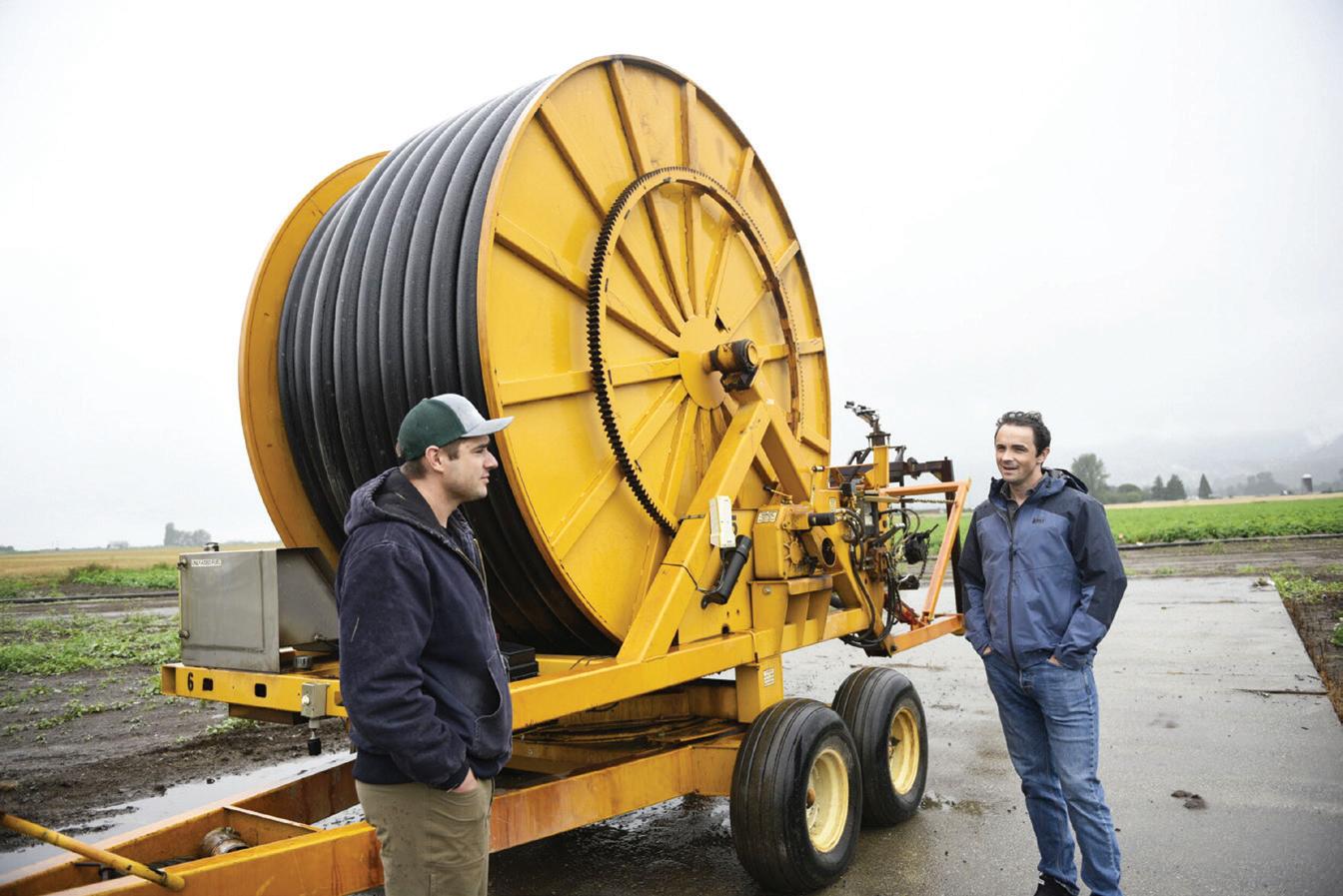
In the past, farmers would have to drive to their various fields — or pay someone to — in order to monitor the irrigation. They would turn it on and off, and make sure nothing went haywire to damage crops or cause mass water loss.
Now, farmers are able to utilize FarmHQ technology. They are able to control their irrigation, set flow rates and monitor how much water is being moved all in realtime using the FarmHQ app.
“It gives them tools in their arsenal that they maybe didn’t have before,”
Connor Wallace said.
David Wallace said the technology allows farmers to prove they are compliant with the flow rate regulations that are part of the water rights transfer agreements.
The hope is that this data will make it easier for farmers to get water rights transfer agreements in the future.
David Wallace said FarmHQ serves as a third party validation for the farmers.
Although FarmHQ is being used by farmers in about 31 states and provinces — and in several countries that are piloting the technology — Connor Wallace said much of what FarmHQ does is tailored to Skagit Valley farmers because of the Wallaces’ experience with the issues here.
“We have a really good relationship with growers in the valley. We’re constantly asking them for feedback,” Connor Wallace said. “They have direct impact into what we make.”
He said about one-third of the features on the app have come from the feedback of local farmers, including
flow rate monitoring.
More technology on the horizon will be tied to the potato industry and will be harvest related.
The brothers are also coming up on some important milestones, including the 1,000th FarmHQ unit in the field and 100,000 acres managed through the devices.
David Wallace said they are also close to crossing the threshold to becoming profitable.
“If you asked us two years ago, we wouldn’t guess we’d be here,” he said. “It’s really good that we’ve been able to expand somewhat organically.”

BY SCOTT WEYBRIGHT
WSU College of Agricultural, Human, and Natural Resource Sciences
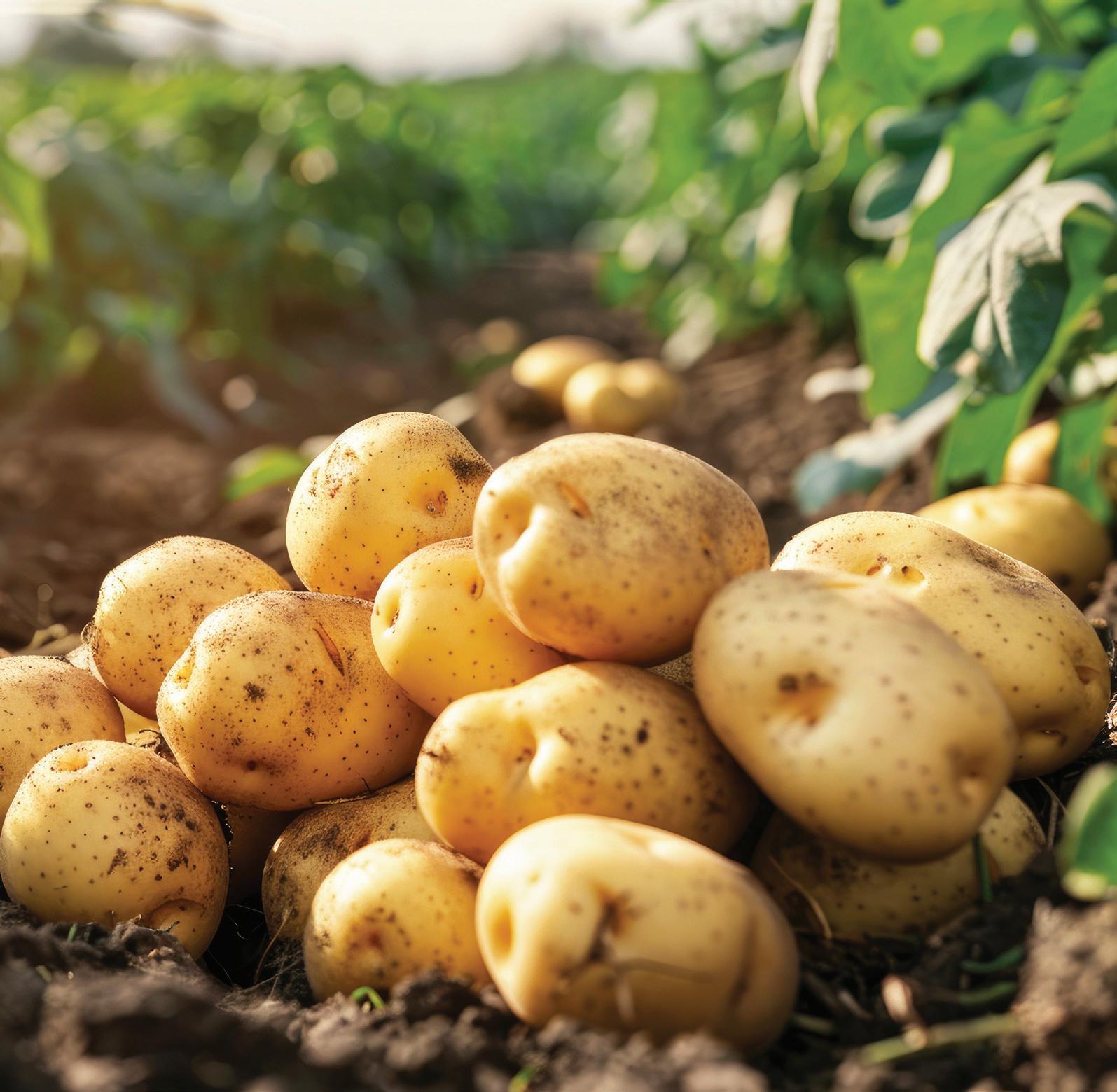
Anew Washington State Universityled project will help potato growers safeguard domestic and international markets and maintain high-quality potatoes for consumers around the world.
Funded by the USDA National Institute of Food and Agriculture’s Agriculture and Food Research Initiative (AFRI), the three-year, nearly $1 million project explores and supports expanded testing for diseases that damage potato crops, with a broader goal of guarding the U.S. food supply from biological threats.
“We need to detect pathogens early, accurately, and quickly to avoid large crop losses, helping fewer people around the world go hungry,” said Chakradhar Mattupalli, an assistant professor of plant pathology at the WSU Mount Vernon Northwestern Washington Research and Extension Center.
Farmers who grow potatoes must test to ensure their crops are free of viruses and other pathogens. Unchecked, viral, bacterial, and fungal diseases cause crop damage and tremendous financial and food losses.
A test recently developed by the USDA’s Agricultural Research Service (ARS) allows growers to take samples of their crop, send the DNA and RNA
to labs, and get results in around two weeks as to whether their potatoes are infected with a virus.
However, the potato industry still lacks a way to test for multiple pathogens on a nationwide scale, Mattupalli said. To address this challenge, Mattupalli and colleagues’ project has three primary objectives: Develop a testing lab to check large volumes of potato samples for viruses. Investigate if the testing protocol for viruses in potatoes can be expanded to detect fungal or bacterial pathogens.
Create training opportunities for students and field personnel on how to properly collect samples from plants and how to ship them to the lab for testing.
“It’s a huge advantage when you don’t have to ship potatoes to testing locations and wait so long to get results,” Mattupalli said. “It took many years to develop this pathogen detection protocol, so now we want to expand this testing ability to make sure all potato growers benefit.”
Leading the work with USDA-ARS colleagues in Ithaca, New York, and at Colorado State University, Mattupalli hopes to discover if this type of testing works for other crops.
“If we develop a sample collection and preservation system that works in potatoes, we want to see if it will work in other field and small fruit crops such as wheat and blueberries,” he said.

















BY LAURA JEAN SCHNEIDER Daily Record
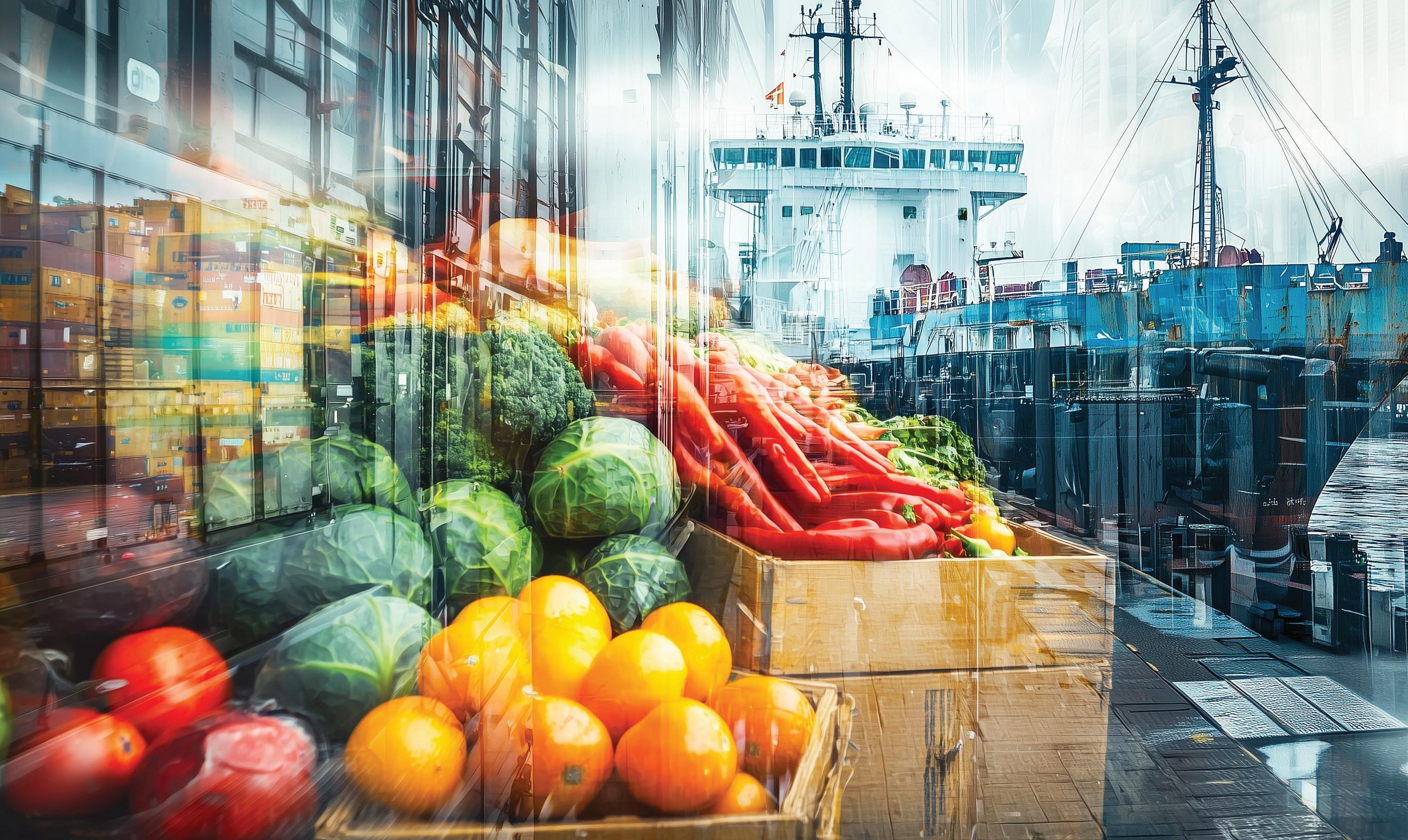
Just how does the wheat grown in Washington get to its final destinations, mixed into noodles, flatbreads, and pastries? Wheat farmers in Washington are fortunate to have access to the Columbia Snake River System, which moves mountains of wheat kernels via boat and barge to the Pacific Ocean. The U.S Department of State describes the Columbia River Basin drainage as “roughly the size of Texas,” spreading from Washington, Oregon, Idaho, Montana, Wyoming, Nevada and Utah to British Columbia, Canada.
As the nation’s number-one wheat
export gateway, up to 60% of all harvested wheat in the nation travels via barge down the Columbia and Snake rivers, a 465-mile federal river way. Eleven states export through the Columbia Snake River System, according to the Pacific Northwest Waterway Association. In 2022, that meant 9.7 million metric tons of wheat traveled the rivers.
With wheat as the number one agricultural crop world-wide, Washington is major player in meeting international demand. Technically a grass, wheat ranks third in Washington’s Top 10 commodities, and the state produces six classes of wheat: soft white (used for cookies, cakes, and cereals); soft
red winter (ideal for crackers, pastries, pretzels); hard red winter and hard red spring (used in breads, hard rolls, pizza crusts, bagels); hard white (for Asian noodles, steamed breads, flour blends); durum (pasta, couscous), and western white, a customized blend of very soft and soft white wheat varieties for cakes, pastries and confectionary items.
The collective Pacific Northwest produces enough wheat annually to fill the Seattle Seahawk’s Lumen Field stadium, according to the Washington Grain Commission.
In Washington alone this year, that equalled 2.6 million acres planted in wheat, mostly raised via dry-land farming without irrigation.
Nationally, Washington ranks second for winter wheat production, third for other varieties of wheat, and fourth in the nation for overall wheat production.
China, the Philippines, and South Korea are the top importers of Washington wheat, while Washington wheat exports brought in $684 million dollars in 2023. Like all commodities, wheat prices fluctuate.
For 2024, the USDA projects strong year-to-year growth for the U.S. with the European Union wheat production at a six-year low. As of late September, national wheat production was up 9% from 2023, with exports projected at 825 million bushels for the 2024/25 year, up 17% from a 52-year low in 2023/24.
BY LAURA JEAN SCHNEIDER Daily Record
It turns out that the most important step an ag producer can do in order to enter the export market is put in some face time.
Julie Johnson, Washington State Department of Agriculture’s (WSDA) export development and outreach guru, has seen this time and again in more than a decade of working for the state.
“These international buyers are really interested in a good story,” she said in late September.
And, she added, it takes building relationships between a Washington producer and potential exporter and their importer.
“It just takes time,” she said. “It’s a marathon rather than a sprint.”
Before folks with speciality products ranging from hay to pet food to processed food items get their first meet-and-greet, there’s a process to see if their business is ready to go international.
Johnson’s job is helping Washington farmers, ranchers and small business owners maximize their product outreach by venturing into international markets. Currently, that involves locations in Southeast Asia, Vietnam, South Korea, Japan, Mexico and Central American.
“I’m the first point of contact for our program,” she said. “I’m a great resource connector.”
The first step interested producers should take is contacting Johnson
directly, after which she’ll guide business owners on their readiness journey.
“You need to be in our database,” she said, advising that it’s the best way to keep abreast of events, trainings, and resources.
There are no size requirements for a business to be qualify for exporting goods.
“About 98 percent of businesses who export are small to medium producers,” she said.
See CRITICAL on page 8
Is the desire to enter a mature market, where like products are already going, or would finding a new niche make more sense? While it’s always up to the business, Johnson stands ready to help.
“I’m here to answer their questions,” she said.
While not a requirement to qualify for export, Johnson has seen it be helpful to have some outside distribution. “My advice is it helps to have a domestic market,” she said.
The distribution range is a helpful piece of information in making the next step toward to the export process, too.
“People want a checklist,” she said of the export-ready process. “It’s not onesize fits all.”
She used the example of a Washington hard cider producer. When Johnson approached the owner about marketing the unique cider internationally, the owner was at first surprised, then determined to do so.
“It took about three years,” Johnson said. “She finally got her hard cider into Korea.”
During that time period, Johnson said, the cidery owner focused on building a relationship with her importer. Now, she sends photos of her orchard and tasting room to help connect across the globe, continuing to build a story.
Johnson said many producers, like the orchard owner, aren’t aware how much free assistance the WSDA offers.
“We’re a state-run program,” she said. “
Your taxpayer dollars pay for our salaries and our programs,” she tells them.
Business owners who reach out to Johnson and her cohort can expect help with creating a business plan, access to trade data resources and market reports, assistance through WSDA partnership with the Western United States Agricultural Trade Association, and financial counseling.
“There [are] a lot of resources
out there to help companies learn,” Johnson said. “We don’t compete. We’re all trying to help Washington food companies.”
“We all offer something different,” she added. “I’m a great resource connector.”
“It’s really important to focus on one or two markets,” she added.
The process of getting to know folks overseas can take some time, and “95 percent of our customers are outside of
the U.S.,” she added.
Ultimately, the decision to export a product comes down to supply, demand, feasibility, and that personal relationship that can only be built through quality time.
“You want lasting business,” Johnson said. “It’s a learning journey. It doesn’t happen overnight.”
Contact Julie Johnson at 360-7901060 or by email at jjohnson@agr. wa.gov.
BY AVA RONNING
Skagit Valley Herald
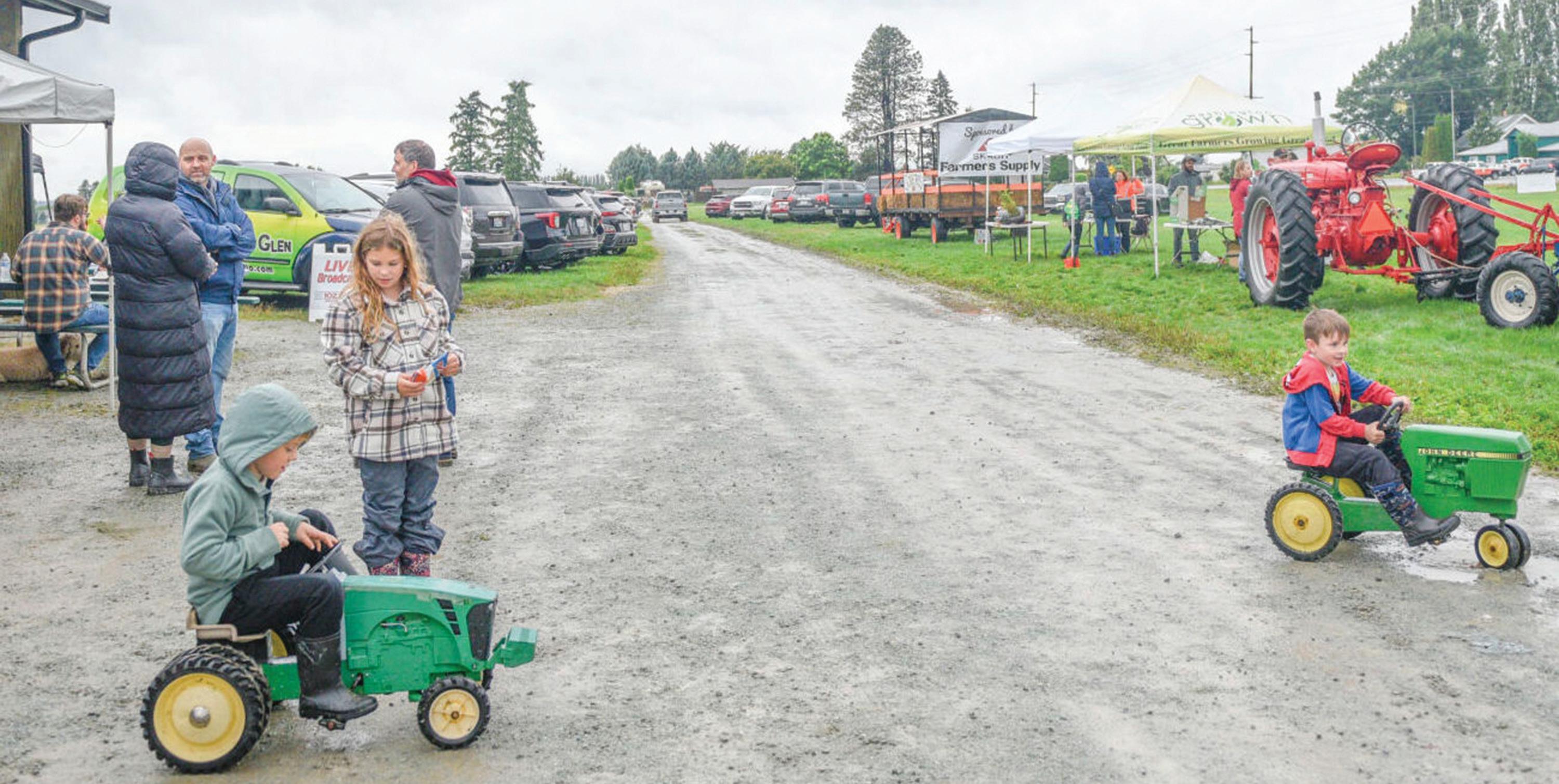
MOUNT VERNON — Local farmers connected with area families at Schuh Farms on Saturday to tell them where their food comes from and to celebrate local agriculture.
The Western Washington Agricultural Association’s third annual Farm Show featured more booths and sponsors than in previous years, and brought in numerous people despite the rain.
Event organizers said the rain may have been a bonus to kids, as they enjoyed splashing in the puddles.
“We had cars continually coming throughout the day … a much better turnout than we expected,” Western Washington Agricultural Association Policy Director Kara Rowe said.
The family-oriented show had a variety of tractors, trucks and farm equipment, vendors from local businesses and organizations, and a
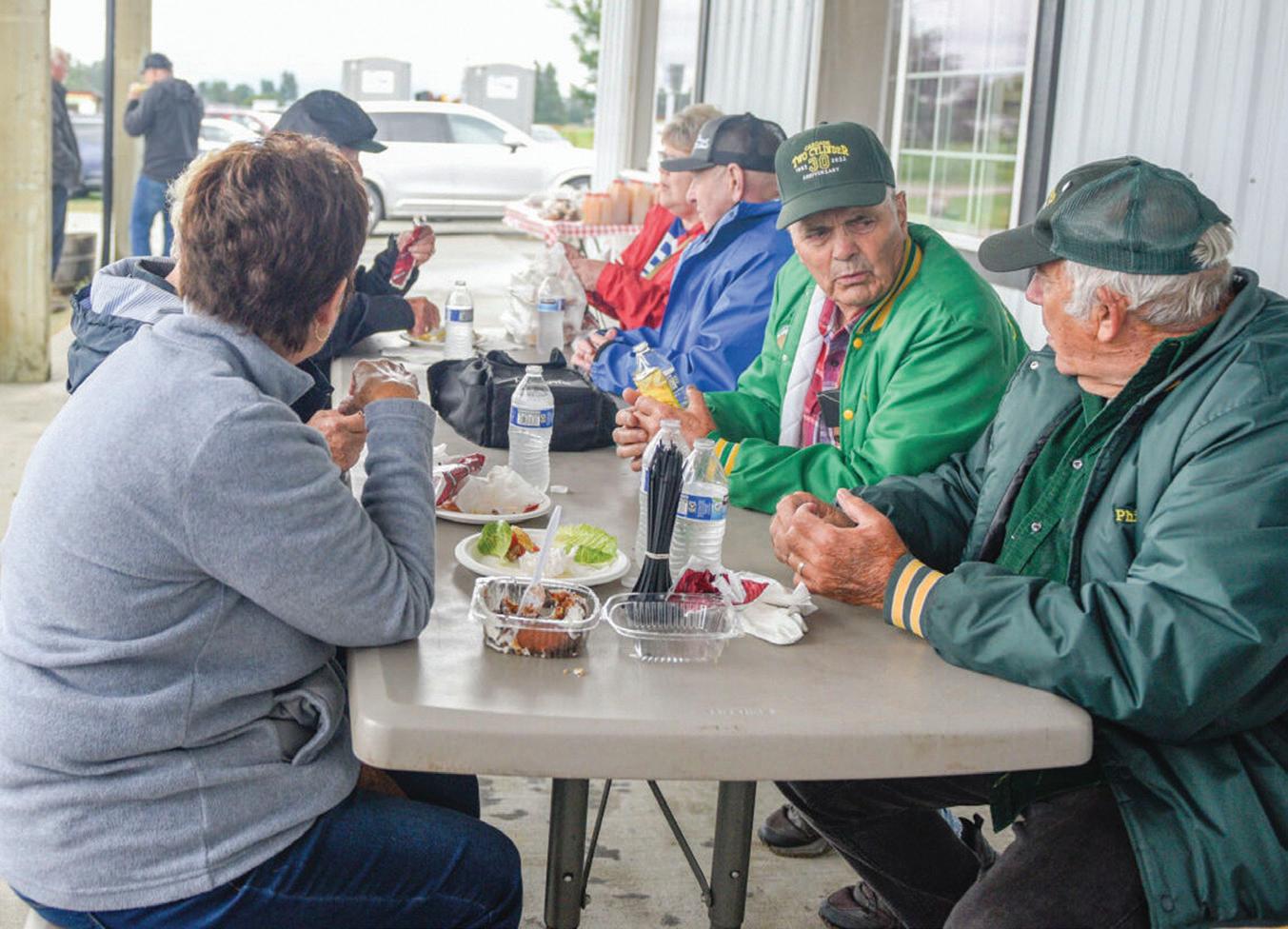
barbecue lunch served by Schuh Farms, including homemade ice cream made with a machine powered by a vintage tractor.
Radio station KAPS 660 AM had a booth at the event, playing modern country music.
“This is the one event every year that the public can come out and actually shake the hand of a local farmer,” Rowe said.
Washington Grown had one of the new booths, sharing information about local farming and offering family giveaways.
“You kind of see a greater disconnect between people and the farm, so (this event is) a way to bridge that back together,” Western Washington Agricultural Association board member Dan Gunderson said.
The show was sponsored by Skagit Farmers Supply and supported by several local businesses, including Brim Tractor Company as a first-year sponsor.
“What we have here in Skagit Valley is very unique, the farms, soil and food that we grow here is unique to the rest of the world. It’s something that we
should be celebrating and protecting. We have a precious thing here, and if we don’t seek to preserve it, we’ll lose it,” Rowe said.
is a test of the human psyche
BY JESSICA GARRISON Los Angeles Times
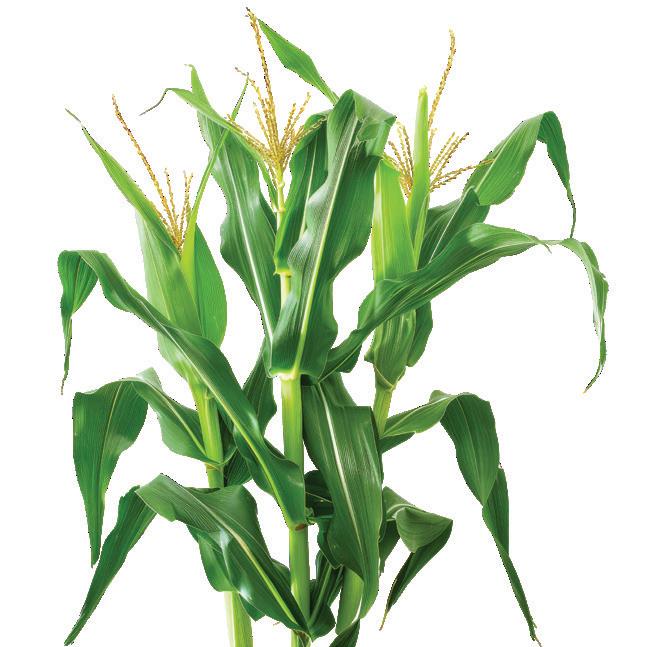
DIXON, Calif. — Deep inside one of the world’s largest corn mazes, where the tri-tip sandwiches and soft-serve ice cream purchased at the concession stand have become but a memory and all that can be seen in any direction are dirt paths and dead-end walls of green plants whispering in the breeze, people tend to reveal themselves.
From humble beginnings with a not-very-impressive pumpkin patch two decades ago, a farming family in this Solano County town decided to move into the corn maze game, hoping to have some seasonal fun and earn a little extra cash. And then, fueled by corny ambition and creative use of Excel spreadsheets, the Cooley family of Dixon went big. Really big.
Their Cool Patch Pumpkins corn maze has caused traffic back-ups on Interstate 80. It has prompted a frenzy of 911 calls to the Solano County Sheriff’s Department from people who find themselves lost in the labyrinth. It has twice earned a Guinness World Record as the world’s largest corn maze. And in doing so, it has become “a big part” of the farm’s revenue, according to Tayler Cooley, despite the vast acreage the family farms year-round.
Over the years, the maze has also served as a towering 60-acre experiment in human psychology.
“You can learn a lot” about a person from how they behave in a corn maze, said Brett Herbst, who said he built the first one west of the Mississippi in 1996, and now has a company, the Maize, that designs and builds them each fall for farmers around the country. (Cool Patch is not one of his customers.)
Some people, it turns out, approach a
hokey seasonal activity as they would an Olympic race: Speed is the goal. They grip their paper maps with tight fingers and fierce concentration. They blast around corners of corn, barely dodging small children. Woe to anyone in their group who wants to take a rest.
Others like to wander. They turn this way and that through the rustling 10-foot stalks, laughing when they get lost, and pausing for chats, snacks and selfies atop the four elevated bridges that connect different parts of the maze.
Sit quietly amongst the ears of corn, and it becomes easy to spot who is who:
“Guys, pick up the pace,” a young woman from UC Davis screamed at her companions as they ran by on a recent afternoon, explaining that they were racing against another group and could not pause to talk.
Contrast that with Amari Moore, 22, of Sacramento, who was taking a nice long break at one of the bridges. “I’m
getting a little tired,” she said.
And then — and there is no nice way to put this — there are the cheaters. These are the people who, despairing of finding their way out honestly, simply smash and bash their way through the corn willy-nilly.
Or, those who lose all hope of escape and in their panic call 911 to plead for rescue from sheriff’s deputies. (The dispatchers tend to counsel waiting for help from on site — or taking the cheater’s route out.)
Mazes and labyrinths have been around for thousands of years. In Greek mythology, the Minotaur — with the head of a bull and body of a man — was imprisoned at the center of a labyrinth in Crete and ate anyone who couldn’t find their way out. Theseus managed to kill the Minotaur, but still needed help from a princess to escape.
The farm town of Dixon, population 19,000, made its mark in mazes about
20 years ago — about the time corn mazes began to take off across the U.S. thanks to new computer programming that helps farmers plot out massive labyrinths with a sinuous web of passageways.
Matt Cooley, a second-generation farmer of walnuts, tomatoes, sunflowers, wheat and alfalfa, decided to grow a few pumpkins for Halloween and sell them by the side of the road. Then, someone gave him the idea to create a maze.
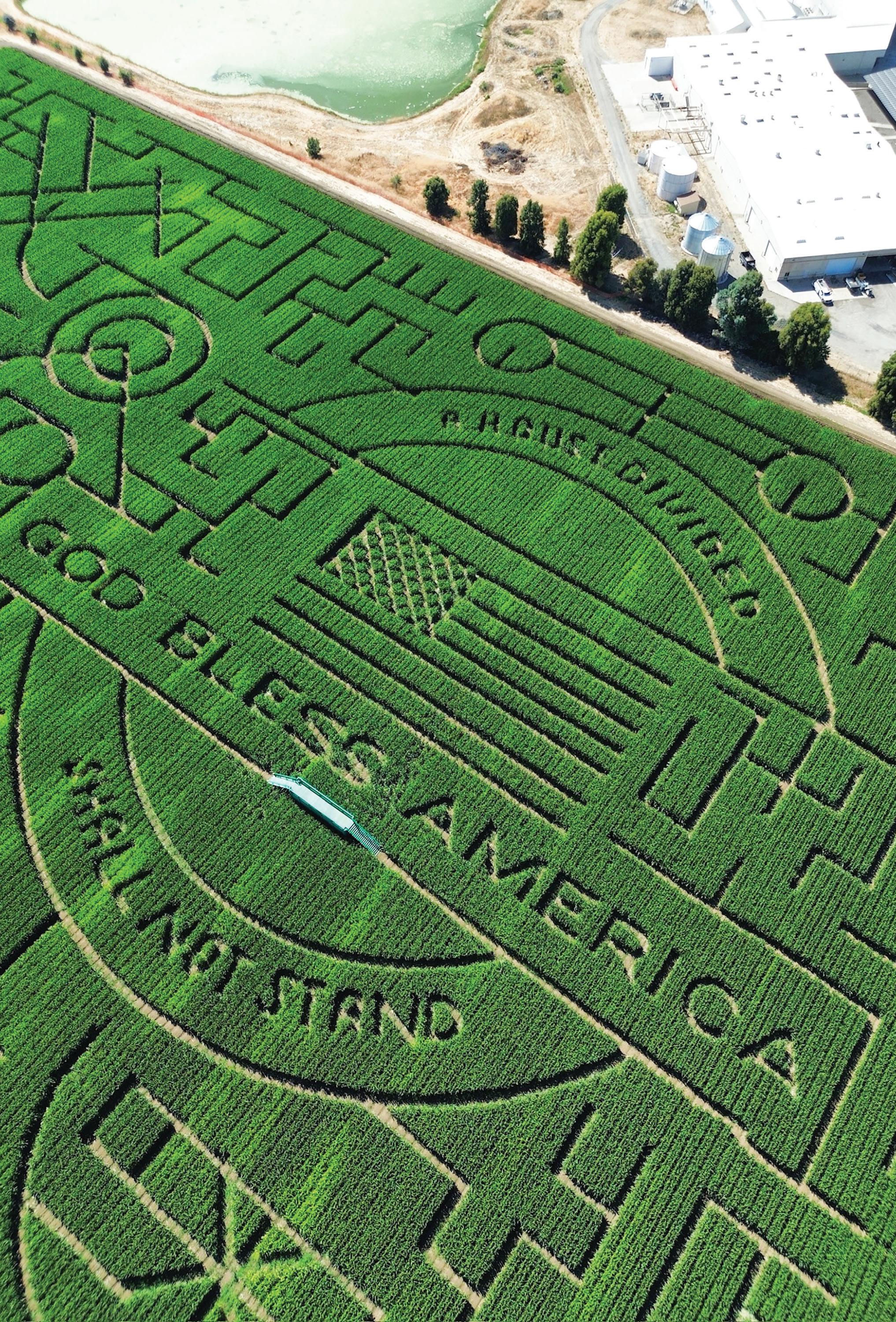
The Cool Patch maze, which rises from the flatlands near Interstate 80 just before the Sacramento Valley rolls up into the Vaca Mountains, got ever larger and more creative. Tayler Cooley, Matt’s daughter-in-law, is the designer. Each year, it has a theme. This year, the words “A House Divided Shall Not Stand” are carved into the corn, along with “God Bless America.” Is it a comment on the coming election, and
the country’s profoundly divided electorate?
“This year we encourage our visitors and society as a whole to band together for the greater good of our nation,” the Cooley family explains on the Cool Patch website.
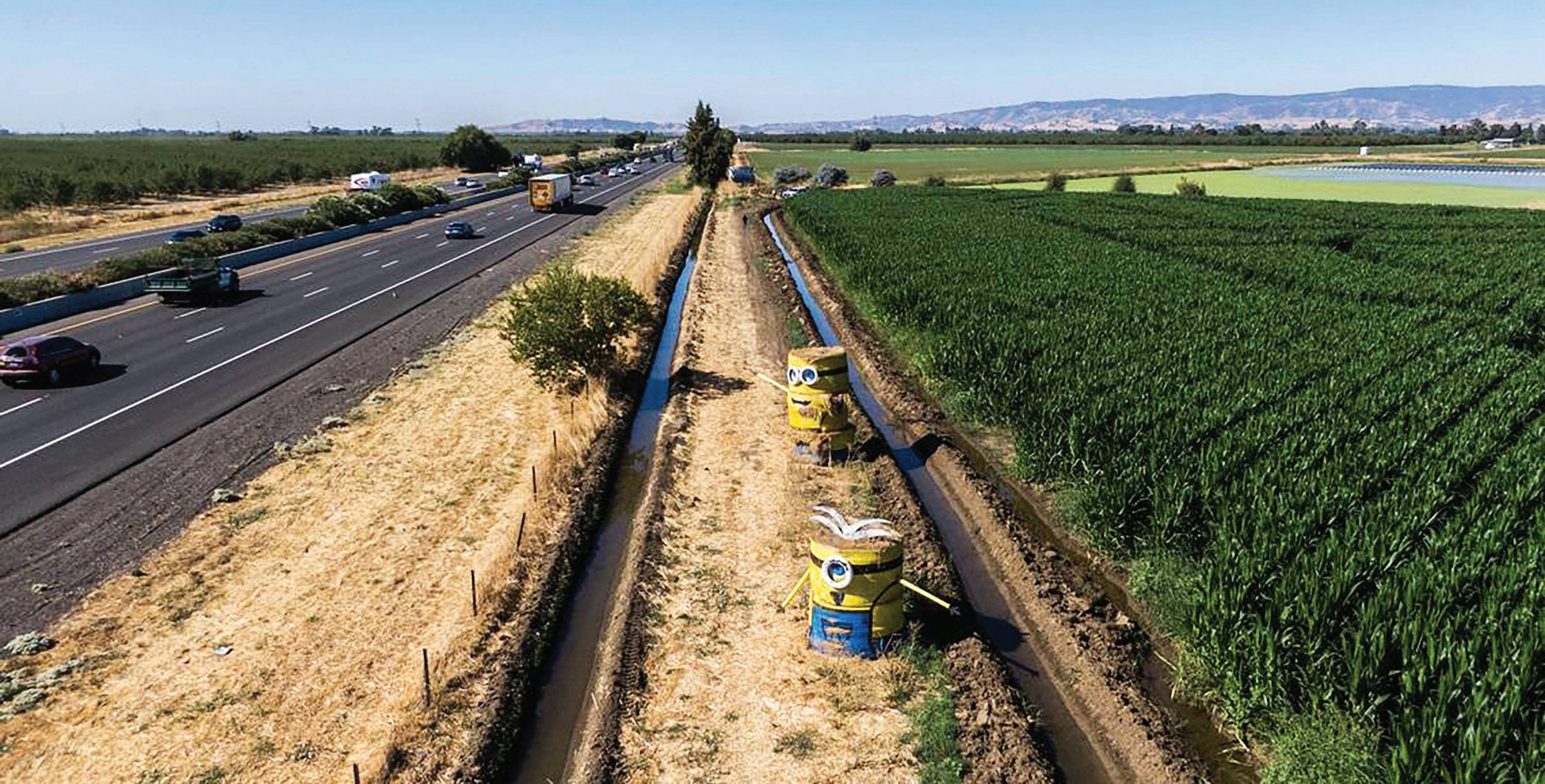
In recent years, the farm has also become famous for a symbol that people can get behind no matter their political persuasion: the minions of the “Despicable Me” film franchise. In recent years, one of the farm’s employees, Juan Ramirez, has crafted giant minions out of hay bales that are visible from the freeway.
Some scholars think mazes embody paradoxes. And it may be a paradox of modern agriculture that the Cooleys’ farm is not the only one that now brings in a substantial portion of its income from a maze that sprouts for only a few weeks each autumn. (The corn from the maze is harvested in November, Tayler Cooley said, and becomes animal feed.)
Farming is a tough business, especially for small- and medium-sized farms, which can be rocked by the weather and fluctuations in commodities pricing and fuel costs.
When it comes to agritourism, corn mazes once lurked in the shadows of pumpkin patches, U-pick berry operations and apple orchard hayrides. But, perhaps because of those mythic roots and their ability to test the human psyche, they’ve exploded in popularity.
Herbst, founder of the Maize, said the first commercial corn maze he knows of was grown by a farmer in the early 1990s. Herbst built his own in 1996. These days, his company prepares maze designs for hundreds of farms. For an additional charge, his crew will carve out the maze.
“Corn maze has become a staple word for October, just like pumpkins,” he said.
In 2023, according to Guiness, a farmer in Quebec usurped Cool Patch for the title to world’s largest maze. But for the thousands of people who now view a trip to Dixon as one of their autumn rituals, it hardly matters.
“I grew up coming here,” said Becca Invanusich, 32, who was visiting on a recent Saturday from Santa Rosa with her fiance and two friends.
As a child, her maze style was to cheat: “I would just shoot right through it,” she said, gesturing to the rows of corn.
But as an adult, she said, she savors the mental challenge. Her group planned to solve the puzzle, no matter how long it took.

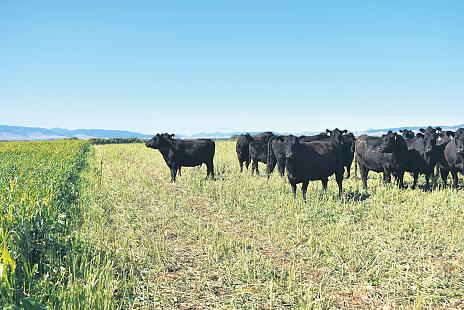
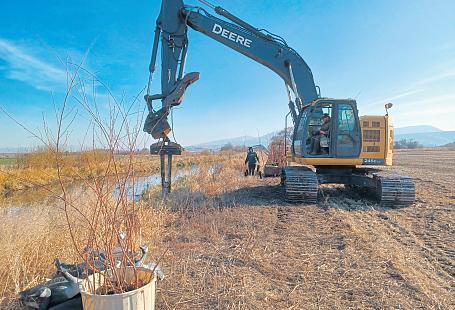
VSPisanon-regulatory,incentive-based approachtoprotectingcriticalareason agriculturallands,whilemaintainingagricultural viability.
CriticalProtectionAreas:
•Wetlands
•FrequentlyFloodedAreas
•CriticalAquiferRechargeAreas
•GeologicallyHazardousAreas
•FishandWildlifehabitatconservationareas
HowtoGetInvolved:
•ShareStewardshippracticesimplementedonyourland withtheVSPCoordinator
•Evaluateadditionalconservationopportunitieson yourland
•Implementstewardshippracticesthatfityouroperation
VSPCoordinator:AnnaLael – 509-925-3352ext.7,anna.lael@kccd.net
Workingtogether,farmersandrancherscandemonstratethatcurrentlandstewardshipprovidesbothprotectionand enhancementofcriticalareaswithouttheneedforadditionalregulatorycontrols.ContactKCCDforinformationabout availabletechnicalandfinancialassistance(funding)forstewardshippracticeimplementation.
RegularBoardMeetings
2ndThursdayEveryMonth (7AMApr-Oct;1PMNov-March)
BoardofSupervisors:
•MarkMoore•LynnBrown•JeffBrunson
•BillBoyum•MattEslinger
ToLearnMoreaboutKCCDandourPrograms, VisitUsIn-PersonorOnlinewww.kccd.net
AnnaLael–DistrictManager 2211WDolarwayRoadSuite4,Ellensburg,WA98926 509-925-3352Ext7
BY SETH TRUSCOTT
WSU College of Agricultural, Human, and Natural Resource Sciences
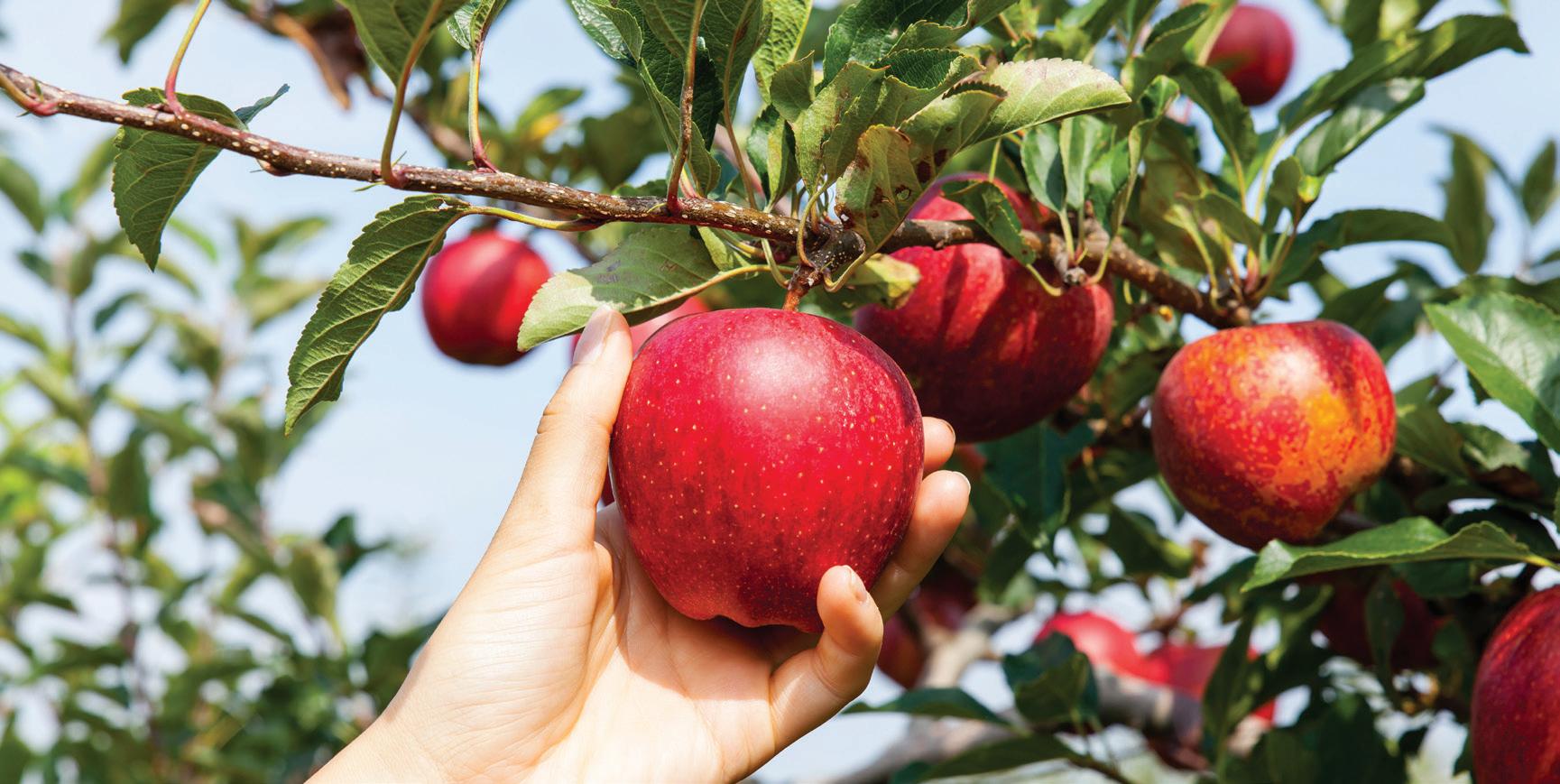
Washington State University will launch a fundraising campaign this fall to create a state-of-theart space for tree fruit research: the new Plant Growth Facility at the Wenatchee Tree Fruit Research and Extension Center (TFREC).
Sharing the impact and need for the future facility, tree fruit scientists and college leaders host a campaign kickoff, 3:30 to 5 p.m. Tuesday, Oct. 29, at Wenatchee TFREC. This event is open to the public.
The modern Plant Growth Facility will replace a 70-year-old structure, enhancing WSU scientists’ ability to conduct cutting-edge research vital to Washington’s $10 billion tree fruit industry. A new facility will enable sophisticated environmental stress experiments, year-round disease research, root health tests, and pestfree plant growth, ensuring ongoing innovation serving Washington tree fruit. The modern space will also help attract and retain top scientists and students.
“This facility will make projects possible that we simply can’t do now,” said Lee Kalcsits, Endowed Chair in Environmental Tree Fruit Physiology and Management. “It’s a leveraging opportunity: it opens a whole set of doors for impact on industry.”
With double the existing greenhouse space, modern lighting, and temperature and humidity controls, the Plant Growth Facility will allow for exclusion in experiments demanding isolation of environmental conditions, pests, or pathogens.
For WSU Pome Fruit Breeder Kate Evans, it would support expanded
screening of breeding material for diseases including orcharddevastating fire blight, as well as room for broader research on new rootstocks.
“We do a good job of maximizing the facilities we have, but there’s a limit,” Evans said.
“With the greenhouses, we’re way beyond it. The new growth facility will give our internationally renowned programs a way to expand into areas we’ve simply been stymied from entering.”
To complete the project, the research center team aims to raise $4.2 million in private funds. Contributions will directly support groundbreaking research and innovative solutions tailored to the needs of Northwest tree fruit.
“The vision for the new plant growth facility is a place where the top researchers, teachers, and Extension personnel come together to address the on-the-ground problems of today and the emerging threats of tomorrow,” said Wendy Powers, Cashup Davis Family Endowed Dean of WSU’s College of Agricultural, Human, and Natural Resource Sciences. “Located in the heart of tree fruit production for the world, this facility puts us out in front to ensure safe, abundant, healthy fruit for everyone.”


BY SETH TRUSCOTT
WSU College of Agricultural, Human, and Natural Resource Sciences
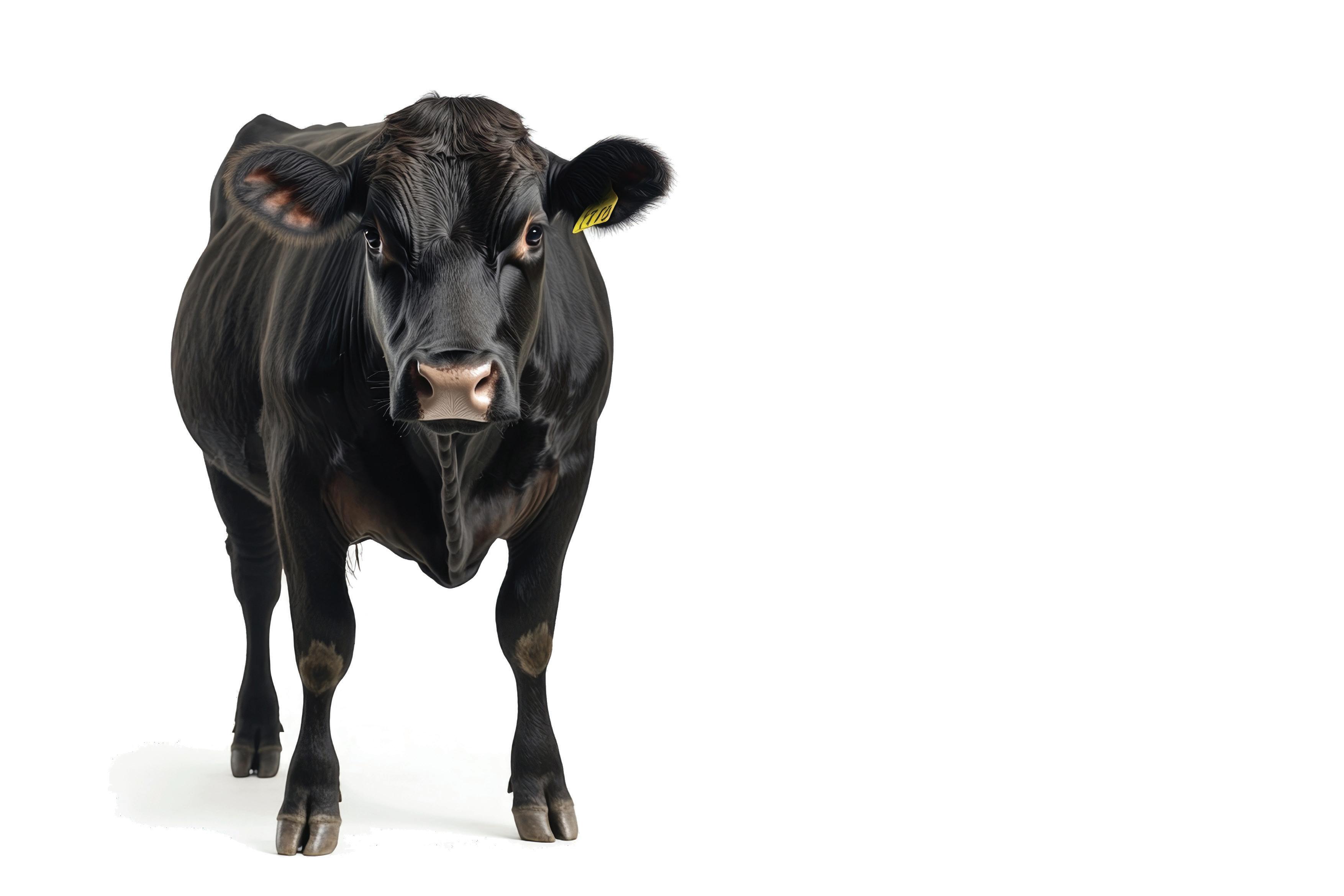
Wagyu cattle breeders at Washington State University reached a milestone this summer, confirming their first homozygous polled heifer — a young cow that has inherited genes from
bovines manually, a process that’s expensive for the farmer and uncomfortable for the calf. By inheriting hornless genes from her sire and dam, the purebred heifer named WSU Miss L120 will pass on the trait to all offspring.
“She’s a great addition to our herd,” said Bailey Graham,
homozygous animal, scientists first bred heterozygous cattle — bulls and cows that inherited hornless genes from one parent. Genes for hornlessness are dominant. If an animal inherits the gene from one parent, it will be hornless, but may pass on genes that turn on horns to offspring. With a homozygous polled
McCann, former Beef Center operations manager, who led the breeding project.
Animal scientists are always working to improve the WSU cattle herd, which includes 40 Wagyu animals and more than 100 Angus and Angus-Hereford crosses.
BY SARA ZASKE WSU News & Media Relations
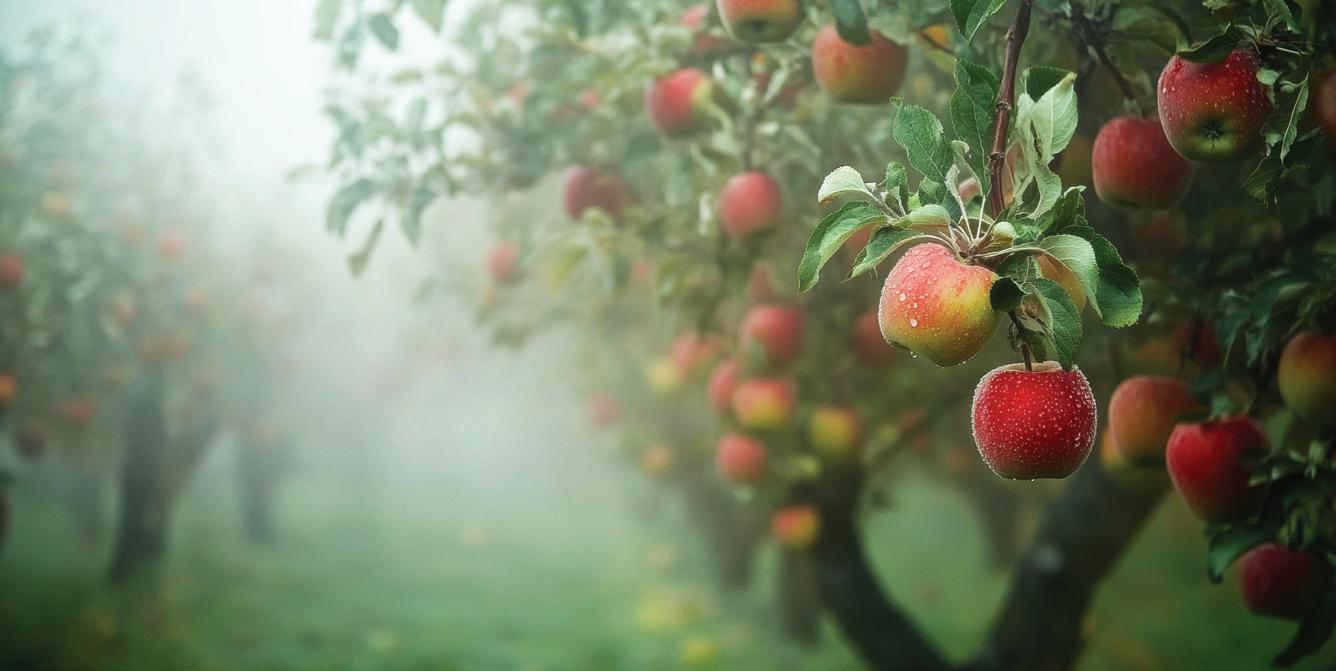
Gentle mist floating over orchards may not seem to amount to much water, but those fine droplets can add up to big trouble when extreme heat means a lot of misting — and potentially greater conflict over water use.
A project to better understand, and help balance, future water demands during high temperatures recently received a $650,000 grant from the U.S. Department of Agriculture. The project funds a Washington State University-led team to use Columbia River basin watersheds as case studies to model potential water demand for multiple uses. These are generally categorized as “out-of-stream withdrawals” for agricultural uses and “in-stream flow” needs for ecosystems, endangered fish species, and even hydroelectric power.
The hope is that science-backed information can help create constructive conversations now to prepare for a hotter climate in the future.
“We live in this area where there are limited water resources that we’re trying to use efficiently across a whole range of uses, so we want to make sure that moving forward in a climate change scenario, we have sustainable water resources to meet all of the needs,” said Kirti Rajagopalan, a WSU biological engineer and principal investigator on the project.
One part of the project is to better quantify the need for “evaporative cooling,” such as the misting often necessary to save tree fruit like apples as well as grapes and other berries from
getting burnt by the sun.
Many growers employ cloth netting to shade the fruit when it gets hot, but as an earlier WSU study has shown — that netting won’t be enough when future climate conditions send temperatures higher for longer periods of time.
“Shade netting wasn’t as effective in reducing fruit surface temperatures, requiring more reliance on evaporative cooling,” said Rajagopalan. “We are potentially quite significantly underestimating the amount of additional water that’s needed in the future for agriculture, and obviously we don’t want to be in that situation.”
The research team will be talking directly with growers and irrigation district officials to make sure the modeling reflects real world situations.
Better quantifying the problem is one aspect of the project. Another big part is to come up with potential solutions that can meet water needs across a broad range of in-stream and out-of-stream uses. For that, the team will be holding a lot of conversations not just with growers but also with agencies such as the state’s Department of Ecology, and the Department of Fish and Wildlife as well as nonprofits like Trout Unlimited.
The WSU-led team will be looking for adaptations that will benefit all sides. On the agricultural side, that means potentially finding other cooling strategies that require no water or less water, and on the in-stream side, perhaps looking at specific practices and timing when keeping water levels high is most important to the ecosystem and for fish.
“Understanding where those
opportunities might lie really depends on talking to folks who are involved with that aspect of the work,” said Sonia Hall with the Center for Sustaining Agriculture and Natural Resources.
Hall and Rajagopalan are part of a collaborative team of WSU researchers including Lee Kalcsits, Mingliang Liu, Troy Peters Georgine Yorgey, and Matt Yourek. The interdisciplinary team will help integrate the scientific quantification of the problem with the
on-the-ground experience of the various interest groups. While the project is currently localized to the Columbia River watershed, the findings could help inform approaches in irrigation areas across the West that face similar water use issues. “If we all share an understanding of what the problem is, its extent, and possible opportunities for solutions that help the whole system — then science can help set the stage for more productive conversations,” said Hall.


BY RACQUEL MUNCY
Skagit Valley Herald
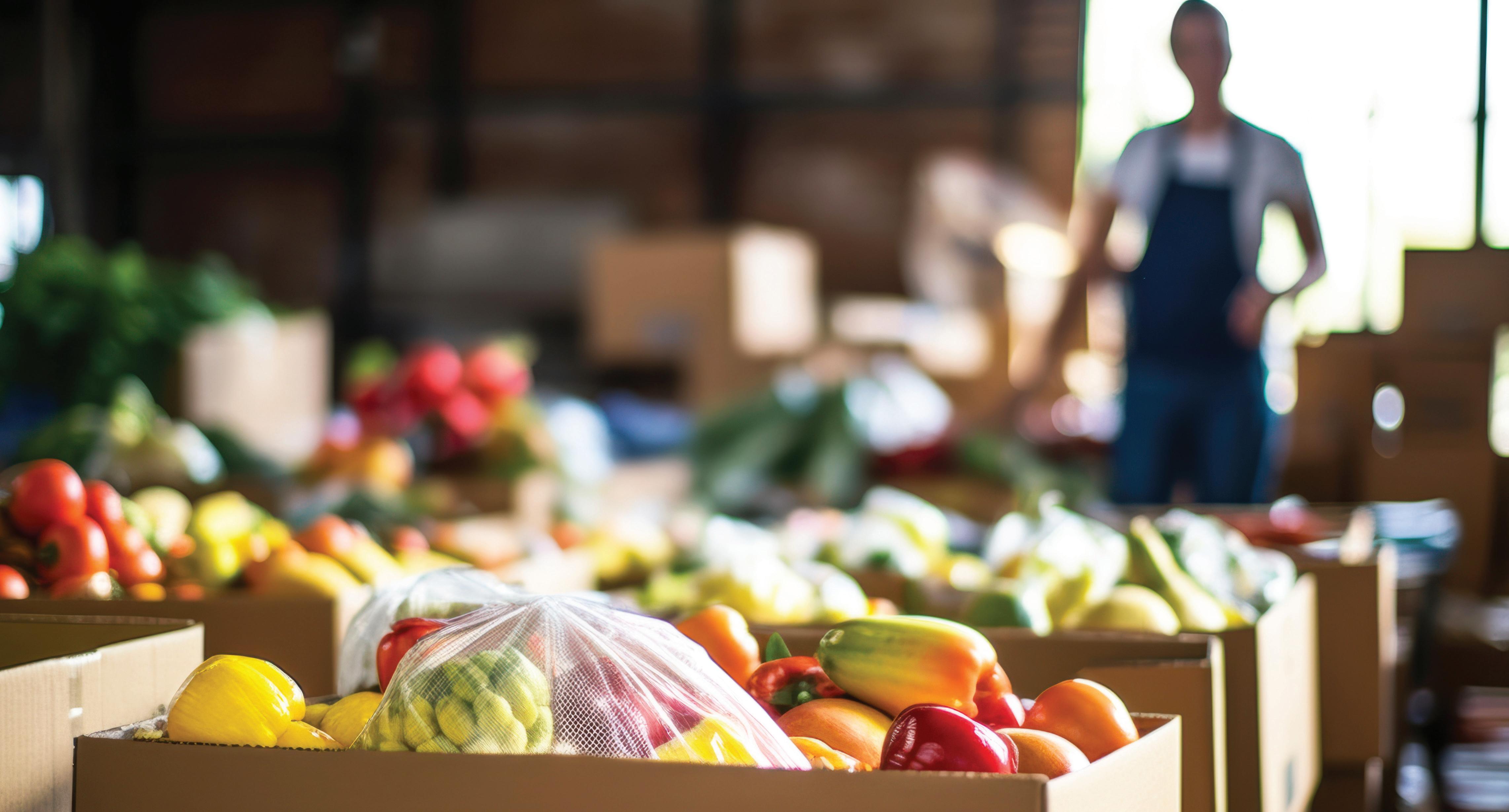
Local food pantries and food banks have been able to source food from area farms thanks to a state Department of Agriculture grant.
The We Feed WA program was started in 2021 after the federal Farmers to Families food box program expired.
The We Feed WA program has had the goal of creating a more resilient food network to help combat increased food insecurity that occurred because of the COVID-19 pandemic.
The Puget Sound Food Hub Cooperative has been involved in both the We Feed WA and Farmers to Families programs.
“When the program was launched, it was very empowering,” Food Hub Executive Director Andrew Yokom said. “It was transformational for our producers.”
The programs have allowed the Food
Hub to create food boxes for families in need, and created a reliable and sustainable demand that farmers could count on.
Yokom said both the food security needs of families and the farmers’ need for a reliable market demand is not something that is changing.
He said the We Feed WA program has been more tailored to food banks.
The Helping Hands Solution Center and Community Action of Skagit County were both recipients of two-year grants distributed in 2023.
Helping Hands CEO Rebecca Skrinde said the grant helps pay everything from the direct costs of food to fuel and salaries.
In the first year, Helping Hands was able to secure 175,476 pounds of food from local farmers and distributors, including Hedlin Farms, Country Cousins, Jersey Girls and the Skagit Valley Food Co-op.
This brought in fresh produce, and not the grocery store rescue products that food banks have historically used.
“In the past it felt like we were just taking what people didn’t want,” Skrinde said. “It’s not our typical way of doing business.”
Skrinde said Jersey Girls, a small, local dairy operation, was having to dump unsold milk weekly, but now has been able to stabilize its process thanks to consistent weekly purchases.
Matt Steinman of Foothills Farm said that during the cold weather of this past winter he had to get his crops out of the field even though he didn’t have the space to store them.
He said without his participation in the We Feed WA program the crops would have likely gone to waste.
“It was a great opportunity for them and for us,” Steinman said.
He said Helping Hands also spotlights the local producers at the food
bank. This allows patrons to become local produce customers long after they need the food bank.
Skrinde said she sees this happening.
“There are times when people use the food bank and then they no longer need the food bank, but they remember the (farms),” she said. “It’s building a relationship around food and community.”
This increase in local customers has Steinman working on a putting up a farm stand.
Skrinde said the high quality produce coming in helps change the narrative about food banks.
“We all deserve high quality food,” she said.
Skrinde said working with farms such as Foothills Farm has throughout the two-year grant helped provide an average of 4.34 additional pounds of produce to households that utilize food banks.
Helping Hands distributes food through its six distribution centers, its mobile food deliveries, Cowboy Church, the Burlington Rotary weekend food program, Children of the Valley, emergencies crisis food boxes for families in need and through a program with the Swinomish Indian Tribal Community.
Similarly, Community Action of Skagit County has also used the grant to get fresh farm products to about a dozen food banks and pantries through the Skagit Food Distribution Center.
Community Action Food Access
Manager Madeline McGonagle said the organization has been working with a variety of farms to obtain produce.
She said arranging purchase agreements early has helped the organization to request culturally appropriate foods, such as peppers. These agreements also help farmers plan what to plant.
McGonagle said Esperanza Farm, a new farm in Skagit County, is looking to expand its wholesale market. Its purchase agreement with Community Action gives it security while also assuring that Community Action will have fresh products to distribute.
Sam Bowhay of First Cut Farm said he has benefitted from the We Feed WA program, first through the Food Hub and now through a partnership with Community Action.
“It’s been an incredible outlet,” Bowhay said. “It’s really helped my new farm reach a new level of scale and stability.”
The grant program is for more than just produce. It has also been used for milk, eggs and meat.
When Hoehn Bend Farm needed to send a few cows to slaughter to make its herd more manageable, McGonagle said Community Action was able to commit to purchasing three of them.
Overall, the organization has been able to purchase nearly 290,000 pounds of food with about $405,000, creating a purchasing power of $1.40 per pound.
“I feel good about the value,” McGonagle said. “It’s a balancing point.”
She said the balancing point is about paying the farmers a fair price for their products while getting a good value for the food pantries and food banks.
Community Engagement Director Elizabeth Jennings said Community Action was a part of getting the legislation passed that brought about the We Feed WA program.
She said state legislators in the 10th, 39th and 40th districts were particularly supportive of the legislation that created the program.
“They’re the ones who listened to their constituents,” Jennings said. “They’re feeding their constituents.”
The current two-year grants end in
June 2025, and at the moment there is no more funding available.
“The need is still there. The resources are not there,” Jennings said.
Bowhay said he is anticipating that more funding will not become available, and is planning what he’ll grow and how much.
He said if lawmakers wish to continue to fund the program, they should do so quickly as farmers will soon be planning their next harvest season.
“Maybe the food isn’t going to be there,” he said if new funding comes too late.
Jennings said Community Action is advocating for the funding to continue.
“It’s our responsibility to continue looking for resources,” she said.
Skrinde said that in addition to advocating for the funding to continue, Helping Hands is also looking for ways to continue utilizing local farms to strengthening the food resiliency system.
BY SCOTT WEYBRIGHT
WSU College of Agricultural, Human, and Natural Resource Sciences
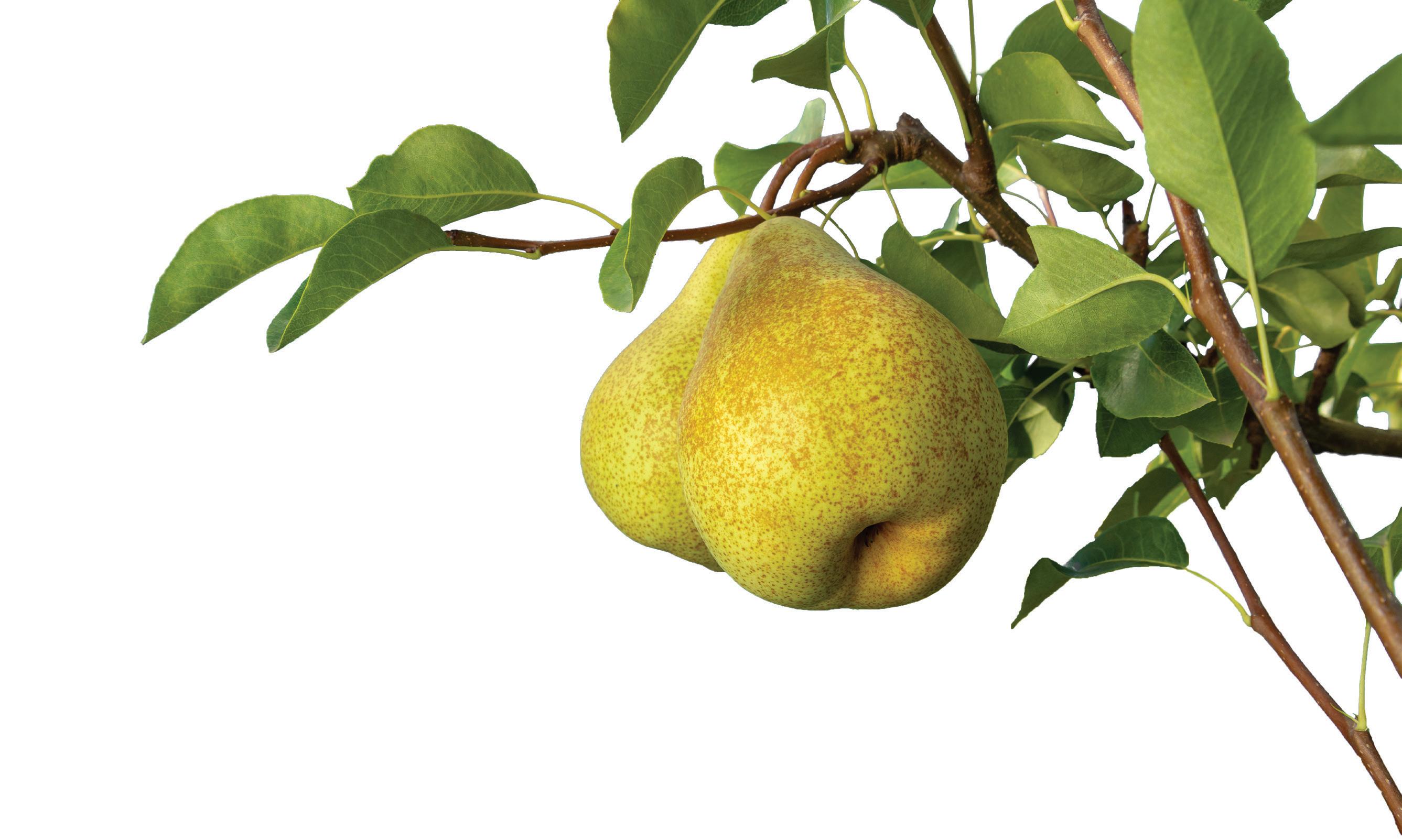
Washington State University scientists will lead nationwide research addressing the impact of extreme temperatures on apple and pear crops.
Lee Kalcsits, associate professor and Endowed Chair of Environmental Physiology for Tree Fruit, heads a team of 21 scientists from seven institutions working to mitigate stresses on pome fruits and develop strategies that limit future risks.
“This is a great team that will share existing knowledge and develop new ideas to support apple and pear growers dealing with extreme temperatures,” Kalcsits said.
Funded by the USDA National Institute of Food and Agriculture’s Specialty Crop Research Initiative, the $6.75 million project will run for four years.
Among research goals, the team will focus on extreme cold and heat,
studying a variety of issues including cold hardiness patterns for new apple and pear cultivars; flowering and the emergence from dormancy during spring; and how to mitigate sunburn and enhance red color during extreme heat.
“In Washington state we typically deal less with cold stress, but in 2023 and 2024 we had higher losses than normal due to cold,” said Kalcsits, an associate professor of horticulture based at WSU’s Wenatchee Tree Fruit Research and Extension Center (TFREC). “In the eastern U.S., the risk of cold damage is higher, so we can use some knowledge from scientists located there. They aren’t as used to extreme heat on the East Coast, so we can share some of our strategies more easily with them, thanks to this project.”
Economists on the team, including a climate change economist, will collaborate with other specialists to examine the current risk of extreme climate issues, study historic impacts of extreme temperatures, and create
models that will allow growers to more reliably assess risk.
Team members will also look at the cost and benefit of different mitigation strategies to see if they’re worth the cost of implementation.
Finally, the team aims to develop a coordinated, nationwide Extension strategy for mitigating fruit losses. Researchers plan to host a series of field days and fruit schools online and in person to provide growers with training that helps reduce losses due to temperature extremes.
“When you look at the statistics, extreme temperatures are the leading cause of reductions in yield and packout,” Kalcsits said. “Even with our current strategies, losses occur. We need to develop a better understanding of the biological factors leading to those losses, and growers also need more effective options.”
The project’s overarching objective is to make more apples and pears available for consumers.
“It’s about developing new strategies for issues the industry already experiences,” Kalcsits said. “It’s not just climate change but understanding exposure to extreme temperatures and how that will change in the future. It will be great to have additional tools available now and to understand risks 20 or 50 years down the road.”
Other WSU scientists on the project include WSU Pome Fruit Breeder Kate Evans; Biological Systems Engineering Assistant Professor Kirti Rajagopalan; School of Electrical Engineering and Computer Science faculty members Ananth Kalyanaraman and Paola Pesantez-Cabrera; and Sonia Hall, researcher at WSU’s Center for Sustaining Agriculture and Natural Resources.
Other institutions involved in this project include Cornell University; the University of Maine; Michigan State University; Penn State University; Oregon State University; and the USDA Agricultural Research Service.
They’d been in contact with infected poultry in Franklin County. The test results aren’t final
BY BILL LUCIA Washington State Standard
Four agricultural workers in southeast Washington have preliminarily tested positive for bird flu after working around an infected poultry flock at a commercial egg farm.
The cases, if confirmed, would be the first time people in Washington have contracted the virus since officials began tracking a notable rise of it in birds and other animals starting in the U.S. around 2022. Since then, upward of two dozen human cases have been detected across five other states — all but one tied to contact with infected animals.
Health officials emphasized that the four positive cases in Washington are “presumptive,” pending confirmation and analysis by the U.S. Centers for Disease Control and Prevention.
“We are still going through the ongoing investigation,” Dr. Umair Shah, Washington’s secretary of health, said during an online press conference on Sunday.
“At this time, we believe the individuals that we have gotten the results back have been exposed to infected poultry. We do not have evidence at this time of humanto-human spread. However, that is still part of our investigation,” Shah added.
The Washington farm workers who appear to have the virus have not been hospitalized, according to state and local health officials.
Dr. Steven Krager, the local health officer for Benton and Franklin counties, said the workers had shown signs of mild upper respiratory illness, including runny nose, sore throat, and mild cough, as well as conjunctivitis — often referred to as
“pink eye.”
The outbreak at a commercial egg farm in Franklin County involves a flock of about 800,000 birds. It is the first bird flu incident at a commercial poultry farm this year.
Test results on Oct. 15 showed the poultry were infected with bird flu. Testing of people showing symptoms of the virus was arranged on Friday and results indicating that they were positive came back late Saturday, Krager said.
‘Evolving situation’
The type of bird flu that has been circulating in the U.S. is known formally as an H5 highly pathogenic avian influenza. This disease has caused outbreaks across the country in poultry, dairy cows, and various wildlife, including harbor seals in northwest Washington.
Risks to the general public are considered low, according to the CDC. So far, it’s people who spend time around animals that get the virus who are more likely to catch it.
But health officials are on alert for indications the disease is changing in a way that could allow for sustained personto-person spread or more severe illness in humans. A leading concern is that the virus could mutate in ways that allow it to spread easily among people.
Between 2003 and April of this year, the World Health Organization recorded 889 cases and 463 deaths in 23 countries caused by the H5N1 bird flu virus.
“If we were to look at all avian influenza H5 infections reported since 2003, the case fatality rate is quite high, over 50%,” noted Tao Sheng Kwan-Gett, the state Department of Health’s chief science officer.
“We’re not seeing that here. But that is something that would be very worrisome, and so severity of illness is something that we’ll want to monitor closely,” he said.
Shah said that 25 people had been tested so far as part of the response in Franklin County and that 12 tests had come back
negative.
“This is an evolving situation,” he said. “There are more individuals that we want to continue to conduct our investigation with and more individuals that we want to potentially test for. And that’s what we are in the process of doing right now.”
The other five states that have had documented bird flu infections in humans include California, Colorado, Michigan, Missouri, and Texas.
Cases across those states, since April, totaled 27, according to CDC figures updated Friday. Of those, a combined 23 were in either California or Colorado. Nationwide, 16 cases are confirmed to have been the H5N1 version of the virus.
A single human case in Missouri is the only one that the CDC data doesn’t connect to exposure to infected poultry or cattle.
‘Not unexpected’
Bird flu can decimate poultry flocks, rapidly causing severe illness and death for fowl.
Fall is a risky time of year for the disease in Washington because it is relatively common among migratory wild birds. Wild birds that travel north from the lower 48 states in summer mingle with other birds from Asia and Europe — a ripe opportunity for bird flu to spread and evolve.
“We all kind of hold our breath and wait for them to come back down and see what kind of reassortment they’ve brought with them,” said the state veterinarian, Amber Itle. “This was not unexpected that we would see some additional detections of the avian influenza virus again this fall. But we were sure hoping that it would be a less pathogenic strain.”
Since 2022, Washington has seen avian influenza in 47 flocks of poultry. Two of them were commercial, including the Franklin County outbreak, and the rest were domestic. The other commercial flock was about 1 million birds. The domestic flocks varied widely in size.
Itle said the state and agricultural operations are monitoring for bird flu at other poultry and dairy farms in the vicinity of the one where the latest bird flu outbreak occurred. She declined to provide specifics on the number of farms in the immediate area, but said there are no signs currently that the virus has spread to dairy cattle.
“This detection that we have is a poultry strain, it is not a dairy strain,” Itle said. “We’ve had no detections in dairies in Washington state.”
The birds at the Franklin County farm where the outbreak occurred were almost all euthanized by Sunday, Itle said. She said that eggs from the site would be destroyed as well.
“Your eggs are safe and your poultry is safe,” she said. “No birds that are infected or have been infected are entering the food chain. They’re all being disposed of, and will be undergoing composting that can deactivate this virus.”
The U.S. Department of Agriculture has a program to compensate farmers for losses tied to bird flu. But Itle highlighted that the killing of thousands of birds can be trying for farm owners and workers, especially as risks from the virus are still present on a farm.
There are recommended personal protective equipment guidelines for sites where the disease is present. And the state has protective gear it can make available upon request.
People with backyard flocks of poultry need to be vigilant as well.
State agriculture officials estimate about 15% of migrating waterfowl are infected with bird flu and can easily contaminate an environment by landing in a pond, entering a coop, or gathering food around bird feeders.
“The most important thing you can do if you have backyard poultry is to keep your birds in and away from wild waterfowl,” Itle said. “It’s really, really important because we need to protect your birds. But also we need to protect you.”