Waterless Fire Suppression Systems and the Future of Data Centre Fire Protection
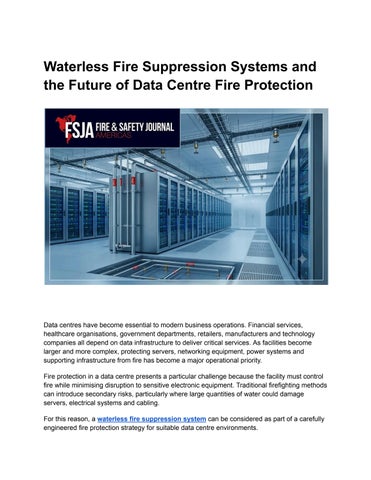
Data centres have become essential to modern business operations. Financial services, healthcare organisations, government departments, retailers, manufacturers and technology companies all depend on data infrastructure to deliver critical services. As facilities become larger and more complex, protecting servers, networking equipment, power systems and supporting infrastructure from fire has become a major operational priority. Fire protection in a data centre presents a particular challenge because the facility must control fire while minimising disruption to sensitive electronic equipment. Traditional firefighting methods can introduce secondary risks, particularly where large quantities of water could damage servers, electrical systems and cabling. For this reason, a waterless fire suppression system can be considered as part of a carefully engineered fire protection strategy for suitable data centre environments.
Why Data Centres Need Specialised Fire Protection A data centre contains multiple potential sources of heat and ignition. Servers operate continuously, electrical distribution equipment carries substantial loads, batteries provide backup power, and cooling systems run around the clock. Although modern equipment is designed with numerous safety controls, faults can still occur. Damaged cables, overloaded circuits, battery failures, defective components and overheating can contribute to fire incidents. The consequences can extend beyond physical damage. A relatively small fire can interrupt digital services, affect customer operations and create significant recovery costs. Data centre fire protection must therefore focus on early detection, rapid response and limiting damage to critical infrastructure.
The Challenge of Water Around Electronic Equipment Water is highly effective for controlling many types of fire because it can absorb heat and reduce temperatures. However, sensitive electronic equipment presents a different set of concerns. Servers, network switches, storage systems, control electronics and electrical distribution equipment can be severely affected by water exposure. Even if the fire itself is contained, subsequent cleaning, drying and component replacement can extend downtime. A waterless fire suppression system provides an alternative approach for certain enclosed spaces where avoiding conventional water discharge is considered beneficial. This does not mean that water-based systems are unsuitable for every part of a data centre. Different areas can require different protection strategies based on their hazards and design.
How Waterless Suppression Can Work Waterless suppression technologies can use gaseous or other specialised extinguishing agents to suppress a fire without relying on conventional water discharge. The operating principle varies according to the selected technology. Some agents reduce the oxygen concentration to a level that prevents combustion, while others interfere with the chemical processes that sustain a fire. The choice of agent must be based on the specific application. Room volume, equipment arrangement, ventilation, occupancy, fire load and enclosure characteristics all influence system design.
A waterless fire suppression system is therefore not simply a replacement for sprinklers. It is a specialised fire protection solution that needs to be engineered around the characteristics of the protected space.
Early Detection Is Critical Data centre fire protection should begin with detecting abnormal conditions as early as possible. Smoke detection technologies can identify particles associated with developing fires before visible flames become apparent. Depending on the facility design, multiple levels of detection may be used to provide early warning. Early detection can allow operators to investigate an alarm, initiate emergency procedures and take appropriate action before a fire develops. Detection should be integrated with the suppression control system. When the appropriate activation conditions are reached, the system may initiate a carefully sequenced response involving alarms, equipment controls and agent discharge.
Protecting Different Data Centre Zones Not every area within a data centre has the same risk profile. Server rooms contain sensitive IT equipment, while electrical rooms may contain switchgear, power distribution equipment and other electrical infrastructure. Battery rooms can present different hazards again. Generator areas, loading zones, offices and storage spaces may require entirely different fire protection approaches. A waterless fire suppression system may be particularly relevant to selected enclosed areas where the risks and system requirements are suitable. This reinforces the importance of conducting a detailed fire risk assessment rather than attempting to apply one suppression method throughout an entire facility.
Protecting Backup Power Systems Backup power is essential to data centre resilience. Batteries, UPS systems and generators help maintain operations when the primary power supply is interrupted. However, these systems can also introduce additional fire risks.
Battery technologies, particularly high-energy systems, require careful monitoring and protection. Thermal events can develop rapidly under certain conditions, making detection and emergency response important components of the overall strategy. The suppression approach should reflect the battery chemistry, installation environment and applicable safety requirements. A solution suitable for conventional electrical equipment may not automatically be suitable for every energy storage application.
Room Integrity and Suppression Performance Many gaseous suppression systems depend on maintaining an appropriate concentration of extinguishing agent within the protected enclosure. This means the room itself becomes an important part of the fire protection design. Doors, walls, ceilings, cable penetrations, ventilation openings and other potential leakage paths should be considered. If an enclosure is not adequately controlled, the extinguishing agent may escape before it reaches the concentration required for effective suppression. A waterless fire suppression system should therefore be designed alongside the physical characteristics of the room. Changes to the building can also affect performance. Adding new cable routes, modifying doors or changing ventilation systems may require the suppression design to be reviewed.
Human Safety Considerations Data centres are often designed to operate with relatively few people in technical areas, but employees, contractors and maintenance personnel may still be present. Safety procedures must account for the extinguishing agent being released. Depending on the system, warning alarms and pre-discharge notifications may provide personnel with time to leave the protected area. Evacuation procedures should be clearly defined and regularly communicated. Emergency signage should also explain the appropriate response to alarms and system activation. The objective is to protect equipment without compromising the safety of people working inside or near the protected area.
Integrating Fire Protection With Data Centre Operations
A data centre cannot simply be shut down whenever maintenance is required. Many facilities operate continuously, making maintenance planning especially important. Fire protection systems should be integrated into the facility's operational procedures. Maintenance teams need to understand when suppression systems are being isolated, what temporary controls are required and how protection will be restored after work is completed. Clear communication between facilities teams, IT personnel, contractors and security staff can help prevent accidental system isolation or inadequate protection during maintenance.
Reducing Downtime After a Fire Business continuity is one of the strongest reasons for carefully considering data centre fire protection. The consequences of a fire may include damaged hardware, lost services, interrupted connectivity and expensive recovery operations. The longer systems remain unavailable, the greater the potential business impact. A waterless fire suppression system can help reduce certain forms of secondary damage in suitable applications by avoiding conventional water discharge onto sensitive equipment. However, suppression does not guarantee that equipment will remain operational. Heat, smoke, corrosive combustion products and other effects can still cause damage. Organisations should therefore combine fire protection with redundancy, backup systems, disaster recovery plans and regular business continuity exercises.
Inspection and Maintenance Advanced fire protection equipment requires ongoing attention. Routine inspections should cover detectors, control panels, agent storage containers, pipework, discharge devices, alarms and associated components. Any faults should be addressed promptly. Data centre operators should also maintain appropriate documentation showing when systems were tested and serviced. Regular maintenance can help identify problems before they affect system availability. The protected environment should also be reviewed following significant changes. New equipment, room modifications or changes in ventilation can influence system performance.
Environmental Considerations The environmental profile of an extinguishing agent is another factor that organisations should consider. Data centre operators increasingly examine not only immediate fire performance but also the long-term environmental implications of their chosen technology. Regulatory requirements can change over time, so selecting a suppression technology should involve consideration of current requirements as well as future operational needs. Manufacturers and qualified fire protection professionals can provide information about the characteristics, limitations and appropriate applications of individual agents.
Designing for Future Data Centre Needs Data centres are constantly evolving. Higher computing densities, artificial intelligence workloads, advanced cooling systems and changing power architectures can alter the fire risk within a facility. Fire protection systems therefore need to accommodate future changes wherever possible. A waterless fire suppression system should be designed with consideration for expected equipment growth, room modifications and operational changes. A flexible approach can make future upgrades easier while helping maintain appropriate protection levels.
The Importance of Professional Engineering Suppression system selection should not be based solely on equipment cost or the experience of another facility. Every data centre has different characteristics. Room dimensions, airflow, equipment density, electrical infrastructure and occupancy can all influence the appropriate solution. Qualified fire protection professionals can assess these variables and develop a system that aligns with relevant standards and manufacturer requirements. They can also coordinate fire detection, suppression controls, alarms, ventilation and emergency procedures.
Industry publications such as Fire & Safety Journal Americas can also support professionals by providing insight into evolving fire safety technologies, operational challenges and industry developments.
Conclusion Protecting data centres from fire requires a balance between rapid suppression, equipment protection and human safety. The consequences of an incident can extend far beyond the fire itself, particularly when critical digital infrastructure is affected. A waterless fire suppression system may provide an effective option for selected data centre environments where conventional water discharge could create unacceptable risks to sensitive equipment. However, successful protection depends on appropriate technology selection, enclosure design, detection, professional installation and continuous maintenance. The strongest data centre fire strategy combines suppression with early detection, electrical maintenance, environmental monitoring, emergency planning and business continuity measures. As digital infrastructure continues to expand, carefully engineered fire protection will remain an important part of maintaining reliable and resilient data centre operations.