

Seniors will dive into six new English seminars in the fall. The seminars, offered by three teachers who began teaching at SJS this year, will range from war literature to writing in the internet world to witches.
While witches usually evoke an image of feisty black cats and bubbling cauldrons tended by old crones, Alexandra Carter’s new fall semester course, Witch Lit, will challenge students to think critically about who and what a witch truly is.
“I love thinking about the witch as a powerful, dangerous, intellectual female figure,” Carter said.
“Students can learn a lot from thinking that way, too.”
Carter will implement experiential learning through units like “Kid Witches and Witches for Kids” and projects that prompt students to create their own witch through a “Witch Pitch.”
Throughout the course, Carter will highlight examples of witch literature, including Helen Oyayami’s 2009 novel “White is for Witching” along with classics like Roald Dahl’s “Matilda” and “The Witches,” and Eiko Kadono’s 1985 novel “Kiki’s Delivery Service.”
In the spring, Carter will debut another brooding course called Storied Cloisters: The Gothic.
Growing up, Carter found herself riveted by gothic literature, and she is ready to bring that same mystery into the classroom.
“It’s fascinating to learn about the gothic possibilities that are around us and think about where those stories come from and how we can use them to tell our own gripping story,” Carter said.
Carter is especially excited about an archival project in which students will dig into the history of St. John’s to create their own gothic histories.
“I am ready to unearth the gothic potential from SJS because you never know what you’ll find.”
When Charlotte Pattison taught undergraduate writing at Cornell, she offered a course on the relationship between the internet and literature. With the countless transformations in AI and social media, Pattison created Writing the Internet Age to reimagine the college course for high school.
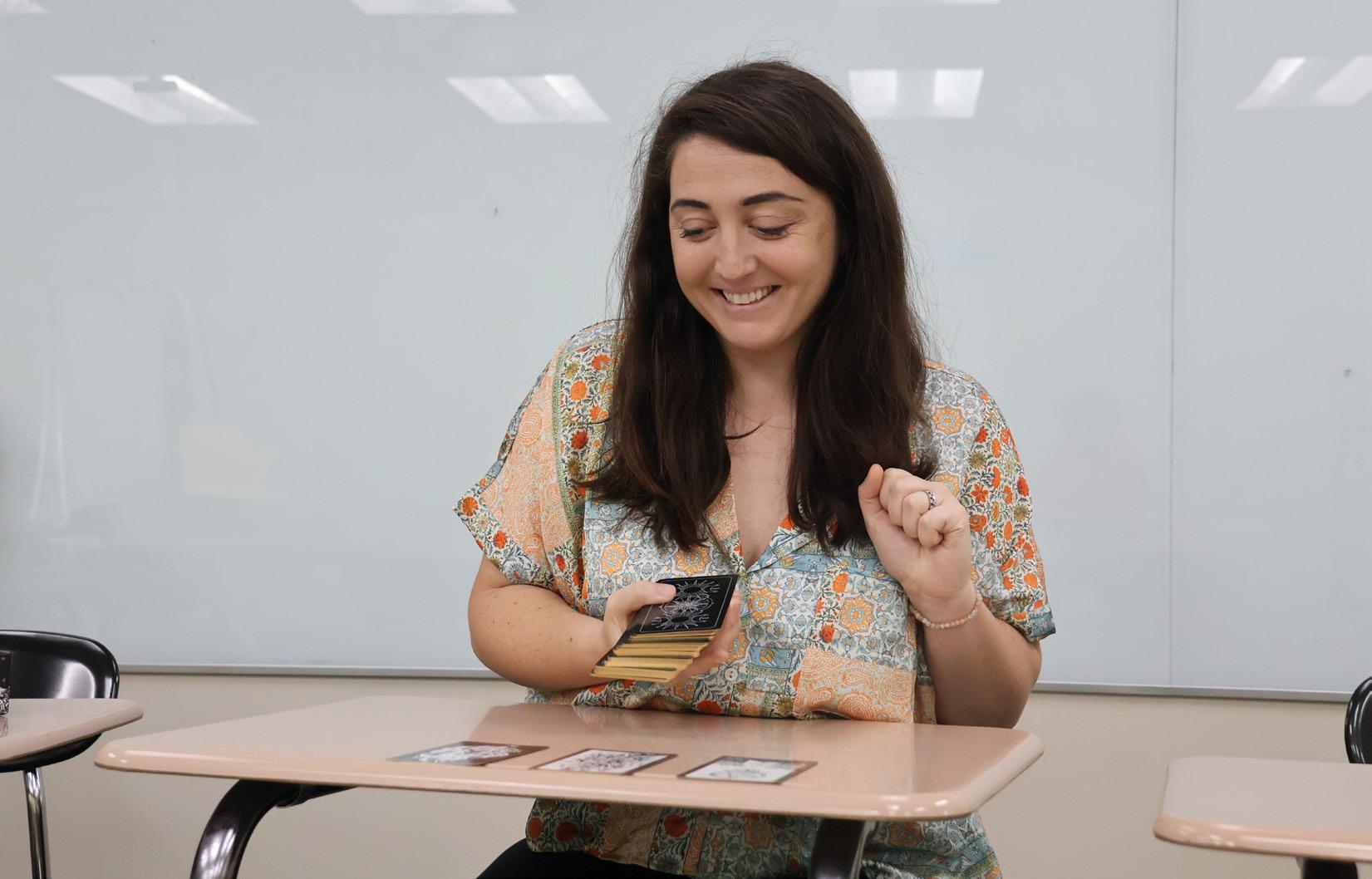
“Because the internet is always changing and evolving, the class has to evolve and change.”
The spring semester course will include a mix of fiction and nonfiction texts, including one graphic novel. The class will revolve around studentdriven exploration of their own relationships with the internet.
I love thinking about the witch as a powerful, dangerous, intellectual female figure.
ALEXANDRA CARTER
ENGLISH TEACHER
“I’m interested to see the generational difference with my students and writers that are older than both of us,” Pattison said.
Students will also engage with journalistic work, gathering information through interviews.
“The internet is a culture in both the sense that it is a hub of arts and self-expression and that it is something cultivated within a particular controlled environment, an environment indigenous to the online world,” Pattison said. “I’m curious about how students arrive at their own perspective on their own internet lives.”
Pattison will teach the fall semester course Literature of Modern War, which will focus on
Story by Sophia Kim & Sarah Nguyen
For the third straight year, the Review was a finalist for Gold Crown and Pacemaker awards. Established by the Columbia Scholastic Press Association and the National Scholastic Press Association, the Crown and Pacemaker are the highest national honors for high school journalism. These awards recognized work published during the 2024-2025 school year.
This year, 20 newspaper and yearbook editors went to Nashville for the JEA/NSPA Fall Journalism Convention, where the Review won first place Best of Show for the October issue. In April, the Private School Journalism Association presented the Review with the Blue and Gold Staff Excellence Award, which celebrates overall excellence in the newsroom.
PSJA’s portfolio contest recognized the following individuals: Eshna Das, Lee Monistere and Dalia Sandberg (1st Place, Editorial Leadership), Payton Tu (2nd, Freshman of the Year), Wanya Zafar (2nd, Sophomore of the Year), Mikail Khan (2nd, Social Media Journalist of the Year), Ella Hughes (2nd, Designer of the Year), Harry Alig (3rd, Freshman of the Year), Bella Dodig (3rd, Junior of the Year) and Sophia Kim (3rd, Versatile Journalist of the Year).
The Texas Association of Journalism Educators awarded three “Best of the Best” honors to the Review for outstanding writing: 1st place for the staff of the Review, 3rd runner-up (4th place) for Bella Dodig and Eshna Das, and 4th runner-up (5th place) for Yutia Li and Asher Gurr.
The Review received multiple honors in
this year’s Quill & Scroll Writing, Visual and Multimedia contest, including placing second in the Overall Writing Category. Individual first-place awards included Bella Dodig and Lee Monistere (In-Depth Reporting) and Eshna Das, Bella Dodig, Yutia Li and Dalia Sandberg (Climate and Environment Writing).
NSPA’s Clips & Clicks contest awards student excellence in both print and online media. Individual winners include Eshna Das and Yutia Li (1st place, News Story), Jennifer Lin (1st, Newspaper Spread Design) and Brian Kim, Dalia Sandberg and Evan Williams (3rd, Feature Writing).
“I’m really proud of our accomplishments, but I’m more proud of the community that we brought together this year,” Print Editor-in-Chief Eshna Das said. “Every staffer has really found their voice.”
The Review Online received a number of awards from School Newspapers Online, which recognizes outstanding student work. As of publication, the website has earned 12 Best of SNO awards, including multiple honors for Payton Tu, Rian Du and Sophia Kim.
The Review Online received the Distinguished Site recognition on April 9 after achieving excellence in writing, site design, continuous interaction with the audience, social media engagement and multimedia publication.
“Achieving Distinguished Site is a representation of long-term commitment,” Online Editor-inChief Aila Jiang said. “Seeing our team grow into the collaborative family it is today is really rewarding.”
several American conflicts of the 20th century through the examination of novels, poems and short stories that aim to uncover both the ethics and challenges of war. She is especially excited about studying a graphic novel about the war in Yugoslavia and interviewing someone about living through a pre-pandemic world disaster.
Marta Napiorkowska, director of K-12 curriculum and instruction, will teach From Neurons to Narratives: Science, Literature, and the New Human Being, focusing on how the humanities and sciences intersect and challenging the traditional boundary between them. While Napiorkowska taught a similar course for eight years at another school, with the rise of AI, the ideas in the course have become increasingly pragmatic and less theoretical.
“There are things about the physical universe that one cannot understand logically, and that’s where poetic logic comes in,” Napiorkowska said. “Combining humanities and sciences gives us a completely new lens to see the world with.”
During Napiorkowska’s Jan Plan course, The Good Life, she was inspired by the idea of exploring philosophy to promote selfunderstanding and self-determination. Her spring course, Under Construction: Literature, Philosophy & What Comes Next, gives students a space to hone the tools necessary to navigate life beyond high school.
“I want to give students a chance to think with other people, to explore growth with the goal of shaping a more interesting and well-rounded individual.”
EDITORS-IN-CHIEF
Bella Dodig, Brian Kim & Yutia Li
EDITORS-IN-CHIEF
DESIGN
Ella Hughes & Emily Yen
DEPUTY EDITORS
Sarah Nguyen & Wanya Zafar
COPY EDITORS
Ainsley Bass, Asher Gurr, Niko Laskaris & Payton Tu
DESIGN EDITOR
Noa Shaw, Noelle DiNardo (assistant)
BUSINESS PRODUCTION MANAGER
Evan Williams, Hudson Brock (assistant)
EDITORS-IN-CHIEF
Genevieve Ederle, Mikail Khan & Sophia Kim
MULTIMEDIA EDITOR-IN-CHIEF
Amina Khalil-Zegar, Judah Sanchez (assistant)
ASSISTANT EDITORS-IN-CHIEF
Angel Huang & Harrison Hadnott
SECTION EDITORS
Harry Alig, Juliet Dow,
Akshay Pandya & Preston Wu
PHOTO EDITOR
Emily Xie
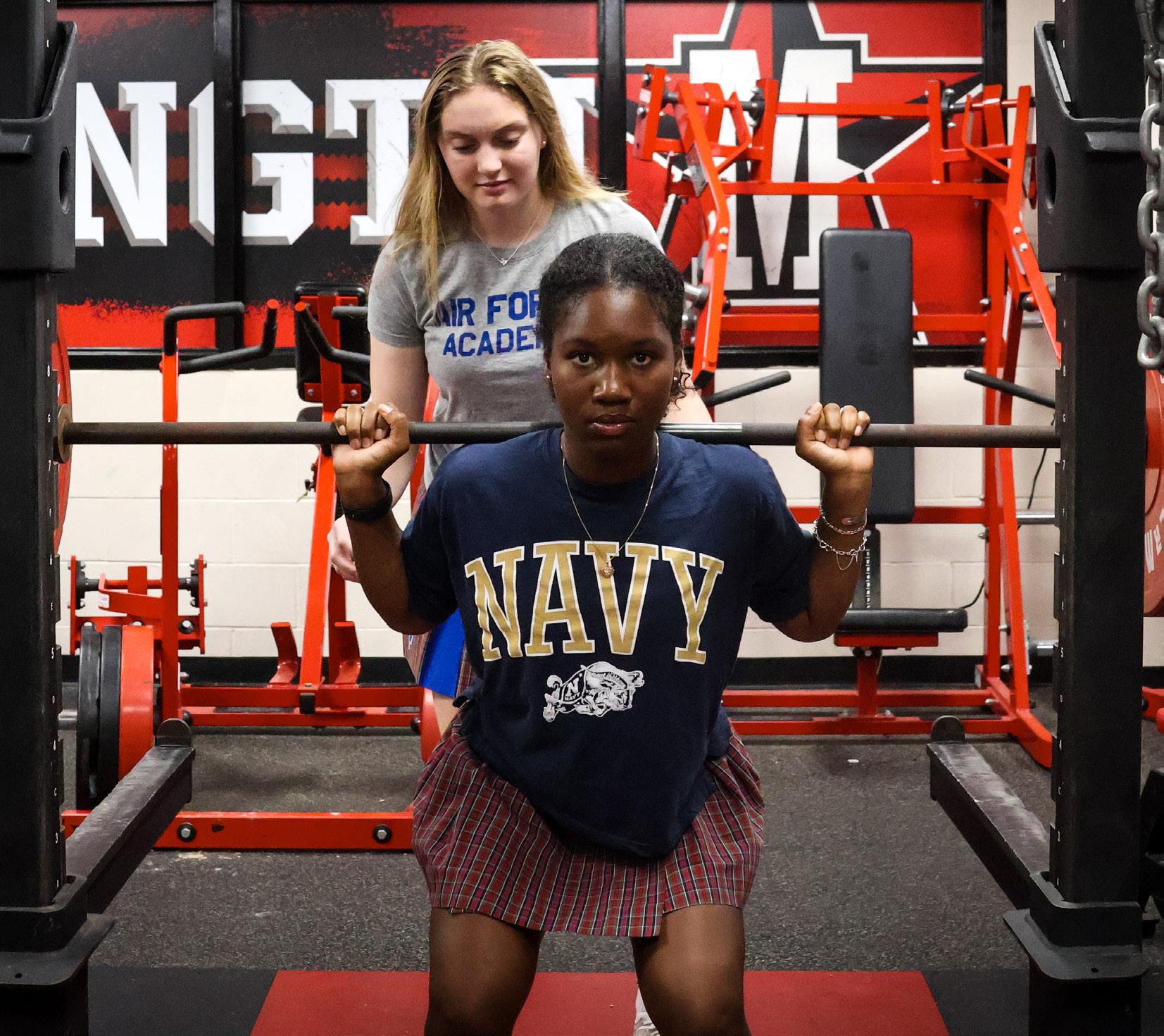
Last year, Kori Hagins was in the weight room before school for yet another workout. Impressed by her sense of discipline, Director of Strength and Conditioning Virgil Campbell casually asked if she was planning to apply to a service academy. Hagins had never considered attending a service academy, but after talking with Campbell, she impulsively applied to the West Point Summer Leaders Experience.
To Hagins’s surprise, she was accepted into the summer program. During her week in New York, she dodged smoke grenades, rappelled down a tower and sat in a Black Hawk helicopter. That was when she knew her path.

“I’ve been really disciplined about being physically fit and staying on top of my grades,” Hagins said. “So it was like I had prepared myself without even realizing that I was preparing myself.”
Hagins received acceptance to the U.S. Naval Academy on the morning of prom.
For the first time since 2022, St. John’s will send a student to a service academy — six to be exact. Adrianna Bejger, Will Lane and Thomas Wade will attend the U.S. Air Force Academy in Colorado Springs; Kori Hagins and Luke Nanna will attend the U.S. Naval Academy in Annapolis; Jack Stanger will attend the U.S. Military Academy at West Point.
Hagins said she values Hunt’s military experience.
“Having Ms. Hunt around for me has been amazing,” Hagins said. “I’ve always thought that maybe this experience will help me be Ms. Hunt to somebody else.”
Senior Adrianna Bejger intends to become the first female military graduate in her family. Her mother, the first female doctor in her family, inspires her.
Bejger initially planned to play soccer collegiately, yet she felt a stronger pull to follow in her grandfather’s footsteps; he was a flight surgeon who took care of soldiers aboard planes during active combat.
I just want to help people, and being in the military is a really tangible and respectful way to do it.
ADRIANNA BEJGER
INCOMING U.S. AIR FORCE ACADEMY CADET
The application for these service academies is a three-part process. First, applicants must fill out the standard application. Then, applicants must pass a medical exam, which involves a fitness test, including pull-ups and a mile run.
Finally, applicants must obtain a nomination from a government official, which requires a separate, lengthy application and interview process. Students seeking this distinction can apply to the vice president of the United States or their local members of Congress. Each government official can only nominate up to 15 candidates.

In 1993, Director of Community Engagement D’Hania Hunt was one of four Black female graduates out of 1,001 — less than one percent. Since then, the percentage of women and minorities attending service academies and joining the military has gradually increased. Still, the majority of people attending West Point and other military academies are white men, according to the West Point Common Data Set.
In 2021, 47 Black women, about 4%, graduated from West Point, a record number that has declined in recent years.
“I have always been super interested in planes, and he pushed me into that direction, especially military-wise,” Bejger said.
During her college search process, she visited the Air Force Academy several times. After talking to cadets and faculty, she fell in love.
“Everyone there is super smart and are such genuinely good people,” Bejger said.
Although Bejger was not formally recruited to play soccer for the Falcons, she has spoken with some coaches and is considering walking on.
Bejger has extended family living in and around Lviv, Ukraine, that have been affected by bombings in the RussoUkrainian war, some of whom serve in the Ukrainian military. Bejger acknowledges that there are families living through similar conditions elsewhere, so she wants to step up.
Wade looks forward to post-graduation job security, which is guaranteed by all military academies. Air Force graduates serve as officers for at least five years.
Wade views the military as an extension of his leadership experiences in the Maverick wrestling room. While Wade is unsure if he will wrestle in college, he will apply to be part of the Wings of Blue parachute team, which only accepts 25 cadets per class.
“Air Force is top dog out of all the other parachute teams,” Wade said. “I definitely want to jump in the stadiums and have some great memories doing that.”
Jack Stanger’s church leader Paul Shupe, an orthopedic surgeon who served in the Navy, motivated Stanger to apply for West Point.

“The military instills discipline and gritty values,” Stanger said. “Those values stuck with him and helped him be successful.”
While Stanger has not decided on a discipline, West Point will train him in infantry, aviation, artillery and intelligence during his first two years.
I either wanted the traditional college experience and have the freedom, or I wanted the structure that’s going to help me grow.
THOMAS WADE
INCOMING U.S. AIR FORCE ACADEMY CADET
“I just want to help people, and being in the military is a really tangible and respectful way to do it,” Bejger said.
Thomas Wade knew that he wanted to be part of the military and considered joining a college ROTC program, which trains students for the military while they attend a non-military college or university. He ultimately chose a different path.
“I wanted to do all or nothing,” he said. “I either wanted the traditional college experience and have the freedom, or I wanted the structure that’s going to help me grow and become a better person.”
Stanger received his nomination from U.S. Representative Lizzie Fletcher (‘93). Stanger’s biggest advice for aspiring military applicants hoping to receive a nomination is to “network well.”
“There are so many parts of this application. I had to meet a bunch of new people and make connections that would help me for my nomination,” Stanger said. “As long as you really want to go, they will help you make it happen.”
Hagins plans to use the lessons she learns from the military beyond her time in service.
“Discipline, motivation, being honorable, good character: those are all things that you get from being in a military academy. They’re not just important for the military, they’re important for life.”
When the Science and Engineering Fair of Houston awards ceremony started, junior Derek Jiu was not optimistic about his chances of receiving an award. Two hours later, he was celebrating a Grand Award in Chemical Engineering with his friends.
The Grand Award qualified Jiu for the International Science and Engineering Fair in Phoenix, which takes place from May 9-15.
Jiu’s project, which designed a novel method of applying nickel nanocrystals to strengthen 3D-printed plastics for industrial use, also received a $500 Special Award from the American Society of Metals.
Every year over 6,000 students across Houston gather to compete at SEFH. Students submit a project to one of 16 categories before several rounds of judging, during which they present posters and introduce their research.
Sophomore Luca Chang won first place in the Robotics and Intelligent Machines category. His project focused on feed-forward networks within modern-day transformers. He began brainstorming last summer, opting to enroll in the Scientific Research and Design course to practice presenting and hone his research.
“The most valuable part is getting to surround myself with other students who are passionate about the same things,” Chang said. “There were so many exciting projects.”
Juniors Saira Merchant, Ziyad Gilani and Elias Zhang originally planned to build an underwater drone, yet they struggled to develop a unique design. They pivoted to creating a docking and charging station for existing underwater drones, allowing them to go on longer missions and explore more of the ocean.
“I was really scared our project wouldn’t work out, that we were being too ambitious,” Merchant said. “But it’s important to shoot for the stars, to try something novel or interesting, even if it’s intimidating.”
Merchant’s group progressed through 18 interviews at SEFH, ultimately earning second place in the Engineering Mechanics category.
“It was exhausting, but it taught me a lot about
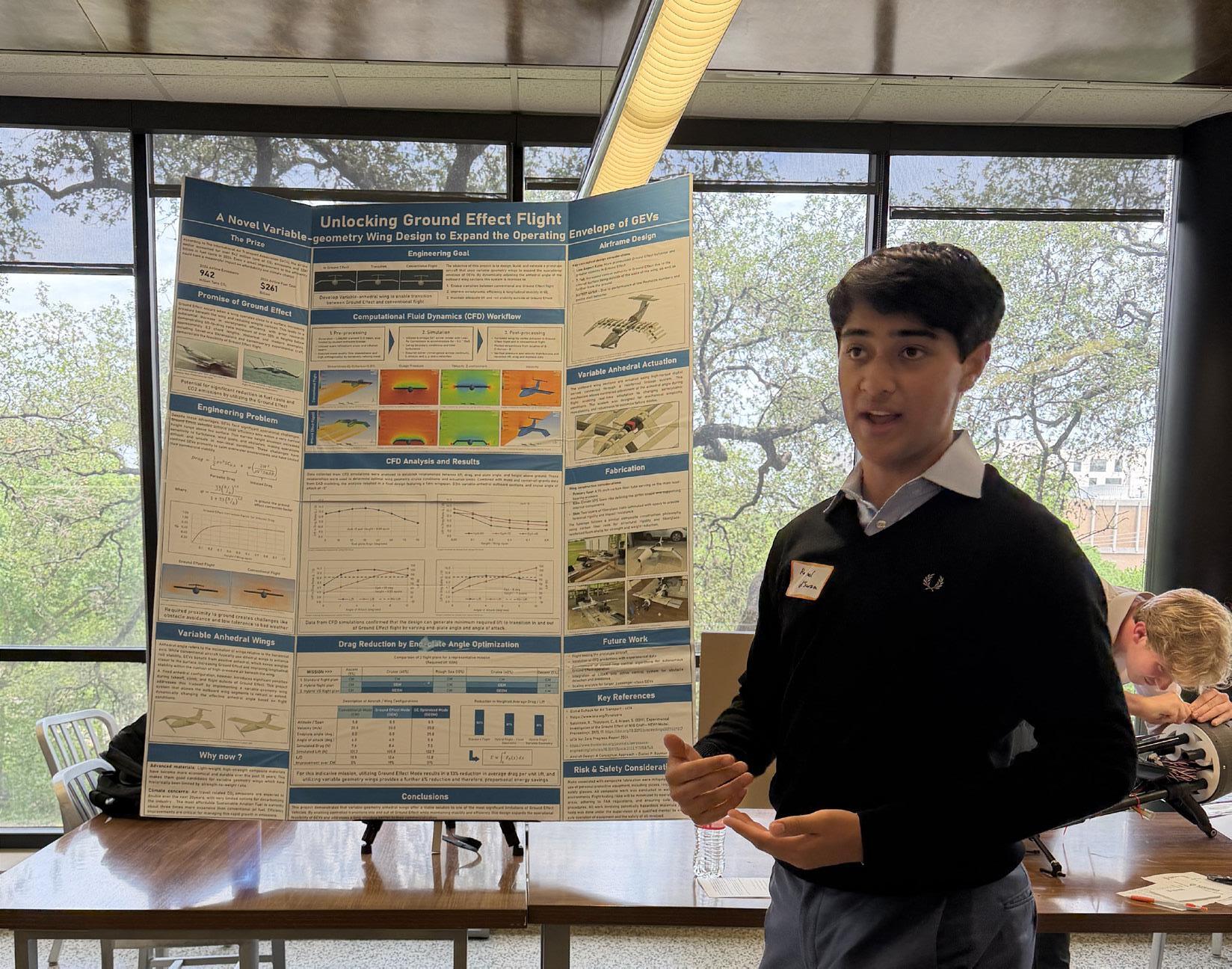
how to be a good speaker and communicator,” Merchant said. “It’s a really valuable experience — half of engineering is having the skill to build and design, but a surprisingly large part is communicating your ideas.”
It’s a really valuable experience— half of engineering is having the skill to build and design, but a surprisingly large part is communicating your ideas.
SAIRA MERCHANT SEFH COMPETITOR
The trio advanced to State, where they entered the Embedded Systems category and again placed second. They also received a Special Award in Engineering from the Alumni Club of MIT.
“We were really proud to have all of our hard work recognized,” Merchant said. “We are so privileged to have the opportunity at our school, and
I’m glad I got to take advantage of it.”
Seniors Luiz Costa Coimbra, Boone Roeser and Carter Lawrence began brainstorming their project last spring. Costa Coimbra’s interest in aerospace engineering, Roeser’s interest in biomedical engineering and Lawrence’s interest in artificial intelligence combined to create a product that transforms brain signals into drone movements.
After deciding on a project idea, they began the lengthy process of creating a minimally viable product through the Engineering Capstone course.
Yet complex projects often come with complications.
“The most frustrating part is realizing your main idea or solution is not going to work, and you have to essentially restart or backtrack,” Costa Coimbra said. “That’s the hardest moment, but also the most fun.”
Despite the challenges, engineering teacher Franco Posa emphasizes the value of preparing a science fair project.
“SEFH is such a valuable process for students, and it shapes them into young individuals ready for the real world,” Posa said. “I’m excited to see what they’ll do next.”
Story by Sophia Kim
In the middle of AP Calculus class, Sonia Chilukuri was focused on a different type of math than the review worksheet in front of her. She had only one hour left to buy two tickets to Noah Kahan’s “The Great Divide Tour” for her friends.
She was 13,000th in the Ticketmaster presale queue.
“It was really stressful,” Chilukuri said. “I was doing my calculus while watching my queue number.”
Right before class let out, Chilukuri managed to buy the tickets. This occurrence was not atypical for Chilukuri, a live-music aficionado who has spent numerous mornings, sometimes during school, trying to purchase presale tickets for different concerts. The alternative is to buy tickets on the resale market at much higher prices.
Over the past five years, Ticketmaster, an online ticket-selling platform under the parent company Live Nation Entertainment, has been involved in controversy after controversy, including a 2024 lawsuit regarding its attempts to profit off illegal ticket resale strategies. The Federal Trade Commission said Ticketmaster made about $3.7 billion in profits by allowing brokers to place “substantial” markups on tickets.
“Concerts are supposed to be something that everyone can go to and bond over,” Chilukuri said. “They shouldn’t be something that just privileged people can go to.”
On April 15, after a seven-week trial, Ticketmaster was found guilty of operating as an illegal
monopoly. The suit was brought by 33 states and the District of Columbia. A half-dozen Democratic senators who had been following the case wrote in a letter that “Live Nation controls 80% of the major concert amphitheatres market,” leaving room for no other major competitors. Live Nation denied the accusations throughout the trial.
The federal jury determined Live Nation had been overcharging customers by an average of $1.72 per ticket in 21 states.
Math teacher and avid concertgoer Garvin Gaston (‘99) feels as though the verdict reflected her personal experience with Ticketmaster. She gets a “skin-crawling feeling” when she buys from Ticketmaster and would prefer if venues could sell tickets directly to consumers.
Among the many frustrations Gaston has with Ticketmaster is how quickly tickets sell out and the exorbitant cost of even the worst seats. “I don’t love it when we are given one option, and that one option isn’t good,” Gaston said. “They’ve taken everything, brought it in and put big walls around it.”
When Gaston was in high school, she would buy concert tickets at a small window in a Fiesta grocery store. The tickets were cheaper and more connected to the venues. Gaston enjoys attending concerts at small, independently owned venues.
“There is a lot of value in the newer, scrappier musicians who are not quite famous yet because Ticketmaster hasn’t gotten their claws in them,” she said.
Despite the verdict against Live Nation, experts do not think it will lead to lower ticket prices or the breakup of the monopoly Ticketmaster holds.
Gaston also does not think that the case will lead to significant repercussions for the companies.
“I would be surprised if we saw any substantial changes in the model of how ticket buying works,”Gaston said.
Sophomore Colin Kelly avoids buying from Ticketmaster unless an artist that he desperately wants to see is only selling through the platform. Otherwise, Kelly relies on an app called DICE to find his next show. DICE offers tickets for local shows at “pretty reasonable prices,” Kelly said.
“DICE is nice because it introduces me to a lot of artists I wouldn’t find if I was using Ticketmaster,” he said.
Kelly found his new favorite band, Junkyard Cats, through DICE. He has seen them live three times.
Each ticket costs only $15.
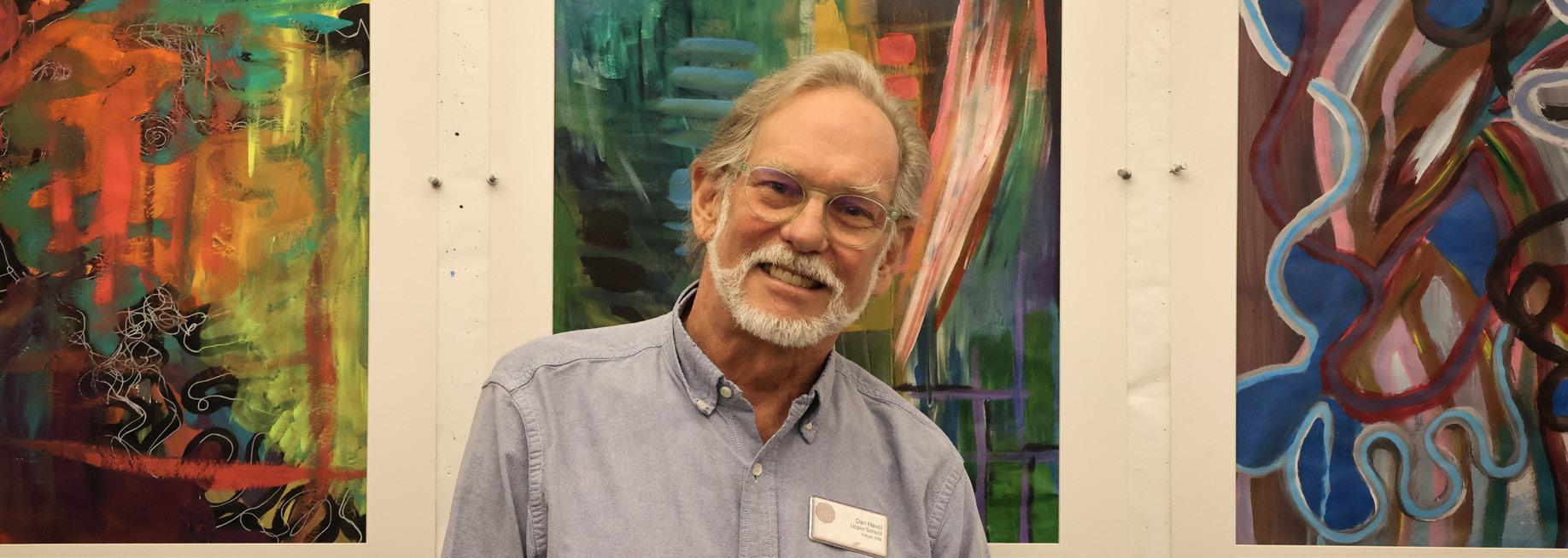
In high school, Dan Havel did not take a single art class. This year, he will complete his 31st year as an art teacher.
Since coming to St. John’s in 1995, Havel has taught 2D Studio Art I, 3D Studio Art I, Architecture and Studio Art II in both Middle and Upper School.
Havel’s journey began as a cartoonist, and he started to see art as a potential career path after taking a class at Southwest Minnesota State.
“I just knew that what I needed to do with my life is to make stuff, to make art.”
Havel went on to receive an Masters in Fine Arts from Minnesota State University and was an active member of the Minneapolis art scene in the 1980s before moving to Houston in 1991.
Topher McCord encountered Havel’s work before ever stepping into his classroom. While exploring local art around town, the senior came across Havel’s 2018 exhibition called Ripple, which was a seemingly ordinary house transformed into a spiraling, wooden structure by Havel and art partner Dean Ruck.
“It was super cool because it was breaking the boundaries between art and space,” McCord said.
Only later did McCord realize the artist behind the installation was his own teacher.
“That’s something I find the coolest about him,” McCord said. “He’s a practicing artist who’s also a teacher.”
From their breakout 2005 exhibition Inversion House to their most recent installation as part of the Houston Meow Wolf interactive art experience last year, Ruck and Havel have experimented with different techniques.
Havel says that art is constantly evolving, a lesson he demonstrates in the classroom. For the inaugural Jan Plan, Havel taught The Magic of Glass Art, a program in which he guided students through a medium he had never tried before. To prepare, Havel took a glass-blowing
class to learn from professionals.
“Glass-blowing was fun for me and the students to learn together. I was so inspired that I’m going to take this into a new series of working with glass,” he said. Havel prides himself on more than just sculptures and installations. He also tries to build a space students claim as their own. “I have students that I call ‘studio rats.’ They just want to come and hang out, either to do homework, make art or just talk.”
Rather than enforcing rigid expectations, Havel guides students through artistic uncertainty.
“Artists are curious,” Havel said. “If you’re not curious, you’re not a good artist.”
Havel’s courses are collaborative. Assignments begin with structure but gradually lead to independence, allowing students to develop their own direction.
“He lets you explore a lot,” McCord said. “He makes sure you nail the basics before you move on.”
Junior Isabel Jammar credits her growth as an artist to Havel’s openness to experimentation.
“He always comes around to help us, even if we’re not in his class,” Jammar said. “He just knows a lot, and all of his recommendations I take seriously.”
As he moves to the next chapter in his life, Havel aims to fulfill many more passion projects. Several years ago, Havel and his friends purchased properties in the ghost town of Lily, South Dakota, which was federally dissolved as a city in 2017 because it had no residents. For the past eight summers, Havel and his wife, Sharon Willcutts, who is also an artist and art teacher, have worked to renovate an abandoned farmhouse, transforming it into a livable home.
Although Havel is concluding his journey as a teacher, his passion for art is not over.
“Art is not a profession. It’s a life,” Havel said. “You don’t really retire.”
Story by Yutia Li & Viv Fox

Jennifer Bowen’s love for the St. John’s community runs so deep that it may be shocking to discover she graduated from Kinkaid.
“I bleed red — not purple and gold,” Bowen said. After 12 years as the face of the admission office, Bowen is retiring.
Bowen began working at St. John’s following the passing of her husband Ray (‘78) in 2012. Since her husband, mother Sandra (‘54) and two children, Ellis (‘05) and Bo (‘08), were all SJS alums, returning to the community that had given so much to her family only felt natural. Bowen initially worked at the parents desk before moving to the admission office a year and a half later.
“I feel like I’ve lived here my whole life.”
As the admission administrative assistant, Bowen has taken on responsibilities ranging from setting up hundreds of interviews with prospective students each year to organizing athletic and fine arts preview nights for accepted students. As the first person many families speak to on the phone or meet when visiting campus, Bowen takes pride in creating an inviting atmosphere.
“I have the best job here,” Bowen said. “If everybody that walks through that door leaves feeling good about St. John’s, even if it’s not the right place for their child, then I’ve done my job.”
Bowen’s philosophy carries over to traditions. She is the back-to-back-to-back winner of the ugly Christmas sweater competition, and she helps plan Halloween costumes for the admission and college counseling offices.
“When I first started, I said, ‘Now, we do dress up for Halloween, right?’ And my office looked at me like I was crazy.” Bowen helps coordinate a new theme every year,
ranging from football players to Toy Story characters to Snow White’s seven dwarfs. Though many staff members change out of their costumes after they take a picture, Bowen stays in character all day.
“I don’t care,” she said. “When people come in for interviews, at least they’ll realize St. John’s is fun.”
Senior Associate Director of Admission Nikki Vlasek notes the importance of Bowen’s lasting impressions.
“When you ask kids about their experience in admissions, they don’t remember us. They remember Jennifer because she makes people feel so warm and welcome.”
To start the day off with high energy and positive vibes, Bowen enjoys singing with Associate Director of Admission D’Hania Hunt, a tradition that started the first time Hunt entered the office in 2018. Ever since, the two have performed a short routine around the office each day.
“I’m going to miss those mornings,” Bowen said. Beyond admission, Bowen advises a group of juniors with math teacher Eric Gao. Gayatri Konduri, one of her advisees, will miss her guidance.
“If I tell her about how packed my schedule is, or how much work I have to do, she always lets me know how much she believes in me,” Konduri said.
After retiring, Bowen looks forward to playing mahjong weekly, getting active in her gardening club, spending time with her dog Pippa and traveling across Europe. Since she lives a block from St. John’s, Bowen will stay involved by attending as many events as she can.
At last year’s Faculty-Trustee Dinner, Bowen was presented with the Philip Cannon Award, which honors a staff member who has contributed greatly to the life of St. John’s School. It was a fitting recognition for someone who loves St. John’s so deeply.
“Schools are schools, but a home is home,” Vlasek said. “When you find people you love and connect with, that’s what’s most valuable, and she’s done just that.”
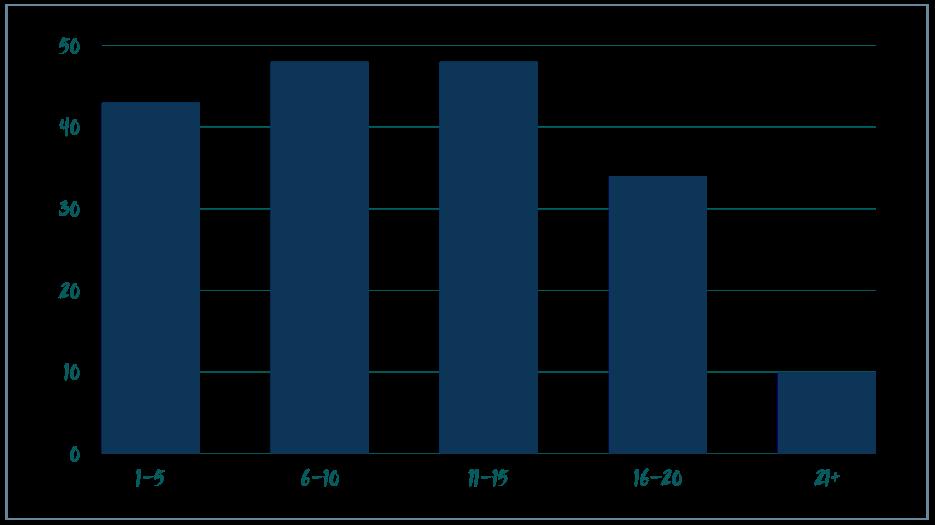
Becky Kalmick (23 years) Business Office
Susan Munson (17 years) Communications
Jennifer Bowen (13 years) Admission Office
Zac Flowerman (13 years) Latin
David Frauenfelder (9 years) Latin
Laura Mogel (5 years) History
Adrian Pruett (5 years) Mathematics
Tamara Arlinghaus (2 years) History
Kyle Dennan (8 years) English
James King (6 years) Mathematics
Patti Ego (4 years) Science
William Mercado (4 years) In-house Substitute, Athletics
Laura Kopff (2 years) Science
Cecilia Devetski (1 year) Parents Desk
Dan Havel (31 years) US Visual Arts
Phillip Sammons (5 years) LS Music
Richie Mercado (42 years) US Athletics & PE
Brenda Mercado (37 years) US Athletics & PE
Jeff Malone (6 years) US Athletics & PE

The day after posting her first TikTok in January 2025, a “Get Ready With Me” video in Spanish, Claire Adkins opened her phone to over 100,000 views.
“It felt surreal seeing the amount of people who had watched my video and took time to leave encouraging comments,” Adkins said.
Before posting her first video, Adkins initially blocked everyone she knew, worried that someone would make fun of her new account. She did not expect to go viral.
Inspired by a video online of a girl speaking five languages, Adkins decided to improve her Spanish proficiency by turning her TikTok algorithm completely into Spanish. Following a year of language immersion on TikTok, Adkins decided to start her own channel: @claire.speaks.spanish.
Now a senior, Adkins has grown her account to over 100,000 followers and six million likes.
“It’s the way I learned,” she said. “I wanted to inspire other people to learn, too.”
Adkins prioritizes school and social life over her developing TikTok career. By putting less pressure on herself to create content, Adkins allows herself to post videos she enjoys, which often relate to her own life.
Although she began building her platform by posting videos of herself speaking Spanish at her desk, Adkins began diversifying her videos after she was inspired by the help she received when studying for her own AP Spanish exam. She even released a full AP Spanish study guide and promoted it on her account.
“It felt really nice to help other people prepare for the AP exam, and it felt like I wasn’t in it alone,” Adkins said. “Influencers who I had watched for over a year to learn Spanish started following and reaching out to me. It felt like my journey had come full circle.”

Adkins, a fan of Bad Bunny and other Spanish-speaking artists, also posted a series translating Bad Bunny songs for the Super Bowl. Her most popular video, which provides an English translation for “Tití Me Preguntó,” currently has 14.7 million views and over 700,000 likes, with other videos about the artist earning her tens of millions of views.
Although Adkins rarely receives criticism for her videos, some viewers reacted negatively due to the controversy surrounding Bad Bunny’s Super Bowl halftime show. Other times, hateful com-


ments targeted her appearance, mannerisms or Spanish fluency.
Adkins prefers to focus on positive comments that highlight her devotion to spreading her love for Spanish.
“If anything, the hate comments are doing me a service by pushing my video out to people who might actually enjoy watching my video,” Adkins said. “Because I’ve put in a lot of hard work learning Spanish, seeing positive comments from people really makes me feel like it’s worth it.”

During the pandemic, Nico Del Frate (‘24) spent a year filming up to six videos a day commenting on football and basketball. By the spring of 2021, Del Frate started gaining thousands of views per video.
Specifically, Del Frate, who goes by @elite.takes on TikTok, posted a video commenting on college football players leading up to that year’s NFL Draft. Brevin Jordan, former player from the University of Miami, interacted with his video, which brought in even more followers.
“He made his own video reacting to it, and people got a good kick out of that,” Del Frate said. “I vividly remember eating lunch with my friends outside the Quad when this happened. That was the start of everything.”
While consistently posting his videos on TikTok, Del Frate initially found himself taken aback when members of the St. John’s community, many of whom he never interacted with, would refer to him by his TikTok handle.
“I really just wanted to be a regular student. I don’t think I’m any different just because I have a side hobby that has gained traction,” Del Frate said. “It was important for me to not talk about myself on my account. That’s how I separated myself from the typical influencer stereotype.”
Over the past four years, Del Frate has worked with brands, including Subway and Cane’s, racking up over 800,000 followers across TikTok, Instagram, YouTube and X. He even attended last year’s Pro Football Hall of Fame ceremony in Canton, Ohio.
Del Frate notes that content creators need to understand how each platform’s algorithm impacts the reach of videos.
“With Instagram or YouTube, you really need a substantial following for the videos to get any sort of traction,” Del Frate said. “TikTok will promote videos from smaller accounts. I think they want to
encourage new creators to keep creating content by pushing their videos out early on.”
Del Frate intends to continue his social media presence after graduating from Texas A&M to see if his passion is sustainable.
“The goal for me is to do this for as long as possible because it is truly what I love,” he said. “I feel like I found my passion where not only do I enjoy what I’m doing, but other people enjoy it, too.”

@misscraftymathteacher 1224 following 55.3k followers
Known on social media as @misscraftymathteacher, geometry teacher Kathleen Zita began posting content in 2017 as a passion project to document her life as a teacher at Westside High School.
In 2022, former middle school math teacher Brittany Flinn contacted Zita over social media, connecting over their shared teaching styles and philosophies. It was at Flinn’s suggestion that Zita came to teach at St. John’s.
“I was ready to try something new,” Zita said.
“That’s how I got here.”
Zita now has over 55,000 Instagram followers and commonly posts about teaching tips, classroom decor and the outfits she wears to work. She has partnered with companies including Amazon, Sharpie and Texas Instruments, which makes the TI-84 calculator.
“I grew up using a graphing calculator,” Zita said. “Being able to have a partnership with something I really love using in my classroom feels really cool.”
Though she hasn’t posted consistently this school year, prioritizing work over her platform, Zita’s favorite part about creating content is the community of like-minded teach ers she’s connect ed with over the years.





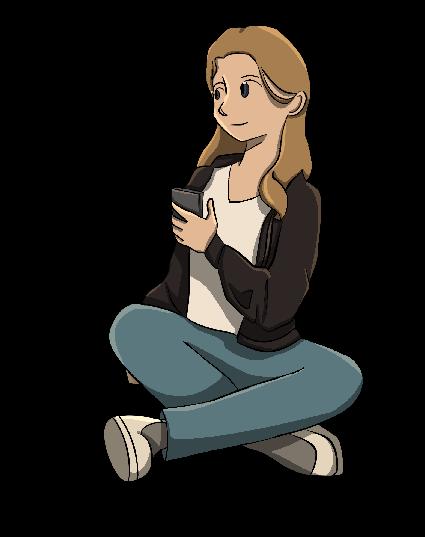

Checking social media before getting out of bed, taking pictures of food before eating it — these are all parts of daily life after the introduction of apps like Instagram, Snapchat and TikTok.
A Pew Research survey found that 57% of teens use TikTok daily, with Instagram and Snapchat use at 50% and 48%, respectively. Up to 95% of teens ages 13-17 are on at least one social media platform, according to the National Center for Biotechnology Information. Millicent, not her real name, is part of the five percent that do not have social media — and the sophomore does not plan on downloading it.
“It feels like a lot of pressure,” Millicent said. “And I have enough pressure in my life.”
She acknowledges that social media can be a useful way to foster connections and keep up with friends.



chological Association reports that American teens spend an average of 4.8 hours on social media per day, and mental health issues like depression and loneliness are linked to greater social media usage.
“You need to take into account what you’re getting yourself into,” Clark said. “You need to think — am I easily distracted? Will I be able to pull myself away and create healthy boundaries?”
Rumi, not his real name, has never been allowed to download social media apps due to parental concerns about staying focused.
You need to take into account what you’re getting yourself into. You need to think — am I easily distracted? Will I be able to pull myself away and create healthy boundaries?”
SARAH CLARK JUNIOR
“I’ve already established myself socially, so I don’t feel the need to keep up on trends,” Millicent said. “But maybe if I didn’t have such good friends, I would feel a little bit left out.”
Junior Sarah Clark shares this mentality — she often gets her information from friends or just by looking it up.
“I have no shame in Googling trends like a grandmother,” Clark said.
Clark had TikTok in sixth grade until her parents made her delete the app, hoping it would increase her productivity. While she was angry at the time,
“Without having social media, I feel like I’m not as connected to what other people are doing and up-to-date with what’s going on,” the junior said. “That occasionally makes me feel left out.”
Rumi also says that he often feels behind on popular trends and memes. For example, when Rumi saw a friend move his hands up and down after hearing the phrase “six-seven,” he was completely confused. He finally understood the joke weeks later when a friend explained the reference and showed him a video.
“If I could get social media, it would help me keep up with everything, like what people are doing and where people are going to college,” Rumi said. “I could stay in touch with more people.”

in in-person relationships and not become dependent on it.”
Quinn says that staying off social media has “trade-offs,” yet he finds that he actually feels less left out by his friends.
“It’s nice not having to deal with the anxiety of knowing that all your friends are somewhere and you’re not there,” he said. “I don’t have to deal with that because I’m just not constantly aware of where they are.”
Junior Maya Kadia created an Instagram account last September after not having access to social media for years. To avoid excessive distraction, Kadia sets time limits on her daily use. Rather than using a built-in screen time application, Kadia uses an app that locks her phone and does not give her the option to bypass. The app, called Screen Zen, allows users to customize the amount of time they want to spend on apps of different groups, including social media. The app also programs specific cool-down and warm-up periods before and after users open each app. The app allows Kadia to regulate her usage.
“It hasn’t gotten to the point where it has been that much of a distraction, mainly because I have ways of limiting it and keeping it more manageable,” Kadia said.
There’s nothing wrong with you if you don’t have [social media]. It’s not the end of the world — you can live your life perfectly fine without it.
SHEA QUINN SENIOR
At the same time, Rumi acknowledges that his parents have a point: “If I had social media, I would probably be more distract-
Senior Shea Quinn initially faced similar restrictions from his parents. He did not receive a phone until the end of eighth grade and has remained without social media, other than an Instagram account on his parents’ devices used exclusively for recruiting purposes. Though his parents do not restrict his social media access, Quinn has decided not to download any apps.
“Not having it just seems normal to me,” he said. “I think it’s important to stay grounded
Having Instagram has allowed Kadia to stay more connected with friends, especially ones she may not see in person as often.
“I can interact with them online and stay up-to-date on different events,” Kadia said.
“Social media really is a good tool for staying in the loop and communicating, as long as you are moderating your use and staying intentional.”
Quinn said the decision to have no restrictions, set screen time limits or completely avoid social media depends on what works best for each person.
“There’s nothing wrong with you if you don’t have it,” Quinn said. “It’s not the end of the world — you can live your life perfectly fine without it.”
Additional Reporting by Bella Dodig, Melody Han & Brian Kim
Story by Bella Dodig, Brian Kim & Dalia Sandberg
Illustrations & Design by Emily Yen
Ava Heim had been talking about a cosmetic nose job for over a year when she formally asked her mother to set up a consultation in tenth grade. To her surprise, her mom casually revealed that she already had the appointment booked. The following summer, after a few virtual consultations, Heim flew to Los Angeles for an office visit in Beverly Hills. The next day, she underwent a two-hour surgery.
“It all happened really fast,” she said.
For the next few days, Heim recovered in LA, lying in bed and adhering to an intense anti-inflammatory diet.
“I couldn’t function for two days,” she said. “My mom was basically my nurse for a week.”
Despite the intense recovery process, Heim, now a senior, claims “it was definitely worth it.”
“I’m just glad I didn’t know about the recovery process going into it or else I could have changed my mind,” she said.
Studies published by the National Library of Medicine in 2005 and 2009 cite social media and reality shows like “Extreme Makeover” and “I Want a Famous Face” as major factors in propagating beauty standards and spurring cosmetic procedures — but that was not the case for Heim.
In fact, due to her age, her parents did not allow her to download social media apps like TikTok or Instagram until after her surgery. Instead, she was influenced by her dad, who got a rhinoplasty after breaking his nose in high school.
“Not having social media was probably helpful because I was just comparing myself to what I thought I could look like instead of what other people look like,” Heim said.
I didn’t do it from a place of insecurity or desperation, and I think that’s where
When Heim first saw her new nose after removing the healing casts and bandages, she started crying tears of joy. “It’s such a surreal experience seeing your face in a way that’s not natural,” she said. “It was a little bit scary, but I was also just so excited.”
Six months later, the pain had been replaced by relief.
“I didn’t even realize I would feel that much more confident. But then I got it, and I was like, ‘Oh my gosh, how did I live like this?’”
From 2020 to 2024, the number of surgical and nonsurgical aesthetic procedures in the U.S. increased by 40%. In 2023, 1.6 million cosmetic procedures were performed in the U.S., with teenagers accounting for over 260,000 of them.
Plastic surgeon James Boynton (‘90) acknowledges the change in surgical trends since he first opened his practice: “People are pursuing things at a little bit younger age, especially in their twenties.”
On TikTok, videos featuring the hashtag #plasticsurgery have accumulated over 30 billion views, with creators documenting their experiences and sharing before-and-after images. In a 2022 survey published by the journal Plastic and Reconstructive Surgery — Global Open, 48.5% of respondents had considered cosmetic procedures at least once as a result of social media.
ed to a growing culture of destigmatization.
“I was on TikTok a lot before my surgery, and I was looking at recovery videos and people saying what you should know, do and buy,” Brewer said. “I think it definitely helped in that way.”
Heim felt nothing but support following her procedure.
“I was never really worried about how everyone was going to react, and I’ve actually never heard anyone say one negative thing,” Heim said. “Everyone’s been so nice.”
With a growing culture of acceptance regarding cosmetic work, social media increasingly promotes unrealistic beauty standards. In 2018, Matthew Schulman, a board-certified plastic surgeon in New York, coined the term “Snapchat dysmorphia” to describe the trend of teenagers and young adults seeking plastic surgery to appear more like a filtered or digitized image of themselves.
In a 2021 survey conducted by the American Academy of Facial Plastic and Reconstructive Surgery, three-quarters of surgeons reported seeing patients seeking cosmetic procedures to look better in selfies.
As social media usage surges, Boynton cautions teenagers to avoid making impulsive decisions regarding invasive procedures based solely on fads.
“A teenager’s judgment isn’t completely hardwired or fully mature, in my opinion, so it’s very easy to be influenced by social media,” Boynton said. “The biggest thing is making sure kids are well-educated and mature enough to consider a procedure if one is indicated.”
Benicio, a teacher who received a chin implant and nose job a year after graduating from college, says social media trends can create unrealistic expectations.
“I didn’t do it from a place of insecurity or desperation, and I think that’s where the danger is. People think that it’s going to make them a happier person — it probably won’t,” he said.
Benicio made the decision when he moved to Los Angeles. After taking a few headshots, he noticed that his appearance was “holding him back a little bit.”
“I wasn’t trying to make myself a 10. I was just trying to go from a three to a five,” he said.
To have the surgery, Benicio returned to his hometown. He notes that plastic surgery was already normalized in his family, with both his mother and uncle having previously received cosmetic procedures. Having just moved to a new city, away from friends and family, he discovered that only one person commented on the changes. He acknowledges that if he had been in high school or college, he might have felt more self-conscious.
“High school is a really challenging time to change anything about yourself. Getting a new pair of shoes seems controversial sometimes. You can get roasted for the outfit you’re wearing or a new haircut or, god forbid, dyeing your

As a high schooler, Heim acknowledges the importance of thinking critically before exploring procedures.
“If you think about it more than three times a day, then do it. If you look in the mirror and you think about it, then do it,” Heim said. “But if you think about it once a month, then
NOT JUST A LOOK
Finn Brewer was playing at the community pool in fifth grade when he got pushed in head-first, hitting his face on the concrete. At first, nothing seemed wrong, but over time a bump on his nose formed due to an internal fracture. Six years later, after a consultation with his doctor at the beginning of junior year, he learned that the right side of his nose had completely collapsed.
“I really couldn’t breathe out of it, but I had to wait until my junior year because my mom wanted to make sure that my nose was fully formed and fully grown,” he said. Initially, Brewer’s father had concerns about
how the procedure would alter Brewer’s appearance — yet when he came to a consultation, he changed his mind.
“When he saw how messed up my nose was, he was like, ‘Okay, you need surgery.’”
Since the procedure was medical, insurance covered most of the $35,000 cost, with Brewer’s family having to pay $5,000 out of pocket. After the surgery, Brewer went through a period of intense rest and recovery, which he describes as “the hardest 10 days of his life.” During that time, he had to breathe through his mouth because his nostrils were blocked by a structural filling. He often woke up in the middle of the night coughing up blood.
Once fully recovered, Brewer said most people, even some lifelong friends, did not realize he had received the procedure. Although his decision was not motivated by appearance, he supports the notion of aesthetic procedures.
“If it’s what you want, and you have the means to do it, then I think you should go for it,” Brewer said. “Especially if it makes you feel more confident and boosts your self–esteem, because it definitely boosted mine.”
Brewer’s surgery represents a larger trend in non-cosmetic procedures. From 2014-2018, reconstructive maxillofacial surgeries such as nose jobs, jaw surgeries and cleft lip corrections increased by 17% when compared to 15 years prior, according to a study published in Plastic and Reconstructive Surgery — Global Open.
Boynton notes that the majority of plastic surgeries he performs on those under 18 are for wellness reasons, with some of the most common being ear-pinning (known as otoplasty) and male breast reduction (gynecomastia surgery). According to Boynton, kids with these conditions often get teased and develop lower self-esteem. “It’s very debilitating for those children,” he said.
“I had a patient once who was very shy, and the little thing that I did for her enabled her to speak in front of others,” Boynton said. “It changed her life.”
‘THE DARK SIDE’ ‘THE DARK SIDE’
According to Cape Cod Plastic Surgery, about 24% of cosmetic surgery recipients report overall dissatisfaction with their results. Common reasons include unrealistic expectations, mental distress, financial strain and medical complications.
Although recent medical innovations have made plastic surgery safer and more predictable, the nature of altering facial and bodily structures carries inherent risks.
Complication risks, from minor infections to serious blood clots, vary from less than 1% to as high as 43%, depending on surgery type and facility.
According to the American Society of Plastic Surgeons, the mortality rate for Brazilian butt lifts, the most dangerous type of plastic surgery, has been reported to be as high as one in 300,000.
surgery.
Even in the U.S., the rise of fake plastic surgeons has exacerbated the dangers. In 2017, Carlos HernandezFernandez was arrested on 126 counts of posing as a certified plastic surgeon and performing dozens of procedures. Hernandez-Fernandez, a former surgical assistant in Colorado, had no formal training as a plastic surgeon. In August 2025, after serving six years in prison, he reportedly approached a woman and offered her a consultation for a breast augmentation.
“I call it the dark side of plastic surgery. There are certainly a number of plastic surgeons that will operate on teenagers for monetary gain rather than following true ethical principles and judgment,” Boynton said.
There are certainly a number of plastic surgeons that will operate on teenagers for monetary gain.
DR. JAMES BOYNTON (’90)
The risks become even greater when patients engage in “surgical tourism.”
“To get a cheaper surgery, people are going to places outside the U.S. such as Mexico and the Dominican Republic, which often do not have the same exacting standards of sterility as the U.S.,” Boynton said.
Boynton cautions that traveling to other countries for cheaper procedures can increase the risk of infection, fat embolism and other complications typically due in part to lower safety standards and traveling long distances after

“In this city, we have dentists, dermatologists and family practice doctors performing plastic surgeries.”
Boynton emphasizes the importance of seeking out plastic surgeons certified by the American Board of Plastic Surgery.
Whether motivated by medical or cosmetic reasons, Boynton says plastic surgery can help people “feel better in their own skin.”
“A lot of people think ‘Oh, it’s just glamour, it’s just vanity.’ But it’s things that bother people. It could be something they’re born with, it could be something from a car accident, it could be something from a tumor — it could be anything,” Boynton said. “The foundation of our speciality is making patients’ lives better.”


specific areas of the body.
Restructures, reshapes or resizes the ears.
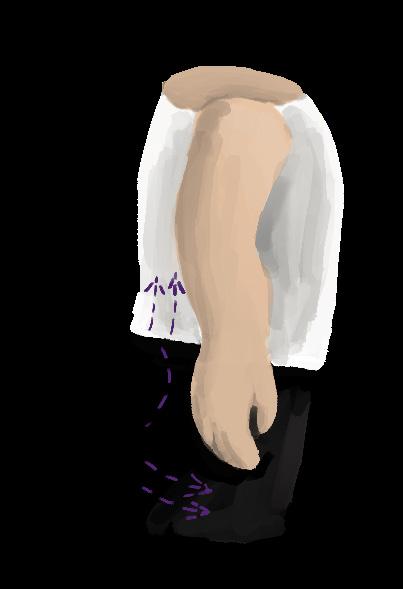
Removes excess skin and fat and adds volume and
REACHING FOR THE STARS
Story by Ainsley Bass & Harrison Hadnott
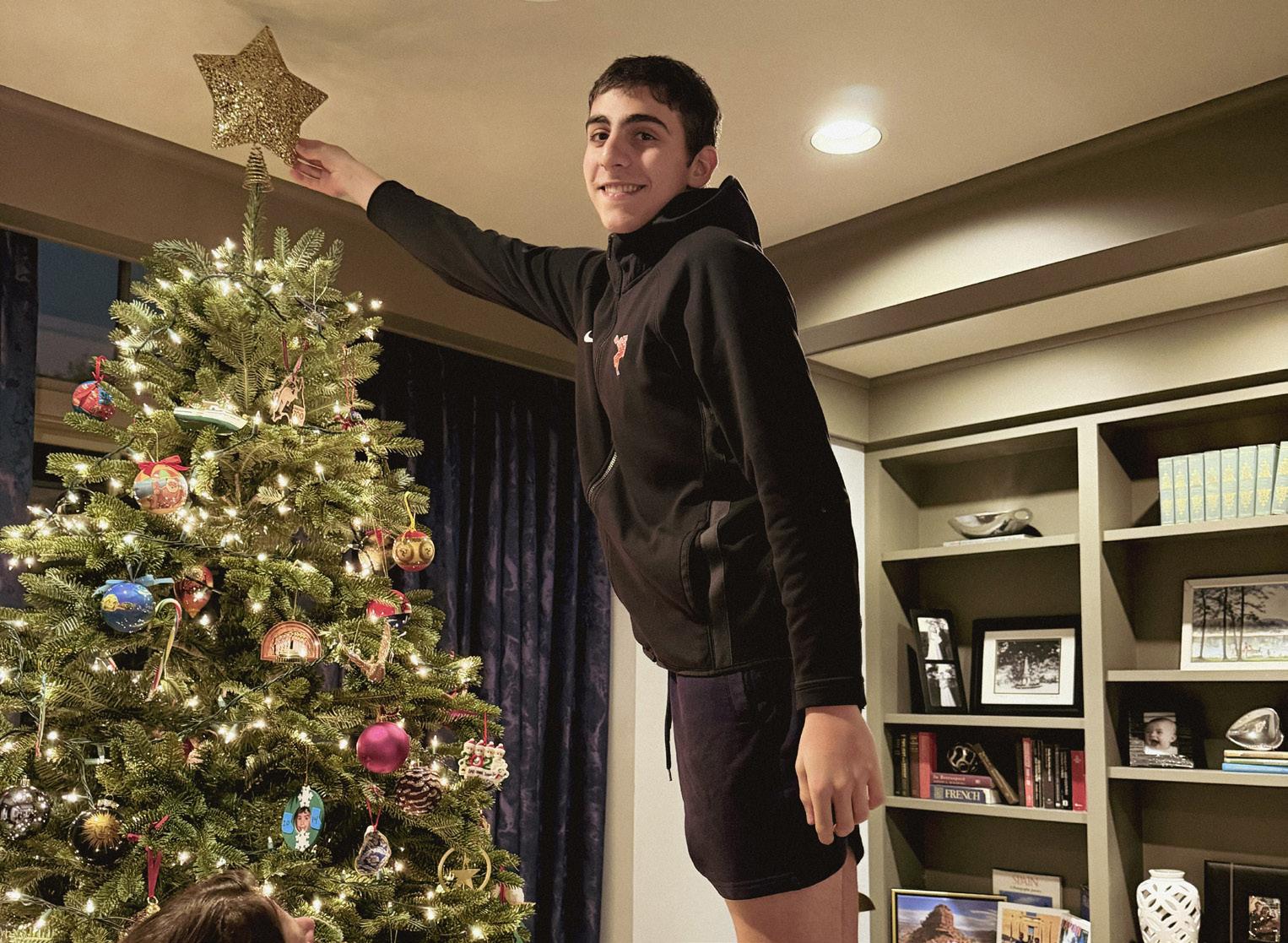
When Nikolozi Chikobava landed in Houston from his home country of Georgia, he was disappointed to not be greeted at baggage claim by someone dressed in a cowboy hat and boots.
Chikobava always knew he wanted to participate in a high school exchange program. His family encouraged him to pursue study abroad, and his older brother had already studied for two years in the United Kingdom. During his sophomore year, Chikobava was accepted into ASSIST Scholars, a program that gave him the choice to study in the United Kingdom or the United States.
“I chose the U.S. because it’s the more opportunistic country,” Chikobava said. “I can’t think of any place better to excel academically and on the basketball court.”
Months later, Chikobava packed his bags, said his goodbyes and boarded his flight to Houston. Instead of cowboys, he was greeted by the Bauer family waiting at the airport.
On his first day at St. John’s, Chikobava had difficulty navigating campus, not knowing where any of his classes were or the names of the buildings. He also struggled to adjust to the language barrier, as English is his third language, after Georgian and Russian. Despite the challenges of adapting, he maintained a positive mindset and quickly felt at home.
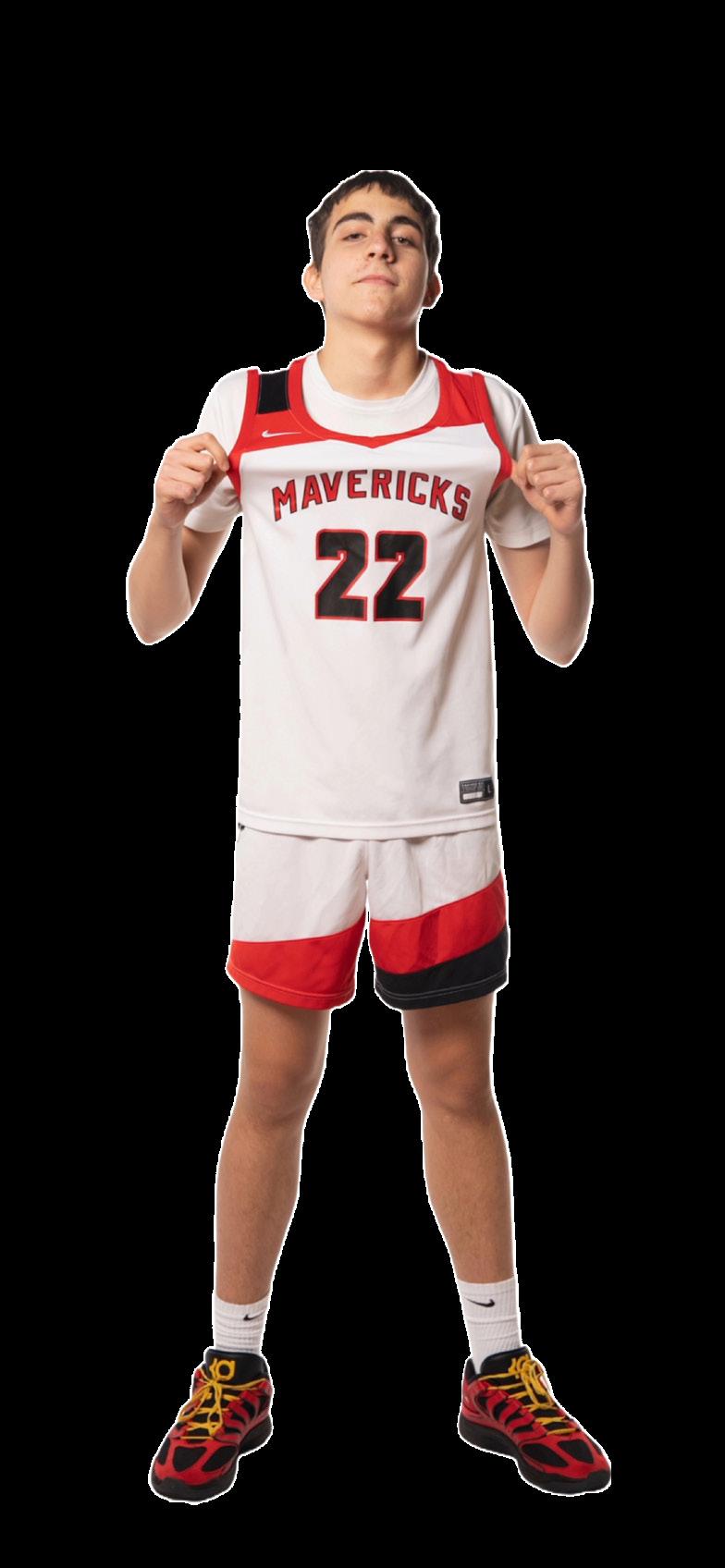
“I would never imagine that it would be this easy to be a part of the community and not feel like an outsider,” Chikobava said.
Joining the basketball team was Chikobava’s most rewarding experience. He enjoyed improving on-court and bonding with players and coaches.
“My teammates, from Day One, made me feel like I had been on the team for years, like I wasn’t an exchange student.”
Although the idea of living with a host family initially frightened Chikobava, he enjoyed getting to know both of his host families. In the fall semester, he stayed with the Bauer family, and in the spring semester, he began living with sophomore Judah Sanchez’s family.
“When I heard I had to switch, it was pretty scary. I felt like I had to go through it all again,” Chikobava said. “But Judah’s family supported me in every way they could.”
Sanchez knew Chikobava would be living with his family months before he moved in. So, Sanchez tried to make
conversation with Chikobava in the fall, especially during football games.
“I just wanted to get to know him a little bit before he moved in with us,” Sanchez said. Over spring break, Chikobava and the Sanchez family took a ski trip to Telluride, Colorado. Chikobava, having never skied before, learned alongside his host family. They also introduced him to their friends and included him in game nights.
Sanchez valued the trip as a landmark for his relationship with Chikobava. In the previous months, both were preoccupied with schoolwork and extracurriculars, so the spring break trip allowed them to bond.
When the family’s flight to Telluride was delayed, Sanchez and Chikobava passed time by playing hacky sack and completing dares, which Sanchez cites as another moment of connection: “It was a lot easier to talk without having to rush or having something to do.”
When he moved to Houston, Chikobava figured out the real Texas, beyond stereotypical film portrayals, and enjoyed Texan activities like going to the Houston Rodeo and eating barbecue.
Early in the school year, junior Hanley Sayers invited Chikobava to sit with him and his friends at their lunch table, where they all bonded immediately. Since then, Sayers has been one of Chikobava’s American best friends. They continue to eat lunch together and hang out often.
“It didn’t take him long to make friends and just start being himself,” Sayers said.
One night, Sayers drove Chikobava home from a friend group dinner and put on his favorite country playlist. Sayers remembers the moment when Chikobava began “bobbing his head” to the music: “He was really loving it. I just remember thinking, ‘Yeah, he’s one of my boys,’” Sayers said.
Chikobava has plans to keep in touch with his American friends upon his return to Georgia. He also hopes to visit Houston next year during Rodeo season.
English Department Chair Clay Guinn has watched Chikobava improve his English skills and become more comfortable in the classroom setting.
“That sense of humor has come out a little bit more,” Guinn said. “That happens once you’re more comfortable with a language.”
Chikobava calls his decision to study abroad “the best decision” he’s made, and he strongly recommends doing so to anyone who is considering it.
“It’s a life-changing opportunity nobody should pass up on,” Chikobava said.
Story by Juliet Dow & Niko Laskaris
After this school year ends, senior Finnian Owsley’s route to school will change from a two-minute walk to a nine-hour flight across the Atlantic. Owsley, along with seniors Amelia Montgomery and Grace Bowling, will attend college abroad this fall. Both Owsley and Montogomery will study at the University of St. Andrews in Scotland while Bowling will attend Durham University in England.
University of St. Andrews, ‘30
Montgomery decided to study abroad early in high school. When she visited the University of St. Andrews during her sophomore year, the coastal views and architecture immediately drew her to the campus.
“It’s right on the ocean, so it’s absolutely beautiful,” Montgomery said.
The international environment and the diverse backgrounds of the students appealed to Montgomery.
“I want to meet people who are from different walks of life or have had different experiences than me,” Montgomery said. “I want to broaden my horizons by living in another place that is different from Texas or even in the U.S.”
FINNIAN OWSLEY
University of St. Andrews, ‘30
Finnian Owsley felt a similar pull toward the Scottish coast. After visiting last year, Owsley felt an immediate connection to the campus.
“I loved everything about the school,” Owsley said.
While excited for the new chapter, Owsley expects to miss her friends at home.
“It’ll be bittersweet,” Owsley said.

Durham University, ‘30
After researching international programs her junior year, Bowling started to see her lifelong dream of going abroad as a real option.
“I got more excited about it and started to take it more seriously,” Bowling said.
At Durham, located in northern England, international students make up 30% of the community, Bowling is looking forward to learning about other cultures. She is also prepared to address her own background.
“I am expecting to have to answer a lot of questions about Texas and its stereotypes,” Bowling said.
Story by Yutia Li & Wanya Zafar
When Jhung Kim (’19) released his new EP “Deceiver,” his fans had no idea that he wrote the title track at 16 and performed it his sophomore year in Chapel. It was the first original song he had ever played in front of a live audience.
Since then, Jhung has blended jazz, R&B, pop and bossa nova influences to produce an “earnest” music style, racking up hundreds of thousands of monthly streams across multiple platforms. He released his second EP “Deceiver” on Friday, March 13, intentionally choosing the superstitiously unlucky day.
“I want it to portray the idea that life beats you down, and you can be unlucky, but ultimately it’s just your resilience that’s important,” Jhung said.
At St. John’s, Jhung was an all-state oboist and pianist and frequently put together special music performances for Chapel. He also served as creative director and design editor on the Review, and he co-wrote, co-directed and edited the annual Kinkaid video his senior year. These pursuits were his way of standing out in an academically competitive environment.
“I learned very quickly that I was never going to be the smartest person in the room. Everyone is so viciously intelligent, and I made peace with that, but I also just needed an outlet. And that outlet was being creative,” Jhung said. “I wanted people to see me.”
As a freshman at the University of Chicago, Jhung was “going crazy” during the pandemic, so he recorded a bunch of vocals on his phone, downloaded music production software on his laptop and started tinkering around.
“It took me a year and a half, and I mustered out eight minutes of music,” Jhung said. “But I was like, whatever, I’m really happy with this.”
Those eight minutes of music became his debut EP, “Always the End,” which he released in May 2022. In less than a month, the five-track EP amassed over 150,000 streams and has since surpassed 30 million, earning placement on several Spotify editorial playlists. The cover photo features Jhung with a white square blocking his face, representing his desire for visibility and recognition of a deeper identity beyond his appearance.
“Music is a way of showing this side to yourself

that you can’t always verbalize,” Jhung said. “It’s an opportunity to show other people this more complete version of you that’s not easy to tell in everyday life.”
Following the success of “Always the End,” Jhung opened for R&B artist Ravyn Lenae at a Chicago performance. Given only two weeks’ notice, he scrambled to put a band together.
“I was like, you know what, it’s not perfect, but we just have to do it,” Jhung said. “And so I did it
Music is a way of showing this side to yourself that you can’t always verbalize.
JHUNG KIM (’19)
and had a ton of fun.”
Before graduating from UChicago, Jhung put together a farewell show, not knowing when he would have a chance to make music again. He initially put 75 tickets on the market, which sold out in two hours.
“People really believed in this thing.”
Unlike his first EP, which Jhung described as a more spontaneous creative process, “Deceiver” represents a years-long process shaped by postgraduate life, rising expectations and a growing audience. After the unexpected success of “Always The End,” Jhung struggled with feeling out of place.
“I was experiencing imposter syndrome because

suddenly my project had really taken off, and it was averaging hundreds of thousands of monthly listeners,” Jhung said.
During this time, Jhung was working full-time at a law firm while living alone in Chicago. He said the pressure of balancing professional responsibilities with music made “Deceiver” far more demanding than his previous work.
The EP ultimately took nearly three years to complete. Wanting the album to feel like “a step up in quality,” Jhung spent much of the process refining production details, layering instrumentals and revising tracks repeatedly. Some songs went through more than 150 takes.
“It was a double-edged sword because I became a lot more focused on the technical aspects like mixing and mastering,” Jhung said. “But I was trying to balance it with not losing the emotion of where the music comes from, which is by far the most important element.”
Across the EP, Jhung experiments with house, ambient, samba and instrumental piano influences while working with collaborators from Chicago and New York. Still, Jhung found it challenging to make the project cohesive.
“I was so obsessed with the idea of trying to tie everything together to make this overarching self-portrait,” he said.
Jhung said many of the album’s themes connect back to experiences he had while growing up, including his relationship with attention, ambition and self-image.
While at UChicago, Jhung once told his father, “if I really gave this music thing a shot, I think a lot of people could be touched by what I did,” Jhung said. “And my dad was like, ‘Okay, do it then.’”
While producing the EP’s lead single, “Say Less,” Jhung collaborated with an orchestrator who contributed strings to Charli XCX’s “Everything is Romantic” and previously served as a music director for Janet Jackson. The collaborator told Jhung that his way of conducting business reminded him of “a young Lady Gaga.”
While Jhung continues pursuing music, he is also studying for the LSAT and intends to eventually attend law school.
“I’m a lot of different things,” Jhung said. “At my core, I don’t think I’m just a musician.”
Still, his broader goal remains rooted in creating meaningful work. Jhung is grateful for the ways that music helps him express his challenges through art that others can enjoy.
“There are things about me that are hard to sit with. There are parts of me that I wish I was more perfect at,” Jhung said. “All I can do is share who I am and what I’ve struggled with through music, and I just hope that some people find comfort and companionship in it.”
Story by Niko Laskaris & Judah Sanchez
As senior Andrew Wasserman sprinted down the back stretch of the 800-meter dash at the 2026 SPC Championships, the screams from his teammates made it clear that he had a shot at the school record.
“I took a quick glance behind me, saw I was ahead by a decent amount, and then just closed hard,” Wasserman said. “I saw that the time was a possibility, so I decided to give it everything I got.”
When Wasserman crossed the finish line, his teammates erupted into celebration. He secured first place at SPC and earned 10 points for the team. As his teammates celebrated around him, Wasserman kept his eyes fixed on the clock.
After a few moments, the official result appeared on the scoreboard: 1:54.48. Wasserman had broken the record by 0.02 seconds, a mark previously held by William Thames (‘23).
“I have been thinking about that record for probably a year and a half now,” Wasserman said. “It was a relief because I knew it was my last chance to run it.”
Head coach Richie Mercado (’79) noted that while the team usually breaks two or three records annually, they broke six this year.
“There have definitely been highlights and lowlights this season, but it’s a good year for records,” Mercado said.
A few weeks prior to Wasserman’s win, junior Thea Popovic secured a second-place medal at the Arcadia Invitational in California. Popovic finished the 400-meter dash with a time of 54.50, surpassing her own record from 2025 by more than a second.
“Since I already had the record, it was more about doing my personal best and crossing that finish line,” Popovic said.
Popovic also broke the 200-meter dash record at the Nick Finnegan Invitational with a time of 24.35, besting a record previously held by Reese Animashaun (’24).
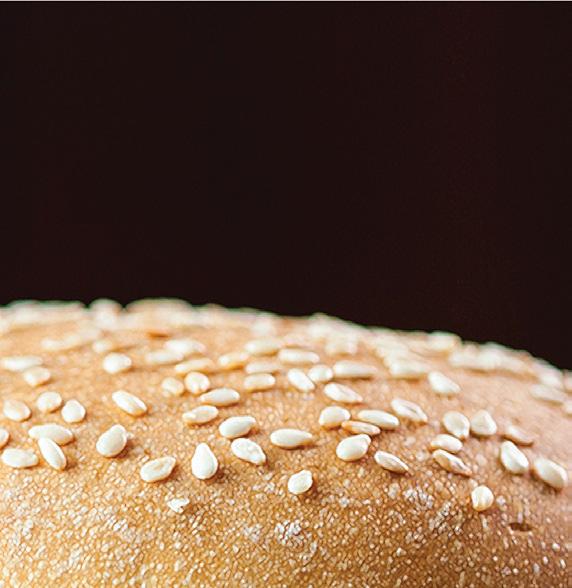



Although Mercado is retiring as head track coach this season after 42 years, he is enthusiastic about the team’s future, especially Popovic’s.
“Thea keeps getting better and better,” Mercado said. “I am excited to see where her skills take her.”
The runners have the talent, but more importantly, they care about performing and competing well.
RICHIE
MERCADO HEAD TRACK AND FIELD COACH
Sophomore Taylor Synnott also etched her name in the record book at the Arcadia Invitational, clocking a 5:02.76. The performance eclipsed the previous school record of 5:08.96 held by Cici Calhoun (’22), who currently runs for Rice University.
“Arcadia was a good experience because there are so many elite runners there,” Synnott said. “It was exciting to have people there to push the pace.”




Mercado noted that Synnott’s mindset made her showing in California even more impressive.
“Taylor is a competitor, she trains hard and she is focused on improving,” Mercado said. “After the race, she was happy because she knew she had run well, and that is what matters.”
The success extended to the relay events as well. In February, Popovic, along with freshman C.C. Jorgensen and juniors Josephine Barbee and Journey Zulueta, shattered the previous Swedish Relay school record by over eight seconds. The Swedish relay features a combination of the 100m, 200m, 300m and 400m runs.
The boys distance medley relay, made up of the 1200m, 400m, 800m and 1600m events, also established a school benchmark, shaving three seconds off their previous record. The group was led by sophomore Niko Laskaris, followed by senior Henry Caputo and freshman Asher Gurr, and anchored by Wasserman.
Mercado says this year’s success is no accident.
“The runners have the talent, but more importantly, they care about performing and competing well — those are the traits that help you be successful.”






Story by Angel Huang & Riya Nimmagadda
When she was 11, Kendace Lee was teeing off on the 6th hole at the Clubs of Kingwood and hit what felt like an ordinary shot. Moments later, she watched the golf ball disappear into the cup. Her parents and friends erupted in screams. Before she finished the seventh grade, she had scored a hole-in-one, a feat that even some professional golfers never accomplish.
Over the next six years, she has recorded two more.
Lee’s father, a “weekend warrior,” originally arranged for Kendace’s older sister Kenna (‘24) to take golf lessons, hoping that one day he’d have a golf partner. While her father never planned for Kendace to start golfing herself, during Kenna’s first golf lesson, he could see Kendace’s enthusiasm.
Now, 13 years later, Kendace will be joining Kenna at Brown University to continue playing the sport they love.
“Golf is a pretty solitary sport, and you’re on your own out there,” Kendace said. “Having a companion to always be there with you and share that knowledge and understanding is pretty great.”
After Kendace’s sophomore year at St. John’s, many coaches reached out to her on June 15 — the first day college coaches can contact recruits. That was when Kendace began communicating with Brown golf coach Jason Calhoun, who also recruited Kenna.
When Kendace visited her sister on campus the next year, Calhoun introduced her as “our new Brown golfer.”
The Lee sisters played together for two years on the Maverick golf team and have the opportunity to play together for two more in college. Despite Kenna getting a two-year head start at Brown, this

will be the first year that the two will get to play at the collegiate level. As of July 1, 2026, the Brown golf team will return to intercollegiate competition for the first time since 2020.
“Just getting to interact with her in that different setting and getting to bring our relationship, our dynamic to the Brown team, is something I'm really interested in seeing,” Kenna said.
According to her sister, Kendace is much more “intentional” in her practices.
“I may practice a little more, but the quality of her practice is quite excellent,” Kenna said. “It's definitely something to learn from because my strategy of just hitting the number of balls is not always the best.”
Kenna also admires her younger sister’s “mental game,” especially in the most intense moments.
“You could never tell from her,” Kenna said. “She's always smiling.”
Kendace just completed her second year as captain of the Maverick golf team, which narrowly missed winning their fourth straight SPC championship. The team placed second, and Kendace earned All-SPC honors for the fourth time.
“You can depend on her for anything,” said Kathy Yang, sophomore co-captain. “She'll always complete whatever is needed.”
While Kenna admits to having a sibling rivalry, she said it is “pure friendly competition.”
“I've played golf with so many people,” Kenna said. “But Kendace is my absolute favorite person to play with.”
BOYS TENNIS WINS SPC
The team, led by five seniors, defeated St. Mark's 3-1 in
GIRLS GOLF FINISHES SECOND
Senior Kendace Lee shot 153 to place 4th, and sophomore Kathy Yang finished 8th (165).
SOFTBALL TAKES SECOND
Mavs fell 2-1 to Episcopal in the championship for the second consecutive year.
BASEBALL STEALS THIRD
Mavs were shut out by Kinkaid in the semis before bouncing back with a thrilling 7-6 win over Houston Christian.

GIRLS LAX BEATS KINKAID, TAKES THIRD
Mavs won 12-11 shootout in 3rd-place game.
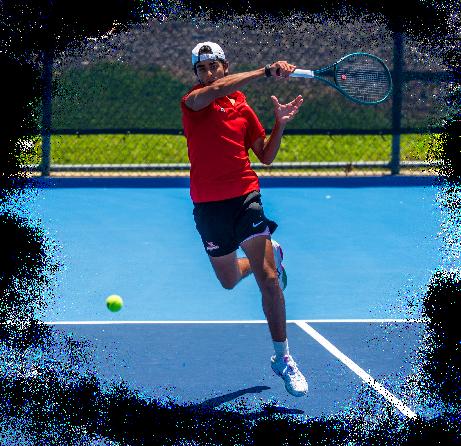
GIRLS TENNIS SWEEPS GREENHILL FOR THIRD
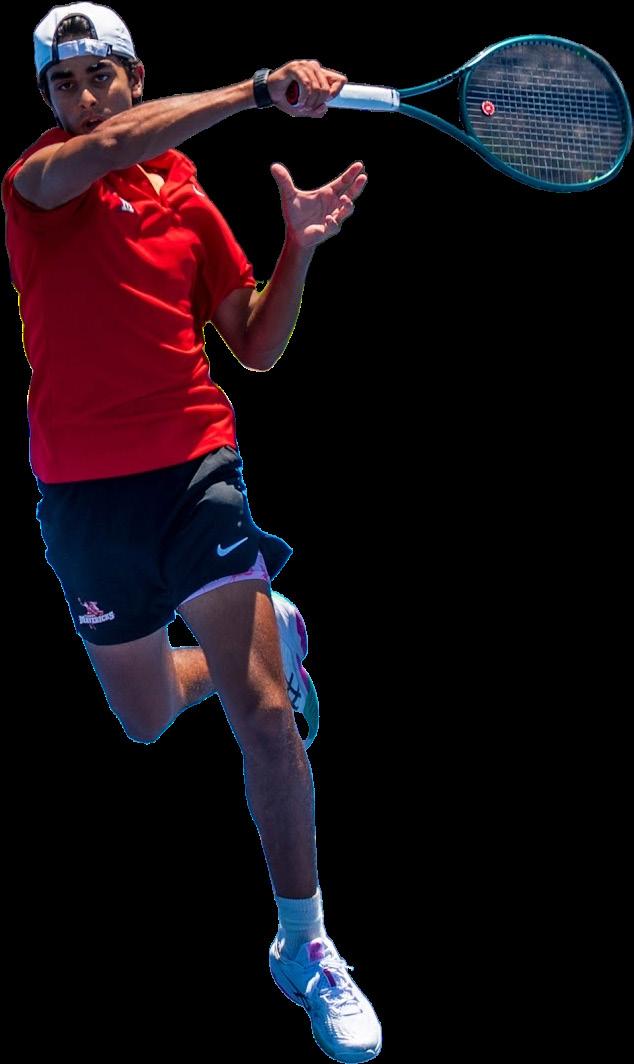
Mavs lost to Hockaday in semifinal before blanking Greenhill.
BOYS LAX BRINGS HOME FOURTH
Mavs lost to Episcopal 15-11 to place
BOYS TRACK FINISHES FOURTH
Andrew Wasserman ran a 1:54.48 school record to win the 800.
GIRLS TRACK EARNS FOURTH
Thea Popovic won the 400; Taylor Synnott claimed the 3200.
BOYS GOLF LANDS IN FIFTH Freshman Richard Rider finished
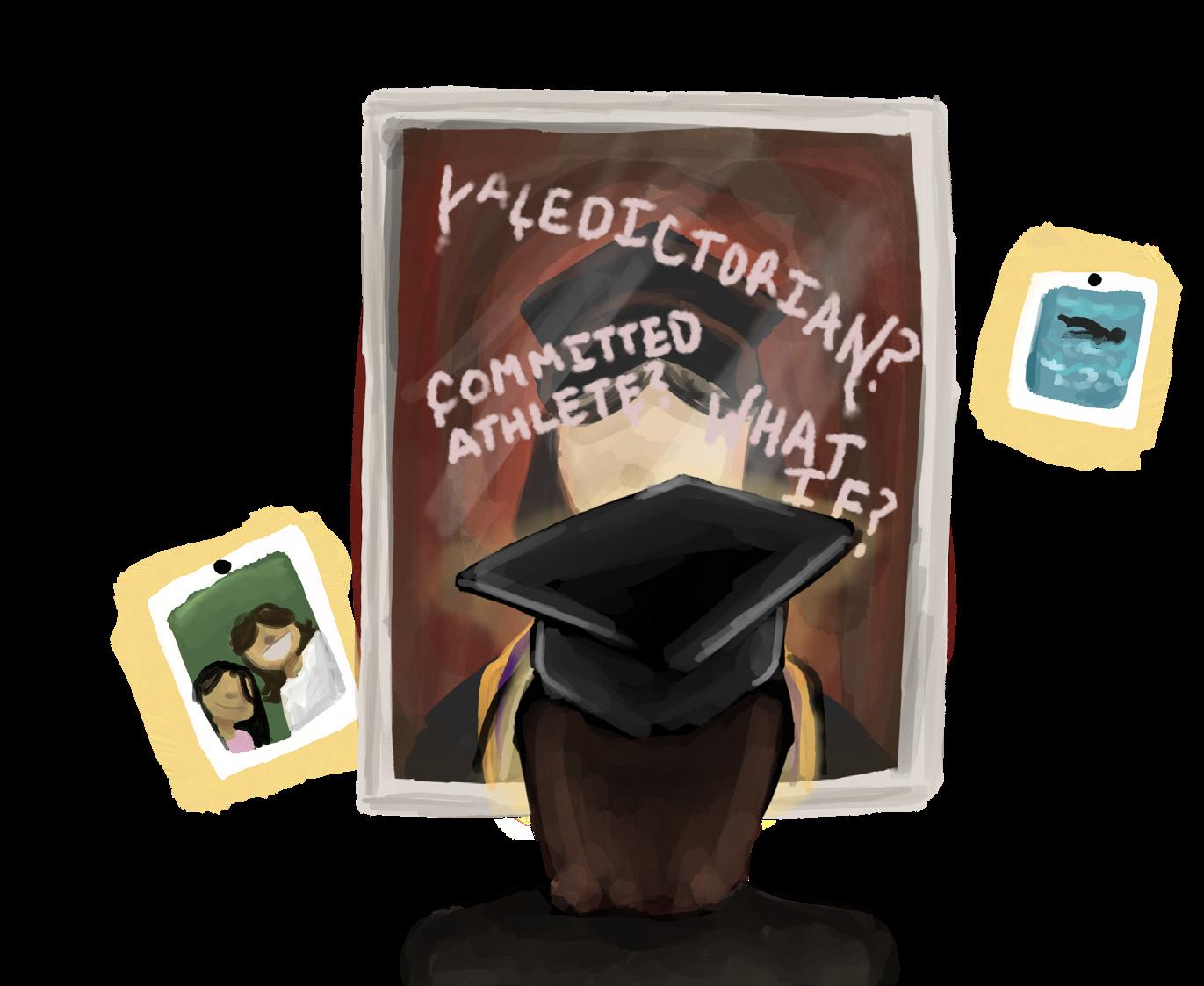
On prom night, a classmate approached me.
“I‘m sorry it didn’t work out for you.”
They were referring to how I was not going to attend an Ivy League school.
Their words made it feel like every moment and accomplishment suddenly became invalid if not followed by the “right” acceptance letter.
And, to an extent, I understand where they were coming from. As products of a highachieving environment, it can be natural to measure success as binary: you made it or you didn’t. Senior year is the ultimate compilation of external metrics: rankings, admissions, prestige — validation galore!
But admissions officers cannot know us from a 650-word essay. The vast majority of the 1.5 million monthly viewers of the SJS Seniors Instagram account have never met us. And yet, we tie so much of our self-worth to their opinions. Why?
Let’s be clear: There is nothing wrong with ambition. There is nothing wrong with wanting to attend an Ivy League school. But there is something deeply unhealthy about attaching one’s entire sense of self to achievements that they ultimately have very little control over. When you are driven by extrinsic factors, life becomes transactional. Every sacrifice is
an investment expecting a return. A late-night study session means you deserve a better grade than someone else, and when things don’t go as planned, it’s easy to feel cheated.
I spent nearly 12 years swimming competitively, yet I am not a recruited athlete. Assuming I swam an hour each day, that’s 4,380 hours spent in the pool. That’s 4,380 hours I’ll never get back. That’s 4,380 hours I could have spent doing something else.
But I do not regret a single hour because swimming served a greater purpose than helping me “make it.” It led to some of my best friendships, memories and lessons about myself. If I had gauged success purely through outcomes, it would have blinded me to everything meaningful that happened along the way.
When you evaluate your life through your
own metrics — quality relationships, stability, fulfillment — you are the only one who gets to decide how well you’re doing. Your identity does not collapse after opening a decision portal or losing the 100-meter fly.
So, listen to best-selling author James Clear, who wrote “Atomic Habits,” when he says, “You do not rise to the level of your goals. You fall to the level of your systems.”
To parents and teachers, help your kids and students create those systems.
To the St. John’s community, stop perpetuating the idea that success is measured through extrinsic rewards. Yes, it’s easier and definitely effective, but it does not encourage us to become the best version of ourselves.
To my fellow seniors, Ivy or not, we made it.
Opinion by Nathan Kim Illustration by Emily Yen
Ijust hit a new PR on bench press at the school gym. Yay, me.
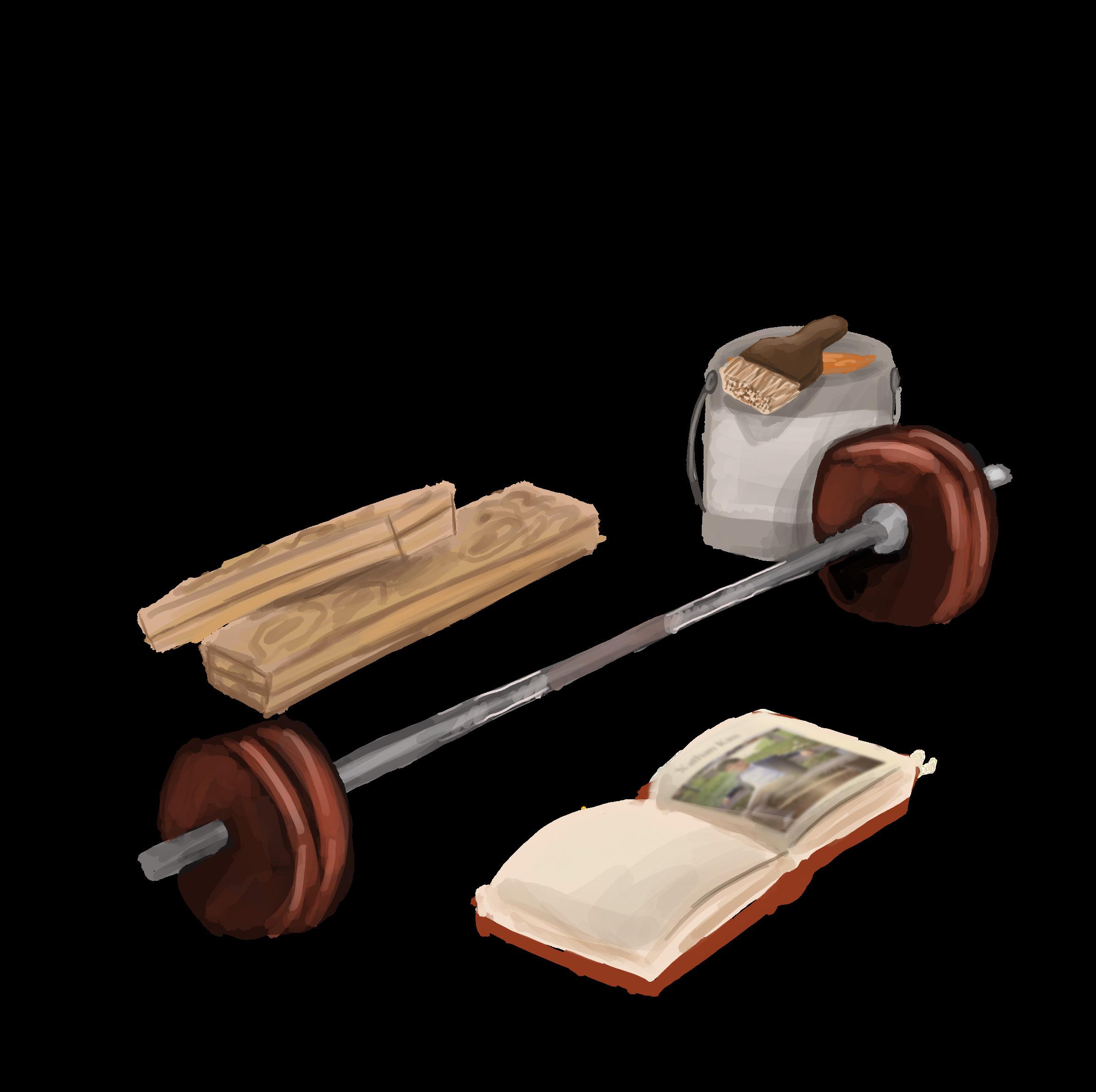
While lifting 175 pounds may not be the most impressive feat, it’s something I’ve only been able to accomplish because of the most underrated place on campus: the school gym.
I know everybody talks about how cramped the school gym is, and I’m aware; it’s not the Hous tonian or the Briar Club, but in many ways, it’s hard to beat. Because in a “hypothetical” world, when you’re using a Yahoo email account to get your fifth guest pass at Life Time, you reconsider the lengths you’d go to for a good workout, which leads me to my first point: the convenience.
The school gym may not have every machine, but it certainly has enough; plus, you have Coach Campbell correcting your form and ensuring your splits are well-balanced (even when you refuse to hit legs). You might meet local celebrities like Mr. Alig or U.S. Rep. Wesley Hunt. But most impor tantly, you can easily go with friends.
There’s something special about exercising in good company. Sure, it may not be the most efficient workout, but when your spotter insists that you have five more reps left, their unwarrant ed faith brings you even closer together. So, go during free carriers, DaVinci, after school or in the morning. Just bring a change of clothes because you’ll gain more than just muscle mass.
The past few weeks, I’ve also been lifting else where, carrying props and paint buckets instead of dumbbells and plates. At the beginning of the year, I joined Johnnycake to get a free popsicle at Club Fair (hey, you’d do it, too), but seeing the
my of your most atrocious photos (I swear, I’m not

Before Lee’s freshman year, she signed up for the Review thinking it was a fine arts credit.
Eshna thought she was going to drop after a week. Dalia treated G carrier as a social hour.
But by the end of first semester, we all found our passions for both the writing and culture of the Review. By junior year, we ended up collectively writing five two-page spotlight articles (that’s a big deal in the newspaper world, trust). From writing about ZYN addiction to sorority culture, we embraced every challenge with our hearts.
Expecting the unexpected became a constant theme in our lives.
Eshna initially prioritized debate and computer science but ended up finding her passion for advocacy work. Lee dreaded history class before learning from five enthusiastic teachers — now, she’s majoring in it. Dalia spontaneously followed Lee one day after school to a Girls Empowering Minds training meeting and ended up forming close bonds with a group of amazing middle school girls.
Our freshman-year selves could not have predicted many of the moments that made us who we are — these moments led us down roads we will forever be grateful for traveling.
So, while the future may seem certain, as John Lennon once sang, “Life is what happens to you while you’re busy making other plans.”
On our last day of class, a recent graduate called to offer us some invaluable advice: Say yes to everything
that makes you uncomfortable. Ignore the voice that tells you not to go up to a new person or have a conversation with a teacher. Join a new club or start that CommServe project that you doubt will succeed.
In this issue, we highlight such stories. Jhung Kim (’19) happened to be recording vocals on his phone during the pandemic, and it became the basis for his debut album that jumpstarted his artistic career (page 11). Art teacher Dan Havel enjoyed drawing cartoons when he was younger yet didn’t expect his interest to manifest into a 31-year tenure at St. John’s (pg. 5).
Graduating senior Claire Adkins never expected that her TikTok videos would inspire thousands of people to start learning new languages (pg. 7).
People should not just expect the unexpected — they should welcome it. There’s beauty in not knowing what comes next.
As the three of us enter the next phase of our lives, we will cherish the memories we made and remind ourselves that we will end up exactly where we are meant to be. For the last time, thank you for joining us all the way to the zynd.








Georgia Pulliam
Online Assistant Editors-in-Chief
Genevieve Ederle, Amina Khalil-Zegar, Mikail Khan
Online Section Editors Angel Huang, Sophia Kim, Nia Shetty, Wanya Zafar
Business/Production Manager Riya Nimmagadda and Evan Williams

BY EMILY YEN

Staff Isabella Adachi, Harry Alig, Hudson Brock, William Burger, James Chang, Noelle DiNardo, Juliet Dow, Rian Du, Viv Fox, Sophia Giron, Asher Gurr, Harrison Hadnott, Melody Han, Maggie Hester, Henry Kramer, Ved Kulkarni, Arin Kumar, Nicholas Laskaris, Ethan Ou, Akshay Pandya, Kavan Pandya, Judah Sanchez, Ailey Takashima, Payton Tu, Nico Valderrábano, Calla Wight, Preston Wu, Emily Xie, Brayden Zhao
Advisers
David Nathan, Shelley Stein (‘88), Sam Abramson
Publications Assistant Joelle DiPaolo
Mission Statement
The Review strives to report on issues with integrity, recognize the assiduous efforts of all and serve as an engine of discourse within the St. John’s community.
Publication Info
We mail each issue of The Review, free of charge, to every Upper School household, with an additional 1,000 copies distributed on campus to our 711 students and 98 faculty.
Policies
of
Submission
A Tale of Two Vladimirs: The Guerreros of Baseball
Vladimir Guerrero Sr. and Vladimir Guerrero Jr. — a home run dynasty.
2
How the Rings of Power series ruined Peter Jackson’s original film trilogy.

Fresh mozzarella, ripe tomatoes, crunchy ciabatta — you’ll never go back to grilled cheese sandwiches.
5
Dissect Meredith’s behavior, diagnose Alex’s narcissism and examine McDreamy’s ethereal blue eyes.

TlhIngan Hol Dajatlh’a’? You will after taking this course!
The Fast & the Furious 2 Fast 2 Furious Tokyo Drift . Fast & Furious 4, 5, 6, 7, 8, 9 and 10. I swear, they’re identical. Grey’s Anatomy & Physiology (H)

7 9 10 16 17 18 19 20
An interdisciplinary approach using high-level mathematical analysis with complex brushstroke techniques.
I can sense an exciting opportunity in your future.
Your lucky numbers: 1, 7, 15, 29, 32, 46

Maybe you’re a Pisces. Maybe you want to understand the daily horoscope. Maybe you just failed AP Psychics and needed the credit. 8
For those about to find the fourth derivative, we salute you.

We have Cubans! We have cheesesteaks! We have MLTs (Mutton, Lettuce and Tomato)! Let’s get lit! Why separate variables to solve the equation when we could keep them together and make everyone happy? Caprese
Gimme! Gimme! Gimme! (The Answer to This Question)

Fans of the Dallas Cowboys, Toronto Maple Leafs or Philadelphia 76ers, we’re looking at you...
Monkeying around with gorillas, chimpanzees, orangutans.

The course name has nothing to do with the material and everything to do with the grade you’ll receive.
Harry Styles teaching you to master the art of the dot and line while singing “What Makes You Beautiful.”

If you were to ask me how this course differs from 3D Studio Art, I’d ask you to give me some time.
In a world increasingly dominated by Artificial Intelligence, there’s only one way we can fight back.


Featuring Ms. Kerr’s pig, Zelda. Wee, wee, wee, these little piggies will see you in class.

Where

Design by Jennifer Lin & Michelle Liu